• About
  • Best Baby Names
  • Celebrity Baby Names
  • Celebrity Baby Names – Current
  • Celebrity Baby Names – Past
  • Featured Boys Names
  • Featured Girls Names
  • Featured Unisex Names
  • Links to Name Data
  • Waltzing on the Web

Waltzing More Than Matilda

~ Names with an Australian Bias of Democratic Temper

Waltzing More Than Matilda

Tag Archives: Australian Aboriginal names

Name News Round-Up

16 Wednesday Apr 2014

Posted by A.O. in Names in the News

≈ 4 Comments

Tags

aristocratic titles, Australian Aboriginal names, banned names, birth notices, Births Deaths and Marriages, celebrity baby names, celebrity sibsets, choosing baby names, colour names, locational names, name popularity, name trends, names of mountains, nicknames, royal titles, trademarks, triplet sets, Twitter

news

Banned Baby Names

It was reported in The Age last month that the state of Victoria is banning baby names under the Births, Deaths and Marriages Act. This isn’t actually news in the sense of new information – that’s been the situation everywhere in Australia since the mid-1990s, with all states following more or less the same guidelines. It is a reminder that Births Deaths and Marriages has the discretion to reject names that are deemed unsuitable – however, the newspaper report failed to mention that parents can appeal the decision, and appeals have been successful in the past. Names rejected in Victoria included Lord, Princess, Princess Di and Prince (titles), Fireman Sam (trademark), Tit (offensive), and also Glory Hallelujah, New Covernant, Wonderful Beautiful, Anarchy, and Honest Mary, which seem to be Victoria’s idea of unsuitable. Pepper, Jazz, Reef, and Texan Gamble all made the cut however.

The Sunshine Coast Daily reported that “quirky” names were being banned in Victoria. The article said rather smugly that parents were free to choose any name they want in Queensland, whether it be pop culture Khaleesi or traditional Francis Xavier. That seems idiotic, as Khaleesi is allowed in Victoria too – it’s a title, but a fictional one, and not in English – although it’s not as popular as in Queensland. Queensland has the same naming regulations as the rest of Australia, but while the article was smug and silly, there was a grain of truth behind it, because names seem to be very rarely disallowed in Queensland, and it does have a more relaxed naming culture. Moral of the story: if you yearn for a kookier baby name, you are better off moving to Queensland than Victoria.

Radio Audience Help Choose Baby Name

Melbourne’s first baby of 2014 was born at 12.34 am on January 1 at the Royal Women’s Hospital to professional dancers Bessie and George Awad. The Awads couldn’t decide between their three favourite names of Indiana, Marley, and Summer, so they threw it open to listeners of radio station 3AW and its Twitter followers. Indiana was by far the most popular choice of the public, and this was the name they went with. Indiana was also the choice of dad George, who chose it because he thought his baby daughter “looked like a little Pocahontas” (not the most politically correct name story!). Bessie says the name suits Indiana. By the way, don’t you love mum and dad’s names – Bessie and George, adorable.

Baby Name Trends of 2014

Practical Parenting magazine had a slideshow of baby name trends to watch for in 2014, including old fashioned names, boys names for girls, surnames-as-first-names, and literary names. They also gave their predictions of which names would rise this year, and with so many guesses that at least a few of them will be correct.

When Rafael Became Rafferty

Comedian Dave Hughes has been on the blog a couple of times because of his delightfully named children Rafferty, Sadie and Tess – Tess Clementine was even voted the public’s favourite celebrity baby name last year. In an interview this year [story expired] Dave revealed that the first choice for his son’s name was Rafael. Even though this isn’t uncommon in Australia, Dave felt that they weren’t Spanish enough to pull off having a Rafael, so went with Rafferty instead. It’s interesting to wonder what would have happened if they’d gone with Rafael – would they have had two girls named Sadie and Tess? My guess is no: it’s interesting to see how the choice of the first child’s name can influence your other children’s’ names.

An Australian Name in America

A rare set of identical triplets were born in California, named Abby, Laurel and Brindabella – who made their way into the Birth Announcements here. The triplets’ dad is originally from Canberra in the ACT, where the Brindabellas form a mountain range to the west. He spent a lot of time exploring the mountains, and discovering a love of nature – he and his wife were married in the mountains in 2007, when they wed on top of Mount Franklin. Brindabella was named after the mountains of her dad’s home town, and although it sounds unusual next to her sisters, Brin or Bella will excite little excitement. Brindabella either means “two kangaroo rats” in the local language or “water running over rocks” with a European -bella added to mean “beautiful”.

True Blue 

Business Insider reported on websites which allow people to connect for the purposes of co-parenting. They aren’t dating websites, but provide an opportunity for single people who want children to match up so they can start a family together. The story featured Australian man Fabian Blue, who has moved to Nebraska in the United States to be with his co-parent, Dawn Pieke, and they have a one-year-old daughter together named Indigo. While Indigo is a common name in Australia, Indigo Blue has a nice ring to it.

Name Inspired By Royal Visit

The Duke and Duchess of Cambridge have just arrived in Australia, and 60 years ago Queen Elizabeth made her own royal tour. Dorothy Williams remembers the day that the queen came to Bendigo in regional Victoria, because she was in hospital after having given birth to a baby girl. The hospital beds were placed close to the window so that patients could see the queen being driven through the hospital gates. Dorothy named her daughter Pamela after Pamela Mountbatten, the queen’s lady-in-waiting. Lady Pamela is a first cousin of Prince Philip, and was a bridesmaid at his wedding to Queen Elizabeth. In 1954, Pamela was the #12 girls name in Victoria, just one place behind Elizabeth. I wonder how many of the 426 Pamelas were named after Lady Pamela, and how many of the 429 Elizabeths were named for the queen?

They First Met in the Local Birth Notices

I read a lot of birth notices, including from the Port Lincoln Times, so was interested to see this story about Olivia Fairclough. She and her twin sister Belinda were born on October 8 1975, and while researching softball history in the local paper, Olivia happened to come across their original birth notice, published October 16 1975. To her amazement, she saw that her husband’s birth notice was published below it – Martin Sheridan was born on October 9 1975 in Western Australia, but his grandparents in Port Lincoln announced the birth in their home town. He later moved to Port Lincoln, and he and Olivia have been married for five years. Keep a copy of the birth notices for the day your baby’s birth is announced: their future spouse may be in it.
Names of Australian Birds for Girls

30 Sunday Mar 2014

Posted by A.O. in Name Themes and Lists

≈ 4 Comments

Tags

Ancient Germanic names, animal names, Australian Aboriginal names, Australian slang terms, bird names, birth notices, brand names, english names, fictional namesakes, germanic names, Greek names, Irish names, Italian names, Latin names, locational names, middle names, mythological names, name history, name meaning, name popularity, nature names, nicknames, retro names, scientific names, unisex names


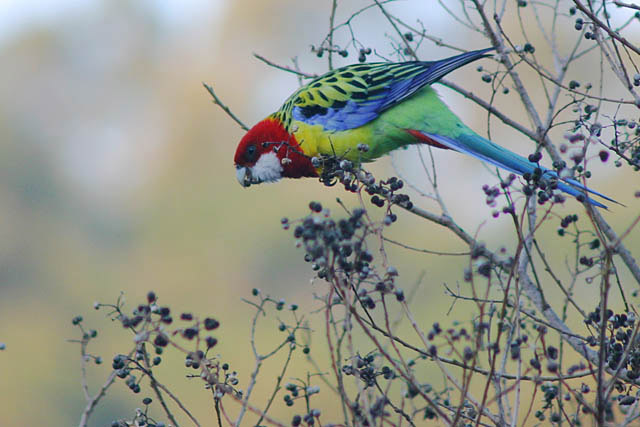
Eastern Rosella #40I seem to have covered several bird names on the blog recently, and that might be because our family was watching light-hearted bird documentary series, Hello Birdy, on the ABC, or maybe just because I love birds. Australia is lucky enough to have a staggering array of birds, many of them colourful, beautiful, intelligent, or unusual, and sadly, often under-appreciated. Here are some names that bring to mind a few of our feathered friends. Click on a likely link, and you will be taken to a YouTube video of each bird – there’s at least one for every entry.

Brahminy
The Brahminy Kite is a bird of prey and scavenger native to Australasia and Asia; in Australia they are found in coastal regions in the north. They are chestnut brown with a white head, breast, and tail tip, and typically nest in trees in mangrove swamps. The name Brahminy is due to their being found in India; it alludes to the Hindu Brahmin priestly caste, and is said BRAH-min-ee. The Brahminy Kite is the official mascot of Jakarta, in Indonesia, and in India is regarded as a representation of Garuda, the sacred bird of the supreme god Vishnu. I would not have considered this as a person’s name if I hadn’t seen a baby girl named Brahminy. It’s a bold choice, and its connection with a sacred bird is fascinating.

Corella
The Corella is a small, white cockatoo with a pink blush to its plumage. They are found from the central deserts to the eastern coastal plains, and are a familiar sight on farms and in cities. In some areas, Corellas have become so numerous they are considered a pest, being particularly destructive to trees and cereal crops. They congregate in large flocks, even up to several thousand, and make a high-pitched screeching noise which is ear-piercing when a flock all calls together, and can be heard for miles. Although they are noisy birds, they are very playful and have the joie de vivre that all parrots are blessed with. They are popular as pets, because they are good talkers, and excellent mimics. The word corella comes from the Wiradjuri language of central New South Wales. Corella has been used as a girl’s name since the 18th century, and is probably part of the Cor- group which is based on the Greek Kore, meaning “maiden”. The bird gives it a uniquely Australian flavour.

Dove
Here’s the dirty little secret about Doves: they’re just pigeons! Not only that, it’s unclear what makes some species of pigeons “doves”, because while we generally call smaller pigeons doves, that isn’t always the case. The confusion arises because the word pigeon is from Latin, and dove from Ancient Germanic, so they are two different words for the same thing (like autumn and fall). Nonetheless, their images are completely different: doves are symbols of peace, while pigeons are seen as disease-ridden pests (in fact, pigeons are no more disease-ridden than any other animal and pose no general health risk). Australia has a number of species identified as doves, and although we often think of doves as modest and grey, the Emerald Dove has striking green colouring, and the many varieties of Fruit Dove are likewise very colourful. There are also introduced species of dove, including those kept as pets. Dove has been used as a first name since the 17th century, and has been far more common for girls; a contemporary example is Disney actress Dove Cameron. Dove not only rhymes with love, but doves are used as symbols of love, since pigeons mate for life; the word dove can mean “sweetheart”. Perhaps because of this, doves were considered sacred to goddesses such as Venus. Another religious connection is that in Christian iconography, the Holy Spirit is often depicted as a dove.

Halcyon
Halcyon is the Latin name for the Tree Kingfishers, a large genus of birds found in Africa, Asia and Australasia, with Australasia having the most species. They are recognisable by their large heads and long pointed bills, and many are brightly coloured, often in iridescent blues and greens. The Laughing Kookaburra is a type of tree kingfisher, an iconic Australian bird with a raucous cackle that seems to epitomise the spirit of the bush. Halcyon is from the Greek for “kingfisher”, and is connected to a character from Greek mythology named Alcyone; the daughter of the winds, she married Ceyx, the son of the morning star. The pair were very much in love, and after Ceyx was lost at sea in a terrible storm, the unhappy Alcyone threw herself into the waves to end her life. The gods took pity on them, and changed both into kingfishers. According to legend, the “halcyon days” of midwinter, when storms cease, was when Alcyone laid her eggs, and her father restrained the winds so that she could do so safely. Because of this, the word halcyon (pronounced HAL-see-uhn) has come to mean “calm, serene, peaceful”, with our halcyon days those happy times we look back on with nostalgia. Halcyon has been used as a girl’s name since the 19th century: pretty and unusual, it gives Hallie as the nickname.

Lalage
Lalage is the scientific name for the Trillers, native to Asia and Australasia; they are small birds, usually coloured black, white and grey. They are called Trillers because during the breeding season, the males make a cheerful, almost continuous, trilling call. Lalage is derived from Greek, and means “to babble, to prattle”, or, in the case of birds, “to chirp”. The name became known from an ode by Roman poet Horace, where he speaks of his love for a young girl, his “sweetly laughing, sweet talking Lalage”. It has been used a few times since as a literary name, most notably in Kipling’s Rimini. Lalage has had occasional use, and in Britain seems to have a fairly upper-class image: contemporary examples are photjournalist Lalage Snow, and fashion designer Lalage Beaumont. In English, this name is usually pronounced LAL-a-gee or LA-la-ghee – just remember it’s three syllables, emphasis on the first, hard g like girl, not soft like germ. This fascinating name fits in with L-L names like Lillian, and as Lalage was a very young courtesan, almost seems like a posh version of Lolita! Lallie, Lollie, and Lala could be nicknames.

Lark
Larks are plain brown birds to look at, but their great beauty is in their voices, for they are famous for their melodious singing. This has made them a favourite subject for poets, such as Percy Bysshe Shelley’s, To a Skylark, and to say someone sings “like a lark” is a great compliment to the range and joyousness of their notes. Traditionally, larks are a symbol for dawn and daybreak, as in “getting up with the lark”, and this has given them religious overtones, for just as dawn is the passage between night and day, it can also be seen as that between heaven and earth. In Renaissance paintings, larks were sometimes used as a symbol of Christ. Although Australia has many birds with lark as part of their name, our only true lark is Horsfield’s Bushlark, widely found in grasslands and open woodlands. It is much smaller than larks in the northern hemisphere, and doesn’t have quite such an impressive voice, although its songs are still rich and varied, and it is a good mimic as well. The Eurasian Skylark which features in Shelley’s verse has been introduced here. Lark has been used as a name since the 18th century, and is historically more common for boys, but is often now thought of as more feminine than masculine. It’s a simple, non-frilly nature name laden with symbolism, and is more often found in the middle.

Maggie
Maggie is the affectionate name for the Australian Magpie. Although they look similar, it isn’t closely related to the European Magpie. Easily recognisable from their black and white plumage, magpies are very familiar in suburban life. Magpies are one of Australia’s favourite songbirds, because they have a complex, melodious warble, and will carol in chorus at dusk and dawn. They can also mimic other birds and animals, including human speech. Bold and sturdy, they are not typically wary of humans, and will happily accept (demand!) free food from us. They become unpopular in spring, as males can be so aggressive during breeding season that they swoop or even attack humans to warn them away. This is when feeding them pays off, as they can tell individual people apart, and won’t scare their buddies. The Magpie was a totem animal for the Indigenous people of the Illawarra, and is an official emblem of South Australia, appearing on the state flag. Magpies is a common name for sporting teams, and the cocky attitude of the Magpie is seen as indicative of the national character. Maggie is also a short form of Margaret. It was #174 in the 1900s, and was off the charts by the 1940s, returning in the 1970s. It has climbed steadily, and is currently in the 100s.

Oriole
Orioles are a large family of birds found throughout the world, which come in a variety of colours. Australian Orioles are green, perfect for blending in with the trees. They are fruit-eating birds, and the Figbird is one of the Orioles, although it doesn’t only eat figs. Orioles and Figbirds are attracted to backyards with small fruit trees and bushes, and which have native trees such as eucalypti and wattle; they are a fairly common sight in suburbia. The word oriole is derived from the Latin for “gold”, because the Eurasian Golden Oriole is a bright yellow. Oriole is related to names like Aurelia and Auriol, which are from the same derivation, and looks a lot like Oriel, which may be seen as a variant of Auriol, but also has Irish and Germanic origins. Oriole seems like a way to retain the golden meaning, while also referencing the bird.

Rainbird
The Rainbird is the colloquial name for the Pacific Koel, a species of migratory cuckoo which arrives here in spring from Papua New Guinea and Indonesia, and is found in north and eastern Australia. It’s called a Rainbird because of the belief that its rather mournful “whooping” call is a harbinger of wet weather. Males call for a mate during their breeding season, which coincides with the spring rains and the summer “wet season”, and are so loud they can be considered a nuisance. Like all cuckoos, Rainbirds lay their eggs in the nests of other species so that they can be raised by the unsuspecting hosts; however, unlike most other cuckoos, the baby Rainbird doesn’t kill the host chicks. Rainbirds are rather goofy-looking birds; the males have glossy black plumage and bright red eyes. I have seen Rainbird used as a girl’s middle name, and think it makes a wonderful name for a spring or summer baby. It would work equally well for boys.

Rosella
Rosellas are colourful parrots which are very familiar in suburbia. I think we might take them for granted, because they really are pretty, with a more pleasing range of calls than most parrots. Rosellas will be attracted to any garden that provides them with water, seeds and fruit, and can become so tame that they will eat out of your hand. This has led them to become common as pets, but in captivity they can become bored and aggressive, so I think it’s nicer to have them as backyard visitors. European settlers first saw Eastern Rosellas at Rose Hill (now called Parramatta), and called them Rosehill Parakeets; this evolved into Rosehillers, and eventually became Rosella. The Sydney suburb of Rozelle is named after them. Rosella is also a popular brand of tomato sauce, which sports an Eastern Rosella as its logo. By coincidence, Rosella is also an Italian name, an elaboration of Rosa, and looks like a combination of popular Rose and Ella.

POLL RESULTS
The public’s favourite names were Lark, Maggie and Rosella, and their least favourite were Brahminy, Oriole and Lalage.

(Photo shows an Eastern Rosella)

What I Know About Australian Names

09 Sunday Feb 2014

Posted by A.O. in Naming Issues

≈ 13 Comments

Tags

Appellation Mountain, Arabic names, Australian Aboriginal names, birth notices, blogging, middle names, name trends, popular names, royal baby names, unisex names, vintage names, Waltzing More Than Matilda

1000posts

This will be my 1000th blog post since I started blogging nearly three years ago in 2011 – something which fills me with a certain amount of awe, coupled with a strong feeling I may have posted too often!

When Abby from Appellation Mountain reached her 1000th blog post in 2010, she decided to share a few of the things she had learned about names as a blogger. I thought about doing that, then realised how embarrassing it would be to admit how little I knew to begin with. And I’ve learned so many things that I’d need another blog with 1000 blog posts to explain all that I’ve learned writing this blog.

So instead I will share a few things I have learned about Australian names.

1. Australia, like other countries, has its own unique name trends

Matilda, Lachlan and Banjo mean more to us than in other countries. Darcy is a boy’s name here, Asher is unisex, and Avery is only for girls. We have a special connection with Talia, but prefer to spell it Tahlia.

Adrian was popular here for much longer than in other countries; Mitchell and Chelsea are still popular here while they have disappeared from the Top 100s of other places; Mervyn and Dulcie were only ever popular in Australia, while Derek and Gillian never became popular here.

Because of our relatively small population size, name trends often show up earlier in Australia than elsewhere, so that names such as Isabella and Jayden were Top 100 here long before anywhere else. Does that mean that current Australian favourites like Amity and Braxton will become popular elsewhere? Only time will tell!

Although Australia’s name trends are heavily influenced by both the UK and US, and sometimes by Europe, only one country can claim to be our baby name twin, and that is New Zealand. It’s seldom acknowledged, but we share more than 70% of our popular names with our Trans-Tasman cousins.

2. Every state and territory is a little different when it comes to names

Queensland is crazy for royal baby names – any name chosen by royalty will invariably rise in popularity this state. New South Wales is the only state with Arabic names in the Top 100 – Muhammad would be in the Top 30 there if all spellings were combined. Tasmanians adore vintage names, Western Australians tend to shun the classics for the contemporary, the Northern Territory has many names of Indigenous significance, and South Australians love a quirky middle name. The ACT has the strictest naming laws, and are therefore the most conservative at choosing baby names. Victorians are the name nerds of Australia – they are deeply interested in name trends, worry about popularity, and are the most likely to announce their baby’s name in the newspapers. I probably couldn’t function (as a blogger) without them.

3. Rural and regional Australians are the best at choosing interesting names

I love name stories and birth notices from country Australia, because they always have the most diverse selection of names, and the most unusual names and colourful name combinations. If it wasn’t for local newspapers, I don’t think I could keep doing the Birth Announcements each week.

4. Australians are patriotic namers

When I first started Waltzing More Than Matilda, I couldn’t help wondering if anyone would be interested in a blog about Australian names, and more importantly, I wasn’t sure if Australians would be interested!

Happily, my doubts have been proven wrong, because every day people come to the blog searching for Indigenous Australian names, names of Australian plants, names of Australian towns and cities, names of famous Australians, and asking for “patriotic Australian names” to use for their son or daughter.

It seems that there are many people at least considering a name with an Australian “flavour” for their children.

5. Australian parents are AWESOME namers!

There’s a vocal, mean-spirited and ignorant group of people who think it’s fun (or funny) to insist that Australians are too stupid or tasteless to be allowed to name their own children. According to this mob, who often seem to work in the media, you only have to read a few birth notices to see that Australian babies are given increasingly bizarre “made up names” with a bewildering range of spellings and punctuation that render them barely comprehensible.

Well, I read birth notices every day, and have done for years, and I can tell you that that is absolute tripe. Most babies are given fairly common names like Emily and Liam, and even less common names are usually traditional like Walter and Patricia, familiar like Axel and Clementine, or are from other cultures, like Malini and Ngemba. Variant spellings are generally low-key and easily coped with, such as Scarlette or Jaxson – out of the thousands of babies’ names I read each year, perhaps four or five have given me real difficulties in understanding them.

Australian parents, let me tell you that you are doing a great job! A brilliant job! An outstanding job at naming your babies! You make reading birth announcements a joy and an adventure!

Whether you chose the name Audrey or Behati. Whether you preferred Thomas or Zephyr. If you picked Felix or Kylen or Huckleberry or Lenny or Percival or Diamond. Opted for Eloise or Mietta or Taiyah or Rafferty or Storm or Xanthe. If your heart told you that the perfect name was Acacia or Digger or Lawson. Or you knew straight away that only Jack or Charlotte or Hamish would do. You all did the right thing, and you all did very well.

You impress and amaze me every day. Thank you.

Famous Names: Indi and Mirabella

13 Wednesday Nov 2013

Posted by A.O. in Famous Names

≈ 4 Comments

Tags

Australian Aboriginal names, celebrity baby names, english names, famous namesakes, Italian names, Latin names, Latinate names, Linda Rosenkrantz, locational names, name trends, Nameberry, names of businesses, names of electorates, nicknames, popular names, unisex names

murray_river

The 44th Parliament of Australia opened yesterday at 10.40 am, with the swearing in of new MPs. When I covered a name from the election back in September, I hinted that there might be more political names coming up when all the votes had been counted. Now more than two months later, after an extraordinary vote-counting process which seems to have been more than usually disorganised, all results seem to have been declared, and we can go ahead with some names from politics.

One of the electorates which political pundits were keeping a close eye on was Indi. The division of Indi is in north-eastern Victoria, and its northern border is the Murray River, while in the south-east it is bordered by the Australian Alps. Its largest settlement is the city of Wodonga, on the border between Victoria and New South Wales. Although one of the largest electorates in Victoria, much of it lies within the Alpine National Park and is uninhabited.

Indi has existed continuously since Federation, being one of the original 75 electorates formed in 1900, and for almost all of its history has voted conservative. The last time Labor won here was in 1928, and that was because the conservative candidate rather carelessly forgot to nominate. The first person to represent Indi was Sir Isaac Isaacs, who went on to become Attorney-General, Chief Justice of the High Court, and the first Australian-born Governor-General.

The name Indi is taken from a local Indigenous name for the Murray River. Names starting with Ind- are very trendy in Australian, such Indiana, India, Indigo, Indie and Indy, and Indi seems like a great way to follow this trend with a specifically Australian meaning. It could be used for either sex, although many people feel an -i ending seems “feminine” eg Toni is for girls, Tony for boys.

Traditionally, Indi has been represented by what has been described as the “rural gentry”, but this changed in 2001 when former Melbourne barrister Sophie Panopulous (later Sophie Mirabella) won the seat with a primary vote of 40%. She was dubbed “Uptown Girl” by those who didn’t relish the thought of a young, female, Greek-Australian city lawyer representing their rural seat; however she had no trouble gaining pre-selection for the seat from the Liberal Party, and easily defeated her opponents.

Sophie continued to win elections in the safe Liberal seat, however some residents felt that she was taking them for granted. They formed a grassroots movement, Voice for Indi, to find an Independent candidate to run against Sophie Mirabella, and eventually Cathy McGowan accepted.

Cathy had been a staffer for Indi’s Liberal MP in the 1970s and ’80s, a regional councillor for the Victorian Farmer’s Federation, and President of Australian Women in Agriculture. She has a Masters in Applied Science in Agricultural and Rural Development, and received an Order of Australia for raising awareness of women’s issues in regional, rural and remote areas. Cathy lives in Indigo Valley, where she was born and raised, and works as a farmer and rural consultant.

The contest in Indi was extremely close, and counting of votes went on for eleven days, but on September 18, Sophie Mirabella conceded defeat and Cathy McGowan claimed victory by 431 votes, giving her a swing of 9.2% and a slender majority of 0.2% – the first time an Independent has won in rural Victoria since World War II, and the first Independent to ever win Indi. I believe this was the narrowest win in the lower house for this year’s election, and Sophie Mirabella was the only Liberal incumbent to lose her seat.

I can’t help feeling rather tickled that an Independent from Indigo Valley won the seat of Indi. Amazingly, nobody thought to use this as a headline, which would have been rather fetching.

An important message from the Voice for Indi election campaign is that a sitting MP should never take a safe seat for granted in the long term. The good news is that if you are stuck with a lacklustre MP in your electorate, you may be able to get rid of them with the right candidate, a well-orchestrated campaign, and grassroots support. Yay, people power!

Although she didn’t manage to make herself very popular in politics, Sophie Mirabella has a fantastic surname.

Mirabella is an Italian name which is the Latinate form of the English name Mirabel, from the Latin for “wonderful”. In the Middle Ages, Mirabel was a unisex name, but is now considered feminine, while Mirabella is specifically feminine (the male form is Mirabello – Mirabello Cavalori was an Italian painter during the Renaissance).

Beautiful, elaborate and right on trend, Mirabella would be a great choice for someone who loves Miranda and Isabella, but worries they seem too common. This has been chosen as a name for his daughter by Canadian rock singer Bryan Adams, and it’s a long-time favourite of Linda Rosenkrantz from Nameberry – that’s a very high recommendation! You could use hip Mira or popular Bella as the short form.

One other issue is that Mirabella is the name of an Australian company which makes electric light-bulbs, but when you think about it, light is a positive association. Unfortunately, I fear that the widely-loathed Mrs Mirabella may have done this pretty name more harm than a few light globes ever could.

POLL RESULTS: Indi received an approval rating of 60%, while Mirabella enjoyed more success with a rating of 75%.

(Photo shows the Murray River near Wondoga, from where the Division of Indi receives its name)

Brisbane Suburbs That Could be Used as Girls Names

06 Sunday Oct 2013

Posted by A.O. in Name Themes and Lists

≈ 9 Comments

Tags

animal names, Aramaic names, Australian Aboriginal names, Biblical names, birth notices, english names, fabric names, famous namesakes, fictional namesakes, Gaelic names, Gaulish names, German names, Greek names, historical records, Latin names, locational names, name history, name meaning, name popularity, names of farms, names of ships, names of spices, nicknames, Norman-French names, saints names, Sanskrit names, Scottish names, surname names, unisex names, virtue names, vocabulary names

15517831

Amity

Amity Point is a small town on North Stradbroke Island, 30 km south-east of Brisbane. The town is named after the Amity, a brig which carried the first European settlers to Queensland in 1824. The Amity was later wrecked near Tasmania, and today you can visit a full-size replica of the brig in Albany, because the Amity also took colonists to Western Australia. Amity is an English word which means “friendship”; it comes from the same Latin root as names such as Amy and Amabel, and has been used as a girls name since the 17th century. Amity is #551 in Victoria, and I often see it in birth notices: I think this pretty virtue name is gaining in popularity, and may become a replacement for Amy.

Bethania

Bethania is in Logan City, halfway between Brisbane and the Gold Coast. The suburb was founded by Germans in the 19th century, and has a large hobby farm area. The name Bethania comes from Bethanien, the German name for the town of Bethany near Jerusalem. In the New Testament, Bethany is mentioned as the home of siblings Mary, Martha, and Lazarus, and is said to be near the place where Lazarus was raised from the dead. The Biblical Bethany may be the same place as the city of al-Eizariya in Palestine – its name means “place of Lazarus”, although others say that the original village of Bethany was slightly higher up on the Mount of Olives, and that al-Eizariya sprung up around the traditional site of Lazarus’ resurrection. The meaning of Bethany has been much debated, but it is thought the most likely derivation is from the Aramaic beth anya, meaning “house of affliction, house of suffering”, with the conclusion being that it was a place for care of the sick and destitute. Although Bethania doesn’t have any connection to Elizabeth or Anne, it might seem like a way to connect these two names, and does give both Beth and Anya as nicknames.

Cashmere

Cashmere is an outer suburb of Brisbane in the foothills of a mountain range surrounded by dense forest, with a nearby lake. Cashmere is named after an early settler, James Cash, famous for his hospitality to passing travellers. Although Cash was not wealthy and lived in a simple shanty, no tramp ever passed his door without receiving a meal or a pot of tea. Because mere means “lake”, and James Cash’s farm was near Lake Samsonvale, the suburb’s name can be understood as “Cash’s land by the lake”. Cashmere is also a fine, high quality fibre taken from Cashmere goats. The name is after the Kashmir region of India, which has been making cashmere shawls for thousands of years. Kashmir’s name comes from the great sage Kashyapa, a legendary wise man whose name is from the Sanskrit for “tortoise”. With Cash a fashionable choice for boys, luxurious Cashmere seems like a way for girls to get the nickname Cash as well. In Australian records, both men and women named Cashmere can be found.

Corinda

Corinda is an older suburb of Brisbane, first settled in the 1860s as a farming community, and with many of its homes dating back to the colonial period. The name Corinda is believed to come from a local cattle station, which was named after a pastoral station in outback Queensland. The name is of Aboriginal origin, but its meaning is not known. Corinda has been used as an English girls name since the 18th century – perhaps based on the Greek name Kore, meaning “maiden”, with an elaborated ending common in 18th century poetic names like Melinda and Dorinda. This name seems elegant and literary, and not so different from familiar names such as Lucinda.

Inala

Inala is a suburb of Brisbane near the industrial estates. It was built in the post-war period to help with the housing shortage that followed World War II, and was one of the earliest and biggest Housing Commission projects in Queensland. Young architects such as Robin Boyd helped design the housing, which features simplicity and lack of ornamentation. In other words, it isn’t pretty, but cheap and efficient to install and maintain. It has an ethnically diverse community, with many migrants from Vietnam, New Zealand, and the Pacific Islands, amongst other places, settling there. The name Inala is believed to come from an Aboriginal expression meaning “peaceful place, happy place”, but it’s possible it actually means “place of the wind”. I saw a baby girl named Inala in a birth notice early this year, and ever since have been itching to cover this as a name – said ih-NAHL-ah, it fits in with names such as Ayla, Nyla, and even Isla.

Karalee

Karalee is a suburb of Ipswich; originally dairy and farm country, it began to be developed for residential purposes in the 1970s. It is thought that Karalee comes from an Aboriginal expressing meaning “grass around a waterhole”, although the City of Ipswich prefers the translation, “pretty hill beside the water”. This looks like a portmanteau of Kara and Lee, but has its own integrity, and is said KAR-a-lee, like an elaboration of Carol.

Lacey

Laceys Creek is a rural area in the outer suburbs of Brisbane, and was first settled as timber country, soon followed by dairy farming, pineapples, bananas, and bee-keeping. Lacey is an English surname of Norman-French origin. It comes from the village of Lassy in Normandy, which means “Lascius’ place”. The meaning of the Gaulish name Lascius is of unknown meaning. The de Laci family came to England with William the Conqueror, and one of their descendants was amongst the barons who forced King John to sign the Magna Carta. Lacey has been used as a girls name since the 17th century, and part of its feminine charm is that it sounds like the word lacy. Lacey is #234 in Victoria, and I believe this is another pretty girls name which is growing in popularity.

Lucia

St Lucia is an exclusive green and leafy inner-city suburb of Brisbane. It is focused around the University of Queensland, with the university itself, and residential colleges for students, taking up a large proportion of the suburb. There are many wealthy people living in St Lucia, with riverfront houses here costing in the millions. The area was first settled in the 1860s as sugar plantations, and was given its name by William Wilson, who bought and developed one of the plantations for housing in the 1880s. Wilson was born in St Lucia in the West Indies, and he named the housing estate St Lucia because the sugar plantations reminded him of his birthplace. The island of St Lucia is in the Caribbean, part of the Lesser Antilles group. It was named in honour of Saint Lucy by the French, who were the first European settlers to the region. Saint Lucy was a 4th century martyr, and she has become a popular saint, partly because her feast day of December 13 is near Christmas and originally coincided with the (northern hemisphere) Winter Solstice. Her name’s meaning of “light”, from the Latin lux, became a very appropriate one for a Festival of Light, heralding the Light of the World. Lucia has charted since the 1940s and had a minor peak in the 1960s at #283 before dropping to #808 in the 1990s. Since then it has climbed steeply, and peaked in 2010 at #115. Currently it is #122 in New South Wales and #177 in Victoria. This is an alternative to Lucy that has never become popular, although on the charts since the end of World War II.

Ripley

Ripley is a suburb of Ipswich, which currently has only 1000 residents. However, big things are planned for Ripley’s future, and once fully developed it is expected to be a city of 120 000 – one of the country’s largest pre-planned communities. It is named after the Ripley Valley where it is located; I am not sure if this is after someone named Ripley, or one of the towns named Ripley in England. The surname Ripley is from Ripley in Yorkshire – the town’s name means “farm whose land cuts a strip through the forest”, with the forest in question being the forest of Knaresborough. One of the most famous Ripleys must be Robert Ripley, who created Ripleys Believe It or Not! trivia series for newspapers, radio and television. The name may also remind you of tough Lieutenant Ellen Ripley from the Alien film series, played by Sigourney Weaver, or suave con artist Tom Ripley, from the crime novels, turned into a film, The Talented Mr. Ripley, played by Matt Damon. I have seen this name on both sexes.

Sinnamon

Sinnamon Park is an older suburb with some heritage-listed sites; the suburb is named for the pioneering Sinnamon family who settled in the district. Sinnamon is a Scottish surname; the Clan originated in Fife, and their name comes from their seat at Kinnimonth, which was granted to them by King William of Scotland. The name Kinnimonth comes from the Gaelic for “head of the hill”. Sinnamon sounds like the sweet spice Cinnamon, but has its own meaning and history – although the Sin- at the start may be problematic for some. I did find someone named Sinnamon from Queensland in the records, but can’t be sure whether they were male or female.

POLL RESULT: People’s favourite names were Amity, Lucia, and Bethania, and their least favourite were Inala, Sinnamon, and Karalee. Not one person liked the name Karalee.

(Photo shows the University of Queensland in St Lucia)

Celebrity Baby News: Football Babies

24 Tuesday Sep 2013

Posted by A.O. in Celebrity Baby News

≈ 7 Comments

Tags

Australian Aboriginal names, celebrity baby names, celebrity sibsets, French names, locational names, names of wines, surname names

Riijkaard-20130921213405652201-620x349

NRL player Dylan Farrell, and his partner Hayley Mundy [pictured], welcomed their son Derain about a week ago. Derain Farrell joins big sister Leilani, aged 3. Derain is a place in New South Wales, whose name is said to come from an Aboriginal language meaning “of the mountains”; Dylan grew up on an Aboriginal mission on the South Coast. Dylan has played for South Sydney Rabbitohs since 2010, and has been signed with the St. George Illawarra Dragons for next season. Souths will face Manly in the finals on Friday.

Soccer star Mark Milligan, and his wife Rhia, welcomed their daughter Audrey earlier this year. Audrey Milligan joins big sister Maya. Mark has been playing professionally since 2002, and is currently signed with Melbourne Victory; he is also a member of the national team, the Socceroos.

Local rugby league player Chris Thompson, and his wife Chrystal, welcomed their son Chandon early in the year. Chandon Thompson joins big sister Alaqua, aged 4, and big brother Mataeo, aged 2. Chris plays for CYMS in Dubbo. Chandon is a French surname, taken from a common place name in France; it is most associated with the champagne Moët & Chandon.

Boys Names of Australian Aboriginal Origin – Part 2

04 Sunday Aug 2013

Posted by A.O. in Name Themes and Lists

≈ 5 Comments

Tags

Ancient Germanic names, animal names, astronomical names, Australian Aboriginal names, Chinese names, colour names, days of the week names, english names, famous namesakes, fictional namesakes, Google, Hindi names, historical records, Indian names, locational names, middle names, mythological names, name history, name meaning, names from movies, names of weapons, nature names, nicknames, onomatopoeic names, rare names, unisex names

mh1

Bambam

Bambam as a person’s name might seem like an oddball suggestion, but although it would definitely be an unusual choice, I don’t think it’s an unfamiliar one either. For a start, there is Bamm Bamm Rubble from The Flintstones, first introduced as a cute blonde baby with superhuman strength. His name came from the fact that he would say Bamm bamm, and swing his club, to the general destruction of everything around him. Bam Bam is used as a man’s nickname, from American wrestler Bam Bam Bigelow to British DJ Bam Bam. There’s also skater Bam Margera, who gained his nickname from constantly running into walls as a toddler. I have seen a baby boy called Bambam – although that may have been a nickname. In English, bam bam is an onomatopoeic interjection, suggesting one thing repeatedly hitting or banging into another. In much the same way, in Nyungar (from south-west Western Australia), bam means “to hit”, and in Bundjalung (from northern New South Wales), bambam means “bruise, swelling”. However, in the Meriam language from the eastern Torres Strait Islands, bambam means “yellow”; in Indigenous art, yellow ochre is often used to represent the earth. It’s quirky, but Bambam is a rather lovable name.

Daku

Daku means “sand hill” in the extinct Diyari language; the Diyari people are from the South Australian desert, and thus very familiar with sand. Despite being generally used as a boys name in Australia, Daku is also a unisex name in India, and in Hindi it means “bandit”. Someone wrote in to the blog considering the name Daku for their son, but they never got back to me, so I don’t know whether they overcame family opposition to the name or not. This name reminds me a bit of Dakota, and it has the fashionable OO sound, such as Reuben and Jude; the name is pronounced (I think) DAK-oo. It would be a bold choice though, and I haven’t seen many boys with this name, although it can be found a few times in historical records.

Jardi

Jardi means “front” in the Ngadjumaja language; the Ngadjumaja people are from the Nullarbor Coast area of south-east Western Australia. I remember reading in the papers last year about a baby boy from Mudgee who has named Jardii, and his mother explained that his name was from the Wiradjuri language and means “first born son”. I wasn’t able to find that information for myself, but it occurred to me that “front” and “first” are similar in meaning, so Jardi also seemed like a good name for an eldest son. In the Jaminjung language from the Victoria River region of the Northern Territory, jardi means “to keep”, which also seems very positive. I found quite a few Indigenous boys and young men named either Jardi or Jardii, and I think it’s really attractive, with a similar sound to Jordie, the short form of Jordan.

Jiemba

Jiemba means “laughing star” in the language of the Wiradjuri people of central New South Wales. It refers to the morning star, or the planet Venus. (In some other Aboriginal languages, djimba simply means “star”). Astronomy was very important to the Wiradjuri, as with other Aboriginal societies, because stars and planets were used to tell the times and seasons, and this information was first given in early childhood. It is recorded that in the Wiradjuri in the 19th century, the elders would teach the children the stories behind the stars (the constellations), while the old women would teach children to count stars, which they could do into the thousands using a particular system. This information comes from radical poet and journalist Mary Gilmore, who grew up in Wagga Wagga, and was given the name Jiemba by the Wiradjuri people. Despite it being given to a little girl, I have only seen Jiemba given to boys – most likely because it is said JIM-ba, and thus shortens to Jim or Jimmy. One of the Aboriginal men from the Sydney area first encountered by Europeans was named Jimbah, so it sounds quite masculine (this Jimbah may also have been Colebee).

Lue

Lue is a small village in the Central Tablelands region of New South Wales. Its name means “chain of waterholes” in the local Dabee language – the Dabee are part of the Wiradjuri group. The village’s name is pronounced LOO-wee, which makes me think that this could be an Australian alternative to Louis or Louie. There are quite a number of people named Lue in Australian historical records – many of them are of Chinese ancestry, but there are some from the Lue area, suggesting that at least a few of them were named after the village.

Nullah

A nulla nulla, also known as a nullah or waddy, is an Aboriginal war club or hunting stick; the word comes from the extinct Darug language from the Port Jackson area of Sydney. A nullah is a heavy club which could be used in hand to hand combat, or used to stun prey; sometimes they were used to punish lawbreakers. In addition, these useful tools could be used to make fires, and grind ochre. This name is frequently Googled, because Nullah is the name of the young Aboriginal boy in Baz Luhrman’s 2008 epic, Australia, played by Brandon Walters. The film is set in the Northern territory, so the choice of Nullah for the character’s name is not meant to be authentic; I wonder if they chose it partly because it suggests the name of the Nullarbor Plain (Latin for “no trees”). Nullah is also a Hindi word for a narrow, steep-sided valley; in dry countries like Australia, these nullahs are commonly filled with brushwood, and when it rains heavily, they temporarily become streams. This could be another inspiration for the character’s name.

Omeo

Omeo is a town in Victoria which is in the East Gippsland, set high in the Great Dividing Range. Its name means “mountains, hills” in the local Gunaikurnai language, or one of its dialects, because it is set on a treeless plain on the fringes of the Snowy Mountains. There is evidence of human occupation of this region dating back around 20 000 years, and the first reported sighting by a European of Omeo was in 1832, by a naturalist on the slopes of the southern alps. It was his reports of fine grazing land which soon attracted pastoralists and squatters to the region. Gold was discovered in the 1850s, but Omeo’s isolation meant that it did not experience the massive boom of many goldfields towns – it did however, have the dubious distinction of being the roughest and most unruly place on the goldfields. Its first magistrate was Judge Browne, better known as author Rolf Boldrewood, who wrote of the area’s lawlessness in his novel, Robbery Under Arms. This name looks and sounds like Romeo without the R, which gives it recognisability as a name, although it also reminds me of Omo washing powder. Its goldfields history gives it a bit of a “wild west” feel; it seems a bit more bad boy than romantic Romeo. Omeo has had some use as a boy’s name in Australia, especially amongst people from Omeo itself, and was more often found in the middle.

Tanami

The Tanami Desert is in the Northern Territory, and is Australia’s most northerly desert. In the wet season, it rains heavily and even floods, but the high temperatures mean that most of it evaporates. Some parts of the Tanami do have wetlands though, and there is even a lake which has permanent water in it, so as deserts go, it’s on the slightly moist side. It is a refuge for several rare and endangered species of flora and fauna, making it a biologically important area. You can cross the desert on the Tanami Track, which is more than 1000 km long, and goes from Alice Springs to Halls Creek, in the Kimberly region of Western Australia. Tanami is a corruption of the local Walpiri name for the area, Chanamee, meaning “never die”, because the rock holes in a particular gully were said to never run dry of water, even in drought. When white people came here in the early twentieth century, they found to their dismay that this was not the case, so either the name was optimistic in nature, or the Indigenous people had a superior knowledge of obtaining water from the rock holes. I have seen Tanami occasionally on girls, but after seeing it given to a boy, I really like it as a male name. The pronunciation is TAN-uh-my, but the Aboriginal pronunciation would be more like TAN-uh-mee, so you could take your pick on how to say it.

Woden

Woden Valley is a district of the capital city of Canberra. The area is named after a homestead owned by Dr James Murray, which was built in 1837. In Aboriginal Place Names, Harold Koch suggests that the name of Dr Murray’s homestead may have been influenced by the word wadyan or wadhan, which means “possum” in several Indigenous languages, in an area stretching from the Monaro region right down to Omeo in Victoria. If so, then the spelling was altered to make it look like the name of the Anglo-Saxon and Germanic god Woden, whose name means “inspiration”; Dr Murray saw him as a god of wisdom. Woden was the chief god of the Germanic peoples, and is their equivalent of Odin. Anglo-Saxon royalty claimed that Woden was their ancestor, and he survives in English folklore as leader of the Wild Hunt, and perhaps even as Father Christmas. Of course, we unconsciously celebrate his special day once a week, on Wednesday (Woden’s day). With Odin being a rather hip name at present, Woden really doesn’t seem too strange, and this could be a way of celebrating Australian and English heritage together. There are a couple of men named Woden in Australian historical records, although it is more common as a middle name.

Yarramundi

Yarramundi is an outer suburb of Sydney which is a semi-rural area in the City of Hawkesbury. It is named after a famous Indigenous leader who was a member of the Boorooberongal clan of the Darug people, and a garadyi, or shaman – a healer, a man of great spiritual knowledge and power, and an enforcer of tribal law. Yarramundi’s son Colebee was the first Aboriginal person to receive a land grant, and his daughter Maria was the first Aboriginal child to be enrolled in a school for the education of Indigenous children; her marriage in 1824 was the first legally recognised union between an Aboriginal woman and a convict. Maria ended up being a successful land owner in Liverpool and Blacktown, and dozens of families in the area trace their ancestry back to Yarramundi. Yarramundi means “deep water”, and I saw a newspaper story about a baby boy named Yarramundi after this inspiring namesake.

POLL RESULT: People’s favourite names were Jardi, Lue, and Nullah, and their least favourite were Yarramundi, Omeo, and Bambam.

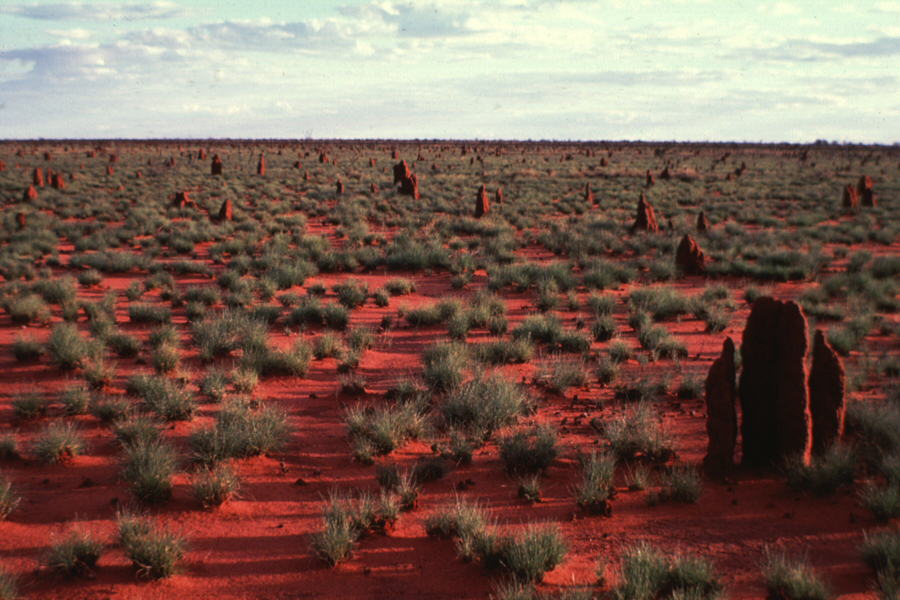
(Picture shows the Tanami Desert in northern Australia)

Girls Names of Australian Aboriginal Origin – Part 2

28 Sunday Jul 2013

Posted by A.O. in Name Themes and Lists

≈ 16 Comments

Tags

animal names, astronomical names, Australian Aboriginal names, baby name books, bird names, birth notices, famous namesakes, fictional namesakes, flower names, Greek names, hebrew names, historical records, Italian names, Japanese names, locational names, mythological names, name history, name meaning, name popularity, name trends, names from books, names from fairy tales, names from movies, names from television, names of businesses, names of horses, names of ships, nature names, nicknames, plant names, Polish names, popular names, Romanian names, Slavic names, unisex names, varieties of fruit

OLYMPUS DIGITAL CAMERA

My first lists of names from Aboriginal languages are the most popular articles on the blog, so it seemed time for another selection. These names are all ones which have been used as personal names in Australia. I have done my best to elucidate meaning and history as much as possible.

Alinta

Alinta means “flame” in one of the traditional languages of South Australia; it was published in a dictionary by the Royal Society of South Australia in 1891. The name was popularised in 1981 when it was featured in the award-winning mini-series Women of the Sun. Each episode portrayed fictionalised accounts of lives of Aboriginal women in Australian society through history, and the first was Alinta: The Flame. It shows first contact between an Aboriginal tribe and Europeans, when early settlers encounter a tribe while searching for grazing land. The tribe’s culture is threatened by the newcomers, and the tribe is wiped out. The only survivors are a woman named Alinta and her child; Alinta vows that her daughter will “carry the torch” for her culture. There are several businesses in Australia named Alinta, most notably a Western Australian energy company, one of the largest in Australia, and named with the Aboriginal meaning in mind. There is also an Australian-bred variety of strawberry called Alinta. It’s not a very unusual name here, and there are several young actresses with the name. Alinta is also used as a name in Romania, where it means “caress”.

Arika

Arika is a name from the Waka Waka people of south-east Queensland, meaning “blue water lily”. There are several species of blue water lily native to Queensland, and they are used as bush food, for all parts of the plant are edible. In Aboriginal mythology, water lilies are a gift from the Rainbow Serpent, and sometimes in Indigenous astronomy, small stars were seen as water lily bulbs. In the novel Book of Dreams by Traci Harding, the meaning of the name is translated, and it says that in the past, Aboriginal women named Arika were given the name Lily by white people – which suggests that Arika might be a good name to honour a great-grandma Lily. Australians named Arika include Indigenous artist Arika Waulu Onus, and Arika Errington, who works in Aboriginal health, and contacted the blog to tell us about her name. I saw several children and teens named Arika online, mostly from Queensland, so it seems as if this name could be today’s Nerida. Arika sounds a bit like Erica, and is an angram of the Japanese name Akira, while having a similar meaning to Lotus. Possible nicknames that occur to me are Ari and Riki.

Jedda

Jedda (1955) was the first Australian film in colour, the last film of famous director Charles Chauvel, and the first film to star two Aboriginal actors in leading roles. In the movie, Jedda is an Aboriginal girl raised from infancy by a white woman after her mother died giving birth to her. Although she is curious about her own culture, her adoptive mother forbids her from learning anything about it, with tragic consequences. The film was nominated for the main prize at Cannes, and was a commercial success in Australia. In the movie, the name Jedda means “little wild goose” – a forerunner of the chase she will engender. I am not sure if the meaning was invented for the film, or drew on local knowledge; Jedda certainly exists as an Aboriginal name in historical records before 1955. An Aboriginal lady told me that she understood the name Jedda (which was her daughter’s name) as “little child”, but she didn’t say what language that was from. This is reasonably well used as a girl’s name, being similar to Jenna and Jetta – but I have seen it on a boy, because it shortens to Jed, and is also a plant name, because jedda (Jedda multicaulis) is a native shrub.

Kalina

Kalina means “love” in the extinct Wemba-Wemba language of north-west Victoria and south-west New South Wales. It has often been used as a place name, street name, a name for businesses and organisations, and sometimes as a girl’s name in Australia, but I’m not sure whether it was used as a personal name by the Wemba-Wemba people. It is also a literary name, because Kalina is one of the brumbies in the Australian classic children’s series, The Silver Brumby, by Elyne Mitchell – although in this case, Kalina is a white stallion, and his name is understood to mean (in horse language) “marvellous beauty of frost on snow”. Kalina is also a Slavic name which means “cranberry bush”; in Romania it means “rowan tree”, and in Poland it means “virburnum bush”. This is a pretty cross-cultural name which has several attractive meanings, and seems very easy to wear, being similar to Karina, Katrina and Kalista.

Leumeah

Leumeah is an outer southern suburb of Sydney, in the Macarthur region. It was settled by John Warby, a convict explorer who was transported here in 1792. In 1802, Warby was given the job of protecting cattle roaming free south-west of Sydney. Here he befriended the Tharawal people who lived in the area, and learned some of their language. In 1816 he was granted land on which to build a house, barn and stables; the barn and stables are still standing – one of them is a restaurant and the other a motel. (Just to confuse things, the stables is called The Barn Restaurant). Warby named his farm Leumeah, which means “here I rest” in the Tharawal language, and this became the name of the suburb. It is pronounced LOO-mee-uh. I have seen one or two girls given this name, and it seems like an especially happy name for an Australian, as it came about from a rare case of friendship between Aborigines and European settlers. The sound of it is quite on trend, and Lulu could be a nickname.

Marlee

Marlee is a small town in mid-northern New South Wales, whose name means “elder tree” in the local Biripi language. Native Elderberry or Yellow Elderberry is Sambucus australasica; its berries are bush food and they are sweeter than the variety from the northern hemisphere. Marlee is a popular name for houses and streets, suggesting leafy abundance, and it is not uncommon as a girl’s name here. Marlee also means “swan” in the Nyungar language of Western Australia, so it has a nice meaning in two languages. It is a rare week when I don’t see a baby named Marli, Marlie, Mahli or Mali in the birth notices, and Marlee fits in perfectly – in fact there was a Marlee in this week’s birth announcements. You could see these names as attempts to “feminise” Marley, but they could just as easily be short forms of Marlene, Mahlia or Malia. Marlee seems like a great way to join this trend with a specifically Australian meaning.

Narelle

Queen Narelle was the wife of King Merriman (or Umbarra), an important elder of the Yuin people in the latter part of the 19th century. The Yuin people are the traditional owners of the South Coast region of New South Wales, in the Bermagui area. Aboriginal people traditionally did not have kings or chiefs, and the title of “king” was given to certain elders by white people as a (misguided) mark of respect. There is a famous photo of Queen Narelle’s well-attended funeral taken around 1895, which shows black and white people mourning for her together, so it does seem as if Narelle and Merriman were able to form a bridge between cultures, or that relations in the 19th century could be harmonious. You may see Narelle translated as “woman from the sea” in baby name books, but in fact the meaning isn’t known; it is pronounced nuh-REL. Narelle first charted in Australia in the 1920s at #362, and reached the Top 100 in the 1940s. It peaked in the 1950s at #50, and was out of the Top 100 in the 1970s. It hasn’t ranked since the 1980s or charted since the 1990s. The name took a dive in the late 1970s, when it featured on highly popular comedy series The Naked Vicar Show. Narelle was a slightly dim-witted, mildly tarty woman – hence the plummeting popularity of the name, which immediately lost all cachet. However, Narelle is actually a pretty name, and the TV show has long been off the air. It even fits in with the trend for -ell names for girls, and could have fashionable Nell or Nellie as the nickname. Names from the 1950s are predicted to make a comeback: could Narelle be one of them?

Nyah

Nyah is a small town in Victoria on the banks of the Murray River, pronounced NY-ah. It began as a utopian socialist community in the late 19th century, but as utopian socialism went out of fashion, it lost the necessary government support, and it isn’t now any more utopian or socialist than the next country town. Its name means “this bend (of the river)” in the local Boorung language – the bend of the Murray River at Nyah was an important boundary marker for the Boorung people. The region around Nyah has several Indigenous sacred sites, and in the surrounding state forests, anthropologists have discovered many interesting artefacts of Aboriginal culture. I know of someone with this name, and it seems attractive and simple, similar in sound to popular names like Maya, while also a place name important to Indigenous heritage.

Talia

Talia is a small town on the Eyre Peninsula in South Australia whose name means “near water” in one of the local languages – appropriately enough for a town by the sea. It may be from Wirangu, or one of its closely related languages. Talia has charted in Australia since the 1970s, which seems to follow its inclusion in Aboriginal Words and Place Names by Alexander Wyclif Reed (1965). It first ranked in the 1980s at #483, and hit its peak in 2009, when it joined the New South Wales Top 100 at #91. Since then it has rapidly declined, and is now #222. The variant spelling of Tahlia has been much more successful, which has been in the Top 100 since the 1990s, peaked in 2009 at #36, and is now #78. Tahlia may be more than an attempt to make clear the Australian pronunciation of Talia – it may also be to differentiate it from international names, because Talia is known as a girl’s name in several other cultures. Talia is a variant of the modern Hebrew name Talya, meaning “dew of God”, and the Italian form of the Greek name Thalia, meaning “blooming”. It can also be used as a short form of Natalia. Talia was the name of the princess in an Italian folk tale on which Sleeping Beauty was based. This is a pretty cross-cultural name with a specifically Australian meaning, and although it is less popular than Tahlia, that may make it more attractive to some parents.

Yindi

Yindi was the name of a ship, one of four that the Australian government presented to the navy of the Philippines as a gift in 1958. Each of them were given Aboriginal names taken from The Australian Language by Sidney J. Baker (1945). The first ship was the Yindi, whose name is translated as “sun”; in most Aboriginal cultures, the sun is female. Yindi also means “to descend” in the Yindjibarndi language of Western Australia, and the name may remind you of the Australian band Yothu Yindi, which means “child and mother” in the Yolngu language of the Northern Territory. I saw a baby girl named Yindi in a birth notice last year, and it struck me as a really stylish choice, which stands out from the crowd and has a sunny meaning.

POLL RESULT: People’s favourite names were Talia, Alinta, and Kalina, and their least favourite were Leumeah, Jedda, and Narelle.

(Photo shows Nymphaea gigantea – a species of blue water lily native to south-east Queensland; © Raimond Spekking / CC-BY-SA-4.0 (via Wikimedia Commons)

Questions About Names

14 Sunday Jul 2013

Posted by A.O. in Your Questions Answered

≈ 5 Comments

Tags

Australian Aboriginal names, banned names, celebrity baby names, Dutch names, famous namesakes, Google, Japanese names, locational names, middle names, modern classics, name days, names from songs, names of gangs, nicknames, planet names, popular names, rare names, royal baby names, royal names, Russian names, unisex names, varieties of flower

survey-2

This is a sample of the many random questions about names which get searched to reach the blog. I do try to answer them in posts if I can, but these are ones which I can’t see any way of subtly working into blog posts at this time.

Is it illegal to call your daughter Talula?

This gets Googled several times a month. I guess it’s because of the little girl from New Zealand called Talula Does the Hula From Hawaii whose name was changed by the courts. The Talula part wasn’t the problem, and it’s perfectly legal as a name.

Are girls named Georgia successful?

I’m sure any successful Georgia would be insulted by the suggestion that their name was entirely responsible for their achievements.

Are there any queens named Nyree?

Not any that rule as monarchs in an official capacity.

Why hasn’t there been an English king named after Alfred the Great?

Maybe because he was a king of Wessex, and not of England. Or because they didn’t want the obvious comparison to be made, in case the other King Alfred was nicknamed Not-So-Great.

What is the queen’s second name?

Ooh, I bet you were doing some royal baby name sleuthing. It’s Alexandra.

Ned Kelly‘s middle name?

He didn’t have one – he was just Edward Kelly.

What does Ballarat mean in Aboriginal language?

It’s thought to come from the local Wathaurong name for the area, balla arat, translated as “resting place”.

What other names were considered instead of Victoria for [the state of] Victoria in Australia?

I don’t think any other names were considered – it was named in honour of Queen Victoria because it was she who signed the Act of Parliament separating it from New South Wales in 1850.

What was the first name for South Australia?

The first Europeans to give it a name were the Dutch in 1627; they called it Pieter Nuyts Land after the chief explorer on their expedition.

What other things is Antarctica called?

The Antarctic, The South Pole (informal), The White Continent (poetic), The Ice (slang).

What is the name of the last [known] planet [in our solar system]?

Neptune, and if you count dwarf plants, Eris.

What was [notorious bank robber] Darcy Dugan’s gang’s name?

They sarcastically called themselves The Lavender Hill Mob or The Lavenders, after the 1951 movie starring Alec Guiness.

Abby, Abbie or Abbey – which is the correct spelling?

As far as I know, there isn’t a “correct” spelling, and these are all accepted short forms of Abigail.

What is the Australian spelling of the name Milly?

There isn’t a specifically Australian spelling, but Millie is more common here, as elsewhere.

How do you pronounce Mila in Australia?

MEE-lah or MEE-luh.

How do you pronounce the name Atticus?

AT-ih-kus.

How is Sadie a nickname for Sarah?

It doesn’t really make sense to me, either!

What name is more modern – Poppy, Sienna or Darcy?

Sienna.

Is Riley a classic name or a modern name?

As a boy’s name, it’s a modern classic.

What’s a girl name that starts with Fin-?

Finola.

Is there a flower named Maude?

There’s a variety of wisteria named Aunt Maude; it’s from the American south.

Is there a rose named Imogen?

Rosa indica v. Imogen was one of the first Australian-bred China tea roses, dating from the 1840s and created by John Bidwill, a friend of John Macarthur’s who was the first person to breed different varieties of plants in Australia. The “Imogen” rose was pure white, with clustered blooms. It doesn’t seem to exist any more.

Baby names that rhyme with Archie

Chachi, and the Japanese name Hachi – but it’s not an exact rhyme, because the stress is on the second syllable, not the first.

Will the name Beatrix become popular because of Fifi Box?

Probably not, but it’s so rare it would be significant if it even began charting.

Will Isabella become dated?

Chances are that it will, eventually. It’s never been this popular before, so I couldn’t put a timeline on it.

What is the name day for Azaria?

December 16.

Is the christening name commonly used in Australia?

If you mean, do most people who are christened in Australia use the name they were christened by as their everyday name, then I’m pretty sure the answer is yes. But if you mean, are most Australian babies christened, and therefore have a christening name to use, then I’m not sure. It’s certainly normal to be christened here, but also normal not to be.

Songs [for the] name Sophie

One is Song for Sophie by the Danish singer Aura Dione, who has spent some time in Australia.

Is the name Reginald used in Russia?

Not usually, but they have their own version of the name, Rengold.

Why do so many boys names become girls names?

I don’t think it’s the case that many boys names become used for girls (I can really only think of a handful of cases where that’s happened). However, unisex names do seem to become more often used by girls than by boys, and that’s because parents of boys have a tendency to stop using them once they become “too girly”. Having said that, there are several formerly unisex names that have become almost entirely masculine, such as Clarence and Elvis, so parents of girls must also sometimes decide that a name has become “too boyish” to use.

Do boys dislike having a unisex name?

I know quite a few boys under 15 that have a unisex name (including one of my nephews), and they are all fine with it. To be fair though, their names are ones which are mostly male, although considered acceptable to give to girls (eg Darcy), almost equally male and female (eg Remy), or so rare that they aren’t strongly associated with any particular gender (eg Bay).

Names of everyone who died in World War I

More than 37 million people (including civilians) died as a result of World War I – that’s a lot of names! I suggest you start at the Australian War Memorial, which has a roll of honour for all Australians killed in service, then ask the staff for help in accessing international war records.

Was there anyone named Mikayla on the First Fleet?

No.

Diminutive Names for Girls

23 Sunday Jun 2013

Posted by A.O. in Name Themes and Lists

≈ 14 Comments

Tags

Australian Aboriginal names, Babyology, birth notices, english names, epithets and titles, famous namesakes, fictional namesakes, French names, German names, historical records, Indian names, locational names, mythological names, name history, name meaning, name popularity, names from songs, names from television, names of animals, names of comics, names of lions, nicknames, popular names, retro names, Scottish names, slang terms, Spanish names, Swedish names, underused names, unisex names, vintage names

6729_1302317773These short days of winter seem like the perfect time to cover names which are diminutives, nicknames, pet names, and short forms of names, but can also be used as full names.

Annika

Annika is a Swedish diminutive of the name Anna, so it’s one of those cases where the pet form of the name is longer than the name itself. The name became well known in the English-speaking world through Astrid Lindgren’s Pippi Longstocking books, because Annika is the little girl who lives next door to Pippi and is one of her friends. There are several variants of the name, such as Anneka and Anika, although while Anneka is said exactly the same way as Annika (AN-ih-ka), Anika is pronounced a-NEE-ka, and is also an Indian name. Annika has charted since the 1970s, and peaked in 2010 at #165; it’s now #196. Although in regular use, it’s never become popular. I think it’s pretty; in fact I wish this had been used as my own nickname!

Elsa

Elsa is a short form of the name Elisabeth. This name reminds me of the 1930s, as there were several prominent Elsas active during those years. One was stylish Italian fashion designer Elsa Schiaparelli, who was Coco Chanel’s greatest rival in pre-war Paris. Another was bohemian actress Elsa Lanchester, who studied under Isadora Duncan and played the “Bride of Frankenstein” on film. American hostess Elsa Maxwell threw lavish parties for the rich, including a scavenger hunt in Paris which disrupted the entire city. In fiction, Elsa is the heroine of Wagner’s opera, Lohengrin, and the pretty and fashionable young mistress in Françoise Sagan’s Bonjour Tristesse. The name may also remind you of Elsa the lioness, from the non-fiction books and movies, Born Free and Living Free. Similar to fashionable Elsie, but with a sophisticated European twist, this name has gained more attention since Chris Hemsworth married lovely Spanish actress Elsa Pataky. Elsa is #297 in Victoria.

Heidi

Heidi is a short form of the name Adelheid, the German form of Adelaide. This name became well known in the English-speaking world due to the best-selling children’s book, Heidi, by Johanna Spyri; the story of a curly-haired young orphan girl growing up in the Swiss Alps with a gruff, hermit-like grandfather. Although it was translated into English in the late 19th century, the name Heidi only became famous after the 1937 movie was released, starring Shirley Temple. Heidi first charts in Australia in the 1940s, and ranks in the 1950s, debuting at #527. The name skyrocketed to peak in the 1970s at #74. Heidi dropped out of the Top 100 in the 1980s and sunk to #213 in the 1990s – the band Killing Heidi probably didn’t help. It climbed again, and was Top 100 in 2010, then fell the next year. Last year it was one of the fastest-rising names for girls, rising to #76 nationally. It is currently #87 in New South Wales, #85 in Victoria, #72 in Queensland, #57 in Tasmania and #55 in the Australian Capital Territory. This is a spunky little name which just won’t give up – it keeps climbing up and down the charts as if they’re the Alps, but like little orphan Heidi, our hearts can’t let it go.

Jinty

Jinty is a Scottish pet form of Janet, a variation of French Jeanette. One prominent person with this name is British historian Dame Janet “Jinty” Nelson. You may also have heard of the Scottish-born Australian artist and designer, Jinty Stockings. There used to be a British girl’s comic called Jinty, much loved by readers for its bizarre storylines which dealt with dystopian futures, school bullies with mind control, mermaid mothers and the like. There is also a steam locomotive named Jinty in The Railway Series on which the kid’s TV show Thomas and Friends is based;  small tank engines were once nicknamed “jinties” by railwaymen. I saw this name in a birth notice a while ago, and was charmed by its jauntiness. Although it’s not a common name in Australia (I found only one woman named Jinty in Australian historical records and that may have been a nickname), there’s something vaguely Australian-sounding about it. Perhaps it’s partly because it sounds like Jindy, the affectionate name for the town of Jindabyne, which comes from an Aboriginal word for “valley”.

Lola

Lola is a short form of the name Dolores, taken from a Spanish title of the Virgin Mary, Maria de los Dolores, meaning “Mary of Sorrows”. The title refers to the Catholic devotion, the Seven Sorrows of Mary, reflecting on sad events during Mary’s life as the mother of Jesus. Despite this serious meaning, Lola is usually thought of a fun and even sexy name, and this can be attributed to Lola Montez. Born Eliza Gilbert in Ireland, she was beautiful and exotic-looking, and billed herself as a “Spanish” dancer. Her routines were considered salacious, and she was even more famous as a courtesan, being the mistress of Ludwig I of Bavaria. Lola toured Australia in 1855 where she enraptured audiences but attracted controversy; her beauty manual is illustrated by Australian cartoonist Kaz Cooke. After Ms Montez, Lola was a bad girl name, inspiring songs about showgirls, girls from bars in SoHo, and girls who get what they want. Lola was #203 in the 1900s, and peaked in the 1930s at #74, leaving the Top 100 the following decade. It was off the charts between the 1960s and 1990s, returning in the 2000s at #393, coinciding with the publication of the Charlie and Lola book/TV series, where the name got a new image as that of a lively little girl. Lola has been Top 100 since 2010, when it debuted at #97. It is currently #75 nationally, #86 in New South Wales, #59 in Victoria, #61 in Tasmania, #92 in Queensland, and #62 in the Australian Capital Territory. Cute yet alluring, it’s hard to resist the charms of this retro name.

Mimi

Mimi is a short form of all the Mary names – Mary, Marie, Maria, Miriam, and so on, although in practice it is used as a nickname for almost any name with an M sound in it. Some famous Mimis include Miriam “Mimi” Macpherson, actress Miriam “Mimi” Rogers, singer Mei “Mimi” Choo, and children’s author Mimi King. Mariah Carey is called Mimi by her family and close friends. Sometimes it is used as a pet form of certain male names; an example of this is Mislav “Mimi” Saric, who plays soccer for the Adelaide Raiders. The most famous fictional person of this name is Mimi from Puccini’s opera, La bohème; Mimi’s real name is Lucia, so Mimi can be used as a generic “cute” nickname. Mimi has an Australian connection, because in the Indigenous folklore of Arnhem Land, the Mimi are a race of spiritual beings who are often referred to as “Australian fairies”. Mimis are extraordinarily long and thin, and live in rock crevices. They taught humans how to hunt, cook and paint, and are usually harmless, but can be mischievous. The name Mimi is pronounced mee-mee, and seems to be rarely chosen as the name on the birth certificate. That seems unfair, when many brief, and perhaps insubstantial, names are highly popular for girls.

Nellie

Nellie is a pet form of Nell, a medieval short form of names such as Helen, Ellen and Eleanor. Australia has had two famous performers with this name. One of them is Dame Helen “Nellie” Melba, the charismatic operatic prima donna who reigned at London’s Covent Garden during its golden age. During her career, she was invited to sing for many of the royal heads of Europe, and was mobbed by fans, just like pop singers are today. The other is Eleanor “Nellie” Stewart, a beautiful singer and actress who made her name playing Nell Gwynn in Sweet Nell of Old Drury; after that she was always known as “Sweet Nell”. She starred in Sweet Nell, one of Australia’s earliest films. Nellie was #31 in the 1900s, and left the Top 100 in the 1930s. It hasn’t charted since the 1950s – coincidentally or not, that was the decade the enduring children’s song Nellie the Elephant was released. This vintage name is now a very hip choice, and I’m sure we will see more of it. It is currently #494 in Victoria.

Pippa

Pippa is a short form of the name Phillipa. It gained fame in 1841 when Robert Browning published his play-poem, Pippa Passes, which has the famous lines, God’s in His heaven/All’s right with the world! The Pippa of the poem is an innocent young silk-winder named Felippa, nicknamed Pippa. Pippa seems to be more readily accepted as a full name in Britain and Australia than elsewhere, and I used to think of it as a “soap opera” name, because there were two Pippas in Home and Away, and actress Pippa Black had a leading role on Neighbours. However, since 2011 we’ve all connected the name to Phillipa “Pippa” Middleton, who became an immediate sensation after appearing at her sister Catherine’s wedding to Prince William. The name is already Top 100 in Victoria, where it is #73, Queensland, where it is #84, and Tasmania, where it is #93. Other states to follow? Probably.

Romy

Romy is a German short form of Rosemarie, although it can also be used as a male name, possibly short for Romeo or Roman. The most famous person with this name is probably German-Austrian actress Rosemarie “Romy” Schneider, who gained fame in France during the 1960s and ’70s. In the 1990s, the name got some publicity with the release of ditzy gal-pal comedy, Romy and Michele’s High School Reunion, with the role of Romy played by Mira Sorvino. The name has been picked up by several celebrities, including cricketer Ed Cowan and his wife Virginia Lette, who welcomed their daughter Romy last year. Suzi Catchpole from Australian website Babyology lists Romy as a name with “swagger and sass” – it’s certainly very hip at the moment, a cool twist on popular Ruby and Rose. The name is pronounced RO-mee, like the first two words in the sentence, Row me to the shore.

Willa

Although Willa can be used as a short form of Wilhelmina and other names, it is actually a full name in its own right (so it’s slightly cheating to include it). It is the English form of the medieval French name Guilla, a feminine form of Guillaume – the French form of William. Famous people named Willa include novelist Wilella “Willa” Cather, New Zealand actress Willa O’Neill, and singer Willa Ford, whose real name is Amanda Modana – her stage name comes from her original surname, Williford. Another Willa is young actress Willa Holland, who has starred in The OC and Gossip Girl TV series. The Alternative Guide to Baby Names lists Willa as an Aboriginal name meaning “wife”, but the author doesn’t say which language it is from; in a language from the Melbourne region, willa means “possum”. There are so many place names here that begin with or contain Willa-, such as Willa-Willa Ridge near Adelaide, and Willa Willyong Creek near Broken Hill, that the name does have a rather Australian feel to it. Willa has been gaining in popularity, not only riding the success of its brother name, William, but providing a hip alternative to popular Willow. It is #468 in Victoria.

POLL RESULT: People’s favourite names were Elsa, Pippa, and Willa, and their least favourite were Heidi, Mimi, and Jinty.

(Picture of silver coin in commemoration of Dame Melba from Perth Mint)

← Older posts
Newer posts →

Enter your email address to follow this blog

Categories

Archives

Recent Comments

A.O.'s avatarwaltzingmorethanmati… on Zarah Zaynab and Wolfgang…
Madelyn's avatarMadelyn on Zarah Zaynab and Wolfgang…
JD's avatardrperegrine on Can Phoebe Complete This …
A.O.'s avatarwaltzingmorethanmati… on Rua and Rhoa
redrover23's avatarredrover23 on Rua and Rhoa

Blogroll

  • Appellation Mountain
  • Baby Name Pondering
  • Babynamelover's Blog
  • British Baby Names
  • Clare's Name News
  • For Real Baby Names
  • Geek Baby Names
  • Name Candy
  • Nameberry
  • Nancy's Baby Names
  • Ren's Baby Name Blog
  • Sancta Nomina
  • Swistle: Baby Names
  • The Art of Naming
  • The Baby Name Wizard
  • The Beauty of Names
  • Tulip By Any Name

RSS Feed

  • RSS - Posts

RSS Posts

  • Celebrity Baby News: Melanie Vallejo and Matt Kingston
  • Names from the TV Show “Cleverman”
  • Can Phoebe Complete This Sibset?
  • Zarah Zaynab and Wolfgang Winter
  • Baby, How Did You Get That Name?
  • Celebrity Baby News: Media Babies
  • Celebrity Baby News: Adelaide Crows Babies
  • Celebrity Baby News: Chris and Rebecca Judd
  • Names at Work: Name News From the World of Business and Employment
  • Celebrity Baby News: Sporting Round Up

Currently Popular

  • Celebrity Baby News: Jacinta Allan and Yorick Piper
  • Celebrity Baby News: Jacinta Allan and Yorick Piper
  • Celebrity Baby News: Craig Thomson and Zoe Arnold
  • Celebrity Baby News: Ed Husic and Bridget Tilley
  • The Top 100 Names of the 1940s in New South Wales

Tags

celebrity baby names celebrity sibsets english names famous namesakes fictional namesakes honouring locational names middle names name combinations name history name meaning name popularity name trends nicknames popular names saints names sibsets surname names twin sets unisex names

Create a free website or blog at WordPress.com.

Privacy & Cookies: This site uses cookies. By continuing to use this website, you agree to their use.
To find out more, including how to control cookies, see here: Cookie Policy
  • Subscribe Subscribed
    • Waltzing More Than Matilda
    • Join 517 other subscribers
    • Already have a WordPress.com account? Log in now.
    • Waltzing More Than Matilda
    • Subscribe Subscribed
    • Sign up
    • Log in
    • Report this content
    • View site in Reader
    • Manage subscriptions
    • Collapse this bar
 

Loading Comments...