• About
  • Best Baby Names
  • Celebrity Baby Names
  • Celebrity Baby Names – Current
  • Celebrity Baby Names – Past
  • Featured Boys Names
  • Featured Girls Names
  • Featured Unisex Names
  • Links to Name Data
  • Waltzing on the Web

Waltzing More Than Matilda

~ Names with an Australian Bias of Democratic Temper

Waltzing More Than Matilda

Category Archives: Name Themes and Lists

Names of Fictional Characters for Boys

17 Sunday Nov 2013

Posted by A.O. in Name Themes and Lists

≈ 5 Comments

Tags

American names, American slang terms, berry names, created names, Dutch names, english names, ethnonyms, famous namesakes, fictional namesakes, food names, fruit names, Greek names, Irish names, locational names, name history, name meaning, name popularity, name trends, names from movies, names from television, nature names, nicknames, North American dialect names, Old English names, Old Gaelic names, plant names, rare names, surname names, UK name popularity, unisex names, US name popularity

an_27510937Asterix

Asterix is the hero of the Asterix comic books by René Goscinny and Albert Uderzo. The comic book series follows the adventures of a village of Gauls resisting Roman occupation. They manage to do this through a magic potion brewed by their local druid, which temporarily gives superhuman strength. Asterix is a diminutive warrior of great shrewdness, and because of his cunning and common sense, is usually chosen to lead important missions. Most of the Gauls in the comics have names ending in a suitably Gaulish -ix, echoing famous Gauls from history, such as Vercingetorix. However, each name is also a jokey pun – translations into English have been very clever at maintaining the spirit of the humour. In the case of Asterix, his name is a play on the typographical mark – the word asterisk comes from the Greek for “little star”, and Asterix is the “star” of the comic series. I have seen Asterix on an Australian baby, and this makes a quirky name for your own little star.

Atreyu

Atreyu is a character in the fantasy novel, The Neverending Story, by Michael Ende. In fact, he is the hero of the book which is read by a little boy named Bastian Bux, so he exists in a story within a story. Atreyu is a young warrior who is sent on a great quest to save the land of Fantastica by seeking a cure for the mysterious illness suffered by the land’s empress. He serves as a projection of Bastian’s “inner hero”, and only Atreyu can save Bastian from his own mistakes. In the 1984 movie version, Atreyu is played by Noah Hathaway. Atreyu was orphaned as a baby, and his name means “son of all” in his own (fictional) language, because he was raised by his entire village. It is pronounced ah-TRAY-yoo. Atreyu has strong connections with music, because not only is there a band with the name, but Atreyu himself has been referenced in songs. In the novel’s original German text, his name was Atréju, and this has proven a slightly geekier alternative.

Caspian

Caspian is a character in C.S. Lewis’ children’s fantasy series, The Chronicles of Narnia. As a young boy in Prince Caspian, he had to fight for his throne against his usurping uncle to become king of Narnia, and as a youth in The Voyage of the Dawn Treader, he led a daring expedition to the end of the world. In The Silver Chair, we meet him as a very old man, having reigned wisely and well, but also suffering personal tragedy. In the movies, he was played by Ben Barnes. Because of his great sea voyage, he is known as Caspian the Seafarer. Perhaps because of this connection, Lewis named his character after the Caspian Sea, the world’s largest inland body of water, which is bound by Russia, Azerbaijan, Iran, Turkmenistan, and Kazakhstan. It is named after the Caspi, an ancient people believed to be the same as the Kassites, who were from modern-day Iran. The meaning of their tribal name is unknown. Caspian is a romantic geographic name which sounds rather like Casper with a Latin -ian ending, as in Lucian or Julian.

Dexter

Dexter Morgan is the protagonist of the Dexter series of psychological thrillers by Jeff Lindsay. Dexter works for the police as a forensic blood spatter analyst, but is a serial killer in his spare time. A violent sociopath, he has been carefully trained to satisfy his homicidal urges by only killing murderers, rapists, and other criminals. Dexter is an English occupational surname for someone who dyed cloth, literally “dyer” in Anglo-Saxon. The word was originally specifically feminine, but Dexter has overwhelmingly been used as a male name. Dexter also happens to coincide with the Latin for “right handed”, with connotations of being skilful. Dexter Morgan is certainly dexterous in committing his crimes, while it seems apt the name is connected with dying. The books have inspired a popular television series, with Michael C. Hall in the title role, and since Dexter began airing in 2006, the name Dexter (which was about to slip off the Top 1000) has gone steadily up in popularity in the US; it is currently #362. It may seem strange that a serial killer could save the name, but Dexter Morgan is an oddly sympathetic murderer. Michael C. Hall makes him both likeable and amusing, and (perhaps slightly worryingly) female viewers find the character very attractive. Dexter fits in the surnames-for-boys trend, and has a cool X sound in it. The name Dexter is #218 in Victoria.

Dorian

Dorian Gray is the protagonist of Oscar Wilde’s only novel, The Picture of Dorian Gray. Dorian is an extremely handsome young man, who wishes his portrait could age while his own beauty remain changeless. His narcissistic wish is granted, and he spends his life in debauchery while retaining a youthful and innocent appearance. Meanwhile, Dorian’s hidden portrait bears the mark of his every corruption. The story has often been adapted into film; the most recent is Dorian Gray, with Ben Barnes in the title role. It is usually assumed that Wilde took the name Dorian from the Dorian people of ancient Greece, whose name means “upland, woodland”. The ancient Greeks did have names from this source, such as Dorieus and Doris. However, Dorian is also an Irish surname from O’Deoradhain, meaning “son of Deorain”. Deorain is an Old Gaelic name meaning “exile, wanderer, stranger”. Use of the name predates the novel’s publication, and in Eastern Europe it may be a pet form of Teodor. Dorian is sometimes used for girls. Despite Dorian Gray being an evil character, the name has remained in use, and is #558 in the US, and #549 and rising in the UK.

Heathcliff

Heathcliff is the male lead character in Emily Bronte’s Wuthering Heights, the foster-brother and love interest of Catherine Earnshaw. The novel explores the deep and obsessive love that Cathy and Heathcliff have for each other, and how the thwarting of that love turned Heathcliff into a tortured monster – or perhaps revealed the brute he already was. It’s an eerie tale, but many will think of Heathcliff as the Byronic hero and romantic lover whose passion lived beyond the grave. In film, he has been portrayed by Laurence Olivier, Timothy Dalton, and Ralph Fiennes. Heathcliff is an uncommon English surname meaning “heath on the cliff”; it doesn’t seem to have been used as a personal name before Wuthering Heights, and only rarely since. The name connects Heathcliff to the Yorkshire moors, the natural world outside society where Heathcliff and Cathy can love each other freely. Actor Heath Ledger was named after Heathcliff (and his sister after Catherine!), and as Heath is a fashionable name at present, Heathcliff doesn’t seem too bizarre as a long form, although admittedly a bold choice.

Huckleberry

Huckleberry “Huck” Finn is the protagonist of Mark Twain’s Adventures of Huckleberry Finn, and the best friend of the hero in The Adventures of Tom Sawyer. Huck is the son of the town drunk, a neglected vagabond who lives a carefree existence until he is adopted and “civilised”. He runs away with an escaped slave named Jim, and the two of them travel down the Mississippi River by raft in search of freedom. Huck has been portrayed on film by Mickey Rooney, Ron Howard, Elijah Wood and Jake T. Austin, among others. Huckleberry is North American dialect for the bilberry, although in practice applied to several wild berries. The word has long been part of American slang, usually to suggest something small and insignificant – the perfect name for Huck Finn, a child of little consequence in his town. Later it came to mean “companion, sidekick”. Huckleberry was in occasional use as a personal name prior to the publication of Twain’s novels. This would make a sweet, offbeat name, while Huck is a hip short form.

Rhett

Rhett Butler is the love interest of Scarlett O’Hara in Margaret Mitchell’s Gone With the Wind. A black sheep, he becomes entranced with the spirited Scarlett, and admires her will to survive. Although viewed as a cad by polite Southern society, Rhett is tall, dark, handsome, charming, intelligent, and has a very good understanding of human psychology – especially female – which he utilises to devastating effect. He is the only person who can stand up to Scarlett, and beat her in a battle of wits. In the 1939 movie, the biggest box office smash in history when adjusted for inflation, Rhett is played by Clark Gable. Rhett is a surname which comes from the Dutch de Raedt, meaning “counsel, advice”. Mitchell seems to have chosen the name as an allusion to her first husband, “Red” Upshaw, on whom the character of Rhett Butler is based (with a dash of Rudolf Valentino). Rhett is a sexy bad boy name, not often seen here, although cricketer Rhett Lockyear is one Australian example. In the US, it is #508 and rising.

Rocky

Robert “Rocky” Balboa is the title character in the Rocky movies, played by Sylvester Stallone. Rocky is from the slums of Philadelphia, a grade school drop-out with few skills apart from being able to land punches, so he makes his living as a boxer known as “The Italian Stallion”. Always the underdog, his main weapon (apart from fists like bricks) is a refusal to give up. The movies follow his career through the victories, the losses, the fame, the fortune, the brain damage, and the incredible comeback. Rocky is a humble man with great heart, and although barely literate, possesses a lot of wisdom about life and love. He is named after the boxer Rocky Marciano, whose real name was Rocco. Rocky can be a nickname for similar names, but also signifies incredible strength and toughness. A famous Australian with the name is rugby union champion Rocky Elsom. Rocky is a fun and even cute name, with a namesake that has an important message: it doesn’t matter whether you win or lose, but whether you go the distance.

Sherlock

Sherlock Holmes is the world’s most famous detective, the creation of Arthur Conan Doyle, and the hero of many stories. Known for his use of deductive logic and bewildering array of disguises, he has become an archetype, with his interest in forensic science helping spawn the modern crime genre. The character of Sherlock Holmes was so loved by the public in his own day that Doyle was forced to resurrect him after killing him off, and his popularity continues, with numerous adaptations to stage, radio, film and television – in fact, he is the most prolific character in cinema. Sherlock is an English surname dating to before the Norman Conquest; it comes from the Old English for “shining locks”, referring to someone with fair hair (although dark-haired, brainy Sherlock Holmes does have a “bright head”). Sherlock has been used as a personal name since the 18th century, and early use may have been influenced by Thomas Sherlock, a popular bishop and Christian apologist. Contemporary adaptations of the Sherlock Holmes stories, such as Sherlock, starring Benedict Cumberbatch, and Elementary, starring Johnny Lee Miller, show this character has lost none of his pulling power, although the name is still closely tied to the brilliant detective. Locky would make an appealing short form – more appealing than Shirley, anyway.

POLL RESULT: People’s favourite names were Caspian, Dexter and Rhett, and their least favourite were Asterix, Atreyu, and Rocky.

(Picture shows Benedict Cumberbatch in the title role of the BBC TV series, Sherlock)
Names of Fictional Characters for Girls

10 Sunday Nov 2013

Posted by A.O. in Name Themes and Lists

≈ 18 Comments

Tags

astronomical names, Celtic names, code names, created names, Disney names, Dothraki names, english names, eponyms, fabric names, famous namesakes, fictional namesakes, German names, Google, horticultural terms, Italian words, J.R.R. Tolkien, Latin names, mythological names, name history, name meaning, name popularity, names from invented languages, names from movies, names from television, names of natural features, names of stars, nicknames, Norman-French names, popular names, portmanteau names, pseudonyms, rare names, short forms, Sindarin names, surname names, UK name popularity, unisex names, US name popularity, vocabulary names, Welsh names

Wallpaper-Iridessa-Summer-1

Arrietty

Arrietty Clock is a teenage “borrower” from Mary Norton’s classic children’s fantasy book series, The Borrowers. The borrowers are tiny people who live by “borrowing” everyday items from the Big People, who they call “human beans”. Because of the spirited Arrietty’s curiosity, she and her family end up having far more adventurous lives than the average borrower. In the UK issue of the Japanese animated film Arietty’s World, inspired by the books, Arrietty is voiced by Saoirse Ronan; in the US issue, by Disney actress Bridgit Mendler. Like everything else they own, the borrowers’ names have also been “borrowed”, and used in new ways. Arrietty is reminiscent of the word arietta, meaning “little song, a small aria” in Italian. However, it is also very similar to the name Harriet, and the short form Etty. As Aria and Harriet are quite popular, and Etta very hip, Arrietty is one of those invented names which we are half-surprised wasn’t used before the books’ publication.

Arwen

In J.R.R. Tolkien’s classic fantasy novel, The Lord of the Rings, Arwen Undómiel is an Elven princess, said to be the most beautiful of the last generation of the High Elves. She is the lover of the hero Aragorn, and because she is an immortal, Arwen must sacrifice a great deal to be with her love. In the Peter Jackson films, she is played by Liv Tyler. In the Elvish Sindarin language created by Tolkien, Arwen is said to mean “noble maiden”. However, Tolkien did not invent the name itself, which is a modern Welsh name. It may be a feminine form of Arwyn, which I have seen translated as “very fair, greatly blessed, splendid”. In the UK, the name began charting around the time The Fellowship of the Ring came out, and is currently #654 and rising. This does have a (short) history as a genuine Welsh name, and was given to a very lovely fantasy princess.

Bellatrix

Bellatrix Lestrange is an evil witch in the Harry Potter fantasy series, the Dark Lord Voldemort’s most faithful follower. In the films, she is played by Helena Bonham-Carter. Bellatrix was born into the Black family, and like all members of that clan, she is named after a star. Bellatrix is the common name of Gamma Orionis, a bright star in the constellation of Orion. Its name is Latin for “female warrior”, which was originally given to Capella, and then transferred to Gamma Orionis. It is also known as the Amazon Star, a loose translation of its Arabic name, which means “the conqueror”. Bellatrix Lestrange’s name is apt because she is a skilled warrior for Voldemort, and has won many duels. This name sounds very usable, because it has the popular Bella in it, and the -trix from hip Beatrix. However, while the Harry Potter character has raised the name’s profile, it’s also a stumbling block, because the character is evil – and not in a cool “strong yet misunderstood woman” way. Bellatrix is a fanatical racist with a love for murder and torture, and a starstruck Voldie fangirl with an annoying little-girl voice. So on one hand: great name. On the other: horrible association.

Iridessa

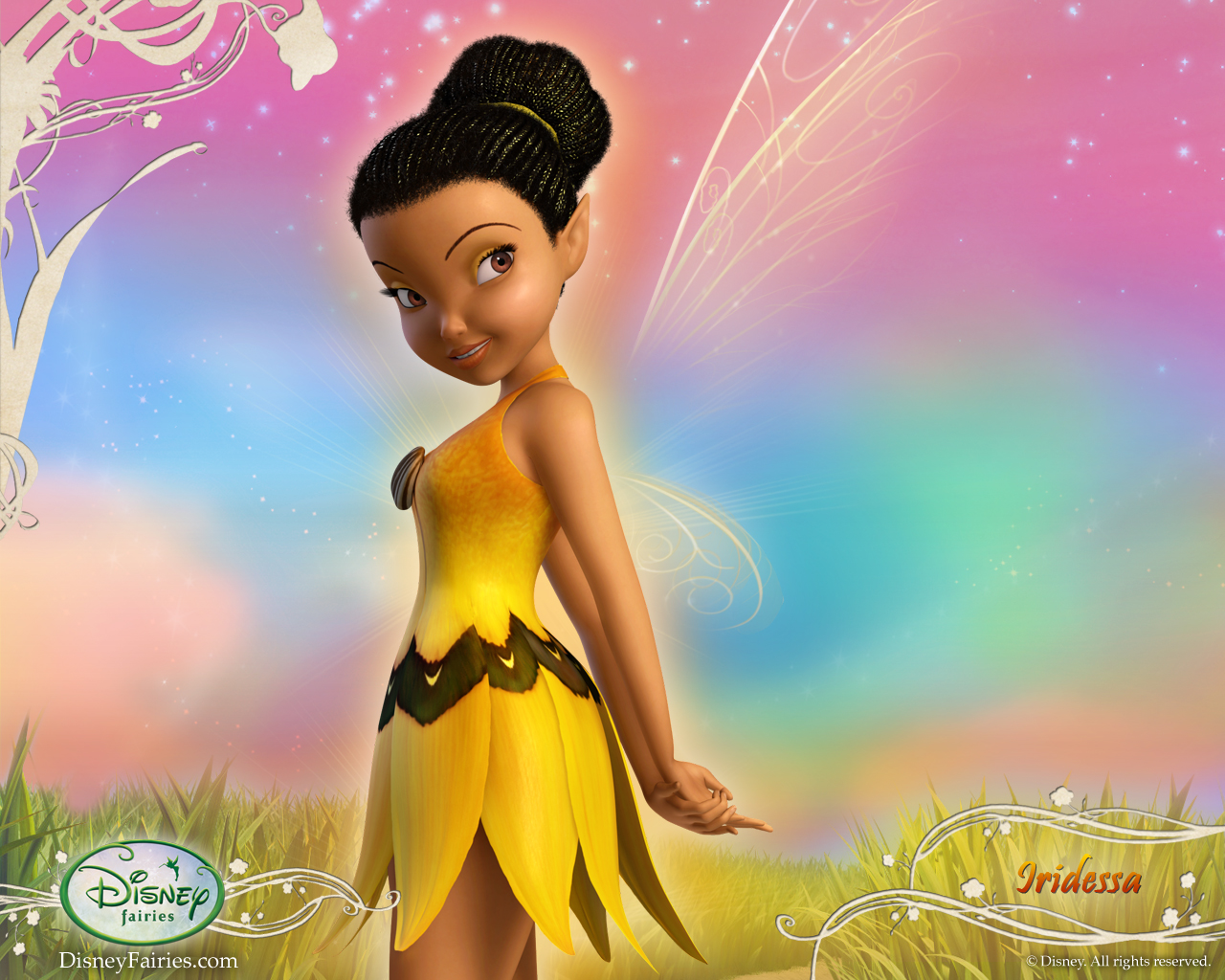
Iridessa is the name of one of the fairies in the Disney Fairies franchise. Her talent is working with light, and she wears a yellow dress, lives in a sunflower, and has clear fairy wings. In the movies, she is voiced by Raven-Symoné. Iridessa is a perfectionist and a worrier; she likes to look on the bright side of things, but can usually sense trouble approaching. When disaster strikes, she rushes in to save the day, and brings sunshine, light and brightness to every situation. The name Iridessa seems to be based on the word iridescent, meaning “producing rainbow-like colours; brilliant, lustrous, prismatic”. The word is derived from Iris, the name of the goddess of the rainbow, so you could see Iridessa as a modern spin on the older name. I have seen a baby with this name, and it’s been frequently Googled, so it seems that people find the name of this fairy intriguing. It’s not surprising, with such an attractive namesake associated with light. Looking for a nickname? Iridessa goes by Dess.

Khaleesi

Khaleesi is extremely unusual as an invented name, because it is not the name of a fictional character, but rather her title. In George R.R. Martin’s fantasy series, A Song of Ice and Fire, khaleesi is the word for the wife of a khal or ruler, in the Dothraki language from the novels. The Dothraki are a nomadic indigenous people without a written language, so the spelling of khaleesi in the novels must come from another culture. In Martin’s novel series, shy Daenerys Targaryen adopts the title of Khaleesi when she weds powerful Dothraki warlord Khal Drogo, and as his queen, grows in strength and confidence, becoming a leader in her own right known as “the Mother of Dragons”. In the television series based on the books, A Game of Thrones, the role of Daenerys is played by Emilia Clarke. Since the television series began airing in Australia, there has been a spike of interest in the name, with about 25 baby girls called Khaleesi born this year. For some reason, the name is far more popular in Queensland than elsewhere – possibly because of the connection with queens.

Lorelei

The Lorelei is the name of a famous rock on the River Rhine in Germany, and also the name of a beautiful water sprite or siren associated with the rock, who is supposed to lure men to their doom. More prosaically, the current of the river is very strong here, which explains the many accidents which have occurred in the area. The character of the Lorelei comes from a 19th century German ballad which poet Heinrich Heine turned into a poem called Die Lorelei, where a golden-haired siren unwittingly distracts men with her beauty so they crash onto the rocks. The poem has often been set to music and turned into songs, and is part of German popular culture. The name Lorelei is a combination of German dialect and Celtic, and means “murmuring rock”. Lorelei is the name of the alluring blonde in Gentlemen Prefer Blondes; in the film she is played by Marilyn Monroe. The name also features in garrulous gabfest Gilmore Girls, where both mother and teen daughter share the name Lorelei (the younger goes by Rory). Comedienne Kat Davidson named her daughter Lorelei “Rory” this year. Said LOR-uh-lie, this is better known in the US, where it is #531.

Pollyanna

Pollyanna Whittier is the title character of the Pollyanna books by Eleanor H. Porter; the series was continued by a number of writers. Pollyanna is an eleven-year-old orphan who is sent to live with her Aunt Polly in New England, and her sunny disposition soon teaches her stern relative, and the whole town, how to play the “Glad Game” – where you always look for something to feel glad about. While many are charmed by the heroine’s upbeat view of life, cynics find her too syrupy and her philosophy simplistic. Because of this, the word Pollyanna has entered our language to mean someone optimistic to the point of naivety or refusal to face facts. Pollyanna is a combination of Polly and Anna – Polly is a medieval variant of Molly, a pet form of Mary. This would be a difficult name to give a child in many ways, but would make a sunshiney middle, and easily shortens to Polly.

Rogue

Rogue is a character from the X-Men Marvel comic books created by Stan Lee and Jack Kirby. She is one of the team of mutant superheroes under the auspices of Professor Xavier, who recruits and trains young mutants to use their powers for the benefit of humanity. Rogue considers her special ability something of a curse, as she involuntarily absorbs, and sometimes removes, the memories, strength, and superpowers of anyone who touches her. For most of her life, she limited her physical contact with others, even loved ones, until after many years she was able to gain full control of her abilities. It was eventually revealed that Rogue was a code name, and her real name Anna Marie. In the movies, she is played by Anna Paquin. A rogue is a scoundrel or rascal. More to the point, a rogue animal is one which separates itself from the herd, and in horticulture the word rogue is used to describe a plant which has an undesirable mutation and must be destroyed. Anna Marie seems to have chosen Rogue as her code name to express her bitterness at the biological difference she had been lumbered with. This name can be used for both sexes; I saw it on a baby girl last year.

Scarlett

Scarlett O’Hara is the protagonist of Margaret Mitchell’s best-selling Civil War novel, Gone with the Wind; in the film version she was played by Vivien Leigh. Slender and attractive, Scarlett is flirtatious and charming, but doesn’t fit the mould of a typical Southern Belle. Smart, feisty, stubborn and very strong-willed, she nevertheless is inwardly insecure. What makes Scarlett such an interesting character are her many flaws – she is vain, selfish, spoiled, unscrupulous and manipulative, but hard as nails, with an overpowering survival instinct. Scarlett is an English surname from Norman French, referring to someone who dyed or sold brightly-coloured cloth, which was often red. It has been used as a unisex name since the 17th century, but is now usually thought of as feminine. The character’s full name is Katie Scarlett O’Hara, and she was named after her grandmother. Margaret Mitchell originally planned to call her heroine Pansy, and changed it to Scarlett just before the novel went to print. Scarlett first ranked in the 1990s at #467, the decade in which American actress Scarlett Johansson made her film debut. It climbed precipitately to join the Top 100 in the mid-2000s, and is currently #25 nationally, #23 in New South Wales, #17 in Victoria, #33 in Queensland, #17 in South Australia, #22 in Western Australia, #21 in Tasmania, and #26 in the Australian Capital Territory.

Velvet

Velvet Brown is the heroine of Enid Bagnold’s novel, National Velvet, about a teenager who rides to victory in the brutally difficult Grand National Steeplechase, the most valuable jump race in Europe. The story is about the ability of ordinary people to achieve great things – Velvet is a plain, rather sickly girl from a working-class family, and the horse she wins on is a piebald. The movie version chucks most of this inspiring message aside so they can show a radiantly pretty pre-teen Elizabeth Taylor galloping about on a chestnut thoroughbred. Velvet is a fabric which was originally very expensive to make, and therefore associated with nobility and royalty. The word is from Old French, and comes from the Latin for “tuft, down”, because of velvet’s distinctive texture. It has been used as a name since the 19th century, and has been given to both genders, but mostly to girls. This unusual fabric name is warm and luxurious, perhaps even rather sensual.

POLL RESULT: People’s favourite names were Lorelei, Arrietty, and Scarlett, and their least favourite were Rogue, Pollyanna, and Khaleesi.

(Picture is of Iridessa, from Disney website)

Brisbane Suburbs That Could Be Used as Boys Names

13 Sunday Oct 2013

Posted by A.O. in Name Themes and Lists

≈ 7 Comments

Tags

aristocratic names, Biblical names, english names, famous namesakes, fictional namesakes, French names, Gaelic names, hebrew names, Irish names, Latin names, locational names, middle names, name history, name meaning, name popularity, names from films, names from television, nicknames, Old English names, Old Norse names, popular names, rare names, Roman names, saints names, Scottish names, surname names, unisex names, US name popularity, Welsh names

857092-121013-wap-hamilton

Augustine

Augustine Heights is a new suburb of Ipswich, and gained its name from St Augustine’s Catholic Church and College. The name Augustine is from the Roman name Augustinus, derived from Augustus, meaning “great, venerable”. Its most famous namesake is the theologian Saint Augustine of Hippo, considered one of the most important Church Fathers. He describes his conversion to Christianity in his Confessions, which has become a classic of Christian literature. The name became popular in England in the Middle Ages because of Saint Augustine of Canterbury, a 6th century founder of the English church known as the Apostle to the English. It is probably because of him that there is an English form of Augustine – the popular Austin. In France, Augustine is a girls name, the feminine form of Augustinus.

Bowen

Bowen Hills is an inner-city suburb of Brisbane. It is named after Sir George Bowen, an Irishman who was the first Governor of Queensland. Tactful and democratic, with a great love of the outdoors, he made himself popular enough to be invited to serve two more years when his term had expired. There are a few places in Queensland named after Sir Bowen, including Bowen Park, a pleasure garden in Bowen Hills. The surname Bowen can be Welsh, meaning “son of Owen“, or it can be Irish, in which case it is an Anglicised form of the Gaelic O’Buadhachain, meaning “son of Buadhach”. The name Buadhach means “victory, triumph”. This name reminds me of the Bowen Technique, an alternative massage treatment developed by Australian Tom Bowen, although Bowen is a knight and dragon-slayer in the movie Dragonheart. Rarely seen here, Bowen is in the Top 1000 and rising for boys in the US. It gives the unisex nickname Bo, and for some reason I see this as a girls name just as much as a boys.

Chandler

Chandler is a semi-rural outer suburb of Brisbane. It is named after Sir John Beals Chandler, a successful businessman with a chain of electrical goods stores, and who owned several radio stations. He was elected to the Queensland Parliament in the 1940s, and Lord Mayor of Brisbane in the 1940s and early ’50s. Chandler is an English occupational surname, which denoted someone who made and sold candles, or someone who was responsible for the wax, soap, candles and lighting in a medieval great house. This name will remind many of Chandler Bing, from popular sit-com, Friends.

Crosby

Mount Crosby is an outer suburb of Brisbane adjoining the state forest. It is named after its dominant natural feature, Mount Crosby. The first settlers to this area were from the village of Crosby-on-Eden, near the Scottish border, and it seems likely that they named their new home after their original one. The surname Crosby is after the place name, a common one in northern England and southern Scotland. The name is of Old Norse origin, and means “settlement by the cross”; as we learned from Cruz, these stone crosses were often used as markers. Famous Crosbys include entertainer Bing Crosby and musician David Crosby. The name has recently begun charting in the US, after drama series Parenthood was shown on television there. The show has a character called Crosby Braverman, played by Dax Shephard, and the name must have resonated, because it went up 69 places last year. Crosby is rare in Australia (I’ve only seen it on a child once), but maybe Parenthood will have an effect here too.

Ebenezer

Ebenezer is a suburb of Ipswich. It had been a preaching place on the Methodist Church circuit since 1863, and by 1882 a church had been built named the Wesleyan Ebenezer Church. It is from this church that the suburb gets its name. In the Old Testament, Eben-Ezer is a place mentioned as the scene of battles between the Israelites and the Philistines; its modern day location is not known, but it is probably in Palestine or Arabic Israel. Eben-Ezer is from the Hebrew for “stone of help”, and it is theorised that a stone dedicated to Yahweh may have been located here to give it its name. Its most famous namesake must be Ebenezer Scrooge from Charles Dicken’s A Christmas Carol, the cold-hearted miser redeemed by three spirits of Christmas. I think the name Ebenezer sounds pretty hip now, and an Old Testament boys name which has been overlooked for too long. Eben and Ben would make good nicknames.

Hamilton

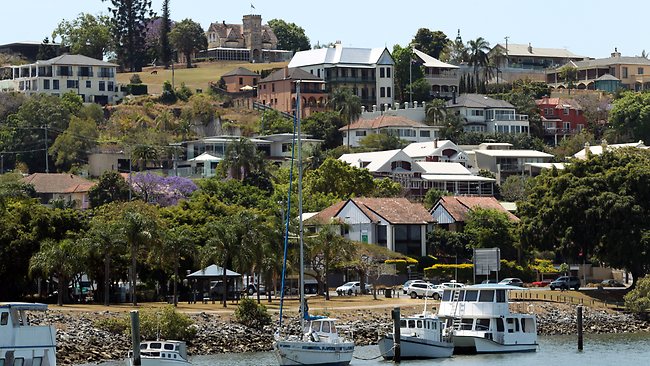
Hamilton is a hilly inner-city suburb of Brisbane on the Brisbane River which was built by convict labour. It soon became known for its upper-class country houses and estates, ornamental shade trees, picturesque location and fine views of the city. Hamilton is associated with “old money”, and has the highest mean income of any suburb in Queensland. It is named after the Hamilton Hotel, built in 1865 by Gustav Hamilton, a wealthy solicitor who owned most of the land in the area. It soon became known as a meeting place for the horse racing world, as the Turf Club is nearby, and is still popular today. Hamilton is an English and Scottish surname after the village of Hamilton in Leicestershire; its name means “crooked hill” in Old English. The aristocratic Hamilton family gained lands in Lanarkshire, Scotland, and gave their name to the town of Hamilton there. The Hamiltons married into the Scottish royal family, and the Duke of Hamilton and Brandon is the highest peer in Scotland. A famous person with the name is Hamilton Hume, an early Australian explorer of New South Wales who was a top-notch bushman and formed friendly relationship with Aboriginal peoples. This is a name with an impressive pedigree.

Logan

The city of Logan is halfway between Brisbane and the Gold Coast. It began as a penal settlement, and farming soon followed; it was developed for housing in the 1960s due to its laissez-faire planning laws. Logan is named after Captain Patrick Logan, the Scottish commandant of the original penal settlement, who had a reputation for being strict to the point of cruelty. He was a great explorer and was killed on one of his expeditions, most likely by Aborigines who had repeatedly told him to get off their land. News of his death was met with wild joy from the convicts. Logan is a Scottish surname; the Clan Logan comes from the “lands of Logan” in Ayrshire, which may be from the Gaelic for “hollow”, or even of Norman origin. In Ireland, it is considered to come from the Gaelic O’Leoghain, meaning “grandson of the warrior”. This name has many namesakes from popular culture, including the dystopian sci-fi film Logan’s Run, where Logan is played by Michael Yorke, and Logan aka Wolverine from the X-Men films, played by Hugh Jackman. Logan has charted since the 1970s (when Logan’s Run first screened), and ranked in the 1980s at #344. It climbed steeply through the 1990s and made the Top 100 by the 2000s. It is currently #38 nationally, #36 in New South Wales, #33 in Victoria, #65 in Queensland, #46 in South Australia, #28 in Western Australia, #17 in Tasmania, and #50 in the Australian Capital Territory.

Sherwood

Sherwood is a suburb on Oxley Creek. Its name comes from a farm which was named after Sherwood Forest in Nottinghamshire, England. A Royal Forest, and remnant of an older and much larger royal hunting forest, it is one of England’s most ancient, having survived since the end of the last Ice Age. It is famous for its association with legendary folk hero Robin Hood, who is supposed to have lived in Sherwood, according to some sources. Sherwood in Brisbane even made its own Sherwood Forest Park, which is now, less romantically, the Sherwood Arboretum. The name Sherwood means “shire wood”. A famous person with the name is American author Sherwood Anderson.

Tennyson

Tennyson is a riverside suburb named in honour of Alfred, Lord Tennyson. Tennyson was Poet Laureate of Great Britain and Ireland during Queen Victoria’s reign, and has the record for length of tenure as a Laureate at 42 years. Revered in his own time, he remains one of the popular English poets. One of his much-loved works is the Idylls of the King, a cycle of blank verse poems inspired by the legends of King Arthur; many of the streets in Tennyson have Arthurian names in compliment of the Idylls. For those amused by these coincidences, the Queensland Tennis Centre is located in Tennyson, and was once the Tennyson Tennis Centre. The English surname Tennyson means “son of Tenney”, with Tenney a pet form of the name Denis. Actor Russell Crowe has a son named Tennyson, after his favourite poet. This is a handsome and unusual name, with a great namesake, and would make an excellent middle name too.

Windsor

Windsor is an inner-city suburb of Brisbane, with many old homes, and containing several heritage-listed sites. It was named Windsor in 1887, most likely after Windsor Castle in Berkshire, England, as it was Queen Victoria’s Golden Jubilee Year. Windsor Castle was built by William the Conqueror, and was originally a fortification to protect the outskirts of London, with strategic views of the River Thames and access to the royal hunting forest of Windsor. Since the rule of Henry I, William’s son, it has been a royal residence, and is the largest inhabited castle and longest-occupied palace in Europe. Today it is a royal palace and weekend retreat for Elizabeth II, and state banquets and official entertainments are often held there – it is also a major tourist attraction. The castle is named after the nearby village of Windsor, once the site of a palace for the Saxon kings. Its name means “winding shores, winch shores” in Old English, because boats were pulled by windlass up the river. Famously, Windsor is the surname of the British royal family: the name was changed from Saxe-Coburg and Gotha by George V in 1917, due to anti-German sentiment during World War I. The final straw was when Germany used the Gotha G. IV aircraft to bomb London – just four months later, the Saxe-Coburg-Gothas had become the Windsors, the name taken from the royal palace. A famous person named Windsor is British actor Windsor Davies, best known as the sergeant on It Ain’t Half Hot Mum. Royal names are all the rage, and you can’t get any more royal than Windsor.

POLL RESULT: People’s favourite names were Tennyson, Augustine, and Windsor, and their least favourite were Sherwood, Hamilton, and Ebenezer.

(Photo shows the suburb of Hamilton)

Brisbane Suburbs That Could be Used as Girls Names

06 Sunday Oct 2013

Posted by A.O. in Name Themes and Lists

≈ 9 Comments

Tags

animal names, Aramaic names, Australian Aboriginal names, Biblical names, birth notices, english names, fabric names, famous namesakes, fictional namesakes, Gaelic names, Gaulish names, German names, Greek names, historical records, Latin names, locational names, name history, name meaning, name popularity, names of farms, names of ships, names of spices, nicknames, Norman-French names, saints names, Sanskrit names, Scottish names, surname names, unisex names, virtue names, vocabulary names

15517831

Amity

Amity Point is a small town on North Stradbroke Island, 30 km south-east of Brisbane. The town is named after the Amity, a brig which carried the first European settlers to Queensland in 1824. The Amity was later wrecked near Tasmania, and today you can visit a full-size replica of the brig in Albany, because the Amity also took colonists to Western Australia. Amity is an English word which means “friendship”; it comes from the same Latin root as names such as Amy and Amabel, and has been used as a girls name since the 17th century. Amity is #551 in Victoria, and I often see it in birth notices: I think this pretty virtue name is gaining in popularity, and may become a replacement for Amy.

Bethania

Bethania is in Logan City, halfway between Brisbane and the Gold Coast. The suburb was founded by Germans in the 19th century, and has a large hobby farm area. The name Bethania comes from Bethanien, the German name for the town of Bethany near Jerusalem. In the New Testament, Bethany is mentioned as the home of siblings Mary, Martha, and Lazarus, and is said to be near the place where Lazarus was raised from the dead. The Biblical Bethany may be the same place as the city of al-Eizariya in Palestine – its name means “place of Lazarus”, although others say that the original village of Bethany was slightly higher up on the Mount of Olives, and that al-Eizariya sprung up around the traditional site of Lazarus’ resurrection. The meaning of Bethany has been much debated, but it is thought the most likely derivation is from the Aramaic beth anya, meaning “house of affliction, house of suffering”, with the conclusion being that it was a place for care of the sick and destitute. Although Bethania doesn’t have any connection to Elizabeth or Anne, it might seem like a way to connect these two names, and does give both Beth and Anya as nicknames.

Cashmere

Cashmere is an outer suburb of Brisbane in the foothills of a mountain range surrounded by dense forest, with a nearby lake. Cashmere is named after an early settler, James Cash, famous for his hospitality to passing travellers. Although Cash was not wealthy and lived in a simple shanty, no tramp ever passed his door without receiving a meal or a pot of tea. Because mere means “lake”, and James Cash’s farm was near Lake Samsonvale, the suburb’s name can be understood as “Cash’s land by the lake”. Cashmere is also a fine, high quality fibre taken from Cashmere goats. The name is after the Kashmir region of India, which has been making cashmere shawls for thousands of years. Kashmir’s name comes from the great sage Kashyapa, a legendary wise man whose name is from the Sanskrit for “tortoise”. With Cash a fashionable choice for boys, luxurious Cashmere seems like a way for girls to get the nickname Cash as well. In Australian records, both men and women named Cashmere can be found.

Corinda

Corinda is an older suburb of Brisbane, first settled in the 1860s as a farming community, and with many of its homes dating back to the colonial period. The name Corinda is believed to come from a local cattle station, which was named after a pastoral station in outback Queensland. The name is of Aboriginal origin, but its meaning is not known. Corinda has been used as an English girls name since the 18th century – perhaps based on the Greek name Kore, meaning “maiden”, with an elaborated ending common in 18th century poetic names like Melinda and Dorinda. This name seems elegant and literary, and not so different from familiar names such as Lucinda.

Inala

Inala is a suburb of Brisbane near the industrial estates. It was built in the post-war period to help with the housing shortage that followed World War II, and was one of the earliest and biggest Housing Commission projects in Queensland. Young architects such as Robin Boyd helped design the housing, which features simplicity and lack of ornamentation. In other words, it isn’t pretty, but cheap and efficient to install and maintain. It has an ethnically diverse community, with many migrants from Vietnam, New Zealand, and the Pacific Islands, amongst other places, settling there. The name Inala is believed to come from an Aboriginal expression meaning “peaceful place, happy place”, but it’s possible it actually means “place of the wind”. I saw a baby girl named Inala in a birth notice early this year, and ever since have been itching to cover this as a name – said ih-NAHL-ah, it fits in with names such as Ayla, Nyla, and even Isla.

Karalee

Karalee is a suburb of Ipswich; originally dairy and farm country, it began to be developed for residential purposes in the 1970s. It is thought that Karalee comes from an Aboriginal expressing meaning “grass around a waterhole”, although the City of Ipswich prefers the translation, “pretty hill beside the water”. This looks like a portmanteau of Kara and Lee, but has its own integrity, and is said KAR-a-lee, like an elaboration of Carol.

Lacey

Laceys Creek is a rural area in the outer suburbs of Brisbane, and was first settled as timber country, soon followed by dairy farming, pineapples, bananas, and bee-keeping. Lacey is an English surname of Norman-French origin. It comes from the village of Lassy in Normandy, which means “Lascius’ place”. The meaning of the Gaulish name Lascius is of unknown meaning. The de Laci family came to England with William the Conqueror, and one of their descendants was amongst the barons who forced King John to sign the Magna Carta. Lacey has been used as a girls name since the 17th century, and part of its feminine charm is that it sounds like the word lacy. Lacey is #234 in Victoria, and I believe this is another pretty girls name which is growing in popularity.

Lucia

St Lucia is an exclusive green and leafy inner-city suburb of Brisbane. It is focused around the University of Queensland, with the university itself, and residential colleges for students, taking up a large proportion of the suburb. There are many wealthy people living in St Lucia, with riverfront houses here costing in the millions. The area was first settled in the 1860s as sugar plantations, and was given its name by William Wilson, who bought and developed one of the plantations for housing in the 1880s. Wilson was born in St Lucia in the West Indies, and he named the housing estate St Lucia because the sugar plantations reminded him of his birthplace. The island of St Lucia is in the Caribbean, part of the Lesser Antilles group. It was named in honour of Saint Lucy by the French, who were the first European settlers to the region. Saint Lucy was a 4th century martyr, and she has become a popular saint, partly because her feast day of December 13 is near Christmas and originally coincided with the (northern hemisphere) Winter Solstice. Her name’s meaning of “light”, from the Latin lux, became a very appropriate one for a Festival of Light, heralding the Light of the World. Lucia has charted since the 1940s and had a minor peak in the 1960s at #283 before dropping to #808 in the 1990s. Since then it has climbed steeply, and peaked in 2010 at #115. Currently it is #122 in New South Wales and #177 in Victoria. This is an alternative to Lucy that has never become popular, although on the charts since the end of World War II.

Ripley

Ripley is a suburb of Ipswich, which currently has only 1000 residents. However, big things are planned for Ripley’s future, and once fully developed it is expected to be a city of 120 000 – one of the country’s largest pre-planned communities. It is named after the Ripley Valley where it is located; I am not sure if this is after someone named Ripley, or one of the towns named Ripley in England. The surname Ripley is from Ripley in Yorkshire – the town’s name means “farm whose land cuts a strip through the forest”, with the forest in question being the forest of Knaresborough. One of the most famous Ripleys must be Robert Ripley, who created Ripleys Believe It or Not! trivia series for newspapers, radio and television. The name may also remind you of tough Lieutenant Ellen Ripley from the Alien film series, played by Sigourney Weaver, or suave con artist Tom Ripley, from the crime novels, turned into a film, The Talented Mr. Ripley, played by Matt Damon. I have seen this name on both sexes.

Sinnamon

Sinnamon Park is an older suburb with some heritage-listed sites; the suburb is named for the pioneering Sinnamon family who settled in the district. Sinnamon is a Scottish surname; the Clan originated in Fife, and their name comes from their seat at Kinnimonth, which was granted to them by King William of Scotland. The name Kinnimonth comes from the Gaelic for “head of the hill”. Sinnamon sounds like the sweet spice Cinnamon, but has its own meaning and history – although the Sin- at the start may be problematic for some. I did find someone named Sinnamon from Queensland in the records, but can’t be sure whether they were male or female.

POLL RESULT: People’s favourite names were Amity, Lucia, and Bethania, and their least favourite were Inala, Sinnamon, and Karalee. Not one person liked the name Karalee.

(Photo shows the University of Queensland in St Lucia)

Rare Royal Names for Boys

08 Sunday Sep 2013

Posted by A.O. in Name Themes and Lists

≈ 11 Comments

Tags

alphanumeric names, anagram names, Anglo-Saxon names, Arthurian names, Biblical names, birth notices, classic names, Danish names, english names, famous namesakes, fictional namesakes, German names, germanic names, Greek names, hebrew names, Latin names, middle names, mythological names, name history, name meaning, name popularity, names of months, nicknames, Old English names, popular names, rare names, Roman names, royal names, saints names, Scottish names, stage names, surname names, unisex names

Franz_Xaver_Winterhalter_Family_of_Queen_Victoria

Alastair

Alastair Windsor was a great-grandson of Queen Victoria through his father, and a great-great-grandson of Victoria through his mother. Although born a prince, he was stripped of his royal titles while still a toddler, after the regulations were tightened up. Alastair went into the army, and died during World War II on active service, in unconventional circumstances. He had been sent to Canada as aide-de-camp to the Governor General, who was a relation of his. Both his regiment and the Governor General had rejected him as incompetent, and he fell out of a window while drunk. It can get very cold in Canada, and Alastair succumbed to hypothermia overnight. Alastair is the Anglicised form of Alasdair, a Scottish form of Alexander. Alasdair Mòr Mac Dòmhnaill is the ancestor of the Clan MacAlister. I think Alastair very handsome, and in a country where Lachlan and Hamish are common, it doesn’t seem out of place. If the alas at the start bothers you, it can also be spelled the more common Alistair.

Athelstan

Although there had been many English kings before him, Athelstan the Glorious was the first ruler of all England, and the first who can be called king of the English. He was the grandson of Alfred the Great, and like his grandfather, had a reputation as a man of great intelligence and justice. His household was a centre for learning, he created the most centralised government England had yet had, maintained social order, encouraged literature, was an unbeaten military leader, and a key player in international affairs. He gets rave reviews from medieval historians, and even foreign writers of his time were eager to sing his praises. He is a king worthy of admiration, yet while the name Alfred was successfully revived and is still used now, Athelstan went out of use after the Norman Conquest, and remains extremely rare. Just doesn’t seem fair, does it? Athelstan is the modern form of the Anglo-Saxon name Æþelstan, meaning “noble stone”; it was very common amongst Anglo-Saxon royalty and nobility, and there are quite a few other kings with the name. I admit it does seem a little unwieldy, but it comes with the nickname Stan.

August

August was the second name of Prince Ernst August, a great-great grandson of George III and cousin of George V. As a member of the Hanoverian family, he was born a prince of Britain and Ireland, but during World War I, anti-German sentiment convinced the British royal family to strip the titles from their German relatives. However, the Hanoverians didn’t consider themselves bound by British rules, and continued to call themselves princes and princesses. To this day, the Hanoverians ask the British monarch for permission to marry, like other royals. It’s a bit of an odd situation. Prince Ernst was the last reigning monarch of the House of Hanover, and his marriage to Princess Victoria of Prussia the last large gathering of European royals before World War I broke out – he was very much the end of an era. August is the German form of Augustus, a traditional middle name in the Hanoverian royal family which continues to be handed down. You can also see August as after the month, in which case it can be given to both sexes.

Axel

Axel was the final middle name of Prince Georg Wilhelm Ernst August Friedrich Axel, the son of Prince Ernst August. He married Princess Sophie of Greece and Denmark, who was Prince Philip’s sister. The name Axel is the medieval Danish form of the Hebrew name Absalom. In the Old Testament, Absalom was a son of King David, staggeringly handsome and extremely charming. He rebelled against his father; it’s a pretty awful story involving incest, rape and murder, and not one of the most uplifting parts of the Bible. Absalom was killed when he got his head stuck in a tree, which is meant to be very ironic for some reason. To me the ironic part is his name means “my father is peace”, and he went to war against his father. Axel is not a popular name in Australia, but I feel as if it will be in a few years, based on how frequently I see it in birth notices – it is #164 in Victoria. Its use seems to be influenced by singer Axl Rose, whose stage name is famously an anagram.

Edmund

Edmund the Magnificent was half-brother to Athelstan the Glorious, and his successor to the throne. He only ruled for a few years before he was murdered, but in that short time he had important military victories in the north, established peace with Scotland, began reviving the monasteries and helped restore Louis IV to the throne of France. His great-grandson Edmund Ironsides fought valiantly against the Danes, and although ultimately defeated by King Canute, was a skilled and inspiring leader. Edmund is an Old English name meaning “rich protector”, and it was common amongst Anglo-Saxon royalty and nobility. Saint Edmund the Martyr was a King of East Anglia killed by the Danes, and was the patron saint of England until Saint George got the gig – there is a movement in East Anglia to reinstate him. Unlike many other Anglo-Saxon names, Edmund remained in use after the Conquest (probably because of the saint), and was even used in the royal family. It’s surprising how rare this name is compared to classic, popular Edward, but it’s a very handsome and noble one. Narnia fans will know it as the name of the treacherous Pevensie brother, who redeems himself and becomes a king of Narnia. Edmund “Ted” Gyngell is a recent celebrity baby, sometimes called Edmund the Magnificent after his namesake.

Emmanuel

Emmanuel was the final middle name of Francis Albert Augustus Charles Emmanuel of Saxe-Coburg and Gotha, otherwise known as Prince Albert. He married his cousin Victoria, who was the heir to the British throne at the time. Victoria had the choice of two cousins to wed, and chose Albert as the most handsome and charming. Queen Victoria was devoted to Albert, and he was a great support to her, holding quite a bit of power behind the throne. A progressive and liberal thinker, he helped bring in many reforms, set the example that monarchy must be above politics, and made a huge success of the Great Exhibition of 1851. He died while only in his early 40s, and Queen Victoria was devastated. She wore mourning for the rest of her days and withdrew from public life. Emmanuel is a Hebrew name meaning “God is with us”; the Old Testament gives the name in a prophecy, and the New Testament attached it to Jesus Christ as the Messiah. The name was common amongst European royalty, but less often used in Britain. In Australia it’s possibly best known as a surname, from guitarist Tommy Emmanuel.

Eustace

Eustace was the eldest son of King Stephen, and a great-grandson of William the Conqueror. Stephen had become king of England in a rather controversial way. After the heir to the throne had drowned in a disastrous shipwreck, Stephen had himself declared king by popular acclaim and was speedily crowned before anyone knew what was happening. The Empress Matilda had been next in line, but she was only a woman, and Stephen thought he should rule instead. Matilda didn’t agree, and their subsequent battle for power threw England into a state of anarchy for nearly two decades. Stephen had Eustace declared his co-king, but the church refused to ratify this, and nearly everyone was greatly relieved when the teenaged Eustace unexpectedly died. Generally perceived as rather a blot, his welcome demise allowed peace negotiations to go ahead. Even more conveniently, Stephen died the following year leaving Matilda’s son, Henry II, as ruler. Eustace is the English form of Greek Eustachios, meaning “rich crop”, a name chosen for himself by a 2nd century Roman general and martyr who had been born Placidus, and is known as Saint Eustace; because of him, the name was common during the Middle Ages. This is another name from The Narnia Chronicles, because Eustace Scrubb was a rather annoying character who, like the saint, was converted from his previous beliefs. Hardly anybody seems to like the name Eustace, and even C.S. Lewis made fun of Eustace Scrubb’s name.

Leopold

Prince Leopold was a son of Queen Victoria, named after his great-uncle, Leopold I of Belgium, who had helped arrange the marriage of Victoria and Albert. Leopold’s birth is famous because his mother used chloroform during labour, giving the royal seal of approval for women to seek pain relief during childbirth. Prince Leopold inherited the family condition of haemophilia and also had mild epilepsy; he became a patron of the arts, literature and chess. He knew Alice Liddell, famous as the inspiration for Lewis Carroll’s Alice books (one of which revolves around chess), and some believe he considered marrying her, although others say it was her older sister Edith who was his intended wife. Queen Victoria arranged for him to marry Princess Helena of Waldeck and Pyrmont, a distant cousin. Leopold’s marriage was happy, and he and Helena had a daughter named Alice, but he died as a result of haemophilia after only a few years. He passed away just before his son Charles was born. Alice inherited the haemophilia gene, and passed it on to her son Rupert, who also died young. Leopold is a Germanic name meaning “bold people”; it was common amongst German royalty. This rather grandiose name has popular Leo as the nickname.

Magnus

Magnus was a son of King Harold II and Edith the Fair, or Edith the Gentle Swan, sometimes (wrongly) called Edith Swan-neck. Harold and Edith were married in a traditional manner known as handfasting, and although Edith was regarded as Harold’s wife by regular people, and their children as princes and princesses, the clergy saw her only as his mistress because they hadn’t wed in a Christian ceremony. Harold did have another wife, also called Edith, but this was a marriage of political convenience, and not a love match as it was with Edith the Fair. According to legend, after Harold was killed at the Battle of Hastings, only Edith the Fair could identify his body by markings she knew, so Harold was able to have a Christian burial. Magnus is a Latin name meaning “great”; Magnus Maximus was a 4th century Western Roman Emperor who became important in British folklore and Welsh legend, and is part of the mythology of King Arthur. There are several saints named Magnus, and it was a traditional name in the royal families of Norway and Sweden. The name is often thought of as Scottish, and one of the Saints Magnus was from Scotland. This is a great name, rich in history and legend, strong and interesting, and a good alternative to Max.

Octavius

Prince Octavius was the thirteenth child of King George III, and doted upon by his adoring parents. At the age of four, he was inoculated against the smallpox virus, and as vaccination was still in its experimental stages, became ill and died, the last member of the British royal family to suffer from smallpox. The sudden death of the tiny prince caused his family immense grief, and during his later bouts of madness, King George even had hallucinations about Octavius. What made it harder for them was they had lost Octavius’ younger brother Alfred in exactly the same way six months previously. Octavius is a Roman name coming from the Latin for “eight”; Octavius was the eighth son of King George III. Octavius seems very hip – fresher than Atticus and Orlando, with a distinct feel of its own. It would be a good choice for an eighth child or grandchild, or someone born in August (the 8th month) or October.

POLL RESULT: People’s favourite names were August, Magnus, and Alastair, and their least favourite were Octavius, Athelstan and Eustace.

(Picture shows a portrait of Prince Albert and his royal family by Franz Xaver Winterhalter)

Rare Royal Names for Girls

01 Sunday Sep 2013

Posted by A.O. in Name Themes and Lists

≈ 11 Comments

Tags

Anglo-Saxon names, Christmas names, Danish names, english names, famous namesakes, fictional namesakes, French names, germanic names, Greek names, honouring, Latin names, locational names, middle names, mythological names, name history, name meaning, names from television, nicknames, Old English names, Old Norse names, rare names, Roman names, royal names, saints names, scandinavian names, Star Trek

Berengaria

Royal babies have been on everyone’s mind lately, and we recently saw two babies born in the royal family within less than a month of each other.

Not only have been people been doing web searches for Prince George and Maud Windsor, they’ve been searching for royal baby names in general, uncommon royal names, and royal names that nobody else is using.

So here is a list of queens and princesses connected to English royal houses by either birth or marriage, whose names aren’t popular or common in Australia (although I can’t promise nobody else will use them).

Adeliza

Adeliza of Louvain married Henry I, and became queen of England. She was considered pretty, but didn’t manage to produce any royal heirs. However, after Henry’s death she re-married, and had seven children; she is an ancestor of many of the noble English families. William the Conqueror had a daughter called Adeliza, named after his sister – the name wasn’t uncommon amongst Norman-French aristocracy. Adeliza is a medieval English form of Adelais, a short form of Adelheidis, the original old Germanic form of Adelaide. It’s pronounced ad-uh-LEE-za. Although it doesn’t have any connection to the name Elizabeth, it looks like a combination of Adele and Eliza, and might feel like a way to honour relatives who have variants of these names. It’s rare, but doesn’t seem unfamiliar.

Berengaria

Berengaria of Navarre was Queen of England through her marriage to Richard I, “the Lionheart”. She is the only English queen never to set foot in the country, since she only visited England after her husband’s death, when she was no longer queen. Richard himself spent only a few months in England during his marriage, as he was busy Crusading. Richard and Berengaria never had any children, and it is not known if their marriage was ever consummated, as they spent so much time apart. Richard’s family seem to have liked her, and there are a few other royal English Berengarias, perhaps named after her. Berengaria was a traditional name amongst Spanish royalty, and is the feminine form of Berengar, an ancient Germanic name meaning “bear spear”. It is pronounced behr-en-GAR-ee-uh, and the name has been bestowed upon a planet in the Star Trek universe inhabited by dragon-like creatures. This doesn’t sound like any currently popular names, and the nickname Berry is appealing.

Christabel

Christabel was the middle name of Princess Alice, wife of Prince Henry, Duke of Gloucester, a son of George V. Princess Alice was born into the aristocracy on both sides of her family, and was a direct descendant of Charles II, through an illegitimate line. She is related to Sarah, Duchess of York, the wife of Alice’s great-nephew, Prince Andrew. Just after the Second World War, Prince Henry was appointed Governor-General of Australia, and he and Princess Alice lived in Canberra for two years. The name Christabel is a combination of Christina with a -bel suffix, but Princess Alice was given this name because was born on December 25, and the name suggests Christmas bells. Her niece Princess Alexandra was also born on Christmas Day, and shares the middle name Christabel. Apart from the Christmas connection, this pretty name might seem like a good way to honour a Christine and an Isobel (for example) simultaneously.

Elfreda

Elfreda was one of the wives of Edgar I, and she was the first king’s wife to be crowned and anointed as Queen of England. Beautiful and powerful, she was unfortunately linked with the murder of her stepson Saint Edward the Martyr, and ever after appears in medieval history in the role of evil stepmother. Her own son, replacement to the martyred Edward, was Ethelred the Unready, only a child when he took the throne. Elfreda was a traditional name amongst Anglo-Saxon royalty, and Alfred the Great of Wessex had a daughter named Elfreda, an ancestor of Queen Matilda, the wife of William the Conqueror; through Matilda, the monarchs of England are descendants of the House of Wessex. There is a Saint Elfreda, an Anglo-Saxon princess. Elfreda is a modern spelling of the Anglo-Saxon name Ælfþryð, meaning “elf strength”. The name went out of use after the Norman Conquest, but was revived in the 19th century, although it never became popular. Freda would make a good nickname – unfortunately, sweet Elfie would probably be misheard as Alfie, leading to confusion.

Eugenie

Eugenie was the second name of Victoria Eugenie, a grand-daughter of Queen Victoria who married Alfonso XIII and became Queen of Spain. Her grandson Juan Carlos I is the current king of Spain. Unfortunately, her marriage to Alfonso wasn’t particularly happy, and she didn’t enjoy great popularity with the Spanish people – she was greeted with an assassination attempt on her wedding day. After the Republicans gained power, Victoria Eugenie went into exile with the rest of the Spanish royal family. Queen Victoria Eugenie’s middle name was in honour of her godmother, Maria Eugenia “Eugénie” de Montijo, empress consort to Napoleon III. Eugénie was a member of the Spanish nobility, and after the defeat of the Second French Empire, she lived in England, where she became friendly with the British royal family. The name remains well-known because of Princess Eugenie of York, daughter of Prince Andrew, who was named after Victoria Eugenie. Eugenie is the Anglicisation of Eugénie, the French form of Eugenia, which is the feminine form of Greek Eugenius, meaning “well born, of noble birth”. This elegant name is said yoo-JEE-nee, and Gina or Genie could be used as nicknames.

Marina

Princess Marina of Greece and Denmark was a cousin of Prince Philip. Like her cousin, she married into the British royal family when she wed Prince George, the Duke of Kent, an uncle of Queen Elizabeth II; she was the last foreign-born princess to marry into the British royal family. Princess Marina was attractive and stylish, earning her a place in the International Best Dressed List Hall of Fame, and her favourite shade of blue-green became known as “Marina blue”. Princess Marina’s mother was the grand-daughter of Tsar Alexander II of Russia, and Marina may have been named after Princess Marina of Russia. Princess Marina and the Duke of Kent were married in 1934, and a year later, Swiss water-ski champ Marina Doria was born, which looks more than coincidental. Oddly enough, Marina Doria also became Princess Marina, when she married a prince of Naples. Marina’s name has been passed down to her grand-daughter, Maud Elizabeth Daphne Marina Windsor, and I have seen a birth announcement for a Scarlett Marina this week. Marina is the feminine form of the Roman name Marinus, which may be from the Latin for “of the sea”. There are two saints named Marina, and it’s also the name Saint Margaret is known by in the Orthodox church. Marina is a very beautiful name, and familiar in Australia due to entertainer Marina Prior.

Melita

Princess Victoria Melita was a grand-daughter of both Queen Victoria and Tsar Alexander II, making her Princess Marina’s great-aunt. Her love life was one of great turmoil, because she fell in love with her cousin Kirill, Grand Duke of Russia, but was forced to marry her cousin Ernest, Grand Duke of Hesse instead. The marriage wasn’t a success, as Victoria Melita preferred Kirill, and Ernest preferred young boys. Soon after Victoria and Ernest ‘s divorce, Kirill was almost killed during the Russo-Japanese War, and this brush with death made him realise that nothing was more important than being with his true love. He defied his family, and married Victoria Melita, much to his parents’ rage and disgust. Although their marriage and family life was happy, the Russian Revolution and subsequent exile was a setback, and the couple rather naively supported the Nazi Party. More emotional pain followed for Victoria when Kirill was unfaithful to her, which she never got over. Her life contained some bitterness, but Victoria Melita’s middle name has a sweet meaning. Melita is the Latin name for the island of Malta, thought to come from its Greek name, Melite, meaning “sweet as honey”; Malta was famous for its honey production. This doesn’t sound out of place next to popular names like Mila and Layla, and would be a great way to honour Maltese ancestry; you could use Millie or Lita as nicknames.

Sibylla

Princess Sibylla (born Sibylle) was a great-granddaughter of Queen Victoria who married her second-cousin Prince Gustaf Adolf (known as “Edmund”) of Sweden; her son Carl XVI Gustaf is the current king of Sweden. The couple don’t seem to have been very popular in Sweden, being plagued by rumours of Nazi sympathising, of which there is no proof. Unfortunately, Sibylla did have quite a few relatives in the Nazi Party in Germany, who threw her a big fat Nazi wedding, and this can’t have been a help at soothing suspicions. The name Sibylla (or Sybilla) has been used amongst European royalty and nobility since the Middle Ages, and has been connected with the British royal family from early on. William the Conqueror’s son Robert was married to a Sybilla, and Henry I had an illegitimate daughter named Sybilla, who married Alexander I of Scotland. Sibylla is from the Greek word for a female prophet of the ancient world who uttered divine revelations in a state of frenzy; the word became sibyl in English. During the Middle Ages, it was thought that the Greek and Romans sybils had been precursors to Christian prophecy, and therefore gained respectability as a Christian concept and name. This name (and its variants), though uncommon, is quite trendy in Australia, being known from actress Sibylla Budd, and the heroine of My Brilliant Career, Sybylla Melvyn, whose name inspired feminist publishing house, Sybylla Press.

Sigrid

The splendidly-named Sigrid the Haughty was supposedly the wife of Sweyn Forkbeard, who ruled England before the Conquest, in the days when the Danish royal house held the throne. It’s not clear if Sigrid was her real name, because it seems that Sweyn’s wife was actually Polish rather than Scandinavian, and in fact we can’t be sure if “Sigrid the Haughty” even existed. She may well be a fictional character, but her story is compelling. Beautiful and proud, Sigrid was a woman of great political power, who tended to wreak terrible revenge on those who annoyed her, and is supposed to have burned two of her suitors to death to discourage others. It could be that this fascinating lady of legend was tacked on to a real Polish woman who married Sweyn, and became the mother of King Canute the Great. Sigrid is from the Old Norse name Sigríðr, meaning “beautiful victory”. This is another name familiar in Australia because of an actress – the very famous Sigrid Thornton. The usual nicknames are Siri and Sigi.

Thyra

Thyra was the daughter of Sigrid and Sweyn Forkbeard, the sister of Canute the Great. She was married to Godwin, the first Earl of Essex, the father of King Harold who fell at the Battle of Hastings. She didn’t live very long, and she and Godwin didn’t have any children together, so she’s rather a footnote in the history books. She may have been named after Thyra, the wife of King Gorm the Old of Denmark; they were the parents of Harald Bluetooth, the father of Sweyn Forkbeard. According to at least one source, Queen Thyra was English, the daughter of King Ethelred of Wessex. She was said to be a smart and sensible woman who led an army against the Germans, and was described as the “pride of Denmark”. According to legend, one of Thyra’s daughters was captured by trolls and carried off to their kingdom in the far north. Thyra is from the Old Norse name Þýri, derived from the name of the god Thor, and possibly meaning “Thor’s war”. The name is pronounced TEE-rah, and I think it’s attractive and contemporary-sounding, although pronunciation may be an issue, with people trying to say it THY-rah.

POLL RESULT: People’s favourite names were Marina, Adeliza, and Christabel, and their least favourite were Elfreda, Thyra, and Berengaria.

(Picture is a drawing of Queen Berengaria)

Boys Names of Australian Aboriginal Origin – Part 2

04 Sunday Aug 2013

Posted by A.O. in Name Themes and Lists

≈ 5 Comments

Tags

Ancient Germanic names, animal names, astronomical names, Australian Aboriginal names, Chinese names, colour names, days of the week names, english names, famous namesakes, fictional namesakes, Google, Hindi names, historical records, Indian names, locational names, middle names, mythological names, name history, name meaning, names from movies, names of weapons, nature names, nicknames, onomatopoeic names, rare names, unisex names

mh1

Bambam

Bambam as a person’s name might seem like an oddball suggestion, but although it would definitely be an unusual choice, I don’t think it’s an unfamiliar one either. For a start, there is Bamm Bamm Rubble from The Flintstones, first introduced as a cute blonde baby with superhuman strength. His name came from the fact that he would say Bamm bamm, and swing his club, to the general destruction of everything around him. Bam Bam is used as a man’s nickname, from American wrestler Bam Bam Bigelow to British DJ Bam Bam. There’s also skater Bam Margera, who gained his nickname from constantly running into walls as a toddler. I have seen a baby boy called Bambam – although that may have been a nickname. In English, bam bam is an onomatopoeic interjection, suggesting one thing repeatedly hitting or banging into another. In much the same way, in Nyungar (from south-west Western Australia), bam means “to hit”, and in Bundjalung (from northern New South Wales), bambam means “bruise, swelling”. However, in the Meriam language from the eastern Torres Strait Islands, bambam means “yellow”; in Indigenous art, yellow ochre is often used to represent the earth. It’s quirky, but Bambam is a rather lovable name.

Daku

Daku means “sand hill” in the extinct Diyari language; the Diyari people are from the South Australian desert, and thus very familiar with sand. Despite being generally used as a boys name in Australia, Daku is also a unisex name in India, and in Hindi it means “bandit”. Someone wrote in to the blog considering the name Daku for their son, but they never got back to me, so I don’t know whether they overcame family opposition to the name or not. This name reminds me a bit of Dakota, and it has the fashionable OO sound, such as Reuben and Jude; the name is pronounced (I think) DAK-oo. It would be a bold choice though, and I haven’t seen many boys with this name, although it can be found a few times in historical records.

Jardi

Jardi means “front” in the Ngadjumaja language; the Ngadjumaja people are from the Nullarbor Coast area of south-east Western Australia. I remember reading in the papers last year about a baby boy from Mudgee who has named Jardii, and his mother explained that his name was from the Wiradjuri language and means “first born son”. I wasn’t able to find that information for myself, but it occurred to me that “front” and “first” are similar in meaning, so Jardi also seemed like a good name for an eldest son. In the Jaminjung language from the Victoria River region of the Northern Territory, jardi means “to keep”, which also seems very positive. I found quite a few Indigenous boys and young men named either Jardi or Jardii, and I think it’s really attractive, with a similar sound to Jordie, the short form of Jordan.

Jiemba

Jiemba means “laughing star” in the language of the Wiradjuri people of central New South Wales. It refers to the morning star, or the planet Venus. (In some other Aboriginal languages, djimba simply means “star”). Astronomy was very important to the Wiradjuri, as with other Aboriginal societies, because stars and planets were used to tell the times and seasons, and this information was first given in early childhood. It is recorded that in the Wiradjuri in the 19th century, the elders would teach the children the stories behind the stars (the constellations), while the old women would teach children to count stars, which they could do into the thousands using a particular system. This information comes from radical poet and journalist Mary Gilmore, who grew up in Wagga Wagga, and was given the name Jiemba by the Wiradjuri people. Despite it being given to a little girl, I have only seen Jiemba given to boys – most likely because it is said JIM-ba, and thus shortens to Jim or Jimmy. One of the Aboriginal men from the Sydney area first encountered by Europeans was named Jimbah, so it sounds quite masculine (this Jimbah may also have been Colebee).

Lue

Lue is a small village in the Central Tablelands region of New South Wales. Its name means “chain of waterholes” in the local Dabee language – the Dabee are part of the Wiradjuri group. The village’s name is pronounced LOO-wee, which makes me think that this could be an Australian alternative to Louis or Louie. There are quite a number of people named Lue in Australian historical records – many of them are of Chinese ancestry, but there are some from the Lue area, suggesting that at least a few of them were named after the village.

Nullah

A nulla nulla, also known as a nullah or waddy, is an Aboriginal war club or hunting stick; the word comes from the extinct Darug language from the Port Jackson area of Sydney. A nullah is a heavy club which could be used in hand to hand combat, or used to stun prey; sometimes they were used to punish lawbreakers. In addition, these useful tools could be used to make fires, and grind ochre. This name is frequently Googled, because Nullah is the name of the young Aboriginal boy in Baz Luhrman’s 2008 epic, Australia, played by Brandon Walters. The film is set in the Northern territory, so the choice of Nullah for the character’s name is not meant to be authentic; I wonder if they chose it partly because it suggests the name of the Nullarbor Plain (Latin for “no trees”). Nullah is also a Hindi word for a narrow, steep-sided valley; in dry countries like Australia, these nullahs are commonly filled with brushwood, and when it rains heavily, they temporarily become streams. This could be another inspiration for the character’s name.

Omeo

Omeo is a town in Victoria which is in the East Gippsland, set high in the Great Dividing Range. Its name means “mountains, hills” in the local Gunaikurnai language, or one of its dialects, because it is set on a treeless plain on the fringes of the Snowy Mountains. There is evidence of human occupation of this region dating back around 20 000 years, and the first reported sighting by a European of Omeo was in 1832, by a naturalist on the slopes of the southern alps. It was his reports of fine grazing land which soon attracted pastoralists and squatters to the region. Gold was discovered in the 1850s, but Omeo’s isolation meant that it did not experience the massive boom of many goldfields towns – it did however, have the dubious distinction of being the roughest and most unruly place on the goldfields. Its first magistrate was Judge Browne, better known as author Rolf Boldrewood, who wrote of the area’s lawlessness in his novel, Robbery Under Arms. This name looks and sounds like Romeo without the R, which gives it recognisability as a name, although it also reminds me of Omo washing powder. Its goldfields history gives it a bit of a “wild west” feel; it seems a bit more bad boy than romantic Romeo. Omeo has had some use as a boy’s name in Australia, especially amongst people from Omeo itself, and was more often found in the middle.

Tanami

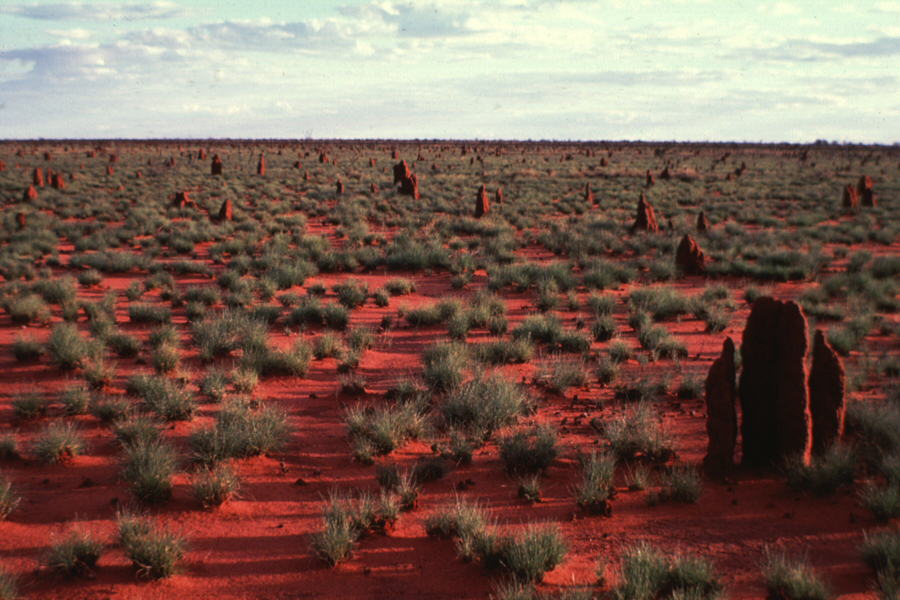
The Tanami Desert is in the Northern Territory, and is Australia’s most northerly desert. In the wet season, it rains heavily and even floods, but the high temperatures mean that most of it evaporates. Some parts of the Tanami do have wetlands though, and there is even a lake which has permanent water in it, so as deserts go, it’s on the slightly moist side. It is a refuge for several rare and endangered species of flora and fauna, making it a biologically important area. You can cross the desert on the Tanami Track, which is more than 1000 km long, and goes from Alice Springs to Halls Creek, in the Kimberly region of Western Australia. Tanami is a corruption of the local Walpiri name for the area, Chanamee, meaning “never die”, because the rock holes in a particular gully were said to never run dry of water, even in drought. When white people came here in the early twentieth century, they found to their dismay that this was not the case, so either the name was optimistic in nature, or the Indigenous people had a superior knowledge of obtaining water from the rock holes. I have seen Tanami occasionally on girls, but after seeing it given to a boy, I really like it as a male name. The pronunciation is TAN-uh-my, but the Aboriginal pronunciation would be more like TAN-uh-mee, so you could take your pick on how to say it.

Woden

Woden Valley is a district of the capital city of Canberra. The area is named after a homestead owned by Dr James Murray, which was built in 1837. In Aboriginal Place Names, Harold Koch suggests that the name of Dr Murray’s homestead may have been influenced by the word wadyan or wadhan, which means “possum” in several Indigenous languages, in an area stretching from the Monaro region right down to Omeo in Victoria. If so, then the spelling was altered to make it look like the name of the Anglo-Saxon and Germanic god Woden, whose name means “inspiration”; Dr Murray saw him as a god of wisdom. Woden was the chief god of the Germanic peoples, and is their equivalent of Odin. Anglo-Saxon royalty claimed that Woden was their ancestor, and he survives in English folklore as leader of the Wild Hunt, and perhaps even as Father Christmas. Of course, we unconsciously celebrate his special day once a week, on Wednesday (Woden’s day). With Odin being a rather hip name at present, Woden really doesn’t seem too strange, and this could be a way of celebrating Australian and English heritage together. There are a couple of men named Woden in Australian historical records, although it is more common as a middle name.

Yarramundi

Yarramundi is an outer suburb of Sydney which is a semi-rural area in the City of Hawkesbury. It is named after a famous Indigenous leader who was a member of the Boorooberongal clan of the Darug people, and a garadyi, or shaman – a healer, a man of great spiritual knowledge and power, and an enforcer of tribal law. Yarramundi’s son Colebee was the first Aboriginal person to receive a land grant, and his daughter Maria was the first Aboriginal child to be enrolled in a school for the education of Indigenous children; her marriage in 1824 was the first legally recognised union between an Aboriginal woman and a convict. Maria ended up being a successful land owner in Liverpool and Blacktown, and dozens of families in the area trace their ancestry back to Yarramundi. Yarramundi means “deep water”, and I saw a newspaper story about a baby boy named Yarramundi after this inspiring namesake.

POLL RESULT: People’s favourite names were Jardi, Lue, and Nullah, and their least favourite were Yarramundi, Omeo, and Bambam.

(Picture shows the Tanami Desert in northern Australia)

Girls Names of Australian Aboriginal Origin – Part 2

28 Sunday Jul 2013

Posted by A.O. in Name Themes and Lists

≈ 16 Comments

Tags

animal names, astronomical names, Australian Aboriginal names, baby name books, bird names, birth notices, famous namesakes, fictional namesakes, flower names, Greek names, hebrew names, historical records, Italian names, Japanese names, locational names, mythological names, name history, name meaning, name popularity, name trends, names from books, names from fairy tales, names from movies, names from television, names of businesses, names of horses, names of ships, nature names, nicknames, plant names, Polish names, popular names, Romanian names, Slavic names, unisex names, varieties of fruit

OLYMPUS DIGITAL CAMERA

My first lists of names from Aboriginal languages are the most popular articles on the blog, so it seemed time for another selection. These names are all ones which have been used as personal names in Australia. I have done my best to elucidate meaning and history as much as possible.

Alinta

Alinta means “flame” in one of the traditional languages of South Australia; it was published in a dictionary by the Royal Society of South Australia in 1891. The name was popularised in 1981 when it was featured in the award-winning mini-series Women of the Sun. Each episode portrayed fictionalised accounts of lives of Aboriginal women in Australian society through history, and the first was Alinta: The Flame. It shows first contact between an Aboriginal tribe and Europeans, when early settlers encounter a tribe while searching for grazing land. The tribe’s culture is threatened by the newcomers, and the tribe is wiped out. The only survivors are a woman named Alinta and her child; Alinta vows that her daughter will “carry the torch” for her culture. There are several businesses in Australia named Alinta, most notably a Western Australian energy company, one of the largest in Australia, and named with the Aboriginal meaning in mind. There is also an Australian-bred variety of strawberry called Alinta. It’s not a very unusual name here, and there are several young actresses with the name. Alinta is also used as a name in Romania, where it means “caress”.

Arika

Arika is a name from the Waka Waka people of south-east Queensland, meaning “blue water lily”. There are several species of blue water lily native to Queensland, and they are used as bush food, for all parts of the plant are edible. In Aboriginal mythology, water lilies are a gift from the Rainbow Serpent, and sometimes in Indigenous astronomy, small stars were seen as water lily bulbs. In the novel Book of Dreams by Traci Harding, the meaning of the name is translated, and it says that in the past, Aboriginal women named Arika were given the name Lily by white people – which suggests that Arika might be a good name to honour a great-grandma Lily. Australians named Arika include Indigenous artist Arika Waulu Onus, and Arika Errington, who works in Aboriginal health, and contacted the blog to tell us about her name. I saw several children and teens named Arika online, mostly from Queensland, so it seems as if this name could be today’s Nerida. Arika sounds a bit like Erica, and is an angram of the Japanese name Akira, while having a similar meaning to Lotus. Possible nicknames that occur to me are Ari and Riki.

Jedda

Jedda (1955) was the first Australian film in colour, the last film of famous director Charles Chauvel, and the first film to star two Aboriginal actors in leading roles. In the movie, Jedda is an Aboriginal girl raised from infancy by a white woman after her mother died giving birth to her. Although she is curious about her own culture, her adoptive mother forbids her from learning anything about it, with tragic consequences. The film was nominated for the main prize at Cannes, and was a commercial success in Australia. In the movie, the name Jedda means “little wild goose” – a forerunner of the chase she will engender. I am not sure if the meaning was invented for the film, or drew on local knowledge; Jedda certainly exists as an Aboriginal name in historical records before 1955. An Aboriginal lady told me that she understood the name Jedda (which was her daughter’s name) as “little child”, but she didn’t say what language that was from. This is reasonably well used as a girl’s name, being similar to Jenna and Jetta – but I have seen it on a boy, because it shortens to Jed, and is also a plant name, because jedda (Jedda multicaulis) is a native shrub.

Kalina

Kalina means “love” in the extinct Wemba-Wemba language of north-west Victoria and south-west New South Wales. It has often been used as a place name, street name, a name for businesses and organisations, and sometimes as a girl’s name in Australia, but I’m not sure whether it was used as a personal name by the Wemba-Wemba people. It is also a literary name, because Kalina is one of the brumbies in the Australian classic children’s series, The Silver Brumby, by Elyne Mitchell – although in this case, Kalina is a white stallion, and his name is understood to mean (in horse language) “marvellous beauty of frost on snow”. Kalina is also a Slavic name which means “cranberry bush”; in Romania it means “rowan tree”, and in Poland it means “virburnum bush”. This is a pretty cross-cultural name which has several attractive meanings, and seems very easy to wear, being similar to Karina, Katrina and Kalista.

Leumeah

Leumeah is an outer southern suburb of Sydney, in the Macarthur region. It was settled by John Warby, a convict explorer who was transported here in 1792. In 1802, Warby was given the job of protecting cattle roaming free south-west of Sydney. Here he befriended the Tharawal people who lived in the area, and learned some of their language. In 1816 he was granted land on which to build a house, barn and stables; the barn and stables are still standing – one of them is a restaurant and the other a motel. (Just to confuse things, the stables is called The Barn Restaurant). Warby named his farm Leumeah, which means “here I rest” in the Tharawal language, and this became the name of the suburb. It is pronounced LOO-mee-uh. I have seen one or two girls given this name, and it seems like an especially happy name for an Australian, as it came about from a rare case of friendship between Aborigines and European settlers. The sound of it is quite on trend, and Lulu could be a nickname.

Marlee

Marlee is a small town in mid-northern New South Wales, whose name means “elder tree” in the local Biripi language. Native Elderberry or Yellow Elderberry is Sambucus australasica; its berries are bush food and they are sweeter than the variety from the northern hemisphere. Marlee is a popular name for houses and streets, suggesting leafy abundance, and it is not uncommon as a girl’s name here. Marlee also means “swan” in the Nyungar language of Western Australia, so it has a nice meaning in two languages. It is a rare week when I don’t see a baby named Marli, Marlie, Mahli or Mali in the birth notices, and Marlee fits in perfectly – in fact there was a Marlee in this week’s birth announcements. You could see these names as attempts to “feminise” Marley, but they could just as easily be short forms of Marlene, Mahlia or Malia. Marlee seems like a great way to join this trend with a specifically Australian meaning.

Narelle

Queen Narelle was the wife of King Merriman (or Umbarra), an important elder of the Yuin people in the latter part of the 19th century. The Yuin people are the traditional owners of the South Coast region of New South Wales, in the Bermagui area. Aboriginal people traditionally did not have kings or chiefs, and the title of “king” was given to certain elders by white people as a (misguided) mark of respect. There is a famous photo of Queen Narelle’s well-attended funeral taken around 1895, which shows black and white people mourning for her together, so it does seem as if Narelle and Merriman were able to form a bridge between cultures, or that relations in the 19th century could be harmonious. You may see Narelle translated as “woman from the sea” in baby name books, but in fact the meaning isn’t known; it is pronounced nuh-REL. Narelle first charted in Australia in the 1920s at #362, and reached the Top 100 in the 1940s. It peaked in the 1950s at #50, and was out of the Top 100 in the 1970s. It hasn’t ranked since the 1980s or charted since the 1990s. The name took a dive in the late 1970s, when it featured on highly popular comedy series The Naked Vicar Show. Narelle was a slightly dim-witted, mildly tarty woman – hence the plummeting popularity of the name, which immediately lost all cachet. However, Narelle is actually a pretty name, and the TV show has long been off the air. It even fits in with the trend for -ell names for girls, and could have fashionable Nell or Nellie as the nickname. Names from the 1950s are predicted to make a comeback: could Narelle be one of them?

Nyah

Nyah is a small town in Victoria on the banks of the Murray River, pronounced NY-ah. It began as a utopian socialist community in the late 19th century, but as utopian socialism went out of fashion, it lost the necessary government support, and it isn’t now any more utopian or socialist than the next country town. Its name means “this bend (of the river)” in the local Boorung language – the bend of the Murray River at Nyah was an important boundary marker for the Boorung people. The region around Nyah has several Indigenous sacred sites, and in the surrounding state forests, anthropologists have discovered many interesting artefacts of Aboriginal culture. I know of someone with this name, and it seems attractive and simple, similar in sound to popular names like Maya, while also a place name important to Indigenous heritage.

Talia

Talia is a small town on the Eyre Peninsula in South Australia whose name means “near water” in one of the local languages – appropriately enough for a town by the sea. It may be from Wirangu, or one of its closely related languages. Talia has charted in Australia since the 1970s, which seems to follow its inclusion in Aboriginal Words and Place Names by Alexander Wyclif Reed (1965). It first ranked in the 1980s at #483, and hit its peak in 2009, when it joined the New South Wales Top 100 at #91. Since then it has rapidly declined, and is now #222. The variant spelling of Tahlia has been much more successful, which has been in the Top 100 since the 1990s, peaked in 2009 at #36, and is now #78. Tahlia may be more than an attempt to make clear the Australian pronunciation of Talia – it may also be to differentiate it from international names, because Talia is known as a girl’s name in several other cultures. Talia is a variant of the modern Hebrew name Talya, meaning “dew of God”, and the Italian form of the Greek name Thalia, meaning “blooming”. It can also be used as a short form of Natalia. Talia was the name of the princess in an Italian folk tale on which Sleeping Beauty was based. This is a pretty cross-cultural name with a specifically Australian meaning, and although it is less popular than Tahlia, that may make it more attractive to some parents.

Yindi

Yindi was the name of a ship, one of four that the Australian government presented to the navy of the Philippines as a gift in 1958. Each of them were given Aboriginal names taken from The Australian Language by Sidney J. Baker (1945). The first ship was the Yindi, whose name is translated as “sun”; in most Aboriginal cultures, the sun is female. Yindi also means “to descend” in the Yindjibarndi language of Western Australia, and the name may remind you of the Australian band Yothu Yindi, which means “child and mother” in the Yolngu language of the Northern Territory. I saw a baby girl named Yindi in a birth notice last year, and it struck me as a really stylish choice, which stands out from the crowd and has a sunny meaning.

POLL RESULT: People’s favourite names were Talia, Alinta, and Kalina, and their least favourite were Leumeah, Jedda, and Narelle.

(Photo shows Nymphaea gigantea – a species of blue water lily native to south-east Queensland; © Raimond Spekking / CC-BY-SA-4.0 (via Wikimedia Commons)

Shortened Names for Boys

30 Sunday Jun 2013

Posted by A.O. in Name Themes and Lists

≈ 13 Comments

Tags

African names, Arthurian names, birth notices, celebrity baby names, Chinese names, classic names, English idioms, famous namesakes, fictional namesakes, Finnish names, Frisian names, German names, Greek names, Irish names, Japanese names, Latin names, locational names, name history, name meaning, name popularity, names from movies, names from songs, names from television, nicknames, Old Norse names, polynesian names, popular names, scandinavian names, Shakespearean names, Swahili names, Swedish names, unisex names, US name popularity, vintage names, vocabulary words

mad-max-01-01Alfie

Alfie is a nickname for Alfred. It is most famous from the award-winning (and still emotionally shocking) 1966 movie Alfie, starring Michael Caine as the predatory Alfred “Alfie” Elkins. The theme song was sung by Cilla Black, who objected that Alfie sounded like a “dog name”, and suggested Tarquin instead. As it was too late to remake the entire movie, her views were dismissed. Alfred Elkins was the grandfather of the British “Lad”, and until recently, Alfie was a name we thought of as one that could stay on grandfather. It has been Top 100 in the UK since the late 1990s, one of the old geezer names rehabilitated as cute and cool. The insipid 2004 remake of Alfie, starring handsome Jude Law as the charming Cockney, gave Alfie a new image, and Alfie Allen plays cocky Theon in Game of Thrones (big sis Lily Allen wrote a song about him). Alfie follows on the heels of popular Archie, and is #201 in Victoria.

Bastian

Bastian is a German short form of Sebastian. The name became well known from Bastian Balthazar Bux, the main character in the fantasy novel, The Neverending Story, by Michael Ende. Translated into English in the 1980s, it has been adapted into several films. In the story, Bastian is a lonely, neglected little boy who loves reading; he steals a book called The Neverending Story, and is gradually drawn into a world where make-believe becomes reality. Along the way, he not only has many adventures, but learns valuable lessons about life and love, and manages to rewrite his own story. Although he is the protagonist, he isn’t exactly its hero, which might explain why this name hasn’t taken off. It’s not only handsome, but sounds like the English word bastion – part of a castle’s defence structure, and figuratively, a person who defends a particular position.

Gus

Gus can be used as a short form of Augustus, August, Angus, Fergus, and even the Greek name Kostas, although in practice it often seems to be a nickname based on a person’s surname. The name might remind you of film director Gus Van Sant (who was named after his dad), or astronaut Virgil “Gus” Grissom, the second American in space, or of NRL expert Phil “Gus” Gould. You might think of Gus as a cowboy name, due to Texas Ranger Augustus “Gus” McCrae from Lonesome Dove, or as slightly geeky, due to Burton “Gus” Guster in Psych. The name seems to be often used for fictional animals, such as Walt Disney’s Gus Goose, and the mouse Octavius “Gus” in Cinderella (both these Guses are fat). Gus the Theatre Cat is a character from T.S. Eliot’s Old Possum’s Book of Practical Cats; he is frail and elderly, and his nickname is short for Asparagus. This vintage nickname is now very fashionable, and is #241 in Victoria.

Jonty

Jonty is a nickname for Jonathan, which seems to have originated as a full name in the United States during the 19th century, but is now more common in Britain and some Commonwealth countries. You may know the name from retired South African Test cricketer Jonathan “Jonty” Rhodes. Oddly enough, Jonty does not appear in the US data at all now, so if any babies were named Jonty last year, there were less than five of them. Jonty is #315 for boys in Victoria. Although Jonathan is a boy’s name without a feminine form, girls are sometimes called Jonty too, but not enough to show up in the data.

Kai

Kai is Scandinavian name which may be a Frisian short form of Gerhard, Nikolaus or Cornelius. It could also be a short form of the Frisian name Kaimbe, meaning “warrior”. Another possibility is that it could be short for the Latin name Caius, a variant of Gaius, whose meaning is not known. If so, it would be the Scandinavian equivalent of the English male name Kay, as in Sir Kay, who was the foster-brother of King Arthur. Or it could be a variant of the Frisian male name Kaye, which is said to come from the Old Norse word for “hen, chicken”. Or perhaps it is short for Kajetan, which comes from the Latin name Caietanus, meaning “from the town of Gaeta” (Gaeta is in central Italy). Kai can also be a girl’s name in Scandinavia, and this case it is a variant of Kaj, which is a Swedish pet form of Karin (short for either Katrina or Karolina) – to complicate things, Kaj is also a Finnish form of male Kai. That’s a lot of names Kai can be short for! Kai can be a full name in its own right, because it is also a unisex Polynesian name meaning “ocean”, and Kai has the same meaning in Japanese. Kai is a Chinese boy’s name which means “victory” in Mandarin, and in Swahili, it is a girl’s name meaning “loveable”, but this is pronounced KY-yee, and not the more familiar KY. Kai first joined the charts in the 1970s, debuting at #498. It has climbed steeply and fairly steadily, and is currently #61 nationally, #60 in New South Wales, #78 in Victoria, #64 in Queensland, #35 in Western Australia and #62 in the Australian Capital Territory. This is a fantastic little cross-cultural name which can be used for either sex, although it has only ever charted for boys in Australia.

Liam

Liam is short for Uilliam, the Irish form of William. Famous people named Liam include Irish actor Liam Neeson, actor Liam Hemsworth, brother to Chris, musician Liam Finn, son of Neil, journalist Liam Bartlett, AFL footballer Liam Picken, and Liam Payne from One Direction, credited with much of the name’s international success last year. Liam first charted in the 1950s, and first ranks in the 1960s, when it debuted at #318. I don’t know if this was a factor, but it was in the 1950s that popular Irish folk band the Clancy Brothers began their career, with Liam Clancy their best singer. By the 1980s, Liam was in the Top 100, making #82 for that decade. Liam really took off in the 1990s, when Liam Gallagher kept grabbing headlines for controversial reasons, and was #26 for the decade. Stable for years, it is currently #11 nationally, #13 in New South Wales, #15 in Victoria, #9 in Queensland, #15 in South Australia, #8 in Western Australia, #24 in Tasmania, #14 in the Northern Territory and #8 in the Australian Capital Territory.

Max

Max can be short for Maxmilian, Maximus, Maxwell, Malcolm, or any name starting with Max-. Although we think of Max as a male name, it could also be short for female names such as Maxine or Maximilienne, and just this year Perth businessman Zhenya Tsvetnenko welcomed a daughter named Max Alice. It is perhaps best known from the Mad Max films, where Mel Gibson originally played Max Rockatansky, a vigilante in a dystopian Australian future. One of Australia’s most successful movie franchises, it kick-started a national film industry and created an enduring Australian icon. Max is a classic name in Australia which has never left the charts. It was #188 in the 1900s, and arrived in the Top 100 in the 1930s, before promptly leaving it again the following decade. It reached its lowest point in the 1970s, at #411, and then skyrocketed during the 1980s – this was the period when the Mad Max films were released. Max made the Top 100 in the 1990s. By 2003 it was in the Top 50 at #24, and by 2008 it was in the Top 20, where it has stabilised. It is #16 nationally, #18 in New South Wales, #14 in Victoria, #22 in Queensland, #18 in South Australia, #15 in Western Australia, #4 in Tasmania, and #46 in the Australian Capital Territory.

Ted

Ted can either be short for Theodore, or for Edward and other Ed- names. Teds seem to be very popular in comedy, including Father Ted Crilly from Father Ted, Ted Mosby from How I Met Your Mother, Ted from the Bill and Ted movies, Ted Bullpit in Kingswood Country, and the eponymous bear from the movie Ted. Ted became a celebrity baby name last year, when Leila McKinnon welcomed her son Edmund “Ted” Gyngell, and this year Livinia Nixon called her son Ted as his full name. Ted is #282 in Victoria, so it’s unclear whether Leila started a name trend, or simply joined one. I do see a fair amount of Teds in birth notices though.

Toby

Toby is a medieval contracted form of Tobias; you can see it as either a nickname for Tobias, or the English form of it. The name Toby is one prominent in traditional British popular culture, because of the Toby jug, originally a Staffordshire pottery jug in the shape of a stout seated man, drinking and smoking, dating to the 18th century. There are at least two theories as why it has been given the name Toby. One is that it is after Sir Toby Belch, from William Shakespeare’s Twelfth Night, a suitably jovial and carousing namesake. Another is that after Henry Elwes, a famous drinker from the 18th century who was nicknamed Toby Philpot, after a character in the drinking song, The Brown Jug. Another British Toby is Mr Punch’s dog in Punch and Judy puppet shows, traditionally a bull terrier; often in the past, Toby would be a a real trained dog, not just a puppet. Interestingly, The Brown Jug mentions Toby Philpot as enjoying a drink in “the dog days (of high summer)” – maybe one reason why the puppeteer’s dog was named Toby. Toby has charted since the 1960s, when it debuted at #427, and has been in the Top 100 since 2001. It is #78 nationally, #71 in New South Wales, #94 in Victoria, #85 in Queensland, #50 in Tasmania, and #46 in the Australian Capital Territory.

Xander

Xander is short for Alexander. Xander seems to have become common as a full name in Germany, the Netherlands and Scandinavian before it caught on in the English-speaking world, and as a nickname was used more in Britain than other Anglophone countries. Xander became popularised by the character of Alexander “Xander” Harris in the TV series Buffy the Vampire Slayer, the alter ego of his creator, Joss Whedon. It may not be a coincidence that Whedon attended school in England for a couple of years. Xander is Buffy’s best male friend, and gradually matures from geeky, insecure sidekick into a smart, effective warrior, who makes a place for himself in the “real world” and is quite successful with the ladies. It was only after the show began in the late 1990s that Xander joined the US Top 1000, or charted at all in the UK. Xander is #159 in Victoria.

POLL RESULT: People’s favourite names were Gus, Toby, and Ted, and their least favourite were Bastian, Xander, and Jonty.

(Picture shows a movie poster for Mad Max)


Diminutive Names for Girls

23 Sunday Jun 2013

Posted by A.O. in Name Themes and Lists

≈ 14 Comments

Tags

Australian Aboriginal names, Babyology, birth notices, english names, epithets and titles, famous namesakes, fictional namesakes, French names, German names, historical records, Indian names, locational names, mythological names, name history, name meaning, name popularity, names from songs, names from television, names of animals, names of comics, names of lions, nicknames, popular names, retro names, Scottish names, slang terms, Spanish names, Swedish names, underused names, unisex names, vintage names

6729_1302317773These short days of winter seem like the perfect time to cover names which are diminutives, nicknames, pet names, and short forms of names, but can also be used as full names.

Annika

Annika is a Swedish diminutive of the name Anna, so it’s one of those cases where the pet form of the name is longer than the name itself. The name became well known in the English-speaking world through Astrid Lindgren’s Pippi Longstocking books, because Annika is the little girl who lives next door to Pippi and is one of her friends. There are several variants of the name, such as Anneka and Anika, although while Anneka is said exactly the same way as Annika (AN-ih-ka), Anika is pronounced a-NEE-ka, and is also an Indian name. Annika has charted since the 1970s, and peaked in 2010 at #165; it’s now #196. Although in regular use, it’s never become popular. I think it’s pretty; in fact I wish this had been used as my own nickname!

Elsa

Elsa is a short form of the name Elisabeth. This name reminds me of the 1930s, as there were several prominent Elsas active during those years. One was stylish Italian fashion designer Elsa Schiaparelli, who was Coco Chanel’s greatest rival in pre-war Paris. Another was bohemian actress Elsa Lanchester, who studied under Isadora Duncan and played the “Bride of Frankenstein” on film. American hostess Elsa Maxwell threw lavish parties for the rich, including a scavenger hunt in Paris which disrupted the entire city. In fiction, Elsa is the heroine of Wagner’s opera, Lohengrin, and the pretty and fashionable young mistress in Françoise Sagan’s Bonjour Tristesse. The name may also remind you of Elsa the lioness, from the non-fiction books and movies, Born Free and Living Free. Similar to fashionable Elsie, but with a sophisticated European twist, this name has gained more attention since Chris Hemsworth married lovely Spanish actress Elsa Pataky. Elsa is #297 in Victoria.

Heidi

Heidi is a short form of the name Adelheid, the German form of Adelaide. This name became well known in the English-speaking world due to the best-selling children’s book, Heidi, by Johanna Spyri; the story of a curly-haired young orphan girl growing up in the Swiss Alps with a gruff, hermit-like grandfather. Although it was translated into English in the late 19th century, the name Heidi only became famous after the 1937 movie was released, starring Shirley Temple. Heidi first charts in Australia in the 1940s, and ranks in the 1950s, debuting at #527. The name skyrocketed to peak in the 1970s at #74. Heidi dropped out of the Top 100 in the 1980s and sunk to #213 in the 1990s – the band Killing Heidi probably didn’t help. It climbed again, and was Top 100 in 2010, then fell the next year. Last year it was one of the fastest-rising names for girls, rising to #76 nationally. It is currently #87 in New South Wales, #85 in Victoria, #72 in Queensland, #57 in Tasmania and #55 in the Australian Capital Territory. This is a spunky little name which just won’t give up – it keeps climbing up and down the charts as if they’re the Alps, but like little orphan Heidi, our hearts can’t let it go.

Jinty

Jinty is a Scottish pet form of Janet, a variation of French Jeanette. One prominent person with this name is British historian Dame Janet “Jinty” Nelson. You may also have heard of the Scottish-born Australian artist and designer, Jinty Stockings. There used to be a British girl’s comic called Jinty, much loved by readers for its bizarre storylines which dealt with dystopian futures, school bullies with mind control, mermaid mothers and the like. There is also a steam locomotive named Jinty in The Railway Series on which the kid’s TV show Thomas and Friends is based;  small tank engines were once nicknamed “jinties” by railwaymen. I saw this name in a birth notice a while ago, and was charmed by its jauntiness. Although it’s not a common name in Australia (I found only one woman named Jinty in Australian historical records and that may have been a nickname), there’s something vaguely Australian-sounding about it. Perhaps it’s partly because it sounds like Jindy, the affectionate name for the town of Jindabyne, which comes from an Aboriginal word for “valley”.

Lola

Lola is a short form of the name Dolores, taken from a Spanish title of the Virgin Mary, Maria de los Dolores, meaning “Mary of Sorrows”. The title refers to the Catholic devotion, the Seven Sorrows of Mary, reflecting on sad events during Mary’s life as the mother of Jesus. Despite this serious meaning, Lola is usually thought of a fun and even sexy name, and this can be attributed to Lola Montez. Born Eliza Gilbert in Ireland, she was beautiful and exotic-looking, and billed herself as a “Spanish” dancer. Her routines were considered salacious, and she was even more famous as a courtesan, being the mistress of Ludwig I of Bavaria. Lola toured Australia in 1855 where she enraptured audiences but attracted controversy; her beauty manual is illustrated by Australian cartoonist Kaz Cooke. After Ms Montez, Lola was a bad girl name, inspiring songs about showgirls, girls from bars in SoHo, and girls who get what they want. Lola was #203 in the 1900s, and peaked in the 1930s at #74, leaving the Top 100 the following decade. It was off the charts between the 1960s and 1990s, returning in the 2000s at #393, coinciding with the publication of the Charlie and Lola book/TV series, where the name got a new image as that of a lively little girl. Lola has been Top 100 since 2010, when it debuted at #97. It is currently #75 nationally, #86 in New South Wales, #59 in Victoria, #61 in Tasmania, #92 in Queensland, and #62 in the Australian Capital Territory. Cute yet alluring, it’s hard to resist the charms of this retro name.

Mimi

Mimi is a short form of all the Mary names – Mary, Marie, Maria, Miriam, and so on, although in practice it is used as a nickname for almost any name with an M sound in it. Some famous Mimis include Miriam “Mimi” Macpherson, actress Miriam “Mimi” Rogers, singer Mei “Mimi” Choo, and children’s author Mimi King. Mariah Carey is called Mimi by her family and close friends. Sometimes it is used as a pet form of certain male names; an example of this is Mislav “Mimi” Saric, who plays soccer for the Adelaide Raiders. The most famous fictional person of this name is Mimi from Puccini’s opera, La bohème; Mimi’s real name is Lucia, so Mimi can be used as a generic “cute” nickname. Mimi has an Australian connection, because in the Indigenous folklore of Arnhem Land, the Mimi are a race of spiritual beings who are often referred to as “Australian fairies”. Mimis are extraordinarily long and thin, and live in rock crevices. They taught humans how to hunt, cook and paint, and are usually harmless, but can be mischievous. The name Mimi is pronounced mee-mee, and seems to be rarely chosen as the name on the birth certificate. That seems unfair, when many brief, and perhaps insubstantial, names are highly popular for girls.

Nellie

Nellie is a pet form of Nell, a medieval short form of names such as Helen, Ellen and Eleanor. Australia has had two famous performers with this name. One of them is Dame Helen “Nellie” Melba, the charismatic operatic prima donna who reigned at London’s Covent Garden during its golden age. During her career, she was invited to sing for many of the royal heads of Europe, and was mobbed by fans, just like pop singers are today. The other is Eleanor “Nellie” Stewart, a beautiful singer and actress who made her name playing Nell Gwynn in Sweet Nell of Old Drury; after that she was always known as “Sweet Nell”. She starred in Sweet Nell, one of Australia’s earliest films. Nellie was #31 in the 1900s, and left the Top 100 in the 1930s. It hasn’t charted since the 1950s – coincidentally or not, that was the decade the enduring children’s song Nellie the Elephant was released. This vintage name is now a very hip choice, and I’m sure we will see more of it. It is currently #494 in Victoria.

Pippa

Pippa is a short form of the name Phillipa. It gained fame in 1841 when Robert Browning published his play-poem, Pippa Passes, which has the famous lines, God’s in His heaven/All’s right with the world! The Pippa of the poem is an innocent young silk-winder named Felippa, nicknamed Pippa. Pippa seems to be more readily accepted as a full name in Britain and Australia than elsewhere, and I used to think of it as a “soap opera” name, because there were two Pippas in Home and Away, and actress Pippa Black had a leading role on Neighbours. However, since 2011 we’ve all connected the name to Phillipa “Pippa” Middleton, who became an immediate sensation after appearing at her sister Catherine’s wedding to Prince William. The name is already Top 100 in Victoria, where it is #73, Queensland, where it is #84, and Tasmania, where it is #93. Other states to follow? Probably.

Romy

Romy is a German short form of Rosemarie, although it can also be used as a male name, possibly short for Romeo or Roman. The most famous person with this name is probably German-Austrian actress Rosemarie “Romy” Schneider, who gained fame in France during the 1960s and ’70s. In the 1990s, the name got some publicity with the release of ditzy gal-pal comedy, Romy and Michele’s High School Reunion, with the role of Romy played by Mira Sorvino. The name has been picked up by several celebrities, including cricketer Ed Cowan and his wife Virginia Lette, who welcomed their daughter Romy last year. Suzi Catchpole from Australian website Babyology lists Romy as a name with “swagger and sass” – it’s certainly very hip at the moment, a cool twist on popular Ruby and Rose. The name is pronounced RO-mee, like the first two words in the sentence, Row me to the shore.

Willa

Although Willa can be used as a short form of Wilhelmina and other names, it is actually a full name in its own right (so it’s slightly cheating to include it). It is the English form of the medieval French name Guilla, a feminine form of Guillaume – the French form of William. Famous people named Willa include novelist Wilella “Willa” Cather, New Zealand actress Willa O’Neill, and singer Willa Ford, whose real name is Amanda Modana – her stage name comes from her original surname, Williford. Another Willa is young actress Willa Holland, who has starred in The OC and Gossip Girl TV series. The Alternative Guide to Baby Names lists Willa as an Aboriginal name meaning “wife”, but the author doesn’t say which language it is from; in a language from the Melbourne region, willa means “possum”. There are so many place names here that begin with or contain Willa-, such as Willa-Willa Ridge near Adelaide, and Willa Willyong Creek near Broken Hill, that the name does have a rather Australian feel to it. Willa has been gaining in popularity, not only riding the success of its brother name, William, but providing a hip alternative to popular Willow. It is #468 in Victoria.

POLL RESULT: People’s favourite names were Elsa, Pippa, and Willa, and their least favourite were Heidi, Mimi, and Jinty.

(Picture of silver coin in commemoration of Dame Melba from Perth Mint)

← Older posts
Newer posts →

Enter your email address to follow this blog

Categories

Archives

Recent Comments

A.O.'s avatarwaltzingmorethanmati… on Zarah Zaynab and Wolfgang…
Madelyn's avatarMadelyn on Zarah Zaynab and Wolfgang…
JD's avatardrperegrine on Can Phoebe Complete This …
A.O.'s avatarwaltzingmorethanmati… on Rua and Rhoa
redrover23's avatarredrover23 on Rua and Rhoa

Blogroll

  • Appellation Mountain
  • Baby Name Pondering
  • Babynamelover's Blog
  • British Baby Names
  • Clare's Name News
  • For Real Baby Names
  • Geek Baby Names
  • Name Candy
  • Nameberry
  • Nancy's Baby Names
  • Ren's Baby Name Blog
  • Sancta Nomina
  • Swistle: Baby Names
  • The Art of Naming
  • The Baby Name Wizard
  • The Beauty of Names
  • Tulip By Any Name

RSS Feed

  • RSS - Posts

RSS Posts

  • Celebrity Baby News: Melanie Vallejo and Matt Kingston
  • Names from the TV Show “Cleverman”
  • Can Phoebe Complete This Sibset?
  • Zarah Zaynab and Wolfgang Winter
  • Baby, How Did You Get That Name?
  • Celebrity Baby News: Media Babies
  • Celebrity Baby News: Adelaide Crows Babies
  • Celebrity Baby News: Chris and Rebecca Judd
  • Names at Work: Name News From the World of Business and Employment
  • Celebrity Baby News: Sporting Round Up

Currently Popular

  • The Top 100 Names of the 1920s in New South Wales
  • Rare Boys Names From the 1950s
  • The Top 100 Names of the 1940s in New South Wales
  • The Top 100 Names of the 1930s in New South Wales
  • Girls Names From Stars and Constellations

Tags

celebrity baby names celebrity sibsets english names famous namesakes fictional namesakes honouring locational names middle names name combinations name history name meaning name popularity name trends nicknames popular names saints names sibsets surname names twin sets unisex names

Blog at WordPress.com.

Privacy & Cookies: This site uses cookies. By continuing to use this website, you agree to their use.
To find out more, including how to control cookies, see here: Cookie Policy
  • Subscribe Subscribed
    • Waltzing More Than Matilda
    • Join 517 other subscribers
    • Already have a WordPress.com account? Log in now.
    • Waltzing More Than Matilda
    • Subscribe Subscribed
    • Sign up
    • Log in
    • Report this content
    • View site in Reader
    • Manage subscriptions
    • Collapse this bar
 

Loading Comments...