• About
  • Best Baby Names
  • Celebrity Baby Names
  • Celebrity Baby Names – Current
  • Celebrity Baby Names – Past
  • Featured Boys Names
  • Featured Girls Names
  • Featured Unisex Names
  • Links to Name Data
  • Waltzing on the Web

Waltzing More Than Matilda

~ Names with an Australian Bias of Democratic Temper

Waltzing More Than Matilda

Tag Archives: nicknames

Requested Name: Jacob

02 Wednesday Dec 2015

Posted by A.O. in Requested Names

≈ Comments Off on Requested Name: Jacob

Tags

baby name book, Biblical names, brand names, European name popularity, famous namesakes, hebrew names, Julia Cresswell, locational names, name history, name meaning, name popularity, name trends, nicknames, saints names, UK name popularity, US name popularity
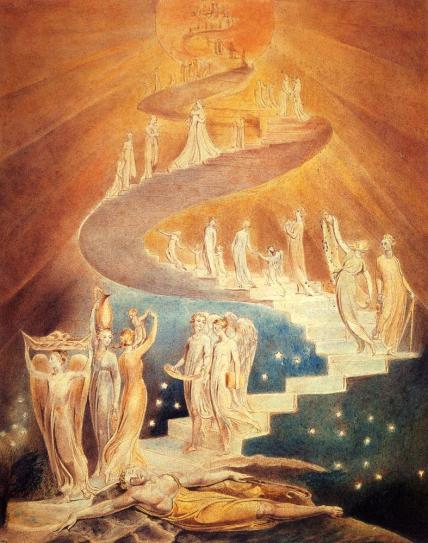
Jacob's Ladder

Biblical Namesake
In the Old Testament, Jacob was the son of Isaac and Rebecca, the grandson of Abraham and Sarah. He had a twin brother named Esau, and it was said that the two of them fought for supremacy even in the womb. Esau was born first, with Jacob following so close behind he was holding his brother’s heel.

As they grew older, the twins developed very different personalities and even appearances – Esau was a hunter and exceptionally hairy, while Jacob was smooth-skinned and home-loving. Esau was Isaac’s favourite son, while Rebecca preferred Jacob.

While he was literally as hungry as a hunter, Esau was convinced by his younger brother to sell him his birthright as eldest for a bowl of red lentil stew. By disguising himself as Esau by covering himself in animal hair, Jacob also obtained a blessing from their blind father Isaac; the blessing made him ruler over his older brother Esau.

To get him away from his now murderously angry brother, Jacob was sent to work for his uncle. On the way, he had a dream or vision of a ladder or staircase reaching into heaven, with angels ascending and descending, while the voice of God blessed and encouraged him.

Jacob worked for his uncle as a shepherd, and married his cousins Leah and Rachel (he just wanted Rachel, but there was a two-for-one offer and he was only allowed Rachel if he took her sister as well). With these two wives, and two concubines, he eventually had twelve sons and at least one daughter.

On the way back home with his family, Jacob had a mysterious encounter with a divine being, who wrestled with him all night, until his hip was dislocated. Jacob demanded a blessing from the being, who did so, and gave him the new name of Israel. It is traditionally said that the being was an angel, although Genesis suggests that Jacob wrestled with God. Jacob always walked with a limp because of the injury to his hip.

Jacob and Esau reconciled with one another, and had an emotional reunion, showing that both had matured over the years. Despite missing out on his birthright and blessing, Esau had become rich and successful, and had a large family of his own; this probably made it easier for him to forgive his twin.

Jacob is regarded as the father of the Israelites, and his twelve sons as the progenitors of the Twelve Tribes of Israel. He is venerated in Judaism as one of the great patriachs, while in Islam Yaqub is one of the prophets, upheld as an example of someone who trusted God completely. In Christianity, Jacob is revered because Jesus spoke of him, and his visions are believed to refer to the coming of Christ. He is regarded as a saint in Catholic tradition.

Name Information
The name Jacob is derived from Iacobus, a Latin form of the Hebrew Ya’akov. The Bible explains the name as meaning “holder of the heel”, as Jacob was born holding his twin brother’s heel, from the Hebrew word aqab, meaning “restrain”, a play on words with the similar iqqbah, “heel”.

The name is often translated as “supplanter”, because Jacob supplanted his older brother in gaining his inheritance. You could take holding a heel as a metaphor for supplanting someone, which is the only way this particular meaning makes even vague sense.

Neither of these is very convincing – the Bible is good at coming up with clever joke explanations of what names mean, but isn’t strong on etymology.

It has been suggested that the name could be short for a hypothetical longer name, such as Ya’aqov’el, meaning “may God protect”. In a baby name book I owned by Oxford philologist Julia Cresswell (now sadly fallen to unrecognisable pieces), she offers the theory that Jacob may ultimately be from Babylonian and mean “God rewards”. Unfortunately, I don’t remember her giving a source for this information.

So we know that Jacob is a name with very old roots, but the exact meaning of it cannot be recovered. It seems more likely to me that the meaning has something to do with God rather than feet, but all theories are only speculative.

Jacob has been used as an English name since the Middle Ages, although not as common as its New Testament form, James. It has often been thought of as being a particularly Jewish choice, although the sheer numbers of Jacobs through history in comparison to the Jewish population make this idea untenable. There is a Saint Jacob, an early Christian martyr from Syria, and the name became rather a favourite in the Eastern church. In the form Jakob, it was commonly used in Central and Eastern Europe, and there are quite a number of medieval saints named Jakob or Jakov.

Famous men from Australian history named Jacob include Jacob Pitman, a South Australian builder and architect who was responsible for spreading the work of his brother Isaac Pitman, the creator of a common form of shorthand. Jacob Nagle was an American-born sailor who arrived here on the First Fleet and left a lively account of early Sydney, while Jacob Mountgarrett was an Irish surgeon to the early colony. Jacob Garrard was a prominent trade unionist, and Jacob Oberdoo an Aboriginal leader.

Notable Jewish Jacobs in Australia include Jacob Montfiore, a highly successful businessman, politician, magistrate, bank director, and community leader – he also wrote plays and an opera. Rabbi Jacob Danglow was senior Jewish chaplain to the army during World War II, and Jacob Bloch was the premier maker of ballet shoes in the mid 20th century (not much of a businessman, but fun-loving and popular). Jacob Goldstein was a Christian charity worker of Jewish heritage.

Jacobs Creek in South Australia’s Barossa Valley is named after an assistant surveyor called William Jacob who settled here in the 1840s. Its main claim to fame is that it has given its name to the Jacobs Creek wine brand.

The name Jacob first charted in Australia in the 1970s, debuting at #163 – part of the trend towards fresh Biblical names for boys, and perhaps influenced by popular Jason. It joined the Top 100 in 1982 at #72, and was in the Top 50 by 1985. In the Top 20 by 1993, Jacob peaked in 2001 at #11, never reaching the Top 10. During the last few years its position has stabilised in the Top 20.

It is #18 nationally, #12 in New South Wales, #25 in Victoria, #26 in Queensland, #16 in South Australia, #10 in Western Australia, #11 in Tasmania, #20 in the Northern Territory, and #32 in the Australian Capital Territory.

In the US Jacob has been constantly on the Top 1000 since the late 19th century, and has never been lower than #368 in 1962. It was popular in the 19th century, and rejoined the Top 100 in the mid 1970s. It reached #1 in 1999 and remained there until 2013; it is now #4.

In the UK, Jacob was a popular name during the 19th century and was in the Top 40 by the mid 1990s. It has been climbing since 2008, and is currently #4. Jacob is most popular in the US and UK, but is popular in all English-speaking countries, and also in Scandinavia. The Jakob spelling is most popular in Slovenia, but also charts in Austria and Scandinavia. (Most countries pronounce the name differently to how we say it).

Jacob is a strong, handsome traditional name on its way to becoming a modern classic. The stability of its popularity makes it a very safe choice, yet it is still quite distinctive. The most common nickname is Jake, but in times past Jack was used, and more recently Coby and Jay.

Thank you to Susan for suggesting the name Jacob be featured on Waltzing More Than Matilda.

POLL RESULTS
Jacob received an approval rating of 58%. 17% of people thought Jacob was a safe choice that was still interesting, but 16% saw it as boring and common, and 15% as too popular. 10% of people loved the nickname Jake, while 5% hated it.

(Painting is of Jacob’s Ladder by William Blake, 1805)
A Brother or Sister for Matilda and Sophie

28 Saturday Nov 2015

Posted by A.O. in Naming Assistance

≈ 1 Comment

Tags

choosing baby names, nicknames, popular names, Scottish names, sibsets, surname names


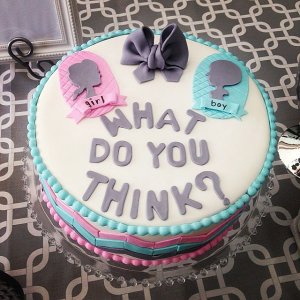
SilhouettedAilsa and Tom are expecting their third child next year, who will be a brother or sister to their daughters Matilda (called Tilly) and Sophie.

If it’s a boy, Tom would love to name him Lennox, but Ailsa isn’t sure about it. If it’s a girl, Ailsa really loves the name Penelope, with the nickname Penny. However, Tom isn’t as keen on the idea.

Ailsa wonders if either Lennox or Penelope (Penny) are a good match with Tilly and Sophie’s names, and if there are any names that would work better for them?

~~~~~~~~~~~~

I have to agree with each of you, as I think both Lennox and Penelope are excellent matches with Matilda and Sophie. As you both have a favourite name you are longing to use, and as neither of you actually hates the other person’s choice, perhaps you could come to an amicable agreement?

If it’s a boy, Lennox – a name which his father loves, and his mother can hopefully accept (especially when it’s attached to her darling son). If it’s a girl, Penelope – a name which her mother adores, and which her father can hopefully learn to live with (especially as it belongs to his precious smallest daughter).

It’s a little gamble for each of you to take, but the stakes don’t seem too high, and it is entirely fair. It would mean that at least one parent will love the name, while the other one won’t really dislike it, and will have the good sportsmanship to accept the decision, knowing that it could just as easily have been their choice which was successful.

Do you think something like that could work for you both?

I don’t think there are any names you could use that are better than Lennox and Penelope, but if you wanted to consider other names, to see if you might be able to agree on one together, you could look at names that are similar to your favourites.

Matilda, Sophie and Penelope seem like a natural match because they are all popular traditional names. (With the nicknames, they all end in an EE sound as well.)

Similar sisterly sibsets could be

Matilda, Sophie and Charlotte
Matilda, Sophie and Georgia
Matilda, Sophie and Grace
Matilda, Sophie and Harriet
Matilda, Sophie and Hazel
Matilda, Sophie and Imogen
Matilda, Sophie and Lucy
Matilda, Sophie and Phoebe (this might put you off having a Penelope in the future?)
Matilda, Sophie and Victoria
Matilda, Sophie and Violet

Some of these could have a nickname like Lottie or Gracie, to continue the pattern.

If Tom loves the X sound in Lennox, he might like Alexander, Baxter, Dexter, Felix, Huxley, or Knox. Or perhaps Lennon or Leon are names that could give the nickname Lenny, if that’s what he was hoping for. He might consider other Scottish names, such as Campbell, Frazer, Jamison, or Reid.

But I’m rather hoping you decide that you can make your favourites work for you, and stick with Lennox for a boy and Penelope for a girl.

Readers, do you think Ailsa’s and Tom’s favourites work with their daughters’ names? And can you think of any names they might both love?

(Picture shows a “gender reveal” cake from Pop Sugar)

Fresh Surname Names For Boys

08 Sunday Nov 2015

Posted by A.O. in Name Themes and Lists

≈ 3 Comments

Tags

Anglo-Saxon names, celebrity baby names, Dutch names, European name popularity, famous namesakes, fictional namesakes, French names, Gaelic names, Harry Potter names, honouring, locational names, name history, name meaning, name popularity, name trends, names from comics, names from movies, nicknames, Old English names, Old Norse names, saints names, Scottish names, surname names, UK name popularity, unisex names, US name popularity

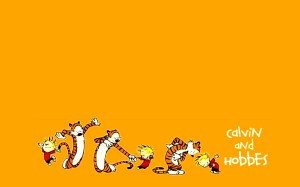
Calvin-Hobbes-calvin-and-hobbes-23762782-1280-800

Surname names for boys that aren’t popular in Australia and have never charted here, yet are rising internationally. These names only chart for boys at present, giving them a solidly masculine feel.

Beckett
English surname with several possible origins. It could be after a place name – Beckett in Berkshire means “bee cottage” in Old English, while Beckett in Devonshire means “Bicca’s cottage”; the Anglo-Saxon name Bicca means “pick axe”. It could also refer to someone who lived near a stream, because the word beck means stream. Finally, it could be derived from the surname Beake, a nickname for someone with a big nose. Beckett has been used as a first name since at least the 16th century, and may have been inspired by St Thomas Becket (also known as Thomas à Becket), the famous medieval archbishop murdered in Canterbury Cathedral by supporters of Henry II. You can find it in early records as a middle name for people called Thomas A. Beckett and so on. In the Artemis Fowl books, Beckett is the younger brother of Artemis, blessed with strength and dexterity. Although rare in Australia, Beckett is storming up the charts in both the US and the UK. The obvious nickname is Beck.

Calvin
From the French surname Cauvin, derived from chauve, French for “bald”. It has been in use as a first name since the late 16th century, inspired by the French theologian Jehan Cauvin, known as John Calvin by English-speakers (Calvin is the Latinised form of his name, from calvus, “bald”). He was a leader of the Protestant Reformation, and his thoughts on the value of hard work as part of a pious Christian life one of the factors in the rise of capitalism. Famous namesakes include former US president (John) Calvin Coolidge, fashion designer Calvin Klein, and rapper Calvin Broadus Jr, otherwise known as Snoop Dogg. However, many will be reminded of the mischievous little boy in the Calvin and Hobbes comic books, who lives in a fantasy world with his imaginary friend Hobbes, a tiger – both Calvin and Hobbes are named after famous philosophers. Around the 300s in Australia, Calvin is fairly stable in the US, UK, and France, and rose in all three countries last year, while Top 100 in Scotland. Similar in sound to familiar Callum, this also has the nickname Cal.

Emmett
May be derived from Emmot, a medieval pet form of the name Emma. There are several surnames derived from male names that we think suitable for girls (eg Addison, Mackenzie) so it makes sense that a surname derived from a female name is suitable for boys! It could also be a variant of Emmott, a place name in Lancashire meaning “junction of streams”. Emmett was originally a name for girls, but by the 19th century had become overwhelmingly a boy’s name, and much more common in the United States. The name Emmett was already rising in the US when Twilight was published in 2005, but had a definite surge after the release of the movie, with Kellan Lutz in the role of strong-man vampire Emmett Cullen. Still rising, it is now in the mid 100s in the US, while rising steeply in the UK since 2005. It’s around the 200s in Australia. Famous namesakes include outlaw Emmett Dalton, clown Emmett Kelly, and teenager Emmett Till, whose murder helped inspire the Civil Rights movement. And who could forget Dr Emmet Brown from Back to the Future?

Grayson
When Scottish, a corruption of Grierson, meaning “son of Grier”, with Grier a pet form of Gregory. When English, it might be from “son of the greyve” – greyve was the medieval word for “a steward”. The Scottish usage is supposedly older. Any connection with the word grey is apparently a coincidence, although Grayson might almost be considered a colour name. Grayson has been used as a boy’s name since the 18th century, and originates from the north of England on the border with Scotland, possibly lending some weight to the Scottish theory. Grayson has been in the US Top 1000 since 1984, a sound-alike successor to Jason. The name is now Top 100 in the US, and still climbing. In the UK, Grayson has charted since 2005 and is now in the 200s and climbing steeply. Although Grayson doesn’t chart here, the name is being seen more often, and is already popular in New Zealand. International trends suggest that Grayson is climbing in Australia too. A famous namesake is Dick Grayson, otherwise known as Batman’s junior sidekick, Robin.

Hendrix
Variant of the Dutch surname Hendriks, derived from Hendrik, a form of Henry. Although Hendrix has been used as a personal name since the 17th century, originating in The Netherlands, its current inspiration is 1960s rock star Jimi Hendrix, considered one of the greatest electric guitarists of all time. A pioneer and innovator of psychedelic rock, he is a guitar legend who has influenced many since. The name Hendrix joined the US 1000 in 2011, the year after Hendrix’s album Valleys of Neptune was posthumously released, reaching #1 on the US charts; Hendrix is now in the 500s in the US. In the UK, Hendrix has charted since 2004, and has been climbing steeply since 2011; it’s now in the 700s. Hendrix is around the 500s in Australia, and has been chosen for their sons’ names by Madeleine West and Natalie Bassingthwaighte. A musical name that’s a cool spin on popular Henry.

Jamison
Variant of Jameson, a Scottish surname meaning “son of James”. There is a famous father and son with this surname in Australian history. Thomas Jamison came here as a naval surgeon on the First Fleet; he was an Irishman of Scottish descent. He was surgeon to the Norfolk Island colony who published Australia’s first medical paper. Granted land, he became wealthy but got mixed up in the Rum Rebellion and returned to Britain. His son Sir John Jamison was also a naval surgeon appointed to Norfolk Island, and became Surgeon-General. As the first titled free settler, he immediately became the head of Australian society. There are a number of places named after one or other of these Jamisons. In use as a personal name since the 18th century, Jamison has a particular connection to Scotland. Jamison is around the 400s in Australia, and is in the 400s and climbing in the US, although in rare use in the UK. A possible way to honour a James, with a wealth of potential nicknames, including Jay and Jamie.

Kingsley
English surname from the village of Kingsley in Cheshire, whose name means “king’s meadow”. Famous people with the surname include novelist Charles Kingsley, and actor Sir Ben Kingsley (born Krishna Bhanji). Kingsley has been used as a personal name since the 18th century, and was a particular favourite in America. Famous namesakes include the satirical novelist Sir Kingsley Amis, and the YouTube comedy star Kingsley, whose real name is King. A famous fictional namesake is the cool, powerful wizard Kingsley Shacklebolt from the Harry Potter series, played by George Harris in the films. The name Kingsley has been on the US Top 1000 since 2010, the year after Kingsley first went viral on YouTube. It climbed last year and is now in the 700s. In the UK, Kingsley is in the 500s and climbing, while in Australia it is around the 300s. King- names are on trend, along with other nods towards royalty.

Knox
Scottish surname, perhaps after the place name Knock, which comes from the Gaelic An Cnoc, meaning “the hillock”; there is a village named Knock on the Isle of Lewis in the Hebrides of Scotland. It could also be given to someone who lived near a small hill. One of its most famous namesakes is 16th century theologian John Knox, who led the Protestant Reformation in Scotland; posh private schools are sometimes named after him. Another notable namesake is Henry Knox, who was the first US Secretary of War in the late 18th century – the famous Fort Knox in Kentucky is named in his honour, along with many other places. Knox has been used as a personal name since the 18th century. Knox rejoined the US Top 1000 in 2009, a year after Brad Pitt and Angelina Jolie named their son Knox (twin to Vivienne) – Knox was the middle name of Pitt’s grandfather. Since then it has screamed up the charts and is now in the 200s. Although rare in the UK, it has appeared on the England/Wales charts since 2009. In Australia, it is around the 600s. Apart from the Hollywood star factor, this is a smart name ending with a fashionable X, in line with names such as Max and Fox.

Marshall
An occupational surname. The English word marshal comes from the Old French word mareschal, which literally means “horse servant”, and originally referred someone who was in charge of taking care of horses. Later it came to mean both a blacksmith, and a high-ranking officer who was in charge of a medieval prince or lord’s cavalry, and later still, of his military forces – what we might call a general or field marshal. This duality in the name’s meaning meant that some Marshalls were of the nobility, especially in Scotland, and others had a more humble origin. Marshall has been used as a personal name since at least the 16th century, and even from its earliest days was sometimes given to girls, although it is now overwhelmingly considered male (perhaps partly because it sounds like the word martial, meaning “war-like, warrior-like”). Marshall Amplication is a famous English music company, while Marshall and Sons was a pioneering music retailer in Adelaide. Marshall was Jimi Hendrix’s middle name, and there’s also Marshall Mathers III, otherwise known as Eminem. Marshall is around the 300s in Australia, similar to its position in the US and UK: the name rose in both countries last year.

Tate
Derived from the Old English name Tata, of obscure meaning. There were a number of Anglo-Saxon kings called Tata as a nickname – just to make it slightly more confusing, Tate seems to be the feminine form, which was what a Queen Ethelburga was known as. It is conjectured that it might come from the Old English toetan, meaning “to caress”, so it could be an affectionate nickname like Sweetie or Cuddles. There is an identical sounding Scottish surname Tait, and this comes from the Old Norse name Teitr, meaning “glad” – it is not impossible that the Old English nickname Tata came from the same source, so might be a nickname along the lines of Happy or Merry. The two different surnames have probably become meshed, in any case. Tate is around the 200s in Australia, and in the 300s in the US and UK. In the US it has been generally on the rise since around the time of the 1991 film Little Man Tate (about a child genius named Fred Tate), and in the UK has been rising steeply since 2012 – the year after former Spice Girl Emma Bunton welcomed a son named Tate.

POLL RESULTS
People’s favourite names were Emmett, Beckett and Calvin, and their least favourite were Jamison, Knox and Kingsley.

Fresh Names For Boys

01 Sunday Nov 2015

Posted by A.O. in Name Themes and Lists

≈ 5 Comments

Tags

American names, angel names, Aramaic names, Biblical names, celebrity baby names, english names, European name popularity, famous namesakes, fictional namesakes, Greek names, hebrew names, imperial names, Latin names, literary names, locational names, modern names, mythological names, name history, name meaning, name popularity, name trends, names from films, names from television, names of bands, New Zealand name popularity, nicknames, papal names, Puritan names, Romani names, saints names, Spanish names, surname names, UK name popularity, US name popularity

DjangoUnchained_poster2

An audit of Featured Names on the site has revealed there are less boys names than girls, so I’m going to cover two lots of boys names this month to give them a chance to catch up. These names seem “fresh” because they don’t have a history of charting in Australia, aren’t popular, and are rising in other countries. They are ones to keep an eye on!

Arlo
May be a variant of the surname Arlow, a corruption of Harlow. Arlo is the Anglicised form of Aherlow, and the Glen of Aherlow is a picture-postcard valley in Ireland. Its name comes from the Irish eathralach, meaning “between two highlands”, as the valley is nestled between major peaks in the Galtee Mountains. The name became part of English literature when Edmund Spenser used Arlo Hill as a place name in his poem The Faerie Queene; Spenser’s estate in Ireland was near the Glen of Aherlow. Arlo has been used as a boy’s name since the 18th century, and originated in the United States: I think probably from Arlow, used at the same time, and in a couple of records the person is listed as both Arlow and Arlo. One of the its most famous namesakes is folk singer Arlo Guthrie, although you may also think of street skater Arlo Eisenberg, and agent Arlo Glass from TV series 24. Around the 200s in Australia, Arlo is climbing steeply in both the US and UK, and is already popular in New Zealand. Arlo fits in with the trends for an AR sound and O-ending, and being chosen for their sons by both Toni Colette and Kasey Chambers can only have helped.

Bodhi
In Buddhism, bodhi is the deep understanding gained about the true nature of reality; this understanding is part of the Buddha’s liberation on the path to Nirvana. It literally means “awakened” in Sanskrit and Pali, but is often translated as “enlightenment”. The great spiritual teacher Gautama Buddha is said to have attained bodhi while sitting under a sacred fig tree in India, now known as the Bodhi Tree, and Bodhi Day is celebrated by Buddhists on December 8. Bodhi has been used as a personal name since the 20th century, with a surge of interest in the 1970s, when all things Eastern became trendy. The name received a notable outing in the 1991 cult film Point Break, with Patrick Swayve as a rebel surf leader named Bodhi. The film ends at Bells Beach in Victoria, which may help explain why Bodhi is such a favourite in Australia, and around the 200s. It is much rarer in other countries, but climbing steeply in both the UK and US. Apart from the spiritual meaning, Bodhi fits in with names like Beau and Brody. Chosen for his son by actor Cameron Daddo, this is a relaxed surf-friendly name.

Casper
A form of the name Jasper, which has a huge number of European spelling variants. It’s been in use since the Middle Ages, when it was most common in Central Europe. Today Casper is a popular name in The Netherlands and Scandinavia, and rising briskly in the UK, where it is in the 200s. It is around the 400s here, and would make a great alternative to popular Jasper – especially as Casper the Friendly Ghost is no longer much of an issue.

Djanjo
Nickname of the great French jazz guitarist, born Jean Reinhardt. Reinhardt was of Romani descent, and his nickname means “I awake” in the Romani language”: it is pronounced JANG-go. There was a revival of interest in his “gypsy jazz”sound in the 1960s, and Django’s musical influence can barely be overstated; he has been an inspiration to generations of guitarists. His music has been used in movie soundtracks, and Djanjo himself is a character in Martin Scorcese’s Hugo, while being referenced in other films. Djanjo is the main character in a popular series of spaghetti Westerns, and got a reboot in Quentin Tarantino’s Django Unchained, with Jamie Foxx as freed slave Djanjo Freeman. Django isn’t common in any country, but has been rising in the UK since Tarantino’s 2012 film. Cool and on trend, this is a musical name with a cowboy vibe.

Ezra
In the Old Testament, Ezra was a scribe and priest, and according to Jewish tradition is credited with introducing several of the main aspects of Jewish law and teachings. This makes him a greatly respected figure in Judaism, and also in Islam and Christianity. His name is translated as “help”, although it may be a contraction of the Hebrew name Azaryahu, meaning “God helps”. Ezra has been in use as an English name since since at least the 16th century, and has been more common in the US; a famous namesake is the American poet Ezra Pound, and it’s referenced in the name of rock band Better Than Ezra. Ezra is around the 300s here, but is rising steeply in the US and UK; it is only just outside the US Top 100. This is becoming an increasingly hip choice.

Micah
In the Old Testament, Micah was a prophet of Israel. His name looks a lot like Michael, and has a similar meaning: “who is like Yahweh?”, while Michael means “who is like God?” (in both cases, it it is rhetorical, as nobody is God’s equal). Micah’s prophecies became especially relevant to Christians, as one was interpreted as meaning the Messiah would be born in Bethlehem, and Jesus referred to the Book of Micah several times in his teachings. Because of this, the prophet is regarded as a saint, and the name Micah has been used since the 17th century, introduced by the Puritans. Micah is around the 100s here, and is even more popular in the US, although not so common in the UK. The name has become a favourite in horror and fantasy works, and will appeal to people who like Michael, but want something with a more contemporary feel.

Rafael
From the Hebrew name Rafa’el meaning “God heals”; the name is often spelled Raphael, with Rafael most common in Spanish-speaking countries. In Jewish tradition, Raphael is one of the seven archangels, and mentioned in the Old Testament. He is an angel of healing and protection from demons, and venerated in Christianity and Islam as well as Judaism. Regarded as a saint in Catholicism, St Raphael is the patron of pilgrims and travellers, as well as of medical workers. The name Rafael has been in use since the Middle Ages and was common in Spain. A well-known contemporary namesake is Spanish tennis champion Rafael Nadal. Rafael is around the 100s here, and in the 200s in the US and UK. It is a popular name in Europe, especially in Portugal, and is rising in France and Switzerland. Romantic and with strong, positive associations, this comes with the obvious nicknames Raf and Rafe.

Roman
Derived from the Latin name Romanus, which simply means “a Roman” to signify a man from Rome or a citizen of the Roman Empire. There are a number of saints named Romanus, including an early martyr, as well as a pope and several Byzantine emperors. The name is particularly associated with Russia and Eastern Europe, as there were quite a few Russian, Romanian, and Bulgarian leaders named Roman. However use of the name was internationally quite widespread, and can be found in Spain, Germany, and England from early on. There are two famous film directors with this name: Roman Polanski and Roman Coppola, the son of Francis Ford Coppola. Roman is around the 200s here, and is rising very steeply in the US and UK, only just outside the Top 100 in both countries. Rom- names are on trend, and this is a stylish multicultural choice which was selected for her middle son by Cate Blanchett.

Silas
In the New Testament, Silas was an early Christian leader chosen to be a companion of St Paul. The pair were briefly imprisoned together, until a convenient earthquake broke their chains and burst the prison doors open. Paul refers to him by the Roman name Silvanus, which is from the Latin silva meaning “forest”; in Roman mythology, Silvanus was the god of forests. This would identify Silas as the same person as Saint Silvanus, who was one of the disciples of Jesus; tradition says he became a bishop and died a martyr. If so, Silas could be a nickname, or understood as a Greek form of Silvanus. However, Silas is a Greek form of the Hebrew name Saul, meaning “asked for, prayed for”, which was also Saint Paul’s birth name. Whether Silas was two people or one is a question for the scholars, but Silas became an English name by at least the 16th century because of this character. Here the name Silas is around the 500s, but it is far more popular in the US, and rising in the UK. In popular culture, it has become associated with villains – the creepy albino monk from The Da Vinci Code, and serial killer Silas Blisset in British soap Hollyoaks. The wicked factor has actually boosted the name’s popularity.

Thaddeus
In the New Testament, the Apostle Jude is usually identified as being the same person as the Apostle Judas Thaddeus, called so to differentiate him from Judas Iscariot. Thaddeus (said THAD-ee-us) seems to be derived from tadda, the Aramaic word for “breast, heart”, perhaps an affectionate nickname in the same way we might say dear heart or bosom buddy. It could also mean “hearty”, to suggest someone strong-hearted or warm-hearted. Perhaps the closest thing in English is the familiar piratical address my hearty, which has connotations of strength and courage, but also loyalty and camaraderie. Sometimes the name is given as Lebbeus, which could come from leb, the Hebrew word for “heart”, and thus be a translation of Thaddeus. Another theory is that it is from Todos, an Aramaic form of the name Theodore, although this fails to explain why the Bible also translates it as Lebbeus. It is unclear whether Judas Thaddeus is the same person as St Thaddeus, said to be one of the disciples of Jesus who was a missionary in Syria. In use as an English name since the 17th century, and given impetus by American Puritans, Thaddeus has a strong history in the United States. It is in the US Top 1000 and rising, and has been rising steeply in the UK since 2013. It’s very rare in Australia, but this is a handsome traditional name with a great meaning – Thad, Tad, Ted, and Teddy are obvious nicknames.

POLL RESULTS
People’s favourite names were Arlo, Rafael and Casper, and their least favourite were Bodhi, Thaddeus and Djanjo.

(Picture shows a poster for the movie Django Unchained, with helpful pronunciation guide)

I Now Pronounce You, Lucia – But How?

24 Saturday Oct 2015

Posted by A.O. in Naming Assistance

≈ 6 Comments

Tags

British Baby Names, choosing baby names, Eleanor Nickerson, Facebook, fictional namesakes, Italian names, locational names, nicknames, pronunciation, Roman names

Tumblr_nhonro2AzU1s6b0olo1_1280_(4)

Catherine and her husband are putting together a long list of names for their baby, due next year. One of the names they are seriously considering is Lucia.

Catherine loves the English pronunciation for the name – LOO-sha, or LOO-shee-uh – as an interesting variation of Lucy. However, she is very wary about giving her little girl a lifetime of explaining and correcting the pronunciation of her name.

There are a few women named Lucia in Catherine’s family tree during the 19th century, and Catherine is of English and Irish ancestry. She wonders how these Lucias would have pronounced their names.

Catherine also wonders if anyone can help identify some characters named Lucia in English literature. There are plenty called Lucy and Lucinda, but precious few Lucias. She can think of Lucia from E.F. Benson’s Mapp and Lucia books (but Lucia is just a nickname and said the Italian way), and there is Lucia di Lammermoor from the Italian opera, but the character’s real name is Lucy, Lucia is an Italian translation of it.

* * * * * * * * * *

Catherine, I think there might be two questions you are asking here about Lucia’s pronunciation

1. Is there a traditional or historical British pronunciation of Lucia, perhaps even one which can be referred to as a “correct” pronunciation for English-speakers?
2. How would the majority of Australians say the name Lucia, to give you an idea of how often it might need to be explained or corrected in everyday life?

These are highly intelligent and practical questions, but unfortunately I don’t think I have a definitive answer to either of them.

I can tell you the correct historical pronunciation of Lucia – it’s LOO-kee-uh. It’s a Roman name, and that’s how the ancient Romans would have said it. Needless to say, nobody says it this way, which perhaps puts a bit of a question mark over the usefulness of correct historical pronunciations.

As far as I know, English-speakers say both LOO-sha and loo-SEE-uh. Which one your ancestors might have used is a bit of a puzzle. The Caribbean island of St. Lucia is said LOO-sha, which seems like it should be a clue, but perhaps isn’t.

It also occurs to me that Italian travel and culture was incredibly fashionable for the upper classes in Britain in the 19th century, which makes me wonder if your ancestors (if upper class or social climbers in even a mild way) might have used the Italian pronunciation, loo-CHEE-uh, to signal how cultured they were.

I will make a point of posting this article on the Facebook page for British Baby Names, in the hopes that name expert Elea Nickerson might be able to shed some light on the issue.

As to how most Australians would pronounce Lucia, I think it depends a lot on where they’re from. Anyone from an area with a significant Italian population is probably going to say loo-CHEE-uh. I would imagine that Italian-Australians would almost always say loo-CHEE-uh, and in a few cases, might persist with that pronunciation even after being told the person prefers it said another way.

I would probably say loo-SEE-uh if I saw it written down, maybe because of the name Lucy (I also tend to say LOO-see-us and LOO-see-an for the male names). I have met many other Australians who say loo-SEE-uh, although it seems to be less common than loo-CHEE-uh. In fact I’ve noticed a lot of Australians seem to think loo-SEE-uh is a mispronunciation of loo-CHEE-uh!

A friend in Brisbane tells me that everyone she knows says LOO-sha, because that’s how the exclusive suburb of St. Lucia in Brisbane is pronounced. It’s named after the Caribbean island, which is why it has the same pronunciation.

From my extremely unscientific polling of friends and relatives in different parts of the country, loo-CHEE-uh is the most common by far, then loo-SEE-uh, then LOO-sha – except in Queensland where LOO-sha seems most common.

Of course, once you are introduced to a Lucia and she says her name aloud, you automatically say it the way she does. It shouldn’t really need to be “corrected” unless you see her name written down first (on a class list, for example) and have to guess the pronunciation.

I think it is a name where you have to get good at introducing yourself clearly and firmly so people immediately understand the way you want it said. It’s also a name where if you travel around the world, you would need to be tolerant of people saying your name in different ways. I do think pronunciation might be an issue (unless you’re in Brisbane), but hopefully not to the point where it really bothers you.

You’re right that Lucia is not a very literary name. Like you, the first two things I think of are the Lucia from Mapp and Lucia, and Lucia di Lammermoor. For the uninitiated, the character from Mapp and Lucia is named Emmeline Lucas, so Lucia is a nickname from her surname. She uses the Italian pronunciation, which the author E.F. Benson seems to suggest is rather pretentious for an English person.

There’s a Lucia in the fantasy novel series Falling Kingdoms by Morgan Rhodes. She is a beautiful princess with great magical power, and the novels link her name with the meaning of “light”. There’s a mildly icky quasi-incest plotline.

Chick-lit novel Lucia, Lucia by Adriana Trigiani is set in post-war New York. Lucia is an Italian-American girl with a passion for fashion, but it’s the 1950s so good luck with those career aspirations.

In Lucia’s Eyes by Arthur Japin is a historical novel about an Italian servant girl who is the first lover of the famous Casanova. That leads almost directly to international prostitution, and a hideous facial disfigurement doesn’t seem to be a barrier to her profession.

The Lucia Chronicles by Jennifer L. Kelly feature Lucia Giroux and are set in a dystopian near-future in the United States. The name Lucia is again linked with the theme of “light”.

The trouble with all these namesakes is none of them are particularly positive. Emmeline aka Lucia is comically, even lovably, ghastly, while Lucia di Lammermoor goes mad and stabby. None of the others have great experiences, with incestuous love, broken dreams, a poxy face, and destroyed illusions in store for them. Lucias in books are clearly in for a tragic time.

Better to concentrate on the name’s other attributes. It’s pretty and elegant with a beautiful meaning and tons of nickname options, and is fashionable yet still underused. Isn’t that enough?

UPDATE: The baby was a girl, and her name is Margaret!

POLL RESULTS
Most people thought the name Lucia would probably need more explanations and corrections than usual because of its different pronunciations, but nothing that couldn’t be coped with. There was a significant number that thought it would be a major issue.
45% said Lucia would need more corrections than usual, but that it wasn’t necessarily a huge problem
30% said Lucia would need to be corrected a lot
13% said Lucia would need to be explained and corrected every single time upon meeting someone new
10% didn’t think Lucia would need more correction than any other name
One person thought Lucia would “hardly ever” need correction, and one optimistic soul was sure it would never need it

44% of people pronounced Lucia loo-CHEE-uh
43% said it loo-SEE-uh
12% said it LOO-sha
One person said it LOO-cha

(Picture shows an artist’s impression of Lucia from Falling Kingdoms)

Name Update: Ready, Freddie, Go!

19 Monday Oct 2015

Posted by A.O. in Name Updates

≈ 2 Comments

Tags

Chinese names, choosing baby names, middle names, nicknames

fr5

Natalie and James were expecting their first child, and wrote in to the blog because they weren’t sure what they were going to call their son.

By the time Nat and Jamie got to the hospital, the name Jasper was their front-runner, even though Jamie had originally vetoed it. However, once their little boy was born, Jasper didn’t seem to suit him after all, and so they named him

FREDERIC FONG SHUN “FREDDIE“.

Frederic was another name that Nat had really liked, but Jamie had initially not been so keen on – luckily he decided Frederic was great after all. This is the second set of parents who had seriously considered the name Jasper until their son was actually born, and it’s also the second dad who vetoed a name, but then changed his mind – encouraging news!

Congratulations to Natalie and James on choosing the handsome, manly name with a handy nickname they had always wanted, and thank you to Natalie’s parents for choosing lovely Chinese middle names.

(Freddie wall hanging from The Spirited Puddle Jumper)

(Some) Names From (Recent) Australian Teen and Young Adult Fiction

18 Sunday Oct 2015

Posted by A.O. in Naming Issues

≈ 4 Comments

Tags

fictional namesakes, Indian names, name trends, nicknames, sibsets, unisex names

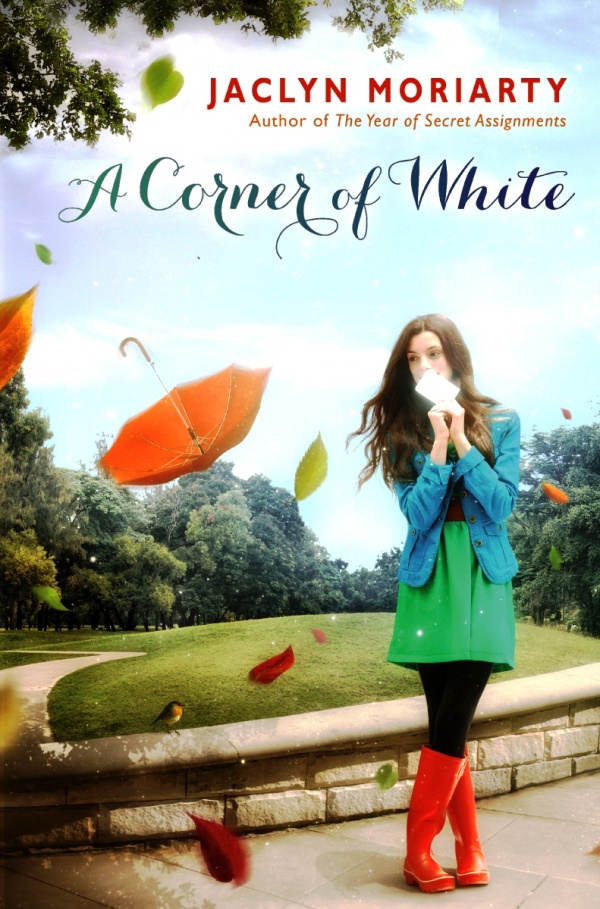
cornerofwhite__span

If you want to turn this into a drinking game:

Drink if you see the same name used again
Drink if the character’s name provides a major plot point
Drink if there’s some quirky or interesting story behind a character’s name/nickname
Drink if the character is named after food
Drink if the character is named after an animal
Drink if the character’s nickname has nothing to do with their full name
Drink if the character’s name is highly unlikely for their age group

I, Wolf by Matt Boyd
A werewolf story. The hero is called Romy, short for Romulus (DRINK!), and he’s an Australian boy who has to move to Austria for health reasons. His love interest is Antonia, and friends are Dimitri and Nat.

One of my pet peeves is when the character’s name tells you what’s going to happen. However, after reading endless teen fiction where the heroine has some boyish nickname like Alex or Bill or George, it’s refreshing to read one where the hero has a nickname more common for girls.

Holier Than Thou by Laura Buzo
Heroine is Holly, a young social worker – her nickname is Holier-than-Thou (DRINK!). Her boyfriend is Tim, but she has unresolved feelings for her friend Liam, and finds herself attracted to a colleague, Nick (nicknamed Nickolarse).

The Roxy Ran series by Tiffany Hall
Roxy Ran is a teenage ninja, initiated into the mysteries of the Tiger Scrolls or something by Jackson Axe, who has a brother named Morgan. Roxy’s big sister is Electra (a samurai), and her friend is Cinnamon (DRINK!). The school bully’s name is Hero, which is a major plot point give away (DRINK!).

The Elly Pickering books by Wendy Harmer
The heroine is Eleanor “Elly” Pickering, who has a big sister named Matilda “Tilly“. Her friends are Carmelita and Rosie, while the popular “mean girl” is called Bianca, and love interest is a boy named Tyler. In one book, Elly gets a job which brings her into proximity with a Hollywood teen heart throb called Jake Blake.

For some reason Biancas are often unpleasant in fiction. I had an issue with movie star Jake Blake – it reminded me too strongly of Jack Black, so although he is meant to be a Zac-Efrony sort of guy, I was picturing something far different.

I’ll Tell You Mine by Pip Harry
Kate is the heroine, an upper middle class Goth teenager at boarding school. Her best friend is Maddy, and Maddy’s brother Lachy provides a love interest.

I have an aversion to heroines named some version of Katherine, but my very least favourite is Kate. It shows such a massive lack of imagination that I fear for the rest of the book.

And All the Stars by Andrea K. Höst
Madeleine “Maddie” (DRINK!) Cost is a teenage artist trying to win the Archibald Prize by painting her gorgeous and famous cross-dressing actor cousin Tyler (DRINK!). But forget most of that plot, as the book is actually about an alien invasion in central Sydney. The love interest is a science nerd named Fisher “Fish” (DRINK!) Charteris, and best friend a girl named Noi (a Thai name).

There’s a cast of dozens in this book. Most of them have nicknames, some of which are creative, such as a boy named Lee, who is called Pan (DRINK!) for the fairly unlikely reason he resembles the god Pan (DRINK!). You just know you’ve sent your kid to a superior school when their playground nickname is a Greek god.

The Mosquito Advertising books by Kate Hunter
Brisbane teenagers run an advertising agency. Heroine is Katie Crisp (DRINK!), and others on her team are best friend Lorraine Crabbe (DRINK!), neighbour Joel Maguire and his cousin Dominic Pyne-Davies, arty Clementine Bailey (DRINK!), and “bad girl” Jasmine Jolley. Katie’s mum is Vanessa, and Lorraine’s is Pippa (DRINK!). Clementine belongs to a brilliant family, and has siblings named James, Cordelia, Evangeline, Rupert, and Nathaniel. Dominic has twin little sisters named Janie and Susan (DRINK! DRINK!). Jasmine has big brothers named Eli and Byron who are famous rock musicians. Katie’s aunt and Vanessa’s sister is named Nancy (DRINK!).

Not only a variation of Katherine, but a variant of the author’s own name, which seems particularly lazy. The names are all of out of synch: a teenager named Lorraine, little girls named Janie and Susan, and a youngish aunt named Nancy, sister to Vanessa!

Divine Clementine by Hayley S. Kirk
Teenager Clementine (DRINK!) Footner falls apart when her beloved aunt Stella (DRINK!) dies (Stella is not much older than Clementine and is like a big sister). There’s also an aunt named Penny, an uncle named Dorian, and a niece named Auggie; friend is Thom.

The family is quite ahead of the curve, so look out for girls named Auggie in the future.

The Tribe series by Ambelin Kwaymullina
Set in a dystopian future world informed by the Australian Aboriginal Dreamtime. The heroine of the first book is Ashala Jane (DRINK!) Ambrose, otherwise known as Ashala Wolf (DRINK! DRINK!). Her friends are Ember Crow (DRINK!) and Georgie Spider (DRINK!), and they lead a tribe of environmentally-aware children. Love interest is Justin Connor – called by his surname – and Ember’s boyfriend is Jules ; the baddies are Neville Rose and Dr Miriam Grey.

It makes sense that everyone is still using the same names three hundred years in the future, as society broke down right about now. I do like Ashala, but it bothers me that she is called Wolf as a tribal name in Australia – we don’t have wolves!

Team Human by Justine Larbalestier and Sarah Rees Brennan
A vampire satire set in a town in Maine where humans and vampires live side by side: the vampires are immigrants to the US. The heroine is Mel (DRINK!), her best friends are Cathy (DRINK!) and Anna, and the vampire is Francis Duvarney (DRINK!). Mel’s love interest is a boy called Kit, whose name is short for Kitten (DRINK!) – it’s a long story (DRINK!).

You might chuckle over a vampire named Duvarney, because of the Victorian pulp-fiction classic, “Varney the Vampire”. Mel and Cathy are remarkably dated for teenagers; they seem very 1970s to me, as an Anna who went to school with about eighty Mels and Cathys (it feels like).

Losing It by Julia Lawrinson
Four 17-year-old best friends vow to lose their virginity before the end of the final school year, American Pie style. The girls are Zoe, Bree, Mala, and Abby. Abby has a brother named Zeke, and Mala has a cousin named Mo. The girls’ male friend is Matty.

Mala and Mo are from a different ethnicity, but it is never said what it is, although Mala is an Indian name, and Mo might be short for Mohandas?

The Convent by Maureen McCarthy
Set in the historic Abbotsford Convent in Melbourne, and based on the author’s own family history. It starts during World War I, when Sadie is forced to relinquish her daughter Ellen, who is brought up by the nuns at the convent. In the 1960s, Ellen’s only daughter Cecilia takes the veil at the convent and becomes Sister Annuniciata, and Cecilia’s daughter is Perpetua, called Peach (DRINK! DRINK!). Peach also has a connection with the convent, as she works at the arts centre now housed in its buildings. Peach’s sister is Stella (DRINK!), and her best friends are Cassie and Det.

It makes sense that great-grandmother’s name is popular again now, and also that a nun’s daughter should be given a saint’s name.

The Colours of Madeleine series by Jaclyn Moriarty
A fantasy series about teenager Madeleine Tully (DRINK!), who ran away from a world of opulence to live a simple life in Cambridge, England with her mother Holly (DRINK!). Madeleine’s best friends are Jack (an admirer) and Belle, but she has a pen-friend named Elliot Baranski in a parallel universe. Can anyone else guess that poor Jack does not stand a chance against a farm boy from a parallel universe who is heading a crew of loyal rebels?

I liked the way that people in the parallel universe had much the same names as we do – Elliot’s friends are Samuel and Keira, and his love interest is Kala. The princess is named Ko, but then she’s royalty. They like the letter K in the parallel universe.

Friday Brown by Vicki Wakefield
Liliane Brown is nicknamed Friday by her mother Vivienne because of a family curse that she will die on a Saturday (DRINK! DRINK!). Friday becomes a runaway street kid, and makes friends with a mute boy called Silence (DRINK!), and comes under the control of charismatic but unlikable young woman named Arden. The other street kids are AiAi, Darcy (female), Joe, Carrie, Bree (DRINK!), and Malik. The love interest is a boy named Wish (DRINK!).

Love-Shy by Lili Wilkinson
Penny (DRINK!) Drummond is a neurotic over-achieving student journalist, and she takes on a project of investigating/fixing a boy at her school named Nick (DRINK!) Rammage. Her friends are Rin and Hamish, who she tries to match up together. Other classmates are Rory, James (DRINK!), Clayton, Perry, Arabella, and Max. Penny’s dad is gay, and his partner is Josh.

How Can They Jazz Up Their Baby Name Search?

17 Saturday Oct 2015

Posted by A.O. in Naming Assistance

≈ 3 Comments

Tags

choosing baby names, famous namesakes, locational names, musical names, nicknames, sibsets

etta_front

Chloe and Ashton are expecting their third child next year; they already have a son named Wynton and a daughter named Etta. The couple are having trouble thinking of any names at all, and Chloe feels that she might over-think names.

Wynton was six weeks old before he was named, even though they knew in advance he would be a boy. They found inspiration from this blog for Etta’s name. They saw the name Etty, from Etty Bay, but put a spin on it. Like Wynton, Etta is also a jazz name, which vaguely references an Australian place name – Winton and Etty Bay (both in Queensland, as it happens).

Chloe loves their childrens’ names, and feels under pressure to come up with something equally good that fits in with Wynton and Etta.

To add to the difficulties, they have a surname which can be hard to match with a first name – it’s a somewhat startling short noun, like Blood.

Chloe doesn’t want any matching initials in the family, so no names starting with A, C, E, or W.

* * * * * * * * * * *

On one hand, it can be an anxious feeling having absolutely no ideas for baby names at all. On the other, it can be a wonderfully liberating experience. No having to choose between favourite names, no arguments with your partner, no fretting because your best friend just used the name you had your heart set on. That leaves you in an enviably free position.

Like a jazz musician, you can be free to take risks with names, to improvise a name, to swing it, to try new things, to open your mind, to allow chaos into the naming process, to be creative. I might suggest that you try “underthinking” rather than overthinking – and by that, I mean allowing your subconscious, or your “under-mind” to express itself. Also remember that jazz is a colloborative process, so bounce ideas off each other.

I understand that “Blood” is not an easy surname to work with. I tried several different things, and I came up with some restrictions that I think might have to be considered.

-No vocabulary words as names, as Tangerine Blood or Duke Blood form a bizarre or even disturbing image.
– This includes names which sounds like words, such as Marshall, Dinah or Norah, or ones which have a nickname that sounds like a word, such as Minnie, Penny, Rich or Randy
– Well known place names could also be an issue, as with Georgia Blood or Paris Blood.
– No alliteration, as Byron Blood or Billie Blood sound odd and comical.
– Be careful with names ending with an S or X, as Lux Blood sounds like Luck’s Blood.

I can see it would be great if the name had some sort of connection with an Australian place, but I think with so many things to consider, it should be a preference rather than a must have.

Wynton and Etta are rare names, so I can see you might prefer a name which is similarly uncommon. However, there are many popular and fairly common names names from jazz, such as Laura, Louis, Malachi, Leon, Miriam, Theo, Kai, Kate, Leo, George, Jonah, Natalie, Eric, Oscar, Frankie, Stella, Jane, Hannah, Cameron, Harlan, Thomas, Percy, Dana, Maggie, Nancy, Ruth, Madeleine, Josephine, Reuben, Nathaniel, Mabel, Phoebe, Seth, Miles, Orlando, Xavier, and Sadie.

Some other names from jazz, a few of which have a connection to Australian places:

Darius
Django
Digby – a town in Victoria
Edgar – the Edgar Dam is in Tasmania
Fabian
Fletcher – a suburb of Newcastle
Freddie – there are quite a few places with Frederick in their name
Harvey – a town in Western Australia
Jesper – similar to the town of Wee Jasper in NSW
Julius – Lake Julius is in Queensland
Lennie
Leroy
Lucien
Miller – a suburb of Sydney
Monty – Montgomery is a district of Tasmania
Mornington – the Mornington Peninsula is in Victoria
Nelson – a suburb of Sydney, while Nelson Bay is a NSW town
Oran – Oran Park is a suburb of Sydney
Quincy – Quinns Rocks is a suburb of Perth
Reggie
Ronnie
Spencer – the Spencer Gulf is in South Australia
Thaddeus

Corea
Dara
Ida
Inez
Laine – Lane Cove is a suburb of Sydney
Lena
Lucia – St Lucia is a suburb of Brisbane
Mamie
Melba – a suburb of Canberra
Morgan – a town in South Australia, while Mount Morgan is in Queensland
Mimi – a small island in the Torres Strait
Nellie
Nina
Peggy
Saskia
Susannah – Susannah Place Museum is in Sydney
Tessie – sounds like Tassie, short for Tasmania
Valaida
Vera – Vera View is a beach in Perth
Zarie

You have set yourself a fairly difficult task, and I wonder if that’s why you can’t think of any names. Sometimes when we can’t come up with a single name which fits our criteria, it may be because the criteria is too strict. Have you painted yourself into a corner? Because if so, it may be time to set yourself free and find a new groove.

Readers, can you suggest any jazz-inspired names for Chloe and Ashton?

Waltzing With …. Lucinda

11 Sunday Oct 2015

Posted by A.O. in Waltzing with ...

≈ 4 Comments

Tags

anagram names, choosing character names, created names, famous namesakes, fictional namesakes, locational names, name history, name meaning, name popularity, names from movies, names of boats, names of dolls, nicknames, pen names, Roman names, Spanish names, UK name popularity, underused modern classics, US name popularity

91yXs7juaPL._SL1500_

Famous Fictional Namesake
I’ve been away on holiday, hence the lack of posts. Whenever we go somewhere, I always take tons of books with me, in the fond belief that I will have lots of free time. I rarely get much reading done, as holidays take up more of your time and energy than you think they will, but in the spirit of my good intentions I’m covering a name from a modern Australian classic.

Peter Carey’s Oscar and Lucinda won the 1989 Miles Franklin Award and the 1988 Booker Prize. Set in the nineteenth century, Lucinda is a young orphaned heiress who forms an unlikely and intense relationship with an Anglican priest named Oscar.

These eccentric redheaded soulmates are bound together by their mutual passion for gambling. Lucinda is the owner of a glass factory on Sydney’s Darling Harbour, and she and Oscar make a crazy wager that he will transport a glass church by river to the town of Bellingen in New South Wales; Lucinda stakes her entire fortune on the bet.

Peter Carey’s first idea for his heroine’s name was Hermione; however he went off the idea as he realised how difficult Hermione was for him to say. Not fancying the idea of constantly talking about Hermione at book festivals and so on, and thinking how awkward Oscar and Hermione sounded as a title, he cast about for something else. His wife at the time suggested Lucinda, and he immediately liked it, as it felt both modern and Victorian.

Only later did he realise that Lucinda had a connection with light, which fit the themes of the novel. Lucinda is obsessed with glass, while Oscar has a deadly fear of water, which makes his transporting of the glass church upriver a nightmare on many levels. The novel brings together the imagery of glass and water very beautifully: as Lucinda knows, both are liquids. There is a great shimmer of light on this novel which constantly plays with the idea of chance.

Oscar and Lucinda was made into a film in 1997, with Cate Blanchett and Ralph Fiennes in the title roles. The film is beautiful, and Blanchett suitably luminous as Lucinda, but readers (especially ones trying to cheat their way through book club) should be aware that the novel’s ending has been altered for the film.

Name Information
Lucinda is an elaboration of the Roman name Lucia, the feminine form of Lucius, meaning “light”. The name appears to have been the invention of Spanish author Miguel de Cervantes, in his masterwork Don Quixote. In a farcical subplot, Lucinda is in love with one man, but forced to marry another; she manages to escape her husband and be with her true love.

Cervantes may have gotten the name from another 17th Spanish writer, the poet Lope de Vega. Lope de Vega used the name Camila Lucinda as a pseudonym for some of his most romantic and passionate poems – a near anagram of Micaela de Luján, an actress who was de Vega’s mistress. Their relationship began in 1599, and his first poems written to “Luzinda” were published in 1602.

Although Cervantes had been an admirer of de Vega, they became rivals enough that Don Quixote contains verses which satirise de Vega. It is even possible that the foolishly romantic Don Quixote himself is a sly allusion to ardent ladies man Lope de Vega. Could it be that Cervantes “stole” the name Lucinda for his novel as a sarcastic in-joke?

Don Quixote was published in two volumes, in 1605 and 1615, and these were translated into English in 1612 and 1620. The name Lucinda begins to appear in 17th century records after the publication of Don Quixote, both in Spain and English-speaking countries.

Lucinda became something of a literary favourite. English poet Henry Glapthorne wrote a series of romantic poems addressed to “Lucinda” in 1639. French playwright Moliere included a character named Lucinde in his 1666 farce, The Doctor in Spite of Himself, and English playwright Samuel Foote’s 1782 farce The Englishman in Paris had a Lucinda. German poet Karl von Schegel published an autobiographical romance named Lucinde in 1799 – considered scandalously erotic in the 19th and early 20th centuries, but tame by today’s standards.

In all these works Lucinda is attractive, and involved in romantic situations that generally work out to her advantage. In von Schegel’s work, Lucinda stands for the ideal woman who is passionate and intellectual in equal measure. Even in Glapthorne’s poems, where the relationship between he and Lucinda doesn’t last, it seems to be by her own choice that she leaves.

Martin Boyd’s classic Australian novel Lucinda Brayford is rather less upbeat. Set mainly in the first half of the 20th century, Lucinda is a beautiful woman of the Melbourne upper class who marries a dashing English aristocrat and moves to Britain. Disillusionment swiftly follows. (Peter Carey has been quick to correct reviewers who imagine he had in mind any connection with Lucinda Brayford when writing Oscar and Lucinda).

In contemporary fiction, Lucinda is often used in fairy tale and fantasy works: she is the well-meaning fairy godmother in Ella Enchanted, the good little witch in Sofia the First, a stepsister of Cinderella in Into the Woods, an elderly lady who finds her own personal fairyland in The Spiderwick Chronicles, and the heroine of the young adult fantasy romance series Fallen by Lauren Kate. Princess Lucinda is both a Groovy Girls doll and a powerfully magical comic book character.

Lucinda first charted in the 1960s, debuting at #342, and peaked in the late 2000s at #126. It is currently around the middle of the 100s, making it an attractive choice for someone wanting a name that has never been popular, but isn’t too far off popularity either.

Lucinda is more popular in Australia than anywhere else. In the United States, Lucinda was in the Top 1000 until the late 1980s, and peaked at #153 in 1881. Last year, 143 baby girls were named Lucinda in the US, and numbers seem to be still falling. In the UK in 2014, 29 baby girls were named Lucinda, with numbers in decline after a peak in the 200s during the late 1990s.

Famous Australian namesakes include ballerina Lucinda Dunn, principal dancer at the Australian Ballet for 23 years; sailor Lucinda “Lu” Whitty, who won silver at the 2012 Olympics; equestrian eventer Lucinda Fredericks, who also competed at the 2012 Olympics; actress Lucinda Cowden, who was on Neighbours; Lucinda “Cindy” McLeish, Liberal politician in the Victorian parliament; and Lucinda “Lucy” Turnbull, former Lord Mayor of Sydney, and wife of the current Prime Minister.

There is also a small coastal town in Queensland called Lucinda, named after a paddle steamer. The Lucinda was named after Lady (Jeannie) Lucinda Musgrave, daughter of prominent American lawyer and law reformer David Dudley Field II, and the wife of Sir Anthony Musgrave, a governor of Queensland. The little town of Lucindale in South Australia is also named after her, as Sir Anthony was previously a governor of that state.

Lucinda is a pretty and elegant literary name linked to love and romance, and with a fairy tale feel to it. In Australia it is an underused modern classic, often thought of here as having a rather upper class image. Among its attractions are nickname options, such as Lucy, Lucie, Lu, and Lulu, with Lux and Lucky as fun possibilities. While Cindy might recently have been thought of as too dated, I’m seeing an increasing number of babies named or nicknamed Cindy, so this cute retro name may be coming back into style.

POLL RESULT
Lucinda received an outstanding approval rating of 96%, making it one of the highest-rated names of 2015. 40% of people loved the name Lucinda, and nobody hated it.

Boys Names from International Destinations

04 Sunday Oct 2015

Posted by A.O. in Name Themes and Lists

≈ 2 Comments

Tags

animal names, Biblical names, Dutch names, english names, European name popularity, famous namesakes, honouring, Irish names, locational names, mythological names, name history, name meaning, name popularity, name trends, names from songs, names from video games, names of businesses, nicknames, saints names, Shakespearean names, slave names, superhero names, surname names, UK name popularity, unisex names, US name popularity

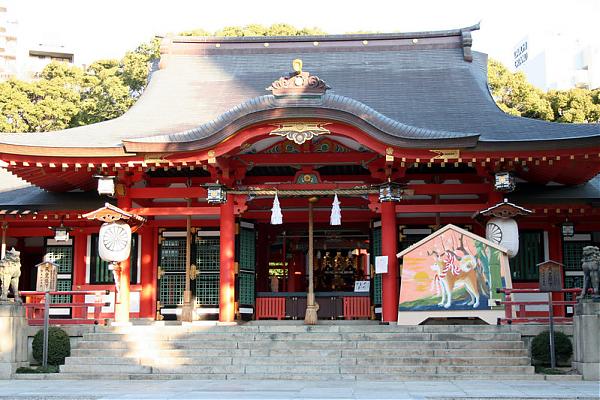
Ikuta Shrine

Arden
A region of Warwickshire in England, once thickly covered in trees and known as the Forest of Arden. It has strong Shakespearean connections, as William Shakespeare’s home town of Stratford-upon-Avon is one of the region’s main attractions. Furthermore, the Arden family were prominent in the area for centuries – they are one of the few landed families in England who can trace their lineage back to before the Norman Conquest. William Shakespeare’s mother, Mary Arden, was one of this family. Shakespeare’s comedy As You Like It is set in the Forest of Arden, a creative mixture of the real forest, a romanticised version of it, and the Ardennes Forest in central Europe. The name Arden is thought to come from the Ancient British word ardu, meaning “high land”; it has been used as a personal name since the 17th century, and had strong ties with Warwickshire. Arden is more popular for girls in the US (perhaps because of cosmetics company Elizabeth Arden), but is fairly even in the UK, and rising for both sexes. This matches my own observations in Australia, and it fits with both male and female name trends.

Boston
The capital of Massachusetts, one of the oldest and largest cities in the United States. Founded by Puritans in the 17th century, it was the scene of many of the key events in the American Revolution – perhaps most famously, the Boston Tea Party. Boston is one of the most economically powerful cities in the world, and a major educational centre, the home of top universities such as Harvard. It has been called “The Athens of America” for its contribution towards literature, art, music, and high culture in general. It is also known for its strong Irish history and culture: former President John F. Kennedy was from a Boston family of Irish Catholic heritage. The city is called after the town of Boston in Lincolnshire, whose name is said to be a contraction of “St Botolph’s town” – St Botolph was an obscure yet strangely popular Anglo-Saxon saint, and his name is believed to be an Old English one meaning “messenger wolf, herald wolf”. Also a surname, Boston has been in use since the 18th century. I saw this name more frequently after the Boston Marathon terrorist attacks in 2013, which matches the situation in the UK, although the name remained stable in the US.

Cairo
The capital of Egypt, and one of the largest cities in the world. Founded in the 10th century, it is close to several ancient sites, including the Pyramids, so that despite being a busy metropolis, it is often associated with the romance of Ancient Egypt. Cairo is a transliteration of the Arabic name for the city: al-Qāhirah, meaning “the victorious”. The reason for the name is because the planet Mars (in Arabic, Al Najm Al Qahir) was rising at the time of the city’s founding. The Egyptian name for the city is Khere-Ohe, meaning “place of combat”, referring to a battle which is supposed to have occurred here between the gods Set and Horus. Not only a strong, war-like name, Egyptian-themed names are very cool at present, and this might appeal to someone wanting a nod to African or Arabic culture. It fits very well with current trends in boys names and can be shortened to Cai.

Cuba
The largest island in the Caribbean, which was claimed for Spain by Christopher Columbus in 1492. It is an ethnically diverse nation with a tumultuous history, and has been under Communist rule since 1965. The island’s name comes from the indigenous Taino language, but the meaning is not certain: it may be from cubao, meaning “where fertile land is abundant”, or coabana, meaning “great place”. Cuba has become well known as a boy’s name due to Hollywood actor Cuba Gooding Jr. As his name tells you, Cuba was named after his father Cuba Gooding Sr, lead singer of the group The Main Ingredient. Cuba Sr’s father Dudley was from Barbados, but fled to Cuba, and met and married a woman there. After she was murdered because of their involvement in the Pan-African movement, Dudley promised her on her deathbed that he would name his first son Cuba. That is a very powerful name story for the name Cuba, and let’s face it, yours won’t be able to compete. However, Cuba has been used as a name since the 18th century, and in the US had strong ties to the African-American community: it may have originally been given as a slave name.

Denver
The capital of Colorado, and one of the largest cities in the American south-west. Set high in the Rocky Mountains, it has the distinction of being exactly one mile above sea level. The city was named after a 19th century politician, James W. Denver, in hopes of currying favour. The surname Denver is after a village in Norfolk, meaning “the passage of the Danes” in Old English – it’s a place on the River Ouse once crossed by Danish invaders. Famous people with the surname include Bob Denver from Gilligan’s Island, and singer John Denver (born Henry Deutchendorf). Denver Pyle played Jesse Duke in The Dukes of Hazzard, while a famous Australian namesake is Denver Beanland, a former Liberal politician from Queensland. The name isn’t particularly strongly tied to the city and can be seen just as easily as a surname name. In use in Australia since the 19th century, it has a reasonable history, so that it doesn’t seem too modern and trendy, despite having a fashionable letter V. Little wonder that it seems to be in quiet but steady use.

Harlem
An area of Manhattan in New York City which has been known as a major centre for African-American culture since the “Harlem Renaissance”of the 1920s. Originally a village settled by Dutch immigrants, it is named after the city of Haarlem in the Netherlands. Haarlem is the capital of North Holland, and historically the centre of the famous tulip industry. Its name probably means something like, “home on the forested dunes”, as it lies on a thin strip of land near the North Sea. It is also a surname; one example is former Norwegian prime minister Gro Harlem. I see this name fairly regularly, and that’s probably because it fits in so well with the strong trend for Har- sounds in boy’s names, such as Harvey, Harley, Harland, and so on. Not only similar to these, Harlem celebrates a place with a cool, and perhaps slightly dangerous image. The Harlem Shake memes could even be a contributing factor!

Jericho
A city in Palestine on the River Jordan. It is believed to be one of the oldest inhabited cities in the world, and the oldest walled city; archaeologists have found remains in Jericho dated to 9000 BC. Jericho features in a famous Bible story, which tells how Joshua, the general of Moses, took the city of Jericho. The Israelites marched around the city perimeter for six days with the Ark of the Covenant. On the seventh day, they marched around seven times, then the priests blew a ram’s horn and the Israelites raised a great shout. The walls of the city fell down, and the Israelites slaughtered almost all the inhabitants. There is a very rousing African-American spiritual about the incident, where the “walls came tumbling down” – an inspiration for the Thatcher era pop song. Archaeologists tell us that although Jericho’s famous walls have been brought down during various conflicts, Jericho was temporarily abandoned during the time that Joshua was supposed to have lived. Perhaps more importantly for the name, it fits in with the current fashion for names with an -o ending, and joined the US Top 1000 in 2013, as it has recently become known as one of the Teen Titan superheroes, and a common name in video games.

Kobe
A busy port in Japan, and one of the country’s largest cities. It is famous for its hot springs, which provide a tranquil retreat and have been in use since at least the 8th century, making them amongst Japan’s oldest. The city’s name is connected to its Ikuta Shrine, a Shinto shrine founded in the early 3rd century to venerate Wakahirume, the Japanese goddess of the rising sun and weaving. The city’s name is derived from kamube, an old name for the people who supported the shrine. It is also a Japanese surname, after the city. The name has been popularised by American basketballer Kobe Bryant, whose parents named him after Kobe beef, a very high quality meat from Japan, that they saw on a restaurant menu. Although the Japanese pronunciation is more like KO-BEH, English-speakers generally say it as a homophone of the name Coby, which is one of the name’s attractions. In fact, it is also a Dutch pet form of Jakob. Kobe is around the 100s in Australia, significantly more popular than in either the US or the UK, although it is a Top 50 name in Belgium.

Memphis
The largest city in the state of Tennessee. It is famous as a centre for popular music; because of this, almost a thousand songs are about Memphis, or mention it in some way, and Graceland, Elvis Presley’s famous estate, is a major tourist attraction of the city. Memphis is named after a a capital of ancient Egypt because the American city is situated on the Mississippi, just as the Egyptian one was situated on the River Nile. The Egyptian city is now in ruins, but was once a port and busy commercial centre. Memphis is the Greek transliteration of the Egyptian name Men-nefer, meaning “enduring and beautiful”, and Greek mythology personified it as a nymph named Memphis who founded the city along with her husband, a king and son of Zeus. Despite this feminine history for the name, Memphis is much more common as a male name than a female one, most likely because of Elvis. It is around the 600s for boys in Australia, more popular than in either the US or UK.

Tyrone
The largest county in Northern Ireland. Its name comes from Tir Eoghain, meaning “land of Eoghan”; according to Irish legend, Eoghan was a son of a great medieval king who claimed this land for himself. Eoghan may be derived from Eugene, and thus an Irish form of the Welsh name Owen; others say it is from the Old Irish, and means “born under the protection of the sacred yew tree”. Tyrone has been used as a personal name since the 18th century, and originated in the United States, presumably as an Irish heritage name. It later became used in Ireland too. The name was popularised by Hollywood actor Tyrone Power Jr; part of a long line of actors, the name Tyrone was traditional in his family. The original Tyrone Power, the great-great-grandfather of the Hollywood actor, was from a landed family in Ireland. Tyrone entered the charts in the 1960s at #413, and peaked in the late 2000s at #181. Currently around the 300s, it has never become popular, yet never gone out of use, pioneering, and still fitting in with, the well-worn trend for Ty- names for boys, such as Tyler and Tyson.

POLL RESULTS
People’s favourite names were Arden, Jericho and Boston, and their least favourite were Cairo, Harlem and Cuba.

(Photo of the Ikuta Shrine in Kobe, Japan by Suguri F)

← Older posts
Newer posts →

Enter your email address to follow this blog

Categories

Archives

Recent Comments

A.O.'s avatarwaltzingmorethanmati… on Zarah Zaynab and Wolfgang…
Madelyn's avatarMadelyn on Zarah Zaynab and Wolfgang…
JD's avatardrperegrine on Can Phoebe Complete This …
A.O.'s avatarwaltzingmorethanmati… on Rua and Rhoa
redrover23's avatarredrover23 on Rua and Rhoa

Blogroll

  • Appellation Mountain
  • Baby Name Pondering
  • Babynamelover's Blog
  • British Baby Names
  • Clare's Name News
  • For Real Baby Names
  • Geek Baby Names
  • Name Candy
  • Nameberry
  • Nancy's Baby Names
  • Ren's Baby Name Blog
  • Sancta Nomina
  • Swistle: Baby Names
  • The Art of Naming
  • The Baby Name Wizard
  • The Beauty of Names
  • Tulip By Any Name

RSS Feed

  • RSS - Posts

RSS Posts

  • Celebrity Baby News: Melanie Vallejo and Matt Kingston
  • Names from the TV Show “Cleverman”
  • Can Phoebe Complete This Sibset?
  • Zarah Zaynab and Wolfgang Winter
  • Baby, How Did You Get That Name?
  • Celebrity Baby News: Media Babies
  • Celebrity Baby News: Adelaide Crows Babies
  • Celebrity Baby News: Chris and Rebecca Judd
  • Names at Work: Name News From the World of Business and Employment
  • Celebrity Baby News: Sporting Round Up

Currently Popular

  • Rare Boys Names From the 1950s
  • Celebrity Baby News: Toby Allen and Darren Weller
  • The Top 100 Names of the 1930s in New South Wales
  • Celebrity Baby News: Jason Morrison and Heidi Tiltins
  • Celebrity Baby News: Antonia Kidman and Craig Marran

Tags

celebrity baby names celebrity sibsets english names famous namesakes fictional namesakes honouring locational names middle names name combinations name history name meaning name popularity name trends nicknames popular names saints names sibsets surname names twin sets unisex names

Blog at WordPress.com.

Privacy & Cookies: This site uses cookies. By continuing to use this website, you agree to their use.
To find out more, including how to control cookies, see here: Cookie Policy
  • Subscribe Subscribed
    • Waltzing More Than Matilda
    • Join 517 other subscribers
    • Already have a WordPress.com account? Log in now.
    • Waltzing More Than Matilda
    • Subscribe Subscribed
    • Sign up
    • Log in
    • Report this content
    • View site in Reader
    • Manage subscriptions
    • Collapse this bar
 

Loading Comments...