• About
  • Best Baby Names
  • Celebrity Baby Names
  • Celebrity Baby Names – Current
  • Celebrity Baby Names – Past
  • Featured Boys Names
  • Featured Girls Names
  • Featured Unisex Names
  • Links to Name Data
  • Waltzing on the Web

Waltzing More Than Matilda

~ Names with an Australian Bias of Democratic Temper

Waltzing More Than Matilda

Tag Archives: names from movies

Famous Name: Jason

18 Wednesday Sep 2013

Posted by A.O. in Famous Names

≈ 3 Comments

Tags

Beyond Jennifer & Jason, Biblical names, famous namesakes, fictional namesakes, Greek names, hebrew names, historical records, honouring, Linda Rosenkrantz, mythological names, name history, name meaning, name popularity, name trends, names from movies, names from television, Pamela Redmond Satran, royal names, saints names, US name popularity

51WNMTYA9qL

A federal election was held on September 7, and we have had a change of government. Votes are still being counted, so the election isn’t over, and we may have some names from it when the process is complete.

However, in a much more frivolous political poll held in August, Cleo magazine rated the male politicians on their sex appeal, and decided that Labor MP Jason Clare, described as the “Rob Lowe of Australian politics”, was the winner. I can’t help thinking if a men’s magazine had rated female politicians like this it would be considered very wrong.

Jason Clare represents the seat of Blaxland in western Sydney, which he won in 2007, and until recently was the Federal Home Affairs Minister. Jason grew up in the western suburbs, made dux of his class, and completed a law degree while pursuing an interest in politics. While Labor lost the election with a significant swing against it, Jason managed to increase his hold over the electorate by 6%.

To show that he is not vain about his appearance, Jason modestly joked that his wife’s preference in the Cleo poll was for the runner-up, Stephen Smith. Hello ladies – he’s a smart, handsome law graduate and his wife doesn’t appreciate him! (is the message I think we’re meant to be receiving there).

Jason is from the Greek name Iason, derived from the Greek for “to heal”. Iaso was the Greek goddess of recuperation from illness, so you could see Jason as a masculine form of her name. Although Jason is often translated as “healer” or even “physician”, to me the meaning of the name is more about the body’s natural ability to heal itself.

The name is best known from the mythological prince of Thessaly, who led a hand-picked crew of heroes on the good ship Argo, in quest of the Golden Fleece, with the aid of the goddess Hera. Jason and the Argonauts had a series of adventures, in which they didn’t behave very nobly for much of the time, then arrived in Colchis, which today is in Georgia, on the Black Sea.

The Golden Fleece was owned by King Aeetes, and to obtain it, the king gave Jason three tasks which seemed impossible to perform. Hera arranged for Aeetes’ daughter Medea to fall in love with Jason, and as she was a great sorceress, she was able to use her knowledge of magic to help him succeed, after he promised her that they would get married.

Jason and Medea then fled with the Fleece and sailed away on the Argo, because King Aeetes knew that Jason could only have completed the tasks by cheating, and wanted his property back. He pursued them until Medea came up with the horrible plan to kill her own brother and throw him into the sea, piece by piece, to distract her father.

Medea’s interest in dismembering family members continued when she and Jason returned to Greece, and she arranged for his Uncle Pelias to get chopped up into soup. Pelias had tried to drown Jason as a baby, then sent him off on the dangerous Golden Fleece quest hoping he’d die, so she had her reasons. With her penchant for murdering relatives, you’d think that Jason would have been blissfully happy with Medea, but instead he betrayed her love by becoming engaged to another woman.

When Medea tried to point out that all Jason’s luck in life was because of her, and he was being very ungrateful, he replied, “Babe, you’re the one who got lucky when the gods made you fall in love with me”. Medea wasn’t the type to take this treatment lying down, and she promptly burned her rival to death before murdering the children she and Jason had had together. Although Jason was ungallant, Medea’s tendency to see her own flesh and blood as collateral damage is disturbing.

Because Jason had broken his vow to love Medea forever, the goddess Hera abandoned him, and he wound up lonely and miserable. He was killed when the Argo, now old and rotting, broke and fell on top of him while he was asleep – a suitably ironic finish.

A king of Thessaly named Jason was a contemporary of Alexander the Great‘s father. A successful and ambitious general, it is thought that he must have been at least one of the inspirations of the great Alexander himself. It seems very likely he was named after the Thessalian hero.

There is a Jason in the New Testament, one of the Seventy Disciples of Christ, who ran a “safe house” for Christians in Thessalonica, and was once arrested for it. Saint Paul appointed him bishop of Tarsus, and he is known as Saint Jason. Unusually for an early Christian saint, Jason lived to a ripe old age. The Jewish historian Josephus tells us that Hellenised Jews used the name Jason to replace Yeshua (Joshua or Jesus), and this may apply to Saint Jason too.

Being Biblical, Jason was acceptable for use as a Christian name, and can be found in the records from at least the 16th century. The name Jason became very popular in the 1970s, and it looks as if this was due to the original Jason, because the movie Jason and the Argonauts came out in 1963 (it cut out most of the revolting parts). A special effects tour de force, it’s a cult classic, and according to Tom Hanks, the greatest film ever made. It must have made a huge impression.

Jason was already rising in popularity at the time of the film’s release, but soon zoomed up the charts to make the US Top 100 three years later. It was Top 10 in the US for all of the 1970s, which coincides with popular TV series, The Waltons, having a Jason. Even in the late 1980s, when Jason was #27, Pamela Redmond Satran and Linda Rosenkrantz were urging parents to “go beyond Jennifer and Jason”. Despite their book’s success, Jason has still not left the Top 100 in the United States, so American parents only partially heeded their call.

Jason has charted in Australia since the 1950s, when it was #290 for the decade. By the 1960s it had climbed phenomenally to make the Top 50, at #43 for the decade. It peaked in the 1970s (when Jason Clare was born) at #3, was still #18 in the 1980s, and #35 in the 1990s. Did nobody feel like going beyond Jason? It finally left the Top 100 in the mid-2000s, and is currently #133 and stable – not popular any more, but by no means plummeting into obscurity.

Jason has been a real 1960s success story, and continues to influence popular names for boys, because parents are still attracted to similar names, such as Mason, Jacob, Jayden, Jackson, Jasper and Jordan. In fact, Jason is staging a comeback under the short form Jace – already Top 100 in the United States, and no doubt rising here too.

It turns out we’re not ready to go beyond Jason yet – at least, not very far.

POLL RESULT: Jason received an approval rating of 38%. People saw the name Jason as a “dad name” (30%), and common and boring (20%). However, 12% saw it as a “nice guy” name, and 10% thought it attractive. Nobody thought the name Jason was sexy.

Is August a Boy’s Name, or the Name of a Month?

10 Saturday Aug 2013

Posted by A.O. in Naming Assistance

≈ 8 Comments

Tags

celebrity baby names, choosing baby names, famous namesakes, fictional name, honouring, middle names, name combinations, names from movies, names from television, nicknames, scandinavian names, sibsets, types of boats

august2013

Olivia and Dale are from New Zealand, and they are expecting their third child towards the end of the year. Their son is named Innes, and their daughter is Abigail, and they have a fairly common surname beginning with C and ending with N eg Charlton.

Olivia likes male names which are generally softer in sound, such as Henry, Abel, Arlo, Eli, Miller and Soren, but Dale has vetoed all these ideas.

Dale, who is of Swedish heritage, would prefer a Scandinavian-style name, and only likes three names for a boy: Lachlan, Stellan, and August. Although Olivia likes Lachlan, she feels that it is too popular for their common surname, and Stellan is the cat’s name.

By elimination, that leaves August as their front-runner, but they have had mixed reactions when they have asked for people’s opinions. Some love it, while to others, August is a month, not a boy’s name. The Charltons live in an area where boys tend to have unspectacular names, and Olivia wonders whether August is too far out.

The middle names they are thinking of using are Leander and James. Leander has special significance for them, because Olivia and Dale were both in the navy, and met on a Leander class frigate. Olivia suggested Leander as the first name, but Dale vetoed it. James is a family name, but it was mostly chosen because it flows well with Leander.

Olivia wants to know whether August Leander James C_____n works as a name, and if there are any other soft-sounding Scandinavian-style boy’s names they might like.

~ ~ ~ ~ ~ ~ ~ ~ ~ ~

You’ve already discovered that some people love the name August, and I guess you can add one more, because I adore August. I think it’s handsome and stylish, and it seems perfect for you. It honours Dale’s Swedish heritage, it’s a softer boy’s name, and you get fashionable nicknames from it like Gus and Augie. It sounds fantastic with the middle names you’ve chosen, and I would count August Leander James as one of the nicest boy’s names I’ve heard recently.

It may not sound like the boy’s names in your area, but our childrens’ names don’t have to fit in with the neighbours. It would be foolish to make them so when you could relocate later, new people could move to your area, and your son is unlikely to live in the same place for his entire life – and even if he did, the demographics of the area would change over time.

I suspect this isn’t really a huge concern for you, since Innes isn’t exactly a run of the mill name either, and I’m sure everyone around you has coped with it. I think Innes and August are really well-suited as brothers, by the way.

You’ve had some mixed reactions to the name August, but it doesn’t sound as if the mixture is people who love it and people who hate it – it seems more as if people either love it, or it confuses them. They hear August, and think, But August is a month … I know you can call girls April or May, but can you call boys after a month? And why is his name going to be August when he’s due late in the year?

If people seem a bit taken aback or confused when you tell them your son is named August, I would just briefly explain that it is the Scandinavian form of Augustus, and that Dale has Swedish heritage. And if they still seem a bit hesitant, maybe you could mention a famous August, so they have something concrete to attach to the name.

I would pick whatever August you think people you know would most readily connect to. So – August, like the Swedish playwright August Strindberg, or August, like Nicolas Cage’s dad, or August, like in that film “August Rush”, or August, like August Booth from “Once Upon a Time”. Or you could mention some celebrities who have sons named August, like Mariska Hargitay and Jeanne Tripplehorn.

I think that explanation would satisfy 95% of people, and the other 5% either need more time to get used to it, or they are just stuck on August being a month, and can’t, or won’t, get past it.

Other Softish-Sounding Boys Names

  • Ari
  • Bo
  • Elias
  • Hugo
  • Lars
  • Magnus
  • Matthias
  • Oscar
  • Theo
  • Tobias

These names either have a Scandinavian origin, or are currently popular in Sweden (like August), or have a history of use there. However, I honestly prefer August to any of these names.

Olivia and Dale, you’ve plenty of time to change your minds if you come up with a name you like better, but I’m kind of hoping you don’t, because I think August is a brilliant choice. Please let us know what you decided on once your little boy arrives!

NAME UPDATE: The baby’s name is August Leander James!

POLL RESULTS: Most people (69%) said they wouldn’t assume the name August was after the month, with 22% assuming August was derived from the name Augustus, and 47% refusing to make any assumptions at all. 16% of people said they would assume August was after the month, but nearly all of them thought that would be cool. Only one person (less than 1%) thought August was an odd name because of the month.

The name August Leander James received an overwhelmingly positive response, with 81% of people giving it a thumbs up. 55% thought it was a fantastic choice, while 26% said it was nicely put together. Not one person thought there was something seriously wrong with it.

Boys Names of Australian Aboriginal Origin – Part 2

04 Sunday Aug 2013

Posted by A.O. in Name Themes and Lists

≈ 5 Comments

Tags

Ancient Germanic names, animal names, astronomical names, Australian Aboriginal names, Chinese names, colour names, days of the week names, english names, famous namesakes, fictional namesakes, Google, Hindi names, historical records, Indian names, locational names, middle names, mythological names, name history, name meaning, names from movies, names of weapons, nature names, nicknames, onomatopoeic names, rare names, unisex names

mh1

Bambam

Bambam as a person’s name might seem like an oddball suggestion, but although it would definitely be an unusual choice, I don’t think it’s an unfamiliar one either. For a start, there is Bamm Bamm Rubble from The Flintstones, first introduced as a cute blonde baby with superhuman strength. His name came from the fact that he would say Bamm bamm, and swing his club, to the general destruction of everything around him. Bam Bam is used as a man’s nickname, from American wrestler Bam Bam Bigelow to British DJ Bam Bam. There’s also skater Bam Margera, who gained his nickname from constantly running into walls as a toddler. I have seen a baby boy called Bambam – although that may have been a nickname. In English, bam bam is an onomatopoeic interjection, suggesting one thing repeatedly hitting or banging into another. In much the same way, in Nyungar (from south-west Western Australia), bam means “to hit”, and in Bundjalung (from northern New South Wales), bambam means “bruise, swelling”. However, in the Meriam language from the eastern Torres Strait Islands, bambam means “yellow”; in Indigenous art, yellow ochre is often used to represent the earth. It’s quirky, but Bambam is a rather lovable name.

Daku

Daku means “sand hill” in the extinct Diyari language; the Diyari people are from the South Australian desert, and thus very familiar with sand. Despite being generally used as a boys name in Australia, Daku is also a unisex name in India, and in Hindi it means “bandit”. Someone wrote in to the blog considering the name Daku for their son, but they never got back to me, so I don’t know whether they overcame family opposition to the name or not. This name reminds me a bit of Dakota, and it has the fashionable OO sound, such as Reuben and Jude; the name is pronounced (I think) DAK-oo. It would be a bold choice though, and I haven’t seen many boys with this name, although it can be found a few times in historical records.

Jardi

Jardi means “front” in the Ngadjumaja language; the Ngadjumaja people are from the Nullarbor Coast area of south-east Western Australia. I remember reading in the papers last year about a baby boy from Mudgee who has named Jardii, and his mother explained that his name was from the Wiradjuri language and means “first born son”. I wasn’t able to find that information for myself, but it occurred to me that “front” and “first” are similar in meaning, so Jardi also seemed like a good name for an eldest son. In the Jaminjung language from the Victoria River region of the Northern Territory, jardi means “to keep”, which also seems very positive. I found quite a few Indigenous boys and young men named either Jardi or Jardii, and I think it’s really attractive, with a similar sound to Jordie, the short form of Jordan.

Jiemba

Jiemba means “laughing star” in the language of the Wiradjuri people of central New South Wales. It refers to the morning star, or the planet Venus. (In some other Aboriginal languages, djimba simply means “star”). Astronomy was very important to the Wiradjuri, as with other Aboriginal societies, because stars and planets were used to tell the times and seasons, and this information was first given in early childhood. It is recorded that in the Wiradjuri in the 19th century, the elders would teach the children the stories behind the stars (the constellations), while the old women would teach children to count stars, which they could do into the thousands using a particular system. This information comes from radical poet and journalist Mary Gilmore, who grew up in Wagga Wagga, and was given the name Jiemba by the Wiradjuri people. Despite it being given to a little girl, I have only seen Jiemba given to boys – most likely because it is said JIM-ba, and thus shortens to Jim or Jimmy. One of the Aboriginal men from the Sydney area first encountered by Europeans was named Jimbah, so it sounds quite masculine (this Jimbah may also have been Colebee).

Lue

Lue is a small village in the Central Tablelands region of New South Wales. Its name means “chain of waterholes” in the local Dabee language – the Dabee are part of the Wiradjuri group. The village’s name is pronounced LOO-wee, which makes me think that this could be an Australian alternative to Louis or Louie. There are quite a number of people named Lue in Australian historical records – many of them are of Chinese ancestry, but there are some from the Lue area, suggesting that at least a few of them were named after the village.

Nullah

A nulla nulla, also known as a nullah or waddy, is an Aboriginal war club or hunting stick; the word comes from the extinct Darug language from the Port Jackson area of Sydney. A nullah is a heavy club which could be used in hand to hand combat, or used to stun prey; sometimes they were used to punish lawbreakers. In addition, these useful tools could be used to make fires, and grind ochre. This name is frequently Googled, because Nullah is the name of the young Aboriginal boy in Baz Luhrman’s 2008 epic, Australia, played by Brandon Walters. The film is set in the Northern territory, so the choice of Nullah for the character’s name is not meant to be authentic; I wonder if they chose it partly because it suggests the name of the Nullarbor Plain (Latin for “no trees”). Nullah is also a Hindi word for a narrow, steep-sided valley; in dry countries like Australia, these nullahs are commonly filled with brushwood, and when it rains heavily, they temporarily become streams. This could be another inspiration for the character’s name.

Omeo

Omeo is a town in Victoria which is in the East Gippsland, set high in the Great Dividing Range. Its name means “mountains, hills” in the local Gunaikurnai language, or one of its dialects, because it is set on a treeless plain on the fringes of the Snowy Mountains. There is evidence of human occupation of this region dating back around 20 000 years, and the first reported sighting by a European of Omeo was in 1832, by a naturalist on the slopes of the southern alps. It was his reports of fine grazing land which soon attracted pastoralists and squatters to the region. Gold was discovered in the 1850s, but Omeo’s isolation meant that it did not experience the massive boom of many goldfields towns – it did however, have the dubious distinction of being the roughest and most unruly place on the goldfields. Its first magistrate was Judge Browne, better known as author Rolf Boldrewood, who wrote of the area’s lawlessness in his novel, Robbery Under Arms. This name looks and sounds like Romeo without the R, which gives it recognisability as a name, although it also reminds me of Omo washing powder. Its goldfields history gives it a bit of a “wild west” feel; it seems a bit more bad boy than romantic Romeo. Omeo has had some use as a boy’s name in Australia, especially amongst people from Omeo itself, and was more often found in the middle.

Tanami

The Tanami Desert is in the Northern Territory, and is Australia’s most northerly desert. In the wet season, it rains heavily and even floods, but the high temperatures mean that most of it evaporates. Some parts of the Tanami do have wetlands though, and there is even a lake which has permanent water in it, so as deserts go, it’s on the slightly moist side. It is a refuge for several rare and endangered species of flora and fauna, making it a biologically important area. You can cross the desert on the Tanami Track, which is more than 1000 km long, and goes from Alice Springs to Halls Creek, in the Kimberly region of Western Australia. Tanami is a corruption of the local Walpiri name for the area, Chanamee, meaning “never die”, because the rock holes in a particular gully were said to never run dry of water, even in drought. When white people came here in the early twentieth century, they found to their dismay that this was not the case, so either the name was optimistic in nature, or the Indigenous people had a superior knowledge of obtaining water from the rock holes. I have seen Tanami occasionally on girls, but after seeing it given to a boy, I really like it as a male name. The pronunciation is TAN-uh-my, but the Aboriginal pronunciation would be more like TAN-uh-mee, so you could take your pick on how to say it.

Woden

Woden Valley is a district of the capital city of Canberra. The area is named after a homestead owned by Dr James Murray, which was built in 1837. In Aboriginal Place Names, Harold Koch suggests that the name of Dr Murray’s homestead may have been influenced by the word wadyan or wadhan, which means “possum” in several Indigenous languages, in an area stretching from the Monaro region right down to Omeo in Victoria. If so, then the spelling was altered to make it look like the name of the Anglo-Saxon and Germanic god Woden, whose name means “inspiration”; Dr Murray saw him as a god of wisdom. Woden was the chief god of the Germanic peoples, and is their equivalent of Odin. Anglo-Saxon royalty claimed that Woden was their ancestor, and he survives in English folklore as leader of the Wild Hunt, and perhaps even as Father Christmas. Of course, we unconsciously celebrate his special day once a week, on Wednesday (Woden’s day). With Odin being a rather hip name at present, Woden really doesn’t seem too strange, and this could be a way of celebrating Australian and English heritage together. There are a couple of men named Woden in Australian historical records, although it is more common as a middle name.

Yarramundi

Yarramundi is an outer suburb of Sydney which is a semi-rural area in the City of Hawkesbury. It is named after a famous Indigenous leader who was a member of the Boorooberongal clan of the Darug people, and a garadyi, or shaman – a healer, a man of great spiritual knowledge and power, and an enforcer of tribal law. Yarramundi’s son Colebee was the first Aboriginal person to receive a land grant, and his daughter Maria was the first Aboriginal child to be enrolled in a school for the education of Indigenous children; her marriage in 1824 was the first legally recognised union between an Aboriginal woman and a convict. Maria ended up being a successful land owner in Liverpool and Blacktown, and dozens of families in the area trace their ancestry back to Yarramundi. Yarramundi means “deep water”, and I saw a newspaper story about a baby boy named Yarramundi after this inspiring namesake.

POLL RESULT: People’s favourite names were Jardi, Lue, and Nullah, and their least favourite were Yarramundi, Omeo, and Bambam.

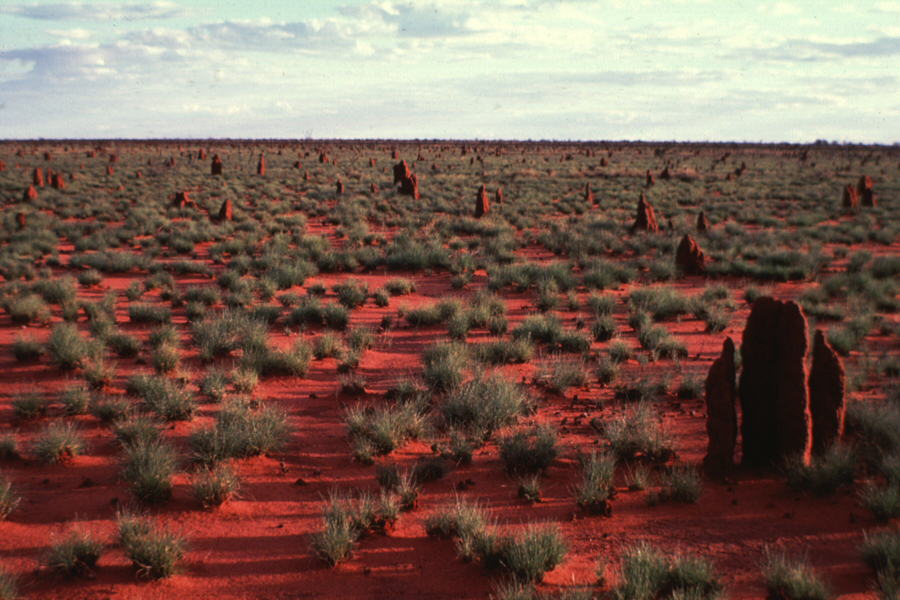
(Picture shows the Tanami Desert in northern Australia)

Girls Names of Australian Aboriginal Origin – Part 2

28 Sunday Jul 2013

Posted by A.O. in Name Themes and Lists

≈ 16 Comments

Tags

animal names, astronomical names, Australian Aboriginal names, baby name books, bird names, birth notices, famous namesakes, fictional namesakes, flower names, Greek names, hebrew names, historical records, Italian names, Japanese names, locational names, mythological names, name history, name meaning, name popularity, name trends, names from books, names from fairy tales, names from movies, names from television, names of businesses, names of horses, names of ships, nature names, nicknames, plant names, Polish names, popular names, Romanian names, Slavic names, unisex names, varieties of fruit

OLYMPUS DIGITAL CAMERA

My first lists of names from Aboriginal languages are the most popular articles on the blog, so it seemed time for another selection. These names are all ones which have been used as personal names in Australia. I have done my best to elucidate meaning and history as much as possible.

Alinta

Alinta means “flame” in one of the traditional languages of South Australia; it was published in a dictionary by the Royal Society of South Australia in 1891. The name was popularised in 1981 when it was featured in the award-winning mini-series Women of the Sun. Each episode portrayed fictionalised accounts of lives of Aboriginal women in Australian society through history, and the first was Alinta: The Flame. It shows first contact between an Aboriginal tribe and Europeans, when early settlers encounter a tribe while searching for grazing land. The tribe’s culture is threatened by the newcomers, and the tribe is wiped out. The only survivors are a woman named Alinta and her child; Alinta vows that her daughter will “carry the torch” for her culture. There are several businesses in Australia named Alinta, most notably a Western Australian energy company, one of the largest in Australia, and named with the Aboriginal meaning in mind. There is also an Australian-bred variety of strawberry called Alinta. It’s not a very unusual name here, and there are several young actresses with the name. Alinta is also used as a name in Romania, where it means “caress”.

Arika

Arika is a name from the Waka Waka people of south-east Queensland, meaning “blue water lily”. There are several species of blue water lily native to Queensland, and they are used as bush food, for all parts of the plant are edible. In Aboriginal mythology, water lilies are a gift from the Rainbow Serpent, and sometimes in Indigenous astronomy, small stars were seen as water lily bulbs. In the novel Book of Dreams by Traci Harding, the meaning of the name is translated, and it says that in the past, Aboriginal women named Arika were given the name Lily by white people – which suggests that Arika might be a good name to honour a great-grandma Lily. Australians named Arika include Indigenous artist Arika Waulu Onus, and Arika Errington, who works in Aboriginal health, and contacted the blog to tell us about her name. I saw several children and teens named Arika online, mostly from Queensland, so it seems as if this name could be today’s Nerida. Arika sounds a bit like Erica, and is an angram of the Japanese name Akira, while having a similar meaning to Lotus. Possible nicknames that occur to me are Ari and Riki.

Jedda

Jedda (1955) was the first Australian film in colour, the last film of famous director Charles Chauvel, and the first film to star two Aboriginal actors in leading roles. In the movie, Jedda is an Aboriginal girl raised from infancy by a white woman after her mother died giving birth to her. Although she is curious about her own culture, her adoptive mother forbids her from learning anything about it, with tragic consequences. The film was nominated for the main prize at Cannes, and was a commercial success in Australia. In the movie, the name Jedda means “little wild goose” – a forerunner of the chase she will engender. I am not sure if the meaning was invented for the film, or drew on local knowledge; Jedda certainly exists as an Aboriginal name in historical records before 1955. An Aboriginal lady told me that she understood the name Jedda (which was her daughter’s name) as “little child”, but she didn’t say what language that was from. This is reasonably well used as a girl’s name, being similar to Jenna and Jetta – but I have seen it on a boy, because it shortens to Jed, and is also a plant name, because jedda (Jedda multicaulis) is a native shrub.

Kalina

Kalina means “love” in the extinct Wemba-Wemba language of north-west Victoria and south-west New South Wales. It has often been used as a place name, street name, a name for businesses and organisations, and sometimes as a girl’s name in Australia, but I’m not sure whether it was used as a personal name by the Wemba-Wemba people. It is also a literary name, because Kalina is one of the brumbies in the Australian classic children’s series, The Silver Brumby, by Elyne Mitchell – although in this case, Kalina is a white stallion, and his name is understood to mean (in horse language) “marvellous beauty of frost on snow”. Kalina is also a Slavic name which means “cranberry bush”; in Romania it means “rowan tree”, and in Poland it means “virburnum bush”. This is a pretty cross-cultural name which has several attractive meanings, and seems very easy to wear, being similar to Karina, Katrina and Kalista.

Leumeah

Leumeah is an outer southern suburb of Sydney, in the Macarthur region. It was settled by John Warby, a convict explorer who was transported here in 1792. In 1802, Warby was given the job of protecting cattle roaming free south-west of Sydney. Here he befriended the Tharawal people who lived in the area, and learned some of their language. In 1816 he was granted land on which to build a house, barn and stables; the barn and stables are still standing – one of them is a restaurant and the other a motel. (Just to confuse things, the stables is called The Barn Restaurant). Warby named his farm Leumeah, which means “here I rest” in the Tharawal language, and this became the name of the suburb. It is pronounced LOO-mee-uh. I have seen one or two girls given this name, and it seems like an especially happy name for an Australian, as it came about from a rare case of friendship between Aborigines and European settlers. The sound of it is quite on trend, and Lulu could be a nickname.

Marlee

Marlee is a small town in mid-northern New South Wales, whose name means “elder tree” in the local Biripi language. Native Elderberry or Yellow Elderberry is Sambucus australasica; its berries are bush food and they are sweeter than the variety from the northern hemisphere. Marlee is a popular name for houses and streets, suggesting leafy abundance, and it is not uncommon as a girl’s name here. Marlee also means “swan” in the Nyungar language of Western Australia, so it has a nice meaning in two languages. It is a rare week when I don’t see a baby named Marli, Marlie, Mahli or Mali in the birth notices, and Marlee fits in perfectly – in fact there was a Marlee in this week’s birth announcements. You could see these names as attempts to “feminise” Marley, but they could just as easily be short forms of Marlene, Mahlia or Malia. Marlee seems like a great way to join this trend with a specifically Australian meaning.

Narelle

Queen Narelle was the wife of King Merriman (or Umbarra), an important elder of the Yuin people in the latter part of the 19th century. The Yuin people are the traditional owners of the South Coast region of New South Wales, in the Bermagui area. Aboriginal people traditionally did not have kings or chiefs, and the title of “king” was given to certain elders by white people as a (misguided) mark of respect. There is a famous photo of Queen Narelle’s well-attended funeral taken around 1895, which shows black and white people mourning for her together, so it does seem as if Narelle and Merriman were able to form a bridge between cultures, or that relations in the 19th century could be harmonious. You may see Narelle translated as “woman from the sea” in baby name books, but in fact the meaning isn’t known; it is pronounced nuh-REL. Narelle first charted in Australia in the 1920s at #362, and reached the Top 100 in the 1940s. It peaked in the 1950s at #50, and was out of the Top 100 in the 1970s. It hasn’t ranked since the 1980s or charted since the 1990s. The name took a dive in the late 1970s, when it featured on highly popular comedy series The Naked Vicar Show. Narelle was a slightly dim-witted, mildly tarty woman – hence the plummeting popularity of the name, which immediately lost all cachet. However, Narelle is actually a pretty name, and the TV show has long been off the air. It even fits in with the trend for -ell names for girls, and could have fashionable Nell or Nellie as the nickname. Names from the 1950s are predicted to make a comeback: could Narelle be one of them?

Nyah

Nyah is a small town in Victoria on the banks of the Murray River, pronounced NY-ah. It began as a utopian socialist community in the late 19th century, but as utopian socialism went out of fashion, it lost the necessary government support, and it isn’t now any more utopian or socialist than the next country town. Its name means “this bend (of the river)” in the local Boorung language – the bend of the Murray River at Nyah was an important boundary marker for the Boorung people. The region around Nyah has several Indigenous sacred sites, and in the surrounding state forests, anthropologists have discovered many interesting artefacts of Aboriginal culture. I know of someone with this name, and it seems attractive and simple, similar in sound to popular names like Maya, while also a place name important to Indigenous heritage.

Talia

Talia is a small town on the Eyre Peninsula in South Australia whose name means “near water” in one of the local languages – appropriately enough for a town by the sea. It may be from Wirangu, or one of its closely related languages. Talia has charted in Australia since the 1970s, which seems to follow its inclusion in Aboriginal Words and Place Names by Alexander Wyclif Reed (1965). It first ranked in the 1980s at #483, and hit its peak in 2009, when it joined the New South Wales Top 100 at #91. Since then it has rapidly declined, and is now #222. The variant spelling of Tahlia has been much more successful, which has been in the Top 100 since the 1990s, peaked in 2009 at #36, and is now #78. Tahlia may be more than an attempt to make clear the Australian pronunciation of Talia – it may also be to differentiate it from international names, because Talia is known as a girl’s name in several other cultures. Talia is a variant of the modern Hebrew name Talya, meaning “dew of God”, and the Italian form of the Greek name Thalia, meaning “blooming”. It can also be used as a short form of Natalia. Talia was the name of the princess in an Italian folk tale on which Sleeping Beauty was based. This is a pretty cross-cultural name with a specifically Australian meaning, and although it is less popular than Tahlia, that may make it more attractive to some parents.

Yindi

Yindi was the name of a ship, one of four that the Australian government presented to the navy of the Philippines as a gift in 1958. Each of them were given Aboriginal names taken from The Australian Language by Sidney J. Baker (1945). The first ship was the Yindi, whose name is translated as “sun”; in most Aboriginal cultures, the sun is female. Yindi also means “to descend” in the Yindjibarndi language of Western Australia, and the name may remind you of the Australian band Yothu Yindi, which means “child and mother” in the Yolngu language of the Northern Territory. I saw a baby girl named Yindi in a birth notice last year, and it struck me as a really stylish choice, which stands out from the crowd and has a sunny meaning.

POLL RESULT: People’s favourite names were Talia, Alinta, and Kalina, and their least favourite were Leumeah, Jedda, and Narelle.

(Photo shows Nymphaea gigantea – a species of blue water lily native to south-east Queensland; © Raimond Spekking / CC-BY-SA-4.0 (via Wikimedia Commons)

Shortened Names for Boys

30 Sunday Jun 2013

Posted by A.O. in Name Themes and Lists

≈ 13 Comments

Tags

African names, Arthurian names, birth notices, celebrity baby names, Chinese names, classic names, English idioms, famous namesakes, fictional namesakes, Finnish names, Frisian names, German names, Greek names, Irish names, Japanese names, Latin names, locational names, name history, name meaning, name popularity, names from movies, names from songs, names from television, nicknames, Old Norse names, polynesian names, popular names, scandinavian names, Shakespearean names, Swahili names, Swedish names, unisex names, US name popularity, vintage names, vocabulary words

mad-max-01-01Alfie

Alfie is a nickname for Alfred. It is most famous from the award-winning (and still emotionally shocking) 1966 movie Alfie, starring Michael Caine as the predatory Alfred “Alfie” Elkins. The theme song was sung by Cilla Black, who objected that Alfie sounded like a “dog name”, and suggested Tarquin instead. As it was too late to remake the entire movie, her views were dismissed. Alfred Elkins was the grandfather of the British “Lad”, and until recently, Alfie was a name we thought of as one that could stay on grandfather. It has been Top 100 in the UK since the late 1990s, one of the old geezer names rehabilitated as cute and cool. The insipid 2004 remake of Alfie, starring handsome Jude Law as the charming Cockney, gave Alfie a new image, and Alfie Allen plays cocky Theon in Game of Thrones (big sis Lily Allen wrote a song about him). Alfie follows on the heels of popular Archie, and is #201 in Victoria.

Bastian

Bastian is a German short form of Sebastian. The name became well known from Bastian Balthazar Bux, the main character in the fantasy novel, The Neverending Story, by Michael Ende. Translated into English in the 1980s, it has been adapted into several films. In the story, Bastian is a lonely, neglected little boy who loves reading; he steals a book called The Neverending Story, and is gradually drawn into a world where make-believe becomes reality. Along the way, he not only has many adventures, but learns valuable lessons about life and love, and manages to rewrite his own story. Although he is the protagonist, he isn’t exactly its hero, which might explain why this name hasn’t taken off. It’s not only handsome, but sounds like the English word bastion – part of a castle’s defence structure, and figuratively, a person who defends a particular position.

Gus

Gus can be used as a short form of Augustus, August, Angus, Fergus, and even the Greek name Kostas, although in practice it often seems to be a nickname based on a person’s surname. The name might remind you of film director Gus Van Sant (who was named after his dad), or astronaut Virgil “Gus” Grissom, the second American in space, or of NRL expert Phil “Gus” Gould. You might think of Gus as a cowboy name, due to Texas Ranger Augustus “Gus” McCrae from Lonesome Dove, or as slightly geeky, due to Burton “Gus” Guster in Psych. The name seems to be often used for fictional animals, such as Walt Disney’s Gus Goose, and the mouse Octavius “Gus” in Cinderella (both these Guses are fat). Gus the Theatre Cat is a character from T.S. Eliot’s Old Possum’s Book of Practical Cats; he is frail and elderly, and his nickname is short for Asparagus. This vintage nickname is now very fashionable, and is #241 in Victoria.

Jonty

Jonty is a nickname for Jonathan, which seems to have originated as a full name in the United States during the 19th century, but is now more common in Britain and some Commonwealth countries. You may know the name from retired South African Test cricketer Jonathan “Jonty” Rhodes. Oddly enough, Jonty does not appear in the US data at all now, so if any babies were named Jonty last year, there were less than five of them. Jonty is #315 for boys in Victoria. Although Jonathan is a boy’s name without a feminine form, girls are sometimes called Jonty too, but not enough to show up in the data.

Kai

Kai is Scandinavian name which may be a Frisian short form of Gerhard, Nikolaus or Cornelius. It could also be a short form of the Frisian name Kaimbe, meaning “warrior”. Another possibility is that it could be short for the Latin name Caius, a variant of Gaius, whose meaning is not known. If so, it would be the Scandinavian equivalent of the English male name Kay, as in Sir Kay, who was the foster-brother of King Arthur. Or it could be a variant of the Frisian male name Kaye, which is said to come from the Old Norse word for “hen, chicken”. Or perhaps it is short for Kajetan, which comes from the Latin name Caietanus, meaning “from the town of Gaeta” (Gaeta is in central Italy). Kai can also be a girl’s name in Scandinavia, and this case it is a variant of Kaj, which is a Swedish pet form of Karin (short for either Katrina or Karolina) – to complicate things, Kaj is also a Finnish form of male Kai. That’s a lot of names Kai can be short for! Kai can be a full name in its own right, because it is also a unisex Polynesian name meaning “ocean”, and Kai has the same meaning in Japanese. Kai is a Chinese boy’s name which means “victory” in Mandarin, and in Swahili, it is a girl’s name meaning “loveable”, but this is pronounced KY-yee, and not the more familiar KY. Kai first joined the charts in the 1970s, debuting at #498. It has climbed steeply and fairly steadily, and is currently #61 nationally, #60 in New South Wales, #78 in Victoria, #64 in Queensland, #35 in Western Australia and #62 in the Australian Capital Territory. This is a fantastic little cross-cultural name which can be used for either sex, although it has only ever charted for boys in Australia.

Liam

Liam is short for Uilliam, the Irish form of William. Famous people named Liam include Irish actor Liam Neeson, actor Liam Hemsworth, brother to Chris, musician Liam Finn, son of Neil, journalist Liam Bartlett, AFL footballer Liam Picken, and Liam Payne from One Direction, credited with much of the name’s international success last year. Liam first charted in the 1950s, and first ranks in the 1960s, when it debuted at #318. I don’t know if this was a factor, but it was in the 1950s that popular Irish folk band the Clancy Brothers began their career, with Liam Clancy their best singer. By the 1980s, Liam was in the Top 100, making #82 for that decade. Liam really took off in the 1990s, when Liam Gallagher kept grabbing headlines for controversial reasons, and was #26 for the decade. Stable for years, it is currently #11 nationally, #13 in New South Wales, #15 in Victoria, #9 in Queensland, #15 in South Australia, #8 in Western Australia, #24 in Tasmania, #14 in the Northern Territory and #8 in the Australian Capital Territory.

Max

Max can be short for Maxmilian, Maximus, Maxwell, Malcolm, or any name starting with Max-. Although we think of Max as a male name, it could also be short for female names such as Maxine or Maximilienne, and just this year Perth businessman Zhenya Tsvetnenko welcomed a daughter named Max Alice. It is perhaps best known from the Mad Max films, where Mel Gibson originally played Max Rockatansky, a vigilante in a dystopian Australian future. One of Australia’s most successful movie franchises, it kick-started a national film industry and created an enduring Australian icon. Max is a classic name in Australia which has never left the charts. It was #188 in the 1900s, and arrived in the Top 100 in the 1930s, before promptly leaving it again the following decade. It reached its lowest point in the 1970s, at #411, and then skyrocketed during the 1980s – this was the period when the Mad Max films were released. Max made the Top 100 in the 1990s. By 2003 it was in the Top 50 at #24, and by 2008 it was in the Top 20, where it has stabilised. It is #16 nationally, #18 in New South Wales, #14 in Victoria, #22 in Queensland, #18 in South Australia, #15 in Western Australia, #4 in Tasmania, and #46 in the Australian Capital Territory.

Ted

Ted can either be short for Theodore, or for Edward and other Ed- names. Teds seem to be very popular in comedy, including Father Ted Crilly from Father Ted, Ted Mosby from How I Met Your Mother, Ted from the Bill and Ted movies, Ted Bullpit in Kingswood Country, and the eponymous bear from the movie Ted. Ted became a celebrity baby name last year, when Leila McKinnon welcomed her son Edmund “Ted” Gyngell, and this year Livinia Nixon called her son Ted as his full name. Ted is #282 in Victoria, so it’s unclear whether Leila started a name trend, or simply joined one. I do see a fair amount of Teds in birth notices though.

Toby

Toby is a medieval contracted form of Tobias; you can see it as either a nickname for Tobias, or the English form of it. The name Toby is one prominent in traditional British popular culture, because of the Toby jug, originally a Staffordshire pottery jug in the shape of a stout seated man, drinking and smoking, dating to the 18th century. There are at least two theories as why it has been given the name Toby. One is that it is after Sir Toby Belch, from William Shakespeare’s Twelfth Night, a suitably jovial and carousing namesake. Another is that after Henry Elwes, a famous drinker from the 18th century who was nicknamed Toby Philpot, after a character in the drinking song, The Brown Jug. Another British Toby is Mr Punch’s dog in Punch and Judy puppet shows, traditionally a bull terrier; often in the past, Toby would be a a real trained dog, not just a puppet. Interestingly, The Brown Jug mentions Toby Philpot as enjoying a drink in “the dog days (of high summer)” – maybe one reason why the puppeteer’s dog was named Toby. Toby has charted since the 1960s, when it debuted at #427, and has been in the Top 100 since 2001. It is #78 nationally, #71 in New South Wales, #94 in Victoria, #85 in Queensland, #50 in Tasmania, and #46 in the Australian Capital Territory.

Xander

Xander is short for Alexander. Xander seems to have become common as a full name in Germany, the Netherlands and Scandinavian before it caught on in the English-speaking world, and as a nickname was used more in Britain than other Anglophone countries. Xander became popularised by the character of Alexander “Xander” Harris in the TV series Buffy the Vampire Slayer, the alter ego of his creator, Joss Whedon. It may not be a coincidence that Whedon attended school in England for a couple of years. Xander is Buffy’s best male friend, and gradually matures from geeky, insecure sidekick into a smart, effective warrior, who makes a place for himself in the “real world” and is quite successful with the ladies. It was only after the show began in the late 1990s that Xander joined the US Top 1000, or charted at all in the UK. Xander is #159 in Victoria.

POLL RESULT: People’s favourite names were Gus, Toby, and Ted, and their least favourite were Bastian, Xander, and Jonty.

(Picture shows a movie poster for Mad Max)


Names Spotted at Home and Abroad (Autum Edition)

27 Thursday Jun 2013

Posted by A.O. in Names Spotted at Home and Abroad

≈ 7 Comments

Tags

Arabic names, Arthurian names, Biblical names, Cornish names, english names, hebrew names, Japanese names, locational names, Maori names, name meaning, names from movies, names from television, portmanteau names, rare names, Scottish names, Slavic names, Spanish names, stage names, surname names, terms of endearment, unisex names, vocabulary names, Welsh names

982951-130420-twam-honeyNames of Babies and Children

The winners of the 2013 Bonds Baby Search were announced during the autumn, and some of the interesting names I saw amongst them were Ramsey, Cielo and Azriel. Ramsey is a Scottish surname from an English town meaning “wild garlic island” – at last, it’s an anti-vampire name! Cielo means “sky”, in Spanish, but it’s also a term of affection, meaning “my heaven”. Azriel is a Hebrew Biblical name which means “help of God”. Although male in the Bible, its similarity to Azaria and Ariel probably makes it seem unisex, or even female.

A baby girl born rather suddenly in a hospital car park in Adelaide was named Lowenek, a Cornish name said to mean “joyfulness”. South Australia has a strong Cornish heritage, and I wonder if little Lowenek was named with this in mind?

A poor little baby had a rather awful time in hospital. Her name is Venice, which I think is really pretty. We just saw a Verona in a birth announcement, and I saw a Vienna at For Real Baby Names – Valencia must be just around the corner.

This story on a mum who went all out to lose her baby weight, getting super fit in the process, says that she has a toddler son named Jatticus, and a baby daughter named Atlantis. I’ve seen people use Jatticus as a user name online, but never seen it on a baby before, and Atlantis is pretty wow.

A story on a Sydney family with a dozen children did not give all their names, but did mention one boy named Taiawhio, which is a Maori name meaning “go around, encircle”.

An article on baby naming laws in Australia from Lifehacker mentioned a few rare baby names that were registered last year – Hurricane, J’Adore, Couture, Excel, Burger, Google, Tron, Hippo. Are these unique baby names? Nope, they were each registered more than once. Remember, no matter how unusual you think your baby name is, someone else has probably thought of it.

Names of Adults

A story on a baby’s difficult birth mentioned the midwife as being named Oki Rose. Oki is a Japanese name which means “offing” – the offing is the distant sea which is still visible from the shoreline. It’s a surname in Japan, as well as a place name, the Oki Islands. It’s a name which strangely appeals to me, and as parents sometimes call their babies after the midwife in gratitude, I wonder if there are any little Okis in her area?

There was a profile on a novelist named Honey Brown. People always ask her if it’s a pen name, but it’s the name she was given at birth. Her dad was driving down a country road when he saw a sign advertising honey painted on a roadside shed, and he went home and told his pregnant wife that if they had a girl, her name had to be Honey. If that isn’t sweet enough, for her 40th birthday, Honey’s sister tracked down the original sign and took a photo of it. I love a name with a story behind it.

Another writer, this time a teenage fashion blogger from Perth named Willabelle Ong. She’s been blogging since she was 15, has more than 60 000 subscribers, racks up over 115 000 views a month, and has been featured in Teen Vogue and the New York Times. I’m not usually a fan of portmanteau names, but Willabelle is really quirky and charming.

There was a story on a young rapper whose stage name is Iggy Azalea, which is pretty cool. Her real name is Amethyst Kelly, which is cool too. Would you prefer to be called Iggy or Amethyst?

A story on new Australian citizens in Queensland mentioned one with the intriguing name of Ginny Lovelady. It puts an interesting picture in your mind. Other names of new Australians were Craig, Manjula, Marriette, Brigette, Albert, Melissa and Almari.

While watching RPA, I saw a young man, still in his teens, having a tumour removed from his leg. Luckily, his limb was able to be saved. He had the romantically Arthurian name Galahad, which some interpret as being from the Welsh for “hawk of summer”. Galahad is the only knight who is pure enough to find the Holy Grail, and some see him as a Christ-figure. Guinevere is becoming accepted as a “normal” name now, so how about Galahad for the guys?

On the news, there was a brief interview with the father of an unsuccessful criminal who was foiled by a quick-thinking young lady. The dad’s name was Trampas, which seemed to me very unusual (okay, utterly bizarre). Turns out the name had quite a vogue in its day, because Trampas was one of the main characters in the 1960s TV cowboy series, The Virginian. It’s from a place name meaning “traps” in Spanish, and there’s some famous Americans with this name, who were born while the TV show was on. There’s also several Australians with the name in historical records. Perhaps in 50 years a name blogger will exclaim over a stout middle-aged lady named Katniss, and wonder where on earth she got her “weird” name from.

Speaking of names from books, a friend complained that she couldn’t finish the novel she’d started because of the heroine’s name – Ava. She found it ridiculous that a grown woman should have a “little girl” name – sooo unbelievable. The funny thing is, I know an Ava who’s 32, not to mention a Ruby who’s 28 , a Keeley who’s 29, and an Oliver and a Tyson in their mid-forties. These popular baby names had to start out somewhere! The grown-up Ava I know has a toddler named Jessica – I wonder how many people get their names confused?

Interesting Names Spotted in Real Life

Akira – a Japanese name meaning “bright, clear”. It can be unisex, but I saw it on a boy.

Ebenezer – I was so rapt to see this on a little boy! It really doesn’t seem any different to Biblical names like Ethan, Elijah, Ezra etc.

Malik – an Arabic name meaning “chieftain, king”. Does it remind you of Slumdog Millionaire or One Direction?

Riven – a girl’s name from the online game, League of Legends. Literally it means “split asunder” in English, which kind of freaks me out, but I can see it sounds a lot like River and Rivendell. Maybe her parents think riven means “full of rivers”?

Zora – a Slavic name meaning “dawn”. A nice alternative to popular Zara.

Names of Babies Born to People I Know or Know Of:

Girls: Autumn, Mabel, Xanthe

Boys: Calvin, Lennon, Theo, Wyatt

(Picture shows the original sign which inspired Honey Brown’s name)

Famous Name: Charlotte

19 Wednesday Jun 2013

Posted by A.O. in Famous Names

≈ 9 Comments

Tags

Banjo Paterson, birth notices, Elisabeth Wilborn, famous namesakes, fictional namesakes, food names, French names, germanic names, locational names, name history, name meaning, name popularity, names from movies, names from songs, names from television, names of bands, names of ships, nicknames, popular names, retro names, royal names, The Man from Snowy River, vintage names

Charlotte-Pass-NSW-AustraliaThe Winter Solstice is just a couple of days away, and the weather has been noticeably chillier in most places for about a month. I like lots of things about winter, but find I have to keep reminding myself of them as the weather gets colder. To convince myself it wasn’t so bad, I looked up the coldest temperature ever recorded in Australia, and found it was minus 23.4 degrees Celsius (around minus 10 Fahrenheit), on June 29 1994, at Charlotte Pass in New South Wales. That made today seem more bearable.

Charlotte Pass is in the Snowy Mountains, and nearby Charlotte Pass Village is the highest permanent settlement in Australia at 1760 m (5777 feet). It is in this region you will find the country that Banjo Paterson wrote about in The Man from Snowy River, although you are far more likely to be hurtling down a ski slope than mooning over poetry here, because Charlotte Pass is Australia’s oldest and snowiest ski resort. It can snow at any time of year, and snow may lie on the ground for days, even in the middle of summer. The pass and village are named after Charlotte Adams, who became the first European woman to climb Mount Kosciuszko in 1881.

Charlotte is a feminine form of Charles; I think technically it’s the feminine form of Charlot, a French short form of Charles (it ends in an -oh sound, like Carlo). Charles is derived from a Germanic name meaning “man”, and it is something of a puzzler whether Charlotte should be translated as meaning the same thing, or does a feminine ending on the name turn it into its opposite, so that it now means “woman”? Is a man-ette a woman, I wonder? I’m not so sure (it doesn’t seem at all flattering to women, if so), but I will leave you to figure this gender confusion out for yourselves, dear readers.

Charlotte has been commonly used amongst European royalty; one was Charlotte of Savoy, who married Louis XI of France and was the mother of Charles VIII. The name became popularised in Britain in the 18th century because of Charlotte of Mecklenberg-Strelitz, who married George III, and whose daughter was named Charlotte after her. George III’s son, George IV, had only one legitimate child who was named Charlotte, and she died young, deeply mourned by the British public. Since then, the British royal family hasn’t seemed as keen on this name for its heirs to the throne.

Princess Charlotte Bay in far north Queensland is named after this unfortunate royal, and another Australian connection is that one of the First Fleet ships was named Charlotte. Rebel convict Mary Bryant named her daughter Charlotte after the ship she came here on. The Charlotte was later lost in the Canadian Arctic, and it recently had a fictional resurrection in the adventure film National Treasure, where the first clue to the treasure is found on the Charlotte.

Famous Australians named Charlotte include Charlotte Barton, who wrote the first children’s book to be published in Australia. Charlotte “Lottie” Leal and Charlotte Austin were both community leaders and benefactors, while Charlotte Sargent was a pastry-cook and co-founder of Sargent’s Pies. Charlotte “Lottie” Lyell was Australia’s first film star, and a pioneering film-maker.

Another exciting namesake is Charlotte Badger, a convict regarded as Australia’s first female pirate. She was a member of the notorious crew who commandeered the Venus and took it to New Zealand. The bawdy drinking song, The Good Ship Venus, references this historical event, and also refers to Charlotte … born and bred a harlot. Because of this, it is often surmised that Charlotte Badger is the original “Charlotte the Harlot“. This connection to Charlotte makes some parents uneasy, but I would be chuffed to share my name with an infamous pirate.

Some other musical connections to the name are Perth band Charlotte’s Web, who named themselves after the classic children’s book about the touching friendship between a pig and a spider. Similarly, US band Good Charlotte named themselves after a children’s book about an unlucky little girl named Charlotte, whose positive qualities are not discovered for some time.

Good Charlotte’s Joel Madden is currently living in Australia and a judge on The Voice, so you’ve probably been hearing of them a lot. For some reason, the band name’s always reminds me of the thriller Hush … Hush, Sweet Charlotte, where Bette Davis plays the mentally fragile Charlotte Hollis.

Charlotte was #96 in the 1900s, and left the Top 100 in the 1910s. It disappeared from the charts completely in the 1940s and ’50s; it’s rather surprising that Charlotte isn’t strictly a classic, but rather a retro name in Australia.

In the 1960s, Charlotte made a return at #513, representing just 2 babies named Charlotte per year. The name climbed steeply during the 1980s, and by 1995 was Top 100 at #87. By 1998, Charlotte had made the Top 50 at #37. By 2001 it joined the Top 20 at #17, in 2003 it debuted in the Top 10 at #10, and in 2005 it made the Top 5 at #2. In a decade, it had risen 85 places.

Nationally, Charlotte is #1, and it is #2 in New South Wales, #2 in Victoria, #1 in Queensland, #1 in South Australia, #1 in Western Australia, #2 in Tasmania, #10 in the Northern Territory, and #1 in the Australian Capital Territory. From the birth notices I have seen so far this year, it looks likely to wear the crown again in 2013.

Charlotte is extremely popular, and no wonder. It’s pretty and elegant, yet sounds sensible and professional. It’s been worn by a tragic princess, a snowy mountain climber, a mystery ship, a coral bay, a genius spider, a pie maker, a film star, a deranged Southern belle and a saucy pirate wench.

That’s an impressive diversity of Charlottes, and I haven’t touched upon Charlotte Bronte, Charlotte Church, Charlotte Rampling, Charlotte Perkins Gilman, or the various Charlottes from Sex and the City, McLeod’s Daughters, All Saints, Rugrats or Revenge. I haven’t even mentioned the pudding named Charlotte, which has a fascinating history of its own.

Baby name style queen Elisabeth Wilborn picked Charlotte as her favourite Top 100 name, which is an impressive commendation. She can’t get past the popularity, but maybe you can, because despite its rapid ascent, Charlotte seems like a name that will wear well. The unisex nickname Charlie had a surge of popularity which now seems to be dying down, but vintage Lottie is the current fashionable short form.

POLL RESULT: Charlotte received an approval rating of 69%. 33% of people saw the name Charlotte as elegant and classy, but 23% thought it was much too popular.

(Photo shows the sun rising over Charlotte Pass)

Name Update: Bugsy Has a Brother!

08 Saturday Jun 2013

Posted by A.O. in Name Updates

≈ 9 Comments

Tags

choosing baby names, honouring, names from movies, nicknames, sibsets, To Kill a Mockingbird, vintage names

jem finchMia wrote in to the blog a couple of months ago, wondering what kind of name would suit a sibling to her son Bugsy, whose name was chosen by his dad, Lachlan.

Mia wrote in again to say that she was considering the name Marlon for the baby if it was a boy. However, she set her heart on a girl’s name which starts with Mar-, so she abandoned the idea of calling her son Marlon.

Mia and Lachlan’s second son was born on May 22 weighing 5 lb 3oz, and at first the name Thatcher (nicknamed Ted) seemed like the right one for him. But somehow Mia was not 100% convinced that he looked like a Thatcher, and when she talked it over with Lachlan, he confessed he didn’t really love the name.

It took a couple more weeks to make the final decision, but now Mia and Lachlan are absolutely sure of his name, and he is called

JEM RICHMOND,

little brother to Bugsy.

Mia and Lachlan like that it is short and nicknamey, easy to spell, and a regular name that won’t be a hassle, while still being just unusual enough to not stand out next to Bugsy. James is an important name on both sides of the family, so they feel that it is honouring the Jameses, although they didn’t set out to do that. Everyone loves Jem’s name, so it’s been a complete success.

Interestingly, Bugsy is a name from a movie (Bugsy Malone), while Jem is also from a movie (Jem Finch in To Kill a Mockingbird), so they seem a very well-matched pair of brothers. They’re both vintage names, and both quite boyishly cute and casual as well.

Another interesting snippet is that when readers were polled on what kind of name would go best with Bugsy, most respondents picked “A name from the 1920s/30s” – To Kill a Mockingbird is set in the 1930s.

Not only is Jem gorgeous, the rise of hip Atticus and Scout make Jem seem like an undiscovered Mockingbird name – I think people will really “get” Jem, and a couple are going to be kicking themselves they didn’t think of it first.

I love the middle name Richmond too – very sleek and handsome. It made its way onto a name list two years ago – oddly enough, it was published May 22. Spooky!

Congratulations Mia and Lachlan for choosing the perfect name for your son, and putting so much love and thought into the choice. Thanks also for showing people it’s okay to have a change of heart about your baby name, even after the baby is born.

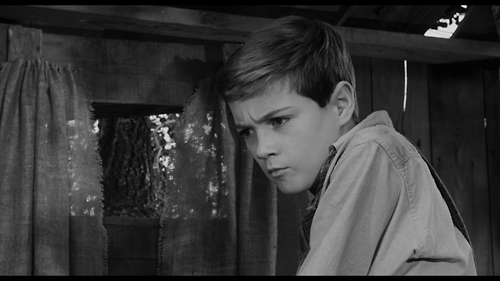
(Photo shows Philip Alford as Jem Finch in To Kill a Mockingbird)

Boys Names from the Top 100 of the 1910s

26 Sunday May 2013

Posted by A.O. in Name Themes and Lists

≈ 14 Comments

Tags

aristocratic surnames, aristocratic titles, Arthurian legends, Biblical names, British names, celebrity baby names, Celtic names, classic names, english names, famous namesakes, fictional namesakes, French names, Gaulish names, germanic names, hebrew names, Idylls of the King, King Arthur, Latin names, locational names, Lord Tennyson, name history, name meaning, name popularity, names from movies, nicknames, Norman-French names, Old Norse names, papal names, Roman names, royal names, saints names, Scottish names, surname names, unisex names, Welsh names

awm-ez0007Arthur

Arthur‘s fame comes from the legendary King Arthur, a British hero of the Dark Ages who became much celebrated in medieval romances. The meaning of the name isn’t known; some popular theories derive it from the British for “bear king” or, less convincingly, the Welsh for “bear man”. Another theory is that it is from the Roman surname Artorius, which would make King Arthur a Romanised Briton; this does fit in with some of the earliest versions of the tales. Unfortunately, it isn’t known what Artorius means, so leaves us no wiser. It’s a name we often think of as Victorian, as the 19th century was so keen on reviving medieval names, and Lord Tennyson’s Idylls of the King made the Arthurian legends popular once more. Queen Victoria’s favourite son was named Arthur, and Arthur Wellesley, the Duke of Wellington, and detective writer Arthur Conan Doyle were two other famous Victorian namesakes. Arthur was #6 in the 1900s, and peaked in the 1910s at #5. It didn’t leave the Top 100 until the 1960s, and reached its lowest point in the early 2000s at #334. Since then it has been rising gently, and is currently #216. Handsome and noble, this is a classic which isn’t overused and the nickname Artie is a good alternative to popular Archie.

Clarence

Clarence seems to have started out as a girl’s name, presumably an elaboration of Clare or variant of Clarice. In the 19th century, although given to both sexes, it was much more common as a boy’s name, due to Queen Victoria’s son Leopold, the Earl of Clarence. The title is said to originate from the town of Clare in Suffolk, owned by the first Duke of Clarence, Lionel of Antwerp, in the 14th century. The town’s name was originally Clara, from Roman times – this was either from the Latin for “clear” because of the Chilton Stream which flows through the town, or a Latinisation of a Celtic word, but scholars seem to currently lean towards the first explanation. Clarence was #30 in the 1900s, #42 in the 1910s , and left the Top 100 in the 1940s. It hasn’t charted since the 1960s. Famous as the angel in It’s a Wonderful Life, this might seem like an “old person name”, but actor Clarence Ryan, who has starred in kid’s TV shows Lockie Leonard and Dead Gorgeous, gives us a chance to see the name on a young man. The classic nickname is Clarry, but Ren would be neat.

Ernest

Ernest is a Germanic name meaning “vigour, strife”, only very distantly related to the English word earnest. It was a name used by German royalty and nobility, and introduced to England in the 18th century when the Hanoverians inherited the British throne. Famous men named Ernest include New Zealand-born physicist Ernest Rutherford, British explorer Ernest Shackleton, American author Ernest Hemingway and Australian TV host Ernest “Ernie” Sigley. The name also reminds us of Ernest Worthing, from the Oscar Wilde play, The Importance of Being Earnest. Ernest was #16 in the 1900s, #17 in the 1910s, and left the Top 100 in the 1950s. It hasn’t charted since the 1970s. Ernest seems like one of those granddad names that could easily be used again; it’s strong and appealing, almost sounds like a virtue name, and Ernie makes a cute nickname. In a recent poll on the blog, Ernest was voted the male name from the 1900s that people most wanted to be revived.

Horace

Horace is the name by which the Roman poet Quintus Horatius Flaccus is known in English. He was a member of the Horatii, an ancient noble family of Rome. The family name Horatius is said to go back to a legendary hero named Horatus; the meaning of his name is unknown. The poet Horace used to make puns on his own name and its similarity to the Latin hora, meaning “hour”, and from this exhorting to “seize the day” and make the most of time. The elegant and witty poetry of Horace was a great influence on English literature from the Middle Ages onwards, but to modern eyes his love poetry appears brutally unromantic (he seized the day with an awful lot of people). The name Horace was #45 in the 1900s, #57 in the 1910s, and had left the Top 100 by the 1930s. It hasn’t charted since the 1940s. Unfortunately for the name, Horace always seems to be used for comic characters in fiction, often overweight ones, such as barrister Horace Rumpole of the Bailey and Horace Slughorn from Harry Potter. Indeed, the Roman poet himself was short and rotund, giving this name a portly sound. However, it also seems sturdy and reliable – and you could use Ace as a contemporary nickname.

Joseph

Joseph is a form of the Hebrew name Yosef. In the Old Testament, Joseph was the son of Jacob and his favourite wife Rachel. The meaning of the name appears to be “Yahweh shall add (a son)”, but the Bible makes a pun about Joseph also “taking away” his mother’s shame of being barren – a little mathematical joke. Jacob spoiled Joseph terribly, gave him some fancy duds, and his jealous brothers sold him into slavery after he unwisely shared a dream he had about being way better than them. Through a series of adventures where his dream skills were more appreciated, he became the most powerful man in Egypt after the Pharaoh, and was reunited with his family, who he received with love and forgiveness. In the New Testament, Joseph was the husband of Mary, and the earthly father of Jesus; he is regarded as a saint. Joseph was #17 in the 1900s, and #23 in the 1910s. A sturdy classic which has never left the Top 100, the lowest it’s ever been is #68 during the 1940s. Currently it is #52 in New South Wales. Although last year it fell somewhat, Joseph is an extremely safe choice with Joe as the standard and popular nickname.

Laurence

Laurence is the English form of the Roman surname Laurentius, meaning “from Laurentum”. Laurentum was an ancient city near Rome whose name may mean “laurel tree”. The Romans wore laurel wreaths to symbolise victory, so it’s a very positive meaning. (In France, Laurence is the feminine form of Laurentius). Laurence became well known because of Saint Lawrence, a 3rd century martyr put to death for not handing over the church’s money to the Emperor. According to legend, he was roasted on a gridiron, cheekily saying, “I’m done – turn me over!”. He is one of the most popular saints, and widely venerated. Laurence was #87 in the 1900s and #72 in the 1910s; it peaked in the 1920s at #62, and didn’t leave the Top 100 until the 1960s. Laurence hasn’t charted in New South Wales since 2009, but in Victoria it is #494. This name is sleek and handsome, but presently much more popular in the middle than up front.

Maxwell

Maxwell is a Scottish surname which comes from a place named Maccus Well or Maxwell on the Scottish Borders. The name came about when a Norman lord named Maccus obtained land on the River Tweed, with a salmon pool soon known as Maccus’ Wiel – Maccus’ pool. Maccus is from the Old Norse name Makkr, a form of Magnus, meaning “great”. A grandson of Maccus became chamberlain of Scotland, and through him many branches of the family grew through south-west Scotland. Clan Maxwell was a very powerful Lowland clan who operated as one of the great noble houses of Scotland, holding titles of high esteem. Maxwell has been used as a first name since the 17th century, and in Scotland was sometimes given to girls. Entertainer Jessica Simpson raised eyebrows when she named her daughter Maxwell last year. Maxwell was #118 in the 1900s and #79 in the 1910s. It peaked at #29 in the 1930s, and left the Top 100 in the 1960s. Maxwell hit its lowest point in the 1970s and ’80s, when it plateaued at #318. After that it climbed, and was just outside the Top 100 when it fell to #139 in 2011. The retro nickname Max makes this a very attractive choice.

Percy

Percy is an aristocratic surname used as a first name. William de Percy was a Norman who arrived in England in 1067; he may have lived in England before the Conquest, but been expelled and returned when it was safe. He was granted large tracts of land, and it is from him that the House of Percy descends. The Percys were the most powerful noble family in the north of England during the Middle Ages, and rivals to the Nevilles. Various Percys did all the usual noble things – signed the Magna Carta, took leading roles in wars and battles, governed Virginia. George Percy, Earl Percy, the current heir to the Dukedom of Northumbria, was Pippa Middleton’s housemate, and is close friends with her. The name Percy comes from the manor of Perci-en-Auge in Normandy; it’s derived from the Roman personal name Persius, of unknown meaning, and may be a Latinisation of a Gaulish name. Percy was #41 in the 1900s, #48 in the 1910s and had left the Top 100 by the 1930s. It hasn’t charted since the 1940s. Because Percy can be used as a nickname for Percival or Perseus, it fits in well with the trend for old-fashioned nicknames like Ned or Ollie.

Ronald

Ronald is a Scottish form of Ragnvaldr or Rognvaldr, an Old Norse name meaning something like “well-advised ruler, decisive ruler”. The Gaelic form of the name is Ragnall, and this was Anglicised as either Ranald or Ronald (the Latinised form is Reginald). The Norse name was introduced to Scotland by settlers from Scandinavia, and there were several powerful Norse rulers of northern England and Scotland named Ragnall. Ronald was #34 in the 1900s, #10 in the 1910s, and peaked in the 1920s at #3. It didn’t leave the Top 100 until the 1970s, and only stopped charting in the late 2000s. There are two likeable fictional sidekicks which remind me of this this name – Ron Weasley, red-headed best mate of wizard Harry Potter, and Ron Stoppable, bestie of crime fighter Kim Possible. Both are played for laughs, yet are brave, loyal, and manage to get the girl. I have seen a few babies in birth notices called Ron or Ronnie, but so far I haven’t seen a full-blown Ronald. I suspect the familiar hamburger clown Ronald McDonald might hamper it – the name Ronald took a definite dive after McDonalds became established in Australia.

Victor

Victor is a Roman name meaning “victor” in Latin, which is easy enough to understand. It was a very popular name amongst early Christians, symbolising victory over sin and death. There are several saints named Victor, and three popes with the name – Saint Pope Victor I was the first African pope. Victor was commonly used as a name amongst Continental European nobility and royalty, and in the 19th century received a boost in England due to Queen Victoria. There are quite a few Victors in fiction, but the most widely-known often has his first name forgotten – Victor Frankenstein, the young Swiss scientist who brings a nameless creature to life. Writer Mary Shelley based Frankenstein on her husband Percy Shelley, who used Victor as a pen name and had been a keen science student while at university. Victor was #31 in the 1900s and #38 in the 1910s. It left the Top 100 in the 1960s, and reached its lowest point in the charts in 2009, when it dipped to #478. Currently it is #333. This is a strong, honest-sounding classic which seems rather hip.

POLL RESULT: People’s favourite names were Arthur, Joseph, and Maxwell, and their least favourite were Clarence, Ronald, and Horace.

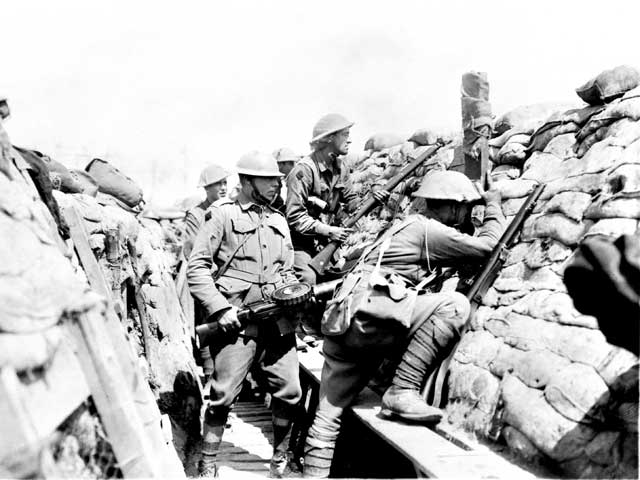
(The photo shows Australian soldiers in the trenches at Bois-Grenier near Armentières on the Western Front, 1916. Image held by the Australian War Memorial)

Girls Names from the Top 100 of the 1910s

19 Sunday May 2013

Posted by A.O. in Name Themes and Lists

≈ 18 Comments

Tags

Arthurian names, Astrophel and Stella, band names, classic names, created names, Disney names, Doctor Who, english names, famous namesakes, fictional namesakes, French words, germanic names, Greek names, hebrew names, Hollywood names, honouring, Idylls of the King, Italian names, Latin names, Little Women, locational names, Lord Tennyson, mythological names, name history, name meaning, name popularity, name trends, names from comics, names from movies, names from television, nicknames, Old French names, popular names, retro names, royal names, Russian names, saints names, Sanskrit names, scandinavian names, Shakespearean names, Sir Philip Sydney, Spanish names, unisex names, vintage names, Welsh names, William Shakespeare

P04233.001Amy

Amy is the English form of the Old French name Amée, meaning “beloved”; it’s a form of the Latin name Amata. It was in use in the Middle Ages, and revived in the 19th century. Amy was #32 in the 1900s, and by the following decade had sunk to #58, leaving the Top 100 in the 1920s. Amy disappeared from the charts between 1940 and 1960, but soared in popularity to make the Top 100 in the 1970s, and peaked in the 1980s at #8; by the 1990s it had only dropped one place. Amy had a very gentle decline, and left the Top 100 in 2011, but last year rallied and made #89, showing that there is life in this name yet. No wonder Amy has remained such a favourite – it’s a simple, unpretentious name with a nice meaning, and possesses appealing fictional namesakes from Little Women‘s Amy March to Doctor Who‘s Amelia “Amy” Pond.

Enid

Enid is a Welsh name meaning “soul”. In medieval Welsh legend, Enid is the wife of Geraint, a warrior king who is one of King Arthur’s men. Due to a silly misunderstanding, Geraint believes Enid has been unfaithful, and drags her off on a dangerous journey where she is not allowed to speak to him. Sensible Enid ignores this request, as she often has to warn him of approaching danger. Somehow this road trip from hell doesn’t put Enid off her husband, and in the end the two lovebirds are reconciled. Lord Tennyson turned the legend into two poems for his Idylls of the King, which brought the name to the attention of literature-loving Victorians. Enid was #64 in the 1900s, #49 for the 1910s, and peaked in the 1920s at #40. It left the Top 100 in the 1940s, and hasn’t charted since the 1950s. The most famous Australian Enid is Dame Enid Lyons, the first woman elected to the House of Representatives. Strong yet sweet, and sounding like an anagram of Eden, this is a clunky old-style name which deserves revival.

Gertrude

Gertrude is a Germanic name meaning “spear of strength”. It was used amongst medieval German nobility and royalty, and Saint Gertrude was one of the great mystics of the 13th century. The name probably didn’t become well known in Britain until the 15th century, due to immigration from the Netherlands. Shakespeare used it for the Danish queen in Hamlet, giving it a stamp of approval as an English name. The name seems to have been more common in Australia amongst Catholics, due to its saintly namesake. Gertrude was #54 in the 1900s, #87 in the 1910s, and had left the Top 100 by the 1920s. It hasn’t charted since the 1930s – a very steep decline. However, I feel that this dignified name could have a slight revival, and would make a very hip and cutting-edge choice. The nicknames Gertie and Trudy seem cute and usable.

Helen

Helen is a name of Greek derivation whose meaning has been much debated. Often translated as “light”, “torch” or “the shining one”, the name may be related to a Sanskrit name meaning “swift”. The name is forever connected to its original namesake, Helen of Troy, a woman of staggering beauty. In Greek mythology, Helen was the daughter of Zeus, who came to her mother Leda in the guise of a swan, so that Helen was born from an egg. Married to King Menelaus of Sparta, she was carried off by Prince Paris of Troy, sparking the Trojan War to avenge her abduction, causing no end of trouble for all involved. Famous Helens include singer Helen Reddy, novelist Helen Garner, and opera star Dame Helen “Nellie” Melba. Helen has never left the charts; #77 in the 1900s, it was #71 in the 1910s and peaked in the 1940s at #4. A long-time favourite, it didn’t leave the Top 100 until the 1980s. It reached its lowest point in 2009 at #554, and since then has taken a slight upward turn, making #355 in 2011. With names such as Eleanor and Elena gaining rapidly in popularity, and retro nicknames Nell and Nellie becoming fashionable, classic Helen looks like it has plenty of room for growth.

Joan

Joan is the English form of the Old French name Johanne, a feminine form of Johannes, which is the Latin form of the Greek name Ioannes, from the Hebrew name Yehochanan, meaning “Yahweh is gracious”. The English form of Johannes is John, and Joan is also a Spanish form of John. Joan was introduced to Britain by the Normans, and it was used amongst royalty and the nobility during the Middle Ages. Later it became less common, and had a revival in the 19th century. It is well known from Saint Joan of Arc, the visionary military leader, whose French name is Jeanne d’Arc. Famous Joans include Joan Lindsay, who wrote Picnic at Hanging Rock and opera star Dame Joan Sutherland. Joan was #152 for the 1900s, shot up to make #28 for the 1910s, and peaked in the 1920s at #2. It didn’t leave the Top 100 until the 1960s, and hasn’t been on the charts since the 1970s. For many years, Joan’s image was stout and sensible, but since Mad Men came to our TV screens, Joan Holloway has given it a stylish and sassy edge.

Mavis

Mavis is an English dialect word meaning “song thrush”; it is related to the French word mauvis and appears in literature as a poetic word for the bird. The word was in rare use as a girl’s name, but massively popularised by its use in Marie Corelli’s 1895 novel, The Sorrows of Satan. Although panned by the critics, it is considered the world’s first best-seller. Mavis was #85 in the 1900s, #16 by the 1910s, and peaked in the 1920s at #14. It left the Top 100 in the 1940s, and hasn’t charted since the 1950s. Mavis seems to have been a real Australian favourite, because it was more popular here than in Britain, and much more popular than in the US. In the 1960s, pioneering TV series, The Mavis Bramston Show, set the tone for Australian sketch comedy (a “Mavis Bramston” was theatre slang for an actress who was a pain in the backside). Australian band The Mavis’s were named after a cat. Mavis was a fresh, pretty name in the 1910s, and I think it can be again. It sounds very much like Maeve, and its associations with spring time and bird song are lovely.

Minnie

Minnie can be used as a short form of many different names – Mary, Amelia, Wilhelmina, Minerva, Hermione, or anything similar – and has long been used as an independent name. Famous fictional Minnies include Disney sweetheart Minnie Mouse, the Beano‘s tomboyish Minnie the Minx, and Cab Calloway’s jazzy Minnie the Moocher. These lively vintage creations make Minnie seem appealing, mischievous and off-beat; you can’t imagine a Minnie being tame or dull. Minnie was #56 in the 1900s, and by the 1910s was #100; it hasn’t ranked since the 1940s. With other vintage nicknames like Millie in vogue, piquant Minnie seems more than ready for a comeback.

Olga

Olga is the Russian form of the Scandinavian name Helga, meaning “holy, blessed”. Saint Olga was a 10th century Russian saint and princess, and the first Russian ruler to convert to Christianity. She didn’t convert until she was quite elderly, and before that she was a fierce ruler and brutal military leader. The name Olga was used by the Russian imperial family, and Mount Olga in the Northern Territory is named after Queen Olga of Württemberg, a daughter of Nicholas I of Russia. Olga was #88 in the 1900s, and peaked in the 1910s at #60. It left the Top 100 in the 1930s, and last charted in the 1980s. I am not sure why Olga became such a trend in this decade; I can only think it had something to do with the Russian Imperial Family, who would have often been in the news during World War I, and who were overthrown in 1917. Today we might connect the name to actress Olga Kurylenko, who played Bond girl Camille in Quantum of Solace and recently appeared in Oblivion. On Nancy’s Baby Names, people debated whether Olga was a “horrid” name; although some find it ugly, others could find it clunky and hip. This would be a bold choice which still seems exotic.

Stella

Stella is the Latin for “star”, and it was created as a name by 16th century poet Sir Philip Sydney in his sonnet sequence Astrophel and Stella. It is believed that Stella was inspired by real-life noblewoman Lady Penelope Rich, so endowed with dark-eyed, golden-haired beauty that it was practically mandatory for the poets of the day to fall in love with her (or pretend to), and dash off poems in her honour. Apparently unmoved by their literary efforts, she instead chose as her lover a handsome, wealthy and ruthless baron. Perhaps Sydney saw Lady Rich like a distant star – beautiful, glittering, cold, and unattainable. Stella wouldn’t have seemed too crazy as a name, because the Old French name Estelle is based on the Latin stella, and had been in use since the Middle Ages, and the Virgin Mary had for centuries been known as Stella Maris (“Star of the Sea”). Stella is a classic name in Australia. It was #48 in the 1900s, and #70 in the 1910s; by the 1920s it had left the Top 100. It reached its lowest point in the 1980s at #563, and since then has mostly climbed, reaching the Top 100 in the late 2000s. It is currently #52 in New South Wales, and still rising. You can understand why parents continue to use this pretty, star-like name, which fits in with the trend for -ella names.

Veronica

Veronica is a Latin form of the Greek name Berenice, which means “bringing victory”; the spelling was altered to make it seem as if it was based on the Latin phrase vera icon, meaning “true icon”. Saint Veronica is a legendary saint who is said to have been so moved to pity when she saw Jesus on his way to Calvary that she wiped his face with her veil. By a miracle, the image of his face was impressed upon it, and this cloth could then be used to heal the sick, or even bring the dead back to life. This legend, which comes from the Eastern church, was very popular in the Middle Ages, and several of these veils were venerated as holy relics until their cult was suppressed. Veronica was first used as a girl’s name in Italy, and spread from there. In Australia, Veronica was #63 for the 1900s and #69 for the 1910s; it didn’t leave the Top 100 until the 1950s. It has never stopped charting, and is currently at its lowest point yet – #356. Veronica has something of a glamorous image. Hollywood femme fatale Veronica Lake lent her name to Veronica Lodge from the Archie comics, with the comics themselves suggesting that “a Veronica” was a stunning high-maintenance girl. This was picked up by 1980s mean girls cult flick Heathers, with Winona Ryder as Veronica, and Australian girl band The Veronicas called themselves after Ryder’s character. This is an underused classic which seems sophisticated, with dark undertones.

POLL RESULT: People’s favourite names were Stella, Helen, and Minnie, and their least favourite were Gertrude, Joan, and Olga.  

(Photo is of Australian World War I nurses; standing at the back on the right is Sister Constance Keys, who was mentioned in the post on Gallipoli. These nurses received military decorations for their heroism, and all made it back to Australia at the end of the war)

← Older posts
Newer posts →

Enter your email address to follow this blog

Categories

Archives

Recent Comments

A.O.'s avatarwaltzingmorethanmati… on Zarah Zaynab and Wolfgang…
Madelyn's avatarMadelyn on Zarah Zaynab and Wolfgang…
JD's avatardrperegrine on Can Phoebe Complete This …
A.O.'s avatarwaltzingmorethanmati… on Rua and Rhoa
redrover23's avatarredrover23 on Rua and Rhoa

Blogroll

  • Appellation Mountain
  • Baby Name Pondering
  • Babynamelover's Blog
  • British Baby Names
  • Clare's Name News
  • For Real Baby Names
  • Geek Baby Names
  • Name Candy
  • Nameberry
  • Nancy's Baby Names
  • Ren's Baby Name Blog
  • Sancta Nomina
  • Swistle: Baby Names
  • The Art of Naming
  • The Baby Name Wizard
  • The Beauty of Names
  • Tulip By Any Name

RSS Feed

  • RSS - Posts

RSS Posts

  • Celebrity Baby News: Melanie Vallejo and Matt Kingston
  • Names from the TV Show “Cleverman”
  • Can Phoebe Complete This Sibset?
  • Zarah Zaynab and Wolfgang Winter
  • Baby, How Did You Get That Name?
  • Celebrity Baby News: Media Babies
  • Celebrity Baby News: Adelaide Crows Babies
  • Celebrity Baby News: Chris and Rebecca Judd
  • Names at Work: Name News From the World of Business and Employment
  • Celebrity Baby News: Sporting Round Up

Currently Popular

  • Rare Boys Names From the 1950s
  • Girls Names From Stars and Constellations
  • Celebrity Baby News: Nicki Gemmell and Andrew Sholl
  • Kai Erik Lassila: A Son for Lydia and Lauri Lassila
  • Girls Names of Australian Aboriginal Origin

Tags

celebrity baby names celebrity sibsets english names famous namesakes fictional namesakes honouring locational names middle names name combinations name history name meaning name popularity name trends nicknames popular names saints names sibsets surname names twin sets unisex names

Blog at WordPress.com.

Privacy & Cookies: This site uses cookies. By continuing to use this website, you agree to their use.
To find out more, including how to control cookies, see here: Cookie Policy
  • Subscribe Subscribed
    • Waltzing More Than Matilda
    • Join 517 other subscribers
    • Already have a WordPress.com account? Log in now.
    • Waltzing More Than Matilda
    • Subscribe Subscribed
    • Sign up
    • Log in
    • Report this content
    • View site in Reader
    • Manage subscriptions
    • Collapse this bar
 

Loading Comments...