• About
  • Best Baby Names
  • Celebrity Baby Names
  • Celebrity Baby Names – Current
  • Celebrity Baby Names – Past
  • Featured Boys Names
  • Featured Girls Names
  • Featured Unisex Names
  • Links to Name Data
  • Waltzing on the Web

Waltzing More Than Matilda

~ Names with an Australian Bias of Democratic Temper

Waltzing More Than Matilda

Tag Archives: astronomical names

Boys Names of Australian Aboriginal Origin – Part 2

04 Sunday Aug 2013

Posted by A.O. in Name Themes and Lists

≈ 5 Comments

Tags

Ancient Germanic names, animal names, astronomical names, Australian Aboriginal names, Chinese names, colour names, days of the week names, english names, famous namesakes, fictional namesakes, Google, Hindi names, historical records, Indian names, locational names, middle names, mythological names, name history, name meaning, names from movies, names of weapons, nature names, nicknames, onomatopoeic names, rare names, unisex names
mh1

Bambam

Bambam as a person’s name might seem like an oddball suggestion, but although it would definitely be an unusual choice, I don’t think it’s an unfamiliar one either. For a start, there is Bamm Bamm Rubble from The Flintstones, first introduced as a cute blonde baby with superhuman strength. His name came from the fact that he would say Bamm bamm, and swing his club, to the general destruction of everything around him. Bam Bam is used as a man’s nickname, from American wrestler Bam Bam Bigelow to British DJ Bam Bam. There’s also skater Bam Margera, who gained his nickname from constantly running into walls as a toddler. I have seen a baby boy called Bambam – although that may have been a nickname. In English, bam bam is an onomatopoeic interjection, suggesting one thing repeatedly hitting or banging into another. In much the same way, in Nyungar (from south-west Western Australia), bam means “to hit”, and in Bundjalung (from northern New South Wales), bambam means “bruise, swelling”. However, in the Meriam language from the eastern Torres Strait Islands, bambam means “yellow”; in Indigenous art, yellow ochre is often used to represent the earth. It’s quirky, but Bambam is a rather lovable name.

Daku

Daku means “sand hill” in the extinct Diyari language; the Diyari people are from the South Australian desert, and thus very familiar with sand. Despite being generally used as a boys name in Australia, Daku is also a unisex name in India, and in Hindi it means “bandit”. Someone wrote in to the blog considering the name Daku for their son, but they never got back to me, so I don’t know whether they overcame family opposition to the name or not. This name reminds me a bit of Dakota, and it has the fashionable OO sound, such as Reuben and Jude; the name is pronounced (I think) DAK-oo. It would be a bold choice though, and I haven’t seen many boys with this name, although it can be found a few times in historical records.

Jardi

Jardi means “front” in the Ngadjumaja language; the Ngadjumaja people are from the Nullarbor Coast area of south-east Western Australia. I remember reading in the papers last year about a baby boy from Mudgee who has named Jardii, and his mother explained that his name was from the Wiradjuri language and means “first born son”. I wasn’t able to find that information for myself, but it occurred to me that “front” and “first” are similar in meaning, so Jardi also seemed like a good name for an eldest son. In the Jaminjung language from the Victoria River region of the Northern Territory, jardi means “to keep”, which also seems very positive. I found quite a few Indigenous boys and young men named either Jardi or Jardii, and I think it’s really attractive, with a similar sound to Jordie, the short form of Jordan.

Jiemba

Jiemba means “laughing star” in the language of the Wiradjuri people of central New South Wales. It refers to the morning star, or the planet Venus. (In some other Aboriginal languages, djimba simply means “star”). Astronomy was very important to the Wiradjuri, as with other Aboriginal societies, because stars and planets were used to tell the times and seasons, and this information was first given in early childhood. It is recorded that in the Wiradjuri in the 19th century, the elders would teach the children the stories behind the stars (the constellations), while the old women would teach children to count stars, which they could do into the thousands using a particular system. This information comes from radical poet and journalist Mary Gilmore, who grew up in Wagga Wagga, and was given the name Jiemba by the Wiradjuri people. Despite it being given to a little girl, I have only seen Jiemba given to boys – most likely because it is said JIM-ba, and thus shortens to Jim or Jimmy. One of the Aboriginal men from the Sydney area first encountered by Europeans was named Jimbah, so it sounds quite masculine (this Jimbah may also have been Colebee).

Lue

Lue is a small village in the Central Tablelands region of New South Wales. Its name means “chain of waterholes” in the local Dabee language – the Dabee are part of the Wiradjuri group. The village’s name is pronounced LOO-wee, which makes me think that this could be an Australian alternative to Louis or Louie. There are quite a number of people named Lue in Australian historical records – many of them are of Chinese ancestry, but there are some from the Lue area, suggesting that at least a few of them were named after the village.

Nullah

A nulla nulla, also known as a nullah or waddy, is an Aboriginal war club or hunting stick; the word comes from the extinct Darug language from the Port Jackson area of Sydney. A nullah is a heavy club which could be used in hand to hand combat, or used to stun prey; sometimes they were used to punish lawbreakers. In addition, these useful tools could be used to make fires, and grind ochre. This name is frequently Googled, because Nullah is the name of the young Aboriginal boy in Baz Luhrman’s 2008 epic, Australia, played by Brandon Walters. The film is set in the Northern territory, so the choice of Nullah for the character’s name is not meant to be authentic; I wonder if they chose it partly because it suggests the name of the Nullarbor Plain (Latin for “no trees”). Nullah is also a Hindi word for a narrow, steep-sided valley; in dry countries like Australia, these nullahs are commonly filled with brushwood, and when it rains heavily, they temporarily become streams. This could be another inspiration for the character’s name.

Omeo

Omeo is a town in Victoria which is in the East Gippsland, set high in the Great Dividing Range. Its name means “mountains, hills” in the local Gunaikurnai language, or one of its dialects, because it is set on a treeless plain on the fringes of the Snowy Mountains. There is evidence of human occupation of this region dating back around 20 000 years, and the first reported sighting by a European of Omeo was in 1832, by a naturalist on the slopes of the southern alps. It was his reports of fine grazing land which soon attracted pastoralists and squatters to the region. Gold was discovered in the 1850s, but Omeo’s isolation meant that it did not experience the massive boom of many goldfields towns – it did however, have the dubious distinction of being the roughest and most unruly place on the goldfields. Its first magistrate was Judge Browne, better known as author Rolf Boldrewood, who wrote of the area’s lawlessness in his novel, Robbery Under Arms. This name looks and sounds like Romeo without the R, which gives it recognisability as a name, although it also reminds me of Omo washing powder. Its goldfields history gives it a bit of a “wild west” feel; it seems a bit more bad boy than romantic Romeo. Omeo has had some use as a boy’s name in Australia, especially amongst people from Omeo itself, and was more often found in the middle.

Tanami

The Tanami Desert is in the Northern Territory, and is Australia’s most northerly desert. In the wet season, it rains heavily and even floods, but the high temperatures mean that most of it evaporates. Some parts of the Tanami do have wetlands though, and there is even a lake which has permanent water in it, so as deserts go, it’s on the slightly moist side. It is a refuge for several rare and endangered species of flora and fauna, making it a biologically important area. You can cross the desert on the Tanami Track, which is more than 1000 km long, and goes from Alice Springs to Halls Creek, in the Kimberly region of Western Australia. Tanami is a corruption of the local Walpiri name for the area, Chanamee, meaning “never die”, because the rock holes in a particular gully were said to never run dry of water, even in drought. When white people came here in the early twentieth century, they found to their dismay that this was not the case, so either the name was optimistic in nature, or the Indigenous people had a superior knowledge of obtaining water from the rock holes. I have seen Tanami occasionally on girls, but after seeing it given to a boy, I really like it as a male name. The pronunciation is TAN-uh-my, but the Aboriginal pronunciation would be more like TAN-uh-mee, so you could take your pick on how to say it.

Woden

Woden Valley is a district of the capital city of Canberra. The area is named after a homestead owned by Dr James Murray, which was built in 1837. In Aboriginal Place Names, Harold Koch suggests that the name of Dr Murray’s homestead may have been influenced by the word wadyan or wadhan, which means “possum” in several Indigenous languages, in an area stretching from the Monaro region right down to Omeo in Victoria. If so, then the spelling was altered to make it look like the name of the Anglo-Saxon and Germanic god Woden, whose name means “inspiration”; Dr Murray saw him as a god of wisdom. Woden was the chief god of the Germanic peoples, and is their equivalent of Odin. Anglo-Saxon royalty claimed that Woden was their ancestor, and he survives in English folklore as leader of the Wild Hunt, and perhaps even as Father Christmas. Of course, we unconsciously celebrate his special day once a week, on Wednesday (Woden’s day). With Odin being a rather hip name at present, Woden really doesn’t seem too strange, and this could be a way of celebrating Australian and English heritage together. There are a couple of men named Woden in Australian historical records, although it is more common as a middle name.

Yarramundi

Yarramundi is an outer suburb of Sydney which is a semi-rural area in the City of Hawkesbury. It is named after a famous Indigenous leader who was a member of the Boorooberongal clan of the Darug people, and a garadyi, or shaman – a healer, a man of great spiritual knowledge and power, and an enforcer of tribal law. Yarramundi’s son Colebee was the first Aboriginal person to receive a land grant, and his daughter Maria was the first Aboriginal child to be enrolled in a school for the education of Indigenous children; her marriage in 1824 was the first legally recognised union between an Aboriginal woman and a convict. Maria ended up being a successful land owner in Liverpool and Blacktown, and dozens of families in the area trace their ancestry back to Yarramundi. Yarramundi means “deep water”, and I saw a newspaper story about a baby boy named Yarramundi after this inspiring namesake.

POLL RESULT: People’s favourite names were Jardi, Lue, and Nullah, and their least favourite were Yarramundi, Omeo, and Bambam.

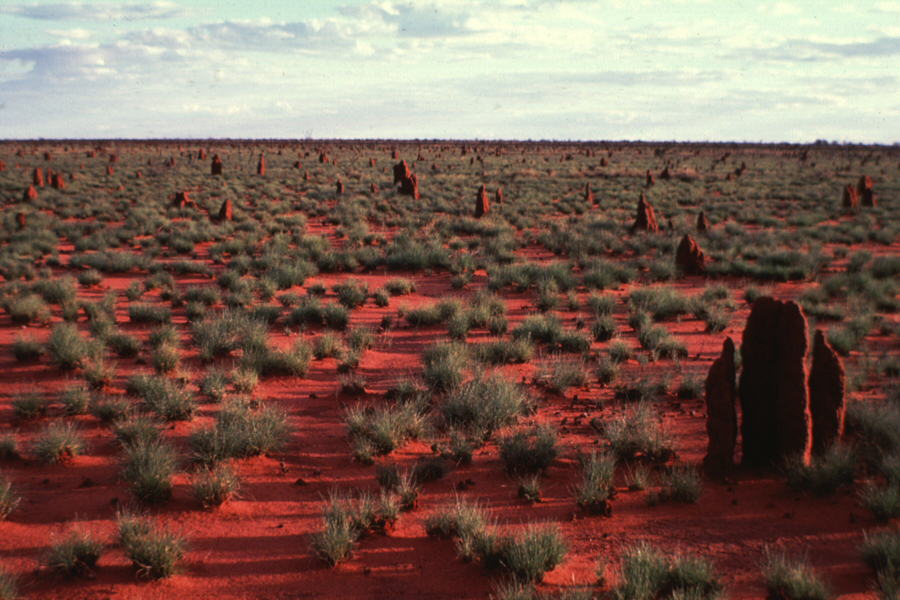
(Picture shows the Tanami Desert in northern Australia)

Girls Names of Australian Aboriginal Origin – Part 2

28 Sunday Jul 2013

Posted by A.O. in Name Themes and Lists

≈ 16 Comments

Tags

animal names, astronomical names, Australian Aboriginal names, baby name books, bird names, birth notices, famous namesakes, fictional namesakes, flower names, Greek names, hebrew names, historical records, Italian names, Japanese names, locational names, mythological names, name history, name meaning, name popularity, name trends, names from books, names from fairy tales, names from movies, names from television, names of businesses, names of horses, names of ships, nature names, nicknames, plant names, Polish names, popular names, Romanian names, Slavic names, unisex names, varieties of fruit

OLYMPUS DIGITAL CAMERA

My first lists of names from Aboriginal languages are the most popular articles on the blog, so it seemed time for another selection. These names are all ones which have been used as personal names in Australia. I have done my best to elucidate meaning and history as much as possible.

Alinta

Alinta means “flame” in one of the traditional languages of South Australia; it was published in a dictionary by the Royal Society of South Australia in 1891. The name was popularised in 1981 when it was featured in the award-winning mini-series Women of the Sun. Each episode portrayed fictionalised accounts of lives of Aboriginal women in Australian society through history, and the first was Alinta: The Flame. It shows first contact between an Aboriginal tribe and Europeans, when early settlers encounter a tribe while searching for grazing land. The tribe’s culture is threatened by the newcomers, and the tribe is wiped out. The only survivors are a woman named Alinta and her child; Alinta vows that her daughter will “carry the torch” for her culture. There are several businesses in Australia named Alinta, most notably a Western Australian energy company, one of the largest in Australia, and named with the Aboriginal meaning in mind. There is also an Australian-bred variety of strawberry called Alinta. It’s not a very unusual name here, and there are several young actresses with the name. Alinta is also used as a name in Romania, where it means “caress”.

Arika

Arika is a name from the Waka Waka people of south-east Queensland, meaning “blue water lily”. There are several species of blue water lily native to Queensland, and they are used as bush food, for all parts of the plant are edible. In Aboriginal mythology, water lilies are a gift from the Rainbow Serpent, and sometimes in Indigenous astronomy, small stars were seen as water lily bulbs. In the novel Book of Dreams by Traci Harding, the meaning of the name is translated, and it says that in the past, Aboriginal women named Arika were given the name Lily by white people – which suggests that Arika might be a good name to honour a great-grandma Lily. Australians named Arika include Indigenous artist Arika Waulu Onus, and Arika Errington, who works in Aboriginal health, and contacted the blog to tell us about her name. I saw several children and teens named Arika online, mostly from Queensland, so it seems as if this name could be today’s Nerida. Arika sounds a bit like Erica, and is an angram of the Japanese name Akira, while having a similar meaning to Lotus. Possible nicknames that occur to me are Ari and Riki.

Jedda

Jedda (1955) was the first Australian film in colour, the last film of famous director Charles Chauvel, and the first film to star two Aboriginal actors in leading roles. In the movie, Jedda is an Aboriginal girl raised from infancy by a white woman after her mother died giving birth to her. Although she is curious about her own culture, her adoptive mother forbids her from learning anything about it, with tragic consequences. The film was nominated for the main prize at Cannes, and was a commercial success in Australia. In the movie, the name Jedda means “little wild goose” – a forerunner of the chase she will engender. I am not sure if the meaning was invented for the film, or drew on local knowledge; Jedda certainly exists as an Aboriginal name in historical records before 1955. An Aboriginal lady told me that she understood the name Jedda (which was her daughter’s name) as “little child”, but she didn’t say what language that was from. This is reasonably well used as a girl’s name, being similar to Jenna and Jetta – but I have seen it on a boy, because it shortens to Jed, and is also a plant name, because jedda (Jedda multicaulis) is a native shrub.

Kalina

Kalina means “love” in the extinct Wemba-Wemba language of north-west Victoria and south-west New South Wales. It has often been used as a place name, street name, a name for businesses and organisations, and sometimes as a girl’s name in Australia, but I’m not sure whether it was used as a personal name by the Wemba-Wemba people. It is also a literary name, because Kalina is one of the brumbies in the Australian classic children’s series, The Silver Brumby, by Elyne Mitchell – although in this case, Kalina is a white stallion, and his name is understood to mean (in horse language) “marvellous beauty of frost on snow”. Kalina is also a Slavic name which means “cranberry bush”; in Romania it means “rowan tree”, and in Poland it means “virburnum bush”. This is a pretty cross-cultural name which has several attractive meanings, and seems very easy to wear, being similar to Karina, Katrina and Kalista.

Leumeah

Leumeah is an outer southern suburb of Sydney, in the Macarthur region. It was settled by John Warby, a convict explorer who was transported here in 1792. In 1802, Warby was given the job of protecting cattle roaming free south-west of Sydney. Here he befriended the Tharawal people who lived in the area, and learned some of their language. In 1816 he was granted land on which to build a house, barn and stables; the barn and stables are still standing – one of them is a restaurant and the other a motel. (Just to confuse things, the stables is called The Barn Restaurant). Warby named his farm Leumeah, which means “here I rest” in the Tharawal language, and this became the name of the suburb. It is pronounced LOO-mee-uh. I have seen one or two girls given this name, and it seems like an especially happy name for an Australian, as it came about from a rare case of friendship between Aborigines and European settlers. The sound of it is quite on trend, and Lulu could be a nickname.

Marlee

Marlee is a small town in mid-northern New South Wales, whose name means “elder tree” in the local Biripi language. Native Elderberry or Yellow Elderberry is Sambucus australasica; its berries are bush food and they are sweeter than the variety from the northern hemisphere. Marlee is a popular name for houses and streets, suggesting leafy abundance, and it is not uncommon as a girl’s name here. Marlee also means “swan” in the Nyungar language of Western Australia, so it has a nice meaning in two languages. It is a rare week when I don’t see a baby named Marli, Marlie, Mahli or Mali in the birth notices, and Marlee fits in perfectly – in fact there was a Marlee in this week’s birth announcements. You could see these names as attempts to “feminise” Marley, but they could just as easily be short forms of Marlene, Mahlia or Malia. Marlee seems like a great way to join this trend with a specifically Australian meaning.

Narelle

Queen Narelle was the wife of King Merriman (or Umbarra), an important elder of the Yuin people in the latter part of the 19th century. The Yuin people are the traditional owners of the South Coast region of New South Wales, in the Bermagui area. Aboriginal people traditionally did not have kings or chiefs, and the title of “king” was given to certain elders by white people as a (misguided) mark of respect. There is a famous photo of Queen Narelle’s well-attended funeral taken around 1895, which shows black and white people mourning for her together, so it does seem as if Narelle and Merriman were able to form a bridge between cultures, or that relations in the 19th century could be harmonious. You may see Narelle translated as “woman from the sea” in baby name books, but in fact the meaning isn’t known; it is pronounced nuh-REL. Narelle first charted in Australia in the 1920s at #362, and reached the Top 100 in the 1940s. It peaked in the 1950s at #50, and was out of the Top 100 in the 1970s. It hasn’t ranked since the 1980s or charted since the 1990s. The name took a dive in the late 1970s, when it featured on highly popular comedy series The Naked Vicar Show. Narelle was a slightly dim-witted, mildly tarty woman – hence the plummeting popularity of the name, which immediately lost all cachet. However, Narelle is actually a pretty name, and the TV show has long been off the air. It even fits in with the trend for -ell names for girls, and could have fashionable Nell or Nellie as the nickname. Names from the 1950s are predicted to make a comeback: could Narelle be one of them?

Nyah

Nyah is a small town in Victoria on the banks of the Murray River, pronounced NY-ah. It began as a utopian socialist community in the late 19th century, but as utopian socialism went out of fashion, it lost the necessary government support, and it isn’t now any more utopian or socialist than the next country town. Its name means “this bend (of the river)” in the local Boorung language – the bend of the Murray River at Nyah was an important boundary marker for the Boorung people. The region around Nyah has several Indigenous sacred sites, and in the surrounding state forests, anthropologists have discovered many interesting artefacts of Aboriginal culture. I know of someone with this name, and it seems attractive and simple, similar in sound to popular names like Maya, while also a place name important to Indigenous heritage.

Talia

Talia is a small town on the Eyre Peninsula in South Australia whose name means “near water” in one of the local languages – appropriately enough for a town by the sea. It may be from Wirangu, or one of its closely related languages. Talia has charted in Australia since the 1970s, which seems to follow its inclusion in Aboriginal Words and Place Names by Alexander Wyclif Reed (1965). It first ranked in the 1980s at #483, and hit its peak in 2009, when it joined the New South Wales Top 100 at #91. Since then it has rapidly declined, and is now #222. The variant spelling of Tahlia has been much more successful, which has been in the Top 100 since the 1990s, peaked in 2009 at #36, and is now #78. Tahlia may be more than an attempt to make clear the Australian pronunciation of Talia – it may also be to differentiate it from international names, because Talia is known as a girl’s name in several other cultures. Talia is a variant of the modern Hebrew name Talya, meaning “dew of God”, and the Italian form of the Greek name Thalia, meaning “blooming”. It can also be used as a short form of Natalia. Talia was the name of the princess in an Italian folk tale on which Sleeping Beauty was based. This is a pretty cross-cultural name with a specifically Australian meaning, and although it is less popular than Tahlia, that may make it more attractive to some parents.

Yindi

Yindi was the name of a ship, one of four that the Australian government presented to the navy of the Philippines as a gift in 1958. Each of them were given Aboriginal names taken from The Australian Language by Sidney J. Baker (1945). The first ship was the Yindi, whose name is translated as “sun”; in most Aboriginal cultures, the sun is female. Yindi also means “to descend” in the Yindjibarndi language of Western Australia, and the name may remind you of the Australian band Yothu Yindi, which means “child and mother” in the Yolngu language of the Northern Territory. I saw a baby girl named Yindi in a birth notice last year, and it struck me as a really stylish choice, which stands out from the crowd and has a sunny meaning.

POLL RESULT: People’s favourite names were Talia, Alinta, and Kalina, and their least favourite were Leumeah, Jedda, and Narelle.

(Photo shows Nymphaea gigantea – a species of blue water lily native to south-east Queensland; © Raimond Spekking / CC-BY-SA-4.0 (via Wikimedia Commons)

Famous Names: Neptune and Taylor

12 Wednesday Dec 2012

Posted by A.O. in Famous Names

≈ 1 Comment

Tags

astronomical names, english names, Etruscan names, fairy tales, famous namesakes, historical records, honouring, Indo-European names, Irish names, Italian names, Latin words, locational names, mythological names, name combinations, name history, name meaning, name popularity, names of ships, nicknames, Roman names, surname names, UK name popularity, unisex names, US name popularity

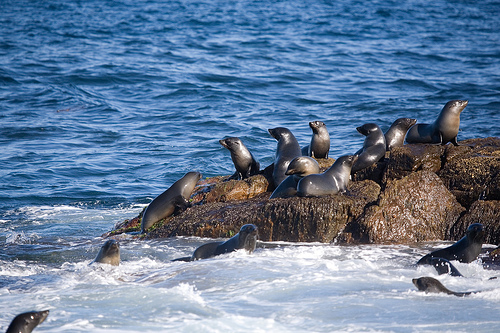
seals on neptuneAt the end of November, the Premier of South Australia announced that the Neptune Islands Group Marine Park would be renamed the Neptune Islands Group (Ron and Valerie Taylor) Marine Park. This is no mere change of name, for a network of 19 marine parks has taken effect in order to protect the seas from over-fishing. The premier noted that the southern oceans had more diversity than the Great Barrier Reef, and contained many plants and animals that cannot be found anywhere else.

The marine park has been named in honour of Ron and Valerie Taylor; divers, film-makers, shark experts, and conservationists who were ardent proponents of preserving marine habitats. Their skills in underwater filming were used on such films as Jaws and The Blue Lagoon, but more importantly, they wrote books and made documentaries to highlight the beauty and fragility of marine ecology. They won many awards for both photography and conservation. Ron passed away this year, and Valerie continues to be an advocate for marine protection.

The Neptune Islands, near Port Lincoln, were named by the navigator and cartographer Matthew Flinders in 1802. Rugged and remote, they seemed to him inaccessible, as if they would would always belong to King Neptune.

Neptune is the English form of Neptunus, the Roman god of fresh water springs, lakes, rivers, and the sea; he is the Roman equivalent of the Greek god Poisedon. He was worshipped in a festival that fell at the height of summer, when rainfall was at its lowest, and water most needed and valuable. As you know, his name has been given to the eighth planet from the Sun.

The meaning and origin of his name is obscure, with etymologists in disagreement over which language/s Neptune might be derived from. The general view is that it means something like “moistness”, “damp, wet”, “clouds, fog”, or “to water, irrigate”.

Another theory is that it is from the Italian town of Nepi, north of Rome, which was anciently known as Nepet or Nepete. This town is famous for its mineral springs, and traditionally connected to the god Neptune, who would presumably have approved of its watery wonders.

The town’s name is Etruscan, from the Etruscan name for Neptune, which was Nethuns. This may be related to the Irish god Nechtan, who had a sacred well, and thus another liquid connection. In fact there are several Indo-European deities with similar names and aqueous roles, and it is speculated that their names may go back to an ancient word meaning “nephew, grandson”.

One of the ships of the Second Fleet was called Neptune, and unfortunately it had the worst reputation of all for its appalling mistreatment of convicts.

Neptune sounds as if it should be ultra rare in Australian name records, but there are quite a few from the 19th century – at least quite a few more than I expected to find. It was mostly used in the middle, such as Cecil Neptune, and Samuel Caesar Neptune, but you can also find men named Neptune Persse and Neptune Frederick. Two of them rejoiced in the full names of Neptune Love and Neptune Blood; I believe the name Neptune is traditional in the Blood family.

Neptune would be very unusual as a baby name today, and I can’t quite imagine what you would use as a nickname – Neppy sounds too much like “nappy” to me. At the very least, please not Tuna.

A complete change of pace brings us to the name Taylor, a very common English surname referring to someone who made clothes as their occupation; the word tailor is ultimately from the Latin talea, meaning “a cutting”. In the Middle Ages, tailoring was a high-status craft, as only the wealthy could afford to have their clothing professionally made, and tailors could command good fees. Both men and women were employed as tailors.

There are many folk tales and fairy stories about tailors, and nearly always the tailor is depicted as being extremely clever, and confidently able to outwit others. Tailors having to be so precise and painstaking in their work, and no doubt with plenty of diplomatic skill to handle their rich clients, they must have gained a reputation for being as sharp as pins and as smooth-talking as silk.

The earliest Taylor-as-a-first-name I can find in the records is from the 16th century, and it was on a female. This may be an error in transcription, as subsequent early Taylors seem to be male (with plenty of girls who had Taylor as a middle name). In the United States, Taylor has always charted as a boy’s name, and only charts for girls from the late 1970s onwards, but is currently Top 100 for girls, and in the 300s for boys. In the UK, it only charts for boys, where it is barely on the Top 100 and falling.

In Australia, Taylor has charted for both boys and girls since the 1980s, when it was #383 for boys and #785 for girls. It peaked for both sexes in the 1990s, when it was #38 for girls and #130 for boys. At the moment, Taylor is only just outside the Top 100 for girls at #108, is #251 for boys, and falling for both sexes.

So that’s a quick survey of Taylor popularity around the world: Top 100 for girls in the US, Top 100 for boys in the UK, and not on the Top 100 at all in Australia.

Here are two very different names which evoke the sea and honour its protectors, as well as having a strong connection to the history of South Australia.

(Picture shows seals on Neptune Island; photo from Flickr)

Famous Name: Eclipse

21 Wednesday Nov 2012

Posted by A.O. in Famous Names

≈ 2 Comments

Tags

astronomical names, english names, Greek names, historical records, name combinations, name history, name meaning, names of ships, Nancy's Names, nature names, nicknames, rare names, unisex names, vocabulary names

An eclipse is when an astronomical body is obscured, either by passing into the shadow of another body, or having another body pass between it and the viewpoint. The word comes from the ancient Greek ékleipsis, meaning “abandonment, downfall or darkening of a heavenly body”.

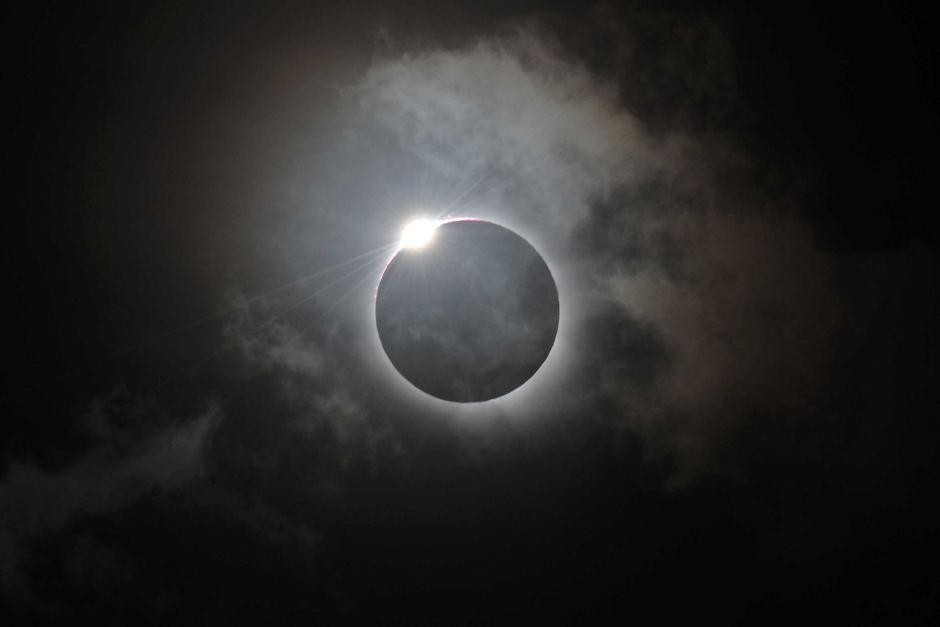
Although there are several different types of eclipse possible in the universe, the ones we can see from Earth are the solar and lunar eclipses. We tend to get more excited by solar eclipses, when the Moon appears to pass in front of the Sun, blotting out its light temporarily. The most impressive of all is a total eclipse of the Sun, when the Moon appears to perfectly cover the Sun, so that it disappears from view.

A total eclipse of the Sun can only be viewed along a very narrow band of the Earth’s surface, and on November 13, a total eclipse could be seen in far north-eastern Australia. Although many had gloomily predicted that cloud cover would ruin the eclipse-enjoying experience, just before dawn the clouds obligingly parted, and the Moon passed in front of the Sun. For two minutes it became darker and colder, the birds stopped singing, and tens of thousands of spectators from all over the world gaped in wonder, just as our ancestors did thousands of years ago.

Many indigenous groups, including in Arnhem Land, were watching the event, which has deep spiritual meaning for them. Most Aboriginal cultures believe the Sun is female and the Moon male. In their myths, the Sun is in love with the Moon, but he doesn’t return her feelings, so she chases him around the sky. Occasionally she manages to catch him, and in a jealous rage tries to kill him, but the Moon convinces the spirits which hold up the sky to save him, which they always do.

However, another version is that a solar eclipse marks those rare times when the Sun-woman is hidden by the Moon-man while he relents and makes loves to her, while a similar tale is that a spirit man covers the Earth with his hand to leave it in darkness, so that the Sun and Moon may have privacy together.

In Queensland, the celebrations for the eclipse included a Solar Eclipse Marathon in Port Douglas, and a week long Eclipse Festival at the remote Palmer River Roadhouse. More than 50 000 tourists arrived from Europe, North America and Asia, with some hotels booked out three years in advance. The eclipse was big news, and big business. And why shouldn’t they party? It was the first time in the past thousand years that this part of Australia had experienced a total solar eclipse.

Eclipse can be found as a unisex name in occasional use since the late 18th century. According to blogger Nancy Man at Nancy’s Names, the births of many of those given the name Eclipse can be correlated with either solar or lunar eclipses.

In Australian records, there are only a small number of people listed as having the name Eclipse, and it is exclusively used as a middle name. It is balanced between the sexes, with three women and two men having Eclipse as part of their name. My favourite combinations were Pearl Eclipse and Thomas Eclipse Vivian.

Only a year of birth is given, so it isn’t possible to correlate their dates of birth with eclipses, but it is reasonable to assume that it might have been the inspiration for at least some births. However, there was also a convict ship called Eclipse, although it doesn’t seem to match up with any of the places or dates of birth in the records in any obvious way.

Scientist Dr Natalie Dillon from Mareeba attended the eclipse viewing this year and said:

When it goes dark and the temperature drops, you get a sense of the fragility of life. I just feel in awe. It is like the Moon has wiped a cloth over the face of the Sun and we can start afresh.

An eclipse is a rare celestial event, and one which fills us with a mixture of awe and dread, as well as great joy and a sense of renewal when the light of the Sun is returned. It reminds us how much we need the Sun, and gives us a brief uneasy taste of what Earth would be like without it – chill, dim and silent.

The basis of the word eclipse is the Greek for “I leave behind”. To eclipse someone means to cast them into your shadow, to surpass others with your superior talents or skills – to leave them behind, so that they can never catch up.

As a name, Eclipse has power, a certain foreboding, and perhaps a touch of arrogance. It is little seen, and that gives it an even greater significance. Perhaps it’s not surprising it has been timidly tucked away in the middle.

Nicknames for Eclipse include Clip, Clipper and Clipsie, which give it a much friendlier and more approachable sound.

What do you think – a viable baby name, or a little too much?

Names of Australian Female Paralympic Medalists

21 Sunday Oct 2012

Posted by A.O. in Name Themes and Lists

≈ 8 Comments

Tags

Arabic names, Arthurian legends, Arthurian names, astronomical names, Biblical names, english names, ethnonyms, famous namesakes, fictional namesakes, French names, gemstone names, germanic names, Greek names, hebrew names, honouring, Indian names, Irish names, Latin names, locational names, military events, mythological names, name history, name meaning, name popularity, names of dolls, nature names, nicknames, Norman-French names, Old French names, popular names, royal names, saints names, Sanskrit names, street names, surname names, unisex names, vocabulary names

Amber (Merritt)

Amber Meritt was born with a club foot, and is originally from England; she came to Australia as a child (she’s now 19). She started playing wheelchair basketball in 2007, and won silver at the London Games. Amber is fossilised tree resin, and since prehistoric times has been valued as a gemstone. The word amber is derived from Arabic, and means ambergris, the waxy substance regurgitated by the sperm whale; it was only later realised these were different substances. Amber has been used as a girl’s name since the 17th century, but wasn’t popular until the 20th. The name became notorious in 1944, when the racy historical romance, Forever Amber, was published, with its heroine the sleep-her-way-to-the-top Amber St. Clare. Despite being condemned, and even banned here until 1958, the book was a bestseller, and made into a film. Amber was in rare use in the 1950s, and during the 1960s made #647 (about one Amber per year). It absolutely skyrocketed during the 1970s up to #135, peaked in the early 2000s at #49, and is now #91. This pretty gemstone name is still popular, and it’s all thanks to a “dirty” book! If looking for a nickname, Miss Merritt goes by Bambi.

Danae (Sweetapple)

Danae Sweetapple was blind from birth, and started swimming in 1990. She won a silver and two bronzes at the 1992 Paralympics. In Greek mythology, Danaë was a Greek princess and the mother of the hero Perseus. Her father shut her up in a bronze tower due to a prophecy that he would be killed by her son, but she was impregnated by Zeus, who came to her in the form of golden rain. The king had Danaë and Perseus cast into the sea, and they washed ashore onto an island, where a kind fisherman raised Perseus as his own son (as an adult, the prophecy was fulfilled when Perseus did kill his grandfather). Getting it on with a godly shower of gold was either supremely satisfying or very traumatising for Danaë, as she had no interest in mortal men afterwards, and never married or had further children. Her name is derived from the Danaans, one of the names the Greeks used for themselves, with the idea that they were partly descended from Danaus, a mythical prince of Egypt. I’m not sure how the Greeks would have said her name (nobody seems to agree), but not like the way it is usually said in Australia, which is dan-AY.

Elaine (Schreiber)

Elaine Schreiber won a bronze in table tennis, a gold in club throw, and a silver in javelin at the 1964 Paralympics, and a silver in table tennis at the 1968 Games. Elaine is a name shared by several characters in Arthurian legend, who are occasionally confused with each other. One of the most famous is the fair Elaine of Astolat, who dies of unrequited love for Sir Lancelot. The story inspired Tennyson’s poem, The Lady of Shalott, and it was only after the popularity of his poem that Elaine became a commonly-used English name. Elaine is an Old French variant of Helen. Elaine was #254 in 1900, joined the Top 100 in the 1920s, and peaked in the 1930s at #18. It left the Top 100 in the 1960s, and reached its lowest point in the late 2000s, when it was in rare use. Since then, it has been very gently rising, and is currently #457.

Gloria (Pascoe)

Gloria Pascoe developed epilepsy at the age of 9, and became totally blind by 55. At 61, she attended the 1980 Paralympics, where she took gold in lawn bowls. Gloria is the Latin for “glory, fame, renown”, and in Christian tradition it denotes the manifestation of God’s presence, often associated with a divine light. The name Gloria has been in use since at least the 16th century, but received a boost in popularity in the 19th from two literary works. One was Gloria, a romantic novel by popular American novelist E.D.E.N. Southworth in 1891; the other was George Bernard Shaw’s 1897 comedy of errors, You Never Can Tell. Both these works feature very attractive heroines who seem to have done the name more good than all of God’s glory. Gloria was #257 in 1900, Top 100 by the 1920s, and peaked in the 1930s at #23. It left the Top 100 in the 1960s, and hit its lowest point in 2009 when it was in rare use. Since then it has risen again, and is currently #427. If you’ve been paying attention, you will see this makes it the virtual twin of Elaine in terms of popularity.

Jemima (Moore)

Jemima Moore became paraplegic at the age of 6 from a virus, and is now 20. She won a silver medal in the 100 metres relay at the 2008 Paralympics, and attended the London Games. In the Bible, Jemima was the eldest of Job’s three daughters, and she and her sisters are described as being the fairest in the land. The name Jemima literally means “warm” in Hebrew, and can be translated as “day”. The name could actually be derived from Arabic, as there is an ancient land in Arabia who had a queen called Jemama; if so, Jemima from the Bible could be inspired by the queen of Arabic folklore. This does fit in with the Biblical story, because Job and his family were said to be from an Arabic country. The name Jemama means “turtledove”. It first charted in the 1960s, the same decade children’s show Playschool first broadcast, which has a rag doll named Jemima. Never in the Top 100, it peaked at #196 in the late 2000s and is currently #254 and stable. This is a fashionable name which has never gained popularity or lost cachet.

Lorraine (Dodd)

Lorraine Dodd became paraplegic at the age of 13, after contracting transverse myelitis. She attended the 1968 Paralympic Games, where she won three golds for swimming, and a silver and a bronze in athletics. Lorraine is a region in north-eastern France; its name comes from an earlier kingdom named Lotharingia, meaning “Lothar’s kingdom. Lothar I was a Frankish king and a great-grandson of Charlemagne; his name is Germanic and means “famous army”. As a personal name, Lorraine has been used since the 18th century, a century in which Lorraine first became part of France. It’s sometimes said to be a Catholic name, since St Joan of Arc was also known as The Maid of Lorraine. There was a World War I Battle of Lorraine, which probably boosted numbers, and the area’s importance during World War II reflects a peak in popularity at this time. Lorraine was in rare use in the 1900s, and reached the Top 100 in the 1930s. Peaking in the 1940s, it left the Top 100 in the 1970s, and hasn’t charted since the 1990s. You can see how Lorraine helped Lauren appear feminine, and Lauren also seems to have replaced Lorraine.

Madison (de Rozario)

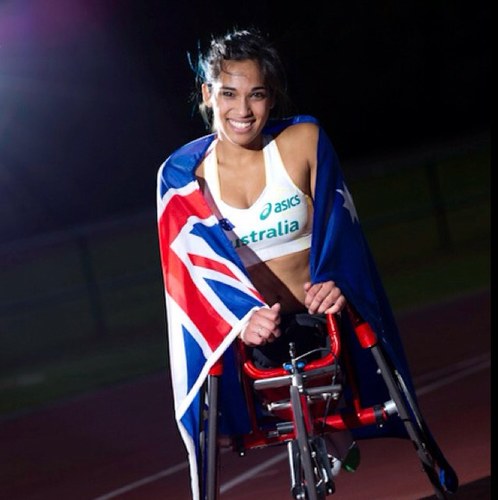
Madison de Rozario became paralysed by a rare neurological condition at the age of 3 and is now 18. She won silver in 2008 as the youngest Paralympian on the team, and was also at the London Games. Madison is a surname meaning “son of Matthew“, although in some rare cases it may be derived from “son of Maddy”, with Maddy being a pet form of Maud. It’s been used as a personal name since the 18th century, and seems to have been given almost exclusively to boys in the beginning. Although certainly used in England, it was much more common in America, where it may often have been given in honour of James Madison, the fourth president of the United States (I only found one man named Madison in Australian records). Madison is famous in baby name circles for only becoming popular, and only becoming common for girls, after the movie Splash in 1984. This romantic fantasy, a rewrite of The Little Mermaid, stars Daryl Hannah as the mermaid, who chooses her “human name” from a street sign for Madison Avenue in New York City, named after the former president – although Tom Hanks’ character tells her this isn’t a “real name”. Madison was #606 for the 1980s, with about three born each year. It then absolutely screeched up the charts to make #52 for the 1990s, and peaked in the early 2000s at #22. It sunk to #44 in 2010, then rose last year to make #41. It’s been a real success story, with its nickname Maddie fitting in with Madeline.

Priya (Cooper)

Priya Cooper was born with cerebral palsy, and spends most of her time in a wheelchair. She began swimming competitively while still at school, and is one of our greatest disabled swimmers, winning nine gold medals and breaking world records at the 1992, 1996 and 2000 Paralympics. She was twice team co-captain, and twice a flag-bearer at closing ceremonies. She has received many honours, and since retiring has become a spokesperson and fundraiser for several charities. Priya is an Indian girl’s name which means “dear, beloved” in Sanskrit. In Hindu legend, Priya was one of the daughters of King Daksha, a son of the god Brahma. The name is pronounced PREE-yuh, and has been rather a favourite in Australia for many years.

Siobhan (Paton)

Siobhan Paton is an intellectually disabled swimmer who holds thirteen world records, and won six gold medals at the 2000 Olympics. She was named Paralympian of the Year in 2000, and also received an Order of Australia. Siobhán is the Irish form of the Norman-French name Jehanne, a variant of Jeanne. There were several medieval queens named Siobhán. It is said that the twentieth century popularity of Siobhan owes a great deal to the actress Siobhán McKenna, who was born in Belfast. She was most famous as a stage actress, but also appeared in King of Kings (playing Mary), Of Human Bondage, and Dr Zhivago. Ms McKenna’s son, Donnacha O’Dea, was an Olympic swimmer for Ireland in 1968. Siobhan first charted in the 1950s, and during the 1960s was #571, which represents about one Siobhan a year. Use of the name increased sharply during the 1970s and ’80s, and it peaked in the 1990s at #211. It hasn’t charted since 2009, so this is another attractive name which has never made the Top 100. Pronunciation is an issue, because the usual Irish pronunciation is SHIV-on, but in Australia it’s usually said shi-VAWN.

Ursula (King)

Usula King was a swimmer who won a silver and two bronze at the 1984 Paralympics. The name Ursula means “little she-bear”, derived from the Latin ursa (which we know from constellations Ursa Major and Minor – the Great and Little Bears). According to legend, Saint Ursula was a Romano-British princess who was sent by her father to marry the pagan governor of Armorica (Brittany). Possibly to stall proceedings, she got all bridezilla and declared that before the wedding she must go all over Europe on a pilgrimage, taking an unbelievable 11 000 virgins with her as her handmaids. On their way to Cologne, they were besieged by Huns, who had a busy day beheading the lot of them. The story doesn’t fit with any known historic facts, and one theory is that Ursula is a Christianised form of the goddess Freya. However, Cologne has a magnificent basilica dedicated to St Ursula and her companions, and a little village in Wales also has a church in their honour, in the belief that Ursula was originally from Wales (in the legend, she is from the West Country). Because of the saint, the name came into use in medieval times, and got a little boost in the 20th century from beautiful Swedish actress Ursula Andress, who was the first Bond girl, in Dr No. It’s clunky by contemporary standards, but strangely alluring.

(Photo of Madison de Rozario from her Twitter account)

Meanings of Names

07 Sunday Oct 2012

Posted by A.O. in Your Questions Answered

≈ 3 Comments

Tags

African names, Ancient Egyptian names, Anglo-Saxon names, animal names, Arabic names, astronomical names, bird names, Chinese names, choosing baby names, English idioms, english names, epithets, flower names, French names, German names, Google, Google searches, Greek names, hebrew names, Hindi names, Igbo Names, Indian names, Indonesian names, Japanese names, Latin names, Maori names, musical terms, mythological names, name meaning, names of constellations, nature names, Old French names, Old Norse names, Persian names, popular culture, prefixes, royal titles, Sanskrit names, scandinavian names, Spanish names, surname names, Swedish names, unisex names, Viking names, vocabulary names, Yiddish names, Zulu names

There’s many different ways to choose baby names. Some people pick out a name they like, and perhaps quickly check to make sure it doesn’t mean something horrible, like “he who has the face of a deranged warthog”, or maybe not even care what it means. Others think of a meaning they would like to associate with their baby, and then hunt around for a name that fits that meaning.

These are all the web searches people used to get to the blog this year, looking for names with particular meanings. I don’t know if I’ve always come up with a name they wanted to know about, and I’m not even completely sure that I’m correct on each one, but I did my best.

NAMES WITH MEANINGS RELATED TO STARS

Boys name that means “star”

The English word Sterling, referring to sterling silver, is said to most likely mean “little star”, as some early Norman pennies were imprinted with a small star. The Old French word for the pennies is Esterlin. We also use the word sterling to mean “excellent, of high quality”, so you get another layer of meaning from it.

Latin boy’s name meaning “star”

The Latin for star is Astrum. Astro is a Latin prefix meaning “pertaining to the stars”, as in the word astronomy. I have seen this used as a name.

Swedish girl’s name that means “star”

Stjarna.

A boy’s name that means “bright star”

Nayyar is an Arabic boy’s name which is understood as meaning “bright star”. It also refers to the sun, which of course is our nearest, and thus brightest, star.

Male name meaning “bright star in the southern hemisphere”

There’s isn’t a star name which means that, but Sirius is the brightest star in the sky, and is visible in both hemispheres. However, Canopus, the second brightest, is more often connected with the southern hemisphere; it is always visible from some parts of Australia. It is occasionally called Soheil in English, and the Maori name for it is Atuatahi, meaning “stand alone”.

Spanish girls name that means “constellation”

I’m not sure there is one, but the Spanish for constellation is Constelación. I haven’t heard of it being used as a person’s name, but Constelacia might look a bit more name-like. I don’t speak Spanish, so apologies if this looks absurd to Hispanophones.

Boy name that means “many constellations”

The Japanese name Ikuto has this meaning, although I’ve only seen it used as a fictional surname.

A constellation name which means “small”

All the constellations have names which are nouns or “things”, not adjectives, so there isn’t one. A few have Minor as part of their name, to indicate they are the smaller of two eg Ursa Minor. The closest I could find was Equuleus, meaning “little horse, foal”.

Name meaning “starry sky”

In Japanese, Hoshizora means “starry sky”. It’s used as a surname in the Japanese anime Smile Pretty Cure!

Boys name that means “galaxy”

I have seen Galaxos as a character name in online games, and Galaxian would mean “of the galaxy” or “from the galaxy”.

NATURE NAMES

Boys name that means “beach”

Beach, Bay or Cove.

Names that mean “songbird”

Hebrew has both a male and female name with this meaning. Efrona for a girl (meaning “lark”), and Zalmir for a boy.

Flower name that means “peaceful”

There’s a native plant from Western Australia called the Gunniopsis pax – it’s a succulent, and it does have small flowers. There is also the Peace Lily, and the Peace Rose, and a type of guzmania (a bromeliad) called Pax. The White Poppy, the Lotus and the Daisy have all been used as symbols of peace.

Boy name meaning “otter”

In Japanese, Rakko means “sea otter”. That seemed to be the most usable word for otter in another language I could find.

POSITIVE MEANINGS

Indian boy’s name meaning “one who cannot be defeated”

It seems to be a popular meaning for boy’s names in India, for there are several. I managed to find Adityendra, Ajay, Ajeenkya, Ajeesh, Ajit, Aparajita, and Durjaya. Take your pick!

Viking name meaning “prince”

Balder is translated as meaning “lord, prince, king”, and it was used as an epithet for heroes. In Norse mythology, Balder was the son of Odin and Frigg.

Girl name that means “independence”

Liberty or Freedom.

Sanskrit girl’s name meaning “bright, happy”

Nandita.

Girl’s name that means “beautiful”

There’s a lot. A few you may not be familiar with are Mei (Chinese), Shayna (Yiddish) and Ziba (Persian).

Name that means “bewitching”

Mohana is an Indian unisex name which means “bewitching, infatuating, charming” in Sanskrit. It is used as an epithet of several gods and goddesses.

The word for “lovely” in some other language

Delightfully vague! I pick French – Jolie.

NEGATIVE MEANINGS

Baby name that means “spiteful”

I hope this is for a story and not a real baby! The German surname Sauer means “spiteful” (related to the word sour, acid), and it can be Anglicised as either of the unrelated names Sawyer or Sayer, so I guess those are possible options.

Hindi word for “proud”

Ooh there’s quite a few. Garvi, Garvit and Nidar look the most like names, to me.

DOESN’T EXIST

Name that means “daughter of a princess”

Hmm, seems a bit narcissistic as a baby name, somehow! Anyway, there’s no term for a princess’ daughter, and the daughter of a princess doesn’t necessarily have any special status – Princess Anne’s daughter Zara is just Mrs Tindall. I would choose a name that simply means “princess” or is royal-related. However, the Indonesian name Putri means both “daughter” and “princess”.

Norse name which means “female knight”

Vikings didn’t generally fight with a cavalry, and although there were some female warriors, it’s very unlikely they would have ridden horses, as this was usually reserved for leaders of a warband. It does make me think of the Valkyries, who were mythological women of the afterlife, always depicted on horseback. Valkyrie means “chooser of the slain”.

Norse name meaning “hunter”

There isn’t one. The Old Norse word for hunter is Veiðimaður, and some think this word is the basis of the English surname Waitman. This is occasionally used as a first name.

Name for a girl that means something

More specific, please!

NAMES FOR SPECIAL CIRCUMSTANCES

Name that means “perfect time”

I know it’s not quite right, but I keep thinking Serendipity. Also Season, because of the saying that “For everything there is a season, and a time for everything under heaven”. The Japanese girl’s name Aya means “design”, suggesting a planned pregnancy. Musical names like Rhythm or Cadence come to mind, as music must be perfectly timed. Ogechukwukama is an Igbo girl’s name meaning “God’s time is the best” – good for a surprise, but very welcome, baby.

Name that means “beating the odds”

Lucky or Chance.

Boy’s name that means “when two souls join”

I’d probably be thinking of names that mean “bliss, joy”. Anand is a Sanskrit name meaning “bliss”, while Anglo-Saxon has Wynn, meaning “joy, bliss”. The word Bliss itself can be used for both sexes. The Chinese unisex name Zheng or Zeng means “harmony, union”, which seems to describe the state of soul togetherness.

Zulu name for boys that gives hope for the future

Mduduzi is a Zulu boy’s name that means “bringer of hope”.

Boy’s name meaning “not meant to be”

Oh how sad, and what a sad meaning. I’m so sorry. I thought long and hard about this one, and it seems to me that the concept behind “meant to be” and “not meant to be” is the same, that is, some idea of Fate, Fortune or Destiny. We usually think of it as feminine (“Dame Fortune” etc), but the Ancient Egyptians had a god of fate, named Shai or Shay, meaning “that which is ordained”. I think that’s a nice name for a boy, and has the sense of the meaning you’re looking for.

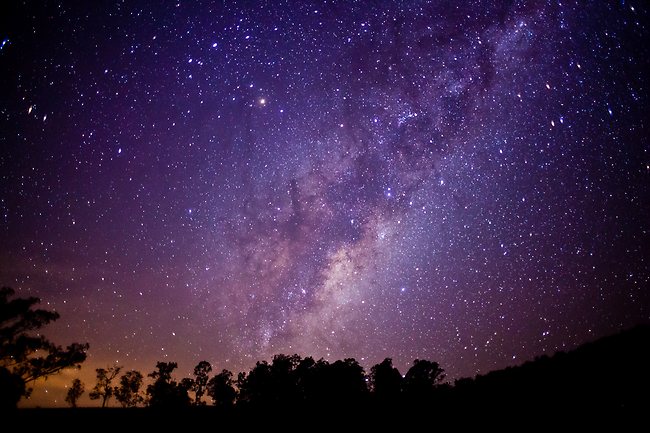
(Picture shows the Milky Way above Lake Moogerah in south-east Queensland; photo from Perth Now)

A Girl’s Name from an Aboriginal Language Meaning “Star”

23 Thursday Aug 2012

Posted by A.O. in Naming Assistance

≈ 8 Comments

Tags

astronomical names, Australian Aboriginal names, dictionaries, famous namesakes, Google, Italian vocabulary words, name history, name meaning, nicknames, slang terms, Swedish slang terms

Anika has written in to the blog about a name she is considering but is unsure about. Her husband’s family is Indigenous Australian, one side being from the Wakka Wakka people of south-east Queensland. They have been told of a name Mirri Yannan meaning “falling star”, but it is from a language of northern New South Wales.

Anika adores the name Mirri, and its meaning of “star”, and would love to use it. However, when she did a search for the name, the meaning of “dog” was returned by Google. She doesn’t like the idea of her daughter thinking her name means dog, and now she’s not sure about it.

This is an issue I raised in my article about Australian Aboriginal names – there are lots of Aboriginal languages, and a word may mean something pleasant in one language, and less appealing in another. For example, Merinda can be taken from a Sydney-area language meaning “beautiful”, but in South Australia it means “leech”. This isn’t unique to Australian languages. Pippa is becoming a popular name in the English-speaking world as a short form of Phillipa, but in Swedish it is vulgar slang for “to have sexual intercourse”, while in Italian it means “masturbate, hand job”.

I read through some dictionaries and language guides in regard to the word mirri. It does mean “dog” in the Ngiyampaa and Wiradjuri languages of New South Wales. Mirri also means “face” in the Paakantyi language from New South Wales, and “sun” in the Gooniyandi language of northern Western Australia. So it has several meanings in different Australian languages.

I tracked it down in a dictionary from the Kamilaroi or Gamilaraay people from northern New South Wales. Their word for star is mirii, and mirii yanan means “shooting star” (meteor).

So I think you have a couple of options open to you. You could use Mirri or Mirii, which is said exactly the same way (I rang the very helpful Visitors Centre and asked).

If you are truly bothered by mirri meaning “dog” in another language, then mirii sounds like the solution to your dilemma, as well as being the word you were originally looking for.

I think Mirii makes an extremely pretty name for a girl, and I love its meaning of “star”. I hope you use the name, in whichever form you like best and feel most attracted to.

(Some information in the article from Macquarie Aboriginal Words, published 2006)

Names of Australian Female Olympic Medalists

12 Sunday Aug 2012

Posted by A.O. in Name Themes and Lists

≈ 11 Comments

Tags

American names, Appellation Mountain, astronomical names, Australian names, celebrity baby names, created names, english names, famous namesakes, fictional namesakes, flower names, folklore, French names, Hindi names, idioms, Indian names, Latin names, locational names, middle names, modern names, mythological names, name history, name meaning, name popularity, national symbols, Native American names, nature names, nicknames, plant names, portmanteau names, Roman names, Russian names, Sabine names, saints names, Sanskrit names, scandinavian names, Scottish names, surname names, unisex names, US name popularity, vocabulary names

Chantal (Meek)

Chantal Meek is originally from Britain, and won a bronze medal in 2008 for sprint canoeing. The name Chantal was originally given in honour of Saint Jane Frances de Chantal (her non-saint name was Jeanne-Françoise Frémiot, Baronne de Chantal). Jeanne-Françoise was of the nobility, and married a baron; she devoted herself to prayer and charity, and later in life founded a religious order. Not only kind and sensible, she was known for her great sense of humour. The place name Chantal is from Old Provençal cantal, meaning “stony”, but people often imagine it is from the French word chant, meaning “song”. Chantal was first used as a personal name in France in the 1920s, and was most popular there during the 1940s-60s. The name entered the US Top 100 in 1968, the same year Marie-Chantal Miller was born to American millionaire and socialite, Robert Warren Miller (Marie-Chantal later became Crown Princess of Greece). Chantal (shan-TAHL) has never charted in Australia, with the preference here being for the variant Chantelle (shan-TEL).

Clover (Maitland)

Clover Maitland has won gold twice for hockey, in 1996 and 2000. Although usually thought of as a nature name, Clover was originally from the surname. It was an occupational name given to an official mace-bearer (a mace was called a clavia), or to a timber-worker, with the origin being from the word cleave. This accounts for boys named Clover. The plant of this name plays a role in folklore, for it is said that to find a four-leafed clover is lucky. The shamrock is a clover variety which is one of the symbols of Ireland, and proudly displayed on Saint Patrick’s Day. The word clover ultimately goes back to a Proto-Indo-European word meaning “sticky” – quite apt, as white clover flowers make excellent honey. Clover is also used in farming and gardening to enrich the soil, and so good for stock to eat that we say someone is living in clover if their life is one of ease and prosperity. So many positive things attached to this fresh green plant – another one is that it contains the word love. Clo, Cloey, Clove and Lola could all be used as nicknames.

Maree (Fish)

Maree Fish is a hockey player who won gold at the 1988 Olympics. The name Maree is typically Australasian, and so little known elsewhere that Abby at Appellation Mountain even asked about it, as she was puzzled why so many baby girls in Australian birth announcements had Maree in their names. There are several possibilities. The original pronunciation of Maree was MAH-ree, so it could be an Anglicisation of the Scottish Màiri, which is a form of Mary, and can be pronounced the same way. On the other hand, MAH-ree is how the name Marie was pronounced in England until the early twentieth century, and is also a common Gaelic and Irish pronunciation of the name. There is a Loch Maree in the Scottish Highlands, named after Saint Maree – however, he was a man, and his name is the Anglicised form of Máel Ruba, which roughly means “red haired monk” (sometimes it’s Anglicised as Rufus). These days, Maree is usually pronounced muh-REE, as a variant spelling of Marie. Maree entered the charts in the 1920s and was Top 100 by the 1940s. It peaked in the 1960s at #62, and left the Top 100 the following decade. It hasn’t charted since 2009. Like Marie, it’s much more common as a middle name.

Nova (Peris-Kneebone)

Nova Peris began her sporting career in hockey, becoming the first Indigenous Australian to win an Olympic gold medal when the Australian team won at the 1996 Olympics. She then switched to athletics, and although she won gold twice at the Commonwealth Games as a runner, she never received another Olympic medal. The name Nova is from the Latin word for “new”, and the word nova is well known in astronomy to describe a nuclear explosion in a white dwarf star. This makes it another “star” name. Although a rare name here, it has been on the US Top 1000 since the 1880s, and last year returned at #882, after not being seen there since before World War II. It now seems very usable, with its fashionable O and V sounds – it fits right in with popular girls’ names such as Ava and Eva, and can also be seen as an unusual nature name. It may remind some Australians of the radio station, Nova FM, but I’m unsure whether that would bother anyone.

Rohanee (Cox)

Rohanee Cox is a basketball player with the national women’s team who won silver at the 2008 Olympics. She is the first Indigenous Australian to win an Olympic medal in basketball. She has been awarded many sporting honours, including NAIDOC Sportsperson of the Year in 2010. Rohanee, pronounced ro-HAH-nee, is an Indian girl’s name which is a variant of Rohane, based on Rohana, meaning “sandalwood”. Sandalwood trees are native to southern India, and incense made from the tree is used in Hindu ceremonies, while devotees wear a paste made from it on their bodies, so the name has spiritual connotations. Another person with the name is Rohanee Walters, the sister of actor Brandon Walters, who served as his stand-in during the making of Baz Luhrmann’s Australia. Like Ms Cox, Miss Walters is from Broome in Western Australia, and I think is young enough to have been named after local sports star Rohanee Cox – although I don’t know if that’s what happened.

Shirley (Strickland)

Shirley Strickland is one of our most famous athletes, gaining more Olympic medals than any other Australian woman in track and field. She won silver and two bronze at the 1948 London Olympics, gold and bronze at the 1952 Olympics, and two gold at the Melbourne Olympics in 1956. Shirley is a surname from a common English place name meaning “bright clearing”. It was a rare male name until Charlotte Brontë’s 1848 novel Shirley was published. In the story, the lively young heiress Shirley Keeldar has been given a boy’s name, because her parents had no son to pass the family name on to. The US Top 1000 shows Shirley as a unisex name from the 1880s onwards, with 1957 being the last year it appears as a male name. The name began steadily rising just before World War I, coinciding with the 1908 publication of L.M. Montgomery’s novel, Anne of Green Gables, with its imaginative red-haired heroine, Anne Shirley (in a later book, Anne calls her youngest son Shirley). In Australia, Shirley was in rare use in the 1900s, and skyrocketed in popularity to be #10 for the 1920s. It peaked in the 1930s at #3, and had left the Top 100 by the 1960s. It hasn’t charted since 2009.

Taryn (Woods)

Taryn Woods was a member of the women’s water polo team which won gold a the 2000 Sydney Olympics. Taryn is a name popularised by Hollywood matinee idol, Tyrone Power, and his second wife, Linda Christian. They gave the name to their second daughter in 1953, and the name Taryn first appears on the US Top 1000 in 1955. Her name is presumed to be a feminised form of the name Tyrone, which is the name of an Irish county. Taryn is found in ultra-ultra-rare use before that as a unisex name, and similar-sounding names such as Taren, Terrian, Toreen and Torunn were common in the 1940s and ’50s, so the Powers did seem to be tapping into a mid-century zeitgeist. Many of these names look to be inspired by Scandinavian links to the Norse god of thunder, Thor, or perhaps combinations of names, such as Terri and Karen. Taryn first entered the Australian charts in the 1960s, and peaked in the 1980s, at #230. It hasn’t charted since 2009. The name seems to have been more popular in Australia than anywhere else, although its only tenuous Aussie connection is that Linda Christian was one of Erroll Flynn’s lovers.

Tatiana (Grigorieva)

Tatiana Grigorieva was a national hurdler in Russia, but when she migrated to Australia in 1997 she took up pole vaulting. Within a year of picking up a pole for the first time, she won a medal at an international competition. After winning silver at the 2000 Sydney Olympics, she became a household name, and her blonde good looks made her very marketable. Tatiana is the feminine form of Tatianus, derived from the Roman family name Tatius. The name may be of Sabine origin, and the meaning is unknown. Saint Tatiana is supposed to have been a 3rd century Roman Christian who was martyred for her faith. She was venerated in Orthodox Christianity, and her name has been commonly used in Russia and surrounding areas. Although Tatiana is unusual in Australia, its forms Tania and Tanya both peaked in the 1970s in the Top 100. Last year, NRL star Akuila Uate welcomed a baby girl named Tatianna, and its short form Tiana peaked in the early 2000s.

Virginia (Lee)

Virginia Lee is a rower who won bronze at the 1996 Olympics. The name Virginia is the feminine form of the Roman family Verginius; the meaning may be “bend, turn toward”, but modern writers often spell it Virginius, to make it seem as if it is derived from virgo, Latin for “virgin”. According to legend, Verginia was a beautiful Roman girl murdered by her father to protect her honour. Virginia was the name of the first English colony in North America. In 1584, Sir Walter Raleigh’s expedition to what is now North Carolina brought word of a Native American chief named Wingina. The first Native American leader to meet English settlers, he died by their hand soon after, setting an unhappy precedent for future cultural relations. Queen Elizabeth I called the new colony Virginia in her own honour, due to her status as Virgin Queen; it is thought that Wingina’s name may have helped inspire her choice. The original colony stretched from North Carolina into Canada, but the modern American state of Virginia is of more modest proportions. The first child born in the Americas to English parents was Virginia Dare, named after the colony, and her fate is a mystery, for all the colonists disappeared a few years later. Because of its origins, Virginia has been more popular in the United States than elsewhere. In Australia, it first charted in the 1920s, and peaked in the 1950s at #94 – the decade when Virginia McKenna starred in A Town Like Alice. It hasn’t ranked since the early 2000s.

Wendy (Schaeffer)

Wendy Schaeffer is an equestrian who won gold in eventing at the 1996 Olympics. The early history of the name Wendy is rather murky, and it’s usually suggested that it began as a pet form of Gwendoline or Wanda. Unfortunately for this theory, the first Wendy I can find was born in 1615 in Cambridgeshire, and was male. He may have been named after the Cambridgeshire hamlet of Wendy, meaning “island on the river bend”. In fact, boys named Wendy in 18th century England did tend to come from Cambridgeshire. The earliest woman named Wendy I can find died in Essex, and is estimated to have been born around 1711. Wendy is also a surname which is most commonly found in Essex – as this county is next to Cambridgeshire, could it be inspired by the place name? Leaving aside this mysterious origin, the name’s popularity is due to author J.M. Barrie. He knew a wee lass called Margaret Henley, and she called Barrie “fwendy”, as a childish way of saying “friend”. Margaret died aged five, and Barrie named the heroine of his 1904 play, Peter Pan, Wendy Darling; the novelisation of the play was published in 1911. In Australia, Wendy first entered the charts in the 1920s, and was Top 100 by the following decade. It peaked in the 1950s at #15, and left the Top 100 in the 1980s. It is still in rare use.

(Photo shows Tatiana Grigorieva after winning silver at the Sydney Olympics in 2000)

Famous Name: Gale

08 Wednesday Aug 2012

Posted by A.O. in Famous Names

≈ 3 Comments

Tags

astronomical names, Baby Name Ponderings, famous namesakes, idioms, legal terms, locational names, middle names, name history, name meaning, nature names, nicknames, Norman names, Norman-French names, Old English names, plant names, popularity, surname names, The Hunger Games, unisex names, US name popularity, vocabulary names, weather terms

On August 6 the Curiosity rover, which had been launched by NASA at the end of November last year, successfully landed on the planet Mars. As with the 1969 moon landing, Australian scientists played a crucial role in this international endevour, and NASA administrator Charlie Balden made special mention of the Canberra Deep Space Communications Complex at Tidbinbilla, which is part of NASA’s Deep Space Network. Tidbinbilla was the only space station which was facing Mars for the descent, making it uniquely positioned to transit data from Mars to the Earth.

Curiosity landed on the Gale crater, which is believed to be more than 3 billion years old. The main goal of the mission is to determine whether life could ever have existed on Mars, and it is thought by some scientists that the Gale crater could have contained water at some point. If they are correct, this would make life on Mars a real possibility.

The Gale crater is named after Walter Frederick Gale, an early twentieth century amateur astronomer from Sydney. A banker by profession, Walter Gale made several important astronomical observations, including discovering seven comets. He also examined the surface of Mars, and was a keen supporter of the idea that the planet could contain life.

The surname Gale can be from an Old English nickname for someone who was cheerful, merry or fun-loving by nature. The Normans had a male personal name Geil, meaning the same thing, and that can be another source of the name. Another possibility is that is from the Norman-French word for “gaol”, perhaps denoting someone who worked as a gaoler, or even lived near a gaol. The surname Gale is mostly found in the southern coastal areas of England, but it is also commonly found in Yorkshire, leading to the possibility that there it may be from the Norse word geil, meaning “deep ravine”.

As a vocabulary word, gale has more meanings than you may suspect. It is an old dialect word meaning “to sing”, with connotations of “charm, enchant”, but also referring to birdsong. Gale Day is an old legal term, meaning the day that a tenant’s rent was due to be paid. Sweet gale is another name for the bog myrtle (Myrica gale); a shrub which typically grows in peat bogs. Its sweet scent has seen it used to flavour beer, and to make perfumes, and it’s one of the plants traditionally used in Royal wedding bouquets.

Of course, when we hear the word gale, we most likely think of a strong wind, especially those which feature in storms. It may also remind us of the phrase gales of laughter, which seems to tie in pretty neatly with its original meaning of “cheerful, merry”.

Gale was originally a male name, and taken directly from the surname. It isn’t found as a female name on the US charts until the 1930s – not surprisingly, this correlates with the rise in popularity of the female Gail, used as a short form of Abigail (Gail was also used for boys as a variant of Gale). In the US, despite the popularity of Gail as a girl’s name, male and female Gales existed together until the name disappeared from the charts for both sexes around the same time – 1969 for boys, and 1970 for girls.

In Australia, Gail was a popular girl’s name which peaked in the 1950s at #26, and I suspect for people born around that era, and perhaps a decade or so later, Gale would sound feminine to their ears. However, Gail hasn’t been on the charts since the 1990s, and Abby is the popular short form of Abigail today. If you look on the current Top 100 for the name that sounds most like Gale, it’s a male one – Gabriel.

Gale is an interesting name that by meanings, associations and sound, manages to present itself as both masculine and feminine, depending on how you think of it. I do like the idea of using it as a boy’s name, because English names are lacking male forms which have connotations of joy and happiness, compared to the numbers of female ones. Perhaps also because the Gale Crater is on the planet Mars, a name associated with masculinity for thousands of years.

However, this name is up for grabs by both genders, and does honour a great Australian star-gazer. If you can only think of this as meaning “a strong wind”, it would be on trend as one of the one-syllable nature name, which go so well in the middle position.

UPDATE: Blue Juniper from Baby Name Ponderings has reminded me that of course, Gale Hawthorne is one of the main characters in The Hunger Games trilogy. The best friend and hunting partner of protagonist Katniss Everdeen, Gale is played by Australian actor Liam Hemsworth in the film version. (Liam is the younger brother of Chris Hemsworth).

As Blue Juniper points out, this gives a current-day Gale much more of a masculine edge.

Melbourne Suburbs That Could Be Used as Girl’s Names

08 Sunday Jul 2012

Posted by A.O. in Name Themes and Lists

≈ 12 Comments

Tags

astronomical names, Australian Aboriginal names, bird names, Brazilian names, Bunurong names, created names, english names, famous namesakes, Gaelic names, gemstone names, germanic names, Greek names, Irish names, Latin names, literary namesakes, locational names, mythological names, name history, name meaning, name popularity, nature names, Old Norse names, Palawa names, plant names flower names, popular culture, Portuguese names, Scottish names, Spanish names, tree names, unisex names, Visigothic names, vocabulary names

Cardinia

Cardinia is an outer suburb of Melbourne, in the shire of the same name. The name Cardinia is taken from the local Bunurong phrase Kar Din Yarr, meaning “to look towards the rising sun”. I’ve always thought this would make a great girl’s name, with an interesting sound and an inspiring meaning. To me it sounds like a cross between Caroline and Gardenia, and is a native alternative to Dawn and Aurora.

Clematis

Clematis is another outer suburb in the Shire of Cardinia, leading into the Dandenong Ranges. It’s a tiny village dating to the turn of the century, with a few basic amenities. Its fire brigade formed in 1936, takes about 100 emergency calls per year, and has fought many major blazes in Victoria and New South Wales. The suburb is named after the climbing plant, which looks wonderful in the garden and has large, beautiful flowers. The plant’s name is Ancient Greek, and probably referred originally to the periwinkle (the plant we call clematis is from Asia, and related to the buttercup). Clematis is an elegant name filled with Edwardian charm; it’s more unexpected and alluring than Clementine.

Doreen

The name Doreen looks like an elaboration of the name Dora, perhaps influenced by Kathleen, and is said to have been invented by English author Edna Lyall, who published a novel called Doreen in 1894. The Doreen in her story was an Irish singer, and possibly Lyall had heard of the Irish name Dáiríne, which is pronounced daw-REEN-uh, and means “fertile”. Although this outer suburb of Melbourne had been settled since 1844, it was renamed Doreen in 1895, just a year after Lyall’s novel. Perhaps someone was a big fan of the book? Doreen plays a role in Australian literature too, for poet C.J. Dennis wrote a famous verse-novel called Songs of a Sentimental Bloke (1915), in which larrikin Bill meets, courts and marries his sweetheart. This is a girl who works in a pickle factory called Doreen, and she turns Bill from a Melbourne gang-member into a contented husband and father. It’s been made into two movies, a musical, a TV show and a ballet. Doreen was #83 in the 1900s, and peaked in the 1920s at #21, no doubt influenced by the rhymes of C.J. Dennis. It hasn’t charted since the 1970s.

Emerald

Emerald is a town and semi-rural area in the Shire of Cardinia, and its post office first opened in 1899. It’s a popular tourist destination, because it has the Puffing Billy steam train railway which opened in 1900, and enjoyed its heyday in the 1920s. The town also holds a number of festivals through the year. Emeralds have been mined on a small scale in New South Wales and Western Australia; there is a town in Queensland named Emerald; and David Williamson’s play Emerald City is a classic of modern theatre – the title a reference to The Wizard of Oz. Emerald is a name that I’ve seen in occasional use, and the popularity of Ruby is almost certainly making other gemstone names for girls seem more usable. It also has a connection to Ireland, because this country is known as The Emerald Isle. The name is ultimately from the Greek, meaning “green gem”. Perhaps the town got its name because it is set in the forest like a green jewel – although Gembrook is just up the road.

Iona

Iona is a rural area in the Shire of Cardinia; its post office opened in 1898, and it received its current name in 1905. It is named after an island in the Hebrides, off the coast of Scotland. According to tradition, Saint Columba founded a monastery there in the 6th century, and it played a vital role in converting the Picts of Scotland and the Anglo-Saxons of northern England to Celtic Christianity. A renowned centre of learning for four hundred years, Viking raiders plundered it, and the monastery was abandoned. Today it has an ecumenical Christian community, active since the 1930s; they worship in the restored medieval Iona Abbey. The island’s name is thought to come from the Gaelic for “place of yew trees”, but may also be from the Old Norse for “island of the bear cave, island of the animal den”. It is still a popular name in Scotland, and seems like a good alternative to the popular Isla with the fashionable OH sound in it (it’s said ie-OH-na).

Jacana

The suburb of Jacana was originally farmland owned by Duncan Kennedy in the 1840s, and its streets were laid out in 1923 after the land was sold. During the 1950s to 1970s, the land was developed by the government Housing Commission, who built most of the houses. They also re-named some of the early streets, which had been given jocular names such as Emu Parade and Sunset Boulevard. Being developed as a Housing Commission suburb, it is a lower-middle and working-class area with good amenities. The suburb is apparently named after Jacana Avenue, which is in the next suburb of Broadmeadows; other streets nearby also have bird names, such as Ortolan and Dacelo. Jacanas are tropical birds that live on lily lakes in wetlands and found world-wide; in Australia we have the Comb-Crested Jacana. Its name is Brazilian-Portuguese, and pronunciation is very diverse around the globe. The Australian way to pronounce it is juh-KAH-nuh, although the original is more like ZHAH-suh-NUH. I think this is a pretty and unusual bird name that sounds similar to Jacqueline, Jana and Jacinta, but with its own “feel”.

Kallista

Kallista is in the outer suburbs, and the first European inhabitants were loggers in the 1850s; gradually farmers began settling in the area as the forest was cleared. From early on, the government preserved a section of it as state forest, and once the roads were completed, Melburnians began using it for weekenders and holiday homes. During the Depression, many people could not afford the luxury of a second home for holidays, and they were bought up cheaply by those hoping to support themselves by living off the land. The suburb gained its name in 1925, from the Ancient Greek Kalliste, meaning “most beautiful”. In Greek mythology, Callisto or Kallisto was one of the nymphs of Artemis, although Kalliste was one of the epithets of the goddess herself, and the stories of the nymph were probably originally about Artemis. Callisto was seduced by Zeus, and gave birth to a son named Arcas, who became the king of Arcadia. Jealous Hera turned Callisto into a bear, and when a teenaged Arcas was hunting in the woods, he almost shot his own bear-mother. Zeus placed them in the sky as the constellations Ursa Major and Ursa Minor to protect them. A very pretty “star” name.

Olinda

The outer suburb of Olinda began as a logging settlement, but began growing in the early 1900s as land became available for market gardening. It is famous as the home of artist Sir Arthur Streeton, and today is an artsy-craftsy sort of suburb, studded with antique shops and galleries. Olinda is named after Olinda Creek, which has its source in the suburb, and the creek was named after Alice Olinda Hodgkinson, the daughter of Victoria’s acting surveyor-general in 1859. Her unusual middle name is something of a mystery to me – I have seen it defined as a German name meaning “defender of the land”, which became used in Spain thanks to the Visigoths. However in English, this name is said to be derived from the place Olynthus in Greece, meaning “fruit of the wild fig tree”. Olinda’s Adventures was the first novel of a precocious teenage writer in the 17th century called Catherine Trotter. It fits in with other literary names of that period, such as Orinda and Belinda. It sounds like retro Linda, dressed up with the fashionable OH sound, and still seems exotic and poetic.

Sassafras

Sassafras is in the outer suburbs, and lies between Olinda and Kallista. It was opened to farming in the 1890s, and a small township developed. Around the turn of the 20th century, it began to attract tourists, and still caters for them, with boutique stores, cafes serving Devonshire teas, and garden nurseries. Sassafras has very fertile volcanic soil, which makes it ideal for growing plants. Aptly enough, it is named after the sassafras tree, found growing there in profusion. These are not true sassafras, which are native to North America and Asia, but Southern Sassafras, an ancient tree from the southern hemisphere, with several species native to Australia. The one in Victoria is Atherosperma moschatum, and it grows in cool temperate rainforest. An evergreen, it flowers in winter with white petals, and its springy timber is in demand for speciality woodwork. The word sassafras is thought to be a corruption of saxifrage, an unrelated genus of tough alpine plants; their name is from the Latin for “stone breaker”. I have seen this once in a birth notice for a baby girl; it’s an unusual plant name which gives the nicknames Sass and Sassy.

Sunshine

This inner-city suburb has been a township since the late 19th century, and is an important part of our industrial history, because the Sunshine Harvester Works were moved here in 1906 by H.V. McKay, and became the largest manufacturing plant in Australia. It was after this that the suburb was given its present name; it is believed that McKay chose Sunshine for the name of his business after hearing a sermon by visiting American evangelist Rev. Thomas de Witt Talmage. The word sunshine seems to have been frequently used in Talmage’s writings, as a symbol of happiness and God’s blessings. McKay planned Sunshine on Garden City principles, and workers flocked there to live. The manufacturing plant was demolished in the early 1990s, but there is still plenty of industry, and it has attracted many migrants, especially from Malta and Vietnam. Skier Lydia Lassila grew up here, as did singer Bon Scott; Prince Philip lived here briefly. This cheerful, friendly name isn’t just from nature – it’s one connected to our manufacturing history, and also has idealistic Christian roots. Although unisex, the film Little Miss Sunshine helps give it a feminine edge. Sunny makes a cute nickname.

Truganina

This suburb is named after Truganini, considered to be the last “full blood” Palawa (Tasmanian Aborigine). Truganini was a chieftain’s daughter born in 1812 on Bruny Island, described as a vivacious and intelligent woman by contemporary sources. Her mother was killed by whalers, her two sisters were abducted and taken as slaves, her fiance died saving her from being abducted herself. Efforts at conciliation meant that Truganini and the last surviving Palawa people were moved around, including a short time in Melbourne, which is how the suburb received its name. By 1873, Truganini was the last Palawa left, and she died three years later. Her final request, that her ashes be scattered in the D’Entrecasteaux Channel near her island home, was ignored; she was buried in a convict workhouse in Hobart. Two years later, her skeleton was exhumed, and put on display by the Royal Society of Tasmania. In 1976, a century after her death, her last wish was finally fulfilled. Her name is the Palawa word for the tough plant we call grey saltbush (Atriplex cinerea), and can be spelled a number of ways. This could make an interesting heritage choice, although its namesake is a tragic symbol of Indigenous genocide. The correct pronunciation is not known, but Truganina could be said to give the nicknames True and Nina.

(Picture shows the Puffing Billy steam railway in Emerald)

← Older posts
Newer posts →

Enter your email address to follow this blog

Categories

Archives

Recent Comments

A.O.'s avatarwaltzingmorethanmati… on Zarah Zaynab and Wolfgang…
Madelyn's avatarMadelyn on Zarah Zaynab and Wolfgang…
JD's avatardrperegrine on Can Phoebe Complete This …
A.O.'s avatarwaltzingmorethanmati… on Rua and Rhoa
redrover23's avatarredrover23 on Rua and Rhoa

Blogroll

  • Appellation Mountain
  • Baby Name Pondering
  • Babynamelover's Blog
  • British Baby Names
  • Clare's Name News
  • For Real Baby Names
  • Geek Baby Names
  • Name Candy
  • Nameberry
  • Nancy's Baby Names
  • Ren's Baby Name Blog
  • Sancta Nomina
  • Swistle: Baby Names
  • The Art of Naming
  • The Baby Name Wizard
  • The Beauty of Names
  • Tulip By Any Name

RSS Feed

  • RSS - Posts

RSS Posts

  • Celebrity Baby News: Melanie Vallejo and Matt Kingston
  • Names from the TV Show “Cleverman”
  • Can Phoebe Complete This Sibset?
  • Zarah Zaynab and Wolfgang Winter
  • Baby, How Did You Get That Name?
  • Celebrity Baby News: Media Babies
  • Celebrity Baby News: Adelaide Crows Babies
  • Celebrity Baby News: Chris and Rebecca Judd
  • Names at Work: Name News From the World of Business and Employment
  • Celebrity Baby News: Sporting Round Up

Currently Popular

  • Celebrity Baby News: Nicki Gemmell and Andrew Sholl
  • Girls Names From Stars and Constellations
  • Rare Boys Names From the 1950s
  • The Top 100 Names of the 1940s in New South Wales
  • Celebrity Baby News: Alicia Molik and Tim Sullivan

Tags

celebrity baby names celebrity sibsets english names famous namesakes fictional namesakes honouring locational names middle names name combinations name history name meaning name popularity name trends nicknames popular names saints names sibsets surname names twin sets unisex names

Blog at WordPress.com.

Privacy & Cookies: This site uses cookies. By continuing to use this website, you agree to their use.
To find out more, including how to control cookies, see here: Cookie Policy
  • Subscribe Subscribed
    • Waltzing More Than Matilda
    • Join 517 other subscribers
    • Already have a WordPress.com account? Log in now.
    • Waltzing More Than Matilda
    • Subscribe Subscribed
    • Sign up
    • Log in
    • Report this content
    • View site in Reader
    • Manage subscriptions
    • Collapse this bar
 

Loading Comments...