• About
  • Best Baby Names
  • Celebrity Baby Names
  • Celebrity Baby Names – Current
  • Celebrity Baby Names – Past
  • Featured Boys Names
  • Featured Girls Names
  • Featured Unisex Names
  • Links to Name Data
  • Waltzing on the Web

Waltzing More Than Matilda

~ Names with an Australian Bias of Democratic Temper

Waltzing More Than Matilda

Tag Archives: Irish names

South Australia Name Trends – Boys

16 Saturday Mar 2013

Posted by A.O. in Name Data

≈ Comments Off on South Australia Name Trends – Boys

Tags

Irish names, name trends, nicknames, surname names

Biggest Movers Up

  1. Braxton +57 at least
  2. Flynn +34
  3. Patrick +31
  4. Jaxon +28
  5. Archer +20
  6. Ryan +20
  7. Hudson +14
  8. Harrison +13
  9. Mason +12
  10. Elijah and Harry +11

Also Up

Angus, Hunter, Sebastian, Henry, Mitchell, Xavier, Charlie, Daniel, James, Riley

Up Slightly

Thomas, William, Jack, Jayden, Lucas

The rise and rise of Braxton … this name was not even on the Top 100 in 2011, so goodness knows how many places it jumped – probably far more than 57. The usual surnames turn up, with South Australia being the first state to welcome Mason into its Top 10. Harry and Henry keep doing really well, which makes me wonder if Harrison is so popular because it can be shortened to Harry? Irish names seem particularly popular in South Australia, with even old favourites like Ryan rising 20 places.

Biggest Movers Down

  1. Benjamin -22
  2. Logan -17
  3. Oscar -13
  4. Levi -12
  5. Brodie -11 at least
  6. Aiden -10 at least
  7. Blake -10
  8. Caleb -9 at least
  9. Tyler -9
  10. Dylan -8 at least

Also Down

Cooper, Luke, Jake, Liam, Jackson, Max, Owen, Jacob, Samuel, Hayden, Connor, Eli, Ashton

Down Slightly

Ethan, Isaac, Joshua, Noah, Oliver, Alexander, Lachlan

With the sadly foreshortened list, it’s hard to say how far many of these names have dropped, but several have dropped out of the Top 50 at least.

No Change in Position

Jordan #33

New or Returned to the Top 49

  • Jaxon #31
  • Patrick #35
  • Hudson #36
  • Ryan #37
  • Elijah #42
  • Flynn #43
  • Braxton #44
  • Archer #47

Gone from the Top 49

  • Brodie #39
  • Aiden #40
  • Caleb #41
  • Dylan #42
  • Luke #43
  • Owen #45
  • Hayden #46
  • Ashton #47

Famous Name: Griffin

06 Wednesday Mar 2013

Posted by A.O. in Famous Names

≈ 7 Comments

Tags

Anglo-Saxon names, animal names, english names, famous namesakes, honouring, Irish names, mythological names, name history, name meaning, nicknames, surname names, vocabulary names, Welsh names

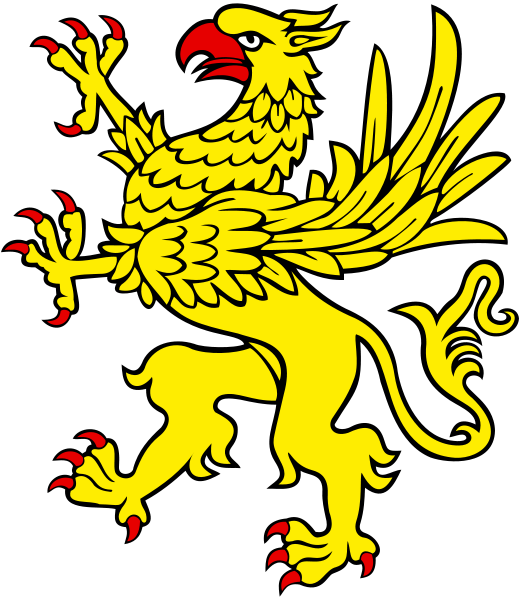
520px-Heraldic_figures_-_Griffin.svgOn March 12 the city of Canberra, Australia’s capital, will celebrate one hundred years since its foundation in 1913. Special events are planned for the entire year, with the major festivities taking place on the long weekend preceding the actual date.

A baby called Allegra Bluebelle Sofo born this year was named in honour of Canberra’s centenary – the royal bluebell is the floral emblem of the Australian Capital Territory. Her story was featured in The Canberra Times, and as further inspiration for potential Canberran baby-namers, the paper went on to make more suggestions for names with a Canberra connection, which you can read about on Nancy’s Baby Names blog.

I couldn’t help noticing that all the suggestions were for girls names, which seemed very unfair, given that boys will make up about half of all the babies born in Canberra during 2013, and an obvious suggestion is staring them in the face.

In 1911, King O’Malley held an international competition to find a designer for the layout of the new city, which was won by Chicago architect Walter Burley Griffin. Walter produced the design in colloboration with his wife and business partner, the architect Marion Mahony Griffin. The Griffins moved to Australia to oversee the project, and fell in love with the Australian landscape, becoming enthusiastic bushwalkers with a keen interest in botany and conservation. The building of a city set in bushland seemed perfect for their idealistic vision inspired by the Garden City movement.

Unfortunately, World War I put a dent in everyone’s plans, and Walter Burley Griffin was treated shamefully by bureaucrats, who undermined him to further their own interests, eventually forcing him to resign. Many of his ideas were discarded or altered, but the basic plan of the central city is undeniably that drawn up by Walter Burley Griffin.

It wasn’t until the 1960s that the artificial lake he had envisioned was built in the heart of Canberra (not to his plans, it must be said), and in the first kind gesture Canberra had made toward its designer, Prime Minister Robert Menzies refused to have the lake named after himself, and insisted it be called Lake Burley Griffin. Australians had rather cluelessly misunderstood American naming conventions, and imagined that Burley must be part of Walter’s surname, rather than his middle name, so the lake doesn’t even have his correct name.

It’s never been rightfully re-named Lake Griffin, which would also have honoured co-designer Marion, but it’s the only monument that Walter Burley Griffin has in Australia. One was planned in the 1960s, and an American architect hired, but a change of government left it shelved indefinitely.

With so little appreciation during his lifetime (Walter died in 1937), why not name your son Griffin to honour the man and his wife who helped bring the city of Canberra into being?

The surname Griffin has several sources. It can be a Latinised form of the Welsh name Gruffud, which is also Anglicised as Griffith. There was also an Anglo-Saxon name Griffin, derived from High German grifan, meaning “snatch, grab”, and an allusion to dragons. The Irish surname is taken from the Gaelic name Grioghtha, meaning “griffin”.

This legendary animal (also spelled gryphon or griffon) is a combination of an eagle and a lion, thus blending the king of the beasts with the king of the birds. How this combination was achieved was a matter to be decided by the artist, but by accepted convention the griffin has the body, tail and hindquarters of a lion, with the head, wings and talons of an eagle, and has prominent pointed ears. The word griffin is derived from the Greek for “hook”, possibly denoting the creature’s hooked beak or curved talons.

Griffins were prominent in the art and design of Ancient Greece, where they were seen as powerful protectors against evil. Greek writers described the griffin as native to mountainous areas of Asia, sacred to the sun, and a hoarder of gold. Other ancient legends tell of the griffin’s prodigious strength and intelligence, its hatred of horses, and wars against the Amazons. The griffin seems to be a symbol of good, of light, and of the masculine principle.

You will sometimes see griffins carved into old churches and cathedrals, because during the medieval era, the griffin was considered a symbol of Christ, who, like the griffin, has dominion over both the heavens and the earth. It was also thought that the winged cherubim mentioned in the Bible could have been griffins, as they are described as having the face of a lion and an eagle (although this ignores the fact cherubim also have the face of a man and an ox). It is possible that the legends of cherubim and griffins had the same source – the winged beasts of ancient Middle Eastern art.

Just to confuse things, the griffin was also associated with Satan, probably in the belief that anything so fierce must be up to no good (the hoarding of gold might have looked sinfully avaricious as well). This miserable idea doesn’t seem to have persisted, probably because it doesn’t make sense, since griffins were always noble, majestic, and on the side of good.

Griffins are a popular symbol in heraldry, with the first known person to have a griffin on his coat of arms being Richard de Redvers, the Earl of Exeter, in 1167 (the coat of arms was much older than that). A symbol of strength and vigilance, the griffin is said to be the perfect emblem for a hero in battle. For some reason, male griffins are always shown in heraldry without wings, but adorned with spikes denoting the sun’s rays. They are less common than winged female griffins. Canberra doesn’t have any griffins on its coat of arms, which I think would have been an appropriate choice.

Griffins are often found in fantasy literature, and the first one appears to be Lewis Carroll’s Alice’s Adventures in Wonderland. You may also read stories that involve griffins in the works of Frank Stockton, Diana Wynne Jones, Tamora Pierce, Neil Gaiman, Mercedes Lackey, Patricia A. McKillip and Rick Riordan. Readers of the Harry Potter series will remember that Harry’s house at school was Gryffindor. These fantasy novels had a noble forerunner, because the poet Dante sees Beatrice in a chariot drawn by a griffin in The Divine Comedy.

Griffin is a strong, handsome and very masculine name which can either be taken as Celtic or English. The legendary creature gives it many layers of mystical associations, nearly all of them extremely positive. You could use either Griff or Finn as nicknames.

POLL RESULT: Griffin received a worthy approval rating of 77%. People saw the name Griffin as strong and handsome (33%), cool (18%), noble and chivalrous (13%), and cute and brainy (13%). However, 9% thought the connection to mythological griffins made the name seen ridiculous – half as many as those who thought the mythological connection made the name cool.

(Picture shows a heraldic griffin)

Waltzing with … Sullivan

13 Sunday Jan 2013

Posted by A.O. in Waltzing with ...

≈ 1 Comment

Tags

celebrity baby names, famous namesakes, fictional namesakes, historical records, Irish names, mythological names, name combinations, name history, name meaning, name popularity, names from television, nicknames, royal names, sibsets, surname names, UK popularity, US popularity

thesullivansfamilynewWe are now about halfway through the summer holidays. Despite your best intentions that every day of the holidays will be productive, rewarding, and jam-packed with memorably fun activities, there always seems to come at least one day where you find yourselves slumped in front of the air conditioner watching non-ratings season re-runs on TV. Perhaps this is what has inspired me to cover a name from Australian television.

The Sullivans is one of Australia’s most successful soap operas. First aired in 1976, it centred on an ordinary middle-class Melbourne family, and the effects that World War II had on it. The war gave endless opportunities for dramatic plot-lines; various members of the Sullivan family, and their friends and neighbours, went off to battle, worked as nurses, opposed the war, developed psychological problems, married people from different countries, got divorced, committed suicide, were lost at sea, ran the black market, went to prison, were interned as enemy aliens, shot by the Nazis, killed by bombs during the London Blitz, and had to adapt to peace-time conditions.

The show’s producers went to great lengths to ensure historical and cultural accuracy. Not only did the sets use authentic period furniture, but even the weather in the show mirrored that which actually occurred on each day during the war. This attention to detail and high production standards, not to mention a new nostalgia for the recent past, made the show a success.

A consistent ratings winner which gained the acclaim of the critics, it won five Logie Awards in 1978 and was the first Australian drama series to be sold overseas; more than 45 countries broadcast The Sullivans, where it was most popular in the United Kingdom. It made a star of Lorraine Bayly, who played dignified matriarch Grace Sullivan, and employed dozens of Australasian actors in supporting roles. Like all good soaps, it provided a testing ground for young actors, and it was on the set of The Sullivans that later big names such as Mel Gibson, Kerry Armstrong, Kylie and Dannii Minogue, Sam Neill, Gary Sweet and Sigrid Thornton gained early experience.

Ratings for the show suffered after fan favourite Grace Sullivan was killed off, and as time went on, the war finished and most of the main characters were dead or had otherwise been written out. There was some talk of continuing the story into the 1950s and showing how Australia changed in the post-war era, but it was decided to let it come to an end in 1983.

Sullivan is an Anglicisation of the Irish surname O’Sullivan, which means “grandson of Súilleabhán”. The meaning of Súilleabhán is disputed, but one theory is that it means “dark eyed”. There are also Sullivans whose family name is derived from Súileacháin, meaning “quick eyed”.

The O’Sullivans originated in County Tipperary, and the original Súilleabhán was a direct descendant of one of the kings of Munster, so his dynasty is of royal blood. The O’Sullivans also claim descent from the first Celts to colonise Ireland, migrating there from northern Spain in 800 BC.

Although this story is mythological, it does have some truth to it, for DNA studies show that the Celts of Britain and Ireland (all Celts, not just the O’Sullivans!) are descended from a tribe of Iberian fisherfolk who migrated there about 6000 years ago, and formed what is considered to be the indigenous population of the British Isles. In fact, nearly everyone in Britain is descended from them, and any of us who have British and Irish ancestry are too.

Famous Australians Sullivans include Pat Sullivan, who helped create Felix the cat; Victoria Cross recipient Arthur Sullivan; Olympic swimmer Eamon Sullivan; and Paralympic athlete Tim Sullivan. Actor Sullivan Stapleton, who starred in Animal Kingdom, is a rare example of it as a first name.

Sullivan has never charted in Australia, and only a few with the name can be found in old records, although it is reasonably common as a middle name. In 2012, there were 16 baby boys given the name Sullivan in Victoria. In the US, it is #524 and rising briskly up the rankings; in England/Wales, it is #970, and also trending upward.

Last year country music singer Melinda Schneider welcomed a son named Sullivan James Gable, and this may help raise the name’s profile in Australia.

Sullivan is a name from Australian popular culture, and more specifically, it is one from Melbourne, where The Sullivans was set and filmed. It feels modern, yet at the same time rather nostalgic, looking back to the 1970s and ’80s – who in turn were looking back with nostalgia at the 1940s.

Irish-surnames-as-first names are a great favourite in Australia, as in other countries where a significant proportion of the population claim Irish heritage. For those wanting something more unexpected than old favourites like Ryan or Darcy, I think Sullivan fits the bill of being something that’s recognised as a “real name”, while still underused. Sully or Van could be used as nicknames.

Name Combinations for Sullivan

Sullivan James, Sullivan Kelly, Sullivan Lucas, Sullivan Maddox, Sullivan Patrick, Sullivan Thomas

Brothers for Sullivan

Beckett, Cooper, Finlay, Oscar, Ronan, Toby

Sisters for Sullivan

Aisling, Emerson, Isla, Kenzie, Maeve, Violet

Note: Middle names and sibling names partially based on real life examples

POLL RESULT: Sullivan received an approval rating of 96% – the highest-rated featured boys name of 2013, and the highest-rated overall. 40% of people thought it was okay, and nobody disliked it.

(Picture is a publicity shot from The Sullivans; photo from fan site)

This or That?

16 Sunday Dec 2012

Posted by A.O. in Your Questions Answered

≈ 11 Comments

Tags

Biblical names, celebrity baby names, choosing baby names, classic names, Eleanor Nickerson, faux-Celtic names, Irish names, name combinations, name popularity, nicknames, popular names, retro names, scandinavian names, Scottish names, surname names, unisex names, vocabulary words

l_2048_1536_55BA4ECF-57A0-4861-954A-D5C549924414After considering all the possible baby names, and a few impossible ones just for good measure, sometimes you end up with two or three names that you love equally, and just can’t choose between them.

Many people searched the Internet to discover which of their final options would make the better choice, and somehow stumbled upon this blog.

I decided to answer their questions, and found that quite often the name that seemed “better” wasn’t the name I liked best, or that I would choose.

Perhaps that is the lesson to be learnt here – not to look for the name which ticks the most boxes, or which fulfils more of your preferences, but the one which satisfies your heart the most.

When there is no right or wrong answer, how do you decide between the last two names on your list?

Adele or Adeline?

Classic Adele is the safer choice, and retro Adeline the more daring choice. I think I would be tempted to go with Adeline.

Riley or Caleb?

I would go for the Biblical name, as having more history behind it, and say Caleb.

Ryan or Dylan?

You ask which one sounds as if it is in a higher socio-economic group. To me, both seem fairly average or “normal”, and I don’t think I could pick one over another.

Rocco or Frankie?

Rocco – it’s rapidly increasing in popularity while still underused. Frankie is more fashionable as a feminine name now (if that bothers you).

Chloe or Lily?

Both are extremely popular, but I would say Chloe is the safer choice, as it has been Top 100 since the 1980s and only just peaked. Chloe also has a classical background, and is popular with all classes. Despite that, I prefer Lily.

Lillian or Clara?

I’d go with Clara, simply because it isn’t in the Top 100 yet and Lillian is.

Clara or Kayla?

Definitely Clara – Kayla doesn’t have the history behind her that Clara does, and is on her way out.

Clara or Zara?

I think I’m going to have to back Clara again, just to be consistent.

Zara or Allegra?

I love Allegra, but I have to admit she’s a risky choice, since she does seem to be getting quite trendy as a celebrity baby name. My heart says Allegra, but my head says Zara.

Charlie or Jack?

I’d go with Jack if you want a classic name that is definitely masculine, and is a short form that has been long established as a full name. Charlie is very cute though.

James or Hamish?

James is the safer choice, being a classic that’s never left the Top 20. Hamish is a bit riskier, but if you want something obviously Scottish, then Hamish is your boy.

Hunter or Archer?

I prefer Archer, because you get Archie as a nickname. If you hate nicknames, then Hunter is probably more appropriate.

Evalyn or Aveline?

You ask which one sounds “lovelier”; in my opinion, it is Aveline. However, I think Evelyn is lovelier than Aveline. Can I interest you in Evelyn?

Emmie or Emma?

You ask which one sounds “softer”; to me, Emma sounds softer.

Indie or Milla?

Even though Milla is Top 100 and Indie doesn’t chart, I’m going to say Milla. This is because if all the spelling variants were combined, I think Indie would be Top 100 as well. To me, Milla seems more distinctive.

Amelia or Matilda?

These are both safe choices, although if popularity bothers you, you should know that Amelia is probably heading for the #1 spot, which she already holds in the UK.

Annie or Matilda?

If you want something less popular, yet which has been stable for many years, then pick Annie. If you would prefer a non-nickname choice, then go with Matilda.

Josephine, Violet or Mathilda?

Josephine is the safest choice, and Mathilda seems trendiest because Scandinavian-type names are coming into fashion. I think Violet is the prettiest. You could use all three, because Josephine Violet Mathilda is really nice as a name combination.

Josephine or Audrey?

Both classic names, but Josephine is more stable, and isn’t in the Top 100. I find Audrey really adorable though, so I’m going to go against the sensible advice and say Audrey. If you’re feeling sensible, pick Josephine.

Elsie or Josie?

Definitely Elsie – it’s fashionable, increasing steadily in popularity, and Eleanor Nickerson tips it to become the next Evie in the UK.

Luella or Eloise?

Eloise is the more stylish and safer choice, but Luella is sweeter.

Eloise or Matilda?

I think Eloise is the clear winner here, because it’s still at the bottom of the Top 100, and seems more up-and-coming.

Matilda or Helen?

Classic Helen has been stable for decades, and peaked in the 1940s, suggesting she may be due for a comeback in about ten years or so. I’d be inclined to be brave and choose Helen.

Max or Darcy?

Max is by far the safer choice, as Darcy is losing popularity as other surname names take its place. I think I like Darcy better though.

Max Archie or Max Oscar?

When I hear “Max Oscar“, I immediately visualise a gigantic Academy Award statue, so I prefer Max Archie.

Oscar or Lucas?

Oscar – Lucas is just about to hit its peak.

Finn or Lewis?

Lewis if you want a classic name that’s less popular, Finn if you’re looking for an Irish heritage choice.

Kallan or Flynn?

Flynn – I don’t like it when names randomly start with a K instead of a C.

Taj or Kyan?

Taj. I’ve noticed faux-Celtic names like Kyan tend to have a short shelf life and date quickly.

Keira or Kirra?

Oh, go for the Australian choice and pick Kirra – be patriotic.

Sibella or Imogen?

Sibella, although much less popular, seems more trendy, and may get lost amongst the other Bella names, so I would pick Imogen.

Maisie or Matilda?

I love Maisie, she’s so sweet and charming, and seems much fresher than Matilda, so that would be my preference.

Matilda or Lilah?

Matilda – I don’t like that spelling of Lila, which makes no sense to me.

Jett or Jet?

Tough call. I think I might be tempted to go with vocabulary word Jet, which seems more fashion-forward.

Jai or Jye?

Jai – it seems more like a real name.

Jett, Levi or Jai?

Levi. Probably because it stands out pitted against two names starting with J.

Famous Names: Neptune and Taylor

12 Wednesday Dec 2012

Posted by A.O. in Famous Names

≈ 1 Comment

Tags

astronomical names, english names, Etruscan names, fairy tales, famous namesakes, historical records, honouring, Indo-European names, Irish names, Italian names, Latin words, locational names, mythological names, name combinations, name history, name meaning, name popularity, names of ships, nicknames, Roman names, surname names, UK name popularity, unisex names, US name popularity

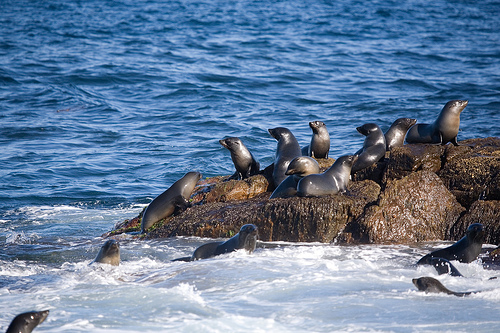
seals on neptuneAt the end of November, the Premier of South Australia announced that the Neptune Islands Group Marine Park would be renamed the Neptune Islands Group (Ron and Valerie Taylor) Marine Park. This is no mere change of name, for a network of 19 marine parks has taken effect in order to protect the seas from over-fishing. The premier noted that the southern oceans had more diversity than the Great Barrier Reef, and contained many plants and animals that cannot be found anywhere else.

The marine park has been named in honour of Ron and Valerie Taylor; divers, film-makers, shark experts, and conservationists who were ardent proponents of preserving marine habitats. Their skills in underwater filming were used on such films as Jaws and The Blue Lagoon, but more importantly, they wrote books and made documentaries to highlight the beauty and fragility of marine ecology. They won many awards for both photography and conservation. Ron passed away this year, and Valerie continues to be an advocate for marine protection.

The Neptune Islands, near Port Lincoln, were named by the navigator and cartographer Matthew Flinders in 1802. Rugged and remote, they seemed to him inaccessible, as if they would would always belong to King Neptune.

Neptune is the English form of Neptunus, the Roman god of fresh water springs, lakes, rivers, and the sea; he is the Roman equivalent of the Greek god Poisedon. He was worshipped in a festival that fell at the height of summer, when rainfall was at its lowest, and water most needed and valuable. As you know, his name has been given to the eighth planet from the Sun.

The meaning and origin of his name is obscure, with etymologists in disagreement over which language/s Neptune might be derived from. The general view is that it means something like “moistness”, “damp, wet”, “clouds, fog”, or “to water, irrigate”.

Another theory is that it is from the Italian town of Nepi, north of Rome, which was anciently known as Nepet or Nepete. This town is famous for its mineral springs, and traditionally connected to the god Neptune, who would presumably have approved of its watery wonders.

The town’s name is Etruscan, from the Etruscan name for Neptune, which was Nethuns. This may be related to the Irish god Nechtan, who had a sacred well, and thus another liquid connection. In fact there are several Indo-European deities with similar names and aqueous roles, and it is speculated that their names may go back to an ancient word meaning “nephew, grandson”.

One of the ships of the Second Fleet was called Neptune, and unfortunately it had the worst reputation of all for its appalling mistreatment of convicts.

Neptune sounds as if it should be ultra rare in Australian name records, but there are quite a few from the 19th century – at least quite a few more than I expected to find. It was mostly used in the middle, such as Cecil Neptune, and Samuel Caesar Neptune, but you can also find men named Neptune Persse and Neptune Frederick. Two of them rejoiced in the full names of Neptune Love and Neptune Blood; I believe the name Neptune is traditional in the Blood family.

Neptune would be very unusual as a baby name today, and I can’t quite imagine what you would use as a nickname – Neppy sounds too much like “nappy” to me. At the very least, please not Tuna.

A complete change of pace brings us to the name Taylor, a very common English surname referring to someone who made clothes as their occupation; the word tailor is ultimately from the Latin talea, meaning “a cutting”. In the Middle Ages, tailoring was a high-status craft, as only the wealthy could afford to have their clothing professionally made, and tailors could command good fees. Both men and women were employed as tailors.

There are many folk tales and fairy stories about tailors, and nearly always the tailor is depicted as being extremely clever, and confidently able to outwit others. Tailors having to be so precise and painstaking in their work, and no doubt with plenty of diplomatic skill to handle their rich clients, they must have gained a reputation for being as sharp as pins and as smooth-talking as silk.

The earliest Taylor-as-a-first-name I can find in the records is from the 16th century, and it was on a female. This may be an error in transcription, as subsequent early Taylors seem to be male (with plenty of girls who had Taylor as a middle name). In the United States, Taylor has always charted as a boy’s name, and only charts for girls from the late 1970s onwards, but is currently Top 100 for girls, and in the 300s for boys. In the UK, it only charts for boys, where it is barely on the Top 100 and falling.

In Australia, Taylor has charted for both boys and girls since the 1980s, when it was #383 for boys and #785 for girls. It peaked for both sexes in the 1990s, when it was #38 for girls and #130 for boys. At the moment, Taylor is only just outside the Top 100 for girls at #108, is #251 for boys, and falling for both sexes.

So that’s a quick survey of Taylor popularity around the world: Top 100 for girls in the US, Top 100 for boys in the UK, and not on the Top 100 at all in Australia.

Here are two very different names which evoke the sea and honour its protectors, as well as having a strong connection to the history of South Australia.

(Picture shows seals on Neptune Island; photo from Flickr)

Names of Australian Male Olympic Swimmers

02 Sunday Dec 2012

Posted by A.O. in Name Themes and Lists

≈ 19 Comments

Tags

American names, animal names, Arthurian legends, Arthurian names, bird names, Celtic names, created names, english names, famous namesakes, fictional namesakes, French names, Gaelic names, Gone With The Wind, holiday names, Idylls of the King, Irish names, Italian names, locational names, Lord Tennyson, middle names, modern names, mythological names, name history, name meaning, name popularity, nature names, nicknames, Old French names, Old Provencal names, plant names, popular culture, popular names, saints names, Scottish names, Shakespearean names, soap opera names, surname names, unisex names, vocabulary names, Welsh names, William Shakespeare

kpAshley (Callus)

Ashley Callus won gold in 2000 and bronze in 2008. Ashley is an English surname from a common place name meaning “ash tree clearing”. It’s been used as a personal name since the 17th century, and was originally given to boys. It only became popular in Australia after the release of the 1939 movie Gone with the Wind, with the character of Ashley Wilkes (actually George Wilkes – Ashley is his middle name). Played by Leslie Howard, Ashley is a true Southern gentleman, and the one man Scarlett cannot get. The name Ashley first charted in the 1940s, and by the 1950s was #160; it made the Top 100 for the 1970s, and peaked in the 1980s at #62. It was during the 1980s that Ashley became a unisex name, making an impressive female debut at #55 – higher than the peak for boys. Coincidentally or not, it was in 1982 that the popular character Ashley Abbott joined soapie The Young and the Restless, first portrayed by Eileen Davidson. Ashley peaked for girls in the 1990s at #33, and although it left the Top 100 in 2009, it rose again and is now #93. As a boy’s name, Ashley left the Top 100 in the 1990s, and no longer ranked by 2010. However, last year Ashley increased for boys as well as girls, reaching #466. The usual nicknames is Ash.

Francis (Gailey)

Francis “Frank” Gailey won three silvers and a bronze at the 1904 Olympics. Born in Australia, Frank emigrated to the United States, and his medals are credited to the US. However, as he was an Australian citizen when he won them, we claim them toward our own medal count. This doesn’t seem to be accepted internationally. Francis is the English form of the Italian name Francesco. This began life as a nickname, because the 12th century Giovanni di Bernardone was known as Francesco, “the Frenchman”. This may have been because his father was on business in France when he was born, or because the young Giovanni quickly became fluent in French. While still a young man, Francesco began to turn away from the pleasures available to him as the son of a wealthy man, and to live a life of poverty and simplicity. Known as Saint Francis of Assisi, he is the patron saint of Italy, and also the environment. Many stories about him reflect on his deep love for animals, and his sense of kinship with all life. Francis charts as a unisex name from 1900, but by the 1950s was male-only, and in the Top 100. It left the Top 100 the following decade and remained stable for decades before falling out of use in 2010. However, last year Francis was back in the charts at #388.

Garrick (Agnew)

Sir Robert David Garrick Agnew, always known by the second of his middle names, attended the 1948 and 1952 Olympics. A graduate of Harvard, Sir Garrick became a very wealthy businessman, and also a champion fisherman. He died of a heart attack after going swimming in a pool. Garrick is an English surname which is the Anglicisation of two slightly different French surnames of Old Provencal origin. Garric means “kermes oak tree”, a small evergreen oak; Garrique means “grove of kermes oaks” – both names denoted someone who lived near such trees. The surname was introduced to Britain in the 17th century by French Huguenots, Protestants who fled persecution in France. The great 18th century English actor David Garrick was from a Huguenot family; his grandfather changed the name from Garric. Garrick has been used as a personal name since the 18th century, and first appears amongst British Huguenot families. It’s been reasonably well used in Australasia, and I think it still sounds rather distinguished and gentlemanly.

Jayden (Hadler)

Jayden Hadler is a young swimmer who attended his first Olympics this year. Jayden is a modern name of uncertain origin. It’s first found in the United States in the 19th century, and turns up around the same time as other J-D-N names then in vogue, including Jadin. Jadin is a French occupational surname for someone who made bowls, derived from the French word for bowl, jatte, and it’s hard not to wonder if Jayden began as a variant of this name, influenced by Jay, a surname after the bird, whose name means “joyful, lively”. Jaidan, Jadan and Jaden were also in use around this time – some of the variants we see today date back over a century. Jayden became popular in Australia earlier than other countries, and first charts in the 1970s. You can see that it fit perfectly with popular or fashionable names of that era such as Jason, Hayden and Aidan. By the 1980s it was #307, then zoomed up the charts to make #47 for the 1990s. It peaked in 2003 at #14, and by 2010 had fallen to #28. Last year it rose again to #21, and could be considered a modern classic. The question is – is Jayden from the 1970s “the same name” as Jayden from the 19th century?

Kieren (Perkins)

Kieren Perkins was considered one of the world’s best long-distance swimmers, specialising in the 1500 metre freestyle. He won gold and silver at the 1992 Olympics, gold in 1996, and silver in 2000. Since retiring from swimming, he has gained success in the media and the corporate world. Kieren is an Anglicised form of the Irish name Ciarán, a diminutive of the name Ciar, meaning “black, dark”. There are six Irish saints called Ciarán, the eldest of which is known as the first Irish-born saint. Although an educated man of noble birth, according to tradition he was a hermit, who lived like a wild man dressed in skins. Many legends describe him as having a love for and power over wild animals. Kieren is pronounced KEE-ren. Kieren has never charted in Australia, with parents preferring the variant Kieran, currently #240.

Leith (Brodie)

Leith Brodie won two bronzes at the 2008 Olympics. Leith is the port area in the city of Edinburgh; its name comes from the Gaelic word lìte, meaning “wet”. This makes sense when you realise that Leith is at the mouth of a river. Leith has played an important role in Scottish history and been the scene of many battles, as well as a major industrial centre. Leith is an aristocratic surname; the Leith family are of Scottish origin, and descend from William Leith, who was Lord Provost of Aberdeen in the 14th century. Leith has been reasonably well-used in Australia, and from the available records, seems to have been used almost equally on males and females. For boys, it probably seemed like a cross between Lee and Keith, and for girls, maybe a cross between Lee and Beth. This name still seems a bit “mum and dad” to me, but maybe it’s ready for an early retro-revival.

Moss (Christie)

Maurice “Moss” Christie won silver at the 1924 Olympics. Moss can be a nickname for names such as Moses, Mostyn or Maurice, or it can be from the surname. The surname Moss has several possible sources. As an Irish name, it is usually translated as “son of the follower of Saint Munnu”. Munnu was the nickname of Saint Fintán of Taghmon; his nickname means “teacher”. As an English surname, Moss can mean “swamp, peat bog”, given to someone who lived near one, or it can be taken from the name Moses. Although many of these sources are male, the swamp one is obviously unisex, and you could also see Moss as a nature name, directly after the soft springy green plant. This could be used on both boys and girls.

Noel (Ryan)

Noel Ryan was an international swimming champion who attended the 1932 Olympic Games. Noel is another word for Christmas which was introduced by the Normans and comes from the Old French. Ultimately it is from Latin, meaning “birth”, referring to the birth of Jesus Christ. It’s been used for both boys and girls in England since the Middle Ages, originally given to those who were born at Christmas time. Later on, it may have been influenced by the surname, which could be from the personal name, given as a nickname to someone born at Christmas, or to someone who played an important role in Yuletide celebrations. In Australia, Noel has only ever charted as a male name. It was #76 for the 1900s, and peaked in the 1930s at #21. It was out of the Top 100 by the 1970s, and hasn’t charted since the 1990s. This is another 1930s name I would like to see make a comeback, and think it works equally well for girls.

Percival (Oliver)

Percival “Percy” Oliver won thirteen Australian freestyle and backstroke titles, and attended the 1936 Olympics. After retiring from swimming, he became a teacher and was responsible for the administration of the Education Department’s swimming programme. He died last year aged 92. In Arthurian legend, Percival is one of King Arthur’s knights, and connected to the quest for the Holy Grail. In the romance Perceval by Chretien de Troyes, Perceval meets the crippled Fisher King in a mysterious castle, and sees a grail (in this poem, a wide deep dish with a communion wafer which feeds the king), but does not understood its importance. Brought up not to chatter too much, Perceval fails to ask the question that would have healed the king, and once he realises the mistake he’s made, vows to find the castle again and complete the quest. At this point, Chretien abandons his poem, and it was left to other writers to finish the story. In doing so, the role of Percival became much diminished. The name Perceval seems to have been created by Chretien de Troyes from the Old French meaning “pierce valley”. What he was trying to get across I have little idea. This is another Arthurian name which was revived by the Victorians due to Tennyson’s Idylls of the King, which depicts Sir Percival as a spiritual knight better suited to holy quests than the average warrior. Percival was #77 in the 1900s, and left the Top 100 by the 1920s; it hasn’t charted since the 1950s. This is a vintage name which seems very usable, especially with its cute nickname Percy.

Regan (Harrison)

Regan Harrison won silver at the 2000 Olympics. Regan (pronounced REE-guhn) is an Anglicised form of the Irish surname O’Riagain or O’Raogain, meaning “son of Riagain”. Riagain is a Gaelic name of uncertain meaning; one suggestion is that it comes from the Gaelic word for “impulsive, angry”; another that it means “little king”. There was a medieval Irish prince called Riagain; he may have given his name to the town of Ballyregan in Northern Ireland. Regan is also found as a female name in Shakespeare’s King Lear, where Regan is the middle of the king’s three daughters. She is a vile creature full of false flattery, who throws her elderly father out of her home in the middle of a storm. To nobody’s disappointment, she is poisoned by her older sister, who is even more horrible. This revolting namesake doesn’t seem to have put parents off using the name for their daughters. The meaning of it is unknown; Shakespeare got the story and characters from earlier British legends, and Regan is presumed to be Celtic. A popular notion is that (female) Regan is derived from the name of the Celtic goddess Rigantona, who we also know as Welsh Rhiannon. It makes the name slightly more appealing, but I can’t confirm if it’s true or not. Rigantona means “great queen”.

(Photo is of Kieren Perkins after winning gold at the Atlanta Olympics, becoming the only Australian since Dawn Fraser to successfully defend an individual Olympic championship)

MYTH: A “Weird” Baby Name Can Ruin Your Child’s Life

18 Sunday Nov 2012

Posted by A.O. in Baby Name Mythbusters

≈ 19 Comments

Tags

African names, alphanumeric names, British Baby Names, celebrity baby names, created names, Dr Martin Ford, Herald Sun, Indian names, Irish names, name image, name popularity, name studies, parenting blogs, popular names, psychology of names, Radio National, rare names, US birth notices, US name data, variant spellings, Vietnamese names, Who's Who, William Shakespeare, Yiddish names

This is an idea you cannot help running across if you frequent baby name forums, attend a few parent group meetings, or just read the papers – that the bestowing of a name considered strange or highly unusual upon a child is a cruel thing to do, and has the potential to impact on their life in negative ways.

A short-lived parenting blog at the Herald Sun which was written by Cheryl Critchley asked, Are Weird Names Child Abuse? It might seem a bit extreme to suggest that calling your son Raiyybanzi is the equivalent of hitting him around the head or locking him in his room for three weeks without food, but Cheryl goes to the child psychologists for further information.

According to child psychologist Dr Michael Carr-Gregg, yes, an unusual name is a form of child abuse, as it will lead to non-stop teasing in the schoolyard. Another psychologist, Dr Janet Hall, said a poor choice of name could lead to the child developing self-esteem problems. A name that others constantly question and mock is a “constant attack on your self-esteem”. It’s all sounding pretty dire for poor little Raiyybanzi.

A dim ray of light shone through when an education psychologist named Dr Helen McGrath suggested that while shy children probably won’t appreciate an unusual name, an extroverted one might enjoy the attention that it brings. She noted that unusual names do tend to change people’s perceptions, and even self-perception. However, there was no research which suggested any negative impact, and that factors such as social skills and family relationships were far more important.

The interesting thing is that Cheryl got her inspiration for the article from the names of AFL footballers she had seen in the newspapers – names such as Ayce, Jarryn, Jarrhan, Cheynee and Sharrod. These horrified her, and yet it would seem that Ayce and friends hadn’t had their lives ruined, but embarked on potentially lucrative and rewarding sporting careers. The photo of Ayce used for the article showed him looking cheerful and confident, with his self-esteem firmly intact.

This article was published a few years ago, but journalistic opinion doesn’t seem to have moved forward very much in the meantime. There’s a good reason for that – if you’ve been following the ‘Twas Ever Thus series at Elea’s blog, British Baby Names, you will see that when it comes to getting worked up over “weird” baby names, the media is pretty much churning out the same stuff they produced in the 19th century. Only the names have been changed, as the saying goes.

On Radio National a few months ago, on their popular Life Matters show, presenter Natasha Mitchell had a programme called You’ve Named Your Baby What?!. Generally light-hearted in tone, the show discussed unusual celebrity baby names (Natasha confessed she rather liked Sparrow), old-fashioned names like Mavis and Alfie, little boys just called H, and little girls named Rach’elle.

Guest Mia Freedman, who runs the successful parenting website Mamamia, while not actually accusing anyone of child abuse, opined that a strange name, especially one spelled strangely, could be a “burden” for a child. A burden in so much as they would be constantly questioned about their name – perhaps not damaging to their self-esteem, but a downright nuisance to them nonetheless.

In these sort of shows/articles, everyone is very careful to explain that when they say “unusual names”, they don’t mean names from other cultures, which to our ears may be difficult to pronounce, or sound like rude words, or appear to be on the “wrong” sex. No, these names are a wonderful sign of our diversity, and people should be proud to possess them as part of their culture, and it would be very wrong indeed to poke fun of them.

To my mind, this is the downfall of their argument, because it’s never explained why it’s not a “burden” to be named Caoilfhionn, even though that must surely involve at least as many requests to explain spelling and pronunciation as Rach’elle does. If it’s not such a terrible burden to be named Caoilfhionn, then I don’t see how Rach’elle is any heavier for a child to bear.

And if we as a society should be able to cope with Caoilfhionn, Purushottama, Oluwakanyinsola, Dudel and Phuc as names, then I don’t see why we cannot also cope with Mavis, Alfie, Sparrow, Ayce, Jarryn, Rach’elle and H. For that matter, how could anyone be confused by the spelling of the name H? Surely the strange-names-as-a-burden club should be heaping praise on H for its unburdensome simplicity? However, for some reason that never happens.

Oddly enough, Mia, who has an extremely simple and popular name, says that she needs to often correct people on the spelling and pronunciation of it. And yet, this burden doesn’t seem to have really been much bother, or held her back in life. From this I deduce that almost everyone has to explain their name at some point (“No, it’s John – J-O-H-N, not Jon – J-O-N”), and that it’s just one of those little things you have to deal with.

To befuddle the argument even further, Mia poked mild fun at “cutesy pet names” for children, singling out Jools Oliver for naming her children Poppy, Daisy, Petal and Buddy. Fun fact: Mia’s daughter is named Coco. I know: go figure.

Although these examples are not the most convincing you’ll come across, and don’t even manage to present a cogent argument, there are no lack of studies which purport to reveal the dreadful consequences of giving your child a strange name.

They tell us that your child will do worse at school, be less popular with their classmates, drop out of tertiary education, and have their resumes ignored by prospective employers (although, after doing so badly at school and flunking university, you’d think a boss would have pretty good grounds for ignoring their resume).

Furthermore, they were more likely to be diagnosed as psychotic and to end up in prison – the bitter conclusion to a life of failure and misery. After reading this terribly sad story, which seems like the stuff of nightmare and soap opera, how could a parent be so heartless as to inflict on their child any name other than one selected by the Chamber of Commerce, heads of all major universities, and a panel of psychiatrists?

However, other researchers crunched the numbers and came up with opposing results. It was noted that men with rare names were over-represented in Who’s Who, suggesting that a life of success was just as possible as one of failure for those with less common names. Other researchers noted that many children with uncommon names came from lower socio-economic backgrounds, and that once this was allowed for, there was no difference in academic outcomes that could be attributed to the person’s name.

One interesting finding by development psychologist Dr. Martin Ford is that everyone tends to attach a particular image or set of expectations to a name – up and until they confronted with a person with that name. People might say that they think of Berthas as being unattractive, but if shown the photo of a beautiful woman and told she is named Bertha, they rate the photo more or less the same as someone told the lovely woman is called Jacqueline or Christine.

In other words, Shakespeare was clearly on the money in regard to roses smelling just as sweet.

So here we have two competing theories: one is that unusual names are little more than child abuse, will damage self-esteem, prove an unnecessary burden, and be a severe handicap in regards to academic and social success. At worst, they may even send your child mad, or force them into a life of crime.

The other is that names, once attached to a real person, become almost meaningless – that what we are judged on is not our names, but our appearance, voice, grooming, hygiene, mannerisms, personality, social skills, motivations, abilities, intelligence, beliefs, income, education, job, family, friends, hobbies, home, influences, aspirations, and indeed the whole “package” that is ourselves.

I’m not sure I am completely convinced by either side – mostly because I am sceptical as to whether any of them have considered genuinely “weird” names. I feel as if they have looked at unpopular or uncommon names, or names judged to be undesirable by others, but that’s not really the same thing.

I mean come on, how sheltered must your life be to think that Ayce and Rach’elle are weird!

From what can I gather, Dr. Ford’s photo experiment was just using “outdated” names of the time like Hazel and Harriet – not only in no way weird, but by now very much back in fashion.

His original name study was done in 1984, on children who would have been born in the early 1970s. Very rare names of people born in 1972 include Atticus, Briar, Bristol, Coco, Darcey, Denzel, Emmeline, Fallon, Heaven, Jaxon, Jorja, Kourtney, Larkin, Lourdes, Marigold, Reeve, Rosamond, Sonnet, Star, Theodoric, and Wilder.

These names aren’t weird any more – some of them look pretty hip, and others seem unsurprising; a couple are even quite dull. In just forty years, a name can go from Woah, what the heck? to Meh. Maybe the rare names of today, such as Cameo and Twain, will seem equally familiar by the early 2050s.

That’s looking at US data of course, but in Australia we know that just twenty years ago Olive was a strange and awkward name to give a baby, and it is now Top 100 in Victoria, and getting there in New South Wales.

If name-weirdness is dependent on time, it is equally so on space. I know that when I look at some names on the American charts, or in American birth notices, they seem odd to me because names such as Legend, Princess, Race, Tinsley,  and Dutch are rarely or never used in Australia. Likewise, Americans look at Australian-used names like Lachlan, Jacinta, Hamish, Bronte and Zali, and think What the dealio?

A normal name can become weird just by crossing the Pacific; conversely, an American boy named Hamish who moves to Australia will blend in instantly. Fun fact: in the US, 8 baby boys were named Hamish last year.

What an individual person believes is weird seems to be almost entirely subjective. To Cheryl it’s Jarryn. To Natasha it’s Apple. To me it’s Race. To 1972 it’s Coco. To a commenter I saw on Mamamia it’s Felix (in the Top 100). To this journalist it’s Becket. To my mother it’s Madison. To you maybe it’s Hamish. Or Metallica. Or Banjo. Or Justus. Or Crew. Or Dudel.

I genuinely thought that this myth would be either BUSTED or CONFIRMED by the time I finished the blog entry, but not only has it not been answered, the very myth itself seems to be retreating over the horizon the closer we get to it, like heat shimmering on a bitumen road in January.

I am becoming less and less convinced that a weird name will ruin anyone’s life, and moreover, I am becoming less and less certain that weird names even exist, in any useful sense of the word “weird”.

Even Raiyybanzi isn’t that strange once you get used to it – it’s really just a juiced-up Raymond.
Names of Australian Male Paralympic Medalists

28 Sunday Oct 2012

Posted by A.O. in Name Themes and Lists

≈ 4 Comments

Tags

Anglo-Saxon names, Arabic names, Arthurian legends, Arthurian names, Cornish names, Croatian names, Disney names, english names, epithets, European name popularity, famous namesakes, French names, Gaelic names, germanic names, Irish names, K.M. Sheard, Latin names, locational names, mythological names, name history, name meaning, name popularity, names of organisations, Old Irish names, Old Norse names, Pictish names, popular culture, popular names, Roman names, royal names, saints names, Scottish names, South American name popularity, surname names, Welsh names

Bruno (Moretti)

Bruno Moretti won silver in table-tennis at the 1960 Paralympics, and a gold and two silvers in athletics at the 1964 Paralympics. Bruno is a Germanic name meaning “brown”. The name was used by the nobility in medieval Europe, and there are several saints named Bruno. One of them is Saint Bruno of Cologne, who was the son of Saint Matilda. He was Duke of Lotharingia and Archbishop of Cologne, and his court in Cologne was an intellectual and artistic centre. Bruno was also the given name of two popes – Gregory V and Leo IX. Bruno has a long history of use in Europe, and today is Top 100 in Croatia, Catalonia, Spain, and Chile. It’s also a common surname in Italy, and Giardano Bruno was a Dominican friar, philosopher, mathematician and astronomer, who suggested that the Sun was a star, and the universe had infinite worlds, populated by intelligent beings. He went down very badly with the Spanish Inquisition, who had him burned him at the stake. Today he is regarded as a martyr to science. Bruno is a warm cuddly-sounding name, and seems to be a popular choice for bears, both real and fictional.

Cody (Meakin)

Cody Meakin grew up playing both rugby union and Australian rules football; he broke his back in a rugby scrum, and while still in high school, became quadriplegic after a car accident. He took up wheelchair rugby in 2010, where he became an international champion. He won gold at the London Games this year. Cody is derived from the Gaelic surname Ó Cuidighthigh, meaning “son of Cuidightheach”. Cuidightheach is an Old Irish epithet meaning “helpful”. The most famous person with the surname must be “Buffalo Bill” Cody, an American frontiersman who became a celebrity for his Wild West touring shows; these introduced the concept of the American West to Britain and Europe. Buffalo Bill was a supporter of Native American rights, women’s rights and conservation, making him a very modern namesake, as well as giving the name Cody an “American West” feel. In the 1990 Disney film, The Rescuers Down Under, the boy from the Australian outback is named Cody. Cody first charted in the 1970s, and was top 100 by the 1990s. It peaked in the early 2000s at #59, and only left the Top 100 last year, when it dropped to #124.

Dylan (Alcott)

Dylan Alcott has been paraplegic from birth due to a spinal tumour, and began playing wheelchair basketball in 2003. He won gold at the 2008 Paralympics, and silver at this year’s London Games. Dylan is a Welsh name which is difficult to translate exactly, but very roughly means “flood, wave, tide”. In Welsh mythology, Dylan Ail Don was a blond god of the sea, and his epithets were “son of the wave” and “son of the sea”. In the legends, he is killed, and it’s said that the sound of the waves is the sea lamenting his death. The name became well known outside Britain due to the Welsh poet Dylan Thomas, who was named after the god. In Welsh, his name is pronounced DUL-uhn, but Thomas himself preferred the Anglicised pronunciation of DIL-uhn. Thomas’ emotionally powerful yet tightly controlled verse was admired by a young American named Robert Zimmerman, who promptly changed his name to Bob Dylan. As Dylan went on to become a folk balladeer, protest singer and counter-cultural icon, the name Dylan ended up with a double helping of street cred. Dylan first charted in the 1960s and reached the Top 100 in the 1980s. It peaked in the early 2000s at #17, and is currently #41.

Erik (Horrie)

Erik Horrie was left paraplegic after a car accident in 2001, and became involved in wheelchair basketball, but last year switched to canoeing. He won a silver medal at the 2012 London Games, and also welcomed his son Lewis. Erik is derived from Old Norse, and interpreted as “only ruler, eternal ruler, eternal power”. It has been heavily used in the royal houses of Denmark, Norway and Sweden, the most famous to us being Erik the Red, who explored a little-known country, called it Greenland, and became its head chieftain. King Erik IX of Sweden is considered to be a saint, and according to legend was martyred while attending a church service. The name Erik was used in England by the Anglo-Saxons, and settlers from Scandinavia but only became popular in the form Eric in the 19th century, thanks to an earnestly moralising book called Eric, or Little by Little. Other fictional Eriks include the Phantom of the Opera and Erik the Viking from the Monty Python film.

Fabian (Blattman)

Fabian Blattman became paraplegic after a motorcycle accident, and took up wheelchair athletics to improve fitness. One of our most successful Paralympians, he has set several world records. He won a silver and bronze in 1992, a gold and a silver in 1996, and a gold, silver and bronze in 2000. The name Fabian is derived from the Roman family name Fabius, one of the most ancient noble houses of Rome. According to legend, the Fabii claimed descent from Hercules, and were shepherds who followed founding father Remus. Their name is said to be from the Latin word for “broad bean”, a vegetable that the Fabii were supposedly the first to cultivate. The surname Fabianus was given to freed slaves who had been owned by the Fabii, and Fabian is from this name. It was introduced to England by the Normans, but never became as popular there as its equivalents in Continental Europe. There is a 3rd century Saint Fabian, who was elected pope by a dove; despite this unorthodox beginning, he was highly-regarded and worked hard for the early church. The Fabian Society gives this name a left-wing edge; the socialist organisation took its name from the Roman general Fabius Maximus, who wore Hannibal down by attrition rather than engaging in head-on battle.

Jago (Mikulic)

Jago Mikulic was a blind athlete who competed at the 1976 Paralympics, and won a silver in javelin and a bronze in the pentathlon. Jago is a Croatian form of James or Jacob, and is said YAH-go. It can also be a Cornish form of those names, but is pronounced JAY-go in this case. However, the Welsh form Iago is very old and predates the common use of Biblical names in Britain; K.M. Sheard suggests that it may be from the Celtic word for “ice”. If so, this would give Cornish Jago another possible origin.

Kerrod (McGregor)

Kerrod McGregor was a track and field Paralympian who won two golds, three silvers and two bronzes at the 1984 Paralympic Games, one gold in 1988, and one silver in 1996. Kerrod is an English surname that can be derived from the village of Curridge in Berkshire, with the village’s name meaning “Cusa’s ridge”. Cusa was a common Anglo-Saxon name, but what it meant I have been unable to discover. Another possible origin is the hamlet of Kerridge in Cheshire, which means “key ridge” – Kerridge Ridge is one of the foothills of the Pennines. The surname seems to have been most common in Yorkshire. The name Kerrod is well known in Queensland from former NRL star Kerrod Walters, who had a twin brother named Kevin.

Nazim (Erdem)

Nazim Erdem was born in Turkey and came to Australia early in life. As a kid, he practised holding his breath under water as a little game with himself. At the age of 20 he dived into shallow water in an effort to impress some girls; he was underwater for two and a half minutes before being rescued, and his technique of holding his breath saved his life. After the accident, he was quadriplegic. He began playing wheelchair rugby in 1992, and won silver medals at the 200 and 2008 Paralympics, and a gold at the London Games. Nazim is an Arabic boy’s name which means “organiser, convenor”, and as a title, loosely corresponds to the word “mayor” in English. The name isn’t uncommon in Turkey, and Nâzım Hikmet was a charismatic Turkish writer, a leader of the literary avant-garde who was often arrested for his revolutionary political beliefs, and spent much of life in prison or exile. His poetry and his struggles for peace are widely admired in Turkey and outside it; some of his poems have been turned into songs by folk singers such as Joan Baez and Pete Seeger. The name is pronounced NAH-zim.

Rene (Ahrens)

Rene Ahrens won a bronze in discus in 1980 and 1988. René is the French form of the Latin Renatus, meaning “born again, reborn”, referring to the act of baptism, and a popular choice for early Christians. René was a name used by the French aristocracy, and the name is known to us through the philosopher René Descartes (“I think therefore I am”). There is a Saint René Goupil, a French missionary to Canada who is one of the rare North American martyrs. The name is pronounced reh-NAY. Although the feminine form Renee has been popular in Australia,  masculine Rene remains very rare here – no doubt partly because it could easily be confused with the girl’s name.

Tristan (Knowles)

Tristan Knowles lost his leg at the age of 9 as a result of cancer, and also lost a lung at the age of 11. He has been playing wheelchair basketball since 1999, and in 2002 was named the NSW Wheelchair Basketballer of the Year. He won silver in 2004, gold in 2008, and a silver at this year’s Paralympic Games in London. Tristan is a Cornish hero of Celtic folklore who is also one of King Arthur’s knights of the Round Table. He is best known as the lover of the beautiful Irish princess Iseult (or Isolde). Iseult was to marry Tristan’s uncle, King Mark of Cornwall, but she and Tristan accidentally drank a love potion that had been prepared for Mark and his bride to share. The two became hopelessly infatuated with each other and embarked on a passionate affair, until Tristan was banished from Cornwall by an understandably irate Uncle Mark. The story was enormously popular in the Middle Ages, and is one of the forerunners to the story of adulterous lovers Lancelot and Guinevere. The name Tristan was yet another revived in the Victorian era, thanks to Tennyson, and the poems he wrote based on Arthurian legends. In the story, Tristan’s name is supposed to be linked with triste, the French word for “sad”, to fit in with his tragic love life. However, it is a form of the Pictish name Drust, which means “riot, tumult”. Drust was a traditional name amongst the royalty of Scotland, and it’s quite a puzzler as to how a Cornish story ended up with a hero with a Scottish name. Some claim that Tristan was a real person, pointing to a 5th century stone in Cornwall, which is supposed to be the grave marker for someone named Drustanus, the son of Cunomorus. Titillatingly, Cunomorus is said to be King Mark himself, suggesting that Tristan and Iseult’s step-incest was even closer and creepier (although his uncle was also his adoptive father anyway). Tristan and Iseult are two literary characters I’ve never been able to warm to, as their actions are so selfish; perhaps the story is trying to tell us that nobody does very well out of an infatuated love affair, not even the lovers themselves. Tristan first charted in the 1960s, and has managed to reach #100 twice, in the 1980s and late 2000s. It’s currently #123.

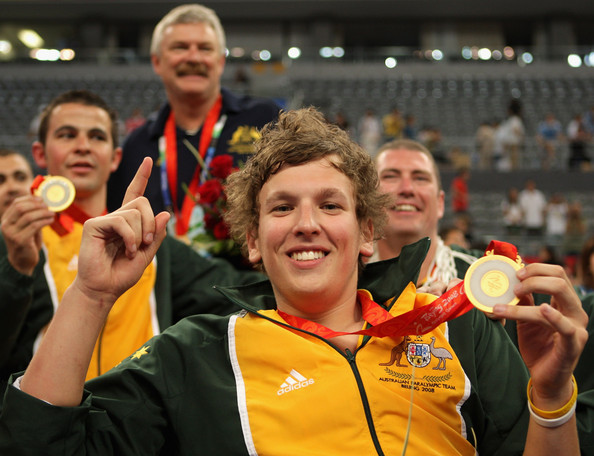
(Photo of Dylan Alcott celebrating victory from Zimbio)

Names of Australian Female Paralympic Medalists

21 Sunday Oct 2012

Posted by A.O. in Name Themes and Lists

≈ 8 Comments

Tags

Arabic names, Arthurian legends, Arthurian names, astronomical names, Biblical names, english names, ethnonyms, famous namesakes, fictional namesakes, French names, gemstone names, germanic names, Greek names, hebrew names, honouring, Indian names, Irish names, Latin names, locational names, military events, mythological names, name history, name meaning, name popularity, names of dolls, nature names, nicknames, Norman-French names, Old French names, popular names, royal names, saints names, Sanskrit names, street names, surname names, unisex names, vocabulary names

Amber (Merritt)

Amber Meritt was born with a club foot, and is originally from England; she came to Australia as a child (she’s now 19). She started playing wheelchair basketball in 2007, and won silver at the London Games. Amber is fossilised tree resin, and since prehistoric times has been valued as a gemstone. The word amber is derived from Arabic, and means ambergris, the waxy substance regurgitated by the sperm whale; it was only later realised these were different substances. Amber has been used as a girl’s name since the 17th century, but wasn’t popular until the 20th. The name became notorious in 1944, when the racy historical romance, Forever Amber, was published, with its heroine the sleep-her-way-to-the-top Amber St. Clare. Despite being condemned, and even banned here until 1958, the book was a bestseller, and made into a film. Amber was in rare use in the 1950s, and during the 1960s made #647 (about one Amber per year). It absolutely skyrocketed during the 1970s up to #135, peaked in the early 2000s at #49, and is now #91. This pretty gemstone name is still popular, and it’s all thanks to a “dirty” book! If looking for a nickname, Miss Merritt goes by Bambi.

Danae (Sweetapple)

Danae Sweetapple was blind from birth, and started swimming in 1990. She won a silver and two bronzes at the 1992 Paralympics. In Greek mythology, Danaë was a Greek princess and the mother of the hero Perseus. Her father shut her up in a bronze tower due to a prophecy that he would be killed by her son, but she was impregnated by Zeus, who came to her in the form of golden rain. The king had Danaë and Perseus cast into the sea, and they washed ashore onto an island, where a kind fisherman raised Perseus as his own son (as an adult, the prophecy was fulfilled when Perseus did kill his grandfather). Getting it on with a godly shower of gold was either supremely satisfying or very traumatising for Danaë, as she had no interest in mortal men afterwards, and never married or had further children. Her name is derived from the Danaans, one of the names the Greeks used for themselves, with the idea that they were partly descended from Danaus, a mythical prince of Egypt. I’m not sure how the Greeks would have said her name (nobody seems to agree), but not like the way it is usually said in Australia, which is dan-AY.

Elaine (Schreiber)

Elaine Schreiber won a bronze in table tennis, a gold in club throw, and a silver in javelin at the 1964 Paralympics, and a silver in table tennis at the 1968 Games. Elaine is a name shared by several characters in Arthurian legend, who are occasionally confused with each other. One of the most famous is the fair Elaine of Astolat, who dies of unrequited love for Sir Lancelot. The story inspired Tennyson’s poem, The Lady of Shalott, and it was only after the popularity of his poem that Elaine became a commonly-used English name. Elaine is an Old French variant of Helen. Elaine was #254 in 1900, joined the Top 100 in the 1920s, and peaked in the 1930s at #18. It left the Top 100 in the 1960s, and reached its lowest point in the late 2000s, when it was in rare use. Since then, it has been very gently rising, and is currently #457.

Gloria (Pascoe)

Gloria Pascoe developed epilepsy at the age of 9, and became totally blind by 55. At 61, she attended the 1980 Paralympics, where she took gold in lawn bowls. Gloria is the Latin for “glory, fame, renown”, and in Christian tradition it denotes the manifestation of God’s presence, often associated with a divine light. The name Gloria has been in use since at least the 16th century, but received a boost in popularity in the 19th from two literary works. One was Gloria, a romantic novel by popular American novelist E.D.E.N. Southworth in 1891; the other was George Bernard Shaw’s 1897 comedy of errors, You Never Can Tell. Both these works feature very attractive heroines who seem to have done the name more good than all of God’s glory. Gloria was #257 in 1900, Top 100 by the 1920s, and peaked in the 1930s at #23. It left the Top 100 in the 1960s, and hit its lowest point in 2009 when it was in rare use. Since then it has risen again, and is currently #427. If you’ve been paying attention, you will see this makes it the virtual twin of Elaine in terms of popularity.

Jemima (Moore)

Jemima Moore became paraplegic at the age of 6 from a virus, and is now 20. She won a silver medal in the 100 metres relay at the 2008 Paralympics, and attended the London Games. In the Bible, Jemima was the eldest of Job’s three daughters, and she and her sisters are described as being the fairest in the land. The name Jemima literally means “warm” in Hebrew, and can be translated as “day”. The name could actually be derived from Arabic, as there is an ancient land in Arabia who had a queen called Jemama; if so, Jemima from the Bible could be inspired by the queen of Arabic folklore. This does fit in with the Biblical story, because Job and his family were said to be from an Arabic country. The name Jemama means “turtledove”. It first charted in the 1960s, the same decade children’s show Playschool first broadcast, which has a rag doll named Jemima. Never in the Top 100, it peaked at #196 in the late 2000s and is currently #254 and stable. This is a fashionable name which has never gained popularity or lost cachet.

Lorraine (Dodd)

Lorraine Dodd became paraplegic at the age of 13, after contracting transverse myelitis. She attended the 1968 Paralympic Games, where she won three golds for swimming, and a silver and a bronze in athletics. Lorraine is a region in north-eastern France; its name comes from an earlier kingdom named Lotharingia, meaning “Lothar’s kingdom. Lothar I was a Frankish king and a great-grandson of Charlemagne; his name is Germanic and means “famous army”. As a personal name, Lorraine has been used since the 18th century, a century in which Lorraine first became part of France. It’s sometimes said to be a Catholic name, since St Joan of Arc was also known as The Maid of Lorraine. There was a World War I Battle of Lorraine, which probably boosted numbers, and the area’s importance during World War II reflects a peak in popularity at this time. Lorraine was in rare use in the 1900s, and reached the Top 100 in the 1930s. Peaking in the 1940s, it left the Top 100 in the 1970s, and hasn’t charted since the 1990s. You can see how Lorraine helped Lauren appear feminine, and Lauren also seems to have replaced Lorraine.

Madison (de Rozario)

Madison de Rozario became paralysed by a rare neurological condition at the age of 3 and is now 18. She won silver in 2008 as the youngest Paralympian on the team, and was also at the London Games. Madison is a surname meaning “son of Matthew“, although in some rare cases it may be derived from “son of Maddy”, with Maddy being a pet form of Maud. It’s been used as a personal name since the 18th century, and seems to have been given almost exclusively to boys in the beginning. Although certainly used in England, it was much more common in America, where it may often have been given in honour of James Madison, the fourth president of the United States (I only found one man named Madison in Australian records). Madison is famous in baby name circles for only becoming popular, and only becoming common for girls, after the movie Splash in 1984. This romantic fantasy, a rewrite of The Little Mermaid, stars Daryl Hannah as the mermaid, who chooses her “human name” from a street sign for Madison Avenue in New York City, named after the former president – although Tom Hanks’ character tells her this isn’t a “real name”. Madison was #606 for the 1980s, with about three born each year. It then absolutely screeched up the charts to make #52 for the 1990s, and peaked in the early 2000s at #22. It sunk to #44 in 2010, then rose last year to make #41. It’s been a real success story, with its nickname Maddie fitting in with Madeline.

Priya (Cooper)

Priya Cooper was born with cerebral palsy, and spends most of her time in a wheelchair. She began swimming competitively while still at school, and is one of our greatest disabled swimmers, winning nine gold medals and breaking world records at the 1992, 1996 and 2000 Paralympics. She was twice team co-captain, and twice a flag-bearer at closing ceremonies. She has received many honours, and since retiring has become a spokesperson and fundraiser for several charities. Priya is an Indian girl’s name which means “dear, beloved” in Sanskrit. In Hindu legend, Priya was one of the daughters of King Daksha, a son of the god Brahma. The name is pronounced PREE-yuh, and has been rather a favourite in Australia for many years.

Siobhan (Paton)

Siobhan Paton is an intellectually disabled swimmer who holds thirteen world records, and won six gold medals at the 2000 Olympics. She was named Paralympian of the Year in 2000, and also received an Order of Australia. Siobhán is the Irish form of the Norman-French name Jehanne, a variant of Jeanne. There were several medieval queens named Siobhán. It is said that the twentieth century popularity of Siobhan owes a great deal to the actress Siobhán McKenna, who was born in Belfast. She was most famous as a stage actress, but also appeared in King of Kings (playing Mary), Of Human Bondage, and Dr Zhivago. Ms McKenna’s son, Donnacha O’Dea, was an Olympic swimmer for Ireland in 1968. Siobhan first charted in the 1950s, and during the 1960s was #571, which represents about one Siobhan a year. Use of the name increased sharply during the 1970s and ’80s, and it peaked in the 1990s at #211. It hasn’t charted since 2009, so this is another attractive name which has never made the Top 100. Pronunciation is an issue, because the usual Irish pronunciation is SHIV-on, but in Australia it’s usually said shi-VAWN.

Ursula (King)

Usula King was a swimmer who won a silver and two bronze at the 1984 Paralympics. The name Ursula means “little she-bear”, derived from the Latin ursa (which we know from constellations Ursa Major and Minor – the Great and Little Bears). According to legend, Saint Ursula was a Romano-British princess who was sent by her father to marry the pagan governor of Armorica (Brittany). Possibly to stall proceedings, she got all bridezilla and declared that before the wedding she must go all over Europe on a pilgrimage, taking an unbelievable 11 000 virgins with her as her handmaids. On their way to Cologne, they were besieged by Huns, who had a busy day beheading the lot of them. The story doesn’t fit with any known historic facts, and one theory is that Ursula is a Christianised form of the goddess Freya. However, Cologne has a magnificent basilica dedicated to St Ursula and her companions, and a little village in Wales also has a church in their honour, in the belief that Ursula was originally from Wales (in the legend, she is from the West Country). Because of the saint, the name came into use in medieval times, and got a little boost in the 20th century from beautiful Swedish actress Ursula Andress, who was the first Bond girl, in Dr No. It’s clunky by contemporary standards, but strangely alluring.

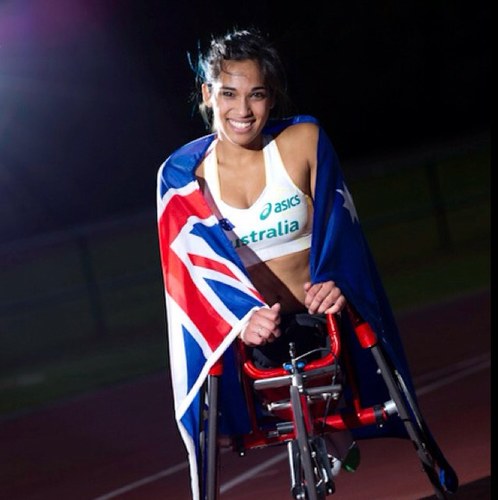
(Photo of Madison de Rozario from her Twitter account)

The People’s Choice of Girl’s Names

16 Sunday Sep 2012

Posted by A.O. in Name Themes and Lists

≈ 14 Comments

Tags

Australian Aboriginal names, Biblical names, birth announcements, celebrity baby names, doll names, Dutch names, English idioms, english names, famous namesakes, fictional namesakes, Finnish names, French names, germanic names, Google, Google searches, hebrew names, Hungarian name popularity, Hungarian names, Indian names, Irish name popularity, Irish names, Japanese names, locational names, mythological names, name history, name meaning, name popularity, Native American names, nicknames, Polish name popularity, Polish names, popular culture, royal names, saints names, Sanskrit names, Slavic names, Spanish names, tribal names, Turkish names, UK name popularity, unisex names, US name popularity, Visigothic names, vocabulary names, Welsh names

I have been trying to add Featured Names from those in the search terms, when possible. To celebrate the start of spring, I’m choosing ten names for each gender that people have used as search terms to reach my blog. I tried to concentrate on those that had been Googled multiple times, or which had questions attached to them, and I’ve chosen names which don’t make the Top 100.

Of course, if you would like to see a particular name featured on the blog, you don’t need to type it into a search engine and cross your fingers – you can always e-mail me directly and put in a request.

Arya

Arya is a unisex Indian name which means “noble, honourable” in Sanskrit. Common in India, it’s become known in the English-speaking world through two fantasy novelists. In George R.R. Martin’s A Song of Fire and Ice series, Lady Arya Stark is a beautiful free-spirited noblewoman who leads a very adventurous life. In Christopher Paolini’s Inheritance cyle, Arya Dröttning is an elf, later queen of the elves, and the romantic interest of the hero, Eragon. Both these characters are strong and independent, good at swordplay, horse-riding and taking care of themselves. Although there are several famous men and women in India called Arya, English-speakers probably think of it as a female name, because of the fictional characters. The Indian pronunciation is AHR-yuh, but both Martin’s and Paolini’s ladies say their names AHR-ee-uh (I’m basing this on how they are said in the TV series and the movie, as some written guides suggest AR-ee-uh or AYR-yuh). So there’s quite a selection of pronunciations. Arya recently joined the US Top 1000, and is currently #711. It would make a good heritage choice, or else an attractive literary name.

Carmel

Mount Carmel is a mountain range in Israel, and its name means “garden”. Our Lady of Mount Carmel is the title given to the Virgin Mary in her role as patroness of the Carmelite Order. The first Carmelites were Christian hermits who lived on Mount Carmel during the 12th century, and built a chapel dedicated to the Virgin Mary. They were approved as an order devoted to contemplative prayer, but didn’t stay in the Holy Land for long. They soon made their way to Sicily and Cyprus, and from there throughout Europe. Carmel was first used as a name in honour of Our Lady of Mount Carmel, perhaps especially for girls born on or near her feast day of July 16. Carmel was in rare use in 1900, then climbed steeply to make the Top 100 in 1930. It peaked in the 1940s at #77, and was off the Top 100 by the 1960s. It hasn’t charted since the 1990s. Although this name originated amongst Catholics, Mount Carmel is a place name mentioned in the Bible, and is important in Judaism, Protestantism, Islam, and the Bahá’í Faith as well, so it is usable by anyone who feels a connection to it.

Elodie

This is the Anglicised form of French Élodie, derived from the Spanish name Alodia; Saint Alodia was a 9th century Spanish martyr. The meaning of the name is uncertain, but it has been interpreted as Visigothic, from the Germanic meaning “foreign wealth”. In English it’s pronounced like Melody without the M, but the French pronunciation is ay-lo-DEE. There are several fashion boutiques in Australia with the name Elodie in them, giving it a self-consciously stylish air, and it’s a name often seen in birth announcements here, especially from Melbourne. This pretty name makes a good alternative to popular Eloise, and I can see it becoming another Amelie in the future (although a movie called Elodie would be a real help).

Kinga

Saint Kinga was born a Hungarian princess, and her name is the pet form of Kunigunde, which is from the Germanic for “family war”. Kinga had several saintly family connections, because she was the niece of St. Elizabeth of Hungary, and the great-niece of St. Hedwig. One of her sisters became St. Margaret of Hungary, while the other, Blessed Jolenta of Poland, is still being considered for canonisation. Saint Kinga was married off to Bolesław V, who became High Duke of Poland; she insisted that the marriage remain chaste, and although her husband wasn’t happy about the situation, he reluctantly agreed. During her marriage, she devoted herself to charitable works, and after being widowed, became a nun and spent the rest of her life in contemplative prayer. She is the patron saint of Poland and Lithuania, and her name is a popular one in both Hungary and Poland. This name has turned up repeatedly in the search terms ever since comedian Merrick Watts and his wife welcomed their daughter Kinga Rose in December last year. It’s apparently pronounced KEEN-gah, and makes an unusual and attractive heritage choice.

Mika

This little name has several different origins. Mika is a Japanese girl’s name translated as “beautiful fragrance”. It is also a Native American word, meaning “racoon” in the Osage and Omaha-Ponca languages of Oklahoma and Nebraska. However, it’s an Australian Aboriginal word too, because mika means both “moon” and “month” in the Nyungar language of south-west Western Australia. This is a name I’ve seen used a lot in the past, although not so much lately. It often appears in variant spellings, such as Meeka or Meekah – presumably to make the pronunciation clearer, because it is said MEE-kuh, and not like the boy’s name Micah. However, it’s possible that these variants were trying to provide a phonetic spelling of the Dutch name Mieke, which is a pet form of Maria, and said exactly the same way. Mika is similar to popular names such as Mia and Mila; it could also be understood as a short form of Mikayla. Just to confuse things further, Mika is an unrelated boy’s name as well – it’s a pet form of Mikael, the Finnish form of Michael. I suspect the reason I see less babies with this name is the British singer Mika, who now makes it seem male.

Niamh

Niamh is an Irish name meaning “bright, radiant”. In Irish mythology, Niamh was a goddess, the daughter of the god of the sea, and a fairy queen in the Otherworld known as the Land of Eternal Youth. Called Niamh of the Golden Hair, she lured the poet Oisin away to her own world, and together they were the parents of two children, Oscar and Plúr na mBan (meaning “flower of women”). Oisin thought he had been with Niamh for three years, but when he returned to Ireland, he found that three centuries had passed. Niamh gave him her white horse to ride, and warned him not to let his feet touch the ground, or he would never return to her. Later, he accidentally fell off the horse, and the three hundred years caught up with him; he became a very old man, near death. According to legend, his grave site is in Scotland. Depending on accent, the Irish pronunciation is either NEE-av or NEEV, but English-speakers tend to opt for NEEV as easier to say. This fairytale name is Top 100 in England/Wales, Scotland, Northern Ireland and Ireland, and you can see why.

Saskia

This Germanic name is derived from the name of the Saxons, a tribe from the north of Germany. We know them well, because some of them migrated to the British Isles and merged with the Angles to become the Anglo-Saxons of English history; their lands were in the south of England. The name of the tribe may come from the seax, a type of knife that the Saxons were known for using as a weapon. The seax is still an important symbol in the English counties of Essex and Middlesex, both of whom feature three seaxes in their ceremonial emblem. The Saxons who stayed behind in Germany resisted the Christian Franks for some time, but were defeated by Charlemagne and forced to convert; their lands became the Duchy of Saxony. Saxons also gained territories in the Netherlands and northern France. The name became famous through Saskia van Uylenburgh, who was the wife of the Dutch artist Rembrandt vn Rijn, and often served as a model for his paintings. In Australia the name is well known because of the actress Saskia Burmeister, who appeared in the film Hating Alison Ashley, and from the British-Australian children’s TV series Noah and Saskia, where Saskia is the Australian girl. Here the name is pronounced either SAHS-kee-ah, or SASS-kee-ah, and can be seen as a Dutch heritage choice.

Seren

This is a modern Welsh name meaning “star”, and it’s said SEH-ren. It can apparently be used for both sexes, but in Wales it is highly popular as a girl’s name and doesn’t chart for boys. Its similarity to female names such as Sarah, Serena and Serenity probably makes it seem more feminine. I’m including this one because amongst the most common search terms I receive are those asking for baby names which mean “star”, and I think this is a very pretty and simple one. Seren is also a popular unisex Turkish name, which, according to a Turkish dictionary I consulted, refers to the spar of a boat, which juts out from the sail. I’m not sure if the name is taken directly from the word, though. This might be a good name for yachties to consider – especially as boats once used the stars to navigate.

Tuppence

Tuppence means “two pennies” in the pre-decimal currency or old money. We use the word tuppence to signify a very small amount, as in the phrase, I don’t care tuppence, and is also used in the same way as my two cents to indicate you are proffering an opinion (“Well, that’s my tuppence worth”). Tuppence is theoretically unisex, and in Australia “Tuppence” was the nickname of Desmond Moran, from the notorious crime family. However, it’s usually seen as feminine, as in the British actress, Tuppence Middleton, or the nickname of Agatha Christie’s detective, Prue Beresford, in Tommy and Tuppence. Little Tuppence was a New Zealand fashion doll sold throughout Australasia in the late ’60s (a slight rip-off of American Penny Brite), and this gives it a definite girly flavour. To me it seems distinctly vintage, with a touch of English eccentric. It’s Penny to the power of two!

Zaria

Zaria is a goddess of beauty in Slavic mythology, and her name means “dawn” – the time of day when people would pray to her. She is a goddess of warriors, and was invoked to protect against death in battle. The Dutch royal family have a little Countess Zaria, aged six; she is the daughter of Prince Friso and Princess Mabel of Orange-Nassau. Although her first name is Joanna, she is officially known as Zaria, and was named after the goddess. Zaria seems like a great alternative to popular Zara, and very much like Azaria without the baggage. In the US, Zaria has been Top 1000 since the mid 1990s, and is currently #753.

(Picture shows actress Sienna Guillory in the role of Arya from the movie Eragon)

← Older posts
Newer posts →

Enter your email address to follow this blog

Categories

Archives

Recent Comments

A.O.'s avatarwaltzingmorethanmati… on Zarah Zaynab and Wolfgang…
Madelyn's avatarMadelyn on Zarah Zaynab and Wolfgang…
JD's avatardrperegrine on Can Phoebe Complete This …
A.O.'s avatarwaltzingmorethanmati… on Rua and Rhoa
redrover23's avatarredrover23 on Rua and Rhoa

Blogroll

  • Appellation Mountain
  • Baby Name Pondering
  • Babynamelover's Blog
  • British Baby Names
  • Clare's Name News
  • For Real Baby Names
  • Geek Baby Names
  • Name Candy
  • Nameberry
  • Nancy's Baby Names
  • Ren's Baby Name Blog
  • Sancta Nomina
  • Swistle: Baby Names
  • The Art of Naming
  • The Baby Name Wizard
  • The Beauty of Names
  • Tulip By Any Name

RSS Feed

  • RSS - Posts

RSS Posts

  • Celebrity Baby News: Melanie Vallejo and Matt Kingston
  • Names from the TV Show “Cleverman”
  • Can Phoebe Complete This Sibset?
  • Zarah Zaynab and Wolfgang Winter
  • Baby, How Did You Get That Name?
  • Celebrity Baby News: Media Babies
  • Celebrity Baby News: Adelaide Crows Babies
  • Celebrity Baby News: Chris and Rebecca Judd
  • Names at Work: Name News From the World of Business and Employment
  • Celebrity Baby News: Sporting Round Up

Currently Popular

  • The Top 100 Names of the 1930s in New South Wales
  • Rare Boys Names From the 1950s
  • The Top 100 Names of the 1940s in New South Wales
  • Girls Names From Stars and Constellations
  • Celebrity Baby News: Caroline Craig and Callum Finlayson

Tags

celebrity baby names celebrity sibsets english names famous namesakes fictional namesakes honouring locational names middle names name combinations name history name meaning name popularity name trends nicknames popular names saints names sibsets surname names twin sets unisex names

Blog at WordPress.com.

Privacy & Cookies: This site uses cookies. By continuing to use this website, you agree to their use.
To find out more, including how to control cookies, see here: Cookie Policy
  • Subscribe Subscribed
    • Waltzing More Than Matilda
    • Join 517 other subscribers
    • Already have a WordPress.com account? Log in now.
    • Waltzing More Than Matilda
    • Subscribe Subscribed
    • Sign up
    • Log in
    • Report this content
    • View site in Reader
    • Manage subscriptions
    • Collapse this bar
 

Loading Comments...