• About
  • Best Baby Names
  • Celebrity Baby Names
  • Celebrity Baby Names – Current
  • Celebrity Baby Names – Past
  • Featured Boys Names
  • Featured Girls Names
  • Featured Unisex Names
  • Links to Name Data
  • Waltzing on the Web

Waltzing More Than Matilda

~ Names with an Australian Bias of Democratic Temper

Waltzing More Than Matilda

Tag Archives: Arabic names

Underused Names for Girls

03 Sunday Feb 2013

Posted by A.O. in Name Themes and Lists

≈ 20 Comments

Tags

Arabic names, Arthurian legends, celebrity baby names, Disney names, english names, ethnonyms, famous namesakes, fictional namesakes, flower names, French name popularity, French names, German names, germanic names, Greek names, historical records, How Green Was My Valley, Italian names, Latin names, mythological names, name data, name history, name meaning, name popuarity, names from movies, nature names, nicknames, Old French names, Old Welsh names, Oz: The Great and Powerful, plant names, Poldark, popular culture, Puritan names, rare names, royal names, saints names, Shakespearean names, surname names, The Iliad, The Wizard of Oz, tribal names, unisex names, virtue names, vocabulary names, Welsh names, William Shakespeare

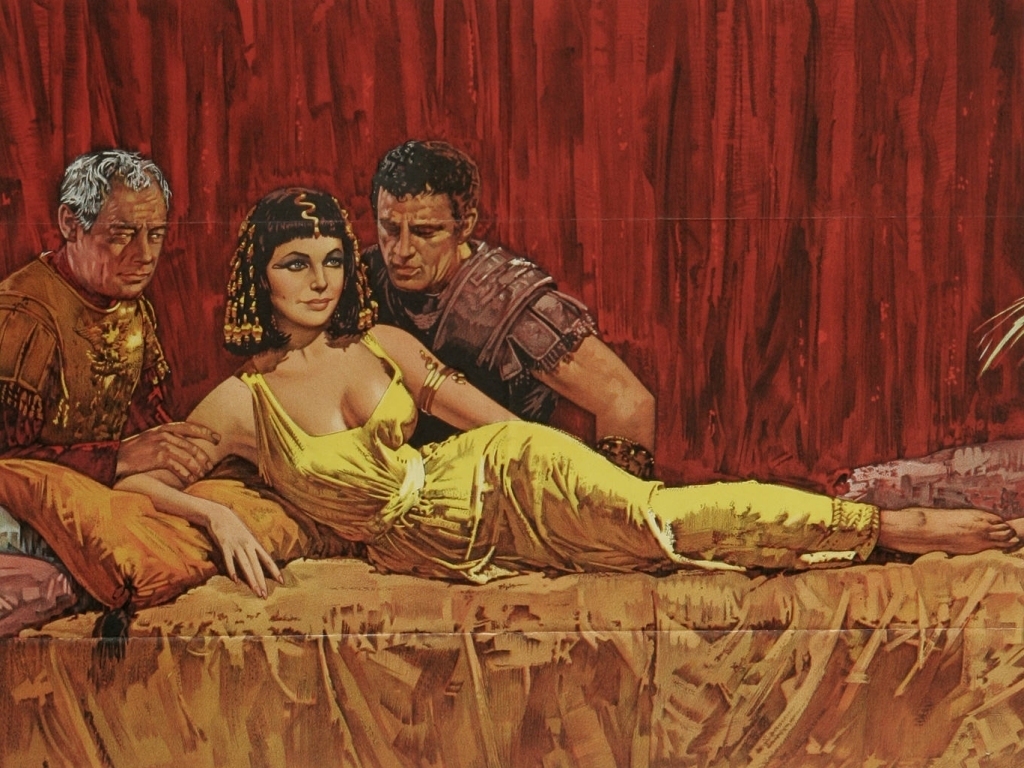
sabine women detailLast week we had names from Victoria which were used less than ten times in 2012. Those names are uncommon – but what if you wanted something even rarer? These are names which don’t appear even once in the Victorian data from last year, and have never charted in Australia. However, they are not strange or obscure, and all of them can be found in Australian historical records.

Angharad

Angharad is an Old Welsh name meaning “greatly loved”. It was reasonably common in medieval times, and there are several Angharads in Welsh history. In Welsh mythology, Angharad Golden-Hand is the lover of Peredur, one of King Arthur’s knights. Angharad Morgan is a main character in How Green Was My Valley, and in the film version was played by Maureen O’Hara. Actress Angharad Rees became well known in the 1970s for playing the role of Demelza in the TV series Poldark. Lots of famous Angharads, yet I could find only one woman named Angharad in Australian records. The pronunciation, ang-HAH-rad, may have caused some concern. This is a strong and unusual name with a lovely meaning. It would definitely stand out.

Beatrix

Beatrix is based on the name Viatrix, the feminine form of the Latin name Viator, meaning “voyager, traveller”. Early on, the spelling was altered to associate it with the Latin word beatus, meaning “blessed”, and it was common amongst early Christians. Some baby name books sandwich these two meanings together and interpret it as “blessed traveller”. Saint Beatrix was an early Roman martyr; according to legend, she was strangled by her servants. The name became less common in England after the Middle Ages, but was revived in the 19th century. One of the most famous people with this name is Beatrix Potter, the children’s writer and illustrator, who gave us such delightful characters as Peter Rabbit, Jemima Puddleduck, Squirrel Nutkin and Mrs. Tiggy-Winkle. As well as these talents, she was also a scientific researcher, conservationist, farmer, and sheep breeder. Queen Beatrix of the Netherlands helps give this name a royal touch, and a famous literary character is Beatrix “Trixie” Belden, girl detective. To me, this charming name seems spunkier and more eccentric than her sister Beatrice.

Cressida

In Greek mythology, Chryseis was the daughter of a Trojan priest named Chryses, and she was captured by the Greek champion Agamemnon as part of the spoils of war; he refused to give her back even after being asked nicely. Chryseis’ dad prayed like blazes to the god Apollo, who obligingly sent a plague through the Greek soldiers until Chryseis was returned. A later legend says that she bore Agamemnon a son. Her name given in the Iliad simply means “daughter of Chryses”; appropriately for a priest of Apollo, Chryses’ name means “golden”, perhaps in reference to sunlight. Some writers say Chryseis’ real name was Astynome, meaning “possessor of the city”. When medieval authors retold the tale of the Trojan War, this story had a complete rewrite. Chryseis became Cressida (KRES-ih-duh), and one corner of a tragic love triangle; she is made the epitome of the false woman and the whore. Some authors were sympathetic to Cressida’s plight, and in Shakespeare’s version, Cressida is complex, highly intelligent and witty. A famous Australian with this name is the artist Cressida Campbell. I find this literary name quite bewitching.

Emmeline

Emmeline is the Old French form of the Germanic name Amelina, based on the word for “work”; it is therefore related to the name Amelia, and not to Emily. The name was introduced to Britain by the Normans, and many people prefer to give it a slightly French pronunciation as EM-uh-leen, while others seek to Anglicise the way it is said as EM-uh-line (like Caroline). My experience is that the British tend to say leen, Americans tend to say line, and Australians have a bob each way and can usually cope with either. There were several prominent suffragists named Emmeline, including Emmeline Pankhurst, Emmeline Pethick-Lawrence and Emmeline Wells. Australia mountaineer Emmeline Du Faur was the first woman to climb Mount Cook (in record time), and the first person to climb several peaks – always dressed in a skirt. Emmeline Pethick-Lawrence was a keen hiker and woodcrafter, and to me the name Emmeline sounds vigorous, healthy, and practical. Emmeline has a solid history of use in Australia, being commonly found in old records, and today its nickname Emmie means it fits in with popular names such as Emily, Emma and Emmerson.

Isadora

Isadora is a variant of the name Isidora, the feminine form of Isidore, from the Greek for “gift of Isis”; the Egyptian goddess Isis was worshipped widely in the ancient world, and she was also important to the Greeks and Romans. Saint Isidora was a 4th century Egyptian nun, considered to be a “holy fool”, and treated with contempt by the other nuns for her eccentric ways, such as wearing a dirty dishrag on her head instead of a veil, and eating only leftovers instead of proper meals. When a visiting saint came to the nunnery, he immediately picked out Isidora as the only person holier than himself; upset by the praise and attention, Isidora ran away into the desert to be a hermit, and nothing more is known of her. The most famous Isadora is the American dancer Isadora Duncan, who developed her own unique style of dance, based on the natural movements of the human body. Like the saint, she was considered eccentric and radical, and danced to the beat of her own drum. Isadora is a beautiful, glamorous and individualistic name!

Lavender

Lavender has been used as a personal name since the 17th century, and was given to both sexes. It may have originally been derived from the surname, which is Norman-French and based on the word lavandier, referring to a worker in the wool industry who washed the raw wool (this is an occupation that both men and women had). Even in the middle of the 20th century, you can still find boys named Lavender. By now, however, it is almost entirely thought of as a girl’s name, and considered to be from the flower. The flower name comes from the Old French lavendre, possibly from the Latin for “blue-coloured”, lividius, but also influenced by lavare, meaning “wash”, because lavender was used in washing clothes. Lavender is often used to scent soaps and beauty products, and has been used as a relaxation aid for thousands of years. The colour lavender is associated with sensuality and decadence, and at one time, was considered symbolic of homosexuality. Like Rose, this is a pretty old-fashioned flower name that is more complex that it first appears.

Sabine

Sabine is a French and German form of Sabina, the feminine form of the Latin name Sabinus, meaning “Sabine”. The Sabines were an Italian tribe who inhabited the region where the city of Rome stands today, and some of them fought against Rome for their independence. According to legend, the Romans abducted Sabine women to populate the city of Rome; the war between the Romans and Sabines ended when the women threw themselves and their children between the armies of their fathers and those of their husbands. The history behind the legend is that the conquered Sabines assimilated with the Romans, beginning a new line of inheritance. Many of the noble Roman families traced their ancestry to Sabine origins, and at least some of the deities and rituals of Rome came from the Sabines. The Sabines were said to have taken their name from the hero Sabus, who was worshipped as a deity. Although it is too long ago to be sure, one theory is that the tribal name Sabine meant “us, ourselves, our own people”. You can either say this name the French way, sa-BEEN, or the German way, za-BEE-nuh; most English-speakers use the French pronunciation. There is at least one famous man named Sabine – the writer Sabine Baring-Gould, whose name was after the surname (derived from the personal name). You can find both men and women named Sabine in Australian records. Sabine is smooth and sophisticated, but comes with a cute nickname – Bean.

Theodora

Theodora is the feminine form of the Greek name Theodoros, meaning “gift of God”. The name pre-dates Christianity, but its meaning appealed to early Christians, and there are a few saints with this name. One of them was Saint Theodora, who as punishment for her pious celibacy, was dragged into a brothel. Her first “customer” was a Christian man, who had came to save her; they were both martyred, but their virtue remained intact. This story is probably fictional, and may have been inspired by sacred prostitution, of which Christians obviously disapproved. An Eastern Orthodox Saint Theodora disguised herself as a man and joined a monastery. Her identity as a woman was only discovered after her death. The name was a very popular one for Byzantine empresses, and Theodora I is also regarded as a saint. A Roman Theodora was a senator, and supposedly the lover of one of the early popes. She was harshly condemned for daring to “exercise power like a man”. The hussy! The image you get from these historical Theodoras is of very strong, independent, determined women – which might explain why Disney has chosen this name for the Wicked Witch of the West in Oz: The Great and Powerful. Pop star Robbie William welcomed a daughter named Theodora Rose last year, called Teddy; he wanted a dignified full name for the cuddly nickname, and Theodora fit the bill perfectly.

Verity

Verity is an English word meaning “truth”, especially in regard to religious truth or doctrine. It has been used as a personal name since the 17th century, and would have been given as a virtue name by the Puritans. However, it was most likely also given in honour of the surname, for births of Veritys in Yorkshire are suggestive, given that the Verity family is a prominent one in that county. The surname is Anglo-Norman, and has the same meaning as the personal name. Originally, Verity was a unisex name, and in early records is given equally to boys and girls. The first Verity I can find born in the United States was a boy, and his family were Puritans in Massachusetts. You can find the name Verity given to both sexes in Australian records, but only as a middle name for boys, and it has never been very common here. Famous Australian women named Verity include the politicians Verity Barton and Verity Firth, the ABC presenter Verity James, and the actress Verity Hunt-Ballard, who played Mary Poppins in the Australian version of the musical. This is a crisp, clean name which sounds intelligent and upper-class to me.

Zia

Zia is a variant of the Arabic name Ziya, meaning “light, shine, splendour” – more specifically, it refers to light which shines by its own illumination, and is connected to the sun and sunlight. Traditionally, Zia is a male name, but Arabic baby name sites usually list it as female, and the name charts in France only for girls. There are quite a few people called Zia in Australian records, and they are not all Arabic men. There are women called Zia from different cultures, including Italian, where Zia may be short for a name such as Annunzia (zia means “aunt” in Italian, but this doesn’t seem to have been a hindrance to its use by Italians). Most women called Zia in the records seem to be of British descent, and I’m guessing either it was seen as a short form of other names, or parents just liked the sound of it. I can imagine parents today also liking the sound of it, because it is so similar to popular names such as Zara and Mia – indeed, it almost seems like a cross between these names. This is a zippy name which sounds a bit different, but won’t seem out of place in the playground.

POLL RESULT: People’s favourite names were Beatrix, Emmeline, and Isadora, and their least favourite were Lavender, Zia, and Angharad.

(Picture shows a detail from The Intervention of the Sabine Women (1799) by Jacques-Louis David)
2012 Name Trends in the ACT – Boys

07 Monday Jan 2013

Posted by A.O. in Name Data

≈ 7 Comments

Tags

Arabic names, Biblical names, celebrity baby names, famous namesakes, fictional namesakes, Indian names, Italian names, name popularity, name trends, nicknames, popular names, Scottish names, Spanish names, surname names, unisex names

Biggest Movers Up

  1. Archer (51)
  2. Marcus (45)
  3. Andrew (41)
  4. Mason (33)
  5. Jackson (28)
  6. Eli and Kai (26)
  7. Jasper and Leo (23)
  8. Hunter (22)
  9. Nathaniel (18)
  10. Christopher and Henry (16)

To nobody’s surprise, surely, seen-everywhere Archer was the big winner for 2012, and the similar Hunter also did well. Marcus is the name of several Australian sports stars; perhaps Canberrans were paying keen attention to the sports news this year, or maybe they are all Mumford & Sons fans? Celebrity baby name Mason continues to keep up, even as his sister Penelope failed to make the grade. Prince Harry‘s official name, Henry, made number 10 on the list, while his nickname was number 11. From reading the birth notices, I know that there is an obstetrician named Andrew in Canberra; I don’t know if he is responsible for his name’s success though.

Biggest Movers Down

  1. Levi (49)
  2. Hamish (44)
  3. Luca (39)
  4. Caleb (35)
  5. Elliot (31)
  6. Finn and Matthew (30)
  7. Jake (28)
  8. Cameron and Sebastian (23)
  9. Angus and Darcy (21)
  10. Edward and Harrison (20)

In general, Old Testament names for boys had a bit of a fall in 2012, with Levi the worst affected. Scottish favourites Hamish, Angus and Cameron also went down, and Darcy doesn’t seem to be doing well for either girls or boys. Jake, Jacob and Edward waned like an old moon, as did Isabella and her offshoots – make of that what you will!

Most Stable

  • Benjamin (10)
  • Ryan (17)
  • Luke (33)

New to the List

  • Ayden (40)
  • Lewis (40)
  • Louis (62)
  • Braxton (70)
  • Luka (70)
  • Ali (76)
  • Jai (76)
  • Jason (76)
  • Jude (76)
  • Maxwell (76)
  • Muhammad (76)
  • Reuben (76)
  • Ari (92)
  • Aryan (92)
  • Dante (92)
  • David (92)
  • Jaxon (92)
  • Rafael (92)
  • Rohan (92)
  • Spencer (92)
  • Tobias (92)
  • Vincent (92)

With Ari, Aryan and Aria new to the popularity charts, and Archer the fastest-rising, names starting with a piratical AR sound seem in vogue. Jude, Reuben, Tobias and David provided some new blood for Biblical names.

Both Louis and Lewis are new to the charts – a name which seemed generally popular this year. Braxton and Spencer were two surname names I’ve seen much of, and Vincent seemed to be several name bloggers’ pick for the Name Most Likely. We were right in at least one area of the world, anyway! I wonder if the Danish prince helped in this regard?

Jai and Rohan are two Indian names new to the list, Dante and Rafael two from southern Europe, and Ali and Muhammad two Arabic ones, possibly showing some demographic changes in the Territory – although Jai has long been a standard in Australia, and Rafael on trend for ages.

Interestingly, 1970s trendsetter Jason is on the list, and last year Jennifer was on the girl’s list. Apparently if you go beyond Ava and Aiden, you get … more Jennifer and Jason!

Back on the List

  • Hudson (50)
  • Rhys (70)

Gone from the List

  • Aidan (33)
  • Aiden (50)
  • Mitchell (61)
  • Tyson (61)
  • Jett (61)
  • Jonah (61)
  • Alex (75)
  • Hugh (75)
  • Billy (78)
  • John (78)
  • Tom (78)
  • Austin (78)
  • Felix (88)
  • Jesse (88)
  • Seth (88)
  • Anthony (97)
  • Beau (97)

Aidan and Aiden have been replaced by Ayden – Jayden went up, although Hayden went down. Luca went down, but Luka stepped in. Nicknames Alex, Tom and Billy were rejected in favour of their full names. Jonah, John, Jesse and Seth were four Biblical names to disappear altogether. Michael rose, while surname-form Mitchell was out.

Names of Australian Male Paralympic Medalists

28 Sunday Oct 2012

Posted by A.O. in Name Themes and Lists

≈ 4 Comments

Tags

Anglo-Saxon names, Arabic names, Arthurian legends, Arthurian names, Cornish names, Croatian names, Disney names, english names, epithets, European name popularity, famous namesakes, French names, Gaelic names, germanic names, Irish names, K.M. Sheard, Latin names, locational names, mythological names, name history, name meaning, name popularity, names of organisations, Old Irish names, Old Norse names, Pictish names, popular culture, popular names, Roman names, royal names, saints names, Scottish names, South American name popularity, surname names, Welsh names

Bruno (Moretti)

Bruno Moretti won silver in table-tennis at the 1960 Paralympics, and a gold and two silvers in athletics at the 1964 Paralympics. Bruno is a Germanic name meaning “brown”. The name was used by the nobility in medieval Europe, and there are several saints named Bruno. One of them is Saint Bruno of Cologne, who was the son of Saint Matilda. He was Duke of Lotharingia and Archbishop of Cologne, and his court in Cologne was an intellectual and artistic centre. Bruno was also the given name of two popes – Gregory V and Leo IX. Bruno has a long history of use in Europe, and today is Top 100 in Croatia, Catalonia, Spain, and Chile. It’s also a common surname in Italy, and Giardano Bruno was a Dominican friar, philosopher, mathematician and astronomer, who suggested that the Sun was a star, and the universe had infinite worlds, populated by intelligent beings. He went down very badly with the Spanish Inquisition, who had him burned him at the stake. Today he is regarded as a martyr to science. Bruno is a warm cuddly-sounding name, and seems to be a popular choice for bears, both real and fictional.

Cody (Meakin)

Cody Meakin grew up playing both rugby union and Australian rules football; he broke his back in a rugby scrum, and while still in high school, became quadriplegic after a car accident. He took up wheelchair rugby in 2010, where he became an international champion. He won gold at the London Games this year. Cody is derived from the Gaelic surname Ó Cuidighthigh, meaning “son of Cuidightheach”. Cuidightheach is an Old Irish epithet meaning “helpful”. The most famous person with the surname must be “Buffalo Bill” Cody, an American frontiersman who became a celebrity for his Wild West touring shows; these introduced the concept of the American West to Britain and Europe. Buffalo Bill was a supporter of Native American rights, women’s rights and conservation, making him a very modern namesake, as well as giving the name Cody an “American West” feel. In the 1990 Disney film, The Rescuers Down Under, the boy from the Australian outback is named Cody. Cody first charted in the 1970s, and was top 100 by the 1990s. It peaked in the early 2000s at #59, and only left the Top 100 last year, when it dropped to #124.

Dylan (Alcott)

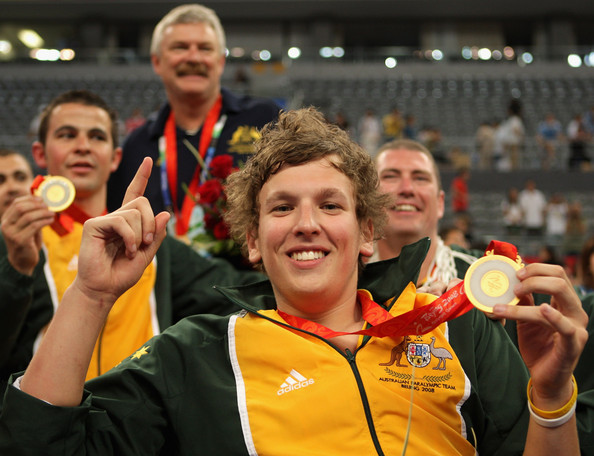
Dylan Alcott has been paraplegic from birth due to a spinal tumour, and began playing wheelchair basketball in 2003. He won gold at the 2008 Paralympics, and silver at this year’s London Games. Dylan is a Welsh name which is difficult to translate exactly, but very roughly means “flood, wave, tide”. In Welsh mythology, Dylan Ail Don was a blond god of the sea, and his epithets were “son of the wave” and “son of the sea”. In the legends, he is killed, and it’s said that the sound of the waves is the sea lamenting his death. The name became well known outside Britain due to the Welsh poet Dylan Thomas, who was named after the god. In Welsh, his name is pronounced DUL-uhn, but Thomas himself preferred the Anglicised pronunciation of DIL-uhn. Thomas’ emotionally powerful yet tightly controlled verse was admired by a young American named Robert Zimmerman, who promptly changed his name to Bob Dylan. As Dylan went on to become a folk balladeer, protest singer and counter-cultural icon, the name Dylan ended up with a double helping of street cred. Dylan first charted in the 1960s and reached the Top 100 in the 1980s. It peaked in the early 2000s at #17, and is currently #41.

Erik (Horrie)

Erik Horrie was left paraplegic after a car accident in 2001, and became involved in wheelchair basketball, but last year switched to canoeing. He won a silver medal at the 2012 London Games, and also welcomed his son Lewis. Erik is derived from Old Norse, and interpreted as “only ruler, eternal ruler, eternal power”. It has been heavily used in the royal houses of Denmark, Norway and Sweden, the most famous to us being Erik the Red, who explored a little-known country, called it Greenland, and became its head chieftain. King Erik IX of Sweden is considered to be a saint, and according to legend was martyred while attending a church service. The name Erik was used in England by the Anglo-Saxons, and settlers from Scandinavia but only became popular in the form Eric in the 19th century, thanks to an earnestly moralising book called Eric, or Little by Little. Other fictional Eriks include the Phantom of the Opera and Erik the Viking from the Monty Python film.

Fabian (Blattman)

Fabian Blattman became paraplegic after a motorcycle accident, and took up wheelchair athletics to improve fitness. One of our most successful Paralympians, he has set several world records. He won a silver and bronze in 1992, a gold and a silver in 1996, and a gold, silver and bronze in 2000. The name Fabian is derived from the Roman family name Fabius, one of the most ancient noble houses of Rome. According to legend, the Fabii claimed descent from Hercules, and were shepherds who followed founding father Remus. Their name is said to be from the Latin word for “broad bean”, a vegetable that the Fabii were supposedly the first to cultivate. The surname Fabianus was given to freed slaves who had been owned by the Fabii, and Fabian is from this name. It was introduced to England by the Normans, but never became as popular there as its equivalents in Continental Europe. There is a 3rd century Saint Fabian, who was elected pope by a dove; despite this unorthodox beginning, he was highly-regarded and worked hard for the early church. The Fabian Society gives this name a left-wing edge; the socialist organisation took its name from the Roman general Fabius Maximus, who wore Hannibal down by attrition rather than engaging in head-on battle.

Jago (Mikulic)

Jago Mikulic was a blind athlete who competed at the 1976 Paralympics, and won a silver in javelin and a bronze in the pentathlon. Jago is a Croatian form of James or Jacob, and is said YAH-go. It can also be a Cornish form of those names, but is pronounced JAY-go in this case. However, the Welsh form Iago is very old and predates the common use of Biblical names in Britain; K.M. Sheard suggests that it may be from the Celtic word for “ice”. If so, this would give Cornish Jago another possible origin.

Kerrod (McGregor)

Kerrod McGregor was a track and field Paralympian who won two golds, three silvers and two bronzes at the 1984 Paralympic Games, one gold in 1988, and one silver in 1996. Kerrod is an English surname that can be derived from the village of Curridge in Berkshire, with the village’s name meaning “Cusa’s ridge”. Cusa was a common Anglo-Saxon name, but what it meant I have been unable to discover. Another possible origin is the hamlet of Kerridge in Cheshire, which means “key ridge” – Kerridge Ridge is one of the foothills of the Pennines. The surname seems to have been most common in Yorkshire. The name Kerrod is well known in Queensland from former NRL star Kerrod Walters, who had a twin brother named Kevin.

Nazim (Erdem)

Nazim Erdem was born in Turkey and came to Australia early in life. As a kid, he practised holding his breath under water as a little game with himself. At the age of 20 he dived into shallow water in an effort to impress some girls; he was underwater for two and a half minutes before being rescued, and his technique of holding his breath saved his life. After the accident, he was quadriplegic. He began playing wheelchair rugby in 1992, and won silver medals at the 200 and 2008 Paralympics, and a gold at the London Games. Nazim is an Arabic boy’s name which means “organiser, convenor”, and as a title, loosely corresponds to the word “mayor” in English. The name isn’t uncommon in Turkey, and Nâzım Hikmet was a charismatic Turkish writer, a leader of the literary avant-garde who was often arrested for his revolutionary political beliefs, and spent much of life in prison or exile. His poetry and his struggles for peace are widely admired in Turkey and outside it; some of his poems have been turned into songs by folk singers such as Joan Baez and Pete Seeger. The name is pronounced NAH-zim.

Rene (Ahrens)

Rene Ahrens won a bronze in discus in 1980 and 1988. René is the French form of the Latin Renatus, meaning “born again, reborn”, referring to the act of baptism, and a popular choice for early Christians. René was a name used by the French aristocracy, and the name is known to us through the philosopher René Descartes (“I think therefore I am”). There is a Saint René Goupil, a French missionary to Canada who is one of the rare North American martyrs. The name is pronounced reh-NAY. Although the feminine form Renee has been popular in Australia,  masculine Rene remains very rare here – no doubt partly because it could easily be confused with the girl’s name.

Tristan (Knowles)

Tristan Knowles lost his leg at the age of 9 as a result of cancer, and also lost a lung at the age of 11. He has been playing wheelchair basketball since 1999, and in 2002 was named the NSW Wheelchair Basketballer of the Year. He won silver in 2004, gold in 2008, and a silver at this year’s Paralympic Games in London. Tristan is a Cornish hero of Celtic folklore who is also one of King Arthur’s knights of the Round Table. He is best known as the lover of the beautiful Irish princess Iseult (or Isolde). Iseult was to marry Tristan’s uncle, King Mark of Cornwall, but she and Tristan accidentally drank a love potion that had been prepared for Mark and his bride to share. The two became hopelessly infatuated with each other and embarked on a passionate affair, until Tristan was banished from Cornwall by an understandably irate Uncle Mark. The story was enormously popular in the Middle Ages, and is one of the forerunners to the story of adulterous lovers Lancelot and Guinevere. The name Tristan was yet another revived in the Victorian era, thanks to Tennyson, and the poems he wrote based on Arthurian legends. In the story, Tristan’s name is supposed to be linked with triste, the French word for “sad”, to fit in with his tragic love life. However, it is a form of the Pictish name Drust, which means “riot, tumult”. Drust was a traditional name amongst the royalty of Scotland, and it’s quite a puzzler as to how a Cornish story ended up with a hero with a Scottish name. Some claim that Tristan was a real person, pointing to a 5th century stone in Cornwall, which is supposed to be the grave marker for someone named Drustanus, the son of Cunomorus. Titillatingly, Cunomorus is said to be King Mark himself, suggesting that Tristan and Iseult’s step-incest was even closer and creepier (although his uncle was also his adoptive father anyway). Tristan and Iseult are two literary characters I’ve never been able to warm to, as their actions are so selfish; perhaps the story is trying to tell us that nobody does very well out of an infatuated love affair, not even the lovers themselves. Tristan first charted in the 1960s, and has managed to reach #100 twice, in the 1980s and late 2000s. It’s currently #123.

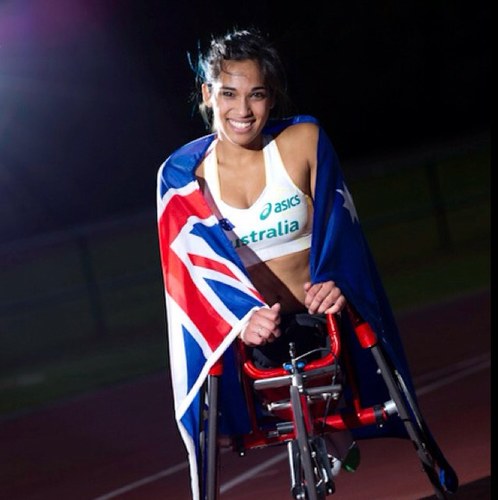
(Photo of Dylan Alcott celebrating victory from Zimbio)

Names of Australian Female Paralympic Medalists

21 Sunday Oct 2012

Posted by A.O. in Name Themes and Lists

≈ 8 Comments

Tags

Arabic names, Arthurian legends, Arthurian names, astronomical names, Biblical names, english names, ethnonyms, famous namesakes, fictional namesakes, French names, gemstone names, germanic names, Greek names, hebrew names, honouring, Indian names, Irish names, Latin names, locational names, military events, mythological names, name history, name meaning, name popularity, names of dolls, nature names, nicknames, Norman-French names, Old French names, popular names, royal names, saints names, Sanskrit names, street names, surname names, unisex names, vocabulary names

Amber (Merritt)

Amber Meritt was born with a club foot, and is originally from England; she came to Australia as a child (she’s now 19). She started playing wheelchair basketball in 2007, and won silver at the London Games. Amber is fossilised tree resin, and since prehistoric times has been valued as a gemstone. The word amber is derived from Arabic, and means ambergris, the waxy substance regurgitated by the sperm whale; it was only later realised these were different substances. Amber has been used as a girl’s name since the 17th century, but wasn’t popular until the 20th. The name became notorious in 1944, when the racy historical romance, Forever Amber, was published, with its heroine the sleep-her-way-to-the-top Amber St. Clare. Despite being condemned, and even banned here until 1958, the book was a bestseller, and made into a film. Amber was in rare use in the 1950s, and during the 1960s made #647 (about one Amber per year). It absolutely skyrocketed during the 1970s up to #135, peaked in the early 2000s at #49, and is now #91. This pretty gemstone name is still popular, and it’s all thanks to a “dirty” book! If looking for a nickname, Miss Merritt goes by Bambi.

Danae (Sweetapple)

Danae Sweetapple was blind from birth, and started swimming in 1990. She won a silver and two bronzes at the 1992 Paralympics. In Greek mythology, Danaë was a Greek princess and the mother of the hero Perseus. Her father shut her up in a bronze tower due to a prophecy that he would be killed by her son, but she was impregnated by Zeus, who came to her in the form of golden rain. The king had Danaë and Perseus cast into the sea, and they washed ashore onto an island, where a kind fisherman raised Perseus as his own son (as an adult, the prophecy was fulfilled when Perseus did kill his grandfather). Getting it on with a godly shower of gold was either supremely satisfying or very traumatising for Danaë, as she had no interest in mortal men afterwards, and never married or had further children. Her name is derived from the Danaans, one of the names the Greeks used for themselves, with the idea that they were partly descended from Danaus, a mythical prince of Egypt. I’m not sure how the Greeks would have said her name (nobody seems to agree), but not like the way it is usually said in Australia, which is dan-AY.

Elaine (Schreiber)

Elaine Schreiber won a bronze in table tennis, a gold in club throw, and a silver in javelin at the 1964 Paralympics, and a silver in table tennis at the 1968 Games. Elaine is a name shared by several characters in Arthurian legend, who are occasionally confused with each other. One of the most famous is the fair Elaine of Astolat, who dies of unrequited love for Sir Lancelot. The story inspired Tennyson’s poem, The Lady of Shalott, and it was only after the popularity of his poem that Elaine became a commonly-used English name. Elaine is an Old French variant of Helen. Elaine was #254 in 1900, joined the Top 100 in the 1920s, and peaked in the 1930s at #18. It left the Top 100 in the 1960s, and reached its lowest point in the late 2000s, when it was in rare use. Since then, it has been very gently rising, and is currently #457.

Gloria (Pascoe)

Gloria Pascoe developed epilepsy at the age of 9, and became totally blind by 55. At 61, she attended the 1980 Paralympics, where she took gold in lawn bowls. Gloria is the Latin for “glory, fame, renown”, and in Christian tradition it denotes the manifestation of God’s presence, often associated with a divine light. The name Gloria has been in use since at least the 16th century, but received a boost in popularity in the 19th from two literary works. One was Gloria, a romantic novel by popular American novelist E.D.E.N. Southworth in 1891; the other was George Bernard Shaw’s 1897 comedy of errors, You Never Can Tell. Both these works feature very attractive heroines who seem to have done the name more good than all of God’s glory. Gloria was #257 in 1900, Top 100 by the 1920s, and peaked in the 1930s at #23. It left the Top 100 in the 1960s, and hit its lowest point in 2009 when it was in rare use. Since then it has risen again, and is currently #427. If you’ve been paying attention, you will see this makes it the virtual twin of Elaine in terms of popularity.

Jemima (Moore)

Jemima Moore became paraplegic at the age of 6 from a virus, and is now 20. She won a silver medal in the 100 metres relay at the 2008 Paralympics, and attended the London Games. In the Bible, Jemima was the eldest of Job’s three daughters, and she and her sisters are described as being the fairest in the land. The name Jemima literally means “warm” in Hebrew, and can be translated as “day”. The name could actually be derived from Arabic, as there is an ancient land in Arabia who had a queen called Jemama; if so, Jemima from the Bible could be inspired by the queen of Arabic folklore. This does fit in with the Biblical story, because Job and his family were said to be from an Arabic country. The name Jemama means “turtledove”. It first charted in the 1960s, the same decade children’s show Playschool first broadcast, which has a rag doll named Jemima. Never in the Top 100, it peaked at #196 in the late 2000s and is currently #254 and stable. This is a fashionable name which has never gained popularity or lost cachet.

Lorraine (Dodd)

Lorraine Dodd became paraplegic at the age of 13, after contracting transverse myelitis. She attended the 1968 Paralympic Games, where she won three golds for swimming, and a silver and a bronze in athletics. Lorraine is a region in north-eastern France; its name comes from an earlier kingdom named Lotharingia, meaning “Lothar’s kingdom. Lothar I was a Frankish king and a great-grandson of Charlemagne; his name is Germanic and means “famous army”. As a personal name, Lorraine has been used since the 18th century, a century in which Lorraine first became part of France. It’s sometimes said to be a Catholic name, since St Joan of Arc was also known as The Maid of Lorraine. There was a World War I Battle of Lorraine, which probably boosted numbers, and the area’s importance during World War II reflects a peak in popularity at this time. Lorraine was in rare use in the 1900s, and reached the Top 100 in the 1930s. Peaking in the 1940s, it left the Top 100 in the 1970s, and hasn’t charted since the 1990s. You can see how Lorraine helped Lauren appear feminine, and Lauren also seems to have replaced Lorraine.

Madison (de Rozario)

Madison de Rozario became paralysed by a rare neurological condition at the age of 3 and is now 18. She won silver in 2008 as the youngest Paralympian on the team, and was also at the London Games. Madison is a surname meaning “son of Matthew“, although in some rare cases it may be derived from “son of Maddy”, with Maddy being a pet form of Maud. It’s been used as a personal name since the 18th century, and seems to have been given almost exclusively to boys in the beginning. Although certainly used in England, it was much more common in America, where it may often have been given in honour of James Madison, the fourth president of the United States (I only found one man named Madison in Australian records). Madison is famous in baby name circles for only becoming popular, and only becoming common for girls, after the movie Splash in 1984. This romantic fantasy, a rewrite of The Little Mermaid, stars Daryl Hannah as the mermaid, who chooses her “human name” from a street sign for Madison Avenue in New York City, named after the former president – although Tom Hanks’ character tells her this isn’t a “real name”. Madison was #606 for the 1980s, with about three born each year. It then absolutely screeched up the charts to make #52 for the 1990s, and peaked in the early 2000s at #22. It sunk to #44 in 2010, then rose last year to make #41. It’s been a real success story, with its nickname Maddie fitting in with Madeline.

Priya (Cooper)

Priya Cooper was born with cerebral palsy, and spends most of her time in a wheelchair. She began swimming competitively while still at school, and is one of our greatest disabled swimmers, winning nine gold medals and breaking world records at the 1992, 1996 and 2000 Paralympics. She was twice team co-captain, and twice a flag-bearer at closing ceremonies. She has received many honours, and since retiring has become a spokesperson and fundraiser for several charities. Priya is an Indian girl’s name which means “dear, beloved” in Sanskrit. In Hindu legend, Priya was one of the daughters of King Daksha, a son of the god Brahma. The name is pronounced PREE-yuh, and has been rather a favourite in Australia for many years.

Siobhan (Paton)

Siobhan Paton is an intellectually disabled swimmer who holds thirteen world records, and won six gold medals at the 2000 Olympics. She was named Paralympian of the Year in 2000, and also received an Order of Australia. Siobhán is the Irish form of the Norman-French name Jehanne, a variant of Jeanne. There were several medieval queens named Siobhán. It is said that the twentieth century popularity of Siobhan owes a great deal to the actress Siobhán McKenna, who was born in Belfast. She was most famous as a stage actress, but also appeared in King of Kings (playing Mary), Of Human Bondage, and Dr Zhivago. Ms McKenna’s son, Donnacha O’Dea, was an Olympic swimmer for Ireland in 1968. Siobhan first charted in the 1950s, and during the 1960s was #571, which represents about one Siobhan a year. Use of the name increased sharply during the 1970s and ’80s, and it peaked in the 1990s at #211. It hasn’t charted since 2009, so this is another attractive name which has never made the Top 100. Pronunciation is an issue, because the usual Irish pronunciation is SHIV-on, but in Australia it’s usually said shi-VAWN.

Ursula (King)

Usula King was a swimmer who won a silver and two bronze at the 1984 Paralympics. The name Ursula means “little she-bear”, derived from the Latin ursa (which we know from constellations Ursa Major and Minor – the Great and Little Bears). According to legend, Saint Ursula was a Romano-British princess who was sent by her father to marry the pagan governor of Armorica (Brittany). Possibly to stall proceedings, she got all bridezilla and declared that before the wedding she must go all over Europe on a pilgrimage, taking an unbelievable 11 000 virgins with her as her handmaids. On their way to Cologne, they were besieged by Huns, who had a busy day beheading the lot of them. The story doesn’t fit with any known historic facts, and one theory is that Ursula is a Christianised form of the goddess Freya. However, Cologne has a magnificent basilica dedicated to St Ursula and her companions, and a little village in Wales also has a church in their honour, in the belief that Ursula was originally from Wales (in the legend, she is from the West Country). Because of the saint, the name came into use in medieval times, and got a little boost in the 20th century from beautiful Swedish actress Ursula Andress, who was the first Bond girl, in Dr No. It’s clunky by contemporary standards, but strangely alluring.

(Photo of Madison de Rozario from her Twitter account)

Meanings of Names

07 Sunday Oct 2012

Posted by A.O. in Your Questions Answered

≈ 3 Comments

Tags

African names, Ancient Egyptian names, Anglo-Saxon names, animal names, Arabic names, astronomical names, bird names, Chinese names, choosing baby names, English idioms, english names, epithets, flower names, French names, German names, Google, Google searches, Greek names, hebrew names, Hindi names, Igbo Names, Indian names, Indonesian names, Japanese names, Latin names, Maori names, musical terms, mythological names, name meaning, names of constellations, nature names, Old French names, Old Norse names, Persian names, popular culture, prefixes, royal titles, Sanskrit names, scandinavian names, Spanish names, surname names, Swedish names, unisex names, Viking names, vocabulary names, Yiddish names, Zulu names

There’s many different ways to choose baby names. Some people pick out a name they like, and perhaps quickly check to make sure it doesn’t mean something horrible, like “he who has the face of a deranged warthog”, or maybe not even care what it means. Others think of a meaning they would like to associate with their baby, and then hunt around for a name that fits that meaning.

These are all the web searches people used to get to the blog this year, looking for names with particular meanings. I don’t know if I’ve always come up with a name they wanted to know about, and I’m not even completely sure that I’m correct on each one, but I did my best.

NAMES WITH MEANINGS RELATED TO STARS

Boys name that means “star”

The English word Sterling, referring to sterling silver, is said to most likely mean “little star”, as some early Norman pennies were imprinted with a small star. The Old French word for the pennies is Esterlin. We also use the word sterling to mean “excellent, of high quality”, so you get another layer of meaning from it.

Latin boy’s name meaning “star”

The Latin for star is Astrum. Astro is a Latin prefix meaning “pertaining to the stars”, as in the word astronomy. I have seen this used as a name.

Swedish girl’s name that means “star”

Stjarna.

A boy’s name that means “bright star”

Nayyar is an Arabic boy’s name which is understood as meaning “bright star”. It also refers to the sun, which of course is our nearest, and thus brightest, star.

Male name meaning “bright star in the southern hemisphere”

There’s isn’t a star name which means that, but Sirius is the brightest star in the sky, and is visible in both hemispheres. However, Canopus, the second brightest, is more often connected with the southern hemisphere; it is always visible from some parts of Australia. It is occasionally called Soheil in English, and the Maori name for it is Atuatahi, meaning “stand alone”.

Spanish girls name that means “constellation”

I’m not sure there is one, but the Spanish for constellation is Constelación. I haven’t heard of it being used as a person’s name, but Constelacia might look a bit more name-like. I don’t speak Spanish, so apologies if this looks absurd to Hispanophones.

Boy name that means “many constellations”

The Japanese name Ikuto has this meaning, although I’ve only seen it used as a fictional surname.

A constellation name which means “small”

All the constellations have names which are nouns or “things”, not adjectives, so there isn’t one. A few have Minor as part of their name, to indicate they are the smaller of two eg Ursa Minor. The closest I could find was Equuleus, meaning “little horse, foal”.

Name meaning “starry sky”

In Japanese, Hoshizora means “starry sky”. It’s used as a surname in the Japanese anime Smile Pretty Cure!

Boys name that means “galaxy”

I have seen Galaxos as a character name in online games, and Galaxian would mean “of the galaxy” or “from the galaxy”.

NATURE NAMES

Boys name that means “beach”

Beach, Bay or Cove.

Names that mean “songbird”

Hebrew has both a male and female name with this meaning. Efrona for a girl (meaning “lark”), and Zalmir for a boy.

Flower name that means “peaceful”

There’s a native plant from Western Australia called the Gunniopsis pax – it’s a succulent, and it does have small flowers. There is also the Peace Lily, and the Peace Rose, and a type of guzmania (a bromeliad) called Pax. The White Poppy, the Lotus and the Daisy have all been used as symbols of peace.

Boy name meaning “otter”

In Japanese, Rakko means “sea otter”. That seemed to be the most usable word for otter in another language I could find.

POSITIVE MEANINGS

Indian boy’s name meaning “one who cannot be defeated”

It seems to be a popular meaning for boy’s names in India, for there are several. I managed to find Adityendra, Ajay, Ajeenkya, Ajeesh, Ajit, Aparajita, and Durjaya. Take your pick!

Viking name meaning “prince”

Balder is translated as meaning “lord, prince, king”, and it was used as an epithet for heroes. In Norse mythology, Balder was the son of Odin and Frigg.

Girl name that means “independence”

Liberty or Freedom.

Sanskrit girl’s name meaning “bright, happy”

Nandita.

Girl’s name that means “beautiful”

There’s a lot. A few you may not be familiar with are Mei (Chinese), Shayna (Yiddish) and Ziba (Persian).

Name that means “bewitching”

Mohana is an Indian unisex name which means “bewitching, infatuating, charming” in Sanskrit. It is used as an epithet of several gods and goddesses.

The word for “lovely” in some other language

Delightfully vague! I pick French – Jolie.

NEGATIVE MEANINGS

Baby name that means “spiteful”

I hope this is for a story and not a real baby! The German surname Sauer means “spiteful” (related to the word sour, acid), and it can be Anglicised as either of the unrelated names Sawyer or Sayer, so I guess those are possible options.

Hindi word for “proud”

Ooh there’s quite a few. Garvi, Garvit and Nidar look the most like names, to me.

DOESN’T EXIST

Name that means “daughter of a princess”

Hmm, seems a bit narcissistic as a baby name, somehow! Anyway, there’s no term for a princess’ daughter, and the daughter of a princess doesn’t necessarily have any special status – Princess Anne’s daughter Zara is just Mrs Tindall. I would choose a name that simply means “princess” or is royal-related. However, the Indonesian name Putri means both “daughter” and “princess”.

Norse name which means “female knight”

Vikings didn’t generally fight with a cavalry, and although there were some female warriors, it’s very unlikely they would have ridden horses, as this was usually reserved for leaders of a warband. It does make me think of the Valkyries, who were mythological women of the afterlife, always depicted on horseback. Valkyrie means “chooser of the slain”.

Norse name meaning “hunter”

There isn’t one. The Old Norse word for hunter is Veiðimaður, and some think this word is the basis of the English surname Waitman. This is occasionally used as a first name.

Name for a girl that means something

More specific, please!

NAMES FOR SPECIAL CIRCUMSTANCES

Name that means “perfect time”

I know it’s not quite right, but I keep thinking Serendipity. Also Season, because of the saying that “For everything there is a season, and a time for everything under heaven”. The Japanese girl’s name Aya means “design”, suggesting a planned pregnancy. Musical names like Rhythm or Cadence come to mind, as music must be perfectly timed. Ogechukwukama is an Igbo girl’s name meaning “God’s time is the best” – good for a surprise, but very welcome, baby.

Name that means “beating the odds”

Lucky or Chance.

Boy’s name that means “when two souls join”

I’d probably be thinking of names that mean “bliss, joy”. Anand is a Sanskrit name meaning “bliss”, while Anglo-Saxon has Wynn, meaning “joy, bliss”. The word Bliss itself can be used for both sexes. The Chinese unisex name Zheng or Zeng means “harmony, union”, which seems to describe the state of soul togetherness.

Zulu name for boys that gives hope for the future

Mduduzi is a Zulu boy’s name that means “bringer of hope”.

Boy’s name meaning “not meant to be”

Oh how sad, and what a sad meaning. I’m so sorry. I thought long and hard about this one, and it seems to me that the concept behind “meant to be” and “not meant to be” is the same, that is, some idea of Fate, Fortune or Destiny. We usually think of it as feminine (“Dame Fortune” etc), but the Ancient Egyptians had a god of fate, named Shai or Shay, meaning “that which is ordained”. I think that’s a nice name for a boy, and has the sense of the meaning you’re looking for.

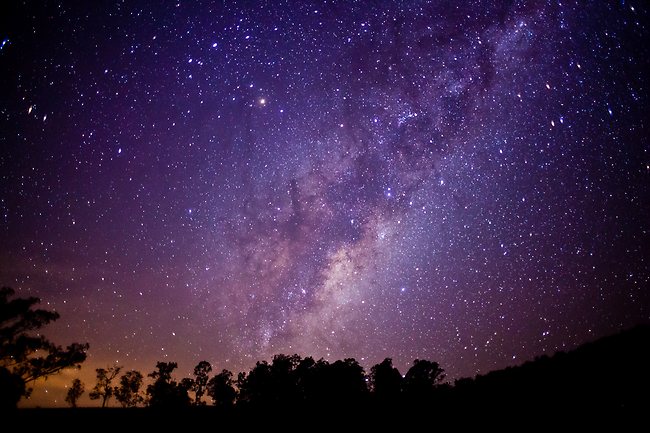
(Picture shows the Milky Way above Lake Moogerah in south-east Queensland; photo from Perth Now)

Famous Name: Abel Tasman

19 Wednesday Sep 2012

Posted by A.O. in Famous Names

≈ 6 Comments

Tags

Akkadian names, Arabic names, Biblical names, birth notices, Dutch names, english names, famous namesakes, German names, hebrew names, honouring, locational names, Maori names, mythological names, name history, name meaning, names of seas, New Zealand names, nicknames, Slavic names, star names, surname names, TV commercials, US name popularity

Last Wednesday, September 12, commemorated the founding of the colony of Tasmania. Although it doesn’t seem to be celebrated in Tasmania, I thought we’d look at the man who gave his name to the state. I chose this topic several months ago, but unfortunately this recent story in the news is giving Abel Tasman a somewhat controversial image at present.

I feel like a mother who has just sent out 300 cards announcing her new daughter’s name as Sahara, then opens the paper to read with horror the headline: Murder at Sahara strip club provides clue to cocaine ring: our paper investigates the seedy underworld of the Sahara, knowing that for months the name Sahara is going to be associated with some very shady dealings. This happens to the best of parents, and possibly even the best of bloggers. However, let us continue.

Abel Tasman was the first known European to reach Tasmania and New Zealand. A Dutch seafarer, he undertook his voyages as an employee of the United East India Company (VOC) – the first multinational corporation in the world, and the first to issue stock. They were based in Batavia, now known as Jakarta, in Indonesia. This company despatched Tasman on a mission to obtain knowledge of “all the totally unknown provinces of Beach”.

That was his first problem: Beach didn’t exist. It was supposedly the northernmost part of Terra Australis, and that didn’t exist either. In fact, they had misread Marco Polo’s handwriting, which said Lohach, and referred to south Thailand, which Polo had assured all and sundry was a kingdom rich with gold. Sent off to find a non-existent kingdom of gold on an imaginary continent with faulty maps based on a vital error, Abel Tasman did the best he could under the circumstances.

On December 3 1642, he formally claimed Tasmania, which he dutifully named Van Diemen’s Land, after Anthonie Van Diemen, the Governor-General of the Dutch East Indies, and Tasman’s patron (Diemen is a homophone of demon). Battling against very rough seas, he managed to reach New Zealand ten days later, which he thought was connected to Argentina (the map’s fault again). A second voyage gave him the chance to map the north coast of Australia, which he called New Holland, and make observations of the land and its people.

From the point of view of the VOC, Tasman’s voyages were a failure. He hadn’t found Beach, located tons of gold, met anyone to trade with, or discovered new shipping routes. Although the Dutch had discovered Australia in 1606, they weren’t sufficiently impressed to follow it up, and so it was free for the British to claim many years later.

Abel Tasman did manage to make it to Thailand a few years later, although I’m sure he never realised he’d arrived in “Beach” after all. The lack of gold, it’s being called Siam, the way he was only there as a courier to deliver letters to the king – all these things helped disguise the fact he had reached his dream destination after all.

Abel was the second son of Adam and Eve in the Old Testament, and described as a shepherd, while his older brother Cain was a crop farmer. Famously, Abel is the first person in the Bible to die, while his brother Cain becomes the first murderer. The Bible doesn’t provide a motive for Cain’s actions, but it is usually assumed to be jealousy, since God was pleased by Abel’s offering from his flock, while not having a high regard for Cain’s produce. This story tends to irk vegetarians, and does make God seem rather like a capricious judge on Masterchef, but there is more to the story than meets the eye.

The archetypal simplicity of this tale of brother against brother has made an enormous impact, and been dramatised in modern stories, such as John Steinbeck’s East of Eden. Something in it speaks straight to our bones – primal emotions of rage, envy and betrayal; a deep sense of the fundamental injustice of the universe; the uneasy knowledge that those closest to us are the ones most likely to hurt us, even harm us.

Scholars believe the tale represents conflict between nomadic shepherds and settled farmers in the Middle East, at a time when agriculture was beginning to take over from hunter-gathering (this probably did sometimes end in bloodshed). Sadly, the story also serves as a commentary on the violence and hatred that has existed between religions who worship the same God, as Cain and Abel did (this still ends in bloodshed).

The name Abel is derived from the Hebrew name Hevel, often translated as “breath, vapour”, with connotations of “waste”, to indicate the transient nature of Abel’s existence. However, the name may simply mean “herdsman” to indicate his role in the story; a similar word still exists in modern Arabic. Another theory is that is based on the Akkadian word for “son”, which seems more likely as a person’s name, and fits in with modern scholarship identifying the story as based on a Sumerian myth.

Back in June, I mentioned Abel as a name I had encountered on a baby during the autumn, and considered it a rare sighting. Well, I have to eat my words, because over winter I met or heard of three new babies named Abel, and have seen a few more in birth notices. Clearly it’s a name on the rise, and in the US Abel is #237, jumping 56 places last year. With Old Testament names for boys growing in popularity, Abel is a solid, underused choice, and one that connects directly to early Australian history.

Tasman is a Dutch form of the German surname Tessmann, derived from both Slavic and German. Slavonic personal names such as Techmir, meaning “consolation”, become Tess in German. The -mann part of the name usually means “servant of”. So Tasman means “servant of Techmir”. English forms include Tesmond or Tessyman.

In Australia, Abel Tasman has given his name to the state of Tasmania, and also the Tasman Sea, which is the stretch of ocean between the east coast of Australia and the west coast of New Zealand (affectionately known as “The Ditch“). The Maori name for it is Te Tai-o-Rehua, which means “the sea of Antares”, the star Antares being associated with the height of summer, and considered a god of kindness and enjoyment. Many more places bear Abel Tasman’s name in New Zealand.

The name Tasman has a long history of use in Australia, and is most common in the state of Tasmania, which naturally feels a strong connection to it. It is turning up regularly in birth notices at the moment, and may be receiving more attention because there is currently a TV advertisement for Uncle Toby’s instant oats, with the little blond boy in the commercial being named Tasman.

This makes a fantastic name for a family which has one side from Australia and the other from New Zealand, with a baby Tasman joining both sides. The name is considered masculine in Australia, but feminised forms such as Tasmyn are thought suitable for girls. Usual nicknames are Tas, Taz or Tazzy.
UPDATE: I’ve just been informed that the reason the name Abel is skyrocketing is because of the TV show, Sons of Anarchy, where someone has a baby named Abel – thank you Twitter.

UPDATE: Thank you to blog reader Madelyn, who tells me that American actress Amy Poehler has a son named Abel.

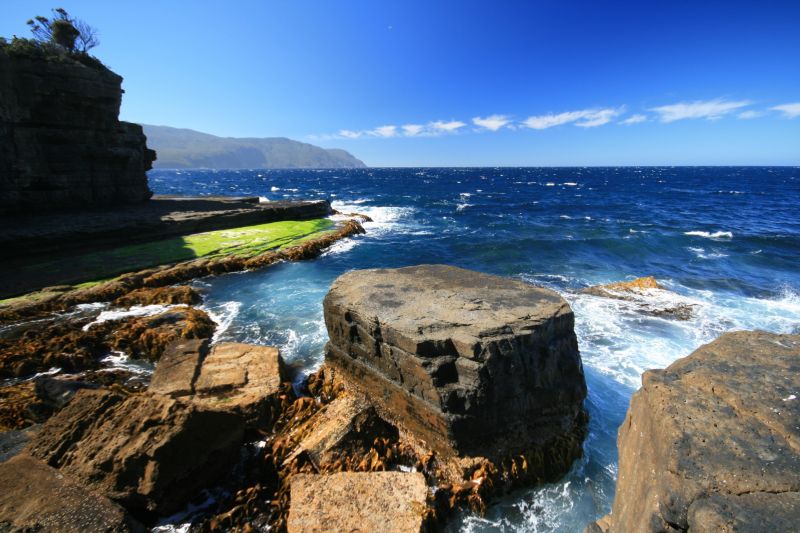
(The picture shows a view of the Tasman Sea from Tasman National Park in southern Tasmania, on the other side of the bay where Abel Tasman claimed Tasmania; photo from There’s Nothing Like Australia)

MYTH: Australian Baby Names Follow English Trends More Closely Than American Ones

09 Sunday Sep 2012

Posted by A.O. in Baby Name Mythbusters

≈ 7 Comments

Tags

Arabic names, British Baby Names, Gone With The Wind, Greek names, international name trends, Italian names, Legitimate Baby Names, name data, name poopularity, name trends, popular names, Southern names, UK name trends, US name trends, Welsh names

Last time we went mythbusting, we looked at whether Australian names are becoming increasingly Americanised, and didn’t find a lot of evidence. This is the flip side to that myth – the one that comforts us that we are essentially more British in our ways than American, and so are our baby names. That despite an increasing tendency to call our children Jett and Harlow, most of us will trustingly follow dear old Mother England, and choose something like Archie, Evie, Callum or Isla.

Again, this myth sounded quite plausible to me. But we have to look and make sure, so once more I prepared myself to examine the Top 100 from each nation. The first hurdle is that both of us are slightly data-challenged, so I was forced to rely on data from Victoria only (the only state with stats going back to 1929), while the data from the UK would include both England and Wales, but not Scotland or Northern Ireland. I did feel that already the waters were getting slightly muddied, only to find that England/Wales doesn’t publicise historical Top 100s.

I express my heartfelt gratitude to Elea at British Baby Names, who has provided on her blog, through her own labours, Top 100s for England/Wales for each decade from 1904 to 1984. Upon e-mailing her to enquire where I might find the one for 1994, she very kindly sent me a copy of her own personal spreadsheets so I could have that one as well.

Now I acknowledge this leaves me with some flaws in my methodology before even starting. I only had data from one state of Australia; furthermore this state has a reputation of being slightly more “English” than average. I only had data from England/Wales, and only had access to years ending in a 4. As I had already examined the earlier myth using data from the United States in years ending with a 0, it was possible I wasn’t going to be comparing apples to oranges so much as bananas to hedgehogs to timeshare villas in Spain.

However, we won’t get too gloomy, but show a bit of British pluck and press on. No, this won’t be the most statistically persuasive thing you’ll read all year, but we’re not doing a study, not trying to prove anything, just having a keen yet amateurish look around us to see if anything obvious shows up. And after all, if the myth is clearly and inarguably true, then broad trends should be pretty obvious even through a fog of slightly dodgy data.

1934

Boys – 82% the same (17% higher than US)

Girls – 69% the same (18% higher than US)

1954

Boys – 75% the same (16% higher than US) – down 7% overall, down 1% relative to US

Girls – 68% the same (21% higher than US) – down 1% overall, up 3% relative to US

1974

Boys – 72% the same (16% higher than US) – down 3% overall, no change relative to US

Girls – 62% the same (11% higher than US) – down 6% overall, down 10% relative to US

1994

Boys – 67% the same (11% higher than US) – down 10% overall, down 3% relative to US

Girls – 61% the same (5% higher than US) – down 1% overall, down 6% relative to US

2011

Boys – 63% the same (4% higher than US) – down 4% overall, down 7% relative to US

Girls – 63% the same (16% higher than US) – up 2% overall, up 11% relative to US

Based on these numbers, I would say that’s a MYTH CONFIRMED – at no time in history did the the amount of popular names shared with the US overtake the amount of popular names shared with England/Wales.

However, you can clearly see that while the number of shared girls names went down only very slightly between 1934 and 2011, the number of shared boys names sunk by almost 20%. In fact, yes, we still share more boys names with England/Wales than with the United States, but only by 4% – four names! Statistically, that’s what I call a big-whooping-deal difference, and if this trend continues, future Australian boy’s names are going to look much more like those in the US than the Top 100 for England/Wales.

Girl’s name did not show this steady decline, and in fact last year had a slight increase since the 1990s, while also showing a significant gain relative to the US data. This makes me think that when we say that our names are more English than American, we are primarily thinking of our names for girls.

GENTLE MUSINGS

Last time I ended the article with “conclusions”; this now seems far too definite and perhaps arrogant considering that we are left with far more questions than answers. So I will not reach any conclusions, but merely gently muse on some of the issues that have been raised.

Questions

  • Many names are shared by the Top 100s of all three countries. Therefore, can you really label names such as Olivia, Jacob, Ella and Liam as “English” or “American”, or are they more properly “international trends”?
  • If determined to designate a name as “English” or “American”, do you rely upon the place which provided the cultural impetus for the name, or the place where it became popular first, or the place where it reached the highest levels of popularity? If the first, then many popular names could be classed as American; if the second or third, a large number would be classed as Australian more than anything else.
  • I used the example of Scarlett as an “American-style” name in the preceding article (I admit without much forethought), and Sebastiane from Legitimate Baby Names quite correctly pointed out that Scarlett was more popular in England than in the United States. Now, it cannot be disputed that Scarlett hails from the United States, because the name became known through Margaret Mitchell’s novel, Gone with the Wind, and was popularised by American actress, Scarlett Johansson. However, the name is #19 in Victoria, #25 in England/Wales, and #80 in the USA. It reached the Top 100 of both Victoria and England/Wales in the same year, 2004, New South Wales in 2005, but only became Top 100 in the USA last year. So which country, if any, claims it?
  • Sometimes my blog entries end up being copied and discussed in some odd places, so my Referrer stats tell me; occasionally they end up somewhere rather disturbing. I found the Mythbuster on Australian and US trends on a not-very-nice forum (not baby name or parenting related), where the poster claimed that supposedly “trashy” American names that were popular in Australia but not the USA (eg Beau) were in fact, not American, but “Southern” names. Did the Civil War not end? I wondered. Is the lower portion of America not part of the United States, but a separate nation? It does raise the issue, what qualifies as an “American” name? Must it be in the Top 100 of every state in the USA to be called American? In which case, I have a feeling that “American” names would end up being those that are popular internationally, like Michael and Emily.

Observations

  • Immigration made a difference between the Top 100s of England/Wales and Victoria. Mohammed and Abdul have been popular names since the 1930s in the UK, while post-war immigration saw names such as Antonio and Ioannis reach the Top 100 in Victoria during the 1970s.
  • Although Australia has a history of being very keen on Welsh-inspired names such as Mervyn and Gweneth, I was amused to notice that not only were these not popular in England/Wales, but they had Welsh names, presumably used by actual Welsh people, which we didn’t, such as Ivor and Glynis.
  • While we all are influenced by each other’s name trends, each country had its names that the others were seemingly oblivious to. The name Gillian seems to be a quintessentially English name, appearing decade after decade on their Top 100, whilst never making the Top 100 in Australia, or the Top 1000 of the US. Meanwhile the US had quite a thing for Melvin – a name which still ranks on their Top 1000. In turn, we had a long-standing fascination with the name Bronwyn.
  • Each country also had their own favourite names. Adrian was a name we took to early – it was Top 100 by the 1930s and stayed there until quite recently. In England/Wales, it took a bit longer to reach the Top 100 and they tired of it sooner. In the US, Adrian only reached the Top 100 in 1989. England/Wales had an inordinate passion for the name Derek, which continued for decades – a name that has never been Top 100 in Australia, and only reached the Top 100 of the USA in 1970, a good half-century after England/Wales. In the US, Douglas seemed to enjoy favour much longer than elsewhere, being still Top 100 as late as the 1980s.
  • In other words, we might all be influenced by international trends, but we also have our own tastes in names, and don’t necessarily abandon a favoured name just because everyone else is doing so.
  • I have noticed that some people, amongst them many Australians I’m sorry to say, assume that a name which becomes popular in England/Wales is somehow more “classy” or “stylish” that one whose popularity originated in the United States or Australia. Granted, whether a name is stylish or not is completely subjective, but I did not feel that this assumption stood up to even casual investigation. From my perusal of popular names from three places across seven decades, it seemed to me that all were capable of being inspired by names that have been considered stylish, and its opposite.
  • For example, the name Isabella became popular in Australia much earlier than elsewhere, and I think most people would say Isabella is a pretty, stylish name. Yet we were also the first (by many years) to jump aboard the Hayden/Aidan/Jayden/Brayden craze. While I don’t consider this the black hole of name taste that others do, I acknowledge it’s not generally thought of as a stylish trend. While England has some lovely aristocratic names on its Top 100s, such as Constance and Daphne, can a land which adored the name Derek really take the title of Stylemeister? America has brought us no end of cool names, from glamourpuss Marilyn to zippy Jett. There’s a freshness and vigour to American name trends which I love, and a world without their names would be a far less interesting one. However, sometimes they’re a trifle overenthusiastic – and besides, Derek was on their Top 100 for 15 years, so they forfeit the style crown too.
  • Oh, and Barry and Sheila? Barry was Top 100 in England/Wales for longer than it was here, and Sheila, although popular in both England/Wales and the United States, didn’t show up in the Australian data, because by the 1930s it had already peaked and dropped off our Top 100. Who’d have thunk it?

Celebrity Baby News: Ed Husic and Bridget Tilley

25 Saturday Aug 2012

Posted by A.O. in Celebrity Baby News

≈ Comments Off on Celebrity Baby News: Ed Husic and Bridget Tilley

Tags

Arabic names, celebrity baby names

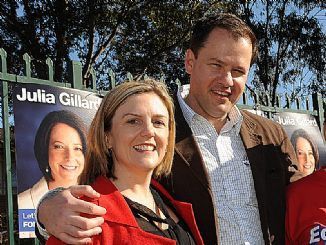
Labor MP Ed Husic, and his wife Bridget Tilley, welcomed their first child on August 8 and have named their son Sam Haris. Sam Husic was born at 8.35 am, weighing 3.6 kg (just over 7 lb), and 49.2 cm long.

Edham “Ed” Husic has represented the seat of Chifley in western Sydney for the Australian Labor Party since 2010. He has a background working for the Communications, Electrical and Plumbing Union. He comes from a Bosniac family, and describes himself as a non-practising Muslim.

Bridget Tilley works at Bridge Media, and has a background in sports media production. Both Ed and Bridget were excited that their son arrived on the same day that Sally Pearson and Anna Meares won gold medals at the London Olympics.

Sam’s middle name Haris is an Arabic name meaning “vigilant guardian”. It is common amongst Muslims.

Less Commonly Used Girls Names

03 Sunday Jun 2012

Posted by A.O. in Name Themes and Lists

≈ 20 Comments

Tags

Abby Sandel, alphanumeric names, Arabic names, Baby Name Wizard, Bonds Baby Search, celebrity baby names, Celtic names, created names, english names, famous namesakes, fictional namesakes, French names, Greek names, hebrew names, Italian names, locational names, Mer de Noms, modern names, mythological names, name data, name history, name meaning, name popularity, Nameberry, Names from the Dustbin, nicknames, popular culture, pseudonyms, rare names, Scottish names, Semitic names, Shakespearean names, stage names, surname names, The Nameberry Nine, Turkish names, unisex names, vocabulary names

When all the name data for the most popular names was released, there were also several articles which looked at some of the names closer to the bottom of the popularity lists than the top. Dorcas at Names from the Dustbin calls these names Bottom of the Barrel – not meaning that they are necessarily of poor quality, but just low in the rankings.

Most names at the bottom of the lists are just re-spellings of common names, or short forms of names that are usually kept as nicknames rather than a full name. However, if you sift through these, there’s some interesting finds at the “bottom of the barrel”, and even some neglected gems.

These names are from the popularity charts of New South Wales, Victoria, Queensland, and Tasmania. Nearly all of them are taken from the very rarest names in their state.

Adeline

This is a pet form of the French name Adele; the French pronunciation is a-de-LEEN, but the English is AD-uh-line. The name is well known from the American ballad Sweet Adeline, which was a standard for Australian folk band, The Seekers. There’s also the piece, Ballade pour Adeline, written for the composer’s baby girl, which I had to thump out tunelessly with my chubby fingers during many a childhood music lesson. However, Adeline has got considerably cooler since then; Kasey Chambers has a song called Adeline, Green Day’s Adeline Records handles indie rock bands, and Elliot Smith released his own darker version of Sweet Adeline. I read at Abby’s Nameberry Nine that Simon Helberg from The Big Bang Theory welcomed a daughter named Adeline last month, making it an up-to-the minute celebrity baby name. Adeline has never been on the Top 100; it was #162 for the 1900s, and then sank until it was out of regular use by the 1940s. Today it fits in well with Adelaide, Addison, Madison and Madeline; however it may be difficult for short form Addie to stand out amongst the sea of Maddies and Abbies.

Allegra

Allegra means “cheerful, lively” in Italian, related to the musical term allegro, and has a long history as a celebrity baby name. Romantic poet Lord Byron re-named his illegitimate daughter Clara Allegra Byron (called by her middle name, and originally named Alba by her mother). Despite poor little Allegras’s life being brief and marked by neglect, the name seems to have been an apt one, because she was described as a vivacious child. Her story didn’t stop American poet Henry Longfellow from using it as his daughter’s middle name; in his poem The Children’s Hour, he describes her as “laughing Allegra”. The American inventor and designer, Buckminster Fuller, also gave this name to his daughter. Allegra Versace is the daughter of Italian designer Donatella Versace, and Allegra Kurer is the daughter of British radio host Vanessa Feltz. In Australia, news presenter Jessica Rowe chose it for her eldest daughter in 2007, and last year it was chosen for the daughter of Emmy Kubainski. Frothy and elegant, with a positive meaning, this fashionable favourite would also make a good Italian heritage choice.

Bonnie

Bonnie is taken from the Scottish word bonnie, meaning “pretty, beautiful”; it’s derived from the French bon, meaning “good”. Bonnie has been used as a personal name since the 19th century, and was even sometimes given to boys, but received a huge boost when it was used in Margaret Mitchell’s popular romance, Gone with the Wind. Bonnie Blue Butler is the daughter of Scarlett and Rhett, and receives her name because she has eyes the colour of the Bonnie Blue Flag – the banner of the Confederate States in the American Civil War. British rocker Billy Idol, who sang Rebel Yell, named his daughter Bonnie Blue, and we had a Bonnie Blue competing in the Bonds Baby Search. Another famous Bonnie is Bonnie Parker, one half of notorious crime duo Bonnie and Clyde. Bonnie has been on the charts almost continuously, albeit in rare use in the 1950s and ’60s. It had a peak in the 1920s at #172, then peaked again in the 1990s at #157; it’s currently climbing in the mid-100s in New South Wales, but is obviously rarer in other states. It’s a sweet old-fashioned name which is also linked to rebellion, giving it a spunkier image.

Cleopatra

This Greek name means “glory of the father”, and is almost impossible for us to disassociate from the famous Queen of Egypt. From a dangerously inbred family of Macedonian Greek origin, she ruled Egypt alongside her father, and then her brothers (who were also her husbands), but then seized control and reigned alone for many years. She was able to align herself with Rome as both ally and lover to both Julius Caesar and Mark Antony, but after Mark Antony’s death, is said to have poisoned herself before she could be captured and humiliated. According to tradition, she killed herself with an asp. Her story captured the imagination of William Shakespeare, who based his play Antony and Cleopatra on the last part of her life, and her story has been made into several films, including the lavishly dreadful one starring Elizabeth Taylor and Richard Burton. Cleopatra is always depicted as a woman of great beauty, although early traditions suggest her attractiveness was based more on enormous charm and sex appeal. This ancient, glamorous name carries a lot of weight, but with short form Cleo becoming fashionable, some parents may wish for a long form of the name.

Elif

This Turkish name is after Alif, the first letter of the Arabic alphabet, and has connotations of “tall and slender”, as if the person is shaped like the letter, which is a long vertical line. It is pronounced ay-LEEF. You probably recall that Natalie Portman had a son named Aleph last year; Aleph is the Hebrew form of the same letter. The meaning of the letter goes back to the West Semitic word for “ox”, as the cuneiform originally represented the shape of an ox’s head. In Arabic, the word is connected via folk etymology to the word for “coy, tamed”, giving it a subtly demure feeling. It’s a common girl’s name in Turkey, and there are several Turkish celebrities with this name. There’s also a town in Turkey called Elif. I’m not sure a non-Turkish person would ever use it, but it’s certainly an attractive name that is easy enough for an English-speaker to understand and pronounce, once they’ve learned how it’s said.

Harlow

This name is inspired by Jean Harlow, a Hollywood superstar of the 1930s. With her platinum hair and vampish image, she was the forerunner to many blonde bombshells of the movies. Despite her beauty and success, Harlow’s life contained much tragedy, and she died of kidney failure while only in her twenties. Harlow took her mother’s maiden name as her stage name; her birth name was Harlean Carpenter. The surname Harlow is from several places in England. Harlow in Yorkshire means “hill of rocks” in Old English, while the meaning of Harlow in Essex is disputed. One theory is that it means “army hill”, with the idea being that local landmark Mulberry Hill was a meeting place for the local people. Another is that it means “temple mound”, as there is an Iron Age burial mound in the area which later had a Roman temple built on the site. Harlow is a unisex name, but more common for girls; the name came to public attention when Nicole Richie named her daughter Harlow in 2008. There were 20 babies named Harlow in Queensland last year, up from 12 the year before. Although numbers are still low, that’s a significant jump.

Pixie

This name is after the small mythological being of English folklore, tales of which come from Cornwall and Devon. They are usually depicted as small sprites who could be mischievous, but were often helpful to humans. A famous Australian with this name was the prolific illustrator and artist Pixie O’Harris (aunt of singer-artist Rolf Harris). Her real name was Rhona Olive Harris, but when she migrated to Australia from Wales she changed her name to Pixie because she was nicknamed “the Welsh pixie” on the boat over. A printer’s error changed her name from Pixie O. Harris to Pixie O’Harris, and she stuck with it as her pseudonym. Last year, businesswoman Roxy Jacenko named her new baby Pixie-Rose. I think some people will find the name Pixie adorably cute, and others impossibly twee; it’s bound to get some interesting reactions, and does have the fashionable X in it.

Sippie

The only person I know of named Sippie is the blues singer Sippie Wallace, who was born Beulah Thomas. Her career spanned seven decades, and although she found fame as a young woman in the 1920s, she was rediscovered in the 1960s and ’70s and was a big influence on Bonnie Raitt, who went on tour with her. Her album Sippie won the Blues Album of the Year in 1983, so her comeback was a definite success. The name Sippie is one that she gained in childhood because the gap in her teeth meant that she had to “sip” all her food and drink. Coincidentally, there is a place on the Gold Coast called Sippy Downs; its name is a corruption of an Aboriginal word meaning “winged creatures”, and interpreted as meaning “birds”. As Sippie Wallace was billed as “The Texas Nightingale”, I find this juxtaposition very charming. Sippie is an unusual name, but what a wonderful namesake. This would be very suitable for a family who loves music, especially jazz and blues.

Torah

In Australia, this name is well known as belonging to snowboarder Torah Bright, who won gold at the 2010 Winter Olympics. Her parents named her after the Torah, which is the Jewish word for the first five books of the Old Testament. The word is from the Hebrew, meaning “teaching, instruction”, however, Torah Bright’s mother believed that it meant “bearer of a great message”. Torah Bright is a member of the Church of Latter Day Saints (Mormon), and lives in Salt Lake City, Utah. There was slight disbelief at this name on The Baby Name Wizard, with a couple of people feeling that it seemed rather offensive, or at least strange. Torah’s name was reported on in Washington Jewish Week; there was no mention of it being offensive to Jews, but they did appear to find it slightly amusing. Like calling your child Bible or Gospel, many will find this name a head-scratcher. It would be given in honour of our Olympic champion, but the religious ramifications may be lost on some people. The fact that it sounds as if it could be short for Victoria is probably a help.

Zahlia

This name is pronounced ZAH-lee-uh, and as far as I’m aware, it’s a modern invention. It seems to be an elaboration of the name Zali; Zali Steggall is Australia’s most internationally successful alpine skier (now retired). Her name has proven a great success here, and spawned many variants, such as Zarly, Zahlee, Zalie etc. It’s unclear where the Stegalls got the name Zali from, and to the best of my knowledge, it’s made up. Zahlia does well in Australia, because it sounds rather exotic, while also being similar to popular names such as Zara and Tahlia (it even looks like a combination of those names). Despite being listed as a rare name, I have seen some parents dismiss Zahlia as being “too common”; perhaps it’s not rare enough to seem “unique”, or perhaps the many variants and sound-alike names make it appear to be one of the pack.

(Picture is from one of the posters for the 1963 movie Cleopatra)

Saturday Sibsets: Four Families from Tasmania

12 Saturday May 2012

Posted by A.O. in Sibsets in the News

≈ 2 Comments

Tags

animal names, Arabic names, Australian Aboriginal names, english names, hebrew names, Maori names, nature names, nicknames, polynesian names, sibsets, unisex names, virtue names, vocabulary names

THE CIRCUS TROUPE

Kristy and Mark Sands run the Sands Family Circus. They began performing together in the mid-1990s, and initially planned on having two children, but ended up with a few more than that. All the children naturally learned circus skills, and became part of the act.

Jiemba (15) BOY – means “morning star” in the Wiradjuri language

Tohua (13) BOY – in Maori means “egg”; in Polynesia, a Tohua is a ceremonial meeting place

Spida (11) GIRL

Rain (9) BOY

Ooliki (3) BOY – I don’t know what his name means

Next child (due in July)

THE BABYSLING MUMPRENEUR

Anita Lincolne-Lomax turned her passion for attachment parenting into a business when she founded Babes in Arms several years ago. Babes in Arms sells baby carriers and baby slings throughout Australia and New Zealand, and last year Anita was named 2011 Mumpreneur of the Year by parenting website connect2mums.com.au, and Babes in Arms is a finalist in two categories of this year’s Australian Small Business Champion Awards. Her husband Ralph now works full-time in the company.

Tilli (8)

Jontae (5) – a variant of Jonte, a pet form of Jonathan

Aviya (3) – Hebrew name meaning “my father is Yahweh” (unisex)

Grace (7 months)

THE COOKS WHO COOK

Jo Cook is a chef and market curator, and food is her passion. A member of Slow Food Hobart, she runs Flavour Workshops for children, and volunteers at a primary school to work in their kitchen garden. Next she hopes to link up with the university to inspire a new generation to eat more mindfully and healthily. Of course, at home, the family connects around growing food, cooking meals and enjoying them together around the table.

Nina (10)

Charlie (8)

A FRESH START

Sarra Elradi came to Tasmania from Sudan with her four children to give them a better start in life. She had separated from her husband, and the family spent two years in Egypt, which they describe as “very tough”, because there was no one to help them. When they arrived in Australia, only Sarra’s eldest son could speak English, so they were on a steep learning curve; however they appreciate the education they are receiving and the opportunities that are available to them. Sarra’s daughters are both members of the Glenorchy Young Women’s Multicultural Group.

Elsawi BOY Arabic name meaning “servant of God”

Hanadi (15) GIRL Arabic name meaning “lovely fragrance”

Zeinab (12) GIRL Arabic name meaning “desert flower”

One other child

(Photo and story from The Hobart Mercury, May 11 2012)

← Older posts
Newer posts →

Enter your email address to follow this blog

Categories

Archives

Recent Comments

A.O.'s avatarwaltzingmorethanmati… on Zarah Zaynab and Wolfgang…
Madelyn's avatarMadelyn on Zarah Zaynab and Wolfgang…
JD's avatardrperegrine on Can Phoebe Complete This …
A.O.'s avatarwaltzingmorethanmati… on Rua and Rhoa
redrover23's avatarredrover23 on Rua and Rhoa

Blogroll

  • Appellation Mountain
  • Baby Name Pondering
  • Babynamelover's Blog
  • British Baby Names
  • Clare's Name News
  • For Real Baby Names
  • Geek Baby Names
  • Name Candy
  • Nameberry
  • Nancy's Baby Names
  • Ren's Baby Name Blog
  • Sancta Nomina
  • Swistle: Baby Names
  • The Art of Naming
  • The Baby Name Wizard
  • The Beauty of Names
  • Tulip By Any Name

RSS Feed

  • RSS - Posts

RSS Posts

  • Celebrity Baby News: Melanie Vallejo and Matt Kingston
  • Names from the TV Show “Cleverman”
  • Can Phoebe Complete This Sibset?
  • Zarah Zaynab and Wolfgang Winter
  • Baby, How Did You Get That Name?
  • Celebrity Baby News: Media Babies
  • Celebrity Baby News: Adelaide Crows Babies
  • Celebrity Baby News: Chris and Rebecca Judd
  • Names at Work: Name News From the World of Business and Employment
  • Celebrity Baby News: Sporting Round Up

Currently Popular

  • Rare Boys Names From the 1950s
  • Celebrity Baby News: Toby Allen and Darren Weller
  • The Top 100 Names of the 1930s in New South Wales
  • Celebrity Baby News: Antonia Kidman and Craig Marran
  • Celebrity Baby News: Jason Morrison and Heidi Tiltins

Tags

celebrity baby names celebrity sibsets english names famous namesakes fictional namesakes honouring locational names middle names name combinations name history name meaning name popularity name trends nicknames popular names saints names sibsets surname names twin sets unisex names

Blog at WordPress.com.

Privacy & Cookies: This site uses cookies. By continuing to use this website, you agree to their use.
To find out more, including how to control cookies, see here: Cookie Policy
  • Subscribe Subscribed
    • Waltzing More Than Matilda
    • Join 517 other subscribers
    • Already have a WordPress.com account? Log in now.
    • Waltzing More Than Matilda
    • Subscribe Subscribed
    • Sign up
    • Log in
    • Report this content
    • View site in Reader
    • Manage subscriptions
    • Collapse this bar
 

Loading Comments...