• About
  • Best Baby Names
  • Celebrity Baby Names
  • Celebrity Baby Names – Current
  • Celebrity Baby Names – Past
  • Featured Boys Names
  • Featured Girls Names
  • Featured Unisex Names
  • Links to Name Data
  • Waltzing on the Web

Waltzing More Than Matilda

~ Names with an Australian Bias of Democratic Temper

Waltzing More Than Matilda

Tag Archives: name popularity

Will Lillia Get Lost in the Crowd?

10 Saturday May 2014

Posted by A.O. in Naming Assistance

≈ 2 Comments

Tags

choosing baby names, fictional namesakes, name popularity, name trends, nicknames, popular names

127509-11f2cc74-9c0c-11e3-8857-926a2cf5fac5

Emma and her husband Matt are expecting a baby later in the year. If they have a girl, Emma’s choice would be Rosamund – a name she has loved for many years. She loves the history of the name, the meaning, and the fact that it has ties to her favourite book, Picnic at Hanging Rock. Matt is willing to go along with it, but dislikes the -mund ending.

Recently, Emma discovered another name she likes – Lillia. She would be willing to give up her beloved Rosamund for Lillia, because Matt loves it. However, Emma is worried that Lillia is not distinctive enough. Not only is Lily very popular, but there are lots of other similar names in the Top 100, such as Lola, Layla, Lila, and Olivia.

Emma found it annoying to grow up with a very popular name, and swore she would never put her child through that. Now she wonders if a Lillia would experience the same issues she did, only with names that are highly similar instead.

* * * * * * * * * *

Lillia is what we name nerds describe as “not trendy, but on trend”. You almost never see it, but it has instant recognition as being similar to many other popular or rising names. Although L-L and LL names are a huge trend for girls, I wouldn’t worry so much about Lola, Lila, Ella, and Milla (etc etc) – it’s difficult to avoid zeitgeist.

Even though there are lots of popular girls names with a strong L sound in them at present, I don’t see how having several other girls around her with vaguely similar names would negatively impact a Lillia. Maybe once in a while there would be a Did you say Lillia? Oh, you wanted Olivia moment, but I don’t see how that would be a real problem.

The only thing to really think about in this regard is the highly popular Lily/Lilly, and the rapidly rising Lillian, especially if your daughter ended up with the nickname Lili or Lil. I can see that even though Lillia is a very uncommon name, it’s not impossible she’ll be one of a few Lilys/Lillys/Lilis.

Of course, the popularity of a popular name today is nothing compared to what it used to be. If you want some exact numbers, last year there were 1403 girls named either Lily or Lilly, and 176 named Lillian. That’s just over 1500 potential Lily/Lilly/Lili name twins, out of more than 150 000 baby girls born in the year – around 1%, even combining all the names together. Does that sound a bit less scary?

I think Lillia is a beautiful name, and I can quite understand why you are taken with it, and Matt loves it. It has a soft lilting sound without seeming weak or frilly, and clean, elegant lines. I think its similarity to other names gives it familiarity, so that it fits in with current trends, while still seeming different. To me, it doesn’t get lost in the crowd, and if you were worried about Lillia being another Lily, you could use Lia as the nickname instead.

Rosamund is a gorgeous name too, and also fits in with current name trends, because almost every week in the birth notices I see baby girls named Rose, Rosie, Rosa, Rosalie, Rosemary, or even Rosabella. What an enviable baby name dilemma you have – choosing between two such lovely names! Either way, you can’t go wrong.

UPDATE: The baby was a boy named Arthur!

POLL RESULTS
79% of people were in favour of using the name Lillia. 32% thought it blended in with the crowd, rather than getting lost in it, while 16% thought that its rareness automatically made it distinctive. 31% thought it was a bit too much like currently popular names, but was so nice it didn’t matter. 18% of people were against using the name Lillia, believing it sounded like too many girls names in the Top 100, while 3% were undecided.

It was a close contest choosing between Rosamund and Lillia, but Rosamund had the edge at 45% to 42%. 13% of people liked both names equally.

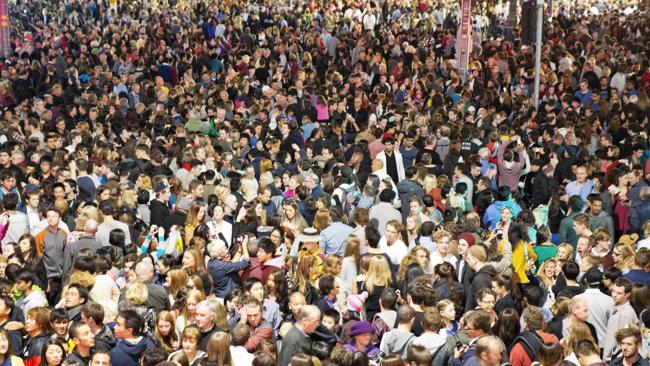
(Picture is of Melbourne’s White Night festival; photo from the Herald Sun)

Famous Names: Barry and Gladys

07 Wednesday May 2014

Posted by A.O. in Famous Names

≈ 4 Comments

Tags

birth notices, British names, dated names, famous namesakes, fictional namesakes, Irish names, locational names, name history, name meaning, name popularity, names from comics, names from films, nicknames, Norman names, royal names, saints names, Scottish names, surname names, Welsh names

art-barry6-620x349

Last month, New South Wales Liberal Premier Barry O’Farrell resigned from his position during a NSW Independent Commission Against Corruption investigation into Australian Water Holdings. Barry denied receiving a $3000 bottle of Grange Hermitage from a AWH executive and failing to declare it, but a thank you note in his handwriting, even mentioning the 1959 vintage of wine (the year of Barry’s birth), was presented to ICAC as evidence.

Minister for Transport Gladys Berejiklian was Barry O’Farrell’s choice for his successor, but in the end she settled for Deputy to Premier Mike Baird, and was rewarded by being made Minister for the Hunter region.

New South Wales is not unaccustomed to these political scandals. The former Labor Premier resigned from his shadow ministry roles due to a personal affair, and a former Liberal Party leader resigned in tragic circumstances several years ago. The new Premier is now watching his ministry become engulfed in a cash-for favours scandal which has also damaged the NSW Labor Party, and is creating anxiety for the Federal government as well. Expect more scalps.

Barry can be seen as an Anglicised form of the Irish name Bairre, a short form of Finnbarr or Barrfind, meaning “fair hair”. It can also be an Anglicised form of the Irish name Berach, derived from a Gaelic word meaning “sharp”, and often glossed as “spear”.

There are five Irish saints named Finnbarr, with the best known being a 6th century monk who created a centre of learning in the city of Cork. Saint Barrfind (known by a confusing variety of spellings of his name) is a 6th century Irish saint who legend says was a disciple of Saint Columba, and said to have voyaged to North America, serving as an inspiration for Saint Brendan the Navigator. Saint Berach was a 6th century Irish saint who was a disciple of Saint Kevin.

The Barry surname can be derived from these names, such as O’Baire, meaning “son of the fair haired one”. But most Irish Barry families got their surname from the Normans, because de Barri was a knight who came over during the Norman Conquest of Ireland. The name comes from the village of LaBarre in Normandy, whose name may mean “gateway, barrier”.

However, the aristocratic de Barry family, Normans settled in Wales, received their name from ownership of Barry Island, whose name seems to come from the Welsh for “hill”, although it’s often said to be named after Saint Baroc, a British saint who had a chapel on the island. The Scottish Barrys take their name from a place name in Angus which also means “hill”.

Barry has been used as a first name in Ireland and England (and more rarely, Wales and Scotland) since at least the 18th century, and due to immigration from Ireland, became known in the Americas and Australia as well.

A famous Australian namesake is comedian Barry Humphries, who created the character of naively ocker Barry McKenzie for a Private Eye comic strip in the 1960s. In the 1970s films, Barry McKenzie is the nephew of Humphries creation Edna Everage, and played by Australian singer Barry Crocker. Perhaps due to this trio of Barrys, and Barry McKenzie’s rich Australian slang (mostly made up), Barry is often perceived as a very Aussie name. This does have some validity, because Barry peaked higher in popularity here than elsewhere.

Barry was #121 in the 1910s, and joined the Top 100 in the 1920s at #84. It peaked in the 1940s at #10, and left the Top 100 in the 1970s – perhaps the Barry Mackenzie films weren’t a help to it? Barry last ranked in the 1990s, but just two years ago I saw a birth notice for a baby Barry, so it is still in occasional use. Bazza or Baz are the traditional nicknames, although Baz Luhrman is not a Barry.

Gladys is a modern form of the medieval Welsh name Gwladus, traditionally identified as a Welsh form of Claudia, although it may come from the Old Welsh word for “country, nation, realm”, with connotations of sovereignty and rulership over the land.

The name Gwladus was used amongst royalty and nobility in medieval Wales, and Saint Gwladys (often called Saint Gladys) was the beautiful daughter of a legendary Welsh king who married another king, also a saint (somehow he managed to fit raiding and robbery onto his CV). The saintly couple had a number of children who were saints as well. According to legend, Gwladys and her family knew King Arthur, and lived in the woods as hermits, with a strict regimen of vegetarianism, cold baths, and chastity.

The name Gladys became well known outside Wales in the 19th century, when English author Ouida used it for a character in her novel Puck. In the book, Gladys is a farm girl who becomes a gifted actress; angelically beautiful, she manages to be both pure and passionate. Apart from this attractive namesake, the nickname Glad seems cheerful, and Gladys may have reminded some parents of gladiolus flowers (the familiar “gladdies” so beloved of Dame Edna Everage).

Gladys was #8 in the 1900s, left the Top 100 in the 1940s, and hasn’t ranked since the 1950s. There was a very famous Australian singer named Gladys Moncrieff, an absolute superstar for decades, known as “Australia’s Queen of Song”, and “Our Glad”. She started her career as “Gladys the Wonder Child” in the 1900s, and was still holding farewell concerts in the 1960s, laden with awards and honours on every side. The name Gladys disappeared from the charts around the same time she retired, but must have remained in some use, for Gladys Berejiklian was born in 1970.

Gladys was very popular once – as popular as Ava is now. In its day it was fashionable, and must have been seen as fresh, pretty, and charming. It is now generally viewed as an “ugly old lady name”, and often cited as an example of a name that can never be brought back, like an unlovely corpse with DO NOT REVIVE scrawled across its chest.

I think most of us are realistic enough to know that our daughters’ names – so popular, fashionable, fresh, pretty, and charming at present – will probably become “old lady names”, given enough time. We know there will be wrinkled Madisons, widows-humped Khaleesis, Willows with hip replacements, and Arias doting over their great-grandchildren, and their names’ image will change to match their senior status.

But names like Gladys are a looming spectre – what if our daughters’ names don’t just become old lady names, but ugly old lady names? Names that people hate, shudder with horror to think they were ever used, and vow will never be used again? And what popular names of today will be the “ugly old lady names” of the next century, I wonder?

POLL RESULT
Barry received an approval rating of 17%, making it the lowest-rated boys’ name of 2014, and the lowest-rated name overall. 45% of people thought that Barry was a terrible name, and only one person loved it. Gladys did slightly better, with an approval rating of 25%, but 46% of people hated the name.

(Photo of Barry O’Farrell and Gladys Berejiklian from The Sydney Morning Herald)


Girls Names From the Top 100 of the 1920s

04 Sunday May 2014

Posted by A.O. in Name Themes and Lists

≈ 5 Comments

Tags

African names, animal names, Arthurian names, Berber names, British names, celebrity baby names, classic names, created names, dated names, Egyptian names, english names, European name popularity, fictional namesakes, gemstone names, germanic names, Greek names, Irish names, Latin names, Libyan names, locational names, mythological names, name history, name meaning, name popularity, names from movies, names from television, nature names, nicknames, Old English names, Old French names, Old Irish names, retro names, saints names, Sanskrit names, scandinavian names, surname names, underused classics, unisex names, Welsh names, Yiddish names

palm-beach-sydney-1920s

The data on popular names are all in, but maybe none of the current Top 100 names interest you. Or perhaps you are dismayed at how much your favourite names went up in popularity last year. If so, why not look at the popular names of ninety years ago, to see if there are some gems from times gone by that are ready to shine again?

Agnes
Agnes of Rome was a 3rd century child martyr. According to tradition, she was a member of the Roman nobility, raised in a Christian family, and a very beautiful young girl. She is said to have been only twelve or thirteen when she died, and like Saint Catherine, is one of the patrons of young girls; the eve of her feast day was a time for girls to perform rituals to discover their future husbands. The name Agnes was very popular in the Middle Ages; one of its attractions was probably that in medieval English it was softened into Annis, so that it sounded as it was related to Anne. The name Agnes is from the Greek for “pure”, but because it sounds similar to the Latin for “lamb”, agnus, Saint Agnes is often depicted holding a lamb. Agnes was #28 for the 1900s, and by the 1920s had fallen to #77. It left the Top 100 in the 1930s, and hasn’t ranked since the 1940s, but is now getting some use again. This soft, elegant name has been chosen for their daughter by several celebrities, including Jennifer Connolly. It is the name of a little girl in the movie Despicable Me, and currently popular in Scandinavia. It feels as if Agnes is already making a comeback.

Beryl
Gemstone name; beryls are stones which in pure form are colourless, but usually tinted by impurities in a variety of shades. Green beryls are called emeralds, and light blue ones are aquamarines, but all colours of beryl have their own name. The word beryl is ultimately from Sanskrit, probably derived from the town of Belur in southern India. Beryl has been used as a first name since the 17th century, but only became popular during the 19th, along with other gemstone names. Historically, it has been used as a male name too, mostly in the United States, perhaps as a variant of the surname Berrill (an occupational name from the wool trade), and the Yiddish name Berel (pet form of Ber, “bear”). Beryl was #61 in the 1900s, and peaked in the 1920s at #8. It left the Top 100 in the 1950s and hasn’t ranked since the 1960s. Beryl is the bossy cook in Downton Abbey, and the evil queen in the Sailor Moon cartoons. This would make a daring gemstone revival, and offers the nickname Berry.

Elva
Variant of the Scandinavian girl’s name Alva, or an Anglicised form of the Irish unisex name Ailbhe, pronounced like Alva, and one of the influences on the name Elvis. You could see Elva as a specifically feminine form of Elvis, and the Irish origin seems most likely in Australia. Elva was #160 for the 1900s, and peaked in the 1920s at #97, before falling steeply; it last ranked in the 1950s. Elva was a “trendy” name in its day, but its relative obscurity has saved it from seeming dated. I have seen several babies named Elva recently, and it doesn’t seem out of place amongst the Evas and Avas.

Gwendoline
Variant of the Welsh name Gwendolen, first used for a legendary queen of Britain by Geoffrey of Monmouth in his History of the Kings of Britain. According to this legend, Gwendolen was the daughter of King Corineus of Cornwall. She defeated her husband after he repudiated her in favour of his mistress; he was killed in battle, and Gwendolen had the mistress drowned. She then took the throne as the first independent queen of the Britons, and ruled for fifteen peaceful years. Gwendolen appears in Edmund Spenser’s The Faerie Queene, and in the poems of William Blake, as a symbol of British sovereignty. Gwendolen has been translated as “white ring, white bow”, although it may have been an attempt to Latinise another Welsh name. Geoffrey re-used the name Gwendolen for the name of Merlin’s wife in his Life of Merlin. Gwendolen and Gwendoline were revived in the Victoria era as part of the fascination with Arthurian names, and names from British legend. Gwendoline was #68 in the 1900s, and peaked in the 1920s at #35. It left the Top 100 in the 1940s, and hasn’t ranked since the 1950s. It still receives occasional use, and has an upper-class British feel to it, while giving Gwen and Winnie as nicknames.

Hilda
Originated as a short form of Germanic names with hild in them, meaning “battle”. Hilda of Whitby was a 7th century saint from Northumberland, and her name in Old English is Hild. Born into royalty, she was baptised as part of the mission by Pope Gregory the Great to convert the English to Christianity. Hilda became a nun, then founded a monastery at Whitby (it was in the Celtic style, where men and women lived separately, but worshipped together). Hilda is described as a woman of great intelligence and energy, a fine abbess and teacher, so wise that rulers came to her for advice, yet caring towards ordinary people. Hilda was #27 in the 1900s, and #71 by the 1920s; it left the Top 100 by the 1930s, and hasn’t ranked since the 1940s. Hilda is a popular name in Sweden, giving this name a sexy Scandinavian feel as well as a sturdy English one; it doesn’t seem radically different from Heidi, and is even slightly like Matilda. It would be an unusual choice, but by no means a strange one.

Kathleen
Anglicised form of Cáitlin, the Irish form of Catelin, the Old French form of Catherine. The Irish Cáitlin can be said kat-LEEN, so it’s just a step to Kathleen. This name has a very Irish association, for Kathleen Ni Houlihan is an emblem of Irish nationalism representing the country of Ireland. She is usually depicted as an old woman who has lost her home and her lands, needing young men willing to fight and die for her. Once she has been rejuvenated by their martyrdom, she appears young and beautiful, and proud as a queen. It combines myths of both paganism and Christianity, and Kathleen Ni Houlihan has appeared in folk songs and poems, and the literary works of William Butler Yeats, Lady Augusta Gregory, Sean O’Casey, and James Joyce, amongst others. The name Kathleen was #10 in the 1900s, peaked in the 1910s at #5, and was #11 by the 1920s. A long time favourite, it didn’t leave the Top 100 until the 1990s, but hasn’t ranked since the late 2000s. Despite being out of fashion, this name was popular for more than eighty years, and still seems fresh and wholesome, with a hint of Irish charm.

Mabel
Short form of Amabel, from the Latin name Amibilis, meaning “lovable”. There were both male and female saints named Amabilis, and the female one is often known as Saint Mable to prevent confusion. Mabel was a popular name in the Middle Ages, and is found in a range of variant spellings; it is thought that it was originally said MAB-ell rather than the current MAY-bel. Mabel became rare in England, but remained in use in Ireland, where it was used to Anglicise the name Maeve. It was revived in the 19th century when Charlotte M. Yonge used it in her best-selling romance, The Heir of Reclyffe, for a character with an Irish background. Mabel was #30 in the 1900s, and had fallen to #90 by the 1920s, leaving the Top 100 the following decade. Mabel left the charts in the 1950s, but returned in the late 2000s. This retro name has plenty of spunk, and although it isn’t popular yet, don’t be surprised if it is again some day.

Monica
Saint Monica was the mother of Augustine of Hippo. A devout Christian, it was her dearest wish for her pagan son to become one as well, and after seventeen years her prayers were answered when he was converted by Saint Ambrose. Of course Augustine went the whole hog and ended up a saint, and a doctor of the church as well. Saint Monica was rather neglected after her death, but her cult became popular during the Middle Ages. Monica was from Libya and her name a Berber one that was common at the time; it is derived from the Libyan god Mon, a form of Amon, one of the most important of the Egyptian gods. In the Middle Ages, the origins of her name being unknown, it was decided that it must come from monere, Latin for “to advise, to warn”. Although this neatly tied in with Saint Monica’s story, it was etymologically incorrect. Monica was #141 in the 1900s, and peaked in the 1920s at #91; it had a minor peak in the 1990s at #127, coinciding with the sitcom Friends, which had the character of Monica Geller. Monica has never left the charts, but never been higher than the bottom of the Top 100, making it a genuine underused classic. It still sounds slightly exotic, and makes a pretty, sophisticated choice that’s never been common.

Peggy
Short form of Margaret, meaning “pearl”. It’s a variant of Meggy which has been in use since medieval times. Peggy first ranked in the 1910s at #189, and peaked in the 1920s at #63. It fell sharply, leaving the Top 100 by the following decade, and hasn’t ranked since the 1980s. Peggy is now staging a comeback, as it fits in perfectly with the trend for vintage and retro short forms. The ambitious career woman Peggy Olsen from Mad Men is a feminist icon, and this name has been chosen as a celebrity baby name by both MP Jacinta Allan, and media personality Chrissie Swan.

Una
Anglicised form of Úna, a medieval Irish name believed to come from the Old Irish for “lamb”. In Irish mythology, Úna was a fairy queen, wife of Finnbheara, the high king of the fairies. It is pronounced OO-na, and was sometimes Anglicised to Agnes, because of the lamb connection, as well as Winnie or Juno, based on similar sounds. Una is also a name created by Edmund Spenser for his epic poem, The Faerie Queene. In the allegory, Una represents the “True Church” (Protestantism), and defeats the representation of the “False Church” (Catholicism). Spenser seems to have based her name on the Latin for “one” (to reference unity and a single choice of faith); the name is said YOO-na. However, Spenser wrote his poem while living in Ireland, and it is hard not to wonder if he had been influenced by the Irish name. Una was #94 in the 1900s, and peaked in the 1920s at #69, leaving the Top 100 the following decade. It hasn’t ranked since the 1940s, but this name is really quite beautiful, and with its clear simplicity, doesn’t seem odd next to Ava and Mia.

POLL RESULTS
The public’s favourite names were Mabel, Gwendoline and Agnes, and their least favourite were Monica, Hilda and Beryl.

(Picture shows women holidaying at Palm Beach in Sydney in the 1920s; photo from the State Library of New South Wales)

Can You Help This Mum Find Some Baby Name Inspiration?

03 Saturday May 2014

Posted by A.O. in Naming Assistance

≈ 9 Comments

Tags

baby name websites, choosing baby names, classic names, honouring, Laura Wattenberg, middle names, name popularity, nicknames, Nymbler, sibsets, The Baby Name Wizard

images

Elizabeth and Thomas are expecting their second child later this month, but are yet to seriously discuss names. They already have a little boy named Xavier, but Elizabeth isn’t too fussed about “sibset flow” – she just wants the children to have names they like.

What they would like in a name

  • Not extremely popular
  • Not very uncommon
  • No unusual spellings
  • A name that can stand the test of time, and suit an adult as well as a child
  • Elizabeth would most like a classic or traditional name, combined with a more modern or contemporary middle, such as Zali or Eden

Names currently being considered
Girls: Grace or Kate, with Olive or Victoria as the middle name. Elizabeth loves the name Zara, but Thomas isn’t convinced.
Boys: Elizabeth really likes the name Jack, but believes it is too popular. She likes Ned, Ted, and Sam, but isn’t 100% sold on them. They earlier considered the name Lenny, but weren’t sure they could love it forever as much as they did initially. They may use the family name Geoffrey as the middle name.

Names that have been crossed off the list
Girls: Maggie
Boys: Elizabeth has crossed off Harry and Charlie, and Thomas has crossed off Ben, Benjamin, Clancy and Chas. Noah and Joe are also off the list.

The family surname begins with M and ends with R with an L sound in it eg Marler. Because of this, they have eliminated Amelia as a possibility, and any two-syllable name ending with -la, such as Ella or Layla. Elizabeth loves alliterative names, and would be happy with a name starting with M.

Elizabeth is feeling quite stuck in regard to name inspiration, and is hoping blog readers can help her out with some ideas. She wishes she could just have a list of names in front of her, so she could tick or cross off ones she likes or doesn’t.

* * * * * * * * * *

Elizabeth, when you said you would like a list of names that you could either say Yes or No to, that reminded me of the Nymbler website, run by Laura Wattenberg of the Baby Name Wizard.

To use it, you choose up to six names you like as your name inspirations, and then press Find Names – you can also select boy or girl names, or both. Once you receive your list of names, you can either save the names you like by pressing the heart symbol, or you can block the ones you dislike so you won’t see them again. I find the longer you go on from the same set of names, the more crazy and random the name suggestions get.

Another online tool that is a bit more focused is the Baby Name Expert on Behind the Name. You have to register to use the site (it’s free), and then you will find it under the Tools menu. You select a gender, and the country you are from (Australia is included), and then it starts suggesting names at random.

At this point, you can tell the BNE that you love the name, and save it to your list. Or you can tell it that the name is okay, and the reasons that you don’t mind it. Or you can give it the flick, and explain why this name is completely wrong for you.

Each time you either save, okay, or ditch a name, you will receive suggestions based on your preferences. Unlike Nymbler, the longer you use this app, the more focused and sensible the suggestions tend to get, and it’s very fast to move from one name to the next.

Anyway, that’s two methods of getting a long list of names that you can tick or cross off. It might be fun to do this with Thomas, so you can choose names together, and discuss your preferences. Or if he finds this kind of thing boring or stressful, it’s a way to immediately get a list of names you like that he can either agree to or nix in his own time.

I can’t give you hundreds of name ideas, but I did notice that all the names you chose were short and simple. You seem to like sensible, wholesome names for girls, like Grace and Kate, with maybe something more elaborate, trendy, retro, or modern in the middle. For boys, you seem to like cute, nicknamey names like Jack, Ned, Ted, Sam, or Lenny.

Girls names that reminded me a bit of Grace and Kate include

  • Alice
  • April
  • Audrey
  • Bonnie
  • Claire
  • Daisy
  • Hope
  • Ivy
  • Lucy
  • Maisie
  • Rose
  • Zoe

Possible middle names could be

  • Aria
  • Clementine
  • Eleanor
  • Eloise
  • June
  • Pearl
  • Penelope
  • Tess
  • Sadie
  • Scarlett
  • Susannah
  • Vivienne

Cute boys names could be names like

  • Alfie
  • Digby
  • Finn
  • Freddie
  • Gus
  • Jed
  • Jem
  • Kit
  • Mack
  • Nico
  • Rafe
  • Roy
  • Sid
  • Sonny
  • Toby
  • Vince

It seems as if you have already picked out nice names though – Grace and Kate are perfect, and Grace Victoria or Kate Victoria is quite regal.

There are several boy’s names you like, but you don’t seem ready to commit to any of them yet. I wonder whether you just need more time, or need to meet your baby first before you decide? Or maybe you’d prefer choosing a formal name for the birth certificate, with a nickname for everyday use, like Edward nn “Ned”, or Theodore nn “Ted”, or Lennox nn “Lenny”.

I know you are getting close to your due date, but don’t let that panic you. Take some time to get a list of names that you and Thomas like – names that you can imagine calling your child, and that fits in with your lifestyle. You don’t need to decide on one until after the baby is born, and if you still don’t have a name, you have weeks after the birth to choose one.

Good luck Elizabeth – for some reason I feel as if you are closer to finding a baby name than you think, even if you end up with something completely different than the names you are considering. Do let us know what name you choose for your baby once she or he arrives!

NAME UPDATE: The baby’s name is Patrick!

The Fastest Rising Top 100 Names of 2013

20 Sunday Apr 2014

Posted by A.O. in Naming Issues

≈ 7 Comments

Tags

Baby Center, Babynameobsessed, celebrity baby names, classic names, famous namesakes, fictional namesakes, Google, Italian names, middle names, name popularity, name trends, names from television, nicknames, popular names, royal names

Aria and Louis

GIRLS

Aria
In 2012 Aria was a newcomer to the national Top 100, and one of its highest-risers. In 2013 its success continued as the #1 rising name in Australia and Queensland, and a top rising name in New South Wales and Victoria. Aria is one of the main characters in the Pretty Little Liars book and television series, and also sounds similar to Arya from Game of Thrones. Its Italian origins make this a good cross-cultural choice too.

Evelyn
Classic Evelyn was the #1 rising name in the Northern Territory, and one of the top rising names nationally, as well as in New South Wales, Victoria, and Tasmania. In 2012 it was a top rising name nationally, and last year increased the speed at it which it rose. Ivy was the fastest-rising girls’ name of 2012, and here’s another name with a V, following hard on the heels of Evie, Eva and Ava.

Penelope
I suspect Penelope’s entrance into the Top 100 has caused some dismay. It’s certainly made me eat humble pie, as I was foolish enough last year to reassure parents that Penelope was not too popular when you had a careful look at the available data. I began to get an inkling I had made a boo-boo when day after day, I saw that the search term popularity of penelope in australia had come up yet again. I couldn’t help worrying that if all these people trustingly chose the name Penelope, its popularity was sure to increase dramatically. My fears were not unfounded, as Penelope rose more than 100 places to be the #1 rising name in Victoria, and was a top rising name nationally and in New South Wales. A slew of celebrity babies named Penelope has helped this name become hot property, and it’s back on the Top 100 for the first time since the 1970s.

Samantha
Perenially popular Samantha had been gradually sliding down the Top 100 for over a decade, but last year got a boost, going up 15 places nationally and 58 places in Victoria, as well as being a top rising name in the Australian Capital Territory, and joining the Western Australian Top 50. Perth-born model and singer, Samantha Jade, who won The X-Factor in 2012, and recently had a starring role in the hit INXS mini-series, Never Tear Us Apart, probably has something to do with it. Popular breakfast television presenter Samantha Armytage may be another factor.

Lola
Lola was the #1 name rising in New South Wales and a top rising name in Queensland. Short forms such as Maggie and Elsie did well in the charts in 2013, and although Lola is part of this movement, it seems much cheekier and flirtier than its retro sisters. Could it be the next Ruby?

BOYS

Louis
Even though classic Louis has charted since the 1900s, it was a newcomer to the Top 100 last year. It rose at least 27 places to become the #1 rising name in the country for 2013, as well as a top rising name in New South Wales and Victoria. Louis has been rising steeply for several years now, and it was only a matter of time before it made the Top 100 – but being chosen as a royal middle name can’t have done any harm.

Hudson
Hudson was one of the fastest-rising names of 2012, and continues to power up the charts. It was the #1 rising name in New South Wales, and a top rising name nationally, as well as in Victoria, Queensland, Western Australia and Tasmania. This name has been doing very well since being chosen as a baby name by two celebrities – TV chef Curtis Stone in 2011, and pop star Guy Sebastian in 2012.

Nathaniel
Nathaniel is another newcomer to the Top 100 charts, having charted in the 1900s then dropped off the charts until the 1960s. It was the #1 rising name in Victoria, and a top rising name nationally, and in New South Wales, Queensland, and Tasmania. This retro name has been making smooth and steady progress up the charts for decades, and its entry into the Top 100 coincides with the release of the first successful singles of pop singer Nathaniel (thanks to Ebony at Babynameobsessed for this tip). Another famous Australian namesake is Nathaniel Buzolic from The Vampire Diaries. This provides another way to get the popular short form Nate.

George
Remember those reports from Baby Center that Prince George hadn’t had any effect on the popularity of the name George? And how they said that before any official data had been released? Well now some has, and the name George was a top rising name nationally, and in Queensland and Western Australia (our most monarchist states?). George rose 11 places to #60; its highest ranking since the 1970s. As well as the little Prince currently gracing our shores, there is a baby George in Downton Abbey, the heir to an earldom. The Duke and Duchess of Cambridge are fans of the show, making their choice of George a possible subconscious small-screen homage. It’s interesting to note that George, Alexander and Louis all became more popular last year.

Lincoln
Lincoln was a fast-rising name of 2012, and before all the data had come in, I predicted that it would make the national Top 50 for 2013. It rose 17 places and just scraped in at #50, so a close call! Lincoln was also a top rising name in Victoria and Western Australia. Lincoln Younes plays “River Boy” Casey Braxton on Home and Away, and the name Lincoln has been increasing in popularity ever since he joined the show in 2011.

Other Names That Rose

  • Lillian – top riser nationally and in New South Wales
  • Eloise – top riser nationally and in Victoria
  • Olive – top riser nationally and in Victoria
  • Violet – #1 rising name in Western Australia and Tasmania
  • Indigo – top riser in Victoria and Queensland
  • Felix – top riser nationally and in New South Wales
  • Ryder – top riser nationally and in Tasmania
  • Lewis – top riser in Victoria and Tasmania
  • Hugo – top riser in Queensland and the Australian Capital Territory
  • Finn – top riser in Western Australia and the Australian Capital Territory

NOTE: I have chosen those names which increased in popularity in the most number of states and territories, making their popularity widest across the board in Australia. For the positions of each name in individual states and territories, please refer to the Name Data category for more information.

POLL RESULTS: People’s favourite fastest-rising names were Penelope and Louis.

Name News Round-Up

16 Wednesday Apr 2014

Posted by A.O. in Names in the News

≈ 4 Comments

Tags

aristocratic titles, Australian Aboriginal names, banned names, birth notices, Births Deaths and Marriages, celebrity baby names, celebrity sibsets, choosing baby names, colour names, locational names, name popularity, name trends, names of mountains, nicknames, royal titles, trademarks, triplet sets, Twitter

news

Banned Baby Names

It was reported in The Age last month that the state of Victoria is banning baby names under the Births, Deaths and Marriages Act. This isn’t actually news in the sense of new information – that’s been the situation everywhere in Australia since the mid-1990s, with all states following more or less the same guidelines. It is a reminder that Births Deaths and Marriages has the discretion to reject names that are deemed unsuitable – however, the newspaper report failed to mention that parents can appeal the decision, and appeals have been successful in the past. Names rejected in Victoria included Lord, Princess, Princess Di and Prince (titles), Fireman Sam (trademark), Tit (offensive), and also Glory Hallelujah, New Covernant, Wonderful Beautiful, Anarchy, and Honest Mary, which seem to be Victoria’s idea of unsuitable. Pepper, Jazz, Reef, and Texan Gamble all made the cut however.

The Sunshine Coast Daily reported that “quirky” names were being banned in Victoria. The article said rather smugly that parents were free to choose any name they want in Queensland, whether it be pop culture Khaleesi or traditional Francis Xavier. That seems idiotic, as Khaleesi is allowed in Victoria too – it’s a title, but a fictional one, and not in English – although it’s not as popular as in Queensland. Queensland has the same naming regulations as the rest of Australia, but while the article was smug and silly, there was a grain of truth behind it, because names seem to be very rarely disallowed in Queensland, and it does have a more relaxed naming culture. Moral of the story: if you yearn for a kookier baby name, you are better off moving to Queensland than Victoria.

Radio Audience Help Choose Baby Name

Melbourne’s first baby of 2014 was born at 12.34 am on January 1 at the Royal Women’s Hospital to professional dancers Bessie and George Awad. The Awads couldn’t decide between their three favourite names of Indiana, Marley, and Summer, so they threw it open to listeners of radio station 3AW and its Twitter followers. Indiana was by far the most popular choice of the public, and this was the name they went with. Indiana was also the choice of dad George, who chose it because he thought his baby daughter “looked like a little Pocahontas” (not the most politically correct name story!). Bessie says the name suits Indiana. By the way, don’t you love mum and dad’s names – Bessie and George, adorable.

Baby Name Trends of 2014

Practical Parenting magazine had a slideshow of baby name trends to watch for in 2014, including old fashioned names, boys names for girls, surnames-as-first-names, and literary names. They also gave their predictions of which names would rise this year, and with so many guesses that at least a few of them will be correct.

When Rafael Became Rafferty

Comedian Dave Hughes has been on the blog a couple of times because of his delightfully named children Rafferty, Sadie and Tess – Tess Clementine was even voted the public’s favourite celebrity baby name last year. In an interview this year [story expired] Dave revealed that the first choice for his son’s name was Rafael. Even though this isn’t uncommon in Australia, Dave felt that they weren’t Spanish enough to pull off having a Rafael, so went with Rafferty instead. It’s interesting to wonder what would have happened if they’d gone with Rafael – would they have had two girls named Sadie and Tess? My guess is no: it’s interesting to see how the choice of the first child’s name can influence your other children’s’ names.

An Australian Name in America

A rare set of identical triplets were born in California, named Abby, Laurel and Brindabella – who made their way into the Birth Announcements here. The triplets’ dad is originally from Canberra in the ACT, where the Brindabellas form a mountain range to the west. He spent a lot of time exploring the mountains, and discovering a love of nature – he and his wife were married in the mountains in 2007, when they wed on top of Mount Franklin. Brindabella was named after the mountains of her dad’s home town, and although it sounds unusual next to her sisters, Brin or Bella will excite little excitement. Brindabella either means “two kangaroo rats” in the local language or “water running over rocks” with a European -bella added to mean “beautiful”.

True Blue 

Business Insider reported on websites which allow people to connect for the purposes of co-parenting. They aren’t dating websites, but provide an opportunity for single people who want children to match up so they can start a family together. The story featured Australian man Fabian Blue, who has moved to Nebraska in the United States to be with his co-parent, Dawn Pieke, and they have a one-year-old daughter together named Indigo. While Indigo is a common name in Australia, Indigo Blue has a nice ring to it.

Name Inspired By Royal Visit

The Duke and Duchess of Cambridge have just arrived in Australia, and 60 years ago Queen Elizabeth made her own royal tour. Dorothy Williams remembers the day that the queen came to Bendigo in regional Victoria, because she was in hospital after having given birth to a baby girl. The hospital beds were placed close to the window so that patients could see the queen being driven through the hospital gates. Dorothy named her daughter Pamela after Pamela Mountbatten, the queen’s lady-in-waiting. Lady Pamela is a first cousin of Prince Philip, and was a bridesmaid at his wedding to Queen Elizabeth. In 1954, Pamela was the #12 girls name in Victoria, just one place behind Elizabeth. I wonder how many of the 426 Pamelas were named after Lady Pamela, and how many of the 429 Elizabeths were named for the queen?

They First Met in the Local Birth Notices

I read a lot of birth notices, including from the Port Lincoln Times, so was interested to see this story about Olivia Fairclough. She and her twin sister Belinda were born on October 8 1975, and while researching softball history in the local paper, Olivia happened to come across their original birth notice, published October 16 1975. To her amazement, she saw that her husband’s birth notice was published below it – Martin Sheridan was born on October 9 1975 in Western Australia, but his grandparents in Port Lincoln announced the birth in their home town. He later moved to Port Lincoln, and he and Olivia have been married for five years. Keep a copy of the birth notices for the day your baby’s birth is announced: their future spouse may be in it.

The Top 50 Names in Australia

14 Monday Apr 2014

Posted by A.O. in Name Data

≈ 2 Comments

Tags

Kidspot, name popularity, popular names


GIRLS

  1. Charlotte
  2. Olivia
  3. Ava
  4. Emily
  5. Mia
  6. Amelia
  7. Chloe
  8. Ruby
  9. Isabella
  10. Sophie
  11. Ella
  12. Grace
  13. Sienna
  14. Zoe
  15. Matilda
  16. Lily
  17. Isla
  18. Sophia
  19. Emma
  20. Lucy
  21. Ivy
  22. Evie
  23. Hannah
  24. Scarlett
  25. Zara
  26. Harper
  27. Layla
  28. Abigail
  29. Eva
  30. Georgia
  31. Willow
  32. Isabelle
  33. Imogen
  34. Jasmine
  35. Jessica
  36. Madison
  37. Alexis
  38. Evelyn
  39. Sofia
  40. Alice
  41. Sarah
  42. Mackenzie
  43. Stella
  44. Audrey
  45. Annabelle
  46. Savannah
  47. Chelsea
  48. Maddison
  49. Summer
  50. Elizabeth
BOYS

  1. Oliver
  2. William
  3. Jack
  4. Noah
  5. James
  6. Thomas
  7. Ethan
  8. Lucas
  9. Lachlan
  10. Joshua
  11. Liam
  12. Cooper
  13. Mason
  14. Alexander
  15. Jacob
  16. Samuel
  17. Harrison
  18. Max
  19. Isaac
  20. Charlie
  21. Benjamin
  22. Xavier
  23. Henry
  24. Oscar
  25. Daniel
  26. Harry
  27. Hunter
  28. Riley
  29. Levi
  30. Jayden
  31. Logan
  32. Ryan
  33. Jackson
  34. Hudson
  35. Sebastian
  36. Tyler
  37. Jaxon
  38. Elijah
  39. Leo
  40. Flynn
  41. Aiden
  42. Zachary
  43. Jake
  44. Archie
  45. Patrick
  46. Michael
  47. Blake
  48. Matthew
  49. Joseph
  50. Nicholas

NOTE: The Australian Top 50 is put together by Kidspot parenting website, and unlike the Top 100, it doesn’t combine spellings. Data from the Australian Capital Territory is not included. I did try to look at the names which fell and rose the most in popularity, but found it wasn’t really possible because of the differences between the Top 50 and Top 100, and different ways they had been collated.


Waltzing With … Sunday

13 Sunday Apr 2014

Posted by A.O. in Waltzing with ...

≈ 2 Comments

Tags

baby name stealing, celebrity baby names, celebrity sibsets, days of the week names, Easter names, english names, famous namesakes, holiday names, name history, name meaning, name popularity, nicknames, Old English names, rare names, slave names, unisex names

Heide_1_at_Heide_Gallery

In a week it will be Easter, which is always on the first Sunday after the full moon following March 21. This computation was agreed upon in the 4th century, although it was apparently already an old tradition in Rome. The Gospels tell us that the Resurrection of Christ took place on a Sunday, and from then on the day had special significance for Christians.

In the New Testament Sunday is called the Lord’s Day, and early Christians gathered for worship then. This was formalised in the 4th century, and may have been easier to implement because Sunday was already a public holiday in the Roman Empire. It is because of Christianity, and in particular because of Easter, that Sunday is regarded as a holiday – technically every Sunday of the Christian year is “Easter”, because it commemorates the Resurrection.

The English word Sunday comes from Old English, and simply means “sun’s day”. It is derived from the Germanic translation of the Latin term dies solis, meaning “day of the sun”, and in turn, this translates the Ancient Greek, heméra helíou.

The Ancient Greeks named each day of the week after the sun, the moon, and the five known planets, which were associated with gods; an idea they got from the Egyptians. The Romans followed this pattern, as did the Germanic peoples. It seems to be an Indo-European custom, because in most Indian languages, the word for Sunday is also linked with sun gods. So although Sunday has strong Christian associations, the English word has a long pagan history.

Sunday has been used as a personal name since at least the 18th century, and was possibly used for babies born on a Sunday. The first American named Sunday I can find was African-American, and in her case it may have been a slave name. The name Sunday was originally given fairly evenly to boys and girls, although today Sunday is usually thought of as a female name. Its unisex status is still active – in 2012 we had a celebrity baby boy called Sunday.

Sunday has become a celebrity baby name in Australia, since radio host Kate Langbroek chose it for her eldest daughter, Sunday Lil Lewis, in 2005. Kate’s daughter was named after celebrated art patron Sunday Reed, born Lelda Sunday Baillieau. She was from a wealthy and privileged background, and her second husband was John Reed. Together the couple gave both friendship and financial support to modern artists such as Sidney Nolan and Charles Blackman. Sidney Nolan became Sunday’s lover, and he painted his famous Ned Kelly series in the Reeds’ dining room.

The Reeds’ home near Heidelberg was named Heide, and it later became the Heide Museum of Modern Art. There was a kitchen garden at Heide, and many years later, Kate Langbroek ate from a rockmelon which Sunday Reed had planted there. It seems to have been something of an epiphanous moment for Kate, and served as the inspiration for her daughter’s name.

In 2008, actress Nicole Kidman and her husband, country music star Keith Urban, named their eldest daughter Sunday Rose. This caused Kate Langbroek a certain amount of consternation, who declared that the Kidman-Urbans had “stolen” her baby name.

What may have made it more irritating for Kate was that news sources reported that Sunday Rose had also been named after Sunday Reed. Nicole’s father Dr Antony Kidman was quoted as saying that he and Nicole’s mother had suggested the name Sunday after reading about Sunday Reed.

Meanwhile, baby name conspiracy theorists believed that the name Sunday had been chosen for its Christian significance. They saw the choice of the name Sunday as a declaration of Nicole Kidman’s Catholic faith, and a public rejection of her ex-husband’s devotion to the Church of Scientology.

By Nicole Kidman’s testimony, neither of these stories was correct, and they simply liked the name Sunday. Furthermore, what made the name special to them was that Sunday was the couple’s day to spend together – it was a name that symbolised love and the end of loneliness. It was also the day of the week they got married.

Although some people still see Sunday as a religious name, it’s important to remember that Sundays have secular significance too. Sunday is a holiday, a day of freedom from work, a day for sports and games, for beaches and barbecues, for friends and family. A great day for visiting art museums, too!

When the name of Nicole and Keith’s daughter was announced, I was surprised to see how many people online thought of it as a “wacky celebrity baby name”, like Audio Science or Pilot Inspektor. There often seemed to be disdain or even hostility towards it. In Australia, most people seem to like the name, except those who think that Sunday Rose sounds too much like “Sunday roast”.

Now Canadian comedian Mike Myers has a daughter named Sunday – Sunday Molly. However, Mike’s son is named Spike, which may just cement the idea that Sunday is the sort of crazy baby name that parents who like the name Spike might choose.

The name Sunday has only been on the US Top 1000 once, in the 1960s, and is extremely rare in the UK. Sunday has never charted in Australia, and between 2002 and 2007 there were 36 babies named Sunday born in Victoria. While Kate Langbroek hasn’t managed to keep the name to herself, her fear was that after the birth of Sunday Rose, the popularity of the name would snowball and there would be a “plague of Sundays”. Her baby name nightmare hasn’t eventuated – yet it does feel as if the name Sunday is slowly gathering momentum.

Sunday is a rare name, but still in occasional use, and you must not expect to be the only parent in the world, or even the state, with a little Sunday. It’s a day of the week with a simple meaning, and many layers of associations that are pagan, Christian and secular, but overall tied to the light and life from the sun – a name of warmth and happiness. Sunny or Sunnie is the obvious nickname, which brings the name right back to its origins.

POLL RESULT
Sunday received an excellent approval rating of 80%. 31% of people thought it was a good name, while 28% thought it was a great name. Less than 5% of people hated the name Sunday.

(Photo shows the original 19th farmhouse at the Heide Museum of Modern Art in Melbourne, which became a focal point for progressive art and culture: the Reeds made it their home from 1935 to 1967)

The Top 100 Baby Names in Australia for 2013

10 Thursday Apr 2014

Posted by A.O. in Name Data

≈ 2 Comments

Tags

name popularity, name trends, popular names


GIRLS 

  1. Charlotte
  2. Olivia
  3. Ava
  4. Emily
  5. Mia
  6. Amelia
  7. Ruby
  8. Sophia/Sofia
  9. Chloe
  10. Sophie
  11. Isabella
  12. Lily/Lilly
  13. Ella
  14. Grace
  15. Sienna
  16. Madison/Maddison
  17. Isla
  18. Matilda
  19. Zoe
  20. Emma
  21. Ivy
  22. Lucy
  23. Isabelle/Isabel
  24. Hannah
  25. Scarlett
  26. Evie
  27. Harper
  28. Zara
  29. Willow
  30. Layla
  31. Abigail
  32. Georgia
  33. Eva
  34. Imogen
  35. Jasmine
  36. Milla/Mila
  37. Summer
  38. Jessica
  39. Alexis
  40. Savannah
  41. Sarah
  42. Mackenzie
  43. Evelyn
  44. Annabelle
  45. Alice
  46. Stella
  47. Elizabeth
  48. Bella
  49. Chelsea
  50. Audrey
  51. Violet
  52. Poppy
  53. Addison
  54. Holly
  55. Paige
  56. Ellie
  57. Aria
  58. Madeleine/Madeline
  59. Phoebe
  60. Alyssa
  61. Hayley
  62. Indiana/Indianna
  63. Maya
  64. Anna
  65. Eden
  66. Lola
  67. Eliza
  68. Eloise
  69. Alexandra
  70. Piper
  71. Charli/Charlie/Charlee
  72. Claire
  73. Lara
  74. Samantha
  75. Molly
  76. Rose
  77. Olive
  78. Aaliyah
  79. Victoria
  80. Amelie
  81. Penelope
  82. Lillian
  83. Eve
  84. Jade
  85. Mikayla
  86. Amber
  87. Ayla
  88. Heidi
  89. Harriet
  90. Daisy
  91. Elsie
  92. Skye
  93. Leah
  94. Indie
  95. Pippa
  96. Indigo
  97. Nevaeh
  98. Peyton
  99. Caitlin
  100. Ariana
BOYS 

  1. Oliver
  2. William
  3. Jack
  4. Noah
  5. Jackson/Jaxon
  6. James
  7. Thomas
  8. Ethan
  9. Lucas
  10. Cooper
  11. Lachlan
  12. Joshua
  13. Mason
  14. Liam
  15. Alexander
  16. Samuel
  17. Harrison
  18. Jacob
  19. Max
  20. Benjamin
  21. Charlie
  22. Henry
  23. Isaac
  24. Xavier
  25. Hunter
  26. Riley
  27. Oscar
  28. Harry
  29. Levi
  30. Daniel
  31. Ryan
  32. Jayden
  33. Hudson
  34. Logan
  35. Tyler
  36. Elijah
  37. Flynn
  38. Sebastian
  39. Leo
  40. Blake
  41. Jake
  42. Michael
  43. Connor
  44. Archie
  45. Zachary
  46. Braxton
  47. Luke
  48. Eli
  49. Matthew
  50. Lincoln
  51. Aiden
  52. Patrick
  53. Nate
  54. Nicholas
  55. Archer
  56. Dylan
  57. Joseph
  58. Chase
  59. Edward
  60. George
  61. Mitchell
  62. Finn
  63. Nathan
  64. Beau
  65. Ryder
  66. Angus
  67. Hugo
  68. Hayden
  69. Jordan
  70. Luca
  71. Ashton
  72. Caleb
  73. Owen
  74. Louis
  75. Kai
  76. Toby
  77. Bailey
  78. Adam
  79. Nathaniel
  80. Austin
  81. Charles
  82. Jasper
  83. Marcus
  84. Christian
  85. Alex
  86. Felix
  87. Jesse
  88. Darcy
  89. Hamish
  90. Dominic
  91. Jett
  92. John
  93. Ali
  94. Aaron
  95. David
  96. Seth
  97. Lewis
  98. Parker
  99. Anthony
  100. Jonathan

 GIRLS NAME TRENDS

Biggest Risers
Aria (+27), Penelope (+20 at least), Eloise and Lillian (+18), Evelyn (+16), Samantha (+15), Ayla (+14 at least), Olive (+13), Harriet (+12 at least), Daisy (+11 at least)

Biggest Fallers
Amy (-33 at least), Tahlia (-24 at least), Kayla (-21), Charli/Charlie/Charlee and Molly (-19), Jade and Mikayla (-15), Caitlin and Leah (-14), Gabriella (-13 at least)

New: Ariana, Ayla, Daisy, Elsie, Harriet, Indie, Indigo, Nevaeh, Penelope, Peyton, Pippa

Gone: Amy, Angelina, Ebony, Elise, Gabriella, Josephine, Kayla, Lacey, Lauren, Mariam, Tahlia

Comments: Sophia/Sofia rises 4 spots to join the Top 10. Nevaeh manages to join the national Top 100, even though it only charts in Queensland.

BOYS NAME TRENDS

Biggest Risers
Louis (+27 at least), Nathaniel (+22 at least), Ryder (+21), Hudson (+18), Lincoln (+17), Felix (+15 at least), Leo (+15), George (+11), Jett (+10 at least)

Biggest Fallers
Declan (-17 at least), Aidan/Aiden and Hamish (-17), Dylan and Hayden (-16), Kai (-13), Adam and Anthony (-12), Cameron (-11 at least), Zac (-10 at least)

New: Aaron, Felix, Jett, Lewis, Louis, Nathaniel, Parker, Seth

Gone: Andrew, Callum, Cameron, Christopher, Declan, Gabriel, Muhammad, Zac

Comments: Muhammad leaves the Top 100, even though it was one of the biggest risers in New South Wales. Royal baby names George, Alexander and Louis all rose in popularity, with Louis and George amongst the high risers for 2013.

NOTES: The national Top 100 combines variant spellings when computing popularity. This does change the results, and sometimes it’s not clear why certain names are combined and others not: for example, why Milla and Mila are counted as one name, when they are pronounced differently, while Louis and Lewis are counted separately, when they are often pronounced identically. Overall, the number of babies receiving a Top 100 name dropped from 40.6% to 39.6%, and more boys than girls received a popular name.

Famous Names: Gatsby and Catherine

09 Wednesday Apr 2014

Posted by A.O. in Famous Names

≈ 8 Comments

Tags

adult name changes, aliases, classic names, english names, famous namesakes, fictional namesakes, German names, Greek names, locational names, name history, name meaning, name popularity, names from movies, nicknames, Old French names, Old Norse names, rare names, royal names, saints names, surname names, unisex names

The-Great-Gatsby-Movie-2013

Baz Luhrman’s The Great Gatsby won Best Film at this year’s Australian Academy of Cinema and Television Arts Awards, and scooped the pool with thirteen AACTA Awards. It was slightly controversial, because the AACTAs are for Australian films, and The Great Gatsby is an adapation of an American novel financed by Warner Brothers. It does call into question what makes a film “Australian”, but if Cate Blanchett can win an Oscar, surely Leo DiCaprio can win an AACTA?

The Great Gatsby is based on F. Scott Fitzgerald’s novel of the Roaring Twenties, with the mysteriously wealthy Jay Gatsby at its centre. Gatsby is famous for his lavish parties and grand mansion, yet this decadence is only to attract the woman he yearns for. The Greek tragedy of their summer romance provides an opportunity for lyrical musings on the illusory nature of the Great American Dream.

It was probably always going to be controversial to have an Australian direct a movie based on a classic of American literature. Furthermore, while Fitzgerald’s novel is spare and subtle, Baz Luhrman’s films are about as spare and subtle as the Sydney Mardi Gras. However, while critics were underwhelmed, audiences were more receptive to its ornateness and fidelity to the text; the film is Baz Luhrman’s highest-grossing to date, at more than $350 million.

The Great Gatsby won Best Production Design and Best Costume Design at the Oscars, both awards going to Baz Luhrman’s wife, Catherine Martin, who also won two Academy Awards for Moulin Rouge! in 2002. Having now won four Oscars, this makes her Australia’s greatest Academy Award winner of all time, taking the top spot from costume designer Orry-Kelly.

The English surname Gatsby is after the village of Gaddesby in Leicestershire, which comes from the Old Norse personal name Gaddr, meaning “spike, sting, goad”. It therefore means “Gaddr’s homestead”, and from the name we can tell it dates from the Danish Occupation of the 9th and 10th centuries. Gaddr is the basis for the word gadfly, which refers to any biting fly, and gaddr was also used to refer to hard packed snow.

Jay Gatsby’s name is a self-chosen one: he was born James “Jimmy” Gatz. In fiction, it seems whenever a character goes by a different name, they are not all that they seem. Whether it is Strider from Lord of the Rings travelling under a nom de guerre, or James Bond villain Le Chiffre going by a criminal alias, some deception is taking place, whether it be gold not glistering or something more sinister. In the case of Jay Gatsby, his name change seems like that of Cate Blanchett’s character in Blue Jasmine – an attempt to escape the past.

In real life, it’s quite normal for people to change their names, for all kinds of reasons. Baz Luhrman was named Mark by his parents, and legally changed his name to his childhood nickname (technically his “tease name”, as his schoolmates said his hair looked like vulpine puppet Basil Brush).

Gatsby has had rare use in the United States as a first name for both sexes, well before Fitzgerald’s 1925 novel. There was a small spike after the 1974 movie starring Robert Redford as Gatsby, and these were boys. Likewise, a few boys have been named Gatsby recently. Although Gatsby as a baby name seems problematic (Nancy from Nancy’s Baby Names specifically warns against it), it’s the name of an iconic Great American Dreamer who now has an Australian connection too.

Catherine is a variant of the name Katherine, from the Old French Caterine. Katherine comes from the Greek name Aikaterine, of debated meaning. The name became well known due to Saint Catherine of Alexandria, a legendary saint whose tradition states she was a 4th century princess and scholar of exceptional beauty and intelligence who converted to Christianity as a young teenager, and refused to marry. She was tortured on a spiked wheel (the “Catherine wheel”) and martyred for her faith by beheading. There is no evidence she ever existed, and most likely is a composite figure of several women martyred in Alexandria at the time, with a few romantic touches added.

Christian writers connected her name with the Greek katharos, meaning “pure”, to reflect the saint’s virgin status, and the spelling of the Latin name was changed from Katerina to Katharina because of this false etymology. It’s not clear to me whether the original Greek Aikaterine was a name already in use, or made up by Christian authors. If invented, you would expect it to have Christian significance, but if so its origin has been lost.

Saint Catherine was one of the most popular saints of the Middle Ages. There were shrines to her throughout France and England, and Saint Catharine’s College at Cambridge may have been founded in her honour as a patron of learning. She was especially venerated by young girls, who prayed for good husbands on her feast day of November 25. In France, women who hadn’t married by age twenty-five were called Catherinettes, and in English an unmarried woman was called a spinster, because Saint Catherine is a patron of spinners.

There have been several Queen Catherines in English history. One of the most popular was Catherine of Aragon, the first wife of King Henry VIII. This Spanish-born queen was descended from an English royal house and named after her English great-grandmother; Catherine was considered very beautiful, with fair skin, blue eyes and reddish hair. She was learned, with a love of literature, and because of her, it became fashionable for women to gain an education. She was also pious, and won widespread admiration for her efforts to assist the poor.

There was great public sympathy for Queen Catherine; first for not being able to provide an heir, then because she was put aside by her husband (who went on to have five more wives). Catherine of Aragon sounds like a Saint Catherine come to life – paintings of the saint often depict her with red hair, and rich clothing suitable for royalty. The queen and the saint seem to have become entwined in the popular imagination, because some of Queen Catherine’s charitable works were attributed to Saint Catherine.

There could well be another Queen Catherine one day, because the Duchess of Cambridge will become queen consort when Prince William becomes king. As the Duke and Duchess are about to visit Australia, her name has been constantly in the news.

Catherine is a classic name which has never left the charts. It was #25 in the 1900s, and peaked in the 1960s at #12. It left the Top 100 in the early 2000s, and reached its lowest point in 2010 at #268. It received a small boost in 2011 when William and Catherine were married, and in Victoria it is not far out of Top 100.

Catherine is a pretty, feminine name whose peak in the 1960s probably make it seem slightly dated, when in fact it is a timeless classic steeped in history, and still getting plenty of use without being popular. There’s something refined and regal about Catherine, yet it is unpretentious enough to sound like the girl next door. Catherine looks smart and professional on a CV, but has lots of cute nicknames, including Cathy, Cat, Catie and Cate.

POLL RESULT
Gatsby received an approval rating of 35%, while Catherine received a far warmer reception with a 74% approval rating.

← Older posts
Newer posts →

Enter your email address to follow this blog

Categories

Archives

Recent Comments

A.O.'s avatarwaltzingmorethanmati… on Zarah Zaynab and Wolfgang…
Madelyn's avatarMadelyn on Zarah Zaynab and Wolfgang…
JD's avatardrperegrine on Can Phoebe Complete This …
A.O.'s avatarwaltzingmorethanmati… on Rua and Rhoa
redrover23's avatarredrover23 on Rua and Rhoa

Blogroll

  • Appellation Mountain
  • Baby Name Pondering
  • Babynamelover's Blog
  • British Baby Names
  • Clare's Name News
  • For Real Baby Names
  • Geek Baby Names
  • Name Candy
  • Nameberry
  • Nancy's Baby Names
  • Ren's Baby Name Blog
  • Sancta Nomina
  • Swistle: Baby Names
  • The Art of Naming
  • The Baby Name Wizard
  • The Beauty of Names
  • Tulip By Any Name

RSS Feed

  • RSS - Posts

RSS Posts

  • Celebrity Baby News: Melanie Vallejo and Matt Kingston
  • Names from the TV Show “Cleverman”
  • Can Phoebe Complete This Sibset?
  • Zarah Zaynab and Wolfgang Winter
  • Baby, How Did You Get That Name?
  • Celebrity Baby News: Media Babies
  • Celebrity Baby News: Adelaide Crows Babies
  • Celebrity Baby News: Chris and Rebecca Judd
  • Names at Work: Name News From the World of Business and Employment
  • Celebrity Baby News: Sporting Round Up

Currently Popular

  • Celebrity Baby News: Toby Allen and Darren Weller
  • Girls Names From Native Australian Flowers
  • Girls Names of Australian Aboriginal Origin
  • Celebrity Baby News: Victoria Samba and Mitch Hoare
  • Celebrity Baby News: Katie Underwood and Darren McCoy

Tags

celebrity baby names celebrity sibsets english names famous namesakes fictional namesakes honouring locational names middle names name combinations name history name meaning name popularity name trends nicknames popular names saints names sibsets surname names twin sets unisex names

Blog at WordPress.com.

Privacy & Cookies: This site uses cookies. By continuing to use this website, you agree to their use.
To find out more, including how to control cookies, see here: Cookie Policy
  • Subscribe Subscribed
    • Waltzing More Than Matilda
    • Join 517 other subscribers
    • Already have a WordPress.com account? Log in now.
    • Waltzing More Than Matilda
    • Subscribe Subscribed
    • Sign up
    • Log in
    • Report this content
    • View site in Reader
    • Manage subscriptions
    • Collapse this bar
 

Loading Comments...