• About
  • Best Baby Names
  • Celebrity Baby Names
  • Celebrity Baby Names – Current
  • Celebrity Baby Names – Past
  • Featured Boys Names
  • Featured Girls Names
  • Featured Unisex Names
  • Links to Name Data
  • Waltzing on the Web

Waltzing More Than Matilda

~ Names with an Australian Bias of Democratic Temper

Waltzing More Than Matilda

Tag Archives: Appellation Mountain

Update: Baby Name Dilemma Solved!

15 Saturday Sep 2012

Posted by A.O. in Naming Assistance

≈ 1 Comment

Tags

Appellation Mountain, choosing baby names, retro names, sibsets, Waltzing More Than Matilda

Kate and Steve couldn’t agree on a baby name, as she liked old-fashioned retro names, and he preferred something more modern.

After reading my response, Kate realised she did want something that matched with their daughter’s name, scrapped all her name lists, and went back to the drawing board.

She chose a girl’s name from Appellation Mountain, where it was featured as a “Name of the Day”, and she picked a boy’s name that she saw on Waltzing More Than Matilda. However, Kate is almost certain that she is having a boy this time.

Steve needed a little bit of time to think it over, but within a week or two he had warmed up to them and decided he liked both! He especially likes the nickname for the girl’s name.

I won’t spoil the surprise, but the names have that perfect blend of sounding old-fashioned, yet contemporary, and are a wonderful match with their daughter’s name.

The good news is: yes you can find a name when each person has different tastes, and it can be something you both love.

Names of Australian Female Olympic Medalists

12 Sunday Aug 2012

Posted by A.O. in Name Themes and Lists

≈ 11 Comments

Tags

American names, Appellation Mountain, astronomical names, Australian names, celebrity baby names, created names, english names, famous namesakes, fictional namesakes, flower names, folklore, French names, Hindi names, idioms, Indian names, Latin names, locational names, middle names, modern names, mythological names, name history, name meaning, name popularity, national symbols, Native American names, nature names, nicknames, plant names, portmanteau names, Roman names, Russian names, Sabine names, saints names, Sanskrit names, scandinavian names, Scottish names, surname names, unisex names, US name popularity, vocabulary names

Chantal (Meek)

Chantal Meek is originally from Britain, and won a bronze medal in 2008 for sprint canoeing. The name Chantal was originally given in honour of Saint Jane Frances de Chantal (her non-saint name was Jeanne-Françoise Frémiot, Baronne de Chantal). Jeanne-Françoise was of the nobility, and married a baron; she devoted herself to prayer and charity, and later in life founded a religious order. Not only kind and sensible, she was known for her great sense of humour. The place name Chantal is from Old Provençal cantal, meaning “stony”, but people often imagine it is from the French word chant, meaning “song”. Chantal was first used as a personal name in France in the 1920s, and was most popular there during the 1940s-60s. The name entered the US Top 100 in 1968, the same year Marie-Chantal Miller was born to American millionaire and socialite, Robert Warren Miller (Marie-Chantal later became Crown Princess of Greece). Chantal (shan-TAHL) has never charted in Australia, with the preference here being for the variant Chantelle (shan-TEL).

Clover (Maitland)

Clover Maitland has won gold twice for hockey, in 1996 and 2000. Although usually thought of as a nature name, Clover was originally from the surname. It was an occupational name given to an official mace-bearer (a mace was called a clavia), or to a timber-worker, with the origin being from the word cleave. This accounts for boys named Clover. The plant of this name plays a role in folklore, for it is said that to find a four-leafed clover is lucky. The shamrock is a clover variety which is one of the symbols of Ireland, and proudly displayed on Saint Patrick’s Day. The word clover ultimately goes back to a Proto-Indo-European word meaning “sticky” – quite apt, as white clover flowers make excellent honey. Clover is also used in farming and gardening to enrich the soil, and so good for stock to eat that we say someone is living in clover if their life is one of ease and prosperity. So many positive things attached to this fresh green plant – another one is that it contains the word love. Clo, Cloey, Clove and Lola could all be used as nicknames.

Maree (Fish)

Maree Fish is a hockey player who won gold at the 1988 Olympics. The name Maree is typically Australasian, and so little known elsewhere that Abby at Appellation Mountain even asked about it, as she was puzzled why so many baby girls in Australian birth announcements had Maree in their names. There are several possibilities. The original pronunciation of Maree was MAH-ree, so it could be an Anglicisation of the Scottish Màiri, which is a form of Mary, and can be pronounced the same way. On the other hand, MAH-ree is how the name Marie was pronounced in England until the early twentieth century, and is also a common Gaelic and Irish pronunciation of the name. There is a Loch Maree in the Scottish Highlands, named after Saint Maree – however, he was a man, and his name is the Anglicised form of Máel Ruba, which roughly means “red haired monk” (sometimes it’s Anglicised as Rufus). These days, Maree is usually pronounced muh-REE, as a variant spelling of Marie. Maree entered the charts in the 1920s and was Top 100 by the 1940s. It peaked in the 1960s at #62, and left the Top 100 the following decade. It hasn’t charted since 2009. Like Marie, it’s much more common as a middle name.

Nova (Peris-Kneebone)

Nova Peris began her sporting career in hockey, becoming the first Indigenous Australian to win an Olympic gold medal when the Australian team won at the 1996 Olympics. She then switched to athletics, and although she won gold twice at the Commonwealth Games as a runner, she never received another Olympic medal. The name Nova is from the Latin word for “new”, and the word nova is well known in astronomy to describe a nuclear explosion in a white dwarf star. This makes it another “star” name. Although a rare name here, it has been on the US Top 1000 since the 1880s, and last year returned at #882, after not being seen there since before World War II. It now seems very usable, with its fashionable O and V sounds – it fits right in with popular girls’ names such as Ava and Eva, and can also be seen as an unusual nature name. It may remind some Australians of the radio station, Nova FM, but I’m unsure whether that would bother anyone.

Rohanee (Cox)

Rohanee Cox is a basketball player with the national women’s team who won silver at the 2008 Olympics. She is the first Indigenous Australian to win an Olympic medal in basketball. She has been awarded many sporting honours, including NAIDOC Sportsperson of the Year in 2010. Rohanee, pronounced ro-HAH-nee, is an Indian girl’s name which is a variant of Rohane, based on Rohana, meaning “sandalwood”. Sandalwood trees are native to southern India, and incense made from the tree is used in Hindu ceremonies, while devotees wear a paste made from it on their bodies, so the name has spiritual connotations. Another person with the name is Rohanee Walters, the sister of actor Brandon Walters, who served as his stand-in during the making of Baz Luhrmann’s Australia. Like Ms Cox, Miss Walters is from Broome in Western Australia, and I think is young enough to have been named after local sports star Rohanee Cox – although I don’t know if that’s what happened.

Shirley (Strickland)

Shirley Strickland is one of our most famous athletes, gaining more Olympic medals than any other Australian woman in track and field. She won silver and two bronze at the 1948 London Olympics, gold and bronze at the 1952 Olympics, and two gold at the Melbourne Olympics in 1956. Shirley is a surname from a common English place name meaning “bright clearing”. It was a rare male name until Charlotte Brontë’s 1848 novel Shirley was published. In the story, the lively young heiress Shirley Keeldar has been given a boy’s name, because her parents had no son to pass the family name on to. The US Top 1000 shows Shirley as a unisex name from the 1880s onwards, with 1957 being the last year it appears as a male name. The name began steadily rising just before World War I, coinciding with the 1908 publication of L.M. Montgomery’s novel, Anne of Green Gables, with its imaginative red-haired heroine, Anne Shirley (in a later book, Anne calls her youngest son Shirley). In Australia, Shirley was in rare use in the 1900s, and skyrocketed in popularity to be #10 for the 1920s. It peaked in the 1930s at #3, and had left the Top 100 by the 1960s. It hasn’t charted since 2009.

Taryn (Woods)

Taryn Woods was a member of the women’s water polo team which won gold a the 2000 Sydney Olympics. Taryn is a name popularised by Hollywood matinee idol, Tyrone Power, and his second wife, Linda Christian. They gave the name to their second daughter in 1953, and the name Taryn first appears on the US Top 1000 in 1955. Her name is presumed to be a feminised form of the name Tyrone, which is the name of an Irish county. Taryn is found in ultra-ultra-rare use before that as a unisex name, and similar-sounding names such as Taren, Terrian, Toreen and Torunn were common in the 1940s and ’50s, so the Powers did seem to be tapping into a mid-century zeitgeist. Many of these names look to be inspired by Scandinavian links to the Norse god of thunder, Thor, or perhaps combinations of names, such as Terri and Karen. Taryn first entered the Australian charts in the 1960s, and peaked in the 1980s, at #230. It hasn’t charted since 2009. The name seems to have been more popular in Australia than anywhere else, although its only tenuous Aussie connection is that Linda Christian was one of Erroll Flynn’s lovers.

Tatiana (Grigorieva)

Tatiana Grigorieva was a national hurdler in Russia, but when she migrated to Australia in 1997 she took up pole vaulting. Within a year of picking up a pole for the first time, she won a medal at an international competition. After winning silver at the 2000 Sydney Olympics, she became a household name, and her blonde good looks made her very marketable. Tatiana is the feminine form of Tatianus, derived from the Roman family name Tatius. The name may be of Sabine origin, and the meaning is unknown. Saint Tatiana is supposed to have been a 3rd century Roman Christian who was martyred for her faith. She was venerated in Orthodox Christianity, and her name has been commonly used in Russia and surrounding areas. Although Tatiana is unusual in Australia, its forms Tania and Tanya both peaked in the 1970s in the Top 100. Last year, NRL star Akuila Uate welcomed a baby girl named Tatianna, and its short form Tiana peaked in the early 2000s.

Virginia (Lee)

Virginia Lee is a rower who won bronze at the 1996 Olympics. The name Virginia is the feminine form of the Roman family Verginius; the meaning may be “bend, turn toward”, but modern writers often spell it Virginius, to make it seem as if it is derived from virgo, Latin for “virgin”. According to legend, Verginia was a beautiful Roman girl murdered by her father to protect her honour. Virginia was the name of the first English colony in North America. In 1584, Sir Walter Raleigh’s expedition to what is now North Carolina brought word of a Native American chief named Wingina. The first Native American leader to meet English settlers, he died by their hand soon after, setting an unhappy precedent for future cultural relations. Queen Elizabeth I called the new colony Virginia in her own honour, due to her status as Virgin Queen; it is thought that Wingina’s name may have helped inspire her choice. The original colony stretched from North Carolina into Canada, but the modern American state of Virginia is of more modest proportions. The first child born in the Americas to English parents was Virginia Dare, named after the colony, and her fate is a mystery, for all the colonists disappeared a few years later. Because of its origins, Virginia has been more popular in the United States than elsewhere. In Australia, it first charted in the 1920s, and peaked in the 1950s at #94 – the decade when Virginia McKenna starred in A Town Like Alice. It hasn’t ranked since the early 2000s.

Wendy (Schaeffer)

Wendy Schaeffer is an equestrian who won gold in eventing at the 1996 Olympics. The early history of the name Wendy is rather murky, and it’s usually suggested that it began as a pet form of Gwendoline or Wanda. Unfortunately for this theory, the first Wendy I can find was born in 1615 in Cambridgeshire, and was male. He may have been named after the Cambridgeshire hamlet of Wendy, meaning “island on the river bend”. In fact, boys named Wendy in 18th century England did tend to come from Cambridgeshire. The earliest woman named Wendy I can find died in Essex, and is estimated to have been born around 1711. Wendy is also a surname which is most commonly found in Essex – as this county is next to Cambridgeshire, could it be inspired by the place name? Leaving aside this mysterious origin, the name’s popularity is due to author J.M. Barrie. He knew a wee lass called Margaret Henley, and she called Barrie “fwendy”, as a childish way of saying “friend”. Margaret died aged five, and Barrie named the heroine of his 1904 play, Peter Pan, Wendy Darling; the novelisation of the play was published in 1911. In Australia, Wendy first entered the charts in the 1920s, and was Top 100 by the following decade. It peaked in the 1950s at #15, and left the Top 100 in the 1980s. It is still in rare use.

(Photo shows Tatiana Grigorieva after winning silver at the Sydney Olympics in 2000)

Celebrity Baby News: Zane and Kai Holmes

31 Tuesday Jul 2012

Posted by A.O. in Celebrity Baby News

≈ 1 Comment

Tags

Appellation Mountain, celebrity baby names, celebrity sibsets, hebrew names, Iranian names, name meaning, Persian names, twin sets

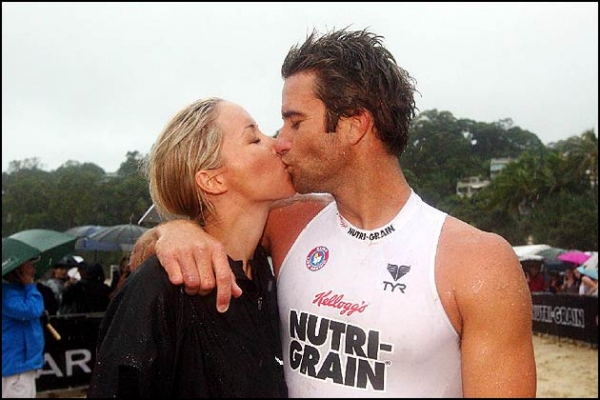
Ironman champion Zane Holmes, and his wife Kai, welcomed twin girls Navah and Eden on June 22, born at 6.40 pm. They were only recently sent home from hospital. Navah and Eden Holmes are now officially the first celebrity twins for 2012.

Zane has been involved in Surf Lifesaving since the age of 5, and competing professionally since the he was 17. He is the only athlete ever to win all major Ironman titles, and apart from his athletic career, he runs Dolphin Surf Craft, which manufactures surf lifesaving equipment.

Kai (nee Woods) runs a fashion store called BIKINIi & me. She and Zane were married in 2005, and they live on the Gold Coast.

Navah is a Hebrew name which means “beautiful”; it’s also a Persian name which I have seen translated as “tune, melody”. Abby at Appellation Mountain recently covered the name Nevaeh as part of her (very popular) “Most Hated Names Week” series. I noticed that several people commented that they liked the sound of Nevaeh, but didn’t feel able to use a name that was slightly lacking in history and depth. I wonder if Navah might appeal more to them?

Eden is also a Hebrew name, and often translated as “delight” or “pleasure”, so the twins’ names seem very well matched.

Melbourne Suburbs That Could Be Used as Boy’s Names

15 Sunday Jul 2012

Posted by A.O. in Name Themes and Lists

≈ 1 Comment

Tags

Ancient Celtic names, Anglo-Saxon names, Appellation Mountain, Australian Aboriginal names, birth announcements, birth records, British Baby Names, celebrity baby names, Celtic names, english names, fictional namesakes, Gaelic names, Gypsy names, Harry Potter names, Irish names, K.M. Sheard, locational names, mythological names, name history, name meaning, nicknames, Norman names, Norse names, Old English names, popular culture, Scottish names, sibsets, surname names, unisex names, Upswing Baby Names, Victorian name trends, virtue names, vocabulary names

Albion

Albion is right next to the suburb of Sunshine, and was developed by H.V. McKay as part of his Sunshine Estate. His own house was in Albion, showing that he was not too proud to live alongside his workers. Albion is the oldest known name for the island of Great Britain. The meaning, which comes from Ancient Celtic, may either mean “white”, perhaps referring to the white cliffs of the southern shores, or “hill”. According to K.M. Sheard, it should be interpreted as “white upper world”, to distinguish it from the dark Underworld (and thus similar to the Midgard of Norse mythology, which became the Middle Earth of Tolkien’s fantasy world). It’s related to a Welsh word which simply means “earth, world”. The Ancient Greeks and Romans knew of Albion, and even in their time, it was considered a name of great antiquity. Today Albion is often used as a poetic term for Britain, such as in our national anthem – “when gallant Cook from Albion sail’d”. In British mythology, Albion was a giant who ruled Britain and gave his name to the island. It’s an imposing heritage choice, very suitable for a baby born in a Jubilee year.

Baxter

Baxter is a rural locality on the Mornington Peninsula, and received its name because it was founded by pastoralist Benjamin Baxter, who came here as a member of the 50th Regiment. The property he owned, and the cottage he and his wife Martha lived in, are both still in existence today. The township developed in the late 19th century once the railway arrived. Baxter is an occupational surname from the English word bakester, originally referring to a female baker, as opposed to the male baker, but very soon accepted as meaning both men and women, and then as masculine only. The surname is most common in Scotland, and the northern counties of England, especially Yorkshire. There are several famous Australians with the surname Baxter, including the explorer John Baxter, who was killed on the expedition across the Nullarbor Plain. With its fashionable X and nickname Bax fitting in with Max and Jax, this now seems a pretty cool option as a boy’s name. This was chosen as a celebrity baby name last year by radio host Kate Dimond.

Brighton

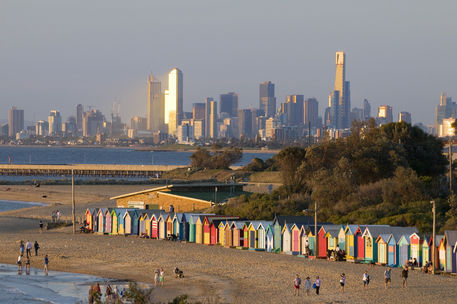
Brighton is a beachside suburb named after the English seaside town. Brighton is from the Old English, meaning “Beorhthelm’s farmstead” (Beorhthelm is a man’s name meaning “bright helmet”). The suburb was bought by an Englishman named Henry Dendy in 1840, who got it for 1 pound an acre, sight unseen. He chose the name Brighton, hoping this would also become a fashionable seaside resort. Unfortunately, there was a depression at the time and Dendy was forced to sell the land to his agent. Dendy died a pauper, but his dream did come true, because very soon Brighton began attracting wealthy residents, and it remains a very exclusive address, full of luxury mansions. One of its most notable sights is the 82 colourful bathing boxes, which have been on Dendy Street Beach since the 19th century. These can only be owned by rate-paying residents, and will set you back at least a couple of hundred thousand dollars. Brighton is the home of many of the rich and famous, including former athlete Catherine Freeman. I’ve been seeing this bright, right-on name quite a bit lately in birth announcements for boys, and the suburb does give it a swanky air.

Elwood

Elwood did not have the most glamorous beginning. A piece of swampland, the first settlers came here because of fever. It was Victoria’s first quarantine station, and the area’s first cemetery. Elwood became a working class suburb with such lovely features as an abattoir, a very smelly canal, and, before sewage, a dumping ground for human waste. However, today the Art Deco houses, pleasant beach, leafy streets, and busy cafe strip make it a very upmarket suburb. It’s thought to have been named after the Quaker poet Thomas Ellwood, because Governor La Trobe, who named it, had a thing for Quakers. The surname can be after Ellwood in Gloucestershire, which means “elder wood”, or derived from the Anglo-Saxon man’s name Aelfweald, meaning “elf ruler”. As elder trees play a big part in folklore, and The Harry Potter books feature the Elder Wand, it’s a very magical sort of name. I saw this at Mer de Noms and in a birth announcement, then it was covered by Upswing Baby Names, and then at Appellation Mountain. Perhaps because of the Blues Brothers, this name is seemingly now very hip. Please do not match it with a brother named Joliet or Jake though.

Fingal

Fingal is a rural suburb that may be named after the Irish county of Fingal; the county’s name means “foreign territory”, because the Vikings settled in the area. However, Fingal is also the Anglicised form of the Gaelic name Fionnghall, meaning “white stranger”. This also refers to the blonde Viking settlers, and Fingal mac Gofraid, a ruler in the Scottish Hebrides, was part of this same Norse dynasty. The name has a distinct literary air, as Fingal is the hero of James McPherson’s epic poem Fingal, and Irish author Oscar Wilde had Fingal as one of his middle names (Oscar is another name from McPherson’s poetry). McPherson claimed to have based Fingal on the legends of Irish folk hero, Fionn mac Cumhaill – Fionn’s name simply means “white”, and was a nickname; his real name was Deimne (meaning “sureness, certainty”). Fingal’s Cave in the Hebrides is named for the epic hero, and the sea echoes there so melodiously that it inspired a piece by composer Felix Mendelssohn. Irish names starting with Fin- are very fashionable right now, but I haven’t really seen Fingal in use. It seems poetic, musical, and quite fairytale to me.

Gilderoy

Gilderoy is a rural locality in the outer suburbs; it’s a rare variant of the Irish surname Gilroy, an Anglication of two possible Gaelic names which either mean “son of the red haired servant” or “son of the king’s servant”. As a first name, Gilderoy was used by British Gypsies, and a man who rejoiced in the name Gilderoy Scamp was King of the Kentish Gypsies in the late nineteenth and early twentieth centuries. Of course, this name will remind many of Gilderoy Lockhart, the vain and boastful fraud from the Harry Potter books. J.K. Rowling apparently named him after the handsome Scottish highwayman, Patrick Macgregor, whose nickname was Gilderoy (from the Gaelic Gillie Roy – “red-haired lad”). Both Lockhart and Macgregor had reputations for winning women’s hearts undeservedly, and one of Macgregor’s smitten female fans is supposed to have written the song Gilderoy about him. Perhaps Rowling was also thinking the name sounds like the English word gild, meaning to give a thin veneer of gold (to cheaper materials). I don’t know if anyone will actually use this name, but it’s a pretty fabulous one, with some very colourful namesakes.

Harkaway

Harkaway was settled by German immigrants, and is now an attractive suburb with large distinguished houses and extensive parkland. I first saw this name given to a minor character in Stella Gibbons’ hilarious novel, Cold Comfort Farm, and found it fascinating. Another famous literary Harkaway was Jack Harkway, from the Victorian era “penny dreadfuls” – a schoolboy who ran away to sea and had a life of adventure. There is also the novelist Nick Harkaway, although it’s a pseudonym; he’s a son of writer John Le Carre, and his real name is Nicholas Cornwell. Hark away! is a cry traditionally used in hunting to encourage the hounds; to hark means “to hear, heed, listen”. It’s a genuine, although rare, surname, and I presume an occupational one to denote someone who worked with fox hounds. I have seen this used as a man’s name in old records from the United States; I’ve only seen it used as a middle name in Australia. This is a really unusual vocabulary name which, with its meaning of “to listen”, almost qualifies as a virtue name as well. It isn’t much like any name on the Top 100, but it continues to fascinate me.

Ivanhoe

Ivanhoe is a suburb with many old homes and an Art Deco town hall, famous for the extravagant Christmas lights display it puts on each year. It was named by a Scottish settler after Sir Walter Scott’s 1819 novel, Ivanhoe. The book is a romance about one of the few remaining Saxon noble families at a time when the English nobility were almost all Norman. The protagonist is the Saxon Wilfred of Ivanhoe, who has sworn allegiance to King Richard I, and amongst the many characters are Robin Hood and his merry men. The novel is credited for starting the medieval revival of the 19th century – hence the number of Victorian babies named Alfred or Edith. Although the book is set in Yorkshire and Nottinghamshire, the English village of Ivinghoe is in Buckinghamshire. The village’s name is Anglo-Saxon, and means “Ifa’s hill spur”. The Anglo-Saxon Ifa later merged with the Norman Ivo, both names meaning “yew bow”. It’s dashing and looks like Ivan with a fashionable OH sound, but will the -hoe at the end prove problematic? If you are stuck for sibling ideas, Elea at British Baby Names has many suggestions!

Skye

Skye is named after the Isle of Skye in Scotland, the largest island in the Inner Hebrides. It was at one time ruled by Vikings, and even the Gaelic clans who were chieftains here have Norse ancestry. The island’s name is an etymological tangle of several languages. However, the Norse referred to it as skuyö – “the isle of cloud” – and this looks a lot like the English name for the island. The ruggedly beautiful Isle of Skye has spectacular Highland scenery and abounds in wildlife such as red deer and golden eagles; a popular tourist destination, it was recently voted the fourth best island in the world. It is known for its castles, including Dunvegan, which has an ancient flag supposedly gifted by the fairies, and is the oldest Scottish castle continuously occupied by a single family (since the 13th century). The island features in the lovely Skye Boat Song, which tells of the Jacobite heroine Flora McDonald helping Bonnie Prince Charlie escape “over the sea to Skye”, after the defeat of the Jacobite rising. This attractive unisex name is more often given to girls, but to me it seems equally suitable for boys.

Yannathan

Yannathan is a rural area in the Shire of Cardinia, and its name, from a local Aboriginal language, is translated as “to walk about, wander, travel, journey, roam”. Walkabout is a term from Indigenous culture which is understood to mean a journey undertaken as a rite of passage; a deeply meaningful spiritual quest which involves connecting with the traditional land and understanding cultural obligations. Australians of British descent also use the term loosely and colloquially to mean anything from going on holiday to escaping your customary obligations to disappearing without apparent cause (as in “the scissors seem to have gone walkabout”). I am not sure if yannathan was meant in any other way than just to take a walk or go on a journey, but it’s a word which may resonate with many Australians. Pronounced YAN-a-thun, it sounds like a variant of Jonathan, and seems very usable. It’s yet another name you could get the popular nickname Nate from.

(Photo shows the iconic bathing boxes in Brighton)

Popular Names for Girls

29 Sunday Apr 2012

Posted by A.O. in Name Themes and Lists

≈ 29 Comments

Tags

acronyms, Appellation Mountain, band names, Biblical names, celebrity baby names, created names, english names, Etruscan names, famous namesakes, fictional namesakes, flower names, French names, gemstone names, germanic names, Greek names, Italian names, Latin names, Linda Rosenkrantz, locational names, mythological names, name data, name history, name meaning, name popularity, name trends, Nameberry, nature names, nicknames, Norman names, popular culture, popular names, retro names, royal names, Shakespearean names, ship names, tribal names, vocabulary names

In honour of the name data being released, I thought I’d do lists of the most popular names in Australia for last year. I admit this was something of a last-minute decision, but it seemed like a good opportunity to cover some of the best-loved names.

People often ask how popular names got to be popular. I’m not sure there’s really a good answer to that – clearly people like the sound of them, and they fit in with current trends. Yet there must be many names, equally as nice-sounding and trend-friendly, that lurk around the 200s and don’t seem as if they are going anywhere much.

Although I cannot tell you what events caused these names to become popular, I can tell you some of the events which accompanied their rise. I’m definitely not trying to say that they were the cause of a name’s popularity, just that they coincide with it (and really sometimes it seems more than merely coincidental). Feel free to add other events you can think of, or any theories of your own!

Note: I’ve used data from New South Wales, but it must be broadly accurate for the rest of the nation too.

Lily

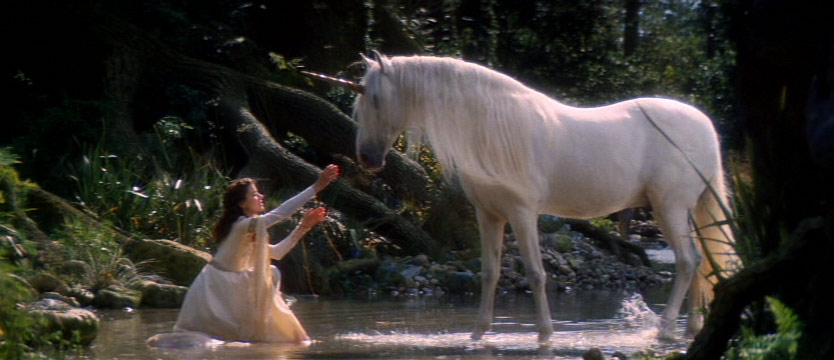
Lily seems to have begun as a pet form of Lilian, but must soon have become thought of as a flower name. The lily is sacred to the Virgin Mary, and Jesus urged his followers to “consider the lilies of the field” as a model in trusting Divine Providence. Lily has been almost continuously in the charts, only dropping out during the 1960s. It began rising in the 1980s – a decade when Princess Lily was the main female character in fantasy film Legend, and when Phil Collins and Kevin Costner welcomed daughters named Lily. A Top 100 name in the 1990s, it continued climbing, as Kate Beckinsale welcomed a daughter named Lily, while Johnny Depp named his baby girl Lily-Rose. By the early 2000s, Lily was already a Top 20 name, and during this decade, Lilly was the main character’s best friend in The Princess Diaries movie, Lily Potter was Harry’s mum in the Harry Potter movies, and pop singer Lily Allen released her first hit. Last year Lily was the most popular name for girls, once combined with the spelling Lilly. Delicate and pure, yet with several spunky namesakes, pretty Lily became a favourite.

Ruby

Ruby is named after the precious gemstone, whose name from Latin simply means “red”. Retro Ruby was popular during the 1900s, then dropped out completely during the 1960s and ’70s, despite being a popular name in songs; notably Ruby Tuesday and Ruby Don’t Take Your Love to Town. It began rising in the 1980s, as comedienne Ruby Wax barged her way onto our TV screens, and singer Rod Stewart welcomed a daughter named Ruby. The name climbed steeply during the 1990s, and turned up in more songs: Ruby Soho by Rancid, Thru’ the Eyes of Ruby, by The Smashing Pumpkins, and Ruby Wednesday by Eskimo Joe. By the early 2000s, Ruby was a Top 50 name, and by the late 2000s, it was Top 20. During this decade, the song Ruby was a hit for The Kaiser Chiefs, Renee Zellweger played Ruby in the movie Cold Mountain, and Ruby Buckton was a free spirited teen on popular soap, Home and Away. Charlotte Church, Tobey Maguire, and Harry Kewell all welcomed daughters named Ruby. Last year it was #2 for girls, once combined with the spelling Rubi. Flaunting Ruby sparkles, and is a name worth singing about.

Chloe

Chloe means “young green shoot” in Greek, and was one of the epithets of the earth goddess Demeter. From early on, it was a favoured literary name; Chloe is the heroine of the pastoral romance Daphne and Chloe, by the Ancient Greek writer Longus. The name was also considered suitable for use by the Puritans, because Chloe is an early Christian mentioned in the New Testament. Chloe first appeared on the charts in the 1970s; a decade when an arty French film, re-titled Chloe in the Afternoon, was released to English-speaking audiences. Chloe stormed up the charts and was Top 100 by the 1980s. During this decade, actress Candice Bergen and singer Olivia Newton-John both welcomed daughters named Chloe, and Chloe Jones was one of the characters in long-running soap, A Country Practice. By the 1990s it was Top 20, and Logie-winning actress Kristy Wright played the tragically troubled Chloe Richards on popular soap, Home and Away. Chloe was Top 5 by the early 2000s; it reached #1 in 2006. Fresh and spring-like, Chloe has been recommended at Appellation Mountain, and Linda Rosenkrantz from Nameberry named her daughter Chloe – some serious name-guru approval.

Mia

Mia seems to have become popularly known through actress Mia Farrow, the daughter of Australian film director John Farrow, and Irish actress Maureen O’Sullivan. Mia is short for Ms Farrow’s real name, Maria. Mia first appeared on the charts in the 1960s, after Mia Farrow began her career, but rose in popularity very gradually. An interesting link with another name on the list is that Princess Lily in Legend was played by actress Mia Sara; is it a coincidence that both names began climbing at the same time? It started making significant gains in the 1990s, a decade when Uma Thurman played Mia Wallace in Pulp Fiction. Although not yet Top 100 in the 1990s, by the early 2000s it was already Top 20. In this decade, we met Amelia “Mia” Thermopolis, heroine of The Princess Diaries movie, and Mia Toretto from The Fast and the Furious films. It was chosen as the name for their daughter by actress Bec Cartwright and tennis champion Lleyton Hewitt. Top 10 by the late 2000s, it reached #1 in 2008. Simple and cute, Mia has another Australian connection – it is an acronym for Made in Australia.

Olivia

Olivia is a name invented by William Shakespeare for a character in Twelfth Night. Olivia is a beautiful noble lady in mourning for her brother; through an amusing misunderstanding, she falls in love with a woman named Viola disguised as a man. Through another amusing misunderstanding, she marries Viola’s twin brother Sebastian by mistake, but fortunately he is so much like his sister in looks and personality that she is happy with the outcome. Famous Olivias include actress Olivia de Havilland and Olivia Arias, the widow of Beatle George Harrison. Olivia first appeared on the charts in the 1960s, just as singer Olivia Newton-John began her career, and rose steadily. Her popularity took off in the 1980s (perhaps by coincidence, the era when Ms Newton-John enjoyed her greatest success), and by the 1990s she was already a Top 20 name. During the 1990s, Denzel Washington and Lance Armstrong welcomed daughters named Olivia. In the early 2000s, Mariska Hargitay was playing Olivia Benson on Law and Order: SVU, and by 2005 Olivia had reached #1. Shakespeare had a knack with names, and this one is elegant; I picked it to be the Jessica of our time, and equally resilient.

Isabella

Isabella is a Latinate form of the name Isabel; it was a favourite amongst European royalty from the Middle Ages onwards. Isabella is a stock character in the Italian commedia dell’arte, the flirtatious and alluring female lover that men make fools of themselves over. She is named in honour of the actress, playwright and poet Isabella Andreini, who became famous in the role. Isabella has been on the charts almost continuously, although her last time in the Top 100 was in the 1900s. She dropped out completely during the 1950s, and then again in the 1970s. She made a recovery in the 1980s just as Italian actress Isabella Rosselini became internationally known, and then skyrocketed. Nicole Kidman and Tom Cruise adopted a daughter in the early 1990s and named her Isabella, and the name was comfortably Top 50 for that decade. When Stephenie Meyer’s novel Twilight was published in 2005, its heroine named Isabella “Bella” Swan, Isabella was already #7; Isabella reached #1 in 2009, the year after the Twilight film was released. Ornate and ultra-feminine, it is an Australian royal baby name, as Prince Frederik and Princess Mary of Denmark named their first daughter Isabella.

Charlotte

Charlotte is a French feminine form of Charles; a common name amongst European royalty, it was introduced to Britain in the 17th century by the Hanoverians. The Charlotte was one of the ships of the First Fleet, who reached Australia in 1788. Charlotte has been almost continuously on the charts, only disappearing in the 1950s. She began climbing gradually in the 1960s, a decade when English actress Charlotte Rampling’s film career began. The name grew steeply in the 1980s, a decade in which Charlotte “Charlie” Blackwood, played by Kelly McGillis, is the love interest to Tom Cruise’s Maverick in the movie Top Gun. It made the Top 100 by the 1990s, when actress Sigourney Weaver welcomed a daughter named Charlotte, and when the band Good Charlotte began their career. It was Top 20 in the early 2000s, while we got to know the romantically optimistic Charlotte York in Sex and the City, played by Kristin Davis; by the end of the decade it was Top 10, as as singer Charlotte Church progressed her career from classical to pop. Sophisticated yet sensible, with the option of a tomboy nickname, Charlotte has yet to make #1.

Sophie

Sophie is the French form of Sophia; the name was used in several European royal families. Sophie first entered the charts in the 1950s, and through steady growth, made the Top 100 by the 1980s. It was during this decade that William Styron’s Sophie’s Choice was made into a film; Meryl Streep won an Oscar for her performance as Zofia “Sophie” Zawistowski, the beautiful Polish immigrant with a tragic secret. The same year the film came out, Roald Dahl‘s book, The Big Friendly Giant was published; the heroine is called Sophie, named after Roald Dahl’s grand-daughter (later fashion model Sophie Dahl). During the 1990s Sophie took off, and was a Top 20 name during that decade. It was during the ’90s that the best-selling novel, Sophie’s World, was published, and actress Sophie Lee and singer-actress Sophie Monk both began their careers this decade. At the end of the 1990s, Sophie Rhys-Jones joined the British Royal Family when she married Prince Edward. Sophie was Top 10 by the early 2000s, and many are tipping sweet and simple Sophie to become the #1 name within the next few years.

Sienna

Sienna is the English name for the Italian city of Siena,in Tuscany. As a word, it refers to a type of clay used to make oil paints, and a shade of yellow-brown, after the hue of said clay. The city’s name comes from the Etruscan tribe who originally inhabited the area, the Saina, but the Romans derived it from the Latin for “old” (the same Latin root which gives us the word senile). Sienna first entered the charts in the 1980s, and climbed steeply during the ’90s. I think the name suited the aspirational nature of that era. Italy was very “big”; pizza was becoming a mainstream food, and the adults around me were guzzling Chianti and buying time-shares in Tuscan villas. British model-actress Sienna Miller is not responsible for the name’s popularity, because it had been climbing for some time, but can it be purely coincidental that it first joined the NSW Top 100 in 2002, the year after Ms Miller’s career began? From that point, its climb was so vertiginous that it was Top 10 by 2006. Smooth, modern Sienna seems certain to go higher still.

Ella

Ella is the Norman form of the Germanic name Alia, a short form of names with the element ali, meaning “other”. However, it can also be used as a short form for Eleanor, Ellen, Elizabeth or any name starting with El, and also the many names ending with -ella. It’s hard not to connect this name with jazz great, Ella Fitzgerald. Ella has been on the charts almost continuously, with her last time in the Top 100 in the 1900-10s. She was soon in rare use, although she only disappeared completely during the 1960s. She climbed slowly during the 1980s, and steeply during the 1990s. It was during the ’90s that Ella got a new singing namesake – Ella Hooper from rock band Killing Heidi. Ella was Top 20 by the early 2000s. She received several boosts around this time, for the movie Ella Enchanted was released, a re-telling of the Cinderella story. Warren Beatty, John Travolta, Mark Wahlberg and Ben Stiller all welcomed daughters named Ella, giving the name a distinct celebrity flavour. Top 5 in the second half of last decade, Ella feels as if she may have peaked, and is possibly on her way down again.

(Picture shows Princess Lily and unicorn, from Ridley Scott’s 1985 cult fantasy film Legend)

Boys Names from the Top 100 of the 1900s

01 Sunday Apr 2012

Posted by A.O. in Name Themes and Lists

≈ 12 Comments

Tags

Appellation Mountain, celebrity baby names, classic names, ethnonyms, famous namesakes, fictional namesakes, French names, German names, germanic names, Latin names, locational names, name data, name history, name meaning, name popularity, name trends, nicknames, Norman-French names, Old English names, Old Norse names, popular culture, popular names, Roman names, royal names, Sabine names, saints names, surname names, tribal names

This follows on from Girls Names from the Top 100 of the 1900s. Once again, I’ve tried to get a balance between those names coming back into fashion, and those which haven’t charted for a while; once again, it is based on data from New South Wales. If you are attracted to names like these for boys, you should check out Abby’s two parter at Appellation Mountain – Fetching Names: The Nevilles, as many of her suggestions are very much in tune with this style.

Albert

This is derived from the Germanic name Adalbert, meaning “noble and bright”, which was common amongst German royalty. It was introduced to England by the Normans, where it readily overtook the Old English form, Æðelbeorht. A rare name by the 17th century, it came back in the 19th, as Prince Albert was the name of Queen Victoria’s dearly loved husband, born in Germany. Famous Australians with this name include Albert Matthews, the last Gallipoli veteran to die, in 1997, and popular long-time entertainer, Bert Newton. Albert is a classic name which has never been out of use; it was #12 in the 1900s, and didn’t leave the Top 100 until the 1950s. It’s remained relatively stable for several decades, and is currently in the low 300s. Albert is one of those names which sound slightly “grandpa” while remaining steadily in use. It’s a good reliable choice, and Alby, Bertie and Bert all make cute nicknames.

Aubrey

The Norman-French form of Germanic Alberich, meaning “elf power” or “elf ruler”, which replaced the Old English equivalent, Ælfrīc. The name was used for both sexes during the Middle Ages, especially amongst the aristocracy, but gradually fell out of use. It was revived in the 19th century, possibly influenced by the surname. There have been a few famous men in Australia named Aubrey, including motorcycle racer Aubrey Lawson, and Australian rules footballer, Aubrey Mackenzie. Aubrey was #59 in the 1900s, and left the Top 100 in the 1930s. It hasn’t charted since the 1950s. Aubrey may seem old-fashioned and effete to some people; others may think it sounds feminine, due to the popularity of similar-sounding girls’ name, Audrey. However, this unisex name is certainly in use as a boys’ name, and I have actually seen it on more boys than girls, with parents of girls often preferring specifically feminine spellings such as Aubree or Aubrie. I think it sounds handsome and dashing, and Jack Aubrey from Master and Commander (played by Russell Crowe in the film) even helps give it a nautical air. The usual nickname is Aub or Auby.

Claude

The French form of the Roman family name Claudius. The Claudii interpreted their name as from the Latin claudus, meaning “lame, crippled”, but according to legend, the first of their house was not Roman, but Sabine, and his family name was Clausus or Closus. When he joined the Romans, his name was Latinised. The Claudii were very proud of their Sabine heritage, very powerful, and had a reputation for arrogance and haughtiness. The name Claude became common in France during the Middle Ages due to the 7th century Saint Claude of Besancon, a monk to whom many miracles are ascribed. The name was brought to Britain by the aristocratic Hamilton family of Scotland in the specifically male form Claud; being Scottish they naturally had ties to France. Australian Claude Choules was the last surviving male World War I veteran in the world until his passing last year. Claude was #49 in the 1900s, left the Top 100 in the 1930s, and hasn’t charted since the 1970s. The name still packs a patrician punch, and namesakes such as painter Claude Monet and composer Claude Debussy make it seem quite artistic as well.

Frank

Used as a short form of Francis or Franklin, but is a name in its own right, referring to the Germanic tribe of the Franks. They conquered most of Gaul, which was later named France in their honour. A powerful tribe, they were the ultimate founders of what would later become the Holy Roman Empire, controlling much of Europe. The meaning of their name is disputed; it may mean “javelin” after their weapon of choice (although the weapon might have been named after them, not the other way around). Another theory is that it meant “bold, fierce”; the Romans sometimes addressed or referred to them as “the fierce people”. The English word frank, meaning “free, honest” is named after the Franks, and is not the source of the name. The most well-known Australian called Frank is probably charming comedian Frank Woodley. Frank’s a classic that has never been off the charts; #27 in the 1900s, it didn’t leave the Top 100 until the 1970s. It’s currently having a growth spurt in the low 400s. Brisk, sensible Frank is a worthy choice for someone wanting an old-style replacement for popular Jack. The usual pet form is Franky.

Harold

Derived from the Old English name Hereweald, meaning “army leader”; the Old Norse form Haraldr was also common amongst Scandinavian settlers in England. It was popular amongst the royal houses of Norway and Denmark, and the two kings of England named Harold were of mixed Scandinavian and Anglo-Saxon ancestry. It was Harold II who was defeated and killed at the Battle of Hastings, leading to the Norman Conquest. Not surprisingly, the name died out almost immediately, but was revived by the Victorians. The most famous Australian with this name is former Prime Minister Harold Holt, who disappeared in 1967 at the beach, and is presumed drowned, although many conspiracy theories have existed. Oddly enough, there is a swimming centre named after him. Harold was #13 in the 1900s, peaked in the 1910s, left the Top 100 in the 1940s, and remained in (rare) use until the early 2000s, with a dampener put on it by Mr Holt’s watery demise. Until recently, I would have said Harold made a great way to get the popular nickname Harry – unfortunately, Harry is rapidly falling. It’s got some challenges, but I do like this noble and besieged name.

Reginald

From the Germanic name Raginald, meaning something like “well-advised ruler”. The Normans brought it to Britain in the forms Reinald and Reinold; there were already Old English and Norse forms in use there. Reginald is the Latinised form of all these variants, and is another of those names from the Middle Ages which made a comeback in the Victorian era. There are many well known Australian Reginalds, including popular actor Reg Livermore, and Sir Reginald Ansett, the founder of Ansett Airlines. Reginald was #20 in the 1900s, and left the Top 100 in the 1960s. It hasn’t charted since the 1980s. Reginald may seem very fusty and pompous – then again, that’s exactly what people would have said about Archibald a few years ago, and now it’s quite fashionable as a way to the nickname Archie. I don’t really see what makes Reggie any different from Archie, Alfie or Freddie, which makes Reginald a genuine contender.

Rupert

A German form of Robert, this was introduced to Britain in the 17th century by Prince Rupert of the Rhine, a nephew of King Charles II of England. When still young, he was appointed commander of the Royalist cavalry during the English Civil War; after the Restoration he returned and became a senior naval commander. Prince Rupert was a man of fashion who also was one of the founders of the Royal Society and a patron of the arts – he made the name seem distinctly aristocratic, and perhaps slightly flamboyant. Famous Australians with the name include artist Rupert Bunny and media mogul Sir Rupert Murdoch. Rupert was #97 in the 1900s, and left the Top 100 the following decade; it left the rankings in the 1940s. Very recently, it has entered the charts again, and is currently climbing in the 400s. Rupert seems to be making a comeback – perhaps Rupert Grint from the Harry Potter movies has given it a more likeable, down-to-earth image. It’s certainly handsome, and Ru would make a cute nickname.

Stanley

An English surname meaning “stony meadow”; it comes from the place name Stoneley in Staffordshire. It has quite an aristocratic heritage, for the Stanleys were Earls and Barons, prominent in the Conservative Party, and at times, one of the richest landowning families in Britain. Members of the Stanley family have held high political office, including Prime Minister, been connected to royalty, and generally a force through the pages of British history. Sir Lyulph Stanley was part of this august clan; he was Governor of Victoria and held several other important posts in Australia. Great men called Stanley from our nation include tennis champion Stanley Doust, and legendary cartoonist Stanley Cross; the Stanley Award for cartoonists is named in his honour. A classic which has never left the charts, Stanley was #22 in the 1900s and left the Top 100 in the 1950s. It has remained stable since the 1960s. It’s an oldie but goodie, made to seem quite cool since Dido gave her son this name last year, named after the song Stan, by American rapper Eminen. It seems eminently usable, and sturdy nickname Stan is right on trend.

Vincent

This is from the Roman name Vincentius, derived from the Latin for “to conquer”. Its meaning made it popular amongst early Christians, who no doubt wished to indicate that they were ready to conquer sin, and there are several martyrs of the church with this name. A later saint with this name is the 16th century French priest famous for his works of charity, St Vincent de Paul. Vincent was used in Britain in the Middle Ages, but didn’t become common until the 19th century. Vince Jones is an Australian jazz artist, and Vince Melouney was one of the founding members of Billy Thorpe & The Aztecs, so it’s a very musical name. Handsome and romantic, Vincent is a classic which has never left the charts or been out of the Top 200. It was #47 in the 1900s, and left the Top 100 in the 1950s; the lowest it’s ever been is #179 in the 1970s. It’s usage has been erratic, but generally improving since then, and it’s currently in the mid 100s. Prince Vincent of Denmark, son of Princess Mary, may help it along further. Vin, Vince and Vinnie are all used as nicknames.

William

From the Germanic name Willahelm, meaning something like “willing helmet”, or “strong-minded protection”. William of Gellone was a cousin of Charlemagne, and an 8th century Norman count who defeated an army of Moors and forced them to retreat to Spain; his deeds are immortalised in the epic poem, Chanson de Guillaume (Song of William). In case this didn’t make him famous enough, he founded a monastery, gave it a piece of the True Cross, and became a monk, being declared a saint after his death. This made William a favourite name amongst the Normans, and when a Duke of Normandy called William invaded England in 1066 and was crowned king, it became the most commonly-used name in his kingdom. There have been four kings of England/Britain called William, and if Prince William attains the throne, he will be William V. Australia has had two Prime Ministers named William – Hughes and McMahon. Solid classic William has never left the Top 50; it was the #1 name of the 1900s and is #1 today. This never out fashion name is very versatile, because although William is so dignified, its nicknames Will, Bill and Billy are simple and unpretentious.

(The picture is of a prospector on the gold fields in 1904; image held by Museum Victoria).

See the Real Deal at For Real Baby Names

27 Sunday Nov 2011

Posted by A.O. in Blog Reviews

≈ 9 Comments

Tags

Appellation Mountain, Bewitching Names, celebrity baby names, For Real Baby Names, Mer de Noms, name combinations, Nameberry, Nook of Names, vocabulary names, You Can't Call It "It"!

Have you ever looked at a simple, yet highly successful, invention and thought, “I could have done that”? I sometimes wonder what genius came up with the idea of sticking a cute image onto a magnet so that we could attach things to our refrigerators. (Wikipedia says a man named William Zimmerman did, but provides no sources). I mean, who even knew we needed fridge magnets? And I can’t survive a day without them.

The point is, you think you could have invented these things, but you didn’t. You didn’t come up with the fridge magnet, the post-it note, play-doh, stop signs, Cubism, the snuggie, or the all-you-can-eat buffet. Someone with more brains, creativity, business sense, or plain old gumption got in there first and pipped you.

That’s kind of how I feel when I read Sarah’s blog, For Real Baby Names. The subtitle is All names on this site are names of actual babies, and it consists of lists of baby names culled from recent birth announcements in newspapers. It’s such a perfectly simple concept that only an absolute genius could have come up with it, and yet once you see it, you immediately think, “Why didn’t I think of that?”

If I sound a bit envious, there’s a good reason for that: I am. Out of the name blogs I have reviewed so far, this is the one I’m most jealous of. Even though Abby is so famous, and Lou so young and vibrant, and Isadora so beloved, it’s Sarah’s blog that I wish I’d thought of first.

As far as I know, For Real Baby Names is a unique concept in the blogosphere. Some name blogs include birth announcements in their entries, but this is one just of birth announcements. I have also seen name blogs consisting of birth announcements, but they exist as a springboard for the blogger to vaunt their own opinions. These names, the blogger will insist, are horrible and vulgar, while this list of names shows class and breeding. These names are tasteful; this lot over here, trashy. Emulate these names; eschew those. For Real Baby Names has a purity of intention and a clarity of purpose that these birth announcement name blogs lack, and Sarah exhibits a remarkable restraint in not providing a commentary on every list of names.

I stumbled upon For Real Baby Names quite early in my blogging career, and was immediately struck by the difference between it, and most other name blogs. There was no advice as to what you should name your baby; no suggestions as to the correct spelling of a name; no opinions as to whether the name would be better for a girl or a boy. This was baby names at their most fundamental and authentic. While other name blogs tell you what people should name their children, For Real Baby Names tells you what people actually do name their children. The gap between the two is sometimes quite arresting. I can’t think of any blog that would advocate naming your child Delightful Unique, but nevertheless someone chose this name.

As someone who has long collected names out of newspapers and magazines, I was drawn to this blog like a Trekkie to a sci-fi convention that’s handing out free Spock tee-shirts. And instead of warning me to stay off her turf, Sarah was generous enough to encourage me to share some of the names I was collecting on my blog.

Sarah has been blogging on WordPress for two years, and by now she has a huge collection of baby names from around the world. Entries are organised by area, so you can see baby names from London, the United Kingdom, Scotland, Ireland, Australia, New Zealand, Canada, and many states of the US, from Alaska to California to Kansas to Georgia to New York to Hawaii and more. These are headed with attractive little pictures so you know where you are, and often make me want to dash off to whatever country is on offer.

I must admit to being a little sceptical about these lists at first – I couldn’t help wondering if Sarah had selected names for each region with the view of making them fit a particular stereotype of that area. Was she deliberately choosing “southern-sounding” names for Georgia, or sweetly old-fashioned yet whimsical names for Ireland? However, the names listed for Australia are, I think, very typical of those names which are popular or fashionable now – many of the Australian baby names are the names of my friends’ and relatives’ children.

This convinces me that the name lists from most areas are probably representative of the type of baby names you will encounter there. You do begin to pick up on national or regional tastes on names, so that Alaska often has daring name choices, Arizona seems fond of nature names, Canada is quirky, and Hawaii mellifluous. I have seen a couple of familiar names in the Australian listings, including Jed Hardy – the name of one of our celebrity babies.

There is a good mix of crowd-pleasers, such as Cressida Blueberry; modern names such as Destin Ryder; interesting names, such as Bronze Quinten; contemporary standards, such as Scarlett Bella; old-fashioned names such as Mabel Olive; grand names such as Henry Leonidas Tiberius; sweet names such as Pixie Rose; tough names, such as Jake Buster; weird names such as Boo!; and plain awful names such as Charley Willard Horse Dick. Whether you wish to admire, criticise, be amazed, or gasp in horror, you will find names to revile and revel in.

For Real Baby Names also has posts on particular topics, such as this one on surprising middle names or this one on celebrity baby names. Each Sunday is a post listing names which Sarah appears to have found pleasing or interesting, and occasionally there is a Pop Quiz, on which I usually do rather badly. There are also Name Round Ups, which list unusual names, often grouped around a particular topic. These give Sarah an opportunity to share some of her thoughts on individual names, and her opinions on naming in general; her musings can often be witty, but they are never snide, or an excuse to start name bullying.

As you can imagine, this blog is very popular, and Sarah has many dedicated followers who enjoy commenting on the names. For Real Baby Names is a fun blog, and a big part of that is seeing what names other people love, hate, are bemused or baffled by, and sharing your own opinions for others to agree or disagree with. Sarah is very conscientious about answering comments, and even your most throw-away line will probably get a courteous response. You may also follow her on Twitter.

At the beginning of this review, I made a differentiation between regular baby name blogs as espousing an idealistic view of baby naming, whereas For Real Baby Names demonstrates the reality of naming practice. However, that’s an overly simplistic view of things. Real life baby Luella Hummingbird has a middle name that any name nerd would be proud to add to their blog, and one of the first entries on For Real Baby Names was for Seven Miller, whose name has been often covered on blogs this year, thanks to famous babe Harper Seven Beckham. I have seen real babies called Anjali and Tigerlily – names that have featured on Appellation Mountain and Nook of Names.

If you are interested in baby names, this blog is recommended reading; if you have a name blog of your own, For Real Baby Names is essential reading. Not only do you get a digest of baby names being used around the English-speaking world, you will learn many new names, see naming trends in action, and get a feel for what kinds of names and name combinations parents have a fondness for. Best of all, you will be exposed to a staggering variety of names, and understand that almost no baby name can be called “unusable”.

For Real Baby Names is addictive, and if you have even a passing interest in baby names, you will soon be impatiently waiting for the next instalment to be released. You didn’t know you needed it, and now you can’t live without it.

Q& A with Sarah

Name: My name is Sarah Elizabeth, the most popular Sarah combination it seems. I see my full name all the time when searching through birth announcements.  Plus, I tend to ask every Sarah I meet, “What is your middle name?”,  and it’s usually Elizabeth.

Name you would like to have: I’ve always liked Elizabeth more than Sarah so I used to write to penpals as a kid, and always signed them Elizabeth. I tried to switch over once, but it didn’t take. I guess I wasn’t persistent enough. Now, I would probably keep Sarah, but go by Sadie.

What began your interest in names?: I can’t remember exactly what started it. I do remember my first day of fourth grade. I changed schools that year and remember looking at the new class list on the wall and picking out who I would be friends with based solely on which names I liked.  🙂  It (of course) didn’t work out that way. 🙂

How did you start blogging?: I have always kept a list of names I saw in birth announcements that I liked, names I had never seen before, and the crazy and outrageous ones.  Once Nameberry started, and I found the blogs You Can’t Call It It! and Appellation Mountain, I realised I wasn’t the only one interested in names.  I thought maybe there would be others who would want to see which names were actually being used, so I decided to share them.

Your favourite blog entry on For Real Baby Names: Chisel and Wave (unexpected word names). I love word names and I’m always interested in what people use and why some words are more acceptable as names than others, so this one is my favourite.

Your pet naming peeve: I don’t like the sites that just trash baby names. Any name that isn’t Biblical or had a 100+ years of use, is deemed ridiculous, trashy or stupid, and will ruin the baby’s life.  I don’t think that is true.

Your favourite names: My naming style is all over the place.  I like names like Matilda, Henry, and August, like a good name nerd; but I also love names like Sawyer, Fenway, Wilder, Everly, Belle, and Forest (for a girl).

Names you dislike: I don’t like when names are a joke.  I don’t think your baby’s name should be a laughing matter, so I don’t care for names like Sudden Lee, Sincere Leigh, Merry Christmas, or Stormy Sea Waters.

Names you love, but can’t use: I love Isabella, Lily, and Emma, but in the 9th grade I was in school with seven girls called Jennifer, and I swore I would never use a popular name. Years ago, I dreamt once that I had a daughter named Fable, but I’m not sure if I’m cool enough to use such a bold name.

Your future children’s names: I have loved the name Matilda for a long time. This was my “for sure” name until I mentioned it to my Mom.  She said okay, but they would just call her Mattie, so now I’m not so sure.  I’ve dated two boys named Matthew and called Matt, and I do not love Mattie, so now my girl name is still under construction.  I think if I had a boy today, his name would be Sawyer or August.

The one piece of advice you would give to someone choosing a name for their baby: Give the baby a name you love. No matter what.  Don’t listen to other people. A name chosen from the heart could never be a wrong choice. It doesn’t matter if it is too popular, too unusual, or unheard of. If you love it, use it.

Get Enchanted at Bewitching Names

23 Sunday Oct 2011

Posted by A.O. in Blog Reviews

≈ 2 Comments

Tags

Appellation Mountain, Bewitching Names, Mer de Noms, Nook of Names

Tomorrow it will be only a week until Halloween, and so it seems a befitting time to review one of the most beguiling name blogs out there: Bewitching Names, which is written by Isadora Vegas. Its subtitle is Naming Enthusiasm from a Wiccan Perspective, and Isadora covers names that she thinks Neo-Pagans and Wiccans may want to choose – either for their children, or as a “magickal name” for themselves. However, so broadly does she sweep for names, and with such discernment and imagination, that anyone who shares her enthusiasm for names will find themselves becoming charmed by her selections.

Bewitching Names came highly recommended by Lou at Mer de Noms, and its entries often covered by Abby at Appellation Mountain in her Sunday Summaries, so it was only a matter of time before I eventually meandered over there to check it out for myself. The first name I saw on the front page was Seawillow, and after reading about the homely yet mystical origins of this lovely name from 19th century Texas, I was hooked.

Isadora has been writing Bewitching Names since mid-December last year, and has already produced 260 posts. It’s a one-name-at-a-time type blog, and one of the beauties of this format is that each name gets a chance to really shine in its own light. Isadora modestly says that she is a name enthusiast, not a name expert, but in fact she is selling herself short. The meaning and origins of each name are covered pretty thoroughly, including conflicting theories and ambiguities. Where her knowledge reaches its limit, she says so frankly, and can even be over-scrupulous, such as when she confesses to not having enough training in chemistry to fully understand the atomic composition of the gemstone when covering the name Topaz.

Names are often chosen to fit in with a seasonal theme, so that Cupid turns up just after Valentine’s Day, and Plum at Christmas (a fantastic Christmassy name too!). Isadora also delights to present names on a theme for a particular month, such as Harry Potter names in time for the film’s release,  and names of fictional witches to coincide with a Pagan Culture Blogosphere Party. One of my favourites of these was the American names for early July to honour Independence Day, when she treated us to such delicious bites of Americana as Huckleberry, Treemonisha, Meriweather and Sojourner. I enjoyed these as they were a chance to see another side of the American story, as well as American names.

I think this is one the strongest points of Bewitching Names – the way that Isadora has the ability to find the story behind the name and bring it to life. Because let’s face it, what makes you fall in love with a name, or at least get interested in it, isn’t the Greek etymology or how it translates into Russian; it’s the story of how it came into being, and how it came to be used as a name. I was fascinated, for instance, to read all about the god of the seasons, Vertumnus; his obscure Etruscan origins, and the story of how he wooed the goddess Pomona dressed up as a pantomime dame. I also became engrossed in the story of that controversial lady and her controversial name – Jezebel. If you’ve ever thought of this Biblical queen with horror or disgust, Isadora presents Jezebel’s side of the story in a very sympathetic way.

She also tells wonderful little stories about her own life and family, that demonstrate so profoundly how a name becomes valuable to us through our personal associations with it. So we learn about her grandmother from Puerto Rico who was nicknamed Gladiola, and the names of Spanish ancestors from her family tree. She shares with us names from her favourite authors, and favourite musicians, as well the name of one of her favourite artists.

If you began by wondering what kinds of names a Wiccan name enthusiast gets enthusiastic about, I hope by now you are beginning to get an idea. Isadora covers names of the astrological signs; names of Celtic tree months, such as Hawthorn; nature names, such as Savannah; gemstone names, such as Diamond; names of gods and goddesses, such as Shango; names from mythology, such as Kitsune; and names from fairytales, such as Rapunzel. There are also names of famous Pagans, such as voodoo priestess, Marie Laveau, and Wiccan folklorist, Gerald Gardner, and names of historical witches, such as Marable Cooper and Nicodemus Hirsch.

Isadora has strong opinions on quite a few subjects, and isn’t afraid to share her thoughts on why Pagan parents may choose non-Pagan names for their children, name sites  that are short on information and long on catty remarks, and what a crappy movie The Craft is. Isadora, unlike many other name bloggers, doesn’t feel the need to “sell” every name that she covers and convince you that you simply must use it; in fact sometimes she admits that perhaps Cicada might be a bit weird, Vixen on a child is pretty creepy, and that Bird isn’t to her personal taste. She has a feisty sense of humour, and can often see the funny side of name stories, such as this one on the name Orchid.

Each entry is well tagged, with categories neatly arranged on the right-hand side, and she also has Master Lists for girls, boys and unisex names, which she calls The Maidens, The Princes and The Shape-Shifters. Isadora is very broad-minded on the subject of gendered names, and this is the only name site I’ve seen where Willow and Pearl are listed as being for both sexes. Having done lots of searching of the site for this review, I very much wish she had installed a Search Bar on her blog to save me from performing multiple advanced Google searches.

Isadora is an artist and illustrator, and one thing I must say is what gorgeous photos and drawings she chooses for each of her name entries. She has the ability to pick out the perfect picture to mesh with the name and make it seem “real”, and each one has a touch of fantasy to it.

At Bewitching Names, you will find one of the most creative collections of names you have ever seen, beautifully presented, and each name with its own narrative. If you have an interest in names, history, culture, mythology, religion, literature, art and nature, you will find much to intrigue you here. If you are searching for name ideas, you will be dazzled by the choices. If you can appreciate a smart, funny, plain-speaking, daring name blogger who’s a natural story-teller, then prepare to be enchanted.

The wonderful thing is, Isadora has been blogging for less than a year – she’s barely got started. I can’t wait to see where she takes this.

Q & A With Isadora

Online name: It depends where you find me. Increasingly, I’ve been going by the name Isadora Vega, but I haven’t legally changed it yet. So many of my old websites still list me as Tina. Calling me either one is fine. The name on my birth certificate is Christina Patrice, by the way.

How you chose that name: It’s weird, I was never convinced that my birth name “fit” me, but growing up I never thought about changing it. I placed Isadora in my pile of names for future children, but for some reason, it haunted me. The name means “gift of Isis” so I looked up Isis, and found that she is a powerful magical figure and a mothering icon. I was obsessed with Ancient Egyptian culture as a child so it just seemed meant to be. And then I paired it with Vega. Vega is the maiden name of my maternal grandmother and my great-grandmother’s last name. I’m very drawn to my maternal lineage, and both of these women were wonderful. To top it off, my grandmother died immediately after my college graduation, so her name had been on my mind. The more I referred to myself as Isadora Vega, the more I realized that this was the person that I wanted to become. It just felt right.

What began your interest in names?: I don’t remember the exact point. I’m sure my very popular name had something to do with it – Christina was ranked #12 the year I was born. But I also loved to write stories, and these characters and places needed names.

How did you start blogging?: I wanted a website that was like all the great baby name blogs out there, but with a Neo-Pagan slant. But there wasn’t really anything like that. The websites I found  on this topic were old, with questionable descriptions. So that got me thinking, “Why don’t I just make my own?” I experienced a lot of doubt starting out. I wasn’t an expert in etymology or Neo-Paganism, and I was afraid that people would think I was a fraud. But then I realized that being wrong didn’t stop most people who wrote about either of these topics, and many of them have even  published books! I knew that at the very least, I could do a better job than they did.

Nook of Names did not come out until a few months later. Had it been around back then, I probably wouldn’t have had the courage to start Bewitching Names.

Your pet naming peeve: I’ve noticed that many new unisex names, like Kestrel, October, and Topaz, are often only listed with the girls names. I find that very interesting. It’s my hypothesis that up until recently boys names have been more about tradition and passing on the family line, while girls names adhere more towards the fashion of the day. So all the sparkly bits tend to get thrown in with the girls. And there’s a popular idea in America that you can’t give a name used for girls to a boy, because feminine qualities are inferior. That’s a very un-Pagan way of thinking. We venerate women. So that’s an attitude that really upsets me and that I’m fighting it all the time. I’m very proud of my collection of unisex names.

Your favourite names: I love Italian/Latin/Spanish names, nature names, and mythological names. I’m influenced by art and literature. But I cull inspiration from everywhere. Some of my favourites are Fortuna, Romulus, Sirocco, Lavender, Midori, Kahlo, Oberon, Aradia, Peregrine … I could go on forever. I’m constantly finding names and making up new names; half of what I profile on Bewitching Names I’ve never actually seen on a person. I’m currently in love with Nimbus and Remedy. I read of someone who met a boy named Labyrinth, and I love that.

Names you dislike: I never really understood the appeal of Mackenzie, Madison, Addison, and that whole group, not even for boys. I hate Dashiell for no logical reason. An old high school chum is pregnant with a Gage, which just makes me think of NASCAR (no, I didn‘t tell her that). And there are certain ones beloved by name enthusiasts that a part of me wants to warm up to, but I can’t (Astrid and Maud come to mind). I don’t really hate traditional names like Thomas and Richard, it’s just when someone tries to push them on me that I flare up.

Names you love, but can’t use: I’m a little crazy about avoiding names in the Top 1000. Well, that’s not true. I’ve relaxed about that somewhat – I don‘t have the heart to get rid of Archer and Kimora. But Sophia, Genevieve, and Sebastian were tossed out. The Top 1000 is probably, what, 0.09% of the names in the world and most of them are alternate spellings? I don’t see staying away from it as limiting in any way.

There are also certain names I’m avoiding because I’ve noticed they’re very popular among Neo-Pagan parents. Rowan and Tabitha are lovely, but I’ve seen a lot of them in this community.

Your future children’s names: I’m not sharing them because I’m paranoid someone will take my precious combos. Besides, what would I surprise you with? You’ll just have to wait until I get pregnant.

The one piece of advice you would give to someone choosing a name for their baby: Substance over style. I’ve seen perfectly ordinary names become magical with great thoughtfulness attached to them. Imagine telling your child the story of how she got her name. What’s the one that would make you the proudest? Of course, you never know how that’s going to turn out. My parents did this with me and it didn’t work. But they don’t regret bestowing it. And that’s all you can ask for, really.

Scale the Heights at Appellation Mountain

14 Sunday Aug 2011

Posted by A.O. in Blog Reviews

≈ 6 Comments

Tags

Appellation Mountain, naming advice

It’s almost absurd of me to write a review of this blog – and a bit cheeky too, since it’s a long-established part of the blogosphere, and I’m just a noob. I feel like the stereotypical MC who introduces an honoured guest with the phrase, “This is someone who needs no introduction,” and then goes on to say rather a lot about them. However, I have to start somewhere, and this one is at the top of my Blog Roll.

Abby has been blogging for more than three and a half years, and as she is an entry-a-day writer, that’s an impressive amount of name information that’s been released. Her blog is called Appellation Mountain, which is a pun on the Appalachian Mountains – a conceit I’m not sure would be immediately apparent to someone outside North America. (At least, it took me a moment to figure it out.)

And that’s basically what you get at Appellation Mountain – a mountain of names. Its subtitle is Where every name has a story, and whereas many of us have gone into niche name blogging, the turf of Appellation Mountain is every name out there. It’s an almost staggering aspiration – like someone casually announcing they plan to build a full-scale model of the Great Wall of China in their backyard. Yet Abby is patiently making the mountain higher each day by adding another name to it.

At Appellation Mountain, you can learn about classic names like Henry and Jane, popular names like Ethan and Willow, modern names like Indigo and Madison, old-fashioned names like Donald and Lois, ancient names like Alaric and Hypatia, and exotic names like Zoltan and Sumarlina. Each entry looks at the history of the name and how its fits into our cultural consciousness; meaning is discussed, but is less important than the story of the name. Modern names often turn out to have surprisingly long heritages, and common names to have fascinating stories attached.

Each entry ends by examining how usable the name is, what advantages and drawbacks there are, and what kind of person may be drawn to the name. These conclusions are always well-balanced and thoughtful, and often creative. Abby is a brilliant and witty writer with an almost flawless prose style, and she is very convincing in her persuasions to use or not use a name.

A big part of the fun of Appellation Mountain is the community aspect, because the blog has a legion of dedicated fans who love to express their opinions of, and share their experiences with, each name. I’ve learnt a lot from informative comments, and found others delightfully humorous. If you would like to follow Abby all over the Internet, she writes for Nameberry each Monday, and she is also on Facebook and Twitter, although I don’t see anywhere on the blog where you can easily find that out. Not that she needs to attract extra fans, but I like a nice big dumb button that you can press to get you to someone’s other webpages.

You can also contribute to Appellation Mountain by sending in your own name story detailing how you chose your child’s names. And of course, you can suggest names for Abby to profile by e-mailing her; she tries to take two names from each person, no matter how short or long their lists. Be warned though – she is booked up for months in advance; a mountain cannot be climbed in a day! I don’t know whether this is true or not, but I read in a name forum that boy’s names are especially welcome, as fewer are received.

As well as the name entries, each Sunday there is a generous weekly round-up of interesting posts spotted on other blogs. I can never resist clicking on these, and as a result, have been introduced to some great blogs that I visit all the time. These Sunday Summaries included celebrity babies born that week, but recently Abby wrote that she has new plans for the blog, and I think part of that is making “Starbaby Announcements” separately, as there was one this morning for Tina Fey’s daughter.

As well as her recent posts on Nameberry being catalogued on her blog, Abby also has a list of articles she has written on naming, and these give excellent advice, presented in a clear and intelligent way. This isn’t the usual repetitive bunkum about “You can’t use a name from the Top Ten because if two people called Emily are in a room together, the universe will explode”, or pie-in-the-sky stuff telling us that Quinkalaria is the new vogue name and you should get on board now lest you miss this cool trend. It’s sensible, it’s funny, and best of all, it’s encouraging. (Have you noticed how discouraging naming advice often is? Don’t do this, and don’t do that, and you must not ever!)

There are also some lists of different types of names, such as nature names, saints names and French names. I notice these seem to be heavily weighted in favour of girls names; I hope some boy’s name lists can be added later. By their nature, blogs are a work in progress, not a finished product, and not every single article is yet indexed, so don’t be afraid to look around or search the site. I remember an article Abby wrote for her 1000th post about what she had learned about names through blogging; she probably doesn’t think it counts as a “proper” article, but I’d like to see it added to the list because it was very interesting.

I can’t really tell you all to get on over to Appellation Mountain, because let’s face it, you’ve already been. You’ve already subscribed, or at least are a dedicated lurker. You already know what a fantastic blog this is, and what an institution it’s become. I can only encourage you, for those who have only wandered amongst the foothills, to climb higher up the mountain – contribute comments, send in your name stories, suggest names, follow Abby on Nameberry, Facebook and Twitter.

Most of all, don’t take this iconic blog for granted. Everyone who goes to Paris visits the Eiffel Tower – that doesn’t make it any less a marvel, or any less thrilling to climb.

Q & A WITH ABBY

Name: Abby Sandel. Well, if you’re going to steal my identity, you should know that it is Amy Abigail Sandel. My bank and insurance company seem to think that this means I’m Amy A., while the rest of the planet understands that I’m Abby.

What began your interest in names?: I was born Amy in 1973. There were always other girls named Amy – in kindergarten, at summer camp, in my neighborhood. Even at a very young age, I understood there had been this opportunity to choose something else, and I was not consulted. My mother’s name is say-that-again rare, and our last name was equally distinctive. She thought it was a kindness to give her daughters short, perky, cheerleader names. I found her baby name book not long after I learned how to read, and ran around asking if she’d ever thought about Hephzibah.

How did you start blogging?: I found myself writing the same thing, time and time again, in message board comments. Collecting my thoughts meant that I could link somewhere instead.

Your favourite entry on Appellation Mountain: In Defense of Ethan and Emma: Ten Good Reasons to Use a Common Name. Much as I like unusual names, I hate the idea that parents eschew their favorite name for fear that it will become “too popular” – our son’s name is very common, but it is also his grandfather’s name, and the name my husband had always imagined giving to his firstborn son. That meant more than any ranking.

Your pet naming peeve:I rather dislike the idea that there is a single valid spelling. Don’t get me wrong – I wince when I stumble across a kid called Khaedin or Eighmei, too. But aside from some truly outlandish – and very rare – extremes, most of the time there’s not much harm in calling your kid Coltyn or Cait or Jayne or Reece. Not my personal style, but I’ve gotten over the idea that your child will be kept out of Harvard because you spelled her name with a y instead of an i.

Your favourite names: Troi for a girl. Hallow. Jonathan, nickname Jono. Ask me again next week, and it will be whatever I wrote about most recently. (In fact, I’m presently in love with Bert and Eiffel.) Longer term, I’d say that I have long harbored an affection for Octavia, Mariel and Hester, and I’d love to have a son nicknamed Huck.

Names you dislike: I’m frustrated by names that are super-fluffy and don’t age well. As a nickname, Candi is sweet. But as an independent name, Candi gives me a toothache. Names that are hyper-masculine give me the same feeling. What if Slade grows up to be a sensitive poet? Every name should leave some space for the possibility that your kid will turn out to be wildly different than you first imagined.

Names you love, but can’t use: Since our last name ends in –el, anything that ends in –el. Like Mariel.

Your children’s names: Alexander Arthur is six-going-on-seven, and Claire Caroline Wren, called Clio, is two-going-on-three.

Did you and your husband have any issues agreeing on names?: Oh boy howdy! Yes, yes we did. We brokered the Great Naming Compromise years before we had children. Our first son would be named after his father; our first daughter, after my mom. In our son’s case, that’s very precisely true. My daughter’s name required some creative license. My mother didn’t love her unusual name, and didn’t want us to pass it on.

What’s the ONE piece of advice you would give to someone who was choosing a name for their baby?: One piece of advice? Hmmm … I know parents who have gone mad considering and re-considering the merits of Piper versus Grace. Still, I think I’ll say this: don’t settle. You get to choose your child’s name just once, so I think it is worth mulling it over until you’re sure. Or until you absolutely, positively can’t enroll your child in school without a completed birth certificate. Whichever comes first.

Many thanks to Abby for agreeing to this review and for answering all my nosy questions!

Help, Help, a Girl Stole My Boy Name!, or, How Much Should We Panic About Gender-Bending Names?

10 Sunday Jul 2011

Posted by A.O. in Naming Issues

≈ 18 Comments

Tags

Appellation Mountain, Mer de Noms, name history, name popularity, popular names, unisex names

A few days ago, Abby over at Appellation Mountain ran an excellent article on unisex names, in which she alludes to the strong emotions many people have on this issue. If you hang out on a few name forums, you’ll almost certainly come across people who are violently against gender-swapping names. Of course we all have our likes and dislikes, but for some at least, you do get the impression that they think unisex names are lower-class or a sign of poor education.

To get a local feel for this topic, I scoped out some Australian parenting sites to see how vehement we were on this issue. I’d have to say, not very. Mostly parents seemed to be pretty relaxed about it, and many were positively enthusiastic about the idea of unisex names. There did seem to be a fairly vocal group who tended to admonish parents who were too timid to use a loved name for their son out of fear it might sound “too girly”.

There could be a movement out there determined to stop “unisex names becoming girls names”, and after all, it really is up to parents. Sometimes you hear people say, “Such and such a name used to be a male name, but now girls have stolen it and it’s a female name”. Well, that’s not possible – it’s parents of boys who threw it away by refusing to use a name once it became “tainted” with femininity.

The impression you get from the more hysterical of the anti-unisex brigade is that practically every traditionally male name is being given to girls, the pool of names available to boys is shrinking alarmingly, and there is a dangerous tide of girls-with-boy-names sweeping down upon us, which will bring about some kind of naming cataclysm.

To test this theory, I had a look at the Top 100 names for boys and girls in New South Wales. If it were true, the Top 100 should be filled with girls called Henry and Benjamin, and many names should appear on both the girls and boys lists.

As far as I could tell, this nightmare scenario they envisage does not seem to have occurred. Rather than Henry and Benjamin becoming widely used as female names, the most popular names for girls seemed to be very feminine: Isabella, Chloe, Ruby, Olivia, Lily, Emily. Nor did there seem to be any lack of names for boys. There were even a couple of new names up there, such as Chase and Phoenix, suggesting that parents of boys are not completely lacking in inventiveness, as the “unisex doomsayers” seem to suggest. As some names for boys lose popularity, they can apparently find new ones to replace them.

Although there were ambiguously-gendered names on the girls list, such as Alexis, Scarlett, Madison, Paige, Mackenzie and Piper, these names have never been popular on boys, so can hardly have been said to have been “stolen”. Far from girls stamping out certain boys names, Blake, Darcy, Cameron, Bailey, Riley, Jordan, Dylan, Jayden, Cody and Luca were sitting comfortably on the male Top 100, but nowhere to be seen on the female Top 100. If there had been some sort of “battle” for these names, then the boys had been victorious.

The only name that girls seemed to have “won” is Taylor, which is on the girls list, but not on the boys. Instead, Tyler was the name of choice for boys. If boys being called Tyler instead of Taylor is your idea of Naming Hell, then yes, Armageddon has arrived. Bunker down with a crate of Georges and Adams to protect them from the onslaught, and pray for mercy upon Cooper. If you just see this as a change in fashions, then you can continue taking it easy.

Because that’s what this about: not some evil plan by parents of girls to steal all the boys names until parents of boys have only the choice of three names to call their sons, but changes in naming fashions. Parents of girls are often parents of boys as well, so it really doesn’t make sense that they would try to limit their own choice of boys names.

Some of you may be unconvinced because you can only see names going one way – from the boys to the girls. You may be wondering why boys are not being called Olivia, for example.

Well, I can’t say there’s many boys called Olivia, or girls called William either. These names are right at the top of the popularity charts, and if you want a name that will be seen as definitely male or female, I recommend the Top 10, as these will be most clearly gendered.

However, just as I know a little toddler girl called Billy, I know a baby boy called Olive. These are often the places where gender-swapping takes place – with less popular names, with nicknames, and name variants. You probably won’t see a baby boy called Ruby or Lily, but it’s not impossible you’ll meet one called Diamond or Oleander.

Anti-unisexers often complain that because of “name stealing”, good solid masculine names like Stacey and Jocelyn are no longer used on boys. They never seem to notice that there are very few baby girls called Stacey and Jocelyn any more either. Once names begin to lose popularity for boys, they sometimes get a second chance as girls names, but inevitably they sink again. Most recently, Ashley, which disappeared from the boys Top 100 in 2000, left the girls Top 100 two years ago.

When popular names like Bailey or Jayden are “poached” on behalf of girls, they are usually spelled a different way, such as Baylee or Jaedyn. Although this might bring a new kind of criticism down upon them, you can’t say they are “stealing” the names, as they obviously wish to differentiate their little girl Baylee from all the little boy Baileys. In fact there wasn’t even one name on the charts that was truly unisex – that is, used equally for both sexes.

When I look at babies born recently, I don’t see the flow of names being only one way, or unisex names only being for girls. Just in this blog, we have seen boys called Kalani Jean, Gem, Lux, Tanami, Poe and Ilo. In the past two years, I have seen baby boys called Marley, Jedda, Kaya, Ariel, Shaya, Shai, Sunny, Dee, Rio, Paris, Sky, Harper, Andrea, Sasha, Laney, Easter, Mackenzie, Ainslie, Jayne, Shelby, Suede, Jade, Jess, Brooke, Winter, Silver, Kelly, Everly, Ever, True, and Blu.

I hope that parents are becoming more confident at choosing names that are truly unisex, and more bold in choosing names for boys that have traditionally been seen as “feminine” sounding. At the very least, ideas for boys names don’t seem to be running out just yet.

NOTES
1. You’re probably thinking I have some vested interest in this topic, and you’d be correct. You see, my own name, Anna, happens to be unisex. As you can read on Mer de Nom’s entry, Anna and Erica, there was once an English male name Anna, which came from the Germanic root word for “eagle” and is therefore related to the name Arnold. I suspect it was pronounced AHN-ah rather than ANN-uh. Anyhow, I just wanted to make it clear that Anna for boys had long died out by the 18th century, when the female name Anna was introduced to Britain. We didn’t steal it!

2. I came across a site which purports to predict whether the blog you are reading is written by a man or a woman. I couldn’t resist typing in my own blog, and was given the diagnosis that the blog was very gender-neutral, but there was a 51% chance I was a man. Clearly someone called Anna with a flower as their avatar babbling about babies and celebrity gossip seems slightly blokey to them … I knew I should have gone with a pink background, curly font, and lots of exclamation marks!!!!!!

So there you go, an entry on unisex names written by someone with an androgynous name on a sexually ambiguous blog. This may be the most gender-neutral thing you read all year.

Newer posts →

Enter your email address to follow this blog

Categories

Archives

Recent Comments

A.O.'s avatarwaltzingmorethanmati… on Zarah Zaynab and Wolfgang…
Madelyn's avatarMadelyn on Zarah Zaynab and Wolfgang…
JD's avatardrperegrine on Can Phoebe Complete This …
A.O.'s avatarwaltzingmorethanmati… on Rua and Rhoa
redrover23's avatarredrover23 on Rua and Rhoa

Blogroll

  • Appellation Mountain
  • Baby Name Pondering
  • Babynamelover's Blog
  • British Baby Names
  • Clare's Name News
  • For Real Baby Names
  • Geek Baby Names
  • Name Candy
  • Nameberry
  • Nancy's Baby Names
  • Ren's Baby Name Blog
  • Sancta Nomina
  • Swistle: Baby Names
  • The Art of Naming
  • The Baby Name Wizard
  • The Beauty of Names
  • Tulip By Any Name

RSS Feed

  • RSS - Posts

RSS Posts

  • Celebrity Baby News: Melanie Vallejo and Matt Kingston
  • Names from the TV Show “Cleverman”
  • Can Phoebe Complete This Sibset?
  • Zarah Zaynab and Wolfgang Winter
  • Baby, How Did You Get That Name?
  • Celebrity Baby News: Media Babies
  • Celebrity Baby News: Adelaide Crows Babies
  • Celebrity Baby News: Chris and Rebecca Judd
  • Names at Work: Name News From the World of Business and Employment
  • Celebrity Baby News: Sporting Round Up

Currently Popular

  • Celebrity Baby News: Alisa Camplin and Oliver Warner
  • Rare Boys Names From the 1950s
  • Sad Celebrity Baby News (contents may cause distress)
  • Celebrity Baby News: Nicki Gemmell and Andrew Sholl
  • Celebrity Baby News: Jacinta Allan and Yorick Piper

Tags

celebrity baby names celebrity sibsets english names famous namesakes fictional namesakes honouring locational names middle names name combinations name history name meaning name popularity name trends nicknames popular names saints names sibsets surname names twin sets unisex names

Blog at WordPress.com.

Privacy & Cookies: This site uses cookies. By continuing to use this website, you agree to their use.
To find out more, including how to control cookies, see here: Cookie Policy
  • Subscribe Subscribed
    • Waltzing More Than Matilda
    • Join 517 other subscribers
    • Already have a WordPress.com account? Log in now.
    • Waltzing More Than Matilda
    • Subscribe Subscribed
    • Sign up
    • Log in
    • Report this content
    • View site in Reader
    • Manage subscriptions
    • Collapse this bar
 

Loading Comments...