• About
  • Best Baby Names
  • Celebrity Baby Names
  • Celebrity Baby Names – Current
  • Celebrity Baby Names – Past
  • Featured Boys Names
  • Featured Girls Names
  • Featured Unisex Names
  • Links to Name Data
  • Waltzing on the Web

Waltzing More Than Matilda

~ Names with an Australian Bias of Democratic Temper

Waltzing More Than Matilda

Tag Archives: Gaelic names

Irish Names For Girls

08 Sunday Jun 2014

Posted by A.O. in Name Themes and Lists

≈ 10 Comments

Tags

classic names, famous namesakes, fictional namesakes, French names, Gaelic names, Irish Gaelic names, Irish name popularity, Irish names, Italian names, middle names, modern classics, mythological names, name history, name meaning, name popularity, nicknames, Old Irish names, popular names, royal names, saints names, underused classics, unisex names, vintage names

3478061055_c7f655e9d0

Irish people have played an important role in Australia’s history, with many arriving in the 18th century as convicts or free settlers. By the late 19th century, a third of Australia’s population was Irish, and today around 30% of us claim some Irish ancestry. It is said that Australia is the most Irish country in the world outside Ireland.

The Irish have made an indelible mark on our history, culture, religion, sport and perhaps most especially, our politics – six of our prime ministers have had Irish ancestors. They have also helped create much of our national character: both the good bits, like our dry sense of humour and love of language, and the bad bits, like our pessimism and thin-skinned “touchiness”. When I did Italian names, I said that I could imagine an Australian without an Italian history, I just didn’t care to, but it’s impossible to imagine Australia without an Irish history.

Here’s ten Irish girls’ names, some of which have become popular here, and others which are less common. Just a heads up that I haven’t included any fadas (accent marks) on any of the names, since they are not legal in all states.

Aisling
Modern name meaning “dream, vision” in Irish Gaelic. It can be seen as a literary name, because the aisling is a poetic genre developed in 17th century Ireland, where a woman appears in a vision and predicts a turn for the better in Ireland’s fortunes. Earlier, the dream-woman was young and beautiful, and didn’t have a political message, but symbolised nature or love. Aisling can be pronounced ASH-ling or ASH-leen, and to English-speakers, seems like a fresh alternative to Ashley; it has also spawned variants such as Ashlynn. Aisling is #41 in Ireland.

Aoife
From the Gaelic for “beauty, radiance”. In Irish legend, Aífe is a warrior woman, and rival of her (possible) sister Scáthach. Legend tells that she fought the hero Cú Chulainn, but he overcame her with trickery, and promised to spare her life if she stopped fighting with Scáthach, spent a night with him, and bore him a son. She fulfilled her side of the bargain, but the story didn’t end happily. In the tale of The Children of Lir, Aoife is the wicked queen who transformed her stepchildren into swans; she was cursed by being turned into a demon by her own father as punishment. Despite this unpleasant namesake, Aoife was used by medieval Irish nobility, with a notable example being Aoife MacMurrough. This 12th century Irish princess conducted battles on behalf of her husband, and is an ancestor of the current British royal family. Aoife is pronounced like EE-fuh; although complex to spell, it sounds rather like popular Eva, and has a lovely meaning. Aoife is #11 in Ireland and #10 in Northern Ireland.

Bridget
Anglicised form of the Old Irish name Brigit, meaning “high, exalted”. In Irish mythology, Brigit is a goddess; her name is derived from the word for “fire” and most likely her title. Brigit was a poet, and the inventor of keening – the lament over a body at a burial that is a mixture of singing and weeping. She is also patron of healing, smithing, arts and crafts, cattle and livestock, sacred wells, and serpents. She ruled all things high-reaching, as well as lofty attributes, such as intelligence, wisdom, excellence, knowledge, and skill. Brigit is associated with the home and hearth, and with early spring. Her special day is Imbolc, on February 1. She has become fused with St Brigid of Kildare, one of the patron saints of Ireland – probably an attempt to Christianise the goddess. St Brigid is patron of smiths, cattle, poets and scholars, and her feast day is February 1. In Ireland, the name Bridget was too sacred to use until the 17th century, but later became extremely popular – so much so that an Irishwoman was called a “Biddy“, just as an Irishman was called “Paddy”. Bridget was #104 in the 1900s, and dropped to its lowest ranking in the 1950s, at 0. It hit a minor peak in the early 2000s at #166, and is currently in the 200s in Victoria and the 400s in New South Wales. Bridget is an underused classic which has remained on the charts while never becoming popular.

Caitlin
Anglicised form of Caitlín, Irish form of Cateline, Old French pet form of Catherine. While the Irish say it something like kat-LEEN, English-speakers say KAYT-lin, and turn the Irish pronunciation into another name, Kathleen. Caitlin has been used in Ireland since the 19th century, and became well known in the 20th. In Australia, Caitlin has ranked since the 1970s, making its debut at #554, and soaring until it entered the Top 100 in 1987 at #86. By 1990 it was in the Top 50 at #38; by 1994 it was in the Top 20 at #15. It peaked in the late 1990s at #12, and since then has declined. Currently Caitlin is #99 nationally, #78 in New South Wales, and #103 in the Australian Capital Territory. Last year Caitlin was one of the names that fell the most in popularity, suggesting its day is coming to a close (although its many variant spellings would significantly boost its ranking). Caitlin is #64 in Ireland and #33 in Northern Ireland.

Ciara
Feminine form of Ciar, meaning “black”. There is a 6th century St Ciara and a 7th century one, or else just one long-lived St Ciara. According to legend, St Ciara was of royal blood, and founded an abbey; another story says that she (unless it is a different St Ciara) saved a town from a noxious fire through her prayers. Ciara is pronounced KEER-uh, and must be one of the most heavily Anglicised Irish names, for you rarely see it with its native spelling, but more often Keira or Kira. Although to me the Ciara spelling looks more elegant, it risks being confused with the Italian Chiara. Ciara fits in with Australian’s love of names such as Kirrily and Kirra, and has a native sound to our ears. Ciara is #32 in Ireland.

Deirdre
Deirdre of the Sorrows is a tragic heroine from Irish mythology. The daughter of King Conchobar’s bard, when she was a baby a druid predicted she would be very beautiful, but that much blood would be shed for her sake. Conchobar decided he wanted this beauty for himself, and had her brought up in seclusion. As an adult, Deirdre was as stunning as the druid had foreseen, and she fell in love with a handsome warrior named Naoise. The couple eloped, and were blissfully happy until the furious Conchobar tracked them down. In the ensuing battle, Naoise was amongst those killed. Conchobar triumphantly took his gorgeous wife home, but was angry that she remained cold and depressed. To teach her a lesson, he told her that he would give her to the man who had murdered Naoise – the man she hated above all others. On the journey to deliver her, the unhappy Deirdre threw herself from the chariot and split her head open. In some versions of the story, she simply wastes away with grief. Deidre is derived from the Gaelic name Derdriu, whose meaning is debated, but is implied in the original story as meaning “noise, murmuring”, related to the word for “storm”. It could thus be understood as “weeping, wailing, storm of tears”, and is often glossed as “sorrow”. Deirdre came into use as a girl’s name in the 19th century, and became more common in the 20th, when there had been many popular re-tellings of the legend. Deirdre first ranked in the 1930s at #183, peaked in the 1940s at #180, and hasn’t charted since the 1970s. This is a vintage name which has had very little use, so hasn’t become dated. It is rather lovely, although very sad.

Erin
Derived from Éirinn, from the Irish word for Ireland, Éire. Erin was used as a poetic and nationalistic name for Ireland, or the feminine personification of Ireland. According to folklore, the country’s name comes from Ériu, the mother goddess of Irish mythology, and a symbol of Irish sovereignty. Her name is believed to come from an ancient root meaning “fat”, to indicate that Ireland was a land of abundance. Erin came into common use as an Irish name in the 19th century. It has sometimes been given to boys, perhaps because it sounds like Aaron and Eric, but has only charted for girls. The name Erin first charted in the 1950s, debuting at #457, and reached the Top 100 in 1978, at #71. By 1980 it was in the Top 50 at #46, the following year it was in the Top 20 at #17, and it peaked in 1984 at #12. Erin has been a long-time favourite, and only left the Top 100 in 2012. This modern classic is no longer popular, but still getting a reasonable level of use. It is #39 in Ireland and #19 in Northern Ireland.

Maeve
Anglicised form of the Gaelic name Medb, meaning “intoxicating”, and related to the English word mead (a fermented honey drink). In Irish legend, Queen Medb was a powerful and seductive queen known for taking a succession of husbands as her consorts. She was once married to King Conchobar, from the story about Deirdre. Medb couldn’t stick him either and walked out; she ended up defeating Conchobar and ruling in his place. She demanded that her wealth be at least equal to her husbands’, and insisted her consorts be without fear, meanness, and jealousy – the last was very important, because Medb also took lovers to supplement her husbands. Folklorists believe that Queen Medb was originally a sovereignty goddess in a matrinlineal society who the king would symbolically “marry” in order to gain power over the land. This explains her many husbands. In modern times, she has become a feminist symbol of women’s power and female sexuality. This is a sweet, spunky name which fits in with the trend for names with a V in them, like Ava, and makes a great middle name. Maeve is in the 100s in Victoria, so not particularly unusual, while it is #100 in Ireland.

Orla
Anglicised form of Órfhlaith or Órlaith, meaning “golden princess”. Órlaith was a very popular name in medieval Ireland, and there are several queens and princesses from Irish history with this name. The famous High King of Ireland Brian Boru had a sister named Órlaith who married another High King (she unfortunately came to a sticky end after getting over-involved with her stepson), and Brian also had a daughter and a grand-niece named Órlaith. For some reason, Orla is a man in The Poems of Ossian by James McPherson, a young warrior and chieftain of Lochlin who falls in battle. In Scandinavia, Orla is used as a male name, and that might be because of McPherson’s poetry, which was very popular in Scandinavia. Orla is simple to spell and pronounce, and the princessy meaning would be attractive to many parents. Orla is #82 in Ireland.

Sinead
Anglicised form of Sinéad, the Irish form of Jeanette, the pet form of the French name Jeanne. It is the equivalent of the English name Janet, which is a pet form of Joan. In practice, Sinead is often understood as the Irish form of Jane or Jean; it has even been used as an Irish form of Jennifer since Jenny is an old pet form of Jane. The name is pronounced shi-NAYD. A famous Irish namesake is Sinéad de Valera, the wife of the Rebublican leader and Ireland’s third president, Éamon de Valera. A teacher of the Irish language, Mrs de Valera was named Jane by her parents, but changed her name to Sinéad not long after she was married. Sinéad de Valera was a successful children’s writer, who wrote in both English and Irish. She helped to popularise the name in Ireland, and the Irish singer-songwriter Sinéad O’Connor was named after her. Sinéad has lost popularity in Ireland in recent years, and has never charted in Australia, although still seen occasionally.

POLL RESULTS
The public’s favourite names were Maeve, Bridget and Aoife, and their least favourite were Ciara, Deirdre and Sinead.

(Picture shows detail from an Irish pound note, which bears the likeness of Queen Medb or Maeve; the pound hasn’t been used in Ireland since 2002 when the euro was introduced)

Famous Name: Harvey

28 Wednesday May 2014

Posted by A.O. in Famous Names, Requested Names

≈ 7 Comments

Tags

birth notices, Breton names, english names, famous namesakes, French names, Gaelic names, Gallic names, Irish names, mythological names, name history, name meaning, name popularity, Old Breton names, popular names, retro names, saints names, surname names, UK name trends, US name trends


world-no-tobacco-day-rose-graphicFamous Namesake
On May 31 it will be World No Tobacco Day, encouraging smokers to abstain from tobacco for just 24 hours. World No Tobacco Day was started by the UN’s World Health Organization in 1987, and each year there is a new theme: this year it is “Raise taxes on tobacco”. Should you wish to celebrate No Tobacco Day by giving up smoking, information and support can be gained from a number of government and community services.

The number of Australian smokers has dropped dramatically since World War II. In 1945, about three-quarters of men and a quarter of women smoked every day. Today it’s 16% of men and 13% of women, with numbers continuing to fall, making us one of the most successful countries at reducing smoking in the English-speaking world. That can be attributed to vigorous public anti-tobacco campaigns running since the 1980s.

Australia’s campaign against smoking began with William Harvey, a distinguished thoracic physician who devoted his lengthy career to the study and treatment of tuberculosis after his father (also a doctor) contracted the disease. Harvey had the satisfaction of seeing TB become less common, due to better testing and treatment, but over time he became concerned at the growing incidence of lung cancer.

In 1965 he helped found the Australian Council on Smoking and Health as part of his campaign against smoking, and was its president from 1966 to 1975. This didn’t make him popular with some, especially tobacco companies, who continued to deny there was any link between smoking and disease. However, William Harvey had been a POW during World War II who continued caring for his patients even as disease threatened his own life. He didn’t believe in giving up.

He visited schools and sporting bodies, he wrote to the newspapers, and he persuaded other doctors and medical organisations to join him in his campaign against tobacco. One of his achievements was the banning of cigarette vending machines in hospitals. Progress seemed slow, but he persisted, saying that he had great faith in “the inevitability of gradualness”. A devoted family man, Harvey was a keen gardener and surfer into his twilight years, and played golf, tennis and bowls. He passed away suddenly in 1981 at the age of 84 – a good advertisement for a life of healthy non-smoking.

William Harvey didn’t live to see the big government campaigns against smoking of the 1980s, but their existence and determination owe a great debt to his dedication and energy. And if I can reveal my hand, I have friends and family members who have given up smoking, and as a result I have got to spend many more years with them, or seen them live happier, healthier lives. Every one of them was convinced to give up by anti-smoking campaigns, so from the bottom of my heart, I thank you William Harvey.

Name Information
Harvey is an English surname, and one of the earliest recorded. It is derived from the Breton personal name Huiarnuiu derived from the Old Breton name Huiarnviu, meaning “blazing iron”. The Gallic form of the name is Hervé, and St Hervé (or St Harvey) is one of Brittany’s most popular saints.

Hervé was born blind, and was a 6th century hermit and bard known for his humility. According to legend, he had the power to cure animals, and was always accompanied by a wolf. The story goes the wolf had eaten the ox that the saint used for ploughing, and St Hervé made such an eloquent sermon that the wolf volunteered to pull the plough instead, in penitence.

One of the followers of William the Conqueror during the Conquest was named Hereueu, another form of the Breton name. Use of the name as a surname followed almost immediately after the arrival of men with the first name, and is first found in Norfolk, where the Harvey family were granted lands for their services at the Battle of Hastings.

In Ireland, Harvey was used to Anglicise the Gaelic surname O’hAirmheadhaigh, meaning “grandson of Airmed”. Airmed is a goddess from Irish mythology, known for being a healer during a great battle. As she wept over the grave of her brother, who had been slain by her father, all the healing herbs of the world sprang up, watered by her tears. Airmed gathered them into her cloak, but her father scattered the herbs, so that no person can ever know all the secrets of herbalism – only Airmed. Her name is identical to a word meaning “a measure of grain”, although I’m not sure if that is the origin of the name.

Harvey was also used to Anglicise the Gaelic surname Ó hEarchaidh, meaning “son of Earchadh”. Earchadh is an Irish name that I have seen translated as “noble warrior”. By the way, William Harvey was very proud of his Irish Protestant heritage, so his surname was Irish, although most likely of English origin rather than Gaelic.

The name Harvey was #167 in the 1900s, and peaked in the 1940s at #141 – perhaps because of a family of cricketers from Victoria with the surname Harvey who flourished around this time. Harvey disappeared from the charts from the 1960s to the 1980s, but made a comeback in the 1990s when it ranked at #581.

Interestingly, this was the time when retail chain Harvey Norman, co-founded by maverick businessman Gerry Harvey, became a “superstore” business, with massive expansion. The name Harvey zoomed up the charts to make #314 for the early 2000s and #243 for the late 2000s. Harvey peaked in 2010 at #149, and then began dipping the next year – this coincides with Gerry Harvey’s unpopular campaign to make consumers pay Goods and Services Tax on items bought online from overseas websites.

Although Harvey is in the 100s in New South Wales, it is a Top 100 name in Victoria. Harvey entered the Victorian Top 100 in 2010, debuting at #100, and last year made #64. If you are in Victoria you probably think of Harvey as a popular and rising name, while in other states, Harvey may seem fashionable but underused. It is not clear at present if other states will follow Victoria’s lead, but as Harvey is Top 100 in the UK, and rising in the US, international trends suggest Harvey’s popularity here may be increasing.

Harvey is a cute, spunky name for boy, but there’s also something strong and masculine about it. This retro name has been underused for most of its history, and is now making a comeback – in at least one state, it is more popular now than at any other time. This may give some parents the jitters. Although it has only ever charted as a boy’s name, I have seen Harvey on a few girls in birth notices, and the Irish goddess does give this some legitimacy as a name for both genders.

POLL RESULT
Harvey received an excellent approval rating of 75%, making it one of the highest-rated names for 2014. People saw the name Harvey as strong and manly (20%), cute and boyish (16%), and traditional without being stuffy (13%). However, 11% were reminded too strongly of Harvey Norman stores. There was a strong preference for Harvey being reserved for boys only, with 18% saying it was only suitable for boys, and just 2% believing it could be used for both genders.

Thank you to Vanessa for suggesting the name Harvey be featured on Waltzing More Than Matilda.

Boys Names from the Top 100 of the 1920s

11 Sunday May 2014

Posted by A.O. in Name Themes and Lists

≈ 7 Comments

Tags

Anglo-Saxon names, aristocratic surnames, classic names, dated names, english names, epithets, famous namesakes, Gaelic names, germanic names, Irish names, locational names, middle names, name history, name meaning, name popularity, name trends, nicknames, Norman-French names, Old English names, Old Norse names, retro names, Roman names, royal names, saints names, Scottish names, surname names, unisex names, Welsh names

161695_medium

Happy Mother’s Day! One of my mum’s favourite hobbies is browsing in antique shops and vintage stores: sometimes you find the most wonderful items in these places, and marvel that we ever stopped making such beauties. On the other hand, sometimes there’s nothing but junk in them. But either way, you get to lose yourself in the past for a while. Here are ten boys names from the 1920s, and I will let you decide whether I have dug up something worthwhile, or whether they should be allowed to lie under dust sheets for a few years longer. 

Athol
Based on the place name Atholl, a district of the Scottish Highlands which means “New Ireland” in Gaelic. One of its towns is named Blair Atholl, and the Duke of Atholl is a member of the Scottish peerage – the only person in Europe legally commanding his own private army, the Atholl Highlanders. Both Sydney and Adelaide have suburbs named Blair Athol; the one in Sydney is named after a historic house. A famous Australian namesake is Athol Guy, from folk group The Seekers – he’s the one with glasses. Athol has been used as a first name since the 18th century, and originates from the Atholl region of Scotland. Athol was #86 in the 1900s, and peaked in the 1910s at #70; by the 1920s it was #72. It left the Top 100 in the 1940s, and hasn’t ranked since the 1950s. Athol unfortunately sounds a lot like the female name Ethel, and can be mispronounced to sound like a rude word (I went to primary school with an Athol, and can testify to this). It might be better suited as a middle name.

Bernard
Germanic name translated as “brave as a bear”. It was brought to England by the Normans, where it replaced the Old English equivalent, Beornheard. There are several saints named Bernard, including St Bernard of Mentone, founder of a famous refuge for pilgrims in the French Alps; the St Bernard dogs used to rescue people are named after him. Another is St Bernard of Clairvaux, who founded the Cistercian Order and is a Doctor of the Church, famed for his eloquence. Two Australian celebrities demonstrate the different ways this name can be pronounced: Bernard Fanning from Powderfinger says his name with the accent on the first syllable, while tennis player Bernard Tomic has his name pronounced with the emphasis on the second. Bernard was #62 in the 1900s, and peaked in the 1920s at #53. It didn’t leave the Top 100 until the 1970s, and last ranked in the 1990s. With more than sixty years in the Top 100, yet never in the Top 50, Bernard seems very usable. It’s a strong, masculine name that is quite funky, and comes with cute nicknames like Bernie, Barney, and Bear.

Herbert
Germanic name translated as “bright army”, and found very early in the form Charibert, who was King of the Franks in the 6th century; his daughter married a king of Kent. The Anglo-Saxons had their own form of the name, Hereberht, and there is a 7th century saint with this name, as well as an obscure French St Herbert. When the Normans conquered England, they brought the name with them, and it replaced the Old English form. Unlike many other medieval names, Herbert managed to remain in use because it is an aristocratic surname – the Herbert family have been Earls of Pembroke in an unbroken line since 1501. The first Earl of Pembroke was a courtier married to the sister of Catherine Parr, one of Henry VIII’s wives, and the present Earl still lives on the estate built by the first Earl. The name Herbert became popular during the 19th century, when Sidney Herbert, the 14th Earl, was a distinguished politician famous for being the most handsome MP of his day. Herbert was #23 in the1900s, and #48 by the 1920s. It left the Top 100 in the 1940s, and hasn’t ranked since the 1960s. I have seen one or two small children named Herbert, and this is one for the serious lover of vintage names, with the nicknames Herb, Herbie, and Bertie.

Ian
Anglicised form of Iain, a modern Scottish Gaelic form of John, derived from the medieval Irish name Eoin. Both Iain and Ian date from the 19th century, and it is not impossible that Iain was an attempt to Gaelicise English Ian. Ian was #128 in the 1900s, and joined the Top 100 the following decade. It was #57 in the 1920s, and peaked in the 1950s at #10. It didn’t leave the Top 100 until the 1990s, and is currently stable in the mid-200s. This makes Ian a very safe choice – it’s a classic which was popular for eighty years, and is still in reasonable use.

Lloyd
English form of the Welsh Llwyd, commonly translated as “grey”, which in practice referred to various shades of brown in different contexts, and white, in the sense of grey hair being white. Although Llwyd was sometimes used as a personal name, it became better known as an epithet, which came to describe someone with mouse-brown hair, and then developed into a surname. By this stage, the original meaning of “grey” was pretty much lost, and it was understood as “brown-haired”. The word llwyd could also be understood as meaning “holy, blessed”, although this doesn’t seem to have contributed to the surname. In Britain, Lloyd has some heavy-duty business clout, due to Lloyds Bank, and the insurance market Lloyd’s of London. Use of the name may have been boosted by David Lloyd George, Britain’s only Welsh Prime Minister. Lloyd was #148 in the 1900s, and peaked in the 1910s at #80. By the 1920s it was #91, and it left the Top 100 the following decade. However, the name Lloyd continued to chart until the late 2000s. It’s still in occasional use, and I see it quite often as a middle name in birth notices. Lloyd may be a little clunky, but it’s not an outrageous choice.

Ross
A region in north-west Scotland, said to mean “headland” in Gaelic, perhaps referring to the Black Isle, a peninsula in the Scottish Highlands. Another possibility is that it means “horse island” in Old Norse, in reference to the island of Orkney. The Scottish surname Ross originates from this area. However, the surname has English roots too, because there are places in England named Ross, with the meaning “headland”, and Rozzo was an Anglo-Saxon name meaning “fame” (related to the name Rose). The Rosses were a large Yorkshire family who came over with William the Conqueror from the village of Ros in Normandy (the name means “red’); in the Middle Ages they bought up large tracts of Ayrshire, so their surname also became Scottish. Ross has been used as a personal name since at least the 16th century, and first used in England rather than Scotland. Ross was #203 for the 1900s, and hit the Top 100 in the 1920s at #75. It peaked in the 1950s at #37, didn’t leave the Top 100 until the 1980s, and still ranked in the late 2000s. Ross is fairly common in the middle, and wouldn’t be too surprising up front.

Roy
Anglicised form of Ruadh, a Gaelic name meaning “red”, often used as a nickname for someone with red hair. One of the most famous bearers is Scottish outlaw Raibeart Ruadh MacGriogair, known in English as Rob Roy MacGregor. His story was turned into a best-selling novel by Sir Walter Scott, and Liam Neeson starred in a film about him. The name can also be derived from the surname, which can be from Ruadh, but also from Norman-French Roi, meaning “king”. This could be used as a nickname, but was a medieval personal name as well. Roy was #25 in the 1900s, and #34 by the 1920s. It left the Top 100 in the 1950s, and reached its lowest point in 2010 with a ranking of 0. Since then, Roy has begun to pick up steam, and has become rather fashionable, along with similar names like Royce, Elroy and Leroy. This classic is once again on trend.

Sidney
Aristocratic surname which probably comes from a place name meaning “at the water-meadows” in Old English. However, folk etymology derives it from the French Saint-Denis, a suburb of Paris named after the city’s first bishop. The Sidney family became prominent during the Tudor period; Sir William Sidney was squire to Henry VIII. Sir William’s grandson was poet Sir Philip Sidney, famous for creating the name Stella. The story goes he had a noble and gallant death, for as he lay dying in battle, he gave his water to another wounded soldier, with the words, “Thy necessity is yet greater than mine”. Sir Philip’s great-nephew was Algernon Sidney, a 17th century republican executed for treason, and afterwards revered as a heroic patriot and martyr. Although Sidney had been used as a first name since the 16th century, it became much more popular in the United States during the 18th and 19th, because Algernon Sidney’s anti-monarchist views were highly influential to the American conception of liberty. Although it has charted for both sexes in the US, in Australia Sidney has only charted as a male name. Sidney was #48 in the 1900s, and peaked in the 1910s at #47; by the 1920s it was #63. It left the Top 100 in the 1940s, and dropped from the charts in the 1980s. However, it ranked again in the late 2000s at #450, and has been gently increasing. This retro name is back in style, along with its short form, Sid.

Terence
English form of the Roman family name Terentius, of unknown meaning. The Roman comic playwright we call Terence was named Publius Terentius Afer, and he was a slave (probably from Libya) of a Roman senator from the Terentius family, who educated him, and later freed him; he adopted the name Terentius after gaining his freedom. There are several saints we call Terence, although most of them were named things like Terentianus, Terentian, or Tertius. Terence has been used as an English name since the 17th century, and in Ireland was used to Anglicise the name Toirdhealbhach, meaning “instigator”. Terence was #141 for the 1900s, and joined the Top 100 in the 1920s at #71. It peaked in the 1940s at #30, and left the Top 100 in the 1960s. It hasn’t ranked since the 1990s, but Terence still seems usable, and could be seen as either a “posh” choice or an Irish one.

Wallace
English surname derived from the Norman French waleis, meaning “foreigner”. Although often translated as “Welsh”, the word waleis could refer to someone from Wales, or from the English counties bordering Wales, or to Cornish Celts, or to Bretons who came to England after the Norman Conquest and settled in East Anglia. The surname became associated with Scotland because of the early medieval Kingdom of Strathclyde, which straddled northern England and southern Scotland. The people of Strathclyde spoke Cumbric, a British language closely related to Old Welsh, and were known as walensis. Even after becoming part of Scotland, it remained a distinctive area into the 12th century. The surname is famous because of Sir William Wallace, a commander during the 13th century Wars of Scottish Independence who has become an iconic Scottish national hero. There have been many books and poems written about Wallace’s exploits, and he features in the film Braveheart, played by Mel Gibson. Wallace has been used as a first name since the 17th century, and originates from Scotland. Wallace was #74 for the 1900s, and peaked in the 1920s at #68. It left the Top 100 in the 1940s, and hasn’t ranked since the 1950s. Wallace really deserves to make a comeback, and the nicknames Wally and Wal are cute.

POLL RESULTS
The public’s favourite names were Sidney, Wallace and Ian, and their least favourite were Terence, Athol and Herbert.

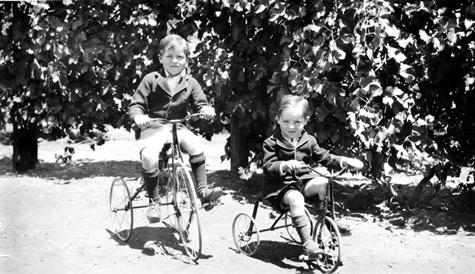
(Picture shows two boys riding their tricycles amongst grape vines in Mildura, Victoria in the 1920s; photo from Museum Victoria)

International Names for Girls

23 Sunday Feb 2014

Posted by A.O. in Name Themes and Lists

≈ 19 Comments

Tags

American names, Arabic names, aristocratic titles, birth notices, brand names, Catalan names, celebrity baby names, Chinese names, created names, english names, Etruscan names, European name popularity, famous namesakes, fictional namesakes, French names, Gaelic names, Greek names, hebrew names, historical records, Hungarian names, International Baby Names for Australian Parents, international naming laws, Latin names, middle names, mythological names, name history, name meaning, name trends, names from movies, names from television, Old Norse names, Persian names, Provencal names, royal names, saints names, scandinavian names, Slavic names, Spanish names, surname names, UK name popularity, unisex names, US name popularity, virtue names, Visigothic names

juno

These are names chosen from my e-book, International Baby Names for Australian Parents – names which are familiar in other countries, but rarely used here. I chose ten that I particularly like, or find interesting, or think very usable. If you haven’t read the book, it gives you an idea as to what’s inside, and if you have read it, it’s a chance for me to provide more information than is possible in a book.

Anais

Identified as a French form of the Persian name Anahita, meaning “pure, immaculate”; Aredvi Sura Anahita is an Indo-Iranian goddess of fertility and wisdom. To get around French naming regulations, it was explained as a Catalan or Provençal form of Anna or Anne. The name is strongly associated with the American writer Anaïs Nin, whose first name was Angela, but always went by her second name. Anaïs was born in France and was of Spanish, Cuban, French and Danish descent. She is principally known as a diarist, where she intimately explored the complexities of her personal life, and as a writer of female erotica. Her name was the inspiration for the Cacharel perfume, Anais Anais, and in Australia we have the children’s clothing label, Aden + Anais. The name is pronounced a-na-EES. Feminine and exotic, Anais is very popular in France and Chile, and charts in the UK.

Bo

This short spunky name has different origins. It is a Chinese name for both boys and girls which means “wave”, as in a wave on water (especially the sea). It is a rare Chinese surname too, and an aristocratic title translated as the equivalent of a Count. It is also a Scandinavian boy’s name derived from the Old Norse name Búi, meaning “to live”. As a girl’s name, its most famous namesake is American actress and sex symbol Bo Derek, born Mary Collins. Ms Derek doesn’t know why she chose the name Bo: it just seemed “grown up” and “unusual” to her. A fictional girl Bo is the nursery rhyme shepherdess Bo Peep – her name comes from a slang term for being in a pillory, presumably because the person “peeped” through the head holes. Radio host Tim Blackwell named his daughter Bo last year, and since then there seems to be a few girl babies with the name in Australian birth notices. To show the gender divide in regard to this name, Bo is rising in the UK charts as a girl’s name, and rising in the US as boy’s name (probably a variant spelling of Beau). In the Netherlands, it charts for both sexes, but is only popular for girls.

Cora

The American author James Fenimore Cooper is credited with the creation of this name, in his 1826 historical novel, The Last of the Mohicans. The novel’s heroine is Cora Munro; dark, intelligent, and serious, she is a distant descendant of African-American slaves who forms a relationship with the son of a Native American chief – the titular “last of the Mohicans”. Her story ends tragically. There are actually many people named Cora in the records prior to the book’s publication, dating back to the late 16th century, but it is difficult to tell if they are abbreviations for longer names, like Cordelia. The name Cora is often theorised to be based on the Greek name Kore, meaning “maiden”; it was the common name of the goddess Persephone. If invented by Cooper, this makes sense, as there are a number of names with this derivation, such as Corinna. However, if its use goes back to the 16th century, it would pre-date the use of these “Kore” names, and may be based on the Latin cor, meaning “heart”. Cora is also used to Anglicise the Gaelic name Coira, meaning “seething pool”. Cora is a Downton Abbey name (the character is American-born), and fits in with the trend for simple, graceful names like Clara and Isla. It charts in both the US and UK, and is popular in Northern Ireland.

Elvira

Spanish form of an unknown Visigothic name whose meaning is much debated. It was traditional amongst medieval Spanish royalty, and became a favourite in fiction. The vengeful scorned lover Elvira of Mozart’s Don Giovanni is just one example of the many characters of this name in operas, plays, novels and films. Another is the title character of Noel Coward’s supernatural comedy Blithe Spirit, a hauntingly beautiful former wife who arrives in the least convenient fashion. Elvira is the name of Donald Duck’s grandmother, and many will remember the campy, cleavage-enhanced Elvira, Mistress of the Dark, played by Cassandra Peterson. A famous person with the name is Elvira Madigan (born Hedvig Jensen), a 19th century Danish circus performer who had a tragic love affair. Her story has been turned into several films and songs. English-speakers can pronounce this romantic name either el-VEER-ah or el-VY-ra (I prefer the first, as the second reminds me of virus), and it fits in with popular names such as Ella and Ava. Elvira charts in The Netherlands and is popular in Sweden.

Hermione

Derived from Hermes, the Greek god of transitions and boundaries, who was the messenger of the gods, and patron of travellers, herdsmen, thieves, public speakers, comedians, writers, poets, athletes, inventors, and merchants. Most scholars understand his name as meaning “stone, roadside shrine, boundary marker” – these were dedicated to Hermes as the god of boundaries and travellers. It may be related to the Greek for “the interpreter” to reflect the god’s role as divine messenger. In Greek myth, Hermione was the daughter of the lovely Helen of Troy, and had relationship troubles of her own involving Trojans. There is a Saint Hermione, an early Christian martyr who was the daughter of Saint Philip, identified as a prophetess in the church. In literature, Hermione is a beautiful queen accused of infidelity in Shakespeare’s play, The Winter’s Tale, and Harry Potter’s best female friend, the book-smart Hermione Granger. An Australian character of this name is Hermione the Modern Girl, the cartoon creation of Kaz Cooke. A famous namesake is British actress Hermione Norriss, from television shows Cold Feet and Wire in the Blood. This elegant name is pronounced her-MY-oh-nee, and charts in the UK.

Ilona

Hungarian name of uncertain meaning. It is usually said to be a form of Helen, although this may be folk etymology. In Magyar folklore, Ilona is the traditional name of the Queen of the Fairies. She is very beautiful, but also mischevious, and at times, dangerous! Archduchess Ilona of Austria was a Hungarian member of the Hapsburgs, one of the great royal houses of Europe; she passed away a few years ago. This pretty name is usually pronounced ih-LOH-na, and has Loni as the obvious nickname. It charts in France.

Juno

The Roman goddess of marriage and childbirth, and the queen of the gods, besides being the patron and protector of the Roman state. She was seen as eternally youthful, filled with forceful vitality, and a fertility figure, yet also warlike. Juno was the sister and wife of the sky god Jupiter, and the divine couple are two of the oldest known Roman gods. Like her husband, Juno had the power to throw thunderbolts, and the couple’s relationship could be stormy at times. The Romans believed that each woman had a protective guardian spirit called a juno, and this was given offerings on the woman’s birthday. The goddess’ name may mean “youth”, with the suggestion of vitality and fertility, but it is also possible that it is related to that of the Etruscan mother goddess Uni, meaning “she who gives”. The Romans connected her name to the waxing and waning of the moon – perhaps with the idea that, like the moon, she constantly renewed herself. The month of June is named in Juno’s honour, and when a woman is described as junoesque, it means she is beautiful, tall and shapely in a stately, imposing way. A famous person with the name is British actress Juno Temple, who has been in The Other Boleyn Girl, and The Dark Kight Rises. The movie Juno, starring Ellen Page, has helped give this name recent exposure, and it fits in with the trend for names ending with O. You may recall that New Zealand name blogger Anna Hamilton has a little girl named Juno. Juno charts in the UK, where it is rising.

Patience

Patience is the ability to endure difficult circumstances, persevering without exhibiting negativity such as irritation or anger, and being able to deal with strain or frustration during long-term difficulties. It is considered one of the highest virtues in several religions, such as Islam, Buddhism and Hinduism, and in Christianity is one of the Seven Heavenly Virtues. Modern psychology sees patience as a sign of self-control and maturity, and it is a secular virtue as well. The word patience is ultimately from the Latin for “suffering”, and it was introduced as a virtue name by the Puritans in the late 16th century. A famous Australian namesake is Patience Hodgson, a member of indie rock band The Grates. Virtue names are back in fashion, and this one seems both admirable and attractive – a name that someone can grow with. Patience charts in the US.

Safiya

Variant of Safiyya, feminine form of the Arabic name Safi, meaning “pure”. The name is important in Islam because Safiyaa bint Huyayy was a Jewish woman captured from a nomadic Arabian tribe at the age of 17 who was chosen by Muhammad for his own. Previously, she had dreamed that the moon fell from the heavens into her lap, and this was interpreted as a miraculous sign she would marry Muhammad. She converted to Islam and became one of the Prophet’s wives, and after his death gained quite a bit of power and influence. Safiya is pronounced sa-FEE-ah, and is an Arabic heritage choice which fits in with current trends, as it is not dissimilar to popular Sophia. It charts in both the UK and France.

Ziva

Slavic name meaning “living, being, existing”. In Slavic mythology, Živa was a goddess of life and fertility who was worshipped throughout what is now Poland, the Czech Republic, Slovakia, Slovenia, and Germany before the coming of Christianity. She was depicted as a beautiful woman, and people prayed to her for good health and long life. She seems to have been connected with the harvest of both fruit and grains, and one story is that she was able to turn herself into a cuckoo bird. Ziva is also a feminine form of the Hebrew name Ziv, meaning “bright, radiant”. In the television drama series NCIS, Ziva David is an Israeli-American agent portrayed by Cote de Pablo. Pronounced ZEE-vah, Ziva fits in with popular names such as Ava and Zoe. It charts in The Netherlands, and the UK, where it is rising, and is popular in Slovenia.

POLL RESULTS
The public’s favourite names were Cora, Juno and Hermione, and their least favourite were Safiya, Patience and Elvira.

(Photo shows Ellen Page as Juno MacGuff in Juno)

Brisbane Suburbs That Could Be Used as Boys Names

13 Sunday Oct 2013

Posted by A.O. in Name Themes and Lists

≈ 7 Comments

Tags

aristocratic names, Biblical names, english names, famous namesakes, fictional namesakes, French names, Gaelic names, hebrew names, Irish names, Latin names, locational names, middle names, name history, name meaning, name popularity, names from films, names from television, nicknames, Old English names, Old Norse names, popular names, rare names, Roman names, saints names, Scottish names, surname names, unisex names, US name popularity, Welsh names

857092-121013-wap-hamilton

Augustine

Augustine Heights is a new suburb of Ipswich, and gained its name from St Augustine’s Catholic Church and College. The name Augustine is from the Roman name Augustinus, derived from Augustus, meaning “great, venerable”. Its most famous namesake is the theologian Saint Augustine of Hippo, considered one of the most important Church Fathers. He describes his conversion to Christianity in his Confessions, which has become a classic of Christian literature. The name became popular in England in the Middle Ages because of Saint Augustine of Canterbury, a 6th century founder of the English church known as the Apostle to the English. It is probably because of him that there is an English form of Augustine – the popular Austin. In France, Augustine is a girls name, the feminine form of Augustinus.

Bowen

Bowen Hills is an inner-city suburb of Brisbane. It is named after Sir George Bowen, an Irishman who was the first Governor of Queensland. Tactful and democratic, with a great love of the outdoors, he made himself popular enough to be invited to serve two more years when his term had expired. There are a few places in Queensland named after Sir Bowen, including Bowen Park, a pleasure garden in Bowen Hills. The surname Bowen can be Welsh, meaning “son of Owen“, or it can be Irish, in which case it is an Anglicised form of the Gaelic O’Buadhachain, meaning “son of Buadhach”. The name Buadhach means “victory, triumph”. This name reminds me of the Bowen Technique, an alternative massage treatment developed by Australian Tom Bowen, although Bowen is a knight and dragon-slayer in the movie Dragonheart. Rarely seen here, Bowen is in the Top 1000 and rising for boys in the US. It gives the unisex nickname Bo, and for some reason I see this as a girls name just as much as a boys.

Chandler

Chandler is a semi-rural outer suburb of Brisbane. It is named after Sir John Beals Chandler, a successful businessman with a chain of electrical goods stores, and who owned several radio stations. He was elected to the Queensland Parliament in the 1940s, and Lord Mayor of Brisbane in the 1940s and early ’50s. Chandler is an English occupational surname, which denoted someone who made and sold candles, or someone who was responsible for the wax, soap, candles and lighting in a medieval great house. This name will remind many of Chandler Bing, from popular sit-com, Friends.

Crosby

Mount Crosby is an outer suburb of Brisbane adjoining the state forest. It is named after its dominant natural feature, Mount Crosby. The first settlers to this area were from the village of Crosby-on-Eden, near the Scottish border, and it seems likely that they named their new home after their original one. The surname Crosby is after the place name, a common one in northern England and southern Scotland. The name is of Old Norse origin, and means “settlement by the cross”; as we learned from Cruz, these stone crosses were often used as markers. Famous Crosbys include entertainer Bing Crosby and musician David Crosby. The name has recently begun charting in the US, after drama series Parenthood was shown on television there. The show has a character called Crosby Braverman, played by Dax Shephard, and the name must have resonated, because it went up 69 places last year. Crosby is rare in Australia (I’ve only seen it on a child once), but maybe Parenthood will have an effect here too.

Ebenezer

Ebenezer is a suburb of Ipswich. It had been a preaching place on the Methodist Church circuit since 1863, and by 1882 a church had been built named the Wesleyan Ebenezer Church. It is from this church that the suburb gets its name. In the Old Testament, Eben-Ezer is a place mentioned as the scene of battles between the Israelites and the Philistines; its modern day location is not known, but it is probably in Palestine or Arabic Israel. Eben-Ezer is from the Hebrew for “stone of help”, and it is theorised that a stone dedicated to Yahweh may have been located here to give it its name. Its most famous namesake must be Ebenezer Scrooge from Charles Dicken’s A Christmas Carol, the cold-hearted miser redeemed by three spirits of Christmas. I think the name Ebenezer sounds pretty hip now, and an Old Testament boys name which has been overlooked for too long. Eben and Ben would make good nicknames.

Hamilton

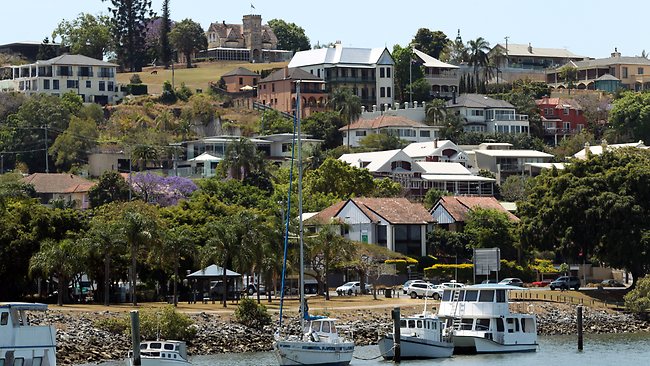
Hamilton is a hilly inner-city suburb of Brisbane on the Brisbane River which was built by convict labour. It soon became known for its upper-class country houses and estates, ornamental shade trees, picturesque location and fine views of the city. Hamilton is associated with “old money”, and has the highest mean income of any suburb in Queensland. It is named after the Hamilton Hotel, built in 1865 by Gustav Hamilton, a wealthy solicitor who owned most of the land in the area. It soon became known as a meeting place for the horse racing world, as the Turf Club is nearby, and is still popular today. Hamilton is an English and Scottish surname after the village of Hamilton in Leicestershire; its name means “crooked hill” in Old English. The aristocratic Hamilton family gained lands in Lanarkshire, Scotland, and gave their name to the town of Hamilton there. The Hamiltons married into the Scottish royal family, and the Duke of Hamilton and Brandon is the highest peer in Scotland. A famous person with the name is Hamilton Hume, an early Australian explorer of New South Wales who was a top-notch bushman and formed friendly relationship with Aboriginal peoples. This is a name with an impressive pedigree.

Logan

The city of Logan is halfway between Brisbane and the Gold Coast. It began as a penal settlement, and farming soon followed; it was developed for housing in the 1960s due to its laissez-faire planning laws. Logan is named after Captain Patrick Logan, the Scottish commandant of the original penal settlement, who had a reputation for being strict to the point of cruelty. He was a great explorer and was killed on one of his expeditions, most likely by Aborigines who had repeatedly told him to get off their land. News of his death was met with wild joy from the convicts. Logan is a Scottish surname; the Clan Logan comes from the “lands of Logan” in Ayrshire, which may be from the Gaelic for “hollow”, or even of Norman origin. In Ireland, it is considered to come from the Gaelic O’Leoghain, meaning “grandson of the warrior”. This name has many namesakes from popular culture, including the dystopian sci-fi film Logan’s Run, where Logan is played by Michael Yorke, and Logan aka Wolverine from the X-Men films, played by Hugh Jackman. Logan has charted since the 1970s (when Logan’s Run first screened), and ranked in the 1980s at #344. It climbed steeply through the 1990s and made the Top 100 by the 2000s. It is currently #38 nationally, #36 in New South Wales, #33 in Victoria, #65 in Queensland, #46 in South Australia, #28 in Western Australia, #17 in Tasmania, and #50 in the Australian Capital Territory.

Sherwood

Sherwood is a suburb on Oxley Creek. Its name comes from a farm which was named after Sherwood Forest in Nottinghamshire, England. A Royal Forest, and remnant of an older and much larger royal hunting forest, it is one of England’s most ancient, having survived since the end of the last Ice Age. It is famous for its association with legendary folk hero Robin Hood, who is supposed to have lived in Sherwood, according to some sources. Sherwood in Brisbane even made its own Sherwood Forest Park, which is now, less romantically, the Sherwood Arboretum. The name Sherwood means “shire wood”. A famous person with the name is American author Sherwood Anderson.

Tennyson

Tennyson is a riverside suburb named in honour of Alfred, Lord Tennyson. Tennyson was Poet Laureate of Great Britain and Ireland during Queen Victoria’s reign, and has the record for length of tenure as a Laureate at 42 years. Revered in his own time, he remains one of the popular English poets. One of his much-loved works is the Idylls of the King, a cycle of blank verse poems inspired by the legends of King Arthur; many of the streets in Tennyson have Arthurian names in compliment of the Idylls. For those amused by these coincidences, the Queensland Tennis Centre is located in Tennyson, and was once the Tennyson Tennis Centre. The English surname Tennyson means “son of Tenney”, with Tenney a pet form of the name Denis. Actor Russell Crowe has a son named Tennyson, after his favourite poet. This is a handsome and unusual name, with a great namesake, and would make an excellent middle name too.

Windsor

Windsor is an inner-city suburb of Brisbane, with many old homes, and containing several heritage-listed sites. It was named Windsor in 1887, most likely after Windsor Castle in Berkshire, England, as it was Queen Victoria’s Golden Jubilee Year. Windsor Castle was built by William the Conqueror, and was originally a fortification to protect the outskirts of London, with strategic views of the River Thames and access to the royal hunting forest of Windsor. Since the rule of Henry I, William’s son, it has been a royal residence, and is the largest inhabited castle and longest-occupied palace in Europe. Today it is a royal palace and weekend retreat for Elizabeth II, and state banquets and official entertainments are often held there – it is also a major tourist attraction. The castle is named after the nearby village of Windsor, once the site of a palace for the Saxon kings. Its name means “winding shores, winch shores” in Old English, because boats were pulled by windlass up the river. Famously, Windsor is the surname of the British royal family: the name was changed from Saxe-Coburg and Gotha by George V in 1917, due to anti-German sentiment during World War I. The final straw was when Germany used the Gotha G. IV aircraft to bomb London – just four months later, the Saxe-Coburg-Gothas had become the Windsors, the name taken from the royal palace. A famous person named Windsor is British actor Windsor Davies, best known as the sergeant on It Ain’t Half Hot Mum. Royal names are all the rage, and you can’t get any more royal than Windsor.

POLL RESULT: People’s favourite names were Tennyson, Augustine, and Windsor, and their least favourite were Sherwood, Hamilton, and Ebenezer.

(Photo shows the suburb of Hamilton)

Brisbane Suburbs That Could be Used as Girls Names

06 Sunday Oct 2013

Posted by A.O. in Name Themes and Lists

≈ 9 Comments

Tags

animal names, Aramaic names, Australian Aboriginal names, Biblical names, birth notices, english names, fabric names, famous namesakes, fictional namesakes, Gaelic names, Gaulish names, German names, Greek names, historical records, Latin names, locational names, name history, name meaning, name popularity, names of farms, names of ships, names of spices, nicknames, Norman-French names, saints names, Sanskrit names, Scottish names, surname names, unisex names, virtue names, vocabulary names

15517831

Amity

Amity Point is a small town on North Stradbroke Island, 30 km south-east of Brisbane. The town is named after the Amity, a brig which carried the first European settlers to Queensland in 1824. The Amity was later wrecked near Tasmania, and today you can visit a full-size replica of the brig in Albany, because the Amity also took colonists to Western Australia. Amity is an English word which means “friendship”; it comes from the same Latin root as names such as Amy and Amabel, and has been used as a girls name since the 17th century. Amity is #551 in Victoria, and I often see it in birth notices: I think this pretty virtue name is gaining in popularity, and may become a replacement for Amy.

Bethania

Bethania is in Logan City, halfway between Brisbane and the Gold Coast. The suburb was founded by Germans in the 19th century, and has a large hobby farm area. The name Bethania comes from Bethanien, the German name for the town of Bethany near Jerusalem. In the New Testament, Bethany is mentioned as the home of siblings Mary, Martha, and Lazarus, and is said to be near the place where Lazarus was raised from the dead. The Biblical Bethany may be the same place as the city of al-Eizariya in Palestine – its name means “place of Lazarus”, although others say that the original village of Bethany was slightly higher up on the Mount of Olives, and that al-Eizariya sprung up around the traditional site of Lazarus’ resurrection. The meaning of Bethany has been much debated, but it is thought the most likely derivation is from the Aramaic beth anya, meaning “house of affliction, house of suffering”, with the conclusion being that it was a place for care of the sick and destitute. Although Bethania doesn’t have any connection to Elizabeth or Anne, it might seem like a way to connect these two names, and does give both Beth and Anya as nicknames.

Cashmere

Cashmere is an outer suburb of Brisbane in the foothills of a mountain range surrounded by dense forest, with a nearby lake. Cashmere is named after an early settler, James Cash, famous for his hospitality to passing travellers. Although Cash was not wealthy and lived in a simple shanty, no tramp ever passed his door without receiving a meal or a pot of tea. Because mere means “lake”, and James Cash’s farm was near Lake Samsonvale, the suburb’s name can be understood as “Cash’s land by the lake”. Cashmere is also a fine, high quality fibre taken from Cashmere goats. The name is after the Kashmir region of India, which has been making cashmere shawls for thousands of years. Kashmir’s name comes from the great sage Kashyapa, a legendary wise man whose name is from the Sanskrit for “tortoise”. With Cash a fashionable choice for boys, luxurious Cashmere seems like a way for girls to get the nickname Cash as well. In Australian records, both men and women named Cashmere can be found.

Corinda

Corinda is an older suburb of Brisbane, first settled in the 1860s as a farming community, and with many of its homes dating back to the colonial period. The name Corinda is believed to come from a local cattle station, which was named after a pastoral station in outback Queensland. The name is of Aboriginal origin, but its meaning is not known. Corinda has been used as an English girls name since the 18th century – perhaps based on the Greek name Kore, meaning “maiden”, with an elaborated ending common in 18th century poetic names like Melinda and Dorinda. This name seems elegant and literary, and not so different from familiar names such as Lucinda.

Inala

Inala is a suburb of Brisbane near the industrial estates. It was built in the post-war period to help with the housing shortage that followed World War II, and was one of the earliest and biggest Housing Commission projects in Queensland. Young architects such as Robin Boyd helped design the housing, which features simplicity and lack of ornamentation. In other words, it isn’t pretty, but cheap and efficient to install and maintain. It has an ethnically diverse community, with many migrants from Vietnam, New Zealand, and the Pacific Islands, amongst other places, settling there. The name Inala is believed to come from an Aboriginal expression meaning “peaceful place, happy place”, but it’s possible it actually means “place of the wind”. I saw a baby girl named Inala in a birth notice early this year, and ever since have been itching to cover this as a name – said ih-NAHL-ah, it fits in with names such as Ayla, Nyla, and even Isla.

Karalee

Karalee is a suburb of Ipswich; originally dairy and farm country, it began to be developed for residential purposes in the 1970s. It is thought that Karalee comes from an Aboriginal expressing meaning “grass around a waterhole”, although the City of Ipswich prefers the translation, “pretty hill beside the water”. This looks like a portmanteau of Kara and Lee, but has its own integrity, and is said KAR-a-lee, like an elaboration of Carol.

Lacey

Laceys Creek is a rural area in the outer suburbs of Brisbane, and was first settled as timber country, soon followed by dairy farming, pineapples, bananas, and bee-keeping. Lacey is an English surname of Norman-French origin. It comes from the village of Lassy in Normandy, which means “Lascius’ place”. The meaning of the Gaulish name Lascius is of unknown meaning. The de Laci family came to England with William the Conqueror, and one of their descendants was amongst the barons who forced King John to sign the Magna Carta. Lacey has been used as a girls name since the 17th century, and part of its feminine charm is that it sounds like the word lacy. Lacey is #234 in Victoria, and I believe this is another pretty girls name which is growing in popularity.

Lucia

St Lucia is an exclusive green and leafy inner-city suburb of Brisbane. It is focused around the University of Queensland, with the university itself, and residential colleges for students, taking up a large proportion of the suburb. There are many wealthy people living in St Lucia, with riverfront houses here costing in the millions. The area was first settled in the 1860s as sugar plantations, and was given its name by William Wilson, who bought and developed one of the plantations for housing in the 1880s. Wilson was born in St Lucia in the West Indies, and he named the housing estate St Lucia because the sugar plantations reminded him of his birthplace. The island of St Lucia is in the Caribbean, part of the Lesser Antilles group. It was named in honour of Saint Lucy by the French, who were the first European settlers to the region. Saint Lucy was a 4th century martyr, and she has become a popular saint, partly because her feast day of December 13 is near Christmas and originally coincided with the (northern hemisphere) Winter Solstice. Her name’s meaning of “light”, from the Latin lux, became a very appropriate one for a Festival of Light, heralding the Light of the World. Lucia has charted since the 1940s and had a minor peak in the 1960s at #283 before dropping to #808 in the 1990s. Since then it has climbed steeply, and peaked in 2010 at #115. Currently it is #122 in New South Wales and #177 in Victoria. This is an alternative to Lucy that has never become popular, although on the charts since the end of World War II.

Ripley

Ripley is a suburb of Ipswich, which currently has only 1000 residents. However, big things are planned for Ripley’s future, and once fully developed it is expected to be a city of 120 000 – one of the country’s largest pre-planned communities. It is named after the Ripley Valley where it is located; I am not sure if this is after someone named Ripley, or one of the towns named Ripley in England. The surname Ripley is from Ripley in Yorkshire – the town’s name means “farm whose land cuts a strip through the forest”, with the forest in question being the forest of Knaresborough. One of the most famous Ripleys must be Robert Ripley, who created Ripleys Believe It or Not! trivia series for newspapers, radio and television. The name may also remind you of tough Lieutenant Ellen Ripley from the Alien film series, played by Sigourney Weaver, or suave con artist Tom Ripley, from the crime novels, turned into a film, The Talented Mr. Ripley, played by Matt Damon. I have seen this name on both sexes.

Sinnamon

Sinnamon Park is an older suburb with some heritage-listed sites; the suburb is named for the pioneering Sinnamon family who settled in the district. Sinnamon is a Scottish surname; the Clan originated in Fife, and their name comes from their seat at Kinnimonth, which was granted to them by King William of Scotland. The name Kinnimonth comes from the Gaelic for “head of the hill”. Sinnamon sounds like the sweet spice Cinnamon, but has its own meaning and history – although the Sin- at the start may be problematic for some. I did find someone named Sinnamon from Queensland in the records, but can’t be sure whether they were male or female.

POLL RESULT: People’s favourite names were Amity, Lucia, and Bethania, and their least favourite were Inala, Sinnamon, and Karalee. Not one person liked the name Karalee.

(Photo shows the University of Queensland in St Lucia)

Requested Name: Fia

05 Wednesday Jun 2013

Posted by A.O. in Requested Names

≈ 4 Comments

Tags

famous namesakes, Gaelic names, historical records, Italian names, name history, name meaning, name popularity, nicknames, Old Irish names, Old Irish words, rare names, Samoan names, Scottish names, unisex names

12Dec14-2934

Fia is one of those names whose origin is difficult to ascertain, or which may have multiple origins. This isn’t uncommon with names that are exceptionally short and simple, but it does make it difficult to research, and my findings are going to involve a certain amount of supposition.

The earliest I can find Fia in historical records is around the 18th century, across central and eastern Europe, later moving north to Scandinavia. The most likely explanation is that Fia was used as a short form of a longer name, and, considering names common to all the countries involved, my guess would be that it is short for Sofia (in fact I have seen quite a few Europeans online named Sofia with Fia as their user name).

Fia isn’t often found in the English-speaking world until the late 19th century, and  turns up in the United States amongst immigrants from the aforesaid European countries.

In Australian records, Fia is found very rarely, and associated with both Italian and Samoan immigrants. The Italian is interesting, because the most common explanation of Fia is that it is short for the medieval Italian name Fiammetta, which comes from the Italian word for “fire”. From the records of Italian immigrants to the US, I see Fia used as an abbreviation of Fiorella, meaning “little flower”, although Fia could still be short for Sofia in Italy (it is currently #1 there).

In Samoa, Fia is a common unisex short form of any name beginning or ending with fia. An example is AFL footballer Fia Tootoo, whose entire name is Fiatupu To’oto’o. A Samoan girls name that ends with -fia is Tausa’afia, which means “pleasant, lovable”; Fia can be used as the nickname.

There are two other theories I have read about the origin of Fia that are worth mentioning. One is that it is Scottish Gaelic, and originates from the medieval name Duibhshíth, which has been translated as “black fairy”. The other is that it is short for the medieval Irish name Fiachna, meaning “raven”, or related to fiadh, the Old Irish word for “deer” (originally any game animal).

I don’t find these theories very convincing, mostly because Duibhshíth and Fiachna are male names, and fiadh is also a masculine noun. I wasn’t able to find many women named Fia in Scotland or Ireland in historical records, and the very few I found may have been transcription errors, or abbreviations for longer names, such as Fionnuala. It would be strange for a genuinely Gaelic name to be so absent from Scotland or Ireland.

It would seem that in the English-speaking world, Fia is a modern name, and most likely began as a short form of Sofia. We may have lost touch with its origins due to the vagaries of immigration, and the name’s rarity.

If you are wondering how rare Fia is: there were 28 baby girls named Fia in the United States in 2012, 10 baby girls with the name born in the UK in 2010, and Fia doesn’t show up in Australian data at all. That’s very rare.

Fia is a neat, simple little name which would make a great alternative to popular Sofia and Mia, is a handy nickname for anything from Safiyah to Fiorella to Fiona to Seraphina, and which seems very multicultural. Its dearth of history and namesakes mean that it’s a baggage-free name, with few issues attached, and its rarity ensures that people don’t have a ready image to attach to its bearers.

However, if you are looking for an authentic Gaelic name to honour your Scottish or Irish heritage, I suggest you keep looking. I don’t think this is it.

Thank you to Celia for suggesting the name Fia to be featured on Waltzing More Than Matilda.

POLL RESULT: Fia received an approval rating of 68%. 19% of people thought the name Fia was pretty and unusual, but 15% preferred it as a nickname for a longer name only.

(Photo shows Swedish model Fia Ljungstrom)

Girls Names Which Rose in Popularity in 2012

14 Sunday Apr 2013

Posted by A.O. in Name Themes and Lists

≈ 25 Comments

Tags

celebrity baby names, classic names, english names, epithets, famous namesakes, fictional namesakes, Gaelic names, germanic names, Hollywood names, locational names, mythological names, name history, name meaning, name popularity, name trends, names from television, Native American names, nature names, nicknames, Old French names, Old Norse names, plant names, popular names, retro names, royal names, Scottish names, Slavic names, Spanish names, surname names, Twilight names, unisex names, vocabulary names

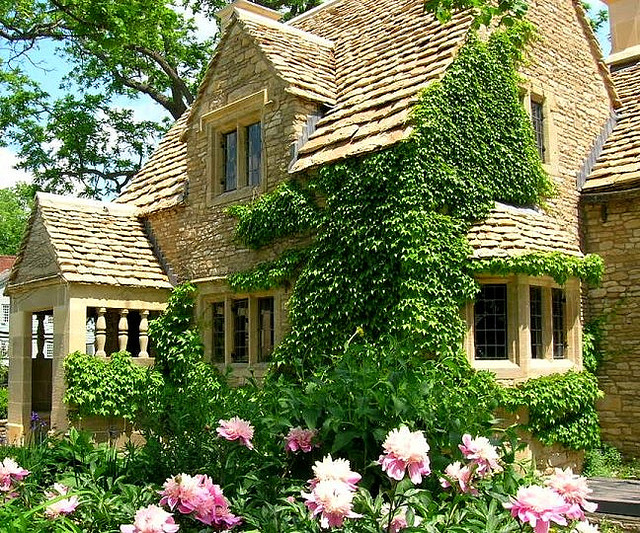
213495458_f0e01eb1bf_z-Cotswold-Cottage-2These names became noticeably more popular in Australia last year. If you are considering using any of them, don’t panic. Most are making solid progress rather than madly storming upward. It would be foolish to reject them based on their current popularity, and silly to fret if you chose one of these names in 2012.

The list indicates the diversity of girls’ names at present, with a mix of classic and modern; places and nature; Hollywood and royalty. There’s something for nearly everyone amongst these popular names.

Ivy

Ivy was the fastest-rising girl’s name both nationally and in Western Australia last year, and made the top 5 fastest-rising names in South Australia, Queensland and the Australian Capital Territory. It became more popular across the board in 2012, and nationally rose 18 places. This is its second time around in the Top 100 – Ivy was #17 in the 1900s, and didn’t leave the Top 100 until the 1940s. It vanished from the charts in the 1970s, but reappeared in the 1990s. Ivy soared during the 2000s, making the Top 100 by the end of that decade. It is currently #22 in Australia, #21 in NSW, #27 in Victoria, #25 in Queensland, #22 in SA, #28 in WA, #44 in Tasmania, and #30 in the ACT. Ivy is named for the plant, and like its namesake, is presently climbing; Beyonce‘s daughter Blue Ivy may have given the name publicity. Chances are we’ll be seeing more of this fresh, pretty retro name, which sounds similar to popular Ava, Eva and Evie.

Savannah

Savannah was in the top 5 fastest-rising names in South Australia, went up 9 places nationally, and increased in popularity in New South Wales, Victoria, Queensland, Western Australia and Tasmania. It is currently #35 in Australia, #38 in NSW, #74 in Victoria, #28 in Queensland, #43 in SA, #35 in WA and #94 in Tasmania. Savannah first charted in the 1990s, and climbed until it reached the Top 100 at the end of the 2000s. Savannah is an alternate spelling of the word savanna, referring to grasslands that have scattered trees, or where the trees are open to the sky; large tracts of northern Australia are savanna. The word comes from the Spanish sabana, derived from the Arawak (Native American) word zabana, which originally meant a treeless grassy plain. Savannah is a place name in the United States, most famously the city in Georgia. The city’s name comes from the Savannah River, which may be derived from the Shawnee people, or from Native American words for “southerner” or “salt”. The city featured in 1990s soap, Savannah, which probably accounts for its début in the charts that decade. While I imagine Savannah originally got its foot in the door because it sounds like Susannah, here it fit in with those other hip names of the ’90s, Ava and Sienna. Like Harper, this is another American South-inspired name, but also a royal one, because the queen’s first great-granddaughter is named Savannah.

Harper

Harper was the fastest-rising name in Tasmania and Victoria, made the top 5 fastest-rising names in South Australia and Western Australia, and became more popular in every state. Currently it is #39 in Australia, #37 in NSW, #29 in Victoria, #36 in Queensland, #44 in SA, #29 in WA, and #31 in Tasmania. Harper began as a surname from the English word for a professional harp player. The surname  originates from the west coast of Scotland, and is especially associated with the Clan Buchanan. The name also has Christian overtones, for heaven is said to be filled with the sound of harp music. Harper has been used as a first name since the 17th century, and was originally given to boys. The fame of (Nelle) Harper Lee, author of To Kill a Mockingbird, gave it a feminine slant. Harper only began charting in 2011, after David and Victoria Beckham welcomed their first daughter. Harper Beckham was named by her brothers after a character in Wizards of Waverley Place (although Victoria Beckham also happened to be working for Harper’s Bazaar at the time). The Beckhams said they wanted a name to honour their time in the United States, and chose this American-style name. Many Australians have followed in their footsteps.

Alice

Alice was the #1 fastest-rising name in South Australia, and has just joined the Top 20 in the Northern Territory, so it has gained popularity in central Australia. Intriguingly, the town of Alice Springs is in the middle of the Australia, offering food for thought. Alice also went up in popularity nationally, in Victoria, and in Tasmania. It is currently #43 in Australia, #49 in NSW, #34 in Victoria, #53 in Queensland, #34 in SA, #49 in WA, #41 in Tasmania, #20 in the NT and #43 in the ACT. Alice is a classic name which has never left the charts. It was #4 in the 1900s, and just missed out on the Top 100 in the 1940s, at #105. It reached its lowest point in the 1960s at #265, then began climbing, reaching the Top 100 for the second time in the 1990s. Since the beginning of the 2000s it has made staid but steady progress up the charts, and become middle name de jour. Alice is from the Old French name Aalis, short for Adelais, which is a short form of the Germanic name Adelheidis, meaning “noble kind” (which Adelaide is based on). Alice became popular in the Middle Ages, and got a boost during the 19th century after Queen Victoria had a Princess Alice. It’s been a favourite in fiction ever since Lewis Carroll penned Alice in Wonderland, and is the name of a main character in the Twilight series. Sensible, yet with a touch of magic, sweet Alice is one to keep your eye on.

Willow

Willow was in the top 5 fastest-rising names in Western Australia, went up  nationally, and increased in popularity in New South Wales, Victoria and the Australian Capital Territory. It is currently #44 in Australia, #43 in NSW, #33 in Victoria, #39 in Queensland, #32 in WA, #73 in Tasmania and #68 in the ACT. Willow first charted in the 1990s, and rose precipitously to make the Top 100 by the late 2000s. Willow is named for the genus of small trees and shrubs which symbolise both wisdom and deep loss. It has been used as a personal name since the 18th century, and was originally given equally to boys and girls. It has only ever charted for girls in Australia, but is still occasionally used for boys. The 1988 fantasy film Willow, which possibly played a role in Willow joining the charts in the ’90s, has a hero named Willow. In 2011, pop singer Pink welcomed a daughter named Willow, and that doesn’t seem to have done this name any harm. Flower names mostly didn’t do well in 2012; Ivy and Willow show that greenery is more appreciated than petals at present.

Mackenzie

Mackenzie made the top 5 fastest-rising lists in New South Wales and Victoria, and increased its popularity in other states and the Australian Capital Territory. Currently it is #46 in Australia, #57 in NSW, #44 in Victoria, #45 in Queensland, #33 in SA, #37 in WA, #45 in Tasmania, and #48 in the ACT. Mackenzie has charted since the 1990s, and zoomed up the charts to make the Top 100 by the early 2000s. It dipped out of the Top 100 in 2009, but was back the next year. Mackenzie is a Scottish surname, an Anglicised form of of the Gaelic Mac Coinnich, meaning “son of Coinneach” (Coinneach is the original form of Kenneth). The Clan Mackenzie is from the Highlands, and of Celtic origin; they trace their clan name back to the pagan god Cernunnos. Mackenzie has been used as a first name since the 18th century in Scotland; it was nearly always given to boys in the beginning, but not exclusively so. Mackenzie first charted in the US as a female name, popularised by actress (Laura) Mackenzie Phillips, who was in American Graffiti. Since then there have been other Mackenzies on our screens; most recently, Mackenzie Foy played Renesmee in Breaking Dawn – Part 2. 

Audrey

Audrey made the national Top 50 last year, and according to my estimate, rose almost as many places as Ivy. However, it’s harder to see where the gains were made than it is with Ivy, although Audrey made significant increases in New South Wales and Victoria, and modest ones in Tasmania and the Australian Capital Territory. Currently it is #50 in Australia, #36 in NSW, #32 in Victoria, #55 in Queensland, #96 in Tasmania and #35 in the ACT. Like Ivy and Alice, Audrey has been Top 100 before. Although it was #156 in the 1900s, it made the Top 100 the following decade, and shot up to peak at #32 in the 1920s. It sank faster than it had risen, and was #197 in the 1940s, reaching its lowest point in the 1980s with a ranking of #0. Since then it has climbed, and reached the Top 100 again at the end of the 2000s. It looks likely to overtake its earlier peak, but Audrey seems to be under the radar at present. This is one of those names which is probably more popular than you think, and has an Australian connection, for the famous Skipping Girl Vinegar neon sign in Melbourne is affectionately known as Little Audrey.

Mila

Mila was the #1 fastest-rising name in the Australian Capital Territory, and grew more popular in New South Wales, Western Australia and Tasmania. It is currently #59 in NSW, #46 in Victoria, #65 in Queensland, #44 in WA, #70 in Tasmania, and #48 in the ACT. Mila only began charting in 2011, so has been extremely successful in a brief space of time. The fame of Hollywood actress Mila Kunis must have had an impact; Mila entered the charts the year after Ms Kunis appeared in Black Swan. Mila is a short form of Slavic names containing the element mil, meaning “gracious, dear”. Mila Kunis’ full name is Milena, which is the feminine form of the Slavic name Milan, meaning something like “dear one”, and often translated as “sweetheart”. Mila sounds similar to other popular names such as Mia and Milla, and at the moment is doing very well.

Freya

Freya is a name just beginning to make an impression, for it joined the Top 100 in Tasmania and the Australian Capital Territory last year, and was in the top 5 fastest-rising names in Tasmania. Both these regions have small population sizes, so you can be forgiven for being a little sceptical; Freya is currently #174 in NSW and #129 in Victoria. Freya is the English spelling of the Old Norse goddess Freyja – her name means “lady”, and was originally an epithet. In Norse mythology, Freyja is a goddess of love, sex, beauty, fertility, sorcery, gold, war and death. Immensely beautiful and clever, she rules over a field in the afterlife. The name Freya has been popular in the UK for several years now, and is well known here due to Tasmanian actress Freya Stafford; it doesn’t seem too far-fetched that we should follow Britain’s lead, but we shall have to wait and see.

Josephine

Josephine just managed to squeeze onto the Top 100 in New South Wales last year. That may not sound impressive, but the amount Josephine climbed was phenomenal – it went up 99 places, far outstripping Ivy’s mere 18. For that reason alone, it deserves a place on this list. Josephine is a solid classic which has never been off the charts, or left the Top 200; on the other hand it has never enjoyed high popularity either. It was #86 for the 1900s, and peaked the following decade at #76. It just failed to reach the Top 100 of the 1940s at #103, and dipped in the 1980s to make #172. Its progress has been up and down, but never too high or low, and it reached its lowest point in the charts in 2011, at #199. It has more than made up for this by getting back to the Top 100 in 2012, where it hasn’t been since the 1930s. Currently it is #100 in NSW and #105 in Tasmania. Josephine has recently made its mark as a royal and celebrity baby name, with Josephine chosen for the daughter of Prince Frederik and Princess Mary of Denmark, and also the grand-daughter of former prime minister Kevin Rudd. Will Josephine continue its ascent? Historically it’s unlikely, for Josephine seems most comfortable in the low to mid 100s, and may very well drop back this year. Stay tuned!

POLL RESULT: People’s favourite names were Alice, Ivy, and Freya, and their least favourite were Harper, Savannah, and Mackenzie.

Australian Beaches That Could be Used as Boys Names

06 Sunday Jan 2013

Posted by A.O. in Name Themes and Lists

≈ 2 Comments

Tags

adjective names, aristocratic names, banned names, celebrity baby names, Celtic names, english names, ethnonyms, famous namesakes, fictional namesakes, Gaelic names, historical records, locational names, name history, name meaning, name popularity, names of ships, nicknames, Old English names, Old Gaelic names, Old Norse names, Scottish names, surname names, unisex names, vocabulary names

SetWidth960-Kangaroo-on-the-beach-Lucky-Bay-Esperance-Western-AustraliaCheviot

Cheviot Beach is on Melbourne’s Mornington Peninsula, and will forever be remembered in Australian history as the place where our seventeenth Prime Minister, Harold Holt, disappeared without trace on December 17 1967, presumed drowned. To the best of my knowledge, we are the only country to have had a national leader disappear in modern times. The beach is named after the SS Cheviot, which was wrecked here in 1887, 35 people losing their lives. Not surprisingly, the public is not permitted access to Cheviot Beach, because the seas are far too dangerous – Harold Holt was only allowed to swim here because he was the Prime Minister, and as we see, it wasn’t a good idea. The SS Cheviot was named after the Cheviot Hills on the border between England and Scotland. They feature in The Ballad of Chevy Chase, which tells of a medieval battle between the English and the Scottish here. The name Cheviot is almost certainly Celtic, but the meaning is not known. This seems like an interesting way to get the nickname Chevy – which I’ve seen several times on baby boys.

Elliott

Elliott Heads is a small town in Queensland, set amongst farmland and sugarcane fields. The beach at Elliott Heads is family friendly, popular for swimming, fishing, sailboarding and jet skiing. The town is at the mouth of the Elliott River, with the river supposedly named after Gilbert Eliott, who was the first Speaker of the Queensland Parliament. If so, I’m not sure why it is spelled differently. Eliott came from a long line of Scottish barons and baronets, and being calm, courteous and dignified, avoided nearly all political controversy, and was extremely popular. The surname Elliott can be derived from a number of different personal names. One is Ellis, a medieval English form of the name Elijah. It can be from the Old English Athelgeat, a male name meaning “noble Geat” (the Geats were a tribe who inhabited what is now Sweden). Another source is Old English Athelgyth, a female name meaning “noble battle”. It can be from Old English Aelfwald, meaning “elf ruler”. Finally, in Scotland it can be from the Gaelic surname Elloch, meaning “dweller by the mound”. Elliott has never charted in Australia, with parents preferring the spelling Elliot for their sons, currently #181.

Henley

Henley Beach is a pleasant suburb of Adelaide, and its white sandy beach has gentle water for swimming and a jetty for fishing. The public square next to the beach is lined with shops, hotels and restaurants. A well-established older suburb, it was first advertised in 1860 as being “free of noxious smells”, but as you can see, it’s got a lot more going for it than that. Henley was named after Henley-on-Thames in Oxfordshire, a famous centre for rowing, with the Henley Royal Regatta held each summer. Sir Ninian Stephen, former Governor-General of Australia, was born in Henley, and came to Australia during his childhood. The name Henley means “high wood” in Old English, because the town is in the Chiltern Hills. Henley was in use as a boy’s name in the 19th century, and it is found in some rather aristocratic-sounding name combinations in Australian records (and the less inspired Henry Henley). It was a classy name choice 150 years ago – could it be again?

Kingston

Kingston is a commuter town just south of Hobart in Tasmania; Kingston Beach is one of its suburbs. The area was settled in the 19th century by a family who were evacuated from Norfolk Island. Norfolk Island was at first a convict settlement like Sydney, but it ran into such difficulties that settlers were eventually forced to relocate to Tasmania. Being sent from a balmy subtropical island to freezing Tasmania must have come as a shock, but the pioneers obviously flourished. After World War II, many Dutch immigrants moved to Kingston, and it is a sister city to Grootegast in The Netherlands. Kingston Beach is the first swimming beach south of Hobart. Kingston was nostalgically named after the capital of Norfolk Island, which gained its appellation from its founder, Lieutenant Philip King. As we know, it’s not possible to name your child King in Australia, but you can call a baby Kingston, and it’s reasonably well-used in the records – one girl from Tasmania was even named Revie Josephine Kingston Beach. Quite common as a middle name for girls, only boys seem to have received it as a first name, including Kingston Rainbow, who managed to get two beachy names from my lists.

Lennox

Lennox Head is a village in the Northern Rivers district of New South Wales near the town of Ballina. Lennox Head Beach is more popularly known as Seven Mile Beach, although technically it’s only 5.3 miles long. The head, often called Lennox Point, provides panoramic views and a world-class point break, which makes this a famous surfing destination. Young surfers can look forward to the Rusty Gromfest in Lennox Head, known as the original and best youth surfing event in the country, and boasting alumni such as Stephanie Gilmore and Joel Parkinson. People also use Lennox Point for hang-gliding, and dolphin and whale watching. Lennox Head was named after Charles Gordon-Lennox, Duke of Lennox and Richmond, a soldier and politician. The dukedom is named for the district of Lennox in Scotland, near Glasgow; its name comes from the Old Gaelic for “field of elm trees”. Lennox is a very cool name for boys at the moment, which not only has the fashionable X, but also gives the trendy nickname Lenny; it was chosen as a baby name by racing driver Jason Bright. Handsome and aristocratic, it’s a great choice, and one I’m sure we’ll be seeing more of in the future.

Lorne

Lorne is a seaside town on the stunning Great Ocean Road in Victoria. Settled in the mid 19th century, it was visited by Rudyard Kipling in 1891, who mentions it in his poem The Flowers. Kipling was obviously ahead of the trends, because the town only opened up to tourists in the 1930s. Lorne is one of Victoria’s most popular tourist destinations, and its beach one of the main attractions, offering good swimming, surfing and fishing. In January, the town holds the Pier to Pub swim, which, with a 1.2 km course, attracts thousands of entrants, and is listed in the Guinness Book of Records as the largest organised ocean swim in the world (Kieren Perkins won in 1992). Lorne is named in honour of the Marquess of Lorne, to commemorate his marriage to Princess Louise, daughter of Queen Victoria. The Marquess became a very popular Governor-General of Canada; the Candian press feared he and his princess bride would be horribly snooty, but the young couple turned out to be sociable, relaxed, and flatteringly enchanted by Canada’s natural beauty. The district of Lorne in Scotland may have gained its name from Loarn mac Eirc, a Dark Ages ruler of a kingdom in Argyllshire. The Celtic name Loarn is said to mean “fox”, a clan totem animal. Lorne is a name comparatively well-used in Canada, which has close ties to the Marquess, and probably best known for many years as the screen name of Canadian actor, Lorne Greene. Others may remember it as Andy Hallett’s character’s name on the TV series, Angel – the joke is that his demonic face is green.

Lucky

Lucky Bay is in Cape Le Grand National Park, not far from Esperance on the Southern Ocean coast of Western Australia. Australia has more than its fair share of beautiful beaches, but Lucky Bay must be one of the most magnificent – over five kilometres long, it is a perfect crescent of white sand lapped by clear, sparkling turquoise water. Surrounded by bushland inhabited by pygmy possums and bandicoots, you may have to share the beach with kangaroos, who enjoy lazing on the sands. Lucky Bay received its name from the navigator Matthew Flinders, who discovered it in 1802. He had been sailing in the hazardous Archipelago of the Recherche, the place where Australia’s only pirate operated from, in the 1830s. Although Flinders didn’t have to negotiate wth pirates, he had trouble enough to deal with. Sailing through the labyrinth of islets and rocks, and with night falling, Flinders took the risky step of sailing straight to the coast, in the hope that he could find safe anchorage on a beach. All was well, and he dubbed his welcome haven Lucky Bay. Most explorers in Australia haven’t been as fortunate, and therefore it is littered with forbidding place names such as Mount Disappointment, Misery Creek, Mount Hopeless, Miserable Island, Starvation Lake, Point Torment, Dismal Swamp, and Mount Destruction. Lucky Bay is unusually upbeat for an Australian place name chosen by an explorer. Lucky is a rare unisex name, and a very happy one – well suited to a baby whose birth circumstances seem particularly auspicious.

Preston

Preston Beach is a hamlet in the south of Western Australia, between Mandurah and Bunbury. It was developed in the late 1950s as a private estate, and its beach is known locally for being a good fishing spot. It was named after nearby Lake Preston, in Yalgorup National Park; the lake is named after Lieutenant William Preston, who discovered it in 1829. The surname Preston is from a very common place name in England, and means “priest town”. It may have either denoted a village which had its own priest, or one which belonged to the Church. Preston is well-known in Ireland as an aristocratic surname, and it is fairly common in Australian records from the 19th and early 20th centuries. It strikes me as a rather sleek, understated surname name for boys, in a similar mould to Parker and Spencer.

Tallow

Tallow Beach is near Byron Bay in northern New South Wales. Once a hard-working and rather environment-destroying centre for logging, sand-mining, dairying, slaughtering, fishing and whaling, in the 1960s Byron began attracting surfers to its beaches. This began its new life as a tourist destination, and in the early 1970s the counter-culture Aquarius Festival was held in nearby Nimbin. From then on, it was known as a hippy, alternative town. Today in Byron, barely a weekend goes by when they are not holding a yoga or meditation retreat, pagan gathering, music festival, film festival, writers festival, surf festival, triathlon, underwater photo festival or art fair. Tallow Beach, in Bouddi National Park is a long stretch of wild, windswept shoreline with huge waves. It got its name when the Volunteer was wrecked there in 1864, and 120 casks of tallow were washed ashore. Tallow is rendered meat fat, once used to make candles, and still used today for biodiesel, soap and skincare products. I have occasionally seen Tallow used as a unisex name – it has the fashionable -oh sound ending with homespun appeal, and is  similar to names such as Talon, Tallis, Talia and Tully. Because Tallow was used for candles, it seems like another name with an association of “light”.

Trigg

Trigg is a northern suburb of Perth in Western Australia, and Trigg Beach one of the city’s most popular beaches for surfing and bodyboarding. The suburb is named after Henry Trigg, who was the Superintendent of Public Works in the 1830-1850s. A wealthy builder, Henry was able to emigrate to Australia and take up a large land grant. His son, also named Henry, was his partner in the building trade, and an architect who designed many of the buildings in Perth city. The surname Trigg is from the Old Norse surname Triggr, meaning “trustworthy, faithful, true”, and the personal name Trig has been used in England since medieval times. The American politician Sarah Palin has a son named Trig, which brought this very old name to new public attention. It has an attractive meaning, and is part of Western Australian history. I think it might appeal to people who like short, unusual names for boys, such as Kip, Dex or Zed.

(Picture shows kangaroo relaxing on the beach at Lucky Bay)

Australian Beaches That Could be Used as Girls Names

30 Sunday Dec 2012

Posted by A.O. in Name Themes and Lists

≈ 8 Comments

Tags

Albanian words, animal names, Australian Aboriginal names, Bonds Baby Search, celebrity baby names, code names, english names, ethnonyms, famous namesakes, fictional namesakes, French names, Gaelic names, historical records, Italian names, Latin words, literary names, locational names, meteorological names, middle names, mythological names, name history, name meaning, name popularity, names from movies, names in songs, names of rivers, Native American names, nature names, nicknames, Polish names, retro names, Robert Louis Stevenson, Russian names, Scottish names, season names, Slavic names, spiritual concepts, surname names, unisex names, vintage names, vocabulary names

morningtideYou may have noticed that all the names that have been featured on the blog since the weather got warmer have had some connection with water or the sea. With summer holidays upon us, it is only fitting that the last Name List for the year is one of Australian beach names.

Airlie

The town of Airlie Beach in the Whitsunday region of north Queensland is a popular tourist destination and one of the departure points for the Great Barrier Reef. Because James Cook thought he arrived here on Whitsunday, every year there is a Blessing of the Fleet on Whitsunday (Pentecost) – although Cook almost certainly got the day wrong and it was really Whitmonday. The town’s beach is quite small, and infested by sea wasps, the most lethal jellyfish in the world. For the convenience of those wishing to avoid a painful death, a swimming lagoon has been built on the foreshore. The town is named after Airlie in Scotland, the seat of the Earl of Airlie. Airlie Castle is referenced in the ballad, The Bonnie House o’ Airlie, and mentioned in Robert Louis Stevenson’s novel, Kidnapped. The meaning is not known, although it’s possibly from the Gaelic for “edge of a ridge”. Airlie is a name reasonably well-known in Australia, although rare elsewhere; there’s ABC presenter Airlie Ward, hockey player Airlie Ogilvie, policy analyst Dr Airlie Worrall, and actress Airlie Dodds. This is a modern name with ties to Scottish history, and would be a great choice if Airlie Beach is meaningful to you.

Bondi

Bondi Beach is extremely popular with locals and tourists alike, one of Sydney’s iconic destinations, and heritage listed. In the fashionable eastern suburbs, it’s a place to see and be seen, lined with hotels, cafes and restaurants from where you can view the beach and beachgoers. Bondi has always had a reputation for showing a lot of flesh, and in stricter times the American actress Jean Parker was booted off it for wearing a bikini. These days topless bathing is common on Bondi. If almost-naked humans aren’t your thing, there is always the chance of seeing dolphins, fairy penguins, and in season, whales. Bondi Beach has many cultural events, including the annual City to Surf charity run, and it stars in TV shows such as Bondi Rescue and Bondi Vet. The name Bondi (said BON-dye) is said to be from boondi, a local Aboriginal word meaning “sound of water breaking over rocks”. The rare use of this name in records may be from the Italian surname Bondi (said bon-DEE), meaning “good day”. I saw a baby girl named Bondi in this year’s Bonds Baby Search. This is an unusual choice, but rather patriotic, and seems ideal for beach-loving Sydneysiders.

Etty

Etty Bay is a picturesque little bay in far north Queensland; the nearest town is Innisfail. Enclosed by rainforest filled with wildlife, it attracts bushwalkers, birdwatchers and picnickers, and is known as one of the best places to see endangered cassowary birds in the wild – cassowaries are large flightless birds around six feet tall. Etty Beach is considered safe for swimming, as long as you avoid saltwater crocodiles and deadly jellyfish. Etty is a pet form of names such as Esther, Ethel, Henrietta and Harriet, and was most common in the nineteenth and early twentieth centuries. With Etta tipped as the next retro-chic name, and Arrietty from The Borrowers receiving notice, Etty seems not only cute and usable, but positively stylish. It fits in with other vintage nicknames such as Elsie, Hattie and Millie.

Miami

Miami is a suburb of the Gold Coast which was first developed in the 1920s to entice tourists, and is still a popular place for people to visit. Its clean sandy surf beach make it a favourite destination for family holidays. It is named after Miami in Florida, as being somewhere else that’s hot, humid and beachy – during the 1920s, Miami enjoyed such prosperity and growth that it was dubbed “The Magic City”. This success the Queensland developers no doubt hoped to emulate. The city of Miami was named after the Miami River, and this in turn was named for the Native American people called the Maiyami. They took their name from the lake they lived by (later known as Lake Okeechobee); the name simply means “big water”. Miami is a name I see sometimes on little girls, and its not only an American place name, but an Australian one as well. It fits in with popular names such as Mia, Maya and Amy.

Pippi

The town of Yamba in northern New South Wales lies at the mouth of the Clarence River, and boasts eleven beaches, including Pippi. It’s primarily known for surfing, and the Pippi Beach Classic is a surfing event held here each January. At one end of the beach is the enticingly-named Lovers Point, and from here is an easy walk up to a rock shelf which gives magnificent views of the sea. Dolphins are plentiful, and whales can be seen during winter and early spring. Pippi Beach is named after the pippis or pipis which can be found here – small edible clams which are often used for fish bait. You may recall that John Sutton, co-captain of the South Sydney Rabbitohs team in the NRL, welcomed a daughter named Pippi last year. As John is a keen surfer, I wondered if Pippi Sutton may have been named after this popular surf beach. You probably also know the name from the Pippi Longstocking books by Astrid Lindgren – the character’s name was invented by Mrs Lindgren’s nine-year-old daughter, Karin. You can see Pippi as short for Phillipa, and if Pippa or Piper delight you, yet seem too common, then sprightly Pippi may fit the bill.

Rainbow

Rainbow Beach is a small town in southern Queensland which was once a centre for sand-mining, but is now a popular tourist destination with an attractive beach and many bushwalking tracks. The town get its name from the brilliant coloured sand dunes which surround it. According to a local Aboriginal legend, the dunes received their colours when the spirit of the rainbow plunged into the cliffs after coming off second-best in battle. More prosaically, the colours stem from the sand’s rich mineral content. The evanescent beauty of rainbows have made them part of mythology for many thousands of years. Both Greek and Norse myth saw the rainbow as a path between heaven and earth; in Irish folklore there is a pot of gold at the end of the rainbow; and in the familiar story of Noah and the Ark from the Old Testament, the rainbow is a sign of God’s promise to never destroy the earth again. In Australian Aboriginal mythology, the rainbow serpent is of great significance and power, creating and marking the earth’s territories, and controlling its water resources. The subject of artists, singers and poets, the stuff of hopes and dreams, the rainbow has long been used as a symbol of social change. The striking name Rainbow is not that rare in old records, and used for both sexes, but is most common as a middle name.

Trinity

Trinity Beach is a suburb of Cairns in far north Queensland; the city lies on Trinity Bay, which is where the suburb gets its name. Captain James Cook named it on his 1770 voyage, as he arrived there on Trinity Sunday, which is the first Sunday after Pentecost (hopefully he had his dates sorted out by this stage). It is a festival to celebrate the Holy Trinity of the three Persons of God: Father, Son, and Holy Spirit. Although the Holy Trinity is a Christian concept, the idea of a triple deity is found in several religions. The name Trinity was used from the 17th century, and was given to both sexes, in honour of the Holy Trinity. In recent years, it has gained a sci-fi image, for there has not only been a cult science-fiction film called Trinity, but Trinity is the love interest in The Matrix movie series, and Trinity Wells a newsreader in Doctor Who, Torchwood and The Sarah Jane Adventures. More ominously, the Trinity Test was the code name for the first detonation of a nuclear bomb in 1945, heralding the start of the Atomic Age.

Vera

Vera View Beach is just north of famous Cottlesloe Beach, in Perth, Western Australia. It isn’t one you will see promoted as a major tourist destination; not the most stunning beach in the world, it nonetheless makes a pleasant walk from the main beach, and is near the main cafe strip. It is also a good place to go snorkelling, as there a small reef nearby teeming with sea life. The beach’s name comes from the fact that it is near Vera View Parade in Cottlesloe. Vera is a Russian name which means “faith”; we tend to be struck by its similarity to the Latin for “truth”, while Albanians notice that it sounds like their word for “spring”. Vera was #15 in the 1900s, and by the 1940s was out of the Top 100. It ceased to chart in the 1980s, but has very recently made a comeback, and was #626 in 2011. Its image was severely dented by the sour-faced prison guard, Vera “Vinegar Tits” Bennett, in the 1970s-80s TV series, Prisoner (no wonder it disappeared from the charts then). However, with simple old names firmly back in fashion, and the V sound becoming increasingly popular, retro Vera could do very well.

Vivonne

Vivonne Bay is on Kangaroo Island in South Australia; the island is off the coast of Cape Jervis. The pristine beach at Vivonne Bay is several kilometres long, and popular for surfing and fishing. There is a tiny town of Vivonne beside the bay. Vivonne Bay was named by the French explorer Nicolas Baudin, who came here in 1803. He was the first to map the western and southern coasts of Australia, and his expedition was a great success, discovering more than 2500 new species and meeting the Indigenous people of Australia. Apparently his expedition harboured a spy – one of his men prepared a report for Napoleon on how to invade and capture the British colony in Sydney Cove, but recommended not to. Baudin died of TB in Mauritius on the way home. He named Vivonne Bay after the French town of Vivonne, near Poitiers (or the aristocratic surname which comes from the town – the town’s name comes from the nearby river Vonne). Readers of Marcel Proust will remember he used the name Vivonne for the river in Swann’s Way. I think this name is pretty, and seems like a cross between Vivienne and Yvonne. It’s different, but not too different.

Wanda

Wanda Beach lies on Bate Bay in the suburb of Cronulla; this is in Sutherland shire, in the southern districts of Sydney. Wanda has a dark past, because there were two murders here in 1965. Two teenage girls, Marianne Schmidt and Christine Sharrock, best friends and neighbours, disappeared at Wanda Beach while on a picnic, and their bodies, partially covered in sand, were found the next day. The murder is still unsolved. Wanda Beach gets its name from an Aboriginal word, wanda, said to mean “beach” or “sand dunes”. Wanda is also a Polish name; there is a medieval Polish legend about a Princess Wanda, and the name was popularised in the English-speaking world by English author Ouida’s 1883 novel, Wanda. The name may come from the West Slavic people known as the Wends; their name possibly means “tribe, kinship, alliance”, ultimately from an ancient word for “love, desire”, and related to the name Venus.

(Photo shows the morning tide coming in at Etty Bay)

← Older posts
Newer posts →

Enter your email address to follow this blog

Categories

Archives

Recent Comments

A.O.'s avatarwaltzingmorethanmati… on Zarah Zaynab and Wolfgang…
Madelyn's avatarMadelyn on Zarah Zaynab and Wolfgang…
JD's avatardrperegrine on Can Phoebe Complete This …
A.O.'s avatarwaltzingmorethanmati… on Rua and Rhoa
redrover23's avatarredrover23 on Rua and Rhoa

Blogroll

  • Appellation Mountain
  • Baby Name Pondering
  • Babynamelover's Blog
  • British Baby Names
  • Clare's Name News
  • For Real Baby Names
  • Geek Baby Names
  • Name Candy
  • Nameberry
  • Nancy's Baby Names
  • Ren's Baby Name Blog
  • Sancta Nomina
  • Swistle: Baby Names
  • The Art of Naming
  • The Baby Name Wizard
  • The Beauty of Names
  • Tulip By Any Name

RSS Feed

  • RSS - Posts

RSS Posts

  • Celebrity Baby News: Melanie Vallejo and Matt Kingston
  • Names from the TV Show “Cleverman”
  • Can Phoebe Complete This Sibset?
  • Zarah Zaynab and Wolfgang Winter
  • Baby, How Did You Get That Name?
  • Celebrity Baby News: Media Babies
  • Celebrity Baby News: Adelaide Crows Babies
  • Celebrity Baby News: Chris and Rebecca Judd
  • Names at Work: Name News From the World of Business and Employment
  • Celebrity Baby News: Sporting Round Up

Currently Popular

  • Celebrity Baby News: Jacinta Allan and Yorick Piper
  • Celebrity Baby News: Jacinta Allan and Yorick Piper
  • Celebrity Baby News: Craig Thomson and Zoe Arnold
  • The Top 100 Names of the 1940s in New South Wales
  • Celebrity Baby News: Ed Husic and Bridget Tilley

Tags

celebrity baby names celebrity sibsets english names famous namesakes fictional namesakes honouring locational names middle names name combinations name history name meaning name popularity name trends nicknames popular names saints names sibsets surname names twin sets unisex names

Create a free website or blog at WordPress.com.

Privacy & Cookies: This site uses cookies. By continuing to use this website, you agree to their use.
To find out more, including how to control cookies, see here: Cookie Policy
  • Subscribe Subscribed
    • Waltzing More Than Matilda
    • Join 517 other subscribers
    • Already have a WordPress.com account? Log in now.
    • Waltzing More Than Matilda
    • Subscribe Subscribed
    • Sign up
    • Log in
    • Report this content
    • View site in Reader
    • Manage subscriptions
    • Collapse this bar
 

Loading Comments...