• About
  • Best Baby Names
  • Celebrity Baby Names
  • Celebrity Baby Names – Current
  • Celebrity Baby Names – Past
  • Featured Boys Names
  • Featured Girls Names
  • Featured Unisex Names
  • Links to Name Data
  • Waltzing on the Web

Waltzing More Than Matilda

~ Names with an Australian Bias of Democratic Temper

Waltzing More Than Matilda

Tag Archives: French names

Irish Names For Girls

08 Sunday Jun 2014

Posted by A.O. in Name Themes and Lists

≈ 10 Comments

Tags

classic names, famous namesakes, fictional namesakes, French names, Gaelic names, Irish Gaelic names, Irish name popularity, Irish names, Italian names, middle names, modern classics, mythological names, name history, name meaning, name popularity, nicknames, Old Irish names, popular names, royal names, saints names, underused classics, unisex names, vintage names

3478061055_c7f655e9d0

Irish people have played an important role in Australia’s history, with many arriving in the 18th century as convicts or free settlers. By the late 19th century, a third of Australia’s population was Irish, and today around 30% of us claim some Irish ancestry. It is said that Australia is the most Irish country in the world outside Ireland.

The Irish have made an indelible mark on our history, culture, religion, sport and perhaps most especially, our politics – six of our prime ministers have had Irish ancestors. They have also helped create much of our national character: both the good bits, like our dry sense of humour and love of language, and the bad bits, like our pessimism and thin-skinned “touchiness”. When I did Italian names, I said that I could imagine an Australian without an Italian history, I just didn’t care to, but it’s impossible to imagine Australia without an Irish history.

Here’s ten Irish girls’ names, some of which have become popular here, and others which are less common. Just a heads up that I haven’t included any fadas (accent marks) on any of the names, since they are not legal in all states.

Aisling
Modern name meaning “dream, vision” in Irish Gaelic. It can be seen as a literary name, because the aisling is a poetic genre developed in 17th century Ireland, where a woman appears in a vision and predicts a turn for the better in Ireland’s fortunes. Earlier, the dream-woman was young and beautiful, and didn’t have a political message, but symbolised nature or love. Aisling can be pronounced ASH-ling or ASH-leen, and to English-speakers, seems like a fresh alternative to Ashley; it has also spawned variants such as Ashlynn. Aisling is #41 in Ireland.

Aoife
From the Gaelic for “beauty, radiance”. In Irish legend, Aífe is a warrior woman, and rival of her (possible) sister Scáthach. Legend tells that she fought the hero Cú Chulainn, but he overcame her with trickery, and promised to spare her life if she stopped fighting with Scáthach, spent a night with him, and bore him a son. She fulfilled her side of the bargain, but the story didn’t end happily. In the tale of The Children of Lir, Aoife is the wicked queen who transformed her stepchildren into swans; she was cursed by being turned into a demon by her own father as punishment. Despite this unpleasant namesake, Aoife was used by medieval Irish nobility, with a notable example being Aoife MacMurrough. This 12th century Irish princess conducted battles on behalf of her husband, and is an ancestor of the current British royal family. Aoife is pronounced like EE-fuh; although complex to spell, it sounds rather like popular Eva, and has a lovely meaning. Aoife is #11 in Ireland and #10 in Northern Ireland.

Bridget
Anglicised form of the Old Irish name Brigit, meaning “high, exalted”. In Irish mythology, Brigit is a goddess; her name is derived from the word for “fire” and most likely her title. Brigit was a poet, and the inventor of keening – the lament over a body at a burial that is a mixture of singing and weeping. She is also patron of healing, smithing, arts and crafts, cattle and livestock, sacred wells, and serpents. She ruled all things high-reaching, as well as lofty attributes, such as intelligence, wisdom, excellence, knowledge, and skill. Brigit is associated with the home and hearth, and with early spring. Her special day is Imbolc, on February 1. She has become fused with St Brigid of Kildare, one of the patron saints of Ireland – probably an attempt to Christianise the goddess. St Brigid is patron of smiths, cattle, poets and scholars, and her feast day is February 1. In Ireland, the name Bridget was too sacred to use until the 17th century, but later became extremely popular – so much so that an Irishwoman was called a “Biddy“, just as an Irishman was called “Paddy”. Bridget was #104 in the 1900s, and dropped to its lowest ranking in the 1950s, at 0. It hit a minor peak in the early 2000s at #166, and is currently in the 200s in Victoria and the 400s in New South Wales. Bridget is an underused classic which has remained on the charts while never becoming popular.

Caitlin
Anglicised form of Caitlín, Irish form of Cateline, Old French pet form of Catherine. While the Irish say it something like kat-LEEN, English-speakers say KAYT-lin, and turn the Irish pronunciation into another name, Kathleen. Caitlin has been used in Ireland since the 19th century, and became well known in the 20th. In Australia, Caitlin has ranked since the 1970s, making its debut at #554, and soaring until it entered the Top 100 in 1987 at #86. By 1990 it was in the Top 50 at #38; by 1994 it was in the Top 20 at #15. It peaked in the late 1990s at #12, and since then has declined. Currently Caitlin is #99 nationally, #78 in New South Wales, and #103 in the Australian Capital Territory. Last year Caitlin was one of the names that fell the most in popularity, suggesting its day is coming to a close (although its many variant spellings would significantly boost its ranking). Caitlin is #64 in Ireland and #33 in Northern Ireland.

Ciara
Feminine form of Ciar, meaning “black”. There is a 6th century St Ciara and a 7th century one, or else just one long-lived St Ciara. According to legend, St Ciara was of royal blood, and founded an abbey; another story says that she (unless it is a different St Ciara) saved a town from a noxious fire through her prayers. Ciara is pronounced KEER-uh, and must be one of the most heavily Anglicised Irish names, for you rarely see it with its native spelling, but more often Keira or Kira. Although to me the Ciara spelling looks more elegant, it risks being confused with the Italian Chiara. Ciara fits in with Australian’s love of names such as Kirrily and Kirra, and has a native sound to our ears. Ciara is #32 in Ireland.

Deirdre
Deirdre of the Sorrows is a tragic heroine from Irish mythology. The daughter of King Conchobar’s bard, when she was a baby a druid predicted she would be very beautiful, but that much blood would be shed for her sake. Conchobar decided he wanted this beauty for himself, and had her brought up in seclusion. As an adult, Deirdre was as stunning as the druid had foreseen, and she fell in love with a handsome warrior named Naoise. The couple eloped, and were blissfully happy until the furious Conchobar tracked them down. In the ensuing battle, Naoise was amongst those killed. Conchobar triumphantly took his gorgeous wife home, but was angry that she remained cold and depressed. To teach her a lesson, he told her that he would give her to the man who had murdered Naoise – the man she hated above all others. On the journey to deliver her, the unhappy Deirdre threw herself from the chariot and split her head open. In some versions of the story, she simply wastes away with grief. Deidre is derived from the Gaelic name Derdriu, whose meaning is debated, but is implied in the original story as meaning “noise, murmuring”, related to the word for “storm”. It could thus be understood as “weeping, wailing, storm of tears”, and is often glossed as “sorrow”. Deirdre came into use as a girl’s name in the 19th century, and became more common in the 20th, when there had been many popular re-tellings of the legend. Deirdre first ranked in the 1930s at #183, peaked in the 1940s at #180, and hasn’t charted since the 1970s. This is a vintage name which has had very little use, so hasn’t become dated. It is rather lovely, although very sad.

Erin
Derived from Éirinn, from the Irish word for Ireland, Éire. Erin was used as a poetic and nationalistic name for Ireland, or the feminine personification of Ireland. According to folklore, the country’s name comes from Ériu, the mother goddess of Irish mythology, and a symbol of Irish sovereignty. Her name is believed to come from an ancient root meaning “fat”, to indicate that Ireland was a land of abundance. Erin came into common use as an Irish name in the 19th century. It has sometimes been given to boys, perhaps because it sounds like Aaron and Eric, but has only charted for girls. The name Erin first charted in the 1950s, debuting at #457, and reached the Top 100 in 1978, at #71. By 1980 it was in the Top 50 at #46, the following year it was in the Top 20 at #17, and it peaked in 1984 at #12. Erin has been a long-time favourite, and only left the Top 100 in 2012. This modern classic is no longer popular, but still getting a reasonable level of use. It is #39 in Ireland and #19 in Northern Ireland.

Maeve
Anglicised form of the Gaelic name Medb, meaning “intoxicating”, and related to the English word mead (a fermented honey drink). In Irish legend, Queen Medb was a powerful and seductive queen known for taking a succession of husbands as her consorts. She was once married to King Conchobar, from the story about Deirdre. Medb couldn’t stick him either and walked out; she ended up defeating Conchobar and ruling in his place. She demanded that her wealth be at least equal to her husbands’, and insisted her consorts be without fear, meanness, and jealousy – the last was very important, because Medb also took lovers to supplement her husbands. Folklorists believe that Queen Medb was originally a sovereignty goddess in a matrinlineal society who the king would symbolically “marry” in order to gain power over the land. This explains her many husbands. In modern times, she has become a feminist symbol of women’s power and female sexuality. This is a sweet, spunky name which fits in with the trend for names with a V in them, like Ava, and makes a great middle name. Maeve is in the 100s in Victoria, so not particularly unusual, while it is #100 in Ireland.

Orla
Anglicised form of Órfhlaith or Órlaith, meaning “golden princess”. Órlaith was a very popular name in medieval Ireland, and there are several queens and princesses from Irish history with this name. The famous High King of Ireland Brian Boru had a sister named Órlaith who married another High King (she unfortunately came to a sticky end after getting over-involved with her stepson), and Brian also had a daughter and a grand-niece named Órlaith. For some reason, Orla is a man in The Poems of Ossian by James McPherson, a young warrior and chieftain of Lochlin who falls in battle. In Scandinavia, Orla is used as a male name, and that might be because of McPherson’s poetry, which was very popular in Scandinavia. Orla is simple to spell and pronounce, and the princessy meaning would be attractive to many parents. Orla is #82 in Ireland.

Sinead
Anglicised form of Sinéad, the Irish form of Jeanette, the pet form of the French name Jeanne. It is the equivalent of the English name Janet, which is a pet form of Joan. In practice, Sinead is often understood as the Irish form of Jane or Jean; it has even been used as an Irish form of Jennifer since Jenny is an old pet form of Jane. The name is pronounced shi-NAYD. A famous Irish namesake is Sinéad de Valera, the wife of the Rebublican leader and Ireland’s third president, Éamon de Valera. A teacher of the Irish language, Mrs de Valera was named Jane by her parents, but changed her name to Sinéad not long after she was married. Sinéad de Valera was a successful children’s writer, who wrote in both English and Irish. She helped to popularise the name in Ireland, and the Irish singer-songwriter Sinéad O’Connor was named after her. Sinéad has lost popularity in Ireland in recent years, and has never charted in Australia, although still seen occasionally.

POLL RESULTS
The public’s favourite names were Maeve, Bridget and Aoife, and their least favourite were Ciara, Deirdre and Sinead.

(Picture shows detail from an Irish pound note, which bears the likeness of Queen Medb or Maeve; the pound hasn’t been used in Ireland since 2002 when the euro was introduced)

Famous Name: Harvey

28 Wednesday May 2014

Posted by A.O. in Famous Names, Requested Names

≈ 7 Comments

Tags

birth notices, Breton names, english names, famous namesakes, French names, Gaelic names, Gallic names, Irish names, mythological names, name history, name meaning, name popularity, Old Breton names, popular names, retro names, saints names, surname names, UK name trends, US name trends


world-no-tobacco-day-rose-graphicFamous Namesake
On May 31 it will be World No Tobacco Day, encouraging smokers to abstain from tobacco for just 24 hours. World No Tobacco Day was started by the UN’s World Health Organization in 1987, and each year there is a new theme: this year it is “Raise taxes on tobacco”. Should you wish to celebrate No Tobacco Day by giving up smoking, information and support can be gained from a number of government and community services.

The number of Australian smokers has dropped dramatically since World War II. In 1945, about three-quarters of men and a quarter of women smoked every day. Today it’s 16% of men and 13% of women, with numbers continuing to fall, making us one of the most successful countries at reducing smoking in the English-speaking world. That can be attributed to vigorous public anti-tobacco campaigns running since the 1980s.

Australia’s campaign against smoking began with William Harvey, a distinguished thoracic physician who devoted his lengthy career to the study and treatment of tuberculosis after his father (also a doctor) contracted the disease. Harvey had the satisfaction of seeing TB become less common, due to better testing and treatment, but over time he became concerned at the growing incidence of lung cancer.

In 1965 he helped found the Australian Council on Smoking and Health as part of his campaign against smoking, and was its president from 1966 to 1975. This didn’t make him popular with some, especially tobacco companies, who continued to deny there was any link between smoking and disease. However, William Harvey had been a POW during World War II who continued caring for his patients even as disease threatened his own life. He didn’t believe in giving up.

He visited schools and sporting bodies, he wrote to the newspapers, and he persuaded other doctors and medical organisations to join him in his campaign against tobacco. One of his achievements was the banning of cigarette vending machines in hospitals. Progress seemed slow, but he persisted, saying that he had great faith in “the inevitability of gradualness”. A devoted family man, Harvey was a keen gardener and surfer into his twilight years, and played golf, tennis and bowls. He passed away suddenly in 1981 at the age of 84 – a good advertisement for a life of healthy non-smoking.

William Harvey didn’t live to see the big government campaigns against smoking of the 1980s, but their existence and determination owe a great debt to his dedication and energy. And if I can reveal my hand, I have friends and family members who have given up smoking, and as a result I have got to spend many more years with them, or seen them live happier, healthier lives. Every one of them was convinced to give up by anti-smoking campaigns, so from the bottom of my heart, I thank you William Harvey.

Name Information
Harvey is an English surname, and one of the earliest recorded. It is derived from the Breton personal name Huiarnuiu derived from the Old Breton name Huiarnviu, meaning “blazing iron”. The Gallic form of the name is Hervé, and St Hervé (or St Harvey) is one of Brittany’s most popular saints.

Hervé was born blind, and was a 6th century hermit and bard known for his humility. According to legend, he had the power to cure animals, and was always accompanied by a wolf. The story goes the wolf had eaten the ox that the saint used for ploughing, and St Hervé made such an eloquent sermon that the wolf volunteered to pull the plough instead, in penitence.

One of the followers of William the Conqueror during the Conquest was named Hereueu, another form of the Breton name. Use of the name as a surname followed almost immediately after the arrival of men with the first name, and is first found in Norfolk, where the Harvey family were granted lands for their services at the Battle of Hastings.

In Ireland, Harvey was used to Anglicise the Gaelic surname O’hAirmheadhaigh, meaning “grandson of Airmed”. Airmed is a goddess from Irish mythology, known for being a healer during a great battle. As she wept over the grave of her brother, who had been slain by her father, all the healing herbs of the world sprang up, watered by her tears. Airmed gathered them into her cloak, but her father scattered the herbs, so that no person can ever know all the secrets of herbalism – only Airmed. Her name is identical to a word meaning “a measure of grain”, although I’m not sure if that is the origin of the name.

Harvey was also used to Anglicise the Gaelic surname Ó hEarchaidh, meaning “son of Earchadh”. Earchadh is an Irish name that I have seen translated as “noble warrior”. By the way, William Harvey was very proud of his Irish Protestant heritage, so his surname was Irish, although most likely of English origin rather than Gaelic.

The name Harvey was #167 in the 1900s, and peaked in the 1940s at #141 – perhaps because of a family of cricketers from Victoria with the surname Harvey who flourished around this time. Harvey disappeared from the charts from the 1960s to the 1980s, but made a comeback in the 1990s when it ranked at #581.

Interestingly, this was the time when retail chain Harvey Norman, co-founded by maverick businessman Gerry Harvey, became a “superstore” business, with massive expansion. The name Harvey zoomed up the charts to make #314 for the early 2000s and #243 for the late 2000s. Harvey peaked in 2010 at #149, and then began dipping the next year – this coincides with Gerry Harvey’s unpopular campaign to make consumers pay Goods and Services Tax on items bought online from overseas websites.

Although Harvey is in the 100s in New South Wales, it is a Top 100 name in Victoria. Harvey entered the Victorian Top 100 in 2010, debuting at #100, and last year made #64. If you are in Victoria you probably think of Harvey as a popular and rising name, while in other states, Harvey may seem fashionable but underused. It is not clear at present if other states will follow Victoria’s lead, but as Harvey is Top 100 in the UK, and rising in the US, international trends suggest Harvey’s popularity here may be increasing.

Harvey is a cute, spunky name for boy, but there’s also something strong and masculine about it. This retro name has been underused for most of its history, and is now making a comeback – in at least one state, it is more popular now than at any other time. This may give some parents the jitters. Although it has only ever charted as a boy’s name, I have seen Harvey on a few girls in birth notices, and the Irish goddess does give this some legitimacy as a name for both genders.

POLL RESULT
Harvey received an excellent approval rating of 75%, making it one of the highest-rated names for 2014. People saw the name Harvey as strong and manly (20%), cute and boyish (16%), and traditional without being stuffy (13%). However, 11% were reminded too strongly of Harvey Norman stores. There was a strong preference for Harvey being reserved for boys only, with 18% saying it was only suitable for boys, and just 2% believing it could be used for both genders.

Thank you to Vanessa for suggesting the name Harvey be featured on Waltzing More Than Matilda.

Is Margot the Next Big Thing?

24 Saturday May 2014

Posted by A.O. in Naming Assistance

≈ 8 Comments

Tags

choosing baby names, famous namesakes, French names, Latin names, name popularity, name trends, nicknames, popular names, sibsets, UK name trends, underused names, US name trends


Margot-Robbie-Wallpapers-14-624x630Melissa and Luke have a little girl named Audrey, and are expecting their second child in a few months. Audrey doesn’t have a middle name, since they have a hyphenated surname, and this will be the case for the new baby as well, whether it’s a boy or a girl.

Mel and Luke have quite compatible naming styles, with both preferring traditional or slightly retro names. Mel likes the idea of older names which are familiar, but not overly common; however, a popular name isn’t an issue unless it seems “trendy”.

Mel and Luke’s Name List
Girls – Genevieve, Margot, Eliza (not in order)
Boys – Elliot is the front runner, but Mel can’t seem to let go of Theo, Sonny, and Remy. These last three names were possibilities for Audrey’s name if she had been a boy, and went on and off the list during the last pregnancy too. Mel thinks that the reason she feels uncertain about them is because they feel too “nicknamey”.

Luke’s preference for a girl’s name is Genevieve, but Mel worries it’s slightly too clunky, and doesn’t much like the nickname Jenny/Genny. Mel’s preference is for Margot, which she thinks is quite spunky, but every time Luke sees actress Margot Robbie in a magazine, he says that he’s concerned that Margot is going to be the next celebrity-inspired trendy name. Mel thinks that it’s celebrity baby names which are more likely to become trendy, not the names of celebrities themselves.

Mel wants to know whether a celebrity name like Margot might really become too trendy as a baby name, and would be especially interested to know what we think of their boys names? In particular, what about Sonny? Is it a “proper” name?

* * * * * * * * * *

I love all the girls names you are considering. I must say, I never thought of Genevieve as clunky before – it’s so elegant, but with real substance. Jenny was the usual nickname for Genevieve during the loooong period that Jennifer was popular, but these days I think Evie is the more obvious short form.

Margot is simply gorgeous, and so stylish. I think one thing Margot Robbie has done for the name is give it more oomph, because I didn’t really think of it as a “sexy” name before (in fact it seemed quite cool and intellectual to me).

That’s an interesting question about whether celebrities or their children are more likely to influence popular names. I had a look at the Top 50 girls names, and I noticed that a few names do seem to have been influenced by celebrities.

Mia first charted in the 1960s, at the same time as Mia Farrow became known from soap opera Peyton Place, but didn’t reach the Top 100 until the 1990s. Olivia first ranked after Olivia Newton-John’s career started, and appeared in the Top 100 in the late 1970s. Sienna has ranked since the 1990s, but suddenly took off in the 2000s when Sienna Miller began her career, and reached the Top 100 almost instantly. The name Isla only began charting in the 1990s, when Isla Fisher joined the cast of Home and Away, and it became a Top 100 name in the late 2000s.

So I can see where Luke’s concerns come from – he’s thinking, “Sienna Miller and Isla Fisher were pretty young women in the magazines a decade or so ago, and now there’s thousands of Siennas and Islas. What if the same thing happens with Margot?”

Well, for a start, there can be quite a wait before the name becomes popular – Mia took thirty years! And even if it happens relatively quickly, as with Olivia, Sienna and Isla, there might still be 10-15 years between the names beginning to be known, and becoming popular. To me it feels as if celebrity baby names have a more immediate effect on name popularity.

And there’s another thing to consider: Mia, Olivia, Sienna, and Isla were “new” names, in that they had never been in the charts before. Margot has already been in the charts – which in my view, saves it from being a “trendy name”. It charted from the 1930s to the 1970s, coinciding with the career of ballerina Margot Fonteyn, and it never became popular – the highest it got was #218.

At the moment there’s not really any sign of an imminent Margot revival, although in 2012 six babies were named Margot in Victoria (where Margot Robbie began her career); just enough to show up in official data. So, while anything is possible (and Margot is rising in both the UK and US), it still seems a safe choice, as far as trendiness goes.

I rather hope one of you will convince the other to choose either of these names, as they are both so lovely. Otherwise, there’s always Eliza, which both of you like, and which makes a wonderful match with Audrey.

Elliot is a great choice for a boy, and I think it’s brilliant as a brother to Audrey, although I suppose it does make having an Eliza later a bit less likely. However, there’s those three names you just can’t quit …. I’ve had that experience too, of those names you just can’t give up, even though you keep tossing them off the list, and I know family and friends who have been through the same thing.

In my experience, two things might cause this issue:

  • The name you keep being drawn to is the right name, and your head just keeps over-ruling your heart by coming up with excuses like, “Too nicknamey”.
  • The name is one that you genuinely love, but a more sensible part of you knows that no matter how desirable the name is, it’s not really right for you. (This is the part of your brain that stops you from buying a stunning evening gown that you know you will only wear once, or from going trekking in Nepal with five children under the age of six).

I can see that part of the reason you can’t really say Yes or No to the names is that you originally picked them for your first child. If you had had a boy first, you could have taken these names with you to the hospital, and one might have been a perfect fit and you would have called your son Sonny (or Remy, or Theo). Or you might have realised they weren’t for you after all, and your son would have been Elliot (or Leon or Hugh or something else). But instead you had Audrey, so you never got a chance to try them out for size in the real world.

I think you should stop throwing them off your list, and grant them amnesty. Wait until the baby is born, because you might be bringing Audrey home a sister rather than a brother anyway, and once again the names could end up in the Maybe One Day category of baby names.

But if you do have a son, this will be your chance to try the names out on a real live little boy. Maybe Remy (or Theo or Sonny) will be so completely his name that you will finally understand why your heart could never let that name go. Or maybe you’ll think they are lovely names, but not quite right after all.

They don’t really seem to be traditional or retro, which you said was your style, but then again, neither is Elliot, exactly. I wonder if your style is actually traditional or retro for girls, and something more modern for boys? I’ve noticed that we Australians often seem to like girls to have fairly conservative names, but will choose contemporary names for our boys. Theo, Remy and Sonny are cute and modern-sounding, although Remy is not a “nickname” name – it’s French for the Latin name Remigius. I think they’re all adorable, and very cool.

As to whether Sonny is a “proper” name: to me if you are allowed to put a name on the birth certificate, it’s a “proper” name. Yes, its origins are definitely nicknamey and affectionate, like Buddy and Buster, but that doesn’t mean it’s not a real name. It’s been in use since the 16th century, so it has a surprisingly long history, and it’s actually in the Top 100 and rising in the UK, while in the US it has charted consistently since the 1920s. So not only is it a “proper” name, it isn’t even very new or very uncommon.

What do you think, readers? Will Margot Robbie make the name Margot trendy? Is Sonny a proper name? And what do you think of the names Mel and Luke have chosen?

UPDATE: The baby was a girl, and her name is Margot!

POLL RESULTS: A majority of people felt that Margot was a safe choice, with 34% thinking it probably wasn’t coming to become trendy, and 22% saying that it couldn’t become trendy, as it was already an established name. However, there were still plenty of people who weren’t convinced of this, with 27% believing it probably would become trendy, and 8% absolutely sure it would become trendy. A cautious 9% weren’t sure what the future held for Margot.

A majority also thought that Sonny was a proper name, with 40% saying it wasn’t exactly a traditional name, but still acceptable, and 16% deciding that it definitely was a proper name. A tolerant 4% believed that all names were “proper names”. However 32% thought Sonny was more of a nickname, and 8% were adamant that Sonny wasn’t a real name at all.

Margot was the clear favourite for a girl’s name, with 50% of the vote going to Margot, 28% to Eliza, and 22% to Genevieve.

Elliot was the favourite for a boy’s name, with 39% of the vote going to Elliot, 33% to Theo, 18% to Remy, and 10% to Sonny.

(Photo is of Margot Robbie)

Famous Name: Henrietta

05 Wednesday Mar 2014

Posted by A.O. in Famous Names

≈ 6 Comments

Tags

birth notices, famous namesakes, French names, germanic names, honouring, name history, name popularity, name trends, nicknames, royal names, UK name popularity, US name popularity, vintage names

henrietta_dugdale-australian-feminist-suffrageThis Saturday, March 8, marks International Women’s Day. I haven’t covered a name specifically for Women’s Day before, but thought it would be a good opportunity to look at one of Australia’s early feminists.

Henrietta Dugdale was originally from London, and arrived in Melbourne in the early 1850s, becoming a pioneer of the women’s movement in Victoria in 1869, after separating from her second husband. She formed the Victorian Suffrage Society in 1884, and became its president; this was the first Australian organisation to work towards voting equality for women. By this time, women could vote on Norfolk Island, and South Australia had brought in limited female suffrage.

(It should be remembered that male suffrage was only introduced during the 1850s, so women weren’t so far behind, although obviously they didn’t want to be behind at all).

Henrietta was confident, passionate and quick-witted in her quest for an equal society, and believed in the possibility of a Utopian future which could be achieved through the use of reason, and co-operation between the sexes. She fought for female suffrage as an essential step towards female emancipation, and bitterly spoke against the Victorian courts, and their failure to protect women from violent crimes. She noted that women’s anger was compounded by the fact that those who inflicted violence on women had a share in making the laws, while their victims did not.

Henrietta believed that women’s lives could be improved through gaining access to the professions, sensible clothing, birth control, and harsh penalties for sexual assault. She was a proponent of temperance, universal education, a more equal distribution of wealth, and the eight hour day as means towards improving the lives of the working class. A member of the Secular Association, she saw Christianity as an oppressive force in women’s lives, and also opposed monarchy and imperialism.

In her private life, she was a wife, and mother to three sons. She made her own clothes, grew her own vegetables, was a skilled carpenter, and an excellent chess player. She outlived three husbands and was over 90 when she died – a good advertisement for teetotalism and fresh vegetables!

Henrietta was recognised as a pioneer of female suffrage when the Commonwealth gave women the vote in 1902, shortly after Federation. Australia was the second country in the world to grant women equal voting rights, after New Zealand, in 1893; however we were the first in the world to allow women to stand for parliament. Henrietta’s own state of Victoria was the last to grant women the vote, in 1908.

When you look at modern Australian society, there must be much of which Henrietta Dugdale would approve. Women can vote, and be elected to power; they can enter the professions, have access to birth control, and don’t have to wear corsets. Presumably she would give the thumbs up to state school education, Dry July, Family Planning clinics, the fall of the Empire, and the rise of secularism.

However, the fight against violence towards women still has a long way to go. 57% of Australian women have experienced physical or sexual violence. One in three will suffer violence in an intimate relationship. The incidence of sexual violence against women in this country is more than double the global average. In Victoria, domestic violence is the leading contributor of death, injury and illness amongst women aged 15-44. Almost every week, a woman will die at the hands of her spouse or partner.

The Dugdale Trust for Women & Girls in Victoria was set up last year to to reduce violence against women and girls, with women and men working to address the root causes of violence. It is proudly named in honour of Henrietta Dugdale, and I am sure she would applaud this initiative.

Henrietta is a feminine form of the Germanic Henry. Although a traditional name amongst European royalty, the name only became widely used in England after the marriage of Charles I to Henriette-Marie of France, the youngest sister of the future King Louis XIII. In England, her name was Anglicised to Henrietta Maria; the king called her Maria, and the English public thought of her as Queen Mary.

Henriette-Marie wasn’t a popular queen, due to her Frenchness, which included staunch Catholicism, and failure to learn English very well. Nonetheless her name made an impact, and she bestowed it on her daughter Princess Henrietta of England, who married the son of Louis XIII, Phillipe I, Duke of Orleans. Unlike her mother, Henrietta seemed popular in her adopted country, although she died young, possibly from poisoning.

Another (semi) royal Henrietta was the illegitimate daughter of King James II, an ancestor of Diana, Princess of Wales, and her sons William and Henry (Harry). The name Henrietta became commonly used amongst the English nobility, and still has a rather aristocratic air. It isn’t particularly common in English-speaking countries, and has been less popular in Australia than in either the United States, where it left the charts in the 1960s, or in England/Wales, where it has remained fairly stable since the 1990s, and is currently in the 500s.

In New South Wales, Henrietta was #158 in the 1900s, and fell in popularity so that it had left the charts altogether by the 1930s. You could call it a dated name, as it hasn’t charted for more than 80 years, but as it was never popular, I prefer to think of it as a vintage name. In Victoria, there were 7 babies named Henrietta in 2012.

Although Henrietta could never be accused of trendiness, it feels like a great time to give your daughter this name. Vintage and retro names are in style, four-syllable names for girls are popular, and there is a fresh appreciation for names associated with royalty. Princess Mary of Denmark has a daughter whose second name is Henrietta: not named for a queen or princess, but for Mary’s mother, Henrietta Donaldson.

This is a lovely dignified vintage name with a royal history and the attraction of never having become popular. The short form Etta is very fashionable (Henrietta Donaldson’s nickname), Hettie would be adorable, Hennie is sweet, and I have even seen a little girl named Henri in a birth notice.

POLL RESULT
Henrietta received an excellent approval rating of 77%, making it one of the highest-rated names of 2014. People saw the name Henrietta as strong and intelligent (21%), classy and dignified (17%), beautiful and charming (16%), and a vintage name ready for revival (16%). However, 7% of people thought it was ugly and frumpish.

International Names for Girls

23 Sunday Feb 2014

Posted by A.O. in Name Themes and Lists

≈ 19 Comments

Tags

American names, Arabic names, aristocratic titles, birth notices, brand names, Catalan names, celebrity baby names, Chinese names, created names, english names, Etruscan names, European name popularity, famous namesakes, fictional namesakes, French names, Gaelic names, Greek names, hebrew names, historical records, Hungarian names, International Baby Names for Australian Parents, international naming laws, Latin names, middle names, mythological names, name history, name meaning, name trends, names from movies, names from television, Old Norse names, Persian names, Provencal names, royal names, saints names, scandinavian names, Slavic names, Spanish names, surname names, UK name popularity, unisex names, US name popularity, virtue names, Visigothic names

juno

These are names chosen from my e-book, International Baby Names for Australian Parents – names which are familiar in other countries, but rarely used here. I chose ten that I particularly like, or find interesting, or think very usable. If you haven’t read the book, it gives you an idea as to what’s inside, and if you have read it, it’s a chance for me to provide more information than is possible in a book.

Anais

Identified as a French form of the Persian name Anahita, meaning “pure, immaculate”; Aredvi Sura Anahita is an Indo-Iranian goddess of fertility and wisdom. To get around French naming regulations, it was explained as a Catalan or Provençal form of Anna or Anne. The name is strongly associated with the American writer Anaïs Nin, whose first name was Angela, but always went by her second name. Anaïs was born in France and was of Spanish, Cuban, French and Danish descent. She is principally known as a diarist, where she intimately explored the complexities of her personal life, and as a writer of female erotica. Her name was the inspiration for the Cacharel perfume, Anais Anais, and in Australia we have the children’s clothing label, Aden + Anais. The name is pronounced a-na-EES. Feminine and exotic, Anais is very popular in France and Chile, and charts in the UK.

Bo

This short spunky name has different origins. It is a Chinese name for both boys and girls which means “wave”, as in a wave on water (especially the sea). It is a rare Chinese surname too, and an aristocratic title translated as the equivalent of a Count. It is also a Scandinavian boy’s name derived from the Old Norse name Búi, meaning “to live”. As a girl’s name, its most famous namesake is American actress and sex symbol Bo Derek, born Mary Collins. Ms Derek doesn’t know why she chose the name Bo: it just seemed “grown up” and “unusual” to her. A fictional girl Bo is the nursery rhyme shepherdess Bo Peep – her name comes from a slang term for being in a pillory, presumably because the person “peeped” through the head holes. Radio host Tim Blackwell named his daughter Bo last year, and since then there seems to be a few girl babies with the name in Australian birth notices. To show the gender divide in regard to this name, Bo is rising in the UK charts as a girl’s name, and rising in the US as boy’s name (probably a variant spelling of Beau). In the Netherlands, it charts for both sexes, but is only popular for girls.

Cora

The American author James Fenimore Cooper is credited with the creation of this name, in his 1826 historical novel, The Last of the Mohicans. The novel’s heroine is Cora Munro; dark, intelligent, and serious, she is a distant descendant of African-American slaves who forms a relationship with the son of a Native American chief – the titular “last of the Mohicans”. Her story ends tragically. There are actually many people named Cora in the records prior to the book’s publication, dating back to the late 16th century, but it is difficult to tell if they are abbreviations for longer names, like Cordelia. The name Cora is often theorised to be based on the Greek name Kore, meaning “maiden”; it was the common name of the goddess Persephone. If invented by Cooper, this makes sense, as there are a number of names with this derivation, such as Corinna. However, if its use goes back to the 16th century, it would pre-date the use of these “Kore” names, and may be based on the Latin cor, meaning “heart”. Cora is also used to Anglicise the Gaelic name Coira, meaning “seething pool”. Cora is a Downton Abbey name (the character is American-born), and fits in with the trend for simple, graceful names like Clara and Isla. It charts in both the US and UK, and is popular in Northern Ireland.

Elvira

Spanish form of an unknown Visigothic name whose meaning is much debated. It was traditional amongst medieval Spanish royalty, and became a favourite in fiction. The vengeful scorned lover Elvira of Mozart’s Don Giovanni is just one example of the many characters of this name in operas, plays, novels and films. Another is the title character of Noel Coward’s supernatural comedy Blithe Spirit, a hauntingly beautiful former wife who arrives in the least convenient fashion. Elvira is the name of Donald Duck’s grandmother, and many will remember the campy, cleavage-enhanced Elvira, Mistress of the Dark, played by Cassandra Peterson. A famous person with the name is Elvira Madigan (born Hedvig Jensen), a 19th century Danish circus performer who had a tragic love affair. Her story has been turned into several films and songs. English-speakers can pronounce this romantic name either el-VEER-ah or el-VY-ra (I prefer the first, as the second reminds me of virus), and it fits in with popular names such as Ella and Ava. Elvira charts in The Netherlands and is popular in Sweden.

Hermione

Derived from Hermes, the Greek god of transitions and boundaries, who was the messenger of the gods, and patron of travellers, herdsmen, thieves, public speakers, comedians, writers, poets, athletes, inventors, and merchants. Most scholars understand his name as meaning “stone, roadside shrine, boundary marker” – these were dedicated to Hermes as the god of boundaries and travellers. It may be related to the Greek for “the interpreter” to reflect the god’s role as divine messenger. In Greek myth, Hermione was the daughter of the lovely Helen of Troy, and had relationship troubles of her own involving Trojans. There is a Saint Hermione, an early Christian martyr who was the daughter of Saint Philip, identified as a prophetess in the church. In literature, Hermione is a beautiful queen accused of infidelity in Shakespeare’s play, The Winter’s Tale, and Harry Potter’s best female friend, the book-smart Hermione Granger. An Australian character of this name is Hermione the Modern Girl, the cartoon creation of Kaz Cooke. A famous namesake is British actress Hermione Norriss, from television shows Cold Feet and Wire in the Blood. This elegant name is pronounced her-MY-oh-nee, and charts in the UK.

Ilona

Hungarian name of uncertain meaning. It is usually said to be a form of Helen, although this may be folk etymology. In Magyar folklore, Ilona is the traditional name of the Queen of the Fairies. She is very beautiful, but also mischevious, and at times, dangerous! Archduchess Ilona of Austria was a Hungarian member of the Hapsburgs, one of the great royal houses of Europe; she passed away a few years ago. This pretty name is usually pronounced ih-LOH-na, and has Loni as the obvious nickname. It charts in France.

Juno

The Roman goddess of marriage and childbirth, and the queen of the gods, besides being the patron and protector of the Roman state. She was seen as eternally youthful, filled with forceful vitality, and a fertility figure, yet also warlike. Juno was the sister and wife of the sky god Jupiter, and the divine couple are two of the oldest known Roman gods. Like her husband, Juno had the power to throw thunderbolts, and the couple’s relationship could be stormy at times. The Romans believed that each woman had a protective guardian spirit called a juno, and this was given offerings on the woman’s birthday. The goddess’ name may mean “youth”, with the suggestion of vitality and fertility, but it is also possible that it is related to that of the Etruscan mother goddess Uni, meaning “she who gives”. The Romans connected her name to the waxing and waning of the moon – perhaps with the idea that, like the moon, she constantly renewed herself. The month of June is named in Juno’s honour, and when a woman is described as junoesque, it means she is beautiful, tall and shapely in a stately, imposing way. A famous person with the name is British actress Juno Temple, who has been in The Other Boleyn Girl, and The Dark Kight Rises. The movie Juno, starring Ellen Page, has helped give this name recent exposure, and it fits in with the trend for names ending with O. You may recall that New Zealand name blogger Anna Hamilton has a little girl named Juno. Juno charts in the UK, where it is rising.

Patience

Patience is the ability to endure difficult circumstances, persevering without exhibiting negativity such as irritation or anger, and being able to deal with strain or frustration during long-term difficulties. It is considered one of the highest virtues in several religions, such as Islam, Buddhism and Hinduism, and in Christianity is one of the Seven Heavenly Virtues. Modern psychology sees patience as a sign of self-control and maturity, and it is a secular virtue as well. The word patience is ultimately from the Latin for “suffering”, and it was introduced as a virtue name by the Puritans in the late 16th century. A famous Australian namesake is Patience Hodgson, a member of indie rock band The Grates. Virtue names are back in fashion, and this one seems both admirable and attractive – a name that someone can grow with. Patience charts in the US.

Safiya

Variant of Safiyya, feminine form of the Arabic name Safi, meaning “pure”. The name is important in Islam because Safiyaa bint Huyayy was a Jewish woman captured from a nomadic Arabian tribe at the age of 17 who was chosen by Muhammad for his own. Previously, she had dreamed that the moon fell from the heavens into her lap, and this was interpreted as a miraculous sign she would marry Muhammad. She converted to Islam and became one of the Prophet’s wives, and after his death gained quite a bit of power and influence. Safiya is pronounced sa-FEE-ah, and is an Arabic heritage choice which fits in with current trends, as it is not dissimilar to popular Sophia. It charts in both the UK and France.

Ziva

Slavic name meaning “living, being, existing”. In Slavic mythology, Živa was a goddess of life and fertility who was worshipped throughout what is now Poland, the Czech Republic, Slovakia, Slovenia, and Germany before the coming of Christianity. She was depicted as a beautiful woman, and people prayed to her for good health and long life. She seems to have been connected with the harvest of both fruit and grains, and one story is that she was able to turn herself into a cuckoo bird. Ziva is also a feminine form of the Hebrew name Ziv, meaning “bright, radiant”. In the television drama series NCIS, Ziva David is an Israeli-American agent portrayed by Cote de Pablo. Pronounced ZEE-vah, Ziva fits in with popular names such as Ava and Zoe. It charts in The Netherlands, and the UK, where it is rising, and is popular in Slovenia.

POLL RESULTS
The public’s favourite names were Cora, Juno and Hermione, and their least favourite were Safiya, Patience and Elvira.

(Photo shows Ellen Page as Juno MacGuff in Juno)

True Blue Names for Girls

19 Sunday Jan 2014

Posted by A.O. in Name Themes and Lists

≈ 6 Comments

Tags

animal names, Australian idioms, Biblical names, bird names, celebrity baby names, colour names, english names, fictional namesakes, flower names, French names, gemstone names, German names, Greek names, middle names, modern classic names, name history, name meaning, name popularity, name trends, names from movies, nature names, nicknames, Norman-French names, Persian names, plant names, popular names, surname names, unisex names

bluewren-male

It will be Australia Day in a week’s time, and rather than cover just one name, I am suggesting names with a “blue” theme, in honour of Australia, where the phrase “true blue” has taken on its own patriotic meaning.

Azura

The name Azura is an elaboration of the colour name Azure. Azure is an intense light blue, the colour of a clear sky on a hot summer’s day. In the patriotic Song of Australia, the lyrics describe how all about is azure bright, and the bird called the azure kingfisher is native to Australia. The English word azure comes from French azur, and is taken from the blue mineral lapis lazuli – lapis means “stone” in Latin, while lazuli is from lāžaward: the Persian name for the mineral, derived from Lazhward, a place where it was mined. According to Jewish tradition, Azura was one of the daughters of Adam and Eve, and the wife of her brother Seth. Azura is a popular name in science fiction and fantasy, most notably in Skyrim, where Azura is the Lady of Twilight who rules over the realm of Moonshadow. Last year, NRL star Anthony Minichiello, and designer Terry Biviano, welcomed their daughter Azura. This is pretty and exotic while still similar to names like Arya and Zara.

Bluebell

The bluebell is a type of hyacinth; a spring bulb which grows wild in the woodlands of Europe and is also a popular garden plant. Its name comes from its violet-blue colour, and mass of bell-like petals. Several other unrelated flowers around the world are named bluebell, and in Australia we have the Royal Bluebell (Wahlenbergia gloriosa). This deep violet wildflower grows abundantly in the Australian Alps, and is the floral emblem of the Australian Capital Territory. Summer flowering, it is hardy and easily grown in the garden; however, it is protected in the wild, and cannot be picked or collected. Bluebell came into use as a girls name during the 19th century, along with other flower names, but doesn’t have a Victorian vintage vibe – it seems hip and funky. I have seen this a few times as a middle name, but would love to see it boldly upfront.

Delphine

Delphine is the French form of Delphina, which can be understood as meaning “from Delphi”. However, the name reminds me of dolphins, whose scientific family name is Delphinidae, from the Greek delphus, meaning “womb”, to indicate that although they look fish-like, as mammals, they bear live young. The Greek town of Delphi, the home of the famous Delphic Oracle in ancient times, is also said to mean “womb”, as it was meant to be the navel of the earth goddess Gaia. The grey-blue colouring of the dolphin suggested this name to me, and there are several species of dolphin which live in, or migrate to, the waters surrounding Australia. Since ancient times, people have been fascinated by dolphins, and there are many stories of wild dolphins rescuing people, helping surfers and swimmers in trouble, or even protecting humans from shark attacks. Their high intelligence and playful behaviour make them appealing companions, and there are several places in Australia where you can swim with and interact with wild dolphins. Delphine is a pretty dolphin-related name for anyone who loves these free-spirited sea creatures, and has Dell and Fifi as potential nicknames.

Indigo

Indigo is one of the seven colours of the rainbow, a dark shade of blue. It was Sir Isaac Newton who introduced indigo as one of the colours of the spectrum, because in the mid-17th century, when he began his work with prisms, the East India Company had begun importing indigo dye to Britain, where it was used to colour clothing a deep blue. Indigo dye comes from the plant Indigofera tinctoria, native to tropical Asia, and the word indigo comes from the Greek, meaning “Indian dye”. Indigo is a rather controversial colour, because Sir Isaac Newton decided there had to be seven colours to match the seven notes of a scale and seven days of the week, and scientists question whether indigo is really a colour of the spectrum, or just the point where blue deepens. Even more confusingly, Sir Isaac Newton seems to have used the word indigo to mean the colour we call blue. Indigo has strong New Age associations, because it is seen as a particularly spiritual colour connected to psychic power. Indigo is a rather trendy girls name in Australia, a favourite choice of celebrities; rising with other Ind- names, it is #137 in Victoria.

Jasmine

I would not have considered this for a list of Blue Names, except that while writing it, Australian actress Cate Blanchett won a Golden Globe for her role in the film Blue Jasmine. There are about twelve species of jasmine native to Australia; these climbing vines come from tropical and subtropical areas of Queensland and northern New South Wales. The flowers are delicate and white, and have a sweet, intoxicating scent; they are both fragile and strong. The word jasmine comes from the Latinised Persian yasamen, meaning “gift from God” – there really is something quite heavenly about jasmine. The name Jasmine is a modern classic which has charted here since the 1960s, and soared during the 1970s to make the Top 100 for the 1980s. It peaked in the early 2000s at #14, and is still stable in the Top 100. It is #36 nationally, #33 in New South Wales, #28 in Victoria, #41 in Queensland, #31 in South Australia, #24 in Western Australia, #59 in Tasmania, #15 in the Northern Territory and #20 in the Australian Capital Territory.

Sailor

This name occurred to me because the Royal Australian Navy winter uniform is dark blue (and the summer uniform has dark blue trim); Sailor could be used as a name to honour a family naval tradition. Sailor has been used as a first name since at least the 19th century, and was used for both sexes, although more common for boys. It received greater recognition in the 1990s, when American model Christie Brinkley gave the name to her daughter, and since then has been overwhelmingly seen as a girls name – perhaps partly because it fits in so well with the trend for names such as Kayla, Layla and Tayla. Weatherman Grant Denyer named his daughter Sailor in 2011, his wife Cheryl a fan of the name ever since Christie Brinkley’s choice. The name Sailor probably came originally from the occupational surname, in which case it can be from the German seiler, and mean “ropemaker”, or English, where it means “dancer, acrobat”, from the Norman French sailleor, meaning “dancer, leaper”. The German origin seems to be more common, and as sailors once worked with ropes, still seems to fit as a sailing name.

Sapphira

A Greek name meaning “sapphire”, which simply means “blue stone”. However, it is likely that the ancient Greeks were referring to lapis lazuli when they used the word – it comes from the Hebrew sappir, meaning “lapis lazuli”. In the New Testament, Sapphira was an early Christian who, along with her husband, was struck dead for concealing money from the church and lying about it. It’s hard not to think that they were executed, although the Biblical account is vague on the details. It’s one of the creepier and more troubling parts of the Bible, and doesn’t really show the early church in a good light. A more pleasant connection is the intelligent and loyal blue dragon named Saphira in Christopher Paolini’s Inheritance series of fantasy novels. Crime novelist Tara Moss chose the name Sapphira for her baby daughter in 2011, apparently because she had blue eyes. Sapphira is an exceptionally beautiful and elegant name which can also reference the sapphire mining trade in Australia.

Sky

The atmosphere as it appears from Earth; the word comes from the Norse word for “cloud” (you can see our ancestors came from a place where skies tended to be cloudy!). On a clear day the sky appears blue because air scatters blue sunlight more than it scatters red. Because of this, we give as a truism that the sky is blue, even though it appears in a range of colours depending on the conditions, and there is a colour named sky blue because of that. Blue skies are symbolic of happiness and good times ahead, and blue skying is to think creatively – to think that the sky is the limit, to reach for the sky. Although there are blue skies all over the world, in Australia the strong sunlight and lack of cloudiness mean we see a lot of blue sky, and intensely blue skies – the patriotic song Awake! Awake, Australia! mentions our “bright blue skies”. Sky is a unisex name which has never charted in Australia, but its similarity to Skye and Skyla will make it seem feminine here.

True

An English word which can be understood as meaning “genuine, trusty, faithful”, ultimately from an ancient root meaning “steady, firm”. A common saying in Australia is to describe someone as a true blue Aussie, as featured in the John Williamson song, True Blue. The phrase true blue goes back to medieval times, when the colour blue symbolised faith and constancy. Although theories abound as why this was so, the most likely explanation is that it’s from the blue-dyed cloth produced in the town of Coventry, famous for not fading with washing, and thus remaining “true”. Later on, the phrase became associated with the Presybterian Church, and later still, the Tory Party, and their “true blue supporters”. In Australia, far from “true blue” having these conservative associations, in the 19th century it was used to describe those working class men who remained true to their labour principles, and was thus a left-wing term. Gradually, true blue came to mean anyone loyal to Australia and its values. True can be used as a name for either sex; on a girl, it seems as if it could be short for Trudy and similar names.

Wren

Australian wrens are similar in appearance, but unrelated to the wrens of Europe and the Americas. In some species, such as the Superb Fairywren and Splendid Fairywren, the breeding male has a very distinctive and beautiful blue plumage in contrast to the grey-brown tones of the females and juniors. In other species and subspecies, both males and females are bright blue, or have blue patches. Because they are tiny, pretty, and have an attractive range of birdsongs, we love it when fairywrens visit our gardens. Seeing a group of colourful wrens flutter through the bushes is the closest thing to having fairies in the garden that most people will experience. Another charming fairywren fact is that the male will present brightly coloured flower petals when courting a female, which to human eyes looks like bringing a bouquet of flowers. Wren has been used as a first name since the 17th century, and from the beginning was unisex, given roughly equally to both sexes, and possibly influenced by the surname, which comes directly from the bird. Today it is usually thought of a girls name, and although I can see it on a boy, the fairywren seems to render it more feminine than masculine. Elsewhere Wren might seem a humble choice as a name, while here I think it’s much brighter and more cheerful.

POLL RESULTS
The public’s favourite names were Wren, Indigo and Delphine, and their least favourite were Sailor, True and Sky.

Celebrity Baby News: Anthony Minichiello and Terry Biviano

16 Thursday Jan 2014

Posted by A.O. in Celebrity Baby News

≈ 2 Comments

Tags

celebrity baby names, colour names, French names

BdRdb1ECUAAt6HN

NRL star Anthony Minichiello, and his wife, designer Terry Biviano, welcomed their first child on December 2 last year, and have named their daughter Azura Trésor.

A former gymnast, Anthony has played his entire career in the NRL with the Sydney Roosters, making his debut in 2000. He is the team’s captain, and led them to victory in last year’s grand final. He has also been a long-term member, and captain, of the Italian national team, and has played for City, the New South Wales state team, and for Australia. In 2005, he won the Golden Boot Award for best international rugby league player. He is the older brother of Mark Minichiello, who plays for the Gold Coast Titans. His nicknames are “Mini”, and “The Count”, because of a perceived resemblance he has with the Muppet, Count von Count.

Terry is one of Australia’s most successful high-end shoe designers, and has her own label, which she launched in 2002. She starred in the reality televison programme, WAG Nation, and is a regular fixture on the A-List circuit. Terry and Anthony were married in 2012.

Azura is based on the word “azure”, and Trésor is French for “treasure”, so the baby’s name can be understood as “blue treasure”. The main colour on the Sydney Roosters’ jersey is dark blue, but I don’t know if there’s any connection. Azure is also the national colour of Italy.

Interestingly, we were told in a recent news story that accent marks are forbidden when registering baby names in New South Wales, yet Azura Trésor does have the accent over her name. Maybe the rules have changed, or are more flexible than was reported.

The People’s Choice of Boys Names

22 Sunday Dec 2013

Posted by A.O. in Name Themes and Lists

≈ 9 Comments

Tags

African names, Akkadian names, Albanian names, Arabic names, Armenian names, celebrity baby names, Christmas names, english names, epithets and titles, famous namesakes, fictional namesakes, Finnish names, French names, Greek names, Hawaiian names, hebrew names, Indian names, Irish names, Kurdish names, Latin names, Maori names, mythological names, name history, name meaning, name popularity, name trends, nicknames, Old Norse names, polynesian names, saints names, scandinavian names, Semitic names, Slavic names, surname names, unisex names

3 kings

A selection of boys names that have been searched for several times to reach the blog. I chose names from different backgrounds that aren’t on the Top 100.

Ari

This little name has several origins. It is a Hebrew name meaning “lion”, an Armenian name meaning “brave”, a Scandinavian name from Old Norse, meaning “eagle”, an Albanian name meaning “bear”, a Maori name meaning “clear, visible”, or an Indian name meaning either “sun-like” or “free from sin”. It is also a Finnish form of Aaron and Adrian, a Kurdish short form of the name Arian, meaning “Aryan”, and is commonly used as a short form of any name begining with Ari-, such as Aristotle. There have been quite a few characters named Ari in popular culture, starting way back in the 1950s, with Ari Ben Canaan as the hero of Leon Uris’ novel Exodus, about the founding of the state of Israel; based on Israeli military leader Moshe Dayan, in the movie he was played by Paul Newman. This simple multicultural name is rising like other Ar- names such as Archer, Arlo and Arthur, and is #135 in Victoria.

Balthazar

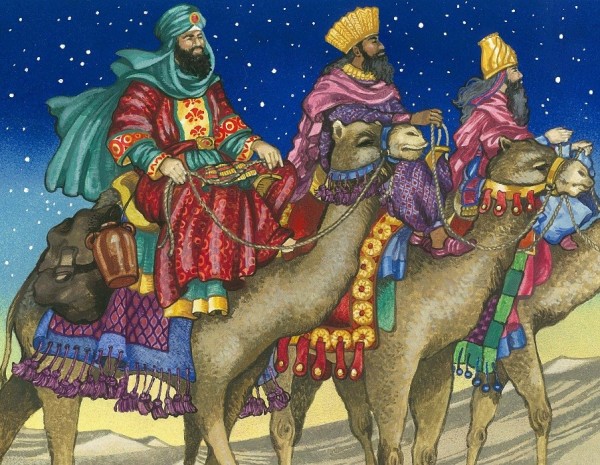
Variant of Belshazzar, the Hebrew form of the Akkadian name Bel-sarra-usur, meaning “Ba’al protect the king”. Ba’al is a Semitic title for any god, meaning “lord, master”, and in the Old Testament, the early Hebrews used the term to apply to the God of Israel. Later the term became seen as a heretical one, with a clear divide drawn between the Hebrew Yahweh and the Phoenician Ba’al. In Christian legend, Balthazar is the name given to one of the Magi – the three wise men who followed a mysterious star to visit the baby Jesus, bringing him gifts. The story appears in the New Testament, but no name (or even number) is ascribed to the Magi in the Bible. According to some traditions, Balthazar was an Arabian or Ethiopian scholar who brought the gift of frankincense to symbolise Christ’s role as a high priest. He is usually depicted as middle-aged and dark-skinned. One story is that Balthazar later converted to Christianity and was ordained a bishop; like the other Magi, he is regarded as a saint. Usually pronounced BAL-ta-zar in Australia, this is a seriously cool Christmas name.

Dragan

Slavic name meaning “precious, dear one”. It is usually pronounced DRAH-gahn, although I have heard people give it the same pronunciation as the word dragon. This reminds me that there is a sympathetic character named Dragan in the novel, Girl With a Dragon Tattoo; in the American film version, he is played by Croatian actor Goran Višnjić. Dragan Roganović is the real name of award-winning Serbian-Australian DJ Dirty South, and unfortunately the name has had a bit of bad publicity in Australia due to accused Serbian-Australian war criminal Dragan Vasiljković “Captain Dragan”, currently imprisoned in Australia awaiting extradition to Croatia. Despite this, Dragan is an attractive heritage choice with a very sweet meaning.

Kalani

Unisex Hawaiian name meaning “the sky, the heavens”. It’s a name often connected with surfing, because of Hawaiian surfers Kalani Robb, Kalani Chapman, Kalani Vierra and Kalani David, and young Australian surfer Kalani Ball. Mark Gasnier, former NRL player for the St George Illawarra Dragons, welcomed a son named Kalani two years ago. These are all guys, but surfer Kalani Miller, girlfriend of Kelly Slater, is a reminder that it’s a girl’s name as well – in fact, Kalani seems more common as a girl’s name in Australia, making #570 for girls in Victoria and not ranking as a boy’s name. Then again, Victoria is not famous for its surf culture – in northern New South Wales or Queensland, boys named Kalani may be more common. It’s a great name for either sex.

Leander

Greek name meaning “lion man”, featured in the tragic tale of Hero and Leander. Hero was a priestess of Aphrodite who lived in a tower in Sestos, on the European side of the Dardanelles, while her lover Leander was from Abydos, on the other side of the strait. Leander swam across the Hellespont every night to be with Hero, while she lit a lantern at the top of her tower to guide his way. Their love affair lasted all through the summer nights, but winter weather proved an obstacle to swimming. Desperate to be with his sweetheart, Leander braved the icy waters and was drowned during a storm, while the savage winds blew out Hero’s lantern. The distraught Hero plunged from her tower into the waves to join him in his watery grave. The story has inspired many writers, including Ovid, John Donne, Christopher Marlowe, and John Keats. Lord Byron recreated the swim by crossing from Sestos to Abydos, a distance of just over 1 km, which he turned into a poem; although he did it in May, according to his poem it was still difficult and he ended up with a chill. Leander was obviously made of sterner stuff. This is a handsome and romantic name with a very masculine meaning.

Mandela

The surname of inspirational world leader Nelson Mandela, his surname the name of his grandfather, the son of a king. Mandela was a lawyer and prominent campaigner against the apartheid government when he was arrested and sentenced to life imprisonment for crimes against the state. He served more than 27 years, released in 1990 after an international campaign had lobbied the South African government on his behalf. He joined negotiations to abolish apartheid and establish multiracial elections, becoming South Africa’s first black president. Deeply loved in his own country, where he was called Tata, or “father””, he was a respected figure on the world stage. He received more than 250 awards and honours during his lifetime, including the Nobel Peace Prize; he was appointed Honorary Companion of the Order of Australia in 1999. His passing this month at the age of 95 after a long illness has only highlighted the global reverence he attained. This is a worthy namesake whose name I have seen given to a boy – a name that Africa has given to the world.

Oisin

Anglicised form of Oisín, an Irish name translated as”young deer”. In Irish mythology, Oisín was a warrior and the greatest poet in Ireland. He was the son of the hero Fionn mac Cumhaill, and a woman named Sadbh, who had been turned into a deer by a malevolant druid. Fionn caught Sadbh as a deer, and she turned back into a human; all was well until the druid caught up with her and made her a deer while she was still pregnant. Sadhbh returned to the wild, and gave birth to Oisín while in deer form – hence his name. Eventually Fionn got to meet his son, and Oisín joined dad’s band of warriors. Oisín’s most famous adventure is when he fell in love with a fairy queen named Niamh, who took him to live in the Land of Youth. Although he thought he only lived with her for three years, three centuries passed in Ireland during his absence. Acording to some tales, Oisín lived long enough to meet Saint Patrick and tell him of his exploits. Oisín, or Ossian, is the narrator of the famous poem series by Scottish author James Macpherson, who made the Gaelic myths so popular in the 18th century. Pronounced OSH-een or USH-een, this a popular name in Ireland and would be well-received in Australia.

Remy

Anglicised form of Rémy, French form of the Latin name Remigius, meaning “oarsmen”. Saint Remigius was a 5th century Gallo-Roman bishop, a highly-educated man of noble blood. According to tradition, he converted and baptised Clovis, the King of the Franks. Clovis was baptised on Christmas Eve; such was his status that 3000 Franks were baptised that day with him. Because of this story, Saint Remigius is credited with France becoming a Christian country, and there are numerous places named Saint-Rémy his honour, as well as Saint-Rémy being a French surname. The name can also be spelled Rémi, and in France the second one is more popular. In Australia, both Remy and Remi are unisex, and roughly even for both sexes (Remy – 19 girls and 14 boys in Victoria; Remi – 11 boys and 7 girls). Although some get upset about Remy and Remi being used for girls, the names could just as easily be short forms of Remigia – the feminine form of Remigius. In Australia, they are usually pronounced RAY-mee or REH-mee.

Wyatt

English surname derived from the personal name Wyot, the medieval form of the Old English name Wigheard, meaning “brave in battle”. The Wyatt family were a prominent one in Britain; the Tudor poet Thomas Wyatt was one of their number. Sir Francis Wyatt was another, and he became Governor of Virginia, so the surname became well known in the United States as well. As a first name, Wyatt is famous because of Western lawman Wyatt Earp, who was Deputy Marshal of Tombstone in Arizona, and is known for the Gunfight at the O.K. Corall, in which three outlaw cowboys were killed. Wyatt was never injured in a gunfight, adding to his mystique, and after his death he gained legendary status as the toughest and deadliest gunman in the West. The name had a boost from popular culture through the television series Charmed, where Wyatt Halliwell was the son born to Piper and her White-Lighter husband Leo; the baby was named from his father’s earthly surname, and seems like a play on the word white, in the sense of “good, angelic”. Wyatt is #252 in Victoria.

Zayd

Arabic name meaning “abundance, growth, increase”. This name is important in Islam, because Zayd ibn Harithah was from an Arabian tribe, and after being abducted, sold into slavery while only a young boy. He was eventually sold to one of the wives of the Prophet Muhammad, and when she married, she gave Zayd to Muhammad as a wedding present. The Prophet became very fond of Zayd, even calling him “the beloved”. One day Zayd’s grieving family managed to track him down, and Muhammad asked him to choose his fate; Zayd told his family he did not want to leave his owner. Zayd’s family accepted his choice, and Muhammad legally adopted him as a son, making him a free man. After Muhammad received his divine revelations from the angel Gabriel, Zayd was one of the first converts to Islam, the only one of Muhammad’s companions who are mentioned by name in the Qur’an, and the first Muslim to be killed fighting for Islam on foreign soil. The name can also be spelled Zaid, and elaborated as Zayden or Zaiden – which fits right in with the -ayden trend. Zayd is #650 in Victoria, while Zaid is #648.

POLL RESULT: People’s favourite names were Ari, Leander and Remy, and their least favourite were Dragan, Kalani and Mandela.

(Picture shows the Magi travelling to see the infant Jesus)

Name News Round Up

17 Tuesday Dec 2013

Posted by A.O. in Names in the News

≈ 4 Comments

Tags

Baby Center Australia, birth data, birth registries, celebrity names, choosing baby names, fictional namesakes, French names, Kidspot, middle names, name meaning, name trends, names from television, naming laws, popular names, rare names, Starts at Sixty

News

Baby Center Australia has released its most popular names for 2013, with Oliver and Charlotte taking the #1 positions. Names with a strong V featured prominently, including Ava, Evie and Ivy, and X, with Jaxon and Jaxson included along with Jackson. Less common names from the site: Blue, Chevy, Blip and Daxx.

Meanwhile, News Limited looked at data from birth registries all over Australia to see how popular culture is affecting name choices. Some names from Game of Thrones, Breaking Bad, Dexter, Downton Abbey, Mad Men, NCIS, How I Met Your Mother, and The Big Bang Theory are up, or appearing for the first time. There’s some rubbery figures, with whole groups of names being counted together, and even quite common names like Abby and Catelyn being counted as “pop culture”. Numbers are statistically significant, but overall very low, so no need to panic in regard to popularity. Most interesting factoid: Dexter peaked in 2010 at 67 births, so the chances of this name hitting the Top 100 are slipping away. Also the fairly ridiculous assertion that “popular culture” names will put your child in hospital … Health Department, please release a health warning on names!

Sabrina Rogers-Anderson from Kidspot is French Canadian by origin, and wanted a French middle name for her daughter, so she and her husband chose Fée – French for “fairy”, and pronounced FAY. Unfortunately, when they went to register the baby’s name in New South Wales, they were told that all accents and diacritical marks were forbidden. Rather than name their baby Arabella Fee, they changed the spelling and went with Fae. However, Sabrina believes that the rule is culturally insensitive, as it disallows valid names and spellings from other countries.

Rebel Wylie from Kidspot is expecting baby number three, a boy, and finds that all is not going well in choosing the name. In her tongue-in-cheek article, she claims her husband Andy is not playing fair in the baby name discussions, because he rejects every name she comes up with, but never suggests anything himself. After moaning about it to her girlfriends, it turns out The Sisterhood believes that the mother gets automatic naming rights as the one bonus of an otherwise miserable pregnancy. Rebel enthusiastically becomes a supporter of this theory, and chooses the name herself. She says Andy only gets a say-so if he can come up with something (she likes) better. A lot of angry comments from people who didn’t find it funny, but some interesting ones too.

Starts at Sixty website looked at the top baby names of 1950, with Jennifer and Peter leading the pack. The author of the article opines that in the past, parents were much more interested in tradition and the meanings of names, and chose accordingly, while today parents choose names from favourite places, TV stars, and brand names. I’m not convinced that parents don’t care about name meaning today – I get so many search terms from people looking for a name with a particular meaning. Lots of interesting comments from the 60+ crowd on how their names were chosen – including a Julie who had her name picked out of a hat (meaning and tradition?!) There were also plenty named after film stars, showing that celebrity name inspiration is no new phenomenon.

The Logan Reporter mourns the days when Sally, Jane, David and Brian were popular names. Newsflash from Logan – the 1960s are over. They’re still coping with the time-lag, including some problems with multicultural Australia. Oh dear.

The People’s Choice of Girls Names – 2

15 Sunday Dec 2013

Posted by A.O. in Name Themes and Lists

≈ 11 Comments

Tags

African names, American names, Arabic names, astronomical names, British names, celebrity baby names, created names, Creek names, Disney names, Dutch names, english names, epithets and titles, famous namesakes, fictional namesakes, French names, germanic names, Greek names, hebrew names, honouring, Indian names, Italian names, Latin names, locational names, Maori names, middle names, mythological names, name history, name meaning, name popularity, names from ballet, names from films, names of rivers, Native American names, nicknames, Old Norse names, Persian names, Roman names, royal names, saints names, Sanskrit names, scandinavian names, screen names, Shakespearean names, surname names, Tibetan names, Tiv names, unisex names, virtue names, vocabulary names, Welsh names

Queensland_Ballet_presents_Giselle

Here are ten names for girls which have been often searched for to reach my blog. I chose names that aren’t in the Top 100, and come from a range of origins.

Anouk

Dutch and French short form of Anna. A famous namesake is celebrated French actress Anouk Aimée; she was born Françoise Dreyfus, and took the name Anouk from the first character she portrayed on film. The name became better known in the English-speaking world after the publication of the award-winning 1999 novel Chocolat, by British author Joanne Harris, in which there is a little girl named Anouk. The character of Anouk is based on the author’s daughter Anouchka, whose name is another pet form of Anna. The book was made into a movie in 2000. Actor and author Andrew Daddo has a daughter named Anouk, born a year after the film was released. Pronounced a-NOOK or an-ook, this exotic name doesn’t have an obviously “French” sound to it, and seems quite sophisticated.

Blythe

Variant of Blithe, an English virtue name meaning “cheerful, merry” which is first found in 16th century Norfolk, stronghold of the Puritans. Although the name began as a girls name, it has been given to boys as well, particularly in the United States, and overall is fairly evenly divided between the sexes, although more common for girls. In the case of boys, the name probably comes from the surname, which is derived from any of the places called Bligh, Blyth or Blythe; they get their name from the River Blyth in Northumberland, the River Blythe in Warwickshire, or the River Blithe in Staffordsire. The names of the rivers simply come from the word blithe, so in either case the name has the same pleasant meaning. A famous namesake is American actress Blythe Danner, mother of Gwyneth Paltrow; her name is a middle name of Gwyneth’s daughter, Apple. This is a fresh, sprightly name which has a modern feel despite its long history.

Cordelia

Cordelia is a princess in William Shakespeare’s King Lear, a loyal daughter who is disowned by her father because she will not make flattering speeches to him, with tragic results. The character is based on Queen Cordeilla, a legendary queen of the Britons who appears in Geoffrey of Monmouth’s History of Britain. According to Geoffrey, Cordelia ruled Britain as queen, but came to grief because the rule of a woman was deemed unacceptable. Cordelia is also mentioned in Edmund Spenser’s epic poem, The Fairie Queene, where her role as heroic British queen was probably a compliment to Queen Elizabeth I. The first Cordelias were born around the time The Faerie Queene was published, and were from upper-class families. There is a popular but unsubstantiated theory that Geoffrey of Monmouth based the name Cordeilla on that of Creiddylad (said cree-THIL-ahd), a character in Welsh Arthurian legends who was the daughter of the god Lud, and considered the most beautiful girl in Britain. Another idea is that Geoffrey may have based the name on that of Saint Cordula, a legendary companion of Saint Ursula whose name is from the Latin for “heart” (Cordeilla is also found spelled Cordoyla, which offers this some support). Still another is that it may be derived from the Roman name Cordus, meaning “late born”, with the implication that as Cordelia was King Lear’s youngest daughter, he had her late in life. Although all these suggestions are attractive, the last one may appeal most to older parents. If you are a fan of L.M. Montgomery’s Anne books, you will remember that the heroine wished her name was Cordelia – because it is “perfectly elegant”. This literary name still seems refined, and can be pronounced cor-DEE-lee-uh, or cor-DEEL-yuh.

Giselle

Derived from the Germanic name Gisela, meaning “pledge, hostage”. Although the word hostage has rather alarming associations today, in the past it was common for political treaties to be accompanied by the exchange of political hostages, as a guarantee of good faith and to maintain peace. Often the children of the ruling classes, even princes and princesses, would be handed over to be raised and educated by a foreign court, with hopes of greater cultural understanding between nations. Gisela and Gisèle (the French form) were popular names amongst medieval nobility and royalty. The name received a huge boost in the 19th century, because of the romantic ballet, Giselle. It tells of an innocent village girl named Giselle who dies of a broken heart after being betrayed by her lover. However, as a sign of her forgiving nature, after her death she protects the man she loves from the spirits of vengeance, and saves his life. Another fictional Giselle is the sweet peasant girl who makes a happy-ever-after transition from cartoon fantasy land to gritty real world in the Disney film, Enchanted. Graceful and fairytale, Giselle is usually pronounced ji-ZEL in Australia, and is #161 in Victoria.

Ingrid

Derived from the Old Norse name Ingríðr, meaning something like “beloved of Ing, beauty of Ing, delight of Ing”. Ing is an older name for the Norse god Freyr – perhaps his true name, because Freyr means “lord” and is his title. Freyr was a phallic fertility god who brought peace and pleasure, and was associated with sacred kingship, male sexuality, prosperity, and sunshine. In Norse legend, Ing is the god followed by the Germanic peoples of the area which is now Denmark and its surrounds, and he is claimed as the first king of Sweden, as well as the progenitor of the Anglian kings. Ingrid is a traditional name amongst Scandinavian royalty and nobility, and there is a young Princess Ingrid of Norway, who is expected to one day be queen. A famous namesake is beautiful Swedish-born movie star Ingrid Bergman, who starred in many Hollywood movies, including Casablanca. Ingrid has a strong and chiselled beauty, and is #481 in Victoria.

Piata

Maori name meaning “shine, glisten”. It isn’t unusual in New Zealand, and is still given to girls today; it can also be found as a surname. It’s not common in Australia, but I think it would work well here, and has a pleasingly cross-cultural feel, since it is similar to Italian Pia and Pieta. I believe it is pronounced pee-AH-ta.

Soraya

Persian form of the Arabic name Thurayya, meaning “the Pleiades”. The Pleiades is the familiar group of stars in the constellation Taurus, sometimes known as The Seven Sisters. The name became better known in the west because of two royal Sorayas. Soraya Tarzi was a liberal Muslim and feminist who married into the monarchy of Afghanistan and became queen; she appeared in public alongside her husband as an equal and together they tried to modernise their country. Afghanistan wasn’t quite ready for it, and the couple went into exile in Rome in 1929. Even more influential was Soraya Esfandiary-Bakhtiari, who was Queen of Iran as the second wife of the last Shah. Very attractive and western-educated, Soraya and her husband were forced to divorce in 1958 because she was apparently infertile. She also went into exile, under the name Princess Soraya, and lived in France, where her story evoked much sympathy. Her divorce inspired a song, I Want to Cry Like Soraya, and a variety of sunflower was named in her honour. A beautiful star name, Soraya is similar to familiar names like Sarah and Zara, and in Australia is usually pronounced soh-RAY-uh.

Tallulah

A place name of Native American origin, this probably means “town” in the Creek language. Tallulah Falls is a small town in Georgia, in the United States, which has attracted tourists since the late 19th century. Parts of the film Deliverance were filmed there, so you may even have seen it on screen. Tallulah has been used as a girls name since the 19th century, and records show that the name originated in the southern states, with most Tallulahs born in Georgia. The most famous namesake is flamboyant actress and party girl Tallulah Bankhead, who was from Alabama, and named after her grandmother. Despite being a name of American origin, Tallulah has never charted in the US, and is far more popular in the UK. Tallulah Bankhead was a huge celebrity in 1920s London, and her name is very fashionable in England, chosen as a baby name by the upper classes and minor royals. Spunky, sexy and fun to say, this fits in with familiar names such as Tully and Tahlia, and comes with cute nicknames like Lula and Lulu.

Uma

This Indian name is one of the epithets of the benevolent mother goddess Parvati, the wife of Shiva. Its original meaning is “mother (goddess, wife of) Shiva”. Because Parvati is a goddess of light, the name Uma also came to be understood as meaning “light, radiance”. In a previous incarnation, the goddess (then called Sati) committed suicide by throwing herself on a sacrificial fire, and her ashes became the sacred spice turmeric; because of this the name Uma came to be understood as meaning “turmeric”. The meaning of Uma is also glossed as “O child, do not (practice austerities)!”, because as a young girl Parvati’s mother chided her for the extreme ascetisim she practicised in order to please her future husband, Shiva. By coincidence, uma is literally translated as “flax” in Sanskrit, although this doesn’t seem to have any connection to the goddess. The most famous namesake is American actress Uma Thurman, whose name is said to have a different origin. Uma’s father was the first westerner to become a Buddhist monk, and the term uma chenpo means “Great Middle Way” in Tibetan – one of the guiding principles of Buddhism. In modern Hebrew, uma means “nation”, and in Israel Uma is a patriotic unisex name. In the Tiv language of West Africa, the name Uma means “life”, and can be used for both sexes. Simple yet multi-layered, this is a fascinating cross-cultural name which isn’t common in any country of the world.

Xanthe

Ancient Greek name meaning “yellow, yellow-brown”, often translated as “blonde, fair-haired”. There are several figures from Greek mythology with the name. Xanthe was one of the Oceanides, the three thousand daughters of the Titan sea gods Oceanus and Tethys. The Oceanides were nymph-like goddesses who were responsible for the world’s fresh water, and were often pictured married to river gods. In some sources, Xanthe is imagined as presiding over the yellow clouds that can be sometimes be seen at sunrise or sunset. Xanthe is also given as the name of one of the Amazon warriors, and Hesiod mentions Xanthe as being the mortal wife of Asclepius, the god of medicine. Actress Madeleine West welcomed a daughter named Xanthe last year. This quirky, stylish name is usually pronounced ZAN-thee in Australia, and comes with the cool nickname Xan or Zan. The name is #469 in Victoria.

POLL RESULT: People’s favourite names Blythe, Cordelia and Xanthe, and their least favourite were Giselle, Piata and Uma.

(Photo shows a scene from the ballet Giselle, performed by the Queensland Ballet)

← Older posts
Newer posts →

Enter your email address to follow this blog

Categories

Archives

Recent Comments

A.O.'s avatarwaltzingmorethanmati… on Zarah Zaynab and Wolfgang…
Madelyn's avatarMadelyn on Zarah Zaynab and Wolfgang…
JD's avatardrperegrine on Can Phoebe Complete This …
A.O.'s avatarwaltzingmorethanmati… on Rua and Rhoa
redrover23's avatarredrover23 on Rua and Rhoa

Blogroll

  • Appellation Mountain
  • Baby Name Pondering
  • Babynamelover's Blog
  • British Baby Names
  • Clare's Name News
  • For Real Baby Names
  • Geek Baby Names
  • Name Candy
  • Nameberry
  • Nancy's Baby Names
  • Ren's Baby Name Blog
  • Sancta Nomina
  • Swistle: Baby Names
  • The Art of Naming
  • The Baby Name Wizard
  • The Beauty of Names
  • Tulip By Any Name

RSS Feed

  • RSS - Posts

RSS Posts

  • Celebrity Baby News: Melanie Vallejo and Matt Kingston
  • Names from the TV Show “Cleverman”
  • Can Phoebe Complete This Sibset?
  • Zarah Zaynab and Wolfgang Winter
  • Baby, How Did You Get That Name?
  • Celebrity Baby News: Media Babies
  • Celebrity Baby News: Adelaide Crows Babies
  • Celebrity Baby News: Chris and Rebecca Judd
  • Names at Work: Name News From the World of Business and Employment
  • Celebrity Baby News: Sporting Round Up

Currently Popular

  • Celebrity Baby News: Alisa Camplin and Oliver Warner
  • Rare Boys Names From the 1950s
  • Sad Celebrity Baby News (contents may cause distress)
  • Celebrity Baby News: Jacinta Allan and Yorick Piper
  • Celebrity Baby News: Nicki Gemmell and Andrew Sholl

Tags

celebrity baby names celebrity sibsets english names famous namesakes fictional namesakes honouring locational names middle names name combinations name history name meaning name popularity name trends nicknames popular names saints names sibsets surname names twin sets unisex names

Create a free website or blog at WordPress.com.

Privacy & Cookies: This site uses cookies. By continuing to use this website, you agree to their use.
To find out more, including how to control cookies, see here: Cookie Policy
  • Subscribe Subscribed
    • Waltzing More Than Matilda
    • Join 517 other subscribers
    • Already have a WordPress.com account? Log in now.
    • Waltzing More Than Matilda
    • Subscribe Subscribed
    • Sign up
    • Log in
    • Report this content
    • View site in Reader
    • Manage subscriptions
    • Collapse this bar
 

Loading Comments...