• About
  • Best Baby Names
  • Celebrity Baby Names
  • Celebrity Baby Names – Current
  • Celebrity Baby Names – Past
  • Featured Boys Names
  • Featured Girls Names
  • Featured Unisex Names
  • Links to Name Data
  • Waltzing on the Web

Waltzing More Than Matilda

~ Names with an Australian Bias of Democratic Temper

Waltzing More Than Matilda

Tag Archives: Greek names

Names Spotted at Home and Abroad (Spring Edition)

22 Saturday Dec 2012

Posted by A.O. in Names Spotted at Home and Abroad

≈ 12 Comments

Tags

adult name changes, backwards names, brand names, car names, choosing baby names, classic names, controversial names, created names, english names, famous namesakes, fictional namesakes, French names, gemstone names, Greek names, guinea pig names, honouring, linguistic terms, Maori names, meteorological names, name combinations, name meaning, name sociology, names from movies, names of art styles, names of musical styles, names of pets, names of wines, naming traditions, nature names, plant names, saints names, Sanskrit names, sibsets, tree names, Twitter, unisex names, virtue names, vocabuary names

528324_419521648119669_1365182918_nA nurse saved the life of her daughter’s guinea pig Snowflake by giving it mouth-to-mouth. Her little girl is named Fauve, which in French literally means “wild beast”. In the early twentieth century, les Fauves were avant-garde artists whose style was characterised by wild brushstrokes and vibrant colours. Fauve as a name is as bold as the art it is named after, but still seems on trend.

A bittersweet baby story. Nei Nei Anderson, daughter of Pippin, is just about to have her first Christmas, but she never got to meet her father Jahminn, who died from cancer before she was born. Nei Nei is named after her Maori grandmother; neinei is the Maori word for a New Zealand tree whose Latin name is Dracophyllum traversii. These small trees can live up to 500-600 years.

Elvina Robson [pictured] was born very prematurely, and her little life hung in the balance for a while, but she is ready for her first Christmas too. Elvina’s mum and dad are Emma and Brendan, and her siblings are Marguerite, 16, Gilbert, 12, Lucy, 10, Walter, 4, Angelique, 3 and Stella (deceased). A very lovely and original sibset.

A baby who arrived in a great hurry was named Patience Mezzino. Her name was chosen before her birth, and turned out to be rather ironic.

I have been hoping to see a baby Diamond born in the Queen’s Diamond Jubilee Year, and finally I have. Diamond Andre Thomas Thompson arrived very unexpectedly, but that did not stop his mum Regine from attending her graduation ceremony the next day. Regine now has a Masters in Maritime and Logistics Management. Diamond’s dad is named Paul, and his big sister is Herleen, aged 3.

Hermione Quinn Penning was born just outside the local rubbish tip. Not the most glamorous start to life, but what a beautiful name parents Kelly and Travis picked out. Hermione’s older sister is Elena, aged 3.

Kellie-Anne, and her ex-partner Trent Ford, came up with their son’s name when they saw the back of of a Holden Commodore ute with Storm written on the back of it. They couldn’t afford the ute, but they could name their son after it, so they named him Storme Hunter Ford. Storme’s younger brother is Levi Ryder, who was named after a pair of jeans. Name inspiration can be found everywhere!

A gym for babies aged 2 months and over has opened on the Sunshine Coast. One of its first clients was a baby boy named Horizen Earle. The name seems to ask that he reach for the horizon – but in a totally Zen way. It somehow seems very Sunshine Coast!

A couple who each run their own winery have welcomed their first child, and their daughter is named Peggy Mignonne. Mignonne is French for “cute”, and I think this is an adorable name combination. Charles Mignon is a famous brand of French champagne, and Peggy’s Hill is a wine produced in Australia, but I don’t know whether they put two wine names together or not.

A gorgeous sibset I saw in the paper – Sebastian, Raphael and Augustine, sons of Emily and Mark Wolfenden. Emily and Mark have both donated kidneys to save Sebastian and Raphael’s lives; unfortunately Augustine did not survive.

Names of Adults

Peter Drouyn was a champion surfer in the 1960s and 1970s, but always felt different. Today she is Westerly Windina – she chose her new name because she had such happy memories of surfing in westerly winds. Ms Windina is now a lawyer.

Supreme Court Judge, Justice Emilios Kyrou, has a name which came as a shock to his parents. Born in a small Greek village, it was tradition there that the godparent would choose the baby name and have it baptised, and the name would be kept secret from the parents until announced by the local priest. Traditionally, the first-born son would be named after his paternal grandfather. However, Emilios’ godmother had other ideas, and named him after the hero of a best-selling romantic novel. Parents not pleased. His younger brother, now a doctor, was named Theodoros after grand-dad instead.

Names from Television

Did you watch Life at 7 on the ABC? The series has been following a group of children since they were babies, and now in this series they are seven years old, and for the first time, speak for themselves to us as they learn to navigate the world. The boys are Wyatt, Declan, Joshua, Jara’na and Daniel, and the girls are Haleema, Shine, Anastasia, Sofia and Loulou.

On the news, there was a young man who was the unfortunate victim of some white collar crime. He was called Armand d’Armagnac, and he was as romantic and exotic-looking as his name – but his Australian accent made it clear he probably wasn’t a French count after all.

Another news story: it was announced that the new head of Swimming Australia was a businessman named Barclay Nettlefold. His first name is said BARK-lee, like the British bank founder. I feel that just by telling you his name, you automatically know he is from a prominent family and a keen yachtsman.

Names from Real Life

I was persuaded to escort two young ladies to a posh hotel which throws children’s high tea parties each afternoon during the school holidays. I was informed by some mummy blog or other that only the hippest mothers and their progeny would be there (fathers, and most sons, seem to give it a miss). I was interested to see what the cool people are naming their kids; mostly they just seemed to have the same names as everyone else. However, I did manage to overhear a Bee/Bea, an Aspen, and a pair of sisters named Cleo/Clio and Isis. A rare and very small boy was named Roland.

Two brothers I met elsewhere were called Ziggy and Dash, which struck me as pleasingly zippy.

I also encountered a baby boy named Urban; I was too shy to ask his parents if he was named after the popes, or the cityscape, or the musical style, or Keith Urban.

Do some baby names seem controversial to you? I met a little boy named Aryan, which simply means “noble”, and is related to the Sanskrit name Arya. It refers to the Indo-Iranian languages, which together have one billion speakers, stretching from Russia to Sri Lanka. It really shouldn’t be any different from calling your daughter India or Persia. And yet …

I did part of my Christmas shopping with my friend Claire, who is in her 30s. As we joined the queue to pay, we heard someone talking to their baby girl in her stroller – the baby’s name was Claire. The plump grey-haired lady who served us had a name badge that said “Claire”. When I got home, I switched on the news and a pretty young reporter named Claire was covering the story. And the name Claire suited ALL of them perfectly! Go classic names.

On Twitter, Name Sociology mentioned the name Evolet, which is a character from the movie 10, 000 BC, and is “t(h)e love” written backwards. It reminded me of a woman I used to work with whose name was Evol, which is Love backwards. Sounds like a nice idea, except that until I saw her name written down, I thought she was called Evil.

Names of Babies Born to People I Know or Know Of:

Girls: Mary, Phoebe, Roma, Sanna

Boys: Boaz, Castel, Phoenix

If you are able to read this, it means the world probably hasn’t ended, yay! However, something has started – Christmas holidays – and I won’t be around much until January 7. Have a very merry Christmas season, and a happy New Year!

(Photo from The Blue Mountains Gazette Facebook page)
Famous Name: Eclipse

21 Wednesday Nov 2012

Posted by A.O. in Famous Names

≈ 2 Comments

Tags

astronomical names, english names, Greek names, historical records, name combinations, name history, name meaning, names of ships, Nancy's Names, nature names, nicknames, rare names, unisex names, vocabulary names

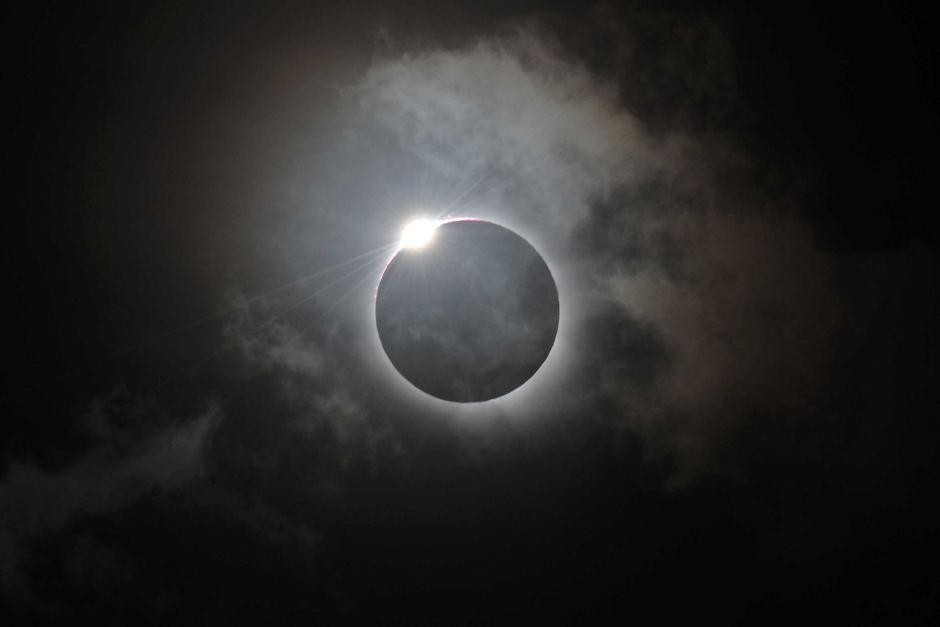
An eclipse is when an astronomical body is obscured, either by passing into the shadow of another body, or having another body pass between it and the viewpoint. The word comes from the ancient Greek ékleipsis, meaning “abandonment, downfall or darkening of a heavenly body”.

Although there are several different types of eclipse possible in the universe, the ones we can see from Earth are the solar and lunar eclipses. We tend to get more excited by solar eclipses, when the Moon appears to pass in front of the Sun, blotting out its light temporarily. The most impressive of all is a total eclipse of the Sun, when the Moon appears to perfectly cover the Sun, so that it disappears from view.

A total eclipse of the Sun can only be viewed along a very narrow band of the Earth’s surface, and on November 13, a total eclipse could be seen in far north-eastern Australia. Although many had gloomily predicted that cloud cover would ruin the eclipse-enjoying experience, just before dawn the clouds obligingly parted, and the Moon passed in front of the Sun. For two minutes it became darker and colder, the birds stopped singing, and tens of thousands of spectators from all over the world gaped in wonder, just as our ancestors did thousands of years ago.

Many indigenous groups, including in Arnhem Land, were watching the event, which has deep spiritual meaning for them. Most Aboriginal cultures believe the Sun is female and the Moon male. In their myths, the Sun is in love with the Moon, but he doesn’t return her feelings, so she chases him around the sky. Occasionally she manages to catch him, and in a jealous rage tries to kill him, but the Moon convinces the spirits which hold up the sky to save him, which they always do.

However, another version is that a solar eclipse marks those rare times when the Sun-woman is hidden by the Moon-man while he relents and makes loves to her, while a similar tale is that a spirit man covers the Earth with his hand to leave it in darkness, so that the Sun and Moon may have privacy together.

In Queensland, the celebrations for the eclipse included a Solar Eclipse Marathon in Port Douglas, and a week long Eclipse Festival at the remote Palmer River Roadhouse. More than 50 000 tourists arrived from Europe, North America and Asia, with some hotels booked out three years in advance. The eclipse was big news, and big business. And why shouldn’t they party? It was the first time in the past thousand years that this part of Australia had experienced a total solar eclipse.

Eclipse can be found as a unisex name in occasional use since the late 18th century. According to blogger Nancy Man at Nancy’s Names, the births of many of those given the name Eclipse can be correlated with either solar or lunar eclipses.

In Australian records, there are only a small number of people listed as having the name Eclipse, and it is exclusively used as a middle name. It is balanced between the sexes, with three women and two men having Eclipse as part of their name. My favourite combinations were Pearl Eclipse and Thomas Eclipse Vivian.

Only a year of birth is given, so it isn’t possible to correlate their dates of birth with eclipses, but it is reasonable to assume that it might have been the inspiration for at least some births. However, there was also a convict ship called Eclipse, although it doesn’t seem to match up with any of the places or dates of birth in the records in any obvious way.

Scientist Dr Natalie Dillon from Mareeba attended the eclipse viewing this year and said:

When it goes dark and the temperature drops, you get a sense of the fragility of life. I just feel in awe. It is like the Moon has wiped a cloth over the face of the Sun and we can start afresh.

An eclipse is a rare celestial event, and one which fills us with a mixture of awe and dread, as well as great joy and a sense of renewal when the light of the Sun is returned. It reminds us how much we need the Sun, and gives us a brief uneasy taste of what Earth would be like without it – chill, dim and silent.

The basis of the word eclipse is the Greek for “I leave behind”. To eclipse someone means to cast them into your shadow, to surpass others with your superior talents or skills – to leave them behind, so that they can never catch up.

As a name, Eclipse has power, a certain foreboding, and perhaps a touch of arrogance. It is little seen, and that gives it an even greater significance. Perhaps it’s not surprising it has been timidly tucked away in the middle.

Nicknames for Eclipse include Clip, Clipper and Clipsie, which give it a much friendlier and more approachable sound.

What do you think – a viable baby name, or a little too much?

Names of Australian Female Paralympic Medalists

21 Sunday Oct 2012

Posted by A.O. in Name Themes and Lists

≈ 8 Comments

Tags

Arabic names, Arthurian legends, Arthurian names, astronomical names, Biblical names, english names, ethnonyms, famous namesakes, fictional namesakes, French names, gemstone names, germanic names, Greek names, hebrew names, honouring, Indian names, Irish names, Latin names, locational names, military events, mythological names, name history, name meaning, name popularity, names of dolls, nature names, nicknames, Norman-French names, Old French names, popular names, royal names, saints names, Sanskrit names, street names, surname names, unisex names, vocabulary names

Amber (Merritt)

Amber Meritt was born with a club foot, and is originally from England; she came to Australia as a child (she’s now 19). She started playing wheelchair basketball in 2007, and won silver at the London Games. Amber is fossilised tree resin, and since prehistoric times has been valued as a gemstone. The word amber is derived from Arabic, and means ambergris, the waxy substance regurgitated by the sperm whale; it was only later realised these were different substances. Amber has been used as a girl’s name since the 17th century, but wasn’t popular until the 20th. The name became notorious in 1944, when the racy historical romance, Forever Amber, was published, with its heroine the sleep-her-way-to-the-top Amber St. Clare. Despite being condemned, and even banned here until 1958, the book was a bestseller, and made into a film. Amber was in rare use in the 1950s, and during the 1960s made #647 (about one Amber per year). It absolutely skyrocketed during the 1970s up to #135, peaked in the early 2000s at #49, and is now #91. This pretty gemstone name is still popular, and it’s all thanks to a “dirty” book! If looking for a nickname, Miss Merritt goes by Bambi.

Danae (Sweetapple)

Danae Sweetapple was blind from birth, and started swimming in 1990. She won a silver and two bronzes at the 1992 Paralympics. In Greek mythology, Danaë was a Greek princess and the mother of the hero Perseus. Her father shut her up in a bronze tower due to a prophecy that he would be killed by her son, but she was impregnated by Zeus, who came to her in the form of golden rain. The king had Danaë and Perseus cast into the sea, and they washed ashore onto an island, where a kind fisherman raised Perseus as his own son (as an adult, the prophecy was fulfilled when Perseus did kill his grandfather). Getting it on with a godly shower of gold was either supremely satisfying or very traumatising for Danaë, as she had no interest in mortal men afterwards, and never married or had further children. Her name is derived from the Danaans, one of the names the Greeks used for themselves, with the idea that they were partly descended from Danaus, a mythical prince of Egypt. I’m not sure how the Greeks would have said her name (nobody seems to agree), but not like the way it is usually said in Australia, which is dan-AY.

Elaine (Schreiber)

Elaine Schreiber won a bronze in table tennis, a gold in club throw, and a silver in javelin at the 1964 Paralympics, and a silver in table tennis at the 1968 Games. Elaine is a name shared by several characters in Arthurian legend, who are occasionally confused with each other. One of the most famous is the fair Elaine of Astolat, who dies of unrequited love for Sir Lancelot. The story inspired Tennyson’s poem, The Lady of Shalott, and it was only after the popularity of his poem that Elaine became a commonly-used English name. Elaine is an Old French variant of Helen. Elaine was #254 in 1900, joined the Top 100 in the 1920s, and peaked in the 1930s at #18. It left the Top 100 in the 1960s, and reached its lowest point in the late 2000s, when it was in rare use. Since then, it has been very gently rising, and is currently #457.

Gloria (Pascoe)

Gloria Pascoe developed epilepsy at the age of 9, and became totally blind by 55. At 61, she attended the 1980 Paralympics, where she took gold in lawn bowls. Gloria is the Latin for “glory, fame, renown”, and in Christian tradition it denotes the manifestation of God’s presence, often associated with a divine light. The name Gloria has been in use since at least the 16th century, but received a boost in popularity in the 19th from two literary works. One was Gloria, a romantic novel by popular American novelist E.D.E.N. Southworth in 1891; the other was George Bernard Shaw’s 1897 comedy of errors, You Never Can Tell. Both these works feature very attractive heroines who seem to have done the name more good than all of God’s glory. Gloria was #257 in 1900, Top 100 by the 1920s, and peaked in the 1930s at #23. It left the Top 100 in the 1960s, and hit its lowest point in 2009 when it was in rare use. Since then it has risen again, and is currently #427. If you’ve been paying attention, you will see this makes it the virtual twin of Elaine in terms of popularity.

Jemima (Moore)

Jemima Moore became paraplegic at the age of 6 from a virus, and is now 20. She won a silver medal in the 100 metres relay at the 2008 Paralympics, and attended the London Games. In the Bible, Jemima was the eldest of Job’s three daughters, and she and her sisters are described as being the fairest in the land. The name Jemima literally means “warm” in Hebrew, and can be translated as “day”. The name could actually be derived from Arabic, as there is an ancient land in Arabia who had a queen called Jemama; if so, Jemima from the Bible could be inspired by the queen of Arabic folklore. This does fit in with the Biblical story, because Job and his family were said to be from an Arabic country. The name Jemama means “turtledove”. It first charted in the 1960s, the same decade children’s show Playschool first broadcast, which has a rag doll named Jemima. Never in the Top 100, it peaked at #196 in the late 2000s and is currently #254 and stable. This is a fashionable name which has never gained popularity or lost cachet.

Lorraine (Dodd)

Lorraine Dodd became paraplegic at the age of 13, after contracting transverse myelitis. She attended the 1968 Paralympic Games, where she won three golds for swimming, and a silver and a bronze in athletics. Lorraine is a region in north-eastern France; its name comes from an earlier kingdom named Lotharingia, meaning “Lothar’s kingdom. Lothar I was a Frankish king and a great-grandson of Charlemagne; his name is Germanic and means “famous army”. As a personal name, Lorraine has been used since the 18th century, a century in which Lorraine first became part of France. It’s sometimes said to be a Catholic name, since St Joan of Arc was also known as The Maid of Lorraine. There was a World War I Battle of Lorraine, which probably boosted numbers, and the area’s importance during World War II reflects a peak in popularity at this time. Lorraine was in rare use in the 1900s, and reached the Top 100 in the 1930s. Peaking in the 1940s, it left the Top 100 in the 1970s, and hasn’t charted since the 1990s. You can see how Lorraine helped Lauren appear feminine, and Lauren also seems to have replaced Lorraine.

Madison (de Rozario)

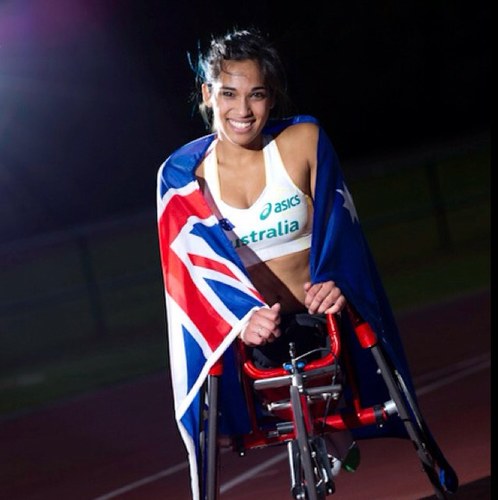
Madison de Rozario became paralysed by a rare neurological condition at the age of 3 and is now 18. She won silver in 2008 as the youngest Paralympian on the team, and was also at the London Games. Madison is a surname meaning “son of Matthew“, although in some rare cases it may be derived from “son of Maddy”, with Maddy being a pet form of Maud. It’s been used as a personal name since the 18th century, and seems to have been given almost exclusively to boys in the beginning. Although certainly used in England, it was much more common in America, where it may often have been given in honour of James Madison, the fourth president of the United States (I only found one man named Madison in Australian records). Madison is famous in baby name circles for only becoming popular, and only becoming common for girls, after the movie Splash in 1984. This romantic fantasy, a rewrite of The Little Mermaid, stars Daryl Hannah as the mermaid, who chooses her “human name” from a street sign for Madison Avenue in New York City, named after the former president – although Tom Hanks’ character tells her this isn’t a “real name”. Madison was #606 for the 1980s, with about three born each year. It then absolutely screeched up the charts to make #52 for the 1990s, and peaked in the early 2000s at #22. It sunk to #44 in 2010, then rose last year to make #41. It’s been a real success story, with its nickname Maddie fitting in with Madeline.

Priya (Cooper)

Priya Cooper was born with cerebral palsy, and spends most of her time in a wheelchair. She began swimming competitively while still at school, and is one of our greatest disabled swimmers, winning nine gold medals and breaking world records at the 1992, 1996 and 2000 Paralympics. She was twice team co-captain, and twice a flag-bearer at closing ceremonies. She has received many honours, and since retiring has become a spokesperson and fundraiser for several charities. Priya is an Indian girl’s name which means “dear, beloved” in Sanskrit. In Hindu legend, Priya was one of the daughters of King Daksha, a son of the god Brahma. The name is pronounced PREE-yuh, and has been rather a favourite in Australia for many years.

Siobhan (Paton)

Siobhan Paton is an intellectually disabled swimmer who holds thirteen world records, and won six gold medals at the 2000 Olympics. She was named Paralympian of the Year in 2000, and also received an Order of Australia. Siobhán is the Irish form of the Norman-French name Jehanne, a variant of Jeanne. There were several medieval queens named Siobhán. It is said that the twentieth century popularity of Siobhan owes a great deal to the actress Siobhán McKenna, who was born in Belfast. She was most famous as a stage actress, but also appeared in King of Kings (playing Mary), Of Human Bondage, and Dr Zhivago. Ms McKenna’s son, Donnacha O’Dea, was an Olympic swimmer for Ireland in 1968. Siobhan first charted in the 1950s, and during the 1960s was #571, which represents about one Siobhan a year. Use of the name increased sharply during the 1970s and ’80s, and it peaked in the 1990s at #211. It hasn’t charted since 2009, so this is another attractive name which has never made the Top 100. Pronunciation is an issue, because the usual Irish pronunciation is SHIV-on, but in Australia it’s usually said shi-VAWN.

Ursula (King)

Usula King was a swimmer who won a silver and two bronze at the 1984 Paralympics. The name Ursula means “little she-bear”, derived from the Latin ursa (which we know from constellations Ursa Major and Minor – the Great and Little Bears). According to legend, Saint Ursula was a Romano-British princess who was sent by her father to marry the pagan governor of Armorica (Brittany). Possibly to stall proceedings, she got all bridezilla and declared that before the wedding she must go all over Europe on a pilgrimage, taking an unbelievable 11 000 virgins with her as her handmaids. On their way to Cologne, they were besieged by Huns, who had a busy day beheading the lot of them. The story doesn’t fit with any known historic facts, and one theory is that Ursula is a Christianised form of the goddess Freya. However, Cologne has a magnificent basilica dedicated to St Ursula and her companions, and a little village in Wales also has a church in their honour, in the belief that Ursula was originally from Wales (in the legend, she is from the West Country). Because of the saint, the name came into use in medieval times, and got a little boost in the 20th century from beautiful Swedish actress Ursula Andress, who was the first Bond girl, in Dr No. It’s clunky by contemporary standards, but strangely alluring.

(Photo of Madison de Rozario from her Twitter account)

Famous Name: Peter

17 Wednesday Oct 2012

Posted by A.O. in Famous Names

≈ 5 Comments

Tags

Aramaic names, Biblical names, classic names, famous namesakes, fictional namesakes, French names, Greek names, name history, name meaning, name popularity, nicknames, Old French names, saints names, surname names

On October 11, Federal Parliament voted to apologise to Olympian Peter Norman for the treatment he received at the 1968 Mexico City Games. You may think that this apology was slightly overdue; its tardiness perhaps seems even more glaring when you learn Peter passed away on October 3 2006.

Peter Norman was a sprinter who was Australian champion in the 200 metres five times over. On October 16, he won the silver medal in the 200 metres at the 1968 Summer Olympics. His time of 20.06 seconds still stands as the Australian record, and would have won gold at the 1976, 1980 and 2000 Olympics. However, Peter is more famous for what happened during the medal ceremony.

The other medal winners were American athletes Tommie Smith (gold) and John Carlos (bronze), with Tommie setting a world record time of 19.83 seconds. At the medal ceremony, as Tommie and John faced the American flag and heard The Star Spangled Banner, they raised their fists in a Black Power salute, and bowed their heads, as part of a protest on behalf of the civil rights movement.

Peter knew what his fellow athletes were planning, because they told him just after the race, and asked him if he would stand in solidarity with them on behalf of the Olympic Project for Human Rights. They asked him if he believed in human rights, if he believed in God. Peter, who was a member of the Salvation Army, and vehemently opposed to racism, said, “I’ll stand with you”.

John expected Peter to look frightened at what was about to happen, instead he says, he saw only love in his eyes. It was Peter’s own idea to wear the OPHR badge, which he had seen a white American athlete wearing.

The fallout from The Salute affected all three of the athletes. Tommie and John were deemed to have broken the code that the Olympics must remain apolitical, and expelled from the Games. Back in America, they were criticised heavily in the media, abused by the public, and their families received death threats. The athletic establishment tended to ostracise them, and both faced some tough times.

In recent years there have been some efforts to recognise them: a statue was erected in their honour at San Jose State University, where they were students, in 2005, and both received Arthur Ashe Courage Awards in 2008. (Peter asked not to have his statue at San Jose, instead requesting that his place be left empty so that any person could stand there and represent him).

In 1968, Peter was reprimanded by the Australian Olympic Committee, and vilified by the Australian press. Despite qualifying for the 1972 Olympics, he was not selected, and in fact this is the only Games in which no Australian sprinters participated. This is seen as the death knell of his athletic career. His name is omitted from Australian books and lists which compile the “100 Greatest Athletes” or “100 Greatest Sporting Moments”.

The AOC dispute this version of events vigorously. According to them, Peter received nothing more than a fatherly chat and some free tickets to a hockey game after The Salute incident. They claim that despite qualifying in 1972, and running a time faster than the eventual gold medal winner that year, he was nursing an undeclared injury which prevented his selection.

Even as late as 2000, Peter was not asked to take part in the Sydney Olympics – a major international sporting event in which practically every other former Australian athlete was invited to play some sort of role. I’m not sure what excuse the AOC has for that. Maybe his invitation got lost in the post.

Tommie, John and Peter were all martyrs for a cause, and to supporters of the civil rights movement, they were also heroes. Sadly for Peter, in his own country his gesture against racial inequality went unrecognised during his lifetime. All three men remained life-long friends, and both Tommie and John were pall-bearers at Peter’s funeral.

The US Track and Field Association named the day of his funeral, October 9 2006, as Peter Norman Day. Shamefully, Australian sporting bodies have never done anything to acknowledge him, and refused to endorse the parliamentary apology.

This year, John Carlos said, “There’s no-one in the nation of Australia that should be honoured, recognised, appreciated more than Peter Norman for his humanitarian concerns, his character, his strength and his willingness to be a sacrificial lamb for justice”.

Australia is very ready, sometimes perhaps too ready, to celebrate physical courage. It seems we are very slow to reward moral courage, and Peter Norman remains one of our forgotten heroes.

The name Peter is derived from the Greek Petros, meaning “rock”, a translation of the Aramaic Cephas in the New Testament. Peter is one of the most famous of the New Testament names, as it is the name of the most prominent apostle. It’s actually a nickname or code name given to him by Jesus, because his real name was Simon (it seems very much like calling him Rocky).

Famously, Jesus puns by addressing Peter, and saying “On this rock I build my church”, to indicate that he was giving Peter the role of leading the early Christian church. Catholics see Peter as the first pope for this reason, and the impressive St Peter’s Basilica in Vatican City was built in his honour. According to tradition, Peter was martyred in Rome by being crucified upside-down.

It is entirely due to Peter the Apostle that the name Peter spread throughout the Christian world. It was introduced to England by the Normans in the Old French form Piers; I bet you can guess that this is the basis for the French name Pierre, but I wonder if you also realised it was the origin of the English name and surname Pierce? By the 15th century, the modern day spelling of Peter was established.

Like Jack, Peter is a name which we all seem to have grown up with, reciting the tongue twister about Peter Piper who picked a peck of pickled peppers, or the nursery rhyme about Peter the Pumpkin Eater who had a wife and couldn’t keep her. We were told the stories of Peter Rabbit and Peter Pan, listened to Peter and Wolf, and may have known Peter Pevensie from The Lion, the Witch and the Wardrobe, Peter the goat-herd in Heidi, or Peter Parker from the Spiderman comics. Because of this, there is something very cosy and comforting about the name Peter to me.

Peter is a classic name in Australia which has never left the charts. It was #64 in the 1900s, and peaked as the #1 name of the 1950s. It only left the Top 100 in 2009, and is currently stable at #125. Peter isn’t an unusual name today, and it was very popular when Peter Norman was born, in 1942.

Sometimes reading name blogs I am uneasy that we (and I am very much including myself here) are often too eager to suggest an unexpected name over one that is more common. The story of Peter Norman teaches me that someone with an ordinary name may still do something extraordinary, and our name does not need to stand out in order for us to stand up for what we believe. It’s worth keeping in mind.

NOTE: Some information from Salute (2008), a critically acclaimed documentary by Matt Norman, Peter’s nephew, and highly recommended viewing. Matt is currently working on a dramatised version called 1968.

Meanings of Names

07 Sunday Oct 2012

Posted by A.O. in Your Questions Answered

≈ 3 Comments

Tags

African names, Ancient Egyptian names, Anglo-Saxon names, animal names, Arabic names, astronomical names, bird names, Chinese names, choosing baby names, English idioms, english names, epithets, flower names, French names, German names, Google, Google searches, Greek names, hebrew names, Hindi names, Igbo Names, Indian names, Indonesian names, Japanese names, Latin names, Maori names, musical terms, mythological names, name meaning, names of constellations, nature names, Old French names, Old Norse names, Persian names, popular culture, prefixes, royal titles, Sanskrit names, scandinavian names, Spanish names, surname names, Swedish names, unisex names, Viking names, vocabulary names, Yiddish names, Zulu names

There’s many different ways to choose baby names. Some people pick out a name they like, and perhaps quickly check to make sure it doesn’t mean something horrible, like “he who has the face of a deranged warthog”, or maybe not even care what it means. Others think of a meaning they would like to associate with their baby, and then hunt around for a name that fits that meaning.

These are all the web searches people used to get to the blog this year, looking for names with particular meanings. I don’t know if I’ve always come up with a name they wanted to know about, and I’m not even completely sure that I’m correct on each one, but I did my best.

NAMES WITH MEANINGS RELATED TO STARS

Boys name that means “star”

The English word Sterling, referring to sterling silver, is said to most likely mean “little star”, as some early Norman pennies were imprinted with a small star. The Old French word for the pennies is Esterlin. We also use the word sterling to mean “excellent, of high quality”, so you get another layer of meaning from it.

Latin boy’s name meaning “star”

The Latin for star is Astrum. Astro is a Latin prefix meaning “pertaining to the stars”, as in the word astronomy. I have seen this used as a name.

Swedish girl’s name that means “star”

Stjarna.

A boy’s name that means “bright star”

Nayyar is an Arabic boy’s name which is understood as meaning “bright star”. It also refers to the sun, which of course is our nearest, and thus brightest, star.

Male name meaning “bright star in the southern hemisphere”

There’s isn’t a star name which means that, but Sirius is the brightest star in the sky, and is visible in both hemispheres. However, Canopus, the second brightest, is more often connected with the southern hemisphere; it is always visible from some parts of Australia. It is occasionally called Soheil in English, and the Maori name for it is Atuatahi, meaning “stand alone”.

Spanish girls name that means “constellation”

I’m not sure there is one, but the Spanish for constellation is Constelación. I haven’t heard of it being used as a person’s name, but Constelacia might look a bit more name-like. I don’t speak Spanish, so apologies if this looks absurd to Hispanophones.

Boy name that means “many constellations”

The Japanese name Ikuto has this meaning, although I’ve only seen it used as a fictional surname.

A constellation name which means “small”

All the constellations have names which are nouns or “things”, not adjectives, so there isn’t one. A few have Minor as part of their name, to indicate they are the smaller of two eg Ursa Minor. The closest I could find was Equuleus, meaning “little horse, foal”.

Name meaning “starry sky”

In Japanese, Hoshizora means “starry sky”. It’s used as a surname in the Japanese anime Smile Pretty Cure!

Boys name that means “galaxy”

I have seen Galaxos as a character name in online games, and Galaxian would mean “of the galaxy” or “from the galaxy”.

NATURE NAMES

Boys name that means “beach”

Beach, Bay or Cove.

Names that mean “songbird”

Hebrew has both a male and female name with this meaning. Efrona for a girl (meaning “lark”), and Zalmir for a boy.

Flower name that means “peaceful”

There’s a native plant from Western Australia called the Gunniopsis pax – it’s a succulent, and it does have small flowers. There is also the Peace Lily, and the Peace Rose, and a type of guzmania (a bromeliad) called Pax. The White Poppy, the Lotus and the Daisy have all been used as symbols of peace.

Boy name meaning “otter”

In Japanese, Rakko means “sea otter”. That seemed to be the most usable word for otter in another language I could find.

POSITIVE MEANINGS

Indian boy’s name meaning “one who cannot be defeated”

It seems to be a popular meaning for boy’s names in India, for there are several. I managed to find Adityendra, Ajay, Ajeenkya, Ajeesh, Ajit, Aparajita, and Durjaya. Take your pick!

Viking name meaning “prince”

Balder is translated as meaning “lord, prince, king”, and it was used as an epithet for heroes. In Norse mythology, Balder was the son of Odin and Frigg.

Girl name that means “independence”

Liberty or Freedom.

Sanskrit girl’s name meaning “bright, happy”

Nandita.

Girl’s name that means “beautiful”

There’s a lot. A few you may not be familiar with are Mei (Chinese), Shayna (Yiddish) and Ziba (Persian).

Name that means “bewitching”

Mohana is an Indian unisex name which means “bewitching, infatuating, charming” in Sanskrit. It is used as an epithet of several gods and goddesses.

The word for “lovely” in some other language

Delightfully vague! I pick French – Jolie.

NEGATIVE MEANINGS

Baby name that means “spiteful”

I hope this is for a story and not a real baby! The German surname Sauer means “spiteful” (related to the word sour, acid), and it can be Anglicised as either of the unrelated names Sawyer or Sayer, so I guess those are possible options.

Hindi word for “proud”

Ooh there’s quite a few. Garvi, Garvit and Nidar look the most like names, to me.

DOESN’T EXIST

Name that means “daughter of a princess”

Hmm, seems a bit narcissistic as a baby name, somehow! Anyway, there’s no term for a princess’ daughter, and the daughter of a princess doesn’t necessarily have any special status – Princess Anne’s daughter Zara is just Mrs Tindall. I would choose a name that simply means “princess” or is royal-related. However, the Indonesian name Putri means both “daughter” and “princess”.

Norse name which means “female knight”

Vikings didn’t generally fight with a cavalry, and although there were some female warriors, it’s very unlikely they would have ridden horses, as this was usually reserved for leaders of a warband. It does make me think of the Valkyries, who were mythological women of the afterlife, always depicted on horseback. Valkyrie means “chooser of the slain”.

Norse name meaning “hunter”

There isn’t one. The Old Norse word for hunter is Veiðimaður, and some think this word is the basis of the English surname Waitman. This is occasionally used as a first name.

Name for a girl that means something

More specific, please!

NAMES FOR SPECIAL CIRCUMSTANCES

Name that means “perfect time”

I know it’s not quite right, but I keep thinking Serendipity. Also Season, because of the saying that “For everything there is a season, and a time for everything under heaven”. The Japanese girl’s name Aya means “design”, suggesting a planned pregnancy. Musical names like Rhythm or Cadence come to mind, as music must be perfectly timed. Ogechukwukama is an Igbo girl’s name meaning “God’s time is the best” – good for a surprise, but very welcome, baby.

Name that means “beating the odds”

Lucky or Chance.

Boy’s name that means “when two souls join”

I’d probably be thinking of names that mean “bliss, joy”. Anand is a Sanskrit name meaning “bliss”, while Anglo-Saxon has Wynn, meaning “joy, bliss”. The word Bliss itself can be used for both sexes. The Chinese unisex name Zheng or Zeng means “harmony, union”, which seems to describe the state of soul togetherness.

Zulu name for boys that gives hope for the future

Mduduzi is a Zulu boy’s name that means “bringer of hope”.

Boy’s name meaning “not meant to be”

Oh how sad, and what a sad meaning. I’m so sorry. I thought long and hard about this one, and it seems to me that the concept behind “meant to be” and “not meant to be” is the same, that is, some idea of Fate, Fortune or Destiny. We usually think of it as feminine (“Dame Fortune” etc), but the Ancient Egyptians had a god of fate, named Shai or Shay, meaning “that which is ordained”. I think that’s a nice name for a boy, and has the sense of the meaning you’re looking for.

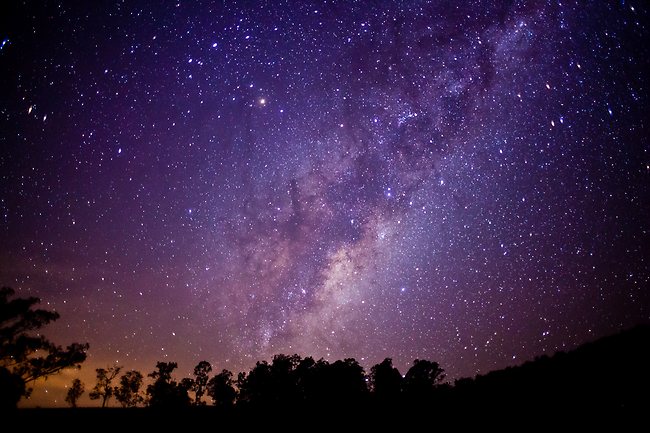
(Picture shows the Milky Way above Lake Moogerah in south-east Queensland; photo from Perth Now)

The People’s Choice of Boy’s Names

23 Sunday Sep 2012

Posted by A.O. in Name Themes and Lists

≈ 15 Comments

Tags

African-American names, alphanumeric names, American slang, anagram names, Anglo-Saxon names, animal names, aristocratic names, Australian Aboriginal names, Australian slang terms, banned names, bird names, birth notices, Bonds Baby Search, celebrity baby names, computer hacker names, controversial names, created names, english names, famous namesakes, germanic names, Google, Greek names, historical records, Indian names, J.R.R. Tolkien, locational names, Maori names, meteorological names, middle names, mythological names, name history, name meaning, nature names, nicknames, Old English names, Old Norse, polynesian names, popular culture, royal names, saints names, scandinavian names, slang terms, Spanish dialect words, surname names, tree names, unisex names, US name popularity, vintage names, vocabulary words, Welsh names

Adolf

A form of the Germanic name Adalwolf, meaning “noble wolf”. The Old English form is Æthelwulf, and there are a few famous men of this name in English history, most notably the father of Alfred the Great. The name was often used amongst the royal houses of northern Europe, and the Latinised form Adolphus turns up in the monarchy of the United Kingdom. There is a saint called Adolf of Osnabrück, a 9th century German monk. Up until the mid-twentieth century, the name was common in central and northern Europe, and can be found in Australia due to immigration from Germany and Scandinavia. The reason this name has been included is because barely a day goes by without someone Googling: “Is it legal to call your child Adolf?”, to which I can say, yes, it is legal here, and you can find quite a few Australians in the records with this name – including ones born during and shortly after World War II. I have met a man named Adolf (born around the early 1960s), and I believe he was named after his grandfather. The other chestnut is, “Is it legal to call your child Adolf Hitler in Australia?” to which I reply, Why would you want to do that? Seriously, why? As the name Ned Kelly is banned because he is considered too wicked, I’m pretty sure Adolf Hitler would also be illegal here.

Buster

This spunky name has more history than you might think. In England, it was first used in the middle position; Buster is a variant of the surname Bustard, after the bird. In 18th century America, it seems to have been more common for African-Americans, and may have started as a pet name in the sense of “breaker”. Later it took on the meaning of “unusual, prodigious, amazing”. Buster is used to address males in the same way as pal or fella (“Now listen up, buster”). This comes from the Spanish dialect busté, meaning “you”. It’s gone on to have negative connotations. One of the most famous men with this name is actor Joseph “Buster” Keaton, who started his career in vaudeville as a small child. He claimed to have received his nickname as a toddler from Harry Houdini, after falling down a flight of stairs unhurt. Houdini allegedly remarked, “That was a real buster!”, meaning “a fall with the potential to cause injury”. So Keaton’s name indicated he was tough enough to take a tumble. Buster Brown was a cartoon strip boy who was an angelic-looking blond prankster. In Australian slang, come a buster means to fall or fail by misfortune, while buster is a term for a strong wind – especially the Southerly Buster. This is a name Sydneysiders give to the abrupt cool change that sometimes blows in from the south during the warmer months. Vintage name Buster has recently become rather an Australian favourite for boys, although in the novel, The Shiralee, by D’arcy Niland, Buster is a little girl.

Chester

Chester is a city in Cheshire, England, founded by the Romans as a fortress in 79; its size has led some historians to speculate that the Romans intended it to be the capital, rather than London. Its current name comes from the Old English Ceaster, meaning “Roman fort”, and its early history was very military, with wars seemingly constant. Even King Arthur is supposed to have won a major battle here, and it was the last city to fall to the Normans during the Conquest. Today it’s a thriving modern city which still tries to preserve its historic buildings. Chester has been used as a personal name since the 16th century, probably after the surname, although early births in Cheshire suggest they may have been named directly for the city itself. Although it’s been a popular name in the US in its time, and only left the Top 1000 in the mid-1990s, for some reason it never caught on in a big way here. I was surprised to see it on a baby in the Bonds Baby Search Competition this year. For some reason, this baby name is often Googled, although the slang term chester is an impediment to its use.

Digby

An English surname from a place name meaning “settlement by the ditch”, derived from a combination of Old English and Old Norse. The name seems to have been first given in honour of the aristocratic Digby family, Anglo-Irish peers whose family seat in Coleshill, Warwickshire was granted to them by Henry VII. It is from the town of Coleshill that the personal name originates in the 17th century. One of the most famous of this clan was Sir Kenelm Digby, a Catholic philosopher considered a great eccentric for his exuberant personality and fascination with science, which extended to studying alchemy, astrology and magic (not considered incompatible with science then); he was the first person to note the importance of oxygen to plants. A man of action as well as thought, he became a privateer, and killed a man in a duel; he also wrote several cookbooks, invented the modern wine bottle and managed to fit in a secret romance to a famous beauty which led to their marriage. A true all-rounder. This name regularly appears in birth notices here, especially from Victoria, and may be encouraged by comedienne Cal Wilson, who welcomed a son named Digby a few years ago. People seem to either loathe this name or find it irresistibly cute; I must confess to being in the second category.

Elfyn

This is the Welsh form of the Old English name Ælfwine, meaning “elf friend”; it went out of use after the Norman Conquest. J.R.R. Tolkien liked to think of the name as meaning “friend of the elves”, and invented two fictional characters with this name who formed close bonds with elves. Modern forms include Alvin and Elvin, both taken from the surname form of the name. There are several famous people in Wales with Elfyn as either their first name or surname, including young rally driver Elfyn Evans and poet Menna Elfyn. For reasons I cannot explain, it is Googled several times a week.

Jharal

Jharal Yow Yeh is an NRL star who plays for the Brisbane Broncos. An Aboriginal Australian from the Margany people of Queensland, he also has Torres Straits Islander, Vanuatuan and Chinese heritage. Now aged 22, he has been playing for the Broncos since 2009, for the Indigenous All-Stars since 2010, and for both the Queensland state team, the Maroons, and the Australian national side, the Kangaroos, since last year. Early this season he sustained a serious leg injury, and is still recovering. People Google Jharal’s name all the time, asking for its meaning, and often querying whether it’s of Indigenous origin. In fact, his name was created for him by his grandmother. His mother couldn’t decide what to call him, so she asked nana Iris to name him. Iris cleverly arranged the letters of all the strongest men in her family into a name, and came up with Jharal. It is taken from the initials of James, Harold, Anthony, Reece, Arthur and Linc. The name is pronounced JHUH-rahl, and Iris says that most people think it is an Indian name. In fact, by coincidence, a jharal is a mountain goat from India. Names created for celebrities often seem too unique for others to use, but I have seen Jharal a few times in birth notices recently. Looking for a nickname? Jharal is known to his family as Joe.

Koa

This unisex name has several different origins. There is a Hawaiian male name Koa meaning “strong, brave, fearless”, and it’s also the name of a Hawaiian tree, the Acacia koa. The wood was traditionally used to make dug-out canoes and certain types of surfboards. In Maori, the word koa means “happiness”. In the Kaurna language of South Australia, the word koa means “crow”, and the Koa people come from south-east Queensland, so it’s also a tribal name. There has been a sudden proliferation of this name in Australian birth notices, and that might be because Tom Dumont from No Doubt welcomed a son named Koa last year. However, I am beginning to see far more girls named Koa in birth notices than boys. This may be because of model and actress Koa Whelan, a contestant on this year’s dating show, Please Marry My Boy. I think this works equally well for boys and girls, although the first meaning is male only.

Neo

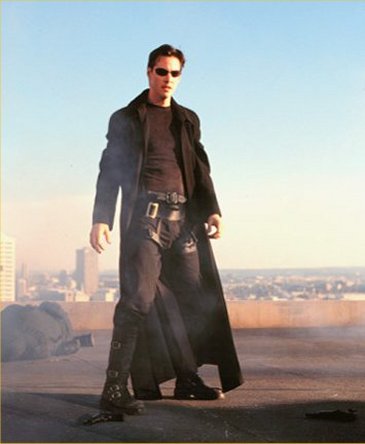
This is from an Ancient Greek prefix meaning “new, young, fresh”. It turns up in words such as neonatal, meaning “pertaining to the newborn”, or neologism, meaning “a freshly coined word”. The name has become well-known since 1999 because Neo is the protagonist of the cyberpunk Matrix film series. In the films, the character’s name is Thomas Anderson, and Neo is his computer hacker identity (Anderson does have the letters N, E and O in it). Neo is also an anagram of One, and the films seek to discover whether Neo is “The One”, a Messiah-like figure who will be able to rescue humanity. The films have become cult classics, and intermingle a range of philosophical and spiritual ideals from the East and the West – it’s even spawned its own religion, Matrixism. From the amount of times that people have Googled neo baby name or neo for a boy, there are quite a few parents considering using this name. Neo fits right in with current trends, and doesn’t sound any stranger than Leo. It is very strongly associated with the film character though. However, Australians have a solid history of gaining name inspiration from the movies, and most of The Matrix series was filmed in Sydney, giving it an Australian connection.

Rune

A Scandinavian name derived from Old Norse meaning “secret”. The runes are the letters of the runic alphabets, which were used to write different Germanic languages, dating from at least the first or second century AD. Runic inscriptions seem to have been for magical and divinatory use, and perhaps their knowledge was restricted to an elite in early times. According to Norse mythology, the runes were originally stolen from the god Odin. They are part of English history, because the Anglo-Saxons had their own runic alphabet. If you have read The Hobbit, you will have seen Anglo-Saxon runes used on a dwarven map; Tolkien later invented his own runic alphabet which appears in The Lord of the Rings. Rune stones are  used for divination today, often in a similar way to tarot cards. The name isn’t unusual in Scandinavia, and you may know the name from the Polish speedway rider Rune Holta, born in Norway. I think this is a simple, attractive name with layers of history and meaning.

Zephyr

A zephyr is a light, warm wind. It comes from the name Zephyrus, who was the Greek god of the west wind – the gentlest of breezes, which served as a harbinger of spring. He married both Iris, the goddess of the rainbow, and Chloris, the goddess of flowers – who is also seen as a deity of spring (and named Flora by the Romans). Children may know the name as that of a bat in the Silverwing book series, and, in the form Zephir, as the monkey in the Babar the Elephant stories. Grown ups may be reminded of The Zephyr Song by the Red Hot Chilli Peppers. If you take the name as derived directly from the god, then it is male, but if you accept it as a nature name and vocabulary name, it is unisex. It only seems to be Googled to my blog as a male name however. Pronounced ZEF-uhr, this name is unsual but not outrageous; it seems like a breezy alternative to popular Z names like Zachary, Zeke or Zane. The obvious nickname is Zeff or Zeffy.

(Picture shows actor Keanu Reeves in his role of Neo from The Matrix; Sydney skyline in background)

MYTH: Australian Baby Names Follow English Trends More Closely Than American Ones

09 Sunday Sep 2012

Posted by A.O. in Baby Name Mythbusters

≈ 7 Comments

Tags

Arabic names, British Baby Names, Gone With The Wind, Greek names, international name trends, Italian names, Legitimate Baby Names, name data, name poopularity, name trends, popular names, Southern names, UK name trends, US name trends, Welsh names

Last time we went mythbusting, we looked at whether Australian names are becoming increasingly Americanised, and didn’t find a lot of evidence. This is the flip side to that myth – the one that comforts us that we are essentially more British in our ways than American, and so are our baby names. That despite an increasing tendency to call our children Jett and Harlow, most of us will trustingly follow dear old Mother England, and choose something like Archie, Evie, Callum or Isla.

Again, this myth sounded quite plausible to me. But we have to look and make sure, so once more I prepared myself to examine the Top 100 from each nation. The first hurdle is that both of us are slightly data-challenged, so I was forced to rely on data from Victoria only (the only state with stats going back to 1929), while the data from the UK would include both England and Wales, but not Scotland or Northern Ireland. I did feel that already the waters were getting slightly muddied, only to find that England/Wales doesn’t publicise historical Top 100s.

I express my heartfelt gratitude to Elea at British Baby Names, who has provided on her blog, through her own labours, Top 100s for England/Wales for each decade from 1904 to 1984. Upon e-mailing her to enquire where I might find the one for 1994, she very kindly sent me a copy of her own personal spreadsheets so I could have that one as well.

Now I acknowledge this leaves me with some flaws in my methodology before even starting. I only had data from one state of Australia; furthermore this state has a reputation of being slightly more “English” than average. I only had data from England/Wales, and only had access to years ending in a 4. As I had already examined the earlier myth using data from the United States in years ending with a 0, it was possible I wasn’t going to be comparing apples to oranges so much as bananas to hedgehogs to timeshare villas in Spain.

However, we won’t get too gloomy, but show a bit of British pluck and press on. No, this won’t be the most statistically persuasive thing you’ll read all year, but we’re not doing a study, not trying to prove anything, just having a keen yet amateurish look around us to see if anything obvious shows up. And after all, if the myth is clearly and inarguably true, then broad trends should be pretty obvious even through a fog of slightly dodgy data.

1934

Boys – 82% the same (17% higher than US)

Girls – 69% the same (18% higher than US)

1954

Boys – 75% the same (16% higher than US) – down 7% overall, down 1% relative to US

Girls – 68% the same (21% higher than US) – down 1% overall, up 3% relative to US

1974

Boys – 72% the same (16% higher than US) – down 3% overall, no change relative to US

Girls – 62% the same (11% higher than US) – down 6% overall, down 10% relative to US

1994

Boys – 67% the same (11% higher than US) – down 10% overall, down 3% relative to US

Girls – 61% the same (5% higher than US) – down 1% overall, down 6% relative to US

2011

Boys – 63% the same (4% higher than US) – down 4% overall, down 7% relative to US

Girls – 63% the same (16% higher than US) – up 2% overall, up 11% relative to US

Based on these numbers, I would say that’s a MYTH CONFIRMED – at no time in history did the the amount of popular names shared with the US overtake the amount of popular names shared with England/Wales.

However, you can clearly see that while the number of shared girls names went down only very slightly between 1934 and 2011, the number of shared boys names sunk by almost 20%. In fact, yes, we still share more boys names with England/Wales than with the United States, but only by 4% – four names! Statistically, that’s what I call a big-whooping-deal difference, and if this trend continues, future Australian boy’s names are going to look much more like those in the US than the Top 100 for England/Wales.

Girl’s name did not show this steady decline, and in fact last year had a slight increase since the 1990s, while also showing a significant gain relative to the US data. This makes me think that when we say that our names are more English than American, we are primarily thinking of our names for girls.

GENTLE MUSINGS

Last time I ended the article with “conclusions”; this now seems far too definite and perhaps arrogant considering that we are left with far more questions than answers. So I will not reach any conclusions, but merely gently muse on some of the issues that have been raised.

Questions

  • Many names are shared by the Top 100s of all three countries. Therefore, can you really label names such as Olivia, Jacob, Ella and Liam as “English” or “American”, or are they more properly “international trends”?
  • If determined to designate a name as “English” or “American”, do you rely upon the place which provided the cultural impetus for the name, or the place where it became popular first, or the place where it reached the highest levels of popularity? If the first, then many popular names could be classed as American; if the second or third, a large number would be classed as Australian more than anything else.
  • I used the example of Scarlett as an “American-style” name in the preceding article (I admit without much forethought), and Sebastiane from Legitimate Baby Names quite correctly pointed out that Scarlett was more popular in England than in the United States. Now, it cannot be disputed that Scarlett hails from the United States, because the name became known through Margaret Mitchell’s novel, Gone with the Wind, and was popularised by American actress, Scarlett Johansson. However, the name is #19 in Victoria, #25 in England/Wales, and #80 in the USA. It reached the Top 100 of both Victoria and England/Wales in the same year, 2004, New South Wales in 2005, but only became Top 100 in the USA last year. So which country, if any, claims it?
  • Sometimes my blog entries end up being copied and discussed in some odd places, so my Referrer stats tell me; occasionally they end up somewhere rather disturbing. I found the Mythbuster on Australian and US trends on a not-very-nice forum (not baby name or parenting related), where the poster claimed that supposedly “trashy” American names that were popular in Australia but not the USA (eg Beau) were in fact, not American, but “Southern” names. Did the Civil War not end? I wondered. Is the lower portion of America not part of the United States, but a separate nation? It does raise the issue, what qualifies as an “American” name? Must it be in the Top 100 of every state in the USA to be called American? In which case, I have a feeling that “American” names would end up being those that are popular internationally, like Michael and Emily.

Observations

  • Immigration made a difference between the Top 100s of England/Wales and Victoria. Mohammed and Abdul have been popular names since the 1930s in the UK, while post-war immigration saw names such as Antonio and Ioannis reach the Top 100 in Victoria during the 1970s.
  • Although Australia has a history of being very keen on Welsh-inspired names such as Mervyn and Gweneth, I was amused to notice that not only were these not popular in England/Wales, but they had Welsh names, presumably used by actual Welsh people, which we didn’t, such as Ivor and Glynis.
  • While we all are influenced by each other’s name trends, each country had its names that the others were seemingly oblivious to. The name Gillian seems to be a quintessentially English name, appearing decade after decade on their Top 100, whilst never making the Top 100 in Australia, or the Top 1000 of the US. Meanwhile the US had quite a thing for Melvin – a name which still ranks on their Top 1000. In turn, we had a long-standing fascination with the name Bronwyn.
  • Each country also had their own favourite names. Adrian was a name we took to early – it was Top 100 by the 1930s and stayed there until quite recently. In England/Wales, it took a bit longer to reach the Top 100 and they tired of it sooner. In the US, Adrian only reached the Top 100 in 1989. England/Wales had an inordinate passion for the name Derek, which continued for decades – a name that has never been Top 100 in Australia, and only reached the Top 100 of the USA in 1970, a good half-century after England/Wales. In the US, Douglas seemed to enjoy favour much longer than elsewhere, being still Top 100 as late as the 1980s.
  • In other words, we might all be influenced by international trends, but we also have our own tastes in names, and don’t necessarily abandon a favoured name just because everyone else is doing so.
  • I have noticed that some people, amongst them many Australians I’m sorry to say, assume that a name which becomes popular in England/Wales is somehow more “classy” or “stylish” that one whose popularity originated in the United States or Australia. Granted, whether a name is stylish or not is completely subjective, but I did not feel that this assumption stood up to even casual investigation. From my perusal of popular names from three places across seven decades, it seemed to me that all were capable of being inspired by names that have been considered stylish, and its opposite.
  • For example, the name Isabella became popular in Australia much earlier than elsewhere, and I think most people would say Isabella is a pretty, stylish name. Yet we were also the first (by many years) to jump aboard the Hayden/Aidan/Jayden/Brayden craze. While I don’t consider this the black hole of name taste that others do, I acknowledge it’s not generally thought of as a stylish trend. While England has some lovely aristocratic names on its Top 100s, such as Constance and Daphne, can a land which adored the name Derek really take the title of Stylemeister? America has brought us no end of cool names, from glamourpuss Marilyn to zippy Jett. There’s a freshness and vigour to American name trends which I love, and a world without their names would be a far less interesting one. However, sometimes they’re a trifle overenthusiastic – and besides, Derek was on their Top 100 for 15 years, so they forfeit the style crown too.
  • Oh, and Barry and Sheila? Barry was Top 100 in England/Wales for longer than it was here, and Sheila, although popular in both England/Wales and the United States, didn’t show up in the Australian data, because by the 1930s it had already peaked and dropped off our Top 100. Who’d have thunk it?

Famous Name: Sapphire

05 Wednesday Sep 2012

Posted by A.O. in Famous Names

≈ 4 Comments

Tags

celebrity baby names, english names, gemstone names, Greek names, historical records, name history, name meaning, name popularity, nature names, nicknames, opinions on names, popular culture, popular names, rare names, stripper names

The Australian movie The Sapphires was released here on August 9, after making it’s premiere at the Cannes Film Festival in May, where it received a resounding ten-minute standing ovation. The film is set in 1968, and the plot involves four sisters from a remote Aboriginal mission who are given the opportunity to go to Vietnam as entertainers to the troops – billed as The Sapphires. It’s based on a true story, with the screenwriter’s mum and auntie serving as the inspiration, as they performed as part of a quartet during the war. The “original Sapphires” are thrilled by the film’s portrayal of them, and the movie is making the Indigenous community they work in proud of their achievements.

The Sapphires has received mostly warm reviews from critics, and became the highest-earning Australian film on its opening weekend. I can see why it’s winning the hearts of audiences, because it’s charmingly unpolished, and is one of those feel-good movies where you end up laughing, crying, singing and tapping your feet. Serious topics such as racial prejudice are touched on (in fact are essential to the plot), but they don’t overshadow what is basically a light-hearted comedy-drama. Chris O’Dowd is hilarious, Jessica Mauboy’s singing fantastic, and Deborah Mailman is, as always, luminously charismatic.

If you are a fan of these warm-hearted underdogs-put-on-a-show stories and also love soul music, I urge you to check this movie out when it comes to your own part of the world. It’s being compared to Dreamgirls, but I can’t actually see they have much in common – the movie is probably closer to The Commitments. Of course what I spent most of the movie doing (in between laughing, crying, singing, tapping my feet, and trying to make sure no major popcorn disasters took place) was wondering how Sapphire could work as a name.

The name Sapphire is after the gemstone, which comes from the Greek meaning “blue stone”. However, the Greeks were most likely referring to lapis lazuli. Sapphires can actually come in a range of colours, but never red – red sapphires are called rubies.

In ancient Persia, sapphires were said to be a manifestation of heaven, and there is a tradition that the original Ten Commandments given to Moses by God were written on sapphire (although the Bible itself merely says that God could be seen standing on something that looked like a pavement of “clear sapphire”). In the Middle Ages, sapphires were said to have healing properties, and they have long been popular as royal jewels. Sapphires are favourites amongst the British royal family for their personal jewellery, as well as the Crown Jewels; Princess Anne and Princess Diana both had sapphire engagement rings, and Diana’s was inherited by Catherine, Duchess of Cambridge.

Sapphires have been mined in Australia for over a century, and commercially for more than fifty years. Australia was once the leading source of gem-quality sapphires, but we were overtaken by Madagascar; even today, many sapphires sold as coming from Asia are actually from Australia. Many Australian sapphire mines are in central Queensland, and indeed there is a mining town in that state named Sapphire, although the best are said to be found in the New England region of New South Wales. You can also have a go fossicking for your own sapphires – in New South Wales, you don’t even need a license to do so.

Sapphire has been used as an uncommon personal name for centuries, and got a boost in popularity around the early twentieth century, when other gemstone names such as Ruby and Emerald became fashionable. Not surprisingly, records show that most Australians named Sapphire came from New England or central Queensland, so here it seems to have local significance connected to the mining trade.

If you look online for opinions on the name Sapphire, you are almost certain to find the phrase “stripper name” attached to it. Granted, there are strippers with the stage name Sapphire – then again, there are strippers named Ruby, Lola, Angie, Madison, Abby, Victoria, Lucy, Alicia, Katie, Sarah, Rebecca, Elizabeth and basically any vaguely “girly” contemporary name you can think of. There are strippers using my own name, and nobody has ever assumed I simply must be a stripper with a sexy name like Anna, or shoved money down my bra and asked me to dance around a pole.

In fact, when Ruby became fashionable a few years ago, some of the most common complaints about it was that it sounded “trashy”, “stripperish”, and “too sexy”. Well, guess what? Ruby is now one of the most popular name for girls, being in the Top 10 of every state, and #1 in several states; it’s also been used as a baby name by several celebrities. It seems more like a cute little girl name that a sexy one, and the chances of all those thousands of young Rubys growing up to become strippers is statistically improbable.

If you love Ruby, but worry it’s too popular, you might might want to consider this beautiful gemstone name. Whether you have an attachment to Indigenous culture, Australian film, soul music, the gemstone trade, fossicking, sapphire mining areas, the Sapphire Coast in southern New South Wales, or simply love these deep blue jewels, Sapphire makes a lovely and unusual choice. Some may like Saffy as a nickname.

NOTE: Information on stripper’s names from Australian businesses online.

Names Spotted at Home and Abroad (Winter Edition)

04 Tuesday Sep 2012

Posted by A.O. in Names Spotted at Home and Abroad

≈ 4 Comments

Tags

aristocratic names, Armenian names, band names, cartoon names, created names, english names, famous namesakes, fictional namesakes, Fijian names, French names, Greek names, hebrew names, honouring, Indian namaes, Japanese names, Latin names, locational name, middle names, modern names, mythological names, name history, name meaning, nicknames, Norman names, Norman-French names, polynesian names, popular culture, saints names, Sanskrit names, sibsets, Spanish names, stage names, surname names, Tibetan names

International Names

Kalden Edwards (Qld) – son of Korinna and Doug, brother of Indigo. Kalden is a traditional Tibetan name meaning “from the Golden Age”, and there are several men of this name from Tibetan history.

Savvas Stergos (NT) – son of Afrodite, brother to Maria, Irene and Michael. The Greek name Savvas is from the Hebrew for “old man” (I’m guessing intended as a title of respect), and there are several saints bearing this name.

Vaishvi Jani (NSW) – daughter of Monalisa. Vaishvi is an Indian name connected to the worship of the goddess Parvati and the god Vishnu. Interestingly, we had a baby called Monalisa mentioned this year, and now we have an adult one.

Xevi Campisi (Qld) – son of Rene Flanagan and Zac Campisi. His name is a common Spanish pet form of Xavier.

Surnames as-First Names

Abbeney Manning (Qld) – daughter of Luise. As far as I know, this aristocratic Norman surname is another form of Albany, based on French place names such as Aubigne, meaning “Albinius’ town”, with the Latin name Albinius meaning “white”. It was used by sci-fi writer Ursula Le Guin as a place name in her fictional universe depicted in The Hainish Cycle. Although historically more often male, today it does sound like an ornate version of Abby.

Kasabian Sentance (NSW) – son of Jodi. Kasabian are a British rock band; the band’s name is from Linda Kasabian, a member of the Charles Manson cult, famous as his getaway driver. She did not participate in any violence, was the star witness for the prosecution, and expressed great remorse for her part in the group’s crimes. Her married surname is a common Armenian one, meaning, “butcher”.

Vaokakala Nevaeh Mara Tere-Vave (NSW) – daughter of Glory Mara Tere and Tevita Vave. Her name is a Fijian surname, but I don’t know what it means. I had never seen Nevaeh on a real person before, but wasn’t surprised to see it used in the Pacific Islander community, as not only does it have strong Christian associations, but the pronunciation (nuh-VAY-uh) is vaguely Polynesian-sounding.

Wiley Huber (NSW) – son of Nicole and Tim. This English surname is from a common place name meaning “willow wood”. It’s the stage name of English rapper Richard Cowie; he took it from a cartoon character named Wiley Kat. It reminds me of the cartoon critter Wile E. Coyote.

Middle Names

I saw a number of babies with intriguing middle names in the papers over the winter.

Archie Elvis Lincard (Qld) – son of Gemma Hall and Chris Lincard.

Austin Kelly Beadle (Qld) – son of Leah and David. Austin’s middle name is in honour of his aunt – one of the handy things about unisex names is their versatility. His first name is after his American-born father’s cousin.

Jake Tiger Gow (Qld) – son of Wendi Leggatt and Bede Gow.

Lily Pepper Van Veen (NSW) – daughter of Xan and Adam [pictured]

Sabine Mirah Thiedeman (Qld) – daughter of Leanne and Nick. Her middle name is a form of the Arabic Amira, meaning “princess, female ruler”.

Adult Names

There was a story in the paper about a construction worker who was awarded more than $100 000 damages named Ark Tribe. His lawyer was named Stephen Dolphin.

The family has rebelled against the slightly brain-sapping entertainment of The Price is Right, and have opted for a noisy educational TV show before dinner instead. I think they became suspicious I had it on to do some clandestine name-spotting (I blame educational shows for making them brainy enough to figure this out!).

So no more names from TPIR – the only one I can remember is a forty-ish lady named Blondie who was indeed blonde-ish. Was this her legal name, or a nickname? I have no idea, as the host did not ask her. It seemed a bit of an odd name to give a child (it reminds me of Blondie Bumstead from the newspaper cartoons). On the other hand, it seemed a slightly odd nickname to retain into middle age as well (although Mrs Bumstead managed to pull it off, at least).

Names Seen in Real Life

We went to the speedway a few times over the winter – my fashion tip is to wear every jumper, jacket and coat you possess, and then cover yourself in gloves, hats and scarves until no skin is in contact with the icy air.

The speedway is the place to go if you want to hear some hardcore-type boys names – over the winter, I heard the names Ajax, Axel, Blade, Cruz, Diesel, Harlem, Hendrix, Hunter, Jagger, Jett, Nash, Taj, Tosh and Zayd. I remember someone saying on Twitter that you mostly hear boy’s names in public places, as they are the ones getting called or yelled at by anxious or petulant mamas, and it’s so true. The only girl I can remember getting yelled at the same place was a non-harmonious Harmony.

Two tots entered in a local kids photo contest were called Sai (boy) and Leto (girl). Sai is a Japanese name that can be translated as “genius”, and Leto was the mother of Apollo and Artemis in Greek mythology. Her name may mean “the hidden one”, or more prosaically, “woman, wife”.

Names of Babies Born to People I Know or Know Of:

Girls: Aoife, Beatrix, Cynthia, Jemima, Tallulah

Boys: Julian and Miles (twins), Emmett, Ronan

Names of Australian Male Olympic Medalists

19 Sunday Aug 2012

Posted by A.O. in Name Themes and Lists

≈ 9 Comments

Tags

American slang terms, aristocratic names, Arthurian names, Australian slang terms, Babylonian names, Biblical names, epithets and titles, famous namesakes, French names, Gaelic names, Greek names, hebrew names, Indian names, Irish names, Italian names, Korean names, Latin names, locational names, meteorological names, mythological names, name history, name meaning, name popularity, nicknames, Norman names, Norman-French names, Old Irish names, Old Norse names, Pictish names, popular culture, popular names, royal names, saints names, Scottish names, surname names, tribal names, unisex names, Welsh names

Bevan (George)

Bevan George is a hockey player who won gold at the Olympics in 2004, and bronze in 2008. Bevan is a Welsh surname meaning “son of Evan”; as Evan is a Welsh form of John, this is the Welsh form of Johnson. One of the most prominent people with this surname was Aneurin Bevan, a Welsh Labour Party politician most active in the 1950s. Recognised as one of the leaders of the party’s left-wing, he was a champion of social justice and the rights of working people. As Minister of Health, he was responsible for bringing in the National Health Service – that wonderful institution celebrated so effusively in the opening ceremony of the 2012 Olympics. For reasons unclear to me, this name seems to have been used more often in Australasia than anywhere else, and unfortunately, familiarity seems to have bred a certain amount of contempt, for in Queensland especially, Bevan is seen much in the same way that Kevin is perceived in the United Kingdom, the word bevan used to denote a lower-class person. As such, parents would rather use the name Evan.

Deveraux (Mytton)

Deveraux “Dev” Mytton won a bronze medal in sailing at the 1956 Olympics. The surname Deveraux is a variant of Devereux, and it’s Norman-French, meaning “from Évreux” in Normandy. The city of Évreux gained its present name from the Gallic tribe the Eburovici, whose name may be related to the word for “yew tree”, so the French city could have a similar meaning to that of York in northern England. According to the BBC, so many of the gold medal-winners from Team GB were from Yorkshire that if this historic county was its own nation, it would have finished 15th on the Olympics medal tally – ahead of South Africa and Brazil. The city of Évreux has its own Olympic champion – Didier Courrèges, who won gold as an equestrian in 2004. The surname is one with an aristocratic air to it, and in the early twentieth century would have been considered a very upmarket, perhaps even pretentious, name to bestow upon your son (a 1920s version of a “preppy” name). Pronounced DEV-er-oh, I cannot see this name coming into use, despite the fashionable ending, but Dev has a brisk sound to it.

Eli (Matheson)

Eli Matheson is a hockey player who won bronze at the 2008 Olympics. Eli is a Hebrew name which means “ascension”, and in the Old Testament, Eli is a judge and high priest of Israel who is the teacher and mentor of the prophet Samuel. Eli himself is regarded as a prophet also in Judaism. According to how it is written in Hebrew, Eli can also be a separate name which means “my God”. In Hebrew, it is said EH-lee, but English-speakers tend to pronounce the name EE-lie (probably so it doesn’t get confused with the girl’s name Ellie). One well known person with this name is Hollywood actor Eli Wallach, who starred in the westerns, The Good, the Bad and the Ugly, and The Magnificent Seven. As Old Testament names for boys gain increasing momentum, Eli continues to rise and rise. It first entered the charts in the 1970s, and joined the Top 100 in 2009. It’s already #45 and still forging ahead.

Fergus (Kavanagh)

Fergus Kavanagh is a member of the men’s hockey team, and won bronze medals in 2008 and 2012. Fergus is the Anglicised and Old Irish form of Fearghas, a Gaelic name meaning “man of vigour, strong virile man” – very apt for an Olympian. It was a name common amongst royalty in both ancient Ireland and Scotland, and is still often used amongst Scottish nobility. One of Queen Elizabeth II’s uncles was named Fergus, and another royal connection is Fergus Boyd, a friend and former flatmate of Prince William. There is a Saint Fergus, an 8th century Irish bishop who was a missionary in Scotland. King Arthur also had Sir Fergus as one of his knights, and he appears in a witty 13th century romance in which he appears valiant but lacking in sophistication. The name Fergus is currently gaining favour with the sort of parents who love Angus and Hamish, but are dismayed by their popularity. Aristocratic Fergus seems so much more select.

Hector (Hogan)

Hector “Hec” Hogan was a sprinter who was Australian champion seven times over in the 100 metres, and was able to equal the world record in this event. He attended the 1956 Olympics, and although he was already feeling strangely fatigued, still managed to win bronze. He was afterwards diagnosed with leukaemia, and died in hospital a few years later, while listening to the 100 metre sprint race at the Rome Olympics. In Greek mythology, Hector is a Trojan prince, and the greatest warrior of Troy, who slays Achilles in battle. A leader noted for his brave and noble nature, he is seen as far more worthy than his younger brother Paris, who caused the war. In Greek, Hector means “to hold”, and is interpreted as “holding firm, holding everything together”. It may be an epithet or title rather than a real name. In Scotland, Hector is used to Anglicise the Gaelic name Eachann, meaning “horse lord” or “brown horse”. Sir Hector is one of King Arthur’s knights in the legends, and is the brother of Sir Lancelot, while Arthur’s foster-father Sir Ector shows another form of the name. In Australia, Hector is the name of a cloud which forms each afternoon in the Tiwi Islands during certain months. This name is fast becoming seen as hip and quirky.

Ji (Wallace)

Ji Wallace is a gymnast who won a silver medal for trampolining at the 2000 Sydney Olympics. He later came out as gay, and was the first Australian to be an ambassador for the Gay Games; while attending the 2012 Olympics, he revealed that he is HIV-positive. Ji is a unisex Korean name which means “wisdom”; it’s also the word for an ancient Korean flute. This name sounds similar to the Indian name Jai, but manages to use even fewer letters, and is suitable for both boys and girls.

Kenneth (Wallace)

Kenneth “Ken” Wallace started out competing in Ironman, and switched to sprint canoeing while still in his teens. He won gold and bronze medals at the 2008 Olympics, and last year took part in Channel 7’s Australia’s Greatest Athlete. He came third, with Shannon Eckstein beating him to second place. Kenneth is the Anglicised form of two separate names. One is the Pictish Coinneach, meaning “handsome”; the other is Gaelic Cináed, meaning perhaps “born from fire” or “fire-head”, possibly to denote someone red-haired or hot-headed. According to tradition, the 9th century Kenneth MacAlpin was the first king of Scotland, and is known as Kenneth I (during his lifetime, he would only have been known as king of the Picts, however). There also two legendary saints named Kenneth, one Irish, one Welsh. For some reason, Kenneth became a “funny name” – perhaps because of uber-camp comic actor Kenneth Williams, from the Carry On movies. Kenneth was #38 for the 1900s, and peaked in the 1920s at #6. It left the Top 100 in the 1980s, and is currently #409. It rose last year, so things may be looking up for this attractive name.

Nimrod (Greenwood)

Nimrod Greenwood won bronze for rowing at the 1952 Olympics. In the Old Testament, Nimrod is a great-grandson of Noah, and king of several Mesopotamian cities. He is depicted as a man wielding great political power, a warrior, and a mighty hunter. Although the Bible never states this, according to tradition, he is the king for whom the Tower of Babel was constructed. This hubristic piece of engineering sought to build a tower into heaven itself, and so alarmed God that He scattered humanity over the globe, and made them speak different languages, to prevent further outbreaks of co-operation and harmony. It’s obviously a story to explain cultural differences, and there are similar myths around the world. The name Nimrod is traced to the Hebrew for “rebel”, but as he was Sumerian, this seems unlikely. The most convincing theory is that he is based on the Babylonian god Bel Marduk, one of whose titles was Bel-Nimrod, meaning “to pursue, to make someone flee before him”. Nimrod has entered our language to mean either a tyrant, a warrior, or a huntsman; however, in the United States it is slang for “idiot” – perhaps due to a 19th century play with a character called Nimrod Wildfire. It is still an Olympian name, for one of the Israeli swimmers at this year’s Olympics was Nimrod Shapira-Bar-Or.

Ralph (Doubell)

Ralph Doubell had a brief career in athletics, but was lucky enough to peak just as an Olympics came around. He won gold in 1968 in the 800 metres, and set a world record of 1:44.3. No other Australian has ever managed to equal this, and it’s stood as the Australian record for more than 40 years. Ralph is a contraction of the Old Norse name Ráðúlfr, meaning “wolf counsel”, which was introduced to England by Scandinavian settlers. When the Normans arrived, they brought with them their own form of the name, Radulf, and English Ralph can be seen as a continuation of both these names. Ráðúlfr is pronounced ra-THOOL-fer, and Radulf is said RAD-oolf; in the beginning Ralph was spelled Ralf and pronounced RAYF. By the 17th century the spelling had been changed to Rafe to reflect the pronunciation, and the Ralph spelling appeared in the 18th century. You are now free to pronounce this name either RAYF or RALF, but as far as I know, only one Ralph seems to say his name like Rafe, and that’s English actor Ralph Fiennes. The name was favoured by the ruling classes during the Middle Ages, but American pop culture has not been kind to it, often assigning it to comic or dim-witted characters. In American slang, ralph means “to vomit”, which can’t have done its image any good. Ralph was #91 in the 1900s, and peaked in the 1920s at #89. It left the Top 100 by the 1950s, and hasn’t ranked since the 1980s.

Verdi (Barberis)

Verdi “Vern” Barberis was a seven times Australian champion in weight-lifting, and took the bronze medal in the Lightweight category at the 1952 Olympics. He was the first Australian lightweight to clean and jerk over 300 lb (140 kg), which at that time exceeded his state’s heavyweight record. The name Verdi is an Italian surname, common in the north of Italy, and best known as that of the composer, Giuseppe Verdi. One of the most influential composers of the 19th century, he is famous for such operas as Rigoletto, Aida and La Traviata. The name means “green”, from the Latin viridis, related to the word virere, meaning “to bloom and flourish”. In the same way, the English word verdant, from the same Latin root, means “green”, but also has connotations of lush vegetation. It’s very much a name of freshness, spring time and new life. I think this rare unisex name is very appealing, and also begins with the fashionable V.

(Photo shows Ken Wallace after winning gold at the 2008 Olympics)

← Older posts
Newer posts →

Enter your email address to follow this blog

Categories

Archives

Recent Comments

A.O.'s avatarwaltzingmorethanmati… on Zarah Zaynab and Wolfgang…
Madelyn's avatarMadelyn on Zarah Zaynab and Wolfgang…
JD's avatardrperegrine on Can Phoebe Complete This …
A.O.'s avatarwaltzingmorethanmati… on Rua and Rhoa
redrover23's avatarredrover23 on Rua and Rhoa

Blogroll

  • Appellation Mountain
  • Baby Name Pondering
  • Babynamelover's Blog
  • British Baby Names
  • Clare's Name News
  • For Real Baby Names
  • Geek Baby Names
  • Name Candy
  • Nameberry
  • Nancy's Baby Names
  • Ren's Baby Name Blog
  • Sancta Nomina
  • Swistle: Baby Names
  • The Art of Naming
  • The Baby Name Wizard
  • The Beauty of Names
  • Tulip By Any Name

RSS Feed

  • RSS - Posts

RSS Posts

  • Celebrity Baby News: Melanie Vallejo and Matt Kingston
  • Names from the TV Show “Cleverman”
  • Can Phoebe Complete This Sibset?
  • Zarah Zaynab and Wolfgang Winter
  • Baby, How Did You Get That Name?
  • Celebrity Baby News: Media Babies
  • Celebrity Baby News: Adelaide Crows Babies
  • Celebrity Baby News: Chris and Rebecca Judd
  • Names at Work: Name News From the World of Business and Employment
  • Celebrity Baby News: Sporting Round Up

Currently Popular

  • Celebrity Baby News: Toby Allen and Darren Weller
  • Girls Names From Native Australian Flowers
  • Girls Names of Australian Aboriginal Origin
  • Celebrity Baby News: Katie Underwood and Darren McCoy
  • Celebrity Baby News: Victoria Samba and Mitch Hoare

Tags

celebrity baby names celebrity sibsets english names famous namesakes fictional namesakes honouring locational names middle names name combinations name history name meaning name popularity name trends nicknames popular names saints names sibsets surname names twin sets unisex names

Blog at WordPress.com.

Privacy & Cookies: This site uses cookies. By continuing to use this website, you agree to their use.
To find out more, including how to control cookies, see here: Cookie Policy
  • Subscribe Subscribed
    • Waltzing More Than Matilda
    • Join 517 other subscribers
    • Already have a WordPress.com account? Log in now.
    • Waltzing More Than Matilda
    • Subscribe Subscribed
    • Sign up
    • Log in
    • Report this content
    • View site in Reader
    • Manage subscriptions
    • Collapse this bar
 

Loading Comments...