• About
  • Best Baby Names
  • Celebrity Baby Names
  • Celebrity Baby Names – Current
  • Celebrity Baby Names – Past
  • Featured Boys Names
  • Featured Girls Names
  • Featured Unisex Names
  • Links to Name Data
  • Waltzing on the Web

Waltzing More Than Matilda

~ Names with an Australian Bias of Democratic Temper

Waltzing More Than Matilda

Tag Archives: fictional namesakes

The People’s Choice of Girls Names – 2

15 Sunday Dec 2013

Posted by A.O. in Name Themes and Lists

≈ 11 Comments

Tags

African names, American names, Arabic names, astronomical names, British names, celebrity baby names, created names, Creek names, Disney names, Dutch names, english names, epithets and titles, famous namesakes, fictional namesakes, French names, germanic names, Greek names, hebrew names, honouring, Indian names, Italian names, Latin names, locational names, Maori names, middle names, mythological names, name history, name meaning, name popularity, names from ballet, names from films, names of rivers, Native American names, nicknames, Old Norse names, Persian names, Roman names, royal names, saints names, Sanskrit names, scandinavian names, screen names, Shakespearean names, surname names, Tibetan names, Tiv names, unisex names, virtue names, vocabulary names, Welsh names
Queensland_Ballet_presents_Giselle

Here are ten names for girls which have been often searched for to reach my blog. I chose names that aren’t in the Top 100, and come from a range of origins.

Anouk

Dutch and French short form of Anna. A famous namesake is celebrated French actress Anouk Aimée; she was born Françoise Dreyfus, and took the name Anouk from the first character she portrayed on film. The name became better known in the English-speaking world after the publication of the award-winning 1999 novel Chocolat, by British author Joanne Harris, in which there is a little girl named Anouk. The character of Anouk is based on the author’s daughter Anouchka, whose name is another pet form of Anna. The book was made into a movie in 2000. Actor and author Andrew Daddo has a daughter named Anouk, born a year after the film was released. Pronounced a-NOOK or an-ook, this exotic name doesn’t have an obviously “French” sound to it, and seems quite sophisticated.

Blythe

Variant of Blithe, an English virtue name meaning “cheerful, merry” which is first found in 16th century Norfolk, stronghold of the Puritans. Although the name began as a girls name, it has been given to boys as well, particularly in the United States, and overall is fairly evenly divided between the sexes, although more common for girls. In the case of boys, the name probably comes from the surname, which is derived from any of the places called Bligh, Blyth or Blythe; they get their name from the River Blyth in Northumberland, the River Blythe in Warwickshire, or the River Blithe in Staffordsire. The names of the rivers simply come from the word blithe, so in either case the name has the same pleasant meaning. A famous namesake is American actress Blythe Danner, mother of Gwyneth Paltrow; her name is a middle name of Gwyneth’s daughter, Apple. This is a fresh, sprightly name which has a modern feel despite its long history.

Cordelia

Cordelia is a princess in William Shakespeare’s King Lear, a loyal daughter who is disowned by her father because she will not make flattering speeches to him, with tragic results. The character is based on Queen Cordeilla, a legendary queen of the Britons who appears in Geoffrey of Monmouth’s History of Britain. According to Geoffrey, Cordelia ruled Britain as queen, but came to grief because the rule of a woman was deemed unacceptable. Cordelia is also mentioned in Edmund Spenser’s epic poem, The Fairie Queene, where her role as heroic British queen was probably a compliment to Queen Elizabeth I. The first Cordelias were born around the time The Faerie Queene was published, and were from upper-class families. There is a popular but unsubstantiated theory that Geoffrey of Monmouth based the name Cordeilla on that of Creiddylad (said cree-THIL-ahd), a character in Welsh Arthurian legends who was the daughter of the god Lud, and considered the most beautiful girl in Britain. Another idea is that Geoffrey may have based the name on that of Saint Cordula, a legendary companion of Saint Ursula whose name is from the Latin for “heart” (Cordeilla is also found spelled Cordoyla, which offers this some support). Still another is that it may be derived from the Roman name Cordus, meaning “late born”, with the implication that as Cordelia was King Lear’s youngest daughter, he had her late in life. Although all these suggestions are attractive, the last one may appeal most to older parents. If you are a fan of L.M. Montgomery’s Anne books, you will remember that the heroine wished her name was Cordelia – because it is “perfectly elegant”. This literary name still seems refined, and can be pronounced cor-DEE-lee-uh, or cor-DEEL-yuh.

Giselle

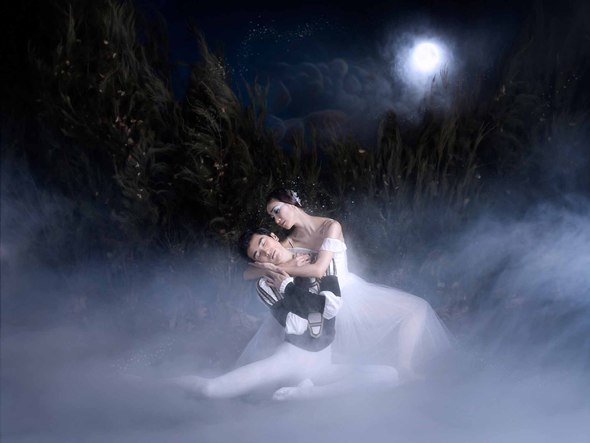
Derived from the Germanic name Gisela, meaning “pledge, hostage”. Although the word hostage has rather alarming associations today, in the past it was common for political treaties to be accompanied by the exchange of political hostages, as a guarantee of good faith and to maintain peace. Often the children of the ruling classes, even princes and princesses, would be handed over to be raised and educated by a foreign court, with hopes of greater cultural understanding between nations. Gisela and Gisèle (the French form) were popular names amongst medieval nobility and royalty. The name received a huge boost in the 19th century, because of the romantic ballet, Giselle. It tells of an innocent village girl named Giselle who dies of a broken heart after being betrayed by her lover. However, as a sign of her forgiving nature, after her death she protects the man she loves from the spirits of vengeance, and saves his life. Another fictional Giselle is the sweet peasant girl who makes a happy-ever-after transition from cartoon fantasy land to gritty real world in the Disney film, Enchanted. Graceful and fairytale, Giselle is usually pronounced ji-ZEL in Australia, and is #161 in Victoria.

Ingrid

Derived from the Old Norse name Ingríðr, meaning something like “beloved of Ing, beauty of Ing, delight of Ing”. Ing is an older name for the Norse god Freyr – perhaps his true name, because Freyr means “lord” and is his title. Freyr was a phallic fertility god who brought peace and pleasure, and was associated with sacred kingship, male sexuality, prosperity, and sunshine. In Norse legend, Ing is the god followed by the Germanic peoples of the area which is now Denmark and its surrounds, and he is claimed as the first king of Sweden, as well as the progenitor of the Anglian kings. Ingrid is a traditional name amongst Scandinavian royalty and nobility, and there is a young Princess Ingrid of Norway, who is expected to one day be queen. A famous namesake is beautiful Swedish-born movie star Ingrid Bergman, who starred in many Hollywood movies, including Casablanca. Ingrid has a strong and chiselled beauty, and is #481 in Victoria.

Piata

Maori name meaning “shine, glisten”. It isn’t unusual in New Zealand, and is still given to girls today; it can also be found as a surname. It’s not common in Australia, but I think it would work well here, and has a pleasingly cross-cultural feel, since it is similar to Italian Pia and Pieta. I believe it is pronounced pee-AH-ta.

Soraya

Persian form of the Arabic name Thurayya, meaning “the Pleiades”. The Pleiades is the familiar group of stars in the constellation Taurus, sometimes known as The Seven Sisters. The name became better known in the west because of two royal Sorayas. Soraya Tarzi was a liberal Muslim and feminist who married into the monarchy of Afghanistan and became queen; she appeared in public alongside her husband as an equal and together they tried to modernise their country. Afghanistan wasn’t quite ready for it, and the couple went into exile in Rome in 1929. Even more influential was Soraya Esfandiary-Bakhtiari, who was Queen of Iran as the second wife of the last Shah. Very attractive and western-educated, Soraya and her husband were forced to divorce in 1958 because she was apparently infertile. She also went into exile, under the name Princess Soraya, and lived in France, where her story evoked much sympathy. Her divorce inspired a song, I Want to Cry Like Soraya, and a variety of sunflower was named in her honour. A beautiful star name, Soraya is similar to familiar names like Sarah and Zara, and in Australia is usually pronounced soh-RAY-uh.

Tallulah

A place name of Native American origin, this probably means “town” in the Creek language. Tallulah Falls is a small town in Georgia, in the United States, which has attracted tourists since the late 19th century. Parts of the film Deliverance were filmed there, so you may even have seen it on screen. Tallulah has been used as a girls name since the 19th century, and records show that the name originated in the southern states, with most Tallulahs born in Georgia. The most famous namesake is flamboyant actress and party girl Tallulah Bankhead, who was from Alabama, and named after her grandmother. Despite being a name of American origin, Tallulah has never charted in the US, and is far more popular in the UK. Tallulah Bankhead was a huge celebrity in 1920s London, and her name is very fashionable in England, chosen as a baby name by the upper classes and minor royals. Spunky, sexy and fun to say, this fits in with familiar names such as Tully and Tahlia, and comes with cute nicknames like Lula and Lulu.

Uma

This Indian name is one of the epithets of the benevolent mother goddess Parvati, the wife of Shiva. Its original meaning is “mother (goddess, wife of) Shiva”. Because Parvati is a goddess of light, the name Uma also came to be understood as meaning “light, radiance”. In a previous incarnation, the goddess (then called Sati) committed suicide by throwing herself on a sacrificial fire, and her ashes became the sacred spice turmeric; because of this the name Uma came to be understood as meaning “turmeric”. The meaning of Uma is also glossed as “O child, do not (practice austerities)!”, because as a young girl Parvati’s mother chided her for the extreme ascetisim she practicised in order to please her future husband, Shiva. By coincidence, uma is literally translated as “flax” in Sanskrit, although this doesn’t seem to have any connection to the goddess. The most famous namesake is American actress Uma Thurman, whose name is said to have a different origin. Uma’s father was the first westerner to become a Buddhist monk, and the term uma chenpo means “Great Middle Way” in Tibetan – one of the guiding principles of Buddhism. In modern Hebrew, uma means “nation”, and in Israel Uma is a patriotic unisex name. In the Tiv language of West Africa, the name Uma means “life”, and can be used for both sexes. Simple yet multi-layered, this is a fascinating cross-cultural name which isn’t common in any country of the world.

Xanthe

Ancient Greek name meaning “yellow, yellow-brown”, often translated as “blonde, fair-haired”. There are several figures from Greek mythology with the name. Xanthe was one of the Oceanides, the three thousand daughters of the Titan sea gods Oceanus and Tethys. The Oceanides were nymph-like goddesses who were responsible for the world’s fresh water, and were often pictured married to river gods. In some sources, Xanthe is imagined as presiding over the yellow clouds that can be sometimes be seen at sunrise or sunset. Xanthe is also given as the name of one of the Amazon warriors, and Hesiod mentions Xanthe as being the mortal wife of Asclepius, the god of medicine. Actress Madeleine West welcomed a daughter named Xanthe last year. This quirky, stylish name is usually pronounced ZAN-thee in Australia, and comes with the cool nickname Xan or Zan. The name is #469 in Victoria.

POLL RESULT: People’s favourite names Blythe, Cordelia and Xanthe, and their least favourite were Giselle, Piata and Uma.

(Photo shows a scene from the ballet Giselle, performed by the Queensland Ballet)

Famous Names: Narcissus and Echo

27 Wednesday Nov 2013

Posted by A.O. in Famous Names

≈ 6 Comments

Tags

car names, english names, famous namesakes, fictional namesakes, flower names, Greek names, locational names, Metamorpheses, mythological names, name history, name meaning, nature names, Ovid, plant names, saints names, unisex names, vocabulary names

EchoandnarcissusAs you probably know, a selfie is a photo that someone has taken of themselves, usually with a phone or webcam, for the purpose of being uploaded to social media. Last week, the Oxford English Dictionary named selfie as the Word of the Year for 2013, noting that use of the word has increased by 17 000% in the past 12 months.

Research from the OED has shown that the word selfie is of Australian origin, with the first recorded use of it in an ABC Online forum in 2002. A user named Hopey posted a photo of his bottom lip, which had been injured when he fell over while drunk, apologising for the photo’s poor quality, as it was only “a selfie”.

Judy Pearsall from the OED explains: “In early examples, the word was often spelled with a -y, but the -ie form is more common today and has become the accepted spelling. The use of the diminutive -ie suffix is notable, as it helps to turn an essentially narcissistic enterprise into something rather more endearing. Australian English has something of a penchant for -ie words –barbie for barbecue, firie for firefighter, tinnie for a can of beer – so this helps to support the evidence for selfie having originated in Australia.”

To celebrate this Australian word being so warmly embraced by the rest of the world, there were just two names that came to mind, suggested by Judy’s appraisal of a selfie as “essentially narcissistic”, and because a photograph is a visual echo of its subject.

In Greek mythology, Narcissus was a stunningly handsome young hunter, the son of a river-god and a nymph. Many admired him, but he proudly spurned them all, even driving his suitors to suicide – Narcissus is said to have cruelly placed a sword in the hands of one despairing fellow, with the obvious suggestion of what he was to do with it.

The best known version of his story is given by the Roman poet Ovid in his Metamorpheses. He tells of a talkative mountain nymph named Echo, whose chattering tongue annoyed the goddess Juno one too many times.

Echo had a habit of waylaying Juno with one of her long-winded stories while Juno’s hubby Jupiter enjoyed himself with some nymph or other, giving the nymph plenty of time to escape Juno’s wrath. Juno cursed Echo’s voice, so that she could never speak until someone else did, and when they did, Echo could only repeat what they said, or even just the last few words of their speech.

The luckless Echo happened to see Narcissus wandering in the woods, and fell madly in love with his beauty. She longed to eloquently tell him of her passion, but could only repeat his own phrases back to him, which just annoyed Narcissus. She embraced him, and he angrily told her to get her hands off – he would rather die than be caressed by such a thing.

The rejected Echo was so ashamed and unhappy that she ran into the mountains and hid herself in the wilderness, until she wasted away with unrequited passion. Only her voice was left, which you can still hear in the hills sometimes – a voice which repeats your own phrases back to you, called an echo.

Meanwhile the gorgeous Narcissus continued to reject many nymphs and youths, always in the nastiest way possible, until one of his victims lifted their hands to heaven and implored the gods that one day Narcissus might fall in love, and his love be denied, so that he could know the pain of rejection in his turn. The prayer was answered by Nemesis, the goddess of divine retribution, who punishes arrogance.

One day, hot and tired from hunting in the heat of midday, Narcissus stopped by a pool in the forest to get a drink. Seeing his own reflection in the pool, he became entranced by its beauty – those starry eyes! Those flowing golden locks! That ivory skin and rose-leaf complexion! Those sweet pouting lips! Yep, the vain Narcissus had fallen head over heels at last – with his own image.

He tried to embrace the stranger in the water, and to kiss him, but although the reflection seemed as eager as he, smiling whenever he did, and offering his lips in return, Narcissus just ended up with his face in the pool, wet and ridiculous. Tortured by his love, he longed to die, and wasted away by the pool, consumed by hopeless desire for himself.

The nymph Echo, now a mere disembodied voice, still loved Narcissus, even as his beauty withered away with neglect. She watched over him, and pitied him in his plight, managing to whisper a sad “Farewell!” to him as Narcissus died and said goodbye to his reflection. Death brought him no relief, for in the afterlife he continued to miserably roam, gazing at his reflection in the underworld River Styx.

When Narcissus’ grieving sisters came to collect him for his funeral, they found his body had disappeared, and in its place was a beautiful narcissus flower, its drooping head still looking into the pool at its own reflection. Narcissus is a genus of spring bulbs native to the woodlands of Europe, West Asia and North Africa. Coming in a range of colours from white through the yellows to dark orange, we call some varieties daffodil or jonquil.

The meaning of Narcissus is not known – the Greeks understood it as meaning “I grow numb”, as if it was related to the words narcotic and narcolepsy. However, this isn’t accepted by scholars, who believe it is more likely an attempt to understand a word originally from another language, most likely one from the Near East. Although legend says the flower’s name came from the mythological character, it is almost certainly the other way around, with Narcissus named after the flower.

The name Narcissus wasn’t uncommon in ancient Greece. Narcissus was a wrestler who assassinated the Emperor Commodus, and is one of the inspirations for the movie Gladiator starring Russell Crowe, while another Narcissus was the slave of the Emperor Claudius, became his personal secretary, and had a lot of influence over him. There are several saints named Narcissus – Narcissus of Athens is mentioned in the New Testament as one of the Seventy Disciples of Christ, and an assistant to Saint Andrew.

In modern times, men named Narcissus were more likely named after one of the saints than the mythological character. However, Narcissus is actually far more common as a female name, because of the flower. One of its many issues is that it has given rise to the term narcissism, to describe inflated self-regard – although some degree of narcissism is probably normal and healthy, when it goes overboard it is seen as a psychological disorder.

The word Echo is from the Greek and means “sound”. Just as with Narcissus, the mythological nymph is named after the word, and not the other way around. There is a Marvel superheroine named Echo (she’s deaf), and Echo is the lead character in the television drama series, Dollhouse. An Australian connection is Echo Point in the Blue Mountains, a wonderful place to hear echoes. Because an echo is a vocabulary word as well as a character, it has sometimes been given as a name to boys, and OH- ending names are fashionable for both sexes. One of the issues with the name Echo is that there is a car called the Toyota Echo.

Can you imagine ever using one of these names from Greek mythology?

POLL RESULT: Narcissus received an approval rating of 13%, making it the lowest-rated boys name of the year, and the lowest-rated name overall. Echo did much better, with an approval rating of 58%.

(Picture shows the 1903 painting Echo and Narcissus by John William Waterhouse, illustrating the story by Ovid )

Names of Fictional Characters for Boys

17 Sunday Nov 2013

Posted by A.O. in Name Themes and Lists

≈ 5 Comments

Tags

American names, American slang terms, berry names, created names, Dutch names, english names, ethnonyms, famous namesakes, fictional namesakes, food names, fruit names, Greek names, Irish names, locational names, name history, name meaning, name popularity, name trends, names from movies, names from television, nature names, nicknames, North American dialect names, Old English names, Old Gaelic names, plant names, rare names, surname names, UK name popularity, unisex names, US name popularity

an_27510937Asterix

Asterix is the hero of the Asterix comic books by René Goscinny and Albert Uderzo. The comic book series follows the adventures of a village of Gauls resisting Roman occupation. They manage to do this through a magic potion brewed by their local druid, which temporarily gives superhuman strength. Asterix is a diminutive warrior of great shrewdness, and because of his cunning and common sense, is usually chosen to lead important missions. Most of the Gauls in the comics have names ending in a suitably Gaulish -ix, echoing famous Gauls from history, such as Vercingetorix. However, each name is also a jokey pun – translations into English have been very clever at maintaining the spirit of the humour. In the case of Asterix, his name is a play on the typographical mark – the word asterisk comes from the Greek for “little star”, and Asterix is the “star” of the comic series. I have seen Asterix on an Australian baby, and this makes a quirky name for your own little star.

Atreyu

Atreyu is a character in the fantasy novel, The Neverending Story, by Michael Ende. In fact, he is the hero of the book which is read by a little boy named Bastian Bux, so he exists in a story within a story. Atreyu is a young warrior who is sent on a great quest to save the land of Fantastica by seeking a cure for the mysterious illness suffered by the land’s empress. He serves as a projection of Bastian’s “inner hero”, and only Atreyu can save Bastian from his own mistakes. In the 1984 movie version, Atreyu is played by Noah Hathaway. Atreyu was orphaned as a baby, and his name means “son of all” in his own (fictional) language, because he was raised by his entire village. It is pronounced ah-TRAY-yoo. Atreyu has strong connections with music, because not only is there a band with the name, but Atreyu himself has been referenced in songs. In the novel’s original German text, his name was Atréju, and this has proven a slightly geekier alternative.

Caspian

Caspian is a character in C.S. Lewis’ children’s fantasy series, The Chronicles of Narnia. As a young boy in Prince Caspian, he had to fight for his throne against his usurping uncle to become king of Narnia, and as a youth in The Voyage of the Dawn Treader, he led a daring expedition to the end of the world. In The Silver Chair, we meet him as a very old man, having reigned wisely and well, but also suffering personal tragedy. In the movies, he was played by Ben Barnes. Because of his great sea voyage, he is known as Caspian the Seafarer. Perhaps because of this connection, Lewis named his character after the Caspian Sea, the world’s largest inland body of water, which is bound by Russia, Azerbaijan, Iran, Turkmenistan, and Kazakhstan. It is named after the Caspi, an ancient people believed to be the same as the Kassites, who were from modern-day Iran. The meaning of their tribal name is unknown. Caspian is a romantic geographic name which sounds rather like Casper with a Latin -ian ending, as in Lucian or Julian.

Dexter

Dexter Morgan is the protagonist of the Dexter series of psychological thrillers by Jeff Lindsay. Dexter works for the police as a forensic blood spatter analyst, but is a serial killer in his spare time. A violent sociopath, he has been carefully trained to satisfy his homicidal urges by only killing murderers, rapists, and other criminals. Dexter is an English occupational surname for someone who dyed cloth, literally “dyer” in Anglo-Saxon. The word was originally specifically feminine, but Dexter has overwhelmingly been used as a male name. Dexter also happens to coincide with the Latin for “right handed”, with connotations of being skilful. Dexter Morgan is certainly dexterous in committing his crimes, while it seems apt the name is connected with dying. The books have inspired a popular television series, with Michael C. Hall in the title role, and since Dexter began airing in 2006, the name Dexter (which was about to slip off the Top 1000) has gone steadily up in popularity in the US; it is currently #362. It may seem strange that a serial killer could save the name, but Dexter Morgan is an oddly sympathetic murderer. Michael C. Hall makes him both likeable and amusing, and (perhaps slightly worryingly) female viewers find the character very attractive. Dexter fits in the surnames-for-boys trend, and has a cool X sound in it. The name Dexter is #218 in Victoria.

Dorian

Dorian Gray is the protagonist of Oscar Wilde’s only novel, The Picture of Dorian Gray. Dorian is an extremely handsome young man, who wishes his portrait could age while his own beauty remain changeless. His narcissistic wish is granted, and he spends his life in debauchery while retaining a youthful and innocent appearance. Meanwhile, Dorian’s hidden portrait bears the mark of his every corruption. The story has often been adapted into film; the most recent is Dorian Gray, with Ben Barnes in the title role. It is usually assumed that Wilde took the name Dorian from the Dorian people of ancient Greece, whose name means “upland, woodland”. The ancient Greeks did have names from this source, such as Dorieus and Doris. However, Dorian is also an Irish surname from O’Deoradhain, meaning “son of Deorain”. Deorain is an Old Gaelic name meaning “exile, wanderer, stranger”. Use of the name predates the novel’s publication, and in Eastern Europe it may be a pet form of Teodor. Dorian is sometimes used for girls. Despite Dorian Gray being an evil character, the name has remained in use, and is #558 in the US, and #549 and rising in the UK.

Heathcliff

Heathcliff is the male lead character in Emily Bronte’s Wuthering Heights, the foster-brother and love interest of Catherine Earnshaw. The novel explores the deep and obsessive love that Cathy and Heathcliff have for each other, and how the thwarting of that love turned Heathcliff into a tortured monster – or perhaps revealed the brute he already was. It’s an eerie tale, but many will think of Heathcliff as the Byronic hero and romantic lover whose passion lived beyond the grave. In film, he has been portrayed by Laurence Olivier, Timothy Dalton, and Ralph Fiennes. Heathcliff is an uncommon English surname meaning “heath on the cliff”; it doesn’t seem to have been used as a personal name before Wuthering Heights, and only rarely since. The name connects Heathcliff to the Yorkshire moors, the natural world outside society where Heathcliff and Cathy can love each other freely. Actor Heath Ledger was named after Heathcliff (and his sister after Catherine!), and as Heath is a fashionable name at present, Heathcliff doesn’t seem too bizarre as a long form, although admittedly a bold choice.

Huckleberry

Huckleberry “Huck” Finn is the protagonist of Mark Twain’s Adventures of Huckleberry Finn, and the best friend of the hero in The Adventures of Tom Sawyer. Huck is the son of the town drunk, a neglected vagabond who lives a carefree existence until he is adopted and “civilised”. He runs away with an escaped slave named Jim, and the two of them travel down the Mississippi River by raft in search of freedom. Huck has been portrayed on film by Mickey Rooney, Ron Howard, Elijah Wood and Jake T. Austin, among others. Huckleberry is North American dialect for the bilberry, although in practice applied to several wild berries. The word has long been part of American slang, usually to suggest something small and insignificant – the perfect name for Huck Finn, a child of little consequence in his town. Later it came to mean “companion, sidekick”. Huckleberry was in occasional use as a personal name prior to the publication of Twain’s novels. This would make a sweet, offbeat name, while Huck is a hip short form.

Rhett

Rhett Butler is the love interest of Scarlett O’Hara in Margaret Mitchell’s Gone With the Wind. A black sheep, he becomes entranced with the spirited Scarlett, and admires her will to survive. Although viewed as a cad by polite Southern society, Rhett is tall, dark, handsome, charming, intelligent, and has a very good understanding of human psychology – especially female – which he utilises to devastating effect. He is the only person who can stand up to Scarlett, and beat her in a battle of wits. In the 1939 movie, the biggest box office smash in history when adjusted for inflation, Rhett is played by Clark Gable. Rhett is a surname which comes from the Dutch de Raedt, meaning “counsel, advice”. Mitchell seems to have chosen the name as an allusion to her first husband, “Red” Upshaw, on whom the character of Rhett Butler is based (with a dash of Rudolf Valentino). Rhett is a sexy bad boy name, not often seen here, although cricketer Rhett Lockyear is one Australian example. In the US, it is #508 and rising.

Rocky

Robert “Rocky” Balboa is the title character in the Rocky movies, played by Sylvester Stallone. Rocky is from the slums of Philadelphia, a grade school drop-out with few skills apart from being able to land punches, so he makes his living as a boxer known as “The Italian Stallion”. Always the underdog, his main weapon (apart from fists like bricks) is a refusal to give up. The movies follow his career through the victories, the losses, the fame, the fortune, the brain damage, and the incredible comeback. Rocky is a humble man with great heart, and although barely literate, possesses a lot of wisdom about life and love. He is named after the boxer Rocky Marciano, whose real name was Rocco. Rocky can be a nickname for similar names, but also signifies incredible strength and toughness. A famous Australian with the name is rugby union champion Rocky Elsom. Rocky is a fun and even cute name, with a namesake that has an important message: it doesn’t matter whether you win or lose, but whether you go the distance.

Sherlock

Sherlock Holmes is the world’s most famous detective, the creation of Arthur Conan Doyle, and the hero of many stories. Known for his use of deductive logic and bewildering array of disguises, he has become an archetype, with his interest in forensic science helping spawn the modern crime genre. The character of Sherlock Holmes was so loved by the public in his own day that Doyle was forced to resurrect him after killing him off, and his popularity continues, with numerous adaptations to stage, radio, film and television – in fact, he is the most prolific character in cinema. Sherlock is an English surname dating to before the Norman Conquest; it comes from the Old English for “shining locks”, referring to someone with fair hair (although dark-haired, brainy Sherlock Holmes does have a “bright head”). Sherlock has been used as a personal name since the 18th century, and early use may have been influenced by Thomas Sherlock, a popular bishop and Christian apologist. Contemporary adaptations of the Sherlock Holmes stories, such as Sherlock, starring Benedict Cumberbatch, and Elementary, starring Johnny Lee Miller, show this character has lost none of his pulling power, although the name is still closely tied to the brilliant detective. Locky would make an appealing short form – more appealing than Shirley, anyway.

POLL RESULT: People’s favourite names were Caspian, Dexter and Rhett, and their least favourite were Asterix, Atreyu, and Rocky.

(Picture shows Benedict Cumberbatch in the title role of the BBC TV series, Sherlock)

Names of Fictional Characters for Girls

10 Sunday Nov 2013

Posted by A.O. in Name Themes and Lists

≈ 18 Comments

Tags

astronomical names, Celtic names, code names, created names, Disney names, Dothraki names, english names, eponyms, fabric names, famous namesakes, fictional namesakes, German names, Google, horticultural terms, Italian words, J.R.R. Tolkien, Latin names, mythological names, name history, name meaning, name popularity, names from invented languages, names from movies, names from television, names of natural features, names of stars, nicknames, Norman-French names, popular names, portmanteau names, pseudonyms, rare names, short forms, Sindarin names, surname names, UK name popularity, unisex names, US name popularity, vocabulary names, Welsh names

Wallpaper-Iridessa-Summer-1

Arrietty

Arrietty Clock is a teenage “borrower” from Mary Norton’s classic children’s fantasy book series, The Borrowers. The borrowers are tiny people who live by “borrowing” everyday items from the Big People, who they call “human beans”. Because of the spirited Arrietty’s curiosity, she and her family end up having far more adventurous lives than the average borrower. In the UK issue of the Japanese animated film Arietty’s World, inspired by the books, Arrietty is voiced by Saoirse Ronan; in the US issue, by Disney actress Bridgit Mendler. Like everything else they own, the borrowers’ names have also been “borrowed”, and used in new ways. Arrietty is reminiscent of the word arietta, meaning “little song, a small aria” in Italian. However, it is also very similar to the name Harriet, and the short form Etty. As Aria and Harriet are quite popular, and Etta very hip, Arrietty is one of those invented names which we are half-surprised wasn’t used before the books’ publication.

Arwen

In J.R.R. Tolkien’s classic fantasy novel, The Lord of the Rings, Arwen Undómiel is an Elven princess, said to be the most beautiful of the last generation of the High Elves. She is the lover of the hero Aragorn, and because she is an immortal, Arwen must sacrifice a great deal to be with her love. In the Peter Jackson films, she is played by Liv Tyler. In the Elvish Sindarin language created by Tolkien, Arwen is said to mean “noble maiden”. However, Tolkien did not invent the name itself, which is a modern Welsh name. It may be a feminine form of Arwyn, which I have seen translated as “very fair, greatly blessed, splendid”. In the UK, the name began charting around the time The Fellowship of the Ring came out, and is currently #654 and rising. This does have a (short) history as a genuine Welsh name, and was given to a very lovely fantasy princess.

Bellatrix

Bellatrix Lestrange is an evil witch in the Harry Potter fantasy series, the Dark Lord Voldemort’s most faithful follower. In the films, she is played by Helena Bonham-Carter. Bellatrix was born into the Black family, and like all members of that clan, she is named after a star. Bellatrix is the common name of Gamma Orionis, a bright star in the constellation of Orion. Its name is Latin for “female warrior”, which was originally given to Capella, and then transferred to Gamma Orionis. It is also known as the Amazon Star, a loose translation of its Arabic name, which means “the conqueror”. Bellatrix Lestrange’s name is apt because she is a skilled warrior for Voldemort, and has won many duels. This name sounds very usable, because it has the popular Bella in it, and the -trix from hip Beatrix. However, while the Harry Potter character has raised the name’s profile, it’s also a stumbling block, because the character is evil – and not in a cool “strong yet misunderstood woman” way. Bellatrix is a fanatical racist with a love for murder and torture, and a starstruck Voldie fangirl with an annoying little-girl voice. So on one hand: great name. On the other: horrible association.

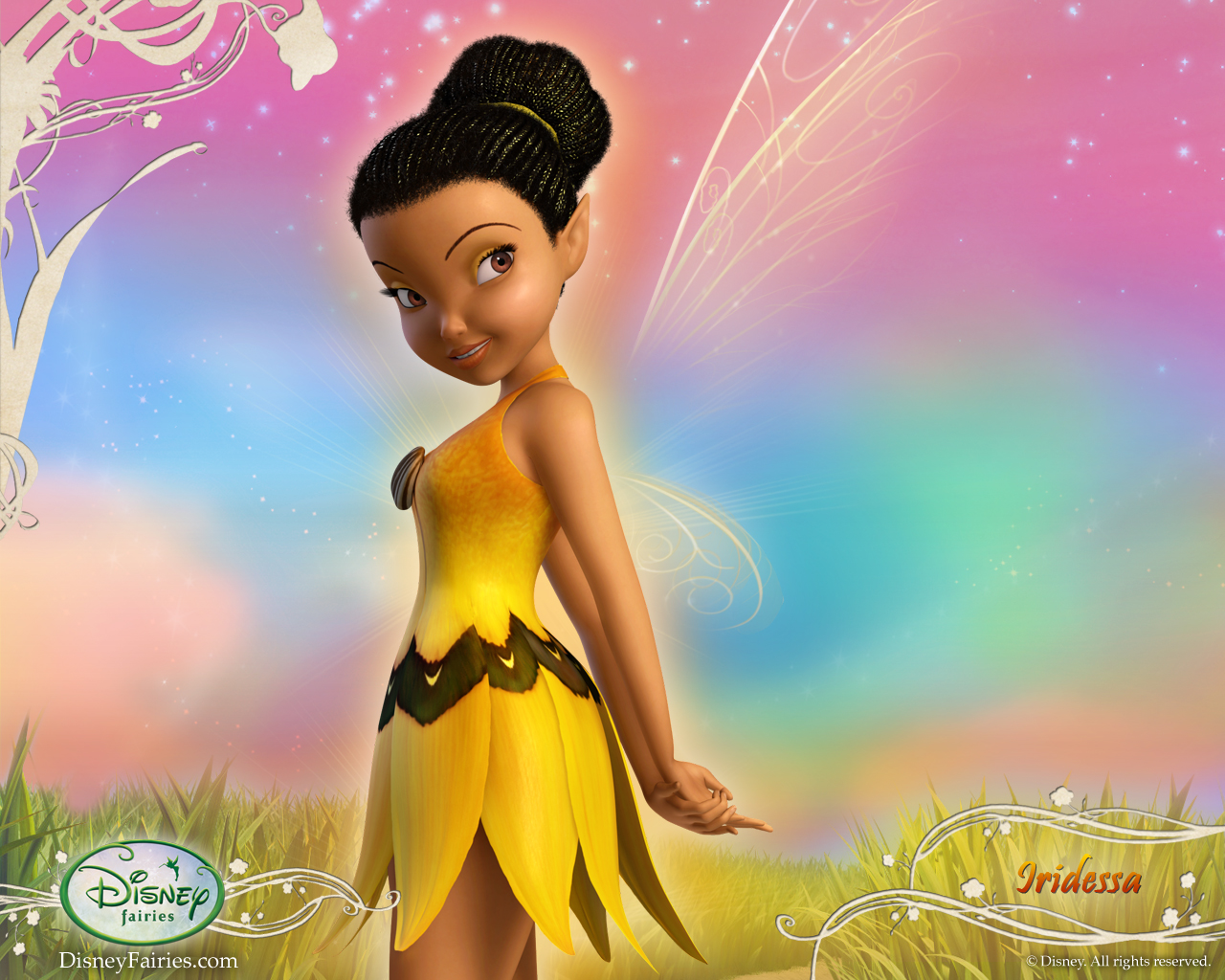
Iridessa

Iridessa is the name of one of the fairies in the Disney Fairies franchise. Her talent is working with light, and she wears a yellow dress, lives in a sunflower, and has clear fairy wings. In the movies, she is voiced by Raven-Symoné. Iridessa is a perfectionist and a worrier; she likes to look on the bright side of things, but can usually sense trouble approaching. When disaster strikes, she rushes in to save the day, and brings sunshine, light and brightness to every situation. The name Iridessa seems to be based on the word iridescent, meaning “producing rainbow-like colours; brilliant, lustrous, prismatic”. The word is derived from Iris, the name of the goddess of the rainbow, so you could see Iridessa as a modern spin on the older name. I have seen a baby with this name, and it’s been frequently Googled, so it seems that people find the name of this fairy intriguing. It’s not surprising, with such an attractive namesake associated with light. Looking for a nickname? Iridessa goes by Dess.

Khaleesi

Khaleesi is extremely unusual as an invented name, because it is not the name of a fictional character, but rather her title. In George R.R. Martin’s fantasy series, A Song of Ice and Fire, khaleesi is the word for the wife of a khal or ruler, in the Dothraki language from the novels. The Dothraki are a nomadic indigenous people without a written language, so the spelling of khaleesi in the novels must come from another culture. In Martin’s novel series, shy Daenerys Targaryen adopts the title of Khaleesi when she weds powerful Dothraki warlord Khal Drogo, and as his queen, grows in strength and confidence, becoming a leader in her own right known as “the Mother of Dragons”. In the television series based on the books, A Game of Thrones, the role of Daenerys is played by Emilia Clarke. Since the television series began airing in Australia, there has been a spike of interest in the name, with about 25 baby girls called Khaleesi born this year. For some reason, the name is far more popular in Queensland than elsewhere – possibly because of the connection with queens.

Lorelei

The Lorelei is the name of a famous rock on the River Rhine in Germany, and also the name of a beautiful water sprite or siren associated with the rock, who is supposed to lure men to their doom. More prosaically, the current of the river is very strong here, which explains the many accidents which have occurred in the area. The character of the Lorelei comes from a 19th century German ballad which poet Heinrich Heine turned into a poem called Die Lorelei, where a golden-haired siren unwittingly distracts men with her beauty so they crash onto the rocks. The poem has often been set to music and turned into songs, and is part of German popular culture. The name Lorelei is a combination of German dialect and Celtic, and means “murmuring rock”. Lorelei is the name of the alluring blonde in Gentlemen Prefer Blondes; in the film she is played by Marilyn Monroe. The name also features in garrulous gabfest Gilmore Girls, where both mother and teen daughter share the name Lorelei (the younger goes by Rory). Comedienne Kat Davidson named her daughter Lorelei “Rory” this year. Said LOR-uh-lie, this is better known in the US, where it is #531.

Pollyanna

Pollyanna Whittier is the title character of the Pollyanna books by Eleanor H. Porter; the series was continued by a number of writers. Pollyanna is an eleven-year-old orphan who is sent to live with her Aunt Polly in New England, and her sunny disposition soon teaches her stern relative, and the whole town, how to play the “Glad Game” – where you always look for something to feel glad about. While many are charmed by the heroine’s upbeat view of life, cynics find her too syrupy and her philosophy simplistic. Because of this, the word Pollyanna has entered our language to mean someone optimistic to the point of naivety or refusal to face facts. Pollyanna is a combination of Polly and Anna – Polly is a medieval variant of Molly, a pet form of Mary. This would be a difficult name to give a child in many ways, but would make a sunshiney middle, and easily shortens to Polly.

Rogue

Rogue is a character from the X-Men Marvel comic books created by Stan Lee and Jack Kirby. She is one of the team of mutant superheroes under the auspices of Professor Xavier, who recruits and trains young mutants to use their powers for the benefit of humanity. Rogue considers her special ability something of a curse, as she involuntarily absorbs, and sometimes removes, the memories, strength, and superpowers of anyone who touches her. For most of her life, she limited her physical contact with others, even loved ones, until after many years she was able to gain full control of her abilities. It was eventually revealed that Rogue was a code name, and her real name Anna Marie. In the movies, she is played by Anna Paquin. A rogue is a scoundrel or rascal. More to the point, a rogue animal is one which separates itself from the herd, and in horticulture the word rogue is used to describe a plant which has an undesirable mutation and must be destroyed. Anna Marie seems to have chosen Rogue as her code name to express her bitterness at the biological difference she had been lumbered with. This name can be used for both sexes; I saw it on a baby girl last year.

Scarlett

Scarlett O’Hara is the protagonist of Margaret Mitchell’s best-selling Civil War novel, Gone with the Wind; in the film version she was played by Vivien Leigh. Slender and attractive, Scarlett is flirtatious and charming, but doesn’t fit the mould of a typical Southern Belle. Smart, feisty, stubborn and very strong-willed, she nevertheless is inwardly insecure. What makes Scarlett such an interesting character are her many flaws – she is vain, selfish, spoiled, unscrupulous and manipulative, but hard as nails, with an overpowering survival instinct. Scarlett is an English surname from Norman French, referring to someone who dyed or sold brightly-coloured cloth, which was often red. It has been used as a unisex name since the 17th century, but is now usually thought of as feminine. The character’s full name is Katie Scarlett O’Hara, and she was named after her grandmother. Margaret Mitchell originally planned to call her heroine Pansy, and changed it to Scarlett just before the novel went to print. Scarlett first ranked in the 1990s at #467, the decade in which American actress Scarlett Johansson made her film debut. It climbed precipitately to join the Top 100 in the mid-2000s, and is currently #25 nationally, #23 in New South Wales, #17 in Victoria, #33 in Queensland, #17 in South Australia, #22 in Western Australia, #21 in Tasmania, and #26 in the Australian Capital Territory.

Velvet

Velvet Brown is the heroine of Enid Bagnold’s novel, National Velvet, about a teenager who rides to victory in the brutally difficult Grand National Steeplechase, the most valuable jump race in Europe. The story is about the ability of ordinary people to achieve great things – Velvet is a plain, rather sickly girl from a working-class family, and the horse she wins on is a piebald. The movie version chucks most of this inspiring message aside so they can show a radiantly pretty pre-teen Elizabeth Taylor galloping about on a chestnut thoroughbred. Velvet is a fabric which was originally very expensive to make, and therefore associated with nobility and royalty. The word is from Old French, and comes from the Latin for “tuft, down”, because of velvet’s distinctive texture. It has been used as a name since the 19th century, and has been given to both genders, but mostly to girls. This unusual fabric name is warm and luxurious, perhaps even rather sensual.

POLL RESULT: People’s favourite names were Lorelei, Arrietty, and Scarlett, and their least favourite were Rogue, Pollyanna, and Khaleesi.

(Picture is of Iridessa, from Disney website)

Brisbane Suburbs That Could Be Used as Boys Names

13 Sunday Oct 2013

Posted by A.O. in Name Themes and Lists

≈ 7 Comments

Tags

aristocratic names, Biblical names, english names, famous namesakes, fictional namesakes, French names, Gaelic names, hebrew names, Irish names, Latin names, locational names, middle names, name history, name meaning, name popularity, names from films, names from television, nicknames, Old English names, Old Norse names, popular names, rare names, Roman names, saints names, Scottish names, surname names, unisex names, US name popularity, Welsh names

857092-121013-wap-hamilton

Augustine

Augustine Heights is a new suburb of Ipswich, and gained its name from St Augustine’s Catholic Church and College. The name Augustine is from the Roman name Augustinus, derived from Augustus, meaning “great, venerable”. Its most famous namesake is the theologian Saint Augustine of Hippo, considered one of the most important Church Fathers. He describes his conversion to Christianity in his Confessions, which has become a classic of Christian literature. The name became popular in England in the Middle Ages because of Saint Augustine of Canterbury, a 6th century founder of the English church known as the Apostle to the English. It is probably because of him that there is an English form of Augustine – the popular Austin. In France, Augustine is a girls name, the feminine form of Augustinus.

Bowen

Bowen Hills is an inner-city suburb of Brisbane. It is named after Sir George Bowen, an Irishman who was the first Governor of Queensland. Tactful and democratic, with a great love of the outdoors, he made himself popular enough to be invited to serve two more years when his term had expired. There are a few places in Queensland named after Sir Bowen, including Bowen Park, a pleasure garden in Bowen Hills. The surname Bowen can be Welsh, meaning “son of Owen“, or it can be Irish, in which case it is an Anglicised form of the Gaelic O’Buadhachain, meaning “son of Buadhach”. The name Buadhach means “victory, triumph”. This name reminds me of the Bowen Technique, an alternative massage treatment developed by Australian Tom Bowen, although Bowen is a knight and dragon-slayer in the movie Dragonheart. Rarely seen here, Bowen is in the Top 1000 and rising for boys in the US. It gives the unisex nickname Bo, and for some reason I see this as a girls name just as much as a boys.

Chandler

Chandler is a semi-rural outer suburb of Brisbane. It is named after Sir John Beals Chandler, a successful businessman with a chain of electrical goods stores, and who owned several radio stations. He was elected to the Queensland Parliament in the 1940s, and Lord Mayor of Brisbane in the 1940s and early ’50s. Chandler is an English occupational surname, which denoted someone who made and sold candles, or someone who was responsible for the wax, soap, candles and lighting in a medieval great house. This name will remind many of Chandler Bing, from popular sit-com, Friends.

Crosby

Mount Crosby is an outer suburb of Brisbane adjoining the state forest. It is named after its dominant natural feature, Mount Crosby. The first settlers to this area were from the village of Crosby-on-Eden, near the Scottish border, and it seems likely that they named their new home after their original one. The surname Crosby is after the place name, a common one in northern England and southern Scotland. The name is of Old Norse origin, and means “settlement by the cross”; as we learned from Cruz, these stone crosses were often used as markers. Famous Crosbys include entertainer Bing Crosby and musician David Crosby. The name has recently begun charting in the US, after drama series Parenthood was shown on television there. The show has a character called Crosby Braverman, played by Dax Shephard, and the name must have resonated, because it went up 69 places last year. Crosby is rare in Australia (I’ve only seen it on a child once), but maybe Parenthood will have an effect here too.

Ebenezer

Ebenezer is a suburb of Ipswich. It had been a preaching place on the Methodist Church circuit since 1863, and by 1882 a church had been built named the Wesleyan Ebenezer Church. It is from this church that the suburb gets its name. In the Old Testament, Eben-Ezer is a place mentioned as the scene of battles between the Israelites and the Philistines; its modern day location is not known, but it is probably in Palestine or Arabic Israel. Eben-Ezer is from the Hebrew for “stone of help”, and it is theorised that a stone dedicated to Yahweh may have been located here to give it its name. Its most famous namesake must be Ebenezer Scrooge from Charles Dicken’s A Christmas Carol, the cold-hearted miser redeemed by three spirits of Christmas. I think the name Ebenezer sounds pretty hip now, and an Old Testament boys name which has been overlooked for too long. Eben and Ben would make good nicknames.

Hamilton

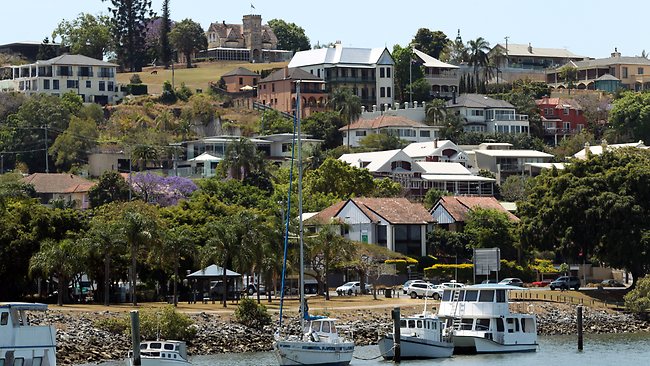
Hamilton is a hilly inner-city suburb of Brisbane on the Brisbane River which was built by convict labour. It soon became known for its upper-class country houses and estates, ornamental shade trees, picturesque location and fine views of the city. Hamilton is associated with “old money”, and has the highest mean income of any suburb in Queensland. It is named after the Hamilton Hotel, built in 1865 by Gustav Hamilton, a wealthy solicitor who owned most of the land in the area. It soon became known as a meeting place for the horse racing world, as the Turf Club is nearby, and is still popular today. Hamilton is an English and Scottish surname after the village of Hamilton in Leicestershire; its name means “crooked hill” in Old English. The aristocratic Hamilton family gained lands in Lanarkshire, Scotland, and gave their name to the town of Hamilton there. The Hamiltons married into the Scottish royal family, and the Duke of Hamilton and Brandon is the highest peer in Scotland. A famous person with the name is Hamilton Hume, an early Australian explorer of New South Wales who was a top-notch bushman and formed friendly relationship with Aboriginal peoples. This is a name with an impressive pedigree.

Logan

The city of Logan is halfway between Brisbane and the Gold Coast. It began as a penal settlement, and farming soon followed; it was developed for housing in the 1960s due to its laissez-faire planning laws. Logan is named after Captain Patrick Logan, the Scottish commandant of the original penal settlement, who had a reputation for being strict to the point of cruelty. He was a great explorer and was killed on one of his expeditions, most likely by Aborigines who had repeatedly told him to get off their land. News of his death was met with wild joy from the convicts. Logan is a Scottish surname; the Clan Logan comes from the “lands of Logan” in Ayrshire, which may be from the Gaelic for “hollow”, or even of Norman origin. In Ireland, it is considered to come from the Gaelic O’Leoghain, meaning “grandson of the warrior”. This name has many namesakes from popular culture, including the dystopian sci-fi film Logan’s Run, where Logan is played by Michael Yorke, and Logan aka Wolverine from the X-Men films, played by Hugh Jackman. Logan has charted since the 1970s (when Logan’s Run first screened), and ranked in the 1980s at #344. It climbed steeply through the 1990s and made the Top 100 by the 2000s. It is currently #38 nationally, #36 in New South Wales, #33 in Victoria, #65 in Queensland, #46 in South Australia, #28 in Western Australia, #17 in Tasmania, and #50 in the Australian Capital Territory.

Sherwood

Sherwood is a suburb on Oxley Creek. Its name comes from a farm which was named after Sherwood Forest in Nottinghamshire, England. A Royal Forest, and remnant of an older and much larger royal hunting forest, it is one of England’s most ancient, having survived since the end of the last Ice Age. It is famous for its association with legendary folk hero Robin Hood, who is supposed to have lived in Sherwood, according to some sources. Sherwood in Brisbane even made its own Sherwood Forest Park, which is now, less romantically, the Sherwood Arboretum. The name Sherwood means “shire wood”. A famous person with the name is American author Sherwood Anderson.

Tennyson

Tennyson is a riverside suburb named in honour of Alfred, Lord Tennyson. Tennyson was Poet Laureate of Great Britain and Ireland during Queen Victoria’s reign, and has the record for length of tenure as a Laureate at 42 years. Revered in his own time, he remains one of the popular English poets. One of his much-loved works is the Idylls of the King, a cycle of blank verse poems inspired by the legends of King Arthur; many of the streets in Tennyson have Arthurian names in compliment of the Idylls. For those amused by these coincidences, the Queensland Tennis Centre is located in Tennyson, and was once the Tennyson Tennis Centre. The English surname Tennyson means “son of Tenney”, with Tenney a pet form of the name Denis. Actor Russell Crowe has a son named Tennyson, after his favourite poet. This is a handsome and unusual name, with a great namesake, and would make an excellent middle name too.

Windsor

Windsor is an inner-city suburb of Brisbane, with many old homes, and containing several heritage-listed sites. It was named Windsor in 1887, most likely after Windsor Castle in Berkshire, England, as it was Queen Victoria’s Golden Jubilee Year. Windsor Castle was built by William the Conqueror, and was originally a fortification to protect the outskirts of London, with strategic views of the River Thames and access to the royal hunting forest of Windsor. Since the rule of Henry I, William’s son, it has been a royal residence, and is the largest inhabited castle and longest-occupied palace in Europe. Today it is a royal palace and weekend retreat for Elizabeth II, and state banquets and official entertainments are often held there – it is also a major tourist attraction. The castle is named after the nearby village of Windsor, once the site of a palace for the Saxon kings. Its name means “winding shores, winch shores” in Old English, because boats were pulled by windlass up the river. Famously, Windsor is the surname of the British royal family: the name was changed from Saxe-Coburg and Gotha by George V in 1917, due to anti-German sentiment during World War I. The final straw was when Germany used the Gotha G. IV aircraft to bomb London – just four months later, the Saxe-Coburg-Gothas had become the Windsors, the name taken from the royal palace. A famous person named Windsor is British actor Windsor Davies, best known as the sergeant on It Ain’t Half Hot Mum. Royal names are all the rage, and you can’t get any more royal than Windsor.

POLL RESULT: People’s favourite names were Tennyson, Augustine, and Windsor, and their least favourite were Sherwood, Hamilton, and Ebenezer.

(Photo shows the suburb of Hamilton)

Brisbane Suburbs That Could be Used as Girls Names

06 Sunday Oct 2013

Posted by A.O. in Name Themes and Lists

≈ 9 Comments

Tags

animal names, Aramaic names, Australian Aboriginal names, Biblical names, birth notices, english names, fabric names, famous namesakes, fictional namesakes, Gaelic names, Gaulish names, German names, Greek names, historical records, Latin names, locational names, name history, name meaning, name popularity, names of farms, names of ships, names of spices, nicknames, Norman-French names, saints names, Sanskrit names, Scottish names, surname names, unisex names, virtue names, vocabulary names

15517831

Amity

Amity Point is a small town on North Stradbroke Island, 30 km south-east of Brisbane. The town is named after the Amity, a brig which carried the first European settlers to Queensland in 1824. The Amity was later wrecked near Tasmania, and today you can visit a full-size replica of the brig in Albany, because the Amity also took colonists to Western Australia. Amity is an English word which means “friendship”; it comes from the same Latin root as names such as Amy and Amabel, and has been used as a girls name since the 17th century. Amity is #551 in Victoria, and I often see it in birth notices: I think this pretty virtue name is gaining in popularity, and may become a replacement for Amy.

Bethania

Bethania is in Logan City, halfway between Brisbane and the Gold Coast. The suburb was founded by Germans in the 19th century, and has a large hobby farm area. The name Bethania comes from Bethanien, the German name for the town of Bethany near Jerusalem. In the New Testament, Bethany is mentioned as the home of siblings Mary, Martha, and Lazarus, and is said to be near the place where Lazarus was raised from the dead. The Biblical Bethany may be the same place as the city of al-Eizariya in Palestine – its name means “place of Lazarus”, although others say that the original village of Bethany was slightly higher up on the Mount of Olives, and that al-Eizariya sprung up around the traditional site of Lazarus’ resurrection. The meaning of Bethany has been much debated, but it is thought the most likely derivation is from the Aramaic beth anya, meaning “house of affliction, house of suffering”, with the conclusion being that it was a place for care of the sick and destitute. Although Bethania doesn’t have any connection to Elizabeth or Anne, it might seem like a way to connect these two names, and does give both Beth and Anya as nicknames.

Cashmere

Cashmere is an outer suburb of Brisbane in the foothills of a mountain range surrounded by dense forest, with a nearby lake. Cashmere is named after an early settler, James Cash, famous for his hospitality to passing travellers. Although Cash was not wealthy and lived in a simple shanty, no tramp ever passed his door without receiving a meal or a pot of tea. Because mere means “lake”, and James Cash’s farm was near Lake Samsonvale, the suburb’s name can be understood as “Cash’s land by the lake”. Cashmere is also a fine, high quality fibre taken from Cashmere goats. The name is after the Kashmir region of India, which has been making cashmere shawls for thousands of years. Kashmir’s name comes from the great sage Kashyapa, a legendary wise man whose name is from the Sanskrit for “tortoise”. With Cash a fashionable choice for boys, luxurious Cashmere seems like a way for girls to get the nickname Cash as well. In Australian records, both men and women named Cashmere can be found.

Corinda

Corinda is an older suburb of Brisbane, first settled in the 1860s as a farming community, and with many of its homes dating back to the colonial period. The name Corinda is believed to come from a local cattle station, which was named after a pastoral station in outback Queensland. The name is of Aboriginal origin, but its meaning is not known. Corinda has been used as an English girls name since the 18th century – perhaps based on the Greek name Kore, meaning “maiden”, with an elaborated ending common in 18th century poetic names like Melinda and Dorinda. This name seems elegant and literary, and not so different from familiar names such as Lucinda.

Inala

Inala is a suburb of Brisbane near the industrial estates. It was built in the post-war period to help with the housing shortage that followed World War II, and was one of the earliest and biggest Housing Commission projects in Queensland. Young architects such as Robin Boyd helped design the housing, which features simplicity and lack of ornamentation. In other words, it isn’t pretty, but cheap and efficient to install and maintain. It has an ethnically diverse community, with many migrants from Vietnam, New Zealand, and the Pacific Islands, amongst other places, settling there. The name Inala is believed to come from an Aboriginal expression meaning “peaceful place, happy place”, but it’s possible it actually means “place of the wind”. I saw a baby girl named Inala in a birth notice early this year, and ever since have been itching to cover this as a name – said ih-NAHL-ah, it fits in with names such as Ayla, Nyla, and even Isla.

Karalee

Karalee is a suburb of Ipswich; originally dairy and farm country, it began to be developed for residential purposes in the 1970s. It is thought that Karalee comes from an Aboriginal expressing meaning “grass around a waterhole”, although the City of Ipswich prefers the translation, “pretty hill beside the water”. This looks like a portmanteau of Kara and Lee, but has its own integrity, and is said KAR-a-lee, like an elaboration of Carol.

Lacey

Laceys Creek is a rural area in the outer suburbs of Brisbane, and was first settled as timber country, soon followed by dairy farming, pineapples, bananas, and bee-keeping. Lacey is an English surname of Norman-French origin. It comes from the village of Lassy in Normandy, which means “Lascius’ place”. The meaning of the Gaulish name Lascius is of unknown meaning. The de Laci family came to England with William the Conqueror, and one of their descendants was amongst the barons who forced King John to sign the Magna Carta. Lacey has been used as a girls name since the 17th century, and part of its feminine charm is that it sounds like the word lacy. Lacey is #234 in Victoria, and I believe this is another pretty girls name which is growing in popularity.

Lucia

St Lucia is an exclusive green and leafy inner-city suburb of Brisbane. It is focused around the University of Queensland, with the university itself, and residential colleges for students, taking up a large proportion of the suburb. There are many wealthy people living in St Lucia, with riverfront houses here costing in the millions. The area was first settled in the 1860s as sugar plantations, and was given its name by William Wilson, who bought and developed one of the plantations for housing in the 1880s. Wilson was born in St Lucia in the West Indies, and he named the housing estate St Lucia because the sugar plantations reminded him of his birthplace. The island of St Lucia is in the Caribbean, part of the Lesser Antilles group. It was named in honour of Saint Lucy by the French, who were the first European settlers to the region. Saint Lucy was a 4th century martyr, and she has become a popular saint, partly because her feast day of December 13 is near Christmas and originally coincided with the (northern hemisphere) Winter Solstice. Her name’s meaning of “light”, from the Latin lux, became a very appropriate one for a Festival of Light, heralding the Light of the World. Lucia has charted since the 1940s and had a minor peak in the 1960s at #283 before dropping to #808 in the 1990s. Since then it has climbed steeply, and peaked in 2010 at #115. Currently it is #122 in New South Wales and #177 in Victoria. This is an alternative to Lucy that has never become popular, although on the charts since the end of World War II.

Ripley

Ripley is a suburb of Ipswich, which currently has only 1000 residents. However, big things are planned for Ripley’s future, and once fully developed it is expected to be a city of 120 000 – one of the country’s largest pre-planned communities. It is named after the Ripley Valley where it is located; I am not sure if this is after someone named Ripley, or one of the towns named Ripley in England. The surname Ripley is from Ripley in Yorkshire – the town’s name means “farm whose land cuts a strip through the forest”, with the forest in question being the forest of Knaresborough. One of the most famous Ripleys must be Robert Ripley, who created Ripleys Believe It or Not! trivia series for newspapers, radio and television. The name may also remind you of tough Lieutenant Ellen Ripley from the Alien film series, played by Sigourney Weaver, or suave con artist Tom Ripley, from the crime novels, turned into a film, The Talented Mr. Ripley, played by Matt Damon. I have seen this name on both sexes.

Sinnamon

Sinnamon Park is an older suburb with some heritage-listed sites; the suburb is named for the pioneering Sinnamon family who settled in the district. Sinnamon is a Scottish surname; the Clan originated in Fife, and their name comes from their seat at Kinnimonth, which was granted to them by King William of Scotland. The name Kinnimonth comes from the Gaelic for “head of the hill”. Sinnamon sounds like the sweet spice Cinnamon, but has its own meaning and history – although the Sin- at the start may be problematic for some. I did find someone named Sinnamon from Queensland in the records, but can’t be sure whether they were male or female.

POLL RESULT: People’s favourite names were Amity, Lucia, and Bethania, and their least favourite were Inala, Sinnamon, and Karalee. Not one person liked the name Karalee.

(Photo shows the University of Queensland in St Lucia)

Names Spotted at Home and Abroad: Winter Edition

02 Wednesday Oct 2013

Posted by A.O. in Names Spotted at Home and Abroad

≈ 6 Comments

Tags

Anglo-Saxon names, birth notices, english names, family history, famous namesakes, fictional namesakes, honouring, locational names, middle names, mythological names, name image, name meanings, name trends, Nameberry, Near Eastern names, retro names, surname names, twin sets

084532-baby-couture

A new trend at the moment is for a baby’s christening gown to be modelled on its mother’s wedding dress (hands up anyone who thinks it’s weird for a baby to wear a wedding dress). Mum Annie [pictured] loved her pink tulle and silk wedding dress so much that it seemed the obvious choice for a mini-me christening gown for her seven-month old daughter – and at $1200 a pop, dress designers are happy to replicate their creations in teeny-tiny mode. I know people are interested in what names the wealthy and fashionable choose for their children, and Annie’s daughter is named Pierra – which looks like a feminine form of Pierre, although it also looks like Sierra with a P.

I featured Sassafras on the blog as a girls name last year, but admit to feeling a bit doubtful at the time because I’d only ever seen the name used once – in a birth notice four or five years ago. Was it too out there to suggest as a baby name? Then after seeing a Sass Winnie in a birth announcement in August, regular commenter Sophia said that she knew a little girl named Sassafras, nn Sass. I idly asked an interstate friend over the phone if she knew a Sassafras (not thinking she would) – answer: yes, there’s a Sassafras at her son’s primary school. Now I see a toddler named Sassafras in the local paper from Bellingen on the mid-north coast of New South Wales. If nothing else, my mind has been eased about including Sassafras. It’s clearly less daring, and a lot less rare, than I thought.

A baby boy from Queensland was born very unexpectedly while his mother was taking a nap. He was born in July, on the night of the NRL State of Origin decider between Queensland and New South Wales, just as his father had left for the game. He was named Benji, after his dad’s favourite NRL player, Benji Marshall, from the Wests Tigers, who has recently changed codes and countries and gone to rugby union in New Zealand. I have noticed a lot of baby boys named Benji in the past year or so, and wonder how many of them were named after Benji Marshall – and if the numbers will dry up now that he has gone.

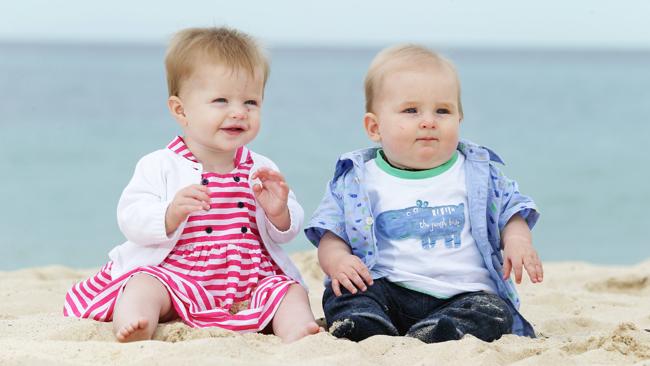
This website has photos of twins from around the world. WARNING: MAJOR CUTENESS ALERT! Name nerd theory states that twin names must not be “matchy”, but here’s proof tons of parents think the matchier the better. Here we have Zoe and Chloe, Jaqi and Jaqari, Xander and Xavier, Evan and Ivan, Jake and Jimi, Ruby and Rose, Jack and Daniel. I did like Reef and Eden, and Gwendoline and Jasper.

This mother of a gorgeous baby boy has the name Oriana, a medieval literary name which may mean “sunrise” or “gold”, or possibly something else. The name might remind you of the famous cruise liners, or more recently, the Bratz doll. It’s certainly a stunning name which seems very usable, with Ariana and Aurelia so fashionable at present. Oriana has a heartbreaking struggle ahead of her, so we wish a speedy recovery to her son Luca.

A story on postnatal depression, and how worryingly few people take it seriously enough, interviewed a mum, now recovered from her PND, named Cybele. Cybele is a Phrygian mother goddess whose ancient Near Eastern name possibly means “mountain”, to suggest “born from stone, born from the earth”. It is said SIB-uh-lee. I think that’s a gorgeous name, and with Sybilla so trendy, seems like a great choice for parents who want something a bit different.

Lavington Fisher of South Australia recently passed his 100th birthday, and looks absolutely amazing for his age. Lavington is a surname from place names in England meaning “Lafa’s people”; the Anglo-Saxon name Lafa may be understood as “survivor, treasure, heirloom, remnant”. Lavington is a good name for someone who has lived for more than a century! There is a place in New South Wales called Lavington, named after the English towns. It reminds me of both lavender, and lamington cakes.

The Great Australian Bake Off on Channel Nine included a contestant in her twenties named Bliss. I’ve noticed quite a few people on name forums who love the idea of Bliss, but worry that it won’t seem “name-like” enough. Having seen Bliss on a real person, I can assure them it doesn’t seem much different to Joy as a name. The trouble is that to me Bliss always seemed like a very flakey name, and the real life Bliss was actually quite ditzy and flakey, so it was rather annoying to have my name prejudice confirmed so readily.

The winner of the show was named Nancy, and I was delighted to see this name on an intelligent, attractive engineering student. I featured this name on the blog, and was pleased how well Nancy works as a young person’s name (apart from on girl detective Nancy Drew, who must be getting on a bit by now). It’s such a smart, spunky name.

Abby from Appellation Mountain did a Nameberry post about some interesting names from her family history. Most of the names from my family tree aren’t too exciting. However, when I looked way, way, way, way back, I did find a Hercules in the 17th century, a great-uncle many times over. Now I wouldn’t name a son Hercules, but it could be usable as a middle name. The thing is, is a connection from the 17th century, not even a direct ancestor, too much of a stretch as a “family name”? At what point does a name from your family tree cease to become a family name (considering that all people are related to each other at some point)?

I was chatting to some friends about the surge in popularity for retro names from the 1900s to the 1930s, such as Olive, Hazel and Florence. The general consensus was that they were over it – it’s been done to death, and so, so boring. They thought to have an interesting retro name now, you had to turn to the 1940s and ’50s – something like Linda or Valerie would seem much more hip. What staggered me is that Olive has only has just started to become popular, while Hazel and Florence aren’t even in the Top 100 yet! Yet they are already “boring”. At this rate, we will have revisited all the name trends of the 20th century by the next decade.

Old Names Are New … And New Names Are Old News

26 Thursday Sep 2013

Posted by A.O. in Names in the News

≈ 5 Comments

Tags

Arabic names, created names, famous namesakes, fictional namesakes, French names, Latin names, locational names, name data, name trends, Polish names, retro names, Roman names, saints names, Spanish names, spellcheck software, Stars Wars, surname names, titles, Twitter, UK trends, US trends, vocabulary names

Old Fashioned Names

When it comes to baby names, the newspapers generally run with one of two stories. Either they tell us that “normal” baby names are “back in fashion” (what a relief!), or else they give us dire warnings of “bizarre” baby names which are definitely the sign of the apocalypse, or can at least make us feel all smug and superior for five minutes.

It’s not often they run with both these at once, but in a journalistic triumph, they brought forth two opposing baby name stories within two days of each other. I’m not sure whether they didn’t bother co-ordinating, or hoped nobody would notice the obvious incongruity.

The Daily Telegraph told us that in the future, baby names will no longer be odd hyphenations or spelling variants, because when they looked through the New South Wales data, most of the names popular during the 1940s and ’50s, which had almost disappeared by the early 2000s, have had a resurgence in the past decade.

Henry has almost tripled from 106 in 2002, to 276 in 2012; Evelyn is up from 17 to 112; and Matilda has skyrocketed from 68 to 265. Of the twenty traditional names they chose to look at, only Samuel and Beatrice had suffered a slight decline.

This trend, we are told, reflects a desire for individuality, substance, and “a bit of class”. It has been spearheaded by the young royals, William and Catherine, although they weren’t even engaged at the turn of the century, so I’m not sure how they managed to influence an entire decade of baby names.

Furthermore, we can be assured this signals a return to conservative values, discipline being back in vogue, school uniforms, and clearly defined gender roles (which apparently means girls wearing pink and boys wearing blue).

Generation X parents get the gong for doing their research and picking out good solid names that you can yell from the soccer match sidelines without embarrassment, and which will, it seems, affect their children’s entire destinies and even give them a good Twitter handle. Goodness. Who would thought calling your kid Mabel was so significant?

Meanwhile, over the border, the Courier Mail interviewed an anonymous schoolteacher from Logan (love the old anonymous schoolteacher as a source – can’t be proved they exist, can’t be proved they don’t), and she says names have become increasingly bizarre over the past 20 years, and now spellcheck software can’t even recognise them. I find most names aren’t recognised by spellcheck – where is this spellcheck software which can recognise all the names in the world?

Then comes a long list of names of children who we are told are enrolled at Logan schools, and are meant to be horrified by.

One of them is Romaine – a French name, the feminine of Roman. Another is Cassius, a Roman name and also a saints’s name; it’s gaining in popularity in both the US and the UK. I say thumbs up to Romaine and Cassius’ parents! Felicitas is another Roman saint’s name, with the meaning “fortunate” in Latin. How does a schoolteacher not recognise these as names? That to me is the scary part.

There are names from other cultures, such as Alareal, a Spanish surname derived from the word for “royal”; Jadzia, a Polish form of Hedwig; Santiana, a Spanish surname which means “St. Anna”; Thiery, a French form of Theodoric. Qaira is Arabic, and Zenen is Spanish, but I don’t know anything more than that.

There’s quite a few vocabulary names, including Beautiful, Bravado, Brilliance, Cherish, De Ja Vu, Freedom, Gorgeous, Heritage, Miracle, Precious, Sapphire, Styles, and Twinkle. A spellchecker will recognise them, and they’re all words with positive meanings. When you think of it, most names start out as vocabulary words anyway.

There’s two titles as names: Caesar and Marquis. I’m mentioning these since it’s said Australians can’t use titles as names, but clearly we can in some cases.

There’s real place names: Australasia, which is patriotic; Avantika, the ancient name for a city in India; Jetiis, a village in Indonesia. And a fictional place name: Ataria, an island in Star Wars.

There’s names of celebrities, such as Beyonce, and Kahu, which is a tribute to Brisbane Broncos NRL star Jordan Kahu, and Kovee, after the musician.

There’s Caylis, who is one of the Neopets, Darian, derived from Darius, Hawke, a surname, and Jezzer, a short form of Jeremy.

There’s some variant spellings, such as Bayleigh, Emmerson, Izack, Kaelani, Khaileb, Khynan, and Psalmz, which I don’t find too outrageous.

There’s some “tweaking” of names such as Leilesha, Mikaiah, Shaylani, Tanyce and Taylay, which don’t offend me. I notice there is a Congresswoman in the US named Tanyce, so it doesn’t seem to impede your progress in life.

There’s some names I don’t recognise, although that doesn’t necessarily make them “bad” names, and I can see that they are in use elsewhere: Kalaize, Millieka, Narvasha, and Shizia.

Finally, we end with Sambo, which I agree seems a bit unfortunate, but does have a number of origins, and L-Car, pronounced Ledashcar (although wouldn’t it be Eldashcar???). Anyway I have already made my views known on this subject, and won’t repeat them here.

So there you go – either names are becoming more and more conservative, or they are becoming ever more strange and confusing. You can decide for yourself which one is correct, if either is.

POLL RESULTS
29% believed that names were not becoming either more conservative or more bizarre, but were staying much the same
24% thought that names were becoming both more conservative, and more bizarre
20% thought they were becoming more conservative for the middle classes, but more diverse for the lower classes
12% didn’t know, and felt confused
7% felt that names were in fact all becoming more bizarre across the board
The remaining 8% (representing three people) chose options where they were the only person to have that opinion

Famous Name: Jason

18 Wednesday Sep 2013

Posted by A.O. in Famous Names

≈ 3 Comments

Tags

Beyond Jennifer & Jason, Biblical names, famous namesakes, fictional namesakes, Greek names, hebrew names, historical records, honouring, Linda Rosenkrantz, mythological names, name history, name meaning, name popularity, name trends, names from movies, names from television, Pamela Redmond Satran, royal names, saints names, US name popularity

51WNMTYA9qL

A federal election was held on September 7, and we have had a change of government. Votes are still being counted, so the election isn’t over, and we may have some names from it when the process is complete.

However, in a much more frivolous political poll held in August, Cleo magazine rated the male politicians on their sex appeal, and decided that Labor MP Jason Clare, described as the “Rob Lowe of Australian politics”, was the winner. I can’t help thinking if a men’s magazine had rated female politicians like this it would be considered very wrong.

Jason Clare represents the seat of Blaxland in western Sydney, which he won in 2007, and until recently was the Federal Home Affairs Minister. Jason grew up in the western suburbs, made dux of his class, and completed a law degree while pursuing an interest in politics. While Labor lost the election with a significant swing against it, Jason managed to increase his hold over the electorate by 6%.

To show that he is not vain about his appearance, Jason modestly joked that his wife’s preference in the Cleo poll was for the runner-up, Stephen Smith. Hello ladies – he’s a smart, handsome law graduate and his wife doesn’t appreciate him! (is the message I think we’re meant to be receiving there).

Jason is from the Greek name Iason, derived from the Greek for “to heal”. Iaso was the Greek goddess of recuperation from illness, so you could see Jason as a masculine form of her name. Although Jason is often translated as “healer” or even “physician”, to me the meaning of the name is more about the body’s natural ability to heal itself.

The name is best known from the mythological prince of Thessaly, who led a hand-picked crew of heroes on the good ship Argo, in quest of the Golden Fleece, with the aid of the goddess Hera. Jason and the Argonauts had a series of adventures, in which they didn’t behave very nobly for much of the time, then arrived in Colchis, which today is in Georgia, on the Black Sea.

The Golden Fleece was owned by King Aeetes, and to obtain it, the king gave Jason three tasks which seemed impossible to perform. Hera arranged for Aeetes’ daughter Medea to fall in love with Jason, and as she was a great sorceress, she was able to use her knowledge of magic to help him succeed, after he promised her that they would get married.

Jason and Medea then fled with the Fleece and sailed away on the Argo, because King Aeetes knew that Jason could only have completed the tasks by cheating, and wanted his property back. He pursued them until Medea came up with the horrible plan to kill her own brother and throw him into the sea, piece by piece, to distract her father.

Medea’s interest in dismembering family members continued when she and Jason returned to Greece, and she arranged for his Uncle Pelias to get chopped up into soup. Pelias had tried to drown Jason as a baby, then sent him off on the dangerous Golden Fleece quest hoping he’d die, so she had her reasons. With her penchant for murdering relatives, you’d think that Jason would have been blissfully happy with Medea, but instead he betrayed her love by becoming engaged to another woman.

When Medea tried to point out that all Jason’s luck in life was because of her, and he was being very ungrateful, he replied, “Babe, you’re the one who got lucky when the gods made you fall in love with me”. Medea wasn’t the type to take this treatment lying down, and she promptly burned her rival to death before murdering the children she and Jason had had together. Although Jason was ungallant, Medea’s tendency to see her own flesh and blood as collateral damage is disturbing.

Because Jason had broken his vow to love Medea forever, the goddess Hera abandoned him, and he wound up lonely and miserable. He was killed when the Argo, now old and rotting, broke and fell on top of him while he was asleep – a suitably ironic finish.

A king of Thessaly named Jason was a contemporary of Alexander the Great‘s father. A successful and ambitious general, it is thought that he must have been at least one of the inspirations of the great Alexander himself. It seems very likely he was named after the Thessalian hero.

There is a Jason in the New Testament, one of the Seventy Disciples of Christ, who ran a “safe house” for Christians in Thessalonica, and was once arrested for it. Saint Paul appointed him bishop of Tarsus, and he is known as Saint Jason. Unusually for an early Christian saint, Jason lived to a ripe old age. The Jewish historian Josephus tells us that Hellenised Jews used the name Jason to replace Yeshua (Joshua or Jesus), and this may apply to Saint Jason too.

Being Biblical, Jason was acceptable for use as a Christian name, and can be found in the records from at least the 16th century. The name Jason became very popular in the 1970s, and it looks as if this was due to the original Jason, because the movie Jason and the Argonauts came out in 1963 (it cut out most of the revolting parts). A special effects tour de force, it’s a cult classic, and according to Tom Hanks, the greatest film ever made. It must have made a huge impression.

Jason was already rising in popularity at the time of the film’s release, but soon zoomed up the charts to make the US Top 100 three years later. It was Top 10 in the US for all of the 1970s, which coincides with popular TV series, The Waltons, having a Jason. Even in the late 1980s, when Jason was #27, Pamela Redmond Satran and Linda Rosenkrantz were urging parents to “go beyond Jennifer and Jason”. Despite their book’s success, Jason has still not left the Top 100 in the United States, so American parents only partially heeded their call.

Jason has charted in Australia since the 1950s, when it was #290 for the decade. By the 1960s it had climbed phenomenally to make the Top 50, at #43 for the decade. It peaked in the 1970s (when Jason Clare was born) at #3, was still #18 in the 1980s, and #35 in the 1990s. Did nobody feel like going beyond Jason? It finally left the Top 100 in the mid-2000s, and is currently #133 and stable – not popular any more, but by no means plummeting into obscurity.

Jason has been a real 1960s success story, and continues to influence popular names for boys, because parents are still attracted to similar names, such as Mason, Jacob, Jayden, Jackson, Jasper and Jordan. In fact, Jason is staging a comeback under the short form Jace – already Top 100 in the United States, and no doubt rising here too.

It turns out we’re not ready to go beyond Jason yet – at least, not very far.

POLL RESULT: Jason received an approval rating of 38%. People saw the name Jason as a “dad name” (30%), and common and boring (20%). However, 12% saw it as a “nice guy” name, and 10% thought it attractive. Nobody thought the name Jason was sexy.

Waltzing with … Augusta

15 Sunday Sep 2013

Posted by A.O. in Waltzing with ...

≈ 3 Comments

Tags

epithets and titles, famous namesakes, fictional namesakes, historical records, honouring, imperial titles, Latin names, middle names, name combinations, names of boats, nicknames, Roman names, royal names, sibsets

Lady Augusta_steamer

September 17 marks the maiden voyage of the first paddle-steamer down the Murray River, in 1853. The Murray is Australia’s longest river at 2508 km long; it has its source in the Alps, meanders across the southern inland plains where it forms most of the border between Victoria and New South Wales, and ends at Lake Alexandrina in South Australia, which empties into the Southern Ocean near Goolwa.

Europeans first discovered the Murray in 1824, and Captain Charles Sturt became the first explorer to follow the river’s course down to Lake Alexandrina, in 1828-29. In 1851, the South Australian government offered 2000 pounds reward to the first steamship to reach the junction of the Murray and Darling Rivers, at Wentworth.

The Scottish explorer Francis Cadell, who had already navigated part of the Amazon and sailed to China and Singapore by this time, heard about the reward in 1852. Nobody had claimed the money yet, and Cadell was determined to give it a shot. He had a steamer built in Sydney, and during its construction, did a test run on the Murray in a canvas boat.

Just to make things more exciting, a British-born Australian named William Randell who had lived near the Murray River also threw his hat in the ring. He built his own steamboat in 1852, even though he had no experience in boat construction, and had never seen a paddle-steamer before. He was the first person to actually put a steamboat in the river. Randell didn’t even know about the reward until later – it was a personal goal.

Cadell had much greater flair for public relations. While Randell named his craft Mary Ann after his mother, Cadell cannily called his the Lady Augusta, in honour of the South Australian governor’s wife, Lady Augusta Sophia Young (the town of Port Augusta in South Australia is also named after this lady). On the Lady Augusta‘s maiden voyage, Cadell took as his passengers the governor and his wife, members of the Legislative Council, and a journalist to give him a good write-up.

Cadell set out from Goolwa on August 25 1853. For most of the way he and Randell were neck-and-neck; however, on September 17, the Lady Augusta arrived in Swan Hill a few hours before the Mary Ann.

Swan Hill is 1000 miles from the sea, and although they were still ages from Wentworth, the governor decided the contest was over, and Cadell had won. He was deemed the first person to successfully navigate the Murray River in a practicable steamboat, and the governor arranged for gold medals to be awarded to Cadell, the Legislative Council, and himself. He then gave Cadell another 2000 pounds to build another boat.

William Randell kept going, and although he didn’t reach Wentworth either, he went further than Cadell. Due to a general feeling that Randell had been treated unjustly, he was given 300 pounds, and then another 400 when public sentiment continued to mutter about it. In fact neither Cadell or Randell had fulfilled the requirements of the contest, and this must surely rank as one of the unfairest competitions of all time.

Both Francis Cadell and William Randell attracted investors and went into business running steamships on the Murray, and because of their efforts, the Murray was opened up as an avenue of transportation. Perhaps it doesn’t really matter that Francis Cadell was the first official steamboat navigator of the Murray River in the Lady Augusta. I still think it stinks though.

Augusta is the feminine form of Augustus, from the Latin for “great, venerable, majestic”. Just as Augustus was used as a title by the Roman emperors, Augusta was a title bestowed upon some women attached to the imperial families of Rome and the Greek dynasties. It was the highest honour that could be conferred, signalling not only power, but a goddess-like status – indeed, many goddesses were given the title of Augusta.

The first woman to receive the title was Livia Drusilla, the widow of the Emperor Augustus, who became known as Julia Augusta. By all accounts she was very proud and regal, with a commanding personality. She had a lot of political influence, and enjoyed wielding power and being showered with honours. She was a direct ancestor of a dynasty of emperors, including Tiberius (her son), Caligula, Claudius and Nero.

The name Augusta was introduced to Britain in the 18th century through the Hanoverian rulers. George III gave the name Augusta to his sixth child and second daughter, Augusta Sophia. The town of Augusta on Western Australia’s south-west coast is named after her, and I fancy that Lady Augusta might have been too. Princess Augusta was named after her grandmother, Princess Augusta of Saxe-Gotha – Augusta, Georgia, in the United States, which hosts The Masters golf tournament, is named after her.

Augusta has been a traditional name in the British royal family, and was common amongst the aristocracy. However, we often think of it as a comically “difficult” old lady name. Oscar Wilde may have begun it, in his comedy, The Importance of Being Earnest, where Lady Bracknell is the main characters’ haughty Aunt Augusta.

Growing up, it seemed that every second children’s book had an Aunt Augusta in it, who would be crabby, or eccentric, or snooty, or fun-suppressing. The name almost seemed to be code for such an aunt, in the same way you would expect a fictional lab assistant named Igor to be hunch-backed and attached to a mad scientist. J.K. Rowling followed this English kidlit tradition by giving Neville Longbottom a dominating, hard-to-please grandma named Augusta.

And before I could even read anything much, life followed (or preceded?) art by giving me a Great Aunt Augusta who, in true literary fashion, was stern and austere, hated noise, mess and light, thought that children should be neither seen or heard, and scared the stuffing out of me when I was four.

For ages it didn’t seem possible to me that you could name a baby Augusta; it didn’t seem so much an “old lady name” as an “old bag name”. But Augusta was once an elegant young lady’s name, and could be again. With August a stylish choice for boys and girls, and Gus a fashionable name for boys, Augusta’s chances look better than they have in a long time.

Augusta isn’t the right choice for me as a family name, but maybe it is for you. Maybe your Great-Aunt Augusta was warm and loving and made you cinnamon buns, or cool and funny and gave you rides on her motorbike, you lucky punk. Point is, it could be the perfect name for someone else.

Augusta is a rare vintage name which still seems patrician and dignified, but comes with spunky nicknames Gus and Gussie, and the quirky Augie and Oggy. It would also make a sensational middle name. I don’t think Augusta’s everyone cup of tea and biscuit, but I imagine those who are drawn to it would be passionate supporters. You can’t fall halfheartedly in love with Augusta – she’s too strong for that.

Name Combinations for Augusta

Augusta Caroline, Augusta Geraldine, Augusta Harriet, Augusta Florence, Augusta Mabel, Augusta Ottilie

Brothers for Augusta

Charles, Ernest, Frederick, Henry, Leopold, Octavius

Sisters for Augusta

Beatrice, Cecilia, Elizabeth, Georgiana, Helena, Victoria

Note: The name combinations are from Australian historical records, while the siblings are from the British royal family.

POLL RESULT: Augusta received an approval rating of 77%. 29% of people loved the name, and a further 29% liked it.

(Photo is of the Lady Augusta on the Murray River; image from the State Library of South Australia)

← Older posts
Newer posts →

Enter your email address to follow this blog

Categories

Archives

Recent Comments

A.O.'s avatarwaltzingmorethanmati… on Zarah Zaynab and Wolfgang…
Madelyn's avatarMadelyn on Zarah Zaynab and Wolfgang…
JD's avatardrperegrine on Can Phoebe Complete This …
A.O.'s avatarwaltzingmorethanmati… on Rua and Rhoa
redrover23's avatarredrover23 on Rua and Rhoa

Blogroll

  • Appellation Mountain
  • Baby Name Pondering
  • Babynamelover's Blog
  • British Baby Names
  • Clare's Name News
  • For Real Baby Names
  • Geek Baby Names
  • Name Candy
  • Nameberry
  • Nancy's Baby Names
  • Ren's Baby Name Blog
  • Sancta Nomina
  • Swistle: Baby Names
  • The Art of Naming
  • The Baby Name Wizard
  • The Beauty of Names
  • Tulip By Any Name

RSS Feed

  • RSS - Posts

RSS Posts

  • Celebrity Baby News: Melanie Vallejo and Matt Kingston
  • Names from the TV Show “Cleverman”
  • Can Phoebe Complete This Sibset?
  • Zarah Zaynab and Wolfgang Winter
  • Baby, How Did You Get That Name?
  • Celebrity Baby News: Media Babies
  • Celebrity Baby News: Adelaide Crows Babies
  • Celebrity Baby News: Chris and Rebecca Judd
  • Names at Work: Name News From the World of Business and Employment
  • Celebrity Baby News: Sporting Round Up

Currently Popular

  • Celebrity Baby News: Bernard Fanning and Andrea Moreno
  • Celebrity Baby News: Toby Allen and Darren Weller
  • Celebrity Baby News: NRL Babies
  • Famous Name: Humphrey
  • The Top 100 Names of the 1940s in New South Wales

Tags

celebrity baby names celebrity sibsets english names famous namesakes fictional namesakes honouring locational names middle names name combinations name history name meaning name popularity name trends nicknames popular names saints names sibsets surname names twin sets unisex names

Create a free website or blog at WordPress.com.

Privacy & Cookies: This site uses cookies. By continuing to use this website, you agree to their use.
To find out more, including how to control cookies, see here: Cookie Policy
  • Subscribe Subscribed
    • Waltzing More Than Matilda
    • Join 517 other subscribers
    • Already have a WordPress.com account? Log in now.
    • Waltzing More Than Matilda
    • Subscribe Subscribed
    • Sign up
    • Log in
    • Report this content
    • View site in Reader
    • Manage subscriptions
    • Collapse this bar
 

Loading Comments...