Celebrity Baby News: James and Erica Packer

Tags

, , ,

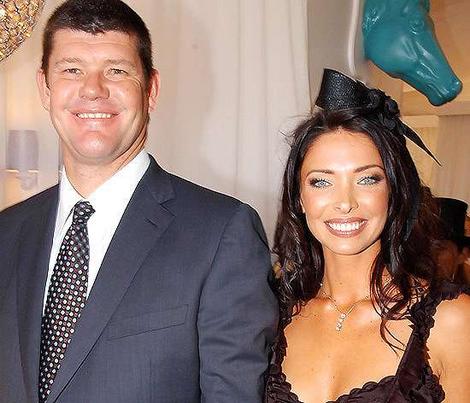
Billionaire casino mogul James Packer, and his wife Erica, welcomed a daughter on September 22, and have named her Emmanuelle Sheelah. The middle name honours Erica’s mother, who passed away last December after losing her battle with cancer. Emmanuelle Packer joins big sister Indigo, aged 4, and big brother Jackson, aged 2.

James is the son of late media mogul Kerry Packer, and grandson of Sir Frank Packer, who inherited the family media dynasty from his father, Robert Packer. The family’s fortune is reputed to have originated in a stroke of luck, when Robert found 10 shillings at a Tasmanian racetrack and put it on a winning horse at odds of 12-1. This gave him enough money to move to the mainland and begin his career as a journalist.

James inherited control of the family company, Consolidated Press Holdings Limited, and formerly was Executive Chairman of Publishing and Broadcasting Limited. Since his father’s death, he has moved away from the family’s traditional media business, and focused on creating a worldwide gambling empire, Crown Limited. The BRW Rich 200 lists him as the sixth richest person in Australia, and estimates his net worth as $5.21 billion. Forbes magazine has him listed as the fourth rich, with assets of $4.5 billion.

Erica (nee Baxter) is a former model and singer. She and James were married in 2007 on the French Riviera. Since her marriage, Erica has put her energy into  charitable causes.

The Packers have a knack of choosing names which can be turned into popular nicknames. Indigo to the hyper-trendy Indi, Jackson to perennial favourite Jack, and now Emmanuelle, which can become the ubiquitous Emmy, sharing its short form with Emily, Emma and Emerson.

Famous Name: Jobe

Tags

, , , , , , , , , , ,

On Monday evening, the Australian Football League held its presentation night, with the highest honour, the Brownlow Medal for the fairest and best player, going to Jobe Watson of Essendon. Jobe comes from a footballing family, with his father being the great Tim Watson, who played for Essendon for many years, and is now a popular media personality. He was Victorian Father of the Year in 1993. Jobe’s uncle Larry also played for Essendon, and unfortunately his cousin Jake was a promising young player until he unexpectedly died during a game. Football was the family business, Essendon the family firm.

Jobe was drafted to Essendon in 2002 under the father-son rule, which allows preferential recruiting access to sons of senior players. He was considered a bit chubby, too slow, and a poor kicker; his woes were compounded by a succession of injuries. It looked as if he was always to remain in the shadow of his famous father, until both his coach and his dad handed him the blunt advice that he had to step up to prove himself. After that, things turned around, and in 2009 he was named the club’s fairest and best and became team captain. 2012 was an outstanding season for Jobe, who not only won the Brownlow, but also the Lou Richards medal for most valuable player.

While rewards can come easily for those blessed with natural talent, others have to work at it, and it makes success all the sweeter when it is won. Now if only Jobe Watson’s struggling team could do better, as they didn’t even make the top eight for this season.

Jobe is an English surname, with a number of possible origins. The most obvious one is that it is based on the personal name Job. As Job was given rather a bad time in the Bible, it is theorised that that the surname could be based on an Old French nickname based on the name meaning “sad wretch”, given to someone who was especially unlucky (or perhaps made too much of his misfortunes). Another theory is that because one of Job’s many trials was being cursed with boils, that it was a nickname given to someone with boils or skin disfigurations. I would have thought that if this was the case, the surname would be a lot more common than it is!

Apart from the Biblical namesake, it could also be an occupational surname with the same meaning as Cooper, because a jobbe was a four-gallon jug. Oddly enough, it strikes me that Jobe and Cooper would sound quite good together as brothers. Further insulting theories are that it could have been a nickname for a heavy drinker, or for someone fat and round, like a big jug. Finally, it could be an occupational surname for someone who made jubes or jupes – a jupe was a loose woollen jacket or tunic for men. The word comes from the Spanish, and ultimately from Arabic.

You might wonder whatever happened to jupes: it is the basis for the word jumper, originally a loose woollen smock worn by labouring men, and standard garb for Australian miners during the Gold Rush era. We now use the word for a wool pullover, while in the United States it retained its old meaning of a woollen smock or pinafore dress, which became women and children’s clothing. Men’s tailored jackets still have jupe panels in them, while in France, the word for apron or skirt is jupe. So one way or another, most of us are still wearing jupes!

The Jobe surname, if not originating in these places, seems to have been prevalent from early on in the West Country areas of Cornwall and Devon, and in Sussex. Today, it is most common in the Tyneside area of England in the far north, but with plenty of Jobes still in Cornwall. Many Jobes who emigrated to Australia seem to be either from Cornwall or Northumberland, although it’s not a common surname.

I have been seeing quite a few baby boys in birth notices called Jobe lately, and the Brownlow Medal will probably give it some more publicity. Actually there’s a footballer in another code with the name, because Jobe Wheelhouse is a soccer player who is the captain of the Newcastle Jets.

Both Jobes are footballers, midfielders, team captains, and have a surname starting with W; interestingly, both have had injury problems, and turned their careers around, because Jobe Wheelhouse was likewise rated poorly in the beginning, but is now a very impressive player. It almost seems to echo the Biblical story rather spookily, as poor old Job was put through the wringer, but carried on like a trouper, and rewarded lavishly in the end.

I think this is quite an attractive name; it’s not flashy, but seems solid, honest, and hard-working. I actually like the sound of the name Job, but the miserable meaning of the name (“persecuted”), worrying story attached to the Biblical character, and  fact that it looks exactly like the word job (with sexual and scatological references) would definitely put me off using it.

Jobe seems to be a way of getting the same sound, while having a subtly different feel, and a range of possible meanings of which you are free to ignore the insulting ones. It’s an alternative to the popular Jacob, or to nickname Joe, and would also make a good middle name.

The People’s Choice of Boy’s Names

Tags

, , , , , , , , , , , , , , , , , , , , , , , , , , , , , , , , , , , , , , , , , , , , , , , , ,

Adolf

A form of the Germanic name Adalwolf, meaning “noble wolf”. The Old English form is Æthelwulf, and there are a few famous men of this name in English history, most notably the father of Alfred the Great. The name was often used amongst the royal houses of northern Europe, and the Latinised form Adolphus turns up in the monarchy of the United Kingdom. There is a saint called Adolf of Osnabrück, a 9th century German monk. Up until the mid-twentieth century, the name was common in central and northern Europe, and can be found in Australia due to immigration from Germany and Scandinavia. The reason this name has been included is because barely a day goes by without someone Googling: “Is it legal to call your child Adolf?”, to which I can say, yes, it is legal here, and you can find quite a few Australians in the records with this name – including ones born during and shortly after World War II. I have met a man named Adolf (born around the early 1960s), and I believe he was named after his grandfather. The other chestnut is, “Is it legal to call your child Adolf Hitler in Australia?” to which I reply, Why would you want to do that? Seriously, why? As the name Ned Kelly is banned because he is considered too wicked, I’m pretty sure Adolf Hitler would also be illegal here.

Buster

This spunky name has more history than you might think. In England, it was first used in the middle position; Buster is a variant of the surname Bustard, after the bird. In 18th century America, it seems to have been more common for African-Americans, and may have started as a pet name in the sense of “breaker”. Later it took on the meaning of “unusual, prodigious, amazing”. Buster is used to address males in the same way as pal or fella (“Now listen up, buster”). This comes from the Spanish dialect busté, meaning “you”. It’s gone on to have negative connotations. One of the most famous men with this name is actor Joseph “Buster” Keaton, who started his career in vaudeville as a small child. He claimed to have received his nickname as a toddler from Harry Houdini, after falling down a flight of stairs unhurt. Houdini allegedly remarked, “That was a real buster!”, meaning “a fall with the potential to cause injury”. So Keaton’s name indicated he was tough enough to take a tumble. Buster Brown was a cartoon strip boy who was an angelic-looking blond prankster. In Australian slang, come a buster means to fall or fail by misfortune, while buster is a term for a strong wind – especially the Southerly Buster. This is a name Sydneysiders give to the abrupt cool change that sometimes blows in from the south during the warmer months. Vintage name Buster has recently become rather an Australian favourite for boys, although in the novel, The Shiralee, by D’arcy Niland, Buster is a little girl.

Chester

Chester is a city in Cheshire, England, founded by the Romans as a fortress in 79; its size has led some historians to speculate that the Romans intended it to be the capital, rather than London. Its current name comes from the Old English Ceaster, meaning “Roman fort”, and its early history was very military, with wars seemingly constant. Even King Arthur is supposed to have won a major battle here, and it was the last city to fall to the Normans during the Conquest. Today it’s a thriving modern city which still tries to preserve its historic buildings. Chester has been used as a personal name since the 16th century, probably after the surname, although early births in Cheshire suggest they may have been named directly for the city itself. Although it’s been a popular name in the US in its time, and only left the Top 1000 in the mid-1990s, for some reason it never caught on in a big way here. I was surprised to see it on a baby in the Bonds Baby Search Competition this year. For some reason, this baby name is often Googled, although the slang term chester is an impediment to its use.

Digby

An English surname from a place name meaning “settlement by the ditch”, derived from a combination of Old English and Old Norse. The name seems to have been first given in honour of the aristocratic Digby family, Anglo-Irish peers whose family seat in Coleshill, Warwickshire was granted to them by Henry VII. It is from the town of Coleshill that the personal name originates in the 17th century. One of the most famous of this clan was Sir Kenelm Digby, a Catholic philosopher considered a great eccentric for his exuberant personality and fascination with science, which extended to studying alchemy, astrology and magic (not considered incompatible with science then); he was the first person to note the importance of oxygen to plants. A man of action as well as thought, he became a privateer, and killed a man in a duel; he also wrote several cookbooks, invented the modern wine bottle and managed to fit in a secret romance to a famous beauty which led to their marriage. A true all-rounder. This name regularly appears in birth notices here, especially from Victoria, and may be encouraged by comedienne Cal Wilson, who welcomed a son named Digby a few years ago. People seem to either loathe this name or find it irresistibly cute; I must confess to being in the second category.

Elfyn

This is the Welsh form of the Old English name Ælfwine, meaning “elf friend”; it went out of use after the Norman Conquest. J.R.R. Tolkien liked to think of the name as meaning “friend of the elves”, and invented two fictional characters with this name who formed close bonds with elves. Modern forms include Alvin and Elvin, both taken from the surname form of the name. There are several famous people in Wales with Elfyn as either their first name or surname, including young rally driver Elfyn Evans and poet Menna Elfyn. For reasons I cannot explain, it is Googled several times a week.

Jharal

Jharal Yow Yeh is an NRL star who plays for the Brisbane Broncos. An Aboriginal Australian from the Margany people of Queensland, he also has Torres Straits Islander, Vanuatuan and Chinese heritage. Now aged 22, he has been playing for the Broncos since 2009, for the Indigenous All-Stars since 2010, and for both the Queensland state team, the Maroons, and the Australian national side, the Kangaroos, since last year. Early this season he sustained a serious leg injury, and is still recovering. People Google Jharal’s name all the time, asking for its meaning, and often querying whether it’s of Indigenous origin. In fact, his name was created for him by his grandmother. His mother couldn’t decide what to call him, so she asked nana Iris to name him. Iris cleverly arranged the letters of all the strongest men in her family into a name, and came up with Jharal. It is taken from the initials of James, Harold, Anthony, Reece, Arthur and Linc. The name is pronounced JHUH-rahl, and Iris says that most people think it is an Indian name. In fact, by coincidence, a jharal is a mountain goat from India. Names created for celebrities often seem too unique for others to use, but I have seen Jharal a few times in birth notices recently. Looking for a nickname? Jharal is known to his family as Joe.

Koa

This unisex name has several different origins. There is a Hawaiian male name Koa meaning “strong, brave, fearless”, and it’s also the name of a Hawaiian tree, the Acacia koa. The wood was traditionally used to make dug-out canoes and certain types of surfboards. In Maori, the word koa means “happiness”. In the Kaurna language of South Australia, the word koa means “crow”, and the Koa people come from south-east Queensland, so it’s also a tribal name. There has been a sudden proliferation of this name in Australian birth notices, and that might be because Tom Dumont from No Doubt welcomed a son named Koa last year. However, I am beginning to see far more girls named Koa in birth notices than boys. This may be because of model and actress Koa Whelan, a contestant on this year’s dating show, Please Marry My Boy. I think this works equally well for boys and girls, although the first meaning is male only.

Neo

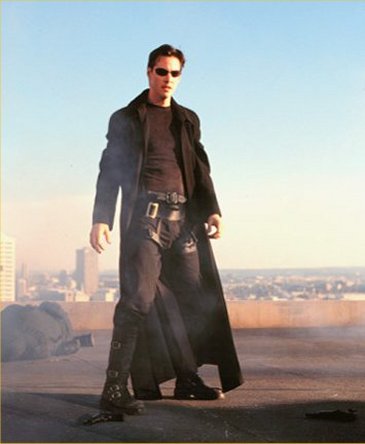
This is from an Ancient Greek prefix meaning “new, young, fresh”. It turns up in words such as neonatal, meaning “pertaining to the newborn”, or neologism, meaning “a freshly coined word”. The name has become well-known since 1999 because Neo is the protagonist of the cyberpunk Matrix film series. In the films, the character’s name is Thomas Anderson, and Neo is his computer hacker identity (Anderson does have the letters N, E and O in it). Neo is also an anagram of One, and the films seek to discover whether Neo is “The One”, a Messiah-like figure who will be able to rescue humanity. The films have become cult classics, and intermingle a range of philosophical and spiritual ideals from the East and the West – it’s even spawned its own religion, Matrixism. From the amount of times that people have Googled neo baby name or neo for a boy, there are quite a few parents considering using this name. Neo fits right in with current trends, and doesn’t sound any stranger than Leo. It is very strongly associated with the film character though. However, Australians have a solid history of gaining name inspiration from the movies, and most of The Matrix series was filmed in Sydney, giving it an Australian connection.

Rune

A Scandinavian name derived from Old Norse meaning “secret”. The runes are the letters of the runic alphabets, which were used to write different Germanic languages, dating from at least the first or second century AD. Runic inscriptions seem to have been for magical and divinatory use, and perhaps their knowledge was restricted to an elite in early times. According to Norse mythology, the runes were originally stolen from the god Odin. They are part of English history, because the Anglo-Saxons had their own runic alphabet. If you have read The Hobbit, you will have seen Anglo-Saxon runes used on a dwarven map; Tolkien later invented his own runic alphabet which appears in The Lord of the Rings. Rune stones are  used for divination today, often in a similar way to tarot cards. The name isn’t unusual in Scandinavia, and you may know the name from the Polish speedway rider Rune Holta, born in Norway. I think this is a simple, attractive name with layers of history and meaning.

Zephyr

A zephyr is a light, warm wind. It comes from the name Zephyrus, who was the Greek god of the west wind – the gentlest of breezes, which served as a harbinger of spring. He married both Iris, the goddess of the rainbow, and Chloris, the goddess of flowers – who is also seen as a deity of spring (and named Flora by the Romans). Children may know the name as that of a bat in the Silverwing book series, and, in the form Zephir, as the monkey in the Babar the Elephant stories. Grown ups may be reminded of The Zephyr Song by the Red Hot Chilli Peppers. If you take the name as derived directly from the god, then it is male, but if you accept it as a nature name and vocabulary name, it is unisex. It only seems to be Googled to my blog as a male name however. Pronounced ZEF-uhr, this name is unsual but not outrageous; it seems like a breezy alternative to popular Z names like Zachary, Zeke or Zane. The obvious nickname is Zeff or Zeffy.

(Picture shows actor Keanu Reeves in his role of Neo from The Matrix; Sydney skyline in background)

Saturday Celebrity Sibset: Carla Zampatti – Italian Style

Tags

, , , , ,

This is a celebrity sibset I’ve been wanting to cover for some time, as it’s been such an influential one.

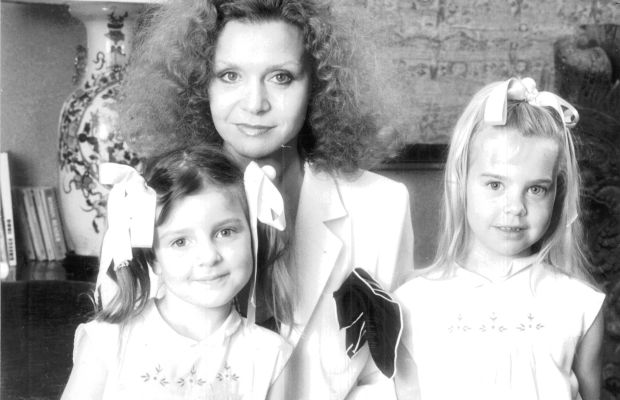
Carla Zampatti is one of Australia’s most famous designers, and at 70, considered a matriarch of the industry. Originally from northern Italy, she moved to Australia during her childhood. Her first boutique opened during the early 1970s in Sydney, and she now has a chain of more than thirty stores across Australia. She has received many awards, including Designer of the Year, Businesswoman of the Year, and Australian Fashion Laureate, the highest honour in the Australian fashion industry.

Carla’s first husband was Leo Schuman, who she married in 1964 and divorced in 1970; their son is named Alexander (nn Alex) and he’s now on the board of his mother’s company.

In 1975 Carla married wealthy Liberal politician John Spender, a Yale graduate, barrister, and later, diplomat to France. They were divorced in 2010.

Their daughters are Allegra, who is now the General Manager of the company, and Bianca, who is a fashion designer and has her own label.

Alexander is a sturdy classic in Australia which has never left the Top 100. It was #29 for the 1900s, and reached its lowest point in the 1960s (when Alex Schuman was born) at #89. It surged upwards through the 1970s and ’80s to reach #17 in the 1990s. Since then it has remained stable, and is currently #16.

Bianca was in rare use in the 1960s, but in the 1970s, it absolutely skyrocketed to reach #139 for the decade. Top 100 by the 1980s, it peaked in the 1990s at #45. By 2010 it was still a very respectable #125, and last year it increased to #103, only just outside the Top 100.

Allegra has never been in the charts, but it is gaining in popularity, been chosen as a baby name by several celebrities, and has retained a great deal of cachet. Not only fashionable, it is also an appealing Italian heritage choice. I can’t help wondering if it is tomorrow’s Bianca?

Carla Zampatti has become a fashion institution by making classic clothes that can be worn for years, and she seems to have the same ability to select names that remain popular and stylish for decades. One of the amazing things about this sibset is that although the siblings are in their thirties and forties, you can easily imagine Alex, Allegra and Bianca as children born within the last couple of years.

(The picture shows Carla and her daughters around the mid-to late 1980s, I would guess; photo from David Jones, which has exclusive rights to both Carla Zampatti and Bianca Spender fashions)

Gypsy Mabel: Birth Announcements from Hobart (August)

Tags

,

Girls

Addison Daisy

Amaya Grace

Ebony Rose (Jake, Samantha, Luke)

Ellianna Ruby

Eva Siane

Gypsy Mabel (Jak, Asta)

Ivy Wendy

Katie Arabella (Elizabeth)

Maggie Maree

Mila Evelyn

Stella Roma Elizabeth (Tom, Georgia, Oscar)

Victoria Lynn


Boys

Fletcher Damian James

Harlyn Chayse Robert (Mason)

Henry Anthony Paul

Jonah Peter William

Lachlan James Brendan

Mackenzie James

Oliver Lyall (Thomas, Harrison)

Oscar Henry Andrew (George)

Ryan Eric August (Max, Ella)

Seamus Jordan

Shelden Lewis

Thomas Ryan Alan

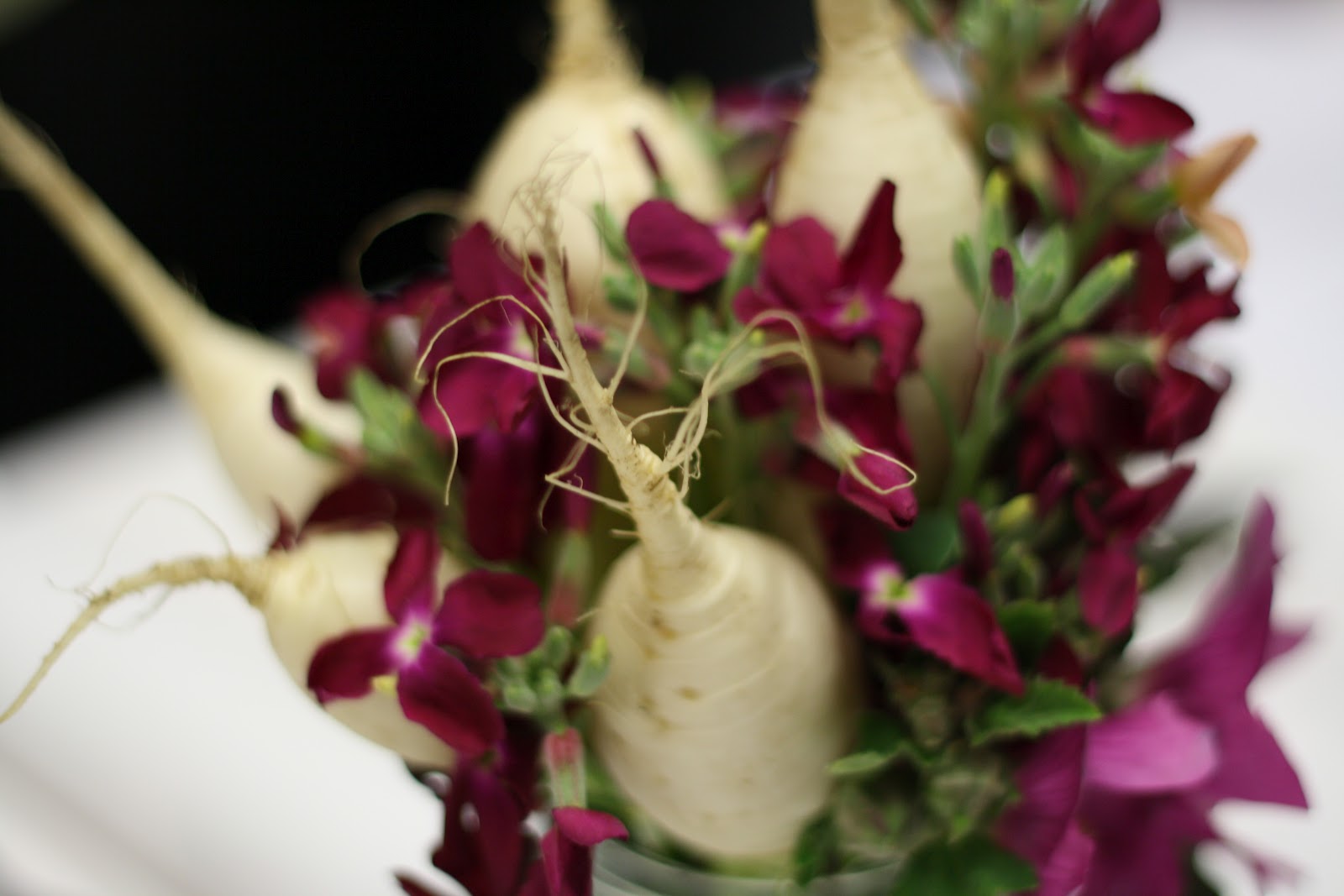
(Picture shows a table decoration of vegetables and flowers at a quiz night dinner organised by the Slow Food Movement of Hobart during August; photo from Slow Food blog)

Paris and Brooklyn: Birth Announcements from Adelaide (August)

Tags

, ,

Twins

Charlotte Lily and Madison Rose

Chelsea Lee and Grace Addison (Cooper)

Davis James and Summer Jayne

Nate Henry and Flynn James (Olivia)

Stella Juliette and Daisy Isabella


Girls

Adina Kylie

Anais Grace

Anastarsia (Lazarus, Georgette)

Celeste (Bijou, Giselle)

Emily Grace Marie

Georgia Amelia Rose

Gwyneth Claire (Ewan)

Indigo Margaret

Isabel Mary McEwen (Lucinda)

Josie River

Matilda Barbara Rose (Delanee)

Nevada Francesca (Dakota)

Paris Grace (Sienna)

Regan Lucy June (Max)

Trinity Faith (Jarrett)


Boys

Alfie Patrick Queain (Frankie, Rafe)

Blake Wellington

Brooklyn Marcus (Porscha)

Dimitri August

Francesco Antonio Gianni (Domenic)

George David Chenery (Maisie)

Harry John Robert

Judd Kenneth Craig

Lewis Ferdinand (Felix, Andre)

Macauley Keith Douglas

Mayer Lee William (Bailey)

Quade Andrew

Romeo Kenneth (Saverio, Mercedes)

Ryder Flynn (Lily, Jedd)

Tyler Graham Hugh (Scarlett)

(Picture shows sunset over Adelaide in August 2012; photo from ABC)

Update: The Twins Waltz In!

Tags

, , ,

Brandi contacted the blog at the end of July about the names she had picked out for her twin girls. She had chosen Poppy and Maude, but somehow Maude didn’t seem quite right.

Brandi and her husband recently welcomed their girls:

Marigold Mora Faye

and

Poppy Viola Ruth

baby sisters to Bryce, Max, Jack and Pearl.

Brandi didn’t want “matchy” twin names, but she just loved the names Marigold and Poppy. So she had the good sense to throw her own rule out the window, and follow her heart. I think the names sound really adorable together.

Congratulations Brandi on your gorgeous wee flower girls!

Famous Name: Abel Tasman

Tags

, , , , , , , , , , , , , , , , , , , , , ,

Last Wednesday, September 12, commemorated the founding of the colony of Tasmania. Although it doesn’t seem to be celebrated in Tasmania, I thought we’d look at the man who gave his name to the state. I chose this topic several months ago, but unfortunately this recent story in the news is giving Abel Tasman a somewhat controversial image at present.

I feel like a mother who has just sent out 300 cards announcing her new daughter’s name as Sahara, then opens the paper to read with horror the headline: Murder at Sahara strip club provides clue to cocaine ring: our paper investigates the seedy underworld of the Sahara, knowing that for months the name Sahara is going to be associated with some very shady dealings. This happens to the best of parents, and possibly even the best of bloggers. However, let us continue.

Abel Tasman was the first known European to reach Tasmania and New Zealand. A Dutch seafarer, he undertook his voyages as an employee of the United East India Company (VOC) – the first multinational corporation in the world, and the first to issue stock. They were based in Batavia, now known as Jakarta, in Indonesia. This company despatched Tasman on a mission to obtain knowledge of “all the totally unknown provinces of Beach”.

That was his first problem: Beach didn’t exist. It was supposedly the northernmost part of Terra Australis, and that didn’t exist either. In fact, they had misread Marco Polo’s handwriting, which said Lohach, and referred to south Thailand, which Polo had assured all and sundry was a kingdom rich with gold. Sent off to find a non-existent kingdom of gold on an imaginary continent with faulty maps based on a vital error, Abel Tasman did the best he could under the circumstances.

On December 3 1642, he formally claimed Tasmania, which he dutifully named Van Diemen’s Land, after Anthonie Van Diemen, the Governor-General of the Dutch East Indies, and Tasman’s patron (Diemen is a homophone of demon). Battling against very rough seas, he managed to reach New Zealand ten days later, which he thought was connected to Argentina (the map’s fault again). A second voyage gave him the chance to map the north coast of Australia, which he called New Holland, and make observations of the land and its people.

From the point of view of the VOC, Tasman’s voyages were a failure. He hadn’t found Beach, located tons of gold, met anyone to trade with, or discovered new shipping routes. Although the Dutch had discovered Australia in 1606, they weren’t sufficiently impressed to follow it up, and so it was free for the British to claim many years later.

Abel Tasman did manage to make it to Thailand a few years later, although I’m sure he never realised he’d arrived in “Beach” after all. The lack of gold, it’s being called Siam, the way he was only there as a courier to deliver letters to the king – all these things helped disguise the fact he had reached his dream destination after all.

Abel was the second son of Adam and Eve in the Old Testament, and described as a shepherd, while his older brother Cain was a crop farmer. Famously, Abel is the first person in the Bible to die, while his brother Cain becomes the first murderer. The Bible doesn’t provide a motive for Cain’s actions, but it is usually assumed to be jealousy, since God was pleased by Abel’s offering from his flock, while not having a high regard for Cain’s produce. This story tends to irk vegetarians, and does make God seem rather like a capricious judge on Masterchef, but there is more to the story than meets the eye.

The archetypal simplicity of this tale of brother against brother has made an enormous impact, and been dramatised in modern stories, such as John Steinbeck’s East of Eden. Something in it speaks straight to our bones – primal emotions of rage, envy and betrayal; a deep sense of the fundamental injustice of the universe; the uneasy knowledge that those closest to us are the ones most likely to hurt us, even harm us.

Scholars believe the tale represents conflict between nomadic shepherds and settled farmers in the Middle East, at a time when agriculture was beginning to take over from hunter-gathering (this probably did sometimes end in bloodshed). Sadly, the story also serves as a commentary on the violence and hatred that has existed between religions who worship the same God, as Cain and Abel did (this still ends in bloodshed).

The name Abel is derived from the Hebrew name Hevel, often translated as “breath, vapour”, with connotations of “waste”, to indicate the transient nature of Abel’s existence. However, the name may simply mean “herdsman” to indicate his role in the story; a similar word still exists in modern Arabic. Another theory is that is based on the Akkadian word for “son”, which seems more likely as a person’s name, and fits in with modern scholarship identifying the story as based on a Sumerian myth.

Back in June, I mentioned Abel as a name I had encountered on a baby during the autumn, and considered it a rare sighting. Well, I have to eat my words, because over winter I met or heard of three new babies named Abel, and have seen a few more in birth notices. Clearly it’s a name on the rise, and in the US Abel is #237, jumping 56 places last year. With Old Testament names for boys growing in popularity, Abel is a solid, underused choice, and one that connects directly to early Australian history.

Tasman is a Dutch form of the German surname Tessmann, derived from both Slavic and German. Slavonic personal names such as Techmir, meaning “consolation”, become Tess in German. The -mann part of the name usually means “servant of”. So Tasman means “servant of Techmir”. English forms include Tesmond or Tessyman.

In Australia, Abel Tasman has given his name to the state of Tasmania, and also the Tasman Sea, which is the stretch of ocean between the east coast of Australia and the west coast of New Zealand (affectionately known as “The Ditch“). The Maori name for it is Te Tai-o-Rehua, which means “the sea of Antares”, the star Antares being associated with the height of summer, and considered a god of kindness and enjoyment. Many more places bear Abel Tasman’s name in New Zealand.

The name Tasman has a long history of use in Australia, and is most common in the state of Tasmania, which naturally feels a strong connection to it. It is turning up regularly in birth notices at the moment, and may be receiving more attention because there is currently a TV advertisement for Uncle Toby’s instant oats, with the little blond boy in the commercial being named Tasman.

This makes a fantastic name for a family which has one side from Australia and the other from New Zealand, with a baby Tasman joining both sides. The name is considered masculine in Australia, but feminised forms such as Tasmyn are thought suitable for girls. Usual nicknames are Tas, Taz or Tazzy.
UPDATE: I’ve just been informed that the reason the name Abel is skyrocketing is because of the TV show, Sons of Anarchy, where someone has a baby named Abel – thank you Twitter.

UPDATE: Thank you to blog reader Madelyn, who tells me that American actress Amy Poehler has a son named Abel.

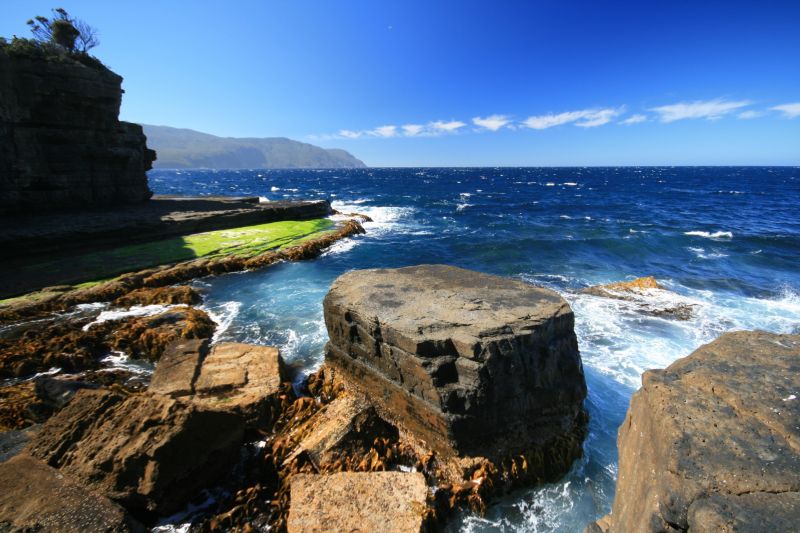
(The picture shows a view of the Tasman Sea from Tasman National Park in southern Tasmania, on the other side of the bay where Abel Tasman claimed Tasmania; photo from There’s Nothing Like Australia)

The People’s Choice of Girl’s Names

Tags

, , , , , , , , , , , , , , , , , , , , , , , , , , , , , , , , , , , , , , , , , , , ,

I have been trying to add Featured Names from those in the search terms, when possible. To celebrate the start of spring, I’m choosing ten names for each gender that people have used as search terms to reach my blog. I tried to concentrate on those that had been Googled multiple times, or which had questions attached to them, and I’ve chosen names which don’t make the Top 100.

Of course, if you would like to see a particular name featured on the blog, you don’t need to type it into a search engine and cross your fingers – you can always e-mail me directly and put in a request.

Arya

Arya is a unisex Indian name which means “noble, honourable” in Sanskrit. Common in India, it’s become known in the English-speaking world through two fantasy novelists. In George R.R. Martin’s A Song of Fire and Ice series, Lady Arya Stark is a beautiful free-spirited noblewoman who leads a very adventurous life. In Christopher Paolini’s Inheritance cyle, Arya Dröttning is an elf, later queen of the elves, and the romantic interest of the hero, Eragon. Both these characters are strong and independent, good at swordplay, horse-riding and taking care of themselves. Although there are several famous men and women in India called Arya, English-speakers probably think of it as a female name, because of the fictional characters. The Indian pronunciation is AHR-yuh, but both Martin’s and Paolini’s ladies say their names AHR-ee-uh (I’m basing this on how they are said in the TV series and the movie, as some written guides suggest AR-ee-uh or AYR-yuh). So there’s quite a selection of pronunciations. Arya recently joined the US Top 1000, and is currently #711. It would make a good heritage choice, or else an attractive literary name.

Carmel

Mount Carmel is a mountain range in Israel, and its name means “garden”. Our Lady of Mount Carmel is the title given to the Virgin Mary in her role as patroness of the Carmelite Order. The first Carmelites were Christian hermits who lived on Mount Carmel during the 12th century, and built a chapel dedicated to the Virgin Mary. They were approved as an order devoted to contemplative prayer, but didn’t stay in the Holy Land for long. They soon made their way to Sicily and Cyprus, and from there throughout Europe. Carmel was first used as a name in honour of Our Lady of Mount Carmel, perhaps especially for girls born on or near her feast day of July 16. Carmel was in rare use in 1900, then climbed steeply to make the Top 100 in 1930. It peaked in the 1940s at #77, and was off the Top 100 by the 1960s. It hasn’t charted since the 1990s. Although this name originated amongst Catholics, Mount Carmel is a place name mentioned in the Bible, and is important in Judaism, Protestantism, Islam, and the Bahá’í Faith as well, so it is usable by anyone who feels a connection to it.

Elodie

This is the Anglicised form of French Élodie, derived from the Spanish name Alodia; Saint Alodia was a 9th century Spanish martyr. The meaning of the name is uncertain, but it has been interpreted as Visigothic, from the Germanic meaning “foreign wealth”. In English it’s pronounced like Melody without the M, but the French pronunciation is ay-lo-DEE. There are several fashion boutiques in Australia with the name Elodie in them, giving it a self-consciously stylish air, and it’s a name often seen in birth announcements here, especially from Melbourne. This pretty name makes a good alternative to popular Eloise, and I can see it becoming another Amelie in the future (although a movie called Elodie would be a real help).

Kinga

Saint Kinga was born a Hungarian princess, and her name is the pet form of Kunigunde, which is from the Germanic for “family war”. Kinga had several saintly family connections, because she was the niece of St. Elizabeth of Hungary, and the great-niece of St. Hedwig. One of her sisters became St. Margaret of Hungary, while the other, Blessed Jolenta of Poland, is still being considered for canonisation. Saint Kinga was married off to Bolesław V, who became High Duke of Poland; she insisted that the marriage remain chaste, and although her husband wasn’t happy about the situation, he reluctantly agreed. During her marriage, she devoted herself to charitable works, and after being widowed, became a nun and spent the rest of her life in contemplative prayer. She is the patron saint of Poland and Lithuania, and her name is a popular one in both Hungary and Poland. This name has turned up repeatedly in the search terms ever since comedian Merrick Watts and his wife welcomed their daughter Kinga Rose in December last year. It’s apparently pronounced KEEN-gah, and makes an unusual and attractive heritage choice.

Mika

This little name has several different origins. Mika is a Japanese girl’s name translated as “beautiful fragrance”. It is also a Native American word, meaning “racoon” in the Osage and Omaha-Ponca languages of Oklahoma and Nebraska. However, it’s an Australian Aboriginal word too, because mika means both “moon” and “month” in the Nyungar language of south-west Western Australia. This is a name I’ve seen used a lot in the past, although not so much lately. It often appears in variant spellings, such as Meeka or Meekah – presumably to make the pronunciation clearer, because it is said MEE-kuh, and not like the boy’s name Micah. However, it’s possible that these variants were trying to provide a phonetic spelling of the Dutch name Mieke, which is a pet form of Maria, and said exactly the same way. Mika is similar to popular names such as Mia and Mila; it could also be understood as a short form of Mikayla. Just to confuse things further, Mika is an unrelated boy’s name as well – it’s a pet form of Mikael, the Finnish form of Michael. I suspect the reason I see less babies with this name is the British singer Mika, who now makes it seem male.

Niamh

Niamh is an Irish name meaning “bright, radiant”. In Irish mythology, Niamh was a goddess, the daughter of the god of the sea, and a fairy queen in the Otherworld known as the Land of Eternal Youth. Called Niamh of the Golden Hair, she lured the poet Oisin away to her own world, and together they were the parents of two children, Oscar and Plúr na mBan (meaning “flower of women”). Oisin thought he had been with Niamh for three years, but when he returned to Ireland, he found that three centuries had passed. Niamh gave him her white horse to ride, and warned him not to let his feet touch the ground, or he would never return to her. Later, he accidentally fell off the horse, and the three hundred years caught up with him; he became a very old man, near death. According to legend, his grave site is in Scotland. Depending on accent, the Irish pronunciation is either NEE-av or NEEV, but English-speakers tend to opt for NEEV as easier to say. This fairytale name is Top 100 in England/Wales, Scotland, Northern Ireland and Ireland, and you can see why.

Saskia

This Germanic name is derived from the name of the Saxons, a tribe from the north of Germany. We know them well, because some of them migrated to the British Isles and merged with the Angles to become the Anglo-Saxons of English history; their lands were in the south of England. The name of the tribe may come from the seax, a type of knife that the Saxons were known for using as a weapon. The seax is still an important symbol in the English counties of Essex and Middlesex, both of whom feature three seaxes in their ceremonial emblem. The Saxons who stayed behind in Germany resisted the Christian Franks for some time, but were defeated by Charlemagne and forced to convert; their lands became the Duchy of Saxony. Saxons also gained territories in the Netherlands and northern France. The name became famous through Saskia van Uylenburgh, who was the wife of the Dutch artist Rembrandt vn Rijn, and often served as a model for his paintings. In Australia the name is well known because of the actress Saskia Burmeister, who appeared in the film Hating Alison Ashley, and from the British-Australian children’s TV series Noah and Saskia, where Saskia is the Australian girl. Here the name is pronounced either SAHS-kee-ah, or SASS-kee-ah, and can be seen as a Dutch heritage choice.

Seren

This is a modern Welsh name meaning “star”, and it’s said SEH-ren. It can apparently be used for both sexes, but in Wales it is highly popular as a girl’s name and doesn’t chart for boys. Its similarity to female names such as Sarah, Serena and Serenity probably makes it seem more feminine. I’m including this one because amongst the most common search terms I receive are those asking for baby names which mean “star”, and I think this is a very pretty and simple one. Seren is also a popular unisex Turkish name, which, according to a Turkish dictionary I consulted, refers to the spar of a boat, which juts out from the sail. I’m not sure if the name is taken directly from the word, though. This might be a good name for yachties to consider – especially as boats once used the stars to navigate.

Tuppence

Tuppence means “two pennies” in the pre-decimal currency or old money. We use the word tuppence to signify a very small amount, as in the phrase, I don’t care tuppence, and is also used in the same way as my two cents to indicate you are proffering an opinion (“Well, that’s my tuppence worth”). Tuppence is theoretically unisex, and in Australia “Tuppence” was the nickname of Desmond Moran, from the notorious crime family. However, it’s usually seen as feminine, as in the British actress, Tuppence Middleton, or the nickname of Agatha Christie’s detective, Prue Beresford, in Tommy and Tuppence. Little Tuppence was a New Zealand fashion doll sold throughout Australasia in the late ’60s (a slight rip-off of American Penny Brite), and this gives it a definite girly flavour. To me it seems distinctly vintage, with a touch of English eccentric. It’s Penny to the power of two!

Zaria

Zaria is a goddess of beauty in Slavic mythology, and her name means “dawn” – the time of day when people would pray to her. She is a goddess of warriors, and was invoked to protect against death in battle. The Dutch royal family have a little Countess Zaria, aged six; she is the daughter of Prince Friso and Princess Mabel of Orange-Nassau. Although her first name is Joanna, she is officially known as Zaria, and was named after the goddess. Zaria seems like a great alternative to popular Zara, and very much like Azaria without the baggage. In the US, Zaria has been Top 1000 since the mid 1990s, and is currently #753.

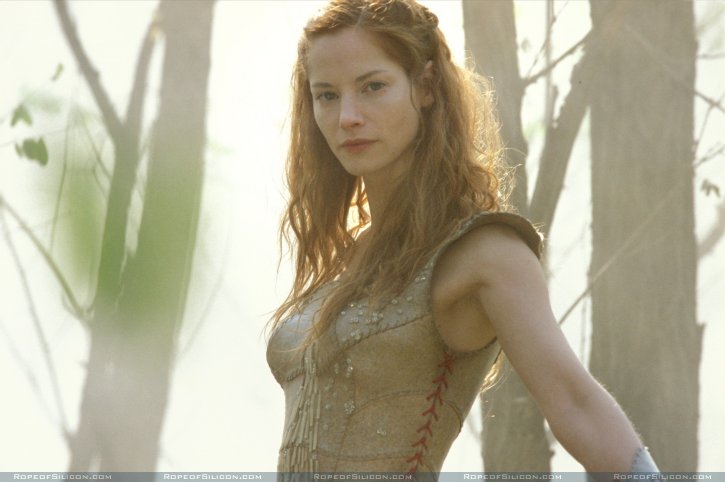
(Picture shows actress Sienna Guillory in the role of Arya from the movie Eragon)

Celebrity Baby News: AFL Babies

Tags

,

Alwyn Davey from the Essendon Bombers, and his wife Janelle, welcomed their son Cruz on September 12. Cruz Davey was born at 11.17 am, weighing 3.23 kg (7 lb 1 oz). Cruz is the fourth boy in the family, and joins big brothers Alwyn, Jayden and Alijah. Cruz continues to be a baby name favoured by male sports stars.

Michael Walters from the Fremantle Dockers, and his partner Marnie, welcomed their daughter Layla in February. Layla is their first child.

David Wojcinski from the Geelong Cats, and his wife Casey, welcomed their daughter Olive earlier this year. (I’m not exactly sure when, but a newspaper article from June says she is five months old). Olive joins big brothers Alfie, aged 6, and Monty, aged 3. David and Casey were married in 2008. Anyone else loving the super-cute sibset Alfie, Monty, and Olive?

(Photo shows Alwyn Davey with his three eldest sons)