• About
  • Best Baby Names
  • Celebrity Baby Names
  • Celebrity Baby Names – Current
  • Celebrity Baby Names – Past
  • Featured Boys Names
  • Featured Girls Names
  • Featured Unisex Names
  • Links to Name Data
  • Waltzing on the Web

Waltzing More Than Matilda

~ Names with an Australian Bias of Democratic Temper

Waltzing More Than Matilda

Category Archives: Famous Names

Famous Name: Cinderella

06 Wednesday May 2015

Posted by A.O. in Famous Names

≈ Comments Off on Famous Name: Cinderella

Tags

Chinese names, controversial names, created names, Disney names, Disney princesses, english names, French names, Greek names, historical records, Indonesian names, Italian names, Korean names, locational names, middle names, name history, name meaning, names from fairy tales, names from films, names from songs, nicknames, rare names, US name popularity, Vietnamese names

Cinderella-2015__38

With a brand new baby girl in the British royal family, there’s a very princessy atmosphere at the moment. Looking back at my recent blog entries, I think I must have tuned into this vibe in some spooky sort of way, because this year I have already covered the names of three fairytale princesses who have featured in Disney films – Rapunzel, Aurora, and Melody.

While everyone’s in a princess-themed mood, I thought I’d cover one more, since we went to see the recent Disney film Cinderella in the school holidays a couple of weeks ago. It starred Australian film star Cate Blanchett as the elegantly wicked stepmother, Lady Tremaine, and Lily James in the title role. It’s a faithful old-school rendering of the fairytale, the 1950s animated version brought to life.

The story of Cinderella has deep roots, because an ancient Greek story tells of a Greco-Egyptian slave girl named Rhodopis (“rosy cheeks”). While she was bathing, an eagle snatched one of her sandals, flew to the city of Memphis, and dropped it into the lap of the king. The king, impressed by the beautiful shape of the sandal and the strangeness of the occurrence, sent his men in all directions to find the sandal’s owner, and when she had been located, Rhodopis was brought to the city to become his queen. This is the oldest known version of the Cinderella tale.

Rhodopis was a real person, a beautiful Thracian courtesan from the 6th century BC who was a fellow slave to the fable teller Aesop. Later she was taken to Egypt and freed for an enormous sum by the brother of the poet Sappho, who had fallen in love with her. Alas for romance, Sappho wrote a poem accusing Rhodopis of stealing from her brother – she calls her Doricha, which might have been her real name, and Rhodopis her professional name.

There are parallels to the Cinderella story in several cultures, where a good, hard-working girl is oppressed by her stepmother and at least one step-sister or half-sister. In China she is Ye Xian (“leaf edge”), in Indonesia and Malaysia she is Bawang Putih (“garlic”), in Vietnam she is Tam (“broken rice”), and in Korea she is Kongji (“sweet wisdom”). It is also reminiscent of the legend of the British queen Cordelia, and her horrible sisters.

The earliest of the modern European Cinderella stories comes from Giambattista Basile in 1684, set in Naples. The heroine is a princess named Zezolla, whose governess persuades her to murder her hated stepmother and beg her father to make the governess step-mama instead. All seems well until the governess sends for her hitherto-unknown six daughters from her previous marriage, who force Zezolla to work as their kitchen slave. Familiar touches are a fairy benefactress, and a lost slipper which brings about marriage to the king.

The stepsisters rename Zezolla as Gatta Cenerentola, with Gatta meaning “cat” to indicate she is as lowly as an animal, while Cenerentola means “little ashes” to describe her dirty, stained appearance (you could loosely translate it as Little Ash-cat). The name Zezolla may be from the common Italian place name Zolla, meaning “mound of earth”; in support of my theory, several of the stepsisters have names based on Italian places.

When Charles Perrault adapted the story into French in 1697, he dropped the cat part and translated Cenerentola as Cendrillon, as this can also be understood as “little ashes”. (Cendrillon is the younger stepsister’s name for the heroine; the older and meaner one calls her Culcendron, meaning “ash bum”, as she was forced to sit in the ashes and get a dirty bottom).

Perrault added a fairy godmother, pumpkin, and glass slippers to the story, but the biggest change he made was to Cendrillon’s personality. While Zezolla was a cunning murderess, Cendrillon was humble, patient, and sweet-tempered, so the happy ending seems like a reward for her virtue. Perrault’s fairytale is seen as the classic Cinderella story, and was the basis for the 1950 Disney film.

The Brothers Grimm adapted the story into German in 1812, naming the heroine Aschenputtel. It’s difficult to translate, but can be understood as “ash slut, ash wench”. In this darker story, the father joins in the abuse, and doesn’t acknowledge Aschenputtel as his own daughter, but rather his first wife’s child from her previous marriage, so she has a stepfather and stepmother both! The stepsisters are punished with blindness and mutiliation, rather than the forgiveness bestowed upon them in other versions.

It is striking that the heroine’s real name is never given, except in the Italian version, where it seems to be a bit of a joke. Modern adaptations of the story often say that her name is Ella (in the 2015 film it’s short for Eleanor), and Cinderella can therefore be understood as “Ella of the cinders”. Only in the 1950 Disney film is Cinderella the heroine’s actual name, chosen by her parents.

Perrault’s Cendrillon was first translated into English in 1729 by Robert Samber, and immediately became a classic. Cendrillon was Anglicised to Cinderilla, and changed to Cinderella in subsequent editions. Cinderella looks like a reasonably faithful English version of Cendrillon, but the meaning changes subtly during the translation process, as it now looks as if it means “little cinders” rather than “little ashes”.

This makes the name rather more attractive, because cinders are solid, rather than dusty like ashes, and do not have the same connotations of humiliation (“sackcloth and ashes”). Ashes symbolise death, but cinders are the embers of a fire, smouldering hot coals suggesting love and life waiting to be rekindled. I’ve often heard people suggest Ember as a girl’s name with beautiful symbolism, so Cinderella cannot be said to have a bad meaning.

Cinderella has been used as a personal name since the 18th century, and was most common overall in the 19th century. It has been most popular in the United States, and currently there are more than a thousand adults in the US named Cinderella. It peaked in the US in 1951 at 23 baby girls, the year after the Disney film was released. I have found quite a few women named Cinderella in Australian records, and remarkably, nearly always as a first name, not in the middle.

Cinderella is a rare name, closely connected to the fairytale, and given wide public recognition by the Disney films. Although Cinderella is a sweet character who combines a kind heart with great resilience, and has all her dreams come true, the name and story are troubling in many ways. Cinderella was abused and victimised by her family, and her name is one created by bullies to further humiliate and degrade her.

However, it would be a rather fun middle name, and even as a first name is easily shortened to Cindy, Indie, or Ella. And remember what the Disney song said: Cinderella, you’re as lovely as your name!

POLL RESULTS
Cinderella received an approval rating of 28%. 33% of people thought the name Cinderella was tacky and ridiculous, while 28% believed it would lead to teasing and jokes. However, 9% of people thought that nicknames such as Ella made the name seem more usable. 4% of people were bothered that in the story, the name Cinderella was given to be hurtful and humiliating.

Famous Names: Birdie and Melody

30 Thursday Apr 2015

Posted by A.O. in Famous Names

≈ 4 Comments

Tags

American slang terms, animal names, birth notices, celebrity sibsets, english names, famous namesakes, fictional namesakes, historical records, middle names, name history, name meaning, name trends, names from television, nature names, nicknames, sporting terminology, surname names, UK name popularity, underused modern classics, US name popularity, vintage names, vocabulary names

3rs7ns2x-1391387260

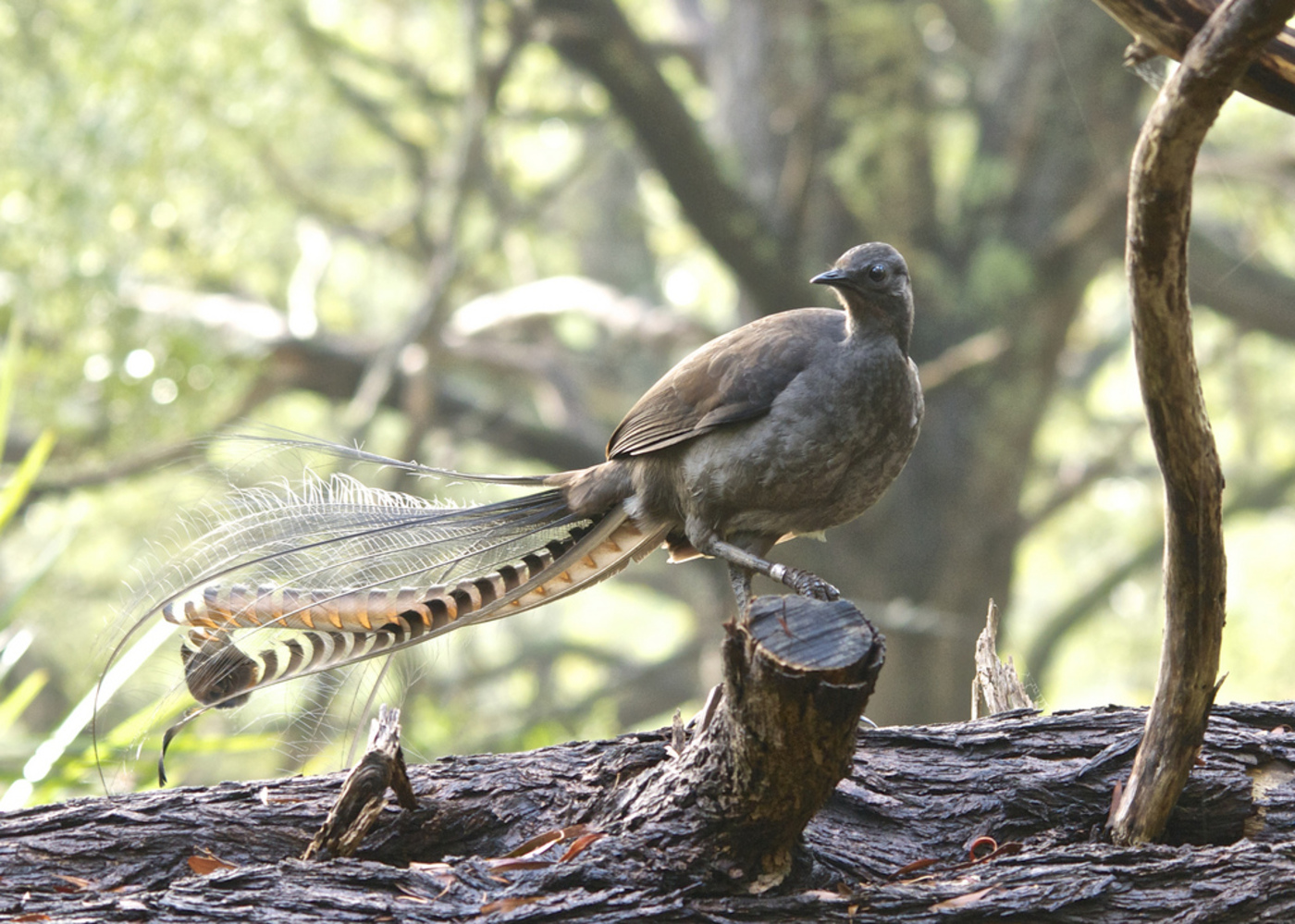
You do not need to be an ornithologist to see that there is something special about Australian birds, whether you are listening to the extraordinary calls of the lyrebird, seeing bright wrens and colourful fruit-eating pigeons, or enjoying the antics of our clever parrots. In fact, the very specialness of Australian wildlife led the great naturalist Charles Darwin to ponder the possibility of two Creators – one a steady sort of chap, turning out sparrows and bunnies, and the other a total nutter who made things like emus and kangaroos.

For most of the twentieth century, European and North American scientists assumed that birds evolved in the northern hemisphere, and that they had the “normal” birds. Australian birds broke a few of the rules, but they could be comfortably dismissed as second-hand fauna from a lost continent where all kinds of wacky things happened.

As the ABC science program Catalyst explained last month, it is only in recent decades that Australian scientists dared to challenge that orthodoxy. In the 1980s Australian scientists used DNA evidence to show that the world’s 4 500 species of songbirds – like the jays, thrushes, robins, and mockingbirds – were all descended from Australian songbirds. Far from being some crazy breakaway branch on the evolutionary tree, our birds were the originals.

This rocked the science world, which demanded evidence from the fossil record. Nobody had ever bothered to look for any fossils, but once an Australian scientist did, he found the bones of a tiny finch-like bird in Queensland in the 1990s. It was the earliest songbird ever found in the world by a staggering amount – at 54 million years old, it was at least 25 million years earlier than anywhere else.

More DNA evidence revealed that Australia was the ancestral home of the world’s pigeons and parrots as well, meaning that the majority of birds in the world have Australian ancestors, and that Australia was the most important continent for bird evolution. Australian birds did not break the rules of evolution – they made the rules!

For example, Charles Darwin proposed that birdsong evolved so that male birds could attract females with their beautiful voices. That never made sense in Australia, where in most species female birds also sing (and sometimes sing more than males). Before, Australia could be written off as a weird exception to the rule, but now we know that birdsong evolved on a continent where both female and male birds sing, so the old assumption cannot be true.

Birds have helped shape our continent for tens of millions of years, and our land has echoed with their songs, even during the many millions of years that the rest of the globe lay silent. But they have also shaped the entire world by filling it with the most intelligent and melodious of birds. In other words, there is only one Creator – and it’s the nutty southern hemisphere one.

BIRDIE
Birdie (or birdy) is a diminutive of the word bird, nearly always seen as affectionate and child-like; the word dates to the late 18th century. The word was associated with the days of early photography, when photographers would show a little metal bird to their subjects, and tell them to Watch the birdie to keep them focused. In golf terminology, a birdie means a score of one under par, and originated in New Jersey in 1899 – it’s from the American slang bird, referring to something excellent.

Birdie has been used as a personal name since the 19th century, but probably more commonly as a nickname than as a legal name. Mostly given as a name to girls, Birdie can be seen as a pet form of names such as Bertha, Bridget, Barbara, Elizabeth, or almost any name with a strong B sound. On Mad Men, Elizabeth “Betty” Draper was called Birdie by her husband as an affectionate nickname.

On the other hand, it is often given as a true nickname – that is, with no connection to the given name at all. An example is the British singer Birdy, whose real name is Jasmine van den Boegarde – her parents called her Birdy from the time she was a baby, because she opened her mouth to be fed like a little bird. These types of nicknames are not uncommon amongst the British aristocracy.

Birdie was used as a name more often in the United States than other countries, and it was on the US Top 1000 for girls almost continuously from 1880 to 1948, peaking in 1882 at #151, and not leaving the Top 500 until 1927. In 2013, 37 girls were named Birdie in the US, while Birdie has only charted once in the UK since 1996, when 3 baby girls were named Birdie in 2010 (data doesn’t take into account people with Birdie as their nickname).

There are quite a few women named Birdie in Australian historical records, mostly born in the late 19th and early 20th century. It can be found occasionally given to boys in the middle position, where it may come from the surname – the surname has nothing to do with birds, but is a corruption of the oath, Par dieu, French for, “by God”. I have recently seen a baby girl named Birdie in a birth notice, while a blog reader named her daughter Mabel last year, but calls her “Birdie” as her nickname.

Vintage nicknames like Buddy and Buster are back in vogue, and Birdie is a very stylish example of the trend. It manages to be cute, without being overtly flirty or sexy, and has a rather upper class feel. Definitely one to watch!

MELODY
A melody is a sequence of notes which makes a musical phrase or motif – what we might otherwise call a tune. The word is ultimately from the ancient Greek meloidia, meaning “singing, chanting”.

Melody has been used as a girl’s name since at least the 18th century, but became more common in the 19th. The name Melody first charted in Australia in the 1960s, debuting at #543. It is currently around the 200s. In the US, where it has charted since the 1940s, Melody is #171 and rising, while in the UK it is #261, and appears to be rising slightly.

Melody is a popular choice for singers, who either seem to have been inspired by the meaning of their name, or have adopted it as a stage name. American singer-songwriter Melody Gardot took up music as therapy after an accident, Melody Thornton is a member of the Pussycat Dolls, while young Australian country singer Melody Pool’s career is just starting out. Japanese pop singer Melody Ishiwara has sisters named Harmony, Rhythmy and Christine (rather in the style of sisters named Grace, Faith, Hope, and Michelle).

There have been several characters named Melody in recent popular culture, such as the daughter of Ariel and Eric in the sequel to The Little Mermaid, the cute ditzy drummer from Josie and the Pussycats, and Melody Pond, the mysterious time-traveller from Dr Who, who goes by the name River Song.

I’ve noticed that people often dismiss Melody as a “dated” name, because it shares a similar sound to Melanie and Melissa, which both peaked as popular names in the 1970s. However, a look at the data shows that this isn’t correct, and underlines the dangers of judging a less-common name based on how it sounds.

Melody is an underused modern classic which has never been higher than the 200s, and is higher now than it has ever been; overseas data suggests that it may even be rising slowly. It’s pretty and music-themed, fitting in well with the current trend for names such as Aria, Harmony, and Cadence, while still feeling like a traditional choice. It’s well worth considering if you are searching for a lyrical, contemporary name without any baggage that has been overlooked by most others.

POLL RESULTS
The name Birdie received an approval rating of 56%. 36% of people loved the name Birdie, and 22% thought it was a terrible name.

The name Melody received a lower approval rating of 48%. 45% weren’t too keen on the name Melody, and 15% loved it.

Information on songbird evolution from Catalyst’s episode Where Birdsong Began, shown March 10 2015, and based on the book Where Song Began, by Australian biologist Tim Low.

(Photo shows an adult male superb lyrebird, an astounding mimic; both males and females sing, but males are louder and more skilful).

Famous Names: Rocket Zot

08 Wednesday Apr 2015

Posted by A.O. in Famous Names

≈ 3 Comments

Tags

celebrity baby names, english names, flower names, food names, Greek names, honouring, name history, name meaning, name popularity, names from comics, names from songs, names of weapons, nature names, nicknames, plant names, rare names, Russian names, scientific names, UK name popularity, unisex names, US name popularity, vegetable names, vocabulary names

July-2012-2-062

Names in the News
There are some celebrities whose baby names the media looks forward to learning with barely-disguised impatience. It might be a big star or a royal, in which case we all want to know what the baby is called, even if it’s quite boring. On the other hand, there are certain celebrities where we yearn to know the baby name they choose, because we can feel “a crazy celebrity baby name” coming up.

Recently it has been Lara Bingle and her husband Sam Worthington grabbing the baby name headlines, although the whole process began months ago, during what has been described as “the world’s longest pregnancy“. This was only increased by the Bingle-Worthingtons requesting privacy and not immediately announcing their baby name, which sent the rumour mill into overdrive.

I always think that if you’re going to be coy about announcing the baby’s name, it had better be something pretty epic, because I hate waiting for weeks, only to find out the baby is named Charlie. In this case, I was not disappointed because the baby’s name was reported as Rocket Zot.

Predictably, some sections of the media responded with outrage, denouncing the name. Was this a clever attempt to force Rocket’s cagey parents to confirm or deny the baby name? If so, it worked, because Lara Bingle immediately took to social media to defend their choice of name.

Public comments have generally been quite harsh, and on this blog, more than 84% of people have given it the thumbs down. But is Rocket Zot really such a bizarre name?

ROCKET
A rocket is any missile or vehicle propelled by a rocket engine. Although we may think of rockets as being quite space age, they have been existence since the Middle Ages, when they were used as weapons by the Chinese. Europeans found out about rocket technology when they were conquered by the Mongols, who themselves made the interesting discovery by conquering parts of China first.

It wasn’t until the twentieth century that anybody began serious research into using rockets for travelling through space. The Germans made the most progress in this area, and there was devastating proof of Germany’s proficiency in rocket use when they rained down V-2 rockets upon Allied countries in World War II, killing and wounding thousands in the process.

The United States was to benefit the most from Germany’s rocketry, because after the war they scooped up the majority of the German rocket scientists. The first American space rockets evolved directly from the V2, which just shows how important it is to conquer the right people during a war, and nick all their best technological innovations.

The word rocket comes from the Italian rochetta, meaning “little fuse”, a small firecracker developed by an Italian inventor in the 14th century. It is notable that for many years, the history of rockets and that of fireworks was virtually one and the same, as they both relied on gunpowder.

If all of this sounds a bit too violent, rocket is also a leafy green vegetable commonly added to salads, and a favourite since Roman times (maybe partly because it was believed to be an aphrodisiac). In this case, the name has nothing to do with rockets or fireworks, but is derived from Eruca, the Latin name for the plant, which means “caterpillar”.

London rocket is a wildflower whose common name was given because it grew in such profusion after the Great Fire of London in 1666. Another plant is called sweet rocket or dame’s rocket, abundantly blossomed with pretty fragrant mauve flowers. The attractive but toxic aconite, or wolfsbane, is sometimes called blue rocket, and the Chinese used its poison in warfare, just as they did explosive rockets.

Rocket has been used as a name since the 19th century, when it was much more common in North America. The United States national anthem, The Star Spangled Banner, with its mention of the “rockets’ red glare”, may have made the name seem particularly patriotic (the rockets in the song were from the British attacking Fort McHenry in Baltimore during the War of 1812). Independence Day fireworks also help to make rockets seem patriotically American. Rocket has been given to both sexes, but more commonly to boys.

In 2013, 16 boys were given the name Rocket in the US, while in the UK, less than 3 babies in any year have been named Rocket since 1996. In South Australia last year, there was just one baby boy named Rocket.

Although Rocket is rare, it has become quite prominent as a celebrity baby name. Douglas Adams named his daughter Polly Jane Rocket in 1994, a fitting tribute for the author of the Hitchhikers Guide to the Galaxy series. Director Robert Rodriguez has a son named Rocket Valentino born in 1995 (Rocket’s siblings include Rogue, Rebel, and Racer). Tom DeLonge from Blink-182 had a son named Jonas Rocket in 2006, and Pharrell Williams welcomed a son named Rocket Ayer in 2008, honouring the Rocket songs of Stevie Wonder, Elton John and Herbie Hancock, as well as Roy Ayers. Last year Beau Bokan from Blessthefall welcomed a baby girl named Rocket Wild. It’s not unknown as an Australian celebrity name, because fashion designer Yasmin Sewell had a son named Knox Rocket in 2011.

The name Rocket has been criticised for trying too hard to be a “cool” celebrity baby name, a name which no decent baby name book has listed. (I’m happy to be amongst the indecent baby name blogs to include Rocket). And yet is it really that outrageous? It’s very much like modern classic Rocco, and when Jett is a popular boy’s name, Rocket isn’t such a stretch. Weapon-related names such as Archer and Hunter are also on trend.

Depending on your point of view, Rocket might be too cool for the schoolyard, or fine for the famous but out for ordinary folk, or you might think this is an energetic, rocking firecracker of a name that fits in with current trends while still being a rare choice. Rock or Rocky are the obvious nicknames.

ZOT
If Rocket got a good going-over, Zot went down even less well, with the headline, Lara Bingle Doesn’t Give a Zot For Baby Name Traditions (since changed). Urban dictionaries were consulted, to discover that zot meant “kill, destroy”, or “spitball”. Of course you can also consult dictionaries to find that Bob is a woman’s haircut, John refers to a prostitute’s client, and Amelia means to be born without a limb, but the dictionary meanings are not usually applied to these personal names.

Lara Bingle was angered and upset by the journalist’s comments on Zot, since it was given in honour of her father Graham, who passed away from cancer a few years ago. Zot was apparently the nickname he went by.

Zot is actually a “real” name – it’s a short form of Izot, the Russian form of Greek Zotikos, meaning “full of life” (a masculine spin on Zoe). I think that makes it an exciting addition to Rocket, which is already quite a lively-sounding name.

Zot is also a comic book hero name, in this case, a contraction of the character’s real name of Zachary T. Paleozogt. A cheery blond teenager from a utopian world, Zot zips around on rocket boots with a laser gun to sort out the problems of our own rather more flawed planet.

It has been conjectured that the name Rocket is a nod to Sam Worthington’s father, Ronald Worthington, so that Rocket Zot may actually honour both fathers. The Herald Sun suggests that Ronny Graham, nicknamed “Rocket”, would have been a better honouring name. Given the choice, I think I prefer the more distinctive, affectionate, and personalised Rocket Zot.

POLL RESULTS
The name Rocket received an approval rating of 16%. 44% of people thought that Rocket was a terrible name, while 6% loved it.

Zot received a slightly higher approval rating of 20%. 61% of people thought that Zot was a terrible name, while 5% loved it.

53% of people preferred Ronny Graham as a name to honour Ronald Worthington and Graeme “Zot” Bingle, while 47% thought Rocket Zot had more zip.

(Photo shows Fourth of July fireworks to accompany the US national anthem)

Famous Name: Malcolm

01 Wednesday Apr 2015

Posted by A.O. in Famous Names

≈ 1 Comment

Tags

classic names, famous namesakes, name history, name meaning, name popularity, names from television, royal names, Scottish names, Shakespearean names, UK name popularity, underused classics, US name popularity

687166-malcolm-fraser

Famous Namesake
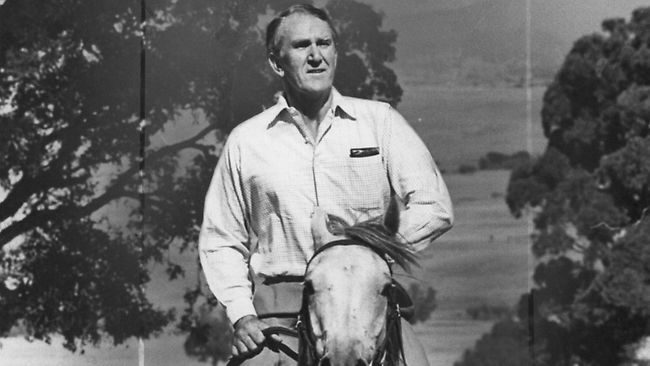
Just a few months after saying farewell to Gough Whitlam, the 21st Prime Minister of Australia, we sadly lost our 22nd Prime Minister, when John Malcolm Fraser, always known by his middle name, unexpectedly passed away after a brief illness in the early hours of March 20. He was 84.

You will remember he came to power in a controversial way, instructing Coalition Senators to delay government budget bills in hopes of forcing an early election. His plan worked when, after several months of political deadlock, governor-general Sir John Kerr suddenly sacked Prime Minister Gough Whitlam on November 11 1975, on the day that became known as The Dismissal.

Malcolm was sworn in as caretaker Prime Minister, and later led the Liberal-Country Party Coalition to a landslide victory, his 55 seat majority the largest yet in Australian history. He had a second victory in 1977, and the Liberal Party won a majority in their own right, not needing the support of the (National) Country Party, which is almost unheard of.

As Prime Minister, Malcolm was active in foreign policy, showing a commitment to racial equality that was to be a keynote of his character. He supported the campaign to abolish apartheid in South Africa, and strongly opposed white rule in Rhodesia, being one of the architects of the new Zimbabwe.

His policy was for humanitarian resettlement, allowing more refugees to enter Australia, and greatly expanding immigration from Asia. A strong believer in a multicultural Australia, he established government-funded multilingual radio and television, the Special Broadcasting Service (SBS). He also gave Indigenous Australians control of their traditional lands in the Northern Territory, was a supporter of environmental concerns, and banned whaling around the Australian coast.

Although he managed to win another election in 1980 with a greatly reduced majority, he lost the 1983 election to Bob Hawke in a heavy defeat. He was the last non-caretaker Prime Minister to come from a rural seat, and is remembered not just as a Prime Minister, but an excellent farmer from a distinguished pastoral family who understood the needs of regional Australia.

After leaving office, Malcolm served in key roles at the United Nations, with a focus on South Africa and other African nations. He helped to establish humanitarian agency CARE International in Australia, demonstrating again his commitment to helping vulnerable people around the world. He reconciled with his old enemy, Gough Whitlam, and the two men were able to be good friends, finding common ground on many issues.

At the same time, Malcolm gradually became estranged from the Liberal Party, with many of even his own party unable to forget the role he had played in The Dismissal. A man of conviction, Malcolm did not hesitate to speak out on important issues of the day, such as the human rights of asylum seekers in detention, civil liberties, and treatment of Aborigines, even when his opinions were at odds with those of the Liberals.

After years of criticising Liberal Party policy, bemoaning the lack of integrity in Australian politics, and supporting the campaign for a change of policy on Iraq, Malcolm finally handed in his Liberal Party membership in 2009, when Tony Abbot became the party’s leader, saying that it was no longer a liberal party, but a conservative party. In 2013, he endorsed a Green Party Senator and urged his Twitter followers to vote Green in the upcoming election.

Just before he died, Malcolm was working to set up a new political party called Renew Australia. It was to stand for an Australian republic, to reconcile with Indigenous Australians through a treaty, to support a larger population with an independent foreign policy and a post-carbon economy, recognising climate change and the urgent need to avoid its most catastrophic effects, as well as a central commitment to human rights obligations.

Malcolm’s memorial service was on March 27, and his son Hugh spoke of his father as someone who never ceased to care about current affairs, his strong sense of responsibility enduring to the end. According to Hugh Fraser, his father loved Australia, and was not merely one of its sons, but one of its most fervent custodians.

With the passing of Gough Whitlam and Malcolm Fraser, political giants who defined the 1970s (and physical giants, as they were our tallest prime ministers at 1.94 and 1.93 metres tall respectively), it does feel like the end of an era. Gough was the most progressive Labor prime minister, followed by Malcolm, the most progressive Liberal prime minister, and with them gone, the political future feels rather bleak.

Malcolm was famous for his quote from George Bernard Shaw: Life wasn’t meant to be easy. Most people forget that the quote continues … but take courage child, for it can be delightful. We must remember our courage now.

Name Information
Malcolm is the Anglicised form of the Scottish name Máel Coluim, meaning “follower of Saint Columba”. You will remember that Columba means “dove”. It was a traditional name amongst Scottish royalty and nobility, and there have been four medieval kings of Scotland with the name Malcolm.

Malcolm III is the basis for the King Malcolm who is the son of Duncan in William Shakespeare’s play Macbeth, although in real life he did not immediately avenge his father by killing Macbeth, as he was only a little boy at the time. Only after he had grown up did he kill Macbeth, and then Macbeth’s heir, so that he could take the throne at last. Malcolm III was the husband of the English princess who became Saint Margaret of Scotland. Despite Malcolm not being particularly religious, they had a strong and loving marriage, and Margaret is said to have died of sorrow after hearing of Malcolm’s death in battle.

The name Malcolm was #81 in the 1900s, and peaked in the 1950s at #52, when Malcolm Fraser entered parliament as the youngest MP, aged 25 (this was also the decade that Malcolm Young from AC/DC was born). It left the Top 100 by the 1980s, the time when Malcolm Fraser suffered the worst defeat of a non-Labor government since Federation, and lost the prime ministership. After that it fell steadily, and despite a small boost in the late 2000s, when the sit-com Malcolm in the Middle was aired, it has not charted since 2009, the year Malcolm Fraser left the Liberal Party.

There has been another prominent Malcolm in the Liberal Party, Minister for Communications Malcolm Turnbull, and celebrity grandfather on the blog. This may not have been a help to the name, as politicians generally don’t assist a name’s fortunes. The name can now be said to be in rare use.

In the UK, there were 14 baby boys named Malcolm in 2013, so it is uncommon there as well. Malcolm is most popular in the US, where it has never gone off the charts and is in the mid-400s; it is associated there with civil rights hero Malcolm X.

Malcolm is a strong, handsome underused Scottish classic with a slightly quirky feel. It honours one of our greatest statesman, a gentleman who had the courage to speak out and work towards constructive change, who was uncompromising yet compassionate, and who placed his duty higher than his popularity.

POLL RESULTS
Malcolm received an excellent approval rating of 81%, making it one of the highest-rated names of 2015. People saw Malcolm as a normal name that is still a bit quirky (27%), strong and handsome (22%), and a good Scottish heritage choice (22%). However, 14% thought it was harsh and ugly. Nobody thought the name Malcolm was too Scottish, and 3% were put off the name by former prime minister Malcolm Fraser.

(Photo shows Malcolm Fraser on his rural property, Nareen Station, in 1982)

Famous Name: Aurora

25 Wednesday Mar 2015

Posted by A.O. in Famous Names

≈ 8 Comments

Tags

code names, Disney names, Disney princesses, European name popularity, Latin names, locational names, meteorological names, mythological names, name history, name meaning, name popularity, names from ballet, names from fairy tales, names of businesses, nature names, New Zealand name popularity, Roman names, scientific names, UK name popularity, US name popularity

w1200_h678_fmax

Name in the News
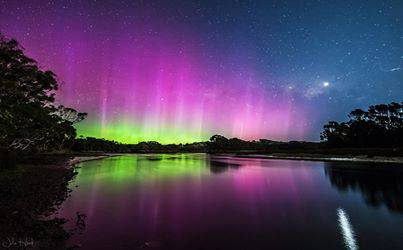
On March 17, a rare aurora australis was seen over New Zealand and Australia, swirling across the late night skies in patterns of red, green, blue, and purple. Aurora australis is also known as the Southern Lights, the southern hemisphere equivalent of the aurora borealis, or Northern Lights.

An aurora event occurs when rapidly moving particles that originated from the sun come in and strike the upper atmosphere, more than 100 kilometres above the earth. The energy from the particles striking molecules in the atmosphere are released as light, and the colours that you see depend on which molecules are struck – green and red come from oxygen, while blue and purple are from nitrogen.

Aurora events sometimes happen when large solar flares and explosions of material come off the sun, which is what occurred this week, setting off a geomagnetic storm. An aurora australis is usually best viewed from Antarctica, but moderate ones can be seen from Tasmania. However, this week’s aurora was so bright that it was visible as far north as Canberra, and Goulburn and Kiama in New South Wales, while even in Brisbane there was a red tinge to the sky.

In Aboriginal mythology, the aurora australis was often seen as fire in the sky, and conjectured to be bushfires in the spirit world, campfires glowing in the land of the dead, or fires lit by evil spirits. It seems to have been generally seen as an ill omen, or a sign of a god’s displeasure. In south-west Queensland, where aurorae are uncommon and less spectacular, it was thought that the spirits were able to transmit messages through an aurora, allowing communication with the ancestors.

Rare, awe-inspiring, and staggeringly beautiful, an aurora is a celestial phenomenon not to be missed. Little wonder that in the past it was seen as something mysterious and otherworldly.

Name Information
Aurora was the Roman goddess of the dawn, and her name literally means “dawn, sunrise, daybreak”. She is the equivalent of the Greek goddess Eos, and the Hindu goddess Ushas. The name comes from an ancient root meaning “shining one”, and is related to the English word east, as well as the Latin aurum, meaning “gold”. It has connotations of springtime, and the new year – all symbols of rebirth and new beginnings.

In Roman mythology, Aurora renews herself each morning and flies across the sky to announce the arrival of the sun, her brother. She often appears in poetry (Virgil describes her as having a “saffron bed”), and her beauty and desirability are such an important part of her image that it is thought she must originally have been a goddess of love, with the different aspects of dawn and eroticism becoming separated into Aurora and Venus.

One of her key myths involves her love affair with a Trojan prince named Tithonus. Wanting to be with Tithonus for all eternity, she asked Jupiter to make him immortal. He granted her request, but because Aurora did not ask for him to remain eternally youthful, he was doomed to be old forever. Aurora saved him from this fate by turning him into a grasshopper.

Although you may read of the goddess Aurora in Tennyson and Shakespeare, see paintings of her, and even hear of her from Bjork, the name is probably best known from the 1959 Disney film Sleeping Beauty, where the comatose princess is called Aurora. In the movie, the king and queen choose the name because their daughter has “filled their lives with sunshine”.

In Charles Perrault’s version of the fairy tale, the Sleeping Beauty was not given a name, but she bears the Prince two children named L’Aurore (“the dawn”) and Le Jour (“the day”). Tchaikovsky’s ballet gives the daughter’s name to the mother, so the Sleeping Beauty is called Princess Aurora, and Disney followed this, as well as the TV series Once Upon a Time. (In the German version of the tale, she is called Briar Rose, which Disney used as Aurora’s code name, and in the earliest Italian one, Talia, who had children named Sun and Moon).

Aurora has been used as a name since the 17th century, and from the beginning was an international choice, showing up in records in England, Italy, and Scandinavia, and by the following century was used in countries all over the world, but especially in Europe.

Currently, Aurora is popular in Norway and most popular in Italy, where it is #3. In the United States, Aurora has been almost constantly on the Top 1000, and is now #145. It has been rising steadily since 1995 – the same year that Disney’s Sleeping Beauty was re-released in cinemas. In England/Wales, Aurora has been on the charts since 2011, and is rising steeply at #257. Amongst English-speaking countries, Aurora is most popular in New Zealand, where it has been Top 100 since 2013 and was #77 last year.

In Australia, Aurora is around the mid-100s, so has a similar popularity to that in the US. As it is rising in other countries, it is most likely rising here too. Around the world, Aurora is often given as a name in scientific contexts, and in Australia it is well known as an energy company. Aurora Point on Macquarie Island is named after the SY Aurora used on Douglas Mawson’s Antarctic expedition, with the yacht itself named after the aurora australis.

Aurora is an internationally recognised name with a poetic meaning and many attractive associations – an alluring dawn goddess, a sunshiney fairy tale princess, an iridiscent light in the heavens. It’s elegant and enchanting, rich and frothy, a name that seems to shimmer with colour, shot through with the rosy pink and gold of daybreak. One drawback is that it not particularly easy to say, which is why Auroras nearly always seem to have a nickname, such as Aura, Auri, Rora, Rory, Ro, or Roo, adding a cute or tomboyish option to a flouncingly feminine name.

POLL RESULTS
Aurora received a decent approval rating of 66%. 21% of people saw the name Aurora as pretty or beautiful, but 16% found it too difficult to pronounce.

(Picture is of Aurora australis seen over the Forth River in Tasmania; photo taken by Julie Head and published in The Advocate).

Famous Name: Rapunzel

18 Wednesday Mar 2015

Posted by A.O. in Famous Names

≈ 1 Comment

Tags

controversial names, Disney names, Disney princesses, fictional namesakes, food names, French names, Italian names, middle names, name history, name meaning, names from fairy tales, names from movies, names from television, names of herbs, nature names, nicknames, Persian names, plant names, rare names, twin sets, US name popularity, vegetable names

1423643653494

Name in the News
March 12 marked the start of the Leukaemia Foundation’s World’s Greatest Shave. One of the participants this year was librarian Nicolette Suttor, from the National Library in Canberra, whose hair hadn’t been cut for a decade, and which hung to her knees.

Nicolette’s cousin Ben died from leukaemia six years ago, and two years ago, her twin sister Camille shaved off her hair to support the Leukaemia Foundation. This year, Nicolette was amongst the thousands of people who signed up to raise money for the World’s Greatest Shave, and she was supported by colleagues, who performed a modern version of the fairy tale Rapunzel ahead of the charity event, with Nicolette taking the lead role.

Since having her 1.4 metre locks of hair removed and her head shorn, real life fairy tale princess Nicolette has raised more than $5500, and her hair will be used to make wigs for leukaemia patients who have lost their hair.

Name Story and Information
The German fairy tale Rapunzel tells of a poor couple who longed for a child. At last the wife became pregnant, and began to develop cravings for a leafy green vegetable, which in Germany is called rapunzel. She told her husband that if she could not eat the delicious looking rapunzel which grew in their neighbour’s walled garden, she would die.

Her husband was very frightened, because their neighbour was an enchantress from the Black Forest, but he was even more frightened of losing his wife. So he climbed the wall into the garden, and stole the rapunzel. The Enchantress caught him, and after he explained he was only taking it for his pregnant wife, she told him he could have as much as he wanted, but on one condition – when the baby was born, he must give it to her.

The man agreed to this, and when the baby was born, it was a girl which they reluctantly handed over to the Enchantress, who took the baby far away, to her own country. She named the girl Rapunzel, after the vegetable which had delivered the child into her hands, and taught the child to call her Gothel (“godmother”).

Rapunzel grew into the loveliest child under the sun, with long hair like spun gold. When Rapunzel turned twelve, the Enchantress locked her in a tower with no stairs or doors, but a tiny window at the top. When the Enchantress wanted to visit Rapunzel, she would call out, Rapunzel, Rapunzel, let down your hair! The girl would throw her long, golden, braided hair out the window, so the Enchantress could climb up.

A couple of years later, a prince rode through the forest, and became enraptured by Rapunzel’s sweet singing. Coupled with the sight of her beautiful, wistful face at the tower window, his heart was touched, and each day he rode out to hear her. The day came when he heard the Enchantress give the signal and climb up, and when the coast was clear, he tried his luck by calling out Rapunzel, Rapunzel, let down your hair!

Rapunzel at first was frightened when a man climbed into her tower. However, the prince was young and handsome, and Rapunzel soon loved him in return, agreeing to become his wife. They decided that the prince would bring Rapunzel silk so she could make herself a ladder – the simpler escape plan of bringing an actual ladder apparently not occurring to them.

While Rapunzel worked on the ladder, she and the prince got to know each better each evening, and it became obvious how well their relationship had progressed when Rapunzel innocently mentioned to her “Gothel” how tight her clothes were growing. No doubt food cravings would have soon developed.

Furious and betrayed, the Enchantress did the “godmother scorned” routine by cutting off Rapunzel’s braid of hair, and taking her into the desert to wander in misery. (There’s no German deserts, so it’s meant in the sense of a dreary, uninhabited wilderness).

The cruel Enchantress then fixed Rapunzel’s braid of hair to an iron spike, and waited in the tower for the prince. When he called out Rapunzel Rapunzel etc etc, the Enchantress let down the braid, and confronted the prince when he climbed into the tower. Heartbroken at the news that Rapunzel was gone, he threw himself from the tower, where he blinded himself on the thorns which grew below.

For some years, the blind prince wandered through the forest living on roots and berries, crying for his lost love. At last he came across Rapunzel, who had in the meantime given birth to their twins, a boy and a girl. Hearing Rapunzel’s beautiful voice, the prince proved love was blind by knowing at once it was his lost love, and hurled himself into her arms.

The two held each other tenderly, and Rapunzel wept. Luckily she had magical tears, because as they fell into the prince’s eyes, his blindness was cured. Hooray! The family hiked back to the prince’s kingdom, where they all lived happily ever after.

The Brothers Grimm adapted Rapunzel from a German fairy tale, which was based on a French one called Persinette – Persinette is derived from the French word for “parsley”, as this was the vegetable craved by the mother in this story. In turn, this was based on the 17th century Italian tale Petrosinella by Giambattista Basile, which is the earliest known version of the story (Petrosinella is Italian for “parsley”).

Rapunzel is similar to the medieval Persian tale of Rūdāba, where the beautiful Rūdāba, meaning “shining child”, lets down her raven-black tresses so her lover Zal can climb into her tower. However, there are a number of folk tales where girls get locked in towers by their parents, such as Danae in Greek mythology, the princess rescued by Cian in Irish legend, and even Saint Barbara.

The vegetable which Rapunzel is named after is Valerianella locusta, otherwise known as lamb’s lettuce or corn salad. The plant will grow in even the most barren of environments, making it a favourite with peasants, and foreshadowing Rapunzel’s own surprising ability to survive in a wilderness. Its German name of rapunzel is derived from the Latin, meaning “valerian root”.

Later versions of the story insist that the rapunzel was actually rampion, a purple bell-like wildflower whose leaves are edible. Perhaps it seemed more palatable for a fairytale heroine to be given a floral name.

The name Rapunzel has been in rare use since the 19th century. I have only been able to find Rapunzels born in the United States, and the name showed up in the data there once – in 1959, when 9 girls were given the name Rapunzel. This was the year after Shirley Temple’s Storybook television series featured the story of Rapunzel, with Carol Lynley in the title role, and Agnes Moorehead as the wicked enchantress.

Despite Rapunzel being the lovely princess in Disney’s charming film Tangled, it hasn’t shown up since, and this would be a very bold choice as a name. Besides the vegetable meaning, the fairy tale shows parents in a poor light, with Rapunzel’s biological parents swapping her for salad in a very short-sighted way, and her adoptive mother being insanely possessive and brutally punishing.

And then there’s the famous tagline, which means that someone named Rapunzel would probably have to hear “let down your hair” on a regular basis, even if they had a bob or a pixie cut.

However, Rapunzel would make an awesome middle name, and even as a first name, nicknames such as Zella and Zellie seem feasible for your little fairy tale princess.

POLL RESULTS
Rapunzel received an approval rating of 33%. 34% of people thought the name Rapunzel would lead to teasing and jokes, but 9% saw it as charming and fantastical.

(Photo shows Nicolette Suttor dressed as Rapunzel)

Famous Name: Quentin Bryce

11 Wednesday Mar 2015

Posted by A.O. in Famous Names, Requested Names

≈ 3 Comments

Tags

adult name changes, Celtic names, english names, famous namesakes, French name popularity, French names, Gaulish names, historical records, honouring, Latin names, locational names, middle names, modern classics, name popularity, Roman names, saints names, Scottish names, stage names, surname names, UK name popularity, unisex names, US name popularity

Defence_of_Darwin_18_Feb_2012crop_Brice__MG_5761

Famous Namesake
It was International Women’s Day on Sunday, so this seems like a good chance to cover the name of a prominent and ground-breaking Australian woman.

Quentin Bryce (nee Strachan) was one of the first women admitted to the Queensland Bar, and became the first woman appointed as a faculty member of the law school where she had studied, at the University of Queensland. As well as her teaching role, she was appointed to the new National Women’s Advisory Council in 1978, becoming its convenor a few years later.

She went on to take up other key roles in women’s issues, such as becoming the first Director of the Queensland Women’s Information Service, and Queensland Director of the Human Rights and Equal Opportunity Commission. She served as Federal Sex Discrimination Commissioner for five years, then became founding chair and CEO of the National Childcare Accreditation Council. A surprise move saw her become principal and CEO of the Women’s College at the University of Sydney, where she was able to combine her academic interests with her skills in administration.

In 2003 she was appointed Governor of Queensland by Premier Peter Beattie, only the second woman to take the role (the first was Leneen Forde, in the 1990s). Peter Beattie’s successor offered her an extension of her five-year term, but by then Dame Quentin had another appointment, and so she was succeeded as Governor of Queensland by Penelope Wensley – the first time a female governor of the state made way for another woman.

In 2008, the Queen approved Quentin’s appointment as Governor-General, on the recommendation of Prime Minister Kevin Rudd, and so she became the 25th Governor-General of Australia, and the first female Governor-General of this country. The decision gained approval on all sides of politics, and was seen as a positive move by commentators. Towards the end of her term, she made headlines after giving the annual Boyer Lecture, when she implied that she looked forward to Australia becoming a republic, and legalising gay marriage.

When her term was completed last year, Quentin Bryce was made a Dame of the Order of Australia, on the recommendation of the current prime minister. Shortly afterwards, Dame Quentin was announced as the chair of a new task force to combat domestic violence in Queensland, so she continues her valuable work on behalf of Australian women.

QUENTIN
French form of the Roman name Quintinus, derived from Quintus, meaning “fifth” in Latin, and traditionally given to a fifth child.

Saint Quentin is a 3rd century saint, and according to legend he was a Roman citizen who went to Gaul as a missionary, where he settled in Amiens in northern France. After performing many miracles, he was tortured and martyred before his body was thrown into the marshes of the Somme. By miraculous means, his body was later discovered and a shrine erected in his honour.

The cult of Saint Quentin was an important one in the Middle Ages, and Saint Quentin’s tomb was a major pilgrimage site, much favoured by the Carolingians. There are many places named after the saint in northern France. Because of the saint, the Normans introduced the name Quentin to England, where it may have contributed to the surname Quentin, although that could also come from Quinton in Warwickshire, meaning “the queen’s settlement” in Old English.

The name Quentin has been in use since medieval times, overwhelmingly as a male name. It is in the Top 500 in the United States, while in England/Wales, 17 baby boys were named Quentin in 2013. The name is most popular in France, where it is in the Top 50. There are not many Quentins in Australian historical records, and they are all male.

Besides Quentin Bryce, there are many famous Australians named Quentin in the media. Quentin Spedding was a journalist in the 1920s and 1930s, while ABC journalists include Quentin Dempster, Quentin McDermott, and Quentin Hull. There’s also film-maker and producer Quentin Kenihan, who first rose to fame as a little boy being interviewed on television.

You might also be reminded of American film director Quentin Tarantino, or British illustrator Quentin Blake. Homosexual author and performer Quentin Crisp changed his name to Quentin (born Denis Pratt), while Quentin Cook changed his name to Norman, and performed under the stage name Fatboy Slim.

These are all men named Quentin, but as a surname, Quentin refers to a queen, and even as a first name, Quentin could be used as a form of the female Roman name Quintina. I only know two people named Quentin, and they are both female, so the name seems very usable for girls to me, in addition to being a splendid choice for a boy.

BRYCE
Surname derived from the male name Brice. Saint Brice was a Bishop of Tours during the Dark Ages. Acccording to legend, he was an orphan rescued by Saint Martin and raised in an monastery as St Martin’s pupil. He took over as bishop from St Martin, but proved rather worldly, so he was exiled to Rome for seven years to have his sins absolved by the pope. When he returned, he was a changed man, and served with such humility that he was venerated as a saint.

He is remembered in England because his feast day is November 13, and on that day in 1002 there was a mass killing of the Danes living in England ordered by King Ethelred the Unready, who was fed up with England being ravaged in Viking raids each year. It is known as the St Brice’s Day Massacre.

The meaning of Brice is not known for sure, although it is assumed to be Celtic. It may come from the Gaulish word briccus, meaning “speckled”. As a surname, Bryce is particularly associated with Scotland, and is understood as meaning “follower of Saint Brice”.

The name is very well known in Australia because of best-selling author Bryce Courtenay, who was born in South Africa – his name was Arthur, but went by his middle name. Before becoming a published writer, Bryce worked in advertising, and headed many award-winning campaigns, including Louie the Fly, The Milkybar Kid, and It’s Time, on behalf of Gough Whitlam. His most famous work is his first novel, The Power of One, which has been made into a film.

Bryce entered the charts in the 1960s, debuting at #274 – its similarity to Bruce is so striking that you might suspect it was a replacement for the name, which was still popular in the ’60s, but falling steeply. Bryce rose into the Top 100 by the 1990s, just as Bryce Courtenay began his career as an author, and left the Top 100 in 2000. It is now around the 200s, so still fairly common.

It’s more popular in the US, where it has fallen much more slowly, and is not far out of the Top 100. It is least common in England/Wales, where 19 boys and 3 girls were named Bryce in 2013 (the second time that Bryce has charted as a female name in the UK, probably because of American actress Bryce Dallas Howard, who has recently been in the Twilight series and The Help).

Modern classic Bryce is still getting reasonable use, along with old favourites like Brock and Brody, and is also on trend, fitting in with fashionable rising choices like Byron. It’s a great way to honour a Bruce and a Bryan simultaneously, and I see this name more commonly in the middle, as it goes well with so many first names.

Two medieval French saints names – but which one do you like best?

POLL RESULTS
Quentin received an approval rating of 51%. 40% of people weren’t keen on the name Quentin, but 21% thought it was a good name.

Bryce received an approval rating of 37%. 53% of people weren’t keen on the name Bryce, although 10% loved it.

Thank you to Brooke for requesting that the name Quentin be featured on Waltzing More Than Matilda, and Dame Quentin Bryce be featured as part of the Famous Name series

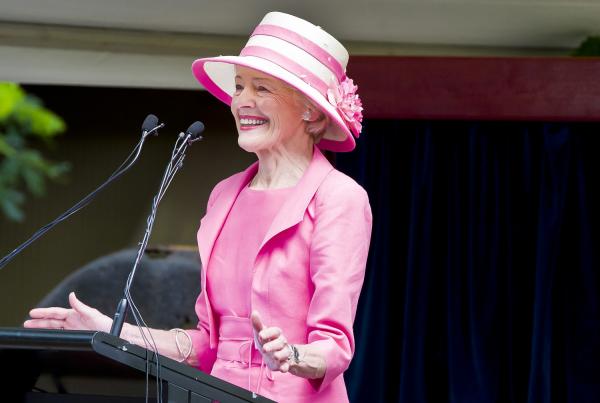
(Picture shows Dame Quentin Bryce opening the Defence Museum in Darwin)

Famous Name: Charles

26 Thursday Feb 2015

Posted by A.O. in Famous Names

≈ 6 Comments

Tags

Anglo-Saxon names, Australian idioms, Australian names, Australian slang, classic names, english names, famous namesakes, French names, German names, germanic names, name history, name meaning, nicknames, popular names, royal names, saints names

6126726-3x2-700x467

Famous Namesake
Fifty years ago, on February 12 1965, a bus left Sydney University on a two-week tour of rural New South Wales. Aboard was a group of 29 white and black activists, mostly students, who had been inspired by the American civil rights movement of the 1960s to protest in support of Indigenous civil rights.

The bus trip had been organised by Student Action for Aborigines, and their elected president was Charles “Charlie” Perkins, one of only two Indigenous students at Sydney University, and a huge fan of Dr Martin Luther King. The trip was later dubbed the Freedom Ride, after the famous Freedom Riders of the American civil rights movement, who took buses through the southern states in 1961 to protest racial segregation.

Some members of SAFA saw themselves as on a fact-finding mission to collect evidence of discrimination against Aborigines in rural Australia. At the time, many Australians believed racism was a problem which existed only in South Africa, or in the deep south of the United States. But the Australian Freedom Riders found that apartheid and segregation did not just happen overseas.

The SAFA were shocked to find the poor living conditions of most rural Aborigines, and that hospitals, schools, and churches separated black people from white in some country towns, as did milk bars, pubs, and cinemas. In others, Indigenous Australians were barred from entering swimming pools, clubs, or restaurants, while it was routine for them to be refused service in shops and businesses.

The students made several non-violent protests on their bus trip, and also tried to encourage Indigenous Australians to join their protests and demand better treatment. In Moree they helped Aboriginal children to go swimming at the pool in defiance of the race-based ban against them, and were greeted with hostility by white locals, who threw eggs, rotten fruit, and stones at the protesters while spitting at them. However, they were eventually able to persuade the town council to overturn the ban.

One of the students on the Freedom Ride was also an ABC journalist, and the SAFA had ensured plenty of media coverage on their bus trip – they even made the news internationally. With the events of the Freedom Ride appearing on television, radio, and in newspaper articles, and with the harsh injustice against Australian Aborigines exposed, it was no longer possible for white Australians to claim ignorance of racism in their own country.

Charles Perkins graduated from Sydney University with a Bachelor of Arts in 1966, becoming the first Indigenous Australian man to graduate from university. The following year, as manager of the Foundation for Aboriginal Affairs, he headed the campaign to advocate for a Yes vote in the Referendum which allowed Aboriginal people to be counted in censuses, and for parliament to be allowed to introduce legislation specifically for Aboriginal people. The Referendum passed, with more than 90% of Australians voting Yes.

He became a public servant with the Office of Aboriginal Affairs, and in 1981 was appointed Permanent Secretary of the Department of Aboriginal Affairs – the first Indigenous Australian to become permanent head of a federal government department. He took leadership roles in the Aboriginal community, and, being a former soccer player, was also appointed to key positions in football administration. He received many awards and honours during his lifetime.

On February 18 this year, his daughter Rachel Perkins was among those who took a bus from Sydney University in a re-enactment for the fiftieth anniversary of the Freedom Ride. Along the way, they were greeted warmly by the communities they entered, rather than having stones thrown at them or being run off the road, as a sign of how things have changed.

Although this year’s five-day bus trip could celebrate improvements in the lives of Indigenous Australians, such as being counted in the census and having access to the same education as white people, it also highlighted the disadvantages that many Aborigines continue to suffer, such as poverty, unemployment, health issues, higher rates of incarceration, and covert racism. The work of the Freedom Riders is by no means complete.

Name Information
Charles is the French form of the Germanic name Karal, which in modern German is Karl; it comes from the Germanic karlaz, meaning “a free man”. In Anglo-Saxon English karlaz became ceorl, denoting the lowest rank of freemen – a peasant who was neither a slave nor a serf. Ceorl does seem to have been used as a name in Anglo-Saxon England, even by royalty. By modern times, the word had become churl, understood as “a country person, someone of low social status”, and eventually seen as someone rude, loutish and vulgar – exhibiting what we call churlish behaviour.

The name has become widely known chiefly because of Charles Martel, a powerful Frankish military leader who never held the title of king, but nevertheless ruled Francia (modern France) as Duke and Prince, and divided the kingdom of the Franks between his sons, just as kings did. His grandson was Charles I, otherwise known as Charlemagne (Charles the Great), called “The Father of Europe”. He united western Europe and laid the foundations for modern France and Germany; his kingdom is known as the Carolingian Empire.

Little wonder the name Charles was a favourite in the French monarchy; the last one was Charles X, who ruled in the 19th century until being forced to abdicate and go into exile. This means that Charles remained a French royal name for over a thousand years.

The name Charles became used by British royalty due to the Stuart kings, who were Scottish; Scotland has long had ties with France. Charles I wasn’t a terrifically popular king, and fought against his enemies in the English Civil War. Losing that, he refused to accept the parliament’s demand for a constitutional monarchy, and was beheaded for treason. He is regarded as a martyr in Anglicanism.

England became a republic for a few years, until the monarchy was restored with the accession of Charles’ son. Charles II was known as the Merry Monarch for his decadent lifestyle, and although he couldn’t stick the parliament either, he managed to dissolve it without getting his head cut off.

We may get a King Charles III in the near future, although some are of the opinion that Charles is not a suitable name for a modern king. The first two Charleses were anti-parliament and resisted a constitutional monarchy, while Charles II is considered to have lived an “immoral” life that we now expect kings not to emulate. (Maybe the spaniels are also an issue). Prince Charles could rule under any of his names, and a popular belief is that he will choose to take the throne as George VII.

There are quite a number of saints named Charles, and several religious leaders, such as Charles Wesley, who co-founded the Methodist Church, and Charles Spurgeon, a famous Baptist preacher.

Famous people from Australian history include explorer Captain Charles Sturt; naval officer Sir Charles Fremantle, after whom the city of Fremantle is named; Charles La Trobe, first Lieutenant-Governor of Victoria; Sir Charles Menzies, founder of the city of Newcastle; astronomer and pioneering meteorologist Charles Todd; Charles Harpur, our first real poet; Sir Charles Kingsford Smith, World War I flying ace and pioneer aviator; Antarctic explorer Charles Laseron; distinguished film-maker Charles Chauvel; artist Charles Blackman; and brilliant neurosurgeon Charles “Charlie” Teo.

Charles is a classic name which has never left the charts, and barely been out of the Top 100. It was #7 in the 1900s, and reached its lowest point in the 1980s at #116. It was back on the Top 100 by the following decade, and since then its position has been fairly stable. In 2013, it was #81 nationally, #81 in New South Wales, #88 in Victoria, #85 in Queensland, #53 in Tasmania, and #86 in the Australian Capital Territory.

With Charles, you get a handsome, elegant classic and a solid, traditional name. Its history takes you back to European royalty, and Charles still feels regal and noble. However, lest the name feel too stiff and formal, it has a number of relaxed, casual nicknames.

Charlie is a popular name in its own right, while the older-style Chas is familiar from comedian Chas Licciardello. The vintage nickname Chilla, which appears to be uniquely Australian, is perhaps best known from 1950s Olympic athlete “Chilla” Porter. The American nicknames Chip and Chuck are rarely used here, probably because they mean “French fry” and “vomit” respectively in Australian English.

POLL RESULTS
Charles received an excellent approval rating of 82%, making it one of the top-rated names of 2015. People saw the name Charles as strong and handsome (18%), a name with history and substance (17%), and formal and elegant (15%). 16% of people thought the nickname Charlie was cute. However, 9% thought the name was too stuffy and old-fashioned. Only one person was bothered by the linguistic connection to the word churlish, and only one person thought the nickname Charlie was silly and childish.

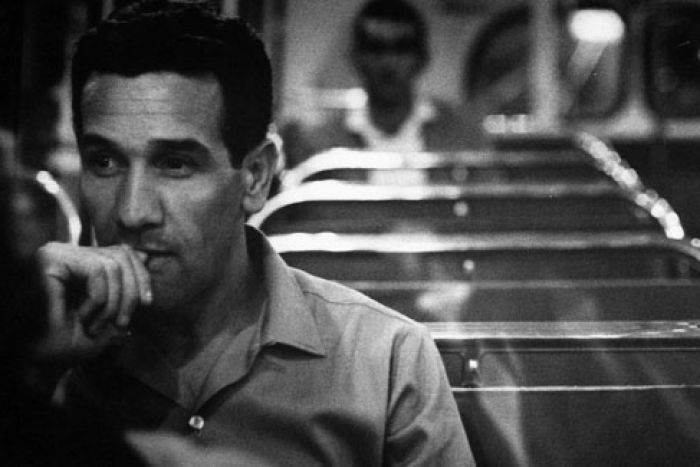
(Picture shows Charles Perkins on the “Freedom Ride bus trip; photo from National Geographic)

Famous Name: Georgina

18 Wednesday Feb 2015

Posted by A.O. in Famous Names

≈ 3 Comments

Tags

aristocratic names, birth notices, classic names, famous namesakes, fictional namesakes, honouring, middle names, names from television, nicknames, royal names, UK name popularity, underused classics, US name popularity

708662-gina-rinehart

Famous Namesake
The Channel 9 mini-series House of Hancock has just come to an end, having enjoyed a certain amount of notoriety and controversy. The series is based on one of Australia’s real life soap operas: the family of wealthy Western Australian mining magnate Lang Hancock.

The main focus of the mini-series is on the relationship between Lang and his daughter Georgina (called Gina), brought under pressure when the teenaged Gina married a man old enough to be her father, which is increased when freshly-widowed Lang married his Filipina maid, who was young enough to be his daughter. The story then follows Gina’s relentless rise to wealth and power as Lang’s heiress, accompanied by family ructions.

Gina Rinehart is the chair of Hancock Prospecting, founded by her father Lang. She is the richest person in Australia, and a few years ago was the world’s richest woman, but is now only the sixth-richest. She was named after her father, who has George as one of his middle names, while her middle name Hope is her mother’s name.

Mrs Rinehart took legal action against the makers of House of Hancock, with her lawyer calling the program “almost entirely fiction”, “replete with falsehoods”, and its depiction of true events as “twisted.” Part of her legal team’s argument was that actors in House of Hancock breached consumer law against misleading and deceptive conduct by pretending to be someone else. I can only think a lot of actors, if not all of them at some time or another, have similarly breached consumer law.

Her lawyers were successful: Gina was granted access to the second episode before it went to air, and certain cuts were hastily made to key scenes before the show went to air, leading to a very abrupt ending. Despite all the cuts, House of Hancock was a hit, attracting more than 25% of the audience, or nearly 2 million viewers per episode. Actress Mandy McElhinney (Rhonda from the AAMi commercials) has garnered praise for her outstanding performance.

Although the details haven’t been made public, apparently one of the things Gina objected to was her father’s ghost coming back to chat with her, which she assures us did not happen. I for one believe her story, and don’t need a lawyer to convince me. She also says that she never fought with her stepmother, and in fact never spoke to her at all, painting a picture of happy family life in the process.

Despite making sure that House of Hancock came with a disclaimer that it had been fictionalised for dramatic purposes and was not a documentary, Gina Rinehart is still fuming, and will now sue Channel Nine for defamation. No stranger to the courtroom, she mounted an eleven-year legal battle against her stepmother Rose Porteous, claiming that she had hastened Lang Hancock’s death (the coroner determined he had died of natural causes). In turn, Gina has been in a long-running legal feud with her children over the family trust.

So that’s Georgina Rinehart – large, in charge, rich as filth, and liable to sue you if you claim she talks to ghosts and her stepmother.

Name Information
Georgina is a feminine form of George. Like its male counterpart, it has been in use for many centuries, but only gained prominence after the House of Hanover began to rule Britain in the 18th century, with George becoming a traditional royal name.

Georgina has been used as a middle name in the royal family – an example is Princess Maud of Fife, grand-daughter of Edward VII. It’s also been used by the aristocracy: Georgina Ward, Countess of Dudley, was one of the great beauties of the Victorian era, while Georgina Gascoyne-Cecil, Marchioness of Salisbury, was the wife of British prime minister, Lord Robert Cecil.

Georgina has been rather a favourite for characters in children’s literature, with the best known perhaps Georgina Kirrin from Enid Blyton’s Famous Five series. Georgina is a tomboy who is always called “George”. In the TV series Gossip Girl, the character of Georgina Sparks has been turned into one of the show’s villains; she goes by “Georgie”.

Georgina is an underused classic name which has never left the charts, yet never been popular. It was #171 in the 1900s, and hit its peak in the 1970s at #109 – it may not be a coincidence that the Famous Five series was on TV in that decade. Currently it is around the mid-200s, and I see the name Georgina quite often in birth notices.

Georgina is more popular in the UK, where it is #173 and falling, but doesn’t chart in the US. This gives it a rather “British” feel, although it’s used internationally, including in Spain, the Netherlands, and Central and Eastern Europe.

This is a stylish yet solid choice which has all the advantages of a classic name that doesn’t feel dated, without any popularity to worry about. It has a rather upper middle class image in Australia, but has a number of breezy, carefree nicknames to go by, including George, Georgie, Gia, Gina, Ginny, Gigi, and Nina.

POLL RESULTS
Georgina received a creditable approval rating of 73%. People saw the name Georgina as familiar without being common (21%), and stylish and classy (16%). However, 10% were put off the name by Gina Rinehart.

(Photo of Gina Rinehart from news.com.au)

Famous Name: Liberty

12 Thursday Feb 2015

Posted by A.O. in Famous Names

≈ Comments Off on Famous Name: Liberty

Tags

car names, english names, famous namesakes, fictional namesakes, historical records, middle names, mythological names, name history, name meaning, names from movies, names of businesses, nicknames, surname names, UK name popularity, unisex names, US name popularity, virtue names, vocabulary names

B86XPzcCMAA8YGz

On February 1, award-winning Latvian-Australian journalist Peter Greste was freed from the Egyptian prison where he had been confined for 400 days. While on temporary assignment for news service Al Jazeera in Egypt, Peter was arrested with two of his colleagues in December 2013, charged with aiding the outlawed Muslim Brotherhood. After a farcical show-trial in which no evidence was presented, the three of them were sentenced to seven to ten years imprisonment as terrorists.

Regarded as political prisoners by the international community, there has been a concerted global campaign by journalists to free the Al Jazeera staff, using the slogan: Journalism is not a crime. Along with diplomatic negotiations, this resulted in a retrial being announced, followed by Peter being deported to Australia.

Peter kept himself sane in prison through exercise and meditation, and undertaking a degree in International Relations. He thought of the things he wanted most – to watch the sunset, to see the stars in the sky, and to feel sand between his toes.

Once released, he tweeted a photo of himself at the beach in Cyprus, saying how sweet freedom was. Peter is elated to be back with his family, but is concerned about his colleagues Mohamed Fahmy and Baher Mohammad, who are still in prison. Let the campaign to free Al Jazeera staff continue until they all can be at liberty.

The word liberty means “freedom”, ultimately from the Latin libertas. Libertas was the Roman goddess of liberty.

Our modern ideal of political liberty comes from the ancient Greeks, and is closely bound up with democracy. A free society, where all citizens live in liberty, is generally seen as one where slavery does not exist, and where everyone has equal political rights.

Liberty, in conjunction with equality and fraternity, was the catch-cry of the French Revolution, now the motto of modern France. For a time, Lady Liberty replaced the Virgin Mary on altars, and the French Republic symbol of Marianne portrays the goddess of Liberty, an allegory of democracy, reason, and freedom.

Liberty has also been a guiding principle for the United States, with the the Declaration of Independence promising “Life, Liberty, and the Pursuit of Happiness”, while Abraham’s Lincoln’s Gettysburg Address speaks of a nation “conceived in liberty”.

The Pledge of Allegiance offers fealty to a nation who stands for “liberty and justice for all” (taken directly from the French motto), and the patriotic song My Country, ‘Tis of Thee praises the “sweet land of liberty” – referenced in Martin Luther King’s I Have a Dream speech.

As a sign of their shared love for the ideal of liberty, the people of France gifted the people of the United States with a giant statue of Liberty Enlightening the World, known as the Statue of Liberty. Standing on Liberty Island in New York City’s harbour, it is one of America’s best known icons, symbolically welcoming immigrants to a land of freedom.

Liberty is also a Christian virtue, symbolising being set free from the slavery of sin. There are several mentions of liberty in the Bible, including the quote from Leviticus which is written on the Liberty Bell in Philadelphia: Proclaim liberty throughout all the land unto all the inhabitants thereof.

Liberty has been used as a personal name since the 18th century – the time of the French Revolution and the American War of Independence. In the beginning, it was far more common in America, strongly resonating with the American desire for freedom. The name Liberty was given from the time of the first protests against British taxation, under the Liberty Tree in Boston.

In the United Kingdom, the name Liberty was particularly associated with Kent during the 18th century. Kent has long been an area of military importance, and Chatham Dockyard on the River Medway built naval ships for centuries. During the 18th century, the UK was at war with France and Spain, and Kent was a major centre for the defence of Britain. Interestingly, many of the Libertys were born around the Chatham area.

Liberty is often thought of as a “hippie” name, symbolic of the flower child yearning for personal freedom. However, it must have many times been given patriotically, with political freedom in mind.

Historically, Liberty has been given to boys more commonly than to girls, perhaps because it has often been connected with military events and political power. The goddess Liberty (“Lady Liberty”) certainly helps give it a feminine air, and these days it is thought of as a primarily female name, although the film The Man Who Shot Liberty Valance (with Lee Marvin in the title role) is a reminder of its unisex status.

The name Liberty turns up on the US Top 1000 at three historically apt moments. First in 1918, at the end of World War I, then in 1976, in the American bicentenary, and it has been on the charts since 2001, the year of the September 11 terrorist attacks in New York and Washington. Currently it is #532 and fairly stable.

Liberty is most popular in the UK, where it is associated with the prestigious Liberty department store in London’s West End, which has been selling luxury goods since the 19th century. (The store’s name has nothing to do with freedom, but is named after its founder, Arthur Liberty, whose surname means “lead worker”). Liberty silks and prints have helped give it a fashionable air.

Having been in the Top 500 since before 1996, Liberty peaked in 2003 at #157, when conservative MP George Osborne chose it for his daughter, perhaps giving it an aristocratic stamp. The name had a small boost of popularity after the 2005 London Bombings, and is currently #373.

Liberty has never charted in Australia, and is a rare find in historical records here, more often used in the middle. It does seem to have been fairly evenly chosen for both boys and girls in the late 19th century. A famous Australian with the name is Liberty Wilson, the sister of comedian Rebel Wilson, while one with Liberty as his middle name is Walter Liberty Vernon, the architect who designed the Art Gallery of New South Wales.

Liberty is an interesting virtue name that is very rare in Australia compared to its use in the UK and US. I can see it appealing to a wide variety of people from all walks of life, and a broad spectrum of political views. Libby or Libbie is the obvious nickname, but for a boy named Liberty, or for a girl who wants a boyish nickname, there is always Berty. In Australia, Liberty Eggs may be a slight issue, although free range chickens seem a positive thing to me, while the Subaru Liberty makes this a car name.

POLL RESULTS
Liberty received a decent approval rating of 68%. People saw the name Liberty as interesting and different (24%), having a wonderful meaning (22%), and pretty or beautiful (16%). However, 14% thought it was too hippy-dippy. 2% of people were reminded too strongly of the Liberty Subaru or Liberty eggs.

← Older posts
Newer posts →

Enter your email address to follow this blog

Categories

Archives

Recent Comments

A.O.'s avatarwaltzingmorethanmati… on Zarah Zaynab and Wolfgang…
Madelyn's avatarMadelyn on Zarah Zaynab and Wolfgang…
JD's avatardrperegrine on Can Phoebe Complete This …
A.O.'s avatarwaltzingmorethanmati… on Rua and Rhoa
redrover23's avatarredrover23 on Rua and Rhoa

Blogroll

  • Appellation Mountain
  • Baby Name Pondering
  • Babynamelover's Blog
  • British Baby Names
  • Clare's Name News
  • For Real Baby Names
  • Geek Baby Names
  • Name Candy
  • Nameberry
  • Nancy's Baby Names
  • Ren's Baby Name Blog
  • Sancta Nomina
  • Swistle: Baby Names
  • The Art of Naming
  • The Baby Name Wizard
  • The Beauty of Names
  • Tulip By Any Name

RSS Feed

  • RSS - Posts

RSS Posts

  • Celebrity Baby News: Melanie Vallejo and Matt Kingston
  • Names from the TV Show “Cleverman”
  • Can Phoebe Complete This Sibset?
  • Zarah Zaynab and Wolfgang Winter
  • Baby, How Did You Get That Name?
  • Celebrity Baby News: Media Babies
  • Celebrity Baby News: Adelaide Crows Babies
  • Celebrity Baby News: Chris and Rebecca Judd
  • Names at Work: Name News From the World of Business and Employment
  • Celebrity Baby News: Sporting Round Up

Currently Popular

  • Rare Boys Names From the 1950s
  • Celebrity Baby News: Livinia Nixon and Alistair Jack
  • Girls Names From Stars and Constellations
  • The Top 100 Names of the 1940s in New South Wales
  • Celebrity Baby News: Melanie Vallejo and Matt Kingston

Tags

celebrity baby names celebrity sibsets english names famous namesakes fictional namesakes honouring locational names middle names name combinations name history name meaning name popularity name trends nicknames popular names saints names sibsets surname names twin sets unisex names

Blog at WordPress.com.

Privacy & Cookies: This site uses cookies. By continuing to use this website, you agree to their use.
To find out more, including how to control cookies, see here: Cookie Policy
  • Subscribe Subscribed
    • Waltzing More Than Matilda
    • Join 517 other subscribers
    • Already have a WordPress.com account? Log in now.
    • Waltzing More Than Matilda
    • Subscribe Subscribed
    • Sign up
    • Log in
    • Report this content
    • View site in Reader
    • Manage subscriptions
    • Collapse this bar
 

Loading Comments...