• About
  • Best Baby Names
  • Celebrity Baby Names
  • Celebrity Baby Names – Current
  • Celebrity Baby Names – Past
  • Featured Boys Names
  • Featured Girls Names
  • Featured Unisex Names
  • Links to Name Data
  • Waltzing on the Web

Waltzing More Than Matilda

~ Names with an Australian Bias of Democratic Temper

Waltzing More Than Matilda

Tag Archives: US name popularity

Famous Name: Milo

17 Wednesday Jun 2015

Posted by A.O. in Famous Names

≈ 6 Comments

Tags

animal names, brand names, European name popularity, famous namesakes, food names, germanic names, Greek names, locational names, name history, name meaning, names from films, rare names, UK name popularity, US name popularity
10432144_888450784521840_5322624102103057321_n

Famous Namesake
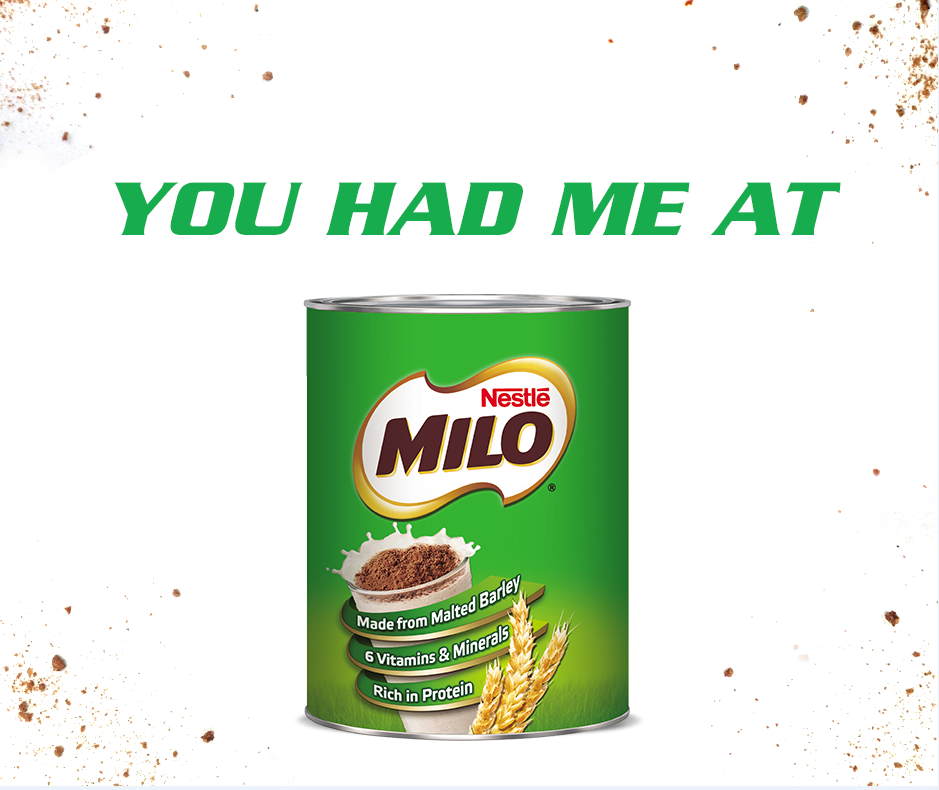
The formula for Milo was changed recently, leading to an outpouring of complaints to the company – but only in New Zealand. Apparently they’ve had the vanilla removed, and this doesn’t affect Australia, as we didn’t have any vanilla to start with. I knew that Milo was sold all over the world (it’s very big in Malaysia, I’ve heard), but didn’t realise that every country gets their own formulation of Milo.

Milo is a cocoa powder and malt drink sold in a bright green tin. It was created by Australian inventor Thomas Mayne and launched at the 1934 Royal Easter Show, in an attempt to improve the diets of Australian children. Rich in carbohydrates and an easy way to add calories, Milo has a host of vitamins added to it – a boon to Depression-era parents worried about their malnourished tots.

Even though our diets are no longer very deficient in calories, carbohydrates and vitamins, Milo is still popular, and marketed as a nutritious energy drink. You can also buy Milo chocolate bars and Milo breakfast cereal, rather less convincingly flogged to parents as a healthy option that will fill your kids with the sort of powerful energy needed to win sporting events sponsored by Milo.

Milo has an appealing crunchy texture which Thomas Mayne tried very hard to eradicate, until he discovered that people liked it. Instead of dissolving completely in milk, Milo will sit on top, forming a crust that can be eaten – in Australia, chocolate milkshakes are already crunchy …. You can use Milo to cook with (Milo banana bread is pretty good), although a favourite way to enjoy Milo is sprinkled on top of vanilla ice cream.

Milo is named after Milo of Croton, an ancient Greek wrestling champion who won six times at the Olympic Games, and numerous other titles. His hometown of Croton, in Sicily, was famous for producing great athletes. A legend in his own lifetime, he was said to be of superhuman strength, and likened to the demigod Hercules – he supposedly took part in a great military victory dressed in a lion-skin.

Just as Milo of Croton was a sporting hero who performed mighty feats of endurance, so too are you supposed to become strong and athletic by drinking Milo. However, its real strength is as a cultural icon that generations of us have grown up drinking. Rather than shuffling into slippers and becoming a nostalgic comfort food, 81-year-old Milo continues to pull on its running shoes and go and go and go!

Name Information
The ancient Greek name Milo, as held by Milo of Croton, and the inspiration for the chocolate drink, is believed to be from milou, a pre-Hellenic word for “sheep”. Could you get a name meaning more appropriate for an Australian or New Zealand child, as sheep farming has been so important to both countries? In modern Greek, Milo means “apple”, and you will sometimes see the name translated that way.

Even if you haven’t heard of Milo of Croton, you must surely have heard of the Venus de Milo, the 2nd century marble statue of Aphrodite which was found on the island of Milos (also called Milo and Melos) in the 19th century. It is now in the Louvre in Paris, admired as the height of feminine grace and beauty, although without any arms.

There are many folk tales as to how the Greek island received its name. One is that it was named after Milos, the son of a river god, who colonised the island under the direction of the goddess Aphrodite. He was so handsome that three goddesses vied for his affection, and he was eventually rewarded with the apple that Paris of Troy awarded to Aphrodite as the most beautiful of all. Another is that he was a handsome young man who was a close friend of the god Adonis: when Adonis died, he hung himself on an apple tree in despair. These both sound like the modern “apple” meaning has influenced the stories.

Another has a feminine source for the name, telling of a Cretan maiden named Melis who threw herself into the sea to escape an unwanted lover. She drowned, but the waves carried her to the island of Milos, where she was worshipped as a nymph. Her name comes from the ancient Greek for “bee”, the source of Melissa: bee goddesses were worshipped on Crete.

Despite these romantic etymologies offered for the island, sheep were a vital part of the island’s economy even in prehistoric times, and a ram was the island’s symbol, used on coins. It is far more likely that the island was named after these important animals. It is unclear to me if people named Milo were named after the island, but given the apparent antiquity of its name, it doesn’t seem implausible.

Milo is also a Germanic name, of uncertain meaning. It may come from an ancient Germanic root meaning “mild, gentle”, or is possibly even related to those Slavic names formed from the root milu, meaning “grace, favour”, or “dear”. The name was introduced to England by the Normans in the form Miles, which was Latinised back to Milo – although a person documented as Milo would presumably have been known as Miles in everyday life.

Milo is #311 and rising in the US, and #159 and rising in the UK. Also rising in France and the Netherlands, it is a popular name in Sweden at #58.

The name Milo is rare in Australia because of the chocolate-flavoured drink, even though there’s nothing negative about the drink Milo, and Coco is a hip name which sounds exactly like cocoa. A straw poll I conducted suggested that many people still connect it with the classic children’s movie, Milo and Otis – not only was that a long time ago now, but Otis is in reasonable use, and very fashionable!

Milo is a boy’s name that sounds rather cute, but has a powerfully masculine namesake, suggesting it could work well on both a little boy and a grown man. I think it makes a hip choice, and suspect that if it wasn’t for the drink in the familiar green tin, it would be rising in line with international trends. Anyone worried about the drink might prefer to give it a more European pronunciation – MEE-lo.

POLL RESULTS
Milo received a decent approval rating of 66%. 24% of people thought Milo was hip and cool, and 21% saw it as a name that was adorable on a little boy and handsome on a grown man. However, 15% believed it was too closely associated with the chocolate drink and associated products. Only one person thought it was strong and sexy, only one thought it was nerdy, and just one thought it didn’t seem masculine enough for a boy’s name.

(Photo from Milo’s Facebook page)

Famous Name: Humphrey

10 Wednesday Jun 2015

Posted by A.O. in Famous Names

≈ Comments Off on Famous Name: Humphrey

Tags

animal names, aristocratic names, Disney names, famous namesakes, fictional bears, fictional namesakes, germanic names, honouring, Irish names, name history, name meaning, names from television, nicknames, Old English names, rare names, royal names, saints names, Shakespearean names, surname names, UK name popularity, US name popularity, vintage names

PH_greenguideJAN2_wide_networking-20140101124709427910-620x349

Famous Namesake
May 24 marked the 50th anniversary of Humphrey B. Bear‘s first television appearance, on the Channel Nine’s children’s program, Here’s Humphrey in 1965. I cannot say it was Humphrey’s birthday, because he is eternally four years old, and can never age.

He was originally named Bear Bear, but feeling that this perhaps lacked some imagination, the makers of the show ran a competition, and he was renamed Humphrey B. Bear, with his middle initial standing for Bear. I’m not sure whether the contest winner had ever heard of Walt Disney’s Humphrey Bear (who debuted in 1950), but the coincidence is remarkable.

In the show, the honey-loving Humphrey lives in a tree-house in the middle of the magic forest, and loves to explore, play, dance, spend time with friends, and use his imagination. Humphrey is prone to accidents and often makes mistakes – as the theme song says, He’s a funny old fellow who gets in all manner of strife. Humphrey never speaks, but has a companion and assistant who serves as narrator.

Here’s Humphrey is one of the most successful programs for preschoolers in Australia, and is second only to Playschool for longevity. It won Logies for Best Children’s Series, and Humphrey himself has won a number of awards, including Citizen of the Year in 1994. He still makes frequent public appearances, including to sick children in hospitals, and to promote road safety.

Humphrey made generations of children smile, but there was an inner sadness to the outwardly happy bear. The first performer to play Humphrey, often considered the best of all time, was a talented actor, dancer and playwright named Edwin Duryea – aptly nicknamed “Teddy”.

Constrained by the anonymity of the role, he came to resent it, and led a lonely life. Teddy died a few years ago, and with no known family, was given a pauper’s funeral (Channel Nine wouldn’t pay to bury the actor who had made Humphrey a star). There are no photos of Edwin as Humphrey, as it is considered sacrilege to dispel the illusion that Humphrey isn’t “real”.

There is no doubt that playing Humphrey could be challenging: the bear suit is very hot, just for a start. That may not be a problem in Humphrey’s future, as discussions are underway to turn Humphrey B. Bear into an animated series – and if it goes ahead, he will have a voice at last!

Name Information
Humphrey is derived from the ancient Germanic name Hunfrid, which probably means “to grant peace”, but is often translated as “peaceful warrior”.

There is a 9th century French saint called St Hunfrid, and because of him the name Humphrey was introduced to England by the Normans, where it quickly overtook the Old English form, Hunfrith. In Ireland, it was used to Anglicise Amhlaoibh, which is the Irish form of Olaf.

The name Humphrey was a common one amongst the Norman aristocracy, and one of the first bearers to come to England was the strikingly named Humphrey with the Beard, who fought at the Battle of Hastings. His nickname came about because it was unusual for Normans to have a beard at that time – the fashion was for a clean-shaven look. Bearded Humphrey was the founder of the noble de Bohun family, and his name became traditional amongst the Bohuns.

One of their line was Humphrey of Lancaster, called the “son, brother, and uncle of kings”. He was the son of King Henry IV by his wife Mary de Bohun, the brother of Henry V, and the uncle of Henry VI. Romantic and chivalrous, he was a successful military strategist and diplomat, and a scholarly patron of the arts. Popular with the public, he was disgraced when his second wife was found guilty of witchcraft (she consulted an astrologer and sought herbal fertility treatment). He appears as a character in Shakespeare’s Henry VI – one of the few historical people to be shown in an almost completely positive light.

A famous namesake of modern times is American film star Humphrey Bogart, an iconic leading man of the 1940s who appeared in such classics as The Maltese Falcon and Casablanca. He usually played a cynical tough-guy character, who would prove in the end to have his heart generally in the right place. A true screen legend, he is often regarded as the greatest Hollywood actor of all time. Humphrey Bogart was named for his mother’s maiden name – he was the son of artist Maud Humphrey.

The name Humphrey is a favourite for all kinds of animals, both in real life and in fiction. One example is the cat Humphrey, who was chief mouser at Number 10 Downing Street for many years, until apparently ousted by the Blairs. Cat Humphrey was named after Sir Humphrey Appleby, the urbanely Machiavellian bureaucrat from Yes, Minister and Yes, Prime Minister. The name has also been given to a real life humpback whale, and a camel on The Simpsons, because the name starts with the word hump.

Although never going out of use, the name Humphrey peaked in the 19th century, and isn’t very common. It has never charted in Australia, and is rarely seen today, although there are many examples in historical records. In England/Wales, Humphrey peaked in the 1860s in the mid-100s; in 2013, 20 baby boys were named Humphrey. In the US, Humphrey peaked in 1893 at #650, leaving the Top 1000 a year or two later. Last year less than 5 babies received the name Humphrey in the US.

Humphrey is a rare vintage name, and one that seems rather cuddly and lovable – which is probably why it’s often been chosen for animals, such as friendly bears! It’s an interesting, upper class, and somehow quite a sweet name, but I’m not sure if Humphrey B. Bear is much help to it. Apart from the familiar song about the “funny old fellow”, there has been a rather mean tendency to poke fun at the iconic bear, and even to make lewd jokes at his expense. With the possibility of Humphrey returning in animated form, will this help give the name more publicity, or make it less appealing?

POLL RESULTS
Humphrey received an approval rating of 32%. People saw the name Humphrey as old-fashioned and comical (19%) and too strongly associated with Humphrey B. Bear (15%), while 18% found the “hump” in the name off-putting. However 8% of people thought it was a vintage charmer.

The Fastest Rising Top 100 Names of 2014

31 Sunday May 2015

Posted by A.O. in Naming Issues

≈ 1 Comment

Tags

birth notices, classic names, famous namesakes, fictional namesakes, name trends, names from films, New Zealand name popularity, nicknames, popular names, retro names, royal names, US name popularity

beautiful-garden-sepia-print3

GIRLS

Hazel
Hazel just joined the national Top 100 as its fastest-rising name, going up 63 places to make #88: the last time it was a Top 100 name was in the 1940s. Hazel was also new to the Top 100 in New South Wales, Victoria, and Tasmania, and one of the Apple Isle’s fastest-rising names. The catalyst for Hazel’s debut in the Top 100 is last year’s teenage tearjerker, The Fault in Our Stars, based on the novel by John Green, and with Shailene Woodley in the role of Hazel. A fashionable retro name with a cool Z sound, chosen by several celebrities, Hazel was due for popularity. Just outside the US Top 100, it’s aready in the Top 50 in New Zealand.

Aria
Aria has been on the Top 100 since 2012, and in 2013 was the #1 fastest-rising name nationally. Last year Aria was the #1 fastest-rising name in New South Wales and Western Australia, and also rose significantly in Victoria and South Australia. I saw many more baby girls named Aria in birth notices too, so this pretty name is still going strong.

Ariana
Hard on Aria’s heels is Ariana, which just squeaked into the national Top 100 in 2013. Last year it was the #1 fastest-rising name in Tasmania, and rose 27 places to become one of the fastest-rising names nationally. It was also one of the fastest-rising names in New South Wales and Queensland. The major influence on the popularity of this name is American pop singer Ariana Grande, who has a couple of Australian connections: she dated Jai Brooks from The Janoskians in 2013/14, and her 2014 song Problem featured Iggy Azalea: it was Grande’s first Top Ten hit in Australia. Not only a multicultural choice, Ariana benefits from looking like an elaboration of Aria (it isn’t though).

Eleanor
Eleanor was new to the national Top 100 last year, and one of the fastest-rising names, as it went up 31 places to debut at #84: a classic never off the charts, Eleanor has not been in the Top 100 since the 1900s. It was also one of the fastest-rising names in New South Wales and Queensland. This is in line with international trends, as Eleanor joined the US Top 100 last year, and has been Top 100 in the UK for decades. Elegant Eleanor fits in with the trend for El- names for girls, and can be shortened to Elle, Ella, Ellie, Nell, Nellie, and Nora, among others. Such a lot of popular and fashionable nicknames!

Evelyn
Evelyn has been on the national Top 100 since 2011, and is a classic name which was last on the Top 100 in the 1940s. One of the fastest-rising names of 2013, Evelyn continues its ascent, as last year it was a fast-rising name in New South Wales, Queensland, and Western Australia. I saw an increase of Evelyns in birth notices during 2014.

BOYS

Maxwell
Maxwell was new to the Top 100 last year, and was the #1 fastest-rising name nationally, going up 43 places to debut at #97. It was also one of the fastest-rising names in Victoria and the Australian Capital Territory. Maxwell is a classic name never off the charts, and was last in the Top 100 during the 1950s. Fitting in with the trend for boys’names that shorten to Max, Maxwell is rising in the both US and UK, but has not yet become popular in either. Because of the Victorian connection, I wonder if the retirement of Nick Maxwell, captain of Collingwood, had any effect.

Fletcher
Fletcher joined the Top 100 last year, and went up 26 spots to make #99. It also joined the Top 100 in Victoria, Queensland, and the Australian Capital Territory, having already been Top 100 in Tasmania for some time. Although Fletcher was not a fast-rising name in any particular state or territory, that’s because it is so new on the charts that there is no data yet for that to show up. Fletcher has been rising in the charts since the 1990s, and has been a Top 100 name in New Zealand since 2010: it is still quite a way off becoming popular in either the US or UK, so this is a Trans Tasman trend.

Harvey
Harvey debuted on the Top 100 last year, rising 20 places to reach #84; this made it one of the fastest-rising names nationally, and it also rose significantly in Victoria and the Australian Capital Territory – which seem to have a strong influence on the Top 100 for boys’names this year! A retro name which charted from the 1900s to the 1950s, rejoining the charts in the 1990s, Harvey has never been on the Top 100 before. It’s been a popular name in the UK since the late 1990s, so it’s in line with British trends. The death of veteran journalist Peter Harvey in 2013 may have been on influence on its rise.

George
George is a solid classic which has never been out of the Top 100, but last year it joined the Top 50 for the first time since the 1970s. After the birth of Prince George, the name George became one of the fastest-rising names of 2013, and its upwards progress continues. One of the fastest-rising names in New South Wales and Victoria, I saw many more Georges in birth notices, especially from rural and regional areas.

Nate
Nathaniel was one of the fastest-rising names of 2013, and last year more parents opted to go straight for the short form, Nate, which was one of the fastest-rising names in both New South Wales and Victoria. Nate has been in the charts since the early 2000s, and is only popular in Australia, although it once made the bottom of the Top 100 in New Zealand, and is rising in the UK.

NOTE: A quick reminder that the fastest-rising names of 2013 were Aria, Evelyn, Penelope, Samantha and Lola for girls, and Louis, Hudson, Nathaniel, George and Lincoln for boys.

I have chosen those names which increased in popularity in the most number of states and territories, making their popularity widest across the board in Australia. For the positions of each name in individual states and territories, please refer to the Name Data category for more information.

POLL RESULTS
People’s favourite fastest rising names were Hazel, gaining 38% of the vote, and Maxwell, gaining 27% of the vote (George was close behind on 26%). The least favourite were Ariana (7%), and a tie between Harvey and Nate (15%).

Famous Names: Guy and Vienna

27 Wednesday May 2015

Posted by A.O. in Famous Names

≈ 1 Comment

Tags

aristocratic names, Celtic names, famous namesakes, fictional namesakes, French names, germanic names, Italian names, Latin names, locational names, name history, name meaning, name popularity, Norman-French names, saints names, surnames names, UK name popularity, US name popularity

AUSTRIA EUROVISION SONG CONTEST 2015

This year was the 60th anniversary of Eurovision, hosted by last year’s winner, Austria, and the finals held in Vienna on May 23. The contest was won by Sweden, with heavily favourited Måns Zelmerlöw’s Heroes storming to victory, the sixth time Sweden has been the winner. Austria was the wooden spooner this time, with not a single point – the first time a host country has received zero points. (Seriously what happened, the song wasn’t that bad?).

The big excitement for Australia was that we were finally allowed to compete, chosen as a wildcard entrant, and being given an automatic slot in the final (if you’re wondering how you receive this honour, you pay for it, with SBS stumping up the costs). We sent pop star (and twice-time celebrity dad) Guy Sebastian, performing Tonight Again, written especially for Eurovision. We came a creditable fifth, and Tonight Again is tearing up the iTunes chart in Europe, predicted to be one of the biggest hits of the northern summer.

In fact, Australia impressed enough that they haven’t ruled out asking us back next year. The theme of Eurovision 2015 was “Building Bridges”, and maybe they can build a bridge all the way to Oz.

GUY
Guy is the Norman-French form of the Germanic name Wido, a short form of names such as Witold and Widukind, based on the word witu, meaning “wood”. It was introduced to England by the Normans, and was a fairly popular name. There are a couple of saints named Guy, and the name was also used to Anglicise the name of Saint Vitus, whose Latin name means “life”.

Another influence may have been the legendary medieval hero Guy of Warwick. In the story, Guy falls in love with a fair lady named Felice, who is much posher than him. In order to win her, he must prove his worth by battling dragons, giants, huge wild boars, and a particularly savage cow. After marrying Felice, he soon feels remorseful for his acts of violence, and goes on pilgrimage to the Holy Land, eventually ending his long life as a hermit in a cave. It all sounds a bit pointless to us cynical moderns, but Guy was greatly admired, and the name Guy became traditional in the Beauchamp family, the earls of Warwick.

The name had already become relatively uncommon when it was chosen for Guy Fawkes in the 16th century, and it is conjectured that the name was slightly more popular in Yorkshire because of a famous local judge named Sir Guy Fairfax (records show Guy was still getting some use in Warwick, because of the legendary hero, and was a particular favourite in Gloucestershire, where there was a noble family named Guy – whose surname came, not from the personal name, but from the French place name Guise).

Guy Fawkes is infamous for his role in the Gunpowder Plot, where a small group of Catholics planned to assassinate the Protestant King James I and his government by blowing up Parliament House with gunpoweder. They would then kidnap King James’ nine-year-old daughter, Princess Elizabeth, and place her on the throne as a Catholic monarch (Elizabeth Stuart was a Protestant, but the conspirators planned to raise her as a Catholic and marry her to a Catholic when she was old enough).

It was an outrageous plan, fortunately foiled by the Plotters themselves, when they sent out letters to Catholic parliamentarians, telling them to stay away lest they get blown sky high. The letters were thought to be a hoax, but the king ordered the cellars under the parliament to be searched just in case, and Guy Fawkes was discovered there shortly after midnight on November 5 in 1605, along with enough gunpowder to reduce the House of Lords to rubble, and a fuse ready for lighting.

At first Fawkes was steadfast in his refusal to name his co-conspirators, or to reveal his identity, earning the king’s admiration. However he didn’t admire him enough not to have him tortured, and after several days of it Fawkes was eventually broken. The Plotters were all found guilty of high treason and sentenced to be hung, drawn, and quartered. Fawkes asked forgiveness of the king and the state before breaking his neck on the noose before he could be hung.

The first Guy Fawkes Night was held on November 5, when the people were encouraged to light bonfires to celebrate the king’s escape from assassination, and it went swimmingly enough that it was officially designated a day of thanksgiving until the mid 19th century. Bonfires were later supplemented by fireworks, and the custom was to burn an effigy (often of the pope). In modern times, effigies have included unpopular public figures, such as Margaret Thatcher, but the classic “guy” is of Guy Fawkes himself.

You would think that would-be domestic terrorist Guy Fawkes would have doomed the name Guy for good and all, but in fact the name became more popular after his death. It received a boost from William Harrison Ainsworth’s popular 1841 historical novel Guy Fawkes, which showed Fawkes in a sympathetic light, and urged toleration of faith at a time of anti-Catholic sentiment.

After this, Guy Fawkes often appeared as an action hero in pulp fiction, and the Fawkes mask has become a symbol of protest against tyranny, used by the Occupy movement, Anonymous, and WikiLeaks, amongst others. In Ray Bradbury’s Fahrenheit 451, the protagonist is named Guy, a state book-burner who eventually rebels. In the Harry Potter series, Fawkes was a phoenix, the pet of Dumbledore, and extremely loyal; the Order of the Phoenix is a secret organisation headed by Dumbledore intended to fight the tyrannical reign of Voldemort.

Guy’s name has entered the English language – originally a bizarrely-dressed person was called a guy, after the effigies on Guy Fawkes Day, dressed in old clothes. Now a guy just means any man, a bloke, a dude, a feller. More generally, it can just mean a person, because it’s possible to address a group of people of either or both genders as “you guys”.

The name Guy was #201 in the 1900s, and left the charts in the 1920s, not returning until the 1940s, at #224; perhaps British World War II hero Guy Gibson, of “dam busters” fame, was a help. Guy peaked in the 1970s at #113, and then steadily fell. It hasn’t charted since the late 2000s. Guy has similarly fallen out of fashion in the UK and US; it was #560 in England/Wales in 2013, while last year 156 boys were named Guy in the US.

Guy is a handsome name, but the word guy to mean a man or a person has not been a help to its dwindling use. However, this is an underused traditional name, connected with heroes and antiheroes alike, and has a rebellious, even bad boy, link. Give your son this name, and he might just consider himself the luckiest Guy in the world.

VIENNA
Vienna is the capital of Austria, and one of the great cities of Europe. Vienna is called The City of Music, for many great composers have lived and worked here, including Mozart, Haydn, Beethoven, Schubert, Brahms, and Mahler. It is also called The City of Dreams, as the home of pioneering psychoanalyst Sigmund Freud. A beautiful baroque city and major cultural centre, it has been ranked as the city with the world’s best quality of life.

The name English-speakers use for the city is Vienna, the Italian form of the official German name Wien. As the site of Vienna was settled by Celts, it is thought to come from the Celtic root windo, meaning “white, fair” (the basis for the Irish Fionn and the Welsh Gwyn). Another theory is that it comes from the Celtic Vedunia, meaning “forest stream” – the stream would presumably be the River Wien which runs through Vienna. Others believe that it comes from the Roman settlement, fortified in 15 BC and given the Celtic name Vindobona, which might mean something like “white land, fair land”.

The name Vienna must have been in some use in the Middle Ages, for St Francis of Paola’s mother was named Vienna da Fuscaldo. It’s been in use as an English name since the 18th century, and can be found in Italy at the same time, probably because of the saintly connection. Modern namesakes include Joan Crawford’s gutsy saloon-keeper character in the 1950s western, Johnny Guitar, and American indie singer-songwriter Vienna Teng (real name Cynthia Shih).

Vienna is around the 600s in Australia. In 2013, Vienna ranked #882 in England/Wales, while in the US, 253 girls were named Vienna last year – not too far removed from the Top 1000.

While Vienna is by no means common, there’s a feeling that it is on its way up – and you can see why. Pretty and elegant, this is a modern-sounding multicultural name that actually has a long history. Fitting in with the trend for V names, it sounds like an updated version of Sienna, and seems like a choice that might be widely admired. Could Eurovision give it a boost?

POLL RESULTS
Guy received an approval rating of 42%. 47% of people weren’t keen on the name Guy, while 15% loved it.

Vienna received a slightly higher approval rating of 48%. 39% of people weren’t keen on the name Vienna, while 13% loved it.

(Photo of Guy Sebastian at Eurovision from SBS)

Waltzing With … Ignatius

24 Sunday May 2015

Posted by A.O. in Waltzing with ...

≈ 3 Comments

Tags

celebrity baby names, famous namesakes, name history, name meaning, name popularity, nicknames, Roman names, saints names, Spanish names, UK name popularity, US name popularity

BC-Flame-Photo

Today is Pentecost, which marks the end of the Easter season – its name means “the fiftieth”, because it is 50 days after Easter Sunday. It is the Greek name for the Hebrew festival of Shavuot, or the Feast of Weeks, a harvest festival which also commemorates the traditional anniversary of Moses receiving the Ten Commandments from God. In this case, the name comes from being 50 days after Passover.

Pentecost became a key date in Christianity because of an event related in the New Testament. The Acts of the Apostles states that about 120 of the disciples of Jesus were gathered together to celebrate the Feast of Weeks, 50 days after the Resurrection of Christ, and ten days after he ascended into Heaven. By tradition, it was the large upper room in which the Last Supper took place, and which the disciples continued to use as a place for meeting and prayer.

The Bible records that suddenly there came a noise like a mighty wind which filled the entire house, and upon each of them sat something which looked like a tongue of fire. They were all filled with the Holy Spirit, and were able to speak in different languages. This drew a large crowd, to whom the Apostles preached, and which was so impressed by the demonstration that about three thousand people were baptised, forming the beginnings of the Christian church.

A major feast day from the very earliest times, Pentecost is celebrated as a joyous occasion, and can be seen as the “birthday” of the church. The colour red is used to symbolise the Holy Spirit descending as fire, and there may be red banners, flowers, candles, balloons, and other decorations. Doves are also a prominent motif in reference to the Holy Spirit. Pentecost is a popular day to be baptised or confirmed, and as it occurs during spring in the northern hemisphere, this affirmation of youth and new life seems very appropriate.

In Britain, Pentecost became known as Whitsun, perhaps because of the white clothes worn by those preparing for baptism or confirmation (another interpretation is that it is from the “wit” given to the disciples by the Holy Spirit). In England, Whitsun was historically a major holiday, incorporating some of the traditions of the pagan summer festival, Beltane; there might be parades, music and singing, morris dancing, sports and games, and village fairs. The time around Pentecost is still often celebrated by pagans.

In the southern hemisphere, Pentecost arrives during late autumn or early winter, but this ties in quite well with the original idea of a harvest festival, as there are often food and fresh produce fairs at this time of year. Autumn is also the breeding season for several species of native doves, giving another connection to the day. Bright red autumn leaves and red poinsettia flowers can be used as decorations, and to feel a mighty wind, there are freezing gusts in some areas, freshened with snow!

So we say farewell to Easter, which ends with a bang, not a whimper, and look forward to the cold days and nights of winter.

Name Information
Ignatius is derived from the Roman family Egnatius, of unknown meaning, and presumed to be of Etruscan origin, although the Egnatia were Samnites from southern Italy, so may be Oscan instead. From early on, folk etymology connected it to the Latin word ignis, meaning “fire”, which makes it a good choice to cover for Pentecost.

There were quite a number of prominent Romans with the name Egnatius, and it rather amuses me that the first ever fire fighting service was organised in ancient Rome by Egnatius Rufus – Rufus means “red”, of course. Publius Licinius Egnatius Gallienus was the Emperor Gallienus, the son of the Emperor Valerian. A father and son of the Egnatii were killed with a single blow as enemies of the state, and died locked together, each trying to shield the other from harm.

There are a number of saints named Ignatius, with the earliest being Ignatius of Antioch, a first century bishop believed to be a disciple of St John the Apostle. He was one of the church’s earliest theologians, and is important to Catholicism, as he was the first known writer to use to word catholic, meaning, “universal” to describe Christianity (although from his phrasing, it would seem to have been a term already widely in use).

One of the most famous of saints of this name is Ignatius of Loyola, a 16th century Spanish knight who was converted while recovering from battle. He founded the Society of Jesus (the Jesuits), and was a church leader during the Counter-Reformation. Known for his zeal and complete devotion to the church, he was brought before the Inquisition a couple of times due to concerns he might be overdoing it (being too religious was one of the many things the Inquisition tried to stamp out). He wrote a book of simple prayers and meditations that is still used for spiritual retreats by both Catholics and non-Catholics.

Ignatius of Loyola is the main influence on the use of the name Ignatius, which is somewhat ironic, as his name wasn’t really Ignatius. He was named Íñigo, a Spanish name recently covered on the blog meaning “my dear one”, but used the Roman name Ignatius instead as he thought it would be more widely understood. Writers on Ignatius of Loyola often connect the “fiery” meaning of his name with the saint’s “fiery” zeal, overlooking the fact that Ignatius wasn’t his real name, and “fiery” isn’t the real meaning of Ignatius.

Ignatius (said ig-NAY-shus) has been used as an English name since at least the 16th century, in honour of St Ignatius of Loyola. A few Australian examples are Depression-era politician Ignatius Boyle, headmaster Ignatius O’Connor, rugby player Ignatius “Iggy” O’Donnell, and former pop singer and events director Ignatius Jones (born Juan Ignacio Trápaga, the brother of childrens’ presenter Monica Trapaga). Actress Cate Blanchett has a son named Ignatius.

Ignatius is around the 400s and is more popular in Australia than in the UK or the US, allowing for differences in population size. In 2013, 4 boys were named Ignatius in England/Wales, while last year 40 boys were given the name Ignatius in the US.

Ignatius isn’t a common name, but isn’t rare enough to seem strange or outrageous either. Australia’s strong Irish heritage gives the name plenty of recognition, and being chosen as a celebrity baby name certainly hasn’t hurt. Once seen as a Catholic name, Ignatius is beginning to be appreciated by a wider variety of parents, just as happened with Xavier, and now makes a rather hip choice. Iggy is the obvious nickname, but Nate and Ace are also possibilities.

POLL RESULT
Ignatius received a very good approval rating of 79%, making it one of the highest-rated names of 2015. 35% of people thought the name Ignatius was okay, and only 5% hated it.

Famous Name: Diana

20 Wednesday May 2015

Posted by A.O. in Famous Names

≈ Comments Off on Famous Name: Diana

Tags

aristocratic names, Biblical names, European name popularity, famous namesakes, honouring, Latin names, modern classics, mythological names, name history, name meaning, name popularity, rare names, Roman names, royal names, Shakespearean names, UK name popularity, US name popularity

168

Famous Namesake
The birth of Princess Charlotte Elizabeth Diana has many people wondering if Charlotte can get to #1 – it would be an easy feat in Australia, as its just been deposed by Olivia, and could regain its throne by going up just one spot in the rankings. It feels as if I am already seeing more Charlottes in birth notices, so who knows!

The princess’ name also invites the question of whether her middle name, Diana, may become more popular as either a first or a middle name. It is well known that the name Diana honours Princess Charlotte’s grandmother Diana, Princess of Wales – Lady Diana Spencer before her marriage, and dubbed “Lady Di” by the press.

Famous for her beauty and charisma, Diana gained respect for her charity work, and sympathy for her unhappy marriage and divorce. Her life, lived under intense scrutiny, ended shockingly in a car crash, leading to an outpouring of public grief. Years later, her memory is still fresh, and she continues to be a subject of fascination for the media.

Diana’s name is a traditional one in the Spencer family, and she was named after a distant 18th century ancestor, who was also Lady Diana Spencer. Tall, fair, charismatic, and attractive, it was hoped this earlier Lady Diana would marry the Prince of Wales, Frederick, the son of King George II. These plans came to naught, and she married a future Duke of Bedford instead.

The parallels between these two namesakes are striking: both grew up at the stately home of Althorp, both socialised with the royal family, both were intended brides of a Prince of Wales, and both unexpectedly died young – the earlier Lady Diana of TB at 25.

Another Lady Diana Spencer born in the 18th century was known as Lady Di, and a Lady of the Bedchamber to Queen Charlotte. A talented artist, she was most famous for the unhappiness of her first marriage, which was marked by infidelity, and ended in divorce. Days later, she married again, to a celebrated wit who was a great-grandson of King Charles II. It was out of the frying pan and into the fire, as her second husband was evil-tempered, a drug fiend, and extremely filthy in his habits. He died begging her pardon for the life of misery he had given her.

While Princess Charlotte’s first two names connect her equally to her royal and commoner families, her third name is a link to her famous grandmother, not just a style icon and People’s Princess, but a beloved mother still deeply missed by her sons. It’s also a connection to her aristocratic Spencer line. Diana has already been used as a middle name twice to honour Diana, Princess of Wales – for Princess Charlotte, and for Diana’s niece, Charlotte Diana Spencer – and perhaps there will be more family namesakes in the future.

Name Information
In Roman mythology, Diana is the goddess of the hunt, having power over wild animals. Associated with countryside and woodlands, oak groves are sacred to her. She is a goddess of the moon, the twin sister of the sun god Apollo. Diana is also a goddess of women, childbirth and midwifery, although a maiden goddess. She is the Roman equivalent of Artemis.

On the one hand, Diana is inaccessible like the chill light of the moon, ever virgin, dwelling far away on sacred mountains, deep in the woods. On the other, she bestowed divine authority onto kings, with her own priest taking the role of King of the Grove. Women worshipped her when they wished to become pregnant, and during pregnancy, as they prayed to her for an easy delivery. Thus this seemingly cold distant goddess helped the survival of humanity.

Diana was one of the most widely worshipped and ancient of the Roman gods, pre-dating the city, and originating amongst the Latin tribes of the Alban Hills. She was the especial patron of the lower classes, with slaves being able to claim asylum in her temples. Diana is portrayed as young and beautiful, often dressed for the hunt in a short tunic and boots, carrying her bows and arrows, and accompanied by a deer or hunting dogs.

The name Diana is believed to come from the Latin dius, meaning “sky”, from an ancient root meaning “bright sky, daylight”. Related to it are the Latin words deus, meaning “god”, die, meaning “day, daylight”, and diurnal, meaning “day time”. The name is usually translated as “divine, deity”.

The goddess Diana is mentioned in the New Testament, because of Ephesus in present-day Turkey, the location of The Temple of Diana. It was one of the Seven Wonders of the Ancient World, and the man who compiled the list considered the Temple of Diana to be the greatest of them all, outstripping the pyramids of Egypt and the hanging gardens of Babylon in its beauty and brilliance.

In the Acts of the Apostles, the Ephesian craftsmen who earned their living making shrines of the goddess felt their livelihoods threatened by St Paul’s preaching of Christianity, and organised a spirited protest march, shouting the catchy slogan, Great is Diana of the Ephesians! In the short term, the situation by was smoothed over by a city bureaucrat.

In the long term, Christianity didn’t do the worship of Diana any favours, although when the Temple of Diana was eventually destroyed, it was by pagan Goths, not Christians. However, worship of the goddess Diana is alive and well, and still practised in various strains of modern Wicca and witchcraft.

Diana has been a favourite in the arts for centuries, featured in many paintings and sculptures. Referenced numerous times in Shakespeare, she actually appears in both Pericles and All’s Well That Ends Well. Neither has her fame diminished. Her myth was the basis for Wonder Woman, and she is a character in the Sailor Moon series, as well as featuring in several video games.

Diana has been used as an English name since at least the 16th century. It has been something of a favourite amongst the English aristocracy, with a famous example being Lady Diana Cooper (nee Manners). Beautiful, witty, and glamorous, her parents hoped that she would one day marry the Prince of Wales (later Edward VIII) – what is it with Dianas being matched up with Princes of Wales? Instead she married a future ambassador to France. Lady Diana had a glittering career as a socialite, writer, and actress, and was often referenced in Jazz Age literature.

The name Diana first charted in the 1910s, debuting at #301; this was the decade when Lady Diana Cooper first came to prominence as a member a group of aristocrats and intellectuals, and coincides with the publication of Anne of Green Gables, where Diana Barry is Anne’s pretty and loyal best friend. It rose steadily, and joined the Top 100 in the 1930s, peaking the following decade at #59 – the time when Lady Diana Cooper became a celebrated hostess in postwar France.

The name remained stable through the 1950s and ’60s, under the influence of sexy British actresses, Diana Dors and Diana Rigg, but left the Top 100 in the 1970s, and continued falling – Diana, Princess of Wales, did not halt its downward progress. The name had a slight boost in 2009, the year after Diana’s inquest found there was no evidence of foul play in her death, but hasn’t charted since 2011.

Diana is still only #297 in the US, although falling, while in the UK it is #358, and rose in 2013. A popular name in Spain and Poland, it is most popular in Hungary, at #75.

Diana is a beautiful, elegant name, with a history that is divine, noble, and even royal. It seems to have become prematurely dated in Australia, as the name remains in use in other countries, and is popular in Europe. I wonder if the name has become too firmly attached to Diana, Princess of Wales, with her luminous fame and life tragically cut short. Will the baby princess help give Diana a boost, or will it merely underline it as a name reserved for Diana’s family?

POLL RESULTS
Diana received a decent approval rating of 60%. 19% of people thought the name Diana was beautiful and elegant, but 15% believed it was too strongly associated with Diana, Princess of Wales. Nobody thought the name Diana was ugly and frumpy.

Famous Name: Cinderella

06 Wednesday May 2015

Posted by A.O. in Famous Names

≈ Comments Off on Famous Name: Cinderella

Tags

Chinese names, controversial names, created names, Disney names, Disney princesses, english names, French names, Greek names, historical records, Indonesian names, Italian names, Korean names, locational names, middle names, name history, name meaning, names from fairy tales, names from films, names from songs, nicknames, rare names, US name popularity, Vietnamese names

Cinderella-2015__38

With a brand new baby girl in the British royal family, there’s a very princessy atmosphere at the moment. Looking back at my recent blog entries, I think I must have tuned into this vibe in some spooky sort of way, because this year I have already covered the names of three fairytale princesses who have featured in Disney films – Rapunzel, Aurora, and Melody.

While everyone’s in a princess-themed mood, I thought I’d cover one more, since we went to see the recent Disney film Cinderella in the school holidays a couple of weeks ago. It starred Australian film star Cate Blanchett as the elegantly wicked stepmother, Lady Tremaine, and Lily James in the title role. It’s a faithful old-school rendering of the fairytale, the 1950s animated version brought to life.

The story of Cinderella has deep roots, because an ancient Greek story tells of a Greco-Egyptian slave girl named Rhodopis (“rosy cheeks”). While she was bathing, an eagle snatched one of her sandals, flew to the city of Memphis, and dropped it into the lap of the king. The king, impressed by the beautiful shape of the sandal and the strangeness of the occurrence, sent his men in all directions to find the sandal’s owner, and when she had been located, Rhodopis was brought to the city to become his queen. This is the oldest known version of the Cinderella tale.

Rhodopis was a real person, a beautiful Thracian courtesan from the 6th century BC who was a fellow slave to the fable teller Aesop. Later she was taken to Egypt and freed for an enormous sum by the brother of the poet Sappho, who had fallen in love with her. Alas for romance, Sappho wrote a poem accusing Rhodopis of stealing from her brother – she calls her Doricha, which might have been her real name, and Rhodopis her professional name.

There are parallels to the Cinderella story in several cultures, where a good, hard-working girl is oppressed by her stepmother and at least one step-sister or half-sister. In China she is Ye Xian (“leaf edge”), in Indonesia and Malaysia she is Bawang Putih (“garlic”), in Vietnam she is Tam (“broken rice”), and in Korea she is Kongji (“sweet wisdom”). It is also reminiscent of the legend of the British queen Cordelia, and her horrible sisters.

The earliest of the modern European Cinderella stories comes from Giambattista Basile in 1684, set in Naples. The heroine is a princess named Zezolla, whose governess persuades her to murder her hated stepmother and beg her father to make the governess step-mama instead. All seems well until the governess sends for her hitherto-unknown six daughters from her previous marriage, who force Zezolla to work as their kitchen slave. Familiar touches are a fairy benefactress, and a lost slipper which brings about marriage to the king.

The stepsisters rename Zezolla as Gatta Cenerentola, with Gatta meaning “cat” to indicate she is as lowly as an animal, while Cenerentola means “little ashes” to describe her dirty, stained appearance (you could loosely translate it as Little Ash-cat). The name Zezolla may be from the common Italian place name Zolla, meaning “mound of earth”; in support of my theory, several of the stepsisters have names based on Italian places.

When Charles Perrault adapted the story into French in 1697, he dropped the cat part and translated Cenerentola as Cendrillon, as this can also be understood as “little ashes”. (Cendrillon is the younger stepsister’s name for the heroine; the older and meaner one calls her Culcendron, meaning “ash bum”, as she was forced to sit in the ashes and get a dirty bottom).

Perrault added a fairy godmother, pumpkin, and glass slippers to the story, but the biggest change he made was to Cendrillon’s personality. While Zezolla was a cunning murderess, Cendrillon was humble, patient, and sweet-tempered, so the happy ending seems like a reward for her virtue. Perrault’s fairytale is seen as the classic Cinderella story, and was the basis for the 1950 Disney film.

The Brothers Grimm adapted the story into German in 1812, naming the heroine Aschenputtel. It’s difficult to translate, but can be understood as “ash slut, ash wench”. In this darker story, the father joins in the abuse, and doesn’t acknowledge Aschenputtel as his own daughter, but rather his first wife’s child from her previous marriage, so she has a stepfather and stepmother both! The stepsisters are punished with blindness and mutiliation, rather than the forgiveness bestowed upon them in other versions.

It is striking that the heroine’s real name is never given, except in the Italian version, where it seems to be a bit of a joke. Modern adaptations of the story often say that her name is Ella (in the 2015 film it’s short for Eleanor), and Cinderella can therefore be understood as “Ella of the cinders”. Only in the 1950 Disney film is Cinderella the heroine’s actual name, chosen by her parents.

Perrault’s Cendrillon was first translated into English in 1729 by Robert Samber, and immediately became a classic. Cendrillon was Anglicised to Cinderilla, and changed to Cinderella in subsequent editions. Cinderella looks like a reasonably faithful English version of Cendrillon, but the meaning changes subtly during the translation process, as it now looks as if it means “little cinders” rather than “little ashes”.

This makes the name rather more attractive, because cinders are solid, rather than dusty like ashes, and do not have the same connotations of humiliation (“sackcloth and ashes”). Ashes symbolise death, but cinders are the embers of a fire, smouldering hot coals suggesting love and life waiting to be rekindled. I’ve often heard people suggest Ember as a girl’s name with beautiful symbolism, so Cinderella cannot be said to have a bad meaning.

Cinderella has been used as a personal name since the 18th century, and was most common overall in the 19th century. It has been most popular in the United States, and currently there are more than a thousand adults in the US named Cinderella. It peaked in the US in 1951 at 23 baby girls, the year after the Disney film was released. I have found quite a few women named Cinderella in Australian records, and remarkably, nearly always as a first name, not in the middle.

Cinderella is a rare name, closely connected to the fairytale, and given wide public recognition by the Disney films. Although Cinderella is a sweet character who combines a kind heart with great resilience, and has all her dreams come true, the name and story are troubling in many ways. Cinderella was abused and victimised by her family, and her name is one created by bullies to further humiliate and degrade her.

However, it would be a rather fun middle name, and even as a first name is easily shortened to Cindy, Indie, or Ella. And remember what the Disney song said: Cinderella, you’re as lovely as your name!

POLL RESULTS
Cinderella received an approval rating of 28%. 33% of people thought the name Cinderella was tacky and ridiculous, while 28% believed it would lead to teasing and jokes. However, 9% of people thought that nicknames such as Ella made the name seem more usable. 4% of people were bothered that in the story, the name Cinderella was given to be hurtful and humiliating.

Famous Names: Birdie and Melody

30 Thursday Apr 2015

Posted by A.O. in Famous Names

≈ 4 Comments

Tags

American slang terms, animal names, birth notices, celebrity sibsets, english names, famous namesakes, fictional namesakes, historical records, middle names, name history, name meaning, name trends, names from television, nature names, nicknames, sporting terminology, surname names, UK name popularity, underused modern classics, US name popularity, vintage names, vocabulary names

3rs7ns2x-1391387260

You do not need to be an ornithologist to see that there is something special about Australian birds, whether you are listening to the extraordinary calls of the lyrebird, seeing bright wrens and colourful fruit-eating pigeons, or enjoying the antics of our clever parrots. In fact, the very specialness of Australian wildlife led the great naturalist Charles Darwin to ponder the possibility of two Creators – one a steady sort of chap, turning out sparrows and bunnies, and the other a total nutter who made things like emus and kangaroos.

For most of the twentieth century, European and North American scientists assumed that birds evolved in the northern hemisphere, and that they had the “normal” birds. Australian birds broke a few of the rules, but they could be comfortably dismissed as second-hand fauna from a lost continent where all kinds of wacky things happened.

As the ABC science program Catalyst explained last month, it is only in recent decades that Australian scientists dared to challenge that orthodoxy. In the 1980s Australian scientists used DNA evidence to show that the world’s 4 500 species of songbirds – like the jays, thrushes, robins, and mockingbirds – were all descended from Australian songbirds. Far from being some crazy breakaway branch on the evolutionary tree, our birds were the originals.

This rocked the science world, which demanded evidence from the fossil record. Nobody had ever bothered to look for any fossils, but once an Australian scientist did, he found the bones of a tiny finch-like bird in Queensland in the 1990s. It was the earliest songbird ever found in the world by a staggering amount – at 54 million years old, it was at least 25 million years earlier than anywhere else.

More DNA evidence revealed that Australia was the ancestral home of the world’s pigeons and parrots as well, meaning that the majority of birds in the world have Australian ancestors, and that Australia was the most important continent for bird evolution. Australian birds did not break the rules of evolution – they made the rules!

For example, Charles Darwin proposed that birdsong evolved so that male birds could attract females with their beautiful voices. That never made sense in Australia, where in most species female birds also sing (and sometimes sing more than males). Before, Australia could be written off as a weird exception to the rule, but now we know that birdsong evolved on a continent where both female and male birds sing, so the old assumption cannot be true.

Birds have helped shape our continent for tens of millions of years, and our land has echoed with their songs, even during the many millions of years that the rest of the globe lay silent. But they have also shaped the entire world by filling it with the most intelligent and melodious of birds. In other words, there is only one Creator – and it’s the nutty southern hemisphere one.

BIRDIE
Birdie (or birdy) is a diminutive of the word bird, nearly always seen as affectionate and child-like; the word dates to the late 18th century. The word was associated with the days of early photography, when photographers would show a little metal bird to their subjects, and tell them to Watch the birdie to keep them focused. In golf terminology, a birdie means a score of one under par, and originated in New Jersey in 1899 – it’s from the American slang bird, referring to something excellent.

Birdie has been used as a personal name since the 19th century, but probably more commonly as a nickname than as a legal name. Mostly given as a name to girls, Birdie can be seen as a pet form of names such as Bertha, Bridget, Barbara, Elizabeth, or almost any name with a strong B sound. On Mad Men, Elizabeth “Betty” Draper was called Birdie by her husband as an affectionate nickname.

On the other hand, it is often given as a true nickname – that is, with no connection to the given name at all. An example is the British singer Birdy, whose real name is Jasmine van den Boegarde – her parents called her Birdy from the time she was a baby, because she opened her mouth to be fed like a little bird. These types of nicknames are not uncommon amongst the British aristocracy.

Birdie was used as a name more often in the United States than other countries, and it was on the US Top 1000 for girls almost continuously from 1880 to 1948, peaking in 1882 at #151, and not leaving the Top 500 until 1927. In 2013, 37 girls were named Birdie in the US, while Birdie has only charted once in the UK since 1996, when 3 baby girls were named Birdie in 2010 (data doesn’t take into account people with Birdie as their nickname).

There are quite a few women named Birdie in Australian historical records, mostly born in the late 19th and early 20th century. It can be found occasionally given to boys in the middle position, where it may come from the surname – the surname has nothing to do with birds, but is a corruption of the oath, Par dieu, French for, “by God”. I have recently seen a baby girl named Birdie in a birth notice, while a blog reader named her daughter Mabel last year, but calls her “Birdie” as her nickname.

Vintage nicknames like Buddy and Buster are back in vogue, and Birdie is a very stylish example of the trend. It manages to be cute, without being overtly flirty or sexy, and has a rather upper class feel. Definitely one to watch!

MELODY
A melody is a sequence of notes which makes a musical phrase or motif – what we might otherwise call a tune. The word is ultimately from the ancient Greek meloidia, meaning “singing, chanting”.

Melody has been used as a girl’s name since at least the 18th century, but became more common in the 19th. The name Melody first charted in Australia in the 1960s, debuting at #543. It is currently around the 200s. In the US, where it has charted since the 1940s, Melody is #171 and rising, while in the UK it is #261, and appears to be rising slightly.

Melody is a popular choice for singers, who either seem to have been inspired by the meaning of their name, or have adopted it as a stage name. American singer-songwriter Melody Gardot took up music as therapy after an accident, Melody Thornton is a member of the Pussycat Dolls, while young Australian country singer Melody Pool’s career is just starting out. Japanese pop singer Melody Ishiwara has sisters named Harmony, Rhythmy and Christine (rather in the style of sisters named Grace, Faith, Hope, and Michelle).

There have been several characters named Melody in recent popular culture, such as the daughter of Ariel and Eric in the sequel to The Little Mermaid, the cute ditzy drummer from Josie and the Pussycats, and Melody Pond, the mysterious time-traveller from Dr Who, who goes by the name River Song.

I’ve noticed that people often dismiss Melody as a “dated” name, because it shares a similar sound to Melanie and Melissa, which both peaked as popular names in the 1970s. However, a look at the data shows that this isn’t correct, and underlines the dangers of judging a less-common name based on how it sounds.

Melody is an underused modern classic which has never been higher than the 200s, and is higher now than it has ever been; overseas data suggests that it may even be rising slowly. It’s pretty and music-themed, fitting in well with the current trend for names such as Aria, Harmony, and Cadence, while still feeling like a traditional choice. It’s well worth considering if you are searching for a lyrical, contemporary name without any baggage that has been overlooked by most others.

POLL RESULTS
The name Birdie received an approval rating of 56%. 36% of people loved the name Birdie, and 22% thought it was a terrible name.

The name Melody received a lower approval rating of 48%. 45% weren’t too keen on the name Melody, and 15% loved it.

Information on songbird evolution from Catalyst’s episode Where Birdsong Began, shown March 10 2015, and based on the book Where Song Began, by Australian biologist Tim Low.

(Photo shows an adult male superb lyrebird, an astounding mimic; both males and females sing, but males are louder and more skilful).

Waltzing With … Rosemary

19 Sunday Apr 2015

Posted by A.O. in Waltzing with ...

≈ 2 Comments

Tags

Anzac Day names, celebrity baby names, Christmas names, famous namesakes, food names, holiday names, honouring, modern classics, name history, name meaning, name popularity, names from movies, names of herbs, nature names, plant names, portmanteau names, UK name popularity, US name popularity

gallipoli-rosemary-jim-molan

It will be Anzac Day this weekend, the centenary of the first Anzac landing at Gallipoli on April 25 1915. As well as services all over Australia and New Zealand, there will also be Anzac Day ceremonies in Turkey, and at Villers-Brettoneux in northern France.

The rosemary plant has long been connected with Anzac Day ceremonies, and it is traditional to wear a sprig in your coat lapel, pinned to your breast, or held in place by war medals. They are often sold by Legacy and the RSL. It is not known when this tradition first started, but it may date back to the very first Anzac Day commemoration in 1916.

According to the ancient Greeks, who drew on the work of Arabic physicians, rosemary improved the memory (students would wear it in their hair during exams), so it became associated with remembrance. Rosemary was thrown into graves or sprigs worn by mourners as a sign the departed person would never be forgotten (and to ward off the smell), and it’s famously referenced in Ophelia’s speech in Shakepeare’s Hamlet, where she says, “There’s rosemary, that’s for remembrance”.

Interestingly, rosemary’s connection with memory is more than mere superstition, because modern science has found that inhaling rosemary oil does significantly enhance memory, and that even small doses of rosemary improve cognitive function in the elderly.

While the connection with rosemary and remembrance for the dead is one that goes back thousands of years, it takes on a particular significance for Anzac Day, because rosemary grows wild on the Gallipoli Peninsula. The scent of rosemary, whether it is pinned to your clothes, planted in a garden as a memorial, or sprinkled over a traditional Anzac Day lamb roast, is the perfect mark of remembrance and commemoration.

Lest we forget.

Name Information
Rosemary can be seen as a combination of the names Rose and Mary, or as a reference to the aromatic herb. The plant rosemary has nothing to do with roses, because its name comes from the Latin ros marinus, meaning “dew of the sea”. This is because it grows naturally in dry coastal Mediterranean climates.

According to legend, Aphrodite was draped in rosemary as she rose from the sea foam. Perhaps because of this, and the association with everlasting memory and fidelity, rosemary was associated with love in the Middle Ages, and it was traditional for brides to wear rosemary wreaths, and for guests to wear a sprig of rosemary at a wedding – even now it’s said that a bit of rosemary in the wedding bouquet brings the bride good luck.

There are many love superstitions involving rosemary in folklore, including the charming one that a newly married couple should plant a rosemary branch in their garden together: if the branch takes root and flourishes, it is a good omen for their wedded life.

There are Christian legends about rosemary too. One tells how the flowers of the rosemary plant were originally white; the Virgin Mary spread her blue cloak on the bush while she rested, and when she removed it, the flowers had miraculously turned blue as a reward for their humble service. Another legend says that she placed the linen from the baby Jesus to dry on the bush, and ever after the plant carried a fresh aroma, while a legend from Spain says that the Virgin Mary sheltered beneath a rosemary plant during the escape to Egypt. It is sometimes called Mary’s rose because of these stories.

Rosemary was one of the plants associated with Christmas. Being an evergreen plant, it was suitable for winter time decorations, and rosemary has a habit of being able to flower even in cold weather. Christmas hot wines and ales were sometimes flavoured with rosemary, which was considered salubrious as well as festive. Rosemary was also a popular New Year’s gift in times past.

Whether it was because of the connection to the Virgin Mary, or because rosemary has such a strong, healthy odour, it was also seen as a protective plant: according to folklore, by planting rosemary in the garden you were safe from witches, although in Sicily they say fairies will live in rosemary. It is said that rosemary will not grow in the garden of an evil person.

With such strong connections to female power, the superstition developed that if rosemary thrived in a garden, it was a sign that the wife of the house was the boss! As rosemary is hardy and easy to grow, you would need to be a very bad gardener for your rosemary to do poorly, but my husband still likes to teasingly point out our healthy rosemary plants as a sign of who rules the home. He’s only joking, but in the past, some men would rip the rosemary from the kitchen garden in an effort to control their wives.

Rosemary’s history is connected to royalty, because according to tradition, it was introduced to England in the 14th century by Joan of Valois, Countess of Hainault. She sent cuttings of it to her daughter, Queen Phillipa, the wife of Edward III, along with instructions on how to grow it, and information on its many benefits. Rosemary was probably brought by the Romans many centuries before, but Queen Phillipa may have re-introduced it, or at least given it a solid royal seal of approval.

Although Rosemary was used as a personal name as early as the 17th century, it didn’t become common until the 19th, when flower and plant names were fashionable. It seems to have been a particular favourite with Catholic families, no doubt in reference to the Virgin Mary.

Famous Rosemarys include Princess Rosemary of Salm-Salm, cabaret singer Rosemary Clooney, actress Rosemary Harris, and children’s author Rosemary Sutcliffe. Famous Australian Rosemarys include poet Rosemary Dobson, gardener Rosemary “Bea” Bligh, human rights activist Rosemary Gillespie, director Rosemary Blight (The Sapphires), nutritionist Rosemary Stanton, and paralympian Rosemary Little.

Rosemary first entered the charts in the 1920s, when it debuted at #220 – it may have been a celebrity baby name, for the tragic Rose Marie, called “Rosemary”, had recently been born to prominent Boston businessman Joseph P. Kennedy. By the following decade it was already in the Top 100. It peaked in the 1950s at #60, when Rosemary Clooney’s career began, and left the Top 100 by the 1970s (it went down rapidly after horror movie Rosemary’s Baby, and real life horror story Rosemary West).

After this, it sunk in popularity until the late 2000s, when it recovered slightly, and is now around the 400s. At present, it appears to be fairly stable. In the US, Rosemary has been almost continually in the Top 1000, and is now in the 500s and rising, while in the UK it has been steadily falling, and is now in the 700s.

Rosemary is a modern classic with a vintage vibe, and US data suggests it may become one of the 1950s names which becomes fashionable in the future. You may think of it as a name to honour a Rose and a Mary simultaneously, or even as a name suitable for a baby girl born around Anzac Day.

It doesn’t really have a sweet old-fashioned feel, for the herb rosemary gives it a tang. Its connection to weddings and Christmas helps it feel festive, while its association with mourning and funerals adds depth.

Rosemary is strong, clear-minded, clean, and healthy – as fresh as a sea breeze, as lusty as a goddess rising from the waves, as pretty as a bride, as practical as a housewife, as dignified as a queen, as dear as memory, and as solemn as the grave made sweet by her scent.

POLL RESULT
Rosemary received an excellent approval rating of 89%, making it one of the highest-rated names of 2015. 37% of people thought the name Rosemary was okay, and only 3% hated it.

(Photo of rosemary at Anzac Cove from Friends of Gallipoli)

Famous Names: Rocket Zot

08 Wednesday Apr 2015

Posted by A.O. in Famous Names

≈ 3 Comments

Tags

celebrity baby names, english names, flower names, food names, Greek names, honouring, name history, name meaning, name popularity, names from comics, names from songs, names of weapons, nature names, nicknames, plant names, rare names, Russian names, scientific names, UK name popularity, unisex names, US name popularity, vegetable names, vocabulary names

July-2012-2-062

Names in the News
There are some celebrities whose baby names the media looks forward to learning with barely-disguised impatience. It might be a big star or a royal, in which case we all want to know what the baby is called, even if it’s quite boring. On the other hand, there are certain celebrities where we yearn to know the baby name they choose, because we can feel “a crazy celebrity baby name” coming up.

Recently it has been Lara Bingle and her husband Sam Worthington grabbing the baby name headlines, although the whole process began months ago, during what has been described as “the world’s longest pregnancy“. This was only increased by the Bingle-Worthingtons requesting privacy and not immediately announcing their baby name, which sent the rumour mill into overdrive.

I always think that if you’re going to be coy about announcing the baby’s name, it had better be something pretty epic, because I hate waiting for weeks, only to find out the baby is named Charlie. In this case, I was not disappointed because the baby’s name was reported as Rocket Zot.

Predictably, some sections of the media responded with outrage, denouncing the name. Was this a clever attempt to force Rocket’s cagey parents to confirm or deny the baby name? If so, it worked, because Lara Bingle immediately took to social media to defend their choice of name.

Public comments have generally been quite harsh, and on this blog, more than 84% of people have given it the thumbs down. But is Rocket Zot really such a bizarre name?

ROCKET
A rocket is any missile or vehicle propelled by a rocket engine. Although we may think of rockets as being quite space age, they have been existence since the Middle Ages, when they were used as weapons by the Chinese. Europeans found out about rocket technology when they were conquered by the Mongols, who themselves made the interesting discovery by conquering parts of China first.

It wasn’t until the twentieth century that anybody began serious research into using rockets for travelling through space. The Germans made the most progress in this area, and there was devastating proof of Germany’s proficiency in rocket use when they rained down V-2 rockets upon Allied countries in World War II, killing and wounding thousands in the process.

The United States was to benefit the most from Germany’s rocketry, because after the war they scooped up the majority of the German rocket scientists. The first American space rockets evolved directly from the V2, which just shows how important it is to conquer the right people during a war, and nick all their best technological innovations.

The word rocket comes from the Italian rochetta, meaning “little fuse”, a small firecracker developed by an Italian inventor in the 14th century. It is notable that for many years, the history of rockets and that of fireworks was virtually one and the same, as they both relied on gunpowder.

If all of this sounds a bit too violent, rocket is also a leafy green vegetable commonly added to salads, and a favourite since Roman times (maybe partly because it was believed to be an aphrodisiac). In this case, the name has nothing to do with rockets or fireworks, but is derived from Eruca, the Latin name for the plant, which means “caterpillar”.

London rocket is a wildflower whose common name was given because it grew in such profusion after the Great Fire of London in 1666. Another plant is called sweet rocket or dame’s rocket, abundantly blossomed with pretty fragrant mauve flowers. The attractive but toxic aconite, or wolfsbane, is sometimes called blue rocket, and the Chinese used its poison in warfare, just as they did explosive rockets.

Rocket has been used as a name since the 19th century, when it was much more common in North America. The United States national anthem, The Star Spangled Banner, with its mention of the “rockets’ red glare”, may have made the name seem particularly patriotic (the rockets in the song were from the British attacking Fort McHenry in Baltimore during the War of 1812). Independence Day fireworks also help to make rockets seem patriotically American. Rocket has been given to both sexes, but more commonly to boys.

In 2013, 16 boys were given the name Rocket in the US, while in the UK, less than 3 babies in any year have been named Rocket since 1996. In South Australia last year, there was just one baby boy named Rocket.

Although Rocket is rare, it has become quite prominent as a celebrity baby name. Douglas Adams named his daughter Polly Jane Rocket in 1994, a fitting tribute for the author of the Hitchhikers Guide to the Galaxy series. Director Robert Rodriguez has a son named Rocket Valentino born in 1995 (Rocket’s siblings include Rogue, Rebel, and Racer). Tom DeLonge from Blink-182 had a son named Jonas Rocket in 2006, and Pharrell Williams welcomed a son named Rocket Ayer in 2008, honouring the Rocket songs of Stevie Wonder, Elton John and Herbie Hancock, as well as Roy Ayers. Last year Beau Bokan from Blessthefall welcomed a baby girl named Rocket Wild. It’s not unknown as an Australian celebrity name, because fashion designer Yasmin Sewell had a son named Knox Rocket in 2011.

The name Rocket has been criticised for trying too hard to be a “cool” celebrity baby name, a name which no decent baby name book has listed. (I’m happy to be amongst the indecent baby name blogs to include Rocket). And yet is it really that outrageous? It’s very much like modern classic Rocco, and when Jett is a popular boy’s name, Rocket isn’t such a stretch. Weapon-related names such as Archer and Hunter are also on trend.

Depending on your point of view, Rocket might be too cool for the schoolyard, or fine for the famous but out for ordinary folk, or you might think this is an energetic, rocking firecracker of a name that fits in with current trends while still being a rare choice. Rock or Rocky are the obvious nicknames.

ZOT
If Rocket got a good going-over, Zot went down even less well, with the headline, Lara Bingle Doesn’t Give a Zot For Baby Name Traditions (since changed). Urban dictionaries were consulted, to discover that zot meant “kill, destroy”, or “spitball”. Of course you can also consult dictionaries to find that Bob is a woman’s haircut, John refers to a prostitute’s client, and Amelia means to be born without a limb, but the dictionary meanings are not usually applied to these personal names.

Lara Bingle was angered and upset by the journalist’s comments on Zot, since it was given in honour of her father Graham, who passed away from cancer a few years ago. Zot was apparently the nickname he went by.

Zot is actually a “real” name – it’s a short form of Izot, the Russian form of Greek Zotikos, meaning “full of life” (a masculine spin on Zoe). I think that makes it an exciting addition to Rocket, which is already quite a lively-sounding name.

Zot is also a comic book hero name, in this case, a contraction of the character’s real name of Zachary T. Paleozogt. A cheery blond teenager from a utopian world, Zot zips around on rocket boots with a laser gun to sort out the problems of our own rather more flawed planet.

It has been conjectured that the name Rocket is a nod to Sam Worthington’s father, Ronald Worthington, so that Rocket Zot may actually honour both fathers. The Herald Sun suggests that Ronny Graham, nicknamed “Rocket”, would have been a better honouring name. Given the choice, I think I prefer the more distinctive, affectionate, and personalised Rocket Zot.

POLL RESULTS
The name Rocket received an approval rating of 16%. 44% of people thought that Rocket was a terrible name, while 6% loved it.

Zot received a slightly higher approval rating of 20%. 61% of people thought that Zot was a terrible name, while 5% loved it.

53% of people preferred Ronny Graham as a name to honour Ronald Worthington and Graeme “Zot” Bingle, while 47% thought Rocket Zot had more zip.

(Photo shows Fourth of July fireworks to accompany the US national anthem)

← Older posts
Newer posts →

Enter your email address to follow this blog

Categories

Archives

Recent Comments

A.O.'s avatarwaltzingmorethanmati… on Zarah Zaynab and Wolfgang…
Madelyn's avatarMadelyn on Zarah Zaynab and Wolfgang…
JD's avatardrperegrine on Can Phoebe Complete This …
A.O.'s avatarwaltzingmorethanmati… on Rua and Rhoa
redrover23's avatarredrover23 on Rua and Rhoa

Blogroll

  • Appellation Mountain
  • Baby Name Pondering
  • Babynamelover's Blog
  • British Baby Names
  • Clare's Name News
  • For Real Baby Names
  • Geek Baby Names
  • Name Candy
  • Nameberry
  • Nancy's Baby Names
  • Ren's Baby Name Blog
  • Sancta Nomina
  • Swistle: Baby Names
  • The Art of Naming
  • The Baby Name Wizard
  • The Beauty of Names
  • Tulip By Any Name

RSS Feed

  • RSS - Posts

RSS Posts

  • Celebrity Baby News: Melanie Vallejo and Matt Kingston
  • Names from the TV Show “Cleverman”
  • Can Phoebe Complete This Sibset?
  • Zarah Zaynab and Wolfgang Winter
  • Baby, How Did You Get That Name?
  • Celebrity Baby News: Media Babies
  • Celebrity Baby News: Adelaide Crows Babies
  • Celebrity Baby News: Chris and Rebecca Judd
  • Names at Work: Name News From the World of Business and Employment
  • Celebrity Baby News: Sporting Round Up

Currently Popular

  • Celebrity Baby News: Alisa Camplin and Oliver Warner
  • Rare Boys Names From the 1950s
  • Sad Celebrity Baby News (contents may cause distress)
  • Celebrity Baby News: Jacinta Allan and Yorick Piper
  • Celebrity Baby News: Nicki Gemmell and Andrew Sholl

Tags

celebrity baby names celebrity sibsets english names famous namesakes fictional namesakes honouring locational names middle names name combinations name history name meaning name popularity name trends nicknames popular names saints names sibsets surname names twin sets unisex names

Create a free website or blog at WordPress.com.

Privacy & Cookies: This site uses cookies. By continuing to use this website, you agree to their use.
To find out more, including how to control cookies, see here: Cookie Policy
  • Subscribe Subscribed
    • Waltzing More Than Matilda
    • Join 517 other subscribers
    • Already have a WordPress.com account? Log in now.
    • Waltzing More Than Matilda
    • Subscribe Subscribed
    • Sign up
    • Log in
    • Report this content
    • View site in Reader
    • Manage subscriptions
    • Collapse this bar
 

Loading Comments...