• About
  • Best Baby Names
  • Celebrity Baby Names
  • Celebrity Baby Names – Current
  • Celebrity Baby Names – Past
  • Featured Boys Names
  • Featured Girls Names
  • Featured Unisex Names
  • Links to Name Data
  • Waltzing on the Web

Waltzing More Than Matilda

~ Names with an Australian Bias of Democratic Temper

Waltzing More Than Matilda

Tag Archives: Scottish names

Melbourne Suburbs That Could Be Used as Boy’s Names

15 Sunday Jul 2012

Posted by A.O. in Name Themes and Lists

≈ 1 Comment

Tags

Ancient Celtic names, Anglo-Saxon names, Appellation Mountain, Australian Aboriginal names, birth announcements, birth records, British Baby Names, celebrity baby names, Celtic names, english names, fictional namesakes, Gaelic names, Gypsy names, Harry Potter names, Irish names, K.M. Sheard, locational names, mythological names, name history, name meaning, nicknames, Norman names, Norse names, Old English names, popular culture, Scottish names, sibsets, surname names, unisex names, Upswing Baby Names, Victorian name trends, virtue names, vocabulary names
Albion

Albion is right next to the suburb of Sunshine, and was developed by H.V. McKay as part of his Sunshine Estate. His own house was in Albion, showing that he was not too proud to live alongside his workers. Albion is the oldest known name for the island of Great Britain. The meaning, which comes from Ancient Celtic, may either mean “white”, perhaps referring to the white cliffs of the southern shores, or “hill”. According to K.M. Sheard, it should be interpreted as “white upper world”, to distinguish it from the dark Underworld (and thus similar to the Midgard of Norse mythology, which became the Middle Earth of Tolkien’s fantasy world). It’s related to a Welsh word which simply means “earth, world”. The Ancient Greeks and Romans knew of Albion, and even in their time, it was considered a name of great antiquity. Today Albion is often used as a poetic term for Britain, such as in our national anthem – “when gallant Cook from Albion sail’d”. In British mythology, Albion was a giant who ruled Britain and gave his name to the island. It’s an imposing heritage choice, very suitable for a baby born in a Jubilee year.

Baxter

Baxter is a rural locality on the Mornington Peninsula, and received its name because it was founded by pastoralist Benjamin Baxter, who came here as a member of the 50th Regiment. The property he owned, and the cottage he and his wife Martha lived in, are both still in existence today. The township developed in the late 19th century once the railway arrived. Baxter is an occupational surname from the English word bakester, originally referring to a female baker, as opposed to the male baker, but very soon accepted as meaning both men and women, and then as masculine only. The surname is most common in Scotland, and the northern counties of England, especially Yorkshire. There are several famous Australians with the surname Baxter, including the explorer John Baxter, who was killed on the expedition across the Nullarbor Plain. With its fashionable X and nickname Bax fitting in with Max and Jax, this now seems a pretty cool option as a boy’s name. This was chosen as a celebrity baby name last year by radio host Kate Dimond.

Brighton

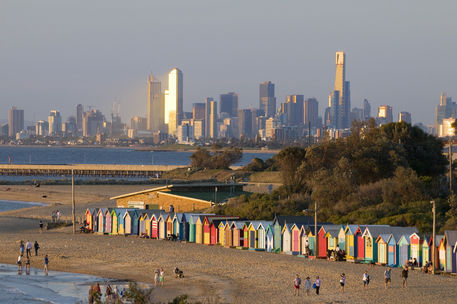
Brighton is a beachside suburb named after the English seaside town. Brighton is from the Old English, meaning “Beorhthelm’s farmstead” (Beorhthelm is a man’s name meaning “bright helmet”). The suburb was bought by an Englishman named Henry Dendy in 1840, who got it for 1 pound an acre, sight unseen. He chose the name Brighton, hoping this would also become a fashionable seaside resort. Unfortunately, there was a depression at the time and Dendy was forced to sell the land to his agent. Dendy died a pauper, but his dream did come true, because very soon Brighton began attracting wealthy residents, and it remains a very exclusive address, full of luxury mansions. One of its most notable sights is the 82 colourful bathing boxes, which have been on Dendy Street Beach since the 19th century. These can only be owned by rate-paying residents, and will set you back at least a couple of hundred thousand dollars. Brighton is the home of many of the rich and famous, including former athlete Catherine Freeman. I’ve been seeing this bright, right-on name quite a bit lately in birth announcements for boys, and the suburb does give it a swanky air.

Elwood

Elwood did not have the most glamorous beginning. A piece of swampland, the first settlers came here because of fever. It was Victoria’s first quarantine station, and the area’s first cemetery. Elwood became a working class suburb with such lovely features as an abattoir, a very smelly canal, and, before sewage, a dumping ground for human waste. However, today the Art Deco houses, pleasant beach, leafy streets, and busy cafe strip make it a very upmarket suburb. It’s thought to have been named after the Quaker poet Thomas Ellwood, because Governor La Trobe, who named it, had a thing for Quakers. The surname can be after Ellwood in Gloucestershire, which means “elder wood”, or derived from the Anglo-Saxon man’s name Aelfweald, meaning “elf ruler”. As elder trees play a big part in folklore, and The Harry Potter books feature the Elder Wand, it’s a very magical sort of name. I saw this at Mer de Noms and in a birth announcement, then it was covered by Upswing Baby Names, and then at Appellation Mountain. Perhaps because of the Blues Brothers, this name is seemingly now very hip. Please do not match it with a brother named Joliet or Jake though.

Fingal

Fingal is a rural suburb that may be named after the Irish county of Fingal; the county’s name means “foreign territory”, because the Vikings settled in the area. However, Fingal is also the Anglicised form of the Gaelic name Fionnghall, meaning “white stranger”. This also refers to the blonde Viking settlers, and Fingal mac Gofraid, a ruler in the Scottish Hebrides, was part of this same Norse dynasty. The name has a distinct literary air, as Fingal is the hero of James McPherson’s epic poem Fingal, and Irish author Oscar Wilde had Fingal as one of his middle names (Oscar is another name from McPherson’s poetry). McPherson claimed to have based Fingal on the legends of Irish folk hero, Fionn mac Cumhaill – Fionn’s name simply means “white”, and was a nickname; his real name was Deimne (meaning “sureness, certainty”). Fingal’s Cave in the Hebrides is named for the epic hero, and the sea echoes there so melodiously that it inspired a piece by composer Felix Mendelssohn. Irish names starting with Fin- are very fashionable right now, but I haven’t really seen Fingal in use. It seems poetic, musical, and quite fairytale to me.

Gilderoy

Gilderoy is a rural locality in the outer suburbs; it’s a rare variant of the Irish surname Gilroy, an Anglication of two possible Gaelic names which either mean “son of the red haired servant” or “son of the king’s servant”. As a first name, Gilderoy was used by British Gypsies, and a man who rejoiced in the name Gilderoy Scamp was King of the Kentish Gypsies in the late nineteenth and early twentieth centuries. Of course, this name will remind many of Gilderoy Lockhart, the vain and boastful fraud from the Harry Potter books. J.K. Rowling apparently named him after the handsome Scottish highwayman, Patrick Macgregor, whose nickname was Gilderoy (from the Gaelic Gillie Roy – “red-haired lad”). Both Lockhart and Macgregor had reputations for winning women’s hearts undeservedly, and one of Macgregor’s smitten female fans is supposed to have written the song Gilderoy about him. Perhaps Rowling was also thinking the name sounds like the English word gild, meaning to give a thin veneer of gold (to cheaper materials). I don’t know if anyone will actually use this name, but it’s a pretty fabulous one, with some very colourful namesakes.

Harkaway

Harkaway was settled by German immigrants, and is now an attractive suburb with large distinguished houses and extensive parkland. I first saw this name given to a minor character in Stella Gibbons’ hilarious novel, Cold Comfort Farm, and found it fascinating. Another famous literary Harkaway was Jack Harkway, from the Victorian era “penny dreadfuls” – a schoolboy who ran away to sea and had a life of adventure. There is also the novelist Nick Harkaway, although it’s a pseudonym; he’s a son of writer John Le Carre, and his real name is Nicholas Cornwell. Hark away! is a cry traditionally used in hunting to encourage the hounds; to hark means “to hear, heed, listen”. It’s a genuine, although rare, surname, and I presume an occupational one to denote someone who worked with fox hounds. I have seen this used as a man’s name in old records from the United States; I’ve only seen it used as a middle name in Australia. This is a really unusual vocabulary name which, with its meaning of “to listen”, almost qualifies as a virtue name as well. It isn’t much like any name on the Top 100, but it continues to fascinate me.

Ivanhoe

Ivanhoe is a suburb with many old homes and an Art Deco town hall, famous for the extravagant Christmas lights display it puts on each year. It was named by a Scottish settler after Sir Walter Scott’s 1819 novel, Ivanhoe. The book is a romance about one of the few remaining Saxon noble families at a time when the English nobility were almost all Norman. The protagonist is the Saxon Wilfred of Ivanhoe, who has sworn allegiance to King Richard I, and amongst the many characters are Robin Hood and his merry men. The novel is credited for starting the medieval revival of the 19th century – hence the number of Victorian babies named Alfred or Edith. Although the book is set in Yorkshire and Nottinghamshire, the English village of Ivinghoe is in Buckinghamshire. The village’s name is Anglo-Saxon, and means “Ifa’s hill spur”. The Anglo-Saxon Ifa later merged with the Norman Ivo, both names meaning “yew bow”. It’s dashing and looks like Ivan with a fashionable OH sound, but will the -hoe at the end prove problematic? If you are stuck for sibling ideas, Elea at British Baby Names has many suggestions!

Skye

Skye is named after the Isle of Skye in Scotland, the largest island in the Inner Hebrides. It was at one time ruled by Vikings, and even the Gaelic clans who were chieftains here have Norse ancestry. The island’s name is an etymological tangle of several languages. However, the Norse referred to it as skuyö – “the isle of cloud” – and this looks a lot like the English name for the island. The ruggedly beautiful Isle of Skye has spectacular Highland scenery and abounds in wildlife such as red deer and golden eagles; a popular tourist destination, it was recently voted the fourth best island in the world. It is known for its castles, including Dunvegan, which has an ancient flag supposedly gifted by the fairies, and is the oldest Scottish castle continuously occupied by a single family (since the 13th century). The island features in the lovely Skye Boat Song, which tells of the Jacobite heroine Flora McDonald helping Bonnie Prince Charlie escape “over the sea to Skye”, after the defeat of the Jacobite rising. This attractive unisex name is more often given to girls, but to me it seems equally suitable for boys.

Yannathan

Yannathan is a rural area in the Shire of Cardinia, and its name, from a local Aboriginal language, is translated as “to walk about, wander, travel, journey, roam”. Walkabout is a term from Indigenous culture which is understood to mean a journey undertaken as a rite of passage; a deeply meaningful spiritual quest which involves connecting with the traditional land and understanding cultural obligations. Australians of British descent also use the term loosely and colloquially to mean anything from going on holiday to escaping your customary obligations to disappearing without apparent cause (as in “the scissors seem to have gone walkabout”). I am not sure if yannathan was meant in any other way than just to take a walk or go on a journey, but it’s a word which may resonate with many Australians. Pronounced YAN-a-thun, it sounds like a variant of Jonathan, and seems very usable. It’s yet another name you could get the popular nickname Nate from.

(Photo shows the iconic bathing boxes in Brighton)

Melbourne Suburbs That Could Be Used as Girl’s Names

08 Sunday Jul 2012

Posted by A.O. in Name Themes and Lists

≈ 12 Comments

Tags

astronomical names, Australian Aboriginal names, bird names, Brazilian names, Bunurong names, created names, english names, famous namesakes, Gaelic names, gemstone names, germanic names, Greek names, Irish names, Latin names, literary namesakes, locational names, mythological names, name history, name meaning, name popularity, nature names, Old Norse names, Palawa names, plant names flower names, popular culture, Portuguese names, Scottish names, Spanish names, tree names, unisex names, Visigothic names, vocabulary names

Cardinia

Cardinia is an outer suburb of Melbourne, in the shire of the same name. The name Cardinia is taken from the local Bunurong phrase Kar Din Yarr, meaning “to look towards the rising sun”. I’ve always thought this would make a great girl’s name, with an interesting sound and an inspiring meaning. To me it sounds like a cross between Caroline and Gardenia, and is a native alternative to Dawn and Aurora.

Clematis

Clematis is another outer suburb in the Shire of Cardinia, leading into the Dandenong Ranges. It’s a tiny village dating to the turn of the century, with a few basic amenities. Its fire brigade formed in 1936, takes about 100 emergency calls per year, and has fought many major blazes in Victoria and New South Wales. The suburb is named after the climbing plant, which looks wonderful in the garden and has large, beautiful flowers. The plant’s name is Ancient Greek, and probably referred originally to the periwinkle (the plant we call clematis is from Asia, and related to the buttercup). Clematis is an elegant name filled with Edwardian charm; it’s more unexpected and alluring than Clementine.

Doreen

The name Doreen looks like an elaboration of the name Dora, perhaps influenced by Kathleen, and is said to have been invented by English author Edna Lyall, who published a novel called Doreen in 1894. The Doreen in her story was an Irish singer, and possibly Lyall had heard of the Irish name Dáiríne, which is pronounced daw-REEN-uh, and means “fertile”. Although this outer suburb of Melbourne had been settled since 1844, it was renamed Doreen in 1895, just a year after Lyall’s novel. Perhaps someone was a big fan of the book? Doreen plays a role in Australian literature too, for poet C.J. Dennis wrote a famous verse-novel called Songs of a Sentimental Bloke (1915), in which larrikin Bill meets, courts and marries his sweetheart. This is a girl who works in a pickle factory called Doreen, and she turns Bill from a Melbourne gang-member into a contented husband and father. It’s been made into two movies, a musical, a TV show and a ballet. Doreen was #83 in the 1900s, and peaked in the 1920s at #21, no doubt influenced by the rhymes of C.J. Dennis. It hasn’t charted since the 1970s.

Emerald

Emerald is a town and semi-rural area in the Shire of Cardinia, and its post office first opened in 1899. It’s a popular tourist destination, because it has the Puffing Billy steam train railway which opened in 1900, and enjoyed its heyday in the 1920s. The town also holds a number of festivals through the year. Emeralds have been mined on a small scale in New South Wales and Western Australia; there is a town in Queensland named Emerald; and David Williamson’s play Emerald City is a classic of modern theatre – the title a reference to The Wizard of Oz. Emerald is a name that I’ve seen in occasional use, and the popularity of Ruby is almost certainly making other gemstone names for girls seem more usable. It also has a connection to Ireland, because this country is known as The Emerald Isle. The name is ultimately from the Greek, meaning “green gem”. Perhaps the town got its name because it is set in the forest like a green jewel – although Gembrook is just up the road.

Iona

Iona is a rural area in the Shire of Cardinia; its post office opened in 1898, and it received its current name in 1905. It is named after an island in the Hebrides, off the coast of Scotland. According to tradition, Saint Columba founded a monastery there in the 6th century, and it played a vital role in converting the Picts of Scotland and the Anglo-Saxons of northern England to Celtic Christianity. A renowned centre of learning for four hundred years, Viking raiders plundered it, and the monastery was abandoned. Today it has an ecumenical Christian community, active since the 1930s; they worship in the restored medieval Iona Abbey. The island’s name is thought to come from the Gaelic for “place of yew trees”, but may also be from the Old Norse for “island of the bear cave, island of the animal den”. It is still a popular name in Scotland, and seems like a good alternative to the popular Isla with the fashionable OH sound in it (it’s said ie-OH-na).

Jacana

The suburb of Jacana was originally farmland owned by Duncan Kennedy in the 1840s, and its streets were laid out in 1923 after the land was sold. During the 1950s to 1970s, the land was developed by the government Housing Commission, who built most of the houses. They also re-named some of the early streets, which had been given jocular names such as Emu Parade and Sunset Boulevard. Being developed as a Housing Commission suburb, it is a lower-middle and working-class area with good amenities. The suburb is apparently named after Jacana Avenue, which is in the next suburb of Broadmeadows; other streets nearby also have bird names, such as Ortolan and Dacelo. Jacanas are tropical birds that live on lily lakes in wetlands and found world-wide; in Australia we have the Comb-Crested Jacana. Its name is Brazilian-Portuguese, and pronunciation is very diverse around the globe. The Australian way to pronounce it is juh-KAH-nuh, although the original is more like ZHAH-suh-NUH. I think this is a pretty and unusual bird name that sounds similar to Jacqueline, Jana and Jacinta, but with its own “feel”.

Kallista

Kallista is in the outer suburbs, and the first European inhabitants were loggers in the 1850s; gradually farmers began settling in the area as the forest was cleared. From early on, the government preserved a section of it as state forest, and once the roads were completed, Melburnians began using it for weekenders and holiday homes. During the Depression, many people could not afford the luxury of a second home for holidays, and they were bought up cheaply by those hoping to support themselves by living off the land. The suburb gained its name in 1925, from the Ancient Greek Kalliste, meaning “most beautiful”. In Greek mythology, Callisto or Kallisto was one of the nymphs of Artemis, although Kalliste was one of the epithets of the goddess herself, and the stories of the nymph were probably originally about Artemis. Callisto was seduced by Zeus, and gave birth to a son named Arcas, who became the king of Arcadia. Jealous Hera turned Callisto into a bear, and when a teenaged Arcas was hunting in the woods, he almost shot his own bear-mother. Zeus placed them in the sky as the constellations Ursa Major and Ursa Minor to protect them. A very pretty “star” name.

Olinda

The outer suburb of Olinda began as a logging settlement, but began growing in the early 1900s as land became available for market gardening. It is famous as the home of artist Sir Arthur Streeton, and today is an artsy-craftsy sort of suburb, studded with antique shops and galleries. Olinda is named after Olinda Creek, which has its source in the suburb, and the creek was named after Alice Olinda Hodgkinson, the daughter of Victoria’s acting surveyor-general in 1859. Her unusual middle name is something of a mystery to me – I have seen it defined as a German name meaning “defender of the land”, which became used in Spain thanks to the Visigoths. However in English, this name is said to be derived from the place Olynthus in Greece, meaning “fruit of the wild fig tree”. Olinda’s Adventures was the first novel of a precocious teenage writer in the 17th century called Catherine Trotter. It fits in with other literary names of that period, such as Orinda and Belinda. It sounds like retro Linda, dressed up with the fashionable OH sound, and still seems exotic and poetic.

Sassafras

Sassafras is in the outer suburbs, and lies between Olinda and Kallista. It was opened to farming in the 1890s, and a small township developed. Around the turn of the 20th century, it began to attract tourists, and still caters for them, with boutique stores, cafes serving Devonshire teas, and garden nurseries. Sassafras has very fertile volcanic soil, which makes it ideal for growing plants. Aptly enough, it is named after the sassafras tree, found growing there in profusion. These are not true sassafras, which are native to North America and Asia, but Southern Sassafras, an ancient tree from the southern hemisphere, with several species native to Australia. The one in Victoria is Atherosperma moschatum, and it grows in cool temperate rainforest. An evergreen, it flowers in winter with white petals, and its springy timber is in demand for speciality woodwork. The word sassafras is thought to be a corruption of saxifrage, an unrelated genus of tough alpine plants; their name is from the Latin for “stone breaker”. I have seen this once in a birth notice for a baby girl; it’s an unusual plant name which gives the nicknames Sass and Sassy.

Sunshine

This inner-city suburb has been a township since the late 19th century, and is an important part of our industrial history, because the Sunshine Harvester Works were moved here in 1906 by H.V. McKay, and became the largest manufacturing plant in Australia. It was after this that the suburb was given its present name; it is believed that McKay chose Sunshine for the name of his business after hearing a sermon by visiting American evangelist Rev. Thomas de Witt Talmage. The word sunshine seems to have been frequently used in Talmage’s writings, as a symbol of happiness and God’s blessings. McKay planned Sunshine on Garden City principles, and workers flocked there to live. The manufacturing plant was demolished in the early 1990s, but there is still plenty of industry, and it has attracted many migrants, especially from Malta and Vietnam. Skier Lydia Lassila grew up here, as did singer Bon Scott; Prince Philip lived here briefly. This cheerful, friendly name isn’t just from nature – it’s one connected to our manufacturing history, and also has idealistic Christian roots. Although unisex, the film Little Miss Sunshine helps give it a feminine edge. Sunny makes a cute nickname.

Truganina

This suburb is named after Truganini, considered to be the last “full blood” Palawa (Tasmanian Aborigine). Truganini was a chieftain’s daughter born in 1812 on Bruny Island, described as a vivacious and intelligent woman by contemporary sources. Her mother was killed by whalers, her two sisters were abducted and taken as slaves, her fiance died saving her from being abducted herself. Efforts at conciliation meant that Truganini and the last surviving Palawa people were moved around, including a short time in Melbourne, which is how the suburb received its name. By 1873, Truganini was the last Palawa left, and she died three years later. Her final request, that her ashes be scattered in the D’Entrecasteaux Channel near her island home, was ignored; she was buried in a convict workhouse in Hobart. Two years later, her skeleton was exhumed, and put on display by the Royal Society of Tasmania. In 1976, a century after her death, her last wish was finally fulfilled. Her name is the Palawa word for the tough plant we call grey saltbush (Atriplex cinerea), and can be spelled a number of ways. This could make an interesting heritage choice, although its namesake is a tragic symbol of Indigenous genocide. The correct pronunciation is not known, but Truganina could be said to give the nicknames True and Nina.

(Picture shows the Puffing Billy steam railway in Emerald)

MYTH: Australian Baby Names are Becoming Increasingly Influenced by American Trends

01 Sunday Jul 2012

Posted by A.O. in Baby Name Mythbusters

≈ 20 Comments

Tags

Australian names, Biblical names, classic names, created names, famous namesakes, fictional namesakes, flower names, French names, germanic names, Greek names, Irish names, Italian names, Mer de Noms, name data, name popularity, name trends, nicknames, Old English names, popular names, saints names, Scottish names, Spanish names, surname names, unisex names, US name trends, US popularity, Welsh names

Since I last went mythbusting, the 2011 name data from the United States has been released, and this week it’s American Independence Day. To celebrate both events, I decided to compare Australian and US name data. (Lou at Mer de Noms brought out her own comparison of the data for the United States and England/Wales in May, and did something pretty interesting with it.)

That Australians are becoming increasingly Americanised, including their choice of baby names, is something not debated, but accepted as a truism. It is often mourned by older generations that Australians used to call their children good solid Aussie names like Barry and Sheila, and now give them sleek American-style names like Logan and Scarlett.

It’s a myth which sounds very plausible – I certainly know far more children named Logan and Scarlett than I do Barry and Sheila (actually I don’t know any children called Barry or Sheila). But I thought we should try to get some numbers to back the myth up.

So I decided to look at the Top 100 names from both countries, in the years 1930, 1950, 1970, 1990 and 2011. If the number of names shared by both countries went steadily up, that could help support the theory that Australian names were becoming increasingly “American”. By no means conclusive proof, but it would be a start, and frankly I couldn’t think of any other way of doing it.

As I went through calculating the number of shared names, I also took note of those trends at work in Australia and the United States, where they were the same and where they differed. This gave me a picture of changing trends through the years. (The data is from Victoria, because theirs go back to 1929).

1930

MALE – 65% shared with US Top 100

1930 marked the highest percentage of shared names between the countries. This wasn’t because Australians were more “American” in 1930, but because in every year, the common denominator for both countries were classic names like John, Thomas and William, and these sort of names took up more space of both countries’ Top 100.

Trends noticeable on the Australian Top 100 were names from Ireland, Scotland and Wales, such as Kevin, Malcolm and Trevor, and aristocratic English surnames, such as Neville. Americans preferred prominent surnames of their own citizens, such as Elmer and Lee. Popular names from America we didn’t share were “cowboy” names – Wayne, Earl and Jesse. In America, nicknames for boys were all the rage, including Billy, Bob and Jimmie.

FEMALE – 51% shared with US Top 100

Popular girls names in both countries were homespun names such as Margaret and Dorothy, as well as plant names like Hazel and Rose.

Australian trends for girls included names from Ireland and Wales, such as Sheila and Gweneth, saints names such as Carmel and Veronica, and literary inventions like Doreen and Mavis. American trends were for Germanic names such as Emma and Clara, and the clunky Old English Mildred and Bertha. America’s Hispanic population meant that Delores and Juanita were Top 100 there.

1950

MALE – 59% shared with US Top 100 (down 6%)

American trends for boys we had picked up by 1950 include Gary, after Hollywood star Gary Cooper, and that supposed Australian favourite, Bruce, also popular in the US.

America continued its love of nicknames, with Bobby, Joe and Fred all Top 100. Several of the Irish boys names such as Kevin and Barry were now on the US Top 100 as well, but new Irish-style names such as Shane were still to gain American acceptance. Already in the US you can see a reluctance to use “feminine sounding” or unisex names such as Lindsay and Noel, which were Top 100 in Australia. In Australia, that same 1950s gender-anxiety produced the opposite result, with some unisex names like Leslie becoming male-only.

FEMALE – 47% shared with US Top 100 (down 4%)

The most noticeable shared trends for girls were those glamorous Hollywood names such as Marilyn (Monroe) and Rita (Hayworth). Even when Australians did take a name from America, such as Jennifer from Hollywood star Jennifer Jones, it didn’t always follow that Americans would embrace it as rapidly themselves. Jennifer was a 1950s name in Australia, but didn’t peak in the US until the 1970s.

Australian girls were being given French names like Annette and Jeanette, while Americans girls had Jacqueline. Another popular Australian “French” name was Lorraine, given in honour of St Joan of Arc, sometimes called The Maid of Lorraine. The American love of the nickname meant that names such as Judy and Peggy were Top 100 for girls.

1970

MALE – 56% shared with US Top 100 (down 3%)

Popular 1970 names which we think of as “American style” were in evidence on both charts, such as Bradley, Jason, Glenn, Darren and Craig.

Australian boys names not picked up in the US included Scottish-style names such as Ross, Graham, Stuart and Gavin, and the “feminine sounding” Ashley and Jamie. Differing ethnicities also made their mark, with Spanish Carlos in the US Top 100, and Italian and Greek names like Giovanni and Giorgio in the Australian Top 100. American nicknames powered on, with Larry, Terry and Jerry amongst them.

FEMALE – 51% shared with US Top 100 (up 4%, return to 1930 level)

It was the decade of those 1970s names Sharon and Tracey, although Sharon in particular had been popular in America for some time and we’d only just caught up.

Names such as Samantha and Amanda were already popular in Australia in 1970, but would have to wait until the 1980s to make it big in the US. Conversely, Amy was popular in the US, but wouldn’t be here until the 1980s. French Nicole was in vogue in both countries, and we’d caught up with Jacqueline; however Australia also had Danielle, Louise, Justine, Natalie, Simone and Josephine – typical 1970s girls names that were underused in the US. Scottish and Welsh names like Fiona, Megan and Bronwyn were popular here but didn’t get a look-in in the US. We were proudly using names of Australian origin, like Kylie and Narelle; naturally these were unknown in the US.

1990

MALE – 56% shared with US Top 100 (no change)

Trends from the US we were embracing were Old Testament names, such as Jacob and Zachary; and the new surname names, such as Ryan and Mitchell.

A new generation of “too feminine” boys names that were popular in Australia were ignored in the US, such as Shannon, Tristan and Leigh, as were more Scottish, Welsh and Irish-ish names, such as Lachlan, Rhys and Kane. Hayden and Jayden were already Top 100 in Australia, but not in the US. America had finally gone off nickname names, while Australia now had Jack, Jake and Ricky. American names Beau, Jackson and Tyson were popular then, as now, in Australia; of the three, only Jackson has hit the US Top 100 so far.

FEMALE – 56% the same as the US Top 100 (up 5%)

Names that both countries had in common were those typical 1990s names, like Tiffany, Brittany, Kayla and Caitlin.

Americana we were still to discover included unisex names for girls like Ariel, Shelby and Paige. Although the US had Danielle and Natalie by now, French names such as Monique, Elise, Renee and Madeleine which were popular here had apparently failed to make an impression. Although Welsh Caitlin was all the rage, the US were not on board with Tegan and Rhiannon, as we were. Most notably, Emma, Amelia, Charlotte, Sophie, Chloe and Zoe were missing from the US Top 100 – while American parents who chose these names in 1990 were ahead of the trends, in Australia, parents choosing these names in 1990 were just following the trends.

2011

MALE – 59% shared with US Top 100 (up 3%, return to 1950 level)

Congruence in popularity between the two nations has risen to 1950 levels, with many name trends in common, mostly a fresh crop of Biblical names, such as Elijah, and surname names, such as Mason.

American parents are now avoiding a new generation of Scottish names, such as Angus and Hamish, while Irish names like Declan and Flynn are also neglected in the US. Oddly enough, Kevin is still Top 100 in the US, while it’s considered a bit dated here. The scunner against nicknames continues as Americans shun Australian populars Charlie, Harry, Archie, Sam and Nate. No longer merely  shying away from “feminine sounding” names for boys like Bailey and Riley, parents in the US have actually given these names to their daughters in such numbers that they are now Top 100 for girls, while Top 100 for boys here. Several names we have taken from the US, such as Jett, Hudson and Jasper, are still not popular in America.

FEMALE – 47% shared with US Top 100 (down 9%, return to 1950 level)

Girls names have also returned to 1950s levels. Many names are shared because America has caught up with our popular names from 1990, but Australian parents have also begun to use unisex names for girls like Madison and Addison.

America has abandoned many names as “outdated” such as Amy, Jessica, Holly and Amber that have taken on “modern classic” status here. While America has accepted Lily, it is less keen on our popular plant names Daisy, Ivy, Violet, Willow, Olive and Rose. British-style names such as Isla and Imogen cut no mustard in the States. Meanwhile, popular American virtue names like Genesis, Serenity, Trinity, Nevaeh and Destiny do not resonate here. Perhaps they will in the future.

CONCLUSIONS

I did not manage to bust this myth, but neither did I find much evidence to support it, so I will give its status as MYTH UNCONFIRMED.

As I compared popularity charts from the two countries, I realised more and more that it was a case of apples and oranges. Names took longer to gain popularity in the US, and it was harder for them to stay in the Top 100; name popularity was a competitive environment there. Australia has a much smaller population size, which means that name trends show up faster here. We’re also more likely to hold onto our favourite names once we’ve found them, sometimes for generations.

I don’t think it’s an exaggeration to say that American parents are absolutely obsessed with getting ahead of the current trends, and can watch the slowly rising popularity of their chosen names with almost comical anxiety. This makes some sense, because trending names can take so long to reach the Top 100 that they have a good chance of having ten to twenty years before that happens. In Australia, this behaviour makes no sense at all, because as soon as a name begins to show up in the data, it’s basically already quite popular. As we keep names around for longer, there’s no real rush to “catch” a name on the way up either; we can always wait until it’s a cosy, familiar “classic”.

In any given year, Australia and the US will share around half the names on their respective Tops 100s, and this has not changed across time. We share many name trends, and since at least 1950, Australia has been drawn to names from America. Sometimes it took us a long time to get onto a particular trend from America, and other times we took to it with greater enthusiasm than Americans did themselves.

Both countries also have their own styles of naming. Australia has always been fond of Irish-inspired names, and although Barry and Sheila have fallen by the wayside, we now have Finn and Molly. Scottish names continue to be a growth area, with Angus, Hamish, Callum and Isla seeming rather stylish to us. Through the years, there were many names unique to the Australian popularity charts. Names that I thought of as typical of their period, such as Dulcie in 1930, Glenys in 1950, and Jacinta in 1970 seemed to be unknown in the US.

Americans are slow to adopt Irish names, but often touchingly faithful to them, and are wary of Scottish and Welsh names. They have a deep suspicion of unisex names for boys or anything that even sounds remotely feminine, while comfortable with briskly masculine names for girls. Flower names are not popular there; perhaps they seem too girlish even for girls.

Due to going overboard on nicknames in the past, America has developed almost a horror of them, much in the same way I can no longer stomach gingerbread after overindulging on it a few Christmases ago. As nicknames are currently internationally popular, this has seen them unfairly branded as a bit stuffy on the issue, when they’re really just over the whole thing.

We don’t have to try to follow American trends, and in fact a couple of them would be downright foolish for us to imitate. But the United States has proved a rich source of name inspiration for many decades, and I know it will continue to be so for many decades to come.

Interesting Names Spotted in Print, on Radio and on TV – Autumn Edition

05 Tuesday Jun 2012

Posted by A.O. in Names Spotted at Home and Abroad

≈ 7 Comments

Tags

animal names, astronomical names, Australian Aboriginal names, Chinese names, Cornish names, created names, english names, famous namesakes, Fijian names, Greek names, honouring, Indian names, Latin names, literary namesakes, locational names, mythological names, name history, name meaning, nature names, popular culture, Scottish names, sibsets, unisex names, vocabulary names, Welsh names

This celebrates the fourth birthday of a little boy who was the first baby born at Saltwater in New South Wales in over a century. The beachside area is the traditional place of the Worimi-Biripi people, and is now in a national park. Dawn Morcombe gained special permission to give birth at this spiritually significant location, and she named her son Yarramundi John Michael Hollis. Yarramundi was a famous Indigenous leader of the colonial era; his son was Colebee, who was featured on the blog last year. His name is said to mean “deep water”. Fantastic story, namesake, and meaning, especially for a baby born at Saltwater!

Debbie Bell from South Australia has had a rough life and been through more than her fair share of heartache. However, after a great deal of physical and emotional suffering, she and her husband Ian were at last able to have a baby through a donated embryo, and named their son Derlerean. I think Debbie and Ian may have created this name themselves. It reminds me of the car, the Delorean.

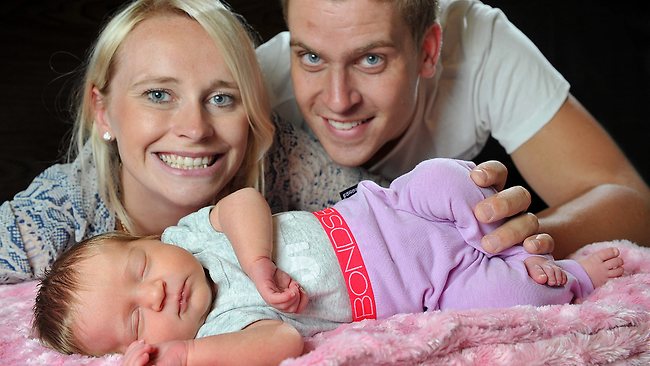
Victorian couple Charlotte Gernandt and Dale Hynes called their first baby Tinkabell Darling [pictured]. Now this sounds like a name straight out of Peter Pan, but Charlotte and Dale say she is not named after the fairy. Um, okay … must be inspired by some other Tinkerbell … She’s called Tinka for short.

Emma Preston was so crippled by endometriosis that she was confined to a wheelchair, and had little hope of ever having a baby. But then Sydney fertility specialist Dr Geoff Reid not only got her out of her wheelchair, he helped her to conceive through embryo transfer. Emma was so grateful, she named her baby after him. No, the baby’s not called Geoff; her name is Reid Louise. Nice gesture and name story.

It’s not often a baby ends up in the paper just because of his name, but this one is quite striking. Kate Anderson and Lance Walshe, from the Yarra Ranges just outside Melbourne, named their son Viper. His name was inspired by Lance’s love of snakes, and the couple wanted an original name that nobody else had. They considered Wolfgang, but rejected it because they thought it might lead to teasing. Viper Walshe doesn’t have a middle name, and if he’d been a girl, his name would have been Ruby Joanne. Kate says his name has met with mixed reactions.

A story from Port Macquarie on the ever-rising prices on electricity bills featured a struggling single mum named Bek Latimore. Bek’s baby girl is named Arizona; although I generally don’t go for American-states-as-names, this one always puts a smile on my face. I’m not sure I can ever imagine using it myself though. Arizona’s older brother is named Nick, which made me think – could Nick be short for Phoenix? Hmm?

This story about a midwifery programme at Canterbury Hospital in Sydney showed a mother with an elegant name: Eglantine Jalicot. Eglantine’s son has an equally stylish name – Lysander. His ancient Greek name means “release of a man”, and belonged to a famous military general of ancient Sparta. Eglantine is another name for the sweetbriar, and is first found as a personal name in Chaucer’s Canterbury Tales.

Two interesting and pretty girls’ names from a story on sleep and babies: Luna and Reya. Luna is of course Latin for “the moon”, and Reya is an Indian name which means (I think) “wealth”.

A story on a new breech birth clinic at Westmead Hospital in Sydney showed mum Mallissa Tulfua with her son Tevita. His name is the Fijian form of David.

A Brisbane columnist covers a naming dilemma from real life when two of her friends cannot agree what to name their baby. Readers are invited to help name their sprog, but as we’re not told what names they’ve come up with already, it seemed a rather futile exercise (although apparently the mother had rejected Luke as “not masculine”, which seemed odd). The columnist notes some of the baby names from her own extended family are Echo, Theo, Roarke, Ziad, Ingrid and Rudi.

Alana Mahadik had a very difficult childbirth with her first son, Avighna. With her second, she opted for hypnobirthing at Caboolture Hospital in Queensland on Anzac Day, and found the whole experience very quick and stress-free. Her new baby son’s name is Rudra, which is an Indian name meaning, aptly enough, “remover of pain”. Avighna’s name means “remover of obstacles”.

A rather adorable little baby girl was sadly abandoned at Canterbury Hospital early this year. The baby has been named Li-Ye, which means “beautiful child” in Chinese. Only a few babies have been abandoned this way in New South Wales in recent years: two others were named Adam and Sunday April. All of these babies were eventually adopted after their birth mothers failed to come forward.

Interesting Names of Adults

An ABC radio podcast on parenting featured a Melbourne child psychologist named Angharad Candlin. This Welsh name meaning “greatly loved” is one I have admired since childhood, yet never before seen on a real person (although I didn’t actually see her, as it was radio).

This travel writer, enjoying the Sicilian sun, has the name Dugald Jellie. There’s quite a few Australians with this Scottish form of Douglas as their name, but Dugald Jellie seemed just a bit more interesting and storybook-character somehow.

The junk mail of one April morning produced a community newsletter about a new medical centre opening in the area. One of the doctors was named Demelza – a Cornish place name from the Poldark books and TV series. I briefly thought about changing doctors just to have a GP named Demelza, but couldn’t face all the paperwork.

I read One Way or Another: The Story of a Girl Who Loved Rock Gods, the memoirs of Gold Coast rock star groupie Nikki McWatters. Eventually she sees the error of her ways, and settles down by sensibly marrying a schoolteacher. Her husband’s name? The very rockstar-sounding Zeus. As well as teaching school, Zeus is a trained opera singer, so she obviously never lost her thing for male vocalists.

Channel 7 have resurrected The Price is Right, which I find keeps the troops quietly occupied while I make dinner. As I stir and chop, I keep an ear out for names: so far I have seen a pair of sisters named Jalila and Janita (late teens to early twenties), a woman named Feda, pronounced like “feeder” (twenties), and a grandmother named Dixie (around sixtyish).

Less Commonly Used Girls Names

03 Sunday Jun 2012

Posted by A.O. in Name Themes and Lists

≈ 20 Comments

Tags

Abby Sandel, alphanumeric names, Arabic names, Baby Name Wizard, Bonds Baby Search, celebrity baby names, Celtic names, created names, english names, famous namesakes, fictional namesakes, French names, Greek names, hebrew names, Italian names, locational names, Mer de Noms, modern names, mythological names, name data, name history, name meaning, name popularity, Nameberry, Names from the Dustbin, nicknames, popular culture, pseudonyms, rare names, Scottish names, Semitic names, Shakespearean names, stage names, surname names, The Nameberry Nine, Turkish names, unisex names, vocabulary names

When all the name data for the most popular names was released, there were also several articles which looked at some of the names closer to the bottom of the popularity lists than the top. Dorcas at Names from the Dustbin calls these names Bottom of the Barrel – not meaning that they are necessarily of poor quality, but just low in the rankings.

Most names at the bottom of the lists are just re-spellings of common names, or short forms of names that are usually kept as nicknames rather than a full name. However, if you sift through these, there’s some interesting finds at the “bottom of the barrel”, and even some neglected gems.

These names are from the popularity charts of New South Wales, Victoria, Queensland, and Tasmania. Nearly all of them are taken from the very rarest names in their state.

Adeline

This is a pet form of the French name Adele; the French pronunciation is a-de-LEEN, but the English is AD-uh-line. The name is well known from the American ballad Sweet Adeline, which was a standard for Australian folk band, The Seekers. There’s also the piece, Ballade pour Adeline, written for the composer’s baby girl, which I had to thump out tunelessly with my chubby fingers during many a childhood music lesson. However, Adeline has got considerably cooler since then; Kasey Chambers has a song called Adeline, Green Day’s Adeline Records handles indie rock bands, and Elliot Smith released his own darker version of Sweet Adeline. I read at Abby’s Nameberry Nine that Simon Helberg from The Big Bang Theory welcomed a daughter named Adeline last month, making it an up-to-the minute celebrity baby name. Adeline has never been on the Top 100; it was #162 for the 1900s, and then sank until it was out of regular use by the 1940s. Today it fits in well with Adelaide, Addison, Madison and Madeline; however it may be difficult for short form Addie to stand out amongst the sea of Maddies and Abbies.

Allegra

Allegra means “cheerful, lively” in Italian, related to the musical term allegro, and has a long history as a celebrity baby name. Romantic poet Lord Byron re-named his illegitimate daughter Clara Allegra Byron (called by her middle name, and originally named Alba by her mother). Despite poor little Allegras’s life being brief and marked by neglect, the name seems to have been an apt one, because she was described as a vivacious child. Her story didn’t stop American poet Henry Longfellow from using it as his daughter’s middle name; in his poem The Children’s Hour, he describes her as “laughing Allegra”. The American inventor and designer, Buckminster Fuller, also gave this name to his daughter. Allegra Versace is the daughter of Italian designer Donatella Versace, and Allegra Kurer is the daughter of British radio host Vanessa Feltz. In Australia, news presenter Jessica Rowe chose it for her eldest daughter in 2007, and last year it was chosen for the daughter of Emmy Kubainski. Frothy and elegant, with a positive meaning, this fashionable favourite would also make a good Italian heritage choice.

Bonnie

Bonnie is taken from the Scottish word bonnie, meaning “pretty, beautiful”; it’s derived from the French bon, meaning “good”. Bonnie has been used as a personal name since the 19th century, and was even sometimes given to boys, but received a huge boost when it was used in Margaret Mitchell’s popular romance, Gone with the Wind. Bonnie Blue Butler is the daughter of Scarlett and Rhett, and receives her name because she has eyes the colour of the Bonnie Blue Flag – the banner of the Confederate States in the American Civil War. British rocker Billy Idol, who sang Rebel Yell, named his daughter Bonnie Blue, and we had a Bonnie Blue competing in the Bonds Baby Search. Another famous Bonnie is Bonnie Parker, one half of notorious crime duo Bonnie and Clyde. Bonnie has been on the charts almost continuously, albeit in rare use in the 1950s and ’60s. It had a peak in the 1920s at #172, then peaked again in the 1990s at #157; it’s currently climbing in the mid-100s in New South Wales, but is obviously rarer in other states. It’s a sweet old-fashioned name which is also linked to rebellion, giving it a spunkier image.

Cleopatra

This Greek name means “glory of the father”, and is almost impossible for us to disassociate from the famous Queen of Egypt. From a dangerously inbred family of Macedonian Greek origin, she ruled Egypt alongside her father, and then her brothers (who were also her husbands), but then seized control and reigned alone for many years. She was able to align herself with Rome as both ally and lover to both Julius Caesar and Mark Antony, but after Mark Antony’s death, is said to have poisoned herself before she could be captured and humiliated. According to tradition, she killed herself with an asp. Her story captured the imagination of William Shakespeare, who based his play Antony and Cleopatra on the last part of her life, and her story has been made into several films, including the lavishly dreadful one starring Elizabeth Taylor and Richard Burton. Cleopatra is always depicted as a woman of great beauty, although early traditions suggest her attractiveness was based more on enormous charm and sex appeal. This ancient, glamorous name carries a lot of weight, but with short form Cleo becoming fashionable, some parents may wish for a long form of the name.

Elif

This Turkish name is after Alif, the first letter of the Arabic alphabet, and has connotations of “tall and slender”, as if the person is shaped like the letter, which is a long vertical line. It is pronounced ay-LEEF. You probably recall that Natalie Portman had a son named Aleph last year; Aleph is the Hebrew form of the same letter. The meaning of the letter goes back to the West Semitic word for “ox”, as the cuneiform originally represented the shape of an ox’s head. In Arabic, the word is connected via folk etymology to the word for “coy, tamed”, giving it a subtly demure feeling. It’s a common girl’s name in Turkey, and there are several Turkish celebrities with this name. There’s also a town in Turkey called Elif. I’m not sure a non-Turkish person would ever use it, but it’s certainly an attractive name that is easy enough for an English-speaker to understand and pronounce, once they’ve learned how it’s said.

Harlow

This name is inspired by Jean Harlow, a Hollywood superstar of the 1930s. With her platinum hair and vampish image, she was the forerunner to many blonde bombshells of the movies. Despite her beauty and success, Harlow’s life contained much tragedy, and she died of kidney failure while only in her twenties. Harlow took her mother’s maiden name as her stage name; her birth name was Harlean Carpenter. The surname Harlow is from several places in England. Harlow in Yorkshire means “hill of rocks” in Old English, while the meaning of Harlow in Essex is disputed. One theory is that it means “army hill”, with the idea being that local landmark Mulberry Hill was a meeting place for the local people. Another is that it means “temple mound”, as there is an Iron Age burial mound in the area which later had a Roman temple built on the site. Harlow is a unisex name, but more common for girls; the name came to public attention when Nicole Richie named her daughter Harlow in 2008. There were 20 babies named Harlow in Queensland last year, up from 12 the year before. Although numbers are still low, that’s a significant jump.

Pixie

This name is after the small mythological being of English folklore, tales of which come from Cornwall and Devon. They are usually depicted as small sprites who could be mischievous, but were often helpful to humans. A famous Australian with this name was the prolific illustrator and artist Pixie O’Harris (aunt of singer-artist Rolf Harris). Her real name was Rhona Olive Harris, but when she migrated to Australia from Wales she changed her name to Pixie because she was nicknamed “the Welsh pixie” on the boat over. A printer’s error changed her name from Pixie O. Harris to Pixie O’Harris, and she stuck with it as her pseudonym. Last year, businesswoman Roxy Jacenko named her new baby Pixie-Rose. I think some people will find the name Pixie adorably cute, and others impossibly twee; it’s bound to get some interesting reactions, and does have the fashionable X in it.

Sippie

The only person I know of named Sippie is the blues singer Sippie Wallace, who was born Beulah Thomas. Her career spanned seven decades, and although she found fame as a young woman in the 1920s, she was rediscovered in the 1960s and ’70s and was a big influence on Bonnie Raitt, who went on tour with her. Her album Sippie won the Blues Album of the Year in 1983, so her comeback was a definite success. The name Sippie is one that she gained in childhood because the gap in her teeth meant that she had to “sip” all her food and drink. Coincidentally, there is a place on the Gold Coast called Sippy Downs; its name is a corruption of an Aboriginal word meaning “winged creatures”, and interpreted as meaning “birds”. As Sippie Wallace was billed as “The Texas Nightingale”, I find this juxtaposition very charming. Sippie is an unusual name, but what a wonderful namesake. This would be very suitable for a family who loves music, especially jazz and blues.

Torah

In Australia, this name is well known as belonging to snowboarder Torah Bright, who won gold at the 2010 Winter Olympics. Her parents named her after the Torah, which is the Jewish word for the first five books of the Old Testament. The word is from the Hebrew, meaning “teaching, instruction”, however, Torah Bright’s mother believed that it meant “bearer of a great message”. Torah Bright is a member of the Church of Latter Day Saints (Mormon), and lives in Salt Lake City, Utah. There was slight disbelief at this name on The Baby Name Wizard, with a couple of people feeling that it seemed rather offensive, or at least strange. Torah’s name was reported on in Washington Jewish Week; there was no mention of it being offensive to Jews, but they did appear to find it slightly amusing. Like calling your child Bible or Gospel, many will find this name a head-scratcher. It would be given in honour of our Olympic champion, but the religious ramifications may be lost on some people. The fact that it sounds as if it could be short for Victoria is probably a help.

Zahlia

This name is pronounced ZAH-lee-uh, and as far as I’m aware, it’s a modern invention. It seems to be an elaboration of the name Zali; Zali Steggall is Australia’s most internationally successful alpine skier (now retired). Her name has proven a great success here, and spawned many variants, such as Zarly, Zahlee, Zalie etc. It’s unclear where the Stegalls got the name Zali from, and to the best of my knowledge, it’s made up. Zahlia does well in Australia, because it sounds rather exotic, while also being similar to popular names such as Zara and Tahlia (it even looks like a combination of those names). Despite being listed as a rare name, I have seen some parents dismiss Zahlia as being “too common”; perhaps it’s not rare enough to seem “unique”, or perhaps the many variants and sound-alike names make it appear to be one of the pack.

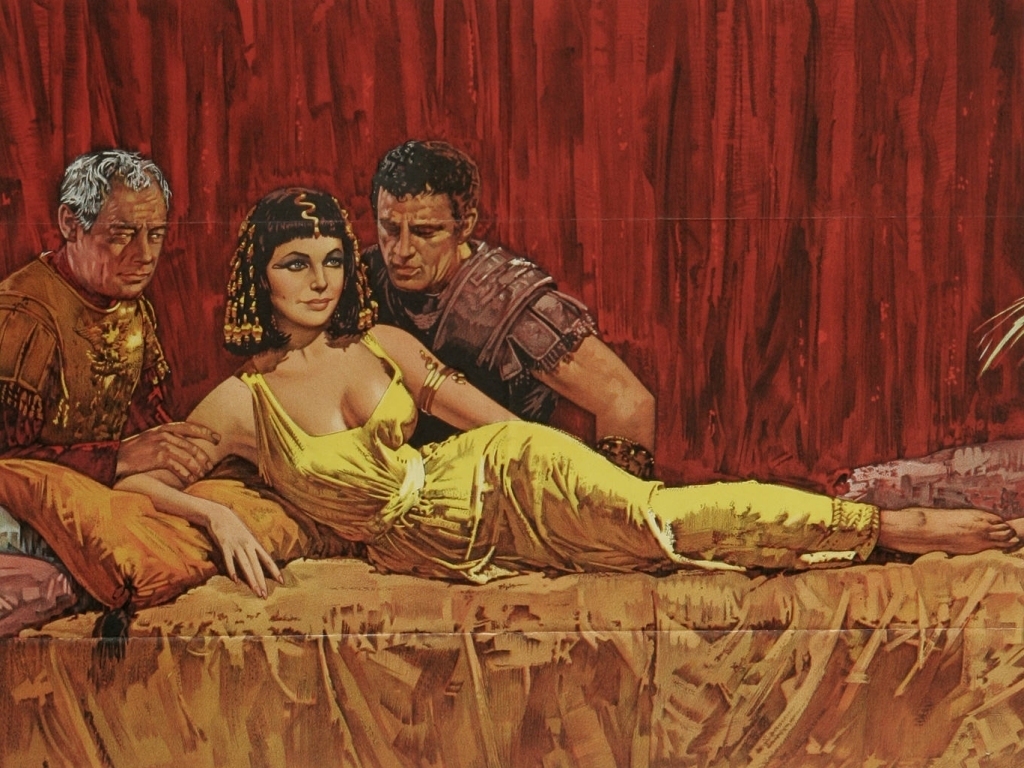
(Picture is from one of the posters for the 1963 movie Cleopatra)

Popular Names for Boys

06 Sunday May 2012

Posted by A.O. in Name Themes and Lists

≈ 23 Comments

Tags

Aramaic names, band names, Biblical names, car names, celebrity baby names, classic names, english names, famous namesakes, fictional namesakes, French names, germanic names, Greek names, hebrew names, honouring, Latin names, locational names, name history, name meaning, name popularity, nicknames, Old Norse names, popular culture, popular names, royal names, saints names, Scottish names, surname names

Follows on from Popular Names for Girls.

William

William is a solidly classic name which has never left the Top 50. It was the #1 name of the 1900s, and gradually decreased in popularity, hitting its lowest point during the 1970s, at #48. However, its fortunes were soon to recover, because in 1982, heir to the British throne Prince Philip, and his then wife, Diana, Princess of Wales, welcomed their first child and eldest son, William Arthur Philip Louis. Prince William was named after his father’s cousin and personal hero, Prince William of Gloucester, who died in an air crash ten years earlier. Prince William made his first visit to Australia as a baby, and this was an immediate help to the name’s popularity. By the time Prince William began university in 2001, the name was already in the NSW Top 10. It reached #1 in 2009, the year after Catherine Middleton began accompanying Prince William to official functions, and there it has remained. In 2011, Prince William made a much-appreciated visit to flood-affected areas of Australia, and shortly afterwards treated the world to a slap-up royal wedding. It’s likely this princely name will remain at the top for at least another year.

Jack

Jack is a classic name which has never left the charts. Top 100 during the 1900s-30s, it sunk to its lowest point in the 1970s, at #269. However, so rapid was its growth that it joined the Top 100 again during the 1980s – the same decade that pop singer John Farnham released his Whispering Jack album. Whispering Jack went to #1, and is the highest-selling album ever in Australia, having gone platinum 24 times over. By the 1990s, Jack was already Top 10, a decade when Leonardo di Caprio played water-logged lover Jack Dawson in the romantic movie Titanic, and teen heartthrob Daniel Amalam played bad boy Jack Wilson in soapie Home and Away. By the start of the 2000s, Jack was #2. It made #1 by 2004, the year that the TV show LOST began, with its hero Dr. Jack Shephard, and the year after Johnny Depp played Captain Jack Sparrow in the first Pirates of the Caribbean film. Jack remained in first place until 2008, the year that AC/DC released their single Big Jack. Jack the Lad may have had his day, but won’t be going anywhere fast, and is still the #1 name in some states.

Ethan

Ethan is a name from Hebrew which means “solid, enduring”. In the Old Testament, Ethan is said to have been a very wise man who wrote Psalm 89. Ethan first entered the charts in the 1970s, and took off during the 1980s, as film-maker Ethan Coen began his career, working in tandem with his brother Joel. At the end of the 1980s, actor Ethan Hawke got his big break in Dead Poets’ Society. By the 1990s, Ethan was a Top 100 name, and it was in this decade that Tom Cruise first played Ethan Hunt, the hero of the Mission Impossible films, Ethan Philips joined the cast of TV show Star Trek, and Ethan Rayne was introduced as a character on Buffy the Vampire Slayer. It was also during the 1990s that surfing champ Wendy Botha welcomed a son named Ethan. In 2006, Ethan joined the Top 10 – the year after the Ethan Group, an Australian IT company, won the BRW Fast 100. Singer Dannii Minogue, Kylie’s sister, welcomed a son named Ethan in 2010, and that probably won’t hurt the chances of this strong yet gentle-sounding name going higher still.

Oliver

Oliver is the English form of French name Olivier, but it’s unclear whether it’s the Norman form of Germanic Alfher, meaning “elf warrior”, or Old Norse Aleifr, meaning “ancestor’s descendant” (related to Olaf). The spelling was altered to make it seem as if the name came from the Latin oliva, meaning “olive tree”. A classic which has never left the charts, Oliver was Top 100 in the 1900s, but then sank into rare use. It recovered during the 1970s, the decade after the release of Oliver!, the musical based on Dickens’ novel, Oliver Twist. In this decade, actress Goldie Hawn welcomed a son named Oliver. The name gained ground during the 1980s, and was Top 100 during the 1990s. Late in the ’90s, the first Harry Potter book was published, featuring Harry’s Quidditch captain, Oliver Wood. In the 2000s, the books were turned into films, with Oliver Phelps playing the role of George Weasley. By 2006, the debut of TV show Hannah Montana, where Oliver Oken is the best guy-friend of the heroine, it was Top 20, and by 2008 it was Top 10. By 2010 it was Top 5; Oliver may go higher if you want some more.

Lucas

Lucas is the Latin form of Greek Loukas, on which English Luke is based. Lucas first entered the charts in the 1950s. There was noticeable growth during the 1970s, the decade that George Lucas made the first Star Wars movie, and then it remained stable for several decades in the very low 100s. However, in the 2000s it made the Top 100, and at this point it fairly raced up the charts. A possible help to the name was the television drama series, One Tree Hill, in which Chad Michael Murray plays the main protagonist, Lucas Scott. This brooding, blue-eyed, sporty yet bookish hero proved something of a hit with the female demographic. Meanwhile, Lucas Holden on Australian soap Home and Away was also a literary teenager, who ended up having a controversially steamy scene with his onscreen girlfriend. By 2006, the year that soccer star Lucas Neill played for Australia in the World Cup, it was in the Top 50. By 2007 it was Top 20, and by 2010 it was Top 10. The 2000s were kind to Lucas, and at this point, lucky Lucas seems almost certain to go to #1.

Noah

Noah is derived from the Hebrew name Noach, meaning “rest, comfort”. Noah is well known from the Old Testament story, where he builds an ark which saves his family and the animals of all species to survive the Great Flood, sent by God as a one-off punishment to wicked humanity. The name Noah entered the charts in the 1980s, the decade when Noah Hathaway gave an award-winning performance as boy-warrior Atreyu, in the fantasy film, The Neverending Story. Also in the 1980s, Australian actor Noah Taylor made his film debut as the main character in the critically acclaimed The Year My Voice Broke. Noah climbed steadily, then suddenly shot up during the 1990s, the decade that Boris Becker welcomed a son named Noah, so that it was in the Top 50 by the 2000s. Noah joined the Top 20 in 20005, the year after Ryan Gosling played the young version of Noah Calhoun, the devoted lover from romantic film, The Notebook. In 2006, Noah was in the Top 10. However, Noah has remained reasonably stable, with no signs of moving significantly up or down, and we must wait to see whether it sinks or swims.

Lachlan

Lachlan is a Scottish name which began as a nickname for someone from Norway. In Scotland, Norway was known as the “the land of the lochs”, or Lochlann. Lachlan Macquarie was born in the Hebrides, and became Governor of New South Wales in 1809. To the British government of the time, Australia was a penal colony for offloading the dregs of their society; convicts must be treated cruelly, former convicts exploited, and little money spent. The government fretted as Macquarie pardoned convicts, employed freed convicts in important positions, put up beautiful Georgian buildings, and spent lavishly on public works. Eventually the British booted him, but for giving us a future and sticking up for us, he is considered the father of our nation. Lachlan has been almost continuously in the charts, only dropping out in the 1930s, but was in rare use until it began rising in the 1960s. In 1971, media magnate Rupert Murdoch chose this name for his eldest son, and the name rose significantly. It was Top 100 by the 1980s, Top 20 by the 1990s, and Top 5 by the early 2000s. The position of this patriotic favourite has been stable for more than a decade.

Cooper

Cooper is an English surname which means “barrel-maker”. One of the most famous rivers in Australia is Cooper Creek, where doomed explorers Burke and Wills met their end, and Australian racing car driver Jack Brabham drove for the Cooper Car Company. Cooper first entered the charts in the 1980s, and made good ground during the 1990s, a decade when Bill Murray and Hugh Hefner both welcomed sons named Cooper. By the 2001, the name was in the Top 50, and then it soared. It got some serious sporting muscle as Quade Cooper joined the national men’s rugby union team, the Wallabies, and Cooper Cronk joined the national rugby league team. Cronk was also part of the Melbourne Storm team which won five Premierships or Minor Premierships within four years. Originally from Brisbane, he plays for the Queensland state side, which insists on winning the State of Origin series every year. Handsome, athletic and an extremely talented player, Mr Cronk seems like a big part of the reason the name Cooper is #1 in Queensland. Cooper made the Top 10 in 2007, and the Top 5 the following year, but now seems to be falling without reaching the top spot.

Thomas

Thomas is from an Aramaic word meaning “twin”, and in the New Testament, Saint Thomas was one of the Twelve Apostles. Thomas was his nickname; his real name was Judas. Presumably he was the twin of someone in the Biblical stories, or just a lookalike or kindred soul, but frustratingly, the Bible neglects to explain whose “twin” he was. People who like logical explanations for things often cite Thomas as their favourite Apostle, because when he heard that Jesus had been resurrected, he refused to believe it until he could see and touch Jesus for himself – hence the phrase, Doubting Thomas for a sceptical person. Thomas is a classic which has never left the Top 100. In the Top 5 of the 1900s, it gradually declined, and reached its lowest point in the 1970s, at #68. It climbed smoothly through the 1980s, the decade that saw Tom Cruise and Tom Hanks become stars. By the 1990s, it was in the Top 5, and maintained position in the 2000s as Tom Felton played Draco in the Harry Potter films, making many a teen girl switch to Team Slytherin. However, it may be very gradually going down now.

James

James is the Latinised form of Jacob, and must be one of the most successful names from the New Testament. The name of two of the apostles, this doubly saintly name is also a royal one in Britain, where there have been seven Scottish kings called James. The King James Version of the Bible was commissioned by King James I of England (James VI of Scotland), giving it yet another tie to this sacred book. In Australia, the most famous James is Captain James Cook, the explorer who discovered our continent. A classic which has never left the Top 20, James reached its lowest point in the 1960s and ’70s at #19. Recovery was so swift that it was Top 10 in the 1980s, and Top 5 in the 1990s. Since the 1970s, there have been many Jameses in the public eye, real and fictional. Actors James Woods, James Spader, James Marsters, and James Phelps; singers James Blundell, James Morrison and James Blunt (not to mention the band James); Captain James Kirk from Star Trek; and the inimitable James Bond. James is the name of Harry Potter’s father – his mum’s name Lily is also Top 10. Cool James is falling again, at glacial speed.

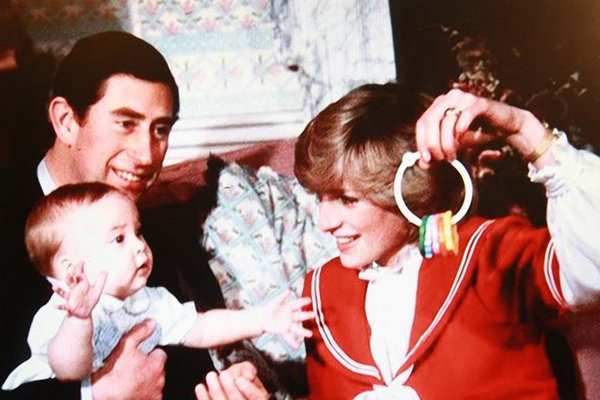
(Picture shows Prince William as a baby with his parents, Prince Philip and Diana, Princess of Wales; image from Royal Wedding)

Names From Bonds Baby Search: British-ish Names

17 Saturday Mar 2012

Posted by A.O. in Baby Contests

≈ 11 Comments

Tags

Breton names, Cornish names, Irish names, mythological names, Scottish names, Welsh names

These are names from the British languages of Ireland, Wales, Cornwall, Scotland and Brittany. I’ve called the list “British-ish” because many of the names have been Anglicised or are otherwise “inspired” by these languages rather than being strictly authentic. If you’re thinking there are many names missing, they could well turn up on other lists … Pronunciations and origins to the best of my knowledge.

GIRLS

Aneira (Welsh)

Aoife (EEF-ya – Irish)

Ashleen (variant modern Irish)

Bree (Anglicised Irish)

Bridget (Anglicised Irish)

Cailin (ka-LEEN – faux-Irish)

Carys (modern Welsh)

Ciara (KEE-ruh – Irish)

Eilish (EE-leesh – Anglicised Irish)

Fianna (fee-ANN-uh – Irish)

Isibeal (ISH-ih-bale – Irish)

Maela (MAH-el-uh – Breton)

Niamh (NEEV – Irish)

Nimueh (NIM-oo-ay – variant mythological Welsh)

Rhiannon (mythological Welsh)

Saoirse (SEER-sha – modern Irish)

Seren (modern Welsh)

Shayla (faux-Irish)

Sian (SHAHN – Welsh)

Sinead (SHIN-ayd – Irish)

Siobhan (SHIV-on – Irish)

Tegan (modern Welsh)


BOYS

Braith (Welsh?)

Brendan (Latinised Irish)

Bryn (Welsh)

Cadel (Welsh)

Caelan (KAY-len – Anglicised Irish)

Cian (KEEN – Irish)

Cillian (KIL-ee-an – Irish)

Denzel (variant Cornish?)

Duncan (Scottish)

Eamon (AY-mon – Irish)

Eoghan (O-in – Scottish/Irish)

Ewan (Anglicised Scottish/Irish)

Fergus (Anglicised Scottish/Irish)

Finlay (Anglicised Scottish/Irish)

Fionn (FIN – Irish)

Griffin (Latinised Welsh)

Ian (Scottish)

Jock (Scottish)

Kormak (variant Scottish/Irish)

Lorcan (Irish)

Malachy (MAL-uh-kee – Irish)

Morgan (Anglicised Welsh)

Neil (Irish/Scottish)

Oistin (OHS-teen – Irish)

Ronan (Irish)

Ruairidh (RAWR-ee – Irish)

Seirian (modern Welsh)

Shea (SHAY – Anglicised Irish)

Talisyn (variant mythological Welsh)

Taryn (variant modern Welsh?)

Tighe (TYGE – Irish)

Ruby and Oliver – #1 in Tasmania

13 Tuesday Mar 2012

Posted by A.O. in Name Data

≈ Comments Off on Ruby and Oliver – #1 in Tasmania

Tags

celebrity baby names, celebrity names, classic names, Irish names, name popularity, name trends, nicknames, popular names, royal baby names, Scottish names, surname names

I’ve been waiting for the top boy and girls to repeat for a state, and at last they have – Tasmania shares its #1 boy and girl names with South Australia.

On the girls’ Top 10 20, Ruby continues to sparkle at #1, and in fact has increased her lead. In 2010, she was used eight more times than the #2 name; last year there were almost twice as many babies named Ruby as the next name down.

The name that increased the most in popularity was Ava, rising ten places from #13 to #3. Amelia and Olivia were not far behind, and Zoe and Sophie made modest rises.

The name falling the most was Mia, going down from #5 to #10; surprising when you think how well she did in other states. Other names decreasing in popularity were Ella, Isabella, Bella, Holly and Chloe.

Grace, Charlotte, Matilda, Emily, Lily, Isabelle and Evie were stable, and Lucy and Imogen didn’t change position.

New to the Top 20 were Stella, Layla, Lilly, Sophia, Hannah, Isla, Sienna, Phoebe and Ellie. Departed were Hayley, Molly, Georgia, Maddison and Paige.

On the boys’ Top 20, Oliver joined Ruby by remaining the #1 name for another year.

Henry went up the most, increasing his position nine places from #17 to #8. Also rising were Samuel, Ethan, Lucas and Xavier.

Tyler plummeted twelve places from #7 to #19, and Harry, Max, Lachlan, James, Charlie, Jack, Thomas and Riley also had significant losses.

Jacob, Cooper, Alexander, Angus, Archie and Oscar remained stable, while William, Noah and Connor didn’t change their position.

I based names’ position on their overall number of uses, as there were so many names sharing position. One of the anomalies of this system is that although there were no new names in the boys’ Top 20, it lost twenty-two names: Joshua, Liam, Logan, Benjamin, Isaac, Ryan, Bailey, Jackson, Mitchell, Hamish, Blake, Jordan, Sebastian, Hunter, Lincoln, Jake, Aiden, Jesse, Zachary, Harrison, Eli and Daniel.

A smaller population obviously leads to much greater volatility, and probably a few rather odd results.

Tasmania definitely has its own style of naming, with more cosy older-style names such as Olive, Esther, Eleanor, Florence, Elsie, Maggie and Meg on the full girls’ list, and a dizzying array of spelling variants. Incidentally, I note that Halle, which was a unique name in 2010, was used six times in 2011 – enough to get it onto the Top 100.

On the boys’ list, surname names seem more prevalent than usual, as well as Scottish and Irish names like Campbell and Rory, and short forms like Tom and Billy. Classic Robert can also be found on the Tasmanian Top 100. The number of babies named Flynn went from 9 to 15, putting it into the Top 100, while Tasmanians seemed immune to the charms of Harper and Savannah.

You can see the spreadsheet with exact numbers of each name at the Links to Name Data page.


Saturday Celebrity Sibset: A Taste of Scotland – Leigh McClusky and Simon Haigh

18 Saturday Feb 2012

Posted by A.O. in Sibsets in the News

≈ Comments Off on Saturday Celebrity Sibset: A Taste of Scotland – Leigh McClusky and Simon Haigh

Tags

celebrity sibsets, famous namesakes, fictional namesakes, food names, nature names, plant names, Scottish names, surname names, twin sets, unisex names

Last year we featured celebrity mum, Rosanna Mangiarelli, who took maternity leave from Channel 7’s current affairs show, Today Tonight, after the birth of her second daughter, Olivia.

The Today Tonight presenter that Rosanna took over from was Leigh McClusky, who was the show’s anchor from 1995 to 2007. She left when she became pregnant with twins, and later founded her own media and public relations firm in Adelaide. Leigh is currently the host of SA Life, a lifestyle show promoting South Australia. On her team of presenters is Michael Keelan, Grant Cameron, Briony Hume, Rosa Matto, and Pete Michell.

In 2000, Leigh married Simon Haigh, owner of Haigh’s Chocolates. This family-owned boutique chocolate business was started by Simon’s great-great grandfather, Alfred Ernest Haigh in 1915, and continued on by his son Claude. He left the business to John, Simon’s father, who trained in Switzerland, and now Simon and his brother Alister run the business together.

The family motto? “If you’re born a Haigh, you eat dark chocolate,” says Simon.

I’m so glad I am not writing this story at the age of six, for I would have cried with jealousy at children who had a dad with his own chocolate factory, and where you inherit a family tradition of eating dark chocolate.

Now grown-up, and unable even to finish my Valentine chocolates without generous assistance, I feel I can press on without too many tears.

The Haighs chocolate-inheriting children are:

Murdoch (born 2002)

Sigourney (born 2006)

Jock and Tansy (born December 2007, and 18 months younger than Sigourney)

The twins were born with the help of IVF, and according to Leigh, made their different personalities apparent even as new babies – Jock serious, Tansy laid-back.

There’s a Scottish theme going with the boy’s names, suitable for sons of someone named McClusky. Interestingly for the son of a journalist, Murdoch also has the name of a famous family of media magnates; most of us will have heard of Keith Rupert Murdoch, so often in the news recently because of his newspaper, The Sun. Leigh never seems to have worked for the Murdochs, so it may just be a coincidence. Jock seems to have been given the Scottish version of the popular boy’s name Jack.

Sigourney reminds us of American actress Sigourney Weaver. Ms Weaver’s real name was Susan, and she chose Sigourney as a stage name from an off-page character barely mentioned in F.Scott Fitzgerald’s The Great Gatsby, Mrs Sigourney Howard, who is the aunt of the sporting Jordan Baker. It’s a surname occasionally used as a first name, often for males. Because of the actress and the classic novel, it seems very American, although Sigourney Weaver is of Scottish heritage too.

Tansy is the name of a bitter and toxic herb, considered useful in cooking, gardening and medicine for thousands of years. It has cheery yellow flowers, and is a good companion plant as it keeps away insects. A tansy is also a type of sweet omelette pudding, flavoured with the herb; British comedian Sue Perkins got slightly poisoned eating one on the entertaining Supersizers Go … series. The plant grows abundantly wild in Scotland.

(Both photos from the Herald Sun archives).

Famous Name: Douglas

03 Saturday Dec 2011

Posted by A.O. in Famous Names

≈ 22 Comments

Tags

aristocratic surnames, famous namesakes, locational names, name history, name meaning, name popularity, name trends, names of rivers, nicknames, Scottish names, surname names, UK name popularity, unisex names, US name popularity

doulass

This blog post was first published on December 3 2011, and substantially revised and reposted on December 10 2015.

Famous Namesake
Yesterday marked one hundred years since the Australasian Antarctic Expedition set sail from Hobart in the SY Aurora on December 2, 1911. It arrived at an unexplored region of Antarctica on January 8, 1912, and set up base camp. The site proved to be unrelentingly windy, with constant blizzards that made things hellish for the intrepid explorers.

Douglas Mawson was one of the leaders on the expedition. A geologist and lecturer from the University of Adelaide, he had been asked to join Robert Scott’s British expedition to find the South Pole (Scott was famously beaten to the punch by Norwegian Roald Amundsen). Mawson turned him down, as he thought it would be better to take his own team, and lead an expedition to the unexplored bits of Antarctica, which was most of it.

Douglas was part of a three-man sledging team called the Far-Eastern Party, which included Belgrave Ninnis, the son of a British arctic explorer, and Swiss mountaineer Xavier Mertz.

The group was making excellent progress when Ninnis fell into a snow-covered crevasse that the other two men crossed without incident; he took with him six huskies, a tent, most of the food and other essential supplies, and was never seen again. The glacier they were traversing is now called Ninnis Glacier in his honour.

Mawson and Mertz continued their frozen nightmare, forced to eat their huskies to supplement their scant rations. Although both men were unwell, Mertz became seriously ill and died in less than a week. It is thought that he may have died of an overdose of Vitamin A from eating husky liver, which Mawson solicitously fed him, in the fond belief that he was giving Mertz the best of the provisions.

Other theories are that Mertz died from hypothermia, from the shock of eating meat after being a vegetarian, or from the psychological stresses of the journey – especially the death of Ninnis, as the two men had been exceptionally good friends.

In the days before he died, Mertz became weak, exhausted, dizzy and delirious, even biting off the tip of one of his own fingers. He had dysentery, nausea, and stomach pain; his skin peeled away and his hair fell out – not surprisingly, another of his symptoms was depression. Whatever he died from, his demise caused him terrible suffering.

Douglas Mawson sledged the last 100 miles alone, falling into a crevasse on the way and having to climb out using the harness, only to see the boat he was to have returned on disappearing over the horizon. He had to spend another year in Antarctica.

Douglas was knighted in 1914 and The American Geographical Society awarded him a medal in 1916. The work he did was ground-breaking, and led to Australia getting its own portion of Antarctica, from where we still do important research.

For decades Sir Douglas Mawson was regarded unquestioningly as a hero, and his image is on the snow-white Australian $100 note. More recently his part in the expedition has been scrutinised, and attracted criticism. However there is no doubting his strength, courage, and determination to survive against all odds. He is remembered as an enthusiastic and kind man who never boasted of his remarkable exploits.

Name Information
Douglas is an Anglicisation of Scottish surname Dubhghlas meaning “dark river”. It originally belonged to the Douglas Water, which is a river in South Lanarkshire in southern Scotland. On its shores is a village named Douglas after the river, and the Douglas family took the village’s name as their surname when they moved here in the 12th century.

The Clan Douglas was one of the most powerful families of Scotland in the Middle Ages, often holding the real power behind the throne. The heads of the House of Douglas held the titles of the Earl of Douglas and the Earl of Angus, sometimes known as the Black Douglas and the Red Douglas. Their family estate was Castle Douglas, which Sir Walter Scott fictionalised as Castle Dangerous in his novel of the same name.

The Douglases are said to be descended from a Flemish knight, and fought with William Wallace and Rober the Bruce in the Wars of Independence. Sir James Douglas was the first to be labelled the Black Douglas by the English for what they considered his dark deeds: it was a title taken up with pride. The Douglases intermarried with the House of Stuart, gaining a royal connection.

The Douglases became so powerful they were seen as a threat. In 1440 the teenaged William Douglas, the 16th Earl of Douglas, and his younger brother were invited to dine with the ten-year-old King James I of Scotland. While they ate, a black bull’s head – symbol of death – was placed before the young earl. The Douglas boys were then dragged outside, given a mock trial and beheaded, so Clan Douglas lay siege to Edinburgh Castle. Called the Black Dinner, it is the inspiration for the Red Wedding in Game of Thrones.

Douglas has been used as a personal name at least since the 16th century, and seemingly originates in England rather than Scotland. It was originally a unisex name, given equally to boys and girls, and by the 17th century was primarily a female name. A famous example is Douglas Sheffield, Baroness Sheffield, who had an affair with Robert Dudley, the favourite of Queen Elizabeth I, and had a son by him. In the 18th century Douglas became more common for males than females, so this is an example of a name that went from the girls to the boys.

The name is a traditional one in the Hamilton family, which married into the Douglases in the 17th century; although the Hamiltons’ surname is now Hamilton-Douglas, they are actually Douglases by descent. The head of Clan Douglas today is the Duke of Hamilton, Alexander Douglas Douglas-Hamilton.

Douglas was #59 in the 1900s, and peaked in the 1920s at #28, during the career peak of actor Douglas Fairbanks, known as The King of Hollywood in that era. It remained on the Top 100 until the 1970s, and disappeared from the charts in 2010, although returning the following year. It is apparently now in rare use.

In the US Douglas has always been on the Top 1000. It was on the Top 100 from the end of the 1920s to the end of the 1980s. It peaked in 1942 at #23 – two wartime namesakes are General Douglas Macarthur, and Douglas Fairbanks son, Douglas Fairbanks Jr, who became a highly decorated naval officer. It is currently #598 and falling.

In the UK, Douglas was on the Top 100 from the 1880s to the 1970s, peaking in the 1920s. Although it got as low as 508 in 2008, it has been climbing ever since, and is now #276. A current famous namesake is the handsome British actor Douglas Booth.

Douglas is a strong and rugged sounding classic name that is no longer in fashion, but still in use. British trends suggest that it is due for a comeback, and thanks to Douglas Booth, perhaps we can once again see Douglas as a romantic, dashing name, as it was in the 1920s because of Douglas Fairbanks. The nickname Doug seems very dated, but Dougie is cute, and even Gus seems possible.

POLL RESULTS
Douglas received an approval rating of 49%. 22% of people thought it wasn’t ready for a comeback, and 15% saw it as dorky and nerdy, although 17% saw it as strong and rugged. In contrast, 10% of people thought it was ready for a comeback, and saw it as a hip choice most parents weren’t clued into yet.

← Older posts
Newer posts →

Enter your email address to follow this blog

Categories

Archives

Recent Comments

A.O.'s avatarwaltzingmorethanmati… on Zarah Zaynab and Wolfgang…
Madelyn's avatarMadelyn on Zarah Zaynab and Wolfgang…
JD's avatardrperegrine on Can Phoebe Complete This …
A.O.'s avatarwaltzingmorethanmati… on Rua and Rhoa
redrover23's avatarredrover23 on Rua and Rhoa

Blogroll

  • Appellation Mountain
  • Baby Name Pondering
  • Babynamelover's Blog
  • British Baby Names
  • Clare's Name News
  • For Real Baby Names
  • Geek Baby Names
  • Name Candy
  • Nameberry
  • Nancy's Baby Names
  • Ren's Baby Name Blog
  • Sancta Nomina
  • Swistle: Baby Names
  • The Art of Naming
  • The Baby Name Wizard
  • The Beauty of Names
  • Tulip By Any Name

RSS Feed

  • RSS - Posts

RSS Posts

  • Celebrity Baby News: Melanie Vallejo and Matt Kingston
  • Names from the TV Show “Cleverman”
  • Can Phoebe Complete This Sibset?
  • Zarah Zaynab and Wolfgang Winter
  • Baby, How Did You Get That Name?
  • Celebrity Baby News: Media Babies
  • Celebrity Baby News: Adelaide Crows Babies
  • Celebrity Baby News: Chris and Rebecca Judd
  • Names at Work: Name News From the World of Business and Employment
  • Celebrity Baby News: Sporting Round Up

Currently Popular

  • Celebrity Baby News: Toby Allen and Darren Weller
  • Girls Names From Native Australian Flowers
  • Girls Names of Australian Aboriginal Origin
  • Celebrity Baby News: Victoria Samba and Mitch Hoare
  • Celebrity Baby News: Katie Underwood and Darren McCoy

Tags

celebrity baby names celebrity sibsets english names famous namesakes fictional namesakes honouring locational names middle names name combinations name history name meaning name popularity name trends nicknames popular names saints names sibsets surname names twin sets unisex names

Create a free website or blog at WordPress.com.

Privacy & Cookies: This site uses cookies. By continuing to use this website, you agree to their use.
To find out more, including how to control cookies, see here: Cookie Policy
  • Subscribe Subscribed
    • Waltzing More Than Matilda
    • Join 517 other subscribers
    • Already have a WordPress.com account? Log in now.
    • Waltzing More Than Matilda
    • Subscribe Subscribed
    • Sign up
    • Log in
    • Report this content
    • View site in Reader
    • Manage subscriptions
    • Collapse this bar
 

Loading Comments...