• About
  • Best Baby Names
  • Celebrity Baby Names
  • Celebrity Baby Names – Current
  • Celebrity Baby Names – Past
  • Featured Boys Names
  • Featured Girls Names
  • Featured Unisex Names
  • Links to Name Data
  • Waltzing on the Web

Waltzing More Than Matilda

~ Names with an Australian Bias of Democratic Temper

Waltzing More Than Matilda

Tag Archives: popular culture

Popular Names for Boys

06 Sunday May 2012

Posted by A.O. in Name Themes and Lists

≈ 23 Comments

Tags

Aramaic names, band names, Biblical names, car names, celebrity baby names, classic names, english names, famous namesakes, fictional namesakes, French names, germanic names, Greek names, hebrew names, honouring, Latin names, locational names, name history, name meaning, name popularity, nicknames, Old Norse names, popular culture, popular names, royal names, saints names, Scottish names, surname names
Follows on from Popular Names for Girls.

William

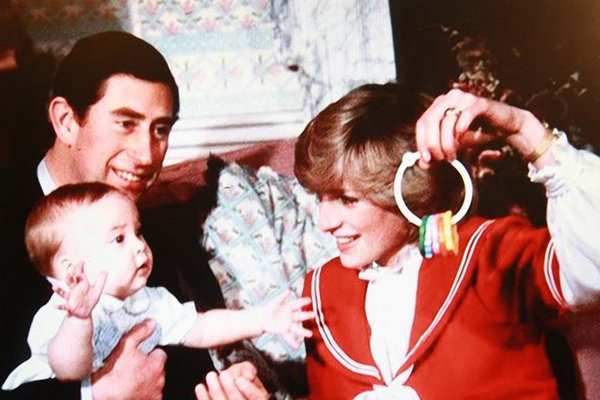
William is a solidly classic name which has never left the Top 50. It was the #1 name of the 1900s, and gradually decreased in popularity, hitting its lowest point during the 1970s, at #48. However, its fortunes were soon to recover, because in 1982, heir to the British throne Prince Philip, and his then wife, Diana, Princess of Wales, welcomed their first child and eldest son, William Arthur Philip Louis. Prince William was named after his father’s cousin and personal hero, Prince William of Gloucester, who died in an air crash ten years earlier. Prince William made his first visit to Australia as a baby, and this was an immediate help to the name’s popularity. By the time Prince William began university in 2001, the name was already in the NSW Top 10. It reached #1 in 2009, the year after Catherine Middleton began accompanying Prince William to official functions, and there it has remained. In 2011, Prince William made a much-appreciated visit to flood-affected areas of Australia, and shortly afterwards treated the world to a slap-up royal wedding. It’s likely this princely name will remain at the top for at least another year.

Jack

Jack is a classic name which has never left the charts. Top 100 during the 1900s-30s, it sunk to its lowest point in the 1970s, at #269. However, so rapid was its growth that it joined the Top 100 again during the 1980s – the same decade that pop singer John Farnham released his Whispering Jack album. Whispering Jack went to #1, and is the highest-selling album ever in Australia, having gone platinum 24 times over. By the 1990s, Jack was already Top 10, a decade when Leonardo di Caprio played water-logged lover Jack Dawson in the romantic movie Titanic, and teen heartthrob Daniel Amalam played bad boy Jack Wilson in soapie Home and Away. By the start of the 2000s, Jack was #2. It made #1 by 2004, the year that the TV show LOST began, with its hero Dr. Jack Shephard, and the year after Johnny Depp played Captain Jack Sparrow in the first Pirates of the Caribbean film. Jack remained in first place until 2008, the year that AC/DC released their single Big Jack. Jack the Lad may have had his day, but won’t be going anywhere fast, and is still the #1 name in some states.

Ethan

Ethan is a name from Hebrew which means “solid, enduring”. In the Old Testament, Ethan is said to have been a very wise man who wrote Psalm 89. Ethan first entered the charts in the 1970s, and took off during the 1980s, as film-maker Ethan Coen began his career, working in tandem with his brother Joel. At the end of the 1980s, actor Ethan Hawke got his big break in Dead Poets’ Society. By the 1990s, Ethan was a Top 100 name, and it was in this decade that Tom Cruise first played Ethan Hunt, the hero of the Mission Impossible films, Ethan Philips joined the cast of TV show Star Trek, and Ethan Rayne was introduced as a character on Buffy the Vampire Slayer. It was also during the 1990s that surfing champ Wendy Botha welcomed a son named Ethan. In 2006, Ethan joined the Top 10 – the year after the Ethan Group, an Australian IT company, won the BRW Fast 100. Singer Dannii Minogue, Kylie’s sister, welcomed a son named Ethan in 2010, and that probably won’t hurt the chances of this strong yet gentle-sounding name going higher still.

Oliver

Oliver is the English form of French name Olivier, but it’s unclear whether it’s the Norman form of Germanic Alfher, meaning “elf warrior”, or Old Norse Aleifr, meaning “ancestor’s descendant” (related to Olaf). The spelling was altered to make it seem as if the name came from the Latin oliva, meaning “olive tree”. A classic which has never left the charts, Oliver was Top 100 in the 1900s, but then sank into rare use. It recovered during the 1970s, the decade after the release of Oliver!, the musical based on Dickens’ novel, Oliver Twist. In this decade, actress Goldie Hawn welcomed a son named Oliver. The name gained ground during the 1980s, and was Top 100 during the 1990s. Late in the ’90s, the first Harry Potter book was published, featuring Harry’s Quidditch captain, Oliver Wood. In the 2000s, the books were turned into films, with Oliver Phelps playing the role of George Weasley. By 2006, the debut of TV show Hannah Montana, where Oliver Oken is the best guy-friend of the heroine, it was Top 20, and by 2008 it was Top 10. By 2010 it was Top 5; Oliver may go higher if you want some more.

Lucas

Lucas is the Latin form of Greek Loukas, on which English Luke is based. Lucas first entered the charts in the 1950s. There was noticeable growth during the 1970s, the decade that George Lucas made the first Star Wars movie, and then it remained stable for several decades in the very low 100s. However, in the 2000s it made the Top 100, and at this point it fairly raced up the charts. A possible help to the name was the television drama series, One Tree Hill, in which Chad Michael Murray plays the main protagonist, Lucas Scott. This brooding, blue-eyed, sporty yet bookish hero proved something of a hit with the female demographic. Meanwhile, Lucas Holden on Australian soap Home and Away was also a literary teenager, who ended up having a controversially steamy scene with his onscreen girlfriend. By 2006, the year that soccer star Lucas Neill played for Australia in the World Cup, it was in the Top 50. By 2007 it was Top 20, and by 2010 it was Top 10. The 2000s were kind to Lucas, and at this point, lucky Lucas seems almost certain to go to #1.

Noah

Noah is derived from the Hebrew name Noach, meaning “rest, comfort”. Noah is well known from the Old Testament story, where he builds an ark which saves his family and the animals of all species to survive the Great Flood, sent by God as a one-off punishment to wicked humanity. The name Noah entered the charts in the 1980s, the decade when Noah Hathaway gave an award-winning performance as boy-warrior Atreyu, in the fantasy film, The Neverending Story. Also in the 1980s, Australian actor Noah Taylor made his film debut as the main character in the critically acclaimed The Year My Voice Broke. Noah climbed steadily, then suddenly shot up during the 1990s, the decade that Boris Becker welcomed a son named Noah, so that it was in the Top 50 by the 2000s. Noah joined the Top 20 in 20005, the year after Ryan Gosling played the young version of Noah Calhoun, the devoted lover from romantic film, The Notebook. In 2006, Noah was in the Top 10. However, Noah has remained reasonably stable, with no signs of moving significantly up or down, and we must wait to see whether it sinks or swims.

Lachlan

Lachlan is a Scottish name which began as a nickname for someone from Norway. In Scotland, Norway was known as the “the land of the lochs”, or Lochlann. Lachlan Macquarie was born in the Hebrides, and became Governor of New South Wales in 1809. To the British government of the time, Australia was a penal colony for offloading the dregs of their society; convicts must be treated cruelly, former convicts exploited, and little money spent. The government fretted as Macquarie pardoned convicts, employed freed convicts in important positions, put up beautiful Georgian buildings, and spent lavishly on public works. Eventually the British booted him, but for giving us a future and sticking up for us, he is considered the father of our nation. Lachlan has been almost continuously in the charts, only dropping out in the 1930s, but was in rare use until it began rising in the 1960s. In 1971, media magnate Rupert Murdoch chose this name for his eldest son, and the name rose significantly. It was Top 100 by the 1980s, Top 20 by the 1990s, and Top 5 by the early 2000s. The position of this patriotic favourite has been stable for more than a decade.

Cooper

Cooper is an English surname which means “barrel-maker”. One of the most famous rivers in Australia is Cooper Creek, where doomed explorers Burke and Wills met their end, and Australian racing car driver Jack Brabham drove for the Cooper Car Company. Cooper first entered the charts in the 1980s, and made good ground during the 1990s, a decade when Bill Murray and Hugh Hefner both welcomed sons named Cooper. By the 2001, the name was in the Top 50, and then it soared. It got some serious sporting muscle as Quade Cooper joined the national men’s rugby union team, the Wallabies, and Cooper Cronk joined the national rugby league team. Cronk was also part of the Melbourne Storm team which won five Premierships or Minor Premierships within four years. Originally from Brisbane, he plays for the Queensland state side, which insists on winning the State of Origin series every year. Handsome, athletic and an extremely talented player, Mr Cronk seems like a big part of the reason the name Cooper is #1 in Queensland. Cooper made the Top 10 in 2007, and the Top 5 the following year, but now seems to be falling without reaching the top spot.

Thomas

Thomas is from an Aramaic word meaning “twin”, and in the New Testament, Saint Thomas was one of the Twelve Apostles. Thomas was his nickname; his real name was Judas. Presumably he was the twin of someone in the Biblical stories, or just a lookalike or kindred soul, but frustratingly, the Bible neglects to explain whose “twin” he was. People who like logical explanations for things often cite Thomas as their favourite Apostle, because when he heard that Jesus had been resurrected, he refused to believe it until he could see and touch Jesus for himself – hence the phrase, Doubting Thomas for a sceptical person. Thomas is a classic which has never left the Top 100. In the Top 5 of the 1900s, it gradually declined, and reached its lowest point in the 1970s, at #68. It climbed smoothly through the 1980s, the decade that saw Tom Cruise and Tom Hanks become stars. By the 1990s, it was in the Top 5, and maintained position in the 2000s as Tom Felton played Draco in the Harry Potter films, making many a teen girl switch to Team Slytherin. However, it may be very gradually going down now.

James

James is the Latinised form of Jacob, and must be one of the most successful names from the New Testament. The name of two of the apostles, this doubly saintly name is also a royal one in Britain, where there have been seven Scottish kings called James. The King James Version of the Bible was commissioned by King James I of England (James VI of Scotland), giving it yet another tie to this sacred book. In Australia, the most famous James is Captain James Cook, the explorer who discovered our continent. A classic which has never left the Top 20, James reached its lowest point in the 1960s and ’70s at #19. Recovery was so swift that it was Top 10 in the 1980s, and Top 5 in the 1990s. Since the 1970s, there have been many Jameses in the public eye, real and fictional. Actors James Woods, James Spader, James Marsters, and James Phelps; singers James Blundell, James Morrison and James Blunt (not to mention the band James); Captain James Kirk from Star Trek; and the inimitable James Bond. James is the name of Harry Potter’s father – his mum’s name Lily is also Top 10. Cool James is falling again, at glacial speed.

(Picture shows Prince William as a baby with his parents, Prince Philip and Diana, Princess of Wales; image from Royal Wedding)
Popular Names for Girls

29 Sunday Apr 2012

Posted by A.O. in Name Themes and Lists

≈ 29 Comments

Tags

acronyms, Appellation Mountain, band names, Biblical names, celebrity baby names, created names, english names, Etruscan names, famous namesakes, fictional namesakes, flower names, French names, gemstone names, germanic names, Greek names, Italian names, Latin names, Linda Rosenkrantz, locational names, mythological names, name data, name history, name meaning, name popularity, name trends, Nameberry, nature names, nicknames, Norman names, popular culture, popular names, retro names, royal names, Shakespearean names, ship names, tribal names, vocabulary names

In honour of the name data being released, I thought I’d do lists of the most popular names in Australia for last year. I admit this was something of a last-minute decision, but it seemed like a good opportunity to cover some of the best-loved names.

People often ask how popular names got to be popular. I’m not sure there’s really a good answer to that – clearly people like the sound of them, and they fit in with current trends. Yet there must be many names, equally as nice-sounding and trend-friendly, that lurk around the 200s and don’t seem as if they are going anywhere much.

Although I cannot tell you what events caused these names to become popular, I can tell you some of the events which accompanied their rise. I’m definitely not trying to say that they were the cause of a name’s popularity, just that they coincide with it (and really sometimes it seems more than merely coincidental). Feel free to add other events you can think of, or any theories of your own!

Note: I’ve used data from New South Wales, but it must be broadly accurate for the rest of the nation too.

Lily

Lily seems to have begun as a pet form of Lilian, but must soon have become thought of as a flower name. The lily is sacred to the Virgin Mary, and Jesus urged his followers to “consider the lilies of the field” as a model in trusting Divine Providence. Lily has been almost continuously in the charts, only dropping out during the 1960s. It began rising in the 1980s – a decade when Princess Lily was the main female character in fantasy film Legend, and when Phil Collins and Kevin Costner welcomed daughters named Lily. A Top 100 name in the 1990s, it continued climbing, as Kate Beckinsale welcomed a daughter named Lily, while Johnny Depp named his baby girl Lily-Rose. By the early 2000s, Lily was already a Top 20 name, and during this decade, Lilly was the main character’s best friend in The Princess Diaries movie, Lily Potter was Harry’s mum in the Harry Potter movies, and pop singer Lily Allen released her first hit. Last year Lily was the most popular name for girls, once combined with the spelling Lilly. Delicate and pure, yet with several spunky namesakes, pretty Lily became a favourite.

Ruby

Ruby is named after the precious gemstone, whose name from Latin simply means “red”. Retro Ruby was popular during the 1900s, then dropped out completely during the 1960s and ’70s, despite being a popular name in songs; notably Ruby Tuesday and Ruby Don’t Take Your Love to Town. It began rising in the 1980s, as comedienne Ruby Wax barged her way onto our TV screens, and singer Rod Stewart welcomed a daughter named Ruby. The name climbed steeply during the 1990s, and turned up in more songs: Ruby Soho by Rancid, Thru’ the Eyes of Ruby, by The Smashing Pumpkins, and Ruby Wednesday by Eskimo Joe. By the early 2000s, Ruby was a Top 50 name, and by the late 2000s, it was Top 20. During this decade, the song Ruby was a hit for The Kaiser Chiefs, Renee Zellweger played Ruby in the movie Cold Mountain, and Ruby Buckton was a free spirited teen on popular soap, Home and Away. Charlotte Church, Tobey Maguire, and Harry Kewell all welcomed daughters named Ruby. Last year it was #2 for girls, once combined with the spelling Rubi. Flaunting Ruby sparkles, and is a name worth singing about.

Chloe

Chloe means “young green shoot” in Greek, and was one of the epithets of the earth goddess Demeter. From early on, it was a favoured literary name; Chloe is the heroine of the pastoral romance Daphne and Chloe, by the Ancient Greek writer Longus. The name was also considered suitable for use by the Puritans, because Chloe is an early Christian mentioned in the New Testament. Chloe first appeared on the charts in the 1970s; a decade when an arty French film, re-titled Chloe in the Afternoon, was released to English-speaking audiences. Chloe stormed up the charts and was Top 100 by the 1980s. During this decade, actress Candice Bergen and singer Olivia Newton-John both welcomed daughters named Chloe, and Chloe Jones was one of the characters in long-running soap, A Country Practice. By the 1990s it was Top 20, and Logie-winning actress Kristy Wright played the tragically troubled Chloe Richards on popular soap, Home and Away. Chloe was Top 5 by the early 2000s; it reached #1 in 2006. Fresh and spring-like, Chloe has been recommended at Appellation Mountain, and Linda Rosenkrantz from Nameberry named her daughter Chloe – some serious name-guru approval.

Mia

Mia seems to have become popularly known through actress Mia Farrow, the daughter of Australian film director John Farrow, and Irish actress Maureen O’Sullivan. Mia is short for Ms Farrow’s real name, Maria. Mia first appeared on the charts in the 1960s, after Mia Farrow began her career, but rose in popularity very gradually. An interesting link with another name on the list is that Princess Lily in Legend was played by actress Mia Sara; is it a coincidence that both names began climbing at the same time? It started making significant gains in the 1990s, a decade when Uma Thurman played Mia Wallace in Pulp Fiction. Although not yet Top 100 in the 1990s, by the early 2000s it was already Top 20. In this decade, we met Amelia “Mia” Thermopolis, heroine of The Princess Diaries movie, and Mia Toretto from The Fast and the Furious films. It was chosen as the name for their daughter by actress Bec Cartwright and tennis champion Lleyton Hewitt. Top 10 by the late 2000s, it reached #1 in 2008. Simple and cute, Mia has another Australian connection – it is an acronym for Made in Australia.

Olivia

Olivia is a name invented by William Shakespeare for a character in Twelfth Night. Olivia is a beautiful noble lady in mourning for her brother; through an amusing misunderstanding, she falls in love with a woman named Viola disguised as a man. Through another amusing misunderstanding, she marries Viola’s twin brother Sebastian by mistake, but fortunately he is so much like his sister in looks and personality that she is happy with the outcome. Famous Olivias include actress Olivia de Havilland and Olivia Arias, the widow of Beatle George Harrison. Olivia first appeared on the charts in the 1960s, just as singer Olivia Newton-John began her career, and rose steadily. Her popularity took off in the 1980s (perhaps by coincidence, the era when Ms Newton-John enjoyed her greatest success), and by the 1990s she was already a Top 20 name. During the 1990s, Denzel Washington and Lance Armstrong welcomed daughters named Olivia. In the early 2000s, Mariska Hargitay was playing Olivia Benson on Law and Order: SVU, and by 2005 Olivia had reached #1. Shakespeare had a knack with names, and this one is elegant; I picked it to be the Jessica of our time, and equally resilient.

Isabella

Isabella is a Latinate form of the name Isabel; it was a favourite amongst European royalty from the Middle Ages onwards. Isabella is a stock character in the Italian commedia dell’arte, the flirtatious and alluring female lover that men make fools of themselves over. She is named in honour of the actress, playwright and poet Isabella Andreini, who became famous in the role. Isabella has been on the charts almost continuously, although her last time in the Top 100 was in the 1900s. She dropped out completely during the 1950s, and then again in the 1970s. She made a recovery in the 1980s just as Italian actress Isabella Rosselini became internationally known, and then skyrocketed. Nicole Kidman and Tom Cruise adopted a daughter in the early 1990s and named her Isabella, and the name was comfortably Top 50 for that decade. When Stephenie Meyer’s novel Twilight was published in 2005, its heroine named Isabella “Bella” Swan, Isabella was already #7; Isabella reached #1 in 2009, the year after the Twilight film was released. Ornate and ultra-feminine, it is an Australian royal baby name, as Prince Frederik and Princess Mary of Denmark named their first daughter Isabella.

Charlotte

Charlotte is a French feminine form of Charles; a common name amongst European royalty, it was introduced to Britain in the 17th century by the Hanoverians. The Charlotte was one of the ships of the First Fleet, who reached Australia in 1788. Charlotte has been almost continuously on the charts, only disappearing in the 1950s. She began climbing gradually in the 1960s, a decade when English actress Charlotte Rampling’s film career began. The name grew steeply in the 1980s, a decade in which Charlotte “Charlie” Blackwood, played by Kelly McGillis, is the love interest to Tom Cruise’s Maverick in the movie Top Gun. It made the Top 100 by the 1990s, when actress Sigourney Weaver welcomed a daughter named Charlotte, and when the band Good Charlotte began their career. It was Top 20 in the early 2000s, while we got to know the romantically optimistic Charlotte York in Sex and the City, played by Kristin Davis; by the end of the decade it was Top 10, as as singer Charlotte Church progressed her career from classical to pop. Sophisticated yet sensible, with the option of a tomboy nickname, Charlotte has yet to make #1.

Sophie

Sophie is the French form of Sophia; the name was used in several European royal families. Sophie first entered the charts in the 1950s, and through steady growth, made the Top 100 by the 1980s. It was during this decade that William Styron’s Sophie’s Choice was made into a film; Meryl Streep won an Oscar for her performance as Zofia “Sophie” Zawistowski, the beautiful Polish immigrant with a tragic secret. The same year the film came out, Roald Dahl‘s book, The Big Friendly Giant was published; the heroine is called Sophie, named after Roald Dahl’s grand-daughter (later fashion model Sophie Dahl). During the 1990s Sophie took off, and was a Top 20 name during that decade. It was during the ’90s that the best-selling novel, Sophie’s World, was published, and actress Sophie Lee and singer-actress Sophie Monk both began their careers this decade. At the end of the 1990s, Sophie Rhys-Jones joined the British Royal Family when she married Prince Edward. Sophie was Top 10 by the early 2000s, and many are tipping sweet and simple Sophie to become the #1 name within the next few years.

Sienna

Sienna is the English name for the Italian city of Siena,in Tuscany. As a word, it refers to a type of clay used to make oil paints, and a shade of yellow-brown, after the hue of said clay. The city’s name comes from the Etruscan tribe who originally inhabited the area, the Saina, but the Romans derived it from the Latin for “old” (the same Latin root which gives us the word senile). Sienna first entered the charts in the 1980s, and climbed steeply during the ’90s. I think the name suited the aspirational nature of that era. Italy was very “big”; pizza was becoming a mainstream food, and the adults around me were guzzling Chianti and buying time-shares in Tuscan villas. British model-actress Sienna Miller is not responsible for the name’s popularity, because it had been climbing for some time, but can it be purely coincidental that it first joined the NSW Top 100 in 2002, the year after Ms Miller’s career began? From that point, its climb was so vertiginous that it was Top 10 by 2006. Smooth, modern Sienna seems certain to go higher still.

Ella

Ella is the Norman form of the Germanic name Alia, a short form of names with the element ali, meaning “other”. However, it can also be used as a short form for Eleanor, Ellen, Elizabeth or any name starting with El, and also the many names ending with -ella. It’s hard not to connect this name with jazz great, Ella Fitzgerald. Ella has been on the charts almost continuously, with her last time in the Top 100 in the 1900-10s. She was soon in rare use, although she only disappeared completely during the 1960s. She climbed slowly during the 1980s, and steeply during the 1990s. It was during the ’90s that Ella got a new singing namesake – Ella Hooper from rock band Killing Heidi. Ella was Top 20 by the early 2000s. She received several boosts around this time, for the movie Ella Enchanted was released, a re-telling of the Cinderella story. Warren Beatty, John Travolta, Mark Wahlberg and Ben Stiller all welcomed daughters named Ella, giving the name a distinct celebrity flavour. Top 5 in the second half of last decade, Ella feels as if she may have peaked, and is possibly on her way down again.

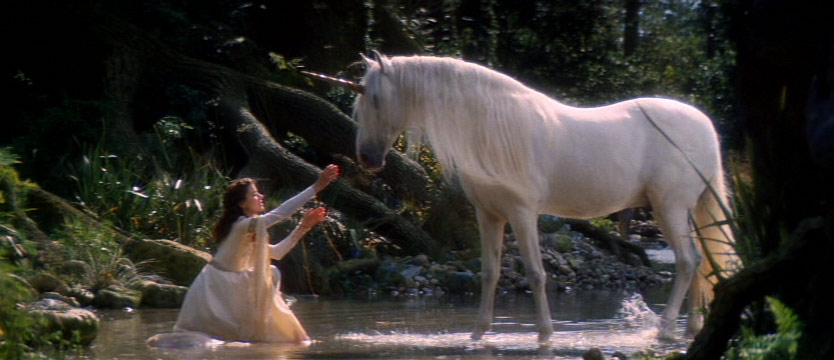
(Picture shows Princess Lily and unicorn, from Ridley Scott’s 1985 cult fantasy film Legend)

Googly Gender-Bending: Your Questions on Unisex Names Answered

15 Sunday Apr 2012

Posted by A.O. in Your Questions Answered

≈ 20 Comments

Tags

blog reviews, classic names, famous namesakes, fictional namesakes, French names, Google, hebrew names, Hungarian names, Italian names, Japanese names, Latin names, Mer de Noms, mythological names, name meaning, name popularity, naming laws, nature names, nicknames, Nook of Names, place names, polynesian names, popular culture, surname names, unisex names

You may be expecting a blog review this week, and I hope you are not too disappointed that one isn’t appearing. The truth is, I feel quite burned out in regard to the reviews, and also think that several name blogs are currently in a state of flux. I hope that if I wait a few months, it will give new blogs a chance to catch up, and abandoned ones a chance to resume.

In the meantime, here I am starting yet another Category – this one, Your Questions Answered. I’ve noticed many interesting questions typed into Google, and although they got sent to my blog, alas, they received no answer here. So this is my chance to make good on their requests.

I thought I’d begin with a few of the many enquiries in regard to unisex names, since it is such a popular topic. I think it is worth mentioning that so far, nobody has Googled, “what is a male name I can steal for my daughter so there are no names left for parents of boys to use” or “how can I give my son a feminine name in order to scar him psychologically”, which is how some people seem to imagine the mental workings of the bestowers of unisex names.

The fact that so many people are so frequently searching suggests that far from using a unisex name in a frivolous way, a lot of thought is going into it. In turn, I’ve tried to put a lot of thought into answering them, steering a steady course between a laissez faire “anything goes” attitude, and a shrill denouncement of anyone daring to suggest that any name at all can be unisex.

In doing so, I’ve considered the origin, meaning, history, namesakes, and popularity of a name, both current and past. I’ve tended to go with the theory that surnames are unisex, unless they have a specifically gendered meaning, or are derived from specifically gendered personal names.

One thing I should make clear is that unlike some other countries, Australia has no naming laws in regard to gender. According to legislation, all names are unisex, and you are quite free to name your daughter Matthew or your son Chloe if you wish.

I’m presuming that when people ask if a name is male, female, or unisex, they are asking the community for their opinions on the subject. Of course, my opinions are just that – opinions. Feel free to leave your own opinions!

Note: Popularity of names based on Australian data.

I: BOYS TO GIRLS?

Henry as a girl’s name

At first glance, the idea of Henry as a girl’s name seems utterly potty. Henry is not only Top 100 for boys, but also a classic boy’s name which has charted for males for over a century, and been accepted as such for more than a thousand years. However, I do remember a Famous Five book where there was a female character named Henry – short for Henrietta.

My Verdict: A boy’s name, unless short for Henrietta

Luca as a girl’s name

Luca can be the Italian form of Luke, but also the Hungarian form of Lucia. In the latter case though, it is pronounced LOO-tsa, rather than LOO-ka. Luka seems to have a reasonable history of use as both a male and female name across a range of different cultures. I’d probably lean towards using Luka for a girl instead.

My Verdict: Both a boy and a girl name, but the two names are pronounced differently

Dylan as a girl’s name

Dylan was a Welsh god, so the name’s origins are masculine. Furthermore, Dylan has charted as a boy’s name since the 1960s, but never for girls. You could use the completely unrelated Irish surname Dillon though, which an English speaker would pronounce the same way anyway.

My Verdict: A boy’s name, sometimes used on girls

can Cadel be a girl’s name

It is a variant of Cadell, which for many centuries has been used and accepted as a male name. However, the explorer Francis Cadell has a few places in South Australia named after him – you could always claim Cadell as a place name. Place names based on surnames based on gendered personal names seem to be something of a grey area.

My Verdict: A boy’s name

can Myles be a girl name

In Greek legend, Myles was most definitely a man, and this name has a long history as a male name. However it’s now being used on girls – perhaps it seems like the “correct” form of Miley?

My Verdict: A boy’s name, currently being used on girls

II: GIRLS TO BOYS?

when can Hazel be a boy name?

I guess whenever you feel like using it as such. Hazel is a nature name and a surname, so seems quite unisex, and in fact does have some history as a male name. Having said that, it’s currently rising in popularity as a girl’s name, and has never charted for boys.

My Verdict: Technically unisex, but usage is almost entirely feminine

Can I call my boy Kaia

I think you can, but nobody seems to agree. Kaia seems unisex to me, but nearly everyone insists that it’s feminine. However, the name Kaya definitely is unisex, and worldwide seems to be used by more men than women. It’s used in so many different countries that it’s practically unicultural as well. I think I’d prefer to go with Kaya, although I don’t see why Kaia can’t be a variant of Kaya.

My Verdict: Your choice!

Noa as a boys name

Although Noa is a female name in Hebrew and Japanese, it’s also a Polynesian male name meaning “freedom”. There was a famous rugby league player from Fiji named Noa Nadruku, who played for Australian teams in the 1990s.

My Verdict: Both a boy and a girl name depending on origin

can Starr be a boy’s name?

Sure it can, it’s a surname as well as a place name. In fact, the surname seems to derive from a masculine first name which may mean “ox”, so if anything it’s more male than female. There’s a comic book hero called Starr the Slayer, a barbarian king. He seems pretty blokey.

My Verdict: Unisex, leaning towards male by history and meaning

is Kelly becoming popular as a boys name

Apparently not. It’s still charting as a girl’s name, although slowly declining, and has never charted as a boy’s name. I have seen some boys named Kelly though; it’s rare as a boy’s name, but not unheard of.

My Verdict: Unisex, but usage is almost entirely feminine

III: CONFUSED ON THE ISSUE

is Stacey more common as a boy or girl name

It isn’t common for either sex – currently it’s not on the charts at all. However, when it did chart, it was only as a female name.

My Verdict: Historically, much more common as a girl’s name

can a man’s name be Ashley or it that just a girls name

It can be used for both sexes. Famous Australian men named Ashley include tennis player Ashley Cooper, and swimmer Ashley Callus. It charts as both a male and female name, although as a female name it is still Top 100, and as a male name it is now in rare use. Historically it has been male for longer, but hit a higher peak of popularity as a female name.

My Verdict: Historically more common for boys, but currently more common for girls

Is Remy a boy name or a girl name

It’s based on the Latin name Remigius, so it’s usually a boy name. However, Kay from Nook of Names pointed out that it could just as easily be based on the female form Remigia. In its country of origin, France, Remy is occasionally used as a female name.

My Verdict: Most often a boy name, but can be used as a girl name

is Jade boy or girl

It’s a unisex name. Famous Australian men named Jade include soccer player Jade North and AFL player Jade Rawlings. Famous Australian women named Jade include swimmer Jade Edmistone and singer Jade McRae. Jade has charted for both sexes, but currently it’s Top 100 for girls, and in rare use for boys.

My Verdict: A name for both boys and girls, but much more common for girls

Is Darcy considered a boy or girl name

Ooh good question. Darcy charted as a unisex name from the 1900s to the 1950s, and then in the 1950s it became a male name only. Currently it generally seems to be rising as a female name and declining as a male name.

My Verdict: Originally unisex, and may be returning to that state

(Picture is of Australian androgynous model Andrej Pejic, who successfully models both male and female clothing)

More Eastertide thanks are due to the unisexily named Lou from Mer de Noms, for reblogging Boys Names of Australian Aboriginal Origin! (If you read that carefully, it’s a poem).

Iridessa and Bambam: Created Names from the Bonds Baby Search

03 Tuesday Apr 2012

Posted by A.O. in Baby Contests

≈ 7 Comments

Tags

Australian Aboriginal names, car names, created names, famous namesakes, fictional namesakes, Indian names, Latin names, popular culture, Shakespearean names

Obviously all names are created at some point, but these are ones whose origins  seem easier to spot than most, or which were created for a specific purpose, or for a person who later became famous.

GIRLS

Alinta (an Aboriginal name meaning “fire”, used by a power company as their name)

Chevelle (a make of car)

Chevi (from Chevy, a make of car)

Cordelia (seems to have been created by Shakespeare for King Lear, from older sources)

Evangeline (said to have been created by Longfellow in his poem of the same name, from Greek)

Haidee (created by Byron in his poem Don Juan, probably from Greek)

Iridessa (one of the Disney Fairies in the Tinkberbell films; based on the word iridescent?)

Jovie (a character from the movie Elf; based on the word jovial?)

Juliet (created by Shakespeare for Romeo and Juliet; an Anglicisation of Giulietta)

Katara (a character from Avatar: The Last Airbender TV show; the word for an Indian dagger)

Lorna (created by R.D. Blackmore for his novel Lorna Doone; perhaps from a Scottish place name)

Lyra (created by Philip Pullman for the His Dark Materials series, from the constellation)

Miranda (created by Shakespeare for The Tempest, from Latin)

Mahalia (singer Mahala Jackson put an i in her name to become Mahalia Jackson)

Mavis (created by Marie Corelli for The Sorrows of Satan; old name for a song thrush)

Miakoda (touted as a Native American name, but actually from an obscure 1970s sci-fi novel)

Miette (often used in French cinema and from The Sleeping Ballet ballet; means “crumb, morsel”)

Miley (nickname of actress Destiny Cyrus, based on the word smiley)

Nessa (an angelic character mentioned in Tolkien’s The Lord of the Rings)

Perdita (created by Shakespeare for The Winter’s Tale, from Latin)

Pollyanna (perhaps created by Eleanor H. Portman for her novel of the same name)

Scout (nickname of Jean Finch, the narrator of Harper Lee’s To Kill a Mockingbird)

Shara (a place name in Robert Jordan’s Wheel of Time fantasy series).

Solara (a make of car)

Talaara (a character from World of Warcraft role-playing game)

Talitha (taken from an Aramaic phrase in the New Testament, meaning “little girl)

Tandia (seemingly created by Bryce Courtenay for his novel of the same name; an African surname)

Vanessa (created by Jonathan Swift for his poem Cadmus and Vanessa, based on a friend’s name)

Zali (ski-er Zali’s Steggall’s name seems to be a created name, possibly from a Slavic place name)


BOYS

Arda (the name given to Earth in Tolkien’s fantasy world)

Aslan (the name of the Christ-like Lion in C.S. Lewis’s Chronicles of Narnia series)

Atreju (original German name for Atreyu from The Neverending Story)

Bam (nickname of skateboarder Brandon Margera, from the onomatopoeic word)

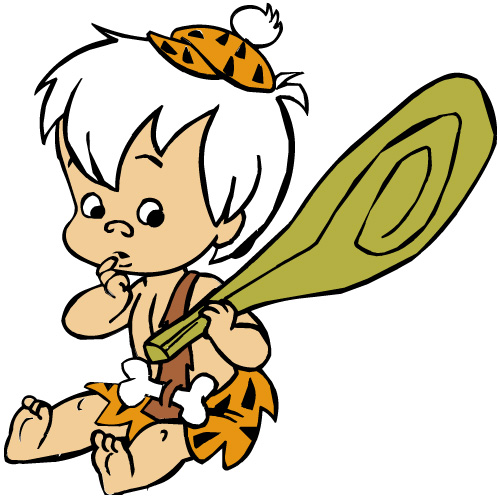
Bambam (a character from The Flintstones cartoon; onomatopoeic)

Caeulum (the Latin word for “sky, heavens”)

Che (nickname of revolutionary Ernesto Guevara; slang for “mate, buddy, pal”)

Dorian (used as a name by Oscar Wilde for The Portrait of Dorian Gray, from Greek)

Dre (nickname of radio personality André “Doctor Dré” Brown, short for his first name)

Jaylen (based on Jalen; basketballer Jalen Rose’s name is James + Leonard)

Jharral (based on Jharal; NRL player Jharal Yow Yeh’s name is the initials of the men in his family)

Kailo (from a Proto-Indian-European word meaning “whole, healthy”)

Keanu (seemingly created by the parents of actor Keanu Reeves)

Neo (main character from The Matrix movies, Latin for “new”)

Reiv (character from the Fire Emblem video games)

Rohan (a place name in Tolkien’s fantasy world)

Sonova (a combination of the Latin words for sound and new)

Stryder (Strider is the alias of Aragorn in Tolkien’s The Lord of the Rings)

Thorion (character from the comic book Thorion of the New Asgods)

Tynnan (a species in the Star Wars franchise)

Boys Names from the Top 100 of the 1900s

01 Sunday Apr 2012

Posted by A.O. in Name Themes and Lists

≈ 12 Comments

Tags

Appellation Mountain, celebrity baby names, classic names, ethnonyms, famous namesakes, fictional namesakes, French names, German names, germanic names, Latin names, locational names, name data, name history, name meaning, name popularity, name trends, nicknames, Norman-French names, Old English names, Old Norse names, popular culture, popular names, Roman names, royal names, Sabine names, saints names, surname names, tribal names

This follows on from Girls Names from the Top 100 of the 1900s. Once again, I’ve tried to get a balance between those names coming back into fashion, and those which haven’t charted for a while; once again, it is based on data from New South Wales. If you are attracted to names like these for boys, you should check out Abby’s two parter at Appellation Mountain – Fetching Names: The Nevilles, as many of her suggestions are very much in tune with this style.

Albert

This is derived from the Germanic name Adalbert, meaning “noble and bright”, which was common amongst German royalty. It was introduced to England by the Normans, where it readily overtook the Old English form, Æðelbeorht. A rare name by the 17th century, it came back in the 19th, as Prince Albert was the name of Queen Victoria’s dearly loved husband, born in Germany. Famous Australians with this name include Albert Matthews, the last Gallipoli veteran to die, in 1997, and popular long-time entertainer, Bert Newton. Albert is a classic name which has never been out of use; it was #12 in the 1900s, and didn’t leave the Top 100 until the 1950s. It’s remained relatively stable for several decades, and is currently in the low 300s. Albert is one of those names which sound slightly “grandpa” while remaining steadily in use. It’s a good reliable choice, and Alby, Bertie and Bert all make cute nicknames.

Aubrey

The Norman-French form of Germanic Alberich, meaning “elf power” or “elf ruler”, which replaced the Old English equivalent, Ælfrīc. The name was used for both sexes during the Middle Ages, especially amongst the aristocracy, but gradually fell out of use. It was revived in the 19th century, possibly influenced by the surname. There have been a few famous men in Australia named Aubrey, including motorcycle racer Aubrey Lawson, and Australian rules footballer, Aubrey Mackenzie. Aubrey was #59 in the 1900s, and left the Top 100 in the 1930s. It hasn’t charted since the 1950s. Aubrey may seem old-fashioned and effete to some people; others may think it sounds feminine, due to the popularity of similar-sounding girls’ name, Audrey. However, this unisex name is certainly in use as a boys’ name, and I have actually seen it on more boys than girls, with parents of girls often preferring specifically feminine spellings such as Aubree or Aubrie. I think it sounds handsome and dashing, and Jack Aubrey from Master and Commander (played by Russell Crowe in the film) even helps give it a nautical air. The usual nickname is Aub or Auby.

Claude

The French form of the Roman family name Claudius. The Claudii interpreted their name as from the Latin claudus, meaning “lame, crippled”, but according to legend, the first of their house was not Roman, but Sabine, and his family name was Clausus or Closus. When he joined the Romans, his name was Latinised. The Claudii were very proud of their Sabine heritage, very powerful, and had a reputation for arrogance and haughtiness. The name Claude became common in France during the Middle Ages due to the 7th century Saint Claude of Besancon, a monk to whom many miracles are ascribed. The name was brought to Britain by the aristocratic Hamilton family of Scotland in the specifically male form Claud; being Scottish they naturally had ties to France. Australian Claude Choules was the last surviving male World War I veteran in the world until his passing last year. Claude was #49 in the 1900s, left the Top 100 in the 1930s, and hasn’t charted since the 1970s. The name still packs a patrician punch, and namesakes such as painter Claude Monet and composer Claude Debussy make it seem quite artistic as well.

Frank

Used as a short form of Francis or Franklin, but is a name in its own right, referring to the Germanic tribe of the Franks. They conquered most of Gaul, which was later named France in their honour. A powerful tribe, they were the ultimate founders of what would later become the Holy Roman Empire, controlling much of Europe. The meaning of their name is disputed; it may mean “javelin” after their weapon of choice (although the weapon might have been named after them, not the other way around). Another theory is that it meant “bold, fierce”; the Romans sometimes addressed or referred to them as “the fierce people”. The English word frank, meaning “free, honest” is named after the Franks, and is not the source of the name. The most well-known Australian called Frank is probably charming comedian Frank Woodley. Frank’s a classic that has never been off the charts; #27 in the 1900s, it didn’t leave the Top 100 until the 1970s. It’s currently having a growth spurt in the low 400s. Brisk, sensible Frank is a worthy choice for someone wanting an old-style replacement for popular Jack. The usual pet form is Franky.

Harold

Derived from the Old English name Hereweald, meaning “army leader”; the Old Norse form Haraldr was also common amongst Scandinavian settlers in England. It was popular amongst the royal houses of Norway and Denmark, and the two kings of England named Harold were of mixed Scandinavian and Anglo-Saxon ancestry. It was Harold II who was defeated and killed at the Battle of Hastings, leading to the Norman Conquest. Not surprisingly, the name died out almost immediately, but was revived by the Victorians. The most famous Australian with this name is former Prime Minister Harold Holt, who disappeared in 1967 at the beach, and is presumed drowned, although many conspiracy theories have existed. Oddly enough, there is a swimming centre named after him. Harold was #13 in the 1900s, peaked in the 1910s, left the Top 100 in the 1940s, and remained in (rare) use until the early 2000s, with a dampener put on it by Mr Holt’s watery demise. Until recently, I would have said Harold made a great way to get the popular nickname Harry – unfortunately, Harry is rapidly falling. It’s got some challenges, but I do like this noble and besieged name.

Reginald

From the Germanic name Raginald, meaning something like “well-advised ruler”. The Normans brought it to Britain in the forms Reinald and Reinold; there were already Old English and Norse forms in use there. Reginald is the Latinised form of all these variants, and is another of those names from the Middle Ages which made a comeback in the Victorian era. There are many well known Australian Reginalds, including popular actor Reg Livermore, and Sir Reginald Ansett, the founder of Ansett Airlines. Reginald was #20 in the 1900s, and left the Top 100 in the 1960s. It hasn’t charted since the 1980s. Reginald may seem very fusty and pompous – then again, that’s exactly what people would have said about Archibald a few years ago, and now it’s quite fashionable as a way to the nickname Archie. I don’t really see what makes Reggie any different from Archie, Alfie or Freddie, which makes Reginald a genuine contender.

Rupert

A German form of Robert, this was introduced to Britain in the 17th century by Prince Rupert of the Rhine, a nephew of King Charles II of England. When still young, he was appointed commander of the Royalist cavalry during the English Civil War; after the Restoration he returned and became a senior naval commander. Prince Rupert was a man of fashion who also was one of the founders of the Royal Society and a patron of the arts – he made the name seem distinctly aristocratic, and perhaps slightly flamboyant. Famous Australians with the name include artist Rupert Bunny and media mogul Sir Rupert Murdoch. Rupert was #97 in the 1900s, and left the Top 100 the following decade; it left the rankings in the 1940s. Very recently, it has entered the charts again, and is currently climbing in the 400s. Rupert seems to be making a comeback – perhaps Rupert Grint from the Harry Potter movies has given it a more likeable, down-to-earth image. It’s certainly handsome, and Ru would make a cute nickname.

Stanley

An English surname meaning “stony meadow”; it comes from the place name Stoneley in Staffordshire. It has quite an aristocratic heritage, for the Stanleys were Earls and Barons, prominent in the Conservative Party, and at times, one of the richest landowning families in Britain. Members of the Stanley family have held high political office, including Prime Minister, been connected to royalty, and generally a force through the pages of British history. Sir Lyulph Stanley was part of this august clan; he was Governor of Victoria and held several other important posts in Australia. Great men called Stanley from our nation include tennis champion Stanley Doust, and legendary cartoonist Stanley Cross; the Stanley Award for cartoonists is named in his honour. A classic which has never left the charts, Stanley was #22 in the 1900s and left the Top 100 in the 1950s. It has remained stable since the 1960s. It’s an oldie but goodie, made to seem quite cool since Dido gave her son this name last year, named after the song Stan, by American rapper Eminen. It seems eminently usable, and sturdy nickname Stan is right on trend.

Vincent

This is from the Roman name Vincentius, derived from the Latin for “to conquer”. Its meaning made it popular amongst early Christians, who no doubt wished to indicate that they were ready to conquer sin, and there are several martyrs of the church with this name. A later saint with this name is the 16th century French priest famous for his works of charity, St Vincent de Paul. Vincent was used in Britain in the Middle Ages, but didn’t become common until the 19th century. Vince Jones is an Australian jazz artist, and Vince Melouney was one of the founding members of Billy Thorpe & The Aztecs, so it’s a very musical name. Handsome and romantic, Vincent is a classic which has never left the charts or been out of the Top 200. It was #47 in the 1900s, and left the Top 100 in the 1950s; the lowest it’s ever been is #179 in the 1970s. It’s usage has been erratic, but generally improving since then, and it’s currently in the mid 100s. Prince Vincent of Denmark, son of Princess Mary, may help it along further. Vin, Vince and Vinnie are all used as nicknames.

William

From the Germanic name Willahelm, meaning something like “willing helmet”, or “strong-minded protection”. William of Gellone was a cousin of Charlemagne, and an 8th century Norman count who defeated an army of Moors and forced them to retreat to Spain; his deeds are immortalised in the epic poem, Chanson de Guillaume (Song of William). In case this didn’t make him famous enough, he founded a monastery, gave it a piece of the True Cross, and became a monk, being declared a saint after his death. This made William a favourite name amongst the Normans, and when a Duke of Normandy called William invaded England in 1066 and was crowned king, it became the most commonly-used name in his kingdom. There have been four kings of England/Britain called William, and if Prince William attains the throne, he will be William V. Australia has had two Prime Ministers named William – Hughes and McMahon. Solid classic William has never left the Top 50; it was the #1 name of the 1900s and is #1 today. This never out fashion name is very versatile, because although William is so dignified, its nicknames Will, Bill and Billy are simple and unpretentious.

(The picture is of a prospector on the gold fields in 1904; image held by Museum Victoria).

Names Spotted Over the Summer, at Home and Abroad

28 Tuesday Feb 2012

Posted by A.O. in Names Spotted at Home and Abroad

≈ 14 Comments

Tags

Buddhist names, english names, famous namesakes, fictional namesakes, Hindu names, Indian names, Irish names, mythological names, name trends, nicknames, popular culture, popular names, Romani names, Sanskrit names, Tibetan names, virtue names, vocabulary names

Interesting names of babies I spotted in the papers over the summer:

When the popular name lists came out, newspapers also liked to dwell on the less popular names (more coming on that score). One of the babies with an uncommon name was the splendidly Arthurian Lancelot Palmer, from Wagga Wagga in New South Wales. Lancelot is named after his mother’s grandfather, who passed away a few years ago.

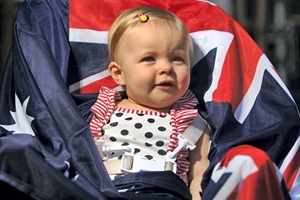
To publicise Australia Day events in Tasmania, The Examiner had a photo of an eight-month-old baby girl named Uma Paech, from Lauceston (pictured). It’s a celebrity name, because of Hollywood actress Uma Thurman, but also shows the growing popularity of names from Asia. Uma Thurman was raised in a Buddhist household, and her father was the first Westerner to become a Tibetan Buddhist monk. Her name is taken from the Tibetan phrase Dbuma Chenpo, meaning “Great Middle Way”; one of the guiding principles of Buddhist practice. (The Db is silent). Uma is also one of the titles of the Hindu goddess Parvati.

In early February, an official report on publicly funded home births was prepared by the Homebirth Advisory Group from the Northern Rivers district of New South Wales. The story interviewed Jade Trapp of Lismore, who gave birth to her son Django at home with a midwife two years ago. This is another name which comes from a famous person. It was the nickname of Belgian jazz guitarist Jean Baptiste Reinhardt, and it is Romani for “I awake”. Although Django died in the 1950s, his gypsy jazz is still hot, and he has been portrayed or alluded to in several films, including The Triplets of Belleville and Martin’s Scorscese’s Hugo. His music has been used for the soundtrack of movies such as The Matrix, Chocolat, Kate and Leopold and Stardust Memories. This is a hyper-hipster name oft suggested on Nameberry, and one with a cheery sound to it.

Meme and Soemyint Theloep are recent refugees from Burma who live in the Illawarra region surrounding the city of Wollongong in New South Wales. This month, they were caught in the floodwaters that flowed into their flat, and Soemyint had to carry his three-week-old daughter to safety in a baby sling. Although their English is still only basic, they knew enough to give their baby an English name – Blessing. What a beautiful tribute to their new home and refuge (despite the occasional flood). It’s a name that makes me smile and smile.

Monica Carduff Gonzalez, professionally known as DJ Monski Mouse, has been playing classic vinyl tracks at events such as the Edinburgh Fringe Festival for ten years now. She is now starting up an event called Baby Disco Dance Hall, which plays funky tunes suitable for the under-five crowd. Monica’s own daughter is named Monalisa (didn’t you just somehow guess her baby wouldn’t be named Emily or Mia?). Apart from the famous painting by da Vinci, Mona Lisa is also an award-winning Nat King Cole song, and it was playing while Monica and her husband, magician Tony Roberts, were choosing baby names; the new baby smiled, and they took that as her seal of approval. I love this cool name and the story attached to it (which I got off her website).

And an interesting name attached to an adult:

I read a short article on parenting about the myths of motherhood. It’s good advice telling us not to worry so much about being perfect. What interested me more was the author’s name, which was Benison O’Reilly. Her name is a vocabulary word which means “blessing, benediction”. According to her website, it’s a favourite name amongst the O’Reilly family. I think it’s a great name and obviously has a very positive meaning.

Names of babies encountered over the summer in real life:

Annabel: the original form looks crisp, classic and very English after so many Frenchified Annabelles.

Cael: I always thought this Irish name was said like the word keel, but Cael’s family say his name like the word kale.

Lacey: I feel as if the long-term popularity of Lucy is helping the rise of pretty Lacey.

Purity: this name reminded me of purity rings, but her name was chosen with the idea of purity in the sense of “pure and natural, uncontaminated by the artificial”. Purely herself!

Zeke: not short for Ezekiel, just plain Zeke. Very cowboy.

Names of new babies welcomed by people I know (family/friends/colleagues/neighbours etc) over the summer:

Bethany

Brock

Eleanor

Finn

Isla

Laila

Leilani

Stella

According to a new article Abby has at Appellation Mountain, the baby names chosen by the people around you will likely tend to be similar, and also not unlike the names you are apt to choose yourself (leading to much angst and accusations of name stealing and so forth – see Lou at Mer de Noms, as to whether to “call dibs” or not).

I think some of these names do “go together”, as in I can imagine Finn and Isla as siblings, and also Eleanor and Stella. There’s a strong L sound in all of them except Bethany, Brock and Finn, who thus also seem to be matched. Laila and Leilani are particularly similar.

Famous Names: Ita and Cleo

08 Wednesday Feb 2012

Posted by A.O. in Famous Names

≈ 16 Comments

Tags

celebrity baby names, famous namesakes, Greek names, Irish names, nicknames, popular culture, saints names, unisex names

The Australian Academy of Cinema and Television Arts was established last year as a subsidiary of the Australian Film Institute; its job is to administer the AACTA Awards, which replace the old AFI Awards. Every news report on television seemed to feel it necessary to point out that AACTA is said just like the word actor, which I think most of us would have understood without help, seeing as they just said it aloud to us.

The Australian Academy has been deliberately set up in a similar way to the American Academy of Motion Picture Arts and Sciences, and the awards ceremony has been moved to late January, in order to fit in with the prize-giving season in the United States, which holds the Golden Globes and the Academy Awards in January and February. The AACTA Awards ceremony has been moved to Sydney and held at the Opera House, possibly because that seems more Hollywood than Melbourne. The AACTA statuette has also been remodelled, with some commenting that it looks like a flamboyant Australian Oscar.

Amongst the prize-winners was Asher Keddie, who won the Switched on Audience Choice Award for Best Performance in a Television Drama, for her role as Ita Buttrose in the mini-series Paper Giants: The Birth of Cleo. I must confess to not voting in this contest, or even knowing it existed until too late (obviously I’m not a very switched on audience member), but I do approve of the choice, as I thought Ms Keddie did an excellent job of portraying famous editor, Ms Buttrose.

Ita Buttrose, like Barry Humphries and Father Bob, is another super septuagenarian. She was named after her maternal grandmother, Ita Clare Rodgers (nee Rosenthal). Her ambition since the age of 11 was to be a journalist, and she began working as a copy girl at 15. Ita was a force in the Australian media for many years, including as youngest editor of The Australian Woman’s Weekly, the largest magazine in Australia. She became the first woman to edit a major metropolitan newspaper, the Daily Telegraph. Always perfectly presented, cultured and refined, she is instantly recognisable for her trademark lisp. She’s been granted several awards and honours, and supports a multitude of causes, from AIDS to Alzheimer’s. Ita is also an author of many practical books; her latest is a guide to etiquette.

Ita (IE-ta) is an Anglicisation of the Irish name Íte (EE-ta). Saint Ita of Killeedy was a 6th century Irish nun who headed a community of women. One of their tasks was to run a school for small boys; among her students was Saint Brendan the Navigator. According to tradition, Ita was of royal blood and baptised Deirdre; the name Ita she chose herself from the Old Irish word ítu, “thirst”. This was to signify her thirst for divine goodness. Today it sounds mildly vampiric.

Ita Buttrose became the founding editor of Cleo magazine in 1972, and made it an instant success – the first edition sold out in two days. Cleo was something new in Australian publishing: a magazine for women that spoke openly about sexuality. There were articles on masturbation, abortion, contraception and sex toys, and a nude centrefold – the first model for the centrefold was actor Jack Thompson. It made the sexual revolution accessible to the average woman. In Paper Giants, the title Cleopatra is suggested for the magazine, as befitting a strong yet sexual woman, but Cleo is chosen because it fits better on the masthead. It intrigues me that Cleo sounds similar to Ita’s middle name – Clare – and wonder whether she unconsciously selected a title that sounded like her own name. Cleo is also the name of Ita’s pet dog (Clare is her grand-daughter).

Cleo is usually thought of as being a short form of Cleopatra, but it can be short for any name beginning with Cleo-, such as Cleophas. It is therefore a unisex name, and there are several prominent men named Cleo, including American motorcyclist and World War I flying ace Cleo Pineau. The father of Elizabeth Short, the Black Dahlia murder victim, was named Cleo. It is from the Greek for “glory, fame, pride”. This gorgeous little name is right on trend for o-enders, and was also a celebrity baby name last year. It would make a great alternative to popular Chloe.

Famous Name: Beyoncé

21 Saturday Jan 2012

Posted by A.O. in Famous Names

≈ 1 Comment

Tags

American names, celebrity baby names, created names, Creole names, French names, honouring, Louisiana names, popular culture, surname names, UK name popularity, unique names, US name popularity, virtue names

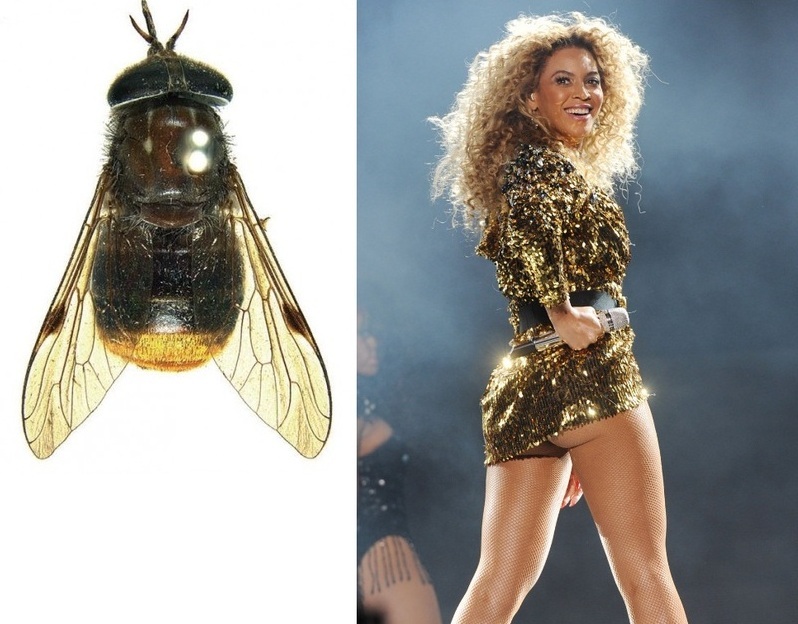
Pop diva Beyoncé has been in the news a lot recently, since the birth of her first child, Blue Ivy Carter. However, her name has hit the headlines for a different reason, after inspiring an Australian taxonomist to name a horse fly after her.

Bryan Lessard, from the CSIRO’s Australian National Insect Collection in Canberra, named the fly Scaptia (Plinthina) beyonceae because it has a prominent golden lower abdomen. To Bryan, who admits to being something of a fan, the unique dense gold hairs on the fly reminded him of Beyoncé’s flashy golden stage outfits.

The rare fly was collected in 1981, the same year Beyoncé was born, from eucalypt forests in the Atherton Tablelands of Queensland.

I’m not sure whether this is the most flattering thing that’s ever happened to Beyoncé, but I love that it shows scientists are just normal people who listen to R&B in their labs while they work, and find themselves as captivated by a gold frock as the next person. And perhaps are human enough to want to see their names in the gossip magazines, and maybe even get a personal response from their idol (she hasn’t made one).

BEYONCE

Beyoncé’s name is as unique as the horse fly, being created especially for her. Her mother Tina’s maiden name is Beyincé, a Creole surname from Louisiana. When she discovered that the Beyincé name was dying out, Tina decided to call her daughter Beyoncé, her own version of the surname. Apparently Tina’s parents were not impressed at first, because “that’s a last name”.

Beyincé is a form of the French surname Boyancé, related to the Old French word for “wood”. It’s an equivalent of English surnames such as Woodward or Forrester.

While the names of celebrities often become popular baby names (think Scarlett and Ashton, for example), Beyoncé’s name remains in very rare use. It belongs so completely to herself, and no other.

DESTINY

Destiny’s Child was the successful girl group of which Beyoncé was a founding member, prior to her embarking on her solo career.

The English word destiny comes from French, and ultimately from the Latin destino, the source of the word destination, meaning “appoint, establish”. It comes from an ancient root meaning “to stand, to place” (also the source of the word obstinate). Destiny is used as a synonym for the word fate, although technically fate is the divine agency or power which brings about the predetermined future events which are our destiny.

Destiny has been used as a girl’s name since the 19th century, and originated in the United States. It has been on the US Top 1000 since 1975, and reached the Top 100 in 1994, leaving it in 2012. It is currently #203.

In the UK, Destiny peaked in 2001 at #211 , and is currently #412. It is also in use in The Netherlands, and is a fairly uncommon name in Australia, although certainly not unknown.

Apart from Destiny’s Child, the name may remind you of Destiny Cyrus, the birth name of actress and singer Miley Cyrus (born just after the name reached the Top 100). It’s a slightly dated virtue name which still has a spiritual or philosophical feel to it, but also suggests the strength to forge your own path in life, to make your own destiny.

POLL RESULTS

Beyoncé gained an approval rating of 15% from the public. Only one person liked the name Beyoncé, while 68% thought it was terrible.

Destiny did rather better, with an approval rating of 32%. However, once again only one person liked the name, and 48% thought it was terrible.


Boys Names from Stars and Constellations

18 Sunday Dec 2011

Posted by A.O. in Name Themes and Lists

≈ 21 Comments

Tags

Akkadian names, Arabic names, astronomical names, Chinese names, colour names, english names, fictional namesakes, gemstone names, Greek names, Latin names, locational names, mythological names, name history, name meaning, popular culture, popular names, surname names, unisex names, vocabulary names

It is only a few days until the Christmas holidays, or the holidays have already begun. Although the stars seem more crisp and vivid in winter, and some constellations of spring and autumn are spectacular, it is summer I connect with star-gazing. The warm nights and long lazy Christmas holidays seem to go with lying in your backyard looking upwards, or watching the night sky glittering above you on camping trips. Little wonder that the stars of summer are often the first we learn to identify, and the first we yearn towards as we gaze into infinitude.

This is the companion list to Girls Names from Stars and Constellations, and should be read in conjunction with it. Need a super quick guide to the southern skies? Go here! The picture used is a Christmas card created by Thomas Le, a refugee from Vietnam. He donated this artwork to help other migrants, and it is on show at the Museum of Victoria.

Altair

Altair is the common name for Alpha Aquila, the brightest star in the constellation Aquila (“The Eagle”), and one of the brightest overall. Altair is a translation of the Arabic for “the flying eagle”, and the identification of the star with an eagle goes back to the Babylonians and Sumerians, who called Altair “The Eagle Star”. The Kulin people of central Victoria also saw the star as an eagle; it is Bunjil, their creator, who was blown into the sky by a great wind and became a star. Other peoples of southern Australia saw Altair as a hunter; it is his Boomerang thrown across the sky which became the constellation in which Gemma can be found. This cool star name can either be said al-TAH-yir, or al-TARE, and is also on the list Boys Names from Video Games. You can see Altair from Australia in winter and spring, and it’s in the north of the Milky Way.

Asterion

Asterion is the common name for Beta Canes Venatici, the second-brightest star in the constellation Canes Ventatici. This constellation began as the club of the constellation Boötes (“The Herdsman, The Ploughman”). However, due to a number of errors in translation from Greek to Arabic to Latin, “club” became “dogs”. Having invented these dogs, astronomers had a good squint and decided that the constellation looked like two greyhounds. It’s never explained why a herdsman would have hunting dogs rather than herding dogs. Astronomers named one star Chara (“dear”) and the other Asterion (“starry”) – then they swapped the names around to create further confusion. In Greek mythology, Asterion was the personal name of the Minotaur, a bull-headed monster who was the product of an unnatural coupling between a queen of Crete and a bull. It’s a flamboyant name, but it is actually a star name with a starry meaning; it’s said as-TEH-ri-on. Canes Ventatici is visible in the autumn from Australia, but its stars are not bright or easy to see.

Atlas

Atlas is the common name for 27 Tauri, a triple-star system in the constellation Taurus and part of the Pleiades cluster. As well as the Seven Sisters, which include Maia, the Pleiades cluster contains their parents, Atlas and Pleione. Atlas was one of the Titans, and after warring against the Olympians, he was sentenced to hold up the heavens on his shoulders (before this, the Sky and the Earth, parents of the Titans, were free to lie together in a lingering embrace, so Atlas is basically being used as a birth control device for deities). He has come to be a symbol of superhuman strength and stoic endurance. The name is so ancient that its meaning is very uncertain, but it may mean “endure”, “support”, or “sea”. Atlas has given his name to the Atlas Mountains in North Africa, and the Atlantic Ocean, as well as the word for a book filled with maps. The name is starting to have a mild vogue here. You will be able to see Atlas in the Pleiades during summer in Australia.

Garnet

The star Mu Cephei is commonly known as Herschel’s Garnet Star, because when astronomer William Herschel described it, he wrote that it was “a very fine deep garnet colour”. Indeed it is, being a red supergiant that is one of the largest in the Milky Way. It’s in the constellation Cepheus, which represents Andromeda’s father. Without doubt he is the dullest creature in the whole Andromeda drama, but I guess since they put the sea monster in the sky, it would have seemed rude to leave him out. You may recall that the aliens in TV comedy 3rd Rock From The Sun came from a planet in a galaxy on the Cepheus border. Unfortunately, Cepheus is only visible in the northern hemisphere, so we cannot see the Garnet Star from here. The colour garnet is named for the red gemstone; its name is said to be derived from the (also red) pomegranate fruit which means “seeded apple”. It’s a unisex name, but historically better known as masculine in Australia.

Keid

Keid is a common name for Omicron2 Eridani, or 40 Eridani, a triple star system in the constellation Eridanus consisting of two red dwarfs and a white dwarf. Eridanus represents a great river, and is meant to be the water pouring from the jar of the Water Bearer, the constellation Aquarius. In ancient times, it was said to be the path of souls. Eridanus can be easily seen from Australia; it is virtually overhead during the summer months. You can see one of the red dwarf stars in Keid with the naked eye; however the other two stars can only be viewed through a telescope. In the TV series Star Trek, 40 Eridani is the location of the planet Vulcan, home of Mr Spock. Eridanus is also a system of planets in the video game Halo, so it’s got sci-fi credentials galore. Keid is from the Arabic word for “eggshells”, and can be pronounced KYED or KEED. I prefer KEED, but KYED sounds like popular Kai (maybe too much, as people will no doubt confuse the two names).

Kio

Kio (KEE-oh) is the ancient Chinese name for Spica, the common name for Alpha Virginis, a blue giant binary star and the brightest in the constellation Virgo. While Spica means “ear of wheat” in Latin, Kio comes from the Chinese for “horn, spike”, as it was seen as “the horn of Jupiter”. Spica was the star used to discover the precession of the equinoxes, and the constellation Virgo contains the spring equinox point (autumn equinox in the northern hemisphere). The constellation has represented a goddess holding sheaves of grain from the earliest beginnings of astronomy in Babylonia. Not only is Kio one of those perky three-letter names that appeal to many people, but the Chinese saw Spica as a “lucky star” – what could be more positive than being named after a lucky star? The constellation Virgo can be seen throughout autumn and winter in Australia, and the very brightness of Spica makes it easy to find.

Leo

Leo is a familiar constellation, because it is one of those in the zodiac. It’s already in the list Boys Names From the Top 100 of the 1930s, however I think it is worth revisiting from an astronomical viewpoint. The constellation’s name means “lion”, and seems to have been pictured as a lion by many ancient civilisations. I’m not sure if there was a single original Lion in mythology, but the Babylonians had many leonine protective gods, and a winged lion was the symbol for the city of Babylon. The Ancient Greeks identified it with the Nemean lion, a monstrous beast, both fierce and cunning, which was killed by Heracles as the first of his twelve labours. Its hide was impervious to attack, so Heracles wore it as his armour. The constellation Leo is truly majestic, and contains many bright stars. The chief of these is Regulus, also called The King Star, and The Heart of the Lion. Leo can be seen for most of the year, but is easiest to view in late summer to early autumn from Australia.

Nash

Nash is a common name for Gamma Sagitarrii, an orange giant binary star in the constellation Sagittarius. Sagittarius depicts a centaur, said to represent the wise teacher and healer Chiron. The Milky Way is at its densest in Sagittarius, as this is where the centre of the galaxy lies, so it contains many star clusters and nebulae. In Australia this impressive constellation is easy to find, and we also get the best view of it, being able to see the Milky Way so much more clearly. Look in the west part of the sky in the early evening, halfway between the horizon and the point directly overhead. Its brightest stars form a recognisable shape which is called The Teapot; Nash is the spout of this teapot. Sagittarius is most visible in the middle of winter, and bright enough that you can see it even if there is a moon. The name Nash is from the Arabic for “arrowhead”, for this star is the tip of the archer’s arrow, which points toward the star Antares, in Scorpius. It’s also a surname derived from the word for “ash tree”.

Orion

Orion is a constellation representing a character from Greek mythology. This gigantic hunter seems to be a bawdy folk hero – larger than life and twice as natural. It is lusty Orion who pursued the Pleiades, so that Zeus had to turn them to stars for their protection. One version of his ending is that Orion boasted of being able to kill any animal on Earth, and so the Earth goddess, in her displeasure, created the Scorpion to sting him to death. Both Orion and the Scorpion were placed in the sky as constellations. Orion contains many brilliant stars, such as Betelgeuse, Rigel and Bellatrix, and even the astronomical novice can locate the three stars forming Orion’s Belt; I was taught these were The Three Sisters (a South African name). Orion is clearly visible in the summer from Australia, and because it is positioned differently in the southern hemisphere, we sometimes call this constellation The Saucepan. The name Orion is from the Akkadian for “heaven’s light”.

Perseus

Perseus is a constellation representing a character from Greek mythology; he was a hero, the son of Zeus and a mortal princess. Perseus led an extremely exciting life, part fairytale, part soap opera, but he is probably best known for killing the Gorgon Medusa, a woman who had snakes on her head, and thus had a permanent bad hair day of epic proportions. Perseus had nifty flying sandals to zip around on, although much later people liked to imagine him riding the flying horse Pegasus (this never actually happened in the legends). Perseus rescued and married Princess Andromeda, and the constellation has his hand reaching up to Andromeda’s foot, to show the moment of deliverance. The star Algol in Perseus is called The Demon Star, and represents the head of Medusa. We can see the constellation in late spring and summer from Australia, and the meaning of Perseus is not certain; it may mean “to destroy”. Percy is the obvious nickname, and the one used in the novel series Percy Jackson and the Olympians by Rick Riordan.

Phoenix

Phoenix is a minor constellation in the southern sky named after the mythical bird. The Phoenix can be found in the mythologies of many lands, from Egypt to China to Russia, and is famous for being able to renew itself in fire, which made it a popular symbol of resurrection in Christianity. Its name is from the Greek for “crimson”. Phoenix has become a popular name lately; it’s unisex, but used more for boys. It’s hard not to connect it to The Order of the Phoenix in the Harry Potter books; Fawkes the phoenix is the loyal pet of Albus Dumbledore. A phoenix is also a major character in the children’s book The Phoenix and the Carpet by Edith Nesbit. The constellation Phoenix can be seen from Australia during the summer, however it is faint and only possesses two stars bright enough to be seen with the naked eye.

Sirius

Sirius is the common name for Alpha Canis Majoris, a binary star which is the brightest in the constellation Canis Major (“Great Dog”), and the brightest in the sky, being almost twice as bright as Canopus, the second-brightest. Canis Major is seen as one of the dogs following the hunter Orion, with Sirius representing its doggy nose. However, Sirius was considered to be a dog in his own right, and is called The Dog Star. In the northern hemisphere, Sirius rises in summer, and so the very hottest time of year is called “the dog days”. Although Sirius rises in the winter here, we don’t call the coldest time of year the dog days, although strictly speaking, we should! In July, you can see Sirius both evening and morning. Almost every culture in the world has connected Sirius with dogs or wolves, but the Boorong people of Victoria saw it as part of a constellation representing the Wedge-Tailed Eagle – one of the most important of the spirit elders. The Sirius was also the flagship for the First Fleet to Australia, giving it another Australian connection. Its name comes from the Greek for “burning, scorching”.

Girls Names From Stars and Constellations

11 Sunday Dec 2011

Posted by A.O. in Name Themes and Lists

≈ 32 Comments

Tags

Arabic names, Aramaic names, astronomical names, Biblical names, British Baby Names, celebrity baby names, famous namesakes, flower names, Greek names, Latin names, literary namesakes, locational names, mythological names, name history, name meaning, nature names, popular culture, popular names, Sanskrit names, Slavic names, Spanish names, surname names

Christmas is a time for stars – we put stars on our Christmas trees, sing about stars in carols, send cards with glittering stars on them, and cut gingerbread in the shape of stars. Elea at British Baby Names has a post on starry names up on her lovely Advent calendar; she also had a post on astronomical names back in October, which contains many star names. If you name your child after a star, you will want to show them “their” star when they get older, so I’ve given a few hints as to the best time to view the star from Australia; to learn more, two great resources are the Skynotes newsletter from the Melbourne Planetarium (includes video), and the Beginner’s Guide to the Night Sky at ABC Science. I normally do ten names per list, but because it’s the last set for the year I’ve done twelve – besides, stars naturally seem to go in groups of twelve, don’t they?

Alya

Alya is a common name for the yellow binary star Theta Serpentis in the constellation Serpens (“The Serpent”). Its name comes from the Arabic word alyah, meaning “fat tail of the sheep”. Arab astronomers saw this part of the sky as a pasture, with Alya representing a sheep’s tail. The Arabs have cooked with the rich fat from a sheep’s tail for centuries, and it is still considered a delicious comfort food. It might seem like calling your daughter Lard, but it fits in with the popular Aaliyah variants, while being simpler to pronounce and spell. You can always tell people the baby is named after a star that represents a sheep gambolling in a field; however vegetarians may not be able to get past the fact that the Arabs were looking up at the star and thinking, “Yum yum yum”. Serpens is visible in Australia in the middle of winter, and its stars are not easy to see.

Andromeda

Andromeda is a constellation named after a character from Greek mythology. This princess was chained naked to a rock for a sea monster to gobble, thanks to her rather stupid mother’s boasting of her beauty. The hero Perseus, on his way home from other heroic deeds, saw her in distress, and did the traditional hero’s rescue-and-marry-damsel manoeuvre. An awkward detail was that Andromeda was already engaged to her uncle, but Perseus turned him into stone, which got rid of him nicely. The name is pronounced an-DROHM-eh-da, and is said to mean “to think as a man” in Greek, interpreted as meaning to be as intelligent or brave as a man – which sounds a bit sexist, but the story isn’t exactly a feminist fairytale, and it’s clearly meant to be complimentary. Andromeda is a stunning name which can easily be shortened to Andie, Annie, Meda, Mia or Romy; it will remind people of the Andromeda Galaxy, which you can see best in November from Australia, along with the constellation.

Capella

Capella is a common name for the yellow star Alpha Aurigae, the brightest in the constellation Auriga (“The Charioteer”). It means “little she-goat” in Latin, and represents the divine goat Amalthea from Roman mythology. Amalthea was the foster-mother of the god Jupiter, and provided him with milk. When Jupiter broke off one of her horns, it became the ‘”horn of plenty”, which provided its owner with whatever food they desired. For the Boorong people of Victoria, this star was Purra, a kangaroo who is chased and killed by the twins in the constellation of Gemini; the tracks of Purra form the bed of the Wimmera River. Capella is a small town in central Queensland named after the star, so it’s a surprisingly Australian choice as a star name. It’s a fresh twist on Capri or Caprice, with the popular -ella ending. You can see Capella on the northern horizon during summer in Australia, and it’s bright enough to be clearly visible.

Carina

Carina is a constellation of the southern hemisphere; its name is Latin for “keel”, and it represents part of the ship, the Argo, sailed by Jason and the Argonauts in Greek legend. The most prominent star in the constellation is Canopus, the brightest star of southern skies, clearly visible and high in the sky. If you live in the far south of Australia, Canopus will never set. The Bibbulum people of south-western Australia saw Canopus as their ancestor Waa Wahn, the trickster crow. The Maoris called it Atutahi, or “Stand Alone”, because of its brightness. Carina also has meteor showers which peak around Australia Day, and contains the Diamond Cross, sister to the Southern Cross. Considering that the winged keel on Australia II is said to have won us the America’s Cup in 1983, Carina adds up to being a patriotic star name (and suitable for boaties). As Carina is also a name related to either Cara or Katherine, it has the added advantage of sounding like a “regular name”.

Gemma

Gemma is a common name for the binary star Alpha Coronae Borealis, the brightest in the constellation Corona Borealis (“The Northern Crown”). In Greek mythology, Corona Borealis represents a crown worn by Ariadne when she married the wine god Dionysus; Gemma is Latin for “jewel”, so it’s “the jewel in the crown”. Australian Aborigines called this constellation The Boomerang, because of its shape (being in the southern hemisphere, we see the constellation upside-down). Gemma is a popular name in Australia, and the star association helps give it another layer of meaning, while also showing that you don’t need to have a strange or rare name to be named after a star. The constellation is best viewed in winter from Australia, and its difficult to see without practice.

Lucy

In the constellation Centaurus (“The Centaur”) is a tiny white dwarf star, smaller than the Earth, with the boring name of BPM 37093. Its carbon atoms are believed to have formed a crystalline structure, and because diamonds are also carbon arranged in crystalline formation, astronomers have nicknamed this star Lucy – as in Lucy in the Sky with Diamonds. It’s a fun star and song reference for a very popular name, and as you probably know, Lucy means “light”, which seems apt for a star. Because of its size, you can only see Lucy with a telescope; however the constellation Centaurus is the most magnificent in the southern hemisphere, with two of the brightest stars, Alpha and Beta Centauri. You can see a great portion of the Milky Way in Centaurus, and on a moonless autumn night, it will be easy enough to point at Lucy’s general location. Does it matter if it cannot be seen? The Little Prince told us that what is essential is invisible to the eye …

Lyra

Lyra is a small constellation whose name is Greek for “lyre”. It is associated with the myth of Orpheus, a legendary musician, poet and prophet who is best known for his descent into the Underworld in search of his wife, Eurydice. According to some accounts, he died being ripped apart by savage Bacchantes, the female worshippers of the god Dionysus; the Muses gave him a proper burial, and he was finally reunited with his beloved. The Muses took his lyre to heaven and placed it amongst the stars in his honour. In Australia, you can see Lyra low in the northern sky during winter. The name has become well known since Lyra Belacqua is the young heroine of Philip Pullman’s His Dark Materials Trilogy. English model Sophie Dahl named her daughter Lyra in May this year.

Maia

Maia is the common name for 20 Tauri, a blue giant in the constellation Taurus, and the fourth-brightest star in the Pleiades cluster. In Greek mythology, the Pleiades were seven beautiful nymphs who were sisters. They were pursued by the hunter Orion, and Zeus changed them first into doves, and then into stars – where they are still chased by the constellation Orion. The Pleiades are often called the Seven Sisters, and you can see them clearly in summer from Australia. The Aborigines have several legends about the Pleiades, and one involves seven sisters being pursued by a man, just like the Greek myth. Maia was the eldest of the Pleiades, and the mother of the god Hermes. The meaning of the name is uncertain; it may be a respectful title for a mature lady. Maia the star appears as a character in Mary Poppins by P.L. Travers – an Australian writer who clearly loved stars, because the Mary Poppins books are filled with them. Maia is said like the popular Maya (MY-ah), but seems more elegant and literary.

Mimosa

Mimosa is a common name for the yellow binary star Beta Crucis, the second-brightest in the constellation Crux (“Cross”). Crux is the smallest of the constellations, but very significant in Australia, as it is our dear Southern Cross, represented on the national flag as well as the Eureka flag (Mimosa is the left-hand arm of the Cross). Various Aboriginal peoples saw the Cross as an eagle’s footprint, a stingray, a possum in a tree, or two brothers cooking a fish on their campfire. The Aborigines of Eastern Australia called it Mirrabooka; Mirrabooka was a kind and clever man who was placed in the sky by the creator Biami so he could watch over the earth. Because the Southern Cross is always visible here, Mirrabooka never leaves us. The Maoris call it The Anchor; it anchors the Milky Way. The star Mimosa received its name because of its colour; the mimosa is another name for the silver wattle. The name is from the Greek for “mimic”. It’s an extravagant name that’s very patriotic; you could use Mim, Mimi, Mia or Mo as nicknames.

Mira

Mira is the common name for Omicron Ceti, the most notable star in the constellation Cetus. It’s a binary star consisting of a red giant and a white dwarf; the closest symbiotic pair of stars to the Sun. Mira is a variable star; like other red giants, its surface oscillates so that its brightness increases and decreases. Mira was the first variable star ever observed in modern times, and so it gained its name, for Mira means “wonderful, astonishing” in Latin, and is said MEE-rah. The constellation Cetus depicts the sea monster that was going to eat Andromeda: for some reason it has also been immortalised in the stars, and placed worrying close to its intended victim. It’s a large constellation, but not very bright or easy to see; it’s best viewed in Australia in November. At its brightest, you can see Mira with the naked eye; at its dimmest, you will need powerful binoculars to view it. Mira is also a Sanskrit name meaning “ocean”, and a Slavic name possibly meaning “peace”.

Talitha

Talitha is one of the common names for Iota Ursae Majoris, a yellow and purple star system in the constellation Ursa Major consisting of two binary stars orbiting around each other. The name is Arabic, and means “the third leap”, referring to a gazelle jumping about, which is how Arab astronomers saw this portion of the sky. Talitha is also the Aramaic for “little girl”, and is taken from the New Testament when Jesus raises a child from the dead by saying Talitha cumi (“Little girl, get up”). Talitha is pretty, and fits in with popular names like Talia and Taia; it’s pronounced TAH-lith-ah. Ursa Major, or the Great Bear, is one of the best known and loved constellations of the northern hemisphere, but in Australia it can only be viewed in April/May, and is so low on the northern horizon we see only part of it; we cannot see Talitha at all.

Vega

Vega is the common name for Alpha Lyrae, the brightest star in the constellation Lyra, and fifth-brightest star in the sky. The name is from Arabic, and means “falling” or “landing”, referring to the constellation Arab astronomers called The Alighting Vulture. Lyra was seen as a descending vulture; an idea dating back to ancient Egypt and ancient India. Even when the Greeks said it was a lyre, it was still often pictured as a vulture or eagle holding the instrument in its talons. The Boorong people saw Vega as a Mallee Fowl, and knew that once the star disappeared in October, it was time to collect that bird’s eggs. Vega is also a Spanish surname meaning “meadow-dweller”; it’s familiar from the Spanish playwright Lope de Vega, and folk singer Suzanne Vega. Vega is a glamorous-sounding name that’s strongly associated with its star. Once you learn to find Lyra, it will be easy to spot Vega because of its luminosity.

← Older posts
Newer posts →

Enter your email address to follow this blog

Categories

Archives

Recent Comments

A.O.'s avatarwaltzingmorethanmati… on Zarah Zaynab and Wolfgang…
Madelyn's avatarMadelyn on Zarah Zaynab and Wolfgang…
JD's avatardrperegrine on Can Phoebe Complete This …
A.O.'s avatarwaltzingmorethanmati… on Rua and Rhoa
redrover23's avatarredrover23 on Rua and Rhoa

Blogroll

  • Appellation Mountain
  • Baby Name Pondering
  • Babynamelover's Blog
  • British Baby Names
  • Clare's Name News
  • For Real Baby Names
  • Geek Baby Names
  • Name Candy
  • Nameberry
  • Nancy's Baby Names
  • Ren's Baby Name Blog
  • Sancta Nomina
  • Swistle: Baby Names
  • The Art of Naming
  • The Baby Name Wizard
  • The Beauty of Names
  • Tulip By Any Name

RSS Feed

  • RSS - Posts

RSS Posts

  • Celebrity Baby News: Melanie Vallejo and Matt Kingston
  • Names from the TV Show “Cleverman”
  • Can Phoebe Complete This Sibset?
  • Zarah Zaynab and Wolfgang Winter
  • Baby, How Did You Get That Name?
  • Celebrity Baby News: Media Babies
  • Celebrity Baby News: Adelaide Crows Babies
  • Celebrity Baby News: Chris and Rebecca Judd
  • Names at Work: Name News From the World of Business and Employment
  • Celebrity Baby News: Sporting Round Up

Currently Popular

  • Rare Boys Names From the 1950s
  • Celebrity Baby News: Toby Allen and Darren Weller
  • The Top 100 Names of the 1900s in New South Wales
  • Girls Names of Australian Aboriginal Origin
  • Celebrity Baby News: Jason Morrison and Heidi Tiltins

Tags

celebrity baby names celebrity sibsets english names famous namesakes fictional namesakes honouring locational names middle names name combinations name history name meaning name popularity name trends nicknames popular names saints names sibsets surname names twin sets unisex names

Blog at WordPress.com.

Privacy & Cookies: This site uses cookies. By continuing to use this website, you agree to their use.
To find out more, including how to control cookies, see here: Cookie Policy
  • Subscribe Subscribed
    • Waltzing More Than Matilda
    • Join 517 other subscribers
    • Already have a WordPress.com account? Log in now.
    • Waltzing More Than Matilda
    • Subscribe Subscribed
    • Sign up
    • Log in
    • Report this content
    • View site in Reader
    • Manage subscriptions
    • Collapse this bar
 

Loading Comments...