• About
  • Best Baby Names
  • Celebrity Baby Names
  • Celebrity Baby Names – Current
  • Celebrity Baby Names – Past
  • Featured Boys Names
  • Featured Girls Names
  • Featured Unisex Names
  • Links to Name Data
  • Waltzing on the Web

Waltzing More Than Matilda

~ Names with an Australian Bias of Democratic Temper

Waltzing More Than Matilda

Tag Archives: Irish names

Famous Names: Barry and Gladys

07 Wednesday May 2014

Posted by A.O. in Famous Names

≈ 4 Comments

Tags

birth notices, British names, dated names, famous namesakes, fictional namesakes, Irish names, locational names, name history, name meaning, name popularity, names from comics, names from films, nicknames, Norman names, royal names, saints names, Scottish names, surname names, Welsh names

art-barry6-620x349

Last month, New South Wales Liberal Premier Barry O’Farrell resigned from his position during a NSW Independent Commission Against Corruption investigation into Australian Water Holdings. Barry denied receiving a $3000 bottle of Grange Hermitage from a AWH executive and failing to declare it, but a thank you note in his handwriting, even mentioning the 1959 vintage of wine (the year of Barry’s birth), was presented to ICAC as evidence.

Minister for Transport Gladys Berejiklian was Barry O’Farrell’s choice for his successor, but in the end she settled for Deputy to Premier Mike Baird, and was rewarded by being made Minister for the Hunter region.

New South Wales is not unaccustomed to these political scandals. The former Labor Premier resigned from his shadow ministry roles due to a personal affair, and a former Liberal Party leader resigned in tragic circumstances several years ago. The new Premier is now watching his ministry become engulfed in a cash-for favours scandal which has also damaged the NSW Labor Party, and is creating anxiety for the Federal government as well. Expect more scalps.

Barry can be seen as an Anglicised form of the Irish name Bairre, a short form of Finnbarr or Barrfind, meaning “fair hair”. It can also be an Anglicised form of the Irish name Berach, derived from a Gaelic word meaning “sharp”, and often glossed as “spear”.

There are five Irish saints named Finnbarr, with the best known being a 6th century monk who created a centre of learning in the city of Cork. Saint Barrfind (known by a confusing variety of spellings of his name) is a 6th century Irish saint who legend says was a disciple of Saint Columba, and said to have voyaged to North America, serving as an inspiration for Saint Brendan the Navigator. Saint Berach was a 6th century Irish saint who was a disciple of Saint Kevin.

The Barry surname can be derived from these names, such as O’Baire, meaning “son of the fair haired one”. But most Irish Barry families got their surname from the Normans, because de Barri was a knight who came over during the Norman Conquest of Ireland. The name comes from the village of LaBarre in Normandy, whose name may mean “gateway, barrier”.

However, the aristocratic de Barry family, Normans settled in Wales, received their name from ownership of Barry Island, whose name seems to come from the Welsh for “hill”, although it’s often said to be named after Saint Baroc, a British saint who had a chapel on the island. The Scottish Barrys take their name from a place name in Angus which also means “hill”.

Barry has been used as a first name in Ireland and England (and more rarely, Wales and Scotland) since at least the 18th century, and due to immigration from Ireland, became known in the Americas and Australia as well.

A famous Australian namesake is comedian Barry Humphries, who created the character of naively ocker Barry McKenzie for a Private Eye comic strip in the 1960s. In the 1970s films, Barry McKenzie is the nephew of Humphries creation Edna Everage, and played by Australian singer Barry Crocker. Perhaps due to this trio of Barrys, and Barry McKenzie’s rich Australian slang (mostly made up), Barry is often perceived as a very Aussie name. This does have some validity, because Barry peaked higher in popularity here than elsewhere.

Barry was #121 in the 1910s, and joined the Top 100 in the 1920s at #84. It peaked in the 1940s at #10, and left the Top 100 in the 1970s – perhaps the Barry Mackenzie films weren’t a help to it? Barry last ranked in the 1990s, but just two years ago I saw a birth notice for a baby Barry, so it is still in occasional use. Bazza or Baz are the traditional nicknames, although Baz Luhrman is not a Barry.

Gladys is a modern form of the medieval Welsh name Gwladus, traditionally identified as a Welsh form of Claudia, although it may come from the Old Welsh word for “country, nation, realm”, with connotations of sovereignty and rulership over the land.

The name Gwladus was used amongst royalty and nobility in medieval Wales, and Saint Gwladys (often called Saint Gladys) was the beautiful daughter of a legendary Welsh king who married another king, also a saint (somehow he managed to fit raiding and robbery onto his CV). The saintly couple had a number of children who were saints as well. According to legend, Gwladys and her family knew King Arthur, and lived in the woods as hermits, with a strict regimen of vegetarianism, cold baths, and chastity.

The name Gladys became well known outside Wales in the 19th century, when English author Ouida used it for a character in her novel Puck. In the book, Gladys is a farm girl who becomes a gifted actress; angelically beautiful, she manages to be both pure and passionate. Apart from this attractive namesake, the nickname Glad seems cheerful, and Gladys may have reminded some parents of gladiolus flowers (the familiar “gladdies” so beloved of Dame Edna Everage).

Gladys was #8 in the 1900s, left the Top 100 in the 1940s, and hasn’t ranked since the 1950s. There was a very famous Australian singer named Gladys Moncrieff, an absolute superstar for decades, known as “Australia’s Queen of Song”, and “Our Glad”. She started her career as “Gladys the Wonder Child” in the 1900s, and was still holding farewell concerts in the 1960s, laden with awards and honours on every side. The name Gladys disappeared from the charts around the same time she retired, but must have remained in some use, for Gladys Berejiklian was born in 1970.

Gladys was very popular once – as popular as Ava is now. In its day it was fashionable, and must have been seen as fresh, pretty, and charming. It is now generally viewed as an “ugly old lady name”, and often cited as an example of a name that can never be brought back, like an unlovely corpse with DO NOT REVIVE scrawled across its chest.

I think most of us are realistic enough to know that our daughters’ names – so popular, fashionable, fresh, pretty, and charming at present – will probably become “old lady names”, given enough time. We know there will be wrinkled Madisons, widows-humped Khaleesis, Willows with hip replacements, and Arias doting over their great-grandchildren, and their names’ image will change to match their senior status.

But names like Gladys are a looming spectre – what if our daughters’ names don’t just become old lady names, but ugly old lady names? Names that people hate, shudder with horror to think they were ever used, and vow will never be used again? And what popular names of today will be the “ugly old lady names” of the next century, I wonder?

POLL RESULT
Barry received an approval rating of 17%, making it the lowest-rated boys’ name of 2014, and the lowest-rated name overall. 45% of people thought that Barry was a terrible name, and only one person loved it. Gladys did slightly better, with an approval rating of 25%, but 46% of people hated the name.

(Photo of Barry O’Farrell and Gladys Berejiklian from The Sydney Morning Herald)


Girls Names From the Top 100 of the 1920s

04 Sunday May 2014

Posted by A.O. in Name Themes and Lists

≈ 5 Comments

Tags

African names, animal names, Arthurian names, Berber names, British names, celebrity baby names, classic names, created names, dated names, Egyptian names, english names, European name popularity, fictional namesakes, gemstone names, germanic names, Greek names, Irish names, Latin names, Libyan names, locational names, mythological names, name history, name meaning, name popularity, names from movies, names from television, nature names, nicknames, Old English names, Old French names, Old Irish names, retro names, saints names, Sanskrit names, scandinavian names, surname names, underused classics, unisex names, Welsh names, Yiddish names

palm-beach-sydney-1920s

The data on popular names are all in, but maybe none of the current Top 100 names interest you. Or perhaps you are dismayed at how much your favourite names went up in popularity last year. If so, why not look at the popular names of ninety years ago, to see if there are some gems from times gone by that are ready to shine again?

Agnes
Agnes of Rome was a 3rd century child martyr. According to tradition, she was a member of the Roman nobility, raised in a Christian family, and a very beautiful young girl. She is said to have been only twelve or thirteen when she died, and like Saint Catherine, is one of the patrons of young girls; the eve of her feast day was a time for girls to perform rituals to discover their future husbands. The name Agnes was very popular in the Middle Ages; one of its attractions was probably that in medieval English it was softened into Annis, so that it sounded as it was related to Anne. The name Agnes is from the Greek for “pure”, but because it sounds similar to the Latin for “lamb”, agnus, Saint Agnes is often depicted holding a lamb. Agnes was #28 for the 1900s, and by the 1920s had fallen to #77. It left the Top 100 in the 1930s, and hasn’t ranked since the 1940s, but is now getting some use again. This soft, elegant name has been chosen for their daughter by several celebrities, including Jennifer Connolly. It is the name of a little girl in the movie Despicable Me, and currently popular in Scandinavia. It feels as if Agnes is already making a comeback.

Beryl
Gemstone name; beryls are stones which in pure form are colourless, but usually tinted by impurities in a variety of shades. Green beryls are called emeralds, and light blue ones are aquamarines, but all colours of beryl have their own name. The word beryl is ultimately from Sanskrit, probably derived from the town of Belur in southern India. Beryl has been used as a first name since the 17th century, but only became popular during the 19th, along with other gemstone names. Historically, it has been used as a male name too, mostly in the United States, perhaps as a variant of the surname Berrill (an occupational name from the wool trade), and the Yiddish name Berel (pet form of Ber, “bear”). Beryl was #61 in the 1900s, and peaked in the 1920s at #8. It left the Top 100 in the 1950s and hasn’t ranked since the 1960s. Beryl is the bossy cook in Downton Abbey, and the evil queen in the Sailor Moon cartoons. This would make a daring gemstone revival, and offers the nickname Berry.

Elva
Variant of the Scandinavian girl’s name Alva, or an Anglicised form of the Irish unisex name Ailbhe, pronounced like Alva, and one of the influences on the name Elvis. You could see Elva as a specifically feminine form of Elvis, and the Irish origin seems most likely in Australia. Elva was #160 for the 1900s, and peaked in the 1920s at #97, before falling steeply; it last ranked in the 1950s. Elva was a “trendy” name in its day, but its relative obscurity has saved it from seeming dated. I have seen several babies named Elva recently, and it doesn’t seem out of place amongst the Evas and Avas.

Gwendoline
Variant of the Welsh name Gwendolen, first used for a legendary queen of Britain by Geoffrey of Monmouth in his History of the Kings of Britain. According to this legend, Gwendolen was the daughter of King Corineus of Cornwall. She defeated her husband after he repudiated her in favour of his mistress; he was killed in battle, and Gwendolen had the mistress drowned. She then took the throne as the first independent queen of the Britons, and ruled for fifteen peaceful years. Gwendolen appears in Edmund Spenser’s The Faerie Queene, and in the poems of William Blake, as a symbol of British sovereignty. Gwendolen has been translated as “white ring, white bow”, although it may have been an attempt to Latinise another Welsh name. Geoffrey re-used the name Gwendolen for the name of Merlin’s wife in his Life of Merlin. Gwendolen and Gwendoline were revived in the Victoria era as part of the fascination with Arthurian names, and names from British legend. Gwendoline was #68 in the 1900s, and peaked in the 1920s at #35. It left the Top 100 in the 1940s, and hasn’t ranked since the 1950s. It still receives occasional use, and has an upper-class British feel to it, while giving Gwen and Winnie as nicknames.

Hilda
Originated as a short form of Germanic names with hild in them, meaning “battle”. Hilda of Whitby was a 7th century saint from Northumberland, and her name in Old English is Hild. Born into royalty, she was baptised as part of the mission by Pope Gregory the Great to convert the English to Christianity. Hilda became a nun, then founded a monastery at Whitby (it was in the Celtic style, where men and women lived separately, but worshipped together). Hilda is described as a woman of great intelligence and energy, a fine abbess and teacher, so wise that rulers came to her for advice, yet caring towards ordinary people. Hilda was #27 in the 1900s, and #71 by the 1920s; it left the Top 100 by the 1930s, and hasn’t ranked since the 1940s. Hilda is a popular name in Sweden, giving this name a sexy Scandinavian feel as well as a sturdy English one; it doesn’t seem radically different from Heidi, and is even slightly like Matilda. It would be an unusual choice, but by no means a strange one.

Kathleen
Anglicised form of Cáitlin, the Irish form of Catelin, the Old French form of Catherine. The Irish Cáitlin can be said kat-LEEN, so it’s just a step to Kathleen. This name has a very Irish association, for Kathleen Ni Houlihan is an emblem of Irish nationalism representing the country of Ireland. She is usually depicted as an old woman who has lost her home and her lands, needing young men willing to fight and die for her. Once she has been rejuvenated by their martyrdom, she appears young and beautiful, and proud as a queen. It combines myths of both paganism and Christianity, and Kathleen Ni Houlihan has appeared in folk songs and poems, and the literary works of William Butler Yeats, Lady Augusta Gregory, Sean O’Casey, and James Joyce, amongst others. The name Kathleen was #10 in the 1900s, peaked in the 1910s at #5, and was #11 by the 1920s. A long time favourite, it didn’t leave the Top 100 until the 1990s, but hasn’t ranked since the late 2000s. Despite being out of fashion, this name was popular for more than eighty years, and still seems fresh and wholesome, with a hint of Irish charm.

Mabel
Short form of Amabel, from the Latin name Amibilis, meaning “lovable”. There were both male and female saints named Amabilis, and the female one is often known as Saint Mable to prevent confusion. Mabel was a popular name in the Middle Ages, and is found in a range of variant spellings; it is thought that it was originally said MAB-ell rather than the current MAY-bel. Mabel became rare in England, but remained in use in Ireland, where it was used to Anglicise the name Maeve. It was revived in the 19th century when Charlotte M. Yonge used it in her best-selling romance, The Heir of Reclyffe, for a character with an Irish background. Mabel was #30 in the 1900s, and had fallen to #90 by the 1920s, leaving the Top 100 the following decade. Mabel left the charts in the 1950s, but returned in the late 2000s. This retro name has plenty of spunk, and although it isn’t popular yet, don’t be surprised if it is again some day.

Monica
Saint Monica was the mother of Augustine of Hippo. A devout Christian, it was her dearest wish for her pagan son to become one as well, and after seventeen years her prayers were answered when he was converted by Saint Ambrose. Of course Augustine went the whole hog and ended up a saint, and a doctor of the church as well. Saint Monica was rather neglected after her death, but her cult became popular during the Middle Ages. Monica was from Libya and her name a Berber one that was common at the time; it is derived from the Libyan god Mon, a form of Amon, one of the most important of the Egyptian gods. In the Middle Ages, the origins of her name being unknown, it was decided that it must come from monere, Latin for “to advise, to warn”. Although this neatly tied in with Saint Monica’s story, it was etymologically incorrect. Monica was #141 in the 1900s, and peaked in the 1920s at #91; it had a minor peak in the 1990s at #127, coinciding with the sitcom Friends, which had the character of Monica Geller. Monica has never left the charts, but never been higher than the bottom of the Top 100, making it a genuine underused classic. It still sounds slightly exotic, and makes a pretty, sophisticated choice that’s never been common.

Peggy
Short form of Margaret, meaning “pearl”. It’s a variant of Meggy which has been in use since medieval times. Peggy first ranked in the 1910s at #189, and peaked in the 1920s at #63. It fell sharply, leaving the Top 100 by the following decade, and hasn’t ranked since the 1980s. Peggy is now staging a comeback, as it fits in perfectly with the trend for vintage and retro short forms. The ambitious career woman Peggy Olsen from Mad Men is a feminist icon, and this name has been chosen as a celebrity baby name by both MP Jacinta Allan, and media personality Chrissie Swan.

Una
Anglicised form of Úna, a medieval Irish name believed to come from the Old Irish for “lamb”. In Irish mythology, Úna was a fairy queen, wife of Finnbheara, the high king of the fairies. It is pronounced OO-na, and was sometimes Anglicised to Agnes, because of the lamb connection, as well as Winnie or Juno, based on similar sounds. Una is also a name created by Edmund Spenser for his epic poem, The Faerie Queene. In the allegory, Una represents the “True Church” (Protestantism), and defeats the representation of the “False Church” (Catholicism). Spenser seems to have based her name on the Latin for “one” (to reference unity and a single choice of faith); the name is said YOO-na. However, Spenser wrote his poem while living in Ireland, and it is hard not to wonder if he had been influenced by the Irish name. Una was #94 in the 1900s, and peaked in the 1920s at #69, leaving the Top 100 the following decade. It hasn’t ranked since the 1940s, but this name is really quite beautiful, and with its clear simplicity, doesn’t seem odd next to Ava and Mia.

POLL RESULTS
The public’s favourite names were Mabel, Gwendoline and Agnes, and their least favourite were Monica, Hilda and Beryl.

(Picture shows women holidaying at Palm Beach in Sydney in the 1920s; photo from the State Library of New South Wales)

Names of Australian Birds for Boys

06 Sunday Apr 2014

Posted by A.O. in Name Themes and Lists

≈ 7 Comments

Tags

animal names, astronomical names, Biblical names, bird names, colour names, english names, fictional namesakes, German names, Greek names, historical records, Irish names, Latin names, modern classics, mythological names, name history, name meaning, name popularity, names of rivers, nature names, nicknames, Roman names, saints names, scientific names, Scottish names, surname names, unisex names

Wedge-tailed-Eagle

Aquil
Aquila is the scientific name for eagles; large, powerful raptors found all over the world which are often used as symbols of kingship and empire. The eagle was the bird sacred to Zeus, and it is recognised as a Christian symbol of strong, enduring spirituality. Australia’s best known eagle is the Wedge-tailed Eagle, one of the largest birds of prey in the world. Easily recognised by its size and diamond-shaped tail, Wedge-tails can weigh up to almost 13 kg (28 lb), and wingspans have measured more than 250 cm (over 9 feet). Fierce defenders of their territory, Wedge-tails have been known to attack small aircraft. The Wedge-tail Eagle is an emblem of the Northern Territory Parks and Wildlife Service, the New South Wales Police Force, the Northern Territory Correctional Services, La Trobe University, and the Royal Australian Air Force. Aquila is a Latin name meaning “eagle”; it was fairly common amongst the Romans, and was also the name of the Roman military standard. Aquila is mentioned as one of the early Christians in the New Testament, and he is regarded as a saint. I have seen Aquil a few times as a boy’s name, perhaps because Aquila might be misunderstood as feminine, and it can be said uh-KWIL or uh-KEEL. It’s a strong, masculine name after a noble bird.

Callum
Columba is the scientific name for pigeons and doves; the word comes from the Greek for “dive, swim”, because pigeons make a swimming motion in the air as they fly. Australia has many native pigeons, but only one of them belongs to the Columba genus, and that is the White-Headed Pigeon. There are several saints named Columba, most notably the Irish missionary credited with spreading Christianity in Scotland. Columba is a Latinisation of his Irish name Colm Cille, meaning “dove of the church”. In Scotland, his name became Calum, and the variant Callum is a common name. Callum first charted in Australia in the 1960s, and first ranked in the 1970s at #467. It soared to make the Top 100 in the 1990s and peaked in the early 2000s at #56; it has just left the Top 100. However, it is a handsome modern classic with a lovely meaning, and is one of the softer boy’s names.

Cygnus
Cygnus is the scientific name for swans; large, graceful water birds which often feature in myth and legend. Helen of Troy was born from a swan’s egg after her mother was seduced by Zeus in the disguise of a swan, while the sun god Apollo drove a chariot drawn by swans. Irish and Australian Aboriginal legends both tell of people transformed into swans, and Hans Christian Anderson wrote about an “ugly duckling” who discovered he was really a beautiful swan. Swans are seen as holy in Norse mythology, and in Hinduism are revered as sacred. It was a belief in classical literature that the swan would sing beautifully upon death (hence the phrase “swan song” to mean a final performance), and the poet Juvenal sarcastically said that a good woman was as rare as a black swan. Of course, in Australia, black swans are not rare at all, although that doesn’t mean good women are more common here. The black swan is the state emblem of Western Australia, and Perth’s river is named the Swan in its honour. There are several characters from Greek mythology named Cygnus, many of which were turned into swans: one was a musician who was placed among the stars as the constellation Cygnus. This is an unusual bird name that sounds a little like Sidney and Silas, and as swans are symbols of love and fidelity, has attractive associations.

Finch
There are many small Australian birds named finches, although they are unrelated to the finches of the northern hemisphere. One of the most common is the Zebra Finch, found across the continent in drier areas; they live in large flocks, mostly in grasslands. Zebra Finches are grey with black and white stripes, hence their name, and males can be distinguished by a chestnut patch on their cheek. Male Zebra Finches are loud, boisterous singers, with each male having a unique song, which he learns from his father, and then gives it his own variation, so that there are recognisable similarities between the songs of bloodlines. Their singing is used as part of courtship, and the uniqueness of their songs has made them a popular subject for scientific research. Their singing also makes Zebra Finches popular as pets. Finch has been used as a boy’s name since the 16th century, and the surname has probably been of significant help. Current use may be inspired by Atticus Finch from To Kill a Mockingbird, a worthy namesake.

Jaeger
The Skuas are a group of sea birds resembling large, dark gulls. They are strong, agile fliers, and aggressive in defending their nests. The American term for the three smaller species of Skua is Jaeger, which is a German word meaning “hunter”. In Australia, we seem to use the American term rather than the British Skua. Jaegers hail from the Arctic and tundra, but come to the southern hemisphere during the northern winter, when their homelands are covered in snow and ice. It’s quite exciting to see one, if only because they have travelled such a vast distance to be here. The Jaeger is pronounced YAY-ger in English, although the German word is said more like YEH-ger. However, Jaeger is a common surname too, and many people pronounce it JAY-ger (quite a few people say the bird the same way). Not only is the English form of Jaeger, Hunter, a popular name for boys, but when said JAY-ger, it doesn’t sound too different from Jagger. Although deciding on pronunciation could be an issue, this is an interesting choice that isn’t as unusual as it might first appear.

Kestrel
The Kestrel is a small, slender bird of prey which is found in many parts of the world. The Australian Kestrel, also called the Nankeen Kestrel, is amongst the smallest of the falcons, and one of the rare raptors which can hover over its prey. Kestrels are found all over Australia, and are in the top ten of the most common Australian birds; its adaptability to a wide variety of environments is the key to its continued success. Kestrel has been used as a personal name since the 19th century, and the earliest record I can find for it is from Australia, used as a man’s middle name. It has been used fairly equally for both sexes, and because kestrels are quite dainty falcons, seems just as good for a girl as for a boy.

Peregrine
The Peregrine Falcon is a bird of prey found all over the world; it is the most widespread raptor, and one of the most widely found bird species. It is faster than any other creature on the planet when it is diving towards its prey, reaching speeds of over 320 km (200 miles) per hour. Peregrines have been used as hunting birds for thousands of years, and during the Middle Ages, was considered the bird most appropriate for a prince to hunt with. The Peregrine Falcon can be found all over Australia, although it isn’t common, and it often nests on cliffs – it will even nest on high buildings in cities. The name Peregrine comes from the Latin for “to wander, to travel”, perhaps because Peregrines can travel widely, or because their nests are difficult to find. Peregrine is also the English form of the Latin name Peregrinus, meaning “wanderer, traveller”. There have been several saints named Peregrine, who no doubt chose the name because it can be understood as “pilgrim”. This is an aristocratic boy’s name that has the charming Perry as its short form.

Philemon
Philemon is the scientific name for the Friarbirds, which are native to Australasia. The most conspicuous of them is the Noisy Friarbird, which as its name suggests, can kick up a heck of a racket. Noisy Friarbirds are not considered beautiful, being dull brownish-grey with a bald black head, a little horn on its bill, and bright red eyes. They are often considered to be pests because of their constant cackling, and voracious love of fruit. Yet I love their comical ugliness and gregarious chatter. I even enjoy sharing our fruit with them, because they prefer the old fruit rotting on the ground, on which they become hilariously tipsy: it’s always a party with the Friarbirds. Philemon is a Greek name which means “loving, affectionate”, and in a fable by the Roman poet Ovid, Philemon was a old man of Ancient Greece. He and his wife Baucis showed great hospitality to the gods, despite their poverty, and as reward, were granted their dearest wish, which was to die together. When they did, they were transformed into two trees, which intertwined in a show of affection. There are two saints named Philemon, one of whom was a church leader in the New Testament. With Philomena and Phillipa hip names for girls, why not Philemon for a boy?

Robin
Australasian Robins look slightly similar to, but are not closely related to the European Robin, or to the American Robin (which is a thrush). Some Robins have a red or pink breast, like their northern hemisphere namesakes, while others are yellow, grey, or white-breasted. They are fairly common in suburbia, and charming because of their small size and bright colouring. Many are inquisitive and confident around humans, and will become quite tame. Robin was originally used as a pet form of Robert, and given to boys: it is well known because of the English folk hero Robin Hood, Batman’s sidekick, Robin the Boy Wonder, and Winnie-the-Pooh’s friend, Christopher Robin. It can be given to both sexes after the bird. Robin charted as a unisex name in Australia from the 1920s to the 1970s without reaching the Top 100 for either sex, but was markedly more popular for boys. It peaked for both sexes in the 1950s. Although it stopped charting for girls in the 1980s, it only left the charts for boys in the late 2000s. I have seen a few baby boys named Robin in recent birth notices, and this is a traditional, yet somewhat whimsical, name.

Teal
Teal are ducks found in several different areas in the world. There are two species of Teal native to Australia, and they can be found in wetlands, freshwater lakes, and marshes. Teal is also a blue-green colour, named after the Eurasian Teal which has this greenish colour around its eyes. Teal has been used as a personal name since the 18th century, and has been used for males and females in almost equal numbers. It was originally much more common for boys (I noted an Australian named Teal Wang on the blog, but don’t know whether it was a man or a woman). Ducks are charming and lovable birds, and teal is a beautiful colour – I think this is a nice, simple name for either sex.

POLL RESULTS
The public’s favourite names were Callum, Peregrine and Robin, and their least favourite were Aquil, Cygnus and Philemon.

(Photo shows a Wedge-tail Eagle in flight)

Requested Name: Eva

02 Wednesday Apr 2014

Posted by A.O. in Requested Names

≈ 9 Comments

Tags

Biblical names, classic names, European name popularity, famous namesakes, fictional namesakes, hebrew names, historical events, honouring, Irish names, Latinate names, name history, name meaning, name popularity, name trends, names of aeroplanes, New Zealand name popularity, nicknames, popular names, saints names, UK name popularity


Front1Eva is the Latinate form of Eve, a Hebrew name translated as “breath, life”. Eve is famous as the first woman in the Bible, and the companion of the first man, Adam. She shared Adam’s fate of being cast out of the Garden of Eden, and is regarded in the Bible as the mother of all humanity. Apart from the biblical figure, there is also a saint named Blessed Eva of Liege, a medieval holy recluse.

Eva is the most usual form of the name Eve in many countries around the world, and in Ireland and Scotland, can be used to Anglicise the Irish name Aoife, meaning “beauty”. In Australia, Eva has historically been often used by European immigrants, particularly amongst Catholics and Jews. This gives it considerable scope as a potential heritage choice.

Amongst English-speakers, the name received a boost of popularity in the 19th century after the publication of Harriet Beecher Stowe’s 1852 anti-slavery novel, Uncle Tom’s Cabin. In the book, Evangeline St. Clare, or “Little Eva” is an angelic little girl who inspires love in even the most heart-hardened, and in her final throes, converts all the slaves to Christianity with some locks of her hair. It is the pure goodness of Little Eva which changes the lives of all around her.

Uncle Tom’s Cabin created a wave of pro-slavery novels to combat its views, and one of them was Little Eva: the Flower of the South, in 1853. Quick to cash in on the Little Eva phenomenon, it features yet another angelic little girl called Little Eva, equally loving and lacking in prejudice – only in this book, Eva is so kind-hearted that when the slaves are set free, they elect to remain with her of their own free will. This idealistic dream of voluntary slavery never came to pass on a large scale.

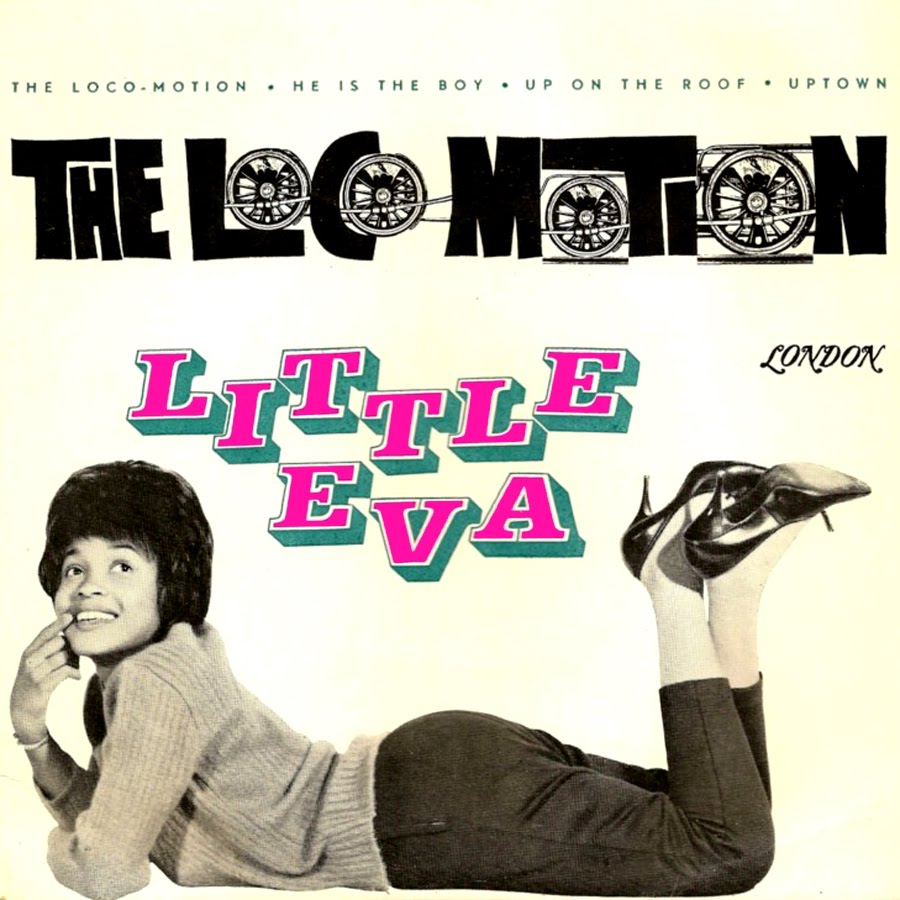
A real life Little Eva was the 1960s pop singer, born Eva Narcissus Boyd. She didn’t receive her moniker from either of these literary characters, but was called Little Eva by her family to distinguish her from her aunt, also named Eva. Little Eva is most famous for singing The Locomotion, later covered by Australian pop star Kylie Minogue. Little Eva apparently wasn’t too impressed by Kylie’s version.

Another Australian connection to Little Eva comes from World War II, when an American Air Force plane named the Little Eva got lost and crashed after a bombing mission in an isolated region of the Gulf of Carpentaria in Queensland. What happened to the survivors of the crash, and their desperate struggle against the dangers of the Australian outback, was made into a documentary called Aeroplane Dance, and is being developed into a feature film scheduled for release this year.

Eva is a classic name in Australia which has never left the charts. It was #37 in the 1900s, sinking until it left the Top 100 in the 1930s. It reached its lowest point in the 1980s at #425, then rose steeply during the 1990s to make the Top 100 for the late 2000s. Currently it is #24 nationally, #26 in New South Wales, #30 in Victoria, #31 in Queensland, #66 in Tasmania, and #27 in the Australian Capital Territory.

Eva is a very international name, being popular in all English-speaking countries, and all over Europe, including Eastern Europe and Scandinavia. It is most popular in Slovenia, at #2, and its popularity in Britain and New Zealand is almost identical to that in Australia.

Eva’s position in the Top 100 is stable, and it is now at its highest level of popularity ever. This makes it a Contemporary Classic – a traditional classic name which manages to feel modern and up-to-date. Because it is still rising, albeit gradually, it is also an Up and Coming Classic, so that it still seems rather fresh and stylish.

This all helps to make Eva an attractive choice. Furthermore, it fits in with the trend for short names ending in -a, such as Isla and Ella, and the V names, such as Ava, Ivy, Evie and Evelyn. This means that while Eva doesn’t stand out amongst its peers, neither does it sound particularly distinctive.

However, for those who care about such things, Eva has the advantage of being a classic, unlike Isla, Ella, Ava, Ivy and Evie, and also began rising before them, so that it cannot be accused of being a copycat. Eva is closest to the name Evelyn, which is also a classic that began rising in the 1990s – although Evelyn has yet to reach the popularity it enjoyed in the 1900s.

Eva is a beautiful classic name that is feminine without being frilly. Eva sounds intelligent as well as pretty, and it’s a name which ages well. It is easy to spell and pronounce, and is popular without being either extremely common or faddish. That makes it a baby name which might tick a lot of boxes on many people’s lists. The usual nicknames are Eve or Evie, but it is so short and simple that it doesn’t really need a nickname.

POLL RESULT
Eva received an excellent approval rating of 83%, making it one of the highest-rated names of 2014. People saw the name Eva as a stylish classic (23%), feminine yet not frilly (19%), beautiful or pretty (18%), and easy to spell and pronounce (17%). However, 6% thought it was too popular. Nobody thought the name Eva sounded too much like the word evil.

Thank you to Brooke for suggesting the name Eva be featured on Waltzing More Than Matilda

Names of Australian Birds for Girls

30 Sunday Mar 2014

Posted by A.O. in Name Themes and Lists

≈ 4 Comments

Tags

Ancient Germanic names, animal names, Australian Aboriginal names, Australian slang terms, bird names, birth notices, brand names, english names, fictional namesakes, germanic names, Greek names, Irish names, Italian names, Latin names, locational names, middle names, mythological names, name history, name meaning, name popularity, nature names, nicknames, retro names, scientific names, unisex names


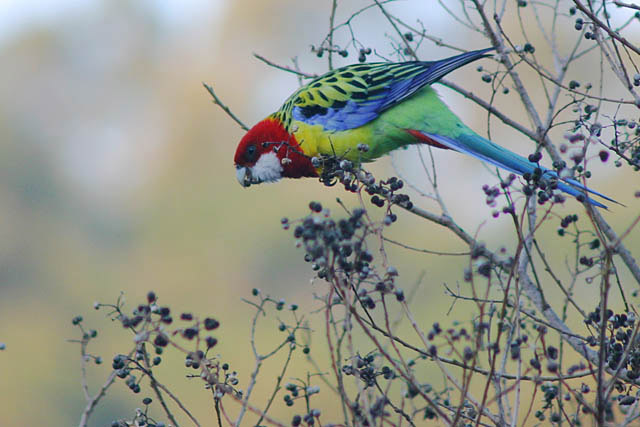
Eastern Rosella #40I seem to have covered several bird names on the blog recently, and that might be because our family was watching light-hearted bird documentary series, Hello Birdy, on the ABC, or maybe just because I love birds. Australia is lucky enough to have a staggering array of birds, many of them colourful, beautiful, intelligent, or unusual, and sadly, often under-appreciated. Here are some names that bring to mind a few of our feathered friends. Click on a likely link, and you will be taken to a YouTube video of each bird – there’s at least one for every entry.

Brahminy
The Brahminy Kite is a bird of prey and scavenger native to Australasia and Asia; in Australia they are found in coastal regions in the north. They are chestnut brown with a white head, breast, and tail tip, and typically nest in trees in mangrove swamps. The name Brahminy is due to their being found in India; it alludes to the Hindu Brahmin priestly caste, and is said BRAH-min-ee. The Brahminy Kite is the official mascot of Jakarta, in Indonesia, and in India is regarded as a representation of Garuda, the sacred bird of the supreme god Vishnu. I would not have considered this as a person’s name if I hadn’t seen a baby girl named Brahminy. It’s a bold choice, and its connection with a sacred bird is fascinating.

Corella
The Corella is a small, white cockatoo with a pink blush to its plumage. They are found from the central deserts to the eastern coastal plains, and are a familiar sight on farms and in cities. In some areas, Corellas have become so numerous they are considered a pest, being particularly destructive to trees and cereal crops. They congregate in large flocks, even up to several thousand, and make a high-pitched screeching noise which is ear-piercing when a flock all calls together, and can be heard for miles. Although they are noisy birds, they are very playful and have the joie de vivre that all parrots are blessed with. They are popular as pets, because they are good talkers, and excellent mimics. The word corella comes from the Wiradjuri language of central New South Wales. Corella has been used as a girl’s name since the 18th century, and is probably part of the Cor- group which is based on the Greek Kore, meaning “maiden”. The bird gives it a uniquely Australian flavour.

Dove
Here’s the dirty little secret about Doves: they’re just pigeons! Not only that, it’s unclear what makes some species of pigeons “doves”, because while we generally call smaller pigeons doves, that isn’t always the case. The confusion arises because the word pigeon is from Latin, and dove from Ancient Germanic, so they are two different words for the same thing (like autumn and fall). Nonetheless, their images are completely different: doves are symbols of peace, while pigeons are seen as disease-ridden pests (in fact, pigeons are no more disease-ridden than any other animal and pose no general health risk). Australia has a number of species identified as doves, and although we often think of doves as modest and grey, the Emerald Dove has striking green colouring, and the many varieties of Fruit Dove are likewise very colourful. There are also introduced species of dove, including those kept as pets. Dove has been used as a first name since the 17th century, and has been far more common for girls; a contemporary example is Disney actress Dove Cameron. Dove not only rhymes with love, but doves are used as symbols of love, since pigeons mate for life; the word dove can mean “sweetheart”. Perhaps because of this, doves were considered sacred to goddesses such as Venus. Another religious connection is that in Christian iconography, the Holy Spirit is often depicted as a dove.

Halcyon
Halcyon is the Latin name for the Tree Kingfishers, a large genus of birds found in Africa, Asia and Australasia, with Australasia having the most species. They are recognisable by their large heads and long pointed bills, and many are brightly coloured, often in iridescent blues and greens. The Laughing Kookaburra is a type of tree kingfisher, an iconic Australian bird with a raucous cackle that seems to epitomise the spirit of the bush. Halcyon is from the Greek for “kingfisher”, and is connected to a character from Greek mythology named Alcyone; the daughter of the winds, she married Ceyx, the son of the morning star. The pair were very much in love, and after Ceyx was lost at sea in a terrible storm, the unhappy Alcyone threw herself into the waves to end her life. The gods took pity on them, and changed both into kingfishers. According to legend, the “halcyon days” of midwinter, when storms cease, was when Alcyone laid her eggs, and her father restrained the winds so that she could do so safely. Because of this, the word halcyon (pronounced HAL-see-uhn) has come to mean “calm, serene, peaceful”, with our halcyon days those happy times we look back on with nostalgia. Halcyon has been used as a girl’s name since the 19th century: pretty and unusual, it gives Hallie as the nickname.

Lalage
Lalage is the scientific name for the Trillers, native to Asia and Australasia; they are small birds, usually coloured black, white and grey. They are called Trillers because during the breeding season, the males make a cheerful, almost continuous, trilling call. Lalage is derived from Greek, and means “to babble, to prattle”, or, in the case of birds, “to chirp”. The name became known from an ode by Roman poet Horace, where he speaks of his love for a young girl, his “sweetly laughing, sweet talking Lalage”. It has been used a few times since as a literary name, most notably in Kipling’s Rimini. Lalage has had occasional use, and in Britain seems to have a fairly upper-class image: contemporary examples are photjournalist Lalage Snow, and fashion designer Lalage Beaumont. In English, this name is usually pronounced LAL-a-gee or LA-la-ghee – just remember it’s three syllables, emphasis on the first, hard g like girl, not soft like germ. This fascinating name fits in with L-L names like Lillian, and as Lalage was a very young courtesan, almost seems like a posh version of Lolita! Lallie, Lollie, and Lala could be nicknames.

Lark
Larks are plain brown birds to look at, but their great beauty is in their voices, for they are famous for their melodious singing. This has made them a favourite subject for poets, such as Percy Bysshe Shelley’s, To a Skylark, and to say someone sings “like a lark” is a great compliment to the range and joyousness of their notes. Traditionally, larks are a symbol for dawn and daybreak, as in “getting up with the lark”, and this has given them religious overtones, for just as dawn is the passage between night and day, it can also be seen as that between heaven and earth. In Renaissance paintings, larks were sometimes used as a symbol of Christ. Although Australia has many birds with lark as part of their name, our only true lark is Horsfield’s Bushlark, widely found in grasslands and open woodlands. It is much smaller than larks in the northern hemisphere, and doesn’t have quite such an impressive voice, although its songs are still rich and varied, and it is a good mimic as well. The Eurasian Skylark which features in Shelley’s verse has been introduced here. Lark has been used as a name since the 18th century, and is historically more common for boys, but is often now thought of as more feminine than masculine. It’s a simple, non-frilly nature name laden with symbolism, and is more often found in the middle.

Maggie
Maggie is the affectionate name for the Australian Magpie. Although they look similar, it isn’t closely related to the European Magpie. Easily recognisable from their black and white plumage, magpies are very familiar in suburban life. Magpies are one of Australia’s favourite songbirds, because they have a complex, melodious warble, and will carol in chorus at dusk and dawn. They can also mimic other birds and animals, including human speech. Bold and sturdy, they are not typically wary of humans, and will happily accept (demand!) free food from us. They become unpopular in spring, as males can be so aggressive during breeding season that they swoop or even attack humans to warn them away. This is when feeding them pays off, as they can tell individual people apart, and won’t scare their buddies. The Magpie was a totem animal for the Indigenous people of the Illawarra, and is an official emblem of South Australia, appearing on the state flag. Magpies is a common name for sporting teams, and the cocky attitude of the Magpie is seen as indicative of the national character. Maggie is also a short form of Margaret. It was #174 in the 1900s, and was off the charts by the 1940s, returning in the 1970s. It has climbed steadily, and is currently in the 100s.

Oriole
Orioles are a large family of birds found throughout the world, which come in a variety of colours. Australian Orioles are green, perfect for blending in with the trees. They are fruit-eating birds, and the Figbird is one of the Orioles, although it doesn’t only eat figs. Orioles and Figbirds are attracted to backyards with small fruit trees and bushes, and which have native trees such as eucalypti and wattle; they are a fairly common sight in suburbia. The word oriole is derived from the Latin for “gold”, because the Eurasian Golden Oriole is a bright yellow. Oriole is related to names like Aurelia and Auriol, which are from the same derivation, and looks a lot like Oriel, which may be seen as a variant of Auriol, but also has Irish and Germanic origins. Oriole seems like a way to retain the golden meaning, while also referencing the bird.

Rainbird
The Rainbird is the colloquial name for the Pacific Koel, a species of migratory cuckoo which arrives here in spring from Papua New Guinea and Indonesia, and is found in north and eastern Australia. It’s called a Rainbird because of the belief that its rather mournful “whooping” call is a harbinger of wet weather. Males call for a mate during their breeding season, which coincides with the spring rains and the summer “wet season”, and are so loud they can be considered a nuisance. Like all cuckoos, Rainbirds lay their eggs in the nests of other species so that they can be raised by the unsuspecting hosts; however, unlike most other cuckoos, the baby Rainbird doesn’t kill the host chicks. Rainbirds are rather goofy-looking birds; the males have glossy black plumage and bright red eyes. I have seen Rainbird used as a girl’s middle name, and think it makes a wonderful name for a spring or summer baby. It would work equally well for boys.

Rosella
Rosellas are colourful parrots which are very familiar in suburbia. I think we might take them for granted, because they really are pretty, with a more pleasing range of calls than most parrots. Rosellas will be attracted to any garden that provides them with water, seeds and fruit, and can become so tame that they will eat out of your hand. This has led them to become common as pets, but in captivity they can become bored and aggressive, so I think it’s nicer to have them as backyard visitors. European settlers first saw Eastern Rosellas at Rose Hill (now called Parramatta), and called them Rosehill Parakeets; this evolved into Rosehillers, and eventually became Rosella. The Sydney suburb of Rozelle is named after them. Rosella is also a popular brand of tomato sauce, which sports an Eastern Rosella as its logo. By coincidence, Rosella is also an Italian name, an elaboration of Rosa, and looks like a combination of popular Rose and Ella.

POLL RESULTS
The public’s favourite names were Lark, Maggie and Rosella, and their least favourite were Brahminy, Oriole and Lalage.

(Photo shows an Eastern Rosella)

Waltzing with … Bran

09 Sunday Mar 2014

Posted by A.O. in Waltzing with ...

≈ 2 Comments

Tags

animal names, Arthurian names, bird names, British names, english names, epithets and titles, fictional namesakes, Game of Throne names, germanic names, Irish names, mythological names, name combinations, name history, name meaning, nicknames, Old English names, saints names, sibsets, surname names, UK name popularity, Welsh names

360029

There always seems to be lots of crows and ravens around at the end of summer, finishing off the remains of those creatures who have not survived the blazing heat and drought – a very important job that we don’t appreciate as much as we should. This put me in mind to write about a name connected to these highly intelligent birds, who feature in many mythologies, for as carrion birds, they are often seen as harbingers of death, with mysterious knowledge of the afterlife.

Brân the Blessed is a heroic figure from Welsh mythology; a giant, probable god, and High King of Britain. Legends tell of how he travelled to Ireland with a host of warriors in order to rescue his sister Branwen, who was being mistreated by her husband, an Irish king. The battle was brutal, and only seven men from the rescue party survived: Branwen herself died of a broken heart.

Brân was mortally wounded in the foot, and told his men to cut off his head, so that it could be returned to Britain. They took the head to “White Hill”, thought to be where the Tower of London now stands. The head was buried there, facing France, because as long as it remained, Britain would be protected from invasion. King Arthur later dug the head up, declaring that only his strength was needed to protect the land. This was seen as a disastrous decision, because when Arthur had gone, the land was invaded by the Saxons.

Brân is connected to many figures from British legend. He is seen as a forerunner to King Arthur as High King of Britain, and many have noted his similarity to the mysterious Fisher King of Arthurian legend, who is sometimes identified as a man named Bron. The Fisher King had a wounded leg, and in some tales, the Grail he possessed had the power to restore the fallen – a parallel with Brân, who had a cauldron that could bring warriors back to life. Some stories report that Percivalfound a severed head in the Fisher King’s castle instead of the Grail.

Others scholars see Brân as connected to the Irish hero Bran mac Febail, who embarked on a journey to the Otherworld, and when he returned, so many years had passed that the Irish people know him only as a legend. After telling his story, he sailed away across the sea, never to return. The tale was an apparent inspiration for the Voyage of Saint Brendan, a legendary quest the saint undertook to the Isle of the Blessed, or Saint Brendan’s Isle. Although this may not immediately remind you of Brân the Blessed, in British legends, a voyage to Ireland (in the west) is often an allegory for a journey to the Otherworld – and Brân did die there.

The severed head of Brân the Blessed is important, because some believe the human head played a significant role in Celtic religion. Greek historians tell how Celtic warriors could cut off the heads of their enemies in battle, and that these heads would be embalmed and placed on display. Archeologists theorise that ownership of a head gave one power over the dead person, or that the head was venerated as the seat of the soul and a symbol of the Otherworld.

The head of Brân the Blessed possessed powers of mystical protection, and some connect this to the ravens in the Tower of London, because the name Brân means “crow, raven” in Welsh. There are seven ravens at the Tower, and according to tradition, they protect the Crown and the Tower. Superstition warns that should the ravens of the Tower be lost or fly away, the Crown will fall and Britain with it.

Supposedly the ravens have been kept at the tower since the 17th century, but historical evidence points to them being a Victorian innovation, possibly a gift from an earl with links to Druidic scholarship who consciously chose them as representations of Brân the Blessed. Another theory is that they were simply pets of the 19th century Tower staff. And alas for the superstition, the Tower records show that just after World War II, there were no ravens left (an apparent crow-napping), yet the monarchy and Britain have managed to soldier on.

The Welsh name Bran, from Brân, is said BRAHN, while the Irish Bran, of the same derivation and meaning, is said BRAN. The name Brendan, the saint whose legend was influenced by that of Bran mac Febail, comes from the Welsh word for “prince”. This is rather interesting, because another theory about Brân the Blessed was that his name was actually a title: to be understood as meaning The Raven in the sense of The Prince, The Chieftain (as King Arthur’s father was known as The Pendragon, head dragon or war leader).

A character named Bran from contemporary fiction is Bran Stark, from George R.R. Martin’s A Song of Fire and Ice; in the television drama series A Game of Thrones, he is played by Isaac Hempstead-Wright. Despite his mythologically rich name, Bran is just short for Brandon, an English surname which comes from several places named Brandon in the United Kingdom.

Most of these come from the Old English for “gorse hill”, although Brandon in Lincolnshire means “steep hill”. However, there are places in Ireland with Brandon in their name, and these are said to be connected to Saint Brendan, although they don’t seem to have contributed to the surname. The surname Brandon also exists in continental Europe, and in these cases, it may be derived from the Germanic name Brando, meaning “sword”. The English surname does seem to be older than these though, and predates the Norman Conquest.

Bran is a strong, simple name from legend and literature with layers upon layers of evocative meaning and association. It has limited use in the UK, and is elsewhere almost unknown. If you are worried that it is too much like the cereal husks, you can use the Welsh pronunciation, or even the Arthurian Bron. Another possibility is the Irish surname name Brannan or Brannon, which in some cases means “son of Bran”. The girls name Branwen (sister of Bran) means “fair raven”.

POLL RESULT
Bran received a respectable approval rating of 69%. 28% of people liked the name, while 20% loved it.

(Photo is of an Australian raven, one of several Corvid species native to Australia)

Famous Name: Adam

29 Wednesday Jan 2014

Posted by A.O. in Famous Names

≈ 4 Comments

Tags

Akkadian names, Arabic names, Assyrian names, Babylonian names, Biblical names, hebrew names, Irish names, modern classics, name history, name meaning, name popularity, popular names, royal names, Scottish names, Semitic names

14Goodes2501_Hero

On Australia Day, the Australian of the Year for 2014 was announced, and it was AFL footballer Adam Goodes, who plays for the Sydney Swans.

Adam is a distinguished player who has experienced a great deal of success in his field, and is very active in the Sydney Indigenous community, providing leadership and guidance to troubled Indigenous youth, including those in youth detention. He has also started an Indigenous football academy, and he and his cousin Michael O’Loughlin founded the Goodes O’Loughlin Foundation which focuses on education, employment and healthy life choices. Adam plans to use his profile as Australian of the Year to help raise awareness of the push for constitutional recognition of Indigenous Australians.

Adam is well known to almost everyone, even those with no religious background, as the first human mentioned in the Bible. He was created by God out of earth, and placed in the paradisical Garden of Eden with his companion Eve. However, they were expelled from the Garden after disobeying God’s commands, and went on to become founders of the human race. Adam is also seen as the first human in Islam, which regards Adam as a prophet, and the first Muslim.

In Hebrew, āḏām is the word for “human”, and the creation story in Genesis uses this word for “mankind”, “humanity”, “a man”, and the person named Adam, in an ambiguous and complex play of meaning. The word comes from a Semitic root meaning “red, fair, handsome”, and is also the masculine form of the Hebrew word adamah, meaning “ground, earth”, related both to the word for “red”, and the word for “blood”. In Arabic, Adam means “made from the earth”.

Putting this all together, the impression one gets from the name is that Adam is a signifier for all men, and all humans, a handsome man created from the red earth, the colour suggesting that of life-giving blood (the clay become flesh), and perhaps even implying that his skin tone was meant to be a coppery, reddish-brown – which seems reasonable given the story’s Middle Eastern origins.

Genesis emphasises Adam’s connection to the earth, for God set Adam to work on the land, to get his hands dirty, scratched by thorns in order to eat and survive. God’s curse was From dust you were made and to dust you will return, meaning that humans were condemned to mortality (still echoed in the funeral service, ashes to ashes, dust to dust). Adam is separated from nature by his humanity, yet inextricably part of nature and still tied to the earth and his earthy instincts – a succinct précis of the human condition.

The first historical person named Adam we know of is an Assyrian king named Adamu, who lived more than 4000 years ago (it is probably worth mentioning that the Babylonian creation story, many centuries older than Genesis, has the same main features, and there the first man is named Lullu, meaning “man, human being”; when the Assyrians copied the story, they called the first man Adami, possibly from the Akkadian for “to make”).

The name Adam came into common use in Britain in the Middle Ages, and became more popular after the Protestant Reformation. It has particularly strong ties to Scotland, perhaps because it was used to Anglicise the Irish name Áedán (an older form of Aidan), traditional amongst the royal houses and nobility of medieval Scotland.

Although in rare use early in the twentieth century, Adam only began charting in Australia in the 1940s. It raced up the charts during the 1950s to make #51 for the 1960s. It peaked in the 1980s at #10, and is still in the Top 100. It is #66 nationally, #55 in New South Wales, #57 in Victoria, #99 in Queensland, #44 in Western Australia, #84 in Tasmania, and #60 in the Australian Capital Territory.

Adam is a modern classic, yet it is an ancient name – the oldest name in the Book! Brief, strong and primal, it is earth and blood, flesh and bone, birth and death, innocence and guilt: the most human of all names, with its hands buried in the soil and its soul yearning for paradise. Adam is all man and all men; we are all Adam and the children of Adam; and yet Adam is still too archetypal to ever become an Everyman name.

It will always remind us of the first man in one of the oldest stories we know. A man whose descendants have continued to live and die and toil and survive – and remember paradise.

POLL RESULT
Adam received an approval rating of 64%. 30% of people saw it as strong and handsome, but 14% thought it was too common.

The 2013 Matilda Awards

16 Thursday Jan 2014

Posted by A.O. in Blog News

≈ 4 Comments

Tags

Arabic names, Biblical names, celebrity baby names, celebrity sibsets, classic names, German names, germanic names, Irish names, name combinations, nicknames, popular names, rare names, royal names, sibsets, surname names, twin sets, underused classics

165256Welcome to the Matilda Awards, where we discover which names featured on the blog proved most popular with the public during 2013.

Waltzing With … Category

The most popular names featured in the Waltzing With … Category were LAYLA, which scored a 94% approval rating, and SULLIVAN, which scored a 96% approval rating – not just the highest-rated name for the category, but the highest-rated for the whole year.

Layla is an Arabic name with a romantic history, both in Muslim literature and popular culture; it is comfortably established in the Top 50. Sullivan is an Irish surname used as a first name; it was #306 in Victoria for 2012, and is rising in both the US and UK.

Layla and Sullivan did well not because they were deeply loved by the public, but because so few people hated them – in fact not a single respondent said they disliked the name Sullivan.

Famous Names Category

The most popular names featured in the Famous Names Category were MIRIAM, which scored an approval rating of 91%, and HENRY, which scored an approval rating of 95%.

Miriam is an ancient Biblical name, the name of one of the strongest and most interesting Old Testament heroines; it is an underused classic which has never left the charts yet never reached the Top 100. Henry is an English name of Germanic origin, long known as a royal name (and was featured as the name of a visiting prince); it is a popular classic which is gently rising in the Top 50.

Miriam was praised for being both strong and intelligent, and pretty and feminine; people also noted its many nickname options. Almost nobody disliked the name Henry.

Name Themes and Lists Category

The most popular names which were featured in the Names Themes and Lists Category were ALICE and AUGUST. Alice won convincingly, and also managed to win the original poll, while August received almost twice as many votes as its nearest opponent.

Alice is an English name of Germanic origin which has been used by royalty and aristocracy; it is currently rising in the Top 50, and was one of the fastest-rising names of 2012. August is a German short form of Augustus which featured as a rare royal name from history; it does not chart in Australia, but is currently rising in the US and UK.

Celebrity Babies

The most popular names for celebrity twins were HARVEY AND ROXANNE WELLER ALLEN, the son and daughter of singer Toby Allen and actor Darren Weller. They were the only celebrity twin names to be judged “adorable” by a majority of people – quite an achievement as there were an unusually high number of celebrity twins last year.

The most popular celebrity baby girl name was TESS CLEMENTINE HUGHES, the daughter of comedian and broadcaster Dave Hughes, and journalist Holly Ife. She was picked as favourite by 20% of respondents, who loved her hip name. Tess has a big sister named Sadie, and a big brother named Rafferty – what a cool sibset.

The most popular celebrity baby boy name was SEBASTIAN TANDER, the son of champion racing drivers Leanne and Garth Tander. He was picked as favourite by 30% of respondents, who found his smooth, stylish name appealing. Sebastian has a big sister named Scarlett – a sleek modern sibset.

From the Baby Name Round-Ups, the winning baby names were FREYA ROSE GOWER and SAMUEL ELLIOT. Freya is the daughter of NRL player Craig Gower, and model Amanda Flynn, and the name Freya has recently become a favoured choice for sporting celebrities. Samuel is the son of national women’s team cricketer Sarah Elliot, and cricket coach Rob Elliot.

Birth Announcements

The most popular names for multiples were MAGNOLIA MARY AND HENRY JOSEPH, who had a narrow win. Readers of Waltzing More Than Matilda are a broad-minded lot, and don’t believe Mary and Joseph are “too matchy” for twins. Or maybe they couldn’t resist voting for Henry once more.

In the girls name section, ETTA JUNE had a very comfortable win. Vintage, hip and extremely cute, Etta fits in with popular names such as Ella.

In the boys name section, JUDE WINTER absolutely trounced the opposition, gaining a massive 40% of the vote. This is a very stylish name combination, with Winter working just as well on a boy as it does on girls. Etta and Jude came from the same set of birth announcements in July – both their middle names seem inspired by the winter season, and both have a JOO sound in their names. Magnolia and Henry came from another set of July birth announcements – a victory for midwinter babies!

The most popular names in a sibset were ELSIE, NED, TILLY AND GUS, which just scraped through by a couple of votes. A very charming vintage short form sibset, these sisters and brothers were featured the day after Anzac Day.

What type of names did people like? Quite a variety, but royal names, vintage names, classic names, short form names, popular and rising names seem like the big winners.

Famous Names: Mitchell and Mervyn

08 Wednesday Jan 2014

Posted by A.O. in Famous Names

≈ 8 Comments

Tags

english names, famous namesakes, historical records, Irish names, locational names, modern classic names, name history, name meaning, name popularity, nicknames, popular names, Scottish names, surname names, Welsh names

Mitchell Johnson Media Session

It is a glorious summer: beautiful weather, cloudless blue skies, golden sunshine, and best of all – victory in that ancient international cricketing rivalry, the Ashes. Having lost to England during the northern summer of 2013, Australia was itching to get revenge back on home soil, and we did.

For whatever reason, England failed to perform in Australia and had already lost the Ashes 3-0 by Christmas. The series finished 5-0 to Australia, only the third time in history such a whitewash has been achieved, and England lost all 10 wickets in every innings of the Test series – the first time either side has forfeited 100 wickets in Ashes history. Little wonder we celebrated wildly at the Fan Day at the Opera House yesterday, having taken down the team which was ranked #1 in the world and were favourites to win.

Mitchell Johnson was awarded Man of the Series, the fast bowler having taken 37 wickets – the most in an Ashes series in Australia since the late 1970s. Even more remarkably, this was a comeback with a vengeance, because not so long ago, Mitchell was battling injury, his self-confidence destroyed by the jeering of England’s fan base, the Barmy Army (a jingle about Mitchell Johnson is still their most popular song, and I use the word “song” extremely loosely).

Quite apart from his Barmy Army-silencing performance (and I use the word “silencing” with great poetic licence), Mitchell’s value during the Ashes was as a psychological weapon, because he seemed to strike fear into the English batsman. His secret? Maybe it was his training, the confidence brought about by fatherhood, or a pep talk by a war hero, but nearly everyone was convinced it was his moustache. No, seriously.

Mitchell grew a moustache for Movember to raise money for men’s health, but was urged not to shave it off at the end of the month by selector Mervyn “Merv” Hughes, who sports an impressive moustache himself. A public campaign and $10 000 donation from Gillette convinced Mitchell to keep the mo, and it seemed to work.

I was following the Ashes on the BBC, and was interested to see how much that moustache affected the English: it was the “menacing mo”, “the terrifying tash”, “the malicious moustache”, “the fearsome face-fuzz”, or the “horrid horseshoe”, and Mitchell became the “pantomime villain”. Add one moustache, and suddenly this shy, quiet man had become a bowling nightmare to the English.

Unfortunately, Mitchell says the magic mo must go for now, but confirms he will be growing it back when we take on South Africa later in the summer. I just hope it hasn’t lost its mystique by then.

Mitchell is an English surname of several origins. It is said that the first people with this surname came from Mitcham in Surrey (now in the outer suburbs of London), with Mitcham meaning “big town, large settlement”. Mitchell can also be derived from the male name Michel, a Middle English nickname for a large person, meaning “big”. The Normans had the name Michel, but in their case it was a form of the name Michael.

The surname Mitchell must have moved north during the medieval period, as it became particularly associated with Scotland. The Gaelic form of the name is based on the name Michael. In Ireland, Mitchell is used to Anglicise the Irish surname Ó Maoilmhichil, from the clan name Uí Mhaoilmhichil, meaning “devotees of the Archangel Michael”.

The surname Mitchell is one very well known in Australia, for Sir Thomas Livingstone Mitchell was a 19th explorer of Australia. Originally from Scotland, he joined the British army, where he distinguished himself during the Napoleonic Wars, then became a surveyor in New South Wales. He explored New South Wales, Victoria and Queensland, and published two books which included close and sympathetic observations of the Aboriginal people he encountered.

He is also remembered for the invention of the boomerang propeller, and being the last man in Australia to challenge anyone to a duel (both marksmen missed, so nobody was hurt). Many things are named after him, including the town of Mitchell and the Mitchell River in Queensland, the Mitchell Highway between Queensland and New South Wales, and Major Mitchell’s Cockatoo, a very beautiful bird with soft pink and grey markings, much admired by Sir Thomas Mitchell.

Mitchell has been used as a boys name since at least the 16th century, and turns up early in Scotland. There are many men named Mitchell in Australian records, and lots of them emigrated from Scotland or have Scottish surnames.

The name Mitchell has charted in Australia since the 1940s. It climbed gently until the 1980s (the decade when Mitchell Johnson was born), when it suddenly shot into the Top 25 from virtually nowhere. It peaked in the 1990s at #12, and is still stable in the Top 100. Currently it is #45 nationally, #77 in New South Wales, #53 in Victoria, #51 in Queensland, #41 in South Australia, #37 in Western Australia, and #91 in Tasmania.

Australia is the only country in the world where the name Mitchell is still in the Top 100, and with the success of Mitchell Johnson, I don’t see it going anywhere soon. It’s an Australian modern classic with a lot of history, and a name we hold dear.

Mervyn is derived from the Welsh name Merfyn, of uncertain meaning. It is sometimes said to be a variation of the Welsh name Myrddin (“sea fortress”), from whence we get Merlin, but it may mean “big”, and is often translated as meaning something along the lines of “famous to the marrow”. There was a medieval Welsh king named Merfyn.

The name Mervyn was #66 in Australia in the 1900s, and peaked in the 1920s at #44 before declining and leaving the Top 100 in the 1950s. It hasn’t charted since the 1970s. It may be dated, but it is a uniquely Australian name, because in no other country (not even Wales) did it ever become popular.

Two names more Australian than you might have thought – but which one do you prefer?

POLL RESULTS
Mitchell received a respectable approval rating of 68%, while people were less enthusiastic about Mervyn, with an approval rating of 22% – not one person loved the name Mervyn.


The People’s Choice of Boys Names

22 Sunday Dec 2013

Posted by A.O. in Name Themes and Lists

≈ 9 Comments

Tags

African names, Akkadian names, Albanian names, Arabic names, Armenian names, celebrity baby names, Christmas names, english names, epithets and titles, famous namesakes, fictional namesakes, Finnish names, French names, Greek names, Hawaiian names, hebrew names, Indian names, Irish names, Kurdish names, Latin names, Maori names, mythological names, name history, name meaning, name popularity, name trends, nicknames, Old Norse names, polynesian names, saints names, scandinavian names, Semitic names, Slavic names, surname names, unisex names

3 kings

A selection of boys names that have been searched for several times to reach the blog. I chose names from different backgrounds that aren’t on the Top 100.

Ari

This little name has several origins. It is a Hebrew name meaning “lion”, an Armenian name meaning “brave”, a Scandinavian name from Old Norse, meaning “eagle”, an Albanian name meaning “bear”, a Maori name meaning “clear, visible”, or an Indian name meaning either “sun-like” or “free from sin”. It is also a Finnish form of Aaron and Adrian, a Kurdish short form of the name Arian, meaning “Aryan”, and is commonly used as a short form of any name begining with Ari-, such as Aristotle. There have been quite a few characters named Ari in popular culture, starting way back in the 1950s, with Ari Ben Canaan as the hero of Leon Uris’ novel Exodus, about the founding of the state of Israel; based on Israeli military leader Moshe Dayan, in the movie he was played by Paul Newman. This simple multicultural name is rising like other Ar- names such as Archer, Arlo and Arthur, and is #135 in Victoria.

Balthazar

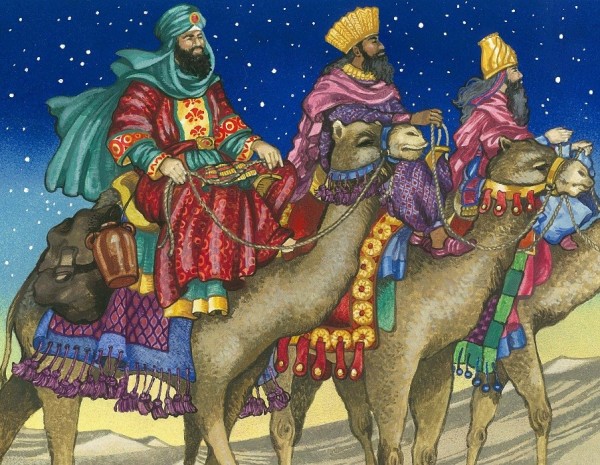
Variant of Belshazzar, the Hebrew form of the Akkadian name Bel-sarra-usur, meaning “Ba’al protect the king”. Ba’al is a Semitic title for any god, meaning “lord, master”, and in the Old Testament, the early Hebrews used the term to apply to the God of Israel. Later the term became seen as a heretical one, with a clear divide drawn between the Hebrew Yahweh and the Phoenician Ba’al. In Christian legend, Balthazar is the name given to one of the Magi – the three wise men who followed a mysterious star to visit the baby Jesus, bringing him gifts. The story appears in the New Testament, but no name (or even number) is ascribed to the Magi in the Bible. According to some traditions, Balthazar was an Arabian or Ethiopian scholar who brought the gift of frankincense to symbolise Christ’s role as a high priest. He is usually depicted as middle-aged and dark-skinned. One story is that Balthazar later converted to Christianity and was ordained a bishop; like the other Magi, he is regarded as a saint. Usually pronounced BAL-ta-zar in Australia, this is a seriously cool Christmas name.

Dragan

Slavic name meaning “precious, dear one”. It is usually pronounced DRAH-gahn, although I have heard people give it the same pronunciation as the word dragon. This reminds me that there is a sympathetic character named Dragan in the novel, Girl With a Dragon Tattoo; in the American film version, he is played by Croatian actor Goran Višnjić. Dragan Roganović is the real name of award-winning Serbian-Australian DJ Dirty South, and unfortunately the name has had a bit of bad publicity in Australia due to accused Serbian-Australian war criminal Dragan Vasiljković “Captain Dragan”, currently imprisoned in Australia awaiting extradition to Croatia. Despite this, Dragan is an attractive heritage choice with a very sweet meaning.

Kalani

Unisex Hawaiian name meaning “the sky, the heavens”. It’s a name often connected with surfing, because of Hawaiian surfers Kalani Robb, Kalani Chapman, Kalani Vierra and Kalani David, and young Australian surfer Kalani Ball. Mark Gasnier, former NRL player for the St George Illawarra Dragons, welcomed a son named Kalani two years ago. These are all guys, but surfer Kalani Miller, girlfriend of Kelly Slater, is a reminder that it’s a girl’s name as well – in fact, Kalani seems more common as a girl’s name in Australia, making #570 for girls in Victoria and not ranking as a boy’s name. Then again, Victoria is not famous for its surf culture – in northern New South Wales or Queensland, boys named Kalani may be more common. It’s a great name for either sex.

Leander

Greek name meaning “lion man”, featured in the tragic tale of Hero and Leander. Hero was a priestess of Aphrodite who lived in a tower in Sestos, on the European side of the Dardanelles, while her lover Leander was from Abydos, on the other side of the strait. Leander swam across the Hellespont every night to be with Hero, while she lit a lantern at the top of her tower to guide his way. Their love affair lasted all through the summer nights, but winter weather proved an obstacle to swimming. Desperate to be with his sweetheart, Leander braved the icy waters and was drowned during a storm, while the savage winds blew out Hero’s lantern. The distraught Hero plunged from her tower into the waves to join him in his watery grave. The story has inspired many writers, including Ovid, John Donne, Christopher Marlowe, and John Keats. Lord Byron recreated the swim by crossing from Sestos to Abydos, a distance of just over 1 km, which he turned into a poem; although he did it in May, according to his poem it was still difficult and he ended up with a chill. Leander was obviously made of sterner stuff. This is a handsome and romantic name with a very masculine meaning.

Mandela

The surname of inspirational world leader Nelson Mandela, his surname the name of his grandfather, the son of a king. Mandela was a lawyer and prominent campaigner against the apartheid government when he was arrested and sentenced to life imprisonment for crimes against the state. He served more than 27 years, released in 1990 after an international campaign had lobbied the South African government on his behalf. He joined negotiations to abolish apartheid and establish multiracial elections, becoming South Africa’s first black president. Deeply loved in his own country, where he was called Tata, or “father””, he was a respected figure on the world stage. He received more than 250 awards and honours during his lifetime, including the Nobel Peace Prize; he was appointed Honorary Companion of the Order of Australia in 1999. His passing this month at the age of 95 after a long illness has only highlighted the global reverence he attained. This is a worthy namesake whose name I have seen given to a boy – a name that Africa has given to the world.

Oisin

Anglicised form of Oisín, an Irish name translated as”young deer”. In Irish mythology, Oisín was a warrior and the greatest poet in Ireland. He was the son of the hero Fionn mac Cumhaill, and a woman named Sadbh, who had been turned into a deer by a malevolant druid. Fionn caught Sadbh as a deer, and she turned back into a human; all was well until the druid caught up with her and made her a deer while she was still pregnant. Sadhbh returned to the wild, and gave birth to Oisín while in deer form – hence his name. Eventually Fionn got to meet his son, and Oisín joined dad’s band of warriors. Oisín’s most famous adventure is when he fell in love with a fairy queen named Niamh, who took him to live in the Land of Youth. Although he thought he only lived with her for three years, three centuries passed in Ireland during his absence. Acording to some tales, Oisín lived long enough to meet Saint Patrick and tell him of his exploits. Oisín, or Ossian, is the narrator of the famous poem series by Scottish author James Macpherson, who made the Gaelic myths so popular in the 18th century. Pronounced OSH-een or USH-een, this a popular name in Ireland and would be well-received in Australia.

Remy

Anglicised form of Rémy, French form of the Latin name Remigius, meaning “oarsmen”. Saint Remigius was a 5th century Gallo-Roman bishop, a highly-educated man of noble blood. According to tradition, he converted and baptised Clovis, the King of the Franks. Clovis was baptised on Christmas Eve; such was his status that 3000 Franks were baptised that day with him. Because of this story, Saint Remigius is credited with France becoming a Christian country, and there are numerous places named Saint-Rémy his honour, as well as Saint-Rémy being a French surname. The name can also be spelled Rémi, and in France the second one is more popular. In Australia, both Remy and Remi are unisex, and roughly even for both sexes (Remy – 19 girls and 14 boys in Victoria; Remi – 11 boys and 7 girls). Although some get upset about Remy and Remi being used for girls, the names could just as easily be short forms of Remigia – the feminine form of Remigius. In Australia, they are usually pronounced RAY-mee or REH-mee.

Wyatt

English surname derived from the personal name Wyot, the medieval form of the Old English name Wigheard, meaning “brave in battle”. The Wyatt family were a prominent one in Britain; the Tudor poet Thomas Wyatt was one of their number. Sir Francis Wyatt was another, and he became Governor of Virginia, so the surname became well known in the United States as well. As a first name, Wyatt is famous because of Western lawman Wyatt Earp, who was Deputy Marshal of Tombstone in Arizona, and is known for the Gunfight at the O.K. Corall, in which three outlaw cowboys were killed. Wyatt was never injured in a gunfight, adding to his mystique, and after his death he gained legendary status as the toughest and deadliest gunman in the West. The name had a boost from popular culture through the television series Charmed, where Wyatt Halliwell was the son born to Piper and her White-Lighter husband Leo; the baby was named from his father’s earthly surname, and seems like a play on the word white, in the sense of “good, angelic”. Wyatt is #252 in Victoria.

Zayd

Arabic name meaning “abundance, growth, increase”. This name is important in Islam, because Zayd ibn Harithah was from an Arabian tribe, and after being abducted, sold into slavery while only a young boy. He was eventually sold to one of the wives of the Prophet Muhammad, and when she married, she gave Zayd to Muhammad as a wedding present. The Prophet became very fond of Zayd, even calling him “the beloved”. One day Zayd’s grieving family managed to track him down, and Muhammad asked him to choose his fate; Zayd told his family he did not want to leave his owner. Zayd’s family accepted his choice, and Muhammad legally adopted him as a son, making him a free man. After Muhammad received his divine revelations from the angel Gabriel, Zayd was one of the first converts to Islam, the only one of Muhammad’s companions who are mentioned by name in the Qur’an, and the first Muslim to be killed fighting for Islam on foreign soil. The name can also be spelled Zaid, and elaborated as Zayden or Zaiden – which fits right in with the -ayden trend. Zayd is #650 in Victoria, while Zaid is #648.

POLL RESULT: People’s favourite names were Ari, Leander and Remy, and their least favourite were Dragan, Kalani and Mandela.

(Picture shows the Magi travelling to see the infant Jesus)

← Older posts
Newer posts →

Enter your email address to follow this blog

Categories

Archives

Recent Comments

A.O.'s avatarwaltzingmorethanmati… on Zarah Zaynab and Wolfgang…
Madelyn's avatarMadelyn on Zarah Zaynab and Wolfgang…
JD's avatardrperegrine on Can Phoebe Complete This …
A.O.'s avatarwaltzingmorethanmati… on Rua and Rhoa
redrover23's avatarredrover23 on Rua and Rhoa

Blogroll

  • Appellation Mountain
  • Baby Name Pondering
  • Babynamelover's Blog
  • British Baby Names
  • Clare's Name News
  • For Real Baby Names
  • Geek Baby Names
  • Name Candy
  • Nameberry
  • Nancy's Baby Names
  • Ren's Baby Name Blog
  • Sancta Nomina
  • Swistle: Baby Names
  • The Art of Naming
  • The Baby Name Wizard
  • The Beauty of Names
  • Tulip By Any Name

RSS Feed

  • RSS - Posts

RSS Posts

  • Celebrity Baby News: Melanie Vallejo and Matt Kingston
  • Names from the TV Show “Cleverman”
  • Can Phoebe Complete This Sibset?
  • Zarah Zaynab and Wolfgang Winter
  • Baby, How Did You Get That Name?
  • Celebrity Baby News: Media Babies
  • Celebrity Baby News: Adelaide Crows Babies
  • Celebrity Baby News: Chris and Rebecca Judd
  • Names at Work: Name News From the World of Business and Employment
  • Celebrity Baby News: Sporting Round Up

Currently Popular

  • Rare Boys Names From the 1950s
  • The Top 100 Names of the 1930s in New South Wales
  • Celebrity Baby News: Toby Allen and Darren Weller
  • Celebrity Baby News: Jason Morrison and Heidi Tiltins
  • Celebrity Baby News: Caroline Craig and Callum Finlayson

Tags

celebrity baby names celebrity sibsets english names famous namesakes fictional namesakes honouring locational names middle names name combinations name history name meaning name popularity name trends nicknames popular names saints names sibsets surname names twin sets unisex names

Blog at WordPress.com.

Privacy & Cookies: This site uses cookies. By continuing to use this website, you agree to their use.
To find out more, including how to control cookies, see here: Cookie Policy
  • Subscribe Subscribed
    • Waltzing More Than Matilda
    • Join 517 other subscribers
    • Already have a WordPress.com account? Log in now.
    • Waltzing More Than Matilda
    • Subscribe Subscribed
    • Sign up
    • Log in
    • Report this content
    • View site in Reader
    • Manage subscriptions
    • Collapse this bar
 

Loading Comments...