• About
  • Best Baby Names
  • Celebrity Baby Names
  • Celebrity Baby Names – Current
  • Celebrity Baby Names – Past
  • Featured Boys Names
  • Featured Girls Names
  • Featured Unisex Names
  • Links to Name Data
  • Waltzing on the Web

Waltzing More Than Matilda

~ Names with an Australian Bias of Democratic Temper

Waltzing More Than Matilda

Tag Archives: hebrew names

Famous Name: Azaria

20 Wednesday Jun 2012

Posted by A.O. in Famous Names

≈ 8 Comments

Tags

1001 Unusual Baby Names, baby name books, Biblical names, hebrew names, honouring, name history, name meaning, The Complete Book of Names, unisex names, US name popularity
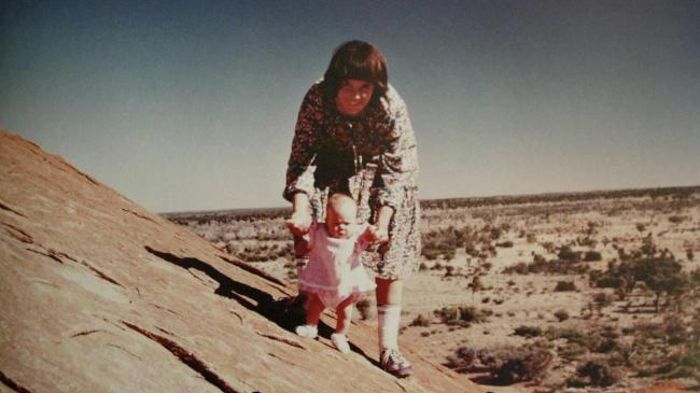
On June 12 this year, a very long legal case finally came to an end, when coroner Elizabeth Morris ruled that Azaria Chantel Loren Chamberlain had been taken by a dingo on August 17 1980. Azaria was nine weeks old when she died, and June 12 was the day after what would have been Azaria’s thirty-second birthday, had she lived.

The disappearance and death of baby Azaria in the Northern Territory was a case which generated mass hysteria, divided the nation, and led to a cruel media-driven witch hunt against Azaria’s grieving parents, Lindy and Michael. It remains an ugly stain on our national psyche, and a lesson in not being too ready to believe the worst about the latest media “villain”. A lesson we unfortunately never seem to learn.

The Chamberlains had been on a camping holiday at Uluru (Ayers Rock) with their three young children when Lindy screamed that a dingo had taken her baby from their tent. Witnesses at the time believed her implicitly; there were warning signs everywhere about the dangers of dingoes, and six weeks earlier, a three year old named Amanda Cranwell had been dragged from her parents’ car by a dingo and had to be driven off. Azaria’s brother Aidan said that he heard a dingo in the tent with them, and Aboriginal trackers reported that she had been dragged by an animal.

A coronial inquest found that Azaria had been taken by a dingo, but her missing body disposed of by unknown human means. That should have been the end of this family’s tragedy, but instead it had just begun. For reasons unclear to me, the Northern Territory police refused to accept the findings, and charged the Chamberlains with murder.

Michael was a pastor in the Seventh Day Adventist Church. People didn’t know much about this minority religion, and mistrusted the Chamberlains as somehow “different”. Lindy maintained the calm dignity of someone who knew she was innocent and believed that God was on her side. This was taken as unnatural – why didn’t she shriek and cry hysterically like a proper woman? Why did she never squeeze out at least a few tears? Why did she seem so assured when she was only a housewife?

Wild rumours began to circulate, and the media gleefully reported each one. One was that the Chamberlains’ religion demanded a child sacrifice, and they had gone into the outback with the express purpose of murdering their baby daughter. Another was that they weren’t Christians at all – they were Satanists, devil worshippers or into black magic; being religious was just a front. Another notion was that perhaps their religion forbade medical assistance (it doesn’t), and that they had killed a terminally ill Azaria rather than let her suffer a slow death. One of the sickest was that Azaria’s brothers Aidan and Reagan, then aged six and four, had killed her and her parents covered it up.

It is shocking and heartbreaking that people in modern times could be so ignorant, gullible and superstitious; it beggars belief that anyone could think a mother would kill her daughter in front her other children, and have the audacity to do so in broad daylight surrounded by witnesses, washing off all blood and disposing of all evidence within ten minutes. However, so convincing was this view of the evil, unnatural Lindy that she was found guilty and sentenced to prison in 1982. Four years later, some of Azaria’s missing clothing was found in a dingo’s lair, and Lindy was released.

The Chamberlains’ marriage did not survive and both remarried. The fate of Azaria was still listed as “unknown”, and her story became urban legend; she was part of the horrors of the outback, she was our nightmare and our collective guilt. She was a meme, a joke, a rumour, a punchline, a subject of gossip, a tee-shirt slogan, an industry which brought out books, tea towels, movies, TV shows and even an opera.

Last week Azaria’s extraordinary story ended, and she was at last declared officially dead and given a death certificate. The coroner offered her heartfelt sympathies to the Chamberlains for the loss of their daughter and sister, however the Northern Territory government refuses to apologise for the events which followed that loss.

Azaria is a variant of the Hebrew name Azariah, which means “Yahweh has helped”; however Azariah is pronounced az-uh-RY-uh, and most people say Azaria a-ZAHR-ree-uh. Despite Azariah being a male name in the Old Testament, Azaria is more commonly used as a girl’s name.

During the hysteria surrounding the Chamberlain case, it was falsely claimed that the name Azaria meant “sacrifice in the wilderness”, with the obvious conclusion  that the Chamberlains had marked their daughter from birth for ritual infanticide. (I would have thought that if you actually were planning to do that to your baby, you’d choose a name that drew less attention to your nefarious scheme).

The original coroner made a finding that Azaria did not in fact mean “sacrifice in the wilderness”, making it one of the few times in legal history when a court has made a ruling on the meaning of a name. Lindy found the name in 1001 Unusual Baby Names, where it was identified with standard baby name book laxness as the feminine form of Azariah, meaning “blessed by God”. The current edition of the book is called The Complete Book of Baby Names, now boasts over 100 000 entries, and has updated Azaria to mean “helped by God”.

Azaria’s name was an unusual name when she was born, and it is still uncommon. I have seen the name a few times in birth announcements, using both the Azaria and Azariah spellings, and given to both girls and boys. Azaria has been on the US Top 1000 since the mid-2000s, suggesting that the name is on the rise internationally rather than being an Australian phenomenon.

The first time I saw the name given to a new baby I gave an unconscious start of shock, but then rationality kicked in and I could see that the name deserves to be used again, and it would be ridiculous to avoid it. Until I saw Azaria with the middle name Chamberlain. Maybe it was a family name, maybe it was honouring an unfortunate victim, but even 32 years later, for me it was too soon.
Less Commonly Used Girls Names

03 Sunday Jun 2012

Posted by A.O. in Name Themes and Lists

≈ 20 Comments

Tags

Abby Sandel, alphanumeric names, Arabic names, Baby Name Wizard, Bonds Baby Search, celebrity baby names, Celtic names, created names, english names, famous namesakes, fictional namesakes, French names, Greek names, hebrew names, Italian names, locational names, Mer de Noms, modern names, mythological names, name data, name history, name meaning, name popularity, Nameberry, Names from the Dustbin, nicknames, popular culture, pseudonyms, rare names, Scottish names, Semitic names, Shakespearean names, stage names, surname names, The Nameberry Nine, Turkish names, unisex names, vocabulary names

When all the name data for the most popular names was released, there were also several articles which looked at some of the names closer to the bottom of the popularity lists than the top. Dorcas at Names from the Dustbin calls these names Bottom of the Barrel – not meaning that they are necessarily of poor quality, but just low in the rankings.

Most names at the bottom of the lists are just re-spellings of common names, or short forms of names that are usually kept as nicknames rather than a full name. However, if you sift through these, there’s some interesting finds at the “bottom of the barrel”, and even some neglected gems.

These names are from the popularity charts of New South Wales, Victoria, Queensland, and Tasmania. Nearly all of them are taken from the very rarest names in their state.

Adeline

This is a pet form of the French name Adele; the French pronunciation is a-de-LEEN, but the English is AD-uh-line. The name is well known from the American ballad Sweet Adeline, which was a standard for Australian folk band, The Seekers. There’s also the piece, Ballade pour Adeline, written for the composer’s baby girl, which I had to thump out tunelessly with my chubby fingers during many a childhood music lesson. However, Adeline has got considerably cooler since then; Kasey Chambers has a song called Adeline, Green Day’s Adeline Records handles indie rock bands, and Elliot Smith released his own darker version of Sweet Adeline. I read at Abby’s Nameberry Nine that Simon Helberg from The Big Bang Theory welcomed a daughter named Adeline last month, making it an up-to-the minute celebrity baby name. Adeline has never been on the Top 100; it was #162 for the 1900s, and then sank until it was out of regular use by the 1940s. Today it fits in well with Adelaide, Addison, Madison and Madeline; however it may be difficult for short form Addie to stand out amongst the sea of Maddies and Abbies.

Allegra

Allegra means “cheerful, lively” in Italian, related to the musical term allegro, and has a long history as a celebrity baby name. Romantic poet Lord Byron re-named his illegitimate daughter Clara Allegra Byron (called by her middle name, and originally named Alba by her mother). Despite poor little Allegras’s life being brief and marked by neglect, the name seems to have been an apt one, because she was described as a vivacious child. Her story didn’t stop American poet Henry Longfellow from using it as his daughter’s middle name; in his poem The Children’s Hour, he describes her as “laughing Allegra”. The American inventor and designer, Buckminster Fuller, also gave this name to his daughter. Allegra Versace is the daughter of Italian designer Donatella Versace, and Allegra Kurer is the daughter of British radio host Vanessa Feltz. In Australia, news presenter Jessica Rowe chose it for her eldest daughter in 2007, and last year it was chosen for the daughter of Emmy Kubainski. Frothy and elegant, with a positive meaning, this fashionable favourite would also make a good Italian heritage choice.

Bonnie

Bonnie is taken from the Scottish word bonnie, meaning “pretty, beautiful”; it’s derived from the French bon, meaning “good”. Bonnie has been used as a personal name since the 19th century, and was even sometimes given to boys, but received a huge boost when it was used in Margaret Mitchell’s popular romance, Gone with the Wind. Bonnie Blue Butler is the daughter of Scarlett and Rhett, and receives her name because she has eyes the colour of the Bonnie Blue Flag – the banner of the Confederate States in the American Civil War. British rocker Billy Idol, who sang Rebel Yell, named his daughter Bonnie Blue, and we had a Bonnie Blue competing in the Bonds Baby Search. Another famous Bonnie is Bonnie Parker, one half of notorious crime duo Bonnie and Clyde. Bonnie has been on the charts almost continuously, albeit in rare use in the 1950s and ’60s. It had a peak in the 1920s at #172, then peaked again in the 1990s at #157; it’s currently climbing in the mid-100s in New South Wales, but is obviously rarer in other states. It’s a sweet old-fashioned name which is also linked to rebellion, giving it a spunkier image.

Cleopatra

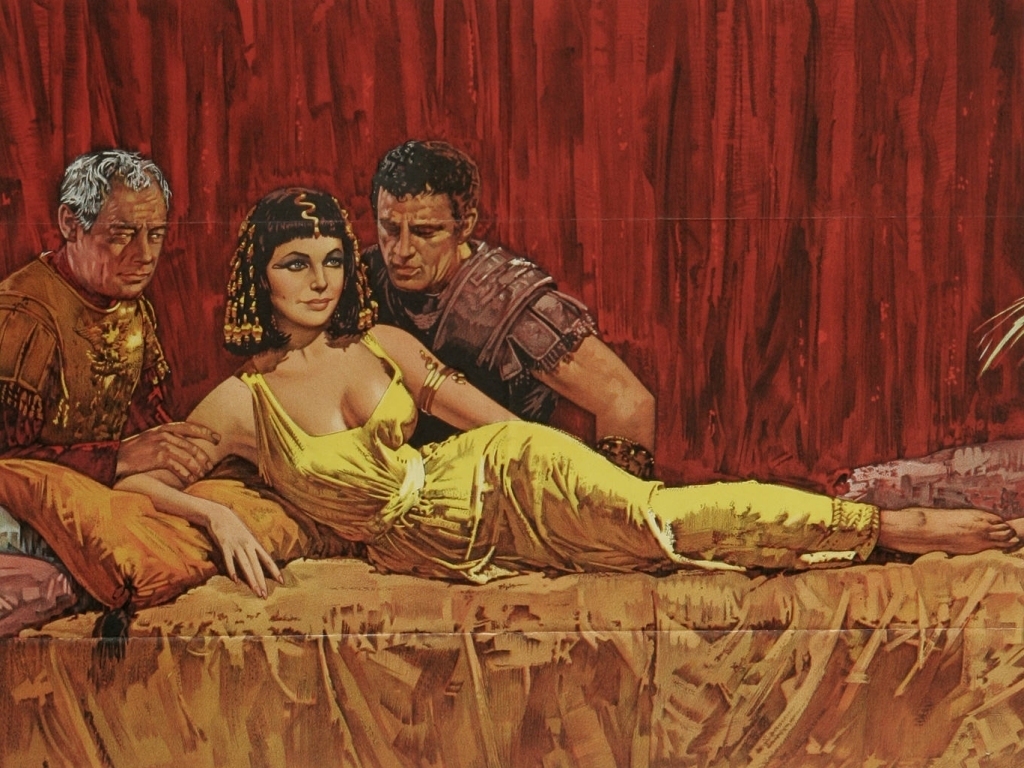
This Greek name means “glory of the father”, and is almost impossible for us to disassociate from the famous Queen of Egypt. From a dangerously inbred family of Macedonian Greek origin, she ruled Egypt alongside her father, and then her brothers (who were also her husbands), but then seized control and reigned alone for many years. She was able to align herself with Rome as both ally and lover to both Julius Caesar and Mark Antony, but after Mark Antony’s death, is said to have poisoned herself before she could be captured and humiliated. According to tradition, she killed herself with an asp. Her story captured the imagination of William Shakespeare, who based his play Antony and Cleopatra on the last part of her life, and her story has been made into several films, including the lavishly dreadful one starring Elizabeth Taylor and Richard Burton. Cleopatra is always depicted as a woman of great beauty, although early traditions suggest her attractiveness was based more on enormous charm and sex appeal. This ancient, glamorous name carries a lot of weight, but with short form Cleo becoming fashionable, some parents may wish for a long form of the name.

Elif

This Turkish name is after Alif, the first letter of the Arabic alphabet, and has connotations of “tall and slender”, as if the person is shaped like the letter, which is a long vertical line. It is pronounced ay-LEEF. You probably recall that Natalie Portman had a son named Aleph last year; Aleph is the Hebrew form of the same letter. The meaning of the letter goes back to the West Semitic word for “ox”, as the cuneiform originally represented the shape of an ox’s head. In Arabic, the word is connected via folk etymology to the word for “coy, tamed”, giving it a subtly demure feeling. It’s a common girl’s name in Turkey, and there are several Turkish celebrities with this name. There’s also a town in Turkey called Elif. I’m not sure a non-Turkish person would ever use it, but it’s certainly an attractive name that is easy enough for an English-speaker to understand and pronounce, once they’ve learned how it’s said.

Harlow

This name is inspired by Jean Harlow, a Hollywood superstar of the 1930s. With her platinum hair and vampish image, she was the forerunner to many blonde bombshells of the movies. Despite her beauty and success, Harlow’s life contained much tragedy, and she died of kidney failure while only in her twenties. Harlow took her mother’s maiden name as her stage name; her birth name was Harlean Carpenter. The surname Harlow is from several places in England. Harlow in Yorkshire means “hill of rocks” in Old English, while the meaning of Harlow in Essex is disputed. One theory is that it means “army hill”, with the idea being that local landmark Mulberry Hill was a meeting place for the local people. Another is that it means “temple mound”, as there is an Iron Age burial mound in the area which later had a Roman temple built on the site. Harlow is a unisex name, but more common for girls; the name came to public attention when Nicole Richie named her daughter Harlow in 2008. There were 20 babies named Harlow in Queensland last year, up from 12 the year before. Although numbers are still low, that’s a significant jump.

Pixie

This name is after the small mythological being of English folklore, tales of which come from Cornwall and Devon. They are usually depicted as small sprites who could be mischievous, but were often helpful to humans. A famous Australian with this name was the prolific illustrator and artist Pixie O’Harris (aunt of singer-artist Rolf Harris). Her real name was Rhona Olive Harris, but when she migrated to Australia from Wales she changed her name to Pixie because she was nicknamed “the Welsh pixie” on the boat over. A printer’s error changed her name from Pixie O. Harris to Pixie O’Harris, and she stuck with it as her pseudonym. Last year, businesswoman Roxy Jacenko named her new baby Pixie-Rose. I think some people will find the name Pixie adorably cute, and others impossibly twee; it’s bound to get some interesting reactions, and does have the fashionable X in it.

Sippie

The only person I know of named Sippie is the blues singer Sippie Wallace, who was born Beulah Thomas. Her career spanned seven decades, and although she found fame as a young woman in the 1920s, she was rediscovered in the 1960s and ’70s and was a big influence on Bonnie Raitt, who went on tour with her. Her album Sippie won the Blues Album of the Year in 1983, so her comeback was a definite success. The name Sippie is one that she gained in childhood because the gap in her teeth meant that she had to “sip” all her food and drink. Coincidentally, there is a place on the Gold Coast called Sippy Downs; its name is a corruption of an Aboriginal word meaning “winged creatures”, and interpreted as meaning “birds”. As Sippie Wallace was billed as “The Texas Nightingale”, I find this juxtaposition very charming. Sippie is an unusual name, but what a wonderful namesake. This would be very suitable for a family who loves music, especially jazz and blues.

Torah

In Australia, this name is well known as belonging to snowboarder Torah Bright, who won gold at the 2010 Winter Olympics. Her parents named her after the Torah, which is the Jewish word for the first five books of the Old Testament. The word is from the Hebrew, meaning “teaching, instruction”, however, Torah Bright’s mother believed that it meant “bearer of a great message”. Torah Bright is a member of the Church of Latter Day Saints (Mormon), and lives in Salt Lake City, Utah. There was slight disbelief at this name on The Baby Name Wizard, with a couple of people feeling that it seemed rather offensive, or at least strange. Torah’s name was reported on in Washington Jewish Week; there was no mention of it being offensive to Jews, but they did appear to find it slightly amusing. Like calling your child Bible or Gospel, many will find this name a head-scratcher. It would be given in honour of our Olympic champion, but the religious ramifications may be lost on some people. The fact that it sounds as if it could be short for Victoria is probably a help.

Zahlia

This name is pronounced ZAH-lee-uh, and as far as I’m aware, it’s a modern invention. It seems to be an elaboration of the name Zali; Zali Steggall is Australia’s most internationally successful alpine skier (now retired). Her name has proven a great success here, and spawned many variants, such as Zarly, Zahlee, Zalie etc. It’s unclear where the Stegalls got the name Zali from, and to the best of my knowledge, it’s made up. Zahlia does well in Australia, because it sounds rather exotic, while also being similar to popular names such as Zara and Tahlia (it even looks like a combination of those names). Despite being listed as a rare name, I have seen some parents dismiss Zahlia as being “too common”; perhaps it’s not rare enough to seem “unique”, or perhaps the many variants and sound-alike names make it appear to be one of the pack.

(Picture is from one of the posters for the 1963 movie Cleopatra)

Saturday Sibsets: Four Families from Tasmania

12 Saturday May 2012

Posted by A.O. in Sibsets in the News

≈ 2 Comments

Tags

animal names, Arabic names, Australian Aboriginal names, english names, hebrew names, Maori names, nature names, nicknames, polynesian names, sibsets, unisex names, virtue names, vocabulary names

THE CIRCUS TROUPE

Kristy and Mark Sands run the Sands Family Circus. They began performing together in the mid-1990s, and initially planned on having two children, but ended up with a few more than that. All the children naturally learned circus skills, and became part of the act.

Jiemba (15) BOY – means “morning star” in the Wiradjuri language

Tohua (13) BOY – in Maori means “egg”; in Polynesia, a Tohua is a ceremonial meeting place

Spida (11) GIRL

Rain (9) BOY

Ooliki (3) BOY – I don’t know what his name means

Next child (due in July)

THE BABYSLING MUMPRENEUR

Anita Lincolne-Lomax turned her passion for attachment parenting into a business when she founded Babes in Arms several years ago. Babes in Arms sells baby carriers and baby slings throughout Australia and New Zealand, and last year Anita was named 2011 Mumpreneur of the Year by parenting website connect2mums.com.au, and Babes in Arms is a finalist in two categories of this year’s Australian Small Business Champion Awards. Her husband Ralph now works full-time in the company.

Tilli (8)

Jontae (5) – a variant of Jonte, a pet form of Jonathan

Aviya (3) – Hebrew name meaning “my father is Yahweh” (unisex)

Grace (7 months)

THE COOKS WHO COOK

Jo Cook is a chef and market curator, and food is her passion. A member of Slow Food Hobart, she runs Flavour Workshops for children, and volunteers at a primary school to work in their kitchen garden. Next she hopes to link up with the university to inspire a new generation to eat more mindfully and healthily. Of course, at home, the family connects around growing food, cooking meals and enjoying them together around the table.

Nina (10)

Charlie (8)

A FRESH START

Sarra Elradi came to Tasmania from Sudan with her four children to give them a better start in life. She had separated from her husband, and the family spent two years in Egypt, which they describe as “very tough”, because there was no one to help them. When they arrived in Australia, only Sarra’s eldest son could speak English, so they were on a steep learning curve; however they appreciate the education they are receiving and the opportunities that are available to them. Sarra’s daughters are both members of the Glenorchy Young Women’s Multicultural Group.

Elsawi BOY Arabic name meaning “servant of God”

Hanadi (15) GIRL Arabic name meaning “lovely fragrance”

Zeinab (12) GIRL Arabic name meaning “desert flower”

One other child

(Photo and story from The Hobart Mercury, May 11 2012)

Popular Names for Boys

06 Sunday May 2012

Posted by A.O. in Name Themes and Lists

≈ 23 Comments

Tags

Aramaic names, band names, Biblical names, car names, celebrity baby names, classic names, english names, famous namesakes, fictional namesakes, French names, germanic names, Greek names, hebrew names, honouring, Latin names, locational names, name history, name meaning, name popularity, nicknames, Old Norse names, popular culture, popular names, royal names, saints names, Scottish names, surname names

Follows on from Popular Names for Girls.

William

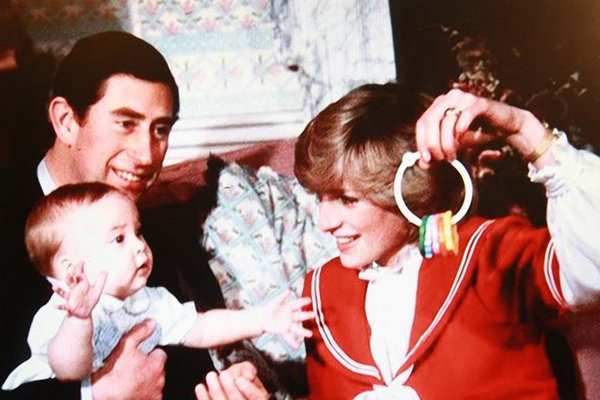
William is a solidly classic name which has never left the Top 50. It was the #1 name of the 1900s, and gradually decreased in popularity, hitting its lowest point during the 1970s, at #48. However, its fortunes were soon to recover, because in 1982, heir to the British throne Prince Philip, and his then wife, Diana, Princess of Wales, welcomed their first child and eldest son, William Arthur Philip Louis. Prince William was named after his father’s cousin and personal hero, Prince William of Gloucester, who died in an air crash ten years earlier. Prince William made his first visit to Australia as a baby, and this was an immediate help to the name’s popularity. By the time Prince William began university in 2001, the name was already in the NSW Top 10. It reached #1 in 2009, the year after Catherine Middleton began accompanying Prince William to official functions, and there it has remained. In 2011, Prince William made a much-appreciated visit to flood-affected areas of Australia, and shortly afterwards treated the world to a slap-up royal wedding. It’s likely this princely name will remain at the top for at least another year.

Jack

Jack is a classic name which has never left the charts. Top 100 during the 1900s-30s, it sunk to its lowest point in the 1970s, at #269. However, so rapid was its growth that it joined the Top 100 again during the 1980s – the same decade that pop singer John Farnham released his Whispering Jack album. Whispering Jack went to #1, and is the highest-selling album ever in Australia, having gone platinum 24 times over. By the 1990s, Jack was already Top 10, a decade when Leonardo di Caprio played water-logged lover Jack Dawson in the romantic movie Titanic, and teen heartthrob Daniel Amalam played bad boy Jack Wilson in soapie Home and Away. By the start of the 2000s, Jack was #2. It made #1 by 2004, the year that the TV show LOST began, with its hero Dr. Jack Shephard, and the year after Johnny Depp played Captain Jack Sparrow in the first Pirates of the Caribbean film. Jack remained in first place until 2008, the year that AC/DC released their single Big Jack. Jack the Lad may have had his day, but won’t be going anywhere fast, and is still the #1 name in some states.

Ethan

Ethan is a name from Hebrew which means “solid, enduring”. In the Old Testament, Ethan is said to have been a very wise man who wrote Psalm 89. Ethan first entered the charts in the 1970s, and took off during the 1980s, as film-maker Ethan Coen began his career, working in tandem with his brother Joel. At the end of the 1980s, actor Ethan Hawke got his big break in Dead Poets’ Society. By the 1990s, Ethan was a Top 100 name, and it was in this decade that Tom Cruise first played Ethan Hunt, the hero of the Mission Impossible films, Ethan Philips joined the cast of TV show Star Trek, and Ethan Rayne was introduced as a character on Buffy the Vampire Slayer. It was also during the 1990s that surfing champ Wendy Botha welcomed a son named Ethan. In 2006, Ethan joined the Top 10 – the year after the Ethan Group, an Australian IT company, won the BRW Fast 100. Singer Dannii Minogue, Kylie’s sister, welcomed a son named Ethan in 2010, and that probably won’t hurt the chances of this strong yet gentle-sounding name going higher still.

Oliver

Oliver is the English form of French name Olivier, but it’s unclear whether it’s the Norman form of Germanic Alfher, meaning “elf warrior”, or Old Norse Aleifr, meaning “ancestor’s descendant” (related to Olaf). The spelling was altered to make it seem as if the name came from the Latin oliva, meaning “olive tree”. A classic which has never left the charts, Oliver was Top 100 in the 1900s, but then sank into rare use. It recovered during the 1970s, the decade after the release of Oliver!, the musical based on Dickens’ novel, Oliver Twist. In this decade, actress Goldie Hawn welcomed a son named Oliver. The name gained ground during the 1980s, and was Top 100 during the 1990s. Late in the ’90s, the first Harry Potter book was published, featuring Harry’s Quidditch captain, Oliver Wood. In the 2000s, the books were turned into films, with Oliver Phelps playing the role of George Weasley. By 2006, the debut of TV show Hannah Montana, where Oliver Oken is the best guy-friend of the heroine, it was Top 20, and by 2008 it was Top 10. By 2010 it was Top 5; Oliver may go higher if you want some more.

Lucas

Lucas is the Latin form of Greek Loukas, on which English Luke is based. Lucas first entered the charts in the 1950s. There was noticeable growth during the 1970s, the decade that George Lucas made the first Star Wars movie, and then it remained stable for several decades in the very low 100s. However, in the 2000s it made the Top 100, and at this point it fairly raced up the charts. A possible help to the name was the television drama series, One Tree Hill, in which Chad Michael Murray plays the main protagonist, Lucas Scott. This brooding, blue-eyed, sporty yet bookish hero proved something of a hit with the female demographic. Meanwhile, Lucas Holden on Australian soap Home and Away was also a literary teenager, who ended up having a controversially steamy scene with his onscreen girlfriend. By 2006, the year that soccer star Lucas Neill played for Australia in the World Cup, it was in the Top 50. By 2007 it was Top 20, and by 2010 it was Top 10. The 2000s were kind to Lucas, and at this point, lucky Lucas seems almost certain to go to #1.

Noah

Noah is derived from the Hebrew name Noach, meaning “rest, comfort”. Noah is well known from the Old Testament story, where he builds an ark which saves his family and the animals of all species to survive the Great Flood, sent by God as a one-off punishment to wicked humanity. The name Noah entered the charts in the 1980s, the decade when Noah Hathaway gave an award-winning performance as boy-warrior Atreyu, in the fantasy film, The Neverending Story. Also in the 1980s, Australian actor Noah Taylor made his film debut as the main character in the critically acclaimed The Year My Voice Broke. Noah climbed steadily, then suddenly shot up during the 1990s, the decade that Boris Becker welcomed a son named Noah, so that it was in the Top 50 by the 2000s. Noah joined the Top 20 in 20005, the year after Ryan Gosling played the young version of Noah Calhoun, the devoted lover from romantic film, The Notebook. In 2006, Noah was in the Top 10. However, Noah has remained reasonably stable, with no signs of moving significantly up or down, and we must wait to see whether it sinks or swims.

Lachlan

Lachlan is a Scottish name which began as a nickname for someone from Norway. In Scotland, Norway was known as the “the land of the lochs”, or Lochlann. Lachlan Macquarie was born in the Hebrides, and became Governor of New South Wales in 1809. To the British government of the time, Australia was a penal colony for offloading the dregs of their society; convicts must be treated cruelly, former convicts exploited, and little money spent. The government fretted as Macquarie pardoned convicts, employed freed convicts in important positions, put up beautiful Georgian buildings, and spent lavishly on public works. Eventually the British booted him, but for giving us a future and sticking up for us, he is considered the father of our nation. Lachlan has been almost continuously in the charts, only dropping out in the 1930s, but was in rare use until it began rising in the 1960s. In 1971, media magnate Rupert Murdoch chose this name for his eldest son, and the name rose significantly. It was Top 100 by the 1980s, Top 20 by the 1990s, and Top 5 by the early 2000s. The position of this patriotic favourite has been stable for more than a decade.

Cooper

Cooper is an English surname which means “barrel-maker”. One of the most famous rivers in Australia is Cooper Creek, where doomed explorers Burke and Wills met their end, and Australian racing car driver Jack Brabham drove for the Cooper Car Company. Cooper first entered the charts in the 1980s, and made good ground during the 1990s, a decade when Bill Murray and Hugh Hefner both welcomed sons named Cooper. By the 2001, the name was in the Top 50, and then it soared. It got some serious sporting muscle as Quade Cooper joined the national men’s rugby union team, the Wallabies, and Cooper Cronk joined the national rugby league team. Cronk was also part of the Melbourne Storm team which won five Premierships or Minor Premierships within four years. Originally from Brisbane, he plays for the Queensland state side, which insists on winning the State of Origin series every year. Handsome, athletic and an extremely talented player, Mr Cronk seems like a big part of the reason the name Cooper is #1 in Queensland. Cooper made the Top 10 in 2007, and the Top 5 the following year, but now seems to be falling without reaching the top spot.

Thomas

Thomas is from an Aramaic word meaning “twin”, and in the New Testament, Saint Thomas was one of the Twelve Apostles. Thomas was his nickname; his real name was Judas. Presumably he was the twin of someone in the Biblical stories, or just a lookalike or kindred soul, but frustratingly, the Bible neglects to explain whose “twin” he was. People who like logical explanations for things often cite Thomas as their favourite Apostle, because when he heard that Jesus had been resurrected, he refused to believe it until he could see and touch Jesus for himself – hence the phrase, Doubting Thomas for a sceptical person. Thomas is a classic which has never left the Top 100. In the Top 5 of the 1900s, it gradually declined, and reached its lowest point in the 1970s, at #68. It climbed smoothly through the 1980s, the decade that saw Tom Cruise and Tom Hanks become stars. By the 1990s, it was in the Top 5, and maintained position in the 2000s as Tom Felton played Draco in the Harry Potter films, making many a teen girl switch to Team Slytherin. However, it may be very gradually going down now.

James

James is the Latinised form of Jacob, and must be one of the most successful names from the New Testament. The name of two of the apostles, this doubly saintly name is also a royal one in Britain, where there have been seven Scottish kings called James. The King James Version of the Bible was commissioned by King James I of England (James VI of Scotland), giving it yet another tie to this sacred book. In Australia, the most famous James is Captain James Cook, the explorer who discovered our continent. A classic which has never left the Top 20, James reached its lowest point in the 1960s and ’70s at #19. Recovery was so swift that it was Top 10 in the 1980s, and Top 5 in the 1990s. Since the 1970s, there have been many Jameses in the public eye, real and fictional. Actors James Woods, James Spader, James Marsters, and James Phelps; singers James Blundell, James Morrison and James Blunt (not to mention the band James); Captain James Kirk from Star Trek; and the inimitable James Bond. James is the name of Harry Potter’s father – his mum’s name Lily is also Top 10. Cool James is falling again, at glacial speed.

(Picture shows Prince William as a baby with his parents, Prince Philip and Diana, Princess of Wales; image from Royal Wedding)

Googly Gender-Bending: Your Questions on Unisex Names Answered

15 Sunday Apr 2012

Posted by A.O. in Your Questions Answered

≈ 20 Comments

Tags

blog reviews, classic names, famous namesakes, fictional namesakes, French names, Google, hebrew names, Hungarian names, Italian names, Japanese names, Latin names, Mer de Noms, mythological names, name meaning, name popularity, naming laws, nature names, nicknames, Nook of Names, place names, polynesian names, popular culture, surname names, unisex names

You may be expecting a blog review this week, and I hope you are not too disappointed that one isn’t appearing. The truth is, I feel quite burned out in regard to the reviews, and also think that several name blogs are currently in a state of flux. I hope that if I wait a few months, it will give new blogs a chance to catch up, and abandoned ones a chance to resume.

In the meantime, here I am starting yet another Category – this one, Your Questions Answered. I’ve noticed many interesting questions typed into Google, and although they got sent to my blog, alas, they received no answer here. So this is my chance to make good on their requests.

I thought I’d begin with a few of the many enquiries in regard to unisex names, since it is such a popular topic. I think it is worth mentioning that so far, nobody has Googled, “what is a male name I can steal for my daughter so there are no names left for parents of boys to use” or “how can I give my son a feminine name in order to scar him psychologically”, which is how some people seem to imagine the mental workings of the bestowers of unisex names.

The fact that so many people are so frequently searching suggests that far from using a unisex name in a frivolous way, a lot of thought is going into it. In turn, I’ve tried to put a lot of thought into answering them, steering a steady course between a laissez faire “anything goes” attitude, and a shrill denouncement of anyone daring to suggest that any name at all can be unisex.

In doing so, I’ve considered the origin, meaning, history, namesakes, and popularity of a name, both current and past. I’ve tended to go with the theory that surnames are unisex, unless they have a specifically gendered meaning, or are derived from specifically gendered personal names.

One thing I should make clear is that unlike some other countries, Australia has no naming laws in regard to gender. According to legislation, all names are unisex, and you are quite free to name your daughter Matthew or your son Chloe if you wish.

I’m presuming that when people ask if a name is male, female, or unisex, they are asking the community for their opinions on the subject. Of course, my opinions are just that – opinions. Feel free to leave your own opinions!

Note: Popularity of names based on Australian data.

I: BOYS TO GIRLS?

Henry as a girl’s name

At first glance, the idea of Henry as a girl’s name seems utterly potty. Henry is not only Top 100 for boys, but also a classic boy’s name which has charted for males for over a century, and been accepted as such for more than a thousand years. However, I do remember a Famous Five book where there was a female character named Henry – short for Henrietta.

My Verdict: A boy’s name, unless short for Henrietta

Luca as a girl’s name

Luca can be the Italian form of Luke, but also the Hungarian form of Lucia. In the latter case though, it is pronounced LOO-tsa, rather than LOO-ka. Luka seems to have a reasonable history of use as both a male and female name across a range of different cultures. I’d probably lean towards using Luka for a girl instead.

My Verdict: Both a boy and a girl name, but the two names are pronounced differently

Dylan as a girl’s name

Dylan was a Welsh god, so the name’s origins are masculine. Furthermore, Dylan has charted as a boy’s name since the 1960s, but never for girls. You could use the completely unrelated Irish surname Dillon though, which an English speaker would pronounce the same way anyway.

My Verdict: A boy’s name, sometimes used on girls

can Cadel be a girl’s name

It is a variant of Cadell, which for many centuries has been used and accepted as a male name. However, the explorer Francis Cadell has a few places in South Australia named after him – you could always claim Cadell as a place name. Place names based on surnames based on gendered personal names seem to be something of a grey area.

My Verdict: A boy’s name

can Myles be a girl name

In Greek legend, Myles was most definitely a man, and this name has a long history as a male name. However it’s now being used on girls – perhaps it seems like the “correct” form of Miley?

My Verdict: A boy’s name, currently being used on girls

II: GIRLS TO BOYS?

when can Hazel be a boy name?

I guess whenever you feel like using it as such. Hazel is a nature name and a surname, so seems quite unisex, and in fact does have some history as a male name. Having said that, it’s currently rising in popularity as a girl’s name, and has never charted for boys.

My Verdict: Technically unisex, but usage is almost entirely feminine

Can I call my boy Kaia

I think you can, but nobody seems to agree. Kaia seems unisex to me, but nearly everyone insists that it’s feminine. However, the name Kaya definitely is unisex, and worldwide seems to be used by more men than women. It’s used in so many different countries that it’s practically unicultural as well. I think I’d prefer to go with Kaya, although I don’t see why Kaia can’t be a variant of Kaya.

My Verdict: Your choice!

Noa as a boys name

Although Noa is a female name in Hebrew and Japanese, it’s also a Polynesian male name meaning “freedom”. There was a famous rugby league player from Fiji named Noa Nadruku, who played for Australian teams in the 1990s.

My Verdict: Both a boy and a girl name depending on origin

can Starr be a boy’s name?

Sure it can, it’s a surname as well as a place name. In fact, the surname seems to derive from a masculine first name which may mean “ox”, so if anything it’s more male than female. There’s a comic book hero called Starr the Slayer, a barbarian king. He seems pretty blokey.

My Verdict: Unisex, leaning towards male by history and meaning

is Kelly becoming popular as a boys name

Apparently not. It’s still charting as a girl’s name, although slowly declining, and has never charted as a boy’s name. I have seen some boys named Kelly though; it’s rare as a boy’s name, but not unheard of.

My Verdict: Unisex, but usage is almost entirely feminine

III: CONFUSED ON THE ISSUE

is Stacey more common as a boy or girl name

It isn’t common for either sex – currently it’s not on the charts at all. However, when it did chart, it was only as a female name.

My Verdict: Historically, much more common as a girl’s name

can a man’s name be Ashley or it that just a girls name

It can be used for both sexes. Famous Australian men named Ashley include tennis player Ashley Cooper, and swimmer Ashley Callus. It charts as both a male and female name, although as a female name it is still Top 100, and as a male name it is now in rare use. Historically it has been male for longer, but hit a higher peak of popularity as a female name.

My Verdict: Historically more common for boys, but currently more common for girls

Is Remy a boy name or a girl name

It’s based on the Latin name Remigius, so it’s usually a boy name. However, Kay from Nook of Names pointed out that it could just as easily be based on the female form Remigia. In its country of origin, France, Remy is occasionally used as a female name.

My Verdict: Most often a boy name, but can be used as a girl name

is Jade boy or girl

It’s a unisex name. Famous Australian men named Jade include soccer player Jade North and AFL player Jade Rawlings. Famous Australian women named Jade include swimmer Jade Edmistone and singer Jade McRae. Jade has charted for both sexes, but currently it’s Top 100 for girls, and in rare use for boys.

My Verdict: A name for both boys and girls, but much more common for girls

Is Darcy considered a boy or girl name

Ooh good question. Darcy charted as a unisex name from the 1900s to the 1950s, and then in the 1950s it became a male name only. Currently it generally seems to be rising as a female name and declining as a male name.

My Verdict: Originally unisex, and may be returning to that state

(Picture is of Australian androgynous model Andrej Pejic, who successfully models both male and female clothing)

More Eastertide thanks are due to the unisexily named Lou from Mer de Noms, for reblogging Boys Names of Australian Aboriginal Origin! (If you read that carefully, it’s a poem).

Names That Reach Beyond the Worldly from the Bonds Baby Search

05 Thursday Apr 2012

Posted by A.O. in Baby Contests

≈ 1 Comment

Tags

created names, english names, hebrew names, Indian names, mythological names, virtue names, vocabulary names

I’ve included names of Gods and Goddesses, mythological beings, religious and spiritual terms, and virtue names. I’m sure there are many I have missed, but please attribute this to my ignorance, and not to any wish to offend.

GIRLS

Amity

Angel

Aurora

Avalon

Bliss

Carmen

Chai

Charity

Cherish

Destiny

Durga

Eden

Ever

Faith

Felicity

Fidelia

Halo

Haroseta

Honor

Hope

Isis

Juno

Kali

Lorelei

Lucina

Luna

Nevaeh

Nirvana

Patience

Piata

Pixie

Selena

Serana

Serenity

Shiloh

Soham

Taufa

Temperance

Torah

Trinity

Uma

Veda

Venus

Verity

Vrinda

Zaria


BOYS

Apollo

Ares

Bodhi

Creed

Daemon

Deacon

Dios

Gryphon

Infinity

Justice

Kesh

Loki

Maxim

Odin

Orion

Phoenix

Soul

Thor

Talisyn

Tao

Titan

Zen

Zephyr

Zeus

Zion

Global Girls – More Names from Around the World from the Bonds Baby Search

04 Wednesday Apr 2012

Posted by A.O. in Baby Contests

≈ 1 Comment

Tags

African names, Arabic names, Australian Aboriginal names, Chinese names, Dutch names, Ethiopian names, Fijian names, Finnish names, French names, German names, Greek names, hebrew names, Igbo Names, Indian names, Iranian names, Italian names, Japanese names, Maori names, Persian names, Polish names, polynesian names, Russian names, scandinavian names, Slavic names, Slovak names, Spanish names, Sri Lankan names, Swahili names, Swedish names, Turkish names, Xhosa names

Akira (Japanese et al)

Amara (Igbo et al)

Amaya (Spanish et al)

Anamaya (Indian)

Annalisa (Italian)

Annika (Swedish)

Anushka (Russian)

Anya (Russian)

Aranya (Indian)

Arya (Indian)

Astrid (Scandinavian)

Ayana (Swahili)

Belen (Spanish)

Catalina (Spanish)

Chalah (Hebrew)

Chava (Hebrew)

Diamalaini (Fijian)

Dika (Scandinavian)

Diya (Arabic)

Eleni (Greek)

Elisa (Spanish etc)

Eliska (Slovak)

Elke (German et al)

Emel (Turkish)

Evanthia (Greek)

Giuliana (Italian)

Grazia (Italian)

Hadassah (Hebrew)

Hanneke (Dutch)

Hawaiki (Maori)

Ilaria (Italian)

Indra (Indian)

Ivona (Slovak etc)

Jamilla (Arabic)

Jana (Slavic et al)

Jara (Slavic et al)

Jaya (Indian)

Jazarah (Ethiopian)

Jedda (Australian Aboriginal)

Jiaya (Chinese?)

Kaisa (Finnish)

Kamilah (Arabic)

Katia (Russian)

Lalita (Indian)

Latika (Indian)

Layal (Arabic)

Leilani (Polynesian)

Lidija (Slovak etc)

Liv (Scandinavian)

Magali (French)

Mannat (Indian)

Manarra (Arabic)

Mariam (Arabic et al)

Marta (Slovak etc)

Matarii (Polynesian)

Mathilda (German et al)

Meila (Dutch etc)

Mereana (Polynesian)

Mija (Finnish)

Mika (Japanese)

Milena (Slavic)

Naava (Hebrew)

Naeema (Arabic)

Nahla (Arabic)

Nalani (Polynesian)

Nataya (Indian)

Ngareta (Maori)

Nicolina (Italian)

Nikisha (Indian)

Nithara (Indian)

Oviya (Indian)

Porjai (Indian)

Raffaella (Italian)

Ru (Chinese)

Safia (Arabic)

Sakura (Japanese)

Samala (Hebrew)

Samara (Arabic et al)

Sana (Arabic et al)

Soraya (Persian)

Stefania (Italian etc)

Tamika (Indian)

Tarla (Indian)

Tatiana (Russian)

Thandiwe (Xhosa)

Thinuki (Sri Lankan)

Vanya (Russian – usually male)

Yianna (Greek)

Zaneta (Spanish)

Zari (Persian et al)

Zofia (Polish)

Multicultural Men – Boys Names from Around the World from the Bonds Baby Search

04 Wednesday Apr 2012

Posted by A.O. in Baby Contests

≈ 4 Comments

Tags

Afghan names, African names, Albanian names, Arabic names, Armenian names, Chinese names, Dutch names, Ethiopian names, Filipino names, Finnish names, French names, German names, Greek names, hebrew names, Igbo Names, Iranian names, Italian names, Japanese names, Lithuanian names, Macedonian names, Maori names, Persian names, polynesian names, Portuguese names, Russian names, scandinavian names, Spanish names, Swahili names, Swedish names, Turkish names

Aasil (Arabic)

Adnan (Arabic)

Adriano (Italian)

Akil (Arabic)

Alakai (Polynesian)

Aleksandr (Russian)

Amon (Hebrew)

Andre (French etc)

Andrei (Russian)

Anuj (Indian)

Aras (Lithuanian)

Ardem (Armenian)

Bavneet (Indian)

Benito (Italian)

Cihan (Turkish)

Chinedu (Igbo)

Dardan (Albanian)

Didyme (Greek)

Diego (Spanish)

Dimitri (Russian)

Djaali (Arabic)

Domenico (Italian)

El’Amein (Arabic)

Emil (German etc)

Emir (Arabic)

Eshaan (Arabic)

Eyob (Ethiopian)

Fuakava (Polynesian)

Gian (Italian)

Giorgio (Italian)

Giovanni (Italian)

Giuseppe (Italian)

Hamza (Arabic)

Hang (Chinese)

Heemi (Maori)

Henri (French)

Horomona (Maori)

Hussein (Arabic)

Ioannis (Greek)

Ishan (Indian)

Jabari (Swahili)

Jad (Arabic)

Jalal (Arabic)

Jin (Chinese)

Josef (German etc)

Kaan (Turkish)

Kalani (Polynesian)

Kareem (Arabic)

Kelepi (Polynesian)

Keoni (Polynesian)

Khamesa (Arabic)

Khan (Arabic)

Kheez (Arabic)

Khrishwin (Indian)

Kingi (Maori)

Kiva (Hebrew)

Koa (Polynesian)

Koray (Turkish)

Leonardo (Italian)

Levent (Turkish)

Lorenzo (Italian)

Lui (Polynesian)

Malik (Arabic)

Marcello (Italian)

Markell (German)

Massimo (Italian)

Mateo (Polynesian)

Matheos (Greek)

Matias (Finnish et al)

Michelangelo (Italian)

Mikail (Russian)

Mirza (Persian et al)

Nakoa (Polynesian)

Namish (Indian)

Naseem (Arabic)

Navrin (Indian)

Ngarani (Maori)

Niketas (Russian)

Nikita (Russian etc)

Nikolai (Russian etc)

Omar (Arabic)

Panagiotis (Greek)

Panayioti (Greek)

Paolo (Italian)

Pieter (Dutch etc)

Qiyamah (Arabic)

Rastin (Afghan)

Rauna (Polynesian?)

Ren (Japanese)

Riwai (Maori)

Rocco (Italian)

Ronin (Japanese)

Saalih (Arabic)

Sahar (Arabic)

Sahib (Indian)

Sahil (Indian)

Sanchay (Indian)

Sebatian (Filipino)

Shaunak (Indian)

Sobhi (Arabic)

Soltan (Persian)

Souvik (Indian)

Stefan (German etc)

Sulo (Swedish)

Taavi (Finnish)

Tariq (Arabic)

Tirso (Spanish)

Tommaso (Italian)

Toren (Dutch et al)

Trifun (Macedonian)

Vasco (Portuguese)

Vincenzo (Italian)

Walid (Arabic)

Yianni (Greek)

Zamzam (Arabic)

Zaya (Arabic)

Zayd (Arabic)

Zidane (Arabic)

Zied (Arabic)

Famous Name: Magda

15 Wednesday Feb 2012

Posted by A.O. in Famous Names

≈ 7 Comments

Tags

Aramaic names, famous namesakes, hebrew names, name history, name meaning, nicknames, saints names

Yesterday was Saint Valentine’s Day, a day for thinking about love and marriage, and for declaring your true feelings. It was the day that film and TV star Magda Szubanski chose to come out on national television and identify herself as “absolutely gay” to Channel 10’s The Project.

Although her family, friends and colleagues have known this for a long time, it has never before been made public knowledge. It was obviously something important that would make her decide to share this aspect of her life with the public after so many years, and in a statement to newspapers yesterday in support of Australians for Marriage Equality, Magda made an impassioned plea for gay marriage to be legalised.

“The law means that you could be a serial killer and have killed all of your spouses and yet you would still be considered fit to marry,” she said. “But if you are gay, then you are not worthy of these same rights.”

Her “coming out” comes a day after two separate bills to legalise same-sex marriage were introduced in federal parliament. Magda made it clear that she is currently single, and not expecting to get married any time soon.

Now aged fifty, Magda has been delighting audiences since her university days. A gifted comedienne, she created a number of memorable characters for television sketch shows such as ditzy sports reporter Pixie-Anne Wheatley, heavily made-up infomercial saleswoman Chenille, penny-pinching whiskey-swilling Scot, Mary Macgregor, and vile mother Lynne Postlethwaite.

On the popular sit-com Kath and Kim, Magda played netball nerd, Sharon Strzelecki, who was often the butt of her friend Kim’s jibes. As well as hosting several of her own shows, Magda has had roles in Hollywood films such as Babe, Happy Feet and The Golden Compass, and sci-fi TV show Farscape. The public have voted her Most Popular Comedy Personality three times at the Logie Awards, and she has won an AFI Award for her role on Kath and Kim.

In 2003 and 2004 she was voted the most recognisable Australian personality, which helped her become spokesperson for a number of companies, most recently, weight-loss company Jenny Craig, through which she lost 36 kg. Despite being overweight, she has always been a strong and energetic person who enjoys being active.

The Australian public love her for her quick wit, sense of fun, and lively personality, her enormous smile that lights up her face and her big loud infectious laugh. We love her most when she is unselfconsciously being herself, and Magda has been overwhelmed by the public support she has received since coming out yesterday.

Magda’s name is short for her full name Magdalene, which is the title of Saint Mary Magdalene. Mary Magdalene was a very important disciple of Jesus in the New Testament, and the only person privileged to first see the arisen Christ. The Catholic church places her on a short list of saints declared to be “equal to the Apostles”.

Traditionally, her name is said to mean that Mary came from the village of Magdala, which means “tower, fortress” in Hebrew. However, in Aramaic magdala means “high, great, magnificent”, so it’s possible her name was supposed to be “Mary the Great”. I have also seen the suggestion that the name was meant to denote that physically Mary Magdalene was taller than average.

Magda is a pet name commonly used in central and eastern Europe, and although she was born in England and her mum is Scottish, Magda’s father is from Poland, and was in the Polish Resistance during World War II.

Magda is a strong and beautiful name which has cultural ties to Europe, and honours one of the most prominent early Christian women. It also has the familiar nicknames Maddie and Maggie. However, like Edna and Ita, Magda Szubanski is very famous and has such a distinctive name that we would know her from her first name alone. Does her fame overpower the name, I wonder?

Short news report on Magda’s announcement:

Famous Names: Michael and Jane

04 Saturday Feb 2012

Posted by A.O. in Famous Names

≈ 9 Comments

Tags

angel names, english names, famous namesakes, hebrew names, name history, name meaning, name popularity, Old French names, saints names

It’s been a satisfying summer of test cricket for Australia, as we convincingly trounced India in all four matches. One nice thing is that we played on January 26, which is not only Australia Day, but also Independence Day in India, so we shared our national days.

One of the highlights was team captain Michael Clarke scoring a triple hundred, modestly declaring on 329, just a few runs shy of Don Bradman’s top score of 334. It was the 100th test match to be played at the Sydney Cricket Ground, and Clarke’s score was both the highest ever in an Australia vs India test series, and the highest ever at the SCG. He followed up the triple century with a double century in Adelaide.

The name Michael is from Hebrew, and is translated as “who is like God?” – a rhetorical question with the obvious answer of “No-one is like God”. It is therefore a symbol of humility. In the Bible, Michael is an archangel, and very important in both Jewish and Christian traditions. In the Old Testament, he is said to be the protector of Israel, and in the New Testament Michael is the leader of the angelic hosts who defeat Satan in a war in Heaven. Michael is also mentioned in the Koran.

Michael is venerated as a saint in the Roman Catholic and Eastern Orthodox faiths; he is a patron of the military and also the sick and suffering. Some Protestant denominations believe he is identical with either Jesus or Adam. He has made a number of apparitions, including, according to legend, at St Michael’s Mount in Cornwall, and Mont Saint Michel in Normandy.

Michael has long been popular in Ireland (it’s currently #12 there), and considered to be a typically Catholic name – so much so that Mick is disparaging slang for a Roman Catholic of Irish descent.  We also say taking the Mickey or taking the mick, which is Cockney rhyming slang from “Mickey Bliss” ie “taking the piss” (to tease or mock).

Michael is a classic name which has never been out of the Top 100. It was #44 in the 1900s, reached its lowest point in the 1920s at #66, peaked in the 1970s at #1, and is currently #38.

Unbelievably, as Michael Clarke hit his record-breaking triple century, he had no sponsorship on his bat, having just been dumped by a cash-strapped Dunlop Slazenger. The only markings on his bat were promotional stickers for Jane McGrath Day, or Pink Stumps Day.

Jane McGrath was the first wife of former cricket player Glenn McGrath; an English air hostess prior to marriage, she became an Australian citizen on Australia Day 2002. That was the same year she and Glenn founded the McGrath Foundation to raise money for breast cancer. She died in 2008 after battling breast cancer for more than a decade; she was 42 years old.

The McGrath Foundation has raised more than $12 million, and the third day of the first test match at the SCG each year is Jane McGrath Day. The stands are filled with tens of thousands of fans wearing pink to show their support, many guys sporting Real Men Wear Pink signs, and over a million dollars is expected to be raised by cricket clubs.

Jane is a feminine form of John, an Anglicisation of Old French Jehanne. Although in use since the Middle Ages, it only became the standard form in the 17th century after being taken up by the aristocracy; until then, Joan was the more common name. Plain Jane is 20th century slang for an average or ordinary looking woman, which must have irritated many a Jane over the years.

Jane peaked in the 1960s at #33, was out of the Top 100 by the 1990s, and quite recently dropped off the rankings altogether. Its real success is probably as a middle name.

Note: Michael Clarke later gained sponsorship by a little-known sporting goods company from Wollongong named Spartan.

← Older posts
Newer posts →

Enter your email address to follow this blog

Categories

Archives

Recent Comments

A.O.'s avatarwaltzingmorethanmati… on Zarah Zaynab and Wolfgang…
Madelyn's avatarMadelyn on Zarah Zaynab and Wolfgang…
JD's avatardrperegrine on Can Phoebe Complete This …
A.O.'s avatarwaltzingmorethanmati… on Rua and Rhoa
redrover23's avatarredrover23 on Rua and Rhoa

Blogroll

  • Appellation Mountain
  • Baby Name Pondering
  • Babynamelover's Blog
  • British Baby Names
  • Clare's Name News
  • For Real Baby Names
  • Geek Baby Names
  • Name Candy
  • Nameberry
  • Nancy's Baby Names
  • Ren's Baby Name Blog
  • Sancta Nomina
  • Swistle: Baby Names
  • The Art of Naming
  • The Baby Name Wizard
  • The Beauty of Names
  • Tulip By Any Name

RSS Feed

  • RSS - Posts

RSS Posts

  • Celebrity Baby News: Melanie Vallejo and Matt Kingston
  • Names from the TV Show “Cleverman”
  • Can Phoebe Complete This Sibset?
  • Zarah Zaynab and Wolfgang Winter
  • Baby, How Did You Get That Name?
  • Celebrity Baby News: Media Babies
  • Celebrity Baby News: Adelaide Crows Babies
  • Celebrity Baby News: Chris and Rebecca Judd
  • Names at Work: Name News From the World of Business and Employment
  • Celebrity Baby News: Sporting Round Up

Currently Popular

  • Rare Boys Names From the 1950s
  • Girls Names From Stars and Constellations
  • Celebrity Baby News: Nicki Gemmell and Andrew Sholl
  • Kai Erik Lassila: A Son for Lydia and Lauri Lassila
  • Girls Names of Australian Aboriginal Origin

Tags

celebrity baby names celebrity sibsets english names famous namesakes fictional namesakes honouring locational names middle names name combinations name history name meaning name popularity name trends nicknames popular names saints names sibsets surname names twin sets unisex names

Create a free website or blog at WordPress.com.

Privacy & Cookies: This site uses cookies. By continuing to use this website, you agree to their use.
To find out more, including how to control cookies, see here: Cookie Policy
  • Subscribe Subscribed
    • Waltzing More Than Matilda
    • Join 517 other subscribers
    • Already have a WordPress.com account? Log in now.
    • Waltzing More Than Matilda
    • Subscribe Subscribed
    • Sign up
    • Log in
    • Report this content
    • View site in Reader
    • Manage subscriptions
    • Collapse this bar
 

Loading Comments...