• About
  • Best Baby Names
  • Celebrity Baby Names
  • Celebrity Baby Names – Current
  • Celebrity Baby Names – Past
  • Featured Boys Names
  • Featured Girls Names
  • Featured Unisex Names
  • Links to Name Data
  • Waltzing on the Web

Waltzing More Than Matilda

~ Names with an Australian Bias of Democratic Temper

Waltzing More Than Matilda

Tag Archives: Biblical names

Sibling Names and Sibsets

24 Sunday Feb 2013

Posted by A.O. in Your Questions Answered

≈ 15 Comments

Tags

Australiana, Biblical names, classic names, english names, fictional namesakes, fictional sibsets, flower names, Google, nature names, nicknames, plant names, popular names, Scottish names, sibsets, vintage names, virtue names

sibling1wide-420x0These are questions on sibling names that people have Googled to reach my blog. I did have fun dreaming up matching sibsets.

OPINIONS ON SIBSETS

Isobel and Bella, names too close [as siblings]?

I think they are, since they are variations of the same name.

Arlo and Ezra [as] sibling names; [do they] go [together]?

They both begin and end with vowels, they both have two syllables, and they are both not-quite-unisex-but-not-quite-not-either. This makes them alike enough to go together without being super matchy, and this is a hip brotherly sibset.

Is Lucy a good sibling name for Arabella?

I think it’s an excellent sibling name. Arabella and Lucy sound very elegant together, like something from an 18th century novel.

Are Lachlan and Callum too similar names [as siblings]?

No, I think they make a nice Scottish sibset of popular names. I can only think that their sister will be Isla.

Olivia and Sophia as siblings

They sound almost too pretty together: actually Olivia and Sophia are the sisters in Oliver Goldsmith’s novel The Vicar of Wakefield. In the book, their names are both chosen from romantic novels that their mother is reading.

Reuben and Isaac as a sibset

Great! They are both Old Testament names that are patiently climbing the popularity charts, and go together really well.

Millie and Elsie – sibling names

I’d say this is a perfect match of cute vintage nicknames rising rapidly in popularity. It might be a little hard to add another sister without breaking the pattern or sending the cute factor through the roof though.

Stanley and Evelyn – sibset

I actually love them as siblings – they are both classic English names that are becoming more fashionable, but don’t sound matchy together. There’s just enough of a clash to seem interesting.

Are Lola and Iona too close girl’s names [as siblings]?

I’m not sure whether they are too close, but to me they are a slight mismatch. Iona seems a bit too serious for cute Lola, and I’d probably anticipate something like Ruby or Zoe to match her. However, these unexpected sibsets can be refreshing.

SIBSET SUGGESTIONS

Siblings for Layla (asked more than once)

Sisters: Evie, Grace, Jasmine, Sophie, Willow, Zara

Brothers: Connor, Fabian, Gabriel, Rylan, Samuel, Tighe

Matchy names to go with Poppy

I don’t think you can get any more matchy than other flower names, such as Daisy and Rose. Floral sibsets including Poppy seem quite popular.

Virtue names to go with Wyatt

Sisters: Amity, Blythe, Ever, Faith, Liberty, Temperance

Brothers: Justice, Lucky, Maverick, Pax, True, Zeal

Brother to Violet

Arthur, Caspian, Dexter, Edward, Henry, Sebastian

Names to go with Henry and Barnaby

General advice: I’d steer clear of another name ending in an -ee sound, or you’ll end up with a sibset that sounds like it’s from a cartoon (check nicknames also). For fun, try a four syllable name like Nathaniel or Octavia so that each name increases by one syllable.

Sisters: Alice, Cordelia, Eleanor, Florence, Jemima, Mabel

Brothers: Casper, Felix, Maxwell, Otis, Rupert, Wilfred

Siblings for Jude [using] popular names

Sisters: Abigail, Eden, Hannah, Lily, Piper, Scarlett

Brothers: Ashton, Elijah, Leo, Oliver, Toby, Zac

Biblical and Australian boy names to go with Matilda

If you want a Biblical name which reminds me strongly of Australia, it would be James, after James Cook. And I think Matilda and James do sound nice together.

Siblings to match Edgar

Sisters: Audrey, Beatrice, Cecilia, Daphne, Harriet, Penelope

Brothers: Albert, Charles, Giles, Hugo, Theodore, Vincent

Baby boy name to match Harper, Flynn and William

Angus, Patrick, or Riley.

Sibling names for Clementine

Sisters: Aurelia, Beatrix, Eloise, Genevieve, Isadora, Lucinda

Brothers: Alistair, Hugo, Jasper, Lysander, Miles, Rafe

Sister to go with sibset Robert and Matthew

I’m thinking another sensible classic, like Catherine, Elizabeth, Josephine, Louisa, Sarah or Victoria.

Do you have your own sibling suggestions for any of these, or can you think of something that would be a better match?

Underused Names for Boys

10 Sunday Feb 2013

Posted by A.O. in Name Themes and Lists

≈ 14 Comments

Tags

Anglo-Saxon names, Arthurian legends, Arthurian names, band names, Biblical names, British names, celebrity baby names, Celtic names, Cornish names, english names, famous namesakes, fictional namesakes, French names, German names, Gothic names, Greek names, hebrew names, Jakob Grimm, Latin names, locational names, mythological names, name history, name meaning, nicknames, Old English names, Old French names, Roman names, royal names, Sabine names, saints names, Scottish names, Shakespearean names, Sir Walter Scott, surname names, unisex names, William Shakespeare

Time-For-Bed-Said-ZebedeeThis follows on from last week’s Underused Names for Girls; to briefly recap, they are names which aren’t common here (used less than six times in the 2012 Victorian data, have never charted in Australia), but still have a history of use in Australia (can be found in historical records).

Alaric

Alaric is from the Gothic name Alareiks, meaning “ruler over all”. Alaric I was the king of the Visigoths who sacked Rome in 410, and his great-grandson, Alaric II, was ruler of the Visigothic kingdom, covering most of Spain and the south of France. Another Alaric was a legendary king of Sweden, skilled in battle and sport, and a masterful horseman. He had a brother Eric, and for some unknown reason, the pair of them killed each other with their horses’ bridles, which seems an awfully strange choice of weapon. The name Alaric is far commoner in fiction than in real life, where it tends to be either chosen for comedies, in the belief that the name Alaric sounds amusingly high-faluting, or science-fiction/fantasy, in the belief that it sounds geekily exotic. In the TV series, The Vampire Diaries, there is a character named Alaric; he says his name uh-LAHR-ik, although most sources say the name is pronounced AL-uh-rik. Powerful and commanding, this is unusual, but sounds similar to familiar names like Alan and Eric.

Blaise

In Arthurian legend, Blaise was the priest who baptised the wizard Merlin, became his tutor and friend, then took the trouble to write down all Merlin’s deeds for posterity. There is a Saint Blaise, who is a saint of healing, as he cures sore throats (the saint was a doctor as well as a bishop). He seems to have been quite popular in England, perhaps because his feast day of February 3 is right after the Celtic festival of Imbolc and the Christian feast of Candlemas, and often marked by bonfires. Blaise sounds like the word blaze, so a pleasing coincidence for fire-lovers. The most famous namesake is Blaise Pascal, the French theologian and philosopher. The meaning could be from either Latin or Greek. If Latin, it means “stuttering, lisping”; if Greek it means “bow-legged”, so either way it’s not flattering. Saint Blaise was Greek, but the Blaise of Arthurian legend is probably meant to be Roman or Romanised, so you can take your pick. It’s a name loved for its sound, namesakes and associations rather than its meaning.

Corin

Corin is a French surname derived from Quirinus; Saint Quirinus was part of a Roman missionary group sent to convert Gaul, and legend has attached to this popular saint all the standard saintly stories, such as killing a dragon and going for a stroll after getting his head chopped off. The original Quirinus was an early Roman god, probably a Sabine war deity. The Sabines had an altar to Quirinus on the Quirinal Hill, one of the Seven Hills of Rome. The Romans considered him to be a deified Romulus, and in the early days he was a major god, although they gradually lost interest in worshipping him. However, even after the fall of Rome, the Quirinal Hill remained a place of power, so that it was chosen as the seat of royalty, and later the residence of the Presidents of the Italian Republic. The name is linked to the name of the Sabine town Cures, and may come from the Sabine word for “spear”. There is a shepherd named Corin in Shakespeare’s As You Like It, and a Prince Corin in C.S. Lewis’ The Horse and His Boy. You can also see this name from another perspective, for in British legend, Corineus was a great warrior and giant-killer who founded Cornwall; his name may be an echo of Cernunnos, the Celtic god, whose name is usually translated as “horn”, or “horned one”. There are several place names in Cornwall apparently derived from Cernunnos (including Cornwall itself), and the name Corin enjoyed early popularity in Cornwall and Devon – so you can see this as a British name just as much as a French one. This packs a double mythological punch, and doesn’t seem much different than names such as Corey or Colin.

Edgar

Edgar is an Old English name meaning “rich spear”. Saint Edgar the Peaceful was a king of England; a Scottish King Edgar was a son of Saint Margaret. The name became rare after the Norman Conquest, but had a revival in the 19th century, after Sir Walter Scott’s historical novel, The Bride of Lammermoor, told the story of tragic lovers Lucy and Edgar – a tale which ends in madness, murder and quicksand. Edgar is also a character in William Shakespeare’s King Lear; disinherited by his father, he wanders the heath disguised as a babbling madman. Noble and clever, he is also enigmatic with a touch of darkness; he enjoys playing the crazy beggar just a little too much. The most famous person named Edgar is probably the American writer, Edgar Allen Poe, said to have been named after Shakespeare’s character. Poe’s works are also quite dark and enigmatic, dealing with topics such as grief, guilt, mystery, murder, madness, doom, death, drugs, and being buried alive. Edgar is related to the other Ed- names, such as Edward and Edwin, but seems more vintage, a bit edgier, and a touch more Gothic. This name might be uncommon, but it’s also traditional and comes with all the usual Ed and Eddie nicknames.

Giles

This is based on the Latin name Aegidius, derived from the Greek for “young goat”. Aegidius was a 7th century hermit from Athens who lived in the south of France with a tame deer; in Old French his name became Gidie, then Gide, and finally Gilles; when the Normans took his name to Britain, it became Giles. A noted miracle worker, Saint Giles was very popular in the Middle Ages, and his name became common; it was also given quietly but steadily to girls (even into the 20th century). Although we often think of Giles as a terribly “English” name, Saint Giles is the patron saint of Edinburgh, and the name Giles is traditional in Scotland; many Gileses in Australian records have Scottish surnames. The English haven’t done this name many favours, as it’s a favourite in English books and TV shows for good-natured upper class twits. However, this doesn’t reflect the reality of the name, or the Australian experience of it, and I think it’s possible to see Giles in quite a different light. I can see Giles as a solid country-style name, a brother to Archie and Will, or slightly hipster, a brother to Hugo and Barnaby. If you crossed Gus with Miles, you might end up with something that looks a little like Giles …

Huxley

Huxley is an English surname. The Huxley family were Normans who came to Britain after the Conquest and settled in Cheshire, taking their name from a village near Chester, which was originally named Holdesieia, and corrupted into Huxley. The original name may be from the Anglo-Saxon for “sloping land”, and Huxley is believed to mean’s “Hucc’s wood”, with Hucc being an Anglo-Saxon nickname meaning “insult, taunt”. Huxley has been used as a personal name since the 18th century, and early examples are from the Cheshire area, suggesting they may have been named directly after the village. The Huxley family have produced an astonishing number of brilliant thinkers, from the biologist T.H. Huxley, supporter of Charles Darwin, to the author Aldous Huxley, who wrote Brave New World. T.H. Huxley came to Australia as a young man, and did such excellent work in natural history that he was made an immediate Fellow of the Royal Society on his return (Mount Huxley in Tasmania is named in his honour). T.H. Huxley’s distant cousin, Sir Leonard Huxley, migrated to Australia in childhood, and became one of our most distinguished physicists. With its fashionable X and intellectual pedigree, this name seems very hip, and comes with the nicknames Huck or Hux.

Jethro

Jethro is translated as “excellence, abundance” in Hebrew, and in the Old Testament, Jethro is the father-in-law of Moses, and a priest (it is never made clear in what religion he was a priest, but by the end he accepted Yahweh as his God). Jethro is revered as a prophet in Islam, and is held in the highest regard by the Druzes. The most famous person with this name is Jethro Tull, an English agricultural pioneer who helped bring about the British Agricultural Revolution which formed the basis of modern farming practices. The rock band Jethro Tull is named after him. You may also remember the dull-witted Jethro Bodine from The Beverly Hillbillies. Jethro is a little bit hick and a whole lot hip – it’s hickster.

Rufus

Rufus started life as a Roman nickname, but afterwards became a family name; it’s from the Latin for “red haired”. There are many famous men with the surname Rufus, including the Stoic philosopher Gaius Musonius Rufus. His views on philosophy were moderate and practical, encouraging all men and women to follow a philosophical life, and giving advice on all manner of topics, including diet (vegetarian, raw) and hairstyles (long, beardy). He was so highly-regarded that when all other philosophers were expelled from Rome by the Emperor Vespasian, Rufus was allowed to stay. There are at least ten saints named Rufus, one of whom is mentioned in the New Testament as a disciple of St. Paul; his father was the man who carried the cross for Jesus on the way to Calvary. There is also the Gaelic saint Mael Ruba, whose name is Anglicised as either Maree or Rufus. King William II of England was nicknamed “Rufus” for his ruddy complexion. Famous people named Rufus include the Canadian-American singer Rufus Wainwright, and the British actor Rufus Sewell; Roger Taylor from Queen has a son named Rufus Tiger. With names ending in -us becoming fashionable, Rufus looks set to become the new Atticus.

Wolfgang

Wolfgang is a German name meaning “wolf path, wolf journey”, and interpreted by folklorist Jakob Grimm as being the name of a hero who follows in the wake of the “wolf of victory”. It has two heavy-duty namesakes: composer Wolfgang Amadeus Mozart, and writer Johann Wolfgang von Goethe; there is also a Saint Wolfgang, one of the patrons of Germany. Eddie Van Halen chose this name for his son. Nearly all Wolfgangs in Australian records have German surnames, and although this would make a striking heritage choice, it could work even if you don’t have a scrap of German ancestry. Wolfgang is one of those names that people seem to either love or loathe, so it attracts some extreme reactions. The usual nicknames are Wolf or Wolfie.

Zebedee

In the New Testament, Zebedee was a fisherman, and the father of the Apostles John and James. He is mentioned as being left behind in the boat when Jesus called the brothers to “become fishers of men”; we never learn whether he was supportive of his sons’ career change, or thought they should have remained fishers of fish. Zebedee’s wife was one of the women present at the crucifixion. The name Zebedee is the Greek form of the Hebrew name Zebadiah, meaning “Yahweh has bestowed”, and nearly always interpreted as “gift of God”. There is an English painter named Zebedee Jones and an English newsreader named Zebedee Soanes; both these Zebedees were born in the 1970s, when the cult children’s show, The Magic Roundabout, was first on television. In the show, Zebedee was a jack-in-the-box who is popularly recalled as ended the show by bouncing down out of nowhere and intoning, “Time for bed, children” (although I’m not sure how often this occurred). With Old Testament names for boys becoming a bit old hat, it could be time to consider some of the more unusual New Testament names. This one is full of zest, and the nickname Zeb is as cowboy cool as Zeke and Jed.

POLL RESULT: People’s favourite names were Huxley, Alaric, and Corin, and their least favourite were Wolfgang, Zebedee, and Giles.

(Picture shows Zebedee from The Magic Roundabout)

Famous Name: Miriam

06 Wednesday Feb 2013

Posted by A.O. in Famous Names

≈ 10 Comments

Tags

Ancient Egyptian names, Biblical names, classic names, famous namesakes, hebrew names, mythological names, name history, name meaning, name popularity, names in songs, nicknames, underused classics

4485672-3x2-940x627On Australia Day this year, more than 17 000 people from 145 countries took the pledge and became Australian citizens. Prime Minister Julia Gillard, presiding over a ceremony in Canberra, told the crowd that the first citizenship ceremony was in 1949, and since then more than 4 million people had sworn loyalty to Australia. In fact, Ms Gillard was one of them – she was born in Wales and moved to South Australia as a child.

Amongst the 17 000-odd people becoming Australian citizens was British-born actress, Miriam Margolyes. Miriam has long been a mainstay in film, television and theatre, delighting audiences in such favourites as Blackadder, Little Dorrit, Babe, the Harry Potter films (she played Professor Sprout), and Wicked. A massive Charles Dickens tragic, Miriam has taken her one-woman show, Dickens’ Women, all over the world.

Miriam apparently got a bit of a crush on Australia when she was only a child, and kept on meeting wonderful Australian people, until at last, in 1968, she met her Australian partner Heather, which cemented the deal for good and all. She bought a house in the southern highlands of New South Wales around the time she was in Babe, and for many years now has been based in Australia.

Miriam promised that she hasn’t become Australian just for the beach and barbies, she wants to make a contribution to Australian society. Although she loves her country, she plans to use her democratic right to protest and speak out against things that need to change, and also wants to learn more about disadvantaged Australians. In other words, she will be a fantastic Aussie citizen.

Miriam is the original name on which the familiar Mary is based. In the Old Testament, Miriam is the older sister of Moses, and it is she who came up with the clever plan to save her baby brother’s life. Because Pharoah had decreed that newborn Hebrew boys were to be killed, she took Moses and hid him by the side of a river. She secretly watched as Pharoah’s daughter found and adopted him, then suggested that the princess use Miriam’s mother as a wet nurse, so that Moses was cared for in his infancy by his own family.

The Old Testament depicts Miriam as a strong, outspoken woman, and a leader amongst the Hebrews. One of the oldest parts of the Bible tells how she led the women in triumphant song and dance after the crossing of the Red Sea, the female chorus echoing the men, who were led by Moses. She was a prophetess, with the Bible implying that God spoke to her through dreams; the Bible speaks of the prophets Moses, Aaron and Miriam as if all three of them played vital roles in the Hebrews’ escape from Egypt.

According to Jewish tradition, the Hebrews were blessed by a well which followed them through the desert due to Miriam’s righteousness. When she died and was buried (in present-day Syria), God caused a spring of abundant fresh water to open up for the people. The spring was called Meribah, which means “quarrelling”, as everyone was grumpy from thirst. This story is very similar to another where the Hebrews were suffering from severe water shortage, only to find a well filled with bitter water. Moses turned the brackish water sweet with a particular tree, but the well was still called Marah – “bitterness”.

These two stories probably help to explain two suggested Hebrew etymologies for the name Miriam – “rebellious”, and “bitterness”. These are generally thought to be unpleasant meanings for a girl’s name, but as you can see, the stories were positive ones, although they don’t actually have anything to do with Miriam. In fact, it’s unlikely that Miriam’s name was Hebrew at all – she was born and raised in Egypt, and it is believed that both her brothers’ names were of Egyptian origin.

Miriam may be derived from the Ancient Egyptian word for “love” or “beloved”, or it could be a form of the Ancient Egyptian name Meritamen which means “beloved of Amun” – Amun was the chief god of the Ancient Egyptians, and his name means “hidden”. For this reason you will sometimes see Miriam and Mary translated as “beloved by God”, even though it doesn’t mean the God of the Abrahamic religions.

Miriam has never disappeared from the charts, but never been in the Top 100. It was #133 in the 1900s, which is the highest point it ever reached; its current rank of #458 is the lowest it has ever reached. After climbing steeply in 2009, the name Miriam fell dramatically in 2011 – although in real terms, that equates to just ten fewer babies called Miriam than there were in 2009.

I think the name Miriam has much to recommend it. It’s an underused classic, which means it’s familiar to everyone, yet rarely encountered. It is feminine, strong, sounds quite intellectual, and suits any age. In Jewish tradition Miriam was associated with water, and I do think Miriam has a liquid feel to it – cool and deep. It has a range of possible nicknames, including Mim, Mimi, Mima, Minnie, Mirri, Mirra, Mira, Mia, Mitzi and Remi.

Even a murderous Norah Jones sang that Miriam was “such a pretty name“. When your most vengeful enemy admits you’ve got a nice name, that takes some beating.

POLL RESULT: Miriam received an astounding 91% approval rating, making it one of the highest-rated names of the year. Miriam was praised for being strong and intelligent (45%), pretty and feminine (23%), having great nickname options (15%), and a desirable level of popularity (8%). However, 8% thought the name was too old-fashioned. Nobody thought that the name Miriam was “too Jewish”.

(Photo shows Miriam Margolyes receiving her citizenship certificate from Prime Minister Gillard)

2012 Name Trends in Victoria – Boys

12 Saturday Jan 2013

Posted by A.O. in Name Data

≈ 3 Comments

Tags

Biblical names, celebrity baby names, Celtic names, famous namesakes, name popularity, name trends, nicknames, popular culture, popular names, royal names, surname names

Biggest Movers Up

  1. Jaxon +37
  2. Braxton and Hudson +20 (Braxton at least this amount)
  3. Flynn +17
  4. Tyson +15 at least
  5. Nate +12
  6. Alex, Logan, Patrick and Spencer +11 (Spencer at least this amount)
  7. Archer and Hugo +10
  8. Declan, Dylan, Hunter and Isaac +9
  9. Alexander, Anthony and Lincoln +8 (Lincoln at least this amount)
  10. Archie, Edward and Toby +7 (Toby at least this amount)

Although Jackson went down slightly, Jaxon boomed – everything seems better when you spell it with an X; new boy Braxton provides a spin on this idea. Celebrity babies Hudson Sebastian and Flynn Bloom seem to have been influential, and new-to-the-charts Spencer almost seems like another royal name (one that has been repeatedly suggested by the public for the royal baby, I might add). Alexander and his short form Alex both did well, and so did Archer and Archie. The Cool Celtics for 2012 were Patrick, Declan and Dylan; the Elegant English were Anthony, Edward, Hugo and Toby. Back on the charts were Lincoln, much in the movies, and Tyson – Mike Tyson made a promotional visit to Australia in 2012. Isaac seems to be the only Old Testament name still gaining ground.

Biggest Movers Down

  1. Jake and Zac -22
  2. Darcy -20
  3. Aaron and Gabriel -17
  4. Nathan -16
  5. Nicholas -14
  6. Adam and Eli -12
  7. Hamish and Luke -11
  8. Aiden and Connor -9
  9. Ashton -7
  10. Jordan -6

Biggest losers were short forms Jake and Zac; while Jacob held steady, Zachary also fell. Old Testament names Aaron, Gabriel, Nathan and Eli fell – so did Adam, even as Eve rose. The River Jordan means “flowing down”, which is exactly what happened. The Celtic names that dropped were Darcy, Hamish, Connor and Aiden; likewise to the ACT, Aidan also fell, contrariwise, Jayden fell, Hayden rose.

No Change in Position

  • Jack (1)
  • William (2)
  • Oliver (3)
  • Ethan (4)
  • James (7)
  • Lucas (8)
  • Cooper (11)
  • Xavier (13)
  • Max (14)
  • Samuel (16)
  • Jacob (21)
  • Ryan (24)
  • Blake (37)
  • Angus (41)
  • Marcus (63)
  • Caleb (77)
  • Kai (78)

Sixty percent of the Top Ten names were unchanged, and so many boys names remained at the same position that I checked to see if I’d opened the 2011 list by mistake.

Back on the List

  • Tyson (86)
  • Lincoln (93)
  • Toby (94)
  • Christopher (99)

New to the List

  • Braxton (81)
  • Spencer (90)
  • Felix (96)

2012 Name Trends in Victoria – Girls

12 Saturday Jan 2013

Posted by A.O. in Name Data

≈ 4 Comments

Tags

Biblical names, celebrity baby names, famous namesakes, flower names, name popularity, name trends, nature names, nicknames, plant names, popular names, retro names, royal names

Biggest Movers Up

  1. Harper +72 at least
  2. Bella +35
  3. Mackenzie +34
  4. Pippa +28 at least
  5. Ebony +21 at least
  6. Victoria +21
  7. Mila +20
  8. Rose +20
  9. Paige +18
  10. Sophia +15

Also Up

Alexandra, Audrey, Ava and Evelyn, Eva and Eve, Eden, Emily, Layla, Kayla, Elizabeth, Isla, Savannah, Sofia, Bonnie, Millie, Billie, Charlie, Willow, Sara, Natalie, Kiara, Madeleine, Maddison, Maya, Mia, Molly, Zoe

Up Slightly

Alice, Eliza, Emma, Evie, Gemma, Hayley, Imogen, Isabelle, Jade, Jasmine, Lola, Ruby, Scarlett, Sophie, Stella, Stephanie, Summer

Victoria Beckham’s daughter Harper seems to have made a real impression on Victorian parents, and Mrs Beckham’s own name was also one of the biggest risers. You can see Victoria and Sophia as “royal sounding” names, but commoner Pippa Middleton seems to have won more hearts than any of the royals (although Elizabeth, Isla and Savannah all went up the charts). Isabella may have gone down, but Bella is surging upward. Eden and Eve seem inspired by Genesis, and while flower names in general seem to have wilted slightly, the lovely Rose is blooming. Back in the charts with a bang were long-time favourites Ebony and Kayla, who obviously have life in them yet.

Biggest Movers Down

  1. Samantha -68
  2. Abbey -43
  3. Amelie -30
  4. Isabel -30
  5. Mikayla -37
  6. Caitlin -27
  7. Holly -27
  8. Charli -20
  9. Lara -20
  10. Anna -19

Also Down

Abigail and Abby, Alana, Alexis, Alyssa, Amber, Angelina, Addison, Annabelle, Isabella, Caitlin, Claire, Georgia, Heidi, Daisy, Poppy, Violet, Olive, Lily, Lilly, Leah, Lucy, Madeline, Ella, Ellie, Jessica, Sienna, Zara


Down Slightly

Amy, Charlotte, Grace, Madison, Olivia, Phoebe, Tahlia

Samantha dropped the most places at 68, and fell off the list altogether. The #2 biggest fall from Abbey also took off her list, and Abby and Abigail fell too. In fact, A names in general didn’t do so well, with Amelie and Alana dropping from the list, and Addison, Anna and Alyssa falling significantly. Olive only debuted last year, and is already falling – perhaps a bit of “getting too popular” jitters, or another plant name to suffer; Daisy dropped her petals and her place on the list. Lara was the biggest riser in the ACT, but the name of Sydney socialite Lara Bingle fell 20 places in Victoria. While Kayla bounced back, Mikayla plunged.

No Change in Position

  • Chloe (4)
  • Amelia (8)
  • Matilda (16)
  • Hannah (20)
  • Ivy (27)
  • Milla (35)
  • Piper (75)
  • Indiana (78)

New to the List

  • Harper (29)
  • Pippa (73)
  • Billie (97)
  • Millie (99)
  • Bonnie (100)

While the celebrity names did best out of the newbies, down the bottom of the list are sweet retro names Bonnie and Millie, and Billie, which sounds like a cross between them. Millie and Bonnie have both been steadily rising in NSW, but I expected them to make the Top 100 in Victoria first. They managed to squeak in and prove me right by a whisker.

Back on the List

  • Ebony (80)
  • Kayla (88)
  • Sara (90)
  • Natalie (91)
  • Kiara (95)

Gone from the List

  • Amelie (64)
  • Mikayla (67)
  • Alana (73)
  • Samantha (75)
  • Caitlin (77)
  • Abbey (78)
  • Abby (98)
  • Angelina (98)
  • Daisy (98)

2012 Name Trends in the ACT – Boys

07 Monday Jan 2013

Posted by A.O. in Name Data

≈ 7 Comments

Tags

Arabic names, Biblical names, celebrity baby names, famous namesakes, fictional namesakes, Indian names, Italian names, name popularity, name trends, nicknames, popular names, Scottish names, Spanish names, surname names, unisex names

Biggest Movers Up

  1. Archer (51)
  2. Marcus (45)
  3. Andrew (41)
  4. Mason (33)
  5. Jackson (28)
  6. Eli and Kai (26)
  7. Jasper and Leo (23)
  8. Hunter (22)
  9. Nathaniel (18)
  10. Christopher and Henry (16)

To nobody’s surprise, surely, seen-everywhere Archer was the big winner for 2012, and the similar Hunter also did well. Marcus is the name of several Australian sports stars; perhaps Canberrans were paying keen attention to the sports news this year, or maybe they are all Mumford & Sons fans? Celebrity baby name Mason continues to keep up, even as his sister Penelope failed to make the grade. Prince Harry‘s official name, Henry, made number 10 on the list, while his nickname was number 11. From reading the birth notices, I know that there is an obstetrician named Andrew in Canberra; I don’t know if he is responsible for his name’s success though.

Biggest Movers Down

  1. Levi (49)
  2. Hamish (44)
  3. Luca (39)
  4. Caleb (35)
  5. Elliot (31)
  6. Finn and Matthew (30)
  7. Jake (28)
  8. Cameron and Sebastian (23)
  9. Angus and Darcy (21)
  10. Edward and Harrison (20)

In general, Old Testament names for boys had a bit of a fall in 2012, with Levi the worst affected. Scottish favourites Hamish, Angus and Cameron also went down, and Darcy doesn’t seem to be doing well for either girls or boys. Jake, Jacob and Edward waned like an old moon, as did Isabella and her offshoots – make of that what you will!

Most Stable

  • Benjamin (10)
  • Ryan (17)
  • Luke (33)

New to the List

  • Ayden (40)
  • Lewis (40)
  • Louis (62)
  • Braxton (70)
  • Luka (70)
  • Ali (76)
  • Jai (76)
  • Jason (76)
  • Jude (76)
  • Maxwell (76)
  • Muhammad (76)
  • Reuben (76)
  • Ari (92)
  • Aryan (92)
  • Dante (92)
  • David (92)
  • Jaxon (92)
  • Rafael (92)
  • Rohan (92)
  • Spencer (92)
  • Tobias (92)
  • Vincent (92)

With Ari, Aryan and Aria new to the popularity charts, and Archer the fastest-rising, names starting with a piratical AR sound seem in vogue. Jude, Reuben, Tobias and David provided some new blood for Biblical names.

Both Louis and Lewis are new to the charts – a name which seemed generally popular this year. Braxton and Spencer were two surname names I’ve seen much of, and Vincent seemed to be several name bloggers’ pick for the Name Most Likely. We were right in at least one area of the world, anyway! I wonder if the Danish prince helped in this regard?

Jai and Rohan are two Indian names new to the list, Dante and Rafael two from southern Europe, and Ali and Muhammad two Arabic ones, possibly showing some demographic changes in the Territory – although Jai has long been a standard in Australia, and Rafael on trend for ages.

Interestingly, 1970s trendsetter Jason is on the list, and last year Jennifer was on the girl’s list. Apparently if you go beyond Ava and Aiden, you get … more Jennifer and Jason!

Back on the List

  • Hudson (50)
  • Rhys (70)

Gone from the List

  • Aidan (33)
  • Aiden (50)
  • Mitchell (61)
  • Tyson (61)
  • Jett (61)
  • Jonah (61)
  • Alex (75)
  • Hugh (75)
  • Billy (78)
  • John (78)
  • Tom (78)
  • Austin (78)
  • Felix (88)
  • Jesse (88)
  • Seth (88)
  • Anthony (97)
  • Beau (97)

Aidan and Aiden have been replaced by Ayden – Jayden went up, although Hayden went down. Luca went down, but Luka stepped in. Nicknames Alex, Tom and Billy were rejected in favour of their full names. Jonah, John, Jesse and Seth were four Biblical names to disappear altogether. Michael rose, while surname-form Mitchell was out.

Celebrity Baby News: End of Year Round-Up

27 Thursday Dec 2012

Posted by A.O. in Celebrity Baby News

≈ 4 Comments

Tags

Biblical names, celebrity baby names, celebrity sibsets, Tongan names

361729-michael-husseyCricketer Mike Hussey, and his wife Amy, welcomed their son Oscar back in June. Oscar was born at 28 weeks, and his name seems to have only recently been released to the public. His early birth caused real concern at the time, as the Husseys last baby was also born prematurely, and Mike pulled out of a tour of England in order to be with his family, because Oscar and Amy were in hospital for three months. However, Oscar is doing well now. Oscar joins older siblings Jasmin, aged 8, William, aged 6, and Molly, aged 5.

AFL footballer Dean Cox, and his wife Kerry, welcomed their daughter Charlotte Ivy on December 22. Dean plays for the West Coast Eagles, who have enjoyed something of a baby boom this year – team mates Daniel Kerr, Matt Priddis, and Darren Glass have all welcomed new babies in the past few months, and so has fellow West Australian Aaron Sandilands, from the Fremantle Dockers.

Golfer Aaron Baddeley, and his wife Richelle, welcomed their son Jeremiah earlier this month. Aaron was born in the United States, but grew up in Australia; he has joint citizenship and owns homes in Melbourne and Scottsdale, Arizona. Aaron is a committed Christian, and has as his personal Bible verse Jeremiah 29:13, which speaks of seeking and finding God on a regular basis. It would seem that this was the inspiration for his son’s name. Jeremiah joins big sisters Jewell, aged 5, and Jolee, aged 2.

NRL footballer Andrew Fifita, and his partner Nikki Kafoa, welcomed their first child in November, and have named their son Latu Jay. Andrew comes from a sporting family; his uncle John played for the St. George Dragons, and his twin brother David plays rugby league in France. Andrew plays for the Cronulla Sharks, and in 2010 he was a member of the Tongan national team; he was selected for the Indigenous All Stars this year. Latu is a common Tongan name; the meaning isn’t certain, but it is thought that it may mean “chief”.

Former AFL footballer Matthew Lloyd, and his wife Lisa-Marie, welcomed their son Jacob Matthew in November. Matthew used to play for the Essendon Bombers, and since his retirement, has had a successful career in the media. Jacob joins big sisters Jaeda, aged 6, and Kira, aged 3.

NRL footballer Jason Ryles, from the Melbourne Storm, and his wife Alana, welcomed their daughter Giselle Ivy on July 11.

Jockey Craig Williams, and his wife Larysa, welcomed their daughter Summer Joy early in the year. Craig is a member of two important racing families, and Larysa studied horse management in the Ukraine before coming to work in the industry in Australia. Summer joins older siblings Viktor, aged 14, Olena, aged 10, and Oliver, aged 3.

Former jockey Johnny Stocker, and his wife Nicki, welcomed their daughter Madison Jade on May 23. Madison joins big sister Emily, aged 3.

AFL star Andrew Carrazzo, and his wife Yvette, welcomed their first children in January – triplets named Grace, Charlotte and Sophia. Andrew plays for the Carlton Blues.

Channel 9 newsreader, Wendy Kingston, and her husband David Thompson, welcomed their son Joshua on April 12. Wendy is now hosting a mid-afternoon news show.

Reality TV chef Jennifer Evans, and her husband Wayne Ormond, welcomed their first child in the middle of the year, and named their son Harlow. Jennifer was the winner of the third season of cooking show My Kitchen Rules, where she was known as “Princess Jen”, and portrayed as the show’s “villain”. Since leaving the show, she has marketed her own line of pre-made cooking pastes and is writing a cookbook.

Actress Holly Brisley, and her husband, marketing executive Paul Ford, welcomed their daughter Willow Jade in July, a sister for Levi, aged 3. Both Willow and Levi were conceived with the help of IVF.

(Photo of Mike Hussey and his children from Adelaide Now)

This or That?

16 Sunday Dec 2012

Posted by A.O. in Your Questions Answered

≈ 11 Comments

Tags

Biblical names, celebrity baby names, choosing baby names, classic names, Eleanor Nickerson, faux-Celtic names, Irish names, name combinations, name popularity, nicknames, popular names, retro names, scandinavian names, Scottish names, surname names, unisex names, vocabulary words

l_2048_1536_55BA4ECF-57A0-4861-954A-D5C549924414After considering all the possible baby names, and a few impossible ones just for good measure, sometimes you end up with two or three names that you love equally, and just can’t choose between them.

Many people searched the Internet to discover which of their final options would make the better choice, and somehow stumbled upon this blog.

I decided to answer their questions, and found that quite often the name that seemed “better” wasn’t the name I liked best, or that I would choose.

Perhaps that is the lesson to be learnt here – not to look for the name which ticks the most boxes, or which fulfils more of your preferences, but the one which satisfies your heart the most.

When there is no right or wrong answer, how do you decide between the last two names on your list?

Adele or Adeline?

Classic Adele is the safer choice, and retro Adeline the more daring choice. I think I would be tempted to go with Adeline.

Riley or Caleb?

I would go for the Biblical name, as having more history behind it, and say Caleb.

Ryan or Dylan?

You ask which one sounds as if it is in a higher socio-economic group. To me, both seem fairly average or “normal”, and I don’t think I could pick one over another.

Rocco or Frankie?

Rocco – it’s rapidly increasing in popularity while still underused. Frankie is more fashionable as a feminine name now (if that bothers you).

Chloe or Lily?

Both are extremely popular, but I would say Chloe is the safer choice, as it has been Top 100 since the 1980s and only just peaked. Chloe also has a classical background, and is popular with all classes. Despite that, I prefer Lily.

Lillian or Clara?

I’d go with Clara, simply because it isn’t in the Top 100 yet and Lillian is.

Clara or Kayla?

Definitely Clara – Kayla doesn’t have the history behind her that Clara does, and is on her way out.

Clara or Zara?

I think I’m going to have to back Clara again, just to be consistent.

Zara or Allegra?

I love Allegra, but I have to admit she’s a risky choice, since she does seem to be getting quite trendy as a celebrity baby name. My heart says Allegra, but my head says Zara.

Charlie or Jack?

I’d go with Jack if you want a classic name that is definitely masculine, and is a short form that has been long established as a full name. Charlie is very cute though.

James or Hamish?

James is the safer choice, being a classic that’s never left the Top 20. Hamish is a bit riskier, but if you want something obviously Scottish, then Hamish is your boy.

Hunter or Archer?

I prefer Archer, because you get Archie as a nickname. If you hate nicknames, then Hunter is probably more appropriate.

Evalyn or Aveline?

You ask which one sounds “lovelier”; in my opinion, it is Aveline. However, I think Evelyn is lovelier than Aveline. Can I interest you in Evelyn?

Emmie or Emma?

You ask which one sounds “softer”; to me, Emma sounds softer.

Indie or Milla?

Even though Milla is Top 100 and Indie doesn’t chart, I’m going to say Milla. This is because if all the spelling variants were combined, I think Indie would be Top 100 as well. To me, Milla seems more distinctive.

Amelia or Matilda?

These are both safe choices, although if popularity bothers you, you should know that Amelia is probably heading for the #1 spot, which she already holds in the UK.

Annie or Matilda?

If you want something less popular, yet which has been stable for many years, then pick Annie. If you would prefer a non-nickname choice, then go with Matilda.

Josephine, Violet or Mathilda?

Josephine is the safest choice, and Mathilda seems trendiest because Scandinavian-type names are coming into fashion. I think Violet is the prettiest. You could use all three, because Josephine Violet Mathilda is really nice as a name combination.

Josephine or Audrey?

Both classic names, but Josephine is more stable, and isn’t in the Top 100. I find Audrey really adorable though, so I’m going to go against the sensible advice and say Audrey. If you’re feeling sensible, pick Josephine.

Elsie or Josie?

Definitely Elsie – it’s fashionable, increasing steadily in popularity, and Eleanor Nickerson tips it to become the next Evie in the UK.

Luella or Eloise?

Eloise is the more stylish and safer choice, but Luella is sweeter.

Eloise or Matilda?

I think Eloise is the clear winner here, because it’s still at the bottom of the Top 100, and seems more up-and-coming.

Matilda or Helen?

Classic Helen has been stable for decades, and peaked in the 1940s, suggesting she may be due for a comeback in about ten years or so. I’d be inclined to be brave and choose Helen.

Max or Darcy?

Max is by far the safer choice, as Darcy is losing popularity as other surname names take its place. I think I like Darcy better though.

Max Archie or Max Oscar?

When I hear “Max Oscar“, I immediately visualise a gigantic Academy Award statue, so I prefer Max Archie.

Oscar or Lucas?

Oscar – Lucas is just about to hit its peak.

Finn or Lewis?

Lewis if you want a classic name that’s less popular, Finn if you’re looking for an Irish heritage choice.

Kallan or Flynn?

Flynn – I don’t like it when names randomly start with a K instead of a C.

Taj or Kyan?

Taj. I’ve noticed faux-Celtic names like Kyan tend to have a short shelf life and date quickly.

Keira or Kirra?

Oh, go for the Australian choice and pick Kirra – be patriotic.

Sibella or Imogen?

Sibella, although much less popular, seems more trendy, and may get lost amongst the other Bella names, so I would pick Imogen.

Maisie or Matilda?

I love Maisie, she’s so sweet and charming, and seems much fresher than Matilda, so that would be my preference.

Matilda or Lilah?

Matilda – I don’t like that spelling of Lila, which makes no sense to me.

Jett or Jet?

Tough call. I think I might be tempted to go with vocabulary word Jet, which seems more fashion-forward.

Jai or Jye?

Jai – it seems more like a real name.

Jett, Levi or Jai?

Levi. Probably because it stands out pitted against two names starting with J.

Names of Australian Female Olympic Swimmers

25 Sunday Nov 2012

Posted by A.O. in Name Themes and Lists

≈ 11 Comments

Tags

Babylonian names, Biblical names, classic names, english names, famous namesakes, fictional namesakes, flower names, French names, hebrew names, Hollywood names, Latin names, locational names, mythological names, name meaning, name popularity, names in songs, Old English names, Old Norse names, popular names, portmanteau names, Portuguese names, Roman names, royal names, Russian names, Sabine names, scandinavian names, screen names, Spanish names, Sumerian names, surname names, The Canterbury Tales, time of day names, unisex names, vocabulary names

During the winter, I compiled lists of names from Olympic medalists, and perhaps you noticed that no swimmers were included. That’s because swimmers are such a big part of our team, and historically the big medal winners, so that they really needed lists all to themselves. Now that it’s hot again, maybe they will inspire you to hit the pool!

Alva (Colquohuon)

Alva Colquhuon won silver at the 1960 Olympics. Alva is the feminine form of the Scandinavian name Alf, from the Old Norse for “elf”. Alva is also a male name, a variant of the Hebrew name Alvah, meaning “his highness”. As a male name, it is best known as the middle name of American inventor Thomas Alva Edison. Today it almost seems like a cross between Ava and Alba.

Brittany (Elmslie)

Brittany Elmslie is a young swimmer who attended her first Olympics this year, where she won a gold and two silvers. Brittany is the name of a region in north-west France, which in French is known as Bretagne. It was once known as Little Britain in order to distinguish it from Great Britain, hence its name. The Breton language is Celtic, related to Welsh and Cornish, and the history of the land and its people is intimately connected to Great Britain. Even today, Brittany retains its own identity and culture within France. Brittany has been used as an English girl’s name since the late 18th century – perhaps originally because Brittany was known for its resistance to the French Revolution. The name first entered the charts in the 1970s, making #245 by the 1980s. It peaked in the 1990s at #31, then sharply dropped, leaving the Top 100 in the early 2000s. It hasn’t charted at all since 2009 (the year actress Brittany Murphy died), and this is a good example of a name which reaches popularity very quickly, then becomes just as rapidly dated.

Dawn (Fraser)

Dawn Fraser is one of our most famous swimmers, who has received many honours; she is considered the greatest sprint swimmer of all time. She won two golds and a silver at the 1956 Olympics, a gold and two silvers in 1960, and a gold and a silver at the 1964 Games, setting two world records and two Olympic records. She is well known for her blunt speech and larrikin character, and one of the ferries on Sydney Harbour is named after her. Dawn is the period just before sunrise, where there is pale sunlight, but the sun itself is still below the horizon. The word comes from the Old English for “to become day”. The name is found from the 16th century onwards, and must at least sometimes have been given to girls born at daybreak. Dawn first entered the Australian charts in the 1910s, reaching #103 for the 1920s. It peaked in the 1930s at #32, and left the Top 100 in the 1950s. It hasn’t ranked since the 1980s, and the 1970s song Delta Dawn, about a crazy middle-aged woman, probably didn’t do its image any good – although covering it gave Australian singer Helen Reddy her first #1 hit. I wonder whether it might be time for a revival of this 1930s name? Apart from the fragile beauty of dawn, the word is filled with hope and optimism, and a sense of renewal.

Emily (Seebohm)

Emily Seebohm has been a champion swimmer since 14 and is now 20. She won gold at the 2008 Olympics, and a gold and two silvers at the London Games. Emily is the English form of the Roman name Aemilia, the female form of the family name Aemilius. The Aemilii were one of the noblest and most ancient patrician houses of Rome, and were probably of Sabine origin. They interpreted their name as meaning “persuasive”, and others derived it from Latin aemulus, meaning “rival”, but most likely these are both false etymologies. The English form is first found in Chaucer’s Canterbury Tales; he adapted it from a character named Emilia in a poem by Giovanni Boccaccio, where two men are rivals for the affections of the same woman. Although in use from early on, it didn’t become popular until the Hanoverians came to the throne in the 18th century, as Princess Amelia, daughter of George II, was called Emily by her family. Emily was #36 for the 1900s, but fell until it had left the Top 100 by the 1930s. It reached its lowest point in the 1950s at #455, then climbed steeply; it skyrocketed to make #26 for the 1980s. Emily peaked at #1 in 1998, and remained there for most of the early 2000s. Currently this pretty classic is #12.

Hayley (Lewis)

Hayley Lewis was at her peak during the 1990s, when she won many medals internationally, but although she attended three Olympics, only won silver and bronze at the 1992 Games. Hayley is now the host of Channel Ten’s weight-loss show, The Biggest Loser. Hayley is an English surname from a common English place name meaning “hay clearing” in Old English; the surname dates from the 13th century and is especially associated with Yorkshire. It’s been used as a personal name for both boys and girls since the early 18th century, but only became popular in the 20th century, and only as a girl’s name. This was because of English actress Hayley Mills, who was the most popular child star of the 1960s, and made several Disney films as a teenager. Hayley first entered in the charts in the 1960s, when Mills began her career, debuting at #489. It climbed steeply during the 1970s, and was Top 100 by the 1980s. Hayley peaked in 2005 at #21, and is currently #50. It dropped just one place in 2011, and looks set to maintain a graceful decline that could see it in the Top 100 for several more years.

Jacinta (van Lint)

Jacinta van Lint won silver at the 2000 Olympics. Jacinta is the feminine form of the name Jacinto, a Spanish/Portuguese name meaning “hyacinth”. The Spanish pronunciation is something like ha-SEEN-tah, but in English we say it juh-SIN-tah. It is best known as the name of Blessed Jacinta Marto, who was one of the three children of Fátima in Portugal, who reported witnessing visions of an angel and the Virgin Mary in 1916-17. Jacinta has been rather a favourite in Australasia, first entering the charts in the 1950s, and climbing until it peaked at #101 for the early 2000s. It fell to #197 in 2009, and since then has picked up slightly, to make #189 last year. The fact that it entered the charts in the 1950s makes me wonder if use of the name was originally inspired by the 1952 Hollywood movie, The Miracle of Our Lady of Fatima, which starred Sherry Jackson as Jacinta (the name had the English pronunciation in the film). It’s a pretty name which has had steady use without ever becoming highly popular in New South Wales – although more common in Victoria.

Lisbeth (Trickett)

Lisbeth “Libby” Trickett won gold and bronze at the 2004 Olympics, two golds, a silver and a bronze in 2008 while setting a world record, and gold at the London Games this year. Lisbeth is a variant spelling of Lisbet, a Scandinavian short form of Elisabeth. The name has recently become well-known due to Lisbeth Salander, the antiheroine of Swedish author Stieg Larsson’s crime thriller Millennium series. The first novel, The Girl with the Dragon Tattoo, was turned into a Hollywood movie last year, with Rooney Mara as Lisbeth. Lisbeth Salander is a disturbed computer hacker with a punk-Goth style, and a victim who refuses to lie down, but instead turns vigilante. It’s definitely given sweet Lisbeth a far more dangerous and edgy image.

Marilyn (Wilson)

Marilyn Wilson won silver at the 1960 Olympics. Marilyn is a portmanteau name combining Mary and Lynn. It can be found from the late 18th century, and seems to have sprung up in several countries almost simultaneously, so that an origin for the name isn’t obvious. Its most famous namesake is Hollywood sex symbol Marilyn Monroe, and thanks to Elton John’s Candle in the Wind, nearly everyone knows her birth name was Norma Jeane. The name Marilyn was chosen for her by a studio executive because she reminded him of Broadway beauty Marilyn Miller (oddly enough, Marilyn later married writer Arthur Miller). Marilyn Miller was born Mary, and combined her name with her mother’s middle name to create her stage name. Marilyn first entered the charts in the 1920s, when Marilyn Miller began her career, and by the 1930s was #146. It skyrocketed to make the Top 100 in the 1940s, and peaked in the 1950s, the era in which Monroe enjoyed her greatest success, at #44. It then plummeted into the 200s during the 1960s after Monroe’s death, and hasn’t ranked at all since the 1980s. This is a dated name, yet still possesses some of the lustre of its two glamorous namesakes.

Nadine (Neumann)

Nadine Neumann had to battle against the odds, first recovering from chronic fatigue syndrome as a teenager, then breaking her neck before she could attend the 1992 Olympics. She made it to the 1996 Games, but failed to win a medal. After retiring, Nadine became an educator and writer. Nadine is the French form of the Russian name Nadia, a short form of Nadezdha, meaning “hope”. The French pronunciation is na-DEEN, but in Australia we usually say it nay-DEEN. Its most famous namesake is South African novelist and political activist Nadine Gordimer, who won the Nobel Prize for Literature in 1991. In the 1960s, the name got its own popular song when Chuck Berry released Nadine, describing his object of desire as moving “like a wayward summer breeze”. Nadine first charted in the 1950s, the decade that Nadine Gordimer published her first novel; it debuted at #535. The name peaked in the 1970s at #145, and by 2009 no longer charted at all. However, Nadine recently made a minor comeback, reaching #573 last year. Irish singer Nadine Coyle, from pop group Girls Aloud, may have been a help; her first solo album was released at the end of 2010.

Sarah (Ryan)

Sarah Ryan won silver at the 1996 Olympics, silver in 2000 and gold in 2004. In the Bible, Sarah was the wife of the prophet Abraham, and a woman of surpassing beauty; she is honoured in Judaism, Christianity and Islam. She was barren until extreme old age, when God blessed her and Abraham with a son named Isaac. Her name was originally Sarai (said suh-RYE), but when she and Abraham made their covenant with God, her name was changed to Sarah. As both names have the same meaning (“woman of high rank, female ruler of the court”, translated as “princess”), it is unclear what the purpose of the change was. It’s possible the ah sound in Sarah suggested the name of Yahweh more closely, as if to demonstrate she was now a woman of the Lord, not of the world. In fact, Sarah is the only prophetess in the Bible who is spoken to directly by God. Although Sarah is a Hebrew name, its origins are Babylonian, and some scholars identify the Biblical Sarah with the goddess Ishtar. This vaguely fits with the Old Testament story, which says Abraham and his wife were originally pagans from Sumeria. Sarah was #43 in the 1900s, but had left the Top 100 by the 1920s, and reached its lowest point in the 1940s at #284. By the 1960s it was Top 100 again, and peaked in the 1980s at the #1 name. Currently it is #31, and remains a lovely classic.

(Picture is of Dawn Fraser at the 1956 Olympics in Melbourne; photo from Wikimedia Commons)

Names of Australian Female Paralympic Medalists

21 Sunday Oct 2012

Posted by A.O. in Name Themes and Lists

≈ 8 Comments

Tags

Arabic names, Arthurian legends, Arthurian names, astronomical names, Biblical names, english names, ethnonyms, famous namesakes, fictional namesakes, French names, gemstone names, germanic names, Greek names, hebrew names, honouring, Indian names, Irish names, Latin names, locational names, military events, mythological names, name history, name meaning, name popularity, names of dolls, nature names, nicknames, Norman-French names, Old French names, popular names, royal names, saints names, Sanskrit names, street names, surname names, unisex names, vocabulary names

Amber (Merritt)

Amber Meritt was born with a club foot, and is originally from England; she came to Australia as a child (she’s now 19). She started playing wheelchair basketball in 2007, and won silver at the London Games. Amber is fossilised tree resin, and since prehistoric times has been valued as a gemstone. The word amber is derived from Arabic, and means ambergris, the waxy substance regurgitated by the sperm whale; it was only later realised these were different substances. Amber has been used as a girl’s name since the 17th century, but wasn’t popular until the 20th. The name became notorious in 1944, when the racy historical romance, Forever Amber, was published, with its heroine the sleep-her-way-to-the-top Amber St. Clare. Despite being condemned, and even banned here until 1958, the book was a bestseller, and made into a film. Amber was in rare use in the 1950s, and during the 1960s made #647 (about one Amber per year). It absolutely skyrocketed during the 1970s up to #135, peaked in the early 2000s at #49, and is now #91. This pretty gemstone name is still popular, and it’s all thanks to a “dirty” book! If looking for a nickname, Miss Merritt goes by Bambi.

Danae (Sweetapple)

Danae Sweetapple was blind from birth, and started swimming in 1990. She won a silver and two bronzes at the 1992 Paralympics. In Greek mythology, Danaë was a Greek princess and the mother of the hero Perseus. Her father shut her up in a bronze tower due to a prophecy that he would be killed by her son, but she was impregnated by Zeus, who came to her in the form of golden rain. The king had Danaë and Perseus cast into the sea, and they washed ashore onto an island, where a kind fisherman raised Perseus as his own son (as an adult, the prophecy was fulfilled when Perseus did kill his grandfather). Getting it on with a godly shower of gold was either supremely satisfying or very traumatising for Danaë, as she had no interest in mortal men afterwards, and never married or had further children. Her name is derived from the Danaans, one of the names the Greeks used for themselves, with the idea that they were partly descended from Danaus, a mythical prince of Egypt. I’m not sure how the Greeks would have said her name (nobody seems to agree), but not like the way it is usually said in Australia, which is dan-AY.

Elaine (Schreiber)

Elaine Schreiber won a bronze in table tennis, a gold in club throw, and a silver in javelin at the 1964 Paralympics, and a silver in table tennis at the 1968 Games. Elaine is a name shared by several characters in Arthurian legend, who are occasionally confused with each other. One of the most famous is the fair Elaine of Astolat, who dies of unrequited love for Sir Lancelot. The story inspired Tennyson’s poem, The Lady of Shalott, and it was only after the popularity of his poem that Elaine became a commonly-used English name. Elaine is an Old French variant of Helen. Elaine was #254 in 1900, joined the Top 100 in the 1920s, and peaked in the 1930s at #18. It left the Top 100 in the 1960s, and reached its lowest point in the late 2000s, when it was in rare use. Since then, it has been very gently rising, and is currently #457.

Gloria (Pascoe)

Gloria Pascoe developed epilepsy at the age of 9, and became totally blind by 55. At 61, she attended the 1980 Paralympics, where she took gold in lawn bowls. Gloria is the Latin for “glory, fame, renown”, and in Christian tradition it denotes the manifestation of God’s presence, often associated with a divine light. The name Gloria has been in use since at least the 16th century, but received a boost in popularity in the 19th from two literary works. One was Gloria, a romantic novel by popular American novelist E.D.E.N. Southworth in 1891; the other was George Bernard Shaw’s 1897 comedy of errors, You Never Can Tell. Both these works feature very attractive heroines who seem to have done the name more good than all of God’s glory. Gloria was #257 in 1900, Top 100 by the 1920s, and peaked in the 1930s at #23. It left the Top 100 in the 1960s, and hit its lowest point in 2009 when it was in rare use. Since then it has risen again, and is currently #427. If you’ve been paying attention, you will see this makes it the virtual twin of Elaine in terms of popularity.

Jemima (Moore)

Jemima Moore became paraplegic at the age of 6 from a virus, and is now 20. She won a silver medal in the 100 metres relay at the 2008 Paralympics, and attended the London Games. In the Bible, Jemima was the eldest of Job’s three daughters, and she and her sisters are described as being the fairest in the land. The name Jemima literally means “warm” in Hebrew, and can be translated as “day”. The name could actually be derived from Arabic, as there is an ancient land in Arabia who had a queen called Jemama; if so, Jemima from the Bible could be inspired by the queen of Arabic folklore. This does fit in with the Biblical story, because Job and his family were said to be from an Arabic country. The name Jemama means “turtledove”. It first charted in the 1960s, the same decade children’s show Playschool first broadcast, which has a rag doll named Jemima. Never in the Top 100, it peaked at #196 in the late 2000s and is currently #254 and stable. This is a fashionable name which has never gained popularity or lost cachet.

Lorraine (Dodd)

Lorraine Dodd became paraplegic at the age of 13, after contracting transverse myelitis. She attended the 1968 Paralympic Games, where she won three golds for swimming, and a silver and a bronze in athletics. Lorraine is a region in north-eastern France; its name comes from an earlier kingdom named Lotharingia, meaning “Lothar’s kingdom. Lothar I was a Frankish king and a great-grandson of Charlemagne; his name is Germanic and means “famous army”. As a personal name, Lorraine has been used since the 18th century, a century in which Lorraine first became part of France. It’s sometimes said to be a Catholic name, since St Joan of Arc was also known as The Maid of Lorraine. There was a World War I Battle of Lorraine, which probably boosted numbers, and the area’s importance during World War II reflects a peak in popularity at this time. Lorraine was in rare use in the 1900s, and reached the Top 100 in the 1930s. Peaking in the 1940s, it left the Top 100 in the 1970s, and hasn’t charted since the 1990s. You can see how Lorraine helped Lauren appear feminine, and Lauren also seems to have replaced Lorraine.

Madison (de Rozario)

Madison de Rozario became paralysed by a rare neurological condition at the age of 3 and is now 18. She won silver in 2008 as the youngest Paralympian on the team, and was also at the London Games. Madison is a surname meaning “son of Matthew“, although in some rare cases it may be derived from “son of Maddy”, with Maddy being a pet form of Maud. It’s been used as a personal name since the 18th century, and seems to have been given almost exclusively to boys in the beginning. Although certainly used in England, it was much more common in America, where it may often have been given in honour of James Madison, the fourth president of the United States (I only found one man named Madison in Australian records). Madison is famous in baby name circles for only becoming popular, and only becoming common for girls, after the movie Splash in 1984. This romantic fantasy, a rewrite of The Little Mermaid, stars Daryl Hannah as the mermaid, who chooses her “human name” from a street sign for Madison Avenue in New York City, named after the former president – although Tom Hanks’ character tells her this isn’t a “real name”. Madison was #606 for the 1980s, with about three born each year. It then absolutely screeched up the charts to make #52 for the 1990s, and peaked in the early 2000s at #22. It sunk to #44 in 2010, then rose last year to make #41. It’s been a real success story, with its nickname Maddie fitting in with Madeline.

Priya (Cooper)

Priya Cooper was born with cerebral palsy, and spends most of her time in a wheelchair. She began swimming competitively while still at school, and is one of our greatest disabled swimmers, winning nine gold medals and breaking world records at the 1992, 1996 and 2000 Paralympics. She was twice team co-captain, and twice a flag-bearer at closing ceremonies. She has received many honours, and since retiring has become a spokesperson and fundraiser for several charities. Priya is an Indian girl’s name which means “dear, beloved” in Sanskrit. In Hindu legend, Priya was one of the daughters of King Daksha, a son of the god Brahma. The name is pronounced PREE-yuh, and has been rather a favourite in Australia for many years.

Siobhan (Paton)

Siobhan Paton is an intellectually disabled swimmer who holds thirteen world records, and won six gold medals at the 2000 Olympics. She was named Paralympian of the Year in 2000, and also received an Order of Australia. Siobhán is the Irish form of the Norman-French name Jehanne, a variant of Jeanne. There were several medieval queens named Siobhán. It is said that the twentieth century popularity of Siobhan owes a great deal to the actress Siobhán McKenna, who was born in Belfast. She was most famous as a stage actress, but also appeared in King of Kings (playing Mary), Of Human Bondage, and Dr Zhivago. Ms McKenna’s son, Donnacha O’Dea, was an Olympic swimmer for Ireland in 1968. Siobhan first charted in the 1950s, and during the 1960s was #571, which represents about one Siobhan a year. Use of the name increased sharply during the 1970s and ’80s, and it peaked in the 1990s at #211. It hasn’t charted since 2009, so this is another attractive name which has never made the Top 100. Pronunciation is an issue, because the usual Irish pronunciation is SHIV-on, but in Australia it’s usually said shi-VAWN.

Ursula (King)

Usula King was a swimmer who won a silver and two bronze at the 1984 Paralympics. The name Ursula means “little she-bear”, derived from the Latin ursa (which we know from constellations Ursa Major and Minor – the Great and Little Bears). According to legend, Saint Ursula was a Romano-British princess who was sent by her father to marry the pagan governor of Armorica (Brittany). Possibly to stall proceedings, she got all bridezilla and declared that before the wedding she must go all over Europe on a pilgrimage, taking an unbelievable 11 000 virgins with her as her handmaids. On their way to Cologne, they were besieged by Huns, who had a busy day beheading the lot of them. The story doesn’t fit with any known historic facts, and one theory is that Ursula is a Christianised form of the goddess Freya. However, Cologne has a magnificent basilica dedicated to St Ursula and her companions, and a little village in Wales also has a church in their honour, in the belief that Ursula was originally from Wales (in the legend, she is from the West Country). Because of the saint, the name came into use in medieval times, and got a little boost in the 20th century from beautiful Swedish actress Ursula Andress, who was the first Bond girl, in Dr No. It’s clunky by contemporary standards, but strangely alluring.

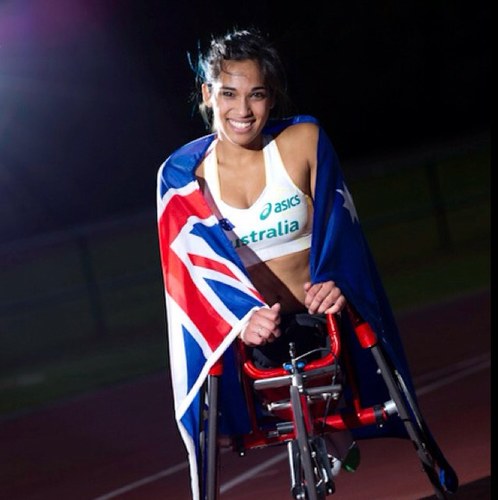
(Photo of Madison de Rozario from her Twitter account)

← Older posts
Newer posts →

Enter your email address to follow this blog

Categories

Archives

Recent Comments

A.O.'s avatarwaltzingmorethanmati… on Zarah Zaynab and Wolfgang…
Madelyn's avatarMadelyn on Zarah Zaynab and Wolfgang…
JD's avatardrperegrine on Can Phoebe Complete This …
A.O.'s avatarwaltzingmorethanmati… on Rua and Rhoa
redrover23's avatarredrover23 on Rua and Rhoa

Blogroll

  • Appellation Mountain
  • Baby Name Pondering
  • Babynamelover's Blog
  • British Baby Names
  • Clare's Name News
  • For Real Baby Names
  • Geek Baby Names
  • Name Candy
  • Nameberry
  • Nancy's Baby Names
  • Ren's Baby Name Blog
  • Sancta Nomina
  • Swistle: Baby Names
  • The Art of Naming
  • The Baby Name Wizard
  • The Beauty of Names
  • Tulip By Any Name

RSS Feed

  • RSS - Posts

RSS Posts

  • Celebrity Baby News: Melanie Vallejo and Matt Kingston
  • Names from the TV Show “Cleverman”
  • Can Phoebe Complete This Sibset?
  • Zarah Zaynab and Wolfgang Winter
  • Baby, How Did You Get That Name?
  • Celebrity Baby News: Media Babies
  • Celebrity Baby News: Adelaide Crows Babies
  • Celebrity Baby News: Chris and Rebecca Judd
  • Names at Work: Name News From the World of Business and Employment
  • Celebrity Baby News: Sporting Round Up

Currently Popular

  • Celebrity Baby News: Alisa Camplin and Oliver Warner
  • Rare Boys Names From the 1950s
  • Sad Celebrity Baby News (contents may cause distress)
  • The Top 100 Names of the 1930s in New South Wales
  • The Top 100 Names of the 1940s in New South Wales

Tags

celebrity baby names celebrity sibsets english names famous namesakes fictional namesakes honouring locational names middle names name combinations name history name meaning name popularity name trends nicknames popular names saints names sibsets surname names twin sets unisex names

Blog at WordPress.com.

Privacy & Cookies: This site uses cookies. By continuing to use this website, you agree to their use.
To find out more, including how to control cookies, see here: Cookie Policy
  • Subscribe Subscribed
    • Waltzing More Than Matilda
    • Join 517 other subscribers
    • Already have a WordPress.com account? Log in now.
    • Waltzing More Than Matilda
    • Subscribe Subscribed
    • Sign up
    • Log in
    • Report this content
    • View site in Reader
    • Manage subscriptions
    • Collapse this bar
 

Loading Comments...