• About
  • Best Baby Names
  • Celebrity Baby Names
  • Celebrity Baby Names – Current
  • Celebrity Baby Names – Past
  • Featured Boys Names
  • Featured Girls Names
  • Featured Unisex Names
  • Links to Name Data
  • Waltzing on the Web

Waltzing More Than Matilda

~ Names with an Australian Bias of Democratic Temper

Waltzing More Than Matilda

Tag Archives: Welsh names

Boys Names From Native Australian Flowers

02 Sunday Nov 2014

Posted by A.O. in Name Themes and Lists

≈ 7 Comments

Tags

Australian slang terms, birth notices, celebrity baby names, classic names, controversial names, english names, famous namesakes, fictional namesakes, flower names, Gaelic names, Greek names, honouring, Irish names, Latin names, locational names, mythological names, name history, name meaning, name trends, names from songs, names from television, nature names, nicknames, patriotic names, plant names, popular names, rare names, scandinavian names, scientific names, Scottish names, sibsets, surname names, tree names, underused classics, unique names, unisex names, Welsh names

Millstream-Chichester-National-Park-2013-05-15-003

This follows on from Girls Names From Native Australian Flowers. If you thought it would be hard for me to find floral boys’ names, you were right, and many hours were spent poring over gardening books and field guides. I did notice that several of the names come from plants that are traditionally used as female names, so this might be a way to find a boy’s name which honours a Daisy, Iris, or Lily, for example.

Bailey
Acacia baileyana is the scientific name for Cootamundra Wattle, a small tree with silvery-green leaves and masses of golden blossom in the spring. It is native to New South Wales around the town of Cootamundra, which holds a Wattle Time Festival every year when the wattle blooms. However, it is extremely adaptable, and will grow almost everywhere – if anything it grows a little too well, and can escape into the bush and become an invasive weed. Its scientific name honours Frederick Manson Bailey, a colonial botanist in Queensland. Bailey is an occupational surname originally designating someone who was a bailiff, the officer executing the decisions of a lower legal court (these days such duties are usually carried out by local councils). It has been used as a personal name since at least the 18th century, and Bailey has charted in Australia since the 1990s, when it was catapulted straight into the Top 50 from almost nowhere, debuting at #32 in 1997. It peaked in 2004-2005 at #27, and is currently #77. Although only popular for boys, Bailey is sometimes used for girls. Bailey provides a way for boys as well as girls to be named after the patriotic acacia tree.

Carex
Carex is the scientific name for grass-like plants commonly known as true sedges. Sedges are common all over the world, and nearly always found in wetlands; if you’ve ever walked around a swamp or lake, sedge is the dense stiff grassy stuff along the edge which might cut your hands if you try to gather it. Although sedges are not usually thought of as terrifically exciting – hardly anyone hopes for a bouquet of sedges on Valentine’s Day – they are vitally important to the ecology of our wetlands. Anyone working on a project to save a wetlands area will need native sedges to plant along lakes and riverbanks to stabilise the soil, and they are also around dams and garden ponds. They bloom in spring; the flowers are tiny, and appear on short spikes. I have seen a boy named Carex in a birth notice, and this is a daring and environmentally aware choice that is on trend for boy’s names ending in -x, like Felix and Max.

Eric
Banksia ericifolia is the scientific name for Heath Banksia, a medium to large shrub with eye-catching orange or red flowers which bloom in autumn or winter. Banksias are famous for their flower spikes; each spike can have hundreds or even thousands of individual flowers, looking overall like a large brush. Banksia ericifolia was one of the original banksia species collected by botanist Sir Joseph Banks around Botany Bay, and the subspecies ericifolia is native to the area around Sydney. It has been adopted as the city’s official plant, and can be seen in parks and public spaces. Heath Banksia is reasonably easy to grow; if your garden is too small for a regular Heath Banskia, there is a dwarf cultivar called “Little Eric”. The eric in ericifolia comes from Ericaceae, the family of heath and heather. The name Eric is an English form of the Scandinavian name Erik, usually translated as “eternal ruler”. Although known in England since the Middle Ages, it didn’t become popular until the 19th century, after the publication of a moralising children’s book called Eric, or Little by Little. Eric is a classic which has never left the charts. It was #21 in the 1900s, and peaked in the 1910s at #19. It didn’t leave the Top 100 until th 1970s, when it hit its lowest point of #149. Since then, Eric has improved slightly in popularity, and remains stable in the 100s – an extremely safe choice.

Evan
The Hawkesbury Daisy (Brachyscome multifida) grows on the east coast; it has matted foliage with the daisy flowers rising above it in mauve, pink, or white, blooming in autumn and winter. They are very popular garden plants, as they are are quite hardy and look great in borders and mass plantings. One of its cultivars is “Evan”, which was named after the son of the founder of the Australian Daisy Study Group. “Evan” is mauve with small flowers and compact foliage, easy to grow, and perfect for rockeries and hanging baskets. The name Evan is the Anglicised form of Iefan, a Welsh form of John. Evan is an underused classic in Australia – it has never left the charts, but never reached the Top 100 either. The highest it has ever been is #103 in the 1980s, and it’s never been lower than it was in the 1900s at #194, making it a handsome, solid choice which hasn’t been out of the 100s for well over a century. Evan is the poster boy for “normal but not overused” names.

Heath
Common Heath (Epacris impressa) is a small shrub native to south-east Australia; it has red, pink, or white tubular flowers which bloom from late autumn to early spring. A pink-flowered form called “pink heath” is the floral emblem for the state of Victoria. Common Heath is tricky to grow in the garden, and perhaps best enjoyed in its natural setting. Heath is an English surname which can refer to someone who lived on or near a heath, or was from one of the many English towns called Heath. Heath is an underused modern classic which has charted consistently since the 1960s without ever becoming popular. It peaked in the 1970s at #101, possibly because of Heathcliff from Emily Bronte’s Wuthering Heights, serialised on television that decade, and a hit song by Kate Bush in 1978. Actor Heath Ledger, born in 1979, was named after Heathcliff, with his sister Kate named after Catherine from the novel. Heath dropped to its lowest level in the 1990s at #279, but picked up the next decade when Heath Ledger’s film career took off, and gained momentum from Dan Ewing‘s performance as Heath Braxton in Home and Away. Heath is a strong, simple nature name which has long been associated with intense, hunky guys.

Orestes
Caladenia orestes is the scientific name for the Burrinjuck Spider-orchid, native to New South Wales. These small, delicate flowers with dark red colouring are listed as vulnerable, so count yourself lucky if you ever find one in the bush. In Greek mythology, Orestes was the son of Agamemnon Greek commander during the Trojan War. Their family had been placed under a curse, so that their line was a rich source of Greek tragedy. Agamemnon sacrificed his daughter Iphigenia to obtain fair winds to Troy; when he got home from the Trojan War, Agamemnon’s wife Clytemestra murdered him in retribution. When Orestes grew into a young man, he murdered his mother to avenge his father’s death. According to legend, Orestes was pursued by the Furies in punishment for his crime, but he got a good lawyer in the goddess Athena, who put his case before the gods and got him acquitted (slightly rigged, as Athena was one of the judges). He was often seen by Greek writers as a dutiful son to his father, and an example of someone forced by circumstances to commit a terrible act. The name Orestes means “of the mountains”, which is the reason for the orchid’s name. An unusual and possibly controversial choice.

Paterson
Patersonia is the scientific name for the Australasian flower commonly called Native Iris. It was named in honour of William Paterson, the first Lieutenant Governor of New South Wales, and most species are from Western Australia. Patersonia has small flowers that are usually mauve, and can look very attractive in the garden. Paterson is a common Scottish surname which means “son of the follower of Saint Patrick“, and the Clan Paterson is from Lowland Scotland. Sir William Paterson founded the Bank of England, but perhaps the most famous episode in the Clan’s history is when Sir Hugh Paterson entertained Bonnie Prince Charlie, and his niece nursed the prince through a bad cold, becoming his mistress and bearing him an illegitimate daughter. The name Paterson could honour our national poet Banjo Paterson, and would naturally shorten to Paddy. A possible issue is another flower, the attractive but toxic purple weed commonly known as Paterson’s Curse.

Smith
Syzygium smithiim is the scientific name for the Lilly Pilly, an ornamental tree which is a member of the myrtle family; its name honours botanist Sir James Edward Smith. Lilly Pilly is native to the east coast of Australia, and has glossy leaves and cream or pink flowers which bloom in spring and summer. However, it is best known for the fruit which follows the flower – attractive edible berries with a deep pink colour. Smith is the most common English surname, and originated in northern England and Scotland. Although it later came to specifically refer to a blacksmith, the word means any craftsman in metal, hence goldsmith or swordsmith, and more generally, any creator, hence wordsmith. Metalworkers have historically been seen as magical in their skill to transform through fire, and there are several smith gods and heroes, such as Vulcan and Wayland; Cain is said to have been the father of metalsmiths. The name always reminds me of J.R.R. Tolkien’s bittersweet fairy tale, Smith of Wooton Major. Smith has often been thought too common a surname to be used as a personal name, but gained recent familiarity through Sex and the City’s handsome Smith Jerrod (real name Jerry Jerrod). Hawthorn’s Sam Mitchell has a son named Smith.

Sturt
Sturt’s Desert Pea (Swainsona formosa) is native to the deserts of inland Australia, and highly recognisable from its striking deep red pea flowers. According to an Aboriginal legend, the flowers sprang from the blood of two murdered lovers and their child. Sturt’s Desert Pea is the floral emblem of South Australia, and is a popular subject for arts, crafts, and decorative motifs. Although it grows in such profusion in the harsh desert, Sturt’s Desert Pea is difficult to establish in the garden. It is named after the explorer Captain Charles Sturt, who recorded seeing masses of the flower during his explorations. The surname Sturt comes from the Old English for a promontory – a raised mass of land with a sharp slope on one side – and this could be given to someone who lived near such a landmark, or from a town named after one. Similar to Stuart, this is a lesser-used surname which is given meaning by the flower.

Tucker
Tuckeroo (Cupaniopsis anacardioides) is an Australasian flowering tree in the soapberry family. It has greenish-yellow flowers which bloom in winter, followed by orange berries in the spring and summer which are a source of food for native birds. Tuckeroo is a popular ornamental tree for gardens which gives good shade and looks attractive all year round, and is often grown along streets in coastal towns of New South Wales and Queensland. The English surname Tucker is an occupational one referring to someone who softened cloth for the wool industry by tramping on it in water; the word comes from the Old English for “to torment (the cloth)”. As an Irish derivation, Tucker comes from the Gaelic O’ Tuachair, meaning “son of the brave one”. Tucker seems problematic as a first name, breaking the rule of “no names that rhyme with rude words”, but it does have a very Australian meaning, as it is slang for “food”, derived from “to tuck in”. Some people might think that’s another problem with the name in Australia. I’m not sure … any takers for Tucker?

POLL RESULTS
The public’s favourite names were Heath, Evan and Tucker, and their least favourite were Carex, Orestes and Sturt.

(Picture shows Sturt’s Desert Pea; photo from Our Naked Australia)

Irish Names for Boys

15 Sunday Jun 2014

Posted by A.O. in Name Themes and Lists

≈ 8 Comments

Tags

animal names, celebrity baby names, ethnonyms, famous namesakes, Gaelic names, hebrew names, Irish name popularity, Irish names, Latin names, modern classic names, mythological names, name history, name meaning, name popularity, name trends, names of political organisations, nicknames, Old Irish names, popular names, retro names, royal names, saints names, underused names, Welsh names

a07442ad-b5ca-4bfe-8a64-ab471fc44a87

It was very hard to choose just ten Irish boys’ names, as there are so many commonly used Irish names for boys in Australia, especially if you include Irish surnames. It’s not surprising when you consider our strong Irish heritage, and because the Irish were here from the beginning of European settlement, they were never marginalised as happened in other countries.

Famous Australians with Irish heritage include bushranger Ned Kelly, Peter Lalor who led the Eureka Rebellion, actor Erroll Flynn, artist Sidney Nolan, rock singer Doc Neeson, philanthropist Daisy Bates, and our greatest prime minister, Ben Chifley. Those alive today include Governor-General Peter Cosgrove, Nicole Kidman, Kylie Minogue, surfer Mick Fanning, Socceroo Lucas Neill, author Tom Keneally, and former prime ministers Paul Keating and Kevin Rudd.

A reminder I haven’t included any names with fadas (accent marks), as they aren’t permitted in all states and territories.

Aidan
Anglicised form of Aodhán, a pet form of Aodh or Áed, meaning “fire” in Old Irish; there are many characters from Irish mythology named Aodh. St Aidan of Lindisfarne was an Irish-born monk known as the Apostle of Northumbria; he was famous for converting people by simply walking from village to village, politely chatting with people and introducing them to Christian beliefs by helping them in their daily lives. The name Aidan first ranked in the 1970s at #533, and by the 1980s was already #177. Aidan joined the Top 100 in 1993 at #92, and peaked in 2008 at #51. Currently Aidan is #99 in Victoria and #102 in the Australian Capital Territory. The Aiden spelling is more popular: this first charted in the 1980s at #368, joined the Top 100 in 1997 at #62 and peaked in 2009 at #35. Currently Aiden is #41 nationally, #45 in New South Wales, #45 in Victoria, #65 in Queensland, #47 in Western Australia, and #39 in the Australian Capital Territory. Even combining spellings, Aidan/Aiden is only #51 nationally. This doesn’t seem as if Aidan is very popular, yet it still has a reputation as an “overused” name because of the massive trend for sound-alike names, such as Hayden, Brayden, Caden, Jayden, Zayden etc. Aidan is #50 in Ireland and #43 in Northern Ireland.

Cian
In Irish mythology, Cian was a god and father of the hero Lugh of the Long Hand. According to folk tales, Cian possessed a magical cow which produced a superabundance of milk. During a quest to recover his cow after she had been stolen, he seduced a princess who had been locked up in a tower (it was the princess’ father who had stolen the cow). The tale sounds very much like the Greek myth of Danae, and the princess was imprisoned for the same reason – a prophecy said that the princess’ father would be killed by his grandson. Lugh the Longhand was born from this union, and eventually the prophecy was fulfilled when Lugh killed his grandfather in revenge for locking his mother in a tower. The name Cian means “long, enduring, far, distant” in Gaelic, and is pronounced KEE-in. It is often anglicised to Kian, which is in the 400s in Victoria. Cian is #15 in Ireland.

Connor
Variant of Conor, Anglicised form of the Gaelic name Conchobhar, meaning “lover of hounds”. There have been several real life Irish kings with this name, including a High King, and also the legendary Conchobhar mac Nessa, who was unsuccessfully married to both Queen Medb and Deirdre, but had many other wives. The name is the basis for the Irish surname O’Connor, meaning “grandson of Conchobhar”, and the Clan O’Conchubhair is a royal Irish dynasty whose lineage has provided one hundred kings of Connacht, and two High Kings of Ireland: some members of the noble O’Conor family of Ireland are the living descendants of the last High King of Ireland. Connor is a truly royal name, which must have an influence on its use. The name Connor has charted since the 1980s, debuting at #418. It joined the Top 100 in 1994 at #83, and peaked at #21 in 2003. Currently it is #43 nationally, #74 in New South Wales, #61 in Victoria, #33 in Queensland, #31 in Western Australia, #40 in Tasmania, and #69 in the Australian Capital Territory. Connor is #97 in Northern Ireland; Conor is #5 in Ireland and #17 in Northern Ireland.

Darragh
Variant of Dara, derived from from the Gaelic for “oak grove”. The oak was sacred to the Celts, and the word druid is directly related to the word for oak. The city of Derry in Northern Ireland has the same meaning. Darragh can also be an Anglicisation of the Old Irish name Dáire, meaning “fertile, fruitful, virile, sexually aroused”, but also “agitated, raging, violent, tumultuous”. It’s a very explicit meaning in regard to masculine sexuality, suggesting a sort of bestial lust. The Darini were an ancient peoples from Northern Ireland, and it would seem that Dáire was their ancestor or ancestral god. Several Irish noble families and Scottish clans claim descent from the Darini, as do the current British royal family. There are many kings and heroes from Irish legend named Dáire, but folklorists believe they are ultimately versions of the same mythological figure, who may have been a god of the battlefield. Darragh can be pronounced DAH-ruh, or DA-ra, and may seem like an updated Darren to Australians. Darragh is #20 in Ireland and #30 in Northern Ireland; Dara is #86 in Ireland, and Dáire is #88 in Northern Ireland.

Finn
Both the older Irish and Anglicised form of Fionn, meaning “blond, fair, white, bright”. Its most famous namesake is the mythical warrior and giant Find mac Cumail, transcribed in English as Finn McCool. Finn was a nickname – his real name was Deimne, meaning “sureness, certainty”, and gained his nickname after his hair turned prematurely white. Finn was brought up by a warrior woman who trained him in war and hunting, then he studied under a poet and druid. One day Finn was cooking a mystical salmon for his master which would give him all the knowledge in the world: he burned his thumb in the process, and instinctively put his thumb in his mouth to cool it, swallowing a piece of salmon skin. This gave Finn the wisdom of the salmon, and whenever he needed to draw on its power, he needed only to suck his thumb. Finn’s followers were called the Fianna, and it is from them the Fenian Brotherhood gained their name. According to legend, Finn is sleeping in a cave beneath Ireland, and will one day awake to defend Ireland in her hour of greatest need. Finn first charted in the 1990s at #287, and by 1997 was already in the Top 100 at #88. Currently it is #62 nationally, #68 in New South Wales, #60 in Victoria, #76 in Queensland, #40 in Western Australia, and #30 in the Australian Capital Territory. This is a handsome popular name that has helped drive the popularity of names such as Flynn and Finlay. Finn in #38 in Ireland and #56 in Northern Ireland; Fionn is #27 in Ireland and #70 in Northern Ireland.

Lorcan
Anglicised form of Lorcán, derived from the Irish Gaelic word for “fierce”. There have two been ancient Irish kings named Lorcán, and a medieval saint Lorcán Ua Tuathail whose name is Anglicised to Lawrence O’Toole. St. Lorcán was of royal blood, and became Archbishop of Dublin. He played a prominent role in the religious reform of the 12th century, spearheading a movement of spiritual renewal while bringing the church in Ireland closer to Rome. He was admired by both members of the church and the secular community for his many acts of charity to the poor – much needed at the time due to a severe famine. This is a cool Irish name which could be an alternative to names as Lachlan, Liam, or Declan. Lorcán is #67 in Northern Ireland.

Malachy
Anglicised form of Máel Sechlainn, meaning “follower of St. Seachnall”. St. Seachnall is an obscure 5th century Irish bishop who seems to have been of Italian origin; his name may be an Irish form of the Latin name Secundus, meaning “second (born)”, as he is also known as St. Secundius. The modern spelling of Malachy has been influenced by the Hebrew name Malachi, meaning “my messenger”, and therefore understood as “my angel”. However, Malachy is pronounced MAL-uh-kee, not MAL-uh-kie. There have two medieval High Kings of Ireland named Malachy, and also a St. Malachy, who was the first native-born Irish saint to be canonised. The saint’s name is an Anglicisation of Máel Máedóc, meaning “follower of St. Madoc”; Madoc was a 7th century Irish monk, and his name may come from the Welsh for “fortunate”. Malachy is an attractive name in occasional use, and AFL footballer Liam Picken has a young son named Malachy.

Oscar
Believed to mean “deer friend”. In Irish mythology, Oscar was the son of the warrior Oisin (“young deer”) and the fairy queen Niamh; he was the grandson of Finn McCool, and one of his warriors. Oscar was killed by a member of the increasingly corrupt Fianna, and upon his death, Finn wept for the first time in his life. The name Oscar was popularised in the 18th century by the poems of James McPherson; Napoleon was a great admirer of McPherson and gave his godson Oscar as one of his middle names. Later Napoleon’s godson became Oscar I of Sweden, and the name Oscar became traditional in Scandinavia. The Irish writer Oscar Wilde may have received his name because his mother collected Irish folk tales, but perhaps also because his father had travelled in Sweden, where he received honours from King Carl XV – Carl had a son named Oscar, born two years before Oscar Wilde, and sadly the little prince died just months before Oscar Wilde’s birth. Oscar was #103 for the 1900s, and sank before leaving the charts in the 1940s. It returned in the 1970s at #478, joined the Top 100 in 1998 at #98, and the Top 50 in 2004 at #47. Currently Oscar is #24 nationally, #27 in New South Wales, #20 in Victoria, #39 in Queensland, #34 in Western Australia, #19 in Tasmania, and #20 in the Australian Capital Territory. This tough, masculine yet snuggly retro name is more popular than it has ever been. Oscar is #61 in Ireland and #64 in Northern Ireland.

Ronan
Anglicised form of Rónán. Irish and Scottish legend tells of selkies, who swim in the sea as seals, but can shed their sealskin and become human on land. Male selkies were handsome and seductive; female selkies were said to make excellent wives, but could never forget their true home, and would gaze longingly out to sea – selkie tales are nearly always romantic tragedies. The children born of selkie women were called ronans, or “little seals”. The lovely film The Secret of Roan Inish, set in Ireland, is about the selkie legend, and an Irish animated movie is due to come out this year on the same topic. St. Ronan was an educated Irish bishop who sought exile in Brittany and a peaceful life as a hermit. A magical fairytale name that sounds smooth and handsome, Ronan could replace popular Ryan; it will remind many of Irish singer Ronan Keating from The X-Factor. Ronan is #52 in Ireland and #40 in Northern Ireland.

Rory
Anglicised form of the Irish Gaelic name Ruaidhrí or Ruairí. The name means “red king”, referring to fox-coloured hair. There have been many Irish kings named Ruaidhrí, including Ruaidrí Ua Conchobair, the last High King of Ireland before the Norman invasion. Rory has charted since the 1950s, debuting at #289; after a bumpy start (when it sank to #420 in the 1960s) it began climbing steadily, and peaked in the late 2000s at #125. Currently it’s in the mid 100s, and this is a rare example of a modern classic which has never become popular. Not only underused, Rory is cute but with a “tough boy” vibe, and could be an alternative to popular Riley, or fashionable Remy. Rory is #42 in Ireland and #44 in Northern Ireland; Ruairí is #81 in Ireland and #74 in Northern Ireland.

POLL RESULTS
The public’s favourite names were Finn, Rory and Oscar, and their least favourite were Lorcan, Cian and Darragh.

(Picture of a Harbour Seal or Common Seal from the Belfast Telegraph)

Boys Names from the Top 100 of the 1920s

11 Sunday May 2014

Posted by A.O. in Name Themes and Lists

≈ 7 Comments

Tags

Anglo-Saxon names, aristocratic surnames, classic names, dated names, english names, epithets, famous namesakes, Gaelic names, germanic names, Irish names, locational names, middle names, name history, name meaning, name popularity, name trends, nicknames, Norman-French names, Old English names, Old Norse names, retro names, Roman names, royal names, saints names, Scottish names, surname names, unisex names, Welsh names

161695_medium

Happy Mother’s Day! One of my mum’s favourite hobbies is browsing in antique shops and vintage stores: sometimes you find the most wonderful items in these places, and marvel that we ever stopped making such beauties. On the other hand, sometimes there’s nothing but junk in them. But either way, you get to lose yourself in the past for a while. Here are ten boys names from the 1920s, and I will let you decide whether I have dug up something worthwhile, or whether they should be allowed to lie under dust sheets for a few years longer. 

Athol
Based on the place name Atholl, a district of the Scottish Highlands which means “New Ireland” in Gaelic. One of its towns is named Blair Atholl, and the Duke of Atholl is a member of the Scottish peerage – the only person in Europe legally commanding his own private army, the Atholl Highlanders. Both Sydney and Adelaide have suburbs named Blair Athol; the one in Sydney is named after a historic house. A famous Australian namesake is Athol Guy, from folk group The Seekers – he’s the one with glasses. Athol has been used as a first name since the 18th century, and originates from the Atholl region of Scotland. Athol was #86 in the 1900s, and peaked in the 1910s at #70; by the 1920s it was #72. It left the Top 100 in the 1940s, and hasn’t ranked since the 1950s. Athol unfortunately sounds a lot like the female name Ethel, and can be mispronounced to sound like a rude word (I went to primary school with an Athol, and can testify to this). It might be better suited as a middle name.

Bernard
Germanic name translated as “brave as a bear”. It was brought to England by the Normans, where it replaced the Old English equivalent, Beornheard. There are several saints named Bernard, including St Bernard of Mentone, founder of a famous refuge for pilgrims in the French Alps; the St Bernard dogs used to rescue people are named after him. Another is St Bernard of Clairvaux, who founded the Cistercian Order and is a Doctor of the Church, famed for his eloquence. Two Australian celebrities demonstrate the different ways this name can be pronounced: Bernard Fanning from Powderfinger says his name with the accent on the first syllable, while tennis player Bernard Tomic has his name pronounced with the emphasis on the second. Bernard was #62 in the 1900s, and peaked in the 1920s at #53. It didn’t leave the Top 100 until the 1970s, and last ranked in the 1990s. With more than sixty years in the Top 100, yet never in the Top 50, Bernard seems very usable. It’s a strong, masculine name that is quite funky, and comes with cute nicknames like Bernie, Barney, and Bear.

Herbert
Germanic name translated as “bright army”, and found very early in the form Charibert, who was King of the Franks in the 6th century; his daughter married a king of Kent. The Anglo-Saxons had their own form of the name, Hereberht, and there is a 7th century saint with this name, as well as an obscure French St Herbert. When the Normans conquered England, they brought the name with them, and it replaced the Old English form. Unlike many other medieval names, Herbert managed to remain in use because it is an aristocratic surname – the Herbert family have been Earls of Pembroke in an unbroken line since 1501. The first Earl of Pembroke was a courtier married to the sister of Catherine Parr, one of Henry VIII’s wives, and the present Earl still lives on the estate built by the first Earl. The name Herbert became popular during the 19th century, when Sidney Herbert, the 14th Earl, was a distinguished politician famous for being the most handsome MP of his day. Herbert was #23 in the1900s, and #48 by the 1920s. It left the Top 100 in the 1940s, and hasn’t ranked since the 1960s. I have seen one or two small children named Herbert, and this is one for the serious lover of vintage names, with the nicknames Herb, Herbie, and Bertie.

Ian
Anglicised form of Iain, a modern Scottish Gaelic form of John, derived from the medieval Irish name Eoin. Both Iain and Ian date from the 19th century, and it is not impossible that Iain was an attempt to Gaelicise English Ian. Ian was #128 in the 1900s, and joined the Top 100 the following decade. It was #57 in the 1920s, and peaked in the 1950s at #10. It didn’t leave the Top 100 until the 1990s, and is currently stable in the mid-200s. This makes Ian a very safe choice – it’s a classic which was popular for eighty years, and is still in reasonable use.

Lloyd
English form of the Welsh Llwyd, commonly translated as “grey”, which in practice referred to various shades of brown in different contexts, and white, in the sense of grey hair being white. Although Llwyd was sometimes used as a personal name, it became better known as an epithet, which came to describe someone with mouse-brown hair, and then developed into a surname. By this stage, the original meaning of “grey” was pretty much lost, and it was understood as “brown-haired”. The word llwyd could also be understood as meaning “holy, blessed”, although this doesn’t seem to have contributed to the surname. In Britain, Lloyd has some heavy-duty business clout, due to Lloyds Bank, and the insurance market Lloyd’s of London. Use of the name may have been boosted by David Lloyd George, Britain’s only Welsh Prime Minister. Lloyd was #148 in the 1900s, and peaked in the 1910s at #80. By the 1920s it was #91, and it left the Top 100 the following decade. However, the name Lloyd continued to chart until the late 2000s. It’s still in occasional use, and I see it quite often as a middle name in birth notices. Lloyd may be a little clunky, but it’s not an outrageous choice.

Ross
A region in north-west Scotland, said to mean “headland” in Gaelic, perhaps referring to the Black Isle, a peninsula in the Scottish Highlands. Another possibility is that it means “horse island” in Old Norse, in reference to the island of Orkney. The Scottish surname Ross originates from this area. However, the surname has English roots too, because there are places in England named Ross, with the meaning “headland”, and Rozzo was an Anglo-Saxon name meaning “fame” (related to the name Rose). The Rosses were a large Yorkshire family who came over with William the Conqueror from the village of Ros in Normandy (the name means “red’); in the Middle Ages they bought up large tracts of Ayrshire, so their surname also became Scottish. Ross has been used as a personal name since at least the 16th century, and first used in England rather than Scotland. Ross was #203 for the 1900s, and hit the Top 100 in the 1920s at #75. It peaked in the 1950s at #37, didn’t leave the Top 100 until the 1980s, and still ranked in the late 2000s. Ross is fairly common in the middle, and wouldn’t be too surprising up front.

Roy
Anglicised form of Ruadh, a Gaelic name meaning “red”, often used as a nickname for someone with red hair. One of the most famous bearers is Scottish outlaw Raibeart Ruadh MacGriogair, known in English as Rob Roy MacGregor. His story was turned into a best-selling novel by Sir Walter Scott, and Liam Neeson starred in a film about him. The name can also be derived from the surname, which can be from Ruadh, but also from Norman-French Roi, meaning “king”. This could be used as a nickname, but was a medieval personal name as well. Roy was #25 in the 1900s, and #34 by the 1920s. It left the Top 100 in the 1950s, and reached its lowest point in 2010 with a ranking of 0. Since then, Roy has begun to pick up steam, and has become rather fashionable, along with similar names like Royce, Elroy and Leroy. This classic is once again on trend.

Sidney
Aristocratic surname which probably comes from a place name meaning “at the water-meadows” in Old English. However, folk etymology derives it from the French Saint-Denis, a suburb of Paris named after the city’s first bishop. The Sidney family became prominent during the Tudor period; Sir William Sidney was squire to Henry VIII. Sir William’s grandson was poet Sir Philip Sidney, famous for creating the name Stella. The story goes he had a noble and gallant death, for as he lay dying in battle, he gave his water to another wounded soldier, with the words, “Thy necessity is yet greater than mine”. Sir Philip’s great-nephew was Algernon Sidney, a 17th century republican executed for treason, and afterwards revered as a heroic patriot and martyr. Although Sidney had been used as a first name since the 16th century, it became much more popular in the United States during the 18th and 19th, because Algernon Sidney’s anti-monarchist views were highly influential to the American conception of liberty. Although it has charted for both sexes in the US, in Australia Sidney has only charted as a male name. Sidney was #48 in the 1900s, and peaked in the 1910s at #47; by the 1920s it was #63. It left the Top 100 in the 1940s, and dropped from the charts in the 1980s. However, it ranked again in the late 2000s at #450, and has been gently increasing. This retro name is back in style, along with its short form, Sid.

Terence
English form of the Roman family name Terentius, of unknown meaning. The Roman comic playwright we call Terence was named Publius Terentius Afer, and he was a slave (probably from Libya) of a Roman senator from the Terentius family, who educated him, and later freed him; he adopted the name Terentius after gaining his freedom. There are several saints we call Terence, although most of them were named things like Terentianus, Terentian, or Tertius. Terence has been used as an English name since the 17th century, and in Ireland was used to Anglicise the name Toirdhealbhach, meaning “instigator”. Terence was #141 for the 1900s, and joined the Top 100 in the 1920s at #71. It peaked in the 1940s at #30, and left the Top 100 in the 1960s. It hasn’t ranked since the 1990s, but Terence still seems usable, and could be seen as either a “posh” choice or an Irish one.

Wallace
English surname derived from the Norman French waleis, meaning “foreigner”. Although often translated as “Welsh”, the word waleis could refer to someone from Wales, or from the English counties bordering Wales, or to Cornish Celts, or to Bretons who came to England after the Norman Conquest and settled in East Anglia. The surname became associated with Scotland because of the early medieval Kingdom of Strathclyde, which straddled northern England and southern Scotland. The people of Strathclyde spoke Cumbric, a British language closely related to Old Welsh, and were known as walensis. Even after becoming part of Scotland, it remained a distinctive area into the 12th century. The surname is famous because of Sir William Wallace, a commander during the 13th century Wars of Scottish Independence who has become an iconic Scottish national hero. There have been many books and poems written about Wallace’s exploits, and he features in the film Braveheart, played by Mel Gibson. Wallace has been used as a first name since the 17th century, and originates from Scotland. Wallace was #74 for the 1900s, and peaked in the 1920s at #68. It left the Top 100 in the 1940s, and hasn’t ranked since the 1950s. Wallace really deserves to make a comeback, and the nicknames Wally and Wal are cute.

POLL RESULTS
The public’s favourite names were Sidney, Wallace and Ian, and their least favourite were Terence, Athol and Herbert.

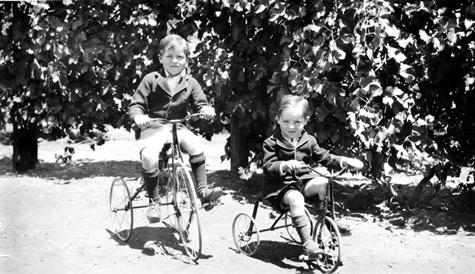
(Picture shows two boys riding their tricycles amongst grape vines in Mildura, Victoria in the 1920s; photo from Museum Victoria)

Famous Names: Barry and Gladys

07 Wednesday May 2014

Posted by A.O. in Famous Names

≈ 4 Comments

Tags

birth notices, British names, dated names, famous namesakes, fictional namesakes, Irish names, locational names, name history, name meaning, name popularity, names from comics, names from films, nicknames, Norman names, royal names, saints names, Scottish names, surname names, Welsh names

art-barry6-620x349

Last month, New South Wales Liberal Premier Barry O’Farrell resigned from his position during a NSW Independent Commission Against Corruption investigation into Australian Water Holdings. Barry denied receiving a $3000 bottle of Grange Hermitage from a AWH executive and failing to declare it, but a thank you note in his handwriting, even mentioning the 1959 vintage of wine (the year of Barry’s birth), was presented to ICAC as evidence.

Minister for Transport Gladys Berejiklian was Barry O’Farrell’s choice for his successor, but in the end she settled for Deputy to Premier Mike Baird, and was rewarded by being made Minister for the Hunter region.

New South Wales is not unaccustomed to these political scandals. The former Labor Premier resigned from his shadow ministry roles due to a personal affair, and a former Liberal Party leader resigned in tragic circumstances several years ago. The new Premier is now watching his ministry become engulfed in a cash-for favours scandal which has also damaged the NSW Labor Party, and is creating anxiety for the Federal government as well. Expect more scalps.

Barry can be seen as an Anglicised form of the Irish name Bairre, a short form of Finnbarr or Barrfind, meaning “fair hair”. It can also be an Anglicised form of the Irish name Berach, derived from a Gaelic word meaning “sharp”, and often glossed as “spear”.

There are five Irish saints named Finnbarr, with the best known being a 6th century monk who created a centre of learning in the city of Cork. Saint Barrfind (known by a confusing variety of spellings of his name) is a 6th century Irish saint who legend says was a disciple of Saint Columba, and said to have voyaged to North America, serving as an inspiration for Saint Brendan the Navigator. Saint Berach was a 6th century Irish saint who was a disciple of Saint Kevin.

The Barry surname can be derived from these names, such as O’Baire, meaning “son of the fair haired one”. But most Irish Barry families got their surname from the Normans, because de Barri was a knight who came over during the Norman Conquest of Ireland. The name comes from the village of LaBarre in Normandy, whose name may mean “gateway, barrier”.

However, the aristocratic de Barry family, Normans settled in Wales, received their name from ownership of Barry Island, whose name seems to come from the Welsh for “hill”, although it’s often said to be named after Saint Baroc, a British saint who had a chapel on the island. The Scottish Barrys take their name from a place name in Angus which also means “hill”.

Barry has been used as a first name in Ireland and England (and more rarely, Wales and Scotland) since at least the 18th century, and due to immigration from Ireland, became known in the Americas and Australia as well.

A famous Australian namesake is comedian Barry Humphries, who created the character of naively ocker Barry McKenzie for a Private Eye comic strip in the 1960s. In the 1970s films, Barry McKenzie is the nephew of Humphries creation Edna Everage, and played by Australian singer Barry Crocker. Perhaps due to this trio of Barrys, and Barry McKenzie’s rich Australian slang (mostly made up), Barry is often perceived as a very Aussie name. This does have some validity, because Barry peaked higher in popularity here than elsewhere.

Barry was #121 in the 1910s, and joined the Top 100 in the 1920s at #84. It peaked in the 1940s at #10, and left the Top 100 in the 1970s – perhaps the Barry Mackenzie films weren’t a help to it? Barry last ranked in the 1990s, but just two years ago I saw a birth notice for a baby Barry, so it is still in occasional use. Bazza or Baz are the traditional nicknames, although Baz Luhrman is not a Barry.

Gladys is a modern form of the medieval Welsh name Gwladus, traditionally identified as a Welsh form of Claudia, although it may come from the Old Welsh word for “country, nation, realm”, with connotations of sovereignty and rulership over the land.

The name Gwladus was used amongst royalty and nobility in medieval Wales, and Saint Gwladys (often called Saint Gladys) was the beautiful daughter of a legendary Welsh king who married another king, also a saint (somehow he managed to fit raiding and robbery onto his CV). The saintly couple had a number of children who were saints as well. According to legend, Gwladys and her family knew King Arthur, and lived in the woods as hermits, with a strict regimen of vegetarianism, cold baths, and chastity.

The name Gladys became well known outside Wales in the 19th century, when English author Ouida used it for a character in her novel Puck. In the book, Gladys is a farm girl who becomes a gifted actress; angelically beautiful, she manages to be both pure and passionate. Apart from this attractive namesake, the nickname Glad seems cheerful, and Gladys may have reminded some parents of gladiolus flowers (the familiar “gladdies” so beloved of Dame Edna Everage).

Gladys was #8 in the 1900s, left the Top 100 in the 1940s, and hasn’t ranked since the 1950s. There was a very famous Australian singer named Gladys Moncrieff, an absolute superstar for decades, known as “Australia’s Queen of Song”, and “Our Glad”. She started her career as “Gladys the Wonder Child” in the 1900s, and was still holding farewell concerts in the 1960s, laden with awards and honours on every side. The name Gladys disappeared from the charts around the same time she retired, but must have remained in some use, for Gladys Berejiklian was born in 1970.

Gladys was very popular once – as popular as Ava is now. In its day it was fashionable, and must have been seen as fresh, pretty, and charming. It is now generally viewed as an “ugly old lady name”, and often cited as an example of a name that can never be brought back, like an unlovely corpse with DO NOT REVIVE scrawled across its chest.

I think most of us are realistic enough to know that our daughters’ names – so popular, fashionable, fresh, pretty, and charming at present – will probably become “old lady names”, given enough time. We know there will be wrinkled Madisons, widows-humped Khaleesis, Willows with hip replacements, and Arias doting over their great-grandchildren, and their names’ image will change to match their senior status.

But names like Gladys are a looming spectre – what if our daughters’ names don’t just become old lady names, but ugly old lady names? Names that people hate, shudder with horror to think they were ever used, and vow will never be used again? And what popular names of today will be the “ugly old lady names” of the next century, I wonder?

POLL RESULT
Barry received an approval rating of 17%, making it the lowest-rated boys’ name of 2014, and the lowest-rated name overall. 45% of people thought that Barry was a terrible name, and only one person loved it. Gladys did slightly better, with an approval rating of 25%, but 46% of people hated the name.

(Photo of Barry O’Farrell and Gladys Berejiklian from The Sydney Morning Herald)


Girls Names From the Top 100 of the 1920s

04 Sunday May 2014

Posted by A.O. in Name Themes and Lists

≈ 5 Comments

Tags

African names, animal names, Arthurian names, Berber names, British names, celebrity baby names, classic names, created names, dated names, Egyptian names, english names, European name popularity, fictional namesakes, gemstone names, germanic names, Greek names, Irish names, Latin names, Libyan names, locational names, mythological names, name history, name meaning, name popularity, names from movies, names from television, nature names, nicknames, Old English names, Old French names, Old Irish names, retro names, saints names, Sanskrit names, scandinavian names, surname names, underused classics, unisex names, Welsh names, Yiddish names

palm-beach-sydney-1920s

The data on popular names are all in, but maybe none of the current Top 100 names interest you. Or perhaps you are dismayed at how much your favourite names went up in popularity last year. If so, why not look at the popular names of ninety years ago, to see if there are some gems from times gone by that are ready to shine again?

Agnes
Agnes of Rome was a 3rd century child martyr. According to tradition, she was a member of the Roman nobility, raised in a Christian family, and a very beautiful young girl. She is said to have been only twelve or thirteen when she died, and like Saint Catherine, is one of the patrons of young girls; the eve of her feast day was a time for girls to perform rituals to discover their future husbands. The name Agnes was very popular in the Middle Ages; one of its attractions was probably that in medieval English it was softened into Annis, so that it sounded as it was related to Anne. The name Agnes is from the Greek for “pure”, but because it sounds similar to the Latin for “lamb”, agnus, Saint Agnes is often depicted holding a lamb. Agnes was #28 for the 1900s, and by the 1920s had fallen to #77. It left the Top 100 in the 1930s, and hasn’t ranked since the 1940s, but is now getting some use again. This soft, elegant name has been chosen for their daughter by several celebrities, including Jennifer Connolly. It is the name of a little girl in the movie Despicable Me, and currently popular in Scandinavia. It feels as if Agnes is already making a comeback.

Beryl
Gemstone name; beryls are stones which in pure form are colourless, but usually tinted by impurities in a variety of shades. Green beryls are called emeralds, and light blue ones are aquamarines, but all colours of beryl have their own name. The word beryl is ultimately from Sanskrit, probably derived from the town of Belur in southern India. Beryl has been used as a first name since the 17th century, but only became popular during the 19th, along with other gemstone names. Historically, it has been used as a male name too, mostly in the United States, perhaps as a variant of the surname Berrill (an occupational name from the wool trade), and the Yiddish name Berel (pet form of Ber, “bear”). Beryl was #61 in the 1900s, and peaked in the 1920s at #8. It left the Top 100 in the 1950s and hasn’t ranked since the 1960s. Beryl is the bossy cook in Downton Abbey, and the evil queen in the Sailor Moon cartoons. This would make a daring gemstone revival, and offers the nickname Berry.

Elva
Variant of the Scandinavian girl’s name Alva, or an Anglicised form of the Irish unisex name Ailbhe, pronounced like Alva, and one of the influences on the name Elvis. You could see Elva as a specifically feminine form of Elvis, and the Irish origin seems most likely in Australia. Elva was #160 for the 1900s, and peaked in the 1920s at #97, before falling steeply; it last ranked in the 1950s. Elva was a “trendy” name in its day, but its relative obscurity has saved it from seeming dated. I have seen several babies named Elva recently, and it doesn’t seem out of place amongst the Evas and Avas.

Gwendoline
Variant of the Welsh name Gwendolen, first used for a legendary queen of Britain by Geoffrey of Monmouth in his History of the Kings of Britain. According to this legend, Gwendolen was the daughter of King Corineus of Cornwall. She defeated her husband after he repudiated her in favour of his mistress; he was killed in battle, and Gwendolen had the mistress drowned. She then took the throne as the first independent queen of the Britons, and ruled for fifteen peaceful years. Gwendolen appears in Edmund Spenser’s The Faerie Queene, and in the poems of William Blake, as a symbol of British sovereignty. Gwendolen has been translated as “white ring, white bow”, although it may have been an attempt to Latinise another Welsh name. Geoffrey re-used the name Gwendolen for the name of Merlin’s wife in his Life of Merlin. Gwendolen and Gwendoline were revived in the Victoria era as part of the fascination with Arthurian names, and names from British legend. Gwendoline was #68 in the 1900s, and peaked in the 1920s at #35. It left the Top 100 in the 1940s, and hasn’t ranked since the 1950s. It still receives occasional use, and has an upper-class British feel to it, while giving Gwen and Winnie as nicknames.

Hilda
Originated as a short form of Germanic names with hild in them, meaning “battle”. Hilda of Whitby was a 7th century saint from Northumberland, and her name in Old English is Hild. Born into royalty, she was baptised as part of the mission by Pope Gregory the Great to convert the English to Christianity. Hilda became a nun, then founded a monastery at Whitby (it was in the Celtic style, where men and women lived separately, but worshipped together). Hilda is described as a woman of great intelligence and energy, a fine abbess and teacher, so wise that rulers came to her for advice, yet caring towards ordinary people. Hilda was #27 in the 1900s, and #71 by the 1920s; it left the Top 100 by the 1930s, and hasn’t ranked since the 1940s. Hilda is a popular name in Sweden, giving this name a sexy Scandinavian feel as well as a sturdy English one; it doesn’t seem radically different from Heidi, and is even slightly like Matilda. It would be an unusual choice, but by no means a strange one.

Kathleen
Anglicised form of Cáitlin, the Irish form of Catelin, the Old French form of Catherine. The Irish Cáitlin can be said kat-LEEN, so it’s just a step to Kathleen. This name has a very Irish association, for Kathleen Ni Houlihan is an emblem of Irish nationalism representing the country of Ireland. She is usually depicted as an old woman who has lost her home and her lands, needing young men willing to fight and die for her. Once she has been rejuvenated by their martyrdom, she appears young and beautiful, and proud as a queen. It combines myths of both paganism and Christianity, and Kathleen Ni Houlihan has appeared in folk songs and poems, and the literary works of William Butler Yeats, Lady Augusta Gregory, Sean O’Casey, and James Joyce, amongst others. The name Kathleen was #10 in the 1900s, peaked in the 1910s at #5, and was #11 by the 1920s. A long time favourite, it didn’t leave the Top 100 until the 1990s, but hasn’t ranked since the late 2000s. Despite being out of fashion, this name was popular for more than eighty years, and still seems fresh and wholesome, with a hint of Irish charm.

Mabel
Short form of Amabel, from the Latin name Amibilis, meaning “lovable”. There were both male and female saints named Amabilis, and the female one is often known as Saint Mable to prevent confusion. Mabel was a popular name in the Middle Ages, and is found in a range of variant spellings; it is thought that it was originally said MAB-ell rather than the current MAY-bel. Mabel became rare in England, but remained in use in Ireland, where it was used to Anglicise the name Maeve. It was revived in the 19th century when Charlotte M. Yonge used it in her best-selling romance, The Heir of Reclyffe, for a character with an Irish background. Mabel was #30 in the 1900s, and had fallen to #90 by the 1920s, leaving the Top 100 the following decade. Mabel left the charts in the 1950s, but returned in the late 2000s. This retro name has plenty of spunk, and although it isn’t popular yet, don’t be surprised if it is again some day.

Monica
Saint Monica was the mother of Augustine of Hippo. A devout Christian, it was her dearest wish for her pagan son to become one as well, and after seventeen years her prayers were answered when he was converted by Saint Ambrose. Of course Augustine went the whole hog and ended up a saint, and a doctor of the church as well. Saint Monica was rather neglected after her death, but her cult became popular during the Middle Ages. Monica was from Libya and her name a Berber one that was common at the time; it is derived from the Libyan god Mon, a form of Amon, one of the most important of the Egyptian gods. In the Middle Ages, the origins of her name being unknown, it was decided that it must come from monere, Latin for “to advise, to warn”. Although this neatly tied in with Saint Monica’s story, it was etymologically incorrect. Monica was #141 in the 1900s, and peaked in the 1920s at #91; it had a minor peak in the 1990s at #127, coinciding with the sitcom Friends, which had the character of Monica Geller. Monica has never left the charts, but never been higher than the bottom of the Top 100, making it a genuine underused classic. It still sounds slightly exotic, and makes a pretty, sophisticated choice that’s never been common.

Peggy
Short form of Margaret, meaning “pearl”. It’s a variant of Meggy which has been in use since medieval times. Peggy first ranked in the 1910s at #189, and peaked in the 1920s at #63. It fell sharply, leaving the Top 100 by the following decade, and hasn’t ranked since the 1980s. Peggy is now staging a comeback, as it fits in perfectly with the trend for vintage and retro short forms. The ambitious career woman Peggy Olsen from Mad Men is a feminist icon, and this name has been chosen as a celebrity baby name by both MP Jacinta Allan, and media personality Chrissie Swan.

Una
Anglicised form of Úna, a medieval Irish name believed to come from the Old Irish for “lamb”. In Irish mythology, Úna was a fairy queen, wife of Finnbheara, the high king of the fairies. It is pronounced OO-na, and was sometimes Anglicised to Agnes, because of the lamb connection, as well as Winnie or Juno, based on similar sounds. Una is also a name created by Edmund Spenser for his epic poem, The Faerie Queene. In the allegory, Una represents the “True Church” (Protestantism), and defeats the representation of the “False Church” (Catholicism). Spenser seems to have based her name on the Latin for “one” (to reference unity and a single choice of faith); the name is said YOO-na. However, Spenser wrote his poem while living in Ireland, and it is hard not to wonder if he had been influenced by the Irish name. Una was #94 in the 1900s, and peaked in the 1920s at #69, leaving the Top 100 the following decade. It hasn’t ranked since the 1940s, but this name is really quite beautiful, and with its clear simplicity, doesn’t seem odd next to Ava and Mia.

POLL RESULTS
The public’s favourite names were Mabel, Gwendoline and Agnes, and their least favourite were Monica, Hilda and Beryl.

(Picture shows women holidaying at Palm Beach in Sydney in the 1920s; photo from the State Library of New South Wales)

Waltzing with … Bran

09 Sunday Mar 2014

Posted by A.O. in Waltzing with ...

≈ 2 Comments

Tags

animal names, Arthurian names, bird names, British names, english names, epithets and titles, fictional namesakes, Game of Throne names, germanic names, Irish names, mythological names, name combinations, name history, name meaning, nicknames, Old English names, saints names, sibsets, surname names, UK name popularity, Welsh names

360029

There always seems to be lots of crows and ravens around at the end of summer, finishing off the remains of those creatures who have not survived the blazing heat and drought – a very important job that we don’t appreciate as much as we should. This put me in mind to write about a name connected to these highly intelligent birds, who feature in many mythologies, for as carrion birds, they are often seen as harbingers of death, with mysterious knowledge of the afterlife.

Brân the Blessed is a heroic figure from Welsh mythology; a giant, probable god, and High King of Britain. Legends tell of how he travelled to Ireland with a host of warriors in order to rescue his sister Branwen, who was being mistreated by her husband, an Irish king. The battle was brutal, and only seven men from the rescue party survived: Branwen herself died of a broken heart.

Brân was mortally wounded in the foot, and told his men to cut off his head, so that it could be returned to Britain. They took the head to “White Hill”, thought to be where the Tower of London now stands. The head was buried there, facing France, because as long as it remained, Britain would be protected from invasion. King Arthur later dug the head up, declaring that only his strength was needed to protect the land. This was seen as a disastrous decision, because when Arthur had gone, the land was invaded by the Saxons.

Brân is connected to many figures from British legend. He is seen as a forerunner to King Arthur as High King of Britain, and many have noted his similarity to the mysterious Fisher King of Arthurian legend, who is sometimes identified as a man named Bron. The Fisher King had a wounded leg, and in some tales, the Grail he possessed had the power to restore the fallen – a parallel with Brân, who had a cauldron that could bring warriors back to life. Some stories report that Percivalfound a severed head in the Fisher King’s castle instead of the Grail.

Others scholars see Brân as connected to the Irish hero Bran mac Febail, who embarked on a journey to the Otherworld, and when he returned, so many years had passed that the Irish people know him only as a legend. After telling his story, he sailed away across the sea, never to return. The tale was an apparent inspiration for the Voyage of Saint Brendan, a legendary quest the saint undertook to the Isle of the Blessed, or Saint Brendan’s Isle. Although this may not immediately remind you of Brân the Blessed, in British legends, a voyage to Ireland (in the west) is often an allegory for a journey to the Otherworld – and Brân did die there.

The severed head of Brân the Blessed is important, because some believe the human head played a significant role in Celtic religion. Greek historians tell how Celtic warriors could cut off the heads of their enemies in battle, and that these heads would be embalmed and placed on display. Archeologists theorise that ownership of a head gave one power over the dead person, or that the head was venerated as the seat of the soul and a symbol of the Otherworld.

The head of Brân the Blessed possessed powers of mystical protection, and some connect this to the ravens in the Tower of London, because the name Brân means “crow, raven” in Welsh. There are seven ravens at the Tower, and according to tradition, they protect the Crown and the Tower. Superstition warns that should the ravens of the Tower be lost or fly away, the Crown will fall and Britain with it.

Supposedly the ravens have been kept at the tower since the 17th century, but historical evidence points to them being a Victorian innovation, possibly a gift from an earl with links to Druidic scholarship who consciously chose them as representations of Brân the Blessed. Another theory is that they were simply pets of the 19th century Tower staff. And alas for the superstition, the Tower records show that just after World War II, there were no ravens left (an apparent crow-napping), yet the monarchy and Britain have managed to soldier on.

The Welsh name Bran, from Brân, is said BRAHN, while the Irish Bran, of the same derivation and meaning, is said BRAN. The name Brendan, the saint whose legend was influenced by that of Bran mac Febail, comes from the Welsh word for “prince”. This is rather interesting, because another theory about Brân the Blessed was that his name was actually a title: to be understood as meaning The Raven in the sense of The Prince, The Chieftain (as King Arthur’s father was known as The Pendragon, head dragon or war leader).

A character named Bran from contemporary fiction is Bran Stark, from George R.R. Martin’s A Song of Fire and Ice; in the television drama series A Game of Thrones, he is played by Isaac Hempstead-Wright. Despite his mythologically rich name, Bran is just short for Brandon, an English surname which comes from several places named Brandon in the United Kingdom.

Most of these come from the Old English for “gorse hill”, although Brandon in Lincolnshire means “steep hill”. However, there are places in Ireland with Brandon in their name, and these are said to be connected to Saint Brendan, although they don’t seem to have contributed to the surname. The surname Brandon also exists in continental Europe, and in these cases, it may be derived from the Germanic name Brando, meaning “sword”. The English surname does seem to be older than these though, and predates the Norman Conquest.

Bran is a strong, simple name from legend and literature with layers upon layers of evocative meaning and association. It has limited use in the UK, and is elsewhere almost unknown. If you are worried that it is too much like the cereal husks, you can use the Welsh pronunciation, or even the Arthurian Bron. Another possibility is the Irish surname name Brannan or Brannon, which in some cases means “son of Bran”. The girls name Branwen (sister of Bran) means “fair raven”.

POLL RESULT
Bran received a respectable approval rating of 69%. 28% of people liked the name, while 20% loved it.

(Photo is of an Australian raven, one of several Corvid species native to Australia)

International Names for Boys

02 Sunday Mar 2014

Posted by A.O. in Name Themes and Lists

≈ 1 Comment

Tags

animal names, Aramaic names, Biblical names, Catalan names, english names, European name popularity, famous namesakes, fictional namesakes, germanic names, hebrew names, Indian names, initial names, Latin names, mythological names, name history, name meaning, Norman-French names, Old Norse names, Persian names, pseudonyms, royal names, saints names, Sanskrit names, screen names, surname names, Swedish names, UK name popularity, unisex names, US name popularity, Welsh names

castaway1

These are names chosen from my e-book, International Baby Names for Australian Parents – names which are familiar in other countries, but rarely used here. I chose ten that I particularly like, or find interesting, or think very usable. If you haven’t read the book, it gives you an idea as to what’s inside, and if you have read it, it’s a chance for me to provide more information than is possible in a book.

Ajay

Indian boys name meaning “he who cannot be defeated” in Sanskrit; also commonly used as a short form of longer Indian names beginning with Ajay-. It is pronounced uh-JAY. Ajay is also an English modern name (presumably) based on the initials AJ, and said ay-jay. It can be used for either sex, and a female example is media personality Ajay Rochester (born Leigh Towler). Initial names are growing in popularity, and this is also an Indian heritage choice which fits in with current trends (although it may present some minor pronunciation issues). The name Ajay charts in the UK for boys.

Barnaby

Medieval English form of Barnabas, which is derived from Aramaic. Saint Barnabas was one of the earliest Christian followers in Jerusalem, and the New Testament tells us he was one of the Seventy Apostles of Christ, and a companion of Saint Paul. According to tradition, Barnabas was martyred in Cyprus, and is claimed as the founder of the Cypriot Orthodox Church. The Bible explains that his birth name was Joseph (or Joses, the Greek form), but the Apostles gave him the name Barnabas, which may mean “son of the prophet”. However, in the New Testament, it says his name means “son of encouragement” – early Christians saw a link between prophecy and encouragement. The name is pronounced BAHR-nuh-bee. There are several Barnabys in fiction, most notably Barnaby Rudge, in Charles Dickens novel of the same name. Fictional characters named Barnaby tend to be cute, simple, absent-minded, or comical (Barnaby Rudge is a village idiot). Two famous Australians with this name are former AFL footballer Barnaby French, and National Party politician Barnaby Joyce. This name manages to be both hip and cuddly, and it charts in the UK, where it is rising.

Conrad

Germanic name meaning “bold counsel”. The 10th century Conrad I is recognised as the first ruler who can be called a King of Germany, although he never claimed that title. Related to every other subsequent monarch of Germany, it is little wonder his name became traditional amongst medieval German royalty and nobility. There are several saints named Conrad, with the first one Conrad of Constance, a bishop from the same powerful family as Conrad I. A story is told that he once drank some communion wine at mass after a spider had fallen in it; at that time, spiders were believed to be fatally poisonous, but Conrad drank the wine as a sign of faith. With our current knowledge, his survival no longer seems particularly miraculous. Conrad is the protagonist of The Corsair by Lord Byron, probably the most Byronic of all Byron’s heroes. An outlaw pirate fighting a chivalrous battle against mankind, he is a man of mystery, leading a life of adventure and passion. Because of the cult of Saint Conrad of Constance, the name was used in England during medieval times, and has been revived since the 19th century. Strong and intelligent, it charts in both the UK and the US.

Darius

From the Greek form of the Persian name Dārayavahush, meaning “holding firmly onto goodness”. It was traditional amongst kings of the Persian Achaemenid Empire, and Darius I was also known as Darius the Great, ruling the empire at the height of its power, and often remembered for his defeat by the Greeks at the Battle of Marathon. He is mentioned several times in the Old Testament, so you can see this as a Biblical name as well. Darius III was the last king of the Achaemenid Empire, being defeated by Alexander the Great. Musical Dariuses include French composer Darius Milhaud, British singer Darius Campbell, and Darius Rucker from American band Hootie & the Blowfish. A famous Australian with this name NRL footballer Darius Boyd, who plays for the Newcastle Knights. There are attractive fictional Dariuses in the The Hunger Games trilogy, and the House of Night vampire series. You can pronounce this elegant name DAR-ree-us, DAH-ree-uhs, or duh-RY-us, and it charts in both the US and the UK.

Gideon

Hebrew name meaning “hewer (of wood”) or “feller (of trees)”; often translated as “woodsman”, but other times more freely as “warrior, destroyer”, with the thought that the hewing and felling could be against enemies. In the Old Testament, Gideon was a hero who is listed amongst the Judges of the Hebrews. Born into humble circumstances, Gideon doesn’t seem to have had much confidence in himself, and when God chose him to free his people from oppression, Gideon asked for proof of God’s will through three miracles. Once convinced that God had really chosen him, Gideon led an army of Israelites against the oppressing Midianites. Contrary to standard military tactics, God commanded Gideon to send away most of his army, because it was so large that victory was virtually assured. Instead, he went in to battle with just three hundred men, so that when they won, they were certain it was accomplished through God’s power. Gideon is considered a saint in the Roman Catholic and Eastern Orthodox faiths, and the name came into use in Britain through the Puritans. Gideons International is the evangelical organisation which distributes free Bibles; you’ve probably found one in your hotel room at some point. Gideon is a stylish Biblical name; usually pronounced GID-ee-uhn, it charts in the US, where it is rising, and in the UK.

Iestyn

Welsh form of Justin, from the Latin name Justinus, derived from Justus, meaning “just”. All of these names were borne by numerous saints. Iestyn ap Gwrgant was the last ruler of the Welsh kingdom of Morgannwg, in South Wales, before it was taken over by the Normans. His coat of arms forms the modern flag of Glamorgan, and part of the flag of Cardiff. Saint Iestyn was a Welsh hermit who flourished in either the 6th or 7th century, and is said to have been of royal blood. He founded two churches in north Wales. Pronounced YEST-in, this is a positive-sounding name which could honour someone named Justin, or be an appealing Welsh heritage choice. Iestyn charts in the UK.

Orson

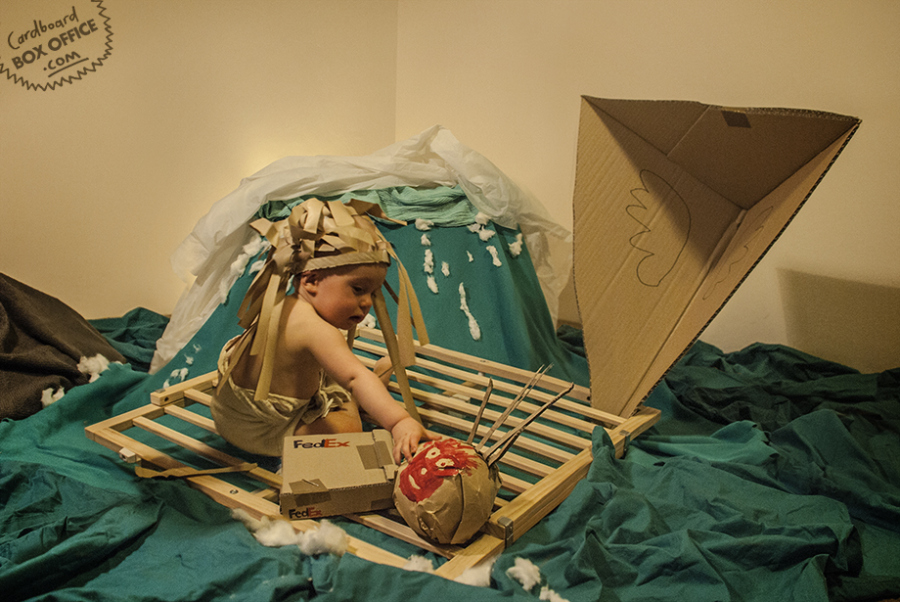
English surname which was originally a nickname, from the Norman French for “bear cub”. In the medieval romance Valentine and Orson, Orson is a wild man raised by bears, and twin brother to the knight Valentine, brought up in a royal French court. Originally, the “wild brother” didn’t have a name, and it seems to be an English innovation to give him a name to reflect his ursine upbringing. Orson has been used as a boy’s name since at least the 17th century, and has historically been more common in the United States. There are several famous men named Orson, including the American actor and director Orson Welles, who directed Citizen Kane and the notorious War of the Worlds radio broadcast – his first name was George, and he went by his middle name. Others include American television actor Orson Bean (real name Dallas Burrows), who lived in Australia during the 1970s, and American sci-fi author Orson Scott Card, who wrote Ender’s Game. You may also have heard of Internet sensation Orson Mackie, an Australian baby who stars in familiar movie scenes created by his parents from cardboard boxes. This masculine name is warm, snuggly, yet strong. It charts in the UK, where it is rising.

Roc

Catalan form of Rocco. Roc Brazilianos was a notorious 17th century Dutch pirate who operated from Jamaica. A cruel and debauched buccaneer, he raised terror on the high seas for many years before mysteriously disappearing with his ship and crew. His real name is not known for sure, but historians think he may have been Gerrit Gerritszoon, who moved to Dutch-controlled Brazil with his parents. Rather less spectacularly, a famous Australian with the name is visionary entrepreneur Roc Kirby, who founded Village Roadshow cinemas, and supported the Australian film renaissance. In his case, Roc is short for Roscoe. A roc is also a gigantic mythological bird which appears in Arabian fairy tales, and is well known to anyone who has read the One Thousand and One Nights. Pronounced like the word rock, this is a cool bad-boy choice which can also be seen as a nature name. It is popular in Catalonia, where it is rising.

Sixten

Swedish name which comes from the Old Norse Sigsteinn, meaning “victory stone”. Sixten Ehrling was one of Sweden’s most famous conductors, known for his difficult, yet witty, personality, and Sixten Sason was a super stylish Swedish designer who created the smooth lines of the Saab in the 1960s. Another famous namesake is the Swedish street artist Sixten, who at one time lived and worked in Melbourne. This is a smart-sounding Swedish heritage choice which provides few problems with pronunciation, as it’s said much as it looks. It is popular in Sweden, where it is rising.

Titus

Roman name of unknown meaning. According to tradition, the name was introduced to Rome by Titus Tatius, the Sabine king who attacked Rome, but later made peace with the legendary Roman king Romulus, the city’s founder. There were three Roman Emperors named Titus, and the Roman historian Livy’s full name was Titus Livius. Saint Titus is mentioned in the New Testament as a companion of Saint Paul. As you can probably tell from all these name bearers, Titus was an extremely common name in ancient times, and used by all social classes. The name gained an unpleasant reputation from Titus Oates, the perjurer who falsely claimed that Catholics were plotting to assassinate King Charles II; more honourable associations are Sir Titus Salt, the manufacturer and philanthropist, and Titus Brandsma, the Catholic priest (now a saint) who spoke out against Nazi ideology and died in a concentration camp. A contemporary namesake is American television actor Titus Welliver, from Sons of Anarchy and The Good Wife. Titus Andronicus is Shakespeare’s first tragedy, one of his most violent and gory plays. Titus charts in the US, where it is rising.

POLL RESULTS
The public’s favourite names were Gideon, Orson and Conrad, and their least favourite were Ajay, Sixten and Roc.

(Photo shows Orson Mackie depicting a scene from the movie Cast Away, on the blog Cardboard Box Office).


Famous Names: Rhonda and Ketut

15 Wednesday Jan 2014

Posted by A.O. in Famous Names

≈ 4 Comments

Tags

Balinese names, dated names, fictional namesakes, locational names, name history, name meaning, name popularity, names from songs, names of rivers, unisex names, Welsh names

aami-remix-642-380

For months, Australia has been avidly following the unfolding romance between a redheaded Australian woman who meets a flirtatious local on a Balinese beach, a younger man working as a waiter. Sparks fly, there is unmistakable chemistry … and something surely happens between them. Or has Rhonda read too much into the situation, her brain fevered from multiple viewings of Eat, Pray, Love?

It sounds like the plot of a soap opera, but we’ve actually been watching a clever series of car insurance commercials from AAMI. Rhonda saved so much money on car insurance that she was able to take a holiday, and it was here that the handsome Ketut pressed exotic drinks on her, and who knows what else. Back home, she found herself gaining the attentions of smooth Trent Toogood at her high school reunion, leaving us wondering if her destiny was Trent or Ketut … or if Ketut was nothing more than a fantasy.

The advertisements have captured the public’s imagination, with several fan pages on Facebook to Rhonda and Ketut’s relationship, and tribute tee-shirts being sold in Bali, reading Rhonda is Mine, and Kiss Me Ketut. Lines such as “beautiful brake foot” and “hot like a sunrise” have entered the popular consciousness, and according to Twitter denizens, if you’re australian and rhonda and ketut aren’t your otp there is something v wrong with u.

The public were invited to vote on whether Rhonda should find eternal bliss with either Trent or Ketu (happy singledom not an option). There wasn’t much doubt that there was nothing v wrong with us and that Team Ketu would win, and Rhonda finally found the happy ever after to her unexpected holiday romance.

AAMI have sensibly said they aren’t going to continue Rhonda and Ketut’s story in case people get sick of it, so the loved-up couple won’t be buying home insurance together or honeymooning in Fiji with all the money they saved on life insurance. AAMI increased its sales by almost 22% during the Rhonda-Ketut story line, so it’s a happy ending for them as well.

Rhonda is a modern Welsh name taken from the Rhondda Valley, once a coal mining area with strong community ties. It has been used since the 19th century, and Rhondda seems to be the older spelling in Wales. Rhondda may be from the Welsh for “recite, recount”, related to the Old Irish for “speech”, with the suggestion that the River Rhondda is speaking aloud (in the sense that we say a river is “babbling”). The meaning is usually glossed as “noisy”.

Rhonda first charted in the 1920s, debuting at #371. It soared in popularity during the 1930s, and made the Top 100 by the 1940s. It peaked in the 1950s at #29, then declined; even the Beach Boys song Help Me Rhonda doesn’t seem to have aided it in the 1960s (it may have possibly damaged the name’s popularity). It was out of the Top 100 by the 1970s, and hasn’t charted since the 1990s.

Rhonda is a dated name, with even the Rhonda in the AAMI commercials given the name when it was already out of fashion (the character is 39). Yet there’s something rather appealing about Rhonda – it’s not glamorous, but seems honest, friendly and good-hearted. I don’t think the advertising campaign is likely to boost Rhonda, but it’s a likeable 1950s name with plenty of warmth.

Ketut (keh-TOOT) is a common Balinese name meaning “fourth-born”; like all Balinese names, it is unisex. It’s a suitably humble name for Rhonda’s hunky waiter, but both characters have names which reference cars – Ketut sounds like the toot of a horn, while Rhonda has Honda in it.

We fell in love with Rhonda and Ketut – but do we love their names?

POLL RESULTS
Rhonda received an approval rating of 44%, and Ketut was further behind with 34%.

Famous Names: Mitchell and Mervyn

08 Wednesday Jan 2014

Posted by A.O. in Famous Names

≈ 8 Comments

Tags

english names, famous namesakes, historical records, Irish names, locational names, modern classic names, name history, name meaning, name popularity, nicknames, popular names, Scottish names, surname names, Welsh names

Mitchell Johnson Media Session

It is a glorious summer: beautiful weather, cloudless blue skies, golden sunshine, and best of all – victory in that ancient international cricketing rivalry, the Ashes. Having lost to England during the northern summer of 2013, Australia was itching to get revenge back on home soil, and we did.

For whatever reason, England failed to perform in Australia and had already lost the Ashes 3-0 by Christmas. The series finished 5-0 to Australia, only the third time in history such a whitewash has been achieved, and England lost all 10 wickets in every innings of the Test series – the first time either side has forfeited 100 wickets in Ashes history. Little wonder we celebrated wildly at the Fan Day at the Opera House yesterday, having taken down the team which was ranked #1 in the world and were favourites to win.

Mitchell Johnson was awarded Man of the Series, the fast bowler having taken 37 wickets – the most in an Ashes series in Australia since the late 1970s. Even more remarkably, this was a comeback with a vengeance, because not so long ago, Mitchell was battling injury, his self-confidence destroyed by the jeering of England’s fan base, the Barmy Army (a jingle about Mitchell Johnson is still their most popular song, and I use the word “song” extremely loosely).

Quite apart from his Barmy Army-silencing performance (and I use the word “silencing” with great poetic licence), Mitchell’s value during the Ashes was as a psychological weapon, because he seemed to strike fear into the English batsman. His secret? Maybe it was his training, the confidence brought about by fatherhood, or a pep talk by a war hero, but nearly everyone was convinced it was his moustache. No, seriously.

Mitchell grew a moustache for Movember to raise money for men’s health, but was urged not to shave it off at the end of the month by selector Mervyn “Merv” Hughes, who sports an impressive moustache himself. A public campaign and $10 000 donation from Gillette convinced Mitchell to keep the mo, and it seemed to work.

I was following the Ashes on the BBC, and was interested to see how much that moustache affected the English: it was the “menacing mo”, “the terrifying tash”, “the malicious moustache”, “the fearsome face-fuzz”, or the “horrid horseshoe”, and Mitchell became the “pantomime villain”. Add one moustache, and suddenly this shy, quiet man had become a bowling nightmare to the English.

Unfortunately, Mitchell says the magic mo must go for now, but confirms he will be growing it back when we take on South Africa later in the summer. I just hope it hasn’t lost its mystique by then.

Mitchell is an English surname of several origins. It is said that the first people with this surname came from Mitcham in Surrey (now in the outer suburbs of London), with Mitcham meaning “big town, large settlement”. Mitchell can also be derived from the male name Michel, a Middle English nickname for a large person, meaning “big”. The Normans had the name Michel, but in their case it was a form of the name Michael.

The surname Mitchell must have moved north during the medieval period, as it became particularly associated with Scotland. The Gaelic form of the name is based on the name Michael. In Ireland, Mitchell is used to Anglicise the Irish surname Ó Maoilmhichil, from the clan name Uí Mhaoilmhichil, meaning “devotees of the Archangel Michael”.

The surname Mitchell is one very well known in Australia, for Sir Thomas Livingstone Mitchell was a 19th explorer of Australia. Originally from Scotland, he joined the British army, where he distinguished himself during the Napoleonic Wars, then became a surveyor in New South Wales. He explored New South Wales, Victoria and Queensland, and published two books which included close and sympathetic observations of the Aboriginal people he encountered.

He is also remembered for the invention of the boomerang propeller, and being the last man in Australia to challenge anyone to a duel (both marksmen missed, so nobody was hurt). Many things are named after him, including the town of Mitchell and the Mitchell River in Queensland, the Mitchell Highway between Queensland and New South Wales, and Major Mitchell’s Cockatoo, a very beautiful bird with soft pink and grey markings, much admired by Sir Thomas Mitchell.

Mitchell has been used as a boys name since at least the 16th century, and turns up early in Scotland. There are many men named Mitchell in Australian records, and lots of them emigrated from Scotland or have Scottish surnames.

The name Mitchell has charted in Australia since the 1940s. It climbed gently until the 1980s (the decade when Mitchell Johnson was born), when it suddenly shot into the Top 25 from virtually nowhere. It peaked in the 1990s at #12, and is still stable in the Top 100. Currently it is #45 nationally, #77 in New South Wales, #53 in Victoria, #51 in Queensland, #41 in South Australia, #37 in Western Australia, and #91 in Tasmania.

Australia is the only country in the world where the name Mitchell is still in the Top 100, and with the success of Mitchell Johnson, I don’t see it going anywhere soon. It’s an Australian modern classic with a lot of history, and a name we hold dear.

Mervyn is derived from the Welsh name Merfyn, of uncertain meaning. It is sometimes said to be a variation of the Welsh name Myrddin (“sea fortress”), from whence we get Merlin, but it may mean “big”, and is often translated as meaning something along the lines of “famous to the marrow”. There was a medieval Welsh king named Merfyn.

The name Mervyn was #66 in Australia in the 1900s, and peaked in the 1920s at #44 before declining and leaving the Top 100 in the 1950s. It hasn’t charted since the 1970s. It may be dated, but it is a uniquely Australian name, because in no other country (not even Wales) did it ever become popular.

Two names more Australian than you might have thought – but which one do you prefer?

POLL RESULTS
Mitchell received a respectable approval rating of 68%, while people were less enthusiastic about Mervyn, with an approval rating of 22% – not one person loved the name Mervyn.


The People’s Choice of Girls Names – 2

15 Sunday Dec 2013

Posted by A.O. in Name Themes and Lists

≈ 11 Comments

Tags

African names, American names, Arabic names, astronomical names, British names, celebrity baby names, created names, Creek names, Disney names, Dutch names, english names, epithets and titles, famous namesakes, fictional namesakes, French names, germanic names, Greek names, hebrew names, honouring, Indian names, Italian names, Latin names, locational names, Maori names, middle names, mythological names, name history, name meaning, name popularity, names from ballet, names from films, names of rivers, Native American names, nicknames, Old Norse names, Persian names, Roman names, royal names, saints names, Sanskrit names, scandinavian names, screen names, Shakespearean names, surname names, Tibetan names, Tiv names, unisex names, virtue names, vocabulary names, Welsh names

Queensland_Ballet_presents_Giselle

Here are ten names for girls which have been often searched for to reach my blog. I chose names that aren’t in the Top 100, and come from a range of origins.

Anouk

Dutch and French short form of Anna. A famous namesake is celebrated French actress Anouk Aimée; she was born Françoise Dreyfus, and took the name Anouk from the first character she portrayed on film. The name became better known in the English-speaking world after the publication of the award-winning 1999 novel Chocolat, by British author Joanne Harris, in which there is a little girl named Anouk. The character of Anouk is based on the author’s daughter Anouchka, whose name is another pet form of Anna. The book was made into a movie in 2000. Actor and author Andrew Daddo has a daughter named Anouk, born a year after the film was released. Pronounced a-NOOK or an-ook, this exotic name doesn’t have an obviously “French” sound to it, and seems quite sophisticated.

Blythe

Variant of Blithe, an English virtue name meaning “cheerful, merry” which is first found in 16th century Norfolk, stronghold of the Puritans. Although the name began as a girls name, it has been given to boys as well, particularly in the United States, and overall is fairly evenly divided between the sexes, although more common for girls. In the case of boys, the name probably comes from the surname, which is derived from any of the places called Bligh, Blyth or Blythe; they get their name from the River Blyth in Northumberland, the River Blythe in Warwickshire, or the River Blithe in Staffordsire. The names of the rivers simply come from the word blithe, so in either case the name has the same pleasant meaning. A famous namesake is American actress Blythe Danner, mother of Gwyneth Paltrow; her name is a middle name of Gwyneth’s daughter, Apple. This is a fresh, sprightly name which has a modern feel despite its long history.

Cordelia

Cordelia is a princess in William Shakespeare’s King Lear, a loyal daughter who is disowned by her father because she will not make flattering speeches to him, with tragic results. The character is based on Queen Cordeilla, a legendary queen of the Britons who appears in Geoffrey of Monmouth’s History of Britain. According to Geoffrey, Cordelia ruled Britain as queen, but came to grief because the rule of a woman was deemed unacceptable. Cordelia is also mentioned in Edmund Spenser’s epic poem, The Fairie Queene, where her role as heroic British queen was probably a compliment to Queen Elizabeth I. The first Cordelias were born around the time The Faerie Queene was published, and were from upper-class families. There is a popular but unsubstantiated theory that Geoffrey of Monmouth based the name Cordeilla on that of Creiddylad (said cree-THIL-ahd), a character in Welsh Arthurian legends who was the daughter of the god Lud, and considered the most beautiful girl in Britain. Another idea is that Geoffrey may have based the name on that of Saint Cordula, a legendary companion of Saint Ursula whose name is from the Latin for “heart” (Cordeilla is also found spelled Cordoyla, which offers this some support). Still another is that it may be derived from the Roman name Cordus, meaning “late born”, with the implication that as Cordelia was King Lear’s youngest daughter, he had her late in life. Although all these suggestions are attractive, the last one may appeal most to older parents. If you are a fan of L.M. Montgomery’s Anne books, you will remember that the heroine wished her name was Cordelia – because it is “perfectly elegant”. This literary name still seems refined, and can be pronounced cor-DEE-lee-uh, or cor-DEEL-yuh.

Giselle

Derived from the Germanic name Gisela, meaning “pledge, hostage”. Although the word hostage has rather alarming associations today, in the past it was common for political treaties to be accompanied by the exchange of political hostages, as a guarantee of good faith and to maintain peace. Often the children of the ruling classes, even princes and princesses, would be handed over to be raised and educated by a foreign court, with hopes of greater cultural understanding between nations. Gisela and Gisèle (the French form) were popular names amongst medieval nobility and royalty. The name received a huge boost in the 19th century, because of the romantic ballet, Giselle. It tells of an innocent village girl named Giselle who dies of a broken heart after being betrayed by her lover. However, as a sign of her forgiving nature, after her death she protects the man she loves from the spirits of vengeance, and saves his life. Another fictional Giselle is the sweet peasant girl who makes a happy-ever-after transition from cartoon fantasy land to gritty real world in the Disney film, Enchanted. Graceful and fairytale, Giselle is usually pronounced ji-ZEL in Australia, and is #161 in Victoria.

Ingrid

Derived from the Old Norse name Ingríðr, meaning something like “beloved of Ing, beauty of Ing, delight of Ing”. Ing is an older name for the Norse god Freyr – perhaps his true name, because Freyr means “lord” and is his title. Freyr was a phallic fertility god who brought peace and pleasure, and was associated with sacred kingship, male sexuality, prosperity, and sunshine. In Norse legend, Ing is the god followed by the Germanic peoples of the area which is now Denmark and its surrounds, and he is claimed as the first king of Sweden, as well as the progenitor of the Anglian kings. Ingrid is a traditional name amongst Scandinavian royalty and nobility, and there is a young Princess Ingrid of Norway, who is expected to one day be queen. A famous namesake is beautiful Swedish-born movie star Ingrid Bergman, who starred in many Hollywood movies, including Casablanca. Ingrid has a strong and chiselled beauty, and is #481 in Victoria.

Piata

Maori name meaning “shine, glisten”. It isn’t unusual in New Zealand, and is still given to girls today; it can also be found as a surname. It’s not common in Australia, but I think it would work well here, and has a pleasingly cross-cultural feel, since it is similar to Italian Pia and Pieta. I believe it is pronounced pee-AH-ta.

Soraya

Persian form of the Arabic name Thurayya, meaning “the Pleiades”. The Pleiades is the familiar group of stars in the constellation Taurus, sometimes known as The Seven Sisters. The name became better known in the west because of two royal Sorayas. Soraya Tarzi was a liberal Muslim and feminist who married into the monarchy of Afghanistan and became queen; she appeared in public alongside her husband as an equal and together they tried to modernise their country. Afghanistan wasn’t quite ready for it, and the couple went into exile in Rome in 1929. Even more influential was Soraya Esfandiary-Bakhtiari, who was Queen of Iran as the second wife of the last Shah. Very attractive and western-educated, Soraya and her husband were forced to divorce in 1958 because she was apparently infertile. She also went into exile, under the name Princess Soraya, and lived in France, where her story evoked much sympathy. Her divorce inspired a song, I Want to Cry Like Soraya, and a variety of sunflower was named in her honour. A beautiful star name, Soraya is similar to familiar names like Sarah and Zara, and in Australia is usually pronounced soh-RAY-uh.

Tallulah

A place name of Native American origin, this probably means “town” in the Creek language. Tallulah Falls is a small town in Georgia, in the United States, which has attracted tourists since the late 19th century. Parts of the film Deliverance were filmed there, so you may even have seen it on screen. Tallulah has been used as a girls name since the 19th century, and records show that the name originated in the southern states, with most Tallulahs born in Georgia. The most famous namesake is flamboyant actress and party girl Tallulah Bankhead, who was from Alabama, and named after her grandmother. Despite being a name of American origin, Tallulah has never charted in the US, and is far more popular in the UK. Tallulah Bankhead was a huge celebrity in 1920s London, and her name is very fashionable in England, chosen as a baby name by the upper classes and minor royals. Spunky, sexy and fun to say, this fits in with familiar names such as Tully and Tahlia, and comes with cute nicknames like Lula and Lulu.

Uma

This Indian name is one of the epithets of the benevolent mother goddess Parvati, the wife of Shiva. Its original meaning is “mother (goddess, wife of) Shiva”. Because Parvati is a goddess of light, the name Uma also came to be understood as meaning “light, radiance”. In a previous incarnation, the goddess (then called Sati) committed suicide by throwing herself on a sacrificial fire, and her ashes became the sacred spice turmeric; because of this the name Uma came to be understood as meaning “turmeric”. The meaning of Uma is also glossed as “O child, do not (practice austerities)!”, because as a young girl Parvati’s mother chided her for the extreme ascetisim she practicised in order to please her future husband, Shiva. By coincidence, uma is literally translated as “flax” in Sanskrit, although this doesn’t seem to have any connection to the goddess. The most famous namesake is American actress Uma Thurman, whose name is said to have a different origin. Uma’s father was the first westerner to become a Buddhist monk, and the term uma chenpo means “Great Middle Way” in Tibetan – one of the guiding principles of Buddhism. In modern Hebrew, uma means “nation”, and in Israel Uma is a patriotic unisex name. In the Tiv language of West Africa, the name Uma means “life”, and can be used for both sexes. Simple yet multi-layered, this is a fascinating cross-cultural name which isn’t common in any country of the world.

Xanthe

Ancient Greek name meaning “yellow, yellow-brown”, often translated as “blonde, fair-haired”. There are several figures from Greek mythology with the name. Xanthe was one of the Oceanides, the three thousand daughters of the Titan sea gods Oceanus and Tethys. The Oceanides were nymph-like goddesses who were responsible for the world’s fresh water, and were often pictured married to river gods. In some sources, Xanthe is imagined as presiding over the yellow clouds that can be sometimes be seen at sunrise or sunset. Xanthe is also given as the name of one of the Amazon warriors, and Hesiod mentions Xanthe as being the mortal wife of Asclepius, the god of medicine. Actress Madeleine West welcomed a daughter named Xanthe last year. This quirky, stylish name is usually pronounced ZAN-thee in Australia, and comes with the cool nickname Xan or Zan. The name is #469 in Victoria.

POLL RESULT: People’s favourite names Blythe, Cordelia and Xanthe, and their least favourite were Giselle, Piata and Uma.

(Photo shows a scene from the ballet Giselle, performed by the Queensland Ballet)

← Older posts
Newer posts →

Enter your email address to follow this blog

Categories

Archives

Recent Comments

A.O.'s avatarwaltzingmorethanmati… on Zarah Zaynab and Wolfgang…
Madelyn's avatarMadelyn on Zarah Zaynab and Wolfgang…
JD's avatardrperegrine on Can Phoebe Complete This …
A.O.'s avatarwaltzingmorethanmati… on Rua and Rhoa
redrover23's avatarredrover23 on Rua and Rhoa

Blogroll

  • Appellation Mountain
  • Baby Name Pondering
  • Babynamelover's Blog
  • British Baby Names
  • Clare's Name News
  • For Real Baby Names
  • Geek Baby Names
  • Name Candy
  • Nameberry
  • Nancy's Baby Names
  • Ren's Baby Name Blog
  • Sancta Nomina
  • Swistle: Baby Names
  • The Art of Naming
  • The Baby Name Wizard
  • The Beauty of Names
  • Tulip By Any Name

RSS Feed

  • RSS - Posts

RSS Posts

  • Celebrity Baby News: Melanie Vallejo and Matt Kingston
  • Names from the TV Show “Cleverman”
  • Can Phoebe Complete This Sibset?
  • Zarah Zaynab and Wolfgang Winter
  • Baby, How Did You Get That Name?
  • Celebrity Baby News: Media Babies
  • Celebrity Baby News: Adelaide Crows Babies
  • Celebrity Baby News: Chris and Rebecca Judd
  • Names at Work: Name News From the World of Business and Employment
  • Celebrity Baby News: Sporting Round Up

Currently Popular

  • Rare Boys Names From the 1950s
  • Celebrity Baby News: Ross Stevenson and Sarah Fallshaw
  • The Top 100 Names of the 1920s in New South Wales
  • The Top 100 Names of the 1940s in New South Wales
  • Arlo Robert Galafassi: A Son for Toni Collette and Dave Galafassi, a Brother for Sage Florence

Tags

celebrity baby names celebrity sibsets english names famous namesakes fictional namesakes honouring locational names middle names name combinations name history name meaning name popularity name trends nicknames popular names saints names sibsets surname names twin sets unisex names

Create a free website or blog at WordPress.com.

Privacy & Cookies: This site uses cookies. By continuing to use this website, you agree to their use.
To find out more, including how to control cookies, see here: Cookie Policy
  • Subscribe Subscribed
    • Waltzing More Than Matilda
    • Join 517 other subscribers
    • Already have a WordPress.com account? Log in now.
    • Waltzing More Than Matilda
    • Subscribe Subscribed
    • Sign up
    • Log in
    • Report this content
    • View site in Reader
    • Manage subscriptions
    • Collapse this bar
 

Loading Comments...