• About
  • Best Baby Names
  • Celebrity Baby Names
  • Celebrity Baby Names – Current
  • Celebrity Baby Names – Past
  • Featured Boys Names
  • Featured Girls Names
  • Featured Unisex Names
  • Links to Name Data
  • Waltzing on the Web

Waltzing More Than Matilda

~ Names with an Australian Bias of Democratic Temper

Waltzing More Than Matilda

Tag Archives: US name popularity

Famous Name: June

25 Wednesday Jun 2014

Posted by A.O. in Famous Names

≈ 1 Comment

Tags

Biblical names, english names, famous namesakes, Latin names, middle names, mythological names, name history, name meaning, name organisations, name popularity, names from songs, names of months, nicknames, Roman names, saints names, unisex names, US name popularity, US name trends

art-353-june-300x0

Here we are at the end of June, and our last chance to cover the name of this month. On Sunday, I covered the winter solstice, where I said how mild it was – June was all blue skies and sunshine then. Little did I know the very next day a blizzard would hit, with massive snowfalls in the mountains, and freezing, gale-force winds and heavy rain elsewhere. So winter has definitely started now.

June Wright was once Australia’s queen of crime fiction; her first novel, Murder in the Telephone Exchange, was the best-selling mystery novel of 1948 in Australia, outselling the latest Agatha Christie. It featured feisty telephonist-turned-amateur-detective Maggie Byrnes, and was set during a blazing hot February in post-war Melbourne. These were the days when young working ladies lived in boarding houses where gentleman callers were not permitted, and leaving your bedroom clad only in pyjamas and dressing gown was an absolute no-no.

June went on to write five more novels, including a second Maggie Byrne mystery where the post-war housing shortage leads her into another interesting case to solve. The Devil’s Caress, which has a female doctor as the detective, was described as making Murder in the Telephone Exchange look like a bedtime story, and her last three novels featured Mother Mary St. Paul, an unassuming yet strong-willed Catholic nun detective that June Wright based on the head of the maternity ward where she gave birth to twins.

While June’s wartime experience as a telephone operator was the inspiration for Murder in the Telephone Exchange, it was her career as housewife and mother to six children, one severely intellectually disabled, that was seized upon by the women’s magazines of the day, who brought out articles with titles like “Wrote Thriller With Baby on Her Knee” and “Books Between Babies”. The writer of dark, gory murder mysteries with strong female protagonists was careful to present herself as charming and and feminine, and pointed out that both housewives and writers had to be practical, disciplined, and used to monotony.

June’s last novel was published in 1966. Her husband had a nervous breakdown, and June went back to work as a telephonist to support the family, before she and her husband started a cleaning business together. Although there are no hints she regretted having to abandon her literary career, she lived a long life (she only passed away recently), and it’s hard not to think of the many years she could have kept writing under different circumstances.

June lapsed into literary obscurity, and her works have been out of print for many years. However, in February this year Murder in the Telephone Exchange was re-issued by Dark Passage, an imprint of US publisher Verse Chorus Press. They will be bringing out all her novels, including previously unpublished Duck Season Death.

I haven’t bought my own copy yet, but this is welcome news for lovers of vintage fiction, women’s fiction, and Australian crime fiction. I think the books would be especially interesting for Melburnians from a historical perspective.

The name June is after the sixth month of the year. The Romans called the month Junius, commonly believed to be named in honour of the goddess Juno, the wife of Jupiter and queen of the gods. Do you remember the Happy June group, who celebrated June Day on June 1 every day? Well, on the first day of June, the ancient Romans had a festival dedicated to Juno’s “birthday”, in her role as goddess of war and protector of the state. So in a way, there is a “June Day” just as much as a “May Day”.

Because Juno was the goddess of marriage, the month of June was thought an auspicious time for weddings. This makes a lot of sense in the northern hemisphere, where it is early summer: in the United States, June is the most popular month for weddings, and in Italy, June is still a popular month to be married. In Australia, November is the most popular month for weddings (just to confuse things, in the United Kingdom August is the traditional wedding month – in Italy this is considered incredibly bad luck and very unhealthy).

As June is the start of summer in the northern hemisphere, there the name June may seem ripe and womanly, full of vitality and promise – as the song says, June is Bustin’ Out All Over. Here June is the start of winter, and to me it seems cool and fresh as a mountain breeze, and pure as snow.

June has been commonly used as a girl’s name since the 19th century, and part of its appeal must have been that it sounded similar to popular names such as Joan and Jane. It would have also seemed like a “real name” because of Latin names such as Junia – Saint Junia is venerated in the Orthodox tradition, and is mentioned in the New Testament as having a leadership role in the early Christian church. In the US, June has also been used as a male name, derived from Junius.

In Australia, June began charting in the 1910s, debuting at #162, and climbing so steeply that it was #15 for the 1920s. It peaked in the 1930s at #10, fell until it left the Top 100 in the 1950s, and last charted in the 1970s.

June does not chart in either Australia or the UK, but in the US June is already in the 300s and rising very briskly after only re-joining the Top 1000 in 2008. The United States is leading the way, and I think this is an American name trend well worth considering.

June is sweet and charming, and has the fashionable OO sound in it, like Ruby and Lulu. This is a hip vintage choice, and also a simple nature name, like Wren or Rain. Not only can it be used to honour a relative named June, or for cases where June is a special month for you, this would make a great name for someone who wanted something that was traditional and “old-fashioned”, while still seeming fresh and underused.

June could be used as a short form of names such as Juniper, Junia or Juno, and is getting some use as a middle name, but it would be lovely to see it up front as the full name. Junie is the usual pet form.

POLL RESULTS
June received an excellent approval rating of 80%, making it one of the highest-rated names of 2014. People saw the name June as vintage and hip (26%), sweet and charming (23%), traditional yet fresh (15%), and pretty or cute (10%). However, 9% saw it as only a middle name. Only one person thought the name June was too trendy.


Interview with Nancy from Nancy’s Baby Names

01 Sunday Jun 2014

Posted by A.O. in Blog Reviews

≈ 9 Comments

Tags

choosing baby names, classic names, famous namesakes, honouring, names found in cemeteries, names from songs, names of businesses, Nancy's Baby Names, Pinterest, popular names, rare names, Twitter, US name data, US name popularity, US Social Security Administration

canyon75

Nancy is the anthroponomastic maven at Nancy’s Baby Names, a rich repository of name information delivered with a wry sense of humour. Nancy has been blogging indefatigably since 2006, making Nancy’s Baby Names one of the oldest baby name blogs out there. She has thousands of blog posts on all manner of names, but especially loves hunting down rare and unusual names, and discovering the stories behind them. Nancy also adores name data – there’s popular names from around the world, and tons of US data from well beyond the Top 1000. At Nancy’s blog you will find names that are bizarre, puzzling, curious … and they are all real.

What is your name?

Nancy Man.

Have you ever wished you had a different name?

I didn’t like the name Nancy when I was young, and I remember asking my parents for permission to legally change it. They laughed at me. These days I don’t mind my name as much, so I no longer think about changing it.

How did you first become interested in names?

The graveyards are what got me hooked, though I don’t think I would have been so fascinated by the names on the headstones had I not been so dissatisfied with my own name.

I was unhappy with my own name because I’d been named for the wrong grandmother (or so I believed throughout childhood). I got the name of the distant grandmother we hardly knew, not the awesome grandmother (Helen) we saw all the time. This was a problem.

The upside, though, was that it made me very curious about names in general. So when I began using a local graveyard as a short cut through town (around age twelve) I couldn’t help but check out all the names. I was especially attracted to the unfamiliar and bizarre names I’d never seen before – Peleg, Huldah, Zenas, Experience, etc.

After exploring that first graveyard thoroughly, I began visiting other graveyards, where I discovered even more curious names, and … that’s how the name obsession began.

What inspired you to begin a name blog?

I had an interest in names and a writing habit, so I started a blog in early 2006 to put the two together. My first posts were mostly tongue-in-cheek, but I began to take things more seriously once I started getting traffic and comments.

You seem to have a special fascination with unusual names of real people – how did that come about, and what is the most unusual name you have ever found on a real person?

It must have been the graveyards. In a sea of Sarahs and Johns, you can’t help but wonder about the one random Flavilla or Micajah.

The most unusual name? Wow, that’s tough. I’ll go with one I blogged about recently: Laxative Bromo Quinine. He was born in rural Texas in the early 1900s and named after the medicine that his mother credited with saving his life.

Do you have a favourite post on Nancy’s Baby Names?

I really like the Kasara/Casara post. That name had me stumped for a long time until it finally dawned on me that Kasara was a mondegreen. My extensive knowledge of long-forgotten ’80s pop hits finally comes in handy!

Are there are any other ways to follow you online?

Twitter is probably the best way. Pinterest is another option.

Do you have a pet peeve in regard to names?

My only pet peeve is that the U.S. Social Security Administration doesn’t release all its name data. Other countries do it, SSA, why not us? Come on! Privacy, shmivacy.

What are your favourite names?

I have two types of favourites.

One type, of course, would be the bizarre names: Zeppelina, Captivity, Oleomargarine, Emancipation Proclamation and the like. I especially love the ones that come with cool stories and explanations.

The other would be short, simple classics like Jane, John, Adam, Emma, Paul, and Rose. They’re familiar, unpretentious, and easy to live with. These are the names I’m always recommending to people in real life.

What names do you dislike?

I don’t care for names that are easy to make fun of. Not a fan of Abcde, for example.

Are there any names you love, but could never use?

Duncan. I’ve always loved the name, but I can’t say it without mentally adding “Donuts.” (Dunkin’ Donuts is a coffee/donut chain very popular in the North-eastern U.S., where I grew up.)

What are your favourite names in the US Top 100?

Girls: Elizabeth (#10). Runners-up: Hannah (#23) and Sarah (#48).

Boys: Thomas (#61). Runners-up: James (#13) and Sebastian (#45).

What are your favourite names in the rest of the US Top 1000?

Girls: Jane (#355). Runners-up: Daphne (#397) and Catherine (#172).

Boys: Duncan (#821). Runners-up: Paul (#198) and Theodore (#170).

What are your favourite names that have never charted in the US?

Girls: Mehitable. It’s a variant of the biblical Mehetabel, though I actually prefer the Mehitable spelling because that’s the way I always see it written on the headstones back home. (I kinda prefer Phebe to Phoebe for the same reason.) I’m slightly surprised that the belle/bella trend hasn’t brought Mehetabel back, even just a little. I wonder if spelling it Mehetabelle or Mehetabella would help…?

Boys: Chucknorris. I was so happy when I discovered this name in the wild, years after wondering aloud (via the blog) if it could possibly exist. It’s like that Walt Disney quote, “If you can dream it, you can do it,” except my version is “If you can dream it, you can find it on a birth certificate.”

If you found out you were pregnant right now, what names might you be considering?

I like classic names, but my husband prefers trendy names, so finding a name that suits both his tastes and mine would be the goal. I know Chloe would be a contender – it’s been a favourite of his for a while, and it happens to fit my criteria pretty well.

What is something we don’t know about you?

I cannot drink soda, beer, champagne, or anything carbonated. It’s like swallowing shards of glass to me. I’m amazed that so many people find bubbly beverages refreshing.

What advice would you give someone who was choosing a baby name?

This one is tricky to answer without a specific person in mind. For instance, the advice I’d give to the person deciding between Emma and Claire would be completely different from the advice I’d give the person seriously considering Kardashianette.

(Photo shows Nancy at the Grand Canyon, from her blog)

Interview with Kelli from NameFreak!

27 Sunday Apr 2014

Posted by A.O. in Blog Reviews

≈ 4 Comments

Tags

baby name blogs, Biblical names, British Baby Names, choosing baby names, classic names, Facebook, fictional namesakes, guilty pleasure names, Instagram, Kelli Brady, name combinations, NameFreak!, Pinterest, popular names, sibsets, Twilight names, Twitter, UK birth notices, US name popularity

namefreak

Kelli Brady is the analytical blogger at NameFreak!, which is a true name nerd’s blog – and of course I mean that in the most complimentary sense possible! There is tons of analysis of American name trends on the blog; I can tell Kelli loves sleuthing through the US data, and is a dedicated list-maker. Kelli has had several name polls on her blog, and for the past couple of years has run Name Madness play offs, where she chooses a wide variety of names on a particular theme, and gets the public to choose their favourite by vote. If you are fascinated by names, but also like to have fun with them, you will love NameFreak!

What is your name?

Kelli Joyce Brady (Brady is a pen name).

How did you become interested in names?

It started when I was maybe seven or eight years old. I remember being obsessed with the names of my friends and my Cabbage Patch Kids, as well as constantly making name lists. The name Samantha was a favourite of mine when I was young because I thought Samantha Joyce (Sammy Jo) would make an awesome name for my future daughter. It’s so fun to know that while her first name changed many times over the years, my daughter’s middle name was never under debate.

What inspired you to begin a name blog?

I started NameFreak! back in 2008 when I was pregnant with my son. I wanted a way to express my passion for names without the limitations of short Facebook status messages. I really only shared the blog with my immediate friends, so it stayed small, and once my son was born, the blog unfortunately fell by the wayside. After I moved to Thailand in 2012, I found myself with a lot of free time. The calling to blog again hit me strongly and I’m so glad it did! I discovered the name blogging community and am now able to share my name passion with a lot more readers!

Do you have a favourite post on NameFreak!?

I love to combine my passions. Being a baseball fan, I love my baseball-inspired name posts. Another passion of mine is Jane Austen, and so the analyses of her novels’ heroes and heroines names are also a favourite. Most of my posts require quite a bit of research, which is another love of mine. My favourite research-oriented post is the study I did on the names of Little Women.

Are there are any other ways to follow you online? 

Facebook, Twitter, Instagram and Pinterest. I do not post on Instagram very often, but I love that the naming community has joined the picture universe. I see so much potential there.

What are some of your favourite names?

I love the classics and am so excited when I hear of a baby Edith or George. I drool over the baby name announcements from Britain. I love biblical names as well. I think it’s safe to I say have favourites in almost every category.

What names do you dislike?

I’m not a huge fan of alternative spellings. There are exceptions however … I mean, my name is Kelli and I think it fits me a lot better than Kelly.

Are there any names you love, but could never use?

My guilty pleasure names come from my love of books/movies/baseball. Eowyn is one of my all time favourites. I also love Esme, but would probably avoid it due to the Twilight craze. And how cute would a little girl named Austen be? For boys, I am smitten with Catcher and Brooks.

What are your favourite names in the US Top 100?

Girls: Anna (#35) and Molly (#90)

Boys: Sebastian (#64) and Oliver (#73)

What are your favourite names in the rest of the US Top 1000?

Girls: Paige (#105) and Jane (#340)

Boys: Simon (#255) and Asa (#562)

What are your favourite names that have never charted in the US?

Tamsin (never charted), Elinor (hasn’t charted since 1953), and Linus (hasn’t charted since 1940).

What are your children’s names?

Rachel Joyce and Simon Brent. I explain how we chose their names here.

If you found out you were pregnant right now, what names might you be considering?

I would fight for Tamsin, but would probably lose. I have brought up Jane early on with both of my pregnancies, but have been shot down by my husband each time. Other names would be Josephine, Paige and Anna for girls, and Linus, Asa, James, and Oliver for boys.

What is something we don’t know about you? 

I have not been able to blog as much lately because I am working on a book! It’s basically my biggest research project ever and taking a lot of time to finish, but I hope to have it out as an e-book this summer. Here is something not name-related as well … After growing up without a desire to ever leave the United States, my current count of countries visited is 26. I’ve definitely caught the travel bug!

What advice would you give someone who was choosing a baby name? 

My naming philosophy is simple. Go with what you love, no matter what other people think. Your child will “make” the name. But there definitely needs to be some regard on the part of the parent. Consider this … after the gift of life, your child’s name is the first gift you give them, and one that they carry forever. What a huge, but fun, responsibility! Embrace it!

Interview with Alexia Mae at Baby Names from the Bible

23 Sunday Mar 2014

Posted by A.O. in Blog Reviews

≈ 10 Comments

Tags

Anne of Green Gables, baby name blogs, baby name books, Baby Names from the Bible, Biblical names, choosing baby names, Clare's Name News, controversial names, fictional namesakes, honouring, Instagram, pen names, popular names, rare names, US name popularity, YouTube

Interview-PhotoAlexia Mae is the warm and enthusiastic blogger behind Baby Names from the Bible, devoted to all the great names in the Good Book, whether familiar or unusual. I usually allow blog readers to decide which blogger is interviewed, but last month Alexia Mae was kind enough to invite me to be interviewed at Baby Names from the Bible, so this is a return visit – although she would have been chosen next time anyway. Alexia Mae passed her 100th post a month ago, so let’s hope there are many more.

What is your name?

Alexia Mae. I’m the “Dear Abby” of baby names, as Alexia Mae is my pen name.

Have you ever wished you had a different name?

My real one? Oh, yes. It’s not too common a name; it’s only ever made it to #30. But the spelling of it is unique, which catapults it outside the Top 1000 for all time. Add a filler family middle, and the annoyance of people misunderstanding my name, and I begged to be called Alexia as a kid. Fast forward to me needing a pen name … Bob’s your uncle, I had one. Mae is in honour of my grandma. Now that I’m an adult I appreciate my given name more. I was almost a Kasia, which I would have loved, too.

How did you become interested in names?

I blame my name craziness on Shane, my kindergarten crush. He was the ruddy-haired Irish kid with the leather necklace, the dude everyone wanted to be friends with. In a classroom of boring names from the ’80s, Shane stuck out. I suddenly became very aware of people’s names.

When I was thirteen, my mom got pregnant. My brother Aaron and I were close in age, but now I was way older for this new brother, and boy, was I ready to help name the kid! Shot down, but kept on trying. Their choice? Another A name, Andrew. A perfect recipe for my mom to never get our names right. But, after stealing (I mean permanently borrowing) a name book my mom picked up, I came down with full blown name-nuttiness. It’s been downhill ever since.

How did you become interested in biblical names?

That first baby name book I got my hands on happened to be about biblical names. And it was literally four pieces of paper. (Maybe that’s why my parents never got out of the As.) It was small. But it had a big impact. To see the meaning of names, and to be able to go to the Bible and see them used, just blew me away. It was my own “sawdust trail moment” for names. They have proved themselves to be real gems, and have a power in their age and timelessness.

Do you have a favourite baby name book?

The Holy Bible 😉 My email inbox is also swarmed with name people I’m subscribed to, and I rely on Clare’s Scoop for everything else. (That gal needs an award.) [WMTM: She got one! She has a gold ribbon saying her page is one of the most highly-recommended in the Society topic on Scoop].

What inspired you to begin a name blog?

My husband Josiah and I both love the idea of using biblical names for our children. When I was first married I searched for biblical baby name books, and couldn’t find any. Zilch. Zip. Nada. Not even the one that I originally had. Then I began to think about that original name book, and thought it was awfully small compared to the actual Bible. I mean, the Book of Numbers wouldn’t even fit in there, and it’s practically nothing but names.

I kept asking myself, if I can’t find them, who else will? Why is no one celebrating the biblical names I know must exist? So I began logging the names I was coming across for my own use, and I really wanted to share them … and Baby Names from the Bible was born.

Do you have a favourite blog entry on Baby Names from the Bible?

The post that I’m the most proud of is one I wrote a couple of years ago, Why Name Your Baby a Biblical Name? I take a moment to stand on my soap box and talk about why people, even those who aren’t religious, should take another look at baby names from the Bible. Forget about Zerubbabel. How about Junia? Rissah? Ardon? There are names galore for anyone thirsty for a good name.

Are there any other ways to stay in touch with you online?

I’m @NamesDaily on Instagram, and I post names every day, both biblical and not. Instagram has been an amazing experience. I have a growing following of over 2000 people. I’m getting the opportunity first hand to see names that knock your socks off, and some, that well, just don’t. I’m also on YouTube.

Do you have a pet peeve in regard to names?

Yhess. Yoonique namez. If I have to read it more than once to get what name you’re actually trying to say, I’ve got to stand up and get a cup of coffee. It literally makes my skin crawl. Jaycein? I am somebody who has zero adrenaline tolerance for awkwardness in any way, so I have to get up and walk it off. True stuff.

In the name community, I feel sometimes it’s like Eskimos marketing ice to fellow Eskimos who live in the same igloo. I want to find ways to branch out and actually talk to parents who have never even owned a baby name book. I think that’s why I love being on Instagram so much, because it’s exactly that. I enjoy so many people in the baby name community, but I want to find ways to branch out, too. (We need an annual name conference.)

What are some of your favourite names?

Boys: Judah and Josiah, of course. Abel.

Girls: Juniper. Ellowyn. Cassia. Maewyn. I really love Naphtali for a girl, but can’t bring myself to use it because no one would be able to pronounce it or spell it. It’s like Natalie with an F. I’m drawn to biblical names, but I enjoy other names, too.

What names do you dislike?

Delilah. I see the appeal, but I would never use it. The same with Jezebel. That one makes my skin crawl when I hear someone nonchalantly talking about using it. Whether you believe in the Bible or not, the connotation still exists. Jezebel was a murderer, and it would be like naming your child Hitler. I just don’t think you should do it.

What are your favourite names in the US Top 100?

Girls: Biblical – Leah (#33). Other – Harper (#24) and Lillian (#25)

Boys: Biblical – Josiah (#79). Other – Landon (#34)

What are your favourite names in the rest of the US Top 1000?

Margaret (#178) and Judah (#273)

What are your favourite names that don’t currently chart?

Blythe (never charted) and Clive (hasn’t charted since 1935)

What is your son’s name?

Judah David. Our story of Judah’s name is a fun and interesting one, and you can read about it at So There’s This Name ….

If you found out you were pregnant right now, what names would you be considering?

I would be trying to convince Josiah to like Blythe Salomae. We have boys names we like, but like we did with Judah, we’re not telling anyone.

What is something we don’t know about you that you would like to share?

I love the Anne of Green Gables series and have read them probably too much. Tell me Lucy Maud Montgomery wasn’t a name nut. Ludovic Speed? Gilbert ❤ Is this why I love the name Blythe? I will never tell.

What advice would you give someone choosing a baby name?

If you can’t use the one you love, use it anyway. Never, ever settle. Unless it’s Jezebel or Kidneigh Bean, and then I’d say maybe keep looking. Valuable life lessons also apply to names. You are giving your babies the first impression they will have on people. Give them something that makes them proud. Something that makes you proud. And like weak coffee, name regret stinks. I’ll brew down some Starbucks, and you can come over and we can talk more about names!

(Picture shows Alexia Mae with her son Judah; photo supplied by Baby Names from the Bible)

Famous Name: Harmony

19 Wednesday Mar 2014

Posted by A.O. in Famous Names

≈ 4 Comments

Tags

english names, Greek names, holiday names, locational names, musical names, mythological names, name history, name meaning, name popularity, name trends, US name popularity, virtue names

harmony-day

This Friday, March 21, it will be Harmony Day. Harmony Day is a government initiative which began in 1999, inspired by the United Nation’s International Day for the Elimination of Racial Discrimination, which takes place every March 21 around the world. It is a public holiday in South Africa, commemorating those who lost their lives in the struggle against apartheid.

On Harmony Day, primary schools, workplaces and communities come together to celebrate diversity and learn respect for each other. The message of Harmony Day is Everyone Belongs, and people are encouraged to dress in orange or wear orange ribbons to show their support. Harmony Day is managed by the Department of Social Services, and is part of Diversity Week.

Australia is one of the most multicultural countries in the world, with people from more than 200 countries and more than 150 languages represented. More than a quarter of the population are migrants, and clearly we all need to learn to get along. Although studies find that Australia is a generally tolerant society, and most migrants feel that they are accepted as part of the community, that isn’t the same as a society where diversity is welcomed, and more needs to be done.

The English word harmony can mean either “agreement, accord” (as Our views on child rearing were in complete harmony), or “a pleasing combination of elements” (as in The harmony of colours in her decorating scheme gave the house a relaxed feel). It is especially connected with music, where harmony is the use of simultaneous notes or chords.

The word is from Old French harmonie, from the Latin harmonia, based on the Ancient Greek harmozo, meaning “to fit together, to join”. In former times, the word harmony was used to mean music itself.

Harmonia was the Greek goddess of harmony and concord. She was seen as the personification of harmonious love between all people, of social order and civic unity. She was married to the Phoenician prince Cadmus, the founder of the city Thebes, and is famous because of a magic gold necklace she received as a wedding present, in the shape of two serpents. Although the necklace made any woman who wore it eternally beautiful and youthful, it had the unpleasant feature of bringing grave misfortune to its owners.

The necklace was wrought by Hephaestus, the god of metalwork, who became enraged when he discovered his wife Aphrodite having an affair with Ares, the god of war. He vowed to wreak revenge by cursing the lineage of any children arising from the affair: Harmonia was the result, and so she was given the jewellery of doom. Harmonia and Cadmus were transformed into dragons as part of the curse, and all Harmonia’s female descendants had horrible times because of the necklace. One of her descendants was Queen Jocasta, the mother of Oedipus – a famous example of family life going terribly wrong.

Eventually, after generations of misery, someone stole the necklace to give to his mistress, upon which her son went mad and set fire to her house, killing her and mercifully burning all that she had possessed, including the necklace. Why no one thought to destroy the thing earlier is a mystery – I suppose looking eternally young and beautiful was too hard to give up.

Harmony has been used as a girls name since the 18th century; although originating in England, it quickly gained more use in the American colonies, and to this day is more popular in the United States than elsewhere. An American connection to the name is the Harmony Society, an esoteric Christian sect which came to the United States from Germany in the early 19th century, named their first commune Harmonie, and built several towns with the name Harmony.

A statue of the goddess Harmonia is in the Harmony Society Gardens in the Old Economy Village in Pennsylvania, showing the high esteem they held for the virtue of harmony – as I think all communes must do, otherwise communal life would soon become intolerable. However, when they built New Harmony in Indiana, they included a shrubbery maze, to indicate that the path to harmony was not easy.

Harmony is a misunderstood virtue: it is perhaps too easy to dismiss those aiming for harmony as submissive, or passive-aggressive, or to see harmony as stifling, controlling, dull, or even totalitarian. Maybe when we think of harmony, we imagine everyone repressing their individuality to conform, being insincerely “nice” to each other, and minimising differences between people.

But in a truly harmonious society, people would recognise and value each other’s individuality, taking pleasure in their differences. Harmony isn’t about us all shutting up so we can fit in, but allowing each other to express ourselves, so that the entire range of the notes of the human chord can be heard together.

In music, harmony occurs when there is a balance between tense moments and relaxed moments – and that’s good in harmonious relationships too. Harmony doesn’t mean that things are always mild, pleasant and bland: it means that there is a healthy balance between dissonance and concurrence, between conflict and peace. Of course, harmony is very subjective, with each of us having our own idea of what this healthy balance looks like: no wonder harmony is so difficult to attain!

Harmony is a pretty name, and extols an unusual virtue, which is secular rather than spiritual, and communal rather than personal in nature. It’s also a musical name, more fashionable than Melody, but less trendy than Cadence, and so a nice harmonious balance between them. It fits in with choices such as Harper and Harlow, and in Victoria is a similar popularity to Harlow, in the 200s.

POLL RESULT
Harmony received an excellent approval rating of 75%, making it one of the highest-rated names of 2014. People saw the name Harmony as pretty and sweet (29%), and a beautiful musical name (25%). However, 16% thought the name seemed unprofessional or lower class.

Famous Name: Henrietta

05 Wednesday Mar 2014

Posted by A.O. in Famous Names

≈ 6 Comments

Tags

birth notices, famous namesakes, French names, germanic names, honouring, name history, name popularity, name trends, nicknames, royal names, UK name popularity, US name popularity, vintage names

henrietta_dugdale-australian-feminist-suffrageThis Saturday, March 8, marks International Women’s Day. I haven’t covered a name specifically for Women’s Day before, but thought it would be a good opportunity to look at one of Australia’s early feminists.

Henrietta Dugdale was originally from London, and arrived in Melbourne in the early 1850s, becoming a pioneer of the women’s movement in Victoria in 1869, after separating from her second husband. She formed the Victorian Suffrage Society in 1884, and became its president; this was the first Australian organisation to work towards voting equality for women. By this time, women could vote on Norfolk Island, and South Australia had brought in limited female suffrage.

(It should be remembered that male suffrage was only introduced during the 1850s, so women weren’t so far behind, although obviously they didn’t want to be behind at all).

Henrietta was confident, passionate and quick-witted in her quest for an equal society, and believed in the possibility of a Utopian future which could be achieved through the use of reason, and co-operation between the sexes. She fought for female suffrage as an essential step towards female emancipation, and bitterly spoke against the Victorian courts, and their failure to protect women from violent crimes. She noted that women’s anger was compounded by the fact that those who inflicted violence on women had a share in making the laws, while their victims did not.

Henrietta believed that women’s lives could be improved through gaining access to the professions, sensible clothing, birth control, and harsh penalties for sexual assault. She was a proponent of temperance, universal education, a more equal distribution of wealth, and the eight hour day as means towards improving the lives of the working class. A member of the Secular Association, she saw Christianity as an oppressive force in women’s lives, and also opposed monarchy and imperialism.

In her private life, she was a wife, and mother to three sons. She made her own clothes, grew her own vegetables, was a skilled carpenter, and an excellent chess player. She outlived three husbands and was over 90 when she died – a good advertisement for teetotalism and fresh vegetables!

Henrietta was recognised as a pioneer of female suffrage when the Commonwealth gave women the vote in 1902, shortly after Federation. Australia was the second country in the world to grant women equal voting rights, after New Zealand, in 1893; however we were the first in the world to allow women to stand for parliament. Henrietta’s own state of Victoria was the last to grant women the vote, in 1908.

When you look at modern Australian society, there must be much of which Henrietta Dugdale would approve. Women can vote, and be elected to power; they can enter the professions, have access to birth control, and don’t have to wear corsets. Presumably she would give the thumbs up to state school education, Dry July, Family Planning clinics, the fall of the Empire, and the rise of secularism.

However, the fight against violence towards women still has a long way to go. 57% of Australian women have experienced physical or sexual violence. One in three will suffer violence in an intimate relationship. The incidence of sexual violence against women in this country is more than double the global average. In Victoria, domestic violence is the leading contributor of death, injury and illness amongst women aged 15-44. Almost every week, a woman will die at the hands of her spouse or partner.

The Dugdale Trust for Women & Girls in Victoria was set up last year to to reduce violence against women and girls, with women and men working to address the root causes of violence. It is proudly named in honour of Henrietta Dugdale, and I am sure she would applaud this initiative.

Henrietta is a feminine form of the Germanic Henry. Although a traditional name amongst European royalty, the name only became widely used in England after the marriage of Charles I to Henriette-Marie of France, the youngest sister of the future King Louis XIII. In England, her name was Anglicised to Henrietta Maria; the king called her Maria, and the English public thought of her as Queen Mary.

Henriette-Marie wasn’t a popular queen, due to her Frenchness, which included staunch Catholicism, and failure to learn English very well. Nonetheless her name made an impact, and she bestowed it on her daughter Princess Henrietta of England, who married the son of Louis XIII, Phillipe I, Duke of Orleans. Unlike her mother, Henrietta seemed popular in her adopted country, although she died young, possibly from poisoning.

Another (semi) royal Henrietta was the illegitimate daughter of King James II, an ancestor of Diana, Princess of Wales, and her sons William and Henry (Harry). The name Henrietta became commonly used amongst the English nobility, and still has a rather aristocratic air. It isn’t particularly common in English-speaking countries, and has been less popular in Australia than in either the United States, where it left the charts in the 1960s, or in England/Wales, where it has remained fairly stable since the 1990s, and is currently in the 500s.

In New South Wales, Henrietta was #158 in the 1900s, and fell in popularity so that it had left the charts altogether by the 1930s. You could call it a dated name, as it hasn’t charted for more than 80 years, but as it was never popular, I prefer to think of it as a vintage name. In Victoria, there were 7 babies named Henrietta in 2012.

Although Henrietta could never be accused of trendiness, it feels like a great time to give your daughter this name. Vintage and retro names are in style, four-syllable names for girls are popular, and there is a fresh appreciation for names associated with royalty. Princess Mary of Denmark has a daughter whose second name is Henrietta: not named for a queen or princess, but for Mary’s mother, Henrietta Donaldson.

This is a lovely dignified vintage name with a royal history and the attraction of never having become popular. The short form Etta is very fashionable (Henrietta Donaldson’s nickname), Hettie would be adorable, Hennie is sweet, and I have even seen a little girl named Henri in a birth notice.

POLL RESULT
Henrietta received an excellent approval rating of 77%, making it one of the highest-rated names of 2014. People saw the name Henrietta as strong and intelligent (21%), classy and dignified (17%), beautiful and charming (16%), and a vintage name ready for revival (16%). However, 7% of people thought it was ugly and frumpish.

International Names for Boys

02 Sunday Mar 2014

Posted by A.O. in Name Themes and Lists

≈ 1 Comment

Tags

animal names, Aramaic names, Biblical names, Catalan names, english names, European name popularity, famous namesakes, fictional namesakes, germanic names, hebrew names, Indian names, initial names, Latin names, mythological names, name history, name meaning, Norman-French names, Old Norse names, Persian names, pseudonyms, royal names, saints names, Sanskrit names, screen names, surname names, Swedish names, UK name popularity, unisex names, US name popularity, Welsh names

castaway1

These are names chosen from my e-book, International Baby Names for Australian Parents – names which are familiar in other countries, but rarely used here. I chose ten that I particularly like, or find interesting, or think very usable. If you haven’t read the book, it gives you an idea as to what’s inside, and if you have read it, it’s a chance for me to provide more information than is possible in a book.

Ajay

Indian boys name meaning “he who cannot be defeated” in Sanskrit; also commonly used as a short form of longer Indian names beginning with Ajay-. It is pronounced uh-JAY. Ajay is also an English modern name (presumably) based on the initials AJ, and said ay-jay. It can be used for either sex, and a female example is media personality Ajay Rochester (born Leigh Towler). Initial names are growing in popularity, and this is also an Indian heritage choice which fits in with current trends (although it may present some minor pronunciation issues). The name Ajay charts in the UK for boys.

Barnaby

Medieval English form of Barnabas, which is derived from Aramaic. Saint Barnabas was one of the earliest Christian followers in Jerusalem, and the New Testament tells us he was one of the Seventy Apostles of Christ, and a companion of Saint Paul. According to tradition, Barnabas was martyred in Cyprus, and is claimed as the founder of the Cypriot Orthodox Church. The Bible explains that his birth name was Joseph (or Joses, the Greek form), but the Apostles gave him the name Barnabas, which may mean “son of the prophet”. However, in the New Testament, it says his name means “son of encouragement” – early Christians saw a link between prophecy and encouragement. The name is pronounced BAHR-nuh-bee. There are several Barnabys in fiction, most notably Barnaby Rudge, in Charles Dickens novel of the same name. Fictional characters named Barnaby tend to be cute, simple, absent-minded, or comical (Barnaby Rudge is a village idiot). Two famous Australians with this name are former AFL footballer Barnaby French, and National Party politician Barnaby Joyce. This name manages to be both hip and cuddly, and it charts in the UK, where it is rising.

Conrad

Germanic name meaning “bold counsel”. The 10th century Conrad I is recognised as the first ruler who can be called a King of Germany, although he never claimed that title. Related to every other subsequent monarch of Germany, it is little wonder his name became traditional amongst medieval German royalty and nobility. There are several saints named Conrad, with the first one Conrad of Constance, a bishop from the same powerful family as Conrad I. A story is told that he once drank some communion wine at mass after a spider had fallen in it; at that time, spiders were believed to be fatally poisonous, but Conrad drank the wine as a sign of faith. With our current knowledge, his survival no longer seems particularly miraculous. Conrad is the protagonist of The Corsair by Lord Byron, probably the most Byronic of all Byron’s heroes. An outlaw pirate fighting a chivalrous battle against mankind, he is a man of mystery, leading a life of adventure and passion. Because of the cult of Saint Conrad of Constance, the name was used in England during medieval times, and has been revived since the 19th century. Strong and intelligent, it charts in both the UK and the US.

Darius

From the Greek form of the Persian name Dārayavahush, meaning “holding firmly onto goodness”. It was traditional amongst kings of the Persian Achaemenid Empire, and Darius I was also known as Darius the Great, ruling the empire at the height of its power, and often remembered for his defeat by the Greeks at the Battle of Marathon. He is mentioned several times in the Old Testament, so you can see this as a Biblical name as well. Darius III was the last king of the Achaemenid Empire, being defeated by Alexander the Great. Musical Dariuses include French composer Darius Milhaud, British singer Darius Campbell, and Darius Rucker from American band Hootie & the Blowfish. A famous Australian with this name NRL footballer Darius Boyd, who plays for the Newcastle Knights. There are attractive fictional Dariuses in the The Hunger Games trilogy, and the House of Night vampire series. You can pronounce this elegant name DAR-ree-us, DAH-ree-uhs, or duh-RY-us, and it charts in both the US and the UK.

Gideon

Hebrew name meaning “hewer (of wood”) or “feller (of trees)”; often translated as “woodsman”, but other times more freely as “warrior, destroyer”, with the thought that the hewing and felling could be against enemies. In the Old Testament, Gideon was a hero who is listed amongst the Judges of the Hebrews. Born into humble circumstances, Gideon doesn’t seem to have had much confidence in himself, and when God chose him to free his people from oppression, Gideon asked for proof of God’s will through three miracles. Once convinced that God had really chosen him, Gideon led an army of Israelites against the oppressing Midianites. Contrary to standard military tactics, God commanded Gideon to send away most of his army, because it was so large that victory was virtually assured. Instead, he went in to battle with just three hundred men, so that when they won, they were certain it was accomplished through God’s power. Gideon is considered a saint in the Roman Catholic and Eastern Orthodox faiths, and the name came into use in Britain through the Puritans. Gideons International is the evangelical organisation which distributes free Bibles; you’ve probably found one in your hotel room at some point. Gideon is a stylish Biblical name; usually pronounced GID-ee-uhn, it charts in the US, where it is rising, and in the UK.

Iestyn

Welsh form of Justin, from the Latin name Justinus, derived from Justus, meaning “just”. All of these names were borne by numerous saints. Iestyn ap Gwrgant was the last ruler of the Welsh kingdom of Morgannwg, in South Wales, before it was taken over by the Normans. His coat of arms forms the modern flag of Glamorgan, and part of the flag of Cardiff. Saint Iestyn was a Welsh hermit who flourished in either the 6th or 7th century, and is said to have been of royal blood. He founded two churches in north Wales. Pronounced YEST-in, this is a positive-sounding name which could honour someone named Justin, or be an appealing Welsh heritage choice. Iestyn charts in the UK.

Orson

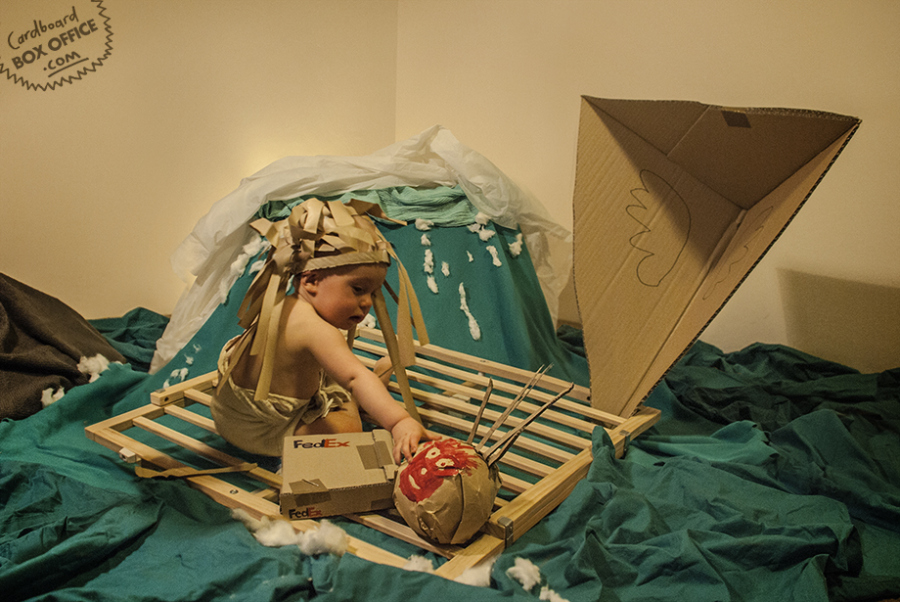
English surname which was originally a nickname, from the Norman French for “bear cub”. In the medieval romance Valentine and Orson, Orson is a wild man raised by bears, and twin brother to the knight Valentine, brought up in a royal French court. Originally, the “wild brother” didn’t have a name, and it seems to be an English innovation to give him a name to reflect his ursine upbringing. Orson has been used as a boy’s name since at least the 17th century, and has historically been more common in the United States. There are several famous men named Orson, including the American actor and director Orson Welles, who directed Citizen Kane and the notorious War of the Worlds radio broadcast – his first name was George, and he went by his middle name. Others include American television actor Orson Bean (real name Dallas Burrows), who lived in Australia during the 1970s, and American sci-fi author Orson Scott Card, who wrote Ender’s Game. You may also have heard of Internet sensation Orson Mackie, an Australian baby who stars in familiar movie scenes created by his parents from cardboard boxes. This masculine name is warm, snuggly, yet strong. It charts in the UK, where it is rising.

Roc

Catalan form of Rocco. Roc Brazilianos was a notorious 17th century Dutch pirate who operated from Jamaica. A cruel and debauched buccaneer, he raised terror on the high seas for many years before mysteriously disappearing with his ship and crew. His real name is not known for sure, but historians think he may have been Gerrit Gerritszoon, who moved to Dutch-controlled Brazil with his parents. Rather less spectacularly, a famous Australian with the name is visionary entrepreneur Roc Kirby, who founded Village Roadshow cinemas, and supported the Australian film renaissance. In his case, Roc is short for Roscoe. A roc is also a gigantic mythological bird which appears in Arabian fairy tales, and is well known to anyone who has read the One Thousand and One Nights. Pronounced like the word rock, this is a cool bad-boy choice which can also be seen as a nature name. It is popular in Catalonia, where it is rising.

Sixten

Swedish name which comes from the Old Norse Sigsteinn, meaning “victory stone”. Sixten Ehrling was one of Sweden’s most famous conductors, known for his difficult, yet witty, personality, and Sixten Sason was a super stylish Swedish designer who created the smooth lines of the Saab in the 1960s. Another famous namesake is the Swedish street artist Sixten, who at one time lived and worked in Melbourne. This is a smart-sounding Swedish heritage choice which provides few problems with pronunciation, as it’s said much as it looks. It is popular in Sweden, where it is rising.

Titus

Roman name of unknown meaning. According to tradition, the name was introduced to Rome by Titus Tatius, the Sabine king who attacked Rome, but later made peace with the legendary Roman king Romulus, the city’s founder. There were three Roman Emperors named Titus, and the Roman historian Livy’s full name was Titus Livius. Saint Titus is mentioned in the New Testament as a companion of Saint Paul. As you can probably tell from all these name bearers, Titus was an extremely common name in ancient times, and used by all social classes. The name gained an unpleasant reputation from Titus Oates, the perjurer who falsely claimed that Catholics were plotting to assassinate King Charles II; more honourable associations are Sir Titus Salt, the manufacturer and philanthropist, and Titus Brandsma, the Catholic priest (now a saint) who spoke out against Nazi ideology and died in a concentration camp. A contemporary namesake is American television actor Titus Welliver, from Sons of Anarchy and The Good Wife. Titus Andronicus is Shakespeare’s first tragedy, one of his most violent and gory plays. Titus charts in the US, where it is rising.

POLL RESULTS
The public’s favourite names were Gideon, Orson and Conrad, and their least favourite were Ajay, Sixten and Roc.

(Photo shows Orson Mackie depicting a scene from the movie Cast Away, on the blog Cardboard Box Office).


Famous Name: Lincoln

26 Wednesday Feb 2014

Posted by A.O. in Famous Names

≈ 8 Comments

Tags

birth notices, British names, english names, famous namesakes, fictional namesakes, honouring, Latin names, locational names, modern classics, name history, name meaning, name popularity, names from movies, names from television, nicknames, popular names, surname names, UK name popularity, US name popularity

089717-port-lincoln

Today is the 210th anniversary of the naming of Port Lincoln, on the Eyre Peninsula in South Australia, on the shores of Boston Bay, which opens out into the Spencer Gulf. Port Lincoln is a regional city of around 15 000 people, and about 7% of the population are Indigenous, from the Nauo, Barngala, Wirangu, and Mirning peoples.

Two of Port Lincoln’s claims to fame are that it is said to have more millionaires per capita than any other place in Australia, and boasts the title of Seafood Capital of Australia, as it has the largest commercial fishing fleet in the country, which catch tuna and sardines, and a thriving aquaculture industry which farms tuna, yellowtail kingfish, abalone, mussels, oysters, seahorses, and lobsters.

Port Lincoln has produced more than its fair share of athletes and sportspeople, with many AFL footballers originally hailing from Port Lincoln. Netballer Lauren Nourse began her career in Port Lincoln, and Paralympic cyclist Kieran Modra was born there. Weightlifter Dean Lukin, who won gold at the 1984 Olympics, was a tuna fisherman, and upon his retirement returned to manage the family fishing business. Another with a connection to the fish industry is tuna farmer Tony Santic, the owner of Makybe Diva, the only horse to win the Melbourne Cup three times. There is a life-sized bronze statue of Makybe Diva on the town’s foreshore.

The scenic beauty of Port Lincoln attracts many tourists, who come here for yachting, scuba diving, and game fishing. The novel Blue Fin by Colin Thiele is set in Port Lincoln and revolves around the fishing industry; the movie was filmed in nearby Streaky Bay. Some of the scenes from Jaws and Gallipoli were filmed in Port Lincoln, and the reality television show Australian Survivor was filmed nearby.

British naval explorer Matthew Flinders discovered Boston Bay on February 26 1802, and named the body of water Port Lincoln, after his birthplace of Lincoln in England. Lincoln is believed to mean “settlement by the pool” in a blend of the British and Latin languages, with “the pool” referring to Brayford Pool, a natural lake in the city’s centre. The city of Lincoln is twinned with Port Lincoln in South Australia.

The surname Lincoln comes from the city of Lincoln, and the most famous bearer must surely be Abraham Lincoln, the 16th President of the United States. He led his nation through the American Civil War, and his Gettysburg Address became an iconic statement of American belief in the principles of liberty and democracy. His assassination in the final weeks of the Civil War made him a national martyr, and he is consistently ranked as one of the greatest US Presidents – often, the very greatest.

Lincoln has been used as a first name for boys since the 18th century, with most early bearers of the name born in Lincolnshire and surrounding districts. Although Lincoln was used as a name in the United States before Abraham Lincoln, its use soared during the years of the Civil War and just after it, and must often have been given in honour of the president.

A famous Australian with this name is actor Lincoln Lewis, the son of rugby league legend Wally Lewis. He has appeared in several television series, such as Home and Away and Neighbours, and had roles in films such as Tomorrow, When the War Began and After Earth. Lincoln is the brother of sportcaster Mitch Lewis, a celebrity dad on the blog in 2012.

The name Lincoln first charted in Australia in the 1960s, and first ranked in the 1970s, débuting at #207. It remained comfortably in the 200s for decades, then suddenly climbed at a dizzying speed during the latter half of the 2000s, and was in the Top 100 by 2009. The instigator of this surge of popularity was probably US television drama series Prison Break, starring Dominic Purcell as Lincoln Burrows. Dominic moved to Sydney from Britain as a baby, and studied acting at the Western Australian Academy of Performing Arts. He won an Australian Film Institute Award for his role in Prison Break.

Currently Lincoln is #67 nationally, #76 in New South Wales, #66 in Victoria, #40 in Queensland, #38 in Western Australia, #37 in Tasmania, and #66 in the Australian Capital Territory. Lincoln was one of the fastest-rising boys names of 2012 – the same year that the movies Lincoln, and Abraham Lincoln, Vampire Hunter were released. From the data that’s come in so far, Lincoln looks set to continue his ascent as one of the fastest-rising names of 2013.

Lincoln is a handsome, clean-sounding modern classic that may be more Aussie than you expected. It has certainly been warmly embraced in Australia, and is more popular here than in either the US or UK, where it isn’t even in the Top 100 (its similarity in sound to popular Lachlan can’t have hurt). Lincoln’s star is on the rise, and looks set to join the national Top 50 fairly soon: it’s already in my personal Top 50 for 2013.

Linc is the obvious nickname, with an attractive similarity to the word link, suggesting your little Linc could join the family together. I am spotting the short form more and more often in birth notices – perhaps because some parents are becoming reluctant to choose the popular Lincoln.

POLL RESULT
Lincoln received a respectable approval rating of 64%. People saw the name Lincoln as stylish and cool (16%), handsome and distinguished (15%), and strong and masculine (15%). However, 14% thought it was too trendy. Only one person thought the name Lincoln was too popular.

(Photo shows fishing boats in the marina at Port Lincoln)

International Names for Girls

23 Sunday Feb 2014

Posted by A.O. in Name Themes and Lists

≈ 19 Comments

Tags

American names, Arabic names, aristocratic titles, birth notices, brand names, Catalan names, celebrity baby names, Chinese names, created names, english names, Etruscan names, European name popularity, famous namesakes, fictional namesakes, French names, Gaelic names, Greek names, hebrew names, historical records, Hungarian names, International Baby Names for Australian Parents, international naming laws, Latin names, middle names, mythological names, name history, name meaning, name trends, names from movies, names from television, Old Norse names, Persian names, Provencal names, royal names, saints names, scandinavian names, Slavic names, Spanish names, surname names, UK name popularity, unisex names, US name popularity, virtue names, Visigothic names

juno

These are names chosen from my e-book, International Baby Names for Australian Parents – names which are familiar in other countries, but rarely used here. I chose ten that I particularly like, or find interesting, or think very usable. If you haven’t read the book, it gives you an idea as to what’s inside, and if you have read it, it’s a chance for me to provide more information than is possible in a book.

Anais

Identified as a French form of the Persian name Anahita, meaning “pure, immaculate”; Aredvi Sura Anahita is an Indo-Iranian goddess of fertility and wisdom. To get around French naming regulations, it was explained as a Catalan or Provençal form of Anna or Anne. The name is strongly associated with the American writer Anaïs Nin, whose first name was Angela, but always went by her second name. Anaïs was born in France and was of Spanish, Cuban, French and Danish descent. She is principally known as a diarist, where she intimately explored the complexities of her personal life, and as a writer of female erotica. Her name was the inspiration for the Cacharel perfume, Anais Anais, and in Australia we have the children’s clothing label, Aden + Anais. The name is pronounced a-na-EES. Feminine and exotic, Anais is very popular in France and Chile, and charts in the UK.

Bo

This short spunky name has different origins. It is a Chinese name for both boys and girls which means “wave”, as in a wave on water (especially the sea). It is a rare Chinese surname too, and an aristocratic title translated as the equivalent of a Count. It is also a Scandinavian boy’s name derived from the Old Norse name Búi, meaning “to live”. As a girl’s name, its most famous namesake is American actress and sex symbol Bo Derek, born Mary Collins. Ms Derek doesn’t know why she chose the name Bo: it just seemed “grown up” and “unusual” to her. A fictional girl Bo is the nursery rhyme shepherdess Bo Peep – her name comes from a slang term for being in a pillory, presumably because the person “peeped” through the head holes. Radio host Tim Blackwell named his daughter Bo last year, and since then there seems to be a few girl babies with the name in Australian birth notices. To show the gender divide in regard to this name, Bo is rising in the UK charts as a girl’s name, and rising in the US as boy’s name (probably a variant spelling of Beau). In the Netherlands, it charts for both sexes, but is only popular for girls.

Cora

The American author James Fenimore Cooper is credited with the creation of this name, in his 1826 historical novel, The Last of the Mohicans. The novel’s heroine is Cora Munro; dark, intelligent, and serious, she is a distant descendant of African-American slaves who forms a relationship with the son of a Native American chief – the titular “last of the Mohicans”. Her story ends tragically. There are actually many people named Cora in the records prior to the book’s publication, dating back to the late 16th century, but it is difficult to tell if they are abbreviations for longer names, like Cordelia. The name Cora is often theorised to be based on the Greek name Kore, meaning “maiden”; it was the common name of the goddess Persephone. If invented by Cooper, this makes sense, as there are a number of names with this derivation, such as Corinna. However, if its use goes back to the 16th century, it would pre-date the use of these “Kore” names, and may be based on the Latin cor, meaning “heart”. Cora is also used to Anglicise the Gaelic name Coira, meaning “seething pool”. Cora is a Downton Abbey name (the character is American-born), and fits in with the trend for simple, graceful names like Clara and Isla. It charts in both the US and UK, and is popular in Northern Ireland.

Elvira

Spanish form of an unknown Visigothic name whose meaning is much debated. It was traditional amongst medieval Spanish royalty, and became a favourite in fiction. The vengeful scorned lover Elvira of Mozart’s Don Giovanni is just one example of the many characters of this name in operas, plays, novels and films. Another is the title character of Noel Coward’s supernatural comedy Blithe Spirit, a hauntingly beautiful former wife who arrives in the least convenient fashion. Elvira is the name of Donald Duck’s grandmother, and many will remember the campy, cleavage-enhanced Elvira, Mistress of the Dark, played by Cassandra Peterson. A famous person with the name is Elvira Madigan (born Hedvig Jensen), a 19th century Danish circus performer who had a tragic love affair. Her story has been turned into several films and songs. English-speakers can pronounce this romantic name either el-VEER-ah or el-VY-ra (I prefer the first, as the second reminds me of virus), and it fits in with popular names such as Ella and Ava. Elvira charts in The Netherlands and is popular in Sweden.

Hermione

Derived from Hermes, the Greek god of transitions and boundaries, who was the messenger of the gods, and patron of travellers, herdsmen, thieves, public speakers, comedians, writers, poets, athletes, inventors, and merchants. Most scholars understand his name as meaning “stone, roadside shrine, boundary marker” – these were dedicated to Hermes as the god of boundaries and travellers. It may be related to the Greek for “the interpreter” to reflect the god’s role as divine messenger. In Greek myth, Hermione was the daughter of the lovely Helen of Troy, and had relationship troubles of her own involving Trojans. There is a Saint Hermione, an early Christian martyr who was the daughter of Saint Philip, identified as a prophetess in the church. In literature, Hermione is a beautiful queen accused of infidelity in Shakespeare’s play, The Winter’s Tale, and Harry Potter’s best female friend, the book-smart Hermione Granger. An Australian character of this name is Hermione the Modern Girl, the cartoon creation of Kaz Cooke. A famous namesake is British actress Hermione Norriss, from television shows Cold Feet and Wire in the Blood. This elegant name is pronounced her-MY-oh-nee, and charts in the UK.

Ilona

Hungarian name of uncertain meaning. It is usually said to be a form of Helen, although this may be folk etymology. In Magyar folklore, Ilona is the traditional name of the Queen of the Fairies. She is very beautiful, but also mischevious, and at times, dangerous! Archduchess Ilona of Austria was a Hungarian member of the Hapsburgs, one of the great royal houses of Europe; she passed away a few years ago. This pretty name is usually pronounced ih-LOH-na, and has Loni as the obvious nickname. It charts in France.

Juno

The Roman goddess of marriage and childbirth, and the queen of the gods, besides being the patron and protector of the Roman state. She was seen as eternally youthful, filled with forceful vitality, and a fertility figure, yet also warlike. Juno was the sister and wife of the sky god Jupiter, and the divine couple are two of the oldest known Roman gods. Like her husband, Juno had the power to throw thunderbolts, and the couple’s relationship could be stormy at times. The Romans believed that each woman had a protective guardian spirit called a juno, and this was given offerings on the woman’s birthday. The goddess’ name may mean “youth”, with the suggestion of vitality and fertility, but it is also possible that it is related to that of the Etruscan mother goddess Uni, meaning “she who gives”. The Romans connected her name to the waxing and waning of the moon – perhaps with the idea that, like the moon, she constantly renewed herself. The month of June is named in Juno’s honour, and when a woman is described as junoesque, it means she is beautiful, tall and shapely in a stately, imposing way. A famous person with the name is British actress Juno Temple, who has been in The Other Boleyn Girl, and The Dark Kight Rises. The movie Juno, starring Ellen Page, has helped give this name recent exposure, and it fits in with the trend for names ending with O. You may recall that New Zealand name blogger Anna Hamilton has a little girl named Juno. Juno charts in the UK, where it is rising.

Patience

Patience is the ability to endure difficult circumstances, persevering without exhibiting negativity such as irritation or anger, and being able to deal with strain or frustration during long-term difficulties. It is considered one of the highest virtues in several religions, such as Islam, Buddhism and Hinduism, and in Christianity is one of the Seven Heavenly Virtues. Modern psychology sees patience as a sign of self-control and maturity, and it is a secular virtue as well. The word patience is ultimately from the Latin for “suffering”, and it was introduced as a virtue name by the Puritans in the late 16th century. A famous Australian namesake is Patience Hodgson, a member of indie rock band The Grates. Virtue names are back in fashion, and this one seems both admirable and attractive – a name that someone can grow with. Patience charts in the US.

Safiya

Variant of Safiyya, feminine form of the Arabic name Safi, meaning “pure”. The name is important in Islam because Safiyaa bint Huyayy was a Jewish woman captured from a nomadic Arabian tribe at the age of 17 who was chosen by Muhammad for his own. Previously, she had dreamed that the moon fell from the heavens into her lap, and this was interpreted as a miraculous sign she would marry Muhammad. She converted to Islam and became one of the Prophet’s wives, and after his death gained quite a bit of power and influence. Safiya is pronounced sa-FEE-ah, and is an Arabic heritage choice which fits in with current trends, as it is not dissimilar to popular Sophia. It charts in both the UK and France.

Ziva

Slavic name meaning “living, being, existing”. In Slavic mythology, Živa was a goddess of life and fertility who was worshipped throughout what is now Poland, the Czech Republic, Slovakia, Slovenia, and Germany before the coming of Christianity. She was depicted as a beautiful woman, and people prayed to her for good health and long life. She seems to have been connected with the harvest of both fruit and grains, and one story is that she was able to turn herself into a cuckoo bird. Ziva is also a feminine form of the Hebrew name Ziv, meaning “bright, radiant”. In the television drama series NCIS, Ziva David is an Israeli-American agent portrayed by Cote de Pablo. Pronounced ZEE-vah, Ziva fits in with popular names such as Ava and Zoe. It charts in The Netherlands, and the UK, where it is rising, and is popular in Slovenia.

POLL RESULTS
The public’s favourite names were Cora, Juno and Hermione, and their least favourite were Safiya, Patience and Elvira.

(Photo shows Ellen Page as Juno MacGuff in Juno)

Famous Name: Boris

05 Wednesday Feb 2014

Posted by A.O. in Famous Names

≈ 2 Comments

Tags

Bulgar names, Bulgarian names, famous namesakes, fictional namesakes, name history, name meaning, nicknames, royal names, Russian names, saints names, Slavic names, Turkic names, UK name popularity, US name popularity

604458-23038244-860c-11e3-8f28-96b14e4a5093

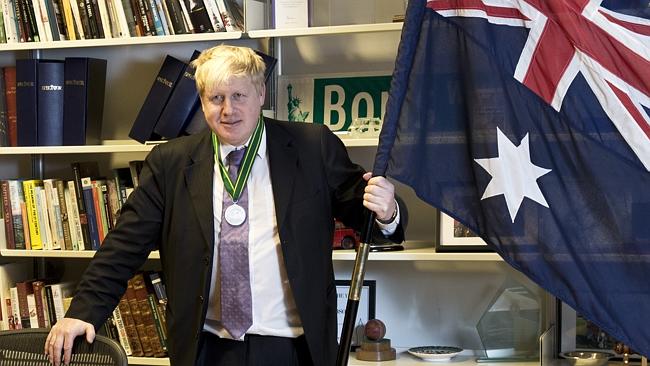
Last week we covered the name of the Australian of the Year for 2014, and here we have another name associated with the Australia Day Foundation awards. At an Australia Day dinner in London, Boris Johnson, the Mayor of London, was declared Honorary Australian of the Year for 2014.

The flamboyant mayor confessed to being a “bit baffled” by his unexpected award, which he received for promoting Australian interests, and campaigning to create visa-free labour and migration between Australia and the United Kingdom. You’ve probably heard on the news that the numbers of Antipodeans in the UK has dropped significantly, partly because of new restrictions on Australians in gaining visas and employment. It’s hard to believe that Londoners want more Australians, but Mayor Johnson will endeavour to get them more anyway.

In case you are dubious about Boris Johnson’s qualifications for being an Australian (even an honorary one), he spent a working holiday in Australia as a teenager, and seems to have had a pretty good time, and he has relatives here. He also points out that as there are more than 200 000 Australians living in London, he can be counted as mayor of the 12th largest Australian city.

Boris is a Bulgar name derived from the Turkic nickname Bogoris, usually interpreted as “short, small”, although other suggestions are “wolf” and “snow leopard, lynx, tiger”. Another theory is that the name ultimately comes from an Iranian source, and may mean “god-like”. Boris can also be used as a short form of the Slavic name Borislav, meaning “one who fights for glory”.

The first person known to history with this name is Prince Boris I, a 9th century ruler of the First Bulgarian Empire who converted to Christianity and adopted the name Mikhail. Boris seems to have converted chiefly for diplomatic and political reasons, for as a Christian ruler he could make more alliances and expand his personal power. However, his conversion also appears to be have been sincere, and at the end of his reign he abdicated to become a monk: he kept having to come out of monkish retirement to quash pagan rebellion and help out with major crises. After his death, he became known as the first Bulgarian saint.

The name Boris became particularly associated with Russia, because Boris II, the great-grandson of Boris I, formed an alliance with the Rus’ Slav prince, Sviatoslav I of Kiev. Sviatoslav’s son Vladimir the Great had a son named Boris – it is conjectured that his mother may have been Bulgarian, possibly even Boris II’s sister. The Kievan Rus’ converted to Christianity, and Boris (son of Vladimir) was later martyred and canonised, becoming one of the Russian Orthodox Church’s most revered saints. The name Boris became used in surrounding countries, and was a traditional name amongst royalty and nobility.

Boris is often seen by English-speakers as an almost comically stereotypical Russian name, and is a favourite choice for fictional villains. This may be a hangover from the Cold War, when Russians were generally portrayed as menacing “baddies”, or it may be because of the English movie star Boris Karloff (real name William Pratt), best known for playing sinister roles in Hollywood horror films such as Frankenstein and The Mummy.

Despite the name being familiar due to high profile Borises such as German former tennis champ Boris Becker, Russian author Boris Pasternak who wrote Dr Zhivago, former Russian President Boris Yeltsin, and Boris Johnson himself, Boris continues to sound rather exotic.

Boris is one of my early name loves, and I think this is because of the novels for young people by Mary Rodgers called Freaky Friday and A Billion For Boris (there’s another book in the series, but my school library didn’t have it). I liked A Billion For Boris better than Freaky Friday, probably because the idea of a psychic television which can make you rich was more appealing to me than swapping lives with my mother (an incredibly selfless workaholic whose life would be daunting for me to take on even as an adult).

Boris is (as you may remember) the tomboyish Annabel’s neighbour, childhood playmate and proto-boyfriend, and as you may also recall, during the course of Freaky Friday, it transpires that Boris’ name is actually Morris – he just has a nasally voice and says his Ms as Bs. Perhaps Mary Rodgers intended this to be a Oh thank goodness – he has a totally normal name! moment, but I was horrified.

To me, Morris was a hideous old man name, reeking of mothballs and uncoolness. Maybe in America in the early 1970s, Morris was considered an okayish name for a nerdy teenager (it only left the US Top 1000 in the 1990s), but by the time I got to read the books, it was nausea-invoking. Luckily, everyone continues to call Morris Boris for the rest of the books.

I thought then, and still tend to think now, that Boris is an awesomely hip yet huggable name, with a lot going for it. Interestingly, the name Boris has risen in popularity in the UK since the 1990s, and last year it made the Top 1000 again at #901 – it debuted there in 2004 at #999.

Political figures are not usually helpful to the popularity of their own names, yet Boris Johnson does not seem to have negatively affected the name Boris. Its rise in the UK may have more to do with the growing number of emigrants to Britain from Russia and Slavic countries though. Indeed, Boris Johnson has Russian ancestry, and describes himself as a “one man melting pot”, so melting a bit of Australian into the pot won’t be any great stretch for him.

POLL RESULT
Boris received an approval rating of 21%. 40% of people saw it as ugly and lumpy, 17% thought it was only suitable for people with Russian or Slavic heritage, and 12% preferred the name Morris. Only 5% of people thought the name Boris was handsome and exotic. 7% were put off the name by Boris Johnson.

← Older posts
Newer posts →

Enter your email address to follow this blog

Categories

Archives

Recent Comments

A.O.'s avatarwaltzingmorethanmati… on Zarah Zaynab and Wolfgang…
Madelyn's avatarMadelyn on Zarah Zaynab and Wolfgang…
JD's avatardrperegrine on Can Phoebe Complete This …
A.O.'s avatarwaltzingmorethanmati… on Rua and Rhoa
redrover23's avatarredrover23 on Rua and Rhoa

Blogroll

  • Appellation Mountain
  • Baby Name Pondering
  • Babynamelover's Blog
  • British Baby Names
  • Clare's Name News
  • For Real Baby Names
  • Geek Baby Names
  • Name Candy
  • Nameberry
  • Nancy's Baby Names
  • Ren's Baby Name Blog
  • Sancta Nomina
  • Swistle: Baby Names
  • The Art of Naming
  • The Baby Name Wizard
  • The Beauty of Names
  • Tulip By Any Name

RSS Feed

  • RSS - Posts

RSS Posts

  • Celebrity Baby News: Melanie Vallejo and Matt Kingston
  • Names from the TV Show “Cleverman”
  • Can Phoebe Complete This Sibset?
  • Zarah Zaynab and Wolfgang Winter
  • Baby, How Did You Get That Name?
  • Celebrity Baby News: Media Babies
  • Celebrity Baby News: Adelaide Crows Babies
  • Celebrity Baby News: Chris and Rebecca Judd
  • Names at Work: Name News From the World of Business and Employment
  • Celebrity Baby News: Sporting Round Up

Currently Popular

  • Celebrity Baby News: Alisa Camplin and Oliver Warner
  • Rare Boys Names From the 1950s
  • Sad Celebrity Baby News (contents may cause distress)
  • The Top 100 Names of the 1930s in New South Wales
  • The Top 100 Names of the 1940s in New South Wales

Tags

celebrity baby names celebrity sibsets english names famous namesakes fictional namesakes honouring locational names middle names name combinations name history name meaning name popularity name trends nicknames popular names saints names sibsets surname names twin sets unisex names

Create a free website or blog at WordPress.com.

Privacy & Cookies: This site uses cookies. By continuing to use this website, you agree to their use.
To find out more, including how to control cookies, see here: Cookie Policy
  • Subscribe Subscribed
    • Waltzing More Than Matilda
    • Join 517 other subscribers
    • Already have a WordPress.com account? Log in now.
    • Waltzing More Than Matilda
    • Subscribe Subscribed
    • Sign up
    • Log in
    • Report this content
    • View site in Reader
    • Manage subscriptions
    • Collapse this bar
 

Loading Comments...