• About
  • Best Baby Names
  • Celebrity Baby Names
  • Celebrity Baby Names – Current
  • Celebrity Baby Names – Past
  • Featured Boys Names
  • Featured Girls Names
  • Featured Unisex Names
  • Links to Name Data
  • Waltzing on the Web

Waltzing More Than Matilda

~ Names with an Australian Bias of Democratic Temper

Waltzing More Than Matilda

Tag Archives: surname names

Australian Beaches That Could be Used as Girls Names

30 Sunday Dec 2012

Posted by A.O. in Name Themes and Lists

≈ 8 Comments

Tags

Albanian words, animal names, Australian Aboriginal names, Bonds Baby Search, celebrity baby names, code names, english names, ethnonyms, famous namesakes, fictional namesakes, French names, Gaelic names, historical records, Italian names, Latin words, literary names, locational names, meteorological names, middle names, mythological names, name history, name meaning, name popularity, names from movies, names in songs, names of rivers, Native American names, nature names, nicknames, Polish names, retro names, Robert Louis Stevenson, Russian names, Scottish names, season names, Slavic names, spiritual concepts, surname names, unisex names, vintage names, vocabulary names

morningtideYou may have noticed that all the names that have been featured on the blog since the weather got warmer have had some connection with water or the sea. With summer holidays upon us, it is only fitting that the last Name List for the year is one of Australian beach names.

Airlie

The town of Airlie Beach in the Whitsunday region of north Queensland is a popular tourist destination and one of the departure points for the Great Barrier Reef. Because James Cook thought he arrived here on Whitsunday, every year there is a Blessing of the Fleet on Whitsunday (Pentecost) – although Cook almost certainly got the day wrong and it was really Whitmonday. The town’s beach is quite small, and infested by sea wasps, the most lethal jellyfish in the world. For the convenience of those wishing to avoid a painful death, a swimming lagoon has been built on the foreshore. The town is named after Airlie in Scotland, the seat of the Earl of Airlie. Airlie Castle is referenced in the ballad, The Bonnie House o’ Airlie, and mentioned in Robert Louis Stevenson’s novel, Kidnapped. The meaning is not known, although it’s possibly from the Gaelic for “edge of a ridge”. Airlie is a name reasonably well-known in Australia, although rare elsewhere; there’s ABC presenter Airlie Ward, hockey player Airlie Ogilvie, policy analyst Dr Airlie Worrall, and actress Airlie Dodds. This is a modern name with ties to Scottish history, and would be a great choice if Airlie Beach is meaningful to you.

Bondi

Bondi Beach is extremely popular with locals and tourists alike, one of Sydney’s iconic destinations, and heritage listed. In the fashionable eastern suburbs, it’s a place to see and be seen, lined with hotels, cafes and restaurants from where you can view the beach and beachgoers. Bondi has always had a reputation for showing a lot of flesh, and in stricter times the American actress Jean Parker was booted off it for wearing a bikini. These days topless bathing is common on Bondi. If almost-naked humans aren’t your thing, there is always the chance of seeing dolphins, fairy penguins, and in season, whales. Bondi Beach has many cultural events, including the annual City to Surf charity run, and it stars in TV shows such as Bondi Rescue and Bondi Vet. The name Bondi (said BON-dye) is said to be from boondi, a local Aboriginal word meaning “sound of water breaking over rocks”. The rare use of this name in records may be from the Italian surname Bondi (said bon-DEE), meaning “good day”. I saw a baby girl named Bondi in this year’s Bonds Baby Search. This is an unusual choice, but rather patriotic, and seems ideal for beach-loving Sydneysiders.

Etty

Etty Bay is a picturesque little bay in far north Queensland; the nearest town is Innisfail. Enclosed by rainforest filled with wildlife, it attracts bushwalkers, birdwatchers and picnickers, and is known as one of the best places to see endangered cassowary birds in the wild – cassowaries are large flightless birds around six feet tall. Etty Beach is considered safe for swimming, as long as you avoid saltwater crocodiles and deadly jellyfish. Etty is a pet form of names such as Esther, Ethel, Henrietta and Harriet, and was most common in the nineteenth and early twentieth centuries. With Etta tipped as the next retro-chic name, and Arrietty from The Borrowers receiving notice, Etty seems not only cute and usable, but positively stylish. It fits in with other vintage nicknames such as Elsie, Hattie and Millie.

Miami

Miami is a suburb of the Gold Coast which was first developed in the 1920s to entice tourists, and is still a popular place for people to visit. Its clean sandy surf beach make it a favourite destination for family holidays. It is named after Miami in Florida, as being somewhere else that’s hot, humid and beachy – during the 1920s, Miami enjoyed such prosperity and growth that it was dubbed “The Magic City”. This success the Queensland developers no doubt hoped to emulate. The city of Miami was named after the Miami River, and this in turn was named for the Native American people called the Maiyami. They took their name from the lake they lived by (later known as Lake Okeechobee); the name simply means “big water”. Miami is a name I see sometimes on little girls, and its not only an American place name, but an Australian one as well. It fits in with popular names such as Mia, Maya and Amy.

Pippi

The town of Yamba in northern New South Wales lies at the mouth of the Clarence River, and boasts eleven beaches, including Pippi. It’s primarily known for surfing, and the Pippi Beach Classic is a surfing event held here each January. At one end of the beach is the enticingly-named Lovers Point, and from here is an easy walk up to a rock shelf which gives magnificent views of the sea. Dolphins are plentiful, and whales can be seen during winter and early spring. Pippi Beach is named after the pippis or pipis which can be found here – small edible clams which are often used for fish bait. You may recall that John Sutton, co-captain of the South Sydney Rabbitohs team in the NRL, welcomed a daughter named Pippi last year. As John is a keen surfer, I wondered if Pippi Sutton may have been named after this popular surf beach. You probably also know the name from the Pippi Longstocking books by Astrid Lindgren – the character’s name was invented by Mrs Lindgren’s nine-year-old daughter, Karin. You can see Pippi as short for Phillipa, and if Pippa or Piper delight you, yet seem too common, then sprightly Pippi may fit the bill.

Rainbow

Rainbow Beach is a small town in southern Queensland which was once a centre for sand-mining, but is now a popular tourist destination with an attractive beach and many bushwalking tracks. The town get its name from the brilliant coloured sand dunes which surround it. According to a local Aboriginal legend, the dunes received their colours when the spirit of the rainbow plunged into the cliffs after coming off second-best in battle. More prosaically, the colours stem from the sand’s rich mineral content. The evanescent beauty of rainbows have made them part of mythology for many thousands of years. Both Greek and Norse myth saw the rainbow as a path between heaven and earth; in Irish folklore there is a pot of gold at the end of the rainbow; and in the familiar story of Noah and the Ark from the Old Testament, the rainbow is a sign of God’s promise to never destroy the earth again. In Australian Aboriginal mythology, the rainbow serpent is of great significance and power, creating and marking the earth’s territories, and controlling its water resources. The subject of artists, singers and poets, the stuff of hopes and dreams, the rainbow has long been used as a symbol of social change. The striking name Rainbow is not that rare in old records, and used for both sexes, but is most common as a middle name.

Trinity

Trinity Beach is a suburb of Cairns in far north Queensland; the city lies on Trinity Bay, which is where the suburb gets its name. Captain James Cook named it on his 1770 voyage, as he arrived there on Trinity Sunday, which is the first Sunday after Pentecost (hopefully he had his dates sorted out by this stage). It is a festival to celebrate the Holy Trinity of the three Persons of God: Father, Son, and Holy Spirit. Although the Holy Trinity is a Christian concept, the idea of a triple deity is found in several religions. The name Trinity was used from the 17th century, and was given to both sexes, in honour of the Holy Trinity. In recent years, it has gained a sci-fi image, for there has not only been a cult science-fiction film called Trinity, but Trinity is the love interest in The Matrix movie series, and Trinity Wells a newsreader in Doctor Who, Torchwood and The Sarah Jane Adventures. More ominously, the Trinity Test was the code name for the first detonation of a nuclear bomb in 1945, heralding the start of the Atomic Age.

Vera

Vera View Beach is just north of famous Cottlesloe Beach, in Perth, Western Australia. It isn’t one you will see promoted as a major tourist destination; not the most stunning beach in the world, it nonetheless makes a pleasant walk from the main beach, and is near the main cafe strip. It is also a good place to go snorkelling, as there a small reef nearby teeming with sea life. The beach’s name comes from the fact that it is near Vera View Parade in Cottlesloe. Vera is a Russian name which means “faith”; we tend to be struck by its similarity to the Latin for “truth”, while Albanians notice that it sounds like their word for “spring”. Vera was #15 in the 1900s, and by the 1940s was out of the Top 100. It ceased to chart in the 1980s, but has very recently made a comeback, and was #626 in 2011. Its image was severely dented by the sour-faced prison guard, Vera “Vinegar Tits” Bennett, in the 1970s-80s TV series, Prisoner (no wonder it disappeared from the charts then). However, with simple old names firmly back in fashion, and the V sound becoming increasingly popular, retro Vera could do very well.

Vivonne

Vivonne Bay is on Kangaroo Island in South Australia; the island is off the coast of Cape Jervis. The pristine beach at Vivonne Bay is several kilometres long, and popular for surfing and fishing. There is a tiny town of Vivonne beside the bay. Vivonne Bay was named by the French explorer Nicolas Baudin, who came here in 1803. He was the first to map the western and southern coasts of Australia, and his expedition was a great success, discovering more than 2500 new species and meeting the Indigenous people of Australia. Apparently his expedition harboured a spy – one of his men prepared a report for Napoleon on how to invade and capture the British colony in Sydney Cove, but recommended not to. Baudin died of TB in Mauritius on the way home. He named Vivonne Bay after the French town of Vivonne, near Poitiers (or the aristocratic surname which comes from the town – the town’s name comes from the nearby river Vonne). Readers of Marcel Proust will remember he used the name Vivonne for the river in Swann’s Way. I think this name is pretty, and seems like a cross between Vivienne and Yvonne. It’s different, but not too different.

Wanda

Wanda Beach lies on Bate Bay in the suburb of Cronulla; this is in Sutherland shire, in the southern districts of Sydney. Wanda has a dark past, because there were two murders here in 1965. Two teenage girls, Marianne Schmidt and Christine Sharrock, best friends and neighbours, disappeared at Wanda Beach while on a picnic, and their bodies, partially covered in sand, were found the next day. The murder is still unsolved. Wanda Beach gets its name from an Aboriginal word, wanda, said to mean “beach” or “sand dunes”. Wanda is also a Polish name; there is a medieval Polish legend about a Princess Wanda, and the name was popularised in the English-speaking world by English author Ouida’s 1883 novel, Wanda. The name may come from the West Slavic people known as the Wends; their name possibly means “tribe, kinship, alliance”, ultimately from an ancient word for “love, desire”, and related to the name Venus.

(Photo shows the morning tide coming in at Etty Bay)
This or That?

16 Sunday Dec 2012

Posted by A.O. in Your Questions Answered

≈ 11 Comments

Tags

Biblical names, celebrity baby names, choosing baby names, classic names, Eleanor Nickerson, faux-Celtic names, Irish names, name combinations, name popularity, nicknames, popular names, retro names, scandinavian names, Scottish names, surname names, unisex names, vocabulary words

l_2048_1536_55BA4ECF-57A0-4861-954A-D5C549924414After considering all the possible baby names, and a few impossible ones just for good measure, sometimes you end up with two or three names that you love equally, and just can’t choose between them.

Many people searched the Internet to discover which of their final options would make the better choice, and somehow stumbled upon this blog.

I decided to answer their questions, and found that quite often the name that seemed “better” wasn’t the name I liked best, or that I would choose.

Perhaps that is the lesson to be learnt here – not to look for the name which ticks the most boxes, or which fulfils more of your preferences, but the one which satisfies your heart the most.

When there is no right or wrong answer, how do you decide between the last two names on your list?

Adele or Adeline?

Classic Adele is the safer choice, and retro Adeline the more daring choice. I think I would be tempted to go with Adeline.

Riley or Caleb?

I would go for the Biblical name, as having more history behind it, and say Caleb.

Ryan or Dylan?

You ask which one sounds as if it is in a higher socio-economic group. To me, both seem fairly average or “normal”, and I don’t think I could pick one over another.

Rocco or Frankie?

Rocco – it’s rapidly increasing in popularity while still underused. Frankie is more fashionable as a feminine name now (if that bothers you).

Chloe or Lily?

Both are extremely popular, but I would say Chloe is the safer choice, as it has been Top 100 since the 1980s and only just peaked. Chloe also has a classical background, and is popular with all classes. Despite that, I prefer Lily.

Lillian or Clara?

I’d go with Clara, simply because it isn’t in the Top 100 yet and Lillian is.

Clara or Kayla?

Definitely Clara – Kayla doesn’t have the history behind her that Clara does, and is on her way out.

Clara or Zara?

I think I’m going to have to back Clara again, just to be consistent.

Zara or Allegra?

I love Allegra, but I have to admit she’s a risky choice, since she does seem to be getting quite trendy as a celebrity baby name. My heart says Allegra, but my head says Zara.

Charlie or Jack?

I’d go with Jack if you want a classic name that is definitely masculine, and is a short form that has been long established as a full name. Charlie is very cute though.

James or Hamish?

James is the safer choice, being a classic that’s never left the Top 20. Hamish is a bit riskier, but if you want something obviously Scottish, then Hamish is your boy.

Hunter or Archer?

I prefer Archer, because you get Archie as a nickname. If you hate nicknames, then Hunter is probably more appropriate.

Evalyn or Aveline?

You ask which one sounds “lovelier”; in my opinion, it is Aveline. However, I think Evelyn is lovelier than Aveline. Can I interest you in Evelyn?

Emmie or Emma?

You ask which one sounds “softer”; to me, Emma sounds softer.

Indie or Milla?

Even though Milla is Top 100 and Indie doesn’t chart, I’m going to say Milla. This is because if all the spelling variants were combined, I think Indie would be Top 100 as well. To me, Milla seems more distinctive.

Amelia or Matilda?

These are both safe choices, although if popularity bothers you, you should know that Amelia is probably heading for the #1 spot, which she already holds in the UK.

Annie or Matilda?

If you want something less popular, yet which has been stable for many years, then pick Annie. If you would prefer a non-nickname choice, then go with Matilda.

Josephine, Violet or Mathilda?

Josephine is the safest choice, and Mathilda seems trendiest because Scandinavian-type names are coming into fashion. I think Violet is the prettiest. You could use all three, because Josephine Violet Mathilda is really nice as a name combination.

Josephine or Audrey?

Both classic names, but Josephine is more stable, and isn’t in the Top 100. I find Audrey really adorable though, so I’m going to go against the sensible advice and say Audrey. If you’re feeling sensible, pick Josephine.

Elsie or Josie?

Definitely Elsie – it’s fashionable, increasing steadily in popularity, and Eleanor Nickerson tips it to become the next Evie in the UK.

Luella or Eloise?

Eloise is the more stylish and safer choice, but Luella is sweeter.

Eloise or Matilda?

I think Eloise is the clear winner here, because it’s still at the bottom of the Top 100, and seems more up-and-coming.

Matilda or Helen?

Classic Helen has been stable for decades, and peaked in the 1940s, suggesting she may be due for a comeback in about ten years or so. I’d be inclined to be brave and choose Helen.

Max or Darcy?

Max is by far the safer choice, as Darcy is losing popularity as other surname names take its place. I think I like Darcy better though.

Max Archie or Max Oscar?

When I hear “Max Oscar“, I immediately visualise a gigantic Academy Award statue, so I prefer Max Archie.

Oscar or Lucas?

Oscar – Lucas is just about to hit its peak.

Finn or Lewis?

Lewis if you want a classic name that’s less popular, Finn if you’re looking for an Irish heritage choice.

Kallan or Flynn?

Flynn – I don’t like it when names randomly start with a K instead of a C.

Taj or Kyan?

Taj. I’ve noticed faux-Celtic names like Kyan tend to have a short shelf life and date quickly.

Keira or Kirra?

Oh, go for the Australian choice and pick Kirra – be patriotic.

Sibella or Imogen?

Sibella, although much less popular, seems more trendy, and may get lost amongst the other Bella names, so I would pick Imogen.

Maisie or Matilda?

I love Maisie, she’s so sweet and charming, and seems much fresher than Matilda, so that would be my preference.

Matilda or Lilah?

Matilda – I don’t like that spelling of Lila, which makes no sense to me.

Jett or Jet?

Tough call. I think I might be tempted to go with vocabulary word Jet, which seems more fashion-forward.

Jai or Jye?

Jai – it seems more like a real name.

Jett, Levi or Jai?

Levi. Probably because it stands out pitted against two names starting with J.

Famous Names: Neptune and Taylor

12 Wednesday Dec 2012

Posted by A.O. in Famous Names

≈ 1 Comment

Tags

astronomical names, english names, Etruscan names, fairy tales, famous namesakes, historical records, honouring, Indo-European names, Irish names, Italian names, Latin words, locational names, mythological names, name combinations, name history, name meaning, name popularity, names of ships, nicknames, Roman names, surname names, UK name popularity, unisex names, US name popularity

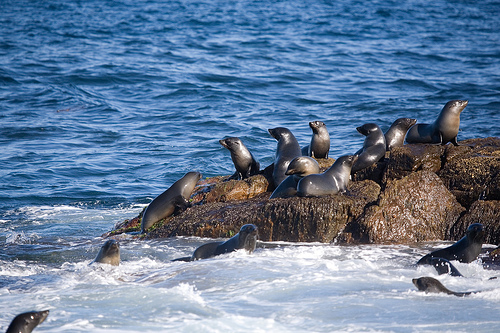
seals on neptuneAt the end of November, the Premier of South Australia announced that the Neptune Islands Group Marine Park would be renamed the Neptune Islands Group (Ron and Valerie Taylor) Marine Park. This is no mere change of name, for a network of 19 marine parks has taken effect in order to protect the seas from over-fishing. The premier noted that the southern oceans had more diversity than the Great Barrier Reef, and contained many plants and animals that cannot be found anywhere else.

The marine park has been named in honour of Ron and Valerie Taylor; divers, film-makers, shark experts, and conservationists who were ardent proponents of preserving marine habitats. Their skills in underwater filming were used on such films as Jaws and The Blue Lagoon, but more importantly, they wrote books and made documentaries to highlight the beauty and fragility of marine ecology. They won many awards for both photography and conservation. Ron passed away this year, and Valerie continues to be an advocate for marine protection.

The Neptune Islands, near Port Lincoln, were named by the navigator and cartographer Matthew Flinders in 1802. Rugged and remote, they seemed to him inaccessible, as if they would would always belong to King Neptune.

Neptune is the English form of Neptunus, the Roman god of fresh water springs, lakes, rivers, and the sea; he is the Roman equivalent of the Greek god Poisedon. He was worshipped in a festival that fell at the height of summer, when rainfall was at its lowest, and water most needed and valuable. As you know, his name has been given to the eighth planet from the Sun.

The meaning and origin of his name is obscure, with etymologists in disagreement over which language/s Neptune might be derived from. The general view is that it means something like “moistness”, “damp, wet”, “clouds, fog”, or “to water, irrigate”.

Another theory is that it is from the Italian town of Nepi, north of Rome, which was anciently known as Nepet or Nepete. This town is famous for its mineral springs, and traditionally connected to the god Neptune, who would presumably have approved of its watery wonders.

The town’s name is Etruscan, from the Etruscan name for Neptune, which was Nethuns. This may be related to the Irish god Nechtan, who had a sacred well, and thus another liquid connection. In fact there are several Indo-European deities with similar names and aqueous roles, and it is speculated that their names may go back to an ancient word meaning “nephew, grandson”.

One of the ships of the Second Fleet was called Neptune, and unfortunately it had the worst reputation of all for its appalling mistreatment of convicts.

Neptune sounds as if it should be ultra rare in Australian name records, but there are quite a few from the 19th century – at least quite a few more than I expected to find. It was mostly used in the middle, such as Cecil Neptune, and Samuel Caesar Neptune, but you can also find men named Neptune Persse and Neptune Frederick. Two of them rejoiced in the full names of Neptune Love and Neptune Blood; I believe the name Neptune is traditional in the Blood family.

Neptune would be very unusual as a baby name today, and I can’t quite imagine what you would use as a nickname – Neppy sounds too much like “nappy” to me. At the very least, please not Tuna.

A complete change of pace brings us to the name Taylor, a very common English surname referring to someone who made clothes as their occupation; the word tailor is ultimately from the Latin talea, meaning “a cutting”. In the Middle Ages, tailoring was a high-status craft, as only the wealthy could afford to have their clothing professionally made, and tailors could command good fees. Both men and women were employed as tailors.

There are many folk tales and fairy stories about tailors, and nearly always the tailor is depicted as being extremely clever, and confidently able to outwit others. Tailors having to be so precise and painstaking in their work, and no doubt with plenty of diplomatic skill to handle their rich clients, they must have gained a reputation for being as sharp as pins and as smooth-talking as silk.

The earliest Taylor-as-a-first-name I can find in the records is from the 16th century, and it was on a female. This may be an error in transcription, as subsequent early Taylors seem to be male (with plenty of girls who had Taylor as a middle name). In the United States, Taylor has always charted as a boy’s name, and only charts for girls from the late 1970s onwards, but is currently Top 100 for girls, and in the 300s for boys. In the UK, it only charts for boys, where it is barely on the Top 100 and falling.

In Australia, Taylor has charted for both boys and girls since the 1980s, when it was #383 for boys and #785 for girls. It peaked for both sexes in the 1990s, when it was #38 for girls and #130 for boys. At the moment, Taylor is only just outside the Top 100 for girls at #108, is #251 for boys, and falling for both sexes.

So that’s a quick survey of Taylor popularity around the world: Top 100 for girls in the US, Top 100 for boys in the UK, and not on the Top 100 at all in Australia.

Here are two very different names which evoke the sea and honour its protectors, as well as having a strong connection to the history of South Australia.

(Picture shows seals on Neptune Island; photo from Flickr)

Names of Australian Male Olympic Swimmers

02 Sunday Dec 2012

Posted by A.O. in Name Themes and Lists

≈ 19 Comments

Tags

American names, animal names, Arthurian legends, Arthurian names, bird names, Celtic names, created names, english names, famous namesakes, fictional namesakes, French names, Gaelic names, Gone With The Wind, holiday names, Idylls of the King, Irish names, Italian names, locational names, Lord Tennyson, middle names, modern names, mythological names, name history, name meaning, name popularity, nature names, nicknames, Old French names, Old Provencal names, plant names, popular culture, popular names, saints names, Scottish names, Shakespearean names, soap opera names, surname names, unisex names, vocabulary names, Welsh names, William Shakespeare

kpAshley (Callus)

Ashley Callus won gold in 2000 and bronze in 2008. Ashley is an English surname from a common place name meaning “ash tree clearing”. It’s been used as a personal name since the 17th century, and was originally given to boys. It only became popular in Australia after the release of the 1939 movie Gone with the Wind, with the character of Ashley Wilkes (actually George Wilkes – Ashley is his middle name). Played by Leslie Howard, Ashley is a true Southern gentleman, and the one man Scarlett cannot get. The name Ashley first charted in the 1940s, and by the 1950s was #160; it made the Top 100 for the 1970s, and peaked in the 1980s at #62. It was during the 1980s that Ashley became a unisex name, making an impressive female debut at #55 – higher than the peak for boys. Coincidentally or not, it was in 1982 that the popular character Ashley Abbott joined soapie The Young and the Restless, first portrayed by Eileen Davidson. Ashley peaked for girls in the 1990s at #33, and although it left the Top 100 in 2009, it rose again and is now #93. As a boy’s name, Ashley left the Top 100 in the 1990s, and no longer ranked by 2010. However, last year Ashley increased for boys as well as girls, reaching #466. The usual nicknames is Ash.

Francis (Gailey)

Francis “Frank” Gailey won three silvers and a bronze at the 1904 Olympics. Born in Australia, Frank emigrated to the United States, and his medals are credited to the US. However, as he was an Australian citizen when he won them, we claim them toward our own medal count. This doesn’t seem to be accepted internationally. Francis is the English form of the Italian name Francesco. This began life as a nickname, because the 12th century Giovanni di Bernardone was known as Francesco, “the Frenchman”. This may have been because his father was on business in France when he was born, or because the young Giovanni quickly became fluent in French. While still a young man, Francesco began to turn away from the pleasures available to him as the son of a wealthy man, and to live a life of poverty and simplicity. Known as Saint Francis of Assisi, he is the patron saint of Italy, and also the environment. Many stories about him reflect on his deep love for animals, and his sense of kinship with all life. Francis charts as a unisex name from 1900, but by the 1950s was male-only, and in the Top 100. It left the Top 100 the following decade and remained stable for decades before falling out of use in 2010. However, last year Francis was back in the charts at #388.

Garrick (Agnew)

Sir Robert David Garrick Agnew, always known by the second of his middle names, attended the 1948 and 1952 Olympics. A graduate of Harvard, Sir Garrick became a very wealthy businessman, and also a champion fisherman. He died of a heart attack after going swimming in a pool. Garrick is an English surname which is the Anglicisation of two slightly different French surnames of Old Provencal origin. Garric means “kermes oak tree”, a small evergreen oak; Garrique means “grove of kermes oaks” – both names denoted someone who lived near such trees. The surname was introduced to Britain in the 17th century by French Huguenots, Protestants who fled persecution in France. The great 18th century English actor David Garrick was from a Huguenot family; his grandfather changed the name from Garric. Garrick has been used as a personal name since the 18th century, and first appears amongst British Huguenot families. It’s been reasonably well used in Australasia, and I think it still sounds rather distinguished and gentlemanly.

Jayden (Hadler)

Jayden Hadler is a young swimmer who attended his first Olympics this year. Jayden is a modern name of uncertain origin. It’s first found in the United States in the 19th century, and turns up around the same time as other J-D-N names then in vogue, including Jadin. Jadin is a French occupational surname for someone who made bowls, derived from the French word for bowl, jatte, and it’s hard not to wonder if Jayden began as a variant of this name, influenced by Jay, a surname after the bird, whose name means “joyful, lively”. Jaidan, Jadan and Jaden were also in use around this time – some of the variants we see today date back over a century. Jayden became popular in Australia earlier than other countries, and first charts in the 1970s. You can see that it fit perfectly with popular or fashionable names of that era such as Jason, Hayden and Aidan. By the 1980s it was #307, then zoomed up the charts to make #47 for the 1990s. It peaked in 2003 at #14, and by 2010 had fallen to #28. Last year it rose again to #21, and could be considered a modern classic. The question is – is Jayden from the 1970s “the same name” as Jayden from the 19th century?

Kieren (Perkins)

Kieren Perkins was considered one of the world’s best long-distance swimmers, specialising in the 1500 metre freestyle. He won gold and silver at the 1992 Olympics, gold in 1996, and silver in 2000. Since retiring from swimming, he has gained success in the media and the corporate world. Kieren is an Anglicised form of the Irish name Ciarán, a diminutive of the name Ciar, meaning “black, dark”. There are six Irish saints called Ciarán, the eldest of which is known as the first Irish-born saint. Although an educated man of noble birth, according to tradition he was a hermit, who lived like a wild man dressed in skins. Many legends describe him as having a love for and power over wild animals. Kieren is pronounced KEE-ren. Kieren has never charted in Australia, with parents preferring the variant Kieran, currently #240.

Leith (Brodie)

Leith Brodie won two bronzes at the 2008 Olympics. Leith is the port area in the city of Edinburgh; its name comes from the Gaelic word lìte, meaning “wet”. This makes sense when you realise that Leith is at the mouth of a river. Leith has played an important role in Scottish history and been the scene of many battles, as well as a major industrial centre. Leith is an aristocratic surname; the Leith family are of Scottish origin, and descend from William Leith, who was Lord Provost of Aberdeen in the 14th century. Leith has been reasonably well-used in Australia, and from the available records, seems to have been used almost equally on males and females. For boys, it probably seemed like a cross between Lee and Keith, and for girls, maybe a cross between Lee and Beth. This name still seems a bit “mum and dad” to me, but maybe it’s ready for an early retro-revival.

Moss (Christie)

Maurice “Moss” Christie won silver at the 1924 Olympics. Moss can be a nickname for names such as Moses, Mostyn or Maurice, or it can be from the surname. The surname Moss has several possible sources. As an Irish name, it is usually translated as “son of the follower of Saint Munnu”. Munnu was the nickname of Saint Fintán of Taghmon; his nickname means “teacher”. As an English surname, Moss can mean “swamp, peat bog”, given to someone who lived near one, or it can be taken from the name Moses. Although many of these sources are male, the swamp one is obviously unisex, and you could also see Moss as a nature name, directly after the soft springy green plant. This could be used on both boys and girls.

Noel (Ryan)

Noel Ryan was an international swimming champion who attended the 1932 Olympic Games. Noel is another word for Christmas which was introduced by the Normans and comes from the Old French. Ultimately it is from Latin, meaning “birth”, referring to the birth of Jesus Christ. It’s been used for both boys and girls in England since the Middle Ages, originally given to those who were born at Christmas time. Later on, it may have been influenced by the surname, which could be from the personal name, given as a nickname to someone born at Christmas, or to someone who played an important role in Yuletide celebrations. In Australia, Noel has only ever charted as a male name. It was #76 for the 1900s, and peaked in the 1930s at #21. It was out of the Top 100 by the 1970s, and hasn’t charted since the 1990s. This is another 1930s name I would like to see make a comeback, and think it works equally well for girls.

Percival (Oliver)

Percival “Percy” Oliver won thirteen Australian freestyle and backstroke titles, and attended the 1936 Olympics. After retiring from swimming, he became a teacher and was responsible for the administration of the Education Department’s swimming programme. He died last year aged 92. In Arthurian legend, Percival is one of King Arthur’s knights, and connected to the quest for the Holy Grail. In the romance Perceval by Chretien de Troyes, Perceval meets the crippled Fisher King in a mysterious castle, and sees a grail (in this poem, a wide deep dish with a communion wafer which feeds the king), but does not understood its importance. Brought up not to chatter too much, Perceval fails to ask the question that would have healed the king, and once he realises the mistake he’s made, vows to find the castle again and complete the quest. At this point, Chretien abandons his poem, and it was left to other writers to finish the story. In doing so, the role of Percival became much diminished. The name Perceval seems to have been created by Chretien de Troyes from the Old French meaning “pierce valley”. What he was trying to get across I have little idea. This is another Arthurian name which was revived by the Victorians due to Tennyson’s Idylls of the King, which depicts Sir Percival as a spiritual knight better suited to holy quests than the average warrior. Percival was #77 in the 1900s, and left the Top 100 by the 1920s; it hasn’t charted since the 1950s. This is a vintage name which seems very usable, especially with its cute nickname Percy.

Regan (Harrison)

Regan Harrison won silver at the 2000 Olympics. Regan (pronounced REE-guhn) is an Anglicised form of the Irish surname O’Riagain or O’Raogain, meaning “son of Riagain”. Riagain is a Gaelic name of uncertain meaning; one suggestion is that it comes from the Gaelic word for “impulsive, angry”; another that it means “little king”. There was a medieval Irish prince called Riagain; he may have given his name to the town of Ballyregan in Northern Ireland. Regan is also found as a female name in Shakespeare’s King Lear, where Regan is the middle of the king’s three daughters. She is a vile creature full of false flattery, who throws her elderly father out of her home in the middle of a storm. To nobody’s disappointment, she is poisoned by her older sister, who is even more horrible. This revolting namesake doesn’t seem to have put parents off using the name for their daughters. The meaning of it is unknown; Shakespeare got the story and characters from earlier British legends, and Regan is presumed to be Celtic. A popular notion is that (female) Regan is derived from the name of the Celtic goddess Rigantona, who we also know as Welsh Rhiannon. It makes the name slightly more appealing, but I can’t confirm if it’s true or not. Rigantona means “great queen”.

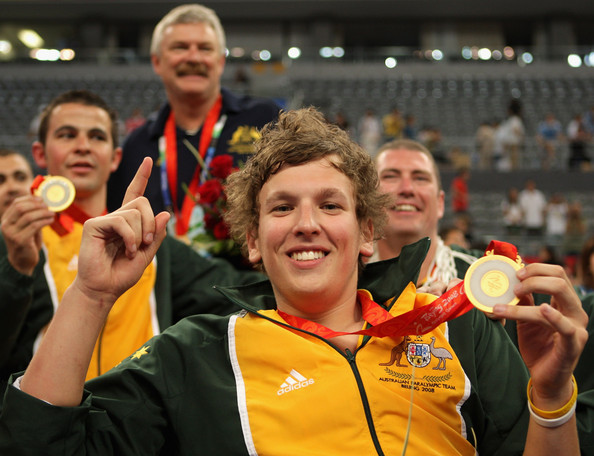
(Photo is of Kieren Perkins after winning gold at the Atlanta Olympics, becoming the only Australian since Dawn Fraser to successfully defend an individual Olympic championship)

Names of Australian Female Olympic Swimmers

25 Sunday Nov 2012

Posted by A.O. in Name Themes and Lists

≈ 11 Comments

Tags

Babylonian names, Biblical names, classic names, english names, famous namesakes, fictional namesakes, flower names, French names, hebrew names, Hollywood names, Latin names, locational names, mythological names, name meaning, name popularity, names in songs, Old English names, Old Norse names, popular names, portmanteau names, Portuguese names, Roman names, royal names, Russian names, Sabine names, scandinavian names, screen names, Spanish names, Sumerian names, surname names, The Canterbury Tales, time of day names, unisex names, vocabulary names

During the winter, I compiled lists of names from Olympic medalists, and perhaps you noticed that no swimmers were included. That’s because swimmers are such a big part of our team, and historically the big medal winners, so that they really needed lists all to themselves. Now that it’s hot again, maybe they will inspire you to hit the pool!

Alva (Colquohuon)

Alva Colquhuon won silver at the 1960 Olympics. Alva is the feminine form of the Scandinavian name Alf, from the Old Norse for “elf”. Alva is also a male name, a variant of the Hebrew name Alvah, meaning “his highness”. As a male name, it is best known as the middle name of American inventor Thomas Alva Edison. Today it almost seems like a cross between Ava and Alba.

Brittany (Elmslie)

Brittany Elmslie is a young swimmer who attended her first Olympics this year, where she won a gold and two silvers. Brittany is the name of a region in north-west France, which in French is known as Bretagne. It was once known as Little Britain in order to distinguish it from Great Britain, hence its name. The Breton language is Celtic, related to Welsh and Cornish, and the history of the land and its people is intimately connected to Great Britain. Even today, Brittany retains its own identity and culture within France. Brittany has been used as an English girl’s name since the late 18th century – perhaps originally because Brittany was known for its resistance to the French Revolution. The name first entered the charts in the 1970s, making #245 by the 1980s. It peaked in the 1990s at #31, then sharply dropped, leaving the Top 100 in the early 2000s. It hasn’t charted at all since 2009 (the year actress Brittany Murphy died), and this is a good example of a name which reaches popularity very quickly, then becomes just as rapidly dated.

Dawn (Fraser)

Dawn Fraser is one of our most famous swimmers, who has received many honours; she is considered the greatest sprint swimmer of all time. She won two golds and a silver at the 1956 Olympics, a gold and two silvers in 1960, and a gold and a silver at the 1964 Games, setting two world records and two Olympic records. She is well known for her blunt speech and larrikin character, and one of the ferries on Sydney Harbour is named after her. Dawn is the period just before sunrise, where there is pale sunlight, but the sun itself is still below the horizon. The word comes from the Old English for “to become day”. The name is found from the 16th century onwards, and must at least sometimes have been given to girls born at daybreak. Dawn first entered the Australian charts in the 1910s, reaching #103 for the 1920s. It peaked in the 1930s at #32, and left the Top 100 in the 1950s. It hasn’t ranked since the 1980s, and the 1970s song Delta Dawn, about a crazy middle-aged woman, probably didn’t do its image any good – although covering it gave Australian singer Helen Reddy her first #1 hit. I wonder whether it might be time for a revival of this 1930s name? Apart from the fragile beauty of dawn, the word is filled with hope and optimism, and a sense of renewal.

Emily (Seebohm)

Emily Seebohm has been a champion swimmer since 14 and is now 20. She won gold at the 2008 Olympics, and a gold and two silvers at the London Games. Emily is the English form of the Roman name Aemilia, the female form of the family name Aemilius. The Aemilii were one of the noblest and most ancient patrician houses of Rome, and were probably of Sabine origin. They interpreted their name as meaning “persuasive”, and others derived it from Latin aemulus, meaning “rival”, but most likely these are both false etymologies. The English form is first found in Chaucer’s Canterbury Tales; he adapted it from a character named Emilia in a poem by Giovanni Boccaccio, where two men are rivals for the affections of the same woman. Although in use from early on, it didn’t become popular until the Hanoverians came to the throne in the 18th century, as Princess Amelia, daughter of George II, was called Emily by her family. Emily was #36 for the 1900s, but fell until it had left the Top 100 by the 1930s. It reached its lowest point in the 1950s at #455, then climbed steeply; it skyrocketed to make #26 for the 1980s. Emily peaked at #1 in 1998, and remained there for most of the early 2000s. Currently this pretty classic is #12.

Hayley (Lewis)

Hayley Lewis was at her peak during the 1990s, when she won many medals internationally, but although she attended three Olympics, only won silver and bronze at the 1992 Games. Hayley is now the host of Channel Ten’s weight-loss show, The Biggest Loser. Hayley is an English surname from a common English place name meaning “hay clearing” in Old English; the surname dates from the 13th century and is especially associated with Yorkshire. It’s been used as a personal name for both boys and girls since the early 18th century, but only became popular in the 20th century, and only as a girl’s name. This was because of English actress Hayley Mills, who was the most popular child star of the 1960s, and made several Disney films as a teenager. Hayley first entered in the charts in the 1960s, when Mills began her career, debuting at #489. It climbed steeply during the 1970s, and was Top 100 by the 1980s. Hayley peaked in 2005 at #21, and is currently #50. It dropped just one place in 2011, and looks set to maintain a graceful decline that could see it in the Top 100 for several more years.

Jacinta (van Lint)

Jacinta van Lint won silver at the 2000 Olympics. Jacinta is the feminine form of the name Jacinto, a Spanish/Portuguese name meaning “hyacinth”. The Spanish pronunciation is something like ha-SEEN-tah, but in English we say it juh-SIN-tah. It is best known as the name of Blessed Jacinta Marto, who was one of the three children of Fátima in Portugal, who reported witnessing visions of an angel and the Virgin Mary in 1916-17. Jacinta has been rather a favourite in Australasia, first entering the charts in the 1950s, and climbing until it peaked at #101 for the early 2000s. It fell to #197 in 2009, and since then has picked up slightly, to make #189 last year. The fact that it entered the charts in the 1950s makes me wonder if use of the name was originally inspired by the 1952 Hollywood movie, The Miracle of Our Lady of Fatima, which starred Sherry Jackson as Jacinta (the name had the English pronunciation in the film). It’s a pretty name which has had steady use without ever becoming highly popular in New South Wales – although more common in Victoria.

Lisbeth (Trickett)

Lisbeth “Libby” Trickett won gold and bronze at the 2004 Olympics, two golds, a silver and a bronze in 2008 while setting a world record, and gold at the London Games this year. Lisbeth is a variant spelling of Lisbet, a Scandinavian short form of Elisabeth. The name has recently become well-known due to Lisbeth Salander, the antiheroine of Swedish author Stieg Larsson’s crime thriller Millennium series. The first novel, The Girl with the Dragon Tattoo, was turned into a Hollywood movie last year, with Rooney Mara as Lisbeth. Lisbeth Salander is a disturbed computer hacker with a punk-Goth style, and a victim who refuses to lie down, but instead turns vigilante. It’s definitely given sweet Lisbeth a far more dangerous and edgy image.

Marilyn (Wilson)

Marilyn Wilson won silver at the 1960 Olympics. Marilyn is a portmanteau name combining Mary and Lynn. It can be found from the late 18th century, and seems to have sprung up in several countries almost simultaneously, so that an origin for the name isn’t obvious. Its most famous namesake is Hollywood sex symbol Marilyn Monroe, and thanks to Elton John’s Candle in the Wind, nearly everyone knows her birth name was Norma Jeane. The name Marilyn was chosen for her by a studio executive because she reminded him of Broadway beauty Marilyn Miller (oddly enough, Marilyn later married writer Arthur Miller). Marilyn Miller was born Mary, and combined her name with her mother’s middle name to create her stage name. Marilyn first entered the charts in the 1920s, when Marilyn Miller began her career, and by the 1930s was #146. It skyrocketed to make the Top 100 in the 1940s, and peaked in the 1950s, the era in which Monroe enjoyed her greatest success, at #44. It then plummeted into the 200s during the 1960s after Monroe’s death, and hasn’t ranked at all since the 1980s. This is a dated name, yet still possesses some of the lustre of its two glamorous namesakes.

Nadine (Neumann)

Nadine Neumann had to battle against the odds, first recovering from chronic fatigue syndrome as a teenager, then breaking her neck before she could attend the 1992 Olympics. She made it to the 1996 Games, but failed to win a medal. After retiring, Nadine became an educator and writer. Nadine is the French form of the Russian name Nadia, a short form of Nadezdha, meaning “hope”. The French pronunciation is na-DEEN, but in Australia we usually say it nay-DEEN. Its most famous namesake is South African novelist and political activist Nadine Gordimer, who won the Nobel Prize for Literature in 1991. In the 1960s, the name got its own popular song when Chuck Berry released Nadine, describing his object of desire as moving “like a wayward summer breeze”. Nadine first charted in the 1950s, the decade that Nadine Gordimer published her first novel; it debuted at #535. The name peaked in the 1970s at #145, and by 2009 no longer charted at all. However, Nadine recently made a minor comeback, reaching #573 last year. Irish singer Nadine Coyle, from pop group Girls Aloud, may have been a help; her first solo album was released at the end of 2010.

Sarah (Ryan)

Sarah Ryan won silver at the 1996 Olympics, silver in 2000 and gold in 2004. In the Bible, Sarah was the wife of the prophet Abraham, and a woman of surpassing beauty; she is honoured in Judaism, Christianity and Islam. She was barren until extreme old age, when God blessed her and Abraham with a son named Isaac. Her name was originally Sarai (said suh-RYE), but when she and Abraham made their covenant with God, her name was changed to Sarah. As both names have the same meaning (“woman of high rank, female ruler of the court”, translated as “princess”), it is unclear what the purpose of the change was. It’s possible the ah sound in Sarah suggested the name of Yahweh more closely, as if to demonstrate she was now a woman of the Lord, not of the world. In fact, Sarah is the only prophetess in the Bible who is spoken to directly by God. Although Sarah is a Hebrew name, its origins are Babylonian, and some scholars identify the Biblical Sarah with the goddess Ishtar. This vaguely fits with the Old Testament story, which says Abraham and his wife were originally pagans from Sumeria. Sarah was #43 in the 1900s, but had left the Top 100 by the 1920s, and reached its lowest point in the 1940s at #284. By the 1960s it was Top 100 again, and peaked in the 1980s at the #1 name. Currently it is #31, and remains a lovely classic.

(Picture is of Dawn Fraser at the 1956 Olympics in Melbourne; photo from Wikimedia Commons)

Famous Name: Poppy

14 Wednesday Nov 2012

Posted by A.O. in Famous Names

≈ 7 Comments

Tags

english names, famous namesakes, flower names, German names, name history, name image, name meaning, name popularity, nature names, nicknames, plant names, popular names, Remembrance Day, surname names, The Wizard of Oz, UK name popularity, unisex names, US name popularity, vocabulary names

Last week I covered the name Bede for Remembrance Day, partly with the idea that it had “been in my Request file for ages”. When I went to cross if off the list, I found it wasn’t there at all – it seems I imagined it. So today I’m going to make up for it by covering a Remembrance Day name that really has been in my Request file for ages (I double checked!).

It has long been tradition to associate November 11 with poppy flowers. During the First World War, red corn poppies (Papaver rhoeas) were among the first plants to spring up on the battlefields of northern France and Belgium, blooming between the trenches and no man’s lands on the Western Front. In soldier’s folklore, the red of the poppies came from the blood of their fallen comrades soaking the ground, and were perhaps a poignant reminder that life went on regardless.

The sight of poppies on the battlefield at Ypres in 1915 inspired Lieutenant Colonel John McCrae, of Canada, to write the poem In Flanders Fields. An American woman named Moina Michael, who worked for the YMCA, read McCrae’s poem just before the Armistice, and was so moved that she wrote a poem in response, and promised to wear a red poppy as a way of keeping faith.

At an international YMCA conference in 1918, Moina spoke about the poem and the poppies, and Anna Guérin, the French YMCA secretary, took the idea further by selling poppies to raise money for widows, orphans, and needy veterans and their families.

The poppy soon became widely accepted throughout the allied nations as the flower of remembrance to be worn on Armistice Day, and the Australian Returned Soldiers and Sailors Imperial League (the forerunner to the RSL) first sold poppies for Armistice Day in 1921, with the money going to children’s charities and the League’s own welfare work. Today you can still buy a poppy pin from the RSL to help veterans of war.

At the Australian War Memorial in Canberra, it is customary on Remembrance Day to place a poppy on the Roll of Honour, as a small personal tribute to the memory of a particular person. Another ritual is to lay a single poppy flower on the Tomb of the Unknown Australian Soldier at the Memorial.

Even before World War I, poppies had a long history as symbols of sleep and death – sleep because poppy seeds have since ancient times been used as sedatives, and death because the colour of poppies reminds people of blood, or possibly because if over-prescribed, a poppy-induced sleep may become permanent. Today, poppies are still grown to obtain opium, morphine and codeine for medicinal use, with Australia being one of the major producers of poppy crops.

In Greek myths, poppies were given as offerings for the dead, with the suggestion that they were also a promise of resurrection in the life to come. The symbol of the mother goddess Demeter, she is depicted carrying both sheaves of wheat and poppies, and it has been theorised that the taking of opium was part of her worship in the sacred Mysteries.

These twin symbols of sleep and death were put to good effect in what must be one of the most famous images of poppies in literature and cinema – the field of scarlet poppies in The Wizard of Oz, the poison scent of which sends Dorothy into such a deep sleep that she is in danger of dying from it.

The English word poppy is ultimately derived from Latin, but the meaning is not known for sure; it may be from the word for “to feed”, because as anyone who has munched a poppy seed muffin or a bread roll topped with poppy seeds can tell you, poppies are yummy.

Poppy can be found as an English name as early as the 18th century, and the first examples are male, taken from the surname. This is derived from a German name Poppo or Boppo, used as a pet form of the name Bodebert, meaning “bright messenger”. However, by the 19th century, it was firmly established as a female name and associated with the flower, coming into common use along with other floral names.

Poppy only entered the Australian popularity charts in the 1980s, and in the 1990s was #602. It skyrocketed during the 2000s to reach the Top 100 by 2009, debuting at #69. Last year it was #79, and with such a brief history behind it, it is far too soon to make any predictions about its future.

Poppy is even more popular in the UK, where it has been Top 100 since the 1990s, and is currently in the Top 20. However, it has never been in the US Top 1000 at all. Last year 130 baby girls were named Poppy in the United States.

I think one of my first clues to how differently names are seen in other countries is that I kept reading in name forums from American contributors advising that Poppy might sound adorable on a little girl, but can you imagine a woman in her thirties named Poppy? Um yes, easily – Australian actress Poppy Montgomery must be in her mid-thirties by now. Poppy seems to suit her equally well as it does a toddler.

Another popular Poppy putdown is The name doesn’t sound serious enough, your daughter will never become a businesswoman, doctor or lawyer if you name her Poppy. Oh really? Then how did Poppy King manage to start her own cosmetics company? How did Doctor Poppy Sindhusake become senior lecturer in the school of medicine at the University of Western Sydney? And how did Poppy Matters start her practice in family law? By what occult means did they crash through this poppy-red ceiling to make the grade? Unless such a ceiling does not exist …

Some complain that the name, with its cheeky sound and link to a flaunting red colour, sounds too cute and flippant for a woman’s name – how will she ever be taken seriously, they fret? My own thought is that with its associations to such a solemn day, its death symbolism, and connection to drugs, it’s a jolly good thing that Poppy sounds so cheerful and light-hearted in order to offset what could otherwise seem rather gloomy.

Poppies are colourful, sturdy little flowers that bloom and blow easily in our gardens and the “pop” sound in their name makes us think of pop music, pop art and pop-up books – things that seem bright and lively and youthful. But beneath it is something dark and ancient and powerful. It stands for death, and life rising again, and the blood of heroes, and eternal flame, and rows of crosses in northern France, and keeping the faith. It is a memory in honour of those who died in foreign fields.

Do not underestimate Poppy. She is spunky and sprightly, but also strong and deep and enigmatic. She can survive almost anywhere, and, not content in being merely decorative, is useful too. She can feed the hungry, she can allay pain, she can understand sacred mysteries. Sometimes she can even be dangerous.

She can run her own business, or become a doctor, or lawyer, or politician, or anything else she wants to be. And she will sound fabulous when she is forty!

(Picture is of poppies growing in the Somme, northern France; photo from Keynsham People)

Team Pink, Team Blue, or Team Lavender?

11 Sunday Nov 2012

Posted by A.O. in Your Questions Answered

≈ 13 Comments

Tags

dog names, english names, famous namesakes, fictional namesakes, French names, Gaelic names, locational names, mythological names, name meaning, name popularity, names for budgies, nature names, nicknames, popular culture, popular names, Sanskrit names, surname names, unisex names, US name popularity, vocabulary names

I wasn’t going to do another one of these, but it turned out the list of questions on unisex names could almost be eliminated if I did just one more, so I couldn’t resist doing an end-of-year clean up.

Some names are easy for most of us to assign to Team Pink or Team Blue – for example, a straw poll would probably show strong support for Amelia as a girl’s name, and Archibald as a more masculine moniker. But there are quite a few others that we have to think about a bit more, and some seem to be both feminine and masculine in such equal measure that we could probably call them Team Lavender.

Of course, for practical purposes, all names are unisex, so this is only designating them according to linguistic meaning, historical use, and current popularity.

I. ARE THESE GIRL NAMES?

Sydney as a girl’s name

Sydney is historically a unisex name in Australia, but hasn’t charted at all since the 1960s. I think it’s up for grabs by either gender, and is a definite member of Team Lavender.

Rory girl name popularity Australia

According to the data at hand, the popularity of Rory as a girl’s name in Australia is zero. It’s charted as a boy’s name since the 1940s and is currently #159; it’s never charted as a girl’s name. This makes it (for the purposes of this question) Team Blue.

Is Indiana a girl’s name? (multiple asks)

Yes, historically it is, for the first people named Indiana in the records are female. It’s only since the Indiana Jones movies that the name has widely been seen as potentially masculine – although the movie’s protagonist is named Dr Henry Walton Jones. From Utah rather than the state of Indiana, we learn in The Last Crusade that he took his nickname from the name of the family dog. I’m not sure whether the dog was male or female. Indiana has only ever charted as a girl’s name, and is currently #78 and climbing steeply. I call Team Pink.

Bodhi as a girl’s name

Bodhi is a Sanskrit word meaning “awakened”, referring to the enlightenment of the Buddha. As men and women are equally capable of spiritual enlightenment, I think this is for both boys and girls and can join Team Lavender.

Can Russell be a female name?

The surname Russell simply means “red” or “reddish”, and there’s nothing specifically masculine about it. However, Russell has a reasonable history of acceptance as a male name. Currently it doesn’t chart for either gender, and I think it could be used for a girl’s name. You could also use the vocabulary word Rustle. Maybe a Deep Indigo?

Is Campbell a girl name?

In Australia it is accepted as a male name, and has charted for boys since the 1950s, being now at #384. In the US it is more common as a female name. The surname means “crooked mouth”, which doesn’t sound at all pretty to me, but isn’t technically masculine. In Australia, I think it’s still Team Blue.

II: ARE THESE BOY NAMES?

Marlo as a boy’s name

Marlo Hoogstraten is a Dutch-born Australian DJ; he works under the name MaRLo. Marlo Stanfield is a character in the TV show, The Wire, who is head of his own drug crew. There seem to be more references to Marlo as a male name than a female one. This may be a pale Blue-Toned Lavender.

Is Riley a boy’s name in Australia?

Yes, it’s charted as a male name only since the 1970s, and is currently #20. Team Blue.

Can Autumn be a boy’s name?

There’s no reason why not, except that it is widely accepted as a female name. In Australia, Autumn is a fairly rare name for either sex, so it might be easier to be a boy named Autumn here than elsewhere. It would be unusual though. A very pale Pink-Toned Lavender.

Boys name Kirra

The town in Queensland is nearly always given as a female name in Australia. Besides sounding similar to girl’s names Keira and Kira, part of the reason may be because in Greek mythology, there are a couple of nymphs named Kirra, giving it a distinctly feminine vibe. I’m assigning this one to Team Pink.

Tahgan boys name

I only know of Taghan as a place name in the Middle East, which sounds unisex to me. It looks similar to boy’s name Teagan and girl’s name Tegan, so I’m calling this for Team Lavender.

Bay as a boy’s name

Although this nature name could be either male or female, in practice I’ve only seen this given to boys in Australia – maybe because it sounds like it could be short for Bailey. I guess it could be seen as Blue-Toned Lavender.

III: ARE THESE BOY OR GIRL NAMES?

Is Lyndall male or female?

Historically, it’s a girl’s name. Lyndall charted as a female name only from the 1930s to the 1990s. It currently doesn’t chart for either sex. Pink, or at least Pinkish.

Jordan – boys name or girls name?

Jordan has charted as a boy’s name since the 1960s, peaked in the 1990s at #23, and is currently #63. It has charted as a girl’s name since the 1980s, peaked in the 1990s at #85, and is currently #389. So it’s both a boy’s name and a girl’s name, but more boyish, since it’s been used longer as a boy’s name, hit a higher peak as a boy’s name, and is still Top 100 for boys. Deep Blue-Toned Lavender.

Is Jagger more a boy or girl name?

I’d say it’s more of a boy name, just by usage. I have seen people use Jagga or Jaggah for girls though. Blue, at present.

Kayley “unisex name”?

I think technically Kayley is two separate names, one unisex or male, and the other one female. The surname Kayley can be from several origins, and if English or  French, it refers to place names (unisex). On the other hand, if Gaelic, it means “son of Caollaidhe” (male). It’s been overwhelmingly used as a girl’s name though, probably with the idea it’s an elaboration of Kay, a pet form of Katherine. There have been a very few men named Kayley. Confusingly, I think this is Pink, Blue and Lavender all at the same time.

IV: ADVICE NEEDED

What boy’s name can Gigi be short for?

There’s a few choices. According to Wikipedia, famous men using Gigi as their nickname have Luigi, Luigino, Gianluigi or George as their full name – although my own first thought was Giglio. Another possibility is that in the story Gigi, the protagonist’s full name was Gilberte, so maybe a boy called Gilbert could be a Gigi.

Will people automatically assume someone called Kelly is a girl?

I would probably assume an adult named Kelly to be a woman, but I could easily adjust if it turned out to be a man instead. For a new baby, I wouldn’t assume it was either a boy or girl.

Are guys put off by women with male names?

There are quite a few studies on what names men and women find sexy, but these name-image polls are useless in real life, when you are confronted with a living breathing human being. I don’t believe any man would turn down a beautiful woman because her name was John; conversely, no matter how alluring and feminine your name, if you look and smell like you’ve been living in a sewer, I don’t think you are going to be besieged by suitors. Just from my own observations, I’ve noticed a lot of guys say they are intrigued by girls who have unisex nicknames, like Jamie, Charlie or Teddie.

A good unisex name for a budgie

You could use a nickname that could be short for either a girl or boy name, such as Charlie, Joey or Sam, otherwise I think a nature name would be nice, such as Ash, Blueberry, Midnight, Sky, Sunny, or Snowflake. You could also use a cutesy sort of name such as Pippet, Peep, Peck, Pixel, Tweety, Chirp, Happy, or Fidget. Apparently budgies can’t say words with a hard G sound in them, so avoid Giggles, Goldy or anything like that if you’re hoping to teach it to talk.

Waltzing With … Archer

04 Sunday Nov 2012

Posted by A.O. in Waltzing with ...

≈ 8 Comments

Tags

Australian idioms, english names, famous namesakes, fictional namesakes, horse names, name combinations, name history, name meaning, New Zealand name popularity, nicknames, popular names, surname names, UK name popularity, US name popularity, vocabulary names

This article was first posted on November 4 2012, and revised and re-published on June 16 2016.

Famous Namesake
On Tuesday it is Melbourne Cup Day, which, more than any other day on the calendar, holds Australia in thrall. On the second Tuesday in November, at 3 pm, the nation collectively holds its breath while its most famous horse race, the Melbourne Cup, is run at Flemington in Melbourne.

It’s known as “the race that stops a nation”, because at 3 pm you are expected to drop whatever you’re doing to tune in and watch the Melbourne Cup. Workplaces and schools may take the afternoon off to hold Melbourne Cup lunches, or at the very least switch a TV on just before 3 pm. It’s a day when almost everyone will place a bet on the race – even if it’s just putting a dollar on the favourite, or taking part in the office sweep. In Melbourne, the day of the race is a public holiday.

American author Mark Twain went to the 1895 Melbourne Cup and commented, Nowhere in the world have I encountered a festival of people that has such a magnificent appeal to the whole nation. The Cup astonishes me. More than 110 000 people attend the race, and it’s a huge fashion-fest, with ladies frocking up, and gentlemen wearing formal suits. Others relish the opportunity to dress in outrageous costumes. It’s a day to eat, drink, gamble and be merry – a big, bright, boozy, and rather garish carnival.

The Melbourne Cup itself is the jewel in the crown of the Spring Racing Carnival, and is said to be the richest and most prestigious “two mile” handicap in the world. The prize money is over $6 million, and the trophy itself is a hand-crafted golden cup worth $125 000. It’s the biggest prize in any Australian sporting event.

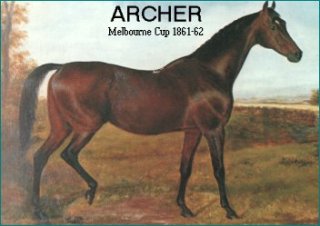
The first Melbourne Cup was run in 1861, and the winner that year was a horse named Archer. Race horses are often named quite logically, and Archer’s sire was William Tell. Born near Braidwood, in country New South Wales, he was trained near Nowra. Archer was a large horse, standing over 16 hands high with a powerful body. He ran badly in his first two races, and was rated poorly, until he won seven races in 1861, and was entered in the Melbourne Cup.

The first Melbourne Cup was action-packed. Three horses fell during the race (two of them died), two jockeys suffered broken bones, and one horse bolted off the course entirely, but the race gamely continued, and Archer won by six lengths in a time of 3 minutes and 52 seconds – the slowest in which a horse has ever won the Melbourne Cup.

He set another record the following year by winning the Melbourne Cup again; until the 1930s, he was the only horse to have won back-to-back Melbourne Cups. He was meant to enter in 1863 as well, but unfortunately there was a mix-up with telegrams and he didn’t manage to make the deadline in time.

Many legends have sprung up around Archer, such as that he had to walk all the way from Sydney to Melbourne in order to take part in the race, and that his jockey, Johnny Cutts, was an Aborigine from the Nowra area. Neither of these stories is true – Archer travelled to the race by steamship and rail, and Johnny Cutts wasn’t Aboriginal, and was from Sydney. The phrase since Archer won the Cup has entered our language, to refer to a long time distant.

Name Information
Archer is an English occupational surname referring to someone who uses a bow and arrows. The surname was introduced to Britain by the Normans, and by the end of the Middle Ages the Norman-French word archer had replaced the English bowman.

People have been hunting and fighting with bow and arrows since the Stone Age, and there are many famous archers in world mythology. During the Middle Ages, professional archers were rare, and most archers during war were recruited from the peasantry so archery was often seen as a lower-class pursuit. However, by the 14th century archers were used effectively in battle, making it a more attractive option. The use of firearms made archers obsolete, and the last recorded use of them in battle in England was in 1642.

The last known person to die from a British archer in battle was in 1940, when a German was killed during the retreat from Dunkirk by a delightfully eccentric officer named Jack Churchill, who insisted on fighting throughout World War II with bow, arrows and a sword; he also played the bagpipes while setting off grenades, to add to the effect. Incredibly brave and highly decorated, Churchill, known as Mad Jack, was later a military instructor in Australia, where he became an enthusiastic surfer. A shame we didn’t manage to keep him, as this man is now my personal hero!

Archer has been used as a personal name since the 17th century, and an early namesake was the British MP Sir Archer Croft, 2nd Baronet – Archer was his mother’s maiden name. Another who had Archer as a family name was the 18th century American politician Archer Mathews, a founder of Lewisburg in Virginia. In the 19th century, escaped slave Archer Alexander served as the model for the Emancipation Memorial in Lincoln Park, built by T.S. Eliot’s grandfather.

Archer joined the Australian Top 100 in 2012, and since then has continued rising. Currently it is #39 nationally, #49 in New South Wales, #27 in Victoria, #33 in Queensland, #29 in South Australia, #51 in Tasmania, and #38 in the Australian Capital Territory. It was one of the fastest rising names in Victoria last year.

Archer was a Top 1000 name in the US in the late 19th century, but spent many years off the charts until it returned in 2009. It has risen steeply since then, and is now #289. In the UK Archer has been in the Top 500 since 2012 and is currently #359. Archer is Top 100 in New Zealand – the only other country besides Australia where Archer is popular, although its popularity is highest in Australia.

No wonder this handsome name is so popular – it feels both vintage and contemporary, and fits in with the trend for names with an AR sound, and names connected with hunting and weaponry. One of its attractions is that it provides a way to get the popular nickname Archie without using Archibald, although Arch is another possibility.

Archer is a name from Australian history which celebrates the biggest sporting event of the year – one that almost everyone will participate in. It’s a name from the hunt and battlefield, but also referencing daring archers, from Robin Hood to the Hunger Games, and perhaps even comedy super-spy Sterling Archer from the animated show.

Could Archer follow its equine namesake and gallop to the #1 position on the charts? The odds are against it, but chances are it will continue cantering along the home stretch.

POLL RESULT
Archer received an outstanding approval rating of 93%, making it one of the most popular names of 2012. 36% of people loved the name Archer, and nobody hated it.

Names of Australian Male Paralympic Medalists

28 Sunday Oct 2012

Posted by A.O. in Name Themes and Lists

≈ 4 Comments

Tags

Anglo-Saxon names, Arabic names, Arthurian legends, Arthurian names, Cornish names, Croatian names, Disney names, english names, epithets, European name popularity, famous namesakes, French names, Gaelic names, germanic names, Irish names, K.M. Sheard, Latin names, locational names, mythological names, name history, name meaning, name popularity, names of organisations, Old Irish names, Old Norse names, Pictish names, popular culture, popular names, Roman names, royal names, saints names, Scottish names, South American name popularity, surname names, Welsh names

Bruno (Moretti)

Bruno Moretti won silver in table-tennis at the 1960 Paralympics, and a gold and two silvers in athletics at the 1964 Paralympics. Bruno is a Germanic name meaning “brown”. The name was used by the nobility in medieval Europe, and there are several saints named Bruno. One of them is Saint Bruno of Cologne, who was the son of Saint Matilda. He was Duke of Lotharingia and Archbishop of Cologne, and his court in Cologne was an intellectual and artistic centre. Bruno was also the given name of two popes – Gregory V and Leo IX. Bruno has a long history of use in Europe, and today is Top 100 in Croatia, Catalonia, Spain, and Chile. It’s also a common surname in Italy, and Giardano Bruno was a Dominican friar, philosopher, mathematician and astronomer, who suggested that the Sun was a star, and the universe had infinite worlds, populated by intelligent beings. He went down very badly with the Spanish Inquisition, who had him burned him at the stake. Today he is regarded as a martyr to science. Bruno is a warm cuddly-sounding name, and seems to be a popular choice for bears, both real and fictional.

Cody (Meakin)

Cody Meakin grew up playing both rugby union and Australian rules football; he broke his back in a rugby scrum, and while still in high school, became quadriplegic after a car accident. He took up wheelchair rugby in 2010, where he became an international champion. He won gold at the London Games this year. Cody is derived from the Gaelic surname Ó Cuidighthigh, meaning “son of Cuidightheach”. Cuidightheach is an Old Irish epithet meaning “helpful”. The most famous person with the surname must be “Buffalo Bill” Cody, an American frontiersman who became a celebrity for his Wild West touring shows; these introduced the concept of the American West to Britain and Europe. Buffalo Bill was a supporter of Native American rights, women’s rights and conservation, making him a very modern namesake, as well as giving the name Cody an “American West” feel. In the 1990 Disney film, The Rescuers Down Under, the boy from the Australian outback is named Cody. Cody first charted in the 1970s, and was top 100 by the 1990s. It peaked in the early 2000s at #59, and only left the Top 100 last year, when it dropped to #124.

Dylan (Alcott)

Dylan Alcott has been paraplegic from birth due to a spinal tumour, and began playing wheelchair basketball in 2003. He won gold at the 2008 Paralympics, and silver at this year’s London Games. Dylan is a Welsh name which is difficult to translate exactly, but very roughly means “flood, wave, tide”. In Welsh mythology, Dylan Ail Don was a blond god of the sea, and his epithets were “son of the wave” and “son of the sea”. In the legends, he is killed, and it’s said that the sound of the waves is the sea lamenting his death. The name became well known outside Britain due to the Welsh poet Dylan Thomas, who was named after the god. In Welsh, his name is pronounced DUL-uhn, but Thomas himself preferred the Anglicised pronunciation of DIL-uhn. Thomas’ emotionally powerful yet tightly controlled verse was admired by a young American named Robert Zimmerman, who promptly changed his name to Bob Dylan. As Dylan went on to become a folk balladeer, protest singer and counter-cultural icon, the name Dylan ended up with a double helping of street cred. Dylan first charted in the 1960s and reached the Top 100 in the 1980s. It peaked in the early 2000s at #17, and is currently #41.

Erik (Horrie)

Erik Horrie was left paraplegic after a car accident in 2001, and became involved in wheelchair basketball, but last year switched to canoeing. He won a silver medal at the 2012 London Games, and also welcomed his son Lewis. Erik is derived from Old Norse, and interpreted as “only ruler, eternal ruler, eternal power”. It has been heavily used in the royal houses of Denmark, Norway and Sweden, the most famous to us being Erik the Red, who explored a little-known country, called it Greenland, and became its head chieftain. King Erik IX of Sweden is considered to be a saint, and according to legend was martyred while attending a church service. The name Erik was used in England by the Anglo-Saxons, and settlers from Scandinavia but only became popular in the form Eric in the 19th century, thanks to an earnestly moralising book called Eric, or Little by Little. Other fictional Eriks include the Phantom of the Opera and Erik the Viking from the Monty Python film.

Fabian (Blattman)

Fabian Blattman became paraplegic after a motorcycle accident, and took up wheelchair athletics to improve fitness. One of our most successful Paralympians, he has set several world records. He won a silver and bronze in 1992, a gold and a silver in 1996, and a gold, silver and bronze in 2000. The name Fabian is derived from the Roman family name Fabius, one of the most ancient noble houses of Rome. According to legend, the Fabii claimed descent from Hercules, and were shepherds who followed founding father Remus. Their name is said to be from the Latin word for “broad bean”, a vegetable that the Fabii were supposedly the first to cultivate. The surname Fabianus was given to freed slaves who had been owned by the Fabii, and Fabian is from this name. It was introduced to England by the Normans, but never became as popular there as its equivalents in Continental Europe. There is a 3rd century Saint Fabian, who was elected pope by a dove; despite this unorthodox beginning, he was highly-regarded and worked hard for the early church. The Fabian Society gives this name a left-wing edge; the socialist organisation took its name from the Roman general Fabius Maximus, who wore Hannibal down by attrition rather than engaging in head-on battle.

Jago (Mikulic)

Jago Mikulic was a blind athlete who competed at the 1976 Paralympics, and won a silver in javelin and a bronze in the pentathlon. Jago is a Croatian form of James or Jacob, and is said YAH-go. It can also be a Cornish form of those names, but is pronounced JAY-go in this case. However, the Welsh form Iago is very old and predates the common use of Biblical names in Britain; K.M. Sheard suggests that it may be from the Celtic word for “ice”. If so, this would give Cornish Jago another possible origin.

Kerrod (McGregor)

Kerrod McGregor was a track and field Paralympian who won two golds, three silvers and two bronzes at the 1984 Paralympic Games, one gold in 1988, and one silver in 1996. Kerrod is an English surname that can be derived from the village of Curridge in Berkshire, with the village’s name meaning “Cusa’s ridge”. Cusa was a common Anglo-Saxon name, but what it meant I have been unable to discover. Another possible origin is the hamlet of Kerridge in Cheshire, which means “key ridge” – Kerridge Ridge is one of the foothills of the Pennines. The surname seems to have been most common in Yorkshire. The name Kerrod is well known in Queensland from former NRL star Kerrod Walters, who had a twin brother named Kevin.

Nazim (Erdem)

Nazim Erdem was born in Turkey and came to Australia early in life. As a kid, he practised holding his breath under water as a little game with himself. At the age of 20 he dived into shallow water in an effort to impress some girls; he was underwater for two and a half minutes before being rescued, and his technique of holding his breath saved his life. After the accident, he was quadriplegic. He began playing wheelchair rugby in 1992, and won silver medals at the 200 and 2008 Paralympics, and a gold at the London Games. Nazim is an Arabic boy’s name which means “organiser, convenor”, and as a title, loosely corresponds to the word “mayor” in English. The name isn’t uncommon in Turkey, and Nâzım Hikmet was a charismatic Turkish writer, a leader of the literary avant-garde who was often arrested for his revolutionary political beliefs, and spent much of life in prison or exile. His poetry and his struggles for peace are widely admired in Turkey and outside it; some of his poems have been turned into songs by folk singers such as Joan Baez and Pete Seeger. The name is pronounced NAH-zim.

Rene (Ahrens)

Rene Ahrens won a bronze in discus in 1980 and 1988. René is the French form of the Latin Renatus, meaning “born again, reborn”, referring to the act of baptism, and a popular choice for early Christians. René was a name used by the French aristocracy, and the name is known to us through the philosopher René Descartes (“I think therefore I am”). There is a Saint René Goupil, a French missionary to Canada who is one of the rare North American martyrs. The name is pronounced reh-NAY. Although the feminine form Renee has been popular in Australia,  masculine Rene remains very rare here – no doubt partly because it could easily be confused with the girl’s name.

Tristan (Knowles)

Tristan Knowles lost his leg at the age of 9 as a result of cancer, and also lost a lung at the age of 11. He has been playing wheelchair basketball since 1999, and in 2002 was named the NSW Wheelchair Basketballer of the Year. He won silver in 2004, gold in 2008, and a silver at this year’s Paralympic Games in London. Tristan is a Cornish hero of Celtic folklore who is also one of King Arthur’s knights of the Round Table. He is best known as the lover of the beautiful Irish princess Iseult (or Isolde). Iseult was to marry Tristan’s uncle, King Mark of Cornwall, but she and Tristan accidentally drank a love potion that had been prepared for Mark and his bride to share. The two became hopelessly infatuated with each other and embarked on a passionate affair, until Tristan was banished from Cornwall by an understandably irate Uncle Mark. The story was enormously popular in the Middle Ages, and is one of the forerunners to the story of adulterous lovers Lancelot and Guinevere. The name Tristan was yet another revived in the Victorian era, thanks to Tennyson, and the poems he wrote based on Arthurian legends. In the story, Tristan’s name is supposed to be linked with triste, the French word for “sad”, to fit in with his tragic love life. However, it is a form of the Pictish name Drust, which means “riot, tumult”. Drust was a traditional name amongst the royalty of Scotland, and it’s quite a puzzler as to how a Cornish story ended up with a hero with a Scottish name. Some claim that Tristan was a real person, pointing to a 5th century stone in Cornwall, which is supposed to be the grave marker for someone named Drustanus, the son of Cunomorus. Titillatingly, Cunomorus is said to be King Mark himself, suggesting that Tristan and Iseult’s step-incest was even closer and creepier (although his uncle was also his adoptive father anyway). Tristan and Iseult are two literary characters I’ve never been able to warm to, as their actions are so selfish; perhaps the story is trying to tell us that nobody does very well out of an infatuated love affair, not even the lovers themselves. Tristan first charted in the 1960s, and has managed to reach #100 twice, in the 1980s and late 2000s. It’s currently #123.

(Photo of Dylan Alcott celebrating victory from Zimbio)

Famous Name: Piper

24 Wednesday Oct 2012

Posted by A.O. in Famous Names

≈ 12 Comments

Tags

Anglo-Saxon names, english names, famous namesakes, Hollywood names, locational names, musical names, name history, name meaning, name popularity, popular culture, popular names, surname names, unisex names, US name popularity, vocabulary names

Sydney was recently named the second most expensive city in the world, after Tokyo; luckily it was also revealed that Australians are now the richest people in the world, so we can afford it! The most expensive suburb in Sydney is Point Piper, where the median house value is $7.38 million, and the most expensive privately owned house in Australia, costing $70 million to build, is located here. Point Piper’s Wolsley Road is the tenth most expensive street in the world, with 16% of Australia’s priciest houses on this 1 km stretch.

Point Piper is a little piece of land which juts into Sydney Harbour, a small enclave of just eleven streets and 148 houses. As Sydney’s most exclusive suburb, it is only 4 km from the CBD and offers views of the Harbour Bridge and Opera House. Despite its size, it has two beaches and two yacht clubs. The suburb is named after Captain John Piper, a Scottish-born military officer of Cornish parentage and German descent who arrived in the colony in 1792 and became an immediate social success.

Piper’s career got off to an interesting start when he asked to be posted to the penal settlement in Norfolk Island after a scandalous love affair which ended with an illegitimate daughter in his care. Later he became acting commandment of Norfolk, and ruled it so kindly that even one of the convicts wrote home to say how outstandingly nice he was. While on Norfolk, he took as his mistress a teenage girl who was the daughter of convicts; they eventually married, but not before she had borne him four children (they had nine more).

He became very rich by collecting custom duties and excises, and after being granted land by the governor, built a mansion on the point which is now named after him in 1816 at a cost of £10,000 (about $11 million in today’s money). He continued gathering wealth, real estate and respectability, until he ran into financial difficulties in the 1820s, and was suspended from his position after mismanagement of funds was discovered.

Piper tried to drown himself in Sydney Harbour, but was rescued. He had to sell everything he owned to settle his debts, and moved to Bathurst, where he ran a farm and became a figure of local importance. When he ran into problems there as well, his friends bailed him out and bought him a riverside property, where he and his wife and numerous children could be comfortable. He was just so nice, you see – blithe, unsinkable, amiable, and eminently forgiveable for his lack of business acumen.

Piper is an English surname which refers to someone who played the bagpipes. Although we think of bagpipes as being uniquely Scottish, their origins go back to the ancient world; it’s said that the Roman emperor Nero could play them. Their use spread through Europe in the Middle Ages, with their first explicit mention in Britain being in Chaucer’s Canterbury Tales. However, it was in Scotland that bagpipe music became most sophisticated and highly developed.

The piper was a well-paid and highly-respected professional, who would have been employed by a great lord or chief; it was often a hereditary position. The piper’s job was to entertain his lord at home and while travelling; this sometimes included military service. While traditions of pipers rallying the troops before battle go back centuries, the first documented case is 1549, when they were played by the troops of the Earl of Argyll. Later, pipers could be employed by a town to play each day, as well as at fairs and other events.

There is a myth that in times of old only men were pipers, and one ancient saw is that a woman found playing the bagpipes would have her fingers cut off in punishment, but this simply isn’t true. There are many documented cases of women pipers, and they were employed as teachers in a famous piping school on the Isle of Skye. Today women pipers are still out-numbered by the men, but there are plenty of them, and they are equally good.

The surname Piper goes back to the 13th century, and seems to have historically been most common in Sussex in England. However, the personal name may predate the surname, for the name Pipere has been found in an Anglo-Saxon charter from Sussex, which could make Piper one of the oldest English names – and another possible source for the surname.

Piper, with the modern spelling, comes directly from the surname, and dates to the 18th century, when it was nearly always given to boys (although as a middle name, much more evenly divided between the sexes). The name became seen as a girl’s name when a teenager from Detroit changed her name from Rosetta Jacobs to Piper Laurie and got a contract in Hollywood.

Although Ms Laurie says in her autobiography that she had to change her name because it sounded “too Jewish”, she gives no clues as to where she got the name Piper Laurie from. It almost sounds like a girl’s name – Laurie Piper – backwards.

Piper Laurie was in The Hustler and Carrie, but would have become well-known here for her role in the miniseries The Thorn Birds, based on the best-selling novel by Australian author Colleen McCullough. The Thorn Birds was originally broadcast in 1983, and the name Piper first charts in Australia the same decade.

The name skyrocketed in the 1990s to reach #128 by the early 2000s; I can’t help feeling this has a lot to do with the character of Piper Halliwell in the TV show Charmed. The actress who played Piper, Holly Marie Combs, confessed to having a large and inexplicable fan base in Australia.

Piper made the Top 100 in 2009, and is currently #70 and rising. Although we think of this as an American-style name, it’s only been on the US Top 1000 since 1999, and is still not Top 100, although not far off at #110, so Piper has charted in Australia longer than in the US and is more popular here. Australian parents do seem quick to pick up on Hollywood names.

I saw someone on a name blog say Piper is a name which will please everyone, which seemed going a bit far. However, I do think it has a lot to recommend it. It references luxury real estate, an ancient form of music, a Hollywood star with an Aussie connection, and an appealing namesake with a history unusually free of tragedy.

It’s a very old Anglo-Saxon name, but seems bright and modern. It’s a surname name for girls that doesn’t have any “son of” or male-only occupation issues, or significant prior use as a male name. It’s a vocabulary word which everyone can spell, pronounce and understand, and it’s a popular but not too popular name that still has room for growth.

So while Piper may perhaps not please all people, if Piper pleases you, then you may be pleased enough with Piper to pick it!

(Photo of Point Piper from the Sydney Morning Herald)

← Older posts
Newer posts →

Enter your email address to follow this blog

Categories

Archives

Recent Comments

A.O.'s avatarwaltzingmorethanmati… on Zarah Zaynab and Wolfgang…
Madelyn's avatarMadelyn on Zarah Zaynab and Wolfgang…
JD's avatardrperegrine on Can Phoebe Complete This …
A.O.'s avatarwaltzingmorethanmati… on Rua and Rhoa
redrover23's avatarredrover23 on Rua and Rhoa

Blogroll

  • Appellation Mountain
  • Baby Name Pondering
  • Babynamelover's Blog
  • British Baby Names
  • Clare's Name News
  • For Real Baby Names
  • Geek Baby Names
  • Name Candy
  • Nameberry
  • Nancy's Baby Names
  • Ren's Baby Name Blog
  • Sancta Nomina
  • Swistle: Baby Names
  • The Art of Naming
  • The Baby Name Wizard
  • The Beauty of Names
  • Tulip By Any Name

RSS Feed

  • RSS - Posts

RSS Posts

  • Celebrity Baby News: Melanie Vallejo and Matt Kingston
  • Names from the TV Show “Cleverman”
  • Can Phoebe Complete This Sibset?
  • Zarah Zaynab and Wolfgang Winter
  • Baby, How Did You Get That Name?
  • Celebrity Baby News: Media Babies
  • Celebrity Baby News: Adelaide Crows Babies
  • Celebrity Baby News: Chris and Rebecca Judd
  • Names at Work: Name News From the World of Business and Employment
  • Celebrity Baby News: Sporting Round Up

Currently Popular

  • Girls Names From Stars and Constellations
  • Celebrity Baby News: Ross Stevenson and Sarah Fallshaw
  • The Top 100 Names of the 1900s in New South Wales
  • Rare Boys Names From the 1950s
  • The Top 100 Names of the 1930s in New South Wales

Tags

celebrity baby names celebrity sibsets english names famous namesakes fictional namesakes honouring locational names middle names name combinations name history name meaning name popularity name trends nicknames popular names saints names sibsets surname names twin sets unisex names

Create a free website or blog at WordPress.com.

Privacy & Cookies: This site uses cookies. By continuing to use this website, you agree to their use.
To find out more, including how to control cookies, see here: Cookie Policy
  • Subscribe Subscribed
    • Waltzing More Than Matilda
    • Join 517 other subscribers
    • Already have a WordPress.com account? Log in now.
    • Waltzing More Than Matilda
    • Subscribe Subscribed
    • Sign up
    • Log in
    • Report this content
    • View site in Reader
    • Manage subscriptions
    • Collapse this bar
 

Loading Comments...