• About
  • Best Baby Names
  • Celebrity Baby Names
  • Celebrity Baby Names – Current
  • Celebrity Baby Names – Past
  • Featured Boys Names
  • Featured Girls Names
  • Featured Unisex Names
  • Links to Name Data
  • Waltzing on the Web

Waltzing More Than Matilda

~ Names with an Australian Bias of Democratic Temper

Waltzing More Than Matilda

Tag Archives: rare names

Interview with Zeffy from Baby Names from Yesteryear

16 Sunday Feb 2014

Posted by A.O. in Blog Reviews

≈ 3 Comments

Tags

Baby Names from Yesteryear, name history, name trends, naming advice, nicknames, popular names, rare names

Winterhalter_Eugenie_1855Zeffy is the enthusiastic blogger at Baby Names from Yesteryear, which features wonderful, winning, and sometimes slightly wacky names from history. Whether you enjoy names of English gentlemen, ladies from antiquity, or contemporary British royals, you will find many beautiful names which are elegant, elaborate and eccentric. You will also find names from South America, and names from Zeffy’s own family tree. One of my favourites of Zeffy’s posts is an extremely sweet story about one of her sentimental favourites – I dare you to read it without either smiling tenderly or getting a tear in your eye. Zeffy has been away from blogging for a year, but she’s back (hooray!!!), and this is a chance to catch up with her and find out what Zeffy is short for.

What is your name? 
Sephora. I go by Zeffy online, a nickname given to me by my loopy, but incredibly sweet, university professor.

Have you ever wished you had a different name?
Have I ever! I’ve disliked my name for most of my life. As a child, all I wanted was a nice common name, something like Jessica or Rebecca, so I could blend in. I was a bit shy as a child so I hated being different from everyone else. It was only when I got to my late teens that I realised my name was quite nice and fitted my personality very well. I would never consider changing it now – having such an unusual name is a big part of my identity.

How did you become interested in names?
It goes back to having an unusual name. I’ve always wanted to know where my name came from, what it meant, how it came to be used. My curiosity stemmed from having absolutely no clue about my name’s origins. I guess my interest in names in general dates back to when I started school and noticed that I was the only one whose name wasn’t “normal”. Since then I’ve always loved reading about names and looking up meanings. There hasn’t been a time when I haven’t been interested in names and their stories.

How did you become interested in names from the past?
I’m obsessed with history. I’ve always been interested in the history of people’s lives, particularly focusing on the social and private life of early 19th century English aristocrats. There’s something very fascinating about discovering the small details of what people 200 years ago ate for breakfast, where they bought their boots from, why they married who they did, and what they named their children. That’s what attracts me to names from the past – it’s a glimpse into the personal and private life of someone who lived hundreds of years ago.

What inspired you to begin a name blog?
I came across The Gentleman’s Magazine during my last year of university. I was meant to be researching contemporary reviews for Thomas Paine’s Rights of Man, but I kept flipping back and having a look through all the wedding announcements. Once I left university, I had a heck of a lot of time on my hands, and I really don’t deal well with boredom. I had to find a project to do before I completely lost my sanity. I thought about all the lovely names I’d read and decided to share them. I knew there had to be someone out there who was equally as interested in Georgian era names as I was. I couldn’t be the only one who oohed and ahhed over them!

Do you have a favourite blog entry on Baby Names from Yesteryear?
I really enjoyed writing about The Patronesses of Almack’s and Popular Names of the Georgian Era. They hit on my favourite time period in history so I can’t help but have a soft spot for them. Having said that, the posts I tend to like the most are those which required me to really do research, to look through a number of sources before hitting name gold. I’m such a geek, I know.

Do you have a pet peeve in regard to names? 
When people think that many of the current trends are a modern concept. People have been naming their children all sorts of weird and wonderful things for hundreds, even thousands, of years. Masculine names on girls, surnames used as first names, nature names, unusual names … it’s all been done before, so let’s not get in a tizzy about them now.

There’s also something about the word “unique” which I find unrealistic. The chance of any name being unique is truly slim, and I don’t think it’s a good idea to change spellings in search for uniqueness.

What are some of your favourite names? 
A few of my current favourites are Minerva, Emmeline, Margaux, Josephine and Magdalene. For boys, Alexander, Lucien, Mikael and Hart are long time favourites. I think Noa is absolutely darling. Tierney, Seren, Clover, Lyra, Orion and Shia are just a few that are on my favourites list.

What names do you dislike?
I’ve never been a fan of overly “cute” names, on girls or boys, for a number of reasons. Children don’t need cute names to be cute. A lot of names that fall into that category for me have really taken off in England and Wales where there is currently a trend for over-the-top cuteness, especially on the girls’ side. There’s a message behind that trend which I’m not comfortable with.

I’m also not at all keen on the Mae/May/Mai hyphenated names which are very popular over here. It feels like half the female population under the age of 5 answers to Something-Mae. Don’t get me wrong, I don’t dislike Mae or May. Just please, please stop hyphenating it!

Are there any names you love, but could never use?
So, so many. Hyacinth is always in the back of my mind, but I think of Hyacinth Bucket [from sit-com Keeping Up Appearances]and it’s over. Millicent is another. I really love how it sounds, but not how it looks. Ptolemy is probably the biggest one. Why does the P have to be silent?! I so wish it wasn’t; it would be a serious contender then.

What are your favourite names in the UK Top 100?
Eleanor (#63) and Alexander (#27).

What are your favourite names that have never charted in the UK?
Sanceline and Holland.

Do you have any names picked out for your future children? 
Not really. Children haven’t crossed my mind yet so it’s all up in the air. If, however, I were to have a baby at this exact moment, I guess it would be something like Emmeline Clover, Emmeline Jane Noa, or Noa Emmeline Jane. I adore Jane. I know it has in the past been overused in the middle spot, but it’s lovely and I can’t help myself. For a boy, it would be Alexander Lucien or Shia Alexander. I think when it comes down to it, I won’t be as tame in my choices. It’s fun having a name on the unusual side so I think I’ll go down that path. But who knows?!

What is something we don’t know about you?
I’m incapable or remaining serious for very long. Trying to answer your questions without making silly and inappropriate jokes hasn’t been easy! Also, I love exclamation marks 🙂

What advice would you give someone who was choosing a baby name?
I wouldn’t. I don’t have any children so I don’t know anything about how hard the naming process is or the pressures of it. I only wish all parents would put as much time as possible into choosing their child’s name. Your child has to live with their name every single day. That’s a big thing. Take it seriously! (Yay, got to use an exclamation mark again.)

(Painting shown is Eugenie, Empress of the French and Her Ladies by Franz Xaver Winterhalter; 1855 – one of the many lovely illustrations on Zeffy’s blog)

The 2013 Matilda Awards

16 Thursday Jan 2014

Posted by A.O. in Blog News

≈ 4 Comments

Tags

Arabic names, Biblical names, celebrity baby names, celebrity sibsets, classic names, German names, germanic names, Irish names, name combinations, nicknames, popular names, rare names, royal names, sibsets, surname names, twin sets, underused classics

165256Welcome to the Matilda Awards, where we discover which names featured on the blog proved most popular with the public during 2013.

Waltzing With … Category

The most popular names featured in the Waltzing With … Category were LAYLA, which scored a 94% approval rating, and SULLIVAN, which scored a 96% approval rating – not just the highest-rated name for the category, but the highest-rated for the whole year.

Layla is an Arabic name with a romantic history, both in Muslim literature and popular culture; it is comfortably established in the Top 50. Sullivan is an Irish surname used as a first name; it was #306 in Victoria for 2012, and is rising in both the US and UK.

Layla and Sullivan did well not because they were deeply loved by the public, but because so few people hated them – in fact not a single respondent said they disliked the name Sullivan.

Famous Names Category

The most popular names featured in the Famous Names Category were MIRIAM, which scored an approval rating of 91%, and HENRY, which scored an approval rating of 95%.

Miriam is an ancient Biblical name, the name of one of the strongest and most interesting Old Testament heroines; it is an underused classic which has never left the charts yet never reached the Top 100. Henry is an English name of Germanic origin, long known as a royal name (and was featured as the name of a visiting prince); it is a popular classic which is gently rising in the Top 50.

Miriam was praised for being both strong and intelligent, and pretty and feminine; people also noted its many nickname options. Almost nobody disliked the name Henry.

Name Themes and Lists Category

The most popular names which were featured in the Names Themes and Lists Category were ALICE and AUGUST. Alice won convincingly, and also managed to win the original poll, while August received almost twice as many votes as its nearest opponent.

Alice is an English name of Germanic origin which has been used by royalty and aristocracy; it is currently rising in the Top 50, and was one of the fastest-rising names of 2012. August is a German short form of Augustus which featured as a rare royal name from history; it does not chart in Australia, but is currently rising in the US and UK.

Celebrity Babies

The most popular names for celebrity twins were HARVEY AND ROXANNE WELLER ALLEN, the son and daughter of singer Toby Allen and actor Darren Weller. They were the only celebrity twin names to be judged “adorable” by a majority of people – quite an achievement as there were an unusually high number of celebrity twins last year.

The most popular celebrity baby girl name was TESS CLEMENTINE HUGHES, the daughter of comedian and broadcaster Dave Hughes, and journalist Holly Ife. She was picked as favourite by 20% of respondents, who loved her hip name. Tess has a big sister named Sadie, and a big brother named Rafferty – what a cool sibset.

The most popular celebrity baby boy name was SEBASTIAN TANDER, the son of champion racing drivers Leanne and Garth Tander. He was picked as favourite by 30% of respondents, who found his smooth, stylish name appealing. Sebastian has a big sister named Scarlett – a sleek modern sibset.

From the Baby Name Round-Ups, the winning baby names were FREYA ROSE GOWER and SAMUEL ELLIOT. Freya is the daughter of NRL player Craig Gower, and model Amanda Flynn, and the name Freya has recently become a favoured choice for sporting celebrities. Samuel is the son of national women’s team cricketer Sarah Elliot, and cricket coach Rob Elliot.

Birth Announcements

The most popular names for multiples were MAGNOLIA MARY AND HENRY JOSEPH, who had a narrow win. Readers of Waltzing More Than Matilda are a broad-minded lot, and don’t believe Mary and Joseph are “too matchy” for twins. Or maybe they couldn’t resist voting for Henry once more.

In the girls name section, ETTA JUNE had a very comfortable win. Vintage, hip and extremely cute, Etta fits in with popular names such as Ella.

In the boys name section, JUDE WINTER absolutely trounced the opposition, gaining a massive 40% of the vote. This is a very stylish name combination, with Winter working just as well on a boy as it does on girls. Etta and Jude came from the same set of birth announcements in July – both their middle names seem inspired by the winter season, and both have a JOO sound in their names. Magnolia and Henry came from another set of July birth announcements – a victory for midwinter babies!

The most popular names in a sibset were ELSIE, NED, TILLY AND GUS, which just scraped through by a couple of votes. A very charming vintage short form sibset, these sisters and brothers were featured the day after Anzac Day.

What type of names did people like? Quite a variety, but royal names, vintage names, classic names, short form names, popular and rising names seem like the big winners.

E-Book: International Baby Names for Australian Parents

05 Sunday Jan 2014

Posted by A.O. in Blog News

≈ 7 Comments

Tags

baby name books, International Baby Names for Australian Parents, international name trends, PayPal, rare names

1412792_38719213

For a long time I’ve been aware that many Australian parents, as in other countries, are hoping to find a baby name which is little used, yet isn’t considered weird or bizarre either. I wondered how I could help parents find such names – what information might prove useful to them? 

It was easy to know what names are unusual in Australia: I could look through the data and find names that have never ranked here. A much harder task was to decide which of these names were not weird, and still usable.

Eventually, it occurred to me that if a name that was rare here was familiar or popular in other countries, it simply couldn’t be said to be a “bizarre” name. So I began searching for names which ranked overseas, but had never charted in Australia.

I added another “safety measure” to my list: they had to be names I had seen recently used for Australian babies. The only names I would accept were those I had personally seen in Australian use for babies born within the past five years.

No names I had heard of from friends or acquaintances; no names of elderly relatives or people I’d been to school with. They were names I had seen on babies and toddlers in real life, in birth notices, and in newspaper and magazine stories.

It was meant to be a blog entry, and as the list grew I thought it could be an entire blog series. By the end, I realised I’d written a short book.

There are 200 names, and each name has its own entry for meaning, history, famous namesakes, fictional namesakes and celebrity baby names, with an emphasis on Australian examples. Each entry also gives overseas rankings for the name. 

I’m making it available as a PDF document for sale at $1.99 through PayPal. Feel like buying it right now? Press this button! It will be sent to the e-mail address associated with your PayPal account.

Buy Now Button

I’ve also found that writing baby name books is quite addictive, and I’m currently working on something slightly more ambitious. Stay tuned!

Name News Round Up

17 Tuesday Dec 2013

Posted by A.O. in Names in the News

≈ 4 Comments

Tags

Baby Center Australia, birth data, birth registries, celebrity names, choosing baby names, fictional namesakes, French names, Kidspot, middle names, name meaning, name trends, names from television, naming laws, popular names, rare names, Starts at Sixty

News

Baby Center Australia has released its most popular names for 2013, with Oliver and Charlotte taking the #1 positions. Names with a strong V featured prominently, including Ava, Evie and Ivy, and X, with Jaxon and Jaxson included along with Jackson. Less common names from the site: Blue, Chevy, Blip and Daxx.

Meanwhile, News Limited looked at data from birth registries all over Australia to see how popular culture is affecting name choices. Some names from Game of Thrones, Breaking Bad, Dexter, Downton Abbey, Mad Men, NCIS, How I Met Your Mother, and The Big Bang Theory are up, or appearing for the first time. There’s some rubbery figures, with whole groups of names being counted together, and even quite common names like Abby and Catelyn being counted as “pop culture”. Numbers are statistically significant, but overall very low, so no need to panic in regard to popularity. Most interesting factoid: Dexter peaked in 2010 at 67 births, so the chances of this name hitting the Top 100 are slipping away. Also the fairly ridiculous assertion that “popular culture” names will put your child in hospital … Health Department, please release a health warning on names!

Sabrina Rogers-Anderson from Kidspot is French Canadian by origin, and wanted a French middle name for her daughter, so she and her husband chose Fée – French for “fairy”, and pronounced FAY. Unfortunately, when they went to register the baby’s name in New South Wales, they were told that all accents and diacritical marks were forbidden. Rather than name their baby Arabella Fee, they changed the spelling and went with Fae. However, Sabrina believes that the rule is culturally insensitive, as it disallows valid names and spellings from other countries.

Rebel Wylie from Kidspot is expecting baby number three, a boy, and finds that all is not going well in choosing the name. In her tongue-in-cheek article, she claims her husband Andy is not playing fair in the baby name discussions, because he rejects every name she comes up with, but never suggests anything himself. After moaning about it to her girlfriends, it turns out The Sisterhood believes that the mother gets automatic naming rights as the one bonus of an otherwise miserable pregnancy. Rebel enthusiastically becomes a supporter of this theory, and chooses the name herself. She says Andy only gets a say-so if he can come up with something (she likes) better. A lot of angry comments from people who didn’t find it funny, but some interesting ones too.

Starts at Sixty website looked at the top baby names of 1950, with Jennifer and Peter leading the pack. The author of the article opines that in the past, parents were much more interested in tradition and the meanings of names, and chose accordingly, while today parents choose names from favourite places, TV stars, and brand names. I’m not convinced that parents don’t care about name meaning today – I get so many search terms from people looking for a name with a particular meaning. Lots of interesting comments from the 60+ crowd on how their names were chosen – including a Julie who had her name picked out of a hat (meaning and tradition?!) There were also plenty named after film stars, showing that celebrity name inspiration is no new phenomenon.

The Logan Reporter mourns the days when Sally, Jane, David and Brian were popular names. Newsflash from Logan – the 1960s are over. They’re still coping with the time-lag, including some problems with multicultural Australia. Oh dear.

Review of The Baby Name Wizard

08 Sunday Dec 2013

Posted by A.O. in Blog Reviews

≈ 1 Comment

Tags

baby name blogs, baby name books, Biblical names, celebrity baby names, celebrity names, Hispanic names, Laura Wattenberg, name trends, Nameberry, rare names, Swistle, The Baby Name Wizard, UK name trends, US name trends

BabyNameWizardLogo

Laura Wattenberg is the author of The Baby Name Wizard: A Magical Method for Finding the Perfect Name for Your Baby, first published in 2005. If you recall, this is Swistle’s favourite baby naming book, which is a very high recommendation. The Baby Name Wizard is described as a “field guide to American baby names”, in that it doesn’t give definitions or histories of names, but provides lists of names by style, has a popularity graph, and also makes sibset suggestions.

The Baby Name Wizard website was started in 2004 – I guess to promote the book, and create a place where its readers could discuss names.

There is a weekly blog entry from Laura, where she discusses name trends and often does some interesting things with name data and statistics. For example, last month she looked at the name Cressida, and concluded that it already seemed dated, because of the SS sound in the middle, shared with Vanessa and Melissa. Earlier she examined which were the most American and most British names of 2012, noting that the British Alfie and Archie were cuter than the American Landon and Gavin, while American girls Harper and Addison were more androgynous than the British Imogen and Florence.

This seems like a good moment to mention that The Baby Name Wizard is very much about American name trends, and American perceptions of names. For example, she categorises Jenson (a fast-rising name in Britain thanks to Jenson Button), as a “semi-androgynous name”. Yep, Jenson is apparently half-ready to hand over to the girls. Or maybe all-ready to hand over to half of the girls? Or maybe just the Jen half of it is androgynous? (I confess to not really knowing what a semi-androgynous name is).

Another rather glaring example that I hope will suitably rile up my Australian readers is one of Laura’s early blog entries, where she very sensibly defended the celebrity baby name Apple, and pointed out that other celebrities had much sillier baby names … among them, Rachel Griffiths, who had chosen the name Banjo for her child. Pause for patriotic display of righteous indignation.

The entries on statistics are probably my favourites, but I also love her name myth examination and debunking, such as looking at the massive popularity of celebrity name Shirley in the 1930s, how Biblical names are in steep decline, where the name Bree came from, and how there aren’t really twins named Lemonjello and Orangejello.

The Baby Name Wizard is essential for anyone even slightly interested in name trends – and most of these are international trends. Learn about trends such as the “Biblical-sounding” names, the “raindrop names“, and the “huggable names“. But also listen to Laura’s sage baby naming advice not to be a slave to trends. This might sound slightly contradictory, but you have to identify trends in order to not follow them.

The Baby Name Wizard got a forum last year so you can ask questions about baby names, including taking part in baby name games and asking about character names. You will get helpful advice for your naming dilemmas, given with candour but not meanness. In my opinion, the forum was very much needed, as people were using the blog comments to ask for baby name help. (Some still haven’t got the memo).

There are other cool tools as well. The Name Voyager is an excellent popularity graph of names in the United States, which has been copied by England/Wales and New South Wales. There is also a Namipedia to look for more information on a particular name, and a Name Finder to help you find names that suit your requirements. I’ve had a go using this, and found it brings up quite a few names that didn’t fit my requirements.

For example, I asked it to exclude anything very unusual, and it suggested Lovely – a name which has never ranked in the US. It was also quite insistent about me using Hispanic boys’ names, for some reason. However, it did offer some good names too, although I felt that if it was up to the Name Finder, my next child’s name would be either Vorgell or Lorenzo. Lots of fun if you don’t take it too seriously.

You can also sign up and pay for the Expert Name Tools, which are reasonably priced. As these are based on American popularity rankings and perceptions, I really don’t think these are worth it for Australians, except for interest, or if you are doing name research (or moving to America).

The Baby Name Wizard and Nameberry are both websites set up by the authors of baby name books, and I’m guessing most name enthusiasts would belong to both sites, even if they prefer one over the other. It would be insulting to compare them, except to say that they are different enough that you can follow and enjoy both of them, and never feel that you are covering the same ground.

Choosing Boy Names That Won’t Become Girl Names

01 Sunday Dec 2013

Posted by A.O. in Your Questions Answered

≈ 9 Comments

Tags

choosing baby names, classic names, famous namesakes, gender-specific names, masculine names, name popularity, name trends, popular names, rare names, surname names, unisex names

tie

boys names that can’t be used for girls

That was the search term someone used to reach the blog some time ago, and ever since I have been wondering how to answer it.

There is no name that can’t be used for girls in Australia, as we don’t have any naming laws in regard to gender. It might be rare to meet a woman named Jeffrey or Andrew, but there’s no prohibition against it.

However, I do think it’s possible to choose a name for your son that is unlikely to be used for many girls. In other words, you can pick out a name which is seen as masculine rather than unisex, and which has a low probability of becoming seen as unisex, or even feminine, in the future.

1. Choose a Classic Name

Classic boys names have the advantage of possessing a long, yet recent, history of being used primarily for boys, which tends to put a masculine stamp on them. When I looked at classic names in Australia, I found that only two of them went from unisex to gender-specific – and both went to the boys (the names were Darcy and Francis).

There are lots of classic names, and they come in all styles, and are at all levels of popularity, so there’s quite a range to choose from. A classic boys name such as William, Arthur, Vincent, Duncan, Leonard, or Frederick would be an extremely safe choice for someone worried about their son’s name being chosen for girls.

2. Choose a Popular Name

When I looked at unisex names from the 2012 Victorian data, it became apparent that names are only truly unisex (used for roughly equal numbers of boys and girls) when they are at a low level of popularity. Once a name becomes popular, it only seems to do so for one gender or another – there are few names which reach the Top 100 for both sexes at once, and when they do, it’s a situation which doesn’t seem to last long.

Therefore, a popular name seems like a safe choice when picking a name to ensure that it has already been chosen for one specific gender over another. And the more popular it is, the safer a choice it probably is, because names that have switched from boy to girl in popularity haven’t peaked any higher than #60 for boys, and most of them didn’t even peak in the Top 100.

So if you’re a bit worried, pick something in the Top 100, like Declan or Hugo, and if you’re very worried, pick a Top 50 name, like Oscar or Sebastian.

3. Choose a Rare Name

A boys name seems to need a reasonable level of familiarity in order to become acceptable for use on girls: at this point, it starts to seem “cute” or “spunky” on a girl. Choosing a male name that is little used even for boys seems like a reasonable insurance policy against it becoming used by girls. So perhaps a name like Benedict or Wolfgang might seem like a good choice.

4. Choose a Name Strongly Associated with a Very Famous Man

Elvis is technically a unisex name, and in the 1920s and ’30s, it was almost entirely used for girls in Australia. But once Elvis Presley appeared on the scene in the 1950s, Elvis was a boy’s name. Other names associated with famous men include Aristotle, Banjo, Barack, Butch, Hannibal, Leonardo, Moses, Muhammad, Napoleon, and Winston.

Just make sure that the man has a high level of recognition, so that most adults would recognise him by his first name alone. If you have to explain who he was, then he’s not famous enough to ensure his name stays masculine.

And surnames don’t count – think of all the girls named Presley or Cassidy!

5. Buy a Time Machine ….

… so you can visit the future and make sure that nobody has used the name for a highly successful character in popular culture, or it doesn’t belong to a hugely famous actress who goes on to win Academy Awards for the next sixty years.

Yes, I’m joking. You can’t predict with any certainty what the future will bring (so why fret about it?). However, I do think if you choose one of the previous four options, you will have done a fair bit towards future-proofing your son’s name.

It’s not likely anyone will write a blockbuster about a spunky heroine named Leonardo, or that there will be a gorgeous movie actress named William, but even if those things happen, it’s even less likely that those names would be picked for baby girls by the general populace.

So there you go. Four simple steps you can take to make it less likely that anyone will use your son’s name for their daughter.

However, I sense many of you do not like this advice very much. You don’t want a classic name, you don’t want a name in the Top 50, you don’t want a name that’s hardly ever seen, and you definitely don’t want a name tied to someone mega famous.

Like a vast bulk of parents, what you really want is one of those fashionable boys names that are familiar but not popular. Something that seems fresh and new, yet so on trend that it blends in seamlessly with all the other kids in the playground.

However, by choosing something fresh and new, you are by definition taking a risk. You risk Axel  becoming popular, Arlo becoming stale and boring, and Ari becoming more common for girls.

Now I could go on to give further advice, such as to avoid surnames (what if Harland is the next Harper?), or anything which can be shortened to a girly nickname (what if all the Maddoxes become Maddies?), or anything ending in -lee (what if Finley becomes the new Ashley?), or anything which sounds even vaguely like a girl’s name (is Ezra too similar to Eliza?).

But I’m not going to, because

a) it sounds crazy paranoid

b) it would be foolish to avoid using your favourite name based on something which might happen in the future

c) risks make life exciting, colourful and worth living

and

d) I would prefer that femininity isn’t seen as something which taints a name so that males can no longer use it.

If you want a name used almost entirely for boys, that is likely to stay that way for a long while, then you have good options.

But I hope that we can also embrace risk and change and diversity, and live in a more accepting world that doesn’t divide us so sharply into pink or blue – a world where we all have more name choices, rather than less.

Names of Fictional Characters for Boys

17 Sunday Nov 2013

Posted by A.O. in Name Themes and Lists

≈ 5 Comments

Tags

American names, American slang terms, berry names, created names, Dutch names, english names, ethnonyms, famous namesakes, fictional namesakes, food names, fruit names, Greek names, Irish names, locational names, name history, name meaning, name popularity, name trends, names from movies, names from television, nature names, nicknames, North American dialect names, Old English names, Old Gaelic names, plant names, rare names, surname names, UK name popularity, unisex names, US name popularity

an_27510937Asterix

Asterix is the hero of the Asterix comic books by René Goscinny and Albert Uderzo. The comic book series follows the adventures of a village of Gauls resisting Roman occupation. They manage to do this through a magic potion brewed by their local druid, which temporarily gives superhuman strength. Asterix is a diminutive warrior of great shrewdness, and because of his cunning and common sense, is usually chosen to lead important missions. Most of the Gauls in the comics have names ending in a suitably Gaulish -ix, echoing famous Gauls from history, such as Vercingetorix. However, each name is also a jokey pun – translations into English have been very clever at maintaining the spirit of the humour. In the case of Asterix, his name is a play on the typographical mark – the word asterisk comes from the Greek for “little star”, and Asterix is the “star” of the comic series. I have seen Asterix on an Australian baby, and this makes a quirky name for your own little star.

Atreyu

Atreyu is a character in the fantasy novel, The Neverending Story, by Michael Ende. In fact, he is the hero of the book which is read by a little boy named Bastian Bux, so he exists in a story within a story. Atreyu is a young warrior who is sent on a great quest to save the land of Fantastica by seeking a cure for the mysterious illness suffered by the land’s empress. He serves as a projection of Bastian’s “inner hero”, and only Atreyu can save Bastian from his own mistakes. In the 1984 movie version, Atreyu is played by Noah Hathaway. Atreyu was orphaned as a baby, and his name means “son of all” in his own (fictional) language, because he was raised by his entire village. It is pronounced ah-TRAY-yoo. Atreyu has strong connections with music, because not only is there a band with the name, but Atreyu himself has been referenced in songs. In the novel’s original German text, his name was Atréju, and this has proven a slightly geekier alternative.

Caspian

Caspian is a character in C.S. Lewis’ children’s fantasy series, The Chronicles of Narnia. As a young boy in Prince Caspian, he had to fight for his throne against his usurping uncle to become king of Narnia, and as a youth in The Voyage of the Dawn Treader, he led a daring expedition to the end of the world. In The Silver Chair, we meet him as a very old man, having reigned wisely and well, but also suffering personal tragedy. In the movies, he was played by Ben Barnes. Because of his great sea voyage, he is known as Caspian the Seafarer. Perhaps because of this connection, Lewis named his character after the Caspian Sea, the world’s largest inland body of water, which is bound by Russia, Azerbaijan, Iran, Turkmenistan, and Kazakhstan. It is named after the Caspi, an ancient people believed to be the same as the Kassites, who were from modern-day Iran. The meaning of their tribal name is unknown. Caspian is a romantic geographic name which sounds rather like Casper with a Latin -ian ending, as in Lucian or Julian.

Dexter

Dexter Morgan is the protagonist of the Dexter series of psychological thrillers by Jeff Lindsay. Dexter works for the police as a forensic blood spatter analyst, but is a serial killer in his spare time. A violent sociopath, he has been carefully trained to satisfy his homicidal urges by only killing murderers, rapists, and other criminals. Dexter is an English occupational surname for someone who dyed cloth, literally “dyer” in Anglo-Saxon. The word was originally specifically feminine, but Dexter has overwhelmingly been used as a male name. Dexter also happens to coincide with the Latin for “right handed”, with connotations of being skilful. Dexter Morgan is certainly dexterous in committing his crimes, while it seems apt the name is connected with dying. The books have inspired a popular television series, with Michael C. Hall in the title role, and since Dexter began airing in 2006, the name Dexter (which was about to slip off the Top 1000) has gone steadily up in popularity in the US; it is currently #362. It may seem strange that a serial killer could save the name, but Dexter Morgan is an oddly sympathetic murderer. Michael C. Hall makes him both likeable and amusing, and (perhaps slightly worryingly) female viewers find the character very attractive. Dexter fits in the surnames-for-boys trend, and has a cool X sound in it. The name Dexter is #218 in Victoria.

Dorian

Dorian Gray is the protagonist of Oscar Wilde’s only novel, The Picture of Dorian Gray. Dorian is an extremely handsome young man, who wishes his portrait could age while his own beauty remain changeless. His narcissistic wish is granted, and he spends his life in debauchery while retaining a youthful and innocent appearance. Meanwhile, Dorian’s hidden portrait bears the mark of his every corruption. The story has often been adapted into film; the most recent is Dorian Gray, with Ben Barnes in the title role. It is usually assumed that Wilde took the name Dorian from the Dorian people of ancient Greece, whose name means “upland, woodland”. The ancient Greeks did have names from this source, such as Dorieus and Doris. However, Dorian is also an Irish surname from O’Deoradhain, meaning “son of Deorain”. Deorain is an Old Gaelic name meaning “exile, wanderer, stranger”. Use of the name predates the novel’s publication, and in Eastern Europe it may be a pet form of Teodor. Dorian is sometimes used for girls. Despite Dorian Gray being an evil character, the name has remained in use, and is #558 in the US, and #549 and rising in the UK.

Heathcliff

Heathcliff is the male lead character in Emily Bronte’s Wuthering Heights, the foster-brother and love interest of Catherine Earnshaw. The novel explores the deep and obsessive love that Cathy and Heathcliff have for each other, and how the thwarting of that love turned Heathcliff into a tortured monster – or perhaps revealed the brute he already was. It’s an eerie tale, but many will think of Heathcliff as the Byronic hero and romantic lover whose passion lived beyond the grave. In film, he has been portrayed by Laurence Olivier, Timothy Dalton, and Ralph Fiennes. Heathcliff is an uncommon English surname meaning “heath on the cliff”; it doesn’t seem to have been used as a personal name before Wuthering Heights, and only rarely since. The name connects Heathcliff to the Yorkshire moors, the natural world outside society where Heathcliff and Cathy can love each other freely. Actor Heath Ledger was named after Heathcliff (and his sister after Catherine!), and as Heath is a fashionable name at present, Heathcliff doesn’t seem too bizarre as a long form, although admittedly a bold choice.

Huckleberry

Huckleberry “Huck” Finn is the protagonist of Mark Twain’s Adventures of Huckleberry Finn, and the best friend of the hero in The Adventures of Tom Sawyer. Huck is the son of the town drunk, a neglected vagabond who lives a carefree existence until he is adopted and “civilised”. He runs away with an escaped slave named Jim, and the two of them travel down the Mississippi River by raft in search of freedom. Huck has been portrayed on film by Mickey Rooney, Ron Howard, Elijah Wood and Jake T. Austin, among others. Huckleberry is North American dialect for the bilberry, although in practice applied to several wild berries. The word has long been part of American slang, usually to suggest something small and insignificant – the perfect name for Huck Finn, a child of little consequence in his town. Later it came to mean “companion, sidekick”. Huckleberry was in occasional use as a personal name prior to the publication of Twain’s novels. This would make a sweet, offbeat name, while Huck is a hip short form.

Rhett

Rhett Butler is the love interest of Scarlett O’Hara in Margaret Mitchell’s Gone With the Wind. A black sheep, he becomes entranced with the spirited Scarlett, and admires her will to survive. Although viewed as a cad by polite Southern society, Rhett is tall, dark, handsome, charming, intelligent, and has a very good understanding of human psychology – especially female – which he utilises to devastating effect. He is the only person who can stand up to Scarlett, and beat her in a battle of wits. In the 1939 movie, the biggest box office smash in history when adjusted for inflation, Rhett is played by Clark Gable. Rhett is a surname which comes from the Dutch de Raedt, meaning “counsel, advice”. Mitchell seems to have chosen the name as an allusion to her first husband, “Red” Upshaw, on whom the character of Rhett Butler is based (with a dash of Rudolf Valentino). Rhett is a sexy bad boy name, not often seen here, although cricketer Rhett Lockyear is one Australian example. In the US, it is #508 and rising.

Rocky

Robert “Rocky” Balboa is the title character in the Rocky movies, played by Sylvester Stallone. Rocky is from the slums of Philadelphia, a grade school drop-out with few skills apart from being able to land punches, so he makes his living as a boxer known as “The Italian Stallion”. Always the underdog, his main weapon (apart from fists like bricks) is a refusal to give up. The movies follow his career through the victories, the losses, the fame, the fortune, the brain damage, and the incredible comeback. Rocky is a humble man with great heart, and although barely literate, possesses a lot of wisdom about life and love. He is named after the boxer Rocky Marciano, whose real name was Rocco. Rocky can be a nickname for similar names, but also signifies incredible strength and toughness. A famous Australian with the name is rugby union champion Rocky Elsom. Rocky is a fun and even cute name, with a namesake that has an important message: it doesn’t matter whether you win or lose, but whether you go the distance.

Sherlock

Sherlock Holmes is the world’s most famous detective, the creation of Arthur Conan Doyle, and the hero of many stories. Known for his use of deductive logic and bewildering array of disguises, he has become an archetype, with his interest in forensic science helping spawn the modern crime genre. The character of Sherlock Holmes was so loved by the public in his own day that Doyle was forced to resurrect him after killing him off, and his popularity continues, with numerous adaptations to stage, radio, film and television – in fact, he is the most prolific character in cinema. Sherlock is an English surname dating to before the Norman Conquest; it comes from the Old English for “shining locks”, referring to someone with fair hair (although dark-haired, brainy Sherlock Holmes does have a “bright head”). Sherlock has been used as a personal name since the 18th century, and early use may have been influenced by Thomas Sherlock, a popular bishop and Christian apologist. Contemporary adaptations of the Sherlock Holmes stories, such as Sherlock, starring Benedict Cumberbatch, and Elementary, starring Johnny Lee Miller, show this character has lost none of his pulling power, although the name is still closely tied to the brilliant detective. Locky would make an appealing short form – more appealing than Shirley, anyway.

POLL RESULT: People’s favourite names were Caspian, Dexter and Rhett, and their least favourite were Asterix, Atreyu, and Rocky.

(Picture shows Benedict Cumberbatch in the title role of the BBC TV series, Sherlock)

Names of Fictional Characters for Girls

10 Sunday Nov 2013

Posted by A.O. in Name Themes and Lists

≈ 18 Comments

Tags

astronomical names, Celtic names, code names, created names, Disney names, Dothraki names, english names, eponyms, fabric names, famous namesakes, fictional namesakes, German names, Google, horticultural terms, Italian words, J.R.R. Tolkien, Latin names, mythological names, name history, name meaning, name popularity, names from invented languages, names from movies, names from television, names of natural features, names of stars, nicknames, Norman-French names, popular names, portmanteau names, pseudonyms, rare names, short forms, Sindarin names, surname names, UK name popularity, unisex names, US name popularity, vocabulary names, Welsh names

Wallpaper-Iridessa-Summer-1

Arrietty

Arrietty Clock is a teenage “borrower” from Mary Norton’s classic children’s fantasy book series, The Borrowers. The borrowers are tiny people who live by “borrowing” everyday items from the Big People, who they call “human beans”. Because of the spirited Arrietty’s curiosity, she and her family end up having far more adventurous lives than the average borrower. In the UK issue of the Japanese animated film Arietty’s World, inspired by the books, Arrietty is voiced by Saoirse Ronan; in the US issue, by Disney actress Bridgit Mendler. Like everything else they own, the borrowers’ names have also been “borrowed”, and used in new ways. Arrietty is reminiscent of the word arietta, meaning “little song, a small aria” in Italian. However, it is also very similar to the name Harriet, and the short form Etty. As Aria and Harriet are quite popular, and Etta very hip, Arrietty is one of those invented names which we are half-surprised wasn’t used before the books’ publication.

Arwen

In J.R.R. Tolkien’s classic fantasy novel, The Lord of the Rings, Arwen Undómiel is an Elven princess, said to be the most beautiful of the last generation of the High Elves. She is the lover of the hero Aragorn, and because she is an immortal, Arwen must sacrifice a great deal to be with her love. In the Peter Jackson films, she is played by Liv Tyler. In the Elvish Sindarin language created by Tolkien, Arwen is said to mean “noble maiden”. However, Tolkien did not invent the name itself, which is a modern Welsh name. It may be a feminine form of Arwyn, which I have seen translated as “very fair, greatly blessed, splendid”. In the UK, the name began charting around the time The Fellowship of the Ring came out, and is currently #654 and rising. This does have a (short) history as a genuine Welsh name, and was given to a very lovely fantasy princess.

Bellatrix

Bellatrix Lestrange is an evil witch in the Harry Potter fantasy series, the Dark Lord Voldemort’s most faithful follower. In the films, she is played by Helena Bonham-Carter. Bellatrix was born into the Black family, and like all members of that clan, she is named after a star. Bellatrix is the common name of Gamma Orionis, a bright star in the constellation of Orion. Its name is Latin for “female warrior”, which was originally given to Capella, and then transferred to Gamma Orionis. It is also known as the Amazon Star, a loose translation of its Arabic name, which means “the conqueror”. Bellatrix Lestrange’s name is apt because she is a skilled warrior for Voldemort, and has won many duels. This name sounds very usable, because it has the popular Bella in it, and the -trix from hip Beatrix. However, while the Harry Potter character has raised the name’s profile, it’s also a stumbling block, because the character is evil – and not in a cool “strong yet misunderstood woman” way. Bellatrix is a fanatical racist with a love for murder and torture, and a starstruck Voldie fangirl with an annoying little-girl voice. So on one hand: great name. On the other: horrible association.

Iridessa

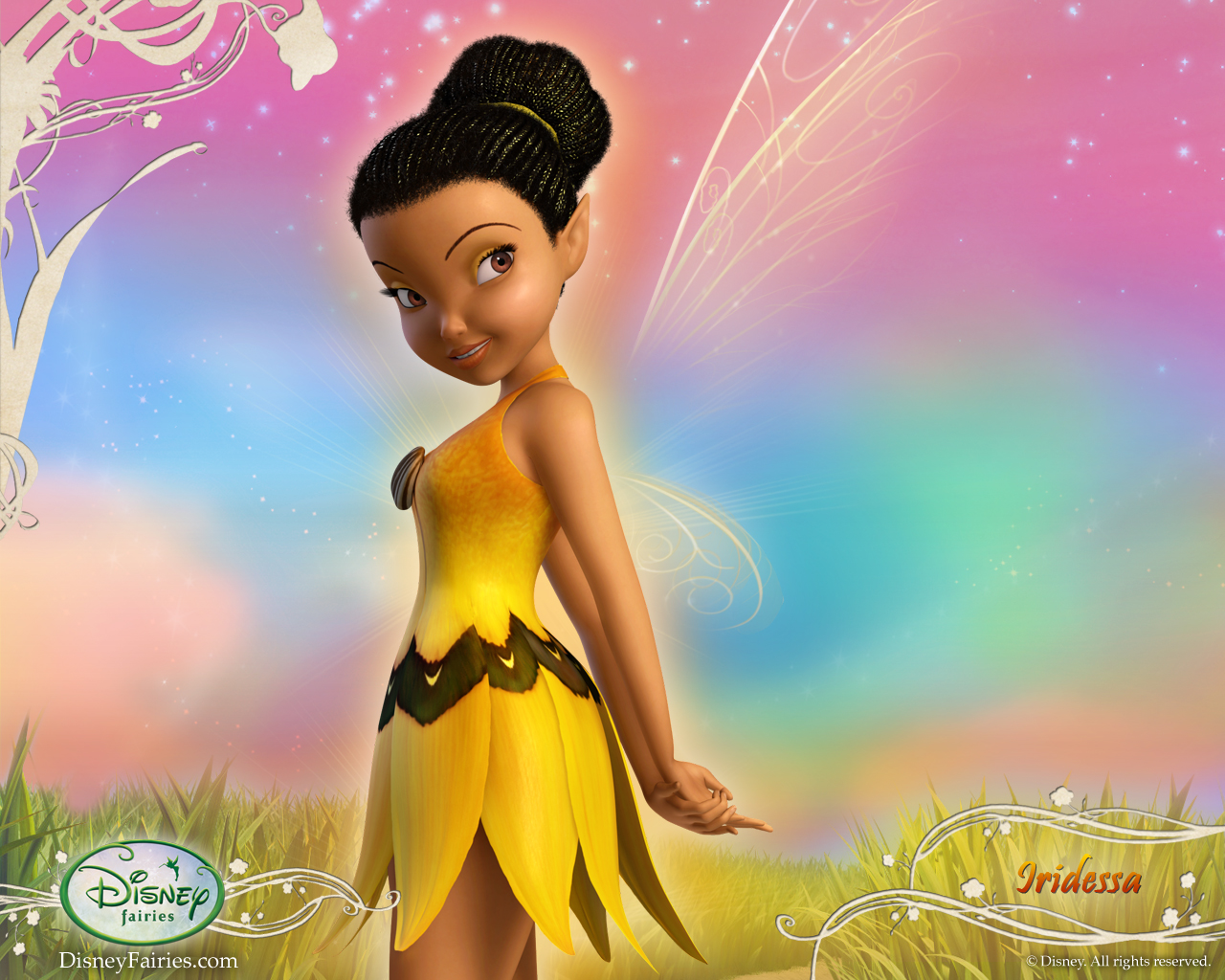
Iridessa is the name of one of the fairies in the Disney Fairies franchise. Her talent is working with light, and she wears a yellow dress, lives in a sunflower, and has clear fairy wings. In the movies, she is voiced by Raven-Symoné. Iridessa is a perfectionist and a worrier; she likes to look on the bright side of things, but can usually sense trouble approaching. When disaster strikes, she rushes in to save the day, and brings sunshine, light and brightness to every situation. The name Iridessa seems to be based on the word iridescent, meaning “producing rainbow-like colours; brilliant, lustrous, prismatic”. The word is derived from Iris, the name of the goddess of the rainbow, so you could see Iridessa as a modern spin on the older name. I have seen a baby with this name, and it’s been frequently Googled, so it seems that people find the name of this fairy intriguing. It’s not surprising, with such an attractive namesake associated with light. Looking for a nickname? Iridessa goes by Dess.

Khaleesi

Khaleesi is extremely unusual as an invented name, because it is not the name of a fictional character, but rather her title. In George R.R. Martin’s fantasy series, A Song of Ice and Fire, khaleesi is the word for the wife of a khal or ruler, in the Dothraki language from the novels. The Dothraki are a nomadic indigenous people without a written language, so the spelling of khaleesi in the novels must come from another culture. In Martin’s novel series, shy Daenerys Targaryen adopts the title of Khaleesi when she weds powerful Dothraki warlord Khal Drogo, and as his queen, grows in strength and confidence, becoming a leader in her own right known as “the Mother of Dragons”. In the television series based on the books, A Game of Thrones, the role of Daenerys is played by Emilia Clarke. Since the television series began airing in Australia, there has been a spike of interest in the name, with about 25 baby girls called Khaleesi born this year. For some reason, the name is far more popular in Queensland than elsewhere – possibly because of the connection with queens.

Lorelei

The Lorelei is the name of a famous rock on the River Rhine in Germany, and also the name of a beautiful water sprite or siren associated with the rock, who is supposed to lure men to their doom. More prosaically, the current of the river is very strong here, which explains the many accidents which have occurred in the area. The character of the Lorelei comes from a 19th century German ballad which poet Heinrich Heine turned into a poem called Die Lorelei, where a golden-haired siren unwittingly distracts men with her beauty so they crash onto the rocks. The poem has often been set to music and turned into songs, and is part of German popular culture. The name Lorelei is a combination of German dialect and Celtic, and means “murmuring rock”. Lorelei is the name of the alluring blonde in Gentlemen Prefer Blondes; in the film she is played by Marilyn Monroe. The name also features in garrulous gabfest Gilmore Girls, where both mother and teen daughter share the name Lorelei (the younger goes by Rory). Comedienne Kat Davidson named her daughter Lorelei “Rory” this year. Said LOR-uh-lie, this is better known in the US, where it is #531.

Pollyanna

Pollyanna Whittier is the title character of the Pollyanna books by Eleanor H. Porter; the series was continued by a number of writers. Pollyanna is an eleven-year-old orphan who is sent to live with her Aunt Polly in New England, and her sunny disposition soon teaches her stern relative, and the whole town, how to play the “Glad Game” – where you always look for something to feel glad about. While many are charmed by the heroine’s upbeat view of life, cynics find her too syrupy and her philosophy simplistic. Because of this, the word Pollyanna has entered our language to mean someone optimistic to the point of naivety or refusal to face facts. Pollyanna is a combination of Polly and Anna – Polly is a medieval variant of Molly, a pet form of Mary. This would be a difficult name to give a child in many ways, but would make a sunshiney middle, and easily shortens to Polly.

Rogue

Rogue is a character from the X-Men Marvel comic books created by Stan Lee and Jack Kirby. She is one of the team of mutant superheroes under the auspices of Professor Xavier, who recruits and trains young mutants to use their powers for the benefit of humanity. Rogue considers her special ability something of a curse, as she involuntarily absorbs, and sometimes removes, the memories, strength, and superpowers of anyone who touches her. For most of her life, she limited her physical contact with others, even loved ones, until after many years she was able to gain full control of her abilities. It was eventually revealed that Rogue was a code name, and her real name Anna Marie. In the movies, she is played by Anna Paquin. A rogue is a scoundrel or rascal. More to the point, a rogue animal is one which separates itself from the herd, and in horticulture the word rogue is used to describe a plant which has an undesirable mutation and must be destroyed. Anna Marie seems to have chosen Rogue as her code name to express her bitterness at the biological difference she had been lumbered with. This name can be used for both sexes; I saw it on a baby girl last year.

Scarlett

Scarlett O’Hara is the protagonist of Margaret Mitchell’s best-selling Civil War novel, Gone with the Wind; in the film version she was played by Vivien Leigh. Slender and attractive, Scarlett is flirtatious and charming, but doesn’t fit the mould of a typical Southern Belle. Smart, feisty, stubborn and very strong-willed, she nevertheless is inwardly insecure. What makes Scarlett such an interesting character are her many flaws – she is vain, selfish, spoiled, unscrupulous and manipulative, but hard as nails, with an overpowering survival instinct. Scarlett is an English surname from Norman French, referring to someone who dyed or sold brightly-coloured cloth, which was often red. It has been used as a unisex name since the 17th century, but is now usually thought of as feminine. The character’s full name is Katie Scarlett O’Hara, and she was named after her grandmother. Margaret Mitchell originally planned to call her heroine Pansy, and changed it to Scarlett just before the novel went to print. Scarlett first ranked in the 1990s at #467, the decade in which American actress Scarlett Johansson made her film debut. It climbed precipitately to join the Top 100 in the mid-2000s, and is currently #25 nationally, #23 in New South Wales, #17 in Victoria, #33 in Queensland, #17 in South Australia, #22 in Western Australia, #21 in Tasmania, and #26 in the Australian Capital Territory.

Velvet

Velvet Brown is the heroine of Enid Bagnold’s novel, National Velvet, about a teenager who rides to victory in the brutally difficult Grand National Steeplechase, the most valuable jump race in Europe. The story is about the ability of ordinary people to achieve great things – Velvet is a plain, rather sickly girl from a working-class family, and the horse she wins on is a piebald. The movie version chucks most of this inspiring message aside so they can show a radiantly pretty pre-teen Elizabeth Taylor galloping about on a chestnut thoroughbred. Velvet is a fabric which was originally very expensive to make, and therefore associated with nobility and royalty. The word is from Old French, and comes from the Latin for “tuft, down”, because of velvet’s distinctive texture. It has been used as a name since the 19th century, and has been given to both genders, but mostly to girls. This unusual fabric name is warm and luxurious, perhaps even rather sensual.

POLL RESULT: People’s favourite names were Lorelei, Arrietty, and Scarlett, and their least favourite were Rogue, Pollyanna, and Khaleesi.

(Picture is of Iridessa, from Disney website)

Famous Name: Winsome

30 Wednesday Oct 2013

Posted by A.O. in Famous Names

≈ Comments Off on Famous Name: Winsome

Tags

Abby Sandel, American names, english names, famous namesakes, historical records, locational names, modern names, name history, name meaning, Nameberry, Nameberry Nine, nicknames, rare names, surname names, virtue names, vocabulary names

giovanni_boccaccio_women_playing

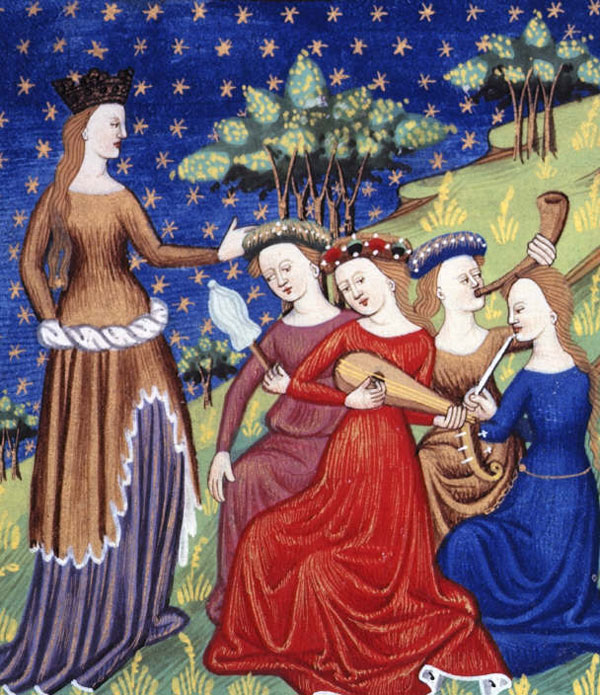
If you were in Sydney in early October, you could have attended the Royal Australian Navy International Fleet Review, celebrating one hundred years of our navy. Or, if you were of a more musical bent, you could have been there for The Renaissance Player’s 35th Runnymede Pop Festival. Held at Sydney University in its Gothic-style Great Hall, this is a unique concert of music, mime and poetry from medieval Europe, performed in brightly-coloured costumes.

The Runnymede Pop Festival has been going since 1973, and from the beginning has featured early music specialist Winsome Evans. Winsome is the director of the Renaissance Players, Australia’s oldest early music ensemble, and she is a professional harpsichordist, composer, and arranger. She conducted the first Renaissance Players concert while still a student.

Winsome is a recipient of the British Empire Medal in the Queen’s Birthday Honours List, The Order of Australia, and a NSW Jaycees Award for services to music.

Winsome is an English word meaning “charming in an innocent manner”. A winsome person is cheerful and open-hearted, engaging, and perhaps slightly naive, in a completely delightful way. The word comes from the Old English for “joy”, and is ultimately from an ancient root meaning “wish, love”.

Winsome is also an English surname, coming from the village of Winchcombe in Gloucester, or from Winscomb in Somerset. In either case, the name is Old English, and means “remote valley”. However, in some cases, the surname may have come directly from the Old English word winsom, meaning “attractive, lovely”, used as a personal name. If so, it means that the first name Winsome could date back to medieval times.

The first name Winsome can be found in records from the middle of the 19th century in North America, and seems to have been especially associated with Ontario, Canada. The reason for this may be Winsome Lake, which is one of the many thousands of smaller lakes in the Great Lakes region of Ontario, but why it inspired baby names is something of a mystery to me. I have been unable to discover how Winsome Lake received its name, because it is relatively obscure.

There are over one hundred women named Winsome in Australian records, most of them born around the turn of the twentieth century. There is another famous Winsome in Australia – Winsome McCaughey, who was Lord Mayor of Melbourne in the late 1980s. And another Australian musical connection too – Peggy Winsome Glanville-Hicks was a Melbourne-born opera composer and music critic who flourished in the middle of the 20th century.

Other successful Winsomes include British playwright Winsome Pinnock, and US Republican politician Winsome Sears. Interestingly, Sears was born in Jamaica and Pinnock’s parents were Jamaican, so there seems to be a West Indian connection. There was a grassroots playwright in Jamaica who wrote under the code name “Winsome” about 20-30 years ago. You can still find the name Winsome in use in Jamaica today, including singer Winsome Benjamin, and prize-winning cook Winsome Murphy.

Although Winsome is a secular virtue name like Felicity or Honour, the word winsome has come to have a particular meaning for evangelical Christians. The book Winsome Christianity by Henry Durbanville was published in 1952, and Winsome Evangelism by Ponder W. Gilliland came out in 1973.

I can’t pretend to be an expert on the subject, but my understanding is that the general message is to be winsome in your Christianity in order to attract more converts, and that some evangelists even use the word winsome to mean “capable of winning souls to Christ”. Author Neil Gaiman is apparently a big fan of the meaning of language changing over time, so I expect this example would be of great pleasure to him. It does give the name Winsome a special meaning for some Christians, so that it could become a religious virtue name in this context.

Winsome is a name I find very intriguing – the meaning of the word winsome seems very feminine to me, and Winsome is overwhelmingly used as a female name. Yet the name itself isn’t frilly in the least, having a similar sound to the male name Winston (which also comes from the Old English for “joy”). It’s a strong-sounding name for a girl, but with a dainty meaning.

Winsome isn’t a name I’ve ever seen on a baby or a child, and its heyday (if it can ever be said to have had one) was over many years ago. However, Winnie is becoming hip once more, and Winsome would be a rare and unusual way to reach it.

POSTSCRIPT: Abby Sandel mentioned Winsome in her Nameberry Nine column, and I was surprised and pleased at how many Berries liked or even loved the name Winsome.

POLL RESULT: Winsome received an approval rating of 61%. 21% of people thought it was an interesting modern virtue name, while 19% loved the idea of Winnie as the short form. However, 18% were reminded too strongly of the phrase win some, lose some. Only one person thought the name Winsome was too cutesy.

Requested Name: Grady

16 Wednesday Oct 2013

Posted by A.O. in Requested Names

≈ 1 Comment

Tags

historical records, Irish names, name history, name meaning, Old Gaelic names, rare names, surname names, unisex names

Cliffs-of-Moher-West-Coast-Co-Clare-small-600x450

Grady is an Anglicised form of the Irish surname O’Grady, from the Old Gaelic O’Gradaigh, or “son of Gradaigh”, with Gradaeigh meaning “the illustrious one”. The O’Gradys are one of Ireland’s noble families, and a recognised Irish clan. The surname is mostly from County Clare and Kilkenny.

I can find Grady in the records from the late 18th century onward, and interestingly, the Gradys who were born in Ireland were all female, while overall the gender balance between male and female at that time was very even. However, the name Grady is overwhelmingly masculine today. In Australian records, Grady is rare as a first name, and mostly given to boys, although not uncommon as a middle name for girls.

Grady does not rank at all in Australia, and never has, although it is in the Top 500 in the United States, and has charted there since the late 19th century. I was a bit surprised to see how rare Grady is here, because it doesn’t sound rare.

It sounds like Brady, Graydon and Grayson, and like traditional Graham. Yet when I think about it, I don’t recall ever meeting a Grady, or seeing a Grady, or even hearing someone mention a Grady, although it wouldn’t have seemed even slightly unusual if I ever had.

It’s one of those handy names that other parents are hardly using, but won’t seem weird to others – and at a time when surname names for boys are booming, and in a country where Irish names are readily accepted, it’s rather strange how little used this name is.

Thank you to Brooke for suggesting the name Grady to be featured on Waltzing More Than Matilda

POLL RESULT: Grady received an approval rating of 62%. People saw the name Grady as cute for a little boy, but handsome and mature on a grown man (22%), strong and masculine (15%), and rare yet familiar-sounding (12%). However, 12% thought it was harsh or ugly-sounding, and a further 12% believed it sounded too trendy, due to its similarity to other names.

(Photo is of the Cliffs of Moher in County Clare)

← Older posts
Newer posts →

Enter your email address to follow this blog

Categories

Archives

Recent Comments

A.O.'s avatarwaltzingmorethanmati… on Zarah Zaynab and Wolfgang…
Madelyn's avatarMadelyn on Zarah Zaynab and Wolfgang…
JD's avatardrperegrine on Can Phoebe Complete This …
A.O.'s avatarwaltzingmorethanmati… on Rua and Rhoa
redrover23's avatarredrover23 on Rua and Rhoa

Blogroll

  • Appellation Mountain
  • Baby Name Pondering
  • Babynamelover's Blog
  • British Baby Names
  • Clare's Name News
  • For Real Baby Names
  • Geek Baby Names
  • Name Candy
  • Nameberry
  • Nancy's Baby Names
  • Ren's Baby Name Blog
  • Sancta Nomina
  • Swistle: Baby Names
  • The Art of Naming
  • The Baby Name Wizard
  • The Beauty of Names
  • Tulip By Any Name

RSS Feed

  • RSS - Posts

RSS Posts

  • Celebrity Baby News: Melanie Vallejo and Matt Kingston
  • Names from the TV Show “Cleverman”
  • Can Phoebe Complete This Sibset?
  • Zarah Zaynab and Wolfgang Winter
  • Baby, How Did You Get That Name?
  • Celebrity Baby News: Media Babies
  • Celebrity Baby News: Adelaide Crows Babies
  • Celebrity Baby News: Chris and Rebecca Judd
  • Names at Work: Name News From the World of Business and Employment
  • Celebrity Baby News: Sporting Round Up

Currently Popular

  • Celebrity Baby News: Jacinta Allan and Yorick Piper
  • The Top 100 Names of the 1940s in New South Wales
  • Celebrity Baby News: Jacinta Allan and Yorick Piper
  • The Top 100 Names of the 1930s in New South Wales
  • Celebrity Baby News: Josh and Amie Frydenberg

Tags

celebrity baby names celebrity sibsets english names famous namesakes fictional namesakes honouring locational names middle names name combinations name history name meaning name popularity name trends nicknames popular names saints names sibsets surname names twin sets unisex names

Blog at WordPress.com.

Privacy & Cookies: This site uses cookies. By continuing to use this website, you agree to their use.
To find out more, including how to control cookies, see here: Cookie Policy
  • Subscribe Subscribed
    • Waltzing More Than Matilda
    • Join 517 other subscribers
    • Already have a WordPress.com account? Log in now.
    • Waltzing More Than Matilda
    • Subscribe Subscribed
    • Sign up
    • Log in
    • Report this content
    • View site in Reader
    • Manage subscriptions
    • Collapse this bar
 

Loading Comments...