• About
  • Best Baby Names
  • Celebrity Baby Names
  • Celebrity Baby Names – Current
  • Celebrity Baby Names – Past
  • Featured Boys Names
  • Featured Girls Names
  • Featured Unisex Names
  • Links to Name Data
  • Waltzing on the Web

Waltzing More Than Matilda

~ Names with an Australian Bias of Democratic Temper

Waltzing More Than Matilda

Tag Archives: nicknames

Famous Names: Jedda and Rosalie

24 Wednesday Jun 2015

Posted by A.O. in Famous Names

≈ 7 Comments

Tags

animal names, Australian Aboriginal names, bird names, celebrity baby names, ethnonyms, European name popularity, famous namesakes, fictional namesakes, flower names, French names, historical records, international name trends, Latin names, locational names, name history, name meaning, name popularity, names from movies, nature names, nicknames, plant names, saints names, screen names, UK name popularity, US name popularity
JEDDA

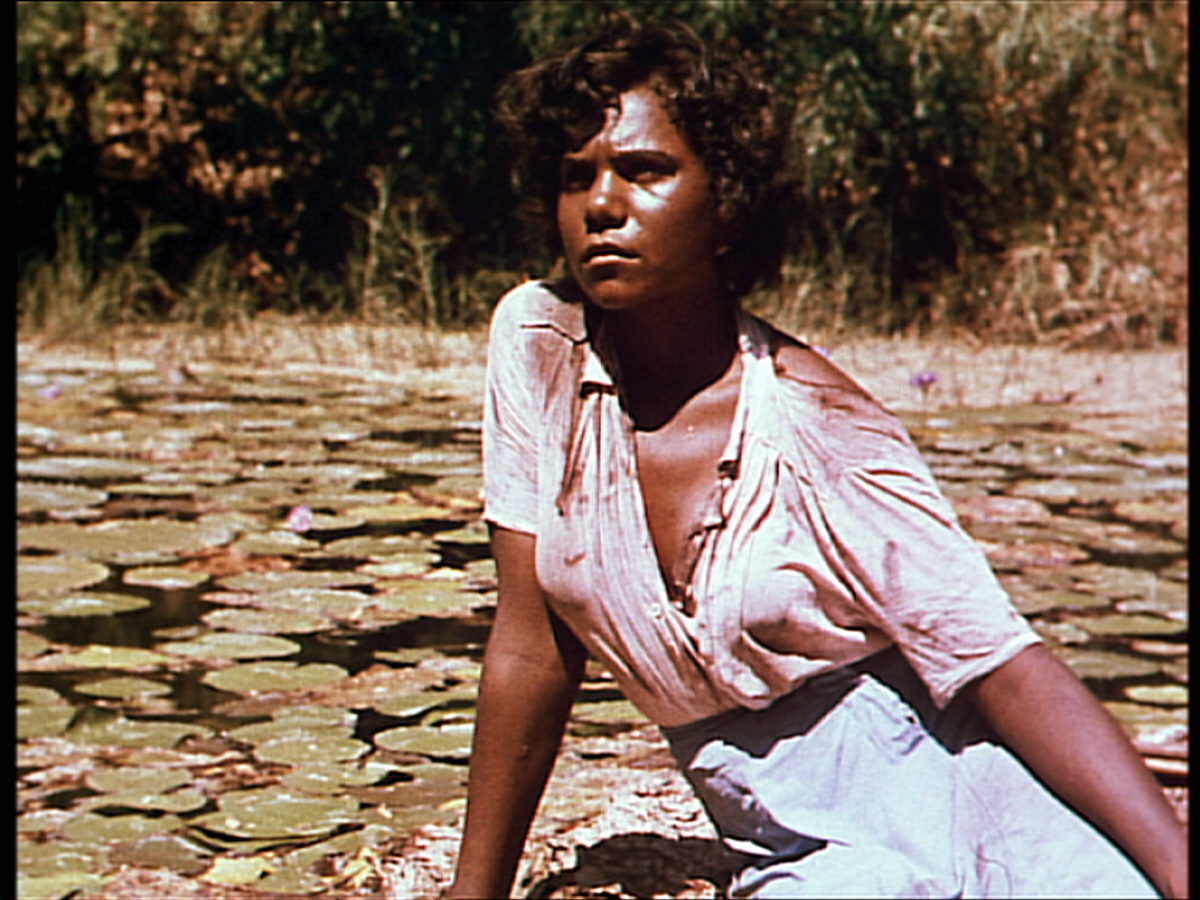
Last month the Australian film Jedda returned to the Cannes film festival, sixty years after it was first shown there in 1955. Jedda was the work of distinguished film-makers Charles and Elsa Chauvel; the first Australian feature film to be shot in colour, and the first to have Aboriginal actors in lead roles.

In the film, Jedda is an Aboriginal girl who is brought up by a white couple on a cattle station after her mother dies. She is raised in European ways, and forbidden to learn about her own culture, kept separated from the other Aborigines on the station.

When she gets older, Jedda finds herself strangely drawn to an Aboriginal man living in the bush, and following the traditional ways of his people. He abducts her, but when they come to his tribal lands, Jedda discovers that their relationship is forbidden by Aboriginal law. It’s a Romeo and Juliet scenario, and as with Shakespeare’s tale, it ends in tragedy for the star-crossed lovers.

The role of Jedda was given to Rosalie Kunoth, an Aboriginal teenager from the Northern Territory, who was studying in Alice Springs. The Chauvels gave her the screen name Ngarla for the film, which they thought looked more “authentic”. Ngarla was the name of Rosalie’s mother’s people – the Ngarla are from the Pilbara region of Western Australia. This was distressing to Rosalie, as it was culturally inappropriate.

The filming was challenging for Rosalie in many ways, and when she attended the premiere (sitting in the white section of a segregated cinema), was horrified by the film’s eroticism. Rosalie was an Anglican nun for ten years; she then left the order, married, and eventually returned to the Northern Territory. Now a respected Aboriginal elder, Rosalie Kunoth-Monks has spent her life working as an Indigenous activist, taking on leadership roles in her community. She has a daughter named Ngarla.

Jedda was a groundbreaking film in Australian cinema history, especially significant as it gained international attention and respect at a time when Australian cinema was practically nonexistent. As well as its other “firsts”, it was the first Australian film to be shown at Cannes, and nominated for the Palme d’Or.

Although it has dated in some ways, it remains a powerful and heartbreaking story. Jedda was created in opposition to the assimilationist policies of the 1950s, and the film is still relevant in light of the Stolen Generations. It helped inspire Indigenous film-maker Tracey Moffatt, whose Night Cries is a re-imagined “what might have been” sequel to Jedda.

JEDDA
In the movie Jedda, Aboriginal servants name the baby Jedda when she arrives, because she “flies in” like a “jedda bird”. Jedda appears to be from the Noongar word djida or jida, meaning “bird” (more specifically a wren), even though Noongar people are from south-west Western Australia, and the film is set in the Northern Territory. In the film, the identification with Jedda as a bird connects her to flight, to freedom and capture, and also to the spirit world.

Australian records show the name Jedda in sporadic use as far back as the 19th century, including by Indigenous Australians. I can only speculate as to where their names might have come from; in the case of Europeans, maybe as a variant of the name Jetta. It is possible that Indigenous women born before the film was made took (or were given) the name Jedda after its release. In addition, I have seen Indigenous women named Djida and Jida.

Jedda is also a plant name, as the jedda bush is native to the Cape York Peninsula region of far north Queensland. It is named after Jedda Creek, which is where it was first found, but I have not been able to discover the origin of the creek’s name – it may even have been named after the film.

Jedda is in use as a personal name for both Indigenous and non-Indigenous Australians, and is a popular name for homes, businesses, and streets. It is often used as a name for animals too, and in particular I have encountered quite a few horses named Jedda. This may be why in the children’s novel, Hating Alison Ashley by Robin Klein, the heroine’s sister Jedda pretends she is a horse. I’ve seen the name given to a boy, and it does have a bit of a unisex vibe, as it shortens to Jed.

Jedda is an Australian name made famous by a classic film, and appealing to both Indigenous and non-Indigenous parents. Although traditionally female, it could even be used for both sexes. It tends to be seen as slightly dated, yet it has never been common and is similar to Gemma, Jenna, Jed, and Jett.

ROSALIE
French form of the Latin name Rosalia, derived from rosa, meaning “rose”. Saint Rosalia was a medieval hermit who tradition says was a Norman noblewoman led by angels to live in a cave in Sicily. The saint became known in 1624, when she is supposed to have miraculously cured a plague. The saint’s name Rosalie was given to a young nun named Jeanne-Marie Rendu, and she became Blessed Sister Rosalie, who performed a lifetime of charity in the slums of 19th century Paris, and was mourned by the city when she died.

The name Rosalie came into common use in the 18th century, and was especially used in France, Germany, and Central Europe. It only became common in the English-speaking world in the 19th century, possibly because of the French courtesan Rosalie Duthé, who became the mistress of French kings and aristocrats. As a young woman she moved to London to escape the French Revolution, and gained the immensely rich George Wyndham, 3rd Earl of Egremont, as a lover. Beautiful and golden-tressed, Rosalie was apparently not overburdened with brains, and it is theorised that she is the originator of the “dumb blonde” stereotype.

The name Rosalie first joined the charts in the 1910s, debuting at #268. The name peaked in the 1940s at #141, probably because of the 1937 movie Rosalie, starring Eleanor Powell as a princess in disguise: Cole Porter’s song Rosalie is from the movie. Rosalie dropped off the charts in the early 2000s, but returned in 2009 at #519, the year after the first Twilight film was released, with Nikki Reed in the role of Rosalie Hale. Rosalie is described as being “the most beautiful person in the world”, which must have been a drawcard. The name Rosalie is apparently now in rare use again.

In the US, Rosalie returned to the Top 1000 in 2009, under the influence of Twilight. It is now #310 and rising. In the UK, the name Rosalie suddenly began rising steeply in 2009, and is now #394. Rosalie is also in the 300s in France, and is a popular name in The Netherlands, at #79.

Rosalie is a pretty, charming, European-style name with that touch of fairy-tale magic which has seen it chosen in films for a student princess and a vampire beauty. As Rose- names are becoming increasingly fashionable, it is a bit surprising that Australia seems to to be lagging behind the international trends – although it might just be that our data-collection is lagging.

I have seen quite a few birth notices for baby girls named Rosalee, Rosaleigh, Rosa-Lee and so on, and wonder if the spelling is an issue for some parents. Perhaps they worry that Rosalie will be said with the end rhyming with Lorelei, or just don’t like the idea of a name that ends in -lie. This makes me wonder if there are more Rosalies out there than meets the eye. A fantastic underused traditional choice, in any case.

POLL RESULTS
Jedda received an approval rating of 53%. 39% of people weren’t keen on the name Jedda, while 16% loved it.

Rosalie received a very good approval rating of 76%, making it one of the highest-rated names of 2015. 39% of people loved the name Rosalie, and only 4% thought it was a terrible name.
 

Uncommon Girls Names from the Birth Announcements of 2011-12

14 Sunday Jun 2015

Posted by A.O. in Name Themes and Lists

≈ 3 Comments

Tags

animal names, Arabic names, Australian Aboriginal names, birth notices, celebrity baby names, Celtic names, Chinese names, Cornish names, created names, english names, famous namesakes, fictional namesakes, French names, Gaelic names, German names, Greek names, honouring, Irish names, Japanese names, Latin names, literary names, locational names, middle names, mythological names, name history, name meaning, names from films, names from video games, names of businesses, nicknames, rare names, surname names, UK name popularity, unisex names, vocabulary names, Welsh names

satine (1)

Althea
Variant of the ancient Greek name Althaea, perhaps derived from the Greek word althos, meaning “healing”. In mythology, Althaea was a queen with a son named Melager. When Melager was a baby, the Three Fates turned up, rather like the fairy godmothers in a certain tale. One said he would be noble, the second that he would be brave, but the third did the usual grumpy godmother routine, and said his life would last only as long as a certain piece of wood burning on the fire. Althaea immediately took the wood and blew it out, burying it secretly so that none should ever find it again. When Melager was grown into the brave and noble prince predicted by The Fates, he got into a quarrel while hunting, and killed his uncles. When Althaea discovered Melager had murdered her brothers, she took revenge by setting fire to the piece of wood, so that her son died. Afterwards she committed suicide. This isn’t the happiest name story ever, but the poet Richard Lovelace wrote To Althea, From Prison while imprisoned for a political protest. The famous poem is very romantic, and the name Althea has been used since the 17th century because of it, while never being very common. One attraction of this literary name is the potential to use fashionable Thea as a nickname.

Carys
Modern Welsh name derived from caru, meaning “to love”, and given the common -ys ending found in Welsh names, such as Gladys and Glenys. It has been in use since the early 20th century, and is currently #328 in England/Wales, although falling in popularity. The name gained interest as a celebrity baby name, when Welsh-born actress Catherine Zeta Jones chose it for her daughter. It is meant to be pronounced KAH-ris, but the few people called Carys I know in Australia all say their name to rhyme with Paris, and this pronunciation is even used in Wales sometimes (kuh-REES is really pushing it though). Leaving aside possible pronunciation pitfalls, this is a modern name that is feminine without being frilly.

Isolde
In medieval romance, Isolde the Fair is a stunningly beautiful golden-haired Irish princess with a gift for healing, who is married off to King Mark of Cornwall. Due to a mix-up with a love potion, Isolde falls passionately in love with Tristan, her husband’s nephew and adopted son, with tragic consequences. Tristan actually ends up married to a different Isolde, a Breton princess called Isolde of the White Hands, who he weds for the curious reason that she has the same name as his true love. Their marriage is never consummated, and fed up and jealous, Isolde of the White Hands eventually takes her revenge. The stories originally had nothing to do with Arthurian legends, but became part of them. Adapted by Gottfried von Strassberg in the 12th century, Isolde is a German translation of Iseult, used in French versions of the tale. The Welsh form of the name is Esyllt, and although there are many arguments over the name’s meaning, the most convincing theory is that it is from the Celtic for “she who is gazed upon”, to suggest an overwhelming beauty. The name Isolde has been used since the Middle Ages due to the Tristan and Isolde legend, without ever becoming common: the composer Richard Wagner, who wrote the opera Tristan and Isolde, had an illegitimate daughter named Isolde. A romantic literary name fit for a fairytale princess, you can say Isolde almost any way you like, but common pronunciations would be i-SOL-duh or i-ZOL-duh.

Jamilla
Variant of the Arabic name Jamila, the feminine form of Jamil, meaning “beautiful”. The name became better known in the English-speaking world in 1944 through the romantic fantasy film Kismet, starring Marlene Dietrich as Lady Jamilla, a captive queen who falls in love with a rascally beggar. Set in an Arabian Nightsy type world, at one point, Dietrich does an erotic dance with her legs painted gold, so the name got a rather sexy image. Jamilla works well cross-culturally, and is easy to explain to people, as it is said like Camilla with a J. The popular short form Milla is an added attraction.

Lowenna
Modern Cornish name meaning “joy”, used since the early 20th century, and in rare but fairly steady use in England/Wales. The name is something of a favourite in fiction, even being chosen for historical novels set in Cornwall hundreds of years ago, when it is unlikely the name was in use. Lowenna can be found in the US in the 19th century, where it may be a variant of Louanna, or other names based on Louisa. It was used in the stage version of Rip Van Winkle, written in 1859 (Lowenna is Rip’s daughter; in the original story, his daughter was called Judith). A drawcard is that the name is very similar to the Indigenous name Lowanna, meaning “girl, woman”, giving this name a rather Australian feel.

Lux
Latin for “light”. Lux was used as a male name in medieval Germany, as a short form of Lukas, or a corruption of the German nickname Luchs, meaning “lynx” – this is the origin of the Lux surname. Lux began to be used as an English name by the 17th century, when it was used for girls: in general, English-speakers have preferred it as a female name, although it has been used as a male name too, particularly in North America, which has a history of high immigration from central Europe. The name may be used in a Christian sense, as Fiat lux means “Let there be light”, a famous quote from Genesis to show the beginnings of creation, or even a specifically Catholic context as Lux Aeterna (“eternal light”) is used in Latin prayers to refer to heaven. However, the meaning of light is positive to almost everyone, and the name also has a science-fiction feel to it, because lux is a scientific measurement of luminosity (there is a video game character named Lux, Lady of Luminosity). The name has had publicity from the film The Virgin Suicides, with Kristen Dunst as Lux Lisbon, and from the daughter of One Direction’s stylist – once known in the press as Baby Lux, and almost a celebrity in her own right. A short, cool, luxurious-sounding name that also works well in the middle.

Posy
Can be used as a short form of other names, or with the meaning “a small bouquet of flowers” in mind. The word posy comes from poesy, meaning “poetry”, and has been used to mean a bunch of flowers since the late 16th century – a slightly earlier definition of the word was a motto inscribed inside a ring. Posy has been used as a personal name since the 18th century, and although it sounds very dainty and feminine, it has quite often been given to boys. The reason is because Posy is also a surname, after the town of Pusey in Oxfordshire, meaning “pea island”. Although the name Posy has never been very common, there are a few Posys in fiction to give it some publicity. Posy Fossil is one of the main characters in Noel Streatfeild’s Ballet Shoes, a brilliant young dancer filled with ambition. More recently, Posy Hawthorne is a sweet little sister in The Hunger Games, and in the romantic comedy About Time, Posy Lake is the protagonist’s eldest daughter. Although Posy began as a short form of Josephine, you could use it for a wide variety of names, including Sophia and Penelope – British cartoonist Posy Simmonds, from The Guardian, is named Rosemary.

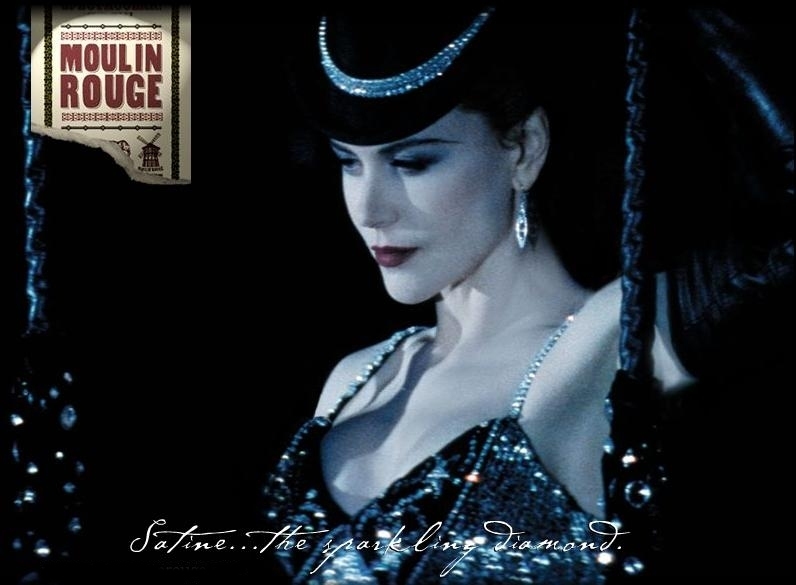
Satine
In the 2001 movie Moulin Rouge!, Nicole Kidman plays the role of Satine, a Parisian cabaret star and courtesan who has never known love until she falls for a poor English writer. Satine, which is presumably a professional or stage name, is French for satin, the familiar glossy fabric – its name comes from the Chinese city of Quanzhou (once a major shipping port for silk), which was called by the Arabic name of Zayton during the Middle Ages. Zayton is the Arabic word for “olive”, to symbolise peace, perhaps due to the mix of cultures living and working in the city. This makes Satin or Satine a possible honour name for Olive, weirdly enough. Satine has been used as a name since the 19th century, and although it is not a traditional French name, it has sometimes been used as a baby name in France since the film came out. A soft, exotic-sounding name with an Australian connection.

Shiseido
The name of a highly successful Japanese cosmetics company, and one of the oldest in the world, being founded in 1872. The company’s name is taken from the classic Chinese text, the I Ching (Book of Changes), and can be translated as “How wonderful is the virtue of the earth, from which all things are born!”. The company believes that this embodies its resolve to create new products that will enhance clients’ well being, and also helps to promote an image which is healthy and environmentally sound. Although there are many brand names used as personal names (such as Chanel and Armani), and some existing personal names used for brands (such as Mercedes and Nike), I have only ever seen one baby given the name Shiseido. That makes it very unusual, but it’s rather attractive, and has a lovely, carefully-crafted meaning. Pronounced shi-SAY-doh, you could use Sadie as a short form, although the baby I saw had Sass as her nickname.

Sorcha
Gaelic name meaning “brightness, radiance”. It can be found in medieval Irish documents, so it has a long history. In Ireland it is sometimes Anglicised as Sarah, because of the similar sound, while in Scotland it is more often Anglicised as Clara, which has the same meaning. The Irish actress Sorcha Cusack, who came to prominence in the 1970s as Jane Eyre, and is still on TV now as the housekeeper in Father Brown, has given it publicity in recent decades, and the name isn’t uncommon in Ireland. The correct pronunciation is SAWR-kuh or SAWR-i-kuh, but in practice a wide variety of pronunciations is tolerated in Ireland and Scotland, including SAWR-sha, which is probably easier for English-speakers, and sounds like familiar Sasha (although liable to be confused with another Irish name, Saoirse). An unusual yet very usable name.

POLL RESULTS
People’s favourite names were Carys, Isolde and Posy, and their least favourite were Lowenna, Jamilla and Shiseido.

(Picture shows Nicole Kidman as Satine in Moulin Rouge!)

Famous Name: Humphrey

10 Wednesday Jun 2015

Posted by A.O. in Famous Names

≈ Comments Off on Famous Name: Humphrey

Tags

animal names, aristocratic names, Disney names, famous namesakes, fictional bears, fictional namesakes, germanic names, honouring, Irish names, name history, name meaning, names from television, nicknames, Old English names, rare names, royal names, saints names, Shakespearean names, surname names, UK name popularity, US name popularity, vintage names

PH_greenguideJAN2_wide_networking-20140101124709427910-620x349

Famous Namesake
May 24 marked the 50th anniversary of Humphrey B. Bear‘s first television appearance, on the Channel Nine’s children’s program, Here’s Humphrey in 1965. I cannot say it was Humphrey’s birthday, because he is eternally four years old, and can never age.

He was originally named Bear Bear, but feeling that this perhaps lacked some imagination, the makers of the show ran a competition, and he was renamed Humphrey B. Bear, with his middle initial standing for Bear. I’m not sure whether the contest winner had ever heard of Walt Disney’s Humphrey Bear (who debuted in 1950), but the coincidence is remarkable.

In the show, the honey-loving Humphrey lives in a tree-house in the middle of the magic forest, and loves to explore, play, dance, spend time with friends, and use his imagination. Humphrey is prone to accidents and often makes mistakes – as the theme song says, He’s a funny old fellow who gets in all manner of strife. Humphrey never speaks, but has a companion and assistant who serves as narrator.

Here’s Humphrey is one of the most successful programs for preschoolers in Australia, and is second only to Playschool for longevity. It won Logies for Best Children’s Series, and Humphrey himself has won a number of awards, including Citizen of the Year in 1994. He still makes frequent public appearances, including to sick children in hospitals, and to promote road safety.

Humphrey made generations of children smile, but there was an inner sadness to the outwardly happy bear. The first performer to play Humphrey, often considered the best of all time, was a talented actor, dancer and playwright named Edwin Duryea – aptly nicknamed “Teddy”.

Constrained by the anonymity of the role, he came to resent it, and led a lonely life. Teddy died a few years ago, and with no known family, was given a pauper’s funeral (Channel Nine wouldn’t pay to bury the actor who had made Humphrey a star). There are no photos of Edwin as Humphrey, as it is considered sacrilege to dispel the illusion that Humphrey isn’t “real”.

There is no doubt that playing Humphrey could be challenging: the bear suit is very hot, just for a start. That may not be a problem in Humphrey’s future, as discussions are underway to turn Humphrey B. Bear into an animated series – and if it goes ahead, he will have a voice at last!

Name Information
Humphrey is derived from the ancient Germanic name Hunfrid, which probably means “to grant peace”, but is often translated as “peaceful warrior”.

There is a 9th century French saint called St Hunfrid, and because of him the name Humphrey was introduced to England by the Normans, where it quickly overtook the Old English form, Hunfrith. In Ireland, it was used to Anglicise Amhlaoibh, which is the Irish form of Olaf.

The name Humphrey was a common one amongst the Norman aristocracy, and one of the first bearers to come to England was the strikingly named Humphrey with the Beard, who fought at the Battle of Hastings. His nickname came about because it was unusual for Normans to have a beard at that time – the fashion was for a clean-shaven look. Bearded Humphrey was the founder of the noble de Bohun family, and his name became traditional amongst the Bohuns.

One of their line was Humphrey of Lancaster, called the “son, brother, and uncle of kings”. He was the son of King Henry IV by his wife Mary de Bohun, the brother of Henry V, and the uncle of Henry VI. Romantic and chivalrous, he was a successful military strategist and diplomat, and a scholarly patron of the arts. Popular with the public, he was disgraced when his second wife was found guilty of witchcraft (she consulted an astrologer and sought herbal fertility treatment). He appears as a character in Shakespeare’s Henry VI – one of the few historical people to be shown in an almost completely positive light.

A famous namesake of modern times is American film star Humphrey Bogart, an iconic leading man of the 1940s who appeared in such classics as The Maltese Falcon and Casablanca. He usually played a cynical tough-guy character, who would prove in the end to have his heart generally in the right place. A true screen legend, he is often regarded as the greatest Hollywood actor of all time. Humphrey Bogart was named for his mother’s maiden name – he was the son of artist Maud Humphrey.

The name Humphrey is a favourite for all kinds of animals, both in real life and in fiction. One example is the cat Humphrey, who was chief mouser at Number 10 Downing Street for many years, until apparently ousted by the Blairs. Cat Humphrey was named after Sir Humphrey Appleby, the urbanely Machiavellian bureaucrat from Yes, Minister and Yes, Prime Minister. The name has also been given to a real life humpback whale, and a camel on The Simpsons, because the name starts with the word hump.

Although never going out of use, the name Humphrey peaked in the 19th century, and isn’t very common. It has never charted in Australia, and is rarely seen today, although there are many examples in historical records. In England/Wales, Humphrey peaked in the 1860s in the mid-100s; in 2013, 20 baby boys were named Humphrey. In the US, Humphrey peaked in 1893 at #650, leaving the Top 1000 a year or two later. Last year less than 5 babies received the name Humphrey in the US.

Humphrey is a rare vintage name, and one that seems rather cuddly and lovable – which is probably why it’s often been chosen for animals, such as friendly bears! It’s an interesting, upper class, and somehow quite a sweet name, but I’m not sure if Humphrey B. Bear is much help to it. Apart from the familiar song about the “funny old fellow”, there has been a rather mean tendency to poke fun at the iconic bear, and even to make lewd jokes at his expense. With the possibility of Humphrey returning in animated form, will this help give the name more publicity, or make it less appealing?

POLL RESULTS
Humphrey received an approval rating of 32%. People saw the name Humphrey as old-fashioned and comical (19%) and too strongly associated with Humphrey B. Bear (15%), while 18% found the “hump” in the name off-putting. However 8% of people thought it was a vintage charmer.

Name News – Name Stories Edition

03 Wednesday Jun 2015

Posted by A.O. in Names in the News

≈ Comments Off on Name News – Name Stories Edition

Tags

animal names, Biblical names, choosing baby names, flower names, honouring, Italian names, middle names, name meanings, names of streets, nature names, nicknames, popular names, Sanskrit names, Spanish names


894442-3f7723a6-e3f6-11e4-a3c3-bea7019da5adLin Zhang and her husband Cheng-Hung Tsai met each other in Darwin, and bought their first house there. The house was on Charlotte Street, so they named their daughter Charlotte. They loved the old-fashioned feel of the name, and liked the idea of a link between the first house and the first baby. Charlotte was the most popular girl’s name in the Northern Territory the year Charlotte Tsai was born, and it’s a nice reminder that even the #1 name can have a good story behind it.

A baby boy born in Cairns was delivered at home with the help of paramedics named Jeremy Lawrance and Alex May [pictured]. His parents Kurt Caulton and Georgina Saltmere had a very easy decision to make choosing a baby name – his name is Jeremy Alexander after the paramedics who were there to bring him into the world.

Sydney barrister Julie Taylor was 19 weeks pregnant when she was taken hostage in the siege at the Lindt Cafe last December. Although she managed to escape minutes before police stormed into the building, her best friend Katrina Dawson lost her life during the exchange of gunfire. Julie’s daughter was born last month, and she is named Emily Katrina in honour of Ms Dawson.

Journalist Josephine Cafagna had a rotten time in 2014, losing five loved ones. But there was a beautiful ending to the year, when she welcomed a grandnephew named Alessio Luke, the first person of the new generation born in their family. Josephine’s mum, now a great-grandmother, showed Alessio’s parents a piece of paper where she’d written down her three favourite names for the expected baby. Being a good grandmother and not wanting to impose, she kept her thoughts to herself, but one of the names was Elisio, which she found in the Bible (it’s the Italian form of Elisha). The middle name Luke is after an uncle who died as a teenager in a terrible accident, and is still deeply missed.

Earlier this year I wrote about New South Wales tightening up their birth registry legislation after a couple of tragic events involving newborn babies. One of them was a baby girl whose remains were found buried on Maroubra Beach in Sydney’s eastern suburbs, and her parents never located. Maroubra local Bill Green, and his wife Filomena d’Alessandro, read that the baby girl would receive a destitute burial, and were determined that not happen. They officially “adopted” the baby, and arranged a memorial service in her honour, giving her the name Lily Grace. Every year there will be a ceremony for Lily, and children like her, who have died without a known family.

This year is the centenary of Anzac, and it will also be the 100th birthday of Anzac Dowker in November. Her mother Elizabeth had six children, with Anzac being the second-last born, and she was having trouble thinking of names for the baby. The man at the registry office suggested Anzac as a name they might like, so she was named Bessie Anzac. However, she didn’t like her first name, and has always gone by her middle name, Anzac. Anzac is very proud of her patriotic name.

Names from The Best Gift of Life

Yolanda Lionheart “Yoli“: Parents Lena and Carlo picked Yolanda because it is a Spanish name; they met in Spain, and Yolanda was conceived there. The middle name came about because when Yolanda was a newborn, she made squeaky little roaring noises like a lion cub. It’s a name that melts Lena’s heart every time she says it, but unfortunately the name didn’t get approval from the grandparents. Yolanda has a big sister named Francesca.

Ace: Ace’s dad is named Radley, nicknamed “Rad”, and mum Jess felt sure that someone named Rad needed a son named Ace! Luckily Rad agreed.

Narayan: Narayan’s dad James belongs to the Hare Krishna movement, and he is named in honour of his father’s personal guru. Narayan is a Sanskrit name for Vishnu (God), meaning “the essence of all”. Narayan’s mum is named Krystal.

Sisters Taleah and Emmi-Belle: Mum Nikki had picked out the names Sofia and Daisy for her daughters, but dad Chris insisted that they were Taleah and Emmi-Belle. Dad won both times, and luckily Nikki agrees he made the right decisions.

Henley Violet: Mum Emma had her heart set on a flower name, because floristry and gardening is something she loved sharing with her mother. The names Dahlia, Rose and Ivy were all considered, but didn’t seem right. So it was decided the middle name would be a flower instead. Dad Tim had fallen in love with the name Henley after watching a movie (maybe Now You See Me, with Isla Fisher in the role of Henley Reeves), and started calling his daughter Henley before she was even born. Emma was worried about the possibility of “Hen” as the nickname, but she now often calls her daughter “little Hen”.

Shayla Tigerlily: Mum Tegan was going to be called Shayden if she was a boy, and had always wanted to call her son Shayden. She had a girl instead, but considers Shayla a feminine form of Shayden. Tigerlily was chosen as a middle name because Tegan loves nature and flowers.

Theodore Luca: Dad Oliver liked the name Ted and mum Charlotte loved the name Theodore, so the name worked for both of them. They like that it means “God’s gift”, and they believe that Luca means “light”.

Name Update: By the Luck of the Irish

01 Monday Jun 2015

Posted by A.O. in Name Updates

≈ 2 Comments

Tags

choosing baby names, honouring, Irish names, middle names, Nameberry, nicknames, sibsets

images

Imogen and Charles were expecting their second child, and although they had already picked a boy’s name, were having trouble deciding on a girl’s name. As it happened, they had a boy on August 30 last year, and were able to use the name they had chosen. Imogen wanted to share it, because it’s a name they were very excited about, and his name is

FITZPATRICK SCOTT “PADDY”,

little brother to Allegra.

The couple wanted an Irish name to honour Charles’ ancestry, and it had to be a strong name that wasn’t too common. Imogen came across the name Fitzpatrick on Nameberry a few years ago, and it fit the bill perfectly, while the middle name honours a family connection. Fitzpatrick’s nickname is very Irish, and Imogen can even imagine him being called Fitzy when he gets older. If Fitzpatrick had been a girl, his name would have been either Margot or Greta.

Congratulations on the birth of your son Imogen and Charles – what a handsome and even noble name, perfectly chosen to honour his Irish ancestry, and with a handy nickname for everyday use.

The Fastest Rising Top 100 Names of 2014

31 Sunday May 2015

Posted by A.O. in Naming Issues

≈ 1 Comment

Tags

birth notices, classic names, famous namesakes, fictional namesakes, name trends, names from films, New Zealand name popularity, nicknames, popular names, retro names, royal names, US name popularity

beautiful-garden-sepia-print3

GIRLS

Hazel
Hazel just joined the national Top 100 as its fastest-rising name, going up 63 places to make #88: the last time it was a Top 100 name was in the 1940s. Hazel was also new to the Top 100 in New South Wales, Victoria, and Tasmania, and one of the Apple Isle’s fastest-rising names. The catalyst for Hazel’s debut in the Top 100 is last year’s teenage tearjerker, The Fault in Our Stars, based on the novel by John Green, and with Shailene Woodley in the role of Hazel. A fashionable retro name with a cool Z sound, chosen by several celebrities, Hazel was due for popularity. Just outside the US Top 100, it’s aready in the Top 50 in New Zealand.

Aria
Aria has been on the Top 100 since 2012, and in 2013 was the #1 fastest-rising name nationally. Last year Aria was the #1 fastest-rising name in New South Wales and Western Australia, and also rose significantly in Victoria and South Australia. I saw many more baby girls named Aria in birth notices too, so this pretty name is still going strong.

Ariana
Hard on Aria’s heels is Ariana, which just squeaked into the national Top 100 in 2013. Last year it was the #1 fastest-rising name in Tasmania, and rose 27 places to become one of the fastest-rising names nationally. It was also one of the fastest-rising names in New South Wales and Queensland. The major influence on the popularity of this name is American pop singer Ariana Grande, who has a couple of Australian connections: she dated Jai Brooks from The Janoskians in 2013/14, and her 2014 song Problem featured Iggy Azalea: it was Grande’s first Top Ten hit in Australia. Not only a multicultural choice, Ariana benefits from looking like an elaboration of Aria (it isn’t though).

Eleanor
Eleanor was new to the national Top 100 last year, and one of the fastest-rising names, as it went up 31 places to debut at #84: a classic never off the charts, Eleanor has not been in the Top 100 since the 1900s. It was also one of the fastest-rising names in New South Wales and Queensland. This is in line with international trends, as Eleanor joined the US Top 100 last year, and has been Top 100 in the UK for decades. Elegant Eleanor fits in with the trend for El- names for girls, and can be shortened to Elle, Ella, Ellie, Nell, Nellie, and Nora, among others. Such a lot of popular and fashionable nicknames!

Evelyn
Evelyn has been on the national Top 100 since 2011, and is a classic name which was last on the Top 100 in the 1940s. One of the fastest-rising names of 2013, Evelyn continues its ascent, as last year it was a fast-rising name in New South Wales, Queensland, and Western Australia. I saw an increase of Evelyns in birth notices during 2014.

BOYS

Maxwell
Maxwell was new to the Top 100 last year, and was the #1 fastest-rising name nationally, going up 43 places to debut at #97. It was also one of the fastest-rising names in Victoria and the Australian Capital Territory. Maxwell is a classic name never off the charts, and was last in the Top 100 during the 1950s. Fitting in with the trend for boys’names that shorten to Max, Maxwell is rising in the both US and UK, but has not yet become popular in either. Because of the Victorian connection, I wonder if the retirement of Nick Maxwell, captain of Collingwood, had any effect.

Fletcher
Fletcher joined the Top 100 last year, and went up 26 spots to make #99. It also joined the Top 100 in Victoria, Queensland, and the Australian Capital Territory, having already been Top 100 in Tasmania for some time. Although Fletcher was not a fast-rising name in any particular state or territory, that’s because it is so new on the charts that there is no data yet for that to show up. Fletcher has been rising in the charts since the 1990s, and has been a Top 100 name in New Zealand since 2010: it is still quite a way off becoming popular in either the US or UK, so this is a Trans Tasman trend.

Harvey
Harvey debuted on the Top 100 last year, rising 20 places to reach #84; this made it one of the fastest-rising names nationally, and it also rose significantly in Victoria and the Australian Capital Territory – which seem to have a strong influence on the Top 100 for boys’names this year! A retro name which charted from the 1900s to the 1950s, rejoining the charts in the 1990s, Harvey has never been on the Top 100 before. It’s been a popular name in the UK since the late 1990s, so it’s in line with British trends. The death of veteran journalist Peter Harvey in 2013 may have been on influence on its rise.

George
George is a solid classic which has never been out of the Top 100, but last year it joined the Top 50 for the first time since the 1970s. After the birth of Prince George, the name George became one of the fastest-rising names of 2013, and its upwards progress continues. One of the fastest-rising names in New South Wales and Victoria, I saw many more Georges in birth notices, especially from rural and regional areas.

Nate
Nathaniel was one of the fastest-rising names of 2013, and last year more parents opted to go straight for the short form, Nate, which was one of the fastest-rising names in both New South Wales and Victoria. Nate has been in the charts since the early 2000s, and is only popular in Australia, although it once made the bottom of the Top 100 in New Zealand, and is rising in the UK.

NOTE: A quick reminder that the fastest-rising names of 2013 were Aria, Evelyn, Penelope, Samantha and Lola for girls, and Louis, Hudson, Nathaniel, George and Lincoln for boys.

I have chosen those names which increased in popularity in the most number of states and territories, making their popularity widest across the board in Australia. For the positions of each name in individual states and territories, please refer to the Name Data category for more information.

POLL RESULTS
People’s favourite fastest rising names were Hazel, gaining 38% of the vote, and Maxwell, gaining 27% of the vote (George was close behind on 26%). The least favourite were Ariana (7%), and a tie between Harvey and Nate (15%).

Waltzing With … Ignatius

24 Sunday May 2015

Posted by A.O. in Waltzing with ...

≈ 3 Comments

Tags

celebrity baby names, famous namesakes, name history, name meaning, name popularity, nicknames, Roman names, saints names, Spanish names, UK name popularity, US name popularity

BC-Flame-Photo

Today is Pentecost, which marks the end of the Easter season – its name means “the fiftieth”, because it is 50 days after Easter Sunday. It is the Greek name for the Hebrew festival of Shavuot, or the Feast of Weeks, a harvest festival which also commemorates the traditional anniversary of Moses receiving the Ten Commandments from God. In this case, the name comes from being 50 days after Passover.

Pentecost became a key date in Christianity because of an event related in the New Testament. The Acts of the Apostles states that about 120 of the disciples of Jesus were gathered together to celebrate the Feast of Weeks, 50 days after the Resurrection of Christ, and ten days after he ascended into Heaven. By tradition, it was the large upper room in which the Last Supper took place, and which the disciples continued to use as a place for meeting and prayer.

The Bible records that suddenly there came a noise like a mighty wind which filled the entire house, and upon each of them sat something which looked like a tongue of fire. They were all filled with the Holy Spirit, and were able to speak in different languages. This drew a large crowd, to whom the Apostles preached, and which was so impressed by the demonstration that about three thousand people were baptised, forming the beginnings of the Christian church.

A major feast day from the very earliest times, Pentecost is celebrated as a joyous occasion, and can be seen as the “birthday” of the church. The colour red is used to symbolise the Holy Spirit descending as fire, and there may be red banners, flowers, candles, balloons, and other decorations. Doves are also a prominent motif in reference to the Holy Spirit. Pentecost is a popular day to be baptised or confirmed, and as it occurs during spring in the northern hemisphere, this affirmation of youth and new life seems very appropriate.

In Britain, Pentecost became known as Whitsun, perhaps because of the white clothes worn by those preparing for baptism or confirmation (another interpretation is that it is from the “wit” given to the disciples by the Holy Spirit). In England, Whitsun was historically a major holiday, incorporating some of the traditions of the pagan summer festival, Beltane; there might be parades, music and singing, morris dancing, sports and games, and village fairs. The time around Pentecost is still often celebrated by pagans.

In the southern hemisphere, Pentecost arrives during late autumn or early winter, but this ties in quite well with the original idea of a harvest festival, as there are often food and fresh produce fairs at this time of year. Autumn is also the breeding season for several species of native doves, giving another connection to the day. Bright red autumn leaves and red poinsettia flowers can be used as decorations, and to feel a mighty wind, there are freezing gusts in some areas, freshened with snow!

So we say farewell to Easter, which ends with a bang, not a whimper, and look forward to the cold days and nights of winter.

Name Information
Ignatius is derived from the Roman family Egnatius, of unknown meaning, and presumed to be of Etruscan origin, although the Egnatia were Samnites from southern Italy, so may be Oscan instead. From early on, folk etymology connected it to the Latin word ignis, meaning “fire”, which makes it a good choice to cover for Pentecost.

There were quite a number of prominent Romans with the name Egnatius, and it rather amuses me that the first ever fire fighting service was organised in ancient Rome by Egnatius Rufus – Rufus means “red”, of course. Publius Licinius Egnatius Gallienus was the Emperor Gallienus, the son of the Emperor Valerian. A father and son of the Egnatii were killed with a single blow as enemies of the state, and died locked together, each trying to shield the other from harm.

There are a number of saints named Ignatius, with the earliest being Ignatius of Antioch, a first century bishop believed to be a disciple of St John the Apostle. He was one of the church’s earliest theologians, and is important to Catholicism, as he was the first known writer to use to word catholic, meaning, “universal” to describe Christianity (although from his phrasing, it would seem to have been a term already widely in use).

One of the most famous of saints of this name is Ignatius of Loyola, a 16th century Spanish knight who was converted while recovering from battle. He founded the Society of Jesus (the Jesuits), and was a church leader during the Counter-Reformation. Known for his zeal and complete devotion to the church, he was brought before the Inquisition a couple of times due to concerns he might be overdoing it (being too religious was one of the many things the Inquisition tried to stamp out). He wrote a book of simple prayers and meditations that is still used for spiritual retreats by both Catholics and non-Catholics.

Ignatius of Loyola is the main influence on the use of the name Ignatius, which is somewhat ironic, as his name wasn’t really Ignatius. He was named Íñigo, a Spanish name recently covered on the blog meaning “my dear one”, but used the Roman name Ignatius instead as he thought it would be more widely understood. Writers on Ignatius of Loyola often connect the “fiery” meaning of his name with the saint’s “fiery” zeal, overlooking the fact that Ignatius wasn’t his real name, and “fiery” isn’t the real meaning of Ignatius.

Ignatius (said ig-NAY-shus) has been used as an English name since at least the 16th century, in honour of St Ignatius of Loyola. A few Australian examples are Depression-era politician Ignatius Boyle, headmaster Ignatius O’Connor, rugby player Ignatius “Iggy” O’Donnell, and former pop singer and events director Ignatius Jones (born Juan Ignacio Trápaga, the brother of childrens’ presenter Monica Trapaga). Actress Cate Blanchett has a son named Ignatius.

Ignatius is around the 400s and is more popular in Australia than in the UK or the US, allowing for differences in population size. In 2013, 4 boys were named Ignatius in England/Wales, while last year 40 boys were given the name Ignatius in the US.

Ignatius isn’t a common name, but isn’t rare enough to seem strange or outrageous either. Australia’s strong Irish heritage gives the name plenty of recognition, and being chosen as a celebrity baby name certainly hasn’t hurt. Once seen as a Catholic name, Ignatius is beginning to be appreciated by a wider variety of parents, just as happened with Xavier, and now makes a rather hip choice. Iggy is the obvious nickname, but Nate and Ace are also possibilities.

POLL RESULT
Ignatius received a very good approval rating of 79%, making it one of the highest-rated names of 2015. 35% of people thought the name Ignatius was okay, and only 5% hated it.

Boys Names from the British Royal Family

17 Sunday May 2015

Posted by A.O. in Name Themes and Lists

≈ 4 Comments

Tags

animal names, Basque names, bird names, Castilian names, Disney names, ethnonyms, famous namesakes, fictional namesakes, German names, germanic names, honouring, Italian names, Latin names, Maori names, middle names, mythological names, name history, name meaning, name popularity, name trends, Native American names, New Zealand names, nicknames, popular names, retro names, royal names, saints names, Spanish names, surname names, UK name trends, unisex names, vintage names

850145ee0e54efe11041a453f7acdfec

Christian
Christian Mowatt is the younger brother of Zenouska Mowatt, grandson of Princess Alexandra, and great-great-grandson of King George V; born in 1993, he is 51st in line to the throne. Christian is one of the most common names in the British royal family, especially in the middle. Prince Christian of Schleswig-Holstein, a member of the Danish royal family, was the husband of Princess Helena, the daughter of Queen Victoria. Their son was also called Prince Christian, and he was Queen Victoria’s favourite grandson, a British army officer who fell in the Boer War. Christian is from the Latin name Christianus, meaning “follower of Christ”. It has been used as a personal name since the Middle Ages, and was originally more common for girls amongst English-speakers. It became seen as a boy’s name after John Bunyan’s highly popular The Pilgrim’s Progress (1678), where the hero is a man named Christian. Christian has been a traditional name for Danish kings since the 15th century, and Prince Christian of Denmark, the son of Prince Frederik and Princess Mary, is second in line to the Danish throne. Christian was #178 in the 1900s, and disappeared from the charts the following decade. It returned in the 1950s at #280, perhaps inspired by French fashion designer Christian Dior, or Danish fairy tale writer Hans Christian Anderson, both popular at the time. It rose in the 1960s, and reached the Top 100 in 1971. Its progress has been up and down, and it’s currently #85. It’s a retro name that feels like a modern classic, popular for decades without feeling overused.

Columbus
Columbus Taylor is the eldest son of Lady Helen Taylor, a grandson of Prince Edward, Duke of Kent, and a great-great-grandson of King George V; born in 1994, he is 38th in line to the throne. The name Columbus is best known as the surname of Christopher Columbus, the 15th century Italian explorer and navigator under the patronage of the Spanish monarchy. In his efforts to find a safe passage to Asia by sailing west, he initiated the Spanish colonisation of the New World, leading to lasting European contact with the Americas that changed the world forever. The explorer’s Italian name was Cristoforo Colombo; Colombo is the Italian form of the saint’s name Columba, Latin for “dove”, and used by Christians in reference to the Holy Spirit, often symbolised as a dove. A name with Transatlantic appeal, nearly always given in honour of the explorer, and a more eyebrow-raising form of Callum.

Guelph
Guelph is one of the middle names of Leopold Windsor, the son of Nicholas Windsor, who has been featured on the blog as a royal dad. A grandson of Prince Edward, Duke of Kent, and great-great-grandson of King George V, Leopold was born in 2009, and as a Roman Catholic, is not in the line of succession to the throne. The House of Guelph was a European dynasty which played a major role in the politics of medieval Italy, but whose territories moved towards Germany early on, and was eventually succeeded by the Kingdom of Hanover – thus giving strong ties to the British royal family. The current head of the House of Guelph is Ernest August, Prince of Hanover, a descendant of King George II, and husband of Princess Caroline of Monaco. The House of Guelph was founded by Welf IV, Duke of Bavaria, of Italian and German heritage; his name is a Germanic one meaning “young dog”, and thus the equivalent of the English word whelp. A very noble name – perhaps even too aristocratic for most.

Hubert
Hubert was one of the middle names of George Lascelles, the 7th Earl of Harewood, who was the son of Princess Mary, and grandson of King George V, cousin to Elizabeth II. He passed his middle name down to his son, Mark Hubert Lascelles, born 1964, and not in line to the throne due to being born out of wedlock. Hubert is a Germanic name meaning “bright mind”, and became well known because of St Hubert, an 8th century Bishop of Liege. A French nobleman, he became addicted to hunting after his wife died in childbirth, until he had a vision of a crucifix between the antlers of the stag he was pursuing. Even though this legend was taken from the story of St Eustace, St Hubert is honoured as the patron of ethical hunting, having compassion for animals as God’s creatures. Widely venerated during the Middle Ages, St Hubert’s noble ancestry made him a favourite with chivalric and military orders. Hubert has been used in two Disney films – King Hubert is the father of Sleeping Beauty, while in Brave, Hubert is one of Princess Merida’s three brothers. Hubert was #102 in the 1900s, and had left the charts by the 1940s, so this vintage name may appear dated, although it is rising in the UK, and fits in with Hugh and Hugo.

Inigo
Inigo is one of the middle names of Charles Armstrong-Jones, the son of Viscount Linley, grandson of Princess Margaret, and great-grandson of King George VI; Queen Elizabeth II is his great aunt. Born in 1999, he is 19th in line to the throne, and his middle name is in honour of Inigo Jones, a personal hero of his father. Inigo Jones was a 17th century British architect and stage designer, a royal Surveyor-General, and hugely influential. Some of his many works include the Queen’s House in Greenwich, now used to house the art collection of the National Maritime Museum, the Banqueting House in the Palace of Whitehall, now a museum, and the Queen’s Chapel at St James’ Palace. He also designed Covent Garden square, and undertook repair and remodelling of St Paul’s Cathedral. Inigo is a British form of Íñigo, a Castilian form of the Basque name Eneko, translated as “my little love, my little dear one”. It may go back to Roman times, but from the Middle Ages was traditional amongst Spanish royalty and nobility. Pronounced IN-i-go, this was first used as an English name in Cornwall, but became traditional amongst descendants of Inigo Jones. Those descendants in Australia include meteorologist Inigo Owen Jones, and wealthy grazier Arthur Triggs, whose brother was named Inigo. A sweet yet solid choice, Inigo has been given further dash and a famous catchphrase by Inigo Montoya from The Princess Bride.

Maximilian
Maximilian Lascelles is the son of Henry Lascelles, the great-grandson of Princess Mary, and great-great-grandson of King George V; born in 1991, he is 66th in line to the throne. The name Maximilian is from the Roman name Maxmilianus, derived from Maximus, meaning “greatest”. There are a few saints named Maximilian, with the 3rd century martyr St Maximilian of Tebessa regarded as the first conscientious objector, because he believed that as a Christian, he could not serve in the Roman army. He has been a hero to the anti-war movement ever since. Maximilian I was a 15th century Holy Roman Emperor, named for one of the St Maximilians – probably Germanic missionary and martyr Maximilian of Celeia – and the name has been traditional amongst European monarchy ever since (the tradition that his name was a cross between two Roman emperors is just folklore). Maximilian is around the 400s here, but significantly higher in the UK. Handsome and regal, Maximilian sounds very imposing – but shortens to popular, friendly Max.

Otis
Otis Shard is the son of Lady Emily Shard, and the great-great-grandson of King George V; born in 2011, he is not in the line of succession because his mother was born out of wedlock. Otis is a surname derived from an English form of the medieval Germanic name Ode or Odo, an earlier form of the German name Otto. The surname is very well known in the United States, as the Otises are a prominent family influential in early American politics; aviation pioneer Amelia Earhart was one of their members. Famous musical namesakes include Otis Redding, Otis Rush, Otis Span, rapper Otis Jackson Jr, and Otis Williams, from The Temptations, and another musical connection is the song Otis by Kanye West and Jay-Z, sampling Otis Redding. A rising name in the UK, Otis is around the 300s here, and a very fashionable choice.

Tane
Tane Lewis is the brother of Senna Lewis, and great-great-grandson of King George V; born in 2012, he is 30th in line to the throne. As earlier discussed, Tane’s father is New Zealander Gary Lewis, the only Maori to have married into the British royal family, and Tane has a name to honour his heritage. Tane is the god of trees and birds in Maori mythology, the son of the sky father and the earth mother, who clothed his father in the stars and his mother with vegetation. In some legends, he made the first man, and in others he made the first woman, moulding her from soil so she could be his wife. The word tāne means “man” in Maori, and it is pronounced TAH-neh, although I have met boys in New Zealand and Australia called Tane who say their name TAYN. A strong, simple yet evocative name which is a wonderful heritage choice, fitting in with familiar names such as Tanner, Tate, and Talon.

Tewa
Tewa Lascelles is the brother of Tanit Lascelles, a great-grandson of Princess Mary, and great-great-grandson of King George V; born in 1985, he is 58th in line to the throne. Tewa’s mother was Lori Lee, known as “Shadow”, of Native American descent, and his name was chosen to honour his heritage. The Tewa people are from New Mexico, and the name Tewa comes from a Keres word meaning “moccasins”; it is pronounced TAY-wuh, rather like Taylor with a W instead of an L. Tewa Lascelles, an American citizen, was born in New Mexico, and perhaps the name reflects his birthplace as well. Tewa is in a progressive punk band, following in his family’s musical footsteps, as James Lascelles is a keyboardist with an interest in world music, and grandfather George Lascelles devoted most of his career to opera.

Xan
Xan Windsor, Lord Culloden, is the brother of Lady Cosima Windsor, son of the Earl of Ulster, and great-great-grandson of King George V; born in 2007, he is 26th in line to the throne. Xan is named in honour of his father, Major Alex Ulster, and this snappy short form of Alexander seems very versatile. Fresh and futuristic, Xan could belong to either gender, and is of ambiguous cultural background, making it the perfect choice for the modern age.

POLL RESULTS
People’s favourite names were Otis, Christian and Tane, and their least favourite were Columbus, Tewa and Guelph.

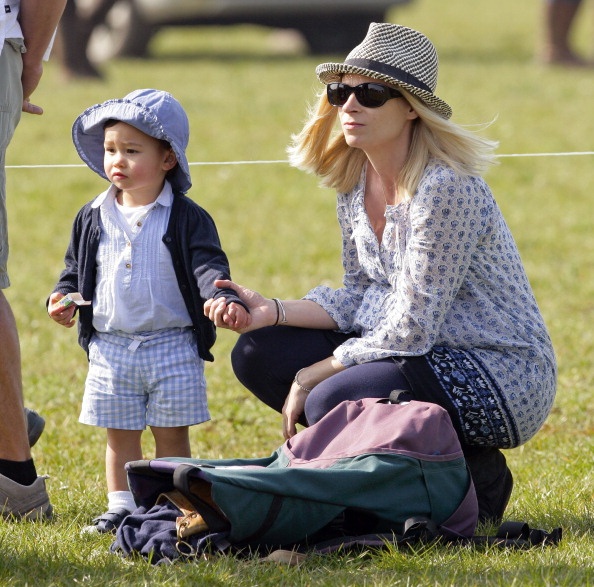
(Picture shows Tane Lewis, accompanied by his mother, Lady Davina Lewis; photo from The Daily Mail)

Celebrity Baby News: My Kitchen Rules Babies

12 Tuesday May 2015

Posted by A.O. in Celebrity Baby News

≈ Comments Off on Celebrity Baby News: My Kitchen Rules Babies

Tags

celebrity baby names, nicknames

my_kitchen_rules_dan_steph_baby

Two sets of former contestants from Channel Seven’s cooking game show, My Kitchen Rules, have recently welcomed new babies.

Dan and Steph Mulheron welcomed their daughter Emmy Mae in April [pictured]. Dan and Steph, from Hervey Bay in Queensland, won series 4 in 2013, taking home the $250 000 prize. The popular couple went on the show having already spent their savings on several failed IVF attempts, and the prize money helped give them another chance, falling pregnant after just one round of treatment. The Mulherons, who earned the title of the “sausage kings” for their snagger skills, have also opened their own cafe and written a cookbook together.

Annie and Jason Chesworth welcomed their son Theodore, known as “Teddy“, on March 5. Annie and Jason, from New South Wales, were contestants on series 5 in 2014. Affectionately known as “Mr and Mrs Cheese”, the aptly named Chesworths help run a handmade cheese factory and cafe in Muswellbrook in the Hunter Valley, owned by Jason’s dairy farmer parents.

Girls Names from the British Royal Family

10 Sunday May 2015

Posted by A.O. in Name Themes and Lists

≈ 1 Comment

Tags

Arabic names, British names, celebrity baby names, classic names, created names, epithets and titles, famous namesakes, fictional namesakes, French names, germanic names, Greek names, honouring, Italian names, locational names, middle names, mythological names, name history, name meaning, name popularity, names from songs, nature names, nicknames, Old Irish names, plant names, popular names, royal names, saints names, Scottish names, Shakespearean names, UK name trends, virtue names

1893042-embijoutee

I hope everyone had a very happy Mother’s Day! It’s expected that the new princess will increase the current trend for baby names inspired by royal traditions, so here are some names for girls from the House of Windsor. I’ve focused particularly on the names of some of the younger royals.

Alexandra
Alexandra is one of the most common girls’ names in the British royal family. It was introduced to it by Queen Alexandra, the wife of King Edward VII. A Danish royal, she was extremely popular with the British public, and much admired as a setter of fashion. After her, the name became a favourite to pass down, including to Queen Alexandra’s granddaughter, Lady Alexandra Duff, and her great-granddaughter, Princess Alexandra, the queen’s cousin; Alexandra is one of the queen’s middle names. Alexandra is the feminine form of Alexander, and unlike many other feminisations of masculine names, Alexandra seems to have come first. It was an epithet of the Greek goddess Hera in her role as protector, and can be understood as “she who saves warriors”. St Alexandra was a legendary martyr, and the name is traditional amongst European royalty. Alexandra was #239 in the 1900s, and dropped off the charts in the 1910s and ’20s. Returning in the 1930s, its popularity jumped in the 1950s, and it was Top 100 by the early 1970s. It peaked in 1995 at #14, and is currently #75. A dignified classic with a host of nickname options, including popular Lexi.

Cosima
Lady Cosima Windsor is the daughter of the Earl of Ulster, and a great-granddaughter of King George V; born in 2010, she is 27th in line to the throne. Cosima is the feminine form of the Cosimo, the Italian form of Greek Cosmas, meaning “order” (related to the British name Cosmo). A famous musical namesake is Cosima Wagner, the daughter of Franz Liszt and wife of Richard Wagner. British socialite Countess Cosima von Bülow Pavoncelli has given the name a very fashionable air, and the name has been chosen for their daughters by celebrities Nigella Lawson, Sofia Coppola, and Claudia Schiffer. You may also remember young actress Cosima Littlewood, who played Adele in the mini-series Jane Eyre, while Australians will be reminded of Cosima De Vito, singer and Australian Idol contestant. Elegant and sophisticated, Cosima is an upper-class choice that works well multiculturally.

Eloise
Eloise Taylor is the eldest daughter of Lady Helen Taylor, a granddaughter of Prince Edward, Duke of Kent, and great-granddaughter of King George V; born in 2003, she is 39th in line to the throne. Eloise is the English form of Éloïse, from the Old French Héloïse. It’s thought to be from the Germanic Helewidis, from name elements meaning “healthy, whole”, and “wood, forest”. The name became famous because of Héloïse, a brilliant medieval scholar and feminist, famous for her scandalous affair and secret marriage to her distinguished teacher, Pierre Abélard, who was castrated in punishment. Their tragic romance has captured people’s imaginations for centuries, and it is a tradition for lovers and the lovelorn to leave letters on their reputed grave in Paris. Eloise entered the charts in the 1970s, making #498. It was the same decade that 8-year-old Eloise Worledge was abducted from her home in Melbourne, with the case still unsolved. Eloise rose steeply in the 1990s, when the song Eloise featured at Eurovision, and joined the Top 100 in 2011. One of the fastest risers of 2013, this pretty, stylish name is currently #71 and still rising. I picked this name to be in the Top 10 by 2028.

Imogen
Imogen Lascelles is a daughter of Mark Lascelles, and a great-great-granddaughter of George V; born in 1998, she is not in line to the throne as her father was born out of wedlock. Imogen is a name created by William Shakespeare for his romance Cymbeline: in the play, Imogen is a princess of ancient Britain, and a virtuous wife who is falsely accused of infidelity. The name is a variation of Innogen, which comes from the Old Irish Ingen, meaning “maiden, daughter”; Innogen was a legendary British queen. Modern scholars consider that the substitution of Imogen for Innogen was a misprint, especially as Shakespeare already used the name Innogen in Much Ado About Nothing, so this would be a rare example of a name created from a printing error. Imogen first entered the charts in the 1970s, debuting at #724 for the decade, perhaps inspired by sexy English pin-up and actress Imogen Hassall. The name Imogen rose steeply during the 1990s, and entered the Top 100 in 2001. Currently Imogen is #34 and stable, and was one of the fastest-rising names in New South Wales for 2013. Chic and British with a superior literary heritage – not too shabby for a “made up” name!

Isla
Isla Phillips is the daughter of Mark Phillips, a granddaughter of Princess Anne, and great-granddaughter of Queen Elizabeth; born in 2012, she is 15th in line to the throne. Isla is a Scottish name taken from an archaic spelling of the island of Islay in the Hebrides, which is said IE-luh, not IZ-lay. The island’s name is of unknown origin and meaning. Islay began as a male name in the 18th century, and Isla gradually became seen as a specifically feminine spelling of the name which overtook the male form in the 19th century (Islay is more commonly given to girls now too). Isla first entered in the charts in the 1990s, debuting at #891 for the decade – propelled there by actress Isla Fisher, who was then in popular soap opera Home and Away. The name zoomed up the charts during the 2000s when Fisher became a gossip mag staple as aspiring Hollywood actress and partner of British comedian Sacha Baron Cohen. Isla entered the Top 100 in 2008 at #74 and is currently #13 and rising. I picked this name to be in the Top 5 by 2028.

Ophelia
Ophelia is one of the middle names of Lady Gabriella Windsor, a writer known professionally as Ella Windsor. She is the sister of Lord Frederick Windsor, who has been featured on the blog as a royal dad. Lady Gabriella is the daughter of Prince Michael of Kent, and a great-granddaughter of King George V; born in 1981, she is 45th in line to the throne. Ophelia is well known as the title character’s tragic love interest in William Shakespeare’s Hamlet. Shakespeare did not create the name, but took it from the Italian form Ofelia in Jacopo Sannazaro’s 1504 pastoral romance, Arcadia – Sannazaro was a huge influence on 16th century literature. The name Ophelia looks to be taken from the ancient Greek ophelus, meaning “help”, to suggest “assistant”. Sannazaro may have invented the name, but there are examples of men in ancient Greece with male forms of the name, such as Ophelion, so it seems plausible that the ancient Greeks could have used Ophelia as a female name. Beautiful and elaborate, Ophelia is rising in the UK, and this seems like a very hip alternative to popular Olivia.

Senna
Senna Lewis is the daughter of Lady Davina Lewis; she has received quite a bit of press in the Antipodes, because her father is a New Zealander, the first Maori to marry into the British royal family. Senna is a granddaughter of Prince Richard, Duke of Gloucester, and a great-great-granddaughter of King George V; born in 2010, she is 29th in line to the throne. Senna can be a variant of the Arabic name Sana, meaning “brilliance, radiance, splendour”; it is one of the five daily prayers in Islam. It can also be a nature name after the flowering senna plants, whose name has the same Arabic source and meaning. There are numerous varieties of senna, some of which are grown as ornamental trees and shrubs, but widely familiar as a herbal laxative. The name Senna was used for a minor character in the Twilight series, sparking recent interest in the name, but the name had been used several times previously in science-fiction and fantasy. It’s also associated with the Brazilian Formula 1 champion, Ayrton Senna, often considered the best of all time. Similar to popular Sienna, this unusual botanical name has potential.

Sophia
Sophia is one of the middle names of Lady Amelia Windsor, a daughter of George Windsor, granddaughter of Prince Edward, Duke of Kent, and great-great-granddaughter of King George V; born in 1995, she is 36th in line to the throne. Sophia of Hanover was the heiress to the throne of Great Britain, and mother of King George I, and only her descendants can be in the line of succession. It was a very popular name amongst Hanoverian royalty. Sophia is from the Greek for “wisdom”, a cardinal virtue of Greek philosophy that was taken up by Christian theologians, who have seen Holy Wisdom as a divine energy, and in Orthodox Christianity especially, the second person in the Trinity. In Christian legend, St Sophia was a martyr who had daughters named Faith, Hope, and Love – personifications of the chief Christian virtues. Sophia was #181 in the 1900s, and dropped off the charts in the 1930s and ’40s. It came back in the 1950s, the same decade Sophia Loren became an international film star, at #414. It charged up the charts in the 1980s and joined the Top 100 in 1997. Currently it is #16 and rising; when combined with the variant Sofia (climbing faster than Sophia), it is in the Top Ten at #7. Lovely and gracious with a wonderful meaning and history, expect Sophia to keep climbing.

Tanit
Tanit Lascelles is a daughter of James Lascelles, and a great-granddaughter of King George V; born in 1981, she is not in the line of succession because she was born out of wedlock. Tanit is the name of a Punic and Phoenician goddess who was the chief deity of ancient Carthage, the equivalent of the goddess Astarte. She was a goddess of the sun, moon and stars, a goddess of war and civic protector, a mother goddess, patron of sailors, good luck figure, and fertility symbol. The meaning of her name is disputed – one theory is that it comes from the word for lament, and should be translated as “she who weeps”, perhaps to indicate that she mourns for a dying god, such as Adonis. Others translate her name as “serpent lady”, linking her with Tannin, the dragon-like sea monster of Near Eastern mythology (sometimes called Leviathan), and believe her name is one of the titles of Asherah, from the Bible. Pronounced TAN-it, this is an exotic and unusual name that fits in with Australian name trends.

Zenouska
Zenouska Mowatt is the daughter of Marina Ogilvy, a granddaughter of Princess Alexandra, and great-great-granddaughter of King George V. Born in 1990, she works for a luxury gifts company, and is 52nd in line to the throne. Zenouska is a name her parents created from putting sounds together – she uses Zen as a nickname, and it seems plausible that the inspiration was the Buddhist school of Zen. However, it sounds like a genuine Russian nickname, in the style of Anouska, and seems very suitable for someone of Russian heritage. Zenouska Mowatt is a great-granddaughter of Princess Marina of Greece and Denmark, who was a granddaughter of Tsar Alexander II of Russia. It just shows that a “made up” name can sometimes work very well.

POLL RESULTS
People’s favourite names were Eloise, Imogen and Isla, and their least favourite were Senna, Tanit, and Zenouska.

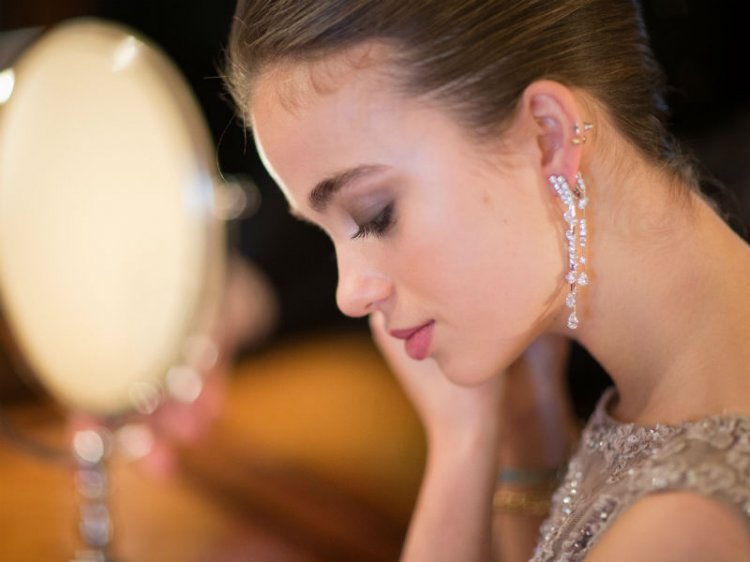
(Picture shows Lady Amelia Sophia Theodora Mary Margaret Windsor, who made her début into society in Paris, 2013; photo from Le Journal des Femmes)

← Older posts
Newer posts →

Enter your email address to follow this blog

Categories

Archives

Recent Comments

A.O.'s avatarwaltzingmorethanmati… on Zarah Zaynab and Wolfgang…
Madelyn's avatarMadelyn on Zarah Zaynab and Wolfgang…
JD's avatardrperegrine on Can Phoebe Complete This …
A.O.'s avatarwaltzingmorethanmati… on Rua and Rhoa
redrover23's avatarredrover23 on Rua and Rhoa

Blogroll

  • Appellation Mountain
  • Baby Name Pondering
  • Babynamelover's Blog
  • British Baby Names
  • Clare's Name News
  • For Real Baby Names
  • Geek Baby Names
  • Name Candy
  • Nameberry
  • Nancy's Baby Names
  • Ren's Baby Name Blog
  • Sancta Nomina
  • Swistle: Baby Names
  • The Art of Naming
  • The Baby Name Wizard
  • The Beauty of Names
  • Tulip By Any Name

RSS Feed

  • RSS - Posts

RSS Posts

  • Celebrity Baby News: Melanie Vallejo and Matt Kingston
  • Names from the TV Show “Cleverman”
  • Can Phoebe Complete This Sibset?
  • Zarah Zaynab and Wolfgang Winter
  • Baby, How Did You Get That Name?
  • Celebrity Baby News: Media Babies
  • Celebrity Baby News: Adelaide Crows Babies
  • Celebrity Baby News: Chris and Rebecca Judd
  • Names at Work: Name News From the World of Business and Employment
  • Celebrity Baby News: Sporting Round Up

Currently Popular

  • The Top 100 Names of the 1930s in New South Wales
  • Rare Boys Names From the 1950s
  • The Top 100 Names of the 1940s in New South Wales
  • Girls Names From Stars and Constellations
  • Celebrity Baby News: Caroline Craig and Callum Finlayson

Tags

celebrity baby names celebrity sibsets english names famous namesakes fictional namesakes honouring locational names middle names name combinations name history name meaning name popularity name trends nicknames popular names saints names sibsets surname names twin sets unisex names

Create a free website or blog at WordPress.com.

Privacy & Cookies: This site uses cookies. By continuing to use this website, you agree to their use.
To find out more, including how to control cookies, see here: Cookie Policy
  • Subscribe Subscribed
    • Waltzing More Than Matilda
    • Join 517 other subscribers
    • Already have a WordPress.com account? Log in now.
    • Waltzing More Than Matilda
    • Subscribe Subscribed
    • Sign up
    • Log in
    • Report this content
    • View site in Reader
    • Manage subscriptions
    • Collapse this bar
 

Loading Comments...