• About
  • Best Baby Names
  • Celebrity Baby Names
  • Celebrity Baby Names – Current
  • Celebrity Baby Names – Past
  • Featured Boys Names
  • Featured Girls Names
  • Featured Unisex Names
  • Links to Name Data
  • Waltzing on the Web

Waltzing More Than Matilda

~ Names with an Australian Bias of Democratic Temper

Waltzing More Than Matilda

Tag Archives: nicknames

Short and Sweet: Nicknames, Short Forms and Pet Forms for Girls from Bonds Baby Search

21 Wednesday Mar 2012

Posted by A.O. in Baby Contests

≈ 5 Comments

Tags

Gaelic names, nicknames

The sister list to Cute and Concise. As with the list of boy nicknames, it’s possible some of these babies have a full version of their nickname which didn’t make it onto the entry form.

Addey (short for Adelaide et al)

Allie

Annie

Beth

Betsy

Billie

Bobbie

Bridie (short for Bridget)

Briella (short for Gabriella)

Callie

Cammy (short for Cameron?)

Cassie

Cedes (short for Mercedes)

Chasey (short for Chastity)

Cleo

Coco (short for Colette etc)

Demi (short for Demetria etc)

Dida (short for Candida)

Edie (short for Edith or Eden)

Effie (as well as being short for Euphemia, can also be an Anglisation of the Gaelic name Oighrig)

Elle (short for Eleanor et al)

Emmy

Etta

Frankie

Freda (short for Alfreda, Winifreda et al)

Georgie

Gigi (short for Georgine or Virginie)

Greta (short for Margareta)

Hallie (short for Harriet)

Jessie

Kirsty (short for Christina)

Kitty

Lexi or Lexie

Liana (short for Juliana)

Libby (short for Isabel, and by extension, Elizabeth)

Livvy (short for Olivia)

Lori

Lottie

Lulu

Margot (short for Marguerite)

Melia

Mimi (short for Maria etc)

Mina (short for Wilhelmina)

Minka (short for Wilhelmina)

Minnie (short for Wilhelmina)

Nelle (short for Eleanor et al)

Nim (short for Nimue?)

Nina (short for Antonina et al)

Peggy

Penny

Pippa

Pippi

Polly

Rita (short for Margarita)

Rosie

Sadie (short for Sarah)

Sally (short for Sarah)

Sasha (short for Alexandra et al)

Stevie (short for Stephanie)

Tammy (short for Tamara, Tamsin et al)

Tess (short for Teresa etc)

Thandie (short for Thandiwe)

Tia (short for Letitia et al)

Tiana (short for Tatiana, Christiana et al)

Tilda

Tildy

Tilly or Tillie

Tina (short for Christina et al)

Tori (short for Victoria)

Vida (short for Davida)

Willa (short for Wilhelmina)

Winnie (short for Winifred)

Cute and Concise: Nicknames, Short Forms and Pet Forms for Boys from Bonds Baby Search

20 Tuesday Mar 2012

Posted by A.O. in Baby Contests

≈ 3 Comments

Tags

Irish names, Italian names, nicknames

Are you stressed, busy, leading a hectic lifestyle? Too time-poor to keep saying a full name every day? Then you need … a nickname for your child! A nickname can shave valuable seconds off each day, saving you minutes every year. Minutes you can productively spend saying, “No that’s his full name”. (Unless you’ve picked a pet form which is the same length as the original name, in which case no time will be saved).

Abe

Alby (as well as being short for Albert etc, this can also be an Anglicisation of the Irish name Ailbhe)

Alfie

Andy

Ardie (short for Arden?)

Augie (short for Augustus etc)

Bastian (short for Sebastian)

Benji

Bob or Bobby

Brax (short for Braxton)

Cam (short for Cameron or Camden)

Chas (short for Charles)

Clarrie (short for Clarence)

Danny

Dennie (short for Dennis)

Dion (short for Dionysus etc)

Drew

Ed, Eddy or Eddie

Franky

Fred, Freddy or Freddie

Gabe

Geordie (pet form of George)

Gus (short for Augustus or Angus)

Jace (short for Jason)

Jamie

Jax

Jed

Jens (short for Johannes)

Jez (short for Jeremy)

Jimmy

Joe or Joey

Jonty (short for Jonathan)

Jordi (short for Jordan)

Josh

Judd

Kal

Lex

Mack

Manny (short for Emmanuel etc)

Matt or Matty

Mick

Monty (short for Montgomery etc)

Ned

Oli or Ollie (short for Oliver)

Ozzie (short for Oscar et al)

Raffy (short for Rafferty)

Rafi (short for Rafael)

Randy (short for Randall et al)

Reggie (short for Reginald)

Ricky

Rino (short for Italian names ending in -rino)

Robbie

Sacha

Sandy

Sol (as well as being short for Solomon, can also be named after the sun)

Tavian (short for Octavian)

Ted or Teddy

Terry

Theo

Tom or Tommy

Tyler (short for Tyler et al)

Vinnie

Will

Zah (short for Zahmir et al)

Zeph (short for Zephaniah or Zephyr)

Zeke

MYTH: Very Popular Names Should be Avoided, Because in Thirty Years They Will Sound Dated and Embarassing

18 Sunday Mar 2012

Posted by A.O. in Baby Name Mythbusters

≈ 16 Comments

Tags

classic names, name popularity, name predictions, name trends, nicknames, popular names, retro names, Shakespearean names

Along with all the articles on popular names that came out with the 2011 name data, there were several which warned parents not to give their baby a name from the Top 10 , because in thirty years it will sound old and frumpy.

I don’t know why they all decided thirty years was the point at which this would occur – I would have thought by the age of thirty, you would be too mature to care if you had a fashionable name or not anyway. Seriously, if you are over the age of thirty, and thinking ZOMG my name is like totally lame and uncool now! all I can tell you is Get a grip! You’re not in high school any more. Also, nobody has used ZOMG since 2007.

Of course, it’s kind of silly, because if everyone stopped using the Top 10 names because they were too popular, then they wouldn’t be Top 10 any more, ten other names would be. The only way you can avoid some names being at the top of the popularity lists is to have a law that each name can only be used once per year. In which case, pity the kids born in December, who will be named Farqui-Neemehoor or Exmayhemaliah.

However, putting that rather obvious objection aside, I decided to take a look at the Top 10 of 1982, to see if those names really had dated as badly as the Commodore 64, Bucks Fizz, and puffed shoulders, or were still going strong, like Angelina Jolie, environmental activism, and deely bobbers.

GIRLS

1. Sarah: Classic name which has never left the rankings. Has been Top 100 since the 1960s. Currently gently declining at #31.

2. Rebecca: Almost continually in the rankings, only dropping off in the 1930s. Was Top 100 from the 1960s until the late 2000s. Currently gently declining in the mid 100s.

3. Melissa: Has charted since the 1950s, and was Top 100 from the 1960s to the 2000s. Currently stable in the mid-300s.

4. Jessica: Has charted since the 1960s, and was Top 10 by the 1980s. It kept climbing, and became the #1 name of the 1990s. Currently stable at #20.

5. Nicole: Has charted since the 1950s, and was Top 100 from the 1960s until the late 2000s. Currently stable in the low 200s.

6. Lauren: Has charted since the 1940s, and was Top 10 by the 1980s. It continued to climb, and peaked in the 1990s. Lauren has only just left the Top 100, and is probably in the very low 100s.

7. Michelle: Has charted since the 1940s, and was Top 100 from the 1950s to the 2000s. Currently stable in the mid-100s.

8. Kate: Ranked in the 1900s, but dropped off the charts from the 1930s to the 1950s. Was Top 100 from the 1970s until the very end of the 2000s. Currently stable in the low 100s; however I believe this name is not finished, and may rejoin the Top 100.

9. Emma: Almost continuously in the rankings, only dropping off in the 1940s. Has been Top 100 since the 1970s. Currently #17 and on a slight rise.

10. Lisa: Has charted since the 1940s, and was Top 100 from the 1960s to the 2000s. Currently declining in the mid-500s.

BOYS

1. Michael: Solid classic that’s never left the Top 100, and was Top 10 from 1940 to the 2000s. Currently stable at #35.

2. Mathew: Classic name that has never left the rankings, and has been Top 100 since the 1950s. Currently gently declining at #32.

3. Andrew: Solid classic that’s never left the Top 100, and was Top 10 from the 1960s to the 1990s. Currently stable at #70.

4. David: Solid classic that’s never left the Top 100, and was Top 10 from the 1940s to the 1990s. Currently stable at #78.

5. Daniel: Solid classic that’s never left the Top 100, and was Top 10 from the 1970s to the late 2000s. Currently gently declining at #24.

6. Christopher: Classic name that has never left the rankings. It was Top 100 in the 1900s, and returned to it in the 1940s. Currently stable at #84.

7. Benjamin: Classic name that has never left the rankings, and has been Top 100 since the 1970s. Currently on a decline at #11.

8. James: Solid, enduring classic that has never left the Top 20. It was Top 10 from the 1900s to the 1940s, and then again from the 1980s to the late 2000s. Currently on a slight decline at #12.

9. Mark: Classic name that has never left the rankings, and was Top 100 from the 1940s to the late 2000s. Currently stable in the low 200s.

10. Luke: Has charted since the 1940s, and been Top 100 since the 1970s. Currently declining at #33.

From the girls’ list, three of them are still in the Top 100, and from the boys’ list nine of them are still Top 100. Of the names that have left the Top 100, most of them are stable, rather than becoming ever less popular. Michelle and Nicole may not sound the freshest, but the 100s and 200s are not the dim backwoods of the popularity charts (they are where where Mary and Clara live). Melissa and Lisa are probably the most dated-sounding of the names, but they are on the charts, which means that parents are still using them. Based on the data above, I think that’s pretty much a BUSTED.

However, another theory I’ve seen on baby name forums is that the names of thirty years ago have become so firmly entrenched that they now seem a little … well, boring. This idea does have some merit, because although names such as Emma and Andrew are absolutely great, and nobody will criticise you for using them, nobody is going to say, “Oh what a stunningly beautiful and unusual name; I’m sure there’s a fascinating story behind your choice of it,” either. Which is fine, not everyone wants their child’s name to be a constant source of comments and questions. But I’d be edging towards a PLAUSIBLE on that one.

So where will our current Top 10 be in thirty years? Some would say it’s foolish to speculate, but on the basis that the best predictor of the future is the past, I’ll have a stab at it. That’s how I do my footy tipping anyway.

The average time that a popular girl’s name spent in the Top 100 was 46 years, which means about half the girls’ names from the current Top 10 are contenders for staying in the Top 100 until 2042. Of the names from 1982 which have lasted, Sarah and Emma had a long history of being on the charts, while Jessica was still gaining in popularity. Based on that, I’d say classics Charlotte and Amelia have the best chance for being stayers, while another Shakespearean coinage, Olivia, could keep going and going.

Chloe, Isabella and Sophie seem as if they will at the very least remain relatively stable in the 100s, like Rebecca, Michelle and Lauren. I’m picking Ava to be the Nicole of our times (200s), and Sienna to be another Melissa (300s). Because Lisa was the least successful name, and a cute nickname form of a longer name, perhaps Mia will also not fare so well long term. Ruby and Kate are retro names that have gone in and out of fashion, and I think both are quite unpredictable.

As far as the boys names go, chances are that 90% of them will still be in the Top 100 by 2042. I’m picking Joshua to be the name that doesn’t go the distance, as it is currently in the same decline that Mark was in 1982. Two of the names from 1982, Benjamin and James, are barely outside the Top 10 today, and I would back Ethan and Lucas as the most likely to mimic that success.

Results are unscientific and for entertainment purposes only. Baby Name Mythbusters is not affiliated with the television show, “Mythbusters”.
Famous Name: Roald

14 Wednesday Mar 2012

Posted by A.O. in Famous Names

≈ 6 Comments

Tags

famous namesakes, locational names, nicknames, Nook of Names, Norwegian names, Old Norse names, surname names, Viking names

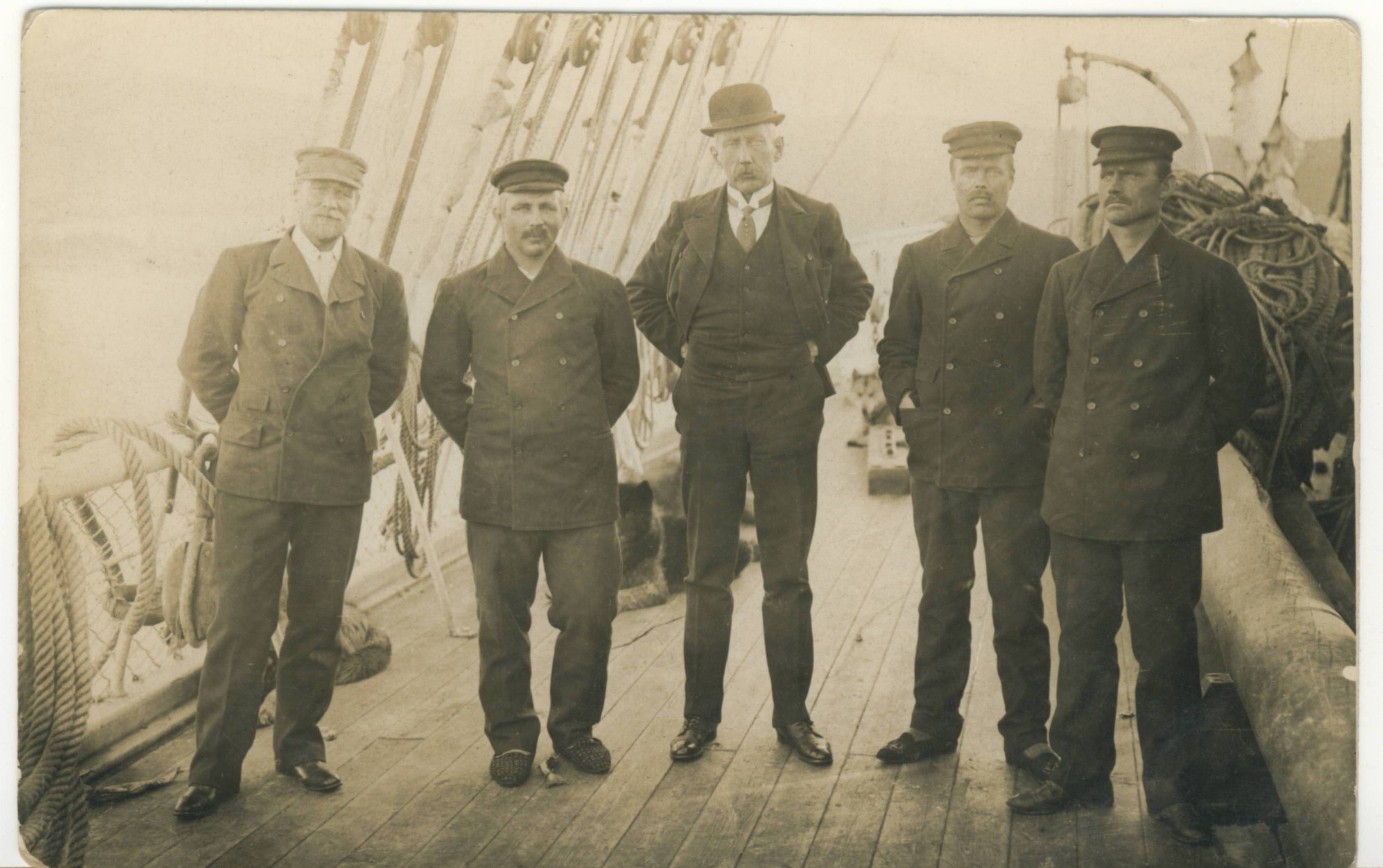
March 7 this year marked the centenary of an important event in history. One hundred years ago on this date, Norwegian explorer Roald Amundsen sailed into Hobart, having led the expedition which first reached the geographic South Pole, on December 14 1911.

You would think that such an achievement would be greeted with parades and brass bands as they disembarked, and the men of the expedition would be celebrating with wine, women and song. However, Amundsen and his crew behaved very mysteriously. The men remained on board their ship, the Fram, while Amundsen posed as an ordinary sailor, and booked himself into Hadley’s Hotel, where they gave him a crummy room and treated him like a tramp.

Roald Amundsen sent coded telegrams of his feat to his brother and the King of Norway, but had to maintain his silence. Under the terms of several media deals he had made, he couldn’t go public until the contracted newspapers in London, Paris, Berlin and Oslo had published their exclusive stories.

On March 10 he broke his silence, and the Hobart media learned to their chagrin that the biggest story in the world had been right under their noses, and they’d been pipped at the post by the European papers. The hotel suddenly couldn’t do enough for their guest.

Tasmania has always had a special relationship with Antarctica, being the last port of call before you reach the frozen wastes, and Hobart was a pivotal part of the great age of Antarctic exploration. Today it is a base for Australian and French supply ships, and the Institute of Marine and Antarctic Research is currently under construction on the city’s waterfront.

To celebrate Amundsen’s centennial, last weekend the city of Hobart re-enacted the historic moment that the Norwegian explorer sent that vital telegram, ending with the unveiling of a commemorative plaque at the General Post Office from whence the telegram was first sent. There was also a Huskies Picnic, with husky displays, and other Amundsen-related fun.

Roald is the modern form of the Old Norse name Hróðvaldr or Hróaldr, meaning “famous ruler”. These Viking names seem to turn up in the historical records fairly frequently, and a nobleman named Hróaldr is said to have been one of the first Norse settlers in Iceland. According to Kay at Nook of Names, it is one of the possible origins for the English surname Rowett, and it is also behind the English surname Rolston. Roald is a place name in Norway.

This name is quite familiar to most people because of the author Roald Dahl, who was born in Wales to Norwegian parents, and named after the polar explorer, Roald Amundsen. Although Roald Dahl wrote adult fiction, he is best known and loved for his children’s books, which have become modern classics.

Titles such as Charlie and the Chocolate Factory, Matilda, The Witches, James and the Giant Peach, and Fantastic Mr Fox have been enjoyed by children as both books and movies. There are very few children who are not delighted by the dark comedy of Mr Dahl’s storytelling; some of them may be heartened to learn that Roald Dahl was only an average student at school, and considered an atrocious writer.

I think this name sounds very strong and even heroic (Roald Dahl himself was a World War II fighter ace). The pronunciation is a slight issue, because the Norwegian way to say it is ROO-all, but the English way is ROE-ald. Either way, there is a danger of it becoming slurred into the word rule or rolled. You get a very Australian nickname, Roo, from the Norwegian pronunciation.

Whether you would like to honour a polar explorer, a popular author, Norwegian heritage, Viking ancestry, or a connection with Antarctic research, Roald seems an excellent and unusual choice.

(The photo is of Amundsen with his crew on board the Fram; he is the one in the middle wearing a bowler hat. The photo is held by the Nasjonalbiblioteket in Oslo).

Ruby and Oliver – #1 in Tasmania

13 Tuesday Mar 2012

Posted by A.O. in Name Data

≈ Comments Off on Ruby and Oliver – #1 in Tasmania

Tags

celebrity baby names, celebrity names, classic names, Irish names, name popularity, name trends, nicknames, popular names, royal baby names, Scottish names, surname names

I’ve been waiting for the top boy and girls to repeat for a state, and at last they have – Tasmania shares its #1 boy and girl names with South Australia.

On the girls’ Top 10 20, Ruby continues to sparkle at #1, and in fact has increased her lead. In 2010, she was used eight more times than the #2 name; last year there were almost twice as many babies named Ruby as the next name down.

The name that increased the most in popularity was Ava, rising ten places from #13 to #3. Amelia and Olivia were not far behind, and Zoe and Sophie made modest rises.

The name falling the most was Mia, going down from #5 to #10; surprising when you think how well she did in other states. Other names decreasing in popularity were Ella, Isabella, Bella, Holly and Chloe.

Grace, Charlotte, Matilda, Emily, Lily, Isabelle and Evie were stable, and Lucy and Imogen didn’t change position.

New to the Top 20 were Stella, Layla, Lilly, Sophia, Hannah, Isla, Sienna, Phoebe and Ellie. Departed were Hayley, Molly, Georgia, Maddison and Paige.

On the boys’ Top 20, Oliver joined Ruby by remaining the #1 name for another year.

Henry went up the most, increasing his position nine places from #17 to #8. Also rising were Samuel, Ethan, Lucas and Xavier.

Tyler plummeted twelve places from #7 to #19, and Harry, Max, Lachlan, James, Charlie, Jack, Thomas and Riley also had significant losses.

Jacob, Cooper, Alexander, Angus, Archie and Oscar remained stable, while William, Noah and Connor didn’t change their position.

I based names’ position on their overall number of uses, as there were so many names sharing position. One of the anomalies of this system is that although there were no new names in the boys’ Top 20, it lost twenty-two names: Joshua, Liam, Logan, Benjamin, Isaac, Ryan, Bailey, Jackson, Mitchell, Hamish, Blake, Jordan, Sebastian, Hunter, Lincoln, Jake, Aiden, Jesse, Zachary, Harrison, Eli and Daniel.

A smaller population obviously leads to much greater volatility, and probably a few rather odd results.

Tasmania definitely has its own style of naming, with more cosy older-style names such as Olive, Esther, Eleanor, Florence, Elsie, Maggie and Meg on the full girls’ list, and a dizzying array of spelling variants. Incidentally, I note that Halle, which was a unique name in 2010, was used six times in 2011 – enough to get it onto the Top 100.

On the boys’ list, surname names seem more prevalent than usual, as well as Scottish and Irish names like Campbell and Rory, and short forms like Tom and Billy. Classic Robert can also be found on the Tasmanian Top 100. The number of babies named Flynn went from 9 to 15, putting it into the Top 100, while Tasmanians seemed immune to the charms of Harper and Savannah.

You can see the spreadsheet with exact numbers of each name at the Links to Name Data page.


Saturday Celebrity Sibset: The Rockers – Brody Dalle and Josh Homme

03 Saturday Mar 2012

Posted by A.O. in Sibsets in the News

≈ Comments Off on Saturday Celebrity Sibset: The Rockers – Brody Dalle and Josh Homme

Tags

famous namesakes, honouring, nicknames, pseudonyms, unisex names

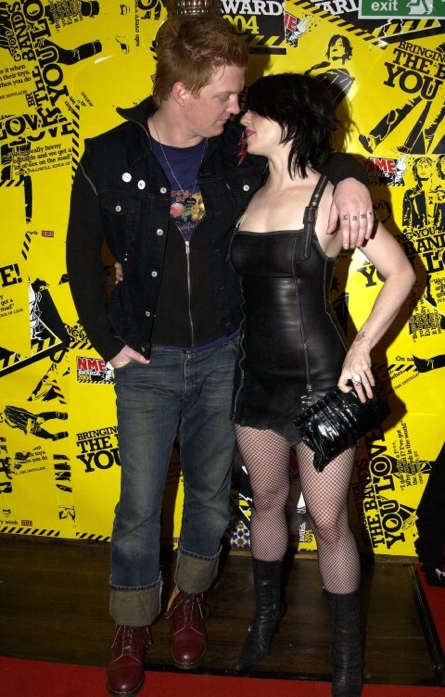
This is yet another celebrity baby from 2011 I didn’t see, so made it a Celebrity Sibset instead.

Brody Dalle is a punk rocker who is originally from Melbourne. Her parents named her Bree, and she picked the unisex name Brody for herself as a teenager. Apparently as a child she was called Breezy Wheezy by her family because she had asthma, which rather ruined the name Bree for her.

She has used the middle names Leslie and Joanna Alice; I’m not sure if either of them are her original middle name/s. She has managed an impressive seven surnames during her life, and it’s unclear what the original surname was. She went by Pucilowski, Mayer and Robinson just as a teenager. Eventually she chose Dalle in reference to Béatrice Dalle, her favourite actress. Béatrice Dalle is best known for the film Betty Blue.

Brody began her career in punk at the age of thirteen, and at sixteen she met Tim Armstrong, the vocalist for punk rock band Rancid at a music festival. They began a relationship, although Tim was more than thirteen years her senior. They married when Brody turned 18, and she moved to Los Angeles with her husband, where she founded the band The Distillers. Brody and Tim divorced six years later.

In 2007, Brody married Josh Homme, lead singer from rock band Queens of the Stone Age, and founded the indie rock band Spinnerette; the couple live in Palm Springs, California.

Josh also has an interesting name – he was named after the town he was born in, Joshua Tree, in the Mojave Desert of California. He pronounces his Norwegian surname to rhyme with Tommy, although the Norwegian pronunciation is to rhyme with puma. He has adopted the pseudonym Carlo von Sexron for some of his work, and his nicknames include King Baby Duck, J. Ho, Joe’s Hoe, and the Ginger Elvis.

Brody and Josh have two children, and as they have enjoyed re-naming themselves so much, it’s interesting to see what names they would choose for their children.

Camille Harley Joan was born in 2006. Camille is named after Josh’s grandmother, and Josh collects motorcycles, which probably explains Harley. Although Joan looks like Brody’s middle name Joanna, it also reminds me of rock queen Joan Jett, who must have had some influence on Dalle herself. However, for all I know it’s another family name.

Orrin Ryder was born in 2011. Rumour has it that just as Camille is named after Josh’s grandma, Orrin is named for his grandfather, but I can’t confirm that. Josh has both his grandmother’s and grandfather’s nicknames tattooed on his knuckles – CAM and CAP – so it does have some symmetry. It’s hard not to connect the name Ryder with Josh’s motorcycle hobby as well.

Being called after a family member seems cosy and non-punk, although being named after Dad’s tattoos and motorbikes gives them a bit more of a rock edge.

I wonder if Camille and Orrin will follow the family tradition of giving new names to themselves, and what names they will choose?

Names Spotted Over the Summer, at Home and Abroad

28 Tuesday Feb 2012

Posted by A.O. in Names Spotted at Home and Abroad

≈ 14 Comments

Tags

Buddhist names, english names, famous namesakes, fictional namesakes, Hindu names, Indian names, Irish names, mythological names, name trends, nicknames, popular culture, popular names, Romani names, Sanskrit names, Tibetan names, virtue names, vocabulary names

Interesting names of babies I spotted in the papers over the summer:

When the popular name lists came out, newspapers also liked to dwell on the less popular names (more coming on that score). One of the babies with an uncommon name was the splendidly Arthurian Lancelot Palmer, from Wagga Wagga in New South Wales. Lancelot is named after his mother’s grandfather, who passed away a few years ago.

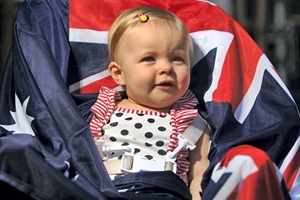
To publicise Australia Day events in Tasmania, The Examiner had a photo of an eight-month-old baby girl named Uma Paech, from Lauceston (pictured). It’s a celebrity name, because of Hollywood actress Uma Thurman, but also shows the growing popularity of names from Asia. Uma Thurman was raised in a Buddhist household, and her father was the first Westerner to become a Tibetan Buddhist monk. Her name is taken from the Tibetan phrase Dbuma Chenpo, meaning “Great Middle Way”; one of the guiding principles of Buddhist practice. (The Db is silent). Uma is also one of the titles of the Hindu goddess Parvati.

In early February, an official report on publicly funded home births was prepared by the Homebirth Advisory Group from the Northern Rivers district of New South Wales. The story interviewed Jade Trapp of Lismore, who gave birth to her son Django at home with a midwife two years ago. This is another name which comes from a famous person. It was the nickname of Belgian jazz guitarist Jean Baptiste Reinhardt, and it is Romani for “I awake”. Although Django died in the 1950s, his gypsy jazz is still hot, and he has been portrayed or alluded to in several films, including The Triplets of Belleville and Martin’s Scorscese’s Hugo. His music has been used for the soundtrack of movies such as The Matrix, Chocolat, Kate and Leopold and Stardust Memories. This is a hyper-hipster name oft suggested on Nameberry, and one with a cheery sound to it.

Meme and Soemyint Theloep are recent refugees from Burma who live in the Illawarra region surrounding the city of Wollongong in New South Wales. This month, they were caught in the floodwaters that flowed into their flat, and Soemyint had to carry his three-week-old daughter to safety in a baby sling. Although their English is still only basic, they knew enough to give their baby an English name – Blessing. What a beautiful tribute to their new home and refuge (despite the occasional flood). It’s a name that makes me smile and smile.

Monica Carduff Gonzalez, professionally known as DJ Monski Mouse, has been playing classic vinyl tracks at events such as the Edinburgh Fringe Festival for ten years now. She is now starting up an event called Baby Disco Dance Hall, which plays funky tunes suitable for the under-five crowd. Monica’s own daughter is named Monalisa (didn’t you just somehow guess her baby wouldn’t be named Emily or Mia?). Apart from the famous painting by da Vinci, Mona Lisa is also an award-winning Nat King Cole song, and it was playing while Monica and her husband, magician Tony Roberts, were choosing baby names; the new baby smiled, and they took that as her seal of approval. I love this cool name and the story attached to it (which I got off her website).

And an interesting name attached to an adult:

I read a short article on parenting about the myths of motherhood. It’s good advice telling us not to worry so much about being perfect. What interested me more was the author’s name, which was Benison O’Reilly. Her name is a vocabulary word which means “blessing, benediction”. According to her website, it’s a favourite name amongst the O’Reilly family. I think it’s a great name and obviously has a very positive meaning.

Names of babies encountered over the summer in real life:

Annabel: the original form looks crisp, classic and very English after so many Frenchified Annabelles.

Cael: I always thought this Irish name was said like the word keel, but Cael’s family say his name like the word kale.

Lacey: I feel as if the long-term popularity of Lucy is helping the rise of pretty Lacey.

Purity: this name reminded me of purity rings, but her name was chosen with the idea of purity in the sense of “pure and natural, uncontaminated by the artificial”. Purely herself!

Zeke: not short for Ezekiel, just plain Zeke. Very cowboy.

Names of new babies welcomed by people I know (family/friends/colleagues/neighbours etc) over the summer:

Bethany

Brock

Eleanor

Finn

Isla

Laila

Leilani

Stella

According to a new article Abby has at Appellation Mountain, the baby names chosen by the people around you will likely tend to be similar, and also not unlike the names you are apt to choose yourself (leading to much angst and accusations of name stealing and so forth – see Lou at Mer de Noms, as to whether to “call dibs” or not).

I think some of these names do “go together”, as in I can imagine Finn and Isla as siblings, and also Eleanor and Stella. There’s a strong L sound in all of them except Bethany, Brock and Finn, who thus also seem to be matched. Laila and Leilani are particularly similar.

Boys Names of Australian Aboriginal Origin

26 Sunday Feb 2012

Posted by A.O. in Name Themes and Lists

≈ 18 Comments

Tags

Australian Aboriginal names, Buddhist names, famous namesakes, fictional namesakes, Indian names, Indonesian names, Japanese names, Korean names, locational names, Maori names, name history, name meanings, Native American names, New Zealand names, nicknames, Quechuan names, Samoan names, scandinavian names, scientific names, seasonal names, Slavic names, South American names, Spanish names, surname names, unisex names

This follows on from last week’s list, Girls Names of Aboriginal Origin. It was more challenging to find boys’ names, because many, if not most, Aboriginal words end in a vowel, and easily conform to we think of a “feminine sounding” name. They are similar to names in Hebrew, Arabic, and in the Indian languages in that regard, and even now you will find people who insist that Ezra must be a female name, because it ends in -a.

These are not traditional or tribal Aboriginal names for men, but rather words from Aboriginal languages that I thought could be used as names by people from any culture. Some of them coincide with words or names from other languages, as I thought people may be interested to know that a word from their own heritage has a distinct Australian meaning as well.

Dural

Dural is a pleasant semi-rural suburb of Sydney, and its meaning has been in some dispute. It is said that dural was a word from the Dharug language, meaning “gully, valley”, and this information came from a traditional owner of the land in the 19th century. It was also said to mean “burning logs”, from the word dooral dooral, but this belief only dates from the 1940s, and is taken from the Wiradjuri language. As the Wiradjuri people are from central New South Wales, the local meaning is claimed to be the correct one. Translations of this name as “hollow tree” or “burned out tree” in baby name books can be safely discarded as invention. I think Dural seems very usable as a personal name, and I considered it for Sydney Suburbs That Could Be Used as Boy’s Names. It sounds like familiar names such as Darrell, and sturdily similar to the word endure.

Jarli

This word means “barn owl” in the Jiwarli language of northern Western Australia. As in many other societies, several Australian Aboriginal cultures saw owls as symbols of wisdom, mystery, secrets and sacred knowledge; messengers from one world to another, and companions of the medicine men. The owl features in several myths and legends, and is sometimes depicted in Aboriginal art. This name seems familiar to us, because Jarli is also a Scandinavian boy’s name based on the word for “earl”, and I have seen one or two boys with this name. I like the sound and the meaning of this name, and it is similar to another Jiwarli word: jali, meaning “friend”.

Kaiya

This word from a Queensland language refers to a spear with two barbs, and is pronounced KY-uh. It has been used in the Latin name for a species of caddisfly – Chimarra kaiya – who is so called because of its distinctive barb-like projections. In the Kaurna language of South Australia, the similar sounding kaya means “spear”, although in Nyungar it means “hello; yes”. This is always listed as a girl’s name in baby name books, but the name Kai makes this name look masculine to me. I don’t see how the sound of it is any more “girly” than, say, Hezekiah. The meaning does not seem feminine either. I would say it is a unisex name, and suitable for a boy.

Kuparr

This means “red earth, burnt earth” in the Ngiyampaa language of New South Wales. It refers to the ochre used for making body paint for the Coroborees; the sacred ceremonies of Indigenous Australians involving ritual, dance and music. Red ochre is also used in other Aboriginal forms. Kuparr was the basis for the name of the mining town Cobar, and because copper was mined there, it has also been suggested that it may have been the local way of translating the word copper. Most likely the similarity between the words is a coincidence though. The attraction of this name is that it sounds a bit like Cooper. If you like the sound of Cooper but think it seems a bit boring or surnamey, Kuparr might be for you.

Miro

Miro (MEE-roh) is a Nyungar word for a type of spear thrower which propels the aim of the gidgee; a fearsome qaurtz-tipped spear about 8 feet long. Miro exists as a name or word in several other languages. It’s a Slavic name which is short for Miroslav, meaning “glorious peace”. In Japanese, it’s short for Miroku, a Japanese form of Maitreya, the fifth (future) incarnation of the Buddha. In New Zealand, it’s the name for a species of conifer tree. In Korea, it means “maze”. It’s also the surname of Spanish artist, Joan Miró i Ferrà (Joan was a man) – his surname was short for Ramiro, the Spanish form of a Germanic name meaning “famous counsel”. It’s very multicultural, and none of the meanings that I’ve seen are negative. I think it’s attractive. We had a baby boy in a recent birth announcement named Finn Joseph Miro, so it’s considered usable in Australia.

Monti

This is one of the Aboriginal names for the Black-necked Stork, which is found across the tropical north of Australia, and is the only stork species native to Australia. I have not been able to track down which language it is from, except that it’s not from the Northern Territory, where this bird is called a jabiru. It’s therefore either from Queensland or northern New South Wales, as the only other places where this bird exists. It’s listed as one of the Indigenous names by museums, so I feel fairly confident it’s authentic. The stork is mentioned in several Aboriginal legends, one of them an extremely touching love story. The attraction of this name is that it sounds exactly like the fashionable name Monty, but has its own significance.

Tarka

This means “eggshell” in the Kaurna language of South Australia. I thought of it because I have seen the name Tarka used in the birth announcements from the London Telegraph. It has a number of meanings in other contexts. There is a well-loved English children’s book called Tarka the Otter, so famous that it has given its name to a railway line and a bike path in the West Country. It was made into a film in the 1970s. In the book, Tarka’s name was meant to suggest the barking sound that an otter makes. In India, tarka is a word for seasoning added to a meal, and in Quechuan, a tarka is a type of flute played by the Indigenous people of the Andes. Tarka Cordell was a British musician who died in tragic circumstances a few years ago; I’m not sure where his name was taken from, or whether he is the inspiration for British children having Tarka as one of their names. This is the second name with the meaning of “eggshells” I have suggested; the other was Keid. Because eggshells appear so fragile, and yet are surprisingly strong under compression, I find this meaning very evocative.

Tau

Means “evening, dusk, twilight” in the Kaurna language of South Australia, and is said to rhyme with the word cow. In Maori, it can mean a number of different things, including “sweetheart”, “song, chant”, “string”, or “ridge”. In one of the Indigenous languages of Indonesia, it means “man”. In Samoan, it can mean “anchor” or “war”. It’s known to many people in the context of the Tau Cross, a symbol of life which was used by the Egyptians, and became important in a number of different religions and spiritual paths, including Christianity. I have met men named Tau, but I’m not sure which meaning was associated with their names. I think Tau fits in very well with other popular names for boys, such as Ty, Tai and Taj, and would be readily accepted.

Warragul

Warragul, pronounced WOHR-uh-guhl, is a town in the West Gippsland region of rural Victoria, the birthplace of legendary Aboriginal boxer Lionel Rose. Its name is said to come from a local word, warrigal, meaning either “wild” or “wild dog”, referring to the dingo. The dingo is Australia’s largest predator on land, and its ancestor is thought to have been introduced to Australia by seafarers from south east Asia thousands of years ago, when dogs were less domesticated and more closely related to wolves. Dingoes play a major role in Aboriginal myths and legends; in stories they are often guardians of humans who can warn them of the supernatural or evil spirits. There are also myths of dingo-people shapeshifters, or “were-dingoes”, and often the dingo in legends is a rebel or trickster figure. In everyday life, dingoes were tamed and kept in Aboriginal camps as guard dogs. They were treated with great affection, given names, slept with their human companions, and were even breastfed. At least sometimes they were buried alongside humans. I saw someone in a parenting forum say they had already used Warragul as a baby name.

Warrin

Warrin meant “winter, cold and frosty season” in one the language spoken around the Sydney region when Europeans first arrived. However, there are a number of similar words used throughout Indigenous languages. Warran or Warrung was the original name for the place we call Sydney Cove, and by extension, Sydney itself; it is said to mean “the other side [of the harbour]”. In the Brisbane area, Warun was a place name in the suburb now called Redcliffe; it may have meant “neck”. There are historical records of a man from south-west Queensland named Warun, so it was used as a personal name. In the Melbourne area, warun meant “eel” in the local language, a fish prized as a valuable food source; there is a suburb of Geelong named Warun Ponds. I have also seen the word warun translated to mean “diving ducks” in the Northern Territory. Baby name books translate Warun as meaning “sky”, but I don’t know which language they are deriving it from. From this I deduce that the English name Warren is the most “indigenous sounding” of our names, and perhaps it deserves a closer look.

(The photo is of young actor Brandon Walters, who starred in Baz Luhrman’s film, Australia).

Celebrity Baby News: Late Baby News

18 Saturday Feb 2012

Posted by A.O. in Celebrity Baby News

≈ 8 Comments

Tags

famous namesakes, fictional namesakes, locational names, nicknames, unisex names


NRL player John Sutton, the co-captain of the South Sydney Rabbitohs, and his partner Stacey Shumack, welcomed a daughter named Pippi Rae 10 months ago.

Comedienne Sarah Kendall, and her fiancé, comedian Henry Naylor, welcomed a daughter named Viv 20 months ago. Sarah has been living and working in London for twelve years now, which I assume is why we have not heard of Viv’s birth until now. Sarah is currently visiting Australia to perform her show, Persona.

Henry Naylor is a Cambridge Footlights alumnus and one of its former Presidents. He is best known in the UK for his comedy partnership with Andy Parsons and their BBC radio show Parson’s and Naylor’s Pull-Out Sections. He has also written for several TV shows, including Dead Ringers.

Viv Naylor is named after her mother’s favourite fashion designer, Vivienne Westwood, the punk pioneer who set up shop in once-fashionable Chelsea, and her father’s favourite cricketer, Viv Richards, the scintillating former batsman for the West Indies side.

Famous Name: Magda

15 Wednesday Feb 2012

Posted by A.O. in Famous Names

≈ 7 Comments

Tags

Aramaic names, famous namesakes, hebrew names, name history, name meaning, nicknames, saints names

Yesterday was Saint Valentine’s Day, a day for thinking about love and marriage, and for declaring your true feelings. It was the day that film and TV star Magda Szubanski chose to come out on national television and identify herself as “absolutely gay” to Channel 10’s The Project.

Although her family, friends and colleagues have known this for a long time, it has never before been made public knowledge. It was obviously something important that would make her decide to share this aspect of her life with the public after so many years, and in a statement to newspapers yesterday in support of Australians for Marriage Equality, Magda made an impassioned plea for gay marriage to be legalised.

“The law means that you could be a serial killer and have killed all of your spouses and yet you would still be considered fit to marry,” she said. “But if you are gay, then you are not worthy of these same rights.”

Her “coming out” comes a day after two separate bills to legalise same-sex marriage were introduced in federal parliament. Magda made it clear that she is currently single, and not expecting to get married any time soon.

Now aged fifty, Magda has been delighting audiences since her university days. A gifted comedienne, she created a number of memorable characters for television sketch shows such as ditzy sports reporter Pixie-Anne Wheatley, heavily made-up infomercial saleswoman Chenille, penny-pinching whiskey-swilling Scot, Mary Macgregor, and vile mother Lynne Postlethwaite.

On the popular sit-com Kath and Kim, Magda played netball nerd, Sharon Strzelecki, who was often the butt of her friend Kim’s jibes. As well as hosting several of her own shows, Magda has had roles in Hollywood films such as Babe, Happy Feet and The Golden Compass, and sci-fi TV show Farscape. The public have voted her Most Popular Comedy Personality three times at the Logie Awards, and she has won an AFI Award for her role on Kath and Kim.

In 2003 and 2004 she was voted the most recognisable Australian personality, which helped her become spokesperson for a number of companies, most recently, weight-loss company Jenny Craig, through which she lost 36 kg. Despite being overweight, she has always been a strong and energetic person who enjoys being active.

The Australian public love her for her quick wit, sense of fun, and lively personality, her enormous smile that lights up her face and her big loud infectious laugh. We love her most when she is unselfconsciously being herself, and Magda has been overwhelmed by the public support she has received since coming out yesterday.

Magda’s name is short for her full name Magdalene, which is the title of Saint Mary Magdalene. Mary Magdalene was a very important disciple of Jesus in the New Testament, and the only person privileged to first see the arisen Christ. The Catholic church places her on a short list of saints declared to be “equal to the Apostles”.

Traditionally, her name is said to mean that Mary came from the village of Magdala, which means “tower, fortress” in Hebrew. However, in Aramaic magdala means “high, great, magnificent”, so it’s possible her name was supposed to be “Mary the Great”. I have also seen the suggestion that the name was meant to denote that physically Mary Magdalene was taller than average.

Magda is a pet name commonly used in central and eastern Europe, and although she was born in England and her mum is Scottish, Magda’s father is from Poland, and was in the Polish Resistance during World War II.

Magda is a strong and beautiful name which has cultural ties to Europe, and honours one of the most prominent early Christian women. It also has the familiar nicknames Maddie and Maggie. However, like Edna and Ita, Magda Szubanski is very famous and has such a distinctive name that we would know her from her first name alone. Does her fame overpower the name, I wonder?

Short news report on Magda’s announcement:

← Older posts
Newer posts →

Enter your email address to follow this blog

Categories

Archives

Recent Comments

A.O.'s avatarwaltzingmorethanmati… on Zarah Zaynab and Wolfgang…
Madelyn's avatarMadelyn on Zarah Zaynab and Wolfgang…
JD's avatardrperegrine on Can Phoebe Complete This …
A.O.'s avatarwaltzingmorethanmati… on Rua and Rhoa
redrover23's avatarredrover23 on Rua and Rhoa

Blogroll

  • Appellation Mountain
  • Baby Name Pondering
  • Babynamelover's Blog
  • British Baby Names
  • Clare's Name News
  • For Real Baby Names
  • Geek Baby Names
  • Name Candy
  • Nameberry
  • Nancy's Baby Names
  • Ren's Baby Name Blog
  • Sancta Nomina
  • Swistle: Baby Names
  • The Art of Naming
  • The Baby Name Wizard
  • The Beauty of Names
  • Tulip By Any Name

RSS Feed

  • RSS - Posts

RSS Posts

  • Celebrity Baby News: Melanie Vallejo and Matt Kingston
  • Names from the TV Show “Cleverman”
  • Can Phoebe Complete This Sibset?
  • Zarah Zaynab and Wolfgang Winter
  • Baby, How Did You Get That Name?
  • Celebrity Baby News: Media Babies
  • Celebrity Baby News: Adelaide Crows Babies
  • Celebrity Baby News: Chris and Rebecca Judd
  • Names at Work: Name News From the World of Business and Employment
  • Celebrity Baby News: Sporting Round Up

Currently Popular

  • Celebrity Baby News: Toby Allen and Darren Weller
  • Rare Boys Names From the 1950s
  • Celebrity Baby News: Bernard Fanning and Andrea Moreno
  • Girls Names From Stars and Constellations
  • Celebrity Baby News: Ed Husic and Bridget Tilley

Tags

celebrity baby names celebrity sibsets english names famous namesakes fictional namesakes honouring locational names middle names name combinations name history name meaning name popularity name trends nicknames popular names saints names sibsets surname names twin sets unisex names

Blog at WordPress.com.

Privacy & Cookies: This site uses cookies. By continuing to use this website, you agree to their use.
To find out more, including how to control cookies, see here: Cookie Policy
  • Subscribe Subscribed
    • Waltzing More Than Matilda
    • Join 517 other subscribers
    • Already have a WordPress.com account? Log in now.
    • Waltzing More Than Matilda
    • Subscribe Subscribed
    • Sign up
    • Log in
    • Report this content
    • View site in Reader
    • Manage subscriptions
    • Collapse this bar
 

Loading Comments...