• About
  • Best Baby Names
  • Celebrity Baby Names
  • Celebrity Baby Names – Current
  • Celebrity Baby Names – Past
  • Featured Boys Names
  • Featured Girls Names
  • Featured Unisex Names
  • Links to Name Data
  • Waltzing on the Web

Waltzing More Than Matilda

~ Names with an Australian Bias of Democratic Temper

Waltzing More Than Matilda

Tag Archives: name trends

Waltzing with … Archibald

27 Sunday Jul 2014

Posted by A.O. in Waltzing with ...

≈ 11 Comments

Tags

adult name changes, aristocratic names, famous namesakes, Gaelic names, germanic names, honouring, name popularity, name trends, names of awards, nicknames, retro names, Scottish names

resize

The Commonwealth Games opened in Glasgow on July 23, so the blog is featuring a few Scottish names; today it’s Archibald. Everyone is talking about the cute Scottish terriers in tartan coats who stole the show at the Commonwealth Games Opening Ceremony, each one of them leading in a national team. I think it was a moment where we all went Awwwww ….

The Scottie dogs were perhaps the only ones whose outfits were not scrutinised, because everyone wants to see whose team uniforms are the best, and worst. Australia traditionally fails dismally in the fashion stakes, and this year we were true to form, sending our team in unpopular outfits which were criticised as looking like something home-made for a Star Trek convention.

I presume the Games Committee sent everyone a cover letter to let them know that Glasgow summers are usually mild, and can have the odd wet day. The Australian designer seems to have understood that as code for “you are entering a polar hell with perpetual torrents of rain”, as everyone was sent equipped with anoraks, woolly jumpers, scarves, snow hats, and who knows what else. As Glasgow is currently in a heatwave, this has led to well-deserved international derision.

But like good hosts, Scotland has saved us from being the worst-dressed team by tactfully showing up in a lurid tartan mixture of bright blue, turquoise, fuschia, navy, caramel and mustard. Thanks Scotland – now our green anoraks with lemon piping, lumpy lime green jumpers, and baggy pants are only second place for ugliest uniform.

The Games have got off to a good start for Australia – we’re currently on top of the medal table by a whisker, we’ve set several world records, and two of the Hockeyroos took a selfie with the queen in the background, and it went viral, so our horrible uniforms haven’t held us back.

Archibald comes from the Germanic elements ercan (“genuine”) and bald (“bold”), and usually translated as “truly bold”. The first part of it was altered to make it seem as if it was derived from Greek archos, meaning “master”.

The Normans introduced the name to Britain, and it quickly became popular in Scotland, where it was used to Anglicise the Gaelic name Gille Easbuig, meaning “servant of the bishop” (it’s also Anglicised to Gillespie). Archibald is a traditional name in the Clan Campbell, as their founder was named Gille Easbuig.

As you would expect, there are quite a few Archibalds in Scottish history, including the fearsome-sounding Archibald the Grim, a 14th century Earl of Douglas and Lord of Galloway. The most powerful magnate in Scotland, he stood in higher stead even than the king. Because of him, the name Archibald became traditional in the Douglas family as well.

The name Archibald is well known in Australia due to the Archibald Prize, which is awarded for portrait painting. It was founded in 1921 from a bequest from J.F. Archibald, the co-owner and editor of The Bulletin in the days of its greatest influence.

J.F. Archibald was an interesting character from a naming perspective – he was baptised John Feltham Archibald, but changed his name to Jules Francois (pronounced FRANK-wa). This was considered rather pretentious, and everyone just called him “Archie”. He also professed to be Scottish, part-French, and Jewish, when he was actually Irish Catholic, which likewise afforded his peers great amusement.

The Archibald Prize is known as “the face that stops the nation”, as it is Australia’s favourite art award. It’s very accessible, especially as many of the portraits are of celebrities, and gets a lot of coverage in the media. Many people are interested to know who wins the Archibald, and generally there is widespread criticism or condemnation for whoever the judges choose. Indeed, the Archibald has been almost continuously controversial, with several protests, disputes, and legal actions throughout its history.

The Archibald Prize also offers two categories that are judged by non-experts: the People’s Choice Award voted by the viewing public, and the Packing Room Prize, awarded by the staff who install the portraits in the gallery. These prizes are more likely to be awarded to portraits of celebrities. It is possible to win the main prize and the other categories, but that rarely happens, and nobody has ever won all three at once.

The Archibald is so famous that it has inspired two parallel art institutions. One of them is the Salon des Refusés (Salon of Rejects – shades of J.F. Archibald!), an exhibition showing works which have been rejected for the Archibald. The prize for this is a People’s Choice Award.

The other is the Bald Archy Prize, a spoof art competition for satirical portraits; the winner is supposedly chosen by a sulphur-crested cockatoo named Maude. Absurdist and irreverent, you can see the appeal to the Australian sense of humour; it’s an extremely popular art award, and heaps of fun. This year’s winner was a portrait of Mitchell Johnson in the guise of Miley Cyrus’ Wrecking Ball – a cheeky comment on his devastating performance in the Ashes.

The name Archibald was #57 in the 1900s, and left the Top 100 in the 1920s; it left the charts in the 1950s. However, since the late 2000s, Archibald has made a slight comeback, and managed to chart several times around the 400-500s. In 2010, there were 11 babies named Archibald in New South Wales, and in 2012, there were 7 babies named Archibald born in Victoria.

The reason for this mild revival? The short form Archie, which has been Top 100 since 2007, and is rising in popularity. If you want a long form for Archie, and you think Archer is too popular or too trendy or too modern or too surnamey, that pretty much leaves Archibald.

Once upon a time, Archibald was perhaps rather fusty – a great-grandfather name smelling strongly of mothballs. But with the revival of vintage names, discerning parents may think it’s time for it to be taken out of storage.

And why not? Archibald is a clunky yet strong name with a long history, and has an aristocratic image. It makes a great Scottish heritage choice, and also references one of Australia’s favourite cultural institutions. Honouring an Archibald in your family has never seemed so possible.

Archibald would look dignified on a CV, and even a possible future knighthood makes Sir Archibald rather pleasing. Yet what could be friendlier and more democratic than simple Archie or Archy for everyday use?

POLL RESULT
Archibald received an approval rating of 53%. 24% of people disliked the name, and a further 24% hated it. However, 20% of people loved the name.

(Photo of Scottish terrier at the Commonwealth Games opening ceremony from the Daily Record)

Requested Famous Name: Annabelle

23 Wednesday Jul 2014

Posted by A.O. in Famous Names, Requested Names

≈ 3 Comments

Tags

aristocratic names, famous namesakes, honouring, Latin names, modern classic names, name history, name meaning, name popularity, name trends, names of boats, popular names, portmanteau names, Scottish names, UK name popularity, US name popularity

Annabelle_Rankin

Famous Namesake
On July 28, it will be the 106th birthday of pioneering stateswoman Dame Annabelle Rankin, who was the first woman from Queensland to sit in the Parliament of Australia, the second female Australian Senator, and second female parliamentarian for the Liberal Party.

Annabelle was the daughter of Colin Rankin, a Scottish-born Queensland politician who served in both the Boer War and First World War; Annabelle was named after her mother. Her father encouraged her to travel, and when she left school, she went to China, Japan, England, Scotland, and continental Europe. With a background in community involvement, she worked in the slums of London, and with refugees from the Spanish Civil War.

Back in Australia, Annabelle was a volunteer during World War II, serving at air raid shelters and hospitals, and organised the YWCA’s welfare efforts for servicewomen. Her responsibilities involved travelling to military bases in Queensland and New South Wales, and she accompanied Eleanor Roosevelt, First Lady of the United States of America, and Lady Gowrie, wife of the governor-general, on their visits to the troops.

After the war, she stood as a candidate for the Liberal-Country Party, and entered the Senate on July 1 1947. Annabelle was the first woman in the British Commonwealth to be appointed as an opposition whip, and was the whip in the Senate from 1951 to 1966.

Dame Annabelle was appointed Minister for Housing in 1966, becoming the first woman in Australia to administer a government department. As minister, she worked to provide housing for old age pensioners, and introduced a housing system for Aboriginal Australians and new migrants. As a newspaper of the time helpfully noted: “She tackles men’s problems too”.

After retiring from parliament in 1971, Dame Annabelle was appointed high commissioner to New Zealand – the first woman in Australian to lead a diplomatic mission. She supported several community organisations, including the Australian Red Cross Society, Country Women’s Association, Girl Guides, Victoria League, and Royal Commonwealth Society.

She was for many years the President of the Queensland branch of the Children’s Book Council of Australia, and the Dame Annabelle Rankin Award for services to children’s literature in Queensland is given in her honour. Another of her namesakes is the Annabelle Rankin, one of the ferries on Sydney Harbour.

Dame Annabelle was easily recognisable from her auburn hair and warm brown eyes, and combined a cheerful, friendly demeanour with a strong, uncompromising will, and apparently tireless energy. She was an excellent orator, and very capable of handling the occasional heckler (by no means were all the hecklers male, either).

While researching the name Annabelle, I noticed quite a few people seemed to think that the name Annabelle sounded “unprofessional”, and predicted that a woman named Annabelle could never be taken seriously in public life. If nothing else, the career of Annabelle Rankin proves this to be completely untrue.

Name Information
Annabelle is a variant of the name Annabel, which originated in Scotland during the Middle Ages. Although it is sometimes treated as a cross between Anna and Belle, this isn’t plausible as it pre-dates the common use of the name Anna in Scotland.

It’s assumed to be a variant of the Latin name Amabel, meaning “lovable” – the long form of Mabel, and close relation to familiar Amy. It may have been influenced by the name Agnes (“pure”), which was said (and often spelled) Annas at that time.

The Annabelle spelling probably has been influenced by Anna and Belle in the modern era, and is often understood as meaning “graceful and beautiful”. Although this isn’t very good etymology, the name is a bit of a hodge-podge, and you might feel free to translate it as you wish.

The names Annabel and Annabelle have long been favourites with the British peerage, both English and Scottish, which gives them a rather aristocratic air. I tend to feel that Annabel is a bit more “posh”, while others may think that the Frenchified Annabelle seems more stylish and “finished”.

Annabelle has charted in Australia since the 1970s, when it debuted at #580. Since the 1980s it has risen steeply, and it entered the Top 100 in 2000, at #92. It entered the Top 50 in 2007, when it reached #46, and although it wobbled a little here and there, it is now at the highest point it has ever been.

Currently it is #44 nationally, #35 in New South Wales, #50 in Victoria, #43 in Queensland, #47 in Western Australia, #61 in Tasmania, and #36 in the Australian Capital Territory.

Annabelle is also Top 100 and climbing in the US and the UK, but is more popular here than anywhere else, making Annabelle one of those unexpectedly Australian names. Annabelle is also Top 100 in New Zealand, but isn’t rising in popularity.

Annabel has charted in Australia since the 1960s, entering the rankings at #420, but while it also rose steeply during the 1980s, hasn’t become popular, and is still in the 100s. Annabel is only just outside the Top 100 in the UK, but is stable rather than rising, which is probably similar to the situation here. In the US, it is rising steeply, but only in the high 400s, so a long way off popularity.

Annabelle is a pretty, elegant, ultra-feminine name that’s well on its way to becoming a modern classic (while Annabel is already there). It fits in so smoothly with the trend for -belle and -bella names that it’s become quite popular, and may become more so.

Although it wasn’t originally linked to the names Anna and Belle, it might be used to honour people with those names, or similar names. Possible short forms abound, but all the the Annabelles I’ve ever met have only used their full name – it strikes me as one of those relatively long names that are somewhat nickname-resistant. There’s plenty to love about adorable Annabelle!

Thank you to Brooke for suggesting the name Annabelle to be featured on Waltzing More Than Matilda

POLL RESULTS
Annabelle received an approval rating of 62%. 20% of people preferred the name Annabel, but 16% thought Annabelle was beautiful and feminine. Only person thought the name Annabelle was too popular. I wonder if Annabel would have done better – perhaps we will feature it another time.

(Photo is of Dame Annabelle Rankin)

Perth Suburbs That Could Be Used As Girls Names

13 Sunday Jul 2014

Posted by A.O. in Name Themes and Lists

≈ 5 Comments

Tags

Anglo-Norman names, Anglo-Saxon names, Australian Aboriginal names, controversial names, english names, famous namesakes, French names, Gaelic names, historical records, Irish names, Italian names, Latin names, locational names, Lycian names, middle names, mottos, mythological names, name history, name meaning, name popularity, name trends, names of rivers, nicknames, Old English names, royal names, surname names, unisex names

quinns rocks beach

Aveley
Aveley is a neighbourhood of the town of Ellenbrook – an outer suburb in the north-east which is projected to be a future satellite city. Avely is named after a small town in Essex, where the Belhus estate was located: this stately home was once visited by Queen Elizabeth I, and had grounds landscaped in the 18th century by the famous Capability Brown. One of the early settlers to the Swan River Colony in 1829 was Edward Pomeroy Barrett-Lennard, the grandson of Lord Dacre, who owned Belhus. Edward Barrett-Lennard was assigned more than 13 000 acres in the Swan Valley, and his eldest son George purchased a large tract of land which he named Belhus after the family estate: it is this which eventually became Aveley. The name Aveley is Old English and means “Aelfgyth’s meadow”; Aelfgyth is an Anglo-Saxon woman’s name meaning “elf battle”. Avely is also a surname, and has been in rare use as a personal name since at least the 16th century. Historically more common for males, Aveley fits so well with current trends in female names that it seems more suitable for girls. Pronounced AV-uh-lee, this is a pretty, modern-sounding name with a feminine meaning and interesting history.

Carine
Carine is an affluent suburb 14 km north of the city. The area was once owned by the wealthy Hamsersley family, who came to the Swan River Colony in 1837, and before being developed in the 1960s, it was primarily used for farms and market gardens. The suburb’s name comes from the local wetlands, which are now known as Big Carine Swamp and Small Carine Swamp. Their names are a corruption of Careniup, the Noongar name for the wetlands, which means “the place where bush kangaroos graze”; it has the same origin as nearby Lake Karrinyup. The tranquil wetlands provide a home for rare water-birds and other native wildlife. Carine is already used as a girl’s name, the French form of Carina; it can be said in several different ways, but the Australian Carine is kuh-REEN. You would be hard pressed to find anything more Australian than “kangaroo” as part of a name’s meaning, and this is attractive, although perhaps slightly dated-sounding, due to its similarity to Karen, Caroline, and Corinne.

Floreat
Floreat is an exclusive suburb 8 km north-west of the city, close to beaches and filled with parkland. As well as swanky boutiques, it is also well known for its sporting facilities, including Perry Lakes Stadium, which was used for the 1962 Empire and Commonwealth Games, and has now been replaced with the Western Australian Athletics Stadium. The suburb’s name is Latin for “let it flourish, let it prosper”, which is the official motto for the City of Perth (and has been fulfilled, for the city has grown rich on the back of the mining boom). Floreat has been occasionally used as a unisex name since the 18th century. In Australian records, it has mostly been used as a middle name, and examples from Perth may have been named for the city’s motto. In Australia, Floreat has been more commonly used as a girl’s name, due to its similarity to Florence, which has the same Latin origins and meaning. With Florence now fashionable, and girl’s names ending with a T sound, like Charlotte and Violet, popular, Floreat seems a surprising choice as a name, but not an outrageous one.

Jindalee
Jindalee is a new outer suburb in Perth’s far north. Because development has only just begun, the beaches are almost untouched, and it is surrounded by bush, scrub, and heathland. The name Jindalee is believed to mean “a bare hill” in an unknown Aboriginal language of New South Wales; there is a town of Jindalee in New South Wales, and a suburb of the same name in Brisbane. The name may refer to Eglinton Hill in Jindalee, which provides views of the sea. I only found one person in Australian records with the name Jindalee, and it was in the middle; although he was a man, to me Jindalee seems feminine, and could be shortened to Jinny or Jindy. This is a lively name which seems quintessentially Australian in its flavour.

Kiara
Kiara is a quiet leafy suburb in Perth’s northern suburbs. Its name is from an Aboriginal word for “white cockatoo”, and it is not a Western Australian word, but one recorded in the Coffs Harbour region of New South Wales. The “white cockatoo” in question is probably the sulphur-crested cockatoo, a large, handsome, intelligent, curious, and very loud bird, native to the eastern states and far north of Australia. Australian parents seem to have a great fondness for girls’ names beginning with K, and this name sounds much like Italian Chiara, but with a distinctive Australian meaning. The name Kiara has charted since the 1980s, and first joined the Top 100 in 1999 at #67, peaking in 2005 at #49. It left the Top 100 in 2011, and is currently in the low 100s. It’s no longer popular, but still getting plenty of use.

Leda
Leda is one of the suburbs of the City of Kwinana, a coastal centre in Perth’s far south known as a working-class industrial area. Several of Kwinana’s suburbs are named for ships, and the brig Leda brought settlers to the Swan River Colony in 1830. The name was appropriate, because in Greek mythology, Leda was a queen of Sparta whose beauty attracted the attention of the god Zeus, who seduced her in the guise of a swan. Queen Leda didn’t have any unnatural interest in swans – the god-swan fell into her arms for protection while escaping from an eagle. Swans are one of the few birds which have a penis outside their body, like mammals do, and after this the specifics are left to our imaginations. Some artists and poets have depicted the act as a rape, while others show Leda as not just consenting, but positively enthusiastic. The same night, Leda lay with her husband, and from these biologically confused couplings, she gave birth to two eggs – one of which contained the ravishing Helen of Troy. Helen’s birth was commemorated by her father Zeus, who placed the constellation Cygnus, the Swan, in the sky. The meaning of the name Leda is not known for sure; it may be from the Lycian for “woman, wife”, and is pronounced LEE-duh. Simple and elegant, this is a name from Western Australian history which also references Perth’s Swan River.

Myaree
Myaree is a light industrial suburb 11 km south of the city. Its name is said to come from an Australian Aboriginal word meaning “plant leaves, foliage, greenery” (rather inaptly, given the suburb’s purpose). Myaree has been used as a baby name, although not apparently in Australia: it may have been an Anglicisation of an Arabic girl’s name, or a name created from other name elements. Apart from the pleasant meaning of Myaree, and its multicultural possibilities, in many ways it seems quite on trend, because of popular Maya, trendy Marley, and fashionable Myra. In other ways, it seems slightly dated, because of its similarity to names such as Maree and Nyree. To me it’s rather appealing and contemporary, while not unfamiliar in sound.

Quinn
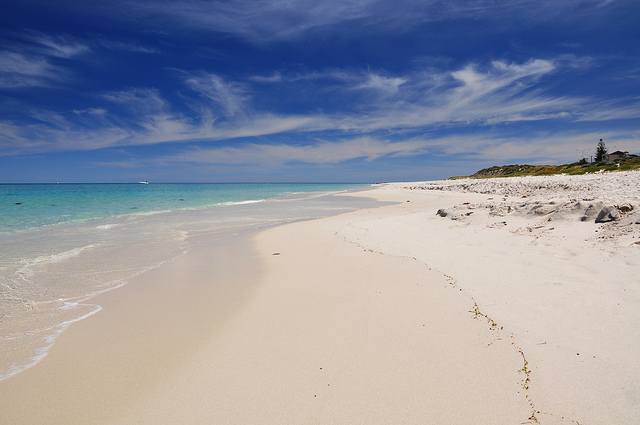
Quinns Rocks is in the outer northern suburbs of Perth. It was first settled in the 19th century by a family of sheep farmers called the Clarksons, who used it as pasturage. In the 1930s it was a place for seaside holidays, with many people building beach shacks along the coast. It began to be developed as a residential area in the late 1950s, and was declared a town in the 1960s. The beautiful white beach is the suburb’s major feature, and still attracts holidaymakers. The suburb gets its name from an offshore reef, and is believed to have been called after Robert Quin, a 19th century government surveyor who made the first records of the area. Another theory is that it is named after Mick Quinn, one of the Clarksons’ shepherds who had a shack in the area. Why it should be named after this shepherd in particular is not related, and the congruence of names seems most likely. Quinn is a common Irish surname, an Anglicised form of the Gaelic mac Cuinn, meaning “son of Cuinn”. Cuinn (which is Anglicised to Conn) means “head, chief”. The surname’s originator is Art mac Cuinn, a High King of Ireland; according to legend, he and his father Conn of the Hundred Battles, also a High King, had dealings with a fairy woman. The Quins were one of the noble families of Ireland, but the line came to an end a few years ago. Quinn is rising rapidly as a unisex name, and currently seems to be almost equal between the genders, while also performing well as a middle name. Expect to see more Quinns in the future.

Serpentine
Serpentine is a small town on the very fringes of the metropolitan area, 55 km south-east of the city, on the railway line between Perth and Bunbury. The town is named after the nearby Serpentine River, so called because of its meandering course. Serpentine has been used sparingly as a name since the 19th century, and in Australian records is found mostly as a middle name, divided fairly evenly between males and females. Most of the Serpentines were from the Perth area, making me think they were named after the river. Serpentine is a problematic name, because while serpentine means “winding, curving” (like a serpent), it can also mean “crafty, deceitful”. The second meaning is an obvious allusion to the serpent in Genesis, who leads Eve into temptation. While this may give some people the jitters, serpents are also ancient symbols of wisdom and healing, and are often depicted guarding sacred places; a serpent holding its tail in its mouth is a symbol of eternity. In Australian Aboriginal myths, the Rainbow Serpent is a significant deity, symbolising life and fertility. Strong and mysterious, sinuous Serpentine may be easier to bear as a middle name.

Viveash
Viveash is a secluded riverside suburb in the city’s north-west. It is named after Dr Samuel Waterman Viveash, a prominent pioneer who arrived in the Swan River Colony in 1838, and took up farming. Viveash is an English surname whose origins are disputed; it may be Anglo-Norman, and come from the French vivace, meaning “lively, vigorous”. However, because it is pronounced like “five ash” with a V instead of an F at the start, it is often linked to places in southern England called Five Ash Trees. Viveash has been used as a personal name for both sexes, almost exclusively found in the middle position. Examples from Australian records are all from Western Australia, and nearly all from the Perth area, making it likely they were named in honour of Dr Viveash. Viveash is a very unusual name, but is vaguely similar to Vivian and Ashley, while having a distinct sound and feel of its own.

POLL RESULTS
The public’s favourite names were Quinn, Aveley and Leda, and their least favourite were Jindalee, Serpentine and Viveash.

(Photo is of the beach at Quinns Rocks)

Irish Names for Boys

15 Sunday Jun 2014

Posted by A.O. in Name Themes and Lists

≈ 8 Comments

Tags

animal names, celebrity baby names, ethnonyms, famous namesakes, Gaelic names, hebrew names, Irish name popularity, Irish names, Latin names, modern classic names, mythological names, name history, name meaning, name popularity, name trends, names of political organisations, nicknames, Old Irish names, popular names, retro names, royal names, saints names, underused names, Welsh names

a07442ad-b5ca-4bfe-8a64-ab471fc44a87

It was very hard to choose just ten Irish boys’ names, as there are so many commonly used Irish names for boys in Australia, especially if you include Irish surnames. It’s not surprising when you consider our strong Irish heritage, and because the Irish were here from the beginning of European settlement, they were never marginalised as happened in other countries.

Famous Australians with Irish heritage include bushranger Ned Kelly, Peter Lalor who led the Eureka Rebellion, actor Erroll Flynn, artist Sidney Nolan, rock singer Doc Neeson, philanthropist Daisy Bates, and our greatest prime minister, Ben Chifley. Those alive today include Governor-General Peter Cosgrove, Nicole Kidman, Kylie Minogue, surfer Mick Fanning, Socceroo Lucas Neill, author Tom Keneally, and former prime ministers Paul Keating and Kevin Rudd.

A reminder I haven’t included any names with fadas (accent marks), as they aren’t permitted in all states and territories.

Aidan
Anglicised form of Aodhán, a pet form of Aodh or Áed, meaning “fire” in Old Irish; there are many characters from Irish mythology named Aodh. St Aidan of Lindisfarne was an Irish-born monk known as the Apostle of Northumbria; he was famous for converting people by simply walking from village to village, politely chatting with people and introducing them to Christian beliefs by helping them in their daily lives. The name Aidan first ranked in the 1970s at #533, and by the 1980s was already #177. Aidan joined the Top 100 in 1993 at #92, and peaked in 2008 at #51. Currently Aidan is #99 in Victoria and #102 in the Australian Capital Territory. The Aiden spelling is more popular: this first charted in the 1980s at #368, joined the Top 100 in 1997 at #62 and peaked in 2009 at #35. Currently Aiden is #41 nationally, #45 in New South Wales, #45 in Victoria, #65 in Queensland, #47 in Western Australia, and #39 in the Australian Capital Territory. Even combining spellings, Aidan/Aiden is only #51 nationally. This doesn’t seem as if Aidan is very popular, yet it still has a reputation as an “overused” name because of the massive trend for sound-alike names, such as Hayden, Brayden, Caden, Jayden, Zayden etc. Aidan is #50 in Ireland and #43 in Northern Ireland.

Cian
In Irish mythology, Cian was a god and father of the hero Lugh of the Long Hand. According to folk tales, Cian possessed a magical cow which produced a superabundance of milk. During a quest to recover his cow after she had been stolen, he seduced a princess who had been locked up in a tower (it was the princess’ father who had stolen the cow). The tale sounds very much like the Greek myth of Danae, and the princess was imprisoned for the same reason – a prophecy said that the princess’ father would be killed by his grandson. Lugh the Longhand was born from this union, and eventually the prophecy was fulfilled when Lugh killed his grandfather in revenge for locking his mother in a tower. The name Cian means “long, enduring, far, distant” in Gaelic, and is pronounced KEE-in. It is often anglicised to Kian, which is in the 400s in Victoria. Cian is #15 in Ireland.

Connor
Variant of Conor, Anglicised form of the Gaelic name Conchobhar, meaning “lover of hounds”. There have been several real life Irish kings with this name, including a High King, and also the legendary Conchobhar mac Nessa, who was unsuccessfully married to both Queen Medb and Deirdre, but had many other wives. The name is the basis for the Irish surname O’Connor, meaning “grandson of Conchobhar”, and the Clan O’Conchubhair is a royal Irish dynasty whose lineage has provided one hundred kings of Connacht, and two High Kings of Ireland: some members of the noble O’Conor family of Ireland are the living descendants of the last High King of Ireland. Connor is a truly royal name, which must have an influence on its use. The name Connor has charted since the 1980s, debuting at #418. It joined the Top 100 in 1994 at #83, and peaked at #21 in 2003. Currently it is #43 nationally, #74 in New South Wales, #61 in Victoria, #33 in Queensland, #31 in Western Australia, #40 in Tasmania, and #69 in the Australian Capital Territory. Connor is #97 in Northern Ireland; Conor is #5 in Ireland and #17 in Northern Ireland.

Darragh
Variant of Dara, derived from from the Gaelic for “oak grove”. The oak was sacred to the Celts, and the word druid is directly related to the word for oak. The city of Derry in Northern Ireland has the same meaning. Darragh can also be an Anglicisation of the Old Irish name Dáire, meaning “fertile, fruitful, virile, sexually aroused”, but also “agitated, raging, violent, tumultuous”. It’s a very explicit meaning in regard to masculine sexuality, suggesting a sort of bestial lust. The Darini were an ancient peoples from Northern Ireland, and it would seem that Dáire was their ancestor or ancestral god. Several Irish noble families and Scottish clans claim descent from the Darini, as do the current British royal family. There are many kings and heroes from Irish legend named Dáire, but folklorists believe they are ultimately versions of the same mythological figure, who may have been a god of the battlefield. Darragh can be pronounced DAH-ruh, or DA-ra, and may seem like an updated Darren to Australians. Darragh is #20 in Ireland and #30 in Northern Ireland; Dara is #86 in Ireland, and Dáire is #88 in Northern Ireland.

Finn
Both the older Irish and Anglicised form of Fionn, meaning “blond, fair, white, bright”. Its most famous namesake is the mythical warrior and giant Find mac Cumail, transcribed in English as Finn McCool. Finn was a nickname – his real name was Deimne, meaning “sureness, certainty”, and gained his nickname after his hair turned prematurely white. Finn was brought up by a warrior woman who trained him in war and hunting, then he studied under a poet and druid. One day Finn was cooking a mystical salmon for his master which would give him all the knowledge in the world: he burned his thumb in the process, and instinctively put his thumb in his mouth to cool it, swallowing a piece of salmon skin. This gave Finn the wisdom of the salmon, and whenever he needed to draw on its power, he needed only to suck his thumb. Finn’s followers were called the Fianna, and it is from them the Fenian Brotherhood gained their name. According to legend, Finn is sleeping in a cave beneath Ireland, and will one day awake to defend Ireland in her hour of greatest need. Finn first charted in the 1990s at #287, and by 1997 was already in the Top 100 at #88. Currently it is #62 nationally, #68 in New South Wales, #60 in Victoria, #76 in Queensland, #40 in Western Australia, and #30 in the Australian Capital Territory. This is a handsome popular name that has helped drive the popularity of names such as Flynn and Finlay. Finn in #38 in Ireland and #56 in Northern Ireland; Fionn is #27 in Ireland and #70 in Northern Ireland.

Lorcan
Anglicised form of Lorcán, derived from the Irish Gaelic word for “fierce”. There have two been ancient Irish kings named Lorcán, and a medieval saint Lorcán Ua Tuathail whose name is Anglicised to Lawrence O’Toole. St. Lorcán was of royal blood, and became Archbishop of Dublin. He played a prominent role in the religious reform of the 12th century, spearheading a movement of spiritual renewal while bringing the church in Ireland closer to Rome. He was admired by both members of the church and the secular community for his many acts of charity to the poor – much needed at the time due to a severe famine. This is a cool Irish name which could be an alternative to names as Lachlan, Liam, or Declan. Lorcán is #67 in Northern Ireland.

Malachy
Anglicised form of Máel Sechlainn, meaning “follower of St. Seachnall”. St. Seachnall is an obscure 5th century Irish bishop who seems to have been of Italian origin; his name may be an Irish form of the Latin name Secundus, meaning “second (born)”, as he is also known as St. Secundius. The modern spelling of Malachy has been influenced by the Hebrew name Malachi, meaning “my messenger”, and therefore understood as “my angel”. However, Malachy is pronounced MAL-uh-kee, not MAL-uh-kie. There have two medieval High Kings of Ireland named Malachy, and also a St. Malachy, who was the first native-born Irish saint to be canonised. The saint’s name is an Anglicisation of Máel Máedóc, meaning “follower of St. Madoc”; Madoc was a 7th century Irish monk, and his name may come from the Welsh for “fortunate”. Malachy is an attractive name in occasional use, and AFL footballer Liam Picken has a young son named Malachy.

Oscar
Believed to mean “deer friend”. In Irish mythology, Oscar was the son of the warrior Oisin (“young deer”) and the fairy queen Niamh; he was the grandson of Finn McCool, and one of his warriors. Oscar was killed by a member of the increasingly corrupt Fianna, and upon his death, Finn wept for the first time in his life. The name Oscar was popularised in the 18th century by the poems of James McPherson; Napoleon was a great admirer of McPherson and gave his godson Oscar as one of his middle names. Later Napoleon’s godson became Oscar I of Sweden, and the name Oscar became traditional in Scandinavia. The Irish writer Oscar Wilde may have received his name because his mother collected Irish folk tales, but perhaps also because his father had travelled in Sweden, where he received honours from King Carl XV – Carl had a son named Oscar, born two years before Oscar Wilde, and sadly the little prince died just months before Oscar Wilde’s birth. Oscar was #103 for the 1900s, and sank before leaving the charts in the 1940s. It returned in the 1970s at #478, joined the Top 100 in 1998 at #98, and the Top 50 in 2004 at #47. Currently Oscar is #24 nationally, #27 in New South Wales, #20 in Victoria, #39 in Queensland, #34 in Western Australia, #19 in Tasmania, and #20 in the Australian Capital Territory. This tough, masculine yet snuggly retro name is more popular than it has ever been. Oscar is #61 in Ireland and #64 in Northern Ireland.

Ronan
Anglicised form of Rónán. Irish and Scottish legend tells of selkies, who swim in the sea as seals, but can shed their sealskin and become human on land. Male selkies were handsome and seductive; female selkies were said to make excellent wives, but could never forget their true home, and would gaze longingly out to sea – selkie tales are nearly always romantic tragedies. The children born of selkie women were called ronans, or “little seals”. The lovely film The Secret of Roan Inish, set in Ireland, is about the selkie legend, and an Irish animated movie is due to come out this year on the same topic. St. Ronan was an educated Irish bishop who sought exile in Brittany and a peaceful life as a hermit. A magical fairytale name that sounds smooth and handsome, Ronan could replace popular Ryan; it will remind many of Irish singer Ronan Keating from The X-Factor. Ronan is #52 in Ireland and #40 in Northern Ireland.

Rory
Anglicised form of the Irish Gaelic name Ruaidhrí or Ruairí. The name means “red king”, referring to fox-coloured hair. There have been many Irish kings named Ruaidhrí, including Ruaidrí Ua Conchobair, the last High King of Ireland before the Norman invasion. Rory has charted since the 1950s, debuting at #289; after a bumpy start (when it sank to #420 in the 1960s) it began climbing steadily, and peaked in the late 2000s at #125. Currently it’s in the mid 100s, and this is a rare example of a modern classic which has never become popular. Not only underused, Rory is cute but with a “tough boy” vibe, and could be an alternative to popular Riley, or fashionable Remy. Rory is #42 in Ireland and #44 in Northern Ireland; Ruairí is #81 in Ireland and #74 in Northern Ireland.

POLL RESULTS
The public’s favourite names were Finn, Rory and Oscar, and their least favourite were Lorcan, Cian and Darragh.

(Picture of a Harbour Seal or Common Seal from the Belfast Telegraph)

Is Margot the Next Big Thing?

24 Saturday May 2014

Posted by A.O. in Naming Assistance

≈ 8 Comments

Tags

choosing baby names, famous namesakes, French names, Latin names, name popularity, name trends, nicknames, popular names, sibsets, UK name trends, underused names, US name trends


Margot-Robbie-Wallpapers-14-624x630Melissa and Luke have a little girl named Audrey, and are expecting their second child in a few months. Audrey doesn’t have a middle name, since they have a hyphenated surname, and this will be the case for the new baby as well, whether it’s a boy or a girl.

Mel and Luke have quite compatible naming styles, with both preferring traditional or slightly retro names. Mel likes the idea of older names which are familiar, but not overly common; however, a popular name isn’t an issue unless it seems “trendy”.

Mel and Luke’s Name List
Girls – Genevieve, Margot, Eliza (not in order)
Boys – Elliot is the front runner, but Mel can’t seem to let go of Theo, Sonny, and Remy. These last three names were possibilities for Audrey’s name if she had been a boy, and went on and off the list during the last pregnancy too. Mel thinks that the reason she feels uncertain about them is because they feel too “nicknamey”.

Luke’s preference for a girl’s name is Genevieve, but Mel worries it’s slightly too clunky, and doesn’t much like the nickname Jenny/Genny. Mel’s preference is for Margot, which she thinks is quite spunky, but every time Luke sees actress Margot Robbie in a magazine, he says that he’s concerned that Margot is going to be the next celebrity-inspired trendy name. Mel thinks that it’s celebrity baby names which are more likely to become trendy, not the names of celebrities themselves.

Mel wants to know whether a celebrity name like Margot might really become too trendy as a baby name, and would be especially interested to know what we think of their boys names? In particular, what about Sonny? Is it a “proper” name?

* * * * * * * * * *

I love all the girls names you are considering. I must say, I never thought of Genevieve as clunky before – it’s so elegant, but with real substance. Jenny was the usual nickname for Genevieve during the loooong period that Jennifer was popular, but these days I think Evie is the more obvious short form.

Margot is simply gorgeous, and so stylish. I think one thing Margot Robbie has done for the name is give it more oomph, because I didn’t really think of it as a “sexy” name before (in fact it seemed quite cool and intellectual to me).

That’s an interesting question about whether celebrities or their children are more likely to influence popular names. I had a look at the Top 50 girls names, and I noticed that a few names do seem to have been influenced by celebrities.

Mia first charted in the 1960s, at the same time as Mia Farrow became known from soap opera Peyton Place, but didn’t reach the Top 100 until the 1990s. Olivia first ranked after Olivia Newton-John’s career started, and appeared in the Top 100 in the late 1970s. Sienna has ranked since the 1990s, but suddenly took off in the 2000s when Sienna Miller began her career, and reached the Top 100 almost instantly. The name Isla only began charting in the 1990s, when Isla Fisher joined the cast of Home and Away, and it became a Top 100 name in the late 2000s.

So I can see where Luke’s concerns come from – he’s thinking, “Sienna Miller and Isla Fisher were pretty young women in the magazines a decade or so ago, and now there’s thousands of Siennas and Islas. What if the same thing happens with Margot?”

Well, for a start, there can be quite a wait before the name becomes popular – Mia took thirty years! And even if it happens relatively quickly, as with Olivia, Sienna and Isla, there might still be 10-15 years between the names beginning to be known, and becoming popular. To me it feels as if celebrity baby names have a more immediate effect on name popularity.

And there’s another thing to consider: Mia, Olivia, Sienna, and Isla were “new” names, in that they had never been in the charts before. Margot has already been in the charts – which in my view, saves it from being a “trendy name”. It charted from the 1930s to the 1970s, coinciding with the career of ballerina Margot Fonteyn, and it never became popular – the highest it got was #218.

At the moment there’s not really any sign of an imminent Margot revival, although in 2012 six babies were named Margot in Victoria (where Margot Robbie began her career); just enough to show up in official data. So, while anything is possible (and Margot is rising in both the UK and US), it still seems a safe choice, as far as trendiness goes.

I rather hope one of you will convince the other to choose either of these names, as they are both so lovely. Otherwise, there’s always Eliza, which both of you like, and which makes a wonderful match with Audrey.

Elliot is a great choice for a boy, and I think it’s brilliant as a brother to Audrey, although I suppose it does make having an Eliza later a bit less likely. However, there’s those three names you just can’t quit …. I’ve had that experience too, of those names you just can’t give up, even though you keep tossing them off the list, and I know family and friends who have been through the same thing.

In my experience, two things might cause this issue:

  • The name you keep being drawn to is the right name, and your head just keeps over-ruling your heart by coming up with excuses like, “Too nicknamey”.
  • The name is one that you genuinely love, but a more sensible part of you knows that no matter how desirable the name is, it’s not really right for you. (This is the part of your brain that stops you from buying a stunning evening gown that you know you will only wear once, or from going trekking in Nepal with five children under the age of six).

I can see that part of the reason you can’t really say Yes or No to the names is that you originally picked them for your first child. If you had had a boy first, you could have taken these names with you to the hospital, and one might have been a perfect fit and you would have called your son Sonny (or Remy, or Theo). Or you might have realised they weren’t for you after all, and your son would have been Elliot (or Leon or Hugh or something else). But instead you had Audrey, so you never got a chance to try them out for size in the real world.

I think you should stop throwing them off your list, and grant them amnesty. Wait until the baby is born, because you might be bringing Audrey home a sister rather than a brother anyway, and once again the names could end up in the Maybe One Day category of baby names.

But if you do have a son, this will be your chance to try the names out on a real live little boy. Maybe Remy (or Theo or Sonny) will be so completely his name that you will finally understand why your heart could never let that name go. Or maybe you’ll think they are lovely names, but not quite right after all.

They don’t really seem to be traditional or retro, which you said was your style, but then again, neither is Elliot, exactly. I wonder if your style is actually traditional or retro for girls, and something more modern for boys? I’ve noticed that we Australians often seem to like girls to have fairly conservative names, but will choose contemporary names for our boys. Theo, Remy and Sonny are cute and modern-sounding, although Remy is not a “nickname” name – it’s French for the Latin name Remigius. I think they’re all adorable, and very cool.

As to whether Sonny is a “proper” name: to me if you are allowed to put a name on the birth certificate, it’s a “proper” name. Yes, its origins are definitely nicknamey and affectionate, like Buddy and Buster, but that doesn’t mean it’s not a real name. It’s been in use since the 16th century, so it has a surprisingly long history, and it’s actually in the Top 100 and rising in the UK, while in the US it has charted consistently since the 1920s. So not only is it a “proper” name, it isn’t even very new or very uncommon.

What do you think, readers? Will Margot Robbie make the name Margot trendy? Is Sonny a proper name? And what do you think of the names Mel and Luke have chosen?

UPDATE: The baby was a girl, and her name is Margot!

POLL RESULTS: A majority of people felt that Margot was a safe choice, with 34% thinking it probably wasn’t coming to become trendy, and 22% saying that it couldn’t become trendy, as it was already an established name. However, there were still plenty of people who weren’t convinced of this, with 27% believing it probably would become trendy, and 8% absolutely sure it would become trendy. A cautious 9% weren’t sure what the future held for Margot.

A majority also thought that Sonny was a proper name, with 40% saying it wasn’t exactly a traditional name, but still acceptable, and 16% deciding that it definitely was a proper name. A tolerant 4% believed that all names were “proper names”. However 32% thought Sonny was more of a nickname, and 8% were adamant that Sonny wasn’t a real name at all.

Margot was the clear favourite for a girl’s name, with 50% of the vote going to Margot, 28% to Eliza, and 22% to Genevieve.

Elliot was the favourite for a boy’s name, with 39% of the vote going to Elliot, 33% to Theo, 18% to Remy, and 10% to Sonny.

(Photo is of Margot Robbie)

Boys Names from the Top 100 of the 1920s

11 Sunday May 2014

Posted by A.O. in Name Themes and Lists

≈ 7 Comments

Tags

Anglo-Saxon names, aristocratic surnames, classic names, dated names, english names, epithets, famous namesakes, Gaelic names, germanic names, Irish names, locational names, middle names, name history, name meaning, name popularity, name trends, nicknames, Norman-French names, Old English names, Old Norse names, retro names, Roman names, royal names, saints names, Scottish names, surname names, unisex names, Welsh names

161695_medium

Happy Mother’s Day! One of my mum’s favourite hobbies is browsing in antique shops and vintage stores: sometimes you find the most wonderful items in these places, and marvel that we ever stopped making such beauties. On the other hand, sometimes there’s nothing but junk in them. But either way, you get to lose yourself in the past for a while. Here are ten boys names from the 1920s, and I will let you decide whether I have dug up something worthwhile, or whether they should be allowed to lie under dust sheets for a few years longer. 

Athol
Based on the place name Atholl, a district of the Scottish Highlands which means “New Ireland” in Gaelic. One of its towns is named Blair Atholl, and the Duke of Atholl is a member of the Scottish peerage – the only person in Europe legally commanding his own private army, the Atholl Highlanders. Both Sydney and Adelaide have suburbs named Blair Athol; the one in Sydney is named after a historic house. A famous Australian namesake is Athol Guy, from folk group The Seekers – he’s the one with glasses. Athol has been used as a first name since the 18th century, and originates from the Atholl region of Scotland. Athol was #86 in the 1900s, and peaked in the 1910s at #70; by the 1920s it was #72. It left the Top 100 in the 1940s, and hasn’t ranked since the 1950s. Athol unfortunately sounds a lot like the female name Ethel, and can be mispronounced to sound like a rude word (I went to primary school with an Athol, and can testify to this). It might be better suited as a middle name.

Bernard
Germanic name translated as “brave as a bear”. It was brought to England by the Normans, where it replaced the Old English equivalent, Beornheard. There are several saints named Bernard, including St Bernard of Mentone, founder of a famous refuge for pilgrims in the French Alps; the St Bernard dogs used to rescue people are named after him. Another is St Bernard of Clairvaux, who founded the Cistercian Order and is a Doctor of the Church, famed for his eloquence. Two Australian celebrities demonstrate the different ways this name can be pronounced: Bernard Fanning from Powderfinger says his name with the accent on the first syllable, while tennis player Bernard Tomic has his name pronounced with the emphasis on the second. Bernard was #62 in the 1900s, and peaked in the 1920s at #53. It didn’t leave the Top 100 until the 1970s, and last ranked in the 1990s. With more than sixty years in the Top 100, yet never in the Top 50, Bernard seems very usable. It’s a strong, masculine name that is quite funky, and comes with cute nicknames like Bernie, Barney, and Bear.

Herbert
Germanic name translated as “bright army”, and found very early in the form Charibert, who was King of the Franks in the 6th century; his daughter married a king of Kent. The Anglo-Saxons had their own form of the name, Hereberht, and there is a 7th century saint with this name, as well as an obscure French St Herbert. When the Normans conquered England, they brought the name with them, and it replaced the Old English form. Unlike many other medieval names, Herbert managed to remain in use because it is an aristocratic surname – the Herbert family have been Earls of Pembroke in an unbroken line since 1501. The first Earl of Pembroke was a courtier married to the sister of Catherine Parr, one of Henry VIII’s wives, and the present Earl still lives on the estate built by the first Earl. The name Herbert became popular during the 19th century, when Sidney Herbert, the 14th Earl, was a distinguished politician famous for being the most handsome MP of his day. Herbert was #23 in the1900s, and #48 by the 1920s. It left the Top 100 in the 1940s, and hasn’t ranked since the 1960s. I have seen one or two small children named Herbert, and this is one for the serious lover of vintage names, with the nicknames Herb, Herbie, and Bertie.

Ian
Anglicised form of Iain, a modern Scottish Gaelic form of John, derived from the medieval Irish name Eoin. Both Iain and Ian date from the 19th century, and it is not impossible that Iain was an attempt to Gaelicise English Ian. Ian was #128 in the 1900s, and joined the Top 100 the following decade. It was #57 in the 1920s, and peaked in the 1950s at #10. It didn’t leave the Top 100 until the 1990s, and is currently stable in the mid-200s. This makes Ian a very safe choice – it’s a classic which was popular for eighty years, and is still in reasonable use.

Lloyd
English form of the Welsh Llwyd, commonly translated as “grey”, which in practice referred to various shades of brown in different contexts, and white, in the sense of grey hair being white. Although Llwyd was sometimes used as a personal name, it became better known as an epithet, which came to describe someone with mouse-brown hair, and then developed into a surname. By this stage, the original meaning of “grey” was pretty much lost, and it was understood as “brown-haired”. The word llwyd could also be understood as meaning “holy, blessed”, although this doesn’t seem to have contributed to the surname. In Britain, Lloyd has some heavy-duty business clout, due to Lloyds Bank, and the insurance market Lloyd’s of London. Use of the name may have been boosted by David Lloyd George, Britain’s only Welsh Prime Minister. Lloyd was #148 in the 1900s, and peaked in the 1910s at #80. By the 1920s it was #91, and it left the Top 100 the following decade. However, the name Lloyd continued to chart until the late 2000s. It’s still in occasional use, and I see it quite often as a middle name in birth notices. Lloyd may be a little clunky, but it’s not an outrageous choice.

Ross
A region in north-west Scotland, said to mean “headland” in Gaelic, perhaps referring to the Black Isle, a peninsula in the Scottish Highlands. Another possibility is that it means “horse island” in Old Norse, in reference to the island of Orkney. The Scottish surname Ross originates from this area. However, the surname has English roots too, because there are places in England named Ross, with the meaning “headland”, and Rozzo was an Anglo-Saxon name meaning “fame” (related to the name Rose). The Rosses were a large Yorkshire family who came over with William the Conqueror from the village of Ros in Normandy (the name means “red’); in the Middle Ages they bought up large tracts of Ayrshire, so their surname also became Scottish. Ross has been used as a personal name since at least the 16th century, and first used in England rather than Scotland. Ross was #203 for the 1900s, and hit the Top 100 in the 1920s at #75. It peaked in the 1950s at #37, didn’t leave the Top 100 until the 1980s, and still ranked in the late 2000s. Ross is fairly common in the middle, and wouldn’t be too surprising up front.

Roy
Anglicised form of Ruadh, a Gaelic name meaning “red”, often used as a nickname for someone with red hair. One of the most famous bearers is Scottish outlaw Raibeart Ruadh MacGriogair, known in English as Rob Roy MacGregor. His story was turned into a best-selling novel by Sir Walter Scott, and Liam Neeson starred in a film about him. The name can also be derived from the surname, which can be from Ruadh, but also from Norman-French Roi, meaning “king”. This could be used as a nickname, but was a medieval personal name as well. Roy was #25 in the 1900s, and #34 by the 1920s. It left the Top 100 in the 1950s, and reached its lowest point in 2010 with a ranking of 0. Since then, Roy has begun to pick up steam, and has become rather fashionable, along with similar names like Royce, Elroy and Leroy. This classic is once again on trend.

Sidney
Aristocratic surname which probably comes from a place name meaning “at the water-meadows” in Old English. However, folk etymology derives it from the French Saint-Denis, a suburb of Paris named after the city’s first bishop. The Sidney family became prominent during the Tudor period; Sir William Sidney was squire to Henry VIII. Sir William’s grandson was poet Sir Philip Sidney, famous for creating the name Stella. The story goes he had a noble and gallant death, for as he lay dying in battle, he gave his water to another wounded soldier, with the words, “Thy necessity is yet greater than mine”. Sir Philip’s great-nephew was Algernon Sidney, a 17th century republican executed for treason, and afterwards revered as a heroic patriot and martyr. Although Sidney had been used as a first name since the 16th century, it became much more popular in the United States during the 18th and 19th, because Algernon Sidney’s anti-monarchist views were highly influential to the American conception of liberty. Although it has charted for both sexes in the US, in Australia Sidney has only charted as a male name. Sidney was #48 in the 1900s, and peaked in the 1910s at #47; by the 1920s it was #63. It left the Top 100 in the 1940s, and dropped from the charts in the 1980s. However, it ranked again in the late 2000s at #450, and has been gently increasing. This retro name is back in style, along with its short form, Sid.

Terence
English form of the Roman family name Terentius, of unknown meaning. The Roman comic playwright we call Terence was named Publius Terentius Afer, and he was a slave (probably from Libya) of a Roman senator from the Terentius family, who educated him, and later freed him; he adopted the name Terentius after gaining his freedom. There are several saints we call Terence, although most of them were named things like Terentianus, Terentian, or Tertius. Terence has been used as an English name since the 17th century, and in Ireland was used to Anglicise the name Toirdhealbhach, meaning “instigator”. Terence was #141 for the 1900s, and joined the Top 100 in the 1920s at #71. It peaked in the 1940s at #30, and left the Top 100 in the 1960s. It hasn’t ranked since the 1990s, but Terence still seems usable, and could be seen as either a “posh” choice or an Irish one.

Wallace
English surname derived from the Norman French waleis, meaning “foreigner”. Although often translated as “Welsh”, the word waleis could refer to someone from Wales, or from the English counties bordering Wales, or to Cornish Celts, or to Bretons who came to England after the Norman Conquest and settled in East Anglia. The surname became associated with Scotland because of the early medieval Kingdom of Strathclyde, which straddled northern England and southern Scotland. The people of Strathclyde spoke Cumbric, a British language closely related to Old Welsh, and were known as walensis. Even after becoming part of Scotland, it remained a distinctive area into the 12th century. The surname is famous because of Sir William Wallace, a commander during the 13th century Wars of Scottish Independence who has become an iconic Scottish national hero. There have been many books and poems written about Wallace’s exploits, and he features in the film Braveheart, played by Mel Gibson. Wallace has been used as a first name since the 17th century, and originates from Scotland. Wallace was #74 for the 1900s, and peaked in the 1920s at #68. It left the Top 100 in the 1940s, and hasn’t ranked since the 1950s. Wallace really deserves to make a comeback, and the nicknames Wally and Wal are cute.

POLL RESULTS
The public’s favourite names were Sidney, Wallace and Ian, and their least favourite were Terence, Athol and Herbert.

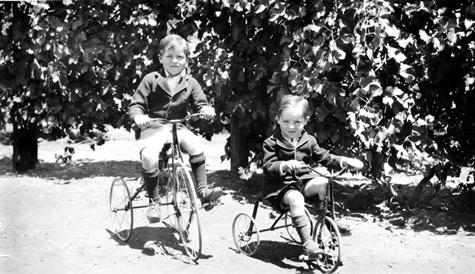
(Picture shows two boys riding their tricycles amongst grape vines in Mildura, Victoria in the 1920s; photo from Museum Victoria)

Will Lillia Get Lost in the Crowd?

10 Saturday May 2014

Posted by A.O. in Naming Assistance

≈ 2 Comments

Tags

choosing baby names, fictional namesakes, name popularity, name trends, nicknames, popular names

127509-11f2cc74-9c0c-11e3-8857-926a2cf5fac5

Emma and her husband Matt are expecting a baby later in the year. If they have a girl, Emma’s choice would be Rosamund – a name she has loved for many years. She loves the history of the name, the meaning, and the fact that it has ties to her favourite book, Picnic at Hanging Rock. Matt is willing to go along with it, but dislikes the -mund ending.

Recently, Emma discovered another name she likes – Lillia. She would be willing to give up her beloved Rosamund for Lillia, because Matt loves it. However, Emma is worried that Lillia is not distinctive enough. Not only is Lily very popular, but there are lots of other similar names in the Top 100, such as Lola, Layla, Lila, and Olivia.

Emma found it annoying to grow up with a very popular name, and swore she would never put her child through that. Now she wonders if a Lillia would experience the same issues she did, only with names that are highly similar instead.

* * * * * * * * * *

Lillia is what we name nerds describe as “not trendy, but on trend”. You almost never see it, but it has instant recognition as being similar to many other popular or rising names. Although L-L and LL names are a huge trend for girls, I wouldn’t worry so much about Lola, Lila, Ella, and Milla (etc etc) – it’s difficult to avoid zeitgeist.

Even though there are lots of popular girls names with a strong L sound in them at present, I don’t see how having several other girls around her with vaguely similar names would negatively impact a Lillia. Maybe once in a while there would be a Did you say Lillia? Oh, you wanted Olivia moment, but I don’t see how that would be a real problem.

The only thing to really think about in this regard is the highly popular Lily/Lilly, and the rapidly rising Lillian, especially if your daughter ended up with the nickname Lili or Lil. I can see that even though Lillia is a very uncommon name, it’s not impossible she’ll be one of a few Lilys/Lillys/Lilis.

Of course, the popularity of a popular name today is nothing compared to what it used to be. If you want some exact numbers, last year there were 1403 girls named either Lily or Lilly, and 176 named Lillian. That’s just over 1500 potential Lily/Lilly/Lili name twins, out of more than 150 000 baby girls born in the year – around 1%, even combining all the names together. Does that sound a bit less scary?

I think Lillia is a beautiful name, and I can quite understand why you are taken with it, and Matt loves it. It has a soft lilting sound without seeming weak or frilly, and clean, elegant lines. I think its similarity to other names gives it familiarity, so that it fits in with current trends, while still seeming different. To me, it doesn’t get lost in the crowd, and if you were worried about Lillia being another Lily, you could use Lia as the nickname instead.

Rosamund is a gorgeous name too, and also fits in with current name trends, because almost every week in the birth notices I see baby girls named Rose, Rosie, Rosa, Rosalie, Rosemary, or even Rosabella. What an enviable baby name dilemma you have – choosing between two such lovely names! Either way, you can’t go wrong.

UPDATE: The baby was a boy named Arthur!

POLL RESULTS
79% of people were in favour of using the name Lillia. 32% thought it blended in with the crowd, rather than getting lost in it, while 16% thought that its rareness automatically made it distinctive. 31% thought it was a bit too much like currently popular names, but was so nice it didn’t matter. 18% of people were against using the name Lillia, believing it sounded like too many girls names in the Top 100, while 3% were undecided.

It was a close contest choosing between Rosamund and Lillia, but Rosamund had the edge at 45% to 42%. 13% of people liked both names equally.

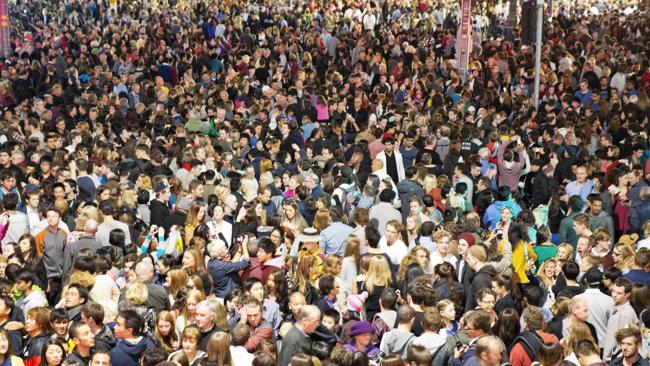
(Picture is of Melbourne’s White Night festival; photo from the Herald Sun)

The Fastest Rising Top 100 Names of 2013

20 Sunday Apr 2014

Posted by A.O. in Naming Issues

≈ 7 Comments

Tags

Baby Center, Babynameobsessed, celebrity baby names, classic names, famous namesakes, fictional namesakes, Google, Italian names, middle names, name popularity, name trends, names from television, nicknames, popular names, royal names

Aria and Louis

GIRLS

Aria
In 2012 Aria was a newcomer to the national Top 100, and one of its highest-risers. In 2013 its success continued as the #1 rising name in Australia and Queensland, and a top rising name in New South Wales and Victoria. Aria is one of the main characters in the Pretty Little Liars book and television series, and also sounds similar to Arya from Game of Thrones. Its Italian origins make this a good cross-cultural choice too.

Evelyn
Classic Evelyn was the #1 rising name in the Northern Territory, and one of the top rising names nationally, as well as in New South Wales, Victoria, and Tasmania. In 2012 it was a top rising name nationally, and last year increased the speed at it which it rose. Ivy was the fastest-rising girls’ name of 2012, and here’s another name with a V, following hard on the heels of Evie, Eva and Ava.

Penelope
I suspect Penelope’s entrance into the Top 100 has caused some dismay. It’s certainly made me eat humble pie, as I was foolish enough last year to reassure parents that Penelope was not too popular when you had a careful look at the available data. I began to get an inkling I had made a boo-boo when day after day, I saw that the search term popularity of penelope in australia had come up yet again. I couldn’t help worrying that if all these people trustingly chose the name Penelope, its popularity was sure to increase dramatically. My fears were not unfounded, as Penelope rose more than 100 places to be the #1 rising name in Victoria, and was a top rising name nationally and in New South Wales. A slew of celebrity babies named Penelope has helped this name become hot property, and it’s back on the Top 100 for the first time since the 1970s.

Samantha
Perenially popular Samantha had been gradually sliding down the Top 100 for over a decade, but last year got a boost, going up 15 places nationally and 58 places in Victoria, as well as being a top rising name in the Australian Capital Territory, and joining the Western Australian Top 50. Perth-born model and singer, Samantha Jade, who won The X-Factor in 2012, and recently had a starring role in the hit INXS mini-series, Never Tear Us Apart, probably has something to do with it. Popular breakfast television presenter Samantha Armytage may be another factor.

Lola
Lola was the #1 name rising in New South Wales and a top rising name in Queensland. Short forms such as Maggie and Elsie did well in the charts in 2013, and although Lola is part of this movement, it seems much cheekier and flirtier than its retro sisters. Could it be the next Ruby?

BOYS

Louis
Even though classic Louis has charted since the 1900s, it was a newcomer to the Top 100 last year. It rose at least 27 places to become the #1 rising name in the country for 2013, as well as a top rising name in New South Wales and Victoria. Louis has been rising steeply for several years now, and it was only a matter of time before it made the Top 100 – but being chosen as a royal middle name can’t have done any harm.

Hudson
Hudson was one of the fastest-rising names of 2012, and continues to power up the charts. It was the #1 rising name in New South Wales, and a top rising name nationally, as well as in Victoria, Queensland, Western Australia and Tasmania. This name has been doing very well since being chosen as a baby name by two celebrities – TV chef Curtis Stone in 2011, and pop star Guy Sebastian in 2012.

Nathaniel
Nathaniel is another newcomer to the Top 100 charts, having charted in the 1900s then dropped off the charts until the 1960s. It was the #1 rising name in Victoria, and a top rising name nationally, and in New South Wales, Queensland, and Tasmania. This retro name has been making smooth and steady progress up the charts for decades, and its entry into the Top 100 coincides with the release of the first successful singles of pop singer Nathaniel (thanks to Ebony at Babynameobsessed for this tip). Another famous Australian namesake is Nathaniel Buzolic from The Vampire Diaries. This provides another way to get the popular short form Nate.

George
Remember those reports from Baby Center that Prince George hadn’t had any effect on the popularity of the name George? And how they said that before any official data had been released? Well now some has, and the name George was a top rising name nationally, and in Queensland and Western Australia (our most monarchist states?). George rose 11 places to #60; its highest ranking since the 1970s. As well as the little Prince currently gracing our shores, there is a baby George in Downton Abbey, the heir to an earldom. The Duke and Duchess of Cambridge are fans of the show, making their choice of George a possible subconscious small-screen homage. It’s interesting to note that George, Alexander and Louis all became more popular last year.

Lincoln
Lincoln was a fast-rising name of 2012, and before all the data had come in, I predicted that it would make the national Top 50 for 2013. It rose 17 places and just scraped in at #50, so a close call! Lincoln was also a top rising name in Victoria and Western Australia. Lincoln Younes plays “River Boy” Casey Braxton on Home and Away, and the name Lincoln has been increasing in popularity ever since he joined the show in 2011.

Other Names That Rose

  • Lillian – top riser nationally and in New South Wales
  • Eloise – top riser nationally and in Victoria
  • Olive – top riser nationally and in Victoria
  • Violet – #1 rising name in Western Australia and Tasmania
  • Indigo – top riser in Victoria and Queensland
  • Felix – top riser nationally and in New South Wales
  • Ryder – top riser nationally and in Tasmania
  • Lewis – top riser in Victoria and Tasmania
  • Hugo – top riser in Queensland and the Australian Capital Territory
  • Finn – top riser in Western Australia and the Australian Capital Territory

NOTE: I have chosen those names which increased in popularity in the most number of states and territories, making their popularity widest across the board in Australia. For the positions of each name in individual states and territories, please refer to the Name Data category for more information.

POLL RESULTS: People’s favourite fastest-rising names were Penelope and Louis.

Name News Round-Up

16 Wednesday Apr 2014

Posted by A.O. in Names in the News

≈ 4 Comments

Tags

aristocratic titles, Australian Aboriginal names, banned names, birth notices, Births Deaths and Marriages, celebrity baby names, celebrity sibsets, choosing baby names, colour names, locational names, name popularity, name trends, names of mountains, nicknames, royal titles, trademarks, triplet sets, Twitter

news

Banned Baby Names

It was reported in The Age last month that the state of Victoria is banning baby names under the Births, Deaths and Marriages Act. This isn’t actually news in the sense of new information – that’s been the situation everywhere in Australia since the mid-1990s, with all states following more or less the same guidelines. It is a reminder that Births Deaths and Marriages has the discretion to reject names that are deemed unsuitable – however, the newspaper report failed to mention that parents can appeal the decision, and appeals have been successful in the past. Names rejected in Victoria included Lord, Princess, Princess Di and Prince (titles), Fireman Sam (trademark), Tit (offensive), and also Glory Hallelujah, New Covernant, Wonderful Beautiful, Anarchy, and Honest Mary, which seem to be Victoria’s idea of unsuitable. Pepper, Jazz, Reef, and Texan Gamble all made the cut however.

The Sunshine Coast Daily reported that “quirky” names were being banned in Victoria. The article said rather smugly that parents were free to choose any name they want in Queensland, whether it be pop culture Khaleesi or traditional Francis Xavier. That seems idiotic, as Khaleesi is allowed in Victoria too – it’s a title, but a fictional one, and not in English – although it’s not as popular as in Queensland. Queensland has the same naming regulations as the rest of Australia, but while the article was smug and silly, there was a grain of truth behind it, because names seem to be very rarely disallowed in Queensland, and it does have a more relaxed naming culture. Moral of the story: if you yearn for a kookier baby name, you are better off moving to Queensland than Victoria.

Radio Audience Help Choose Baby Name

Melbourne’s first baby of 2014 was born at 12.34 am on January 1 at the Royal Women’s Hospital to professional dancers Bessie and George Awad. The Awads couldn’t decide between their three favourite names of Indiana, Marley, and Summer, so they threw it open to listeners of radio station 3AW and its Twitter followers. Indiana was by far the most popular choice of the public, and this was the name they went with. Indiana was also the choice of dad George, who chose it because he thought his baby daughter “looked like a little Pocahontas” (not the most politically correct name story!). Bessie says the name suits Indiana. By the way, don’t you love mum and dad’s names – Bessie and George, adorable.

Baby Name Trends of 2014

Practical Parenting magazine had a slideshow of baby name trends to watch for in 2014, including old fashioned names, boys names for girls, surnames-as-first-names, and literary names. They also gave their predictions of which names would rise this year, and with so many guesses that at least a few of them will be correct.

When Rafael Became Rafferty

Comedian Dave Hughes has been on the blog a couple of times because of his delightfully named children Rafferty, Sadie and Tess – Tess Clementine was even voted the public’s favourite celebrity baby name last year. In an interview this year [story expired] Dave revealed that the first choice for his son’s name was Rafael. Even though this isn’t uncommon in Australia, Dave felt that they weren’t Spanish enough to pull off having a Rafael, so went with Rafferty instead. It’s interesting to wonder what would have happened if they’d gone with Rafael – would they have had two girls named Sadie and Tess? My guess is no: it’s interesting to see how the choice of the first child’s name can influence your other children’s’ names.

An Australian Name in America

A rare set of identical triplets were born in California, named Abby, Laurel and Brindabella – who made their way into the Birth Announcements here. The triplets’ dad is originally from Canberra in the ACT, where the Brindabellas form a mountain range to the west. He spent a lot of time exploring the mountains, and discovering a love of nature – he and his wife were married in the mountains in 2007, when they wed on top of Mount Franklin. Brindabella was named after the mountains of her dad’s home town, and although it sounds unusual next to her sisters, Brin or Bella will excite little excitement. Brindabella either means “two kangaroo rats” in the local language or “water running over rocks” with a European -bella added to mean “beautiful”.

True Blue 

Business Insider reported on websites which allow people to connect for the purposes of co-parenting. They aren’t dating websites, but provide an opportunity for single people who want children to match up so they can start a family together. The story featured Australian man Fabian Blue, who has moved to Nebraska in the United States to be with his co-parent, Dawn Pieke, and they have a one-year-old daughter together named Indigo. While Indigo is a common name in Australia, Indigo Blue has a nice ring to it.

Name Inspired By Royal Visit

The Duke and Duchess of Cambridge have just arrived in Australia, and 60 years ago Queen Elizabeth made her own royal tour. Dorothy Williams remembers the day that the queen came to Bendigo in regional Victoria, because she was in hospital after having given birth to a baby girl. The hospital beds were placed close to the window so that patients could see the queen being driven through the hospital gates. Dorothy named her daughter Pamela after Pamela Mountbatten, the queen’s lady-in-waiting. Lady Pamela is a first cousin of Prince Philip, and was a bridesmaid at his wedding to Queen Elizabeth. In 1954, Pamela was the #12 girls name in Victoria, just one place behind Elizabeth. I wonder how many of the 426 Pamelas were named after Lady Pamela, and how many of the 429 Elizabeths were named for the queen?

They First Met in the Local Birth Notices

I read a lot of birth notices, including from the Port Lincoln Times, so was interested to see this story about Olivia Fairclough. She and her twin sister Belinda were born on October 8 1975, and while researching softball history in the local paper, Olivia happened to come across their original birth notice, published October 16 1975. To her amazement, she saw that her husband’s birth notice was published below it – Martin Sheridan was born on October 9 1975 in Western Australia, but his grandparents in Port Lincoln announced the birth in their home town. He later moved to Port Lincoln, and he and Olivia have been married for five years. Keep a copy of the birth notices for the day your baby’s birth is announced: their future spouse may be in it.

The Top 100 Baby Names in Australia for 2013

10 Thursday Apr 2014

Posted by A.O. in Name Data

≈ 2 Comments

Tags

name popularity, name trends, popular names


GIRLS 

  1. Charlotte
  2. Olivia
  3. Ava
  4. Emily
  5. Mia
  6. Amelia
  7. Ruby
  8. Sophia/Sofia
  9. Chloe
  10. Sophie
  11. Isabella
  12. Lily/Lilly
  13. Ella
  14. Grace
  15. Sienna
  16. Madison/Maddison
  17. Isla
  18. Matilda
  19. Zoe
  20. Emma
  21. Ivy
  22. Lucy
  23. Isabelle/Isabel
  24. Hannah
  25. Scarlett
  26. Evie
  27. Harper
  28. Zara
  29. Willow
  30. Layla
  31. Abigail
  32. Georgia
  33. Eva
  34. Imogen
  35. Jasmine
  36. Milla/Mila
  37. Summer
  38. Jessica
  39. Alexis
  40. Savannah
  41. Sarah
  42. Mackenzie
  43. Evelyn
  44. Annabelle
  45. Alice
  46. Stella
  47. Elizabeth
  48. Bella
  49. Chelsea
  50. Audrey
  51. Violet
  52. Poppy
  53. Addison
  54. Holly
  55. Paige
  56. Ellie
  57. Aria
  58. Madeleine/Madeline
  59. Phoebe
  60. Alyssa
  61. Hayley
  62. Indiana/Indianna
  63. Maya
  64. Anna
  65. Eden
  66. Lola
  67. Eliza
  68. Eloise
  69. Alexandra
  70. Piper
  71. Charli/Charlie/Charlee
  72. Claire
  73. Lara
  74. Samantha
  75. Molly
  76. Rose
  77. Olive
  78. Aaliyah
  79. Victoria
  80. Amelie
  81. Penelope
  82. Lillian
  83. Eve
  84. Jade
  85. Mikayla
  86. Amber
  87. Ayla
  88. Heidi
  89. Harriet
  90. Daisy
  91. Elsie
  92. Skye
  93. Leah
  94. Indie
  95. Pippa
  96. Indigo
  97. Nevaeh
  98. Peyton
  99. Caitlin
  100. Ariana
BOYS 

  1. Oliver
  2. William
  3. Jack
  4. Noah
  5. Jackson/Jaxon
  6. James
  7. Thomas
  8. Ethan
  9. Lucas
  10. Cooper
  11. Lachlan
  12. Joshua
  13. Mason
  14. Liam
  15. Alexander
  16. Samuel
  17. Harrison
  18. Jacob
  19. Max
  20. Benjamin
  21. Charlie
  22. Henry
  23. Isaac
  24. Xavier
  25. Hunter
  26. Riley
  27. Oscar
  28. Harry
  29. Levi
  30. Daniel
  31. Ryan
  32. Jayden
  33. Hudson
  34. Logan
  35. Tyler
  36. Elijah
  37. Flynn
  38. Sebastian
  39. Leo
  40. Blake
  41. Jake
  42. Michael
  43. Connor
  44. Archie
  45. Zachary
  46. Braxton
  47. Luke
  48. Eli
  49. Matthew
  50. Lincoln
  51. Aiden
  52. Patrick
  53. Nate
  54. Nicholas
  55. Archer
  56. Dylan
  57. Joseph
  58. Chase
  59. Edward
  60. George
  61. Mitchell
  62. Finn
  63. Nathan
  64. Beau
  65. Ryder
  66. Angus
  67. Hugo
  68. Hayden
  69. Jordan
  70. Luca
  71. Ashton
  72. Caleb
  73. Owen
  74. Louis
  75. Kai
  76. Toby
  77. Bailey
  78. Adam
  79. Nathaniel
  80. Austin
  81. Charles
  82. Jasper
  83. Marcus
  84. Christian
  85. Alex
  86. Felix
  87. Jesse
  88. Darcy
  89. Hamish
  90. Dominic
  91. Jett
  92. John
  93. Ali
  94. Aaron
  95. David
  96. Seth
  97. Lewis
  98. Parker
  99. Anthony
  100. Jonathan

 GIRLS NAME TRENDS

Biggest Risers
Aria (+27), Penelope (+20 at least), Eloise and Lillian (+18), Evelyn (+16), Samantha (+15), Ayla (+14 at least), Olive (+13), Harriet (+12 at least), Daisy (+11 at least)

Biggest Fallers
Amy (-33 at least), Tahlia (-24 at least), Kayla (-21), Charli/Charlie/Charlee and Molly (-19), Jade and Mikayla (-15), Caitlin and Leah (-14), Gabriella (-13 at least)

New: Ariana, Ayla, Daisy, Elsie, Harriet, Indie, Indigo, Nevaeh, Penelope, Peyton, Pippa

Gone: Amy, Angelina, Ebony, Elise, Gabriella, Josephine, Kayla, Lacey, Lauren, Mariam, Tahlia

Comments: Sophia/Sofia rises 4 spots to join the Top 10. Nevaeh manages to join the national Top 100, even though it only charts in Queensland.

BOYS NAME TRENDS

Biggest Risers
Louis (+27 at least), Nathaniel (+22 at least), Ryder (+21), Hudson (+18), Lincoln (+17), Felix (+15 at least), Leo (+15), George (+11), Jett (+10 at least)

Biggest Fallers
Declan (-17 at least), Aidan/Aiden and Hamish (-17), Dylan and Hayden (-16), Kai (-13), Adam and Anthony (-12), Cameron (-11 at least), Zac (-10 at least)

New: Aaron, Felix, Jett, Lewis, Louis, Nathaniel, Parker, Seth

Gone: Andrew, Callum, Cameron, Christopher, Declan, Gabriel, Muhammad, Zac

Comments: Muhammad leaves the Top 100, even though it was one of the biggest risers in New South Wales. Royal baby names George, Alexander and Louis all rose in popularity, with Louis and George amongst the high risers for 2013.

NOTES: The national Top 100 combines variant spellings when computing popularity. This does change the results, and sometimes it’s not clear why certain names are combined and others not: for example, why Milla and Mila are counted as one name, when they are pronounced differently, while Louis and Lewis are counted separately, when they are often pronounced identically. Overall, the number of babies receiving a Top 100 name dropped from 40.6% to 39.6%, and more boys than girls received a popular name.

← Older posts
Newer posts →

Enter your email address to follow this blog

Categories

Archives

Recent Comments

A.O.'s avatarwaltzingmorethanmati… on Zarah Zaynab and Wolfgang…
Madelyn's avatarMadelyn on Zarah Zaynab and Wolfgang…
JD's avatardrperegrine on Can Phoebe Complete This …
A.O.'s avatarwaltzingmorethanmati… on Rua and Rhoa
redrover23's avatarredrover23 on Rua and Rhoa

Blogroll

  • Appellation Mountain
  • Baby Name Pondering
  • Babynamelover's Blog
  • British Baby Names
  • Clare's Name News
  • For Real Baby Names
  • Geek Baby Names
  • Name Candy
  • Nameberry
  • Nancy's Baby Names
  • Ren's Baby Name Blog
  • Sancta Nomina
  • Swistle: Baby Names
  • The Art of Naming
  • The Baby Name Wizard
  • The Beauty of Names
  • Tulip By Any Name

RSS Feed

  • RSS - Posts

RSS Posts

  • Celebrity Baby News: Melanie Vallejo and Matt Kingston
  • Names from the TV Show “Cleverman”
  • Can Phoebe Complete This Sibset?
  • Zarah Zaynab and Wolfgang Winter
  • Baby, How Did You Get That Name?
  • Celebrity Baby News: Media Babies
  • Celebrity Baby News: Adelaide Crows Babies
  • Celebrity Baby News: Chris and Rebecca Judd
  • Names at Work: Name News From the World of Business and Employment
  • Celebrity Baby News: Sporting Round Up

Currently Popular

  • Rare Boys Names From the 1950s
  • The Top 100 Names of the 1900s in New South Wales
  • Arlo Robert Galafassi: A Son for Toni Collette and Dave Galafassi, a Brother for Sage Florence
  • Girls Names From Stars and Constellations
  • Boys Names of Australian Aboriginal Origin

Tags

celebrity baby names celebrity sibsets english names famous namesakes fictional namesakes honouring locational names middle names name combinations name history name meaning name popularity name trends nicknames popular names saints names sibsets surname names twin sets unisex names

Create a free website or blog at WordPress.com.

Privacy & Cookies: This site uses cookies. By continuing to use this website, you agree to their use.
To find out more, including how to control cookies, see here: Cookie Policy
  • Subscribe Subscribed
    • Waltzing More Than Matilda
    • Join 517 other subscribers
    • Already have a WordPress.com account? Log in now.
    • Waltzing More Than Matilda
    • Subscribe Subscribed
    • Sign up
    • Log in
    • Report this content
    • View site in Reader
    • Manage subscriptions
    • Collapse this bar
 

Loading Comments...