• About
  • Best Baby Names
  • Celebrity Baby Names
  • Celebrity Baby Names – Current
  • Celebrity Baby Names – Past
  • Featured Boys Names
  • Featured Girls Names
  • Featured Unisex Names
  • Links to Name Data
  • Waltzing on the Web

Waltzing More Than Matilda

~ Names with an Australian Bias of Democratic Temper

Waltzing More Than Matilda

Tag Archives: locational names

Famous Name: Greta

30 Wednesday Jan 2013

Posted by A.O. in Famous Names

≈ 4 Comments

Tags

famous namesakes, German names, Hungarian name popularity, Italian name popularity, Latinate names, literary names, locational names, name popularity, nicknames, Old Norse names, Sir Walter Scott, Swedish name popularity, UK name popularity, US name popularity

11/11/2011 NEWS: Greta. Ned Kelly Burial.On January 20 this year, the story of bushranger Ned Kelly reached a conclusion, with his dying wish fulfilled, and his remains buried in the cemetery at Greta, in Victoria’s north-east. As a convicted murderer, Kelly was denied burial in consecrated ground after his execution in November 1880. His headless body was dumped in a pit and covered in lime.

A Requiem Mass was held at St Patrick’s in Wangaratta the preceding Friday; there are about 450 descendants of Ned Kelly, and many of them attended the church. During the homily, Monsignor John White said that some people had written to object to Ned Kelly receiving a public liturgy, but that the service was not to make judgement, but to bring closure. The service ended with In the Sweet By-and-By, the hymn Kelly is said to have sung in his cell the night before he was hanged.

Under a marquee, Ned Kelly was privately buried next to the unmarked gravesite of his mother Ellen; his brother Dan, and Steve Hart, one of his gang-members, also lie in unmarked graves in Greta cemetery. Ned’s coffin was adorned with a wreath of native Australian flowers and the green sash he was awarded in his youth for saving a boy from drowning. The coffin was buried deep, and surrounded by concrete to prevent looting. There are also five mounds of earth instead of one, to deter grave robbers.

The district of Greta is deep in “Kelly country“, the region of rural Victoria where Ned Kelly was born, grew up, and fought. His famous last stand at Glenrowan was less than 10 miles from Greta. Many of the Kelly family still live in the area, and the Ned Kelly legend remains compelling, with almost every local having their own Kelly-related tale to tell.

The district is thought to be named after the River Greta in Cumbria, England, part of the background to Rokeby, a poem by Sir Walter Scott which was popular at the time. The river’s name is Old Norse, and means “rocky river”. It is pronounced GREE-ta.

This is somewhat embarrassing to admit, but for a long time I thought the girl’s name Greta was also said GREE-ta. I knew it was short for the German name Margareta, and assumed it was said to rhyme with Rita, which is short for the Latinate name Margarita (both names of course are relatives of the name Margaret).

I was in my early twenties before I met someone named Greta, and discovered the name is (as I’m sure you all know) said GRET-uh. As the Greta I met happened to be in the public eye, the fact that I was ignorant how her name was pronounced seemed even more embarrassing.

One of the most famous women with this name was the Swedish-born Hollywood star Greta Garbo, famed for her austere beauty and luminous screen presence. Mysterious and reclusive, she shunned publicity and lived a very private life. Here we also know the Italian-born Australian actress Greta Scacchi, who grew up in Perth, but has lived and worked in England for many years – although she visits Australia from time to time.

As you see, this is a name at home in several countries, and Greta is a Top 100 name in Sweden, Hungary and Italy. In the United States it is #684 and fairly stable, and in the UK it is #586 and climbing.

In Australia, Greta was in rare use in the 1900s, and has enjoyed a very uneven career. The highest it ever got was #206 in the 1930s (at the apex of Ms Garbo’s success), and it disappeared altogether in the 1950s and 1960s. It has also hit lesser peaks in the 1910s, the 1970s and the 1990s. The name hasn’t charted since 2009 – but given the way it has jumped up and down the charts, you can expect to see it again before too long (but not too much of it).

In other words, this is a name with plenty of history in Australia, but not tons of use, and has never come anywhere close to being popular. As such, it retains something of the mystique that Greta Garbo radiated – cool, reserved, exclusive; a name selected by discerning parents. Make no mistake, Greta is a very hip choice.

Greta is the cosseted darling of name nerds, who believe it to be beautiful, dignified and sadly neglected by those who fail to appreciate her (these are the same name nerds who would drop Greta like a hot potato if masses of parents actually took their advice and called their daughters Greta, so it became Top Ten. Then Greta would be “Such a nice name – but simply ruined by everyone using it”).

So here’s another embarrassing admission. I’m not a huge fan of the name Greta, which to me has a rather harsh sound, reminding me of words such as grim, grisly, groan, gritty, grizzle, gross, grotty, granite, grumpy, grouch, grate, grasp, growl, grovel, grubby, gruff, gruesome, grumble, grump, grunt and regret. Somehow it never seems to remind me of graceful, gratitude, greetings, grand, great, groovy and egret! Which is manifestly unfair.

Perhaps if I could play psychoanalyst to myself, I might theorise that the real reason I don’t care for Greta is that it is inextricably linked in my subconscious to the embarrassment of not knowing how to pronounce a celebrity’s name when meeting them – and that even the Greta I met being very beautiful and extremely charming could not wipe out my feelings of shame. Indeed, perhaps that made them worse.

In other words, don’t pay any attention to my opinions about this name. It’s not Greta, it’s me.

POLL RESULT: Greta received a very creditable 76% approval rating. The name Greta was seen as beautiful and dignified (32%), and cool and European (18%), although 16% thought it was frumpy and harsh. 8% thought the name Greta was neglected and needed to be used more, while 6% noted that if it was used more, it would no longer be hip. A besotted 3% insisted they would still use Greta even if it was the #1 name. Only one person preferred the pronunciation GREE-ta.

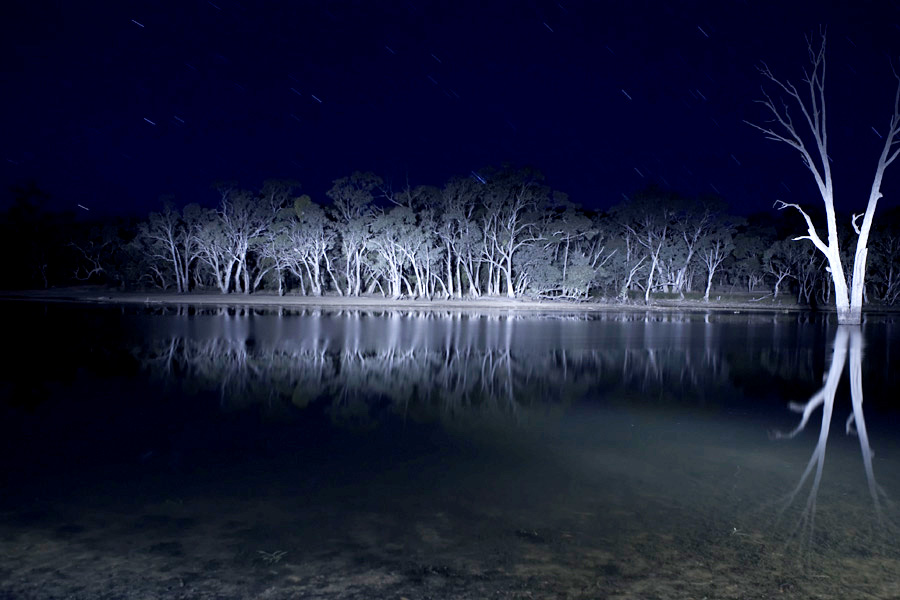
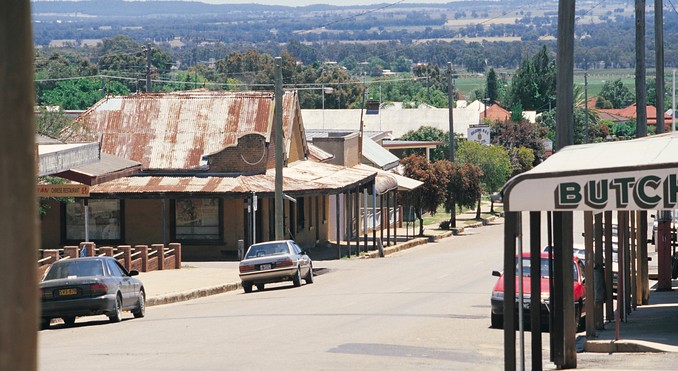
(Picture shows Greta cemetery in Victoria)
Their Rare Baby Name Isn’t Rare Enough!

19 Saturday Jan 2013

Posted by A.O. in Naming Assistance

≈ 7 Comments

Tags

choosing baby names, classic names, famous namesakes, locational names, name popularity, names of magazines, nicknames, patriotic names, rare names, sibsets, surname names, US name popularity

gulgong-35961Elise and Alex are expecting their third child, and had already decided that if it was a boy, his name would be Digby. Digby is a rare name; unfortunately, it has been used often enough amongst Elise and Alex’s circle that they no longer feel as enthusiastic about using it.

They are now looking for a new boy’s name, and would ideally like something which is uncommon without being particularly unusual, and would sound at home in a country community. They like surname names for boys, and don’t mind if the name they choose becomes popular later, just as long as it isn’t popular now.

They would like it to match with their son’s name, Law$on, and as their daughter’s name also starts with L, they don’t want another name starting with that letter. Elise and Alex’s surname starts with M and ends in S eg Matthews.

Names on their short list so far:

  • Banjo
  • Baxter
  • Fred

Names they’ve crossed off or can’t use for some reason:

Abraham, Angus/Gus, Benjamin/Ben, Cameron, Charles/Charlie, Elliot, Eustie, Fletcher, George, Guy, Hamish, Henry/Harry, Hugo, Jack, Jed, Luke, Remington, Samuel/Sam, Sawyer, Spencer, Stirling, Sullivan, Thomas/Tom, Wilbur, Wilhelm, William/Will, Winston

~ ~ ~ ~ ~ ~ ~ ~ ~ ~

I felt quite distraught on first reading your e-mail, because Digby is one of my favourite names too, and it’s so uncommon that it doesn’t seem fair that it’s become overly used in your corner of the world. Unfortunately, there’s no guarantee that choosing a name not on the Top 100, or even not ranked at all, ever, means you will be the only parents who like it. Underused doesn’t mean unused.

I grew up in a small town, so I understand why you want a name that nobody else is currently using. When you live in a small community, you see each so often on a daily basis that it almost feels like you’re one big family. Nobody really wants 8 Uncle Jacks and 13 cousins named Mia – not to mention all your brothers being named Sam.

You’ve already discovered that rare names can prove disconcertingly popular in pockets – the good news is that quite common names may be almost unheard of in your community. When I was born, my name was in the Top 50, and yet I was the only one, of any age, called Anna in our little town, or in all the towns surrounding us. It was only when I went to the city for holidays that I met other Annas – it just didn’t seem to be used in my region.

If you are concerned about too many other people choosing the same name, I wouldn’t worry too much about the overall popularity charts, but more about what’s popular and unpopular on a local level. Keep an eye on birth notices in your local paper, and also watch out for regional popularity lists (I have been putting these on Twitter as they come out).

The perfect name is probably one which your friends and neighbours think sounds “a bit different” the first time they hear it, but are used to within two days, and in two weeks time, are starting to really like it. That means you might want to consider a few names that you think sound a bit different at first!

It’s also a good idea to have several names on your list, in case someone else uses one you’ve picked out while you’re still pregnant. Luckily, you have plenty of time left to thoroughly explore your options.

YOUR SHORT LIST

Banjo

This is such a cool name, but for me, Banjo and Law$on are a little too much as brothers. Also, if your daughter’s name isn’t super-Aussie, I wonder if she might be a little left out of the theme?

Baxter

I think Baxter is a definite keeper. It’s got that perfect balance of being uncommon, yet sounding completely normal, and the nickname Bax fits in with familiar names like Max and Jax.

Fred

You’ve absolutely got me over a barrel on this one, because Fred is my dad’s name. To me Fred sounds kind and funny and sweet, just like my dad. Yes, I’m very biased. But being non-biased, I do think Fred sounds brilliant with your surname.

SUGGESTIONS

Archie

To me, Archie is very much like Digby – it’s cute and boyish, yet also sounds grown-up and dignified. Unfortunately, Archie is popular, increasing in popularity, and seems to be used more in the country than the city. However, I’m suggesting it because I love the way this sounds with your surname – it seems really happy and I just can’t help smiling when I hear it.

Arthur “Artie”

Arthur is one of those useful classic names which have been stable for decades (a “normal name”), yet also underused (“uncommon”). It’s very slowly increasing in popularity, but in no way trendy. The nickname Artie makes it seem like a replacement for Archie, for people worried about popularity. This is another name I think suits your surname

Dexter

Dexter is really similar in sound to Baxter, and has a similar level of popularity. I like this better with your surname, but I think Baxter makes a better sibset with your son’s name.

Huxley

Huxley reminds me both of Baxter and Digby – I feel as if someone who likes both these names might appreciate Huxley. And like Banjo, it has an Australian connection, because the naturalist T.H. Huxley travelled to Australia, which is where his scientific career began (he has a mountain named after him here). Huxley’s descendant Sir Leonard Huxley became a famous Australian physicist. You get the nickname Huck from Huxley, which somehow seems to tie in with Sawyer.

Beckett

Beckett is another name which reminds me of Baxter. It does have an Australian literary connection, because Beckett’s Budget was a famous men’s magazine of the 1920s and ’30s which combined hard journalism with saucy pictures (tame by today’s standards). Not quite as idealistic as Banjo, I admit!

Jasper

Jasper is another name which reminds me, in sound, of Baxter, yet somehow also has a little of Digby’s image. It might seem mad to consider this when it’s a Top 100 name, but when I thought about it, I couldn’t recall often seeing this name in birth announcements from rural areas. Could this be one of those names which are popular overall, but underused where you live?

Camden

I really like the sound of this surname, which as a place name, has played an important role in Australia’s colonial history. You’ve crossed Cameron off your list, so I wondered if Camden might appeal instead? This name, growing in popularity in the US, is extremely rare in Australia.

Theodore “Ted”

Like Arthur, Theodore is a classic, but rapidly growing in popularity, while still not a common name. I mostly thought of it because Ted is very much like Fred, and to me it sounds “country” but also quite patrician – Ted is  the gentleman farmer, while Fred is his trusty right-hand-man!

My favourites from your list are Baxter and Fred, and from my suggestions, I feel as if Huxley fits your criteria better than any other.

If you still feel unsure about your name list in 6-8 weeks time, write in to the blog again, and we’ll take another look at it. In the meantime, happy name hunting!

UPDATE: Elise and Alex decided to stick with Digby.

POLL RESULTS: The most popular choices for a new baby name were Fred, Archie, Arthur and Beckett, which each got around 10% of the vote.

(Photo is of Gulgong in New South Wales, the childhood home of Henry Lawson; in no way is this meant to identify where Elise and Alex live)

Australian Beaches That Could be Used as Boys Names

06 Sunday Jan 2013

Posted by A.O. in Name Themes and Lists

≈ 2 Comments

Tags

adjective names, aristocratic names, banned names, celebrity baby names, Celtic names, english names, ethnonyms, famous namesakes, fictional namesakes, Gaelic names, historical records, locational names, name history, name meaning, name popularity, names of ships, nicknames, Old English names, Old Gaelic names, Old Norse names, Scottish names, surname names, unisex names, vocabulary names

SetWidth960-Kangaroo-on-the-beach-Lucky-Bay-Esperance-Western-AustraliaCheviot

Cheviot Beach is on Melbourne’s Mornington Peninsula, and will forever be remembered in Australian history as the place where our seventeenth Prime Minister, Harold Holt, disappeared without trace on December 17 1967, presumed drowned. To the best of my knowledge, we are the only country to have had a national leader disappear in modern times. The beach is named after the SS Cheviot, which was wrecked here in 1887, 35 people losing their lives. Not surprisingly, the public is not permitted access to Cheviot Beach, because the seas are far too dangerous – Harold Holt was only allowed to swim here because he was the Prime Minister, and as we see, it wasn’t a good idea. The SS Cheviot was named after the Cheviot Hills on the border between England and Scotland. They feature in The Ballad of Chevy Chase, which tells of a medieval battle between the English and the Scottish here. The name Cheviot is almost certainly Celtic, but the meaning is not known. This seems like an interesting way to get the nickname Chevy – which I’ve seen several times on baby boys.

Elliott

Elliott Heads is a small town in Queensland, set amongst farmland and sugarcane fields. The beach at Elliott Heads is family friendly, popular for swimming, fishing, sailboarding and jet skiing. The town is at the mouth of the Elliott River, with the river supposedly named after Gilbert Eliott, who was the first Speaker of the Queensland Parliament. If so, I’m not sure why it is spelled differently. Eliott came from a long line of Scottish barons and baronets, and being calm, courteous and dignified, avoided nearly all political controversy, and was extremely popular. The surname Elliott can be derived from a number of different personal names. One is Ellis, a medieval English form of the name Elijah. It can be from the Old English Athelgeat, a male name meaning “noble Geat” (the Geats were a tribe who inhabited what is now Sweden). Another source is Old English Athelgyth, a female name meaning “noble battle”. It can be from Old English Aelfwald, meaning “elf ruler”. Finally, in Scotland it can be from the Gaelic surname Elloch, meaning “dweller by the mound”. Elliott has never charted in Australia, with parents preferring the spelling Elliot for their sons, currently #181.

Henley

Henley Beach is a pleasant suburb of Adelaide, and its white sandy beach has gentle water for swimming and a jetty for fishing. The public square next to the beach is lined with shops, hotels and restaurants. A well-established older suburb, it was first advertised in 1860 as being “free of noxious smells”, but as you can see, it’s got a lot more going for it than that. Henley was named after Henley-on-Thames in Oxfordshire, a famous centre for rowing, with the Henley Royal Regatta held each summer. Sir Ninian Stephen, former Governor-General of Australia, was born in Henley, and came to Australia during his childhood. The name Henley means “high wood” in Old English, because the town is in the Chiltern Hills. Henley was in use as a boy’s name in the 19th century, and it is found in some rather aristocratic-sounding name combinations in Australian records (and the less inspired Henry Henley). It was a classy name choice 150 years ago – could it be again?

Kingston

Kingston is a commuter town just south of Hobart in Tasmania; Kingston Beach is one of its suburbs. The area was settled in the 19th century by a family who were evacuated from Norfolk Island. Norfolk Island was at first a convict settlement like Sydney, but it ran into such difficulties that settlers were eventually forced to relocate to Tasmania. Being sent from a balmy subtropical island to freezing Tasmania must have come as a shock, but the pioneers obviously flourished. After World War II, many Dutch immigrants moved to Kingston, and it is a sister city to Grootegast in The Netherlands. Kingston Beach is the first swimming beach south of Hobart. Kingston was nostalgically named after the capital of Norfolk Island, which gained its appellation from its founder, Lieutenant Philip King. As we know, it’s not possible to name your child King in Australia, but you can call a baby Kingston, and it’s reasonably well-used in the records – one girl from Tasmania was even named Revie Josephine Kingston Beach. Quite common as a middle name for girls, only boys seem to have received it as a first name, including Kingston Rainbow, who managed to get two beachy names from my lists.

Lennox

Lennox Head is a village in the Northern Rivers district of New South Wales near the town of Ballina. Lennox Head Beach is more popularly known as Seven Mile Beach, although technically it’s only 5.3 miles long. The head, often called Lennox Point, provides panoramic views and a world-class point break, which makes this a famous surfing destination. Young surfers can look forward to the Rusty Gromfest in Lennox Head, known as the original and best youth surfing event in the country, and boasting alumni such as Stephanie Gilmore and Joel Parkinson. People also use Lennox Point for hang-gliding, and dolphin and whale watching. Lennox Head was named after Charles Gordon-Lennox, Duke of Lennox and Richmond, a soldier and politician. The dukedom is named for the district of Lennox in Scotland, near Glasgow; its name comes from the Old Gaelic for “field of elm trees”. Lennox is a very cool name for boys at the moment, which not only has the fashionable X, but also gives the trendy nickname Lenny; it was chosen as a baby name by racing driver Jason Bright. Handsome and aristocratic, it’s a great choice, and one I’m sure we’ll be seeing more of in the future.

Lorne

Lorne is a seaside town on the stunning Great Ocean Road in Victoria. Settled in the mid 19th century, it was visited by Rudyard Kipling in 1891, who mentions it in his poem The Flowers. Kipling was obviously ahead of the trends, because the town only opened up to tourists in the 1930s. Lorne is one of Victoria’s most popular tourist destinations, and its beach one of the main attractions, offering good swimming, surfing and fishing. In January, the town holds the Pier to Pub swim, which, with a 1.2 km course, attracts thousands of entrants, and is listed in the Guinness Book of Records as the largest organised ocean swim in the world (Kieren Perkins won in 1992). Lorne is named in honour of the Marquess of Lorne, to commemorate his marriage to Princess Louise, daughter of Queen Victoria. The Marquess became a very popular Governor-General of Canada; the Candian press feared he and his princess bride would be horribly snooty, but the young couple turned out to be sociable, relaxed, and flatteringly enchanted by Canada’s natural beauty. The district of Lorne in Scotland may have gained its name from Loarn mac Eirc, a Dark Ages ruler of a kingdom in Argyllshire. The Celtic name Loarn is said to mean “fox”, a clan totem animal. Lorne is a name comparatively well-used in Canada, which has close ties to the Marquess, and probably best known for many years as the screen name of Canadian actor, Lorne Greene. Others may remember it as Andy Hallett’s character’s name on the TV series, Angel – the joke is that his demonic face is green.

Lucky

Lucky Bay is in Cape Le Grand National Park, not far from Esperance on the Southern Ocean coast of Western Australia. Australia has more than its fair share of beautiful beaches, but Lucky Bay must be one of the most magnificent – over five kilometres long, it is a perfect crescent of white sand lapped by clear, sparkling turquoise water. Surrounded by bushland inhabited by pygmy possums and bandicoots, you may have to share the beach with kangaroos, who enjoy lazing on the sands. Lucky Bay received its name from the navigator Matthew Flinders, who discovered it in 1802. He had been sailing in the hazardous Archipelago of the Recherche, the place where Australia’s only pirate operated from, in the 1830s. Although Flinders didn’t have to negotiate wth pirates, he had trouble enough to deal with. Sailing through the labyrinth of islets and rocks, and with night falling, Flinders took the risky step of sailing straight to the coast, in the hope that he could find safe anchorage on a beach. All was well, and he dubbed his welcome haven Lucky Bay. Most explorers in Australia haven’t been as fortunate, and therefore it is littered with forbidding place names such as Mount Disappointment, Misery Creek, Mount Hopeless, Miserable Island, Starvation Lake, Point Torment, Dismal Swamp, and Mount Destruction. Lucky Bay is unusually upbeat for an Australian place name chosen by an explorer. Lucky is a rare unisex name, and a very happy one – well suited to a baby whose birth circumstances seem particularly auspicious.

Preston

Preston Beach is a hamlet in the south of Western Australia, between Mandurah and Bunbury. It was developed in the late 1950s as a private estate, and its beach is known locally for being a good fishing spot. It was named after nearby Lake Preston, in Yalgorup National Park; the lake is named after Lieutenant William Preston, who discovered it in 1829. The surname Preston is from a very common place name in England, and means “priest town”. It may have either denoted a village which had its own priest, or one which belonged to the Church. Preston is well-known in Ireland as an aristocratic surname, and it is fairly common in Australian records from the 19th and early 20th centuries. It strikes me as a rather sleek, understated surname name for boys, in a similar mould to Parker and Spencer.

Tallow

Tallow Beach is near Byron Bay in northern New South Wales. Once a hard-working and rather environment-destroying centre for logging, sand-mining, dairying, slaughtering, fishing and whaling, in the 1960s Byron began attracting surfers to its beaches. This began its new life as a tourist destination, and in the early 1970s the counter-culture Aquarius Festival was held in nearby Nimbin. From then on, it was known as a hippy, alternative town. Today in Byron, barely a weekend goes by when they are not holding a yoga or meditation retreat, pagan gathering, music festival, film festival, writers festival, surf festival, triathlon, underwater photo festival or art fair. Tallow Beach, in Bouddi National Park is a long stretch of wild, windswept shoreline with huge waves. It got its name when the Volunteer was wrecked there in 1864, and 120 casks of tallow were washed ashore. Tallow is rendered meat fat, once used to make candles, and still used today for biodiesel, soap and skincare products. I have occasionally seen Tallow used as a unisex name – it has the fashionable -oh sound ending with homespun appeal, and is  similar to names such as Talon, Tallis, Talia and Tully. Because Tallow was used for candles, it seems like another name with an association of “light”.

Trigg

Trigg is a northern suburb of Perth in Western Australia, and Trigg Beach one of the city’s most popular beaches for surfing and bodyboarding. The suburb is named after Henry Trigg, who was the Superintendent of Public Works in the 1830-1850s. A wealthy builder, Henry was able to emigrate to Australia and take up a large land grant. His son, also named Henry, was his partner in the building trade, and an architect who designed many of the buildings in Perth city. The surname Trigg is from the Old Norse surname Triggr, meaning “trustworthy, faithful, true”, and the personal name Trig has been used in England since medieval times. The American politician Sarah Palin has a son named Trig, which brought this very old name to new public attention. It has an attractive meaning, and is part of Western Australian history. I think it might appeal to people who like short, unusual names for boys, such as Kip, Dex or Zed.

(Picture shows kangaroo relaxing on the beach at Lucky Bay)

Australian Beaches That Could be Used as Girls Names

30 Sunday Dec 2012

Posted by A.O. in Name Themes and Lists

≈ 8 Comments

Tags

Albanian words, animal names, Australian Aboriginal names, Bonds Baby Search, celebrity baby names, code names, english names, ethnonyms, famous namesakes, fictional namesakes, French names, Gaelic names, historical records, Italian names, Latin words, literary names, locational names, meteorological names, middle names, mythological names, name history, name meaning, name popularity, names from movies, names in songs, names of rivers, Native American names, nature names, nicknames, Polish names, retro names, Robert Louis Stevenson, Russian names, Scottish names, season names, Slavic names, spiritual concepts, surname names, unisex names, vintage names, vocabulary names

morningtideYou may have noticed that all the names that have been featured on the blog since the weather got warmer have had some connection with water or the sea. With summer holidays upon us, it is only fitting that the last Name List for the year is one of Australian beach names.

Airlie

The town of Airlie Beach in the Whitsunday region of north Queensland is a popular tourist destination and one of the departure points for the Great Barrier Reef. Because James Cook thought he arrived here on Whitsunday, every year there is a Blessing of the Fleet on Whitsunday (Pentecost) – although Cook almost certainly got the day wrong and it was really Whitmonday. The town’s beach is quite small, and infested by sea wasps, the most lethal jellyfish in the world. For the convenience of those wishing to avoid a painful death, a swimming lagoon has been built on the foreshore. The town is named after Airlie in Scotland, the seat of the Earl of Airlie. Airlie Castle is referenced in the ballad, The Bonnie House o’ Airlie, and mentioned in Robert Louis Stevenson’s novel, Kidnapped. The meaning is not known, although it’s possibly from the Gaelic for “edge of a ridge”. Airlie is a name reasonably well-known in Australia, although rare elsewhere; there’s ABC presenter Airlie Ward, hockey player Airlie Ogilvie, policy analyst Dr Airlie Worrall, and actress Airlie Dodds. This is a modern name with ties to Scottish history, and would be a great choice if Airlie Beach is meaningful to you.

Bondi

Bondi Beach is extremely popular with locals and tourists alike, one of Sydney’s iconic destinations, and heritage listed. In the fashionable eastern suburbs, it’s a place to see and be seen, lined with hotels, cafes and restaurants from where you can view the beach and beachgoers. Bondi has always had a reputation for showing a lot of flesh, and in stricter times the American actress Jean Parker was booted off it for wearing a bikini. These days topless bathing is common on Bondi. If almost-naked humans aren’t your thing, there is always the chance of seeing dolphins, fairy penguins, and in season, whales. Bondi Beach has many cultural events, including the annual City to Surf charity run, and it stars in TV shows such as Bondi Rescue and Bondi Vet. The name Bondi (said BON-dye) is said to be from boondi, a local Aboriginal word meaning “sound of water breaking over rocks”. The rare use of this name in records may be from the Italian surname Bondi (said bon-DEE), meaning “good day”. I saw a baby girl named Bondi in this year’s Bonds Baby Search. This is an unusual choice, but rather patriotic, and seems ideal for beach-loving Sydneysiders.

Etty

Etty Bay is a picturesque little bay in far north Queensland; the nearest town is Innisfail. Enclosed by rainforest filled with wildlife, it attracts bushwalkers, birdwatchers and picnickers, and is known as one of the best places to see endangered cassowary birds in the wild – cassowaries are large flightless birds around six feet tall. Etty Beach is considered safe for swimming, as long as you avoid saltwater crocodiles and deadly jellyfish. Etty is a pet form of names such as Esther, Ethel, Henrietta and Harriet, and was most common in the nineteenth and early twentieth centuries. With Etta tipped as the next retro-chic name, and Arrietty from The Borrowers receiving notice, Etty seems not only cute and usable, but positively stylish. It fits in with other vintage nicknames such as Elsie, Hattie and Millie.

Miami

Miami is a suburb of the Gold Coast which was first developed in the 1920s to entice tourists, and is still a popular place for people to visit. Its clean sandy surf beach make it a favourite destination for family holidays. It is named after Miami in Florida, as being somewhere else that’s hot, humid and beachy – during the 1920s, Miami enjoyed such prosperity and growth that it was dubbed “The Magic City”. This success the Queensland developers no doubt hoped to emulate. The city of Miami was named after the Miami River, and this in turn was named for the Native American people called the Maiyami. They took their name from the lake they lived by (later known as Lake Okeechobee); the name simply means “big water”. Miami is a name I see sometimes on little girls, and its not only an American place name, but an Australian one as well. It fits in with popular names such as Mia, Maya and Amy.

Pippi

The town of Yamba in northern New South Wales lies at the mouth of the Clarence River, and boasts eleven beaches, including Pippi. It’s primarily known for surfing, and the Pippi Beach Classic is a surfing event held here each January. At one end of the beach is the enticingly-named Lovers Point, and from here is an easy walk up to a rock shelf which gives magnificent views of the sea. Dolphins are plentiful, and whales can be seen during winter and early spring. Pippi Beach is named after the pippis or pipis which can be found here – small edible clams which are often used for fish bait. You may recall that John Sutton, co-captain of the South Sydney Rabbitohs team in the NRL, welcomed a daughter named Pippi last year. As John is a keen surfer, I wondered if Pippi Sutton may have been named after this popular surf beach. You probably also know the name from the Pippi Longstocking books by Astrid Lindgren – the character’s name was invented by Mrs Lindgren’s nine-year-old daughter, Karin. You can see Pippi as short for Phillipa, and if Pippa or Piper delight you, yet seem too common, then sprightly Pippi may fit the bill.

Rainbow

Rainbow Beach is a small town in southern Queensland which was once a centre for sand-mining, but is now a popular tourist destination with an attractive beach and many bushwalking tracks. The town get its name from the brilliant coloured sand dunes which surround it. According to a local Aboriginal legend, the dunes received their colours when the spirit of the rainbow plunged into the cliffs after coming off second-best in battle. More prosaically, the colours stem from the sand’s rich mineral content. The evanescent beauty of rainbows have made them part of mythology for many thousands of years. Both Greek and Norse myth saw the rainbow as a path between heaven and earth; in Irish folklore there is a pot of gold at the end of the rainbow; and in the familiar story of Noah and the Ark from the Old Testament, the rainbow is a sign of God’s promise to never destroy the earth again. In Australian Aboriginal mythology, the rainbow serpent is of great significance and power, creating and marking the earth’s territories, and controlling its water resources. The subject of artists, singers and poets, the stuff of hopes and dreams, the rainbow has long been used as a symbol of social change. The striking name Rainbow is not that rare in old records, and used for both sexes, but is most common as a middle name.

Trinity

Trinity Beach is a suburb of Cairns in far north Queensland; the city lies on Trinity Bay, which is where the suburb gets its name. Captain James Cook named it on his 1770 voyage, as he arrived there on Trinity Sunday, which is the first Sunday after Pentecost (hopefully he had his dates sorted out by this stage). It is a festival to celebrate the Holy Trinity of the three Persons of God: Father, Son, and Holy Spirit. Although the Holy Trinity is a Christian concept, the idea of a triple deity is found in several religions. The name Trinity was used from the 17th century, and was given to both sexes, in honour of the Holy Trinity. In recent years, it has gained a sci-fi image, for there has not only been a cult science-fiction film called Trinity, but Trinity is the love interest in The Matrix movie series, and Trinity Wells a newsreader in Doctor Who, Torchwood and The Sarah Jane Adventures. More ominously, the Trinity Test was the code name for the first detonation of a nuclear bomb in 1945, heralding the start of the Atomic Age.

Vera

Vera View Beach is just north of famous Cottlesloe Beach, in Perth, Western Australia. It isn’t one you will see promoted as a major tourist destination; not the most stunning beach in the world, it nonetheless makes a pleasant walk from the main beach, and is near the main cafe strip. It is also a good place to go snorkelling, as there a small reef nearby teeming with sea life. The beach’s name comes from the fact that it is near Vera View Parade in Cottlesloe. Vera is a Russian name which means “faith”; we tend to be struck by its similarity to the Latin for “truth”, while Albanians notice that it sounds like their word for “spring”. Vera was #15 in the 1900s, and by the 1940s was out of the Top 100. It ceased to chart in the 1980s, but has very recently made a comeback, and was #626 in 2011. Its image was severely dented by the sour-faced prison guard, Vera “Vinegar Tits” Bennett, in the 1970s-80s TV series, Prisoner (no wonder it disappeared from the charts then). However, with simple old names firmly back in fashion, and the V sound becoming increasingly popular, retro Vera could do very well.

Vivonne

Vivonne Bay is on Kangaroo Island in South Australia; the island is off the coast of Cape Jervis. The pristine beach at Vivonne Bay is several kilometres long, and popular for surfing and fishing. There is a tiny town of Vivonne beside the bay. Vivonne Bay was named by the French explorer Nicolas Baudin, who came here in 1803. He was the first to map the western and southern coasts of Australia, and his expedition was a great success, discovering more than 2500 new species and meeting the Indigenous people of Australia. Apparently his expedition harboured a spy – one of his men prepared a report for Napoleon on how to invade and capture the British colony in Sydney Cove, but recommended not to. Baudin died of TB in Mauritius on the way home. He named Vivonne Bay after the French town of Vivonne, near Poitiers (or the aristocratic surname which comes from the town – the town’s name comes from the nearby river Vonne). Readers of Marcel Proust will remember he used the name Vivonne for the river in Swann’s Way. I think this name is pretty, and seems like a cross between Vivienne and Yvonne. It’s different, but not too different.

Wanda

Wanda Beach lies on Bate Bay in the suburb of Cronulla; this is in Sutherland shire, in the southern districts of Sydney. Wanda has a dark past, because there were two murders here in 1965. Two teenage girls, Marianne Schmidt and Christine Sharrock, best friends and neighbours, disappeared at Wanda Beach while on a picnic, and their bodies, partially covered in sand, were found the next day. The murder is still unsolved. Wanda Beach gets its name from an Aboriginal word, wanda, said to mean “beach” or “sand dunes”. Wanda is also a Polish name; there is a medieval Polish legend about a Princess Wanda, and the name was popularised in the English-speaking world by English author Ouida’s 1883 novel, Wanda. The name may come from the West Slavic people known as the Wends; their name possibly means “tribe, kinship, alliance”, ultimately from an ancient word for “love, desire”, and related to the name Venus.

(Photo shows the morning tide coming in at Etty Bay)

Famous Names: Neptune and Taylor

12 Wednesday Dec 2012

Posted by A.O. in Famous Names

≈ 1 Comment

Tags

astronomical names, english names, Etruscan names, fairy tales, famous namesakes, historical records, honouring, Indo-European names, Irish names, Italian names, Latin words, locational names, mythological names, name combinations, name history, name meaning, name popularity, names of ships, nicknames, Roman names, surname names, UK name popularity, unisex names, US name popularity

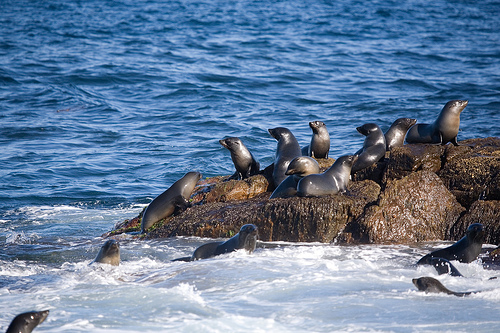
seals on neptuneAt the end of November, the Premier of South Australia announced that the Neptune Islands Group Marine Park would be renamed the Neptune Islands Group (Ron and Valerie Taylor) Marine Park. This is no mere change of name, for a network of 19 marine parks has taken effect in order to protect the seas from over-fishing. The premier noted that the southern oceans had more diversity than the Great Barrier Reef, and contained many plants and animals that cannot be found anywhere else.

The marine park has been named in honour of Ron and Valerie Taylor; divers, film-makers, shark experts, and conservationists who were ardent proponents of preserving marine habitats. Their skills in underwater filming were used on such films as Jaws and The Blue Lagoon, but more importantly, they wrote books and made documentaries to highlight the beauty and fragility of marine ecology. They won many awards for both photography and conservation. Ron passed away this year, and Valerie continues to be an advocate for marine protection.

The Neptune Islands, near Port Lincoln, were named by the navigator and cartographer Matthew Flinders in 1802. Rugged and remote, they seemed to him inaccessible, as if they would would always belong to King Neptune.

Neptune is the English form of Neptunus, the Roman god of fresh water springs, lakes, rivers, and the sea; he is the Roman equivalent of the Greek god Poisedon. He was worshipped in a festival that fell at the height of summer, when rainfall was at its lowest, and water most needed and valuable. As you know, his name has been given to the eighth planet from the Sun.

The meaning and origin of his name is obscure, with etymologists in disagreement over which language/s Neptune might be derived from. The general view is that it means something like “moistness”, “damp, wet”, “clouds, fog”, or “to water, irrigate”.

Another theory is that it is from the Italian town of Nepi, north of Rome, which was anciently known as Nepet or Nepete. This town is famous for its mineral springs, and traditionally connected to the god Neptune, who would presumably have approved of its watery wonders.

The town’s name is Etruscan, from the Etruscan name for Neptune, which was Nethuns. This may be related to the Irish god Nechtan, who had a sacred well, and thus another liquid connection. In fact there are several Indo-European deities with similar names and aqueous roles, and it is speculated that their names may go back to an ancient word meaning “nephew, grandson”.

One of the ships of the Second Fleet was called Neptune, and unfortunately it had the worst reputation of all for its appalling mistreatment of convicts.

Neptune sounds as if it should be ultra rare in Australian name records, but there are quite a few from the 19th century – at least quite a few more than I expected to find. It was mostly used in the middle, such as Cecil Neptune, and Samuel Caesar Neptune, but you can also find men named Neptune Persse and Neptune Frederick. Two of them rejoiced in the full names of Neptune Love and Neptune Blood; I believe the name Neptune is traditional in the Blood family.

Neptune would be very unusual as a baby name today, and I can’t quite imagine what you would use as a nickname – Neppy sounds too much like “nappy” to me. At the very least, please not Tuna.

A complete change of pace brings us to the name Taylor, a very common English surname referring to someone who made clothes as their occupation; the word tailor is ultimately from the Latin talea, meaning “a cutting”. In the Middle Ages, tailoring was a high-status craft, as only the wealthy could afford to have their clothing professionally made, and tailors could command good fees. Both men and women were employed as tailors.

There are many folk tales and fairy stories about tailors, and nearly always the tailor is depicted as being extremely clever, and confidently able to outwit others. Tailors having to be so precise and painstaking in their work, and no doubt with plenty of diplomatic skill to handle their rich clients, they must have gained a reputation for being as sharp as pins and as smooth-talking as silk.

The earliest Taylor-as-a-first-name I can find in the records is from the 16th century, and it was on a female. This may be an error in transcription, as subsequent early Taylors seem to be male (with plenty of girls who had Taylor as a middle name). In the United States, Taylor has always charted as a boy’s name, and only charts for girls from the late 1970s onwards, but is currently Top 100 for girls, and in the 300s for boys. In the UK, it only charts for boys, where it is barely on the Top 100 and falling.

In Australia, Taylor has charted for both boys and girls since the 1980s, when it was #383 for boys and #785 for girls. It peaked for both sexes in the 1990s, when it was #38 for girls and #130 for boys. At the moment, Taylor is only just outside the Top 100 for girls at #108, is #251 for boys, and falling for both sexes.

So that’s a quick survey of Taylor popularity around the world: Top 100 for girls in the US, Top 100 for boys in the UK, and not on the Top 100 at all in Australia.

Here are two very different names which evoke the sea and honour its protectors, as well as having a strong connection to the history of South Australia.

(Picture shows seals on Neptune Island; photo from Flickr)

Names of Australian Male Olympic Swimmers

02 Sunday Dec 2012

Posted by A.O. in Name Themes and Lists

≈ 19 Comments

Tags

American names, animal names, Arthurian legends, Arthurian names, bird names, Celtic names, created names, english names, famous namesakes, fictional namesakes, French names, Gaelic names, Gone With The Wind, holiday names, Idylls of the King, Irish names, Italian names, locational names, Lord Tennyson, middle names, modern names, mythological names, name history, name meaning, name popularity, nature names, nicknames, Old French names, Old Provencal names, plant names, popular culture, popular names, saints names, Scottish names, Shakespearean names, soap opera names, surname names, unisex names, vocabulary names, Welsh names, William Shakespeare

kpAshley (Callus)

Ashley Callus won gold in 2000 and bronze in 2008. Ashley is an English surname from a common place name meaning “ash tree clearing”. It’s been used as a personal name since the 17th century, and was originally given to boys. It only became popular in Australia after the release of the 1939 movie Gone with the Wind, with the character of Ashley Wilkes (actually George Wilkes – Ashley is his middle name). Played by Leslie Howard, Ashley is a true Southern gentleman, and the one man Scarlett cannot get. The name Ashley first charted in the 1940s, and by the 1950s was #160; it made the Top 100 for the 1970s, and peaked in the 1980s at #62. It was during the 1980s that Ashley became a unisex name, making an impressive female debut at #55 – higher than the peak for boys. Coincidentally or not, it was in 1982 that the popular character Ashley Abbott joined soapie The Young and the Restless, first portrayed by Eileen Davidson. Ashley peaked for girls in the 1990s at #33, and although it left the Top 100 in 2009, it rose again and is now #93. As a boy’s name, Ashley left the Top 100 in the 1990s, and no longer ranked by 2010. However, last year Ashley increased for boys as well as girls, reaching #466. The usual nicknames is Ash.

Francis (Gailey)

Francis “Frank” Gailey won three silvers and a bronze at the 1904 Olympics. Born in Australia, Frank emigrated to the United States, and his medals are credited to the US. However, as he was an Australian citizen when he won them, we claim them toward our own medal count. This doesn’t seem to be accepted internationally. Francis is the English form of the Italian name Francesco. This began life as a nickname, because the 12th century Giovanni di Bernardone was known as Francesco, “the Frenchman”. This may have been because his father was on business in France when he was born, or because the young Giovanni quickly became fluent in French. While still a young man, Francesco began to turn away from the pleasures available to him as the son of a wealthy man, and to live a life of poverty and simplicity. Known as Saint Francis of Assisi, he is the patron saint of Italy, and also the environment. Many stories about him reflect on his deep love for animals, and his sense of kinship with all life. Francis charts as a unisex name from 1900, but by the 1950s was male-only, and in the Top 100. It left the Top 100 the following decade and remained stable for decades before falling out of use in 2010. However, last year Francis was back in the charts at #388.

Garrick (Agnew)

Sir Robert David Garrick Agnew, always known by the second of his middle names, attended the 1948 and 1952 Olympics. A graduate of Harvard, Sir Garrick became a very wealthy businessman, and also a champion fisherman. He died of a heart attack after going swimming in a pool. Garrick is an English surname which is the Anglicisation of two slightly different French surnames of Old Provencal origin. Garric means “kermes oak tree”, a small evergreen oak; Garrique means “grove of kermes oaks” – both names denoted someone who lived near such trees. The surname was introduced to Britain in the 17th century by French Huguenots, Protestants who fled persecution in France. The great 18th century English actor David Garrick was from a Huguenot family; his grandfather changed the name from Garric. Garrick has been used as a personal name since the 18th century, and first appears amongst British Huguenot families. It’s been reasonably well used in Australasia, and I think it still sounds rather distinguished and gentlemanly.

Jayden (Hadler)

Jayden Hadler is a young swimmer who attended his first Olympics this year. Jayden is a modern name of uncertain origin. It’s first found in the United States in the 19th century, and turns up around the same time as other J-D-N names then in vogue, including Jadin. Jadin is a French occupational surname for someone who made bowls, derived from the French word for bowl, jatte, and it’s hard not to wonder if Jayden began as a variant of this name, influenced by Jay, a surname after the bird, whose name means “joyful, lively”. Jaidan, Jadan and Jaden were also in use around this time – some of the variants we see today date back over a century. Jayden became popular in Australia earlier than other countries, and first charts in the 1970s. You can see that it fit perfectly with popular or fashionable names of that era such as Jason, Hayden and Aidan. By the 1980s it was #307, then zoomed up the charts to make #47 for the 1990s. It peaked in 2003 at #14, and by 2010 had fallen to #28. Last year it rose again to #21, and could be considered a modern classic. The question is – is Jayden from the 1970s “the same name” as Jayden from the 19th century?

Kieren (Perkins)

Kieren Perkins was considered one of the world’s best long-distance swimmers, specialising in the 1500 metre freestyle. He won gold and silver at the 1992 Olympics, gold in 1996, and silver in 2000. Since retiring from swimming, he has gained success in the media and the corporate world. Kieren is an Anglicised form of the Irish name Ciarán, a diminutive of the name Ciar, meaning “black, dark”. There are six Irish saints called Ciarán, the eldest of which is known as the first Irish-born saint. Although an educated man of noble birth, according to tradition he was a hermit, who lived like a wild man dressed in skins. Many legends describe him as having a love for and power over wild animals. Kieren is pronounced KEE-ren. Kieren has never charted in Australia, with parents preferring the variant Kieran, currently #240.

Leith (Brodie)

Leith Brodie won two bronzes at the 2008 Olympics. Leith is the port area in the city of Edinburgh; its name comes from the Gaelic word lìte, meaning “wet”. This makes sense when you realise that Leith is at the mouth of a river. Leith has played an important role in Scottish history and been the scene of many battles, as well as a major industrial centre. Leith is an aristocratic surname; the Leith family are of Scottish origin, and descend from William Leith, who was Lord Provost of Aberdeen in the 14th century. Leith has been reasonably well-used in Australia, and from the available records, seems to have been used almost equally on males and females. For boys, it probably seemed like a cross between Lee and Keith, and for girls, maybe a cross between Lee and Beth. This name still seems a bit “mum and dad” to me, but maybe it’s ready for an early retro-revival.

Moss (Christie)

Maurice “Moss” Christie won silver at the 1924 Olympics. Moss can be a nickname for names such as Moses, Mostyn or Maurice, or it can be from the surname. The surname Moss has several possible sources. As an Irish name, it is usually translated as “son of the follower of Saint Munnu”. Munnu was the nickname of Saint Fintán of Taghmon; his nickname means “teacher”. As an English surname, Moss can mean “swamp, peat bog”, given to someone who lived near one, or it can be taken from the name Moses. Although many of these sources are male, the swamp one is obviously unisex, and you could also see Moss as a nature name, directly after the soft springy green plant. This could be used on both boys and girls.

Noel (Ryan)

Noel Ryan was an international swimming champion who attended the 1932 Olympic Games. Noel is another word for Christmas which was introduced by the Normans and comes from the Old French. Ultimately it is from Latin, meaning “birth”, referring to the birth of Jesus Christ. It’s been used for both boys and girls in England since the Middle Ages, originally given to those who were born at Christmas time. Later on, it may have been influenced by the surname, which could be from the personal name, given as a nickname to someone born at Christmas, or to someone who played an important role in Yuletide celebrations. In Australia, Noel has only ever charted as a male name. It was #76 for the 1900s, and peaked in the 1930s at #21. It was out of the Top 100 by the 1970s, and hasn’t charted since the 1990s. This is another 1930s name I would like to see make a comeback, and think it works equally well for girls.

Percival (Oliver)

Percival “Percy” Oliver won thirteen Australian freestyle and backstroke titles, and attended the 1936 Olympics. After retiring from swimming, he became a teacher and was responsible for the administration of the Education Department’s swimming programme. He died last year aged 92. In Arthurian legend, Percival is one of King Arthur’s knights, and connected to the quest for the Holy Grail. In the romance Perceval by Chretien de Troyes, Perceval meets the crippled Fisher King in a mysterious castle, and sees a grail (in this poem, a wide deep dish with a communion wafer which feeds the king), but does not understood its importance. Brought up not to chatter too much, Perceval fails to ask the question that would have healed the king, and once he realises the mistake he’s made, vows to find the castle again and complete the quest. At this point, Chretien abandons his poem, and it was left to other writers to finish the story. In doing so, the role of Percival became much diminished. The name Perceval seems to have been created by Chretien de Troyes from the Old French meaning “pierce valley”. What he was trying to get across I have little idea. This is another Arthurian name which was revived by the Victorians due to Tennyson’s Idylls of the King, which depicts Sir Percival as a spiritual knight better suited to holy quests than the average warrior. Percival was #77 in the 1900s, and left the Top 100 by the 1920s; it hasn’t charted since the 1950s. This is a vintage name which seems very usable, especially with its cute nickname Percy.

Regan (Harrison)

Regan Harrison won silver at the 2000 Olympics. Regan (pronounced REE-guhn) is an Anglicised form of the Irish surname O’Riagain or O’Raogain, meaning “son of Riagain”. Riagain is a Gaelic name of uncertain meaning; one suggestion is that it comes from the Gaelic word for “impulsive, angry”; another that it means “little king”. There was a medieval Irish prince called Riagain; he may have given his name to the town of Ballyregan in Northern Ireland. Regan is also found as a female name in Shakespeare’s King Lear, where Regan is the middle of the king’s three daughters. She is a vile creature full of false flattery, who throws her elderly father out of her home in the middle of a storm. To nobody’s disappointment, she is poisoned by her older sister, who is even more horrible. This revolting namesake doesn’t seem to have put parents off using the name for their daughters. The meaning of it is unknown; Shakespeare got the story and characters from earlier British legends, and Regan is presumed to be Celtic. A popular notion is that (female) Regan is derived from the name of the Celtic goddess Rigantona, who we also know as Welsh Rhiannon. It makes the name slightly more appealing, but I can’t confirm if it’s true or not. Rigantona means “great queen”.

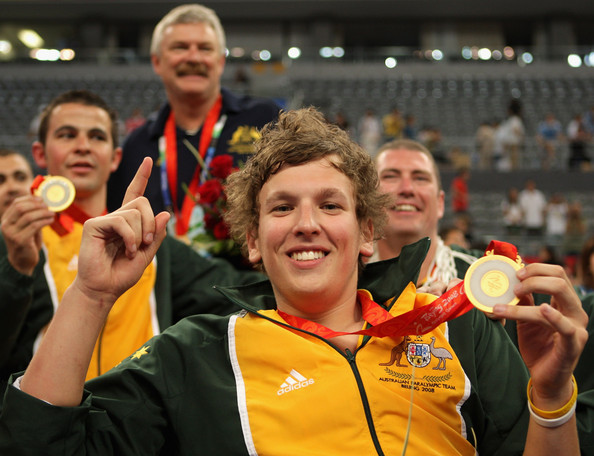
(Photo is of Kieren Perkins after winning gold at the Atlanta Olympics, becoming the only Australian since Dawn Fraser to successfully defend an individual Olympic championship)

Names of Australian Female Olympic Swimmers

25 Sunday Nov 2012

Posted by A.O. in Name Themes and Lists

≈ 11 Comments

Tags

Babylonian names, Biblical names, classic names, english names, famous namesakes, fictional namesakes, flower names, French names, hebrew names, Hollywood names, Latin names, locational names, mythological names, name meaning, name popularity, names in songs, Old English names, Old Norse names, popular names, portmanteau names, Portuguese names, Roman names, royal names, Russian names, Sabine names, scandinavian names, screen names, Spanish names, Sumerian names, surname names, The Canterbury Tales, time of day names, unisex names, vocabulary names

During the winter, I compiled lists of names from Olympic medalists, and perhaps you noticed that no swimmers were included. That’s because swimmers are such a big part of our team, and historically the big medal winners, so that they really needed lists all to themselves. Now that it’s hot again, maybe they will inspire you to hit the pool!

Alva (Colquohuon)

Alva Colquhuon won silver at the 1960 Olympics. Alva is the feminine form of the Scandinavian name Alf, from the Old Norse for “elf”. Alva is also a male name, a variant of the Hebrew name Alvah, meaning “his highness”. As a male name, it is best known as the middle name of American inventor Thomas Alva Edison. Today it almost seems like a cross between Ava and Alba.

Brittany (Elmslie)

Brittany Elmslie is a young swimmer who attended her first Olympics this year, where she won a gold and two silvers. Brittany is the name of a region in north-west France, which in French is known as Bretagne. It was once known as Little Britain in order to distinguish it from Great Britain, hence its name. The Breton language is Celtic, related to Welsh and Cornish, and the history of the land and its people is intimately connected to Great Britain. Even today, Brittany retains its own identity and culture within France. Brittany has been used as an English girl’s name since the late 18th century – perhaps originally because Brittany was known for its resistance to the French Revolution. The name first entered the charts in the 1970s, making #245 by the 1980s. It peaked in the 1990s at #31, then sharply dropped, leaving the Top 100 in the early 2000s. It hasn’t charted at all since 2009 (the year actress Brittany Murphy died), and this is a good example of a name which reaches popularity very quickly, then becomes just as rapidly dated.

Dawn (Fraser)

Dawn Fraser is one of our most famous swimmers, who has received many honours; she is considered the greatest sprint swimmer of all time. She won two golds and a silver at the 1956 Olympics, a gold and two silvers in 1960, and a gold and a silver at the 1964 Games, setting two world records and two Olympic records. She is well known for her blunt speech and larrikin character, and one of the ferries on Sydney Harbour is named after her. Dawn is the period just before sunrise, where there is pale sunlight, but the sun itself is still below the horizon. The word comes from the Old English for “to become day”. The name is found from the 16th century onwards, and must at least sometimes have been given to girls born at daybreak. Dawn first entered the Australian charts in the 1910s, reaching #103 for the 1920s. It peaked in the 1930s at #32, and left the Top 100 in the 1950s. It hasn’t ranked since the 1980s, and the 1970s song Delta Dawn, about a crazy middle-aged woman, probably didn’t do its image any good – although covering it gave Australian singer Helen Reddy her first #1 hit. I wonder whether it might be time for a revival of this 1930s name? Apart from the fragile beauty of dawn, the word is filled with hope and optimism, and a sense of renewal.

Emily (Seebohm)

Emily Seebohm has been a champion swimmer since 14 and is now 20. She won gold at the 2008 Olympics, and a gold and two silvers at the London Games. Emily is the English form of the Roman name Aemilia, the female form of the family name Aemilius. The Aemilii were one of the noblest and most ancient patrician houses of Rome, and were probably of Sabine origin. They interpreted their name as meaning “persuasive”, and others derived it from Latin aemulus, meaning “rival”, but most likely these are both false etymologies. The English form is first found in Chaucer’s Canterbury Tales; he adapted it from a character named Emilia in a poem by Giovanni Boccaccio, where two men are rivals for the affections of the same woman. Although in use from early on, it didn’t become popular until the Hanoverians came to the throne in the 18th century, as Princess Amelia, daughter of George II, was called Emily by her family. Emily was #36 for the 1900s, but fell until it had left the Top 100 by the 1930s. It reached its lowest point in the 1950s at #455, then climbed steeply; it skyrocketed to make #26 for the 1980s. Emily peaked at #1 in 1998, and remained there for most of the early 2000s. Currently this pretty classic is #12.

Hayley (Lewis)

Hayley Lewis was at her peak during the 1990s, when she won many medals internationally, but although she attended three Olympics, only won silver and bronze at the 1992 Games. Hayley is now the host of Channel Ten’s weight-loss show, The Biggest Loser. Hayley is an English surname from a common English place name meaning “hay clearing” in Old English; the surname dates from the 13th century and is especially associated with Yorkshire. It’s been used as a personal name for both boys and girls since the early 18th century, but only became popular in the 20th century, and only as a girl’s name. This was because of English actress Hayley Mills, who was the most popular child star of the 1960s, and made several Disney films as a teenager. Hayley first entered in the charts in the 1960s, when Mills began her career, debuting at #489. It climbed steeply during the 1970s, and was Top 100 by the 1980s. Hayley peaked in 2005 at #21, and is currently #50. It dropped just one place in 2011, and looks set to maintain a graceful decline that could see it in the Top 100 for several more years.

Jacinta (van Lint)

Jacinta van Lint won silver at the 2000 Olympics. Jacinta is the feminine form of the name Jacinto, a Spanish/Portuguese name meaning “hyacinth”. The Spanish pronunciation is something like ha-SEEN-tah, but in English we say it juh-SIN-tah. It is best known as the name of Blessed Jacinta Marto, who was one of the three children of Fátima in Portugal, who reported witnessing visions of an angel and the Virgin Mary in 1916-17. Jacinta has been rather a favourite in Australasia, first entering the charts in the 1950s, and climbing until it peaked at #101 for the early 2000s. It fell to #197 in 2009, and since then has picked up slightly, to make #189 last year. The fact that it entered the charts in the 1950s makes me wonder if use of the name was originally inspired by the 1952 Hollywood movie, The Miracle of Our Lady of Fatima, which starred Sherry Jackson as Jacinta (the name had the English pronunciation in the film). It’s a pretty name which has had steady use without ever becoming highly popular in New South Wales – although more common in Victoria.

Lisbeth (Trickett)

Lisbeth “Libby” Trickett won gold and bronze at the 2004 Olympics, two golds, a silver and a bronze in 2008 while setting a world record, and gold at the London Games this year. Lisbeth is a variant spelling of Lisbet, a Scandinavian short form of Elisabeth. The name has recently become well-known due to Lisbeth Salander, the antiheroine of Swedish author Stieg Larsson’s crime thriller Millennium series. The first novel, The Girl with the Dragon Tattoo, was turned into a Hollywood movie last year, with Rooney Mara as Lisbeth. Lisbeth Salander is a disturbed computer hacker with a punk-Goth style, and a victim who refuses to lie down, but instead turns vigilante. It’s definitely given sweet Lisbeth a far more dangerous and edgy image.

Marilyn (Wilson)

Marilyn Wilson won silver at the 1960 Olympics. Marilyn is a portmanteau name combining Mary and Lynn. It can be found from the late 18th century, and seems to have sprung up in several countries almost simultaneously, so that an origin for the name isn’t obvious. Its most famous namesake is Hollywood sex symbol Marilyn Monroe, and thanks to Elton John’s Candle in the Wind, nearly everyone knows her birth name was Norma Jeane. The name Marilyn was chosen for her by a studio executive because she reminded him of Broadway beauty Marilyn Miller (oddly enough, Marilyn later married writer Arthur Miller). Marilyn Miller was born Mary, and combined her name with her mother’s middle name to create her stage name. Marilyn first entered the charts in the 1920s, when Marilyn Miller began her career, and by the 1930s was #146. It skyrocketed to make the Top 100 in the 1940s, and peaked in the 1950s, the era in which Monroe enjoyed her greatest success, at #44. It then plummeted into the 200s during the 1960s after Monroe’s death, and hasn’t ranked at all since the 1980s. This is a dated name, yet still possesses some of the lustre of its two glamorous namesakes.

Nadine (Neumann)

Nadine Neumann had to battle against the odds, first recovering from chronic fatigue syndrome as a teenager, then breaking her neck before she could attend the 1992 Olympics. She made it to the 1996 Games, but failed to win a medal. After retiring, Nadine became an educator and writer. Nadine is the French form of the Russian name Nadia, a short form of Nadezdha, meaning “hope”. The French pronunciation is na-DEEN, but in Australia we usually say it nay-DEEN. Its most famous namesake is South African novelist and political activist Nadine Gordimer, who won the Nobel Prize for Literature in 1991. In the 1960s, the name got its own popular song when Chuck Berry released Nadine, describing his object of desire as moving “like a wayward summer breeze”. Nadine first charted in the 1950s, the decade that Nadine Gordimer published her first novel; it debuted at #535. The name peaked in the 1970s at #145, and by 2009 no longer charted at all. However, Nadine recently made a minor comeback, reaching #573 last year. Irish singer Nadine Coyle, from pop group Girls Aloud, may have been a help; her first solo album was released at the end of 2010.

Sarah (Ryan)

Sarah Ryan won silver at the 1996 Olympics, silver in 2000 and gold in 2004. In the Bible, Sarah was the wife of the prophet Abraham, and a woman of surpassing beauty; she is honoured in Judaism, Christianity and Islam. She was barren until extreme old age, when God blessed her and Abraham with a son named Isaac. Her name was originally Sarai (said suh-RYE), but when she and Abraham made their covenant with God, her name was changed to Sarah. As both names have the same meaning (“woman of high rank, female ruler of the court”, translated as “princess”), it is unclear what the purpose of the change was. It’s possible the ah sound in Sarah suggested the name of Yahweh more closely, as if to demonstrate she was now a woman of the Lord, not of the world. In fact, Sarah is the only prophetess in the Bible who is spoken to directly by God. Although Sarah is a Hebrew name, its origins are Babylonian, and some scholars identify the Biblical Sarah with the goddess Ishtar. This vaguely fits with the Old Testament story, which says Abraham and his wife were originally pagans from Sumeria. Sarah was #43 in the 1900s, but had left the Top 100 by the 1920s, and reached its lowest point in the 1940s at #284. By the 1960s it was Top 100 again, and peaked in the 1980s at the #1 name. Currently it is #31, and remains a lovely classic.

(Picture is of Dawn Fraser at the 1956 Olympics in Melbourne; photo from Wikimedia Commons)

Team Pink, Team Blue, or Team Lavender?

11 Sunday Nov 2012

Posted by A.O. in Your Questions Answered

≈ 13 Comments

Tags

dog names, english names, famous namesakes, fictional namesakes, French names, Gaelic names, locational names, mythological names, name meaning, name popularity, names for budgies, nature names, nicknames, popular culture, popular names, Sanskrit names, surname names, unisex names, US name popularity, vocabulary names

I wasn’t going to do another one of these, but it turned out the list of questions on unisex names could almost be eliminated if I did just one more, so I couldn’t resist doing an end-of-year clean up.

Some names are easy for most of us to assign to Team Pink or Team Blue – for example, a straw poll would probably show strong support for Amelia as a girl’s name, and Archibald as a more masculine moniker. But there are quite a few others that we have to think about a bit more, and some seem to be both feminine and masculine in such equal measure that we could probably call them Team Lavender.

Of course, for practical purposes, all names are unisex, so this is only designating them according to linguistic meaning, historical use, and current popularity.

I. ARE THESE GIRL NAMES?

Sydney as a girl’s name

Sydney is historically a unisex name in Australia, but hasn’t charted at all since the 1960s. I think it’s up for grabs by either gender, and is a definite member of Team Lavender.

Rory girl name popularity Australia

According to the data at hand, the popularity of Rory as a girl’s name in Australia is zero. It’s charted as a boy’s name since the 1940s and is currently #159; it’s never charted as a girl’s name. This makes it (for the purposes of this question) Team Blue.

Is Indiana a girl’s name? (multiple asks)

Yes, historically it is, for the first people named Indiana in the records are female. It’s only since the Indiana Jones movies that the name has widely been seen as potentially masculine – although the movie’s protagonist is named Dr Henry Walton Jones. From Utah rather than the state of Indiana, we learn in The Last Crusade that he took his nickname from the name of the family dog. I’m not sure whether the dog was male or female. Indiana has only ever charted as a girl’s name, and is currently #78 and climbing steeply. I call Team Pink.

Bodhi as a girl’s name

Bodhi is a Sanskrit word meaning “awakened”, referring to the enlightenment of the Buddha. As men and women are equally capable of spiritual enlightenment, I think this is for both boys and girls and can join Team Lavender.

Can Russell be a female name?

The surname Russell simply means “red” or “reddish”, and there’s nothing specifically masculine about it. However, Russell has a reasonable history of acceptance as a male name. Currently it doesn’t chart for either gender, and I think it could be used for a girl’s name. You could also use the vocabulary word Rustle. Maybe a Deep Indigo?

Is Campbell a girl name?

In Australia it is accepted as a male name, and has charted for boys since the 1950s, being now at #384. In the US it is more common as a female name. The surname means “crooked mouth”, which doesn’t sound at all pretty to me, but isn’t technically masculine. In Australia, I think it’s still Team Blue.

II: ARE THESE BOY NAMES?

Marlo as a boy’s name

Marlo Hoogstraten is a Dutch-born Australian DJ; he works under the name MaRLo. Marlo Stanfield is a character in the TV show, The Wire, who is head of his own drug crew. There seem to be more references to Marlo as a male name than a female one. This may be a pale Blue-Toned Lavender.

Is Riley a boy’s name in Australia?

Yes, it’s charted as a male name only since the 1970s, and is currently #20. Team Blue.

Can Autumn be a boy’s name?

There’s no reason why not, except that it is widely accepted as a female name. In Australia, Autumn is a fairly rare name for either sex, so it might be easier to be a boy named Autumn here than elsewhere. It would be unusual though. A very pale Pink-Toned Lavender.

Boys name Kirra

The town in Queensland is nearly always given as a female name in Australia. Besides sounding similar to girl’s names Keira and Kira, part of the reason may be because in Greek mythology, there are a couple of nymphs named Kirra, giving it a distinctly feminine vibe. I’m assigning this one to Team Pink.

Tahgan boys name

I only know of Taghan as a place name in the Middle East, which sounds unisex to me. It looks similar to boy’s name Teagan and girl’s name Tegan, so I’m calling this for Team Lavender.

Bay as a boy’s name

Although this nature name could be either male or female, in practice I’ve only seen this given to boys in Australia – maybe because it sounds like it could be short for Bailey. I guess it could be seen as Blue-Toned Lavender.

III: ARE THESE BOY OR GIRL NAMES?

Is Lyndall male or female?

Historically, it’s a girl’s name. Lyndall charted as a female name only from the 1930s to the 1990s. It currently doesn’t chart for either sex. Pink, or at least Pinkish.

Jordan – boys name or girls name?

Jordan has charted as a boy’s name since the 1960s, peaked in the 1990s at #23, and is currently #63. It has charted as a girl’s name since the 1980s, peaked in the 1990s at #85, and is currently #389. So it’s both a boy’s name and a girl’s name, but more boyish, since it’s been used longer as a boy’s name, hit a higher peak as a boy’s name, and is still Top 100 for boys. Deep Blue-Toned Lavender.

Is Jagger more a boy or girl name?

I’d say it’s more of a boy name, just by usage. I have seen people use Jagga or Jaggah for girls though. Blue, at present.

Kayley “unisex name”?

I think technically Kayley is two separate names, one unisex or male, and the other one female. The surname Kayley can be from several origins, and if English or  French, it refers to place names (unisex). On the other hand, if Gaelic, it means “son of Caollaidhe” (male). It’s been overwhelmingly used as a girl’s name though, probably with the idea it’s an elaboration of Kay, a pet form of Katherine. There have been a very few men named Kayley. Confusingly, I think this is Pink, Blue and Lavender all at the same time.

IV: ADVICE NEEDED

What boy’s name can Gigi be short for?

There’s a few choices. According to Wikipedia, famous men using Gigi as their nickname have Luigi, Luigino, Gianluigi or George as their full name – although my own first thought was Giglio. Another possibility is that in the story Gigi, the protagonist’s full name was Gilberte, so maybe a boy called Gilbert could be a Gigi.

Will people automatically assume someone called Kelly is a girl?

I would probably assume an adult named Kelly to be a woman, but I could easily adjust if it turned out to be a man instead. For a new baby, I wouldn’t assume it was either a boy or girl.

Are guys put off by women with male names?

There are quite a few studies on what names men and women find sexy, but these name-image polls are useless in real life, when you are confronted with a living breathing human being. I don’t believe any man would turn down a beautiful woman because her name was John; conversely, no matter how alluring and feminine your name, if you look and smell like you’ve been living in a sewer, I don’t think you are going to be besieged by suitors. Just from my own observations, I’ve noticed a lot of guys say they are intrigued by girls who have unisex nicknames, like Jamie, Charlie or Teddie.

A good unisex name for a budgie

You could use a nickname that could be short for either a girl or boy name, such as Charlie, Joey or Sam, otherwise I think a nature name would be nice, such as Ash, Blueberry, Midnight, Sky, Sunny, or Snowflake. You could also use a cutesy sort of name such as Pippet, Peep, Peck, Pixel, Tweety, Chirp, Happy, or Fidget. Apparently budgies can’t say words with a hard G sound in them, so avoid Giggles, Goldy or anything like that if you’re hoping to teach it to talk.

Famous Name: Mungo

31 Wednesday Oct 2012

Posted by A.O. in Famous Names

≈ 8 Comments

Tags

British names, famous namesakes, film references, K.M. Sheard, literary references, locational names, name history, name meaning, nicknames, popular culture, saints names, Scottish names

Blue Juniper from Baby Name Ponderings has been profiling names from horror films all October in the lead-up to Halloween, and here you can read about such fabulous finds as Amity, Romero, Dresden and Mockingbird. Perhaps this helped inspire me to do a name from an Australian horror film for October 31.

Lake Mungo came out a few years ago, but I only managed to catch it last year on DVD, after missing it on television. It’s one of those movies which is probably better to see on the small screen, because the film is made in the style of a TV documentary. This makes comparisons to The Blair Witch Project and Paranormal Activity inevitable, but I think it’s better than both of these, and avoids any annoying shaky camerawork.

It’s not a horror movie with buckets of blood, hordes of screaming teens, or bizarre demonic cults, but a supernatural mystery thriller that is extremely tense and uneasy to watch – it is definitely a “scary” film. It’s about the grieving process after death, about the secrets that people take to the grave, and about the images left behind when someone dies that haunt us. It also asks the viewer to try to decide which events in the film are “real” and which aren’t – a process made all the more difficult that the closer you look, the less sure you become.

What I loved most about Lake Mungo was its complete authenticity – it’s one of the realest films I have ever seen, and even though when I put the DVD on, I knew it was “just a movie”, during the course of watching it I even began to doubt that. Rumour has it that this film is going to be remade by Hollywood, but I urge you to watch the original instead. For starters, the distinctive Australian voice of the film would be lost.

Although the movie is set in country Victoria, as the title suggests, Lake Mungo plays an important role. This is a salt lake in south-western New South Wales, which has been completely dry for several thousand years. Although geologically rich and part of the World Heritage listed Willandra Lakes region, it is most famous for the archaeological discoveries that were made there in the late 1960s and 1970s.

These were of human remains, the bones of a young woman and two men. The woman and one of the men had been ritually cremated and decorated with red ochre. The other man, of a later time period, had been carefully positioned in a shallow grave, his bones stained pink with the ochre surrounding him. The oldest archaeological site discovered in Australia, and amongst the oldest evidences of  cremation in the world, they demonstrate a culture which was sophisticated enough to have developed spiritual beliefs and elaborate funeral rites for their dead.

The dating of the remains has been difficult and controversial, but they are currently accepted as being at least 40 000 years old, and very possibly more. The bones have also been dated as being at around 68 000 thousand years. This was slightly upsetting for scientists, as it is thought that modern humans migrated from Africa around 60 000 years ago. 68 000 years would mean that the first humans to leave Africa went straight to Australia, which would involve at least some sea travel. This idea didn’t seem workable and it was revised down to 40 000 – however, some research hints that the older dating may not be as far fetched as first thought.

Even more controversially, when mitochondrial DNA testing of the bones was done, it was found that they were genetically different to Aborigines, and to all of us (although they would have looked much the same). As the theory is that modern humans came out of Africa (which explains why everyone on earth is very closely related), where did these Lake Mungo humans that weren’t closely related to us come from? Somewhere else, or is our genetic heritage more complex than first thought? This basically upset everyone, and as a result it seems to have been decided not to do any further research on them, lest we discover more upsetting things.

All in all, I think this makes Lake Mungo the most interesting place in Australia, and the remains that were found here the most fascinating things in Australia, and probably the world. There are secrets here more ancient and mysterious than anything you will see at Halloween.

Before it was declared a national park in 1979, the land Lake Mungo lies upon was part of Mungo sheep station. The station was named by the Cameron brothers who owned it, after St Mungo’s church in Scotland, of which they had seen a picture. It’s not known which St. Mungo’s church they named it after.

Mungo was the nickname of Saint Kentigern, who was born in the 6th century, in a British kingdom which is now part of Scotland. Of royal but illegitimate birth, he was brought up in Fife by Saint Serf, who was ministering to the Picts. Saint Serf is supposed to have given him his pet name Mungo, of which the meaning is unclear. It’s been suggested that it is British for “my dear one”, or “dearest”, based on similar-sounding words and phrases in Welsh.

K.M. Sheard says that the meaning of the name is linked to the saint’s real name, because Kentigern means “chief dog, lord hound” – a very common combination of words in ancient British names. She notes that Mungo looks to be derived from the British for “my dog”, which has close equivalents in Irish and Welsh. The name would thus have been an affectionate way of saying “my pet”, probably with connotations of “my dearest follower” or “my most loyal companion”.

According to legend, Saint Mungo performed four miracles, one of the most touching restoring to life Saint Serf’s pet robin. He is a patron saint of Scotland, and of the city of Glasgow, which has on its crest of arms images to represent the miracles of Saint Mungo. As such, it is a name with close ties to Scotland and the north of England, where the name was given in honour of the national saint.

You will find references to Saint Mungo in at least two works of fiction. In G.K. Chesterton’s Father Brown detective stories, Father’s Brown’s former parish was St. Mungo’s, in Essex. In the Harry Potter books by J.K. Rowling, the London hospital in the wizarding world is St. Mungo’s Hospital for Magical Maladies and Injuries. Rowling may have been influenced in her choice of saint because according to local traditions, Saint Mungo encountered the bard and prophet Merlin, cured him of madness, and converted him to Christianity.

In Australia, the MacCallums have produced four generations of intellectuals all named Mungo – the youngest a long-serving political commentator known for his staunchly pro-Labor views. The actor Mungo McKay has a horror connection, as he has been in the films Undead and Daybreakers. In Australian records, people called Mungo do mostly have Scottish surnames, and many in the 19th century seem to have been named in honour of Scottish explorer Mungo Park.

I can see that some people are going to have problems with the name Mungo, but there’s something rather endearing about the name and the saint, and it has several associations with mystery and magic. In Australia it connects us to the most ancient peoples of our land, and an enigma locked away forever. If you’re looking for a Scottish heritage choice with a fashionable O-ending, yet yearn for something out of the ordinary, Mungo may be one to consider.

(The picture is a publicity shot from the movie Lake Mungo, not a photo of the place Lake Mungo)

Names of Australian Male Paralympic Medalists

28 Sunday Oct 2012

Posted by A.O. in Name Themes and Lists

≈ 4 Comments

Tags

Anglo-Saxon names, Arabic names, Arthurian legends, Arthurian names, Cornish names, Croatian names, Disney names, english names, epithets, European name popularity, famous namesakes, French names, Gaelic names, germanic names, Irish names, K.M. Sheard, Latin names, locational names, mythological names, name history, name meaning, name popularity, names of organisations, Old Irish names, Old Norse names, Pictish names, popular culture, popular names, Roman names, royal names, saints names, Scottish names, South American name popularity, surname names, Welsh names

Bruno (Moretti)

Bruno Moretti won silver in table-tennis at the 1960 Paralympics, and a gold and two silvers in athletics at the 1964 Paralympics. Bruno is a Germanic name meaning “brown”. The name was used by the nobility in medieval Europe, and there are several saints named Bruno. One of them is Saint Bruno of Cologne, who was the son of Saint Matilda. He was Duke of Lotharingia and Archbishop of Cologne, and his court in Cologne was an intellectual and artistic centre. Bruno was also the given name of two popes – Gregory V and Leo IX. Bruno has a long history of use in Europe, and today is Top 100 in Croatia, Catalonia, Spain, and Chile. It’s also a common surname in Italy, and Giardano Bruno was a Dominican friar, philosopher, mathematician and astronomer, who suggested that the Sun was a star, and the universe had infinite worlds, populated by intelligent beings. He went down very badly with the Spanish Inquisition, who had him burned him at the stake. Today he is regarded as a martyr to science. Bruno is a warm cuddly-sounding name, and seems to be a popular choice for bears, both real and fictional.

Cody (Meakin)

Cody Meakin grew up playing both rugby union and Australian rules football; he broke his back in a rugby scrum, and while still in high school, became quadriplegic after a car accident. He took up wheelchair rugby in 2010, where he became an international champion. He won gold at the London Games this year. Cody is derived from the Gaelic surname Ó Cuidighthigh, meaning “son of Cuidightheach”. Cuidightheach is an Old Irish epithet meaning “helpful”. The most famous person with the surname must be “Buffalo Bill” Cody, an American frontiersman who became a celebrity for his Wild West touring shows; these introduced the concept of the American West to Britain and Europe. Buffalo Bill was a supporter of Native American rights, women’s rights and conservation, making him a very modern namesake, as well as giving the name Cody an “American West” feel. In the 1990 Disney film, The Rescuers Down Under, the boy from the Australian outback is named Cody. Cody first charted in the 1970s, and was top 100 by the 1990s. It peaked in the early 2000s at #59, and only left the Top 100 last year, when it dropped to #124.

Dylan (Alcott)

Dylan Alcott has been paraplegic from birth due to a spinal tumour, and began playing wheelchair basketball in 2003. He won gold at the 2008 Paralympics, and silver at this year’s London Games. Dylan is a Welsh name which is difficult to translate exactly, but very roughly means “flood, wave, tide”. In Welsh mythology, Dylan Ail Don was a blond god of the sea, and his epithets were “son of the wave” and “son of the sea”. In the legends, he is killed, and it’s said that the sound of the waves is the sea lamenting his death. The name became well known outside Britain due to the Welsh poet Dylan Thomas, who was named after the god. In Welsh, his name is pronounced DUL-uhn, but Thomas himself preferred the Anglicised pronunciation of DIL-uhn. Thomas’ emotionally powerful yet tightly controlled verse was admired by a young American named Robert Zimmerman, who promptly changed his name to Bob Dylan. As Dylan went on to become a folk balladeer, protest singer and counter-cultural icon, the name Dylan ended up with a double helping of street cred. Dylan first charted in the 1960s and reached the Top 100 in the 1980s. It peaked in the early 2000s at #17, and is currently #41.

Erik (Horrie)

Erik Horrie was left paraplegic after a car accident in 2001, and became involved in wheelchair basketball, but last year switched to canoeing. He won a silver medal at the 2012 London Games, and also welcomed his son Lewis. Erik is derived from Old Norse, and interpreted as “only ruler, eternal ruler, eternal power”. It has been heavily used in the royal houses of Denmark, Norway and Sweden, the most famous to us being Erik the Red, who explored a little-known country, called it Greenland, and became its head chieftain. King Erik IX of Sweden is considered to be a saint, and according to legend was martyred while attending a church service. The name Erik was used in England by the Anglo-Saxons, and settlers from Scandinavia but only became popular in the form Eric in the 19th century, thanks to an earnestly moralising book called Eric, or Little by Little. Other fictional Eriks include the Phantom of the Opera and Erik the Viking from the Monty Python film.

Fabian (Blattman)

Fabian Blattman became paraplegic after a motorcycle accident, and took up wheelchair athletics to improve fitness. One of our most successful Paralympians, he has set several world records. He won a silver and bronze in 1992, a gold and a silver in 1996, and a gold, silver and bronze in 2000. The name Fabian is derived from the Roman family name Fabius, one of the most ancient noble houses of Rome. According to legend, the Fabii claimed descent from Hercules, and were shepherds who followed founding father Remus. Their name is said to be from the Latin word for “broad bean”, a vegetable that the Fabii were supposedly the first to cultivate. The surname Fabianus was given to freed slaves who had been owned by the Fabii, and Fabian is from this name. It was introduced to England by the Normans, but never became as popular there as its equivalents in Continental Europe. There is a 3rd century Saint Fabian, who was elected pope by a dove; despite this unorthodox beginning, he was highly-regarded and worked hard for the early church. The Fabian Society gives this name a left-wing edge; the socialist organisation took its name from the Roman general Fabius Maximus, who wore Hannibal down by attrition rather than engaging in head-on battle.

Jago (Mikulic)

Jago Mikulic was a blind athlete who competed at the 1976 Paralympics, and won a silver in javelin and a bronze in the pentathlon. Jago is a Croatian form of James or Jacob, and is said YAH-go. It can also be a Cornish form of those names, but is pronounced JAY-go in this case. However, the Welsh form Iago is very old and predates the common use of Biblical names in Britain; K.M. Sheard suggests that it may be from the Celtic word for “ice”. If so, this would give Cornish Jago another possible origin.

Kerrod (McGregor)

Kerrod McGregor was a track and field Paralympian who won two golds, three silvers and two bronzes at the 1984 Paralympic Games, one gold in 1988, and one silver in 1996. Kerrod is an English surname that can be derived from the village of Curridge in Berkshire, with the village’s name meaning “Cusa’s ridge”. Cusa was a common Anglo-Saxon name, but what it meant I have been unable to discover. Another possible origin is the hamlet of Kerridge in Cheshire, which means “key ridge” – Kerridge Ridge is one of the foothills of the Pennines. The surname seems to have been most common in Yorkshire. The name Kerrod is well known in Queensland from former NRL star Kerrod Walters, who had a twin brother named Kevin.

Nazim (Erdem)

Nazim Erdem was born in Turkey and came to Australia early in life. As a kid, he practised holding his breath under water as a little game with himself. At the age of 20 he dived into shallow water in an effort to impress some girls; he was underwater for two and a half minutes before being rescued, and his technique of holding his breath saved his life. After the accident, he was quadriplegic. He began playing wheelchair rugby in 1992, and won silver medals at the 200 and 2008 Paralympics, and a gold at the London Games. Nazim is an Arabic boy’s name which means “organiser, convenor”, and as a title, loosely corresponds to the word “mayor” in English. The name isn’t uncommon in Turkey, and Nâzım Hikmet was a charismatic Turkish writer, a leader of the literary avant-garde who was often arrested for his revolutionary political beliefs, and spent much of life in prison or exile. His poetry and his struggles for peace are widely admired in Turkey and outside it; some of his poems have been turned into songs by folk singers such as Joan Baez and Pete Seeger. The name is pronounced NAH-zim.

Rene (Ahrens)

Rene Ahrens won a bronze in discus in 1980 and 1988. René is the French form of the Latin Renatus, meaning “born again, reborn”, referring to the act of baptism, and a popular choice for early Christians. René was a name used by the French aristocracy, and the name is known to us through the philosopher René Descartes (“I think therefore I am”). There is a Saint René Goupil, a French missionary to Canada who is one of the rare North American martyrs. The name is pronounced reh-NAY. Although the feminine form Renee has been popular in Australia,  masculine Rene remains very rare here – no doubt partly because it could easily be confused with the girl’s name.

Tristan (Knowles)

Tristan Knowles lost his leg at the age of 9 as a result of cancer, and also lost a lung at the age of 11. He has been playing wheelchair basketball since 1999, and in 2002 was named the NSW Wheelchair Basketballer of the Year. He won silver in 2004, gold in 2008, and a silver at this year’s Paralympic Games in London. Tristan is a Cornish hero of Celtic folklore who is also one of King Arthur’s knights of the Round Table. He is best known as the lover of the beautiful Irish princess Iseult (or Isolde). Iseult was to marry Tristan’s uncle, King Mark of Cornwall, but she and Tristan accidentally drank a love potion that had been prepared for Mark and his bride to share. The two became hopelessly infatuated with each other and embarked on a passionate affair, until Tristan was banished from Cornwall by an understandably irate Uncle Mark. The story was enormously popular in the Middle Ages, and is one of the forerunners to the story of adulterous lovers Lancelot and Guinevere. The name Tristan was yet another revived in the Victorian era, thanks to Tennyson, and the poems he wrote based on Arthurian legends. In the story, Tristan’s name is supposed to be linked with triste, the French word for “sad”, to fit in with his tragic love life. However, it is a form of the Pictish name Drust, which means “riot, tumult”. Drust was a traditional name amongst the royalty of Scotland, and it’s quite a puzzler as to how a Cornish story ended up with a hero with a Scottish name. Some claim that Tristan was a real person, pointing to a 5th century stone in Cornwall, which is supposed to be the grave marker for someone named Drustanus, the son of Cunomorus. Titillatingly, Cunomorus is said to be King Mark himself, suggesting that Tristan and Iseult’s step-incest was even closer and creepier (although his uncle was also his adoptive father anyway). Tristan and Iseult are two literary characters I’ve never been able to warm to, as their actions are so selfish; perhaps the story is trying to tell us that nobody does very well out of an infatuated love affair, not even the lovers themselves. Tristan first charted in the 1960s, and has managed to reach #100 twice, in the 1980s and late 2000s. It’s currently #123.

(Photo of Dylan Alcott celebrating victory from Zimbio)

← Older posts
Newer posts →

Enter your email address to follow this blog

Categories

Archives

Recent Comments

A.O.'s avatarwaltzingmorethanmati… on Zarah Zaynab and Wolfgang…
Madelyn's avatarMadelyn on Zarah Zaynab and Wolfgang…
JD's avatardrperegrine on Can Phoebe Complete This …
A.O.'s avatarwaltzingmorethanmati… on Rua and Rhoa
redrover23's avatarredrover23 on Rua and Rhoa

Blogroll

  • Appellation Mountain
  • Baby Name Pondering
  • Babynamelover's Blog
  • British Baby Names
  • Clare's Name News
  • For Real Baby Names
  • Geek Baby Names
  • Name Candy
  • Nameberry
  • Nancy's Baby Names
  • Ren's Baby Name Blog
  • Sancta Nomina
  • Swistle: Baby Names
  • The Art of Naming
  • The Baby Name Wizard
  • The Beauty of Names
  • Tulip By Any Name

RSS Feed

  • RSS - Posts

RSS Posts

  • Celebrity Baby News: Melanie Vallejo and Matt Kingston
  • Names from the TV Show “Cleverman”
  • Can Phoebe Complete This Sibset?
  • Zarah Zaynab and Wolfgang Winter
  • Baby, How Did You Get That Name?
  • Celebrity Baby News: Media Babies
  • Celebrity Baby News: Adelaide Crows Babies
  • Celebrity Baby News: Chris and Rebecca Judd
  • Names at Work: Name News From the World of Business and Employment
  • Celebrity Baby News: Sporting Round Up

Currently Popular

  • Celebrity Baby News: Nicki Gemmell and Andrew Sholl
  • Girls Names From Stars and Constellations
  • Rare Boys Names From the 1950s
  • The Top 100 Names of the 1940s in New South Wales
  • Celebrity Baby News: Alicia Molik and Tim Sullivan

Tags

celebrity baby names celebrity sibsets english names famous namesakes fictional namesakes honouring locational names middle names name combinations name history name meaning name popularity name trends nicknames popular names saints names sibsets surname names twin sets unisex names

Create a free website or blog at WordPress.com.

Privacy & Cookies: This site uses cookies. By continuing to use this website, you agree to their use.
To find out more, including how to control cookies, see here: Cookie Policy
  • Subscribe Subscribed
    • Waltzing More Than Matilda
    • Join 517 other subscribers
    • Already have a WordPress.com account? Log in now.
    • Waltzing More Than Matilda
    • Subscribe Subscribed
    • Sign up
    • Log in
    • Report this content
    • View site in Reader
    • Manage subscriptions
    • Collapse this bar
 

Loading Comments...