• About
  • Best Baby Names
  • Celebrity Baby Names
  • Celebrity Baby Names – Current
  • Celebrity Baby Names – Past
  • Featured Boys Names
  • Featured Girls Names
  • Featured Unisex Names
  • Links to Name Data
  • Waltzing on the Web

Waltzing More Than Matilda

~ Names with an Australian Bias of Democratic Temper

Waltzing More Than Matilda

Tag Archives: Latin names

Boys Names from the Top 100 of the 1910s

26 Sunday May 2013

Posted by A.O. in Name Themes and Lists

≈ 14 Comments

Tags

aristocratic surnames, aristocratic titles, Arthurian legends, Biblical names, British names, celebrity baby names, Celtic names, classic names, english names, famous namesakes, fictional namesakes, French names, Gaulish names, germanic names, hebrew names, Idylls of the King, King Arthur, Latin names, locational names, Lord Tennyson, name history, name meaning, name popularity, names from movies, nicknames, Norman-French names, Old Norse names, papal names, Roman names, royal names, saints names, Scottish names, surname names, unisex names, Welsh names
awm-ez0007Arthur

Arthur‘s fame comes from the legendary King Arthur, a British hero of the Dark Ages who became much celebrated in medieval romances. The meaning of the name isn’t known; some popular theories derive it from the British for “bear king” or, less convincingly, the Welsh for “bear man”. Another theory is that it is from the Roman surname Artorius, which would make King Arthur a Romanised Briton; this does fit in with some of the earliest versions of the tales. Unfortunately, it isn’t known what Artorius means, so leaves us no wiser. It’s a name we often think of as Victorian, as the 19th century was so keen on reviving medieval names, and Lord Tennyson’s Idylls of the King made the Arthurian legends popular once more. Queen Victoria’s favourite son was named Arthur, and Arthur Wellesley, the Duke of Wellington, and detective writer Arthur Conan Doyle were two other famous Victorian namesakes. Arthur was #6 in the 1900s, and peaked in the 1910s at #5. It didn’t leave the Top 100 until the 1960s, and reached its lowest point in the early 2000s at #334. Since then it has been rising gently, and is currently #216. Handsome and noble, this is a classic which isn’t overused and the nickname Artie is a good alternative to popular Archie.

Clarence

Clarence seems to have started out as a girl’s name, presumably an elaboration of Clare or variant of Clarice. In the 19th century, although given to both sexes, it was much more common as a boy’s name, due to Queen Victoria’s son Leopold, the Earl of Clarence. The title is said to originate from the town of Clare in Suffolk, owned by the first Duke of Clarence, Lionel of Antwerp, in the 14th century. The town’s name was originally Clara, from Roman times – this was either from the Latin for “clear” because of the Chilton Stream which flows through the town, or a Latinisation of a Celtic word, but scholars seem to currently lean towards the first explanation. Clarence was #30 in the 1900s, #42 in the 1910s , and left the Top 100 in the 1940s. It hasn’t charted since the 1960s. Famous as the angel in It’s a Wonderful Life, this might seem like an “old person name”, but actor Clarence Ryan, who has starred in kid’s TV shows Lockie Leonard and Dead Gorgeous, gives us a chance to see the name on a young man. The classic nickname is Clarry, but Ren would be neat.

Ernest

Ernest is a Germanic name meaning “vigour, strife”, only very distantly related to the English word earnest. It was a name used by German royalty and nobility, and introduced to England in the 18th century when the Hanoverians inherited the British throne. Famous men named Ernest include New Zealand-born physicist Ernest Rutherford, British explorer Ernest Shackleton, American author Ernest Hemingway and Australian TV host Ernest “Ernie” Sigley. The name also reminds us of Ernest Worthing, from the Oscar Wilde play, The Importance of Being Earnest. Ernest was #16 in the 1900s, #17 in the 1910s, and left the Top 100 in the 1950s. It hasn’t charted since the 1970s. Ernest seems like one of those granddad names that could easily be used again; it’s strong and appealing, almost sounds like a virtue name, and Ernie makes a cute nickname. In a recent poll on the blog, Ernest was voted the male name from the 1900s that people most wanted to be revived.

Horace

Horace is the name by which the Roman poet Quintus Horatius Flaccus is known in English. He was a member of the Horatii, an ancient noble family of Rome. The family name Horatius is said to go back to a legendary hero named Horatus; the meaning of his name is unknown. The poet Horace used to make puns on his own name and its similarity to the Latin hora, meaning “hour”, and from this exhorting to “seize the day” and make the most of time. The elegant and witty poetry of Horace was a great influence on English literature from the Middle Ages onwards, but to modern eyes his love poetry appears brutally unromantic (he seized the day with an awful lot of people). The name Horace was #45 in the 1900s, #57 in the 1910s, and had left the Top 100 by the 1930s. It hasn’t charted since the 1940s. Unfortunately for the name, Horace always seems to be used for comic characters in fiction, often overweight ones, such as barrister Horace Rumpole of the Bailey and Horace Slughorn from Harry Potter. Indeed, the Roman poet himself was short and rotund, giving this name a portly sound. However, it also seems sturdy and reliable – and you could use Ace as a contemporary nickname.

Joseph

Joseph is a form of the Hebrew name Yosef. In the Old Testament, Joseph was the son of Jacob and his favourite wife Rachel. The meaning of the name appears to be “Yahweh shall add (a son)”, but the Bible makes a pun about Joseph also “taking away” his mother’s shame of being barren – a little mathematical joke. Jacob spoiled Joseph terribly, gave him some fancy duds, and his jealous brothers sold him into slavery after he unwisely shared a dream he had about being way better than them. Through a series of adventures where his dream skills were more appreciated, he became the most powerful man in Egypt after the Pharaoh, and was reunited with his family, who he received with love and forgiveness. In the New Testament, Joseph was the husband of Mary, and the earthly father of Jesus; he is regarded as a saint. Joseph was #17 in the 1900s, and #23 in the 1910s. A sturdy classic which has never left the Top 100, the lowest it’s ever been is #68 during the 1940s. Currently it is #52 in New South Wales. Although last year it fell somewhat, Joseph is an extremely safe choice with Joe as the standard and popular nickname.

Laurence

Laurence is the English form of the Roman surname Laurentius, meaning “from Laurentum”. Laurentum was an ancient city near Rome whose name may mean “laurel tree”. The Romans wore laurel wreaths to symbolise victory, so it’s a very positive meaning. (In France, Laurence is the feminine form of Laurentius). Laurence became well known because of Saint Lawrence, a 3rd century martyr put to death for not handing over the church’s money to the Emperor. According to legend, he was roasted on a gridiron, cheekily saying, “I’m done – turn me over!”. He is one of the most popular saints, and widely venerated. Laurence was #87 in the 1900s and #72 in the 1910s; it peaked in the 1920s at #62, and didn’t leave the Top 100 until the 1960s. Laurence hasn’t charted in New South Wales since 2009, but in Victoria it is #494. This name is sleek and handsome, but presently much more popular in the middle than up front.

Maxwell

Maxwell is a Scottish surname which comes from a place named Maccus Well or Maxwell on the Scottish Borders. The name came about when a Norman lord named Maccus obtained land on the River Tweed, with a salmon pool soon known as Maccus’ Wiel – Maccus’ pool. Maccus is from the Old Norse name Makkr, a form of Magnus, meaning “great”. A grandson of Maccus became chamberlain of Scotland, and through him many branches of the family grew through south-west Scotland. Clan Maxwell was a very powerful Lowland clan who operated as one of the great noble houses of Scotland, holding titles of high esteem. Maxwell has been used as a first name since the 17th century, and in Scotland was sometimes given to girls. Entertainer Jessica Simpson raised eyebrows when she named her daughter Maxwell last year. Maxwell was #118 in the 1900s and #79 in the 1910s. It peaked at #29 in the 1930s, and left the Top 100 in the 1960s. Maxwell hit its lowest point in the 1970s and ’80s, when it plateaued at #318. After that it climbed, and was just outside the Top 100 when it fell to #139 in 2011. The retro nickname Max makes this a very attractive choice.

Percy

Percy is an aristocratic surname used as a first name. William de Percy was a Norman who arrived in England in 1067; he may have lived in England before the Conquest, but been expelled and returned when it was safe. He was granted large tracts of land, and it is from him that the House of Percy descends. The Percys were the most powerful noble family in the north of England during the Middle Ages, and rivals to the Nevilles. Various Percys did all the usual noble things – signed the Magna Carta, took leading roles in wars and battles, governed Virginia. George Percy, Earl Percy, the current heir to the Dukedom of Northumbria, was Pippa Middleton’s housemate, and is close friends with her. The name Percy comes from the manor of Perci-en-Auge in Normandy; it’s derived from the Roman personal name Persius, of unknown meaning, and may be a Latinisation of a Gaulish name. Percy was #41 in the 1900s, #48 in the 1910s and had left the Top 100 by the 1930s. It hasn’t charted since the 1940s. Because Percy can be used as a nickname for Percival or Perseus, it fits in well with the trend for old-fashioned nicknames like Ned or Ollie.

Ronald

Ronald is a Scottish form of Ragnvaldr or Rognvaldr, an Old Norse name meaning something like “well-advised ruler, decisive ruler”. The Gaelic form of the name is Ragnall, and this was Anglicised as either Ranald or Ronald (the Latinised form is Reginald). The Norse name was introduced to Scotland by settlers from Scandinavia, and there were several powerful Norse rulers of northern England and Scotland named Ragnall. Ronald was #34 in the 1900s, #10 in the 1910s, and peaked in the 1920s at #3. It didn’t leave the Top 100 until the 1970s, and only stopped charting in the late 2000s. There are two likeable fictional sidekicks which remind me of this this name – Ron Weasley, red-headed best mate of wizard Harry Potter, and Ron Stoppable, bestie of crime fighter Kim Possible. Both are played for laughs, yet are brave, loyal, and manage to get the girl. I have seen a few babies in birth notices called Ron or Ronnie, but so far I haven’t seen a full-blown Ronald. I suspect the familiar hamburger clown Ronald McDonald might hamper it – the name Ronald took a definite dive after McDonalds became established in Australia.

Victor

Victor is a Roman name meaning “victor” in Latin, which is easy enough to understand. It was a very popular name amongst early Christians, symbolising victory over sin and death. There are several saints named Victor, and three popes with the name – Saint Pope Victor I was the first African pope. Victor was commonly used as a name amongst Continental European nobility and royalty, and in the 19th century received a boost in England due to Queen Victoria. There are quite a few Victors in fiction, but the most widely-known often has his first name forgotten – Victor Frankenstein, the young Swiss scientist who brings a nameless creature to life. Writer Mary Shelley based Frankenstein on her husband Percy Shelley, who used Victor as a pen name and had been a keen science student while at university. Victor was #31 in the 1900s and #38 in the 1910s. It left the Top 100 in the 1960s, and reached its lowest point in the charts in 2009, when it dipped to #478. Currently it is #333. This is a strong, honest-sounding classic which seems rather hip.

POLL RESULT: People’s favourite names were Arthur, Joseph, and Maxwell, and their least favourite were Clarence, Ronald, and Horace.

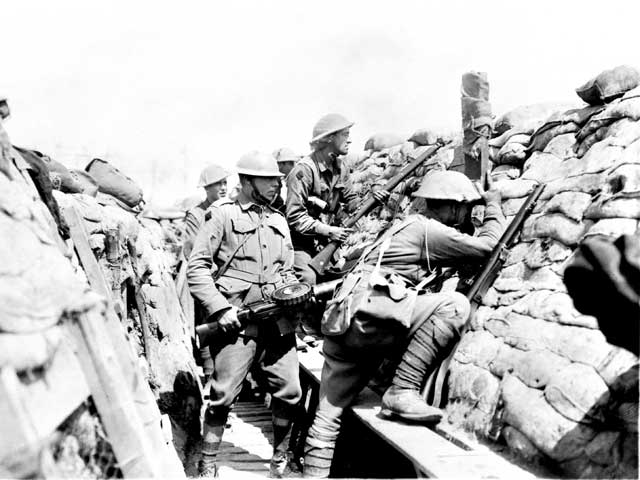
(The photo shows Australian soldiers in the trenches at Bois-Grenier near Armentières on the Western Front, 1916. Image held by the Australian War Memorial)
Girls Names from the Top 100 of the 1910s

19 Sunday May 2013

Posted by A.O. in Name Themes and Lists

≈ 18 Comments

Tags

Arthurian names, Astrophel and Stella, band names, classic names, created names, Disney names, Doctor Who, english names, famous namesakes, fictional namesakes, French words, germanic names, Greek names, hebrew names, Hollywood names, honouring, Idylls of the King, Italian names, Latin names, Little Women, locational names, Lord Tennyson, mythological names, name history, name meaning, name popularity, name trends, names from comics, names from movies, names from television, nicknames, Old French names, popular names, retro names, royal names, Russian names, saints names, Sanskrit names, scandinavian names, Shakespearean names, Sir Philip Sydney, Spanish names, unisex names, vintage names, Welsh names, William Shakespeare

P04233.001Amy

Amy is the English form of the Old French name Amée, meaning “beloved”; it’s a form of the Latin name Amata. It was in use in the Middle Ages, and revived in the 19th century. Amy was #32 in the 1900s, and by the following decade had sunk to #58, leaving the Top 100 in the 1920s. Amy disappeared from the charts between 1940 and 1960, but soared in popularity to make the Top 100 in the 1970s, and peaked in the 1980s at #8; by the 1990s it had only dropped one place. Amy had a very gentle decline, and left the Top 100 in 2011, but last year rallied and made #89, showing that there is life in this name yet. No wonder Amy has remained such a favourite – it’s a simple, unpretentious name with a nice meaning, and possesses appealing fictional namesakes from Little Women‘s Amy March to Doctor Who‘s Amelia “Amy” Pond.

Enid

Enid is a Welsh name meaning “soul”. In medieval Welsh legend, Enid is the wife of Geraint, a warrior king who is one of King Arthur’s men. Due to a silly misunderstanding, Geraint believes Enid has been unfaithful, and drags her off on a dangerous journey where she is not allowed to speak to him. Sensible Enid ignores this request, as she often has to warn him of approaching danger. Somehow this road trip from hell doesn’t put Enid off her husband, and in the end the two lovebirds are reconciled. Lord Tennyson turned the legend into two poems for his Idylls of the King, which brought the name to the attention of literature-loving Victorians. Enid was #64 in the 1900s, #49 for the 1910s, and peaked in the 1920s at #40. It left the Top 100 in the 1940s, and hasn’t charted since the 1950s. The most famous Australian Enid is Dame Enid Lyons, the first woman elected to the House of Representatives. Strong yet sweet, and sounding like an anagram of Eden, this is a clunky old-style name which deserves revival.

Gertrude

Gertrude is a Germanic name meaning “spear of strength”. It was used amongst medieval German nobility and royalty, and Saint Gertrude was one of the great mystics of the 13th century. The name probably didn’t become well known in Britain until the 15th century, due to immigration from the Netherlands. Shakespeare used it for the Danish queen in Hamlet, giving it a stamp of approval as an English name. The name seems to have been more common in Australia amongst Catholics, due to its saintly namesake. Gertrude was #54 in the 1900s, #87 in the 1910s, and had left the Top 100 by the 1920s. It hasn’t charted since the 1930s – a very steep decline. However, I feel that this dignified name could have a slight revival, and would make a very hip and cutting-edge choice. The nicknames Gertie and Trudy seem cute and usable.

Helen

Helen is a name of Greek derivation whose meaning has been much debated. Often translated as “light”, “torch” or “the shining one”, the name may be related to a Sanskrit name meaning “swift”. The name is forever connected to its original namesake, Helen of Troy, a woman of staggering beauty. In Greek mythology, Helen was the daughter of Zeus, who came to her mother Leda in the guise of a swan, so that Helen was born from an egg. Married to King Menelaus of Sparta, she was carried off by Prince Paris of Troy, sparking the Trojan War to avenge her abduction, causing no end of trouble for all involved. Famous Helens include singer Helen Reddy, novelist Helen Garner, and opera star Dame Helen “Nellie” Melba. Helen has never left the charts; #77 in the 1900s, it was #71 in the 1910s and peaked in the 1940s at #4. A long-time favourite, it didn’t leave the Top 100 until the 1980s. It reached its lowest point in 2009 at #554, and since then has taken a slight upward turn, making #355 in 2011. With names such as Eleanor and Elena gaining rapidly in popularity, and retro nicknames Nell and Nellie becoming fashionable, classic Helen looks like it has plenty of room for growth.

Joan

Joan is the English form of the Old French name Johanne, a feminine form of Johannes, which is the Latin form of the Greek name Ioannes, from the Hebrew name Yehochanan, meaning “Yahweh is gracious”. The English form of Johannes is John, and Joan is also a Spanish form of John. Joan was introduced to Britain by the Normans, and it was used amongst royalty and the nobility during the Middle Ages. Later it became less common, and had a revival in the 19th century. It is well known from Saint Joan of Arc, the visionary military leader, whose French name is Jeanne d’Arc. Famous Joans include Joan Lindsay, who wrote Picnic at Hanging Rock and opera star Dame Joan Sutherland. Joan was #152 for the 1900s, shot up to make #28 for the 1910s, and peaked in the 1920s at #2. It didn’t leave the Top 100 until the 1960s, and hasn’t been on the charts since the 1970s. For many years, Joan’s image was stout and sensible, but since Mad Men came to our TV screens, Joan Holloway has given it a stylish and sassy edge.

Mavis

Mavis is an English dialect word meaning “song thrush”; it is related to the French word mauvis and appears in literature as a poetic word for the bird. The word was in rare use as a girl’s name, but massively popularised by its use in Marie Corelli’s 1895 novel, The Sorrows of Satan. Although panned by the critics, it is considered the world’s first best-seller. Mavis was #85 in the 1900s, #16 by the 1910s, and peaked in the 1920s at #14. It left the Top 100 in the 1940s, and hasn’t charted since the 1950s. Mavis seems to have been a real Australian favourite, because it was more popular here than in Britain, and much more popular than in the US. In the 1960s, pioneering TV series, The Mavis Bramston Show, set the tone for Australian sketch comedy (a “Mavis Bramston” was theatre slang for an actress who was a pain in the backside). Australian band The Mavis’s were named after a cat. Mavis was a fresh, pretty name in the 1910s, and I think it can be again. It sounds very much like Maeve, and its associations with spring time and bird song are lovely.

Minnie

Minnie can be used as a short form of many different names – Mary, Amelia, Wilhelmina, Minerva, Hermione, or anything similar – and has long been used as an independent name. Famous fictional Minnies include Disney sweetheart Minnie Mouse, the Beano‘s tomboyish Minnie the Minx, and Cab Calloway’s jazzy Minnie the Moocher. These lively vintage creations make Minnie seem appealing, mischievous and off-beat; you can’t imagine a Minnie being tame or dull. Minnie was #56 in the 1900s, and by the 1910s was #100; it hasn’t ranked since the 1940s. With other vintage nicknames like Millie in vogue, piquant Minnie seems more than ready for a comeback.

Olga

Olga is the Russian form of the Scandinavian name Helga, meaning “holy, blessed”. Saint Olga was a 10th century Russian saint and princess, and the first Russian ruler to convert to Christianity. She didn’t convert until she was quite elderly, and before that she was a fierce ruler and brutal military leader. The name Olga was used by the Russian imperial family, and Mount Olga in the Northern Territory is named after Queen Olga of Württemberg, a daughter of Nicholas I of Russia. Olga was #88 in the 1900s, and peaked in the 1910s at #60. It left the Top 100 in the 1930s, and last charted in the 1980s. I am not sure why Olga became such a trend in this decade; I can only think it had something to do with the Russian Imperial Family, who would have often been in the news during World War I, and who were overthrown in 1917. Today we might connect the name to actress Olga Kurylenko, who played Bond girl Camille in Quantum of Solace and recently appeared in Oblivion. On Nancy’s Baby Names, people debated whether Olga was a “horrid” name; although some find it ugly, others could find it clunky and hip. This would be a bold choice which still seems exotic.

Stella

Stella is the Latin for “star”, and it was created as a name by 16th century poet Sir Philip Sydney in his sonnet sequence Astrophel and Stella. It is believed that Stella was inspired by real-life noblewoman Lady Penelope Rich, so endowed with dark-eyed, golden-haired beauty that it was practically mandatory for the poets of the day to fall in love with her (or pretend to), and dash off poems in her honour. Apparently unmoved by their literary efforts, she instead chose as her lover a handsome, wealthy and ruthless baron. Perhaps Sydney saw Lady Rich like a distant star – beautiful, glittering, cold, and unattainable. Stella wouldn’t have seemed too crazy as a name, because the Old French name Estelle is based on the Latin stella, and had been in use since the Middle Ages, and the Virgin Mary had for centuries been known as Stella Maris (“Star of the Sea”). Stella is a classic name in Australia. It was #48 in the 1900s, and #70 in the 1910s; by the 1920s it had left the Top 100. It reached its lowest point in the 1980s at #563, and since then has mostly climbed, reaching the Top 100 in the late 2000s. It is currently #52 in New South Wales, and still rising. You can understand why parents continue to use this pretty, star-like name, which fits in with the trend for -ella names.

Veronica

Veronica is a Latin form of the Greek name Berenice, which means “bringing victory”; the spelling was altered to make it seem as if it was based on the Latin phrase vera icon, meaning “true icon”. Saint Veronica is a legendary saint who is said to have been so moved to pity when she saw Jesus on his way to Calvary that she wiped his face with her veil. By a miracle, the image of his face was impressed upon it, and this cloth could then be used to heal the sick, or even bring the dead back to life. This legend, which comes from the Eastern church, was very popular in the Middle Ages, and several of these veils were venerated as holy relics until their cult was suppressed. Veronica was first used as a girl’s name in Italy, and spread from there. In Australia, Veronica was #63 for the 1900s and #69 for the 1910s; it didn’t leave the Top 100 until the 1950s. It has never stopped charting, and is currently at its lowest point yet – #356. Veronica has something of a glamorous image. Hollywood femme fatale Veronica Lake lent her name to Veronica Lodge from the Archie comics, with the comics themselves suggesting that “a Veronica” was a stunning high-maintenance girl. This was picked up by 1980s mean girls cult flick Heathers, with Winona Ryder as Veronica, and Australian girl band The Veronicas called themselves after Ryder’s character. This is an underused classic which seems sophisticated, with dark undertones.

POLL RESULT: People’s favourite names were Stella, Helen, and Minnie, and their least favourite were Gertrude, Joan, and Olga.  

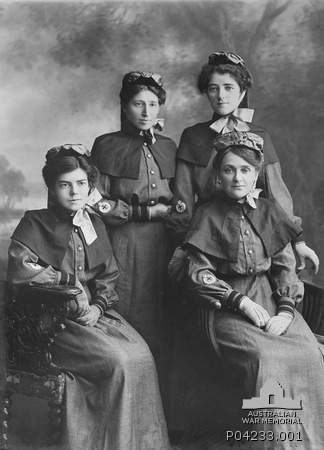
(Photo is of Australian World War I nurses; standing at the back on the right is Sister Constance Keys, who was mentioned in the post on Gallipoli. These nurses received military decorations for their heroism, and all made it back to Australia at the end of the war)

Boys Names Which Rose in Popularity in 2012

21 Sunday Apr 2013

Posted by A.O. in Name Themes and Lists

≈ 8 Comments

Tags

astrological names, Biblical names, celebrity baby names, Celtic names, Disney names, english names, famous namesakes, fictional namesakes, hebrew names, Hollywood names, honouring, Irish Gaelic names, Irish names, Latin names, locational names, name history, name meaning, name popularity, name trends, names from movies, names from television, nicknames, Old English names, Old Gaelic names, popular names, saints names, Scottish names, soap opera names, unisex names

586419-river-boysThese are the boys’ names which became markedly more popular last year. I think the list lacks the depth of the one for girls, with far less diversity. There is only one classic name for boys, and eight of the names are surnames – six of these ending in N. While the girls’ list shows names which are currently trending, I think a couple of these could be legitimately identified as trendy.

Braxton

Braxton is without doubt 2012’s Name of the Year, joining the national Top 50 from nowhere. It was the #1 fastest-rising name nationally, in New South Wales and South Australia; made the top 5 fastest-rising names in Victoria, Queensland, and Western Australia; and went up in Tasmania and the Australian Capital Territory. Currently it is #31 in Australia, #51 in NSW, #81 in Victoria, #25 in Queensland, #44 in SA, #34 in WA, #65 in Tasmania and #70 in the ACT. Braxton is an English surname of disputed origin. It is a corruption of an English place name; perhaps Branxton in Northumberland, meaning “Branoc’s settlement” (Branoc is a Celtic personal name derived from the word for “raven”). Braxton has been used as a personal name since the late 18th century, and originated in the United States – Carter Braxton was one of the signatories to the American Declaration of Independence. Here it is known from the Braxton brothers on soapie Home and Away; three members of a thuggish surfer gang, and sexually desirable “bad boys” (based on the real-life Bra Boys). The characters were introduced in 2011, and last year Steve Peacocke won a Logie for his role of Darryl “Brax” Braxton. Braxton is new to the charts, although short form Brax had been in the Top 100 before. I wonder if it will keep going, or will parents hit the panic button after its massive surge in popularity?

Jaxon

Jaxon was the #1 fastest-rising name in Victoria and Tasmania, made the top 5 fastest-rising names in New South Wales and South Australia, and increased in popularity in Western Australia and the Australian Capital Territory. Currently it is #37 in Australia, #54 in NSW, #52 in Victoria, #42 in Queensland, #31 in SA, #17 in WA, #33 in Tasmania and #92 in the ACT. Jaxon is a variant of the surname Jackson; although sometimes derided as a “mis-spelled Jackson”, it is a legitimate surname particularly associated with East Anglia, and possibly with the Puritans. Jaxon has been used as a first name since the 17th century, and originated in Norfolk – then an area with a high Puritan population. Jaxon has charted in Australia since the 1990s, and rose steeply to make the Top 100 in 2011. It continues to capitalise on its trendy X, and may even overtake big brother Jackson. It’s interesting that it is most popular in Western Australia, for there is a large construction company in that booming state named Jaxon.

Mason

Mason was the #1 fastest-rising name in Queensland; it increased in popularity nationally, and in every state and territory. Currently it is #15 in Australia, #24 in NSW, #18 in Victoria, #15 in Queensland, #10 in SA, #12 in WA, #8 in Tasmania, #15 in the NT and #28 in the ACT. Mason first charted in the 1980s, and rose steadily to make the Top 100 by the mid-2000s. Mason is an occupational surname for someone who worked as a stonemason. The Mason family settled in Kent, on lands granted to them by William the Conqueror for their part in the Battle of Hastings. Mason has been used as a first name for boys since at least the 16th century, and originated in East Anglia; it possibly had Puritan significance. It’s much more common in the United States, where the distinguished Mason family played a prominent role in American politics. George Mason IV was one of the Founding Fathers of the United States, and an author of the Bill of Rights. Recently it has been often used as a celebrity baby name, boosting and cementing its popularity.

Hunter

Hunter was the #1 fastest-rising name in Western Australia, amongst the top 5 fastest-rising names nationally and in Queensland, and increased in popularity in New South Wales, Victoria, South Australia, Tasmania and the Australian Capital Territory. It is currently #24 in Australia, #35 in NSW, #39 in Victoria, #19 in Queensland, #27 in SA, #22 in WA, #7 in Tasmania and #50 in the ACT. Hunter is a surname based on the English word for a man who hunts professionally, and originated in Scotland. The Clan Hunter were from Normandy and settled in Ayrshire in the 11th century; experts in hunting and fieldcraft, they were invited there by King David I, who had been brought up in a Norman court. Hunter has been used as a personal name since the early 18th century, and seems to have been most popular in the northern counties of England. The Hunter Valley is the area around the city of Newcastle; the Hunter River is named after Governor John Hunter, and as his surname suggests, he was a Scotsman. Hunter has charted in Australia since the 1990s, and made the Top 100 by the late 2000s. It shows no signs of losing steam.

Hudson

Hudson was in the top 5 fastest-rising names nationally, in New South Wales, Victoria and Western Australia, and increased in popularity in South Australia and Tasmania. Currently it is #43 in Australia, #74 in NSW, #50 in Victoria, #45 in Queensland, #36 in SA, #31 in WA, and #67 in Tasmania. Hudson is an English surname which means “son of Hudde”. Hudde can be an old nickname for Hugh or Richard, or it can be derived from the common Old English name Huda; the surname is traditionally associated with Yorkshire. Hudson has been used as a first name since the early 17th century; although these births coincide with English explorer Henry Hudson’s first voyages, it can’t be known whether he inspired them. Hudson was new to the charts last year, having gained massive popularity after pop singer Guy Sebastian welcomed his son in 2012. The inspiration for Hudson Sebastian’s name came from the Hudson River in New York, (named after Henry Hudson), as Guy and his wife Jules love New York City. However, it has an Australian connection as well, because Sir Hudson Fysh, a World War I hero, founded Qantas, so Hudson could be used to honour a family tradition in the aviation industry.

Flynn

Flynn was in the top 5 fastest-rising names in Victoria and South Australia, and increased in popularity nationally, in New South Wales, Western Australia, Tasmania and the Australian Capital Territory. It is currently #41 in Australia, #46 in NSW, #36 in Victoria, #34 in Queensland, #43 in SA, #35 in WA, #22 in Tasmania and #28 in the ACT. Flynn has been in the charts since the 1990s, and after hitting a plateau for a few years, it suddenly shot up into the middle of the Top 100 in 2011, after Miranda Kerr and Orlando Bloom welcomed their son Flynn. Flynn is a common Irish surname which is an Anglicised form of the Old Gaelic Ó Floinn, meaning “son of Flann”. Flann means “red, ruddy” in Irish Gaelic, and is the name of one of the High Kings of Tara. The name is strongly associated with swashbuckling Tasmanian actor Erroll Flynn, known for his success with the ladies. He helped inspire the character of Flynn Rider from the Disney film Tangled. Interestingly, Flynn is most popular in Tasmania.

Archer

Archer was in the top 5 fastest-rising names in South Australia and the Australian Capital Territory; it also increased in popularity in New South Wales, Victoria and Tasmania. Currently it is #92 in NSW, #47 in Victoria, #61 in Queensland, #47 in SA, #47 in Tasmania and #46 in the ACT. The name was new to the Top 100 this year. Archer is an occupational surname denoting a professional bowman, and was brought to England at the time of the Norman Conquest; the Archer family settled in Wiltshire. Archer has been used as a first name since the 17th century, and seemed to be much more common in the southern counties surrounding London. Archer may remind you of legendary bowmen such as Robin Hood and William Tell, or it could remind you of the zodiac sign Sagittarius, called The Archer. In Australia, the Archer River is on the Cape York Peninsula in far north Queensland, and the first horse to win the Melbourne Cup was named Archer. Archer’s popularity is growing partly because it’s a great way to get the popular nickname Archie.

Eli

Eli was in the top 5 fastest-rising names in Australia, and increased in popularity in Western Australia, Tasmania and the Australian Capital Territory. Currently it is #34 in Australia, #53 in NSW, #83 in Victoria, #27 in Queensland, #48 in SA, #38 in WA, #32 in Tasmania and #27 in the ACT. Eli has been in the charts since the 1970s, and reached the Top 100 in the late 2000s; since then it has gliding smoothly upward. Eli is a Hebrew name meaning “ascent”, and in the Old Testament, Eli was a high priest who is regarded as a judge and prophet in Judaism, and the teacher of the prophet Samuel. In Scandinavia, Eli is a girl’s name, used as a short form like Ellie, and pronounced EE-lee. Some Australian namesakes include rally driver Eli Evans, Olympian hockey player Eli Matheson, soccer player Eli Babalj, and kickboxer Eli “Mad Dog” Madigan. At a time when Old Testament boys’ names are slumping, Eli stands out as a Biblical success story, and tended to rise when Elijah did too.

Patrick

Patrick was in the top 5 fastest-rising names in South Australia, and increased in popularity nationally, in New South Wales, Victoria, Western Australia, Tasmania, and the Australian Capital Territory. Currently it is #42 in Australia, #47 in NSW, #34 in Victoria, #53 in Queensland, #35 in SA, #47 in WA, #53 in Tasmania, and #25 in the ACT. In Australia, Patrick is a sturdy classic which has never left the Top 100. It was #36 in the 1900s, and peaked in the 1990s at #34; the lowest it has ever been is #68, in 2009. Patrick is from the Latin name Patricius, meaning “nobleman”, and its fame today is entirely down to one man – Saint Patrick. Saint Patrick was a 5th century Romanised Briton brought up in a Christian family. As a teenager, he was captured and carried off as a slave to Ireland, where he remained for six years. He managed to escape back to Britain, but returned to Ireland as an ordained bishop to undertake missionary work. Called the Apostle of Ireland, he is the major patron saint of Ireland, and such a vital part of Irish identity that his feast day on March 17 is seen as a celebration of Irish culture.

Harrison

Harrison was in the top 5 fastest-rising names in Queensland, and increased in popularity nationally and in South Australia. Currently it is #22 in Australia, #25 in NSW, #26 in Victoria, #16 in Queensland, #13 in SA, #27 in WA, #34 in Tasmania and #40 in the ACT. Harrison has charted since the 1980s, and skyrocketed into the middle of the Top 100 during the 1990s. It peaked at #23 in the early 2000s, then fell before starting to climb again, so it’s now on its second wind. Harrison is a surname meaning “son of Harry”, with Harry itself being a short form of Henry. Harrison has been used as a first name since the 16th century, and over time became greatly more popular in the United States than in Britain. This may be because of the Harrison family of Virginia, who were related to King Edward I. They managed to produce numerous state governors, as well as two presidents – Benjamin Harrison and William Henry Harrison. The popularity of Harrison as a first name is probably due to actor Harrison Ford – the name began charting just after he starred in the first Star Wars movie, and boomed during the Indiana Jones series.

POLL RESULT: People’s favourite names were Flynn, Archer, and Patrick, and their least favourite were Braxton, Mason, and Jaxon.

(Photo shows the Braxton brothers from Home and Away)

Famous Names: Ellen and Portia

28 Thursday Mar 2013

Posted by A.O. in Famous Names

≈ 1 Comment

Tags

Arthurian names, car names, changing names, classic names, english names, fairytale names, famous namesakes, fictional namesakes, German names, Latin names, mythological names, name history, name meaning, name popularity, name trends, nicknames, Roman names, Shakespearean names, surname names, William Shakespeare

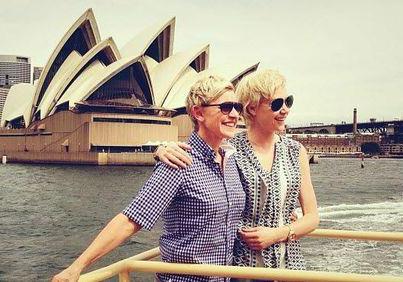
531523_10151298153817261_581124430_nAmerican chat show host, Ellen DeGeneres, was in Australia this week. She follows in the footsteps of Oprah Winfrey, another American chat show host who brought her show to Australia, in 2010. However, while Oprah managed to get around quite a bit, Ellen (who was recovering from ‘flu), just popped in to Sydney and Melbourne.

She did seem to take a bit of a shine to Melbourne, saying it reminded her of Boston and New Orleans, and even said that it was possible she and Portia would live there one day. Ellen is practically an Australian-in-law, because her wife, model and actress Portia de Rossi, is from Australia.

Portia was born Amanda Lee Rogers in Geelong. She changed her name as a teenager to sound more exotic and interesting – Portia is after the heroine of Shakespeare’s The Merchant of Venice, and de Rossi is an Italian surname, which probably means “red” (like Russell).

Portia de Rossi is the name of the mother of famous Italian poet Torquato Tasso, but I’m not sure whether the young Amanda Rogers was aware of that. Since her marriage, Portia has legally changed her name to Portia Lee James DeGeneres. I don’t know where the James comes from.

The name Ellen is a medieval form of Helen, making it the English equivalent of Elaine. Ellen was a fairly common name in the Middle Ages, and features in the English fairy tale Childe Rowland, where Burd Ellen is Rowland’s sister, who must be rescued from Elfland. Childe and Burd don’t mean how they sound – childe was a title given to the eldest son in a noble family, while burd means “lady, maiden”. In some versions of the tale, they are the children of Queen Guinevere, and Merlin also plays a significant role in the story.

Ellen is a classic name in Australia, which was at its most popular in the 1900s, when it was #20. It remained on the Top 100 until the 1950s, and made its way back there in the 1990s, when it reached #92. It’s been fairly stable for a few years now, and in 2011 rose slightly from #517 to #470. Although this looks like quite a jump, it represents just two more babies named Ellen.

With Ella and Ellie in the Top 100, and Elle, Eleanor and Elena rapidly gaining in popularity, and retro Nelly, Nellie, Nella and Nelle becoming increasingly hip name choices, Ellen seems extremely usable, with a host of cute and fashionable nicknames. Simple, pretty and unpretentious, I feel that we will see more of this name in years to come.

Portia is a variant of Porcia, the feminine form of the Roman family name Porcius, from the Latin for “pig”. A lot of people have problems with this name meaning, but the Fabii were named after the broad bean, and perhaps the Porcii gained their name from pig farming.

Another possibility is that in many parts of the ancient world, pigs were sacred animals of the Underworld, fertility and the moon, and there may have been some religious connotations to the name (and in fact pig farming itself had a distinctly religious side, as the Romans were very fond of sacrificing pigs to the gods). Many ancient gods and goddesses were connected with swine, such as Osiris, Adonis, Attis, Demeter, Persephone, Freya and Ceridwen. They were beasts of a mysterious and ancient power, and held in awe.

The most illustrious branch of the Porcius family were the Catones, which included Cato the Elder and his great-grandson, Cato the Younger. Cato the Younger had a beautiful, intelligent daughter named Porcia, and she married her cousin, Marcus Junius Brutus – famous for being one of the key people in the assassination plot against Julius Caesar. Porcia was the only woman who knew of the conspiracy, and as such she plays a role in William Shakespeare’s play, Julius Caesar.

However, when we think of Portia, we automatically think of Portia from Shakespeare’s Merchant of Venice, a beautiful and brilliantly intelligent lady who manages to get her own way while still showing obedience. She steals the show and saves the day in a gripping cross-dressing courtroom drama as her fine legal mind swoops in on a loophole in the law. Even now we sometimes call a gifted female lawyer a Portia. The role of Portia was once famously played by actress Ellen Terry.

Portia is an elegant literary name, with historical and fictional namesakes who have both beauty and brains. People seem to either love it, or find it pretentious. Another issue is that it sounds like the name of the car company, Porsche. (Porsche is a German surname derived from the name Boris). Because some people do use Porsche as a girl’s name, a certain type of parent does worry that a daughter named Portia will have her name confused with little girls named Porsche.

So Portia is not without her issues as a baby name, but still a very lovely one nonetheless.

POLL RESULT: Ellen received an approval rating of 46%, and Portia a rating of 31%.

(Photo shows Ellen and Portia on Sydney Harbour)

Names Spotted at Home and Abroad (Summer Edition)

25 Monday Mar 2013

Posted by A.O. in Names Spotted at Home and Abroad

≈ 3 Comments

Tags

animal names, Australian Aboriginal names, changing names, culinary names, english names, ethnonyms, famous namesakes, fictional namesakes, fish names, floral emblems, flower names, food names, French names, German names, honouring, initials, Japanese names, Latin names, locational names, makes of cars, name combinations, name meaning, names of horses, names of spices, names of weapons, Native American names, nature names, nicknames, Persian names, plant names, rare names, rose varities, sibsets, surname names, types of boats, unisex names, vocabulary names

297602-baby-namesThe first baby born in Wollongong for 2013 was Rumi Vassilakoglou; he is named after the medieval mystical Persian poet, whose moniker means “from Rome” (this name for him is not used in Muslim countries, by the way). Rumi’s mum is named Leila, and his younger sibling is Mahli.

Your baby disappearing is every parent’s worst nightmare, but little Minowa Worthington’s story ended happily. Minowa is the name of a Japanese town, and a Japanese surname, but baby name books tell me it also Native American for “one with a moving voice”. They don’t say which language it is from, but I have seen Native Americans online with Minowa as their surname.

A Gold Coast baby born in the Queensland floods was named Sabre Smith. Although his name can be after the sword, putting it in the same genre as Blade or Steel, a sabre is also a class of racing boats – which seems apt for a baby born surrounded by water.

Another water baby is Dwight Anderson, who was born in the bath. I was a tiny bit surprised to see such an old-fashioned name in use … much more surprised to see that Dwight is a girl. Dwight’s sister is named Billie-Jo.

Allegra Bluebelle from Canberra, born in the city’s centenary year, has a middle name after its floral emblem, the royal bluebell. A little girl born on the city’s birthday seven years ago has the same initials as the Australian Capital Territory – Aisha Caitlyn Truselsen. A fisherman has a daughter named Makaira Indica, which is the scientific name for the black marlin (this isn’t connected to Canberra, so not sure why they mentioned it, but there you go).

The Hallett family changed their name by deed poll to Holden, in honour of the make of car. Not content with that, they have given their children Holden-related names too. Their son is named Toree, after the Torana, and his little sister is named Elcee – after the LC generation of Toranas.

An article about “unique” names quoted brothers named Mac and Fonzii. I have no idea why Mac is supposed to be unique, but Fonzii does seem slightly out of the ordinary. He’s not named about Fonzie from Happy Days, which reminds me of the baby named Tinkabell not named after the fairy. Other unusual names of real babies mentioned were Dragon, Justus, Porch, Ever, Notorious, Cash, Lychee and Bandit.

Another article on the same subject, with much the same information, featured a baby boy named Ace Bear Johnson, which strikes me as both cute and sporty (Ace’s sister is named Esmee). There was also a baby girl named Annecy Belle Easton [pictured], named after a French town that her parents fell in love with after they stayed there. She is called Annie for short, and Annecy’s mum also has the name of a French town – Nancy. Article also mentions real babies named Batman, Blaze and Charisma.

Darwin schoolteacher Wendy Green named her racehorse Rogan Josh, after the Indian spice mix, which she saw at the supermarket. She claims that in Tennant Creek, she was asked to baptise a baby, which she did using champagne, and named the baby Rogan Josh as well. You may take this story with as many grains of salt as you wish – but Rogan Josh really isn’t too bad a name. It literally means “boiling oil” in Persian.

Friday’s birth notices included a new baby named Passion Brinessa Ajayla Quinatee Martin, who is the 12th child in her family. The rest of the family are Samantha Jayne (18), twins Shantelle Victoria and Stephanie Catherine (15), Jenaya Lee (11), Shania Kay (10), Brandon Bradley (7), Brandi Shyla Molly Robyn (6), Cruz Richard (5), Clayton Adam Logan (4) and Diammond Sparckle Zedekeyah Lilly Ann (3). Mum is named Brinessa, which is a variety of rose, and quite an unusual name too. She admits she did find it difficult to come up with original names, and turned to an iPhone application for inspiration.

Names of Adults

Lyra Benbow is a primary schoolteacher in the Melbourne suburb of Digger’s Rest who is just about to spend her Easter break doing volunteer work in Uganda. Is anyone else just loving her name? It sounds like something out of a fantasy novel.

Another awesome name from the papers: Eugenie Pepper, who runs a children’s fashion business named Plum. I feel like ringing her number to hear if she answers, “Hello, this is Pepper of Plum”.

Last year, Cressida Moneypenny attended the Anzac Day commemorations in Turkey. Originally from the Gold Coast, Ms Moneypenny was drawn to her name’s spiritual home, and moved to London. Ian Fleming never gave his Miss Moneypenny a name, but I feel sure it should have been Cressida …

The Melbourne Comedy Festival will feature eight comedians named Dave. Why so many funny guys named Dave? Dave O’Neil was a David until he started in comedy – then he became Dave, which seemed more man of the people. Dave Hughes also began as a David, but said he couldn’t make it stick – people just expect a comedian of a certain age to be a Dave, apparently. All the Daves agreed they had been stuck with an uncool name – while a David can be hip or sexy, a Dave is always daggy.

Names From Real Life

A pair of sisters named Ilse and Matine, which I thought went together really well without being in the least matchy. Ilse is a German nickname for Elizabeth, while Matine is based on the French word for “morning”.

Another cute sibset, this time a little hippyish – Lotus, Jewel and Sunny (two girls and a boy). They are names which just make you smile.

Someone I know told me they have a new niece named Berrilee, which is the name of a suburb of Sydney (and one I missed!). It is derived from an Aboriginal word meaning perhaps “mouth” or “food”, and far from being a modern innovation, baby Berrilee is named after an ancestor.

A name I saw on a class list at the start of the school year – Phonique. It’s French for “phonic”, as pertaining to sound, and is used by a (male) DJ in Europe. To me it almost seems like a portmanteau of phony and unique …. and quite technological.

In spring it was Aryan … here’s another name I saw some people find controversial – Gypsy. This is a name more common in Australia than it is in the UK and other European countries, which have significant populations of Romanis or Travellers (who sometimes refer to themselves as gypsies). Romanis are not in fact from Egypt, which is what Gypsy literally means – their origins are from the Indian subcontinent.

Names of Babies Born to People I Know or Know Of:

Girls: Florence, Harriet, Lola, Marina

Boys: Arlo, Gus, Huxley

Italian Names for Boys

17 Sunday Mar 2013

Posted by A.O. in Name Themes and Lists

≈ 15 Comments

Tags

Austrian name popularity, Belgian name popularity, birth notices, celebrity baby names, Chilean name popularity, Dutch name popularity, english names, ethnonyms, famous namesakes, fictional namesakes, French name popularity, germanic names, Greek names, Hungarian name popularity, Hungarian names, Italian name popularity, Italian names, Latin names, locational names, mythological names, name history, name meaning, name popularity, nicknames, Orlando Furioso, Portuguese names, Roman names, saints names, Scottish name popularity, Shakespearean names, Spanish name popularity, Spanish names, surname names, The Divine Comedy, theological names, tribal names, UK name popularity, unisex names, William Shakespeare

romeo_and_juliet_01Angelo

Angelo is the Italian form of the Latin name Angelus, meaning “angel”. The Angelus is a Christian devotion, which traditionally involves praying three times a day, accompanied by the the ringing of church bells. It was common during the Middle Ages, so the name can be seen as after the prayer as much as after the heavenly creature. Angels are mentioned in the Old Testament as spiritual beings who bring communications from God; the word angel is derived from the Greek for “messenger”. Angels play a much bigger role in the New Testament, where they make several important announcements, including the birth and resurrection of Christ. A famous Italian named Angelo was Father Angelo Secchi, a 19th century astronomer and one of the first scientists to state that the sun is a star. Cricket fans know the name well from Angelo Matthews, the Sri Lankan captain. The name is rarely used in Australia, where angel-type names for boys aren’t common – even though angels are traditionally masculine. However, singer Adele welcomed a baby boy last year, rumoured to be named Angelo, and this may be a help. The Italian and English pronunciation are very similar – AHN-jel-oh and AN-jel-oh.

Dante

Dante is a short form of Durante, the Italian form of the Latin name Durans, meaning “enduring”. Its most famous namesake is undoubtedly medieval Italian poet, Dante degli Alighieri, nearly always known by his first name only. His Divine Comedy is considered the greatest work of Italian literature, and in Italy he is known as il Poeto (“the Poet”), just as Shakespeare is called The Bard in England. He is famous for his adoration of Beatrice, a girl he knew only slightly and who died in her twenties; he plays an important role in the literature of “courtly love”. Dante is a name which seems to be gaining more use in recent years, perhaps because of the number of fictional characters named Dante on TV and in video games. I see this handsome name quite a bit in birth notices, and have met a number of small boys named Dante, from a variety of backgrounds. The Italian pronunciation is DAHN-tay, and this is commonly used in Australia, but I have heard it said DAN-tay as well.

Eduardo

Eduardo is the Italian form of the English name Edward. The name is used in Spanish and Portuguese-speaking countries as well, where it is much more popular than in Italy – it is a Top 100 name in Spain and Chile. Famous Italians include actor, playwright and screenwriter Eduardo De Filippo; songwriter Eduardo di Capua, who composed the famous song O Sole Mio; and quantum physicist and cyberneticist Eduardo Caianiello (all these Eduardos were from Naples). The name is pronounced ed-WARD-oh, with the ward part rhyming with hard rather than horde. Last year, Australian soccer player Vince Grella welcomed a son named Eduardo, and so far it’s the only celebrity baby boy’s name which has been rated as “perfect” by blog readers.

Lorenzo

Lorenzo is the Italian form of the Roman name Laurentius, which means “from Laurentum”; Laurentum was an ancient city in Italy, south of Rome, and its name probably comes from the laurel, or bay tree. Laurel wreaths were used by the Romans as a symbol of victory. The English form of the name is Laurence. One of the most famous Italian namesakes is Lorenzo de Medici, known as Lorenzo the Magnificent. A Florentine ruler during the Renaissance, he was famed for presiding over Florence’s Golden Age, and for being a great patron of the arts. Lorenzo’s grandson also bore his name; he is best known for being the ruler to whom Machiavelli dedicated his practical political handbook, The Prince. Lorenzo has been in the Top 5 in Italy for several years, and is currently #4; it’s also Top 100 in France. The Italian pronunciation is loh-REN-tso, and in English it’s pretty much the same except we say the final syllable -zo. Reality TV star Snooki, from Jersey Shore, welcomed a baby boy named Lorenzo last year. Possible nicknames include Enzo, Ren, Renzo and Zo.

Luca

Luca is the Italian equivalent of the name Luke, derived from the Greek name Loukas, meaning “from Lucania”. Lucania was an ancient district of southern Italy, and the name comes from the tribe of the Lucani who inhabited the area. One theory is that the tribe’s name comes from the Greek word for “wolf”; another that it means “sacred wood” in Latin. A famous Italian with this name is medieval sculptor Luca della Robbia; another is Fra Luca de Pacioli, a mathematician and Franciscan friar who worked with Leonardo da Vinci. You may also know the name from Luca Cordero di Montezemolo who is chairman of Ferrari. Luca is incredibly popular internationally: it is #12 in Italy, and also makes the Top 100 in the UK, Scotland, Austria, Belgium, the Netherlands and France. It has charted in Australia since the 1980s, and joined the Top 100 in the late 2000s; currently it is #79. You will sometimes see Luca described as a unisex name, and that’s because it is also the Hungarian form of Lucia, and is #10 for girls in Hungary. However, the two names are pronounced differently – the Italian boy’s name is said LOO-kah, while the Hungarian girl’s name is said LOO-tsah.

Massimo

Massimo is the Italian form of Maximus, a Roman family name derived from the Latin for “greatest”. There is a very old and noble Roman family named Massimo, and they claim to be descended from the Maximi family of ancient Rome, including the famous general Fabius Maximus. This cannot be proven, as the family history only goes back about a thousand years, but what’s on the record is impressive enough. Extremely rich and influential, great patrons of the arts, they have produced numerous cardinals, ambassadors, politicians and military leaders, and have married into some of the most important royal houses of Europe, so that the family now bears a princely title. Massimo is one of the most common Italian boy’s names I see in birth notices, with Massi the usual nickname. It is pronounced mahs-SEE-mo.

Orlando

Orlando is the Italian form of Roland, a Germanic name meaning “famous land” or perhaps “fame of his country”. According to history, Roland was a Frankish military commander in Charlemagne’s army, responsible for defending France against the Bretons; he died in a skirmish against the Basques after Charlemagne was defeated in a battle against Islamic forces. His death must have captured people’s imaginations, because while history says very little about Roland, legend says much. His life became an epic drama about a great nobleman of royal blood who dies in battle, defending his land and faith from Muslims. Just in case this seemed a bit tame, legend gave him a magic sword and threw in a giant, and the story was a massive medieval minstrel-sung hit all across western Europe. In Italy, he not only appears in Dante’s Divine Comedy, but starred in a whole line of epics as Orlando. The most famous of these is Orlando Furioso (it basically means Crazy Orlando) by Ludovico Ariosto. As the title suggests, Orlando goes doolally from unrequited love of a pagan princess and gallops around the world in a frenzy. There’s wizards and hippogriffs and sea monsters and a trip to the moon involved, and the story was hugely influential in European literature. We know this name well from actor Orlando Bloom, married to Miranda Kerr, and since their wedding I see this attractive name regularly in birth notices. The Italian pronunciation is or-LAHN-do, and the English or-LAND-oh.

Rocco

Saint Rocco is an Italian saint who was born a nobleman but came to Rome on a pilgrimage. Turning up while the city was suffering from a plague, he spent his time tending the sick. When he succumbed himself, he was banished from populated areas, but miraculously provided with water, and a dog who brought him food and licked his wounds, which cured him. Returning home, he was thrown into prison as a spy and died, refusing to reveal his noble identity. However, he was recognised by a cross-shaped birthmark, and canonised as a saint by popular acclaim. When the Black Death swept through Europe, it was said that this plague could be averted by praying to Saint Rocco, and when a town was apparently spared in this manner, his popularity went through the roof. Although his cult had begun in northern Italy, it soon spread across Europe; in France his name became Roch, in Spain Roque, and in England, Rock. You’d be forgiven for thinking Rocco had something to do with rocks, but it’s an ancient Germanic name meaning “rest”, and pronounced ROK-ko. Even though the Black Death isn’t such a worry any more, Saint Rocco is still popular as a healer of the sick and patron of dogs. Rocco has charted in Australia since the 1940s, hitting a peak in the 1960s at #193. Since the early 2000s, when Madonna welcomed her son Rocco, it has been climbing steeply and is currently #228. Expect to hear more of this cute yet macho name in the future.

Romeo

Romeo is the Italian form of the Latin name Romaeus, meaning “pilgrim to Rome”. When we hear the name Romeo, we think of the young and ardent lover from William Shakespeare’s Romeo and Juliet, whose pubescent romance goes so tragically wrong. Shakespeare’s plot wasn’t original – he based it on retellings of 16th century Italian romances, and in turn, these used the story of Pyramus and Thisbe from Roman mythology as inspiration. However, one of the Italian authors, Luigi Da Porto, fell for an enchanting young woman at a ball and she returned his feelings; things never got off the ground because their families were feuding. By the time he had the chance to write about Romeus and Giulietta in Verona, the object of his desire had been married off to someone else. His version of the story, including the principals’ names, proved enduring – perhaps because it had the personal touches of someone who has loved and lost. Romeo is such an ultra-romantic name that it’s used as an epithet for any male lover. David and Victoria Beckham welcomed their son Romeo in 2002, giving this name some star appeal as well. We say it RO-mee-oh, but we know the Italian pronunciation of ro-MAY-oh from the car manufacture, Alfa Romeo.

Valentino

Valentino is the Italian form of the Latin name name Valentinus, the saint of lovers, also called Valentine. It got an extra helping of Latin Loverboyishess from Italian actor Rudolph Valentino, a seductive sex symbol and star of the silent screen. He made women swoon, and men snipe at his annoying amount of attractiveness. The gals screamed with desire during his movies; the guys stormed out in disgust and threw hissy fits. We know the name well from Italian motorcycle racer and MotoGP World Champion, Valentino Rossi, giving this name quite a sporty image as well. I don’t know if it’s because of Rossi, but I do see the name Valentino quite often in birth notices, where it seems to be especially popular in the middle position.

POLL RESULT: People’s favourite names were Luca, Rocco, and Massimo, and their least favourite were Orlando, Valentino, and Eduardo.

(Picture shows scene from Baz Luhrman’s Romeo + Juliet)

Underused Names for Boys

10 Sunday Feb 2013

Posted by A.O. in Name Themes and Lists

≈ 14 Comments

Tags

Anglo-Saxon names, Arthurian legends, Arthurian names, band names, Biblical names, British names, celebrity baby names, Celtic names, Cornish names, english names, famous namesakes, fictional namesakes, French names, German names, Gothic names, Greek names, hebrew names, Jakob Grimm, Latin names, locational names, mythological names, name history, name meaning, nicknames, Old English names, Old French names, Roman names, royal names, Sabine names, saints names, Scottish names, Shakespearean names, Sir Walter Scott, surname names, unisex names, William Shakespeare

Time-For-Bed-Said-ZebedeeThis follows on from last week’s Underused Names for Girls; to briefly recap, they are names which aren’t common here (used less than six times in the 2012 Victorian data, have never charted in Australia), but still have a history of use in Australia (can be found in historical records).

Alaric

Alaric is from the Gothic name Alareiks, meaning “ruler over all”. Alaric I was the king of the Visigoths who sacked Rome in 410, and his great-grandson, Alaric II, was ruler of the Visigothic kingdom, covering most of Spain and the south of France. Another Alaric was a legendary king of Sweden, skilled in battle and sport, and a masterful horseman. He had a brother Eric, and for some unknown reason, the pair of them killed each other with their horses’ bridles, which seems an awfully strange choice of weapon. The name Alaric is far commoner in fiction than in real life, where it tends to be either chosen for comedies, in the belief that the name Alaric sounds amusingly high-faluting, or science-fiction/fantasy, in the belief that it sounds geekily exotic. In the TV series, The Vampire Diaries, there is a character named Alaric; he says his name uh-LAHR-ik, although most sources say the name is pronounced AL-uh-rik. Powerful and commanding, this is unusual, but sounds similar to familiar names like Alan and Eric.

Blaise

In Arthurian legend, Blaise was the priest who baptised the wizard Merlin, became his tutor and friend, then took the trouble to write down all Merlin’s deeds for posterity. There is a Saint Blaise, who is a saint of healing, as he cures sore throats (the saint was a doctor as well as a bishop). He seems to have been quite popular in England, perhaps because his feast day of February 3 is right after the Celtic festival of Imbolc and the Christian feast of Candlemas, and often marked by bonfires. Blaise sounds like the word blaze, so a pleasing coincidence for fire-lovers. The most famous namesake is Blaise Pascal, the French theologian and philosopher. The meaning could be from either Latin or Greek. If Latin, it means “stuttering, lisping”; if Greek it means “bow-legged”, so either way it’s not flattering. Saint Blaise was Greek, but the Blaise of Arthurian legend is probably meant to be Roman or Romanised, so you can take your pick. It’s a name loved for its sound, namesakes and associations rather than its meaning.

Corin

Corin is a French surname derived from Quirinus; Saint Quirinus was part of a Roman missionary group sent to convert Gaul, and legend has attached to this popular saint all the standard saintly stories, such as killing a dragon and going for a stroll after getting his head chopped off. The original Quirinus was an early Roman god, probably a Sabine war deity. The Sabines had an altar to Quirinus on the Quirinal Hill, one of the Seven Hills of Rome. The Romans considered him to be a deified Romulus, and in the early days he was a major god, although they gradually lost interest in worshipping him. However, even after the fall of Rome, the Quirinal Hill remained a place of power, so that it was chosen as the seat of royalty, and later the residence of the Presidents of the Italian Republic. The name is linked to the name of the Sabine town Cures, and may come from the Sabine word for “spear”. There is a shepherd named Corin in Shakespeare’s As You Like It, and a Prince Corin in C.S. Lewis’ The Horse and His Boy. You can also see this name from another perspective, for in British legend, Corineus was a great warrior and giant-killer who founded Cornwall; his name may be an echo of Cernunnos, the Celtic god, whose name is usually translated as “horn”, or “horned one”. There are several place names in Cornwall apparently derived from Cernunnos (including Cornwall itself), and the name Corin enjoyed early popularity in Cornwall and Devon – so you can see this as a British name just as much as a French one. This packs a double mythological punch, and doesn’t seem much different than names such as Corey or Colin.

Edgar

Edgar is an Old English name meaning “rich spear”. Saint Edgar the Peaceful was a king of England; a Scottish King Edgar was a son of Saint Margaret. The name became rare after the Norman Conquest, but had a revival in the 19th century, after Sir Walter Scott’s historical novel, The Bride of Lammermoor, told the story of tragic lovers Lucy and Edgar – a tale which ends in madness, murder and quicksand. Edgar is also a character in William Shakespeare’s King Lear; disinherited by his father, he wanders the heath disguised as a babbling madman. Noble and clever, he is also enigmatic with a touch of darkness; he enjoys playing the crazy beggar just a little too much. The most famous person named Edgar is probably the American writer, Edgar Allen Poe, said to have been named after Shakespeare’s character. Poe’s works are also quite dark and enigmatic, dealing with topics such as grief, guilt, mystery, murder, madness, doom, death, drugs, and being buried alive. Edgar is related to the other Ed- names, such as Edward and Edwin, but seems more vintage, a bit edgier, and a touch more Gothic. This name might be uncommon, but it’s also traditional and comes with all the usual Ed and Eddie nicknames.

Giles

This is based on the Latin name Aegidius, derived from the Greek for “young goat”. Aegidius was a 7th century hermit from Athens who lived in the south of France with a tame deer; in Old French his name became Gidie, then Gide, and finally Gilles; when the Normans took his name to Britain, it became Giles. A noted miracle worker, Saint Giles was very popular in the Middle Ages, and his name became common; it was also given quietly but steadily to girls (even into the 20th century). Although we often think of Giles as a terribly “English” name, Saint Giles is the patron saint of Edinburgh, and the name Giles is traditional in Scotland; many Gileses in Australian records have Scottish surnames. The English haven’t done this name many favours, as it’s a favourite in English books and TV shows for good-natured upper class twits. However, this doesn’t reflect the reality of the name, or the Australian experience of it, and I think it’s possible to see Giles in quite a different light. I can see Giles as a solid country-style name, a brother to Archie and Will, or slightly hipster, a brother to Hugo and Barnaby. If you crossed Gus with Miles, you might end up with something that looks a little like Giles …

Huxley

Huxley is an English surname. The Huxley family were Normans who came to Britain after the Conquest and settled in Cheshire, taking their name from a village near Chester, which was originally named Holdesieia, and corrupted into Huxley. The original name may be from the Anglo-Saxon for “sloping land”, and Huxley is believed to mean’s “Hucc’s wood”, with Hucc being an Anglo-Saxon nickname meaning “insult, taunt”. Huxley has been used as a personal name since the 18th century, and early examples are from the Cheshire area, suggesting they may have been named directly after the village. The Huxley family have produced an astonishing number of brilliant thinkers, from the biologist T.H. Huxley, supporter of Charles Darwin, to the author Aldous Huxley, who wrote Brave New World. T.H. Huxley came to Australia as a young man, and did such excellent work in natural history that he was made an immediate Fellow of the Royal Society on his return (Mount Huxley in Tasmania is named in his honour). T.H. Huxley’s distant cousin, Sir Leonard Huxley, migrated to Australia in childhood, and became one of our most distinguished physicists. With its fashionable X and intellectual pedigree, this name seems very hip, and comes with the nicknames Huck or Hux.

Jethro

Jethro is translated as “excellence, abundance” in Hebrew, and in the Old Testament, Jethro is the father-in-law of Moses, and a priest (it is never made clear in what religion he was a priest, but by the end he accepted Yahweh as his God). Jethro is revered as a prophet in Islam, and is held in the highest regard by the Druzes. The most famous person with this name is Jethro Tull, an English agricultural pioneer who helped bring about the British Agricultural Revolution which formed the basis of modern farming practices. The rock band Jethro Tull is named after him. You may also remember the dull-witted Jethro Bodine from The Beverly Hillbillies. Jethro is a little bit hick and a whole lot hip – it’s hickster.

Rufus

Rufus started life as a Roman nickname, but afterwards became a family name; it’s from the Latin for “red haired”. There are many famous men with the surname Rufus, including the Stoic philosopher Gaius Musonius Rufus. His views on philosophy were moderate and practical, encouraging all men and women to follow a philosophical life, and giving advice on all manner of topics, including diet (vegetarian, raw) and hairstyles (long, beardy). He was so highly-regarded that when all other philosophers were expelled from Rome by the Emperor Vespasian, Rufus was allowed to stay. There are at least ten saints named Rufus, one of whom is mentioned in the New Testament as a disciple of St. Paul; his father was the man who carried the cross for Jesus on the way to Calvary. There is also the Gaelic saint Mael Ruba, whose name is Anglicised as either Maree or Rufus. King William II of England was nicknamed “Rufus” for his ruddy complexion. Famous people named Rufus include the Canadian-American singer Rufus Wainwright, and the British actor Rufus Sewell; Roger Taylor from Queen has a son named Rufus Tiger. With names ending in -us becoming fashionable, Rufus looks set to become the new Atticus.

Wolfgang

Wolfgang is a German name meaning “wolf path, wolf journey”, and interpreted by folklorist Jakob Grimm as being the name of a hero who follows in the wake of the “wolf of victory”. It has two heavy-duty namesakes: composer Wolfgang Amadeus Mozart, and writer Johann Wolfgang von Goethe; there is also a Saint Wolfgang, one of the patrons of Germany. Eddie Van Halen chose this name for his son. Nearly all Wolfgangs in Australian records have German surnames, and although this would make a striking heritage choice, it could work even if you don’t have a scrap of German ancestry. Wolfgang is one of those names that people seem to either love or loathe, so it attracts some extreme reactions. The usual nicknames are Wolf or Wolfie.

Zebedee

In the New Testament, Zebedee was a fisherman, and the father of the Apostles John and James. He is mentioned as being left behind in the boat when Jesus called the brothers to “become fishers of men”; we never learn whether he was supportive of his sons’ career change, or thought they should have remained fishers of fish. Zebedee’s wife was one of the women present at the crucifixion. The name Zebedee is the Greek form of the Hebrew name Zebadiah, meaning “Yahweh has bestowed”, and nearly always interpreted as “gift of God”. There is an English painter named Zebedee Jones and an English newsreader named Zebedee Soanes; both these Zebedees were born in the 1970s, when the cult children’s show, The Magic Roundabout, was first on television. In the show, Zebedee was a jack-in-the-box who is popularly recalled as ended the show by bouncing down out of nowhere and intoning, “Time for bed, children” (although I’m not sure how often this occurred). With Old Testament names for boys becoming a bit old hat, it could be time to consider some of the more unusual New Testament names. This one is full of zest, and the nickname Zeb is as cowboy cool as Zeke and Jed.

POLL RESULT: People’s favourite names were Huxley, Alaric, and Corin, and their least favourite were Wolfgang, Zebedee, and Giles.

(Picture shows Zebedee from The Magic Roundabout)

Underused Names for Girls

03 Sunday Feb 2013

Posted by A.O. in Name Themes and Lists

≈ 20 Comments

Tags

Arabic names, Arthurian legends, celebrity baby names, Disney names, english names, ethnonyms, famous namesakes, fictional namesakes, flower names, French name popularity, French names, German names, germanic names, Greek names, historical records, How Green Was My Valley, Italian names, Latin names, mythological names, name data, name history, name meaning, name popuarity, names from movies, nature names, nicknames, Old French names, Old Welsh names, Oz: The Great and Powerful, plant names, Poldark, popular culture, Puritan names, rare names, royal names, saints names, Shakespearean names, surname names, The Iliad, The Wizard of Oz, tribal names, unisex names, virtue names, vocabulary names, Welsh names, William Shakespeare

sabine women detailLast week we had names from Victoria which were used less than ten times in 2012. Those names are uncommon – but what if you wanted something even rarer? These are names which don’t appear even once in the Victorian data from last year, and have never charted in Australia. However, they are not strange or obscure, and all of them can be found in Australian historical records.

Angharad

Angharad is an Old Welsh name meaning “greatly loved”. It was reasonably common in medieval times, and there are several Angharads in Welsh history. In Welsh mythology, Angharad Golden-Hand is the lover of Peredur, one of King Arthur’s knights. Angharad Morgan is a main character in How Green Was My Valley, and in the film version was played by Maureen O’Hara. Actress Angharad Rees became well known in the 1970s for playing the role of Demelza in the TV series Poldark. Lots of famous Angharads, yet I could find only one woman named Angharad in Australian records. The pronunciation, ang-HAH-rad, may have caused some concern. This is a strong and unusual name with a lovely meaning. It would definitely stand out.

Beatrix

Beatrix is based on the name Viatrix, the feminine form of the Latin name Viator, meaning “voyager, traveller”. Early on, the spelling was altered to associate it with the Latin word beatus, meaning “blessed”, and it was common amongst early Christians. Some baby name books sandwich these two meanings together and interpret it as “blessed traveller”. Saint Beatrix was an early Roman martyr; according to legend, she was strangled by her servants. The name became less common in England after the Middle Ages, but was revived in the 19th century. One of the most famous people with this name is Beatrix Potter, the children’s writer and illustrator, who gave us such delightful characters as Peter Rabbit, Jemima Puddleduck, Squirrel Nutkin and Mrs. Tiggy-Winkle. As well as these talents, she was also a scientific researcher, conservationist, farmer, and sheep breeder. Queen Beatrix of the Netherlands helps give this name a royal touch, and a famous literary character is Beatrix “Trixie” Belden, girl detective. To me, this charming name seems spunkier and more eccentric than her sister Beatrice.

Cressida

In Greek mythology, Chryseis was the daughter of a Trojan priest named Chryses, and she was captured by the Greek champion Agamemnon as part of the spoils of war; he refused to give her back even after being asked nicely. Chryseis’ dad prayed like blazes to the god Apollo, who obligingly sent a plague through the Greek soldiers until Chryseis was returned. A later legend says that she bore Agamemnon a son. Her name given in the Iliad simply means “daughter of Chryses”; appropriately for a priest of Apollo, Chryses’ name means “golden”, perhaps in reference to sunlight. Some writers say Chryseis’ real name was Astynome, meaning “possessor of the city”. When medieval authors retold the tale of the Trojan War, this story had a complete rewrite. Chryseis became Cressida (KRES-ih-duh), and one corner of a tragic love triangle; she is made the epitome of the false woman and the whore. Some authors were sympathetic to Cressida’s plight, and in Shakespeare’s version, Cressida is complex, highly intelligent and witty. A famous Australian with this name is the artist Cressida Campbell. I find this literary name quite bewitching.

Emmeline

Emmeline is the Old French form of the Germanic name Amelina, based on the word for “work”; it is therefore related to the name Amelia, and not to Emily. The name was introduced to Britain by the Normans, and many people prefer to give it a slightly French pronunciation as EM-uh-leen, while others seek to Anglicise the way it is said as EM-uh-line (like Caroline). My experience is that the British tend to say leen, Americans tend to say line, and Australians have a bob each way and can usually cope with either. There were several prominent suffragists named Emmeline, including Emmeline Pankhurst, Emmeline Pethick-Lawrence and Emmeline Wells. Australia mountaineer Emmeline Du Faur was the first woman to climb Mount Cook (in record time), and the first person to climb several peaks – always dressed in a skirt. Emmeline Pethick-Lawrence was a keen hiker and woodcrafter, and to me the name Emmeline sounds vigorous, healthy, and practical. Emmeline has a solid history of use in Australia, being commonly found in old records, and today its nickname Emmie means it fits in with popular names such as Emily, Emma and Emmerson.

Isadora

Isadora is a variant of the name Isidora, the feminine form of Isidore, from the Greek for “gift of Isis”; the Egyptian goddess Isis was worshipped widely in the ancient world, and she was also important to the Greeks and Romans. Saint Isidora was a 4th century Egyptian nun, considered to be a “holy fool”, and treated with contempt by the other nuns for her eccentric ways, such as wearing a dirty dishrag on her head instead of a veil, and eating only leftovers instead of proper meals. When a visiting saint came to the nunnery, he immediately picked out Isidora as the only person holier than himself; upset by the praise and attention, Isidora ran away into the desert to be a hermit, and nothing more is known of her. The most famous Isadora is the American dancer Isadora Duncan, who developed her own unique style of dance, based on the natural movements of the human body. Like the saint, she was considered eccentric and radical, and danced to the beat of her own drum. Isadora is a beautiful, glamorous and individualistic name!

Lavender

Lavender has been used as a personal name since the 17th century, and was given to both sexes. It may have originally been derived from the surname, which is Norman-French and based on the word lavandier, referring to a worker in the wool industry who washed the raw wool (this is an occupation that both men and women had). Even in the middle of the 20th century, you can still find boys named Lavender. By now, however, it is almost entirely thought of as a girl’s name, and considered to be from the flower. The flower name comes from the Old French lavendre, possibly from the Latin for “blue-coloured”, lividius, but also influenced by lavare, meaning “wash”, because lavender was used in washing clothes. Lavender is often used to scent soaps and beauty products, and has been used as a relaxation aid for thousands of years. The colour lavender is associated with sensuality and decadence, and at one time, was considered symbolic of homosexuality. Like Rose, this is a pretty old-fashioned flower name that is more complex that it first appears.

Sabine

Sabine is a French and German form of Sabina, the feminine form of the Latin name Sabinus, meaning “Sabine”. The Sabines were an Italian tribe who inhabited the region where the city of Rome stands today, and some of them fought against Rome for their independence. According to legend, the Romans abducted Sabine women to populate the city of Rome; the war between the Romans and Sabines ended when the women threw themselves and their children between the armies of their fathers and those of their husbands. The history behind the legend is that the conquered Sabines assimilated with the Romans, beginning a new line of inheritance. Many of the noble Roman families traced their ancestry to Sabine origins, and at least some of the deities and rituals of Rome came from the Sabines. The Sabines were said to have taken their name from the hero Sabus, who was worshipped as a deity. Although it is too long ago to be sure, one theory is that the tribal name Sabine meant “us, ourselves, our own people”. You can either say this name the French way, sa-BEEN, or the German way, za-BEE-nuh; most English-speakers use the French pronunciation. There is at least one famous man named Sabine – the writer Sabine Baring-Gould, whose name was after the surname (derived from the personal name). You can find both men and women named Sabine in Australian records. Sabine is smooth and sophisticated, but comes with a cute nickname – Bean.

Theodora

Theodora is the feminine form of the Greek name Theodoros, meaning “gift of God”. The name pre-dates Christianity, but its meaning appealed to early Christians, and there are a few saints with this name. One of them was Saint Theodora, who as punishment for her pious celibacy, was dragged into a brothel. Her first “customer” was a Christian man, who had came to save her; they were both martyred, but their virtue remained intact. This story is probably fictional, and may have been inspired by sacred prostitution, of which Christians obviously disapproved. An Eastern Orthodox Saint Theodora disguised herself as a man and joined a monastery. Her identity as a woman was only discovered after her death. The name was a very popular one for Byzantine empresses, and Theodora I is also regarded as a saint. A Roman Theodora was a senator, and supposedly the lover of one of the early popes. She was harshly condemned for daring to “exercise power like a man”. The hussy! The image you get from these historical Theodoras is of very strong, independent, determined women – which might explain why Disney has chosen this name for the Wicked Witch of the West in Oz: The Great and Powerful. Pop star Robbie William welcomed a daughter named Theodora Rose last year, called Teddy; he wanted a dignified full name for the cuddly nickname, and Theodora fit the bill perfectly.

Verity

Verity is an English word meaning “truth”, especially in regard to religious truth or doctrine. It has been used as a personal name since the 17th century, and would have been given as a virtue name by the Puritans. However, it was most likely also given in honour of the surname, for births of Veritys in Yorkshire are suggestive, given that the Verity family is a prominent one in that county. The surname is Anglo-Norman, and has the same meaning as the personal name. Originally, Verity was a unisex name, and in early records is given equally to boys and girls. The first Verity I can find born in the United States was a boy, and his family were Puritans in Massachusetts. You can find the name Verity given to both sexes in Australian records, but only as a middle name for boys, and it has never been very common here. Famous Australian women named Verity include the politicians Verity Barton and Verity Firth, the ABC presenter Verity James, and the actress Verity Hunt-Ballard, who played Mary Poppins in the Australian version of the musical. This is a crisp, clean name which sounds intelligent and upper-class to me.

Zia

Zia is a variant of the Arabic name Ziya, meaning “light, shine, splendour” – more specifically, it refers to light which shines by its own illumination, and is connected to the sun and sunlight. Traditionally, Zia is a male name, but Arabic baby name sites usually list it as female, and the name charts in France only for girls. There are quite a few people called Zia in Australian records, and they are not all Arabic men. There are women called Zia from different cultures, including Italian, where Zia may be short for a name such as Annunzia (zia means “aunt” in Italian, but this doesn’t seem to have been a hindrance to its use by Italians). Most women called Zia in the records seem to be of British descent, and I’m guessing either it was seen as a short form of other names, or parents just liked the sound of it. I can imagine parents today also liking the sound of it, because it is so similar to popular names such as Zara and Mia – indeed, it almost seems like a cross between these names. This is a zippy name which sounds a bit different, but won’t seem out of place in the playground.

POLL RESULT: People’s favourite names were Beatrix, Emmeline, and Isadora, and their least favourite were Lavender, Zia, and Angharad.

(Picture shows a detail from The Intervention of the Sabine Women (1799) by Jacques-Louis David)

Famous Name: Rose

16 Wednesday Jan 2013

Posted by A.O. in Famous Names

≈ 14 Comments

Tags

classic names, English idioms, english names, flower names, French name popularity, French names, germanic names, Latin names, middle names, mythological names, name history, name meaning, name popularity, nature names, Norman names, plant names, popular names, Scottish name popularity, UK name popularity, vocabulary names

Gift_white_rosesThis Friday will be The Day of the Roses, which sounds lovely, but has a tragic meaning. January 18 this year marks the 36th anniversary of the Granville train  disaster, when a crowded train was derailed in a suburb of western Sydney, and hit the supports of a railway bridge. The bridge collapsed onto the train carriages, crushing the passengers inside. 83 people were killed, and more than 200 injured; it was then Australia’s worst peace time disaster, and is still the worst rail accident in Australian history.

The Granville Memorial Trust was established to commemorate the victims and to campaign for improvements to rail safety. Since the disaster, there has been a substantial increase in money spent maintaining the railways, and standards have improved. Each year on the anniversary of the crash, the Trust organises a memorial service, in which a bell rings 83 times, and 83 roses are thrown onto the railway tracks – one for each of the victims.

Rose is not the simple flower name it at first appears, for it began life as the Germanic name Hrodohaidis or Hrodheid, meaning “bright kind, famous kind” (kind in the sense of type, sort). It was the Normans who introduced it to Britain in the forms Roes, Rohais, Roheis and Rohese. The name Rohese was a fairly common one amongst the Norman nobility in England after the Conquest.

The form Rose began to be used by the early 1200s – even this early it was already being associated with the flower, whose name is French, derived from the Latin rosa. It goes back to an ancient word meaning “sweetbriar” (a wild rose also known as the eglantine rose).

Roses are tens of millions of years old, and have been grown in gardens for thousands of years – perhaps first in China, although they were grown in Persia, Babylon and ancient Egypt as well. The flower was sacred to the goddess Isis, and later the Greeks and Romans identified it with Aphrodite or Venus, so that it became seen as a blossom of beauty and eternal love – which is one reason why you are more likely to receive roses on Valentine’s Day than daisies or sweetpeas.

In medieval Christianity, roses became associated with the Virgin Mary, were carefully cultivated by monks, and in both Christian and Islamic mysticism, the rose can be a symbol of divine love. The rose is the national flower of England and the floral emblem of the United States; the red rose is the symbol of socialism; the white rose of peaceful resistance. The Romans used it as a symbol of secrecy, and to alchemists it meant balance and unity.

This ancient flower speaks to our hearts on so many different levels, and the rose has a richness of beauty we cannot help but admire. Yet it is mysterious too, and its thorns urge us to keep our distance, even while its loveliness attracts. Roses are by no means vain beauties, because they can be used to make perfumes, skin care products and medicines; rose hips can be made into jams, syrups and teas (in fact I am drinking a cup of it as I write). Rose petals are also edible.

We often think of Rose as being a quintessentially English name, and a beautiful Englishwoman is even called an “English rose”. Yet the name is also French, and Rose is Top 100 in France, as well as in England/Wales and Scotland.

In Australia, Rose is a classic which has always charted. It was #55 in 1900, and gradually fell until it left the Top 100 in the 1930s. It reached its lowest point in the 1970s, at #287, and after that began a stately rise, with its sharpest increase in the late 2000s. By 2008 it was near the bottom of the Top 100, and each year has continued to steadily gain. In 2011 it was #66 in New South Wales, and in Victoria and the ACT it has proved to be one of the names with the most growth during 2012. Rose is also extremely popular as a middle name.

Rose is an overwhelmingly feminine name, yet isn’t frilly. It’s both sensual and sensible, possessing the ripeness of a mature woman rather than a frivolous girl. It’s a short name, yet doesn’t seem abrupt or harsh but rather, soft and velvety as one of its own petals. Despite being an English word, there are many international variants of Rose, and it is easily understood in other countries. It is a name from fairy tale, reminding us of Briar Rose, the sleeping beauty, and Rose-Red, the vivid sister of fair Snow-White – and yet it also has a practical and wholesome appeal.

Increasing numbers of parents are choosing the name Rose for their daughters. In The Little Prince, the prince, who is in love with the only rose on his planet, cries in dismay when he comes to Earth and sees dozens of rose bushes; he has given his heart to something special, and found it commonplace. But a wise fox teaches him that his rose is unique, because it is the only one that he loves. There may be a garden of Roses in the world, but only one Rose who blooms there will be the one in your heart.

POLL RESULT: Rose received an approval rating of 86%, making it one of the most highly esteemed names of the year. The name Rose was judged to be beautiful and feminine (54%) and pretty and wholesome (21%), although 7% thought it was better left in the middle position. Nobody thought that the name Rose was boring.

Famous Names: Aneurin and Fortunato

09 Wednesday Jan 2013

Posted by A.O. in Famous Names

≈ 4 Comments

Tags

British names, famous namesakes, fictional namesakes, Italian names, Latin names, name history, name meaning, nicknames, Roman names, saints names, Welsh names

4448972-3x2-700x467New Year’s Eve is celebrated in Sydney with a huge firework display on the Harbour, the Harbour Bridge forming the centrepiece. Each year’s theme is displayed across the Bridge in words and pictures; for 2013 the theme was Embrace, asking us to embrace love, Sydney, possibilities, and the moment, illustrated by a butterfly and a pair of red lips.

Being one of the earliest places in the world to greet the New Year, the Sydney fireworks are amongst the first celebrations that people see, so they really do try to put on a show. Sydneysiders firmly believe their NYE firework display is the best in the world, although this year Abu Dhabi insisted theirs was clearly superior. I think London was my favourite, although Sydney was definitely the best city with a harbour fireworks display (sorry Hong Kong!).

Such an enormous spectacle necessitates a team of people working on it, but someone has to have their name at the top, and in this case it was Aneurin Coffey, the producer, Fortunato Foti, the director, and Kylie Minogue, the creative ambassador. As we have already covered Kylie in an earlier blog entry, when Ms Minogue was ambassador for the Sydney Mardi Gras, we are going to look at the names of Messrs Coffey and Foti instead.

Aneurin Coffey, originally from Perth, has been in event management and production co-ordination for many years, and been involved with the Sydney fireworks since the late 1990s. Fortunato Foti comes from a long line of pyrotechnicians; the Foti family have been creating firework displays since the 18th century in Italy. Fortunato’s grandfather Celestino migrated to Sydney in the 1950s, after being interned here during the war.

As you can imagine, in the lead-up to the Big Bang, these two gentlemen were often interviewed on the news and in newspapers, which is how I came to hear their intriguing names.

Aneurin is a variant of the name Aneirin, which has an important role in Welsh literature. Aneirin was a British bard in the Dark Ages, believed to have been a poet at a court which today is Edinburgh, and possibly the son of a queen of West Yorkshire. His best known work, Y Gododdin, is a series of elegies for warriors who fell in battle; there is a chance that it contains the earliest reference to King Arthur, although it isn’t certain. Revered in his own era, and rediscovered in Tudor times, he is still highly-regarded today.

The meaning of Aneirin is not certain, and it may be the British form of the Latin name Honorius, meaning “honourable, noble”. The name would have been familiar to Britons as that of the Emperor Honorius, under whose rule Rome was sacked in 410. There is a famous story that in this same year, Britain asked for Roman help against barbarian incursions, and Honorius, who had problems of his own, replied by telling them that Britain must guard itself. It is from this moment that the end of Roman control in Britain is dated.

From the 18th century, Aneirin’s name began to be spelled Aneurin, presumably to make it look as if it was derived from the Welsh for “all gold”. The name is usually pronounced a-NY-rihn, and the Welsh politician Aneurin Bevan, founder of the National Health Service, used Nye as his nickname.

The name has been mostly used in Wales, and by those with Welsh heritage. A contemporary namesake is attractive young Welsh actor Aneurin Barnard, who has won an award for his stage work, but also appears in films, and made guest appearances on TV shows such as Shameless.

Fortunato is the Italian form of the Latin name Fortunatus, meaning “fortunate, blessed”. There are several saints called Fortunatus, including Fortunatus the Apostle, listed as one of the Seventy Disciples of Christ, and mentioned by Saint Paul. Fortunatus also appears in literature as the hero of a German tale from the 16th century, who meets the goddess of Fortune and is given endless riches. Despite his charmed life, his heirs are unable to share his wealth, for they do not have the wisdom and honour to manage it.

Fortunato is not uncommon as an Italian surname, and there are quite a few streets and businesses in Australia bearing this name. A young namesake is Fortunato Caruso, who plays Australian rules football for West Adelaide.

The beginning of a new year, whatever it may bring, is always filled with hope for the future. Here are two rare names associated with luck, honour, gold and riches – good omens for the year ahead.

All the best for 2013!

POLL RESULTS: Aneurin received an approval rating of 23%, while Fortunato received a more favourable approval rating of 37%. More than 45% of people said they hated both names. One nice person said they loved both.

(Picture shows the fireworks on Sydney Harbour, January 1 2013; photo from ABC News)

← Older posts
Newer posts →

Enter your email address to follow this blog

Categories

Archives

Recent Comments

A.O.'s avatarwaltzingmorethanmati… on Zarah Zaynab and Wolfgang…
Madelyn's avatarMadelyn on Zarah Zaynab and Wolfgang…
JD's avatardrperegrine on Can Phoebe Complete This …
A.O.'s avatarwaltzingmorethanmati… on Rua and Rhoa
redrover23's avatarredrover23 on Rua and Rhoa

Blogroll

  • Appellation Mountain
  • Baby Name Pondering
  • Babynamelover's Blog
  • British Baby Names
  • Clare's Name News
  • For Real Baby Names
  • Geek Baby Names
  • Name Candy
  • Nameberry
  • Nancy's Baby Names
  • Ren's Baby Name Blog
  • Sancta Nomina
  • Swistle: Baby Names
  • The Art of Naming
  • The Baby Name Wizard
  • The Beauty of Names
  • Tulip By Any Name

RSS Feed

  • RSS - Posts

RSS Posts

  • Celebrity Baby News: Melanie Vallejo and Matt Kingston
  • Names from the TV Show “Cleverman”
  • Can Phoebe Complete This Sibset?
  • Zarah Zaynab and Wolfgang Winter
  • Baby, How Did You Get That Name?
  • Celebrity Baby News: Media Babies
  • Celebrity Baby News: Adelaide Crows Babies
  • Celebrity Baby News: Chris and Rebecca Judd
  • Names at Work: Name News From the World of Business and Employment
  • Celebrity Baby News: Sporting Round Up

Currently Popular

  • The Top 100 Names of the 1940s in New South Wales
  • The Top 100 Names of the 1930s in New South Wales
  • Celebrity Baby News: Jacinta Allan and Yorick Piper
  • Celebrity Baby News: Jason Morrison and Heidi Tiltins
  • Rare Boys Names From the 1950s

Tags

celebrity baby names celebrity sibsets english names famous namesakes fictional namesakes honouring locational names middle names name combinations name history name meaning name popularity name trends nicknames popular names saints names sibsets surname names twin sets unisex names

Create a free website or blog at WordPress.com.

Privacy & Cookies: This site uses cookies. By continuing to use this website, you agree to their use.
To find out more, including how to control cookies, see here: Cookie Policy
  • Subscribe Subscribed
    • Waltzing More Than Matilda
    • Join 517 other subscribers
    • Already have a WordPress.com account? Log in now.
    • Waltzing More Than Matilda
    • Subscribe Subscribed
    • Sign up
    • Log in
    • Report this content
    • View site in Reader
    • Manage subscriptions
    • Collapse this bar
 

Loading Comments...