• About
  • Best Baby Names
  • Celebrity Baby Names
  • Celebrity Baby Names – Current
  • Celebrity Baby Names – Past
  • Featured Boys Names
  • Featured Girls Names
  • Featured Unisex Names
  • Links to Name Data
  • Waltzing on the Web

Waltzing More Than Matilda

~ Names with an Australian Bias of Democratic Temper

Waltzing More Than Matilda

Tag Archives: Greek names

Waltzing With … Acacia

31 Sunday Aug 2014

Posted by A.O. in Waltzing with ...

≈ 9 Comments

Tags

english names, flower names, Greek names, historical records, name history, name meaning, name popularity, nature names, patriotic names, plant names, saints names, tree names

Floral Emblem Golden Wattle

Tomorrow is the official first day of spring, which means it is also Wattle Day. The Golden Wattle (Acacia pycnantha) is Australia’s official national flower, proclaimed as our floral emblem on September 1 1988, and marked by planting a Golden Wattle in the National Botanic Gardens by then Prime Minister’s wife, Hazel Hawke. Four years later, September 1 was officially declared National Wattle Day, and it is traditional to celebrate by wearing a sprig of wattle (any type of wattle; it doesn’t have to be Golden Wattle).

Long before that date, wattle had been an unofficial national flower by popular choice. A wreath or sprig of wattle appears on many official government documents, including the Commonwealth Coat of Arms, the Order of Australia, and the Governor-General’s crest. Our national colours of green and gold (so difficult to co-ordinate on sporting uniforms) are inspired by the green leaves and golden bloom of the wattle.

Wattle is a symbol of remembrance for us too. During World War I, mothers sent their sons sprigs of wattle as a reminder of all they were fighting for back home, and has been used to mourn and remember loss of Australian life, such as in ceremonies for the victims of the Bali bombings. You may have noticed that when the first victims of MH17 were brought to the Netherlands, the Australian Governor-General’s wife wore a sprig of wattle.

As early as 1838, Tasmania encouraged wearing Silver Wattle (Acacia dealbata) sprigs to celebrate the discovery of its island. In the nationalistic fervour which preceded Federation, a Wattle Club was founded by naturalist Archibald Campbell, promoting a Wattle Day demonstration each September 1. Outings into the bush to revel in the glories of an Australian spring were part of his plan, and patriotic Wattle Days continued to be celebrated until World War II.

Australian love of wattle has been satirised in Monty Python’s Flying Circus, with the immortal lines of the Australian philosopher Bruce: “This here’s the Wattle, the emblem of our land. You can stick it in a bottle, you can hold it in your hand.” These words have been used to promote a Wattle Day Festival in Victoria this year!

Acacia is the genus which contains wattle trees and shrubs. Its name, pronounced uh-KAY-shuh, comes from the Greek akis, “thorn”, because most acacia species outside Australia are thorny, although nearly all Australian acacias don’t have thorns. There are around 1300 species of acacia, and almost a thousand of them are native to Australia, with over 98% of these unique to Australia. The others can be found in all continents except Europe and Antarctica; they are particularly widespread in Africa, and were first observed by Europeans along the Nile River.

Acacia is not just an important symbol to Australia. According to Easton’s Bible Dictionary, acacia may have been the “burning bush” Moses encountered in the wilderness, and a table of acacia wood was part of the Tabernacle he built for the Ark of the Covenant. In Egyptian mythology, acacia is the Tree of Life, and in Christian tradition, the crown of thorns worn by Jesus Christ were made from acacia. Freemasonry uses acacia as a symbol of resurrection and immortality, while in Asia, acacia incense is believed to drive away ghosts and demons.

It’s powerful stuff. In fact, it is said that the first plant to bloom in Hiroshima after its bombing in 1945 was a wattle tree. Resurrection indeed! Every Wattle Day, Hiroshima’s Acacia Appreciation Society sends hundreds of yellow ribbons to the Australian National Botanic Gardens as a gesture of friendship and appreciation.

The name wattle comes from Old English, the word Anglo-Saxons gave to interlaced branches and twigs used to form fences, walls, and roofs. Wattle and daub is a construction technique, used since prehistoric times, for filling the spaces between the wattle with a combination of wet soil, clay, sand, animal dung, and straw, which is then allowed to dry until it hardens.

When British settlers to Sydney made their own wattle and daub buildings, they used acacia trees as the wattle, so gave the name to the plants. (I remember reading about wattle and daub houses in Neolithic Britain when I was in primary school history class, and wondering where they got the wattle trees from!). The uses of acacia are too many to list, but one worth mentioning is that Australian Aborigines often make boomerangs from its wood.

Wattles grow all over Australia, and are numerous in the desert, although uncommon in dense rainforest and alpine regions. In southern Australia, wattles tend to flower in springtime, while in the north, many species come into bloom in the autumn and winter. Because of this, it is said that on any given day in Australia, there will be a wattle blossoming somewhere.

Acacia has a long history as a personal name, for it is the feminine form of the Greek name Acacius. This comes from a different Greek derivation – akakia, meaning “without guile, innocent”. Byzantine emperors held a purple silk roll filled with dust called the akakia: it symbolised human mortality. There are several saints named Acacius, and quite a number of other notables from the early Christian era. Acacia has been a particular favourite amongst Spanish-speaking people, who bestowed it as a saint’s name.

Acacia came into use as an English name in the 19th century, when flower and plant names were the fashion. Golden and Silver Wattle was introduced to Europe in the mid-19th century; Silver Wattle became a great favourite in the south of France, where it blooms around Candlemas and is a harbinger of spring and golden sunshine. Outside Australia, wattle is often known as mimosa.

There are several people named Acacia in Australian records, going back to the mid-19th century, and it is almost certain their names were given patriotically – one is even named Acacia Golden, as if to signify Golden Wattle. Another is named Marginata Acacia; marginata is a species of eucalyptus tree. That reminds me that I saw a woman named Acacia Silver on the news, which reminded me of Silver Wattle: as she was an environmentalist, her name was so appropriate that I wondered if she’d chosen it herself.

In Australia, the name Acacia is around the 300-400s, while in England/Wales it is #1639 (18 babies last year), and in the US, 80 baby girls were named Acacia, the same number as ones called Adah, Jazlene, Legacy, Saoirse, Story, and Zarah. While Acacia isn’t a bizarre name in other English-speaking countries, it’s definitely far better known and higher-charting in Australia, which makes perfect sense. As with the trees, Acacia isn’t uniquely Australian, but is more widely found here, and has a particular meaning to us.

Wattles are perhaps not the most beautiful of trees – rather than being slender and elegant, or solid and imposing, most of them are short and scrubby. And yet when they come into bloom, there is no more cheering sight on a grey late winter’s day than their riotous mass of bright yellow fuzzy blossom. I cannot help but smile when I see a wattle tree in full fragrant bloom abuzz with bees, a promise of the sunshine that is soon to come. That’s why I have Golden Wattle as my avatar, and Silver Wattle decorating my blog: to keep me smiling every day.

Familiar without being common, the name Acacia has a rich and interesting history, and is a very patriotic choice. It evokes the beauty of spring and the Australian bush, it’s a remembrance for those we mourn, and rises from the ashes of death with new life and hope. Pretty and floral, bright and burning, silver and golden – could this sunshiney name hit your personal sweet spot?

POLL RESULT
Acacia received an excellent approval rating of 84%. 34% of people loved the name Acacia, and 30% liked it. Only 2% of people hated the name.

Boys Names From Australian Children’s Literature

24 Sunday Aug 2014

Posted by A.O. in Name Themes and Lists

≈ 10 Comments

Tags

aristocratic names, aristocratic surnames, Australian slang terms, Biblical names, classic names, colour names, english names, famous namesakes, fictional namesakes, Gaelic names, German names, germanic names, Greek names, hebrew names, Irish names, Latin names, locational names, modern classics, mythological names, name history, name meaning, name popularity, names from songs, names from television, names of businesses, nature names, nicknames, Old Gaelic names, Persian names, plant names, popular names, retro names, royal names, saints names, Scottish names, surname names, tree names, underused classics, unisex names

Cyan Magenta Yellow Black

Darius
Odo Hirsch’s Darius Bell and the Glitter Pool (2009) tells the story of the Bells, a proud family fallen on hard times; plucky youngest son Darius must save the family’s estate. (Name nerd bonus info: Odo is the older form of the German name Otto). Darius is the Latin form of Dareios, the Greek form of the Persian name Dārayavahush, meaning “holding on to goodness”. This name was traditional amongst the Persian kings, and Darius I was known as Darius the Great, as he ruled over the Achaemenid Empire at the height of its power. Darius III was defeated by Alexander the Great, and there are a number of minor princes with the name. Darius is mentioned several times in the Old Testament, so it is a Biblical name as well (nobody is sure which historical Darius it means). Although rare, this name is known in Australia from NRL star Darius Boyd, while there is also a Darius in The Hunger Games trilogy. Darius is a cool-sounding name that might appeal to a broad range of people.

Felix
Terry Denton’s first picture book was Felix and Alexander (1985), about a little boy named Alexander who gets lost, and his toy dog Felix must find him. Felix is a Latin name meaning “fortunate”. It was first given as a nickname to the Roman general and statesman Lucius Cornelius Sulla, a free translation of the Greek nickname he acquired during his military campaigns – Epaphroditos, meaning “beloved of Aphrodite”. The Roman procurator Felix is mentioned in the New Testament, although not in a positive way – he imprisoned St Paul. Felix was a favourite name amongst early Christians, and there are heaps of saints named Felix, including the 7th century Felix of Burgundy, who introduced Christianity to East Anglia, and three popes. Two Australian connections are Felix the Cat, and Australia Felix, the name given to the lush farmland of western Victoria by explorer Sir Thomas Mitchell. Felix was #172 in the 1900s, and left the charts in the 1920s. It returned in the 1980s at #396 and climbed steadily; it’s been on and off the Top 100 since 2011. It’s now #86, and was one of the fastest-rising names last year. A hip retro favourite growing in recognition.

Harley
Sleepy Harley (2011), written by Karen Treanor and illustrated by Kelly Iveson, is a picture book about a cat named Harley who tries to find a place to nap in a Perth suburb. Harley is a surname which comes from a place name meaning “hare meadow” in Old English. The de Harley family were nobles whose history can be traced before the Conquest, and Sir Robert Harley, first Earl of Oxford, was from a prominent political family. One of them, William Cavendish-Bentinck, became British Prime Minister in the 18th and 19th centuries; he was the maternal great-great-great grandfather of Queen Elizabeth. The name will remind many of Harley-Davidson motorycles, giving Harley a pretty cool image. Harley was #212 in the 1900s, and went up and down before dropping off the charts in the 1950s. It returned in the 1970s at #462, and rose before peaking at #70 in 1992. It dropped again before starting to rise in the early 2000s, and is not far out of the Top 100. You could see Harley as an underused classic – in use for many years, but never very popular. I have occasionally seen Harley on girls as well.

Jude
Me and Jeshua (1984) by award-winning author Eleanor Spence is a historical novel about the childhood of Jesus of Nazareth, as seen through the eyes of his cousin Jude. Jude is a variant of the name Judas, Greek form of the Hebrew name Judah, meaning “praised”. In the New Testament, Jude is used for the Apostle whose name was Judas, to distinguish him from Judas Iscariot. Jude is also listed in the New Testament as one of the brothers of Jesus (Eleanor Spence follows a tradition they were cousins), but it is not clear if Jude the Apostle was Jesus’ brother. The Apostle Jude is usually connected with the Apostle Simon the Zealot, and according to tradition they were both martyred in Beirut. Jude is well known as the patron saint of lost causes, and this has made him one of the most venerated saints. Contemporary associations are the actor Jude Law, and the Beatles song Hey Jude. Jude can also be used as a girl’s name, short for Judith, as in the YA novel by Maureen McCarthy, Queen Kat, Carmel, and St. Jude Get a Life (1995). This attractive name has quietly been gaining in popularity, and last year joined the Top 100 in Victoria.

Leonard
The Lockie Leonard series by Tim Winton (1990-97) stars a surf rat named Lachlan “Lockie” Leonard who moves to the Western Australian town of Angelus (based on Albany). Leonard is a Germanic name which can be translated as “brave lion” or “brave as a lion”. St Leonard is a legendary 6th century saint, a Frankish nobleman at the court of Clovis I who could liberate prisoners from their chains when invoked. The Normans brought the name to England, although it didn’t become particularly common until the 19th century. Famous Australians with the name include distinguished chemist Leonard Lindoy, and hard-hitting post-war cricketer Leonard “Jock” Livingston, also a talented rugby league footballer. Leonard has been a popular name amongst Jews in the past, including Jock Livingston: other examples are Canadian folk singer Leonard Cohen and actor Leonard Nimoy. Leonard was #39 in the 1900s, and peaked in the 1910s at #35. It didn’t leave the Top 100 until the 1960s, and remained in steady but low use until getting a little boost after The Big Bang Theory, with main character Leonard Hofstadter, began airing in the late 2000s. Clunky cool, this underused classic provides a way to get the popular nickname Lenny.

Nathaniel
In Isobelle Carmody’s YA novel The Gathering (1993), Nathaniel Delaney is a teenager who moves to a grim seaside town and finds himself locked in a battle between the forces of Light and Dark. Nathaniel is a variant of Nathanael, the Greek form of Hebrew Netan’el, meaning “God has given”, nearly always understood as “gift of God”. In the Bible, Nathaniel is usually identified with the Apostle Bartholomew; as Bartholomew means “son of Talmai”, it is taken to be Nathaniel’s surname. Nathaniel was in use as an English name by the 16th century, and became more common after the Protestant Reformation. It was used amongst the aristocracy, and also became a favourite in America, with author Nathaniel Hawthorne a notable bearer. Nathaniel was #179 in the 1900s, and left the charts the following decade. It returned in the 1970s at #296, and climbed steadily until it reached the Top 100 last year at #79, making it one of the fastest-rising names of 2013. A handsome retro name that gives the popular nickname Nate, it’s well known from Australian actor Nathaniel Buzolic, from The Vampire Diaries, and Australian singer-songwriter Nathaniel Willemse, who was on The X-Factor.

Rafferty
The Rafferty series by Joan Woodberry (1959-62) are the adventures of an English boy named Rafferty who moves to a fishing village on the Queensland coast. Rafferty is a common Irish surname, an Anglicised form of O’Raithbheartaigh, meaning “son of Rabhartach”. The Old Gaelic personal name Rabhartach means “wielder of prosperity”. The name has a particular Australian resonance, due to iconic Australian actor John “Chips” Rafferty. He was seen as the quintessential Australian, and took part in a marketing campaign convincing British people to migrate to Australia in the 1950s – this might explain the choice of Rafferty’s name in Woodberry’s books. Another Australian reference is the slang term Rafferty’s rules, meaning “no rules at all”. It gives the name Rafferty a pleasantly raffish, lawless feel. This name is around the 200s in Australia, and although it is rising in the UK, is more popular here than anywher else. I have also begun to see a few girls named Rafferty.

Rowan
The Rowan of Rin fantasy series by Emily Rodda (1993-2003) takes place in a fictional world. Rowan is the unlikely hero, considered a bit of a wimpy weakling by the sturdy villagers of Rin, but when danger strikes, his resourcefulness and courage saves the day. Rowan is a Scottish name that’s an Anglicised form of Ruadhán, a pet form of Ruadh, Gaelic for “red”, often given as a nickname to a man with red hair. You may remember that the red-headed Scottish outlaw Raibeart “Ruadh” MacGregor is known as Rob Roy by the English. Rowan can also be unisex when named after the rowan tree; its English name comes from the Germanic for “to redden”, because of the tree’s red berries, so either way the meaning has a connection with the colour. A pleasant association with the tree is that according to folklore it has the power to ward off evil. The name Rowan has charted for boys since the 1940s, debuting at #205, and climbing until it peaked in the 1980s at #164. It’s now around the 300s-400s. Rowan is an underused modern classic which alludes to a vibrant colour, and a magical tree.

Silvander
Norman Lindsay is famous for writing and illustrating The Magic Pudding (1918), a comic fantasy deservedly recognised as a classic. For some reason, his other children’s book, The Flyaway Highway (1936), is neglected, even though it’s just as funny and fantastical. I loved this story, which relates how Egbert and Muriel Jane meet a “bloke with horns and cows’ hooves” named Silvander Dan, who take them on a journey down the Flyaway Highway. As a child, I thought that the name Silvander was made up for the book (although I’m afraid I was already junior name nerd enough to know what it meant). However, I’ve since found that Silvander was a literary name in the 18th century, and in most of the sources I’ve read, characters named Silvander are untrustworthy bounders! The name is derived from Silvanus, the Roman god of woods and fields, from the Latin silva, meaning “wood, forest”. Although an extremely rare name, it is just enough like Silas and Alexander to not be completely outrageous, and has an agreeably silvery sound. For those who like Leander and Evander, here is another to consider.

Theodore
I told myself I would not choose more than one book from a single author, but was forced to make an exception for Odo Hirsch, from whose oeuvre I could happily fill two lists. Antonio S and the Mystery of Theodore Guzman (1997) is his first novel, a charming story about a boy who lives in a grand old house, and is fascinated by a reclusive actor. (Name nerd bonus info: Odo Hirsch is the pen name of Dr David Kausman). Theodore is from the Greek name Theodorus, meaning “God’s gift”. Theodorus wasn’t uncommon in ancient times; ironically one of its famous bearers was the 4th century BC philosopher Theodorus the Atheist. Because of its meaning, the name was a popular choice for early Christians, and saints named Theodore are numerous, including a 7th century Archbishop of Canterbury and two popes. Theodore was also traditional mongst the Byzantine Emperors, and the Russian Tsars. Theodore was #116 in the 1900s, and reached its lowest point in the 1970s at #383. It began rising steeply in the 1990s, and last year joined the Queensland Top 100 at #79, making it one of the state’s highest-rising names. A sophisticated classic name which comes with cool short forms Theo and Ted, I’d call this underused except I’m not sure how long it will stay that way.

POLL RESULTS
The public’s favourite names were Theodore, Jude and Felix, and their least favourite were Leonard, Darius and Harley.

(Picture shows cover of Lockie Leonard – Human Torpedo by Tim Winton)

Girls Names from Australian Children’s Literature

17 Sunday Aug 2014

Posted by A.O. in Name Themes and Lists, Requested Names

≈ 10 Comments

Tags

astronomical names, Babylonian names, Biblical names, classic names, english names, Etruscan names, fictional namesakes, flower names, French names, Greek names, hebrew names, Irish names, Italian names, Latin names, Median names, middle names, month names, mythological names, name history, name meaning, name popularity, name trends, names from television, nature names, nicknames, plant names, popular names, retro names, Roman names, royal names, Semitic names, Shakespearean names, underused classics, underused names, unisex names

HarrietYoullDriveMeWild01

This week it is Children’s Book Week, which is run by the Children’s Book Council of Australia. Librarians and teachers everywhere will be thinking up exciting new ways to encourage children to read, while the CBC has awarded prizes to the best new Australian children’s books. I thought it would be fun to join in the celebrations, and many of the books chosen are classics and award winners.

Amaryllis
I know two characters with this name. One is Amaryllis “Ryl” Mereweather, from H.F. Brinsmead’s Pastures of the Blue Crane (1964), about a teenage girl who inherits an old shack in northern New South Wales. (Name nerd bonus info: H.F. Brinsmead stands for Hesba Fay – Hesba is derived from the Greek hesperus, meaning “western”). The other is in Sally Odger’s fantasy Amy Amaryllis (1992), about an ordinary Australian girl named Amy Day who switches identities with a girl named Amaryllis Loveday, from a magical world named Ankoor. Amaryllis is a Greek name meaning “to sparkle”, perhaps to suggest sparkling eyes. In Virgil’s pastoral poems, The Eclogues, Amaryllis is a beautiful shepherdess, and the poet makes a play on words to suggest that her name comes from Latin amor, “love”. The amaryllis flower is often known as “Easter lily” in Australia; it is named after the literary character, so this is not just a simple flower name. Unusual and lovely, Amaryllis comes with a host of possible nicknames, including Amy, Ryl, Rylla, Lily, Lissy, and Mary.

Beatrice
In Playing Beatie Bow (1980) by Ruth Park, Beatie Bow is a local legend, a game that children play to frighten each other. But when teenage loner Abigail watches the game, she is brought to the Sydney of one hundred years earlier by a strange girl named Beatrice “Beatie” Bow. This classic is a YA time-travel historical mystery adventure with a dash of romance, and so firmly grounded in The Rocks area of Sydney that you can follow every step of Abigail’s journey. (Name nerd bonus info: Abigail’s parents named her Lynette, but when her parents separate, she chooses Abigail for herself, because it’s an “old witch” name). Beatrice is the Italian form of Beatrix, very famous because of the beautiful muse in Dante’s Divine Comedy. The name has been used in England since the Middle Ages, including by royalty; Princess Beatrice of York was named after a daughter of Queen Victoria, but itwas used in the royal family long before. It’s also a Shakespearean name, because in the comedy Much Ado About Nothing, Beatrice is the witty heroine. Beatrice was #50 in the 1900s, and left the Top 100 in the 1930s; by the 1960s it had left the charts. It made a modest comeback in the 1990s, after the birth of Princess Beatrice, and has remained around the 500-600 level. This is an elegant retro name which has long remained underused. Bea is the usual nickname, although Beatrice Prior from the Divergent series goes by Tris.

Blossom
Little Ragged Blossom is one of the main characters in May Gibbs‘ Snugglepot and Cuddlepie series (1918-40), featuring her plump “gum nut babies”. Blossom is a poor little gum-blossom girl, alone in the world until she gains the friendship and protection of gum-nut boys Snugglepot and Cuddlepie. From then on, she is part and parcel of their adventures, and not infrequently plays the role of damsel in distress, such as when she needs rescuing from the wicked Banskia Men. Even now, I cannot see a gum tree in bloom without imagining the flowers as little blossom girls … The word blossom is used for flowers that grow in masses and clusters, especially on trees, and evokes spring and freshness. Blossom has been used as a girl’s name since the 18th century, and is probably more common as a nickname, such as aviation engineer Maxine “Blossom” Miles, or a middle name, such as jazz singer (Margrethe) Blossom Dearie. On television, Blossom was one of the Powerpuff Girls, and Blossom Rosso the floppy-hatted heroine of sitcom Blossom. Ultra-feminine, quirky and cool, could Blossom be the ultimate flower name?

Celia
Feeling Sorry for Celia (2000) is Jaclyn Moriarty’s side-splittingly comic début epistolary YA novel. Private school girl Elizabeth spends most of her time fretting over her best friend Celia, whose life is one self-caused drama after another. However, a pen-pal programme with the local public school teaches Elizabeth how real friendship works. Celia is the feminine form of Caelius, a Roman family name traditionally derived from caelum, Latin for “heaven”. However, the Caelii traced their ancestry to the Etruscan hero Caeles Vibenna, so the name probably isn’t Latin in origin. It may come from Cel, the Etruscan earth goddess who is the equivalent of Gaia; her name means “honoured”, and the Etruscans named the month of Celi (September) after her. I like the idea of an earthy goddess becoming connected with heaven. Shakespeare used the name for an attractive, serious character in As You Like It, and Ben Jonson wrote the poem Song to Celia, which became Drink To Me Only With Thine Eyes. These writers sparked interest in Celia as an English name in the 17th century. This literary name is both rare and traditional, and doesn’t seem out of place next to popular names like Olivia and Sienna.

Dot
Ethel C. Pedley’s posthumous novel Dot and the Kangaroo (1899) is about a five-year-old girl named Dot who wanders off into the bush and gets lost. She is befriended by a kangaroo who has lost her joey, and gives Dot some magic berries that allow her to understand the speech of animals. It has a strong conservationist message in regard to our native flora and fauna, which is still very much needed. The book was the first to show Australian animals in a genuine Australian setting, and became an immediate favourite. Dot is a short form of Dorothy which dates to medieval times, and has been used as an independent name at least since the 17th century. This adorably pert little name could honour a Dorothy, and also works well in the middle.

Esther
Ethel Turner’s Seven Little Australians (1894) is the only Australian book to be continuously in print for more than a century. Featuring a family of mischievous, lovable army brats who live in Sydney’s outer suburbs, it is surprising how little it has dated. Blended families, teen rebellion, obsession with body image, schoolgirl crushes, and discipline problems … all topics of interest more than a hundred years ago too. The seven little Australians are Meg, Pip, Judy, Nell, Bunty, Baby, and The General; their father is stern Captain Woolcot and stepmother (The General’s mother) is Esther. Esther is beautiful and sweet, but barely older than her eldest step-children, and incapable of really mothering them. Hilarious, heart-warming, and tragic, this is one of Australia’s best-loved children’s books. In the Bible, Esther was a Jewish queen of a Persian king; her story is the basis for the Jewish holiday of Purim. The meaning of Esther is much debated. It may be from a Semitic word meaning “star, morning star”, or a Median word meaning “myrtle” (the translation of her Hebrew name, Hadassah). Another theory is that it comes from the Babylonian fertility goddess Ishtar (Ishtar also represents the morning star, Venus). Esther was #73 in the 1900s, and left the charts in the 1920s. It reached its lowest point in the 1950s and ’60s at #379, but has climbed since then, and isn’t far outside the Top 100 in Victoria. This underused classic is very much on trend at present.

Harriet
Harriet, You’ll Drive Me Wild (2000) is a picture book written by kidlit doyenne Mem Fox, illustrated by Marla Frazee. Harriet Harris is a toddler who doesn’t mean to be naughty, but trouble follows in her wake without her even trying. Harriet’s mother is a calm woman who doesn’t like to yell, but Harriet pushes her to breaking point. The book helps explain to littlies why parents lose their cool. (Name nerd bonus info: Mem Fox’s full name is Merrion, but she has always gone by Mem). Harriet is the English form of Henriette, the feminine form of French Henri, and thus a feminine form of Harry. Harriet was #122 in the 1900s, and left the charts in the 1930s. It returned in the 1970s, and has been climbing ever since. Last year it was one of the fastest rising names of 2013, and joined the Top 100 at #89. Cute and spunky, it can be shortened to Hallie or Hattie – Hattie is a hen in Mem Fox’s Hattie and the Fox (1986).

Josie
Josephine Alibrandi, known as Josie to her friends, features in Melina Marchetta’s breakthrough YA novel, Looking for Alibrandi (1992). A coming of age story, its smart-mouth heroine is in her last year of school, dealing with boys, family, exams, mean girls, and her father, who left when she was a baby and has suddenly reappeared in her life. Looking for Alibrandi was an instant success upon publication, and has been called “the most stolen library book”. Josie is a short form of Josephine, used as an independent name since the 16th century. It has sometimes been given to boys, as a short form of Joseph or Josiah. Josie first ranked in the 1920s at #291, and left the charts in the 1940s. It returned in the 1970s, and climbed before peaking in 2009 at #175. This is an underused retro name which doesn’t sound old-fashioned, but sassy and stylish.

Liesel
Liesel Meminger is the young girl in Markus Zusak’s The Book Thief (2005), set in Nazi Germany during World War II, and narrated by Death himself. Liesel is illiterate at the start of the story, but through learning to read, discovers a lifelong love of words, and finds solace in stealing books to share with others. Against a backdrop of fear and horror, the story shows that books can feed the soul even in our darkest hours. The story does end up having an Australian connection, and a specific Australian setting is used in a very unexpected way. Liesel is a German pet form of Elisabeth, pronounced LEE-zel. Although it’s never charted in Australia, this charming name is very familiar because of Liesl from The Sound of Music, and swimmer Leisel Jones.

Norah
Norah Linton is the heroine of Mary Grant Bruce’s Billabong series (1910-42). Making her début in A Little Bush Maid at the age of twelve, Norah lives at Billabong Station in northern Victoria. She’s a hardy, spirited tomboy who loves horse-riding, camping, and fishing, and is a total daddy’s girl. The books haven’t aged too well, but Norah is an ancestor of other feisty, independent Australian heroines, such as Ryl Merewether and Josie Alibrandi. Norah is a variant of Nora, a pet form of names such as Honoria and Eleanor. It’s often thought of as particularly Irish, and records show many Norahs of the 18th century were born in Ireland. Hip and arty, Norah is fast growing in popularity in both the UK and US, and already popular in Europe, but almost unknown in Australia. It deserves serious consideration by those keen to get ahead of the trends.

Thank you to Manday for suggesting the name Liesel be featured on Waltzing More Than Matilda, and for recommending The Book Thief be added to this list.

POLL RESULTS
The public’s favourite names were Beatrice, Harriet and Norah, and their least favourite were Josie, Blossom and Dot.

(Picture shows cover of Harriet, You’ll Drive Me Wild, from Mem Fox’s website)

Famous Names: Azalea and Amethyst

04 Wednesday Jun 2014

Posted by A.O. in Famous Names

≈ 16 Comments

Tags

Anne of Green Gables, birth notices, dog names, english names, famous namesakes, flower names, gemstone names, Greek names, locational names, name history, name meaning, nature names, pet names, plant names, rap names, screen names, stage names, street names, US name trends

May-purpleazalea

Australian rapper and model Iggy Azalea has been in the news recently, as she performed at the Billboard Music Awards last month. Her song Fancy recently reached #1 on the Billboard Top 100 in the same week that Ariana Grande’s Problem, which features Azalea, made #2. This makes Iggy Azalea the first act to reach #1 and #2 simultaneously since the Beatles did it in 1964 with I Wanna Hold Your Hand, and She Loves You.

Iggy grew up in the hippie town of Mullumbimby in northern New South Wales, and began rapping at the age of fourteen after developing an obsession with Tupac when she was eleven. Unsuccessful and unpopular at school, Iggy dropped out. Shortly before her sixteenth birthday, she left for a “holiday” in the United States, during which she phoned her parents and broke it to them that she wasn’t coming home, but going to seek her fortune as a professional rapper. She lived in the southern states, and developed a southern American accent for professional purposes.

As a rapper in America, Iggy was at first unsuccessful and unpopular, but Mullumbimby had accustomed her to this, and it didn’t faze her. Later she moved to Los Angeles, and began uploading her own videos to YouTube: her career began to grow when her first official music video, for her song Pu$$y, went viral. Her first studio album, The New Classic, was released in April this year and debuted at #3 on the Billboard charts, also making #1 on Billboard’s Top R&B/Hip-Hop albums, and Top Rap Albums. She is the first non-American female rapper to reach the summit of these charts.

We are told that screen names are no longer necessary in Hollywood, but stage names are still common in the world of rap and hip-hop. Iggy Azalea invented hers using the old chestnut of combining her pet dog’s name with the name of the street she grew up on (her family still lives on Azalea Street in Mullumbimby). While some people might use this method and end up with something uninspiring, like Pickles Main or Mr. Bunny Wunny Commercial Estate, Iggy Azalea got pretty lucky with hers, although her real name of Amethyst Kelly seems marketable enough.

I have been seeing quite a few Azaleas and Amethysts in birth notices in the past few years, and wonder whether Amethyst Kelly aka Iggy Azalea has had an effect? I haven’t seen any girls named Iggy though.

The azalea is a flowering ornamental shrub native to Asia, Europe and North America; it is a member of the rhododendron family. Azaleas bloom in the spring, and have beautiful frilly flowers in shades of pink, purple, and white.

Its name comes from the Greek for “dry”, because it grows in dry soil and is tough enough to thrive in harsh conditions. In Chinese culture, azaleas are a symbol of womanhood and love for the home. Azalea festivals are held in Japan, China, Korea, and in many cities of the United States; the azalea is the state wildflower of Georgia in the US.

Azalea has been used as a girl’s name since the 18th century, originating in both Britain and the US. Although there is some dispute as to when azaleas were introduced to England from the Americas, they were definitely imported by the early 18th century. Azalea first turns up in Ohio in the US, where there is a small town named Azalea, so it can be seen as a place name. The name Azalea is currently rising in popularity in the United States.

As a name, Azalea seems flouncy and feminine, and also quite tough – the “dry” meaning seems very appropriate in Australia. It can be pronounced either uh-ZAY-lee-uh or uh-ZAYL-yuh, and fits in with trendy names such as Zalia and Zahlia, so that it seems a little exotic but doesn’t sound particularly strange. Zay or Zaylie could be used as short forms.

An amethyst is a semi-precious gemstone which is a violet-shaded quartz, ranging from a pinkish colour to a deep purple. The name comes from Greek, and means “not intoxicated”, due to a belief that amethysts were a protection against drunkenness.

The ancient Greeks and Romans drank wine from cups made from amethyst, thinking this would stop them being affected by alcohol. In medieval times, amethyst amulets were worn in battle, in the belief that they had healing properties, and kept the wearer cool-headed; they are supposed to have the ability to dispel illusions.

Amethysts are mined all over the world, with the highest quality coming from Brazil and Sri Lanka. You can fossick for amethysts yourself in Australia, with the most promising locations being in northern Queensland. You can also find “desert amethysts” – very old glass bottles which have baked in the sun until they turn a pretty violet colour.

Amethysts seem to capture the imagination of writers, and there are many stories and poems about them, even in ancient times. If you have read the Anne of Green Gables books by L.M. Montgomery, you will remember that as a child, Anne thought that diamonds would be “purply-sparkling” like amethysts and was disappointed to find they were colourless. One of her fancies was that amethysts were the souls of good violets.

Amethyst has been used as a personal name since the 19th century, when other gemstone names were fashionable; it can be shortened to Amy. Although amethysts are not rare or valuable, there is something pure and wholesome about them, even spiritual. As Anne says: “I think amethysts are just sweet”.

Two pretty nature names starting with A, both belonging to the same person. Which one do you prefer?

POLL RESULT
Azalea received a very good approval rating of 74%, but people were less enthusiastic about Amethyst, which had an approval rating of 43%.

azalea-st

(Top photo shows purple azalea flowers; bottom photo shows Azalea Street in Mullumbimby)

Girls Names From the Top 100 of the 1920s

04 Sunday May 2014

Posted by A.O. in Name Themes and Lists

≈ 5 Comments

Tags

African names, animal names, Arthurian names, Berber names, British names, celebrity baby names, classic names, created names, dated names, Egyptian names, english names, European name popularity, fictional namesakes, gemstone names, germanic names, Greek names, Irish names, Latin names, Libyan names, locational names, mythological names, name history, name meaning, name popularity, names from movies, names from television, nature names, nicknames, Old English names, Old French names, Old Irish names, retro names, saints names, Sanskrit names, scandinavian names, surname names, underused classics, unisex names, Welsh names, Yiddish names

palm-beach-sydney-1920s

The data on popular names are all in, but maybe none of the current Top 100 names interest you. Or perhaps you are dismayed at how much your favourite names went up in popularity last year. If so, why not look at the popular names of ninety years ago, to see if there are some gems from times gone by that are ready to shine again?

Agnes
Agnes of Rome was a 3rd century child martyr. According to tradition, she was a member of the Roman nobility, raised in a Christian family, and a very beautiful young girl. She is said to have been only twelve or thirteen when she died, and like Saint Catherine, is one of the patrons of young girls; the eve of her feast day was a time for girls to perform rituals to discover their future husbands. The name Agnes was very popular in the Middle Ages; one of its attractions was probably that in medieval English it was softened into Annis, so that it sounded as it was related to Anne. The name Agnes is from the Greek for “pure”, but because it sounds similar to the Latin for “lamb”, agnus, Saint Agnes is often depicted holding a lamb. Agnes was #28 for the 1900s, and by the 1920s had fallen to #77. It left the Top 100 in the 1930s, and hasn’t ranked since the 1940s, but is now getting some use again. This soft, elegant name has been chosen for their daughter by several celebrities, including Jennifer Connolly. It is the name of a little girl in the movie Despicable Me, and currently popular in Scandinavia. It feels as if Agnes is already making a comeback.

Beryl
Gemstone name; beryls are stones which in pure form are colourless, but usually tinted by impurities in a variety of shades. Green beryls are called emeralds, and light blue ones are aquamarines, but all colours of beryl have their own name. The word beryl is ultimately from Sanskrit, probably derived from the town of Belur in southern India. Beryl has been used as a first name since the 17th century, but only became popular during the 19th, along with other gemstone names. Historically, it has been used as a male name too, mostly in the United States, perhaps as a variant of the surname Berrill (an occupational name from the wool trade), and the Yiddish name Berel (pet form of Ber, “bear”). Beryl was #61 in the 1900s, and peaked in the 1920s at #8. It left the Top 100 in the 1950s and hasn’t ranked since the 1960s. Beryl is the bossy cook in Downton Abbey, and the evil queen in the Sailor Moon cartoons. This would make a daring gemstone revival, and offers the nickname Berry.

Elva
Variant of the Scandinavian girl’s name Alva, or an Anglicised form of the Irish unisex name Ailbhe, pronounced like Alva, and one of the influences on the name Elvis. You could see Elva as a specifically feminine form of Elvis, and the Irish origin seems most likely in Australia. Elva was #160 for the 1900s, and peaked in the 1920s at #97, before falling steeply; it last ranked in the 1950s. Elva was a “trendy” name in its day, but its relative obscurity has saved it from seeming dated. I have seen several babies named Elva recently, and it doesn’t seem out of place amongst the Evas and Avas.

Gwendoline
Variant of the Welsh name Gwendolen, first used for a legendary queen of Britain by Geoffrey of Monmouth in his History of the Kings of Britain. According to this legend, Gwendolen was the daughter of King Corineus of Cornwall. She defeated her husband after he repudiated her in favour of his mistress; he was killed in battle, and Gwendolen had the mistress drowned. She then took the throne as the first independent queen of the Britons, and ruled for fifteen peaceful years. Gwendolen appears in Edmund Spenser’s The Faerie Queene, and in the poems of William Blake, as a symbol of British sovereignty. Gwendolen has been translated as “white ring, white bow”, although it may have been an attempt to Latinise another Welsh name. Geoffrey re-used the name Gwendolen for the name of Merlin’s wife in his Life of Merlin. Gwendolen and Gwendoline were revived in the Victoria era as part of the fascination with Arthurian names, and names from British legend. Gwendoline was #68 in the 1900s, and peaked in the 1920s at #35. It left the Top 100 in the 1940s, and hasn’t ranked since the 1950s. It still receives occasional use, and has an upper-class British feel to it, while giving Gwen and Winnie as nicknames.

Hilda
Originated as a short form of Germanic names with hild in them, meaning “battle”. Hilda of Whitby was a 7th century saint from Northumberland, and her name in Old English is Hild. Born into royalty, she was baptised as part of the mission by Pope Gregory the Great to convert the English to Christianity. Hilda became a nun, then founded a monastery at Whitby (it was in the Celtic style, where men and women lived separately, but worshipped together). Hilda is described as a woman of great intelligence and energy, a fine abbess and teacher, so wise that rulers came to her for advice, yet caring towards ordinary people. Hilda was #27 in the 1900s, and #71 by the 1920s; it left the Top 100 by the 1930s, and hasn’t ranked since the 1940s. Hilda is a popular name in Sweden, giving this name a sexy Scandinavian feel as well as a sturdy English one; it doesn’t seem radically different from Heidi, and is even slightly like Matilda. It would be an unusual choice, but by no means a strange one.

Kathleen
Anglicised form of Cáitlin, the Irish form of Catelin, the Old French form of Catherine. The Irish Cáitlin can be said kat-LEEN, so it’s just a step to Kathleen. This name has a very Irish association, for Kathleen Ni Houlihan is an emblem of Irish nationalism representing the country of Ireland. She is usually depicted as an old woman who has lost her home and her lands, needing young men willing to fight and die for her. Once she has been rejuvenated by their martyrdom, she appears young and beautiful, and proud as a queen. It combines myths of both paganism and Christianity, and Kathleen Ni Houlihan has appeared in folk songs and poems, and the literary works of William Butler Yeats, Lady Augusta Gregory, Sean O’Casey, and James Joyce, amongst others. The name Kathleen was #10 in the 1900s, peaked in the 1910s at #5, and was #11 by the 1920s. A long time favourite, it didn’t leave the Top 100 until the 1990s, but hasn’t ranked since the late 2000s. Despite being out of fashion, this name was popular for more than eighty years, and still seems fresh and wholesome, with a hint of Irish charm.

Mabel
Short form of Amabel, from the Latin name Amibilis, meaning “lovable”. There were both male and female saints named Amabilis, and the female one is often known as Saint Mable to prevent confusion. Mabel was a popular name in the Middle Ages, and is found in a range of variant spellings; it is thought that it was originally said MAB-ell rather than the current MAY-bel. Mabel became rare in England, but remained in use in Ireland, where it was used to Anglicise the name Maeve. It was revived in the 19th century when Charlotte M. Yonge used it in her best-selling romance, The Heir of Reclyffe, for a character with an Irish background. Mabel was #30 in the 1900s, and had fallen to #90 by the 1920s, leaving the Top 100 the following decade. Mabel left the charts in the 1950s, but returned in the late 2000s. This retro name has plenty of spunk, and although it isn’t popular yet, don’t be surprised if it is again some day.

Monica
Saint Monica was the mother of Augustine of Hippo. A devout Christian, it was her dearest wish for her pagan son to become one as well, and after seventeen years her prayers were answered when he was converted by Saint Ambrose. Of course Augustine went the whole hog and ended up a saint, and a doctor of the church as well. Saint Monica was rather neglected after her death, but her cult became popular during the Middle Ages. Monica was from Libya and her name a Berber one that was common at the time; it is derived from the Libyan god Mon, a form of Amon, one of the most important of the Egyptian gods. In the Middle Ages, the origins of her name being unknown, it was decided that it must come from monere, Latin for “to advise, to warn”. Although this neatly tied in with Saint Monica’s story, it was etymologically incorrect. Monica was #141 in the 1900s, and peaked in the 1920s at #91; it had a minor peak in the 1990s at #127, coinciding with the sitcom Friends, which had the character of Monica Geller. Monica has never left the charts, but never been higher than the bottom of the Top 100, making it a genuine underused classic. It still sounds slightly exotic, and makes a pretty, sophisticated choice that’s never been common.

Peggy
Short form of Margaret, meaning “pearl”. It’s a variant of Meggy which has been in use since medieval times. Peggy first ranked in the 1910s at #189, and peaked in the 1920s at #63. It fell sharply, leaving the Top 100 by the following decade, and hasn’t ranked since the 1980s. Peggy is now staging a comeback, as it fits in perfectly with the trend for vintage and retro short forms. The ambitious career woman Peggy Olsen from Mad Men is a feminist icon, and this name has been chosen as a celebrity baby name by both MP Jacinta Allan, and media personality Chrissie Swan.

Una
Anglicised form of Úna, a medieval Irish name believed to come from the Old Irish for “lamb”. In Irish mythology, Úna was a fairy queen, wife of Finnbheara, the high king of the fairies. It is pronounced OO-na, and was sometimes Anglicised to Agnes, because of the lamb connection, as well as Winnie or Juno, based on similar sounds. Una is also a name created by Edmund Spenser for his epic poem, The Faerie Queene. In the allegory, Una represents the “True Church” (Protestantism), and defeats the representation of the “False Church” (Catholicism). Spenser seems to have based her name on the Latin for “one” (to reference unity and a single choice of faith); the name is said YOO-na. However, Spenser wrote his poem while living in Ireland, and it is hard not to wonder if he had been influenced by the Irish name. Una was #94 in the 1900s, and peaked in the 1920s at #69, leaving the Top 100 the following decade. It hasn’t ranked since the 1940s, but this name is really quite beautiful, and with its clear simplicity, doesn’t seem odd next to Ava and Mia.

POLL RESULTS
The public’s favourite names were Mabel, Gwendoline and Agnes, and their least favourite were Monica, Hilda and Beryl.

(Picture shows women holidaying at Palm Beach in Sydney in the 1920s; photo from the State Library of New South Wales)

Famous Names: Gatsby and Catherine

09 Wednesday Apr 2014

Posted by A.O. in Famous Names

≈ 8 Comments

Tags

adult name changes, aliases, classic names, english names, famous namesakes, fictional namesakes, German names, Greek names, locational names, name history, name meaning, name popularity, names from movies, nicknames, Old French names, Old Norse names, rare names, royal names, saints names, surname names, unisex names

The-Great-Gatsby-Movie-2013

Baz Luhrman’s The Great Gatsby won Best Film at this year’s Australian Academy of Cinema and Television Arts Awards, and scooped the pool with thirteen AACTA Awards. It was slightly controversial, because the AACTAs are for Australian films, and The Great Gatsby is an adapation of an American novel financed by Warner Brothers. It does call into question what makes a film “Australian”, but if Cate Blanchett can win an Oscar, surely Leo DiCaprio can win an AACTA?

The Great Gatsby is based on F. Scott Fitzgerald’s novel of the Roaring Twenties, with the mysteriously wealthy Jay Gatsby at its centre. Gatsby is famous for his lavish parties and grand mansion, yet this decadence is only to attract the woman he yearns for. The Greek tragedy of their summer romance provides an opportunity for lyrical musings on the illusory nature of the Great American Dream.

It was probably always going to be controversial to have an Australian direct a movie based on a classic of American literature. Furthermore, while Fitzgerald’s novel is spare and subtle, Baz Luhrman’s films are about as spare and subtle as the Sydney Mardi Gras. However, while critics were underwhelmed, audiences were more receptive to its ornateness and fidelity to the text; the film is Baz Luhrman’s highest-grossing to date, at more than $350 million.

The Great Gatsby won Best Production Design and Best Costume Design at the Oscars, both awards going to Baz Luhrman’s wife, Catherine Martin, who also won two Academy Awards for Moulin Rouge! in 2002. Having now won four Oscars, this makes her Australia’s greatest Academy Award winner of all time, taking the top spot from costume designer Orry-Kelly.

The English surname Gatsby is after the village of Gaddesby in Leicestershire, which comes from the Old Norse personal name Gaddr, meaning “spike, sting, goad”. It therefore means “Gaddr’s homestead”, and from the name we can tell it dates from the Danish Occupation of the 9th and 10th centuries. Gaddr is the basis for the word gadfly, which refers to any biting fly, and gaddr was also used to refer to hard packed snow.

Jay Gatsby’s name is a self-chosen one: he was born James “Jimmy” Gatz. In fiction, it seems whenever a character goes by a different name, they are not all that they seem. Whether it is Strider from Lord of the Rings travelling under a nom de guerre, or James Bond villain Le Chiffre going by a criminal alias, some deception is taking place, whether it be gold not glistering or something more sinister. In the case of Jay Gatsby, his name change seems like that of Cate Blanchett’s character in Blue Jasmine – an attempt to escape the past.

In real life, it’s quite normal for people to change their names, for all kinds of reasons. Baz Luhrman was named Mark by his parents, and legally changed his name to his childhood nickname (technically his “tease name”, as his schoolmates said his hair looked like vulpine puppet Basil Brush).

Gatsby has had rare use in the United States as a first name for both sexes, well before Fitzgerald’s 1925 novel. There was a small spike after the 1974 movie starring Robert Redford as Gatsby, and these were boys. Likewise, a few boys have been named Gatsby recently. Although Gatsby as a baby name seems problematic (Nancy from Nancy’s Baby Names specifically warns against it), it’s the name of an iconic Great American Dreamer who now has an Australian connection too.

Catherine is a variant of the name Katherine, from the Old French Caterine. Katherine comes from the Greek name Aikaterine, of debated meaning. The name became well known due to Saint Catherine of Alexandria, a legendary saint whose tradition states she was a 4th century princess and scholar of exceptional beauty and intelligence who converted to Christianity as a young teenager, and refused to marry. She was tortured on a spiked wheel (the “Catherine wheel”) and martyred for her faith by beheading. There is no evidence she ever existed, and most likely is a composite figure of several women martyred in Alexandria at the time, with a few romantic touches added.

Christian writers connected her name with the Greek katharos, meaning “pure”, to reflect the saint’s virgin status, and the spelling of the Latin name was changed from Katerina to Katharina because of this false etymology. It’s not clear to me whether the original Greek Aikaterine was a name already in use, or made up by Christian authors. If invented, you would expect it to have Christian significance, but if so its origin has been lost.

Saint Catherine was one of the most popular saints of the Middle Ages. There were shrines to her throughout France and England, and Saint Catharine’s College at Cambridge may have been founded in her honour as a patron of learning. She was especially venerated by young girls, who prayed for good husbands on her feast day of November 25. In France, women who hadn’t married by age twenty-five were called Catherinettes, and in English an unmarried woman was called a spinster, because Saint Catherine is a patron of spinners.

There have been several Queen Catherines in English history. One of the most popular was Catherine of Aragon, the first wife of King Henry VIII. This Spanish-born queen was descended from an English royal house and named after her English great-grandmother; Catherine was considered very beautiful, with fair skin, blue eyes and reddish hair. She was learned, with a love of literature, and because of her, it became fashionable for women to gain an education. She was also pious, and won widespread admiration for her efforts to assist the poor.

There was great public sympathy for Queen Catherine; first for not being able to provide an heir, then because she was put aside by her husband (who went on to have five more wives). Catherine of Aragon sounds like a Saint Catherine come to life – paintings of the saint often depict her with red hair, and rich clothing suitable for royalty. The queen and the saint seem to have become entwined in the popular imagination, because some of Queen Catherine’s charitable works were attributed to Saint Catherine.

There could well be another Queen Catherine one day, because the Duchess of Cambridge will become queen consort when Prince William becomes king. As the Duke and Duchess are about to visit Australia, her name has been constantly in the news.

Catherine is a classic name which has never left the charts. It was #25 in the 1900s, and peaked in the 1960s at #12. It left the Top 100 in the early 2000s, and reached its lowest point in 2010 at #268. It received a small boost in 2011 when William and Catherine were married, and in Victoria it is not far out of Top 100.

Catherine is a pretty, feminine name whose peak in the 1960s probably make it seem slightly dated, when in fact it is a timeless classic steeped in history, and still getting plenty of use without being popular. There’s something refined and regal about Catherine, yet it is unpretentious enough to sound like the girl next door. Catherine looks smart and professional on a CV, but has lots of cute nicknames, including Cathy, Cat, Catie and Cate.

POLL RESULT
Gatsby received an approval rating of 35%, while Catherine received a far warmer reception with a 74% approval rating.

Names of Australian Birds for Boys

06 Sunday Apr 2014

Posted by A.O. in Name Themes and Lists

≈ 7 Comments

Tags

animal names, astronomical names, Biblical names, bird names, colour names, english names, fictional namesakes, German names, Greek names, historical records, Irish names, Latin names, modern classics, mythological names, name history, name meaning, name popularity, names of rivers, nature names, nicknames, Roman names, saints names, scientific names, Scottish names, surname names, unisex names

Wedge-tailed-Eagle

Aquil
Aquila is the scientific name for eagles; large, powerful raptors found all over the world which are often used as symbols of kingship and empire. The eagle was the bird sacred to Zeus, and it is recognised as a Christian symbol of strong, enduring spirituality. Australia’s best known eagle is the Wedge-tailed Eagle, one of the largest birds of prey in the world. Easily recognised by its size and diamond-shaped tail, Wedge-tails can weigh up to almost 13 kg (28 lb), and wingspans have measured more than 250 cm (over 9 feet). Fierce defenders of their territory, Wedge-tails have been known to attack small aircraft. The Wedge-tail Eagle is an emblem of the Northern Territory Parks and Wildlife Service, the New South Wales Police Force, the Northern Territory Correctional Services, La Trobe University, and the Royal Australian Air Force. Aquila is a Latin name meaning “eagle”; it was fairly common amongst the Romans, and was also the name of the Roman military standard. Aquila is mentioned as one of the early Christians in the New Testament, and he is regarded as a saint. I have seen Aquil a few times as a boy’s name, perhaps because Aquila might be misunderstood as feminine, and it can be said uh-KWIL or uh-KEEL. It’s a strong, masculine name after a noble bird.

Callum
Columba is the scientific name for pigeons and doves; the word comes from the Greek for “dive, swim”, because pigeons make a swimming motion in the air as they fly. Australia has many native pigeons, but only one of them belongs to the Columba genus, and that is the White-Headed Pigeon. There are several saints named Columba, most notably the Irish missionary credited with spreading Christianity in Scotland. Columba is a Latinisation of his Irish name Colm Cille, meaning “dove of the church”. In Scotland, his name became Calum, and the variant Callum is a common name. Callum first charted in Australia in the 1960s, and first ranked in the 1970s at #467. It soared to make the Top 100 in the 1990s and peaked in the early 2000s at #56; it has just left the Top 100. However, it is a handsome modern classic with a lovely meaning, and is one of the softer boy’s names.

Cygnus
Cygnus is the scientific name for swans; large, graceful water birds which often feature in myth and legend. Helen of Troy was born from a swan’s egg after her mother was seduced by Zeus in the disguise of a swan, while the sun god Apollo drove a chariot drawn by swans. Irish and Australian Aboriginal legends both tell of people transformed into swans, and Hans Christian Anderson wrote about an “ugly duckling” who discovered he was really a beautiful swan. Swans are seen as holy in Norse mythology, and in Hinduism are revered as sacred. It was a belief in classical literature that the swan would sing beautifully upon death (hence the phrase “swan song” to mean a final performance), and the poet Juvenal sarcastically said that a good woman was as rare as a black swan. Of course, in Australia, black swans are not rare at all, although that doesn’t mean good women are more common here. The black swan is the state emblem of Western Australia, and Perth’s river is named the Swan in its honour. There are several characters from Greek mythology named Cygnus, many of which were turned into swans: one was a musician who was placed among the stars as the constellation Cygnus. This is an unusual bird name that sounds a little like Sidney and Silas, and as swans are symbols of love and fidelity, has attractive associations.

Finch
There are many small Australian birds named finches, although they are unrelated to the finches of the northern hemisphere. One of the most common is the Zebra Finch, found across the continent in drier areas; they live in large flocks, mostly in grasslands. Zebra Finches are grey with black and white stripes, hence their name, and males can be distinguished by a chestnut patch on their cheek. Male Zebra Finches are loud, boisterous singers, with each male having a unique song, which he learns from his father, and then gives it his own variation, so that there are recognisable similarities between the songs of bloodlines. Their singing is used as part of courtship, and the uniqueness of their songs has made them a popular subject for scientific research. Their singing also makes Zebra Finches popular as pets. Finch has been used as a boy’s name since the 16th century, and the surname has probably been of significant help. Current use may be inspired by Atticus Finch from To Kill a Mockingbird, a worthy namesake.

Jaeger
The Skuas are a group of sea birds resembling large, dark gulls. They are strong, agile fliers, and aggressive in defending their nests. The American term for the three smaller species of Skua is Jaeger, which is a German word meaning “hunter”. In Australia, we seem to use the American term rather than the British Skua. Jaegers hail from the Arctic and tundra, but come to the southern hemisphere during the northern winter, when their homelands are covered in snow and ice. It’s quite exciting to see one, if only because they have travelled such a vast distance to be here. The Jaeger is pronounced YAY-ger in English, although the German word is said more like YEH-ger. However, Jaeger is a common surname too, and many people pronounce it JAY-ger (quite a few people say the bird the same way). Not only is the English form of Jaeger, Hunter, a popular name for boys, but when said JAY-ger, it doesn’t sound too different from Jagger. Although deciding on pronunciation could be an issue, this is an interesting choice that isn’t as unusual as it might first appear.

Kestrel
The Kestrel is a small, slender bird of prey which is found in many parts of the world. The Australian Kestrel, also called the Nankeen Kestrel, is amongst the smallest of the falcons, and one of the rare raptors which can hover over its prey. Kestrels are found all over Australia, and are in the top ten of the most common Australian birds; its adaptability to a wide variety of environments is the key to its continued success. Kestrel has been used as a personal name since the 19th century, and the earliest record I can find for it is from Australia, used as a man’s middle name. It has been used fairly equally for both sexes, and because kestrels are quite dainty falcons, seems just as good for a girl as for a boy.

Peregrine
The Peregrine Falcon is a bird of prey found all over the world; it is the most widespread raptor, and one of the most widely found bird species. It is faster than any other creature on the planet when it is diving towards its prey, reaching speeds of over 320 km (200 miles) per hour. Peregrines have been used as hunting birds for thousands of years, and during the Middle Ages, was considered the bird most appropriate for a prince to hunt with. The Peregrine Falcon can be found all over Australia, although it isn’t common, and it often nests on cliffs – it will even nest on high buildings in cities. The name Peregrine comes from the Latin for “to wander, to travel”, perhaps because Peregrines can travel widely, or because their nests are difficult to find. Peregrine is also the English form of the Latin name Peregrinus, meaning “wanderer, traveller”. There have been several saints named Peregrine, who no doubt chose the name because it can be understood as “pilgrim”. This is an aristocratic boy’s name that has the charming Perry as its short form.

Philemon
Philemon is the scientific name for the Friarbirds, which are native to Australasia. The most conspicuous of them is the Noisy Friarbird, which as its name suggests, can kick up a heck of a racket. Noisy Friarbirds are not considered beautiful, being dull brownish-grey with a bald black head, a little horn on its bill, and bright red eyes. They are often considered to be pests because of their constant cackling, and voracious love of fruit. Yet I love their comical ugliness and gregarious chatter. I even enjoy sharing our fruit with them, because they prefer the old fruit rotting on the ground, on which they become hilariously tipsy: it’s always a party with the Friarbirds. Philemon is a Greek name which means “loving, affectionate”, and in a fable by the Roman poet Ovid, Philemon was a old man of Ancient Greece. He and his wife Baucis showed great hospitality to the gods, despite their poverty, and as reward, were granted their dearest wish, which was to die together. When they did, they were transformed into two trees, which intertwined in a show of affection. There are two saints named Philemon, one of whom was a church leader in the New Testament. With Philomena and Phillipa hip names for girls, why not Philemon for a boy?

Robin
Australasian Robins look slightly similar to, but are not closely related to the European Robin, or to the American Robin (which is a thrush). Some Robins have a red or pink breast, like their northern hemisphere namesakes, while others are yellow, grey, or white-breasted. They are fairly common in suburbia, and charming because of their small size and bright colouring. Many are inquisitive and confident around humans, and will become quite tame. Robin was originally used as a pet form of Robert, and given to boys: it is well known because of the English folk hero Robin Hood, Batman’s sidekick, Robin the Boy Wonder, and Winnie-the-Pooh’s friend, Christopher Robin. It can be given to both sexes after the bird. Robin charted as a unisex name in Australia from the 1920s to the 1970s without reaching the Top 100 for either sex, but was markedly more popular for boys. It peaked for both sexes in the 1950s. Although it stopped charting for girls in the 1980s, it only left the charts for boys in the late 2000s. I have seen a few baby boys named Robin in recent birth notices, and this is a traditional, yet somewhat whimsical, name.

Teal
Teal are ducks found in several different areas in the world. There are two species of Teal native to Australia, and they can be found in wetlands, freshwater lakes, and marshes. Teal is also a blue-green colour, named after the Eurasian Teal which has this greenish colour around its eyes. Teal has been used as a personal name since the 18th century, and has been used for males and females in almost equal numbers. It was originally much more common for boys (I noted an Australian named Teal Wang on the blog, but don’t know whether it was a man or a woman). Ducks are charming and lovable birds, and teal is a beautiful colour – I think this is a nice, simple name for either sex.

POLL RESULTS
The public’s favourite names were Callum, Peregrine and Robin, and their least favourite were Aquil, Cygnus and Philemon.

(Photo shows a Wedge-tail Eagle in flight)

Names of Australian Birds for Girls

30 Sunday Mar 2014

Posted by A.O. in Name Themes and Lists

≈ 4 Comments

Tags

Ancient Germanic names, animal names, Australian Aboriginal names, Australian slang terms, bird names, birth notices, brand names, english names, fictional namesakes, germanic names, Greek names, Irish names, Italian names, Latin names, locational names, middle names, mythological names, name history, name meaning, name popularity, nature names, nicknames, retro names, scientific names, unisex names


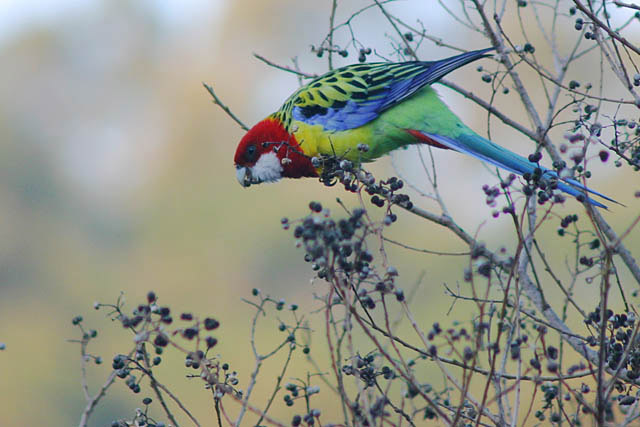
Eastern Rosella #40I seem to have covered several bird names on the blog recently, and that might be because our family was watching light-hearted bird documentary series, Hello Birdy, on the ABC, or maybe just because I love birds. Australia is lucky enough to have a staggering array of birds, many of them colourful, beautiful, intelligent, or unusual, and sadly, often under-appreciated. Here are some names that bring to mind a few of our feathered friends. Click on a likely link, and you will be taken to a YouTube video of each bird – there’s at least one for every entry.

Brahminy
The Brahminy Kite is a bird of prey and scavenger native to Australasia and Asia; in Australia they are found in coastal regions in the north. They are chestnut brown with a white head, breast, and tail tip, and typically nest in trees in mangrove swamps. The name Brahminy is due to their being found in India; it alludes to the Hindu Brahmin priestly caste, and is said BRAH-min-ee. The Brahminy Kite is the official mascot of Jakarta, in Indonesia, and in India is regarded as a representation of Garuda, the sacred bird of the supreme god Vishnu. I would not have considered this as a person’s name if I hadn’t seen a baby girl named Brahminy. It’s a bold choice, and its connection with a sacred bird is fascinating.

Corella
The Corella is a small, white cockatoo with a pink blush to its plumage. They are found from the central deserts to the eastern coastal plains, and are a familiar sight on farms and in cities. In some areas, Corellas have become so numerous they are considered a pest, being particularly destructive to trees and cereal crops. They congregate in large flocks, even up to several thousand, and make a high-pitched screeching noise which is ear-piercing when a flock all calls together, and can be heard for miles. Although they are noisy birds, they are very playful and have the joie de vivre that all parrots are blessed with. They are popular as pets, because they are good talkers, and excellent mimics. The word corella comes from the Wiradjuri language of central New South Wales. Corella has been used as a girl’s name since the 18th century, and is probably part of the Cor- group which is based on the Greek Kore, meaning “maiden”. The bird gives it a uniquely Australian flavour.

Dove
Here’s the dirty little secret about Doves: they’re just pigeons! Not only that, it’s unclear what makes some species of pigeons “doves”, because while we generally call smaller pigeons doves, that isn’t always the case. The confusion arises because the word pigeon is from Latin, and dove from Ancient Germanic, so they are two different words for the same thing (like autumn and fall). Nonetheless, their images are completely different: doves are symbols of peace, while pigeons are seen as disease-ridden pests (in fact, pigeons are no more disease-ridden than any other animal and pose no general health risk). Australia has a number of species identified as doves, and although we often think of doves as modest and grey, the Emerald Dove has striking green colouring, and the many varieties of Fruit Dove are likewise very colourful. There are also introduced species of dove, including those kept as pets. Dove has been used as a first name since the 17th century, and has been far more common for girls; a contemporary example is Disney actress Dove Cameron. Dove not only rhymes with love, but doves are used as symbols of love, since pigeons mate for life; the word dove can mean “sweetheart”. Perhaps because of this, doves were considered sacred to goddesses such as Venus. Another religious connection is that in Christian iconography, the Holy Spirit is often depicted as a dove.

Halcyon
Halcyon is the Latin name for the Tree Kingfishers, a large genus of birds found in Africa, Asia and Australasia, with Australasia having the most species. They are recognisable by their large heads and long pointed bills, and many are brightly coloured, often in iridescent blues and greens. The Laughing Kookaburra is a type of tree kingfisher, an iconic Australian bird with a raucous cackle that seems to epitomise the spirit of the bush. Halcyon is from the Greek for “kingfisher”, and is connected to a character from Greek mythology named Alcyone; the daughter of the winds, she married Ceyx, the son of the morning star. The pair were very much in love, and after Ceyx was lost at sea in a terrible storm, the unhappy Alcyone threw herself into the waves to end her life. The gods took pity on them, and changed both into kingfishers. According to legend, the “halcyon days” of midwinter, when storms cease, was when Alcyone laid her eggs, and her father restrained the winds so that she could do so safely. Because of this, the word halcyon (pronounced HAL-see-uhn) has come to mean “calm, serene, peaceful”, with our halcyon days those happy times we look back on with nostalgia. Halcyon has been used as a girl’s name since the 19th century: pretty and unusual, it gives Hallie as the nickname.

Lalage
Lalage is the scientific name for the Trillers, native to Asia and Australasia; they are small birds, usually coloured black, white and grey. They are called Trillers because during the breeding season, the males make a cheerful, almost continuous, trilling call. Lalage is derived from Greek, and means “to babble, to prattle”, or, in the case of birds, “to chirp”. The name became known from an ode by Roman poet Horace, where he speaks of his love for a young girl, his “sweetly laughing, sweet talking Lalage”. It has been used a few times since as a literary name, most notably in Kipling’s Rimini. Lalage has had occasional use, and in Britain seems to have a fairly upper-class image: contemporary examples are photjournalist Lalage Snow, and fashion designer Lalage Beaumont. In English, this name is usually pronounced LAL-a-gee or LA-la-ghee – just remember it’s three syllables, emphasis on the first, hard g like girl, not soft like germ. This fascinating name fits in with L-L names like Lillian, and as Lalage was a very young courtesan, almost seems like a posh version of Lolita! Lallie, Lollie, and Lala could be nicknames.

Lark
Larks are plain brown birds to look at, but their great beauty is in their voices, for they are famous for their melodious singing. This has made them a favourite subject for poets, such as Percy Bysshe Shelley’s, To a Skylark, and to say someone sings “like a lark” is a great compliment to the range and joyousness of their notes. Traditionally, larks are a symbol for dawn and daybreak, as in “getting up with the lark”, and this has given them religious overtones, for just as dawn is the passage between night and day, it can also be seen as that between heaven and earth. In Renaissance paintings, larks were sometimes used as a symbol of Christ. Although Australia has many birds with lark as part of their name, our only true lark is Horsfield’s Bushlark, widely found in grasslands and open woodlands. It is much smaller than larks in the northern hemisphere, and doesn’t have quite such an impressive voice, although its songs are still rich and varied, and it is a good mimic as well. The Eurasian Skylark which features in Shelley’s verse has been introduced here. Lark has been used as a name since the 18th century, and is historically more common for boys, but is often now thought of as more feminine than masculine. It’s a simple, non-frilly nature name laden with symbolism, and is more often found in the middle.

Maggie
Maggie is the affectionate name for the Australian Magpie. Although they look similar, it isn’t closely related to the European Magpie. Easily recognisable from their black and white plumage, magpies are very familiar in suburban life. Magpies are one of Australia’s favourite songbirds, because they have a complex, melodious warble, and will carol in chorus at dusk and dawn. They can also mimic other birds and animals, including human speech. Bold and sturdy, they are not typically wary of humans, and will happily accept (demand!) free food from us. They become unpopular in spring, as males can be so aggressive during breeding season that they swoop or even attack humans to warn them away. This is when feeding them pays off, as they can tell individual people apart, and won’t scare their buddies. The Magpie was a totem animal for the Indigenous people of the Illawarra, and is an official emblem of South Australia, appearing on the state flag. Magpies is a common name for sporting teams, and the cocky attitude of the Magpie is seen as indicative of the national character. Maggie is also a short form of Margaret. It was #174 in the 1900s, and was off the charts by the 1940s, returning in the 1970s. It has climbed steadily, and is currently in the 100s.

Oriole
Orioles are a large family of birds found throughout the world, which come in a variety of colours. Australian Orioles are green, perfect for blending in with the trees. They are fruit-eating birds, and the Figbird is one of the Orioles, although it doesn’t only eat figs. Orioles and Figbirds are attracted to backyards with small fruit trees and bushes, and which have native trees such as eucalypti and wattle; they are a fairly common sight in suburbia. The word oriole is derived from the Latin for “gold”, because the Eurasian Golden Oriole is a bright yellow. Oriole is related to names like Aurelia and Auriol, which are from the same derivation, and looks a lot like Oriel, which may be seen as a variant of Auriol, but also has Irish and Germanic origins. Oriole seems like a way to retain the golden meaning, while also referencing the bird.

Rainbird
The Rainbird is the colloquial name for the Pacific Koel, a species of migratory cuckoo which arrives here in spring from Papua New Guinea and Indonesia, and is found in north and eastern Australia. It’s called a Rainbird because of the belief that its rather mournful “whooping” call is a harbinger of wet weather. Males call for a mate during their breeding season, which coincides with the spring rains and the summer “wet season”, and are so loud they can be considered a nuisance. Like all cuckoos, Rainbirds lay their eggs in the nests of other species so that they can be raised by the unsuspecting hosts; however, unlike most other cuckoos, the baby Rainbird doesn’t kill the host chicks. Rainbirds are rather goofy-looking birds; the males have glossy black plumage and bright red eyes. I have seen Rainbird used as a girl’s middle name, and think it makes a wonderful name for a spring or summer baby. It would work equally well for boys.

Rosella
Rosellas are colourful parrots which are very familiar in suburbia. I think we might take them for granted, because they really are pretty, with a more pleasing range of calls than most parrots. Rosellas will be attracted to any garden that provides them with water, seeds and fruit, and can become so tame that they will eat out of your hand. This has led them to become common as pets, but in captivity they can become bored and aggressive, so I think it’s nicer to have them as backyard visitors. European settlers first saw Eastern Rosellas at Rose Hill (now called Parramatta), and called them Rosehill Parakeets; this evolved into Rosehillers, and eventually became Rosella. The Sydney suburb of Rozelle is named after them. Rosella is also a popular brand of tomato sauce, which sports an Eastern Rosella as its logo. By coincidence, Rosella is also an Italian name, an elaboration of Rosa, and looks like a combination of popular Rose and Ella.

POLL RESULTS
The public’s favourite names were Lark, Maggie and Rosella, and their least favourite were Brahminy, Oriole and Lalage.

(Photo shows an Eastern Rosella)

Famous Name: Harmony

19 Wednesday Mar 2014

Posted by A.O. in Famous Names

≈ 4 Comments

Tags

english names, Greek names, holiday names, locational names, musical names, mythological names, name history, name meaning, name popularity, name trends, US name popularity, virtue names

harmony-day

This Friday, March 21, it will be Harmony Day. Harmony Day is a government initiative which began in 1999, inspired by the United Nation’s International Day for the Elimination of Racial Discrimination, which takes place every March 21 around the world. It is a public holiday in South Africa, commemorating those who lost their lives in the struggle against apartheid.

On Harmony Day, primary schools, workplaces and communities come together to celebrate diversity and learn respect for each other. The message of Harmony Day is Everyone Belongs, and people are encouraged to dress in orange or wear orange ribbons to show their support. Harmony Day is managed by the Department of Social Services, and is part of Diversity Week.

Australia is one of the most multicultural countries in the world, with people from more than 200 countries and more than 150 languages represented. More than a quarter of the population are migrants, and clearly we all need to learn to get along. Although studies find that Australia is a generally tolerant society, and most migrants feel that they are accepted as part of the community, that isn’t the same as a society where diversity is welcomed, and more needs to be done.

The English word harmony can mean either “agreement, accord” (as Our views on child rearing were in complete harmony), or “a pleasing combination of elements” (as in The harmony of colours in her decorating scheme gave the house a relaxed feel). It is especially connected with music, where harmony is the use of simultaneous notes or chords.

The word is from Old French harmonie, from the Latin harmonia, based on the Ancient Greek harmozo, meaning “to fit together, to join”. In former times, the word harmony was used to mean music itself.

Harmonia was the Greek goddess of harmony and concord. She was seen as the personification of harmonious love between all people, of social order and civic unity. She was married to the Phoenician prince Cadmus, the founder of the city Thebes, and is famous because of a magic gold necklace she received as a wedding present, in the shape of two serpents. Although the necklace made any woman who wore it eternally beautiful and youthful, it had the unpleasant feature of bringing grave misfortune to its owners.

The necklace was wrought by Hephaestus, the god of metalwork, who became enraged when he discovered his wife Aphrodite having an affair with Ares, the god of war. He vowed to wreak revenge by cursing the lineage of any children arising from the affair: Harmonia was the result, and so she was given the jewellery of doom. Harmonia and Cadmus were transformed into dragons as part of the curse, and all Harmonia’s female descendants had horrible times because of the necklace. One of her descendants was Queen Jocasta, the mother of Oedipus – a famous example of family life going terribly wrong.

Eventually, after generations of misery, someone stole the necklace to give to his mistress, upon which her son went mad and set fire to her house, killing her and mercifully burning all that she had possessed, including the necklace. Why no one thought to destroy the thing earlier is a mystery – I suppose looking eternally young and beautiful was too hard to give up.

Harmony has been used as a girls name since the 18th century; although originating in England, it quickly gained more use in the American colonies, and to this day is more popular in the United States than elsewhere. An American connection to the name is the Harmony Society, an esoteric Christian sect which came to the United States from Germany in the early 19th century, named their first commune Harmonie, and built several towns with the name Harmony.

A statue of the goddess Harmonia is in the Harmony Society Gardens in the Old Economy Village in Pennsylvania, showing the high esteem they held for the virtue of harmony – as I think all communes must do, otherwise communal life would soon become intolerable. However, when they built New Harmony in Indiana, they included a shrubbery maze, to indicate that the path to harmony was not easy.

Harmony is a misunderstood virtue: it is perhaps too easy to dismiss those aiming for harmony as submissive, or passive-aggressive, or to see harmony as stifling, controlling, dull, or even totalitarian. Maybe when we think of harmony, we imagine everyone repressing their individuality to conform, being insincerely “nice” to each other, and minimising differences between people.

But in a truly harmonious society, people would recognise and value each other’s individuality, taking pleasure in their differences. Harmony isn’t about us all shutting up so we can fit in, but allowing each other to express ourselves, so that the entire range of the notes of the human chord can be heard together.

In music, harmony occurs when there is a balance between tense moments and relaxed moments – and that’s good in harmonious relationships too. Harmony doesn’t mean that things are always mild, pleasant and bland: it means that there is a healthy balance between dissonance and concurrence, between conflict and peace. Of course, harmony is very subjective, with each of us having our own idea of what this healthy balance looks like: no wonder harmony is so difficult to attain!

Harmony is a pretty name, and extols an unusual virtue, which is secular rather than spiritual, and communal rather than personal in nature. It’s also a musical name, more fashionable than Melody, but less trendy than Cadence, and so a nice harmonious balance between them. It fits in with choices such as Harper and Harlow, and in Victoria is a similar popularity to Harlow, in the 200s.

POLL RESULT
Harmony received an excellent approval rating of 75%, making it one of the highest-rated names of 2014. People saw the name Harmony as pretty and sweet (29%), and a beautiful musical name (25%). However, 16% thought the name seemed unprofessional or lower class.

International Names for Girls

23 Sunday Feb 2014

Posted by A.O. in Name Themes and Lists

≈ 19 Comments

Tags

American names, Arabic names, aristocratic titles, birth notices, brand names, Catalan names, celebrity baby names, Chinese names, created names, english names, Etruscan names, European name popularity, famous namesakes, fictional namesakes, French names, Gaelic names, Greek names, hebrew names, historical records, Hungarian names, International Baby Names for Australian Parents, international naming laws, Latin names, middle names, mythological names, name history, name meaning, name trends, names from movies, names from television, Old Norse names, Persian names, Provencal names, royal names, saints names, scandinavian names, Slavic names, Spanish names, surname names, UK name popularity, unisex names, US name popularity, virtue names, Visigothic names

juno

These are names chosen from my e-book, International Baby Names for Australian Parents – names which are familiar in other countries, but rarely used here. I chose ten that I particularly like, or find interesting, or think very usable. If you haven’t read the book, it gives you an idea as to what’s inside, and if you have read it, it’s a chance for me to provide more information than is possible in a book.

Anais

Identified as a French form of the Persian name Anahita, meaning “pure, immaculate”; Aredvi Sura Anahita is an Indo-Iranian goddess of fertility and wisdom. To get around French naming regulations, it was explained as a Catalan or Provençal form of Anna or Anne. The name is strongly associated with the American writer Anaïs Nin, whose first name was Angela, but always went by her second name. Anaïs was born in France and was of Spanish, Cuban, French and Danish descent. She is principally known as a diarist, where she intimately explored the complexities of her personal life, and as a writer of female erotica. Her name was the inspiration for the Cacharel perfume, Anais Anais, and in Australia we have the children’s clothing label, Aden + Anais. The name is pronounced a-na-EES. Feminine and exotic, Anais is very popular in France and Chile, and charts in the UK.

Bo

This short spunky name has different origins. It is a Chinese name for both boys and girls which means “wave”, as in a wave on water (especially the sea). It is a rare Chinese surname too, and an aristocratic title translated as the equivalent of a Count. It is also a Scandinavian boy’s name derived from the Old Norse name Búi, meaning “to live”. As a girl’s name, its most famous namesake is American actress and sex symbol Bo Derek, born Mary Collins. Ms Derek doesn’t know why she chose the name Bo: it just seemed “grown up” and “unusual” to her. A fictional girl Bo is the nursery rhyme shepherdess Bo Peep – her name comes from a slang term for being in a pillory, presumably because the person “peeped” through the head holes. Radio host Tim Blackwell named his daughter Bo last year, and since then there seems to be a few girl babies with the name in Australian birth notices. To show the gender divide in regard to this name, Bo is rising in the UK charts as a girl’s name, and rising in the US as boy’s name (probably a variant spelling of Beau). In the Netherlands, it charts for both sexes, but is only popular for girls.

Cora

The American author James Fenimore Cooper is credited with the creation of this name, in his 1826 historical novel, The Last of the Mohicans. The novel’s heroine is Cora Munro; dark, intelligent, and serious, she is a distant descendant of African-American slaves who forms a relationship with the son of a Native American chief – the titular “last of the Mohicans”. Her story ends tragically. There are actually many people named Cora in the records prior to the book’s publication, dating back to the late 16th century, but it is difficult to tell if they are abbreviations for longer names, like Cordelia. The name Cora is often theorised to be based on the Greek name Kore, meaning “maiden”; it was the common name of the goddess Persephone. If invented by Cooper, this makes sense, as there are a number of names with this derivation, such as Corinna. However, if its use goes back to the 16th century, it would pre-date the use of these “Kore” names, and may be based on the Latin cor, meaning “heart”. Cora is also used to Anglicise the Gaelic name Coira, meaning “seething pool”. Cora is a Downton Abbey name (the character is American-born), and fits in with the trend for simple, graceful names like Clara and Isla. It charts in both the US and UK, and is popular in Northern Ireland.

Elvira

Spanish form of an unknown Visigothic name whose meaning is much debated. It was traditional amongst medieval Spanish royalty, and became a favourite in fiction. The vengeful scorned lover Elvira of Mozart’s Don Giovanni is just one example of the many characters of this name in operas, plays, novels and films. Another is the title character of Noel Coward’s supernatural comedy Blithe Spirit, a hauntingly beautiful former wife who arrives in the least convenient fashion. Elvira is the name of Donald Duck’s grandmother, and many will remember the campy, cleavage-enhanced Elvira, Mistress of the Dark, played by Cassandra Peterson. A famous person with the name is Elvira Madigan (born Hedvig Jensen), a 19th century Danish circus performer who had a tragic love affair. Her story has been turned into several films and songs. English-speakers can pronounce this romantic name either el-VEER-ah or el-VY-ra (I prefer the first, as the second reminds me of virus), and it fits in with popular names such as Ella and Ava. Elvira charts in The Netherlands and is popular in Sweden.

Hermione

Derived from Hermes, the Greek god of transitions and boundaries, who was the messenger of the gods, and patron of travellers, herdsmen, thieves, public speakers, comedians, writers, poets, athletes, inventors, and merchants. Most scholars understand his name as meaning “stone, roadside shrine, boundary marker” – these were dedicated to Hermes as the god of boundaries and travellers. It may be related to the Greek for “the interpreter” to reflect the god’s role as divine messenger. In Greek myth, Hermione was the daughter of the lovely Helen of Troy, and had relationship troubles of her own involving Trojans. There is a Saint Hermione, an early Christian martyr who was the daughter of Saint Philip, identified as a prophetess in the church. In literature, Hermione is a beautiful queen accused of infidelity in Shakespeare’s play, The Winter’s Tale, and Harry Potter’s best female friend, the book-smart Hermione Granger. An Australian character of this name is Hermione the Modern Girl, the cartoon creation of Kaz Cooke. A famous namesake is British actress Hermione Norriss, from television shows Cold Feet and Wire in the Blood. This elegant name is pronounced her-MY-oh-nee, and charts in the UK.

Ilona

Hungarian name of uncertain meaning. It is usually said to be a form of Helen, although this may be folk etymology. In Magyar folklore, Ilona is the traditional name of the Queen of the Fairies. She is very beautiful, but also mischevious, and at times, dangerous! Archduchess Ilona of Austria was a Hungarian member of the Hapsburgs, one of the great royal houses of Europe; she passed away a few years ago. This pretty name is usually pronounced ih-LOH-na, and has Loni as the obvious nickname. It charts in France.

Juno

The Roman goddess of marriage and childbirth, and the queen of the gods, besides being the patron and protector of the Roman state. She was seen as eternally youthful, filled with forceful vitality, and a fertility figure, yet also warlike. Juno was the sister and wife of the sky god Jupiter, and the divine couple are two of the oldest known Roman gods. Like her husband, Juno had the power to throw thunderbolts, and the couple’s relationship could be stormy at times. The Romans believed that each woman had a protective guardian spirit called a juno, and this was given offerings on the woman’s birthday. The goddess’ name may mean “youth”, with the suggestion of vitality and fertility, but it is also possible that it is related to that of the Etruscan mother goddess Uni, meaning “she who gives”. The Romans connected her name to the waxing and waning of the moon – perhaps with the idea that, like the moon, she constantly renewed herself. The month of June is named in Juno’s honour, and when a woman is described as junoesque, it means she is beautiful, tall and shapely in a stately, imposing way. A famous person with the name is British actress Juno Temple, who has been in The Other Boleyn Girl, and The Dark Kight Rises. The movie Juno, starring Ellen Page, has helped give this name recent exposure, and it fits in with the trend for names ending with O. You may recall that New Zealand name blogger Anna Hamilton has a little girl named Juno. Juno charts in the UK, where it is rising.

Patience

Patience is the ability to endure difficult circumstances, persevering without exhibiting negativity such as irritation or anger, and being able to deal with strain or frustration during long-term difficulties. It is considered one of the highest virtues in several religions, such as Islam, Buddhism and Hinduism, and in Christianity is one of the Seven Heavenly Virtues. Modern psychology sees patience as a sign of self-control and maturity, and it is a secular virtue as well. The word patience is ultimately from the Latin for “suffering”, and it was introduced as a virtue name by the Puritans in the late 16th century. A famous Australian namesake is Patience Hodgson, a member of indie rock band The Grates. Virtue names are back in fashion, and this one seems both admirable and attractive – a name that someone can grow with. Patience charts in the US.

Safiya

Variant of Safiyya, feminine form of the Arabic name Safi, meaning “pure”. The name is important in Islam because Safiyaa bint Huyayy was a Jewish woman captured from a nomadic Arabian tribe at the age of 17 who was chosen by Muhammad for his own. Previously, she had dreamed that the moon fell from the heavens into her lap, and this was interpreted as a miraculous sign she would marry Muhammad. She converted to Islam and became one of the Prophet’s wives, and after his death gained quite a bit of power and influence. Safiya is pronounced sa-FEE-ah, and is an Arabic heritage choice which fits in with current trends, as it is not dissimilar to popular Sophia. It charts in both the UK and France.

Ziva

Slavic name meaning “living, being, existing”. In Slavic mythology, Živa was a goddess of life and fertility who was worshipped throughout what is now Poland, the Czech Republic, Slovakia, Slovenia, and Germany before the coming of Christianity. She was depicted as a beautiful woman, and people prayed to her for good health and long life. She seems to have been connected with the harvest of both fruit and grains, and one story is that she was able to turn herself into a cuckoo bird. Ziva is also a feminine form of the Hebrew name Ziv, meaning “bright, radiant”. In the television drama series NCIS, Ziva David is an Israeli-American agent portrayed by Cote de Pablo. Pronounced ZEE-vah, Ziva fits in with popular names such as Ava and Zoe. It charts in The Netherlands, and the UK, where it is rising, and is popular in Slovenia.

POLL RESULTS
The public’s favourite names were Cora, Juno and Hermione, and their least favourite were Safiya, Patience and Elvira.

(Photo shows Ellen Page as Juno MacGuff in Juno)

← Older posts
Newer posts →

Enter your email address to follow this blog

Categories

Archives

Recent Comments

A.O.'s avatarwaltzingmorethanmati… on Zarah Zaynab and Wolfgang…
Madelyn's avatarMadelyn on Zarah Zaynab and Wolfgang…
JD's avatardrperegrine on Can Phoebe Complete This …
A.O.'s avatarwaltzingmorethanmati… on Rua and Rhoa
redrover23's avatarredrover23 on Rua and Rhoa

Blogroll

  • Appellation Mountain
  • Baby Name Pondering
  • Babynamelover's Blog
  • British Baby Names
  • Clare's Name News
  • For Real Baby Names
  • Geek Baby Names
  • Name Candy
  • Nameberry
  • Nancy's Baby Names
  • Ren's Baby Name Blog
  • Sancta Nomina
  • Swistle: Baby Names
  • The Art of Naming
  • The Baby Name Wizard
  • The Beauty of Names
  • Tulip By Any Name

RSS Feed

  • RSS - Posts

RSS Posts

  • Celebrity Baby News: Melanie Vallejo and Matt Kingston
  • Names from the TV Show “Cleverman”
  • Can Phoebe Complete This Sibset?
  • Zarah Zaynab and Wolfgang Winter
  • Baby, How Did You Get That Name?
  • Celebrity Baby News: Media Babies
  • Celebrity Baby News: Adelaide Crows Babies
  • Celebrity Baby News: Chris and Rebecca Judd
  • Names at Work: Name News From the World of Business and Employment
  • Celebrity Baby News: Sporting Round Up

Currently Popular

  • Celebrity Baby News: Alisa Camplin and Oliver Warner
  • Rare Boys Names From the 1950s
  • Sad Celebrity Baby News (contents may cause distress)
  • Celebrity Baby News: Jacinta Allan and Yorick Piper
  • Celebrity Baby News: Nicki Gemmell and Andrew Sholl

Tags

celebrity baby names celebrity sibsets english names famous namesakes fictional namesakes honouring locational names middle names name combinations name history name meaning name popularity name trends nicknames popular names saints names sibsets surname names twin sets unisex names

Blog at WordPress.com.

Privacy & Cookies: This site uses cookies. By continuing to use this website, you agree to their use.
To find out more, including how to control cookies, see here: Cookie Policy
  • Subscribe Subscribed
    • Waltzing More Than Matilda
    • Join 517 other subscribers
    • Already have a WordPress.com account? Log in now.
    • Waltzing More Than Matilda
    • Subscribe Subscribed
    • Sign up
    • Log in
    • Report this content
    • View site in Reader
    • Manage subscriptions
    • Collapse this bar
 

Loading Comments...