• About
  • Best Baby Names
  • Celebrity Baby Names
  • Celebrity Baby Names – Current
  • Celebrity Baby Names – Past
  • Featured Boys Names
  • Featured Girls Names
  • Featured Unisex Names
  • Links to Name Data
  • Waltzing on the Web

Waltzing More Than Matilda

~ Names with an Australian Bias of Democratic Temper

Waltzing More Than Matilda

Tag Archives: germanic names

The People’s Choice of Boy’s Names

23 Sunday Sep 2012

Posted by A.O. in Name Themes and Lists

≈ 15 Comments

Tags

African-American names, alphanumeric names, American slang, anagram names, Anglo-Saxon names, animal names, aristocratic names, Australian Aboriginal names, Australian slang terms, banned names, bird names, birth notices, Bonds Baby Search, celebrity baby names, computer hacker names, controversial names, created names, english names, famous namesakes, germanic names, Google, Greek names, historical records, Indian names, J.R.R. Tolkien, locational names, Maori names, meteorological names, middle names, mythological names, name history, name meaning, nature names, nicknames, Old English names, Old Norse, polynesian names, popular culture, royal names, saints names, scandinavian names, slang terms, Spanish dialect words, surname names, tree names, unisex names, US name popularity, vintage names, vocabulary words, Welsh names
Adolf

A form of the Germanic name Adalwolf, meaning “noble wolf”. The Old English form is Æthelwulf, and there are a few famous men of this name in English history, most notably the father of Alfred the Great. The name was often used amongst the royal houses of northern Europe, and the Latinised form Adolphus turns up in the monarchy of the United Kingdom. There is a saint called Adolf of Osnabrück, a 9th century German monk. Up until the mid-twentieth century, the name was common in central and northern Europe, and can be found in Australia due to immigration from Germany and Scandinavia. The reason this name has been included is because barely a day goes by without someone Googling: “Is it legal to call your child Adolf?”, to which I can say, yes, it is legal here, and you can find quite a few Australians in the records with this name – including ones born during and shortly after World War II. I have met a man named Adolf (born around the early 1960s), and I believe he was named after his grandfather. The other chestnut is, “Is it legal to call your child Adolf Hitler in Australia?” to which I reply, Why would you want to do that? Seriously, why? As the name Ned Kelly is banned because he is considered too wicked, I’m pretty sure Adolf Hitler would also be illegal here.

Buster

This spunky name has more history than you might think. In England, it was first used in the middle position; Buster is a variant of the surname Bustard, after the bird. In 18th century America, it seems to have been more common for African-Americans, and may have started as a pet name in the sense of “breaker”. Later it took on the meaning of “unusual, prodigious, amazing”. Buster is used to address males in the same way as pal or fella (“Now listen up, buster”). This comes from the Spanish dialect busté, meaning “you”. It’s gone on to have negative connotations. One of the most famous men with this name is actor Joseph “Buster” Keaton, who started his career in vaudeville as a small child. He claimed to have received his nickname as a toddler from Harry Houdini, after falling down a flight of stairs unhurt. Houdini allegedly remarked, “That was a real buster!”, meaning “a fall with the potential to cause injury”. So Keaton’s name indicated he was tough enough to take a tumble. Buster Brown was a cartoon strip boy who was an angelic-looking blond prankster. In Australian slang, come a buster means to fall or fail by misfortune, while buster is a term for a strong wind – especially the Southerly Buster. This is a name Sydneysiders give to the abrupt cool change that sometimes blows in from the south during the warmer months. Vintage name Buster has recently become rather an Australian favourite for boys, although in the novel, The Shiralee, by D’arcy Niland, Buster is a little girl.

Chester

Chester is a city in Cheshire, England, founded by the Romans as a fortress in 79; its size has led some historians to speculate that the Romans intended it to be the capital, rather than London. Its current name comes from the Old English Ceaster, meaning “Roman fort”, and its early history was very military, with wars seemingly constant. Even King Arthur is supposed to have won a major battle here, and it was the last city to fall to the Normans during the Conquest. Today it’s a thriving modern city which still tries to preserve its historic buildings. Chester has been used as a personal name since the 16th century, probably after the surname, although early births in Cheshire suggest they may have been named directly for the city itself. Although it’s been a popular name in the US in its time, and only left the Top 1000 in the mid-1990s, for some reason it never caught on in a big way here. I was surprised to see it on a baby in the Bonds Baby Search Competition this year. For some reason, this baby name is often Googled, although the slang term chester is an impediment to its use.

Digby

An English surname from a place name meaning “settlement by the ditch”, derived from a combination of Old English and Old Norse. The name seems to have been first given in honour of the aristocratic Digby family, Anglo-Irish peers whose family seat in Coleshill, Warwickshire was granted to them by Henry VII. It is from the town of Coleshill that the personal name originates in the 17th century. One of the most famous of this clan was Sir Kenelm Digby, a Catholic philosopher considered a great eccentric for his exuberant personality and fascination with science, which extended to studying alchemy, astrology and magic (not considered incompatible with science then); he was the first person to note the importance of oxygen to plants. A man of action as well as thought, he became a privateer, and killed a man in a duel; he also wrote several cookbooks, invented the modern wine bottle and managed to fit in a secret romance to a famous beauty which led to their marriage. A true all-rounder. This name regularly appears in birth notices here, especially from Victoria, and may be encouraged by comedienne Cal Wilson, who welcomed a son named Digby a few years ago. People seem to either loathe this name or find it irresistibly cute; I must confess to being in the second category.

Elfyn

This is the Welsh form of the Old English name Ælfwine, meaning “elf friend”; it went out of use after the Norman Conquest. J.R.R. Tolkien liked to think of the name as meaning “friend of the elves”, and invented two fictional characters with this name who formed close bonds with elves. Modern forms include Alvin and Elvin, both taken from the surname form of the name. There are several famous people in Wales with Elfyn as either their first name or surname, including young rally driver Elfyn Evans and poet Menna Elfyn. For reasons I cannot explain, it is Googled several times a week.

Jharal

Jharal Yow Yeh is an NRL star who plays for the Brisbane Broncos. An Aboriginal Australian from the Margany people of Queensland, he also has Torres Straits Islander, Vanuatuan and Chinese heritage. Now aged 22, he has been playing for the Broncos since 2009, for the Indigenous All-Stars since 2010, and for both the Queensland state team, the Maroons, and the Australian national side, the Kangaroos, since last year. Early this season he sustained a serious leg injury, and is still recovering. People Google Jharal’s name all the time, asking for its meaning, and often querying whether it’s of Indigenous origin. In fact, his name was created for him by his grandmother. His mother couldn’t decide what to call him, so she asked nana Iris to name him. Iris cleverly arranged the letters of all the strongest men in her family into a name, and came up with Jharal. It is taken from the initials of James, Harold, Anthony, Reece, Arthur and Linc. The name is pronounced JHUH-rahl, and Iris says that most people think it is an Indian name. In fact, by coincidence, a jharal is a mountain goat from India. Names created for celebrities often seem too unique for others to use, but I have seen Jharal a few times in birth notices recently. Looking for a nickname? Jharal is known to his family as Joe.

Koa

This unisex name has several different origins. There is a Hawaiian male name Koa meaning “strong, brave, fearless”, and it’s also the name of a Hawaiian tree, the Acacia koa. The wood was traditionally used to make dug-out canoes and certain types of surfboards. In Maori, the word koa means “happiness”. In the Kaurna language of South Australia, the word koa means “crow”, and the Koa people come from south-east Queensland, so it’s also a tribal name. There has been a sudden proliferation of this name in Australian birth notices, and that might be because Tom Dumont from No Doubt welcomed a son named Koa last year. However, I am beginning to see far more girls named Koa in birth notices than boys. This may be because of model and actress Koa Whelan, a contestant on this year’s dating show, Please Marry My Boy. I think this works equally well for boys and girls, although the first meaning is male only.

Neo

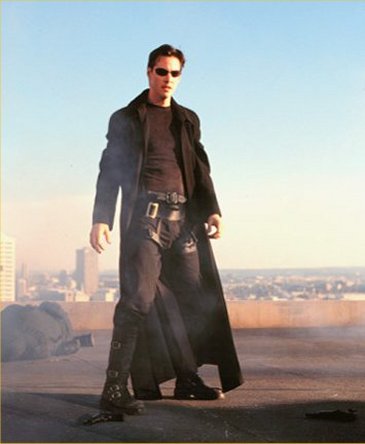
This is from an Ancient Greek prefix meaning “new, young, fresh”. It turns up in words such as neonatal, meaning “pertaining to the newborn”, or neologism, meaning “a freshly coined word”. The name has become well-known since 1999 because Neo is the protagonist of the cyberpunk Matrix film series. In the films, the character’s name is Thomas Anderson, and Neo is his computer hacker identity (Anderson does have the letters N, E and O in it). Neo is also an anagram of One, and the films seek to discover whether Neo is “The One”, a Messiah-like figure who will be able to rescue humanity. The films have become cult classics, and intermingle a range of philosophical and spiritual ideals from the East and the West – it’s even spawned its own religion, Matrixism. From the amount of times that people have Googled neo baby name or neo for a boy, there are quite a few parents considering using this name. Neo fits right in with current trends, and doesn’t sound any stranger than Leo. It is very strongly associated with the film character though. However, Australians have a solid history of gaining name inspiration from the movies, and most of The Matrix series was filmed in Sydney, giving it an Australian connection.

Rune

A Scandinavian name derived from Old Norse meaning “secret”. The runes are the letters of the runic alphabets, which were used to write different Germanic languages, dating from at least the first or second century AD. Runic inscriptions seem to have been for magical and divinatory use, and perhaps their knowledge was restricted to an elite in early times. According to Norse mythology, the runes were originally stolen from the god Odin. They are part of English history, because the Anglo-Saxons had their own runic alphabet. If you have read The Hobbit, you will have seen Anglo-Saxon runes used on a dwarven map; Tolkien later invented his own runic alphabet which appears in The Lord of the Rings. Rune stones are  used for divination today, often in a similar way to tarot cards. The name isn’t unusual in Scandinavia, and you may know the name from the Polish speedway rider Rune Holta, born in Norway. I think this is a simple, attractive name with layers of history and meaning.

Zephyr

A zephyr is a light, warm wind. It comes from the name Zephyrus, who was the Greek god of the west wind – the gentlest of breezes, which served as a harbinger of spring. He married both Iris, the goddess of the rainbow, and Chloris, the goddess of flowers – who is also seen as a deity of spring (and named Flora by the Romans). Children may know the name as that of a bat in the Silverwing book series, and, in the form Zephir, as the monkey in the Babar the Elephant stories. Grown ups may be reminded of The Zephyr Song by the Red Hot Chilli Peppers. If you take the name as derived directly from the god, then it is male, but if you accept it as a nature name and vocabulary name, it is unisex. It only seems to be Googled to my blog as a male name however. Pronounced ZEF-uhr, this name is unsual but not outrageous; it seems like a breezy alternative to popular Z names like Zachary, Zeke or Zane. The obvious nickname is Zeff or Zeffy.

(Picture shows actor Keanu Reeves in his role of Neo from The Matrix; Sydney skyline in background)
The People’s Choice of Girl’s Names

16 Sunday Sep 2012

Posted by A.O. in Name Themes and Lists

≈ 14 Comments

Tags

Australian Aboriginal names, Biblical names, birth announcements, celebrity baby names, doll names, Dutch names, English idioms, english names, famous namesakes, fictional namesakes, Finnish names, French names, germanic names, Google, Google searches, hebrew names, Hungarian name popularity, Hungarian names, Indian names, Irish name popularity, Irish names, Japanese names, locational names, mythological names, name history, name meaning, name popularity, Native American names, nicknames, Polish name popularity, Polish names, popular culture, royal names, saints names, Sanskrit names, Slavic names, Spanish names, tribal names, Turkish names, UK name popularity, unisex names, US name popularity, Visigothic names, vocabulary names, Welsh names

I have been trying to add Featured Names from those in the search terms, when possible. To celebrate the start of spring, I’m choosing ten names for each gender that people have used as search terms to reach my blog. I tried to concentrate on those that had been Googled multiple times, or which had questions attached to them, and I’ve chosen names which don’t make the Top 100.

Of course, if you would like to see a particular name featured on the blog, you don’t need to type it into a search engine and cross your fingers – you can always e-mail me directly and put in a request.

Arya

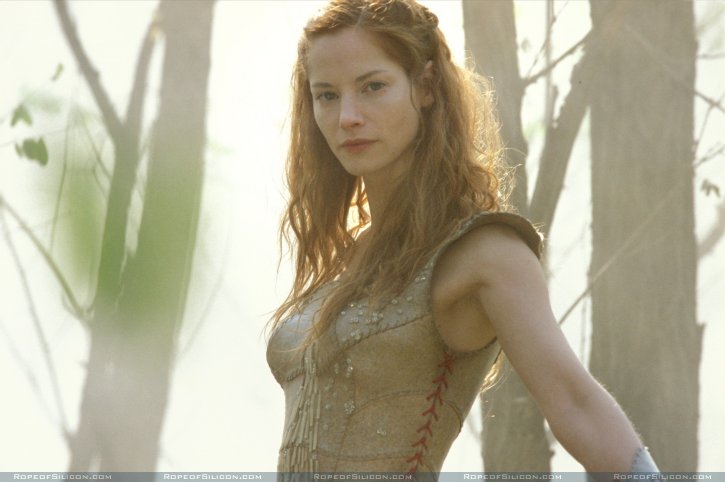
Arya is a unisex Indian name which means “noble, honourable” in Sanskrit. Common in India, it’s become known in the English-speaking world through two fantasy novelists. In George R.R. Martin’s A Song of Fire and Ice series, Lady Arya Stark is a beautiful free-spirited noblewoman who leads a very adventurous life. In Christopher Paolini’s Inheritance cyle, Arya Dröttning is an elf, later queen of the elves, and the romantic interest of the hero, Eragon. Both these characters are strong and independent, good at swordplay, horse-riding and taking care of themselves. Although there are several famous men and women in India called Arya, English-speakers probably think of it as a female name, because of the fictional characters. The Indian pronunciation is AHR-yuh, but both Martin’s and Paolini’s ladies say their names AHR-ee-uh (I’m basing this on how they are said in the TV series and the movie, as some written guides suggest AR-ee-uh or AYR-yuh). So there’s quite a selection of pronunciations. Arya recently joined the US Top 1000, and is currently #711. It would make a good heritage choice, or else an attractive literary name.

Carmel

Mount Carmel is a mountain range in Israel, and its name means “garden”. Our Lady of Mount Carmel is the title given to the Virgin Mary in her role as patroness of the Carmelite Order. The first Carmelites were Christian hermits who lived on Mount Carmel during the 12th century, and built a chapel dedicated to the Virgin Mary. They were approved as an order devoted to contemplative prayer, but didn’t stay in the Holy Land for long. They soon made their way to Sicily and Cyprus, and from there throughout Europe. Carmel was first used as a name in honour of Our Lady of Mount Carmel, perhaps especially for girls born on or near her feast day of July 16. Carmel was in rare use in 1900, then climbed steeply to make the Top 100 in 1930. It peaked in the 1940s at #77, and was off the Top 100 by the 1960s. It hasn’t charted since the 1990s. Although this name originated amongst Catholics, Mount Carmel is a place name mentioned in the Bible, and is important in Judaism, Protestantism, Islam, and the Bahá’í Faith as well, so it is usable by anyone who feels a connection to it.

Elodie

This is the Anglicised form of French Élodie, derived from the Spanish name Alodia; Saint Alodia was a 9th century Spanish martyr. The meaning of the name is uncertain, but it has been interpreted as Visigothic, from the Germanic meaning “foreign wealth”. In English it’s pronounced like Melody without the M, but the French pronunciation is ay-lo-DEE. There are several fashion boutiques in Australia with the name Elodie in them, giving it a self-consciously stylish air, and it’s a name often seen in birth announcements here, especially from Melbourne. This pretty name makes a good alternative to popular Eloise, and I can see it becoming another Amelie in the future (although a movie called Elodie would be a real help).

Kinga

Saint Kinga was born a Hungarian princess, and her name is the pet form of Kunigunde, which is from the Germanic for “family war”. Kinga had several saintly family connections, because she was the niece of St. Elizabeth of Hungary, and the great-niece of St. Hedwig. One of her sisters became St. Margaret of Hungary, while the other, Blessed Jolenta of Poland, is still being considered for canonisation. Saint Kinga was married off to Bolesław V, who became High Duke of Poland; she insisted that the marriage remain chaste, and although her husband wasn’t happy about the situation, he reluctantly agreed. During her marriage, she devoted herself to charitable works, and after being widowed, became a nun and spent the rest of her life in contemplative prayer. She is the patron saint of Poland and Lithuania, and her name is a popular one in both Hungary and Poland. This name has turned up repeatedly in the search terms ever since comedian Merrick Watts and his wife welcomed their daughter Kinga Rose in December last year. It’s apparently pronounced KEEN-gah, and makes an unusual and attractive heritage choice.

Mika

This little name has several different origins. Mika is a Japanese girl’s name translated as “beautiful fragrance”. It is also a Native American word, meaning “racoon” in the Osage and Omaha-Ponca languages of Oklahoma and Nebraska. However, it’s an Australian Aboriginal word too, because mika means both “moon” and “month” in the Nyungar language of south-west Western Australia. This is a name I’ve seen used a lot in the past, although not so much lately. It often appears in variant spellings, such as Meeka or Meekah – presumably to make the pronunciation clearer, because it is said MEE-kuh, and not like the boy’s name Micah. However, it’s possible that these variants were trying to provide a phonetic spelling of the Dutch name Mieke, which is a pet form of Maria, and said exactly the same way. Mika is similar to popular names such as Mia and Mila; it could also be understood as a short form of Mikayla. Just to confuse things further, Mika is an unrelated boy’s name as well – it’s a pet form of Mikael, the Finnish form of Michael. I suspect the reason I see less babies with this name is the British singer Mika, who now makes it seem male.

Niamh

Niamh is an Irish name meaning “bright, radiant”. In Irish mythology, Niamh was a goddess, the daughter of the god of the sea, and a fairy queen in the Otherworld known as the Land of Eternal Youth. Called Niamh of the Golden Hair, she lured the poet Oisin away to her own world, and together they were the parents of two children, Oscar and Plúr na mBan (meaning “flower of women”). Oisin thought he had been with Niamh for three years, but when he returned to Ireland, he found that three centuries had passed. Niamh gave him her white horse to ride, and warned him not to let his feet touch the ground, or he would never return to her. Later, he accidentally fell off the horse, and the three hundred years caught up with him; he became a very old man, near death. According to legend, his grave site is in Scotland. Depending on accent, the Irish pronunciation is either NEE-av or NEEV, but English-speakers tend to opt for NEEV as easier to say. This fairytale name is Top 100 in England/Wales, Scotland, Northern Ireland and Ireland, and you can see why.

Saskia

This Germanic name is derived from the name of the Saxons, a tribe from the north of Germany. We know them well, because some of them migrated to the British Isles and merged with the Angles to become the Anglo-Saxons of English history; their lands were in the south of England. The name of the tribe may come from the seax, a type of knife that the Saxons were known for using as a weapon. The seax is still an important symbol in the English counties of Essex and Middlesex, both of whom feature three seaxes in their ceremonial emblem. The Saxons who stayed behind in Germany resisted the Christian Franks for some time, but were defeated by Charlemagne and forced to convert; their lands became the Duchy of Saxony. Saxons also gained territories in the Netherlands and northern France. The name became famous through Saskia van Uylenburgh, who was the wife of the Dutch artist Rembrandt vn Rijn, and often served as a model for his paintings. In Australia the name is well known because of the actress Saskia Burmeister, who appeared in the film Hating Alison Ashley, and from the British-Australian children’s TV series Noah and Saskia, where Saskia is the Australian girl. Here the name is pronounced either SAHS-kee-ah, or SASS-kee-ah, and can be seen as a Dutch heritage choice.

Seren

This is a modern Welsh name meaning “star”, and it’s said SEH-ren. It can apparently be used for both sexes, but in Wales it is highly popular as a girl’s name and doesn’t chart for boys. Its similarity to female names such as Sarah, Serena and Serenity probably makes it seem more feminine. I’m including this one because amongst the most common search terms I receive are those asking for baby names which mean “star”, and I think this is a very pretty and simple one. Seren is also a popular unisex Turkish name, which, according to a Turkish dictionary I consulted, refers to the spar of a boat, which juts out from the sail. I’m not sure if the name is taken directly from the word, though. This might be a good name for yachties to consider – especially as boats once used the stars to navigate.

Tuppence

Tuppence means “two pennies” in the pre-decimal currency or old money. We use the word tuppence to signify a very small amount, as in the phrase, I don’t care tuppence, and is also used in the same way as my two cents to indicate you are proffering an opinion (“Well, that’s my tuppence worth”). Tuppence is theoretically unisex, and in Australia “Tuppence” was the nickname of Desmond Moran, from the notorious crime family. However, it’s usually seen as feminine, as in the British actress, Tuppence Middleton, or the nickname of Agatha Christie’s detective, Prue Beresford, in Tommy and Tuppence. Little Tuppence was a New Zealand fashion doll sold throughout Australasia in the late ’60s (a slight rip-off of American Penny Brite), and this gives it a definite girly flavour. To me it seems distinctly vintage, with a touch of English eccentric. It’s Penny to the power of two!

Zaria

Zaria is a goddess of beauty in Slavic mythology, and her name means “dawn” – the time of day when people would pray to her. She is a goddess of warriors, and was invoked to protect against death in battle. The Dutch royal family have a little Countess Zaria, aged six; she is the daughter of Prince Friso and Princess Mabel of Orange-Nassau. Although her first name is Joanna, she is officially known as Zaria, and was named after the goddess. Zaria seems like a great alternative to popular Zara, and very much like Azaria without the baggage. In the US, Zaria has been Top 1000 since the mid 1990s, and is currently #753.

(Picture shows actress Sienna Guillory in the role of Arya from the movie Eragon)

Famous Name: London

12 Wednesday Sep 2012

Posted by A.O. in Famous Names

≈ 6 Comments

Tags

Arthurian legends, British names, celebrity baby names, Celtic names, Disney names, english names, fictional namesakes, germanic names, J.R.R. Tolkien, locational names, mythological names, name history, name meaning, Old English names, Roman names, surname names, unisex names, US name popularity

The Olympics and Paralympics have come to a triumphant end, climaxing with a a concert, grand parade and a spectacular fireworks display which lit up the sky over the Thames and Tower Bridge. The sporting festival has been a golden summer for the city of London, which has gained new confidence after putting on a fantastic Olympic Games, followed by the most successful Paralympics Games ever. The city of London itself looked richly alluring, with its parks and gardens in leaf under the sun, or its historic buildings looking grand yet discreet in the grey drizzle.

I know many people who couldn’t wait to visit London, or visit it again, after watching the coverage of the Olympic Games, and it’s a city which has drawn many Australians to it, for holidays, to work, and sometimes to live permanently. Since the post-war era, it seems as if we have been sending Australians to Britain in droves, and most of them seem to end up in London. They give us a bunch of convicts, and in return they get Barry Humphries, Kylie Minogue and a ton of drunk Aussie backpackers. Whether this is a fair trade or not only history can decide.

London was first established as a town around 47 AD by the Romans, who called it Londinium. It is almost certain that they based it on a local name for the area, which may be Celtic, or perhaps even older. What that name may have signified has taxed the brains of etymologists for many years, with none of them coming up with a theory that has gained widespread acceptance.

The very first theory put forward was by medieval chronicler Geoffrey Monmouth in his History of the Kings of Britain. He asserted that the name is derived from the name of King Lud, who once ruled the area. It would thus mean “Lud’s fortress”, although there is no evidence of Londinium ever being fortified, and in fact seems to have been built as a civic and mercantile centre; perhaps “Lud’s valley” would be more accurate. The name Lud may be connected to a mythological figure named Llud Llaw Eraint, who is the Welsh version of a British god named Nodens.

Nodens was a Celtic god of the sea, hunting, dogs, and healing, and a patron of amputees, and there is a ruined temple complex in his honour in Gloucestershire, while other artefacts connected to him have been found in Lancashire and on Hadrian’s Wall. He is sometimes identified with the Fisher King of medieval myth, who features so enigmatically in Arthurian legend.

J.R.R. Tolkien derived the name Nodens from a Germanic root meaning “acquire, own, utilise” from an earlier word with connotations of “catch, entrap”. This would certainly fit in with Nodens as a god of hunting, and at this point most scholars seem to be in general agreement with the meaning proposed by Tolkien.

Several places in Britain and Ireland derive their names from Nodens, and it doesn’t seem too far-fetched that London might too. The reason Geoffrey of Monmouth’s theory has been given short shrift is that like many medieval chroniclers, his work is quite fanciful, and riddled with errors in etymology. For example, he latched onto Lud as the origin of London because of Ludgate in the London Wall; most likely it’s a corruption of the Old English for “swing gate”. However, even though Geoffrey of Monmouth got a lot of things wrong, he may have been drawing on genuine traditions of London being sacred to Nodens in ancient times.

According to Geoffrey of Monmouth, the Romans built a temple to Lud, but if so, it remains elusive. There are statues of Lud and his sons, once adorning Ludgate, which are now on a church porch in Fleet Street, while a pub at Ludate Circus was once called Old King Lud. Although the building now houses a Leon restaurant, medallions commemorating King Lud can still be seen on its roofline and over its doors. So King Lud aka Nodens still maintains a presence in London town.

If I may stick my own ignorant oar into the debate, I can’t help noticing that names of places near a river nearly always have a meaning connected to it. As Nodens was a god of the sea, and the part of the Thames near London is a tidal river, this notion of mine does not cancel out the idea that it was connected to Nodens in some way. The Museum of London tells us that finds of prehistoric artefacts dredged from the Thames provide copious evidence that they were placed there as votive offerings, and that the deity presiding over the river was worshipped.

Could this hypothetical deity have been Nodens? Possibly, but it’s all getting very speculative, so I think we have reached the end of our investigations for now. In my uneducated opinion, London’s name is probably connected to its river, and quite possibly to the deity presiding over it, who may very well be Nodens. Apart from that I can say no more, except that Britain’s capital is a vital part of its ancient and rich mythology.

London has been used as a first name since at least the 17th century, and was first given to boys, most likely from the surname London, after the city. It’s possible that even early Londons were named directly in honour of the city, as many were born in London districts.

From very early on, London was used for both genders, and although I can easily understand it as a unisex name, I have slightly more trouble comprehending why it has become so much more popular for girls. While cities such as Paris and Florence have a certain “feminine” vibe, to me, London has quite a “masculine” feel – solid, serious, the seat of business and government. The name London also fits the pattern for many of our popular male names – two syllables, ending with an -n, such as Aidan, Mason, Logan or Nathan. In fact it’s only one letter different from a male name – Landon, while its last three letters form a male nickname – Don.

I have been told that the reason for this is the character of London Tipton, from the Disney TV series, The Suite Life of Zack & Cody. However in the US the name was always more popular for girls, even before the show came on air – although its popularity as a girl’s name certainly increased markedly after the show started. I suspect that for many parents, London seemed like a more “classy” version of the name Paris, whose image had become slightly tarnished. Intriguingly, Miss Paris Hilton apparently plans to name her first-born daughter London; I wonder what effects that might have, if it ever happened?

London has charted as a baby name for both sexes in the US for over ten years, and currently it’s #560 for boys and #94 for girls. Although it’s not such a popular name in Australia (although it’s seen more use than you might expect), I wouldn’t be surprised if a similar gender disparity wasn’t apparent here too. Early this year we welcomed celebrity baby London Joy Polak, partly named in honour of the city, where her grandfather was from.

Despite its long history, London still seems a very “modern” name, and one that would be especially suitable for anyone who has a connection to the city. I think it works well as a name for both boys and girls, and matches nicely with a wide variety of middle names. Although the thought of your child sharing their name with Paris Hilton’s future offspring might give some people second thoughts.

NOTE: Not all Australian backpackers in London are drunk, at least not all the time, but that is the not totally undeserved reputation they carry.

Famous Name: Adelaide

22 Wednesday Aug 2012

Posted by A.O. in Famous Names

≈ 15 Comments

Tags

celebrity baby names, famous namesakes, Frankish names, French names, germanic names, honouring, locational names, name history, name meaning, name popularity, nicknames, retro names, royal names, saints names, US name popularity

Tomorrow the city of Adelaide will welcome their Olympic athletes home with a street parade. That’s a good enough excuse as any to cover the name Adelaide, which has been sitting in my Request file for many months now.

Adelaide is the capital of South Australia, and it’s a pleasant coastal city which has been voted the Most Liveable and judged Most Affordable capital city in Australia. It was planned in the 19th century as the capital of a British province of free settlers, and is the only state capital not to have a history of convict settlement – something of which it is still very proud.

Its early history was marked by a commitment to religious freedom and political civil liberties, which led to its nickname of The City of Churches. Despite this moniker, the last census revealed that almost a third of Adelaideans had no religious affiliation at all, making it one of our least religious cities.

From early on, Adelaide attracted many European immigrants escaping religious persecution, most notably from Germany. The Germans brought with them the vine cuttings which were planted to found the famous wineries of the Barossa Valley. After World War II, there were many more immigrants, including Italian, Greek, Dutch, and Polish. The names in the birth notices from Adelaide tell me that South Australians remain very aware of their cultural heritage, because there are always lots of German and Italian baby names.

Adelaide is famous for its many festivals, celebrating music, art, theatre, comedy, sport, food, wine and just about anything else you can think of. When not having a festival, Adelaide tends to be on the sedate side, although quite sophisticated for a small city. If you enjoy somewhere quiet and clean, with good food and wine, attractive beaches, plenty of parkland, lots of outdoor activities and generally friendly people, you will like Adelaide. Please don’t drink the water though; it’s not unsafe but it tastes like it is.

The name Adelaide is from the French form of the Germanic name Adalheidis, meaning “noble kind”. The Frankish nobility were keen to stress their daughters’ high-born pedigree, as it made them more marriageable, and thus names starting with Adel- abound.

There are several Adelaides from history amongst the ruling classes of Europe, including Adelaide of Aquitane, who married Hugh Capet, elected king of France and the founder of one of the most important royal dynasties of that country. Saint Adelaide was the wife of the Holy Roman Emperor Otto, and she ruled the Empire for several years as her grandson’s guardian. (Saint Adelaide’s daughters were Emma and Matilda, which both sound very contemporary).

The name wasn’t particularly common in England until the 19th century, when William IV, then the Duke of Clarence, married Princess Adelaide of Saxe-Meiningen, a small state of Germany. Adelaide was less than half William’s age, and had to accept his ten illegitimate children as part of the bargain, but despite this, the couple were devoted to each other, and led a life of domestic harmony.

After William became king and Adelaide queen consort, the name got a huge boost. The English people loved Adelaide – she was dignified, modest, charitable, and gained public sympathy for being unable to produce a surviving heir. However, she was very fond of her niece, who would one day reign as Queen Victoria. Queen Victoria’s first child had Adelaide as one of her middle names, in her aunt’s honour.

It is this Adelaide that the city of Adelaide is named after; the city was founded in 1836, just a few years after Adelaide became queen. The city has never forgotten its royal namesake: there is a bronze statue of Queen Adelaide in the foyer of the Town Hall, and the Queen Adelaide Club provides an exclusive social club for women.

Each year the city celebrates Queen Adelaide’s birthday on August 13, held in the Queen Adelaide Room of the Town Hall. There is a tea party given, and everyone who bears the name Adelaide is invited to attend as an honoured guest. This year, on Queen Adelaide’s 220th birthday, 30 Adelaides came, up from 22 last year; the eldest was in her eighties, and the youngest only 17 days old. Over the past 15 years, more than 50 girls in South Australia have been named Adelaide.

In New South Wales, Adelaide was #132 in the 1900s, and then sank in popularity until it was out of regular use between the 1930s and the 1970s. During the 1980s, it was #792, representing about one Adelaide born each year. During the 1990s, it increased to #447, and continued rising. It peaked in 2010 at #154, and last year suddenly dropped to #232, so it may be losing popularity before reaching its 1900s ranking.

Australian actress Rachel Griffiths and artist Andrew Taylor welcomed a daughter named Adelaide Rose in 2005. As Adelaide Taylor was born in Los Angeles, she became part of a growing trend, because her name joined the US Top 1000 the year she was born. It has continued to rise, and is currently #407. I wonder if beleaguered MP Craig Thomson having a baby girl named Adelaide in 2011 damaged the brand in NSW – it was going so well until last year?

This is a stylish, ladylike name that manages to sound both “old fashioned” and contemporary. It’s never been on the Top 100, and doesn’t seem likely to join it at this stage. You could use Addie as a nickname, in which case it would blend right in with all the Addisons and Madisons, but many would prefer Ada, Adele, Dell, Della, or no nickname at all.

More About Matilda

29 Sunday Jul 2012

Posted by A.O. in Your Questions Answered

≈ 15 Comments

Tags

angel names, Australian Aboriginal names, Australian names, Biblical names, celebrity baby names, famous namesakes, fictional namesakes, germanic names, Google, Irish names, name combinations, name history, name meaning, name popularity, name trends, names of convicts, names of roses, names of ships, names of stars, names of trains, rhyming names, saints names, Shakespearean names, sibsets, US name popularity, Waltzing More Than Matilda

I love the title I chose for my blog, and as time goes by, it seems to be growing into its name even better. Although I don’t suffer from one ounce of name regret, an unintended side effect of its title is that it when people Google anything to do with the name “Matilda”, they often seem to be guided to Waltzing More Than Matilda.

They have been sent here under false pretences, because the blog isn’t dedicated to the name Matilda, or people named Matilda, or the song Waltzing Matilda. Even though Matilda is a Featured Name, in the wider scheme of things, it doesn’t rate too many mentions at all on the blog. I feel bad that so often, the information they are looking for just isn’t here.

So this is my attempt to answer as many of the Googled questions as I can about the name Matilda. They are all genuine questions, but I have added punctuation and corrected the odd typo to make things easier (it seemed fair enough as people don’t write their Google searches for publication). I’ve added information in brackets to make questions clearer, and where there were several questions asking similar things, I have amalgamated them into a generic enquiry.

I hope you enjoy learning more about Matilda; I ended up learning a great deal myself!

Matildas in the Bible/What is the Biblical significance of the name Matilda?

There aren’t any, and there is none.

Is Matilda the name of an angel?

No. Angels are always given male Hebrew names by tradition.

Is Matilda a saints name?

Yes. Saint Matilda was the wife of King Henry I of Germany, and she was therefore Queen Matilda too. She is said to have been very beautiful and virtuous, and was famous for her devotion to prayer and works of charity. Her feast day is March 14, and she is the patron saint of parents with large families, although she only had five children herself – Hedwig, Otto, Gerberga, Henry and Bruno.

Is there a character named Matilda in Shakespeare?

No.

Is there a star or constellation named Matilda?

No.

Is there a rose named Matilda?

Yes. There’s a hybrid named Rosa “Matilda” which was registered in France in 1988. It’s a hardy perennial shrub, and its scentless blooms are white with delicate pink edges.

Is Matilda an Irish or an Australian name?

Neither – it’s the Latinised form of a Germanic name, Mahthildis.

What is the Irish form of Matilda?

Maitilde. It was never a common name in Ireland though.

Why do Australians claim Matilda (as their own)? It’s not really Australian

It’s because of our national song, Waltzing Matilda. I’m sorry if it annoys you – you sound annoyed. You’re right that it’s not Australian, it’s German originally, but a German migrant to Australia helped to inspire the song.

What was Waltzing Matilda‘s first name?

As far as I know, the song’s title was always Waltzing Matilda.

Is Waltzing Matilda a train?

Not that I know of.

Did James Cook have a kid named Matilda?

No. His children were called James, Nathaniel, Elizabeth, Joseph, George and Hugh.

Were any of the convicts named Matilda?

When I searched the Australian Convict Collection at Ancestry.com.au, I got almost 2000 hits for the name “Matilda”. Some of those would be middle names, and some would be doubled-up entries, so maybe around 1000 convicts had the name Matilda.

There was also a convict ship named the Matilda; she came out in 1791 as part of the Third Fleet. However, she only carried male convicts, so there were no Matildas on the Matilda, alas.

How popular is the name Matilda in Australia?

It made #19 on the national chart for 2011.

A beautiful rocking Australian girl named Matilda?

I’m sure there’s absolutely tons of them.

Is there an Aboriginal name that’s the equivalent of Matilda?

It depends what you mean by “equivalent”. If you mean, Is there an Aboriginal girl’s name with the same meaning as Matilda?, then I don’t think so. Matilda means something like “strong in battle”, as the ancient Germanic tribes had a warrior culture. Aboriginal names tend to be inspired by nature.

However, if you mean, Is there a girl’s name of Aboriginal origin which, like Matilda, is considered to be a stereotypically Australian girl’s name?, then I would suggest that the name Talia fits that description, and Allira seems to be preparing to take its place.

Famous people named Matilda

One of the most notorious in Australia is Matilda Mary “Tilly” Devine, who was a prostitute and madam prominent in the 1920s and ’30s. The press called her “The Worst Woman in Sydney” and “The Queen of the Night”. Her colourful career continued until the late 1960s, and she died relatively well off.

Celebrity babies named Matilda

Matilda Esma Birmingham – Simon Birmingham (2011)

Matilda Thomson – Craig Thomson (2009)

Matilda Kewell – Harry Kewell and Sheree Murphy (2008)

Matilda Rose Ledger – Heath Ledger and Michelle Williams (2005)

Matilda Elizabeth Ramsay – Gordon Ramsay (2002)

In what year was Matilda a name?

Wow, that’s very specific. The name’s origins go back to the Dark Ages, but I’m not sure at which point it was Latinised as Matilda. I do know that it became an English name in 1066, as this was the name of William the Conqueror’s wife. However, her name was pronounced Maude. I think the modern-day pronunciation dates to the 18th century.

There must be a “first Matilda” – the first person with both the modern spelling and pronunciation of the name – but who she is, and what year she was born, I’m afraid I cannot say. I welcome input and suggestions from others more knowledgeable than myself.

Is Matilda too trendy?

No, I don’t think so. It’s trending downwards in Australia and the UK, and is still underused in the United States.

Will Matilda reach Top 100 in North America?

It’s been back on the US Top 1000 for only four years, and you are already worrying about it getting into the Top 100? Sheesh. It’s not even going up in popularity very quickly! If it does, it won’t be for years and years, so quit stressing already.

Is Matilda a boy or a girl name?/Matilda as a boy’s name/Any boys named Matilda?

It’s a girl’s name, and although you are free to use it on a boy, it’s an idea that doesn’t appeal to me. I’ve never heard of a boy named Matilda; they may all call themselves Matt to avoid terminal embarrassment.

What’s a good boy’s name to match with Matilda?

Angus, Banjo, Barnaby, Charlie, Darcy, Harry, Henry, Jack, Jasper, Lachlan, Liam, Sam, William

What girl names go good with Matilda?

Adelaide, Alice, Charlotte, Clementine, Harriet, Edith, Emmeline, Lucy, Poppy, Rose, Ruby, Sophie

An Aussie-style sibset for Matilda?

I think the quintessential Australian sibset is Jack, Matilda, Lachlan, and Ruby.

Names to go with the middle name Matilda?

Annabel Matilda, Caroline Matilda, Eloise Matilda, Jane Matilda, Phoebe Matilda, Violet Matilda

A boy’s name that rhymes with Matilda?

Bob the Builder? Seriously, I don’t think there is one.

Name of story about mean stupid couple who have nice smart kid called Matilda?

Matilda, by Roald Dahl. It was originally published in 1988, made into a film in 1996, and adapted as a musical in 2012.

What’s that song at the start of (the movie) Matilda where she makes stuff spin round?

Little Bitty Pretty One. It was written and originally recorded by Bobby Day; the movie features the 1957 version sung by Thurston Harris.

What are the cast of (the movie) Matilda all doing now?

The whole cast? For flip’s sake, that’s dozens of people! Go look it up at the Internet Movie Database or something.

Matilda is an awesome name

Too right it is!

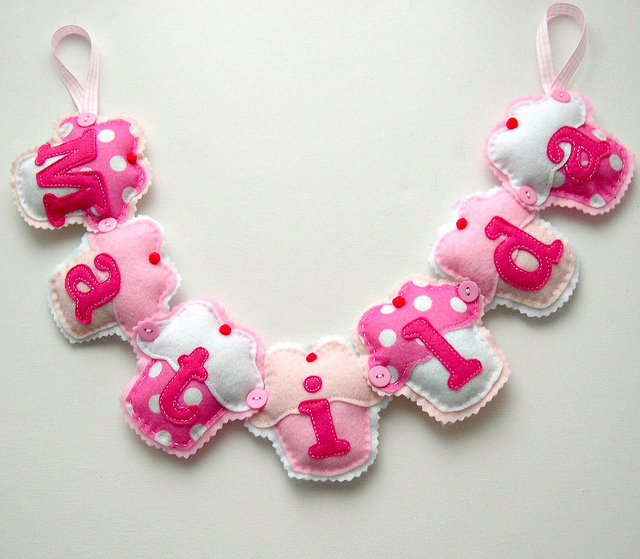
(Image from Flickr)

Melbourne Suburbs That Could Be Used as Girl’s Names

08 Sunday Jul 2012

Posted by A.O. in Name Themes and Lists

≈ 12 Comments

Tags

astronomical names, Australian Aboriginal names, bird names, Brazilian names, Bunurong names, created names, english names, famous namesakes, Gaelic names, gemstone names, germanic names, Greek names, Irish names, Latin names, literary namesakes, locational names, mythological names, name history, name meaning, name popularity, nature names, Old Norse names, Palawa names, plant names flower names, popular culture, Portuguese names, Scottish names, Spanish names, tree names, unisex names, Visigothic names, vocabulary names

Cardinia

Cardinia is an outer suburb of Melbourne, in the shire of the same name. The name Cardinia is taken from the local Bunurong phrase Kar Din Yarr, meaning “to look towards the rising sun”. I’ve always thought this would make a great girl’s name, with an interesting sound and an inspiring meaning. To me it sounds like a cross between Caroline and Gardenia, and is a native alternative to Dawn and Aurora.

Clematis

Clematis is another outer suburb in the Shire of Cardinia, leading into the Dandenong Ranges. It’s a tiny village dating to the turn of the century, with a few basic amenities. Its fire brigade formed in 1936, takes about 100 emergency calls per year, and has fought many major blazes in Victoria and New South Wales. The suburb is named after the climbing plant, which looks wonderful in the garden and has large, beautiful flowers. The plant’s name is Ancient Greek, and probably referred originally to the periwinkle (the plant we call clematis is from Asia, and related to the buttercup). Clematis is an elegant name filled with Edwardian charm; it’s more unexpected and alluring than Clementine.

Doreen

The name Doreen looks like an elaboration of the name Dora, perhaps influenced by Kathleen, and is said to have been invented by English author Edna Lyall, who published a novel called Doreen in 1894. The Doreen in her story was an Irish singer, and possibly Lyall had heard of the Irish name Dáiríne, which is pronounced daw-REEN-uh, and means “fertile”. Although this outer suburb of Melbourne had been settled since 1844, it was renamed Doreen in 1895, just a year after Lyall’s novel. Perhaps someone was a big fan of the book? Doreen plays a role in Australian literature too, for poet C.J. Dennis wrote a famous verse-novel called Songs of a Sentimental Bloke (1915), in which larrikin Bill meets, courts and marries his sweetheart. This is a girl who works in a pickle factory called Doreen, and she turns Bill from a Melbourne gang-member into a contented husband and father. It’s been made into two movies, a musical, a TV show and a ballet. Doreen was #83 in the 1900s, and peaked in the 1920s at #21, no doubt influenced by the rhymes of C.J. Dennis. It hasn’t charted since the 1970s.

Emerald

Emerald is a town and semi-rural area in the Shire of Cardinia, and its post office first opened in 1899. It’s a popular tourist destination, because it has the Puffing Billy steam train railway which opened in 1900, and enjoyed its heyday in the 1920s. The town also holds a number of festivals through the year. Emeralds have been mined on a small scale in New South Wales and Western Australia; there is a town in Queensland named Emerald; and David Williamson’s play Emerald City is a classic of modern theatre – the title a reference to The Wizard of Oz. Emerald is a name that I’ve seen in occasional use, and the popularity of Ruby is almost certainly making other gemstone names for girls seem more usable. It also has a connection to Ireland, because this country is known as The Emerald Isle. The name is ultimately from the Greek, meaning “green gem”. Perhaps the town got its name because it is set in the forest like a green jewel – although Gembrook is just up the road.

Iona

Iona is a rural area in the Shire of Cardinia; its post office opened in 1898, and it received its current name in 1905. It is named after an island in the Hebrides, off the coast of Scotland. According to tradition, Saint Columba founded a monastery there in the 6th century, and it played a vital role in converting the Picts of Scotland and the Anglo-Saxons of northern England to Celtic Christianity. A renowned centre of learning for four hundred years, Viking raiders plundered it, and the monastery was abandoned. Today it has an ecumenical Christian community, active since the 1930s; they worship in the restored medieval Iona Abbey. The island’s name is thought to come from the Gaelic for “place of yew trees”, but may also be from the Old Norse for “island of the bear cave, island of the animal den”. It is still a popular name in Scotland, and seems like a good alternative to the popular Isla with the fashionable OH sound in it (it’s said ie-OH-na).

Jacana

The suburb of Jacana was originally farmland owned by Duncan Kennedy in the 1840s, and its streets were laid out in 1923 after the land was sold. During the 1950s to 1970s, the land was developed by the government Housing Commission, who built most of the houses. They also re-named some of the early streets, which had been given jocular names such as Emu Parade and Sunset Boulevard. Being developed as a Housing Commission suburb, it is a lower-middle and working-class area with good amenities. The suburb is apparently named after Jacana Avenue, which is in the next suburb of Broadmeadows; other streets nearby also have bird names, such as Ortolan and Dacelo. Jacanas are tropical birds that live on lily lakes in wetlands and found world-wide; in Australia we have the Comb-Crested Jacana. Its name is Brazilian-Portuguese, and pronunciation is very diverse around the globe. The Australian way to pronounce it is juh-KAH-nuh, although the original is more like ZHAH-suh-NUH. I think this is a pretty and unusual bird name that sounds similar to Jacqueline, Jana and Jacinta, but with its own “feel”.

Kallista

Kallista is in the outer suburbs, and the first European inhabitants were loggers in the 1850s; gradually farmers began settling in the area as the forest was cleared. From early on, the government preserved a section of it as state forest, and once the roads were completed, Melburnians began using it for weekenders and holiday homes. During the Depression, many people could not afford the luxury of a second home for holidays, and they were bought up cheaply by those hoping to support themselves by living off the land. The suburb gained its name in 1925, from the Ancient Greek Kalliste, meaning “most beautiful”. In Greek mythology, Callisto or Kallisto was one of the nymphs of Artemis, although Kalliste was one of the epithets of the goddess herself, and the stories of the nymph were probably originally about Artemis. Callisto was seduced by Zeus, and gave birth to a son named Arcas, who became the king of Arcadia. Jealous Hera turned Callisto into a bear, and when a teenaged Arcas was hunting in the woods, he almost shot his own bear-mother. Zeus placed them in the sky as the constellations Ursa Major and Ursa Minor to protect them. A very pretty “star” name.

Olinda

The outer suburb of Olinda began as a logging settlement, but began growing in the early 1900s as land became available for market gardening. It is famous as the home of artist Sir Arthur Streeton, and today is an artsy-craftsy sort of suburb, studded with antique shops and galleries. Olinda is named after Olinda Creek, which has its source in the suburb, and the creek was named after Alice Olinda Hodgkinson, the daughter of Victoria’s acting surveyor-general in 1859. Her unusual middle name is something of a mystery to me – I have seen it defined as a German name meaning “defender of the land”, which became used in Spain thanks to the Visigoths. However in English, this name is said to be derived from the place Olynthus in Greece, meaning “fruit of the wild fig tree”. Olinda’s Adventures was the first novel of a precocious teenage writer in the 17th century called Catherine Trotter. It fits in with other literary names of that period, such as Orinda and Belinda. It sounds like retro Linda, dressed up with the fashionable OH sound, and still seems exotic and poetic.

Sassafras

Sassafras is in the outer suburbs, and lies between Olinda and Kallista. It was opened to farming in the 1890s, and a small township developed. Around the turn of the 20th century, it began to attract tourists, and still caters for them, with boutique stores, cafes serving Devonshire teas, and garden nurseries. Sassafras has very fertile volcanic soil, which makes it ideal for growing plants. Aptly enough, it is named after the sassafras tree, found growing there in profusion. These are not true sassafras, which are native to North America and Asia, but Southern Sassafras, an ancient tree from the southern hemisphere, with several species native to Australia. The one in Victoria is Atherosperma moschatum, and it grows in cool temperate rainforest. An evergreen, it flowers in winter with white petals, and its springy timber is in demand for speciality woodwork. The word sassafras is thought to be a corruption of saxifrage, an unrelated genus of tough alpine plants; their name is from the Latin for “stone breaker”. I have seen this once in a birth notice for a baby girl; it’s an unusual plant name which gives the nicknames Sass and Sassy.

Sunshine

This inner-city suburb has been a township since the late 19th century, and is an important part of our industrial history, because the Sunshine Harvester Works were moved here in 1906 by H.V. McKay, and became the largest manufacturing plant in Australia. It was after this that the suburb was given its present name; it is believed that McKay chose Sunshine for the name of his business after hearing a sermon by visiting American evangelist Rev. Thomas de Witt Talmage. The word sunshine seems to have been frequently used in Talmage’s writings, as a symbol of happiness and God’s blessings. McKay planned Sunshine on Garden City principles, and workers flocked there to live. The manufacturing plant was demolished in the early 1990s, but there is still plenty of industry, and it has attracted many migrants, especially from Malta and Vietnam. Skier Lydia Lassila grew up here, as did singer Bon Scott; Prince Philip lived here briefly. This cheerful, friendly name isn’t just from nature – it’s one connected to our manufacturing history, and also has idealistic Christian roots. Although unisex, the film Little Miss Sunshine helps give it a feminine edge. Sunny makes a cute nickname.

Truganina

This suburb is named after Truganini, considered to be the last “full blood” Palawa (Tasmanian Aborigine). Truganini was a chieftain’s daughter born in 1812 on Bruny Island, described as a vivacious and intelligent woman by contemporary sources. Her mother was killed by whalers, her two sisters were abducted and taken as slaves, her fiance died saving her from being abducted herself. Efforts at conciliation meant that Truganini and the last surviving Palawa people were moved around, including a short time in Melbourne, which is how the suburb received its name. By 1873, Truganini was the last Palawa left, and she died three years later. Her final request, that her ashes be scattered in the D’Entrecasteaux Channel near her island home, was ignored; she was buried in a convict workhouse in Hobart. Two years later, her skeleton was exhumed, and put on display by the Royal Society of Tasmania. In 1976, a century after her death, her last wish was finally fulfilled. Her name is the Palawa word for the tough plant we call grey saltbush (Atriplex cinerea), and can be spelled a number of ways. This could make an interesting heritage choice, although its namesake is a tragic symbol of Indigenous genocide. The correct pronunciation is not known, but Truganina could be said to give the nicknames True and Nina.

(Picture shows the Puffing Billy steam railway in Emerald)

MYTH: Australian Baby Names are Becoming Increasingly Influenced by American Trends

01 Sunday Jul 2012

Posted by A.O. in Baby Name Mythbusters

≈ 20 Comments

Tags

Australian names, Biblical names, classic names, created names, famous namesakes, fictional namesakes, flower names, French names, germanic names, Greek names, Irish names, Italian names, Mer de Noms, name data, name popularity, name trends, nicknames, Old English names, popular names, saints names, Scottish names, Spanish names, surname names, unisex names, US name trends, US popularity, Welsh names

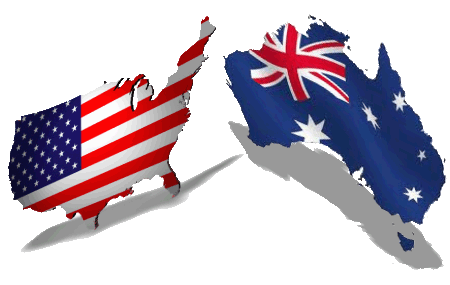
Since I last went mythbusting, the 2011 name data from the United States has been released, and this week it’s American Independence Day. To celebrate both events, I decided to compare Australian and US name data. (Lou at Mer de Noms brought out her own comparison of the data for the United States and England/Wales in May, and did something pretty interesting with it.)

That Australians are becoming increasingly Americanised, including their choice of baby names, is something not debated, but accepted as a truism. It is often mourned by older generations that Australians used to call their children good solid Aussie names like Barry and Sheila, and now give them sleek American-style names like Logan and Scarlett.

It’s a myth which sounds very plausible – I certainly know far more children named Logan and Scarlett than I do Barry and Sheila (actually I don’t know any children called Barry or Sheila). But I thought we should try to get some numbers to back the myth up.

So I decided to look at the Top 100 names from both countries, in the years 1930, 1950, 1970, 1990 and 2011. If the number of names shared by both countries went steadily up, that could help support the theory that Australian names were becoming increasingly “American”. By no means conclusive proof, but it would be a start, and frankly I couldn’t think of any other way of doing it.

As I went through calculating the number of shared names, I also took note of those trends at work in Australia and the United States, where they were the same and where they differed. This gave me a picture of changing trends through the years. (The data is from Victoria, because theirs go back to 1929).

1930

MALE – 65% shared with US Top 100

1930 marked the highest percentage of shared names between the countries. This wasn’t because Australians were more “American” in 1930, but because in every year, the common denominator for both countries were classic names like John, Thomas and William, and these sort of names took up more space of both countries’ Top 100.

Trends noticeable on the Australian Top 100 were names from Ireland, Scotland and Wales, such as Kevin, Malcolm and Trevor, and aristocratic English surnames, such as Neville. Americans preferred prominent surnames of their own citizens, such as Elmer and Lee. Popular names from America we didn’t share were “cowboy” names – Wayne, Earl and Jesse. In America, nicknames for boys were all the rage, including Billy, Bob and Jimmie.

FEMALE – 51% shared with US Top 100

Popular girls names in both countries were homespun names such as Margaret and Dorothy, as well as plant names like Hazel and Rose.

Australian trends for girls included names from Ireland and Wales, such as Sheila and Gweneth, saints names such as Carmel and Veronica, and literary inventions like Doreen and Mavis. American trends were for Germanic names such as Emma and Clara, and the clunky Old English Mildred and Bertha. America’s Hispanic population meant that Delores and Juanita were Top 100 there.

1950

MALE – 59% shared with US Top 100 (down 6%)

American trends for boys we had picked up by 1950 include Gary, after Hollywood star Gary Cooper, and that supposed Australian favourite, Bruce, also popular in the US.

America continued its love of nicknames, with Bobby, Joe and Fred all Top 100. Several of the Irish boys names such as Kevin and Barry were now on the US Top 100 as well, but new Irish-style names such as Shane were still to gain American acceptance. Already in the US you can see a reluctance to use “feminine sounding” or unisex names such as Lindsay and Noel, which were Top 100 in Australia. In Australia, that same 1950s gender-anxiety produced the opposite result, with some unisex names like Leslie becoming male-only.

FEMALE – 47% shared with US Top 100 (down 4%)

The most noticeable shared trends for girls were those glamorous Hollywood names such as Marilyn (Monroe) and Rita (Hayworth). Even when Australians did take a name from America, such as Jennifer from Hollywood star Jennifer Jones, it didn’t always follow that Americans would embrace it as rapidly themselves. Jennifer was a 1950s name in Australia, but didn’t peak in the US until the 1970s.

Australian girls were being given French names like Annette and Jeanette, while Americans girls had Jacqueline. Another popular Australian “French” name was Lorraine, given in honour of St Joan of Arc, sometimes called The Maid of Lorraine. The American love of the nickname meant that names such as Judy and Peggy were Top 100 for girls.

1970

MALE – 56% shared with US Top 100 (down 3%)

Popular 1970 names which we think of as “American style” were in evidence on both charts, such as Bradley, Jason, Glenn, Darren and Craig.

Australian boys names not picked up in the US included Scottish-style names such as Ross, Graham, Stuart and Gavin, and the “feminine sounding” Ashley and Jamie. Differing ethnicities also made their mark, with Spanish Carlos in the US Top 100, and Italian and Greek names like Giovanni and Giorgio in the Australian Top 100. American nicknames powered on, with Larry, Terry and Jerry amongst them.

FEMALE – 51% shared with US Top 100 (up 4%, return to 1930 level)

It was the decade of those 1970s names Sharon and Tracey, although Sharon in particular had been popular in America for some time and we’d only just caught up.

Names such as Samantha and Amanda were already popular in Australia in 1970, but would have to wait until the 1980s to make it big in the US. Conversely, Amy was popular in the US, but wouldn’t be here until the 1980s. French Nicole was in vogue in both countries, and we’d caught up with Jacqueline; however Australia also had Danielle, Louise, Justine, Natalie, Simone and Josephine – typical 1970s girls names that were underused in the US. Scottish and Welsh names like Fiona, Megan and Bronwyn were popular here but didn’t get a look-in in the US. We were proudly using names of Australian origin, like Kylie and Narelle; naturally these were unknown in the US.

1990

MALE – 56% shared with US Top 100 (no change)

Trends from the US we were embracing were Old Testament names, such as Jacob and Zachary; and the new surname names, such as Ryan and Mitchell.

A new generation of “too feminine” boys names that were popular in Australia were ignored in the US, such as Shannon, Tristan and Leigh, as were more Scottish, Welsh and Irish-ish names, such as Lachlan, Rhys and Kane. Hayden and Jayden were already Top 100 in Australia, but not in the US. America had finally gone off nickname names, while Australia now had Jack, Jake and Ricky. American names Beau, Jackson and Tyson were popular then, as now, in Australia; of the three, only Jackson has hit the US Top 100 so far.

FEMALE – 56% the same as the US Top 100 (up 5%)

Names that both countries had in common were those typical 1990s names, like Tiffany, Brittany, Kayla and Caitlin.

Americana we were still to discover included unisex names for girls like Ariel, Shelby and Paige. Although the US had Danielle and Natalie by now, French names such as Monique, Elise, Renee and Madeleine which were popular here had apparently failed to make an impression. Although Welsh Caitlin was all the rage, the US were not on board with Tegan and Rhiannon, as we were. Most notably, Emma, Amelia, Charlotte, Sophie, Chloe and Zoe were missing from the US Top 100 – while American parents who chose these names in 1990 were ahead of the trends, in Australia, parents choosing these names in 1990 were just following the trends.

2011

MALE – 59% shared with US Top 100 (up 3%, return to 1950 level)

Congruence in popularity between the two nations has risen to 1950 levels, with many name trends in common, mostly a fresh crop of Biblical names, such as Elijah, and surname names, such as Mason.

American parents are now avoiding a new generation of Scottish names, such as Angus and Hamish, while Irish names like Declan and Flynn are also neglected in the US. Oddly enough, Kevin is still Top 100 in the US, while it’s considered a bit dated here. The scunner against nicknames continues as Americans shun Australian populars Charlie, Harry, Archie, Sam and Nate. No longer merely  shying away from “feminine sounding” names for boys like Bailey and Riley, parents in the US have actually given these names to their daughters in such numbers that they are now Top 100 for girls, while Top 100 for boys here. Several names we have taken from the US, such as Jett, Hudson and Jasper, are still not popular in America.

FEMALE – 47% shared with US Top 100 (down 9%, return to 1950 level)

Girls names have also returned to 1950s levels. Many names are shared because America has caught up with our popular names from 1990, but Australian parents have also begun to use unisex names for girls like Madison and Addison.

America has abandoned many names as “outdated” such as Amy, Jessica, Holly and Amber that have taken on “modern classic” status here. While America has accepted Lily, it is less keen on our popular plant names Daisy, Ivy, Violet, Willow, Olive and Rose. British-style names such as Isla and Imogen cut no mustard in the States. Meanwhile, popular American virtue names like Genesis, Serenity, Trinity, Nevaeh and Destiny do not resonate here. Perhaps they will in the future.

CONCLUSIONS

I did not manage to bust this myth, but neither did I find much evidence to support it, so I will give its status as MYTH UNCONFIRMED.

As I compared popularity charts from the two countries, I realised more and more that it was a case of apples and oranges. Names took longer to gain popularity in the US, and it was harder for them to stay in the Top 100; name popularity was a competitive environment there. Australia has a much smaller population size, which means that name trends show up faster here. We’re also more likely to hold onto our favourite names once we’ve found them, sometimes for generations.

I don’t think it’s an exaggeration to say that American parents are absolutely obsessed with getting ahead of the current trends, and can watch the slowly rising popularity of their chosen names with almost comical anxiety. This makes some sense, because trending names can take so long to reach the Top 100 that they have a good chance of having ten to twenty years before that happens. In Australia, this behaviour makes no sense at all, because as soon as a name begins to show up in the data, it’s basically already quite popular. As we keep names around for longer, there’s no real rush to “catch” a name on the way up either; we can always wait until it’s a cosy, familiar “classic”.

In any given year, Australia and the US will share around half the names on their respective Tops 100s, and this has not changed across time. We share many name trends, and since at least 1950, Australia has been drawn to names from America. Sometimes it took us a long time to get onto a particular trend from America, and other times we took to it with greater enthusiasm than Americans did themselves.

Both countries also have their own styles of naming. Australia has always been fond of Irish-inspired names, and although Barry and Sheila have fallen by the wayside, we now have Finn and Molly. Scottish names continue to be a growth area, with Angus, Hamish, Callum and Isla seeming rather stylish to us. Through the years, there were many names unique to the Australian popularity charts. Names that I thought of as typical of their period, such as Dulcie in 1930, Glenys in 1950, and Jacinta in 1970 seemed to be unknown in the US.

Americans are slow to adopt Irish names, but often touchingly faithful to them, and are wary of Scottish and Welsh names. They have a deep suspicion of unisex names for boys or anything that even sounds remotely feminine, while comfortable with briskly masculine names for girls. Flower names are not popular there; perhaps they seem too girlish even for girls.

Due to going overboard on nicknames in the past, America has developed almost a horror of them, much in the same way I can no longer stomach gingerbread after overindulging on it a few Christmases ago. As nicknames are currently internationally popular, this has seen them unfairly branded as a bit stuffy on the issue, when they’re really just over the whole thing.

We don’t have to try to follow American trends, and in fact a couple of them would be downright foolish for us to imitate. But the United States has proved a rich source of name inspiration for many decades, and I know it will continue to be so for many decades to come.

Less Commonly Used Boys Names

10 Sunday Jun 2012

Posted by A.O. in Name Themes and Lists

≈ 9 Comments

Tags

Anglo-Norman names, Apache names, Australian vocabulary words, celebrity baby names, english names, fabric names, famous namesakes, fictional namesakes, germanic names, Hindi names, Indian names, Italian names, Latin names, locational names, mythological names, name data, name history, name meaning, name popularity, Native American names, nicknames, popular culture, Roman names, saints names, slang terms, surname names, unisex names, US name popularity, vocabulary names, Welsh names, Yorkshire dialect names

This follows on from Less Commonly Used Girls Names. The names are from the bottom of the popularity charts in New South Wales, Victoria, Queensland and Tasmania, and in each case, the name was used less than ten times in 2011.

There seems to be a lot of musical references in this entry, so I’ve linked relevant names to YouTube videos of the person performing.

Atticus

This Roman name means “man from Attica” – Attica being the area of Greece surrounding the city of Athens. This name wasn’t uncommon in the ancient world; there is a Platonist philosopher called Atticus, and there is also a Saint Atticus, a soldier who died a martyr by being burned at the stake. However, today it is most associated with Atticus Finch, the principled lawyer and loving single father in Harper Lee’s novel, To Kill a Mockingbird. Atticus Finch, who defends a black man on a rape charge in a small Southern town during the 1930s, is considered a folk hero in legal circles. In the 1962 film adaptation, Atticus is played by Gregory Peck, who was a civil rights activist; Peck won an Academy Award for his performance, and in 2003 the American Film Institute voted his character the greatest hero in American film. It is that decent, understated heroism of Atticus Finch that makes him such a beloved character in literature and film. The character has inspired the names of both a clothing line run by musicians and an alternative rock band. It’s a hip choice which has been burning up the US popularity charts since 2004.

Bryn

Bryn is a modern Welsh name which means “hill”; as well as being a man’s name, it is also a common place name in Wales and England. A famous person with this name is Welsh opera star Bryn Terfel, a bass-baritone best known for his roles in the works of Mozart and Wagner. Apparently he applied to study music in Cardiff, but was so annoyed when they assumed he was a woman that he ended up studying in London instead. Bryn Terfel, whose first language is Welsh, is a patron of Welsh language and culture, and hopefully by now everyone in Wales recognises his name as male. Even though Bryn isn’t a common name in Australia, I don’t think it would seem too out of place either, as there are several boy’s name beginning with Br-, such as Brent and Brody. It looks rather like a cooler version of Irish Brian, which may have a similar meaning.

Corbin

Corbin is an English surname which started as a nickname based on the Anglo-Norman word for “raven”. It may have been given to someone who had raven-black hair, although less flattering possibilities also come to mind. Corbinus, the Latinised form, is found as a first name in the Domesday Book, so it has a long history of use. Despite being an old English name, this tends to be thought of as a modern American one, because it’s been solidly Top 500 in the US since the late 1980s. This may be because of television actor Corbin Bernsen, who began playing lawyer Arnold Becker on LA Law in 1986 and remained on the show until it finished in 1994. Another famous namesake is Corbin Harney, an elder and shaman of the West Shoshone people. He devoted his life to spreading a message about the dangers of nuclear energy, and the environmental issues facing the world. You may also know the name from Corbin Bleu, who was in High School Musical. This name is apparently so unusual in Australia that the article the information came from described it as a “bizarre” choice, although it seems a perfectly nice, normal name to me.

Denim

The fabric denim was originally called serge de Nîmes, after the French city where the tough cotton material was originally made by the Andre family. This was eventually shortened to denim. Denim is inextricably linked with jeans, which began life as sturdy clothing for workers, and then became fashion icons which symbolised teen rebellion. Today they are worn by pretty well everybody. Denim is an interesting name choice; it’s not really a “bad boy baby name” like Axe or Vandal, because while denim is worn by rebel icons like rock stars and bikers, it’s also worn by suburban mums and little kids. Also fabrics are usually thought of as girls names, like Velvet and Paisley, but denim is tough and hard-wearing. It’s definitely an ambiguous sort of name – one that, like the fabric, may grow with the person better than you’d expect. It’s also a soundalike with the surname and place name Denham.

Jagger

This English surname originated in Yorkshire, and means “hawker, carrier”, the word jagger being Yorkshire dialect for someone who carries a pack or load. It is claimed that most people with this surname are descended from a single family who came from Staniland, near Halifax. There was a high concentration of people named Jagger in Yorkshire, compared to the rest of England. The most famous person with this surname is undoubtedly Sir Michael “Mick” Jagger from The Rolling Stones, whose mother was born in Australia. I don’t know if this is correct, but Mick Jagger is said to be distantly related to Joseph Jagger, the 19th century British engineer famous for being “the man who broke the bank at Monte Carlo”. Joseph Jagger was indeed from Halifax in Yorkshire. The name Jagger is almost always given in relation to The Rolling Stones frontman, and may have been given a boost in 2011 from the Maroon 5 song, Moves Like Jagger, which is a tribute to Sir Mick. The number of baby boys named Jagger went from 5 to 8 in Queensland last year.

Naiche

Naiche was the last hereditary chief of the Chiricahua band of Apache Native Americans. He was an ally, protege and relative by marriage of Geronimo, the famous Apache leader and war chief. Naiche and Geronimo successfully went to war together in the 1880s, but Naiche ended up being imprisoned. Although he had resisted the process of being moved onto an “Indian Reservation”, eventually he was forced to give in, and ended his days on an Apache reservation in New Mexico. He lived only six years after moving there, and his descendants are still on the reservation. The name Naiche means “meddlesome one, mischief-maker” and it can apparently be pronounced NAY-chee, but I’m not sure if that’s the correct Apache pronunciation, or even whether it depends on which Apache accent you’re using. Naiche is for sure a very unusual name in Australia, but it has a fascinating namesake, and actually sounds slightly like Nate and Nathan. Pronunciation and spelling seem like they would be an issue.

Occy

Occy is the nickname of Australian surfer Marco “Mark” Occhilupo. Occy is short for his Italian surname, which means “eyes of the wolf”. At the same time, it is a play on the Australian word occy straps, short for octopus straps – those stretchy cords which are used by surfers to tie their surfboards onto their car’s roof rack. Mark Occhilupo was a precocious teenage surf god of the 1980s who lost his way for several years as his life spiralled out of control. In the mid-1990s, he made a comeback, and stunned everyone when he won a world title in 1999 at the age of 33. He considered retiring in 2005, but realised he still had a lot left in him. Now aged 45, he only competes part-time, but this year he made it into the final four of the Telstra Drug Aware Pro semi-finals, defeating top-ranked surfers to do so. Mark, also dubbed The Raging Bull, is an inspirational sporting icon who teaches us that mature experience can be more important than youthful talent, and that things are never over until you give up. Although Occy is a nickname and a slang term, it means so much more.

Pax

Pax is the Latin word for “peace”, and the Romans recognised a goddess of this name who symbolised peace, and was associated with the spring. The word pax also means “treaty, accord”, and the Pax Romana is the name given to the two-century period (approximately 27 BC to 180 AD) of stability and minimal military expansion in the Roman Empire. For the Romans, peace wasn’t about everyone holding hands and singing Imagine together in a field of daisies – it described that period during war when all your opponents had been thoroughly beaten and were no longer able to resist. It denoted ultimate military victory, rather than co-operation and unity. Today we see peace rather differently, and the name is probably given with the modern concept in mind rather than the ancient Roman one. In 2007, Angelina Jolie adopted a son from Vietnam and named him Pax Thien. Pax may be the name of a goddess, but this one has very much gone to the boys, as it fits so well with popular male names such as Max and Jax.

Veer

Veer is an Indian name meaning “bravest of the brave” in Hindi. Veer (“valour”) is one of the nine rasas of ancient Hindu philosophy. These emotional states are repositories of energy drawn from our life force, and by learning to master these energies, we gain emotional balance. The rasa of Veer stops us from running away from our problems, and instead face them head on; it also gives us the courage to not allow adversity to defeat us, but to get up after a fall, and continue on. It also allows us to have the healthy confidence and self-esteem needed to achieve in life. Veer Teja Ji is an Indian folk hero and saint, and the highly successful 2004 Bollywood film Veer-Zaara is about the star-crossed romance between Indian Air Force Squadron Leader, Veer Pratap Singh, and a wealthy Pakistani woman, Zaara Haayat Khan. Veer has a very positive meaning, and looks the same as the English word veer, meaning “to swerve”. It’s also a homonym of the English name Vere, so both sound and spelling are familiar to English-speakers, and it seems a very usable heritage choice.

Ziggy

Ziggy is a nickname for Germanic names such as Sigmund, but in practice is used for a variety of names starting with Z. It is famous as the name of pop star David Bowie’s alter ego, Ziggy Stardust. Bowie based the name on a London tailor’s shop called Ziggy’s that he saw from a train one day. The surname Stardust was taken from American country and western singer Norman Carol Odom, a weird novelty act billed as The Legendary Stardust Cowboy. Norman appealed to Bowie because he had a crazy band of misfits who barely understood music, and was unconsciously hilarious. The character of Ziggy was based on pioneering English rocker Vince Taylor, who modelled himself on Elvis Presley. Like so many after him, drugs proved his downfall, and he ended up believing he was the son of God, and existing solely on eggs. Bowie got to know him, and was impressed by his magnificent repertoire of dottiness. So Ziggy Stardust was a mixture of fashion, madness, outsider art, and rock and roll excess. Ziggy is also the nickname of Bob Marley’s son David, although in his case it was a drug reference. Cute name, with a solid musical background.

(Photo shows David Bowie’s final performance as Ziggy Stardust at the Hammersmith Odeon in London, 1973)

Famous Name: Evelyn

16 Wednesday May 2012

Posted by A.O. in Famous Names

≈ 6 Comments

Tags

classic names, english names, famous namesakes, fictional namesakes, germanic names, Italian names, locational names, name history, name meaning, name popularity, name trends, nicknames, Norman names, Old French names, popular names, rose names, surname names, unisex names

April 15 this year marked one hundred years since the sinking of the RMS Titanic. There were many exhibitions to mark the event, and James Cameron re-released his romantic film Titanic in 3-D form. As I read the many newspaper articles about  the centenary, and watched ceremonies being performed in various countries on television, I wondered whether there were any Australians aboard the ill-fated Titanic, and if so, had any of them survived?

It turned out that there were six Australians who travelled on the Titanic – four crew members, and two passengers. Crew members Donald Campbell, Alfred Nicols and Leonard White were drowned and their bodies never found, while second-class passenger Arthur McCrae also drowned, but his body was recovered and buried in Halifax, Canada. That left two survivors: third-class passenger Charles Dahl, and crew member Evelyn Marsden.

Although Charles had spent thirty years in Australia, he was born in Norway and was actually in the process of making his way back to his home country when he travelled on the Titanic (he eventually made it home and died in Norway many years later). This leaves Evelyn Marsden as the only female Australian survivor, the only surviving Australian crew member, and the only Australian-born survivor. That made me decide to choose Evelyn as my Famous Name to mark the centenary of the sinking of the RMS Titanic.

Evelyn was from country South Australia, and the daughter of a railway worker. As a young girl, she learned to row a boat on the Murray River while staying on a farm, and later trained as a nurse at Adelaide Hospital. She had previously worked on board the Titanic‘s sister-ship, the Olympic, and signed on to work as a stewardess on the Titanic on April 6 1912, aged 28. She also assisted as a nurse for the first class passengers.

During the sinking, Evelyn escaped on board Boat 16, which held about forty people. They were in the life boat all night, from about half past one in the morning until around seven in the morning, when they were picked up by the Carpathia. Evelyn’s rowing skills became necessary, because she helped row the boat, and also took care of a baby.

Shortly after the disaster, she married a doctor named Abel James who had also worked on board ocean liners, and they went to live in South Australia. Evelyn made a point of returning to the farm, and thanked them for teaching her to row. Evelyn and her husband ended up living in Bondi, Sydney, and when they both passed away in the late 1930s, they were buried in Waverley Cemetery. Their grave was unmarked until 2000.

Evelyn is an English surname derived from the female name Aveline. Aveline is the Norman French form of Germanic Avelina, a pet form of Avila. It’s not certain what Avila meant, but it’s generally thought (perhaps hopefully) that it meant “desired”, as in a child that was long hoped for. The name is possibly related to Ava.

Other theories I have heard are that the surname is derived from aveline, the Old French word for “hazelnut” (the word comes from the Italian city of Avella), or after a place in Shropshire, which the Normans are supposed to have named after a village in France, Ivelyn. In early records, the surname is found as both Ivelyn and Avelyn.

Evelyn was first given to boys in the 17th century, since Aveline was no longer in use as a woman’s name. In the 19th century it began to be bestowed on girls as well, quite possibly because Fanny Burney’s novel Evelina reminded everyone that the name had a possible feminine origin (Evelina is the Latinate form of Aveline). If you are a fan of the theory that the surname is after the hazelnut, then you may see the male name Evelyn and the female name Evelyn as having quite separate origins.

The most famous person with the surname Evelyn is probably 17th century English writer John Evelyn, best known for his diaries. He wrote on many other subjects as well, including gardening, and the Evelyn rose is named after him – a beautiful old-fashioned rose with clusters of large pinky-apricot blooms. There is currently a campaign to restore Evelyn’s own garden at Sayes Court, in east London.

Nearly everyone has heard of the male English novelist Evelyn Waugh (whose wife was famously also called Evelyn), and a famous Australian man named Evelyn is Evelyn Owen from Wollongong, who invented the Owen gun. Mr Owen was apparently known by the nickname Evo. A famous Australian woman named Evelyn was Evelyn Tazewell, a champion hockey player in South Australia for many decades. Miss Tazewell went by the nickname Taz.

Evelyn is a classic name which has never been out of the charts. It was Top 100 in the 1900s, and stayed there until the 1950s. It reached its lowest point in the 1980s, at #435, then began climbing again. Last year it joined the Top 100 for the first time since the 1940s, coming in at #67 (an impressive leap). It has never charted as a male name since Federation.

The pronunciation of Evelyn is up for discussion, because it can be said EEV-lin, EEV-uh-lin, EV-lin or EV-uh-lin. I have heard theories that EEV is the British way and EV the American way, but plenty of people in both places say it the other way around. Another theory is that EEV is the masculine pronunciation, and the girl’s name should be said with an EV. This advice sounds plausible to me, but surely rather outdated given that Evelyn hasn’t been a serious contender as a boy’s name for over 120 years?

Most people in Australia go with the EV-uh-lin pronunciation, although EV-lin gets used as well, because it’s a more “Irish” way of saying it (apparently). I must be very odd, because I naturally say EEV-uh-lin, as if the name was related to the name Eve. I don’t recommend following my (no doubt wrong) example, except that it does lead rather neatly into the popular nickname Evie. You could use Evvie for the other pronunciation, although to me that sounds as if you are saying heavy in a Cockney accent.

Classic Evelyn is very much back in fashion, and looks certain to soar. She fits right in with Ava, Eva, Eve, Evie, Eden, Eloise, Madeleine, Madison and Addison, yet has an elegant air all her own.

Popular Names for Boys

06 Sunday May 2012

Posted by A.O. in Name Themes and Lists

≈ 23 Comments

Tags

Aramaic names, band names, Biblical names, car names, celebrity baby names, classic names, english names, famous namesakes, fictional namesakes, French names, germanic names, Greek names, hebrew names, honouring, Latin names, locational names, name history, name meaning, name popularity, nicknames, Old Norse names, popular culture, popular names, royal names, saints names, Scottish names, surname names

Follows on from Popular Names for Girls.

William

William is a solidly classic name which has never left the Top 50. It was the #1 name of the 1900s, and gradually decreased in popularity, hitting its lowest point during the 1970s, at #48. However, its fortunes were soon to recover, because in 1982, heir to the British throne Prince Philip, and his then wife, Diana, Princess of Wales, welcomed their first child and eldest son, William Arthur Philip Louis. Prince William was named after his father’s cousin and personal hero, Prince William of Gloucester, who died in an air crash ten years earlier. Prince William made his first visit to Australia as a baby, and this was an immediate help to the name’s popularity. By the time Prince William began university in 2001, the name was already in the NSW Top 10. It reached #1 in 2009, the year after Catherine Middleton began accompanying Prince William to official functions, and there it has remained. In 2011, Prince William made a much-appreciated visit to flood-affected areas of Australia, and shortly afterwards treated the world to a slap-up royal wedding. It’s likely this princely name will remain at the top for at least another year.

Jack

Jack is a classic name which has never left the charts. Top 100 during the 1900s-30s, it sunk to its lowest point in the 1970s, at #269. However, so rapid was its growth that it joined the Top 100 again during the 1980s – the same decade that pop singer John Farnham released his Whispering Jack album. Whispering Jack went to #1, and is the highest-selling album ever in Australia, having gone platinum 24 times over. By the 1990s, Jack was already Top 10, a decade when Leonardo di Caprio played water-logged lover Jack Dawson in the romantic movie Titanic, and teen heartthrob Daniel Amalam played bad boy Jack Wilson in soapie Home and Away. By the start of the 2000s, Jack was #2. It made #1 by 2004, the year that the TV show LOST began, with its hero Dr. Jack Shephard, and the year after Johnny Depp played Captain Jack Sparrow in the first Pirates of the Caribbean film. Jack remained in first place until 2008, the year that AC/DC released their single Big Jack. Jack the Lad may have had his day, but won’t be going anywhere fast, and is still the #1 name in some states.

Ethan

Ethan is a name from Hebrew which means “solid, enduring”. In the Old Testament, Ethan is said to have been a very wise man who wrote Psalm 89. Ethan first entered the charts in the 1970s, and took off during the 1980s, as film-maker Ethan Coen began his career, working in tandem with his brother Joel. At the end of the 1980s, actor Ethan Hawke got his big break in Dead Poets’ Society. By the 1990s, Ethan was a Top 100 name, and it was in this decade that Tom Cruise first played Ethan Hunt, the hero of the Mission Impossible films, Ethan Philips joined the cast of TV show Star Trek, and Ethan Rayne was introduced as a character on Buffy the Vampire Slayer. It was also during the 1990s that surfing champ Wendy Botha welcomed a son named Ethan. In 2006, Ethan joined the Top 10 – the year after the Ethan Group, an Australian IT company, won the BRW Fast 100. Singer Dannii Minogue, Kylie’s sister, welcomed a son named Ethan in 2010, and that probably won’t hurt the chances of this strong yet gentle-sounding name going higher still.

Oliver

Oliver is the English form of French name Olivier, but it’s unclear whether it’s the Norman form of Germanic Alfher, meaning “elf warrior”, or Old Norse Aleifr, meaning “ancestor’s descendant” (related to Olaf). The spelling was altered to make it seem as if the name came from the Latin oliva, meaning “olive tree”. A classic which has never left the charts, Oliver was Top 100 in the 1900s, but then sank into rare use. It recovered during the 1970s, the decade after the release of Oliver!, the musical based on Dickens’ novel, Oliver Twist. In this decade, actress Goldie Hawn welcomed a son named Oliver. The name gained ground during the 1980s, and was Top 100 during the 1990s. Late in the ’90s, the first Harry Potter book was published, featuring Harry’s Quidditch captain, Oliver Wood. In the 2000s, the books were turned into films, with Oliver Phelps playing the role of George Weasley. By 2006, the debut of TV show Hannah Montana, where Oliver Oken is the best guy-friend of the heroine, it was Top 20, and by 2008 it was Top 10. By 2010 it was Top 5; Oliver may go higher if you want some more.

Lucas

Lucas is the Latin form of Greek Loukas, on which English Luke is based. Lucas first entered the charts in the 1950s. There was noticeable growth during the 1970s, the decade that George Lucas made the first Star Wars movie, and then it remained stable for several decades in the very low 100s. However, in the 2000s it made the Top 100, and at this point it fairly raced up the charts. A possible help to the name was the television drama series, One Tree Hill, in which Chad Michael Murray plays the main protagonist, Lucas Scott. This brooding, blue-eyed, sporty yet bookish hero proved something of a hit with the female demographic. Meanwhile, Lucas Holden on Australian soap Home and Away was also a literary teenager, who ended up having a controversially steamy scene with his onscreen girlfriend. By 2006, the year that soccer star Lucas Neill played for Australia in the World Cup, it was in the Top 50. By 2007 it was Top 20, and by 2010 it was Top 10. The 2000s were kind to Lucas, and at this point, lucky Lucas seems almost certain to go to #1.

Noah

Noah is derived from the Hebrew name Noach, meaning “rest, comfort”. Noah is well known from the Old Testament story, where he builds an ark which saves his family and the animals of all species to survive the Great Flood, sent by God as a one-off punishment to wicked humanity. The name Noah entered the charts in the 1980s, the decade when Noah Hathaway gave an award-winning performance as boy-warrior Atreyu, in the fantasy film, The Neverending Story. Also in the 1980s, Australian actor Noah Taylor made his film debut as the main character in the critically acclaimed The Year My Voice Broke. Noah climbed steadily, then suddenly shot up during the 1990s, the decade that Boris Becker welcomed a son named Noah, so that it was in the Top 50 by the 2000s. Noah joined the Top 20 in 20005, the year after Ryan Gosling played the young version of Noah Calhoun, the devoted lover from romantic film, The Notebook. In 2006, Noah was in the Top 10. However, Noah has remained reasonably stable, with no signs of moving significantly up or down, and we must wait to see whether it sinks or swims.

Lachlan

Lachlan is a Scottish name which began as a nickname for someone from Norway. In Scotland, Norway was known as the “the land of the lochs”, or Lochlann. Lachlan Macquarie was born in the Hebrides, and became Governor of New South Wales in 1809. To the British government of the time, Australia was a penal colony for offloading the dregs of their society; convicts must be treated cruelly, former convicts exploited, and little money spent. The government fretted as Macquarie pardoned convicts, employed freed convicts in important positions, put up beautiful Georgian buildings, and spent lavishly on public works. Eventually the British booted him, but for giving us a future and sticking up for us, he is considered the father of our nation. Lachlan has been almost continuously in the charts, only dropping out in the 1930s, but was in rare use until it began rising in the 1960s. In 1971, media magnate Rupert Murdoch chose this name for his eldest son, and the name rose significantly. It was Top 100 by the 1980s, Top 20 by the 1990s, and Top 5 by the early 2000s. The position of this patriotic favourite has been stable for more than a decade.

Cooper

Cooper is an English surname which means “barrel-maker”. One of the most famous rivers in Australia is Cooper Creek, where doomed explorers Burke and Wills met their end, and Australian racing car driver Jack Brabham drove for the Cooper Car Company. Cooper first entered the charts in the 1980s, and made good ground during the 1990s, a decade when Bill Murray and Hugh Hefner both welcomed sons named Cooper. By the 2001, the name was in the Top 50, and then it soared. It got some serious sporting muscle as Quade Cooper joined the national men’s rugby union team, the Wallabies, and Cooper Cronk joined the national rugby league team. Cronk was also part of the Melbourne Storm team which won five Premierships or Minor Premierships within four years. Originally from Brisbane, he plays for the Queensland state side, which insists on winning the State of Origin series every year. Handsome, athletic and an extremely talented player, Mr Cronk seems like a big part of the reason the name Cooper is #1 in Queensland. Cooper made the Top 10 in 2007, and the Top 5 the following year, but now seems to be falling without reaching the top spot.

Thomas

Thomas is from an Aramaic word meaning “twin”, and in the New Testament, Saint Thomas was one of the Twelve Apostles. Thomas was his nickname; his real name was Judas. Presumably he was the twin of someone in the Biblical stories, or just a lookalike or kindred soul, but frustratingly, the Bible neglects to explain whose “twin” he was. People who like logical explanations for things often cite Thomas as their favourite Apostle, because when he heard that Jesus had been resurrected, he refused to believe it until he could see and touch Jesus for himself – hence the phrase, Doubting Thomas for a sceptical person. Thomas is a classic which has never left the Top 100. In the Top 5 of the 1900s, it gradually declined, and reached its lowest point in the 1970s, at #68. It climbed smoothly through the 1980s, the decade that saw Tom Cruise and Tom Hanks become stars. By the 1990s, it was in the Top 5, and maintained position in the 2000s as Tom Felton played Draco in the Harry Potter films, making many a teen girl switch to Team Slytherin. However, it may be very gradually going down now.

James

James is the Latinised form of Jacob, and must be one of the most successful names from the New Testament. The name of two of the apostles, this doubly saintly name is also a royal one in Britain, where there have been seven Scottish kings called James. The King James Version of the Bible was commissioned by King James I of England (James VI of Scotland), giving it yet another tie to this sacred book. In Australia, the most famous James is Captain James Cook, the explorer who discovered our continent. A classic which has never left the Top 20, James reached its lowest point in the 1960s and ’70s at #19. Recovery was so swift that it was Top 10 in the 1980s, and Top 5 in the 1990s. Since the 1970s, there have been many Jameses in the public eye, real and fictional. Actors James Woods, James Spader, James Marsters, and James Phelps; singers James Blundell, James Morrison and James Blunt (not to mention the band James); Captain James Kirk from Star Trek; and the inimitable James Bond. James is the name of Harry Potter’s father – his mum’s name Lily is also Top 10. Cool James is falling again, at glacial speed.

(Picture shows Prince William as a baby with his parents, Prince Philip and Diana, Princess of Wales; image from Royal Wedding)

← Older posts
Newer posts →

Enter your email address to follow this blog

Categories

Archives

Recent Comments

A.O.'s avatarwaltzingmorethanmati… on Zarah Zaynab and Wolfgang…
Madelyn's avatarMadelyn on Zarah Zaynab and Wolfgang…
JD's avatardrperegrine on Can Phoebe Complete This …
A.O.'s avatarwaltzingmorethanmati… on Rua and Rhoa
redrover23's avatarredrover23 on Rua and Rhoa

Blogroll

  • Appellation Mountain
  • Baby Name Pondering
  • Babynamelover's Blog
  • British Baby Names
  • Clare's Name News
  • For Real Baby Names
  • Geek Baby Names
  • Name Candy
  • Nameberry
  • Nancy's Baby Names
  • Ren's Baby Name Blog
  • Sancta Nomina
  • Swistle: Baby Names
  • The Art of Naming
  • The Baby Name Wizard
  • The Beauty of Names
  • Tulip By Any Name

RSS Feed

  • RSS - Posts

RSS Posts

  • Celebrity Baby News: Melanie Vallejo and Matt Kingston
  • Names from the TV Show “Cleverman”
  • Can Phoebe Complete This Sibset?
  • Zarah Zaynab and Wolfgang Winter
  • Baby, How Did You Get That Name?
  • Celebrity Baby News: Media Babies
  • Celebrity Baby News: Adelaide Crows Babies
  • Celebrity Baby News: Chris and Rebecca Judd
  • Names at Work: Name News From the World of Business and Employment
  • Celebrity Baby News: Sporting Round Up

Currently Popular

  • Celebrity Baby News: Alisa Camplin and Oliver Warner
  • Rare Boys Names From the 1950s
  • Sad Celebrity Baby News (contents may cause distress)
  • Celebrity Baby News: Jacinta Allan and Yorick Piper
  • Celebrity Baby News: Nicki Gemmell and Andrew Sholl

Tags

celebrity baby names celebrity sibsets english names famous namesakes fictional namesakes honouring locational names middle names name combinations name history name meaning name popularity name trends nicknames popular names saints names sibsets surname names twin sets unisex names

Create a free website or blog at WordPress.com.

Privacy & Cookies: This site uses cookies. By continuing to use this website, you agree to their use.
To find out more, including how to control cookies, see here: Cookie Policy
  • Subscribe Subscribed
    • Waltzing More Than Matilda
    • Join 517 other subscribers
    • Already have a WordPress.com account? Log in now.
    • Waltzing More Than Matilda
    • Subscribe Subscribed
    • Sign up
    • Log in
    • Report this content
    • View site in Reader
    • Manage subscriptions
    • Collapse this bar
 

Loading Comments...