• About
  • Best Baby Names
  • Celebrity Baby Names
  • Celebrity Baby Names – Current
  • Celebrity Baby Names – Past
  • Featured Boys Names
  • Featured Girls Names
  • Featured Unisex Names
  • Links to Name Data
  • Waltzing on the Web

Waltzing More Than Matilda

~ Names with an Australian Bias of Democratic Temper

Waltzing More Than Matilda

Tag Archives: French names

Waltzing With … Paris

22 Sunday Nov 2015

Posted by A.O. in Waltzing with ...

≈ 1 Comment

Tags

Celtic names, english names, ethnonyms, famous namesakes, fictional namesakes, French names, Greek names, locational names, Luwian names, mythological names, name history, name meaning, names from television, saints names, Shakespearean names, surname names, UK name popularity, unisex names, US name popularity

_86800302_paris1

Like everyone else, I watched in horror and disbelief as the news unfolded in Paris last week. A place where I had briefly lived as a student, my heart went out to my Parisian friends, and to all those in this beautiful but troubled city.

Abby from Appellation Mountain wrote how it sometimes feels almost wrong to write about baby names when the world is torn by tragedy. How can I keep blogging about celebrity babies, birth announcements, birth data, and so on in the face of human suffering?

Not only would it fail to help anyone if I gave up blogging, I believe it is our duty to continue our normal routine as much as possible during dark times. This goes for my own private tragedies as well, having lost a loved one just days before the Paris attacks.

Babies will keep being born, and named, and I will keep writing about it as my small effort towards hope and healing. As memorials all over Paris say – la vie continue. Life goes on.

Paris – The Legend
Before Paris was the name of a city, it was the name of a person. In Greek legend, Paris was a prince of Troy, infamous for starting the Trojan War by abducting the beautiful Helen away from the king of Sparta. There was plenty of warning, because before Paris was born, his mother was told in a dream that he would cause the downfall of Troy.

He was supposed to be killed to avoid this fate, but the king and queen were unable to do it, and handed the job over to their cowherd. Rather like the plot of Snow White, the cowherd reared him as his own, and Paris became an organiser of bull-fights (bulls fighting other bulls, not people).

He impressed the gods with his sporting honesty enough that he was asked to judge a beauty contest between Hera, Athena, and Aphrodite. Paris chose Aphrodite, and his prize was the most beautiful woman in the world, Helen. Aphrodite neglected to mention that Helen was already married, and that’s when all the trouble began.

The meaning of Paris‘ name isn’t known. It’s thought to be a Greek rendition of the Luwian name Pari-zitis, which has been found as the name of a scribe. The meaning of the first part isn’t understood, but the –zitis part means “man”.

Legend gives Paris the nickname of Alexander, meaning “defender of men” – he gained this while still a child, by saving his foster-father’s cattle from thieves. It’s tempting to wonder if Pari-zitis has a similar meaning to Alexander, such as “protecting man” or “guardian man”, and the Greek authors looked for a name which was a close equivalent.

The Greeks explained Paris’ name as being from the backpack that the cowherd brought him home in – the Greek word for the bag is pḗra. However, this is just folk etymology.

The Paris of legend is described as intelligent and extremely handsome, but he isn’t a very attractive character. He seduced another man’s wife, brought about the destruction of his homeland, and wasn’t a gallant or skilful warrior. Mind you, he was tricked by Aphrodite, and as he was doomed to die by his city you can’t blame him for his lack of patriotism, while being brought up by a cowherd would hardly equip him with courtly manners or battle skills. Nonetheless, he’s generally thought of as rather weak and selfish.

This did not stop people from naming their sons Paris, and there is even a Saint Paris listed as a 4th century bishop of Teano, near Naples. According to legend, he was born in Greece and performed that well known saintly show-stopper of killing a dragon. Another famous Paris was a 1st century actor in Rome who became enormously popular and influential. Unfortunately he followed the legendary Paris too closely by having an affair with the emperor’s wife: he was murdered, and the emperor killed anyone who mourned his death, and even someone who looked like Paris.

Paris is a Shakespearean name, as Count Paris is Juliet’s unwanted fiance in Romeo and Juliet. Handsome, wealthy, and well-connected, Paris is an eminently suitable husband, and little wonder Juliet’s parents are thrilled at this opportunity. Of course any audience member worth their salt is barracking for Juliet’s choice of romantic Romeo, and almost no one sheds a tear for poor Paris at the end.

Paris – The City
The place where Paris is today was settled by a Gaulish people called the Parisii – it is their tribe that the city is named for. The city’s original Latin name was Lutetia Parisiorum, which probably means “swamp or marshland of the Parisii”. The tribal name Parisii could be from the ancient Celtic word par, meaning “boat” – as the Parisii lived on the River Seine, it would make sense for them to be skilled in using boats. Other ideas are that their name means “commanders”, “”fighters”, “workers, artisans”, or “cauldron, kettle”. In other words, nobody really knows.

Interestingly, there was a British tribe with the similar name of the Parisi in Yorkshire. It is unclear whether there was any connection with the Parisii in Gaul, but there is just enough vague evidence to support it that it can’t be ruled out.

Situated between trade routes on land and water, the Parisii had a thriving town on one of the islands of the Seine. After being conquered by the Romans, Lutetia Parisiorum became a prosperous Roman city with a military camp on the island, but the main part of the city where the Left Bank is now. The city became known as Parisius, and in French, Paris.

Paris was claimed as their centre of operations by both the Frankish kings, and the first king of France (the islands were good for defence), and by the Middle Ages Paris was not only the capital of France, but the largest city in the western world. Now we know it as the City of Light, the City of Love; famous for art, fashion and food, its monuments become icons. A cultural centre which remains, even after tragedy, a beacon of light.

The city of Paris provided another inspiration for the name. It is generally felt that when Paris is a boy’s name it is after the legendary character, while girls called Paris are named after the city connected with romance and fashion. However, in practice it is not possible to be so cut-and-dried (the surname Paris makes it even more complicated).

Girls have been named Paris since at least the 18th century, and although Paris was already a fashion capital by then, the French Revolution may have been an inspiration for American parents in particular.

In the US, Paris has charted as a boys name on the Top 1000 intermittently since the late 19th century. Its longest continuous stretch was from 1979 to 2000, and its highest peak in the 20th century was in 1991 at #592. It hasn’t charted as a boys name this century, but last year 96 boys were named Paris in the US, with numbers continuing to fall.

Paris has been on the US Top 1000 as a girls name since 1985. It peaked in 2004 at #157 when socialite Paris Hilton was in the reality TV show, The Simple Life. Paris Hilton’s own name was just ahead of the curve, as she was born in 1981 – although the name Paris had been gradually rising for girls for some time. Incidentally, Paris Hilton was once engaged to a man named Paris – Greek shipping heir Paris Latsis. Currently the name Paris is #269 and relatively stable.

In the UK, Paris has charted for both sexes since the mid-1990s, peaking for boys and girls in 2004 during The Simple Life. At that point, it was #119 for girls, and #717 for boys. Currently it is #463 for girls, while last year just 3 baby boys in the UK were given the name Paris.

Paris has been a Top 100 name for girls in Australia and New Zealand, the only countries where the name has ever been popular. The name was on the Top 100 from 2002 to 2004, peaking in 2003 at #58 when The Simple Life was first on air. In New Zealand it peaked in that fateful year of 2004 at #35, making it the most Paris-loving place on earth. Currently Paris is around the 500s for girls in Australia, while it doesn’t chart for boys.

It is a strange fact that tragedy can help inspire baby names – I reflect on this knowing that the name Boston became more popular outside the US after the bombings at the Boston Marathon. Could an even larger set of terror attacks in another beloved city cause an uptick in the number of babies named Paris?

POLL RESULTS
As a boy’s name, Paris received an approval rating of 52%. 32% of people disliked it, and 11% loved it.

It did slightly better as a girl’s name, receiving an approval rating of 55%. 27% of people thought it was okay, while only 6% loved it.

(Photo of Paris street memorial from the BBC)

Famous Name: Martin

11 Wednesday Nov 2015

Posted by A.O. in Famous Names

≈ 2 Comments

Tags

classic names, European name popularity, famous nameksakes, French names, honouring, international name popularity, locational names, mythological names, name history, name meaning, name popularity, Roman names, saints names, surname names, UK name popularity, US name popularity

GPO-1

Famous Location
Today is Remembrance Day, when we remember all those in the armed forces who have laid down their lives in the line of duty. It marks the end of hostilities of World War I, when by the terms of an armistice, fighting formally ceased at the eleventh hour on the eleventh day of the eleventh month. Remembrance Day takes place on same day as the feast of Saint Martin, a patron of soldiers, so it seemed like a good opportunity to look at the name connected with this day.

If you would like to see the Anzac Cenotaph in Sydney honouring those who fell in World War I, you must go to Martin Place in the heart of the city, named for three-times New South Wales Premier and Chief Justice of the Supreme Court, Sir James Martin. It is here that Anzac Day parades and commemorations are traditionally held in Sydney.

The reason this spot was chosen for the Cenotaph was because conscription rallies were held here during World War I, and it was at the old General Post Office across from the Cenotaph that so many soldiers enlisted. As the GPO’s telegraph office was where important news first arrived, people gathered here to learn of significant events, and where the Cenotaph now stands, crowds formed waiting for the end of World War I to be announced.

The General Post Office was really the beginning of Martin Place, its Victorian-era neo-classical grandeur making it the largest building in Sydney when it was first built, and its granite and sandstone arcade providing a link between George and Pitt Streets. It demanded a public space around it, and by the 1970s Martin Place had become a major pedestrian mall.

Martin Place is the centre of the city’s business and finance sector, with the head offices of major banks and insurance corporations, and the Reserve Bank. Still a centre for news distribution, it is where Channel Seven’s Sydney news station is located.

Crowds continue to gather in Martin Place, for the annual Christmas tree concert, for festivals and performances, for major sporting events shown on huge screens, for political protests such as the Occupy Sydney movement, and as a backdrop in television programs and films, including The Matrix series.

Its very centrality and importance made it a target for violence during the hostage siege crisis last year, and a focus for remembrance and healing afterwards when Martin Place was transformed into a “field of flowers”. Martin Place is a place to remember, to celebrate, to mourn, and to heal.

Name Information
Martin is from the Roman name Martinus, derived from Martis, which means “belonging to Mars”. In Roman mythology Mars was the god of war, and etymologists dispute the origin of his name. It must come from some older god, but quite who it was, whether they were Oscan or Etruscan, and what their name signified, is something lost in the mists of time.

The name Martin has become well known to us because of Saint Martin of Tours, a Christian soldier conscripted into the Roman army who felt that a military life was incompatible with his faith and turned conscientious objector. He became a disciple of St Hilary in France, and then a hermit before he was elected bishop of Tours by popular acclaim.

There are many stories about Saint Martin. One is that he was so reluctant to become bishop that he hid in a barn full of geese, but their cackling gave him away (this legend shows that the mythology of the god Mars may have got involved here, because geese were sacred to Mars in pagan Gaul). Another famous story is while still a soldier he used his military sword to cut his cloak in half to give to a ragged beggar shivering in the depths of winter. That night he dreamed of Jesus wearing the half cloak, which convinced him he was on the right path by following the Christian faith.

Saint Martin was enormously popular in France during the Middle Ages, and was adopted by the royal houses of France. Saint Martin is not only a patron of soldiers, but of France itself, and Martin is the most common French surname. Saint Martin has been called upon during many modern conflicts in France, including World War I, and when his feast day of November 11 was chosen as the day to sign the Armistice, the French saw it as a sign of his intercession.

Saint Martin’s Day was widely celebrated in Europe, and in Britain was known as Martinmas. Occuring at the beginning of the coldest months, it was the traditional day to slaughter animals for the winter, with a feast naturally following – goose was often served, and wine drunk liberally, as Saint Martin is also the patron of the grape harvest and winemaking. Martinmas was a Christian successor to the pagan feast of Samhain, which took place on October 31/November 1. It was formerly seen as the beginning of the lead-up to Christmas.

There are several other saints named Martin in his honour, and popes as well. The famous theologian Martin Luther was named after the saint, and he was baptised on November 11, Saint Martin’s Day. The great Civil Rights leader Rev. Martin Luther King Jr gained his name from Martin Luther – his father had been a pastor named Michael King, but changed his name to Martin Luther King after becoming inspired by the life of Martin Luther on a trip to Germany. One way or another, the name wields a powerful spiritual clout.

Martin is a classic name which has never left the charts. It was #93 in the 1900s, and left the Top 100 the following decade. It began climbing during the 1940s (perhaps the war brought this military name to the fore). By the 1950s Martin was in the Top 100 again, peaking in 1967 at #41 (around the time of the Rev. Martin Luther King Jr’s greatest publicity). It left the Top 100 in the 1900s, and is now around the 200s.

In the US, Martin was a Top 100 name from the late 19th century until 1970, and reached its peak in 1880 at #44. Its highest point in the twentieth century was #63 in 1964, the year after Martin Luther King’s famous I Have a Dream speech. It is now #261 and very stable, even rising slightly last year – in 2014 the film Selma was released, with David Oyelowo as Martin Luther King Jr.

In the UK, Martin was in the Top 100 from the mid 19th century until the 1990s, peaking in the 1960s at #18. It is now #247 and stable, and as in the US, numbers went up last year. Martin is still a popular name in Europe, including Ireland, and is a particular favourite in Spain and Latin America. It is rising in Spain, where it is #8, and in France, where it is #46, so the French are still backing their patron saint.

With Martin you get a classic name seems both strong and gentle – a warrior under Mars, and a man of firm principles and the power of his convictions, like Saint Martin, Martin Luther and Martin Luther King Jr. It’s a traditional name that isn’t common, and yet isn’t disappearing into obscurity either: it’s stable and even had a small boost. A surprisingly safe choice that’s possibly just a little cooler than you might think.

POLL RESULTS
Martin received an approval rating of 57%. 21% of people believed it was old-fashioned and dated, while 16% saw it as geeky or dorky. However, 13% thought it was a strong yet gentle name for a boy. The tease names of Martian or Fartin’ Martin each bothered 2% of people, while only one person thought it was too closely connected to alcohol because of Remy Martin cognac or the martini cocktail.

(Photo shows the GPO at 1 Martin Place)

Fresh Surname Names For Boys

08 Sunday Nov 2015

Posted by A.O. in Name Themes and Lists

≈ 3 Comments

Tags

Anglo-Saxon names, celebrity baby names, Dutch names, European name popularity, famous namesakes, fictional namesakes, French names, Gaelic names, Harry Potter names, honouring, locational names, name history, name meaning, name popularity, name trends, names from comics, names from movies, nicknames, Old English names, Old Norse names, saints names, Scottish names, surname names, UK name popularity, unisex names, US name popularity

Calvin-Hobbes-calvin-and-hobbes-23762782-1280-800

Surname names for boys that aren’t popular in Australia and have never charted here, yet are rising internationally. These names only chart for boys at present, giving them a solidly masculine feel.

Beckett
English surname with several possible origins. It could be after a place name – Beckett in Berkshire means “bee cottage” in Old English, while Beckett in Devonshire means “Bicca’s cottage”; the Anglo-Saxon name Bicca means “pick axe”. It could also refer to someone who lived near a stream, because the word beck means stream. Finally, it could be derived from the surname Beake, a nickname for someone with a big nose. Beckett has been used as a first name since at least the 16th century, and may have been inspired by St Thomas Becket (also known as Thomas à Becket), the famous medieval archbishop murdered in Canterbury Cathedral by supporters of Henry II. You can find it in early records as a middle name for people called Thomas A. Beckett and so on. In the Artemis Fowl books, Beckett is the younger brother of Artemis, blessed with strength and dexterity. Although rare in Australia, Beckett is storming up the charts in both the US and the UK. The obvious nickname is Beck.

Calvin
From the French surname Cauvin, derived from chauve, French for “bald”. It has been in use as a first name since the late 16th century, inspired by the French theologian Jehan Cauvin, known as John Calvin by English-speakers (Calvin is the Latinised form of his name, from calvus, “bald”). He was a leader of the Protestant Reformation, and his thoughts on the value of hard work as part of a pious Christian life one of the factors in the rise of capitalism. Famous namesakes include former US president (John) Calvin Coolidge, fashion designer Calvin Klein, and rapper Calvin Broadus Jr, otherwise known as Snoop Dogg. However, many will be reminded of the mischievous little boy in the Calvin and Hobbes comic books, who lives in a fantasy world with his imaginary friend Hobbes, a tiger – both Calvin and Hobbes are named after famous philosophers. Around the 300s in Australia, Calvin is fairly stable in the US, UK, and France, and rose in all three countries last year, while Top 100 in Scotland. Similar in sound to familiar Callum, this also has the nickname Cal.

Emmett
May be derived from Emmot, a medieval pet form of the name Emma. There are several surnames derived from male names that we think suitable for girls (eg Addison, Mackenzie) so it makes sense that a surname derived from a female name is suitable for boys! It could also be a variant of Emmott, a place name in Lancashire meaning “junction of streams”. Emmett was originally a name for girls, but by the 19th century had become overwhelmingly a boy’s name, and much more common in the United States. The name Emmett was already rising in the US when Twilight was published in 2005, but had a definite surge after the release of the movie, with Kellan Lutz in the role of strong-man vampire Emmett Cullen. Still rising, it is now in the mid 100s in the US, while rising steeply in the UK since 2005. It’s around the 200s in Australia. Famous namesakes include outlaw Emmett Dalton, clown Emmett Kelly, and teenager Emmett Till, whose murder helped inspire the Civil Rights movement. And who could forget Dr Emmet Brown from Back to the Future?

Grayson
When Scottish, a corruption of Grierson, meaning “son of Grier”, with Grier a pet form of Gregory. When English, it might be from “son of the greyve” – greyve was the medieval word for “a steward”. The Scottish usage is supposedly older. Any connection with the word grey is apparently a coincidence, although Grayson might almost be considered a colour name. Grayson has been used as a boy’s name since the 18th century, and originates from the north of England on the border with Scotland, possibly lending some weight to the Scottish theory. Grayson has been in the US Top 1000 since 1984, a sound-alike successor to Jason. The name is now Top 100 in the US, and still climbing. In the UK, Grayson has charted since 2005 and is now in the 200s and climbing steeply. Although Grayson doesn’t chart here, the name is being seen more often, and is already popular in New Zealand. International trends suggest that Grayson is climbing in Australia too. A famous namesake is Dick Grayson, otherwise known as Batman’s junior sidekick, Robin.

Hendrix
Variant of the Dutch surname Hendriks, derived from Hendrik, a form of Henry. Although Hendrix has been used as a personal name since the 17th century, originating in The Netherlands, its current inspiration is 1960s rock star Jimi Hendrix, considered one of the greatest electric guitarists of all time. A pioneer and innovator of psychedelic rock, he is a guitar legend who has influenced many since. The name Hendrix joined the US 1000 in 2011, the year after Hendrix’s album Valleys of Neptune was posthumously released, reaching #1 on the US charts; Hendrix is now in the 500s in the US. In the UK, Hendrix has charted since 2004, and has been climbing steeply since 2011; it’s now in the 700s. Hendrix is around the 500s in Australia, and has been chosen for their sons’ names by Madeleine West and Natalie Bassingthwaighte. A musical name that’s a cool spin on popular Henry.

Jamison
Variant of Jameson, a Scottish surname meaning “son of James”. There is a famous father and son with this surname in Australian history. Thomas Jamison came here as a naval surgeon on the First Fleet; he was an Irishman of Scottish descent. He was surgeon to the Norfolk Island colony who published Australia’s first medical paper. Granted land, he became wealthy but got mixed up in the Rum Rebellion and returned to Britain. His son Sir John Jamison was also a naval surgeon appointed to Norfolk Island, and became Surgeon-General. As the first titled free settler, he immediately became the head of Australian society. There are a number of places named after one or other of these Jamisons. In use as a personal name since the 18th century, Jamison has a particular connection to Scotland. Jamison is around the 400s in Australia, and is in the 400s and climbing in the US, although in rare use in the UK. A possible way to honour a James, with a wealth of potential nicknames, including Jay and Jamie.

Kingsley
English surname from the village of Kingsley in Cheshire, whose name means “king’s meadow”. Famous people with the surname include novelist Charles Kingsley, and actor Sir Ben Kingsley (born Krishna Bhanji). Kingsley has been used as a personal name since the 18th century, and was a particular favourite in America. Famous namesakes include the satirical novelist Sir Kingsley Amis, and the YouTube comedy star Kingsley, whose real name is King. A famous fictional namesake is the cool, powerful wizard Kingsley Shacklebolt from the Harry Potter series, played by George Harris in the films. The name Kingsley has been on the US Top 1000 since 2010, the year after Kingsley first went viral on YouTube. It climbed last year and is now in the 700s. In the UK, Kingsley is in the 500s and climbing, while in Australia it is around the 300s. King- names are on trend, along with other nods towards royalty.

Knox
Scottish surname, perhaps after the place name Knock, which comes from the Gaelic An Cnoc, meaning “the hillock”; there is a village named Knock on the Isle of Lewis in the Hebrides of Scotland. It could also be given to someone who lived near a small hill. One of its most famous namesakes is 16th century theologian John Knox, who led the Protestant Reformation in Scotland; posh private schools are sometimes named after him. Another notable namesake is Henry Knox, who was the first US Secretary of War in the late 18th century – the famous Fort Knox in Kentucky is named in his honour, along with many other places. Knox has been used as a personal name since the 18th century. Knox rejoined the US Top 1000 in 2009, a year after Brad Pitt and Angelina Jolie named their son Knox (twin to Vivienne) – Knox was the middle name of Pitt’s grandfather. Since then it has screamed up the charts and is now in the 200s. Although rare in the UK, it has appeared on the England/Wales charts since 2009. In Australia, it is around the 600s. Apart from the Hollywood star factor, this is a smart name ending with a fashionable X, in line with names such as Max and Fox.

Marshall
An occupational surname. The English word marshal comes from the Old French word mareschal, which literally means “horse servant”, and originally referred someone who was in charge of taking care of horses. Later it came to mean both a blacksmith, and a high-ranking officer who was in charge of a medieval prince or lord’s cavalry, and later still, of his military forces – what we might call a general or field marshal. This duality in the name’s meaning meant that some Marshalls were of the nobility, especially in Scotland, and others had a more humble origin. Marshall has been used as a personal name since at least the 16th century, and even from its earliest days was sometimes given to girls, although it is now overwhelmingly considered male (perhaps partly because it sounds like the word martial, meaning “war-like, warrior-like”). Marshall Amplication is a famous English music company, while Marshall and Sons was a pioneering music retailer in Adelaide. Marshall was Jimi Hendrix’s middle name, and there’s also Marshall Mathers III, otherwise known as Eminem. Marshall is around the 300s in Australia, similar to its position in the US and UK: the name rose in both countries last year.

Tate
Derived from the Old English name Tata, of obscure meaning. There were a number of Anglo-Saxon kings called Tata as a nickname – just to make it slightly more confusing, Tate seems to be the feminine form, which was what a Queen Ethelburga was known as. It is conjectured that it might come from the Old English toetan, meaning “to caress”, so it could be an affectionate nickname like Sweetie or Cuddles. There is an identical sounding Scottish surname Tait, and this comes from the Old Norse name Teitr, meaning “glad” – it is not impossible that the Old English nickname Tata came from the same source, so might be a nickname along the lines of Happy or Merry. The two different surnames have probably become meshed, in any case. Tate is around the 200s in Australia, and in the 300s in the US and UK. In the US it has been generally on the rise since around the time of the 1991 film Little Man Tate (about a child genius named Fred Tate), and in the UK has been rising steeply since 2012 – the year after former Spice Girl Emma Bunton welcomed a son named Tate.

POLL RESULTS
People’s favourite names were Emmett, Beckett and Calvin, and their least favourite were Jamison, Knox and Kingsley.

Famous Name: Michelle

05 Thursday Nov 2015

Posted by A.O. in Famous Names

≈ 3 Comments

Tags

celebrity sibsets, famous nameksakes, French names, hebrew names, international name popularity, modern classics, name history, name meaning, name popularity, UK name popularity, US name popularity

a1d750383c0098d953e5c4c6056de19d

Famous Namesake
It was the Melbourne Cup on Tuesday, and the surprise winner was New Zealand-bred bay Prince of Penzance, whose odds were 100 to 1. Only four horses have ever won the Melbourne Cup at such long odds; the other three were The Pearl in 1871, Wotan in 1936, and Old Rowley in 1940. A great race for those punters who always put a bet on the outsider.

Prince of Penzance was ridden by Michelle Payne, the first female jockey to ever win the Melbourne Cup. As the Melbourne Cup has been going for 155 years this looks a bit slack on the part of women, but Michelle is only the fourth female jockey to ever compete in the Cup, giving women riders a 25% success rate so far. Of course it would be even more encouraging to see women chosen to ride the favourites, rather than outsiders with long odds ….

Michelle’s background story is one which has gained a lot of interest, because she is from country Victoria and has nine older siblings. Michelle lost her mother when she was only six months old, and was raised as the “baby” of the family by her father and older sisters.

Seven of the Paynes have gone on to work in the racing industry, and for those interested in large sibsets, Michelle’s siblings are Andrew, Cathy, Stephen, Brigid, Margaret, Bernadette, Maree, Patrick, and Therese (Brigid passed away suddenly a few years ago). Michelle’s brother Stevie, who has Downs Syndrome and works as a strapper, has also proved a crowd favourite for his support of his sister.

A girl from the country made good, a single dad with ten children, a big close family touched by tragedy, an inspirational brother who kept believing, the race that stops a nation, a win against the odds, and a photogenic heroine who cheerfully tells everyone that didn’t think she was good enough to “get stuffed” … it’s surely only a matter of time before this becomes an Aussie battler movie evoking laughter and tears, in the style of The Castle or Red Dog.

Name Information
Michelle is a variant of Michèle, the feminine form of Michel, the French form of Michael, a Hebrew name meaning “who is like God?”. In use in medieval France, by at least the 17th century the name had been brought to England by French Protestant refugees. Michelle didn’t become common for English-speakers until the 20th century, so that although this is an old name, we tend to think of it as very modern.

Michelle first joined the charts in the 1940s, debuting at #248 – part of the post-war trend for French girls names. It rose swiftly, and was a Top 100 name by the 1950s, making #52 for that decade. By 1960 it was #18, and was in the Top 10 by 1961. Michelle reached #1 in 1967, which was the same year that the Beatles song Michelle won the Grammy Award for Song of the Year. It also coincides with the period that (Holly) Michelle Phillips was in The Mamas and the Papas.

Overall, Michelle was the #2 name of the 1960s, and it made #1 again in 1974 and 1975, coinciding with Michelle Phillips’ success as a solo artist, and her foray into acting. Michelle was the overall #1 girls name of the 1970s, while Michael was the #1 boys names of the 1970s – the only time that male and female versions of the same name have been #1 at the same time. Michelle left the Top 100 in 2003, after half a century as a popular name. Currently it’s around the 200s, so it is still in reasonable use and comfortably positioned as a modern classic.

In the US, Michelle has been a Top 1000 name since the late 1930s, and was in the Top 100 from the 1950s until the late 2000s. It peaked at #2 during the late 1960s and early 1970s, so that although its popularity is very similar to that in Australia, it never quite managed to make it to #1 in the US. Currently it is #187 and falling. In the UK, Michelle was a Top 100 name from the 1960s until the 1980s, and Top 10 during the 1970s; it is currently #289 and steadily falling. Michelle is still popular in Switzerland and Latin America, but considered very dated in France.

The name has been kept in the public eye by all the now grown-up Michelles who have gone on to succeed in various fields. These include singers Michelle Branch and Michelle Featherstone, Michelle Williams from Destiny’s Child, actresses Michelle Pfeiffer and Michelle Williams, Michelle Dockery from Downton Abbey, and figure skater Michelle Kwan. One of the most famous is American First Lady Michelle Obama, who was serenaded by Paul McCartney with the song Michelle after he received the 2010 Gershwin Prize for Popular Song.

Peaking in the 1960s and ’70s, pretty French Michelle may seem like a dated name – a mum name, or even a grandma name. However this modern classic is still getting reasonable use, and could appeal to parents wanting a name that seems “normal”, with many successful namesakes. It also works very well as a middle name.

POLL RESULTS
Michelle received an approval rating of 41%. 34% of people thought the name was too dated for a baby, but 10% saw it as a nice normal name that’s easy to wear. Only one person thought Michelle seemed evil because it contained the word hell, and just one thought it was only suitable as a middle name.

(Photo of Michelle Payne on Prince of Penzance from The Australian)

Famous Name: Eleanor

16 Wednesday Sep 2015

Posted by A.O. in Famous Names

≈ 3 Comments

Tags

aristocratic names, British Baby Names, classic names, created names, Eleanor Nickerson, famous namesakes, flower names, French names, germanic names, Greek names, honouring, name history, name meaning, name popularity, popular names, Provencal names, royal names, Sanskrit names, Sindarin names, UK name popularity, US name popularity

dsc04745

Famous Namesakes
Last month was the 114th birthday of author Eleanor Dark, who was born August 26 1901. Her most famous novel is The Timeless Land, published in 1941, the first in a trilogy about early European settlement. Sympathetic towards Aboriginal people and meticulously researched, the book was part of the high school curriculum for many years and is now considered an Australian classic. It even inspired the famous historian Manning Clark. It was turned into a successful TV series in 1980.

When Eleanor married Eric Dark, a widowed doctor, she asked for three things: an equal partnership, a child, and the freedom to write. Eleanor got a studio in the garden where she could write in peace, a maid to help with the housework, and emotional support and encouragement for her writing. Her other wish was granted when she and Eric had a son named Michael; they already had a son named John, from Eric’s first marriage.

Thoughtful and generous, the Darks shared progressive ideals. An active member of the Labor left, Eric wrote political books and pamphlets which attracted attention from the anti-communist Menzies government and ASIO, and the entire Dark family was probably under surveillance. Although she considered herself apolitical, Eleanor’s socialist and feminist views permeate her work, and she was a scathing critic of middle-class suburbia.

The Darks moved to Katoomba in the Blue Mountains in 1923, and enjoyed bush walking, camping, climbing, and exploring. Eleanor was one of the first gardeners to grow Australian native plants as well as exotics. In her novels, the Australian landscape is not just a backdrop but almost another character. She believed that as people change the environment, the environment also changes us, and that we are part of the country in both mind and body. In her books are some of the most beautiful and loving evocations of the bush; its scents and sounds, its silence and spirit.

After Eleanor died in 1985, her son Michael gave the Dark family home in Katoomba to the Eleanor Dark Foundation. Named Varuna after the Hindu god of the ocean, the night sky, and the underworld, the house sits on a ridge overlooking the valleys of the Blue Mountains. Varuna is now a residential retreat, where authors can find a room of their own, and uninterrupted writing time; Eleanor’s studio is still in use. It was a wonderful gift for Eleanor as an author, and now for many others too.

Name Information
Eleanor is the modern form of Éléonore, the Old French form of the Provençal name Aliénor. Eleanor of Aquitaine (born around 1122) is often identified as the first bearer of the name Aliénor, and a popular story is that her name came about because she was christened Aénor, and as her mother’s name was also Aénor, she was known as alia Aénor, meaning “the other Aénor”. This suggestion was labelled “ridiculous” by a French scholar in the 17th century, but is still going strong.

There were earlier women with similar names – Eleanor of Aquitaine’s own great-grandmother is listed as Aleanor. However, the records for these early Eleanors post-date Eleanor of Aquitaine, so their names could have been conveniently translated into Eleanor (or Alienor or Aleanor) by later writers.

Eleanor of Aquitaine’s great-grandmother’s name seems to have been more like Adenorde, sometimes written as Ainor. It would be a reasonable assumption that Aénor was a variant of this name, and Aliénor was too. The origin of Adenorde is obscure, but looks to be Germanic.

Eleanor “Elea” Nickerson from British Baby Names suggests it could be from the Germanic name element adal, meaning “noble”, or from ald, meaning “old, mature, grown up”. The norde looks like the Germanic for “north. Another of Eleanor Nickerson’s suggestions is that it could be related to those Germanic names starting with aud-, meaning “wealth, riches”.

Another popular theory is that Eleanor is a Provençal form of Helen, Ellen, or Elena – also of ancient and obscure origin. Helen is usually said to be from the Greek for “light, bright”, although it may be ultimately from Sanskrit and mean “running, swift” (quite suitable for a runaway bride like Helen of Troy!). The reason for the Eleanor = Helen idea is probably because Eleanor of Aquitaine had her name Latinised as Helienordis. At the very least it is possible that the name Eleanor was influenced by the various Helen names, becoming fused (or confused?).

At least everyone agrees that Eleanor of Aquitaine popularised the name Eleanor. One of the wealthiest and most influential women of the Middle Ages, Eleanor was Duchess of Aquitaine in her own right, making her such an eligible bride that she was snapped up by both Louis VII and Henry II, so she became a queen of France, then of England. She was the mother of Richard the Lionheart and King John, and one of her daughters was named after her – Eleanor who became queen of Castile, and was a similarly powerful figure.

Eleanor of Aquitaine was clever, charming, sophisticated, and high-spirited, and contemporary sources all agree that she was very beautiful. She survived into her eighties, and outlived both husbands and most of her children. She was perhaps more woman than most medieval men could handle, and she was let go by her first husband, and imprisoned for years by her second.

The name Eleanor became common amongst both French and English royalty and nobility. King John named one of his daughters Eleanor after his mother, and French noblewoman Eleanor of Provence married Henry III, becoming the mother of Edward I. Edward married Eleanor of Castile, who was named after her great-grandmother, the daughter of Eleanor of Aquitaine. In turn, Edward I named his eldest daughter Eleanor, and her daughter was given the name Eleanor; Edward II also named a daughter Eleanor after Eleanor of Aquitaine.

Eleanor is a classic name which has never left the charts. It was #98 in the 1900s, and reached its lowest point in the 1960s at #454. It climbed steadily until the 1990s, after which it levelled off for many years, remaining stable in the 100s. Eleanor joined the Top 100 for the first time since the 1900s last year, climbing 31 places to reach #84, the second-highest rise in rank after Ariana. It is #82 in New South Wales, where it was one of the fastest-rising names for the year, #77 in Queensland, where it was one of the fastest-rising names, #54 in Tasmania, and #45 in the Australian Capital Territory.

Eleanor also joined the US Top 100 last year, and is #78 there. It was popular in the US from the end of the 19th century until World War II, and peaked in 1920 at #25. Long-serving First Lady Eleanor Roosevelt gave it a lot of publicity; her first name was Anna, but she went by her middle name. Eleanor was popular in the UK from the middle of the 19th century until the 1930s, and returned to the Top 100 in the 1980s. It peaked at #18 in 1999, and is currently #60 in England/Wales.

Up until this year, I would have said that Eleanor was a perfect, classic, underused choice. It was too perfect and classic to remain underused forever, as it has now become a Top 100 name. You can understand why, as it has both strength and elegance, a marvellous royal namesake, and the option of nicknames such as Elle, Ella, Ellie, Elea, Nell, Nellie, and Nora.

Spelling variants such as Elinor and Ellanore are not unusual; the name Elanor is from The Lord of the Rings and means “sun star” in the invented Sindarin language – in Tolkien’s universe, an elanor was a small yellow pimpernel-like flower, and the name was given to Sam Gamgee’s golden-haired daughter. In Australia, Eleanor is usually said EL-uh-nawr, similar to the American pronunciation, although you will sometimes hear a British pronunciation here, which is more like EL-en-uh.

POLL RESULTS
Eleanor received an outstanding approval rating of 91%, making it the highest-rated Famous Name for girls in 2015, and the highest-rated Famous Name overall. People saw the name Eleanor as elegant and refined (28%), dignified and intellectual (23%), and beautiful or attractive (17%). However 5% thought it was too popular. Only one person thought Eleanor seemed snobbish or elitist, and likewise just one was bothered by the number of spellings and pronunciations.

(Photo of the Blue Mountains near Varuna from Hook to Book by Christine Bell; Christine gives a wonderful insight into what life is like as a writer at Varuna).

Suburbs of Adelaide and Hobart Which Could Be Used as Girls Names

19 Sunday Jul 2015

Posted by A.O. in Name Themes and Lists

≈ 2 Comments

Tags

American names, Anglo-Saxon names, aristocratic surnames, Australian Aboriginal names, Biblical names, celebrity baby names, Cornish names, Dutch names, english names, famous namesakes, Finnish names, food names, French names, fruit names, hebrew names, Italian names, Latin names, locational names, name history, name meaning, name popularity, names from songs, names from television, names of ships, names of sporting teams, nature names, nicknames, plant names, popular names, surname names, tree names, unisex names, vintage names

OLYMPUS DIGITAL CAMERA

Beulah
Beulah Park is an affluent suburb of Adelaide, named after a village in Wales. The name Beulah is from a Hebrew word translated as “married (woman)”. In the Old Testament, the prophet Isaiah prophesies that the land of Israel shall be known as Beulah, because it shall be as if “married” to God, to indicate an especially close and loving relationship. Because of this, Beulah was used by John Bunyan and William Blake to mean a mystical place from which Heaven can be seen; it’s also used this way in the hymn Beulah Land. Beulah has been used as an English name since at least the 17th century, and was taken up by the Puritans. It has been much more popular in the United States, and was Top 100 in the late 19th and early 20th centuries; however it hasn’t charted there since the 1950s. Poor Beulah has come to exemplify the “ugly old lady” name, even though it doesn’t sound much different to Bella or Ruby (put the OO sound from Ruby into Bella, and you’ve got Beulah!). Can vintage Beulah ever be pretty again?

Brooklyn
Brooklyn Park is in Adelaide’s western suburbs, and was probably named after the borough of New York City. Brooklyn was settled by the Dutch, and originally called Breukelen, after a town in the Netherlands, whose name means “broken land”. Apparently this is because both the Breukelens were built on marshes, where the land is broken up with little streams, and I have also seen Brooklyn translated as “marshland”. Brooklyn has been used as a personal name since the 19th century, and originated in the United States. It was at first more common as a male name, but today Brooklyn only charts as a girls name in the US. In the UK it is more common for boys, thanks to David Beckham’s son Brooklyn – the name has charted for boys in the UK since 1999, when Brooklyn Beckham was born. In Australia, the name Brooklyn is fairly evenly used for both genders, although not very common for either. An attractive underused modern name suitable for either sex, although international trends suggest it is turning pink again.

Cherry
Cherry Gardens is a semi-rural suburb of Adelaide named for the native cherry trees which once grew there in profusion. The name Cherry can be from the cherry tree, or its delicious red fruit, although I think many people would be reminded of cherry blossom, which is enchantingly pink and lovely. In Australia, cherries are especially connected with the town of Young in New South Wales, which promotes itself as the Cherry Capital of of Australia, and holds a Cherry Festival every year. It also recalls the popular Cherry Ripe, which is Australia’s oldest chocolate bar. Cherry can be given as a nickname for names such as Charity, and can also be from the surname Cherry, which might refer to someone who grew or sold cherries: this probably explains boys given the name Cherry. Cherry has been used as a name since the 17th century (perhaps influenced by the popular poem and song Cherry Ripe), but it only became common in the 19th. It has a 1950s vibe, and seems “ripe” for teasing, but also bright and irrepressibly cheery. It’s a name that makes you smile when you say it aloud.

Eden
Eden Hills is a suburb of Adelaide, and well suits its name, as it in the city’s foot hills, and contains bushland, parks, and a botanic garden. The first landowner in the area was William Cook, who settled here in 1839. He was the master of a vessel called the Eden, and it is believed that’s where the suburb got its name. The name Eden is usually given in reference to the Garden of Eden in the Bible. The name has been translated as if derived from the Akkadian edinnu, meaning “steppe, plain”. It’s now thought to be related to an Aramaic root meaning “fruitful, well-watered” – this fits in better with the biblical description, as the Garden of Eden was said to be irrigated by rivers and filled with fruit trees (of course fruit was to prove a real problem). In Hebrew, the word is understood as meaning “pleasure”, and Eden is recorded in the Old Testament as a personal name. It has been used as an English name since the Middle Ages as a variant or pet form of the Anglo-Saxon Ed- names, such as Eadhun, meaning “rich bear cub” (the source of the aristocratic Eden surname). The biblical meaning came into use around the 16th century, and the name has always been given to both sexes, but is more common as a feminine one. Eden has charted since the 1980s at #757 (the decade of popular TV drama series, Return to Eden – in this case, Eden was the name of an estate in the Northern Territory). It joined the Top 100 in 2011 and is now #68. Although it has only ever charted as a girl’s name, it is quietly but steadily given to boys too, and seems rather distinguished as a male name. A clean attractive name suitable for both sexes.

Fern
Fern Tree is an outer suburb of Hobart, named so because of the Tasmanian Tree Ferns which grow abundantly in the area. It’s a popular place for bushwalking. Ferns are ancient plants which have remained unchanged for more than a hundred million years, and are extremely hardy and easy to grow. Because ferns don’t have flowers or seeds, people didn’t know how they reproduced for a long time (now we know – it’s from spores). This enigma gave it a magical air, and it has long been associated with fairies and spells. Ferns have a special connection with New Zealand, used as an emblem by sporting teams, especially the netball team, the Silver Ferns. Fern has been used as a person’s name since at least the 17th century, but it became quite popular in the 19th century. Not only were plant names very fashionable then, but the Victorians went fern-crazy, and there was a real fad for collecting the plants. This is a vintage nature name which doesn’t seem old-fashioned in the least, but rather off-beat and artistic.

Lenah
Lenah Valley is in the foothills of Mount Wellington in Hobart, and was settled in the 19th century. There are several bushland reserves here, and it is the home of the Lady Franklin Museum, a classical temple built by pioneer Jane Franklin, wife of the explorer John Franklin; it now houses the Art Society of Tasmania. Lenah is the local Aboriginal word for “kangaroo”. It looks like the name Lena, but is said LEN-uh, not LEEN-uh. This would work well cross-culturally, while having a very Australian meaning.

Lutana
Lutana in Hobart’s north was originally built by the Electrolytic Zinc company as housing for its workers. A competition was held to name it in the 1920s, and the name Lutana was selected; it’s the local Aboriginal word for “moon”. A famous namesake is Lutana Spotswood, an Indigenous language worker who gave a eulogy in the Palawa language at the funeral of Tasmanian premier Jim Bacon. Lutana is pronounced loo-TAN-uh. This is quite similar to the familiar Luna in sound and meaning, but is purely Australian and avoids any concern over loony or lunatic. Not only can you use Lulu as a nickname, but I have seen quite a few baby girls lately named Tanna, so the sound must appeal to Australian parents.

Marion
Marion is in Adelaide’s south-west, and was named after a young daughter of James Fisher, the Resident Commissioner in the 1830s, who was responsible for disposing of public land. Miss Fisher’s name was actually Marianne, not Marion, and she lived to be one hundred years old. Marion is a medieval French pet form of the name Marie. During the Middle Ages, one of the most popular type of French folk song revolved around a shepherdess named Marion, and her lover, a knight named Robin. This all sounds very familiar, but strangely enough there doesn’t seem to be any proven link between these songs and the English tales of Robin Hood and Maid Marian. There is also a surname Marion, taken directly from the woman’s name, and this has been quite often been given as a boy’s name – most famously to the actor John Wayne, born Marion Morrison. Perhaps people thought it was the masculine form of Mary. In the US, Marion has charted as a unisex name fairly evenly given to both sexes, but it has only charted as a female name in Australia. Marion was #89 in the 1900s, and peaked in the 1930s at #47. It left the Top 100 in the 1960s, and hasn’t charted since the 1980s. Although this name is dated, there is something rather glamorous about it, thanks to French actress and singer Marion Cotillard. If you’re worried about Margot becoming too popular, why not consider this other French charmer?

Penna
Penna is in the outer suburbs of Hobart, and is sometimes listed as a village or a commuter town. It’s name is most likely from the Cornish surname Penna, meaning “headland”, as it is faces onto a peninsula. Penna as a personal name can be from the Latin word penna, meaning “feather, wing”. This is where our word pen comes from, as we once wrote with feathered quills, but even in English, the word penna means a contour feather on a bird. There’s also the Italian surname Penna, which comes from the Latin pinnus, meaning “pointed”, and refers to someone who lived on a hill. In Finland, Penna can be given to boys as a variant of the name Ben. Penna has been used as a personal name since the 18th century, and when you look through the records, it’s clear that it is a multicultural choice, used all over the world, including Hungary, Italy, Greece, Norway, Persia and Brazil, as well as English-speaking countries. Recently it was chosen by actor Ian Ziering for his daughter, giving this rare name some much needed publicity. The rise of Penelope makes Penna seem more usable.

Rosetta
Rosetta is a small suburb of Hobart thought to be named after Rosetta Cottage. This was built in the early 19th century by John Beresford, who came to Australia as a convict on the First Fleet, and took up land in Tasmania to become a prosperous farmer. Rosetta Cottage later became a private girls’ school, and then the Undine Hotel – it is now a B&B. It seems likely the cottage was named after the Rosetta Stone, a 2nd century BC stone slab discovered in Egypt in 1799 which had the text in Egyptian hieroglyphics, Egyptian script, and ancient Greek. This allowed Egyptian hieroglyphics to be translated for the first time, and even now, Rosetta Stone is used to mean a crucial key in decoding information. The Rosetta Stone is so named because it was found in the Egyptian town of Rosetta. Rosetta, meaning “little rose”, is the western version of the town’s Arabic name Rashid, meaning “guide” – both are corruptions of the Coptic name Trashit, which I think just describes it as a mouth of the Nile. This is a pretty vintage name, very much on trend, which has a wealth of meaning and history behind it. Rosie or Etta could be used as the nickname.

POLL RESULTS
People’s favourite names were Fern, Eden and Lenah, and their least favourite were Lutana, Brooklyn and Beulah.

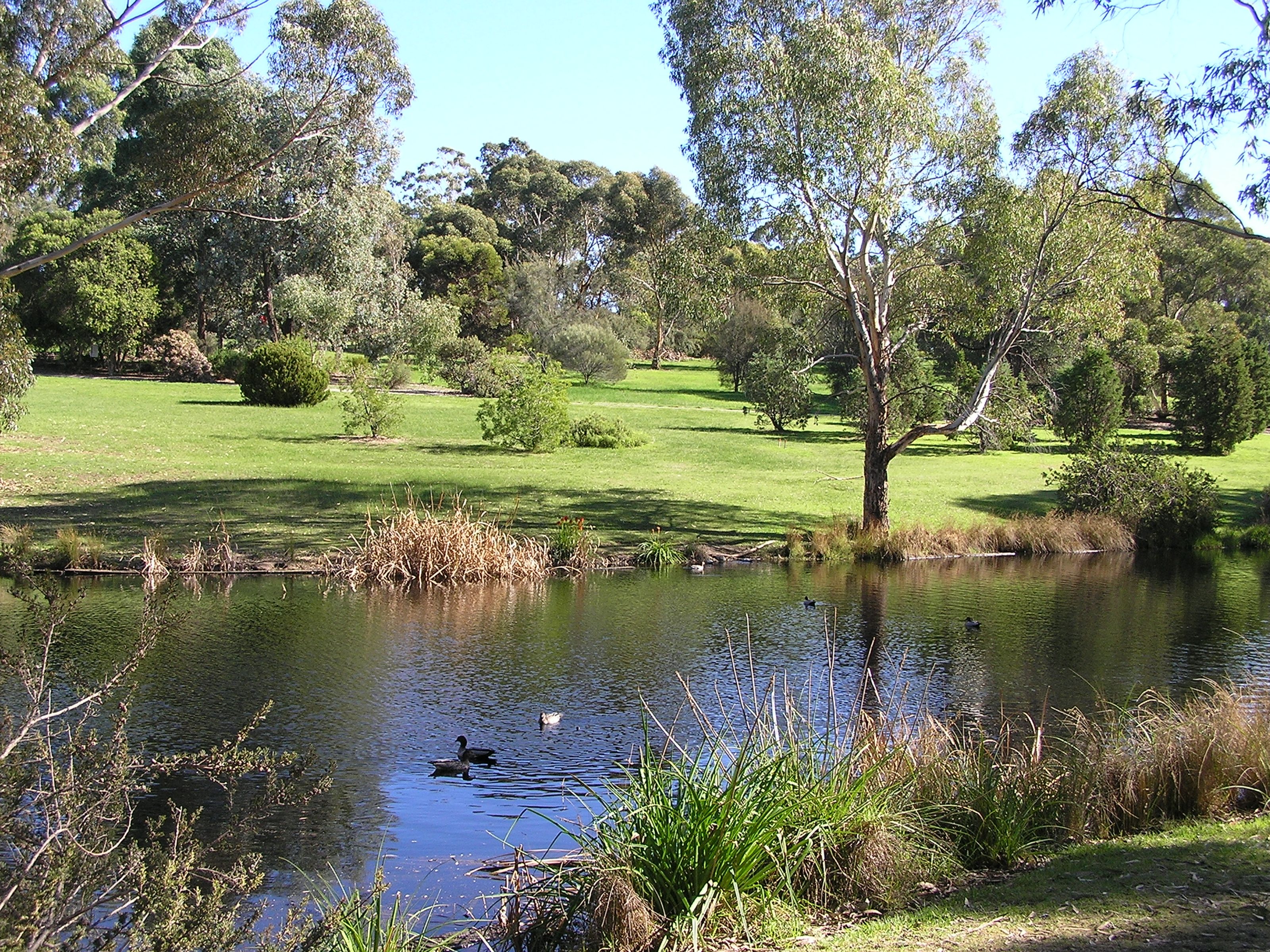
(Photo shows Wittunga Botanic Garden in Eden Hills, Adelaide)

Famous Names: Jedda and Rosalie

24 Wednesday Jun 2015

Posted by A.O. in Famous Names

≈ 7 Comments

Tags

animal names, Australian Aboriginal names, bird names, celebrity baby names, ethnonyms, European name popularity, famous namesakes, fictional namesakes, flower names, French names, historical records, international name trends, Latin names, locational names, name history, name meaning, name popularity, names from movies, nature names, nicknames, plant names, saints names, screen names, UK name popularity, US name popularity

JEDDA

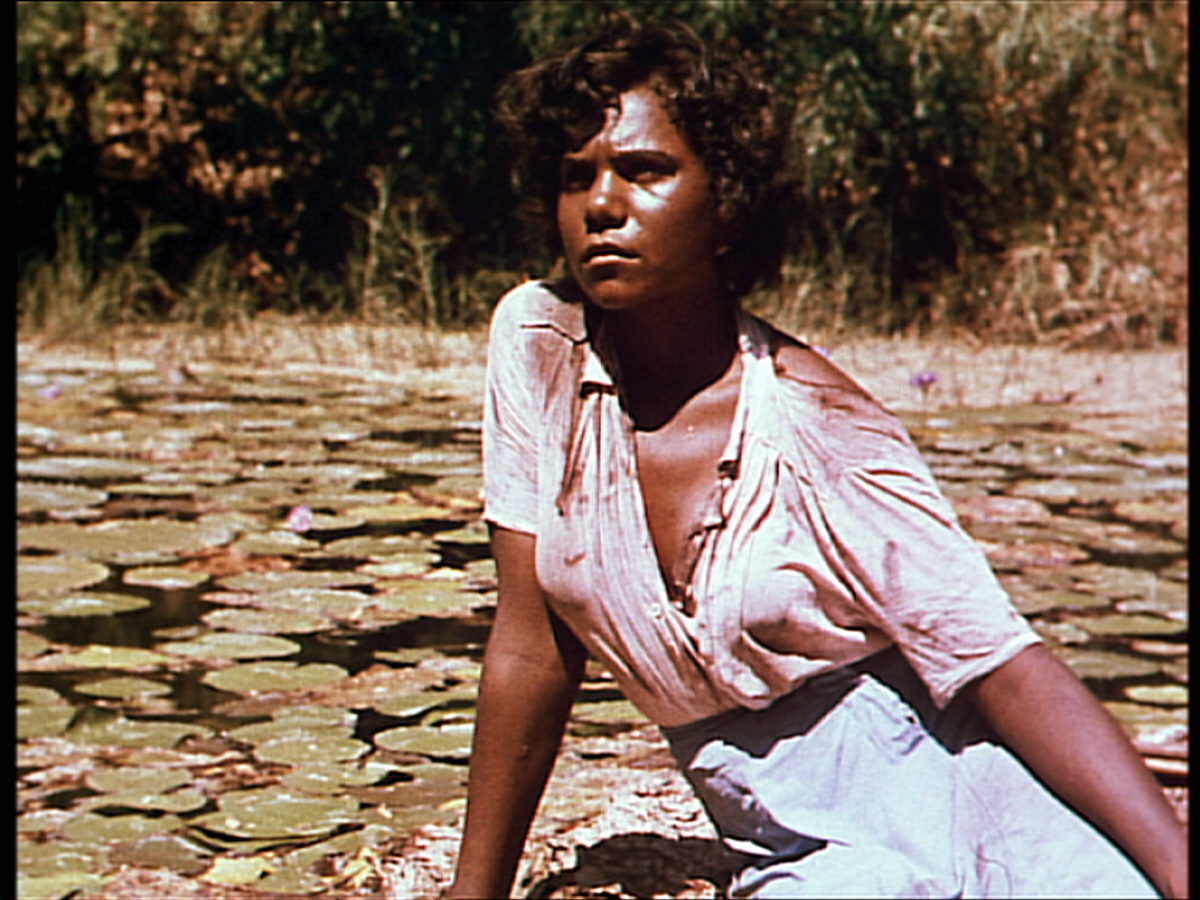
Last month the Australian film Jedda returned to the Cannes film festival, sixty years after it was first shown there in 1955. Jedda was the work of distinguished film-makers Charles and Elsa Chauvel; the first Australian feature film to be shot in colour, and the first to have Aboriginal actors in lead roles.

In the film, Jedda is an Aboriginal girl who is brought up by a white couple on a cattle station after her mother dies. She is raised in European ways, and forbidden to learn about her own culture, kept separated from the other Aborigines on the station.

When she gets older, Jedda finds herself strangely drawn to an Aboriginal man living in the bush, and following the traditional ways of his people. He abducts her, but when they come to his tribal lands, Jedda discovers that their relationship is forbidden by Aboriginal law. It’s a Romeo and Juliet scenario, and as with Shakespeare’s tale, it ends in tragedy for the star-crossed lovers.

The role of Jedda was given to Rosalie Kunoth, an Aboriginal teenager from the Northern Territory, who was studying in Alice Springs. The Chauvels gave her the screen name Ngarla for the film, which they thought looked more “authentic”. Ngarla was the name of Rosalie’s mother’s people – the Ngarla are from the Pilbara region of Western Australia. This was distressing to Rosalie, as it was culturally inappropriate.

The filming was challenging for Rosalie in many ways, and when she attended the premiere (sitting in the white section of a segregated cinema), was horrified by the film’s eroticism. Rosalie was an Anglican nun for ten years; she then left the order, married, and eventually returned to the Northern Territory. Now a respected Aboriginal elder, Rosalie Kunoth-Monks has spent her life working as an Indigenous activist, taking on leadership roles in her community. She has a daughter named Ngarla.

Jedda was a groundbreaking film in Australian cinema history, especially significant as it gained international attention and respect at a time when Australian cinema was practically nonexistent. As well as its other “firsts”, it was the first Australian film to be shown at Cannes, and nominated for the Palme d’Or.

Although it has dated in some ways, it remains a powerful and heartbreaking story. Jedda was created in opposition to the assimilationist policies of the 1950s, and the film is still relevant in light of the Stolen Generations. It helped inspire Indigenous film-maker Tracey Moffatt, whose Night Cries is a re-imagined “what might have been” sequel to Jedda.

JEDDA
In the movie Jedda, Aboriginal servants name the baby Jedda when she arrives, because she “flies in” like a “jedda bird”. Jedda appears to be from the Noongar word djida or jida, meaning “bird” (more specifically a wren), even though Noongar people are from south-west Western Australia, and the film is set in the Northern Territory. In the film, the identification with Jedda as a bird connects her to flight, to freedom and capture, and also to the spirit world.

Australian records show the name Jedda in sporadic use as far back as the 19th century, including by Indigenous Australians. I can only speculate as to where their names might have come from; in the case of Europeans, maybe as a variant of the name Jetta. It is possible that Indigenous women born before the film was made took (or were given) the name Jedda after its release. In addition, I have seen Indigenous women named Djida and Jida.

Jedda is also a plant name, as the jedda bush is native to the Cape York Peninsula region of far north Queensland. It is named after Jedda Creek, which is where it was first found, but I have not been able to discover the origin of the creek’s name – it may even have been named after the film.

Jedda is in use as a personal name for both Indigenous and non-Indigenous Australians, and is a popular name for homes, businesses, and streets. It is often used as a name for animals too, and in particular I have encountered quite a few horses named Jedda. This may be why in the children’s novel, Hating Alison Ashley by Robin Klein, the heroine’s sister Jedda pretends she is a horse. I’ve seen the name given to a boy, and it does have a bit of a unisex vibe, as it shortens to Jed.

Jedda is an Australian name made famous by a classic film, and appealing to both Indigenous and non-Indigenous parents. Although traditionally female, it could even be used for both sexes. It tends to be seen as slightly dated, yet it has never been common and is similar to Gemma, Jenna, Jed, and Jett.

ROSALIE
French form of the Latin name Rosalia, derived from rosa, meaning “rose”. Saint Rosalia was a medieval hermit who tradition says was a Norman noblewoman led by angels to live in a cave in Sicily. The saint became known in 1624, when she is supposed to have miraculously cured a plague. The saint’s name Rosalie was given to a young nun named Jeanne-Marie Rendu, and she became Blessed Sister Rosalie, who performed a lifetime of charity in the slums of 19th century Paris, and was mourned by the city when she died.

The name Rosalie came into common use in the 18th century, and was especially used in France, Germany, and Central Europe. It only became common in the English-speaking world in the 19th century, possibly because of the French courtesan Rosalie Duthé, who became the mistress of French kings and aristocrats. As a young woman she moved to London to escape the French Revolution, and gained the immensely rich George Wyndham, 3rd Earl of Egremont, as a lover. Beautiful and golden-tressed, Rosalie was apparently not overburdened with brains, and it is theorised that she is the originator of the “dumb blonde” stereotype.

The name Rosalie first joined the charts in the 1910s, debuting at #268. The name peaked in the 1940s at #141, probably because of the 1937 movie Rosalie, starring Eleanor Powell as a princess in disguise: Cole Porter’s song Rosalie is from the movie. Rosalie dropped off the charts in the early 2000s, but returned in 2009 at #519, the year after the first Twilight film was released, with Nikki Reed in the role of Rosalie Hale. Rosalie is described as being “the most beautiful person in the world”, which must have been a drawcard. The name Rosalie is apparently now in rare use again.

In the US, Rosalie returned to the Top 1000 in 2009, under the influence of Twilight. It is now #310 and rising. In the UK, the name Rosalie suddenly began rising steeply in 2009, and is now #394. Rosalie is also in the 300s in France, and is a popular name in The Netherlands, at #79.

Rosalie is a pretty, charming, European-style name with that touch of fairy-tale magic which has seen it chosen in films for a student princess and a vampire beauty. As Rose- names are becoming increasingly fashionable, it is a bit surprising that Australia seems to to be lagging behind the international trends – although it might just be that our data-collection is lagging.

I have seen quite a few birth notices for baby girls named Rosalee, Rosaleigh, Rosa-Lee and so on, and wonder if the spelling is an issue for some parents. Perhaps they worry that Rosalie will be said with the end rhyming with Lorelei, or just don’t like the idea of a name that ends in -lie. This makes me wonder if there are more Rosalies out there than meets the eye. A fantastic underused traditional choice, in any case.

POLL RESULTS
Jedda received an approval rating of 53%. 39% of people weren’t keen on the name Jedda, while 16% loved it.

Rosalie received a very good approval rating of 76%, making it one of the highest-rated names of 2015. 39% of people loved the name Rosalie, and only 4% thought it was a terrible name.


Uncommon Girls Names from the Birth Announcements of 2011-12

14 Sunday Jun 2015

Posted by A.O. in Name Themes and Lists

≈ 3 Comments

Tags

animal names, Arabic names, Australian Aboriginal names, birth notices, celebrity baby names, Celtic names, Chinese names, Cornish names, created names, english names, famous namesakes, fictional namesakes, French names, Gaelic names, German names, Greek names, honouring, Irish names, Japanese names, Latin names, literary names, locational names, middle names, mythological names, name history, name meaning, names from films, names from video games, names of businesses, nicknames, rare names, surname names, UK name popularity, unisex names, vocabulary names, Welsh names

satine (1)

Althea
Variant of the ancient Greek name Althaea, perhaps derived from the Greek word althos, meaning “healing”. In mythology, Althaea was a queen with a son named Melager. When Melager was a baby, the Three Fates turned up, rather like the fairy godmothers in a certain tale. One said he would be noble, the second that he would be brave, but the third did the usual grumpy godmother routine, and said his life would last only as long as a certain piece of wood burning on the fire. Althaea immediately took the wood and blew it out, burying it secretly so that none should ever find it again. When Melager was grown into the brave and noble prince predicted by The Fates, he got into a quarrel while hunting, and killed his uncles. When Althaea discovered Melager had murdered her brothers, she took revenge by setting fire to the piece of wood, so that her son died. Afterwards she committed suicide. This isn’t the happiest name story ever, but the poet Richard Lovelace wrote To Althea, From Prison while imprisoned for a political protest. The famous poem is very romantic, and the name Althea has been used since the 17th century because of it, while never being very common. One attraction of this literary name is the potential to use fashionable Thea as a nickname.

Carys
Modern Welsh name derived from caru, meaning “to love”, and given the common -ys ending found in Welsh names, such as Gladys and Glenys. It has been in use since the early 20th century, and is currently #328 in England/Wales, although falling in popularity. The name gained interest as a celebrity baby name, when Welsh-born actress Catherine Zeta Jones chose it for her daughter. It is meant to be pronounced KAH-ris, but the few people called Carys I know in Australia all say their name to rhyme with Paris, and this pronunciation is even used in Wales sometimes (kuh-REES is really pushing it though). Leaving aside possible pronunciation pitfalls, this is a modern name that is feminine without being frilly.

Isolde
In medieval romance, Isolde the Fair is a stunningly beautiful golden-haired Irish princess with a gift for healing, who is married off to King Mark of Cornwall. Due to a mix-up with a love potion, Isolde falls passionately in love with Tristan, her husband’s nephew and adopted son, with tragic consequences. Tristan actually ends up married to a different Isolde, a Breton princess called Isolde of the White Hands, who he weds for the curious reason that she has the same name as his true love. Their marriage is never consummated, and fed up and jealous, Isolde of the White Hands eventually takes her revenge. The stories originally had nothing to do with Arthurian legends, but became part of them. Adapted by Gottfried von Strassberg in the 12th century, Isolde is a German translation of Iseult, used in French versions of the tale. The Welsh form of the name is Esyllt, and although there are many arguments over the name’s meaning, the most convincing theory is that it is from the Celtic for “she who is gazed upon”, to suggest an overwhelming beauty. The name Isolde has been used since the Middle Ages due to the Tristan and Isolde legend, without ever becoming common: the composer Richard Wagner, who wrote the opera Tristan and Isolde, had an illegitimate daughter named Isolde. A romantic literary name fit for a fairytale princess, you can say Isolde almost any way you like, but common pronunciations would be i-SOL-duh or i-ZOL-duh.

Jamilla
Variant of the Arabic name Jamila, the feminine form of Jamil, meaning “beautiful”. The name became better known in the English-speaking world in 1944 through the romantic fantasy film Kismet, starring Marlene Dietrich as Lady Jamilla, a captive queen who falls in love with a rascally beggar. Set in an Arabian Nightsy type world, at one point, Dietrich does an erotic dance with her legs painted gold, so the name got a rather sexy image. Jamilla works well cross-culturally, and is easy to explain to people, as it is said like Camilla with a J. The popular short form Milla is an added attraction.

Lowenna
Modern Cornish name meaning “joy”, used since the early 20th century, and in rare but fairly steady use in England/Wales. The name is something of a favourite in fiction, even being chosen for historical novels set in Cornwall hundreds of years ago, when it is unlikely the name was in use. Lowenna can be found in the US in the 19th century, where it may be a variant of Louanna, or other names based on Louisa. It was used in the stage version of Rip Van Winkle, written in 1859 (Lowenna is Rip’s daughter; in the original story, his daughter was called Judith). A drawcard is that the name is very similar to the Indigenous name Lowanna, meaning “girl, woman”, giving this name a rather Australian feel.

Lux
Latin for “light”. Lux was used as a male name in medieval Germany, as a short form of Lukas, or a corruption of the German nickname Luchs, meaning “lynx” – this is the origin of the Lux surname. Lux began to be used as an English name by the 17th century, when it was used for girls: in general, English-speakers have preferred it as a female name, although it has been used as a male name too, particularly in North America, which has a history of high immigration from central Europe. The name may be used in a Christian sense, as Fiat lux means “Let there be light”, a famous quote from Genesis to show the beginnings of creation, or even a specifically Catholic context as Lux Aeterna (“eternal light”) is used in Latin prayers to refer to heaven. However, the meaning of light is positive to almost everyone, and the name also has a science-fiction feel to it, because lux is a scientific measurement of luminosity (there is a video game character named Lux, Lady of Luminosity). The name has had publicity from the film The Virgin Suicides, with Kristen Dunst as Lux Lisbon, and from the daughter of One Direction’s stylist – once known in the press as Baby Lux, and almost a celebrity in her own right. A short, cool, luxurious-sounding name that also works well in the middle.

Posy
Can be used as a short form of other names, or with the meaning “a small bouquet of flowers” in mind. The word posy comes from poesy, meaning “poetry”, and has been used to mean a bunch of flowers since the late 16th century – a slightly earlier definition of the word was a motto inscribed inside a ring. Posy has been used as a personal name since the 18th century, and although it sounds very dainty and feminine, it has quite often been given to boys. The reason is because Posy is also a surname, after the town of Pusey in Oxfordshire, meaning “pea island”. Although the name Posy has never been very common, there are a few Posys in fiction to give it some publicity. Posy Fossil is one of the main characters in Noel Streatfeild’s Ballet Shoes, a brilliant young dancer filled with ambition. More recently, Posy Hawthorne is a sweet little sister in The Hunger Games, and in the romantic comedy About Time, Posy Lake is the protagonist’s eldest daughter. Although Posy began as a short form of Josephine, you could use it for a wide variety of names, including Sophia and Penelope – British cartoonist Posy Simmonds, from The Guardian, is named Rosemary.

Satine
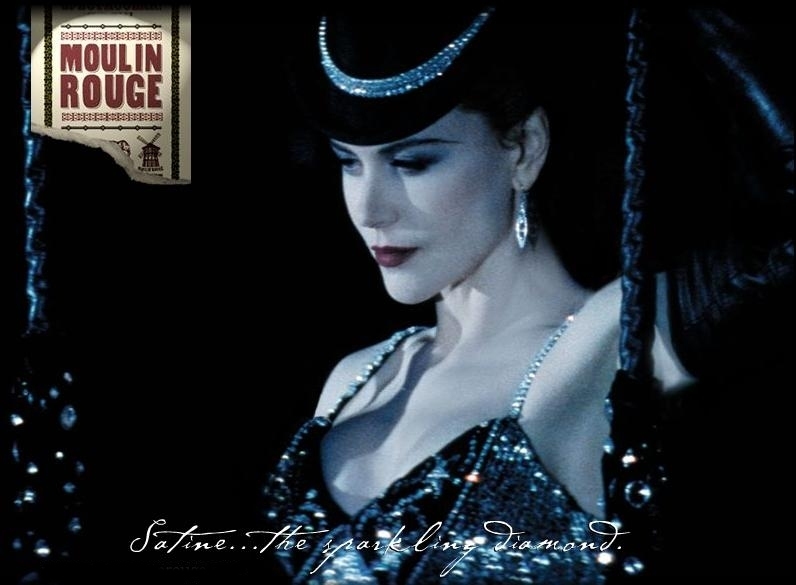
In the 2001 movie Moulin Rouge!, Nicole Kidman plays the role of Satine, a Parisian cabaret star and courtesan who has never known love until she falls for a poor English writer. Satine, which is presumably a professional or stage name, is French for satin, the familiar glossy fabric – its name comes from the Chinese city of Quanzhou (once a major shipping port for silk), which was called by the Arabic name of Zayton during the Middle Ages. Zayton is the Arabic word for “olive”, to symbolise peace, perhaps due to the mix of cultures living and working in the city. This makes Satin or Satine a possible honour name for Olive, weirdly enough. Satine has been used as a name since the 19th century, and although it is not a traditional French name, it has sometimes been used as a baby name in France since the film came out. A soft, exotic-sounding name with an Australian connection.

Shiseido
The name of a highly successful Japanese cosmetics company, and one of the oldest in the world, being founded in 1872. The company’s name is taken from the classic Chinese text, the I Ching (Book of Changes), and can be translated as “How wonderful is the virtue of the earth, from which all things are born!”. The company believes that this embodies its resolve to create new products that will enhance clients’ well being, and also helps to promote an image which is healthy and environmentally sound. Although there are many brand names used as personal names (such as Chanel and Armani), and some existing personal names used for brands (such as Mercedes and Nike), I have only ever seen one baby given the name Shiseido. That makes it very unusual, but it’s rather attractive, and has a lovely, carefully-crafted meaning. Pronounced shi-SAY-doh, you could use Sadie as a short form, although the baby I saw had Sass as her nickname.

Sorcha
Gaelic name meaning “brightness, radiance”. It can be found in medieval Irish documents, so it has a long history. In Ireland it is sometimes Anglicised as Sarah, because of the similar sound, while in Scotland it is more often Anglicised as Clara, which has the same meaning. The Irish actress Sorcha Cusack, who came to prominence in the 1970s as Jane Eyre, and is still on TV now as the housekeeper in Father Brown, has given it publicity in recent decades, and the name isn’t uncommon in Ireland. The correct pronunciation is SAWR-kuh or SAWR-i-kuh, but in practice a wide variety of pronunciations is tolerated in Ireland and Scotland, including SAWR-sha, which is probably easier for English-speakers, and sounds like familiar Sasha (although liable to be confused with another Irish name, Saoirse). An unusual yet very usable name.

POLL RESULTS
People’s favourite names were Carys, Isolde and Posy, and their least favourite were Lowenna, Jamilla and Shiseido.

(Picture shows Nicole Kidman as Satine in Moulin Rouge!)

Famous Names: Guy and Vienna

27 Wednesday May 2015

Posted by A.O. in Famous Names

≈ 1 Comment

Tags

aristocratic names, Celtic names, famous namesakes, fictional namesakes, French names, germanic names, Italian names, Latin names, locational names, name history, name meaning, name popularity, Norman-French names, saints names, surnames names, UK name popularity, US name popularity

AUSTRIA EUROVISION SONG CONTEST 2015

This year was the 60th anniversary of Eurovision, hosted by last year’s winner, Austria, and the finals held in Vienna on May 23. The contest was won by Sweden, with heavily favourited Måns Zelmerlöw’s Heroes storming to victory, the sixth time Sweden has been the winner. Austria was the wooden spooner this time, with not a single point – the first time a host country has received zero points. (Seriously what happened, the song wasn’t that bad?).

The big excitement for Australia was that we were finally allowed to compete, chosen as a wildcard entrant, and being given an automatic slot in the final (if you’re wondering how you receive this honour, you pay for it, with SBS stumping up the costs). We sent pop star (and twice-time celebrity dad) Guy Sebastian, performing Tonight Again, written especially for Eurovision. We came a creditable fifth, and Tonight Again is tearing up the iTunes chart in Europe, predicted to be one of the biggest hits of the northern summer.

In fact, Australia impressed enough that they haven’t ruled out asking us back next year. The theme of Eurovision 2015 was “Building Bridges”, and maybe they can build a bridge all the way to Oz.

GUY
Guy is the Norman-French form of the Germanic name Wido, a short form of names such as Witold and Widukind, based on the word witu, meaning “wood”. It was introduced to England by the Normans, and was a fairly popular name. There are a couple of saints named Guy, and the name was also used to Anglicise the name of Saint Vitus, whose Latin name means “life”.

Another influence may have been the legendary medieval hero Guy of Warwick. In the story, Guy falls in love with a fair lady named Felice, who is much posher than him. In order to win her, he must prove his worth by battling dragons, giants, huge wild boars, and a particularly savage cow. After marrying Felice, he soon feels remorseful for his acts of violence, and goes on pilgrimage to the Holy Land, eventually ending his long life as a hermit in a cave. It all sounds a bit pointless to us cynical moderns, but Guy was greatly admired, and the name Guy became traditional in the Beauchamp family, the earls of Warwick.

The name had already become relatively uncommon when it was chosen for Guy Fawkes in the 16th century, and it is conjectured that the name was slightly more popular in Yorkshire because of a famous local judge named Sir Guy Fairfax (records show Guy was still getting some use in Warwick, because of the legendary hero, and was a particular favourite in Gloucestershire, where there was a noble family named Guy – whose surname came, not from the personal name, but from the French place name Guise).

Guy Fawkes is infamous for his role in the Gunpowder Plot, where a small group of Catholics planned to assassinate the Protestant King James I and his government by blowing up Parliament House with gunpoweder. They would then kidnap King James’ nine-year-old daughter, Princess Elizabeth, and place her on the throne as a Catholic monarch (Elizabeth Stuart was a Protestant, but the conspirators planned to raise her as a Catholic and marry her to a Catholic when she was old enough).

It was an outrageous plan, fortunately foiled by the Plotters themselves, when they sent out letters to Catholic parliamentarians, telling them to stay away lest they get blown sky high. The letters were thought to be a hoax, but the king ordered the cellars under the parliament to be searched just in case, and Guy Fawkes was discovered there shortly after midnight on November 5 in 1605, along with enough gunpowder to reduce the House of Lords to rubble, and a fuse ready for lighting.

At first Fawkes was steadfast in his refusal to name his co-conspirators, or to reveal his identity, earning the king’s admiration. However he didn’t admire him enough not to have him tortured, and after several days of it Fawkes was eventually broken. The Plotters were all found guilty of high treason and sentenced to be hung, drawn, and quartered. Fawkes asked forgiveness of the king and the state before breaking his neck on the noose before he could be hung.

The first Guy Fawkes Night was held on November 5, when the people were encouraged to light bonfires to celebrate the king’s escape from assassination, and it went swimmingly enough that it was officially designated a day of thanksgiving until the mid 19th century. Bonfires were later supplemented by fireworks, and the custom was to burn an effigy (often of the pope). In modern times, effigies have included unpopular public figures, such as Margaret Thatcher, but the classic “guy” is of Guy Fawkes himself.

You would think that would-be domestic terrorist Guy Fawkes would have doomed the name Guy for good and all, but in fact the name became more popular after his death. It received a boost from William Harrison Ainsworth’s popular 1841 historical novel Guy Fawkes, which showed Fawkes in a sympathetic light, and urged toleration of faith at a time of anti-Catholic sentiment.

After this, Guy Fawkes often appeared as an action hero in pulp fiction, and the Fawkes mask has become a symbol of protest against tyranny, used by the Occupy movement, Anonymous, and WikiLeaks, amongst others. In Ray Bradbury’s Fahrenheit 451, the protagonist is named Guy, a state book-burner who eventually rebels. In the Harry Potter series, Fawkes was a phoenix, the pet of Dumbledore, and extremely loyal; the Order of the Phoenix is a secret organisation headed by Dumbledore intended to fight the tyrannical reign of Voldemort.

Guy’s name has entered the English language – originally a bizarrely-dressed person was called a guy, after the effigies on Guy Fawkes Day, dressed in old clothes. Now a guy just means any man, a bloke, a dude, a feller. More generally, it can just mean a person, because it’s possible to address a group of people of either or both genders as “you guys”.

The name Guy was #201 in the 1900s, and left the charts in the 1920s, not returning until the 1940s, at #224; perhaps British World War II hero Guy Gibson, of “dam busters” fame, was a help. Guy peaked in the 1970s at #113, and then steadily fell. It hasn’t charted since the late 2000s. Guy has similarly fallen out of fashion in the UK and US; it was #560 in England/Wales in 2013, while last year 156 boys were named Guy in the US.

Guy is a handsome name, but the word guy to mean a man or a person has not been a help to its dwindling use. However, this is an underused traditional name, connected with heroes and antiheroes alike, and has a rebellious, even bad boy, link. Give your son this name, and he might just consider himself the luckiest Guy in the world.

VIENNA
Vienna is the capital of Austria, and one of the great cities of Europe. Vienna is called The City of Music, for many great composers have lived and worked here, including Mozart, Haydn, Beethoven, Schubert, Brahms, and Mahler. It is also called The City of Dreams, as the home of pioneering psychoanalyst Sigmund Freud. A beautiful baroque city and major cultural centre, it has been ranked as the city with the world’s best quality of life.

The name English-speakers use for the city is Vienna, the Italian form of the official German name Wien. As the site of Vienna was settled by Celts, it is thought to come from the Celtic root windo, meaning “white, fair” (the basis for the Irish Fionn and the Welsh Gwyn). Another theory is that it comes from the Celtic Vedunia, meaning “forest stream” – the stream would presumably be the River Wien which runs through Vienna. Others believe that it comes from the Roman settlement, fortified in 15 BC and given the Celtic name Vindobona, which might mean something like “white land, fair land”.

The name Vienna must have been in some use in the Middle Ages, for St Francis of Paola’s mother was named Vienna da Fuscaldo. It’s been in use as an English name since the 18th century, and can be found in Italy at the same time, probably because of the saintly connection. Modern namesakes include Joan Crawford’s gutsy saloon-keeper character in the 1950s western, Johnny Guitar, and American indie singer-songwriter Vienna Teng (real name Cynthia Shih).

Vienna is around the 600s in Australia. In 2013, Vienna ranked #882 in England/Wales, while in the US, 253 girls were named Vienna last year – not too far removed from the Top 1000.

While Vienna is by no means common, there’s a feeling that it is on its way up – and you can see why. Pretty and elegant, this is a modern-sounding multicultural name that actually has a long history. Fitting in with the trend for V names, it sounds like an updated version of Sienna, and seems like a choice that might be widely admired. Could Eurovision give it a boost?

POLL RESULTS
Guy received an approval rating of 42%. 47% of people weren’t keen on the name Guy, while 15% loved it.

Vienna received a slightly higher approval rating of 48%. 39% of people weren’t keen on the name Vienna, while 13% loved it.

(Photo of Guy Sebastian at Eurovision from SBS)

Could Oscar and Scarlett Be Brother and Sister?

23 Saturday May 2015

Posted by A.O. in Naming Assistance

≈ 5 Comments

Tags

choosing baby names, colour names, French names, popular names, sibsets

little-boy-with-new-sibling

Aimee and her husband are expecting a baby girl in a few months; they already have a son named Oscar, so are looking for a name that will complement his.

Aimee really likes the name Eloise Josephine, but unfortunately her husband doesn’t like the name Eloise. The other two names that Aimee likes are Scarlett and Stella, however, she thinks they are a bit too similar to Oscar’s name. SCARlett has the same SCAR as oSCAR, while Stella is also two syllables and ends with an -uh sound. She wonders if other people agree that Scarlett and Stella are too much like Oscar to work as possible sister names.

Aimee thinks Charlotte would make a good alternative to Scarlett, as they end in the same sound, while in Charlotte the SCAR is softened to a SHAR. She really likes the way Oscar and Charlotte sound together, even though she always thought she would avoid a name in the Top Ten. However, so many of the popular names are really nice!

At the moment, her shortlist is:

Eloise
Scarlett
Estelle
Stella
Charlotte
Liliana

She wonders if anyone else thinks that Eloise works well with Oscar, and would be grateful for any feedback on her name list, or any suggestions of other names that she might like.

* * * * * * * * *

To answer your last question first, I think Eloise is a very pretty name, and works well as a sister to Oscar. I also like the name combination of Eloise Josephine. However, I’m not the baby’s parent, and I don’t get a say in it, so that’s probably not much help to you. Your husband doesn’t like the name Eloise, and unless he changes his mind, Eloise has to get crossed off the list. I know it must be disappointing, as your favourite name is a perfectly nice choice, but that’s how it goes.

I will keep my fingers crossed for you, and fathers have been known to change their minds when left alone, so don’t give up all hope.

To me Scarlett and Oscar are not too alike, because you don’t pronounce Oscar as o-SCAR – it’s Osk-uh. I often see brothers and sisters named Oscar and Scarlett in birth notices (it seems to be a rather popular combination for siblings), and even seeing it written down, I’ve never thought it seemed strange in any way. Now having had it pointed out, I rather like it: it seems like a nice little link between the names that isn’t too obvious.

I can see what you mean about Stella and Oscar – they’re both two syllables with the stress on the first syllable, and both end with an -uh sound. I guess that does make them a bit alike, although I certainly wouldn’t have thought anything of it without prompting. I don’t know if it’s a huge issue, unless it really bothers you – does it seem funny or hard to say when you call both names together, or do you just hate the idea of sibling names not being completely distinct from one another?

Charlotte does seem like an alternative to Scarlett, although you are right that it’s very popular. It’s sensible not to be too bothered by popularity for a name you really love, but I’m not sure the Top 2 is the first place to go when searching for an alternative to a name you love. I think I’d be more enthusiastic if Charlotte was your first choice, rather than your third or fourth, because it is a lovely name, and does sound nice with Oscar.

Estelle and Liliana are both very pretty – I can see that you prefer feminine names for girls, although Liliana is a bit frillier than your other choices.

Some other names you might like:

Elodie
This pretty French name is a bit similar to Eloise (EL-uh-dee), but hopefully not so similar that your husband dislikes this name as well. It’s losing popularity in France, but gliding elegantly up the charts in the UK. Could you get on board with Elodie Josephine?

Elise
Another French name similar to Eloise, not quite as popular.

Emmeline
Emma is the feminine equivalent of Oscar in popularity, and fashionable Emmeline gives you that French three syllables shared with Eloise, as well as the sensible feel of Charlotte.

Violet
Another popular colour name which ends in an -et sound, like Scarlet and Charlotte. For some reason, the combination of Oscar and Violet really appeals to me.

Hazel
A colour name like Scarlett, and a popular name rapidly climbing the charts. As with Violet, I find Oscar and Hazel a completely adorable sibset.

Juliet or Juliette
Another -et sound ender, and three syllables like Eloise, but less popular. The Juliette spelling might appeal to you as having more of a French look.

Sylvie
A sweet and pretty French name – Oscar and Sylvie strikes me as a delightful combination.

Clementine
A very fashionable French name, which might seem like a more daring alternative to Charlotte. I do like Oscar and Clementine together.

Vivienne
Another fashionable French choice, very much in line with popular choices like Olivia. I like the sound of Oscar and Vivienne.

Well there’s some other ideas to mull over, but since you’ve been forbidden to use your favourite name of Eloise, I’m rather hoping you will decide your second choice of Scarlett isn’t too similar to Oscar after all.

NAME UPDATE: The baby’s name was Scarlett!

POLL RESULTS
91% of respondents thought Oscar and Scarlett were not too alike for siblings’ names. 46% thought they were a good match, 29% thought they sounded just fine together, and 16% thought they were a little bit too alike, but not enough to worry about. Only 9% thought that the SCAR sound in both rendered them unusable as names for a brother and sister.

86% of respondents thought Oscar and Stella were not too alike for siblings’names. 35% thought they were a good match, 31% thought they sounded fine together, and 20% thought they were a little bit too alike, but not enough to worry about. 14% thought they were too similar to be usable for a brother and sister.

The public’s choice for the baby’s name was Scarlett, with 29% of the vote, and Eloise was the second choice, with 22% of the vote.

← Older posts
Newer posts →

Enter your email address to follow this blog

Categories

Archives

Recent Comments

A.O.'s avatarwaltzingmorethanmati… on Zarah Zaynab and Wolfgang…
Madelyn's avatarMadelyn on Zarah Zaynab and Wolfgang…
JD's avatardrperegrine on Can Phoebe Complete This …
A.O.'s avatarwaltzingmorethanmati… on Rua and Rhoa
redrover23's avatarredrover23 on Rua and Rhoa

Blogroll

  • Appellation Mountain
  • Baby Name Pondering
  • Babynamelover's Blog
  • British Baby Names
  • Clare's Name News
  • For Real Baby Names
  • Geek Baby Names
  • Name Candy
  • Nameberry
  • Nancy's Baby Names
  • Ren's Baby Name Blog
  • Sancta Nomina
  • Swistle: Baby Names
  • The Art of Naming
  • The Baby Name Wizard
  • The Beauty of Names
  • Tulip By Any Name

RSS Feed

  • RSS - Posts

RSS Posts

  • Celebrity Baby News: Melanie Vallejo and Matt Kingston
  • Names from the TV Show “Cleverman”
  • Can Phoebe Complete This Sibset?
  • Zarah Zaynab and Wolfgang Winter
  • Baby, How Did You Get That Name?
  • Celebrity Baby News: Media Babies
  • Celebrity Baby News: Adelaide Crows Babies
  • Celebrity Baby News: Chris and Rebecca Judd
  • Names at Work: Name News From the World of Business and Employment
  • Celebrity Baby News: Sporting Round Up

Currently Popular

  • Celebrity Baby News: Alisa Camplin and Oliver Warner
  • Rare Boys Names From the 1950s
  • Sad Celebrity Baby News (contents may cause distress)
  • Celebrity Baby News: Nicki Gemmell and Andrew Sholl
  • Celebrity Baby News: Jacinta Allan and Yorick Piper

Tags

celebrity baby names celebrity sibsets english names famous namesakes fictional namesakes honouring locational names middle names name combinations name history name meaning name popularity name trends nicknames popular names saints names sibsets surname names twin sets unisex names

Create a free website or blog at WordPress.com.

Privacy & Cookies: This site uses cookies. By continuing to use this website, you agree to their use.
To find out more, including how to control cookies, see here: Cookie Policy
  • Subscribe Subscribed
    • Waltzing More Than Matilda
    • Join 517 other subscribers
    • Already have a WordPress.com account? Log in now.
    • Waltzing More Than Matilda
    • Subscribe Subscribed
    • Sign up
    • Log in
    • Report this content
    • View site in Reader
    • Manage subscriptions
    • Collapse this bar
 

Loading Comments...