• About
  • Best Baby Names
  • Celebrity Baby Names
  • Celebrity Baby Names – Current
  • Celebrity Baby Names – Past
  • Featured Boys Names
  • Featured Girls Names
  • Featured Unisex Names
  • Links to Name Data
  • Waltzing on the Web

Waltzing More Than Matilda

~ Names with an Australian Bias of Democratic Temper

Waltzing More Than Matilda

Tag Archives: fictional namesakes

Famous Name: Georgina

18 Wednesday Feb 2015

Posted by A.O. in Famous Names

≈ 3 Comments

Tags

aristocratic names, birth notices, classic names, famous namesakes, fictional namesakes, honouring, middle names, names from television, nicknames, royal names, UK name popularity, underused classics, US name popularity

708662-gina-rinehart

Famous Namesake
The Channel 9 mini-series House of Hancock has just come to an end, having enjoyed a certain amount of notoriety and controversy. The series is based on one of Australia’s real life soap operas: the family of wealthy Western Australian mining magnate Lang Hancock.

The main focus of the mini-series is on the relationship between Lang and his daughter Georgina (called Gina), brought under pressure when the teenaged Gina married a man old enough to be her father, which is increased when freshly-widowed Lang married his Filipina maid, who was young enough to be his daughter. The story then follows Gina’s relentless rise to wealth and power as Lang’s heiress, accompanied by family ructions.

Gina Rinehart is the chair of Hancock Prospecting, founded by her father Lang. She is the richest person in Australia, and a few years ago was the world’s richest woman, but is now only the sixth-richest. She was named after her father, who has George as one of his middle names, while her middle name Hope is her mother’s name.

Mrs Rinehart took legal action against the makers of House of Hancock, with her lawyer calling the program “almost entirely fiction”, “replete with falsehoods”, and its depiction of true events as “twisted.” Part of her legal team’s argument was that actors in House of Hancock breached consumer law against misleading and deceptive conduct by pretending to be someone else. I can only think a lot of actors, if not all of them at some time or another, have similarly breached consumer law.

Her lawyers were successful: Gina was granted access to the second episode before it went to air, and certain cuts were hastily made to key scenes before the show went to air, leading to a very abrupt ending. Despite all the cuts, House of Hancock was a hit, attracting more than 25% of the audience, or nearly 2 million viewers per episode. Actress Mandy McElhinney (Rhonda from the AAMi commercials) has garnered praise for her outstanding performance.

Although the details haven’t been made public, apparently one of the things Gina objected to was her father’s ghost coming back to chat with her, which she assures us did not happen. I for one believe her story, and don’t need a lawyer to convince me. She also says that she never fought with her stepmother, and in fact never spoke to her at all, painting a picture of happy family life in the process.

Despite making sure that House of Hancock came with a disclaimer that it had been fictionalised for dramatic purposes and was not a documentary, Gina Rinehart is still fuming, and will now sue Channel Nine for defamation. No stranger to the courtroom, she mounted an eleven-year legal battle against her stepmother Rose Porteous, claiming that she had hastened Lang Hancock’s death (the coroner determined he had died of natural causes). In turn, Gina has been in a long-running legal feud with her children over the family trust.

So that’s Georgina Rinehart – large, in charge, rich as filth, and liable to sue you if you claim she talks to ghosts and her stepmother.

Name Information
Georgina is a feminine form of George. Like its male counterpart, it has been in use for many centuries, but only gained prominence after the House of Hanover began to rule Britain in the 18th century, with George becoming a traditional royal name.

Georgina has been used as a middle name in the royal family – an example is Princess Maud of Fife, grand-daughter of Edward VII. It’s also been used by the aristocracy: Georgina Ward, Countess of Dudley, was one of the great beauties of the Victorian era, while Georgina Gascoyne-Cecil, Marchioness of Salisbury, was the wife of British prime minister, Lord Robert Cecil.

Georgina has been rather a favourite for characters in children’s literature, with the best known perhaps Georgina Kirrin from Enid Blyton’s Famous Five series. Georgina is a tomboy who is always called “George”. In the TV series Gossip Girl, the character of Georgina Sparks has been turned into one of the show’s villains; she goes by “Georgie”.

Georgina is an underused classic name which has never left the charts, yet never been popular. It was #171 in the 1900s, and hit its peak in the 1970s at #109 – it may not be a coincidence that the Famous Five series was on TV in that decade. Currently it is around the mid-200s, and I see the name Georgina quite often in birth notices.

Georgina is more popular in the UK, where it is #173 and falling, but doesn’t chart in the US. This gives it a rather “British” feel, although it’s used internationally, including in Spain, the Netherlands, and Central and Eastern Europe.

This is a stylish yet solid choice which has all the advantages of a classic name that doesn’t feel dated, without any popularity to worry about. It has a rather upper middle class image in Australia, but has a number of breezy, carefree nicknames to go by, including George, Georgie, Gia, Gina, Ginny, Gigi, and Nina.

POLL RESULTS
Georgina received a creditable approval rating of 73%. People saw the name Georgina as familiar without being common (21%), and stylish and classy (16%). However, 10% were put off the name by Gina Rinehart.

(Photo of Gina Rinehart from news.com.au)

Historical Naming Patterns in the House of Windsor – Part 1: Brothers for Prince George

15 Sunday Feb 2015

Posted by A.O. in Naming Issues

≈ 4 Comments

Tags

controversial names, famous namesakes, fictional namesakes, honouring, middle names, names of piercings, royal names, sibsets, UK name popularity

Queen_Victoria_with_Prince_Arthur

In 2012 I did an article on the historical naming of British monarchs, in preparation for the birth to the next heir to the throne, who turned out to be Prince George Alexander Louis – a slight score for me, as these were the first three boys’ names I suggested.

As Prince George is now expecting a brother or sister, I thought we’d take on what is a rather more difficult challenge – the naming of younger siblings of the future monarch: “spares” to the heir.

I haven’t gone back to the misty beginnings of English royalty, or to William the Conqueror, or even to the House of Hanover, or the reign of Queen Victoria. This will be a modern prince or princess born in the 21st century, and I thought that just looking at those close to the throne in the House of Windsor would be quite enough information.

I earlier looked at the “rules” of naming monarchs, and found that there are also “rules” to naming a monarch’s siblings. We can keep these guidelines in mind as we go, to ensure our expectations remain realistic.

  • All those who were the child of a monarch or an heir to the throne had a name earlier used by royalty – what we think of as traditional English royal names.
  • Nearly all of them had a name that had earlier been used for a British prince or princess. Those that didn’t had names of previous kings and queens. Not one was given an obscure royal name.
  • Perhaps surprisingly, very few of them seem to have been directly named after a relative or family member (although in some cases that information may have been kept private). Those that were, were named after royal grandparents or great-grandparents, usually deceased. Feminisations of male names for girls have not been been used so far (although female Windsors are less common than males, so there is less data to work from).
  • In my earlier article, I pointed out that monarchs were almost never given a name from royalty’s distant past, and that expecting a Queen Matilda or a King Edmund was therefore a forlorn hope. However, not so with a monarch’s siblings. Some were given a name from hundreds of years ago, and one or two even had names from the Middle Ages, so a wider variety of names can be considered.
  • Re-using royal and family names is common, even if there are other members of the royal family who are still alive with the same name – hardly surprising when they are drawing upon a relatively limited number of names. So we can’t rule out a name just because it’s already in use by a cousin or great-uncle. This applies to titles: it seems to be fine for there to be another Prince Soandso, as they can be told apart by their full title. For example, Prince Edward, Earl of Essex doesn’t get muddled with his mother’s cousin, Prince Edward, Duke of Kent. Again, this widens the pool slightly.
  • All those who were the child of a monarch or an heir to the throne were given a name that was relatively popular at the time of their birth. Nearly all of them had a name in the Top 100 for their era, while none had a name below the Top 200. This drastically shrinks the number of names on the table.

To find possible names for the siblings of Prince George, in theory all it takes is cross-referencing the UK Top 200 with a list of British royalty (kings, queens, princes, and princesses). Let’s see what the results are for a possible brother to Prince George, a future prince of the United Kingdom, once we remove Prince George’s own three names (slightly risky, as royals have been known to receive a sibling’s middle name as their first name).

Arthur #43
While the idea of a King Arthur would invite ridicule, a Prince Arthur seems suitable. In use by the English monarchy since the Middle Ages, it is a traditional royal name. Queen Victoria’s favourite son was Prince Arthur, while his son was the most recent Prince Arthur, born in the 19th century. The queen’s father had Arthur as one of his middle names, as do Prince Charles and Prince William, so this would link a prince with his father, grandfather, and great-great grandfather. I like the idea, and George and Arthur sound good as brothers. But do the royals consider this middle name material only?
My rating: seven and a half coronets

Frederick #82
There have been three Prince Fredericks, with the most recent the second son of King George III, born in the 18th century. The name is in use by the royal family; for example, Lord Frederick “Freddie” Windsor. Frederick is also a traditional name in the Spencer family, which makes this seem eminently suitable. George and Frederick sound great as brothers – maybe too much so, as this fraternal combination has already been used, by J.K. Rowling! Could the royals cope with the princes being dubbed The Weasley Twins by the press? I hope so.
My rating: seven coronets

Alfred #136
Alfred the Great was King of Wessex, a direct ancestor of the current royal family, so this name has some serious royal clout. There have been three Prince Alfreds, with the most recent a grandson of Queen Victoria who was born in the 19th century. He’s thought to have shot himself after going mad from syphilis, which doesn’t seem that auspicious (although his only crime was being born before the discovery of penicillin). I hope this isn’t a stumbling block, as George and Alfred sound perfect as brothers, while the popular nickname Alfie is very lovable.
My rating: seven coronets

James #9
James is a very royal name, because St James’s Palace is the official residence of the monarchy. As a prince’s name it could be problematic, because the only Prince James was the Scottish “Old Pretender”, who illegally claimed the British throne. Another slight issue is that Prince Edward’s young son is named James, Viscount Severn, and although he isn’t a prince, there is a legal question mark over his non-princely status that an actual Prince James may underline.

A traditional name in the Scottish monarchy, two of Scotland’s King Jameses have been kings of England, ruling as James I and II. With Scotland voting to remain part of the union, the royal family may be eager to choose a Scottish name.

My main objection is that I don’t much like George and James as royal brothers: to me they are too alike and could be confused in public announcements. I feel the heir to the throne needs a distinctive name, and would prefer James in the middle. However, the royals may think differently.
My rating: five and a half coronets

Charles #61
Prince Charles will be the hypothetical prince’s grandfather, and Charles is a traditional British royal name. There have been two kings named Charles, and several princes with the name, controversially including Bonnie Prince Charlie, the Young Pretender of the Jacobite cause. Charles is a name which comes from the Stuarts, and you could see this as another pro-union Scottish choice. It’s also traditional in the Spencer family, and presumably wouldn’t even be shared for that long, as Prince Charles is due to become king. There is nothing concrete against it, but my gut says no to this, except in the middle. (My gut is often wrong though).
My rating: five coronets

Henry #18
Wonderfully royal, the name Henry has been borne by eight kings and several princes, and is already in use by Prince William’s brother, known as Harry. A non-ruling prince hasn’t been given the name of an uncle before, and while this could happen, I don’t think it shows much imagination for a second son to be given the same name as the previous second son. Besides, what nickname could they give him, because Harry’s taken?
My rating: two and a half coronets

William #8
A suitable royal name, borne by four kings, and multiple princes going back to the Middle Ages. One of those princes is the Duke of Cambridge himself. Although it’s not impossible that a son could be named after him, it’s never been done before in the House of Windsor. Even in non-royal families, it’s not considered traditional for a second son to be named for his father, so this would be a surprise.
My Rating: two coronets

Edward #33
While Edward VIII ruined this name for a future king by his abdication, it’s still fine for a prince, and there have been several Prince Edwards. In fact, there are already two Prince Edwards – the son of Queen Elizabeth, and her cousin. Adding a third seems going a bit far to me.
My Rating: two coronets

David #50
This is a name from Scotland’s royalty. David I was a medieval King of Scotland, who had a strong relationship with the English monarchy, and married an English bride. This is another Scottish choice to celebrate the union, but the royal family have only used this as a middle name (it’s one of Prince Harry’s middle names).
My rating: one coronet

Michael #53
There is already a prince with this name in the royal family, the queen’s cousin, Prince Michael of Kent. He was named after his ancestor, Grand Duke Michael of Russia, and this is not a traditional British royal name. I don’t consider this name likely at all, although not impossible as a middle name.
My rating: half a coronet

Robert #98
A name from Scottish royalty, with the best known example Robert I, or Robert the Bruce, one of Scotland’s national heroes. He fought against England in the Wars of Independence, and because of him, the English crown was forced to recognise Scotland as an independent country. Not only does this name seem anti-union, there is a horrible ballad called Prince Robert, about a man who is poisoned by his mother. Despite being a traditional name in the Spencer family, I can’t feel happy about this.
My rating: half a coronet

Albert #99
Prince Albert was consort to Queen Victoria, and his name became traditional in the royal family as either a first or middle name. The last Prince Albert became King George VI, the queen’s father, and using this name would be a nice gesture were it not for the genital piercing called the Prince Albert. This is a non-starter in my book, although very likely as a middle name.
My rating: zero coronets

John #107
As mentioned in the earlier article, this name has been forbidden in the royal family.
My rating: zero coronets

Andrew #154
Prince Andrew is the second son of Queen Elizabeth, and he is named after his paternal grandfather, Prince Andrew of Greece and Denmark. Because his name is not from English royalty, and because the prince is currently embroiled in an international paedophile scandal, his name is unlikely to be used.
My rating: zero coronets

So judging by history, my picks for the prince’s name would be Arthur, Frederick, or Alfred, with an outside chance of James or Charles. There is no overwhelming contender, as there was with Prince George’s name, so I wonder if a surprise choice is on the way, or if a new trend in royal names will make itself felt. Perhaps a royal name from further down the popularity charts is on its way?

UPDATE: The royal baby was a princess named Charlotte, so none of the names for a prince were necessary after all.

POLL RESULTS
People’s favourite choices for a possible prince were Arthur, Frederick, and Alfred, while the names William and Andrew received no votes at all. The 4% of people who thought the royal couple would start their own trend in baby names were obviously off base.

(Picture is of Queen Victoria with her son Prince Arthur, a painting by Franz Xaver Winterhalter)

Famous Name: Liberty

12 Thursday Feb 2015

Posted by A.O. in Famous Names

≈ Comments Off on Famous Name: Liberty

Tags

car names, english names, famous namesakes, fictional namesakes, historical records, middle names, mythological names, name history, name meaning, names from movies, names of businesses, nicknames, surname names, UK name popularity, unisex names, US name popularity, virtue names, vocabulary names

B86XPzcCMAA8YGz

On February 1, award-winning Latvian-Australian journalist Peter Greste was freed from the Egyptian prison where he had been confined for 400 days. While on temporary assignment for news service Al Jazeera in Egypt, Peter was arrested with two of his colleagues in December 2013, charged with aiding the outlawed Muslim Brotherhood. After a farcical show-trial in which no evidence was presented, the three of them were sentenced to seven to ten years imprisonment as terrorists.

Regarded as political prisoners by the international community, there has been a concerted global campaign by journalists to free the Al Jazeera staff, using the slogan: Journalism is not a crime. Along with diplomatic negotiations, this resulted in a retrial being announced, followed by Peter being deported to Australia.

Peter kept himself sane in prison through exercise and meditation, and undertaking a degree in International Relations. He thought of the things he wanted most – to watch the sunset, to see the stars in the sky, and to feel sand between his toes.

Once released, he tweeted a photo of himself at the beach in Cyprus, saying how sweet freedom was. Peter is elated to be back with his family, but is concerned about his colleagues Mohamed Fahmy and Baher Mohammad, who are still in prison. Let the campaign to free Al Jazeera staff continue until they all can be at liberty.

The word liberty means “freedom”, ultimately from the Latin libertas. Libertas was the Roman goddess of liberty.

Our modern ideal of political liberty comes from the ancient Greeks, and is closely bound up with democracy. A free society, where all citizens live in liberty, is generally seen as one where slavery does not exist, and where everyone has equal political rights.

Liberty, in conjunction with equality and fraternity, was the catch-cry of the French Revolution, now the motto of modern France. For a time, Lady Liberty replaced the Virgin Mary on altars, and the French Republic symbol of Marianne portrays the goddess of Liberty, an allegory of democracy, reason, and freedom.

Liberty has also been a guiding principle for the United States, with the the Declaration of Independence promising “Life, Liberty, and the Pursuit of Happiness”, while Abraham’s Lincoln’s Gettysburg Address speaks of a nation “conceived in liberty”.

The Pledge of Allegiance offers fealty to a nation who stands for “liberty and justice for all” (taken directly from the French motto), and the patriotic song My Country, ‘Tis of Thee praises the “sweet land of liberty” – referenced in Martin Luther King’s I Have a Dream speech.

As a sign of their shared love for the ideal of liberty, the people of France gifted the people of the United States with a giant statue of Liberty Enlightening the World, known as the Statue of Liberty. Standing on Liberty Island in New York City’s harbour, it is one of America’s best known icons, symbolically welcoming immigrants to a land of freedom.

Liberty is also a Christian virtue, symbolising being set free from the slavery of sin. There are several mentions of liberty in the Bible, including the quote from Leviticus which is written on the Liberty Bell in Philadelphia: Proclaim liberty throughout all the land unto all the inhabitants thereof.

Liberty has been used as a personal name since the 18th century – the time of the French Revolution and the American War of Independence. In the beginning, it was far more common in America, strongly resonating with the American desire for freedom. The name Liberty was given from the time of the first protests against British taxation, under the Liberty Tree in Boston.

In the United Kingdom, the name Liberty was particularly associated with Kent during the 18th century. Kent has long been an area of military importance, and Chatham Dockyard on the River Medway built naval ships for centuries. During the 18th century, the UK was at war with France and Spain, and Kent was a major centre for the defence of Britain. Interestingly, many of the Libertys were born around the Chatham area.

Liberty is often thought of as a “hippie” name, symbolic of the flower child yearning for personal freedom. However, it must have many times been given patriotically, with political freedom in mind.

Historically, Liberty has been given to boys more commonly than to girls, perhaps because it has often been connected with military events and political power. The goddess Liberty (“Lady Liberty”) certainly helps give it a feminine air, and these days it is thought of as a primarily female name, although the film The Man Who Shot Liberty Valance (with Lee Marvin in the title role) is a reminder of its unisex status.

The name Liberty turns up on the US Top 1000 at three historically apt moments. First in 1918, at the end of World War I, then in 1976, in the American bicentenary, and it has been on the charts since 2001, the year of the September 11 terrorist attacks in New York and Washington. Currently it is #532 and fairly stable.

Liberty is most popular in the UK, where it is associated with the prestigious Liberty department store in London’s West End, which has been selling luxury goods since the 19th century. (The store’s name has nothing to do with freedom, but is named after its founder, Arthur Liberty, whose surname means “lead worker”). Liberty silks and prints have helped give it a fashionable air.

Having been in the Top 500 since before 1996, Liberty peaked in 2003 at #157, when conservative MP George Osborne chose it for his daughter, perhaps giving it an aristocratic stamp. The name had a small boost of popularity after the 2005 London Bombings, and is currently #373.

Liberty has never charted in Australia, and is a rare find in historical records here, more often used in the middle. It does seem to have been fairly evenly chosen for both boys and girls in the late 19th century. A famous Australian with the name is Liberty Wilson, the sister of comedian Rebel Wilson, while one with Liberty as his middle name is Walter Liberty Vernon, the architect who designed the Art Gallery of New South Wales.

Liberty is an interesting virtue name that is very rare in Australia compared to its use in the UK and US. I can see it appealing to a wide variety of people from all walks of life, and a broad spectrum of political views. Libby or Libbie is the obvious nickname, but for a boy named Liberty, or for a girl who wants a boyish nickname, there is always Berty. In Australia, Liberty Eggs may be a slight issue, although free range chickens seem a positive thing to me, while the Subaru Liberty makes this a car name.

POLL RESULTS
Liberty received a decent approval rating of 68%. People saw the name Liberty as interesting and different (24%), having a wonderful meaning (22%), and pretty or beautiful (16%). However, 14% thought it was too hippy-dippy. 2% of people were reminded too strongly of the Liberty Subaru or Liberty eggs.

Waltzing With … Anna

08 Sunday Feb 2015

Posted by A.O. in Waltzing with ...

≈ 1 Comment

Tags

Anglo-Saxon names, aristocratic names, Biblical names, British names, classic names, Disney names, Disney princesses, Etruscan names, European name popularity, famous namesakes, fictional namesakes, Greek names, hebrew names, Irish names, Latin names, mythological names, name days, name history, name meaning, name popularity, names from films, names of cakes, popular names, Roman names, royal names, unisex names

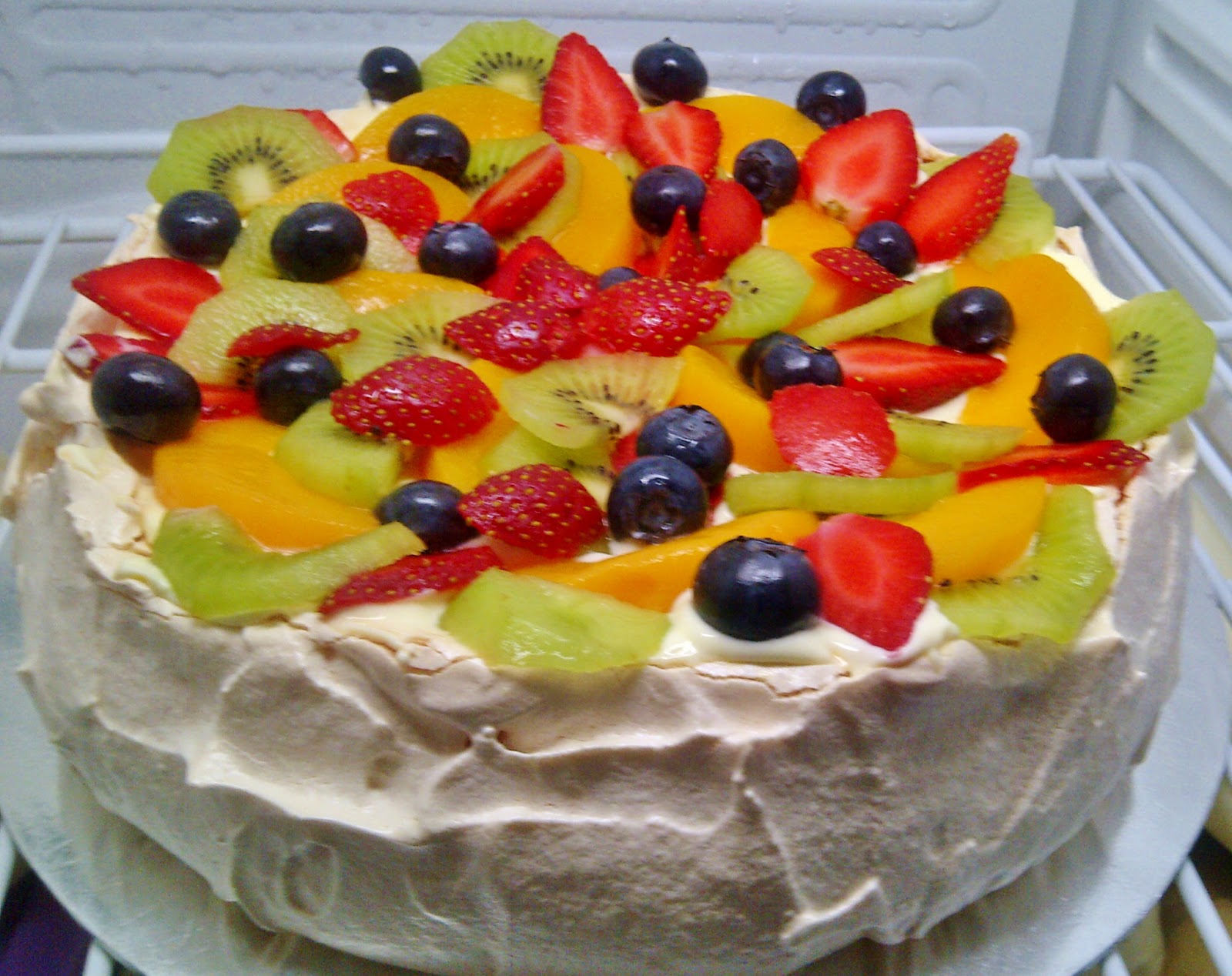
Pavlova RM90_01

Famous Namesake
On Thursday February 12, it will be the 134th birthday of the Russian prima ballerina Anna Pavlova. At a time when the rules of classical ballet were rigidly enforced, the dainty Anna performed in a graceful, romantic style, with less emphasis on precision and acrobatics. The principal artist with the Imperial Ballet and the Ballets Russes, she formed her own company and became the first ballerina to tour as an international star.

It was during one of her tours to Australia and New Zealand in the 1920s that Anna Pavlova would be honoured with the creation of an iconic Australasian dish, and in the process spark a rivalry between the two Trans-Tasman nations, who both claim it as their national dessert.

A pavlova is a meringue cake which has a crisp outer shell, and a soft marshmallow-y filling; a delectable, sweet, melt-in-your-mouth treat which is traditionally smothered in whipped cream and fresh summer fruit. Supposedly, the fragile pavlova was inspired by light-as-air Anna Pavlova, with its meringue casing designed to emulate the soft folds of her white ballet skirt.

Both New Zealand and Australia have some rather dubious stories as to how the pavlova first came to be made and named, but indefatigable research by a New Zealand food historian shows that it definitely originated in New Zealand, with a 1929 recipe being found in a New Zealand magazine. Meanwhile, it didn’t make an appearance in Australia until the early 1930s. So New Zealand gets the honours for inventing the pavlova, although it really does feel as if Australia has embraced the pavlova more heartily – it is a favourite choice to celebrate Australia Day.

I always have a pavlova for my Name Day cake: it not only reflects my name, Anna, but is perfect for a hot summery February Name Day. It’s also very appropriate, because my dad is from New Zealand and my mum born in Australia, so it symbolises the two countries coming together.

Name Information
Anna is the Latinised Greek form of the Hebrew name Hannah, meaning “favour, grace, graciousness”, sometimes translated more freely as “God has favoured me”, or “the grace of God”. The New Testament uses the Greek form Anna, in contrast to the Old Testament Hannah.

The Gospel of Luke tells of Anna the Prophetess, an old widow perhaps more than a century in age, who was very devout, and spent all her time fasting and praying. At the Presentation of Jesus in the Temple, celebrated as Candlemas in early February, she immediately recognised the infant Jesus as the redeemer, and gave thanks to God for having been allowed to see Jesus in her lifetime. Despite having a walk-on role in the Gospels, Anna is recognised as a saint.

According to Christian legend, the mother of the Virgin Mary was also named Anna (or Hannah), but she is usually referred to as Saint Anne in order to avoid confusion with Anna the Prophetess. The use of the name Anna was inspired by Saint Anne rather than the aged prophetess.

In classical mythology, Anna was the sister of Dido, Queen of Carthage; she appears in Virgil’s Aeneid. According to the poet Ovid, this Anna was the same being as the Roman goddess Anna Perenna, whose name refers to the “circle of the year” (per annum, in Latin). Her feast day marked the first full moon of the year, and people offered sacrifices so that the year should be successful.

Ovid relates that Anna escaped from Carthage to Italy, where she accidentally drowned and became a river nymph – he translated her name as meaning “perennial stream” (amnis perennis). Ovid says that the goddess was a tiny old woman who baked cakes, and that crude jokes and songs were sung at her festivals. She may have been a mother goddess, and originally Etruscan – if so, her name might be from the Etruscan nanas, meaning “to bear, to beget (a child)”.

Another mythological Anna is the half-sister of King Arthur, usually referred to as Morgause; in many stories she bears Arthur a son, to his downfall. Morgause seems to be a title, meaning “of the Orkneys”, so Anna would have been her personal name.

It may be that she is based on the Irish goddess Anu, sometimes called Ana or Annan. One possibility is that Anu is another name for the mother goddess Danu/Dana, while the war goddess the Morrigan was sometimes called Anand. The British had a winter storm goddess that they referred to as Gentle Annie or Annis, apparently from terror of her hideous powers (this is another link with the name Agnes in Britain). The name is speculated to come from the ancient Celtic anon, meaning “deity, spirit”.

While we’re looking at the name Anna in different cultures, it is worth mentioning that it is also a man’s name, because Anna (or Onna) was an Anglo-Saxon king. One theory is that his name was a nickname for Ethelmund, meaning “noble protection”, or one of the other Ethel- names. Don’t ask me how Anna is short for Ethelmund!

The name Anna has been in common use in the west since the Middle Ages, and has historically been more popular in Eastern Europe and Scandinavia, where it was used by the nobility. It was traditional in the Russian royal family, and the 18th century Empress Anna of Russia was a nasty piece of work. Apart from Anna Pavlova, another famous Russian Anna is the beautiful Anna Karenina, title character of the tragic novel by Leo Tolstoy, considered one of the greatest works of fiction ever written.

Anna is a classic name which has never left the charts. It was #208 in the 1900s, and sunk to its lowest level in the 1920s at #353. After that, it began climbing and joined the Top 100 in the 1950s at #89. The rise into popularity may have been influenced by the 1948 film version of Anna Karenina, starring Vivien Leigh, and helped along by the 1956 film The King and I, with Deborah Kerr in the role of Anna. These movies probably helped give Anna a touch of exoticism.

The King and I was based on the Broadway musical of the same name, in turn based on the book Anna and the King of Siam by Margaret Landon, from the memoirs of Anna Leonowens about her experiences as a royal teacher in Bangkok in the 1860s (Anna Leonowens lived for a few years in Western Australia). Anna and the King was made into a TV show in 1972, and although it flopped in the US, had a decent lifespan on Australian television as re-runs, giving the name Anna a fair amount of exposure during the 1970s.

Anna peaked at the start of the 1980s at #34, then gradually sank into the bottom half of the Top 100. It has not shown any signs of serious decline, but remained relatively stable. In 2013, Anna was #64 nationally, #60 in New South Wales, #81 in Victoria, #87 in Queensland, where it rejoined the Top 100 and was one of its fastest-rising names, #47 in Western Australia, and #71 in the Australian Capital Territory. Preliminary results for 2014 suggest Anna may have improved its position, and is one of Victoria’s fastest-rising names of last year.

One of the factors helping the name along must surely be Princess Anna from the 2013 hit Disney film Frozen, the younger sister of “snow queen” Elsa. Anna is an attractive heroine who is brave and hopeful, with a strong, loving heart. I know many little girls – and even some not so little ones – who adore Anna for being sweet and genuine, with an endearing awkwardness. I wonder how many baby Annas have had their name suggested by an older sister?

Anna is still popular and stable after many decades, and even shows signs of a recent boost. It is a popular name all over the world, but tends to be most popular in central and Eastern Europe, and is the #1 name in Austria. Last year blog readers voted Anna their favourite internationally recognisable girls’ name.

I have found Anna a very easy name to wear. It’s a common name never out of use, but has never been highly popular, so I don’t actually know many people with my name, although everyone has heard of it. Nobody has had any problems spelling it (I learned to write my name as a toddler in about a minute!), and everyone can pronounce it to my satisfaction, even those who don’t speak English. The biggest issue is that it sounds similar to other names, such as Hannah and Emma, which can cause a slight hold-up over the phone.

I can’t pretend that Anna is a very exciting name, but for such a short and simple one, I don’t think it is completely boring either. It’s a palindrome, which tickled me as a child, and it has quite an interesting history – it fascinates me that so many Annas from legend have been elderly women, sometimes with quite a dark side! Its “foreignness” made it popular in the mid twentieth century, and even now I think it has a slight touch of European exoticism: Disney chose it for a Scandinavian princess, after all.

POLL RESULT
Anna received a frankly unbelievable approval rating of 100%, making it the highest-rated girls name in the Waltzing With … category, the highest-rated girls name overall, and the highest-rated overall name of 2015. 46% of people loved the name Anna, and nobody disliked or hated it. I have trouble accepting that I have the perfect name, and can’t help thinking that everyone was too polite to say they didn’t like it!

(Picture shows a pavlova; photo from Just LilDaisy)

Famous Name: Philip

04 Wednesday Feb 2015

Posted by A.O. in Famous Names

≈ 3 Comments

Tags

animal names, Biblical names, classic names, Disney names, Disney princes, english names, European name popularity, famous namesakes, fictional namesakes, Greek names, honouring, locational names, middle names, name history, name meaning, name popularity, nicknames, royal names, surname names, UK name popularity, US name popularity

159088

Famous Namesake
Australia Day is a day not just to celebrate, but to honour Australians for their achievements and service to the community. However, this year even the Australian of the Year was almost completely forgotten as everyone was swept up in a media maelstrom when Prince Philip was named a Knight of Australia.

Former Prime Minister Gough Whitlam replaced the British honours system in 1975 with the Order of Australia, and Knights and Dames were added to it in 1976 by former prime minister Malcolm Fraser. Knights and Dames were then dumped by the Hawke government in 1986.

Last year Knights and Dames were re-instated by the current prime minister, who declared that they would celebrate pre-eminent Australians such as Governors-Generals, chief justices and the like. The prime minister didn’t consult his senior colleagues over the decision, which many felt to be a mistake which could come back to bite him. This is the moment it bit.

There are several reasons why declaring Prince Philip a Knight of Australia went down badly. For one thing, the prime minister didn’t consult any of his colleagues over the decision, which re-ignited fears of an arrogant leader making “captain’s calls” which could alienate his own cabinet. For another, Prince Philip wasn’t a pre-eminent Australian, so the appointment was outside the stated brief.

The prime minister’s decision has been widely criticised, and had scorn poured upon it. The decision has been described as “a time warp” and “ludicrous … cultural cringe” by some in the Opposition, while those on the prime minister’s own side labelled it “April Fool’s Day”, “total craziness”, and “a joke”. High profile supporters of the prime minister, such as conservative commentator Andrew Bolt and media baron Rupert Murdoch thought it was “pathetically stupid” and “an embarrassment”. No wonder the newspapers have dubbed it a “Knightmare“.

Comedian Adams Hills commented that, “Giving a Knighthood to Prince Philip is like giving a Beyonce CD to Jay-Z. Surely he could just pick one up at home”. In fact, Prince Philip, the Duke of Edinburgh, already has three British knighthoods, and has had knighthoods bestowed upon him numerous times by various countries, including Nepal, Peru, and a whole bunch of others you never knew cared.

So an Australian knighthood isn’t completely bizarre, and Prince Charles is already a Knight of Australia, while Prince Philip is a Companion of the Order of Australia. In fact, in Vanuatu Prince Philip is worshipped as a god, which makes a knighthood look pretty low-key in a “least we could do” sort of way.

The problem is that the prime minister was already floundering in a sea of unpopularity, and when you are in dangerous waters, you cannot afford to make a mistake. The knighthood to Prince Philip was the equivalent of a drowning swimmer cutting his leg open, and now (to continue this laboured metaphor), the sharks have the scent of blood and are circling in a menacing sort of way.

The Coalition have already lost the Victorian state election after only one term, and after the Prince Philip debacle, it performed so dismally in the Queensland state election that it is predicted to have lost its majority from a seemingly unassailable 78 seats, and former premier Campbell Newman has lost his seat and left politics. Many pundits are now predicting a federal leadership spill.

Name Information
Philip is the English form of the Greek name Philippos, meaning “friend of horses”. The name isn’t just about being an animal-lover – in ancient Greece, only the wealthiest people could afford to own horses, so the name proclaims a high status. (In the same way, knights are also high-status and connected with horses). Aptly, Prince Philip is a keen equestrian who still participates in carriage driving, a sport which he helped develop.

The name Philip was traditional in the Macedonian royal family, and Alexander the Great‘s father was named Philip. Because of this, it was a highly popular name in Macedonia, although common in the rest of the Hellenic world. Prince Philip was born in Greece to a prince of Greece and Denmark, so his royal Greek name is very suitable.

There are two saints named Philip from the New Testament. One is the Apostle Philip, who seems to have been a friend of Peter and Andrew; according to tradition, he was martyred by being crucified upside down. The other is Saint Philip the Evangelist, mentioned as being one of the deacons chosen to help care for the poor.

The name Philip came into common use in western Europe by the Middle Ages, and was a traditional name in several royal houses, including France, Spain, and Portugal. Philip was used in England from medieval times too, with a notable example being the Elizabethan courtier Sir Philip Sidney, who created the name Stella for a poem.

However, the name became less common for a time because of King Philip II of Spain, who tried to invade England, and whose Spanish Armada was famously defeated by the English in 1588. Philip had actually been king of England for a short time, due to his marriage to Mary I, and they hadn’t been a popular couple. However, under Philip’s rule Spain reached the peak of its power, and was called “the empire on which the sun never sets”. The Philippines is named after him.

By the 19th century, everyone was over the whole Spanish Armada thing, and Philip was completely rehabilitated, no doubt assisted by Phillip, the surname form of the name – which has an Australian link, thanks to Captain Arthur Phillip, the founder of Sydney (Phillip Island in Melbourne, and the suburb of Phillip in Canberra are named after him).

It’s not hard to think of famous Philips and Phillips, including poet Philip Larkin composer Philip Glass, self-help guru Dr Phil McGraw, novelist Philip Pullman, singer Phillip Everly from The Everly Brothers, actor Philip Seymour-Hoffman, and record producer Phil Spector, to name a few. Funnily enough, when I think of fictional Philips, most of them seem to be cartoons, such as Philip J. Fry from Futurama, Phillip Argyle from South Park, and Prince Phillip (!) from Sleeping Beauty.

Philip was #69 in the 1900s and Phillip was #95; they both peaked in the 1950s at #33 and #19 respectively. Philip left the Top 100 in 1989, while Phillip managed to last slightly longer, until 1996. Philip has fallen more dramatically, with not enough births since 2009 to show up in the records, while Phillip is around the 400s.

Philip is still getting reasonable use in the UK and US, but while Phillip has a similar popularity to Philip in the United States, in the 300s, Phillip (#709) is far less common in the UK than Philip (#288). One can only speculate why we all have taken a different position in regard to Philip and Phillip. Philip is most popular in Denmark and Norway.

As I already covered my brother Edward’s name, I will mention that Philip was the name my dad chose for my youngest brother, named for his cousin and best friend. Philip’s middle name is Andrew, after my mother’s favourite great-uncle, who was from the Scottish Highlands.

However, both these choices turned out to be superfluous, because almost as soon as Philip was brought home and settled into his cot, my dad said admiringly, “He’s so brown – like a little brown bear”, and from then on he was Little Brown Bear, and eventually just Bear. He never goes by Philip.

(I should probably add that my family are otherwise very fair skinned with light hair, so Philip’s handsome olive skin and dark hair seemed like an exciting novelty to us. This colouring turns up in many families of Cornish heritage, and legend has it that they are descendants of the Spanish Armada, or Moorish pirates, which is almost certainly complete fiction).

Philip is a classic name with ancient roots, a royal history, and a biblical heritage. It has become less common than its surname twin Phillip, although neither is used extensively. It has some great nicknames – if you’re not excited about Phil, there’s always Pip, the hero of Charles Dickens’ Great Expectations, while Philo, Flip and Pippin would also be possibilities.

POLL RESULTS
Philip received an approval rating of 57%. 21% of people saw Philip as too dated and old-fashioned, but 19% thought it was sensible and honest. 10% were put off the name by Prince Philip, while nobody thought the name was snobbish or stuck-up.

(Picture shows Prince Philip with a friend at the Royal Windsor Horse Show last year; photo from The Express).

Celebrity Baby News: Sonia Kruger and Craig McPherson

26 Monday Jan 2015

Posted by A.O. in Celebrity Baby News

≈ Comments Off on Celebrity Baby News: Sonia Kruger and Craig McPherson

Tags

celebrity baby names, fictional namesakes, honouring

2601_krugerlead_spTelevision host Sonia Kruger, and her partner Craig McPherson, welcomed their first child on January 24 and have named their daughter Maggie. Maggie is named after Sonia’s mother Margaret, and also after the baby on The Simpsons. Sonia says the reference will make sense to anyone who knows her family. Craig wasn’t sure that Maggie was a “baby name”, but then Sonia reminded him of Maggie Simpson.

Sonia first came to prominence playing Tina Sparkle in the 1992 film Strictly Ballroom, as well as acting as a ballroom consultant for the movie. She has hosted numerous television programmes over the years, notably as a co-host on Dancing with the Stars. Since 2012, she has been both the host of Big Brother, and co-host of Channel Nine’s daytime chat show, Mornings. Sonia’s co-host is David Campbell, who recently welcomed twins.

Craig is an executive producer on Channel Seven’s current affairs program, Today Tonight. He and Sonia have been together for more than six years, and have long tried to have a baby, with some attempts sadly ending in miscarriage. Maggie was conceived with IVF, using a donated egg, and she is a sister to Craig’s six children from his previous relationship.

Names of Australian Prime Ministers’ Wives

25 Sunday Jan 2015

Posted by A.O. in Name Themes and Lists

≈ 5 Comments

Tags

Anglo-Saxon names, Aramaic names, Biblical names, celebrity baby names, classic names, dated names, Etruscan names, famous namesakes, fictional namesakes, Finnish names, French names, gemstone names, German names, Greek names, hebrew names, Hindi names, honouring, Hungarian names, Indian names, Italian names, middle names, name history, name meaning, name popularity, names from movies, names from songs, nicknames, Old French names, rare names, Roman names, royal names, Russian names, saints names, Scottish names, Shakespearean names, UK name popularity, underused modern classics, unisex names, vintage names

a1200_l96496_tcm13-22475

It is Australia Day tomorrow, and for our patriotic lists, I thought it must be about time to have names of our prime ministers and their spouses. Ladies first!

Antonia
Antonia Watson (nee Dowlan) was the second wife of Chris Watson; she was a 23 year old waitress and he was 58. Antonia is the feminine form of the Roman family name Antonius. The Antonia was a very old family who claimed descent from Anton, a son of Hercules – Anton seems to have been invented, and the name may be Etruscan in origin. The most famous of the Antonii was Marcus Antonius (Mark Antony), made famous by Shakespeare’s play Antony and Cleopatra. Mark Antony’s first wife was his cousin Antonia, and he had three daughters, all named Antonia. The youngest Antonia was famed for her beauty and virtue, and became the mother of the Emperor Claudius, and grandmother of Caligula. There is a Saint Antonia who seems to be Saint Theodora under another name, and the name has been used amongst continental royalty – it was a middle name of Maria Antonia, otherwise known as Marie Antoinette. Antonia has charted since the 1950s, when it debuted at #346, and it peaked in the early 2000s at #279. Currently it is around the 400s, so this elegant name is an underused modern classic.

Bettina
Lady Bettina Gorton (nee Brown) was the wife of John Gorton. Bettina was an American student at the Sorbonne who met John while on holiday in Spain; he was a student at Oxford. After marrying in England, they moved to his family’s farm in Australia, and Bettina supported her husband in his political career. On an official visit to Sarawak, Bettina became interested in Asian languages and culture; she later graduated with honours in Oriental Studies from ANU and worked on the English-Malay dictionary. When John became prime minister, her knowledge of South East Asian languages made her a great asset when travelling overseas, and she established a native garden at The Lodge which is named in her honour. The name Bettina can have two possible origins. If German, it is a pet form of Elisabeth, while if Italian, it is a pet form of Benedetta, the feminine form of Benedetto, the Italian form of Benedict. One of the world’s first supermodels was Simone Bodin, who worked under the professional name “Bettina” in the 1940s and ’50s. The French model gave the name Bettina a little boost in the postwar era, but it’s never been common.

Blanche
(Josephine) Blanche d’Alpuget is the second wife of Bob Hawke; she was named after her great-aunt Blanche d’Alpuget, a pioneering journalist. Blanche lived in South East Asia for several years, and after returning to Australia, began writing about her experiences, winning a number of literary awards for both fiction and non-fiction. She later became Bob Hawke’s biographer: his wife tolerated their open relationship for many years, and after retiring from politics he divorced to marry Blanche. Blanche was originally an Old French nickname meaning “white”, to suggest “pure”. The name became common in the Middle Ages, perhaps because very fair skin was considered beautiful and aristocratic. It was popularised by Blanche of Navarre, who had a French mother; as she became Queen of Castile, the name was traditional in her royal family. A famous namesake is Blanche of Lancaster, the mother of King Henry IV, said to be pretty and fair. Blanche was #125 in the 1900s, and left the charts in the 1940s. This is a vintage name which works well in the middle; it might remind you of The Golden Girls or A Streetcar Named Desire.

Ethel
Ethel Bruce (nee Anderson) was the wife of Stanley Bruce. She and Stanley were a devoted couple, and the first to live at The Lodge. Ethel is a short form of names starting with Ethel-, such as Ethelinde. The Old English word ethel meant “noble”, and it was a common name element in royal and aristocratic names. The Victorians were mad keen on Anglo-Saxon names, and began using Ethel as a name in its own right; usually for girls, but occasionally for boys, as there were plenty of male names starting with Ethel-, such as Ethelred. The name was popularised by two 1850s novel – The Newcombes, by W.M. Thackery and The Daisy Chain by C.M. Yonge. Ethel was #14 in the 1900s, and left the top 100 in the 1940s before dropping off the charts in the 1960s. It recently became a celebrity baby name, when pop singer Lily Allen named her first child Ethel, and would appeal to someone looking for an old-fashioned alernative to the current crop of fashionable E names, such as Esther and Eloise.

Ilma
Ilma Fadden (nee Thornber) was the wife of Arthur Fadden. Ilma was a supportive political wife who campaigned for her husband and accompanied him on official visits overseas. The name Ilma can be a short form of Wilhelmina, as well as a Finnish name meaning “air”; I have also seen it listed as a Hungarian form of Amelia. I suspect that in everyday usage, it was often given as a variant of Elma – a name of obscure origin, possibly sometimes created from other names, such as Elizabeth and Mary. Ilma was #176 in the 1900s, and fell until it left the charts in the 1940s – it was a minor trend of the early twentieth century and almost a twin in popularity of Elma. Now this vintage name seems like an interesting multicultural choice not much different to Isla and Emma.

Jean
Lady Jean Page (nee Thomas) was the second wife of Earle Page, and originally his secretary. Like Joan and Jane, Jean is a medieval form of the Old French name Jehanne, introduced by the Normans, and a popular choice in both England and Scotland during the Middle Ages. In England, Jean was eventually surpassed in popularity by Jane, but continued being used in Scotland. In the 19th century, the name was re-introduced back to England, where it now seemed a Scottish name choice. Jean is also a man’s name, the French form of Old French Jehan, and thus the French equivalent of John. Jean first charted in Australia as a unisex name, peaking in the 1910s and ’20s (in the Top 50 if most of the Jeans were girls). In the 1950s, Jean joined the charts as a specifically feminine name, where it peaked at #140, and left the charts altogether in the 1990s. Never popular in the postwar era, it remains very well used as a middle name.

Margaret
Margaret Whitlam (nee Dovey) was the wife of Gough Whitlam. A former champion swimmer, Margaret was a social worker who seemed the perfect match for her husband, and the couple were deeply in love. Margaret was an outspoken advocate for women’s rights, a regular guest on radio and television, and a columnist for Woman’s Day. She died just two years before her husband, acknowledged as one of Australia’s National Treasures. Margaret is derived from the Greek for “pearl”. The name came into common use because of Saint Margaret of Antioch, a legendary saint who was tortured for her faith. She was supposedly swallowed by Satan in the form of a dragon but escaped unharmed, which made her enormously popular. Margaret has been used by European royalty since medieval times. Queen Margaret of Scotland was an Englishwoman married to Malcolm III canonised as a saint: the name has particularly strong associations with Scotland. Princess Margaret was the younger sister of Queen Elizabeth; her grandfather was a Scottish peer. Margaret is a classic name which has never left the charts. It was #6 in the 1900s, and the #1 name of the 1930s and ’40s. It left the Top 100 in the 1980s, and is currently in the 400s, where it has remained fairly stable for decades. An intelligent, dignified classic with tons of nicknames, including Daisy, Greta, Maggie, Maisie, Margot, Meg, Meta, Peggy, and Rita.

Martha
(Elizabeth) Martha “Pattie” Deakin (nee Browne) was the wife of Alfred Deakin. Alfred was a lifelong spiritualist, and Pattie shared his faith; their marriage was long and happy. Martha is the Latin form of the Aramaic name Marta, meaning “lady, mistress”. In the New Testament, Martha was the sister of Lazarus and Mary of Bethany. Many remember the story when Martha was busy in the kitchen cooking for the disciples, while her sister Mary sat listening to Jesus. Worried and distracted, Martha asked Jesus to rebuke her sister for not helping her, but Jesus said that Mary had chosen the better path (tough advice for those who wear themselves out working for others). Practical and caring, Saint Martha is a role model for those seeking an active helping role in the spiritual life. Martha was #92 in the 1900s, and left the Top 100 the following decade, dropping off the charts briefly in the 1940s, and again in the 1990s. It had a minor comeback in the late 2000s, and is already a Top 100 name in the UK, and climbing. A strong, capable, and attractive name which has never been very popular.

Sonia
Lady Sonia McMahon (nee Hopkins) was the wife of William McMahon. The grand-daughter of one of Australia’s wealthiest men, she was an occupational therapist before her marriage. Glamorous and charming, Sonia made international headlines when she wore a revealing dress to a dinner at the White House, showing more leg than was usual. Sonia is a variant of Sonya, Russian pet form of the name Sophia, from the Greek for “wisdom”; Sonja is another common variant. Sonia is also an Indian name, meaning “golden” in Hindi. The name was popularised in the English speaking world through a 1917 best-selling novel called Sonia: Between Two Worlds by Stephen McKenna. The title character is an upper class English girl with big brown eyes and a face like a Sistine Madonna. Sonia first entered the charts in the 1920s, debuting at #309. It entered the Top 100 in 1967, around the time Sonia McMahon came into the public eye, and peaked in 1971 at #52 – the year she wore “that dress”. Leaving the Top 100 in the 1980s, it hasn’t charted since the early 2000s, having been well and truly taken over by popular Sophia.

Tamara
Tamara “Tamie” Fraser (nee Beggs) is the wife of Malcolm Fraser. Ambivalent about being in the public eye, she proved an excellent political campaigner, and was the first prime ministerial wife to employ her own secretary; Tamie also oversaw extensive renovations in The Lodge. She continues to be active in community affairs. Tamara is the Russian form of Tamar, a Hebrew name meaning “date palm”. The name became better known in the English speaking world because of Russian ballerina Tamara Karsavina, who moved to London as a ballet teacher in the 1930s. Tamara first joined the charts in the 1950s, debuting at #522. Its rise in the 1950s seems to be as a formal option for the name Tammy, which became popular because of a Debbie Reynolds romantic comedy called Tammy and the Bachelor: the song Tammy from the film became a smash hit. Tamara joined the Top 100 in 1975, when Tamie Fraser came into the public eye, and peaked in 1989 at #56, leaving the Top 100 in the early 2000s. Currently it is around the 300s, and shows some signs of a slight recovery.

POLL RESULTS
People’s favourite names were Margaret, Antonia and Martha, and their least favourite were Blanche, Ethel and Ilma.

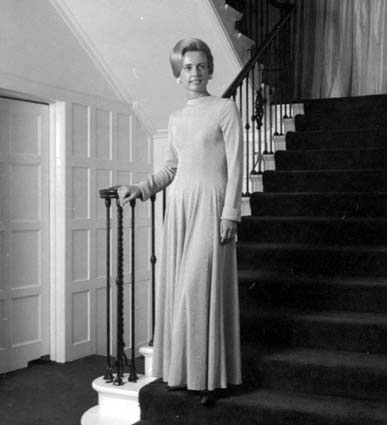
(Photo shows Sonia McMahon in the entrance hall of The Lodge, 1971)

Famous Name: Richard

21 Wednesday Jan 2015

Posted by A.O. in Famous Names

≈ 3 Comments

Tags

aristocratic names, classic names, European name popularity, famous namesakes, fictional namesakes, germanic names, medieval nicknames, name history, name meaning, name popularity, nicknames, royal names, saints names, Shakespearean names, surnames, UK name popularity, US name popularity

450245-1b3cb7a2-9613-11e4-9bd9-740a91fb6db7

Famous Namesake
I seem to end up doing names connected with cricket every January, and this year my choice was inspired by seeing The Richies in the stands on Day 2 of the Sydney test against India early in the month – otherwise known as known as Richie Day, which takes place the day before Jane McGrath Day.

The Richies are a group of cricket enthusiasts who dress up as iconic cricket commentator Richard “Richie” Benaud, complete with trademark silver hair, cream jacket, sunglasses, and oversized Channel Nine microphone (it is law that a Richie can only speak on Richie Day if they talk into their microphone).

The Richies were founded in 2010 by Michael Hennessy as a homage to Richie Benaud, who had just announced his retirement from full-time commentating. The first year there were ten Richies, this year there were 350; next year they hope to fill a whole bay, which means 680 Richies.

The group were inspired by comedian Billy Birmingham, who has gained fame for his cricket parodies under the name The Twelfth Man, where he often impersonated Richie Benaud’s distinctive voice. This year Billy Birmingham put The Richies through their paces, and revealed his own sons had dressed as Richie Benaud for the 2013 Test.

As for Richie Benaud himself? He wasn’t just a much-loved commentator, but a great all-rounder who debuted in the 1950s, and was captain for 28 tests between 1958 and 1962 without losing a series. He was the first player to complete the test double of 200 wickets and 2000 runs, and has been inducted into the Australian Cricket Hall of Fame and the ICC Cricket Hall of Fame.

Now 84 and battling skin cancer, Richie Benaud will appear with Billy Birmingham in advertisements for Australia Day this year – but don’t expect Richie to fully endorse his comedy double.

Name Information
Richard is a Germanic name which comes from ric (“power, rule”) and hard (“brave, hardy”), usually translated as “brave ruler”. It was introduced to Britain by the Normans, and has become one of the stock of standard English names, while also well known in other European countries.

Richard has been commonly used by English royalty and aristocracy. One of the best known is Richard I, known as Richard the Lionheart. Said to be tall, elegant, and extremely handsome with red-gold hair, he had a reputation as a great military leader, and remains an enduring figure of romance.

The last English king with the name was Richard III, whose reputation was so tarnished after his death that the name has never been used for a British monarch since (the child who would have been Richard IV was one of the “princes in the Tower” who disappeared in a sinister way, which didn’t help its fortunes as a royal name).

Richard III is infamous from Shakespeare’s play of the same name, where he is portrayed as a deformed, murderous, power-hungry villain. Recently, Richard III has been back in the news after his skeleton was dug up in a Leicester car park, with signs of many injuries from his death at the Battle of Bosworth Fields. Although the skeleton did have scoliosis, so that one shoulder would have been higher than the other, facial reconstruction shows him as looking young and quite pleasant rather than a hideous monster, and modern historians have been kinder towards him.

There are a number of British saints named Richard, including Saint Richard of Chichester, the patron saint of Sussex. There is a Saxon saint named Saint Richard the Pilgrim, but details of his life are sketchy, and Richard doesn’t seem to have been his real name. There are also several Saint Richards who were martyred for their faith in the 16th century.

Because the name has remained in common use for so many years, it is easy to think of famous men named Richard. You might think of composers Richard Strauss and Richard Wagner, singers “Little Richard” (Richard Penniman) and Richard Ashcroft, Beatles drummer Richard Starkey “Ringo Starr”, comedians Richard Pryor and Rich Hall, actors Richard Burton, Richard Attenborough, Richard Gere, Richard Harris, Richard E. Grant, Richard Wilson, and Richard Dean Anderson, presenter Richard Hammond, scientist Richard Dawkins, charismatic entrepreneur Richard Branson, and disgraced former US President Richard Nixon, who was named after Richard the Lionheart.

Richard is a classic name which has never left the charts. It was #26 in the 1900s, and reached its peak in the 1940s at #15. It didn’t leave the Top 100 until the early 2000s, and has gently declined so it is now around the mid-200s. Despite being at its lowest point so far, the name is still in reasonable use and relatively stable. Its popularity is about the same in the UK, and in the US is around the mid 100s. Richard is most popular in the Czech Republic.

Richard has many nicknames, but one thing not helpful to the name is that most of them seem rather dated. Dick, once so common that we could say every Tom, Dick and Harry to mean “every man”, is now frowned upon as an embarrassment, while Dicky reminds older people of “Tricky Dicky” Nixon. Rick and Ricky both peaked in the 1960s, and while I quite like Rich, Richie and Ritchie, Richie Rich, Richie Cunningham, and Ritchie Valens might give them a 1950-ish feel.

You can find medieval short forms of Richard through the English surnames they have inspired. Hick and Hitch led to Hitchens, Higg to Higgins, while Ditch led to Deek and Deex. Dickon was King Richard III’s nickname – also a character in The Secret Garden. Dickon was transformed into names such as Diggin and Diggle, which are quite a lot like fashionable Digby, and make Digger or Digs seem like reasonable vintage-style short forms of Richard. Dix is also a possibility, in line with names such as Max.

With Richard, you get a solid classic name that has never been out of the 200s; a name good enough for kings and saints and celebrities, as well as all manner of ordinary men. It’s a name which matures well, and looks professional on a CV. In fact, as Richie Benaud would say, you might think this name is perfectly “marvellous”!

POLL RESULTS
Richard received an approval rating of 44%. 22% of people were really bothered by the possibility of Dick being given as the nickname for Richard, while 19% saw the name as dated and old-fashioned. However, 14% thought Richard was a name with a solid meaning and history behind it. 3% disagreed with the majority, and thought it was silly and immature to believe there was anything wrong with the nickname Dick.

Waltzing With … Paddington

14 Sunday Dec 2014

Posted by A.O. in Waltzing with ...

≈ Comments Off on Waltzing With … Paddington

Tags

Anglo-Saxon names, animal names, english names, fictional namesakes, historical records, locational names, middle names, name history, name meaning, names from movies, names of bears, names of railway stations, nicknames, Old English names, surname names

878C4533-F2F5-0278-FDA4E92FE00A3CE8_m

Family movies as a Christmas season treat is a tradition I really look forward to, and already we have been to see two films based on children’s books with Australian stars: Alexander and the Terrible, Horrible, No Good, Very Bad Day, with Ed Oxenbould as the hero Alexander, and Paddington, with Nicole Kidman as the villain Millicent.

Paddington is surely Britain’s favourite illegal immigrant – a polite stowaway bear from darkest Peru with a penchant for marmalade sandwiches, who is found by the Brown family at a railway station, with a note reading: Please look after this bear. The Browns take the bear home to 32 Windsor Gardens and name him Paddington, after the railway station where they found him (his Peruvian name of Pastuso is apparently too difficult for English-speakers to pronounce).

Michael Bond was inspired to write the Paddington stories by a lonely-looking teddy bear he bought as a present for his wife, and named after the railway station close to their home. The first book was written in the 1950s, and Michael Bond was influenced by his memories of evacuated children during the war, often left at railway stations with a label around their necks to identify them. Surely he was also influenced by increased post-war immigration to London – Paddington’s best friend is a Hungarian shopkeeper.

Without giving away too many spoilers, the movie has all the warm-hearted charm and humour of the books, including lots of jokes for the adults watching. However, it has a touch more darkness and a lot more adventure (much needed, as the books’ big adventures tend to revolve around going to the shops or the cinema). Somehow the movie manages to have some of the books’ sadness, because despite the comedic chaos, there was always a poignancy to Paddington’s situation.

Paddington is a district of central London which began as a Saxon village on the city’s outskirts. Even in the early 19th century, Paddington was surrounded by open fields and meadows.

For many years, the area had a dark connection, because it was in this neighbourhood that the notorious Tyburn Tree, or gallows, was set up. This was the main place for public executions from medieval times to the late 18th century, a spectacle which attracted thousands. A “Paddington Fair Day” meant an execution day, while “to dance the Paddington Frisk” meant to be hanged.

Paddington’s development began in the 19th century, with the canal and the railway station. Paddington Station was designed by the famous engineer Isambard Kingdom Brunel, and today there is a statue of Paddington Bear on platform 1. You can also buy a Paddington Bear stuffed toy from Paddington station, with a label asking you to please take care of this bear. These toys were first created by Jeremy Clarkson’s mother, making enough money to send Jeremy to a private school, and also providing him with his first job as Paddington Bear salesman.

The Victorian era was Paddington’s heyday, when it was described as a “city of palaces”. With its grand terraced houses overlooking Hyde Park, and its garden squares, it became a highly fashionable address. Many famous people have lived in Paddington, including Robert Browning and Winston Churchill, and more recently, Emma Thompson and Tony Blair.

The name Paddington is believed to mean “Padda’s farm”. Padda doesn’t seem to have been a common Anglo-Saxon name, but enough examples exist to show it is genuine. The meaning is not certain (it may be a variant spelling or shortening of another name), but one theory is that it came from the Old English word pad, meaning “toad”. Toads were considered magical creatures in ancient Europe (we still think of witches and wizards as having toads for familiars), and this makes me wonder if the name Paddington is a little more mystical than it might appear at first sight.

Paddington is also an inner-city suburb of Sydney, about 3 km from the CBD, and named after the London area because of its similarly close proximity to the city centre. When the Victoria Barracks army base was built here in the 19th century, the village of Paddington sprung up to house artisans and labourers who worked to build the barracks. It grew rapidly, with large estates filled with terraced housing, and by the early twentieth century was thriving.

During the Great Depression, Paddington became a slum, but after World War II its fortunes changed as European migrants moved in to the suburb, finding it cheap and conveniently located. In the 1960s, students and artists arrived to add bohemian flair, and it also became part of the gay “scene”, with the first Mardi Gras parade marching proudly down Oxford Street in 1978.

As the suburb became gentrified, Paddington’s Victorian architecture meant that it was protected as a heritage area, and these days “Paddo” is fashionable and upmarket. The main streets are filled with art galleries, trendy stores, boutiques, antiques, and interior designers, while artists and craftspeople hawk their wares every weekend at Paddington Market.

There is another Paddington in Brisbane, which is likewise inner city, and has a similar history to the one in Sydney. There is also a gold mine in Western Australia called Paddington.

The name Paddington is not often found in historical records, but use goes back to the 18th century, and is almost certainly prompted by the surname Paddington rather than directly after the place in London. It is much more common as a middle name, and in Australian records, is found extremely rarely, and only as a middle name.

So that’s Paddington – a rare name, but a genuine one, with some history of use even in Australia. It is very closely associated with the famous bear, but that might be exactly the reason a Paddington fan wants to use the name, and Paddington is such a nice bear. In Australia it will remind people of the Sydney suburb, but again, it’s a fashionable area with positive associations.

When I did a couple of minutes idle searching online, I found not just one, but two people considering the name Paddington for a baby – one of them Australian. I have to admit their tentative idea was shot down pretty hard by others, so there doesn’t seem to be much support for the idea of a baby named Paddington.

However, I think it could make an awesome middle name, and if you have your heart set on a little Paddington, Paddy would make a cute nickname. Far be it from me to tell people not to name children after fictional bears.

POLL RESULT
Paddington received an approval rating of 63%. 36% of people didn’t mind the name Paddington, but 24% disliked it. Less than 10% of people loved the name.

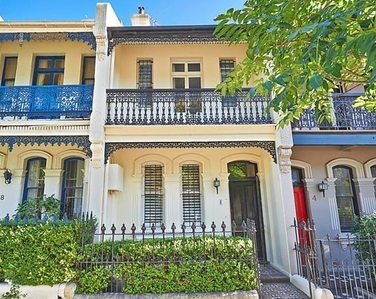
(Photo shows terrace housing in Paddington, Sydney)

Interesting Boys Names from the 2014 Birth Announcements

07 Sunday Dec 2014

Posted by A.O. in Name Themes and Lists

≈ 1 Comment

Tags

Anglo-Saxon names, Arabic names, Biblical names, birth notices, car names, celebrity baby names, english names, famous namesakes, fictional namesakes, Gaelic names, Greek names, hebrew names, Irish names, Japanese names, locational names, mythological names, name history, name meaning, name trends, names of herbs, names of horses, nature names, nicknames, Old English names, Old Norse names, Oscan names, Pictish names, plant names, rare names, regnal names, Roman names, royal names, saints names, Scottish names, surname names, Swedish names, unisex names

old

Do you worry there are no interesting names left for boys, or that only girls can have unusual names? Not so! For the final list of the year, here are a dozen rare names for boys that were recently used for real babies by Australian parents. 

Arion
In Greek mythology, Arion was an immortal talking horse who was the son of the sea god Poseidon, known for being extremely swift. The horse is referenced in the Percy Jackson fantasy series, and the Mistubishi Starion is meant to be a cross between star and Arion. There was a real person named Arion in Greek history – a famous poet and singer. However, even he became legend, as a folk tale sprung up that he had been kidnapped by pirates and miraculously rescued by dolphins, who were attracted by his beautiful singing and carried him safely to shore on their backs. The name may be from the Greek for “braver”, and is pronounced AR-ee-on. This name fits in well with the trend for AR names, has fashionable Ari as the nickname, and sounds similar to Aryan and Orion.

Basil
From the Greek name Basileios, meaning “king”. Saint Basil the Great was a 4th century bishop and one of the fathers of early Christianity. A great theologian and preacher, he cared for the poor and was one of the founders of monasticism. Recognised as a Doctor of the Church, in Greek tradition he brings gifts to children on New Year’s Day, making him an eastern version of Santa Claus. A common name in the east, there are numerous other saints named Basil (including Basil the Great’s father), and a few Byzantine rulers. Brought to Britain by the Crusaders, we often think of Basil as a particularly “English” name, thanks to actor Basil Rathbone, who played Sherlock Holmes, Basil Fawlty, and Basil Brush, and it has a rather old-school gentlemanly feel. The herb basil has the same meaning as the Greek name. Basil is also an Arabic name meaning “valiant, courageous”, so this would be an unexpected cross-cultural choice with the Australian nickname Baz or Bazza.

Cassius
Roman family name. The Cassii were of great antiquity, and said to be one of the noblest families in Rome; the Via Cassia in the city is named after them. They seem to have been from southern Italy, where they owned large estates, and their name may not be Latin in origin, but Oscan; the meaning of Cassius is probably not traceable. One of the best known of the family is the Cassius who instigated the plot to assassinate Julius Caesar. Famously, William Shakespeare writes of him as having “a lean and hungry look” in his tragedy Julius Caesar, while in Dante’s Inferno, he is chewed by Satan in the centre of Hell, alongside Judas Iscariot. Despite this, the name came to be associated with those who stood up to tyranny and injustice. There are two saints of the name – Cassius of Clermont, and Cassius of Narnia (are you able to resist a saint of Narnia?). The name is strongly associated with boxer Muhammad Ali, who was named Cassius Clay after his father, and his father was named in turn after a politician who worked for the abolition of slavery. Depending on how you pronounce it, you can use either Cass or Cash as the nickname, both of which are on trend.

Fenris
Norse mythology tells of a monstrous wolf who is the son of Loki and a giantess; Odin raised the wolf himself, but the gods kept him bound in fear of his power. It is foretold that at the end of the world, one of this wolf’s sons will swallow the sun, and the other swallow the moon. All fetters will break, and the great wolf will go free, with flames burning from his eyes and nose. In a great battle, he will swallow the god Odin, killing him, but Odin’s son will in turn slay the wolf. The wolf is called Fenrir, meaning “fen-dweller” (a fen is a type of wetland), or Fenrisúlfr, translated into English as Fenris Wolf. Fenris has appeared as a character in comic books and video games, and in fantasy novels such as Arthur Quinn and the Fenris Wolf. Norse mythology names are in fashion at present, and this one is very cool.

Fyfe
Scottish surname after the historic kingdom of Fife, on a peninsula in east Scotland between the Firth of Tay and the Firth of Forth. The region is one of the country’s historic counties, and is the location of St. Andrews. Once a Pictish stronghold, Fife became a politically important area, and until the 15th century, the Earl of Fife was the highest peer in Scotland, and had the privilege of crowning the nation’s monarchs. The meaning of Fife is not known – it was originally Fib, and according to legend, Fib was one of the sons of the founder of the Picts. The name Fyfe has nothing to do with the flute known as a fife, which comes from the German for “pipe”, although this does give it a rather musical feel. Known in Australia as the surname of AFL footballer Nat Fyfe, and cartoonist Andrew Fyfe, this is a handsome Scottish choice with plenty of history.

Joachim
From the Latinised form of Yehoyaqim, a Hebrew name meaning “established by Yahweh”. In the Old Testament, there was a king of Judah with this name, and his name is transliterated as Jehoiakim; it seems to be a throne name, because he was named Eliakim by his parents. According to early Christian tradition, Joachim was the name of the Virgin Mary’s father, and he is venerated as a saint in Christianity and honoured in Islam under the name Imran. Legend states that Joachim was a wealthy, pious man married to a woman named Anne; although they loved each other dearly, they were unhappy at their childless state, believing it to be a sign of God’s displeasure. At the climax of their story, an angel tells Anne that she is pregnant, and that her child will be known throughout the world. Anne joyfully rushes to meet her husband, embracing him at the city gate to tell him the glad tidings. The name Joachim has been more common in continental Europe than in English-speaking countries, and was used amongst royalty: a contemporary example is Prince Joachim of Denmark, the younger brother of Crown Prince Frederik. Strong and distinctive, this has familiar Joe as the obvious nickname.

Lazarus
From the Greek form of Eleazar, a Hebrew name meaning “God is my help”. In the New Testament, Lazarus of Bethany was the brother of Martha and Mary, and one of the followers of Jesus. He was famously brought to life by Jesus, four days after his death, and his story contains the shortest and perhaps most quoted sentence in the Bible: “Jesus wept”. This is the biggest miracle performed by Jesus in the New Testament, and one which leads directly to his own death and resurrection, which Lazarus foreshadows. Lazarus is regarded as a saint, and according to Christian tradition, he lived another thirty years after his raising, and never smiled again. Jesus also told a parable about a beggar covered in sores named Lazarus, and because of this, the name Lazarus became associated with the care of those with leprosy, with leper hospitals called lazar houses. It’s currently in the news as the surname of Glenn Lazarus or “the brick with eyes”, rugby league star turned senator. A name that embodies a spectacular miracle of hope, Lazarus is an eye-catching choice that fits in with current trends, and has Laz, Lazar, and Lazy as nicknames.

Makoto
Japanese name meaning “truth, faith, sincerity”, and pronounced mah-ko-to. It is unisex, but more common for boys. Makoto is often used in Japanese video games and manga, so may be reasonably familiar to some English-speakers. It’s an attractive boy’s name with a very positive meaning and easy to pronounce; exotic but not too strange. The baby I saw in a birth notice had Mako as his nickname; if this sounds similar to Marco, it would make the name seem like an appealing cross-cultural name choice.

Riordan
Anglicised form of the Irish surname O’Rioghbhardain, meaning “son of Rioghbhardan”. Rioghbhardan is a Gaelic byname meaning “royal bard”. Poets and singers were held in high regard in ancient Irish society; they were not mere entertainers, but also historians, scholars and advisers to the king. The O’Riordans came from Tipperary, and are strongly associated with Cork. Ballyrearden in Cork is named for them. The surname has recently become well known because of American novelist Rick Riordan, author of the Percy Jackson fantasy series, and others. Riordan is pronounced REER-dun, or REE-uh-dun, but the surname has taken on such a variety of pronunciations, like ROAR-den, ROY-uh-dun and RYE-uh-dun, that you might feel free to say it in almost any way you like. Rio could be used as the nickname.

Royce
English surname derived from Royse, a medieval form of Rose; it is thus one of those rare surnames taken from a female name rather than a male one, and could honour someone named Rose . The name is strongly associated with the luxury car brand Rolls-Royce, co-founded by English engineer Sir Frederick Royce. A famous Australian namesake is botanist Robert Royce, for whom the genus of shrubs Roycea is named. There are several famous sporting Royces in Australia, including former AFL star Royce Hart, who played for Richmond in the 1960s and ’70s. Roy names are bang on trend at the moment, and if you’re one of those people who get all het up about girls with masculine surnames like Addison and Mackenzie, here’s your chance to even the score slightly.

Stellan
Swedish name of obscure origin. The first known person with the name came to Sweden from Germany in the 16th century, so it may be from the German language, yet the name is not used in Germany, which casts doubt on that theory. It isn’t a particularly common name in Sweden, but has become known here because of Swedish actor Stellan Skarsgård, who has been in such films as Good Will Hunting, The Girl With the Dragon Tattoo, and Thor. Stellan became a celebrity baby name when actors Paul Bettany and Jennifer Connolly named their son Stellan after their friend Stellan Skarsgård. This is a handsome heritage choice which sounds to English-speakers like a masculine form of Stella, and so may be understood as having the same meaning – “star”.

Wulfric
Anglo-Saxon name meaning “wolf power, wolf ruler”, and pronounced with the first syllable to sound like the word wolf. Wolves were numerous in Anglo-Saxon times, and it’s not surprising that wulf was a common element in Old English names. The Anglo-Saxons saw the wolf as a symbol of warrior strength, and in stories wolves were protectors of the god Woden, and of royalty. The gloriously named Wulfric Spot was chief councillor to King Ethelred the Unready; his mother was a noble lady named Wulfrun, and the city of Wolverhampton is said to be named after her. Saint Wulfric of Haselbury was a 12th century hermit who managed to wield quite a bit of influence as a prophet and healer even over royalty; he correctly predicted the death of Henry I. Despite these interesting namesakes, Wulfric is a name more common in fiction than real life, and you may know it as one of the middle names of the wizard Albus Dumbledore in Harry Potter. An English name with plenty of history but little contemporary use, this fits in well with the current fashion for animal names. Despite its ferocious meaning, it seems eccentric and lovable to me.

POLL RESULTS
The public’s favourite names were Stellan, Cassius and Riordan, and their least favourite were Joachim, Royce and Makoto.

(Photo shows St Andrews golf course in Fife, recognised as the home of golf)

← Older posts
Newer posts →

Enter your email address to follow this blog

Categories

Archives

Recent Comments

A.O.'s avatarwaltzingmorethanmati… on Zarah Zaynab and Wolfgang…
Madelyn's avatarMadelyn on Zarah Zaynab and Wolfgang…
JD's avatardrperegrine on Can Phoebe Complete This …
A.O.'s avatarwaltzingmorethanmati… on Rua and Rhoa
redrover23's avatarredrover23 on Rua and Rhoa

Blogroll

  • Appellation Mountain
  • Baby Name Pondering
  • Babynamelover's Blog
  • British Baby Names
  • Clare's Name News
  • For Real Baby Names
  • Geek Baby Names
  • Name Candy
  • Nameberry
  • Nancy's Baby Names
  • Ren's Baby Name Blog
  • Sancta Nomina
  • Swistle: Baby Names
  • The Art of Naming
  • The Baby Name Wizard
  • The Beauty of Names
  • Tulip By Any Name

RSS Feed

  • RSS - Posts

RSS Posts

  • Celebrity Baby News: Melanie Vallejo and Matt Kingston
  • Names from the TV Show “Cleverman”
  • Can Phoebe Complete This Sibset?
  • Zarah Zaynab and Wolfgang Winter
  • Baby, How Did You Get That Name?
  • Celebrity Baby News: Media Babies
  • Celebrity Baby News: Adelaide Crows Babies
  • Celebrity Baby News: Chris and Rebecca Judd
  • Names at Work: Name News From the World of Business and Employment
  • Celebrity Baby News: Sporting Round Up

Currently Popular

  • Girls Names of Australian Aboriginal Origin
  • Celebrity Baby News: Virginia Trioli and Russell Skelton
  • Rare Boys Names From the 1950s
  • Celebrity Baby News: Toby Allen and Darren Weller
  • The Top 100 Names of the 1930s in New South Wales

Tags

celebrity baby names celebrity sibsets english names famous namesakes fictional namesakes honouring locational names middle names name combinations name history name meaning name popularity name trends nicknames popular names saints names sibsets surname names twin sets unisex names

Create a free website or blog at WordPress.com.

Privacy & Cookies: This site uses cookies. By continuing to use this website, you agree to their use.
To find out more, including how to control cookies, see here: Cookie Policy
  • Subscribe Subscribed
    • Waltzing More Than Matilda
    • Join 517 other subscribers
    • Already have a WordPress.com account? Log in now.
    • Waltzing More Than Matilda
    • Subscribe Subscribed
    • Sign up
    • Log in
    • Report this content
    • View site in Reader
    • Manage subscriptions
    • Collapse this bar
 

Loading Comments...