• About
  • Best Baby Names
  • Celebrity Baby Names
  • Celebrity Baby Names – Current
  • Celebrity Baby Names – Past
  • Featured Boys Names
  • Featured Girls Names
  • Featured Unisex Names
  • Links to Name Data
  • Waltzing on the Web

Waltzing More Than Matilda

~ Names with an Australian Bias of Democratic Temper

Waltzing More Than Matilda

Tag Archives: fictional namesakes

Names of Australian Birds for Boys

06 Sunday Apr 2014

Posted by A.O. in Name Themes and Lists

≈ 7 Comments

Tags

animal names, astronomical names, Biblical names, bird names, colour names, english names, fictional namesakes, German names, Greek names, historical records, Irish names, Latin names, modern classics, mythological names, name history, name meaning, name popularity, names of rivers, nature names, nicknames, Roman names, saints names, scientific names, Scottish names, surname names, unisex names

Wedge-tailed-Eagle

Aquil
Aquila is the scientific name for eagles; large, powerful raptors found all over the world which are often used as symbols of kingship and empire. The eagle was the bird sacred to Zeus, and it is recognised as a Christian symbol of strong, enduring spirituality. Australia’s best known eagle is the Wedge-tailed Eagle, one of the largest birds of prey in the world. Easily recognised by its size and diamond-shaped tail, Wedge-tails can weigh up to almost 13 kg (28 lb), and wingspans have measured more than 250 cm (over 9 feet). Fierce defenders of their territory, Wedge-tails have been known to attack small aircraft. The Wedge-tail Eagle is an emblem of the Northern Territory Parks and Wildlife Service, the New South Wales Police Force, the Northern Territory Correctional Services, La Trobe University, and the Royal Australian Air Force. Aquila is a Latin name meaning “eagle”; it was fairly common amongst the Romans, and was also the name of the Roman military standard. Aquila is mentioned as one of the early Christians in the New Testament, and he is regarded as a saint. I have seen Aquil a few times as a boy’s name, perhaps because Aquila might be misunderstood as feminine, and it can be said uh-KWIL or uh-KEEL. It’s a strong, masculine name after a noble bird.

Callum
Columba is the scientific name for pigeons and doves; the word comes from the Greek for “dive, swim”, because pigeons make a swimming motion in the air as they fly. Australia has many native pigeons, but only one of them belongs to the Columba genus, and that is the White-Headed Pigeon. There are several saints named Columba, most notably the Irish missionary credited with spreading Christianity in Scotland. Columba is a Latinisation of his Irish name Colm Cille, meaning “dove of the church”. In Scotland, his name became Calum, and the variant Callum is a common name. Callum first charted in Australia in the 1960s, and first ranked in the 1970s at #467. It soared to make the Top 100 in the 1990s and peaked in the early 2000s at #56; it has just left the Top 100. However, it is a handsome modern classic with a lovely meaning, and is one of the softer boy’s names.

Cygnus
Cygnus is the scientific name for swans; large, graceful water birds which often feature in myth and legend. Helen of Troy was born from a swan’s egg after her mother was seduced by Zeus in the disguise of a swan, while the sun god Apollo drove a chariot drawn by swans. Irish and Australian Aboriginal legends both tell of people transformed into swans, and Hans Christian Anderson wrote about an “ugly duckling” who discovered he was really a beautiful swan. Swans are seen as holy in Norse mythology, and in Hinduism are revered as sacred. It was a belief in classical literature that the swan would sing beautifully upon death (hence the phrase “swan song” to mean a final performance), and the poet Juvenal sarcastically said that a good woman was as rare as a black swan. Of course, in Australia, black swans are not rare at all, although that doesn’t mean good women are more common here. The black swan is the state emblem of Western Australia, and Perth’s river is named the Swan in its honour. There are several characters from Greek mythology named Cygnus, many of which were turned into swans: one was a musician who was placed among the stars as the constellation Cygnus. This is an unusual bird name that sounds a little like Sidney and Silas, and as swans are symbols of love and fidelity, has attractive associations.

Finch
There are many small Australian birds named finches, although they are unrelated to the finches of the northern hemisphere. One of the most common is the Zebra Finch, found across the continent in drier areas; they live in large flocks, mostly in grasslands. Zebra Finches are grey with black and white stripes, hence their name, and males can be distinguished by a chestnut patch on their cheek. Male Zebra Finches are loud, boisterous singers, with each male having a unique song, which he learns from his father, and then gives it his own variation, so that there are recognisable similarities between the songs of bloodlines. Their singing is used as part of courtship, and the uniqueness of their songs has made them a popular subject for scientific research. Their singing also makes Zebra Finches popular as pets. Finch has been used as a boy’s name since the 16th century, and the surname has probably been of significant help. Current use may be inspired by Atticus Finch from To Kill a Mockingbird, a worthy namesake.

Jaeger
The Skuas are a group of sea birds resembling large, dark gulls. They are strong, agile fliers, and aggressive in defending their nests. The American term for the three smaller species of Skua is Jaeger, which is a German word meaning “hunter”. In Australia, we seem to use the American term rather than the British Skua. Jaegers hail from the Arctic and tundra, but come to the southern hemisphere during the northern winter, when their homelands are covered in snow and ice. It’s quite exciting to see one, if only because they have travelled such a vast distance to be here. The Jaeger is pronounced YAY-ger in English, although the German word is said more like YEH-ger. However, Jaeger is a common surname too, and many people pronounce it JAY-ger (quite a few people say the bird the same way). Not only is the English form of Jaeger, Hunter, a popular name for boys, but when said JAY-ger, it doesn’t sound too different from Jagger. Although deciding on pronunciation could be an issue, this is an interesting choice that isn’t as unusual as it might first appear.

Kestrel
The Kestrel is a small, slender bird of prey which is found in many parts of the world. The Australian Kestrel, also called the Nankeen Kestrel, is amongst the smallest of the falcons, and one of the rare raptors which can hover over its prey. Kestrels are found all over Australia, and are in the top ten of the most common Australian birds; its adaptability to a wide variety of environments is the key to its continued success. Kestrel has been used as a personal name since the 19th century, and the earliest record I can find for it is from Australia, used as a man’s middle name. It has been used fairly equally for both sexes, and because kestrels are quite dainty falcons, seems just as good for a girl as for a boy.

Peregrine
The Peregrine Falcon is a bird of prey found all over the world; it is the most widespread raptor, and one of the most widely found bird species. It is faster than any other creature on the planet when it is diving towards its prey, reaching speeds of over 320 km (200 miles) per hour. Peregrines have been used as hunting birds for thousands of years, and during the Middle Ages, was considered the bird most appropriate for a prince to hunt with. The Peregrine Falcon can be found all over Australia, although it isn’t common, and it often nests on cliffs – it will even nest on high buildings in cities. The name Peregrine comes from the Latin for “to wander, to travel”, perhaps because Peregrines can travel widely, or because their nests are difficult to find. Peregrine is also the English form of the Latin name Peregrinus, meaning “wanderer, traveller”. There have been several saints named Peregrine, who no doubt chose the name because it can be understood as “pilgrim”. This is an aristocratic boy’s name that has the charming Perry as its short form.

Philemon
Philemon is the scientific name for the Friarbirds, which are native to Australasia. The most conspicuous of them is the Noisy Friarbird, which as its name suggests, can kick up a heck of a racket. Noisy Friarbirds are not considered beautiful, being dull brownish-grey with a bald black head, a little horn on its bill, and bright red eyes. They are often considered to be pests because of their constant cackling, and voracious love of fruit. Yet I love their comical ugliness and gregarious chatter. I even enjoy sharing our fruit with them, because they prefer the old fruit rotting on the ground, on which they become hilariously tipsy: it’s always a party with the Friarbirds. Philemon is a Greek name which means “loving, affectionate”, and in a fable by the Roman poet Ovid, Philemon was a old man of Ancient Greece. He and his wife Baucis showed great hospitality to the gods, despite their poverty, and as reward, were granted their dearest wish, which was to die together. When they did, they were transformed into two trees, which intertwined in a show of affection. There are two saints named Philemon, one of whom was a church leader in the New Testament. With Philomena and Phillipa hip names for girls, why not Philemon for a boy?

Robin
Australasian Robins look slightly similar to, but are not closely related to the European Robin, or to the American Robin (which is a thrush). Some Robins have a red or pink breast, like their northern hemisphere namesakes, while others are yellow, grey, or white-breasted. They are fairly common in suburbia, and charming because of their small size and bright colouring. Many are inquisitive and confident around humans, and will become quite tame. Robin was originally used as a pet form of Robert, and given to boys: it is well known because of the English folk hero Robin Hood, Batman’s sidekick, Robin the Boy Wonder, and Winnie-the-Pooh’s friend, Christopher Robin. It can be given to both sexes after the bird. Robin charted as a unisex name in Australia from the 1920s to the 1970s without reaching the Top 100 for either sex, but was markedly more popular for boys. It peaked for both sexes in the 1950s. Although it stopped charting for girls in the 1980s, it only left the charts for boys in the late 2000s. I have seen a few baby boys named Robin in recent birth notices, and this is a traditional, yet somewhat whimsical, name.

Teal
Teal are ducks found in several different areas in the world. There are two species of Teal native to Australia, and they can be found in wetlands, freshwater lakes, and marshes. Teal is also a blue-green colour, named after the Eurasian Teal which has this greenish colour around its eyes. Teal has been used as a personal name since the 18th century, and has been used for males and females in almost equal numbers. It was originally much more common for boys (I noted an Australian named Teal Wang on the blog, but don’t know whether it was a man or a woman). Ducks are charming and lovable birds, and teal is a beautiful colour – I think this is a nice, simple name for either sex.

POLL RESULTS
The public’s favourite names were Callum, Peregrine and Robin, and their least favourite were Aquil, Cygnus and Philemon.

(Photo shows a Wedge-tail Eagle in flight)
Requested Name: Eva

02 Wednesday Apr 2014

Posted by A.O. in Requested Names

≈ 9 Comments

Tags

Biblical names, classic names, European name popularity, famous namesakes, fictional namesakes, hebrew names, historical events, honouring, Irish names, Latinate names, name history, name meaning, name popularity, name trends, names of aeroplanes, New Zealand name popularity, nicknames, popular names, saints names, UK name popularity


Front1Eva is the Latinate form of Eve, a Hebrew name translated as “breath, life”. Eve is famous as the first woman in the Bible, and the companion of the first man, Adam. She shared Adam’s fate of being cast out of the Garden of Eden, and is regarded in the Bible as the mother of all humanity. Apart from the biblical figure, there is also a saint named Blessed Eva of Liege, a medieval holy recluse.

Eva is the most usual form of the name Eve in many countries around the world, and in Ireland and Scotland, can be used to Anglicise the Irish name Aoife, meaning “beauty”. In Australia, Eva has historically been often used by European immigrants, particularly amongst Catholics and Jews. This gives it considerable scope as a potential heritage choice.

Amongst English-speakers, the name received a boost of popularity in the 19th century after the publication of Harriet Beecher Stowe’s 1852 anti-slavery novel, Uncle Tom’s Cabin. In the book, Evangeline St. Clare, or “Little Eva” is an angelic little girl who inspires love in even the most heart-hardened, and in her final throes, converts all the slaves to Christianity with some locks of her hair. It is the pure goodness of Little Eva which changes the lives of all around her.

Uncle Tom’s Cabin created a wave of pro-slavery novels to combat its views, and one of them was Little Eva: the Flower of the South, in 1853. Quick to cash in on the Little Eva phenomenon, it features yet another angelic little girl called Little Eva, equally loving and lacking in prejudice – only in this book, Eva is so kind-hearted that when the slaves are set free, they elect to remain with her of their own free will. This idealistic dream of voluntary slavery never came to pass on a large scale.

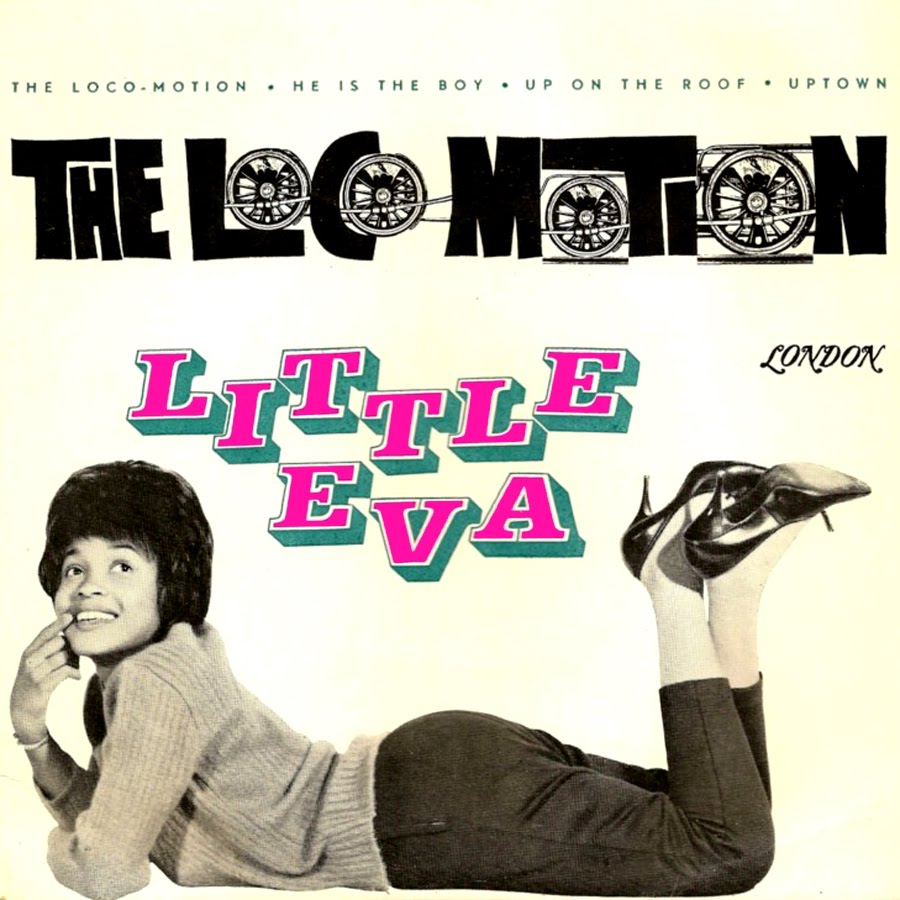
A real life Little Eva was the 1960s pop singer, born Eva Narcissus Boyd. She didn’t receive her moniker from either of these literary characters, but was called Little Eva by her family to distinguish her from her aunt, also named Eva. Little Eva is most famous for singing The Locomotion, later covered by Australian pop star Kylie Minogue. Little Eva apparently wasn’t too impressed by Kylie’s version.

Another Australian connection to Little Eva comes from World War II, when an American Air Force plane named the Little Eva got lost and crashed after a bombing mission in an isolated region of the Gulf of Carpentaria in Queensland. What happened to the survivors of the crash, and their desperate struggle against the dangers of the Australian outback, was made into a documentary called Aeroplane Dance, and is being developed into a feature film scheduled for release this year.

Eva is a classic name in Australia which has never left the charts. It was #37 in the 1900s, sinking until it left the Top 100 in the 1930s. It reached its lowest point in the 1980s at #425, then rose steeply during the 1990s to make the Top 100 for the late 2000s. Currently it is #24 nationally, #26 in New South Wales, #30 in Victoria, #31 in Queensland, #66 in Tasmania, and #27 in the Australian Capital Territory.

Eva is a very international name, being popular in all English-speaking countries, and all over Europe, including Eastern Europe and Scandinavia. It is most popular in Slovenia, at #2, and its popularity in Britain and New Zealand is almost identical to that in Australia.

Eva’s position in the Top 100 is stable, and it is now at its highest level of popularity ever. This makes it a Contemporary Classic – a traditional classic name which manages to feel modern and up-to-date. Because it is still rising, albeit gradually, it is also an Up and Coming Classic, so that it still seems rather fresh and stylish.

This all helps to make Eva an attractive choice. Furthermore, it fits in with the trend for short names ending in -a, such as Isla and Ella, and the V names, such as Ava, Ivy, Evie and Evelyn. This means that while Eva doesn’t stand out amongst its peers, neither does it sound particularly distinctive.

However, for those who care about such things, Eva has the advantage of being a classic, unlike Isla, Ella, Ava, Ivy and Evie, and also began rising before them, so that it cannot be accused of being a copycat. Eva is closest to the name Evelyn, which is also a classic that began rising in the 1990s – although Evelyn has yet to reach the popularity it enjoyed in the 1900s.

Eva is a beautiful classic name that is feminine without being frilly. Eva sounds intelligent as well as pretty, and it’s a name which ages well. It is easy to spell and pronounce, and is popular without being either extremely common or faddish. That makes it a baby name which might tick a lot of boxes on many people’s lists. The usual nicknames are Eve or Evie, but it is so short and simple that it doesn’t really need a nickname.

POLL RESULT
Eva received an excellent approval rating of 83%, making it one of the highest-rated names of 2014. People saw the name Eva as a stylish classic (23%), feminine yet not frilly (19%), beautiful or pretty (18%), and easy to spell and pronounce (17%). However, 6% thought it was too popular. Nobody thought the name Eva sounded too much like the word evil.

Thank you to Brooke for suggesting the name Eva be featured on Waltzing More Than Matilda

Names of Australian Birds for Girls

30 Sunday Mar 2014

Posted by A.O. in Name Themes and Lists

≈ 4 Comments

Tags

Ancient Germanic names, animal names, Australian Aboriginal names, Australian slang terms, bird names, birth notices, brand names, english names, fictional namesakes, germanic names, Greek names, Irish names, Italian names, Latin names, locational names, middle names, mythological names, name history, name meaning, name popularity, nature names, nicknames, retro names, scientific names, unisex names


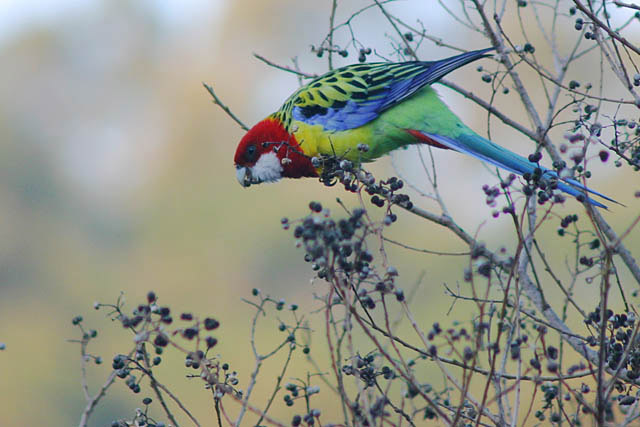
Eastern Rosella #40I seem to have covered several bird names on the blog recently, and that might be because our family was watching light-hearted bird documentary series, Hello Birdy, on the ABC, or maybe just because I love birds. Australia is lucky enough to have a staggering array of birds, many of them colourful, beautiful, intelligent, or unusual, and sadly, often under-appreciated. Here are some names that bring to mind a few of our feathered friends. Click on a likely link, and you will be taken to a YouTube video of each bird – there’s at least one for every entry.

Brahminy
The Brahminy Kite is a bird of prey and scavenger native to Australasia and Asia; in Australia they are found in coastal regions in the north. They are chestnut brown with a white head, breast, and tail tip, and typically nest in trees in mangrove swamps. The name Brahminy is due to their being found in India; it alludes to the Hindu Brahmin priestly caste, and is said BRAH-min-ee. The Brahminy Kite is the official mascot of Jakarta, in Indonesia, and in India is regarded as a representation of Garuda, the sacred bird of the supreme god Vishnu. I would not have considered this as a person’s name if I hadn’t seen a baby girl named Brahminy. It’s a bold choice, and its connection with a sacred bird is fascinating.

Corella
The Corella is a small, white cockatoo with a pink blush to its plumage. They are found from the central deserts to the eastern coastal plains, and are a familiar sight on farms and in cities. In some areas, Corellas have become so numerous they are considered a pest, being particularly destructive to trees and cereal crops. They congregate in large flocks, even up to several thousand, and make a high-pitched screeching noise which is ear-piercing when a flock all calls together, and can be heard for miles. Although they are noisy birds, they are very playful and have the joie de vivre that all parrots are blessed with. They are popular as pets, because they are good talkers, and excellent mimics. The word corella comes from the Wiradjuri language of central New South Wales. Corella has been used as a girl’s name since the 18th century, and is probably part of the Cor- group which is based on the Greek Kore, meaning “maiden”. The bird gives it a uniquely Australian flavour.

Dove
Here’s the dirty little secret about Doves: they’re just pigeons! Not only that, it’s unclear what makes some species of pigeons “doves”, because while we generally call smaller pigeons doves, that isn’t always the case. The confusion arises because the word pigeon is from Latin, and dove from Ancient Germanic, so they are two different words for the same thing (like autumn and fall). Nonetheless, their images are completely different: doves are symbols of peace, while pigeons are seen as disease-ridden pests (in fact, pigeons are no more disease-ridden than any other animal and pose no general health risk). Australia has a number of species identified as doves, and although we often think of doves as modest and grey, the Emerald Dove has striking green colouring, and the many varieties of Fruit Dove are likewise very colourful. There are also introduced species of dove, including those kept as pets. Dove has been used as a first name since the 17th century, and has been far more common for girls; a contemporary example is Disney actress Dove Cameron. Dove not only rhymes with love, but doves are used as symbols of love, since pigeons mate for life; the word dove can mean “sweetheart”. Perhaps because of this, doves were considered sacred to goddesses such as Venus. Another religious connection is that in Christian iconography, the Holy Spirit is often depicted as a dove.

Halcyon
Halcyon is the Latin name for the Tree Kingfishers, a large genus of birds found in Africa, Asia and Australasia, with Australasia having the most species. They are recognisable by their large heads and long pointed bills, and many are brightly coloured, often in iridescent blues and greens. The Laughing Kookaburra is a type of tree kingfisher, an iconic Australian bird with a raucous cackle that seems to epitomise the spirit of the bush. Halcyon is from the Greek for “kingfisher”, and is connected to a character from Greek mythology named Alcyone; the daughter of the winds, she married Ceyx, the son of the morning star. The pair were very much in love, and after Ceyx was lost at sea in a terrible storm, the unhappy Alcyone threw herself into the waves to end her life. The gods took pity on them, and changed both into kingfishers. According to legend, the “halcyon days” of midwinter, when storms cease, was when Alcyone laid her eggs, and her father restrained the winds so that she could do so safely. Because of this, the word halcyon (pronounced HAL-see-uhn) has come to mean “calm, serene, peaceful”, with our halcyon days those happy times we look back on with nostalgia. Halcyon has been used as a girl’s name since the 19th century: pretty and unusual, it gives Hallie as the nickname.

Lalage
Lalage is the scientific name for the Trillers, native to Asia and Australasia; they are small birds, usually coloured black, white and grey. They are called Trillers because during the breeding season, the males make a cheerful, almost continuous, trilling call. Lalage is derived from Greek, and means “to babble, to prattle”, or, in the case of birds, “to chirp”. The name became known from an ode by Roman poet Horace, where he speaks of his love for a young girl, his “sweetly laughing, sweet talking Lalage”. It has been used a few times since as a literary name, most notably in Kipling’s Rimini. Lalage has had occasional use, and in Britain seems to have a fairly upper-class image: contemporary examples are photjournalist Lalage Snow, and fashion designer Lalage Beaumont. In English, this name is usually pronounced LAL-a-gee or LA-la-ghee – just remember it’s three syllables, emphasis on the first, hard g like girl, not soft like germ. This fascinating name fits in with L-L names like Lillian, and as Lalage was a very young courtesan, almost seems like a posh version of Lolita! Lallie, Lollie, and Lala could be nicknames.

Lark
Larks are plain brown birds to look at, but their great beauty is in their voices, for they are famous for their melodious singing. This has made them a favourite subject for poets, such as Percy Bysshe Shelley’s, To a Skylark, and to say someone sings “like a lark” is a great compliment to the range and joyousness of their notes. Traditionally, larks are a symbol for dawn and daybreak, as in “getting up with the lark”, and this has given them religious overtones, for just as dawn is the passage between night and day, it can also be seen as that between heaven and earth. In Renaissance paintings, larks were sometimes used as a symbol of Christ. Although Australia has many birds with lark as part of their name, our only true lark is Horsfield’s Bushlark, widely found in grasslands and open woodlands. It is much smaller than larks in the northern hemisphere, and doesn’t have quite such an impressive voice, although its songs are still rich and varied, and it is a good mimic as well. The Eurasian Skylark which features in Shelley’s verse has been introduced here. Lark has been used as a name since the 18th century, and is historically more common for boys, but is often now thought of as more feminine than masculine. It’s a simple, non-frilly nature name laden with symbolism, and is more often found in the middle.

Maggie
Maggie is the affectionate name for the Australian Magpie. Although they look similar, it isn’t closely related to the European Magpie. Easily recognisable from their black and white plumage, magpies are very familiar in suburban life. Magpies are one of Australia’s favourite songbirds, because they have a complex, melodious warble, and will carol in chorus at dusk and dawn. They can also mimic other birds and animals, including human speech. Bold and sturdy, they are not typically wary of humans, and will happily accept (demand!) free food from us. They become unpopular in spring, as males can be so aggressive during breeding season that they swoop or even attack humans to warn them away. This is when feeding them pays off, as they can tell individual people apart, and won’t scare their buddies. The Magpie was a totem animal for the Indigenous people of the Illawarra, and is an official emblem of South Australia, appearing on the state flag. Magpies is a common name for sporting teams, and the cocky attitude of the Magpie is seen as indicative of the national character. Maggie is also a short form of Margaret. It was #174 in the 1900s, and was off the charts by the 1940s, returning in the 1970s. It has climbed steadily, and is currently in the 100s.

Oriole
Orioles are a large family of birds found throughout the world, which come in a variety of colours. Australian Orioles are green, perfect for blending in with the trees. They are fruit-eating birds, and the Figbird is one of the Orioles, although it doesn’t only eat figs. Orioles and Figbirds are attracted to backyards with small fruit trees and bushes, and which have native trees such as eucalypti and wattle; they are a fairly common sight in suburbia. The word oriole is derived from the Latin for “gold”, because the Eurasian Golden Oriole is a bright yellow. Oriole is related to names like Aurelia and Auriol, which are from the same derivation, and looks a lot like Oriel, which may be seen as a variant of Auriol, but also has Irish and Germanic origins. Oriole seems like a way to retain the golden meaning, while also referencing the bird.

Rainbird
The Rainbird is the colloquial name for the Pacific Koel, a species of migratory cuckoo which arrives here in spring from Papua New Guinea and Indonesia, and is found in north and eastern Australia. It’s called a Rainbird because of the belief that its rather mournful “whooping” call is a harbinger of wet weather. Males call for a mate during their breeding season, which coincides with the spring rains and the summer “wet season”, and are so loud they can be considered a nuisance. Like all cuckoos, Rainbirds lay their eggs in the nests of other species so that they can be raised by the unsuspecting hosts; however, unlike most other cuckoos, the baby Rainbird doesn’t kill the host chicks. Rainbirds are rather goofy-looking birds; the males have glossy black plumage and bright red eyes. I have seen Rainbird used as a girl’s middle name, and think it makes a wonderful name for a spring or summer baby. It would work equally well for boys.

Rosella
Rosellas are colourful parrots which are very familiar in suburbia. I think we might take them for granted, because they really are pretty, with a more pleasing range of calls than most parrots. Rosellas will be attracted to any garden that provides them with water, seeds and fruit, and can become so tame that they will eat out of your hand. This has led them to become common as pets, but in captivity they can become bored and aggressive, so I think it’s nicer to have them as backyard visitors. European settlers first saw Eastern Rosellas at Rose Hill (now called Parramatta), and called them Rosehill Parakeets; this evolved into Rosehillers, and eventually became Rosella. The Sydney suburb of Rozelle is named after them. Rosella is also a popular brand of tomato sauce, which sports an Eastern Rosella as its logo. By coincidence, Rosella is also an Italian name, an elaboration of Rosa, and looks like a combination of popular Rose and Ella.

POLL RESULTS
The public’s favourite names were Lark, Maggie and Rosella, and their least favourite were Brahminy, Oriole and Lalage.

(Photo shows an Eastern Rosella)

Famous Name: Clarice

26 Wednesday Mar 2014

Posted by A.O. in Famous Names

≈ 5 Comments

Tags

famous namesakes, fictional namesakes, Latin names, name history, name meaning, names from movies, Old French names, Roman names

Clarice_Beckett_-_Punt_Road_Bridge,_Yarra_River

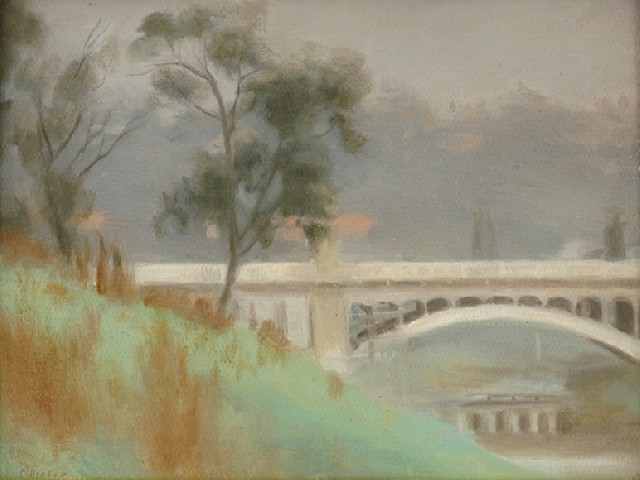
As we move into misty autumn, we will look at an Australian artist who worked in obscurity, and whose 127th birthday was on this year’s Equinox, March 21. Clarice Beckett was born into a comfortably-off Victorian family – her grandfather was the master builder who designed and built Como House.

Her father’s only ambition for his daughter seems to have been that she would marry into wealth, but her mother, a hobbyist painter, encouraged her artistic talents. Clarice studied art in Melbourne, including three years under Frederick McCubbin, and was a student of the controversial artist Max Meldrum, who argued that painting was a pure science, most reliant on tone, and with colour the least important component.

In 1918, Clarice’s father retired, moving his family to the Melbourne bayside suburb of Beaumaris. Her parents were ill and demanding, so that Clarice took responsibility for most of the household chores. Mr Beckett seems to have been disappointed in his career, and to have been a very difficult man. He wouldn’t allow Clarice to have a studio, telling her that the kitchen table was good enough.

Clarice built herself a little cart filled with painting equipment, which she used as a portable studio. She tended to go out very early and late, the only times she was free from domestic duties, to paint scenes from her local area, finding endless inspiration in the sea, beaches and suburban streets, bathed in the soft light of dawn and dusk. Her style was simple and original, and her paintings strongly atmospheric, often set on misty days.

Clarice was never taken seriously as an artist in her lifetime, with critics occasionally sneering at her “continual state of fog”, but most ignoring her completely. Sales of her work were pitifully small. Even her mentor Max Meldrum, who was supportive of her work, made it known that there would never be a great female artist, as women lacked the necessary capacity to be alone. Yet he praised Clarice for “working like a man”, and defended her fiercely. Her artist friends saw her as beautiful, unassuming and intelligent; sharply witty, but with the aloofness of extreme shyness.

In 1934, Mrs Beckett died from a stroke, and Clarice was severely affected by her mother’s death. The two had become very close, and Clarice was left alone with her invalid father, who became jealous of anything which might take his daughter away from him. She stopped attending art classes or social events, and when friends came to the house, Mr Beckett ordered them to leave. Clarice was now completely isolated, and she admitted to feeling a failure.

Clarice still painted whenever she could and one night, a year after her mother’s death, she continued working outdoors even though a storm had set in. She caught a chill which developed into pneumonia; her heart was already weak, and she died five days later, aged 48. The doctor believed that she might have survived, had her will to live been stronger.

It was not until 1971 that an exhibition of Clarice Beckett’s paintings were held, after more than 2000 of her canvases were found rotting away in a country barn. A leading critic hailed her as “a remarkable modernist”, and the Australian National Gallery purchased 14 of her paintings. The public were so enthusiastic that viewing hours were extended and the exhibition sold out. Since then, there have been several more public exhibitions of her work; she is regarded as one of Australia’s finest artists, and it is promised that she will never be forgotten again.

Clarice is a medieval form of the name Clara, a Roman name which comes from the Latin meaning “clear, bright”. Clarice is thought to be based on the Old French form, Claritia – just as the medieval name Lettice was based on Letitia. It was brought over by the Norman aristocracy, who were big fans of “Clare” names, and it can be found by the early 12th century, sometimes spelled Claris. Clara itself doesn’t seem to have been used in Britain until slightly later.

The name Clarice became well known in 1991 with the release of the Oscar-winning movie, The Silence of the Lambs, whose heroine is the beautifully named Clarice Starling, an FBI trainee on the trail of a serial killer. Clarice Starling was listed by the American Film Institute as one of the Top 100 movie heroes, and is the highest female on the list.

A rather different fictional Clarice is the equally delightfully named Clarice Bean Tuesday, from the children’s books by English author Lauren Child, who also penned the popular Charlie and Lola series. Clarice Bean is the middle child in her family, who longs for space and privacy, but instead finds herself in all kinds of amusingly chaotic situations.

If you like a name that has a song attached to it, you can sing along to Clarice, by Transatlantic folk-rockers, America. Like all songs by this band, I find it pleasant enough, but have little idea what it is about, although the lyrics don’t seem negative at all.

There are two pronunciations of Clarice. It can be said KLA-ris, to rhyme with Paris, which is a more British pronunciation, or it can be said kluh-REES, to rhyme with Denise, which is far more common in the United States. You’re welcome to choose either pronunciation, but to my mind, the first one sounds far more stylish and contemporary, while the second one reminds me of those pseudo-French names like Shanice and Fonice, which seem a bit daggy and dated.

Clarice is a strong yet elegant name which seems intelligent and dignified. It’s a very old name, but to me doesn’t seem “old-fashioned”. I can imagine it sounding adorable on a little girl, like Clarice Bean, but also perfect for an adult, like Clarice Beckett. It would make a great alternative to popular-yet-falling Claire, or fashionable-and-rising Clara for anyone who would like a traditional name which is still a little out of the ordinary.

POLL RESULT
Clarice received an approval rating of 54%. The name reminded 23% of people too strongly of Silence of the Lambs, but 15% thought the name was pretty and feminine. Nobody thought the name Clarice was tacky and tasteless.

(Picture is Punt Road Bridge, Yarra River by Clarice Beckett)

Interview with Alexia Mae at Baby Names from the Bible

23 Sunday Mar 2014

Posted by A.O. in Blog Reviews

≈ 10 Comments

Tags

Anne of Green Gables, baby name blogs, baby name books, Baby Names from the Bible, Biblical names, choosing baby names, Clare's Name News, controversial names, fictional namesakes, honouring, Instagram, pen names, popular names, rare names, US name popularity, YouTube

Interview-PhotoAlexia Mae is the warm and enthusiastic blogger behind Baby Names from the Bible, devoted to all the great names in the Good Book, whether familiar or unusual. I usually allow blog readers to decide which blogger is interviewed, but last month Alexia Mae was kind enough to invite me to be interviewed at Baby Names from the Bible, so this is a return visit – although she would have been chosen next time anyway. Alexia Mae passed her 100th post a month ago, so let’s hope there are many more.

What is your name?

Alexia Mae. I’m the “Dear Abby” of baby names, as Alexia Mae is my pen name.

Have you ever wished you had a different name?

My real one? Oh, yes. It’s not too common a name; it’s only ever made it to #30. But the spelling of it is unique, which catapults it outside the Top 1000 for all time. Add a filler family middle, and the annoyance of people misunderstanding my name, and I begged to be called Alexia as a kid. Fast forward to me needing a pen name … Bob’s your uncle, I had one. Mae is in honour of my grandma. Now that I’m an adult I appreciate my given name more. I was almost a Kasia, which I would have loved, too.

How did you become interested in names?

I blame my name craziness on Shane, my kindergarten crush. He was the ruddy-haired Irish kid with the leather necklace, the dude everyone wanted to be friends with. In a classroom of boring names from the ’80s, Shane stuck out. I suddenly became very aware of people’s names.

When I was thirteen, my mom got pregnant. My brother Aaron and I were close in age, but now I was way older for this new brother, and boy, was I ready to help name the kid! Shot down, but kept on trying. Their choice? Another A name, Andrew. A perfect recipe for my mom to never get our names right. But, after stealing (I mean permanently borrowing) a name book my mom picked up, I came down with full blown name-nuttiness. It’s been downhill ever since.

How did you become interested in biblical names?

That first baby name book I got my hands on happened to be about biblical names. And it was literally four pieces of paper. (Maybe that’s why my parents never got out of the As.) It was small. But it had a big impact. To see the meaning of names, and to be able to go to the Bible and see them used, just blew me away. It was my own “sawdust trail moment” for names. They have proved themselves to be real gems, and have a power in their age and timelessness.

Do you have a favourite baby name book?

The Holy Bible 😉 My email inbox is also swarmed with name people I’m subscribed to, and I rely on Clare’s Scoop for everything else. (That gal needs an award.) [WMTM: She got one! She has a gold ribbon saying her page is one of the most highly-recommended in the Society topic on Scoop].

What inspired you to begin a name blog?

My husband Josiah and I both love the idea of using biblical names for our children. When I was first married I searched for biblical baby name books, and couldn’t find any. Zilch. Zip. Nada. Not even the one that I originally had. Then I began to think about that original name book, and thought it was awfully small compared to the actual Bible. I mean, the Book of Numbers wouldn’t even fit in there, and it’s practically nothing but names.

I kept asking myself, if I can’t find them, who else will? Why is no one celebrating the biblical names I know must exist? So I began logging the names I was coming across for my own use, and I really wanted to share them … and Baby Names from the Bible was born.

Do you have a favourite blog entry on Baby Names from the Bible?

The post that I’m the most proud of is one I wrote a couple of years ago, Why Name Your Baby a Biblical Name? I take a moment to stand on my soap box and talk about why people, even those who aren’t religious, should take another look at baby names from the Bible. Forget about Zerubbabel. How about Junia? Rissah? Ardon? There are names galore for anyone thirsty for a good name.

Are there any other ways to stay in touch with you online?

I’m @NamesDaily on Instagram, and I post names every day, both biblical and not. Instagram has been an amazing experience. I have a growing following of over 2000 people. I’m getting the opportunity first hand to see names that knock your socks off, and some, that well, just don’t. I’m also on YouTube.

Do you have a pet peeve in regard to names?

Yhess. Yoonique namez. If I have to read it more than once to get what name you’re actually trying to say, I’ve got to stand up and get a cup of coffee. It literally makes my skin crawl. Jaycein? I am somebody who has zero adrenaline tolerance for awkwardness in any way, so I have to get up and walk it off. True stuff.

In the name community, I feel sometimes it’s like Eskimos marketing ice to fellow Eskimos who live in the same igloo. I want to find ways to branch out and actually talk to parents who have never even owned a baby name book. I think that’s why I love being on Instagram so much, because it’s exactly that. I enjoy so many people in the baby name community, but I want to find ways to branch out, too. (We need an annual name conference.)

What are some of your favourite names?

Boys: Judah and Josiah, of course. Abel.

Girls: Juniper. Ellowyn. Cassia. Maewyn. I really love Naphtali for a girl, but can’t bring myself to use it because no one would be able to pronounce it or spell it. It’s like Natalie with an F. I’m drawn to biblical names, but I enjoy other names, too.

What names do you dislike?

Delilah. I see the appeal, but I would never use it. The same with Jezebel. That one makes my skin crawl when I hear someone nonchalantly talking about using it. Whether you believe in the Bible or not, the connotation still exists. Jezebel was a murderer, and it would be like naming your child Hitler. I just don’t think you should do it.

What are your favourite names in the US Top 100?

Girls: Biblical – Leah (#33). Other – Harper (#24) and Lillian (#25)

Boys: Biblical – Josiah (#79). Other – Landon (#34)

What are your favourite names in the rest of the US Top 1000?

Margaret (#178) and Judah (#273)

What are your favourite names that don’t currently chart?

Blythe (never charted) and Clive (hasn’t charted since 1935)

What is your son’s name?

Judah David. Our story of Judah’s name is a fun and interesting one, and you can read about it at So There’s This Name ….

If you found out you were pregnant right now, what names would you be considering?

I would be trying to convince Josiah to like Blythe Salomae. We have boys names we like, but like we did with Judah, we’re not telling anyone.

What is something we don’t know about you that you would like to share?

I love the Anne of Green Gables series and have read them probably too much. Tell me Lucy Maud Montgomery wasn’t a name nut. Ludovic Speed? Gilbert ❤ Is this why I love the name Blythe? I will never tell.

What advice would you give someone choosing a baby name?

If you can’t use the one you love, use it anyway. Never, ever settle. Unless it’s Jezebel or Kidneigh Bean, and then I’d say maybe keep looking. Valuable life lessons also apply to names. You are giving your babies the first impression they will have on people. Give them something that makes them proud. Something that makes you proud. And like weak coffee, name regret stinks. I’ll brew down some Starbucks, and you can come over and we can talk more about names!

(Picture shows Alexia Mae with her son Judah; photo supplied by Baby Names from the Bible)

Names Spotted at Home and Abroad (Summer 2013/14)

15 Saturday Mar 2014

Posted by A.O. in Names Spotted at Home and Abroad

≈ 1 Comment

Tags

American names, Arabic names, Christmas names, colour names, famous namesakes, fictional namesakes, names from television, names from video games, names of businesses, nicknames, pet names, rare names, sibsets, virtue names

434407-32707c74-6464-11e3-be16-1445237cc09f

Stories in the papers on the most popular names often have a look at the other end, and tell us which names were least common in 2013. Some of them included:

BOYS: Clinchy, Jetta, Kayos, Magick, Rampage, Shanakee, Xenophon

GIRLS: Asterix, Blendin, Bonniebell, Euphemia, Lingo, Passion, Shiny, Tiger Lily, Vogue, Zipporah

A story from Ballarat focused on mothers who had “bonus babies” long after they thought their families were complete. One of the mums was named Peace, which I thought was a lovely serene virtue name. Another was parenting author Pinky McKay, who has a very colourful name (her hair matches).

‘Tis the Season

The first baby born in Wollongong Hospital on Christmas Day was Fenix Cooper Brudenell. Fenix has a very pop culture name: his first name is after Marcus Fenix from the Gears of War video games, while his second is after Sheldon Cooper, from The Big Bang Theory. Fenix’s siblings are Megan and Austin.

Jonathan Butler and Tahani Curtis, from the Tweed Heads region of New South Wales, were expecting a child on Christmas Day, and seriously considered calling him Jesus if they had a boy. Is this the ultimate Christmas name? They had a girl instead, and named her Matilda.

Saint James the Great church in Melbourne invited people to bring their pets to celebrate Christmas Mass, because baby Jesus was born in a stable amongst animals. Nick Haines and Michelle Nichol brought their three poodles, because as Nick says, “these are our children”. The poodles are named George, Poppy and Lilly – surely some are giving their “fur babies” the names they would have given human children, as this sounds like an adorable sibset … er, pupset.

Fighting Fit Families

Bec Hyatt from Brisbane took up cage fighting in order to lose 80 kg of baby weight. She is now set to become the first Australian woman in the UFC, earning more than $100 000 per fight. Bec’s two sons are Enson and Zake – Enson may be named after American MMA champ Enson Inoue, while Zake is a variant of the Arabic name Zaki, meaning “pure”. It sounds like a cousin of Jake, Zac and Zeke.

Still on the subject of competitive fighting: the children of the Metcalf family from Sutherland Shire are all boxers. Raised by a single dad, and with their trainer as a second father, three of them have fought their way to champion status, with the youngest a promising up-and-comer. Their names are Marizza, aged 18, Axx, aged 16, Lolli, aged 14, and Electra-Shenika, aged 11. If you’ve ever wondered what a sibset that can beat your kids up would sound like, this is it.

Expat Americana

Adam Preston lived in New York City for seven years, with his first apartment over a hot dog joint called Crif Dogs in the East Village [pictured], which calls itself “NYC’s  #1 Weiner”. When he married his Canadian wife Jessica two years ago, they eloped to New York, which has so many memories for Adam. Of course he took her to Crif Dogs, and when they had a baby boy soon after, they named him Crif Benjamin Klaver Preston. The name Crif Dogs came about when owner Brian Shebairo tried to say Chris, his former business partner’s name, while chewing a hot dog. Crif sounds more up-to-date as a baby name than Chris, and even a hot dog place can evoke sentimental memories to be commemorated as a baby name.

Yvette Aubusson-Foley, a former journalist from Dubbo, has been living in the US for more than 18 months, and uneasily watching her three children adapt to local conditions in Tucson, Arizona. They dress up as little pilgrims, develop a slight American accent, and (to Yvette’s horror) happily recite the Pledge of Allegiance – although one defiantly wears an Australian flag for Spirit of America Day. Yvette’s children are daughter Jett, and her sons Phoenix and Dash; names which somehow seem ready to assimilate. Would an Indi, Banjo and Taj remain more stubbornly Aussie, I wonder?

Television

Have you ever watched an episode of Australian reality television show Real Housewives of Melbourne? It tends to get people a little excitable, mostly because the women taking part in the show aren’t actually housewives, don’t have much left of themselves that’s real, and only live in a very limited part of Melbourne. One of the women, Andrea, who runs a plastic surgery clinic and is originally from New York, has three children named Budd, Kiff and Buster (who somehow require five nannies). Their names have caused predictable Internet outrage – especially Kiff, with many demanding to know “what culture” Kiff is from: it’s a short form of Christopher, and therefore a linguistic relation to Crif.

Children’s quiz show Pyramid featured a team consisting of two girls named Eugenie and Prudence. Isn’t that a fantastic pairing of gal-pal names?

Waltzing with … Bran

09 Sunday Mar 2014

Posted by A.O. in Waltzing with ...

≈ 2 Comments

Tags

animal names, Arthurian names, bird names, British names, english names, epithets and titles, fictional namesakes, Game of Throne names, germanic names, Irish names, mythological names, name combinations, name history, name meaning, nicknames, Old English names, saints names, sibsets, surname names, UK name popularity, Welsh names

360029

There always seems to be lots of crows and ravens around at the end of summer, finishing off the remains of those creatures who have not survived the blazing heat and drought – a very important job that we don’t appreciate as much as we should. This put me in mind to write about a name connected to these highly intelligent birds, who feature in many mythologies, for as carrion birds, they are often seen as harbingers of death, with mysterious knowledge of the afterlife.

Brân the Blessed is a heroic figure from Welsh mythology; a giant, probable god, and High King of Britain. Legends tell of how he travelled to Ireland with a host of warriors in order to rescue his sister Branwen, who was being mistreated by her husband, an Irish king. The battle was brutal, and only seven men from the rescue party survived: Branwen herself died of a broken heart.

Brân was mortally wounded in the foot, and told his men to cut off his head, so that it could be returned to Britain. They took the head to “White Hill”, thought to be where the Tower of London now stands. The head was buried there, facing France, because as long as it remained, Britain would be protected from invasion. King Arthur later dug the head up, declaring that only his strength was needed to protect the land. This was seen as a disastrous decision, because when Arthur had gone, the land was invaded by the Saxons.

Brân is connected to many figures from British legend. He is seen as a forerunner to King Arthur as High King of Britain, and many have noted his similarity to the mysterious Fisher King of Arthurian legend, who is sometimes identified as a man named Bron. The Fisher King had a wounded leg, and in some tales, the Grail he possessed had the power to restore the fallen – a parallel with Brân, who had a cauldron that could bring warriors back to life. Some stories report that Percivalfound a severed head in the Fisher King’s castle instead of the Grail.

Others scholars see Brân as connected to the Irish hero Bran mac Febail, who embarked on a journey to the Otherworld, and when he returned, so many years had passed that the Irish people know him only as a legend. After telling his story, he sailed away across the sea, never to return. The tale was an apparent inspiration for the Voyage of Saint Brendan, a legendary quest the saint undertook to the Isle of the Blessed, or Saint Brendan’s Isle. Although this may not immediately remind you of Brân the Blessed, in British legends, a voyage to Ireland (in the west) is often an allegory for a journey to the Otherworld – and Brân did die there.

The severed head of Brân the Blessed is important, because some believe the human head played a significant role in Celtic religion. Greek historians tell how Celtic warriors could cut off the heads of their enemies in battle, and that these heads would be embalmed and placed on display. Archeologists theorise that ownership of a head gave one power over the dead person, or that the head was venerated as the seat of the soul and a symbol of the Otherworld.

The head of Brân the Blessed possessed powers of mystical protection, and some connect this to the ravens in the Tower of London, because the name Brân means “crow, raven” in Welsh. There are seven ravens at the Tower, and according to tradition, they protect the Crown and the Tower. Superstition warns that should the ravens of the Tower be lost or fly away, the Crown will fall and Britain with it.

Supposedly the ravens have been kept at the tower since the 17th century, but historical evidence points to them being a Victorian innovation, possibly a gift from an earl with links to Druidic scholarship who consciously chose them as representations of Brân the Blessed. Another theory is that they were simply pets of the 19th century Tower staff. And alas for the superstition, the Tower records show that just after World War II, there were no ravens left (an apparent crow-napping), yet the monarchy and Britain have managed to soldier on.

The Welsh name Bran, from Brân, is said BRAHN, while the Irish Bran, of the same derivation and meaning, is said BRAN. The name Brendan, the saint whose legend was influenced by that of Bran mac Febail, comes from the Welsh word for “prince”. This is rather interesting, because another theory about Brân the Blessed was that his name was actually a title: to be understood as meaning The Raven in the sense of The Prince, The Chieftain (as King Arthur’s father was known as The Pendragon, head dragon or war leader).

A character named Bran from contemporary fiction is Bran Stark, from George R.R. Martin’s A Song of Fire and Ice; in the television drama series A Game of Thrones, he is played by Isaac Hempstead-Wright. Despite his mythologically rich name, Bran is just short for Brandon, an English surname which comes from several places named Brandon in the United Kingdom.

Most of these come from the Old English for “gorse hill”, although Brandon in Lincolnshire means “steep hill”. However, there are places in Ireland with Brandon in their name, and these are said to be connected to Saint Brendan, although they don’t seem to have contributed to the surname. The surname Brandon also exists in continental Europe, and in these cases, it may be derived from the Germanic name Brando, meaning “sword”. The English surname does seem to be older than these though, and predates the Norman Conquest.

Bran is a strong, simple name from legend and literature with layers upon layers of evocative meaning and association. It has limited use in the UK, and is elsewhere almost unknown. If you are worried that it is too much like the cereal husks, you can use the Welsh pronunciation, or even the Arthurian Bron. Another possibility is the Irish surname name Brannan or Brannon, which in some cases means “son of Bran”. The girls name Branwen (sister of Bran) means “fair raven”.

POLL RESULT
Bran received a respectable approval rating of 69%. 28% of people liked the name, while 20% loved it.

(Photo is of an Australian raven, one of several Corvid species native to Australia)

International Names for Boys

02 Sunday Mar 2014

Posted by A.O. in Name Themes and Lists

≈ 1 Comment

Tags

animal names, Aramaic names, Biblical names, Catalan names, english names, European name popularity, famous namesakes, fictional namesakes, germanic names, hebrew names, Indian names, initial names, Latin names, mythological names, name history, name meaning, Norman-French names, Old Norse names, Persian names, pseudonyms, royal names, saints names, Sanskrit names, screen names, surname names, Swedish names, UK name popularity, unisex names, US name popularity, Welsh names

castaway1

These are names chosen from my e-book, International Baby Names for Australian Parents – names which are familiar in other countries, but rarely used here. I chose ten that I particularly like, or find interesting, or think very usable. If you haven’t read the book, it gives you an idea as to what’s inside, and if you have read it, it’s a chance for me to provide more information than is possible in a book.

Ajay

Indian boys name meaning “he who cannot be defeated” in Sanskrit; also commonly used as a short form of longer Indian names beginning with Ajay-. It is pronounced uh-JAY. Ajay is also an English modern name (presumably) based on the initials AJ, and said ay-jay. It can be used for either sex, and a female example is media personality Ajay Rochester (born Leigh Towler). Initial names are growing in popularity, and this is also an Indian heritage choice which fits in with current trends (although it may present some minor pronunciation issues). The name Ajay charts in the UK for boys.

Barnaby

Medieval English form of Barnabas, which is derived from Aramaic. Saint Barnabas was one of the earliest Christian followers in Jerusalem, and the New Testament tells us he was one of the Seventy Apostles of Christ, and a companion of Saint Paul. According to tradition, Barnabas was martyred in Cyprus, and is claimed as the founder of the Cypriot Orthodox Church. The Bible explains that his birth name was Joseph (or Joses, the Greek form), but the Apostles gave him the name Barnabas, which may mean “son of the prophet”. However, in the New Testament, it says his name means “son of encouragement” – early Christians saw a link between prophecy and encouragement. The name is pronounced BAHR-nuh-bee. There are several Barnabys in fiction, most notably Barnaby Rudge, in Charles Dickens novel of the same name. Fictional characters named Barnaby tend to be cute, simple, absent-minded, or comical (Barnaby Rudge is a village idiot). Two famous Australians with this name are former AFL footballer Barnaby French, and National Party politician Barnaby Joyce. This name manages to be both hip and cuddly, and it charts in the UK, where it is rising.

Conrad

Germanic name meaning “bold counsel”. The 10th century Conrad I is recognised as the first ruler who can be called a King of Germany, although he never claimed that title. Related to every other subsequent monarch of Germany, it is little wonder his name became traditional amongst medieval German royalty and nobility. There are several saints named Conrad, with the first one Conrad of Constance, a bishop from the same powerful family as Conrad I. A story is told that he once drank some communion wine at mass after a spider had fallen in it; at that time, spiders were believed to be fatally poisonous, but Conrad drank the wine as a sign of faith. With our current knowledge, his survival no longer seems particularly miraculous. Conrad is the protagonist of The Corsair by Lord Byron, probably the most Byronic of all Byron’s heroes. An outlaw pirate fighting a chivalrous battle against mankind, he is a man of mystery, leading a life of adventure and passion. Because of the cult of Saint Conrad of Constance, the name was used in England during medieval times, and has been revived since the 19th century. Strong and intelligent, it charts in both the UK and the US.

Darius

From the Greek form of the Persian name Dārayavahush, meaning “holding firmly onto goodness”. It was traditional amongst kings of the Persian Achaemenid Empire, and Darius I was also known as Darius the Great, ruling the empire at the height of its power, and often remembered for his defeat by the Greeks at the Battle of Marathon. He is mentioned several times in the Old Testament, so you can see this as a Biblical name as well. Darius III was the last king of the Achaemenid Empire, being defeated by Alexander the Great. Musical Dariuses include French composer Darius Milhaud, British singer Darius Campbell, and Darius Rucker from American band Hootie & the Blowfish. A famous Australian with this name NRL footballer Darius Boyd, who plays for the Newcastle Knights. There are attractive fictional Dariuses in the The Hunger Games trilogy, and the House of Night vampire series. You can pronounce this elegant name DAR-ree-us, DAH-ree-uhs, or duh-RY-us, and it charts in both the US and the UK.

Gideon

Hebrew name meaning “hewer (of wood”) or “feller (of trees)”; often translated as “woodsman”, but other times more freely as “warrior, destroyer”, with the thought that the hewing and felling could be against enemies. In the Old Testament, Gideon was a hero who is listed amongst the Judges of the Hebrews. Born into humble circumstances, Gideon doesn’t seem to have had much confidence in himself, and when God chose him to free his people from oppression, Gideon asked for proof of God’s will through three miracles. Once convinced that God had really chosen him, Gideon led an army of Israelites against the oppressing Midianites. Contrary to standard military tactics, God commanded Gideon to send away most of his army, because it was so large that victory was virtually assured. Instead, he went in to battle with just three hundred men, so that when they won, they were certain it was accomplished through God’s power. Gideon is considered a saint in the Roman Catholic and Eastern Orthodox faiths, and the name came into use in Britain through the Puritans. Gideons International is the evangelical organisation which distributes free Bibles; you’ve probably found one in your hotel room at some point. Gideon is a stylish Biblical name; usually pronounced GID-ee-uhn, it charts in the US, where it is rising, and in the UK.

Iestyn

Welsh form of Justin, from the Latin name Justinus, derived from Justus, meaning “just”. All of these names were borne by numerous saints. Iestyn ap Gwrgant was the last ruler of the Welsh kingdom of Morgannwg, in South Wales, before it was taken over by the Normans. His coat of arms forms the modern flag of Glamorgan, and part of the flag of Cardiff. Saint Iestyn was a Welsh hermit who flourished in either the 6th or 7th century, and is said to have been of royal blood. He founded two churches in north Wales. Pronounced YEST-in, this is a positive-sounding name which could honour someone named Justin, or be an appealing Welsh heritage choice. Iestyn charts in the UK.

Orson

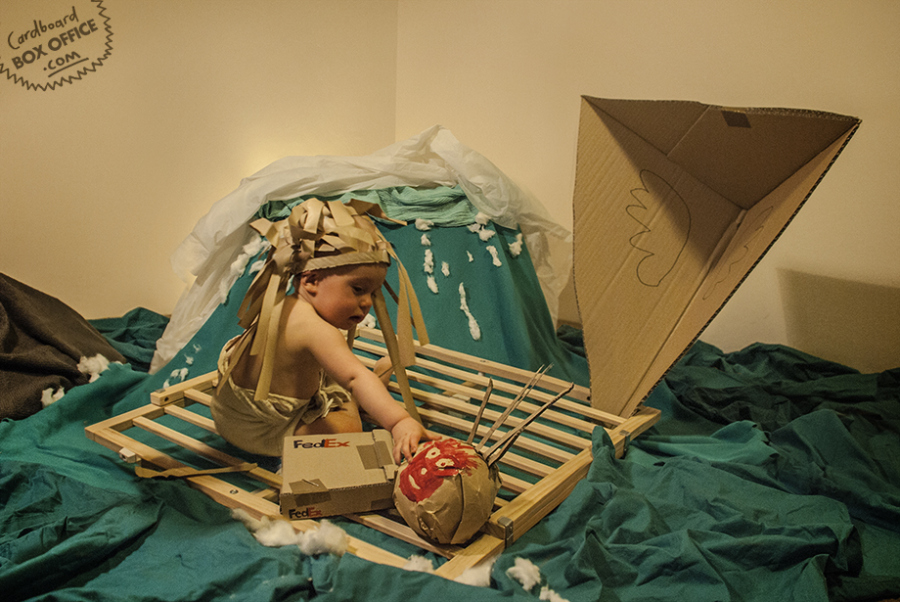
English surname which was originally a nickname, from the Norman French for “bear cub”. In the medieval romance Valentine and Orson, Orson is a wild man raised by bears, and twin brother to the knight Valentine, brought up in a royal French court. Originally, the “wild brother” didn’t have a name, and it seems to be an English innovation to give him a name to reflect his ursine upbringing. Orson has been used as a boy’s name since at least the 17th century, and has historically been more common in the United States. There are several famous men named Orson, including the American actor and director Orson Welles, who directed Citizen Kane and the notorious War of the Worlds radio broadcast – his first name was George, and he went by his middle name. Others include American television actor Orson Bean (real name Dallas Burrows), who lived in Australia during the 1970s, and American sci-fi author Orson Scott Card, who wrote Ender’s Game. You may also have heard of Internet sensation Orson Mackie, an Australian baby who stars in familiar movie scenes created by his parents from cardboard boxes. This masculine name is warm, snuggly, yet strong. It charts in the UK, where it is rising.

Roc

Catalan form of Rocco. Roc Brazilianos was a notorious 17th century Dutch pirate who operated from Jamaica. A cruel and debauched buccaneer, he raised terror on the high seas for many years before mysteriously disappearing with his ship and crew. His real name is not known for sure, but historians think he may have been Gerrit Gerritszoon, who moved to Dutch-controlled Brazil with his parents. Rather less spectacularly, a famous Australian with the name is visionary entrepreneur Roc Kirby, who founded Village Roadshow cinemas, and supported the Australian film renaissance. In his case, Roc is short for Roscoe. A roc is also a gigantic mythological bird which appears in Arabian fairy tales, and is well known to anyone who has read the One Thousand and One Nights. Pronounced like the word rock, this is a cool bad-boy choice which can also be seen as a nature name. It is popular in Catalonia, where it is rising.

Sixten

Swedish name which comes from the Old Norse Sigsteinn, meaning “victory stone”. Sixten Ehrling was one of Sweden’s most famous conductors, known for his difficult, yet witty, personality, and Sixten Sason was a super stylish Swedish designer who created the smooth lines of the Saab in the 1960s. Another famous namesake is the Swedish street artist Sixten, who at one time lived and worked in Melbourne. This is a smart-sounding Swedish heritage choice which provides few problems with pronunciation, as it’s said much as it looks. It is popular in Sweden, where it is rising.

Titus

Roman name of unknown meaning. According to tradition, the name was introduced to Rome by Titus Tatius, the Sabine king who attacked Rome, but later made peace with the legendary Roman king Romulus, the city’s founder. There were three Roman Emperors named Titus, and the Roman historian Livy’s full name was Titus Livius. Saint Titus is mentioned in the New Testament as a companion of Saint Paul. As you can probably tell from all these name bearers, Titus was an extremely common name in ancient times, and used by all social classes. The name gained an unpleasant reputation from Titus Oates, the perjurer who falsely claimed that Catholics were plotting to assassinate King Charles II; more honourable associations are Sir Titus Salt, the manufacturer and philanthropist, and Titus Brandsma, the Catholic priest (now a saint) who spoke out against Nazi ideology and died in a concentration camp. A contemporary namesake is American television actor Titus Welliver, from Sons of Anarchy and The Good Wife. Titus Andronicus is Shakespeare’s first tragedy, one of his most violent and gory plays. Titus charts in the US, where it is rising.

POLL RESULTS
The public’s favourite names were Gideon, Orson and Conrad, and their least favourite were Ajay, Sixten and Roc.

(Photo shows Orson Mackie depicting a scene from the movie Cast Away, on the blog Cardboard Box Office).


Famous Name: Lincoln

26 Wednesday Feb 2014

Posted by A.O. in Famous Names

≈ 8 Comments

Tags

birth notices, British names, english names, famous namesakes, fictional namesakes, honouring, Latin names, locational names, modern classics, name history, name meaning, name popularity, names from movies, names from television, nicknames, popular names, surname names, UK name popularity, US name popularity

089717-port-lincoln

Today is the 210th anniversary of the naming of Port Lincoln, on the Eyre Peninsula in South Australia, on the shores of Boston Bay, which opens out into the Spencer Gulf. Port Lincoln is a regional city of around 15 000 people, and about 7% of the population are Indigenous, from the Nauo, Barngala, Wirangu, and Mirning peoples.

Two of Port Lincoln’s claims to fame are that it is said to have more millionaires per capita than any other place in Australia, and boasts the title of Seafood Capital of Australia, as it has the largest commercial fishing fleet in the country, which catch tuna and sardines, and a thriving aquaculture industry which farms tuna, yellowtail kingfish, abalone, mussels, oysters, seahorses, and lobsters.

Port Lincoln has produced more than its fair share of athletes and sportspeople, with many AFL footballers originally hailing from Port Lincoln. Netballer Lauren Nourse began her career in Port Lincoln, and Paralympic cyclist Kieran Modra was born there. Weightlifter Dean Lukin, who won gold at the 1984 Olympics, was a tuna fisherman, and upon his retirement returned to manage the family fishing business. Another with a connection to the fish industry is tuna farmer Tony Santic, the owner of Makybe Diva, the only horse to win the Melbourne Cup three times. There is a life-sized bronze statue of Makybe Diva on the town’s foreshore.

The scenic beauty of Port Lincoln attracts many tourists, who come here for yachting, scuba diving, and game fishing. The novel Blue Fin by Colin Thiele is set in Port Lincoln and revolves around the fishing industry; the movie was filmed in nearby Streaky Bay. Some of the scenes from Jaws and Gallipoli were filmed in Port Lincoln, and the reality television show Australian Survivor was filmed nearby.

British naval explorer Matthew Flinders discovered Boston Bay on February 26 1802, and named the body of water Port Lincoln, after his birthplace of Lincoln in England. Lincoln is believed to mean “settlement by the pool” in a blend of the British and Latin languages, with “the pool” referring to Brayford Pool, a natural lake in the city’s centre. The city of Lincoln is twinned with Port Lincoln in South Australia.

The surname Lincoln comes from the city of Lincoln, and the most famous bearer must surely be Abraham Lincoln, the 16th President of the United States. He led his nation through the American Civil War, and his Gettysburg Address became an iconic statement of American belief in the principles of liberty and democracy. His assassination in the final weeks of the Civil War made him a national martyr, and he is consistently ranked as one of the greatest US Presidents – often, the very greatest.

Lincoln has been used as a first name for boys since the 18th century, with most early bearers of the name born in Lincolnshire and surrounding districts. Although Lincoln was used as a name in the United States before Abraham Lincoln, its use soared during the years of the Civil War and just after it, and must often have been given in honour of the president.

A famous Australian with this name is actor Lincoln Lewis, the son of rugby league legend Wally Lewis. He has appeared in several television series, such as Home and Away and Neighbours, and had roles in films such as Tomorrow, When the War Began and After Earth. Lincoln is the brother of sportcaster Mitch Lewis, a celebrity dad on the blog in 2012.

The name Lincoln first charted in Australia in the 1960s, and first ranked in the 1970s, débuting at #207. It remained comfortably in the 200s for decades, then suddenly climbed at a dizzying speed during the latter half of the 2000s, and was in the Top 100 by 2009. The instigator of this surge of popularity was probably US television drama series Prison Break, starring Dominic Purcell as Lincoln Burrows. Dominic moved to Sydney from Britain as a baby, and studied acting at the Western Australian Academy of Performing Arts. He won an Australian Film Institute Award for his role in Prison Break.

Currently Lincoln is #67 nationally, #76 in New South Wales, #66 in Victoria, #40 in Queensland, #38 in Western Australia, #37 in Tasmania, and #66 in the Australian Capital Territory. Lincoln was one of the fastest-rising boys names of 2012 – the same year that the movies Lincoln, and Abraham Lincoln, Vampire Hunter were released. From the data that’s come in so far, Lincoln looks set to continue his ascent as one of the fastest-rising names of 2013.

Lincoln is a handsome, clean-sounding modern classic that may be more Aussie than you expected. It has certainly been warmly embraced in Australia, and is more popular here than in either the US or UK, where it isn’t even in the Top 100 (its similarity in sound to popular Lachlan can’t have hurt). Lincoln’s star is on the rise, and looks set to join the national Top 50 fairly soon: it’s already in my personal Top 50 for 2013.

Linc is the obvious nickname, with an attractive similarity to the word link, suggesting your little Linc could join the family together. I am spotting the short form more and more often in birth notices – perhaps because some parents are becoming reluctant to choose the popular Lincoln.

POLL RESULT
Lincoln received a respectable approval rating of 64%. People saw the name Lincoln as stylish and cool (16%), handsome and distinguished (15%), and strong and masculine (15%). However, 14% thought it was too trendy. Only one person thought the name Lincoln was too popular.

(Photo shows fishing boats in the marina at Port Lincoln)

International Names for Girls

23 Sunday Feb 2014

Posted by A.O. in Name Themes and Lists

≈ 19 Comments

Tags

American names, Arabic names, aristocratic titles, birth notices, brand names, Catalan names, celebrity baby names, Chinese names, created names, english names, Etruscan names, European name popularity, famous namesakes, fictional namesakes, French names, Gaelic names, Greek names, hebrew names, historical records, Hungarian names, International Baby Names for Australian Parents, international naming laws, Latin names, middle names, mythological names, name history, name meaning, name trends, names from movies, names from television, Old Norse names, Persian names, Provencal names, royal names, saints names, scandinavian names, Slavic names, Spanish names, surname names, UK name popularity, unisex names, US name popularity, virtue names, Visigothic names

juno

These are names chosen from my e-book, International Baby Names for Australian Parents – names which are familiar in other countries, but rarely used here. I chose ten that I particularly like, or find interesting, or think very usable. If you haven’t read the book, it gives you an idea as to what’s inside, and if you have read it, it’s a chance for me to provide more information than is possible in a book.

Anais

Identified as a French form of the Persian name Anahita, meaning “pure, immaculate”; Aredvi Sura Anahita is an Indo-Iranian goddess of fertility and wisdom. To get around French naming regulations, it was explained as a Catalan or Provençal form of Anna or Anne. The name is strongly associated with the American writer Anaïs Nin, whose first name was Angela, but always went by her second name. Anaïs was born in France and was of Spanish, Cuban, French and Danish descent. She is principally known as a diarist, where she intimately explored the complexities of her personal life, and as a writer of female erotica. Her name was the inspiration for the Cacharel perfume, Anais Anais, and in Australia we have the children’s clothing label, Aden + Anais. The name is pronounced a-na-EES. Feminine and exotic, Anais is very popular in France and Chile, and charts in the UK.

Bo

This short spunky name has different origins. It is a Chinese name for both boys and girls which means “wave”, as in a wave on water (especially the sea). It is a rare Chinese surname too, and an aristocratic title translated as the equivalent of a Count. It is also a Scandinavian boy’s name derived from the Old Norse name Búi, meaning “to live”. As a girl’s name, its most famous namesake is American actress and sex symbol Bo Derek, born Mary Collins. Ms Derek doesn’t know why she chose the name Bo: it just seemed “grown up” and “unusual” to her. A fictional girl Bo is the nursery rhyme shepherdess Bo Peep – her name comes from a slang term for being in a pillory, presumably because the person “peeped” through the head holes. Radio host Tim Blackwell named his daughter Bo last year, and since then there seems to be a few girl babies with the name in Australian birth notices. To show the gender divide in regard to this name, Bo is rising in the UK charts as a girl’s name, and rising in the US as boy’s name (probably a variant spelling of Beau). In the Netherlands, it charts for both sexes, but is only popular for girls.

Cora

The American author James Fenimore Cooper is credited with the creation of this name, in his 1826 historical novel, The Last of the Mohicans. The novel’s heroine is Cora Munro; dark, intelligent, and serious, she is a distant descendant of African-American slaves who forms a relationship with the son of a Native American chief – the titular “last of the Mohicans”. Her story ends tragically. There are actually many people named Cora in the records prior to the book’s publication, dating back to the late 16th century, but it is difficult to tell if they are abbreviations for longer names, like Cordelia. The name Cora is often theorised to be based on the Greek name Kore, meaning “maiden”; it was the common name of the goddess Persephone. If invented by Cooper, this makes sense, as there are a number of names with this derivation, such as Corinna. However, if its use goes back to the 16th century, it would pre-date the use of these “Kore” names, and may be based on the Latin cor, meaning “heart”. Cora is also used to Anglicise the Gaelic name Coira, meaning “seething pool”. Cora is a Downton Abbey name (the character is American-born), and fits in with the trend for simple, graceful names like Clara and Isla. It charts in both the US and UK, and is popular in Northern Ireland.

Elvira

Spanish form of an unknown Visigothic name whose meaning is much debated. It was traditional amongst medieval Spanish royalty, and became a favourite in fiction. The vengeful scorned lover Elvira of Mozart’s Don Giovanni is just one example of the many characters of this name in operas, plays, novels and films. Another is the title character of Noel Coward’s supernatural comedy Blithe Spirit, a hauntingly beautiful former wife who arrives in the least convenient fashion. Elvira is the name of Donald Duck’s grandmother, and many will remember the campy, cleavage-enhanced Elvira, Mistress of the Dark, played by Cassandra Peterson. A famous person with the name is Elvira Madigan (born Hedvig Jensen), a 19th century Danish circus performer who had a tragic love affair. Her story has been turned into several films and songs. English-speakers can pronounce this romantic name either el-VEER-ah or el-VY-ra (I prefer the first, as the second reminds me of virus), and it fits in with popular names such as Ella and Ava. Elvira charts in The Netherlands and is popular in Sweden.

Hermione

Derived from Hermes, the Greek god of transitions and boundaries, who was the messenger of the gods, and patron of travellers, herdsmen, thieves, public speakers, comedians, writers, poets, athletes, inventors, and merchants. Most scholars understand his name as meaning “stone, roadside shrine, boundary marker” – these were dedicated to Hermes as the god of boundaries and travellers. It may be related to the Greek for “the interpreter” to reflect the god’s role as divine messenger. In Greek myth, Hermione was the daughter of the lovely Helen of Troy, and had relationship troubles of her own involving Trojans. There is a Saint Hermione, an early Christian martyr who was the daughter of Saint Philip, identified as a prophetess in the church. In literature, Hermione is a beautiful queen accused of infidelity in Shakespeare’s play, The Winter’s Tale, and Harry Potter’s best female friend, the book-smart Hermione Granger. An Australian character of this name is Hermione the Modern Girl, the cartoon creation of Kaz Cooke. A famous namesake is British actress Hermione Norriss, from television shows Cold Feet and Wire in the Blood. This elegant name is pronounced her-MY-oh-nee, and charts in the UK.

Ilona

Hungarian name of uncertain meaning. It is usually said to be a form of Helen, although this may be folk etymology. In Magyar folklore, Ilona is the traditional name of the Queen of the Fairies. She is very beautiful, but also mischevious, and at times, dangerous! Archduchess Ilona of Austria was a Hungarian member of the Hapsburgs, one of the great royal houses of Europe; she passed away a few years ago. This pretty name is usually pronounced ih-LOH-na, and has Loni as the obvious nickname. It charts in France.

Juno

The Roman goddess of marriage and childbirth, and the queen of the gods, besides being the patron and protector of the Roman state. She was seen as eternally youthful, filled with forceful vitality, and a fertility figure, yet also warlike. Juno was the sister and wife of the sky god Jupiter, and the divine couple are two of the oldest known Roman gods. Like her husband, Juno had the power to throw thunderbolts, and the couple’s relationship could be stormy at times. The Romans believed that each woman had a protective guardian spirit called a juno, and this was given offerings on the woman’s birthday. The goddess’ name may mean “youth”, with the suggestion of vitality and fertility, but it is also possible that it is related to that of the Etruscan mother goddess Uni, meaning “she who gives”. The Romans connected her name to the waxing and waning of the moon – perhaps with the idea that, like the moon, she constantly renewed herself. The month of June is named in Juno’s honour, and when a woman is described as junoesque, it means she is beautiful, tall and shapely in a stately, imposing way. A famous person with the name is British actress Juno Temple, who has been in The Other Boleyn Girl, and The Dark Kight Rises. The movie Juno, starring Ellen Page, has helped give this name recent exposure, and it fits in with the trend for names ending with O. You may recall that New Zealand name blogger Anna Hamilton has a little girl named Juno. Juno charts in the UK, where it is rising.

Patience

Patience is the ability to endure difficult circumstances, persevering without exhibiting negativity such as irritation or anger, and being able to deal with strain or frustration during long-term difficulties. It is considered one of the highest virtues in several religions, such as Islam, Buddhism and Hinduism, and in Christianity is one of the Seven Heavenly Virtues. Modern psychology sees patience as a sign of self-control and maturity, and it is a secular virtue as well. The word patience is ultimately from the Latin for “suffering”, and it was introduced as a virtue name by the Puritans in the late 16th century. A famous Australian namesake is Patience Hodgson, a member of indie rock band The Grates. Virtue names are back in fashion, and this one seems both admirable and attractive – a name that someone can grow with. Patience charts in the US.

Safiya

Variant of Safiyya, feminine form of the Arabic name Safi, meaning “pure”. The name is important in Islam because Safiyaa bint Huyayy was a Jewish woman captured from a nomadic Arabian tribe at the age of 17 who was chosen by Muhammad for his own. Previously, she had dreamed that the moon fell from the heavens into her lap, and this was interpreted as a miraculous sign she would marry Muhammad. She converted to Islam and became one of the Prophet’s wives, and after his death gained quite a bit of power and influence. Safiya is pronounced sa-FEE-ah, and is an Arabic heritage choice which fits in with current trends, as it is not dissimilar to popular Sophia. It charts in both the UK and France.

Ziva

Slavic name meaning “living, being, existing”. In Slavic mythology, Živa was a goddess of life and fertility who was worshipped throughout what is now Poland, the Czech Republic, Slovakia, Slovenia, and Germany before the coming of Christianity. She was depicted as a beautiful woman, and people prayed to her for good health and long life. She seems to have been connected with the harvest of both fruit and grains, and one story is that she was able to turn herself into a cuckoo bird. Ziva is also a feminine form of the Hebrew name Ziv, meaning “bright, radiant”. In the television drama series NCIS, Ziva David is an Israeli-American agent portrayed by Cote de Pablo. Pronounced ZEE-vah, Ziva fits in with popular names such as Ava and Zoe. It charts in The Netherlands, and the UK, where it is rising, and is popular in Slovenia.

POLL RESULTS
The public’s favourite names were Cora, Juno and Hermione, and their least favourite were Safiya, Patience and Elvira.

(Photo shows Ellen Page as Juno MacGuff in Juno)

← Older posts
Newer posts →

Enter your email address to follow this blog

Categories

Archives

Recent Comments

A.O.'s avatarwaltzingmorethanmati… on Zarah Zaynab and Wolfgang…
Madelyn's avatarMadelyn on Zarah Zaynab and Wolfgang…
JD's avatardrperegrine on Can Phoebe Complete This …
A.O.'s avatarwaltzingmorethanmati… on Rua and Rhoa
redrover23's avatarredrover23 on Rua and Rhoa

Blogroll

  • Appellation Mountain
  • Baby Name Pondering
  • Babynamelover's Blog
  • British Baby Names
  • Clare's Name News
  • For Real Baby Names
  • Geek Baby Names
  • Name Candy
  • Nameberry
  • Nancy's Baby Names
  • Ren's Baby Name Blog
  • Sancta Nomina
  • Swistle: Baby Names
  • The Art of Naming
  • The Baby Name Wizard
  • The Beauty of Names
  • Tulip By Any Name

RSS Feed

  • RSS - Posts

RSS Posts

  • Celebrity Baby News: Melanie Vallejo and Matt Kingston
  • Names from the TV Show “Cleverman”
  • Can Phoebe Complete This Sibset?
  • Zarah Zaynab and Wolfgang Winter
  • Baby, How Did You Get That Name?
  • Celebrity Baby News: Media Babies
  • Celebrity Baby News: Adelaide Crows Babies
  • Celebrity Baby News: Chris and Rebecca Judd
  • Names at Work: Name News From the World of Business and Employment
  • Celebrity Baby News: Sporting Round Up

Currently Popular

  • Rare Boys Names From the 1950s
  • Celebrity Baby News: Toby Allen and Darren Weller
  • Girls Names of Australian Aboriginal Origin
  • The Top 100 Names of the 1920s in New South Wales
  • Celebrity Baby News: Queensland Babies

Tags

celebrity baby names celebrity sibsets english names famous namesakes fictional namesakes honouring locational names middle names name combinations name history name meaning name popularity name trends nicknames popular names saints names sibsets surname names twin sets unisex names

Create a free website or blog at WordPress.com.

Privacy & Cookies: This site uses cookies. By continuing to use this website, you agree to their use.
To find out more, including how to control cookies, see here: Cookie Policy
  • Subscribe Subscribed
    • Waltzing More Than Matilda
    • Join 517 other subscribers
    • Already have a WordPress.com account? Log in now.
    • Waltzing More Than Matilda
    • Subscribe Subscribed
    • Sign up
    • Log in
    • Report this content
    • View site in Reader
    • Manage subscriptions
    • Collapse this bar
 

Loading Comments...