Waltzing with … Benedict

Tags

, , , , , , , , ,

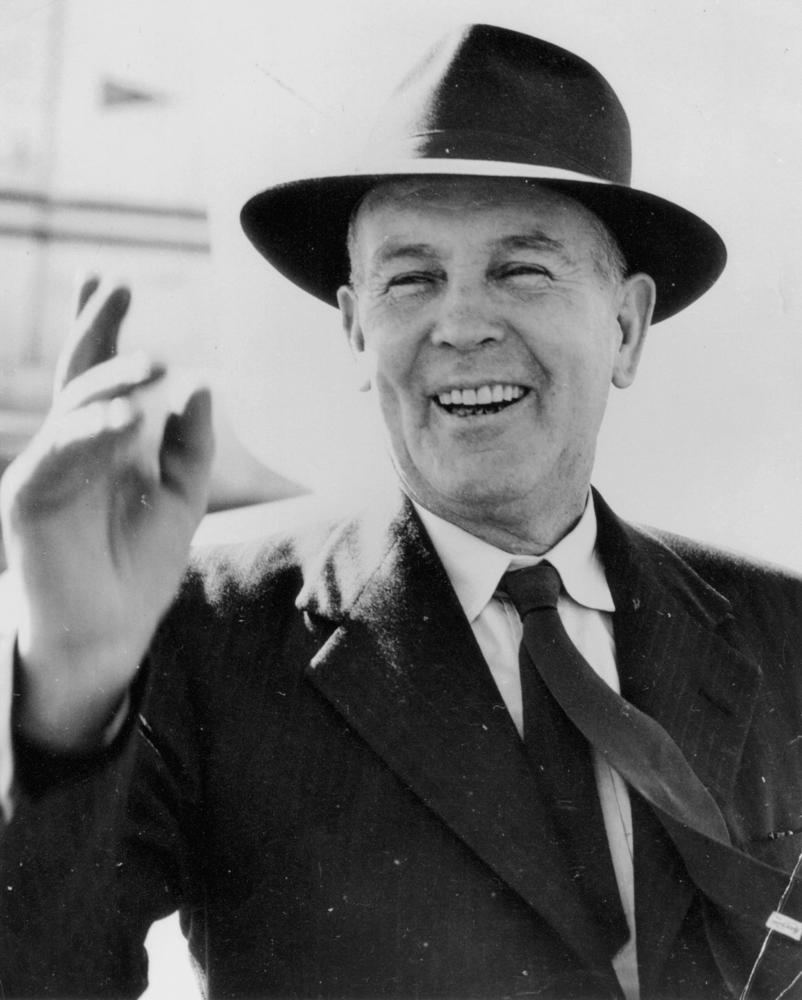
StateLibQld_1_80007_Ben_Chifley

On Thursday August 15, it will be Victory in the Pacific Day, which commemorates the day that Japan surrendered in 1945, effectively ending World War II. In Australia, Labor leader and Prime Minister Ben Chifley announced the news in a radio broadcast at 9.30 am on Wednesday August 15 1945, with the words, Fellow citizens, the War is over. Australian cities and towns erupted into spontaneous celebration, and by evening, the jubilant crowds were the largest to have ever gathered in the nation’s history.

One of Australia’s iconic images from history is the “dancing man” who was filmed by MovieTone News dancing happily in Elizabeth Street in Sydney on August 15 1945. Several men have claimed to be the Dancing Man, and the image remains an enduring symbol of the nation’s joy that the war was over at last. A well-attended church service of thanksgiving was held in the Domain that afternoon, and with the next two days declared holidays, there were Victory parades all over the country.

When Ben Chifley announced the war was over, he had only been Prime Minister for a month. He led Australia into the post-war era, with the promise of “sane and progressive government” and was successful in moving us to a peace-time economy. Servicemen and women were eased back into civilian life, and public works such as the Snowy Mountains Hydro-electricity Scheme meant that unemployment was virtually nil. This demand for labour opened the door for assisted migration schemes, which were to change Australia forever.

Chifley brought in many welfare initiatives, including unemployment benefits, sickness benefits, fairer pensions and, against a legal challenge by doctors, what was to become the Pharmaceutical Benefits Scheme, which subsidises the cost of essential medicines. His promises to improve equality in wealth, income and opportunities came to fruition during the prosperity of the 1950s and ’60s.

Ben’s full name was Joseph Benedict Chifley, and his second name was suggested by the Mother Superior of Saint Benedict’s Convent in Queanbeyan, where his mother Mary had worked as a servant. He grew up in a Catholic community, but defied the papal decree that Catholics could not marry outside their religion when he wed Elizabeth McKenzie, a Presbyterian. Although he continued attending mass, he considered himself to be outside the Catholic church, and labour politics became his true religion – one which he followed with an evangelical zeal.

He is most famous for his “Light on the Hill” speech, which he gave at a Labor conference in 1949, towards the end of his term as Prime Minister (and not long before his life ended). He spoke of the many people in the labour movement, including himself, who worked not for personal gain, but in order to bring better conditions for others.

He said: I try to think of the Labor movement … as a movement bringing something better to the people, better standards of living, greater happiness to the mass of people. We have a great objective – the light on the hill – which we aim to reach by working for the betterment of mankind.

For his idealism, his humanity, and his vision, Ben Chifley is counted amongst the nation’s greatest Prime Ministers. So much of the Australia we know today began with Chifley’s aspirations for a future he would never live to see.

Benedict is derived from the Latin name Benedictus, meaning “blessed”. It was a name commonly chosen by Christians for its meaning, and there are several saints named Benedictus or Benedict.

The most famous of these is Benedict of Nursia, a 6th century saint, who, according to tradition, was the son of a Roman noble. While still a very young man, he turned away from the pleasures of the world and became a hermit in a cave in the Subiaco region. He attracted many disciples, and eventually founded the famous monastery of Monte Cassino, which is in the mountains halfway between Rome and Naples.

Near the end of his life, he wrote his Rule of Benedict, which lays down the precepts for the organisation of communities of monks under an abbot. Compared to other works of this nature, Benedict’s is notable for its moderation and practicality, which made it very popular. He wrote a Monasteries for Beginners, and (unlike more zealous Rules which barely allow food or sleep), his Rule is possible for anyone to follow.

Benedict’s Rule has been used for 1500 years; the foundational document for thousands of religious communities in the Middle Ages, it is still in use today, and is the most common Rule used by monastries and monks. As the father of Western monasticism, Benedict’s importance to history can hardly be overstated. During the early medieval period, monasteries became respositories for learning, and centres of education. Because of Benedict’s influence, when the Middle Ages ended, there was enough knowledge retained to build on for the future.

Due to Saint Benedict of Nursia’s importance, many others entering the religious life (especially Benedictines) chose Benedict as their name, and it has been a favourite choice for popes. There have been sixteen Pope Benedicts, the most recent being the current Roman Pontiff Emeritus, Benedict XVI, who chose his papal name in honour of Benedict of Nursia, and of Pope Benedict XV, who had worked for peace during the First World War.

Pope Benedict said in one of his early sermons that with his life and work, Saint Benedict exercised a fundamental influence on the development of European civilisation and culture, and helped Europe emerge from “the dark night of history” that followed the fall of the Roman empire. For his role of preserving European culture, Saint Benedict was named patron protector of Europe by Pope Paul VI in 1964.

Benedict has never charted in Australia, so if you would like a rare name with a positive meaning that can mingle with the crowds as simple Ben, then Benedict seems like a good choice. It’s weighty and dignified, and honours one of the great Prime Ministers, who changed Australia, as well as a saint who changed western civilisation. It’s a name heavy with significance and history, yet actor Benedict Samuel reminds us how well this name can suit a young person.

Name Combinations for Benedict

Benedict Alexander, Benedict Jude, Benedict Leonard, Benedict Nathaniel, Benedict Sebastian, Benedict Vincent

Brothers for Benedict

Constantine, Dominic, Felix, Gabriel, Ignatius, Xavier

Sisters for Benedict

Agnes, Caroline, Eloise, Genevieve, Lucia, Margaret

POLL RESULT: Benedict received an approval rating of 80%. 33% of people liked it, and 27% of people loved it.

Is August a Boy’s Name, or the Name of a Month?

Tags

, , , , , , , , , , , ,

august2013

Olivia and Dale are from New Zealand, and they are expecting their third child towards the end of the year. Their son is named Innes, and their daughter is Abigail, and they have a fairly common surname beginning with C and ending with N eg Charlton.

Olivia likes male names which are generally softer in sound, such as Henry, Abel, Arlo, Eli, Miller and Soren, but Dale has vetoed all these ideas.

Dale, who is of Swedish heritage, would prefer a Scandinavian-style name, and only likes three names for a boy: Lachlan, Stellan, and August. Although Olivia likes Lachlan, she feels that it is too popular for their common surname, and Stellan is the cat’s name.

By elimination, that leaves August as their front-runner, but they have had mixed reactions when they have asked for people’s opinions. Some love it, while to others, August is a month, not a boy’s name. The Charltons live in an area where boys tend to have unspectacular names, and Olivia wonders whether August is too far out.

The middle names they are thinking of using are Leander and James. Leander has special significance for them, because Olivia and Dale were both in the navy, and met on a Leander class frigate. Olivia suggested Leander as the first name, but Dale vetoed it. James is a family name, but it was mostly chosen because it flows well with Leander.

Olivia wants to know whether August Leander James C_____n works as a name, and if there are any other soft-sounding Scandinavian-style boy’s names they might like.

~ ~ ~ ~ ~ ~ ~ ~ ~ ~

You’ve already discovered that some people love the name August, and I guess you can add one more, because I adore August. I think it’s handsome and stylish, and it seems perfect for you. It honours Dale’s Swedish heritage, it’s a softer boy’s name, and you get fashionable nicknames from it like Gus and Augie. It sounds fantastic with the middle names you’ve chosen, and I would count August Leander James as one of the nicest boy’s names I’ve heard recently.

It may not sound like the boy’s names in your area, but our childrens’ names don’t have to fit in with the neighbours. It would be foolish to make them so when you could relocate later, new people could move to your area, and your son is unlikely to live in the same place for his entire life – and even if he did, the demographics of the area would change over time.

I suspect this isn’t really a huge concern for you, since Innes isn’t exactly a run of the mill name either, and I’m sure everyone around you has coped with it. I think Innes and August are really well-suited as brothers, by the way.

You’ve had some mixed reactions to the name August, but it doesn’t sound as if the mixture is people who love it and people who hate it – it seems more as if people either love it, or it confuses them. They hear August, and think, But August is a month … I know you can call girls April or May, but can you call boys after a month? And why is his name going to be August when he’s due late in the year?

If people seem a bit taken aback or confused when you tell them your son is named August, I would just briefly explain that it is the Scandinavian form of Augustus, and that Dale has Swedish heritage. And if they still seem a bit hesitant, maybe you could mention a famous August, so they have something concrete to attach to the name.

I would pick whatever August you think people you know would most readily connect to. So – August, like the Swedish playwright August Strindberg, or August, like Nicolas Cage’s dad, or August, like in that film “August Rush”, or August, like August Booth from “Once Upon a Time”. Or you could mention some celebrities who have sons named August, like Mariska Hargitay and Jeanne Tripplehorn.

I think that explanation would satisfy 95% of people, and the other 5% either need more time to get used to it, or they are just stuck on August being a month, and can’t, or won’t, get past it.

Other Softish-Sounding Boys Names

  • Ari
  • Bo
  • Elias
  • Hugo
  • Lars
  • Magnus
  • Matthias
  • Oscar
  • Theo
  • Tobias

These names either have a Scandinavian origin, or are currently popular in Sweden (like August), or have a history of use there. However, I honestly prefer August to any of these names.

Olivia and Dale, you’ve plenty of time to change your minds if you come up with a name you like better, but I’m kind of hoping you don’t, because I think August is a brilliant choice. Please let us know what you decided on once your little boy arrives!

NAME UPDATE: The baby’s name is August Leander James!

POLL RESULTS: Most people (69%) said they wouldn’t assume the name August was after the month, with 22% assuming August was derived from the name Augustus, and 47% refusing to make any assumptions at all. 16% of people said they would assume August was after the month, but nearly all of them thought that would be cool. Only one person (less than 1%) thought August was an odd name because of the month.

The name August Leander James received an overwhelmingly positive response, with 81% of people giving it a thumbs up. 55% thought it was a fantastic choice, while 26% said it was nicely put together. Not one person thought there was something seriously wrong with it.

Barney Joe and Billy Soul

Tags

, ,

kohlman_650

Twins

Abel Henry and Winslow Jack (Jimmy)

Tiffany and Rubi


Girls

Ada Lucy (Meelan)

Agnieszka Joanna

Anastasia Katerina Manira

Allira Storm

Athena Dawn

Betsy Emilie (Phoebe, Felix, Gertie, Fergus, Freddie)

Brielle Scarlett (Nathaniel, Tarquin)

Daisy Susanna (Angus)

Imogen Jean Agnes (Angus)

Ireland Wendy (Bailey)

Katherine Evelyn Olive (Isobella)

May Judith Linda (Noah, Archie)

Mila Carmela

Nevaya Lily (Tobi, Tyler)

Tamika Pauline Gladys


Boys

Archer James Greville (Coco)

Barney Joe

Billy Soul (Zoe, Caleb)

Emmett David

Hugo Max (Hamish, Lenny)

Jenson James (Emilia)

Jim Samuel (Esther, Billie)

Koby Zave Bolt (Jed)

Layken Leslie (Braxton)

Luca Lorenzo

Madin Djuke (Milla)

Percy George (Minnie, Max)

Robert Lauchlan (Samantha, Michelle)

Santiago Thomas Lindsay

Tadhg Sean (Frankie)


Most popular names this week

Girls: Mia

Boys: Patrick and Riley

(Picture shows motorcyclist practicing at Campbell Park Motocross Track in Palmerston, near Darwin in the Northern Territory; photo from NT News)

Celebrity Baby News: Liam Picken and Annie Nolan

Tags

, , , , , , ,

art_picken2-420x0

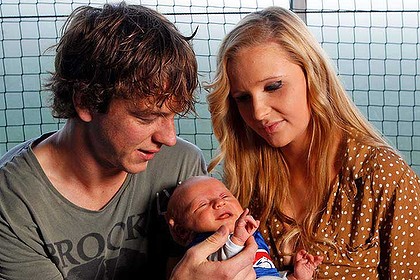
AFL footballer Liam Picken, and his partner Annie Nolan, welcomed twin girls in the autumn and have named their daughters Delphi and Cheska. The twins have only recently left hospital, as they were born premature. Delphi and Cheska are baby sisters to Malachy, aged 2 – Malachy’s birth was announced on the blog.

Liam has been playing Australian rules football professionally since 2009, and has always been with the Western Bulldogs. He is the son of Billy Picken, who played for Sydney and Collingwood in the 1970s and ’80s, and the cousin of Jonathan Brown, who is captain of the Brisbane Lions. Liam recently played his 100th game for the Western Bulldogs, and walked out through the banner with Malachy.

Delphi is a Greek place name, the ancient site of the Delphic Oracle to Apollo; its name means “womb”, and it may have begun as a worship site to the Earth Goddess. Later it was connected to “dolphin”.

Cheska is short for Francesca. It is perhaps best known from blogger and PR rep Cheska Hull, who starred on reality TV series, Made in Chelsea.

(Photo shows Liam and Annie with Malachy)

Boys Names of Australian Aboriginal Origin – Part 2

Tags

, , , , , , , , , , , , , , , , , , , , , , , , ,

mh1

Bambam

Bambam as a person’s name might seem like an oddball suggestion, but although it would definitely be an unusual choice, I don’t think it’s an unfamiliar one either. For a start, there is Bamm Bamm Rubble from The Flintstones, first introduced as a cute blonde baby with superhuman strength. His name came from the fact that he would say Bamm bamm, and swing his club, to the general destruction of everything around him. Bam Bam is used as a man’s nickname, from American wrestler Bam Bam Bigelow to British DJ Bam Bam. There’s also skater Bam Margera, who gained his nickname from constantly running into walls as a toddler. I have seen a baby boy called Bambam – although that may have been a nickname. In English, bam bam is an onomatopoeic interjection, suggesting one thing repeatedly hitting or banging into another. In much the same way, in Nyungar (from south-west Western Australia), bam means “to hit”, and in Bundjalung (from northern New South Wales), bambam means “bruise, swelling”. However, in the Meriam language from the eastern Torres Strait Islands, bambam means “yellow”; in Indigenous art, yellow ochre is often used to represent the earth. It’s quirky, but Bambam is a rather lovable name.

Daku

Daku means “sand hill” in the extinct Diyari language; the Diyari people are from the South Australian desert, and thus very familiar with sand. Despite being generally used as a boys name in Australia, Daku is also a unisex name in India, and in Hindi it means “bandit”. Someone wrote in to the blog considering the name Daku for their son, but they never got back to me, so I don’t know whether they overcame family opposition to the name or not. This name reminds me a bit of Dakota, and it has the fashionable OO sound, such as Reuben and Jude; the name is pronounced (I think) DAK-oo. It would be a bold choice though, and I haven’t seen many boys with this name, although it can be found a few times in historical records.

Jardi

Jardi means “front” in the Ngadjumaja language; the Ngadjumaja people are from the Nullarbor Coast area of south-east Western Australia. I remember reading in the papers last year about a baby boy from Mudgee who has named Jardii, and his mother explained that his name was from the Wiradjuri language and means “first born son”. I wasn’t able to find that information for myself, but it occurred to me that “front” and “first” are similar in meaning, so Jardi also seemed like a good name for an eldest son. In the Jaminjung language from the Victoria River region of the Northern Territory, jardi means “to keep”, which also seems very positive. I found quite a few Indigenous boys and young men named either Jardi or Jardii, and I think it’s really attractive, with a similar sound to Jordie, the short form of Jordan.

Jiemba

Jiemba means “laughing star” in the language of the Wiradjuri people of central New South Wales. It refers to the morning star, or the planet Venus. (In some other Aboriginal languages, djimba simply means “star”). Astronomy was very important to the Wiradjuri, as with other Aboriginal societies, because stars and planets were used to tell the times and seasons, and this information was first given in early childhood. It is recorded that in the Wiradjuri in the 19th century, the elders would teach the children the stories behind the stars (the constellations), while the old women would teach children to count stars, which they could do into the thousands using a particular system. This information comes from radical poet and journalist Mary Gilmore, who grew up in Wagga Wagga, and was given the name Jiemba by the Wiradjuri people. Despite it being given to a little girl, I have only seen Jiemba given to boys – most likely because it is said JIM-ba, and thus shortens to Jim or Jimmy. One of the Aboriginal men from the Sydney area first encountered by Europeans was named Jimbah, so it sounds quite masculine (this Jimbah may also have been Colebee).

Lue

Lue is a small village in the Central Tablelands region of New South Wales. Its name means “chain of waterholes” in the local Dabee language – the Dabee are part of the Wiradjuri group. The village’s name is pronounced LOO-wee, which makes me think that this could be an Australian alternative to Louis or Louie. There are quite a number of people named Lue in Australian historical records – many of them are of Chinese ancestry, but there are some from the Lue area, suggesting that at least a few of them were named after the village.

Nullah

A nulla nulla, also known as a nullah or waddy, is an Aboriginal war club or hunting stick; the word comes from the extinct Darug language from the Port Jackson area of Sydney. A nullah is a heavy club which could be used in hand to hand combat, or used to stun prey; sometimes they were used to punish lawbreakers. In addition, these useful tools could be used to make fires, and grind ochre. This name is frequently Googled, because Nullah is the name of the young Aboriginal boy in Baz Luhrman’s 2008 epic, Australia, played by Brandon Walters. The film is set in the Northern territory, so the choice of Nullah for the character’s name is not meant to be authentic; I wonder if they chose it partly because it suggests the name of the Nullarbor Plain (Latin for “no trees”). Nullah is also a Hindi word for a narrow, steep-sided valley; in dry countries like Australia, these nullahs are commonly filled with brushwood, and when it rains heavily, they temporarily become streams. This could be another inspiration for the character’s name.

Omeo

Omeo is a town in Victoria which is in the East Gippsland, set high in the Great Dividing Range. Its name means “mountains, hills” in the local Gunaikurnai language, or one of its dialects, because it is set on a treeless plain on the fringes of the Snowy Mountains. There is evidence of human occupation of this region dating back around 20 000 years, and the first reported sighting by a European of Omeo was in 1832, by a naturalist on the slopes of the southern alps. It was his reports of fine grazing land which soon attracted pastoralists and squatters to the region. Gold was discovered in the 1850s, but Omeo’s isolation meant that it did not experience the massive boom of many goldfields towns – it did however, have the dubious distinction of being the roughest and most unruly place on the goldfields. Its first magistrate was Judge Browne, better known as author Rolf Boldrewood, who wrote of the area’s lawlessness in his novel, Robbery Under Arms. This name looks and sounds like Romeo without the R, which gives it recognisability as a name, although it also reminds me of Omo washing powder. Its goldfields history gives it a bit of a “wild west” feel; it seems a bit more bad boy than romantic Romeo. Omeo has had some use as a boy’s name in Australia, especially amongst people from Omeo itself, and was more often found in the middle.

Tanami

The Tanami Desert is in the Northern Territory, and is Australia’s most northerly desert. In the wet season, it rains heavily and even floods, but the high temperatures mean that most of it evaporates. Some parts of the Tanami do have wetlands though, and there is even a lake which has permanent water in it, so as deserts go, it’s on the slightly moist side. It is a refuge for several rare and endangered species of flora and fauna, making it a biologically important area. You can cross the desert on the Tanami Track, which is more than 1000 km long, and goes from Alice Springs to Halls Creek, in the Kimberly region of Western Australia. Tanami is a corruption of the local Walpiri name for the area, Chanamee, meaning “never die”, because the rock holes in a particular gully were said to never run dry of water, even in drought. When white people came here in the early twentieth century, they found to their dismay that this was not the case, so either the name was optimistic in nature, or the Indigenous people had a superior knowledge of obtaining water from the rock holes. I have seen Tanami occasionally on girls, but after seeing it given to a boy, I really like it as a male name. The pronunciation is TAN-uh-my, but the Aboriginal pronunciation would be more like TAN-uh-mee, so you could take your pick on how to say it.

Woden

Woden Valley is a district of the capital city of Canberra. The area is named after a homestead owned by Dr James Murray, which was built in 1837. In Aboriginal Place Names, Harold Koch suggests that the name of Dr Murray’s homestead may have been influenced by the word wadyan or wadhan, which means “possum” in several Indigenous languages, in an area stretching from the Monaro region right down to Omeo in Victoria. If so, then the spelling was altered to make it look like the name of the Anglo-Saxon and Germanic god Woden, whose name means “inspiration”; Dr Murray saw him as a god of wisdom. Woden was the chief god of the Germanic peoples, and is their equivalent of Odin. Anglo-Saxon royalty claimed that Woden was their ancestor, and he survives in English folklore as leader of the Wild Hunt, and perhaps even as Father Christmas. Of course, we unconsciously celebrate his special day once a week, on Wednesday (Woden’s day). With Odin being a rather hip name at present, Woden really doesn’t seem too strange, and this could be a way of celebrating Australian and English heritage together. There are a couple of men named Woden in Australian historical records, although it is more common as a middle name.

Yarramundi

Yarramundi is an outer suburb of Sydney which is a semi-rural area in the City of Hawkesbury. It is named after a famous Indigenous leader who was a member of the Boorooberongal clan of the Darug people, and a garadyi, or shaman – a healer, a man of great spiritual knowledge and power, and an enforcer of tribal law. Yarramundi’s son Colebee was the first Aboriginal person to receive a land grant, and his daughter Maria was the first Aboriginal child to be enrolled in a school for the education of Indigenous children; her marriage in 1824 was the first legally recognised union between an Aboriginal woman and a convict. Maria ended up being a successful land owner in Liverpool and Blacktown, and dozens of families in the area trace their ancestry back to Yarramundi. Yarramundi means “deep water”, and I saw a newspaper story about a baby boy named Yarramundi after this inspiring namesake.

POLL RESULT: People’s favourite names were Jardi, Lue, and Nullah, and their least favourite were Yarramundi, Omeo, and Bambam.

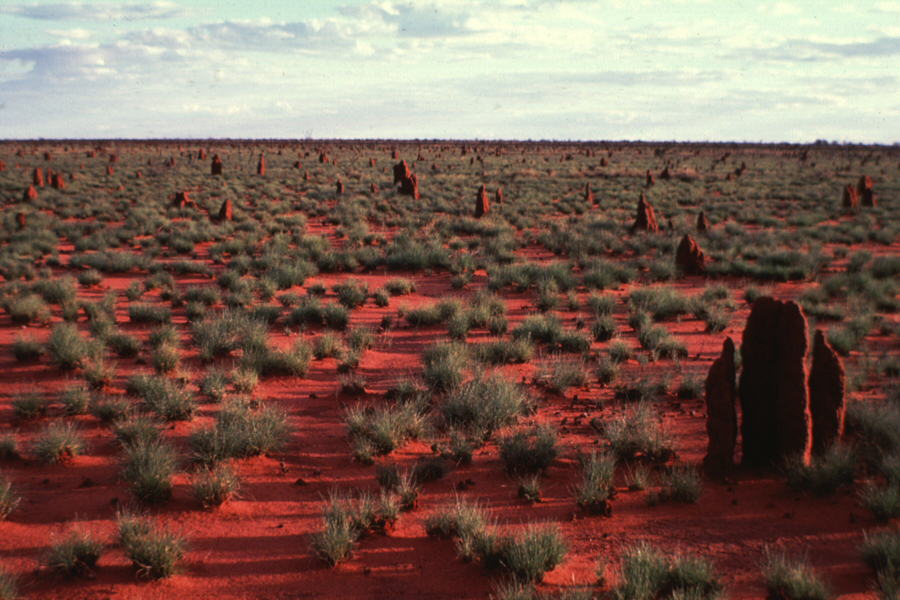
(Picture shows the Tanami Desert in northern Australia)

A Sibling Name for Harper

Tags

, , , , , , , , , , , , , , , ,

tumblr_mndd1obcEF1rrnekqo1_1280

Carissa and Nick Taylor are expecting their second child towards the end of the year, and they have a daughter named Harper Joy – Harper’s middle name is a family name.

If Harper had been a boy, the name they had picked out was Jensen, so that seemed an obvious choice for a boy’s name. However, they seem to be gradually losing interest in Jensen, and are now thinking of Carson instead. The only thing that bothers Carissa is that she wonders if Carson is too close in sound to her own name. The middle name for a boy will be Carissa’s maiden name, Fero.

They are having real problems deciding on a girl name that will match Harper. They love Avery, but dislike the idea of Ava as the nickname, and Carissa is concerned that the name will always remind her of Avery the stationery company.

They also love Quinn, but when they try to match it with a feminine middle name, it sounds too much like Queen ____. For example, Quinn Mary = Queen Mary. If they go with a more unisex middle name, it sounds “too American” to them. The middle names they are likely to use for a girl are Grace, May or Poppy (family names).

The Taylors don’t have any problems with popular names, but nothing in the Top 100 happens to appeal to them – except Willow, which isn’t possible for them to use for personal reasons.

~ ~ ~ ~ ~ ~ ~ ~ ~ ~

Name for a Boy

I get the feeling that Jensen is slipping away from you – part of the reason is probably that you think of it as Harper’s-name-if-she-had-been-a-boy, so it’s now hard for you to get enthusiastic about it on a new baby.

To me, Carson and Carissa sound similar, but not too similar, but I think this is something you have to decide for yourself. It might be a good idea to have Nick call out “Carson!” and then call out “Carissa!” and see if you can easily tell which one is your name from a distance (say, out in the back yard).

There’s nothing like road-testing a name for a week, so start using the name Carson in sentences all the time and see if it feels right to you. Talk to each other about Carson – “Carson came top of his class in maths this term; I think that extra tutoring is really helping” or “Carson has this weird rash on his left ankle. If I take him to the doctor, will they think I’m over-reacting?”.

Talk to Carson as if he’s there and already been part of your family for years. Call him to dinner, tell him to take those muddy football boots outside, talk to him about the family holiday you’re planning, ask him what colour he’d like his room to be painted. Does Carson sound like a name you can imagine saying for a lifetime? Is it a name that feels like it fits into your family? Can you imagine saying, “These are my children, Harper and Carson”?

You asked whether Jensen or Carson was more popular: Jensen is #149 in Victoria, and Carson doesn’t chart at all in Australia, although it is a Top 100 name in the US. I see Jensen fairly often in birth notices, but I can only remember seeing Carson a couple of times – once as a girl’s middle name. If popularity is a factor for you, then Carson is definitely the less common name.

Name for a Girl

If you had asked me to pick a sister for Harper, with no other information given, my top two suggestions would have been Avery and Quinn, so I think you have two excellent choices there.

Avery

It never occurred to me until you wrote it that Ava could be a nickname for Avery. While it’s hard to control what nicknames people will bestow on your child, I do feel as if Ava is the type of nickname which is not likely to take off if the parents don’t approve of it and give it their blessing. If I knew a little girl called Avery, and her mum and dad always referred to her as Ava, then I might call her that too, but I’d never think of just deciding to call her Ava on my own – maybe because I’d figure that if they’d wanted the name Ava, they would have chosen it in the first place.

As far as the stationery company goes, how often do you come across Avery? Do you have to use their products every day at work, or is it more that you’ll sometimes buy a box of labels for your Christmas cards? If you love the name Avery, I really don’t think you’ll be reminded of the stationery company once your baby girl arrives – Avery will be your daughter, and that will be it. Stationery isn’t a horrible association, and buying from Avery might even give you a bit of a buzz – seeing her name on a box of labels will probably be a thrill for a little girl named Avery anyway.

While Avery Grace or Avery May sounds nice, I think your own middle name would be lovely with Avery – Avery Elizabeth. If you were willing to share it, I think that one’s a winner.

Quinn

I see what you mean about the middle name issue with Quinn, which does make it slightly trickier for a girl’s name. I see girls named Quinn quite often in birth announcements, and what I’ve noticed is that they tend to be paired with a fairly modern or slightly gender-ambiguous middle name. Some from the blog are Quinn Eden, Quinn Gracyn, Quinn Cedar, and Quinn Brielle. I don’t think these sound “too American” – they just sound modern.

I don’t think Quinn sounds awful with any of the middle names on your list, but I wonder whether you might prefer it with a nature name eg Quinn Aspen, Quinn Autumn, Quinn Maple, Quinn Meadow, Quinn Saffron, Quinn Winter? To me, that solves the problem of Quinn + Girl Name, but at the same time, nearly everyone would recognise Quinn Meadow as a female name. It also fits in with Harper, who has a vocabulary word as her middle name.

If your heart is set on a family name, I like Quinn Poppy best, as it’s a nature name. You might also want to separate the names with another middle name, such as Quinn Winter Poppy.

Other Unisex Names for Girls

  • Arden
  • Ariel
  • Aubrey
  • Emerson
  • Fallon
  • Frankie
  • Marley
  • Morgan
  • Peyton
  • Remy

These names are all unisex, but more common on girls (like Avery), or fairly equally given to boys and girls (like Quinn). The one which appeals to me most is Arden, but I admit that might make a boy named Carson seem less usable down the track.

Well I hope that’s given you some food for thought. You’re still quite a way from your due date, so feel free to write in again as more ideas come to you!

NAME UPDATE: The baby was a boy, and his name is Jensen!

(Picture shows a vintage card with a female harpist)

Acacia Skye and Ruby Dawn

Tags

,

4743536-3x2-940x627

Girls

Acacia Skye (Tuscan)

Aoibheann Carmel (Oisin)

Charlotte Pearl (Flynn, Carter)

Elora Rivkah

Evangeline Lucy

Iris Carole (Kyan, Reigan)

Juliet Isolina (Marcus, Anneka)

Matayah Elvira Nellie (Jahzara, Zaharli)

Meredith Claire (Libby, Justin)

Mia-Myra Margaret

Michaela Este

Peggy Jean (Dougal)

Ruby Dawn (Mitchell, Callum, Toby)

Sunday Chilli

Vera Jade (Henry, Rachel)


Boys

Angus James Innes

Anthony Angelo

Caspian Marc

Floyd Francis

Harlow Michael (Kiah)

Jeddy Stewart Theodore

Jethro Jack

Jonah James (Taj)

Leo Heathcliff

Magnus Felix (Ajax)

Nathaniel Arthur

Rafi Peter (Mia)

Solomon David (Louis)

Theodore Sebastian

William Tennyson


Most popular names this week

Girls: Charlotte

Boys: James and William

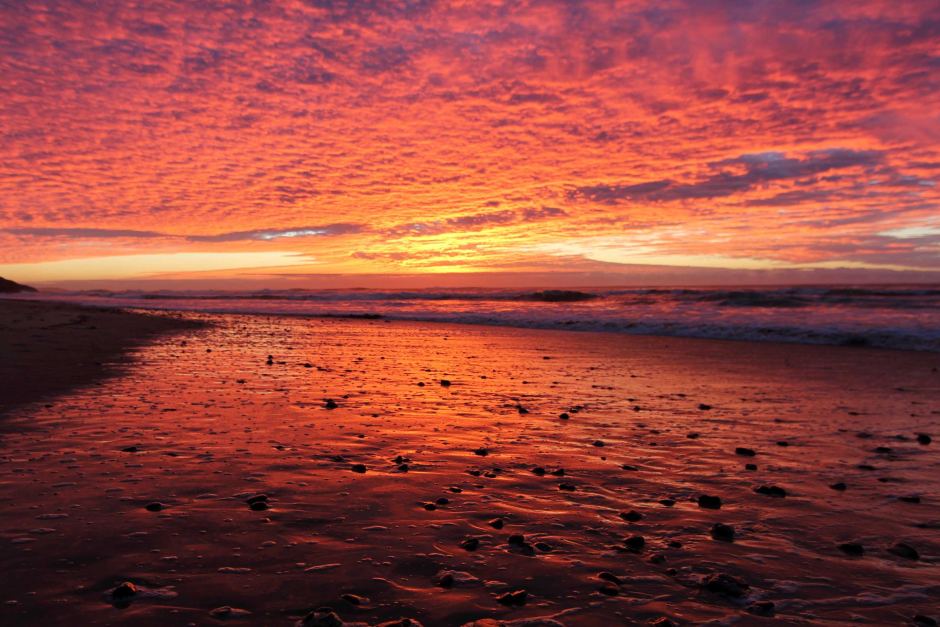
(Picture shows a winter sunrise this year over a beach at Sawtell, in the north of New South Wales; photo from ABC News)

Name Update: His Name is Henry

Tags

, , ,

henrytop

Hannah and James contacted the blog a couple of months ago; although they are from the United States, they were willing to let me have a look at their name list for their third son. Hannah and James liked both classic names, and newer names as well, and in the end they decided upon

HENRY MICHAEL

brother to William and Griffin.

Henry is such a handsome name, and a classic like William, while the sibset of William, Griffin and Henry sounds very masculine and even noble.

They are completely happy with the choice they have made, and the name fits their son perfectly. Hannah has written to say that she does feel that writing in to the blog was helpful in their search for the right name, and wishes to thank both me and the blog readers for assistance. I seem to recall that Henry was rather a favourite in the polls.

Congratulations Hannah and James, and welcome Henry!

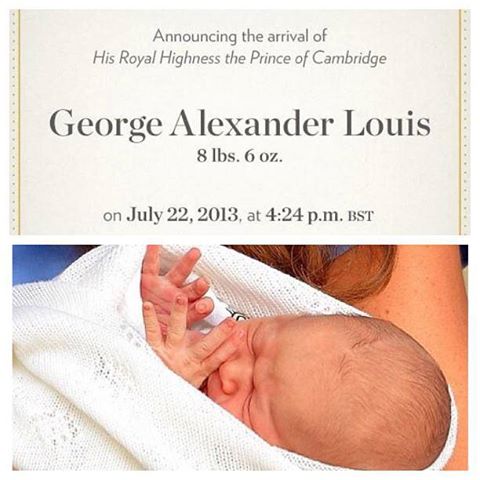
Famous Name: George Alexander Louis

Tags

, , , , , , , , , , , , , , , , ,

18388_662259277118346_1655646202_n

The Prince of Cambridge was born more than a week ago, and he is still big news around the globe. As future kings are born only once in a generation or so, this makes Prince George the most famous baby in the world, and it seems like an opportune time to take a look at his names.

George is derived from the Greek name Georgios, translated as “farmer”. Because it literally means “worker of the earth”, it specifically refers to the cultivation of crops.

The name George became known throughout Europe because of Saint George. According to tradition, he was a 3rd century Roman soldier from a noble Christian Greek family in Palestine. His military career went swimmingly until he was asked to sacrifice to the Roman gods, and when he refused, he was tortured and beheaded. He is venerated by Christians as a martyr.

Much later, the legend of Saint George saving a princess from a dragon was tacked on to the story. This medieval legend came from the Eastern church, and seems to be an attempt to Christianise pagan myths such as Perseus. It was brought to Europe by the Crusaders, and became a medieval romance. Saint George is the patron saint of England, and his flag, a red cross on a white background, forms part of the Union Jack.

Despite Saint George being the patron of England, his name did not become particularly common there until George I, who was German-born, took the throne of Great Britain in 1714. The name became a traditional one in the royal family, and there have been six British kings named George; the most recent the father of the present queen; he was born Albert Frederick Arthur George, and reigned under his last middle name.

George is a common name amongst many of the royal houses of Europe, and Prince Philip’s grandfather was George I of Greece, with Prince Charles having George as his last middle name. There has only been one other Prince of Cambridge, and the first one was also named George.

The name George is a sturdy classic in Australia which has never left the Top 100. It was at its peak in the 1900s and 1910s at #4, and has never been lower than #72, which it reached in the early 2000s. Currently it is #71 nationally, #64 in New South Wales,#69 in Victoria, #79 in Queensland, #48 in Tasmania and #50 in the Australian Capital Territory.

Alexander is the Romanised form of the Greek name Alexandros, translated as “defender of men, protector of men”. It first turns up in Greek mythology as the epithet of Paris, prince of Troy, who gained it while only a child, rescuing cattle from thieves while working as a cow-herd. There was a slightly earlier real life ruler of Troy named Alexander, and it’s possible the fictional Paris ended up with his name.

Just as George is a traditional name in the British royal family, Alexander was traditional in the Macedonian royal family, and the man who made the name famous for all time was Alexander III of Macedon, otherwise known as Alexander the Great. A young man of boundless ambition, Alexander conquered much of the known world, including Persia and Egypt, and invaded India before being turned back by his own men, who were getting pretty sick of his let’s-conquer-the-whole-world attitude.

Alexander was a history-maker, a great commander who never lost a battle, a role model for the empire-building Romans, and whose military strategy is still used today. He was a figure of romance, with legends being written about him even in his own lifetime. And he took power while still a teenager, dying in his early thirties, so he is always remembered as youthful, vaunting and energetic.

The name Alexander, and its many variants, spread throughout the world. There are early Christians named Alexander mentioned in the New Testament, several saints named Alexander, and many popes.

Alexander I of Scotland was named after Pope Alexander II, who gave his blessing for the Norman Conquest, and there were two more Alexanders after him in the Scottish royal family. There has never been an English king named Alexander, but the name isn’t uncommon in the royal family, and it’s especially seen use as a middle name.

In Australia, Alexander is another sturdy classic which has never left the Top 100. It was #29 in the 1900s, and sunk to its lowest level in the 1950s and ’60s at #89. It is currently enjoying some of its highest levels of popularity, being #16 nationally, #14 in New South Wales, #9 in Victoria, #20 in Queensland, #21 in South Australia, #21 in Western Australia, #26 in Tasmania and #17 in the Australian Capital Territory.

Louis is the French form of the old Germanic name Chlodowech, Latinised as Clovis, and whose modern German form is Ludwig. It means “famous warrior”. The 5th century Clovis I was the first king of the Franks to unite all the Frankish tribes under one ruler, so that they were now ruled by a single king, with kingship descending onto his heirs. He was also the first Christian ruler of Gaul.

Having created the Frankish monarchy, it’s little wonder that his name was such a big hit with French rulers, with 19 kings of France bearing the name Louis (the last one only managed a few minutes before he abdicated). The first one was Louis the Pious, son of Charlemagne, who was not only king of France but also co-ruler of the Holy Roman Empire – Louis was a traditional name amongst the Emperors as well.

Louis IX, or Saint Louis, is the only French monarch to be canonised, and Louis XIV was known as Louis the Great, or the Sun King, one of the most powerful monarchs to ever rule France. It all went wrong for Louis XVI, who was executed during the French Revolution. The other Louis the Somethings were kings in name only, as the throne had been abolished and France was no longer a monarchy.

Although so strongly associated with the French crown, Louis has been well-used as a middle name in the British royal family – in fact George I’s full name was Georg Ludwig, or George Louis. Louis is the final middle name of Prince Edward, who may have gained it from one of his godfathers, Louis, Prince of Hesse and Rhine, and Prince William, who is said to bear it in honour of Louis, Lord Mountbatten, a mentor to Prince Charles.

Louis has several pronunciations, for in French it is said loo-EE, and in English it can either be pronounced LOO-ee or LOO-is. The royal family use the LOO-ee pronunciation. Somebody recently wrote into the blog, worrying that if she called her son Louis, people might say it LOO-is by mistake, which doesn’t seem unlikely.

The name Louis is an underused classic in Australia which has never left the charts, yet never become popular. It was #101 for the 1900s, and reached its lowest point in the 1970s at #290. Since then it has continued climbing, and is currently #113 and still going strong.

George, Alexander and Louis are excellent names for a king-to-be, and great names for any boy. All classics, these are names which have stood the test of time, and been borne by men who were not just part of history, but changed history. They are names of kings and warriors and saints, defenders of the realm, and those who sought new worlds to conquer. Yet they have been borne by so many ordinary people as well that no particular expectations come with them.

These are names perfect for a prince – are any of them perfect for your little prince?

POLL RESULTS: George received an approval rating of 66% , Alexander of 88%, and Louis of 69%.

(Photo of Prince George from Facebook)

Names in the News

Tags

, , , , , , , , , , , , , ,

News

Dr Benjamin Pitcher, from the University of London, analysed the most popular names in the UK, Australia, and the US, and found that boys names are more likely to have “large” vowel sounds, while girls are more likely to have “small” vowel sounds in their names. Larger sounding vowels pull the tongue to the back of the mouth, creating more airspace and releasing lower frequency sounds, while smaller vowels force the tongue forwards and upwards, giving high pitched sounds. Examples of “large” vowels in names include Jack, Lachlan, Cooper, Noah and Tom, while “small” vowels can be found in Isabella, Olivia, Mia, Lily and Ella. Dr Pitcher says this is an example of biological evolution, but only looked at names between 2001 and 2010, which doesn’t seem like enough of a time period to evolve in. I was interested to see that a Dr Pitcher would end up studying pitch, and that his first name, Benjamin, tends towards the more feminine vowels.

More studies into gender differences in names show that in English-speaking countries, girls names tend to be longer, to have unstressed “weak” initial syllables, end on a vowel sound, and to have more vowel sounds generally. It is thus supposed that girls names are more “decorative”, and boys names more “functional”. I wonder what they think in non-English countries, because in India, Arabic countries, and Polynesian islands, male names are often just as long and vowel-heavy as female ones, and I’m sure they don’t think of their boys names as “weak” or “girly”. Perhaps we should we be asking ourselves why we see our girls names as “weak and decorative” – it probably says a lot more about our own attitudes than it does about their vowels. Because take away all our value judgements, and there is no real reason while a girls name like Jane is “stronger” and more “functional” than one such as Olivia or Isabella.

The invented word Khaleesi, from Game of Thrones, has the meaning of “queen” in the fictional Dothraki language, although it is a title and not a personal name. Khaleesi has been used as a baby name since the TV show aired in Australia, and it turns out that it is more popular in Queensland – 15 babies named Khaleesi have been born in Queensland so far this year, compared to 4 each in Victoria and South Australia, and 6 in New South Wales. Could it be the meaning of “queen” which unconsciously makes it more appealing to Queenslanders? Two Queensland fans of the show who chose the name for their daughter say that they couldn’t agree on any name until the first season of Game of Thrones began airing. They thought Khaleesi was a really nice name which would be suitable for an adult too, and found out the spelling from the show’s website. Makes you wonder what all these Khaleesis would be called if the books hadn’t been turned into a TV series …

The town of Busselton on Western Australia’s south-west coast has a social group for women named June, and on June 1 each year, they celebrate Happy June Day. (Because if the first of May is May Day, then obviously the first of June is June Day … right?) In existence since 2010, this year eight women named June got together for a cuppa and to find out what else they have in common. Two of the Junes were born in June (well, actually, one of them was born on May 31, but so close to midnight it was practically June). One of the Junes has four children born during the month of June, half the Junes had a mother named Mary, and two Junes have a sister named Barbara. June peaked in the 1930s at #10, and this is something cool to look forward to if you have a popular name – starting your own name group.

This year’s mission for the Junes was to see more newborn babies named June – a wish which was granted instantly, because after a friend sent her the story about June Day in the Busselton paper, Eleisha Whiston contacted the June group to tell them she named her daughter June on May 25. Baby June is named after her 83-year-old great-grandmother, who was born in June. Her brother Hugo also has a June birthday. The Happy Junes were “overwhelmed” to hear of a new June so soon. You know what? June is a lovely name. Seriously consider having a little June – no matter what the moon, or whether born at morn or afternoon, that name would be a real boon, bringing great fortune. Then every day would mean a Happy June.

Meanwhile, Dave Noonan from Hobart’s Heart 107.3 radio station became alarmed at the thought that his own name might die out, and initiated a Save Dave campaign, to convince the women of Hobart to call their sons Dave. Eventually, Matt and Melissa Moore welcomed their son at 4.33 am on July 19, and named him David Xander, to be rewarded with a newly-renovated kitchen. Melissa plans to call her son Davey as his nickname, which she finds “cuter”, making the contest seem a bit pointless.