Celebrity Baby News: Celebrity Baby Round Up

Tags

, , ,

465981-basil-zempilas-baby

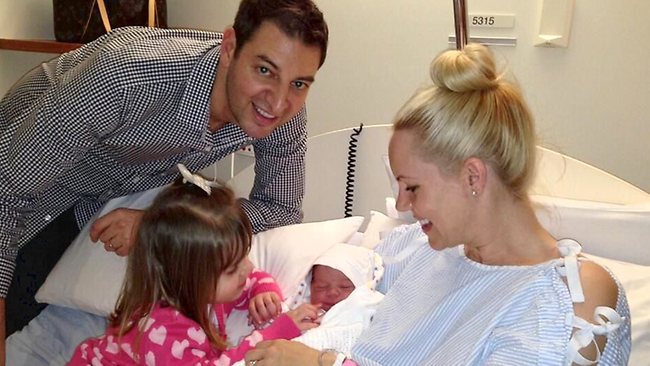
Media personality Basil Zempilas, and his wife Amy, welcomed their daughter Chloe Margaret on August 29. The middle name is in honour of Amy’s grandmother, Margaret. Chloe Zempilas weighed 3.17 kg (7 lb), and measured 50 cm long; she joins big sister Ava, aged 2. Ava’s birth was announced on the blog. ~ Thanks to Ebony for this celebrity baby tip!

Golfer Marc Leishman, and his wife Audrey, welcomed their son Oliver on August 18, a brother for Harvey. Marc currently plays on the PGA Tour, and in 2009 he became the first Australian to win the Rookie of the Year award. He won his first tournament last year at the Traveler’s Championship, becoming the second Australian to win after Greg Norman in 1995.

Tennis player Casey Dellacqua, and her partner Amanda, welcomed their son Blake Benjamin a few weeks ago. Blake’s birth was announced at the US Open, which was also the first public acknowledgement that Casey is gay and has a partner. Casey has ranked as high as 39 in the world, and won her first Grand Slam Title at the French Open in 2011, playing mixed doubles.

Soccer coach Michael Brown, and his wife Louise, welcomed their son Tyler not long ago. Michael is a coach at the Ipswich Knights.

Reality TV contestants Josh Maldenis and Andi Thomas welcomed their son Harry Joshua on August 6. Josh and Andi entered the last season of cooking show My Kitchen Rules, and withdrew from the competition when they discovered that Andi was pregnant. Tagged on the show as “dating hipsters”, Josh is a business development manager and Andi is a fashion buyer.

NRL player David Gower, and his wife Erika, recently welcomed their daughter Amelia. Amelia’s birth was announced on The Footy Show, when David and Erika took part in the “Perfect Partners” quiz segment. David has been playing rugby league professionally since 2006, and has been with the Manly Sea Eagles since this season. He has also played rugby league in England.

NRL player Craig Gower, and his wife Amanda Flynn, welcomed their daughter Freya Rose on July 23, a sister to Lola, aged 4. Freya was born just a few hours after Prince George, but because of the time zone difference, they don’t share a birthday. Craig has been playing professional rugby league since 1996, and is currently with the Newcastle Knights. He has been selected for the national squad, New South Wales, and City. Craig has also played rugby union in France and Italy. Amanda is a model, media personality, and former Penrith Panthers cheerleader. Craig and David Gower are not related, as far as I know.

NRL player Josh Hoffman, and his wife Emma, welcomed their daughter Leilani Grace in July. The middle name is in honour of Josh’s mother, Grace, who passed away unexpectedly in 2009. Josh has played for the Brisbane Broncos since 2008, and has also been selected for the New Zealand national team. He is related to retired rugby league star Wendell Sailor, and to Dane Gagai and Travis Waddell, who play for the Newcastle Knights. Emma is a registered nurse.

Cricketer Sarah Elliott, and her husband Rob, welcomed their son Samuel, known as “Sam“, about nine months ago. Sarah made her debut for Victoria Spirit during the 2000-01 season, and made her debut on the women’s national team in 2005, against England. During the Women’s Ashes series this month in England, Sarah became the first Australian mother to make a century. Rob is a cricket coach at the Northern Territory Institute of Sport, and accompanied Sarah and Sam on tour.


Famous Name: North West

Tags

, , , , , , , , , , , , , , , ,

1

The Hills Shire is in the north-west region of Sydney. Big news in The Hills at the moment is the North West Rail Link, which will connect Rouse Hill to Epping, and involve the construction of eight new railway stations. To assist with the necessary disruptions, The Hills Shire council has put out a pamphlet: Is your business north-west rail ready? The pamphlet suggests you may want to stagger your work times, or work from home until the North West Rail Link is complete.

The North West Rail Link is the “baby” of the Hills Shire council, and as often happens, their baby name was “stolen” when Kanye West and Kim Kardashian called their daughter North West. However, in this case New South Wales has precedence, because they came up with the name North West in 1998. Why it takes 15 years between the proposal and sending out pamphlets is a question only local government can explain. (If you’re really curious, Wiki it). There is no date set for ending the project, which may not occur until 2020. Hope you’re north-west rail ready!

North is one of the four major compass points, and in Western culture, it is considered the primary direction, and the one from which all other directions are taken. By convention, north is placed at the top of globes and maps, although the word comes from an ancient Germanic root which means “down, under”. This may come from an ancient root meaning “left, below”, because north is to the left when you face the rising sun.

For people in the northern hemisphere, north is the direction towards the Arctic, and when they think of “northern lands”, they probably envisage ice and snow, or at least cooler temperatures. In many fantasy tales, dangerous or evil creatures come out of the north, such as Hans Anderson’s Snow Queen, and the dragon in Tolkien’s The Hobbit. However, the ancient Greeks believed that in the far north lay the country of the happy Hypoboreans, who lived in a land of eternal sunshine (kind of on the right track due to the Midnight Sun).

In the southern hemisphere, north is the direction of the Equator, and we may think of northern places as hot and dry, or steamy and tropical. In Australia, the northern part of the country Australia has a certain mystique as vast, hot, empty of people, and rich in natural resources.

North is also an English surname. The aristocratic North family hold the title of Earls of Guildford, and Frederick North, the second Earl, was Prime Minister of Great Britain during the American War of Independence. Frederic Dudley North, descended from the British Prime Minister, emigrated to Western Australia in the 19th century and undertook several important posts, including representing the state during Queen Victoria’s Jubilee.

The origin of the surname is unclear – it could refer to someone who lived to the north of a particular town, or possibly someone with Norse ancestry, or who looked as if they might have.

West is another major compass point, conventionally placed on the left side of maps, and lying in the direction of the setting sun. It seems to be from an ancient root which means “downward”, referring to sundown, and is closely related to the word evening.

Because the west points toward the sunset, in many cultures it represents death (to go west, means “to die”). The ancient Celts imagined the Otherworld could be found far out in the western sea, while the ancient Greeks believed the paradisaical Fortunate Isles were located in the western ocean. The island of Atlantis was also thought of as being to the west, far out in the Atlantic.

In Britain, the West End is the posh part of London, while Westminster is the seat of power, and the West Country the land of legends and fairy tales. Westward Ho!, by Charles Kingsley, is set in the West Country and deals with adventures in the West Indies. Its title is the same as a Jacobean satire by Dekker and Webster on west London, taken from the call of Thames watermen. The playwrights later wrote Northward Ho!, set in north London.

In the United States, the western frontier lands in the 19th century symbolised freedom, adventure, opportunity and progress, as in the famous phrase, Go west young man. The Old West is not so much a time and a place as part of the American psyche, and the American West helped inspire imaginative works as diverse as Little House on the Prairie, Star Wars, The Great Gatsby, On The Road, Breaking Bad, and The Wizard of Oz (which has a Wicked Witch of the West).

The iconic Wild West played a major role in the development of the Australian myth of The Bush, and there is much we can identify with, as we have our own frontier country, the Outback. Here the west is Western Australia, the largest state, and the most geologically ancient part of the country, at over 4 billion years old. The oldest life forms on Earth, the stromatolites, can be found in Shark Bay, and the world’s oldest fossil, 3.4 billion year old bacteria, was discovered in Port Hedland.

The West also refers to Western civilisation, an idea which goes back to the ancient Greeks. Today it has political connotations, with people believing that “the West” stands for any number of values they might like or dislike. It is political rather than geographic, because “western” countries are all over the world.

The English surname West denotes someone who lived to the west of a town, or someone who had moved to the area from the west. It turns up early on in Essex, the most easterly part of England. This is another aristocratic surname, for the Wests were an old family originally from Devon, in the West Country.

North and West have both been used as personal names since at least the 16th century, with West much more common overall. Most Norths and Wests have been male, although the first North I can find in the records was a girl, and there are many female examples of both names. A larger proportion of Wests have been female, compared to Norths. There are thousands of Norths and Wests of both sexes in Australian records, although most of these are middle names.

North and West are names which sound a little out of the ordinary, and yet are straightforward and instantly recognisable. Everyone can spell and pronounce them, and they’re easy to explain: “North, like the North Pole”, “West, like the Wild West”.

They seem modern, but have surprisingly long histories, and layers of meanings, of which you are free to choose the ones which appeal to you the most. Kanye and Kim reportedly chose North because they saw it as meaning “the furthest up”, and therefore the pinnacle of their relationship, which strikes me as very northern-centric, and making a second child’s name problematic. If the first child’s name marks the pinnacle of your relationship, what’s left for Number 2?

POLL RESULTS: North received an approval rating of 40%, and West a rating of 35%. Most people preferred the names North and West on a boy rather than a girl. 98% of people thought the name North West was more suitable for a railway than a human.

(Picture shows an artist’s impression of a station on the North West Rail Link)

An Interview with Linda Rosenkrantz from Nameberry

Tags

, , , , , , , , , , , , , ,

pamlinda8486

The baby name world changed forever when Pamela Redmond Satran and Linda Rosenkrantz penned their seminal work, Beyond Jennifer & Jason, back in the 1980s. Many more books were to follow, and along the way they educated a generation of parents on naming babies, and made it possible to admit to being interested in names – even obsessed with them. Now they have the Nameberry website, which provides a massive amount of information and opinion on names, creates a space for name nerds everywhere to meet up with other devotees, and inspires many a name blogger. Pam and Linda are the fairy godmothers of the baby name community, and you can link with them on Facebook and Twitter too.

Linda has been kind enough to take some time from her busy schedule to be interviewed on names, writing Jennifer & Jason, creating Nameberry, and how their love of names changed all our lives.

What is your name? 

Linda Rosenkrantz aka Linda Ruth Rosenkrantz Finch.

Have you ever changed your name?

This is a story that I’ve told in a Nameberry blog. It’s about how I was give a name at birth, but never called by that name. I was so traumatised when I began kindergarten and was called by that unfamiliar name that my wise mother allowed me to pick a new one for myself at the age of 5 or 6.

When did you first become interested in baby names?

I would say names in general rather than just baby names have always been a passion of mine from a very early age – a shrink might say it dates back to that kindergarten experience. And being a compulsive list-maker, I was constantly making lists of names, including names for fictional characters, names of prospective husbands, and of course, future children.

How did you and Pam meet?

A mutual friend brought her over for dinner to where I was then living, in Greenwich Village [in New York City], and we hit it off immediately – bonding, in part, over our mutual love for and attitudes towards names. Strangely enough, that was one of the few times we lived in the same city – she later moved to England, then the Bay area [of San Francisco], and then New Jersey. I settled in Los Angeles.

What made you decide to write Beyond Jennifer & Jason together, and how did the process of writing and publishing go?

Pam had been frustrated at the fact that there were no good name books around when she was naming her first child, Rory, and I had the idea of writing an article about the subject for Glamour magazine where Pam was an editor. We both realized that this had the makings of a book that would be a perfect project for a collaboration.

We wrote a very short outline of Beyond Jennifer & Jason and brought it to an agent, who thought it was so original – no one had ever looked at names this way, taking in their contemporary social context and categorising them – that he was sure he could sell it. It was bought by St. Martin’s Press, who published all ten of our name books, all edited by the excellent Hope Dellon.

Over the years, we have gone from communicating via thermal faxes to the internet – I’d say we email an average of 25 times a day, plus phone confabs and New York meeting several times a year. Responsibilities have been divided along the lines of our various strengths. But when it comes to working on some large project, we might split the boys and girls, then switch and edit each others’ efforts. It’s been a remarkably congenial, long-term marriage.

How did the success of your first book change your lives? Did you wake up one morning and discover you were now international baby name gurus?

First of all, here’s Pam’s answer to this question:

The first book changed my life in that it allowed me to quit my full-time job as an editor at “Glamour”, work at home as a writer full-time, and spend more time with my children – at that time, my oldest was only three years old. Although “Beyond Jennifer & Jason” was a big hit, we didn’t feel like international baby name gurus. Just writing books, you have so much less relationship with your readers, and it was difficult for us to tell how much influence our work really had. Our books were not published outside the US until the early 2000s, so we certainly didn’t feel like we were having an international impact overnight … or for a really long time.

Yes, it was a gradual process – and, although our books were successful in the UK, it wasn’t until the internet hit that we expanded into international “gurus”. Cumulatively, it has changed my life completely – widening my world in all sorts of ways, providing immense gratification. And it’s also been VERY HARD WORK.

When did you and Pam start the Nameberry website?

We started off with a smaller site, based on our book The Baby Name Bible. (We were fortunate enough to retain the digital rights to all our books – which is a very unusual situation). Nameberry began in 2008; we were excited to expand the word to a larger audience. We had no idea at the time that such a huge community of name lovers would form around the forums and blogs – an incredible group of informed, helpful people – now reaching two million people a month!

Do you have a favourite blog post that you have written for Nameberry?

Hard to come up with one post, but I especially enjoy those that require a lot of research, and feel good when I can come up with a topic that hasn’t been touched on before. (Which gets harder and harder with all the input we’re now getting from our great Berry Juice bloggers.)

There’s been some new developments on the site recently – what else is in the pipeline?

We are working on some new features, but we’re most excited about two new e-books – best girls’ names and best boys’ names.

What are some of your favourite names?

Pam and I did a slideshow of our faves on Nameberry, which includes several names I never tire of – Barnaby, Mirabella, Dinah, Duncan, and Araminta.

What names do you dislike?

Herman and Sherman.

Are there any names you love that don’t seem practical in real life?

That area is definitely narrowing. Some of the multi-syllabic and exotic names that once seemed too heavy for a baby to carry now seem perfectly wearable – like Persephone, Peregrine, Zinnia, Amaryllis and Peridot. The baby-naming climate is so much more “anything goes” than it was when Pam and I started.

What are your favourite names in the US Top 100?

Girls: Amelia, Lydia and Violet. Boys: Josiah, Julian and Lucas.

What are your favourite names in the rest of the US Top 1000?

Girls: Ivy, Maeve, Paloma and Arabella. Boys: Declan, Edison, Finnegan and Jedidiah.

What are your favourite names that have never been in the US 1000?

Verity, Boaz and Barnaby.

What is your child’s name?

Chloe Samantha (the Samantha was for my father, Samuel, who had recently died).

Did you and your husband agree easily on a baby name together?

Since my husband is British, we had some varying perceptions of names, especially boys names – and in fact never did find a boy’s name we both really loved. But when we hit on Chloe, there was instant agreement.

What is something that we may not know about you?

That I’ve written books on subjects ranging from Old Hollywood to collectibles to the history of telegrams to animation art to memoir to fiction. And Pam is a New York Times best-selling writer of fiction and humorous books.

(Photo of Linda and Pam from Nameberry; Linda is on the left)

Aengus and Cormac

Tags

,

snow1a

Girls

Annika Bridget

Davina Uga

Dusty Kaye

Elektra Seraphina “Ellie”

Harriet Millicent

Isabel Valkyrie

Jameson Amie

Jemima Dundas (Claudia, Nora)

Maddox Lee (Ava)

Margot Silvia Guinevere (Adelaide)

Neve Courtney

Rosalie Pearl (Charlotte, Isabella)

Sass Winnie (Lucia, Ari, Pippen)

Temperance Sienna Indigo (Ryan-Jay, Memphis)

Winter Laine (Sullivan)


Boys

Alonso Gennaro

Aengus Maeleachlainn

Cooper Gary

Cormac Gabriel (Susanna)

Davide Alfredo John (Amelia)

Isaac Wailin

Oscar Craig Tiger

Rafi Kahuna

Raymond Rui Cao (Jacqueline)

Reeve Madsen (Chaye)

River James (Freya, Luca)

Sandy Thomas Frankland (Jack, Charlie)

Ward Clancey (Jay, Reid)

Zak Frangos (Max, Mia)

Ziggy Von


Most popular names this week

Girls: Charlotte

Boys: Thomas

(Picture shows Tannar Ware of Waratah building a snowman during a recent cold snap in Tasmania; photo from the Hobart Mercury)

Royal Baby News: Lord Frederick Windsor and Sophie Winkleman

Tags

, , ,

Lord+Frederick+Windsor+Sophie+Winkleman+Wedding+jA4beGI3Bwrl

Lord and Lady Frederick Windsor welcomed their first child on August 15, and have named their daughter Maud Elizabeth Daphne Marina. Maud Windsor was born at Ronald Reagan UCLA Medical Center in Los Angeles, and weighed 7 lb (3.2 kg). The baby is 42nd in line to the throne.

Lord Frederick is the only son of Prince and Princess Michael of Kent. Prince Michael is a cousin of Queen Elizabeth, so Lord Frederick is a first cousin once removed to the queen. Through his maternal grandmother, he is a first cousin twice removed to Prince Philip. Lord Frederick is a financial analyst at JP Morgan bank in Los Angeles.

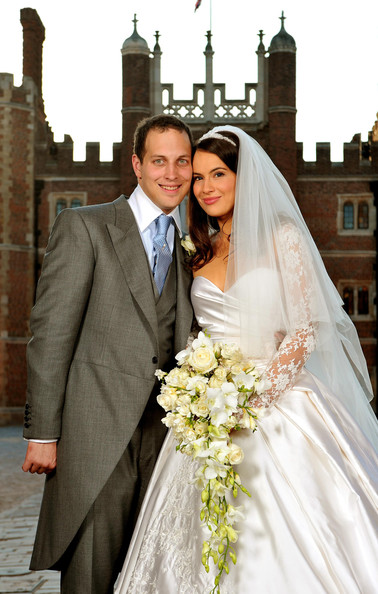
Lady Frederick Windsor is an English actress known professionally as Sophie Winkleman; she is the daughter of children’s author Cindy Black. Her career includes work on stage, television, film and radio, and she has had a recurring role on US sit-com Two and a Half Men. Lord and Lady Windsor were married in Hampton Court Palace in 2009.

Maud is a traditional name in the royal family, with the most recent being Princess Maud of Fife (Countess of Southesk upon her marriage), a grand-daughter of Edward VII, niece of George V and cousin of George VI. She was named after Princess Maud of Wales, the youngest daughter of Edward VII, who later became the Queen of Norway, through her marriage to Haakon VII.

Elizabeth is in honour of Queen Elizabeth II.

Daphne is in honour of Lady Frederick’s grandmother, who she was very close to.

Marina is in honour of Princess Marina, Duchess of Kent, the mother of Prince Michael of Kent, and the baby’s great-grandmother. Princess Marina, who was born Princess Marina of Greece and Denmark, was the most recent foreign-born princess to marry into the British royal family, which occurred in 1934. She was known for her great sense of fashion and style.

Upper Class Baby Names

Tags

, , , , , , , , , , , , , , , , , , , , , , , , ,

aristocrats-600x525

Class, baby names, and judgement thereof seems to be a topic under discussion everywhere at the moment. BRW magazine told us how to name our babies like a rich person, Wendy Harmer set high, perhaps unattainable standards for baby names, an American blogger told us how names are done in Old Blighty’s class system, and a random Devonian reality television contestant decided nobody’s baby names were good enough, not even hers. Perhaps the royal baby is the catalyst for all this reflection – he didn’t escape the scrutiny either; the reality TV contestant decided he had a “dog name”.

And then I checked my search engine stats this week, and found that someone had Googled what baby names do upper class australians use.

Strictly speaking, Australia doesn’t have an upper class, because we don’t have a hereditary aristocracy. It’s usual to consider the richest people of a country the de facto upper class, but when we talk of someone being “upper class”, it has connotations of more than mere possession of a large disposable income. Some of the richest families in Australia are from traditionally working class or middle class backgrounds – they’re just regular people with vast fortunes.

While Australia does have a class system, it’s a flattened-out one, with fewer social divisions, and a large middle ground. Class is more fluid and less structured here than some other places. Of course, that doesn’t mean we are free of all status markers and snobbery – including name snobbery.

So if we don’t have an upper class, do we have upper class baby names? I don’t think so, because any particular name is used by a wider variety of people than you might suppose. Although in our imaginations, poor people have children named Jaidyn and Tayylah, and rich people send Agatha and Lucius off to St Barnaby’s or the Kindergarten of Higher Consciousness, in real life it is a lot less stereotypical.

When you register your baby name, the registry doesn’t ask for your family tree or your bank balance. They won’t ever say, Look, I think Peregrine is out of your price range. Might I suggest something more affordable, like Cooper? All names are equal, because they cost the same amount to register. No matter how humble your circumstances, you can give your baby any name you want – elegant, serious, trendy, sassy, bold, or eye-raising.

And because all names are equal, they won’t make any difference to your own social position, or to your child’s. A poverty-stricken family won’t receive an invitation to join the Yacht Club just because their daughter is named Agatha, and a Jaidyn born into wealth will have just as privileged a life as if his name had been Lucius, and will be just as welcome at St Barnaby’s.

Although some people fret that their baby’s name needs to sound like a doctor, a judge, a professor, or a prime minister for them to succeed, in real life surgeons are named Kellee, chief justices are named Wayne, academics are named Tiffany and Brandy, and prime ministers are named Kevin. Not only does your name not indicate where you came from, it doesn’t indicate where you are going either.

However, it’s fair to say that some names have an upper class image. I don’t think Australia is significantly different from other English-speaking countries when it comes to what names may be perceived as upper class.

Names Which May Be Seen as Upper Class

Please note: This is by no means an exhaustive list, just a few ideas as to what I think sounds “upper class”, what others may perceive as upper class, or that I have noticed upper-middle class people choosing. I am not recommending these styles of name, or suggesting you use them.

  • Classic English-style names eg Thomas and Lucy
  • Anglo-Saxon type names eg Alfred and Edith
  • Names from European royalty eg Leopold and Adelaide
  • Latin and Latinate names eg Rufus and Aurelia; Hugo and Miranda
  • Classical names eg Leander and Hermione
  • Retro names eg Arthur and Florence
  • So old-fashioned that they’re hip eg Reginald and Gertrude
  • Vintage-style nicknames as full names eg Monty and Lottie
  • Names that have remained in use while never becoming popular eg Theodore and Susannah
  • Uncommon Scottish-style names for boys eg Cormac and Fergus
  • Uncommon flower names for girls eg Dahlia and Saffron
  • Historical surname names for boys eg Forbes and Monash
  • Whimsical names eg Huckleberry and Tuppence (while putting the whimsical name in the middle is the prudently middle class thing to do)
  • Fashionable “arty” names eg Ziggy and Coco (strike me as more aspirational middle class for some reason)
  • Literary names eg Caspian and Evangeline (these definitely seem middle class, as the middle class is keenest on reading)

How Middle to Upper-Middle Class Australian People Tend to Judge Names

Please note: I am not suggesting you follow any of this advice. It is for information only.

  • They like names that are spelled the more commonly accepted way. People are really fussy about this for some reason, and even slight changes to a name can bring on eye-rolling.
  • Any name that looks or sounds recently “made up” is frowned upon (although it’s fine if it was created a long time ago and therefore has a history behind it).
  • If a name has several variations, the simpler one is usually considered more upper class than the more elaborate eg Isabel rather than Isabella, Alice rather than Alicia, Sophie rather than Sophia.
  • Classic and retro names are usually considered more upper class than modern classics. However, Sophia is a classic name and Sophie is a modern classic, yet Sophie is more upper class than Sophia – so this does have exceptions, or can be overwritten by another rule.
  • Hyphenated names for girls, like Emma-Rose or Ruby-Lee, are often viewed with suspicion. This could be because “double” names are elaborations by their very nature.
  • Masculine or unisex names on girls are generally considered downmarket, while a unisex or feminine-sounding name on a boy often has quite a bit of cachet. So Mackenzie on a girl = thumbs down, Mackenzie on a boy = thumbs up.
  • It is fashionable to show pride in your cultural heritage, so Lorenzo, Agnieszka, Tevita, Silka and Johannes can be more stylish than Laurence, Agnes, David, Cecilia and John.
  • Conversely, many people seem to think that using names from a culture that you don’t have any immediate tie to looks distasteful. I think it’s silly, but it seems to be a widespread idea.
  • One or two middle names are fine, but once you reach three or more middle names (and you’re not royalty), you are considered to have gone beyond the bounds of good taste. It’s a little arbitrary, but it does seem to be the rule.

Names Not Obviously One Class or Another

  • Many names that have been highly popular for a length of time – by their nature, popular names are “of the people”; it’s easier for a name to remain very popular if many groups of people use them. Names like Charlotte, William, Chloe and Lachlan could belong to almost anyone, and do.
  • Hickster names – those that are fashionable-sounding yet slightly countrified, like Mayella and Elroy. Even after reading the birth notices carefully, looking for clues as to which kind of families choose these names, I still don’t know.
  • Uncommon nature names – names like Leaf or Snow are hard to place, I think. I have seen these names on children from absolutely everywhere on the social spectrum.
  • Extremely rare or obscure but genuine names – due to the fact they are almost never heard of, they don’t have any social context to put them into. You may only meet one Harmon in your whole life – so how can you generalise about the name?

What names do you think have an upper class image? And do you think there is any such thing as an upper class name? 

Celebrity Sibset: Wendy Harmer

Tags

, , , , , , , , , , , , ,

8487-1_n

Wendy Harmer is a highly successful comedian, who for many years has entertained on stage, television and radio. She was the first woman in Australia to host her own comedy show, The Big Gig, in 1989, and for more than a decade she was co-host of a top-rating breakfast show on 2-Day FM, when she became one of the nation’s highest paid entertainers.

Wendy is a prolific and successful author, having written humour for adults, chick lit novels, teen fiction, kid’s books, two plays, and the libretto for an opera. Her best-selling children’s series, Pearlie the Fairy, has been turned into an animated TV show. She is also editor of The Hoopla, a women’s news and opinion site.

Wendy is married to Brendan Donohoe, and has two children. Her son is named Marley (aged about 15), and her daughter is named Maeve (aged about 13).

Wendy appears to be yet another star of radio with a bee-lined bonnet in regard to baby names, because she has written an article about them for The Hoopla. It’s one of those “names not to call your baby” lists, which I must admit I don’t usually care for, because they don’t seem to really be helpful to parents so much as bullying anyone who happens to have different tastes and opinions from yourself.

Interestingly, Rule Number 2 on the list states that you shouldn’t use a famous person’s surname as your child’s name. Her son is named after Bob Marley. Okaaaay. Number 4 is that you musn’t name all your children with same letter. Mmmmm.

This article is an “update” of an earlier one, where one of the pieces of advice was that the pronunciation of your child’s name should be clear from the way it is spelled. Even now, when the name is quite well-known, some people don’t know how to pronounce Maeve from its spelling, and think that it must be MAY-vee or mah-EEV.

I do notice that so often when parents criticise baby names, the same criticisms could be levelled at their own children’s names. The most obvious example is that rather ghastly woman who said that place names as baby names were lower-class, when her own daughter was named after a country in Asia. I guess we all have mother-blindness about our baby names, and I have been guilty of the same thing myself – it’s an easy trap to fall into, but luckily I didn’t do it on TV or anything.

When we come up with rules on naming babies which we ourselves cannot stick to, it may be a sign that the rules aren’t all that useful. Just a thought!

Wendy doesn’t like her own name, which peaked at #15 in the 1950s, when Wendy was born. Part of her disappointment is that her mother chose the name out of a knitting pattern book, when the layette she was knitting was called the “Wendy”. She imagined that she had been named after Wendy Darling from Peter Pan, so being named after a knitting pattern didn’t seem so special.

Wendy much prefers her father’s choice for her name, which was Claire, the name of her beloved great-aunt. In the 1950s, Claire was #224; it rose steeply in popularity during the 1960s and ’70s, and has been in the Top 100 since the 1980s.

Now I think that’s really useful naming advice taken from real life. It may not be the best idea to choose a baby name peaking in popularity and about to fall and become dated, or select one virtually at random.

A better choice could be a classic which is lower in popularity and about to start rising, to become very popular in the long-term future. And it’s probably preferable to honour a beloved family member than to name your baby after a product – it’s nice to have a name which has some significance.

Think about the name story you are going to pass on to your child – a knitting pattern clearly doesn’t cut it. And sometimes dad knows best.

PS Wendy did manage to give the name Claire to one of her characters, the heroine of her novel, Farewell My Ovaries.

(Picture of Wendy and her family taken some years ago at Uluru; photo from Body + Soul)

Dahlia and Huckleberry

Tags

, ,

contributions_23720_1341381392_orig_636

Twins

Alessio James and Sebastian Rocco

Billy Maurice and Aubrey Harriet (Maximilian)


Girls

Dahlia Pearle

Delina Meaza (Wintana)

Devi Taylor (Olive)

Gemima Xanthe (Molly, Emmeline, Jessica)

Jamieson Diane

Lyra Olive

Maeve Willow

Quincy Annie (Piper, Aden, Sabine)

Scarlett Assunta

Willa Florence

Zali Olwen (Lucia)

Zia Clare


Boys

Cian Patrick (Sinead)

Cole Emerson

Finnian Philip (Luca)

Huckleberry Barnaby Archie

Jamie Neil

Jasper Harland Arthur

Lachlan Ivo

Leo Emanuel (Zak, Tayla, Sienna)

Paxton Ky (Mason, Remmy)

Reg Owen (Edie, Connie)

Rinan (Sol, Imogene, Gabe)

Xavier Kingston


Most popular names this week

Girls: Isla

Boys: Jack

(Picture shows a winter morning on Lake Wendouree, Victoria; photo from ABC Open)

Rich List Baby Names

Tags

, , , , ,

0dfda646-ffc9-11e2-82b3-338937740ac4_556245252--646x363

BRW magazine puts out the Rich 200 list of the top 200 richest people in Australia each year, and has looked through all the names on their Rich List since the magazine was founded in 1984, to see which names are most common for rich people. They then suggest that parents may like to choose these names for their babies, in hopes that they will then become rich, or at least not look out of place just in case they ever do become rich.

You probably won’t be staggered to learn that the most common name on the Rich Lists was John, with fifty men of this name being included since 1984.

Top Ten Rich List Names for Boys

Girls names were rather more problematic, since only 7% of the Rich List have been women, and only two female names have turned up more than once – Rose and Christina, of which there are just two examples of each. Despite having virtually no data to work with, they still manage to come up with a Top Ten for girls names as well. It seems to be based on simply putting the rest of them in alphabetical order.

Top Ten Rich List Names for Girls

You can probably see a major flaw in their name-your-baby-the-rich-way plan, in that the names on the boys list are classic names which have retained high levels of popularity over time.

John has never been off the Top 100, and was the #1 name from 1910 to 1940; it didn’t leave the Top Ten until the 1970s. So there are lots of rich men named John, but there are also lots of high school teachers, auto mechanics, scientists, discharged bankrupts, and murderers named John as well. It’s not so much a “rich man name” as an “everyman” name.

Even BRW admits that an unusual name will not disqualify you from wealth, because there are people on the Rich List named Ranald, Sinclair, Wolf, Brettney, and Merlin as well. (They also include Iris for some reason, although Iris is not particularly unusual even now, and was Top 100 from 1900-1940.)

John and Rose are nice names, well worth choosing if you like them, but they won’t make a difference to your child’s bank account. A name cannot magically bring wealth, and if you look at the Top Ten of the Rich 200, you can see that at least half of them inherited all, or the bulk of, their fortune.

The richest person in Australia is Gina Rinehart, who got her money, not because was named Georgina, but because her wealthy father died and left her his fortune. In other words, if you would like your children to be rich, the best thing to do is become rich yourself, and leave them all your money in your will. They will be able to inherit from you no matter what their first name is.

How did most people on the Top Ten get rich? Mining and property development. So go buy a mine, and turn it into a block of flats, and your child is well on its way to financial security.

Famous Names: Aria and Delta

Tags

, , , , , , , , , , , , , , , , , , ,

thumbThe Australian music industry celebrated an important birthday a month ago, because July 10 this year marked thirty years since the Australian Recording Industry Association (ARIA) began collating sales information from music stores. The ARIA charts developed from the Kent Music Report, and the first Australian charts began in the 1960s, collated by Go-Set magazine, the music “bible” of its time which later spawned Australian Rolling Stone, and whose weekly music columnist Ian “Molly” Meldrum would go on to host seminal music show Countdown.

The first single to top the ARIA charts way back in 1983 was Total Eclipse of the Heart by Bonnie Tyler, the first #1 album was Michael Jackson’s Thriller, and the most consistently popular performer over the many years of her career has been Madonna. However, Kylie Minogue equalled Madonna for the most #1 singles (10), and was equal second with the Black Eyed Peas for most weeks (30) spent at #1 in the singles charts.

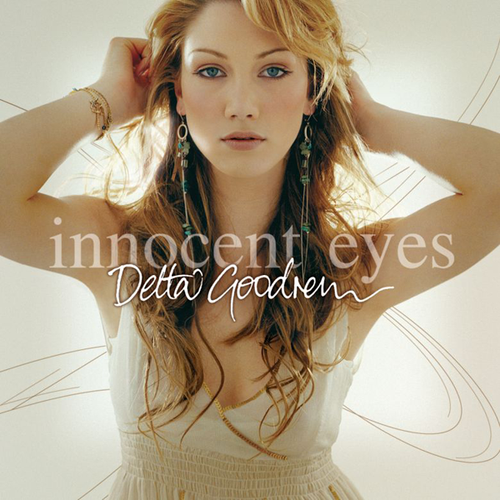
Pop singer Delta Goodrem’s debut album, Innocent Eyes, spent longer at #1 than any other Australian album at 29 weeks, and she is the first ever music artist to have five #1 singles from a debut album. Innocent Eyes went on to be the best-selling album of the 2000s. Delta played aspiring singer Nina Tucker on soapie Neighbours, where she sang Born to Try, scoring Delta her first #1 spot on the ARIA charts. She has won ten ARIA Awards, and all her albums have gone to #1, making her one of Australia’s best-selling female artists. Delta is currently a judge, coach and mentor on The Voice.

In music, an aria is a vocal piece performed by a singer, usually as part of a larger work. We often connect arias to opera, although they can be part of classical concert music too, and usually think of them as very beautiful and elaborate pieces of music that only an expert singer can do justice to.

Some famous arias are Ave Maria, O Sole Mio, La Donne e Mobile from Rigoletto, and Nessun Dorma from Turandot (if you think you don’t know them, click on the links to listen, and you’ll probably find that you have heard them before). In Italian, aria means “air”, and is from the Latin word for “atmosphere”.

As a girl’s name, Aria is usually said to be a modern English name. It’s hard to track it through historical records, as any Arias you find could easily be a misprint for Maria, so while there are hundreds of Arias in Australian records, with both English and Italian surnames, your guess is as good as mine whether they were really named Aria.

There is a Saint Aria, an obscure early Christian who was martyred in Rome, but her name seems to have been short for Ariadne.

Aria catapulted into the national Top 100 last year, debuting at #83, the second-highest rising name for girls in Australia, and possibly the highest, if we had access to all the data. The name has been popularised by the character of Aria Montgomery, from the Pretty Little Liars books and TV series, and young singer and actress Aria Wallace; it’s also been boosted by its similarity to other fashionable names, like Arya, Arianna, Ariel, Allira and Allegra. Musician Ash Grunwald welcomed a daughter named Aria earlier this year.

Delta is the fourth letter of the Greek alphabet; it’s based on a letter in several Semitic alphabets which is supposed to represent a door. The Greek letter is shaped like a triangle when capitalised, and it is for this reason that the landmass at the mouth of river became known as a “delta”. If you want to get geographically technical, it is wave-dominated deltas which tend to have this triangular form; the most obvious example is that of the River Nile, and it is the Nile Delta which was first given the name, and is the “original” delta.

The Mississippi Delta region is the area which lies between the Mississippi and Yazoo Rivers, and includes parts of the states of Tennessee, Mississippi and Arkansas. Here’s another geographical technicality – the Mississippi Delta isn’t actually a delta – it’s an alluvial plain. The Mississippi River Delta is 300 miles to the south, in Louisiana, where the river meets the Gulf of Mexico. Just in case you have, in this short space of time, due to my scintillating prose style, become obsessed with river deltas, the Mississippi River has a bird-foot delta, where long finger-like projections reach out into the sea, and isn’t actually delta-shaped in the least.

The Mississippi Delta (the region, not the actual river delta in Louisiana – gosh I hope all this geography isn’t getting too confusing) is associated with the very beginning of several genres of popular music, such as Delta blues and rock and roll. You can no doubt get yourself into some very stimulating arguments over whether Delta blues is significantly different to any other kind of blues, or just how rock and roll got started anyway, but the Mississippi Delta would be crazy not to cash in with tons of music festivals, and they’re not, so they do.

Rita Coolidge is an American singer who inspired the song Delta Lady, by her one-time boyfriend, singer-songwriter Leon Russell. I always assumed that the name came about because Ms Coolidge is from the Mississippi Delta, but – more geographical technicalities – she’s from Macon county in Tennessee, which isn’t in the Delta region. So we may be talking poetic license here rather than geographical technicalities, although from the song’s lyrics, Russell seems to be using delta as a metaphor for ladyparts (as in the erotica collection, Delta of Venus, by Anais Nin).

(Just as an aside, the faded southern belle of unsound mind in the song Delta Dawn, which became Helen Reddy’s first #1 hit, was from Brownsville in Tennessee, which prides itself on being the “heart of the Tennessee Delta”. Dawn was a real Delta Lady.)

It was the song Delta Lady which inspired Delta Goodrem’s parents to name their daughter Delta, so that is one possible source of the name, but you could see it as a geographic name, a nature name or an alphanumeric name as well. You can also see it as a musical name, because a major 7th chord is sometimes called a Delta Chord.

There are many, many women named Delta in Australian historical records, dating back to the 19th century, and it is currently #412 in Victoria.

So here’s two pretty, modern-sounding musical names for girls, both with an Australian focus. Cross-cultural Aria is much more on trend that Delta, and consequently more popular, yet Delta has a more solid history of use as a personal name. Which one do you like better?

POLL RESULTS: Aria received an approval rating of 78%, and Delta of 33%.

https://www.youtube.com/watch?v=TOz6Mt2t084