• About
  • Best Baby Names
  • Celebrity Baby Names
  • Celebrity Baby Names – Current
  • Celebrity Baby Names – Past
  • Featured Boys Names
  • Featured Girls Names
  • Featured Unisex Names
  • Links to Name Data
  • Waltzing on the Web

Waltzing More Than Matilda

~ Names with an Australian Bias of Democratic Temper

Waltzing More Than Matilda

Tag Archives: US name popularity

Team Pink, Team Blue, or Team Lavender?

11 Sunday Nov 2012

Posted by A.O. in Your Questions Answered

≈ 13 Comments

Tags

dog names, english names, famous namesakes, fictional namesakes, French names, Gaelic names, locational names, mythological names, name meaning, name popularity, names for budgies, nature names, nicknames, popular culture, popular names, Sanskrit names, surname names, unisex names, US name popularity, vocabulary names

I wasn’t going to do another one of these, but it turned out the list of questions on unisex names could almost be eliminated if I did just one more, so I couldn’t resist doing an end-of-year clean up.

Some names are easy for most of us to assign to Team Pink or Team Blue – for example, a straw poll would probably show strong support for Amelia as a girl’s name, and Archibald as a more masculine moniker. But there are quite a few others that we have to think about a bit more, and some seem to be both feminine and masculine in such equal measure that we could probably call them Team Lavender.

Of course, for practical purposes, all names are unisex, so this is only designating them according to linguistic meaning, historical use, and current popularity.

I. ARE THESE GIRL NAMES?

Sydney as a girl’s name

Sydney is historically a unisex name in Australia, but hasn’t charted at all since the 1960s. I think it’s up for grabs by either gender, and is a definite member of Team Lavender.

Rory girl name popularity Australia

According to the data at hand, the popularity of Rory as a girl’s name in Australia is zero. It’s charted as a boy’s name since the 1940s and is currently #159; it’s never charted as a girl’s name. This makes it (for the purposes of this question) Team Blue.

Is Indiana a girl’s name? (multiple asks)

Yes, historically it is, for the first people named Indiana in the records are female. It’s only since the Indiana Jones movies that the name has widely been seen as potentially masculine – although the movie’s protagonist is named Dr Henry Walton Jones. From Utah rather than the state of Indiana, we learn in The Last Crusade that he took his nickname from the name of the family dog. I’m not sure whether the dog was male or female. Indiana has only ever charted as a girl’s name, and is currently #78 and climbing steeply. I call Team Pink.

Bodhi as a girl’s name

Bodhi is a Sanskrit word meaning “awakened”, referring to the enlightenment of the Buddha. As men and women are equally capable of spiritual enlightenment, I think this is for both boys and girls and can join Team Lavender.

Can Russell be a female name?

The surname Russell simply means “red” or “reddish”, and there’s nothing specifically masculine about it. However, Russell has a reasonable history of acceptance as a male name. Currently it doesn’t chart for either gender, and I think it could be used for a girl’s name. You could also use the vocabulary word Rustle. Maybe a Deep Indigo?

Is Campbell a girl name?

In Australia it is accepted as a male name, and has charted for boys since the 1950s, being now at #384. In the US it is more common as a female name. The surname means “crooked mouth”, which doesn’t sound at all pretty to me, but isn’t technically masculine. In Australia, I think it’s still Team Blue.

II: ARE THESE BOY NAMES?

Marlo as a boy’s name

Marlo Hoogstraten is a Dutch-born Australian DJ; he works under the name MaRLo. Marlo Stanfield is a character in the TV show, The Wire, who is head of his own drug crew. There seem to be more references to Marlo as a male name than a female one. This may be a pale Blue-Toned Lavender.

Is Riley a boy’s name in Australia?

Yes, it’s charted as a male name only since the 1970s, and is currently #20. Team Blue.

Can Autumn be a boy’s name?

There’s no reason why not, except that it is widely accepted as a female name. In Australia, Autumn is a fairly rare name for either sex, so it might be easier to be a boy named Autumn here than elsewhere. It would be unusual though. A very pale Pink-Toned Lavender.

Boys name Kirra

The town in Queensland is nearly always given as a female name in Australia. Besides sounding similar to girl’s names Keira and Kira, part of the reason may be because in Greek mythology, there are a couple of nymphs named Kirra, giving it a distinctly feminine vibe. I’m assigning this one to Team Pink.

Tahgan boys name

I only know of Taghan as a place name in the Middle East, which sounds unisex to me. It looks similar to boy’s name Teagan and girl’s name Tegan, so I’m calling this for Team Lavender.

Bay as a boy’s name

Although this nature name could be either male or female, in practice I’ve only seen this given to boys in Australia – maybe because it sounds like it could be short for Bailey. I guess it could be seen as Blue-Toned Lavender.

III: ARE THESE BOY OR GIRL NAMES?

Is Lyndall male or female?

Historically, it’s a girl’s name. Lyndall charted as a female name only from the 1930s to the 1990s. It currently doesn’t chart for either sex. Pink, or at least Pinkish.

Jordan – boys name or girls name?

Jordan has charted as a boy’s name since the 1960s, peaked in the 1990s at #23, and is currently #63. It has charted as a girl’s name since the 1980s, peaked in the 1990s at #85, and is currently #389. So it’s both a boy’s name and a girl’s name, but more boyish, since it’s been used longer as a boy’s name, hit a higher peak as a boy’s name, and is still Top 100 for boys. Deep Blue-Toned Lavender.

Is Jagger more a boy or girl name?

I’d say it’s more of a boy name, just by usage. I have seen people use Jagga or Jaggah for girls though. Blue, at present.

Kayley “unisex name”?

I think technically Kayley is two separate names, one unisex or male, and the other one female. The surname Kayley can be from several origins, and if English or  French, it refers to place names (unisex). On the other hand, if Gaelic, it means “son of Caollaidhe” (male). It’s been overwhelmingly used as a girl’s name though, probably with the idea it’s an elaboration of Kay, a pet form of Katherine. There have been a very few men named Kayley. Confusingly, I think this is Pink, Blue and Lavender all at the same time.

IV: ADVICE NEEDED

What boy’s name can Gigi be short for?

There’s a few choices. According to Wikipedia, famous men using Gigi as their nickname have Luigi, Luigino, Gianluigi or George as their full name – although my own first thought was Giglio. Another possibility is that in the story Gigi, the protagonist’s full name was Gilberte, so maybe a boy called Gilbert could be a Gigi.

Will people automatically assume someone called Kelly is a girl?

I would probably assume an adult named Kelly to be a woman, but I could easily adjust if it turned out to be a man instead. For a new baby, I wouldn’t assume it was either a boy or girl.

Are guys put off by women with male names?

There are quite a few studies on what names men and women find sexy, but these name-image polls are useless in real life, when you are confronted with a living breathing human being. I don’t believe any man would turn down a beautiful woman because her name was John; conversely, no matter how alluring and feminine your name, if you look and smell like you’ve been living in a sewer, I don’t think you are going to be besieged by suitors. Just from my own observations, I’ve noticed a lot of guys say they are intrigued by girls who have unisex nicknames, like Jamie, Charlie or Teddie.

A good unisex name for a budgie

You could use a nickname that could be short for either a girl or boy name, such as Charlie, Joey or Sam, otherwise I think a nature name would be nice, such as Ash, Blueberry, Midnight, Sky, Sunny, or Snowflake. You could also use a cutesy sort of name such as Pippet, Peep, Peck, Pixel, Tweety, Chirp, Happy, or Fidget. Apparently budgies can’t say words with a hard G sound in them, so avoid Giggles, Goldy or anything like that if you’re hoping to teach it to talk.
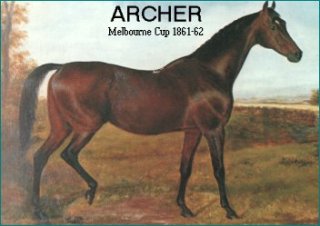
Waltzing With … Archer

04 Sunday Nov 2012

Posted by A.O. in Waltzing with ...

≈ 8 Comments

Tags

Australian idioms, english names, famous namesakes, fictional namesakes, horse names, name combinations, name history, name meaning, New Zealand name popularity, nicknames, popular names, surname names, UK name popularity, US name popularity, vocabulary names

This article was first posted on November 4 2012, and revised and re-published on June 16 2016.

Famous Namesake
On Tuesday it is Melbourne Cup Day, which, more than any other day on the calendar, holds Australia in thrall. On the second Tuesday in November, at 3 pm, the nation collectively holds its breath while its most famous horse race, the Melbourne Cup, is run at Flemington in Melbourne.

It’s known as “the race that stops a nation”, because at 3 pm you are expected to drop whatever you’re doing to tune in and watch the Melbourne Cup. Workplaces and schools may take the afternoon off to hold Melbourne Cup lunches, or at the very least switch a TV on just before 3 pm. It’s a day when almost everyone will place a bet on the race – even if it’s just putting a dollar on the favourite, or taking part in the office sweep. In Melbourne, the day of the race is a public holiday.

American author Mark Twain went to the 1895 Melbourne Cup and commented, Nowhere in the world have I encountered a festival of people that has such a magnificent appeal to the whole nation. The Cup astonishes me. More than 110 000 people attend the race, and it’s a huge fashion-fest, with ladies frocking up, and gentlemen wearing formal suits. Others relish the opportunity to dress in outrageous costumes. It’s a day to eat, drink, gamble and be merry – a big, bright, boozy, and rather garish carnival.

The Melbourne Cup itself is the jewel in the crown of the Spring Racing Carnival, and is said to be the richest and most prestigious “two mile” handicap in the world. The prize money is over $6 million, and the trophy itself is a hand-crafted golden cup worth $125 000. It’s the biggest prize in any Australian sporting event.

The first Melbourne Cup was run in 1861, and the winner that year was a horse named Archer. Race horses are often named quite logically, and Archer’s sire was William Tell. Born near Braidwood, in country New South Wales, he was trained near Nowra. Archer was a large horse, standing over 16 hands high with a powerful body. He ran badly in his first two races, and was rated poorly, until he won seven races in 1861, and was entered in the Melbourne Cup.

The first Melbourne Cup was action-packed. Three horses fell during the race (two of them died), two jockeys suffered broken bones, and one horse bolted off the course entirely, but the race gamely continued, and Archer won by six lengths in a time of 3 minutes and 52 seconds – the slowest in which a horse has ever won the Melbourne Cup.

He set another record the following year by winning the Melbourne Cup again; until the 1930s, he was the only horse to have won back-to-back Melbourne Cups. He was meant to enter in 1863 as well, but unfortunately there was a mix-up with telegrams and he didn’t manage to make the deadline in time.

Many legends have sprung up around Archer, such as that he had to walk all the way from Sydney to Melbourne in order to take part in the race, and that his jockey, Johnny Cutts, was an Aborigine from the Nowra area. Neither of these stories is true – Archer travelled to the race by steamship and rail, and Johnny Cutts wasn’t Aboriginal, and was from Sydney. The phrase since Archer won the Cup has entered our language, to refer to a long time distant.

Name Information
Archer is an English occupational surname referring to someone who uses a bow and arrows. The surname was introduced to Britain by the Normans, and by the end of the Middle Ages the Norman-French word archer had replaced the English bowman.

People have been hunting and fighting with bow and arrows since the Stone Age, and there are many famous archers in world mythology. During the Middle Ages, professional archers were rare, and most archers during war were recruited from the peasantry so archery was often seen as a lower-class pursuit. However, by the 14th century archers were used effectively in battle, making it a more attractive option. The use of firearms made archers obsolete, and the last recorded use of them in battle in England was in 1642.

The last known person to die from a British archer in battle was in 1940, when a German was killed during the retreat from Dunkirk by a delightfully eccentric officer named Jack Churchill, who insisted on fighting throughout World War II with bow, arrows and a sword; he also played the bagpipes while setting off grenades, to add to the effect. Incredibly brave and highly decorated, Churchill, known as Mad Jack, was later a military instructor in Australia, where he became an enthusiastic surfer. A shame we didn’t manage to keep him, as this man is now my personal hero!

Archer has been used as a personal name since the 17th century, and an early namesake was the British MP Sir Archer Croft, 2nd Baronet – Archer was his mother’s maiden name. Another who had Archer as a family name was the 18th century American politician Archer Mathews, a founder of Lewisburg in Virginia. In the 19th century, escaped slave Archer Alexander served as the model for the Emancipation Memorial in Lincoln Park, built by T.S. Eliot’s grandfather.

Archer joined the Australian Top 100 in 2012, and since then has continued rising. Currently it is #39 nationally, #49 in New South Wales, #27 in Victoria, #33 in Queensland, #29 in South Australia, #51 in Tasmania, and #38 in the Australian Capital Territory. It was one of the fastest rising names in Victoria last year.

Archer was a Top 1000 name in the US in the late 19th century, but spent many years off the charts until it returned in 2009. It has risen steeply since then, and is now #289. In the UK Archer has been in the Top 500 since 2012 and is currently #359. Archer is Top 100 in New Zealand – the only other country besides Australia where Archer is popular, although its popularity is highest in Australia.

No wonder this handsome name is so popular – it feels both vintage and contemporary, and fits in with the trend for names with an AR sound, and names connected with hunting and weaponry. One of its attractions is that it provides a way to get the popular nickname Archie without using Archibald, although Arch is another possibility.

Archer is a name from Australian history which celebrates the biggest sporting event of the year – one that almost everyone will participate in. It’s a name from the hunt and battlefield, but also referencing daring archers, from Robin Hood to the Hunger Games, and perhaps even comedy super-spy Sterling Archer from the animated show.

Could Archer follow its equine namesake and gallop to the #1 position on the charts? The odds are against it, but chances are it will continue cantering along the home stretch.

POLL RESULT
Archer received an outstanding approval rating of 93%, making it one of the most popular names of 2012. 36% of people loved the name Archer, and nobody hated it.

Famous Name: Piper

24 Wednesday Oct 2012

Posted by A.O. in Famous Names

≈ 12 Comments

Tags

Anglo-Saxon names, english names, famous namesakes, Hollywood names, locational names, musical names, name history, name meaning, name popularity, popular culture, popular names, surname names, unisex names, US name popularity, vocabulary names

Sydney was recently named the second most expensive city in the world, after Tokyo; luckily it was also revealed that Australians are now the richest people in the world, so we can afford it! The most expensive suburb in Sydney is Point Piper, where the median house value is $7.38 million, and the most expensive privately owned house in Australia, costing $70 million to build, is located here. Point Piper’s Wolsley Road is the tenth most expensive street in the world, with 16% of Australia’s priciest houses on this 1 km stretch.

Point Piper is a little piece of land which juts into Sydney Harbour, a small enclave of just eleven streets and 148 houses. As Sydney’s most exclusive suburb, it is only 4 km from the CBD and offers views of the Harbour Bridge and Opera House. Despite its size, it has two beaches and two yacht clubs. The suburb is named after Captain John Piper, a Scottish-born military officer of Cornish parentage and German descent who arrived in the colony in 1792 and became an immediate social success.

Piper’s career got off to an interesting start when he asked to be posted to the penal settlement in Norfolk Island after a scandalous love affair which ended with an illegitimate daughter in his care. Later he became acting commandment of Norfolk, and ruled it so kindly that even one of the convicts wrote home to say how outstandingly nice he was. While on Norfolk, he took as his mistress a teenage girl who was the daughter of convicts; they eventually married, but not before she had borne him four children (they had nine more).

He became very rich by collecting custom duties and excises, and after being granted land by the governor, built a mansion on the point which is now named after him in 1816 at a cost of £10,000 (about $11 million in today’s money). He continued gathering wealth, real estate and respectability, until he ran into financial difficulties in the 1820s, and was suspended from his position after mismanagement of funds was discovered.

Piper tried to drown himself in Sydney Harbour, but was rescued. He had to sell everything he owned to settle his debts, and moved to Bathurst, where he ran a farm and became a figure of local importance. When he ran into problems there as well, his friends bailed him out and bought him a riverside property, where he and his wife and numerous children could be comfortable. He was just so nice, you see – blithe, unsinkable, amiable, and eminently forgiveable for his lack of business acumen.

Piper is an English surname which refers to someone who played the bagpipes. Although we think of bagpipes as being uniquely Scottish, their origins go back to the ancient world; it’s said that the Roman emperor Nero could play them. Their use spread through Europe in the Middle Ages, with their first explicit mention in Britain being in Chaucer’s Canterbury Tales. However, it was in Scotland that bagpipe music became most sophisticated and highly developed.

The piper was a well-paid and highly-respected professional, who would have been employed by a great lord or chief; it was often a hereditary position. The piper’s job was to entertain his lord at home and while travelling; this sometimes included military service. While traditions of pipers rallying the troops before battle go back centuries, the first documented case is 1549, when they were played by the troops of the Earl of Argyll. Later, pipers could be employed by a town to play each day, as well as at fairs and other events.

There is a myth that in times of old only men were pipers, and one ancient saw is that a woman found playing the bagpipes would have her fingers cut off in punishment, but this simply isn’t true. There are many documented cases of women pipers, and they were employed as teachers in a famous piping school on the Isle of Skye. Today women pipers are still out-numbered by the men, but there are plenty of them, and they are equally good.

The surname Piper goes back to the 13th century, and seems to have historically been most common in Sussex in England. However, the personal name may predate the surname, for the name Pipere has been found in an Anglo-Saxon charter from Sussex, which could make Piper one of the oldest English names – and another possible source for the surname.

Piper, with the modern spelling, comes directly from the surname, and dates to the 18th century, when it was nearly always given to boys (although as a middle name, much more evenly divided between the sexes). The name became seen as a girl’s name when a teenager from Detroit changed her name from Rosetta Jacobs to Piper Laurie and got a contract in Hollywood.

Although Ms Laurie says in her autobiography that she had to change her name because it sounded “too Jewish”, she gives no clues as to where she got the name Piper Laurie from. It almost sounds like a girl’s name – Laurie Piper – backwards.

Piper Laurie was in The Hustler and Carrie, but would have become well-known here for her role in the miniseries The Thorn Birds, based on the best-selling novel by Australian author Colleen McCullough. The Thorn Birds was originally broadcast in 1983, and the name Piper first charts in Australia the same decade.

The name skyrocketed in the 1990s to reach #128 by the early 2000s; I can’t help feeling this has a lot to do with the character of Piper Halliwell in the TV show Charmed. The actress who played Piper, Holly Marie Combs, confessed to having a large and inexplicable fan base in Australia.

Piper made the Top 100 in 2009, and is currently #70 and rising. Although we think of this as an American-style name, it’s only been on the US Top 1000 since 1999, and is still not Top 100, although not far off at #110, so Piper has charted in Australia longer than in the US and is more popular here. Australian parents do seem quick to pick up on Hollywood names.

I saw someone on a name blog say Piper is a name which will please everyone, which seemed going a bit far. However, I do think it has a lot to recommend it. It references luxury real estate, an ancient form of music, a Hollywood star with an Aussie connection, and an appealing namesake with a history unusually free of tragedy.

It’s a very old Anglo-Saxon name, but seems bright and modern. It’s a surname name for girls that doesn’t have any “son of” or male-only occupation issues, or significant prior use as a male name. It’s a vocabulary word which everyone can spell, pronounce and understand, and it’s a popular but not too popular name that still has room for growth.

So while Piper may perhaps not please all people, if Piper pleases you, then you may be pleased enough with Piper to pick it!

(Photo of Point Piper from the Sydney Morning Herald)

Waltzing With … Octavia

30 Sunday Sep 2012

Posted by A.O. in Waltzing with ...

≈ 6 Comments

Tags

celebrity baby names, famous namesakes, fictional namesakes, honouring, name combinations, name history, name meaning, name trends, names from television, Roman names, Shakespearean names, sibsets, UK name popularity, US name popularity

OLYMPUS DIGITAL CAMERA

This blog post was first published on September 30 2012, and revised and re-posted on June 1 2016.

It’s a long weekend in New South Wales, South Australia and the ACT, and in those places, Monday will be Labour Day, celebrating the Australian labour movement. This vibrant and influential strand in Australian politic began in the early 19th century with the first craft unions, who banded together to seek higher wages and lower working hours.

This was in the days when any servant who left their employment without their master’s permission would be hunted down as a bushranger, and even taking off from work for an hour would see you put in prison. In those times, a fifth of the prison population were there for that reason.

It was in August 1855 that the Stonemasons Associations in Sydney went on strike, demanding to work only eight hours each day. They won their cause and celebrated with a victory dinner on October 1. The following year, the stonemasons of Melbourne formed a protest march to demand an eight-hour working day; they were the first organised group in Australia to achieve their goal with no loss of pay.

The goal of “eight hours labour, eight hours recreation, eight hours rest” was one that unionists had been working towards since the early 19th century, and in 1916 it became law in Victoria, but didn’t come in nationally until the 1920s, with the forty-hour week enshrined in 1948.

It would be nice to say that was the end of the workers’ struggle, but the forty-hour week is still under threat. Indeed, thanks to e-mail and mobile phones sometimes it feels as if we never leave work at all. So tomorrow please switch off your laptop, and have your calls sent to voicemail, because we deserve at least one day a year free from employment.

In honour of the Eight Hour Movement we will look at a name connected to the number eight.

Name Information
Octavia is the feminine form of Octavius, a Roman family meaning “eighth”, from the Latin octavus, and taken from a personal name. Although the personal name is believed to have been given to an eighth child, it’s also thought that it could have been bestowed on those born in the eighth month (originally, October).

The Octavii originated from the town Velletri, in the Alban Hills just south of Rome. The area belonged to the Volsci people, who in ancient times were one of the most dangerous enemies of the Romans. The famous warrior queen Camilla was one of the Volsci.

The most famous member of this family is the Emperor Augustus, whose original name was Gaius Octavius Thurinus. Coincidentally, he went on to give his name to the month of August, which is the modern-day eighth month. Augustus had both a sister and a half-sister named Octavia, and the younger one, his sister, was the wife of Mark Antony.

The marriage was one of political convenience, but Octavia appears to have been a loyal and faithful wife. Famously, Mark Antony abandoned her and their children to take up with the fascinating Queen Cleopatra; he divorced her and not long after, committed suicide. Octavia was left as sole caretaker of their children, as well as the children from her first marriage, and she was also guardian to Mark Antony’s children to one of his previous wives, and to those he had by Cleopatra.

While Cleopatra was seen as the alluring temptress, glamorous, brilliantly intellectual and powerful, Octavia was cast in the role of the good wife and mother, who does what is best for her husband, her family, and Roman society. In his play Antony and Cleopatra, Shakespeare portrays poor Octavia as short and round-faced with brown hair, to ensure the dichotomy between the two is even sharper. I’m not sure what is supposed to be so hideous about being short, round-faced and brown-haired (sounds quite cute), but to the Elizabethans it meant “ugly”.

She may not have been the sexy one, but the Romans esteemed Octavia for her strength of character and nobility, and when she died, she was given a state funeral and several honours, including being one of the first Roman women to have coins minted in her image. Her great-granddaughter was named Octavia after her, and this young lady was so beloved by the Roman people that they rioted to protest her cruel treatment at the hands of her psychotic husband, Nero. Unhappy marriages yet great popularity was the fate of these Roman Octavias.

Octavia has been used as an English name since the 17th century, becoming more common in the 19th. A famous namesake from the Victorian era was social reformer Octavia Hill, who worked towards housing for the poor; she was named Octavia because she was her father’s eighth daughter. An American namesake from this era was socialite Octavia Le Vert, a lavish hostess and supporter of the arts. More recently we might think of actress Octavia Spencer, from The Help.

In the US, Octavia was on the Top 1000 from the 19th century until the 1930s, then returned in the 1970s. This coincided with the career of African-American science-fiction novelist Octavia E. Butler, who began writing in 1971. Octavia’s final novel in her Parable series was published in 1998, the last time Octavia was on the Top 1000. In the 20th century, the name never got any higher than #484 in 1987.

In 2015, 173 girls were named Octavia – a huge increase on the previous year, when 71 babies were given the name. Rebellious teen Octavia Blake on The 100, played by Marie Avgeropoulos, may be an inspiration in its sudden rise. In the UK in 2014, 26 baby girls were named Octavia.

Octavia could be used for an eighth child or grandchild, or for a baby born in August or October. Both these months celebrate milestones in the Sydney labour movement, and the number eight is the cornerstone of the Eight Hour Movement. Earlier this year, Labor MP Michelle Rowland welcomed a daughter named Octavia, a very suitable name for someone in labour politics.

The meaning of the name is connected to music, because an octave is the interval between one musical pitch and another and each scale has eight notes. In addition, the Octavia is a sound effects pedal used by Jimi Hendrix. The number eight is important in several spiritual or philosophical systems, such as Judaism, Wicca, Hinduism, Buddhism, and Taoism, and to the Chinese, the number eight symbolises prosperity and good luck.

Boosted by science fiction, Octavia may be a rarity, but doesn’t sound too unusual next to popular Olivia and Ava. Octavia is dignified, formal, strong, intelligent, and slightly clunky – a beautiful name with its own elegance.

POLL RESULT
Octavia received an excellent approval rating of 84%, making it one of the highest-rated names of 2012. 36% of people loved the name Octavia, and only one person hated it.

(Picture is of the Eight Hour Day Monument in Melbourne; photo from Monument Australia).

The People’s Choice of Boy’s Names

23 Sunday Sep 2012

Posted by A.O. in Name Themes and Lists

≈ 15 Comments

Tags

African-American names, alphanumeric names, American slang, anagram names, Anglo-Saxon names, animal names, aristocratic names, Australian Aboriginal names, Australian slang terms, banned names, bird names, birth notices, Bonds Baby Search, celebrity baby names, computer hacker names, controversial names, created names, english names, famous namesakes, germanic names, Google, Greek names, historical records, Indian names, J.R.R. Tolkien, locational names, Maori names, meteorological names, middle names, mythological names, name history, name meaning, nature names, nicknames, Old English names, Old Norse, polynesian names, popular culture, royal names, saints names, scandinavian names, slang terms, Spanish dialect words, surname names, tree names, unisex names, US name popularity, vintage names, vocabulary words, Welsh names

Adolf

A form of the Germanic name Adalwolf, meaning “noble wolf”. The Old English form is Æthelwulf, and there are a few famous men of this name in English history, most notably the father of Alfred the Great. The name was often used amongst the royal houses of northern Europe, and the Latinised form Adolphus turns up in the monarchy of the United Kingdom. There is a saint called Adolf of Osnabrück, a 9th century German monk. Up until the mid-twentieth century, the name was common in central and northern Europe, and can be found in Australia due to immigration from Germany and Scandinavia. The reason this name has been included is because barely a day goes by without someone Googling: “Is it legal to call your child Adolf?”, to which I can say, yes, it is legal here, and you can find quite a few Australians in the records with this name – including ones born during and shortly after World War II. I have met a man named Adolf (born around the early 1960s), and I believe he was named after his grandfather. The other chestnut is, “Is it legal to call your child Adolf Hitler in Australia?” to which I reply, Why would you want to do that? Seriously, why? As the name Ned Kelly is banned because he is considered too wicked, I’m pretty sure Adolf Hitler would also be illegal here.

Buster

This spunky name has more history than you might think. In England, it was first used in the middle position; Buster is a variant of the surname Bustard, after the bird. In 18th century America, it seems to have been more common for African-Americans, and may have started as a pet name in the sense of “breaker”. Later it took on the meaning of “unusual, prodigious, amazing”. Buster is used to address males in the same way as pal or fella (“Now listen up, buster”). This comes from the Spanish dialect busté, meaning “you”. It’s gone on to have negative connotations. One of the most famous men with this name is actor Joseph “Buster” Keaton, who started his career in vaudeville as a small child. He claimed to have received his nickname as a toddler from Harry Houdini, after falling down a flight of stairs unhurt. Houdini allegedly remarked, “That was a real buster!”, meaning “a fall with the potential to cause injury”. So Keaton’s name indicated he was tough enough to take a tumble. Buster Brown was a cartoon strip boy who was an angelic-looking blond prankster. In Australian slang, come a buster means to fall or fail by misfortune, while buster is a term for a strong wind – especially the Southerly Buster. This is a name Sydneysiders give to the abrupt cool change that sometimes blows in from the south during the warmer months. Vintage name Buster has recently become rather an Australian favourite for boys, although in the novel, The Shiralee, by D’arcy Niland, Buster is a little girl.

Chester

Chester is a city in Cheshire, England, founded by the Romans as a fortress in 79; its size has led some historians to speculate that the Romans intended it to be the capital, rather than London. Its current name comes from the Old English Ceaster, meaning “Roman fort”, and its early history was very military, with wars seemingly constant. Even King Arthur is supposed to have won a major battle here, and it was the last city to fall to the Normans during the Conquest. Today it’s a thriving modern city which still tries to preserve its historic buildings. Chester has been used as a personal name since the 16th century, probably after the surname, although early births in Cheshire suggest they may have been named directly for the city itself. Although it’s been a popular name in the US in its time, and only left the Top 1000 in the mid-1990s, for some reason it never caught on in a big way here. I was surprised to see it on a baby in the Bonds Baby Search Competition this year. For some reason, this baby name is often Googled, although the slang term chester is an impediment to its use.

Digby

An English surname from a place name meaning “settlement by the ditch”, derived from a combination of Old English and Old Norse. The name seems to have been first given in honour of the aristocratic Digby family, Anglo-Irish peers whose family seat in Coleshill, Warwickshire was granted to them by Henry VII. It is from the town of Coleshill that the personal name originates in the 17th century. One of the most famous of this clan was Sir Kenelm Digby, a Catholic philosopher considered a great eccentric for his exuberant personality and fascination with science, which extended to studying alchemy, astrology and magic (not considered incompatible with science then); he was the first person to note the importance of oxygen to plants. A man of action as well as thought, he became a privateer, and killed a man in a duel; he also wrote several cookbooks, invented the modern wine bottle and managed to fit in a secret romance to a famous beauty which led to their marriage. A true all-rounder. This name regularly appears in birth notices here, especially from Victoria, and may be encouraged by comedienne Cal Wilson, who welcomed a son named Digby a few years ago. People seem to either loathe this name or find it irresistibly cute; I must confess to being in the second category.

Elfyn

This is the Welsh form of the Old English name Ælfwine, meaning “elf friend”; it went out of use after the Norman Conquest. J.R.R. Tolkien liked to think of the name as meaning “friend of the elves”, and invented two fictional characters with this name who formed close bonds with elves. Modern forms include Alvin and Elvin, both taken from the surname form of the name. There are several famous people in Wales with Elfyn as either their first name or surname, including young rally driver Elfyn Evans and poet Menna Elfyn. For reasons I cannot explain, it is Googled several times a week.

Jharal

Jharal Yow Yeh is an NRL star who plays for the Brisbane Broncos. An Aboriginal Australian from the Margany people of Queensland, he also has Torres Straits Islander, Vanuatuan and Chinese heritage. Now aged 22, he has been playing for the Broncos since 2009, for the Indigenous All-Stars since 2010, and for both the Queensland state team, the Maroons, and the Australian national side, the Kangaroos, since last year. Early this season he sustained a serious leg injury, and is still recovering. People Google Jharal’s name all the time, asking for its meaning, and often querying whether it’s of Indigenous origin. In fact, his name was created for him by his grandmother. His mother couldn’t decide what to call him, so she asked nana Iris to name him. Iris cleverly arranged the letters of all the strongest men in her family into a name, and came up with Jharal. It is taken from the initials of James, Harold, Anthony, Reece, Arthur and Linc. The name is pronounced JHUH-rahl, and Iris says that most people think it is an Indian name. In fact, by coincidence, a jharal is a mountain goat from India. Names created for celebrities often seem too unique for others to use, but I have seen Jharal a few times in birth notices recently. Looking for a nickname? Jharal is known to his family as Joe.

Koa

This unisex name has several different origins. There is a Hawaiian male name Koa meaning “strong, brave, fearless”, and it’s also the name of a Hawaiian tree, the Acacia koa. The wood was traditionally used to make dug-out canoes and certain types of surfboards. In Maori, the word koa means “happiness”. In the Kaurna language of South Australia, the word koa means “crow”, and the Koa people come from south-east Queensland, so it’s also a tribal name. There has been a sudden proliferation of this name in Australian birth notices, and that might be because Tom Dumont from No Doubt welcomed a son named Koa last year. However, I am beginning to see far more girls named Koa in birth notices than boys. This may be because of model and actress Koa Whelan, a contestant on this year’s dating show, Please Marry My Boy. I think this works equally well for boys and girls, although the first meaning is male only.

Neo

This is from an Ancient Greek prefix meaning “new, young, fresh”. It turns up in words such as neonatal, meaning “pertaining to the newborn”, or neologism, meaning “a freshly coined word”. The name has become well-known since 1999 because Neo is the protagonist of the cyberpunk Matrix film series. In the films, the character’s name is Thomas Anderson, and Neo is his computer hacker identity (Anderson does have the letters N, E and O in it). Neo is also an anagram of One, and the films seek to discover whether Neo is “The One”, a Messiah-like figure who will be able to rescue humanity. The films have become cult classics, and intermingle a range of philosophical and spiritual ideals from the East and the West – it’s even spawned its own religion, Matrixism. From the amount of times that people have Googled neo baby name or neo for a boy, there are quite a few parents considering using this name. Neo fits right in with current trends, and doesn’t sound any stranger than Leo. It is very strongly associated with the film character though. However, Australians have a solid history of gaining name inspiration from the movies, and most of The Matrix series was filmed in Sydney, giving it an Australian connection.

Rune

A Scandinavian name derived from Old Norse meaning “secret”. The runes are the letters of the runic alphabets, which were used to write different Germanic languages, dating from at least the first or second century AD. Runic inscriptions seem to have been for magical and divinatory use, and perhaps their knowledge was restricted to an elite in early times. According to Norse mythology, the runes were originally stolen from the god Odin. They are part of English history, because the Anglo-Saxons had their own runic alphabet. If you have read The Hobbit, you will have seen Anglo-Saxon runes used on a dwarven map; Tolkien later invented his own runic alphabet which appears in The Lord of the Rings. Rune stones are  used for divination today, often in a similar way to tarot cards. The name isn’t unusual in Scandinavia, and you may know the name from the Polish speedway rider Rune Holta, born in Norway. I think this is a simple, attractive name with layers of history and meaning.

Zephyr

A zephyr is a light, warm wind. It comes from the name Zephyrus, who was the Greek god of the west wind – the gentlest of breezes, which served as a harbinger of spring. He married both Iris, the goddess of the rainbow, and Chloris, the goddess of flowers – who is also seen as a deity of spring (and named Flora by the Romans). Children may know the name as that of a bat in the Silverwing book series, and, in the form Zephir, as the monkey in the Babar the Elephant stories. Grown ups may be reminded of The Zephyr Song by the Red Hot Chilli Peppers. If you take the name as derived directly from the god, then it is male, but if you accept it as a nature name and vocabulary name, it is unisex. It only seems to be Googled to my blog as a male name however. Pronounced ZEF-uhr, this name is unsual but not outrageous; it seems like a breezy alternative to popular Z names like Zachary, Zeke or Zane. The obvious nickname is Zeff or Zeffy.

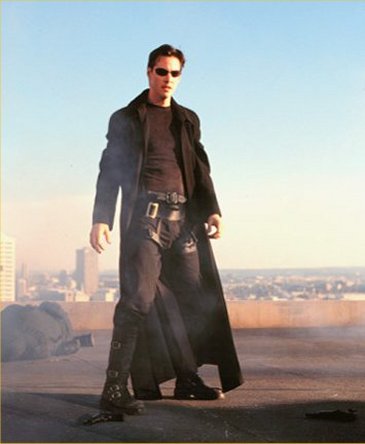
(Picture shows actor Keanu Reeves in his role of Neo from The Matrix; Sydney skyline in background)

Famous Name: Abel Tasman

19 Wednesday Sep 2012

Posted by A.O. in Famous Names

≈ 6 Comments

Tags

Akkadian names, Arabic names, Biblical names, birth notices, Dutch names, english names, famous namesakes, German names, hebrew names, honouring, locational names, Maori names, mythological names, name history, name meaning, names of seas, New Zealand names, nicknames, Slavic names, star names, surname names, TV commercials, US name popularity

Last Wednesday, September 12, commemorated the founding of the colony of Tasmania. Although it doesn’t seem to be celebrated in Tasmania, I thought we’d look at the man who gave his name to the state. I chose this topic several months ago, but unfortunately this recent story in the news is giving Abel Tasman a somewhat controversial image at present.

I feel like a mother who has just sent out 300 cards announcing her new daughter’s name as Sahara, then opens the paper to read with horror the headline: Murder at Sahara strip club provides clue to cocaine ring: our paper investigates the seedy underworld of the Sahara, knowing that for months the name Sahara is going to be associated with some very shady dealings. This happens to the best of parents, and possibly even the best of bloggers. However, let us continue.

Abel Tasman was the first known European to reach Tasmania and New Zealand. A Dutch seafarer, he undertook his voyages as an employee of the United East India Company (VOC) – the first multinational corporation in the world, and the first to issue stock. They were based in Batavia, now known as Jakarta, in Indonesia. This company despatched Tasman on a mission to obtain knowledge of “all the totally unknown provinces of Beach”.

That was his first problem: Beach didn’t exist. It was supposedly the northernmost part of Terra Australis, and that didn’t exist either. In fact, they had misread Marco Polo’s handwriting, which said Lohach, and referred to south Thailand, which Polo had assured all and sundry was a kingdom rich with gold. Sent off to find a non-existent kingdom of gold on an imaginary continent with faulty maps based on a vital error, Abel Tasman did the best he could under the circumstances.

On December 3 1642, he formally claimed Tasmania, which he dutifully named Van Diemen’s Land, after Anthonie Van Diemen, the Governor-General of the Dutch East Indies, and Tasman’s patron (Diemen is a homophone of demon). Battling against very rough seas, he managed to reach New Zealand ten days later, which he thought was connected to Argentina (the map’s fault again). A second voyage gave him the chance to map the north coast of Australia, which he called New Holland, and make observations of the land and its people.

From the point of view of the VOC, Tasman’s voyages were a failure. He hadn’t found Beach, located tons of gold, met anyone to trade with, or discovered new shipping routes. Although the Dutch had discovered Australia in 1606, they weren’t sufficiently impressed to follow it up, and so it was free for the British to claim many years later.

Abel Tasman did manage to make it to Thailand a few years later, although I’m sure he never realised he’d arrived in “Beach” after all. The lack of gold, it’s being called Siam, the way he was only there as a courier to deliver letters to the king – all these things helped disguise the fact he had reached his dream destination after all.

Abel was the second son of Adam and Eve in the Old Testament, and described as a shepherd, while his older brother Cain was a crop farmer. Famously, Abel is the first person in the Bible to die, while his brother Cain becomes the first murderer. The Bible doesn’t provide a motive for Cain’s actions, but it is usually assumed to be jealousy, since God was pleased by Abel’s offering from his flock, while not having a high regard for Cain’s produce. This story tends to irk vegetarians, and does make God seem rather like a capricious judge on Masterchef, but there is more to the story than meets the eye.

The archetypal simplicity of this tale of brother against brother has made an enormous impact, and been dramatised in modern stories, such as John Steinbeck’s East of Eden. Something in it speaks straight to our bones – primal emotions of rage, envy and betrayal; a deep sense of the fundamental injustice of the universe; the uneasy knowledge that those closest to us are the ones most likely to hurt us, even harm us.

Scholars believe the tale represents conflict between nomadic shepherds and settled farmers in the Middle East, at a time when agriculture was beginning to take over from hunter-gathering (this probably did sometimes end in bloodshed). Sadly, the story also serves as a commentary on the violence and hatred that has existed between religions who worship the same God, as Cain and Abel did (this still ends in bloodshed).

The name Abel is derived from the Hebrew name Hevel, often translated as “breath, vapour”, with connotations of “waste”, to indicate the transient nature of Abel’s existence. However, the name may simply mean “herdsman” to indicate his role in the story; a similar word still exists in modern Arabic. Another theory is that is based on the Akkadian word for “son”, which seems more likely as a person’s name, and fits in with modern scholarship identifying the story as based on a Sumerian myth.

Back in June, I mentioned Abel as a name I had encountered on a baby during the autumn, and considered it a rare sighting. Well, I have to eat my words, because over winter I met or heard of three new babies named Abel, and have seen a few more in birth notices. Clearly it’s a name on the rise, and in the US Abel is #237, jumping 56 places last year. With Old Testament names for boys growing in popularity, Abel is a solid, underused choice, and one that connects directly to early Australian history.

Tasman is a Dutch form of the German surname Tessmann, derived from both Slavic and German. Slavonic personal names such as Techmir, meaning “consolation”, become Tess in German. The -mann part of the name usually means “servant of”. So Tasman means “servant of Techmir”. English forms include Tesmond or Tessyman.

In Australia, Abel Tasman has given his name to the state of Tasmania, and also the Tasman Sea, which is the stretch of ocean between the east coast of Australia and the west coast of New Zealand (affectionately known as “The Ditch“). The Maori name for it is Te Tai-o-Rehua, which means “the sea of Antares”, the star Antares being associated with the height of summer, and considered a god of kindness and enjoyment. Many more places bear Abel Tasman’s name in New Zealand.

The name Tasman has a long history of use in Australia, and is most common in the state of Tasmania, which naturally feels a strong connection to it. It is turning up regularly in birth notices at the moment, and may be receiving more attention because there is currently a TV advertisement for Uncle Toby’s instant oats, with the little blond boy in the commercial being named Tasman.

This makes a fantastic name for a family which has one side from Australia and the other from New Zealand, with a baby Tasman joining both sides. The name is considered masculine in Australia, but feminised forms such as Tasmyn are thought suitable for girls. Usual nicknames are Tas, Taz or Tazzy.
UPDATE: I’ve just been informed that the reason the name Abel is skyrocketing is because of the TV show, Sons of Anarchy, where someone has a baby named Abel – thank you Twitter.

UPDATE: Thank you to blog reader Madelyn, who tells me that American actress Amy Poehler has a son named Abel.

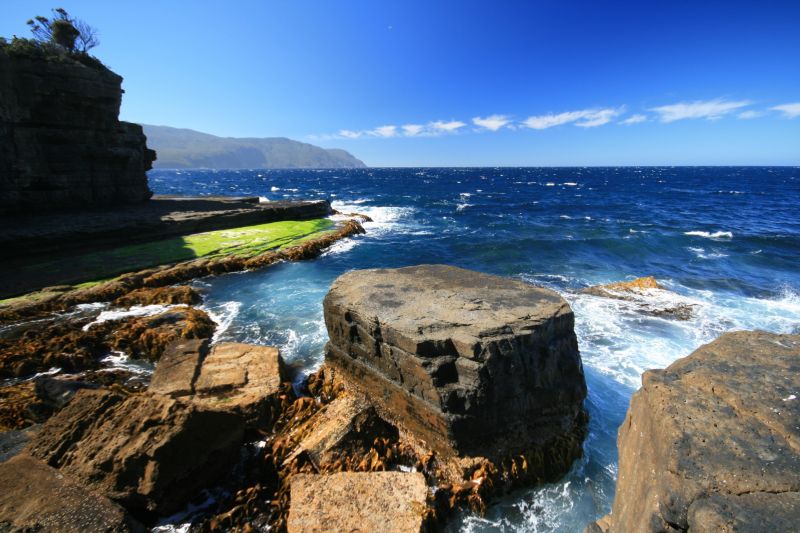
(The picture shows a view of the Tasman Sea from Tasman National Park in southern Tasmania, on the other side of the bay where Abel Tasman claimed Tasmania; photo from There’s Nothing Like Australia)

The People’s Choice of Girl’s Names

16 Sunday Sep 2012

Posted by A.O. in Name Themes and Lists

≈ 14 Comments

Tags

Australian Aboriginal names, Biblical names, birth announcements, celebrity baby names, doll names, Dutch names, English idioms, english names, famous namesakes, fictional namesakes, Finnish names, French names, germanic names, Google, Google searches, hebrew names, Hungarian name popularity, Hungarian names, Indian names, Irish name popularity, Irish names, Japanese names, locational names, mythological names, name history, name meaning, name popularity, Native American names, nicknames, Polish name popularity, Polish names, popular culture, royal names, saints names, Sanskrit names, Slavic names, Spanish names, tribal names, Turkish names, UK name popularity, unisex names, US name popularity, Visigothic names, vocabulary names, Welsh names

I have been trying to add Featured Names from those in the search terms, when possible. To celebrate the start of spring, I’m choosing ten names for each gender that people have used as search terms to reach my blog. I tried to concentrate on those that had been Googled multiple times, or which had questions attached to them, and I’ve chosen names which don’t make the Top 100.

Of course, if you would like to see a particular name featured on the blog, you don’t need to type it into a search engine and cross your fingers – you can always e-mail me directly and put in a request.

Arya

Arya is a unisex Indian name which means “noble, honourable” in Sanskrit. Common in India, it’s become known in the English-speaking world through two fantasy novelists. In George R.R. Martin’s A Song of Fire and Ice series, Lady Arya Stark is a beautiful free-spirited noblewoman who leads a very adventurous life. In Christopher Paolini’s Inheritance cyle, Arya Dröttning is an elf, later queen of the elves, and the romantic interest of the hero, Eragon. Both these characters are strong and independent, good at swordplay, horse-riding and taking care of themselves. Although there are several famous men and women in India called Arya, English-speakers probably think of it as a female name, because of the fictional characters. The Indian pronunciation is AHR-yuh, but both Martin’s and Paolini’s ladies say their names AHR-ee-uh (I’m basing this on how they are said in the TV series and the movie, as some written guides suggest AR-ee-uh or AYR-yuh). So there’s quite a selection of pronunciations. Arya recently joined the US Top 1000, and is currently #711. It would make a good heritage choice, or else an attractive literary name.

Carmel

Mount Carmel is a mountain range in Israel, and its name means “garden”. Our Lady of Mount Carmel is the title given to the Virgin Mary in her role as patroness of the Carmelite Order. The first Carmelites were Christian hermits who lived on Mount Carmel during the 12th century, and built a chapel dedicated to the Virgin Mary. They were approved as an order devoted to contemplative prayer, but didn’t stay in the Holy Land for long. They soon made their way to Sicily and Cyprus, and from there throughout Europe. Carmel was first used as a name in honour of Our Lady of Mount Carmel, perhaps especially for girls born on or near her feast day of July 16. Carmel was in rare use in 1900, then climbed steeply to make the Top 100 in 1930. It peaked in the 1940s at #77, and was off the Top 100 by the 1960s. It hasn’t charted since the 1990s. Although this name originated amongst Catholics, Mount Carmel is a place name mentioned in the Bible, and is important in Judaism, Protestantism, Islam, and the Bahá’í Faith as well, so it is usable by anyone who feels a connection to it.

Elodie

This is the Anglicised form of French Élodie, derived from the Spanish name Alodia; Saint Alodia was a 9th century Spanish martyr. The meaning of the name is uncertain, but it has been interpreted as Visigothic, from the Germanic meaning “foreign wealth”. In English it’s pronounced like Melody without the M, but the French pronunciation is ay-lo-DEE. There are several fashion boutiques in Australia with the name Elodie in them, giving it a self-consciously stylish air, and it’s a name often seen in birth announcements here, especially from Melbourne. This pretty name makes a good alternative to popular Eloise, and I can see it becoming another Amelie in the future (although a movie called Elodie would be a real help).

Kinga

Saint Kinga was born a Hungarian princess, and her name is the pet form of Kunigunde, which is from the Germanic for “family war”. Kinga had several saintly family connections, because she was the niece of St. Elizabeth of Hungary, and the great-niece of St. Hedwig. One of her sisters became St. Margaret of Hungary, while the other, Blessed Jolenta of Poland, is still being considered for canonisation. Saint Kinga was married off to Bolesław V, who became High Duke of Poland; she insisted that the marriage remain chaste, and although her husband wasn’t happy about the situation, he reluctantly agreed. During her marriage, she devoted herself to charitable works, and after being widowed, became a nun and spent the rest of her life in contemplative prayer. She is the patron saint of Poland and Lithuania, and her name is a popular one in both Hungary and Poland. This name has turned up repeatedly in the search terms ever since comedian Merrick Watts and his wife welcomed their daughter Kinga Rose in December last year. It’s apparently pronounced KEEN-gah, and makes an unusual and attractive heritage choice.

Mika

This little name has several different origins. Mika is a Japanese girl’s name translated as “beautiful fragrance”. It is also a Native American word, meaning “racoon” in the Osage and Omaha-Ponca languages of Oklahoma and Nebraska. However, it’s an Australian Aboriginal word too, because mika means both “moon” and “month” in the Nyungar language of south-west Western Australia. This is a name I’ve seen used a lot in the past, although not so much lately. It often appears in variant spellings, such as Meeka or Meekah – presumably to make the pronunciation clearer, because it is said MEE-kuh, and not like the boy’s name Micah. However, it’s possible that these variants were trying to provide a phonetic spelling of the Dutch name Mieke, which is a pet form of Maria, and said exactly the same way. Mika is similar to popular names such as Mia and Mila; it could also be understood as a short form of Mikayla. Just to confuse things further, Mika is an unrelated boy’s name as well – it’s a pet form of Mikael, the Finnish form of Michael. I suspect the reason I see less babies with this name is the British singer Mika, who now makes it seem male.

Niamh

Niamh is an Irish name meaning “bright, radiant”. In Irish mythology, Niamh was a goddess, the daughter of the god of the sea, and a fairy queen in the Otherworld known as the Land of Eternal Youth. Called Niamh of the Golden Hair, she lured the poet Oisin away to her own world, and together they were the parents of two children, Oscar and Plúr na mBan (meaning “flower of women”). Oisin thought he had been with Niamh for three years, but when he returned to Ireland, he found that three centuries had passed. Niamh gave him her white horse to ride, and warned him not to let his feet touch the ground, or he would never return to her. Later, he accidentally fell off the horse, and the three hundred years caught up with him; he became a very old man, near death. According to legend, his grave site is in Scotland. Depending on accent, the Irish pronunciation is either NEE-av or NEEV, but English-speakers tend to opt for NEEV as easier to say. This fairytale name is Top 100 in England/Wales, Scotland, Northern Ireland and Ireland, and you can see why.

Saskia

This Germanic name is derived from the name of the Saxons, a tribe from the north of Germany. We know them well, because some of them migrated to the British Isles and merged with the Angles to become the Anglo-Saxons of English history; their lands were in the south of England. The name of the tribe may come from the seax, a type of knife that the Saxons were known for using as a weapon. The seax is still an important symbol in the English counties of Essex and Middlesex, both of whom feature three seaxes in their ceremonial emblem. The Saxons who stayed behind in Germany resisted the Christian Franks for some time, but were defeated by Charlemagne and forced to convert; their lands became the Duchy of Saxony. Saxons also gained territories in the Netherlands and northern France. The name became famous through Saskia van Uylenburgh, who was the wife of the Dutch artist Rembrandt vn Rijn, and often served as a model for his paintings. In Australia the name is well known because of the actress Saskia Burmeister, who appeared in the film Hating Alison Ashley, and from the British-Australian children’s TV series Noah and Saskia, where Saskia is the Australian girl. Here the name is pronounced either SAHS-kee-ah, or SASS-kee-ah, and can be seen as a Dutch heritage choice.

Seren

This is a modern Welsh name meaning “star”, and it’s said SEH-ren. It can apparently be used for both sexes, but in Wales it is highly popular as a girl’s name and doesn’t chart for boys. Its similarity to female names such as Sarah, Serena and Serenity probably makes it seem more feminine. I’m including this one because amongst the most common search terms I receive are those asking for baby names which mean “star”, and I think this is a very pretty and simple one. Seren is also a popular unisex Turkish name, which, according to a Turkish dictionary I consulted, refers to the spar of a boat, which juts out from the sail. I’m not sure if the name is taken directly from the word, though. This might be a good name for yachties to consider – especially as boats once used the stars to navigate.

Tuppence

Tuppence means “two pennies” in the pre-decimal currency or old money. We use the word tuppence to signify a very small amount, as in the phrase, I don’t care tuppence, and is also used in the same way as my two cents to indicate you are proffering an opinion (“Well, that’s my tuppence worth”). Tuppence is theoretically unisex, and in Australia “Tuppence” was the nickname of Desmond Moran, from the notorious crime family. However, it’s usually seen as feminine, as in the British actress, Tuppence Middleton, or the nickname of Agatha Christie’s detective, Prue Beresford, in Tommy and Tuppence. Little Tuppence was a New Zealand fashion doll sold throughout Australasia in the late ’60s (a slight rip-off of American Penny Brite), and this gives it a definite girly flavour. To me it seems distinctly vintage, with a touch of English eccentric. It’s Penny to the power of two!

Zaria

Zaria is a goddess of beauty in Slavic mythology, and her name means “dawn” – the time of day when people would pray to her. She is a goddess of warriors, and was invoked to protect against death in battle. The Dutch royal family have a little Countess Zaria, aged six; she is the daughter of Prince Friso and Princess Mabel of Orange-Nassau. Although her first name is Joanna, she is officially known as Zaria, and was named after the goddess. Zaria seems like a great alternative to popular Zara, and very much like Azaria without the baggage. In the US, Zaria has been Top 1000 since the mid 1990s, and is currently #753.

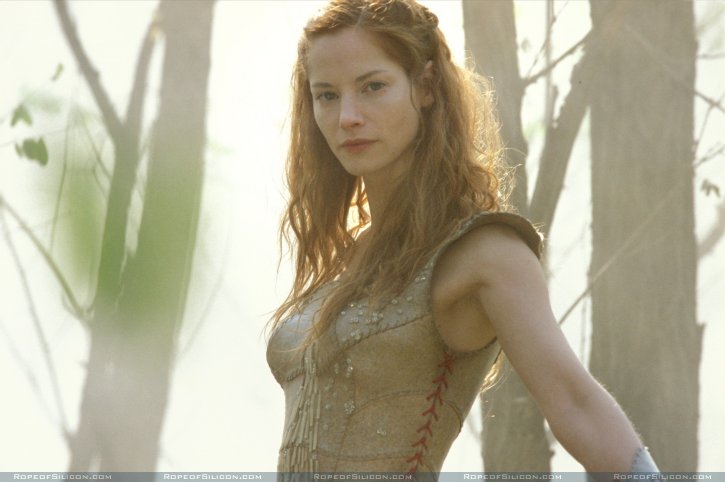
(Picture shows actress Sienna Guillory in the role of Arya from the movie Eragon)

Famous Name: London

12 Wednesday Sep 2012

Posted by A.O. in Famous Names

≈ 6 Comments

Tags

Arthurian legends, British names, celebrity baby names, Celtic names, Disney names, english names, fictional namesakes, germanic names, J.R.R. Tolkien, locational names, mythological names, name history, name meaning, Old English names, Roman names, surname names, unisex names, US name popularity

The Olympics and Paralympics have come to a triumphant end, climaxing with a a concert, grand parade and a spectacular fireworks display which lit up the sky over the Thames and Tower Bridge. The sporting festival has been a golden summer for the city of London, which has gained new confidence after putting on a fantastic Olympic Games, followed by the most successful Paralympics Games ever. The city of London itself looked richly alluring, with its parks and gardens in leaf under the sun, or its historic buildings looking grand yet discreet in the grey drizzle.

I know many people who couldn’t wait to visit London, or visit it again, after watching the coverage of the Olympic Games, and it’s a city which has drawn many Australians to it, for holidays, to work, and sometimes to live permanently. Since the post-war era, it seems as if we have been sending Australians to Britain in droves, and most of them seem to end up in London. They give us a bunch of convicts, and in return they get Barry Humphries, Kylie Minogue and a ton of drunk Aussie backpackers. Whether this is a fair trade or not only history can decide.

London was first established as a town around 47 AD by the Romans, who called it Londinium. It is almost certain that they based it on a local name for the area, which may be Celtic, or perhaps even older. What that name may have signified has taxed the brains of etymologists for many years, with none of them coming up with a theory that has gained widespread acceptance.

The very first theory put forward was by medieval chronicler Geoffrey Monmouth in his History of the Kings of Britain. He asserted that the name is derived from the name of King Lud, who once ruled the area. It would thus mean “Lud’s fortress”, although there is no evidence of Londinium ever being fortified, and in fact seems to have been built as a civic and mercantile centre; perhaps “Lud’s valley” would be more accurate. The name Lud may be connected to a mythological figure named Llud Llaw Eraint, who is the Welsh version of a British god named Nodens.

Nodens was a Celtic god of the sea, hunting, dogs, and healing, and a patron of amputees, and there is a ruined temple complex in his honour in Gloucestershire, while other artefacts connected to him have been found in Lancashire and on Hadrian’s Wall. He is sometimes identified with the Fisher King of medieval myth, who features so enigmatically in Arthurian legend.

J.R.R. Tolkien derived the name Nodens from a Germanic root meaning “acquire, own, utilise” from an earlier word with connotations of “catch, entrap”. This would certainly fit in with Nodens as a god of hunting, and at this point most scholars seem to be in general agreement with the meaning proposed by Tolkien.

Several places in Britain and Ireland derive their names from Nodens, and it doesn’t seem too far-fetched that London might too. The reason Geoffrey of Monmouth’s theory has been given short shrift is that like many medieval chroniclers, his work is quite fanciful, and riddled with errors in etymology. For example, he latched onto Lud as the origin of London because of Ludgate in the London Wall; most likely it’s a corruption of the Old English for “swing gate”. However, even though Geoffrey of Monmouth got a lot of things wrong, he may have been drawing on genuine traditions of London being sacred to Nodens in ancient times.

According to Geoffrey of Monmouth, the Romans built a temple to Lud, but if so, it remains elusive. There are statues of Lud and his sons, once adorning Ludgate, which are now on a church porch in Fleet Street, while a pub at Ludate Circus was once called Old King Lud. Although the building now houses a Leon restaurant, medallions commemorating King Lud can still be seen on its roofline and over its doors. So King Lud aka Nodens still maintains a presence in London town.

If I may stick my own ignorant oar into the debate, I can’t help noticing that names of places near a river nearly always have a meaning connected to it. As Nodens was a god of the sea, and the part of the Thames near London is a tidal river, this notion of mine does not cancel out the idea that it was connected to Nodens in some way. The Museum of London tells us that finds of prehistoric artefacts dredged from the Thames provide copious evidence that they were placed there as votive offerings, and that the deity presiding over the river was worshipped.

Could this hypothetical deity have been Nodens? Possibly, but it’s all getting very speculative, so I think we have reached the end of our investigations for now. In my uneducated opinion, London’s name is probably connected to its river, and quite possibly to the deity presiding over it, who may very well be Nodens. Apart from that I can say no more, except that Britain’s capital is a vital part of its ancient and rich mythology.

London has been used as a first name since at least the 17th century, and was first given to boys, most likely from the surname London, after the city. It’s possible that even early Londons were named directly in honour of the city, as many were born in London districts.

From very early on, London was used for both genders, and although I can easily understand it as a unisex name, I have slightly more trouble comprehending why it has become so much more popular for girls. While cities such as Paris and Florence have a certain “feminine” vibe, to me, London has quite a “masculine” feel – solid, serious, the seat of business and government. The name London also fits the pattern for many of our popular male names – two syllables, ending with an -n, such as Aidan, Mason, Logan or Nathan. In fact it’s only one letter different from a male name – Landon, while its last three letters form a male nickname – Don.

I have been told that the reason for this is the character of London Tipton, from the Disney TV series, The Suite Life of Zack & Cody. However in the US the name was always more popular for girls, even before the show came on air – although its popularity as a girl’s name certainly increased markedly after the show started. I suspect that for many parents, London seemed like a more “classy” version of the name Paris, whose image had become slightly tarnished. Intriguingly, Miss Paris Hilton apparently plans to name her first-born daughter London; I wonder what effects that might have, if it ever happened?

London has charted as a baby name for both sexes in the US for over ten years, and currently it’s #560 for boys and #94 for girls. Although it’s not such a popular name in Australia (although it’s seen more use than you might expect), I wouldn’t be surprised if a similar gender disparity wasn’t apparent here too. Early this year we welcomed celebrity baby London Joy Polak, partly named in honour of the city, where her grandfather was from.

Despite its long history, London still seems a very “modern” name, and one that would be especially suitable for anyone who has a connection to the city. I think it works well as a name for both boys and girls, and matches nicely with a wide variety of middle names. Although the thought of your child sharing their name with Paris Hilton’s future offspring might give some people second thoughts.

NOTE: Not all Australian backpackers in London are drunk, at least not all the time, but that is the not totally undeserved reputation they carry.

Can You Suggest Any Names Similar to These?

01 Saturday Sep 2012

Posted by A.O. in Naming Assistance

≈ 11 Comments

Tags

Australian Aboriginal names, celebrity baby names, choosing baby names, famous namesakes, fictional namesakes, Gone With The Wind, Hollywood names, modern names, name meaning, name popularity, name substitutes, nme combinations, popular names, sibsets, surname names, US name popularity

Jools and her husband are expecting a baby in a few weeks, and have elected not to find out the sex in advance. If the baby is a boy they are all set, having easily decided on a name. However, girls’ names seem a bit trickier. Jools would like something that isn’t too popular, but isn’t too different either.

Their list so far is:

  • Sc@rlett Elle
  • H@rlow Eve
  • Mill@ Rose

Jools and her husband already have a little boy named J@sper (he has a modern middle name that makes his name seem quite “cowboy cool”), and their surname starts with F and ends in N.

Jools would like to know what people think of the names they have come up with so far, and if there are any names similar to these that they might prefer.

~~~~~~~~~~

I think the names you’ve already picked are perfectly fine – they’re pretty, fashionable, modern names that are familiar to everyone from their Hollywood associations, but none of them are crazy popular as yet. They all seem okay with your surname, and I can imagine them as sisters to your son.

To me, Scarlett sounds best with your surname and the best match with J@sper, although for some reason Sc@rlett Elle doesn’t quite gel as a name combination – the two names seem to run into each other a little too much, maybe. I’d probably prefer the middle name to start with a consonant, such as May or Louise (just as examples). To me that sounds a bit crisper and more defined.

Milla is a lovely name, and the name combination you’ve chosen very attractive. However, if you were concerned about popularity, then Harlow is the least common of the names – although I’m pretty sure it’s scorching up the charts, and will be in the Top 100 within a few years.

Basically you could go with whichever of these you like best, but the fact you’re still looking for names suggests that you are not completely satisfied with any of them. You’ve still got a few weeks, so consider a wide range of names and step outside your comfort zone a bit. Then, if you don’t like any of them, you can go back to your original list with more confidence.

Here’s a few names to think about:

If you like Scarlett, you may like:

  • Bonnie – this is another name from Gone with the Wind; Bonnie was Scarlett and Rhett’s daughter. I think it sounds sweet and pretty, yet not frilly or sugary. It’s never been in the Top 100, but I think it will be there in a year or three.
  • Russet – it’s another surname that means “red”, and has the same T-ending as Scarlett, but it’s very rare and much more daring.
  • Sadie – to me this sounds like another “Southern belle” type name; it’s getting quite hip, but still isn’t popular at all. Like Scarlett was around 15 years ago.

If you like Harlow you may like:

  • Cleo – similar sound and references another famous woman known for her beauty. Like Harlow, it’s getting very fashionable, but not popular yet.
  • Meadow – this is another American-style name which is very underused in Australia. It may seem slightly out-there. Just like Harlow did a few years back.
  • Marlowe – this is the name of Sienna Miller’s new daughter, and it’s bound to become a “hot” name – just like Harlow did after Nicole Richie and Joel Madden chose it for their daughter.

If you like Milla you might like:

  • Millie – I really love this one as a match with your son’s name. It’s a cute name, and others must agree, as it climbed 90 places last year.
  • Milea – pronounced mi-LAY-uh, this name sounds European and sophisticated, just like Milla. Its origins are equally ambiguous.
  • Willa – a fashionable celebrity baby name just starting to chart in the US. It has an Aussie connection, because willa is an Aboriginal word for “woman”.

Wild Card Suggestions

  • Airlie
  • Avalon
  • Blythe
  • Charlize
  • Coco
  • Mika
  • Milana
  • Monroe
  • Tempest
  • Willow

Readers, which name do you like best that would fit with Jools’ requirements? And can you think of any other names in a similar style she might like?

NOTE: The baby’s name was Milla Harlow!


Famous Names: Ned Kelly

29 Wednesday Aug 2012

Posted by A.O. in Famous Names

≈ 12 Comments

Tags

African names, African-American names, American names, Anglo-Saxon names, Australian idioms, banned names, birth announcements, British Baby Names, Cornish names, English name trends, english names, famous namesakes, folk etymology, Google, Irish names, locational names, middle names, name history, name meaning, name popularity, nicknames, popular culture, Scottish slang, surname names, unisex names, US name popularity

On August 2 this year, it was reported that the descendants of notorious bushranger Edward “Ned” Kelly were about to receive his remains, 132 years after he was hanged for murder. At that time, the bodies of executed prisoners were buried in unmarked graves in Melbourne Gaol, and Kelly was one of them. In 1929, he and several others were re-buried in Pentridge Prison during renovations to Melbourne Gaol, and last year scientists were able to identify Ned Kelly’s skeleton from a group of twenty-four at Pentridge, by comparing his DNA to that of living members of the Kelly family. The Kellys can now give Ned a private burial.

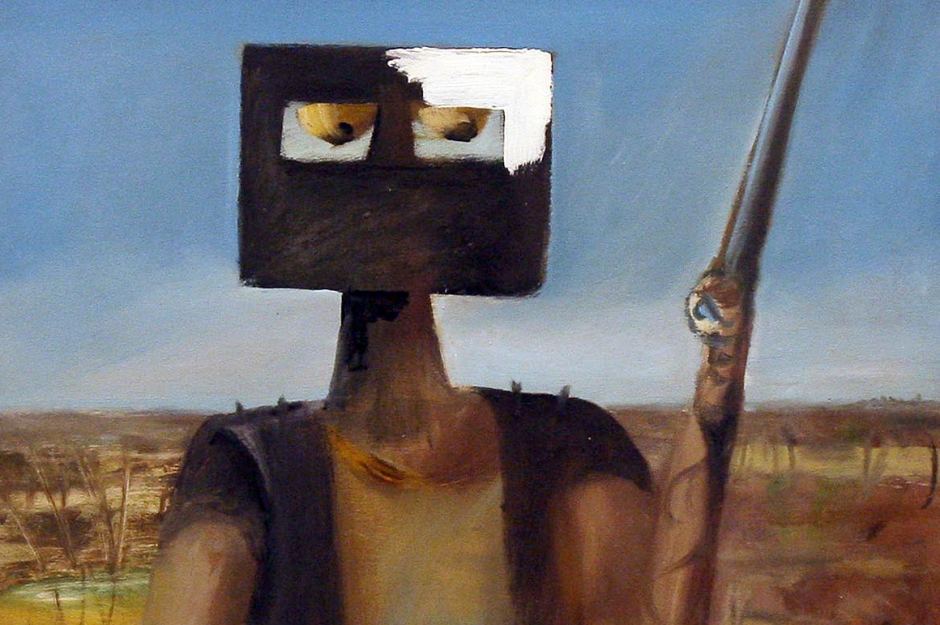
Ned Kelly was the son of an Irish convict, and gained notoriety as a horse thief and cattle rustler before being convicted of bank robbing and murder. He was hanged on November 11 1880. He looms large in the Australian imagination, and is widely seen as a folk hero, and a symbol of Irish-Australian resistance against the ruling classes and police corruption. There is in the Ned Kelly legend a particular type of Australian masculinity which is admired: physically powerful, ballsy, defiant, daring, anti-authority, and an under-dog. The phrase, As game as Ned Kelly, is the ultimate praise for bravery, and his legend has spawned countless folk stories and ballads – not to mention a few films.

The name Ned is a pet form of names starting with Ed-, such as Edward and Edmund. It has been used as a nickname since at least the 14th century, and as an independent name since the 17th century. One theory is that it began life as a contraction of the affectionate “mine Ed“, which became understood as “my Ned”. Although this can’t be verified (and Elea at British Baby Names remains slightly sceptical), the story does add a layer of sweetness to the name.

It is among the first names that crossed the pond, because a baby named Ned was born in the English colony of Virginia, so it became a British and American name almost simultaneously. It has often appeared in American popular culture, such as Ned Flanders on The Simpsons and Ned Dorsey from 1990s sit-com Ned and Stacey. All-American girl detective Nancy Drew even had a boyfriend named Ned Nickerson. (Ned and Nancy! Adorable!). Ned was on the US Top 1000 until the mid-1970s.

Like Kevin in England and Bevan in Australia, it’s a name with a bad rep elsewhere, because in Scotland ned is slang for a hooligan or petty criminal. Given our own history with the name, this seems unlikely to put Australian parents off. Here solid unpretentious Ned will always be associated with folk hero Ned Kelly, but as it’s currently fashionable as an upper-class name in England, this makes it seem quite chic as well.

Kelly is an Anglicisation of the Irish surname Ó Ceallaigh, meaning “son of Ceallach”. Ceallach is often interpreted as meaning “bright headed”, but it may mean “church-going”, as the Irish word for church is ceall. It can also be seen as an Anglicisation of Ó Cadhla, meaning “son of Cadhla”, with the male name Cadhla meaning “attractive, graceful”.

Outside Ireland, the surname Kelly can be from place names in Scotland (in this case, probably from the Anglo-Saxon meaning “calf hill”) and in Devon, the latter derived from the Cornish word for “grove”. However, it is much more common as an Irish surname.

Kelly has been used as a first name since at least the late 17th century, and is another name which seems to have been used in Britain and America almost at the same time. It appears to have quickly become far more common in America as an Irish heritage name.

Although the name was first given to boys, in a relatively brief space of time the name seems to have been accepted as unisex, with roughly even numbers of males and females named Kelly in colonial America. Quite a few of the early American Kellys arrived directly from Ireland itself, and these were just as likely to be female, if not more so.

I don’t know why, but the name seems to have been commonly given to the sons and daughters of Christianised black African indentured servants in early colonial America. I would be fascinated to know the reason for this, and wonder if there is an African name Keli that seemed familiar to both cultures. Or perhaps working alongside Irish indentured servants gave them a fondness for the name.

Kelly first shows up on the US Top 1000 in 1880 as a male name, and first appears there for females in 1944. It grew in popularity for both sexes, but really took off as a girl’s name in the 1950s with the fame of glamorous Hollywood actress Grace Kelly (of Irish background). After she became Princess Grace of Monaco, the name simply bounded up the popularity charts.

Kelly peaked for both boys and girls in the late 1960s, but then lost ground as a boy’s name, while maintaining a female presence; it even managed to peak again for girls in the 1970s. Kelly hasn’t ranked as a boy’s name in the US for ten years, while it is now #335 for girls, and falling.

In Australia, the history of the name is much shorter, and it only ever charted for girls. It first appears in the charts in the 1950s at #560 (about one Kelly per year). By the following decade, it was already in the Top 100, and peaked in the 1970s at #13. It left the Top 100 in the early 2000s, and last year just ten baby girls named Kelly were born in New South Wales, giving it a ranking of #641.

Amongst the most common Google searches used to reach my blog are those enquiring about using Kelly as a boy’s name, and many of these are from Australia. With Kelly becoming rare as a name for girls, and the fame of American world surfing champion Kelly Slater (of Irish background) lifting its profile internationally as a male name, this seems the perfect time for Kelly to step up and gain more use for boys in Australia.

I hope that these assiduous Googlers are giving serious thought to choosing Kelly as their son’s name. I scan the birth notices for Kelly, and this year I have only seen it used as a middle name for boys. However, Kelly Slater himself uses his middle name (his first name is Robert), so these babies do have the choice to go by the name Kelly when they get older.

NOTE: Although you are free to call your child Ned, or Kelly, it is, bizarrely, forbidden in New South Wales to name a baby Ned Kelly. This makes Ned Kelly one of Australia’s rare illegal names.

(The picture is from Sidney Nolan’s series of paintings of Ned Kelly in his armour 1946-47. These images are some of the most iconic and recognisable of Australian artworks. Taken from ABC News).

← Older posts
Newer posts →

Enter your email address to follow this blog

Categories

Archives

Recent Comments

A.O.'s avatarwaltzingmorethanmati… on Zarah Zaynab and Wolfgang…
Madelyn's avatarMadelyn on Zarah Zaynab and Wolfgang…
JD's avatardrperegrine on Can Phoebe Complete This …
A.O.'s avatarwaltzingmorethanmati… on Rua and Rhoa
redrover23's avatarredrover23 on Rua and Rhoa

Blogroll

  • Appellation Mountain
  • Baby Name Pondering
  • Babynamelover's Blog
  • British Baby Names
  • Clare's Name News
  • For Real Baby Names
  • Geek Baby Names
  • Name Candy
  • Nameberry
  • Nancy's Baby Names
  • Ren's Baby Name Blog
  • Sancta Nomina
  • Swistle: Baby Names
  • The Art of Naming
  • The Baby Name Wizard
  • The Beauty of Names
  • Tulip By Any Name

RSS Feed

  • RSS - Posts

RSS Posts

  • Celebrity Baby News: Melanie Vallejo and Matt Kingston
  • Names from the TV Show “Cleverman”
  • Can Phoebe Complete This Sibset?
  • Zarah Zaynab and Wolfgang Winter
  • Baby, How Did You Get That Name?
  • Celebrity Baby News: Media Babies
  • Celebrity Baby News: Adelaide Crows Babies
  • Celebrity Baby News: Chris and Rebecca Judd
  • Names at Work: Name News From the World of Business and Employment
  • Celebrity Baby News: Sporting Round Up

Currently Popular

  • Celebrity Baby News: Alisa Camplin and Oliver Warner
  • Rare Boys Names From the 1950s
  • The Top 100 Names of the 1930s in New South Wales
  • Sad Celebrity Baby News (contents may cause distress)
  • Girls Names From Stars and Constellations

Tags

celebrity baby names celebrity sibsets english names famous namesakes fictional namesakes honouring locational names middle names name combinations name history name meaning name popularity name trends nicknames popular names saints names sibsets surname names twin sets unisex names

Blog at WordPress.com.

Privacy & Cookies: This site uses cookies. By continuing to use this website, you agree to their use.
To find out more, including how to control cookies, see here: Cookie Policy
  • Subscribe Subscribed
    • Waltzing More Than Matilda
    • Join 517 other subscribers
    • Already have a WordPress.com account? Log in now.
    • Waltzing More Than Matilda
    • Subscribe Subscribed
    • Sign up
    • Log in
    • Report this content
    • View site in Reader
    • Manage subscriptions
    • Collapse this bar
 

Loading Comments...