• About
  • Best Baby Names
  • Celebrity Baby Names
  • Celebrity Baby Names – Current
  • Celebrity Baby Names – Past
  • Featured Boys Names
  • Featured Girls Names
  • Featured Unisex Names
  • Links to Name Data
  • Waltzing on the Web

Waltzing More Than Matilda

~ Names with an Australian Bias of Democratic Temper

Waltzing More Than Matilda

Tag Archives: saints names

Waltzing with … Benedict

11 Sunday Aug 2013

Posted by A.O. in Waltzing with ...

≈ 6 Comments

Tags

famous namesakes, honouring, Latin names, middle names, name combinations, nicknames, papal names, rare names, saints names, sibsets
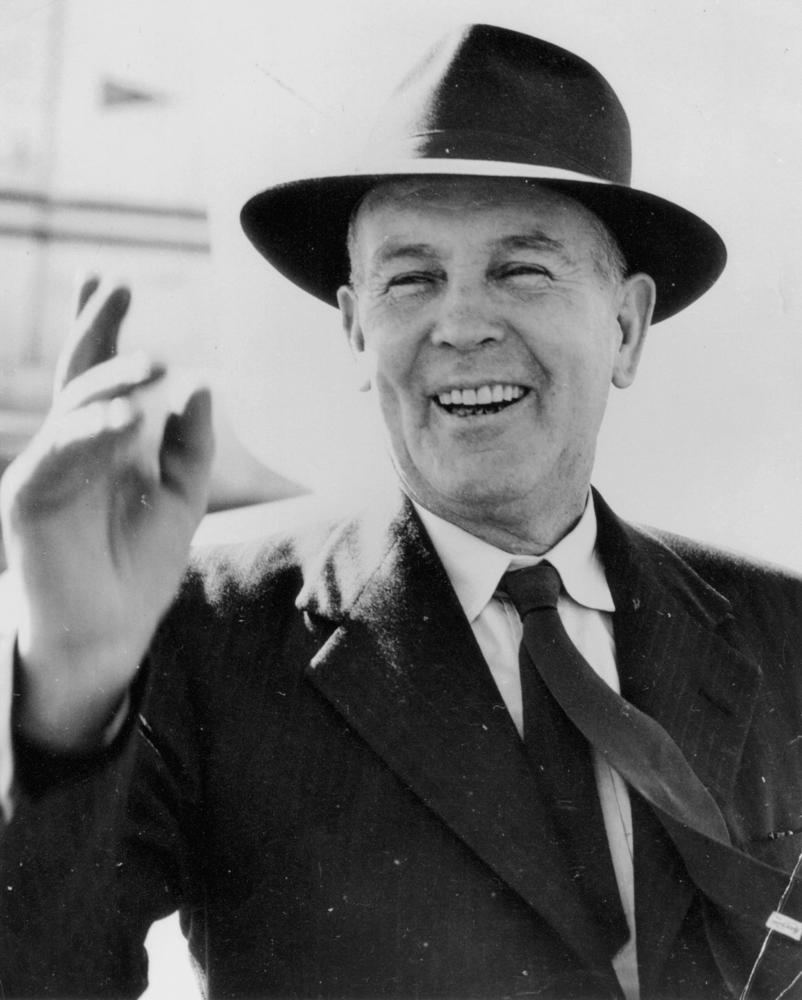
StateLibQld_1_80007_Ben_Chifley

On Thursday August 15, it will be Victory in the Pacific Day, which commemorates the day that Japan surrendered in 1945, effectively ending World War II. In Australia, Labor leader and Prime Minister Ben Chifley announced the news in a radio broadcast at 9.30 am on Wednesday August 15 1945, with the words, Fellow citizens, the War is over. Australian cities and towns erupted into spontaneous celebration, and by evening, the jubilant crowds were the largest to have ever gathered in the nation’s history.

One of Australia’s iconic images from history is the “dancing man” who was filmed by MovieTone News dancing happily in Elizabeth Street in Sydney on August 15 1945. Several men have claimed to be the Dancing Man, and the image remains an enduring symbol of the nation’s joy that the war was over at last. A well-attended church service of thanksgiving was held in the Domain that afternoon, and with the next two days declared holidays, there were Victory parades all over the country.

When Ben Chifley announced the war was over, he had only been Prime Minister for a month. He led Australia into the post-war era, with the promise of “sane and progressive government” and was successful in moving us to a peace-time economy. Servicemen and women were eased back into civilian life, and public works such as the Snowy Mountains Hydro-electricity Scheme meant that unemployment was virtually nil. This demand for labour opened the door for assisted migration schemes, which were to change Australia forever.

Chifley brought in many welfare initiatives, including unemployment benefits, sickness benefits, fairer pensions and, against a legal challenge by doctors, what was to become the Pharmaceutical Benefits Scheme, which subsidises the cost of essential medicines. His promises to improve equality in wealth, income and opportunities came to fruition during the prosperity of the 1950s and ’60s.

Ben’s full name was Joseph Benedict Chifley, and his second name was suggested by the Mother Superior of Saint Benedict’s Convent in Queanbeyan, where his mother Mary had worked as a servant. He grew up in a Catholic community, but defied the papal decree that Catholics could not marry outside their religion when he wed Elizabeth McKenzie, a Presbyterian. Although he continued attending mass, he considered himself to be outside the Catholic church, and labour politics became his true religion – one which he followed with an evangelical zeal.

He is most famous for his “Light on the Hill” speech, which he gave at a Labor conference in 1949, towards the end of his term as Prime Minister (and not long before his life ended). He spoke of the many people in the labour movement, including himself, who worked not for personal gain, but in order to bring better conditions for others.

He said: I try to think of the Labor movement … as a movement bringing something better to the people, better standards of living, greater happiness to the mass of people. We have a great objective – the light on the hill – which we aim to reach by working for the betterment of mankind.

For his idealism, his humanity, and his vision, Ben Chifley is counted amongst the nation’s greatest Prime Ministers. So much of the Australia we know today began with Chifley’s aspirations for a future he would never live to see.

Benedict is derived from the Latin name Benedictus, meaning “blessed”. It was a name commonly chosen by Christians for its meaning, and there are several saints named Benedictus or Benedict.

The most famous of these is Benedict of Nursia, a 6th century saint, who, according to tradition, was the son of a Roman noble. While still a very young man, he turned away from the pleasures of the world and became a hermit in a cave in the Subiaco region. He attracted many disciples, and eventually founded the famous monastery of Monte Cassino, which is in the mountains halfway between Rome and Naples.

Near the end of his life, he wrote his Rule of Benedict, which lays down the precepts for the organisation of communities of monks under an abbot. Compared to other works of this nature, Benedict’s is notable for its moderation and practicality, which made it very popular. He wrote a Monasteries for Beginners, and (unlike more zealous Rules which barely allow food or sleep), his Rule is possible for anyone to follow.

Benedict’s Rule has been used for 1500 years; the foundational document for thousands of religious communities in the Middle Ages, it is still in use today, and is the most common Rule used by monastries and monks. As the father of Western monasticism, Benedict’s importance to history can hardly be overstated. During the early medieval period, monasteries became respositories for learning, and centres of education. Because of Benedict’s influence, when the Middle Ages ended, there was enough knowledge retained to build on for the future.

Due to Saint Benedict of Nursia’s importance, many others entering the religious life (especially Benedictines) chose Benedict as their name, and it has been a favourite choice for popes. There have been sixteen Pope Benedicts, the most recent being the current Roman Pontiff Emeritus, Benedict XVI, who chose his papal name in honour of Benedict of Nursia, and of Pope Benedict XV, who had worked for peace during the First World War.

Pope Benedict said in one of his early sermons that with his life and work, Saint Benedict exercised a fundamental influence on the development of European civilisation and culture, and helped Europe emerge from “the dark night of history” that followed the fall of the Roman empire. For his role of preserving European culture, Saint Benedict was named patron protector of Europe by Pope Paul VI in 1964.

Benedict has never charted in Australia, so if you would like a rare name with a positive meaning that can mingle with the crowds as simple Ben, then Benedict seems like a good choice. It’s weighty and dignified, and honours one of the great Prime Ministers, who changed Australia, as well as a saint who changed western civilisation. It’s a name heavy with significance and history, yet actor Benedict Samuel reminds us how well this name can suit a young person.

Name Combinations for Benedict

Benedict Alexander, Benedict Jude, Benedict Leonard, Benedict Nathaniel, Benedict Sebastian, Benedict Vincent

Brothers for Benedict

Constantine, Dominic, Felix, Gabriel, Ignatius, Xavier

Sisters for Benedict

Agnes, Caroline, Eloise, Genevieve, Lucia, Margaret

POLL RESULT: Benedict received an approval rating of 80%. 33% of people liked it, and 27% of people loved it.
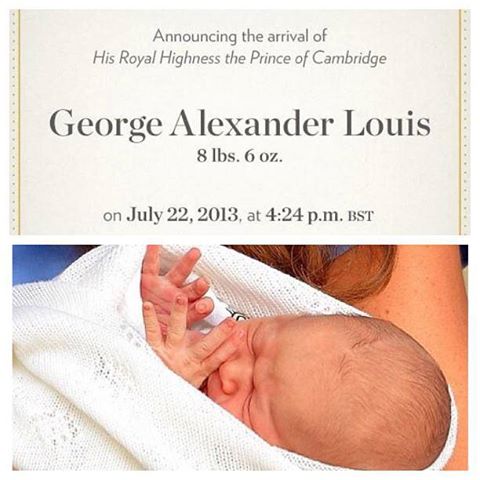
Famous Name: George Alexander Louis

31 Wednesday Jul 2013

Posted by A.O. in Famous Names

≈ 16 Comments

Tags

Biblical names, classic names, epithets, famous namesakes, French names, German names, germanic names, Greek names, honouring, middle names, name combinations, name history, name meaning, name popularity, royal names, saints names, sturdy classics, underused classics

18388_662259277118346_1655646202_n

The Prince of Cambridge was born more than a week ago, and he is still big news around the globe. As future kings are born only once in a generation or so, this makes Prince George the most famous baby in the world, and it seems like an opportune time to take a look at his names.

George is derived from the Greek name Georgios, translated as “farmer”. Because it literally means “worker of the earth”, it specifically refers to the cultivation of crops.

The name George became known throughout Europe because of Saint George. According to tradition, he was a 3rd century Roman soldier from a noble Christian Greek family in Palestine. His military career went swimmingly until he was asked to sacrifice to the Roman gods, and when he refused, he was tortured and beheaded. He is venerated by Christians as a martyr.

Much later, the legend of Saint George saving a princess from a dragon was tacked on to the story. This medieval legend came from the Eastern church, and seems to be an attempt to Christianise pagan myths such as Perseus. It was brought to Europe by the Crusaders, and became a medieval romance. Saint George is the patron saint of England, and his flag, a red cross on a white background, forms part of the Union Jack.

Despite Saint George being the patron of England, his name did not become particularly common there until George I, who was German-born, took the throne of Great Britain in 1714. The name became a traditional one in the royal family, and there have been six British kings named George; the most recent the father of the present queen; he was born Albert Frederick Arthur George, and reigned under his last middle name.

George is a common name amongst many of the royal houses of Europe, and Prince Philip’s grandfather was George I of Greece, with Prince Charles having George as his last middle name. There has only been one other Prince of Cambridge, and the first one was also named George.

The name George is a sturdy classic in Australia which has never left the Top 100. It was at its peak in the 1900s and 1910s at #4, and has never been lower than #72, which it reached in the early 2000s. Currently it is #71 nationally, #64 in New South Wales,#69 in Victoria, #79 in Queensland, #48 in Tasmania and #50 in the Australian Capital Territory.

Alexander is the Romanised form of the Greek name Alexandros, translated as “defender of men, protector of men”. It first turns up in Greek mythology as the epithet of Paris, prince of Troy, who gained it while only a child, rescuing cattle from thieves while working as a cow-herd. There was a slightly earlier real life ruler of Troy named Alexander, and it’s possible the fictional Paris ended up with his name.

Just as George is a traditional name in the British royal family, Alexander was traditional in the Macedonian royal family, and the man who made the name famous for all time was Alexander III of Macedon, otherwise known as Alexander the Great. A young man of boundless ambition, Alexander conquered much of the known world, including Persia and Egypt, and invaded India before being turned back by his own men, who were getting pretty sick of his let’s-conquer-the-whole-world attitude.

Alexander was a history-maker, a great commander who never lost a battle, a role model for the empire-building Romans, and whose military strategy is still used today. He was a figure of romance, with legends being written about him even in his own lifetime. And he took power while still a teenager, dying in his early thirties, so he is always remembered as youthful, vaunting and energetic.

The name Alexander, and its many variants, spread throughout the world. There are early Christians named Alexander mentioned in the New Testament, several saints named Alexander, and many popes.

Alexander I of Scotland was named after Pope Alexander II, who gave his blessing for the Norman Conquest, and there were two more Alexanders after him in the Scottish royal family. There has never been an English king named Alexander, but the name isn’t uncommon in the royal family, and it’s especially seen use as a middle name.

In Australia, Alexander is another sturdy classic which has never left the Top 100. It was #29 in the 1900s, and sunk to its lowest level in the 1950s and ’60s at #89. It is currently enjoying some of its highest levels of popularity, being #16 nationally, #14 in New South Wales, #9 in Victoria, #20 in Queensland, #21 in South Australia, #21 in Western Australia, #26 in Tasmania and #17 in the Australian Capital Territory.

Louis is the French form of the old Germanic name Chlodowech, Latinised as Clovis, and whose modern German form is Ludwig. It means “famous warrior”. The 5th century Clovis I was the first king of the Franks to unite all the Frankish tribes under one ruler, so that they were now ruled by a single king, with kingship descending onto his heirs. He was also the first Christian ruler of Gaul.

Having created the Frankish monarchy, it’s little wonder that his name was such a big hit with French rulers, with 19 kings of France bearing the name Louis (the last one only managed a few minutes before he abdicated). The first one was Louis the Pious, son of Charlemagne, who was not only king of France but also co-ruler of the Holy Roman Empire – Louis was a traditional name amongst the Emperors as well.

Louis IX, or Saint Louis, is the only French monarch to be canonised, and Louis XIV was known as Louis the Great, or the Sun King, one of the most powerful monarchs to ever rule France. It all went wrong for Louis XVI, who was executed during the French Revolution. The other Louis the Somethings were kings in name only, as the throne had been abolished and France was no longer a monarchy.

Although so strongly associated with the French crown, Louis has been well-used as a middle name in the British royal family – in fact George I’s full name was Georg Ludwig, or George Louis. Louis is the final middle name of Prince Edward, who may have gained it from one of his godfathers, Louis, Prince of Hesse and Rhine, and Prince William, who is said to bear it in honour of Louis, Lord Mountbatten, a mentor to Prince Charles.

Louis has several pronunciations, for in French it is said loo-EE, and in English it can either be pronounced LOO-ee or LOO-is. The royal family use the LOO-ee pronunciation. Somebody recently wrote into the blog, worrying that if she called her son Louis, people might say it LOO-is by mistake, which doesn’t seem unlikely.

The name Louis is an underused classic in Australia which has never left the charts, yet never become popular. It was #101 for the 1900s, and reached its lowest point in the 1970s at #290. Since then it has continued climbing, and is currently #113 and still going strong.

George, Alexander and Louis are excellent names for a king-to-be, and great names for any boy. All classics, these are names which have stood the test of time, and been borne by men who were not just part of history, but changed history. They are names of kings and warriors and saints, defenders of the realm, and those who sought new worlds to conquer. Yet they have been borne by so many ordinary people as well that no particular expectations come with them.

These are names perfect for a prince – are any of them perfect for your little prince?

POLL RESULTS: George received an approval rating of 66% , Alexander of 88%, and Louis of 69%.

(Photo of Prince George from Facebook)

Famous Name: Julia

03 Wednesday Jul 2013

Posted by A.O. in Famous Names

≈ 5 Comments

Tags

Biblical names, classic names, famous namesakes, Latin names, mythological names, name history, name meaning, name popularity, names of months, Old Latin names, Roman names, saints names, Shakespearean names, surname names

349237-julia-gillardJulia Gillard, who became Australia’s first female prime minister in 2010, is our prime minister no longer. Just as she became prime minister by ousting Kevin Rudd, so she was deposed in her turn when Kevin staged his long-threatened comeback and was reinstated.

Her name deserves to be covered as a “famous name” because she made Australian history by dint of her sex. As well as being the first woman prime minister, she is the first Australian PM to never be married; she is in a domestic relationship with her partner, Tim Mathieson. She is the first prime minister since Billy Hughes (1915-23) to be born overseas, because she is originally from Wales; Welsh politician Aneurin Bevan is one of her political heroes.

Much has been made of the fact that Ms Gillard is childless by choice, and an atheist, but that isn’t too unusual for an Australian prime minister. Stanley Bruce, James Scullin, Ben Chifley and John McEwen didn’t have children either, and Gough Whitlam, John Curtin, John Gorton and Bob Hawke all identified as either atheists or agnostics. She isn’t even the first redheaded prime minister – James Scullin had red hair.

Kevin Rudd also made history by returning as prime minister, because he is the first to do so since Robert Menzies in 1949, and is only the second Labor prime minister to ever do so – Andrew Fisher was the last, in 1914.

Even for those who do not agree with Julia Gillard’s politics or policies, it is admirable how hard she has worked, and what she has managed to achieve. Operating from a minority government which was tipped to do very little, she managed to get almost 500 pieces of legislation through parliament during her time in office, requiring great diplomacy and bipartisan support. (Here’s another history factoid: the last hung parliament was in 1940).

Throughout her term in office, Julia Gillard was often pilloried and treated vilely by opposition supporters. She proved to be extremely courageous and tough in the face of it, and always remained graceful under  fire. Unfortunately, her strength and dignity was probably misread by the electorate as coldness and formality, and her government failed to sell its many successes to the public.

Nevertheless, Julia Gillard has left an impressive legacy behind, including a model for other women to reach for high political office in Australia. A pity her opponents have made it unlikely any of them will want it.

The Iulia or Julia was one of the most ancient and noble families of ancient Rome, and their most famous member is Gaius Julius Caesar, the dictator who ruled the Roman Republic and helped bring about the Roman Empire. Julius Caesar gave his name to July, which makes Julia a suitable name to cover this month.

The Julii came from one of the leading houses of the Alban Hills near Rome, and gained their name from a mythical ancestor named Iulus. When it became fashionable in Rome to claim a divine origin for your noble family, the Julii decided that they were descended from Ascanius, the son of Aeneas, who according to legend founded the ancient city of Alba Longa. Aeneas was the son of a prince named Anchises, from a kingdon near Troy, and the goddess Venus. To make things easier, their ancestor Iulus was identified as being the same person as Ascanius.

The meaning of Iulus can’t be known for sure, due to its great antiquity, but it is possibly related to the name of the god Jupiter, identified as meaning “O father sky-god” in Old Latin. On the top of Monte Cavo, the dominant peak of the Alban Hills, was a very ancient shrine to Jupiter, suggesting that he had been their most important deity since time immemorial.

There are several famous women named Julia who were members of the Julia family. One was the mother of Mark Antony, another the aunt of Julius Caesar, while Julius Caesar had two older sisters named Julia, and also called his only daughter Julia, a lady renowned for great beauty and virtue.

The name Julia wasn’t uncommon in the Roman Empire, and there were many first century queens and princesses bearing the name. Saint Paul mentions an early Christian named Julia living in Rome, and there are at least two saints named Julia, who were martyrs. Julia is a character in William Shakespeare’s Two Gentlemen of Verona, another of his cross-dressing girls, and this time with a very fickle lover.

Julia is a classic name in Australia, which has never left the charts. It was #119 in the 1900s, and got as low as #205 in the 1920s before rising. It reached the top 100 in 1995 at #99, and peaked in 2000 at #64 before suddenly dropping out of the Top 100 the following year.

Since then, it has been on the decline (with a small upward blip in 2010, when Julia Gillard became the first female Prime Minister), and is currently #211, the lowest point it has ever reached. It is #153 in Victoria, the state where Julia Gillard launched her political career, and in Queensland, Mr Rudd’s home state, there are fewer babies called Julia than Kevin.

Politics rarely seems to do baby names any favours, and the name Julia appears to be rapidly losing popularity. Yet it is a classic which has never been out of the 200s, so it doesn’t seem dated. Simple and elegant, Julia travels well internationally, and on the right person, this can be a jewel of a name.

POLL RESULT: Julia received an approval rating of 72%. People saw the name Julia as classy and elegant (34%), and simple and understated (15%). However, 12% thought it was frumpy and middle-aged. 2% of people were put off the name because of Julia Gillard.

(Photo of Julia Gillard from news.com.au)

Requested Name: Genevieve

12 Wednesday Jun 2013

Posted by A.O. in Requested Names

≈ 2 Comments

Tags

Celtic names, famous namesakes, fictional namesakes, French names, Gaulish names, Latinised names, name history, name meaning, name popularity, nicknames, saints names, underused names

T6070702123509

The name Genevieve is in common use because of one woman – Saint Genevieve, one of the patron saints of Paris. Genevieve was born in the 5th century, and embarked on a holy life at an early age, because she was only a little girl when she was consecrated to God. She became a nun while still a teenager, and after the death of her parents, went to live in Paris in a religious community. Genevieve lived an austere and pious life, with frequent visions of heavenly saints and angels, and works of charity.

In 451 Attila and his Huns were sweeping over Gaul, and the inhabitants of Paris prepared to flee in terror. Genevieve encouraged them to trust in God, and urged them to pray, telling them that if they did so, Paris would be spared. Apart from anything else, this was sensible advice, because it restored calm to the city, and of course Paris would have been taken at once if its citizens had evacuated. Attila turned his hordes towards Orléans, leaving Paris untouched. (Fortunately Orléans didn’t come to any major harm, and the Huns were eventually defeated).

Some years later, Paris was taken by the Frankish leader Childeric. During the siege, Genevieve distinguished herself through many acts of self-sacrifice, and because of her diplomatic efforts, Childeric, and his successor, Clovis I, showed unusual clemency towards the citizens of Paris. Clovis I made the city his capital, which was the start of Paris becoming one of the great capital cities of the world.

A hill on the city’s Left Bank where Saint Genevieve prayed is still known as the Montagne Sainte-Geneviève, and on top of it is the Bibliothèque Sainte-Geneviève, the main reference library for students from the nearby Sorbonne, which inherited the writings and collections of a medieval abbey where St Genevieve is said to have been buried. It has been at the heart of French culture and education from the beginning. One of the library’s directors in the 20th century was Geneviève Boisard, so the saint’s name lived on in many ways.

Another famous French namesake is the legendary Genevieve de Brabant, a noblewoman falsely accused of infidelity who lived in a cave with her young son, fed by a helpful deer, until her husband found her after discovering her accuser’s treachery. The story is based on the true story of Marie de Brabant, wife of the Duke of Bavaria, who was suspected of adultery due to a mix-up in the mail, tried, and beheaded in 1256. When it was proved that the verdict had been invalid, the duke had to do penance. The change of name from Marie to Genevieve is almost certainly due to the cult of Saint Genevieve (the deer seems to be borrowed from the legend of Saint Giles).

The meaning of the name Genevieve is obscure. In medieval times the saint’s name was recorded as Genovefa (Latinised as Genoveva), a Gaulish name which may come from the ancient word for “tribe, family”, related to the word for “born”, and thus a distant relative of the word Genesis (which comes from Latin, but from the same ancient roots). Suggestions that Genevieve is a Gaulish form of Guinevere or Jennifer are persistent but most likely fanciful (for a start, Guinevere is already a French form of a name – it doesn’t make much sense a name would two different French forms).

The French spelling of the name is Geneviève, and in English, we remove the accent mark over the name, which also changes the pronunciation to JEN-uh-veev. I won’t attempt to reproduce the French pronunciations, which differ  depending on someone’s accent – a Parisian will say Geneviève differently to a French-speaker from Brussels or Montreal.

Genevieve has charted in Australia since the 1930s, entering the charts at the same time as Jennifer. I suspect that Genevieve was seen as a slightly more exotic version of Jennifer, but while Jennifer went straight into the Top 100 from nowhere, Genevieve debuted at the more modest #306. I think in some ways Genevieve has had the advantage, because while Jennifer peaked in the 1950s and enjoyed a lengthy afterglow of popularity lasting many decades, Genevieve has never been higher than #214. Currently Genevieve is #279 in New South Wales, where it is still out-performed by Jennifer at #260. In Victoria, Genevieve is #179, and Jennifer #206.

Genevieve is an elegant French name, which has remained in constant use here for many decades, without ever becoming popular. It’s pretty and feminine, but not in the least frilly – in fact, it sounds quite intellectual because of its importance to French culture. Its saintly namesake was a woman of brains and courage, and its legendary namesake part of a romantic fairytale which corrects the cruel injustice of real life.

In the past, the most common nicknames for Genevieve were Gen, Genna or Genny (still influenced by Jennifer), but you could also use Ginny, Genie, Gigi, Neve, Eva, Eve, Evie, Viv, Viva or Vivi.

Thank you to Brooke for suggesting the name Genevieve to be featured on Waltzing More Than Matilda

POLL RESULT: Genevieve received an approval rating of 83%, making it one of the most admired names of the year. People saw Genevieve as intelligent and sophisticated (21%), beautiful and romantic (20%), pretty and elegant (18%), and not overused (10%). However, 9% preferred the French spelling and pronunciation of the name. Nobody thought that Genevieve was “too French”.

(The photo shows a view of the Montagne Sainte-Geneviève in Paris, which is
in one of the oldest parts of the city. In the distance you can see the dome of the Panthéon,which was built over a church dedicated to Saint Genevieve, and according to legend, where her relics were kept)

Boys Names from the Top 100 of the 1910s

26 Sunday May 2013

Posted by A.O. in Name Themes and Lists

≈ 14 Comments

Tags

aristocratic surnames, aristocratic titles, Arthurian legends, Biblical names, British names, celebrity baby names, Celtic names, classic names, english names, famous namesakes, fictional namesakes, French names, Gaulish names, germanic names, hebrew names, Idylls of the King, King Arthur, Latin names, locational names, Lord Tennyson, name history, name meaning, name popularity, names from movies, nicknames, Norman-French names, Old Norse names, papal names, Roman names, royal names, saints names, Scottish names, surname names, unisex names, Welsh names

awm-ez0007Arthur

Arthur‘s fame comes from the legendary King Arthur, a British hero of the Dark Ages who became much celebrated in medieval romances. The meaning of the name isn’t known; some popular theories derive it from the British for “bear king” or, less convincingly, the Welsh for “bear man”. Another theory is that it is from the Roman surname Artorius, which would make King Arthur a Romanised Briton; this does fit in with some of the earliest versions of the tales. Unfortunately, it isn’t known what Artorius means, so leaves us no wiser. It’s a name we often think of as Victorian, as the 19th century was so keen on reviving medieval names, and Lord Tennyson’s Idylls of the King made the Arthurian legends popular once more. Queen Victoria’s favourite son was named Arthur, and Arthur Wellesley, the Duke of Wellington, and detective writer Arthur Conan Doyle were two other famous Victorian namesakes. Arthur was #6 in the 1900s, and peaked in the 1910s at #5. It didn’t leave the Top 100 until the 1960s, and reached its lowest point in the early 2000s at #334. Since then it has been rising gently, and is currently #216. Handsome and noble, this is a classic which isn’t overused and the nickname Artie is a good alternative to popular Archie.

Clarence

Clarence seems to have started out as a girl’s name, presumably an elaboration of Clare or variant of Clarice. In the 19th century, although given to both sexes, it was much more common as a boy’s name, due to Queen Victoria’s son Leopold, the Earl of Clarence. The title is said to originate from the town of Clare in Suffolk, owned by the first Duke of Clarence, Lionel of Antwerp, in the 14th century. The town’s name was originally Clara, from Roman times – this was either from the Latin for “clear” because of the Chilton Stream which flows through the town, or a Latinisation of a Celtic word, but scholars seem to currently lean towards the first explanation. Clarence was #30 in the 1900s, #42 in the 1910s , and left the Top 100 in the 1940s. It hasn’t charted since the 1960s. Famous as the angel in It’s a Wonderful Life, this might seem like an “old person name”, but actor Clarence Ryan, who has starred in kid’s TV shows Lockie Leonard and Dead Gorgeous, gives us a chance to see the name on a young man. The classic nickname is Clarry, but Ren would be neat.

Ernest

Ernest is a Germanic name meaning “vigour, strife”, only very distantly related to the English word earnest. It was a name used by German royalty and nobility, and introduced to England in the 18th century when the Hanoverians inherited the British throne. Famous men named Ernest include New Zealand-born physicist Ernest Rutherford, British explorer Ernest Shackleton, American author Ernest Hemingway and Australian TV host Ernest “Ernie” Sigley. The name also reminds us of Ernest Worthing, from the Oscar Wilde play, The Importance of Being Earnest. Ernest was #16 in the 1900s, #17 in the 1910s, and left the Top 100 in the 1950s. It hasn’t charted since the 1970s. Ernest seems like one of those granddad names that could easily be used again; it’s strong and appealing, almost sounds like a virtue name, and Ernie makes a cute nickname. In a recent poll on the blog, Ernest was voted the male name from the 1900s that people most wanted to be revived.

Horace

Horace is the name by which the Roman poet Quintus Horatius Flaccus is known in English. He was a member of the Horatii, an ancient noble family of Rome. The family name Horatius is said to go back to a legendary hero named Horatus; the meaning of his name is unknown. The poet Horace used to make puns on his own name and its similarity to the Latin hora, meaning “hour”, and from this exhorting to “seize the day” and make the most of time. The elegant and witty poetry of Horace was a great influence on English literature from the Middle Ages onwards, but to modern eyes his love poetry appears brutally unromantic (he seized the day with an awful lot of people). The name Horace was #45 in the 1900s, #57 in the 1910s, and had left the Top 100 by the 1930s. It hasn’t charted since the 1940s. Unfortunately for the name, Horace always seems to be used for comic characters in fiction, often overweight ones, such as barrister Horace Rumpole of the Bailey and Horace Slughorn from Harry Potter. Indeed, the Roman poet himself was short and rotund, giving this name a portly sound. However, it also seems sturdy and reliable – and you could use Ace as a contemporary nickname.

Joseph

Joseph is a form of the Hebrew name Yosef. In the Old Testament, Joseph was the son of Jacob and his favourite wife Rachel. The meaning of the name appears to be “Yahweh shall add (a son)”, but the Bible makes a pun about Joseph also “taking away” his mother’s shame of being barren – a little mathematical joke. Jacob spoiled Joseph terribly, gave him some fancy duds, and his jealous brothers sold him into slavery after he unwisely shared a dream he had about being way better than them. Through a series of adventures where his dream skills were more appreciated, he became the most powerful man in Egypt after the Pharaoh, and was reunited with his family, who he received with love and forgiveness. In the New Testament, Joseph was the husband of Mary, and the earthly father of Jesus; he is regarded as a saint. Joseph was #17 in the 1900s, and #23 in the 1910s. A sturdy classic which has never left the Top 100, the lowest it’s ever been is #68 during the 1940s. Currently it is #52 in New South Wales. Although last year it fell somewhat, Joseph is an extremely safe choice with Joe as the standard and popular nickname.

Laurence

Laurence is the English form of the Roman surname Laurentius, meaning “from Laurentum”. Laurentum was an ancient city near Rome whose name may mean “laurel tree”. The Romans wore laurel wreaths to symbolise victory, so it’s a very positive meaning. (In France, Laurence is the feminine form of Laurentius). Laurence became well known because of Saint Lawrence, a 3rd century martyr put to death for not handing over the church’s money to the Emperor. According to legend, he was roasted on a gridiron, cheekily saying, “I’m done – turn me over!”. He is one of the most popular saints, and widely venerated. Laurence was #87 in the 1900s and #72 in the 1910s; it peaked in the 1920s at #62, and didn’t leave the Top 100 until the 1960s. Laurence hasn’t charted in New South Wales since 2009, but in Victoria it is #494. This name is sleek and handsome, but presently much more popular in the middle than up front.

Maxwell

Maxwell is a Scottish surname which comes from a place named Maccus Well or Maxwell on the Scottish Borders. The name came about when a Norman lord named Maccus obtained land on the River Tweed, with a salmon pool soon known as Maccus’ Wiel – Maccus’ pool. Maccus is from the Old Norse name Makkr, a form of Magnus, meaning “great”. A grandson of Maccus became chamberlain of Scotland, and through him many branches of the family grew through south-west Scotland. Clan Maxwell was a very powerful Lowland clan who operated as one of the great noble houses of Scotland, holding titles of high esteem. Maxwell has been used as a first name since the 17th century, and in Scotland was sometimes given to girls. Entertainer Jessica Simpson raised eyebrows when she named her daughter Maxwell last year. Maxwell was #118 in the 1900s and #79 in the 1910s. It peaked at #29 in the 1930s, and left the Top 100 in the 1960s. Maxwell hit its lowest point in the 1970s and ’80s, when it plateaued at #318. After that it climbed, and was just outside the Top 100 when it fell to #139 in 2011. The retro nickname Max makes this a very attractive choice.

Percy

Percy is an aristocratic surname used as a first name. William de Percy was a Norman who arrived in England in 1067; he may have lived in England before the Conquest, but been expelled and returned when it was safe. He was granted large tracts of land, and it is from him that the House of Percy descends. The Percys were the most powerful noble family in the north of England during the Middle Ages, and rivals to the Nevilles. Various Percys did all the usual noble things – signed the Magna Carta, took leading roles in wars and battles, governed Virginia. George Percy, Earl Percy, the current heir to the Dukedom of Northumbria, was Pippa Middleton’s housemate, and is close friends with her. The name Percy comes from the manor of Perci-en-Auge in Normandy; it’s derived from the Roman personal name Persius, of unknown meaning, and may be a Latinisation of a Gaulish name. Percy was #41 in the 1900s, #48 in the 1910s and had left the Top 100 by the 1930s. It hasn’t charted since the 1940s. Because Percy can be used as a nickname for Percival or Perseus, it fits in well with the trend for old-fashioned nicknames like Ned or Ollie.

Ronald

Ronald is a Scottish form of Ragnvaldr or Rognvaldr, an Old Norse name meaning something like “well-advised ruler, decisive ruler”. The Gaelic form of the name is Ragnall, and this was Anglicised as either Ranald or Ronald (the Latinised form is Reginald). The Norse name was introduced to Scotland by settlers from Scandinavia, and there were several powerful Norse rulers of northern England and Scotland named Ragnall. Ronald was #34 in the 1900s, #10 in the 1910s, and peaked in the 1920s at #3. It didn’t leave the Top 100 until the 1970s, and only stopped charting in the late 2000s. There are two likeable fictional sidekicks which remind me of this this name – Ron Weasley, red-headed best mate of wizard Harry Potter, and Ron Stoppable, bestie of crime fighter Kim Possible. Both are played for laughs, yet are brave, loyal, and manage to get the girl. I have seen a few babies in birth notices called Ron or Ronnie, but so far I haven’t seen a full-blown Ronald. I suspect the familiar hamburger clown Ronald McDonald might hamper it – the name Ronald took a definite dive after McDonalds became established in Australia.

Victor

Victor is a Roman name meaning “victor” in Latin, which is easy enough to understand. It was a very popular name amongst early Christians, symbolising victory over sin and death. There are several saints named Victor, and three popes with the name – Saint Pope Victor I was the first African pope. Victor was commonly used as a name amongst Continental European nobility and royalty, and in the 19th century received a boost in England due to Queen Victoria. There are quite a few Victors in fiction, but the most widely-known often has his first name forgotten – Victor Frankenstein, the young Swiss scientist who brings a nameless creature to life. Writer Mary Shelley based Frankenstein on her husband Percy Shelley, who used Victor as a pen name and had been a keen science student while at university. Victor was #31 in the 1900s and #38 in the 1910s. It left the Top 100 in the 1960s, and reached its lowest point in the charts in 2009, when it dipped to #478. Currently it is #333. This is a strong, honest-sounding classic which seems rather hip.

POLL RESULT: People’s favourite names were Arthur, Joseph, and Maxwell, and their least favourite were Clarence, Ronald, and Horace.

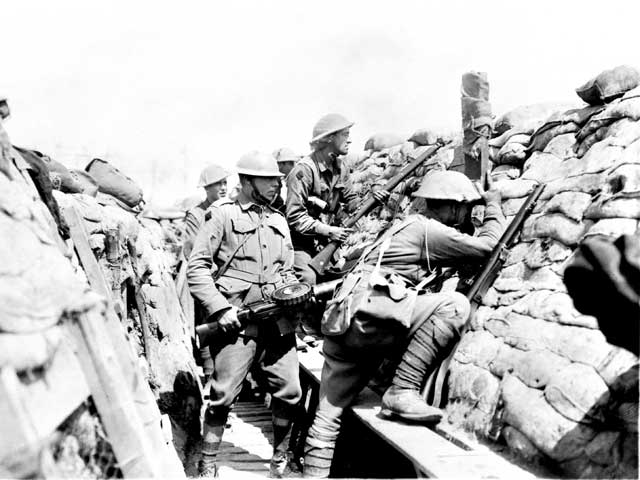
(The photo shows Australian soldiers in the trenches at Bois-Grenier near Armentières on the Western Front, 1916. Image held by the Australian War Memorial)

Girls Names from the Top 100 of the 1910s

19 Sunday May 2013

Posted by A.O. in Name Themes and Lists

≈ 18 Comments

Tags

Arthurian names, Astrophel and Stella, band names, classic names, created names, Disney names, Doctor Who, english names, famous namesakes, fictional namesakes, French words, germanic names, Greek names, hebrew names, Hollywood names, honouring, Idylls of the King, Italian names, Latin names, Little Women, locational names, Lord Tennyson, mythological names, name history, name meaning, name popularity, name trends, names from comics, names from movies, names from television, nicknames, Old French names, popular names, retro names, royal names, Russian names, saints names, Sanskrit names, scandinavian names, Shakespearean names, Sir Philip Sydney, Spanish names, unisex names, vintage names, Welsh names, William Shakespeare

P04233.001Amy

Amy is the English form of the Old French name Amée, meaning “beloved”; it’s a form of the Latin name Amata. It was in use in the Middle Ages, and revived in the 19th century. Amy was #32 in the 1900s, and by the following decade had sunk to #58, leaving the Top 100 in the 1920s. Amy disappeared from the charts between 1940 and 1960, but soared in popularity to make the Top 100 in the 1970s, and peaked in the 1980s at #8; by the 1990s it had only dropped one place. Amy had a very gentle decline, and left the Top 100 in 2011, but last year rallied and made #89, showing that there is life in this name yet. No wonder Amy has remained such a favourite – it’s a simple, unpretentious name with a nice meaning, and possesses appealing fictional namesakes from Little Women‘s Amy March to Doctor Who‘s Amelia “Amy” Pond.

Enid

Enid is a Welsh name meaning “soul”. In medieval Welsh legend, Enid is the wife of Geraint, a warrior king who is one of King Arthur’s men. Due to a silly misunderstanding, Geraint believes Enid has been unfaithful, and drags her off on a dangerous journey where she is not allowed to speak to him. Sensible Enid ignores this request, as she often has to warn him of approaching danger. Somehow this road trip from hell doesn’t put Enid off her husband, and in the end the two lovebirds are reconciled. Lord Tennyson turned the legend into two poems for his Idylls of the King, which brought the name to the attention of literature-loving Victorians. Enid was #64 in the 1900s, #49 for the 1910s, and peaked in the 1920s at #40. It left the Top 100 in the 1940s, and hasn’t charted since the 1950s. The most famous Australian Enid is Dame Enid Lyons, the first woman elected to the House of Representatives. Strong yet sweet, and sounding like an anagram of Eden, this is a clunky old-style name which deserves revival.

Gertrude

Gertrude is a Germanic name meaning “spear of strength”. It was used amongst medieval German nobility and royalty, and Saint Gertrude was one of the great mystics of the 13th century. The name probably didn’t become well known in Britain until the 15th century, due to immigration from the Netherlands. Shakespeare used it for the Danish queen in Hamlet, giving it a stamp of approval as an English name. The name seems to have been more common in Australia amongst Catholics, due to its saintly namesake. Gertrude was #54 in the 1900s, #87 in the 1910s, and had left the Top 100 by the 1920s. It hasn’t charted since the 1930s – a very steep decline. However, I feel that this dignified name could have a slight revival, and would make a very hip and cutting-edge choice. The nicknames Gertie and Trudy seem cute and usable.

Helen

Helen is a name of Greek derivation whose meaning has been much debated. Often translated as “light”, “torch” or “the shining one”, the name may be related to a Sanskrit name meaning “swift”. The name is forever connected to its original namesake, Helen of Troy, a woman of staggering beauty. In Greek mythology, Helen was the daughter of Zeus, who came to her mother Leda in the guise of a swan, so that Helen was born from an egg. Married to King Menelaus of Sparta, she was carried off by Prince Paris of Troy, sparking the Trojan War to avenge her abduction, causing no end of trouble for all involved. Famous Helens include singer Helen Reddy, novelist Helen Garner, and opera star Dame Helen “Nellie” Melba. Helen has never left the charts; #77 in the 1900s, it was #71 in the 1910s and peaked in the 1940s at #4. A long-time favourite, it didn’t leave the Top 100 until the 1980s. It reached its lowest point in 2009 at #554, and since then has taken a slight upward turn, making #355 in 2011. With names such as Eleanor and Elena gaining rapidly in popularity, and retro nicknames Nell and Nellie becoming fashionable, classic Helen looks like it has plenty of room for growth.

Joan

Joan is the English form of the Old French name Johanne, a feminine form of Johannes, which is the Latin form of the Greek name Ioannes, from the Hebrew name Yehochanan, meaning “Yahweh is gracious”. The English form of Johannes is John, and Joan is also a Spanish form of John. Joan was introduced to Britain by the Normans, and it was used amongst royalty and the nobility during the Middle Ages. Later it became less common, and had a revival in the 19th century. It is well known from Saint Joan of Arc, the visionary military leader, whose French name is Jeanne d’Arc. Famous Joans include Joan Lindsay, who wrote Picnic at Hanging Rock and opera star Dame Joan Sutherland. Joan was #152 for the 1900s, shot up to make #28 for the 1910s, and peaked in the 1920s at #2. It didn’t leave the Top 100 until the 1960s, and hasn’t been on the charts since the 1970s. For many years, Joan’s image was stout and sensible, but since Mad Men came to our TV screens, Joan Holloway has given it a stylish and sassy edge.

Mavis

Mavis is an English dialect word meaning “song thrush”; it is related to the French word mauvis and appears in literature as a poetic word for the bird. The word was in rare use as a girl’s name, but massively popularised by its use in Marie Corelli’s 1895 novel, The Sorrows of Satan. Although panned by the critics, it is considered the world’s first best-seller. Mavis was #85 in the 1900s, #16 by the 1910s, and peaked in the 1920s at #14. It left the Top 100 in the 1940s, and hasn’t charted since the 1950s. Mavis seems to have been a real Australian favourite, because it was more popular here than in Britain, and much more popular than in the US. In the 1960s, pioneering TV series, The Mavis Bramston Show, set the tone for Australian sketch comedy (a “Mavis Bramston” was theatre slang for an actress who was a pain in the backside). Australian band The Mavis’s were named after a cat. Mavis was a fresh, pretty name in the 1910s, and I think it can be again. It sounds very much like Maeve, and its associations with spring time and bird song are lovely.

Minnie

Minnie can be used as a short form of many different names – Mary, Amelia, Wilhelmina, Minerva, Hermione, or anything similar – and has long been used as an independent name. Famous fictional Minnies include Disney sweetheart Minnie Mouse, the Beano‘s tomboyish Minnie the Minx, and Cab Calloway’s jazzy Minnie the Moocher. These lively vintage creations make Minnie seem appealing, mischievous and off-beat; you can’t imagine a Minnie being tame or dull. Minnie was #56 in the 1900s, and by the 1910s was #100; it hasn’t ranked since the 1940s. With other vintage nicknames like Millie in vogue, piquant Minnie seems more than ready for a comeback.

Olga

Olga is the Russian form of the Scandinavian name Helga, meaning “holy, blessed”. Saint Olga was a 10th century Russian saint and princess, and the first Russian ruler to convert to Christianity. She didn’t convert until she was quite elderly, and before that she was a fierce ruler and brutal military leader. The name Olga was used by the Russian imperial family, and Mount Olga in the Northern Territory is named after Queen Olga of Württemberg, a daughter of Nicholas I of Russia. Olga was #88 in the 1900s, and peaked in the 1910s at #60. It left the Top 100 in the 1930s, and last charted in the 1980s. I am not sure why Olga became such a trend in this decade; I can only think it had something to do with the Russian Imperial Family, who would have often been in the news during World War I, and who were overthrown in 1917. Today we might connect the name to actress Olga Kurylenko, who played Bond girl Camille in Quantum of Solace and recently appeared in Oblivion. On Nancy’s Baby Names, people debated whether Olga was a “horrid” name; although some find it ugly, others could find it clunky and hip. This would be a bold choice which still seems exotic.

Stella

Stella is the Latin for “star”, and it was created as a name by 16th century poet Sir Philip Sydney in his sonnet sequence Astrophel and Stella. It is believed that Stella was inspired by real-life noblewoman Lady Penelope Rich, so endowed with dark-eyed, golden-haired beauty that it was practically mandatory for the poets of the day to fall in love with her (or pretend to), and dash off poems in her honour. Apparently unmoved by their literary efforts, she instead chose as her lover a handsome, wealthy and ruthless baron. Perhaps Sydney saw Lady Rich like a distant star – beautiful, glittering, cold, and unattainable. Stella wouldn’t have seemed too crazy as a name, because the Old French name Estelle is based on the Latin stella, and had been in use since the Middle Ages, and the Virgin Mary had for centuries been known as Stella Maris (“Star of the Sea”). Stella is a classic name in Australia. It was #48 in the 1900s, and #70 in the 1910s; by the 1920s it had left the Top 100. It reached its lowest point in the 1980s at #563, and since then has mostly climbed, reaching the Top 100 in the late 2000s. It is currently #52 in New South Wales, and still rising. You can understand why parents continue to use this pretty, star-like name, which fits in with the trend for -ella names.

Veronica

Veronica is a Latin form of the Greek name Berenice, which means “bringing victory”; the spelling was altered to make it seem as if it was based on the Latin phrase vera icon, meaning “true icon”. Saint Veronica is a legendary saint who is said to have been so moved to pity when she saw Jesus on his way to Calvary that she wiped his face with her veil. By a miracle, the image of his face was impressed upon it, and this cloth could then be used to heal the sick, or even bring the dead back to life. This legend, which comes from the Eastern church, was very popular in the Middle Ages, and several of these veils were venerated as holy relics until their cult was suppressed. Veronica was first used as a girl’s name in Italy, and spread from there. In Australia, Veronica was #63 for the 1900s and #69 for the 1910s; it didn’t leave the Top 100 until the 1950s. It has never stopped charting, and is currently at its lowest point yet – #356. Veronica has something of a glamorous image. Hollywood femme fatale Veronica Lake lent her name to Veronica Lodge from the Archie comics, with the comics themselves suggesting that “a Veronica” was a stunning high-maintenance girl. This was picked up by 1980s mean girls cult flick Heathers, with Winona Ryder as Veronica, and Australian girl band The Veronicas called themselves after Ryder’s character. This is an underused classic which seems sophisticated, with dark undertones.

POLL RESULT: People’s favourite names were Stella, Helen, and Minnie, and their least favourite were Gertrude, Joan, and Olga.  

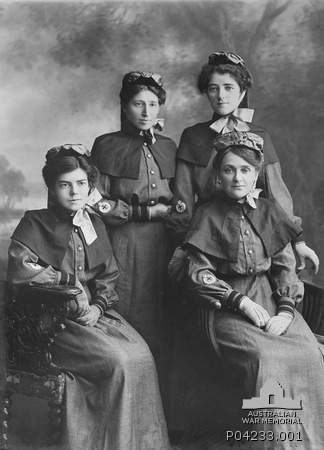
(Photo is of Australian World War I nurses; standing at the back on the right is Sister Constance Keys, who was mentioned in the post on Gallipoli. These nurses received military decorations for their heroism, and all made it back to Australia at the end of the war)

Boys Names Which Rose in Popularity in 2012

21 Sunday Apr 2013

Posted by A.O. in Name Themes and Lists

≈ 8 Comments

Tags

astrological names, Biblical names, celebrity baby names, Celtic names, Disney names, english names, famous namesakes, fictional namesakes, hebrew names, Hollywood names, honouring, Irish Gaelic names, Irish names, Latin names, locational names, name history, name meaning, name popularity, name trends, names from movies, names from television, nicknames, Old English names, Old Gaelic names, popular names, saints names, Scottish names, soap opera names, unisex names

586419-river-boysThese are the boys’ names which became markedly more popular last year. I think the list lacks the depth of the one for girls, with far less diversity. There is only one classic name for boys, and eight of the names are surnames – six of these ending in N. While the girls’ list shows names which are currently trending, I think a couple of these could be legitimately identified as trendy.

Braxton

Braxton is without doubt 2012’s Name of the Year, joining the national Top 50 from nowhere. It was the #1 fastest-rising name nationally, in New South Wales and South Australia; made the top 5 fastest-rising names in Victoria, Queensland, and Western Australia; and went up in Tasmania and the Australian Capital Territory. Currently it is #31 in Australia, #51 in NSW, #81 in Victoria, #25 in Queensland, #44 in SA, #34 in WA, #65 in Tasmania and #70 in the ACT. Braxton is an English surname of disputed origin. It is a corruption of an English place name; perhaps Branxton in Northumberland, meaning “Branoc’s settlement” (Branoc is a Celtic personal name derived from the word for “raven”). Braxton has been used as a personal name since the late 18th century, and originated in the United States – Carter Braxton was one of the signatories to the American Declaration of Independence. Here it is known from the Braxton brothers on soapie Home and Away; three members of a thuggish surfer gang, and sexually desirable “bad boys” (based on the real-life Bra Boys). The characters were introduced in 2011, and last year Steve Peacocke won a Logie for his role of Darryl “Brax” Braxton. Braxton is new to the charts, although short form Brax had been in the Top 100 before. I wonder if it will keep going, or will parents hit the panic button after its massive surge in popularity?

Jaxon

Jaxon was the #1 fastest-rising name in Victoria and Tasmania, made the top 5 fastest-rising names in New South Wales and South Australia, and increased in popularity in Western Australia and the Australian Capital Territory. Currently it is #37 in Australia, #54 in NSW, #52 in Victoria, #42 in Queensland, #31 in SA, #17 in WA, #33 in Tasmania and #92 in the ACT. Jaxon is a variant of the surname Jackson; although sometimes derided as a “mis-spelled Jackson”, it is a legitimate surname particularly associated with East Anglia, and possibly with the Puritans. Jaxon has been used as a first name since the 17th century, and originated in Norfolk – then an area with a high Puritan population. Jaxon has charted in Australia since the 1990s, and rose steeply to make the Top 100 in 2011. It continues to capitalise on its trendy X, and may even overtake big brother Jackson. It’s interesting that it is most popular in Western Australia, for there is a large construction company in that booming state named Jaxon.

Mason

Mason was the #1 fastest-rising name in Queensland; it increased in popularity nationally, and in every state and territory. Currently it is #15 in Australia, #24 in NSW, #18 in Victoria, #15 in Queensland, #10 in SA, #12 in WA, #8 in Tasmania, #15 in the NT and #28 in the ACT. Mason first charted in the 1980s, and rose steadily to make the Top 100 by the mid-2000s. Mason is an occupational surname for someone who worked as a stonemason. The Mason family settled in Kent, on lands granted to them by William the Conqueror for their part in the Battle of Hastings. Mason has been used as a first name for boys since at least the 16th century, and originated in East Anglia; it possibly had Puritan significance. It’s much more common in the United States, where the distinguished Mason family played a prominent role in American politics. George Mason IV was one of the Founding Fathers of the United States, and an author of the Bill of Rights. Recently it has been often used as a celebrity baby name, boosting and cementing its popularity.

Hunter

Hunter was the #1 fastest-rising name in Western Australia, amongst the top 5 fastest-rising names nationally and in Queensland, and increased in popularity in New South Wales, Victoria, South Australia, Tasmania and the Australian Capital Territory. It is currently #24 in Australia, #35 in NSW, #39 in Victoria, #19 in Queensland, #27 in SA, #22 in WA, #7 in Tasmania and #50 in the ACT. Hunter is a surname based on the English word for a man who hunts professionally, and originated in Scotland. The Clan Hunter were from Normandy and settled in Ayrshire in the 11th century; experts in hunting and fieldcraft, they were invited there by King David I, who had been brought up in a Norman court. Hunter has been used as a personal name since the early 18th century, and seems to have been most popular in the northern counties of England. The Hunter Valley is the area around the city of Newcastle; the Hunter River is named after Governor John Hunter, and as his surname suggests, he was a Scotsman. Hunter has charted in Australia since the 1990s, and made the Top 100 by the late 2000s. It shows no signs of losing steam.

Hudson

Hudson was in the top 5 fastest-rising names nationally, in New South Wales, Victoria and Western Australia, and increased in popularity in South Australia and Tasmania. Currently it is #43 in Australia, #74 in NSW, #50 in Victoria, #45 in Queensland, #36 in SA, #31 in WA, and #67 in Tasmania. Hudson is an English surname which means “son of Hudde”. Hudde can be an old nickname for Hugh or Richard, or it can be derived from the common Old English name Huda; the surname is traditionally associated with Yorkshire. Hudson has been used as a first name since the early 17th century; although these births coincide with English explorer Henry Hudson’s first voyages, it can’t be known whether he inspired them. Hudson was new to the charts last year, having gained massive popularity after pop singer Guy Sebastian welcomed his son in 2012. The inspiration for Hudson Sebastian’s name came from the Hudson River in New York, (named after Henry Hudson), as Guy and his wife Jules love New York City. However, it has an Australian connection as well, because Sir Hudson Fysh, a World War I hero, founded Qantas, so Hudson could be used to honour a family tradition in the aviation industry.

Flynn

Flynn was in the top 5 fastest-rising names in Victoria and South Australia, and increased in popularity nationally, in New South Wales, Western Australia, Tasmania and the Australian Capital Territory. It is currently #41 in Australia, #46 in NSW, #36 in Victoria, #34 in Queensland, #43 in SA, #35 in WA, #22 in Tasmania and #28 in the ACT. Flynn has been in the charts since the 1990s, and after hitting a plateau for a few years, it suddenly shot up into the middle of the Top 100 in 2011, after Miranda Kerr and Orlando Bloom welcomed their son Flynn. Flynn is a common Irish surname which is an Anglicised form of the Old Gaelic Ó Floinn, meaning “son of Flann”. Flann means “red, ruddy” in Irish Gaelic, and is the name of one of the High Kings of Tara. The name is strongly associated with swashbuckling Tasmanian actor Erroll Flynn, known for his success with the ladies. He helped inspire the character of Flynn Rider from the Disney film Tangled. Interestingly, Flynn is most popular in Tasmania.

Archer

Archer was in the top 5 fastest-rising names in South Australia and the Australian Capital Territory; it also increased in popularity in New South Wales, Victoria and Tasmania. Currently it is #92 in NSW, #47 in Victoria, #61 in Queensland, #47 in SA, #47 in Tasmania and #46 in the ACT. The name was new to the Top 100 this year. Archer is an occupational surname denoting a professional bowman, and was brought to England at the time of the Norman Conquest; the Archer family settled in Wiltshire. Archer has been used as a first name since the 17th century, and seemed to be much more common in the southern counties surrounding London. Archer may remind you of legendary bowmen such as Robin Hood and William Tell, or it could remind you of the zodiac sign Sagittarius, called The Archer. In Australia, the Archer River is on the Cape York Peninsula in far north Queensland, and the first horse to win the Melbourne Cup was named Archer. Archer’s popularity is growing partly because it’s a great way to get the popular nickname Archie.

Eli

Eli was in the top 5 fastest-rising names in Australia, and increased in popularity in Western Australia, Tasmania and the Australian Capital Territory. Currently it is #34 in Australia, #53 in NSW, #83 in Victoria, #27 in Queensland, #48 in SA, #38 in WA, #32 in Tasmania and #27 in the ACT. Eli has been in the charts since the 1970s, and reached the Top 100 in the late 2000s; since then it has gliding smoothly upward. Eli is a Hebrew name meaning “ascent”, and in the Old Testament, Eli was a high priest who is regarded as a judge and prophet in Judaism, and the teacher of the prophet Samuel. In Scandinavia, Eli is a girl’s name, used as a short form like Ellie, and pronounced EE-lee. Some Australian namesakes include rally driver Eli Evans, Olympian hockey player Eli Matheson, soccer player Eli Babalj, and kickboxer Eli “Mad Dog” Madigan. At a time when Old Testament boys’ names are slumping, Eli stands out as a Biblical success story, and tended to rise when Elijah did too.

Patrick

Patrick was in the top 5 fastest-rising names in South Australia, and increased in popularity nationally, in New South Wales, Victoria, Western Australia, Tasmania, and the Australian Capital Territory. Currently it is #42 in Australia, #47 in NSW, #34 in Victoria, #53 in Queensland, #35 in SA, #47 in WA, #53 in Tasmania, and #25 in the ACT. In Australia, Patrick is a sturdy classic which has never left the Top 100. It was #36 in the 1900s, and peaked in the 1990s at #34; the lowest it has ever been is #68, in 2009. Patrick is from the Latin name Patricius, meaning “nobleman”, and its fame today is entirely down to one man – Saint Patrick. Saint Patrick was a 5th century Romanised Briton brought up in a Christian family. As a teenager, he was captured and carried off as a slave to Ireland, where he remained for six years. He managed to escape back to Britain, but returned to Ireland as an ordained bishop to undertake missionary work. Called the Apostle of Ireland, he is the major patron saint of Ireland, and such a vital part of Irish identity that his feast day on March 17 is seen as a celebration of Irish culture.

Harrison

Harrison was in the top 5 fastest-rising names in Queensland, and increased in popularity nationally and in South Australia. Currently it is #22 in Australia, #25 in NSW, #26 in Victoria, #16 in Queensland, #13 in SA, #27 in WA, #34 in Tasmania and #40 in the ACT. Harrison has charted since the 1980s, and skyrocketed into the middle of the Top 100 during the 1990s. It peaked at #23 in the early 2000s, then fell before starting to climb again, so it’s now on its second wind. Harrison is a surname meaning “son of Harry”, with Harry itself being a short form of Henry. Harrison has been used as a first name since the 16th century, and over time became greatly more popular in the United States than in Britain. This may be because of the Harrison family of Virginia, who were related to King Edward I. They managed to produce numerous state governors, as well as two presidents – Benjamin Harrison and William Henry Harrison. The popularity of Harrison as a first name is probably due to actor Harrison Ford – the name began charting just after he starred in the first Star Wars movie, and boomed during the Indiana Jones series.

POLL RESULT: People’s favourite names were Flynn, Archer, and Patrick, and their least favourite were Braxton, Mason, and Jaxon.

(Photo shows the Braxton brothers from Home and Away)

Famous Name: Gabriel

21 Thursday Mar 2013

Posted by A.O. in Famous Names

≈ 3 Comments

Tags

angels names, Biblical names, famous namesakes, fictional namesakes, French names, hebrew names, Italian names, name history, name meaning, name popularity, names from movies, nicknames, popular names, saints names, unisex names

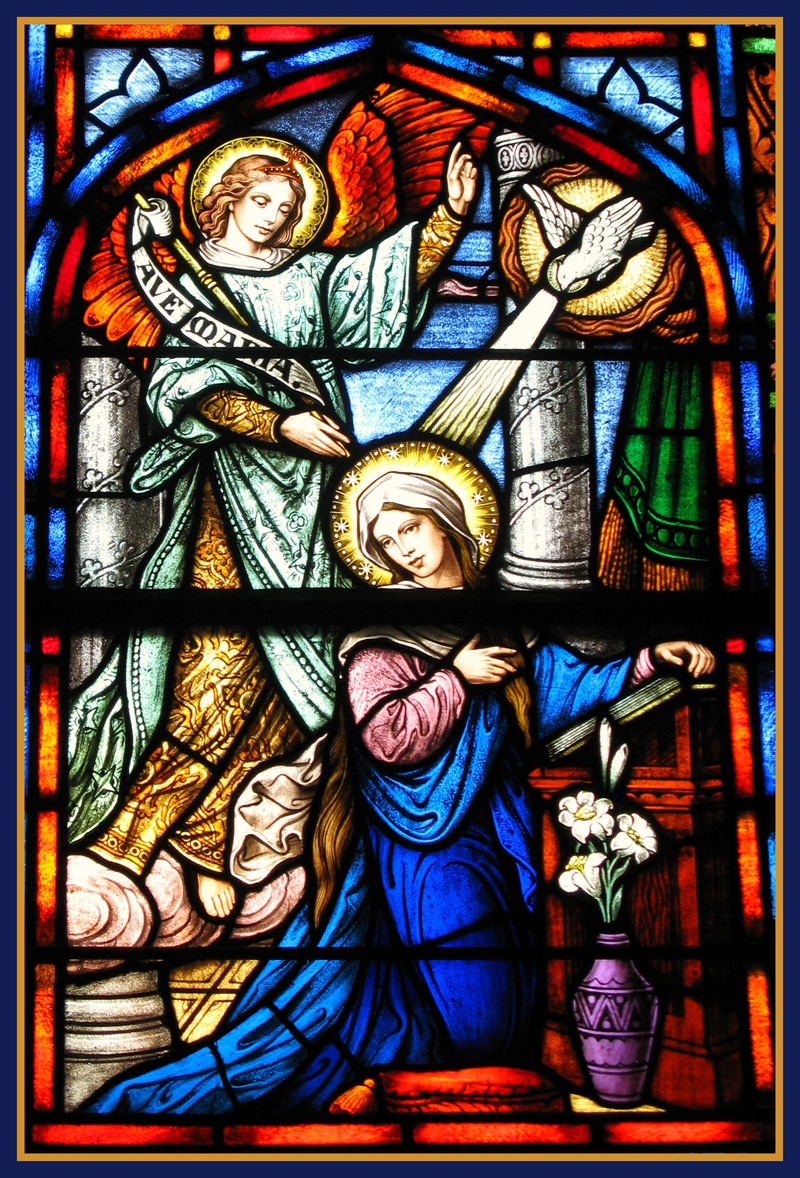
The AnnunciationOn Monday March 25, it will be the Feast of the Annunciation, which celebrates the angel Gabriel announcing to the Virgin Mary that she will conceive a son; Gabriel also tells her that the child is to be called Jesus. This was staggering enough news, but the big shock for her was that this would happen through the Holy Spirit and not via the usual route to conception.

This is the story told in Luke, while Matthew tells the story from a different angle. According to this gospel, Mary found herself pregnant and her betrothed, Joseph, was considering breaking things off. But then an angel came to him in a dream, and explained the situation to him.

Although the Bible doesn’t say so, it’s generally assumed that this angel was also Gabriel. Further assumptions are that he was the angel who appeared to the shepherds at the Nativity, and the one who came to Jesus to give him strength as he prayed in the garden before the Crucifixion.

The Feast of the Annunciation is held nine months before Christmas, to symbolise the length of a pregnancy. It is also called Lady Day, and until 1752, it was New Year’s Day in Britain. It’s obviously a hard habit to break, because in the UK they still start the financial year on April 6, which is Lady Day on the old (Julian) calendar.

The Annunciation isn’t Gabriel’s first appearance in the Bible, or even in the New Testament. In the Book of Daniel he interprets Daniel’s visions for him, and earlier in the Gospel of Luke he appears to Zachariah, a priest, and the husband of the Virgin Mary’s kinswoman. He tells Zachariah that his wife Elizabeth, for many years barren, would bear a son named John; this would be John the Baptist, who was to prepare the way for Jesus.

According to Islamic teachings, the angel Gabriel dictated the Koran to Muhammad, and led him on his “Night Journey”, or great spiritual vision of the heavens. So the angel is important to all three Abrahamic religions.

There is a tradition that Gabriel will blow his trumpet to announce Judgement Day, which comes from John Milton’s Paradise Lost. In Jewish legend, Gabriel is said to pluck new souls from the Tree of Life so that they may be conceived as new babies. So you can see Gabriel as both the beginning and end of Life – although the end is only to make way for a new beginning.

Gabriel is the English form of the Hebrew name Gavri’el, which is variously interpreted as “man of God”, “strong man of God”, “hero of God”, “champion of God”, “warrior of God”, or “strength of God”. The image you get from it is of a mighty being, using their immense strength to serve God. In the Old Testament, words such as great, might, power and strength are used to describe Gabriel, and in Jewish tradition he is an angel of judgement and punishment.

However, Christian tradition sees Gabriel differently. As he appears in the New Testament to bring people news of great joy, and to bring comfort to those burdened by great worry, he is viewed as an angel of mercy and consolation.

Angels are spiritual beings, not physical, so they cannot be said to have a sex, although in the Bible they always take on the appearance of human males when communicating with people. However, you might say that in Jewish tradition, Gabriel gives off a very masculine “energy”, while Christians get more of a feminine “vibe” from the angel. (If you doubt this, consider how many Nativity plays you’ve seen where a female plays the role of the announcing angel).

Because of this certain level of gender ambiguity, Gabriel has, for centuries, sometimes been used as a female name in the English-speaking world, and in fact Tom Waterhouse’s mother, the horse trainer Gai Waterhouse, is named Gabriel (in case you were wondering what Gai was short for). There are also specifically feminine forms of the name we have imported from other languages, such as French Gabrielle and Italian Gabriella.

The name Gabriel has charted in Australia since the 1960s, and joined the Top 100 in 2001 at #97. I’m not sure if this was an influence, but it joined the Top 100 a year after the movie The Patriot came out, starring Australian actor Heath Ledger as Gabriel Martin. It peaked in 2009 at #60, and since then has been on a decline. Last year it made #88.

Two feminine forms of the name have been more successful. Gabrielle has charted since the 1920s, and joined the Top 100 in the 1990s, when it peaked at #49. It left the Top 100 in 2010, and in 2011 was at #111, still only just outside the Top 100.

Gabriella has charted since the 1940s, but didn’t begin really climbing until the 1980s. It joined the Top 100 in 2006 at #89 (there were just as many baby girls named Gabriella as Gabrielle that year). It peaked the same year as Gabriel, in 2009, and only one place higher, at #59. However, its decline has been more gentle, and last year it made #71.

I do think the greater success of Gabrielle and Gabriella has not been helpful to the popularity of the male name Gabriel. I have noticed that many people hear the name Gabriel as Gabrielle, or think that the two names are so alike as to make Gabriel sound “feminine”. I have to admit this annoys me, because I much prefer Gabriel to either of his sister-names.

Gabriel seems to be more appealing to mothers as a baby name than it is to fathers, with many women complaining that their partner strongly vetoed the name Gabriel for their sons, even as a middle name.

I think it might suffer a little from what we might call The Valentino Factor – women are more likely to find the name Gabriel handsome, charming and even sexy, while men are more likely to find it foofy and irritatingly ornate.

Another issue is the nickname, because the standard shortening is Gabe, and many parents dislike it. Some worry it sounds too much like the word gay or the word babe, others think that it sounds dim-witted or redneck, and others just find it ugly.

It would be easy to suggest some other nickname, but chances are he’s going to get called Gabe once he leaves the house anyway, if he gets a nickname at all. Personally I don’t think Gabriel needs any nickname.

Gabriel is a beautiful, indeed, a heavenly name. It’s a name of great masculinity and strength, yet at the same time has a wonderful sweet tenderness as well. One thing that occurs to me is that there is a theme of the angel Gabriel bringing joyful news of unexpected pregnancies, and a miraculous childbirth. I think it would make a great name for someone expecting a baby they never thought they would ever have, a baby which defied all logic to make his way into the world.

For those who never thought their miracle baby would ever arrive, Gabriel says, Fear not, for behold, I bring you good tidings of great joy!

POLL RESULT: Gabriel received a very good approval rating of 76%. People saw the name Gabriel as strong yet tender (23%), handsome and heavenly (19%), sexy (12%), and powerful (11%). However, 9% thought the name was a little bit girly, and 7% that it didn’t have any good nicknames.

(Picture shows The Annunciation on a window at St Mary’s Church, Denville, New Jersey)

Italian Names for Boys

17 Sunday Mar 2013

Posted by A.O. in Name Themes and Lists

≈ 15 Comments

Tags

Austrian name popularity, Belgian name popularity, birth notices, celebrity baby names, Chilean name popularity, Dutch name popularity, english names, ethnonyms, famous namesakes, fictional namesakes, French name popularity, germanic names, Greek names, Hungarian name popularity, Hungarian names, Italian name popularity, Italian names, Latin names, locational names, mythological names, name history, name meaning, name popularity, nicknames, Orlando Furioso, Portuguese names, Roman names, saints names, Scottish name popularity, Shakespearean names, Spanish name popularity, Spanish names, surname names, The Divine Comedy, theological names, tribal names, UK name popularity, unisex names, William Shakespeare

romeo_and_juliet_01Angelo

Angelo is the Italian form of the Latin name Angelus, meaning “angel”. The Angelus is a Christian devotion, which traditionally involves praying three times a day, accompanied by the the ringing of church bells. It was common during the Middle Ages, so the name can be seen as after the prayer as much as after the heavenly creature. Angels are mentioned in the Old Testament as spiritual beings who bring communications from God; the word angel is derived from the Greek for “messenger”. Angels play a much bigger role in the New Testament, where they make several important announcements, including the birth and resurrection of Christ. A famous Italian named Angelo was Father Angelo Secchi, a 19th century astronomer and one of the first scientists to state that the sun is a star. Cricket fans know the name well from Angelo Matthews, the Sri Lankan captain. The name is rarely used in Australia, where angel-type names for boys aren’t common – even though angels are traditionally masculine. However, singer Adele welcomed a baby boy last year, rumoured to be named Angelo, and this may be a help. The Italian and English pronunciation are very similar – AHN-jel-oh and AN-jel-oh.

Dante

Dante is a short form of Durante, the Italian form of the Latin name Durans, meaning “enduring”. Its most famous namesake is undoubtedly medieval Italian poet, Dante degli Alighieri, nearly always known by his first name only. His Divine Comedy is considered the greatest work of Italian literature, and in Italy he is known as il Poeto (“the Poet”), just as Shakespeare is called The Bard in England. He is famous for his adoration of Beatrice, a girl he knew only slightly and who died in her twenties; he plays an important role in the literature of “courtly love”. Dante is a name which seems to be gaining more use in recent years, perhaps because of the number of fictional characters named Dante on TV and in video games. I see this handsome name quite a bit in birth notices, and have met a number of small boys named Dante, from a variety of backgrounds. The Italian pronunciation is DAHN-tay, and this is commonly used in Australia, but I have heard it said DAN-tay as well.

Eduardo

Eduardo is the Italian form of the English name Edward. The name is used in Spanish and Portuguese-speaking countries as well, where it is much more popular than in Italy – it is a Top 100 name in Spain and Chile. Famous Italians include actor, playwright and screenwriter Eduardo De Filippo; songwriter Eduardo di Capua, who composed the famous song O Sole Mio; and quantum physicist and cyberneticist Eduardo Caianiello (all these Eduardos were from Naples). The name is pronounced ed-WARD-oh, with the ward part rhyming with hard rather than horde. Last year, Australian soccer player Vince Grella welcomed a son named Eduardo, and so far it’s the only celebrity baby boy’s name which has been rated as “perfect” by blog readers.

Lorenzo

Lorenzo is the Italian form of the Roman name Laurentius, which means “from Laurentum”; Laurentum was an ancient city in Italy, south of Rome, and its name probably comes from the laurel, or bay tree. Laurel wreaths were used by the Romans as a symbol of victory. The English form of the name is Laurence. One of the most famous Italian namesakes is Lorenzo de Medici, known as Lorenzo the Magnificent. A Florentine ruler during the Renaissance, he was famed for presiding over Florence’s Golden Age, and for being a great patron of the arts. Lorenzo’s grandson also bore his name; he is best known for being the ruler to whom Machiavelli dedicated his practical political handbook, The Prince. Lorenzo has been in the Top 5 in Italy for several years, and is currently #4; it’s also Top 100 in France. The Italian pronunciation is loh-REN-tso, and in English it’s pretty much the same except we say the final syllable -zo. Reality TV star Snooki, from Jersey Shore, welcomed a baby boy named Lorenzo last year. Possible nicknames include Enzo, Ren, Renzo and Zo.

Luca

Luca is the Italian equivalent of the name Luke, derived from the Greek name Loukas, meaning “from Lucania”. Lucania was an ancient district of southern Italy, and the name comes from the tribe of the Lucani who inhabited the area. One theory is that the tribe’s name comes from the Greek word for “wolf”; another that it means “sacred wood” in Latin. A famous Italian with this name is medieval sculptor Luca della Robbia; another is Fra Luca de Pacioli, a mathematician and Franciscan friar who worked with Leonardo da Vinci. You may also know the name from Luca Cordero di Montezemolo who is chairman of Ferrari. Luca is incredibly popular internationally: it is #12 in Italy, and also makes the Top 100 in the UK, Scotland, Austria, Belgium, the Netherlands and France. It has charted in Australia since the 1980s, and joined the Top 100 in the late 2000s; currently it is #79. You will sometimes see Luca described as a unisex name, and that’s because it is also the Hungarian form of Lucia, and is #10 for girls in Hungary. However, the two names are pronounced differently – the Italian boy’s name is said LOO-kah, while the Hungarian girl’s name is said LOO-tsah.

Massimo

Massimo is the Italian form of Maximus, a Roman family name derived from the Latin for “greatest”. There is a very old and noble Roman family named Massimo, and they claim to be descended from the Maximi family of ancient Rome, including the famous general Fabius Maximus. This cannot be proven, as the family history only goes back about a thousand years, but what’s on the record is impressive enough. Extremely rich and influential, great patrons of the arts, they have produced numerous cardinals, ambassadors, politicians and military leaders, and have married into some of the most important royal houses of Europe, so that the family now bears a princely title. Massimo is one of the most common Italian boy’s names I see in birth notices, with Massi the usual nickname. It is pronounced mahs-SEE-mo.

Orlando

Orlando is the Italian form of Roland, a Germanic name meaning “famous land” or perhaps “fame of his country”. According to history, Roland was a Frankish military commander in Charlemagne’s army, responsible for defending France against the Bretons; he died in a skirmish against the Basques after Charlemagne was defeated in a battle against Islamic forces. His death must have captured people’s imaginations, because while history says very little about Roland, legend says much. His life became an epic drama about a great nobleman of royal blood who dies in battle, defending his land and faith from Muslims. Just in case this seemed a bit tame, legend gave him a magic sword and threw in a giant, and the story was a massive medieval minstrel-sung hit all across western Europe. In Italy, he not only appears in Dante’s Divine Comedy, but starred in a whole line of epics as Orlando. The most famous of these is Orlando Furioso (it basically means Crazy Orlando) by Ludovico Ariosto. As the title suggests, Orlando goes doolally from unrequited love of a pagan princess and gallops around the world in a frenzy. There’s wizards and hippogriffs and sea monsters and a trip to the moon involved, and the story was hugely influential in European literature. We know this name well from actor Orlando Bloom, married to Miranda Kerr, and since their wedding I see this attractive name regularly in birth notices. The Italian pronunciation is or-LAHN-do, and the English or-LAND-oh.

Rocco

Saint Rocco is an Italian saint who was born a nobleman but came to Rome on a pilgrimage. Turning up while the city was suffering from a plague, he spent his time tending the sick. When he succumbed himself, he was banished from populated areas, but miraculously provided with water, and a dog who brought him food and licked his wounds, which cured him. Returning home, he was thrown into prison as a spy and died, refusing to reveal his noble identity. However, he was recognised by a cross-shaped birthmark, and canonised as a saint by popular acclaim. When the Black Death swept through Europe, it was said that this plague could be averted by praying to Saint Rocco, and when a town was apparently spared in this manner, his popularity went through the roof. Although his cult had begun in northern Italy, it soon spread across Europe; in France his name became Roch, in Spain Roque, and in England, Rock. You’d be forgiven for thinking Rocco had something to do with rocks, but it’s an ancient Germanic name meaning “rest”, and pronounced ROK-ko. Even though the Black Death isn’t such a worry any more, Saint Rocco is still popular as a healer of the sick and patron of dogs. Rocco has charted in Australia since the 1940s, hitting a peak in the 1960s at #193. Since the early 2000s, when Madonna welcomed her son Rocco, it has been climbing steeply and is currently #228. Expect to hear more of this cute yet macho name in the future.

Romeo

Romeo is the Italian form of the Latin name Romaeus, meaning “pilgrim to Rome”. When we hear the name Romeo, we think of the young and ardent lover from William Shakespeare’s Romeo and Juliet, whose pubescent romance goes so tragically wrong. Shakespeare’s plot wasn’t original – he based it on retellings of 16th century Italian romances, and in turn, these used the story of Pyramus and Thisbe from Roman mythology as inspiration. However, one of the Italian authors, Luigi Da Porto, fell for an enchanting young woman at a ball and she returned his feelings; things never got off the ground because their families were feuding. By the time he had the chance to write about Romeus and Giulietta in Verona, the object of his desire had been married off to someone else. His version of the story, including the principals’ names, proved enduring – perhaps because it had the personal touches of someone who has loved and lost. Romeo is such an ultra-romantic name that it’s used as an epithet for any male lover. David and Victoria Beckham welcomed their son Romeo in 2002, giving this name some star appeal as well. We say it RO-mee-oh, but we know the Italian pronunciation of ro-MAY-oh from the car manufacture, Alfa Romeo.

Valentino

Valentino is the Italian form of the Latin name name Valentinus, the saint of lovers, also called Valentine. It got an extra helping of Latin Loverboyishess from Italian actor Rudolph Valentino, a seductive sex symbol and star of the silent screen. He made women swoon, and men snipe at his annoying amount of attractiveness. The gals screamed with desire during his movies; the guys stormed out in disgust and threw hissy fits. We know the name well from Italian motorcycle racer and MotoGP World Champion, Valentino Rossi, giving this name quite a sporty image as well. I don’t know if it’s because of Rossi, but I do see the name Valentino quite often in birth notices, where it seems to be especially popular in the middle position.

POLL RESULT: People’s favourite names were Luca, Rocco, and Massimo, and their least favourite were Orlando, Valentino, and Eduardo.

(Picture shows scene from Baz Luhrman’s Romeo + Juliet)

Italian Names for Girls

10 Sunday Mar 2013

Posted by A.O. in Name Themes and Lists

≈ 4 Comments

Tags

Arthurian legends, Arthurian names, Austrian name popularity, Belgian name popularity, Biblical names, birth notices, celebrity baby names, compound names, English idioms, famous namesakes, fictional namesakes, food names, French names, Greek names, Harry Potter names, hebrew names, Italian name popularity, Italian names, J.K. Rowling, locational names, modern classics, mythological names, name history, name meaning, names from movies, names from songs, nicknames, Orlando Furioso, Percy Bysshe Shelley, popular names, Roman names, saints names, Shakespearean names, The Sleeping Beauty, William Shakespeare

William_Dyce_-_Francesca_da_Rimini_-_Google_Art_ProjectItalian-Australians are the largest ethnic group in Australia after those of British and Irish heritage, and about a million people identify as having Italian ancestry – around 5% of the population. The first Italian migrants arrived in the 19th century (Australia’s first police officer was an Italian), but immigration soared after World War II. They have made an incalculable contribution to Australia’s economy and culture, with noteworthy Italians in business, politics, sport, the arts and entertainment. It’s not that I can’t imagine Australia without an Italian history; it’s just that imagining such an Australia appals me.

This is a selection of Italian names for girls which I think are usable in Australia, whether you have Italian ancestry or not.

Alessandra

Alessandra is the feminine form of Alessandro, the Italian form of Alexander. Alessandra has been popular in Italy for many years, remaining in the Top 10 throughout the 1970s. It is still in the Top 100 today, and has only recently slipped off the Top 30. I see many instances of this name in birth notices, particularly in families with Italian surnames (although not exclusively). Not only is it the Italian form of the popular Alexandra, but is well known due to Brazilian supermodel Alessandra Ambrosio, who is of part-Italian descent. It is also an Australian celebrity baby name, since Casey Stoner and his wife Adriana welcomed their daughter Alessandra Maria last year. This pretty name is an Italian modern classic, and the Italian pronunciation is ahl-e-SAHN-dra, although I suspect many Australians would say it more like al-uh-SAN-dra. Nicknames abound, including Allie, Alessa, Alessia and Lissa, and it is one of the names tipped to rise in the wake of Hurricane Sandy.

Arianna

Arianna is the Italian form of the Greek name Ariadne, meaning “most holy, utterly pure”. In Greek mythology, Ariadne was a princess of Crete, the daughter of King Minos, and helped the hero Theseus escape from the Minotaur (Ariadne’s monstrous half-brother). The two of them escaped together, but Theseus abandoned her on the island of Naxos, where she married the god Dionysus. It seems likely that Ariadne was originally an ancient Cretan mother goddess, and some suggest that she was a goddess of weaving, thus perhaps a goddess who ruled fate. Arianna is currently #24 in Italy, and although there are a few famous Italians with this name, it’s probably best known as the name of Arianna Huffington, who co-founded The Huffington Post. The Italian pronunciation is ah-RYAHN-na, and the English is ah-ree-AH-nuh or ar-ee-AN-uh, which allows Ari as the obvious nickname.

Bianca

Bianca is the Italian equivalent of the French name Blanche, meaning “white, fair”. The name was used amongst the Italian nobility during the Middle Ages and the Renaissance; one example being Bianca Visconti, a 15th century Duchess of Milan who is a distant ancestor of both Diana, Princess of Wales and Princess Michael of Kent. There are two characters named Bianca in the plays of Shakespeare, in Othello and The Taming of the Shrew, but the name doesn’t seem to have been used in Britain until the 19th century, during the Victorian veneration of the Bard and his works. It does seem to have been attractive to families with Italian ancestry from early on. The name Bianca did not chart here until the 1960s, and was in the Top 100 by the 1980s. It peaked in the 1990s at #45, and fell until it left the Top 100 in 2009. In 2011 it rose again to make #103, only just outside the Top 100. Bianca is a modern classic in Australia which hasn’t been lower than the 100s since the 1960s, although it is rather dated in Italy. The Italian pronunciation is something like BYAHN-ka, but here we say it bee-AN-ka.

Chiara

Chiara is the original Italian form of the names Clara, Clare and Claire, meaning “clear, bright, famous”. Chiara Offreduccio was one of the followers of Saint Francisof Assisi, and founded the Order of Poor Ladies; she is the first woman known to have written a monastic Rule. She was a great encouragement and support to Saint Francis, and nursed him during his final illness. Today we know her as Saint Clare, and her order is affectionately known as The Poor Clares. This medieval saint has a very modern connection, because she is the patron of television. Chiara has been a Top 10 name in Italy for several years now, and is currently #6. It is also Top 100 in Austria and Belgium. Chiara is one of the most popular Italian names that I see in Australian birth notices, and it is known to us as the name of cyclist Cadel Evans’ Italian wife. We say this name kee-AH-ra, which isn’t exactly the Italian pronuciation, but not too far off it either.

Eliana

Eliana is the Italian form of the Roman name Aeliana, the feminine form of Aelianus. The name is from the Roman family name Aelius, derived from the Greek word helios, meaning “sun”. One of the Titans was named Helios, a handsome sun god who drove his chariot across the skies each day. There is a Saint Eliana, an early Roman martyr. Eliana can also be understood as a modern Hebrew name meaning “my God has answered”. This name is not on the Italian Top 30, but I have seen many examples of it in Australian birth notices, with a variety of spellings. The Italian pronunciation is eh-LYAH-na, but I think most Australians would prefer el-ee-AH-na, as it opens the name up to nicknames such as Ella, Elle or Ellie.

Francesca

Francesca is the feminine form of Francesco, the Italian original of the name Francis. One of the most famous people with this name is Francesca da Rimini, whose story features in Dante’s Divine Comedy. Francesca was married off to a brave but crippled man named Giovanni, and fell in love with his younger brother, Paolo. Although Paolo was married too, they managed to carry on an affair for about ten years. Her story reached a tragic conclusion when her husband killed both she and her lover after finding them together in her bedroom. In Dante’s poem, he meets she and Paolo in the second circle of Hell, where those who have committed sins of lust are punished; Dante faints in pity at her sad plight. Her story has been turned into numerous operas, plays and artworks. Francesca has been on the Australian charts since the 1940s, but has never reached the Top 100. It peaked in the 1960s at #241; currently it is #245 and climbing, so looks likely to overtake this high point fairly soon. The name has been popular in Italy for many years, and is currently #12. The Italian pronunciation of frahn-CHES-ka, and the English fran-CHES-ka are both used here; Frankie is fast becoming the fashionable nickname.

Ginevra

Ginevra is the Italian form of Guinevere, so you can consider it to be the Italian Jennifer as well. By coincidence, it is also the Italian name for the Swiss city of Geneva. The Arthurian legends were known in Italy, and on the cathedral of Modena in Italy, it shows King Arthur rescuing Guinevere from her abduction by the villain Maleagant. A 15th century Florentine noblewoman named Ginevra de’ Benci was painted by Leonardo da Vinci and there was an also a 17th century Italian painter named Ginevra Cantofoli. There are several Ginevras in fiction, including Princess Ginevra of Scotland in Orlando Furioso, the Ginevra who has a tragic wedding day in the poem by Shelley, and Ginevra “Ginny” Weasley from the Harry Potter books. Ginevra is #25 and rising in Italy, but this romantic name is not often used in Australia. The Italian pronunciation is something like jeh-NEEV-rah, while the English pronunciation is ji-NEHV-ruh; I think both sound usable, and allow nicknames such as Jenny, Ginny, Ginger, June, Neve and Evie.

Lia

Lia is the Italian form of the Hebrew name Leah, who in the Bible was one of Jacob’s two wives, or it can be used as a short form of names such as Rosalia or Aurelia. I’m not sure how popular this name is in Italy (it’s not in the Top 30), but there are quite a few Australians named Lia, including politician Lia Finocchiaro. Italian girls names don’t have to be elaborate or ornate; here is one as sweet and simple as you could desire, fitting in perfectly with short popular names like Mia and Ava. Although Lia does not chart in Australia, Leah is in the Top 100 and has been climbing since the 1990s.

Mietta

Mietta is the Italian form of the French name Miette, which literally means “bread crumb”, but is a term of endearment, like “sweet little morsel, sweet little thing” (compare with how you might call a little girl muffin in English). One of the fairies in The Sleeping Beauty ballet is named Miettes qui tombent, meaning “falling breadcrumbs”. It presumably began life as a nickname, but at some point was accepted as a full name, probably because it seemed like a pet form of names such as Marie. In Australia we best know the name from the chef Mietta O’Donnell, whose parents were Italian migrants and restaurateurs. Mietta and her partner opened the famous Mietta’s restaurant during the 1970s, a Melbourne institution for twenty years. Mietta O’Donnell was not just a contributor to Australian cuisine, she changed and defined Australian cuisine and raised the standard immeasurably, as well as teaching people about good food through her restaurant guides and cookbooks. Mietta was a charismatic and ardent supporter of the arts in her city; little wonder I see so many birth notices for little Miettas in Melbourne. In O’Donnell’s case, Mietta was a nickname; her real name was Maria. The Italian pronunciation of this name is MYEHT-ah, but most Australians would prefer mee-EH-tah. The popularity of Mia must surely have made Mietta more appealing.

Rosabella

Rosabella combines the names (or words) Rosa and Bella, and even if you don’t know much Italian, you can probably figure out what Rosabella means – “beautiful rose”. The two original words were used together in a medieval Italian poem by Leonardo Giustiniani, O Rosa Bella, which later became a popular English chant. A 1940s Italian love song featuring the name is Rosabella Del Molise; the song tells of a beautiful woman from southern Italy loved by a shepherd; he begs Rosabella to marry him, and plans a wedding to be speedily followed by a bambino. A piece of film trivia is that in the Italian version of Citizen Kane, the sled is called Rosabella instead of Rosebud. I get the feeling that in Italy this is a very old-fashioned name, and as it is also a variety of luncheon meat, may even appear comical. However, I have seen this name several times in recent Australian birth notices, along with Rosa-Bella, Rosabel and Rosebelle. Here it seems like a compound of popular Rose with popular Isabella; it’s slightly operatic, but does fit the trend for frilly girls names, and has simple nicknames like Rosie and Bella.

POLL RESULT: People’s favourite names were Eliana, Arianna, and Francesca, and their least favourite were Bianca, Rosabella, and Mietta.

(Picture shows Francesca da Rimini (1837), painted by William Dyce)

← Older posts
Newer posts →

Enter your email address to follow this blog

Categories

Archives

Recent Comments

A.O.'s avatarwaltzingmorethanmati… on Zarah Zaynab and Wolfgang…
Madelyn's avatarMadelyn on Zarah Zaynab and Wolfgang…
JD's avatardrperegrine on Can Phoebe Complete This …
A.O.'s avatarwaltzingmorethanmati… on Rua and Rhoa
redrover23's avatarredrover23 on Rua and Rhoa

Blogroll

  • Appellation Mountain
  • Baby Name Pondering
  • Babynamelover's Blog
  • British Baby Names
  • Clare's Name News
  • For Real Baby Names
  • Geek Baby Names
  • Name Candy
  • Nameberry
  • Nancy's Baby Names
  • Ren's Baby Name Blog
  • Sancta Nomina
  • Swistle: Baby Names
  • The Art of Naming
  • The Baby Name Wizard
  • The Beauty of Names
  • Tulip By Any Name

RSS Feed

  • RSS - Posts

RSS Posts

  • Celebrity Baby News: Melanie Vallejo and Matt Kingston
  • Names from the TV Show “Cleverman”
  • Can Phoebe Complete This Sibset?
  • Zarah Zaynab and Wolfgang Winter
  • Baby, How Did You Get That Name?
  • Celebrity Baby News: Media Babies
  • Celebrity Baby News: Adelaide Crows Babies
  • Celebrity Baby News: Chris and Rebecca Judd
  • Names at Work: Name News From the World of Business and Employment
  • Celebrity Baby News: Sporting Round Up

Currently Popular

  • Rare Boys Names From the 1950s
  • The Top 100 Names of the 1940s in New South Wales
  • Girls Names From Stars and Constellations
  • Celebrity Baby News: Livinia Nixon and Alistair Jack
  • Celebrity Baby News: Jacinta Allan and Yorick Piper

Tags

celebrity baby names celebrity sibsets english names famous namesakes fictional namesakes honouring locational names middle names name combinations name history name meaning name popularity name trends nicknames popular names saints names sibsets surname names twin sets unisex names

Blog at WordPress.com.

Privacy & Cookies: This site uses cookies. By continuing to use this website, you agree to their use.
To find out more, including how to control cookies, see here: Cookie Policy
  • Subscribe Subscribed
    • Waltzing More Than Matilda
    • Join 517 other subscribers
    • Already have a WordPress.com account? Log in now.
    • Waltzing More Than Matilda
    • Subscribe Subscribed
    • Sign up
    • Log in
    • Report this content
    • View site in Reader
    • Manage subscriptions
    • Collapse this bar
 

Loading Comments...