• About
  • Best Baby Names
  • Celebrity Baby Names
  • Celebrity Baby Names – Current
  • Celebrity Baby Names – Past
  • Featured Boys Names
  • Featured Girls Names
  • Featured Unisex Names
  • Links to Name Data
  • Waltzing on the Web

Waltzing More Than Matilda

~ Names with an Australian Bias of Democratic Temper

Waltzing More Than Matilda

Tag Archives: rare names

Uncommon Boys Names from the Birth Announcements of 2011-12

21 Sunday Jun 2015

Posted by A.O. in Name Themes and Lists, Requested Names

≈ 4 Comments

Tags

aliases, aristocratic surnames, Australian slang terms, Biblical names, english names, epithets and titles, famous namesakes, fictional namesakes, food names, fruit names, germanic names, hebrew names, honouring, imperial titles, Irish names, Italian names, Latin names, locational names, mythological names, name history, name meanings, name popularity, name trends, names from movies, names of bands, Old Norse names, plant names, Polish names, rare names, royal names, saints names, Scottish names, Slavic names, surname names, unisex names, US name popularity, US name trends, weaponry terms
Billy-Slater-5941649Augustus
The Emperor Augustus was the founder of the Roman Empire and its first emperor; the month of August was named after him. His reign initiated the Pax Romana, a relatively conflict-free period which lasted for more than two centuries. Born Gaius Octavius, he was granted the title of Imperator Caesar Divi Filius Augustus, meaning “Military Commander and Caesar, the Son of God, the Venerable”, with the Augustus part meaning “venerable”, from the Latin augeo, meaning “increase, growth, honour”. Before it became an imperial title, Augustus was an epithet used to signal something that was sacred, and the title was adopted by the Holy Roman Emperors in the Middle Ages. Augustus has been a favourite name amongst European royalty, and traditionally used by the Hanoverians in the British monarchy. Hazel has shot into the Top 100 since The Fault in Our Stars, and I wonder if it could also boost regal Augustus, as this is the name of Hazel’s love interest? The name is already rising in the US, so maybe. Gus is a popular short form, although I have seen a lot of interest in Augie because of the Australian rock band Augie March, named for a character in a Saul Bellow novel.

Brasco
Scottish surname referring to someone from the village of Brisco in Cumbria, once part of the Strathclyde kingdom of Scotland. The place name comes from the Old Norse for “wood of the Britons”. Also an extremely rare Italian surname which is probably from the Germanic brakia, meaning “struggle”, used as a nickname. The name is well known because of the undercover alias Donnie Brasco used by FBI agent Joseph Pistone during the 1970s: his autobiography inspired the movie Donnie Brasco, with Johnny Depp in the title role. It has an unfortunate meaning in Australia, as brasco is slang for “toilet”, from the manufacturer Brass Co. Brasco is an extremely cool-sounding name, and as for the toilet association – better tell everyone to just forget about it!

Casimir
Latinised form of the Polish name Kazimierz, from the Slavic for “to destroy fame”, referring to someone who annihilates their opponent in battle so completely that they lose all honour. Four medieval rulers of Poland have been named Casimir, and St Casimir, the son of Casimir IV, is the patron saint of Poland and Lithuania. Kazimierz is a reasonably popular name in Poland, but Casimir is rare around the world, even in countries with high immigration from Poland. However, this is a handsome heritage choice, not so different from fashionable Casper and hip Caspian, with Caz as the obvious nickname, although Cass and even Cash seem possible.

Fintan
Irish name thought to mean “white fire”. In Irish mythology, Fintan mac Bóchra was a seer who accompanied Noah’s granddaughter to Ireland before the Great Flood. When the floodwaters hit, his family were all drowned, but Fintan managed to survive under the sea in the form of a salmon for a year; he also lived as an eagle and a hawk before returning to human form. He lived for more than 5000 years after the Deluge, becoming the repository of all wisdom. Once Christianity arrived in Ireland, Fintan decided to leave the world of mortals with a magical hawk who was born at the same time as he. There are a staggering 74 Irish saints named Fintan, which shows what a common name it must have been, and it is still in regular use in Ireland. The popular boy’s name Finn, and all the similar names, such as Finlay and Finnian, make this seem on trend.

Gage
English surname which can be related to the word gauge, meaning “measure”, and would have started as an occupational surname for someone who checked weights and measures. It can also be an occupational surname for a moneylender, as gage meant “pledge” – that which the person would put up as surety against the money loaned (as when objects are pawned). Its related to the words wage and mortgage, and also to the word engage: when you get engaged to someone, you make a pledge to them. Gage is an aristocratic surname; Sir William Gage first introduced the plum-like greengage into England in the 18th century, which is where its English name comes from. Gage has been used as a personal name since the 18th century, originating in the west country. It first joined the US charts in 1989, the same year that Stephen King’s Pet Sematary was made into a horror film; the protagonist’s toddler son is named Gage, played by Miko Hughes (from Full House). Although Gage takes on a particularly macabre role in the story, the cuteness of little blond Miko must have had an effect. Still in fairly common use in the US, Gage is a rare name in Australia and the UK – its similarity to the word gauge, used in the context of guns, makes this an on-trend weaponry name.

Loki
In Norse mythology, Loki is a mysterious figure, sometimes depicted as a trickster or god of deceit. Other times he is a troublemaker, or commits outright evil. Although said to be one of the giant folk, he is sometimes numbered amongst the gods, and seems to have been on friendly terms with them at some point. However, after many acts of mischief and malice, they punished him by having him bound by the entrails of one of his sons, with a serpent dripping venom on him, making him writhe in pain, which causes earthquakes. It is foretold that at the end of the world, he will slip free from his bonds and fight against the gods on the side of the giants, and be slain. Fittingly for such an enigmatic character, the meaning of Loki isn’t known. However, he is also called Lopt, meaning “air”, suggesting he was associated with that element. In Scandinavian folklore, the phenomenon where the air shimmers on a hot day is said to be caused by Loki. The name has been used more often since the Marvel comics world was brought to life on film, with Loki as a super-villain played by Tom Hiddleston. Hiddleston portrays a complex, vulnerable, intelligent character whose charisma and style has won him legions of fans. Not only a cute-sounding mischievous name, Loki is quite similar to popular names like Luca and Lachlan, so it doesn’t seem strange.

Nazareth
Biblical place name; in the New Testament it is described as the home town of Jesus and his family. It’s also a title, because Jesus is often called Jesus of Nazareth. In early times, Christians were called Nazarenes (“people of Nazareth”) by non-Christians, and the modern Jewish word for Christians is notzrim, while in the Quran Christians are known as naṣārā – all coming from the name Nazareth. Archaeologists think that Nazareth would have been a small, insignificant village at the time of Jesus; today it is a city in northern Israel with most of its citizens Arabs, both Muslim and Christian. A place of Christian pilgrimage, it also has several sites of Islamic significance. The meaning of the city’s name is uncertain – it may come from the Hebrew for “branch”, or “watch, guard, keep”, implying it was originally on a hill, or protected in a secluded spot. Nazareth has been used as a personal name since at least the 16th century, and is of Puritan origin. Originally used mostly for girls, overall it has been given fairly evenly to both sexes, and has never been very common. An unusual Biblical name which is overtly Christian.

Roland
Derived from the Germanic name Hruodland, translated as “famous land”, or perhaps “fame of his country”. Roland was an 8th century Frankish military leader under Charlemagne, responsible for defending France against the Bretons. It is recorded that he was killed at the Battle of Roncevaux Pass in northern Spain by a group of rebel Basques. He became a major figure in medieval legend, and his death an epic tale of a Christian hero slain in battle against Muslims (the real Roland was killed by Christians, although Charlemagne was engaged in a war against Islamic forces in Spain). The 11th century La Chanson de Roland (The Song of Roland) describes Roland fighting a rearguard action against thousands of Muslims with a magical sword given to Charlemagne by an angel. Against the sensible advice of his best friend Oliver, Roland proudly refuses to call for reinforcements until it is too late, then dies a martyr’s death before angels take his soul to Paradise. In an English fairy tale based on a Scottish ballad, Childe Rowland is a prince who rescues his sister from the Dark Tower of the King of Elfland; the story is mentioned in Shakespeare’s King Lear. It helped inspire the poem Childe Roland to the Dark Tower Came by Robert Browning, and in turn this informed Stephen King’s fantasy series, The Dark Tower, with Roland Deschain as the flawed hero. Roland was #107 in the 1900s and continued falling until it left the charts altogether in the 1990s. This is a traditional underused name which is heroic and noble.

Slater
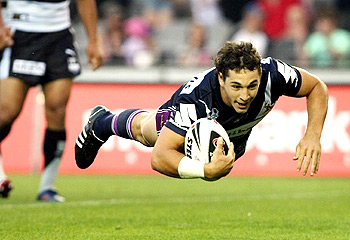
English surname referring to someone who worked with slate, especially in laying slate roof tiles. The surname comes from Derbyshire, and although it is of Norman-French origin, possibly existed before the Conquest. It has been used as a personal name since the 17th century, and from the beginning was associated with Derbyshire and the Midlands, which has a long history as a centre for slate quarrying. An unfortunate association in Australia is that slater is another word for a wood louse. The surname has several sporting namesakes, including former cricketer and media personality Michael Slater, rugby league star Billy Slater, and American surfing champion Kelly Slater. That probably helps explain use of the name Slater at present, and it seems like a tougher, edgier version of Tyler.

Willoughby
English surname after a village in Lincolnshire, meaning “homestead by the willows, settlement by the willows”. Willoughby’s main claim to fame is that it was the birthplace of John Smith, who was one of the leaders of the Virginia Colony in early colonial America, and connected with the Native American girl known as Pocahontas. Willoughby is an aristocratic surname connected with several baronies; the family trace their lineage to a Norman knight who was granted land in Lincolnshire by William the Conqueror. Since the 17th century, the Barony of Willoughby de Eresby has been associated with the office of the Lord Great Chamberlain, who has charge of the royal apartments and hall at Westminster Palace, and plays a major role at coronations: the current baroness was one of the maids of honour at Queen Elizabeth’s coronation. Willoughby is also a suburb of Sydney on the Lower North Shore, first settled as farmland under Captain Arthur Phillip. Some people believe Surveyor-General Sir Thomas Mitchell chose the suburb’s name in honour of Sir James Willoughby Gordon, whom he had served under during the Peninsular War. In use as a personal name since the 17th century, Willoughby is a hip boy’s name which seems like a spin on popular William, while also boosted by looking like a masculine form of Willow. Will is the obvious nickname.

Thank you to Leah for suggesting the name Willoughby be featured on Waltzing More Than Matilda.

POLL RESULTS
People’s favourite names were Augustus, Willoughby and Fintan, and their least favourite were Nazareth, Brasco and Slater.

(Photo of Billy Slater from the Herald Sun)
Famous Name: Milo

17 Wednesday Jun 2015

Posted by A.O. in Famous Names

≈ 6 Comments

Tags

animal names, brand names, European name popularity, famous namesakes, food names, germanic names, Greek names, locational names, name history, name meaning, names from films, rare names, UK name popularity, US name popularity

10432144_888450784521840_5322624102103057321_n

Famous Namesake
The formula for Milo was changed recently, leading to an outpouring of complaints to the company – but only in New Zealand. Apparently they’ve had the vanilla removed, and this doesn’t affect Australia, as we didn’t have any vanilla to start with. I knew that Milo was sold all over the world (it’s very big in Malaysia, I’ve heard), but didn’t realise that every country gets their own formulation of Milo.

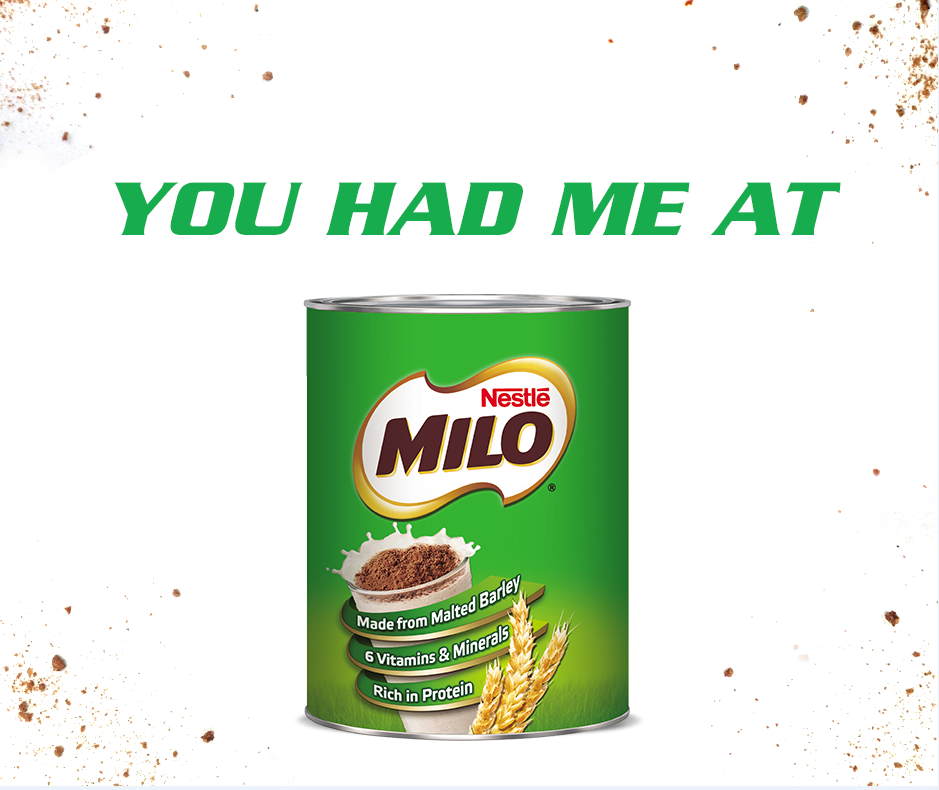
Milo is a cocoa powder and malt drink sold in a bright green tin. It was created by Australian inventor Thomas Mayne and launched at the 1934 Royal Easter Show, in an attempt to improve the diets of Australian children. Rich in carbohydrates and an easy way to add calories, Milo has a host of vitamins added to it – a boon to Depression-era parents worried about their malnourished tots.

Even though our diets are no longer very deficient in calories, carbohydrates and vitamins, Milo is still popular, and marketed as a nutritious energy drink. You can also buy Milo chocolate bars and Milo breakfast cereal, rather less convincingly flogged to parents as a healthy option that will fill your kids with the sort of powerful energy needed to win sporting events sponsored by Milo.

Milo has an appealing crunchy texture which Thomas Mayne tried very hard to eradicate, until he discovered that people liked it. Instead of dissolving completely in milk, Milo will sit on top, forming a crust that can be eaten – in Australia, chocolate milkshakes are already crunchy …. You can use Milo to cook with (Milo banana bread is pretty good), although a favourite way to enjoy Milo is sprinkled on top of vanilla ice cream.

Milo is named after Milo of Croton, an ancient Greek wrestling champion who won six times at the Olympic Games, and numerous other titles. His hometown of Croton, in Sicily, was famous for producing great athletes. A legend in his own lifetime, he was said to be of superhuman strength, and likened to the demigod Hercules – he supposedly took part in a great military victory dressed in a lion-skin.

Just as Milo of Croton was a sporting hero who performed mighty feats of endurance, so too are you supposed to become strong and athletic by drinking Milo. However, its real strength is as a cultural icon that generations of us have grown up drinking. Rather than shuffling into slippers and becoming a nostalgic comfort food, 81-year-old Milo continues to pull on its running shoes and go and go and go!

Name Information
The ancient Greek name Milo, as held by Milo of Croton, and the inspiration for the chocolate drink, is believed to be from milou, a pre-Hellenic word for “sheep”. Could you get a name meaning more appropriate for an Australian or New Zealand child, as sheep farming has been so important to both countries? In modern Greek, Milo means “apple”, and you will sometimes see the name translated that way.

Even if you haven’t heard of Milo of Croton, you must surely have heard of the Venus de Milo, the 2nd century marble statue of Aphrodite which was found on the island of Milos (also called Milo and Melos) in the 19th century. It is now in the Louvre in Paris, admired as the height of feminine grace and beauty, although without any arms.

There are many folk tales as to how the Greek island received its name. One is that it was named after Milos, the son of a river god, who colonised the island under the direction of the goddess Aphrodite. He was so handsome that three goddesses vied for his affection, and he was eventually rewarded with the apple that Paris of Troy awarded to Aphrodite as the most beautiful of all. Another is that he was a handsome young man who was a close friend of the god Adonis: when Adonis died, he hung himself on an apple tree in despair. These both sound like the modern “apple” meaning has influenced the stories.

Another has a feminine source for the name, telling of a Cretan maiden named Melis who threw herself into the sea to escape an unwanted lover. She drowned, but the waves carried her to the island of Milos, where she was worshipped as a nymph. Her name comes from the ancient Greek for “bee”, the source of Melissa: bee goddesses were worshipped on Crete.

Despite these romantic etymologies offered for the island, sheep were a vital part of the island’s economy even in prehistoric times, and a ram was the island’s symbol, used on coins. It is far more likely that the island was named after these important animals. It is unclear to me if people named Milo were named after the island, but given the apparent antiquity of its name, it doesn’t seem implausible.

Milo is also a Germanic name, of uncertain meaning. It may come from an ancient Germanic root meaning “mild, gentle”, or is possibly even related to those Slavic names formed from the root milu, meaning “grace, favour”, or “dear”. The name was introduced to England by the Normans in the form Miles, which was Latinised back to Milo – although a person documented as Milo would presumably have been known as Miles in everyday life.

Milo is #311 and rising in the US, and #159 and rising in the UK. Also rising in France and the Netherlands, it is a popular name in Sweden at #58.

The name Milo is rare in Australia because of the chocolate-flavoured drink, even though there’s nothing negative about the drink Milo, and Coco is a hip name which sounds exactly like cocoa. A straw poll I conducted suggested that many people still connect it with the classic children’s movie, Milo and Otis – not only was that a long time ago now, but Otis is in reasonable use, and very fashionable!

Milo is a boy’s name that sounds rather cute, but has a powerfully masculine namesake, suggesting it could work well on both a little boy and a grown man. I think it makes a hip choice, and suspect that if it wasn’t for the drink in the familiar green tin, it would be rising in line with international trends. Anyone worried about the drink might prefer to give it a more European pronunciation – MEE-lo.

POLL RESULTS
Milo received a decent approval rating of 66%. 24% of people thought Milo was hip and cool, and 21% saw it as a name that was adorable on a little boy and handsome on a grown man. However, 15% believed it was too closely associated with the chocolate drink and associated products. Only one person thought it was strong and sexy, only one thought it was nerdy, and just one thought it didn’t seem masculine enough for a boy’s name.

(Photo from Milo’s Facebook page)

Uncommon Girls Names from the Birth Announcements of 2011-12

14 Sunday Jun 2015

Posted by A.O. in Name Themes and Lists

≈ 3 Comments

Tags

animal names, Arabic names, Australian Aboriginal names, birth notices, celebrity baby names, Celtic names, Chinese names, Cornish names, created names, english names, famous namesakes, fictional namesakes, French names, Gaelic names, German names, Greek names, honouring, Irish names, Japanese names, Latin names, literary names, locational names, middle names, mythological names, name history, name meaning, names from films, names from video games, names of businesses, nicknames, rare names, surname names, UK name popularity, unisex names, vocabulary names, Welsh names

satine (1)

Althea
Variant of the ancient Greek name Althaea, perhaps derived from the Greek word althos, meaning “healing”. In mythology, Althaea was a queen with a son named Melager. When Melager was a baby, the Three Fates turned up, rather like the fairy godmothers in a certain tale. One said he would be noble, the second that he would be brave, but the third did the usual grumpy godmother routine, and said his life would last only as long as a certain piece of wood burning on the fire. Althaea immediately took the wood and blew it out, burying it secretly so that none should ever find it again. When Melager was grown into the brave and noble prince predicted by The Fates, he got into a quarrel while hunting, and killed his uncles. When Althaea discovered Melager had murdered her brothers, she took revenge by setting fire to the piece of wood, so that her son died. Afterwards she committed suicide. This isn’t the happiest name story ever, but the poet Richard Lovelace wrote To Althea, From Prison while imprisoned for a political protest. The famous poem is very romantic, and the name Althea has been used since the 17th century because of it, while never being very common. One attraction of this literary name is the potential to use fashionable Thea as a nickname.

Carys
Modern Welsh name derived from caru, meaning “to love”, and given the common -ys ending found in Welsh names, such as Gladys and Glenys. It has been in use since the early 20th century, and is currently #328 in England/Wales, although falling in popularity. The name gained interest as a celebrity baby name, when Welsh-born actress Catherine Zeta Jones chose it for her daughter. It is meant to be pronounced KAH-ris, but the few people called Carys I know in Australia all say their name to rhyme with Paris, and this pronunciation is even used in Wales sometimes (kuh-REES is really pushing it though). Leaving aside possible pronunciation pitfalls, this is a modern name that is feminine without being frilly.

Isolde
In medieval romance, Isolde the Fair is a stunningly beautiful golden-haired Irish princess with a gift for healing, who is married off to King Mark of Cornwall. Due to a mix-up with a love potion, Isolde falls passionately in love with Tristan, her husband’s nephew and adopted son, with tragic consequences. Tristan actually ends up married to a different Isolde, a Breton princess called Isolde of the White Hands, who he weds for the curious reason that she has the same name as his true love. Their marriage is never consummated, and fed up and jealous, Isolde of the White Hands eventually takes her revenge. The stories originally had nothing to do with Arthurian legends, but became part of them. Adapted by Gottfried von Strassberg in the 12th century, Isolde is a German translation of Iseult, used in French versions of the tale. The Welsh form of the name is Esyllt, and although there are many arguments over the name’s meaning, the most convincing theory is that it is from the Celtic for “she who is gazed upon”, to suggest an overwhelming beauty. The name Isolde has been used since the Middle Ages due to the Tristan and Isolde legend, without ever becoming common: the composer Richard Wagner, who wrote the opera Tristan and Isolde, had an illegitimate daughter named Isolde. A romantic literary name fit for a fairytale princess, you can say Isolde almost any way you like, but common pronunciations would be i-SOL-duh or i-ZOL-duh.

Jamilla
Variant of the Arabic name Jamila, the feminine form of Jamil, meaning “beautiful”. The name became better known in the English-speaking world in 1944 through the romantic fantasy film Kismet, starring Marlene Dietrich as Lady Jamilla, a captive queen who falls in love with a rascally beggar. Set in an Arabian Nightsy type world, at one point, Dietrich does an erotic dance with her legs painted gold, so the name got a rather sexy image. Jamilla works well cross-culturally, and is easy to explain to people, as it is said like Camilla with a J. The popular short form Milla is an added attraction.

Lowenna
Modern Cornish name meaning “joy”, used since the early 20th century, and in rare but fairly steady use in England/Wales. The name is something of a favourite in fiction, even being chosen for historical novels set in Cornwall hundreds of years ago, when it is unlikely the name was in use. Lowenna can be found in the US in the 19th century, where it may be a variant of Louanna, or other names based on Louisa. It was used in the stage version of Rip Van Winkle, written in 1859 (Lowenna is Rip’s daughter; in the original story, his daughter was called Judith). A drawcard is that the name is very similar to the Indigenous name Lowanna, meaning “girl, woman”, giving this name a rather Australian feel.

Lux
Latin for “light”. Lux was used as a male name in medieval Germany, as a short form of Lukas, or a corruption of the German nickname Luchs, meaning “lynx” – this is the origin of the Lux surname. Lux began to be used as an English name by the 17th century, when it was used for girls: in general, English-speakers have preferred it as a female name, although it has been used as a male name too, particularly in North America, which has a history of high immigration from central Europe. The name may be used in a Christian sense, as Fiat lux means “Let there be light”, a famous quote from Genesis to show the beginnings of creation, or even a specifically Catholic context as Lux Aeterna (“eternal light”) is used in Latin prayers to refer to heaven. However, the meaning of light is positive to almost everyone, and the name also has a science-fiction feel to it, because lux is a scientific measurement of luminosity (there is a video game character named Lux, Lady of Luminosity). The name has had publicity from the film The Virgin Suicides, with Kristen Dunst as Lux Lisbon, and from the daughter of One Direction’s stylist – once known in the press as Baby Lux, and almost a celebrity in her own right. A short, cool, luxurious-sounding name that also works well in the middle.

Posy
Can be used as a short form of other names, or with the meaning “a small bouquet of flowers” in mind. The word posy comes from poesy, meaning “poetry”, and has been used to mean a bunch of flowers since the late 16th century – a slightly earlier definition of the word was a motto inscribed inside a ring. Posy has been used as a personal name since the 18th century, and although it sounds very dainty and feminine, it has quite often been given to boys. The reason is because Posy is also a surname, after the town of Pusey in Oxfordshire, meaning “pea island”. Although the name Posy has never been very common, there are a few Posys in fiction to give it some publicity. Posy Fossil is one of the main characters in Noel Streatfeild’s Ballet Shoes, a brilliant young dancer filled with ambition. More recently, Posy Hawthorne is a sweet little sister in The Hunger Games, and in the romantic comedy About Time, Posy Lake is the protagonist’s eldest daughter. Although Posy began as a short form of Josephine, you could use it for a wide variety of names, including Sophia and Penelope – British cartoonist Posy Simmonds, from The Guardian, is named Rosemary.

Satine
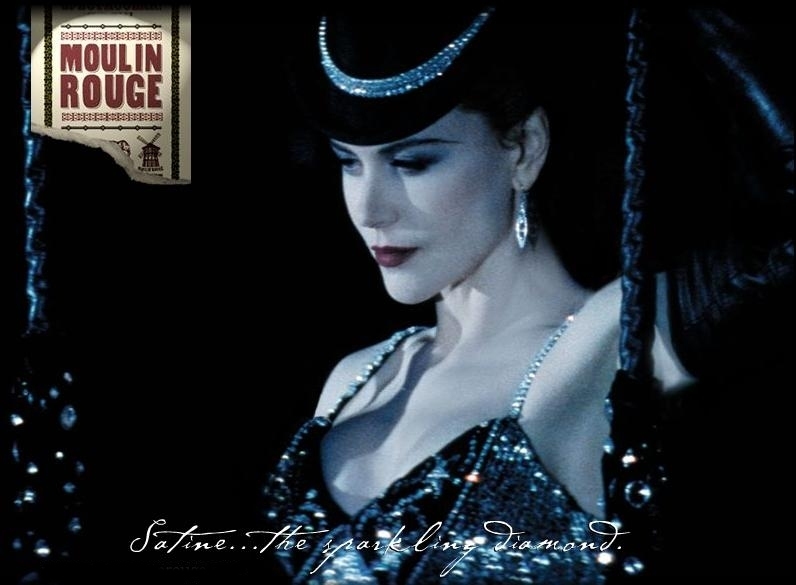
In the 2001 movie Moulin Rouge!, Nicole Kidman plays the role of Satine, a Parisian cabaret star and courtesan who has never known love until she falls for a poor English writer. Satine, which is presumably a professional or stage name, is French for satin, the familiar glossy fabric – its name comes from the Chinese city of Quanzhou (once a major shipping port for silk), which was called by the Arabic name of Zayton during the Middle Ages. Zayton is the Arabic word for “olive”, to symbolise peace, perhaps due to the mix of cultures living and working in the city. This makes Satin or Satine a possible honour name for Olive, weirdly enough. Satine has been used as a name since the 19th century, and although it is not a traditional French name, it has sometimes been used as a baby name in France since the film came out. A soft, exotic-sounding name with an Australian connection.

Shiseido
The name of a highly successful Japanese cosmetics company, and one of the oldest in the world, being founded in 1872. The company’s name is taken from the classic Chinese text, the I Ching (Book of Changes), and can be translated as “How wonderful is the virtue of the earth, from which all things are born!”. The company believes that this embodies its resolve to create new products that will enhance clients’ well being, and also helps to promote an image which is healthy and environmentally sound. Although there are many brand names used as personal names (such as Chanel and Armani), and some existing personal names used for brands (such as Mercedes and Nike), I have only ever seen one baby given the name Shiseido. That makes it very unusual, but it’s rather attractive, and has a lovely, carefully-crafted meaning. Pronounced shi-SAY-doh, you could use Sadie as a short form, although the baby I saw had Sass as her nickname.

Sorcha
Gaelic name meaning “brightness, radiance”. It can be found in medieval Irish documents, so it has a long history. In Ireland it is sometimes Anglicised as Sarah, because of the similar sound, while in Scotland it is more often Anglicised as Clara, which has the same meaning. The Irish actress Sorcha Cusack, who came to prominence in the 1970s as Jane Eyre, and is still on TV now as the housekeeper in Father Brown, has given it publicity in recent decades, and the name isn’t uncommon in Ireland. The correct pronunciation is SAWR-kuh or SAWR-i-kuh, but in practice a wide variety of pronunciations is tolerated in Ireland and Scotland, including SAWR-sha, which is probably easier for English-speakers, and sounds like familiar Sasha (although liable to be confused with another Irish name, Saoirse). An unusual yet very usable name.

POLL RESULTS
People’s favourite names were Carys, Isolde and Posy, and their least favourite were Lowenna, Jamilla and Shiseido.

(Picture shows Nicole Kidman as Satine in Moulin Rouge!)

Famous Name: Humphrey

10 Wednesday Jun 2015

Posted by A.O. in Famous Names

≈ Comments Off on Famous Name: Humphrey

Tags

animal names, aristocratic names, Disney names, famous namesakes, fictional bears, fictional namesakes, germanic names, honouring, Irish names, name history, name meaning, names from television, nicknames, Old English names, rare names, royal names, saints names, Shakespearean names, surname names, UK name popularity, US name popularity, vintage names

PH_greenguideJAN2_wide_networking-20140101124709427910-620x349

Famous Namesake
May 24 marked the 50th anniversary of Humphrey B. Bear‘s first television appearance, on the Channel Nine’s children’s program, Here’s Humphrey in 1965. I cannot say it was Humphrey’s birthday, because he is eternally four years old, and can never age.

He was originally named Bear Bear, but feeling that this perhaps lacked some imagination, the makers of the show ran a competition, and he was renamed Humphrey B. Bear, with his middle initial standing for Bear. I’m not sure whether the contest winner had ever heard of Walt Disney’s Humphrey Bear (who debuted in 1950), but the coincidence is remarkable.

In the show, the honey-loving Humphrey lives in a tree-house in the middle of the magic forest, and loves to explore, play, dance, spend time with friends, and use his imagination. Humphrey is prone to accidents and often makes mistakes – as the theme song says, He’s a funny old fellow who gets in all manner of strife. Humphrey never speaks, but has a companion and assistant who serves as narrator.

Here’s Humphrey is one of the most successful programs for preschoolers in Australia, and is second only to Playschool for longevity. It won Logies for Best Children’s Series, and Humphrey himself has won a number of awards, including Citizen of the Year in 1994. He still makes frequent public appearances, including to sick children in hospitals, and to promote road safety.

Humphrey made generations of children smile, but there was an inner sadness to the outwardly happy bear. The first performer to play Humphrey, often considered the best of all time, was a talented actor, dancer and playwright named Edwin Duryea – aptly nicknamed “Teddy”.

Constrained by the anonymity of the role, he came to resent it, and led a lonely life. Teddy died a few years ago, and with no known family, was given a pauper’s funeral (Channel Nine wouldn’t pay to bury the actor who had made Humphrey a star). There are no photos of Edwin as Humphrey, as it is considered sacrilege to dispel the illusion that Humphrey isn’t “real”.

There is no doubt that playing Humphrey could be challenging: the bear suit is very hot, just for a start. That may not be a problem in Humphrey’s future, as discussions are underway to turn Humphrey B. Bear into an animated series – and if it goes ahead, he will have a voice at last!

Name Information
Humphrey is derived from the ancient Germanic name Hunfrid, which probably means “to grant peace”, but is often translated as “peaceful warrior”.

There is a 9th century French saint called St Hunfrid, and because of him the name Humphrey was introduced to England by the Normans, where it quickly overtook the Old English form, Hunfrith. In Ireland, it was used to Anglicise Amhlaoibh, which is the Irish form of Olaf.

The name Humphrey was a common one amongst the Norman aristocracy, and one of the first bearers to come to England was the strikingly named Humphrey with the Beard, who fought at the Battle of Hastings. His nickname came about because it was unusual for Normans to have a beard at that time – the fashion was for a clean-shaven look. Bearded Humphrey was the founder of the noble de Bohun family, and his name became traditional amongst the Bohuns.

One of their line was Humphrey of Lancaster, called the “son, brother, and uncle of kings”. He was the son of King Henry IV by his wife Mary de Bohun, the brother of Henry V, and the uncle of Henry VI. Romantic and chivalrous, he was a successful military strategist and diplomat, and a scholarly patron of the arts. Popular with the public, he was disgraced when his second wife was found guilty of witchcraft (she consulted an astrologer and sought herbal fertility treatment). He appears as a character in Shakespeare’s Henry VI – one of the few historical people to be shown in an almost completely positive light.

A famous namesake of modern times is American film star Humphrey Bogart, an iconic leading man of the 1940s who appeared in such classics as The Maltese Falcon and Casablanca. He usually played a cynical tough-guy character, who would prove in the end to have his heart generally in the right place. A true screen legend, he is often regarded as the greatest Hollywood actor of all time. Humphrey Bogart was named for his mother’s maiden name – he was the son of artist Maud Humphrey.

The name Humphrey is a favourite for all kinds of animals, both in real life and in fiction. One example is the cat Humphrey, who was chief mouser at Number 10 Downing Street for many years, until apparently ousted by the Blairs. Cat Humphrey was named after Sir Humphrey Appleby, the urbanely Machiavellian bureaucrat from Yes, Minister and Yes, Prime Minister. The name has also been given to a real life humpback whale, and a camel on The Simpsons, because the name starts with the word hump.

Although never going out of use, the name Humphrey peaked in the 19th century, and isn’t very common. It has never charted in Australia, and is rarely seen today, although there are many examples in historical records. In England/Wales, Humphrey peaked in the 1860s in the mid-100s; in 2013, 20 baby boys were named Humphrey. In the US, Humphrey peaked in 1893 at #650, leaving the Top 1000 a year or two later. Last year less than 5 babies received the name Humphrey in the US.

Humphrey is a rare vintage name, and one that seems rather cuddly and lovable – which is probably why it’s often been chosen for animals, such as friendly bears! It’s an interesting, upper class, and somehow quite a sweet name, but I’m not sure if Humphrey B. Bear is much help to it. Apart from the familiar song about the “funny old fellow”, there has been a rather mean tendency to poke fun at the iconic bear, and even to make lewd jokes at his expense. With the possibility of Humphrey returning in animated form, will this help give the name more publicity, or make it less appealing?

POLL RESULTS
Humphrey received an approval rating of 32%. People saw the name Humphrey as old-fashioned and comical (19%) and too strongly associated with Humphrey B. Bear (15%), while 18% found the “hump” in the name off-putting. However 8% of people thought it was a vintage charmer.

Popular Names in Regional Australia for 2014

07 Sunday Jun 2015

Posted by A.O. in Naming Issues

≈ Comments Off on Popular Names in Regional Australia for 2014

Tags

Bonds Baby Search, middle names, name trends, popular names, rare names

Nimbin-bus

The #1 names in Australia last year were Olivia and Oliver – the first time two names beginning with O have been #1, and the most similar pair of names at #1 since Michael and Michelle in the 1970s.

However, that doesn’t mean they were necessarily the #1 name in every region, so here’s a round up of the most popular names around Australia, as reported by regional newspapers.

NATIONAL

The most popular names of babies and children taking part in the Bonds Baby Search competition were Ruby and Oliver; Olivia was #5 for girls. Other popular names were Noah, Cooper, and Jack for boys, and Charlotte, Ava, and Mia for girls.

NEW SOUTH WALES

In Lismore, the most popular names were Mia and Noah. Oliver was #3 for boys, but Olivia was not in the Top 10 for girls. Other popular names were Willow, Isabella and Sophie for girls, and Mason, Charlie, and William for boys.

In Forbes, the most popular names were Mason, William, and Jack – if you include variant spellings, Mason came out on top. For girls, the most popular names were Isla, Airlie, Hallie, and Layla – and Ruby, if you include variant spellings. There was one Oliver born in the town, but no Olivias.

In the Shoalhaven district, which includes the city of Nowra, the most popular names were Georgia and Isaac. Other popular names were Summer and Mia for girls, and Flynn for boys.

QUEENSLAND

In Ipswich, the most popular names were Olivia and Cooper; Oliver was #2 for boys. Other popular names were Isabella, Ruby, and Charlotte for girls, and Jack, Liam, and William for boys.

In Mackay, the most popular names were Mia and Oliver; Olivia was #6 for girls. Other popular names were Ruby, Charlotte, and Emily for girls, and Jaxon, Connor, and William for boys.

In the Wide Bay area, which includes the cities of Bundaberg and Gympie, the most popular names were Charlotte and Hunter; Olivia and Oliver were both #4. Other popular names were Amelia, Mia, and Chloe for girls, and Cooper, Thomas, and Lachlan for boys.

At Warwick Hospital, a midwife noted a lot of Masons, Logans, and Jacksons. She has noticed a push towards traditional names like Edward and George, but overall there is a lot of variety.

At Sunshine Coast Private Hospital in Buderim, the most popular baby name was Harry – for one week at least. Five baby boys were welcomed in a single week, and they were all given the name Harry.

VICTORIA

In Ballarat, the most popular names were Ruby and Jack; Olivia and Oliver were both #4. Other popular names were Charlotte and Henry. Unique names from local birth notices included Lowanna, Ginger, Spencer, Ecco, Romi, Taylen, and Minti for girls, and Huon, Lennox, Rocco, Tahvo, Tyce, Tiger, Oaklan, and Brax for boys.

In the area around Warnambool, the most popular names were Sophie and Harry; Oliver was #3 for boys. Other popular names were Alexis for girls and Jack for boys. The paper noted a trend for girls names to start with L, such as Lilly and Layla, and boys names to start with H, such as Hugo and Harley. Unique names for the area included Michaeleen and Budi for girls, and Fox, Xander, and Tilba for boys.

In the Wimmera region, which includes the city of Horsham, the most popular names were Edie/Eadie, Indi or Indigo, and Jack or Jackson. Matilda was the next most popular name (most popular overall if not including variants), and Olivia and Oliver were both popular. Unique names for the year were Boh, Letty, and Sari for girls, and Reginald, Hendrix, Macklin, and Korbyn for boys.

At St John of God Hospital in Geelong, the most popular names were Adele and Noah. Other popular names were Zarah and Evie for girls, and Finn and Harry for boys.

SOUTH AUSTRALIA

In Whyalla, the most popular names in birth notices were Isla and Jarrod; Lucas was also a popular boy’s name. The most popular middle names were Rose for girls, and James for boys. The newspaper also noted some of the year’s unique names, including Bohdi, Floredre, La’Tarnya, Isaiah, Titan, and Loki.

WESTERN AUSTRALIA

In the City of Cockburn in Perth, the most popular names were Georgia and Ryan. Other popular names were Emily and Finn.

TASMANIA

Olivia was the most popular name on the south-west coast, which includes the cities of Burnie and Devonport, with Sophie and Charlotte also popular choices.

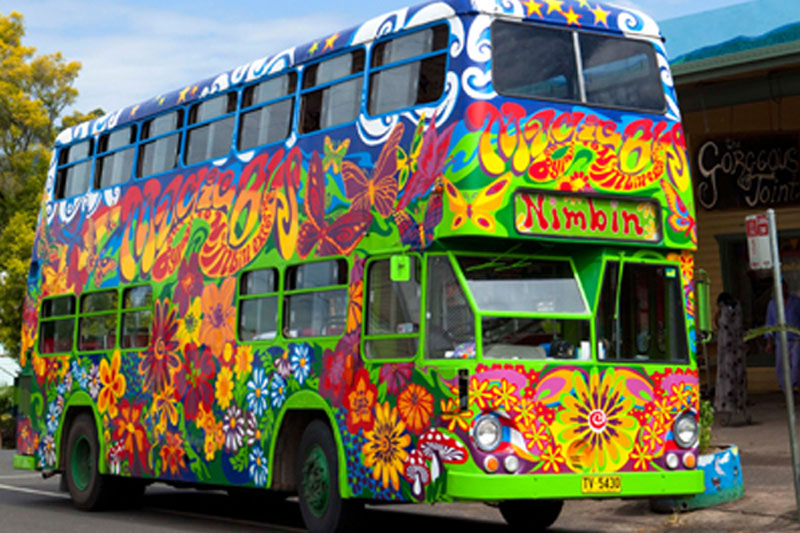
(Photo shows the Nimbin bus in Lismore)

Famous Name: Diana

20 Wednesday May 2015

Posted by A.O. in Famous Names

≈ Comments Off on Famous Name: Diana

Tags

aristocratic names, Biblical names, European name popularity, famous namesakes, honouring, Latin names, modern classics, mythological names, name history, name meaning, name popularity, rare names, Roman names, royal names, Shakespearean names, UK name popularity, US name popularity

168

Famous Namesake
The birth of Princess Charlotte Elizabeth Diana has many people wondering if Charlotte can get to #1 – it would be an easy feat in Australia, as its just been deposed by Olivia, and could regain its throne by going up just one spot in the rankings. It feels as if I am already seeing more Charlottes in birth notices, so who knows!

The princess’ name also invites the question of whether her middle name, Diana, may become more popular as either a first or a middle name. It is well known that the name Diana honours Princess Charlotte’s grandmother Diana, Princess of Wales – Lady Diana Spencer before her marriage, and dubbed “Lady Di” by the press.

Famous for her beauty and charisma, Diana gained respect for her charity work, and sympathy for her unhappy marriage and divorce. Her life, lived under intense scrutiny, ended shockingly in a car crash, leading to an outpouring of public grief. Years later, her memory is still fresh, and she continues to be a subject of fascination for the media.

Diana’s name is a traditional one in the Spencer family, and she was named after a distant 18th century ancestor, who was also Lady Diana Spencer. Tall, fair, charismatic, and attractive, it was hoped this earlier Lady Diana would marry the Prince of Wales, Frederick, the son of King George II. These plans came to naught, and she married a future Duke of Bedford instead.

The parallels between these two namesakes are striking: both grew up at the stately home of Althorp, both socialised with the royal family, both were intended brides of a Prince of Wales, and both unexpectedly died young – the earlier Lady Diana of TB at 25.

Another Lady Diana Spencer born in the 18th century was known as Lady Di, and a Lady of the Bedchamber to Queen Charlotte. A talented artist, she was most famous for the unhappiness of her first marriage, which was marked by infidelity, and ended in divorce. Days later, she married again, to a celebrated wit who was a great-grandson of King Charles II. It was out of the frying pan and into the fire, as her second husband was evil-tempered, a drug fiend, and extremely filthy in his habits. He died begging her pardon for the life of misery he had given her.

While Princess Charlotte’s first two names connect her equally to her royal and commoner families, her third name is a link to her famous grandmother, not just a style icon and People’s Princess, but a beloved mother still deeply missed by her sons. It’s also a connection to her aristocratic Spencer line. Diana has already been used as a middle name twice to honour Diana, Princess of Wales – for Princess Charlotte, and for Diana’s niece, Charlotte Diana Spencer – and perhaps there will be more family namesakes in the future.

Name Information
In Roman mythology, Diana is the goddess of the hunt, having power over wild animals. Associated with countryside and woodlands, oak groves are sacred to her. She is a goddess of the moon, the twin sister of the sun god Apollo. Diana is also a goddess of women, childbirth and midwifery, although a maiden goddess. She is the Roman equivalent of Artemis.

On the one hand, Diana is inaccessible like the chill light of the moon, ever virgin, dwelling far away on sacred mountains, deep in the woods. On the other, she bestowed divine authority onto kings, with her own priest taking the role of King of the Grove. Women worshipped her when they wished to become pregnant, and during pregnancy, as they prayed to her for an easy delivery. Thus this seemingly cold distant goddess helped the survival of humanity.

Diana was one of the most widely worshipped and ancient of the Roman gods, pre-dating the city, and originating amongst the Latin tribes of the Alban Hills. She was the especial patron of the lower classes, with slaves being able to claim asylum in her temples. Diana is portrayed as young and beautiful, often dressed for the hunt in a short tunic and boots, carrying her bows and arrows, and accompanied by a deer or hunting dogs.

The name Diana is believed to come from the Latin dius, meaning “sky”, from an ancient root meaning “bright sky, daylight”. Related to it are the Latin words deus, meaning “god”, die, meaning “day, daylight”, and diurnal, meaning “day time”. The name is usually translated as “divine, deity”.

The goddess Diana is mentioned in the New Testament, because of Ephesus in present-day Turkey, the location of The Temple of Diana. It was one of the Seven Wonders of the Ancient World, and the man who compiled the list considered the Temple of Diana to be the greatest of them all, outstripping the pyramids of Egypt and the hanging gardens of Babylon in its beauty and brilliance.

In the Acts of the Apostles, the Ephesian craftsmen who earned their living making shrines of the goddess felt their livelihoods threatened by St Paul’s preaching of Christianity, and organised a spirited protest march, shouting the catchy slogan, Great is Diana of the Ephesians! In the short term, the situation by was smoothed over by a city bureaucrat.

In the long term, Christianity didn’t do the worship of Diana any favours, although when the Temple of Diana was eventually destroyed, it was by pagan Goths, not Christians. However, worship of the goddess Diana is alive and well, and still practised in various strains of modern Wicca and witchcraft.

Diana has been a favourite in the arts for centuries, featured in many paintings and sculptures. Referenced numerous times in Shakespeare, she actually appears in both Pericles and All’s Well That Ends Well. Neither has her fame diminished. Her myth was the basis for Wonder Woman, and she is a character in the Sailor Moon series, as well as featuring in several video games.

Diana has been used as an English name since at least the 16th century. It has been something of a favourite amongst the English aristocracy, with a famous example being Lady Diana Cooper (nee Manners). Beautiful, witty, and glamorous, her parents hoped that she would one day marry the Prince of Wales (later Edward VIII) – what is it with Dianas being matched up with Princes of Wales? Instead she married a future ambassador to France. Lady Diana had a glittering career as a socialite, writer, and actress, and was often referenced in Jazz Age literature.

The name Diana first charted in the 1910s, debuting at #301; this was the decade when Lady Diana Cooper first came to prominence as a member a group of aristocrats and intellectuals, and coincides with the publication of Anne of Green Gables, where Diana Barry is Anne’s pretty and loyal best friend. It rose steadily, and joined the Top 100 in the 1930s, peaking the following decade at #59 – the time when Lady Diana Cooper became a celebrated hostess in postwar France.

The name remained stable through the 1950s and ’60s, under the influence of sexy British actresses, Diana Dors and Diana Rigg, but left the Top 100 in the 1970s, and continued falling – Diana, Princess of Wales, did not halt its downward progress. The name had a slight boost in 2009, the year after Diana’s inquest found there was no evidence of foul play in her death, but hasn’t charted since 2011.

Diana is still only #297 in the US, although falling, while in the UK it is #358, and rose in 2013. A popular name in Spain and Poland, it is most popular in Hungary, at #75.

Diana is a beautiful, elegant name, with a history that is divine, noble, and even royal. It seems to have become prematurely dated in Australia, as the name remains in use in other countries, and is popular in Europe. I wonder if the name has become too firmly attached to Diana, Princess of Wales, with her luminous fame and life tragically cut short. Will the baby princess help give Diana a boost, or will it merely underline it as a name reserved for Diana’s family?

POLL RESULTS
Diana received a decent approval rating of 60%. 19% of people thought the name Diana was beautiful and elegant, but 15% believed it was too strongly associated with Diana, Princess of Wales. Nobody thought the name Diana was ugly and frumpy.

Famous Name: Cinderella

06 Wednesday May 2015

Posted by A.O. in Famous Names

≈ Comments Off on Famous Name: Cinderella

Tags

Chinese names, controversial names, created names, Disney names, Disney princesses, english names, French names, Greek names, historical records, Indonesian names, Italian names, Korean names, locational names, middle names, name history, name meaning, names from fairy tales, names from films, names from songs, nicknames, rare names, US name popularity, Vietnamese names

Cinderella-2015__38

With a brand new baby girl in the British royal family, there’s a very princessy atmosphere at the moment. Looking back at my recent blog entries, I think I must have tuned into this vibe in some spooky sort of way, because this year I have already covered the names of three fairytale princesses who have featured in Disney films – Rapunzel, Aurora, and Melody.

While everyone’s in a princess-themed mood, I thought I’d cover one more, since we went to see the recent Disney film Cinderella in the school holidays a couple of weeks ago. It starred Australian film star Cate Blanchett as the elegantly wicked stepmother, Lady Tremaine, and Lily James in the title role. It’s a faithful old-school rendering of the fairytale, the 1950s animated version brought to life.

The story of Cinderella has deep roots, because an ancient Greek story tells of a Greco-Egyptian slave girl named Rhodopis (“rosy cheeks”). While she was bathing, an eagle snatched one of her sandals, flew to the city of Memphis, and dropped it into the lap of the king. The king, impressed by the beautiful shape of the sandal and the strangeness of the occurrence, sent his men in all directions to find the sandal’s owner, and when she had been located, Rhodopis was brought to the city to become his queen. This is the oldest known version of the Cinderella tale.

Rhodopis was a real person, a beautiful Thracian courtesan from the 6th century BC who was a fellow slave to the fable teller Aesop. Later she was taken to Egypt and freed for an enormous sum by the brother of the poet Sappho, who had fallen in love with her. Alas for romance, Sappho wrote a poem accusing Rhodopis of stealing from her brother – she calls her Doricha, which might have been her real name, and Rhodopis her professional name.

There are parallels to the Cinderella story in several cultures, where a good, hard-working girl is oppressed by her stepmother and at least one step-sister or half-sister. In China she is Ye Xian (“leaf edge”), in Indonesia and Malaysia she is Bawang Putih (“garlic”), in Vietnam she is Tam (“broken rice”), and in Korea she is Kongji (“sweet wisdom”). It is also reminiscent of the legend of the British queen Cordelia, and her horrible sisters.

The earliest of the modern European Cinderella stories comes from Giambattista Basile in 1684, set in Naples. The heroine is a princess named Zezolla, whose governess persuades her to murder her hated stepmother and beg her father to make the governess step-mama instead. All seems well until the governess sends for her hitherto-unknown six daughters from her previous marriage, who force Zezolla to work as their kitchen slave. Familiar touches are a fairy benefactress, and a lost slipper which brings about marriage to the king.

The stepsisters rename Zezolla as Gatta Cenerentola, with Gatta meaning “cat” to indicate she is as lowly as an animal, while Cenerentola means “little ashes” to describe her dirty, stained appearance (you could loosely translate it as Little Ash-cat). The name Zezolla may be from the common Italian place name Zolla, meaning “mound of earth”; in support of my theory, several of the stepsisters have names based on Italian places.

When Charles Perrault adapted the story into French in 1697, he dropped the cat part and translated Cenerentola as Cendrillon, as this can also be understood as “little ashes”. (Cendrillon is the younger stepsister’s name for the heroine; the older and meaner one calls her Culcendron, meaning “ash bum”, as she was forced to sit in the ashes and get a dirty bottom).

Perrault added a fairy godmother, pumpkin, and glass slippers to the story, but the biggest change he made was to Cendrillon’s personality. While Zezolla was a cunning murderess, Cendrillon was humble, patient, and sweet-tempered, so the happy ending seems like a reward for her virtue. Perrault’s fairytale is seen as the classic Cinderella story, and was the basis for the 1950 Disney film.

The Brothers Grimm adapted the story into German in 1812, naming the heroine Aschenputtel. It’s difficult to translate, but can be understood as “ash slut, ash wench”. In this darker story, the father joins in the abuse, and doesn’t acknowledge Aschenputtel as his own daughter, but rather his first wife’s child from her previous marriage, so she has a stepfather and stepmother both! The stepsisters are punished with blindness and mutiliation, rather than the forgiveness bestowed upon them in other versions.

It is striking that the heroine’s real name is never given, except in the Italian version, where it seems to be a bit of a joke. Modern adaptations of the story often say that her name is Ella (in the 2015 film it’s short for Eleanor), and Cinderella can therefore be understood as “Ella of the cinders”. Only in the 1950 Disney film is Cinderella the heroine’s actual name, chosen by her parents.

Perrault’s Cendrillon was first translated into English in 1729 by Robert Samber, and immediately became a classic. Cendrillon was Anglicised to Cinderilla, and changed to Cinderella in subsequent editions. Cinderella looks like a reasonably faithful English version of Cendrillon, but the meaning changes subtly during the translation process, as it now looks as if it means “little cinders” rather than “little ashes”.

This makes the name rather more attractive, because cinders are solid, rather than dusty like ashes, and do not have the same connotations of humiliation (“sackcloth and ashes”). Ashes symbolise death, but cinders are the embers of a fire, smouldering hot coals suggesting love and life waiting to be rekindled. I’ve often heard people suggest Ember as a girl’s name with beautiful symbolism, so Cinderella cannot be said to have a bad meaning.

Cinderella has been used as a personal name since the 18th century, and was most common overall in the 19th century. It has been most popular in the United States, and currently there are more than a thousand adults in the US named Cinderella. It peaked in the US in 1951 at 23 baby girls, the year after the Disney film was released. I have found quite a few women named Cinderella in Australian records, and remarkably, nearly always as a first name, not in the middle.

Cinderella is a rare name, closely connected to the fairytale, and given wide public recognition by the Disney films. Although Cinderella is a sweet character who combines a kind heart with great resilience, and has all her dreams come true, the name and story are troubling in many ways. Cinderella was abused and victimised by her family, and her name is one created by bullies to further humiliate and degrade her.

However, it would be a rather fun middle name, and even as a first name is easily shortened to Cindy, Indie, or Ella. And remember what the Disney song said: Cinderella, you’re as lovely as your name!

POLL RESULTS
Cinderella received an approval rating of 28%. 33% of people thought the name Cinderella was tacky and ridiculous, while 28% believed it would lead to teasing and jokes. However, 9% of people thought that nicknames such as Ella made the name seem more usable. 4% of people were bothered that in the story, the name Cinderella was given to be hurtful and humiliating.

Name News: Bagging Out Bad Baby Names, Baby Boomers Bite the Dust, and Branding Your Baby

22 Wednesday Apr 2015

Posted by A.O. in Names in the News

≈ 8 Comments

Tags

acronym names, Baby Center, baby name businesses, baby name etiquette, choosing baby names, dated names, Facebook, Instagram, rare names, Vimeo

11116612_839220219486187_202137790_n

Lara Bingle and Sam Worthington’s son Rocket Zot recently got his name hammered in the press. Celebrity mum Chrissie Swan wouldn’t have approved of that, because she believes that nobody deserves to have their baby name rubbished. She had her children’s’ names, Kit and Peggy, criticised, so she knows how horrible it feels. However, even Chrissie draws the line somewhere, and for her it is demonic names. I’ve noticed nobody seems able to say, “All baby names are great”; everyone has a clause in fine print that says, “Except for these obviously terrible names that nobody in their right mind would consider”.

However, while Alissa Warren from Mamamia agrees that bagging out someone’s baby name after the baby is born is not on, she thinks it’s fine to do it before the baby is born (as a warning, I guess). Chrissie would not be on board with that, because her son’s name was called “a nothing name” before his birth, which has damaged her relationship with the friend who shared this pre-natal opinion. Lots of comments on the article, with nearly all of them saying that you can’t be rude about someone’s baby name before the baby is born either, or even if the name hasn’t been decided yet.

They weren’t quite criticised, but certain rare names chosen by Australian parents at Baby Center this year were mentioned on Scoopla. Boys names included Anthem, Basil, Denim, Falcon, Finnick, Guru, Judge, Patch, Ranger, Tiger, Viggo, Zealand, and Zeppelin, while unusual names for girls were Agape, Chia, Elowen, Holiday, Hyacinth, Lark, Neo, Nivea, Posey, Sparrow, Tempest, and Violina. Members voted Moody for boys and Yolo for girls (an acronym for You Only Live Once) as the most unusual names they had heard of.

Of course, people are always fiddling the numbers to “prove” how rare or how common a name is, sometimes with unconvincing results. The Daily Telegraph looked through the data, and found that names like Arya are more often used than “common” Australian names like Kylie and Sharon. Sharon is a common name for women in their fifties – not at all common for newborn babies. Surely no one is surprised to hear there are more new babies named Arya than Sharon?

Same with this article on baby boomer names which are supposedly “dying out”. There’s not many Bruces around, but the numbers have remained pretty stable for the past 15 years, which doesn’t spell death to me. Neil is holding its own, and Ian is a classic which is still in the 200s – not even close to needing palliative care. Sandra hasn’t disappeared from the charts just yet, and classic Helen has been stable for a decade and may even be on the rise. The article is quite right though that even the “dead” names could very well come back one day – one day people will be naming their babies after Great-Grandmother Judith, the same way Elsie and Ruby have been rediscovered.

If you yearn for your own unique baby name, and are dismayed to find that Finnick and Elowen aren’t as one-off as you’d hoped, a Swiss company will custom design you one, for a measly $40 000. They have 14 naming experts, 4 historians, 12 translators, and two trademark attorneys who will work for 100 hours to create a baby name list for you. All elements of the name will have a positive meaning, and they often combine words in a new order, or use vocabulary words that haven’t been used as names before. The trouble is that the company is called Erfolgswelle (it means “wave of success” in German), which doesn’t inspire confidence in their naming abilities.

You can also go the cheapie option, and crowd source your baby name, like north-coast NSW inventor Cedar and his partner Kylie did. Their baby came early, and he was a boy when they were expecting a girl, so they didn’t have any baby names planned. Cedar and his dad had already used crowd funding for their innovative bee hive, so naturally saw crowd sourcing the baby name as an extension. So far, the most popular baby name is Buzz.

And why does your baby need a unique baby name? So they can start building their personal brand, for we are assured that in the future there will be no such things as a CV, and employers will instead be making hiring decisions based on your personal website (preferably with its own .com) and social media strategies. Already nine year-old surfer Winter Vincent has his own Instagram, Facebook and Vimeo, and has attracted sponsors through his charity work and his “amazing name”. And Millie-Belle Diamond is only 14-months old but already earns up to $250 a post on Instagram flogging teeny-size fashion brands. Don’t Winter Vincent and Millie-Belle Diamond already sound like brand names? And they didn’t cost $40 000 or require a crowd to pitch in, so if you want an amazing name to brand your baby, you can do it yourself quite successfully.

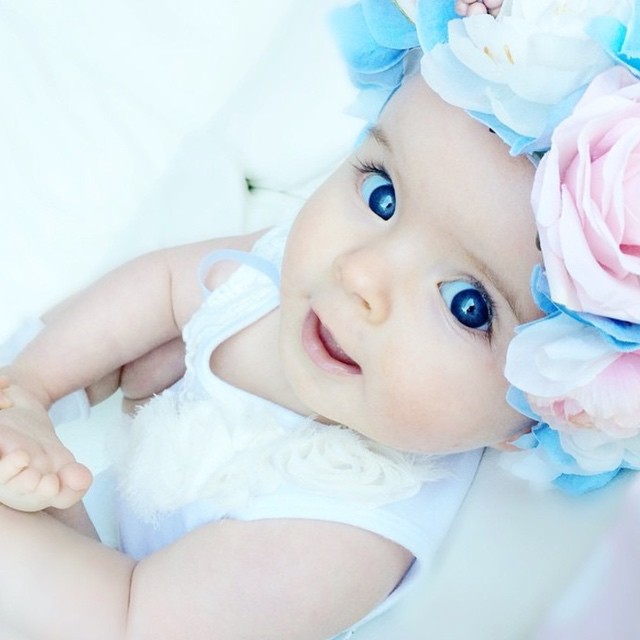
(Photo of Millie-Belle Diamond from Instagram)

Rare Boys Names from the 1940s

12 Sunday Apr 2015

Posted by A.O. in Name Themes and Lists

≈ 7 Comments

Tags

animal names, aristocratic names, car names, Cornish names, english names, famous namesakes, fictional namesakes, flower names, French names, germanic names, Greek names, honouring, Italian names, locational name, musical names, mythological names, name history, name meaning, names from comics, nature names, nicknames, Old English names, Old Norse names, papal names, plant names, rare names, saints names, scientific names, Scottish names, surname names, twin sets, unisex names, vintage names

P01022.021

The most popular boys names of the 1940s were John, Peter, Robert, and David, but what were the least popular names? Here are ten names which were only chosen once in any year between 1944 and 1949 in South Australia, making them unique names for their time and place. Still rare, some feel surprisingly contemporary, while one or two have perhaps had their day.

Aston
English surname of multiple origins. It can be from a common place name meaning “east settlement”, to indicate a village to the east of a larger town, although occasionally it seems to be a corruption or variant of Ashton, meaning “settlement near the ash trees”. It can also mean “at the stone”, to indicate someone who lived near a prominent stone. Finally, it can be a contraction of a personal name such as Aethelstan, meaning “noble stone”, and there are examples of men with Aston as a first name in the Middle Ages from this derivation. Sir Aston Cockayne, 1st Baronet, was a 17th century writer who was on the Royalist side during the English Civil War, and a close friend of the future Charles II. The name might remind you of Aston Villa Football Club, in the English Premier League, or Aston Martin luxury cars – both familiar in the 1940s as well. I see the name Aston name sometimes in birth notices, perhaps inspired by Aston Merrygold from English boy band JLS.

Bramwell
English surname from an unknown place name meaning “stream surrounded by broom” – broom is a hardy European shrub with yellow flowers. The name has a strong connection with the Salvation Army, because Bramwell Booth was the second General of the Salvation Army who served during World War I, the eldest son of its founder, William Booth. We know the name was used by Salvationists, because Bramwell Tillsley, a Canadian who was the son of British Salvationists, was the 14th General of the Salvation Army. The Salvation Army has a strong history in South Australia, with the first official Salvation Army corps formed in Adelaide in 1880. Booth was also used as a baby name during the 1940s, with the Salvation Army’s support of the troops being greatly appreciated. Bramwell is an attractive, little-used surname that has the appealing nickname Bram.

Cosmo
Form of the Greek name Kosmas, meaning “order”, and thus the opposite of “chaos”. The Greeks also used the word to mean “the world”, because they believed the world was perfectly put in order. We use the word cosmos to mean “the universe, all of creation”. According to tradition, Saint Cosmas was a skilled doctor; along with his twin brother Damian, he performed many miraculous cures before his martyrdom. The name Cosmo was introduced to Britain by the Scottish peer Alexander Gordon, 2nd Duke of Gordon, when he named his son Cosmo in 1720. Cosmo’s name was in honour of his father’s close friend Cosimo di Medici – Cosimo is the Italian form of Kosmas. The name has always had a rather exotic and aristocratic image, and Scottish associations. There were several famous Cosmos that could have inspired the name in the 1940s, including popular British playwright Cosmo Hamilton, and Archbishop of Canterbury Cosmo Lang. Cosmos is also a type of daisy, whose name comes from the same Greek origin, so with some imagination, the name Cosmo could honour someone named Daisy.

Denzil
Variant of Denzel, a Cornish surname. The name was traditional in the aristocratic Holles family, with one of the earliest and most famous of their number to bear the name Denzil Holles, 1st Baron Holles, a 17th century statesman who is best known for being part of a group who attempted to arrest King Charles I, sparking the Civil War, but also took a leading role in bringing about the Restoration. The Denzel spelling came first, as Denzil Holles’ grandfather was Denzel Holles. These Denzils and Denzels were named in honour of their ancestor John Denzel, who had large estates in Cornwall in the 16th century and was Attorney-General to Elizabeth of York, queen of Henry VII. John Denzel took his surname from the Denzell manor house in St Mawgan, Cornwall, and the meaning of its name is not known for sure, although perhaps from the Celtic for “hill fortress in open view”. A 1940s Australian namesake is Sir Denzil Macarthur-Onslow, a World War II general regarded as a “cracker of a bloke”. Denzil still seems contemporary because of American actor Denzel Washington, and is very usable.

Everard
Derived from the ancient Germanic name Eberhard, often translated as “brave as a wild boar”. The name was introduced by the Normans to Britain, where there was already an Old English form of the name, Eoforheard. A famous namesake is Sir Everard Digby, who was executed for his part in the failed Gunpowder Plot, and another was Everard Calthrop, a railway engineer who helped develop the modern parachute. Although in use since the Middle Ages, modern usage has probably been influenced by the surname, as the Everards are an aristocratic family who have been created baronets in both Ireland and England. Everard Park is a suburb of Adelaide, named after the prominent pioneer Sir Charles Everard, said to have the best orchard in the colony, giving this a strong South Australian feel. Everard is an interesting twist on classic Evan, and the trend for girls’ names starting with Ev- may also be a help.

Garfield
English surname referring to someone living near a triangular field; the word gar means spear in Old English, and a gar field is one that is shaped like the point of a spearhead. The surname is well known in the United States, as their 20th president was James A. Garfield, and his sons also went on to have illustrious public careers – there is a town in Victoria named Garfield in honour of the American president. A namesake from the 1940s was Hollywood  actor John Garfield, while one with Garfield as his first name is Garfield “Gar” Wood, an American inventor, showman, and record-breaking motorboat racer – the first to travel over 100 miles an hour on water. An Australian namesake from this era is Sir Garfield Barwick, a barrister who came to prominence during a 1943 court case involving the Archibald Prize. He later became a Liberal MP, Attorney-General, and Chief Justice of the High Court of Australia. He was the legal advisor to Sir John Kerr during the controversial dismissal of Prime Minister Gough Whitlam (an old enemy of Barwick’s), so he well and truly made history. Garfield would be a charming and unusual vintage name, except for one thing – the obese cartoon cat!

Linus
In Greek mythology, Linus was a Thracian prince who was so musically talented that he was said to have been the son of Apollo, god of music, and Calliope, the muse of epic poetry. According to legend, Linus invented melody and rhythm, and taught music to his brothers Orpheus and Heracles. Unfortunately, Heracles didn’t appreciate the music lessons, and killed Linus with his own lyre after he tried to give Heracles some constructive criticism. Although the meaning of the name is not certain, there was a type of dirge in classical Greece called a linos, and it’s possible that the mythological character was a personification of this song of mourning. The name has a Christian association because Linus is said to have been a Bishop of Rome in the early church, and is listed as the second pope. The name Linus is especially popular in Scandinavia, although many people will connect it to Linus Pauling, the American scientist who won both the Nobel Chemistry Prize and the Nobel Peace Prize, and whose work was aleady known by the 1940s. The name might also remind you of security blanket-hugging philosopher Linus from the Peanuts comics. A sweet, smart name with a mythological musical connection.

Neon
Greek name meaning “new”. It wasn’t an unusual name in ancient Greece, and there are several prominent men named Neon from history. However, in modern times the name is strongly associated with neon lighting – bright electrified glass tubes often used for signs. They are named after neon gas, which is used to give off a bright orange light, but other gases provide different colours. Neon has has the same meaning as the name Neon. Neon lighting was invented in 1910, and was in its heyday between 1920 and 1940, the bright colours suddenly bringing dark streets to life. It’s probably not a coincidence that the name Neon peaked in the 1940s and ’50s, usually given to boys. Neon feel both space age and vintage, and has been used as a comic book hero name, for both a male and female character. As neon is often used in an artistic context today, you might think of this as an arty name, and it’s otherwise bright and energetic.

Revel
A revel is a festive celebration, while to revel is to make merry. The word comes from Old French, and is directly related to the Latin rebello, from which our word (and name) Rebel is derived. This is probably because we think of celebrations as tending to be rather unruly or disorderly, and sometimes they can even get out of hand! This fun-loving word has been used as a personal name since the Middle Ages in both England and France, and was also given as a nickname to people who were known for partying particularly hard. It is from this that the surname derives, and it is especially associated with Yorkshire. A famous Australian namesake is Western Australian Indigenous artist Revel Cooper, whose career began in the 1940s. Although he was just a child then, he was one of a number of children in state care who were given specialised art training, and their artwork exhibited in Perth, New Zealand, India, and Europe. Unlike many of the children, Revel continued his art career into adulthood. Revel is a boisterous medieval boys’ name that still sounds contemporary.

Rollo
Rollo was a powerful 9th century Viking leader who was the founder and first ruler of the area of France now known as Normandy. He was the great-great-great grandfather of William the Conqueror, and through William, is the ancestor of the present day British royal family, as well as all current European monarchs. His name is a Latinised form of the Old Norse name Hrólfr, which in modern times is known as Rolf. It’s a shortened form of Hrodulf, now known as Rudolf, meaning “famous wolf”. Rollo is also a Scottish surname, the Clan Rollo being descended from the Normans, and in particular the nephew of William the Conqueror, Erik Rollo. Because the Lords Rollo is a title in the Scottish peerage, the name gains further aristocratic credentials. Rollo fitted in well with 1940s name trends, when Rolf and Roland were fashionable, and Australian artist Rollo Thompson flourished in this decade. Like Cosmo, it fits in with current trends for boys names ending in -o, and this is a fun yet blue-blooded choice.

POLL RESULTS
People’s favourite names were Linus, Aston and Bramwell, and their least favourite were Neon, Denzil and Garfield.

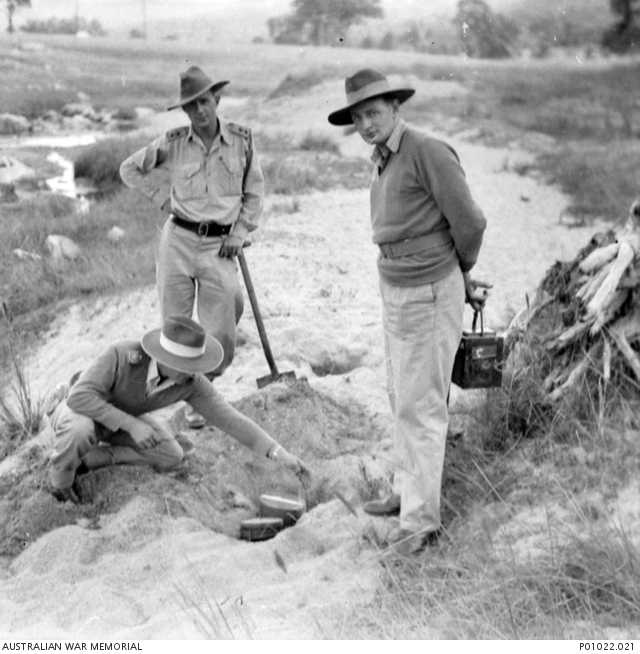
(Picture shows Denzil Macarthur-Onslow, on the right, supervising a training exercise in Queensland in 1942; photo from the Australian War Memorial)

Famous Names: Rocket Zot

08 Wednesday Apr 2015

Posted by A.O. in Famous Names

≈ 3 Comments

Tags

celebrity baby names, english names, flower names, food names, Greek names, honouring, name history, name meaning, name popularity, names from comics, names from songs, names of weapons, nature names, nicknames, plant names, rare names, Russian names, scientific names, UK name popularity, unisex names, US name popularity, vegetable names, vocabulary names

July-2012-2-062

Names in the News
There are some celebrities whose baby names the media looks forward to learning with barely-disguised impatience. It might be a big star or a royal, in which case we all want to know what the baby is called, even if it’s quite boring. On the other hand, there are certain celebrities where we yearn to know the baby name they choose, because we can feel “a crazy celebrity baby name” coming up.

Recently it has been Lara Bingle and her husband Sam Worthington grabbing the baby name headlines, although the whole process began months ago, during what has been described as “the world’s longest pregnancy“. This was only increased by the Bingle-Worthingtons requesting privacy and not immediately announcing their baby name, which sent the rumour mill into overdrive.

I always think that if you’re going to be coy about announcing the baby’s name, it had better be something pretty epic, because I hate waiting for weeks, only to find out the baby is named Charlie. In this case, I was not disappointed because the baby’s name was reported as Rocket Zot.

Predictably, some sections of the media responded with outrage, denouncing the name. Was this a clever attempt to force Rocket’s cagey parents to confirm or deny the baby name? If so, it worked, because Lara Bingle immediately took to social media to defend their choice of name.

Public comments have generally been quite harsh, and on this blog, more than 84% of people have given it the thumbs down. But is Rocket Zot really such a bizarre name?

ROCKET
A rocket is any missile or vehicle propelled by a rocket engine. Although we may think of rockets as being quite space age, they have been existence since the Middle Ages, when they were used as weapons by the Chinese. Europeans found out about rocket technology when they were conquered by the Mongols, who themselves made the interesting discovery by conquering parts of China first.

It wasn’t until the twentieth century that anybody began serious research into using rockets for travelling through space. The Germans made the most progress in this area, and there was devastating proof of Germany’s proficiency in rocket use when they rained down V-2 rockets upon Allied countries in World War II, killing and wounding thousands in the process.

The United States was to benefit the most from Germany’s rocketry, because after the war they scooped up the majority of the German rocket scientists. The first American space rockets evolved directly from the V2, which just shows how important it is to conquer the right people during a war, and nick all their best technological innovations.

The word rocket comes from the Italian rochetta, meaning “little fuse”, a small firecracker developed by an Italian inventor in the 14th century. It is notable that for many years, the history of rockets and that of fireworks was virtually one and the same, as they both relied on gunpowder.

If all of this sounds a bit too violent, rocket is also a leafy green vegetable commonly added to salads, and a favourite since Roman times (maybe partly because it was believed to be an aphrodisiac). In this case, the name has nothing to do with rockets or fireworks, but is derived from Eruca, the Latin name for the plant, which means “caterpillar”.

London rocket is a wildflower whose common name was given because it grew in such profusion after the Great Fire of London in 1666. Another plant is called sweet rocket or dame’s rocket, abundantly blossomed with pretty fragrant mauve flowers. The attractive but toxic aconite, or wolfsbane, is sometimes called blue rocket, and the Chinese used its poison in warfare, just as they did explosive rockets.

Rocket has been used as a name since the 19th century, when it was much more common in North America. The United States national anthem, The Star Spangled Banner, with its mention of the “rockets’ red glare”, may have made the name seem particularly patriotic (the rockets in the song were from the British attacking Fort McHenry in Baltimore during the War of 1812). Independence Day fireworks also help to make rockets seem patriotically American. Rocket has been given to both sexes, but more commonly to boys.

In 2013, 16 boys were given the name Rocket in the US, while in the UK, less than 3 babies in any year have been named Rocket since 1996. In South Australia last year, there was just one baby boy named Rocket.

Although Rocket is rare, it has become quite prominent as a celebrity baby name. Douglas Adams named his daughter Polly Jane Rocket in 1994, a fitting tribute for the author of the Hitchhikers Guide to the Galaxy series. Director Robert Rodriguez has a son named Rocket Valentino born in 1995 (Rocket’s siblings include Rogue, Rebel, and Racer). Tom DeLonge from Blink-182 had a son named Jonas Rocket in 2006, and Pharrell Williams welcomed a son named Rocket Ayer in 2008, honouring the Rocket songs of Stevie Wonder, Elton John and Herbie Hancock, as well as Roy Ayers. Last year Beau Bokan from Blessthefall welcomed a baby girl named Rocket Wild. It’s not unknown as an Australian celebrity name, because fashion designer Yasmin Sewell had a son named Knox Rocket in 2011.

The name Rocket has been criticised for trying too hard to be a “cool” celebrity baby name, a name which no decent baby name book has listed. (I’m happy to be amongst the indecent baby name blogs to include Rocket). And yet is it really that outrageous? It’s very much like modern classic Rocco, and when Jett is a popular boy’s name, Rocket isn’t such a stretch. Weapon-related names such as Archer and Hunter are also on trend.

Depending on your point of view, Rocket might be too cool for the schoolyard, or fine for the famous but out for ordinary folk, or you might think this is an energetic, rocking firecracker of a name that fits in with current trends while still being a rare choice. Rock or Rocky are the obvious nicknames.

ZOT
If Rocket got a good going-over, Zot went down even less well, with the headline, Lara Bingle Doesn’t Give a Zot For Baby Name Traditions (since changed). Urban dictionaries were consulted, to discover that zot meant “kill, destroy”, or “spitball”. Of course you can also consult dictionaries to find that Bob is a woman’s haircut, John refers to a prostitute’s client, and Amelia means to be born without a limb, but the dictionary meanings are not usually applied to these personal names.

Lara Bingle was angered and upset by the journalist’s comments on Zot, since it was given in honour of her father Graham, who passed away from cancer a few years ago. Zot was apparently the nickname he went by.

Zot is actually a “real” name – it’s a short form of Izot, the Russian form of Greek Zotikos, meaning “full of life” (a masculine spin on Zoe). I think that makes it an exciting addition to Rocket, which is already quite a lively-sounding name.

Zot is also a comic book hero name, in this case, a contraction of the character’s real name of Zachary T. Paleozogt. A cheery blond teenager from a utopian world, Zot zips around on rocket boots with a laser gun to sort out the problems of our own rather more flawed planet.

It has been conjectured that the name Rocket is a nod to Sam Worthington’s father, Ronald Worthington, so that Rocket Zot may actually honour both fathers. The Herald Sun suggests that Ronny Graham, nicknamed “Rocket”, would have been a better honouring name. Given the choice, I think I prefer the more distinctive, affectionate, and personalised Rocket Zot.

POLL RESULTS
The name Rocket received an approval rating of 16%. 44% of people thought that Rocket was a terrible name, while 6% loved it.

Zot received a slightly higher approval rating of 20%. 61% of people thought that Zot was a terrible name, while 5% loved it.

53% of people preferred Ronny Graham as a name to honour Ronald Worthington and Graeme “Zot” Bingle, while 47% thought Rocket Zot had more zip.

(Photo shows Fourth of July fireworks to accompany the US national anthem)

← Older posts
Newer posts →

Enter your email address to follow this blog

Categories

Archives

Recent Comments

A.O.'s avatarwaltzingmorethanmati… on Zarah Zaynab and Wolfgang…
Madelyn's avatarMadelyn on Zarah Zaynab and Wolfgang…
JD's avatardrperegrine on Can Phoebe Complete This …
A.O.'s avatarwaltzingmorethanmati… on Rua and Rhoa
redrover23's avatarredrover23 on Rua and Rhoa

Blogroll

  • Appellation Mountain
  • Baby Name Pondering
  • Babynamelover's Blog
  • British Baby Names
  • Clare's Name News
  • For Real Baby Names
  • Geek Baby Names
  • Name Candy
  • Nameberry
  • Nancy's Baby Names
  • Ren's Baby Name Blog
  • Sancta Nomina
  • Swistle: Baby Names
  • The Art of Naming
  • The Baby Name Wizard
  • The Beauty of Names
  • Tulip By Any Name

RSS Feed

  • RSS - Posts

RSS Posts

  • Celebrity Baby News: Melanie Vallejo and Matt Kingston
  • Names from the TV Show “Cleverman”
  • Can Phoebe Complete This Sibset?
  • Zarah Zaynab and Wolfgang Winter
  • Baby, How Did You Get That Name?
  • Celebrity Baby News: Media Babies
  • Celebrity Baby News: Adelaide Crows Babies
  • Celebrity Baby News: Chris and Rebecca Judd
  • Names at Work: Name News From the World of Business and Employment
  • Celebrity Baby News: Sporting Round Up

Currently Popular

  • Celebrity Baby News: Jacinta Allan and Yorick Piper
  • Celebrity Baby News: Jacinta Allan and Yorick Piper
  • The Top 100 Names of the 1940s in New South Wales
  • The Top 100 Names of the 1930s in New South Wales
  • Celebrity Baby News: Josh and Amie Frydenberg

Tags

celebrity baby names celebrity sibsets english names famous namesakes fictional namesakes honouring locational names middle names name combinations name history name meaning name popularity name trends nicknames popular names saints names sibsets surname names twin sets unisex names

Create a free website or blog at WordPress.com.

Privacy & Cookies: This site uses cookies. By continuing to use this website, you agree to their use.
To find out more, including how to control cookies, see here: Cookie Policy
  • Subscribe Subscribed
    • Waltzing More Than Matilda
    • Join 517 other subscribers
    • Already have a WordPress.com account? Log in now.
    • Waltzing More Than Matilda
    • Subscribe Subscribed
    • Sign up
    • Log in
    • Report this content
    • View site in Reader
    • Manage subscriptions
    • Collapse this bar
 

Loading Comments...