• About
  • Best Baby Names
  • Celebrity Baby Names
  • Celebrity Baby Names – Current
  • Celebrity Baby Names – Past
  • Featured Boys Names
  • Featured Girls Names
  • Featured Unisex Names
  • Links to Name Data
  • Waltzing on the Web

Waltzing More Than Matilda

~ Names with an Australian Bias of Democratic Temper

Waltzing More Than Matilda

Tag Archives: popular names

Can You Suggest Any Vintage Baby Names for This Couple?

29 Saturday Sep 2012

Posted by A.O. in Naming Assistance

≈ 11 Comments

Tags

choosing baby names, classic names, flower names, middle names, nature names, nicknames, plant names, popular names, retro names, sibsets, The Baby Name Wizard, vintage names
Anya and Tom are expecting their second child in about three or four weeks, and although they have dutifully compiled a little list of names for each gender, they don’t have strong feelings about any of the names, which is making it hard for them to decide.

Girls List

  • Elsie
  • Belle
  • Lily
  • Rose
  • Anya likes the names Pearl and Mabel
  • Tom likes the name Josie

Boys List

  • Stanley
  • Reggie
  • Jack
  • Anya likes Monty, Billy and Eddie
  • They have also considered Albie, Archie and Alfie

Anya and Tom’s Preferences

  • Vintage names
  • Nicknames, and names that can be shortened to a nickname
  • Short names
  • Not too fussed about popularity, and would prefer a popular name to something obscure
  • Something which is a good match with their daughter, who is named Is**la

Anya and Tom would love suggestions of other names that fit their naming style, and their surname begins with E and ends with S eg Eadens. They don’t mind alliterative names, such as Elsie Eadens. They are also looking for middle names.

~~~~~~~~~~~~~~~~~

Congratulations, Anya and Tom – you’re well-prepared, second-time-around parents-to-be who have done all their homework! You’ve drawn up your name lists, you know what you like, yet you are open to thinking of new names. Best of all, you have a positive, relaxed attitude to finding a baby name, and willing to have some fun in the process.

It sounds like you’ve already received some criticism for your name choices, and although I’m sure you handled it diplomatically, you do need to be able to make your decision without being swayed by others (including me!).

Because none of the names you’ve picked seems to have won your heart, I think it’s a good idea to keep looking, but don’t think that a name you don’t “love” should be crossed off. Sometimes we find the perfect name right away, but it takes a while for us to get emotionally attached to it. It’s amazing how many parents will end up going with a name they didn’t warm up to at first.

Even though you only have a few weeks to go, you don’t need to choose the name right now. I’d suggest that you finalise your name lists, and keep all your options open until after the birth. Once your new son or daughter is born, don’t be afraid to follow your heart, because chances are the right name will come to you intuitively if you’re patient and don’t try to force it.

(Middle names: I’ve written a short guide to middle names that might interest you).

GIRLS NAMES

It’s interesting you’re looking for a vintage name to match your daughter’s, because your little girl has quite a modern name, in that it’s only become popular quite recently. Because of that, I’d suggest that you might want to go with a classic or retro name that’s already popular or gaining rapidly in popularity.

Elsie and Lily are quite similar in sound to your daughter’s name – Elsie also has a vowel-L-S-vowel pattern, while three of Lily’s letters can be found in I’s name, and they both end in vowels. That makes me wonder if you would like a sister-name match that sounds a lot like your daughter’s? I actually think you and your daughter have quite similar names, so another one like that could make a “family set”. I notice you seem to like girl’s names with a strong L sound in them, so I’ve tried to find names that fit that pattern.

Rose and Belle are both really pretty, feminine names. I think classic Rose is my favourite of your names under consideration – sounds lovely with your surname, makes a good sibling match, and has a nice level of popularity. The Baby Name Wizard actually has Belle listed as a sister for Is**la! The two names together make me think of Belle Isle, a popular place name; they seem to make the phrase beautiful island. If you don’t end up using them, either name could become a middle name.

Suggestions

  • Alice (sweet popular classic name, sounds similar to Elsie)
  • Violet (elegant popular vintage flower name, same long I sound as her sister)
  • Millie (vintage name rising rapidly in popularity, similar to Mabel and Lily)
  • Molly (popular vintage name, similar to Mabel and Lily)
  • Daisy (cute vintage flower name as an alternative to Lily and Rose)
  • Tilly/Tillie (nickname alternative to Lily)
  • Eva or Eve (pretty popular names that bring the nickname Evie, similar to Elsie)
  • Lola (everything you asked for, but may seem too similar as a sibling name match)

BOYS NAMES

You seem to have considered quite a few boy’s names that got rejected, although I’m not sure if Albie/Alfie/Archie has been eliminated or is still in the running. Stanley and Jack are both classics, while Reggie is just coming in to fashion as a fresh alternative to Archie. I’m finding it hard to pick a front-runner, as they are all subtly different and have their points to offer.

Stanley has never gone out of use, and yet isn’t popular, although he is on the rise and pretty hip; while Jack and Reggie are laddish, Stanley nn Stan is sturdy and manly. Reggie is cute, and makes quite a daring choice – he seems like he has the potential to become the new Archie. Perennial favourite Jack never goes out of fashion, even though his popularity is currently slipping. I think Jack probably sounds best with your surname and as a brother to your little girl, but as you well know, he will be one of many Jacks (not that there’s anything wrong with that). I might be leaning slightly towards Stanley, but I think any of these names would make a fine choice.

Suggestions

  • Will (a softer alternative to Billy; I think it would sound nice with his sister)
  • Fred or Freddie (a cute but more surname-friendly alternative to Eddie)
  • Percy (seems similar to Reggie)
  • Gus (very hip old-style nicknamey name)
  • Lenny (similar to both Stanley and Reggie, becoming very fashionable)
  • Rex (short, strong vintage name; similar to both Reggie and Jack)
  • Kit (similar to Jack, but with a touch of the west)
  • Barnaby nn “Barney” (seems similar in feel to Monty)

NOTE: The baby’s name was Jack!
Saturday Celebrity Sibset: Carla Zampatti – Italian Style

22 Saturday Sep 2012

Posted by A.O. in Sibsets in the News

≈ 5 Comments

Tags

celebrity baby names, celebrity sibsets, classic names, Italian names, name popularity, popular names

This is a celebrity sibset I’ve been wanting to cover for some time, as it’s been such an influential one.

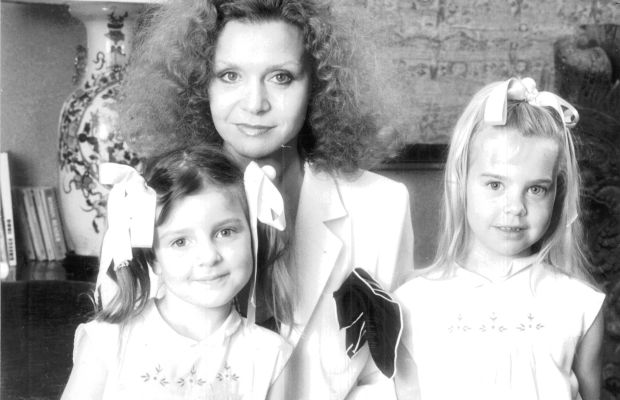
Carla Zampatti is one of Australia’s most famous designers, and at 70, considered a matriarch of the industry. Originally from northern Italy, she moved to Australia during her childhood. Her first boutique opened during the early 1970s in Sydney, and she now has a chain of more than thirty stores across Australia. She has received many awards, including Designer of the Year, Businesswoman of the Year, and Australian Fashion Laureate, the highest honour in the Australian fashion industry.

Carla’s first husband was Leo Schuman, who she married in 1964 and divorced in 1970; their son is named Alexander (nn Alex) and he’s now on the board of his mother’s company.

In 1975 Carla married wealthy Liberal politician John Spender, a Yale graduate, barrister, and later, diplomat to France. They were divorced in 2010.

Their daughters are Allegra, who is now the General Manager of the company, and Bianca, who is a fashion designer and has her own label.

Alexander is a sturdy classic in Australia which has never left the Top 100. It was #29 for the 1900s, and reached its lowest point in the 1960s (when Alex Schuman was born) at #89. It surged upwards through the 1970s and ’80s to reach #17 in the 1990s. Since then it has remained stable, and is currently #16.

Bianca was in rare use in the 1960s, but in the 1970s, it absolutely skyrocketed to reach #139 for the decade. Top 100 by the 1980s, it peaked in the 1990s at #45. By 2010 it was still a very respectable #125, and last year it increased to #103, only just outside the Top 100.

Allegra has never been in the charts, but it is gaining in popularity, been chosen as a baby name by several celebrities, and has retained a great deal of cachet. Not only fashionable, it is also an appealing Italian heritage choice. I can’t help wondering if it is tomorrow’s Bianca?

Carla Zampatti has become a fashion institution by making classic clothes that can be worn for years, and she seems to have the same ability to select names that remain popular and stylish for decades. One of the amazing things about this sibset is that although the siblings are in their thirties and forties, you can easily imagine Alex, Allegra and Bianca as children born within the last couple of years.

(The picture shows Carla and her daughters around the mid-to late 1980s, I would guess; photo from David Jones, which has exclusive rights to both Carla Zampatti and Bianca Spender fashions)

MYTH: Australian Baby Names Follow English Trends More Closely Than American Ones

09 Sunday Sep 2012

Posted by A.O. in Baby Name Mythbusters

≈ 7 Comments

Tags

Arabic names, British Baby Names, Gone With The Wind, Greek names, international name trends, Italian names, Legitimate Baby Names, name data, name poopularity, name trends, popular names, Southern names, UK name trends, US name trends, Welsh names

Last time we went mythbusting, we looked at whether Australian names are becoming increasingly Americanised, and didn’t find a lot of evidence. This is the flip side to that myth – the one that comforts us that we are essentially more British in our ways than American, and so are our baby names. That despite an increasing tendency to call our children Jett and Harlow, most of us will trustingly follow dear old Mother England, and choose something like Archie, Evie, Callum or Isla.

Again, this myth sounded quite plausible to me. But we have to look and make sure, so once more I prepared myself to examine the Top 100 from each nation. The first hurdle is that both of us are slightly data-challenged, so I was forced to rely on data from Victoria only (the only state with stats going back to 1929), while the data from the UK would include both England and Wales, but not Scotland or Northern Ireland. I did feel that already the waters were getting slightly muddied, only to find that England/Wales doesn’t publicise historical Top 100s.

I express my heartfelt gratitude to Elea at British Baby Names, who has provided on her blog, through her own labours, Top 100s for England/Wales for each decade from 1904 to 1984. Upon e-mailing her to enquire where I might find the one for 1994, she very kindly sent me a copy of her own personal spreadsheets so I could have that one as well.

Now I acknowledge this leaves me with some flaws in my methodology before even starting. I only had data from one state of Australia; furthermore this state has a reputation of being slightly more “English” than average. I only had data from England/Wales, and only had access to years ending in a 4. As I had already examined the earlier myth using data from the United States in years ending with a 0, it was possible I wasn’t going to be comparing apples to oranges so much as bananas to hedgehogs to timeshare villas in Spain.

However, we won’t get too gloomy, but show a bit of British pluck and press on. No, this won’t be the most statistically persuasive thing you’ll read all year, but we’re not doing a study, not trying to prove anything, just having a keen yet amateurish look around us to see if anything obvious shows up. And after all, if the myth is clearly and inarguably true, then broad trends should be pretty obvious even through a fog of slightly dodgy data.

1934

Boys – 82% the same (17% higher than US)

Girls – 69% the same (18% higher than US)

1954

Boys – 75% the same (16% higher than US) – down 7% overall, down 1% relative to US

Girls – 68% the same (21% higher than US) – down 1% overall, up 3% relative to US

1974

Boys – 72% the same (16% higher than US) – down 3% overall, no change relative to US

Girls – 62% the same (11% higher than US) – down 6% overall, down 10% relative to US

1994

Boys – 67% the same (11% higher than US) – down 10% overall, down 3% relative to US

Girls – 61% the same (5% higher than US) – down 1% overall, down 6% relative to US

2011

Boys – 63% the same (4% higher than US) – down 4% overall, down 7% relative to US

Girls – 63% the same (16% higher than US) – up 2% overall, up 11% relative to US

Based on these numbers, I would say that’s a MYTH CONFIRMED – at no time in history did the the amount of popular names shared with the US overtake the amount of popular names shared with England/Wales.

However, you can clearly see that while the number of shared girls names went down only very slightly between 1934 and 2011, the number of shared boys names sunk by almost 20%. In fact, yes, we still share more boys names with England/Wales than with the United States, but only by 4% – four names! Statistically, that’s what I call a big-whooping-deal difference, and if this trend continues, future Australian boy’s names are going to look much more like those in the US than the Top 100 for England/Wales.

Girl’s name did not show this steady decline, and in fact last year had a slight increase since the 1990s, while also showing a significant gain relative to the US data. This makes me think that when we say that our names are more English than American, we are primarily thinking of our names for girls.

GENTLE MUSINGS

Last time I ended the article with “conclusions”; this now seems far too definite and perhaps arrogant considering that we are left with far more questions than answers. So I will not reach any conclusions, but merely gently muse on some of the issues that have been raised.

Questions

  • Many names are shared by the Top 100s of all three countries. Therefore, can you really label names such as Olivia, Jacob, Ella and Liam as “English” or “American”, or are they more properly “international trends”?
  • If determined to designate a name as “English” or “American”, do you rely upon the place which provided the cultural impetus for the name, or the place where it became popular first, or the place where it reached the highest levels of popularity? If the first, then many popular names could be classed as American; if the second or third, a large number would be classed as Australian more than anything else.
  • I used the example of Scarlett as an “American-style” name in the preceding article (I admit without much forethought), and Sebastiane from Legitimate Baby Names quite correctly pointed out that Scarlett was more popular in England than in the United States. Now, it cannot be disputed that Scarlett hails from the United States, because the name became known through Margaret Mitchell’s novel, Gone with the Wind, and was popularised by American actress, Scarlett Johansson. However, the name is #19 in Victoria, #25 in England/Wales, and #80 in the USA. It reached the Top 100 of both Victoria and England/Wales in the same year, 2004, New South Wales in 2005, but only became Top 100 in the USA last year. So which country, if any, claims it?
  • Sometimes my blog entries end up being copied and discussed in some odd places, so my Referrer stats tell me; occasionally they end up somewhere rather disturbing. I found the Mythbuster on Australian and US trends on a not-very-nice forum (not baby name or parenting related), where the poster claimed that supposedly “trashy” American names that were popular in Australia but not the USA (eg Beau) were in fact, not American, but “Southern” names. Did the Civil War not end? I wondered. Is the lower portion of America not part of the United States, but a separate nation? It does raise the issue, what qualifies as an “American” name? Must it be in the Top 100 of every state in the USA to be called American? In which case, I have a feeling that “American” names would end up being those that are popular internationally, like Michael and Emily.

Observations

  • Immigration made a difference between the Top 100s of England/Wales and Victoria. Mohammed and Abdul have been popular names since the 1930s in the UK, while post-war immigration saw names such as Antonio and Ioannis reach the Top 100 in Victoria during the 1970s.
  • Although Australia has a history of being very keen on Welsh-inspired names such as Mervyn and Gweneth, I was amused to notice that not only were these not popular in England/Wales, but they had Welsh names, presumably used by actual Welsh people, which we didn’t, such as Ivor and Glynis.
  • While we all are influenced by each other’s name trends, each country had its names that the others were seemingly oblivious to. The name Gillian seems to be a quintessentially English name, appearing decade after decade on their Top 100, whilst never making the Top 100 in Australia, or the Top 1000 of the US. Meanwhile the US had quite a thing for Melvin – a name which still ranks on their Top 1000. In turn, we had a long-standing fascination with the name Bronwyn.
  • Each country also had their own favourite names. Adrian was a name we took to early – it was Top 100 by the 1930s and stayed there until quite recently. In England/Wales, it took a bit longer to reach the Top 100 and they tired of it sooner. In the US, Adrian only reached the Top 100 in 1989. England/Wales had an inordinate passion for the name Derek, which continued for decades – a name that has never been Top 100 in Australia, and only reached the Top 100 of the USA in 1970, a good half-century after England/Wales. In the US, Douglas seemed to enjoy favour much longer than elsewhere, being still Top 100 as late as the 1980s.
  • In other words, we might all be influenced by international trends, but we also have our own tastes in names, and don’t necessarily abandon a favoured name just because everyone else is doing so.
  • I have noticed that some people, amongst them many Australians I’m sorry to say, assume that a name which becomes popular in England/Wales is somehow more “classy” or “stylish” that one whose popularity originated in the United States or Australia. Granted, whether a name is stylish or not is completely subjective, but I did not feel that this assumption stood up to even casual investigation. From my perusal of popular names from three places across seven decades, it seemed to me that all were capable of being inspired by names that have been considered stylish, and its opposite.
  • For example, the name Isabella became popular in Australia much earlier than elsewhere, and I think most people would say Isabella is a pretty, stylish name. Yet we were also the first (by many years) to jump aboard the Hayden/Aidan/Jayden/Brayden craze. While I don’t consider this the black hole of name taste that others do, I acknowledge it’s not generally thought of as a stylish trend. While England has some lovely aristocratic names on its Top 100s, such as Constance and Daphne, can a land which adored the name Derek really take the title of Stylemeister? America has brought us no end of cool names, from glamourpuss Marilyn to zippy Jett. There’s a freshness and vigour to American name trends which I love, and a world without their names would be a far less interesting one. However, sometimes they’re a trifle overenthusiastic – and besides, Derek was on their Top 100 for 15 years, so they forfeit the style crown too.
  • Oh, and Barry and Sheila? Barry was Top 100 in England/Wales for longer than it was here, and Sheila, although popular in both England/Wales and the United States, didn’t show up in the Australian data, because by the 1930s it had already peaked and dropped off our Top 100. Who’d have thunk it?

Famous Name: Sapphire

05 Wednesday Sep 2012

Posted by A.O. in Famous Names

≈ 4 Comments

Tags

celebrity baby names, english names, gemstone names, Greek names, historical records, name history, name meaning, name popularity, nature names, nicknames, opinions on names, popular culture, popular names, rare names, stripper names

The Australian movie The Sapphires was released here on August 9, after making it’s premiere at the Cannes Film Festival in May, where it received a resounding ten-minute standing ovation. The film is set in 1968, and the plot involves four sisters from a remote Aboriginal mission who are given the opportunity to go to Vietnam as entertainers to the troops – billed as The Sapphires. It’s based on a true story, with the screenwriter’s mum and auntie serving as the inspiration, as they performed as part of a quartet during the war. The “original Sapphires” are thrilled by the film’s portrayal of them, and the movie is making the Indigenous community they work in proud of their achievements.

The Sapphires has received mostly warm reviews from critics, and became the highest-earning Australian film on its opening weekend. I can see why it’s winning the hearts of audiences, because it’s charmingly unpolished, and is one of those feel-good movies where you end up laughing, crying, singing and tapping your feet. Serious topics such as racial prejudice are touched on (in fact are essential to the plot), but they don’t overshadow what is basically a light-hearted comedy-drama. Chris O’Dowd is hilarious, Jessica Mauboy’s singing fantastic, and Deborah Mailman is, as always, luminously charismatic.

If you are a fan of these warm-hearted underdogs-put-on-a-show stories and also love soul music, I urge you to check this movie out when it comes to your own part of the world. It’s being compared to Dreamgirls, but I can’t actually see they have much in common – the movie is probably closer to The Commitments. Of course what I spent most of the movie doing (in between laughing, crying, singing, tapping my feet, and trying to make sure no major popcorn disasters took place) was wondering how Sapphire could work as a name.

The name Sapphire is after the gemstone, which comes from the Greek meaning “blue stone”. However, the Greeks were most likely referring to lapis lazuli. Sapphires can actually come in a range of colours, but never red – red sapphires are called rubies.

In ancient Persia, sapphires were said to be a manifestation of heaven, and there is a tradition that the original Ten Commandments given to Moses by God were written on sapphire (although the Bible itself merely says that God could be seen standing on something that looked like a pavement of “clear sapphire”). In the Middle Ages, sapphires were said to have healing properties, and they have long been popular as royal jewels. Sapphires are favourites amongst the British royal family for their personal jewellery, as well as the Crown Jewels; Princess Anne and Princess Diana both had sapphire engagement rings, and Diana’s was inherited by Catherine, Duchess of Cambridge.

Sapphires have been mined in Australia for over a century, and commercially for more than fifty years. Australia was once the leading source of gem-quality sapphires, but we were overtaken by Madagascar; even today, many sapphires sold as coming from Asia are actually from Australia. Many Australian sapphire mines are in central Queensland, and indeed there is a mining town in that state named Sapphire, although the best are said to be found in the New England region of New South Wales. You can also have a go fossicking for your own sapphires – in New South Wales, you don’t even need a license to do so.

Sapphire has been used as an uncommon personal name for centuries, and got a boost in popularity around the early twentieth century, when other gemstone names such as Ruby and Emerald became fashionable. Not surprisingly, records show that most Australians named Sapphire came from New England or central Queensland, so here it seems to have local significance connected to the mining trade.

If you look online for opinions on the name Sapphire, you are almost certain to find the phrase “stripper name” attached to it. Granted, there are strippers with the stage name Sapphire – then again, there are strippers named Ruby, Lola, Angie, Madison, Abby, Victoria, Lucy, Alicia, Katie, Sarah, Rebecca, Elizabeth and basically any vaguely “girly” contemporary name you can think of. There are strippers using my own name, and nobody has ever assumed I simply must be a stripper with a sexy name like Anna, or shoved money down my bra and asked me to dance around a pole.

In fact, when Ruby became fashionable a few years ago, some of the most common complaints about it was that it sounded “trashy”, “stripperish”, and “too sexy”. Well, guess what? Ruby is now one of the most popular name for girls, being in the Top 10 of every state, and #1 in several states; it’s also been used as a baby name by several celebrities. It seems more like a cute little girl name that a sexy one, and the chances of all those thousands of young Rubys growing up to become strippers is statistically improbable.

If you love Ruby, but worry it’s too popular, you might might want to consider this beautiful gemstone name. Whether you have an attachment to Indigenous culture, Australian film, soul music, the gemstone trade, fossicking, sapphire mining areas, the Sapphire Coast in southern New South Wales, or simply love these deep blue jewels, Sapphire makes a lovely and unusual choice. Some may like Saffy as a nickname.

NOTE: Information on stripper’s names from Australian businesses online.

Odd Google Searches: Quirky, Quizzical and Quixotic Questions Sent to the Blog

02 Sunday Sep 2012

Posted by A.O. in Your Questions Answered

≈ 15 Comments

Tags

African names, Google, Google searches, name meaning, nicknames, pet names, popular names, Thai names, twinsets

As a special treat, here is a selection of some of the more curious, cuckoo and cryptic search terms used to reach my blog. Despite the category this is in, most people did not get their question answered. Happy Father’s Day, and welcome to Google’s rich tapestry of wackiness.

Where can I find hiking map of Appellation Mountains?

The fact you can’t spell the name of the place you are hiking around concerns me. I don’t know why. It just does.

How many names are Lucy in the world?

Just one – Lucy.

What does the nickname Coco mean in the spiritual realm?

This was the most clearly written yet enigmatic query I received. Despite understanding every individual word perfectly, somehow this sentence makes no sense to me.

Why did they call it the First Fleet?

It was the first fleet of ships to arrive. Confusing, I know.

How much names are there?

Big lots.

Every nickname in Thailand

I couldn’t even tell you every nickname in Australia.

Ella and Ethan start with the same letter

Well spotted.

The meaning of the name Bluebell

It means “bluebell”.

I want a website with meanings for boys names only and I’m in a hurry

Go to babyboynamesonly.com, and then scroll through the menu on the left hand side to select the “Express Lane” option.

How did I get pregnant with twins?

My guess would be some form of sexual intercourse.

I have sex with girl only one time will she get pregnant I am Tamil?

Anyone know the Tamil for You’re having twins?

What was American culture like in the 2000s?

It only finished two years ago – can’t you still remember?

Top 19 girls names

I apologise for wasting your time with anything as hopelessly antiquated as the Top 20. However, could you not just put your finger over the last line?

Link and Zelda – good names for twins?

Please don’t.

The date of Jewish Easter

It’s the same day as Hindu Hanukkah and Scientologist Kwanza.

Hairy men in Mary, Christmas?

No question has perplexed me more than this one. I have absolutely no idea what they’re on about.

Tell me if Katie Virginia Mason is at her house can you show me her playing with Maddie her moms name is Lisa and her dad name Don she is a first grader

You’re scaring me.

Real Phoenix bird found

No it wasn’t.

Six girls and a rocket

Sounds like an awfully exciting adventure.

Are African boys named Bonny Basil?
Not all of them, or it would get too confusing.

How to encourage people to buy your teddy bear?

Only a monster would ever sell their teddy bear – a teddy is for life, not for eBay!

A picture of God in 1900

I think He looked the same then as He does now.

Pics of babies and children with a white mum and a dad who has Irish, Maori, Red Indian [sic] and Jamaican heritage

No way could you get all that information just from someone’s picture.

Should I call my pet turtle Sally?

Aww, that would be such a cute turtle name.

Can You Suggest Any Names Similar to These?

01 Saturday Sep 2012

Posted by A.O. in Naming Assistance

≈ 11 Comments

Tags

Australian Aboriginal names, celebrity baby names, choosing baby names, famous namesakes, fictional namesakes, Gone With The Wind, Hollywood names, modern names, name meaning, name popularity, name substitutes, nme combinations, popular names, sibsets, surname names, US name popularity

Jools and her husband are expecting a baby in a few weeks, and have elected not to find out the sex in advance. If the baby is a boy they are all set, having easily decided on a name. However, girls’ names seem a bit trickier. Jools would like something that isn’t too popular, but isn’t too different either.

Their list so far is:

  • Sc@rlett Elle
  • H@rlow Eve
  • Mill@ Rose

Jools and her husband already have a little boy named J@sper (he has a modern middle name that makes his name seem quite “cowboy cool”), and their surname starts with F and ends in N.

Jools would like to know what people think of the names they have come up with so far, and if there are any names similar to these that they might prefer.

~~~~~~~~~~

I think the names you’ve already picked are perfectly fine – they’re pretty, fashionable, modern names that are familiar to everyone from their Hollywood associations, but none of them are crazy popular as yet. They all seem okay with your surname, and I can imagine them as sisters to your son.

To me, Scarlett sounds best with your surname and the best match with J@sper, although for some reason Sc@rlett Elle doesn’t quite gel as a name combination – the two names seem to run into each other a little too much, maybe. I’d probably prefer the middle name to start with a consonant, such as May or Louise (just as examples). To me that sounds a bit crisper and more defined.

Milla is a lovely name, and the name combination you’ve chosen very attractive. However, if you were concerned about popularity, then Harlow is the least common of the names – although I’m pretty sure it’s scorching up the charts, and will be in the Top 100 within a few years.

Basically you could go with whichever of these you like best, but the fact you’re still looking for names suggests that you are not completely satisfied with any of them. You’ve still got a few weeks, so consider a wide range of names and step outside your comfort zone a bit. Then, if you don’t like any of them, you can go back to your original list with more confidence.

Here’s a few names to think about:

If you like Scarlett, you may like:

  • Bonnie – this is another name from Gone with the Wind; Bonnie was Scarlett and Rhett’s daughter. I think it sounds sweet and pretty, yet not frilly or sugary. It’s never been in the Top 100, but I think it will be there in a year or three.
  • Russet – it’s another surname that means “red”, and has the same T-ending as Scarlett, but it’s very rare and much more daring.
  • Sadie – to me this sounds like another “Southern belle” type name; it’s getting quite hip, but still isn’t popular at all. Like Scarlett was around 15 years ago.

If you like Harlow you may like:

  • Cleo – similar sound and references another famous woman known for her beauty. Like Harlow, it’s getting very fashionable, but not popular yet.
  • Meadow – this is another American-style name which is very underused in Australia. It may seem slightly out-there. Just like Harlow did a few years back.
  • Marlowe – this is the name of Sienna Miller’s new daughter, and it’s bound to become a “hot” name – just like Harlow did after Nicole Richie and Joel Madden chose it for their daughter.

If you like Milla you might like:

  • Millie – I really love this one as a match with your son’s name. It’s a cute name, and others must agree, as it climbed 90 places last year.
  • Milea – pronounced mi-LAY-uh, this name sounds European and sophisticated, just like Milla. Its origins are equally ambiguous.
  • Willa – a fashionable celebrity baby name just starting to chart in the US. It has an Aussie connection, because willa is an Aboriginal word for “woman”.

Wild Card Suggestions

  • Airlie
  • Avalon
  • Blythe
  • Charlize
  • Coco
  • Mika
  • Milana
  • Monroe
  • Tempest
  • Willow

Readers, which name do you like best that would fit with Jools’ requirements? And can you think of any other names in a similar style she might like?

NOTE: The baby’s name was Milla Harlow!


News Limited Name Study

30 Thursday Aug 2012

Posted by A.O. in Historical Records, Names in the News

≈ 3 Comments

Tags

classic names, hyphenated names, name studies, popular names, popularity, punctuation in names, unique names, unisex names, variant spellings

John and Margaret – #1 in Australia Since Forever

News Ltd analysed all the name data in Australia since 1790, and have found that the most popular names in our history are John for boys, and Margaret for girls. Nearly 262 000 boy babies have been named John in the past 220 years, and 96 458 baby girls have received the name Margaret.

Also-Rans

While John is oodles ahead of the #2 boy’s name, David, Margaret wasn’t far ahead of Sarah, Elizabeth and Mary.

Most Consistent Performers

William and Mary have appeared in the Top Ten for each year more often than any other names.

Top Ten Then, and Now

Only two names in history have managed to make the overall Top Ten and the Top Ten of 2011 – William and James. That shows how tough it is to choose a name which is truly “timeless”. And for a girl, apparently impossible.

Numbers of Names

112 689 different names have been used between 1790 and 2011 – 76 459 female, and 46 230 male. Much more variety in girl’s names, it seems (although I wonder how many of those are just variant spellings?)

Unique Names

51 293 females and 31 042 males have received unique names in our history (again, is this including variant spellings?)

The Gamut of Unique Names

Girls – Aab to Zyrkia-Lee

Boys – A to Zzak (aha, I knew it was just variant spellings!)

Differences Between States

South Australia: The most relaxed about gender, with a number of boys called Sharon, and girls named George, David, John, Stephen and Trevor. (Or else they just have more clerical errors than any other state).

Victoria: The most likely to abandon old-time names, with Basil, Cecil, Agnes and Eunice completely out of use since the late 1920s to early 1930s. (This seems rather selective).

Queensland: The most likely state to have hyphenated names and/or apostrophes in their names. Examples included Lospipeli-Fakamanatu-He-Lotu-Ka, Onyx-Z’Xyon, Zche-Ztev’n and Bendeicta-Malia-Eva-I-Loto-Mua.

Tasmania: The most fond of variant spellings for names (I can attest that this one is quite accurate).

Please note that Western Australia and the Australian Capital Territory declined to share their name data, which must make the study incomplete.

Worst Names Ever, According to “Experts”

These names were voted the worst of all time, by a panel of un-named experts. (Probably just the journalists and a couple of their friends). See if you agree!

BOYS

  1. B/O
  2. Trey’Von
  3. Adaquix-Jeramiah
  4. Zzak (I think they just lazily went for the last name on the list)
  5. Aeneas (philistines)
  6. Baileyjayden
  7. Trinkyn
  8. A, B, C, D etc (I think they lazily just went for the first name on the list)
  9. Niño (I think they’re daft to say this is a bad name)
  10. Ace (ridiculous that this makes the Top Ten of worst names!)

GIRLS

  1. Bacardee (plain snobbish to make this the #1 worst name in history)
  2. Kataraina-Heneti-Teowaena-Hune-Maera (cultural diversity – boo! hiss!)
  3. Chawnlahnee
  4. Janis-“Milly”
  5. Achant’E
  6. Tinkerbell (bit predictable to go after this one)
  7. Lotus-Moon (ditto)
  8. Dare (I fail to see the horror)
  9. Abbegaile (no WAY is this the worst variant spelling in history! I even know how it’s said!)
  10. Bardót-Dior

Names of Australian Male Olympic Medalists

19 Sunday Aug 2012

Posted by A.O. in Name Themes and Lists

≈ 9 Comments

Tags

American slang terms, aristocratic names, Arthurian names, Australian slang terms, Babylonian names, Biblical names, epithets and titles, famous namesakes, French names, Gaelic names, Greek names, hebrew names, Indian names, Irish names, Italian names, Korean names, Latin names, locational names, meteorological names, mythological names, name history, name meaning, name popularity, nicknames, Norman names, Norman-French names, Old Irish names, Old Norse names, Pictish names, popular culture, popular names, royal names, saints names, Scottish names, surname names, tribal names, unisex names, Welsh names

Bevan (George)

Bevan George is a hockey player who won gold at the Olympics in 2004, and bronze in 2008. Bevan is a Welsh surname meaning “son of Evan”; as Evan is a Welsh form of John, this is the Welsh form of Johnson. One of the most prominent people with this surname was Aneurin Bevan, a Welsh Labour Party politician most active in the 1950s. Recognised as one of the leaders of the party’s left-wing, he was a champion of social justice and the rights of working people. As Minister of Health, he was responsible for bringing in the National Health Service – that wonderful institution celebrated so effusively in the opening ceremony of the 2012 Olympics. For reasons unclear to me, this name seems to have been used more often in Australasia than anywhere else, and unfortunately, familiarity seems to have bred a certain amount of contempt, for in Queensland especially, Bevan is seen much in the same way that Kevin is perceived in the United Kingdom, the word bevan used to denote a lower-class person. As such, parents would rather use the name Evan.

Deveraux (Mytton)

Deveraux “Dev” Mytton won a bronze medal in sailing at the 1956 Olympics. The surname Deveraux is a variant of Devereux, and it’s Norman-French, meaning “from Évreux” in Normandy. The city of Évreux gained its present name from the Gallic tribe the Eburovici, whose name may be related to the word for “yew tree”, so the French city could have a similar meaning to that of York in northern England. According to the BBC, so many of the gold medal-winners from Team GB were from Yorkshire that if this historic county was its own nation, it would have finished 15th on the Olympics medal tally – ahead of South Africa and Brazil. The city of Évreux has its own Olympic champion – Didier Courrèges, who won gold as an equestrian in 2004. The surname is one with an aristocratic air to it, and in the early twentieth century would have been considered a very upmarket, perhaps even pretentious, name to bestow upon your son (a 1920s version of a “preppy” name). Pronounced DEV-er-oh, I cannot see this name coming into use, despite the fashionable ending, but Dev has a brisk sound to it.

Eli (Matheson)

Eli Matheson is a hockey player who won bronze at the 2008 Olympics. Eli is a Hebrew name which means “ascension”, and in the Old Testament, Eli is a judge and high priest of Israel who is the teacher and mentor of the prophet Samuel. Eli himself is regarded as a prophet also in Judaism. According to how it is written in Hebrew, Eli can also be a separate name which means “my God”. In Hebrew, it is said EH-lee, but English-speakers tend to pronounce the name EE-lie (probably so it doesn’t get confused with the girl’s name Ellie). One well known person with this name is Hollywood actor Eli Wallach, who starred in the westerns, The Good, the Bad and the Ugly, and The Magnificent Seven. As Old Testament names for boys gain increasing momentum, Eli continues to rise and rise. It first entered the charts in the 1970s, and joined the Top 100 in 2009. It’s already #45 and still forging ahead.

Fergus (Kavanagh)

Fergus Kavanagh is a member of the men’s hockey team, and won bronze medals in 2008 and 2012. Fergus is the Anglicised and Old Irish form of Fearghas, a Gaelic name meaning “man of vigour, strong virile man” – very apt for an Olympian. It was a name common amongst royalty in both ancient Ireland and Scotland, and is still often used amongst Scottish nobility. One of Queen Elizabeth II’s uncles was named Fergus, and another royal connection is Fergus Boyd, a friend and former flatmate of Prince William. There is a Saint Fergus, an 8th century Irish bishop who was a missionary in Scotland. King Arthur also had Sir Fergus as one of his knights, and he appears in a witty 13th century romance in which he appears valiant but lacking in sophistication. The name Fergus is currently gaining favour with the sort of parents who love Angus and Hamish, but are dismayed by their popularity. Aristocratic Fergus seems so much more select.

Hector (Hogan)

Hector “Hec” Hogan was a sprinter who was Australian champion seven times over in the 100 metres, and was able to equal the world record in this event. He attended the 1956 Olympics, and although he was already feeling strangely fatigued, still managed to win bronze. He was afterwards diagnosed with leukaemia, and died in hospital a few years later, while listening to the 100 metre sprint race at the Rome Olympics. In Greek mythology, Hector is a Trojan prince, and the greatest warrior of Troy, who slays Achilles in battle. A leader noted for his brave and noble nature, he is seen as far more worthy than his younger brother Paris, who caused the war. In Greek, Hector means “to hold”, and is interpreted as “holding firm, holding everything together”. It may be an epithet or title rather than a real name. In Scotland, Hector is used to Anglicise the Gaelic name Eachann, meaning “horse lord” or “brown horse”. Sir Hector is one of King Arthur’s knights in the legends, and is the brother of Sir Lancelot, while Arthur’s foster-father Sir Ector shows another form of the name. In Australia, Hector is the name of a cloud which forms each afternoon in the Tiwi Islands during certain months. This name is fast becoming seen as hip and quirky.

Ji (Wallace)

Ji Wallace is a gymnast who won a silver medal for trampolining at the 2000 Sydney Olympics. He later came out as gay, and was the first Australian to be an ambassador for the Gay Games; while attending the 2012 Olympics, he revealed that he is HIV-positive. Ji is a unisex Korean name which means “wisdom”; it’s also the word for an ancient Korean flute. This name sounds similar to the Indian name Jai, but manages to use even fewer letters, and is suitable for both boys and girls.

Kenneth (Wallace)

Kenneth “Ken” Wallace started out competing in Ironman, and switched to sprint canoeing while still in his teens. He won gold and bronze medals at the 2008 Olympics, and last year took part in Channel 7’s Australia’s Greatest Athlete. He came third, with Shannon Eckstein beating him to second place. Kenneth is the Anglicised form of two separate names. One is the Pictish Coinneach, meaning “handsome”; the other is Gaelic Cináed, meaning perhaps “born from fire” or “fire-head”, possibly to denote someone red-haired or hot-headed. According to tradition, the 9th century Kenneth MacAlpin was the first king of Scotland, and is known as Kenneth I (during his lifetime, he would only have been known as king of the Picts, however). There also two legendary saints named Kenneth, one Irish, one Welsh. For some reason, Kenneth became a “funny name” – perhaps because of uber-camp comic actor Kenneth Williams, from the Carry On movies. Kenneth was #38 for the 1900s, and peaked in the 1920s at #6. It left the Top 100 in the 1980s, and is currently #409. It rose last year, so things may be looking up for this attractive name.

Nimrod (Greenwood)

Nimrod Greenwood won bronze for rowing at the 1952 Olympics. In the Old Testament, Nimrod is a great-grandson of Noah, and king of several Mesopotamian cities. He is depicted as a man wielding great political power, a warrior, and a mighty hunter. Although the Bible never states this, according to tradition, he is the king for whom the Tower of Babel was constructed. This hubristic piece of engineering sought to build a tower into heaven itself, and so alarmed God that He scattered humanity over the globe, and made them speak different languages, to prevent further outbreaks of co-operation and harmony. It’s obviously a story to explain cultural differences, and there are similar myths around the world. The name Nimrod is traced to the Hebrew for “rebel”, but as he was Sumerian, this seems unlikely. The most convincing theory is that he is based on the Babylonian god Bel Marduk, one of whose titles was Bel-Nimrod, meaning “to pursue, to make someone flee before him”. Nimrod has entered our language to mean either a tyrant, a warrior, or a huntsman; however, in the United States it is slang for “idiot” – perhaps due to a 19th century play with a character called Nimrod Wildfire. It is still an Olympian name, for one of the Israeli swimmers at this year’s Olympics was Nimrod Shapira-Bar-Or.

Ralph (Doubell)

Ralph Doubell had a brief career in athletics, but was lucky enough to peak just as an Olympics came around. He won gold in 1968 in the 800 metres, and set a world record of 1:44.3. No other Australian has ever managed to equal this, and it’s stood as the Australian record for more than 40 years. Ralph is a contraction of the Old Norse name Ráðúlfr, meaning “wolf counsel”, which was introduced to England by Scandinavian settlers. When the Normans arrived, they brought with them their own form of the name, Radulf, and English Ralph can be seen as a continuation of both these names. Ráðúlfr is pronounced ra-THOOL-fer, and Radulf is said RAD-oolf; in the beginning Ralph was spelled Ralf and pronounced RAYF. By the 17th century the spelling had been changed to Rafe to reflect the pronunciation, and the Ralph spelling appeared in the 18th century. You are now free to pronounce this name either RAYF or RALF, but as far as I know, only one Ralph seems to say his name like Rafe, and that’s English actor Ralph Fiennes. The name was favoured by the ruling classes during the Middle Ages, but American pop culture has not been kind to it, often assigning it to comic or dim-witted characters. In American slang, ralph means “to vomit”, which can’t have done its image any good. Ralph was #91 in the 1900s, and peaked in the 1920s at #89. It left the Top 100 by the 1950s, and hasn’t ranked since the 1980s.

Verdi (Barberis)

Verdi “Vern” Barberis was a seven times Australian champion in weight-lifting, and took the bronze medal in the Lightweight category at the 1952 Olympics. He was the first Australian lightweight to clean and jerk over 300 lb (140 kg), which at that time exceeded his state’s heavyweight record. The name Verdi is an Italian surname, common in the north of Italy, and best known as that of the composer, Giuseppe Verdi. One of the most influential composers of the 19th century, he is famous for such operas as Rigoletto, Aida and La Traviata. The name means “green”, from the Latin viridis, related to the word virere, meaning “to bloom and flourish”. In the same way, the English word verdant, from the same Latin root, means “green”, but also has connotations of lush vegetation. It’s very much a name of freshness, spring time and new life. I think this rare unisex name is very appealing, and also begins with the fashionable V.

(Photo shows Ken Wallace after winning gold at the 2008 Olympics)

She Says Clara, He Says Zara: Can You Help This Couple Resolve Their Baby Naming Differences?

18 Saturday Aug 2012

Posted by A.O. in Naming Assistance

≈ 8 Comments

Tags

choosing baby names, classic names, compromising on baby names, honouring, middle names, modern classics, name combinations, name popularity, nicknames, popular names, portmanteau names, retro names, sibsets

Kate and her husband Steve are expecting their second child in late January next year. Although it may seem they have plenty of time, they are currently at a stalemate when agreeing upon names for a baby of either sex.

They had these naming issues with their first child as well. They continued discussing and arguing over it for eight months of Kate’s pregnancy, and chose their daughter’s name while actually in the hospital. Feeling pressured by family expectations that they choose a name immediately, and with her husband refusing to back down, Kate agreed to Steve’s choice, which was Madeline – a name that he loved, and would consider nothing else. The middle name was a family one from Kate’s mother’s side given to all first-born daughters.

Although Kate is fond of her daughter’s name, it was not her first choice, and this time she really wants the baby’s name to be something that she loves. Steve is willing to let her choose whatever name she likes – providing that he doesn’t hate it. The problem is, Steve seems to hate most of Kate’s favourite names. She is getting frustrated that he seems to be vetoing almost every name she suggests, while not making many suggestions of his own.

Names for Girls Considered

  • Kate’s favourite names for girls are Clementine, Olive, Ivy, Mabel, May, Nell, Lillian, Clara, Maeve, Dorothy, and Eloise. Steve detests all of these, but least dislikes May and Eloise.
  • Steve has expressed a preference for Kayla, Eleni, Lani, or Zara. Kate dislikes these names, with the exception of Zara, which she can just tolerate.
  • Neither of them has a preference for a middle name, and they don’t really mind what it is.

Names for Boys Considered

  • Kate’s favourite names for boys are Henry, Flynn, Hugo, Sullivan, Oscar and Archie. Steve hates the name Henry, and doesn’t mind Sullivan or Archie, but isn’t thrilled about them either.
  • Steve hasn’t made any serious suggestions for boy’s names, but has mentioned Lachlan and Noah. Kate doesn’t dislike either name, but does feel that Top 10 is a bit too popular to consider.
  • They both like the names Jack and William – alas, everybody else seems to as well! If only Jack or William were Top 50 rather than Top 5, these would be their choices.
  • The middle name will be either John or Timothy, which both honour much loved family members. They will go with whatever middle name fits best with the name they eventually choose.

Kate and Steve’s surname begins with H and ends with -er.

~~~~~~~~~~~~~~~~~~~~~~~~~~

Kate, if it’s any consolation to you, your baby name problems are ones that many couples share. The most common complaint I hear from women is that they suggest name after name, and their other half rejects all of them, yet doesn’t seem to contribute many ideas of his own.

I think the situation with your daughter’s name isn’t that unusual either – while women often seem to have at least a dozen “favourite names”, if men have any at all, it’s often only one. With just one egg in their basket, they can be prepared to fight for it, and in this case, it seems as if Steve did fight for his favourite, and prevailed.

I think it’s lovely for a little girl to have a name chosen by her daddy, and her middle name is from your side of the family, so her name connects her to both of you. You can take heart that despite all your disagreements, you actually did a good job together, which means you’ll probably do a good job again. It was generous of you to agree to your husband’s choice on the very first baby – I’m not certain most wives would have done that.

It seems obvious that since Steve picked the first name, it’s only fair that it should be your turn to pick the second. Yet to be equally fair, Steve picked a name that you may not have loved, but are fond of – he didn’t force you to accept a name that you hated. And that’s the sticking point. Steve didn’t have to compromise on the name that he loved, but you may have to. Or else Steve will have to compromise this time around, which is something for you to negotiate together.

Another thing you might want to consider is that it can be harder choosing the second name, because you already have a child, and may want a name that goes well with hers. I know some people aren’t bothered by sibsets going together, so if you are one of them, just ignore this bit.

If you want a name that doesn’t clash with Madeline, or seem too matchy, there’s probably already a couple of names on both your lists that could be crossed off. I love the name Clementine, but I think it’s too matchy with Madeline because they almost rhyme, while to me, Eleni and Madeline is a style clash.

It seems it would be easier for you both to compromise on a girl’s name, since Steve has already picked his one favourite name, and should be more flexible this time around.

Possible Compromises

  • Since the girl’s middle name spot is vacant, you choose the name, and Steve picks the middle name. Dorothy Lani may sound a slightly odd combination, but big deal, you’d have a baby name chosen by both of you.
  • You use the two names of yours that Steve hates least, and call the baby Eloise May.
  • You use two names from each of your lists you least dislike, and call her Eloise Zara.
  • You combine the sounds of names from your list with ones from Steve’s list to make names that sound similar to both. For example: Olive + Kayla = Livia. Eleni + Clementine = Elaine. Dorothy + Zara = Daria. Lani + Eloise = Louise. And so on.
  • You choose a name that you like, but only if Steve is able to make a nickname from it that he likes eg Eloise nn Lulu, Olive nn Liv.

With boy’s names, it almost seems as if you are getting close to the right name. Steve has only completely vetoed Henry, and you’ve actually agreed on several names, only to be put off by the popularity. I think it’s just a matter of finding names in a similar style you both like, that aren’t in the Top 10. Or you may decide that a Top 10 name isn’t so bad after all – William has never left the Top 50 in 111 years, so it’s more of a perennial favourite than a trendy popular .

Once you’ve got a little list of possible names together, see which ones sound best with Madeline, with the chosen middle names, and with your surname. Out of what you’ve got so far, my pick would be Archie John.

If it was up to me, I’d say Eloise May for a girl, and Archie John for boy (or else William). But you didn’t write to me so I’d pick your baby name, you wrote to me for suggestions of names that I think both you and Steve might like. So here goes:

GIRLS

What I noticed you and Steve had in common was you both tended to like quite popular names, or names coming (back) into popularity. You also both preferred girl’s names that were recognisably feminine, but not particularly frilly. I tried to think of names that fit these criteria, and also seemed to make a nice match with Madeline’s name, while not sounding too awful with your surname. I also tried to pick names that were easy to make contemporary-sounding nicknames from, in case the nickname pleased more than the name itself.

It’s hard to find a perfect compromise between retro names and modern ones, so I concentrated on names that have never gone out of fashion, ones that are coming back into fashion, and modern classics. There’s a couple of wildcards thrown in, just on the off-chance!

  • Audrey
  • Cassandra
  • Cecily
  • Claudia
  • Daphne
  • Eleanor
  • Eloise (the one on your list your husband least hated, and goes best with Madeline)
  • Emmeline
  • Evelyn
  • Florence
  • Genevieve
  • Isobel
  • Josephine
  • Leila
  • Louisa
  • Lucia
  • Natalie
  • Penelope
  • Rosalie
  • Rose
  • Saskia
  • Sophia
  • Susannah
  • Victoria
  • Violet

BOYS

It felt like boys names were one you would have an easier time agreeding with, as you each identified certain groups of names that you either liked, or could live with.

Timeless classics, like Jack and William

  • Charles
  • Edward
  • George
  • James
  • Nicholas

Retro names like Archie

  • Austin
  • Felix
  • Frederick
  • Leo
  • Rex

Scottish names like Lachlan

  • Angus
  • Callum
  • Duncan
  • Lennox
  • Logan

Irish surnames like Sullivan

  • Cassidy
  • Quinn
  • Rafferty
  • Rowan
  • Tully

Simple Old Testament names like Noah

  • Abel
  • Ezra
  • Jude
  • Micah
  • Reuben

Homework for Kate and Steve:

I’d be very surprised if you read through this and said, Oh yes of course, Genevieve for a girl and Felix for a boy, that’s perfect. These lists are just for window-shopping, and for trying out names, so you can identify and narrow down what you both like and dislike. Don’t make a decision just yet, it’s far too early. Give yourselves more time to think things through, and keep trying out names. When the time’s right, I’m sure the perfect one will fit into place.

If you still feel stuck in early November, please write in again with your new improved name lists, and we’ll have another go. And whatever happens, don’t let yourselves be railroaded into a decision at the hospital again – you’ve got 60 days after the birth to pick a name, and there’s nothing wrong with taking the baby home with you before naming it. Absolutely no need to rush or panic!

Readers, what do you think is a fair system for Kate and Steve to compromise on choosing a baby name? And what names would you suggest to them?

NOTE: The baby’s name is Lewis John!

Waltzing With … Olivia

22 Sunday Jul 2012

Posted by A.O. in Waltzing with ...

≈ 5 Comments

Tags

anagram names, created names, english names, European name popularity, famous namesakes, fictional namesakes, Latin names, locational names, name combinations, name history, name meaning, name popularity, New Zealand name popularity, popular names, saints names, Shakespearean names, sibsets, tree names, UK name popularity, US name popularity

This blog post was first published on July 22 2012, and substantially revised and re-posted on May 4 2016.

This Friday, July 27, it is Schools Tree Day. I always think this is a great way to start off the Spring Term, as it gets students out of the classroom and connecting with nature. This year there will be an emphasis on programs where children plant and care for trees in public bushland, teaching them about the environment and community responsibility.

National Tree Day (on Sunday July 29), and its “junior partner”, Schools Tree Day, are Australia’s biggest tree-planting events. National Tree Day was co-founded by pop singer Olivia Newton-John and Australian environmental group Planet Ark in 1996; since then more than 3.8 million people have planted over 22 million trees and shrubs.

Olivia Newton-John is an ambassador to the United Nations Environmental Program, and has won awards for her efforts on behalf of the environment from the Environmental Media Association and the Rainforest Alliance. This year she was named one of Australia’s Living Treasures by the National Trust. In honour of Ms Newton-John’s achievements and charity work, I am taking a closer look at her first name.

Name Information
Olivia is a name invented by William Shakespeare for his play Twelfth Night. It is generally believed that Shakespeare based it on the Latin name Oliva, meaning “olive” and pronounced oh-LEEV-ah.

Oliva of Brescia was a Roman saint martyred in the 2nd century. Interestingly, the saint is now often known as Saint Olivia, to distinguish her from a legendary saint from the 9th century called Oliva of Palermo, and known as Blessed Olive.

Blessed Olive was a beautiful thirteen year old girl of noble family who was kidnapped by Muslims and martyred by them after the usual imprisonment and torture. It’s clearly a piece of propaganda, but she is still a patron saint of music. Confusingly, sometimes she is also known as Saint Olivia, to distinguish her from Saint Oliva of Brescia.

Shakespeare chose the name Olivia for a beautiful countess of Illyria, an ancient land in the Balkans on the Adriatic Coast, where Slovenia, Croatia, Montenegro and Albania are now. As its name suggests, Twelfth Night was written as an entertainment for the end of the Christmas season; its first performance was after Candlemas in 1602.

The eve of Epiphany was supposed to be a time when all the usual rules were turned topsy-turvy, so it is not surprising that cross-dressing plays a big part in the plot. The countess Olivia falls in love with a woman named Viola (an anagram of Oliva, while Olivia is an anagram of I, Viola) believing her to be a man named Cesario. The joke in Shakespeare’s day, when only males were permitted on stage, was that the role of Viola was played by a boy pretending to be a woman pretending to be man.

Olivia is such a stunning beauty that Viola’s twin brother Sebastian marries her virtually on sight, in an almost dreamlike state, while she thinks he is “Cesario”. They both marry under false pretences, but it is less illegal than Olivia marrying Viola. It’s a comedy, so everything works out.

The name Olivia was too good not be used by other writers, so a character named Olivia is in William Wycherley’s 1676 play The Plain Dealer, cleverly utilising a similar plot to Twelfth Night. In Oliver Goldsmith’s 1766 novel The Vicar of Wakefield, Olivia is the vicar’s strikingly beautiful daughter. In an impetuous rush of passion, she is tricked into a fake marriage with a womanising squire; luckily, it turns out the squire himself was tricked and the marriage is real.

A real marriage to an evil womaniser doesn’t sound like much of a happy ending for Olivia, but it’s happier than not being married at all, it seems. Arresting beauty and dodgy weddings seem the hallmark of the literary Olivia.

Olivia has been in use as an English name since the 17th century, and became more common in the 19th. An early famous namesake was the English socialite Olivia Devenish, who married Thomas Raffles, the vice-governor of Java.

Olivia Miss Newton-John emigrated to Australia from Britain in the 1950s, and during the 1960s was a regular on Australian radio and television before becoming a successful country-pop singer overseas. The name Olivia first appeared on the Top 100 in 1978 at #64, the same year that Olivia starred as Sandy in the hit musical film Grease.

The name Olivia was only on the Top 100 sporadically in the 1980s, never getting any higher than its initial position (Newton-John’s “sexy” image in this decade probably wasn’t a help). It began rising in the 1990s after Olivia’s career quietened down and she put away the spandex, shooting up to #46 in 1990. By 1998 it was in the Top 10 at #5, and it peaked at #1 in 2005, and then again in 2014.

Currently Olivia is #2 nationally, #2 in New South Wales, #1 in Victoria, #2 in Queensland, #3 in South Australia, #1 in Western Australia, #26 in Tasmania, #6 in the Northern Territory, and #4 in the Australian Capital Territory.

In the US, the name Olivia has charted consistently in the Top 1000 since the 19th century, rarely leaving the Top 500. It has been in the Top 100 since the 1990s, and is currently at its peak position of #2. In the UK it has been in the Top 100 since the 1990s, and peaked at #1 in 2008-2010. It is currently #2. Olivia is also #2 in New Zealand, and is popular across the English-speaking world as well as East and West Europe, and Scandinavia. Olivia is a name that travels very well.

Coincidentally or not, the rise and stability of Olivia looks similar to the trajectory of the name Oliver, which is now at #1 – in fact, the two names were #1 together in 2014. Olivia’s success may have helped her twin sister Olive rise through the ranks, for this retro charmer began zooming up the charts in the 2000s, and is now in the Top 100.

Other famous namesakes include Hollywood star Olivia de Havilland; author Olivia Manning; George Harrison’s widow, Olivia Harrison; and actresses Olivia Wilde and Olivia Williams. Although there are many fictional Olivias, one of the most famous is the adorable pig from the children’s book and TV series, named after the author’s niece (I’ve noticed many baby Olivias seem to get toy pigs as gifts).

Lovely Olivia has become one of our modern classics, currently at the peak of its success and still stable after 17 years in the Top 10. I think, like that other Shakespearean coinage Jessica, it will be with us for some time to come.

POLL RESULT
Olivia scored an approval rating of 89%, making it the most popular girl’s name of 2012 in this category. 35% of people thought the name Olivia was okay, while only 4% hated it.

(Picture shows old olive trees in Albania).

← Older posts
Newer posts →

Enter your email address to follow this blog

Categories

Archives

Recent Comments

A.O.'s avatarwaltzingmorethanmati… on Zarah Zaynab and Wolfgang…
Madelyn's avatarMadelyn on Zarah Zaynab and Wolfgang…
JD's avatardrperegrine on Can Phoebe Complete This …
A.O.'s avatarwaltzingmorethanmati… on Rua and Rhoa
redrover23's avatarredrover23 on Rua and Rhoa

Blogroll

  • Appellation Mountain
  • Baby Name Pondering
  • Babynamelover's Blog
  • British Baby Names
  • Clare's Name News
  • For Real Baby Names
  • Geek Baby Names
  • Name Candy
  • Nameberry
  • Nancy's Baby Names
  • Ren's Baby Name Blog
  • Sancta Nomina
  • Swistle: Baby Names
  • The Art of Naming
  • The Baby Name Wizard
  • The Beauty of Names
  • Tulip By Any Name

RSS Feed

  • RSS - Posts

RSS Posts

  • Celebrity Baby News: Melanie Vallejo and Matt Kingston
  • Names from the TV Show “Cleverman”
  • Can Phoebe Complete This Sibset?
  • Zarah Zaynab and Wolfgang Winter
  • Baby, How Did You Get That Name?
  • Celebrity Baby News: Media Babies
  • Celebrity Baby News: Adelaide Crows Babies
  • Celebrity Baby News: Chris and Rebecca Judd
  • Names at Work: Name News From the World of Business and Employment
  • Celebrity Baby News: Sporting Round Up

Currently Popular

  • Celebrity Baby News: Toby Allen and Darren Weller
  • Rare Boys Names From the 1950s
  • Celebrity Baby News: Bernard Fanning and Andrea Moreno
  • Celebrity Baby News: Ed Husic and Bridget Tilley
  • Why Your Child Will Hate Their Name

Tags

celebrity baby names celebrity sibsets english names famous namesakes fictional namesakes honouring locational names middle names name combinations name history name meaning name popularity name trends nicknames popular names saints names sibsets surname names twin sets unisex names

Blog at WordPress.com.

Privacy & Cookies: This site uses cookies. By continuing to use this website, you agree to their use.
To find out more, including how to control cookies, see here: Cookie Policy
  • Subscribe Subscribed
    • Waltzing More Than Matilda
    • Join 517 other subscribers
    • Already have a WordPress.com account? Log in now.
    • Waltzing More Than Matilda
    • Subscribe Subscribed
    • Sign up
    • Log in
    • Report this content
    • View site in Reader
    • Manage subscriptions
    • Collapse this bar
 

Loading Comments...