• About
  • Best Baby Names
  • Celebrity Baby Names
  • Celebrity Baby Names – Current
  • Celebrity Baby Names – Past
  • Featured Boys Names
  • Featured Girls Names
  • Featured Unisex Names
  • Links to Name Data
  • Waltzing on the Web

Waltzing More Than Matilda

~ Names with an Australian Bias of Democratic Temper

Waltzing More Than Matilda

Tag Archives: nature names

Waltzing with … Forrest

18 Sunday May 2014

Posted by A.O. in Waltzing with ...

≈ 3 Comments

Tags

english names, famous namesakes, fictional namesakes, name history, name meaning, nature names, rare names, Scottish names, surname names

OLYMPUS DIGITAL CAMERA

The name Forrest has been so often in the newspapers lately that I thought it must be time to cover it. The reason it’s in the papers is because of mining magnate Andrew “Twiggy” Forrest, the 9th richest person in the country, with a fortune of $3.66 billion.

The head of the Fortescue Metals Group, Andrew has recently bought massive pastoral holdings in the Pilbara, making him one of Western Australia’s biggest landowners. He also recently bought Harvey Beef, the biggest beef exporter in Western Australia, and the only one which exports to China.

Andrew is a prominent philanthropist; he and his wife Nicola are the first Australians to pledge half their wealth to charity while living. He has made large contributions to Indigenous employment, charities for children and the homeless, disaster relief, and his alma mater Hale School – the oldest private boy’s school in Western Australia, whose Forrest Library is named in Andrew’s honour.

Last October, Andrew announced he would donate $65 million towards higher education in Western Australia – one of the nation’s highest philanthropic donations. He has also become known for his fight against modern slavery, launching a global campaign with the support of the Pope, Archbishop of Canterbury, and Grand Imam of al-Azhar.

Andrew likes to be seen as apolitical, but has friends on both sides of politics, and has made donations to the WA Labor Party. He has also been vehement in his opposition to the mining tax, and urged the Federal Government to strip welfare payments from teenagers if they are not in school, work, or training. This week’s budget demonstrated the power of his political influence.

Andrew Forrest is the great-great nephew of Sir John Forrest, an explorer and who became the first premier of Western Australia; he was the first professional politician in Western Australia and never lost an election. Sir John has many sites named after him, including John Forrest National Park, Western Australia’s oldest national park. This must be a rare example of a forested area named after someone named Forrest.

John’s brother Alexander was also an explorer and politician, with significant investments in land and mining. Their brother David was Andrew Forrest’s great-grandfather. David was the first manager of Minderoo Station in the Pilbara, which was bought by the Forrest brothers in 1878, and owned by them until it was sold by Andrew’s father Donald in 1998 due to drought and debt. Andrew, who had once worked as a jackaroo at the station, bought back the family property in 2009.

Forrest is a surname which is easy to translate, as it comes from the Old French word forest. Today we might see Forest as a tranquil nature name, perhaps even slightly hippy. In a time when national forests are protected, they seem a haven where we can all enjoy their natural beauty.

However, the original meaning of forest in Norman England was quite different. The word referred to large tracts of heath and woodland reserved for the sole use of the king and, by invitation, the aristocracy. At the height of afforestation in the Middle Ages, a third of southern England was set aside, with a certain amount of ordinary people getting booted out of their homes to make way for these forests.

Forests were not for communing with nature and tree-hugging, they were for royals and nobles to hunt wild animals, and there could be harsh penalties for anyone else who entered them, especially if they were there to poach game. The word forest comes from the Latin for “outside” – not because forests are outdoors, but because they were outside the laws of the land, and the law offered you no protection if you were caught in one. That’s why outlaws (such as fictional Robin Hood) lived in the forest, and why they were taking such a daring risk in doing so.

The surname Forrest would have been held by someone who lived near a royal forest, or someone who worked in one, perhaps as a gamekeeper or warden (a lot of security staff was needed to protect the game). Although widely used in Britain, the surname became particularly associated with Scotland because of the Clan Forrester, which originated in the Edinburgh region. Sir John Forrests’ parents were emigrants from Scotland, who came to Australia as servants of a prominent colonial physician.

Forrest has been used as a first name as early as the 16th century, and originated in England rather than Scotland. It has been most used in the United States, but the name isn’t uncommon in Australian records, and Forrests from Western Australia may have been named after (or been part of) the famous Forrest family.

The most famous fictional Forrest is surely Forrest Gump, from the book and movie of the same name. In the story, Gump is named after his ancestor Nathan Bedford Forrest, a popular yet highly controversial Confederate General who was accused of war crimes and became one of the early members of the Ku Klux Klan. Unlike his rather wily and unscrupulous ancestor, Forrest Gump is naive and good-hearted.

Forrest has never charted in Australia, but its meaning and history almost make it seem traditional: this is a good example of a name that is very unusual, yet not in the slightest bit strange or confusing. The Forrest dynasty gives it depth and dignity, while the modern understanding of forests resonates with Australians, thanks to our mythology of the bush.

Forests may remind us of freedom and toughness, and the literal meaning of “outside the law” of wild bushrangers. They might also remind us of the fight to save our native forests, a struggle which seems more vital now than ever.

POLL RESULT
Forrest received an extremely good approval rating of 78%. 31% of people said they didn’t mind it, while 25% thought it was a good name. Less than 10% of people hated the name.

(Photo shows a view through wandoo trees in John Forrest National Park, overlooking Perth)

Girls Names From the Top 100 of the 1920s

04 Sunday May 2014

Posted by A.O. in Name Themes and Lists

≈ 5 Comments

Tags

African names, animal names, Arthurian names, Berber names, British names, celebrity baby names, classic names, created names, dated names, Egyptian names, english names, European name popularity, fictional namesakes, gemstone names, germanic names, Greek names, Irish names, Latin names, Libyan names, locational names, mythological names, name history, name meaning, name popularity, names from movies, names from television, nature names, nicknames, Old English names, Old French names, Old Irish names, retro names, saints names, Sanskrit names, scandinavian names, surname names, underused classics, unisex names, Welsh names, Yiddish names

palm-beach-sydney-1920s

The data on popular names are all in, but maybe none of the current Top 100 names interest you. Or perhaps you are dismayed at how much your favourite names went up in popularity last year. If so, why not look at the popular names of ninety years ago, to see if there are some gems from times gone by that are ready to shine again?

Agnes
Agnes of Rome was a 3rd century child martyr. According to tradition, she was a member of the Roman nobility, raised in a Christian family, and a very beautiful young girl. She is said to have been only twelve or thirteen when she died, and like Saint Catherine, is one of the patrons of young girls; the eve of her feast day was a time for girls to perform rituals to discover their future husbands. The name Agnes was very popular in the Middle Ages; one of its attractions was probably that in medieval English it was softened into Annis, so that it sounded as it was related to Anne. The name Agnes is from the Greek for “pure”, but because it sounds similar to the Latin for “lamb”, agnus, Saint Agnes is often depicted holding a lamb. Agnes was #28 for the 1900s, and by the 1920s had fallen to #77. It left the Top 100 in the 1930s, and hasn’t ranked since the 1940s, but is now getting some use again. This soft, elegant name has been chosen for their daughter by several celebrities, including Jennifer Connolly. It is the name of a little girl in the movie Despicable Me, and currently popular in Scandinavia. It feels as if Agnes is already making a comeback.

Beryl
Gemstone name; beryls are stones which in pure form are colourless, but usually tinted by impurities in a variety of shades. Green beryls are called emeralds, and light blue ones are aquamarines, but all colours of beryl have their own name. The word beryl is ultimately from Sanskrit, probably derived from the town of Belur in southern India. Beryl has been used as a first name since the 17th century, but only became popular during the 19th, along with other gemstone names. Historically, it has been used as a male name too, mostly in the United States, perhaps as a variant of the surname Berrill (an occupational name from the wool trade), and the Yiddish name Berel (pet form of Ber, “bear”). Beryl was #61 in the 1900s, and peaked in the 1920s at #8. It left the Top 100 in the 1950s and hasn’t ranked since the 1960s. Beryl is the bossy cook in Downton Abbey, and the evil queen in the Sailor Moon cartoons. This would make a daring gemstone revival, and offers the nickname Berry.

Elva
Variant of the Scandinavian girl’s name Alva, or an Anglicised form of the Irish unisex name Ailbhe, pronounced like Alva, and one of the influences on the name Elvis. You could see Elva as a specifically feminine form of Elvis, and the Irish origin seems most likely in Australia. Elva was #160 for the 1900s, and peaked in the 1920s at #97, before falling steeply; it last ranked in the 1950s. Elva was a “trendy” name in its day, but its relative obscurity has saved it from seeming dated. I have seen several babies named Elva recently, and it doesn’t seem out of place amongst the Evas and Avas.

Gwendoline
Variant of the Welsh name Gwendolen, first used for a legendary queen of Britain by Geoffrey of Monmouth in his History of the Kings of Britain. According to this legend, Gwendolen was the daughter of King Corineus of Cornwall. She defeated her husband after he repudiated her in favour of his mistress; he was killed in battle, and Gwendolen had the mistress drowned. She then took the throne as the first independent queen of the Britons, and ruled for fifteen peaceful years. Gwendolen appears in Edmund Spenser’s The Faerie Queene, and in the poems of William Blake, as a symbol of British sovereignty. Gwendolen has been translated as “white ring, white bow”, although it may have been an attempt to Latinise another Welsh name. Geoffrey re-used the name Gwendolen for the name of Merlin’s wife in his Life of Merlin. Gwendolen and Gwendoline were revived in the Victoria era as part of the fascination with Arthurian names, and names from British legend. Gwendoline was #68 in the 1900s, and peaked in the 1920s at #35. It left the Top 100 in the 1940s, and hasn’t ranked since the 1950s. It still receives occasional use, and has an upper-class British feel to it, while giving Gwen and Winnie as nicknames.

Hilda
Originated as a short form of Germanic names with hild in them, meaning “battle”. Hilda of Whitby was a 7th century saint from Northumberland, and her name in Old English is Hild. Born into royalty, she was baptised as part of the mission by Pope Gregory the Great to convert the English to Christianity. Hilda became a nun, then founded a monastery at Whitby (it was in the Celtic style, where men and women lived separately, but worshipped together). Hilda is described as a woman of great intelligence and energy, a fine abbess and teacher, so wise that rulers came to her for advice, yet caring towards ordinary people. Hilda was #27 in the 1900s, and #71 by the 1920s; it left the Top 100 by the 1930s, and hasn’t ranked since the 1940s. Hilda is a popular name in Sweden, giving this name a sexy Scandinavian feel as well as a sturdy English one; it doesn’t seem radically different from Heidi, and is even slightly like Matilda. It would be an unusual choice, but by no means a strange one.

Kathleen
Anglicised form of Cáitlin, the Irish form of Catelin, the Old French form of Catherine. The Irish Cáitlin can be said kat-LEEN, so it’s just a step to Kathleen. This name has a very Irish association, for Kathleen Ni Houlihan is an emblem of Irish nationalism representing the country of Ireland. She is usually depicted as an old woman who has lost her home and her lands, needing young men willing to fight and die for her. Once she has been rejuvenated by their martyrdom, she appears young and beautiful, and proud as a queen. It combines myths of both paganism and Christianity, and Kathleen Ni Houlihan has appeared in folk songs and poems, and the literary works of William Butler Yeats, Lady Augusta Gregory, Sean O’Casey, and James Joyce, amongst others. The name Kathleen was #10 in the 1900s, peaked in the 1910s at #5, and was #11 by the 1920s. A long time favourite, it didn’t leave the Top 100 until the 1990s, but hasn’t ranked since the late 2000s. Despite being out of fashion, this name was popular for more than eighty years, and still seems fresh and wholesome, with a hint of Irish charm.

Mabel
Short form of Amabel, from the Latin name Amibilis, meaning “lovable”. There were both male and female saints named Amabilis, and the female one is often known as Saint Mable to prevent confusion. Mabel was a popular name in the Middle Ages, and is found in a range of variant spellings; it is thought that it was originally said MAB-ell rather than the current MAY-bel. Mabel became rare in England, but remained in use in Ireland, where it was used to Anglicise the name Maeve. It was revived in the 19th century when Charlotte M. Yonge used it in her best-selling romance, The Heir of Reclyffe, for a character with an Irish background. Mabel was #30 in the 1900s, and had fallen to #90 by the 1920s, leaving the Top 100 the following decade. Mabel left the charts in the 1950s, but returned in the late 2000s. This retro name has plenty of spunk, and although it isn’t popular yet, don’t be surprised if it is again some day.

Monica
Saint Monica was the mother of Augustine of Hippo. A devout Christian, it was her dearest wish for her pagan son to become one as well, and after seventeen years her prayers were answered when he was converted by Saint Ambrose. Of course Augustine went the whole hog and ended up a saint, and a doctor of the church as well. Saint Monica was rather neglected after her death, but her cult became popular during the Middle Ages. Monica was from Libya and her name a Berber one that was common at the time; it is derived from the Libyan god Mon, a form of Amon, one of the most important of the Egyptian gods. In the Middle Ages, the origins of her name being unknown, it was decided that it must come from monere, Latin for “to advise, to warn”. Although this neatly tied in with Saint Monica’s story, it was etymologically incorrect. Monica was #141 in the 1900s, and peaked in the 1920s at #91; it had a minor peak in the 1990s at #127, coinciding with the sitcom Friends, which had the character of Monica Geller. Monica has never left the charts, but never been higher than the bottom of the Top 100, making it a genuine underused classic. It still sounds slightly exotic, and makes a pretty, sophisticated choice that’s never been common.

Peggy
Short form of Margaret, meaning “pearl”. It’s a variant of Meggy which has been in use since medieval times. Peggy first ranked in the 1910s at #189, and peaked in the 1920s at #63. It fell sharply, leaving the Top 100 by the following decade, and hasn’t ranked since the 1980s. Peggy is now staging a comeback, as it fits in perfectly with the trend for vintage and retro short forms. The ambitious career woman Peggy Olsen from Mad Men is a feminist icon, and this name has been chosen as a celebrity baby name by both MP Jacinta Allan, and media personality Chrissie Swan.

Una
Anglicised form of Úna, a medieval Irish name believed to come from the Old Irish for “lamb”. In Irish mythology, Úna was a fairy queen, wife of Finnbheara, the high king of the fairies. It is pronounced OO-na, and was sometimes Anglicised to Agnes, because of the lamb connection, as well as Winnie or Juno, based on similar sounds. Una is also a name created by Edmund Spenser for his epic poem, The Faerie Queene. In the allegory, Una represents the “True Church” (Protestantism), and defeats the representation of the “False Church” (Catholicism). Spenser seems to have based her name on the Latin for “one” (to reference unity and a single choice of faith); the name is said YOO-na. However, Spenser wrote his poem while living in Ireland, and it is hard not to wonder if he had been influenced by the Irish name. Una was #94 in the 1900s, and peaked in the 1920s at #69, leaving the Top 100 the following decade. It hasn’t ranked since the 1940s, but this name is really quite beautiful, and with its clear simplicity, doesn’t seem odd next to Ava and Mia.

POLL RESULTS
The public’s favourite names were Mabel, Gwendoline and Agnes, and their least favourite were Monica, Hilda and Beryl.

(Picture shows women holidaying at Palm Beach in Sydney in the 1920s; photo from the State Library of New South Wales)

Names of Australian Birds for Boys

06 Sunday Apr 2014

Posted by A.O. in Name Themes and Lists

≈ 7 Comments

Tags

animal names, astronomical names, Biblical names, bird names, colour names, english names, fictional namesakes, German names, Greek names, historical records, Irish names, Latin names, modern classics, mythological names, name history, name meaning, name popularity, names of rivers, nature names, nicknames, Roman names, saints names, scientific names, Scottish names, surname names, unisex names

Wedge-tailed-Eagle

Aquil
Aquila is the scientific name for eagles; large, powerful raptors found all over the world which are often used as symbols of kingship and empire. The eagle was the bird sacred to Zeus, and it is recognised as a Christian symbol of strong, enduring spirituality. Australia’s best known eagle is the Wedge-tailed Eagle, one of the largest birds of prey in the world. Easily recognised by its size and diamond-shaped tail, Wedge-tails can weigh up to almost 13 kg (28 lb), and wingspans have measured more than 250 cm (over 9 feet). Fierce defenders of their territory, Wedge-tails have been known to attack small aircraft. The Wedge-tail Eagle is an emblem of the Northern Territory Parks and Wildlife Service, the New South Wales Police Force, the Northern Territory Correctional Services, La Trobe University, and the Royal Australian Air Force. Aquila is a Latin name meaning “eagle”; it was fairly common amongst the Romans, and was also the name of the Roman military standard. Aquila is mentioned as one of the early Christians in the New Testament, and he is regarded as a saint. I have seen Aquil a few times as a boy’s name, perhaps because Aquila might be misunderstood as feminine, and it can be said uh-KWIL or uh-KEEL. It’s a strong, masculine name after a noble bird.

Callum
Columba is the scientific name for pigeons and doves; the word comes from the Greek for “dive, swim”, because pigeons make a swimming motion in the air as they fly. Australia has many native pigeons, but only one of them belongs to the Columba genus, and that is the White-Headed Pigeon. There are several saints named Columba, most notably the Irish missionary credited with spreading Christianity in Scotland. Columba is a Latinisation of his Irish name Colm Cille, meaning “dove of the church”. In Scotland, his name became Calum, and the variant Callum is a common name. Callum first charted in Australia in the 1960s, and first ranked in the 1970s at #467. It soared to make the Top 100 in the 1990s and peaked in the early 2000s at #56; it has just left the Top 100. However, it is a handsome modern classic with a lovely meaning, and is one of the softer boy’s names.

Cygnus
Cygnus is the scientific name for swans; large, graceful water birds which often feature in myth and legend. Helen of Troy was born from a swan’s egg after her mother was seduced by Zeus in the disguise of a swan, while the sun god Apollo drove a chariot drawn by swans. Irish and Australian Aboriginal legends both tell of people transformed into swans, and Hans Christian Anderson wrote about an “ugly duckling” who discovered he was really a beautiful swan. Swans are seen as holy in Norse mythology, and in Hinduism are revered as sacred. It was a belief in classical literature that the swan would sing beautifully upon death (hence the phrase “swan song” to mean a final performance), and the poet Juvenal sarcastically said that a good woman was as rare as a black swan. Of course, in Australia, black swans are not rare at all, although that doesn’t mean good women are more common here. The black swan is the state emblem of Western Australia, and Perth’s river is named the Swan in its honour. There are several characters from Greek mythology named Cygnus, many of which were turned into swans: one was a musician who was placed among the stars as the constellation Cygnus. This is an unusual bird name that sounds a little like Sidney and Silas, and as swans are symbols of love and fidelity, has attractive associations.

Finch
There are many small Australian birds named finches, although they are unrelated to the finches of the northern hemisphere. One of the most common is the Zebra Finch, found across the continent in drier areas; they live in large flocks, mostly in grasslands. Zebra Finches are grey with black and white stripes, hence their name, and males can be distinguished by a chestnut patch on their cheek. Male Zebra Finches are loud, boisterous singers, with each male having a unique song, which he learns from his father, and then gives it his own variation, so that there are recognisable similarities between the songs of bloodlines. Their singing is used as part of courtship, and the uniqueness of their songs has made them a popular subject for scientific research. Their singing also makes Zebra Finches popular as pets. Finch has been used as a boy’s name since the 16th century, and the surname has probably been of significant help. Current use may be inspired by Atticus Finch from To Kill a Mockingbird, a worthy namesake.

Jaeger
The Skuas are a group of sea birds resembling large, dark gulls. They are strong, agile fliers, and aggressive in defending their nests. The American term for the three smaller species of Skua is Jaeger, which is a German word meaning “hunter”. In Australia, we seem to use the American term rather than the British Skua. Jaegers hail from the Arctic and tundra, but come to the southern hemisphere during the northern winter, when their homelands are covered in snow and ice. It’s quite exciting to see one, if only because they have travelled such a vast distance to be here. The Jaeger is pronounced YAY-ger in English, although the German word is said more like YEH-ger. However, Jaeger is a common surname too, and many people pronounce it JAY-ger (quite a few people say the bird the same way). Not only is the English form of Jaeger, Hunter, a popular name for boys, but when said JAY-ger, it doesn’t sound too different from Jagger. Although deciding on pronunciation could be an issue, this is an interesting choice that isn’t as unusual as it might first appear.

Kestrel
The Kestrel is a small, slender bird of prey which is found in many parts of the world. The Australian Kestrel, also called the Nankeen Kestrel, is amongst the smallest of the falcons, and one of the rare raptors which can hover over its prey. Kestrels are found all over Australia, and are in the top ten of the most common Australian birds; its adaptability to a wide variety of environments is the key to its continued success. Kestrel has been used as a personal name since the 19th century, and the earliest record I can find for it is from Australia, used as a man’s middle name. It has been used fairly equally for both sexes, and because kestrels are quite dainty falcons, seems just as good for a girl as for a boy.

Peregrine
The Peregrine Falcon is a bird of prey found all over the world; it is the most widespread raptor, and one of the most widely found bird species. It is faster than any other creature on the planet when it is diving towards its prey, reaching speeds of over 320 km (200 miles) per hour. Peregrines have been used as hunting birds for thousands of years, and during the Middle Ages, was considered the bird most appropriate for a prince to hunt with. The Peregrine Falcon can be found all over Australia, although it isn’t common, and it often nests on cliffs – it will even nest on high buildings in cities. The name Peregrine comes from the Latin for “to wander, to travel”, perhaps because Peregrines can travel widely, or because their nests are difficult to find. Peregrine is also the English form of the Latin name Peregrinus, meaning “wanderer, traveller”. There have been several saints named Peregrine, who no doubt chose the name because it can be understood as “pilgrim”. This is an aristocratic boy’s name that has the charming Perry as its short form.

Philemon
Philemon is the scientific name for the Friarbirds, which are native to Australasia. The most conspicuous of them is the Noisy Friarbird, which as its name suggests, can kick up a heck of a racket. Noisy Friarbirds are not considered beautiful, being dull brownish-grey with a bald black head, a little horn on its bill, and bright red eyes. They are often considered to be pests because of their constant cackling, and voracious love of fruit. Yet I love their comical ugliness and gregarious chatter. I even enjoy sharing our fruit with them, because they prefer the old fruit rotting on the ground, on which they become hilariously tipsy: it’s always a party with the Friarbirds. Philemon is a Greek name which means “loving, affectionate”, and in a fable by the Roman poet Ovid, Philemon was a old man of Ancient Greece. He and his wife Baucis showed great hospitality to the gods, despite their poverty, and as reward, were granted their dearest wish, which was to die together. When they did, they were transformed into two trees, which intertwined in a show of affection. There are two saints named Philemon, one of whom was a church leader in the New Testament. With Philomena and Phillipa hip names for girls, why not Philemon for a boy?

Robin
Australasian Robins look slightly similar to, but are not closely related to the European Robin, or to the American Robin (which is a thrush). Some Robins have a red or pink breast, like their northern hemisphere namesakes, while others are yellow, grey, or white-breasted. They are fairly common in suburbia, and charming because of their small size and bright colouring. Many are inquisitive and confident around humans, and will become quite tame. Robin was originally used as a pet form of Robert, and given to boys: it is well known because of the English folk hero Robin Hood, Batman’s sidekick, Robin the Boy Wonder, and Winnie-the-Pooh’s friend, Christopher Robin. It can be given to both sexes after the bird. Robin charted as a unisex name in Australia from the 1920s to the 1970s without reaching the Top 100 for either sex, but was markedly more popular for boys. It peaked for both sexes in the 1950s. Although it stopped charting for girls in the 1980s, it only left the charts for boys in the late 2000s. I have seen a few baby boys named Robin in recent birth notices, and this is a traditional, yet somewhat whimsical, name.

Teal
Teal are ducks found in several different areas in the world. There are two species of Teal native to Australia, and they can be found in wetlands, freshwater lakes, and marshes. Teal is also a blue-green colour, named after the Eurasian Teal which has this greenish colour around its eyes. Teal has been used as a personal name since the 18th century, and has been used for males and females in almost equal numbers. It was originally much more common for boys (I noted an Australian named Teal Wang on the blog, but don’t know whether it was a man or a woman). Ducks are charming and lovable birds, and teal is a beautiful colour – I think this is a nice, simple name for either sex.

POLL RESULTS
The public’s favourite names were Callum, Peregrine and Robin, and their least favourite were Aquil, Cygnus and Philemon.

(Photo shows a Wedge-tail Eagle in flight)

Names of Australian Birds for Girls

30 Sunday Mar 2014

Posted by A.O. in Name Themes and Lists

≈ 4 Comments

Tags

Ancient Germanic names, animal names, Australian Aboriginal names, Australian slang terms, bird names, birth notices, brand names, english names, fictional namesakes, germanic names, Greek names, Irish names, Italian names, Latin names, locational names, middle names, mythological names, name history, name meaning, name popularity, nature names, nicknames, retro names, scientific names, unisex names


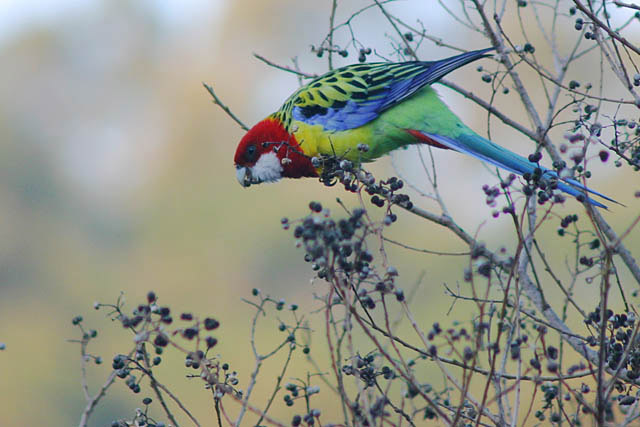
Eastern Rosella #40I seem to have covered several bird names on the blog recently, and that might be because our family was watching light-hearted bird documentary series, Hello Birdy, on the ABC, or maybe just because I love birds. Australia is lucky enough to have a staggering array of birds, many of them colourful, beautiful, intelligent, or unusual, and sadly, often under-appreciated. Here are some names that bring to mind a few of our feathered friends. Click on a likely link, and you will be taken to a YouTube video of each bird – there’s at least one for every entry.

Brahminy
The Brahminy Kite is a bird of prey and scavenger native to Australasia and Asia; in Australia they are found in coastal regions in the north. They are chestnut brown with a white head, breast, and tail tip, and typically nest in trees in mangrove swamps. The name Brahminy is due to their being found in India; it alludes to the Hindu Brahmin priestly caste, and is said BRAH-min-ee. The Brahminy Kite is the official mascot of Jakarta, in Indonesia, and in India is regarded as a representation of Garuda, the sacred bird of the supreme god Vishnu. I would not have considered this as a person’s name if I hadn’t seen a baby girl named Brahminy. It’s a bold choice, and its connection with a sacred bird is fascinating.

Corella
The Corella is a small, white cockatoo with a pink blush to its plumage. They are found from the central deserts to the eastern coastal plains, and are a familiar sight on farms and in cities. In some areas, Corellas have become so numerous they are considered a pest, being particularly destructive to trees and cereal crops. They congregate in large flocks, even up to several thousand, and make a high-pitched screeching noise which is ear-piercing when a flock all calls together, and can be heard for miles. Although they are noisy birds, they are very playful and have the joie de vivre that all parrots are blessed with. They are popular as pets, because they are good talkers, and excellent mimics. The word corella comes from the Wiradjuri language of central New South Wales. Corella has been used as a girl’s name since the 18th century, and is probably part of the Cor- group which is based on the Greek Kore, meaning “maiden”. The bird gives it a uniquely Australian flavour.

Dove
Here’s the dirty little secret about Doves: they’re just pigeons! Not only that, it’s unclear what makes some species of pigeons “doves”, because while we generally call smaller pigeons doves, that isn’t always the case. The confusion arises because the word pigeon is from Latin, and dove from Ancient Germanic, so they are two different words for the same thing (like autumn and fall). Nonetheless, their images are completely different: doves are symbols of peace, while pigeons are seen as disease-ridden pests (in fact, pigeons are no more disease-ridden than any other animal and pose no general health risk). Australia has a number of species identified as doves, and although we often think of doves as modest and grey, the Emerald Dove has striking green colouring, and the many varieties of Fruit Dove are likewise very colourful. There are also introduced species of dove, including those kept as pets. Dove has been used as a first name since the 17th century, and has been far more common for girls; a contemporary example is Disney actress Dove Cameron. Dove not only rhymes with love, but doves are used as symbols of love, since pigeons mate for life; the word dove can mean “sweetheart”. Perhaps because of this, doves were considered sacred to goddesses such as Venus. Another religious connection is that in Christian iconography, the Holy Spirit is often depicted as a dove.

Halcyon
Halcyon is the Latin name for the Tree Kingfishers, a large genus of birds found in Africa, Asia and Australasia, with Australasia having the most species. They are recognisable by their large heads and long pointed bills, and many are brightly coloured, often in iridescent blues and greens. The Laughing Kookaburra is a type of tree kingfisher, an iconic Australian bird with a raucous cackle that seems to epitomise the spirit of the bush. Halcyon is from the Greek for “kingfisher”, and is connected to a character from Greek mythology named Alcyone; the daughter of the winds, she married Ceyx, the son of the morning star. The pair were very much in love, and after Ceyx was lost at sea in a terrible storm, the unhappy Alcyone threw herself into the waves to end her life. The gods took pity on them, and changed both into kingfishers. According to legend, the “halcyon days” of midwinter, when storms cease, was when Alcyone laid her eggs, and her father restrained the winds so that she could do so safely. Because of this, the word halcyon (pronounced HAL-see-uhn) has come to mean “calm, serene, peaceful”, with our halcyon days those happy times we look back on with nostalgia. Halcyon has been used as a girl’s name since the 19th century: pretty and unusual, it gives Hallie as the nickname.

Lalage
Lalage is the scientific name for the Trillers, native to Asia and Australasia; they are small birds, usually coloured black, white and grey. They are called Trillers because during the breeding season, the males make a cheerful, almost continuous, trilling call. Lalage is derived from Greek, and means “to babble, to prattle”, or, in the case of birds, “to chirp”. The name became known from an ode by Roman poet Horace, where he speaks of his love for a young girl, his “sweetly laughing, sweet talking Lalage”. It has been used a few times since as a literary name, most notably in Kipling’s Rimini. Lalage has had occasional use, and in Britain seems to have a fairly upper-class image: contemporary examples are photjournalist Lalage Snow, and fashion designer Lalage Beaumont. In English, this name is usually pronounced LAL-a-gee or LA-la-ghee – just remember it’s three syllables, emphasis on the first, hard g like girl, not soft like germ. This fascinating name fits in with L-L names like Lillian, and as Lalage was a very young courtesan, almost seems like a posh version of Lolita! Lallie, Lollie, and Lala could be nicknames.

Lark
Larks are plain brown birds to look at, but their great beauty is in their voices, for they are famous for their melodious singing. This has made them a favourite subject for poets, such as Percy Bysshe Shelley’s, To a Skylark, and to say someone sings “like a lark” is a great compliment to the range and joyousness of their notes. Traditionally, larks are a symbol for dawn and daybreak, as in “getting up with the lark”, and this has given them religious overtones, for just as dawn is the passage between night and day, it can also be seen as that between heaven and earth. In Renaissance paintings, larks were sometimes used as a symbol of Christ. Although Australia has many birds with lark as part of their name, our only true lark is Horsfield’s Bushlark, widely found in grasslands and open woodlands. It is much smaller than larks in the northern hemisphere, and doesn’t have quite such an impressive voice, although its songs are still rich and varied, and it is a good mimic as well. The Eurasian Skylark which features in Shelley’s verse has been introduced here. Lark has been used as a name since the 18th century, and is historically more common for boys, but is often now thought of as more feminine than masculine. It’s a simple, non-frilly nature name laden with symbolism, and is more often found in the middle.

Maggie
Maggie is the affectionate name for the Australian Magpie. Although they look similar, it isn’t closely related to the European Magpie. Easily recognisable from their black and white plumage, magpies are very familiar in suburban life. Magpies are one of Australia’s favourite songbirds, because they have a complex, melodious warble, and will carol in chorus at dusk and dawn. They can also mimic other birds and animals, including human speech. Bold and sturdy, they are not typically wary of humans, and will happily accept (demand!) free food from us. They become unpopular in spring, as males can be so aggressive during breeding season that they swoop or even attack humans to warn them away. This is when feeding them pays off, as they can tell individual people apart, and won’t scare their buddies. The Magpie was a totem animal for the Indigenous people of the Illawarra, and is an official emblem of South Australia, appearing on the state flag. Magpies is a common name for sporting teams, and the cocky attitude of the Magpie is seen as indicative of the national character. Maggie is also a short form of Margaret. It was #174 in the 1900s, and was off the charts by the 1940s, returning in the 1970s. It has climbed steadily, and is currently in the 100s.

Oriole
Orioles are a large family of birds found throughout the world, which come in a variety of colours. Australian Orioles are green, perfect for blending in with the trees. They are fruit-eating birds, and the Figbird is one of the Orioles, although it doesn’t only eat figs. Orioles and Figbirds are attracted to backyards with small fruit trees and bushes, and which have native trees such as eucalypti and wattle; they are a fairly common sight in suburbia. The word oriole is derived from the Latin for “gold”, because the Eurasian Golden Oriole is a bright yellow. Oriole is related to names like Aurelia and Auriol, which are from the same derivation, and looks a lot like Oriel, which may be seen as a variant of Auriol, but also has Irish and Germanic origins. Oriole seems like a way to retain the golden meaning, while also referencing the bird.

Rainbird
The Rainbird is the colloquial name for the Pacific Koel, a species of migratory cuckoo which arrives here in spring from Papua New Guinea and Indonesia, and is found in north and eastern Australia. It’s called a Rainbird because of the belief that its rather mournful “whooping” call is a harbinger of wet weather. Males call for a mate during their breeding season, which coincides with the spring rains and the summer “wet season”, and are so loud they can be considered a nuisance. Like all cuckoos, Rainbirds lay their eggs in the nests of other species so that they can be raised by the unsuspecting hosts; however, unlike most other cuckoos, the baby Rainbird doesn’t kill the host chicks. Rainbirds are rather goofy-looking birds; the males have glossy black plumage and bright red eyes. I have seen Rainbird used as a girl’s middle name, and think it makes a wonderful name for a spring or summer baby. It would work equally well for boys.

Rosella
Rosellas are colourful parrots which are very familiar in suburbia. I think we might take them for granted, because they really are pretty, with a more pleasing range of calls than most parrots. Rosellas will be attracted to any garden that provides them with water, seeds and fruit, and can become so tame that they will eat out of your hand. This has led them to become common as pets, but in captivity they can become bored and aggressive, so I think it’s nicer to have them as backyard visitors. European settlers first saw Eastern Rosellas at Rose Hill (now called Parramatta), and called them Rosehill Parakeets; this evolved into Rosehillers, and eventually became Rosella. The Sydney suburb of Rozelle is named after them. Rosella is also a popular brand of tomato sauce, which sports an Eastern Rosella as its logo. By coincidence, Rosella is also an Italian name, an elaboration of Rosa, and looks like a combination of popular Rose and Ella.

POLL RESULTS
The public’s favourite names were Lark, Maggie and Rosella, and their least favourite were Brahminy, Oriole and Lalage.

(Photo shows an Eastern Rosella)

Famous Name: Tigerlily

19 Wednesday Feb 2014

Posted by A.O. in Famous Names

≈ 3 Comments

Tags

brand names, celebrity baby names, Disney names, english names, fictional namesakes, flower names, name history, name meaning, nature names, nicknames, plant names, rare names, vocabulary names

Lilia_tygrysiaLilium_lancifoliumLilium_tigrinum

Last week we looked at the name of actor Orpheus Pledger, who was in the Channel Nine telemovie, Schapelle. As it turned out, ratings for it were only average, with almost twice as many people tuning in to watch Channel Seven’s mini-series, INXS: Never Tears Us Apart. In fact, since the screening, an INXS album has reached #1 in the charts for the first time since 1990.

Watching the mini-series reminded me of Michael Hutchence’s daughter Heavenly Hiraani Tiger Lily, who was given one of the “crazy celebrity baby names” of the 1990s. It’s interesting how much less “crazy” crazy celebrity baby names seem as the years go by: once Cruz, Maddox, River, Rocco, Banjo, Jett, Sunday and Coco were considered outrageous, but now they’re mainstream. I have to admit that the Heavenly Hiraani part still seems offbeat 17 years later, but Tiger Lily is pretty rocking – a spunky nature name combining flora and fauna.

The Tiger Lily (Lilium lancifolium) is native to China, Korea and Japan, and its common name came about because its flowers are large and bright orange with black markings – although they don’t literally have tigerish stripes, but spots. Introduced to England in the early 19th century, it became naturalised in some parts of the United States (just to confuse things, Americans refer to some native lilies as “Tiger Lilies”).

Easy to grow, the Tiger Lily is edible, and the roots used in Chinese cooking. There is a legend that a Korean hermit took an arrow from the foot of a wounded tiger, and after its death, the tiger transformed into the Tiger Lily, so that he could remain with his human friend. When the hermit died, the flower spread widely, searching for the hermit. The Tiger Lily is said to symbolise wealth, perhaps because its spots reminded people of coins. A funny superstition related to these spots is that if you smell a Tiger Lily, you will end up with freckles!

There is a graceful tiger-lily in Lewis Carroll’s Through the Looking Glass, a passionate and rather bossy bloom which tries to keep all the flowers in line (with the ferocity of a tiger). When Alice wishes to herself that the flowers could talk, the tiger-lily is the first to respond, with “We can talk, when there’s anybody worth talking to”.

The first human character in fiction named Tiger Lily I can think of is the “redskin princess” of the Piccaninny tribe in J.M. Barrie’s Peter Pan. Beautiful and brave, Tiger Lily’s life was saved by Peter Pan, so that her tribe became his allies. As a result, the flirtatious yet aloof Tiger Lily harbours (futile) romantic feelings for Peter, and refuses to marry. Barrie gives her cringe-inducing dialogue, such as “Me Tiger Lily. Peter Pan save me, me his velly nice friend”, and her tribe call Peter The Great White Father – Barrie’s preference for the book’s title, which his publishers’ fortunately didn’t think was a good idea.

In the 1953 Disney film of Peter Pan, this dialogue is embarrassing enough that Tiger Lily doesn’t speak at all, and her role was eliminated in later films, lest the stereotypes of Native Americans should give offence. Because of this, she has never become a Disney princess (in fact, calling her a “princess” would be a whole other cultural controversy).

Another exotic Tiger Lily from children’s fiction is a little girl of Chinese heritage in the Rupert Bear comic strips and television show. A rather mysterious figure of royal blood, her father is a Conjurer, and she has quite a bit of magical knowledge herself, which helps Rupert in several adventures. Not nearly as controversial as Barrie’s Tiger Lily, her role was nonetheless phased out in the 1990s, presumably for similar reasons.

In Australia, Tigerlily is a swimwear fashion label started by designer Jodhi Meares, which gives the name an expensively casual, beachy feel. If you look at the models used by Tigerlily, and at its Facebook page, the ideal “Tigerlily girl” is not some blonde beach bunny with a banging bod, but sophisticated and well-travelled, yet relaxed and confident enough to be in search of the perfect bikini.

Tigerlily is a rare name, but there is something rather magnificent about it. We usually think of lilies as pale and demure, yet here are these flamboyant tiger-cat lilies – big, bright, and bold, growing wild and untamed, or bringing a garden to life with glorious colour. Tigerlily sounds gorgeous and fierce, exotic and feminine, freckled and free-spirited, full of passion and vivacity. It could be seen as whimsical and hippie, but because of the expensive fashion label, also seems quite posh.

Worried that Tigerlily is too big a name for a little girl? Miss Hutchence Geldof goes by Tiger, but you could also use Ty, Tige, Tig, Tiggy, Tilly, Iggy, Lily, Lil, and TL.

POLL RESULT
Tigerlily received an approval rating of 56%. People saw it as a beautiful, whimsical nature name (26%), and wild and bold (19%). However, 13% believed it was still a wacky celebrity baby name, and 12% saw it as too hippy-dippy.

True Blue Names for Boys

26 Sunday Jan 2014

Posted by A.O. in Name Themes and Lists

≈ 10 Comments

Tags

animal names, Arabic names, Australian idioms, Biblical names, celebrity baby names, colour names, english names, fabric names, famous namesakes, fictional namesakes, fish names, geographic names, Greek names, hebrew names, historical records, metal names, modern classic names, mythological names, name history, name meaning, name popularity, names from movies, names from television, nature names, popular names, Roman names, surname names, tree names, unisex names, vocabulary names

016

Happy Australia Day! Here are ten names for boys which are associated with the colour blue, in honour of the saying, a true blue Aussie.

Bay

A bay is a scoop in the shoreline, much prized for providing safe anchorage and opportunities for fishing. Having a long coastline, Australia has many bays, including the Great Australian Bight which forms the southern edge of the continent, and Botany Bay in Sydney – there is even a Blue Bay on the Central Coast of New South Wales. Although bay also describes the colour of a horse’s coat (coppery brown with black markings), and bay tree is another word for a laurel bush, I tend to think of the name Bay as being influenced more by the geographic term, at least in Australia. Bay can also be from the surname – the first English people with the surname Bay took their name from baille, an enclosed courtyard as part of a Norman castle’s fortifications. Although Bay can be used for both sexes, I have only ever seen it on boys, perhaps because it sounds as if could be short for Bailey.

Blue

Blue is a colour of the spectrum, and a primary colour. Because it is the colour of the sky, it has often been seen as representing heaven and divinity. It has been connected to the “blue collar” working class, but also with the wealthy, and “blue blooded” nobility. Blue is a popular colour for uniforms, and the navy, air force, and police traditionally wear blue. Blue can also mean “sad, melancholy”; hence blues music, which arose out of suffering. The Australian flag and Eureka flag are both blue, blue heelers are tough, loyal Australian cattle dogs, and it is an Australian irony that a red-headed man is called Blue or Bluey – some say because of the redhead’s reputation for temper, as a blue is Australian slang for a fight. Since World War II, blue has been seen as the colour for boys (with pink for girls), giving the name Blue a boyish feel – although celebrity baby Blue Carter shows it works well for girls too.

Dean

The Blue Mountains are to the west of Sydney, part of the Great Dividing Range down the eastern side of Australia. Their name comes from the blue-grey haze which can be seen when the mountains are viewed from a distance, believed to be caused by the diffusion of eucalyptus oils from the trees. One of the most prominent is the Mountain Blue Gum (Eucalptus deanei), a tall forest tree. Its scientific name comes from Henry Deane, an Australian engineer who first collected specimens in the late 19th century. The English surname Dean or Deane comes from dene, meaning “valley” – the Mountain Blue Gum grows in sheltered valleys. Dean has been used as a boys name since the 17th century, and seems to have been initially most popular amongst non-Anglican Protestants. Dean first ranked in Australia in the 1950s, probably because of Hollywood star James Dean; it debuted at #134. By the following decade it had reached the Top 50, and peaked in the 1970s at #34. It didn’t leave the Top 100 until the early 2000s, and since then has gently declined into the mid-100s. It has recently got some exposure via Dean Winchester from the television show Supernatural, played by Jensen Ackles; the character is named after Dean Moriarty, from Jack Kerouac’s On the Road. A simple, clean modern classic, this still has a touch of Hollywood.

Drake

Drake has been used as a boys name since the late 16th history in honour of the heroic sea captain, Sir Francis Drake – the first babies with this name were born around the time of Sir Francis’ death. His surname is from the Old English nickname Draca, meaning “dragon, serpent, sea serpent”, coming from the Latin draco. The word goes back to an ancient root meaning “to see” – perhaps suggesting that dragons had a mesmerising gaze. In European mythology, dragons are serpentine rather than lizard-like, so the word drake covers a range of creatures. The name would have been given to someone who was very bold and fierce, for dragons were generally viewed as evil. They were often shown guarding a hoard of treasure with avaricious ferocity. In the post-Christian era, they became associated with Satan, but in modern fantasy stories, dragons nearly always seem to be noble and friendly. Although dragons are cool, this name reminds me of the watery Rainbow Serpent of Indigenous cultures, depicted as a blue serpent on Sydney’s coat of arms.

Levi

Levi Strauss was the German-American businessman who founded the first company to manufacture blue denim jeans, which gain their colour from indigo dye. Originally sturdy workwear for labourers, jeans became iconic fashion items, and are now essential clothing for almost everyone. In the Old Testament, Levi was the son of Jacob and Leah, and the founder of the Tribe of Levi. The Levites became the priestly caste of the Hebrews – perhaps the most famous members of the Tribe of Levi are Moses, and his siblings Aaron and Miriam. The name Levi is traditionally understood as “he will join”, because Jacob joined with Leah to produce Levi, but Biblical scholars believe it simply means “priest”, and comes from Arabic. Levi has charted in Australia since the 1970s – this was the decade that Levi jeans were first manufactured in Australia, and the brand name probably had more impact than the Biblical figure. Levi was #243 for the 1980s, and climbed steeply to make the Top 100 by the early 2000s, where it remains stable. It is #26 nationally, #31 in New South Wales, #30 in Victoria, #24 in Queensland, #40 in South Australia, #22 in Western Australia, #23 in Tasmania, #13 in the Northern Territory, and #53 in the Australian Capital Territory.

Marlin

Blue marlin are one of the world’s largest fish, blue-black with a silvery white underside, and an elongated upper jaw. They can reach more than 500 kg in weight, and have few predators, apart from humans. Because of their size, power, and elusiveness, they are considered to be one of the most highly prized targets for sports fishing. Found in many oceans of the world, blue marlin have been captured as far south as Tasmania. However, the greatest numbers have been caught off the Gold Coast in Queensland, and the largest ones in Bateman’s Bay, on the south coast of New South Wales. Blue marlin are considered be a threatened species, due to overfishing, and most anglers in Australia use the tag and release method. If you would like to use Marlin as a boy’s name, it doesn’t seem too different from Marlon in sound. The word marlin is short for marlinspike fish, as a marlinspike is a pointed tool used by sailors to separate strands of rope; it comes from the Dutch for “fasten, secure”. Like to use this as a girl’s name? What about Makaira, the Latin name for marlin?

Ocean

Australia is entirely surrounded by ocean, and more than 80% of our population live near the sea. 71% of the planet is covered by ocean, which holds most of Earth’s water. Integral to life on the planet, it is believed that life first arose in its waters. It is not known where all the water on our planet came from, but it must have played a major role in cooling it and making it possible for anything to live here. It still continues to moderate our climate and weather patterns, so we can keep living here. From space, Earth appears to be a marbled blue colour, earning it the moniker The Blue Planet. The word ocean comes from Oceanus, which the ancient Greeks and Romans believed was an enormous river encircling the world. In Greek mythology, this world-ocean was personified as a Titan, depicted as a large, muscular man with a long beard and horns, having a serpent for his lower body. He is the father of the ocean nymphs, and all the rivers, fountains and lakes of the world. Despite these masculine origins, the name Ocean is given to both boys and girls.

River

Although it has around a hundred of them, Australia cannot be said to be a land of great rivers – river beds are often dry, and even our largest rivers tend to be on the thin side. Of course, this means that every single one of them is especially precious. It seems slightly cheating to include them on a list of Blue Names, as every river I have seen here was brown or green in colour. However, rivers are marked in blue on maps, and if you saw one from a distance with a quantity of blue sky reflected in it, from the right angle it would probably look blue-ish. The word river is Anglo-Norman, from the Latin for “riverbank, shore”; it is ultimately from an ancient root meaning “scratch, tear, cut”. River has been used as a first name since the 17th century, and from the beginning seems to have been used with the geographic term in mind, since people named River Banks and River Jordan turn up quite early in the records. The name is unisex, but historically much more common for boys – in Australia, it seems to be more than twice as common for boys as for girls.

Steel

Steel is an alloy of iron and carbon. Steel production began on an experimental basis in Australia in the 19th century, but didn’t really get going until World War I, when BHP opened the first steelworks in Newcastle. Its boom years were after World War II, but since the 1980s our steel production has decreased significantly due to global competition. During its heyday, steelworks provided mass employment and were a source of great pride for workers; it was from the steelworkers that the modern working class emerged. Blue steel is steel that has been given a dark finish, in order to increase toughness. Although we often connect blue steel with guns and other weapons, it is used in many useful capacities, such as on the steel-capped toes of work boots. It gives its name to a colour – steel blue, a shade of blue-grey. Last year I saw several boys named Steel or Steele in birth notices, after the release of the Superman movie, Man of Steel.

Suede

Suede is a soft napped leather, popular for making accessories such as shoes and handbags. It was originally used for women’s gloves, and the word comes from the French gants de Suède, meaning “gloves from Sweden”, since this is where the gloves were imported from. Suede features in the Carl Perkins song, Blue Suede Shoes, considered one of the first rockabilly records, and the first million-selling country song to hit the R&B charts. Perkins wrote the song based on a suggestion from Johnny Cash, and a real life encounter with a man who didn’t want anyone stepping on his blue suede shoes. It was soon afterwards recorded by Elvis Presley, who made it a hit all over again, and the song has gone on to become a rock and roll classic. I have met a little boy named Suede, and once I got used to it, found it rather cool and rockabilly. Suede was named in honour of the song, as his parents are Elvis fans. They probably attended the recent Elvis Presley Festival in Parkes.

POLL RESULTS
The public’s favourite names were Levi, River and Bay, and their least favourite were Ocean, Steel and Suede.

True Blue Names for Girls

19 Sunday Jan 2014

Posted by A.O. in Name Themes and Lists

≈ 6 Comments

Tags

animal names, Australian idioms, Biblical names, bird names, celebrity baby names, colour names, english names, fictional namesakes, flower names, French names, gemstone names, German names, Greek names, middle names, modern classic names, name history, name meaning, name popularity, name trends, names from movies, nature names, nicknames, Norman-French names, Persian names, plant names, popular names, surname names, unisex names

bluewren-male

It will be Australia Day in a week’s time, and rather than cover just one name, I am suggesting names with a “blue” theme, in honour of Australia, where the phrase “true blue” has taken on its own patriotic meaning.

Azura

The name Azura is an elaboration of the colour name Azure. Azure is an intense light blue, the colour of a clear sky on a hot summer’s day. In the patriotic Song of Australia, the lyrics describe how all about is azure bright, and the bird called the azure kingfisher is native to Australia. The English word azure comes from French azur, and is taken from the blue mineral lapis lazuli – lapis means “stone” in Latin, while lazuli is from lāžaward: the Persian name for the mineral, derived from Lazhward, a place where it was mined. According to Jewish tradition, Azura was one of the daughters of Adam and Eve, and the wife of her brother Seth. Azura is a popular name in science fiction and fantasy, most notably in Skyrim, where Azura is the Lady of Twilight who rules over the realm of Moonshadow. Last year, NRL star Anthony Minichiello, and designer Terry Biviano, welcomed their daughter Azura. This is pretty and exotic while still similar to names like Arya and Zara.

Bluebell

The bluebell is a type of hyacinth; a spring bulb which grows wild in the woodlands of Europe and is also a popular garden plant. Its name comes from its violet-blue colour, and mass of bell-like petals. Several other unrelated flowers around the world are named bluebell, and in Australia we have the Royal Bluebell (Wahlenbergia gloriosa). This deep violet wildflower grows abundantly in the Australian Alps, and is the floral emblem of the Australian Capital Territory. Summer flowering, it is hardy and easily grown in the garden; however, it is protected in the wild, and cannot be picked or collected. Bluebell came into use as a girls name during the 19th century, along with other flower names, but doesn’t have a Victorian vintage vibe – it seems hip and funky. I have seen this a few times as a middle name, but would love to see it boldly upfront.

Delphine

Delphine is the French form of Delphina, which can be understood as meaning “from Delphi”. However, the name reminds me of dolphins, whose scientific family name is Delphinidae, from the Greek delphus, meaning “womb”, to indicate that although they look fish-like, as mammals, they bear live young. The Greek town of Delphi, the home of the famous Delphic Oracle in ancient times, is also said to mean “womb”, as it was meant to be the navel of the earth goddess Gaia. The grey-blue colouring of the dolphin suggested this name to me, and there are several species of dolphin which live in, or migrate to, the waters surrounding Australia. Since ancient times, people have been fascinated by dolphins, and there are many stories of wild dolphins rescuing people, helping surfers and swimmers in trouble, or even protecting humans from shark attacks. Their high intelligence and playful behaviour make them appealing companions, and there are several places in Australia where you can swim with and interact with wild dolphins. Delphine is a pretty dolphin-related name for anyone who loves these free-spirited sea creatures, and has Dell and Fifi as potential nicknames.

Indigo

Indigo is one of the seven colours of the rainbow, a dark shade of blue. It was Sir Isaac Newton who introduced indigo as one of the colours of the spectrum, because in the mid-17th century, when he began his work with prisms, the East India Company had begun importing indigo dye to Britain, where it was used to colour clothing a deep blue. Indigo dye comes from the plant Indigofera tinctoria, native to tropical Asia, and the word indigo comes from the Greek, meaning “Indian dye”. Indigo is a rather controversial colour, because Sir Isaac Newton decided there had to be seven colours to match the seven notes of a scale and seven days of the week, and scientists question whether indigo is really a colour of the spectrum, or just the point where blue deepens. Even more confusingly, Sir Isaac Newton seems to have used the word indigo to mean the colour we call blue. Indigo has strong New Age associations, because it is seen as a particularly spiritual colour connected to psychic power. Indigo is a rather trendy girls name in Australia, a favourite choice of celebrities; rising with other Ind- names, it is #137 in Victoria.

Jasmine

I would not have considered this for a list of Blue Names, except that while writing it, Australian actress Cate Blanchett won a Golden Globe for her role in the film Blue Jasmine. There are about twelve species of jasmine native to Australia; these climbing vines come from tropical and subtropical areas of Queensland and northern New South Wales. The flowers are delicate and white, and have a sweet, intoxicating scent; they are both fragile and strong. The word jasmine comes from the Latinised Persian yasamen, meaning “gift from God” – there really is something quite heavenly about jasmine. The name Jasmine is a modern classic which has charted here since the 1960s, and soared during the 1970s to make the Top 100 for the 1980s. It peaked in the early 2000s at #14, and is still stable in the Top 100. It is #36 nationally, #33 in New South Wales, #28 in Victoria, #41 in Queensland, #31 in South Australia, #24 in Western Australia, #59 in Tasmania, #15 in the Northern Territory and #20 in the Australian Capital Territory.

Sailor

This name occurred to me because the Royal Australian Navy winter uniform is dark blue (and the summer uniform has dark blue trim); Sailor could be used as a name to honour a family naval tradition. Sailor has been used as a first name since at least the 19th century, and was used for both sexes, although more common for boys. It received greater recognition in the 1990s, when American model Christie Brinkley gave the name to her daughter, and since then has been overwhelmingly seen as a girls name – perhaps partly because it fits in so well with the trend for names such as Kayla, Layla and Tayla. Weatherman Grant Denyer named his daughter Sailor in 2011, his wife Cheryl a fan of the name ever since Christie Brinkley’s choice. The name Sailor probably came originally from the occupational surname, in which case it can be from the German seiler, and mean “ropemaker”, or English, where it means “dancer, acrobat”, from the Norman French sailleor, meaning “dancer, leaper”. The German origin seems to be more common, and as sailors once worked with ropes, still seems to fit as a sailing name.

Sapphira

A Greek name meaning “sapphire”, which simply means “blue stone”. However, it is likely that the ancient Greeks were referring to lapis lazuli when they used the word – it comes from the Hebrew sappir, meaning “lapis lazuli”. In the New Testament, Sapphira was an early Christian who, along with her husband, was struck dead for concealing money from the church and lying about it. It’s hard not to think that they were executed, although the Biblical account is vague on the details. It’s one of the creepier and more troubling parts of the Bible, and doesn’t really show the early church in a good light. A more pleasant connection is the intelligent and loyal blue dragon named Saphira in Christopher Paolini’s Inheritance series of fantasy novels. Crime novelist Tara Moss chose the name Sapphira for her baby daughter in 2011, apparently because she had blue eyes. Sapphira is an exceptionally beautiful and elegant name which can also reference the sapphire mining trade in Australia.

Sky

The atmosphere as it appears from Earth; the word comes from the Norse word for “cloud” (you can see our ancestors came from a place where skies tended to be cloudy!). On a clear day the sky appears blue because air scatters blue sunlight more than it scatters red. Because of this, we give as a truism that the sky is blue, even though it appears in a range of colours depending on the conditions, and there is a colour named sky blue because of that. Blue skies are symbolic of happiness and good times ahead, and blue skying is to think creatively – to think that the sky is the limit, to reach for the sky. Although there are blue skies all over the world, in Australia the strong sunlight and lack of cloudiness mean we see a lot of blue sky, and intensely blue skies – the patriotic song Awake! Awake, Australia! mentions our “bright blue skies”. Sky is a unisex name which has never charted in Australia, but its similarity to Skye and Skyla will make it seem feminine here.

True

An English word which can be understood as meaning “genuine, trusty, faithful”, ultimately from an ancient root meaning “steady, firm”. A common saying in Australia is to describe someone as a true blue Aussie, as featured in the John Williamson song, True Blue. The phrase true blue goes back to medieval times, when the colour blue symbolised faith and constancy. Although theories abound as why this was so, the most likely explanation is that it’s from the blue-dyed cloth produced in the town of Coventry, famous for not fading with washing, and thus remaining “true”. Later on, the phrase became associated with the Presybterian Church, and later still, the Tory Party, and their “true blue supporters”. In Australia, far from “true blue” having these conservative associations, in the 19th century it was used to describe those working class men who remained true to their labour principles, and was thus a left-wing term. Gradually, true blue came to mean anyone loyal to Australia and its values. True can be used as a name for either sex; on a girl, it seems as if it could be short for Trudy and similar names.

Wren

Australian wrens are similar in appearance, but unrelated to the wrens of Europe and the Americas. In some species, such as the Superb Fairywren and Splendid Fairywren, the breeding male has a very distinctive and beautiful blue plumage in contrast to the grey-brown tones of the females and juniors. In other species and subspecies, both males and females are bright blue, or have blue patches. Because they are tiny, pretty, and have an attractive range of birdsongs, we love it when fairywrens visit our gardens. Seeing a group of colourful wrens flutter through the bushes is the closest thing to having fairies in the garden that most people will experience. Another charming fairywren fact is that the male will present brightly coloured flower petals when courting a female, which to human eyes looks like bringing a bouquet of flowers. Wren has been used as a first name since the 17th century, and from the beginning was unisex, given roughly equally to both sexes, and possibly influenced by the surname, which comes directly from the bird. Today it is usually thought of a girls name, and although I can see it on a boy, the fairywren seems to render it more feminine than masculine. Elsewhere Wren might seem a humble choice as a name, while here I think it’s much brighter and more cheerful.

POLL RESULTS
The public’s favourite names were Wren, Indigo and Delphine, and their least favourite were Sailor, True and Sky.

Famous Names: Narcissus and Echo

27 Wednesday Nov 2013

Posted by A.O. in Famous Names

≈ 6 Comments

Tags

car names, english names, famous namesakes, fictional namesakes, flower names, Greek names, locational names, Metamorpheses, mythological names, name history, name meaning, nature names, Ovid, plant names, saints names, unisex names, vocabulary names

EchoandnarcissusAs you probably know, a selfie is a photo that someone has taken of themselves, usually with a phone or webcam, for the purpose of being uploaded to social media. Last week, the Oxford English Dictionary named selfie as the Word of the Year for 2013, noting that use of the word has increased by 17 000% in the past 12 months.

Research from the OED has shown that the word selfie is of Australian origin, with the first recorded use of it in an ABC Online forum in 2002. A user named Hopey posted a photo of his bottom lip, which had been injured when he fell over while drunk, apologising for the photo’s poor quality, as it was only “a selfie”.

Judy Pearsall from the OED explains: “In early examples, the word was often spelled with a -y, but the -ie form is more common today and has become the accepted spelling. The use of the diminutive -ie suffix is notable, as it helps to turn an essentially narcissistic enterprise into something rather more endearing. Australian English has something of a penchant for -ie words –barbie for barbecue, firie for firefighter, tinnie for a can of beer – so this helps to support the evidence for selfie having originated in Australia.”

To celebrate this Australian word being so warmly embraced by the rest of the world, there were just two names that came to mind, suggested by Judy’s appraisal of a selfie as “essentially narcissistic”, and because a photograph is a visual echo of its subject.

In Greek mythology, Narcissus was a stunningly handsome young hunter, the son of a river-god and a nymph. Many admired him, but he proudly spurned them all, even driving his suitors to suicide – Narcissus is said to have cruelly placed a sword in the hands of one despairing fellow, with the obvious suggestion of what he was to do with it.

The best known version of his story is given by the Roman poet Ovid in his Metamorpheses. He tells of a talkative mountain nymph named Echo, whose chattering tongue annoyed the goddess Juno one too many times.

Echo had a habit of waylaying Juno with one of her long-winded stories while Juno’s hubby Jupiter enjoyed himself with some nymph or other, giving the nymph plenty of time to escape Juno’s wrath. Juno cursed Echo’s voice, so that she could never speak until someone else did, and when they did, Echo could only repeat what they said, or even just the last few words of their speech.

The luckless Echo happened to see Narcissus wandering in the woods, and fell madly in love with his beauty. She longed to eloquently tell him of her passion, but could only repeat his own phrases back to him, which just annoyed Narcissus. She embraced him, and he angrily told her to get her hands off – he would rather die than be caressed by such a thing.

The rejected Echo was so ashamed and unhappy that she ran into the mountains and hid herself in the wilderness, until she wasted away with unrequited passion. Only her voice was left, which you can still hear in the hills sometimes – a voice which repeats your own phrases back to you, called an echo.

Meanwhile the gorgeous Narcissus continued to reject many nymphs and youths, always in the nastiest way possible, until one of his victims lifted their hands to heaven and implored the gods that one day Narcissus might fall in love, and his love be denied, so that he could know the pain of rejection in his turn. The prayer was answered by Nemesis, the goddess of divine retribution, who punishes arrogance.

One day, hot and tired from hunting in the heat of midday, Narcissus stopped by a pool in the forest to get a drink. Seeing his own reflection in the pool, he became entranced by its beauty – those starry eyes! Those flowing golden locks! That ivory skin and rose-leaf complexion! Those sweet pouting lips! Yep, the vain Narcissus had fallen head over heels at last – with his own image.

He tried to embrace the stranger in the water, and to kiss him, but although the reflection seemed as eager as he, smiling whenever he did, and offering his lips in return, Narcissus just ended up with his face in the pool, wet and ridiculous. Tortured by his love, he longed to die, and wasted away by the pool, consumed by hopeless desire for himself.

The nymph Echo, now a mere disembodied voice, still loved Narcissus, even as his beauty withered away with neglect. She watched over him, and pitied him in his plight, managing to whisper a sad “Farewell!” to him as Narcissus died and said goodbye to his reflection. Death brought him no relief, for in the afterlife he continued to miserably roam, gazing at his reflection in the underworld River Styx.

When Narcissus’ grieving sisters came to collect him for his funeral, they found his body had disappeared, and in its place was a beautiful narcissus flower, its drooping head still looking into the pool at its own reflection. Narcissus is a genus of spring bulbs native to the woodlands of Europe, West Asia and North Africa. Coming in a range of colours from white through the yellows to dark orange, we call some varieties daffodil or jonquil.

The meaning of Narcissus is not known – the Greeks understood it as meaning “I grow numb”, as if it was related to the words narcotic and narcolepsy. However, this isn’t accepted by scholars, who believe it is more likely an attempt to understand a word originally from another language, most likely one from the Near East. Although legend says the flower’s name came from the mythological character, it is almost certainly the other way around, with Narcissus named after the flower.

The name Narcissus wasn’t uncommon in ancient Greece. Narcissus was a wrestler who assassinated the Emperor Commodus, and is one of the inspirations for the movie Gladiator starring Russell Crowe, while another Narcissus was the slave of the Emperor Claudius, became his personal secretary, and had a lot of influence over him. There are several saints named Narcissus – Narcissus of Athens is mentioned in the New Testament as one of the Seventy Disciples of Christ, and an assistant to Saint Andrew.

In modern times, men named Narcissus were more likely named after one of the saints than the mythological character. However, Narcissus is actually far more common as a female name, because of the flower. One of its many issues is that it has given rise to the term narcissism, to describe inflated self-regard – although some degree of narcissism is probably normal and healthy, when it goes overboard it is seen as a psychological disorder.

The word Echo is from the Greek and means “sound”. Just as with Narcissus, the mythological nymph is named after the word, and not the other way around. There is a Marvel superheroine named Echo (she’s deaf), and Echo is the lead character in the television drama series, Dollhouse. An Australian connection is Echo Point in the Blue Mountains, a wonderful place to hear echoes. Because an echo is a vocabulary word as well as a character, it has sometimes been given as a name to boys, and OH- ending names are fashionable for both sexes. One of the issues with the name Echo is that there is a car called the Toyota Echo.

Can you imagine ever using one of these names from Greek mythology?

POLL RESULT: Narcissus received an approval rating of 13%, making it the lowest-rated boys name of the year, and the lowest-rated name overall. Echo did much better, with an approval rating of 58%.

(Picture shows the 1903 painting Echo and Narcissus by John William Waterhouse, illustrating the story by Ovid )

Names of Fictional Characters for Boys

17 Sunday Nov 2013

Posted by A.O. in Name Themes and Lists

≈ 5 Comments

Tags

American names, American slang terms, berry names, created names, Dutch names, english names, ethnonyms, famous namesakes, fictional namesakes, food names, fruit names, Greek names, Irish names, locational names, name history, name meaning, name popularity, name trends, names from movies, names from television, nature names, nicknames, North American dialect names, Old English names, Old Gaelic names, plant names, rare names, surname names, UK name popularity, unisex names, US name popularity

an_27510937Asterix

Asterix is the hero of the Asterix comic books by René Goscinny and Albert Uderzo. The comic book series follows the adventures of a village of Gauls resisting Roman occupation. They manage to do this through a magic potion brewed by their local druid, which temporarily gives superhuman strength. Asterix is a diminutive warrior of great shrewdness, and because of his cunning and common sense, is usually chosen to lead important missions. Most of the Gauls in the comics have names ending in a suitably Gaulish -ix, echoing famous Gauls from history, such as Vercingetorix. However, each name is also a jokey pun – translations into English have been very clever at maintaining the spirit of the humour. In the case of Asterix, his name is a play on the typographical mark – the word asterisk comes from the Greek for “little star”, and Asterix is the “star” of the comic series. I have seen Asterix on an Australian baby, and this makes a quirky name for your own little star.

Atreyu

Atreyu is a character in the fantasy novel, The Neverending Story, by Michael Ende. In fact, he is the hero of the book which is read by a little boy named Bastian Bux, so he exists in a story within a story. Atreyu is a young warrior who is sent on a great quest to save the land of Fantastica by seeking a cure for the mysterious illness suffered by the land’s empress. He serves as a projection of Bastian’s “inner hero”, and only Atreyu can save Bastian from his own mistakes. In the 1984 movie version, Atreyu is played by Noah Hathaway. Atreyu was orphaned as a baby, and his name means “son of all” in his own (fictional) language, because he was raised by his entire village. It is pronounced ah-TRAY-yoo. Atreyu has strong connections with music, because not only is there a band with the name, but Atreyu himself has been referenced in songs. In the novel’s original German text, his name was Atréju, and this has proven a slightly geekier alternative.

Caspian

Caspian is a character in C.S. Lewis’ children’s fantasy series, The Chronicles of Narnia. As a young boy in Prince Caspian, he had to fight for his throne against his usurping uncle to become king of Narnia, and as a youth in The Voyage of the Dawn Treader, he led a daring expedition to the end of the world. In The Silver Chair, we meet him as a very old man, having reigned wisely and well, but also suffering personal tragedy. In the movies, he was played by Ben Barnes. Because of his great sea voyage, he is known as Caspian the Seafarer. Perhaps because of this connection, Lewis named his character after the Caspian Sea, the world’s largest inland body of water, which is bound by Russia, Azerbaijan, Iran, Turkmenistan, and Kazakhstan. It is named after the Caspi, an ancient people believed to be the same as the Kassites, who were from modern-day Iran. The meaning of their tribal name is unknown. Caspian is a romantic geographic name which sounds rather like Casper with a Latin -ian ending, as in Lucian or Julian.

Dexter

Dexter Morgan is the protagonist of the Dexter series of psychological thrillers by Jeff Lindsay. Dexter works for the police as a forensic blood spatter analyst, but is a serial killer in his spare time. A violent sociopath, he has been carefully trained to satisfy his homicidal urges by only killing murderers, rapists, and other criminals. Dexter is an English occupational surname for someone who dyed cloth, literally “dyer” in Anglo-Saxon. The word was originally specifically feminine, but Dexter has overwhelmingly been used as a male name. Dexter also happens to coincide with the Latin for “right handed”, with connotations of being skilful. Dexter Morgan is certainly dexterous in committing his crimes, while it seems apt the name is connected with dying. The books have inspired a popular television series, with Michael C. Hall in the title role, and since Dexter began airing in 2006, the name Dexter (which was about to slip off the Top 1000) has gone steadily up in popularity in the US; it is currently #362. It may seem strange that a serial killer could save the name, but Dexter Morgan is an oddly sympathetic murderer. Michael C. Hall makes him both likeable and amusing, and (perhaps slightly worryingly) female viewers find the character very attractive. Dexter fits in the surnames-for-boys trend, and has a cool X sound in it. The name Dexter is #218 in Victoria.

Dorian

Dorian Gray is the protagonist of Oscar Wilde’s only novel, The Picture of Dorian Gray. Dorian is an extremely handsome young man, who wishes his portrait could age while his own beauty remain changeless. His narcissistic wish is granted, and he spends his life in debauchery while retaining a youthful and innocent appearance. Meanwhile, Dorian’s hidden portrait bears the mark of his every corruption. The story has often been adapted into film; the most recent is Dorian Gray, with Ben Barnes in the title role. It is usually assumed that Wilde took the name Dorian from the Dorian people of ancient Greece, whose name means “upland, woodland”. The ancient Greeks did have names from this source, such as Dorieus and Doris. However, Dorian is also an Irish surname from O’Deoradhain, meaning “son of Deorain”. Deorain is an Old Gaelic name meaning “exile, wanderer, stranger”. Use of the name predates the novel’s publication, and in Eastern Europe it may be a pet form of Teodor. Dorian is sometimes used for girls. Despite Dorian Gray being an evil character, the name has remained in use, and is #558 in the US, and #549 and rising in the UK.

Heathcliff

Heathcliff is the male lead character in Emily Bronte’s Wuthering Heights, the foster-brother and love interest of Catherine Earnshaw. The novel explores the deep and obsessive love that Cathy and Heathcliff have for each other, and how the thwarting of that love turned Heathcliff into a tortured monster – or perhaps revealed the brute he already was. It’s an eerie tale, but many will think of Heathcliff as the Byronic hero and romantic lover whose passion lived beyond the grave. In film, he has been portrayed by Laurence Olivier, Timothy Dalton, and Ralph Fiennes. Heathcliff is an uncommon English surname meaning “heath on the cliff”; it doesn’t seem to have been used as a personal name before Wuthering Heights, and only rarely since. The name connects Heathcliff to the Yorkshire moors, the natural world outside society where Heathcliff and Cathy can love each other freely. Actor Heath Ledger was named after Heathcliff (and his sister after Catherine!), and as Heath is a fashionable name at present, Heathcliff doesn’t seem too bizarre as a long form, although admittedly a bold choice.

Huckleberry

Huckleberry “Huck” Finn is the protagonist of Mark Twain’s Adventures of Huckleberry Finn, and the best friend of the hero in The Adventures of Tom Sawyer. Huck is the son of the town drunk, a neglected vagabond who lives a carefree existence until he is adopted and “civilised”. He runs away with an escaped slave named Jim, and the two of them travel down the Mississippi River by raft in search of freedom. Huck has been portrayed on film by Mickey Rooney, Ron Howard, Elijah Wood and Jake T. Austin, among others. Huckleberry is North American dialect for the bilberry, although in practice applied to several wild berries. The word has long been part of American slang, usually to suggest something small and insignificant – the perfect name for Huck Finn, a child of little consequence in his town. Later it came to mean “companion, sidekick”. Huckleberry was in occasional use as a personal name prior to the publication of Twain’s novels. This would make a sweet, offbeat name, while Huck is a hip short form.

Rhett

Rhett Butler is the love interest of Scarlett O’Hara in Margaret Mitchell’s Gone With the Wind. A black sheep, he becomes entranced with the spirited Scarlett, and admires her will to survive. Although viewed as a cad by polite Southern society, Rhett is tall, dark, handsome, charming, intelligent, and has a very good understanding of human psychology – especially female – which he utilises to devastating effect. He is the only person who can stand up to Scarlett, and beat her in a battle of wits. In the 1939 movie, the biggest box office smash in history when adjusted for inflation, Rhett is played by Clark Gable. Rhett is a surname which comes from the Dutch de Raedt, meaning “counsel, advice”. Mitchell seems to have chosen the name as an allusion to her first husband, “Red” Upshaw, on whom the character of Rhett Butler is based (with a dash of Rudolf Valentino). Rhett is a sexy bad boy name, not often seen here, although cricketer Rhett Lockyear is one Australian example. In the US, it is #508 and rising.

Rocky

Robert “Rocky” Balboa is the title character in the Rocky movies, played by Sylvester Stallone. Rocky is from the slums of Philadelphia, a grade school drop-out with few skills apart from being able to land punches, so he makes his living as a boxer known as “The Italian Stallion”. Always the underdog, his main weapon (apart from fists like bricks) is a refusal to give up. The movies follow his career through the victories, the losses, the fame, the fortune, the brain damage, and the incredible comeback. Rocky is a humble man with great heart, and although barely literate, possesses a lot of wisdom about life and love. He is named after the boxer Rocky Marciano, whose real name was Rocco. Rocky can be a nickname for similar names, but also signifies incredible strength and toughness. A famous Australian with the name is rugby union champion Rocky Elsom. Rocky is a fun and even cute name, with a namesake that has an important message: it doesn’t matter whether you win or lose, but whether you go the distance.

Sherlock

Sherlock Holmes is the world’s most famous detective, the creation of Arthur Conan Doyle, and the hero of many stories. Known for his use of deductive logic and bewildering array of disguises, he has become an archetype, with his interest in forensic science helping spawn the modern crime genre. The character of Sherlock Holmes was so loved by the public in his own day that Doyle was forced to resurrect him after killing him off, and his popularity continues, with numerous adaptations to stage, radio, film and television – in fact, he is the most prolific character in cinema. Sherlock is an English surname dating to before the Norman Conquest; it comes from the Old English for “shining locks”, referring to someone with fair hair (although dark-haired, brainy Sherlock Holmes does have a “bright head”). Sherlock has been used as a personal name since the 18th century, and early use may have been influenced by Thomas Sherlock, a popular bishop and Christian apologist. Contemporary adaptations of the Sherlock Holmes stories, such as Sherlock, starring Benedict Cumberbatch, and Elementary, starring Johnny Lee Miller, show this character has lost none of his pulling power, although the name is still closely tied to the brilliant detective. Locky would make an appealing short form – more appealing than Shirley, anyway.

POLL RESULT: People’s favourite names were Caspian, Dexter and Rhett, and their least favourite were Asterix, Atreyu, and Rocky.

(Picture shows Benedict Cumberbatch in the title role of the BBC TV series, Sherlock)

Famous Name: Thorn

25 Wednesday Sep 2013

Posted by A.O. in Famous Names

≈ 3 Comments

Tags

botanical names, craft names, english names, famous namesakes, historical records, name history, name meaning, names of runes, nature names, Old Norse words, plant names, rare names, surname names, unisex names, vocabulary names

4978915726_62d35a67eb_o

October 2 will be the 96th birthday of Rosaleen Norton. She was originally from New Zealand, born into a middle-class English family; the Norton family emigrated to Sydney when Rosaleen was eight. She was an unconventional child who disliked other children and all authority figures, including her mother; she slept in a tent in the garden, and preferred the company of her many pets, which included a spider named Horatius. Later in life, she claimed that she had been born a witch, and bore physical proofs of this, including pointed ears and blue markings on her left knee.

From early in life, her favourite time was the night, and while still very young, she began to experience strange fantasies of mystical ghouls and spirits. She liked to draw, and the pictures she drew were inspired by her nightly fantasies. This got her into trouble, because teachers and classmates alike were disturbed by her drawings of demons and vampires, and when she was 14, she was expelled from her private Church of England girl’s school in the belief that she was a corrupting influence. It was not the last time she was to be condemned for her art.

Rosaleen went to art college, where her talent for drawing was more appreciated, and gained work here and there as a writer and illustrator. She lived at the Ship and Mermaid Inn in The Rocks, a run-down pub that attracted artistic types – Joseph Conrad and Jack London both stayed there while visiting Sydney (not together, I presume). It was here that she began reading books on Greek mythology, psychology, magic, occultism, demonology, and the Quabalah.

Rosaleen began experimenting with self-hypnosis and automatic writing as techniques to heighten her artistic perception; these methods were popular with surrealist artists like Salvador Dali and Andrew Breton. During her experiments, she received visions of supernatural figures, and from her occult studies, believed she had not merely accessed her subconscious, but an “astral plane”. She came to see the spiritual entities as having an independent reality of their own, and was able to communicate with them.

Rosaleen turned her symbolic visions into art, but attempts to exhibit or publish her work led to court cases where she was charged with obscenity, and attempting to corrupt public morals. It turned out the adult world still thought like the headmistress of a girl’s school. Rosaleen defended her work as pagan archetypes based on Greek mythology, but even when she won her case, the result was that the exhibition was cancelled, or the book censored. If you think Australia was peculiarly backward in the 1950s, her treatment was even more severe in America, where her book was banned entirely, and copies burned.

Already a notorious figure, Rosaleen settled in King’s Cross, the red light district of Sydney, which attracted many bohemians, artists, writers and poets. She became well known in the area and some of her artwork was displayed in local cafes. Curious visitors came to see the “Witch of King Cross”, who had decorated her house with occult murals, and put up a placard on the door which read: Welcome to the house of ghosts, goblins, werewolves, vampires, witches, wizards and poltergeists.

The police had her arrested for “vagrancy”, which in those days could be used against anyone not in steady employment, and a mentally ill homeless woman claimed that her life had fallen apart after taking part in a Satanic “black mass” with Rosaleen. Being a pagan, Rosaleen didn’t believe in Satan, and eventually the woman admitted she had made the whole thing up. However the tabloids went crazy and she was accused in their pages of doing everything from drinking blood to animal sacrifice – a practice she found abhorrent, for she had a very strong bond with animals.

Rosaleen had her own style of pantheistic witchcraft, based on worshipping Pan as the embodiment of natural forces, and rituals inspired by the works of Aleister Crowley. She was a practitioner of sex magic, and due to a couple of high-profile court cases where this led to further charges of obscenity by her coven, there is a public record of her religious beliefs and practices, given by herself, which make for fascinating reading for the student of comparative religion. You get the distinct impression that the courts were just slightly more interested in the sexual aspects of her magic rituals than strictly necessary.

Interestingly, Rosaleen herself said that her style of magic, called The Goat Fold Path, was not of her own devising, but what she thought was an old Welsh tradition which had existed in inner Sydney from the city’s earliest days, brought here by convicts. There is no way of proving or disproving this, but if correct, it means that European pagans have been in Australia from the beginning, along with Christians, Jews, and atheists.

Rosaleen estimated that she was in personal contact with hundreds of witches, which means that even in the socially repressive 1940s and ’50s, witchcraft was alive and well in Australia before the arrival of contemporary Wicca in the late 1960s. Witchcraft was illegal in Australia until 1971; one of the few religions to be banned in Australia. On the 2011 census, about 32 000 Australians identified themselves as Neopagan, and of those, over 8 000 identified their religion as either Wicca or Witchcraft.

Rosaleen Norton’s craft name was Thorn, perhaps a counterpoint to the Rose suggested by her birth name. The sharp name suited her, because she found spiritual energy in a dark approach to her religion, apparent in her artwork. By no means was she a “fluffy bunny” witch, and was keen on hexing people, and selling curses. She asserted the need to explore the dark parts of her psyche, and embrace them, rather than denying their power.

I think that by taking the name Thorn, she was indicating a willingness to face the pain of life unflinchingly. Even while dying from colon cancer, she said to a friend: I came into the world bravely; I’ll go out bravely.

Thorn is a nature nature which is seldom used, but one which I find very strong and attractive. In botany, a thorn is a branch or stem which ends in a sharp point; their function seems to be to protect a plant from being eaten, and also to provide shade or insulation. The English word thorn may be from an ancient root meaning “stiff”.

In Genesis, thorns are said to be one of Adam and Eve’s punishments, with the earth producing thorns and thistles in order to make food gathering more difficult, and generally ruin their day. In the New Testament, Christ was forced to wear a crown of thorns as a mocking punishment, seemingly a parody of the crown worn by the Roman emperor. In Christian tradition a crown of thorns is a symbol of great humility.

Thorn or thorn tree is also one of the many names by which hawthorn is known (see May). Hawthorn bushes are often used as hedging plants, so that their spiny thorns may protect livestock. The English surname Thorn probably denoted someone who lived near a prominent hawthorn.

Thorn is also a rune letter; despite the way it sounds, it is from the Old Norse for “giants”. However, the Anglo-Saxons do seem to have connected it to thorns, and it is often seen as a rune of warning or even misfortune, although others say that the power it represents can serve as protection – if you dare to grasp the thorn.

In the records, most people named Thorn are male, but I can imagine a girl named Thorn as well – the flipside of Rose (although strictly speaking roses don’t have thorns but prickles). I only found a couple of people named Thorn in Australian records, and they were both male, but as a middle name it was well used by both sexes.

The many associations of this name are double-edged, and some may think of pain and punishment, while others reminded of its protection and power. After all, from a plant’s point of view, thorns are healthy and necessary. It’s a glass half-full situation. Do you weep because roses have thorns, or rejoice that thorn bushes are laden with flowers?

POLL RESULT: Thorn received an approval rating of 44%. 20% of people couldn’t see the name Thorn on a real person, while 16% were reminded of the word prick, or the phrase thorn in my side. However, 15% thought it was an attractive and original nature name, and 11% saw it as strong and protective.

(Photo of thorn from Flickr)

← Older posts
Newer posts →

Enter your email address to follow this blog

Categories

Archives

Recent Comments

A.O.'s avatarwaltzingmorethanmati… on Zarah Zaynab and Wolfgang…
Madelyn's avatarMadelyn on Zarah Zaynab and Wolfgang…
JD's avatardrperegrine on Can Phoebe Complete This …
A.O.'s avatarwaltzingmorethanmati… on Rua and Rhoa
redrover23's avatarredrover23 on Rua and Rhoa

Blogroll

  • Appellation Mountain
  • Baby Name Pondering
  • Babynamelover's Blog
  • British Baby Names
  • Clare's Name News
  • For Real Baby Names
  • Geek Baby Names
  • Name Candy
  • Nameberry
  • Nancy's Baby Names
  • Ren's Baby Name Blog
  • Sancta Nomina
  • Swistle: Baby Names
  • The Art of Naming
  • The Baby Name Wizard
  • The Beauty of Names
  • Tulip By Any Name

RSS Feed

  • RSS - Posts

RSS Posts

  • Celebrity Baby News: Melanie Vallejo and Matt Kingston
  • Names from the TV Show “Cleverman”
  • Can Phoebe Complete This Sibset?
  • Zarah Zaynab and Wolfgang Winter
  • Baby, How Did You Get That Name?
  • Celebrity Baby News: Media Babies
  • Celebrity Baby News: Adelaide Crows Babies
  • Celebrity Baby News: Chris and Rebecca Judd
  • Names at Work: Name News From the World of Business and Employment
  • Celebrity Baby News: Sporting Round Up

Currently Popular

  • The Top 100 Names of the 1930s in New South Wales
  • Rare Boys Names From the 1950s
  • Celebrity Baby News: Caroline Craig and Callum Finlayson
  • The Top 100 Names of the 1940s in New South Wales
  • Girls Names From Stars and Constellations

Tags

celebrity baby names celebrity sibsets english names famous namesakes fictional namesakes honouring locational names middle names name combinations name history name meaning name popularity name trends nicknames popular names saints names sibsets surname names twin sets unisex names

Create a free website or blog at WordPress.com.

Privacy & Cookies: This site uses cookies. By continuing to use this website, you agree to their use.
To find out more, including how to control cookies, see here: Cookie Policy
  • Subscribe Subscribed
    • Waltzing More Than Matilda
    • Join 517 other subscribers
    • Already have a WordPress.com account? Log in now.
    • Waltzing More Than Matilda
    • Subscribe Subscribed
    • Sign up
    • Log in
    • Report this content
    • View site in Reader
    • Manage subscriptions
    • Collapse this bar
 

Loading Comments...