• About
  • Best Baby Names
  • Celebrity Baby Names
  • Celebrity Baby Names – Current
  • Celebrity Baby Names – Past
  • Featured Boys Names
  • Featured Girls Names
  • Featured Unisex Names
  • Links to Name Data
  • Waltzing on the Web

Waltzing More Than Matilda

~ Names with an Australian Bias of Democratic Temper

Waltzing More Than Matilda

Tag Archives: mythological names

Perth Suburbs That Could Be Used As Girls Names

13 Sunday Jul 2014

Posted by A.O. in Name Themes and Lists

≈ 5 Comments

Tags

Anglo-Norman names, Anglo-Saxon names, Australian Aboriginal names, controversial names, english names, famous namesakes, French names, Gaelic names, historical records, Irish names, Italian names, Latin names, locational names, Lycian names, middle names, mottos, mythological names, name history, name meaning, name popularity, name trends, names of rivers, nicknames, Old English names, royal names, surname names, unisex names
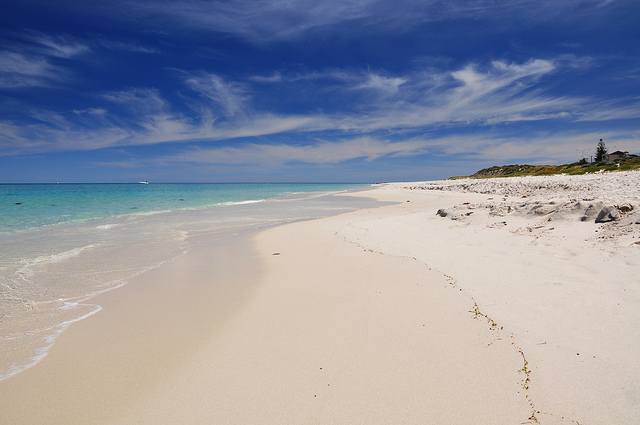
quinns rocks beach

Aveley
Aveley is a neighbourhood of the town of Ellenbrook – an outer suburb in the north-east which is projected to be a future satellite city. Avely is named after a small town in Essex, where the Belhus estate was located: this stately home was once visited by Queen Elizabeth I, and had grounds landscaped in the 18th century by the famous Capability Brown. One of the early settlers to the Swan River Colony in 1829 was Edward Pomeroy Barrett-Lennard, the grandson of Lord Dacre, who owned Belhus. Edward Barrett-Lennard was assigned more than 13 000 acres in the Swan Valley, and his eldest son George purchased a large tract of land which he named Belhus after the family estate: it is this which eventually became Aveley. The name Aveley is Old English and means “Aelfgyth’s meadow”; Aelfgyth is an Anglo-Saxon woman’s name meaning “elf battle”. Avely is also a surname, and has been in rare use as a personal name since at least the 16th century. Historically more common for males, Aveley fits so well with current trends in female names that it seems more suitable for girls. Pronounced AV-uh-lee, this is a pretty, modern-sounding name with a feminine meaning and interesting history.

Carine
Carine is an affluent suburb 14 km north of the city. The area was once owned by the wealthy Hamsersley family, who came to the Swan River Colony in 1837, and before being developed in the 1960s, it was primarily used for farms and market gardens. The suburb’s name comes from the local wetlands, which are now known as Big Carine Swamp and Small Carine Swamp. Their names are a corruption of Careniup, the Noongar name for the wetlands, which means “the place where bush kangaroos graze”; it has the same origin as nearby Lake Karrinyup. The tranquil wetlands provide a home for rare water-birds and other native wildlife. Carine is already used as a girl’s name, the French form of Carina; it can be said in several different ways, but the Australian Carine is kuh-REEN. You would be hard pressed to find anything more Australian than “kangaroo” as part of a name’s meaning, and this is attractive, although perhaps slightly dated-sounding, due to its similarity to Karen, Caroline, and Corinne.

Floreat
Floreat is an exclusive suburb 8 km north-west of the city, close to beaches and filled with parkland. As well as swanky boutiques, it is also well known for its sporting facilities, including Perry Lakes Stadium, which was used for the 1962 Empire and Commonwealth Games, and has now been replaced with the Western Australian Athletics Stadium. The suburb’s name is Latin for “let it flourish, let it prosper”, which is the official motto for the City of Perth (and has been fulfilled, for the city has grown rich on the back of the mining boom). Floreat has been occasionally used as a unisex name since the 18th century. In Australian records, it has mostly been used as a middle name, and examples from Perth may have been named for the city’s motto. In Australia, Floreat has been more commonly used as a girl’s name, due to its similarity to Florence, which has the same Latin origins and meaning. With Florence now fashionable, and girl’s names ending with a T sound, like Charlotte and Violet, popular, Floreat seems a surprising choice as a name, but not an outrageous one.

Jindalee
Jindalee is a new outer suburb in Perth’s far north. Because development has only just begun, the beaches are almost untouched, and it is surrounded by bush, scrub, and heathland. The name Jindalee is believed to mean “a bare hill” in an unknown Aboriginal language of New South Wales; there is a town of Jindalee in New South Wales, and a suburb of the same name in Brisbane. The name may refer to Eglinton Hill in Jindalee, which provides views of the sea. I only found one person in Australian records with the name Jindalee, and it was in the middle; although he was a man, to me Jindalee seems feminine, and could be shortened to Jinny or Jindy. This is a lively name which seems quintessentially Australian in its flavour.

Kiara
Kiara is a quiet leafy suburb in Perth’s northern suburbs. Its name is from an Aboriginal word for “white cockatoo”, and it is not a Western Australian word, but one recorded in the Coffs Harbour region of New South Wales. The “white cockatoo” in question is probably the sulphur-crested cockatoo, a large, handsome, intelligent, curious, and very loud bird, native to the eastern states and far north of Australia. Australian parents seem to have a great fondness for girls’ names beginning with K, and this name sounds much like Italian Chiara, but with a distinctive Australian meaning. The name Kiara has charted since the 1980s, and first joined the Top 100 in 1999 at #67, peaking in 2005 at #49. It left the Top 100 in 2011, and is currently in the low 100s. It’s no longer popular, but still getting plenty of use.

Leda
Leda is one of the suburbs of the City of Kwinana, a coastal centre in Perth’s far south known as a working-class industrial area. Several of Kwinana’s suburbs are named for ships, and the brig Leda brought settlers to the Swan River Colony in 1830. The name was appropriate, because in Greek mythology, Leda was a queen of Sparta whose beauty attracted the attention of the god Zeus, who seduced her in the guise of a swan. Queen Leda didn’t have any unnatural interest in swans – the god-swan fell into her arms for protection while escaping from an eagle. Swans are one of the few birds which have a penis outside their body, like mammals do, and after this the specifics are left to our imaginations. Some artists and poets have depicted the act as a rape, while others show Leda as not just consenting, but positively enthusiastic. The same night, Leda lay with her husband, and from these biologically confused couplings, she gave birth to two eggs – one of which contained the ravishing Helen of Troy. Helen’s birth was commemorated by her father Zeus, who placed the constellation Cygnus, the Swan, in the sky. The meaning of the name Leda is not known for sure; it may be from the Lycian for “woman, wife”, and is pronounced LEE-duh. Simple and elegant, this is a name from Western Australian history which also references Perth’s Swan River.

Myaree
Myaree is a light industrial suburb 11 km south of the city. Its name is said to come from an Australian Aboriginal word meaning “plant leaves, foliage, greenery” (rather inaptly, given the suburb’s purpose). Myaree has been used as a baby name, although not apparently in Australia: it may have been an Anglicisation of an Arabic girl’s name, or a name created from other name elements. Apart from the pleasant meaning of Myaree, and its multicultural possibilities, in many ways it seems quite on trend, because of popular Maya, trendy Marley, and fashionable Myra. In other ways, it seems slightly dated, because of its similarity to names such as Maree and Nyree. To me it’s rather appealing and contemporary, while not unfamiliar in sound.

Quinn
Quinns Rocks is in the outer northern suburbs of Perth. It was first settled in the 19th century by a family of sheep farmers called the Clarksons, who used it as pasturage. In the 1930s it was a place for seaside holidays, with many people building beach shacks along the coast. It began to be developed as a residential area in the late 1950s, and was declared a town in the 1960s. The beautiful white beach is the suburb’s major feature, and still attracts holidaymakers. The suburb gets its name from an offshore reef, and is believed to have been called after Robert Quin, a 19th century government surveyor who made the first records of the area. Another theory is that it is named after Mick Quinn, one of the Clarksons’ shepherds who had a shack in the area. Why it should be named after this shepherd in particular is not related, and the congruence of names seems most likely. Quinn is a common Irish surname, an Anglicised form of the Gaelic mac Cuinn, meaning “son of Cuinn”. Cuinn (which is Anglicised to Conn) means “head, chief”. The surname’s originator is Art mac Cuinn, a High King of Ireland; according to legend, he and his father Conn of the Hundred Battles, also a High King, had dealings with a fairy woman. The Quins were one of the noble families of Ireland, but the line came to an end a few years ago. Quinn is rising rapidly as a unisex name, and currently seems to be almost equal between the genders, while also performing well as a middle name. Expect to see more Quinns in the future.

Serpentine
Serpentine is a small town on the very fringes of the metropolitan area, 55 km south-east of the city, on the railway line between Perth and Bunbury. The town is named after the nearby Serpentine River, so called because of its meandering course. Serpentine has been used sparingly as a name since the 19th century, and in Australian records is found mostly as a middle name, divided fairly evenly between males and females. Most of the Serpentines were from the Perth area, making me think they were named after the river. Serpentine is a problematic name, because while serpentine means “winding, curving” (like a serpent), it can also mean “crafty, deceitful”. The second meaning is an obvious allusion to the serpent in Genesis, who leads Eve into temptation. While this may give some people the jitters, serpents are also ancient symbols of wisdom and healing, and are often depicted guarding sacred places; a serpent holding its tail in its mouth is a symbol of eternity. In Australian Aboriginal myths, the Rainbow Serpent is a significant deity, symbolising life and fertility. Strong and mysterious, sinuous Serpentine may be easier to bear as a middle name.

Viveash
Viveash is a secluded riverside suburb in the city’s north-west. It is named after Dr Samuel Waterman Viveash, a prominent pioneer who arrived in the Swan River Colony in 1838, and took up farming. Viveash is an English surname whose origins are disputed; it may be Anglo-Norman, and come from the French vivace, meaning “lively, vigorous”. However, because it is pronounced like “five ash” with a V instead of an F at the start, it is often linked to places in southern England called Five Ash Trees. Viveash has been used as a personal name for both sexes, almost exclusively found in the middle position. Examples from Australian records are all from Western Australia, and nearly all from the Perth area, making it likely they were named in honour of Dr Viveash. Viveash is a very unusual name, but is vaguely similar to Vivian and Ashley, while having a distinct sound and feel of its own.

POLL RESULTS
The public’s favourite names were Quinn, Aveley and Leda, and their least favourite were Jindalee, Serpentine and Viveash.

(Photo is of the beach at Quinns Rocks)

Famous Name: June

25 Wednesday Jun 2014

Posted by A.O. in Famous Names

≈ 1 Comment

Tags

Biblical names, english names, famous namesakes, Latin names, middle names, mythological names, name history, name meaning, name organisations, name popularity, names from songs, names of months, nicknames, Roman names, saints names, unisex names, US name popularity, US name trends

art-353-june-300x0

Here we are at the end of June, and our last chance to cover the name of this month. On Sunday, I covered the winter solstice, where I said how mild it was – June was all blue skies and sunshine then. Little did I know the very next day a blizzard would hit, with massive snowfalls in the mountains, and freezing, gale-force winds and heavy rain elsewhere. So winter has definitely started now.

June Wright was once Australia’s queen of crime fiction; her first novel, Murder in the Telephone Exchange, was the best-selling mystery novel of 1948 in Australia, outselling the latest Agatha Christie. It featured feisty telephonist-turned-amateur-detective Maggie Byrnes, and was set during a blazing hot February in post-war Melbourne. These were the days when young working ladies lived in boarding houses where gentleman callers were not permitted, and leaving your bedroom clad only in pyjamas and dressing gown was an absolute no-no.

June went on to write five more novels, including a second Maggie Byrne mystery where the post-war housing shortage leads her into another interesting case to solve. The Devil’s Caress, which has a female doctor as the detective, was described as making Murder in the Telephone Exchange look like a bedtime story, and her last three novels featured Mother Mary St. Paul, an unassuming yet strong-willed Catholic nun detective that June Wright based on the head of the maternity ward where she gave birth to twins.

While June’s wartime experience as a telephone operator was the inspiration for Murder in the Telephone Exchange, it was her career as housewife and mother to six children, one severely intellectually disabled, that was seized upon by the women’s magazines of the day, who brought out articles with titles like “Wrote Thriller With Baby on Her Knee” and “Books Between Babies”. The writer of dark, gory murder mysteries with strong female protagonists was careful to present herself as charming and and feminine, and pointed out that both housewives and writers had to be practical, disciplined, and used to monotony.

June’s last novel was published in 1966. Her husband had a nervous breakdown, and June went back to work as a telephonist to support the family, before she and her husband started a cleaning business together. Although there are no hints she regretted having to abandon her literary career, she lived a long life (she only passed away recently), and it’s hard not to think of the many years she could have kept writing under different circumstances.

June lapsed into literary obscurity, and her works have been out of print for many years. However, in February this year Murder in the Telephone Exchange was re-issued by Dark Passage, an imprint of US publisher Verse Chorus Press. They will be bringing out all her novels, including previously unpublished Duck Season Death.

I haven’t bought my own copy yet, but this is welcome news for lovers of vintage fiction, women’s fiction, and Australian crime fiction. I think the books would be especially interesting for Melburnians from a historical perspective.

The name June is after the sixth month of the year. The Romans called the month Junius, commonly believed to be named in honour of the goddess Juno, the wife of Jupiter and queen of the gods. Do you remember the Happy June group, who celebrated June Day on June 1 every day? Well, on the first day of June, the ancient Romans had a festival dedicated to Juno’s “birthday”, in her role as goddess of war and protector of the state. So in a way, there is a “June Day” just as much as a “May Day”.

Because Juno was the goddess of marriage, the month of June was thought an auspicious time for weddings. This makes a lot of sense in the northern hemisphere, where it is early summer: in the United States, June is the most popular month for weddings, and in Italy, June is still a popular month to be married. In Australia, November is the most popular month for weddings (just to confuse things, in the United Kingdom August is the traditional wedding month – in Italy this is considered incredibly bad luck and very unhealthy).

As June is the start of summer in the northern hemisphere, there the name June may seem ripe and womanly, full of vitality and promise – as the song says, June is Bustin’ Out All Over. Here June is the start of winter, and to me it seems cool and fresh as a mountain breeze, and pure as snow.

June has been commonly used as a girl’s name since the 19th century, and part of its appeal must have been that it sounded similar to popular names such as Joan and Jane. It would have also seemed like a “real name” because of Latin names such as Junia – Saint Junia is venerated in the Orthodox tradition, and is mentioned in the New Testament as having a leadership role in the early Christian church. In the US, June has also been used as a male name, derived from Junius.

In Australia, June began charting in the 1910s, debuting at #162, and climbing so steeply that it was #15 for the 1920s. It peaked in the 1930s at #10, fell until it left the Top 100 in the 1950s, and last charted in the 1970s.

June does not chart in either Australia or the UK, but in the US June is already in the 300s and rising very briskly after only re-joining the Top 1000 in 2008. The United States is leading the way, and I think this is an American name trend well worth considering.

June is sweet and charming, and has the fashionable OO sound in it, like Ruby and Lulu. This is a hip vintage choice, and also a simple nature name, like Wren or Rain. Not only can it be used to honour a relative named June, or for cases where June is a special month for you, this would make a great name for someone who wanted something that was traditional and “old-fashioned”, while still seeming fresh and underused.

June could be used as a short form of names such as Juniper, Junia or Juno, and is getting some use as a middle name, but it would be lovely to see it up front as the full name. Junie is the usual pet form.

POLL RESULTS
June received an excellent approval rating of 80%, making it one of the highest-rated names of 2014. People saw the name June as vintage and hip (26%), sweet and charming (23%), traditional yet fresh (15%), and pretty or cute (10%). However, 9% saw it as only a middle name. Only one person thought the name June was too trendy.

Irish Names for Boys

15 Sunday Jun 2014

Posted by A.O. in Name Themes and Lists

≈ 8 Comments

Tags

animal names, celebrity baby names, ethnonyms, famous namesakes, Gaelic names, hebrew names, Irish name popularity, Irish names, Latin names, modern classic names, mythological names, name history, name meaning, name popularity, name trends, names of political organisations, nicknames, Old Irish names, popular names, retro names, royal names, saints names, underused names, Welsh names

a07442ad-b5ca-4bfe-8a64-ab471fc44a87

It was very hard to choose just ten Irish boys’ names, as there are so many commonly used Irish names for boys in Australia, especially if you include Irish surnames. It’s not surprising when you consider our strong Irish heritage, and because the Irish were here from the beginning of European settlement, they were never marginalised as happened in other countries.

Famous Australians with Irish heritage include bushranger Ned Kelly, Peter Lalor who led the Eureka Rebellion, actor Erroll Flynn, artist Sidney Nolan, rock singer Doc Neeson, philanthropist Daisy Bates, and our greatest prime minister, Ben Chifley. Those alive today include Governor-General Peter Cosgrove, Nicole Kidman, Kylie Minogue, surfer Mick Fanning, Socceroo Lucas Neill, author Tom Keneally, and former prime ministers Paul Keating and Kevin Rudd.

A reminder I haven’t included any names with fadas (accent marks), as they aren’t permitted in all states and territories.

Aidan
Anglicised form of Aodhán, a pet form of Aodh or Áed, meaning “fire” in Old Irish; there are many characters from Irish mythology named Aodh. St Aidan of Lindisfarne was an Irish-born monk known as the Apostle of Northumbria; he was famous for converting people by simply walking from village to village, politely chatting with people and introducing them to Christian beliefs by helping them in their daily lives. The name Aidan first ranked in the 1970s at #533, and by the 1980s was already #177. Aidan joined the Top 100 in 1993 at #92, and peaked in 2008 at #51. Currently Aidan is #99 in Victoria and #102 in the Australian Capital Territory. The Aiden spelling is more popular: this first charted in the 1980s at #368, joined the Top 100 in 1997 at #62 and peaked in 2009 at #35. Currently Aiden is #41 nationally, #45 in New South Wales, #45 in Victoria, #65 in Queensland, #47 in Western Australia, and #39 in the Australian Capital Territory. Even combining spellings, Aidan/Aiden is only #51 nationally. This doesn’t seem as if Aidan is very popular, yet it still has a reputation as an “overused” name because of the massive trend for sound-alike names, such as Hayden, Brayden, Caden, Jayden, Zayden etc. Aidan is #50 in Ireland and #43 in Northern Ireland.

Cian
In Irish mythology, Cian was a god and father of the hero Lugh of the Long Hand. According to folk tales, Cian possessed a magical cow which produced a superabundance of milk. During a quest to recover his cow after she had been stolen, he seduced a princess who had been locked up in a tower (it was the princess’ father who had stolen the cow). The tale sounds very much like the Greek myth of Danae, and the princess was imprisoned for the same reason – a prophecy said that the princess’ father would be killed by his grandson. Lugh the Longhand was born from this union, and eventually the prophecy was fulfilled when Lugh killed his grandfather in revenge for locking his mother in a tower. The name Cian means “long, enduring, far, distant” in Gaelic, and is pronounced KEE-in. It is often anglicised to Kian, which is in the 400s in Victoria. Cian is #15 in Ireland.

Connor
Variant of Conor, Anglicised form of the Gaelic name Conchobhar, meaning “lover of hounds”. There have been several real life Irish kings with this name, including a High King, and also the legendary Conchobhar mac Nessa, who was unsuccessfully married to both Queen Medb and Deirdre, but had many other wives. The name is the basis for the Irish surname O’Connor, meaning “grandson of Conchobhar”, and the Clan O’Conchubhair is a royal Irish dynasty whose lineage has provided one hundred kings of Connacht, and two High Kings of Ireland: some members of the noble O’Conor family of Ireland are the living descendants of the last High King of Ireland. Connor is a truly royal name, which must have an influence on its use. The name Connor has charted since the 1980s, debuting at #418. It joined the Top 100 in 1994 at #83, and peaked at #21 in 2003. Currently it is #43 nationally, #74 in New South Wales, #61 in Victoria, #33 in Queensland, #31 in Western Australia, #40 in Tasmania, and #69 in the Australian Capital Territory. Connor is #97 in Northern Ireland; Conor is #5 in Ireland and #17 in Northern Ireland.

Darragh
Variant of Dara, derived from from the Gaelic for “oak grove”. The oak was sacred to the Celts, and the word druid is directly related to the word for oak. The city of Derry in Northern Ireland has the same meaning. Darragh can also be an Anglicisation of the Old Irish name Dáire, meaning “fertile, fruitful, virile, sexually aroused”, but also “agitated, raging, violent, tumultuous”. It’s a very explicit meaning in regard to masculine sexuality, suggesting a sort of bestial lust. The Darini were an ancient peoples from Northern Ireland, and it would seem that Dáire was their ancestor or ancestral god. Several Irish noble families and Scottish clans claim descent from the Darini, as do the current British royal family. There are many kings and heroes from Irish legend named Dáire, but folklorists believe they are ultimately versions of the same mythological figure, who may have been a god of the battlefield. Darragh can be pronounced DAH-ruh, or DA-ra, and may seem like an updated Darren to Australians. Darragh is #20 in Ireland and #30 in Northern Ireland; Dara is #86 in Ireland, and Dáire is #88 in Northern Ireland.

Finn
Both the older Irish and Anglicised form of Fionn, meaning “blond, fair, white, bright”. Its most famous namesake is the mythical warrior and giant Find mac Cumail, transcribed in English as Finn McCool. Finn was a nickname – his real name was Deimne, meaning “sureness, certainty”, and gained his nickname after his hair turned prematurely white. Finn was brought up by a warrior woman who trained him in war and hunting, then he studied under a poet and druid. One day Finn was cooking a mystical salmon for his master which would give him all the knowledge in the world: he burned his thumb in the process, and instinctively put his thumb in his mouth to cool it, swallowing a piece of salmon skin. This gave Finn the wisdom of the salmon, and whenever he needed to draw on its power, he needed only to suck his thumb. Finn’s followers were called the Fianna, and it is from them the Fenian Brotherhood gained their name. According to legend, Finn is sleeping in a cave beneath Ireland, and will one day awake to defend Ireland in her hour of greatest need. Finn first charted in the 1990s at #287, and by 1997 was already in the Top 100 at #88. Currently it is #62 nationally, #68 in New South Wales, #60 in Victoria, #76 in Queensland, #40 in Western Australia, and #30 in the Australian Capital Territory. This is a handsome popular name that has helped drive the popularity of names such as Flynn and Finlay. Finn in #38 in Ireland and #56 in Northern Ireland; Fionn is #27 in Ireland and #70 in Northern Ireland.

Lorcan
Anglicised form of Lorcán, derived from the Irish Gaelic word for “fierce”. There have two been ancient Irish kings named Lorcán, and a medieval saint Lorcán Ua Tuathail whose name is Anglicised to Lawrence O’Toole. St. Lorcán was of royal blood, and became Archbishop of Dublin. He played a prominent role in the religious reform of the 12th century, spearheading a movement of spiritual renewal while bringing the church in Ireland closer to Rome. He was admired by both members of the church and the secular community for his many acts of charity to the poor – much needed at the time due to a severe famine. This is a cool Irish name which could be an alternative to names as Lachlan, Liam, or Declan. Lorcán is #67 in Northern Ireland.

Malachy
Anglicised form of Máel Sechlainn, meaning “follower of St. Seachnall”. St. Seachnall is an obscure 5th century Irish bishop who seems to have been of Italian origin; his name may be an Irish form of the Latin name Secundus, meaning “second (born)”, as he is also known as St. Secundius. The modern spelling of Malachy has been influenced by the Hebrew name Malachi, meaning “my messenger”, and therefore understood as “my angel”. However, Malachy is pronounced MAL-uh-kee, not MAL-uh-kie. There have two medieval High Kings of Ireland named Malachy, and also a St. Malachy, who was the first native-born Irish saint to be canonised. The saint’s name is an Anglicisation of Máel Máedóc, meaning “follower of St. Madoc”; Madoc was a 7th century Irish monk, and his name may come from the Welsh for “fortunate”. Malachy is an attractive name in occasional use, and AFL footballer Liam Picken has a young son named Malachy.

Oscar
Believed to mean “deer friend”. In Irish mythology, Oscar was the son of the warrior Oisin (“young deer”) and the fairy queen Niamh; he was the grandson of Finn McCool, and one of his warriors. Oscar was killed by a member of the increasingly corrupt Fianna, and upon his death, Finn wept for the first time in his life. The name Oscar was popularised in the 18th century by the poems of James McPherson; Napoleon was a great admirer of McPherson and gave his godson Oscar as one of his middle names. Later Napoleon’s godson became Oscar I of Sweden, and the name Oscar became traditional in Scandinavia. The Irish writer Oscar Wilde may have received his name because his mother collected Irish folk tales, but perhaps also because his father had travelled in Sweden, where he received honours from King Carl XV – Carl had a son named Oscar, born two years before Oscar Wilde, and sadly the little prince died just months before Oscar Wilde’s birth. Oscar was #103 for the 1900s, and sank before leaving the charts in the 1940s. It returned in the 1970s at #478, joined the Top 100 in 1998 at #98, and the Top 50 in 2004 at #47. Currently Oscar is #24 nationally, #27 in New South Wales, #20 in Victoria, #39 in Queensland, #34 in Western Australia, #19 in Tasmania, and #20 in the Australian Capital Territory. This tough, masculine yet snuggly retro name is more popular than it has ever been. Oscar is #61 in Ireland and #64 in Northern Ireland.

Ronan
Anglicised form of Rónán. Irish and Scottish legend tells of selkies, who swim in the sea as seals, but can shed their sealskin and become human on land. Male selkies were handsome and seductive; female selkies were said to make excellent wives, but could never forget their true home, and would gaze longingly out to sea – selkie tales are nearly always romantic tragedies. The children born of selkie women were called ronans, or “little seals”. The lovely film The Secret of Roan Inish, set in Ireland, is about the selkie legend, and an Irish animated movie is due to come out this year on the same topic. St. Ronan was an educated Irish bishop who sought exile in Brittany and a peaceful life as a hermit. A magical fairytale name that sounds smooth and handsome, Ronan could replace popular Ryan; it will remind many of Irish singer Ronan Keating from The X-Factor. Ronan is #52 in Ireland and #40 in Northern Ireland.

Rory
Anglicised form of the Irish Gaelic name Ruaidhrí or Ruairí. The name means “red king”, referring to fox-coloured hair. There have been many Irish kings named Ruaidhrí, including Ruaidrí Ua Conchobair, the last High King of Ireland before the Norman invasion. Rory has charted since the 1950s, debuting at #289; after a bumpy start (when it sank to #420 in the 1960s) it began climbing steadily, and peaked in the late 2000s at #125. Currently it’s in the mid 100s, and this is a rare example of a modern classic which has never become popular. Not only underused, Rory is cute but with a “tough boy” vibe, and could be an alternative to popular Riley, or fashionable Remy. Rory is #42 in Ireland and #44 in Northern Ireland; Ruairí is #81 in Ireland and #74 in Northern Ireland.

POLL RESULTS
The public’s favourite names were Finn, Rory and Oscar, and their least favourite were Lorcan, Cian and Darragh.

(Picture of a Harbour Seal or Common Seal from the Belfast Telegraph)

Irish Names For Girls

08 Sunday Jun 2014

Posted by A.O. in Name Themes and Lists

≈ 10 Comments

Tags

classic names, famous namesakes, fictional namesakes, French names, Gaelic names, Irish Gaelic names, Irish name popularity, Irish names, Italian names, middle names, modern classics, mythological names, name history, name meaning, name popularity, nicknames, Old Irish names, popular names, royal names, saints names, underused classics, unisex names, vintage names

3478061055_c7f655e9d0

Irish people have played an important role in Australia’s history, with many arriving in the 18th century as convicts or free settlers. By the late 19th century, a third of Australia’s population was Irish, and today around 30% of us claim some Irish ancestry. It is said that Australia is the most Irish country in the world outside Ireland.

The Irish have made an indelible mark on our history, culture, religion, sport and perhaps most especially, our politics – six of our prime ministers have had Irish ancestors. They have also helped create much of our national character: both the good bits, like our dry sense of humour and love of language, and the bad bits, like our pessimism and thin-skinned “touchiness”. When I did Italian names, I said that I could imagine an Australian without an Italian history, I just didn’t care to, but it’s impossible to imagine Australia without an Irish history.

Here’s ten Irish girls’ names, some of which have become popular here, and others which are less common. Just a heads up that I haven’t included any fadas (accent marks) on any of the names, since they are not legal in all states.

Aisling
Modern name meaning “dream, vision” in Irish Gaelic. It can be seen as a literary name, because the aisling is a poetic genre developed in 17th century Ireland, where a woman appears in a vision and predicts a turn for the better in Ireland’s fortunes. Earlier, the dream-woman was young and beautiful, and didn’t have a political message, but symbolised nature or love. Aisling can be pronounced ASH-ling or ASH-leen, and to English-speakers, seems like a fresh alternative to Ashley; it has also spawned variants such as Ashlynn. Aisling is #41 in Ireland.

Aoife
From the Gaelic for “beauty, radiance”. In Irish legend, Aífe is a warrior woman, and rival of her (possible) sister Scáthach. Legend tells that she fought the hero Cú Chulainn, but he overcame her with trickery, and promised to spare her life if she stopped fighting with Scáthach, spent a night with him, and bore him a son. She fulfilled her side of the bargain, but the story didn’t end happily. In the tale of The Children of Lir, Aoife is the wicked queen who transformed her stepchildren into swans; she was cursed by being turned into a demon by her own father as punishment. Despite this unpleasant namesake, Aoife was used by medieval Irish nobility, with a notable example being Aoife MacMurrough. This 12th century Irish princess conducted battles on behalf of her husband, and is an ancestor of the current British royal family. Aoife is pronounced like EE-fuh; although complex to spell, it sounds rather like popular Eva, and has a lovely meaning. Aoife is #11 in Ireland and #10 in Northern Ireland.

Bridget
Anglicised form of the Old Irish name Brigit, meaning “high, exalted”. In Irish mythology, Brigit is a goddess; her name is derived from the word for “fire” and most likely her title. Brigit was a poet, and the inventor of keening – the lament over a body at a burial that is a mixture of singing and weeping. She is also patron of healing, smithing, arts and crafts, cattle and livestock, sacred wells, and serpents. She ruled all things high-reaching, as well as lofty attributes, such as intelligence, wisdom, excellence, knowledge, and skill. Brigit is associated with the home and hearth, and with early spring. Her special day is Imbolc, on February 1. She has become fused with St Brigid of Kildare, one of the patron saints of Ireland – probably an attempt to Christianise the goddess. St Brigid is patron of smiths, cattle, poets and scholars, and her feast day is February 1. In Ireland, the name Bridget was too sacred to use until the 17th century, but later became extremely popular – so much so that an Irishwoman was called a “Biddy“, just as an Irishman was called “Paddy”. Bridget was #104 in the 1900s, and dropped to its lowest ranking in the 1950s, at 0. It hit a minor peak in the early 2000s at #166, and is currently in the 200s in Victoria and the 400s in New South Wales. Bridget is an underused classic which has remained on the charts while never becoming popular.

Caitlin
Anglicised form of Caitlín, Irish form of Cateline, Old French pet form of Catherine. While the Irish say it something like kat-LEEN, English-speakers say KAYT-lin, and turn the Irish pronunciation into another name, Kathleen. Caitlin has been used in Ireland since the 19th century, and became well known in the 20th. In Australia, Caitlin has ranked since the 1970s, making its debut at #554, and soaring until it entered the Top 100 in 1987 at #86. By 1990 it was in the Top 50 at #38; by 1994 it was in the Top 20 at #15. It peaked in the late 1990s at #12, and since then has declined. Currently Caitlin is #99 nationally, #78 in New South Wales, and #103 in the Australian Capital Territory. Last year Caitlin was one of the names that fell the most in popularity, suggesting its day is coming to a close (although its many variant spellings would significantly boost its ranking). Caitlin is #64 in Ireland and #33 in Northern Ireland.

Ciara
Feminine form of Ciar, meaning “black”. There is a 6th century St Ciara and a 7th century one, or else just one long-lived St Ciara. According to legend, St Ciara was of royal blood, and founded an abbey; another story says that she (unless it is a different St Ciara) saved a town from a noxious fire through her prayers. Ciara is pronounced KEER-uh, and must be one of the most heavily Anglicised Irish names, for you rarely see it with its native spelling, but more often Keira or Kira. Although to me the Ciara spelling looks more elegant, it risks being confused with the Italian Chiara. Ciara fits in with Australian’s love of names such as Kirrily and Kirra, and has a native sound to our ears. Ciara is #32 in Ireland.

Deirdre
Deirdre of the Sorrows is a tragic heroine from Irish mythology. The daughter of King Conchobar’s bard, when she was a baby a druid predicted she would be very beautiful, but that much blood would be shed for her sake. Conchobar decided he wanted this beauty for himself, and had her brought up in seclusion. As an adult, Deirdre was as stunning as the druid had foreseen, and she fell in love with a handsome warrior named Naoise. The couple eloped, and were blissfully happy until the furious Conchobar tracked them down. In the ensuing battle, Naoise was amongst those killed. Conchobar triumphantly took his gorgeous wife home, but was angry that she remained cold and depressed. To teach her a lesson, he told her that he would give her to the man who had murdered Naoise – the man she hated above all others. On the journey to deliver her, the unhappy Deirdre threw herself from the chariot and split her head open. In some versions of the story, she simply wastes away with grief. Deidre is derived from the Gaelic name Derdriu, whose meaning is debated, but is implied in the original story as meaning “noise, murmuring”, related to the word for “storm”. It could thus be understood as “weeping, wailing, storm of tears”, and is often glossed as “sorrow”. Deirdre came into use as a girl’s name in the 19th century, and became more common in the 20th, when there had been many popular re-tellings of the legend. Deirdre first ranked in the 1930s at #183, peaked in the 1940s at #180, and hasn’t charted since the 1970s. This is a vintage name which has had very little use, so hasn’t become dated. It is rather lovely, although very sad.

Erin
Derived from Éirinn, from the Irish word for Ireland, Éire. Erin was used as a poetic and nationalistic name for Ireland, or the feminine personification of Ireland. According to folklore, the country’s name comes from Ériu, the mother goddess of Irish mythology, and a symbol of Irish sovereignty. Her name is believed to come from an ancient root meaning “fat”, to indicate that Ireland was a land of abundance. Erin came into common use as an Irish name in the 19th century. It has sometimes been given to boys, perhaps because it sounds like Aaron and Eric, but has only charted for girls. The name Erin first charted in the 1950s, debuting at #457, and reached the Top 100 in 1978, at #71. By 1980 it was in the Top 50 at #46, the following year it was in the Top 20 at #17, and it peaked in 1984 at #12. Erin has been a long-time favourite, and only left the Top 100 in 2012. This modern classic is no longer popular, but still getting a reasonable level of use. It is #39 in Ireland and #19 in Northern Ireland.

Maeve
Anglicised form of the Gaelic name Medb, meaning “intoxicating”, and related to the English word mead (a fermented honey drink). In Irish legend, Queen Medb was a powerful and seductive queen known for taking a succession of husbands as her consorts. She was once married to King Conchobar, from the story about Deirdre. Medb couldn’t stick him either and walked out; she ended up defeating Conchobar and ruling in his place. She demanded that her wealth be at least equal to her husbands’, and insisted her consorts be without fear, meanness, and jealousy – the last was very important, because Medb also took lovers to supplement her husbands. Folklorists believe that Queen Medb was originally a sovereignty goddess in a matrinlineal society who the king would symbolically “marry” in order to gain power over the land. This explains her many husbands. In modern times, she has become a feminist symbol of women’s power and female sexuality. This is a sweet, spunky name which fits in with the trend for names with a V in them, like Ava, and makes a great middle name. Maeve is in the 100s in Victoria, so not particularly unusual, while it is #100 in Ireland.

Orla
Anglicised form of Órfhlaith or Órlaith, meaning “golden princess”. Órlaith was a very popular name in medieval Ireland, and there are several queens and princesses from Irish history with this name. The famous High King of Ireland Brian Boru had a sister named Órlaith who married another High King (she unfortunately came to a sticky end after getting over-involved with her stepson), and Brian also had a daughter and a grand-niece named Órlaith. For some reason, Orla is a man in The Poems of Ossian by James McPherson, a young warrior and chieftain of Lochlin who falls in battle. In Scandinavia, Orla is used as a male name, and that might be because of McPherson’s poetry, which was very popular in Scandinavia. Orla is simple to spell and pronounce, and the princessy meaning would be attractive to many parents. Orla is #82 in Ireland.

Sinead
Anglicised form of Sinéad, the Irish form of Jeanette, the pet form of the French name Jeanne. It is the equivalent of the English name Janet, which is a pet form of Joan. In practice, Sinead is often understood as the Irish form of Jane or Jean; it has even been used as an Irish form of Jennifer since Jenny is an old pet form of Jane. The name is pronounced shi-NAYD. A famous Irish namesake is Sinéad de Valera, the wife of the Rebublican leader and Ireland’s third president, Éamon de Valera. A teacher of the Irish language, Mrs de Valera was named Jane by her parents, but changed her name to Sinéad not long after she was married. Sinéad de Valera was a successful children’s writer, who wrote in both English and Irish. She helped to popularise the name in Ireland, and the Irish singer-songwriter Sinéad O’Connor was named after her. Sinéad has lost popularity in Ireland in recent years, and has never charted in Australia, although still seen occasionally.

POLL RESULTS
The public’s favourite names were Maeve, Bridget and Aoife, and their least favourite were Ciara, Deirdre and Sinead.

(Picture shows detail from an Irish pound note, which bears the likeness of Queen Medb or Maeve; the pound hasn’t been used in Ireland since 2002 when the euro was introduced)

Famous Name: Harvey

28 Wednesday May 2014

Posted by A.O. in Famous Names, Requested Names

≈ 7 Comments

Tags

birth notices, Breton names, english names, famous namesakes, French names, Gaelic names, Gallic names, Irish names, mythological names, name history, name meaning, name popularity, Old Breton names, popular names, retro names, saints names, surname names, UK name trends, US name trends


world-no-tobacco-day-rose-graphicFamous Namesake
On May 31 it will be World No Tobacco Day, encouraging smokers to abstain from tobacco for just 24 hours. World No Tobacco Day was started by the UN’s World Health Organization in 1987, and each year there is a new theme: this year it is “Raise taxes on tobacco”. Should you wish to celebrate No Tobacco Day by giving up smoking, information and support can be gained from a number of government and community services.

The number of Australian smokers has dropped dramatically since World War II. In 1945, about three-quarters of men and a quarter of women smoked every day. Today it’s 16% of men and 13% of women, with numbers continuing to fall, making us one of the most successful countries at reducing smoking in the English-speaking world. That can be attributed to vigorous public anti-tobacco campaigns running since the 1980s.

Australia’s campaign against smoking began with William Harvey, a distinguished thoracic physician who devoted his lengthy career to the study and treatment of tuberculosis after his father (also a doctor) contracted the disease. Harvey had the satisfaction of seeing TB become less common, due to better testing and treatment, but over time he became concerned at the growing incidence of lung cancer.

In 1965 he helped found the Australian Council on Smoking and Health as part of his campaign against smoking, and was its president from 1966 to 1975. This didn’t make him popular with some, especially tobacco companies, who continued to deny there was any link between smoking and disease. However, William Harvey had been a POW during World War II who continued caring for his patients even as disease threatened his own life. He didn’t believe in giving up.

He visited schools and sporting bodies, he wrote to the newspapers, and he persuaded other doctors and medical organisations to join him in his campaign against tobacco. One of his achievements was the banning of cigarette vending machines in hospitals. Progress seemed slow, but he persisted, saying that he had great faith in “the inevitability of gradualness”. A devoted family man, Harvey was a keen gardener and surfer into his twilight years, and played golf, tennis and bowls. He passed away suddenly in 1981 at the age of 84 – a good advertisement for a life of healthy non-smoking.

William Harvey didn’t live to see the big government campaigns against smoking of the 1980s, but their existence and determination owe a great debt to his dedication and energy. And if I can reveal my hand, I have friends and family members who have given up smoking, and as a result I have got to spend many more years with them, or seen them live happier, healthier lives. Every one of them was convinced to give up by anti-smoking campaigns, so from the bottom of my heart, I thank you William Harvey.

Name Information
Harvey is an English surname, and one of the earliest recorded. It is derived from the Breton personal name Huiarnuiu derived from the Old Breton name Huiarnviu, meaning “blazing iron”. The Gallic form of the name is Hervé, and St Hervé (or St Harvey) is one of Brittany’s most popular saints.

Hervé was born blind, and was a 6th century hermit and bard known for his humility. According to legend, he had the power to cure animals, and was always accompanied by a wolf. The story goes the wolf had eaten the ox that the saint used for ploughing, and St Hervé made such an eloquent sermon that the wolf volunteered to pull the plough instead, in penitence.

One of the followers of William the Conqueror during the Conquest was named Hereueu, another form of the Breton name. Use of the name as a surname followed almost immediately after the arrival of men with the first name, and is first found in Norfolk, where the Harvey family were granted lands for their services at the Battle of Hastings.

In Ireland, Harvey was used to Anglicise the Gaelic surname O’hAirmheadhaigh, meaning “grandson of Airmed”. Airmed is a goddess from Irish mythology, known for being a healer during a great battle. As she wept over the grave of her brother, who had been slain by her father, all the healing herbs of the world sprang up, watered by her tears. Airmed gathered them into her cloak, but her father scattered the herbs, so that no person can ever know all the secrets of herbalism – only Airmed. Her name is identical to a word meaning “a measure of grain”, although I’m not sure if that is the origin of the name.

Harvey was also used to Anglicise the Gaelic surname Ó hEarchaidh, meaning “son of Earchadh”. Earchadh is an Irish name that I have seen translated as “noble warrior”. By the way, William Harvey was very proud of his Irish Protestant heritage, so his surname was Irish, although most likely of English origin rather than Gaelic.

The name Harvey was #167 in the 1900s, and peaked in the 1940s at #141 – perhaps because of a family of cricketers from Victoria with the surname Harvey who flourished around this time. Harvey disappeared from the charts from the 1960s to the 1980s, but made a comeback in the 1990s when it ranked at #581.

Interestingly, this was the time when retail chain Harvey Norman, co-founded by maverick businessman Gerry Harvey, became a “superstore” business, with massive expansion. The name Harvey zoomed up the charts to make #314 for the early 2000s and #243 for the late 2000s. Harvey peaked in 2010 at #149, and then began dipping the next year – this coincides with Gerry Harvey’s unpopular campaign to make consumers pay Goods and Services Tax on items bought online from overseas websites.

Although Harvey is in the 100s in New South Wales, it is a Top 100 name in Victoria. Harvey entered the Victorian Top 100 in 2010, debuting at #100, and last year made #64. If you are in Victoria you probably think of Harvey as a popular and rising name, while in other states, Harvey may seem fashionable but underused. It is not clear at present if other states will follow Victoria’s lead, but as Harvey is Top 100 in the UK, and rising in the US, international trends suggest Harvey’s popularity here may be increasing.

Harvey is a cute, spunky name for boy, but there’s also something strong and masculine about it. This retro name has been underused for most of its history, and is now making a comeback – in at least one state, it is more popular now than at any other time. This may give some parents the jitters. Although it has only ever charted as a boy’s name, I have seen Harvey on a few girls in birth notices, and the Irish goddess does give this some legitimacy as a name for both genders.

POLL RESULT
Harvey received an excellent approval rating of 75%, making it one of the highest-rated names for 2014. People saw the name Harvey as strong and manly (20%), cute and boyish (16%), and traditional without being stuffy (13%). However, 11% were reminded too strongly of Harvey Norman stores. There was a strong preference for Harvey being reserved for boys only, with 18% saying it was only suitable for boys, and just 2% believing it could be used for both genders.

Thank you to Vanessa for suggesting the name Harvey be featured on Waltzing More Than Matilda.

Famous Name: Grace

21 Wednesday May 2014

Posted by A.O. in Famous Names

≈ 6 Comments

Tags

British name popularity, classic names, colour names, contemporary classics, english names, famous namesakes, germanic names, Latin names, middle names, mythological names, name history, name meaning, name popularity, New Zealand name popularity, nicknames, popular names, royal names, saints names, theological names, virtue names, vocabulary names

Thumbnail_320

Last month it was the 121st birthday of Grace Cossington Smith, one of the most important Australian artists of the 20th century, and a contemporary of Clarice Beckett.

Grace was born in Sydney, and studied under Antonio Dattilo Rubbo, an inspiring and extremely supportive art teacher who encouraged his students to experiment; he affectionately called Grace “Mrs Van Gogh”. Her painting The Sock Knitter, showing her sister knitting socks for the war effort, is considered to be Australia’s first post-Impressionist painting, and she exhibited in galleries from 1915.

Her paintings are notable for their bright patterns and vibrant energy, using careful square brushstrokes to create images of colour shimmering through sunlight. She painted scenes of Sydney, and is famous for her iconic representations of the Harbour Bridge, showing the bridge’s construction. Grace’s Sydney was bustling, busy, exciting; filled with crowds, colour and sunshine. Later in life, she became known for her still lifes and interiors.

Art museums began buying Grace’s work in the 1940s, but she did not become famous until the 1960s, and in 1973 was appointed an Order of the British Empire as an exhibition of her work toured with the Art Gallery of New South Wales. Grace was 81, and let it be known that she would have welcomed recognition a little earlier. She received her OBE while in a nursing home, and by then was too frail to paint any more.

Grace is an English word which can be understood in several different ways. We might think of grace in terms of physical elegance and poise, but there is also social grace, where a person is charming and well-mannered.

The theological concept of Divine Grace is present in several religions. In Christianity, it means the undeserved love and mercy given to us by God – a gift that allows us a share in divinity. Although there are many theological disagreements, nearly all Christians believe that the grace of God is necessary for salvation, and that it is through divine grace that we are able to resist sin.

The word grace comes from the Latin gratia, meaning “kindness, favour, esteem”, ultimately from an ancient root which means “praise, welcome”. The word is related to grateful. Both the secular and spiritual senses of the word grace have connotations of effortlessness – no matter how many lessons in physical movement or etiquette you might have, you can only appear graceful if it seems natural and easy for you. And the grace of God comes not through our own efforts, but is a gift that we are freely given without earning it.

The English name Grace was not originally linked to either of these meanings, but from a Germanic name Grece, meaning “grey”, and pronounced like Grace. However, it quickly became associated with the Latin Gratia or Gracia, to suggest “charming, pleasant”, and it is thought that women with these names would have been known as Grece or Grace in everyday life.

St Gracia of Lerida may have been an influence on the name’s development; she was the daughter of a Spanish Muslim caliph who converted to Christianity and was martyred in the 12th century. Born Zaida, she took Gracia as her Christian name, and is sometimes known as St Grace. There is also an obscure pre-Norman English saint named Grace connected with St Probus of Cornwall; some speculate that she was his wife, and others that she was a great lady who supported him in his ministry. There doesn’t seem to be any evidence that she ever existed.

In Greek mythology, the Graces are goddesses of charm, beauty, nature, creativity, and fertility, patronesses of amusements and festivities. Despite this seemingly frivolous purview, in some mysterious way they were connected to the Underworld and the secrets of the afterlife – perhaps a taste of the joys which might await us on the other side. In Renaissance art, they are usually depicted as three beautiful young women who are either naked or lightly draped in diaphanous garments, and often embracing each other or clasping hands.

These attractive figures might have influenced the choice of the name Grace from the late Middle Ages, but it is usually thought that after the Reformation, Grace would have been given by Puritans as a virtue name, with the religious meaning in mind.

Grace is a classic name which has never left the charts. It was #29 in the 1900s, left the Top 100 in the 1940s, and reached its lowest point in the 1970s at #373. It then began climbing steeply, around the time of Princess Grace of Monaco’s death, and reached the Top 100 in 1988 at #89.

By 1991, Grace was in the Top 50 at #45, and in the Top 20 by 1998 at #13 – the highest point it had ever gained historically. Grace reached the Top 10 in 2002 at #9, however it did not stay there long, and stabilised just outside the Top 10, where it remains today.

Currently Grace is #12 nationally, #11 in Victoria, #14 in New South Wales, #12 in Queensland, #11 in Western Australia, #9 in Tasmania, #11 in the Northern Territory and #10 in the Australian Capital Territory. Highly popular in all states and territories, it is also a Top 100 name in other English-speaking countries, and is most popular in Northern Ireland and Ireland at #3 and #4 respectively. Its popularity in Britain and New Zealand is much the same as here.

Grace is a true timeless classic; a solid choice as an English name which has never gone out of fashion or fallen into disuse in nearly a thousand years. Yet it is more popular now that it has been at any other time in Australia’s history, making it a contemporary classic which feels both traditional and up-to-date.

Grace is a beautiful name with simple elegance; sophisticated and unpretentious, and even more popular as a middle name. It’s a saint, a princess, a goddess, and millions upon millions of ordinary women throughout the ages. There may be many little girls named Grace, but that’s no reason why your daughter cannot join their ranks. Gracie is a common pet form, and quite a few parents are choosing this as the name on the birth certificate.

POLL RESULT
Grace received an excellent approval rating of 83%, making it one of the highest-rated names of 2014. People saw the name Grace as a beautiful timeless classic (29%), simple yet sophisticated (18%), suitable for all ages (18%), and intelligent and professional (11%). However, 6% thought it was too popular. Nobody thought the name Grace was harsh or ugly.

(Picture shows Church Interior by Grace Cossington Smith, c 1941)


Girls Names From the Top 100 of the 1920s

04 Sunday May 2014

Posted by A.O. in Name Themes and Lists

≈ 5 Comments

Tags

African names, animal names, Arthurian names, Berber names, British names, celebrity baby names, classic names, created names, dated names, Egyptian names, english names, European name popularity, fictional namesakes, gemstone names, germanic names, Greek names, Irish names, Latin names, Libyan names, locational names, mythological names, name history, name meaning, name popularity, names from movies, names from television, nature names, nicknames, Old English names, Old French names, Old Irish names, retro names, saints names, Sanskrit names, scandinavian names, surname names, underused classics, unisex names, Welsh names, Yiddish names

palm-beach-sydney-1920s

The data on popular names are all in, but maybe none of the current Top 100 names interest you. Or perhaps you are dismayed at how much your favourite names went up in popularity last year. If so, why not look at the popular names of ninety years ago, to see if there are some gems from times gone by that are ready to shine again?

Agnes
Agnes of Rome was a 3rd century child martyr. According to tradition, she was a member of the Roman nobility, raised in a Christian family, and a very beautiful young girl. She is said to have been only twelve or thirteen when she died, and like Saint Catherine, is one of the patrons of young girls; the eve of her feast day was a time for girls to perform rituals to discover their future husbands. The name Agnes was very popular in the Middle Ages; one of its attractions was probably that in medieval English it was softened into Annis, so that it sounded as it was related to Anne. The name Agnes is from the Greek for “pure”, but because it sounds similar to the Latin for “lamb”, agnus, Saint Agnes is often depicted holding a lamb. Agnes was #28 for the 1900s, and by the 1920s had fallen to #77. It left the Top 100 in the 1930s, and hasn’t ranked since the 1940s, but is now getting some use again. This soft, elegant name has been chosen for their daughter by several celebrities, including Jennifer Connolly. It is the name of a little girl in the movie Despicable Me, and currently popular in Scandinavia. It feels as if Agnes is already making a comeback.

Beryl
Gemstone name; beryls are stones which in pure form are colourless, but usually tinted by impurities in a variety of shades. Green beryls are called emeralds, and light blue ones are aquamarines, but all colours of beryl have their own name. The word beryl is ultimately from Sanskrit, probably derived from the town of Belur in southern India. Beryl has been used as a first name since the 17th century, but only became popular during the 19th, along with other gemstone names. Historically, it has been used as a male name too, mostly in the United States, perhaps as a variant of the surname Berrill (an occupational name from the wool trade), and the Yiddish name Berel (pet form of Ber, “bear”). Beryl was #61 in the 1900s, and peaked in the 1920s at #8. It left the Top 100 in the 1950s and hasn’t ranked since the 1960s. Beryl is the bossy cook in Downton Abbey, and the evil queen in the Sailor Moon cartoons. This would make a daring gemstone revival, and offers the nickname Berry.

Elva
Variant of the Scandinavian girl’s name Alva, or an Anglicised form of the Irish unisex name Ailbhe, pronounced like Alva, and one of the influences on the name Elvis. You could see Elva as a specifically feminine form of Elvis, and the Irish origin seems most likely in Australia. Elva was #160 for the 1900s, and peaked in the 1920s at #97, before falling steeply; it last ranked in the 1950s. Elva was a “trendy” name in its day, but its relative obscurity has saved it from seeming dated. I have seen several babies named Elva recently, and it doesn’t seem out of place amongst the Evas and Avas.

Gwendoline
Variant of the Welsh name Gwendolen, first used for a legendary queen of Britain by Geoffrey of Monmouth in his History of the Kings of Britain. According to this legend, Gwendolen was the daughter of King Corineus of Cornwall. She defeated her husband after he repudiated her in favour of his mistress; he was killed in battle, and Gwendolen had the mistress drowned. She then took the throne as the first independent queen of the Britons, and ruled for fifteen peaceful years. Gwendolen appears in Edmund Spenser’s The Faerie Queene, and in the poems of William Blake, as a symbol of British sovereignty. Gwendolen has been translated as “white ring, white bow”, although it may have been an attempt to Latinise another Welsh name. Geoffrey re-used the name Gwendolen for the name of Merlin’s wife in his Life of Merlin. Gwendolen and Gwendoline were revived in the Victoria era as part of the fascination with Arthurian names, and names from British legend. Gwendoline was #68 in the 1900s, and peaked in the 1920s at #35. It left the Top 100 in the 1940s, and hasn’t ranked since the 1950s. It still receives occasional use, and has an upper-class British feel to it, while giving Gwen and Winnie as nicknames.

Hilda
Originated as a short form of Germanic names with hild in them, meaning “battle”. Hilda of Whitby was a 7th century saint from Northumberland, and her name in Old English is Hild. Born into royalty, she was baptised as part of the mission by Pope Gregory the Great to convert the English to Christianity. Hilda became a nun, then founded a monastery at Whitby (it was in the Celtic style, where men and women lived separately, but worshipped together). Hilda is described as a woman of great intelligence and energy, a fine abbess and teacher, so wise that rulers came to her for advice, yet caring towards ordinary people. Hilda was #27 in the 1900s, and #71 by the 1920s; it left the Top 100 by the 1930s, and hasn’t ranked since the 1940s. Hilda is a popular name in Sweden, giving this name a sexy Scandinavian feel as well as a sturdy English one; it doesn’t seem radically different from Heidi, and is even slightly like Matilda. It would be an unusual choice, but by no means a strange one.

Kathleen
Anglicised form of Cáitlin, the Irish form of Catelin, the Old French form of Catherine. The Irish Cáitlin can be said kat-LEEN, so it’s just a step to Kathleen. This name has a very Irish association, for Kathleen Ni Houlihan is an emblem of Irish nationalism representing the country of Ireland. She is usually depicted as an old woman who has lost her home and her lands, needing young men willing to fight and die for her. Once she has been rejuvenated by their martyrdom, she appears young and beautiful, and proud as a queen. It combines myths of both paganism and Christianity, and Kathleen Ni Houlihan has appeared in folk songs and poems, and the literary works of William Butler Yeats, Lady Augusta Gregory, Sean O’Casey, and James Joyce, amongst others. The name Kathleen was #10 in the 1900s, peaked in the 1910s at #5, and was #11 by the 1920s. A long time favourite, it didn’t leave the Top 100 until the 1990s, but hasn’t ranked since the late 2000s. Despite being out of fashion, this name was popular for more than eighty years, and still seems fresh and wholesome, with a hint of Irish charm.

Mabel
Short form of Amabel, from the Latin name Amibilis, meaning “lovable”. There were both male and female saints named Amabilis, and the female one is often known as Saint Mable to prevent confusion. Mabel was a popular name in the Middle Ages, and is found in a range of variant spellings; it is thought that it was originally said MAB-ell rather than the current MAY-bel. Mabel became rare in England, but remained in use in Ireland, where it was used to Anglicise the name Maeve. It was revived in the 19th century when Charlotte M. Yonge used it in her best-selling romance, The Heir of Reclyffe, for a character with an Irish background. Mabel was #30 in the 1900s, and had fallen to #90 by the 1920s, leaving the Top 100 the following decade. Mabel left the charts in the 1950s, but returned in the late 2000s. This retro name has plenty of spunk, and although it isn’t popular yet, don’t be surprised if it is again some day.

Monica
Saint Monica was the mother of Augustine of Hippo. A devout Christian, it was her dearest wish for her pagan son to become one as well, and after seventeen years her prayers were answered when he was converted by Saint Ambrose. Of course Augustine went the whole hog and ended up a saint, and a doctor of the church as well. Saint Monica was rather neglected after her death, but her cult became popular during the Middle Ages. Monica was from Libya and her name a Berber one that was common at the time; it is derived from the Libyan god Mon, a form of Amon, one of the most important of the Egyptian gods. In the Middle Ages, the origins of her name being unknown, it was decided that it must come from monere, Latin for “to advise, to warn”. Although this neatly tied in with Saint Monica’s story, it was etymologically incorrect. Monica was #141 in the 1900s, and peaked in the 1920s at #91; it had a minor peak in the 1990s at #127, coinciding with the sitcom Friends, which had the character of Monica Geller. Monica has never left the charts, but never been higher than the bottom of the Top 100, making it a genuine underused classic. It still sounds slightly exotic, and makes a pretty, sophisticated choice that’s never been common.

Peggy
Short form of Margaret, meaning “pearl”. It’s a variant of Meggy which has been in use since medieval times. Peggy first ranked in the 1910s at #189, and peaked in the 1920s at #63. It fell sharply, leaving the Top 100 by the following decade, and hasn’t ranked since the 1980s. Peggy is now staging a comeback, as it fits in perfectly with the trend for vintage and retro short forms. The ambitious career woman Peggy Olsen from Mad Men is a feminist icon, and this name has been chosen as a celebrity baby name by both MP Jacinta Allan, and media personality Chrissie Swan.

Una
Anglicised form of Úna, a medieval Irish name believed to come from the Old Irish for “lamb”. In Irish mythology, Úna was a fairy queen, wife of Finnbheara, the high king of the fairies. It is pronounced OO-na, and was sometimes Anglicised to Agnes, because of the lamb connection, as well as Winnie or Juno, based on similar sounds. Una is also a name created by Edmund Spenser for his epic poem, The Faerie Queene. In the allegory, Una represents the “True Church” (Protestantism), and defeats the representation of the “False Church” (Catholicism). Spenser seems to have based her name on the Latin for “one” (to reference unity and a single choice of faith); the name is said YOO-na. However, Spenser wrote his poem while living in Ireland, and it is hard not to wonder if he had been influenced by the Irish name. Una was #94 in the 1900s, and peaked in the 1920s at #69, leaving the Top 100 the following decade. It hasn’t ranked since the 1940s, but this name is really quite beautiful, and with its clear simplicity, doesn’t seem odd next to Ava and Mia.

POLL RESULTS
The public’s favourite names were Mabel, Gwendoline and Agnes, and their least favourite were Monica, Hilda and Beryl.

(Picture shows women holidaying at Palm Beach in Sydney in the 1920s; photo from the State Library of New South Wales)

Names of Australian Birds for Boys

06 Sunday Apr 2014

Posted by A.O. in Name Themes and Lists

≈ 7 Comments

Tags

animal names, astronomical names, Biblical names, bird names, colour names, english names, fictional namesakes, German names, Greek names, historical records, Irish names, Latin names, modern classics, mythological names, name history, name meaning, name popularity, names of rivers, nature names, nicknames, Roman names, saints names, scientific names, Scottish names, surname names, unisex names

Wedge-tailed-Eagle

Aquil
Aquila is the scientific name for eagles; large, powerful raptors found all over the world which are often used as symbols of kingship and empire. The eagle was the bird sacred to Zeus, and it is recognised as a Christian symbol of strong, enduring spirituality. Australia’s best known eagle is the Wedge-tailed Eagle, one of the largest birds of prey in the world. Easily recognised by its size and diamond-shaped tail, Wedge-tails can weigh up to almost 13 kg (28 lb), and wingspans have measured more than 250 cm (over 9 feet). Fierce defenders of their territory, Wedge-tails have been known to attack small aircraft. The Wedge-tail Eagle is an emblem of the Northern Territory Parks and Wildlife Service, the New South Wales Police Force, the Northern Territory Correctional Services, La Trobe University, and the Royal Australian Air Force. Aquila is a Latin name meaning “eagle”; it was fairly common amongst the Romans, and was also the name of the Roman military standard. Aquila is mentioned as one of the early Christians in the New Testament, and he is regarded as a saint. I have seen Aquil a few times as a boy’s name, perhaps because Aquila might be misunderstood as feminine, and it can be said uh-KWIL or uh-KEEL. It’s a strong, masculine name after a noble bird.

Callum
Columba is the scientific name for pigeons and doves; the word comes from the Greek for “dive, swim”, because pigeons make a swimming motion in the air as they fly. Australia has many native pigeons, but only one of them belongs to the Columba genus, and that is the White-Headed Pigeon. There are several saints named Columba, most notably the Irish missionary credited with spreading Christianity in Scotland. Columba is a Latinisation of his Irish name Colm Cille, meaning “dove of the church”. In Scotland, his name became Calum, and the variant Callum is a common name. Callum first charted in Australia in the 1960s, and first ranked in the 1970s at #467. It soared to make the Top 100 in the 1990s and peaked in the early 2000s at #56; it has just left the Top 100. However, it is a handsome modern classic with a lovely meaning, and is one of the softer boy’s names.

Cygnus
Cygnus is the scientific name for swans; large, graceful water birds which often feature in myth and legend. Helen of Troy was born from a swan’s egg after her mother was seduced by Zeus in the disguise of a swan, while the sun god Apollo drove a chariot drawn by swans. Irish and Australian Aboriginal legends both tell of people transformed into swans, and Hans Christian Anderson wrote about an “ugly duckling” who discovered he was really a beautiful swan. Swans are seen as holy in Norse mythology, and in Hinduism are revered as sacred. It was a belief in classical literature that the swan would sing beautifully upon death (hence the phrase “swan song” to mean a final performance), and the poet Juvenal sarcastically said that a good woman was as rare as a black swan. Of course, in Australia, black swans are not rare at all, although that doesn’t mean good women are more common here. The black swan is the state emblem of Western Australia, and Perth’s river is named the Swan in its honour. There are several characters from Greek mythology named Cygnus, many of which were turned into swans: one was a musician who was placed among the stars as the constellation Cygnus. This is an unusual bird name that sounds a little like Sidney and Silas, and as swans are symbols of love and fidelity, has attractive associations.

Finch
There are many small Australian birds named finches, although they are unrelated to the finches of the northern hemisphere. One of the most common is the Zebra Finch, found across the continent in drier areas; they live in large flocks, mostly in grasslands. Zebra Finches are grey with black and white stripes, hence their name, and males can be distinguished by a chestnut patch on their cheek. Male Zebra Finches are loud, boisterous singers, with each male having a unique song, which he learns from his father, and then gives it his own variation, so that there are recognisable similarities between the songs of bloodlines. Their singing is used as part of courtship, and the uniqueness of their songs has made them a popular subject for scientific research. Their singing also makes Zebra Finches popular as pets. Finch has been used as a boy’s name since the 16th century, and the surname has probably been of significant help. Current use may be inspired by Atticus Finch from To Kill a Mockingbird, a worthy namesake.

Jaeger
The Skuas are a group of sea birds resembling large, dark gulls. They are strong, agile fliers, and aggressive in defending their nests. The American term for the three smaller species of Skua is Jaeger, which is a German word meaning “hunter”. In Australia, we seem to use the American term rather than the British Skua. Jaegers hail from the Arctic and tundra, but come to the southern hemisphere during the northern winter, when their homelands are covered in snow and ice. It’s quite exciting to see one, if only because they have travelled such a vast distance to be here. The Jaeger is pronounced YAY-ger in English, although the German word is said more like YEH-ger. However, Jaeger is a common surname too, and many people pronounce it JAY-ger (quite a few people say the bird the same way). Not only is the English form of Jaeger, Hunter, a popular name for boys, but when said JAY-ger, it doesn’t sound too different from Jagger. Although deciding on pronunciation could be an issue, this is an interesting choice that isn’t as unusual as it might first appear.

Kestrel
The Kestrel is a small, slender bird of prey which is found in many parts of the world. The Australian Kestrel, also called the Nankeen Kestrel, is amongst the smallest of the falcons, and one of the rare raptors which can hover over its prey. Kestrels are found all over Australia, and are in the top ten of the most common Australian birds; its adaptability to a wide variety of environments is the key to its continued success. Kestrel has been used as a personal name since the 19th century, and the earliest record I can find for it is from Australia, used as a man’s middle name. It has been used fairly equally for both sexes, and because kestrels are quite dainty falcons, seems just as good for a girl as for a boy.

Peregrine
The Peregrine Falcon is a bird of prey found all over the world; it is the most widespread raptor, and one of the most widely found bird species. It is faster than any other creature on the planet when it is diving towards its prey, reaching speeds of over 320 km (200 miles) per hour. Peregrines have been used as hunting birds for thousands of years, and during the Middle Ages, was considered the bird most appropriate for a prince to hunt with. The Peregrine Falcon can be found all over Australia, although it isn’t common, and it often nests on cliffs – it will even nest on high buildings in cities. The name Peregrine comes from the Latin for “to wander, to travel”, perhaps because Peregrines can travel widely, or because their nests are difficult to find. Peregrine is also the English form of the Latin name Peregrinus, meaning “wanderer, traveller”. There have been several saints named Peregrine, who no doubt chose the name because it can be understood as “pilgrim”. This is an aristocratic boy’s name that has the charming Perry as its short form.

Philemon
Philemon is the scientific name for the Friarbirds, which are native to Australasia. The most conspicuous of them is the Noisy Friarbird, which as its name suggests, can kick up a heck of a racket. Noisy Friarbirds are not considered beautiful, being dull brownish-grey with a bald black head, a little horn on its bill, and bright red eyes. They are often considered to be pests because of their constant cackling, and voracious love of fruit. Yet I love their comical ugliness and gregarious chatter. I even enjoy sharing our fruit with them, because they prefer the old fruit rotting on the ground, on which they become hilariously tipsy: it’s always a party with the Friarbirds. Philemon is a Greek name which means “loving, affectionate”, and in a fable by the Roman poet Ovid, Philemon was a old man of Ancient Greece. He and his wife Baucis showed great hospitality to the gods, despite their poverty, and as reward, were granted their dearest wish, which was to die together. When they did, they were transformed into two trees, which intertwined in a show of affection. There are two saints named Philemon, one of whom was a church leader in the New Testament. With Philomena and Phillipa hip names for girls, why not Philemon for a boy?

Robin
Australasian Robins look slightly similar to, but are not closely related to the European Robin, or to the American Robin (which is a thrush). Some Robins have a red or pink breast, like their northern hemisphere namesakes, while others are yellow, grey, or white-breasted. They are fairly common in suburbia, and charming because of their small size and bright colouring. Many are inquisitive and confident around humans, and will become quite tame. Robin was originally used as a pet form of Robert, and given to boys: it is well known because of the English folk hero Robin Hood, Batman’s sidekick, Robin the Boy Wonder, and Winnie-the-Pooh’s friend, Christopher Robin. It can be given to both sexes after the bird. Robin charted as a unisex name in Australia from the 1920s to the 1970s without reaching the Top 100 for either sex, but was markedly more popular for boys. It peaked for both sexes in the 1950s. Although it stopped charting for girls in the 1980s, it only left the charts for boys in the late 2000s. I have seen a few baby boys named Robin in recent birth notices, and this is a traditional, yet somewhat whimsical, name.

Teal
Teal are ducks found in several different areas in the world. There are two species of Teal native to Australia, and they can be found in wetlands, freshwater lakes, and marshes. Teal is also a blue-green colour, named after the Eurasian Teal which has this greenish colour around its eyes. Teal has been used as a personal name since the 18th century, and has been used for males and females in almost equal numbers. It was originally much more common for boys (I noted an Australian named Teal Wang on the blog, but don’t know whether it was a man or a woman). Ducks are charming and lovable birds, and teal is a beautiful colour – I think this is a nice, simple name for either sex.

POLL RESULTS
The public’s favourite names were Callum, Peregrine and Robin, and their least favourite were Aquil, Cygnus and Philemon.

(Photo shows a Wedge-tail Eagle in flight)

Names of Australian Birds for Girls

30 Sunday Mar 2014

Posted by A.O. in Name Themes and Lists

≈ 4 Comments

Tags

Ancient Germanic names, animal names, Australian Aboriginal names, Australian slang terms, bird names, birth notices, brand names, english names, fictional namesakes, germanic names, Greek names, Irish names, Italian names, Latin names, locational names, middle names, mythological names, name history, name meaning, name popularity, nature names, nicknames, retro names, scientific names, unisex names


Eastern Rosella #40I seem to have covered several bird names on the blog recently, and that might be because our family was watching light-hearted bird documentary series, Hello Birdy, on the ABC, or maybe just because I love birds. Australia is lucky enough to have a staggering array of birds, many of them colourful, beautiful, intelligent, or unusual, and sadly, often under-appreciated. Here are some names that bring to mind a few of our feathered friends. Click on a likely link, and you will be taken to a YouTube video of each bird – there’s at least one for every entry.

Brahminy
The Brahminy Kite is a bird of prey and scavenger native to Australasia and Asia; in Australia they are found in coastal regions in the north. They are chestnut brown with a white head, breast, and tail tip, and typically nest in trees in mangrove swamps. The name Brahminy is due to their being found in India; it alludes to the Hindu Brahmin priestly caste, and is said BRAH-min-ee. The Brahminy Kite is the official mascot of Jakarta, in Indonesia, and in India is regarded as a representation of Garuda, the sacred bird of the supreme god Vishnu. I would not have considered this as a person’s name if I hadn’t seen a baby girl named Brahminy. It’s a bold choice, and its connection with a sacred bird is fascinating.

Corella
The Corella is a small, white cockatoo with a pink blush to its plumage. They are found from the central deserts to the eastern coastal plains, and are a familiar sight on farms and in cities. In some areas, Corellas have become so numerous they are considered a pest, being particularly destructive to trees and cereal crops. They congregate in large flocks, even up to several thousand, and make a high-pitched screeching noise which is ear-piercing when a flock all calls together, and can be heard for miles. Although they are noisy birds, they are very playful and have the joie de vivre that all parrots are blessed with. They are popular as pets, because they are good talkers, and excellent mimics. The word corella comes from the Wiradjuri language of central New South Wales. Corella has been used as a girl’s name since the 18th century, and is probably part of the Cor- group which is based on the Greek Kore, meaning “maiden”. The bird gives it a uniquely Australian flavour.

Dove
Here’s the dirty little secret about Doves: they’re just pigeons! Not only that, it’s unclear what makes some species of pigeons “doves”, because while we generally call smaller pigeons doves, that isn’t always the case. The confusion arises because the word pigeon is from Latin, and dove from Ancient Germanic, so they are two different words for the same thing (like autumn and fall). Nonetheless, their images are completely different: doves are symbols of peace, while pigeons are seen as disease-ridden pests (in fact, pigeons are no more disease-ridden than any other animal and pose no general health risk). Australia has a number of species identified as doves, and although we often think of doves as modest and grey, the Emerald Dove has striking green colouring, and the many varieties of Fruit Dove are likewise very colourful. There are also introduced species of dove, including those kept as pets. Dove has been used as a first name since the 17th century, and has been far more common for girls; a contemporary example is Disney actress Dove Cameron. Dove not only rhymes with love, but doves are used as symbols of love, since pigeons mate for life; the word dove can mean “sweetheart”. Perhaps because of this, doves were considered sacred to goddesses such as Venus. Another religious connection is that in Christian iconography, the Holy Spirit is often depicted as a dove.

Halcyon
Halcyon is the Latin name for the Tree Kingfishers, a large genus of birds found in Africa, Asia and Australasia, with Australasia having the most species. They are recognisable by their large heads and long pointed bills, and many are brightly coloured, often in iridescent blues and greens. The Laughing Kookaburra is a type of tree kingfisher, an iconic Australian bird with a raucous cackle that seems to epitomise the spirit of the bush. Halcyon is from the Greek for “kingfisher”, and is connected to a character from Greek mythology named Alcyone; the daughter of the winds, she married Ceyx, the son of the morning star. The pair were very much in love, and after Ceyx was lost at sea in a terrible storm, the unhappy Alcyone threw herself into the waves to end her life. The gods took pity on them, and changed both into kingfishers. According to legend, the “halcyon days” of midwinter, when storms cease, was when Alcyone laid her eggs, and her father restrained the winds so that she could do so safely. Because of this, the word halcyon (pronounced HAL-see-uhn) has come to mean “calm, serene, peaceful”, with our halcyon days those happy times we look back on with nostalgia. Halcyon has been used as a girl’s name since the 19th century: pretty and unusual, it gives Hallie as the nickname.

Lalage
Lalage is the scientific name for the Trillers, native to Asia and Australasia; they are small birds, usually coloured black, white and grey. They are called Trillers because during the breeding season, the males make a cheerful, almost continuous, trilling call. Lalage is derived from Greek, and means “to babble, to prattle”, or, in the case of birds, “to chirp”. The name became known from an ode by Roman poet Horace, where he speaks of his love for a young girl, his “sweetly laughing, sweet talking Lalage”. It has been used a few times since as a literary name, most notably in Kipling’s Rimini. Lalage has had occasional use, and in Britain seems to have a fairly upper-class image: contemporary examples are photjournalist Lalage Snow, and fashion designer Lalage Beaumont. In English, this name is usually pronounced LAL-a-gee or LA-la-ghee – just remember it’s three syllables, emphasis on the first, hard g like girl, not soft like germ. This fascinating name fits in with L-L names like Lillian, and as Lalage was a very young courtesan, almost seems like a posh version of Lolita! Lallie, Lollie, and Lala could be nicknames.

Lark
Larks are plain brown birds to look at, but their great beauty is in their voices, for they are famous for their melodious singing. This has made them a favourite subject for poets, such as Percy Bysshe Shelley’s, To a Skylark, and to say someone sings “like a lark” is a great compliment to the range and joyousness of their notes. Traditionally, larks are a symbol for dawn and daybreak, as in “getting up with the lark”, and this has given them religious overtones, for just as dawn is the passage between night and day, it can also be seen as that between heaven and earth. In Renaissance paintings, larks were sometimes used as a symbol of Christ. Although Australia has many birds with lark as part of their name, our only true lark is Horsfield’s Bushlark, widely found in grasslands and open woodlands. It is much smaller than larks in the northern hemisphere, and doesn’t have quite such an impressive voice, although its songs are still rich and varied, and it is a good mimic as well. The Eurasian Skylark which features in Shelley’s verse has been introduced here. Lark has been used as a name since the 18th century, and is historically more common for boys, but is often now thought of as more feminine than masculine. It’s a simple, non-frilly nature name laden with symbolism, and is more often found in the middle.

Maggie
Maggie is the affectionate name for the Australian Magpie. Although they look similar, it isn’t closely related to the European Magpie. Easily recognisable from their black and white plumage, magpies are very familiar in suburban life. Magpies are one of Australia’s favourite songbirds, because they have a complex, melodious warble, and will carol in chorus at dusk and dawn. They can also mimic other birds and animals, including human speech. Bold and sturdy, they are not typically wary of humans, and will happily accept (demand!) free food from us. They become unpopular in spring, as males can be so aggressive during breeding season that they swoop or even attack humans to warn them away. This is when feeding them pays off, as they can tell individual people apart, and won’t scare their buddies. The Magpie was a totem animal for the Indigenous people of the Illawarra, and is an official emblem of South Australia, appearing on the state flag. Magpies is a common name for sporting teams, and the cocky attitude of the Magpie is seen as indicative of the national character. Maggie is also a short form of Margaret. It was #174 in the 1900s, and was off the charts by the 1940s, returning in the 1970s. It has climbed steadily, and is currently in the 100s.

Oriole
Orioles are a large family of birds found throughout the world, which come in a variety of colours. Australian Orioles are green, perfect for blending in with the trees. They are fruit-eating birds, and the Figbird is one of the Orioles, although it doesn’t only eat figs. Orioles and Figbirds are attracted to backyards with small fruit trees and bushes, and which have native trees such as eucalypti and wattle; they are a fairly common sight in suburbia. The word oriole is derived from the Latin for “gold”, because the Eurasian Golden Oriole is a bright yellow. Oriole is related to names like Aurelia and Auriol, which are from the same derivation, and looks a lot like Oriel, which may be seen as a variant of Auriol, but also has Irish and Germanic origins. Oriole seems like a way to retain the golden meaning, while also referencing the bird.

Rainbird
The Rainbird is the colloquial name for the Pacific Koel, a species of migratory cuckoo which arrives here in spring from Papua New Guinea and Indonesia, and is found in north and eastern Australia. It’s called a Rainbird because of the belief that its rather mournful “whooping” call is a harbinger of wet weather. Males call for a mate during their breeding season, which coincides with the spring rains and the summer “wet season”, and are so loud they can be considered a nuisance. Like all cuckoos, Rainbirds lay their eggs in the nests of other species so that they can be raised by the unsuspecting hosts; however, unlike most other cuckoos, the baby Rainbird doesn’t kill the host chicks. Rainbirds are rather goofy-looking birds; the males have glossy black plumage and bright red eyes. I have seen Rainbird used as a girl’s middle name, and think it makes a wonderful name for a spring or summer baby. It would work equally well for boys.

Rosella
Rosellas are colourful parrots which are very familiar in suburbia. I think we might take them for granted, because they really are pretty, with a more pleasing range of calls than most parrots. Rosellas will be attracted to any garden that provides them with water, seeds and fruit, and can become so tame that they will eat out of your hand. This has led them to become common as pets, but in captivity they can become bored and aggressive, so I think it’s nicer to have them as backyard visitors. European settlers first saw Eastern Rosellas at Rose Hill (now called Parramatta), and called them Rosehill Parakeets; this evolved into Rosehillers, and eventually became Rosella. The Sydney suburb of Rozelle is named after them. Rosella is also a popular brand of tomato sauce, which sports an Eastern Rosella as its logo. By coincidence, Rosella is also an Italian name, an elaboration of Rosa, and looks like a combination of popular Rose and Ella.

POLL RESULTS
The public’s favourite names were Lark, Maggie and Rosella, and their least favourite were Brahminy, Oriole and Lalage.

(Photo shows an Eastern Rosella)

Famous Name: Harmony

19 Wednesday Mar 2014

Posted by A.O. in Famous Names

≈ 4 Comments

Tags

english names, Greek names, holiday names, locational names, musical names, mythological names, name history, name meaning, name popularity, name trends, US name popularity, virtue names

harmony-day

This Friday, March 21, it will be Harmony Day. Harmony Day is a government initiative which began in 1999, inspired by the United Nation’s International Day for the Elimination of Racial Discrimination, which takes place every March 21 around the world. It is a public holiday in South Africa, commemorating those who lost their lives in the struggle against apartheid.

On Harmony Day, primary schools, workplaces and communities come together to celebrate diversity and learn respect for each other. The message of Harmony Day is Everyone Belongs, and people are encouraged to dress in orange or wear orange ribbons to show their support. Harmony Day is managed by the Department of Social Services, and is part of Diversity Week.

Australia is one of the most multicultural countries in the world, with people from more than 200 countries and more than 150 languages represented. More than a quarter of the population are migrants, and clearly we all need to learn to get along. Although studies find that Australia is a generally tolerant society, and most migrants feel that they are accepted as part of the community, that isn’t the same as a society where diversity is welcomed, and more needs to be done.

The English word harmony can mean either “agreement, accord” (as Our views on child rearing were in complete harmony), or “a pleasing combination of elements” (as in The harmony of colours in her decorating scheme gave the house a relaxed feel). It is especially connected with music, where harmony is the use of simultaneous notes or chords.

The word is from Old French harmonie, from the Latin harmonia, based on the Ancient Greek harmozo, meaning “to fit together, to join”. In former times, the word harmony was used to mean music itself.

Harmonia was the Greek goddess of harmony and concord. She was seen as the personification of harmonious love between all people, of social order and civic unity. She was married to the Phoenician prince Cadmus, the founder of the city Thebes, and is famous because of a magic gold necklace she received as a wedding present, in the shape of two serpents. Although the necklace made any woman who wore it eternally beautiful and youthful, it had the unpleasant feature of bringing grave misfortune to its owners.

The necklace was wrought by Hephaestus, the god of metalwork, who became enraged when he discovered his wife Aphrodite having an affair with Ares, the god of war. He vowed to wreak revenge by cursing the lineage of any children arising from the affair: Harmonia was the result, and so she was given the jewellery of doom. Harmonia and Cadmus were transformed into dragons as part of the curse, and all Harmonia’s female descendants had horrible times because of the necklace. One of her descendants was Queen Jocasta, the mother of Oedipus – a famous example of family life going terribly wrong.

Eventually, after generations of misery, someone stole the necklace to give to his mistress, upon which her son went mad and set fire to her house, killing her and mercifully burning all that she had possessed, including the necklace. Why no one thought to destroy the thing earlier is a mystery – I suppose looking eternally young and beautiful was too hard to give up.

Harmony has been used as a girls name since the 18th century; although originating in England, it quickly gained more use in the American colonies, and to this day is more popular in the United States than elsewhere. An American connection to the name is the Harmony Society, an esoteric Christian sect which came to the United States from Germany in the early 19th century, named their first commune Harmonie, and built several towns with the name Harmony.

A statue of the goddess Harmonia is in the Harmony Society Gardens in the Old Economy Village in Pennsylvania, showing the high esteem they held for the virtue of harmony – as I think all communes must do, otherwise communal life would soon become intolerable. However, when they built New Harmony in Indiana, they included a shrubbery maze, to indicate that the path to harmony was not easy.

Harmony is a misunderstood virtue: it is perhaps too easy to dismiss those aiming for harmony as submissive, or passive-aggressive, or to see harmony as stifling, controlling, dull, or even totalitarian. Maybe when we think of harmony, we imagine everyone repressing their individuality to conform, being insincerely “nice” to each other, and minimising differences between people.

But in a truly harmonious society, people would recognise and value each other’s individuality, taking pleasure in their differences. Harmony isn’t about us all shutting up so we can fit in, but allowing each other to express ourselves, so that the entire range of the notes of the human chord can be heard together.

In music, harmony occurs when there is a balance between tense moments and relaxed moments – and that’s good in harmonious relationships too. Harmony doesn’t mean that things are always mild, pleasant and bland: it means that there is a healthy balance between dissonance and concurrence, between conflict and peace. Of course, harmony is very subjective, with each of us having our own idea of what this healthy balance looks like: no wonder harmony is so difficult to attain!

Harmony is a pretty name, and extols an unusual virtue, which is secular rather than spiritual, and communal rather than personal in nature. It’s also a musical name, more fashionable than Melody, but less trendy than Cadence, and so a nice harmonious balance between them. It fits in with choices such as Harper and Harlow, and in Victoria is a similar popularity to Harlow, in the 200s.

POLL RESULT
Harmony received an excellent approval rating of 75%, making it one of the highest-rated names of 2014. People saw the name Harmony as pretty and sweet (29%), and a beautiful musical name (25%). However, 16% thought the name seemed unprofessional or lower class.

← Older posts
Newer posts →

Enter your email address to follow this blog

Categories

Archives

Recent Comments

A.O.'s avatarwaltzingmorethanmati… on Zarah Zaynab and Wolfgang…
Madelyn's avatarMadelyn on Zarah Zaynab and Wolfgang…
JD's avatardrperegrine on Can Phoebe Complete This …
A.O.'s avatarwaltzingmorethanmati… on Rua and Rhoa
redrover23's avatarredrover23 on Rua and Rhoa

Blogroll

  • Appellation Mountain
  • Baby Name Pondering
  • Babynamelover's Blog
  • British Baby Names
  • Clare's Name News
  • For Real Baby Names
  • Geek Baby Names
  • Name Candy
  • Nameberry
  • Nancy's Baby Names
  • Ren's Baby Name Blog
  • Sancta Nomina
  • Swistle: Baby Names
  • The Art of Naming
  • The Baby Name Wizard
  • The Beauty of Names
  • Tulip By Any Name

RSS Feed

  • RSS - Posts

RSS Posts

  • Celebrity Baby News: Melanie Vallejo and Matt Kingston
  • Names from the TV Show “Cleverman”
  • Can Phoebe Complete This Sibset?
  • Zarah Zaynab and Wolfgang Winter
  • Baby, How Did You Get That Name?
  • Celebrity Baby News: Media Babies
  • Celebrity Baby News: Adelaide Crows Babies
  • Celebrity Baby News: Chris and Rebecca Judd
  • Names at Work: Name News From the World of Business and Employment
  • Celebrity Baby News: Sporting Round Up

Currently Popular

  • Girls Names of Australian Aboriginal Origin
  • Celebrity Baby News: Virginia Trioli and Russell Skelton
  • Rare Boys Names From the 1950s
  • The Top 100 Names of the 1930s in New South Wales
  • Celebrity Baby News: Victoria Samba and Mitch Hoare

Tags

celebrity baby names celebrity sibsets english names famous namesakes fictional namesakes honouring locational names middle names name combinations name history name meaning name popularity name trends nicknames popular names saints names sibsets surname names twin sets unisex names

Create a free website or blog at WordPress.com.

Privacy & Cookies: This site uses cookies. By continuing to use this website, you agree to their use.
To find out more, including how to control cookies, see here: Cookie Policy
  • Subscribe Subscribed
    • Waltzing More Than Matilda
    • Join 517 other subscribers
    • Already have a WordPress.com account? Log in now.
    • Waltzing More Than Matilda
    • Subscribe Subscribed
    • Sign up
    • Log in
    • Report this content
    • View site in Reader
    • Manage subscriptions
    • Collapse this bar
 

Loading Comments...