• About
  • Best Baby Names
  • Celebrity Baby Names
  • Celebrity Baby Names – Current
  • Celebrity Baby Names – Past
  • Featured Boys Names
  • Featured Girls Names
  • Featured Unisex Names
  • Links to Name Data
  • Waltzing on the Web

Waltzing More Than Matilda

~ Names with an Australian Bias of Democratic Temper

Waltzing More Than Matilda

Tag Archives: flower names

Names of Australian Female Olympic Medalists

12 Sunday Aug 2012

Posted by A.O. in Name Themes and Lists

≈ 11 Comments

Tags

American names, Appellation Mountain, astronomical names, Australian names, celebrity baby names, created names, english names, famous namesakes, fictional namesakes, flower names, folklore, French names, Hindi names, idioms, Indian names, Latin names, locational names, middle names, modern names, mythological names, name history, name meaning, name popularity, national symbols, Native American names, nature names, nicknames, plant names, portmanteau names, Roman names, Russian names, Sabine names, saints names, Sanskrit names, scandinavian names, Scottish names, surname names, unisex names, US name popularity, vocabulary names

Chantal (Meek)

Chantal Meek is originally from Britain, and won a bronze medal in 2008 for sprint canoeing. The name Chantal was originally given in honour of Saint Jane Frances de Chantal (her non-saint name was Jeanne-Françoise Frémiot, Baronne de Chantal). Jeanne-Françoise was of the nobility, and married a baron; she devoted herself to prayer and charity, and later in life founded a religious order. Not only kind and sensible, she was known for her great sense of humour. The place name Chantal is from Old Provençal cantal, meaning “stony”, but people often imagine it is from the French word chant, meaning “song”. Chantal was first used as a personal name in France in the 1920s, and was most popular there during the 1940s-60s. The name entered the US Top 100 in 1968, the same year Marie-Chantal Miller was born to American millionaire and socialite, Robert Warren Miller (Marie-Chantal later became Crown Princess of Greece). Chantal (shan-TAHL) has never charted in Australia, with the preference here being for the variant Chantelle (shan-TEL).

Clover (Maitland)

Clover Maitland has won gold twice for hockey, in 1996 and 2000. Although usually thought of as a nature name, Clover was originally from the surname. It was an occupational name given to an official mace-bearer (a mace was called a clavia), or to a timber-worker, with the origin being from the word cleave. This accounts for boys named Clover. The plant of this name plays a role in folklore, for it is said that to find a four-leafed clover is lucky. The shamrock is a clover variety which is one of the symbols of Ireland, and proudly displayed on Saint Patrick’s Day. The word clover ultimately goes back to a Proto-Indo-European word meaning “sticky” – quite apt, as white clover flowers make excellent honey. Clover is also used in farming and gardening to enrich the soil, and so good for stock to eat that we say someone is living in clover if their life is one of ease and prosperity. So many positive things attached to this fresh green plant – another one is that it contains the word love. Clo, Cloey, Clove and Lola could all be used as nicknames.

Maree (Fish)

Maree Fish is a hockey player who won gold at the 1988 Olympics. The name Maree is typically Australasian, and so little known elsewhere that Abby at Appellation Mountain even asked about it, as she was puzzled why so many baby girls in Australian birth announcements had Maree in their names. There are several possibilities. The original pronunciation of Maree was MAH-ree, so it could be an Anglicisation of the Scottish Màiri, which is a form of Mary, and can be pronounced the same way. On the other hand, MAH-ree is how the name Marie was pronounced in England until the early twentieth century, and is also a common Gaelic and Irish pronunciation of the name. There is a Loch Maree in the Scottish Highlands, named after Saint Maree – however, he was a man, and his name is the Anglicised form of Máel Ruba, which roughly means “red haired monk” (sometimes it’s Anglicised as Rufus). These days, Maree is usually pronounced muh-REE, as a variant spelling of Marie. Maree entered the charts in the 1920s and was Top 100 by the 1940s. It peaked in the 1960s at #62, and left the Top 100 the following decade. It hasn’t charted since 2009. Like Marie, it’s much more common as a middle name.

Nova (Peris-Kneebone)

Nova Peris began her sporting career in hockey, becoming the first Indigenous Australian to win an Olympic gold medal when the Australian team won at the 1996 Olympics. She then switched to athletics, and although she won gold twice at the Commonwealth Games as a runner, she never received another Olympic medal. The name Nova is from the Latin word for “new”, and the word nova is well known in astronomy to describe a nuclear explosion in a white dwarf star. This makes it another “star” name. Although a rare name here, it has been on the US Top 1000 since the 1880s, and last year returned at #882, after not being seen there since before World War II. It now seems very usable, with its fashionable O and V sounds – it fits right in with popular girls’ names such as Ava and Eva, and can also be seen as an unusual nature name. It may remind some Australians of the radio station, Nova FM, but I’m unsure whether that would bother anyone.

Rohanee (Cox)

Rohanee Cox is a basketball player with the national women’s team who won silver at the 2008 Olympics. She is the first Indigenous Australian to win an Olympic medal in basketball. She has been awarded many sporting honours, including NAIDOC Sportsperson of the Year in 2010. Rohanee, pronounced ro-HAH-nee, is an Indian girl’s name which is a variant of Rohane, based on Rohana, meaning “sandalwood”. Sandalwood trees are native to southern India, and incense made from the tree is used in Hindu ceremonies, while devotees wear a paste made from it on their bodies, so the name has spiritual connotations. Another person with the name is Rohanee Walters, the sister of actor Brandon Walters, who served as his stand-in during the making of Baz Luhrmann’s Australia. Like Ms Cox, Miss Walters is from Broome in Western Australia, and I think is young enough to have been named after local sports star Rohanee Cox – although I don’t know if that’s what happened.

Shirley (Strickland)

Shirley Strickland is one of our most famous athletes, gaining more Olympic medals than any other Australian woman in track and field. She won silver and two bronze at the 1948 London Olympics, gold and bronze at the 1952 Olympics, and two gold at the Melbourne Olympics in 1956. Shirley is a surname from a common English place name meaning “bright clearing”. It was a rare male name until Charlotte Brontë’s 1848 novel Shirley was published. In the story, the lively young heiress Shirley Keeldar has been given a boy’s name, because her parents had no son to pass the family name on to. The US Top 1000 shows Shirley as a unisex name from the 1880s onwards, with 1957 being the last year it appears as a male name. The name began steadily rising just before World War I, coinciding with the 1908 publication of L.M. Montgomery’s novel, Anne of Green Gables, with its imaginative red-haired heroine, Anne Shirley (in a later book, Anne calls her youngest son Shirley). In Australia, Shirley was in rare use in the 1900s, and skyrocketed in popularity to be #10 for the 1920s. It peaked in the 1930s at #3, and had left the Top 100 by the 1960s. It hasn’t charted since 2009.

Taryn (Woods)

Taryn Woods was a member of the women’s water polo team which won gold a the 2000 Sydney Olympics. Taryn is a name popularised by Hollywood matinee idol, Tyrone Power, and his second wife, Linda Christian. They gave the name to their second daughter in 1953, and the name Taryn first appears on the US Top 1000 in 1955. Her name is presumed to be a feminised form of the name Tyrone, which is the name of an Irish county. Taryn is found in ultra-ultra-rare use before that as a unisex name, and similar-sounding names such as Taren, Terrian, Toreen and Torunn were common in the 1940s and ’50s, so the Powers did seem to be tapping into a mid-century zeitgeist. Many of these names look to be inspired by Scandinavian links to the Norse god of thunder, Thor, or perhaps combinations of names, such as Terri and Karen. Taryn first entered the Australian charts in the 1960s, and peaked in the 1980s, at #230. It hasn’t charted since 2009. The name seems to have been more popular in Australia than anywhere else, although its only tenuous Aussie connection is that Linda Christian was one of Erroll Flynn’s lovers.

Tatiana (Grigorieva)

Tatiana Grigorieva was a national hurdler in Russia, but when she migrated to Australia in 1997 she took up pole vaulting. Within a year of picking up a pole for the first time, she won a medal at an international competition. After winning silver at the 2000 Sydney Olympics, she became a household name, and her blonde good looks made her very marketable. Tatiana is the feminine form of Tatianus, derived from the Roman family name Tatius. The name may be of Sabine origin, and the meaning is unknown. Saint Tatiana is supposed to have been a 3rd century Roman Christian who was martyred for her faith. She was venerated in Orthodox Christianity, and her name has been commonly used in Russia and surrounding areas. Although Tatiana is unusual in Australia, its forms Tania and Tanya both peaked in the 1970s in the Top 100. Last year, NRL star Akuila Uate welcomed a baby girl named Tatianna, and its short form Tiana peaked in the early 2000s.

Virginia (Lee)

Virginia Lee is a rower who won bronze at the 1996 Olympics. The name Virginia is the feminine form of the Roman family Verginius; the meaning may be “bend, turn toward”, but modern writers often spell it Virginius, to make it seem as if it is derived from virgo, Latin for “virgin”. According to legend, Verginia was a beautiful Roman girl murdered by her father to protect her honour. Virginia was the name of the first English colony in North America. In 1584, Sir Walter Raleigh’s expedition to what is now North Carolina brought word of a Native American chief named Wingina. The first Native American leader to meet English settlers, he died by their hand soon after, setting an unhappy precedent for future cultural relations. Queen Elizabeth I called the new colony Virginia in her own honour, due to her status as Virgin Queen; it is thought that Wingina’s name may have helped inspire her choice. The original colony stretched from North Carolina into Canada, but the modern American state of Virginia is of more modest proportions. The first child born in the Americas to English parents was Virginia Dare, named after the colony, and her fate is a mystery, for all the colonists disappeared a few years later. Because of its origins, Virginia has been more popular in the United States than elsewhere. In Australia, it first charted in the 1920s, and peaked in the 1950s at #94 – the decade when Virginia McKenna starred in A Town Like Alice. It hasn’t ranked since the early 2000s.

Wendy (Schaeffer)

Wendy Schaeffer is an equestrian who won gold in eventing at the 1996 Olympics. The early history of the name Wendy is rather murky, and it’s usually suggested that it began as a pet form of Gwendoline or Wanda. Unfortunately for this theory, the first Wendy I can find was born in 1615 in Cambridgeshire, and was male. He may have been named after the Cambridgeshire hamlet of Wendy, meaning “island on the river bend”. In fact, boys named Wendy in 18th century England did tend to come from Cambridgeshire. The earliest woman named Wendy I can find died in Essex, and is estimated to have been born around 1711. Wendy is also a surname which is most commonly found in Essex – as this county is next to Cambridgeshire, could it be inspired by the place name? Leaving aside this mysterious origin, the name’s popularity is due to author J.M. Barrie. He knew a wee lass called Margaret Henley, and she called Barrie “fwendy”, as a childish way of saying “friend”. Margaret died aged five, and Barrie named the heroine of his 1904 play, Peter Pan, Wendy Darling; the novelisation of the play was published in 1911. In Australia, Wendy first entered the charts in the 1920s, and was Top 100 by the following decade. It peaked in the 1950s at #15, and left the Top 100 in the 1980s. It is still in rare use.

(Photo shows Tatiana Grigorieva after winning silver at the Sydney Olympics in 2000)
MYTH: Australian Baby Names are Becoming Increasingly Influenced by American Trends

01 Sunday Jul 2012

Posted by A.O. in Baby Name Mythbusters

≈ 20 Comments

Tags

Australian names, Biblical names, classic names, created names, famous namesakes, fictional namesakes, flower names, French names, germanic names, Greek names, Irish names, Italian names, Mer de Noms, name data, name popularity, name trends, nicknames, Old English names, popular names, saints names, Scottish names, Spanish names, surname names, unisex names, US name trends, US popularity, Welsh names

Since I last went mythbusting, the 2011 name data from the United States has been released, and this week it’s American Independence Day. To celebrate both events, I decided to compare Australian and US name data. (Lou at Mer de Noms brought out her own comparison of the data for the United States and England/Wales in May, and did something pretty interesting with it.)

That Australians are becoming increasingly Americanised, including their choice of baby names, is something not debated, but accepted as a truism. It is often mourned by older generations that Australians used to call their children good solid Aussie names like Barry and Sheila, and now give them sleek American-style names like Logan and Scarlett.

It’s a myth which sounds very plausible – I certainly know far more children named Logan and Scarlett than I do Barry and Sheila (actually I don’t know any children called Barry or Sheila). But I thought we should try to get some numbers to back the myth up.

So I decided to look at the Top 100 names from both countries, in the years 1930, 1950, 1970, 1990 and 2011. If the number of names shared by both countries went steadily up, that could help support the theory that Australian names were becoming increasingly “American”. By no means conclusive proof, but it would be a start, and frankly I couldn’t think of any other way of doing it.

As I went through calculating the number of shared names, I also took note of those trends at work in Australia and the United States, where they were the same and where they differed. This gave me a picture of changing trends through the years. (The data is from Victoria, because theirs go back to 1929).

1930

MALE – 65% shared with US Top 100

1930 marked the highest percentage of shared names between the countries. This wasn’t because Australians were more “American” in 1930, but because in every year, the common denominator for both countries were classic names like John, Thomas and William, and these sort of names took up more space of both countries’ Top 100.

Trends noticeable on the Australian Top 100 were names from Ireland, Scotland and Wales, such as Kevin, Malcolm and Trevor, and aristocratic English surnames, such as Neville. Americans preferred prominent surnames of their own citizens, such as Elmer and Lee. Popular names from America we didn’t share were “cowboy” names – Wayne, Earl and Jesse. In America, nicknames for boys were all the rage, including Billy, Bob and Jimmie.

FEMALE – 51% shared with US Top 100

Popular girls names in both countries were homespun names such as Margaret and Dorothy, as well as plant names like Hazel and Rose.

Australian trends for girls included names from Ireland and Wales, such as Sheila and Gweneth, saints names such as Carmel and Veronica, and literary inventions like Doreen and Mavis. American trends were for Germanic names such as Emma and Clara, and the clunky Old English Mildred and Bertha. America’s Hispanic population meant that Delores and Juanita were Top 100 there.

1950

MALE – 59% shared with US Top 100 (down 6%)

American trends for boys we had picked up by 1950 include Gary, after Hollywood star Gary Cooper, and that supposed Australian favourite, Bruce, also popular in the US.

America continued its love of nicknames, with Bobby, Joe and Fred all Top 100. Several of the Irish boys names such as Kevin and Barry were now on the US Top 100 as well, but new Irish-style names such as Shane were still to gain American acceptance. Already in the US you can see a reluctance to use “feminine sounding” or unisex names such as Lindsay and Noel, which were Top 100 in Australia. In Australia, that same 1950s gender-anxiety produced the opposite result, with some unisex names like Leslie becoming male-only.

FEMALE – 47% shared with US Top 100 (down 4%)

The most noticeable shared trends for girls were those glamorous Hollywood names such as Marilyn (Monroe) and Rita (Hayworth). Even when Australians did take a name from America, such as Jennifer from Hollywood star Jennifer Jones, it didn’t always follow that Americans would embrace it as rapidly themselves. Jennifer was a 1950s name in Australia, but didn’t peak in the US until the 1970s.

Australian girls were being given French names like Annette and Jeanette, while Americans girls had Jacqueline. Another popular Australian “French” name was Lorraine, given in honour of St Joan of Arc, sometimes called The Maid of Lorraine. The American love of the nickname meant that names such as Judy and Peggy were Top 100 for girls.

1970

MALE – 56% shared with US Top 100 (down 3%)

Popular 1970 names which we think of as “American style” were in evidence on both charts, such as Bradley, Jason, Glenn, Darren and Craig.

Australian boys names not picked up in the US included Scottish-style names such as Ross, Graham, Stuart and Gavin, and the “feminine sounding” Ashley and Jamie. Differing ethnicities also made their mark, with Spanish Carlos in the US Top 100, and Italian and Greek names like Giovanni and Giorgio in the Australian Top 100. American nicknames powered on, with Larry, Terry and Jerry amongst them.

FEMALE – 51% shared with US Top 100 (up 4%, return to 1930 level)

It was the decade of those 1970s names Sharon and Tracey, although Sharon in particular had been popular in America for some time and we’d only just caught up.

Names such as Samantha and Amanda were already popular in Australia in 1970, but would have to wait until the 1980s to make it big in the US. Conversely, Amy was popular in the US, but wouldn’t be here until the 1980s. French Nicole was in vogue in both countries, and we’d caught up with Jacqueline; however Australia also had Danielle, Louise, Justine, Natalie, Simone and Josephine – typical 1970s girls names that were underused in the US. Scottish and Welsh names like Fiona, Megan and Bronwyn were popular here but didn’t get a look-in in the US. We were proudly using names of Australian origin, like Kylie and Narelle; naturally these were unknown in the US.

1990

MALE – 56% shared with US Top 100 (no change)

Trends from the US we were embracing were Old Testament names, such as Jacob and Zachary; and the new surname names, such as Ryan and Mitchell.

A new generation of “too feminine” boys names that were popular in Australia were ignored in the US, such as Shannon, Tristan and Leigh, as were more Scottish, Welsh and Irish-ish names, such as Lachlan, Rhys and Kane. Hayden and Jayden were already Top 100 in Australia, but not in the US. America had finally gone off nickname names, while Australia now had Jack, Jake and Ricky. American names Beau, Jackson and Tyson were popular then, as now, in Australia; of the three, only Jackson has hit the US Top 100 so far.

FEMALE – 56% the same as the US Top 100 (up 5%)

Names that both countries had in common were those typical 1990s names, like Tiffany, Brittany, Kayla and Caitlin.

Americana we were still to discover included unisex names for girls like Ariel, Shelby and Paige. Although the US had Danielle and Natalie by now, French names such as Monique, Elise, Renee and Madeleine which were popular here had apparently failed to make an impression. Although Welsh Caitlin was all the rage, the US were not on board with Tegan and Rhiannon, as we were. Most notably, Emma, Amelia, Charlotte, Sophie, Chloe and Zoe were missing from the US Top 100 – while American parents who chose these names in 1990 were ahead of the trends, in Australia, parents choosing these names in 1990 were just following the trends.

2011

MALE – 59% shared with US Top 100 (up 3%, return to 1950 level)

Congruence in popularity between the two nations has risen to 1950 levels, with many name trends in common, mostly a fresh crop of Biblical names, such as Elijah, and surname names, such as Mason.

American parents are now avoiding a new generation of Scottish names, such as Angus and Hamish, while Irish names like Declan and Flynn are also neglected in the US. Oddly enough, Kevin is still Top 100 in the US, while it’s considered a bit dated here. The scunner against nicknames continues as Americans shun Australian populars Charlie, Harry, Archie, Sam and Nate. No longer merely  shying away from “feminine sounding” names for boys like Bailey and Riley, parents in the US have actually given these names to their daughters in such numbers that they are now Top 100 for girls, while Top 100 for boys here. Several names we have taken from the US, such as Jett, Hudson and Jasper, are still not popular in America.

FEMALE – 47% shared with US Top 100 (down 9%, return to 1950 level)

Girls names have also returned to 1950s levels. Many names are shared because America has caught up with our popular names from 1990, but Australian parents have also begun to use unisex names for girls like Madison and Addison.

America has abandoned many names as “outdated” such as Amy, Jessica, Holly and Amber that have taken on “modern classic” status here. While America has accepted Lily, it is less keen on our popular plant names Daisy, Ivy, Violet, Willow, Olive and Rose. British-style names such as Isla and Imogen cut no mustard in the States. Meanwhile, popular American virtue names like Genesis, Serenity, Trinity, Nevaeh and Destiny do not resonate here. Perhaps they will in the future.

CONCLUSIONS

I did not manage to bust this myth, but neither did I find much evidence to support it, so I will give its status as MYTH UNCONFIRMED.

As I compared popularity charts from the two countries, I realised more and more that it was a case of apples and oranges. Names took longer to gain popularity in the US, and it was harder for them to stay in the Top 100; name popularity was a competitive environment there. Australia has a much smaller population size, which means that name trends show up faster here. We’re also more likely to hold onto our favourite names once we’ve found them, sometimes for generations.

I don’t think it’s an exaggeration to say that American parents are absolutely obsessed with getting ahead of the current trends, and can watch the slowly rising popularity of their chosen names with almost comical anxiety. This makes some sense, because trending names can take so long to reach the Top 100 that they have a good chance of having ten to twenty years before that happens. In Australia, this behaviour makes no sense at all, because as soon as a name begins to show up in the data, it’s basically already quite popular. As we keep names around for longer, there’s no real rush to “catch” a name on the way up either; we can always wait until it’s a cosy, familiar “classic”.

In any given year, Australia and the US will share around half the names on their respective Tops 100s, and this has not changed across time. We share many name trends, and since at least 1950, Australia has been drawn to names from America. Sometimes it took us a long time to get onto a particular trend from America, and other times we took to it with greater enthusiasm than Americans did themselves.

Both countries also have their own styles of naming. Australia has always been fond of Irish-inspired names, and although Barry and Sheila have fallen by the wayside, we now have Finn and Molly. Scottish names continue to be a growth area, with Angus, Hamish, Callum and Isla seeming rather stylish to us. Through the years, there were many names unique to the Australian popularity charts. Names that I thought of as typical of their period, such as Dulcie in 1930, Glenys in 1950, and Jacinta in 1970 seemed to be unknown in the US.

Americans are slow to adopt Irish names, but often touchingly faithful to them, and are wary of Scottish and Welsh names. They have a deep suspicion of unisex names for boys or anything that even sounds remotely feminine, while comfortable with briskly masculine names for girls. Flower names are not popular there; perhaps they seem too girlish even for girls.

Due to going overboard on nicknames in the past, America has developed almost a horror of them, much in the same way I can no longer stomach gingerbread after overindulging on it a few Christmases ago. As nicknames are currently internationally popular, this has seen them unfairly branded as a bit stuffy on the issue, when they’re really just over the whole thing.

We don’t have to try to follow American trends, and in fact a couple of them would be downright foolish for us to imitate. But the United States has proved a rich source of name inspiration for many decades, and I know it will continue to be so for many decades to come.

Waltzing With … Chrysanthe

13 Sunday May 2012

Posted by A.O. in Waltzing with ...

≈ 1 Comment

Tags

famous namesakes, flower names, French names, Greek names, name combinations, name history, name meaning, nature names, nicknames, plant names, rare names, saints names, unisex names

This blog post was first published on May 13 2012, and revised and re-posted on March 23 2015

Today is Mother’s Day, which is a special day for anyone who is a mother, or has ever had a mother or mother figure to care for them – hopefully that’s all of us.

Celebrations of motherhood are not a new idea; the ancient Greeks and Romans had festivals in honour of the mother goddess Cybele, and the Christian Church commemorates Mothering Sunday on the fourth Sunday in Lent. Although the mother being honoured on this day is the Virgin Mary, traditionally it was a day for people to spend with their own mum, and bring her flowers and cake.

The Mother’s Day we celebrate in May was started in the United States, and came out of the women’s peace movement. In 1868, Ann Jarvis tried to promote a pacifist Mother’s Day, and when she died in 1904, her vision was still just a dream. Ann’s daughter Anna Jarvis was determined to continue her mother’s campaign, and by 1914, US Congress had passed a law proclaiming the second Sunday in May would be called Mother’s Day.

Unfortunately for Anna and all her hard work, she soon became horrified by the commercialisation of Mother’s Day; greeting cards and boxes of chocolates were not at all what she had had in mind. For the rest of her life, she protested against it, and in the process was arrested for disturbing the peace. Anna spent all her savings trying to stop what she had accomplished, and died in poverty in 1948.

The tradition of giving gifts on Mother’s Day was begun in Australia by a Sydney woman named Janet Heyden. In 1924, Mrs Heyden made a visit to someone in a state women’s home, and was saddened to find so many neglected mothers. To cheer them up, she organised schoolchildren to help bring them gifts donated by local businesses.

Janet was also disappointed by the commercialism of her idea, but sensible enough to realise that more good than harm would come of it. She continued visiting lonely mothers and cheering their days until she died in 1960.

Name Information
The traditional flower to give your mum for Mother’s Day in Australia is the chrysanthemum, because it is an autumn flower, suitable for the season, and ends in mum. The flowers originate in China, where they symbolise cleansing and health, and when they were introduced to Europe, they were named chrysanthemums, meaning “golden flower” in Greek. The Ancient Greeks also had this flower name, but they used it to refer to the daisy-like weed we call the corn marigold, which has been brought to Australia and grows wild here too.

Chrysanthos or Chrysanthus is an Ancient Greek name meaning “golden flower”. Saint Chrysanthus was an early Christian martyr, the husband of the supposed Vestal Virgin named Daria who converted to Christianity. That part of the legend can’t be true, but nonetheless Chrysanthus and Daria were very popular saints, and the name was well known. There was a Roman governor in Britain in the 4th century named Chrysanthus, and Chrysanthos has been used in modern Greece.

Chrysanthe is the feminine form of Chrysanthus, and can also be spelled Chrysanthi (the more obviously Greek spelling). The name is pronounced kri-ZAN-thee. Chrysanthe is also the French form of Chrysanthus, so has been used as a male name in French-speaking countries, including French Canada.

Chrysanthe is a rare name, and has mostly been used in Greece, and by those of Greek heritage. It doesn’t show up in the data in either the US or the UK. However I have seen it used in Australia, and not only on people from a Greek background. A famous contemporary namesake is American/Australian composer and violinist Chrysanthe Tan, who is of Greek heritage, and may be giving the name some publicity.

There’s something a little extravagant about Chrysanthe – it’s gilded, artistic and showy. Yet it doesn’t sound much different to the more familiar Christina, Anthea, and Xanthe. It is tied by sound and meaning to the chrysanthemum flower, which makes it an ideal name for a daughter born on, or near, Mother’s Day.The traditional nickname is Chryssa, but you could also use Chrys, Chryssie, Thea, or Zan.

POLL RESULT
Chrysanthe received an approval rating of 65%. Opinions on the name were fairly evenly divided – 25% of people thought it was an okay name, while 18% of people hated it.

Popular Names for Girls

29 Sunday Apr 2012

Posted by A.O. in Name Themes and Lists

≈ 29 Comments

Tags

acronyms, Appellation Mountain, band names, Biblical names, celebrity baby names, created names, english names, Etruscan names, famous namesakes, fictional namesakes, flower names, French names, gemstone names, germanic names, Greek names, Italian names, Latin names, Linda Rosenkrantz, locational names, mythological names, name data, name history, name meaning, name popularity, name trends, Nameberry, nature names, nicknames, Norman names, popular culture, popular names, retro names, royal names, Shakespearean names, ship names, tribal names, vocabulary names

In honour of the name data being released, I thought I’d do lists of the most popular names in Australia for last year. I admit this was something of a last-minute decision, but it seemed like a good opportunity to cover some of the best-loved names.

People often ask how popular names got to be popular. I’m not sure there’s really a good answer to that – clearly people like the sound of them, and they fit in with current trends. Yet there must be many names, equally as nice-sounding and trend-friendly, that lurk around the 200s and don’t seem as if they are going anywhere much.

Although I cannot tell you what events caused these names to become popular, I can tell you some of the events which accompanied their rise. I’m definitely not trying to say that they were the cause of a name’s popularity, just that they coincide with it (and really sometimes it seems more than merely coincidental). Feel free to add other events you can think of, or any theories of your own!

Note: I’ve used data from New South Wales, but it must be broadly accurate for the rest of the nation too.

Lily

Lily seems to have begun as a pet form of Lilian, but must soon have become thought of as a flower name. The lily is sacred to the Virgin Mary, and Jesus urged his followers to “consider the lilies of the field” as a model in trusting Divine Providence. Lily has been almost continuously in the charts, only dropping out during the 1960s. It began rising in the 1980s – a decade when Princess Lily was the main female character in fantasy film Legend, and when Phil Collins and Kevin Costner welcomed daughters named Lily. A Top 100 name in the 1990s, it continued climbing, as Kate Beckinsale welcomed a daughter named Lily, while Johnny Depp named his baby girl Lily-Rose. By the early 2000s, Lily was already a Top 20 name, and during this decade, Lilly was the main character’s best friend in The Princess Diaries movie, Lily Potter was Harry’s mum in the Harry Potter movies, and pop singer Lily Allen released her first hit. Last year Lily was the most popular name for girls, once combined with the spelling Lilly. Delicate and pure, yet with several spunky namesakes, pretty Lily became a favourite.

Ruby

Ruby is named after the precious gemstone, whose name from Latin simply means “red”. Retro Ruby was popular during the 1900s, then dropped out completely during the 1960s and ’70s, despite being a popular name in songs; notably Ruby Tuesday and Ruby Don’t Take Your Love to Town. It began rising in the 1980s, as comedienne Ruby Wax barged her way onto our TV screens, and singer Rod Stewart welcomed a daughter named Ruby. The name climbed steeply during the 1990s, and turned up in more songs: Ruby Soho by Rancid, Thru’ the Eyes of Ruby, by The Smashing Pumpkins, and Ruby Wednesday by Eskimo Joe. By the early 2000s, Ruby was a Top 50 name, and by the late 2000s, it was Top 20. During this decade, the song Ruby was a hit for The Kaiser Chiefs, Renee Zellweger played Ruby in the movie Cold Mountain, and Ruby Buckton was a free spirited teen on popular soap, Home and Away. Charlotte Church, Tobey Maguire, and Harry Kewell all welcomed daughters named Ruby. Last year it was #2 for girls, once combined with the spelling Rubi. Flaunting Ruby sparkles, and is a name worth singing about.

Chloe

Chloe means “young green shoot” in Greek, and was one of the epithets of the earth goddess Demeter. From early on, it was a favoured literary name; Chloe is the heroine of the pastoral romance Daphne and Chloe, by the Ancient Greek writer Longus. The name was also considered suitable for use by the Puritans, because Chloe is an early Christian mentioned in the New Testament. Chloe first appeared on the charts in the 1970s; a decade when an arty French film, re-titled Chloe in the Afternoon, was released to English-speaking audiences. Chloe stormed up the charts and was Top 100 by the 1980s. During this decade, actress Candice Bergen and singer Olivia Newton-John both welcomed daughters named Chloe, and Chloe Jones was one of the characters in long-running soap, A Country Practice. By the 1990s it was Top 20, and Logie-winning actress Kristy Wright played the tragically troubled Chloe Richards on popular soap, Home and Away. Chloe was Top 5 by the early 2000s; it reached #1 in 2006. Fresh and spring-like, Chloe has been recommended at Appellation Mountain, and Linda Rosenkrantz from Nameberry named her daughter Chloe – some serious name-guru approval.

Mia

Mia seems to have become popularly known through actress Mia Farrow, the daughter of Australian film director John Farrow, and Irish actress Maureen O’Sullivan. Mia is short for Ms Farrow’s real name, Maria. Mia first appeared on the charts in the 1960s, after Mia Farrow began her career, but rose in popularity very gradually. An interesting link with another name on the list is that Princess Lily in Legend was played by actress Mia Sara; is it a coincidence that both names began climbing at the same time? It started making significant gains in the 1990s, a decade when Uma Thurman played Mia Wallace in Pulp Fiction. Although not yet Top 100 in the 1990s, by the early 2000s it was already Top 20. In this decade, we met Amelia “Mia” Thermopolis, heroine of The Princess Diaries movie, and Mia Toretto from The Fast and the Furious films. It was chosen as the name for their daughter by actress Bec Cartwright and tennis champion Lleyton Hewitt. Top 10 by the late 2000s, it reached #1 in 2008. Simple and cute, Mia has another Australian connection – it is an acronym for Made in Australia.

Olivia

Olivia is a name invented by William Shakespeare for a character in Twelfth Night. Olivia is a beautiful noble lady in mourning for her brother; through an amusing misunderstanding, she falls in love with a woman named Viola disguised as a man. Through another amusing misunderstanding, she marries Viola’s twin brother Sebastian by mistake, but fortunately he is so much like his sister in looks and personality that she is happy with the outcome. Famous Olivias include actress Olivia de Havilland and Olivia Arias, the widow of Beatle George Harrison. Olivia first appeared on the charts in the 1960s, just as singer Olivia Newton-John began her career, and rose steadily. Her popularity took off in the 1980s (perhaps by coincidence, the era when Ms Newton-John enjoyed her greatest success), and by the 1990s she was already a Top 20 name. During the 1990s, Denzel Washington and Lance Armstrong welcomed daughters named Olivia. In the early 2000s, Mariska Hargitay was playing Olivia Benson on Law and Order: SVU, and by 2005 Olivia had reached #1. Shakespeare had a knack with names, and this one is elegant; I picked it to be the Jessica of our time, and equally resilient.

Isabella

Isabella is a Latinate form of the name Isabel; it was a favourite amongst European royalty from the Middle Ages onwards. Isabella is a stock character in the Italian commedia dell’arte, the flirtatious and alluring female lover that men make fools of themselves over. She is named in honour of the actress, playwright and poet Isabella Andreini, who became famous in the role. Isabella has been on the charts almost continuously, although her last time in the Top 100 was in the 1900s. She dropped out completely during the 1950s, and then again in the 1970s. She made a recovery in the 1980s just as Italian actress Isabella Rosselini became internationally known, and then skyrocketed. Nicole Kidman and Tom Cruise adopted a daughter in the early 1990s and named her Isabella, and the name was comfortably Top 50 for that decade. When Stephenie Meyer’s novel Twilight was published in 2005, its heroine named Isabella “Bella” Swan, Isabella was already #7; Isabella reached #1 in 2009, the year after the Twilight film was released. Ornate and ultra-feminine, it is an Australian royal baby name, as Prince Frederik and Princess Mary of Denmark named their first daughter Isabella.

Charlotte

Charlotte is a French feminine form of Charles; a common name amongst European royalty, it was introduced to Britain in the 17th century by the Hanoverians. The Charlotte was one of the ships of the First Fleet, who reached Australia in 1788. Charlotte has been almost continuously on the charts, only disappearing in the 1950s. She began climbing gradually in the 1960s, a decade when English actress Charlotte Rampling’s film career began. The name grew steeply in the 1980s, a decade in which Charlotte “Charlie” Blackwood, played by Kelly McGillis, is the love interest to Tom Cruise’s Maverick in the movie Top Gun. It made the Top 100 by the 1990s, when actress Sigourney Weaver welcomed a daughter named Charlotte, and when the band Good Charlotte began their career. It was Top 20 in the early 2000s, while we got to know the romantically optimistic Charlotte York in Sex and the City, played by Kristin Davis; by the end of the decade it was Top 10, as as singer Charlotte Church progressed her career from classical to pop. Sophisticated yet sensible, with the option of a tomboy nickname, Charlotte has yet to make #1.

Sophie

Sophie is the French form of Sophia; the name was used in several European royal families. Sophie first entered the charts in the 1950s, and through steady growth, made the Top 100 by the 1980s. It was during this decade that William Styron’s Sophie’s Choice was made into a film; Meryl Streep won an Oscar for her performance as Zofia “Sophie” Zawistowski, the beautiful Polish immigrant with a tragic secret. The same year the film came out, Roald Dahl‘s book, The Big Friendly Giant was published; the heroine is called Sophie, named after Roald Dahl’s grand-daughter (later fashion model Sophie Dahl). During the 1990s Sophie took off, and was a Top 20 name during that decade. It was during the ’90s that the best-selling novel, Sophie’s World, was published, and actress Sophie Lee and singer-actress Sophie Monk both began their careers this decade. At the end of the 1990s, Sophie Rhys-Jones joined the British Royal Family when she married Prince Edward. Sophie was Top 10 by the early 2000s, and many are tipping sweet and simple Sophie to become the #1 name within the next few years.

Sienna

Sienna is the English name for the Italian city of Siena,in Tuscany. As a word, it refers to a type of clay used to make oil paints, and a shade of yellow-brown, after the hue of said clay. The city’s name comes from the Etruscan tribe who originally inhabited the area, the Saina, but the Romans derived it from the Latin for “old” (the same Latin root which gives us the word senile). Sienna first entered the charts in the 1980s, and climbed steeply during the ’90s. I think the name suited the aspirational nature of that era. Italy was very “big”; pizza was becoming a mainstream food, and the adults around me were guzzling Chianti and buying time-shares in Tuscan villas. British model-actress Sienna Miller is not responsible for the name’s popularity, because it had been climbing for some time, but can it be purely coincidental that it first joined the NSW Top 100 in 2002, the year after Ms Miller’s career began? From that point, its climb was so vertiginous that it was Top 10 by 2006. Smooth, modern Sienna seems certain to go higher still.

Ella

Ella is the Norman form of the Germanic name Alia, a short form of names with the element ali, meaning “other”. However, it can also be used as a short form for Eleanor, Ellen, Elizabeth or any name starting with El, and also the many names ending with -ella. It’s hard not to connect this name with jazz great, Ella Fitzgerald. Ella has been on the charts almost continuously, with her last time in the Top 100 in the 1900-10s. She was soon in rare use, although she only disappeared completely during the 1960s. She climbed slowly during the 1980s, and steeply during the 1990s. It was during the ’90s that Ella got a new singing namesake – Ella Hooper from rock band Killing Heidi. Ella was Top 20 by the early 2000s. She received several boosts around this time, for the movie Ella Enchanted was released, a re-telling of the Cinderella story. Warren Beatty, John Travolta, Mark Wahlberg and Ben Stiller all welcomed daughters named Ella, giving the name a distinct celebrity flavour. Top 5 in the second half of last decade, Ella feels as if she may have peaked, and is possibly on her way down again.

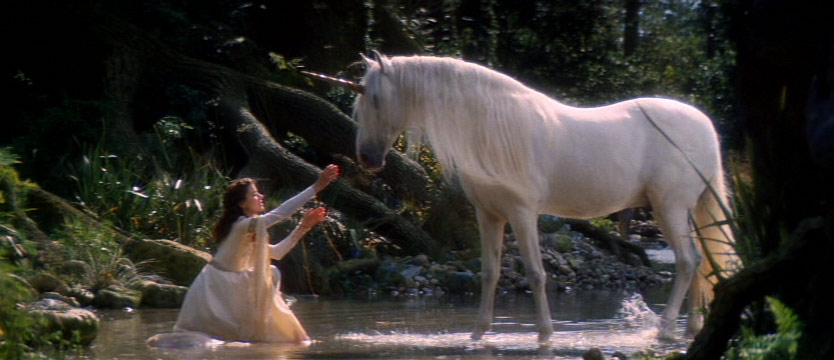
(Picture shows Princess Lily and unicorn, from Ridley Scott’s 1985 cult fantasy film Legend)

Cherry-Rose and Uneke-Hope: Double Names for Girls from the Bonds Baby Search

02 Monday Apr 2012

Posted by A.O. in Baby Contests

≈ 3 Comments

Tags

double names, flower names, locational names, nature names, triple names

I would have loved to have listed all the girls’ double-names, but they went for pages – the Something-Roses alone ran into the dozens. So I have limited myself to those which made the most impact on me.

Aiko-Jayne

Aleah-Persia

Alisha-Savannah

Annabelle-Ang

Asher-Marcelle

Bella-Ching

Bryndee-Bella (there is a mountain range called the Brindabellas)

Caprice-Elouise

Carlay-Diaz

Cereniti-Lee

Cherish-Bonnique’

Cherry-Rose (pictured is the rose called the cherry rose)

Daisha-Lee

Denyella-Sophia

Destenee-Rose

Elexis-A’vril

Ellie-Peach

Esthershoel

Imarni-Rose

Indigo-Saige

Ivory-Rose

Jaylah-Mae

Jazzmine-Tira

Jypzee-Lee

Kailyn-Stevie

Kimyah-Lee

Krisjanis

Kyarnah-Jane

Lahnee-Mia

Latalia-Star

Lily-Jagga

Maddison-Torika

Mayella

Memphis-Bella

Montana-Armour

Myami-Jade

Narla-May

Nevaeh-Mai

Odessa-Brigit

Parkah-Grace

Pipi-Grace

Rangimarie

Rita-Adele

Ruby-Lou

Sarita-Hazel

Scarlett-Rose

Shiah-Blue

Schuyler-Rae

Sienna-Jade-Lee (a triple name!)

Tilly-Rose

Tippi-Lee

Uneke-Hope

Violet-Amaya

Zaphire-Lee

Thank you to Sophia for suggesting some of these names

Girls Names From the Top 100 of the 1900s

25 Sunday Mar 2012

Posted by A.O. in Name Themes and Lists

≈ 18 Comments

Tags

Anglo-Saxon names, Arabic names, classic names, famous namesakes, fictional namesakes, flower names, gemstone names, germanic names, Google, honouring, Italian names, K.M. Sheard, Latin names, locational names, mythological names, name data, name history, name meaning, name popularity, name trends, nature names, nicknames, Old English names, Old French names, Old Norse names, plant names, popular names, retro names, royal names, saints names, Shakespearean names, Victorian names

There have been many Googled requests for names from the 1900s, so this is my selection of ten girls names that were Top 100 in the 1900s which I think are usable today. I’ve tried to get a balance between names which are currently rising in popularity, and those which haven’t charted for many decades. All the data comes from New South Wales – the only state which has made public its data kept since Federation.

Amelia

A variant of Amalia, the Latinised form of Germanic Amala, a pet form of any name beginning with Amal-, and meaning “work”. This was one of the many names introduced to Britain by the Hanoverians; part of its easy acceptance was that it was considered a variant of the unrelated Emilia, and indeed Princess Amelia of Hanover was called Emily in everyday life. In the 1900s, Amelia was #95, and it had left the Top 100 by the following decade. It has been on the rankings almost continuously, dropping out in the 1940s and ’50s. Rejoining in the the 1960s, it grew steadily in popularity, until it was in the Top 100 by the 1990s. It’s currently stable at #10. Famous Australians named Amelia include Amelia Best, who was one of the first women elected to the Tasmanian House of Assembly, and opera singer Amelia Farrugia. Amelia was under-appreciated for many years, but is now extremely popular, with a host of nicknames such as Amy, Melia, Millie, Mia and Lia. Pretty and unpretentious, it has a ready-to-wear quality that makes it a handy choice.

Bessie

A short form of the name Elizabeth, in use since the 16th century. The name Bessie was #78 in the 1900s, and grew in popularity during the 1910s. It took a nosedive in the 1920s, left the Top 100, and hasn’t been in the rankings since the 1940s. Famous Australians named Bessie include portrait painter Bessie Davidson, who was celebrated in France in the pre-war era, and Bessie Guthrie, a designer of the 1920s who was an ardent feminist and early proponent of solar energy and ecological balance. She founded the Viking publishing house, and in later life was a crusader for the rights of abused children, before finally, in old age, being able to join a movement of feminist political protest she had waited all her life for. Bessie is such a sweet yet spunky name for a girl, and one I saw recently mentioned as having been given to a baby in 2011. I think it’s one which is ready to shed its “old lady” image and be used once more.

Edith

Based on the Old English name Eadgyð, meaning “rich war”, this was popular amongst Anglo-Saxon royalty; Saint Edith was the illegitimate daughter of King Edgar the Peaceful, and Edith of Wessex was the wife of King Edward the Confessor. Unlike many Anglo-Saxon names, it remained in use after the Norman Conquest, and didn’t fall out of favour until the 16th century. It was revived in the 19th century by the Victorians. The most famous Australian with this name was Edith Cowan, the social campaigner and first woman elected to parliament; she was part of the group which helped give women the vote in 1899 (her picture is now on the $50 note). The name Edith was #16 in the 1900s, and remained Top 100 until the 1940s, leaving the rankings in the 1970s. Very recently, it has had a revival, and is now increasing in popularity in the 500s. Strong, patriotic, and still aristocratic-sounding, it’s fast becoming a fashionable favourite. The short form Edie seems to be even more popular.

Ida

This name was introduced to England by the Normans; it may come from the Old Norse word for “work”, or be related to the Norse goddess of youth, Iðunn. Folklorist Jakob Grimm theorised that her name may come from idis, a divine female being in Germanic mythology, meaning “respected woman”. Ida died out in the Middle Ages, but was revived in the 19th century. This may have been partly inspired by Alfred, Lord Tennyson’s poem on female education, The Princess, where the heroine is named Ida. Gilbert and Sullivan parodied the poem in their operetta, Princess Ida. Tennyson probably took the name from Mount Ida; there is one in Crete and one near ancient Troy, and both were sacred to the Mother Goddess Rhea or Cybele. According to K.M. Sheard, the name is from the Greek for “woodland”. Ida was #42 in the 1900s and fell rapidly, leaving the Top 100 in the 1920s. It hasn’t been on the charts since the 1950s. Ida Standley was a pioneering schoolteacher in Central Australia. Ida is similar to popular names such as Ivy, Eva and Ava; it can also be used as a form of the Irish name Ita.

Leila

This variant of the Arabic name Layla was introduced to English-speakers by Lord Byron, who used it in his poems The Giaour and Don Juan. In Don Juan, Leila is a little Turkish girl rescued and adopted by the hero; in The Giaour, Leila is a member of a Turkish harem who falls in love with a non-Muslim, and is punished for adultery by being sent to a watery grave (vampires also get a mention). As such, it seems exotic, romantic, Gothic, and literary. Leila was barely Top 100 in the 1900s at #99, but has remained in continuous use, although very rare in the 1950s and ’60s. It’s never managed to join the Top 100 since, but has been climbing sharply since the 1990s, and is currently only just outside it in the very low 100s. Famous Leilas include Leila Hayes, who was in soap opera Sons and Daughters, and Leila Mackinnon, Channel 9 journalist. Leila fits perfectly with current related favourites Layla and Lila, and I wouldn’t be surprised if it was back in the Top 100 soon. Pronunciations vary, and as far as I’m aware, LAY-luh, LY-la and LEE-la are all considered correct.

Louisa

A Latinate feminine form of Louis, this was another name introduced to Britain in the 18th century by the Hanoverian royal family. The most famous woman named Louisa from Australian history is undoubtedly Louisa Lawson, the mother of national poet, Henry Lawson. A poet and publisher in her own right, Louisa was also a leading feminist who was called The Mother of Suffrage in New South Wales, and helped bring women in her state the vote. It is generally believed that she is the prototype for all the kind, capable, and hard-working country women who appear in Henry Lawson’s stories. Louisa manages to be a classic, remaining constantly on the charts, while being underused, for it has not been Top 100 since the 1900s, when it was #79. It’s currently around the #500 mark. You really can’t go wrong with Louisa – it’s never been in vogue, yet never been out of style either, so it doesn’t sound old-fashioned. It’s pretty and sensible, and honours one of Australia’s heroines. Nicknames can range from brisk Lou, to cutesy Lulu, and anything in between.

Maud

This is another form of Matilda. The Old Germanic Mahtild became Maheud in Old French, and Anglicised as Maud. Matilda was thus the Latin and written form of the name, while Maud was the way the name was said aloud. For example, Matilda of England, the first female ruler of the English kingdom (her reign was brief), was known as Maud in everyday life. Although the name may remind you of the word maudlin, that is actually from the name Madeline (its original pronunciation). Maud became rare at the end of the Middle Ages, but was another old name which Alfred, Lord Tennyson helped revive, due to his tragic and enigmatic love poem, Maud. Maud McCarthy was a nurse who served with distinction during the Boer War and World War I, receiving several medals. Maud was #94 in the 1900s, and slipped off the Top 100 the following decade. It hasn’t charted since the 1930s. It’s a genuine antique, and if you are determined on Maddie as a pet name, Maud would make a far more distinguished “proper name” than Madison.

Myrtle

Myrtles are graceful, fragrant flowering evergreen bushes, which in ancient times were sacred to Aphrodite or Venus, the goddess of love. Perhaps because of this, they are traditionally included in wedding bouquets; they are always used at weddings amongst the British royal family, a custom began by Queen Victoria. Myrtle has been used as a name since the 19th century, when other flower and plant names became the fashion. A famous person with this name is Myrtle White, who wrote books describing her life on a remote outback station. Myrtle was #47 in the 1900s, and had left the Top 100 by the 1930s. It hasn’t charted since the 1950s. I added Myrtle to the list, not only because we have myrtle species native to Australia, but because Baz Luhrman’s remake of The Great Gatsby will be released soon. There is a character named Myrtle in it, and this may give the name a new image than that of Moaning Myrtle from the Harry Potter books and films.

Pearl

Pearls are produced by molluscs such as oysters and mussels; they are essentially calcium carbonate or limestone in crystalline form. Ones occurring naturally in the wild are very rare, so that they are considered extremely valuable gemstones. Pearl became used as a name in the 19th century, when other gemstone names became fashionable. It probably also had religious connotations, because pearls are mentioned in the Bible, and Jesus compares the Kingdom of Heaven to “a pearl of great price”. Australia still has a significant pearling industry in Broome, Western Australia. A famous Australian with this name is Pearl Gibbs, an Aboriginal leader and activist who focused on women’s and children’s rights. Pearl was #87 in the 1900s, and left the Top 100 the following decade. It did not chart in the 1960s and ’70s, but staged a comeback in the 1980s, and has been climbing precipitously in recent years. It’s currently in the mid 200s, and this name from the sea still has plenty of lustre. It’s similar to the more popular Ruby, but seems more delicate and lady-like.

Sylvia

A variant of the Latin Silvia, meaning “of the woods”. The mother of the legendary Romulus and Remus was called Rhea Silvia (Rhea of the woods), because it was supposedly in the woods that she was seduced by the god Mars. Saint Silvia was the mother of Pope Gregory the Great, famous for her great piety; according to her portrait made during her lifetime, she was beautiful with large blue eyes. A common name in Italy, Silvia was introduced to England by Shakespeare, in his play The Two Gentlemen of Verona. Famous Australians with this name include Sylvia Harper, a tennis champion of the 1920s, and Sylvia Breamer, who was a Hollywood actress from the silent film era. Sylvia is a classic which has never left the charts. It was #58 in the 1900s, and didn’t leave the Top 100 until the 1950s. It hit its lowest point in the early 2000s, and is currently gently rising in the 500s. It’s lovely seeing this pretty name gaining in use; it almost seems like a nature name, because of its woodsy meaning and silvery bell-like sound.

(Photo used is of a bride in 1906; image is held by Culture Victoria)

Only Natural – Nature Names from the Bonds Baby Search

22 Thursday Mar 2012

Posted by A.O. in Baby Contests

≈ 3 Comments

Tags

animal names, astronomical names, Australian Aboriginal names, colour names, english names, flower names, food names, French names, fruit names, gemstone names, geographic names, nature names, plant names, season names, Thai names, tree names, vocabulary names, weather names

GIRLS

Acacia

Anise

Autumn

Azalea

Berry

Briar

Cedar

Cherry

Clover

Crystal

Cypress

Dahlia

Dawn

Dusty

Ember

Emerald

Honey

Indigo

Ivory

Jacaranda (this South American tree is so popular, it is often assumed to be native)

Jewel

Juniper

Mallee (a native tree; name of Australian Aboriginal origin)

Magenta

Misty

Ocean

Opal

Peaches

Pearl

Pepper

Rain

Raven

Saffron

Sage

Sapphire

Scarlet

Season

Soleil (French word for the sun)

Star

Sunshine

Swai (Thai word for the iridescent shark)

Tigerlily

Tulip

Winter


BOYS

Ash

Aspen

Baye

Bear

Bryne

Clay

Cove

Fin

Flint

Fox

Heath

Jarrah (a very tall and strong native tree; name of Australian Aboriginal origin)

Layke

Onyx

Reed

Reef

River

Rock

Rowan

Rye

Silvan

Sky

Storm

Sunny

Talon

Teal

Tiger

Tyde

Wolf

(Photo of Mother Cummings Peak Track, Tasmania from There’s Nothing Like Australia website).

Celebrity Baby News: Brett and Selina Clappis

22 Thursday Mar 2012

Posted by A.O. in Celebrity Baby News

≈ 1 Comment

Tags

celebrity baby news, flower names, Matilda Awards

Channel 10 reporter, Brett Clappis, and his wife Selina, welcomed their first child this week, and have named her Dahlia Marie.

Brett works for Network Ten Adelaide, and last year won a SA Media Award for his reports on the flooding of Lake Eyre. Selina (nee Whillas) worked for a Port Lincoln caravan park before her marriage. She and Brett were married in 2008.

The stylish flower name Dahlia won a Matilda Award on the blog last year, so I’m guessing many will approve of of the couple’s choice.

Girls Names From Stars and Constellations

11 Sunday Dec 2011

Posted by A.O. in Name Themes and Lists

≈ 32 Comments

Tags

Arabic names, Aramaic names, astronomical names, Biblical names, British Baby Names, celebrity baby names, famous namesakes, flower names, Greek names, Latin names, literary namesakes, locational names, mythological names, name history, name meaning, nature names, popular culture, popular names, Sanskrit names, Slavic names, Spanish names, surname names

Christmas is a time for stars – we put stars on our Christmas trees, sing about stars in carols, send cards with glittering stars on them, and cut gingerbread in the shape of stars. Elea at British Baby Names has a post on starry names up on her lovely Advent calendar; she also had a post on astronomical names back in October, which contains many star names. If you name your child after a star, you will want to show them “their” star when they get older, so I’ve given a few hints as to the best time to view the star from Australia; to learn more, two great resources are the Skynotes newsletter from the Melbourne Planetarium (includes video), and the Beginner’s Guide to the Night Sky at ABC Science. I normally do ten names per list, but because it’s the last set for the year I’ve done twelve – besides, stars naturally seem to go in groups of twelve, don’t they?

Alya

Alya is a common name for the yellow binary star Theta Serpentis in the constellation Serpens (“The Serpent”). Its name comes from the Arabic word alyah, meaning “fat tail of the sheep”. Arab astronomers saw this part of the sky as a pasture, with Alya representing a sheep’s tail. The Arabs have cooked with the rich fat from a sheep’s tail for centuries, and it is still considered a delicious comfort food. It might seem like calling your daughter Lard, but it fits in with the popular Aaliyah variants, while being simpler to pronounce and spell. You can always tell people the baby is named after a star that represents a sheep gambolling in a field; however vegetarians may not be able to get past the fact that the Arabs were looking up at the star and thinking, “Yum yum yum”. Serpens is visible in Australia in the middle of winter, and its stars are not easy to see.

Andromeda

Andromeda is a constellation named after a character from Greek mythology. This princess was chained naked to a rock for a sea monster to gobble, thanks to her rather stupid mother’s boasting of her beauty. The hero Perseus, on his way home from other heroic deeds, saw her in distress, and did the traditional hero’s rescue-and-marry-damsel manoeuvre. An awkward detail was that Andromeda was already engaged to her uncle, but Perseus turned him into stone, which got rid of him nicely. The name is pronounced an-DROHM-eh-da, and is said to mean “to think as a man” in Greek, interpreted as meaning to be as intelligent or brave as a man – which sounds a bit sexist, but the story isn’t exactly a feminist fairytale, and it’s clearly meant to be complimentary. Andromeda is a stunning name which can easily be shortened to Andie, Annie, Meda, Mia or Romy; it will remind people of the Andromeda Galaxy, which you can see best in November from Australia, along with the constellation.

Capella

Capella is a common name for the yellow star Alpha Aurigae, the brightest in the constellation Auriga (“The Charioteer”). It means “little she-goat” in Latin, and represents the divine goat Amalthea from Roman mythology. Amalthea was the foster-mother of the god Jupiter, and provided him with milk. When Jupiter broke off one of her horns, it became the ‘”horn of plenty”, which provided its owner with whatever food they desired. For the Boorong people of Victoria, this star was Purra, a kangaroo who is chased and killed by the twins in the constellation of Gemini; the tracks of Purra form the bed of the Wimmera River. Capella is a small town in central Queensland named after the star, so it’s a surprisingly Australian choice as a star name. It’s a fresh twist on Capri or Caprice, with the popular -ella ending. You can see Capella on the northern horizon during summer in Australia, and it’s bright enough to be clearly visible.

Carina

Carina is a constellation of the southern hemisphere; its name is Latin for “keel”, and it represents part of the ship, the Argo, sailed by Jason and the Argonauts in Greek legend. The most prominent star in the constellation is Canopus, the brightest star of southern skies, clearly visible and high in the sky. If you live in the far south of Australia, Canopus will never set. The Bibbulum people of south-western Australia saw Canopus as their ancestor Waa Wahn, the trickster crow. The Maoris called it Atutahi, or “Stand Alone”, because of its brightness. Carina also has meteor showers which peak around Australia Day, and contains the Diamond Cross, sister to the Southern Cross. Considering that the winged keel on Australia II is said to have won us the America’s Cup in 1983, Carina adds up to being a patriotic star name (and suitable for boaties). As Carina is also a name related to either Cara or Katherine, it has the added advantage of sounding like a “regular name”.

Gemma

Gemma is a common name for the binary star Alpha Coronae Borealis, the brightest in the constellation Corona Borealis (“The Northern Crown”). In Greek mythology, Corona Borealis represents a crown worn by Ariadne when she married the wine god Dionysus; Gemma is Latin for “jewel”, so it’s “the jewel in the crown”. Australian Aborigines called this constellation The Boomerang, because of its shape (being in the southern hemisphere, we see the constellation upside-down). Gemma is a popular name in Australia, and the star association helps give it another layer of meaning, while also showing that you don’t need to have a strange or rare name to be named after a star. The constellation is best viewed in winter from Australia, and its difficult to see without practice.

Lucy

In the constellation Centaurus (“The Centaur”) is a tiny white dwarf star, smaller than the Earth, with the boring name of BPM 37093. Its carbon atoms are believed to have formed a crystalline structure, and because diamonds are also carbon arranged in crystalline formation, astronomers have nicknamed this star Lucy – as in Lucy in the Sky with Diamonds. It’s a fun star and song reference for a very popular name, and as you probably know, Lucy means “light”, which seems apt for a star. Because of its size, you can only see Lucy with a telescope; however the constellation Centaurus is the most magnificent in the southern hemisphere, with two of the brightest stars, Alpha and Beta Centauri. You can see a great portion of the Milky Way in Centaurus, and on a moonless autumn night, it will be easy enough to point at Lucy’s general location. Does it matter if it cannot be seen? The Little Prince told us that what is essential is invisible to the eye …

Lyra

Lyra is a small constellation whose name is Greek for “lyre”. It is associated with the myth of Orpheus, a legendary musician, poet and prophet who is best known for his descent into the Underworld in search of his wife, Eurydice. According to some accounts, he died being ripped apart by savage Bacchantes, the female worshippers of the god Dionysus; the Muses gave him a proper burial, and he was finally reunited with his beloved. The Muses took his lyre to heaven and placed it amongst the stars in his honour. In Australia, you can see Lyra low in the northern sky during winter. The name has become well known since Lyra Belacqua is the young heroine of Philip Pullman’s His Dark Materials Trilogy. English model Sophie Dahl named her daughter Lyra in May this year.

Maia

Maia is the common name for 20 Tauri, a blue giant in the constellation Taurus, and the fourth-brightest star in the Pleiades cluster. In Greek mythology, the Pleiades were seven beautiful nymphs who were sisters. They were pursued by the hunter Orion, and Zeus changed them first into doves, and then into stars – where they are still chased by the constellation Orion. The Pleiades are often called the Seven Sisters, and you can see them clearly in summer from Australia. The Aborigines have several legends about the Pleiades, and one involves seven sisters being pursued by a man, just like the Greek myth. Maia was the eldest of the Pleiades, and the mother of the god Hermes. The meaning of the name is uncertain; it may be a respectful title for a mature lady. Maia the star appears as a character in Mary Poppins by P.L. Travers – an Australian writer who clearly loved stars, because the Mary Poppins books are filled with them. Maia is said like the popular Maya (MY-ah), but seems more elegant and literary.

Mimosa

Mimosa is a common name for the yellow binary star Beta Crucis, the second-brightest in the constellation Crux (“Cross”). Crux is the smallest of the constellations, but very significant in Australia, as it is our dear Southern Cross, represented on the national flag as well as the Eureka flag (Mimosa is the left-hand arm of the Cross). Various Aboriginal peoples saw the Cross as an eagle’s footprint, a stingray, a possum in a tree, or two brothers cooking a fish on their campfire. The Aborigines of Eastern Australia called it Mirrabooka; Mirrabooka was a kind and clever man who was placed in the sky by the creator Biami so he could watch over the earth. Because the Southern Cross is always visible here, Mirrabooka never leaves us. The Maoris call it The Anchor; it anchors the Milky Way. The star Mimosa received its name because of its colour; the mimosa is another name for the silver wattle. The name is from the Greek for “mimic”. It’s an extravagant name that’s very patriotic; you could use Mim, Mimi, Mia or Mo as nicknames.

Mira

Mira is the common name for Omicron Ceti, the most notable star in the constellation Cetus. It’s a binary star consisting of a red giant and a white dwarf; the closest symbiotic pair of stars to the Sun. Mira is a variable star; like other red giants, its surface oscillates so that its brightness increases and decreases. Mira was the first variable star ever observed in modern times, and so it gained its name, for Mira means “wonderful, astonishing” in Latin, and is said MEE-rah. The constellation Cetus depicts the sea monster that was going to eat Andromeda: for some reason it has also been immortalised in the stars, and placed worrying close to its intended victim. It’s a large constellation, but not very bright or easy to see; it’s best viewed in Australia in November. At its brightest, you can see Mira with the naked eye; at its dimmest, you will need powerful binoculars to view it. Mira is also a Sanskrit name meaning “ocean”, and a Slavic name possibly meaning “peace”.

Talitha

Talitha is one of the common names for Iota Ursae Majoris, a yellow and purple star system in the constellation Ursa Major consisting of two binary stars orbiting around each other. The name is Arabic, and means “the third leap”, referring to a gazelle jumping about, which is how Arab astronomers saw this portion of the sky. Talitha is also the Aramaic for “little girl”, and is taken from the New Testament when Jesus raises a child from the dead by saying Talitha cumi (“Little girl, get up”). Talitha is pretty, and fits in with popular names like Talia and Taia; it’s pronounced TAH-lith-ah. Ursa Major, or the Great Bear, is one of the best known and loved constellations of the northern hemisphere, but in Australia it can only be viewed in April/May, and is so low on the northern horizon we see only part of it; we cannot see Talitha at all.

Vega

Vega is the common name for Alpha Lyrae, the brightest star in the constellation Lyra, and fifth-brightest star in the sky. The name is from Arabic, and means “falling” or “landing”, referring to the constellation Arab astronomers called The Alighting Vulture. Lyra was seen as a descending vulture; an idea dating back to ancient Egypt and ancient India. Even when the Greeks said it was a lyre, it was still often pictured as a vulture or eagle holding the instrument in its talons. The Boorong people saw Vega as a Mallee Fowl, and knew that once the star disappeared in October, it was time to collect that bird’s eggs. Vega is also a Spanish surname meaning “meadow-dweller”; it’s familiar from the Spanish playwright Lope de Vega, and folk singer Suzanne Vega. Vega is a glamorous-sounding name that’s strongly associated with its star. Once you learn to find Lyra, it will be easy to spot Vega because of its luminosity.

Girls Names from the Top 100 of the 1930s

19 Sunday Jun 2011

Posted by A.O. in Name Themes and Lists

≈ 37 Comments

Tags

Anglo-Saxon names, Biblical names, celebrity baby names, Christmas names, classic names, english names, European name popularity, famous namesakes, fictional namesakes, flower names, French names, Greek names, honouring, Italian names, Latin names, locational names, middle names, military events, mythological names, name history, name meaning, name popularity, name trends, names from movies, names from songs, nature names, nicknames, plant names, popular names, retro names, Roman names, royal names, saints names, Scottish names, Shakespearean names, Tatar names, unisex names, virtue names, vocabulary names

This blog post was first published on June 19 2011, and revised and updated on June 12 2015.

Alma
May be derived from the Latin almus, meaning “nourishing” – an epithet given to several Roman goddesses, including Ceres. Alma mater, meaning “nurturing mother”, is a Latin term often used to refer to one’s college or university: it was originally a title given to mother goddesses, and later to the Virgin Mary. The obscure 4th century Romano-British saint Alma Pompea, married to the semi-legendary King Hoel of Brittany, is an early example of the name. The name was given a boost after being used in Sir Edmund Spenser’s 1590 poem, The Faerie Queen; he seems to have been influenced by the Renaissance Italian word alma, meaning “soul”. The name became popular in the 19th century, after the Crimean War began with the Battle of Alma, when Anglo-French forces defeated the Russians near the River Alma – the river’s name is from a Tatar word meaning “wild apple”. After this date, babies of both sexes (but mostly girls) were named Alma in honour of the military victory. Alma was #24 in the 1900s, and #97 in the 1930s, leaving the Top 100 the following decade, and the charts in the 1960s. Alma made a mild comeback in 2011, and seems very contemporary, as it has been used in Brokeback Mountain and The Hunger Games. Already popular in Europe, Alma would make an interesting alternative to names such as Amelia, Anna, or Emma.

Audrey
Pet form of the Anglo-Saxon name Etheldreda, meaning “noble strength”; it was the name of a 7th century English princess and saint whose feast day is June 23. It became less common after the Middle Ages, because St Audrey Day Fairs sold low-quality necklaces that were disparagingly called tawdries – which is where we get the word for something cheap and tacky from. Audrey was revived in the 19th century when the Victorians rediscovered many Anglo-Saxon names. The name was already familiar, as Audrey is the simple but honest country girl in Shakespeare’s As You Like It. The Victorians were also in the middle of a Shakespeare revival, so Audrey was a dead cert for a comeback. Audrey was #156 in the 1900s, and peaked in the 1920s at #32. The name was #36 in the 1930s, but plummeted so that it was off the Top 100 by the following decade. It fell to a low of 0 in the 1980s, but climbed after the death of Audrey Hepburn until it reached the Top 100 again in 2008. Once tawdry Audrey now seems charming and stylish, and is currently #44 and climbing.

Elsie
Often said to be a pet form of Elizabeth, but technically a pet form of Elspeth, the Scottish form of the name, and was originally Elspie. The name Elsie can be found in songs and poems dating to the 17th century, and became a 19th century favourite. Elsie was #7 in the 1900s, #59 in the 1930s, and left the Top 100 in the 1940s. Elsie left the charts in the 1970s, but returned in the early 2000s at #731. It joined the Top 100 in 2013 at #91, and last year rose 26 places to #65 – an impressive performance. Sweet and unpretentious, Elsie is very much back in the game.

Hazel
Named for the hedgerow tree or shrub which produces edible nuts; the Celts equated hazelnuts with wisdom and poetic inspiration, and the Druids made staffs from hazel branches. It was considered to be one of the trees belonging to the fairies, and folk tales tell of its ability to protect from evil. Hazel has been used as a personal name since the 17th century, mostly for girls, and became popular in the 19th century when plant names were fashionable. Hazel was #45 in the 1900s, and peaked in the 1910s at #18; by the 1930s it was #55. Hazel left the Top 100 in the 1940s, and the charts by the 1970s, making a return in the late 2000s at #477, after Julia Roberts named her daughter Hazel. Last year Hazel had an outstanding debut as the fastest-rising name of 2014, rising #63 places to #88. One factor must surely be the romantic film The Fault in Our Stars, with its heartbreaking heroine Hazel Lancaster, although there have also been Hazels in the Heroes of Olympus series, and Gossip Girl.

Iris
Greek personification of the rainbow who served as messenger to the gods, and linked them to humanity. The name literally means “rainbow”, which is where the colourful iris flower got its name from – and the colourful irises in our eyes. Irises were used in the Middle Ages as a symbol of monarchy, as the fleur-de-lis pattern depicts. Religious pictures from the medieval period show the Virgin Mary holding an iris to symbolise purity and chastity. Filled with meaning and associations, the name was used by the 19th century British aristocracy for both females and males (because the Greeks called the iris flower a “hyacinth”, and Hyacinth was a male name), but quickly became used by all classes, and nearly always for girls. Iris was #62 in the 1900s, and peaked in the 1910s at #31; it was #72 by the 1930s. Iris left the Top 100 in the 1940s, and left the charts in the 1970s, although it returned in the 1980s at #748. Off the charts in the 1990s, Iris came back in the early 2000s at #551, and is now around the mid-200s and apparently stable. Almost always on the charts, Iris manages to be a “normal” name that is still underused. Hip and artistic, it has slightly dark or even punk undertones. It’s a floral name with a bit of bite.

Josephine
Anglicised form of Joséphine, a pet form of Joséphe, a French feminine form of Joseph; by the 19th century Joséphine had become the standard form of the name. It has been used by several of the royal houses of Europe, and is famous as the first wife of Napoleon Bonaparte, and thus the first Empress of the French. Joséphine was born Marie Joséphe, so it was the pet form of her middle name. Classic Josephine has always been on the charts. It was #86 in the 1900s, peaked in the 1910s at #76, and by the 1930s was #78. It left the Top 100 in the 1940s, and sunk to its lowest level in 2011 at #199, so it has never been out of the 200s. In 2012 it made an appearance again in the Top 100 at #93 after the birth of Princess Josephine, the daughter of Australian-born Princess Mary of Denmark, but has since stabilised into its usual place around the mid-100s. Josephine is a solid stayer with royal blood whose nicknames range from the sensible Jo to the cute Josie to the tomboy Joey to the froufrou Fifi to the cool Joss.

Joy
Refers to the emotion of extreme happiness and gladness. It was originally a Puritan virtue name dating from the 16th century, referring to rejoicing for the salvation of God – perhaps most famous from the hymn, Joy to the World, now often used as a Christmas carol. In fact, joy and Christmas have become so entwined that you could even see Joy as a name suitable for a baby born around late December. However, the name Joy has become secularised, and often linked to the joyful experience of welcoming a child into the world: babies have even been called “bundles of joy”. Joy entered the charts in the 1910s at #205, and was in the Top 100 by the following decade. It peaked in the 1930s and ’40s at #60, and left the Top 100 in the 1960s. Joy reached its lowest point in the 1990s at #802, but then increased slightly in popularity, and was stable in the 500s for some time. Its current position is not known for sure, but is in at least occasional use. Quite common in the middle position, Joy is a strong, simple name with a beautiful meaning, and the current trend for virtue names mean that it would be refreshing to see it up front.

Lillian
Most likely a pet form of Elizabeth dating to the Middle Ages: there is a medieval Scottish ballad about a lady named Lillian. The name became greatly more popular in the 19th century, to the point where it could be seen as another Victorian revival of a medieval name, and may have been understood as an elaboration of Lily, which also became fashionable in the 19th century as a flower name. Lillian is a classic name which has never left the charts. It was #35 in the 1900s, reached #86 by the 1930s, and left the Top 100 in the 1940s. It reached its lowest point in the 1970s at #562, and then climbed steeply, following in the footsteps of Lily, until it reached the Top 100 again in 2008 at #81. It is currently #86, so its position is stable. However, the high number of Lilys and Lillys (not to mention the Laylas and Lolas) mean that lovely Lillian may feel almost too on trend for some.

Marie
French form of Maria: in France it has sometimes used for males, especially as a middle name, but in English-speaking countries is almost always feminine. The name often reminds people of Queen Marie Antoinette, whose first two baptismal names were Maria Antonia – she was Austrian by birth. In the Middle Ages, Marie was commonly used in England, and predates the use of Mary. The medieval poet Marie de France lived and worked in England, possibly at the court of King Henry II – it is even thought that she may have been Henry’s own half-sister. The traditional English pronunciation of the name was MAH-ree (still used in the 20th century), but it is now usually said muh-REE. A name never out of common use for centuries, Marie was #71 in the 1900s, and peaked in the 1930s at #11 – perhaps Irving Berling’s hit song Marie, sung by Rudy Vallee, was an influence on its success at this time. Marie left the Top 100 in the 1960s, and fell off the charts in 2011. It is now only in occasional use, although a common middle name. Marie is still popular in Europe, and this is a pretty, traditional name that still seems very wearable.

Olive
English form of the Roman name Oliva, which refers to both the olive tree and its fruit. There is a legendary Italian martyr called Saint Oliva, known as Blessed Olive. The Crusaders introduced the name Olive to England in the 12th century; returning from the Holy Land, they often gave their children names of Biblical import in honour of their religious duty. Olives play a major role in the Bible, from the dove bringing an olive branch to Noah after the Flood, to Christ ascending to Heaven from the Mount of Olives. It was a name used for both males and females, and in fact I have seen a baby boy named Olive in the past few years – but overall Olive has been more common for girls. Olive became popular in the 19th century, along with other plant names. Olive was #26 in the 1900s, and was #73 by the 1930s. It left the Top 100 in the 1940s, and was off the charts by the 1960s. It returned in the late 2000s, after Australian actress Isla Fisher chose the name Olive for her eldest daughter. After a smooth rise, Olive joined the Top 100 in 2012, debuting at #94. It is currently #76, so rising sedately rather than steeply. Buoyed by the success of Olivia and Oliver, and with a V in the middle like other popular names, Olive should continue to do well.

POLL RESULTS
People’s favourite names were Hazel, Iris and Josephine, and their least favourites were Joy, Marie and Alma.

(Painting is Moira Madden, later Moira Hallenstein by Arthur Challen (1937); from the State Library of Victoria.

← Older posts
Newer posts →

Enter your email address to follow this blog

Categories

Archives

Recent Comments

A.O.'s avatarwaltzingmorethanmati… on Zarah Zaynab and Wolfgang…
Madelyn's avatarMadelyn on Zarah Zaynab and Wolfgang…
JD's avatardrperegrine on Can Phoebe Complete This …
A.O.'s avatarwaltzingmorethanmati… on Rua and Rhoa
redrover23's avatarredrover23 on Rua and Rhoa

Blogroll

  • Appellation Mountain
  • Baby Name Pondering
  • Babynamelover's Blog
  • British Baby Names
  • Clare's Name News
  • For Real Baby Names
  • Geek Baby Names
  • Name Candy
  • Nameberry
  • Nancy's Baby Names
  • Ren's Baby Name Blog
  • Sancta Nomina
  • Swistle: Baby Names
  • The Art of Naming
  • The Baby Name Wizard
  • The Beauty of Names
  • Tulip By Any Name

RSS Feed

  • RSS - Posts

RSS Posts

  • Celebrity Baby News: Melanie Vallejo and Matt Kingston
  • Names from the TV Show “Cleverman”
  • Can Phoebe Complete This Sibset?
  • Zarah Zaynab and Wolfgang Winter
  • Baby, How Did You Get That Name?
  • Celebrity Baby News: Media Babies
  • Celebrity Baby News: Adelaide Crows Babies
  • Celebrity Baby News: Chris and Rebecca Judd
  • Names at Work: Name News From the World of Business and Employment
  • Celebrity Baby News: Sporting Round Up

Currently Popular

  • Celebrity Baby News: Alisa Camplin and Oliver Warner
  • Rare Boys Names From the 1950s
  • Sad Celebrity Baby News (contents may cause distress)
  • Celebrity Baby News: Jacinta Allan and Yorick Piper
  • Celebrity Baby News: Nicki Gemmell and Andrew Sholl

Tags

celebrity baby names celebrity sibsets english names famous namesakes fictional namesakes honouring locational names middle names name combinations name history name meaning name popularity name trends nicknames popular names saints names sibsets surname names twin sets unisex names

Blog at WordPress.com.

Privacy & Cookies: This site uses cookies. By continuing to use this website, you agree to their use.
To find out more, including how to control cookies, see here: Cookie Policy
  • Subscribe Subscribed
    • Waltzing More Than Matilda
    • Join 517 other subscribers
    • Already have a WordPress.com account? Log in now.
    • Waltzing More Than Matilda
    • Subscribe Subscribed
    • Sign up
    • Log in
    • Report this content
    • View site in Reader
    • Manage subscriptions
    • Collapse this bar
 

Loading Comments...