• About
  • Best Baby Names
  • Celebrity Baby Names
  • Celebrity Baby Names – Current
  • Celebrity Baby Names – Past
  • Featured Boys Names
  • Featured Girls Names
  • Featured Unisex Names
  • Links to Name Data
  • Waltzing on the Web

Waltzing More Than Matilda

~ Names with an Australian Bias of Democratic Temper

Waltzing More Than Matilda

Tag Archives: fictional namesakes

Names Spotted at Home and Abroad (Winter Edition)

04 Tuesday Sep 2012

Posted by A.O. in Names Spotted at Home and Abroad

≈ 4 Comments

Tags

aristocratic names, Armenian names, band names, cartoon names, created names, english names, famous namesakes, fictional namesakes, Fijian names, French names, Greek names, hebrew names, honouring, Indian namaes, Japanese names, Latin names, locational name, middle names, modern names, mythological names, name history, name meaning, nicknames, Norman names, Norman-French names, polynesian names, popular culture, saints names, Sanskrit names, sibsets, Spanish names, stage names, surname names, Tibetan names

International Names

Kalden Edwards (Qld) – son of Korinna and Doug, brother of Indigo. Kalden is a traditional Tibetan name meaning “from the Golden Age”, and there are several men of this name from Tibetan history.

Savvas Stergos (NT) – son of Afrodite, brother to Maria, Irene and Michael. The Greek name Savvas is from the Hebrew for “old man” (I’m guessing intended as a title of respect), and there are several saints bearing this name.

Vaishvi Jani (NSW) – daughter of Monalisa. Vaishvi is an Indian name connected to the worship of the goddess Parvati and the god Vishnu. Interestingly, we had a baby called Monalisa mentioned this year, and now we have an adult one.

Xevi Campisi (Qld) – son of Rene Flanagan and Zac Campisi. His name is a common Spanish pet form of Xavier.

Surnames as-First Names

Abbeney Manning (Qld) – daughter of Luise. As far as I know, this aristocratic Norman surname is another form of Albany, based on French place names such as Aubigne, meaning “Albinius’ town”, with the Latin name Albinius meaning “white”. It was used by sci-fi writer Ursula Le Guin as a place name in her fictional universe depicted in The Hainish Cycle. Although historically more often male, today it does sound like an ornate version of Abby.

Kasabian Sentance (NSW) – son of Jodi. Kasabian are a British rock band; the band’s name is from Linda Kasabian, a member of the Charles Manson cult, famous as his getaway driver. She did not participate in any violence, was the star witness for the prosecution, and expressed great remorse for her part in the group’s crimes. Her married surname is a common Armenian one, meaning, “butcher”.

Vaokakala Nevaeh Mara Tere-Vave (NSW) – daughter of Glory Mara Tere and Tevita Vave. Her name is a Fijian surname, but I don’t know what it means. I had never seen Nevaeh on a real person before, but wasn’t surprised to see it used in the Pacific Islander community, as not only does it have strong Christian associations, but the pronunciation (nuh-VAY-uh) is vaguely Polynesian-sounding.

Wiley Huber (NSW) – son of Nicole and Tim. This English surname is from a common place name meaning “willow wood”. It’s the stage name of English rapper Richard Cowie; he took it from a cartoon character named Wiley Kat. It reminds me of the cartoon critter Wile E. Coyote.

Middle Names

I saw a number of babies with intriguing middle names in the papers over the winter.

Archie Elvis Lincard (Qld) – son of Gemma Hall and Chris Lincard.

Austin Kelly Beadle (Qld) – son of Leah and David. Austin’s middle name is in honour of his aunt – one of the handy things about unisex names is their versatility. His first name is after his American-born father’s cousin.

Jake Tiger Gow (Qld) – son of Wendi Leggatt and Bede Gow.

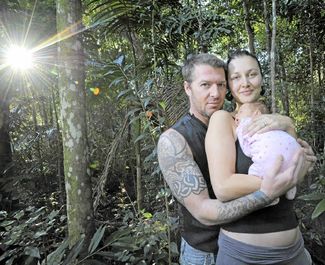
Lily Pepper Van Veen (NSW) – daughter of Xan and Adam [pictured]

Sabine Mirah Thiedeman (Qld) – daughter of Leanne and Nick. Her middle name is a form of the Arabic Amira, meaning “princess, female ruler”.

Adult Names

There was a story in the paper about a construction worker who was awarded more than $100 000 damages named Ark Tribe. His lawyer was named Stephen Dolphin.

The family has rebelled against the slightly brain-sapping entertainment of The Price is Right, and have opted for a noisy educational TV show before dinner instead. I think they became suspicious I had it on to do some clandestine name-spotting (I blame educational shows for making them brainy enough to figure this out!).

So no more names from TPIR – the only one I can remember is a forty-ish lady named Blondie who was indeed blonde-ish. Was this her legal name, or a nickname? I have no idea, as the host did not ask her. It seemed a bit of an odd name to give a child (it reminds me of Blondie Bumstead from the newspaper cartoons). On the other hand, it seemed a slightly odd nickname to retain into middle age as well (although Mrs Bumstead managed to pull it off, at least).

Names Seen in Real Life

We went to the speedway a few times over the winter – my fashion tip is to wear every jumper, jacket and coat you possess, and then cover yourself in gloves, hats and scarves until no skin is in contact with the icy air.

The speedway is the place to go if you want to hear some hardcore-type boys names – over the winter, I heard the names Ajax, Axel, Blade, Cruz, Diesel, Harlem, Hendrix, Hunter, Jagger, Jett, Nash, Taj, Tosh and Zayd. I remember someone saying on Twitter that you mostly hear boy’s names in public places, as they are the ones getting called or yelled at by anxious or petulant mamas, and it’s so true. The only girl I can remember getting yelled at the same place was a non-harmonious Harmony.

Two tots entered in a local kids photo contest were called Sai (boy) and Leto (girl). Sai is a Japanese name that can be translated as “genius”, and Leto was the mother of Apollo and Artemis in Greek mythology. Her name may mean “the hidden one”, or more prosaically, “woman, wife”.

Names of Babies Born to People I Know or Know Of:

Girls: Aoife, Beatrix, Cynthia, Jemima, Tallulah

Boys: Julian and Miles (twins), Emmett, Ronan

Can You Suggest Any Names Similar to These?

01 Saturday Sep 2012

Posted by A.O. in Naming Assistance

≈ 11 Comments

Tags

Australian Aboriginal names, celebrity baby names, choosing baby names, famous namesakes, fictional namesakes, Gone With The Wind, Hollywood names, modern names, name meaning, name popularity, name substitutes, nme combinations, popular names, sibsets, surname names, US name popularity

Jools and her husband are expecting a baby in a few weeks, and have elected not to find out the sex in advance. If the baby is a boy they are all set, having easily decided on a name. However, girls’ names seem a bit trickier. Jools would like something that isn’t too popular, but isn’t too different either.

Their list so far is:

  • Sc@rlett Elle
  • H@rlow Eve
  • Mill@ Rose

Jools and her husband already have a little boy named J@sper (he has a modern middle name that makes his name seem quite “cowboy cool”), and their surname starts with F and ends in N.

Jools would like to know what people think of the names they have come up with so far, and if there are any names similar to these that they might prefer.

~~~~~~~~~~

I think the names you’ve already picked are perfectly fine – they’re pretty, fashionable, modern names that are familiar to everyone from their Hollywood associations, but none of them are crazy popular as yet. They all seem okay with your surname, and I can imagine them as sisters to your son.

To me, Scarlett sounds best with your surname and the best match with J@sper, although for some reason Sc@rlett Elle doesn’t quite gel as a name combination – the two names seem to run into each other a little too much, maybe. I’d probably prefer the middle name to start with a consonant, such as May or Louise (just as examples). To me that sounds a bit crisper and more defined.

Milla is a lovely name, and the name combination you’ve chosen very attractive. However, if you were concerned about popularity, then Harlow is the least common of the names – although I’m pretty sure it’s scorching up the charts, and will be in the Top 100 within a few years.

Basically you could go with whichever of these you like best, but the fact you’re still looking for names suggests that you are not completely satisfied with any of them. You’ve still got a few weeks, so consider a wide range of names and step outside your comfort zone a bit. Then, if you don’t like any of them, you can go back to your original list with more confidence.

Here’s a few names to think about:

If you like Scarlett, you may like:

  • Bonnie – this is another name from Gone with the Wind; Bonnie was Scarlett and Rhett’s daughter. I think it sounds sweet and pretty, yet not frilly or sugary. It’s never been in the Top 100, but I think it will be there in a year or three.
  • Russet – it’s another surname that means “red”, and has the same T-ending as Scarlett, but it’s very rare and much more daring.
  • Sadie – to me this sounds like another “Southern belle” type name; it’s getting quite hip, but still isn’t popular at all. Like Scarlett was around 15 years ago.

If you like Harlow you may like:

  • Cleo – similar sound and references another famous woman known for her beauty. Like Harlow, it’s getting very fashionable, but not popular yet.
  • Meadow – this is another American-style name which is very underused in Australia. It may seem slightly out-there. Just like Harlow did a few years back.
  • Marlowe – this is the name of Sienna Miller’s new daughter, and it’s bound to become a “hot” name – just like Harlow did after Nicole Richie and Joel Madden chose it for their daughter.

If you like Milla you might like:

  • Millie – I really love this one as a match with your son’s name. It’s a cute name, and others must agree, as it climbed 90 places last year.
  • Milea – pronounced mi-LAY-uh, this name sounds European and sophisticated, just like Milla. Its origins are equally ambiguous.
  • Willa – a fashionable celebrity baby name just starting to chart in the US. It has an Aussie connection, because willa is an Aboriginal word for “woman”.

Wild Card Suggestions

  • Airlie
  • Avalon
  • Blythe
  • Charlize
  • Coco
  • Mika
  • Milana
  • Monroe
  • Tempest
  • Willow

Readers, which name do you like best that would fit with Jools’ requirements? And can you think of any other names in a similar style she might like?

NOTE: The baby’s name was Milla Harlow!


Famous Names: Sally and Malcolm

15 Wednesday Aug 2012

Posted by A.O. in Famous Names

≈ 4 Comments

Tags

english names, famous namesakes, fictional namesakes, hebrew names, Italian names, Latin names, name history, name meaning, name popularity, nicknames, royal names, Scottish names, Shakespearean names, vocabulary words

The 2012 Olympics came to an end on the weekend, and today our athletes came home, to be met by huge crowds at the airport, which included the Prime Minister and Leader of the Opposition. Although the London Olympics had many critics and doubters before they began, from the stunning Opening Ceremony onwards, all was forgotten as everyone agreed that London had done a bang-up job hosting the Summer Olympics.

Everything had gone smoothly, athletes were well taken care of, the historic capital looked grand and stately, the weather was good, and the wonderful volunteers ensured that, above all, it was a friendly and fun Olympics where people felt free to relax and enjoy themselves. No wonder that Rio has said that it watched and learned from London, as it prepares for its own hosting gig in 2016.

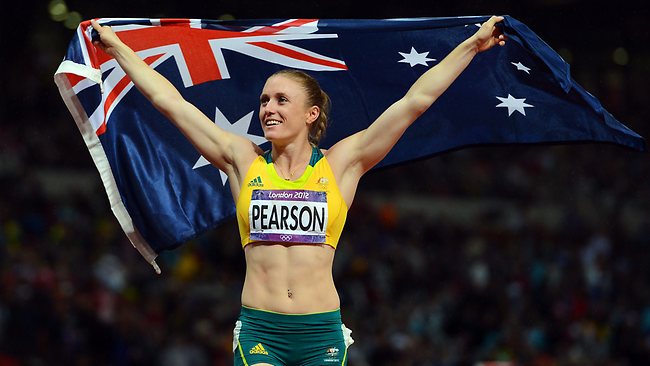
There were so many memorable moments from the Olympics, but from an Australian perspective, I am choosing two athletes who, for me, were the stand outs from our team. The first is hurdler Sally Pearson, simply because her race, which ended in a photo-finish, was nail-bitingly close. Nearly everyone I’ve spoken to has nominated Sally’s gold medal win as the most exciting of the Olympics. Sally not only set an Olympic record, she joined a select group of athletes who were world champions when they won at the Olympics, and is the first Australian woman to win Olympic gold in athletics since Cathy Freeman.

The other is sailor Malcolm Page, because our sailing team did so well at the Olympics, and it’s obvious their training regime really paid off. Malcolm is the first Australian sailor to win two gold medals at consecutive Olympic Games, and he was chosen as the Australian flag-bearer for the Closing Ceremony. Just as Sally was named the IAFF Female Athlete of the Year in 2011, Malcolm was inducted into the Australian Institute of Sport’s “Best of the Best”. Two sportspeople at the top of their game, and here’s a closer look at their names.

The name Sally is a pet form of Sarah, a Hebrew name meaning “princess”. It’s been used as an independent name since the 16th century, and seems to have been first used in the southern coastal areas of England. Since then, it has become a short form of almost any similar name, including the Italian male name Salvatore. It is also, by coincidence, an English vocabulary word, for sallies is an old word for “willow trees”, as in the W.B Yeats poem, Down by the Salley Gardens (the Latin for “willow” is Salix). In military terms, a sally is a sudden attack on an enemy, and we use this word to also mean to attack someone verbally in a witty way. To sally also means to rush off or venture out – very suitable for a sportswoman!

Like Jack, Sally is a name we are familiar with from dozens of cultural references. Sally has appeared in many popular songs, from the nursery rhyme Sally Goes Round the Sun, the traditional Sally in Our Alley, to the blues song Mustang Sally to the rock and roll Long Tall Sally. There is the traditional English fairground game, Aunt Sally, in which a ball is thrown to knock off a wooden woman’s head. We know many a fictional Sally, from wayward Sally Bowles in Cabaret, to Charlie Brown’s sister in the Peanuts cartoon, to the good-looking but annoying Sally Hayes in Catcher in the Rye, the Sally who was met by Harry in the romantic comedy, and the little sister of Dick and Jane in the vintage reading books.

Sally first entered the charts in the 1920s, and was Top 100 by the 1950s; it peaked in the 1970s at #53, and left the Top 100 in the 1990s. Currently it’s #492, and fell last year after a sharp rise in 2010. Sally is one of the most popular names Googled to reach my blog, and I can see the attraction – it’s a fresh, spunky little name that seems clean and wholesome, but not exactly goody-two-shoes. It’s girlish without being girly, and a fuss-free way to wear a princess name without sounding the slightest bit princessy.

Malcolm is the Anglicised form of the Scottish name Máel Coluim, meaning “devotee of Saint Columba”. Columba is a Latin name meaning “dove”. It was a common name amongst medieval royalty in Scotland, which has a long line of King Malcolms. The most well known is Malcolm III, for it is claimed that he is the historical person on which the character of Malcolm in Shakespeare’s Macbeth is based, and who becomes king of Scotland after Macbeth is killed. Although his second wife, Margaret, is recognised as a saint, King Malcolm does not seem to have been very religious.

Scottish-born Malcolm Young is famous in Australia as the brains behind rock band AC/DC, but although the name of his younger brother Angus is a popular favourite, Malcolm’s name has languished. Malcolm was #81 for the 1900s, and peaked in the 1950s at #52. It left the Top 100 in the 1980s, and hasn’t charted since 2009.

Part of the reason may be that Malcolm is a name well known in politics, which rarely seems to do a name any favours. Liberal Party Prime Minister Malcolm Fraser came to power in 1975, a time which saw a definite plummet in popularity for the name Malcolm. In recent times, Malcolm Turnbull has been the Liberal Party Leader of the Opposition, and is currently Shadow Minister for Communications and Broadband. He is known for being Australia’s wealthiest parliamentarian, and is the only sitting politician to make the BRW Rich List. Since he was elected in 2004, the name Malcolm has gone out of regular use altogether.

So although Scottish names for boys continue to be fashionable choices in Australia, the related name Callum, which is the Scottish form of Columba, has taken over from Malcolm – soaring in popularity during the 1980s as Malcolm sank. Is it purely coincidence that the 1980s was a decade in which Malcolm Fraser’s party suffered the worst defeat of a non-Labour party since Federation, and he was discovered in a confused condition in a seedy hotel in Memphis, wearing only a towel? I cannot help but feel neither of these things improved the prospects of the name Malcolm.

Names of Australian Female Olympic Medalists

12 Sunday Aug 2012

Posted by A.O. in Name Themes and Lists

≈ 11 Comments

Tags

American names, Appellation Mountain, astronomical names, Australian names, celebrity baby names, created names, english names, famous namesakes, fictional namesakes, flower names, folklore, French names, Hindi names, idioms, Indian names, Latin names, locational names, middle names, modern names, mythological names, name history, name meaning, name popularity, national symbols, Native American names, nature names, nicknames, plant names, portmanteau names, Roman names, Russian names, Sabine names, saints names, Sanskrit names, scandinavian names, Scottish names, surname names, unisex names, US name popularity, vocabulary names

Chantal (Meek)

Chantal Meek is originally from Britain, and won a bronze medal in 2008 for sprint canoeing. The name Chantal was originally given in honour of Saint Jane Frances de Chantal (her non-saint name was Jeanne-Françoise Frémiot, Baronne de Chantal). Jeanne-Françoise was of the nobility, and married a baron; she devoted herself to prayer and charity, and later in life founded a religious order. Not only kind and sensible, she was known for her great sense of humour. The place name Chantal is from Old Provençal cantal, meaning “stony”, but people often imagine it is from the French word chant, meaning “song”. Chantal was first used as a personal name in France in the 1920s, and was most popular there during the 1940s-60s. The name entered the US Top 100 in 1968, the same year Marie-Chantal Miller was born to American millionaire and socialite, Robert Warren Miller (Marie-Chantal later became Crown Princess of Greece). Chantal (shan-TAHL) has never charted in Australia, with the preference here being for the variant Chantelle (shan-TEL).

Clover (Maitland)

Clover Maitland has won gold twice for hockey, in 1996 and 2000. Although usually thought of as a nature name, Clover was originally from the surname. It was an occupational name given to an official mace-bearer (a mace was called a clavia), or to a timber-worker, with the origin being from the word cleave. This accounts for boys named Clover. The plant of this name plays a role in folklore, for it is said that to find a four-leafed clover is lucky. The shamrock is a clover variety which is one of the symbols of Ireland, and proudly displayed on Saint Patrick’s Day. The word clover ultimately goes back to a Proto-Indo-European word meaning “sticky” – quite apt, as white clover flowers make excellent honey. Clover is also used in farming and gardening to enrich the soil, and so good for stock to eat that we say someone is living in clover if their life is one of ease and prosperity. So many positive things attached to this fresh green plant – another one is that it contains the word love. Clo, Cloey, Clove and Lola could all be used as nicknames.

Maree (Fish)

Maree Fish is a hockey player who won gold at the 1988 Olympics. The name Maree is typically Australasian, and so little known elsewhere that Abby at Appellation Mountain even asked about it, as she was puzzled why so many baby girls in Australian birth announcements had Maree in their names. There are several possibilities. The original pronunciation of Maree was MAH-ree, so it could be an Anglicisation of the Scottish Màiri, which is a form of Mary, and can be pronounced the same way. On the other hand, MAH-ree is how the name Marie was pronounced in England until the early twentieth century, and is also a common Gaelic and Irish pronunciation of the name. There is a Loch Maree in the Scottish Highlands, named after Saint Maree – however, he was a man, and his name is the Anglicised form of Máel Ruba, which roughly means “red haired monk” (sometimes it’s Anglicised as Rufus). These days, Maree is usually pronounced muh-REE, as a variant spelling of Marie. Maree entered the charts in the 1920s and was Top 100 by the 1940s. It peaked in the 1960s at #62, and left the Top 100 the following decade. It hasn’t charted since 2009. Like Marie, it’s much more common as a middle name.

Nova (Peris-Kneebone)

Nova Peris began her sporting career in hockey, becoming the first Indigenous Australian to win an Olympic gold medal when the Australian team won at the 1996 Olympics. She then switched to athletics, and although she won gold twice at the Commonwealth Games as a runner, she never received another Olympic medal. The name Nova is from the Latin word for “new”, and the word nova is well known in astronomy to describe a nuclear explosion in a white dwarf star. This makes it another “star” name. Although a rare name here, it has been on the US Top 1000 since the 1880s, and last year returned at #882, after not being seen there since before World War II. It now seems very usable, with its fashionable O and V sounds – it fits right in with popular girls’ names such as Ava and Eva, and can also be seen as an unusual nature name. It may remind some Australians of the radio station, Nova FM, but I’m unsure whether that would bother anyone.

Rohanee (Cox)

Rohanee Cox is a basketball player with the national women’s team who won silver at the 2008 Olympics. She is the first Indigenous Australian to win an Olympic medal in basketball. She has been awarded many sporting honours, including NAIDOC Sportsperson of the Year in 2010. Rohanee, pronounced ro-HAH-nee, is an Indian girl’s name which is a variant of Rohane, based on Rohana, meaning “sandalwood”. Sandalwood trees are native to southern India, and incense made from the tree is used in Hindu ceremonies, while devotees wear a paste made from it on their bodies, so the name has spiritual connotations. Another person with the name is Rohanee Walters, the sister of actor Brandon Walters, who served as his stand-in during the making of Baz Luhrmann’s Australia. Like Ms Cox, Miss Walters is from Broome in Western Australia, and I think is young enough to have been named after local sports star Rohanee Cox – although I don’t know if that’s what happened.

Shirley (Strickland)

Shirley Strickland is one of our most famous athletes, gaining more Olympic medals than any other Australian woman in track and field. She won silver and two bronze at the 1948 London Olympics, gold and bronze at the 1952 Olympics, and two gold at the Melbourne Olympics in 1956. Shirley is a surname from a common English place name meaning “bright clearing”. It was a rare male name until Charlotte Brontë’s 1848 novel Shirley was published. In the story, the lively young heiress Shirley Keeldar has been given a boy’s name, because her parents had no son to pass the family name on to. The US Top 1000 shows Shirley as a unisex name from the 1880s onwards, with 1957 being the last year it appears as a male name. The name began steadily rising just before World War I, coinciding with the 1908 publication of L.M. Montgomery’s novel, Anne of Green Gables, with its imaginative red-haired heroine, Anne Shirley (in a later book, Anne calls her youngest son Shirley). In Australia, Shirley was in rare use in the 1900s, and skyrocketed in popularity to be #10 for the 1920s. It peaked in the 1930s at #3, and had left the Top 100 by the 1960s. It hasn’t charted since 2009.

Taryn (Woods)

Taryn Woods was a member of the women’s water polo team which won gold a the 2000 Sydney Olympics. Taryn is a name popularised by Hollywood matinee idol, Tyrone Power, and his second wife, Linda Christian. They gave the name to their second daughter in 1953, and the name Taryn first appears on the US Top 1000 in 1955. Her name is presumed to be a feminised form of the name Tyrone, which is the name of an Irish county. Taryn is found in ultra-ultra-rare use before that as a unisex name, and similar-sounding names such as Taren, Terrian, Toreen and Torunn were common in the 1940s and ’50s, so the Powers did seem to be tapping into a mid-century zeitgeist. Many of these names look to be inspired by Scandinavian links to the Norse god of thunder, Thor, or perhaps combinations of names, such as Terri and Karen. Taryn first entered the Australian charts in the 1960s, and peaked in the 1980s, at #230. It hasn’t charted since 2009. The name seems to have been more popular in Australia than anywhere else, although its only tenuous Aussie connection is that Linda Christian was one of Erroll Flynn’s lovers.

Tatiana (Grigorieva)

Tatiana Grigorieva was a national hurdler in Russia, but when she migrated to Australia in 1997 she took up pole vaulting. Within a year of picking up a pole for the first time, she won a medal at an international competition. After winning silver at the 2000 Sydney Olympics, she became a household name, and her blonde good looks made her very marketable. Tatiana is the feminine form of Tatianus, derived from the Roman family name Tatius. The name may be of Sabine origin, and the meaning is unknown. Saint Tatiana is supposed to have been a 3rd century Roman Christian who was martyred for her faith. She was venerated in Orthodox Christianity, and her name has been commonly used in Russia and surrounding areas. Although Tatiana is unusual in Australia, its forms Tania and Tanya both peaked in the 1970s in the Top 100. Last year, NRL star Akuila Uate welcomed a baby girl named Tatianna, and its short form Tiana peaked in the early 2000s.

Virginia (Lee)

Virginia Lee is a rower who won bronze at the 1996 Olympics. The name Virginia is the feminine form of the Roman family Verginius; the meaning may be “bend, turn toward”, but modern writers often spell it Virginius, to make it seem as if it is derived from virgo, Latin for “virgin”. According to legend, Verginia was a beautiful Roman girl murdered by her father to protect her honour. Virginia was the name of the first English colony in North America. In 1584, Sir Walter Raleigh’s expedition to what is now North Carolina brought word of a Native American chief named Wingina. The first Native American leader to meet English settlers, he died by their hand soon after, setting an unhappy precedent for future cultural relations. Queen Elizabeth I called the new colony Virginia in her own honour, due to her status as Virgin Queen; it is thought that Wingina’s name may have helped inspire her choice. The original colony stretched from North Carolina into Canada, but the modern American state of Virginia is of more modest proportions. The first child born in the Americas to English parents was Virginia Dare, named after the colony, and her fate is a mystery, for all the colonists disappeared a few years later. Because of its origins, Virginia has been more popular in the United States than elsewhere. In Australia, it first charted in the 1920s, and peaked in the 1950s at #94 – the decade when Virginia McKenna starred in A Town Like Alice. It hasn’t ranked since the early 2000s.

Wendy (Schaeffer)

Wendy Schaeffer is an equestrian who won gold in eventing at the 1996 Olympics. The early history of the name Wendy is rather murky, and it’s usually suggested that it began as a pet form of Gwendoline or Wanda. Unfortunately for this theory, the first Wendy I can find was born in 1615 in Cambridgeshire, and was male. He may have been named after the Cambridgeshire hamlet of Wendy, meaning “island on the river bend”. In fact, boys named Wendy in 18th century England did tend to come from Cambridgeshire. The earliest woman named Wendy I can find died in Essex, and is estimated to have been born around 1711. Wendy is also a surname which is most commonly found in Essex – as this county is next to Cambridgeshire, could it be inspired by the place name? Leaving aside this mysterious origin, the name’s popularity is due to author J.M. Barrie. He knew a wee lass called Margaret Henley, and she called Barrie “fwendy”, as a childish way of saying “friend”. Margaret died aged five, and Barrie named the heroine of his 1904 play, Peter Pan, Wendy Darling; the novelisation of the play was published in 1911. In Australia, Wendy first entered the charts in the 1920s, and was Top 100 by the following decade. It peaked in the 1950s at #15, and left the Top 100 in the 1980s. It is still in rare use.

(Photo shows Tatiana Grigorieva after winning silver at the Sydney Olympics in 2000)

More About Matilda

29 Sunday Jul 2012

Posted by A.O. in Your Questions Answered

≈ 15 Comments

Tags

angel names, Australian Aboriginal names, Australian names, Biblical names, celebrity baby names, famous namesakes, fictional namesakes, germanic names, Google, Irish names, name combinations, name history, name meaning, name popularity, name trends, names of convicts, names of roses, names of ships, names of stars, names of trains, rhyming names, saints names, Shakespearean names, sibsets, US name popularity, Waltzing More Than Matilda

I love the title I chose for my blog, and as time goes by, it seems to be growing into its name even better. Although I don’t suffer from one ounce of name regret, an unintended side effect of its title is that it when people Google anything to do with the name “Matilda”, they often seem to be guided to Waltzing More Than Matilda.

They have been sent here under false pretences, because the blog isn’t dedicated to the name Matilda, or people named Matilda, or the song Waltzing Matilda. Even though Matilda is a Featured Name, in the wider scheme of things, it doesn’t rate too many mentions at all on the blog. I feel bad that so often, the information they are looking for just isn’t here.

So this is my attempt to answer as many of the Googled questions as I can about the name Matilda. They are all genuine questions, but I have added punctuation and corrected the odd typo to make things easier (it seemed fair enough as people don’t write their Google searches for publication). I’ve added information in brackets to make questions clearer, and where there were several questions asking similar things, I have amalgamated them into a generic enquiry.

I hope you enjoy learning more about Matilda; I ended up learning a great deal myself!

Matildas in the Bible/What is the Biblical significance of the name Matilda?

There aren’t any, and there is none.

Is Matilda the name of an angel?

No. Angels are always given male Hebrew names by tradition.

Is Matilda a saints name?

Yes. Saint Matilda was the wife of King Henry I of Germany, and she was therefore Queen Matilda too. She is said to have been very beautiful and virtuous, and was famous for her devotion to prayer and works of charity. Her feast day is March 14, and she is the patron saint of parents with large families, although she only had five children herself – Hedwig, Otto, Gerberga, Henry and Bruno.

Is there a character named Matilda in Shakespeare?

No.

Is there a star or constellation named Matilda?

No.

Is there a rose named Matilda?

Yes. There’s a hybrid named Rosa “Matilda” which was registered in France in 1988. It’s a hardy perennial shrub, and its scentless blooms are white with delicate pink edges.

Is Matilda an Irish or an Australian name?

Neither – it’s the Latinised form of a Germanic name, Mahthildis.

What is the Irish form of Matilda?

Maitilde. It was never a common name in Ireland though.

Why do Australians claim Matilda (as their own)? It’s not really Australian

It’s because of our national song, Waltzing Matilda. I’m sorry if it annoys you – you sound annoyed. You’re right that it’s not Australian, it’s German originally, but a German migrant to Australia helped to inspire the song.

What was Waltzing Matilda‘s first name?

As far as I know, the song’s title was always Waltzing Matilda.

Is Waltzing Matilda a train?

Not that I know of.

Did James Cook have a kid named Matilda?

No. His children were called James, Nathaniel, Elizabeth, Joseph, George and Hugh.

Were any of the convicts named Matilda?

When I searched the Australian Convict Collection at Ancestry.com.au, I got almost 2000 hits for the name “Matilda”. Some of those would be middle names, and some would be doubled-up entries, so maybe around 1000 convicts had the name Matilda.

There was also a convict ship named the Matilda; she came out in 1791 as part of the Third Fleet. However, she only carried male convicts, so there were no Matildas on the Matilda, alas.

How popular is the name Matilda in Australia?

It made #19 on the national chart for 2011.

A beautiful rocking Australian girl named Matilda?

I’m sure there’s absolutely tons of them.

Is there an Aboriginal name that’s the equivalent of Matilda?

It depends what you mean by “equivalent”. If you mean, Is there an Aboriginal girl’s name with the same meaning as Matilda?, then I don’t think so. Matilda means something like “strong in battle”, as the ancient Germanic tribes had a warrior culture. Aboriginal names tend to be inspired by nature.

However, if you mean, Is there a girl’s name of Aboriginal origin which, like Matilda, is considered to be a stereotypically Australian girl’s name?, then I would suggest that the name Talia fits that description, and Allira seems to be preparing to take its place.

Famous people named Matilda

One of the most notorious in Australia is Matilda Mary “Tilly” Devine, who was a prostitute and madam prominent in the 1920s and ’30s. The press called her “The Worst Woman in Sydney” and “The Queen of the Night”. Her colourful career continued until the late 1960s, and she died relatively well off.

Celebrity babies named Matilda

Matilda Esma Birmingham – Simon Birmingham (2011)

Matilda Thomson – Craig Thomson (2009)

Matilda Kewell – Harry Kewell and Sheree Murphy (2008)

Matilda Rose Ledger – Heath Ledger and Michelle Williams (2005)

Matilda Elizabeth Ramsay – Gordon Ramsay (2002)

In what year was Matilda a name?

Wow, that’s very specific. The name’s origins go back to the Dark Ages, but I’m not sure at which point it was Latinised as Matilda. I do know that it became an English name in 1066, as this was the name of William the Conqueror’s wife. However, her name was pronounced Maude. I think the modern-day pronunciation dates to the 18th century.

There must be a “first Matilda” – the first person with both the modern spelling and pronunciation of the name – but who she is, and what year she was born, I’m afraid I cannot say. I welcome input and suggestions from others more knowledgeable than myself.

Is Matilda too trendy?

No, I don’t think so. It’s trending downwards in Australia and the UK, and is still underused in the United States.

Will Matilda reach Top 100 in North America?

It’s been back on the US Top 1000 for only four years, and you are already worrying about it getting into the Top 100? Sheesh. It’s not even going up in popularity very quickly! If it does, it won’t be for years and years, so quit stressing already.

Is Matilda a boy or a girl name?/Matilda as a boy’s name/Any boys named Matilda?

It’s a girl’s name, and although you are free to use it on a boy, it’s an idea that doesn’t appeal to me. I’ve never heard of a boy named Matilda; they may all call themselves Matt to avoid terminal embarrassment.

What’s a good boy’s name to match with Matilda?

Angus, Banjo, Barnaby, Charlie, Darcy, Harry, Henry, Jack, Jasper, Lachlan, Liam, Sam, William

What girl names go good with Matilda?

Adelaide, Alice, Charlotte, Clementine, Harriet, Edith, Emmeline, Lucy, Poppy, Rose, Ruby, Sophie

An Aussie-style sibset for Matilda?

I think the quintessential Australian sibset is Jack, Matilda, Lachlan, and Ruby.

Names to go with the middle name Matilda?

Annabel Matilda, Caroline Matilda, Eloise Matilda, Jane Matilda, Phoebe Matilda, Violet Matilda

A boy’s name that rhymes with Matilda?

Bob the Builder? Seriously, I don’t think there is one.

Name of story about mean stupid couple who have nice smart kid called Matilda?

Matilda, by Roald Dahl. It was originally published in 1988, made into a film in 1996, and adapted as a musical in 2012.

What’s that song at the start of (the movie) Matilda where she makes stuff spin round?

Little Bitty Pretty One. It was written and originally recorded by Bobby Day; the movie features the 1957 version sung by Thurston Harris.

What are the cast of (the movie) Matilda all doing now?

The whole cast? For flip’s sake, that’s dozens of people! Go look it up at the Internet Movie Database or something.

Matilda is an awesome name

Too right it is!

(Image from Flickr)

Famous Name: Apollo

25 Wednesday Jul 2012

Posted by A.O. in Famous Names

≈ 5 Comments

Tags

Babylonian names, epithets and titles, famous namesakes, fictional namesakes, Greek names, honouring, locational names, middle names, mythological names, name history, name meaning, name trends, Sumerian names, title names

Last Friday marked the anniversary of the first moon landing, which took place on July 20 1969. The NASA spaceflight programme responsible was famously named Apollo, and the name was chosen in 1960, during the administration of President Eisenhower.

It was named after the Greek god of the sun by NASA manager Abe Silverstein, and he later said that he named it as carefully as if he was naming his baby. Dr Silverstein had been reading a book of Greek mythology, and was struck by an illustration of the god Apollo riding his chariot across the sun; this seemed in line with the grand scale of the project they had in mind.

It became far grander after the election of President John F. Kennedy, for while Eisenhower was on the fence about the whole space thing, Kennedy had made winning the Space Race against the Soviet Union a key campaign promise. Like many people on their way to power, President Kennedy hadn’t considered how much such a promise would cost, and when he found out the price, he also started to go a bit lukewarm on the idea.

Once the Soviet Union became the first to send a man (cosmonaut Yuri Gargarin) into space in 1961, it all suddenly seemed a lot more pressing, and President Kennedy vowed that the United States must be the first nation to land a man on the moon, and would do so by the end of the decade.

Even some people at NASA thought this was going a bit far, and wondered if the President understood how difficult it would be. No he didn’t, but that’s what leaders are for – to come up with big impossible dreams, and then let the brainiacs sort out the technical details.

As we all know, they did manage to get to the moon by the end of the 1960s, on spaceflight Apollo 11, and history was made – not just American history, but world history. Around the globe, 500 million people watched the moon landing on their TV sets, and Australia played a vital role in the television broadcast of the moon landing.

The images broadcast from the moon were received by three tracking antennae – one in California, one in the delightfully named Honeysuckle Creek near Canberra, and one in Parkes, New South Wales. The very first television pictures were received by Honeysuckle Creek, and then NASA alternated between California and Parkes, trying to find the best quality pictures. Less than ten minutes into the broadcast, the signals from Parkes were so superior that NASA stayed with them for the rest of the two-and-a-half hour television broadcast.

The behind-the-scenes of the television broadcast seems to have been very confused. One of the biggest mysteries to me is how NASA managed to lose all the footage we sent them. They didn’t throw them in a cupboard and forget about them, they actually taped over them. I mean, this isn’t the family holiday to Fiji we’re talking about, it’s the freaking moon landing! With baffling carelessness, they also lost the back-up copy Australia sent them. After an exhaustive search, a bootleg copy of the original broadcast was found in Australia in time for the fortieth anniversary of the moon landing. Phew!

The god Apollo who had inspired the name of the space programme was one of the most important and complex in the Greek and Roman pantheon. Always depicted as a handsome and gloriously athletic young man, he was the god of many things – light, the sun, prophecy, healing, music and poetry amongst them. I think of him as a very appropriate god for Australia, because (apart from all the sunshine he’s blessed us with), he was also a god who ruled colonists, and protected flocks and herds. As a former colony with a strong interest in farming, it’s a wonder we don’t celebrate him more often in official imagery.

His name is so ancient that the meaning of it is now very obscure. The Greeks themselves tried to link the name to Greek words that sounded similar such as those for “destroy”, “redeem”, “purification”, “simple” and “ever-shooting”. The name was connected to the word apella, meaning “assembly”; the Apella was a Spartan political meeting held on each full moon, aptly enough. This word originally meant “a wall, a fence”, so you can see that the Greeks saw the political process as being protected by the god, just as he protected flocks of animals. Apollo’s earliest role seems to have been as a protector against evil.

The name is likely to be older than Greek, as there are a number of gods from the Middle East with similar-sounding names. The official title of the Babylonian sun god Nergal was Aplu Enlil, meaning “son of Enlil”. Enlil means “lord of the storm”, and he was the chief god of the Sumerians. Not only does Aplu sound like Apollo, but the parallels between chief storm gods Enlil and Zeus, and their sons, sun gods Nergal and Apollo are obvious. If so, the name Apollo simply means “the son of”, like the Gaelic prefix Mac.

The meaning is far less important than what it symbolises, for classical Greece made Apollo the principle of light, harmony, order and reason. This is the Apollo who presided over contests of music, art and literature, and who inspired the greatest composers and poets. But he had a darker side too from his Eastern origins, which were shamanistic and oracular. His Delphic priestesses sometimes perished in their efforts to hear his divine voice, people who died suddenly were said to have been struck down by the god, and he also brought plague and pestilence as a mark of his displeasure. He demonstrates that everything being light, bright, clear and intellectual are not enough – we also need intuition, awe and mystery in our psychological make-up.

Apart from the god and the space programme, the name may remind you of fictional characters Apollo Creed, from the Rocky movies, and Captain Apollo from Battlestar Galactica. A famous example of a real life Apollo from our own region is the Samoan-New Zealand rugby player Apollo Perelini, a relative of Australian soccer star Tim Cahill. Perelini got his name because he was born the day the Apollo 11 space project was launched – July 16 1969. His middle name is 11. An Australian link is the tourist town of Apollo Bay on the Victorian coast, so named because the ship Apollo sheltered from a storm there.

Apollo is a strong, handsome and spectacular name which commands attention. It’s garnering some interest and perhaps greater use, as it fits in with the trends for mythological names and names ending in O. I suspect this might be a name where many people love the sound and associations, but fear that calling their son after such a divine figure may seem a little hubristic. If so, it makes a brilliant middle name. Many parents are becoming a bit more daring with boy’s names, and if you prefer names without a built-in nickname, Apollo is one to consider.

Waltzing With … Olivia

22 Sunday Jul 2012

Posted by A.O. in Waltzing with ...

≈ 5 Comments

Tags

anagram names, created names, english names, European name popularity, famous namesakes, fictional namesakes, Latin names, locational names, name combinations, name history, name meaning, name popularity, New Zealand name popularity, popular names, saints names, Shakespearean names, sibsets, tree names, UK name popularity, US name popularity

This blog post was first published on July 22 2012, and substantially revised and re-posted on May 4 2016.

This Friday, July 27, it is Schools Tree Day. I always think this is a great way to start off the Spring Term, as it gets students out of the classroom and connecting with nature. This year there will be an emphasis on programs where children plant and care for trees in public bushland, teaching them about the environment and community responsibility.

National Tree Day (on Sunday July 29), and its “junior partner”, Schools Tree Day, are Australia’s biggest tree-planting events. National Tree Day was co-founded by pop singer Olivia Newton-John and Australian environmental group Planet Ark in 1996; since then more than 3.8 million people have planted over 22 million trees and shrubs.

Olivia Newton-John is an ambassador to the United Nations Environmental Program, and has won awards for her efforts on behalf of the environment from the Environmental Media Association and the Rainforest Alliance. This year she was named one of Australia’s Living Treasures by the National Trust. In honour of Ms Newton-John’s achievements and charity work, I am taking a closer look at her first name.

Name Information
Olivia is a name invented by William Shakespeare for his play Twelfth Night. It is generally believed that Shakespeare based it on the Latin name Oliva, meaning “olive” and pronounced oh-LEEV-ah.

Oliva of Brescia was a Roman saint martyred in the 2nd century. Interestingly, the saint is now often known as Saint Olivia, to distinguish her from a legendary saint from the 9th century called Oliva of Palermo, and known as Blessed Olive.

Blessed Olive was a beautiful thirteen year old girl of noble family who was kidnapped by Muslims and martyred by them after the usual imprisonment and torture. It’s clearly a piece of propaganda, but she is still a patron saint of music. Confusingly, sometimes she is also known as Saint Olivia, to distinguish her from Saint Oliva of Brescia.

Shakespeare chose the name Olivia for a beautiful countess of Illyria, an ancient land in the Balkans on the Adriatic Coast, where Slovenia, Croatia, Montenegro and Albania are now. As its name suggests, Twelfth Night was written as an entertainment for the end of the Christmas season; its first performance was after Candlemas in 1602.

The eve of Epiphany was supposed to be a time when all the usual rules were turned topsy-turvy, so it is not surprising that cross-dressing plays a big part in the plot. The countess Olivia falls in love with a woman named Viola (an anagram of Oliva, while Olivia is an anagram of I, Viola) believing her to be a man named Cesario. The joke in Shakespeare’s day, when only males were permitted on stage, was that the role of Viola was played by a boy pretending to be a woman pretending to be man.

Olivia is such a stunning beauty that Viola’s twin brother Sebastian marries her virtually on sight, in an almost dreamlike state, while she thinks he is “Cesario”. They both marry under false pretences, but it is less illegal than Olivia marrying Viola. It’s a comedy, so everything works out.

The name Olivia was too good not be used by other writers, so a character named Olivia is in William Wycherley’s 1676 play The Plain Dealer, cleverly utilising a similar plot to Twelfth Night. In Oliver Goldsmith’s 1766 novel The Vicar of Wakefield, Olivia is the vicar’s strikingly beautiful daughter. In an impetuous rush of passion, she is tricked into a fake marriage with a womanising squire; luckily, it turns out the squire himself was tricked and the marriage is real.

A real marriage to an evil womaniser doesn’t sound like much of a happy ending for Olivia, but it’s happier than not being married at all, it seems. Arresting beauty and dodgy weddings seem the hallmark of the literary Olivia.

Olivia has been in use as an English name since the 17th century, and became more common in the 19th. An early famous namesake was the English socialite Olivia Devenish, who married Thomas Raffles, the vice-governor of Java.

Olivia Miss Newton-John emigrated to Australia from Britain in the 1950s, and during the 1960s was a regular on Australian radio and television before becoming a successful country-pop singer overseas. The name Olivia first appeared on the Top 100 in 1978 at #64, the same year that Olivia starred as Sandy in the hit musical film Grease.

The name Olivia was only on the Top 100 sporadically in the 1980s, never getting any higher than its initial position (Newton-John’s “sexy” image in this decade probably wasn’t a help). It began rising in the 1990s after Olivia’s career quietened down and she put away the spandex, shooting up to #46 in 1990. By 1998 it was in the Top 10 at #5, and it peaked at #1 in 2005, and then again in 2014.

Currently Olivia is #2 nationally, #2 in New South Wales, #1 in Victoria, #2 in Queensland, #3 in South Australia, #1 in Western Australia, #26 in Tasmania, #6 in the Northern Territory, and #4 in the Australian Capital Territory.

In the US, the name Olivia has charted consistently in the Top 1000 since the 19th century, rarely leaving the Top 500. It has been in the Top 100 since the 1990s, and is currently at its peak position of #2. In the UK it has been in the Top 100 since the 1990s, and peaked at #1 in 2008-2010. It is currently #2. Olivia is also #2 in New Zealand, and is popular across the English-speaking world as well as East and West Europe, and Scandinavia. Olivia is a name that travels very well.

Coincidentally or not, the rise and stability of Olivia looks similar to the trajectory of the name Oliver, which is now at #1 – in fact, the two names were #1 together in 2014. Olivia’s success may have helped her twin sister Olive rise through the ranks, for this retro charmer began zooming up the charts in the 2000s, and is now in the Top 100.

Other famous namesakes include Hollywood star Olivia de Havilland; author Olivia Manning; George Harrison’s widow, Olivia Harrison; and actresses Olivia Wilde and Olivia Williams. Although there are many fictional Olivias, one of the most famous is the adorable pig from the children’s book and TV series, named after the author’s niece (I’ve noticed many baby Olivias seem to get toy pigs as gifts).

Lovely Olivia has become one of our modern classics, currently at the peak of its success and still stable after 17 years in the Top 10. I think, like that other Shakespearean coinage Jessica, it will be with us for some time to come.

POLL RESULT
Olivia scored an approval rating of 89%, making it the most popular girl’s name of 2012 in this category. 35% of people thought the name Olivia was okay, while only 4% hated it.

(Picture shows old olive trees in Albania).

Melbourne Suburbs That Could Be Used as Boy’s Names

15 Sunday Jul 2012

Posted by A.O. in Name Themes and Lists

≈ 1 Comment

Tags

Ancient Celtic names, Anglo-Saxon names, Appellation Mountain, Australian Aboriginal names, birth announcements, birth records, British Baby Names, celebrity baby names, Celtic names, english names, fictional namesakes, Gaelic names, Gypsy names, Harry Potter names, Irish names, K.M. Sheard, locational names, mythological names, name history, name meaning, nicknames, Norman names, Norse names, Old English names, popular culture, Scottish names, sibsets, surname names, unisex names, Upswing Baby Names, Victorian name trends, virtue names, vocabulary names

Albion

Albion is right next to the suburb of Sunshine, and was developed by H.V. McKay as part of his Sunshine Estate. His own house was in Albion, showing that he was not too proud to live alongside his workers. Albion is the oldest known name for the island of Great Britain. The meaning, which comes from Ancient Celtic, may either mean “white”, perhaps referring to the white cliffs of the southern shores, or “hill”. According to K.M. Sheard, it should be interpreted as “white upper world”, to distinguish it from the dark Underworld (and thus similar to the Midgard of Norse mythology, which became the Middle Earth of Tolkien’s fantasy world). It’s related to a Welsh word which simply means “earth, world”. The Ancient Greeks and Romans knew of Albion, and even in their time, it was considered a name of great antiquity. Today Albion is often used as a poetic term for Britain, such as in our national anthem – “when gallant Cook from Albion sail’d”. In British mythology, Albion was a giant who ruled Britain and gave his name to the island. It’s an imposing heritage choice, very suitable for a baby born in a Jubilee year.

Baxter

Baxter is a rural locality on the Mornington Peninsula, and received its name because it was founded by pastoralist Benjamin Baxter, who came here as a member of the 50th Regiment. The property he owned, and the cottage he and his wife Martha lived in, are both still in existence today. The township developed in the late 19th century once the railway arrived. Baxter is an occupational surname from the English word bakester, originally referring to a female baker, as opposed to the male baker, but very soon accepted as meaning both men and women, and then as masculine only. The surname is most common in Scotland, and the northern counties of England, especially Yorkshire. There are several famous Australians with the surname Baxter, including the explorer John Baxter, who was killed on the expedition across the Nullarbor Plain. With its fashionable X and nickname Bax fitting in with Max and Jax, this now seems a pretty cool option as a boy’s name. This was chosen as a celebrity baby name last year by radio host Kate Dimond.

Brighton

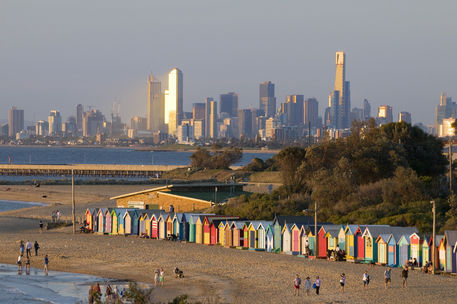
Brighton is a beachside suburb named after the English seaside town. Brighton is from the Old English, meaning “Beorhthelm’s farmstead” (Beorhthelm is a man’s name meaning “bright helmet”). The suburb was bought by an Englishman named Henry Dendy in 1840, who got it for 1 pound an acre, sight unseen. He chose the name Brighton, hoping this would also become a fashionable seaside resort. Unfortunately, there was a depression at the time and Dendy was forced to sell the land to his agent. Dendy died a pauper, but his dream did come true, because very soon Brighton began attracting wealthy residents, and it remains a very exclusive address, full of luxury mansions. One of its most notable sights is the 82 colourful bathing boxes, which have been on Dendy Street Beach since the 19th century. These can only be owned by rate-paying residents, and will set you back at least a couple of hundred thousand dollars. Brighton is the home of many of the rich and famous, including former athlete Catherine Freeman. I’ve been seeing this bright, right-on name quite a bit lately in birth announcements for boys, and the suburb does give it a swanky air.

Elwood

Elwood did not have the most glamorous beginning. A piece of swampland, the first settlers came here because of fever. It was Victoria’s first quarantine station, and the area’s first cemetery. Elwood became a working class suburb with such lovely features as an abattoir, a very smelly canal, and, before sewage, a dumping ground for human waste. However, today the Art Deco houses, pleasant beach, leafy streets, and busy cafe strip make it a very upmarket suburb. It’s thought to have been named after the Quaker poet Thomas Ellwood, because Governor La Trobe, who named it, had a thing for Quakers. The surname can be after Ellwood in Gloucestershire, which means “elder wood”, or derived from the Anglo-Saxon man’s name Aelfweald, meaning “elf ruler”. As elder trees play a big part in folklore, and The Harry Potter books feature the Elder Wand, it’s a very magical sort of name. I saw this at Mer de Noms and in a birth announcement, then it was covered by Upswing Baby Names, and then at Appellation Mountain. Perhaps because of the Blues Brothers, this name is seemingly now very hip. Please do not match it with a brother named Joliet or Jake though.

Fingal

Fingal is a rural suburb that may be named after the Irish county of Fingal; the county’s name means “foreign territory”, because the Vikings settled in the area. However, Fingal is also the Anglicised form of the Gaelic name Fionnghall, meaning “white stranger”. This also refers to the blonde Viking settlers, and Fingal mac Gofraid, a ruler in the Scottish Hebrides, was part of this same Norse dynasty. The name has a distinct literary air, as Fingal is the hero of James McPherson’s epic poem Fingal, and Irish author Oscar Wilde had Fingal as one of his middle names (Oscar is another name from McPherson’s poetry). McPherson claimed to have based Fingal on the legends of Irish folk hero, Fionn mac Cumhaill – Fionn’s name simply means “white”, and was a nickname; his real name was Deimne (meaning “sureness, certainty”). Fingal’s Cave in the Hebrides is named for the epic hero, and the sea echoes there so melodiously that it inspired a piece by composer Felix Mendelssohn. Irish names starting with Fin- are very fashionable right now, but I haven’t really seen Fingal in use. It seems poetic, musical, and quite fairytale to me.

Gilderoy

Gilderoy is a rural locality in the outer suburbs; it’s a rare variant of the Irish surname Gilroy, an Anglication of two possible Gaelic names which either mean “son of the red haired servant” or “son of the king’s servant”. As a first name, Gilderoy was used by British Gypsies, and a man who rejoiced in the name Gilderoy Scamp was King of the Kentish Gypsies in the late nineteenth and early twentieth centuries. Of course, this name will remind many of Gilderoy Lockhart, the vain and boastful fraud from the Harry Potter books. J.K. Rowling apparently named him after the handsome Scottish highwayman, Patrick Macgregor, whose nickname was Gilderoy (from the Gaelic Gillie Roy – “red-haired lad”). Both Lockhart and Macgregor had reputations for winning women’s hearts undeservedly, and one of Macgregor’s smitten female fans is supposed to have written the song Gilderoy about him. Perhaps Rowling was also thinking the name sounds like the English word gild, meaning to give a thin veneer of gold (to cheaper materials). I don’t know if anyone will actually use this name, but it’s a pretty fabulous one, with some very colourful namesakes.

Harkaway

Harkaway was settled by German immigrants, and is now an attractive suburb with large distinguished houses and extensive parkland. I first saw this name given to a minor character in Stella Gibbons’ hilarious novel, Cold Comfort Farm, and found it fascinating. Another famous literary Harkaway was Jack Harkway, from the Victorian era “penny dreadfuls” – a schoolboy who ran away to sea and had a life of adventure. There is also the novelist Nick Harkaway, although it’s a pseudonym; he’s a son of writer John Le Carre, and his real name is Nicholas Cornwell. Hark away! is a cry traditionally used in hunting to encourage the hounds; to hark means “to hear, heed, listen”. It’s a genuine, although rare, surname, and I presume an occupational one to denote someone who worked with fox hounds. I have seen this used as a man’s name in old records from the United States; I’ve only seen it used as a middle name in Australia. This is a really unusual vocabulary name which, with its meaning of “to listen”, almost qualifies as a virtue name as well. It isn’t much like any name on the Top 100, but it continues to fascinate me.

Ivanhoe

Ivanhoe is a suburb with many old homes and an Art Deco town hall, famous for the extravagant Christmas lights display it puts on each year. It was named by a Scottish settler after Sir Walter Scott’s 1819 novel, Ivanhoe. The book is a romance about one of the few remaining Saxon noble families at a time when the English nobility were almost all Norman. The protagonist is the Saxon Wilfred of Ivanhoe, who has sworn allegiance to King Richard I, and amongst the many characters are Robin Hood and his merry men. The novel is credited for starting the medieval revival of the 19th century – hence the number of Victorian babies named Alfred or Edith. Although the book is set in Yorkshire and Nottinghamshire, the English village of Ivinghoe is in Buckinghamshire. The village’s name is Anglo-Saxon, and means “Ifa’s hill spur”. The Anglo-Saxon Ifa later merged with the Norman Ivo, both names meaning “yew bow”. It’s dashing and looks like Ivan with a fashionable OH sound, but will the -hoe at the end prove problematic? If you are stuck for sibling ideas, Elea at British Baby Names has many suggestions!

Skye

Skye is named after the Isle of Skye in Scotland, the largest island in the Inner Hebrides. It was at one time ruled by Vikings, and even the Gaelic clans who were chieftains here have Norse ancestry. The island’s name is an etymological tangle of several languages. However, the Norse referred to it as skuyö – “the isle of cloud” – and this looks a lot like the English name for the island. The ruggedly beautiful Isle of Skye has spectacular Highland scenery and abounds in wildlife such as red deer and golden eagles; a popular tourist destination, it was recently voted the fourth best island in the world. It is known for its castles, including Dunvegan, which has an ancient flag supposedly gifted by the fairies, and is the oldest Scottish castle continuously occupied by a single family (since the 13th century). The island features in the lovely Skye Boat Song, which tells of the Jacobite heroine Flora McDonald helping Bonnie Prince Charlie escape “over the sea to Skye”, after the defeat of the Jacobite rising. This attractive unisex name is more often given to girls, but to me it seems equally suitable for boys.

Yannathan

Yannathan is a rural area in the Shire of Cardinia, and its name, from a local Aboriginal language, is translated as “to walk about, wander, travel, journey, roam”. Walkabout is a term from Indigenous culture which is understood to mean a journey undertaken as a rite of passage; a deeply meaningful spiritual quest which involves connecting with the traditional land and understanding cultural obligations. Australians of British descent also use the term loosely and colloquially to mean anything from going on holiday to escaping your customary obligations to disappearing without apparent cause (as in “the scissors seem to have gone walkabout”). I am not sure if yannathan was meant in any other way than just to take a walk or go on a journey, but it’s a word which may resonate with many Australians. Pronounced YAN-a-thun, it sounds like a variant of Jonathan, and seems very usable. It’s yet another name you could get the popular nickname Nate from.

(Photo shows the iconic bathing boxes in Brighton)

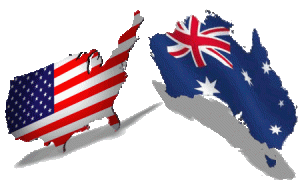
MYTH: Australian Baby Names are Becoming Increasingly Influenced by American Trends

01 Sunday Jul 2012

Posted by A.O. in Baby Name Mythbusters

≈ 20 Comments

Tags

Australian names, Biblical names, classic names, created names, famous namesakes, fictional namesakes, flower names, French names, germanic names, Greek names, Irish names, Italian names, Mer de Noms, name data, name popularity, name trends, nicknames, Old English names, popular names, saints names, Scottish names, Spanish names, surname names, unisex names, US name trends, US popularity, Welsh names

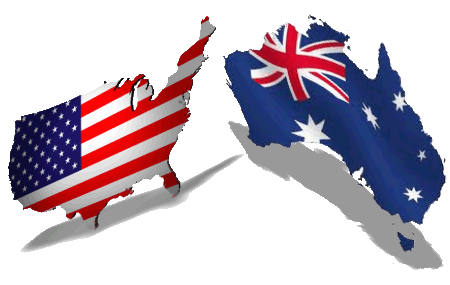
Since I last went mythbusting, the 2011 name data from the United States has been released, and this week it’s American Independence Day. To celebrate both events, I decided to compare Australian and US name data. (Lou at Mer de Noms brought out her own comparison of the data for the United States and England/Wales in May, and did something pretty interesting with it.)

That Australians are becoming increasingly Americanised, including their choice of baby names, is something not debated, but accepted as a truism. It is often mourned by older generations that Australians used to call their children good solid Aussie names like Barry and Sheila, and now give them sleek American-style names like Logan and Scarlett.

It’s a myth which sounds very plausible – I certainly know far more children named Logan and Scarlett than I do Barry and Sheila (actually I don’t know any children called Barry or Sheila). But I thought we should try to get some numbers to back the myth up.

So I decided to look at the Top 100 names from both countries, in the years 1930, 1950, 1970, 1990 and 2011. If the number of names shared by both countries went steadily up, that could help support the theory that Australian names were becoming increasingly “American”. By no means conclusive proof, but it would be a start, and frankly I couldn’t think of any other way of doing it.

As I went through calculating the number of shared names, I also took note of those trends at work in Australia and the United States, where they were the same and where they differed. This gave me a picture of changing trends through the years. (The data is from Victoria, because theirs go back to 1929).

1930

MALE – 65% shared with US Top 100

1930 marked the highest percentage of shared names between the countries. This wasn’t because Australians were more “American” in 1930, but because in every year, the common denominator for both countries were classic names like John, Thomas and William, and these sort of names took up more space of both countries’ Top 100.

Trends noticeable on the Australian Top 100 were names from Ireland, Scotland and Wales, such as Kevin, Malcolm and Trevor, and aristocratic English surnames, such as Neville. Americans preferred prominent surnames of their own citizens, such as Elmer and Lee. Popular names from America we didn’t share were “cowboy” names – Wayne, Earl and Jesse. In America, nicknames for boys were all the rage, including Billy, Bob and Jimmie.

FEMALE – 51% shared with US Top 100

Popular girls names in both countries were homespun names such as Margaret and Dorothy, as well as plant names like Hazel and Rose.

Australian trends for girls included names from Ireland and Wales, such as Sheila and Gweneth, saints names such as Carmel and Veronica, and literary inventions like Doreen and Mavis. American trends were for Germanic names such as Emma and Clara, and the clunky Old English Mildred and Bertha. America’s Hispanic population meant that Delores and Juanita were Top 100 there.

1950

MALE – 59% shared with US Top 100 (down 6%)

American trends for boys we had picked up by 1950 include Gary, after Hollywood star Gary Cooper, and that supposed Australian favourite, Bruce, also popular in the US.

America continued its love of nicknames, with Bobby, Joe and Fred all Top 100. Several of the Irish boys names such as Kevin and Barry were now on the US Top 100 as well, but new Irish-style names such as Shane were still to gain American acceptance. Already in the US you can see a reluctance to use “feminine sounding” or unisex names such as Lindsay and Noel, which were Top 100 in Australia. In Australia, that same 1950s gender-anxiety produced the opposite result, with some unisex names like Leslie becoming male-only.

FEMALE – 47% shared with US Top 100 (down 4%)

The most noticeable shared trends for girls were those glamorous Hollywood names such as Marilyn (Monroe) and Rita (Hayworth). Even when Australians did take a name from America, such as Jennifer from Hollywood star Jennifer Jones, it didn’t always follow that Americans would embrace it as rapidly themselves. Jennifer was a 1950s name in Australia, but didn’t peak in the US until the 1970s.

Australian girls were being given French names like Annette and Jeanette, while Americans girls had Jacqueline. Another popular Australian “French” name was Lorraine, given in honour of St Joan of Arc, sometimes called The Maid of Lorraine. The American love of the nickname meant that names such as Judy and Peggy were Top 100 for girls.

1970

MALE – 56% shared with US Top 100 (down 3%)

Popular 1970 names which we think of as “American style” were in evidence on both charts, such as Bradley, Jason, Glenn, Darren and Craig.

Australian boys names not picked up in the US included Scottish-style names such as Ross, Graham, Stuart and Gavin, and the “feminine sounding” Ashley and Jamie. Differing ethnicities also made their mark, with Spanish Carlos in the US Top 100, and Italian and Greek names like Giovanni and Giorgio in the Australian Top 100. American nicknames powered on, with Larry, Terry and Jerry amongst them.

FEMALE – 51% shared with US Top 100 (up 4%, return to 1930 level)

It was the decade of those 1970s names Sharon and Tracey, although Sharon in particular had been popular in America for some time and we’d only just caught up.

Names such as Samantha and Amanda were already popular in Australia in 1970, but would have to wait until the 1980s to make it big in the US. Conversely, Amy was popular in the US, but wouldn’t be here until the 1980s. French Nicole was in vogue in both countries, and we’d caught up with Jacqueline; however Australia also had Danielle, Louise, Justine, Natalie, Simone and Josephine – typical 1970s girls names that were underused in the US. Scottish and Welsh names like Fiona, Megan and Bronwyn were popular here but didn’t get a look-in in the US. We were proudly using names of Australian origin, like Kylie and Narelle; naturally these were unknown in the US.

1990

MALE – 56% shared with US Top 100 (no change)

Trends from the US we were embracing were Old Testament names, such as Jacob and Zachary; and the new surname names, such as Ryan and Mitchell.

A new generation of “too feminine” boys names that were popular in Australia were ignored in the US, such as Shannon, Tristan and Leigh, as were more Scottish, Welsh and Irish-ish names, such as Lachlan, Rhys and Kane. Hayden and Jayden were already Top 100 in Australia, but not in the US. America had finally gone off nickname names, while Australia now had Jack, Jake and Ricky. American names Beau, Jackson and Tyson were popular then, as now, in Australia; of the three, only Jackson has hit the US Top 100 so far.

FEMALE – 56% the same as the US Top 100 (up 5%)

Names that both countries had in common were those typical 1990s names, like Tiffany, Brittany, Kayla and Caitlin.

Americana we were still to discover included unisex names for girls like Ariel, Shelby and Paige. Although the US had Danielle and Natalie by now, French names such as Monique, Elise, Renee and Madeleine which were popular here had apparently failed to make an impression. Although Welsh Caitlin was all the rage, the US were not on board with Tegan and Rhiannon, as we were. Most notably, Emma, Amelia, Charlotte, Sophie, Chloe and Zoe were missing from the US Top 100 – while American parents who chose these names in 1990 were ahead of the trends, in Australia, parents choosing these names in 1990 were just following the trends.

2011

MALE – 59% shared with US Top 100 (up 3%, return to 1950 level)

Congruence in popularity between the two nations has risen to 1950 levels, with many name trends in common, mostly a fresh crop of Biblical names, such as Elijah, and surname names, such as Mason.

American parents are now avoiding a new generation of Scottish names, such as Angus and Hamish, while Irish names like Declan and Flynn are also neglected in the US. Oddly enough, Kevin is still Top 100 in the US, while it’s considered a bit dated here. The scunner against nicknames continues as Americans shun Australian populars Charlie, Harry, Archie, Sam and Nate. No longer merely  shying away from “feminine sounding” names for boys like Bailey and Riley, parents in the US have actually given these names to their daughters in such numbers that they are now Top 100 for girls, while Top 100 for boys here. Several names we have taken from the US, such as Jett, Hudson and Jasper, are still not popular in America.

FEMALE – 47% shared with US Top 100 (down 9%, return to 1950 level)

Girls names have also returned to 1950s levels. Many names are shared because America has caught up with our popular names from 1990, but Australian parents have also begun to use unisex names for girls like Madison and Addison.

America has abandoned many names as “outdated” such as Amy, Jessica, Holly and Amber that have taken on “modern classic” status here. While America has accepted Lily, it is less keen on our popular plant names Daisy, Ivy, Violet, Willow, Olive and Rose. British-style names such as Isla and Imogen cut no mustard in the States. Meanwhile, popular American virtue names like Genesis, Serenity, Trinity, Nevaeh and Destiny do not resonate here. Perhaps they will in the future.

CONCLUSIONS

I did not manage to bust this myth, but neither did I find much evidence to support it, so I will give its status as MYTH UNCONFIRMED.

As I compared popularity charts from the two countries, I realised more and more that it was a case of apples and oranges. Names took longer to gain popularity in the US, and it was harder for them to stay in the Top 100; name popularity was a competitive environment there. Australia has a much smaller population size, which means that name trends show up faster here. We’re also more likely to hold onto our favourite names once we’ve found them, sometimes for generations.

I don’t think it’s an exaggeration to say that American parents are absolutely obsessed with getting ahead of the current trends, and can watch the slowly rising popularity of their chosen names with almost comical anxiety. This makes some sense, because trending names can take so long to reach the Top 100 that they have a good chance of having ten to twenty years before that happens. In Australia, this behaviour makes no sense at all, because as soon as a name begins to show up in the data, it’s basically already quite popular. As we keep names around for longer, there’s no real rush to “catch” a name on the way up either; we can always wait until it’s a cosy, familiar “classic”.

In any given year, Australia and the US will share around half the names on their respective Tops 100s, and this has not changed across time. We share many name trends, and since at least 1950, Australia has been drawn to names from America. Sometimes it took us a long time to get onto a particular trend from America, and other times we took to it with greater enthusiasm than Americans did themselves.

Both countries also have their own styles of naming. Australia has always been fond of Irish-inspired names, and although Barry and Sheila have fallen by the wayside, we now have Finn and Molly. Scottish names continue to be a growth area, with Angus, Hamish, Callum and Isla seeming rather stylish to us. Through the years, there were many names unique to the Australian popularity charts. Names that I thought of as typical of their period, such as Dulcie in 1930, Glenys in 1950, and Jacinta in 1970 seemed to be unknown in the US.

Americans are slow to adopt Irish names, but often touchingly faithful to them, and are wary of Scottish and Welsh names. They have a deep suspicion of unisex names for boys or anything that even sounds remotely feminine, while comfortable with briskly masculine names for girls. Flower names are not popular there; perhaps they seem too girlish even for girls.

Due to going overboard on nicknames in the past, America has developed almost a horror of them, much in the same way I can no longer stomach gingerbread after overindulging on it a few Christmases ago. As nicknames are currently internationally popular, this has seen them unfairly branded as a bit stuffy on the issue, when they’re really just over the whole thing.

We don’t have to try to follow American trends, and in fact a couple of them would be downright foolish for us to imitate. But the United States has proved a rich source of name inspiration for many decades, and I know it will continue to be so for many decades to come.

Less Commonly Used Boys Names

10 Sunday Jun 2012

Posted by A.O. in Name Themes and Lists

≈ 9 Comments

Tags

Anglo-Norman names, Apache names, Australian vocabulary words, celebrity baby names, english names, fabric names, famous namesakes, fictional namesakes, germanic names, Hindi names, Indian names, Italian names, Latin names, locational names, mythological names, name data, name history, name meaning, name popularity, Native American names, nicknames, popular culture, Roman names, saints names, slang terms, surname names, unisex names, US name popularity, vocabulary names, Welsh names, Yorkshire dialect names

This follows on from Less Commonly Used Girls Names. The names are from the bottom of the popularity charts in New South Wales, Victoria, Queensland and Tasmania, and in each case, the name was used less than ten times in 2011.

There seems to be a lot of musical references in this entry, so I’ve linked relevant names to YouTube videos of the person performing.

Atticus

This Roman name means “man from Attica” – Attica being the area of Greece surrounding the city of Athens. This name wasn’t uncommon in the ancient world; there is a Platonist philosopher called Atticus, and there is also a Saint Atticus, a soldier who died a martyr by being burned at the stake. However, today it is most associated with Atticus Finch, the principled lawyer and loving single father in Harper Lee’s novel, To Kill a Mockingbird. Atticus Finch, who defends a black man on a rape charge in a small Southern town during the 1930s, is considered a folk hero in legal circles. In the 1962 film adaptation, Atticus is played by Gregory Peck, who was a civil rights activist; Peck won an Academy Award for his performance, and in 2003 the American Film Institute voted his character the greatest hero in American film. It is that decent, understated heroism of Atticus Finch that makes him such a beloved character in literature and film. The character has inspired the names of both a clothing line run by musicians and an alternative rock band. It’s a hip choice which has been burning up the US popularity charts since 2004.

Bryn

Bryn is a modern Welsh name which means “hill”; as well as being a man’s name, it is also a common place name in Wales and England. A famous person with this name is Welsh opera star Bryn Terfel, a bass-baritone best known for his roles in the works of Mozart and Wagner. Apparently he applied to study music in Cardiff, but was so annoyed when they assumed he was a woman that he ended up studying in London instead. Bryn Terfel, whose first language is Welsh, is a patron of Welsh language and culture, and hopefully by now everyone in Wales recognises his name as male. Even though Bryn isn’t a common name in Australia, I don’t think it would seem too out of place either, as there are several boy’s name beginning with Br-, such as Brent and Brody. It looks rather like a cooler version of Irish Brian, which may have a similar meaning.

Corbin

Corbin is an English surname which started as a nickname based on the Anglo-Norman word for “raven”. It may have been given to someone who had raven-black hair, although less flattering possibilities also come to mind. Corbinus, the Latinised form, is found as a first name in the Domesday Book, so it has a long history of use. Despite being an old English name, this tends to be thought of as a modern American one, because it’s been solidly Top 500 in the US since the late 1980s. This may be because of television actor Corbin Bernsen, who began playing lawyer Arnold Becker on LA Law in 1986 and remained on the show until it finished in 1994. Another famous namesake is Corbin Harney, an elder and shaman of the West Shoshone people. He devoted his life to spreading a message about the dangers of nuclear energy, and the environmental issues facing the world. You may also know the name from Corbin Bleu, who was in High School Musical. This name is apparently so unusual in Australia that the article the information came from described it as a “bizarre” choice, although it seems a perfectly nice, normal name to me.

Denim

The fabric denim was originally called serge de Nîmes, after the French city where the tough cotton material was originally made by the Andre family. This was eventually shortened to denim. Denim is inextricably linked with jeans, which began life as sturdy clothing for workers, and then became fashion icons which symbolised teen rebellion. Today they are worn by pretty well everybody. Denim is an interesting name choice; it’s not really a “bad boy baby name” like Axe or Vandal, because while denim is worn by rebel icons like rock stars and bikers, it’s also worn by suburban mums and little kids. Also fabrics are usually thought of as girls names, like Velvet and Paisley, but denim is tough and hard-wearing. It’s definitely an ambiguous sort of name – one that, like the fabric, may grow with the person better than you’d expect. It’s also a soundalike with the surname and place name Denham.

Jagger

This English surname originated in Yorkshire, and means “hawker, carrier”, the word jagger being Yorkshire dialect for someone who carries a pack or load. It is claimed that most people with this surname are descended from a single family who came from Staniland, near Halifax. There was a high concentration of people named Jagger in Yorkshire, compared to the rest of England. The most famous person with this surname is undoubtedly Sir Michael “Mick” Jagger from The Rolling Stones, whose mother was born in Australia. I don’t know if this is correct, but Mick Jagger is said to be distantly related to Joseph Jagger, the 19th century British engineer famous for being “the man who broke the bank at Monte Carlo”. Joseph Jagger was indeed from Halifax in Yorkshire. The name Jagger is almost always given in relation to The Rolling Stones frontman, and may have been given a boost in 2011 from the Maroon 5 song, Moves Like Jagger, which is a tribute to Sir Mick. The number of baby boys named Jagger went from 5 to 8 in Queensland last year.

Naiche

Naiche was the last hereditary chief of the Chiricahua band of Apache Native Americans. He was an ally, protege and relative by marriage of Geronimo, the famous Apache leader and war chief. Naiche and Geronimo successfully went to war together in the 1880s, but Naiche ended up being imprisoned. Although he had resisted the process of being moved onto an “Indian Reservation”, eventually he was forced to give in, and ended his days on an Apache reservation in New Mexico. He lived only six years after moving there, and his descendants are still on the reservation. The name Naiche means “meddlesome one, mischief-maker” and it can apparently be pronounced NAY-chee, but I’m not sure if that’s the correct Apache pronunciation, or even whether it depends on which Apache accent you’re using. Naiche is for sure a very unusual name in Australia, but it has a fascinating namesake, and actually sounds slightly like Nate and Nathan. Pronunciation and spelling seem like they would be an issue.

Occy

Occy is the nickname of Australian surfer Marco “Mark” Occhilupo. Occy is short for his Italian surname, which means “eyes of the wolf”. At the same time, it is a play on the Australian word occy straps, short for octopus straps – those stretchy cords which are used by surfers to tie their surfboards onto their car’s roof rack. Mark Occhilupo was a precocious teenage surf god of the 1980s who lost his way for several years as his life spiralled out of control. In the mid-1990s, he made a comeback, and stunned everyone when he won a world title in 1999 at the age of 33. He considered retiring in 2005, but realised he still had a lot left in him. Now aged 45, he only competes part-time, but this year he made it into the final four of the Telstra Drug Aware Pro semi-finals, defeating top-ranked surfers to do so. Mark, also dubbed The Raging Bull, is an inspirational sporting icon who teaches us that mature experience can be more important than youthful talent, and that things are never over until you give up. Although Occy is a nickname and a slang term, it means so much more.

Pax

Pax is the Latin word for “peace”, and the Romans recognised a goddess of this name who symbolised peace, and was associated with the spring. The word pax also means “treaty, accord”, and the Pax Romana is the name given to the two-century period (approximately 27 BC to 180 AD) of stability and minimal military expansion in the Roman Empire. For the Romans, peace wasn’t about everyone holding hands and singing Imagine together in a field of daisies – it described that period during war when all your opponents had been thoroughly beaten and were no longer able to resist. It denoted ultimate military victory, rather than co-operation and unity. Today we see peace rather differently, and the name is probably given with the modern concept in mind rather than the ancient Roman one. In 2007, Angelina Jolie adopted a son from Vietnam and named him Pax Thien. Pax may be the name of a goddess, but this one has very much gone to the boys, as it fits so well with popular male names such as Max and Jax.

Veer

Veer is an Indian name meaning “bravest of the brave” in Hindi. Veer (“valour”) is one of the nine rasas of ancient Hindu philosophy. These emotional states are repositories of energy drawn from our life force, and by learning to master these energies, we gain emotional balance. The rasa of Veer stops us from running away from our problems, and instead face them head on; it also gives us the courage to not allow adversity to defeat us, but to get up after a fall, and continue on. It also allows us to have the healthy confidence and self-esteem needed to achieve in life. Veer Teja Ji is an Indian folk hero and saint, and the highly successful 2004 Bollywood film Veer-Zaara is about the star-crossed romance between Indian Air Force Squadron Leader, Veer Pratap Singh, and a wealthy Pakistani woman, Zaara Haayat Khan. Veer has a very positive meaning, and looks the same as the English word veer, meaning “to swerve”. It’s also a homonym of the English name Vere, so both sound and spelling are familiar to English-speakers, and it seems a very usable heritage choice.

Ziggy

Ziggy is a nickname for Germanic names such as Sigmund, but in practice is used for a variety of names starting with Z. It is famous as the name of pop star David Bowie’s alter ego, Ziggy Stardust. Bowie based the name on a London tailor’s shop called Ziggy’s that he saw from a train one day. The surname Stardust was taken from American country and western singer Norman Carol Odom, a weird novelty act billed as The Legendary Stardust Cowboy. Norman appealed to Bowie because he had a crazy band of misfits who barely understood music, and was unconsciously hilarious. The character of Ziggy was based on pioneering English rocker Vince Taylor, who modelled himself on Elvis Presley. Like so many after him, drugs proved his downfall, and he ended up believing he was the son of God, and existing solely on eggs. Bowie got to know him, and was impressed by his magnificent repertoire of dottiness. So Ziggy Stardust was a mixture of fashion, madness, outsider art, and rock and roll excess. Ziggy is also the nickname of Bob Marley’s son David, although in his case it was a drug reference. Cute name, with a solid musical background.

(Photo shows David Bowie’s final performance as Ziggy Stardust at the Hammersmith Odeon in London, 1973)

← Older posts
Newer posts →

Enter your email address to follow this blog

Categories

Archives

Recent Comments

A.O.'s avatarwaltzingmorethanmati… on Zarah Zaynab and Wolfgang…
Madelyn's avatarMadelyn on Zarah Zaynab and Wolfgang…
JD's avatardrperegrine on Can Phoebe Complete This …
A.O.'s avatarwaltzingmorethanmati… on Rua and Rhoa
redrover23's avatarredrover23 on Rua and Rhoa

Blogroll

  • Appellation Mountain
  • Baby Name Pondering
  • Babynamelover's Blog
  • British Baby Names
  • Clare's Name News
  • For Real Baby Names
  • Geek Baby Names
  • Name Candy
  • Nameberry
  • Nancy's Baby Names
  • Ren's Baby Name Blog
  • Sancta Nomina
  • Swistle: Baby Names
  • The Art of Naming
  • The Baby Name Wizard
  • The Beauty of Names
  • Tulip By Any Name

RSS Feed

  • RSS - Posts

RSS Posts

  • Celebrity Baby News: Melanie Vallejo and Matt Kingston
  • Names from the TV Show “Cleverman”
  • Can Phoebe Complete This Sibset?
  • Zarah Zaynab and Wolfgang Winter
  • Baby, How Did You Get That Name?
  • Celebrity Baby News: Media Babies
  • Celebrity Baby News: Adelaide Crows Babies
  • Celebrity Baby News: Chris and Rebecca Judd
  • Names at Work: Name News From the World of Business and Employment
  • Celebrity Baby News: Sporting Round Up

Currently Popular

  • The Top 100 Names of the 1940s in New South Wales
  • Celebrity Baby News: Tim and Monique Blackwell
  • Rare Boys Names From the 1950s
  • Celebrity Baby News: Queensland Babies
  • Celebrity Baby News: Rugby Babies

Tags

celebrity baby names celebrity sibsets english names famous namesakes fictional namesakes honouring locational names middle names name combinations name history name meaning name popularity name trends nicknames popular names saints names sibsets surname names twin sets unisex names

Create a free website or blog at WordPress.com.

Privacy & Cookies: This site uses cookies. By continuing to use this website, you agree to their use.
To find out more, including how to control cookies, see here: Cookie Policy
  • Subscribe Subscribed
    • Waltzing More Than Matilda
    • Join 517 other subscribers
    • Already have a WordPress.com account? Log in now.
    • Waltzing More Than Matilda
    • Subscribe Subscribed
    • Sign up
    • Log in
    • Report this content
    • View site in Reader
    • Manage subscriptions
    • Collapse this bar
 

Loading Comments...