• About
  • Best Baby Names
  • Celebrity Baby Names
  • Celebrity Baby Names – Current
  • Celebrity Baby Names – Past
  • Featured Boys Names
  • Featured Girls Names
  • Featured Unisex Names
  • Links to Name Data
  • Waltzing on the Web

Waltzing More Than Matilda

~ Names with an Australian Bias of Democratic Temper

Waltzing More Than Matilda

Tag Archives: famous namesakes

Rare Girls Names From the 1950s

05 Sunday Jun 2016

Posted by A.O. in Name Themes and Lists

≈ 1 Comment

Tags

Ancient Egyptian names, Australian names, Biblical names, celebrity baby names, controversial names, created names, english names, famous namesakes, French names, Greek names, hebrew names, Indian names, locational names, mythological names, name history, name meaning, name trends, names from movies, names of rivers, nicknames, pen names, Roman names, Shakespearean names, Slavic names, stage names, Swedish names
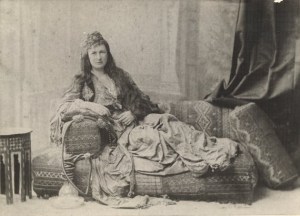
Tasma_photographed_in_Turkish_costume

The most popular girls names of the 1950s were Susan, Jennifer, Christine, and Margaret, but what were the least popular names? Here are ten names which were only chosen once in any year between 1950 and 1959 in South Australia, making them unique names for their time and place. They continue to be rare, and some parents will still find them appealing.

Adelie
Anglicised form of Adélie, a variant or pet form of the French name Adèle. The name came into common use in the 19th century, and has a strong connection with Antarctica. Adélie Land borders the Australian Antarctic Territory, and has been claimed by France, although most countries do not recognise their sovereignty. The coast of Adélie Land was discovered in 1840 by the French explorer Jules D’Urville, and named after his wife Adèle. Since 1956 there has been a French research station here, and perhaps it helped to give the name some publicity in this decade. Adélie penguins get their name from Adélie Land, and the location has another penguin connection, as this is where the award-winning French documentary March of the Penguins was filmed. Names such as Adeline and Adele are on trend, and Adelie has a strong local association. Usually pronounced AD-uh-lee by English-speakers; Addie is the obvious nickname.

Drusilla
Feminine form of the Roman family name Drusus. The first of the line was Livius Drusus, who gained his name by killing a Gallic chieftain named Drausus in one-on-one combat. Although the meaning of Drausus is unknown, one theory is that it comes from the Celtic for “strong”. Drusilla was the name of one of King Herod’s great-granddaughters, and she briefly appears in the New Testament as the wife of the Roman governor Felix Antonius; mention is made of her beauty, and that Felix used great cunning to persuade the Jewish – and already married – Drusilla to wed him, a pagan (later she perished in the eruption of Mount Vesuvius). Drusilla has been used as an English name since at least the 17th century; presumably the loveliness of the biblical namesake was a drawcard. A famous namesake of the decade was British actress Drusilla Wills, who passed away in 1951. In Australia this name has an intellectual image, due to novelist and literary critic Drusilla Modjeska; however Drusilla often has a Gothic connection in popular culture. Dru makes a cool nickname.

Isis
Greek version of the Egyptian goddess Aset, whose name means “throne”, and represents the power of the pharaoh. Worshipped as the ideal wife and mother, Isis was a patron of nature and magic; she was the protector of the poor and downtrodden, but also heeded the prayers of the wealthy and aristocratic. She was popular throughout Egypt, and later her cult spread through the Greco-Roman world, where she came to represent wisdom. She even influenced Christianity, for the popular image of the Virgin Mary nursing the baby Jesus was taken directly from Isis suckling her son Horus. Worship of Isis continues today in both pagan and interfaith contexts, and she has become important to occult, esoteric and New Age movements. A famous namesake from this decade was Isis Finlay, the Miss Cuba of 1954. The British astronomer Isis Pogson, who used her middle name, was probably named after the River Isis, part of the Thames, and this is the inspiration for the name of the Isis Rivers in Australia. A lovely ancient name which has suffered from the coincidence of the terrorist group popularly called ISIS, although Islamic State is the more usual way of referring to it.

Keturah
Hebrew name meaning “incense”, probably with spiritual overtones rather than simply describing a pleasant aroma. In the Old Testament, Keturah was the second wife of the patriarch Abraham; he married her after the death of Sarah, and she is implied to be a lower-status wife. Keturah bore Abraham six sons, and Abraham settled them in colonies at some distance away, presumably so that they wouldn’t trouble his son Isaac. They are said to represent the Arab tribes who lived south and east of Palestine, although the youngest ended up in Syria. Despite being one of the most ignored characters in the Bible, Keturah has been used as an English name since the 17th century, but has never gained popularity. Keturah fit in with popular names of the 1950s such as Kathleen, Kathryn, Karen and Kerry, and even today underrated Keturah is surprisingly stylish. You could use Kitty as the nickname.

Kiki
Can be used as a short form of any name starting with a K, ending in -iki, or with a strong K sound, or as a true nickname with no relation to the birth name. The name was well known by the 1950s due to the French artist’s model and cabaret singer Alice Prin, who worked under the professional name Kiki, and was known as The Queen of Montparnasse. The companion of American photographer Man Ray for several years, she is the subject of many of his most famous works. An artist in her own right, her autobiography was reprinted in the 1950s under the title The Education of a Young Model. Kiki died in 1953, but she remained a bohemian symbol of feminine freedom and audacity. Another inspiration was Norwegian-born fashion designer Kiki Byrne (born Olaug Grinaker), who was Mary Quant’s rival in the trendy London scene of the late 1950s and 1960s. Kiki was also a celebrity baby name in this decade, the nickname of Chiara, daughter of American artist Tony Smith, and his opera singer wife, Jane Lawrence (Kiki Smith is now a highly successful artist herself). Kiki is a vintage nickname which still seems daring, chic, and sexy.

Nerissa
Created by William Shakespeare for a character in The Merchant of Venice. It is usually thought that he based it on the Nereids, the beautiful sea nymphs of Greek mythology who were the daughters of the sea god Nereus; his name and theirs comes from the Greek word for “water”. In the play, Nerissa is the handmaid of the heroine Portia, and the two of them team up to fool the boys and save the day with a clever plan. Although Nerissa is pretty, witty, and gets her man, her role as a servant and sidekick may not have helped the name’s fortunes. It doesn’t seem to have been used as a name until the 19th century, when Shakespeare became very fashionable, and has never been popular, like his other creations Jessica and Olivia. Nerissa was very on trend in the 1950s, when names like Nerida, Narelle, Nerine, and Nerys were all the rage. It perhaps sounds slightly dated now, but is still a very pretty name with an attractive fictional namesake.

Pandora
In Greek mythology Pandora was the first woman created by the gods, designed not as a companion and helpmate for man but his punishment. Each of the gods bestowed upon Pandora the most seductive of gifts, such as beauty, grace, intelligence, and charm, but she was also given a jar which contained all diseases and miseries. Pandora almost immediately opened it, so that evil entered the world. Only Hope was left in the jar, but it is unclear whether this was a Bad Thing (hope was never released, giving us no expectation of improvement) or a Good Thing (at least we still have hope). For that matter, why did the gods regard Hope as an evil? Scholars have devoted many pages to these questions. At least Pandora’s name is straightforward: she was named by Hermes with the meaning “all gifts”, to indicate how well the gods endowed her. Pandora has been used as an English name since at least the 18th century, although the backstory is a mixed blessing. An inspiration from this decade was the 1951 romantic film Pandora and the  Flying Dutchman, with Ava Gardner as femme fatale Pandora Reynolds. An exotic spin on Eve, but the mistranslation of her jar makes Pandora’s Box something of an issue.

Tasma
The pen name of Australian novelist Jessie Couvreur, who was of Dutch, French, and English descent. Jessie and her family arrived in Tasmania from London in 1852, and she was raised and given a liberal education in Hobart. Her pseudonym was inspired by the island state of Tasmania, and could be seen as a feminine form of Tasman. There is a Tasma Street in Hobart, apparently named in her honour. Jessie began publishing her work when she was sixteen, and she spent most of her career in Europe. An example of the New Woman, Jessie divorced her first husband, and was already financially independent through her work. She published eight novels between 1877 and 1897, lectured in French, and wrote for the Nouvelle Revue, receiving the Officier d’Académie from the French government; she was particularly interested in feminist issues. Later in life she became a correspondent for The Times in Brussels, proving herself an excellent journalist. A famous namesake is actress Tasma Walton, who is married to comedian Rove McManus, and has been a celebrity parent on the blog. Another celebrity mum, Yumi Stynes, has Tasma as her middle name. The name Tasma is particularly associated with Australia, and although it is found in other countries too, seemingly only after Jessie Couvreur began her international writing career, leaving open the possibility this is a genuine Australian original that’s both literary and patriotic.

Viveka
Swedish form of Wiebke, feminine form of the Germanic name Wiebe, a medieval short form of names containing the name element wig, meaning “war”. The name is pronounced VIV-eh-kuh. In the 1950s, Viveka would have fitted in with fashionable Vivian and Vivienne, and still makes a good alternative to those names. By coincidence, viveka is also a Sanskrit word meaning “discrimination, discernment”. In Eastern philosophies, viveka is the ability to tell the difference between what is real (eternal) and unreal (changing), which is necessary for spiritual growth; the word is used in yoga and certain meditation techniques. It is sometimes used as a female name in India, which makes Viveka a cool multicultural choice.

Zora
Slavic name meaning “dawn”. A famous Australian with the name was the writer Zora Cross, who wrote several novels between the 1920s and 1940s but is primarily known for her poetry. Her private life was scandalous for the time, because she separated from her husband and lived with her partner, who she had two children with and “married” in a private commitment ceremony. Zora’s partner adopted another child she had with a previous lover, and in turn he and his wife were separated, she living with her own partner. These bohemian arrangements were frowned upon and caused some difficulties with employment, but Zora was able to support herself through acting and journalism. Despite this interesting namesake, the name Zora probably appeared in the 1950s data because of post-war immigration from the former Yugoslavia (now Serbia, Croatia, Slovenia, Montenegro, Macedonia, and Bosnia and Herzegovina). Several other Slavic names appear in the data, including Zorica, a pet form of Zora. Very similar to popular Zara, this makes a good heritage choice and an alternative to Aurora.

POLL RESULTS
People’s favourite names were Adelie, Zora and Viveka, and their least favourites were Pandora, Kiki and Drusilla.

(Photo shows the writer “Tasma” in Turkish dress in Istanbul; a favourite photo of hers since Turkish women’s clothing was unrestrictive compared to that in Europe)
Famous Name: Elizabeth

25 Wednesday May 2016

Posted by A.O. in Famous Names

≈ 4 Comments

Tags

Biblical names, classic names, famous namesakes, fictional namesakes, hebrew names, international name popularity, locational names, name history, name meaning, name popularity, nicknames, popular names, royal names, saints names, UK name popularity, US name popularity

parramatta-elizabeth-farm-house

Famous Namesake
Next month marks 226 years since Elizabeth and John Macarthur came to New South Wales on the Second Fleet. From her arrival Elizabeth found herself in a privileged position, for she was the first educated woman to arrive in the colony. Beautiful, tastefully-dressed, charming, witty, articulate, and well-read, she held court among the men of colonial society like a queen. Because of this, she is known as Australia’s First Lady.

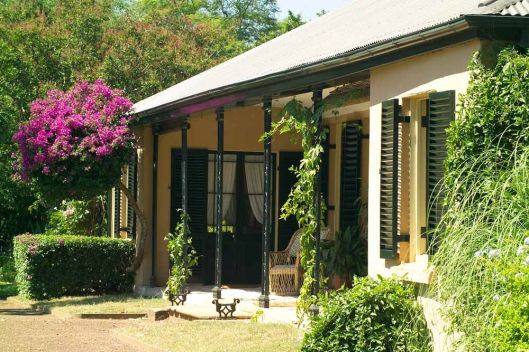
When her husband was made Commandment at Parramatta and given land there, he built Elizabeth Farm at Rosehill for them. Originally just a stone cottage, in time the farm became a country estate surrounded by gardens and orchards. While her husband was a politically controversial figure who created chaos and drama wherever he went, Elizabeth transformed their home into an oasis of peace and harmony which even impressed her husband’s numerous enemies.

Elizabeth wrote many letters to family and friends in England, and what strikes the reader is the happiness she managed to create for herself in her new homeland. She loved the climate, and was sensitive to the beauty of the natural landscape, exulting in the way she could grow vegetables, fruit and flowers in rich abundance. She enjoyed the social life of the colony, and with her high spirits and sense of fun, was perennially popular.

After her husband was arrested in 1809 and forced to flee to England, Elizabeth took on the management of John’s extensive merino sheep farm on his estate in Camden, including managing the convict labour force; she is credited with pioneering haymaking in Australia. Elizabeth was a spectacular success in the business, which involved travelling alone through dangerous territory and writing detailed reports for her husband. Together they were a formidable force: John promoting Australian wool in England, while Elizabeth worked hard at producing it.

When her husband returned in 1817, Elizabeth remained important to the Macarthur wool business. Now wealthy and powerful, John built a mansion on the estate in Camden, and descendants of the Macarthurs still live at Camden Park: here also is the Elizabeth Macarthur Agricultural Institute, and nearby Elizabeth Macarthur High School, a selective agricultural high school. Elizabeth Farm, which is one of the oldest colonial dwellings still standing, is now a museum where visitors can move freely and interact with everything on display.

Colonial society was a hotbed of gossip and could be relentlessly critical. Anyone who made the smallest error in appearance or behaviour was mocked and torn down, yet none of this ever touched Elizabeth Macarthur. Contemporaries heap only praise upon her as a devoted wife, perfect mother, accomplished homemaker, and determined businesswoman. She never gossiped, never criticised, and never complained, either of her own workload or the brutality of colonial life.

To the end of her life she remained a lady through and through, combining gentleness and delicacy with a very womanly strength and tenacity. Our First Lady, and our greatest.

Name Information
Elizabeth is from the Greek form of the Hebrew name Elisheba, which can be translated in two ways. One is “God is an oath”, to indicate the power of God’s word – what He swears will be done must come to be. The other is “God is abundance”, to suggest that God always fulfils our needs. Even for a biblical name, Elisheba has a very religious meaning, and in the Old Testament, she is the wife of Aaron, the first High priest, and the mother from whom the priestly caste was born.

The Greek form of the name is used in the Gospel of Luke in the New Testament. Elizabeth was a distant descendant of Aaron, presumably named for her ancestress, and married to Zechariah, who was a priest. The couple had been married for many years and grown old together without ever having the son they longed for.

This is a well-worn plot device in the Bible, so it should come as no surprise that the angel Gabriel brought Zechariah the good news that God had answered their prayers, and Elizabeth was going to have a baby. While pregnant, Elizabeth was visited by a young relative of hers named Mary, from Nazareth, who had received a similar message from Gabriel.

As soon as Mary greeted her, Elizabeth felt the child leap in her womb, and she was moved to hail Mary as “blessed among women” and “the mother of the Lord” (her words used to write the Hail Mary prayer, the basis of Ave Maria). Because of this, she is seen as one of the female prophets.

Elizabeth gave birth to a son, who she named John. He became John the Baptist, the preacher and prophet seen as a forerunner to the ministry of his kinsman Jesus. As a prophet and mother of a prophet, Elizabeth is revered as a saint in Christianity, and given reverence in Islam.

The name Elizabeth has been in use since the Middle Ages, and there are several other saints with the name. The most famous is Elizabeth of Hungary, a 13th century princess famous for her charity. One story told of her is that she was secretly taking bread to the poor when someone demanded to know what she had in her basket. She lifted her cloak, and instead of bread, all that could be seen was a divine vision of roses. This was such a popular act that after this female saints often seemed to cart around miraculous roses as a sign of God’s favour.

Because of the saint’s noble ancestry the name Elizabeth became a favourite among European royalty and aristocracy. It is a traditional name in the British royal family, and Elizabeth I was the last Tudor monarch of England, named after her grandmother Elizabeth of York, the wife of Henry VII. The present queen is Elizabeth II, and she was named after her mother, Elizabeth Bowes-Lyon, wife of George VI. Her name was given to the suburb of Elizabeth in Adelaide.

Thanks to its royal associations Elizabeth has remained popular for centuries, and there are many famous namesakes, such as poet Elizabeth Barrett Browning, novelist Elizabeth Gaskell, feminist Elizabeth Cady Stanton, and actress Elizabeth Taylor. In Australia there is the writer Dame Elizabeth Durack, Sister Elizabeth Kenny who saved so many polio patients, pioneer Elizabeth Underwood who founded Ashfield in Sydney, and speedy athlete Elizabeth “Betty” Cuthbert.

In fiction we know witty Elizabeth Bennet from Pride and Prejudice; shy Elizabeth “Beth” March in Little Women; good-girl twin Elizabeth Wakefield in Sweet Valley High; the mysterious Elizabeth (aka Anna) from Bioshock Infinite; spirited beauty Elizabeth Swann from Pirates of the Caribbean; klutzy Elizabeth “Lizzie” McGuire from the TV series; dainty Elizabeth Grayson from L.M. Montgomery’s Anne Shirley books; and Enid Blyton’s “naughtiest girl” Elizabeth Allen.

Elizabeth is a solid classic which has never left the Top 100; it is the only girl’s name to have achieved this distinction. Elizabeth was #13 in the 1900s, and peaked in 1952 at #10, the year that Elizabeth II ascended the throne, and also a year that she toured Australia. Elizabeth is currently #42 nationally, #45 in New South Wales, #50 in Victoria, #49 in Queensland, #42 in Western Australia, and #25 in the Australian Capital Territory.

In the US, Elizabeth has enjoyed even greater popularity and almost never been out of the Top 25 (in 1948 it reached #26). It was continuously in the Top 10 from the 19th century until the mid 1920s, and rejoined the Top 10 in 1980. Since then it has been in the Top 10 or only just outside it, and is now #13.

In the UK, Elizabeth has never been out of the Top 50. It was a Top 10 name from the mid 19th century until the 1930s, and regained its Top 10 spot in the 1950s when Elizabeth II became queen, but left it again by the following decade. It is currently #37. Elizabeth is popular in all English-speaking countries, and most popular in the United States. It is also popular in Mexico and Latin America.

Elizabeth is that rare creature: a true timeless classic. Held by generations of royalty, it is a name of strength, power, and dignity, while also wholesome, honest, and serious. It is as practical as bread and as pretty as roses, and tells us that every word must bear fruit, every promise must be fulfilled.

There isn’t really any other English name that sounds like Elizabeth: it is both distinguished and distinctive. Furthermore, it has a wealth of nicknames, so that every Elizabeth has the chance to be a Lizzie, a Beth, a Libby, a Birdie, an Ellie, an Elsie, or a Betsy (and that’s just for starters). Hail to thee, Elizabeth, mother of many names!

POLL RESULTS

Elizabeth gained an excellent approval rating of 87%, making it one of the highest-rated names of 2016. People saw the name Elizabeth as classy and elegant (23%), versatile because of its many nicknames (19%), strong yet feminine (17%), and intelligent and professional (15%). However 6% of people thought it was too common and boring. Only one person thought the name Elizabeth sounded snobbish.

(Photo shows the verandah at Elizabeth Farm in Parramatta)

The Fastest Rising Top 100 Names of 2015

23 Monday May 2016

Posted by A.O. in Naming Issues

≈ 2 Comments

Tags

famous namesakes, fictional namesakes, international name trends, name trends, popular names

maleficent mark 2GIRLS

Aurora
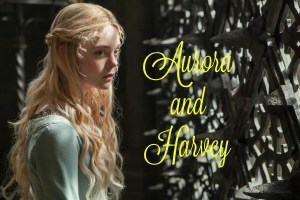
Aurora joined the Top 100 in 2015 and was the fastest-rising girl’s name in the country, going up at least 23 places to make #78. Aurora was also new to the Top 100 in New South Wales, Victoria, and Queensland, and among the top-rising names in those states. Princess Aurora is the name of the Sleeping Beauty in the animated 1959 Disney film, and the name received fresh attention after the 2014 live-action film Maleficent, a revisionist re-telling; Princess Aurora was played by Elle Fanning. A golden name associated with true love’s kiss, Aurora shares a similar sound with popular Aria. Already popular and rising in New Zealand, the US, Italy, Portugal, Switzerland and Norway, Aurora is rising in the UK.

Billie
Billie was another Top 100 debut last year, gaining at least 19 places to make #82, and joined the Top 100 in New South Wales. It was the fastest rising girl’s name in Victoria, where it was already a Top 100 name. Billie first charted in the 1930s and ’40s, and rejoined the charts in the 1970s. It has been zooming up the charts since 2010, when the hit TV drama series Offspring first screened, with Kat Stewart as straight-talking big sister Billie Proudman. This retro name is only a success story in Australia, so has genuine local appeal.

Penelope
Penelope was one of the fastest-rising names of 2013 when it rejoined the Top 100 that year, and in 2015 it rose 17 places to #62. It was also the fastest-rising girl’s name in Queensland, and among the top rising names in New South Wales, Victoria, and Tasmania. Chosen by a number of celebrities for their babies, this is a name with star power. Also popular in New Zealand and the US, it is rising in Europe and only just outside the Top 100 in the UK.

Piper
Piper has been solidly on the Top 100 since 2008, rising after the witchy TV series Charmed, with Holly-Marie Combs as sensible sis Piper Halliwell. Last year it rose 17 places to #49, joining the Top 50, and was one of the fastest-rising girl’s names in New South Wales. The name was boosted by women’s prison drama Orange is the New Black, starring Taylor Schilling as upmarket drug smuggler Piper Chapman. Already popular and rising in the US and New Zealand, Piper is also rising in the UK.

Eve
Eve was last on the Top 100 in 2013, and after a year away returned in 2015, rising at least 14 places to #87. It rejoined the Top 100 in New South Wales and the Australian Capital Territory, and was one of the top rising girl’s names in Victoria and the Australian Capital Territory. In 2014 Evelyn was one of the fastest rising names, and it is no surprise that clean, stripped-back Eve has taken its place. Fitting in with short V-sound names like Ava and Ivy, Eve is a natural choice for someone wanting the nickname Evie. Apart from Australia, Eve is only popular in Ireland, Northern Ireland, and Scotland – it’s used to Anglicise the Irish name Aoife, giving it another layer of meaning.

BOYS

Harvey
Harvey debuted in the Top 100 last year, and was one of the top rising names of 2014. In 2015 it did even better, becoming the fastest rising boy’s name in the country, rising 31 places to reach #53, and was one of the fastest rising boy’s names in New South Wales, Queensland, and Tasmania. Harvey benefits both from the fashionable V sound, as in Oliver, and the AR sound found in names such as Archer and Darcy. Harvey also joined the Top 100 in New Zealand last year, and has been popular in the UK for many years.

Theodore
Theodore was another Top 100 debut of 2014, and last year made significant gains, rising 30 places to #66. It was the fastest rising boy’s name in New South Wales, and among the top rising names in Victoria and Tasmania. Among its many attractions are the nicknames Theo and Ted, already gaining in popularity as independent names – Teddy cannot be far behind, and even Bear is a possible nickname. Theodore is also popular and rising in New Zealand, the US, and UK.

Nathaniel
Nathaniel debuted in the Top 100 of 2013, and was one of that year’s fastest rising names. While it fell significantly the following year, Nathaniel has bounced back, rising 20 places to #80, and was one of the top rising boy’s names in new South Wales. This name provides a way to get to popular Nate. A busy namesake for the year was the singer Nathaniel, who released his first album, with the single going platinum and a cover song being chosen as the theme for I’m a Celebrity … Get Me Out of Here! Nathaniel has been popular in the US since the 1970s, and we seem to be catching up just as they prepare to let go of it.

Beau
Beau has been in the Top 100 since the 1980s, so is an old favourite, although it has never become very popular. Nonetheless it had a surprise jump in 2015, going up 19 places to #61, and was the fastest rising boy’s name in Victoria. I had a request to cover the name Beau last year, and I’m impressed by how quickly blog readers tune in to name zeitgeist – Penelope had a huge leap after I was asked to cover it, and now even reliable old Beau has made significant gains. Blog readers know! Beau is only popular in Australia and New Zealand, but is rising in the US.

Carter
Carter debuted in the Top 100 in 2014, and last year went up to 19 places to #79; it was also the fastest rising boy’s name in New South Wales for 2015. Surnames are on trend (and not just for boys – hello Piper!), and Carter has that fashionable AR sound shared with Harvey. Carter is already popular in New Zealand, the US, and Northern Ireland, and rising fast in the UK.

POLL RESULTS

The public’s favourite fastest-rising names of 2015 were Eve and Theodore, and their least favourites were Piper and Carter.


Waltzing With … Dami

15 Sunday May 2016

Posted by A.O. in Waltzing with ...

≈ Comments Off on Waltzing With … Dami

Tags

famous namesakes, Korean names, name meaning, nicknames, Nigerian names, unisex names

33F02F5400000578-0-image-a-12_1462669701251

Famous Namesake
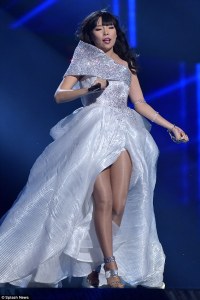
Yes it’s Eurovision time again! Australia was allowed to compete for a second time in 2016, and we entered popular singer Dami Im. Dami was born in South Korea, and grew up in Brisbane, where she studied music and became a piano teacher; her first public performances were as a gospel singer at Christian youth camps in South Korea.

Fame came for Dami when she won X-Factor Australia in 2013 and received a recording contract. Her self-titled album went platinum after debuting at #1 in the charts, as did the single from the album, Alive. Since then she has released two more albums, the second one going gold, and her albums also chart in South Korea. Apart from her other recognitions, she has been named the cultural ambassador for her home town of Logan City.

Unlike Guy Sebastian, who was given automatic entry into Eurovision as a special guest, Dami had to compete for her position at Stockholm. Would she get through? (nail bite, nail bite). Yes of course – she gave a stunning performance which earned her a standing ovation and thunderous applause from the crowd. Australia thus became one of the countries to win a place in the finals, and was immediately tipped as a strong contender.

In the finals, it looked as if Australia was going to win in a landslide victory, as the juries from each country thought Dami had given the best performance. However, when the televotes from the audience came through there were several upsets: countries given little encouragement from the juries stormed ahead in the audience vote, while some which the juries had judged a solid performance were suddenly flailing.

In the end, the Ukraine’s Jamala won with a haunting political song, while Australia came a close second with Dami Im’s power ballad Sound of Silence. Russia, which was the favourite to win, came in third. Australians were allowed to vote in Eurovision, and as you aren’t allowed to vote for your own country, they mostly voted for Belgium – perhaps influenced by Dami picking it as one of her own favourites in the competition.

There’s been lots of complaints about Australia being allowed to compete, but at the very least we’ve proved we have what it takes to do well at Eurovision without needing special treatment, and can be popular with both juries and audiences.

It’s not known yet whether we will be invited back for Eurovision 2017, but in any case SBS has another card up its sleeve. They now have the rights to produce their own version of Eurovision for the Asia Pacific, and the first one may be launched in Sydney next year. Not coincidentally, China broadcast Eurovision for the first time in 2016.

It’s interesting that the United States also broadcast Eurovision for the first time this year, because Justin Timberlake was selected as a surprise interval act. As that’s how Australia joined the Eurovision glamour train, pundits are wondering if the United States will be the next nation to be invited to compete. Grab your sequins and thicken your skins, would be my advice – it will be a bumpy but fun-filled ride to the finals.

Name Information
Dami is an Anglicised form of the Korean name Da-Mi, meaning “of great beauty, very beautiful”. The name is pronounced DAH-mee – Dami Im’s fan base is called The Dami Army, which makes the pronunciation obvious. By coincidence, dami is also a Korean vocabulary word, a verb meaning “to put in”.

Dami’s name demonstrates the usual pattern for Korean names: a one-syllable family name, and a two-syllable personal name (of course in Korea Dami’s name would be Im Da-Mi). Dami’s surname Im is the equivalent of the English name Forest or Woods, so her name altogether makes for a very attractive image.

Dami is a name that works well cross-culturally because it is used by Europeans as a short form of girl’s names such as Damiana. The name Dami is used in Nigeria for both sexes, short for names such as Damilola, meaning “God has rewarded me”. It also seems familiar to English-speakers as we have similar-sounding girl’s names such as Demi and Dani.

An international name suitable for an Australian woman performing on the world stage!

POLL RESULTS

Dami received an approval rating of 79%, making it one of the highest-rated names of 2016. 36% of people loved the name Dami, while only 4% hated it.

Famous Name: Georgia

11 Wednesday May 2016

Posted by A.O. in Famous Names

≈ 4 Comments

Tags

celebrity baby names, famous namesakes, Greek names, international name popularity, modern classics, name history, name meaning, name popularity, names from songs, names of countries, names of US states, nicknames, popular names, saints names, stage names, UK name popularity, US name popularity

0905_GeorgiaLee-cropped_800

Famous Namesake
The blog will look at a few musical names in May, and this week the focus is on jazz singer Georgia Lee. She was born Dulcie Pitt in Cairns, and her ancestry was an exotic blend of Jamaican, Indian, Australian Aboriginal, Torres Strait Islander, and Scottish. She and her sisters Sophie and Heather formed The Harmony Sisters, and they toured Queensland to entertain the troops during World War II, meeting other performers such as Hollywood star John Wayne.

After the war she took the stage name Georgia Lee and became a cabaret singer in the jazz and blues clubs of 1950s Sydney and Melbourne. She was part of the bohemian world that included famous artists like Donald Friend, Margaret Olley, and Russell Drysdale, and together with Indigenous opera star Harold Blair, took part in the first Moomba Festival in Melbourne in 1951.

Georgia made her mark overseas when she went to London to sing in the West End, which was recorded on BBC radio. Homesickness cut short her international career, but back in Australia she toured with Nat “King” Cole, and appeared on popular TV shows such as Graham Kennedy’s In Melbourne Tonight and Bandstand.

She apparently suffered some sort of nervous breakdown in the late 1950s, but recovered enough to record her 1962 album Georgia Lee Sings the Blues Down Under, which was done all in one take. This was the first album ever recorded by someone with Indigenous Australian ancestry, and was also the first album in Australia recorded in stereo. The album was reissued in 2009, a year before Georgia’s death.

Georgia Lee was our Queen of Jazz, with a distinctly Australian identity and style. She was also a trailblazer for other Indigenous performers. Interviewed in her late seventies she said, “I had a fantastic life and met so many wonderful people”.

Name Information
Georgia is a feminine form of George, a name of Greek origin meaning “farmer”, which became well known because of the dragon-slaying St George. There is a St Georgia as well, a 6th century French nun, who doesn’t get nearly as much publicity, due to the paucity of dragons in her area.

As with its masculine counterpart, the name Georgia was rarely used in Britain until the 18th century, when the Hanoverian dynasty gained the throne; before this, the name Georgia was better known on the Continent, from the Italian Giorgia. However, an early British example is said to be a god child of Anne of Denmark, the wife of James I.

King George II gave his name to the American state of Georgia, which was first administered as a British colony. The name became more popular in the United States, and was a particular favourite in the south. A famous Georgia from Georgia was Georgia Brown, the daughter of politician Dr George Brown, who named her after their home state (although surely after himself too). Her story is said to have inspired the jazz standard Sweet Georgia Brown, whose lyrics explain that Georgia named her, Georgia claimed her.

Another geographical namesake is the country Georgia, once part of the Russian Empire. The origin of its name is not certain: it may be after St George, or from the Greek for “tiller of the soil”, as ancient Greeks called agricultural tribes Georgi. Another theory is that it comes from the Persian word gurg, meaning “wolf”, to indicate “land of wolves”. Its possible all these theories are true, with the different origins conflated.

The name Georgia first entered the charts in the 1940s, debuting at #442. A famous namesake for the era was American singer Georgia Carroll, who was part of the Big Band sound of the 1940s. Previously a model, the attractive songstress was known as “Gorgeous Georgia”. Another was the American artist Georgia O’Keefe, whose reputation grew substantially during the 1940s.

The name Georgia began increasing in popularity in the 1960s, making #228. This was the decade that Ray Charles released his hit version of the song Georgia on My Mind, which was written about the American state Georgia, although the lyrics are ambiguously written so that a girl can also be pictured. The composer Hoagy Carmichael did know a girl named Georgia – his sister – although he said that was a coincidence.

Georgia joined the Top 100 in 1989 at #98. It quickly leaped into the Top 50, making #42 by 1991, and was in the Top 10 by 1996, and the Top 5 by 1997. It peaked at #3 in 2001. It is currently #26 nationally, #25 in New South Wales, #26 in Victoria, #23 in Queensland, #31 in South Australia, #24 in Western Australia, #85 in Tasmania, and #21 in the Australian Capital Territory.

In the UK, Georgia’s popularity has been similar to that in Australia. It was a Top 100 name by the 1990s, peaking at #10 in 1997, and is now #48. Georgia is also popular in New Zealand, Ireland, Northern Ireland, and Scotland. In the US, Georgia has never left the Top 1000. It was popular in the 19th and early 20th centuries, but got as low as the 700s in 1990. It has been generally trending upward since then, and is now #230, so Georgia’s popularity has been quite different there.

The variant Jorja made the Top 100 in both Australia and New Zealand during the early to mid 2000s. It has never been popular in any other country, and in the US only made the Top 1000 once, in 2006 when it was #976 (the year after heavy metal singer Bret Michaels welcomed a daughter named Jorja). This is a common variant spelling of Georgia in Australia, which I suspect parents think will be more intuitive to pronounce, and be free of geographical associations. Like other spelling variants, it’s generally frowned upon by those who furrow their brows over names.

Georgia is a modern classic which has been Top 100 for almost thirty years, and is now very stable in the Top 30. It peaked higher in Australia than anywhere else, and has become one of our popular standards. Georgie is the usual nickname, but Gigi is now more fashionable. If this sweet peach of a name that’s been celebrated in dozens of songs has been on your mind, then you might keep going back to Georgia.

POLL RESULTS

The name Georgia received an approval rating of 79%, making it one of the highest-rated names of 2016. People saw the name Georgia as pretty or beautiful (17%), suitable for all ages (17%), warm and sunny (16%), and sweet and spunky (15%). However 9% thought it was too common and boring. Only one person thought the name Georgia had too many spelling and pronunciation issues.

(Photo of Georgia Lee from ABC radio)

Boys Names from the Top 100 of the 1950s

08 Sunday May 2016

Posted by A.O. in Name Themes and Lists

≈ Comments Off on Boys Names from the Top 100 of the 1950s

Tags

aristocratic titles, classic names, english names, epithets and titles, famous namesakes, fictional namesakes, French names, Gaelic names, Greek names, imperial names, Indian names, Irish names, locational names, mythological names, name history, name meaning, name popularity, names from movies, nicknames, papal names, Roman names, royal names, saints names, Scottish names, surname names

r556127_3326529

Adrian
From the Roman name Hadrianus, meaning “from Hadria”. Hadria (now called Adria) is a town in northern Italy. Its name may be from the River Adria, named from the Venetic word adur, meaning “water, sea”. It has given its name to the Adriatic Sea, to which the river was once connected. A famous Roman namesake is Publius Aelius Hadrianus, otherwise known as the Emperor Hadrian, well known for the wall he built across northern England. There have been many saints named Adrian, including Adrian of Canterbury, an African-born English scholar famous for his learning. There have also been six popes named Adrian. The name Adrian has been used in Britain since the Middle Ages, but only became common in the 19th century. Adrian was #144 in the 1900s and joined the Top 100 in the 1940s; by the 1950s it was #94. It peaked in 1976 at #38 and left the Top 100 in 2004; it is currently around the 100s so still in reasonable use. This is a classic which has been superseded by Aidan, but a reliable choice which is still widely popular around the world.

Christopher
From the Greek name Christophoros, meaning “bearing Christ”; it was a name chosen by early Christians to indicate they held Jesus Christ in their hearts. The legendary St Christopher is said to have carried the Christ Child across a river, making the name’s meaning literal. Christopher seems to be a title or epithet of the Egyptian martyr St Menas, and the story is very similar to one told of the hero Jason in Greek mythology. Christopher is a hugely popular saint, and you may even know someone who has a St Christopher medal to keep them safe, as he is the patron of travellers, athletes, surfers, and sailors. Christopher has been used as an English name since the Middle Ages, and has remained in constant use for centuries. Famous Australian namesakes include poet Christopher Brennan, winemaker Christopher Penfold, Federal Minister Christopher Pyne, statistician Professor Christopher Heyde, and actor Chris Hemsworth. Christopher was #97 in the 1900s and left the Top 100 in the following decade. It returned in the 1940s and by the 1950s was #11, peaking at #2 in the mid 1980s. Christopher just left the NSW Top 100 in 2015, so is still common here, and popular in the English-speaking world.

Darryl
Variant of the English surname Darrell, from the Norman-French D’Airelle, meaning “from Airelle”; Airelle in Normandy means “courtyard”. Although Darrell has been used since the 17th century, the variant Darryl didn’t come into common use until the 19th. Darryl entered the charts in the 1930s at #174, and was on the Top 100 by the 1950s, when it was #80 for the decade. This corresponds to the period when Darryl F. Zanuck was head of Twentieth Century Fox. That was also its peak, and it left the Top 100 in 1969; it hasn’t charted since the 1990s (Daryl has a similar history, but slightly less popular). A famous fictional namesake is cheerful battler Darryl Kerrigan from The Castle, voted the favourite Australian film character of all time. Is that enough to give Darryl another go around the block? Some would say you’re dreaming to think it.

Denis
From a medieval French form of Dionysius, derived from Dionysos, the Greek god of wine. The god’s name combines his father’s name, Zeus, with Nysa, the mythological region where he was raised. Dionysius was an extremely common name in ancient Greece, and the name continued to be used in the Christian era. There is a Dionysius in the New Testament, a judge of Athens converted by St Paul. A number of saints have the name, and a pope as well. However, the most famous is the Dionysius who became bishop of Paris in the 3rd century and was martyred; he is known as St Denis and is one of the patrons of France. According to legend, after being decapitated he picked up his head and walked several miles with it, preaching sermons the whole way. He seems to have started a trend, as after that it became fashionable for saints, especially French ones, to carry their own heads. St Denis was very popular, and his name was introduced to England by the Normans. It became a great favourite in Ireland. Denis was #109 in the 1900s, and joined the Top 100 in the 1930s. It peaked in the 1940s at #41, and by the 1950s was #73. It left the Top 100 in 1957, and hasn’t charted since the late 2000s. The surname form Dennis has always been more popular, and this spelling is still in use.

Gary
Surname usually said to be a variant of the surname Geary, a medieval English nickname for names such as Gerard and Gerald, and thus another form of Gerry or Jerry. In Ireland Geary is used to anglicise the Gaelic name O Gadhra, meaning “son of Gadhra”, with the name Gadhra meaning “dog”. The surname Gary is more common in Ireland as a contraction of McGarry, from the Gaelic name Mag Fhearadhaigh, meaning “son of the brave”. Gary has often been understood as a pet form of Gareth, even though that isn’t its origin. Gary has been used as a boys name since perhaps the 16th century, coming into common use by the 19th. Gary entered the charts in the 1930s when Gary Cooper began his Hollywood career in films such as A Farewell to Arms. The name Gary was in the Top 100 by the 1940s and peaked in 1952 at #8, the year Gary Cooper starred in classic Western High Noon. Gary left the Top 100 in 1985, and hasn’t charted since the early 2000s. Its downfall is usually attributed to the numerous child sex offence charges against British pop star Gary Glitter (real name Paul Gadd) although it had already left the Top 100 long before he was first arrested. Garry had a similar history, but was a bit less popular.

Glenn
Scottish surname meaning “narrow valley”. It has been used as a personal name since the 18th century, becoming more common in the 19th. Glenn joined the charts in the 1940s, just as Hollywood star Glenn Ford was making his name known in war drama So Ends Our Night, and appearing in early film noir Gilda. It was in the Top 100 by the 1950s when it made #40 for the decade, peaking at #17 in the early 1960s, around the time Glenn Ford starred in epic Western Cimarron. It left the Top 100 in 1987, and hasn’t charted since the 1990s. There are a number of Glenns in the field of music, including pianist Glenn Gould, jazz star Glenn Miller, Glenn Frey from The Eagles, heavy metal guitarist Glenn Hughes, and Glenn Tilbrook from Squeeze. In Australia there is cricketer Glenn McGrath, and rugby league star turned politician Glenn Lazarus. Glenn is a simple nature name that could still appeal – in a discussion I had with other parents, Glenn was the 1950s boy’s name most people wanted revived. Glen had a similar history, but was less popular.

Keith
Scottish surname from the lands of Keith in East Lothian, whose name is said to come from a British word meaning “wood”. In the 11th century, the lands were supposedly given to a Germanic warrior of the Chatti tribe who helped defeat invading Danes, and some believe the name may be German in origin. The Clan Keith held a hereditary title as protector of the King of the Scots, and took leading roles in the Scottish Wars of Independence. One of the most powerful of the Scottish clans, various Keiths have been appointed ambassadors and keepers of the crown jewels, so have always had close ties with royalty. Keith has been used as a personal name since the 18th century; from the beginning it had strong associations with Scotland. The name became popular in the 19th century, perhaps due to George Elphinstone, Baron Keith, an admiral during the Napoleonic Wars. Keith was #43 in the 1900s, peaking in the 1920s at #8. By the 1950s it was #44 for the decade; it left the Top 100 in 1970, and hasn’t charted since the late 2000s. I do see the occasional baby named Keith (could country singer Keith Urban be an influence?), so this name is still going long past its peak, and could experience a revival in the future.

Neil
Based on the Irish name Niall, perhaps derived from the Old Irish word niadh, meaning “champion, warrior”, or from nel, meaning “cloud”. The most famous Niall in history is the semi-legendary 5th century Irish king Niall of the Nine Hostages. The name Niall was popular in medieval Ireland and Scotland. It was adopted by the Vikings, who had strong ties with Ireland in the Middle Ages, and the name was taken to Scandinavia in the form Njall. The Normans, who were of Viking stock, brought the name to England, although the name already existed in the north, where it had been introduced from Ireland or by Scandinavian settlers. Neil was in use by the 17th century, and originated in Scotland, perhaps influenced by the surname McNeil, meaning “son of Niall”. Neil was #110 in the 1900s and joined the Top 100 the following decade. It peaked in 1955 at #33 and left the Top 100 in 1986. It is currently around the 600s, and the Indian name Neel, meaning “blue”, is more common. Neil is still a pleasant Gaelic choice with some cool namesakes, including astronaut Neil Armstrong, singer Neil Young, and Beat muse Neal Cassady.

Shane
Anglicised form of Séan, the Northern Irish version of Seán, pronounced SHAYN rather than SHAWN, and an Irish form of John. Shane has been in common use since the 19th century, and was strongly associated with immigration from Ireland. The name became famous because of the classic 1953 Western film Shane, with Alan Ladd in the title role as the mysterious stranger who rides into a little Wyoming valley and becomes a guardian, teacher, and inspiration to a family of settlers still unskilled in the ways of the West. The name Shane rocketed into the Top 100 from nowhere in 1954, and was #69 for the decade. It peaked in 1973 at #12 and left the Top 100 in 1997 (cricketer Shane Warne doesn’t seem to have helped, even at the peak of his success). It is now around the 500s and drifting away like its famous namesake – will anyone ever cry out, Come back, Shane!, I wonder?

Wayne
English occupational surname for a wagon-driver or wagon-maker, from the Old English waegn, meaning “cart, wagon”. It has been used as a personal name since the 18th century, and was more common in the United States – probably because of Anthony Wayne, who was General in Chief of the Army during the American Revolutionary War. The name Wayne first charted in the 1930s, the decade when Hollywood star John Wayne began his career in Western films; he hit the big time in 1939 with Stagecoach. Interestingly, 1939 was also the year that superhero Batman first appeared, the alter ego of billionaire playboy Bruce Wayne; this seems significant, although the creators named him after Anthony Wayne. Wayne was in the Top 100 by the 1940s and peaked in 1955 at #11, the year after John Wayne starred in airline disaster flick The High and the Mighty. It left the Top 100 in 1987 and hasn’t charted since the 1990s, the name disappearing after the Wayne’s World movies with Mike Myers as partying slacker Wayne Campbell. This name is no longer excellent, which is bogus and sad.

POLL RESULTS

The public’s favourite 1950s names were Adrian, Christopher and Neil, and their least favourites were Darryl, Denis and Gary.

(Picture shows At Newport, 1952, by classic Australian photographer Max Dupain; now held at the Art Gallery of NSW)

Girls Names from the Top 100 of the 1950s

01 Sunday May 2016

Posted by A.O. in Name Themes and Lists

≈ 1 Comment

Tags

aristocratic names, Biblical names, celebrity baby names, english names, European name popularity, famous namesakes, fictional namesakes, flower names, French names, germanic names, hebrew names, Irish names, Latin names, locational names, middle names, name history, name meaning, name popularity, name trends, names from movies, names from television, names from video games, nature names, nicknames, plant names, royal names, saints names, screen names, Spanish names, surname names

De104960

Annette
French pet form of Anne. It was in common use by the 18th century, not only in France and French-speaking countries, but in the English-speaking world, Central Europe, and Scandinavia. Annette sprang straight into the Top 100 in the 1930s; a famous namesake from this era was singer Annette Hanshaw, one of the most popular radio stars of the decade. The name peaked in the 1950s and ’60s at #41, perhaps inspired by 1950s Mousketeer Annette Funicello, who starred in teen beach movies in the 1960s. Two famous Australian namesakes are feminist and political activist Annette Cameron, and early 20th century swimming star Annette Kellermann. It would be easy to dismiss Annette as a tired 1950s name, but there’s still something sweet and elegant about it, and it doesn’t seem strange next to popular names like Annabelle, especially as French names like Estelle are gaining in favour. Annie and Nettie are the standard nicknames.

Beverley
English surname from the town of Beverley in Yorkshire; in the Middle Ages one of the wealthiest towns in England, and a centre for pilgrimage with its own patron saint, John of Beverley. The town’s name is from the Old English for “beaver lake” or “beaver clearing”, as there were once beaver colonies in the nearby River Hull. Beverley has been used as a personal name since at least the 18th century, and from the beginning was given to both sexes, but mostly to boys. One of the reasons it became more common for girls in the 20th century could be silent film star Beverly Bayne (born Pearl, she used her middle name). Beverley has charted in Australia since the 1910s, the beginning of Beverly Bayne’s career, debuting at #321. It rocketed into the Top 100 in the 1930s, peaking in the 1940s at #13. By the 1950s it was #56, and it left the Top 100 in the 1960s, falling off the charts in the 1980s. Unisex-style surname names for girls are on trend, and Beverley is just Everley with a B, yet a comeback seems unlikely.

Heather
The common name for the widespread hardy shrubs; the plant name was later influenced by the word heath, as they grow on heathlands and moors. Heather is one of the symbols of Scotland, as it grows abundantly in the Highland hills. White heather is supposed to lucky, probably because it’s rare. Heather has been used as a girl’s name since at least the 17th century, but did not come into common use until the 19th, when flower names became fashionable. Heather was #128 in the 1900s and joined the Top 100 in the 1910s, peaking in the 1930s at #30. By the 1950s it was #47, and it left the Top 100 in the 1970s, leaving the charts altogether in 2010. The film Heathers gives it a dark edge, but the lovely Heather Jelly, played by Kerry Armstrong in SeaChange, brings a touch of suburban fantasy to it. It’s a flower name that’s strong and sensible rather than feminine and frilly, and might well appeal to a future generation.

Jill
Variant of Gill, short for Gillian, an English feminine form of Julian which dates to the Middle Ages. It’s perhaps most famous as the heroine of the old nursery rhyme, the girl who comes tumbling down the hill after Jack. At one time, Jill was used to mean any young girl or sweetheart (just as Jack meant any lad). It didn’t become common as an independent name until the 19th century – I wonder if that’s because it’s when Jack and Jill became widely published? Attractive fictional Jills include brave Jill Pole in the Narnia novels by C.S. Lewis, and P.G. Wodehouse’s flapper-era Jill the Reckless. A more modern example is tough heroine Jill Valentine from the Resident Evil game franchise. Jill entered the charts in the 1920s at #171, and was in the Top 100 by the 1930s at #45, which was also its peak. It was #73 by the 1950s, and left the Top 100 in the 1960s, leaving the charts in the 1990s. Vintage short forms like Tess, Nell and Mae are in vogue, and there seems no convincing reason why spunky Jill could not be used.

Judith
In the Old Testament, Judith is a beautiful widow who saved her people by seducing an enemy general of the Assyrians and decapitating him while he was drunk. The Book of Judith doesn’t fit any historical facts, and so is accepted as a parable or religious fiction; however, it has been a popular subject in literature, art, and music. There’s another Judith in the Bible – one of the wives of Esau, Jacob’s twin brother. Judith is the feminine form of the Hebrew name Judah, meaning “praise”. It has been in use since the Middle Ages and was traditional among European nobility and royalty. An early celebrity baby was Judith Shakespeare, the Bard’s daughter, and twin sister of Hamnet. Famous Australian namesakes include actress Dame Judith Anderson, poet Judith Wright, singer Judith Durham, and comedian Judith Lucy. Judith entered the charts in the 1910s at #248, and was in the Top 100 by the 1920s. It peaked in the 1940s at #3, and by the 1950s was #8; it left the Top 100 in the 1970s, and the charts in the 1990s. Mature and substantial, Judith seems almost ready for a comeback, and the nickname Jude is positively cool.

Leonie
From the French name Léonie, feminine form of the Latin name Leonius. It can be seen as a feminine form of Leo, with the same meaning of “lion”. In use since at least the 18th century, it soon spread to the English-speaking world as well as Central Europe; it is still popular in France, Switzerland, Germany, and Austria. Famous Australian namesakes include distinguished academic Dame Leonie Kramer, senior journalist Leonie Wood, and actress Leonie “Noni” Hazlehurst; it’s also the name of Chris Hemsworth’s mother. Leonie entered the charts in the 1910s at #338 and was in the Top 100 by the 1940s. It peaked in the 1950s at #55, left the Top 100 in the 1970s, and was off the charts by the early 2000s. This is a 1950s name that still sounds pretty and elegant, fits in with the trend for animal names, and has the advantage of never being highly popular.

Linda
Originally a Latinised short form of medieval Germanic names such as Sieglinde, or short for names such as Irmilinda; in these cases, the -linde or -linda meant “soft, tender”. However in the modern era, Linda is given because of the Spanish word linda, meaning “pretty”. Linda has been used as a personal name in Spain since perhaps the 17th century, and spread to other countries. The 19th century opera Linda di Chamounix by Donizetti helped popularise it in the English-speaking world, and Nancy Mitford’s novel The Pursuit of Love, with beautiful Linda Radlett as its focus, has some plot elements in common with the romantic opera. Linda was #53 in the 1900s, and left the Top 100 in the 1920, sinking to #189 in the 1930s. It returned in the 1940s and was #24 in the 1950s, peaking at #12 in 1963. Linda left the Top 100 in the early 1980s, falling after Alice Lynn “Lindy” Chamberlain was falsely convicted of her daughter’s death, and hasn’t charted since 2009. Linda is a classic with a lovely sound and meaning which now feels dated, along with its ‘sixties sisters Melinda and Belinda. Although it does not sound that odd next to today’s Lilys and Laylas, most will probably believe it needs a rest before rediscovery.

Maureen
Anglicised form of the Irish name Máirín, a pet form of Máire, the Irish form of Mary. A modern name, Maureen came into common use in the 19th century, with significant use in Ireland. Maureen joined the charts in the 1910s at #271, and was in the Top 100 by the 1930s, when Irish-American film star Maureen O’Sullivan, who played Jane in several Tarzan films, married Australian-born film director John Farrow. The name peaked in the 1940s at #18, when gorgeous Irish-American actress Maureen O’Hara was starring in such films as How Green Was My Valley and Miracle on 34th Street. By the 1950s it was #42, and by the 1960s had left the Top 100; it hasn’t charted since the 1980s. It may not be currently fashionable, but Maureen does not seem horribly old-fashioned, as there are so many contemporary and even rather hip namesakes. Who could forget Maureen “Mo” Tucker from The Velvet Underground, or writer and activist Maureen Duffy? Bisexual performance artist Maureen Robinson from the musical Rent shares her name with a time-evading mama in the sci-fi Future History series by Robert Heinlein. Another generation might find Maureen strong and attractive, and even now it could appear clunky and cool.

Susan
English form of the Hebrew name Susanna, meaning “lily”; it has been in use since the Middle Ages. Famous Australian namesakes include Justice of the High Court Susan Kiefer; socialite Lady Susan Renouf; long distance swimmer Susan “Susie” Maroney; and Susan Cullen-Ward, who became Queen Susan of Albania. Susan was #149 in the 1900s, and was in the Top 100 by the 1940s, peaking as the #1 name of the 1950s; the name’s popularity was influenced by Hollywood star Susan Hayward. It left the Top 100 in the 1980s, and last charted in 2010. Susan was a favourite name in children’s fiction, so you might have grown up with Susan Pevensie in the Chronicles of Narnia, Susan Walker in Swallows and Amazons, Susan Garland from The Country Child, Little Friend Susan from Milly-Molly-Mandy, Susan from The Weirdstone of Brisingamen, or Susan from Worzel Gummidge. This is a charming classic which has suffered from being a mid-century #1 now at the ebb of its cycle, leading to much hand-wringing. Depending on your point of view, you will either think it’s too dated and needs more time before it feels fresh again, or can see that choosing Susan will put you way ahead of the curve when ‘fifties names make a comeback.

Yvonne
Ultimately the feminine form of the medieval Germanic name Ivo, thought to be a short form of names beginning with Iv-, meaning “yew”. Because yew wood is used to make bows, the name can be glossed as “bowman, archer”. In French, the name became Yves, hence Yvonne. Although introduced to England by the Normans, the name died out and only became common again in the 19th century. Famous Australian namesakes include opera singers Yvonne Minton and Yvonne Kenny, and rugby league commentator Yvonne Sampson, but the most famous is tennis champion Evonne Goolagong Cawley, one of the great players of the 1970s and ’80s. Yvonne joined the charts in the 1910s at #165 and was in the Top 100 by the following decade. It peaked in the 1930s at #26 and by the 1950s by #68. It left the Top 100 in the 1970s and hasn’t charted since the early 2000s. Yvonne seems dated, except that the strong V sound is still on trend, and popular Evie could be used as the nickname. I see baby girls with names like Evanne, Yvanna and Yvaine, so it feels more like a name that has evolved rather than simply gone out of use.

POLL RESULTS

The public’s favourite 1950s names were Leonie, Annette and Heather, and their least favourites were Linda, Maureen and Beverley.

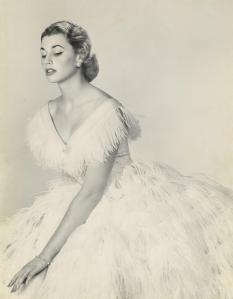
(Picture of 1950s model from an exhibition of Melbourne fashion photography by Athol Shmith held at the National Gallery of Victoria).

Famous Name: Kip

27 Wednesday Apr 2016

Posted by A.O. in Famous Names

≈ Comments Off on Famous Name: Kip

Tags

Australian slang terms, famous namesakes, name history, name meaning, nicknames, patriotic names, rare names, UK name popularity, US name popularity, vintage names

battles_of_gallipoli_commemorative_two-up_set

It was Anzac Day on Monday, a national day of remembrance. It is also closely connected with a form of gambling called two-up, a coin toss game where two coins are flipped on a flat wooden paddle by the “spinner”. Players bet on whether the coins land as two heads, two tails, or a head and a tail, called “odds”.

Two-up has become a part of the Australian identity, and is considered to be our national game. You can see games of two-up depicted in the films The Sundowners, Forty Thousand Horsemen, The Shiralee, and Wake in Fright, and it features in songs by AC/DC and Little River Band. The novel Come in Spinner by Dymphna Cusack takes its title from the call given by players to encourage the spinner at the start of play.

Although pitch and toss games were popular among the convicts and on the goldfields, it is thought that the game of two-up as we know it evolved among Australian soldiers during World War I. Not only does the art of war involve a lot of hanging about, but Australians were the best-paid soldiers in the First World War, with disposable income to burn. Gambling was therefore a popular pastime, and became a traditional game for Australian troops.

When returned soldiers came home to Australia, two-up was illegal, but a tactfully blind eye was turned by authorities when it was part of Anzac Day celebrations. It was only in the late 1980s and early 1990s that it became legal to play two-up on Anzac Day (you can also legally play it on Victory in the Pacific Day and on Remembrance Day after midday, although there are certain places, such as casinos, where you can play two-up on any day of the year).

The big catch under the Gaming Act is that you are not allowed to make a financial profit from two-up, and if you organise a game and end up making money, you are required to donate it all to charity. So this is a form of gambling you can play knowing that the money is going to a good cause. And if you end up giving away some of you hard-earned cash, that’s a small sacrifice to make compared to those who gave their lives for their country.

Name Information
The flat piece of wood which holds the coins in a game of two-up is called the kip. The origin of the slang term is not known for sure, but it may the same as the British slang kip, meaning “a short sleep”.

If so, the slang term kip comes from the Dutch kippe, meaning a cheap tavern or dosshouse, which by the 19th century had become a slang term for a brothel (cheap taverns and dosshouses having a tendency to be used in this way).

In either a tavern, dosshouse or brothel, although you might get a chance to doze off, you aren’t expecting it to be a place where you can regularly bed down – hence kip to suggest a short snooze. In Ireland, kip is still used to mean a dirty, messy place, in keeping with the meaning of an unsavoury inn.

The use of the word kip for the paddle used in two-up suggests that it was in such low dives that the game had its origins, or at least that it was a popular form of entertainment in such venues.

Kip is also used as a boy’s name, perhaps originating as a nickname for Christopher or Charles, but in practice often short for a surname such as Kipling, or a “true nickname” with no connection to the name at all.

Use of the name dates to at least the 19th century, although it isn’t possible to tell from records how often the name was given independently rather than as a nickname. The name is particularly associated with the United States, where it once had a bit of social cachet as an upper class nickname.

Kip was on the US Top 1000 from the end of World War II until the mid 1980s, peaking at #380 in 1965. In 2014, there were 50 baby boys named Kip in the US and 12 named Kipp (boys named Kipton, Kipper, and Kipling could well be called Kip for short). In the UK in the same year, there were 5 boys named Kip.

A famous Australian namesake is the amusingly named Kip Gamblin, a ballet dancer who has worked on several opera operas, both here and in America; his dance background has seen him chosen for the movie Moulin Rouge!, and for teen drama series Dance Academy. The name might also remind you of Kip McGrath Education Centres, the tutoring business founded by an Australian schoolteacher named Kip.

Former AFL footballer Brodie Holland and his wife, former model Sarita Stella, named their son Kip, twin brother to Bowie. The inspiration for Kip’s name was model/actor Kip Pardue, whose nickname came about because the initials of his name, Kevin Ian Pardue, spell KIP.

I have seen a few baby boys named Kip in recent years, and this looks like a short vintage-style nickname due for a comeback, in the style of Gus and Ned. Cute and fresh, Kip also manages to slyly reference an Australian tradition: it’s patriotic in a much more subtle way than Anzac and Digger. The name may be rare, but isn’t as much of a gamble as you might think.

POLL RESULTS
Kip received an approval rating of 69%. People saw the name Kip as fun and friendly (29%), and cute and charming (17%), but 21% thought it was only suitable as a nickname. Nobody thought the name Kip was dorky or nerdy.

(Picture shows a commemorative two-up set, complete with wooden kip; although this set has specially made coins, traditionally it is played with Edwardian era, or at least pre-decimal, coins)

Congratulations to Rowan from Eponymia!

19 Tuesday Apr 2016

Posted by A.O. in Blog News

≈ 1 Comment

Tags

choosing baby names, Eponymia, famous namesakes, middle names, nicknames, sibsets

Screen Shot 2016-04-15 at 9.20.43 AM

Fellow name blogger Rowan from Eponymia welcomed her second child on March 25. She and her husband now have a gorgeous daughter named Cosima Kindred, a sister for Ottilie Valentine; Cosima will have the nickname Cosy.

Cosima is a name that was on their original name list for their first baby, and Rowan still loved it. Kindred is the middle name of sci fi writer Philip K. Dick – a link with Ottilie’s name, as Valentine is the middle name of author Henry Miller. Both Valentine and Kindred are names connected with love, as we send cards to our kindred spirits on St Valentine’s Day.

Congratulations to Rowan and her family! A beautifully named baby girl, and a lovely sibset.

Famous Names: Angela and Russell

30 Wednesday Mar 2016

Posted by A.O. in Famous Names

≈ 1 Comment

Tags

aristocratic names, aristocratic surnames, Austrian name popularity, classic names, english names, European name popularity, famous namesakes, Latin names, locational names, name history, name meaning, nicknames, royal names, saints names, South American name popularity, surname names, UK name popularity, US name popularity

32824B6700000578-0-image-m-5_1458801873409

On March 27 it was the thirtieth anniversary of the Russell Street bombing in Melbourne, in which a gang of criminals blew up the city’s Police Headquarters Complex in an apparent revenge attack. That day in 1986 was Easter Thursday, and the bomb was timed to go off at 1 pm, when the street would be crowded with police and court room staff breaking for lunch.

Constable Angela Rose Taylor, aged 21, was on duty in the watch house at the old Magistrates Court when she tossed a coin with her workmate as to who would collect their sandwiches. Constable Taylor lost. She was on her way to the canteen when a stolen car packed with 50 to 60 sticks of gelignite exploded on Russell Street.

Constable Taylor was just one metre away from the car at the point of detonation, and she was thrown across the street in a fireball, her clothes blown off her body, her shoelaces alight, and her police hat melting. She suffered horrific burns to over 70% of her body and died in hospital on April 20, becoming the first Australian policewoman to die in the line of duty.

Twenty-two other people were injured in the blast, and over one million dollars worth of damage was done to the Police Headquarters, which is now an apartment block. Two men were sentenced to life in prison for the murder of Constable Angela Taylor and other crimes, one without a parole period.

Constable Angela Taylor received a posthumous service medal from Victoria Police, there is a plaque in her honour on Russell Street, a unit at the Royal Melbourne Hospital is dedicated to her, the Angela Taylor Memorial Scholarship offers grants for police to study, the Angela Taylor Memorial Run/Walk commemorates her life, and the dux of each graduating squad receives the Angela Taylor Award. Four of the Taylors’ grand-children are named in her honour – Brooke Angela, Laura Angela, Alyssa Rose, and Alex Jasmine Rose. In these ways does her name live on.

ANGELA
Angela is the feminine form of the Latin name Angelus, meaning “angel”. Angels are mentioned in the Old Testament as spiritual beings who bring communications from God; the word angel is derived from the Greek for “messenger”. Angels play a much bigger role in the New Testament, where they make several important announcements, including the birth and resurrection of Christ.

Angela has been used as a name since the Middle Ages, and given impetus by St. Angela of Foligno, one of the great medieval mystics and a spiritual teacher; later St. Angela Merici specialised in the education of young girls.

The name Angela was most common in Italy, Spain (from where it spread early to Latin America), Germany and Central Europe. Although the name was known in Britain too, it didn’t come into common use in English-speaking countries until the 18th century, aided by Spanish immigration in England. In the US, the name spread via the Hispanic population, and immigration from Germany and Italy.

Famous Australians named Angela include mining heiress Angela Bennett, the second richest woman in the country after Gina Rinehart; actress Angela Punch McGregor, who starred in classic films such as The Chant of Jimmie Blacksmith and We of the Never Never; British-Australian novelist Angela Thirkell, who was the god-daughter of J.M. Barrie; scriptwriter Angela Webber, who created the successful children’s show Mortified; and veteran radio broadcaster Angela Catterns.

Angela is a classic name which has never left the charts. It was #268 in the 1900s, joining the Top 100 in 1957 at #87. Famous namesakes from this era include actresses Angela Lansbury and Angie Dickinson. Angela peaked in 1976 at #12, and didn’t leave the Top 100 until 2003. Use has remained stable, and it is not far outside the Top 100 even now.

Angela is also a classic in the United States which has charted in the Top 1000 since the late 19th century, and almost never been lower than the Top 200 during the 20th century. It joined the Top 100 in 1956, and hit its peak in the mid-1970s at #5, when Angela Lansbury was wowing Broadway audiences in Gypsy, while Angie Dickinson starred in TV drama Police Woman. Angela left the Top 100 in 2003; it is now #191 and reasonably stable.

In the UK, Angela joined the Top 100 earlier, during the 1930s. It had been a fashionable choice among the aristocracy earlier in the century, with a notable example being Elizabeth Bowes-Lyon, later the Queen Mother, who had Angela as a middle name. The name Angela peaked in the 1960s, and was off the Top 100 by the mid-1990s. It is far less popular in England/Wales than in Australia or the US, being #516 and fairly stable.

Angela is a Top 100 name in Spain, Portugal, and Latin America, and is most popular in Spain, where it is #39.

No longer popular, Angela is an enduring classic with a beautiful meaning that is still in reasonable use. Pretty and sweet, it works well cross-culturally and makes a good choice for parents who want a familiar name which is neither very common for new babies, nor rising in popularity, without being particularly dated. Ange or Angie are the usual nicknames.

RUSSELL
Russell is an English surname of Norman origin. The aristocratic Russell family claim descent from Hugue de Roussel, who came over with the Conqueror as a high-ranking attendant and was granted land in Dorset. The Russells trace their surname from Roussel in Normandy, whose name comes from the Old French for “stream, brook”.

The Scottish Clan Russell trace their descent from an English baron named Rozel, whose name is perhaps derived from the Norman nickname Rous, meaning “red” and given to someone with red hair or ruddy skin. It was common amongst the Normans, and Latinised to Rufus, as with William Rufus, the son of William the Conqueror, who was blond with a florid complexion. This is another possible source for the surname.

The Russell family is one of the most famous in Britain, among the richest landowners in the country, and a powerful dynasty in Whig politics. They are descended from John Russell, a royal minister in the Court of Henry VIII, and the 1st Earl of Bedford, ancestor of all subsequent Earls and Dukes of Bedford.

Sir John Russell was British Prime Minister during the 19th century – it is he who Russell Street in Melbourne is named after. Others members of this prominent family include Bertrand Russell, the 20th century philosopher, humanist, peace activist, and Nobel Prize winner, and Bertrand’s son, historian Conrad Russell. Anne Russell was a literary patron and one of Elizabeth I’s closest friends, niece to the writer Anne Clifford; Anne’s mother Elizabeth Russell was a noted poet herself, so the family has long had a literary connection.

Famous Australian Russells include distinguished artist Russell Drysdale; World War II fighter pilot Russell Fosket; controversial politician Russell Hinze; New Zealand-Australian actor Russell Crowe; film director Russell Mulcahy who created the cult classic Highlander; and rock star Russell Morris, who sang the 1960s classic The Real Thing.

Russell has been used as a personal name since at least the 16th century, most likely in honour of the aristocratic family, and in some cases perhaps to demonstrate kinship with it. By the 18th century it shows up in Scotland, as by that time the Scottish Russells had a baronetcy and were distinguishing themselves in military service.

The name Russell was #94 in the 1900s, and peaked in 1956 at #45 (just as Angela was joining the Top 100). It left the Top 100 in the 1980s, and hasn’t charted since 2009. It is still in occasional use.

In the US, Russell has never been off the Top 1000, and was a Top 100 name from the late 19th century until 1983. Currently it is #408, and relatively stable. In the UK Russell was a Top 100 name from the 1960s until the 1980s. It has been on a fairly steep overall decline, and is now #959 and reasonably stable.

Russell is certainly not fashionable, but doesn’t seem horribly dated either – British comedian Russell Brand is perhaps helping to give it a rather livelier image. Although not a nature name it almost seems like one, as it sounds like the words russet and rustle, conjuring up images of autumn leaves. The usual nicknames are Russ and Rusty.

POLL RESULTS

Angela received an approval rating of 45%. 50% of people weren’t keen on it, and 5% thought it was a terrible name. Russell had a very similar approval rating of 46%. 48% of people weren’t keen on it, and 7% thought it was a terrible name.


(Photo of Constable Angela Taylor’s memorial service from the Daily Mail)

← Older posts
Newer posts →

Enter your email address to follow this blog

Categories

Archives

Recent Comments

A.O.'s avatarwaltzingmorethanmati… on Zarah Zaynab and Wolfgang…
Madelyn's avatarMadelyn on Zarah Zaynab and Wolfgang…
JD's avatardrperegrine on Can Phoebe Complete This …
A.O.'s avatarwaltzingmorethanmati… on Rua and Rhoa
redrover23's avatarredrover23 on Rua and Rhoa

Blogroll

  • Appellation Mountain
  • Baby Name Pondering
  • Babynamelover's Blog
  • British Baby Names
  • Clare's Name News
  • For Real Baby Names
  • Geek Baby Names
  • Name Candy
  • Nameberry
  • Nancy's Baby Names
  • Ren's Baby Name Blog
  • Sancta Nomina
  • Swistle: Baby Names
  • The Art of Naming
  • The Baby Name Wizard
  • The Beauty of Names
  • Tulip By Any Name

RSS Feed

  • RSS - Posts

RSS Posts

  • Celebrity Baby News: Melanie Vallejo and Matt Kingston
  • Names from the TV Show “Cleverman”
  • Can Phoebe Complete This Sibset?
  • Zarah Zaynab and Wolfgang Winter
  • Baby, How Did You Get That Name?
  • Celebrity Baby News: Media Babies
  • Celebrity Baby News: Adelaide Crows Babies
  • Celebrity Baby News: Chris and Rebecca Judd
  • Names at Work: Name News From the World of Business and Employment
  • Celebrity Baby News: Sporting Round Up

Currently Popular

  • Celebrity Baby News: Jacinta Allan and Yorick Piper
  • Celebrity Baby News: Jacinta Allan and Yorick Piper
  • Celebrity Baby News: Josh and Amie Frydenberg
  • The Top 100 Names of the 1940s in New South Wales
  • Rare Boys Names From the 1950s

Tags

celebrity baby names celebrity sibsets english names famous namesakes fictional namesakes honouring locational names middle names name combinations name history name meaning name popularity name trends nicknames popular names saints names sibsets surname names twin sets unisex names

Blog at WordPress.com.

Privacy & Cookies: This site uses cookies. By continuing to use this website, you agree to their use.
To find out more, including how to control cookies, see here: Cookie Policy
  • Subscribe Subscribed
    • Waltzing More Than Matilda
    • Join 517 other subscribers
    • Already have a WordPress.com account? Log in now.
    • Waltzing More Than Matilda
    • Subscribe Subscribed
    • Sign up
    • Log in
    • Report this content
    • View site in Reader
    • Manage subscriptions
    • Collapse this bar
 

Loading Comments...