• About
  • Best Baby Names
  • Celebrity Baby Names
  • Celebrity Baby Names – Current
  • Celebrity Baby Names – Past
  • Featured Boys Names
  • Featured Girls Names
  • Featured Unisex Names
  • Links to Name Data
  • Waltzing on the Web

Waltzing More Than Matilda

~ Names with an Australian Bias of Democratic Temper

Waltzing More Than Matilda

Tag Archives: classic names

This or That?

16 Sunday Dec 2012

Posted by A.O. in Your Questions Answered

≈ 11 Comments

Tags

Biblical names, celebrity baby names, choosing baby names, classic names, Eleanor Nickerson, faux-Celtic names, Irish names, name combinations, name popularity, nicknames, popular names, retro names, scandinavian names, Scottish names, surname names, unisex names, vocabulary words

l_2048_1536_55BA4ECF-57A0-4861-954A-D5C549924414After considering all the possible baby names, and a few impossible ones just for good measure, sometimes you end up with two or three names that you love equally, and just can’t choose between them.

Many people searched the Internet to discover which of their final options would make the better choice, and somehow stumbled upon this blog.

I decided to answer their questions, and found that quite often the name that seemed “better” wasn’t the name I liked best, or that I would choose.

Perhaps that is the lesson to be learnt here – not to look for the name which ticks the most boxes, or which fulfils more of your preferences, but the one which satisfies your heart the most.

When there is no right or wrong answer, how do you decide between the last two names on your list?

Adele or Adeline?

Classic Adele is the safer choice, and retro Adeline the more daring choice. I think I would be tempted to go with Adeline.

Riley or Caleb?

I would go for the Biblical name, as having more history behind it, and say Caleb.

Ryan or Dylan?

You ask which one sounds as if it is in a higher socio-economic group. To me, both seem fairly average or “normal”, and I don’t think I could pick one over another.

Rocco or Frankie?

Rocco – it’s rapidly increasing in popularity while still underused. Frankie is more fashionable as a feminine name now (if that bothers you).

Chloe or Lily?

Both are extremely popular, but I would say Chloe is the safer choice, as it has been Top 100 since the 1980s and only just peaked. Chloe also has a classical background, and is popular with all classes. Despite that, I prefer Lily.

Lillian or Clara?

I’d go with Clara, simply because it isn’t in the Top 100 yet and Lillian is.

Clara or Kayla?

Definitely Clara – Kayla doesn’t have the history behind her that Clara does, and is on her way out.

Clara or Zara?

I think I’m going to have to back Clara again, just to be consistent.

Zara or Allegra?

I love Allegra, but I have to admit she’s a risky choice, since she does seem to be getting quite trendy as a celebrity baby name. My heart says Allegra, but my head says Zara.

Charlie or Jack?

I’d go with Jack if you want a classic name that is definitely masculine, and is a short form that has been long established as a full name. Charlie is very cute though.

James or Hamish?

James is the safer choice, being a classic that’s never left the Top 20. Hamish is a bit riskier, but if you want something obviously Scottish, then Hamish is your boy.

Hunter or Archer?

I prefer Archer, because you get Archie as a nickname. If you hate nicknames, then Hunter is probably more appropriate.

Evalyn or Aveline?

You ask which one sounds “lovelier”; in my opinion, it is Aveline. However, I think Evelyn is lovelier than Aveline. Can I interest you in Evelyn?

Emmie or Emma?

You ask which one sounds “softer”; to me, Emma sounds softer.

Indie or Milla?

Even though Milla is Top 100 and Indie doesn’t chart, I’m going to say Milla. This is because if all the spelling variants were combined, I think Indie would be Top 100 as well. To me, Milla seems more distinctive.

Amelia or Matilda?

These are both safe choices, although if popularity bothers you, you should know that Amelia is probably heading for the #1 spot, which she already holds in the UK.

Annie or Matilda?

If you want something less popular, yet which has been stable for many years, then pick Annie. If you would prefer a non-nickname choice, then go with Matilda.

Josephine, Violet or Mathilda?

Josephine is the safest choice, and Mathilda seems trendiest because Scandinavian-type names are coming into fashion. I think Violet is the prettiest. You could use all three, because Josephine Violet Mathilda is really nice as a name combination.

Josephine or Audrey?

Both classic names, but Josephine is more stable, and isn’t in the Top 100. I find Audrey really adorable though, so I’m going to go against the sensible advice and say Audrey. If you’re feeling sensible, pick Josephine.

Elsie or Josie?

Definitely Elsie – it’s fashionable, increasing steadily in popularity, and Eleanor Nickerson tips it to become the next Evie in the UK.

Luella or Eloise?

Eloise is the more stylish and safer choice, but Luella is sweeter.

Eloise or Matilda?

I think Eloise is the clear winner here, because it’s still at the bottom of the Top 100, and seems more up-and-coming.

Matilda or Helen?

Classic Helen has been stable for decades, and peaked in the 1940s, suggesting she may be due for a comeback in about ten years or so. I’d be inclined to be brave and choose Helen.

Max or Darcy?

Max is by far the safer choice, as Darcy is losing popularity as other surname names take its place. I think I like Darcy better though.

Max Archie or Max Oscar?

When I hear “Max Oscar“, I immediately visualise a gigantic Academy Award statue, so I prefer Max Archie.

Oscar or Lucas?

Oscar – Lucas is just about to hit its peak.

Finn or Lewis?

Lewis if you want a classic name that’s less popular, Finn if you’re looking for an Irish heritage choice.

Kallan or Flynn?

Flynn – I don’t like it when names randomly start with a K instead of a C.

Taj or Kyan?

Taj. I’ve noticed faux-Celtic names like Kyan tend to have a short shelf life and date quickly.

Keira or Kirra?

Oh, go for the Australian choice and pick Kirra – be patriotic.

Sibella or Imogen?

Sibella, although much less popular, seems more trendy, and may get lost amongst the other Bella names, so I would pick Imogen.

Maisie or Matilda?

I love Maisie, she’s so sweet and charming, and seems much fresher than Matilda, so that would be my preference.

Matilda or Lilah?

Matilda – I don’t like that spelling of Lila, which makes no sense to me.

Jett or Jet?

Tough call. I think I might be tempted to go with vocabulary word Jet, which seems more fashion-forward.

Jai or Jye?

Jai – it seems more like a real name.

Jett, Levi or Jai?

Levi. Probably because it stands out pitted against two names starting with J.

Names of Australian Female Olympic Swimmers

25 Sunday Nov 2012

Posted by A.O. in Name Themes and Lists

≈ 11 Comments

Tags

Babylonian names, Biblical names, classic names, english names, famous namesakes, fictional namesakes, flower names, French names, hebrew names, Hollywood names, Latin names, locational names, mythological names, name meaning, name popularity, names in songs, Old English names, Old Norse names, popular names, portmanteau names, Portuguese names, Roman names, royal names, Russian names, Sabine names, scandinavian names, screen names, Spanish names, Sumerian names, surname names, The Canterbury Tales, time of day names, unisex names, vocabulary names

During the winter, I compiled lists of names from Olympic medalists, and perhaps you noticed that no swimmers were included. That’s because swimmers are such a big part of our team, and historically the big medal winners, so that they really needed lists all to themselves. Now that it’s hot again, maybe they will inspire you to hit the pool!

Alva (Colquohuon)

Alva Colquhuon won silver at the 1960 Olympics. Alva is the feminine form of the Scandinavian name Alf, from the Old Norse for “elf”. Alva is also a male name, a variant of the Hebrew name Alvah, meaning “his highness”. As a male name, it is best known as the middle name of American inventor Thomas Alva Edison. Today it almost seems like a cross between Ava and Alba.

Brittany (Elmslie)

Brittany Elmslie is a young swimmer who attended her first Olympics this year, where she won a gold and two silvers. Brittany is the name of a region in north-west France, which in French is known as Bretagne. It was once known as Little Britain in order to distinguish it from Great Britain, hence its name. The Breton language is Celtic, related to Welsh and Cornish, and the history of the land and its people is intimately connected to Great Britain. Even today, Brittany retains its own identity and culture within France. Brittany has been used as an English girl’s name since the late 18th century – perhaps originally because Brittany was known for its resistance to the French Revolution. The name first entered the charts in the 1970s, making #245 by the 1980s. It peaked in the 1990s at #31, then sharply dropped, leaving the Top 100 in the early 2000s. It hasn’t charted at all since 2009 (the year actress Brittany Murphy died), and this is a good example of a name which reaches popularity very quickly, then becomes just as rapidly dated.

Dawn (Fraser)

Dawn Fraser is one of our most famous swimmers, who has received many honours; she is considered the greatest sprint swimmer of all time. She won two golds and a silver at the 1956 Olympics, a gold and two silvers in 1960, and a gold and a silver at the 1964 Games, setting two world records and two Olympic records. She is well known for her blunt speech and larrikin character, and one of the ferries on Sydney Harbour is named after her. Dawn is the period just before sunrise, where there is pale sunlight, but the sun itself is still below the horizon. The word comes from the Old English for “to become day”. The name is found from the 16th century onwards, and must at least sometimes have been given to girls born at daybreak. Dawn first entered the Australian charts in the 1910s, reaching #103 for the 1920s. It peaked in the 1930s at #32, and left the Top 100 in the 1950s. It hasn’t ranked since the 1980s, and the 1970s song Delta Dawn, about a crazy middle-aged woman, probably didn’t do its image any good – although covering it gave Australian singer Helen Reddy her first #1 hit. I wonder whether it might be time for a revival of this 1930s name? Apart from the fragile beauty of dawn, the word is filled with hope and optimism, and a sense of renewal.

Emily (Seebohm)

Emily Seebohm has been a champion swimmer since 14 and is now 20. She won gold at the 2008 Olympics, and a gold and two silvers at the London Games. Emily is the English form of the Roman name Aemilia, the female form of the family name Aemilius. The Aemilii were one of the noblest and most ancient patrician houses of Rome, and were probably of Sabine origin. They interpreted their name as meaning “persuasive”, and others derived it from Latin aemulus, meaning “rival”, but most likely these are both false etymologies. The English form is first found in Chaucer’s Canterbury Tales; he adapted it from a character named Emilia in a poem by Giovanni Boccaccio, where two men are rivals for the affections of the same woman. Although in use from early on, it didn’t become popular until the Hanoverians came to the throne in the 18th century, as Princess Amelia, daughter of George II, was called Emily by her family. Emily was #36 for the 1900s, but fell until it had left the Top 100 by the 1930s. It reached its lowest point in the 1950s at #455, then climbed steeply; it skyrocketed to make #26 for the 1980s. Emily peaked at #1 in 1998, and remained there for most of the early 2000s. Currently this pretty classic is #12.

Hayley (Lewis)

Hayley Lewis was at her peak during the 1990s, when she won many medals internationally, but although she attended three Olympics, only won silver and bronze at the 1992 Games. Hayley is now the host of Channel Ten’s weight-loss show, The Biggest Loser. Hayley is an English surname from a common English place name meaning “hay clearing” in Old English; the surname dates from the 13th century and is especially associated with Yorkshire. It’s been used as a personal name for both boys and girls since the early 18th century, but only became popular in the 20th century, and only as a girl’s name. This was because of English actress Hayley Mills, who was the most popular child star of the 1960s, and made several Disney films as a teenager. Hayley first entered in the charts in the 1960s, when Mills began her career, debuting at #489. It climbed steeply during the 1970s, and was Top 100 by the 1980s. Hayley peaked in 2005 at #21, and is currently #50. It dropped just one place in 2011, and looks set to maintain a graceful decline that could see it in the Top 100 for several more years.

Jacinta (van Lint)

Jacinta van Lint won silver at the 2000 Olympics. Jacinta is the feminine form of the name Jacinto, a Spanish/Portuguese name meaning “hyacinth”. The Spanish pronunciation is something like ha-SEEN-tah, but in English we say it juh-SIN-tah. It is best known as the name of Blessed Jacinta Marto, who was one of the three children of Fátima in Portugal, who reported witnessing visions of an angel and the Virgin Mary in 1916-17. Jacinta has been rather a favourite in Australasia, first entering the charts in the 1950s, and climbing until it peaked at #101 for the early 2000s. It fell to #197 in 2009, and since then has picked up slightly, to make #189 last year. The fact that it entered the charts in the 1950s makes me wonder if use of the name was originally inspired by the 1952 Hollywood movie, The Miracle of Our Lady of Fatima, which starred Sherry Jackson as Jacinta (the name had the English pronunciation in the film). It’s a pretty name which has had steady use without ever becoming highly popular in New South Wales – although more common in Victoria.

Lisbeth (Trickett)

Lisbeth “Libby” Trickett won gold and bronze at the 2004 Olympics, two golds, a silver and a bronze in 2008 while setting a world record, and gold at the London Games this year. Lisbeth is a variant spelling of Lisbet, a Scandinavian short form of Elisabeth. The name has recently become well-known due to Lisbeth Salander, the antiheroine of Swedish author Stieg Larsson’s crime thriller Millennium series. The first novel, The Girl with the Dragon Tattoo, was turned into a Hollywood movie last year, with Rooney Mara as Lisbeth. Lisbeth Salander is a disturbed computer hacker with a punk-Goth style, and a victim who refuses to lie down, but instead turns vigilante. It’s definitely given sweet Lisbeth a far more dangerous and edgy image.

Marilyn (Wilson)

Marilyn Wilson won silver at the 1960 Olympics. Marilyn is a portmanteau name combining Mary and Lynn. It can be found from the late 18th century, and seems to have sprung up in several countries almost simultaneously, so that an origin for the name isn’t obvious. Its most famous namesake is Hollywood sex symbol Marilyn Monroe, and thanks to Elton John’s Candle in the Wind, nearly everyone knows her birth name was Norma Jeane. The name Marilyn was chosen for her by a studio executive because she reminded him of Broadway beauty Marilyn Miller (oddly enough, Marilyn later married writer Arthur Miller). Marilyn Miller was born Mary, and combined her name with her mother’s middle name to create her stage name. Marilyn first entered the charts in the 1920s, when Marilyn Miller began her career, and by the 1930s was #146. It skyrocketed to make the Top 100 in the 1940s, and peaked in the 1950s, the era in which Monroe enjoyed her greatest success, at #44. It then plummeted into the 200s during the 1960s after Monroe’s death, and hasn’t ranked at all since the 1980s. This is a dated name, yet still possesses some of the lustre of its two glamorous namesakes.

Nadine (Neumann)

Nadine Neumann had to battle against the odds, first recovering from chronic fatigue syndrome as a teenager, then breaking her neck before she could attend the 1992 Olympics. She made it to the 1996 Games, but failed to win a medal. After retiring, Nadine became an educator and writer. Nadine is the French form of the Russian name Nadia, a short form of Nadezdha, meaning “hope”. The French pronunciation is na-DEEN, but in Australia we usually say it nay-DEEN. Its most famous namesake is South African novelist and political activist Nadine Gordimer, who won the Nobel Prize for Literature in 1991. In the 1960s, the name got its own popular song when Chuck Berry released Nadine, describing his object of desire as moving “like a wayward summer breeze”. Nadine first charted in the 1950s, the decade that Nadine Gordimer published her first novel; it debuted at #535. The name peaked in the 1970s at #145, and by 2009 no longer charted at all. However, Nadine recently made a minor comeback, reaching #573 last year. Irish singer Nadine Coyle, from pop group Girls Aloud, may have been a help; her first solo album was released at the end of 2010.

Sarah (Ryan)

Sarah Ryan won silver at the 1996 Olympics, silver in 2000 and gold in 2004. In the Bible, Sarah was the wife of the prophet Abraham, and a woman of surpassing beauty; she is honoured in Judaism, Christianity and Islam. She was barren until extreme old age, when God blessed her and Abraham with a son named Isaac. Her name was originally Sarai (said suh-RYE), but when she and Abraham made their covenant with God, her name was changed to Sarah. As both names have the same meaning (“woman of high rank, female ruler of the court”, translated as “princess”), it is unclear what the purpose of the change was. It’s possible the ah sound in Sarah suggested the name of Yahweh more closely, as if to demonstrate she was now a woman of the Lord, not of the world. In fact, Sarah is the only prophetess in the Bible who is spoken to directly by God. Although Sarah is a Hebrew name, its origins are Babylonian, and some scholars identify the Biblical Sarah with the goddess Ishtar. This vaguely fits with the Old Testament story, which says Abraham and his wife were originally pagans from Sumeria. Sarah was #43 in the 1900s, but had left the Top 100 by the 1920s, and reached its lowest point in the 1940s at #284. By the 1960s it was Top 100 again, and peaked in the 1980s at the #1 name. Currently it is #31, and remains a lovely classic.

(Picture is of Dawn Fraser at the 1956 Olympics in Melbourne; photo from Wikimedia Commons)

Famous Name: Peter

17 Wednesday Oct 2012

Posted by A.O. in Famous Names

≈ 5 Comments

Tags

Aramaic names, Biblical names, classic names, famous namesakes, fictional namesakes, French names, Greek names, name history, name meaning, name popularity, nicknames, Old French names, saints names, surname names

On October 11, Federal Parliament voted to apologise to Olympian Peter Norman for the treatment he received at the 1968 Mexico City Games. You may think that this apology was slightly overdue; its tardiness perhaps seems even more glaring when you learn Peter passed away on October 3 2006.

Peter Norman was a sprinter who was Australian champion in the 200 metres five times over. On October 16, he won the silver medal in the 200 metres at the 1968 Summer Olympics. His time of 20.06 seconds still stands as the Australian record, and would have won gold at the 1976, 1980 and 2000 Olympics. However, Peter is more famous for what happened during the medal ceremony.

The other medal winners were American athletes Tommie Smith (gold) and John Carlos (bronze), with Tommie setting a world record time of 19.83 seconds. At the medal ceremony, as Tommie and John faced the American flag and heard The Star Spangled Banner, they raised their fists in a Black Power salute, and bowed their heads, as part of a protest on behalf of the civil rights movement.

Peter knew what his fellow athletes were planning, because they told him just after the race, and asked him if he would stand in solidarity with them on behalf of the Olympic Project for Human Rights. They asked him if he believed in human rights, if he believed in God. Peter, who was a member of the Salvation Army, and vehemently opposed to racism, said, “I’ll stand with you”.

John expected Peter to look frightened at what was about to happen, instead he says, he saw only love in his eyes. It was Peter’s own idea to wear the OPHR badge, which he had seen a white American athlete wearing.

The fallout from The Salute affected all three of the athletes. Tommie and John were deemed to have broken the code that the Olympics must remain apolitical, and expelled from the Games. Back in America, they were criticised heavily in the media, abused by the public, and their families received death threats. The athletic establishment tended to ostracise them, and both faced some tough times.

In recent years there have been some efforts to recognise them: a statue was erected in their honour at San Jose State University, where they were students, in 2005, and both received Arthur Ashe Courage Awards in 2008. (Peter asked not to have his statue at San Jose, instead requesting that his place be left empty so that any person could stand there and represent him).

In 1968, Peter was reprimanded by the Australian Olympic Committee, and vilified by the Australian press. Despite qualifying for the 1972 Olympics, he was not selected, and in fact this is the only Games in which no Australian sprinters participated. This is seen as the death knell of his athletic career. His name is omitted from Australian books and lists which compile the “100 Greatest Athletes” or “100 Greatest Sporting Moments”.

The AOC dispute this version of events vigorously. According to them, Peter received nothing more than a fatherly chat and some free tickets to a hockey game after The Salute incident. They claim that despite qualifying in 1972, and running a time faster than the eventual gold medal winner that year, he was nursing an undeclared injury which prevented his selection.

Even as late as 2000, Peter was not asked to take part in the Sydney Olympics – a major international sporting event in which practically every other former Australian athlete was invited to play some sort of role. I’m not sure what excuse the AOC has for that. Maybe his invitation got lost in the post.

Tommie, John and Peter were all martyrs for a cause, and to supporters of the civil rights movement, they were also heroes. Sadly for Peter, in his own country his gesture against racial inequality went unrecognised during his lifetime. All three men remained life-long friends, and both Tommie and John were pall-bearers at Peter’s funeral.

The US Track and Field Association named the day of his funeral, October 9 2006, as Peter Norman Day. Shamefully, Australian sporting bodies have never done anything to acknowledge him, and refused to endorse the parliamentary apology.

This year, John Carlos said, “There’s no-one in the nation of Australia that should be honoured, recognised, appreciated more than Peter Norman for his humanitarian concerns, his character, his strength and his willingness to be a sacrificial lamb for justice”.

Australia is very ready, sometimes perhaps too ready, to celebrate physical courage. It seems we are very slow to reward moral courage, and Peter Norman remains one of our forgotten heroes.

The name Peter is derived from the Greek Petros, meaning “rock”, a translation of the Aramaic Cephas in the New Testament. Peter is one of the most famous of the New Testament names, as it is the name of the most prominent apostle. It’s actually a nickname or code name given to him by Jesus, because his real name was Simon (it seems very much like calling him Rocky).

Famously, Jesus puns by addressing Peter, and saying “On this rock I build my church”, to indicate that he was giving Peter the role of leading the early Christian church. Catholics see Peter as the first pope for this reason, and the impressive St Peter’s Basilica in Vatican City was built in his honour. According to tradition, Peter was martyred in Rome by being crucified upside-down.

It is entirely due to Peter the Apostle that the name Peter spread throughout the Christian world. It was introduced to England by the Normans in the Old French form Piers; I bet you can guess that this is the basis for the French name Pierre, but I wonder if you also realised it was the origin of the English name and surname Pierce? By the 15th century, the modern day spelling of Peter was established.

Like Jack, Peter is a name which we all seem to have grown up with, reciting the tongue twister about Peter Piper who picked a peck of pickled peppers, or the nursery rhyme about Peter the Pumpkin Eater who had a wife and couldn’t keep her. We were told the stories of Peter Rabbit and Peter Pan, listened to Peter and Wolf, and may have known Peter Pevensie from The Lion, the Witch and the Wardrobe, Peter the goat-herd in Heidi, or Peter Parker from the Spiderman comics. Because of this, there is something very cosy and comforting about the name Peter to me.

Peter is a classic name in Australia which has never left the charts. It was #64 in the 1900s, and peaked as the #1 name of the 1950s. It only left the Top 100 in 2009, and is currently stable at #125. Peter isn’t an unusual name today, and it was very popular when Peter Norman was born, in 1942.

Sometimes reading name blogs I am uneasy that we (and I am very much including myself here) are often too eager to suggest an unexpected name over one that is more common. The story of Peter Norman teaches me that someone with an ordinary name may still do something extraordinary, and our name does not need to stand out in order for us to stand up for what we believe. It’s worth keeping in mind.

NOTE: Some information from Salute (2008), a critically acclaimed documentary by Matt Norman, Peter’s nephew, and highly recommended viewing. Matt is currently working on a dramatised version called 1968.

The Geography of Sydney Baby Names

16 Tuesday Oct 2012

Posted by A.O. in Names in the News

≈ 6 Comments

Tags

classic names, famous namesakes, modern classic names, popular names, retro names, surnames names

A news story I quoted on the weekend said that when it comes to the most popular names, each region of New South Wales tended to be quite similar. This story, on the other hand, says that there are subtle differences between the names chosen in different areas.

At Westmead Hospital in Sydney’s west, the most popular names are Joshua, Ethan and Lucas for boys, and Olivia, Mia and Chloe for girls.

At the Royal Hospital in Randwick in the eastern suburbs, the most popular names for boys are William, Alexander and James, and for girls, Isabella, Sophie and Grace.

On the upper-class north shore, boys were most likely to be called Oliver, Thomas or Jack, and girls Chloe, Charlotte or Emily.

In the southern suburban areas of Sutherland Shire and St. George, the most popular boy’s names are Lucas, Benjamin and Christian, and the most popular girls Olivia, Amelia and Zoe. (Overseas readers may be interested to know that the Australian equivalent of Jersey Shore is set in Sutherland Shire).

The article says that this means that in the west, they choose “Hollywood movie star” names, while in the east, they opt for more “conservative, traditional or Biblical” names. I find this quite confusing, because Joshua, Ethan and Chloe are names from the Bible, and from the other group, only James is Biblical.

And whether a name is “Hollywood” seems rather subjective, because of course there is Will Smith, Alexander Skarsgard, James Dean, Isabella Rosselini, Sophie Monk and Grace Kelly! I couldn’t actually see why the west was more “Hollywood” than the east.

The ones from the eastern suburbs hospital do tend to be names which have charted since 1900, and the ones from the west are all modern classics. So perhaps we can say, very vaguely and generally, that people in more affluent areas of Sydney are more likely to prefer classic and retro names, while working-class areas prefer modern classics.

However, the working-class choice was Sophia, which is a retro name charting since 1900, while affluent choice Sophie is a modern classic, so it’s not cut-and-dried by any means. Both areas liked James, Chloe and Isabella, so there are several name choices which apparently suit all classes.

Away from Sydney, on the Central Coast and in Newcastle, the popular boys were Cooper, Noah, Riley, Lachlan and Tyler, and the most common girls Ruby, Sienna, Ava and Ella. Interestingly, if you live somewhere regional and coastal, you do seem more likely to call your son Cooper or Riley, and the addition of Tyler makes it seem this is where surnames-as-first-names rule.

Rather typically, neither of the articles from Sydney bothers to look at other regions of New South Wales or even acknowledges they exist. I would have been very interested to see the popular names from other regional centres.

Can You Suggest Any Vintage Baby Names for This Couple?

29 Saturday Sep 2012

Posted by A.O. in Naming Assistance

≈ 11 Comments

Tags

choosing baby names, classic names, flower names, middle names, nature names, nicknames, plant names, popular names, retro names, sibsets, The Baby Name Wizard, vintage names

Anya and Tom are expecting their second child in about three or four weeks, and although they have dutifully compiled a little list of names for each gender, they don’t have strong feelings about any of the names, which is making it hard for them to decide.

Girls List

  • Elsie
  • Belle
  • Lily
  • Rose
  • Anya likes the names Pearl and Mabel
  • Tom likes the name Josie

Boys List

  • Stanley
  • Reggie
  • Jack
  • Anya likes Monty, Billy and Eddie
  • They have also considered Albie, Archie and Alfie

Anya and Tom’s Preferences

  • Vintage names
  • Nicknames, and names that can be shortened to a nickname
  • Short names
  • Not too fussed about popularity, and would prefer a popular name to something obscure
  • Something which is a good match with their daughter, who is named Is**la

Anya and Tom would love suggestions of other names that fit their naming style, and their surname begins with E and ends with S eg Eadens. They don’t mind alliterative names, such as Elsie Eadens. They are also looking for middle names.

~~~~~~~~~~~~~~~~~

Congratulations, Anya and Tom – you’re well-prepared, second-time-around parents-to-be who have done all their homework! You’ve drawn up your name lists, you know what you like, yet you are open to thinking of new names. Best of all, you have a positive, relaxed attitude to finding a baby name, and willing to have some fun in the process.

It sounds like you’ve already received some criticism for your name choices, and although I’m sure you handled it diplomatically, you do need to be able to make your decision without being swayed by others (including me!).

Because none of the names you’ve picked seems to have won your heart, I think it’s a good idea to keep looking, but don’t think that a name you don’t “love” should be crossed off. Sometimes we find the perfect name right away, but it takes a while for us to get emotionally attached to it. It’s amazing how many parents will end up going with a name they didn’t warm up to at first.

Even though you only have a few weeks to go, you don’t need to choose the name right now. I’d suggest that you finalise your name lists, and keep all your options open until after the birth. Once your new son or daughter is born, don’t be afraid to follow your heart, because chances are the right name will come to you intuitively if you’re patient and don’t try to force it.

(Middle names: I’ve written a short guide to middle names that might interest you).

GIRLS NAMES

It’s interesting you’re looking for a vintage name to match your daughter’s, because your little girl has quite a modern name, in that it’s only become popular quite recently. Because of that, I’d suggest that you might want to go with a classic or retro name that’s already popular or gaining rapidly in popularity.

Elsie and Lily are quite similar in sound to your daughter’s name – Elsie also has a vowel-L-S-vowel pattern, while three of Lily’s letters can be found in I’s name, and they both end in vowels. That makes me wonder if you would like a sister-name match that sounds a lot like your daughter’s? I actually think you and your daughter have quite similar names, so another one like that could make a “family set”. I notice you seem to like girl’s names with a strong L sound in them, so I’ve tried to find names that fit that pattern.

Rose and Belle are both really pretty, feminine names. I think classic Rose is my favourite of your names under consideration – sounds lovely with your surname, makes a good sibling match, and has a nice level of popularity. The Baby Name Wizard actually has Belle listed as a sister for Is**la! The two names together make me think of Belle Isle, a popular place name; they seem to make the phrase beautiful island. If you don’t end up using them, either name could become a middle name.

Suggestions

  • Alice (sweet popular classic name, sounds similar to Elsie)
  • Violet (elegant popular vintage flower name, same long I sound as her sister)
  • Millie (vintage name rising rapidly in popularity, similar to Mabel and Lily)
  • Molly (popular vintage name, similar to Mabel and Lily)
  • Daisy (cute vintage flower name as an alternative to Lily and Rose)
  • Tilly/Tillie (nickname alternative to Lily)
  • Eva or Eve (pretty popular names that bring the nickname Evie, similar to Elsie)
  • Lola (everything you asked for, but may seem too similar as a sibling name match)

BOYS NAMES

You seem to have considered quite a few boy’s names that got rejected, although I’m not sure if Albie/Alfie/Archie has been eliminated or is still in the running. Stanley and Jack are both classics, while Reggie is just coming in to fashion as a fresh alternative to Archie. I’m finding it hard to pick a front-runner, as they are all subtly different and have their points to offer.

Stanley has never gone out of use, and yet isn’t popular, although he is on the rise and pretty hip; while Jack and Reggie are laddish, Stanley nn Stan is sturdy and manly. Reggie is cute, and makes quite a daring choice – he seems like he has the potential to become the new Archie. Perennial favourite Jack never goes out of fashion, even though his popularity is currently slipping. I think Jack probably sounds best with your surname and as a brother to your little girl, but as you well know, he will be one of many Jacks (not that there’s anything wrong with that). I might be leaning slightly towards Stanley, but I think any of these names would make a fine choice.

Suggestions

  • Will (a softer alternative to Billy; I think it would sound nice with his sister)
  • Fred or Freddie (a cute but more surname-friendly alternative to Eddie)
  • Percy (seems similar to Reggie)
  • Gus (very hip old-style nicknamey name)
  • Lenny (similar to both Stanley and Reggie, becoming very fashionable)
  • Rex (short, strong vintage name; similar to both Reggie and Jack)
  • Kit (similar to Jack, but with a touch of the west)
  • Barnaby nn “Barney” (seems similar in feel to Monty)

NOTE: The baby’s name was Jack!

Saturday Celebrity Sibset: Carla Zampatti – Italian Style

22 Saturday Sep 2012

Posted by A.O. in Sibsets in the News

≈ 5 Comments

Tags

celebrity baby names, celebrity sibsets, classic names, Italian names, name popularity, popular names

This is a celebrity sibset I’ve been wanting to cover for some time, as it’s been such an influential one.

Carla Zampatti is one of Australia’s most famous designers, and at 70, considered a matriarch of the industry. Originally from northern Italy, she moved to Australia during her childhood. Her first boutique opened during the early 1970s in Sydney, and she now has a chain of more than thirty stores across Australia. She has received many awards, including Designer of the Year, Businesswoman of the Year, and Australian Fashion Laureate, the highest honour in the Australian fashion industry.

Carla’s first husband was Leo Schuman, who she married in 1964 and divorced in 1970; their son is named Alexander (nn Alex) and he’s now on the board of his mother’s company.

In 1975 Carla married wealthy Liberal politician John Spender, a Yale graduate, barrister, and later, diplomat to France. They were divorced in 2010.

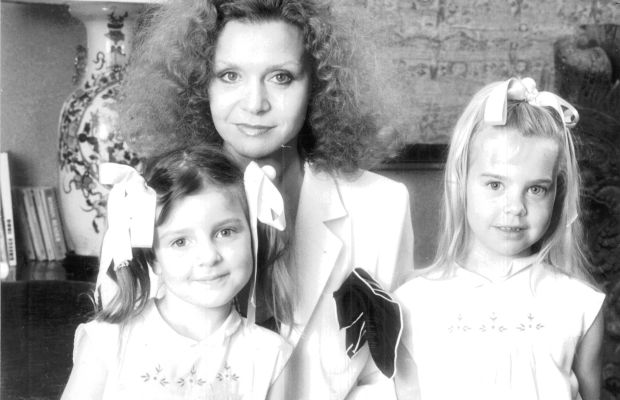
Their daughters are Allegra, who is now the General Manager of the company, and Bianca, who is a fashion designer and has her own label.

Alexander is a sturdy classic in Australia which has never left the Top 100. It was #29 for the 1900s, and reached its lowest point in the 1960s (when Alex Schuman was born) at #89. It surged upwards through the 1970s and ’80s to reach #17 in the 1990s. Since then it has remained stable, and is currently #16.

Bianca was in rare use in the 1960s, but in the 1970s, it absolutely skyrocketed to reach #139 for the decade. Top 100 by the 1980s, it peaked in the 1990s at #45. By 2010 it was still a very respectable #125, and last year it increased to #103, only just outside the Top 100.

Allegra has never been in the charts, but it is gaining in popularity, been chosen as a baby name by several celebrities, and has retained a great deal of cachet. Not only fashionable, it is also an appealing Italian heritage choice. I can’t help wondering if it is tomorrow’s Bianca?

Carla Zampatti has become a fashion institution by making classic clothes that can be worn for years, and she seems to have the same ability to select names that remain popular and stylish for decades. One of the amazing things about this sibset is that although the siblings are in their thirties and forties, you can easily imagine Alex, Allegra and Bianca as children born within the last couple of years.

(The picture shows Carla and her daughters around the mid-to late 1980s, I would guess; photo from David Jones, which has exclusive rights to both Carla Zampatti and Bianca Spender fashions)

News Limited Name Study

30 Thursday Aug 2012

Posted by A.O. in Historical Records, Names in the News

≈ 3 Comments

Tags

classic names, hyphenated names, name studies, popular names, popularity, punctuation in names, unique names, unisex names, variant spellings

John and Margaret – #1 in Australia Since Forever

News Ltd analysed all the name data in Australia since 1790, and have found that the most popular names in our history are John for boys, and Margaret for girls. Nearly 262 000 boy babies have been named John in the past 220 years, and 96 458 baby girls have received the name Margaret.

Also-Rans

While John is oodles ahead of the #2 boy’s name, David, Margaret wasn’t far ahead of Sarah, Elizabeth and Mary.

Most Consistent Performers

William and Mary have appeared in the Top Ten for each year more often than any other names.

Top Ten Then, and Now

Only two names in history have managed to make the overall Top Ten and the Top Ten of 2011 – William and James. That shows how tough it is to choose a name which is truly “timeless”. And for a girl, apparently impossible.

Numbers of Names

112 689 different names have been used between 1790 and 2011 – 76 459 female, and 46 230 male. Much more variety in girl’s names, it seems (although I wonder how many of those are just variant spellings?)

Unique Names

51 293 females and 31 042 males have received unique names in our history (again, is this including variant spellings?)

The Gamut of Unique Names

Girls – Aab to Zyrkia-Lee

Boys – A to Zzak (aha, I knew it was just variant spellings!)

Differences Between States

South Australia: The most relaxed about gender, with a number of boys called Sharon, and girls named George, David, John, Stephen and Trevor. (Or else they just have more clerical errors than any other state).

Victoria: The most likely to abandon old-time names, with Basil, Cecil, Agnes and Eunice completely out of use since the late 1920s to early 1930s. (This seems rather selective).

Queensland: The most likely state to have hyphenated names and/or apostrophes in their names. Examples included Lospipeli-Fakamanatu-He-Lotu-Ka, Onyx-Z’Xyon, Zche-Ztev’n and Bendeicta-Malia-Eva-I-Loto-Mua.

Tasmania: The most fond of variant spellings for names (I can attest that this one is quite accurate).

Please note that Western Australia and the Australian Capital Territory declined to share their name data, which must make the study incomplete.

Worst Names Ever, According to “Experts”

These names were voted the worst of all time, by a panel of un-named experts. (Probably just the journalists and a couple of their friends). See if you agree!

BOYS

  1. B/O
  2. Trey’Von
  3. Adaquix-Jeramiah
  4. Zzak (I think they just lazily went for the last name on the list)
  5. Aeneas (philistines)
  6. Baileyjayden
  7. Trinkyn
  8. A, B, C, D etc (I think they lazily just went for the first name on the list)
  9. Niño (I think they’re daft to say this is a bad name)
  10. Ace (ridiculous that this makes the Top Ten of worst names!)

GIRLS

  1. Bacardee (plain snobbish to make this the #1 worst name in history)
  2. Kataraina-Heneti-Teowaena-Hune-Maera (cultural diversity – boo! hiss!)
  3. Chawnlahnee
  4. Janis-“Milly”
  5. Achant’E
  6. Tinkerbell (bit predictable to go after this one)
  7. Lotus-Moon (ditto)
  8. Dare (I fail to see the horror)
  9. Abbegaile (no WAY is this the worst variant spelling in history! I even know how it’s said!)
  10. Bardót-Dior

She Says Clara, He Says Zara: Can You Help This Couple Resolve Their Baby Naming Differences?

18 Saturday Aug 2012

Posted by A.O. in Naming Assistance

≈ 8 Comments

Tags

choosing baby names, classic names, compromising on baby names, honouring, middle names, modern classics, name combinations, name popularity, nicknames, popular names, portmanteau names, retro names, sibsets

Kate and her husband Steve are expecting their second child in late January next year. Although it may seem they have plenty of time, they are currently at a stalemate when agreeing upon names for a baby of either sex.

They had these naming issues with their first child as well. They continued discussing and arguing over it for eight months of Kate’s pregnancy, and chose their daughter’s name while actually in the hospital. Feeling pressured by family expectations that they choose a name immediately, and with her husband refusing to back down, Kate agreed to Steve’s choice, which was Madeline – a name that he loved, and would consider nothing else. The middle name was a family one from Kate’s mother’s side given to all first-born daughters.

Although Kate is fond of her daughter’s name, it was not her first choice, and this time she really wants the baby’s name to be something that she loves. Steve is willing to let her choose whatever name she likes – providing that he doesn’t hate it. The problem is, Steve seems to hate most of Kate’s favourite names. She is getting frustrated that he seems to be vetoing almost every name she suggests, while not making many suggestions of his own.

Names for Girls Considered

  • Kate’s favourite names for girls are Clementine, Olive, Ivy, Mabel, May, Nell, Lillian, Clara, Maeve, Dorothy, and Eloise. Steve detests all of these, but least dislikes May and Eloise.
  • Steve has expressed a preference for Kayla, Eleni, Lani, or Zara. Kate dislikes these names, with the exception of Zara, which she can just tolerate.
  • Neither of them has a preference for a middle name, and they don’t really mind what it is.

Names for Boys Considered

  • Kate’s favourite names for boys are Henry, Flynn, Hugo, Sullivan, Oscar and Archie. Steve hates the name Henry, and doesn’t mind Sullivan or Archie, but isn’t thrilled about them either.
  • Steve hasn’t made any serious suggestions for boy’s names, but has mentioned Lachlan and Noah. Kate doesn’t dislike either name, but does feel that Top 10 is a bit too popular to consider.
  • They both like the names Jack and William – alas, everybody else seems to as well! If only Jack or William were Top 50 rather than Top 5, these would be their choices.
  • The middle name will be either John or Timothy, which both honour much loved family members. They will go with whatever middle name fits best with the name they eventually choose.

Kate and Steve’s surname begins with H and ends with -er.

~~~~~~~~~~~~~~~~~~~~~~~~~~

Kate, if it’s any consolation to you, your baby name problems are ones that many couples share. The most common complaint I hear from women is that they suggest name after name, and their other half rejects all of them, yet doesn’t seem to contribute many ideas of his own.

I think the situation with your daughter’s name isn’t that unusual either – while women often seem to have at least a dozen “favourite names”, if men have any at all, it’s often only one. With just one egg in their basket, they can be prepared to fight for it, and in this case, it seems as if Steve did fight for his favourite, and prevailed.

I think it’s lovely for a little girl to have a name chosen by her daddy, and her middle name is from your side of the family, so her name connects her to both of you. You can take heart that despite all your disagreements, you actually did a good job together, which means you’ll probably do a good job again. It was generous of you to agree to your husband’s choice on the very first baby – I’m not certain most wives would have done that.

It seems obvious that since Steve picked the first name, it’s only fair that it should be your turn to pick the second. Yet to be equally fair, Steve picked a name that you may not have loved, but are fond of – he didn’t force you to accept a name that you hated. And that’s the sticking point. Steve didn’t have to compromise on the name that he loved, but you may have to. Or else Steve will have to compromise this time around, which is something for you to negotiate together.

Another thing you might want to consider is that it can be harder choosing the second name, because you already have a child, and may want a name that goes well with hers. I know some people aren’t bothered by sibsets going together, so if you are one of them, just ignore this bit.

If you want a name that doesn’t clash with Madeline, or seem too matchy, there’s probably already a couple of names on both your lists that could be crossed off. I love the name Clementine, but I think it’s too matchy with Madeline because they almost rhyme, while to me, Eleni and Madeline is a style clash.

It seems it would be easier for you both to compromise on a girl’s name, since Steve has already picked his one favourite name, and should be more flexible this time around.

Possible Compromises

  • Since the girl’s middle name spot is vacant, you choose the name, and Steve picks the middle name. Dorothy Lani may sound a slightly odd combination, but big deal, you’d have a baby name chosen by both of you.
  • You use the two names of yours that Steve hates least, and call the baby Eloise May.
  • You use two names from each of your lists you least dislike, and call her Eloise Zara.
  • You combine the sounds of names from your list with ones from Steve’s list to make names that sound similar to both. For example: Olive + Kayla = Livia. Eleni + Clementine = Elaine. Dorothy + Zara = Daria. Lani + Eloise = Louise. And so on.
  • You choose a name that you like, but only if Steve is able to make a nickname from it that he likes eg Eloise nn Lulu, Olive nn Liv.

With boy’s names, it almost seems as if you are getting close to the right name. Steve has only completely vetoed Henry, and you’ve actually agreed on several names, only to be put off by the popularity. I think it’s just a matter of finding names in a similar style you both like, that aren’t in the Top 10. Or you may decide that a Top 10 name isn’t so bad after all – William has never left the Top 50 in 111 years, so it’s more of a perennial favourite than a trendy popular .

Once you’ve got a little list of possible names together, see which ones sound best with Madeline, with the chosen middle names, and with your surname. Out of what you’ve got so far, my pick would be Archie John.

If it was up to me, I’d say Eloise May for a girl, and Archie John for boy (or else William). But you didn’t write to me so I’d pick your baby name, you wrote to me for suggestions of names that I think both you and Steve might like. So here goes:

GIRLS

What I noticed you and Steve had in common was you both tended to like quite popular names, or names coming (back) into popularity. You also both preferred girl’s names that were recognisably feminine, but not particularly frilly. I tried to think of names that fit these criteria, and also seemed to make a nice match with Madeline’s name, while not sounding too awful with your surname. I also tried to pick names that were easy to make contemporary-sounding nicknames from, in case the nickname pleased more than the name itself.

It’s hard to find a perfect compromise between retro names and modern ones, so I concentrated on names that have never gone out of fashion, ones that are coming back into fashion, and modern classics. There’s a couple of wildcards thrown in, just on the off-chance!

  • Audrey
  • Cassandra
  • Cecily
  • Claudia
  • Daphne
  • Eleanor
  • Eloise (the one on your list your husband least hated, and goes best with Madeline)
  • Emmeline
  • Evelyn
  • Florence
  • Genevieve
  • Isobel
  • Josephine
  • Leila
  • Louisa
  • Lucia
  • Natalie
  • Penelope
  • Rosalie
  • Rose
  • Saskia
  • Sophia
  • Susannah
  • Victoria
  • Violet

BOYS

It felt like boys names were one you would have an easier time agreeding with, as you each identified certain groups of names that you either liked, or could live with.

Timeless classics, like Jack and William

  • Charles
  • Edward
  • George
  • James
  • Nicholas

Retro names like Archie

  • Austin
  • Felix
  • Frederick
  • Leo
  • Rex

Scottish names like Lachlan

  • Angus
  • Callum
  • Duncan
  • Lennox
  • Logan

Irish surnames like Sullivan

  • Cassidy
  • Quinn
  • Rafferty
  • Rowan
  • Tully

Simple Old Testament names like Noah

  • Abel
  • Ezra
  • Jude
  • Micah
  • Reuben

Homework for Kate and Steve:

I’d be very surprised if you read through this and said, Oh yes of course, Genevieve for a girl and Felix for a boy, that’s perfect. These lists are just for window-shopping, and for trying out names, so you can identify and narrow down what you both like and dislike. Don’t make a decision just yet, it’s far too early. Give yourselves more time to think things through, and keep trying out names. When the time’s right, I’m sure the perfect one will fit into place.

If you still feel stuck in early November, please write in again with your new improved name lists, and we’ll have another go. And whatever happens, don’t let yourselves be railroaded into a decision at the hospital again – you’ve got 60 days after the birth to pick a name, and there’s nothing wrong with taking the baby home with you before naming it. Absolutely no need to rush or panic!

Readers, what do you think is a fair system for Kate and Steve to compromise on choosing a baby name? And what names would you suggest to them?

NOTE: The baby’s name is Lewis John!

MYTH: Australian Baby Names are Becoming Increasingly Influenced by American Trends

01 Sunday Jul 2012

Posted by A.O. in Baby Name Mythbusters

≈ 20 Comments

Tags

Australian names, Biblical names, classic names, created names, famous namesakes, fictional namesakes, flower names, French names, germanic names, Greek names, Irish names, Italian names, Mer de Noms, name data, name popularity, name trends, nicknames, Old English names, popular names, saints names, Scottish names, Spanish names, surname names, unisex names, US name trends, US popularity, Welsh names

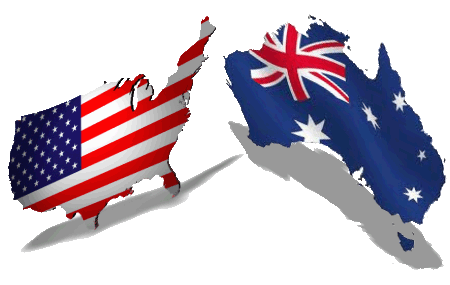
Since I last went mythbusting, the 2011 name data from the United States has been released, and this week it’s American Independence Day. To celebrate both events, I decided to compare Australian and US name data. (Lou at Mer de Noms brought out her own comparison of the data for the United States and England/Wales in May, and did something pretty interesting with it.)

That Australians are becoming increasingly Americanised, including their choice of baby names, is something not debated, but accepted as a truism. It is often mourned by older generations that Australians used to call their children good solid Aussie names like Barry and Sheila, and now give them sleek American-style names like Logan and Scarlett.

It’s a myth which sounds very plausible – I certainly know far more children named Logan and Scarlett than I do Barry and Sheila (actually I don’t know any children called Barry or Sheila). But I thought we should try to get some numbers to back the myth up.

So I decided to look at the Top 100 names from both countries, in the years 1930, 1950, 1970, 1990 and 2011. If the number of names shared by both countries went steadily up, that could help support the theory that Australian names were becoming increasingly “American”. By no means conclusive proof, but it would be a start, and frankly I couldn’t think of any other way of doing it.

As I went through calculating the number of shared names, I also took note of those trends at work in Australia and the United States, where they were the same and where they differed. This gave me a picture of changing trends through the years. (The data is from Victoria, because theirs go back to 1929).

1930

MALE – 65% shared with US Top 100

1930 marked the highest percentage of shared names between the countries. This wasn’t because Australians were more “American” in 1930, but because in every year, the common denominator for both countries were classic names like John, Thomas and William, and these sort of names took up more space of both countries’ Top 100.

Trends noticeable on the Australian Top 100 were names from Ireland, Scotland and Wales, such as Kevin, Malcolm and Trevor, and aristocratic English surnames, such as Neville. Americans preferred prominent surnames of their own citizens, such as Elmer and Lee. Popular names from America we didn’t share were “cowboy” names – Wayne, Earl and Jesse. In America, nicknames for boys were all the rage, including Billy, Bob and Jimmie.

FEMALE – 51% shared with US Top 100

Popular girls names in both countries were homespun names such as Margaret and Dorothy, as well as plant names like Hazel and Rose.

Australian trends for girls included names from Ireland and Wales, such as Sheila and Gweneth, saints names such as Carmel and Veronica, and literary inventions like Doreen and Mavis. American trends were for Germanic names such as Emma and Clara, and the clunky Old English Mildred and Bertha. America’s Hispanic population meant that Delores and Juanita were Top 100 there.

1950

MALE – 59% shared with US Top 100 (down 6%)

American trends for boys we had picked up by 1950 include Gary, after Hollywood star Gary Cooper, and that supposed Australian favourite, Bruce, also popular in the US.

America continued its love of nicknames, with Bobby, Joe and Fred all Top 100. Several of the Irish boys names such as Kevin and Barry were now on the US Top 100 as well, but new Irish-style names such as Shane were still to gain American acceptance. Already in the US you can see a reluctance to use “feminine sounding” or unisex names such as Lindsay and Noel, which were Top 100 in Australia. In Australia, that same 1950s gender-anxiety produced the opposite result, with some unisex names like Leslie becoming male-only.

FEMALE – 47% shared with US Top 100 (down 4%)

The most noticeable shared trends for girls were those glamorous Hollywood names such as Marilyn (Monroe) and Rita (Hayworth). Even when Australians did take a name from America, such as Jennifer from Hollywood star Jennifer Jones, it didn’t always follow that Americans would embrace it as rapidly themselves. Jennifer was a 1950s name in Australia, but didn’t peak in the US until the 1970s.

Australian girls were being given French names like Annette and Jeanette, while Americans girls had Jacqueline. Another popular Australian “French” name was Lorraine, given in honour of St Joan of Arc, sometimes called The Maid of Lorraine. The American love of the nickname meant that names such as Judy and Peggy were Top 100 for girls.

1970

MALE – 56% shared with US Top 100 (down 3%)

Popular 1970 names which we think of as “American style” were in evidence on both charts, such as Bradley, Jason, Glenn, Darren and Craig.

Australian boys names not picked up in the US included Scottish-style names such as Ross, Graham, Stuart and Gavin, and the “feminine sounding” Ashley and Jamie. Differing ethnicities also made their mark, with Spanish Carlos in the US Top 100, and Italian and Greek names like Giovanni and Giorgio in the Australian Top 100. American nicknames powered on, with Larry, Terry and Jerry amongst them.

FEMALE – 51% shared with US Top 100 (up 4%, return to 1930 level)

It was the decade of those 1970s names Sharon and Tracey, although Sharon in particular had been popular in America for some time and we’d only just caught up.

Names such as Samantha and Amanda were already popular in Australia in 1970, but would have to wait until the 1980s to make it big in the US. Conversely, Amy was popular in the US, but wouldn’t be here until the 1980s. French Nicole was in vogue in both countries, and we’d caught up with Jacqueline; however Australia also had Danielle, Louise, Justine, Natalie, Simone and Josephine – typical 1970s girls names that were underused in the US. Scottish and Welsh names like Fiona, Megan and Bronwyn were popular here but didn’t get a look-in in the US. We were proudly using names of Australian origin, like Kylie and Narelle; naturally these were unknown in the US.

1990

MALE – 56% shared with US Top 100 (no change)

Trends from the US we were embracing were Old Testament names, such as Jacob and Zachary; and the new surname names, such as Ryan and Mitchell.

A new generation of “too feminine” boys names that were popular in Australia were ignored in the US, such as Shannon, Tristan and Leigh, as were more Scottish, Welsh and Irish-ish names, such as Lachlan, Rhys and Kane. Hayden and Jayden were already Top 100 in Australia, but not in the US. America had finally gone off nickname names, while Australia now had Jack, Jake and Ricky. American names Beau, Jackson and Tyson were popular then, as now, in Australia; of the three, only Jackson has hit the US Top 100 so far.

FEMALE – 56% the same as the US Top 100 (up 5%)

Names that both countries had in common were those typical 1990s names, like Tiffany, Brittany, Kayla and Caitlin.

Americana we were still to discover included unisex names for girls like Ariel, Shelby and Paige. Although the US had Danielle and Natalie by now, French names such as Monique, Elise, Renee and Madeleine which were popular here had apparently failed to make an impression. Although Welsh Caitlin was all the rage, the US were not on board with Tegan and Rhiannon, as we were. Most notably, Emma, Amelia, Charlotte, Sophie, Chloe and Zoe were missing from the US Top 100 – while American parents who chose these names in 1990 were ahead of the trends, in Australia, parents choosing these names in 1990 were just following the trends.

2011

MALE – 59% shared with US Top 100 (up 3%, return to 1950 level)

Congruence in popularity between the two nations has risen to 1950 levels, with many name trends in common, mostly a fresh crop of Biblical names, such as Elijah, and surname names, such as Mason.

American parents are now avoiding a new generation of Scottish names, such as Angus and Hamish, while Irish names like Declan and Flynn are also neglected in the US. Oddly enough, Kevin is still Top 100 in the US, while it’s considered a bit dated here. The scunner against nicknames continues as Americans shun Australian populars Charlie, Harry, Archie, Sam and Nate. No longer merely  shying away from “feminine sounding” names for boys like Bailey and Riley, parents in the US have actually given these names to their daughters in such numbers that they are now Top 100 for girls, while Top 100 for boys here. Several names we have taken from the US, such as Jett, Hudson and Jasper, are still not popular in America.

FEMALE – 47% shared with US Top 100 (down 9%, return to 1950 level)

Girls names have also returned to 1950s levels. Many names are shared because America has caught up with our popular names from 1990, but Australian parents have also begun to use unisex names for girls like Madison and Addison.

America has abandoned many names as “outdated” such as Amy, Jessica, Holly and Amber that have taken on “modern classic” status here. While America has accepted Lily, it is less keen on our popular plant names Daisy, Ivy, Violet, Willow, Olive and Rose. British-style names such as Isla and Imogen cut no mustard in the States. Meanwhile, popular American virtue names like Genesis, Serenity, Trinity, Nevaeh and Destiny do not resonate here. Perhaps they will in the future.

CONCLUSIONS

I did not manage to bust this myth, but neither did I find much evidence to support it, so I will give its status as MYTH UNCONFIRMED.

As I compared popularity charts from the two countries, I realised more and more that it was a case of apples and oranges. Names took longer to gain popularity in the US, and it was harder for them to stay in the Top 100; name popularity was a competitive environment there. Australia has a much smaller population size, which means that name trends show up faster here. We’re also more likely to hold onto our favourite names once we’ve found them, sometimes for generations.

I don’t think it’s an exaggeration to say that American parents are absolutely obsessed with getting ahead of the current trends, and can watch the slowly rising popularity of their chosen names with almost comical anxiety. This makes some sense, because trending names can take so long to reach the Top 100 that they have a good chance of having ten to twenty years before that happens. In Australia, this behaviour makes no sense at all, because as soon as a name begins to show up in the data, it’s basically already quite popular. As we keep names around for longer, there’s no real rush to “catch” a name on the way up either; we can always wait until it’s a cosy, familiar “classic”.

In any given year, Australia and the US will share around half the names on their respective Tops 100s, and this has not changed across time. We share many name trends, and since at least 1950, Australia has been drawn to names from America. Sometimes it took us a long time to get onto a particular trend from America, and other times we took to it with greater enthusiasm than Americans did themselves.

Both countries also have their own styles of naming. Australia has always been fond of Irish-inspired names, and although Barry and Sheila have fallen by the wayside, we now have Finn and Molly. Scottish names continue to be a growth area, with Angus, Hamish, Callum and Isla seeming rather stylish to us. Through the years, there were many names unique to the Australian popularity charts. Names that I thought of as typical of their period, such as Dulcie in 1930, Glenys in 1950, and Jacinta in 1970 seemed to be unknown in the US.

Americans are slow to adopt Irish names, but often touchingly faithful to them, and are wary of Scottish and Welsh names. They have a deep suspicion of unisex names for boys or anything that even sounds remotely feminine, while comfortable with briskly masculine names for girls. Flower names are not popular there; perhaps they seem too girlish even for girls.

Due to going overboard on nicknames in the past, America has developed almost a horror of them, much in the same way I can no longer stomach gingerbread after overindulging on it a few Christmases ago. As nicknames are currently internationally popular, this has seen them unfairly branded as a bit stuffy on the issue, when they’re really just over the whole thing.

We don’t have to try to follow American trends, and in fact a couple of them would be downright foolish for us to imitate. But the United States has proved a rich source of name inspiration for many decades, and I know it will continue to be so for many decades to come.

More of Your Questions on Unisex Names Answered

24 Sunday Jun 2012

Posted by A.O. in Your Questions Answered

≈ 7 Comments

Tags

classic names, english names, famous namesakes, Irish names, locational names, mythological names, name meanings, name popularity, nature names, nicknames, Old French names, Old Norse names, sibsets, surname names, The Name Agender, unisex names, US name popularity, vocabulary names

It’s been more than two months since my first foray into answering questions on unisex names, and as I just started a new page for them, it seemed like a good opportunity for another lot. In the interval, the number of questions on this subject has piled up alarmingly, so it’s obviously topic de jour.

As with my first entry on this topic, I consider the origin, meaning, history, namesakes and popularity of a name to determine whether it’s male, female, or unisex.

Keep in mind that by law all names are unisex, and it is purely personal choice and social convention which dictate whether they are given to boys or girls. Unless otherwise specified, popularity of names is based on Australian data.

I: GIRLS OR BOYS?

Flynn as a girl’s name

Flynn is an Irish surname meaning “son of Flann“, so it’s a boy’s name.

Is Chase a unisex name? Are there any girls called Chase?

Technically it’s male, as the surname is an occupational one given to a huntsman, from the Old French for “hunter” (male form). However, you could argue that the name is given directly from the vocabulary word, meaning “to pursue”. I have also seen parents say that on a girl, Chase is short for Chastity. There are most certainly girls named Chase in the world.

Sutton as a girls name

There’s no reason why this surname can’t be used on either a boy or a girl, as it is taken from a common English place name meaning “south settlement”. In Australia, Sutton is a small village in country New South Wales on the Yass River. There is an American actress named Sutton Foster who has appeared in the show, Flight of the Conchords.

Peter as a girl’s name is that Aussie?

No, it’s not. In Australia, Peter is a classic name for boys which has never been off the charts, peaked at #1 in the 1950s and is currently in the 100s. It’s never charted for girls. You may be thinking of the female form, Peta, which was on the charts from the 1930s to the late 2000s. It peaked in the 1970s at #73, the only decade it was in the Top 100. It does seem to be a name from the Southern Hemisphere, as it only seems to have been popular in Australia, New Zealand and South Africa.

Gunner as a girl’s name

Gunner is one of those rare surnames which can be taken as coming from a woman’s name, the Old Norse Gunvor, meaning “female battle warrior”. However, we usually think of it as coming from the occupational name for a soldier who manned the cannons during war. So I think this can be either a girl’s name or a boy’s name.

II: BOYS OR GIRLS?

Can Sky be a guy’s name?

Yes it can. In Greek mythology, Uranus was the god of the sky, seen as male compared to the earth goddess Gaia. So if anything, the sky seems to be masculine in Western culture. Sky can also be be short for Schuyler or Skyler.

Is Addison a boy’s name?

It means “son of Adam”, so yes it is a boy’s name. However, it is currently Top 100 for girls, and doesn’t rank for boys, so it’s much more commonly given to females. We had a celebrity baby boy named Addison this year.

Any dudes named Courtney?

A famous Australian one that springs to mind is singer Courtney Murphy, who was on Season 2 of Australian Idol. Another is the triathlete Courtney Atkinson, and Courtney Johns plays Australian rules football for Essendon.

Stolen boys name – Kelly?

I don’t think it’s possible to “steal” a name from one gender – it’s usually more about the name being rejected or neglected on behalf of its original gender.

However, let’s assume that “gender stealing” actually exists. For a name to be classified as “stolen” from the boys, it would have to be popular as a male name, and then show the name in decline for boys, accompanied by a corresponding rise in the use of the name for girls. That doesn’t seem to be case with Kelly – it has never charted as a male name in Australia, and has charted as a female name since the 1950s.

In the US, which has data going back to the 19th century, Kelly has been on the Top 1000 since 1880, and only stopped charting for boys in 2003. It began charting for girls in the 1940s, but as the name rose for girls during the 1950s, it also continued rising for boys.

Kelly for boys peaked in 1968 when it just scraped into the Top 100, which corresponds to it also hitting a peak for girls at #12. That doesn’t fit the profile of a “stolen” name – that fits the profile of a unisex name. Kelly for girls peaked again in the late 1970s, but by that time Kelly for boys was on the wane.

You could say that was because it was remaining fairly popular as a girl’s name – but that doesn’t explain all those years that both names grew in popularity together. Nor does it explain the many, many decades that Kelly spent as a male name only, free of all feminine interference, without ever gaining any level of significant popularity.

Having said that, Kelly actually is a male name, although usage is now primarily female. So whether it’s “stolen” or not depends on your perspective.

Chelsea can be for boys? Is Chelsea a boy name too? (asked multiple times in various ways)

There’s really nothing especially feminine about the place name Chelsea, which means “chalk wharf” and is the name of a football club, so by meaning and association this name seems unisex, and it has been occasionally given as a male name. In fact, the blogger at The Name Agender is a man named Chelsea, and he has written an article about growing up as a boy named Chelsea, as well as an interesting article on several men and boys named Chelsea, including a celebrity baby from last year.

III. JUST PLAIN CONFUSED

Is there more boys or girls named Taylor?

More girls – Taylor has always been much more popular as a girls name than a boys name in Australia.

Is Edith a unisex name?

No, it’s a woman’s name, and has a history of over a thousand years being given to females. In Australia it has only ever charted as a girl’s name.

Is Bailey a girls or boys name in Australia based on statistics?

Based on Australian statistics, it’s a boy’s name. It has only ever charted for boys, and never for girls.

Mackenzie boy or girl name?

It means “son of Kenneth“, so it’s a boy’s name. However, it has only ever charted as a female name, so it’s much more commonly given to girls.

I named my daughter Riley can I use a unisex name again?

Well of course, nobody is going to stop you. You can name your children exactly as you please, and there is no “One Unisex Name Per Family” law. But if you are asking for an opinion, this is mine:

If your next child is a girl, I would advise choosing another unisex name to match her sister’s, like Cameron or Alex. I’ve noticed girls often tend to get a bit jealous if one sister has a girly name and the other one has a boyish name – or at least it is made an excuse for sisterly jealousies.

However, if your next child is a boy, I would advise choosing a name that is unambiguously male, like Jake or Brendan. This is purely my own preference, but I think a boy should have a name that is more masculine than his sister/s.

Just for practical reasons, if you tell someone, “I have a daughter and a son; their names are Riley and Avery”, the person would be confused as to which one was the girl and which the boy, and it’s considered rude to ask.

Well, those are my opinions: what are yours? Do you prefer Edith for a boy and Peter for a girl? Has Kelly been stolen? How many dudes named Courtney do you know? And what would you name the siblings of a girl called Riley?

(Picture shows Katherine Hepburn in the 1935 movie, Sylvia Scarlett, in which Hepburn must disguise herself as a boy, despite the difficulties involved when it comes to public toilets).

← Older posts
Newer posts →

Enter your email address to follow this blog

Categories

Archives

Recent Comments

A.O.'s avatarwaltzingmorethanmati… on Zarah Zaynab and Wolfgang…
Madelyn's avatarMadelyn on Zarah Zaynab and Wolfgang…
JD's avatardrperegrine on Can Phoebe Complete This …
A.O.'s avatarwaltzingmorethanmati… on Rua and Rhoa
redrover23's avatarredrover23 on Rua and Rhoa

Blogroll

  • Appellation Mountain
  • Baby Name Pondering
  • Babynamelover's Blog
  • British Baby Names
  • Clare's Name News
  • For Real Baby Names
  • Geek Baby Names
  • Name Candy
  • Nameberry
  • Nancy's Baby Names
  • Ren's Baby Name Blog
  • Sancta Nomina
  • Swistle: Baby Names
  • The Art of Naming
  • The Baby Name Wizard
  • The Beauty of Names
  • Tulip By Any Name

RSS Feed

  • RSS - Posts

RSS Posts

  • Celebrity Baby News: Melanie Vallejo and Matt Kingston
  • Names from the TV Show “Cleverman”
  • Can Phoebe Complete This Sibset?
  • Zarah Zaynab and Wolfgang Winter
  • Baby, How Did You Get That Name?
  • Celebrity Baby News: Media Babies
  • Celebrity Baby News: Adelaide Crows Babies
  • Celebrity Baby News: Chris and Rebecca Judd
  • Names at Work: Name News From the World of Business and Employment
  • Celebrity Baby News: Sporting Round Up

Currently Popular

  • Celebrity Baby News: Alisa Camplin and Oliver Warner
  • Rare Boys Names From the 1950s
  • Sad Celebrity Baby News (contents may cause distress)
  • The Top 100 Names of the 1930s in New South Wales
  • The Top 100 Names of the 1940s in New South Wales

Tags

celebrity baby names celebrity sibsets english names famous namesakes fictional namesakes honouring locational names middle names name combinations name history name meaning name popularity name trends nicknames popular names saints names sibsets surname names twin sets unisex names

Create a free website or blog at WordPress.com.

Privacy & Cookies: This site uses cookies. By continuing to use this website, you agree to their use.
To find out more, including how to control cookies, see here: Cookie Policy
  • Subscribe Subscribed
    • Waltzing More Than Matilda
    • Join 517 other subscribers
    • Already have a WordPress.com account? Log in now.
    • Waltzing More Than Matilda
    • Subscribe Subscribed
    • Sign up
    • Log in
    • Report this content
    • View site in Reader
    • Manage subscriptions
    • Collapse this bar
 

Loading Comments...