Celebrity Baby News: Grandsons of Peter Harvey

Tags

Claire-Harvey-e1392776431826

Veteran journalist Peter Harvey was greatly loved and admired during his long career, and known to colleagues as “the voice of God”. A fifth-generation reporter, he won numerous awards for his work in Australia, Britain, and the United States. Peter passed away in March last year, and since then both his children have welcomed new babies to the family.

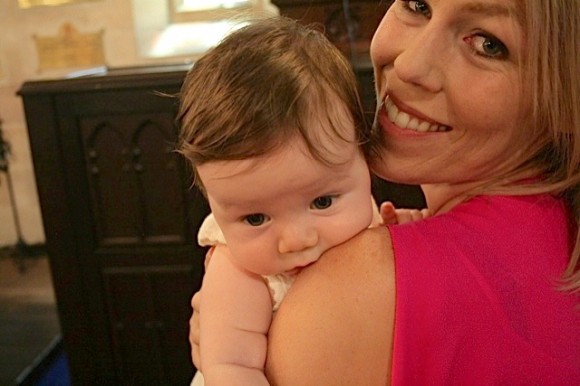
Peter’s daughter Claire Harvey is the deputy editor of the Sunday Telegraph, and she is married to Ross Neilson, director of the Salmon Neilson Company, which offers communication, media, and governmental advice to corporations and industry groups. On September 30 they welcomed their first child, a son named Reg, who was born at Prince of Wales Hospital in Randwick.

Peter’s son Adam Harvey is a reporter on the ABC’s 7.30 Report, and he is married to Eliza Harvey, a presenter on the ABC’s Weekend Breakfast. Eliza is the daughter of award-winning journalist Geraldine Doogue, who for many years has been the host of ABC’s Compass, and retired journalist Tim Blue, who until recently was a senior finance writer for The Australian. At the beginning of the year, Adam and Eliza welcomed their son Sean.

With such pedigrees behind them, you would expect Reg and Sean to become their family’s 7th generation of journalists, but we will have to wait and see.

Harvey-family-e1392781481732 (1)

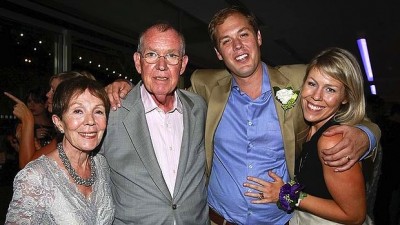
(Top photo shows Claire Harvey with baby Reg; bottom photo shows Adam and Claire with their parents Anne and Peter Harvey)

Celebrity Baby News: Hamish Blake and Zoe Foster Blake

Tags

, , , ,

Hamish-Blake-with-Zoe-Foster

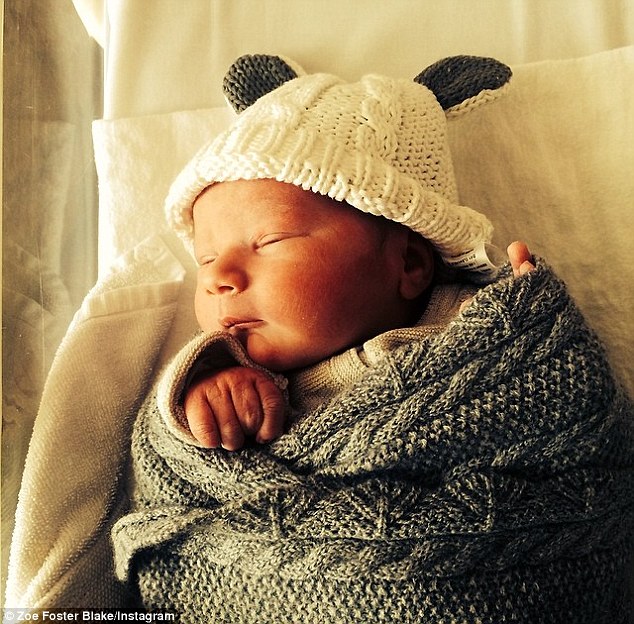
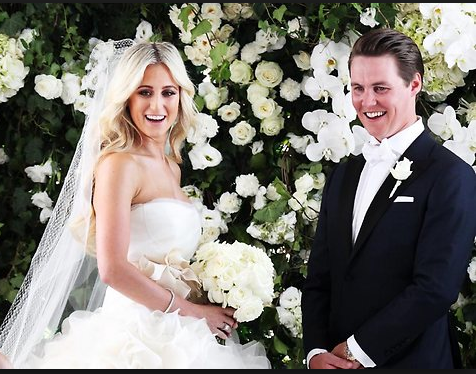
Comedian Hamish Blake, and his wife Zoe Foster Blake, welcomed their first child on May 10 and have named their son Sonny Donald. Sonny Blake shares his middle name with his father.

Hamish has been covered on the blog twice, once for his surname, and again for his first name. Zoe is a writer; her first novel, Air Kisses, was published in 2008, and her fourth, The Wrong Girl was released a few months ago. Zoe is also a blogger on beauty website Fruity Beauty, has written a book of beauty tips called Amazing Face, and has her own skin care range called Go To. She is the dating columnist at Cosmopolitan, and has written a dating and relationship guide called Textbook Romance, with contributions from Hamish. She writes a pop culture column for Sunday Style. Hamish and Zoe were married on December 11 2012, which was Hamish’s birthday.

Zoe and Hamish joked that they had called their baby Dracula Von Sandwich Twinklestar, and back in February, Zoe said in an interview that they still hadn’t decided on names, although there were several they liked and kept changing their minds. She noted that “odd” names are really popular now, and everyone is used to “kooky” names, so whatever name they picked would fit in. She did say they wouldn’t go “really crazy weird” though, as they would be naming an adult rather than a baby.

It sounds as if they were after a name that was “different but not too different”, and Sonny fits the bill, as it is not in the Top 100, but not too far away from it either.

article-2625402-1DBC8AF300000578-49_634x624 (1)

Boys Names from the Top 100 of the 1920s

Tags

, , , , , , , , , , , , , , , , , , , , , , , , , , ,

161695_medium

Happy Mother’s Day! One of my mum’s favourite hobbies is browsing in antique shops and vintage stores: sometimes you find the most wonderful items in these places, and marvel that we ever stopped making such beauties. On the other hand, sometimes there’s nothing but junk in them. But either way, you get to lose yourself in the past for a while. Here are ten boys names from the 1920s, and I will let you decide whether I have dug up something worthwhile, or whether they should be allowed to lie under dust sheets for a few years longer. 

Athol
Based on the place name Atholl, a district of the Scottish Highlands which means “New Ireland” in Gaelic. One of its towns is named Blair Atholl, and the Duke of Atholl is a member of the Scottish peerage – the only person in Europe legally commanding his own private army, the Atholl Highlanders. Both Sydney and Adelaide have suburbs named Blair Athol; the one in Sydney is named after a historic house. A famous Australian namesake is Athol Guy, from folk group The Seekers – he’s the one with glasses. Athol has been used as a first name since the 18th century, and originates from the Atholl region of Scotland. Athol was #86 in the 1900s, and peaked in the 1910s at #70; by the 1920s it was #72. It left the Top 100 in the 1940s, and hasn’t ranked since the 1950s. Athol unfortunately sounds a lot like the female name Ethel, and can be mispronounced to sound like a rude word (I went to primary school with an Athol, and can testify to this). It might be better suited as a middle name.

Bernard
Germanic name translated as “brave as a bear”. It was brought to England by the Normans, where it replaced the Old English equivalent, Beornheard. There are several saints named Bernard, including St Bernard of Mentone, founder of a famous refuge for pilgrims in the French Alps; the St Bernard dogs used to rescue people are named after him. Another is St Bernard of Clairvaux, who founded the Cistercian Order and is a Doctor of the Church, famed for his eloquence. Two Australian celebrities demonstrate the different ways this name can be pronounced: Bernard Fanning from Powderfinger says his name with the accent on the first syllable, while tennis player Bernard Tomic has his name pronounced with the emphasis on the second. Bernard was #62 in the 1900s, and peaked in the 1920s at #53. It didn’t leave the Top 100 until the 1970s, and last ranked in the 1990s. With more than sixty years in the Top 100, yet never in the Top 50, Bernard seems very usable. It’s a strong, masculine name that is quite funky, and comes with cute nicknames like Bernie, Barney, and Bear.

Herbert
Germanic name translated as “bright army”, and found very early in the form Charibert, who was King of the Franks in the 6th century; his daughter married a king of Kent. The Anglo-Saxons had their own form of the name, Hereberht, and there is a 7th century saint with this name, as well as an obscure French St Herbert. When the Normans conquered England, they brought the name with them, and it replaced the Old English form. Unlike many other medieval names, Herbert managed to remain in use because it is an aristocratic surname – the Herbert family have been Earls of Pembroke in an unbroken line since 1501. The first Earl of Pembroke was a courtier married to the sister of Catherine Parr, one of Henry VIII’s wives, and the present Earl still lives on the estate built by the first Earl. The name Herbert became popular during the 19th century, when Sidney Herbert, the 14th Earl, was a distinguished politician famous for being the most handsome MP of his day. Herbert was #23 in the1900s, and #48 by the 1920s. It left the Top 100 in the 1940s, and hasn’t ranked since the 1960s. I have seen one or two small children named Herbert, and this is one for the serious lover of vintage names, with the nicknames Herb, Herbie, and Bertie.

Ian
Anglicised form of Iain, a modern Scottish Gaelic form of John, derived from the medieval Irish name Eoin. Both Iain and Ian date from the 19th century, and it is not impossible that Iain was an attempt to Gaelicise English Ian. Ian was #128 in the 1900s, and joined the Top 100 the following decade. It was #57 in the 1920s, and peaked in the 1950s at #10. It didn’t leave the Top 100 until the 1990s, and is currently stable in the mid-200s. This makes Ian a very safe choice – it’s a classic which was popular for eighty years, and is still in reasonable use.

Lloyd
English form of the Welsh Llwyd, commonly translated as “grey”, which in practice referred to various shades of brown in different contexts, and white, in the sense of grey hair being white. Although Llwyd was sometimes used as a personal name, it became better known as an epithet, which came to describe someone with mouse-brown hair, and then developed into a surname. By this stage, the original meaning of “grey” was pretty much lost, and it was understood as “brown-haired”. The word llwyd could also be understood as meaning “holy, blessed”, although this doesn’t seem to have contributed to the surname. In Britain, Lloyd has some heavy-duty business clout, due to Lloyds Bank, and the insurance market Lloyd’s of London. Use of the name may have been boosted by David Lloyd George, Britain’s only Welsh Prime Minister. Lloyd was #148 in the 1900s, and peaked in the 1910s at #80. By the 1920s it was #91, and it left the Top 100 the following decade. However, the name Lloyd continued to chart until the late 2000s. It’s still in occasional use, and I see it quite often as a middle name in birth notices. Lloyd may be a little clunky, but it’s not an outrageous choice.

Ross
A region in north-west Scotland, said to mean “headland” in Gaelic, perhaps referring to the Black Isle, a peninsula in the Scottish Highlands. Another possibility is that it means “horse island” in Old Norse, in reference to the island of Orkney. The Scottish surname Ross originates from this area. However, the surname has English roots too, because there are places in England named Ross, with the meaning “headland”, and Rozzo was an Anglo-Saxon name meaning “fame” (related to the name Rose). The Rosses were a large Yorkshire family who came over with William the Conqueror from the village of Ros in Normandy (the name means “red’); in the Middle Ages they bought up large tracts of Ayrshire, so their surname also became Scottish. Ross has been used as a personal name since at least the 16th century, and first used in England rather than Scotland. Ross was #203 for the 1900s, and hit the Top 100 in the 1920s at #75. It peaked in the 1950s at #37, didn’t leave the Top 100 until the 1980s, and still ranked in the late 2000s. Ross is fairly common in the middle, and wouldn’t be too surprising up front.

Roy
Anglicised form of Ruadh, a Gaelic name meaning “red”, often used as a nickname for someone with red hair. One of the most famous bearers is Scottish outlaw Raibeart Ruadh MacGriogair, known in English as Rob Roy MacGregor. His story was turned into a best-selling novel by Sir Walter Scott, and Liam Neeson starred in a film about him. The name can also be derived from the surname, which can be from Ruadh, but also from Norman-French Roi, meaning “king”. This could be used as a nickname, but was a medieval personal name as well. Roy was #25 in the 1900s, and #34 by the 1920s. It left the Top 100 in the 1950s, and reached its lowest point in 2010 with a ranking of 0. Since then, Roy has begun to pick up steam, and has become rather fashionable, along with similar names like Royce, Elroy and Leroy. This classic is once again on trend.

Sidney
Aristocratic surname which probably comes from a place name meaning “at the water-meadows” in Old English. However, folk etymology derives it from the French Saint-Denis, a suburb of Paris named after the city’s first bishop. The Sidney family became prominent during the Tudor period; Sir William Sidney was squire to Henry VIII. Sir William’s grandson was poet Sir Philip Sidney, famous for creating the name Stella. The story goes he had a noble and gallant death, for as he lay dying in battle, he gave his water to another wounded soldier, with the words, “Thy necessity is yet greater than mine”. Sir Philip’s great-nephew was Algernon Sidney, a 17th century republican executed for treason, and afterwards revered as a heroic patriot and martyr. Although Sidney had been used as a first name since the 16th century, it became much more popular in the United States during the 18th and 19th, because Algernon Sidney’s anti-monarchist views were highly influential to the American conception of liberty. Although it has charted for both sexes in the US, in Australia Sidney has only charted as a male name. Sidney was #48 in the 1900s, and peaked in the 1910s at #47; by the 1920s it was #63. It left the Top 100 in the 1940s, and dropped from the charts in the 1980s. However, it ranked again in the late 2000s at #450, and has been gently increasing. This retro name is back in style, along with its short form, Sid.

Terence
English form of the Roman family name Terentius, of unknown meaning. The Roman comic playwright we call Terence was named Publius Terentius Afer, and he was a slave (probably from Libya) of a Roman senator from the Terentius family, who educated him, and later freed him; he adopted the name Terentius after gaining his freedom. There are several saints we call Terence, although most of them were named things like Terentianus, Terentian, or Tertius. Terence has been used as an English name since the 17th century, and in Ireland was used to Anglicise the name Toirdhealbhach, meaning “instigator”. Terence was #141 for the 1900s, and joined the Top 100 in the 1920s at #71. It peaked in the 1940s at #30, and left the Top 100 in the 1960s. It hasn’t ranked since the 1990s, but Terence still seems usable, and could be seen as either a “posh” choice or an Irish one.

Wallace
English surname derived from the Norman French waleis, meaning “foreigner”. Although often translated as “Welsh”, the word waleis could refer to someone from Wales, or from the English counties bordering Wales, or to Cornish Celts, or to Bretons who came to England after the Norman Conquest and settled in East Anglia. The surname became associated with Scotland because of the early medieval Kingdom of Strathclyde, which straddled northern England and southern Scotland. The people of Strathclyde spoke Cumbric, a British language closely related to Old Welsh, and were known as walensis. Even after becoming part of Scotland, it remained a distinctive area into the 12th century. The surname is famous because of Sir William Wallace, a commander during the 13th century Wars of Scottish Independence who has become an iconic Scottish national hero. There have been many books and poems written about Wallace’s exploits, and he features in the film Braveheart, played by Mel Gibson. Wallace has been used as a first name since the 17th century, and originates from Scotland. Wallace was #74 for the 1900s, and peaked in the 1920s at #68. It left the Top 100 in the 1940s, and hasn’t ranked since the 1950s. Wallace really deserves to make a comeback, and the nicknames Wally and Wal are cute.

POLL RESULTS
The public’s favourite names were Sidney, Wallace and Ian, and their least favourite were Terence, Athol and Herbert.

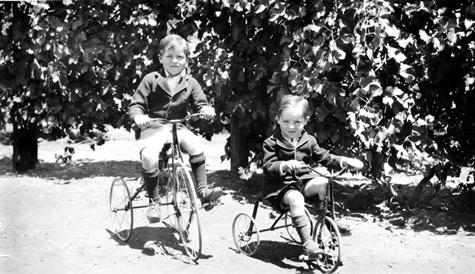
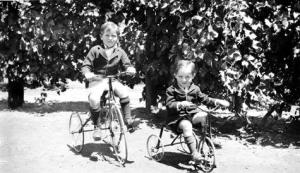
(Picture shows two boys riding their tricycles amongst grape vines in Mildura, Victoria in the 1920s; photo from Museum Victoria)

Will Lillia Get Lost in the Crowd?

Tags

, , , , ,

127509-11f2cc74-9c0c-11e3-8857-926a2cf5fac5

Emma and her husband Matt are expecting a baby later in the year. If they have a girl, Emma’s choice would be Rosamund – a name she has loved for many years. She loves the history of the name, the meaning, and the fact that it has ties to her favourite book, Picnic at Hanging Rock. Matt is willing to go along with it, but dislikes the -mund ending.

Recently, Emma discovered another name she likes – Lillia. She would be willing to give up her beloved Rosamund for Lillia, because Matt loves it. However, Emma is worried that Lillia is not distinctive enough. Not only is Lily very popular, but there are lots of other similar names in the Top 100, such as Lola, Layla, Lila, and Olivia.

Emma found it annoying to grow up with a very popular name, and swore she would never put her child through that. Now she wonders if a Lillia would experience the same issues she did, only with names that are highly similar instead.

* * * * * * * * * *

Lillia is what we name nerds describe as “not trendy, but on trend”. You almost never see it, but it has instant recognition as being similar to many other popular or rising names. Although L-L and LL names are a huge trend for girls, I wouldn’t worry so much about Lola, Lila, Ella, and Milla (etc etc) – it’s difficult to avoid zeitgeist.

Even though there are lots of popular girls names with a strong L sound in them at present, I don’t see how having several other girls around her with vaguely similar names would negatively impact a Lillia. Maybe once in a while there would be a Did you say Lillia? Oh, you wanted Olivia moment, but I don’t see how that would be a real problem.

The only thing to really think about in this regard is the highly popular Lily/Lilly, and the rapidly rising Lillian, especially if your daughter ended up with the nickname Lili or Lil. I can see that even though Lillia is a very uncommon name, it’s not impossible she’ll be one of a few Lilys/Lillys/Lilis.

Of course, the popularity of a popular name today is nothing compared to what it used to be. If you want some exact numbers, last year there were 1403 girls named either Lily or Lilly, and 176 named Lillian. That’s just over 1500 potential Lily/Lilly/Lili name twins, out of more than 150 000 baby girls born in the year – around 1%, even combining all the names together. Does that sound a bit less scary?

I think Lillia is a beautiful name, and I can quite understand why you are taken with it, and Matt loves it. It has a soft lilting sound without seeming weak or frilly, and clean, elegant lines. I think its similarity to other names gives it familiarity, so that it fits in with current trends, while still seeming different. To me, it doesn’t get lost in the crowd, and if you were worried about Lillia being another Lily, you could use Lia as the nickname instead.

Rosamund is a gorgeous name too, and also fits in with current name trends, because almost every week in the birth notices I see baby girls named Rose, Rosie, Rosa, Rosalie, Rosemary, or even Rosabella. What an enviable baby name dilemma you have – choosing between two such lovely names! Either way, you can’t go wrong.

UPDATE: The baby was a boy named Arthur!

POLL RESULTS
79% of people were in favour of using the name Lillia. 32% thought it blended in with the crowd, rather than getting lost in it, while 16% thought that its rareness automatically made it distinctive. 31% thought it was a bit too much like currently popular names, but was so nice it didn’t matter. 18% of people were against using the name Lillia, believing it sounded like too many girls names in the Top 100, while 3% were undecided.

It was a close contest choosing between Rosamund and Lillia, but Rosamund had the edge at 45% to 42%. 13% of people liked both names equally.

(Picture is of Melbourne’s White Night festival; photo from the Herald Sun)

Lulu and Rebel

Tags

, ,

603252_675328652484769_822925316_n

Twins
Tori Maree and Toyah Ann (Tyrone)

Girls
Alicia Zoe (Seraphina)
Aurora Renee (Ethan, Oliver, Harry)
Claire Asher (Keenan, Ada)
Elsie Joan (Lexie)
Eugenie Isabel
Keeya Hallie (Leonie)
Lulu Cate (Hugo)
Mabel Audrey (Millie)
Nola Joyce (Evita, Darcy)
Piper Jewel (Amber, Tyler, Jake)
Rebel Jade Ruby
Rosa Cynthia (Billy)
Sadie Inala (Oscar)
Scarlett Reta Frances (Ebony-Rose, Phoenix)
Sesi Maree (Tiana)
Sybill Clara (Lee, Alex, Myrra)
Thea Elizabeth (Stella)
Tiger Lilly
Willamna Katherine
Zara Daphne (Zayne, Kruz)

Boys
Alfred Nelson (Rosie)
Anton Henry
Archibald George
Charlie Royce (Harry)
Cruz Navarre (Roman, Lennon)
Edmund Oswald
Evan Clarence
Gabriel Joseph (Evangeline)
Jack Kelly
Jason Junior “JJ”
Jesse James (Harlow)
Jonah Eamon
Logan Leonardus
Morgan Vin (Jensen)
Roy Wilson (Ned, Maisie, Edie)
Sebastian Louis
Tai (Tia, Kiana, Maia)
Theodore Sidney “Theo”
William Rolf Gerard
Zeb John (Jack, Cooper)

(Photo from Facebook page of Melbourne’s A Little Pocket children’s wear)

Famous Names: Barry and Gladys

Tags

, , , , , , , , , , , , , , , , , ,

art-barry6-620x349

Last month, New South Wales Liberal Premier Barry O’Farrell resigned from his position during a NSW Independent Commission Against Corruption investigation into Australian Water Holdings. Barry denied receiving a $3000 bottle of Grange Hermitage from a AWH executive and failing to declare it, but a thank you note in his handwriting, even mentioning the 1959 vintage of wine (the year of Barry’s birth), was presented to ICAC as evidence.

Minister for Transport Gladys Berejiklian was Barry O’Farrell’s choice for his successor, but in the end she settled for Deputy to Premier Mike Baird, and was rewarded by being made Minister for the Hunter region.

New South Wales is not unaccustomed to these political scandals. The former Labor Premier resigned from his shadow ministry roles due to a personal affair, and a former Liberal Party leader resigned in tragic circumstances several years ago. The new Premier is now watching his ministry become engulfed in a cash-for favours scandal which has also damaged the NSW Labor Party, and is creating anxiety for the Federal government as well. Expect more scalps.

Barry can be seen as an Anglicised form of the Irish name Bairre, a short form of Finnbarr or Barrfind, meaning “fair hair”. It can also be an Anglicised form of the Irish name Berach, derived from a Gaelic word meaning “sharp”, and often glossed as “spear”.

There are five Irish saints named Finnbarr, with the best known being a 6th century monk who created a centre of learning in the city of Cork. Saint Barrfind (known by a confusing variety of spellings of his name) is a 6th century Irish saint who legend says was a disciple of Saint Columba, and said to have voyaged to North America, serving as an inspiration for Saint Brendan the Navigator. Saint Berach was a 6th century Irish saint who was a disciple of Saint Kevin.

The Barry surname can be derived from these names, such as O’Baire, meaning “son of the fair haired one”. But most Irish Barry families got their surname from the Normans, because de Barri was a knight who came over during the Norman Conquest of Ireland. The name comes from the village of LaBarre in Normandy, whose name may mean “gateway, barrier”.

However, the aristocratic de Barry family, Normans settled in Wales, received their name from ownership of Barry Island, whose name seems to come from the Welsh for “hill”, although it’s often said to be named after Saint Baroc, a British saint who had a chapel on the island. The Scottish Barrys take their name from a place name in Angus which also means “hill”.

Barry has been used as a first name in Ireland and England (and more rarely, Wales and Scotland) since at least the 18th century, and due to immigration from Ireland, became known in the Americas and Australia as well.

A famous Australian namesake is comedian Barry Humphries, who created the character of naively ocker Barry McKenzie for a Private Eye comic strip in the 1960s. In the 1970s films, Barry McKenzie is the nephew of Humphries creation Edna Everage, and played by Australian singer Barry Crocker. Perhaps due to this trio of Barrys, and Barry McKenzie’s rich Australian slang (mostly made up), Barry is often perceived as a very Aussie name. This does have some validity, because Barry peaked higher in popularity here than elsewhere.

Barry was #121 in the 1910s, and joined the Top 100 in the 1920s at #84. It peaked in the 1940s at #10, and left the Top 100 in the 1970s – perhaps the Barry Mackenzie films weren’t a help to it? Barry last ranked in the 1990s, but just two years ago I saw a birth notice for a baby Barry, so it is still in occasional use. Bazza or Baz are the traditional nicknames, although Baz Luhrman is not a Barry.

Gladys is a modern form of the medieval Welsh name Gwladus, traditionally identified as a Welsh form of Claudia, although it may come from the Old Welsh word for “country, nation, realm”, with connotations of sovereignty and rulership over the land.

The name Gwladus was used amongst royalty and nobility in medieval Wales, and Saint Gwladys (often called Saint Gladys) was the beautiful daughter of a legendary Welsh king who married another king, also a saint (somehow he managed to fit raiding and robbery onto his CV). The saintly couple had a number of children who were saints as well. According to legend, Gwladys and her family knew King Arthur, and lived in the woods as hermits, with a strict regimen of vegetarianism, cold baths, and chastity.

The name Gladys became well known outside Wales in the 19th century, when English author Ouida used it for a character in her novel Puck. In the book, Gladys is a farm girl who becomes a gifted actress; angelically beautiful, she manages to be both pure and passionate. Apart from this attractive namesake, the nickname Glad seems cheerful, and Gladys may have reminded some parents of gladiolus flowers (the familiar “gladdies” so beloved of Dame Edna Everage).

Gladys was #8 in the 1900s, left the Top 100 in the 1940s, and hasn’t ranked since the 1950s. There was a very famous Australian singer named Gladys Moncrieff, an absolute superstar for decades, known as “Australia’s Queen of Song”, and “Our Glad”. She started her career as “Gladys the Wonder Child” in the 1900s, and was still holding farewell concerts in the 1960s, laden with awards and honours on every side. The name Gladys disappeared from the charts around the same time she retired, but must have remained in some use, for Gladys Berejiklian was born in 1970.

Gladys was very popular once – as popular as Ava is now. In its day it was fashionable, and must have been seen as fresh, pretty, and charming. It is now generally viewed as an “ugly old lady name”, and often cited as an example of a name that can never be brought back, like an unlovely corpse with DO NOT REVIVE scrawled across its chest.

I think most of us are realistic enough to know that our daughters’ names – so popular, fashionable, fresh, pretty, and charming at present – will probably become “old lady names”, given enough time. We know there will be wrinkled Madisons, widows-humped Khaleesis, Willows with hip replacements, and Arias doting over their great-grandchildren, and their names’ image will change to match their senior status.

But names like Gladys are a looming spectre – what if our daughters’ names don’t just become old lady names, but ugly old lady names? Names that people hate, shudder with horror to think they were ever used, and vow will never be used again? And what popular names of today will be the “ugly old lady names” of the next century, I wonder?

POLL RESULT
Barry received an approval rating of 17%, making it the lowest-rated boys’ name of 2014, and the lowest-rated name overall. 45% of people thought that Barry was a terrible name, and only one person loved it. Gladys did slightly better, with an approval rating of 25%, but 46% of people hated the name.

(Photo of Barry O’Farrell and Gladys Berejiklian from The Sydney Morning Herald)


Celebrity Baby News: Roxy Jacenko and Oliver Curtis

Tags

,

Screen-shot-2013-11-19-at-9.00.49-PM

Businesswoman Roxy Jacenko, who runs fashion PR firm Sweaty Betty, and her investment banker husband Oliver Curtis, welcomed their second child on April 30 and have named their son Hunter. Hunter Curtis is little brother to Pixie-Rose, aged 2, whose birth was announced on the blog.

Since we last met the Curtis family, Roxy and Oliver have got married, Roxy has released a new book and been diagnosed with Bell’s Palsy, Oliver has been charged with and pleaded not guilty to insider trading, and Pixie-Rose has already become a star on Instagram, with her own account. Busy, busy, busy!

Girls Names From the Top 100 of the 1920s

Tags

, , , , , , , , , , , , , , , , , , , , , , , , , , , , , , , , , , , , , , ,

palm-beach-sydney-1920s

The data on popular names are all in, but maybe none of the current Top 100 names interest you. Or perhaps you are dismayed at how much your favourite names went up in popularity last year. If so, why not look at the popular names of ninety years ago, to see if there are some gems from times gone by that are ready to shine again?

Agnes
Agnes of Rome was a 3rd century child martyr. According to tradition, she was a member of the Roman nobility, raised in a Christian family, and a very beautiful young girl. She is said to have been only twelve or thirteen when she died, and like Saint Catherine, is one of the patrons of young girls; the eve of her feast day was a time for girls to perform rituals to discover their future husbands. The name Agnes was very popular in the Middle Ages; one of its attractions was probably that in medieval English it was softened into Annis, so that it sounded as it was related to Anne. The name Agnes is from the Greek for “pure”, but because it sounds similar to the Latin for “lamb”, agnus, Saint Agnes is often depicted holding a lamb. Agnes was #28 for the 1900s, and by the 1920s had fallen to #77. It left the Top 100 in the 1930s, and hasn’t ranked since the 1940s, but is now getting some use again. This soft, elegant name has been chosen for their daughter by several celebrities, including Jennifer Connolly. It is the name of a little girl in the movie Despicable Me, and currently popular in Scandinavia. It feels as if Agnes is already making a comeback.

Beryl
Gemstone name; beryls are stones which in pure form are colourless, but usually tinted by impurities in a variety of shades. Green beryls are called emeralds, and light blue ones are aquamarines, but all colours of beryl have their own name. The word beryl is ultimately from Sanskrit, probably derived from the town of Belur in southern India. Beryl has been used as a first name since the 17th century, but only became popular during the 19th, along with other gemstone names. Historically, it has been used as a male name too, mostly in the United States, perhaps as a variant of the surname Berrill (an occupational name from the wool trade), and the Yiddish name Berel (pet form of Ber, “bear”). Beryl was #61 in the 1900s, and peaked in the 1920s at #8. It left the Top 100 in the 1950s and hasn’t ranked since the 1960s. Beryl is the bossy cook in Downton Abbey, and the evil queen in the Sailor Moon cartoons. This would make a daring gemstone revival, and offers the nickname Berry.

Elva
Variant of the Scandinavian girl’s name Alva, or an Anglicised form of the Irish unisex name Ailbhe, pronounced like Alva, and one of the influences on the name Elvis. You could see Elva as a specifically feminine form of Elvis, and the Irish origin seems most likely in Australia. Elva was #160 for the 1900s, and peaked in the 1920s at #97, before falling steeply; it last ranked in the 1950s. Elva was a “trendy” name in its day, but its relative obscurity has saved it from seeming dated. I have seen several babies named Elva recently, and it doesn’t seem out of place amongst the Evas and Avas.

Gwendoline
Variant of the Welsh name Gwendolen, first used for a legendary queen of Britain by Geoffrey of Monmouth in his History of the Kings of Britain. According to this legend, Gwendolen was the daughter of King Corineus of Cornwall. She defeated her husband after he repudiated her in favour of his mistress; he was killed in battle, and Gwendolen had the mistress drowned. She then took the throne as the first independent queen of the Britons, and ruled for fifteen peaceful years. Gwendolen appears in Edmund Spenser’s The Faerie Queene, and in the poems of William Blake, as a symbol of British sovereignty. Gwendolen has been translated as “white ring, white bow”, although it may have been an attempt to Latinise another Welsh name. Geoffrey re-used the name Gwendolen for the name of Merlin’s wife in his Life of Merlin. Gwendolen and Gwendoline were revived in the Victoria era as part of the fascination with Arthurian names, and names from British legend. Gwendoline was #68 in the 1900s, and peaked in the 1920s at #35. It left the Top 100 in the 1940s, and hasn’t ranked since the 1950s. It still receives occasional use, and has an upper-class British feel to it, while giving Gwen and Winnie as nicknames.

Hilda
Originated as a short form of Germanic names with hild in them, meaning “battle”. Hilda of Whitby was a 7th century saint from Northumberland, and her name in Old English is Hild. Born into royalty, she was baptised as part of the mission by Pope Gregory the Great to convert the English to Christianity. Hilda became a nun, then founded a monastery at Whitby (it was in the Celtic style, where men and women lived separately, but worshipped together). Hilda is described as a woman of great intelligence and energy, a fine abbess and teacher, so wise that rulers came to her for advice, yet caring towards ordinary people. Hilda was #27 in the 1900s, and #71 by the 1920s; it left the Top 100 by the 1930s, and hasn’t ranked since the 1940s. Hilda is a popular name in Sweden, giving this name a sexy Scandinavian feel as well as a sturdy English one; it doesn’t seem radically different from Heidi, and is even slightly like Matilda. It would be an unusual choice, but by no means a strange one.

Kathleen
Anglicised form of Cáitlin, the Irish form of Catelin, the Old French form of Catherine. The Irish Cáitlin can be said kat-LEEN, so it’s just a step to Kathleen. This name has a very Irish association, for Kathleen Ni Houlihan is an emblem of Irish nationalism representing the country of Ireland. She is usually depicted as an old woman who has lost her home and her lands, needing young men willing to fight and die for her. Once she has been rejuvenated by their martyrdom, she appears young and beautiful, and proud as a queen. It combines myths of both paganism and Christianity, and Kathleen Ni Houlihan has appeared in folk songs and poems, and the literary works of William Butler Yeats, Lady Augusta Gregory, Sean O’Casey, and James Joyce, amongst others. The name Kathleen was #10 in the 1900s, peaked in the 1910s at #5, and was #11 by the 1920s. A long time favourite, it didn’t leave the Top 100 until the 1990s, but hasn’t ranked since the late 2000s. Despite being out of fashion, this name was popular for more than eighty years, and still seems fresh and wholesome, with a hint of Irish charm.

Mabel
Short form of Amabel, from the Latin name Amibilis, meaning “lovable”. There were both male and female saints named Amabilis, and the female one is often known as Saint Mable to prevent confusion. Mabel was a popular name in the Middle Ages, and is found in a range of variant spellings; it is thought that it was originally said MAB-ell rather than the current MAY-bel. Mabel became rare in England, but remained in use in Ireland, where it was used to Anglicise the name Maeve. It was revived in the 19th century when Charlotte M. Yonge used it in her best-selling romance, The Heir of Reclyffe, for a character with an Irish background. Mabel was #30 in the 1900s, and had fallen to #90 by the 1920s, leaving the Top 100 the following decade. Mabel left the charts in the 1950s, but returned in the late 2000s. This retro name has plenty of spunk, and although it isn’t popular yet, don’t be surprised if it is again some day.

Monica
Saint Monica was the mother of Augustine of Hippo. A devout Christian, it was her dearest wish for her pagan son to become one as well, and after seventeen years her prayers were answered when he was converted by Saint Ambrose. Of course Augustine went the whole hog and ended up a saint, and a doctor of the church as well. Saint Monica was rather neglected after her death, but her cult became popular during the Middle Ages. Monica was from Libya and her name a Berber one that was common at the time; it is derived from the Libyan god Mon, a form of Amon, one of the most important of the Egyptian gods. In the Middle Ages, the origins of her name being unknown, it was decided that it must come from monere, Latin for “to advise, to warn”. Although this neatly tied in with Saint Monica’s story, it was etymologically incorrect. Monica was #141 in the 1900s, and peaked in the 1920s at #91; it had a minor peak in the 1990s at #127, coinciding with the sitcom Friends, which had the character of Monica Geller. Monica has never left the charts, but never been higher than the bottom of the Top 100, making it a genuine underused classic. It still sounds slightly exotic, and makes a pretty, sophisticated choice that’s never been common.

Peggy
Short form of Margaret, meaning “pearl”. It’s a variant of Meggy which has been in use since medieval times. Peggy first ranked in the 1910s at #189, and peaked in the 1920s at #63. It fell sharply, leaving the Top 100 by the following decade, and hasn’t ranked since the 1980s. Peggy is now staging a comeback, as it fits in perfectly with the trend for vintage and retro short forms. The ambitious career woman Peggy Olsen from Mad Men is a feminist icon, and this name has been chosen as a celebrity baby name by both MP Jacinta Allan, and media personality Chrissie Swan.

Una
Anglicised form of Úna, a medieval Irish name believed to come from the Old Irish for “lamb”. In Irish mythology, Úna was a fairy queen, wife of Finnbheara, the high king of the fairies. It is pronounced OO-na, and was sometimes Anglicised to Agnes, because of the lamb connection, as well as Winnie or Juno, based on similar sounds. Una is also a name created by Edmund Spenser for his epic poem, The Faerie Queene. In the allegory, Una represents the “True Church” (Protestantism), and defeats the representation of the “False Church” (Catholicism). Spenser seems to have based her name on the Latin for “one” (to reference unity and a single choice of faith); the name is said YOO-na. However, Spenser wrote his poem while living in Ireland, and it is hard not to wonder if he had been influenced by the Irish name. Una was #94 in the 1900s, and peaked in the 1920s at #69, leaving the Top 100 the following decade. It hasn’t ranked since the 1940s, but this name is really quite beautiful, and with its clear simplicity, doesn’t seem odd next to Ava and Mia.

POLL RESULTS
The public’s favourite names were Mabel, Gwendoline and Agnes, and their least favourite were Monica, Hilda and Beryl.

(Picture shows women holidaying at Palm Beach in Sydney in the 1920s; photo from the State Library of New South Wales)

Can You Help This Mum Find Some Baby Name Inspiration?

Tags

, , , , , , , , , ,

images

Elizabeth and Thomas are expecting their second child later this month, but are yet to seriously discuss names. They already have a little boy named Xavier, but Elizabeth isn’t too fussed about “sibset flow” – she just wants the children to have names they like.

What they would like in a name

  • Not extremely popular
  • Not very uncommon
  • No unusual spellings
  • A name that can stand the test of time, and suit an adult as well as a child
  • Elizabeth would most like a classic or traditional name, combined with a more modern or contemporary middle, such as Zali or Eden

Names currently being considered
Girls: Grace or Kate, with Olive or Victoria as the middle name. Elizabeth loves the name Zara, but Thomas isn’t convinced.
Boys: Elizabeth really likes the name Jack, but believes it is too popular. She likes Ned, Ted, and Sam, but isn’t 100% sold on them. They earlier considered the name Lenny, but weren’t sure they could love it forever as much as they did initially. They may use the family name Geoffrey as the middle name.

Names that have been crossed off the list
Girls: Maggie
Boys: Elizabeth has crossed off Harry and Charlie, and Thomas has crossed off Ben, Benjamin, Clancy and Chas. Noah and Joe are also off the list.

The family surname begins with M and ends with R with an L sound in it eg Marler. Because of this, they have eliminated Amelia as a possibility, and any two-syllable name ending with -la, such as Ella or Layla. Elizabeth loves alliterative names, and would be happy with a name starting with M.

Elizabeth is feeling quite stuck in regard to name inspiration, and is hoping blog readers can help her out with some ideas. She wishes she could just have a list of names in front of her, so she could tick or cross off ones she likes or doesn’t.

* * * * * * * * * *

Elizabeth, when you said you would like a list of names that you could either say Yes or No to, that reminded me of the Nymbler website, run by Laura Wattenberg of the Baby Name Wizard.

To use it, you choose up to six names you like as your name inspirations, and then press Find Names – you can also select boy or girl names, or both. Once you receive your list of names, you can either save the names you like by pressing the heart symbol, or you can block the ones you dislike so you won’t see them again. I find the longer you go on from the same set of names, the more crazy and random the name suggestions get.

Another online tool that is a bit more focused is the Baby Name Expert on Behind the Name. You have to register to use the site (it’s free), and then you will find it under the Tools menu. You select a gender, and the country you are from (Australia is included), and then it starts suggesting names at random.

At this point, you can tell the BNE that you love the name, and save it to your list. Or you can tell it that the name is okay, and the reasons that you don’t mind it. Or you can give it the flick, and explain why this name is completely wrong for you.

Each time you either save, okay, or ditch a name, you will receive suggestions based on your preferences. Unlike Nymbler, the longer you use this app, the more focused and sensible the suggestions tend to get, and it’s very fast to move from one name to the next.

Anyway, that’s two methods of getting a long list of names that you can tick or cross off. It might be fun to do this with Thomas, so you can choose names together, and discuss your preferences. Or if he finds this kind of thing boring or stressful, it’s a way to immediately get a list of names you like that he can either agree to or nix in his own time.

I can’t give you hundreds of name ideas, but I did notice that all the names you chose were short and simple. You seem to like sensible, wholesome names for girls, like Grace and Kate, with maybe something more elaborate, trendy, retro, or modern in the middle. For boys, you seem to like cute, nicknamey names like Jack, Ned, Ted, Sam, or Lenny.

Girls names that reminded me a bit of Grace and Kate include

  • Alice
  • April
  • Audrey
  • Bonnie
  • Claire
  • Daisy
  • Hope
  • Ivy
  • Lucy
  • Maisie
  • Rose
  • Zoe

Possible middle names could be

  • Aria
  • Clementine
  • Eleanor
  • Eloise
  • June
  • Pearl
  • Penelope
  • Tess
  • Sadie
  • Scarlett
  • Susannah
  • Vivienne

Cute boys names could be names like

  • Alfie
  • Digby
  • Finn
  • Freddie
  • Gus
  • Jed
  • Jem
  • Kit
  • Mack
  • Nico
  • Rafe
  • Roy
  • Sid
  • Sonny
  • Toby
  • Vince

It seems as if you have already picked out nice names though – Grace and Kate are perfect, and Grace Victoria or Kate Victoria is quite regal.

There are several boy’s names you like, but you don’t seem ready to commit to any of them yet. I wonder whether you just need more time, or need to meet your baby first before you decide? Or maybe you’d prefer choosing a formal name for the birth certificate, with a nickname for everyday use, like Edward nn “Ned”, or Theodore nn “Ted”, or Lennox nn “Lenny”.

I know you are getting close to your due date, but don’t let that panic you. Take some time to get a list of names that you and Thomas like – names that you can imagine calling your child, and that fits in with your lifestyle. You don’t need to decide on one until after the baby is born, and if you still don’t have a name, you have weeks after the birth to choose one.

Good luck Elizabeth – for some reason I feel as if you are closer to finding a baby name than you think, even if you end up with something completely different than the names you are considering. Do let us know what name you choose for your baby once she or he arrives!

NAME UPDATE: The baby’s name is Patrick!