Celebrity Baby News: Sporting Babies

Tags

, , ,

Parker3

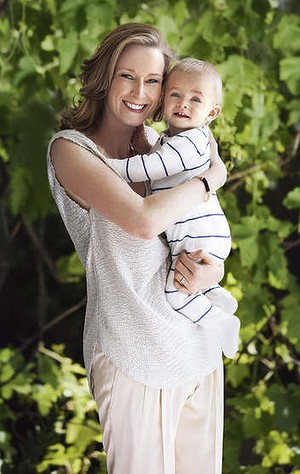
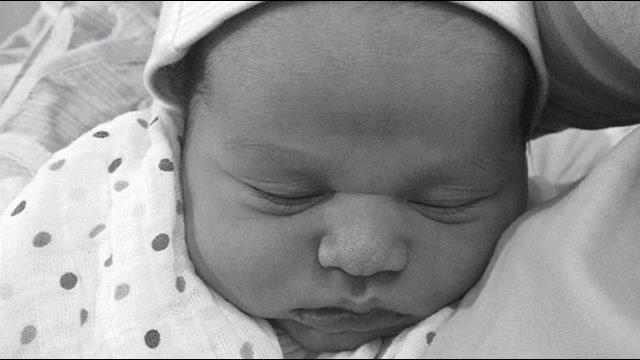
NRL star Corey Parker, and his wife Margaux, welcomed their son on May 18 and have named him Jagger Steele. Jagger Parker has a big sister named Memphis, aged 4, and a big brother named Wylei, aged 3. The Parkers have explained Jagger’s name wasn’t inspired by Mick Jagger, as they are Elvis Presley fans; they just liked the name. Corey has played with the Brisbane Broncos since 2001, and is the team’s co-captain. He also plays for the national squad, the Prime Minister’s XIII, and for his state team, the Queensland Maroons. He will be playing in the first State of Origin match this Wednesday.

Cricketer Michael Hogan, and his wife Rachel, recently welcomed a daughter who they have named Ambrosia. Ambrosia Hogan has a big brother named Buddy, aged 2. Michael has played for Western Australia and the Hobart Hurricanes, and since last year has been with the Glamorgan County Cricket Club in Wales. Although able to be in Perth for Ambrosia’s birth, Michael has had to return to Wales alone; his family will join him next month.

NRL player Tony Williams, and his wife, welcomed their first child a year ago and named their son Tremaine. Tony is so gigantic, at 192 cm (6’4″) and 118 kg (260 lb), that his nickname is T-Rex; however he says his son was a normal-sized baby, although getting to be a “big boy” now. With another T name, there could be a T-Rex Junior. After playing for Parramatta and Manly, Tony signed with the Canterbury Bulldogs last year. He has played for Australia, Tonga, New South Wales, and City.

Rugby union player Taqele Naiyaravoro, and his wife Ethel, welcomed their first child almost a year ago and named their daughter Ella. Taqele, who was 21 at the time, delivered Ella himself. Taquele is originally from Fiji, and started out in rugby league for the Wests Tigers before switching codes this season to play for the NSW Waratahs.

(Photo shows Corey and Margaux Parker with their two elder children)

Airlie Milla and Knox Leo

Tags

, ,


airliebeach1Twins
Max Leslie and Albert Denis

Girls
Airlie Milla (Jayce)
Allegra Paige
Camilla Victoria Rose
Colbie Anne (Jaxon, Halle)
Cleo Grace (Mali, Piper, Farren)
Eloise Kathleen Frances
Emmerson Hunter Jayne (Nathan, Jordan, Brodie)
Estelle Wendy
Harriet Elsie
Indie Raine
Josie Colleen (Ivy)
Kadie Frances (Einar, Louis)
Lacey Fleur (Claudia)
Lavinia Isobel (Jack)
Miranda Kitty
MJ
Mya Zona
Stella Katerina Yvonne
Summer Harmony (Matilda, Dusty, Jackson)
Zailey Lola (Harry, Tully)

Boys
Arden Anthony
Darcy Francis (James)
Finnlay Matthew
Fletcher Jack (Isabelle, Greta)
Graeme Peter
Harry Lennox (Roy)
Jed Vincent
Kane William (Joel, Lily)
Knox Leo (Darcie)
Leland George
Lochlann Charles Alfred
Luca Augustus (Matteo, Alessandro, Cristiano)
Maddox James
Miles Riley
Otis Jordan Charlie (Allegra, Jarvis)
Phoenix Thomas (Indiana)
Roan
Saxon Ryder
Tye Hudson
Zenick

(Photo shows Airlie Beach in North Queensland)


Celebrity Baby News: Alistair and Yasmin Coe

Tags

, ,

1400546175157.jpg-300x0

Politician Alistair Coe, and his wife Yasmin, welcomed their first child on May 16, and have named their son Angus Bruce. Angus Coe was born at John James Hospital, weighing 3.2 kg and 50 cm in length. He and his father share the same middle name – and the same initials, ABC.

Alistair is a member of the Liberal Party, and was elected to the Australian Capital Territory Legislative Assembly in the Ginninderra electorate in 2008. He is the deputy leader of the ACT Liberals, and holds several shadow portfolios. Yasmin is in the public service, and she and Alistair were married last year.

Famous Name: Grace

Tags

, , , , , , , , , , , , , , , , , , , ,

Thumbnail_320

Last month it was the 121st birthday of Grace Cossington Smith, one of the most important Australian artists of the 20th century, and a contemporary of Clarice Beckett.

Grace was born in Sydney, and studied under Antonio Dattilo Rubbo, an inspiring and extremely supportive art teacher who encouraged his students to experiment; he affectionately called Grace “Mrs Van Gogh”. Her painting The Sock Knitter, showing her sister knitting socks for the war effort, is considered to be Australia’s first post-Impressionist painting, and she exhibited in galleries from 1915.

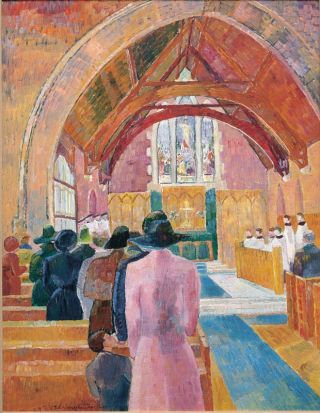
Her paintings are notable for their bright patterns and vibrant energy, using careful square brushstrokes to create images of colour shimmering through sunlight. She painted scenes of Sydney, and is famous for her iconic representations of the Harbour Bridge, showing the bridge’s construction. Grace’s Sydney was bustling, busy, exciting; filled with crowds, colour and sunshine. Later in life, she became known for her still lifes and interiors.

Art museums began buying Grace’s work in the 1940s, but she did not become famous until the 1960s, and in 1973 was appointed an Order of the British Empire as an exhibition of her work toured with the Art Gallery of New South Wales. Grace was 81, and let it be known that she would have welcomed recognition a little earlier. She received her OBE while in a nursing home, and by then was too frail to paint any more.

Grace is an English word which can be understood in several different ways. We might think of grace in terms of physical elegance and poise, but there is also social grace, where a person is charming and well-mannered.

The theological concept of Divine Grace is present in several religions. In Christianity, it means the undeserved love and mercy given to us by God – a gift that allows us a share in divinity. Although there are many theological disagreements, nearly all Christians believe that the grace of God is necessary for salvation, and that it is through divine grace that we are able to resist sin.

The word grace comes from the Latin gratia, meaning “kindness, favour, esteem”, ultimately from an ancient root which means “praise, welcome”. The word is related to grateful. Both the secular and spiritual senses of the word grace have connotations of effortlessness – no matter how many lessons in physical movement or etiquette you might have, you can only appear graceful if it seems natural and easy for you. And the grace of God comes not through our own efforts, but is a gift that we are freely given without earning it.

The English name Grace was not originally linked to either of these meanings, but from a Germanic name Grece, meaning “grey”, and pronounced like Grace. However, it quickly became associated with the Latin Gratia or Gracia, to suggest “charming, pleasant”, and it is thought that women with these names would have been known as Grece or Grace in everyday life.

St Gracia of Lerida may have been an influence on the name’s development; she was the daughter of a Spanish Muslim caliph who converted to Christianity and was martyred in the 12th century. Born Zaida, she took Gracia as her Christian name, and is sometimes known as St Grace. There is also an obscure pre-Norman English saint named Grace connected with St Probus of Cornwall; some speculate that she was his wife, and others that she was a great lady who supported him in his ministry. There doesn’t seem to be any evidence that she ever existed.

In Greek mythology, the Graces are goddesses of charm, beauty, nature, creativity, and fertility, patronesses of amusements and festivities. Despite this seemingly frivolous purview, in some mysterious way they were connected to the Underworld and the secrets of the afterlife – perhaps a taste of the joys which might await us on the other side. In Renaissance art, they are usually depicted as three beautiful young women who are either naked or lightly draped in diaphanous garments, and often embracing each other or clasping hands.

These attractive figures might have influenced the choice of the name Grace from the late Middle Ages, but it is usually thought that after the Reformation, Grace would have been given by Puritans as a virtue name, with the religious meaning in mind.

Grace is a classic name which has never left the charts. It was #29 in the 1900s, left the Top 100 in the 1940s, and reached its lowest point in the 1970s at #373. It then began climbing steeply, around the time of Princess Grace of Monaco’s death, and reached the Top 100 in 1988 at #89.

By 1991, Grace was in the Top 50 at #45, and in the Top 20 by 1998 at #13 – the highest point it had ever gained historically. Grace reached the Top 10 in 2002 at #9, however it did not stay there long, and stabilised just outside the Top 10, where it remains today.

Currently Grace is #12 nationally, #11 in Victoria, #14 in New South Wales, #12 in Queensland, #11 in Western Australia, #9 in Tasmania, #11 in the Northern Territory and #10 in the Australian Capital Territory. Highly popular in all states and territories, it is also a Top 100 name in other English-speaking countries, and is most popular in Northern Ireland and Ireland at #3 and #4 respectively. Its popularity in Britain and New Zealand is much the same as here.

Grace is a true timeless classic; a solid choice as an English name which has never gone out of fashion or fallen into disuse in nearly a thousand years. Yet it is more popular now that it has been at any other time in Australia’s history, making it a contemporary classic which feels both traditional and up-to-date.

Grace is a beautiful name with simple elegance; sophisticated and unpretentious, and even more popular as a middle name. It’s a saint, a princess, a goddess, and millions upon millions of ordinary women throughout the ages. There may be many little girls named Grace, but that’s no reason why your daughter cannot join their ranks. Gracie is a common pet form, and quite a few parents are choosing this as the name on the birth certificate.

POLL RESULT
Grace received an excellent approval rating of 83%, making it one of the highest-rated names of 2014. People saw the name Grace as a beautiful timeless classic (29%), simple yet sophisticated (18%), suitable for all ages (18%), and intelligent and professional (11%). However, 6% thought it was too popular. Nobody thought the name Grace was harsh or ugly.

(Picture shows Church Interior by Grace Cossington Smith, c 1941)
 

Name Update: The Hug and Kiss Sisters

Tags

,

il_340x270.410375586_qpa8

Kelly and Adam saw the name Xanthe on Waltzing More Than Matilda, and were immediately taken with it as a possible name for their second daughter. However, as time went on, they began to worry that Xanthe might be difficult for others to spell or pronounce, and wondered whether the name would be too much of a burden. So Kelly wrote in to the blog to ask what people thought.

I’m happy to report that Kelly felt reassured at the response she got from the public, and found our replies very helpful. As a result, when their baby girl arrived a few weeks ago, Kelly and Adam named her

XANTHE JULIA,

little sister to Olive.

As soon as Kelly and Adam met their little girl, they knew Xanthe was the right name and it fits her perfectly, just as as Olive’s name was perfect from the start.

Generally they’ve had positive reactions from others, and most of their family and friends already knew how to spell and pronounce Xanthe, so there haven’t been any huge issues as yet. One thing they weren’t prepared for is that sometimes older people mishear the name as “Nancy“, especially over the phone.

Both Alexia Mae and Alison commented how sweet it would be to have two daughters with names starting with O and X (hug and kiss), which I thought was very fetching.

Congratulations to Kelly and Adam, and welcome Xanthe!

(Photo of heart-shaped biscuits from etsy)

Waltzing with … Forrest

Tags

, , , , , , , ,

OLYMPUS DIGITAL CAMERA

The name Forrest has been so often in the newspapers lately that I thought it must be time to cover it. The reason it’s in the papers is because of mining magnate Andrew “Twiggy” Forrest, the 9th richest person in the country, with a fortune of $3.66 billion.

The head of the Fortescue Metals Group, Andrew has recently bought massive pastoral holdings in the Pilbara, making him one of Western Australia’s biggest landowners. He also recently bought Harvey Beef, the biggest beef exporter in Western Australia, and the only one which exports to China.

Andrew is a prominent philanthropist; he and his wife Nicola are the first Australians to pledge half their wealth to charity while living. He has made large contributions to Indigenous employment, charities for children and the homeless, disaster relief, and his alma mater Hale School – the oldest private boy’s school in Western Australia, whose Forrest Library is named in Andrew’s honour.

Last October, Andrew announced he would donate $65 million towards higher education in Western Australia – one of the nation’s highest philanthropic donations. He has also become known for his fight against modern slavery, launching a global campaign with the support of the Pope, Archbishop of Canterbury, and Grand Imam of al-Azhar.

Andrew likes to be seen as apolitical, but has friends on both sides of politics, and has made donations to the WA Labor Party. He has also been vehement in his opposition to the mining tax, and urged the Federal Government to strip welfare payments from teenagers if they are not in school, work, or training. This week’s budget demonstrated the power of his political influence.

Andrew Forrest is the great-great nephew of Sir John Forrest, an explorer and who became the first premier of Western Australia; he was the first professional politician in Western Australia and never lost an election. Sir John has many sites named after him, including John Forrest National Park, Western Australia’s oldest national park. This must be a rare example of a forested area named after someone named Forrest.

John’s brother Alexander was also an explorer and politician, with significant investments in land and mining. Their brother David was Andrew Forrest’s great-grandfather. David was the first manager of Minderoo Station in the Pilbara, which was bought by the Forrest brothers in 1878, and owned by them until it was sold by Andrew’s father Donald in 1998 due to drought and debt. Andrew, who had once worked as a jackaroo at the station, bought back the family property in 2009.

Forrest is a surname which is easy to translate, as it comes from the Old French word forest. Today we might see Forest as a tranquil nature name, perhaps even slightly hippy. In a time when national forests are protected, they seem a haven where we can all enjoy their natural beauty.

However, the original meaning of forest in Norman England was quite different. The word referred to large tracts of heath and woodland reserved for the sole use of the king and, by invitation, the aristocracy. At the height of afforestation in the Middle Ages, a third of southern England was set aside, with a certain amount of ordinary people getting booted out of their homes to make way for these forests.

Forests were not for communing with nature and tree-hugging, they were for royals and nobles to hunt wild animals, and there could be harsh penalties for anyone else who entered them, especially if they were there to poach game. The word forest comes from the Latin for “outside” – not because forests are outdoors, but because they were outside the laws of the land, and the law offered you no protection if you were caught in one. That’s why outlaws (such as fictional Robin Hood) lived in the forest, and why they were taking such a daring risk in doing so.

The surname Forrest would have been held by someone who lived near a royal forest, or someone who worked in one, perhaps as a gamekeeper or warden (a lot of security staff was needed to protect the game). Although widely used in Britain, the surname became particularly associated with Scotland because of the Clan Forrester, which originated in the Edinburgh region. Sir John Forrests’ parents were emigrants from Scotland, who came to Australia as servants of a prominent colonial physician.

Forrest has been used as a first name as early as the 16th century, and originated in England rather than Scotland. It has been most used in the United States, but the name isn’t uncommon in Australian records, and Forrests from Western Australia may have been named after (or been part of) the famous Forrest family.

The most famous fictional Forrest is surely Forrest Gump, from the book and movie of the same name. In the story, Gump is named after his ancestor Nathan Bedford Forrest, a popular yet highly controversial Confederate General who was accused of war crimes and became one of the early members of the Ku Klux Klan. Unlike his rather wily and unscrupulous ancestor, Forrest Gump is naive and good-hearted.

Forrest has never charted in Australia, but its meaning and history almost make it seem traditional: this is a good example of a name that is very unusual, yet not in the slightest bit strange or confusing. The Forrest dynasty gives it depth and dignity, while the modern understanding of forests resonates with Australians, thanks to our mythology of the bush.

Forests may remind us of freedom and toughness, and the literal meaning of “outside the law” of wild bushrangers. They might also remind us of the fight to save our native forests, a struggle which seems more vital now than ever.

POLL RESULT
Forrest received an extremely good approval rating of 78%. 31% of people said they didn’t mind it, while 25% thought it was a good name. Less than 10% of people hated the name.

(Photo shows a view through wandoo trees in John Forrest National Park, overlooking Perth)

Alba Pearl and Isla Birdie

Tags

, ,

White Tern calling LHI 0212

Twins
Faith and Hope

Girls
Alba Pearl (Odin)
Aoife Dana (Orla)
Audrey Filomena June (Olivia, Lenny)
Brydie Irene (Max)
Calliope Ethel Rosalyn
Emmie Hazel (Oscar)
Esme Margaret (Tristan, Nya)
Greta Louise (Lachlan, Henry)
Harriet Alexandra (Archie)
Indiana Harlow (Everlie)
Isabella Gael (Oliver)
Isla Birdie
Jane Elizabeth (Chris, Katie, Jarrod)
Lucille Christine
Matisse Jade
Nelly Mae
Poppy Joan (Ruby)
Shiloh Simone (Harlee)
Stella Angel
Violet Sage (Lily)

Boys
Axl Leigh (Mya, Mali)
Edward Barry Vanham (Emma-Rose)
Flynn Arlo Randall (Tully, Bede)
Hamilton Leopold (Spencer, Jasper)
Hartley David (Ainsley, Davis, Shayla)
Hugo George
Jack Steel
Joel Musgrave
Jonty Leonard (Coen)
Lex Joseph (Bryce)
Lenny Zayne
Lloyd Aaron
Malachi John (Josiah)
Ned David (Darcy)
Oliver Theodore
Payton James (Harper)
Reuben Oswald Alexander
Sebastian Kenneth (Violet)
Tadhg William Francis (Mia, Lexie)
Toby Leroy

(Photo shows a White Tern on Lord Howe Island, off the coast of New South Wales)

Celebrity Baby News: Leigh Sales and Phil Willis

Tags

,

af-sales-20130916172555978953-300x0

Leigh Sales, host of the ABC’s 7.30 Report, and her husband, animator Phil Willis, welcomed their son James in March. James Willis was born at Royal Prince Alfred Hospital, and joins big brother Daniel, aged 2; Daniel’s birth was announced on the blog. Leigh is currently on maternity leave.

(Photo of Leigh and Daniel from Sydney Morning Herald)

Celebrity Baby News: Megan Gale and Shaun Hampson

Tags

,

262216-7cb40c54-8563-11e3-b939-7fcb48a5bb4a

Model Megan Gale, and her partner, AFL footballer Shaun Hampson, welcomed their first child on May 13 and have named their son River Alan Thomas. River Hampson was born at 4.47 am weighing 3.87 kg (8lb 5oz). Rivers is Megan’s mother’s maiden name, Alan is after Megan’s father, and Thomas after Shaun’s father.

Megan won a Perth modelling competition at the age of 18, and has modelled for Italian fashion houses and Australian designers. She has appeared in advertisements in Italy, and in 2003 was chosen by the Australian Tourist Commission to represent the face of Australia in Italy. She was ambassador for department store David Jones for ten years; the longest fashion contract in Australia. Megan retired from catwalk modelling in 2008 after fifteen years, and has also worked as an actress and television presenter. Currently she is the host of Project Runway Australia, and an ambassador for L’Oreal .

Shaun played for Carlton from 2007 to 2013, and this year has signed with Richmond. He and Megan have been dating since 2011.

1505_River2_i

Famous Name: Jessica

Tags

, , , , , , , , , , , ,

788699-2f9579b0-d709-11e3-95ae-9151c7cd2575

The final of this year’s Eurovision Song Contest took place on May 10, with Austria’s Conchita Wurst winning with the Bondesque power ballad Rise Like a Phoenix – the first time Austria has won since 1966.

Australia has a peculiar fascination with and affection for Eurovision, which began with Swedish band ABBA, who won in 1974 with Waterloo, as we were the first country outside Sweden to really appreciate them. European migration to Australia also played a big role, as did the gay community, and there is something about the kitschy campiness of Eurovision which appeals to the Australian sense of humour. Either way, it’s time to get yourself to Eurovision party dressed as a Swiss yodeller, eat spanakopita, and play overly ironic drinking games.

Not content with this vicarious enjoyment, for many years now Australia has been demanding to take part in Eurovision as well – hopefully as contestants, but failing that, maybe some sort of guest hosting gig. Australia being in Eurovision isn’t a practical idea: we’re not members of the European Broadcasting Union but only Associate Members, and we’re thousands of miles away in a completely different time zone. Nonetheless, we haven’t given up hope.

Sick of our constant nagging, host country Denmark, probably feeling some sense of obligation since Crown Princess Mary is from Australia, gave us a chance to perform an interval act as a tribute to our love of Eurovision. So we sent pop star Jessica Mauboy (who starred in The Sapphires) over to sing her anthem Sea of Flags to millions of viewers – she did a great job, and sent ratings for Eurovision in Australia soaring. Jessica has sung for Oprah and President Barack Obama, but Eurovision was a thrill on a whole other level, and she is using this as an opportunity to launch a European tour.

Jessica is a name created by William Shakespeare for his play, The Merchant of Venice. In the play, Jessica is the daughter of the Jewish moneylender Shylock, who demands a pound of flesh from his rival Antonio, who has insulted and spat upon him. Jessica, who describes life with her father as hell, falls in love with Antonio’s friend Lorenzo and becomes a Christian, further enraging Shylock.

It is thought that Shakespeare based the name on Iscah, meaning “foresight”. In the Bible, Iscah is a niece of the prophet Abraham who is mentioned only briefly in the book of Genesis. In Shakespeare’s time, the name would have been written Jescha, and pronounced like Jesca. As Jessica is a Jewish girl from Venice, Shakespare might have been trying to make her name look like an Italian form of a Hebrew name.

The Merchant of Venice was written around 1596, and by 1600 had been performed many times. Yet the name Jessica only appears in the records in the mid-18th century, when The Merchant of Venice had become a popular stage play. It also post-dates the Jews’ return to England in the 17th century, after being banished during the Middle Ages (Shakespeare’s play about a vengeful Jewish moneylender was written in an England without a Jewish community). One of the reasons why Jessica probably seemed like a usable English name is because Jessie was already a pet form of Jane and Jean.

Jessica first ranked in the 1960s at #437. Why the 1960s? My guess is because Jennifer had peaked in the 1950s at #1 in Victoria and #2 in New South Wales, and by the 1960s had only fallen one place in each state. The raging success of Jennifer paved the way for Jessica the successor.

Jessica joined the Top 100 in 1976 at #97, and by 1979 was in the Top 50, at #34. By 1981 it was in the Top 20 at #18, and by 1982 had joined the Top 10 at #7. The following year it was Top 5, at #3, and by 1984 was the #1 name; a position it maintained until 1998.

Jessica is currently #35 nationally (410 babies named Jessica in 2013), #40 in New South Wales, #39 in Victoria, #41 in Queensland, #24 in Western Australia, #92 in Tasmania, and #39 in the Australian Capital Territory. In mainland Australia, Jessica is on a slow descent, and still a Top 50 name.

Jessica is now in its fifth decade of popularity, and still in the top half of the Top 100 – if its staying power mirrors Jennifer, it would have another thirty years of popularity left. You can understand why, because Jessica is a pretty modern classic whose literary origins help make it seem traditional rather than trendy. After all these years, Jessica cannot be seen as a fresh or original choice, but it is still a very good one.

POLL RESULT
Jessica received an approval rating of 35%. People thought the name Jessica was too common and boring (19%), and already seeming dated (16%). However, 12% saw it as a pretty or beautiful modern classic.

(Photo shows Jessica performing at Eurovision)