Celebrity Sibset: Nicola Charles

Tags

,

133717-nicola-charlesNicola Charles is a British-born actress who first became famous on Australian television. After working as a model, Nicola came to Australia in the mid-1990s, and scored her first acting job on the soapie Neighbours. She was on Neighbours for three years, playing brunette beauty Sarah Beaumont, the too-tempting receptionist of Dr Karl Kennedy. During these years she became well known in both Australia and the UK as a sex symbol.

Nicola returned to Britain after her stint on Neighbours, and later relocated to Los Angeles, where she and her husband set up their own production company. Last year, Nicola returned to live in Australia. At the moment, she is back on Neighbours for six weeks, reprising her role of Sarah Beaumont, and revealing further details of her relationship with Karl.

Nicola signed a two-book deal with New Holland Publishing, and is also working on her first novel.

Nicola had two daughters with her second husband, Irish actor Jason Barry:

Freya Lola Sky (b. 2005)

and

Nova Ingrid Maggie (b. 2007)

and a son with her present husband, British DJ Mark Tabberner:

Archie (b. 2010)

Dakota and Nash

Tags

, ,

Big_GoldenGuitar_TamworthTwins

Grace Victoria and Kaye Leanne

Henry Noel and Audrey Joan (Edward)

Scarlett Therese and Jemima Louise (Matilda, Phoebe, Lyla)


Girls

Dakota Julie (Ryder)

Esta Lulu (Leonard)

Estelle Tini Mary

Josephine Evelyn May

Lyra Sage (Arabella)

Olive Ellen (Violet)

Ruby Lucy Louise

Vivien Mary

Winter Cobie

Zieva Rose (Keira)


Boys

Alfie Ignatius

Arlo Miles (Felix, Stella)

Dashiell Guilford (Ada)

Emmett Brae (Mia)

Hector John Henry (Georgina)

Kaison Andy Lee (Lukas)

Lucas Jonty (Zac, Ryley)

Matteo Stelio

Nash Ryder (Hunter)

Ronan Donald


Most popular names this week

Girls: Ruby

Boys: William

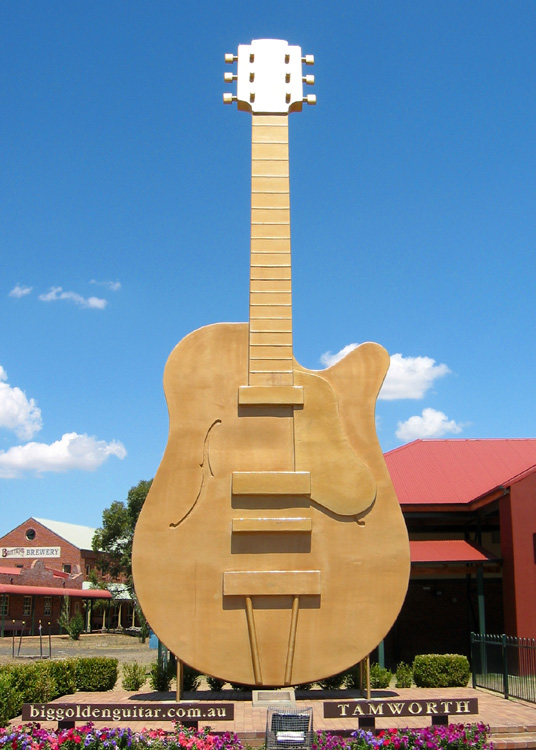
(Photo shows the Big Golden Guitar at Tamworth, where the Tamworth Country Music Festival was recently held)


Famous Name: Miriam

Tags

, , , , , , , , , , ,

4485672-3x2-940x627On Australia Day this year, more than 17 000 people from 145 countries took the pledge and became Australian citizens. Prime Minister Julia Gillard, presiding over a ceremony in Canberra, told the crowd that the first citizenship ceremony was in 1949, and since then more than 4 million people had sworn loyalty to Australia. In fact, Ms Gillard was one of them – she was born in Wales and moved to South Australia as a child.

Amongst the 17 000-odd people becoming Australian citizens was British-born actress, Miriam Margolyes. Miriam has long been a mainstay in film, television and theatre, delighting audiences in such favourites as Blackadder, Little Dorrit, Babe, the Harry Potter films (she played Professor Sprout), and Wicked. A massive Charles Dickens tragic, Miriam has taken her one-woman show, Dickens’ Women, all over the world.

Miriam apparently got a bit of a crush on Australia when she was only a child, and kept on meeting wonderful Australian people, until at last, in 1968, she met her Australian partner Heather, which cemented the deal for good and all. She bought a house in the southern highlands of New South Wales around the time she was in Babe, and for many years now has been based in Australia.

Miriam promised that she hasn’t become Australian just for the beach and barbies, she wants to make a contribution to Australian society. Although she loves her country, she plans to use her democratic right to protest and speak out against things that need to change, and also wants to learn more about disadvantaged Australians. In other words, she will be a fantastic Aussie citizen.

Miriam is the original name on which the familiar Mary is based. In the Old Testament, Miriam is the older sister of Moses, and it is she who came up with the clever plan to save her baby brother’s life. Because Pharoah had decreed that newborn Hebrew boys were to be killed, she took Moses and hid him by the side of a river. She secretly watched as Pharoah’s daughter found and adopted him, then suggested that the princess use Miriam’s mother as a wet nurse, so that Moses was cared for in his infancy by his own family.

The Old Testament depicts Miriam as a strong, outspoken woman, and a leader amongst the Hebrews. One of the oldest parts of the Bible tells how she led the women in triumphant song and dance after the crossing of the Red Sea, the female chorus echoing the men, who were led by Moses. She was a prophetess, with the Bible implying that God spoke to her through dreams; the Bible speaks of the prophets Moses, Aaron and Miriam as if all three of them played vital roles in the Hebrews’ escape from Egypt.

According to Jewish tradition, the Hebrews were blessed by a well which followed them through the desert due to Miriam’s righteousness. When she died and was buried (in present-day Syria), God caused a spring of abundant fresh water to open up for the people. The spring was called Meribah, which means “quarrelling”, as everyone was grumpy from thirst. This story is very similar to another where the Hebrews were suffering from severe water shortage, only to find a well filled with bitter water. Moses turned the brackish water sweet with a particular tree, but the well was still called Marah – “bitterness”.

These two stories probably help to explain two suggested Hebrew etymologies for the name Miriam – “rebellious”, and “bitterness”. These are generally thought to be unpleasant meanings for a girl’s name, but as you can see, the stories were positive ones, although they don’t actually have anything to do with Miriam. In fact, it’s unlikely that Miriam’s name was Hebrew at all – she was born and raised in Egypt, and it is believed that both her brothers’ names were of Egyptian origin.

Miriam may be derived from the Ancient Egyptian word for “love” or “beloved”, or it could be a form of the Ancient Egyptian name Meritamen which means “beloved of Amun” – Amun was the chief god of the Ancient Egyptians, and his name means “hidden”. For this reason you will sometimes see Miriam and Mary translated as “beloved by God”, even though it doesn’t mean the God of the Abrahamic religions.

Miriam has never disappeared from the charts, but never been in the Top 100. It was #133 in the 1900s, which is the highest point it ever reached; its current rank of #458 is the lowest it has ever reached. After climbing steeply in 2009, the name Miriam fell dramatically in 2011 – although in real terms, that equates to just ten fewer babies called Miriam than there were in 2009.

I think the name Miriam has much to recommend it. It’s an underused classic, which means it’s familiar to everyone, yet rarely encountered. It is feminine, strong, sounds quite intellectual, and suits any age. In Jewish tradition Miriam was associated with water, and I do think Miriam has a liquid feel to it – cool and deep. It has a range of possible nicknames, including Mim, Mimi, Mima, Minnie, Mirri, Mirra, Mira, Mia, Mitzi and Remi.

Even a murderous Norah Jones sang that Miriam was “such a pretty name“. When your most vengeful enemy admits you’ve got a nice name, that takes some beating.

POLL RESULT: Miriam received an astounding 91% approval rating, making it one of the highest-rated names of the year. Miriam was praised for being strong and intelligent (45%), pretty and feminine (23%), having great nickname options (15%), and a desirable level of popularity (8%). However, 8% thought the name was too old-fashioned. Nobody thought that the name Miriam was “too Jewish”.

(Photo shows Miriam Margolyes receiving her citizenship certificate from Prime Minister Gillard)

Celebrity Baby News: Dave and Kara Gruber

Tags

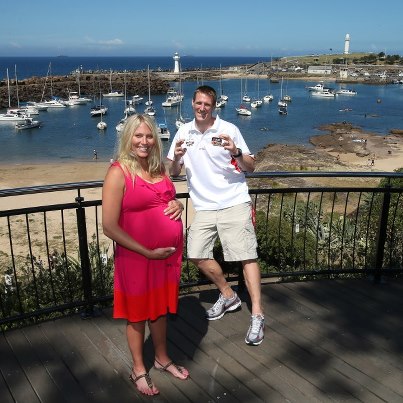
558347_10151185004996237_1455285472_nBasketball player Dave Gruber, and his wife Kara, welcomed their first child on January 31 and have named their daughter Grace Nicole. Grace Gruber was born at 5.30 pm at Figtree Private Hospital, weighed 3.97 kg (8lb 8 oz), and measured 52 cm long.

Dave plays for the Wollongong Hawks. Dave and Kara are both originally from Iowa in the United States, and became Australian citizens almost two years ago.

Real Life Multiples October 2012-February 2013

Tags

, , ,

085434-twins-marli-and-summa-crosbieTwins

Lottie and Isla, sisters to William (Adelaide)

Matilda and Reuben, children of Sally and Russell (country Victoria)

Elijah and Huxley, given birth to by surrogate Rachel Kunde (Brisbane)

William and Isla Bracken, children of Kimberley and Daniel, siblings to Abigail (Sydney)

Mackenzie and Hudson Burridge, children of Milena and Heath, siblings to twins Austin and Madison (Melbourne)

Taylor and Summer Clarkson, daughters of Dani, sisters to Bailey and Jesse (Melbourne)

Marli and Summa Crosbie, daughters of Melanie and Carey, sisters to Aliyah, Tyler, Sienna and Ella (Central Coast, NSW) [pictured]

Amelia and Madeline Denholm, daughters of Susan (Newcastle, NSW)

Krishna and Trishna Goldar, daughters of Lovely, cared for by Moira Kelly and Atom Rahman (Melbourne)

Nate and Louise Green, children of Susan and Bernard, siblings to twins Oscar and Zoe (Townsville, Qld)

Ava and Mia Holland, daughters of Annette and Dave (Canberra)

John and Thomas Lucy, sons of Barbie and Jason (Toowoomba, Qld)

Jackson and Samuel Mackenzie, sons of Jen (Melbourne)

Amelia and Alexandra Pascuzzo, daughters of Tracey and Emi (Melbourne)

Estelle and Skye Ruiz, daughters of Andrea and John (Melbourne)

Ella Jane and Allaura Mae Simpson, daughters of Anita and Shaun, sisters of Kade and Ramie (Grafton, NSW)

Charlotte and Coco Wanless, daughters of Alicia and Brendan (Melbourne)

Triplets

Zoe, Damon and Ruby Glaros, children of Karen and John (Ipswich, Qld)

Toby, Jayden and Imogen Taylor, children of Caitlin and Alex (Toowoomba, Qld) – link to story expired

Amariah, Aiyanah and Azarliah Womal, children of Valerie and Brenton, sisters to twins Annabelle and Zentayvious, and to Zephaniah (Mackay, Qld)

Underused Names for Girls

Tags

, , , , , , , , , , , , , , , , , , , , , , , , , , , , , , , , , , , , , , , , , , , , ,

sabine women detailLast week we had names from Victoria which were used less than ten times in 2012. Those names are uncommon – but what if you wanted something even rarer? These are names which don’t appear even once in the Victorian data from last year, and have never charted in Australia. However, they are not strange or obscure, and all of them can be found in Australian historical records.

Angharad

Angharad is an Old Welsh name meaning “greatly loved”. It was reasonably common in medieval times, and there are several Angharads in Welsh history. In Welsh mythology, Angharad Golden-Hand is the lover of Peredur, one of King Arthur’s knights. Angharad Morgan is a main character in How Green Was My Valley, and in the film version was played by Maureen O’Hara. Actress Angharad Rees became well known in the 1970s for playing the role of Demelza in the TV series Poldark. Lots of famous Angharads, yet I could find only one woman named Angharad in Australian records. The pronunciation, ang-HAH-rad, may have caused some concern. This is a strong and unusual name with a lovely meaning. It would definitely stand out.

Beatrix

Beatrix is based on the name Viatrix, the feminine form of the Latin name Viator, meaning “voyager, traveller”. Early on, the spelling was altered to associate it with the Latin word beatus, meaning “blessed”, and it was common amongst early Christians. Some baby name books sandwich these two meanings together and interpret it as “blessed traveller”. Saint Beatrix was an early Roman martyr; according to legend, she was strangled by her servants. The name became less common in England after the Middle Ages, but was revived in the 19th century. One of the most famous people with this name is Beatrix Potter, the children’s writer and illustrator, who gave us such delightful characters as Peter Rabbit, Jemima Puddleduck, Squirrel Nutkin and Mrs. Tiggy-Winkle. As well as these talents, she was also a scientific researcher, conservationist, farmer, and sheep breeder. Queen Beatrix of the Netherlands helps give this name a royal touch, and a famous literary character is Beatrix “Trixie” Belden, girl detective. To me, this charming name seems spunkier and more eccentric than her sister Beatrice.

Cressida

In Greek mythology, Chryseis was the daughter of a Trojan priest named Chryses, and she was captured by the Greek champion Agamemnon as part of the spoils of war; he refused to give her back even after being asked nicely. Chryseis’ dad prayed like blazes to the god Apollo, who obligingly sent a plague through the Greek soldiers until Chryseis was returned. A later legend says that she bore Agamemnon a son. Her name given in the Iliad simply means “daughter of Chryses”; appropriately for a priest of Apollo, Chryses’ name means “golden”, perhaps in reference to sunlight. Some writers say Chryseis’ real name was Astynome, meaning “possessor of the city”. When medieval authors retold the tale of the Trojan War, this story had a complete rewrite. Chryseis became Cressida (KRES-ih-duh), and one corner of a tragic love triangle; she is made the epitome of the false woman and the whore. Some authors were sympathetic to Cressida’s plight, and in Shakespeare’s version, Cressida is complex, highly intelligent and witty. A famous Australian with this name is the artist Cressida Campbell. I find this literary name quite bewitching.

Emmeline

Emmeline is the Old French form of the Germanic name Amelina, based on the word for “work”; it is therefore related to the name Amelia, and not to Emily. The name was introduced to Britain by the Normans, and many people prefer to give it a slightly French pronunciation as EM-uh-leen, while others seek to Anglicise the way it is said as EM-uh-line (like Caroline). My experience is that the British tend to say leen, Americans tend to say line, and Australians have a bob each way and can usually cope with either. There were several prominent suffragists named Emmeline, including Emmeline Pankhurst, Emmeline Pethick-Lawrence and Emmeline Wells. Australia mountaineer Emmeline Du Faur was the first woman to climb Mount Cook (in record time), and the first person to climb several peaks – always dressed in a skirt. Emmeline Pethick-Lawrence was a keen hiker and woodcrafter, and to me the name Emmeline sounds vigorous, healthy, and practical. Emmeline has a solid history of use in Australia, being commonly found in old records, and today its nickname Emmie means it fits in with popular names such as Emily, Emma and Emmerson.

Isadora

Isadora is a variant of the name Isidora, the feminine form of Isidore, from the Greek for “gift of Isis”; the Egyptian goddess Isis was worshipped widely in the ancient world, and she was also important to the Greeks and Romans. Saint Isidora was a 4th century Egyptian nun, considered to be a “holy fool”, and treated with contempt by the other nuns for her eccentric ways, such as wearing a dirty dishrag on her head instead of a veil, and eating only leftovers instead of proper meals. When a visiting saint came to the nunnery, he immediately picked out Isidora as the only person holier than himself; upset by the praise and attention, Isidora ran away into the desert to be a hermit, and nothing more is known of her. The most famous Isadora is the American dancer Isadora Duncan, who developed her own unique style of dance, based on the natural movements of the human body. Like the saint, she was considered eccentric and radical, and danced to the beat of her own drum. Isadora is a beautiful, glamorous and individualistic name!

Lavender

Lavender has been used as a personal name since the 17th century, and was given to both sexes. It may have originally been derived from the surname, which is Norman-French and based on the word lavandier, referring to a worker in the wool industry who washed the raw wool (this is an occupation that both men and women had). Even in the middle of the 20th century, you can still find boys named Lavender. By now, however, it is almost entirely thought of as a girl’s name, and considered to be from the flower. The flower name comes from the Old French lavendre, possibly from the Latin for “blue-coloured”, lividius, but also influenced by lavare, meaning “wash”, because lavender was used in washing clothes. Lavender is often used to scent soaps and beauty products, and has been used as a relaxation aid for thousands of years. The colour lavender is associated with sensuality and decadence, and at one time, was considered symbolic of homosexuality. Like Rose, this is a pretty old-fashioned flower name that is more complex that it first appears.

Sabine

Sabine is a French and German form of Sabina, the feminine form of the Latin name Sabinus, meaning “Sabine”. The Sabines were an Italian tribe who inhabited the region where the city of Rome stands today, and some of them fought against Rome for their independence. According to legend, the Romans abducted Sabine women to populate the city of Rome; the war between the Romans and Sabines ended when the women threw themselves and their children between the armies of their fathers and those of their husbands. The history behind the legend is that the conquered Sabines assimilated with the Romans, beginning a new line of inheritance. Many of the noble Roman families traced their ancestry to Sabine origins, and at least some of the deities and rituals of Rome came from the Sabines. The Sabines were said to have taken their name from the hero Sabus, who was worshipped as a deity. Although it is too long ago to be sure, one theory is that the tribal name Sabine meant “us, ourselves, our own people”. You can either say this name the French way, sa-BEEN, or the German way, za-BEE-nuh; most English-speakers use the French pronunciation. There is at least one famous man named Sabine – the writer Sabine Baring-Gould, whose name was after the surname (derived from the personal name). You can find both men and women named Sabine in Australian records. Sabine is smooth and sophisticated, but comes with a cute nickname – Bean.

Theodora

Theodora is the feminine form of the Greek name Theodoros, meaning “gift of God”. The name pre-dates Christianity, but its meaning appealed to early Christians, and there are a few saints with this name. One of them was Saint Theodora, who as punishment for her pious celibacy, was dragged into a brothel. Her first “customer” was a Christian man, who had came to save her; they were both martyred, but their virtue remained intact. This story is probably fictional, and may have been inspired by sacred prostitution, of which Christians obviously disapproved. An Eastern Orthodox Saint Theodora disguised herself as a man and joined a monastery. Her identity as a woman was only discovered after her death. The name was a very popular one for Byzantine empresses, and Theodora I is also regarded as a saint. A Roman Theodora was a senator, and supposedly the lover of one of the early popes. She was harshly condemned for daring to “exercise power like a man”. The hussy! The image you get from these historical Theodoras is of very strong, independent, determined women – which might explain why Disney has chosen this name for the Wicked Witch of the West in Oz: The Great and Powerful. Pop star Robbie William welcomed a daughter named Theodora Rose last year, called Teddy; he wanted a dignified full name for the cuddly nickname, and Theodora fit the bill perfectly.

Verity

Verity is an English word meaning “truth”, especially in regard to religious truth or doctrine. It has been used as a personal name since the 17th century, and would have been given as a virtue name by the Puritans. However, it was most likely also given in honour of the surname, for births of Veritys in Yorkshire are suggestive, given that the Verity family is a prominent one in that county. The surname is Anglo-Norman, and has the same meaning as the personal name. Originally, Verity was a unisex name, and in early records is given equally to boys and girls. The first Verity I can find born in the United States was a boy, and his family were Puritans in Massachusetts. You can find the name Verity given to both sexes in Australian records, but only as a middle name for boys, and it has never been very common here. Famous Australian women named Verity include the politicians Verity Barton and Verity Firth, the ABC presenter Verity James, and the actress Verity Hunt-Ballard, who played Mary Poppins in the Australian version of the musical. This is a crisp, clean name which sounds intelligent and upper-class to me.

Zia

Zia is a variant of the Arabic name Ziya, meaning “light, shine, splendour” – more specifically, it refers to light which shines by its own illumination, and is connected to the sun and sunlight. Traditionally, Zia is a male name, but Arabic baby name sites usually list it as female, and the name charts in France only for girls. There are quite a few people called Zia in Australian records, and they are not all Arabic men. There are women called Zia from different cultures, including Italian, where Zia may be short for a name such as Annunzia (zia means “aunt” in Italian, but this doesn’t seem to have been a hindrance to its use by Italians). Most women called Zia in the records seem to be of British descent, and I’m guessing either it was seen as a short form of other names, or parents just liked the sound of it. I can imagine parents today also liking the sound of it, because it is so similar to popular names such as Zara and Mia – indeed, it almost seems like a cross between these names. This is a zippy name which sounds a bit different, but won’t seem out of place in the playground.

POLL RESULT: People’s favourite names were Beatrix, Emmeline, and Isadora, and their least favourite were Lavender, Zia, and Angharad.

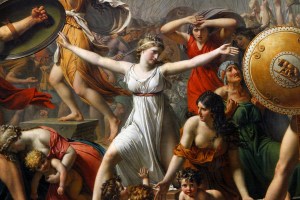
(Picture shows a detail from The Intervention of the Sabine Women (1799) by Jacques-Louis David)
She’s Having Last Minute Doubts About Their Baby Name

Tags

, , , , , , , , ,

Just before deadlineSarah and Rupert are expecting a baby girl, due in only a few days. They always agreed that their first daughter would be named Isabella, which is a traditional name in Sarah’s family. However, as time went on, the name Isabella became extremely popular, and also associated with the Twilight phenomenon, so Sarah grew less enthusiastic about using it.

Sarah’s solution was to use the name Isabel, which is traditional on the other side of her family. She and Rupert like its simplicity, and they plan to use another family name in the middle position.

However, with just a few days to go, Sarah is wondering if they have chosen the right name for their daughter. Although Isabel is towards the bottom of the Top 100, if you add up all the Isabellas and Isabelles, that makes quite a few girls called Issy or Bel. Sarah wonders if the name Isabel is really distinctive enough.

Sarah likes names in the style of Sibella, Arabella and Violet; Rupert prefers names like Molly, Ebony and Lila. As such, they haven’t really agreed on many names. The only other names Sarah and Rupert have agreed on are Camilla and Clementine. The Duchess of Cornwall puts Sarah off using Camilla, and for some indefinable reason, she can’t quite commit to Clementine.

Sarah wonders whether a personal meaning or family association is more important than popularity, and whether they should just stop discussing it and go with Isabel. She wants something classic and unique, yet can’t quite find it … and if she started meeting lots and lots of little Isabels she wouldn’t be happy about it.

Sarah has a very popular name, and it never bothered her, and Rupert loves his unusual name, so they know that children can be content with their name whether its common or rare. Sarah and Rupert have a nice solid one-syllable surname, such as Mack or Holt.

Sarah’s sisters, who have children already, tell her that once the baby arrives, she won’t give a thought to any of these worries, but right now they feel like genuine concerns!

~ ~ ~ ~ ~ ~

The last few days before a baby arrives can be quite frustrating, and there’s so many “What ifs …?” involved. Some of us worry that the car will break down and we won’t be able to get to the hospital; some of us worry that we’ve packed completely useless things in our little bag; and some of us worry that we’ve picked the wrong baby name. I expect all these little worries are a coping mechanism to keep our minds off the really big worries that we could be having instead!

I think that you might just be having last-minute jitters. Like someone getting nervous before their wedding, you may be slightly anxious about committing to the name Isabel for life. You wonder if you’ve made the right choice – what if things don’t work out the way you hoped? And could there be a better name out there that you haven’t thought of yet?

The good news is that you are in a much better position than someone having doubts about their wedding. Unlike a wedding, you get to have the baby first and then decide if the name seems right. You don’t have to make any commitment until the baby arrives, and you get a good long time to make your mind up after the birth. Most importantly, the name Isabel won’t be heartbroken if you decide to go with another name instead.

At this stage, I believe it’s too late to be actively searching for, and arguing about, a different baby name. I think Isabel [Middle Name] [Surname] is a really delightful combination: one that’s a nice balance between pretty and feminine, and neat and sensible, and could belong to a wide variety of girls. It doesn’t sound like a name that someone has to live up to, or pull off, or get used to. To me it seems like a name that isn’t boring, but would be easy to live with.

Let’s take a good look at Isabel:

  • Isabel is a name both you and Rupert like You’ve only managed to agree on three girl’s names in the past nine months, so let’s face it – your chances of finding another name you both like in the next couple of days aren’t that high.
  • You haven’t come up with anything better The only other names you could use just don’t seem quite right. It’s not impossible you’ll change your mind once the baby is born, but for now they don’t seem like viable options.
  • Isabel fits both your requirements You like pretty, feminine names for girls like Arabella and Violet; Rupert prefers simple fuss-free names like Molly and Lila. Isabel seems like a perfect fit – as elegant as Arabella, with the clean lines of Lila.
  • Isabel honours your family heritage Isabel is a name from one side of your family, while also providing a distant nod to the Isabellas on the other side. As you don’t want to use Isabella any more (and it doesn’t seem possible to have both), Isabel appears to be a great solution to your dilemma.
  • Isabel is a classic that has never been common There is no such thing as a name which is both classic and unique, so I’m not surprised you haven’t managed to find one! The closest you could get would be an underused classic – one that has never left the charts, but never been popular. Isabel fits reasonably well, because it’s a classic, but never got any higher in popularity than the bottom quarter of the Top 100.
  • Isabel is falling in popularity That makes the chances of you running into lots of little Isabels in the future less likely. And as you can’t control what other parents name their children anyway, I wouldn’t give it another thought.
  • Popularity isn’t that big a deal anyway I do think that personal meaning and family associations are more important than popularity. You’ve eliminated Isabella for being too well known, which is fair enough, and Isabel seems like an excellent replacement. You know from having a popular name yourself that it doesn’t necessarily cause a child any problems – and your name is much more popular than Isabel.
  • If Isabel is not distinctive enough, what is? If you look at names for girls, there are certain family resemblances between them. Once a certain sound becomes popular, you tend to see it in other names too. I think you’d have trouble choosing something which sounded nothing like any other baby name being used – and still like it.
  • Isabel does not have to be an Issy or a Bel You could make her name distinctive by giving her a different nickname. There are old-fashioned nicknames for Isabel such as Isa, Ibby or Tibby, and more unexpected choices like Sabel, Tizzy, Whizz, Zibby or Zsa Zsa. Or you could not use any nickname at all.

My advice would be not to think any more about the name. Wait until the baby is born and then see how you feel about calling her Isabel. Once you have a baby to hold in your arms, it all becomes a lot more real. I truly believe that if Isabel is not the right name for your daughter, the perfect name will come to you by the time she arrives.

NAME UPDATE: The baby’s name is Isabel!

POLL RESULT: Most respondents thought Sarah should stick with the name Isabel, with 60% giving this as their answer. Another 33% thought that Sarah should wait until the baby’s birth before deciding. The rest thought that Sarah should keep looking for another baby name, or consider their suggestions.

Diesel and Dusty

Tags

, , ,

907745-130127-sandgateTwins

Annabelle Ruby and Teresa Irene (Lincoln, Michael)

William George “Will” and Finlay Jack “Fin”


Girls

Adley Isabelle (Evie)

Alice Polly Frances

Allegra Bluebelle (Daniel, Adam, James, Olivier, Charles, Oscar) – named in honour of Canberra’s centenary; the bluebell is their floral emblem

Asher Calliope

Chanel Jenna

Clementine Quinn (Charlotte)

Elektra Sue (Myles, Julian, Ewan, Gabriel, Raphael)

Elizabeth Ottilie Grace (Noah, Isaac, Levi)

Estella Violet (Jasper)

Isabella Jessie Jan Jean

Isla Antoinette (Xanthe)

Kitty Alice (Annabelle)

Lottie Harriet (Archie)

Sydney Elise

Varnya Lee (Anastasia)


Boys

Aspen Logan David

Callum Cave

Daelin Chevy (Zayne, Mannix)

Diesel James (Tyler, Amelia, Lilianna)

Dusty Mason (Willow, Taj)

Edward Charles Montgomery “Charlie”

Felix Theodore

Heiko Kadier

Jed Brok

Joel Sparks

Karnak Jay (Sharna-Lee, Teri-Jean, Rachel, Matthew, Jasmin)

Paddy Banjo (Madylin)

Rupert Lyell (Tom)

Stephen Danger

Talon Kai


Most popular names this week

Girls: Chloe

Boys: Liam

(Photo shows boys playing in the floodwaters of suburban Brisbane, January 2013)

Late Celebrity Baby News: Vince and Barbara Grella

Tags

, ,

al-grella-20130129155521579989-620x349Soccer player Vince Grella, and his wife Barbara, welcomed their son Eduardo almost a year ago. Eduardo Grella has twin sisters named Victoria and Sophia, aged 11. Vincenzo, or “Vince”, began his senior career in Australia in the mid-1990s, before moving to Italy, where he spent more than ten years playing for clubs in the professional league. He spent four seasons with the Blackburn Rovers in the English Premier League before returning to Australia last year to play for Melbourne Heart. Vince has represented the Australia national team on 46 occasions, and has played for Australia in the 2006 and 2010 World Cups. He has just retired from professional soccer, after battling persistent injuries. Vince met his Italian wife Barbara in Empoli, Italy. Next month he will return to his home in Florence, where Barbara and the children live, and plans to remain in Italy, which is where his parents were born. He wants to continue working in soccer, but isn’t yet sure in what capacity.

Famous Name: Greta

Tags

, , , , , , , , , , , , ,

11/11/2011 NEWS: Greta. Ned Kelly Burial.On January 20 this year, the story of bushranger Ned Kelly reached a conclusion, with his dying wish fulfilled, and his remains buried in the cemetery at Greta, in Victoria’s north-east. As a convicted murderer, Kelly was denied burial in consecrated ground after his execution in November 1880. His headless body was dumped in a pit and covered in lime.

A Requiem Mass was held at St Patrick’s in Wangaratta the preceding Friday; there are about 450 descendants of Ned Kelly, and many of them attended the church. During the homily, Monsignor John White said that some people had written to object to Ned Kelly receiving a public liturgy, but that the service was not to make judgement, but to bring closure. The service ended with In the Sweet By-and-By, the hymn Kelly is said to have sung in his cell the night before he was hanged.

Under a marquee, Ned Kelly was privately buried next to the unmarked gravesite of his mother Ellen; his brother Dan, and Steve Hart, one of his gang-members, also lie in unmarked graves in Greta cemetery. Ned’s coffin was adorned with a wreath of native Australian flowers and the green sash he was awarded in his youth for saving a boy from drowning. The coffin was buried deep, and surrounded by concrete to prevent looting. There are also five mounds of earth instead of one, to deter grave robbers.

The district of Greta is deep in “Kelly country“, the region of rural Victoria where Ned Kelly was born, grew up, and fought. His famous last stand at Glenrowan was less than 10 miles from Greta. Many of the Kelly family still live in the area, and the Ned Kelly legend remains compelling, with almost every local having their own Kelly-related tale to tell.

The district is thought to be named after the River Greta in Cumbria, England, part of the background to Rokeby, a poem by Sir Walter Scott which was popular at the time. The river’s name is Old Norse, and means “rocky river”. It is pronounced GREE-ta.

This is somewhat embarrassing to admit, but for a long time I thought the girl’s name Greta was also said GREE-ta. I knew it was short for the German name Margareta, and assumed it was said to rhyme with Rita, which is short for the Latinate name Margarita (both names of course are relatives of the name Margaret).

I was in my early twenties before I met someone named Greta, and discovered the name is (as I’m sure you all know) said GRET-uh. As the Greta I met happened to be in the public eye, the fact that I was ignorant how her name was pronounced seemed even more embarrassing.

One of the most famous women with this name was the Swedish-born Hollywood star Greta Garbo, famed for her austere beauty and luminous screen presence. Mysterious and reclusive, she shunned publicity and lived a very private life. Here we also know the Italian-born Australian actress Greta Scacchi, who grew up in Perth, but has lived and worked in England for many years – although she visits Australia from time to time.

As you see, this is a name at home in several countries, and Greta is a Top 100 name in Sweden, Hungary and Italy. In the United States it is #684 and fairly stable, and in the UK it is #586 and climbing.

In Australia, Greta was in rare use in the 1900s, and has enjoyed a very uneven career. The highest it ever got was #206 in the 1930s (at the apex of Ms Garbo’s success), and it disappeared altogether in the 1950s and 1960s. It has also hit lesser peaks in the 1910s, the 1970s and the 1990s. The name hasn’t charted since 2009 – but given the way it has jumped up and down the charts, you can expect to see it again before too long (but not too much of it).

In other words, this is a name with plenty of history in Australia, but not tons of use, and has never come anywhere close to being popular. As such, it retains something of the mystique that Greta Garbo radiated – cool, reserved, exclusive; a name selected by discerning parents. Make no mistake, Greta is a very hip choice.

Greta is the cosseted darling of name nerds, who believe it to be beautiful, dignified and sadly neglected by those who fail to appreciate her (these are the same name nerds who would drop Greta like a hot potato if masses of parents actually took their advice and called their daughters Greta, so it became Top Ten. Then Greta would be “Such a nice name – but simply ruined by everyone using it”).

So here’s another embarrassing admission. I’m not a huge fan of the name Greta, which to me has a rather harsh sound, reminding me of words such as grim, grisly, groan, gritty, grizzle, gross, grotty, granite, grumpy, grouch, grate, grasp, growl, grovel, grubby, gruff, gruesome, grumble, grump, grunt and regret. Somehow it never seems to remind me of graceful, gratitude, greetings, grand, great, groovy and egret! Which is manifestly unfair.

Perhaps if I could play psychoanalyst to myself, I might theorise that the real reason I don’t care for Greta is that it is inextricably linked in my subconscious to the embarrassment of not knowing how to pronounce a celebrity’s name when meeting them – and that even the Greta I met being very beautiful and extremely charming could not wipe out my feelings of shame. Indeed, perhaps that made them worse.

In other words, don’t pay any attention to my opinions about this name. It’s not Greta, it’s me.

POLL RESULT: Greta received a very creditable 76% approval rating. The name Greta was seen as beautiful and dignified (32%), and cool and European (18%), although 16% thought it was frumpy and harsh. 8% thought the name Greta was neglected and needed to be used more, while 6% noted that if it was used more, it would no longer be hip. A besotted 3% insisted they would still use Greta even if it was the #1 name. Only one person preferred the pronunciation GREE-ta.

(Picture shows Greta cemetery in Victoria)